Where Fortune Lies by Mary-Anne O’Connor

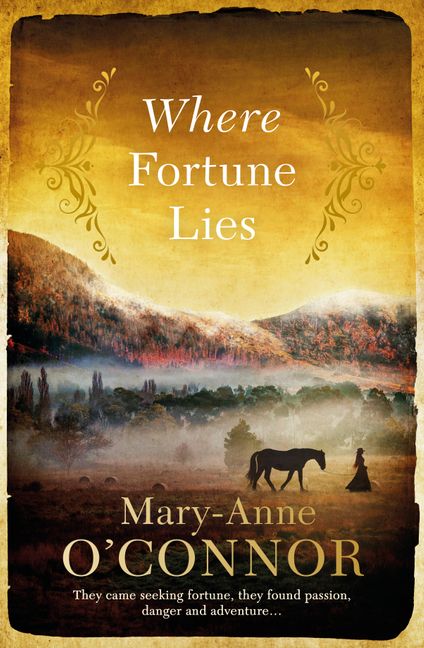
Where Fortune Lies

Publisher: HQ Fiction (Trade Paperback – 23 March 2020)

Series: Standalone

Length: 394 pages

My Rating: 4.25 out of 5 stars

Amazon     Book Depository

From bestselling Australian author Mary-Anne O’Connor comes another fun and intriguing Australian historical drama, Where Fortune Lies, which tells a multi-layered story of people seeking their fortunes in colonial Australia.

1879, Ireland. Anne Brown is a beaten-down young lady, hoping to escape the harsh life of poverty and misery she sees the rest of the women in her family experience. After a particularly cruel night which sees the one good thing in her life taken away from her, Anne flees her hometown, hoping to make a new life for herself in far-flung Australia.

Several months later in London, young gentleman Will Worthington and his sister Mari are shocked to discover that their recently deceased father has changed his will. Instead of the modest inheritance they were expecting, they find that all his money has been left to a mysterious pregnant painted lady who intends to resettle in Australia. With their social standing in London destroyed, Will and Mari, along with Will’s loyal best friend, artist Charlie Turner, follow their father’s mistress to Australia to seek their fortunes.

Upon their arrival in Melbourne, Will Mari and Charlie quickly befriend local businessman Tom McIntosh and his beautiful daughter, Alice, who Will falls in love with. While Will and Mari enjoy the opportunities afforded to them in Melbourne, Charlie spends time in the Victorian Alps with Alice’s brothers, Harry and Richie, and their wild group of friends, who show him how to live the rough colonial life. While there, Charlie finds his artistic inspiration through his work with the McIntosh boys and their wild horses, as well as his love for a mysterious exotic dancer. However, danger lies on the horizon, as Harry and Richie have been covertly engaging in the deadly trade of bushranging. Soon the fates of all these young people will hang in the balance, as tough choices, dangerous loyalties and harsh heartbreaks will impact them all.

Where Fortune Lies is another fantastic read from O’Connor, who has written some exceptional historical dramas in her five-year career. I read my first Mary-Anne O’Connor book last year, In a Great Southern Land, which told an excellent story about a group of people coming to Australia in the 1850’s to participate in the gold rush and subsequent uprising at the Eureka Stockade. I quite enjoyed In a Great Southern Land and I was rather pleased that my review of it was quoted on the back of the copy of Where Fortune Lies that I received. This latest novel follows a similar concept to O’Connor’s last book, with a diverse group of characters journeying to opportunity-rich Australia in order to seek a better life, and O’Connor is once again able to weave together a rich and compelling story of love, family drama and action in the Australian wilds, and I quite enjoyed the fun blend of story elements that the author was able to come up with.

Where Fortune Lies contains a strong character-based story that follows the lives and adventures of several characters who are drawn together by fate, love and family. O’Connor does a wonderful job of introducing these key point-of-view characters, whose story the reader finds themselves getting quite attached to. I really enjoyed the way that the author spaced out the various character threads, taking the time to explore the lives of each of the separate characters. While some of the character arcs do cross over quite a bit (for example, Charlie Turner directly interacts with all the other major characters and serves as a major bridging character), other characters are kept relatively separate from each other, with only a few scenes together. However, these characters arcs still have some subtle interactions, with their actions indirectly impacting other characters’ lives, or the two characters meet or discuss each other without realising who the other person really is. I liked the method of storytelling, as it allowed the reader to get to know each character individually and see the various struggles and difficulties that they are facing, as well as how they overcome them and evolve as people. I really enjoyed each of the character arcs that O’Connor explored, and I think that all of them came to a satisfying conclusion, especially as the various threads combine together at the end of the book with all the main characters finding their final fates. Each of these character-driven storylines had a good blend of adventure, adversity, romance and drama, which I think came together extremely well as an overall narrative.

I really liked the way that O’Connor once again dived back into Australia’s past, this time looking at the turbulent 1870s, and presenting the reader with another view of the country’s iconic colonial history. Where Fortune Lies contains some fantastic examination of various parts of old-school Victoria, including the busting metropolis of Melbourne, and it was interesting to see O’Connor’s depiction of the crossing to Australia and the things that immigrants back in this period would have experienced. Most of the story, however, takes place in the rugged wilds of outback Australia, particularly in the wilderness and small towns of the Victorian Alps. O’Connor presents a fascinating exploration of these communities, and I really enjoyed her depictions of people capturing the wild horses a la The Man from Snowy River. However, the highlight of this jaunt back into history has to be the author’s focus on the bushrangers, the dangerous highwaymen who stalked the Australian outback. A good part of the book’s plot revolves around some of the characters getting involved in bushranging out of desperation or greed, and it was rather intriguing to see how society perceived these criminals. There are a number of references to real-life bushrangers, such as the Kelly Gang and Captain Thunderbolt, and I really enjoyed the parts of the book that focused on this exciting part of Australia’s history. All of this serves as an incredible background to this fun story, and I look forward to seeing what amazing part of Australia’s past O’Connor will explore in her next book.

Where Fortune Lies is another terrific Australian historical drama from O’Connor, who once again combines a captivating, character-driven narrative with an excellent depiction of Australia’s rich and vibrant history. This turned out to be an elegant and enjoyable read that features amazing romantic and dramatic plots, as well as an intriguing dive into the infamous bushrangers of Victoria. A fantastic new novel that once again sees O’Connor continues to shine as one of the most talented authors of Australian historical dramas.

Amazon     Book Depository

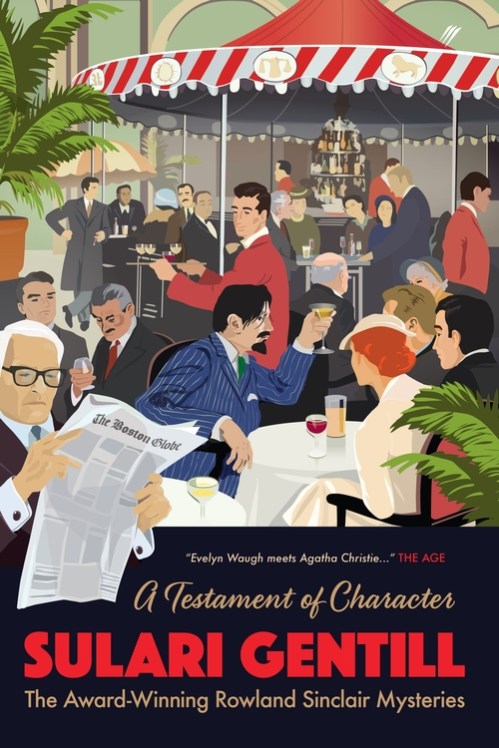
A Testament of Character by Sulari Gentill

A Testament of Character Cover

Publisher: Pantera Press (Trade Paperback – 3 March 2020)

Series: Rowland Sinclair – Book 10

Length: 337 pages

My Rating: 4.5 out of 5 stars

Amazon     Book Depository

Acclaimed Australian author Sulari Gentill returns with the 10th book in her bestselling Rowland Sinclair series, A Testament of Character, an intense and compelling new entry which was a lot of fun to read.

Gentill is an excellent Australian author who has written several amazing books since her 2010 debut. While her main body of work is the Rowland Sinclair series, Gentill has also written The Hero trilogy, a young adult fantasy trilogy based on classic Greek stories, and the standalone novel Crossing the Lines. I am mostly familiar with her Rowland Sinclair books, however, as I have read the last several books in this series, all of which have been extremely enjoyable due to their fantastic blend of history and mystery. The Rowland Sinclair books follow the adventures of the titular Rowland Sinclair, a wealthy left-wing Australian gentleman artist, and his three artistic friends in the 1930s, as they find themselves in the middle of several murder investigations. Each Rowland Sinclair book is a fun and entertaining part of my yearly reading calendar, and I have been looking forward to checking out A Testament of Character for a while now.

In 1935, after the horrors they experienced in Shanghai, Rowland and his bohemian friends Edna, Clyde and Milton are enjoying a leisurely holiday in Singapore before heading back to Australia. However, their travel plans are dramatically changed when Rowland receives tragic news. An old friend of Rowland from his Oxford days, Daniel Cartwright, has died suddenly, and he has appointed Rowland as the executor of his vast estate.

Detouring from Australia to Cartwright’s home city of Boston, Rowland and his companions arrive for the funeral and find themselves in the midst of controversy and familiar conflict. Not only was Cartwright estranged from the rest of his family, especially his brothers, who disapproved of his lifestyle choice, but it turns out he was murdered, and the police have yet to find any suspects. Even more mysteriously, Cartwright had only just written every member of his family out of the will, leaving all his money to an unknown man everyone claims does not exist.

Determined to carry out the last wishes of his dear friend, Rowland attempts to find the man who apparently meant so much to him. However, his investigation quickly turns sour, as he runs into numerous people who do not want Cartwright’s will to come to pass. Forced to scour Boston, New York and other parts of post-Depression America for leads, the four friends encounter all manner of dangerous and eccentric characters as they pursue their quest. However, none of them are prepared for the terrible truth they encounter, especially now that Cartwright’s killer has them in their sights.

A Testament of Character is an exciting and compelling novel that proves to be a fantastic new addition to the Rowland Sinclair series. Gentill has done an amazing job coming up with another captivating story that not only features an exciting and gripping mystery but which takes an intriguing look at America in the 1930s. This story contains the series’s usual blend of fun, intrigue and action, as the four exceedingly liberal protagonists get into all manner of trouble across conservative America. There are some rather impressive and at times dark scenes throughout this book, and Gentill has also included some major character developments that will appeal to long-term readers of this series. The end result is an exceedingly enjoyable and thrilling story of love, adventure and revenge which proved extremely hard to put down.

At the heart of this book lies a clever mystery storyline that revolves around the murder of the protagonist’s friend and the identity of the mysterious beneficiary of the will. Gentill crafts an excellent multi-layered mystery, with a number of surprising twists, turns and false leads on the way to the exciting conclusion. While I was able to guess a little bit in advance who the main perpetrator turned out to be, all the revelations that came out in the final confrontation were really impressive and helped wrap up the entire mystery storyline extremely well. I also thought that Gentill came up with a very compelling and memorable motivation for the various crimes featured within the book. Some of these reveals were a bit dark and shocking, but they did make for some very dramatic and captivating sequences throughout the book. Overall, I thought that this was one of the strongest mysteries to have so far been featured within one of the Rowland Sinclair books, and it served as an amazing centre to this entire fantastic book.

One of the most distinctive features of this whole series is the way that Gentill dives into the history and culture of the period in which the books are set. She has previously done a wonderful job of exploring parts of 1930s Australia, Europe and occupied Shanghai, and in A Testament of Character Gentill’s characters explore post-Depression America. This proves to be an excellent backdrop to the book’s superb story, and I loved the examination of the key cities of Boston and New York, as well as some rural areas of the country. Gentrill provides the reader with a fantastic and at times in-depth look at various parts of the 1930s American culture and society. This is done in two distinct ways, the first of which involves the protagonists exploring America as Australians, providing an outsider’s perspective of the events or places they visit (while constantly getting complemented for speaking such good English!). The second way is through Gentill’s inclusion of historical newspaper clippings at the front of every chapter. The use of these newspaper clippings is another recurring trait of the Rowland Sinclair series, and I have always enjoyed the way in which the articles relate to some cultural or historical aspect of the chapter the clipping fronts. Through the use of these methods, the author paints an intriguing picture about America during this period, which I think worked extremely well as a background to the main mystery plot. This is especially true as some of the motives and elements of the mystery revolve around the social attitudes and cultural expectations of the time, which the reader will need to have a bit of an understanding about. I have to say that I was glad that as part of this examination of historical America, Gentill also had a look at public opinion around the Nazis and fascists in the lead up to World War II, as this has been one of the more interesting story threads to follow throughout the series.

Another distinctive aspect of the Rowland Sinclair series is the way that Gentill writes a number of historical figures into the story, either as cameos or in major roles. The best previous example of this is easily the author’s inclusion of Eric Campbell and The New Guard (an ultra-right-wing Australian organisation in the 1930s) as recurring antagonists in some of the books, as these real-life historical figures are great foils to the progressive protagonists. Gentill continues to do this in A Testament of Characters, making great use of several iconic American historical figures to flesh out the story and create several memorable inclusions. Several of these historical figures have pretty major roles in the plot, including Joseph Kennedy, F. Scott Fitzgerald and his wife and fellow author, Zelda Fitzgerald. There are also some fun cameos from several other notable people, including Errol Flynn, a young JFK, Marion Davies, Randolph Hearst and Orson Welles, as well as several other characters who were in Boston or New York during the 1930s. There are also a ton of references to other unique figures in America during this time, including the Parker Brothers Company (Monopoly was released in 1935, and the protagonists of course end up playing a game), as well as a unique goat competition that was held in Central Park, of which Gentill of course names the winner. This is an extremely fun and amusing part of A Testament of Character, and I always enjoy seeing Gentill’s protagonists run into these real-life historical figures, especially as the author does a fantastic job examining and showcasing their personalities and motivations. I love how Gentill effortlessly works these people into the plot, and the reader is always left wondering who is going to appear next.

A Testament of Character is a superb and exciting new addition to the outstanding Rowland Sinclair series that is really worth checking out. Sulari Gentill has once again produced a fantastic mystery storyline that strongly benefits from the author’s clever dive back into 1930’s history. This results in a powerful and exhilarating novel which makes amazing use of its fun, distinctive inclusions and intriguing characters. I cannot wait to see what misadventures Rowland Sinclair and his friends get up to in their next book, and this is a truly wonderful Australian series with a real unique flair to it.

Amazon     Book Depository

Top Ten Tuesday – Unseen Library’s Top Australian Fiction

Top Ten Tuesday is a weekly meme that currently resides at The Artsy Reader Girl and features bloggers sharing lists on various book topics. For this week’s Top Ten Tuesday the assigned topic was a freebie associated with book covers; however, I decided to do something a little different. Because it was Australia Day on Sunday, I thought it would be good to highlight some of the best pieces of Australian fiction I have read in the last couple of years. To that end, I am raiding the Australian fiction category of the Unseen Library and presenting my Top Ten favourite entries from it.

Each year Australian authors produce a huge range of amazing fiction across the various genres, and I am usually lucky enough to receive copies of some of these from the local publishers. As a result, I tend to read a lot of Australian fiction (which I am defining here as either fiction written by an Australian author or fiction with an Australian setting) most of which turn out to be pretty awesome reads which I review either here on in the Canberra Weekly. I am happy to once again highlight some of the top pieces of Australian fiction I have reviewed since I started the Unseen Library, as several of these outstanding books might not have gotten the international attention they deserved.

Due to huge plethora of fantastic Australian fiction that has fallen into my lap over the last couple of years, this list actually turned out to be a really hard one to pull together. I had way too many choices when it came to the best pieces Australian fiction I have read from the last couple of years, so in a few places I have combined a couple of books into one entry. In the end, I was able to work out what my top ten favourite pieces were, although I did also have to include a generous honourable mentions section. So let us see how this list turned out.

Honourable Mentions:


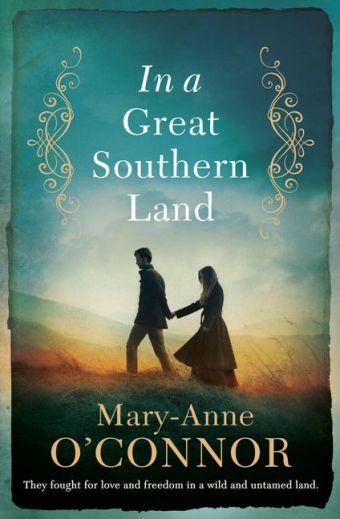
In a Great Southern Land
by Mary-Anne O’Connor

In a Great Southern Land Cover


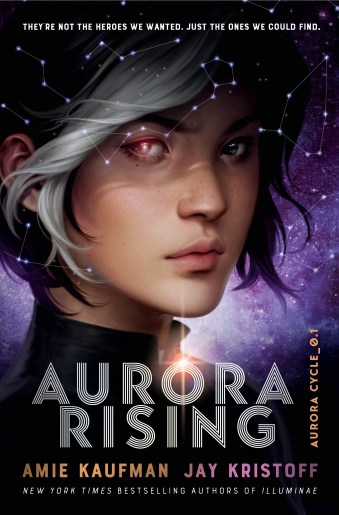
Aurora Rising
by Amie Kaufman and Jay Kristoff

Aurora Rising Cover


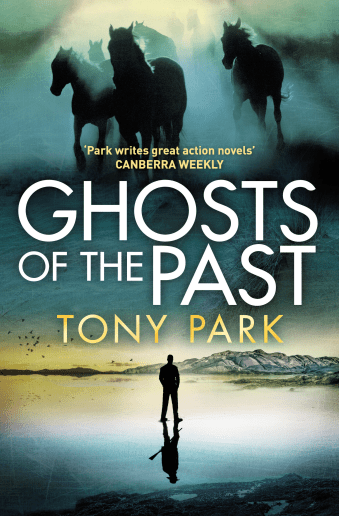
Ghosts of the Past
by Tony Park

Ghosts of the Past Cover


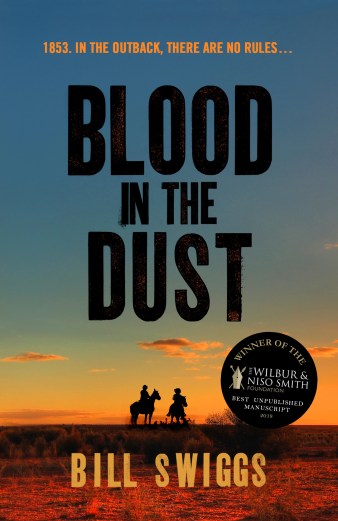
Blood in the Dust
by Bill Swiggs

Blood in the Dust Cover

Top Ten List (No Particular Order):


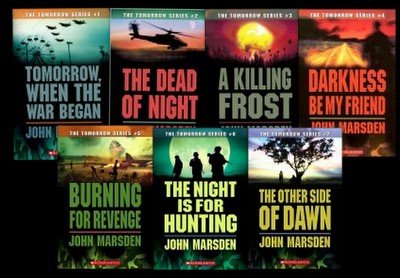
Tomorrow
series by John Marsden

51eYr9CzIAL

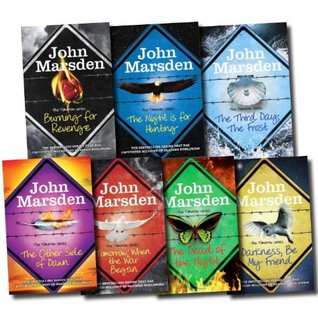
There was absolutely no way that I could write a list about my favourite Australian fiction without having John Marsden’s Tomorrow series at the very top. Individually the books in the Tomorrow series are amongst some of the best pieces of Australian fiction I have ever read, and together they are a perfect series. Words cannot describe how much I love this amazing series (although I tried really hard in the review linked above) and I have no doubt that it is going to remain my favourite Australian series for a very long time.

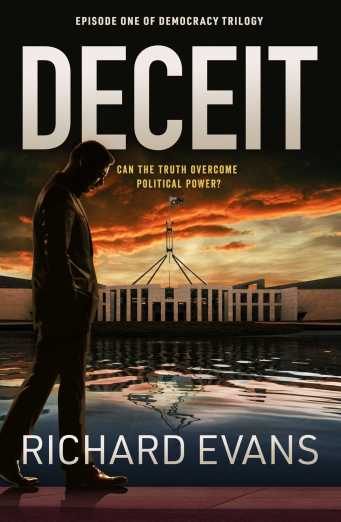
Deceit by Richard Evans

Deceit Cover

Deceit is an extremely clever thriller revolving around Australian politics that came out in 2018. Thanks to its incredible realism and excellent story, I really enjoyed this book when it came out, and it ended up getting an honourable mention in my Top Ten Favourite Books of 2018 list. I absolutely loved this book and I have been meaning to read the sequel, Duplicity, for a little while now, especially as I suspect I will be just as good as this first fantastic book.

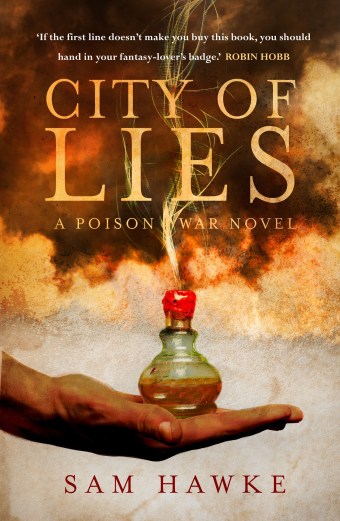
City of Lies by Sam Hawke

City of Lies Cover

Another book that featured on my Top Ten Favourite Books of 2018 list. City of Lies was an incredible fantasy debut which featured a superb story about a family of poison experts trying to keep their king alive during a siege. This was an awesome read, and I cannot wait for the sequel to this book, which is hopefully coming out later this year.

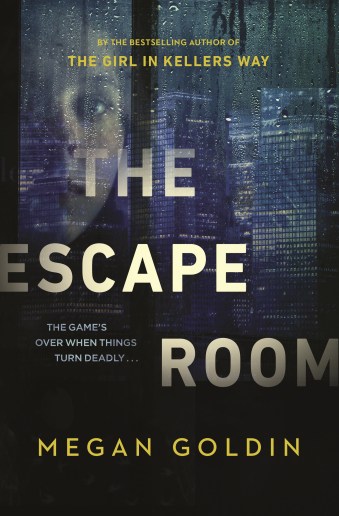
The Escape Room by Megan Goldin

The Escape Room Cover

The Escape Room was the second book from rising thriller star Megan Goldin, who has gotten a lot of positive attention over the last couple of years. The Escape Room was a very compelling novel that contained a clever revenge plot against a group of ruthless Wall Street traders. Goldin did a fantastic job with The Escape Room, and her upcoming book, The Night Swim, will hopefully be one of the reading highlights of the second half of 2020.

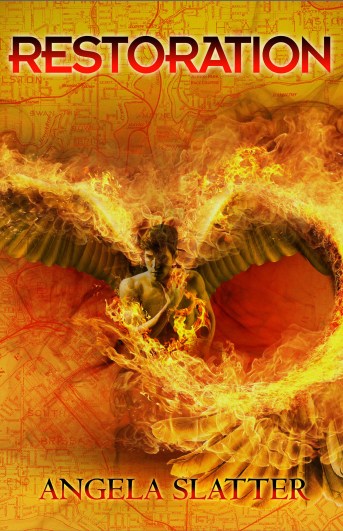
Restoration by Angela Slatter

Restoration Cover

Restoration was the third book in Slatter’s Verity Fassbinder series (following on from Corpselight), which follow the titular character of Verity Fassbinder as she investigates magical crimes in modern day Brisbane. Restoration was a really fun read that got an easy five stars from me due to its incredible story, great use of an Australian setting and fantastic humour. Slatter outdid herself with Restoration, and I hope we get more Verity Fassbinder novels in the future.

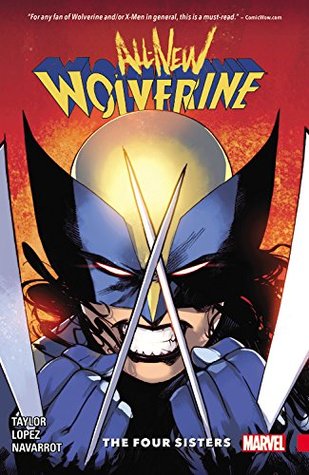
All-New Wolverine series by Tom Taylor

All-New Wolverine Volume 1 Cover

Tom Taylor is an Australian-born author who has been doing some amazing work with some of the major comic book companies over the last few years. While I have read a bunch of his stuff (such as his run on X-Men Red), my favourite piece of his work has to be the All-New Wolverine series. All-New Wolverine was a deeply entertaining series that placed one of my favourite characters, X-23, into the iconic role of Wolverine. Not only did this series do justice to both X-23 and Wolverine’s legacy (before his inevitable resurrection) with some well-written and heavy storylines, but it was also a lot of fun, especially thanks to the introduction of Honey Badger.

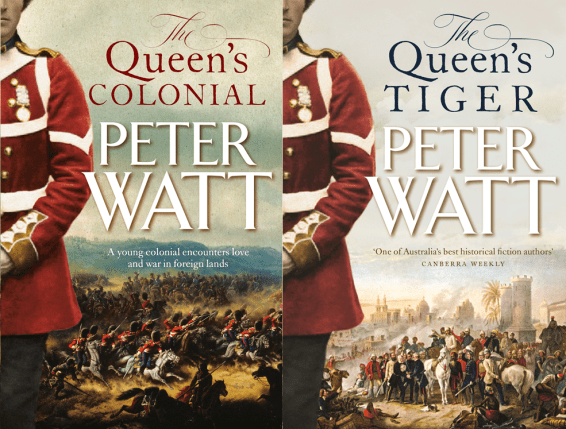
The Queen’s Colonial and The Queen’s Tiger by Peter Watt

Peter Watt Covers

Peter Watt has long been one of the top authors of Australian historical fiction, and I have been a big fan of his work for a couple of years now. While I was tempted to include his Frontier series (make sure to check out my reviews for While the Moon Burns and From the Stars Above), in the end I thought it would be better to feature his current Colonial series. The Queen’s Colonial and The Queen’s Tiger are excellent pieces of historical fiction containing an exciting and compelling story.

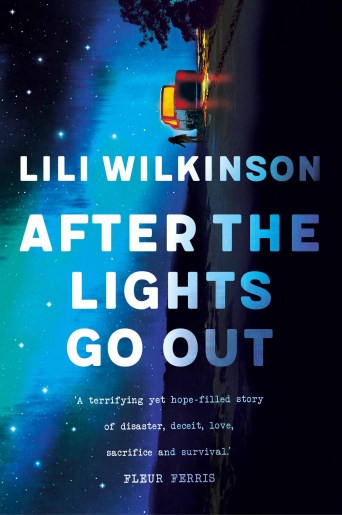
After the Lights Go Out by Lili Wilkinson

After the Lights Go Out

After the Lights Go Out is one of the few pieces of Australian young adult fiction which I feel matches up to the Tomorrow series in terms of quality and substance.   This book about a family of survivalists being thrust into an actual doomsday scenario was extremely captivating, and I loved this extraordinary novel. Really worth checking out.

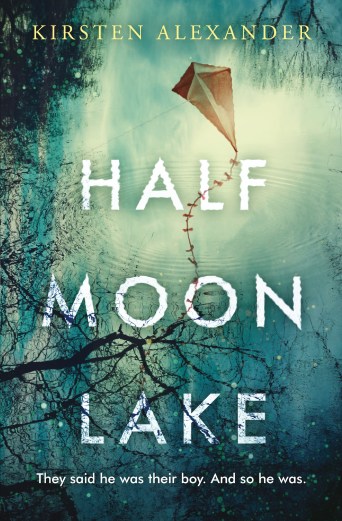
Half Moon Lake by Kirsten Alexander

Half Moon Lake Cover

Half Moon Lake is an amazing historical drama that was one of my favourite debuts from 2019. This book is a clever historical drama that was inspired by the real-life historical disappearance of a child and the tragic events that followed. A gripping and memorable book that comes highly recommended.

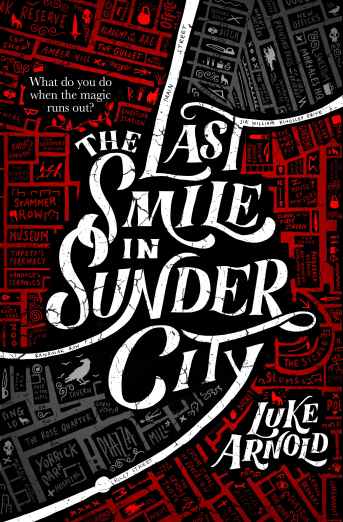
The Last Smile in Sunder City by Luke Arnold

The Last Smile in Sunder City

The most recent addition to my Australian fiction category, The Last Smile in Sunder City is another impressive debut which I had an incredible time reading. Arnold has come up with an excellent mystery set in an inventive new fantasy world with a conflicted central protagonist. This was an amazing first book from Arnold and I will hopefully be able to read his follow-up books in the future.

Well, that concludes my list. I am so happy that I got the chance to highlight some of the great pieces of historical fiction I have been fortunate enough to enjoy over the last couple of years. Each of the above books are exceptional reads, and I had a wonderful time reading all of them. While I was a little disappointed that I had to leave a few great books off this list, such as Greenlight by Benjamin Stevenson, DEV1AT3 by Jay Kristoff and The Secret Runners of New York by Matthew Reilly, I really like how my list turned out. I think that I will come back and update this list in the future, probably close to next year’s Australia Day. I am highly confident that this next version of my list will contain some new books from 2020, and I look forward to seeing which pieces of upcoming Australian fiction I am really going to enjoy next. In the meantime, I hope all my fellow Australians had a great long weekend and please let me know which pieces of Australian fiction are favourites in the comments below.

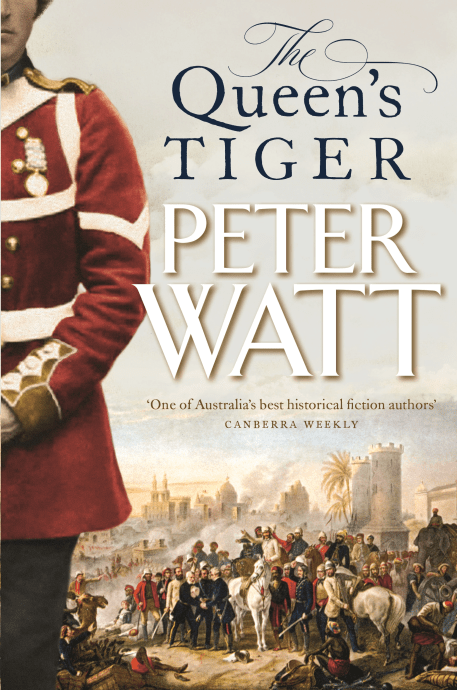
The Queen’s Tiger by Peter Watt

The Queen's Tiger Cover

Publisher: Macmillan (Trade Paperback – 12 November 2019)

Series: The Colonial series – Book 2

Length: 360 pages

My Rating: 4.5 out of 5 stars

Amazon     Book Depository

One of Australia’s best historical fiction writers, Peter Watt, returns with another exciting historical adventure in The Queen’s Tiger, the outstanding sequel to his 2018 release, The Queen’s Colonial.

Following on from the events of The Queen’s Colonial, in 1857, former Australian settler Ian Steele is still living under the guise of Samuel Forbes, a rich English noble who Ian bears an uncanny resemblance to. Ian switched places with Samuel in order to help him meet the required military service he needs to receive a vast inheritance. Serving as a captain in Queen Victoria’s army, Ian has proven himself to be a natural soldier, fighting against the odds dozens of times over against the most vicious enemies of the crown. However, despite the formidable enemies he has faced on the battlefield, Ian has encountered greater dangers far closer to home, as Samuel’s father and his murderous brother Charles are determined that Samuel will never receive his inheritance.

As Ian and his men, including his old friends Sergeant Conan Curry and Corporal Owen Williams, return from fighting the Persian army in Iran, a dangerous threat to the empire is brewing in India. Indian troops under the employ of the British East India Company have begun to mutiny, and the country, caught up in a swell of anti-British nationalism, is beginning to violently rebel against British rule. Among those caught up in the chaos are Samuel’s sister Alice and her husband the surgeon Peter Campbell, whose honeymoon turns into a brutal fight for survival.

Redeployed to India, Ian is once again leading the charge in some of the campaign’s most deadly battles against a determined foe. However, the biggest threat to his survival is happening half a world away back in England, as the real Samuel Forbes returns to London for a personal meeting under the name Ian Steele. When Samuel is spotted and his true identity is suspected, he finds himself hunted throughout England by Charles’s agents, determined to prove that Ian is an imposter. Can Ian and Samuel continue their ruse amidst the tragedy, tribulations and conflicts they encounter, or will the evil forces arrayed against them finally bring them down?

This was another fantastic book from Peter Watt, who has a true knack for producing compelling historical adventures filled with action, intrigue and family drama. The Queen’s Tiger is the second book in Watt’s Colonial series, which follows its protagonists through some of the most dangerous conflicts that the British army found itself involved with during the 19th century. I have to admit that I have been quite keen to check this book out for a little while, and not just because it quotes one of my Canberra Weekly reviews on the cover. The first book in this series, The Queen’s Colonial was an excellent read, and it did a good job following up Watt’s long-running Frontier series of which I was a big fan (make sure to check out my Canberra Weekly reviews for the last two books in this series, While the Moon Burns and From the Stars Above).

The Queen’s Tiger continues the intriguing story from the first book, which saw a simple Australian blacksmith pretend to be an English gentleman in order to serve as an officer in the Queen’s army. This was a compelling start the series, and I am glad that Watt has continued to follow through the fun blend of military action, intrigue and character interactions that have been a signature writing trend of his for some time. The Queen’s Tiger contains a wide-ranging story that covers several characters across a number of continents. This allows the author to showcase a number of different and enjoyable storylines within one book, and as such we can have one section of a book that focuses on the military action and adventure being undertaken by several of the characters in India, and the next section than looks at the sinister plotting of the book’s antagonists, or the desperate attempts of the real Samuel to keep his identity secret in England. In addition to their ongoing adventures, the author also explores the various relationships and romances that the various characters have, painting a rich tapestry of these point-of-view characters’ lives. This is a wonderful combination of storylines, all of which comes together into an excellent and highly enjoyable read.

Just like he did with the Crimean War in The Queen’s Colonial, Watt does a fantastic job bringing an intriguing historical conflict to life in this book, with his focus and examination of the Indian Mutiny of 1857. The book actually follows the entire duration of the Indian Mutiny and showcases most of the key moments of the rebellion that turned into full-scale war for independence. As a result of the way that Watt positioned his characters from the first book, the reader gets to see two separate parts of the mutiny. Alice and Peter’s storyline, which also features the new major character of Scott Campbell, focuses on how the English people who were living in India when the mutiny started would have perceived what was going on, and the desperate battle that the English forces garrisoned in India faced against a mass rebellion of their Indian soldiers. Ian’s storyline, on the other hand, shows the battles that the English relief force faced as they tried to retake the country and rescue the English citizens trapped within. This was an extremely fascinating historical event, and I think that Watt’s portrayal of this conflict was extremely intriguing and compelling. Based on the comments in the historical notes section of this book, it looks like Watt is planning to take his characters through a number of England’s various 19th century military campaigns in the following books, and I look forward to seeing where they end up next.

Needless to say, a book that has such a strong focus on soldiers and the Indian Mutiny is going to be very heavy on the action, as the protagonists fight in several battles across Indian and Iran. There are a significant number of fast-paced sequences throughout this book, from the various battles and skirmishes that occur during the mutiny, to thrilling chase scenes in the backstreets of London. Watt’s grasp of 19th century military combat is quite impressive, and there is a very realistic feel to the huge number of fight sequences that occur throughout the book, as he focuses on the tactics and weaponry of the British infantry man. As a result, there is rarely a dull or quiet moment in this book, and action fans will really appreciate the cool fights occurring throughout the book.

Peter Watt has once again delivered an electrifying and enthralling piece of historical fiction with The Queen’s Tiger. Featuring some amazing depictions of a deadly part of history, as well as a bunch of great characters whose various adventures, deceptions and relationships are particularly intriguing, this is a fantastic piece of Australian fiction that is really worth checking out.

Amazon     Book Depository

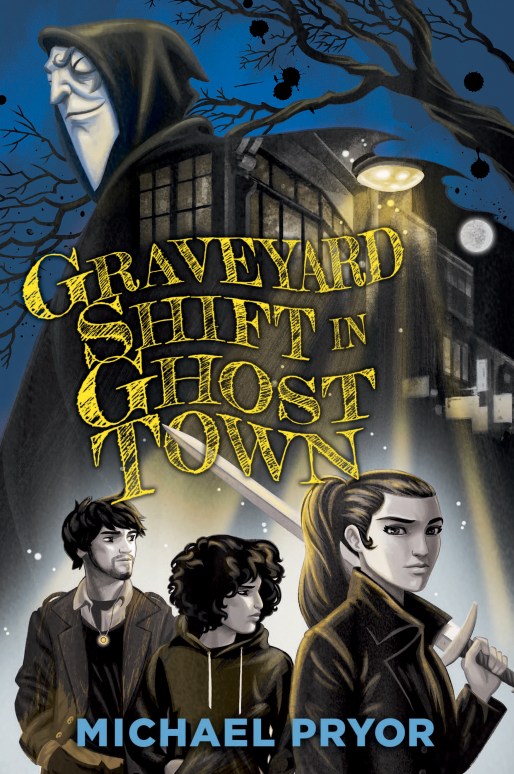
Graveyard Shift in Ghost Town by Michael Pryor

Graveyard Shift in Ghost Town Cover

Publisher: Allen & Unwin (Trade Paperback – 1 July 2019)

Series: Ghost Town – Book 2

Length: 307 pages

My Rating: 4 out of 5 stars

Amazon     Book Depository

Acclaimed Australian author Michael Pryor revisits his Ghost Town young adult series with another entertaining and intriguing story, Graveyard Shift in Ghost Town.

Anton Marin is having an extremely odd gap year. As a member of an infamous outcast ghost-hunting family, Anton can see the ghosts that linger in our world, and he has recently taken up the family business. Working with his new partner, the English badass Rani Cross, Anton works to protect the people of Melbourne from the more dangerous types of ghosts while also ensuring that all the wandering spirits they encounter are helped on to the next world. However, even with Rani’s help, ghost hunting in Melbourne has recently gotten even more difficult as the city finds itself in the midst of a genuine ghost plague. A massive infestation of the most dangerous types of ghosts imaginable is wreaking havoc across the city, and even usually benign or harmless spirits are starting to attack people.

Anton and Rani’s problems are about to get even worse; a deadly cult of Trespassers, humans who use magic to control ghosts for their own ends, is in town and determined to capture anyone with ghost sight for use in their rituals. As Anton and Rani find themselves with a target on their back, Anton must deal with the return of his long-lost aunt Tanja. While Anton is overjoyed to have a member of his family back, he quickly realises that not everything with his aunt is as it seems. What secrets is Tanja hiding and what is her connection to the leader of this group of Trespassers? As secrets and occult dangers arise within Melbourne, the fate of the world hangs in the balance.

Michael Pryor is one of Australian’s most notable authors of young adult fiction, having written a number of fantasy and science fiction novels for a younger audience. Some of his most notable series include The Law of Magic, The Extraordinaries and his six entries in the long-running The Quentaris Chronicles. Graveyard Shift in Ghost Town is the second book in Pryor’s latest series, Ghost Town, and follows on from his 2017 release, Gap Year in Ghost Town. I initially thought that Graveyard Shift in Ghost Town was my first experience reading Pryor’s work, but I actually remember reading some of the books in The Doorways trilogy back when I was kid. While this was something like 20 years ago (and now I feel old), I do know that I greatly enjoyed these books and their clever concept, so I was excited to check it out.

Graveyard Shift in Ghost Town is an interesting and engaging piece of young adult fantasy with a number of cool features. Pryor has done a fantastic job combining a unique concept of ghost hunting with a group of enjoyable characters and grounded the story in the author’s home city of Melbourne. This results in a great piece of fiction that will do a wonderful job of enthralling a whole new generation of young Australian readers. For those readers who are only just coming onto this series, knowledge of the previous book is not a necessity to enjoy this sequel, as the author does a good job of re-introducing the characters, plot details and adventures that were featured in Gap Year in Ghost Town.

One of the most enjoyable aspects of this series is the overarching concept of a world haunted by real and potentially malevolent ghosts, and the adventures of the few individuals who can actually see them. Pryor has populated his story with all manner of different types of ghosts, each with their own specific characteristics, strengths and appearances. Readers will get to see the various ghosts that the protagonists go after, including the Lingers, Moaners, Thugs, Weepers and a new breed of zombie ghosts, just to name a few. All of these ghosts are really cool, and I enjoyed how this book started going into a little more detail about the origins of ghosts and the malevolent forces behind them. I also liked how the story also pivoted towards a more human antagonist in the form of the Trespassers, and it was intriguing to see how a group of people utilising the ghosts for nefarious purposes. It was interesting to see the protagonist’s ghost hunting techniques in action, and it results in some intense action sequences, especially when they have to fight ghosts and the Trespassers at the same time. This is an inventive and clever concept that helps make this series stand out from some of the other young adult fantasy books out there.

Another great distinguishing feature about this book is the author’s inclusion of a contemporary Melbourne setting. I love fantasy stories that utilise modern settings, and Pryor did an exceptional job bringing the city of Melbourne to life. The characters visit all manner of key landmarks in the city throughout the course of the story, and I really liked seeing locations I have visited featuring fights between ghost hunters and spirits. Pryor also uses the opportunity to showcase some of his favourite restaurants and cafes and it was nice to see an author insert elements of a city they clearly love into their story.

In addition to its intriguing concept and excellent setting, I was also impressed with the complex characters in Graveyard Shift in Ghost Town. The main protagonist is Anton, the funny and slightly odd heir to an exiled ghost hunting family with their own unique techniques for dispersing ghosts. Anton serves as the narrator and point-of-view character for the story, and he offers a fun and introspective narration to the book, while the revelations about certain family secrets offer up some interesting drama. The other main protagonist, Rani, is an extremely skilled sword-wielding badass who is a former member of an established ghost-hunting order from England and is an excellent female character for this series. Anton and Rani form a great team in this book, as the two of them find their groove as a partnership and work well against the threats they face. The character of Bec is an interesting third member of this partnership, as not only is she Anton’s oldest friend, who plays a cute game where they try to guess quotes from famous figures, but she is also Rani’s girlfriend, who they share an apartment and cat with. Bec really brings the team together, and there are some interesting examinations of the dynamics between the three of them, as each of them feels like they are the outsider in the group. There are also a few cool new additions to the series in this book, including a couple of Scottish ghost hunters, their ghost-hunting dog and a good antagonist in the form of the leader of the new cult of Trespassers.

Graveyard Shift in Ghost Town is an excellent piece of young adult fiction that is appropriate for a wide range of different ages and tastes. While there are a few dark scenes, such as a somewhat gruesome torture sequence, the vast majority of the book is appropriate for young teens and perhaps particularly mature young readers. I thought the author’s inclusion of a positive lesbian relationship between Rani and Bec was a really good feature for the young adult audience, and it was that was portrayed extremely well. I am also sure that young Australian readers, especially those living in Melbourne, will love to see these fantasy variations of locations they are familiar with, and it will hopefully invigorate their imagination.

Michael Pryor has done an amazing job following up Gap Year in Ghost Town, as he presents another compelling and enjoyable paranormal young adult adventure. With inventive ghosts, scary antagonists, great characters and a fantastic Australian setting, Pryor has once again shown why he is one of the leading authors of young adult fiction in Australia. Graveyard Shift in Ghost Town is definitely worth checking out, and it has a lot of features that should prove appealing to the younger teen audience.

Amazon     Book Depository

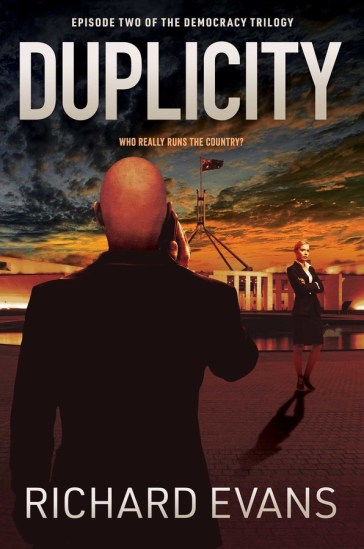
Waiting on Wednesday – Duplicity by Richard Evans

Welcome to my weekly segment, Waiting on Wednesday, where I look at upcoming books that I am planning to order and review in the next few months and which I think I will really enjoy.  Stay tuned to see reviews of these books when I get a copy of them.

For this week’s Waiting on Wednesday, I am going to look at an upcoming piece of Australian fiction that I think is going to be a thrilling, realistic and deeply intriguing read, Duplicity by Richard Evans.

Duplicity Cover.jpg

Duplicity is the second book in Evans’s Democracy trilogy and follows on from his 2018 release, Deceit, which presented the reader with a tale of corruption and political intrigue inside the halls of Australia’s Parliament House. Evans himself is former Australian politician whose detailed knowledge of parliamentary procedure and the day-to-day aspects of Australian politics turned this book into an exceedingly realistic read (depressingly so, in some cases). It was so accurate and clever it earned a five-star review from me last year and received an honourable mention in my Top Ten Reads of 2018 list. As a result, I am quite keen to check out Duplicity, especially as it is set to focus on a very topical part of Australia’s political system: the election.

Simon & Schuster Synopsis:

When ruthless political operative Jonathan Wolff is assigned the task of overthrowing corrupt Australian Prime Minister Andrew Gerrard in the federal election campaign, no one is safe from the line of fire.

Wolff’s tactful manipulation and political prowess guide the opposition towards election success, but fearing they will not win, Hawk must initiate his own explosive campaign to defeat the Prime Minister and remain loyal to the Mercantiles – a long-established group of high-taxpaying business owners out to manipulate the halls of Parliament House.

With investigative journalist Anita Devlin hot on his trail, Wolff oversees a storm of violent demonstrations in a strategic ploy to advance the cause of independent candidate Jaya Rukhmani.

Devlin is determined to be the whistle-blower, but does she have what it takes to expose Wolff and the Mercantiles? Or will political power overcome truth in this gripping Australian political thriller?

This sounds like it could be quite the interesting story, and it is definitely a change from the plot of the first book in the series. In Deceit, the story focused on the corrupt Prime Minister attempting to manipulate the parliament and the people to commit an illegal act. In this one, it’s two corrupt politicians attempting to manipulate the system for their own ends, and I expect the machinations and power plays to double in volume as a result.

The timing of this book is quite impeccable. Australia has only just finished up a federal election period that was filled with controversy, surprises and, at times, blatant stupidity. With that fresh in our minds, this book is going to take on a lot of extra potency and meaning, although I imagine quite a few people will be frustrated by any similarities it will share with real life events.

Duplicity is set to be released in September, and I am quite looking forward to seeing how Evans spins this election in his book. I am expecting another fantastic and thrilling read and I am very curious to see what additional aspects of Australian politics the author brings to life this time.

Throwback Thursday – The Tomorrow Series by John Marsden

28110461.jpg
Publishers: Pan Macmillan Australia and Bolinda Audio

Books:

1. Tomorrow, When the War Began (1993) – Amazon     Book Depository

2. The Dead of the Night (1994) – Amazon     Book Depository

3. The Third Day, the Frost (1995) – Amazon     Book Depository

4. Darkness, Be My Friend (1996) – Amazon     Book Depository

5. Burning for Revenge (1997) – Amazon     Book Depository

6. The Night is for Hunting (1998) – Amazon     Book Depository

7. The Other Side of Dawn (1999) – Amazon     Book Depository

Series Rating: 5 out of 5 stars

Reviewed as part of my Throwback Thursday series, where I republish old reviews, review books I have read before or review older books I have only just had a chance to read.

For this week’s Throwback Thursday review, I dive back into one of the most popular and iconic Australian fiction series of all times, John Marsden’s epic Tomorrow series.

Tomorrow, When the War Began Cover.jpg

The Tomorrow series, by bestselling and award-winning Australian author John Marsden, is a powerful and thought-provoking young adult series that was released in the 1990s.  Made up of seven books, the series began in 1993 with Tomorrow, When the War Began and ended in 1999 with The Other Side of Dawn.  The Tomorrow series follows a small group of young teenage protagonists as they deal with a foreign invasion of Australia which forces them to hide in the bush and engage in a guerrilla war to win.  Thanks to its strong characters, frank depictions of war and trauma and its excellent utilisation of Australia’s bush and rural landscape, the Tomorrow series has become one of the most highly regarded and popular Australian series of all times, with millions of copies sold in Australia alone (which, considering our relatively small population, is pretty impressive).  It is also considered a must-read series for young Australian readers, and it is still required reading in many schools to this day.

I have been a major fan of this series for a very long time.  I remember reading these books while I was at school, both for classes and for my own enjoyment, and I was enthralled by its depictions of war and its captivating story, which stoked my imagination for years.  Re-reading it at an older age, I began to appreciate the more complex nature of its story and the characters portrayed within.  I have re-read or re-listened to these books many times over the years, and it still remains one of my most favourite series of all times.  I have actually been planning to review this as part of my Throwback Thursday series for some time, and after recently mentioning it in my First Ten Books I Reviewed list, where it placed No. 1 thanks to a review project at school, I have decided it was time to share why I love this series and why those who readers unfamiliar with it should check it out.

The Tomorrow series is set in the 1990s, around the same time as the books were written, in a fictional area of Australia.  The plot revolves around seven teenagers, Ellie, Corrie, Homer, Fiona, Lee, Robyn and Kevin, who live in and around the rural town of Wirrawee.  During the holiday period they decide to head out to a remote and mostly unexplored area of the bush, known as Hell, for a week of camping.  Isolated from the rest of the world, they are mostly unaware of events transpiring beyond their bush hideaway.  Once they finish their trip, they emerge from Hell to find their farms and houses abandoned and their town occupied by soldiers.  It soon becomes apparent that all of Australia has been invaded by a foreign nation, with Wirrawee being one of the initial points of occupation due to its proximity to a harbour that is vital to the invader’s supply network.  Using Hell as a base, the protagonists have to come to terms with the new reality they find themselves in, and they must band together to not only survive, but to try and find some way to oppose the invading army.
The Dead of the Night Cover.jpg
The first book, Tomorrow, When the War Began, sets up the story and introduces the readers to the main characters.  The book starts with the seven main characters heading off into the bush, and then returning to find that their world has changed.  Not knowing what had happened and only initially finding that their families are missing, they venture into Wirrawee and encounter their first batch of enemy troops.  After some initial conflicts, which include Lee getting shot, Ellie blowing up an enemy patrol and Corrie’s house getting destroyed by a missile, the group retreats back to Hell with newcomer Chris, who had also managed to hide from the invaders.  Once back in the bush, they initially work on gathering information about the enemy forces and on turning Hell into a long-term home for themselves.  However, as it becomes obvious that the war is going poorly for Australia and the invading army is here to stay, they decide to attempt a major act of sabotage.  Their plan works, but tragedy forces two members of the group to surrender themselves to enemy custody while the rest of the group remain hidden in Hell.  Tomorrow, When the War Began is an excellent novel that does a great job introducing the reader to the characters and setting up an amazing story.  While Tomorrow, When the War Began would have been a great standalone novel, it also does an outstanding job setting up the rest of the series.  There are so many good parts to this novel, but I have to say that the early scenes in which the protagonists start putting the clues together and slowly begin to work out that their town and country have been invaded are among some of the best in the entire series, especially with the tension and uncertainty that the characters are experiencing.

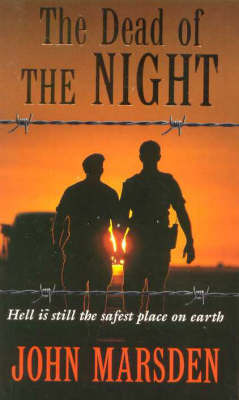
The second book in the series, The Dead of the Night, starts only a few weeks after the events of the first book.  Still reeling from the loss of two of their friends, the remaining members of the group engage in more attacks or acts of sabotage, before finding a group of adult rebels who have managed to avoid capture.  However, the teenage protagonists quickly realise that the adult rebels have no idea what they are doing, and disaster strikes when they encounter the enemy.  The protagonists manage to escape back to Hell, where they successfully undertake another massive attack, although another unforeseen tragedy is revealed in the aftermath.  This is a great follow-up to Tomorrow, When the War Began and it continues several interesting story threads from the first book, while also setting up some new characters and situations.  The scenes with the teenage protagonists encountering the adult rebels are not my favourite, but the counterpoints between the two groups are extremely fascinating.  In addition, the various covert actions that the group undertakes in this book, as well as the characters starting to show evidence of war trauma, offers some well-written and powerful moments to the series.

The next book, The Third Day, the Frost (released as A Killing Frost in the US and Canada), takes the protagonists out of their comfort zone as they leave Hell and the Wirrawee area in order to launch a seemingly impossible attack on the enemy’s nearby harbour complex.  Their hopes are buoyed when they manage to reconnect with a lost friend whose newfound knowledge may prove to be the key to pulling off their attack.  However, their success is short lived as they fall into the clutches of the enemy army and are soon sentenced to death.  They eventually manage to escape, but their freedom comes at a great cost.  This is easily one of the darker books in the Tomorrow series, especially the parts where the remaining main characters are caught and held in prison.  Some of the sequences in the book are pretty cool, especially the assault on Cobbler’s Bay, and this book is one of the ones I enjoy the most in the entire series.

The Third Day, The Frost Cover.jpg

Following the events of The Third Day, the Frost, the series experiences a seven-month time-skip as the remaining main characters recover in New Zealand.  As a result, the fourth book, Darkness, Be My Friend, feels a lot like it is the beginning of a slightly different second half of this series, resulting in some significant changes and character developments.  This book starts with the protagonists being asked to return to Australia in order to escort a band of army commandoes to a high-value target in the Wirrawee area.  While initially reluctant to return, the protagonists eventually agree to head back for a short mission.  However, when the commandoes go missing, the protagonists find themselves once again trapped in occupied territory and are forced to use their wits and experience to survive and fight back.  Darkness, Be My Friend is a really interesting and significant instalment in the series.  Not only are there a number of major changes in Wirrawee, including several shocking deaths, but this is the book where the trauma and PTSD angles of Marsden’s storytelling really come into effect, as all of the main characters are completely shell-shocked after the events of the first three books, and it takes them a lot to get back to their former operational readiness.  This book does feature some great scenes, including a night-time escape on horseback and a failed attack on the enemy which necessitates another desperate escape.

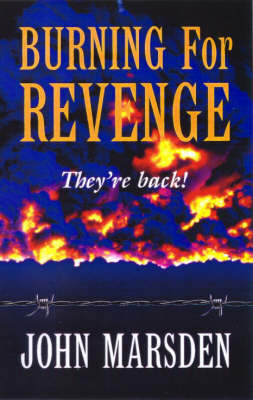
The fifth book in the series, Burning for Revenge, sees the protagonists once again holed up in Hell, hiding from the enemy army.  With no chance of extraction back to New Zealand, the young guerrillas decided to leave their sanctuary and find a new target to attack.  Fate intervenes, and they find themselves in a position to do a lot of damage to the enemy.  I really enjoyed Burning for Revenge, even though it suffers from some pacing issues.  The major offence takes place in the middle of the book, and while the corresponding sequences are epic in their scale, destruction and savagery, the second half of the book, in which the characters hide out in a nearby city, really peters out in comparison.  The parts of the book set in the city do offer an interesting change of location, and also feature some compelling story points, but it does seem to be a bit lacking after the big attack.  But the major action sequence, the lengthy escape and the significant story developments that occur more than make up for it.

The next book, The Night is for Hunting, is set right after the events of Burning for Revenge and sees the protagonists still hiding out in the suburbs of Stratton.  Their new way of life is shattered when they witness troops capturing some of the wild street children who also haunt the ruins of Stratton.  Rescuing the small group from the enemy, the protagonists escape back to Hell, and must find a way to adapt to their new charges.  However, Hell may not be the safe haven they remember; violence visits them in the bush for the first time.  The Night is for Hunting is probably my least favourite book in the Tomorrow series, although it still is an extremely enjoyable book and an essential part of the series.  It is a little hard to deal with this book’s change of focus from war to childcare, but the focus on the new war orphans who require care allows for some interesting scenes and some intriguing character development.  Most of the child characters are pretty annoying, but their leader, Gavin, more than makes up for it, as the deaf badass has some amazing scenes through this book.  The final action sequences above Hell are also quite jarring, as the bush location that has been built up as a safe haven for your favourite characters is invaded.
Darkness, Be My Friend Cover.jpg
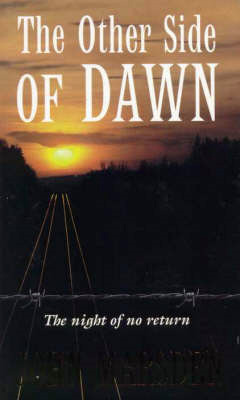
The seventh and final book in the Tomorrow series, The Other Side of Dawn, begins immediately after the conclusion of the sixth book.  After taking out the enemy patrol that infiltrated Hell, the protagonists need to escape before the soldiers are reported missing.  However, instead of an extraction back to New Zealand, they are given a new mission: to venture out and perform as many attacks as possible.  The war is in its final days and any damage they can do will help determine the future of Australia.  Setting off again, the protagonists prepare for their final battle.  Who will survive and what will the country look like after they are done?  This is a really good conclusion to the series that features a number of great scenes.  Not only are many of the story threads that ran through the entire series wrapped up but the protagonists find themselves drawn further into the wider war than they ever have been before.  Marsden tries some different stuff in this book, including a significant amount of the book focusing on an isolated Ellie, and it works to create not only an enjoyable novel but also an excellent end to this great series.

While all seven books in the series are deeply entertaining and extremely well written, their real strength lies in their continuation as a series.  Marsden does an outstanding job linking all of the books in the series together, creating one lengthy and captivating story that you cannot wait to get to the end of.  The sheer amount of character development that occurs throughout the series, as well as the various attacks and input in the war effort, is amazing, and the Tomorrow series really needs to be read in its entirety and in order.

The Tomorrow series is told from the first-person perspective of the main character, Ellie, who is chronicling the adventures of the protagonists so there is a record of what they did during the war in case they are captured or killed.  I always quite enjoyed having the story told in this manner, as it gave the series a lot of realism and is supposed to evoke other famous wartime chronicles.  Ellie is a unique narrator, as she really does not tell a straight story of the entire adventure.  While she endeavours to cover all the events that are occurring, she goes off on a huge number of tangents, recalling stories from her past, analysing the thoughts and feelings in her head, or engaging in some deep emotional debate about the situations the characters find themselves in.  While this may seem random, it goes a long way to explaining the narrator’s thought process, as it helps her break down events she cannot quite handle and interpret them as something more recognisable to her.  It is also through her eyes that we see the other characters, and as such we get a really good idea of their past and their potential motivations, as Ellie knows huge amounts about their past and tells a number of funny stories or analogies that help highlight their character traits and personalities.  Because all of the main characters are her friends, Ellie’s feelings of closeness and love for these characters really shines through and ensures that the readers really care for all the other characters.  One of the things I quite liked about the chronicle format of this series was that Marsden went out of his way to explain the text’s creation and how the protagonist was able to preserve them through the war.  The chronicles also have an impact on the story, especially in the second book, as the characters read and react to Ellie’s inner thoughts and observations about the series’ opening events.
Burning For Revenge Cover.jpg

I absolutely love the overarching story concept of this series, which sees Australia being invaded by a hostile enemy force who quickly takes over the country, forcing a small group of young people to fight back.  While some comparisons with Red Dawn can be made, there are some significant differences to the story, such as its focus on Australia, character development and the more realistic story of young people surviving in a war zone.  I always felt that the idea that Australia, with its relatively small population and relative isolation from Europe and America, could be invaded and completely conquered in such a short period is a lot more realistic than similar events occurring in America.  In addition, the way that the teenage protagonists operate is a lot more realistic in the Tomorrow series.  The characters spend most of their time mainly trying to survive and avoid capture or death at the hands of their enemy.  Even when they attempt an attack, they plans usually attempt to avoid a direct fire fight, as they realise that any attempts to do so would likely see them killed.  Instead, they mostly travel without guns, hoping that if captured, the enemy would believe they were kids who were hiding and not actual guerrillas.  I also liked how the protagonists’ planned assaults on the enemy are more opportunistic in nature and rely more on improvisation and everyday items rather than training or proper military explosives or weapons.  Most of their attacks involve petrol, gas and weapons farmers would use (although one attack was achieved by toasters), and even when they receive some better equipment from the New Zealand army, they utilise it in a way adult soldiers would not think about.  The author’s depiction of Australia’s invasion is really interesting, and the attack and the international reaction to it feel quite realistic, even in more modern times.  I really love the ideas that Marsden comes up with when it comes to the actions his protagonists undertake to survive the war, and it is clear that he dedicated a lot of time and attention to coming up with these actions.  As a result of this, and the realistic depiction of Australia being invaded, the Tomorrow series has always fired my imagination about what I would do if Australia were invaded, and I have to admit I would be tempted to do what these protagonists would do and try and hide out in the bush.

The way that the war is depicted in this series is quite intriguing.  Due to the story being told from Ellie’s perspective as a chronicler, the reader only gets a fairly narrow view of the war, as the protagonists lack any knowledge of what is happening due to their isolation.  Having the protagonists only finding out about the invasion days after it occurs, and then retreating to their hidden base for long periods of a time is quite a cool concept, and I always found that it added so much to the story, especially realism; you cannot expect teen civilians in the bush to have knowledge of troop movements.  Another clever plot device that the Tomorrow series makes use of is the fact that the series has no singular antagonist; instead, the protagonists see every member of the invading army as an equal threat.  While the character of Major Harvey in the second and third book is an antagonist, he is really just a cog in the military machine that is conquering Australia.  Much more negative focus is put on the enemy army as a whole, even though they are fairly faceless, with only one member of their forces ever really named, and that was in the last book.  I always felt that Marsden considered war and the reasons for it as the book’s primary villain, as the harsh depictions of it and its aftermath are very convincing.

As you would expect from a series that focuses on invasion, war and guerrilla attacks, there is a heck of a lot of action going on within these books.  Marsden has some real skill when it comes to writing these scenes, and the reader is dragged right into the middle of the carnage as the narrator describes everything that they see.  I was also impressed with how realistic these scenes were, and the author does not pull any punches when it comes to describing the carnage, with some truly gruesome or violent events occurring all over the place.  There are a huge number of scenes that come to mind in the series, but the one that I would say is the most descriptive is the airfield sequence in Burning for Revenge.  The devastation, destruction and fire that occur in the scene is just insane, and you can’t help but feel the heat of the flames and explosions that are occurring all around the narrator.  This intense action adds so much to the story and really highlights the author’s skill as a writer.

The Nigh is for Hunting Cover.jpg

One of the most distinctive aspects of the Tomorrow series is Marsden’s extremely realistic and insightful depictions of emotional and psychological trauma as a result of war and death.  The inclusion of this sort of trauma is prevalent throughout the entire series and affects all of the characters in some way or another.  Marsden started featuring these depictions of trauma quite early in the series, as within the first book alone two of the characters suffer from panic attacks after seeing or being forced to commit severe acts of violence.  This trauma continues to define many of the characters throughout the rest of the books, and large parts of the series deal with them trying to come to terms with the various traumatic experiences, the deaths of loved ones and all the horrendous acts of violence they have committed.  The most obvious example of these occurs in the fourth book, Darkness, Be my Friend, where at the start all the surviving characters are deeply shell-shocked and emotionally distraught after everything they have done, as well as only narrowly escaping from the death sentence at the enemy prison and witnessing another one of their friends dying.  Even after months recovering in New Zealand, none of them have come close to coming to terms with what happened to them, and the stream of emotion that followed the discussions about heading back to Australia really cuts to the reader’s core.  This is especially true when at least two characters have mental breakdowns when back in Australia, especially Kevin, whose mind essentially shuts down for most of the fifth book in response to everything that happens.  Some of Ellie’s descriptions of the depression or despair she experiences throughout the course of the series are just heartbreaking, but they really drive home how the war has affected her and how devastating the events of the book are.

The Tomorrow series features a fantastic core group of characters who are thrust unprepared into a war setting.  The characters are a diverse and interesting bunch.  Due to his background as a teacher in a rural area of Australia, Marsden has a good idea of the lifestyle of rural kids, and he incorporates this into his characters.  After the various adventures with these characters, the reader does really start to care for them, and they really feel the dark points strongly, such as when they are imprisoned.  I liked the way that Marsden portrayed their relationship, as the characters become dependent on each other in their isolation and situation.  Each of the main characters goes through some significant character development throughout the books, as the situations they face force them to become more responsible or more vicious, depending on their circumstances.  None of the characters are unaffected by this, whether it is the initially rebellious Homer turning into a compassionate leader, or the initially pampered Fiona becoming a more independent and resilient person.  Perhaps the best example of character changes is Lee.  In the first book he is a more easy-going character whose main story arc involves his romance with Ellie.  However, when he witnesses the brutality of the enemy in the second book, he starts to show more signs of violence and anger, killing several soldiers in brutal fashion.  When he finds out that his parents have died, he becomes eager for vengeance, acting out more against the group and putting them in danger with his decisions.

As the narrator, we spend the most time with Ellie, and as a result we really get a deep dive into her character, personality and motivations.  Throughout the series, so many things happen to Ellie that fundamentally change her as a person.  One of the things I really liked about this series as a whole is the way that Ellie maintains her quirky outlook on life even when terrible things happen to her or when she is forced to do terrible things to survive.  Ellie is the first one of the characters to kill someone, and the many deaths she witnesses or is forced to participate in haunt her for all of the books.  With her strong and overwhelming personality, I always thought that Ellie was an outstanding main character for this series, and she is a fantastic creation of Marsden.
The Other Side of Dawn Cover

Much of the Tomorrow series is set in the Australian bushland.  Marsden is a very descriptive author, and throughout the course of his books, he really brings the bush to life with his fantastic writings.  The reader really gets a sense of the beauty and strangeness of the bush, and the narrator, who has spent her entire life near the bush, gives several poetic and inspiring accounts of why she loves the bush so much.  There are a number of great bush locations featured throughout the series, and this landscape takes on a life of its own at times.  I loved the location and thought that it contrasted well with some other locations, such as the city the characters spend time in during the last three books.  The immortal bush remains undamaged through the entire series, while the city becomes more and more devastated every time the characters visit.  I loved the use of the bush, and it is an outstanding location that adds so much to the series.

These books are an excellent young adult series that are a must read for its intended audience.  Some of the violence and other content may be considered a bit much for some younger audiences, although I did read this when I was quite young and I personally think that the underlying lessons and themes well outweigh the risks.  Marsden, as a teacher who worked with teenagers, really wanted to portray a group of teenage protagonists in a positive light by showing them as capable beings rather than as the lazy troublemakers of popular media.  Without a doubt, Marsden was able to achieve this, showing a group of teenagers who able to adapt and survive in the most hostile of locations, becoming heroes and survivors where their contemporaries were mostly captured in the early days of the invasion.  Even those adults they encounter after the invasion are mostly incompetent, especially the group known as Harvey’s Heroes in The Dead of the Night.  These characters, including some of their antagonists, actually try to treat them like children, which is galling when the protagonists are far more capable.  However, the protagonists are able to survive where the adults do not, and even some of the professional soldiers they work with in the later books are unable to do the things they do.  As a result, this book does a great job of showing what teenagers are capable of when they face adversity.  However, while it does show them stepping up, the books do not glorify war for young people, as all their actions are done out of necessity, and they are left with some terrible mental and physical scars.  I would strongly recommend this series for all young readers, and I believe that older readers will become enthralled in the story contained within.

As the Tomorrow series is one of the most popular and well-known book series in Australia for the last 20 years, there have been a couple of attempts at adapting the books to the screen.  While this is not necessarily important to enjoying the story, it is intriguing to see how these adaptations have gone, especially as I do not think either of them gets the story 100% correct.  The first adaption the Tomorrow series had was the 2010 film, Tomorrow, When the War Began, which stared a young, mostly Australian cast, a couple of whom have gone on to some international success.  I quite liked the film, which I felt mostly captured the heart and intent of the first book.  However, there were some scenes that were way over the top or slightly stupid, such as having the religious Robyn killing a whole bunch of soldiers while the camera pans sadly to a playground to represent innocence lost, or the final scene showing the protagonists outfitted like a major paramilitary group.  The film also did a really good job of moving the story out of the 90s and setting it in 2010 by cleverly inserting recent technology into the story.  For example, there is one memorable scene where all the characters simultaneously check their cell phone reception when they first discover Ellie’s farm abandoned, rather than having one person checking the landline.  The second adaptation was a television show that ran for one season in 2016.  While it roughly covered the events of the first book, they really took a lot of artistic licence, which honestly did not pay off.  For example, they spent a huge amount of time focussing on what was happening with the captured parents, even though the parents where pretty much non-entities in the first book.  Stuff like this really added nothing to the story, and I personally thought it was quite stupid and kind of ruined the show for me.

twtwb_quad_large2.jpg

Marsden actually continued the story of the Tomorrow series in a sequel trilogy known as The Ellie ChroniclesThe Ellie Chronicles ran between 2003 and 2006 and focused on Ellie as she struggles to adapt to life in post-war Australia.  I have actually not had the chance to read or listen to The Ellie Chronicles before, which is weird considering how much I love the Tomorrow series.  I have a copy of these books and I will try to get through them at some point in the future as I am deeply curious to see what happens to these beloved characters in peace time (Is the leader of the Australian terrorist group mentioned in the synopsis Lee?  He was still pretty murderous at the end of the series).

While I originally read the physical copies of these books, I mostly choose to listen to the stories on audiobook.  The audiobooks are all narrated by Suzi Dougherty, and mostly run for around seven hours, with the final book, The Other Side of Dawn, running for over nine hours.  When I do my re-listen of these books, I try to get through the entire series in one go and I am generally able to do so quite quickly, as the compelling story keeps me enraptured for all seven books.  Doherty does an amazing job when it comes to these books and she comes up with some outstanding voices for all the characters she portrays.  I especially feel she gets the character of Ellie down perfectly, which has a real trickle-down effect to the rest of the book, as Ellie is the character narrating the entire series.  I really enjoy listening to the series and I think I become a lot more attached to the series when I do.  I would strongly recommend listening to the Tomorrow series on audiobook; it is an amazing way to enjoy these fantastic books.

As you can see from my rather long review, there is so much about the Tomorrow series that I enjoy.  To my mind it is one of the best book series I have ever read, and even after the many years since I first read it, I am still enthralled by the epic story it contains.  Each of the books within the Tomorrow series is excellent, but when taken as a whole, the series becomes some sensational.  I highly recommend this entire series and I am so glad that many Australian schools still require their students to read it.

51eYr9CzIAL