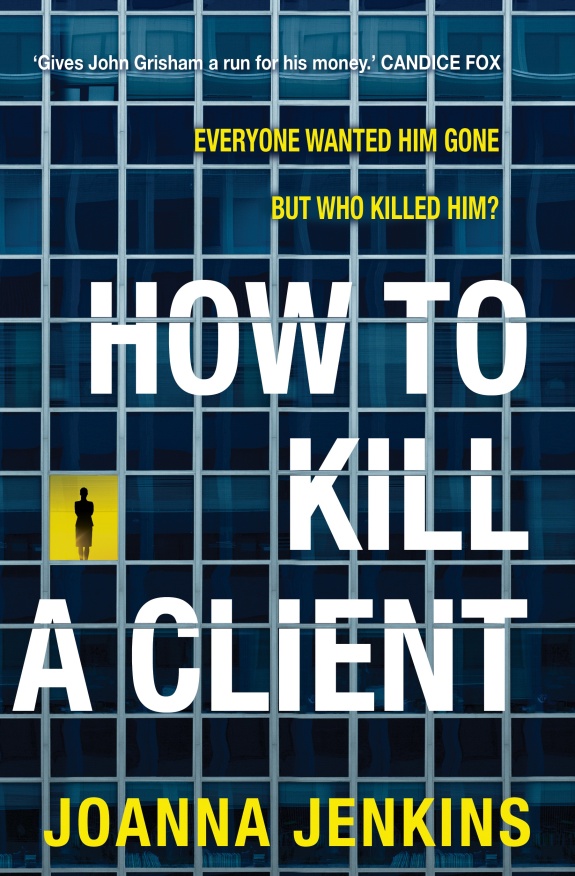
How to Kill a Client by Joanna Jenkins

How to Kill a Client Cover

Publisher: Allen & Unwin Australia (Trade Paperback – 31 January 2023)

Series: Standalone

Length: 384 pages

My Rating: 4.5 out of 5 stars

Amazon

Australian lawyer and debuting author Joanna Jenkins introduces herself in a big way with her fantastic first novel, the legal thriller How to Kill a Client, which takes the reader on a fascinating journey to the dark side of Australia’s legal profession.

As the in-house lawyer at a powerful international mining company, Gavin Jones oversees millions of dollars’ worth of legal contracts each year, including to the Brisbane office of the Australian legal firm Howard Green.  Using them to negotiate lucrative contracts throughout Australia, Jones has become one of Howard Green’s biggest clients and the money he controls ensures that everyone at the law firm treats him like a god.

But while everyone fawns over Jones and his power, no-one actually likes him.  A cruel, petty and vindicative man, Jones has messed with the careers and lives of everyone in his orbit, especially women, who he reserves a particular disdain for.  His actions ensured the suffering of everyone he has power over, including his wife, his employees, and the female partners at Howard Green, as he seeks to wreck lives, destroy careers and give himself the lifestyle he feels he deserves.

So when Jones dies suddenly and suspiciously, everyone he knew is a potential suspect; thanks to his dodgy dealings and underhanded tactics, they all had a motive to kill him.  As the police begin their investigation and the lawyers at Howard Green close ranks, it falls to partner Ruth Dawson, one of the few people without a motive, to protect her firm and its secrets.  However, when her investigation reveals proof of who killed Jones and other dark secrets her firm is hiding, will Ruth reveal the truth or will she bury it to protect her firm?

How to Kill a Client is a clever and tricky novel that really showcases Jenkins’s skill as a new writer.  Blending a fantastic and compelling crime fiction narrative with intense looks at the lifestyle of members of a successful law firm, How to Kill a Client was a gripping and interesting read that is really worth checking out.

I loved the cool story contained within this book which came across as part legal thriller, part personal drama surrounding high-level professionals, and part intriguing murder mystery.  The story dives into the chaotic world surrounding the legal firm of Howard Green and its clients and effectively introduces all the key players in this drama, who have their own views on the troubles to come.  Each primary characters is connected to the eventual victim, Gavin Jones.  Jenkins spends the first half of the book showcasing Jones’s terrible nature and the various ways they are messing with everyone.  Cleverly utilising multiple character perspectives, you are soon drawn into the various main characters’ lives and soon see all the various reasons why each of them may have wanted to kill Jones, as well as some of the suspicious steps some of them took.  Jenkins perfectly sets up everything in the first part of How to Kill a Client, and by the time you reach the halfway point, you are firmly enthralled by the narrative and want to see how the rest of the book unfolds.

When the eventual death happens (a real high point) the reader is left wondering whether it was an accident, a mistake, or a deliberate action, with the evidence pointing towards a murder.  However, due to the sheer range of suspects and motives, the story produces a twisty and fun range of plotlines that you need to navigate to get to the final conclusion.  Jenkins really produces an emotional and captivating second half as you try to find out who killed Jones and why.  There are some brilliant revelations unfurled here, and I loved how some cunningly hidden clues in the first half of the book were utilised in the final mystery.  I was very impressed with the final reveals around how the killing was committed and why it happened, and you will come away from this story very satisfied, especially as Jenkins builds in some excellent character moments and ensures that all the remaining characters get a fitting end to their arcs.  I found myself getting really caught up in Jenkins’ powerful and amazing story and I honestly powered through the last half of the book very quickly to see how everything ended.

Part of the reason why How to Kill a Client is such an effective read is that Jenkins introduces an excellent cast of intriguing and complex characters who are thrust into a variety of compelling situations throughout the course of the narrative.  Each of the main cast, who Jenkins effectively builds up and utilises in the plot, are quite damaged, desperate or concerned in their own unique way, while many of the supporting characters are notably selfish or manipulative for their own ends.  Characters like Ruth Dawson and Viv Harrison give some compelling and honest insights into how women are treated in this influential professional setting, while Anne Jones shows the harsh reality of a women trapped in an abusive relationship.  At the same time, there is a great collection of supporting lawyer characters who Jenkins uses to show off the range of people and personalities one is likely to experience in Australia’s legal services.

However, out of all the characters in this book, the one I must highlight the most is probably the murder victim, Gavin Jones, mainly because he is such a despicable figure.  Jenkins really goes out of her way to make Jones into one of the most unlikable and petty characters you are ever likely to find in fiction and boy does she succeed, perfectly capturing an insecure and manipulative narcissist who enjoys controlling people.  Not only does he go out of the way to try and ruin the careers of several characters just because they are women, but he also demands attention from the male characters to feed is ego, while also abusing and controlling his wife to make him feel good.  In a very short amount of time Jenkins builds Jones up into such an unlikable character that the reader finds themselves trying to reach into the book and kill him before the murderer does.  This naturally adds quite a lot to the mystery of the book, as his malicious professional actions, deceits, violence and puppy killing (seriously, that one really angered me), ensures that everyone he came in contact with had a reason to murder him.  The huge suspect pool around this unlikable character allows Jenkins to craft an impressive murder mystery and you’ll really get drawn into finding who finally snapped and killed this infuriating character.  This villainous figure, and other great characters, all added so much to the plot of How to Kill a Client and really got invested in their stories very quickly.

One of the other features of How to Kill a Client that I particularly enjoyed was the author’s detailed and intriguing examination of an Australian law firm.  Clearly utilising all her past experiences as a lawyer, Jenkins perfectly showcases how a firm would work and act in a variety of scenarios, and you really get the senses of the day-to-day chaos the individuals working there would experience, which adds a lot of authenticity to the story.  Jenkins also dives into the backroom drama and politics that surround such entities, as the various lawyers cut deals and fight for control over various projects or clients.  There is a particularly cynical edge to the book’s portrayal of legal firms in this novel, and Jenkins shows it to be a dark and unfulfilling practice at times, especially in some of the more elite firms.  The author really showcases just how bad these companies are when it comes to the treatment of women as two of the book’s central characters are female partners in Howard Green who have to constantly deal with their male colleagues’ condescension and manipulations, and there are several pointed scenes where the arrogant male managers fail to listen to the women even when they are right.  There is also a focus on the way law firms sycophantically woo potential clients, bending over backwards to get hired, and this adds some intriguing angles to the drama.  Finally, there is also quite a dark look at the demand for profits over people, as there is a constant fear of firings and layoffs, even for the best employees.  This critical presentation of a professional law firm is pretty striking and it results in some powerful scenes throughout the course of the book, especially as the people stuck in these firms often refuse to escape it, no matter how bad it gets.  I felt this examination of the profession in Australia added so much to the outstanding story and it helps to make How to Kill a Client really stand out.

Overall, How to Kill a Client was an outstanding and captivating debut from new Australian author Joanna Jenkins and one I had a wonderful time reading.  Blending compelling legal elements with a fascinating, character-driven mystery, How to Kill a Client has a brilliant story that takes the reader on a powerful and twisty journey.  Slick, emotionally rich, and filled with exceptional characters, How to Kill a Client is one of my favourite debuts of 2023 so far, and I cannot wait to see what epic reads Jenkins will release in the future.

Amazon

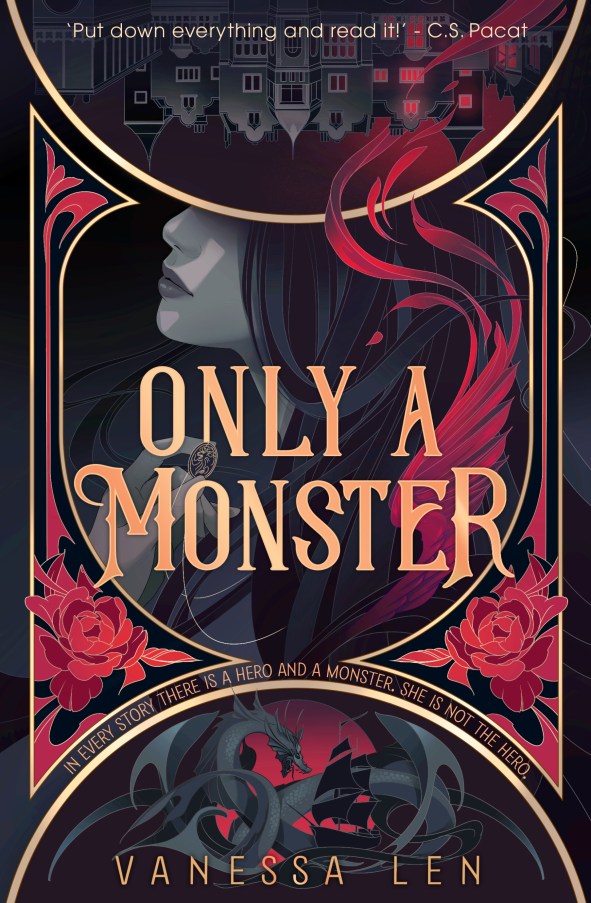
Quick Review – Only a Monster by Vanessa Len

Only a Monster Cover

Publisher: Allen & Unwin Australia (Trade Paperback – 1 February 2022)

Series: Monsters – Book One

Length: 410 pages

My Rating: 4.5 out of 5 stars

Amazon

Only a Monster by Australian author Vanessa Len is a particularly wonderful debut highlight of last year that I have been meaning to talk about for some time.  A brilliant and awesome young adult fantasy read, Only a Monster is an impressive novel that sees a shocked girl realise that everything she thought she knew about her family was a lie and that deep down she really is a monster.  Intense, incredibly clever, and beautifully inventive, Only a Monster was pretty damn epic and proved to be one of the best debuts of 2022.

Plot Synopsis:

With the sweeping romance of Passenger and the dark fantasy edge of This Savage Song, this standout YA contemporary fantasy debut from Vanessa Len, is the first in a planned trilogy.

It should have been the perfect summer. Sent to stay with her late mother’s eccentric family in London, sixteen-year-old Joan is determined to enjoy herself. She loves her nerdy job at the historic Holland House, and when her super cute co-worker Nick asks her on a date, it feels like everything is falling into place.

But she soon learns the truth. Her family aren’t just eccentric: they’re monsters, with terrifying, hidden powers. And Nick isn’t just a cute boy: he’s a legendary monster slayer, who will do anything to bring them down.

As she battles Nick, Joan is forced to work with the beautiful and ruthless Aaron Oliver, heir to a monster family that hates her own. She’ll have to embrace her own monstrousness if she is to save herself, and her family. Because in this story . . .

. . . she is not the hero.


Only a Monster
has an awesome story that takes a teenage girl on a dark journey of self-discovery and magical adventure as she tries to figure out who she is and what lies within her.  Len starts this book quickly, with a good introduction to central protagonist and point-of-view character Joan Chang-Hunt, who is part of the unusual Hunt family.  A shuddering moment of unreality reveals that she is really half monster, someone who has the ability to steal time from humans to power their time-travelling abilities.  Though Joan initially tries to avoid this revelation and enjoy time with her crush, Nick, an encounter with the malevolent Oliver family of monsters forces her further into their hidden world, especially when it is revealed that Nick is secretly a monster slayer destined to kill every monster in existence, including Joan.  After a brutal series of events that sees most of her family and the other monsters of London killed in a single, coordinated massacre, Joan flees into the past with her surviving cousin Ruth and the youngest member of the Oliver family, Aaron, hoping to find a way to save their families.  Their quest leads them to try and recover a legendary artifact that will allow them to rewrite time.  But to do so, they will need to go up against the mysterious King of the Monsters and his dangerous plot to control reality.  Caught between monsters and monster slayers, the characters are forced into a series of deadly encounters which will force Joan to choose whether to retain her humanity or embrace her inner monster.

Len really came up with something special in Only a Monster, and I personally loved how this outstanding debut unfolded.  The author keeps a pretty fast pace throughout the entire book, and you are constantly thrown from intense moment to intense moment as the protagonist and her companions attempt to stay ahead of their enemies and find a way to bring back their families.  I felt that Len did a great job introducing her compelling world, fantastic characters and unique magical elements, and you quickly learn to appreciate the author’s inventive ideas.  This is actually a pretty dark read, especially as it starts with a massacre and focuses on a group of magical beings who can suck the life force out of normal humans to power their abilities.  I personally deeply enjoyed this darker tone, as Len balances it well with her unique creative ideas and the emotional character development to create an intense and addictive read.  The magical time travel elements of this book are very well done, and the darker ideas behind the absorption of people’s time span helped to make it a malevolent gift that the protagonist is forced to use by necessity.  Despite this, it does produce some fun time travel jokes, and I had a laugh at some of the pop culture references that were utilised in the identification of the period.  Len also lays down a series of interesting twists throughout the story which are revealed at perfect moments and which help to produce a pretty amazing story.  However, the absolute highlight of this book had to be the epic ending that Len decided to traumatise her readers with.  While I’m not going to give away anything here, let’s just say it is pretty insane, and I was deeply impressed with how Len set it up and executed it.

The final thing I really need to gush about when it comes to Only a Monster is the deeply complex and damaged characters featured within.  Only a Monster features a fun crew of central protagonists, each of whom are going through their own epic journeys.  The primary focus is on central character Joan Chang-Hunt, a sweet and nerdy character who, in the course of a day, finds out she is a half-monster with life-sucking time travel abilities, and then witnesses her entire extended family getting massacred.  This naturally causes her to experience a lot of emotions and trauma as she constantly tries to come to terms with how her life has unravelled and changed forever.  The main focus of her character arc is the examination of her inner monster as Joan tries to get to grips on whether she wants her abilities, especially as they force her to drain away people’s time.  She is also dealing with intense guilt over her role in the massacre that destroyed her family, partially thanks to her relationship with Nick, and this clashes hard with her own concerns about being a monster.  All this, and more, ensures that Joan is forced to grow up a lot throughout the course of Only a Monster, and she must keep making harder and harder decision as she gets closer to crossing lines she doesn’t want to.  Her final actions in this book bring all these deep feelings close to the surface as she is forced to make a terrible decision in a heartbreaking and powerful scene.  Len did an outstanding job when it came to Joan in this book, and I look forward to seeing how she continues to develop in future entries in this series.

Two other major characters I need to highlight are Joan’s accidental companion, Aaron Oliver, and her crush/personal nightmare, Nick.  Both characters have pretty dark introductions to the story, especially as they end up trying to kill Joan in the starting chapters, but Len develops them separately as the book continues.  Aaron ends up working with Joan as they try to stay alive and find a way to save their families, and they become an intriguing and combative duo throughout the book.  While Aaron is initially arrogant and antagonistic, you soon see that this is a façade, as Aaron is also incredibly damaged due to the actions of his cruel family.  Len does a wonderful job of slowly uncovering this deeper side of Aaron throughout the course of Only a Monster, and the eventual bond he forms with Joan is a touching and moving part of the book, even if it isn’t destined to last.  Nick, on the other hand, is an outstanding villain for this story, especially when it is revealed that he is an unflinching and implacable monster hunter.  Despite the connection he had formed with Joan before the events of this book, mainly because he sees her as more human than monster, Nick soon starts fanatically hunting her throughout time and becomes determined to stop her at all costs.  Clever and dark reveals about Nick come to light as the book continues, painting him in a somewhat sympathetic light, but this doesn’t stop him from hunting Joan, which leads to an exceptional and shocking confrontation towards the end of Only a Monster that perfectly changes everything.  The powerful character work contained in these central characters, as well as the intense bonds they form with Joan, are such a key part of Only a Monster, and you will come away heartbroken and moved with how their storylines unfold.

Overall, I had an incredible time with Vanessa Len’s Only a Monster, and not only was it one of the best debuts of 2022 but one of the best young adult books of the year as well.  This brilliant and powerful fantasy read had an amazing story and you will be impressed and excited by the complex characters and deeply inventive fantasy elements that are worked into this compelling narrative.  Intense, dark, and full of hope, Only a Monster is an incredible read that comes highly recommended to anyone interested in seeing the start of an extremely promising career in fantasy fiction.  I am very excited to check out the sequel, Never a Hero, later this year, and if Len keeps up the amazing writing from Only a Monster, it is going to be particularly epic and exceptional.

Amazon

Quick Review – Black River by Matthew Spencer

Black River Cover

Publisher: Allen & Unwin Australia (Trade Paperback – 31 May 2022)

Series: Standalone/Book One

Length: 349 pages

My Rating: 4.5 out of 5 stars

Amazon

Fantastic new author Matthew Spencer presents one of the best Australian crime debuts of 2022 with the powerful and intense Black River.

Plot Synopsis:

A long, burning summer in Sydney. A young woman found murdered in the deserted grounds of an elite boarding school. A serial killer preying on victims along the banks of the Parramatta River. A city on edge.


Adam Bowman, a battling journalist who grew up as the son of a teacher at Prince Albert College, might be the only person who can uncover the links between the school murder and the ‘Blue Moon Killer’. But he will have to go into the darkest places of his childhood to piece together the clues. Detective Sergeant Rose Riley, meanwhile, is part of the taskforce desperately trying to find the killer before he strikes again. Adam Bowman’s excavation of his past might turn out to be Rose’s biggest trump card or it may bring the whole investigation crashing down, and put her own life in danger.


Black River
was a highly compelling Australian murder mystery thriller that I was lucky enough to receive a copy of a few months ago.  The debut novel of veteran Australian journalist Matthew Spencer, Black River was an impressive read that dove into the dark heart of Sydney with a brilliant mystery.

Spencer comes up with a pretty exceptional and clever mystery for his first book, as Black River sees a damaged journalist and a dedicated cop investigate a deadly killer haunting Sydney.  The investigation in question is a combination serial killer hunt and standard murder investigation, with the main question being whether a murder at an elite boarding school is connected to the larger case or whether it was the work of a copycat.  At the same time, there is also a captivating dive into the mysterious history of the fantastically dreary and haunting boarding school setting, which seems to have a deeper connection to the case, especially as central protagonist, Adam Bowman, has some major history there.  Spencer takes the investigation on several great tangents throughout the book and presents a powerful story with some clever twists and turns.  I loved the balance of clever investigation, deep character examination, and psychological twists as you try to determine who the killer is and whether the two cases are linked.  Spencer introduces some great side plots and red herrings to distract the reader from the solution, including some concerning revelations about the main protagonist.  The eventual solution to the mystery was extremely good, and I loved just how shocking the main reveal was, especially as there is a very cool twist surrounding the identity of the killer.  Everything came together extremely well, and I was spellbound throughout the entire book as Spencer delivered a great, dark Australian mystery. 

In addition to the excellent story, I loved Spencer’s amazing use of Sydney as a background setting to the intense mystery, especially the parts of the city that border the Parramatta River.  Watching the police characters slowly traverse the elegant river, trying to work out how the killer uses it to choose their victims, is a brilliant touch that is sure to bring a shiver to any readers familiar with the area.  I also need to highlight the cool private school setting where the book’s primary murder takes place.  The old elite school with its coating of history and tradition makes for a memorable background where murder and tragedy feel like they belong.  Spencer really built up this school throughout the book, no doubt using his own personal experiences of such educational institutions, and it played into the plot extremely well, especially when aspects of class, privilege and money start to influence the investigation.

Spencer caps this all off with a great cast of excellent and captivating characters that add to the power and impact of the story.  Most of the book focuses on the character of Adam Bowman, the damaged journalist who is dragged into the case thanks to his personal connection to the private school.  Bowman is forced to revisit some of the worst moments from his past in this book, which helps to turn him into quite an intriguing protagonist, especially as you begin to wonder just how connected he is to everything.  Bowman is well balanced out by police character Rose Riley, who serves as one of the primary investigators in the book.  Rose is a great foil to Bowman and acts as the professional member of the cast who keeps the police storyline on track.  I liked the connection and partnership that develops between Bowman and Rose in this novel, especially as it was lacking any romance.  They make a great team, even though Rose considers him a possible suspect, and it will be interesting to see if Spencer revisits these characters again the future.

Overall, Black River is a pretty impressive crime fiction debut that really made an impression on me in 2022.  New author Matthew Spencer came up with a dark and memorable mystery story that makes great use of its Australian setting and cool characters.  A brilliant first outing from an amazing new talent and a must-read for all fans of Australian murder mysteries.

Amazon

Desert Star by Michael Connelly

Desert Star Cover

Publisher: Allen & Unwin Australia (Trade Paperback – 8 November 2022)

Series: Ballard and Bosch – Book Four

Length: 393 pages

My Rating: 5 out of 5 stars

Amazon

Legendary crime fiction author, Michael Connelly, returns with another impressive and deeply enjoyable read that once again brings together two of his best protagonists for a compelling investigation, with Desert Star.

Connelly is an author who needs very little introduction, having spent the last 30 years dominating the crime fiction world.  His various outstanding works often cover several diverse subgenres of crime fiction, and his unique and captivating protagonists all exist in one shared universe, primarily set around Los Angeles.  Ever since I started properly reading crime fiction a few years ago, Connelly has been an author I have particularly enjoyed each year, and I have had a wonderful time reading several of his most recent books.  This includes the fantastic Mickey Haller legal thriller, The Law of Innocence, and the intense Jack McEvoy journalistic investigative read, Fair Warning (one of my favourite novels of 2020).  However, some of my favourite Connelly books have been the more classic police investigation novels, all of which have been part of the Ballard and Bosch subseries.

The Ballard and Bosch books are an intriguing set of recent novels that bring together Connelly’s two main police protagonists into one investigative team.  These two protagonists are female detective Renée Ballard and Connelly’s original protagonist, Harry Bosch, who has long retired from the LAPD but is still in the detective game.  These two form a fantastic team, and it is always fun to see their interesting mentor/mentee relationship as they investigate a series of cases.  There have so far been three Ballard and Bosch books, and I have had a wonderful time with each of them, including Dark Sacred Night, The Night Fire (one of my favourite books and audiobooks of 2019) and The Dark Hours (one of my favourite books of 2021).  Due to how awesome these last three books have been, I was quite excited to see that Connelly had a new one coming out in 2022, and that book, Desert Star, was one of my most anticipated reads for the second half of 2022.

Desert Star is set a year after the events of The Dark Hours, which saw Renée Ballard quit the LAPD after encountering sexism, corruption, and obstacles to solving her cases.  Lured back after being offered a dream job, Ballard now finds herself leading an elite cold cases unit which hopes to find justice for the many unsolved murders throughout Los Angeles.  While Ballard has already pulled together an effective team, there is still one person she needs to complete it: Harry Bosch.

While angry at Ballard following their last encounter, Bosch is lured back as a volunteer investigator after Ballard offers him help on the one cold case that has haunted him for years, the slaying of the Gallagher family.  Years ago, the entire family of four was found brutally killed, their bodies buried in the desert, and Bosch has never forgotten them or the fact that he was unable to find the man he knows killed them.  In return for access to the resources of Ballard’s unit, Bosch agrees to help Ballard solve her own cold case.

To keep their unit alive and well funded, Ballard needs to solve the rape and murder of a councilman’s sister years ago.  There are few avenues for a further investigation, and Ballard hopes that Bosch’s unique views may be the key to solving it.  However, after a chance clue connects their case to another brutal murder, Ballard and Bosch find themselves taking their investigation in some very dangerous directions.  At the same time, Bosch’s obsession with finding the Gallagher family’s killer grows even more, as he finds himself determined to catch him before it’s too late.  Can Ballard and Bosch solve their crimes, or will tragedy strike right at the heart of their partnership?

This was another outstanding crime fiction read from Connelly that combines a cool series of murder mystery cases with some intense character work to create and excellent story.  Desert Star gets off to a quick start, bringing back the two main protagonists and showing what changes have gone through their lives in the last year, as well as introducing the new cold case unit.  The reader is swiftly then brought across the two central murder cases that the protagonists are investigating.  The initial focus is on the murder of councilman’s sister, which has political connotations for the cold case unit, but Bosch also spends a large amount of time examining his personal case.  After some interesting breaks in the main case, Ballard and Bosch find themselves stuck looking far closer to home than they imagined, when clues point to a serial killer with connections to the very politician who created their unit.  There are some great twists and turns towards the centre of the book as they come close to their revelations, and the identity of this killer is pretty clever, with several interesting clues in the lead-up to the big confrontation.  At the same time, Bosch starts closing in on the main suspect in his case after revisiting witnesses from his initial investigation.  This leads him down a long, dark road as he contemplates what he’s willing to risk to get justice.  Everything leads up to a heart-pounding finale, which will leave readers on the edge of their seat as you honestly have no idea how far Connelly is going to take everything.  Desert Star ends on a particularly satisfying note, and it will be interesting to see where Connelly’s narratives go next, as he has left several intriguing storylines open.

This was a pretty addictive and fast-paced read, and it really doesn’t take long to get drawn into the two intriguing cases.  I loved the focus on cold case investigation in this book, which is a classic Connelly story element, and the author presents some excellent mystery elements.  I had a lot of fun with both cases, one because it was a seemingly unsolvable case with huge political issues behind it, the other because of one protagonist’s intense obsession with cracking it.  Connelly does a good job splitting focus between the two cases, which is made easier with the use of two perspective characters, Ballard and Bosch.  Both have very different views of the investigations, and the split in perspectives helps to ratchet up the tension in several scenes extremely well.  Connelly goes for a pretty fast pace in Desert Star, and you really find yourself powering through the narrative, especially once you get caught up in the excellent investigation arcs.  I loved how both cases turned out, and Connelly puts in some great build-up for both of their powerful conclusions.  Like most of the books in this shared crime universe, Desert Star can be easily read as a standalone novel, and no prior knowledge of either character is really required to enjoy it.  However, this latest Ballard and Bosch book is coming off a lot of emotional build-up and character development from the previous entries, so you’ll appreciate Desert Star more if you’ve checked them out first.  Connelly also throws in a ton of references to some previous novels, mainly some of Bosch’s older adventures, which established fans will really appreciate.  I loved Desert Star’s amazing story and how it was presented, as will all die-hard Connelly readers.

As always with a Connelly read, there is a noticeable and impressive focus on the central characters, with the author diving deep into his two point-of-view protagonists, Renée Ballard and Harry Bosch.  Both characters have a ton of history behind them at this point in Connelly’s joint universe, both as a team and as established, independent protagonists of their own novels.  As such, Connelly takes a little less time introducing them in Desert Star than he would previously, and instead starts highlighting their current issues and concerns, as well as re-establishing the teamwork between them.  While there is a little friction at the start of the book, mainly due to the fallout of The Dark Hours, Ballard and Bosch mostly get their investigative teamwork groove back and become an effective unit.  While Bosch does take on the mentor role in this book, it isn’t as prevalent as it has been previously, mainly because Ballard is now in control of her own unit and is the boss.  This forces her to supervise and try to control Bosch, with limited success, and this impacts their previous established dynamic.  At the same time, Ballard also relies on Bosch’s unpredictability and dislike of the rules to solve their more difficult, politically associated case, so that creates some odd friction and reliance that I rather enjoyed.

Most of the best character work in Desert Star revolved around old favourite protagonist Harry Bosch.  Bosch, who Connelly has aged up naturally over the last 30 years, is retired from the police, but he comes back to help Ballard with her case, and I loved seeing his maverick attitude reassert itself here.  However, he is primarily concerned with his own cold case, and swiftly reignites his obsession with finding the man responsible for the murder of a family.  This obsession soon starts to overwhelm him, and while he helps Ballard, he risks a lot to find his target while there is still time.  Connelly paints a powerful picture of Bosch in this book, and there are some big reveals about him that have been a long time coming.  While I won’t go into too much detail here, this is one of the more powerful and compelling Bosch narratives in a while, and Connelly does an outstanding job building up some tension around his storylines here.  Ballard also gets some interesting development in this book, and it was great to see her as a leader in this book, especially after spending so many years as the LAPD’s unwanted pariah for her attempts to report a superior for sexual harassment.  However, Ballard also encounters the darker side of leadership as she is forced to play politics and encounters various attempts to cover up the whole truth for expediency and self-gain.  This forces her to make some tough choices, and she becomes a bit more like her mentor, Bosch, with every case.  All this excellent character work really adds some impressive impact to Desert Star’s narrative, and this was one of the more significant novels for both of this amazing and iconic Connelly protagonists.

Michael Connelly continues to dominate the crime fiction scene with another epic and captivating read, Desert Star.  Bringing back two outstanding protagonists for a joint investigation, Desert Star contains a compelling and clever investigation into two fascinating murders.  Featuring a great story, some exciting pacing, and the amazing use of two complex protagonists, Desert Star was another exceptional read from Connelly that I had an awesome time reading. I can’t wait to see what Connelly writes next, and no doubt it will tie into the powerful moments raised in this incredible book.

Amazon

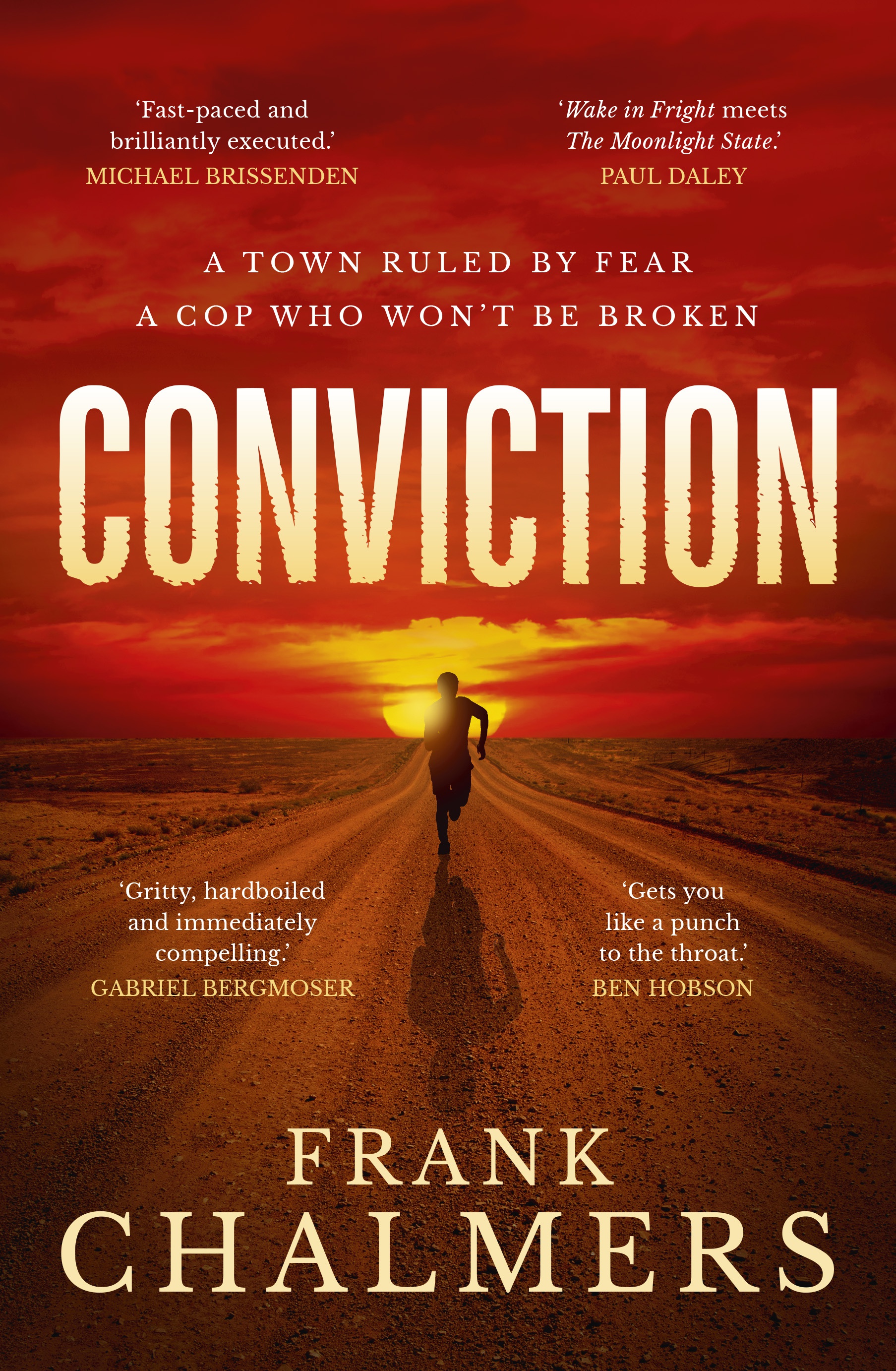
Quick Review – Conviction by Frank Chalmers

Conviction Cover

Publisher: Allen & Unwin Australia (Trade Paperback – 5 July 2022)

Series: Standalone/Book One

Length: 354 pages

My Rating: 4 out of 5 stars

Amazon     Book Depository

The Australian crime fiction debut hits keep on coming with the excellent and highly exciting first novel from Frank Chalmers, Conviction, with takes the reader on an amazing journey back into 1970s rural Australia.

Plot Synopsis:

A town ruled by fear. A cop who won’t be broken. A pulse-pounding debut thriller that pulls no punches.

A STUNNING NEW VOICE IN CRIME FICTION

Queensland in 1976 churns with corruption. When Detective Ray Windsor defies it, he is exiled deep into the state’s west. It’s easy out there to feel alien in your own country.

Royalton is a town on its knees, stricken by drought, riven by prejudice, and plagued by crimes left largely uninvestigated by the local police chief, Kennedy, and his elusive boss.

Mutual dislike between Kennedy and Ray gradually turns ugly as Ray and his new partner, Arshag, uncover a pattern of crimes that no one seems concerned about solving. But when two girls from local immigrant families are found dead and another disappears, Ray and Arshag are forced to take the law into their own hands. Not knowing who to trust, nor how deep the corruption runs, how long will it be before their lives are also threatened?

A spare and uncompromising crime thriller that pulls no punches.


Conviction
is a compelling and fun crime fiction thriller that sets a bold protagonist against a brace of criminals and dirty cops in a remote and hopeless town.  Essentially reading like a contemporary Australian western, with protagonist Detective Ray Windsor acting as the new sheriff in town, Chalmers crafts together a compelling read that is very easy to get through.

Conviction has a very interesting and complex story to it that sees the new cop arrive in the remote town of Royalton and get caught up in a series of crimes.  Not only is he forced to deal with the corruption of his peers and a local crime ring that has been stealing stock and damaging the local farms, but he is also investigating two recent violent deaths of young immigrant women.  This results in quite a fantastic series of investigation elements, as Detective Windsor attempts to solve these crimes while being constantly hampered by his colleagues.  The novel also deals with Ray’s attempt to integrate into the Royalton community, and he soon finds some unexpected connections and friends which draw him in.  Taking place over the course of several months, Conviction’s plot goes in some exciting and intense directions, and the reader is provided with intriguing plotlines that are loaded with action and excitement.  The eventual reveals lead to some big moments, and while the identity of the book’s villains is well-foreshadowed and not especially surprising, watching the protagonist attempt to overcome them is fun.  This ended up being a great and enjoyable piece of Australian fiction, and I had a good time getting through this awesome debut.

Like many impressive Australian crime fiction novels, one of the best things about Conviction is its excellent setting in a rural Australian town.  Royalton is a compelling location, which even in the 1970s, is starting to fall apart and feel the strain as more and more people left the country to live in the big cities.  Royalton has many of the best features that make up a small-town setting, from the sunburned countryside, the various surrounding farms, the neglected buildings within the town itself, as well as a colourful cast of people living in it.  I felt that Royalton in Conviction was a pretty good example of this compelling Australian setting, and the intriguing historical context makes it stand out from other recent Australian crime fiction books.  I particularly liked how Chalmers depicted the town as having a large migrant population, which is an accurate representation of most of Australia, and the stratification of classes that resulted based on nationality and culture gave the story another fascinating dimension that I felt added a lot to the story.  The farms surrounding the town are also under siege by an organised group of criminals who are working to bankrupt them for their own nefarious reasons, and this adds to the tension in Royalton.  All this proves to be rich ground for the intense and compelling crime fiction narrative that Chalmers crafted together, and I felt that this was an amazing setting for Conviction.

However, the best thing about Conviction was the eclectic and troubled group of characters who can be found within.  The author comes up with some great and flawed figures throughout Conviction, and the reader soon gets some intriguing views of the sort of people who would live in such a remote and troubled town.  Naturally most of the focus is on Detective Ray Windsor, who immediately finds himself in all manner of trouble once he arrives in Royalton.  Now, I must admit that I had a hard time liking Windsor in this book, as he is a bit of an over-the-top hero who is prone to violence at a drop of hat.  While this attribute does help him out in some of the situations, I was never too attached to him as a character, especially when he flew off the handle.  Still, I liked the compelling background that Chalmers attributed to Windsor, especially his dark childhood, and the portrayal of an honest cop sent out to the country as a punishment was well explored.  There are some great moments with Windsor in the book, and I did enjoy seeing his take on the case and the corruption going on around town.  The author also did a good job setting up Windsor’s growing attachment to Royalton, especially once he gets to know the people within.  This, as well as his commitment to getting the job done, eventually win the reader over, and you are rooting for him to succeed as the story continues.  The rest of the cast are also really good, and I deeply enjoyed some of the other characters featured within Conviction.  I felt that Chalmers did a particularly good job with the villains of this book, and it was satisfying to see Windsor standing up to them and finally bringing them to justice.  An awesome group of characters that Chalmers did a good job bringing to life.

Overall, I felt that Conviction was a pretty awesome novel that the debuting Frank Chalmers should be proud of.  This fantastic novel has a great crime fiction narrative that not only crosses into historical fiction territory but which works as an exceptional example of a rural Australian story.  All these elements work extremely well together, and I had a blast getting through Conviction, which is really worth checking out.

Amazon     Book Depository

The Unbelieved by Vikki Petraitis

The Unbelieved Cover

Publisher: Allen & Unwin Australia (Trade Paperback – 2 August 2022)

Series: Standalone/Book One

Length: 373 pages

My Rating: 5 out of 5 stars

Amazon     Book Depository

Debuting author Vikki Petraitis delivers an impressive and deeply moving Australian thriller skilfully set around the powerful subject of sexual violence with The Unbelieved.  This is Petraitis’s first novel, which has been receiving a large amount of buzz, including some awards.  As such, I was very interested in checking it out, especially as it had a very interesting plot, and this ended up being one of the most compelling and memorable Australian debuts of 2022.

Senior Detective Antigone Pollard has spent many years investigating terrible and destructive crimes in Melbourne.  After one case goes horribly wrong, Antigone decides to seek the quieter life and moves to her grandmother’s house in the Victorian coastal town of Deception Bay, where she was raised.  However, her attempts at finding peaceful policing quickly go up in smoke when a series of drug assisted sexual attacks occur throughout Deception Bay and the neighbouring towns.

After a sting operation at the local pub reveals a suspect who attempts to drug her, Antigone believes that they have perpetrator dead to rights.  However, they are soon forced to let him go when the male witnesses to the event refuse to cooperate and her superior attempts to brush the case under the rug.  Reaching out to the community, she finds a wall of silence and shame surrounding sexual crimes in Deception Bay, which has failed to lead to any convictions in the town.

Determined to stop the attacks no matter what, Antigone continues her investigation against her superior’s wishes, and uncovers a series of attacks across town.  Attempting to break through the fears of the women of Deception Bay, Antigone and her partner begin closing on the information they need.  However, Antigone also finds herself under threat from all corners and must work swiftly before she is shut down for good.  But can she succeed before another girl is attacked, and what happens when the darkness from her past rears its ugly head again?

Wow, I was not prepared for just how good and moving The Unbelieved was going to be.  Vikki Petraitis has really shown off her skill and talented as a writer with her first book, presenting a powerful read on an extremely relevant subject that strikes the reader hard.  Featuring an exciting and very clever mystery storyline that also intensely examines violence against women in Australia, The Unbelieved is an outstanding novel that gets a full five-star rating from me.

At its centre The Unbelieved has an exceptional multifaceted narrative that follows detective Antigone Pollard as she finds herself investigating terrible events occurring around Deception Bay.  Detective Pollard initially attempts to stop a series of sexual attacks, but she soon becomes involved in several other cases while trying to fit in to the community, despite opposition from some of its male residents.  As her case develops and more victims come forward, Pollard also finds herself investigating a suspicious death, a historical murder-suicide, a series of domestic violence cases, and more.  These investigations are often hampered by her superior and problematic members of the community, and Pollard also finds herself being threatened or attacked as she attempts to do her duties.  At the same time, elements from her past in Melbourne are revealed through a series of well-crafted flashbacks that expand on her motivations and begin to bleed into her current cases, especially once a prior suspect is brought back into the light.

Petraitis takes the story in some interesting directions throughout the course of The Unbelieved, and I loved the fantastic combination of the compelling yet heartbreaking cases that are explored throughout.  This investigation angle is well balanced with the character development of the protagonist, as well as the emotional exploration of several interesting supporting characters, and you really get involved in the narrative and the character’s fates as The Unbelieved continues.  The story becomes more complex as the book unfolds, and the protagonist finds herself caught up in a devious local conspiracy that seeks to take her down at the same time.  There are some brilliant twists and reveals throughout the plot, and I loved how several of the storylines developed.  The entire book was very well paced out, and I found myself getting really absorbed in so many key elements of the plot, especially as the author blends compelling investigations with dark, emotional examinations of the victims.  This all leads to up to a moving, thought-provoking and extremely satisfying conclusion that will leave every reader caught up in the plot happy.  I particularly enjoyed the final twist that Petraitis left the story on, and the way it was hinted at through the rest of the novel was extremely clever.  I honestly had such a remarkable time reading this great narrative, and there are so many excellent story elements to enjoy within it.

Easily the most distinctive part of The Unbelieved is the author’s detailed and powerful examination of the current situation of sexual and domestic violence in Australia.  Most of the book’s plot revolves around the investigation and attempted conviction of multiple sexual predators, and the author does not hold back in showcasing just how dark and damaging these sorts of cases can be.  Multiple viewpoints of the impacts of these crimes are examined throughout The Unbelieved, and readers are in for some emotionally devastating moments as you see so many of the different aspects of them.  There is a particularly good and dramatic look at how police investigating sexual crimes are impacted, especially when they are unable to get justice for the victims.  More importantly, Petraitis spends a lot of time exploring how Australian society perceives sexual crimes, and the book is loaded up with characters who don’t see them as a big deal or attempt to blame the victim.  There are multiple interludes within The Unbelieved that show short transcripts of interviews with people involved with these crimes, either as a witness or the accused, and the unguarded and unsupportive comments they make are both enlightening and a little infuriating.  Throw in some comments and interviews by the author’s accurate depiction of a typical Australian radio shock jock, which really boil the blood, and you have an excellent depiction of some of the main issues and attitudes towards sexual crimes, such as victim blaming.  These issues become a key part of the book’s plot, especially when the system fails so many victims, and it leads to some extremely emotional and painful moments.  I felt that Petraitis did a spectacular job working this confronting subject into the plot of her novel, and it certainly gave The Unbelieved a powerful edge that is hard to ignore.

I also really appreciated Petraitis’s examination of regional towns in Australia, which proves to be a great setting for this compelling book.  Rural and remote settings are always an excellent feature of Australian fiction, and I think that Petraitis used it extremely well in The Unbelieved.  The transfer of a big-city cop to the small town she grew up in results in a great change of pace for the protagonist, and the change in priorities and issues helps to add to the narrative complexity of The Unbelieved.  The use of this small-town setting comes into play throughout The Unbelieved in multiple intriguing ways, from the constant spread of rumours, the lack of secrets, and the fact everyone knows each other, and I liked how this affected several aspects of the police investigation plot line.  However, the most important part of this setting is the wall of silence that springs up during the book.  Many people know about the sexual and domestic violence going in in Deception Bay, but are unwilling to talk for various reasons, often keeping secrets from the police.  This becomes a key complication in the investigation, and it was fascinating and moving to see the protagonist attempt to overcome it.  As such, I felt that this small-town setting worked extremely well for The Unbelieved’s plot, especially with its specific criminal focus, and it definitely enhanced the story for me.

The final thing that I need to highlight is the excellent protagonist that Petraitis works the story around in Detective Antigone Pollard.  Pollard is an emotionally charged badass who has returned to her hometown after a devastating case in Melbourne, and now finds herself amid all manner of dark criminal activity.  While she is raw from the impacts of her last case and there are some dramatic moments surrounding here, the author portrays her as a practical and very capable cop, who takes charge and starts to clean up Deception Bay.  I really do think that Petraitis hit the right balance of vulnerable and determined in Pollard, and you grow quite attached to her as the book continues, especially once you learn the full extent of her last case.  Combine Pollard with several other fantastic characters in The Unbelieved, such as her partner, Detective Senior Constable Warren “Wozza” Harvey, and her loyal dog, Waffles, as well as some slimy villains, and you have a great cast for The Unbelieved that really add to the overall quality of this remarkable book.

With her impressive debut novel, The Unbelieved, Vikki Petraitis has set herself up as an exceptional talent in the Australian crime fiction game and she is a major new author to watch out for.  The Unbelieved has an outstanding crime fiction narrative to it that does an amazing job balancing a compelling mystery storyline with powerful dive into a sensitive and highly relevant subject.  Thanks to its well-written plot, clever mystery, distinctive setting and great characters, The Unbelieved comes together perfectly, and it proves to be extremely hard to put down.  While this book might be best avoided by those readers triggered by depictions of sexual violence, I cannot recommend this powerful novel enough, and it stands as one of the better Australian crime fiction books and debuts of 2022 so far.

Amazon     Book Depository

Quick Review – Esther’s Children by Caroline Beecham

Esther's Children Cover

Publisher: Allen & Unwin Australia (Trade Paperback – 3 May 2022)

Series: Standalone

Length: 361 pages

My Rating: 4.25 out of 5 stars

Amazon     Book Depository

Prepare to read about one of the more unique experiences of World War II with an excellent and moving historical drama, Esther’s Children by fantastic Australian author Caroline Beecham.

Plot Synopsis:

Inspired by the extraordinary life of Esther Simpson, Esther’s Children is a powerful novel of love and courage.

Austria, 1936: Esther ‘Tess’ Simpson works for a British organisation that rescues academics from the cruel Fascist and anti-Semitic regimes taking hold in Europe. On a dangerous trip to Vienna to help bring aid to Europe’s threatened Jewish scholars, Esther meets Harry Singer, a young Jewish academic and musician.

Tess works tirelessly to rescue at-risk academics and scientists from across Europe, trying to find positions for them in Britain and America. In 1938, she secures employment for Harry at Imperial College, London, their love affair intensifying as the world heads into war, yet they are separated once again as Britain moves to intern European refugees.

With Harry detained on the Isle of Man while still waiting for news of his parents, Esther and the Society plead with the government for the interned scientists’ release. When Harry is eventually liberated, his future with Esther is by no means secure as he faces an impossible choice.

Confronting the horrific dangers of World War Two with remarkable integrity and bravery, Esther Simpson is revealed as an exceptional heroine.

This was a rather great read from Caroline Beecham, who once again plumbs the highs and lows of history’s greatest struggle to produce an excellent read.  Beecham, who has written several other intriguing historical dramas, including 2020’s Finding Eadie, is a talented Australian author whose novels usually feature an intriguing hook around World War II.  Her latest novel, Esther’s Children, is probably my favourite one of her books so far, and tells another powerful and intense story about love, survival, and the evils committed during war time.

In Esther’s Children, Beecham has written a particularly clever and compelling story that follows the life of real historical figure Esther Simpson.  Adding in some fictional and dramatic details, Esther’s Children turns into a multi-year tale that showcases Esther’s work as she attempts to rescue academics from Nazi controlled countries in the lead-up to the war and beyond.  In particular, it follows her interactions with fictional character/love interest Harry Singer, as she attempts to get him out of Vienna and into England.  This forms the basis for an intense and heartbreaking story as these two ill-fated lovers are forced to ] contend with the obstacles placed before them, including the encroaching war, the machinations of the Nazis, the bureaucracy surrounding asylum seekers coming to England, and subsequent prejudice faced even after Harry has reached safety.  Told using a split perspective between Esther and Harry, you get an intense inside look at both characters as they attempt to overcome the odds keeping them apart, while also experiencing some of the horrors brought on by the Nazis and others, with the reader hit by constant frustration at everything that happens to these characters.  This entire story moves at a brisk and intense pace, and you will be swiftly drawn into the clever and touching narrative that is driven by these two characters’ experiences.  The way everything turns out is both poignant and heartbreaking, and I felt that this was a great and captivating read.

Esther’s Children’s dramatic story is greatly enhanced by the captivating and fascinating historical details that Beecham has set it around.  The author has clearly done a ton of research to pull her story together, and I was very impressed with some of the unique elements it contains.  Not only do you have some fantastic, if very disturbing, depictions of the Nazi movement taking over Austria, but the story goes out of its way to highlight the work done to get certain (primarily Jewish) academics out of Europe.  Focusing on the work of Esther Simpson, a unique figure from history who I was pleased to learn a lot about in this novel, you see the Society for the Protection of Science and Learning attempt to help these academics emigrate and find them jobs in England’s educational and government settings.  This novel really focuses on the impact that Esther had for many famous academics (her children, many of whom appear in the plot) and I found it fascinating to learn about her work and the people she helped.

However, I personally thought that the most fascinating historical aspect of this book was the subsequent imprisonment of these scholars and scientists by the English once the war broke out.  I must admit that I was unaware of just how widespread and unfair the interment of German nationals in England was during the war, and I was very surprised to find out that so many refugees and fleeing Jews were also incarcerated in places like the Isle of Man, often alongside Nazi sympathisers.  Shown directly through the eyes of one of her protagonists, Beecham paints a pretty grim picture of the terrible life that these incarcerated people would have experienced, and it was pretty heartbreaking to see all these people who had already lost everything get locked up by the country they were trying to help.  I really appreciated the powerful emotional weight that the author loaded into all the historical scenes, and they really work to expand on the dramatic and romance elements of the entire novel.  I cannot wait to see what unique historical element Beecham will explore in her future novels, but I am sure it will be fascinating.

Overall, Esther’s Children is a particularly powerful and captivating read that really highlights Caroline Beecham’s great skill as a historical drama author.  Expertly combining intriguing and dark elements of history with a dramatic tale of love, loss and regret, Esther’s Children becomes harder and harder to put down as the story progresses and you are drawn into the character driven narrative.  An excellent historical drama that is really worth checking out.

Nine Lives by Peter Swanson

Nine Lives Cover

Publisher: Faber (Trade Paperback – 29 March 2022)

Series: Standalone

Length: 321 pages

My Rating: 4.5 out of 5 stars

Amazon     Book Depository

Prepare yourself for an engrossing and captivating mystery from the talented Peter Swanson, with the standalone read Nine Lives.

Back in 2020 I was lucky enough to receive a very cool book called Rules for Perfect Murders (also released as Eight Perfect Murders), written by a new-to-me author, Peter Swanson.  This fantastic novel focused on a bookshop owner who discovers that a blog list he wrote about the most perfect murders in crime fiction was being used as inspiration by a serial killer.  I deeply enjoyed this awesome concept, not only because it was very unique read that served as a fantastic love letter to multiple classic crime fiction authors/novels, but also because the idea of a killer using a blog post to plan their crimes appealed to me as a blogger (think of all the Star Wars themed murders you could plan if you used my lists as a basis for crime).  I ended up having a great time reading Rules for Perfect Murders and have been interested in reading more stuff from Swanson ever since.  I recently got the chance when I received a copy of his latest novel, Nine Lives, a few weeks ago, and I quickly jumped at the chance to read it, especially as it had another unique plot.

On a seemingly normal day, nine random strangers receive a mysterious envelope at their homes.  Each unmarked envelope is unremarkable except for its contents: a single sheet of paper with nine names typed upon it.  None of the recipients recognise any of the names upon the sheets, except their own, and are baffled by the seemingly random piece of mail.  Most assume it to be an advertisement scam or a silly prank and start to go about their day, forgetting about the strange letter they received.  However, one of the recipients, an old man in Maine, is brutally killed the moment he receives his letter.

As the local police and FBI agent Jessica Winslow, who herself received one of these letters, attempt to investigate and discover the connection between the names, another person on the list is killed, this time in Massachusetts.  Quickly determining that the others on the list are at risk, the FBI jumps in and tries to protect the potential victims, but they soon discover they are facing off against an extremely clever murderer capable of killing their victims in elaborate ways.  But why is he targeting these specific people?

Desperate to find the identity of the killer before everyone on the list ends up dead, the investigators and the potential victims each attempt to find the connection between themselves.  However, it appears that they have nothing in common, as they live across the country from each other and have a range of jobs and backgrounds.  The truth behind the killings lies in a dark place, and the lengths the killer will go to for their revenge will rock everyone to their core.

This was a great murder mystery novel from Swanson, who really amped up the twists and turns to create a compelling and intriguing read.  Nine Live’s story starts off with the various characters each receiving the relevant list with their names on it in several short chapters told from their relevant perspectives, and I found this interesting introduction to be good way to grab the reader’s attention.  From there you start to get to know the characters in some detail, except for a couple of people on the list who are efficiently and systematically killed off.  This serves as a pretty good basis for this story, and I loved getting to know the various characters, as well as seeing the cool and clever investigation angle that forms around it as the FBI attempt to find the killer.  Swanson sets the entire narrative/mystery up extremely well, and there are some very clever moments at the start as important clues and hints are laid down for the observant reader.

The first few kills come quick to set the rest of the characters into a panic, and once you get to the third or fourth person on the list you start to have an idea of what the killer is after.  I felt that the novel started to get really good towards its centre, as there are some big surprises as certain events really did not turn out the way I expected.  Once a particularly massive and game-changing twist occurred, I was absolutely hooked and I honestly powered through the remainder of the novel extremely quickly.  The following plot falls into place extremely well, and I loved seeing the entire mystery unfold, especially as Swanson keeps the twists coming as more of the characters you get to know are targeted by the killer.  While I was able to see elements of the solution from a distance, I was pleasantly surprised by several reveals towards the end, and I really appreciated how well Swanson set everything up throughout the novel.  The book comes to an excellent end reminiscent of a certain classic crime novel, and readers will come away very satisfied with how this standalone read turned out.  I did think that Swanson went a twist too far, as a big reveal in the last four pages was completely unnecessary and the book would have honestly been better if the author had just left it out.  Still, this was a really impressive and fun mystery, and I had an absolutely brilliant time getting through it.

There are a lot of fun elements to this book that really help enhance the story and turn Nine Lives into an excellent read.  However, my favourite is probably the way that Swanson turns it into a massive homage to a specific classic murder mystery novel.  While I won’t reveal which one, I will say that Swanson did an extremely good job of utilising its iconic elements throughout Nine Lives.  Just like he did in Rules for Perfect Murders, Swanson provides a detailed examination of this classic novel through his character’s eyes, especially once they themselves start to realise the similarities between it and their own situation.  These similarities are slightly more subtle at the start of the book, but by the time you get to the end the homages are very striking and cleverly tie into some of Nine Lives’ big moments.  These intriguing connections and clever recycling of story and writing elements from this iconic crime fiction novel worked really well in Nine Lives, and I felt that it complemented the rest of Swanson’s story perfectly, helping to turn it into a particularly great read.  Swanson also throws in some references and discussions about similar notable mystery novels at various parts of Nine Lives to throw the author around and to highlight his passion for the classics.  I love how the author takes the time to reference his personal favourites in his own works, and hardcore crime fiction fans and aficionados of classic murder mystery novels will no doubt have a blast seeing how Swanson utilises parts from a famous novel throughout Nine Lives.

I also loved the fantastic characters contained within Nine Lives, and Swanson achieves quite a lot with them.  Even though there are 10 or more point of view protagonists in a relatively short novel, Swanson ensures that each character stands out.  I felt that each protagonist was set up extremely well and they have their own quirks and back stories.  You swiftly get to know all the main characters as the book progresses, even with the quick changes between perspectives, and once you have made a good dent into the book, the reader finds themselves getting attached to several of them.  There are some great character arcs featured throughout the novel, and I liked how these distinctive characters came together and interacted.  The focus on FBI agent Jessica Winslow, herself a person on the list, works to set up the investigative angle of the novel, and her storyline goes in some very interesting directions.  I also quite enjoyed the intriguing storyline around Ethan Dart and Caroline Geddes, who meet because of the list and form a moving, if inevitably tragic, relationship.  The antagonist is also set up brilliantly throughout the novel and I found their motivations and methods to be expertly portrayed and explored as the narrative continues.  None of these characters are perfect or particularly have their life together, and it fascinating to see how a random list of names can change this for better, or more likely, for worse.  Swanson really does some great character work in Nine Lives, just don’t get too attached as your favourites may not survive.

Peter Swanson continues his entertaining and unique blend of crime fiction with the extremely clever and highly addictive Nine Lives.  Featuring a compelling, wide-ranging mystery and some brilliant references to classic murder mysteries, Nine Lives proves to be highly entertaining and memorable read, and I really had fun getting through it.  A great novel to fulfil all your murder mystery needs, Nine Lives comes highly recommended and will not disappoint.

Amazon     Book Depository

Black Drop by Leonora Nattrass

Black Drop Cover

Publisher: Viper (Trade Paperback – 15 February 2022)

Series: Laurence Jago – Book One

Length: 343 pages

My Rating: 4.25 out of 5 stars

Amazon     Book Depository

Intriguing and talented new author Leonora Nattrass presents a compelling historical thriller debut with Black Drop, a fantastic novel that drags readers into the conspiracies and issues of late 18th century London.

In July of 1794, as the terror of the French Revolution reaches its height and the war on the continent goes poorly for the British army, uncertainty and fear of violent change infect the people of London.  For Laurence Jago, clerk to the Foreign Office, his position is even more uncertain that those around him.  A young man with hidden French heritage, Jago fears the day that his connections to his mother’s nation will be discovered, especially after spending years serving as a spy for sinister French agent Aglantine.

Now believing himself to be free from Aglantine’s employment, Jago is thrust into an untenable situation when vital confidential information about the British army is leaked from his office to the press.  Suspected by his peers of leaking the information and under investigation, Jago fears that all his secrets and former dealings are about to come out.  His problems are only further compounded when he discovers the body of a fellow clerk in his rooms, supposedly dead by suicide.

When the blame for the leak is shifted onto the dead man, Jago is freed of the suspicion against him.  However, Jago knows that the dead clerk was incapable of stealing the letter and believes that he was murdered.  Determined to find out the truth behind the death, Jago finds himself investigating the highest level of the British civil service and their political masters.  Out of his depth and thwarted at every turn, Jago will risk everything to root out the culprit before they strike to disrupt England again.  However, can he succeed without revealing his own dark secrets, or will Jago hang as a traitor instead of the murderer?

Black Drop is an excellent and clever novel that I had a great time reading as Nattrass perfectly combines a compelling spy thriller/murder mystery storyline with intriguing and detailed historical fiction elements.  This resulted in one of the more unique and fantastic debuts of 2022 and I really enjoyed Black Drop’s impressive story.

This awesome debut novel has an excellent story that expertly combines intriguing spy thriller and murder mystery elements with a character driven historical narrative to create a compelling and impressive read.  Set throughout key events of 1794 and told as a chronicle from the perspective of central character, Laurence Jago, Black Drop presents the reader with an intriguing tale of murder, political machinations and the threat of revolution at the heart of the period’s government.  Nattrass sets the scene perfectly at the start, introducing the key characters while also highlighting the feelings of unrest and dissent as the fear and inspiration from the French revolution hits London.  From there, the story starts to unfold in some interesting directions as the protagonist finds himself involved in political and espionage adventures while also investigating the murder of a fellow clerk, which appears to be connected.  At the same time, the slow-paced story utilises some intriguing aspects from the protagonist’s life as he struggles with dark secrets from his past that have potential implications on the current events.

Following this introduction and the initial parts of the narrative, the middle of Black Drop starts to bring in certain key historical events and figures, which results in some fantastic moments and character interactions, especially once an antagonistic figure becomes more prominent.  While the middle of this novel did drag in places, I felt that Nattrass was providing the reader with the right blend of intrigue, mystery, historical detail and character growth to produce a great overall story.  You really get to grips with the protagonist and the key aspects of the setting during this part of the book, especially when Jago hits a major personal downturn earlier than expected, and interesting reveals enhance the reader’s attachment to the mystery.  The story really starts to pick up once it gets to Nattrass’s recreation of the infamous trial surrounding supposed radical and revolutionary Thomas Hardy.  The ridiculous, and mostly accurate depiction of the trial (with certain elements from other trials thrown in for greater effect), proves to be a great high point for the novel, especially as other key parts of the plot are slotted in perfectly around it.  I did feel that the novel started to come undone around the conclusion a little, especially when it came to the big reveal.  While there were a couple of good twists around certain characters, the solution to the main mystery and the intrigue seemed a little weak to me, and I was a little disappointed with how it turned out, especially as you barely get to see anything about the final confrontation.  Still, this did not affect the overall quality of the story too much, especially as the author throws in an excellent wrap-up for the protagonist’s storyline in this novel which has a lot of potential for a sequel.  While much of the story can be a little sluggish and lacking a lot of action, I had a great time getting through Black Drop, and I loved how the excellent interplay of elements came together so well.

One of the most distinctive parts of Black Drop is the sheer amount of fascinating historical detail that was fit into the story.  Nattrass has clearly done her research on the period and the reader is presented with a fantastic and powerful view of London in the late 18th century.  Not only are there some brilliant and vibrant depictions of historical London but the reader gets some fascinating views into the inner workings of the government at the time.  Substantial parts of the book are dedicated to examining the civil service and the political hierarchy of the day, with multiple influential figures featured as supporting characters.  This proves to be a deeply fascinating part of the book, and I loved how Nattrass was able to weave these intriguing details into the thriller plot, becoming a key part of Black Drop’s story.  I also deeply appreciated the way in which Nattrass explores the social and political issues of the day, especially where it relates to the concerns in London about an uprising similar to what happened in France.  As such, you get a full spectrum of personalities from across London, as royalists and loyalists clash with potential radicals who are targeted by the worried government.  This all cumulates in the fantastic court case of Thomas Hardy, a shoemaker accused of radical actions and attempted rebellion.  This historical trial is expertly recreated by Nattrass to include all of its most interesting parts, including several extremely ridiculous elements from history (a blowgun murder conspiracy).  Nattrass also cleverly combines in some elements from related trials that occurred around the same time as the Hardy case for some amusing dramatic effect, and this extended sequence ended up being one of my favourite parts of the novel.  The overall hint of discontent by many members of London’s society, as well as the innate fear of the established institutions, is portrayed beautifully, and you get a great sense of the public issues during this period.  All these impressive historical elements are handled extremely well by Nattrass, and while it did get a tad tedious in places, it was an excellent part of the book that I deeply enjoyed.

To back up her unique historical tale, Nattrass has furnished Black Drop with a compelling array of characters with some complex and compelling character arcs.  This book actually contains a great combination of original characters and historical figures, with many major figures in 18th century British politics and the civil service featured in substantial roles throughout the book.  Not only does this brilliantly enhance the already substantial historical details of Black Drop, but it also results in some fascinating interactions and depictions as the fictional characters, including the point-of-view character, observe them.  Due to the complexity of the story, Black Drop makes use of a pretty large cast of characters, and while a few of them blend together, most come across as pretty distinctive with some interesting and fun character traits.

The best character of Black Drop is the protagonist Laurence Jago, who also serves as the book’s sole point-of-view character.  Jago turns out to be a particularly complex and damaged individual whose emotional attachment to the case and the state of London society provides some intriguing drama and insight into the events of the book.  Already made quite distinctive by his unique green-glass spectacles, Jago proves to be an impressive and captivating figure, especially as he has some major issues.  Secretly half-French, Jago lives a conflicted and fear-filled life, especially with the intense anti-French attitudes sprinkling the city.  This, combined with his foolish youthful dalliance of being a spy for France, ensures that he has a powerful sense of guilt, and is constantly worried about being discovered, especially once other accusations are made against him.  The discovery of a dead friend, combined with his guilt, the pressures of work, and the constant fear of discovery really strain his mind, and while he doggedly tries to find out the truth behind the murder, he starts to crack and nearly blows his cover.  Watching him trying to hide his own secrets while uncovering the lies and machinations of those around him becomes pretty intense, especially as you grow quite attached to this damaged soul.  His mental state further deteriorates once he becomes addicted to Black Drop (an opium concoction), which dulls his worried and troubled mind, while also leaving him lethargic and susceptible to danger.  This proves to be a serious handicap to his abilities, and it is fascinating to see him try to balance all his issues with the hunt for the truth.  All these issues and concerns result in a very conflicted and emotionally drained character, who Nattrass portrays perfectly, and it was very powerful to see Jago’s entire story unfold.

Aside from Jago there is a rich cast of supporting characters, each of whom add to the story in their own distinct way.  I particularly want to focus on two who ended up being the best supporting figures in different ways.  The first of these is William Philpott, a fiction British reporter character, who arrives in England from and extended stay in America and sets up his paper and family residence next to Jago’s lodgings.  An eccentric, rambunctious and slightly uncouth fellow, Philpott stands in stark contrast to the various stuffy characters that make up the majority of the cast, which ensures that the reader is quickly drawn to him.  Not only does he serve as a lighter character in the novel and a firm confidant for the protagonist, but you also get an interesting viewpoint into his changing feelings about the events occurring throughout London.  Philpott starts the novel as a strong, patriotic figure who fully intends to support the government in his paper when it comes to the court cases against the supposed radicals.  However, upon viewing some of the injustices they are committing, such as their harassment of and unfair case against Thomas Hardy, Philpott becomes more sympathetic, supporting the dissenting voices and writing fair accounts of the proceedings.  This interesting middle ground perspective on the historical events of the book proves to be extremely interesting, and I loved how Philpott’s unique storyline unfolded, especially as it results in him throwing some valuable lifelines to the troubled Jago.

The other character of note is real-life historical figure and future British Prime Minister George Canning, who serves a much more antagonistic role in this novel.  Canning, who at this point in the time period was a young MP with connections to the sitting PM, William Pitt, gets embroiled in the case quite early in the novel, thanks to his connection to the dead man and the suspicions surrounding Jago.  Portrayed in Black Drop as an uncaring and malicious man, Canning is a menacing antagonist for much of the novel, constantly butting heads with Jago and complicating his investigation.  I loved the use of this intriguing historical character, especially as Nattrass turns him into a very unlikable figure, who you cannot help but hate.  Not only does Nattrass do a great job of examining some of the historical elements surrounding him at this period of time but she also layers in some fantastic references to future events in his life, such as the infamous duel that he would eventually take part in.  However, his real benefit is the impact he has on the story and the deep rivalry he forms with the protagonist.  Watching these two battle it out in different arenas is very amusing, especially as Jago is constantly outmatched by this influential politician, and I do hope that we see more of Canning in future books in this series.  These great characters, and more, all add a great deal to this intriguing novel, and I really appreciated how fantastic and compelling they turned out to be.

Overall, Black Drop by Leonora Nattrass is an impressive and captivating piece of historical crime fiction that I am really glad I decided to check out.  Making excellent use of some fascinating historical elements, Nattrass did an amazing job of producing a clever and enjoyable spy thriller/murder mystery storyline in 18th century London, which came together very well.  Filled with great historical events and compelling characters, Black Drop was an absolute treat to read, and I look forward to seeing how Nattrass’s next book will turn out, especially as the sequel, Blue Water, is apparently set for release in October this year.

Amazon     Book Depository