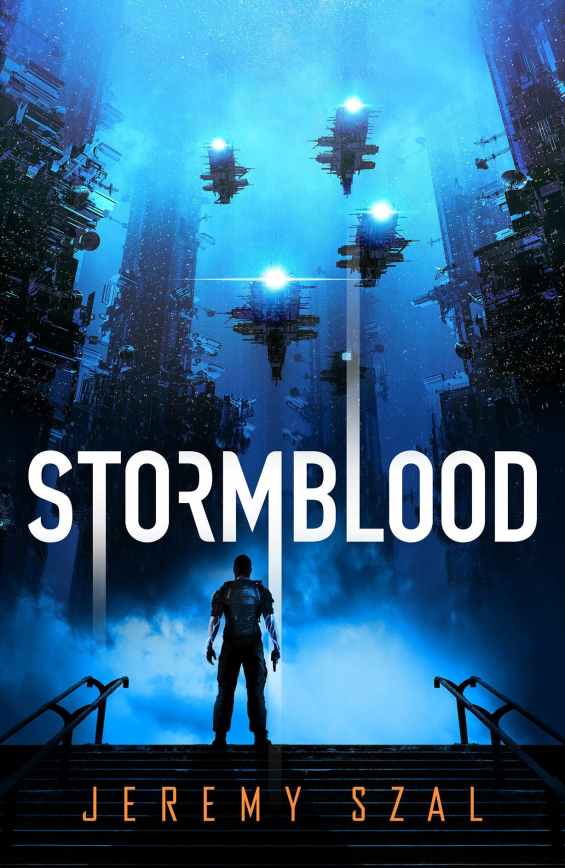
Stormblood by Jeremy Szal

Stormblood Cover

Publisher: Gollancz (Trade Paperback – 4 June 2020)

Series: The Common – Book One

Length: 538 pages

My Rating: 4.5 out of 5 stars

Amazon

In the mood for an epic and elaborate science fiction debut?  Then you will definitely want to check out Stormblood by Australian author Jeremey Szal, a compelling and ingenious novel that was a heck of a lot of fun to read.

In humanity’s far future, our species has just emerged from a brutal and destructive civil war between the seemingly benevolent Harmony and the ruthless Harvester empire.  Harmony were able to win the war by creating the Reapers, elite soldiers who were injected with stormtech, the DNA of an extinct alien race, which permanently altered their bodies, making them stronger, faster and more effective soldiers.  However, stormtech also had terrible side effects, making the host become addicted to their own adrenaline, which impacted on their minds and dramatically increased their natural aggression.

When the war ends, millions of Reapers are left shells of their former selves, having to deal with the terrible addictive impact of the alien DNA in their system, while stormtech became widely traded as an illicit drug across the galaxy.  Amongst these former soldiers is Vakov Fukasawa, a member of an elite Reaper fireteam, who has managed to overcome his addiction to stormtech and now makes a living taking on dangerous odd jobs on Compass, a mega-city built into a massive asteroid.  Vakov has grown vastly disillusioned with Harmony and their methods, but when he is approached by their agents to assist with an investigation, he is once again compelled into their service.

Somebody is killing his fellow former Reapers by poisoning the stormtech being passed around the city.  In order to save the comrades he fought beside, Vakov agrees to help with the investigation, especially when it is revealed that Harmony’s only lead is Vakov’s estranged brother.  However, the more Vakov investigates, the more people keep trying to kill him, and he soon finds himself caught in a vast conspiracy that threatens Compass and the entirety of Harmony.  Can Vakov put a stop to this horrifying plot, or will untold death and destruction rain down on him and everything he fought for?

Stormblood is an intriguing and impressive new science fiction novel that takes the reader on an action-packed thrill ride.  This is the debut novel from Australian author Jeremy Szal, which also serves as the first book in his The Common series of books.  I have been looking forward to this science fiction release for a while as I thought it sounded like a rather interesting novel, and I was really glad when I received a copy.  I ended up having a fantastic time reading this amazing and clever novel, and it is one of the best debut books I have so far read this year.

At the centre of this novel lies a captivating and exciting narrative that follows the adventures of the book’s primary protagonist, Vakov Fukasawa, as he tries to uncover who is trying to kill all his fellow former soldiers.  This results in a fast-paced military thriller storyline filled with all manner of action and adventure as Vakov jumps from one lead to the next in order to get to the bottom of the plot he is investigating.  This story goes in some dramatic directions, and I had fun unravelling the complex conspiracy storyline that emerged.  The combat comes very hot and heavy throughout the entirety of the story, with some unique science fiction elements added in to really make them pop.  Readers should also be prepared for some rather dark sequences, such as a rather claustrophobic torture scene.  Szal also spends a lot of time building up and exploring his protagonist, Vakov, showing him to be a complex character who is haunted by his past and strongly concerned for the people he is close to.  Several chapters within this book are dedicated to showing the events that formed him, including his traumatic childhood and his military service.  There is also a compelling focus on the strained relationship between Vakov and his brother, which becomes a major part of the plot as the two eventually face off as adversaries in some fantastic dramatic scenes.  I became really engrossed with this elaborate storyline and I ended up reading the entire book rather quickly, despite its somewhat substantial length.  An overall outstanding story, I cannot wait to see what happens in the next books in the series, but I have a feeling I am really going to enjoy them.

One of the key highlights of Stormblood is the outstanding new science fiction universe that Szal has come up with as a setting for the story.  Szal clearly has considerable imagination, as he produces a vast and exhilarating science fiction location populated with a multitude of different people and alien races.  The majority of the story is set within the gigantic space city of Compass, an amazing expanse of different places, climates and structures, all laid out in vertical levels.  This was a really cool place to explore, and this is clearly the tip of the iceberg as Szal hints at a number of other intriguing locations and planets throughout the book, and I can easily see future entries in the series expanding out to a bunch of other locations.  I was also extremely impressed with all the different technology, biological enhancements, spaceships, and alien races that appeared throughout the novel.  There are a number of new and fantastic science fiction ideas here, and I really enjoyed the way that Szal worked all of these technologies and aliens into the book’s plot, especially as most of them provide some amazing enhancements to the story.  A number of the book’s intense sequences really stand out due to the technology that the author comes up with, such as weird weapons, advanced combat suits, all manner of enhanced opponents, and a particularly freaky security room that is keyed to a person’s biology (you do not want to know what happens when the owner dies).  All these proved to be a lot of fun, and Szal has an awesome and imaginative vision of the future.

Out of all the cool science fiction elements in this book, I really have to highlight stormtech, the alien DNA that is injected into humans to give them enhanced abilities.  Stormtech is a key part of Stormblood as a plot device and because of the impacts that it has on the book’s point-of-view character.  Quite a lot of the story is dedicated to examining the transformative qualities of stormtech and the effects that it has had on former Reapers like Vakov.  In particular, the alien DNA has left him addicted to his own adrenaline, and it is constantly driving him to perform risky or aggressive acts so that he can get the accompanying adrenaline high.  This proved to be a fascinating part of Stormblood’s story, as the author spends a lot of time examining how stormtech impacts his protagonist’s mind and his constant struggle to control it.  Several of the flashback scenes are particularly well utilised here, as they show Vakov and his fireteam’s initial experiences with stormtech during the war and the terrible effects it had on them the more action they saw.  The version of Vakov who was introduced at the start of the main story is one who has managed to gain command over his addiction, although he is constantly struggling to maintain that control, especially as the events of plot compel him into more and more dangerous situations and new experiences with experimental stormtech, resulting in some dramatic consequences.  This was an extremely captivating aspect of the Stormblood’s narrative, and Szal does an outstanding job examining the impacts of addiction on the protagonist and then using it to add additional compelling layers to his main character.

Stormblood is an excellent and exciting science fiction novel from talented new Australian author Jeremy Szal.  Szal’s creativity and ability to tell a complex and thrilling story really shines through in his debut book, and I had an outstanding time enjoying this epic read.  I fully intend to grab the second book in this series when it comes out and I have a feeling that Szal is going to have a major impact on the science fiction genre in the next few years.

Amazon

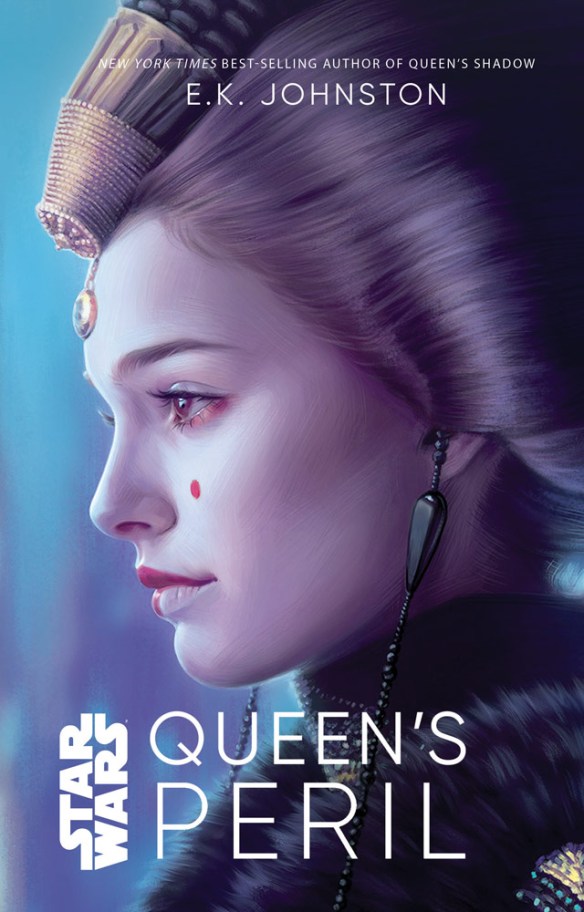
Star Wars: Queen’s Peril by E. K. Johnston

Queen's Peril Cover

Publisher: Random House Audio (Audiobook – 2 June 2020)

Series: Star Wars

Length: 6 hours and 10 minutes

My Rating: 3.75 out of 5 stars

Amazon

Prepare to dive back into a galaxy far, far away, as bestselling young adult author E. K. Johnston presents the very first Star Wars novel of 2020, Star Wars: Queen’s Peril.

Padmé Naberrie has always wanted to serve the people of her home planet of Naboo, and she knows that the best way to do that is to become Queen. Entering the competitive election, the 14-year-old politician is elected as ruler of Naboo. Casting aside her real identity for the protection of herself and her family, Padmé takes on a new name, Amidala, and moves into the royal palace, determined to bring change to Naboo. However, even a ruler as brilliant and diplomatic as Padmé is unable to do everything by herself, and she finds out that she is going to need help.

In order to keep her safe and to assist her with her needs, Padmé is introduced to a group of talented young women who will serve as her handmaidens. Acting as her assistants, confidantes, bodyguards and decoys, each of her handmaidens brings something different to the group, and it is up to Padmé to turn them into an effective team. Together, Padmé and her new friends seem capable of dealing with any challenge that may impact them.

However, there is a dark plot at work within the Republic, and its mastermind has Naboo in their sights. Soon Naboo is invaded by the armies of the Trade Federation, who seek to capture Queen Amidala and force her to sign away the planet. Forced to flee in disguise, Padmé sets out to reclaim her home and will do anything to free her planet. While Jedi, soldiers and a young chosen one may rally to their cause, the fate of Naboo ultimately rests on the shoulders of a young queen and her loyal handmaidens.

Queen’s Peril is an intriguing and enjoyable new addition to the Star Wars canon from bestselling author E. K. Johnston. I have been rather enjoying some of Johnston’s recent Star Wars releases, and I had a fun time reading her 2016 novel, Ahsoka, as well as last year’s fantastic release, Queen’s Shadow. Queen’s Peril is the first of several Star Wars books being released in 2020 (although some have been delayed), and I have been looking forward to seeing how this book turns out. This new novel acts as a prequel to Queen’s Shadow and is set both before and during the events of the first Star Wars prequel film, The Phantom Menace. This ended up being a fun and interesting read that explores some unique parts of Star Wars lore.

This latest Star Wars novel contains an intriguing tale that starts from the moment that Padmé is elected queen and takes on the Amidala persona. The first two thirds of this book follow the early days of Amidala’s reign, introducing Padmé and her handmaidens and showing how they became such a tight-knit team. There are a number of great moments during this first part of the story, and it was interesting to see the origin of a number of elements of the Amidala character that are shown in The Phantom Menace, such as her voice, the establishment of the decoy system, and a huge range of other compelling features. There are also several scenes that are dedicated to exploring why the Trade Federation decided to target Naboo and what the origins of their conflict were. I really enjoyed the first two thirds of this book, and I feel that the final third kind of let it down a little. The last part of the book focuses on the invasion of Naboo and follows the events of The Phantom Menace. While it was cool to see some different perspectives on the events of the film, this part of the book felt rather rushed, as the narrative jumped between a number of sequences from the movie in rather quick succession. Despite the problems with the ending, this was still a rather compelling story, and I did enjoy Johnston’s additions to the Star Wars universe.

While on the surface this book appears to be purely about Padmé, Queen’s Peril is actually about a number of different characters who made Padmé’s role as Queen Amidala possible. Padmé is naturally one of the main characters of the book, but all five of her handmaidens are just as important to the story. Johnston previously introduced each of these handmaidens in Queen’s Shadow, and briefly explored their unique skills and what they brought to the group. She does this again in Queen’s Peril, although this is done in greater detail, as this book shows each character’s history and how each of them became a handmaiden. Each of the handmaidens is given a distinctive personality, and all five get a number of scenes told from their point-of-view. I really enjoyed learning more about these characters, and it was great to see them come together as a group and work towards ensuring that Padmé was protected and an effective queen. While each of the characters are explored in some detailed, the biggest focus is on Sabé, Padmé’s first handmaiden and her main decoy (played by Keira Knightly in the film). The author spends time showing the unique relationship between Sabé and Padmé, and it was captivating to see the trust between them grow. Because she was so heavily focused on in the movie, Padmé does not get a lot of scenes in the last third of the book, so quite a bit this part of the story is told from the perspective of all the handmaidens. It was rather interesting to see how each of these characters went during the course of the film, and it was particularly cool to see some scenes with Sabé as she pretended to be the Queen.

In addition to Padmé and her handmaidens, Queen’s Peril also featured point-of-view chapters or scenes from pretty much all the key characters from The Phantom Menace film. The use of all these extra characters was an interesting choice from Johnston, and I liked how it expanded the story and showed some fresh perspectives and backstory for several major Star Wars protagonists. Most of these appearances are rather brief, with characters like Anakin, Obi-Wan Kenobi and Qui-Gon Jinn only getting a few minor scenes. However, other characters do get some extended sequences, especially Captain Panaka, the head of Amidala’s palace guards. Several chapters are told from Panaka’s perspective, and he becomes quite a key character within the book, mainly because he is the person who finds and recruits all of the handmaidens. Panaka is a major driving force of the plot, and it was interesting to see his role expanded from the films, especially as you get more insight into why he is so dedicated to the Queen. I also really liked how the book features several sequences told from the perspective of Senator Palpatine/Darth Sidious. These scenes were fun, as they showed a lot of Palpatine’s earliest manipulations, including how he was able to organise the invasion of Naboo. Overall, I rather appreciated how the author utilised all the characters within Queen’s Peril, and watching their development and interactions proved to be quite compelling.

Like the author’s other Star Wars novels, Queen’s Peril is intended for a young adult audience, and Johnston does a fantastic job tailoring it towards younger readers. This book has a lot of great young adult moments to it, especially as it focuses on a group of teen girls working together to outsmart a variety of adults and then eventually save their entire planet from an invasion. Queen’s Peril has some fantastic portrayals of these teen protagonists, and there are a number of sequences which show them stepping up or dealing with complicated issues that younger female readers will appreciate. While it is intended for younger readers, Queen’s Peril, like most young adult Star Wars novels, is also very accessible to all readers who are major fans of the franchise, and it is easy for older readers to get into and enjoy the plot of the book and its intriguing new additions to the Star Wars lore.

I did have a minor complaint about the release order of the books in Johnston’s series about Padmé. While I enjoyed both Queen’s Peril and Queen’s Shadow, I really do think that it was an odd decision to release Queen’s Shadow first, and then release a prequel novel a year later. It would have been better to release Queen’s Peril first to introduce the various handmaidens and help build up the emotional connection between them and Padmé, making their use and inclusion in Queen’s Shadow a bit more impactful. It might also have made a bit more sense to have Queen’s Peril only focus on events before The Phantom Menace, have another book focus exclusively on what was happening with the handmaidens and Padmé during the course of the film (which would have ensured that Queen’s Peril did not feel as rushed as it did towards the end), and then release Queen’s Shadow. While I am sure that there is some reason why the order for these books was a bit off, probably at the publisher level, I think they could have planned this out a little better.

I ended up grabbing the audiobook version of Queen’s Peril, and I had a great time listening to this book. Queen’s Peril has a short run time of just over six hours, so it is rather easy to get through this book quickly. Like all Star Wars audiobooks, this version of Queen’s Peril was a real auditory treat, due to the excellent use of the iconic Star Wars sound effects and scores from the movies, which are used to enhance each of the scenes. While it was great to once again hear all the fantastic music and intriguing background noises, Queen’s Peril’s greatest strength as an audiobook comes from its fantastic narrator, Catherine Taber. Taber is the actress who voiced Padmé in The Clones Wars animated television show, and, short of getting Natalie Portman in, is the perfect person to narrate a novel about the character. Taber also narrated the previous Johnston book about Padmé, Queen’s Shadow (indeed all of Johnston’s Star Wars books have featured the character’s voice actor as a narrator for their audiobook), and it was great to see her return. She naturally does a perfect voice for the character of Padmé, as well as for the handmaidens, who had similar speaking patterns due to their role as decoys. There are some great vocal scenes between these characters, especially when they are trying to perfect the Amidala voice, and they go through several variations throughout the book. In addition, because Queen’s Peril features nearly every major character from The Phantom Menace, Taber also had to voice several different people who were brought to life by some amazing actors in the original film. I felt that Taber did a fantastic job as imitating some of these voices, and it proved to be a real showcase for her skills as a voice actor. Overall, I had an amazing time listening to this audiobook, and I would strongly recommend this format to anyone interested in checking out Queen’s Peril.

Star Wars: Queen’s Peril is an intriguing and exciting new young adult Star Wars release from E. K. Johnson that acts as a sequel to her previous awesome novel, Queen’s Shadow. Johnston comes up with another compelling story that explores the early life of Padmé/Queen Amidala and her loyal handmaidens. While it does have some flaws, it is a very good book, and it should prove to be a fun read for established fans of the franchise and younger readers who are interested in breaking into the expanded universe. I had an amazing time listening to this book and I look forward to seeing what sort of Star Wars story Johnston produces next.

Amazon

Film Review – Justice League Dark: Apokolips War

Justice League Dark - Apokolips War

Studio: Warner Bros. Animation and DC Entertainment

Series: DC Universe Animated Original Movies – Film 38, DC Animated Movie Universe – Film 15

Director: Matt Peters and Christina Sotta

Producer: James Tucker

Screenplay: Mairghread Scott

Writers: Christina Sotta and Ernie Altbacker

Length: 90 minutes

My Rating: 5 out of 5 stars

For this review I am going to go a little outside my wheelhouse by reviewing the latest animated comic book adaption from DC comics, Justice League Dark: Apokolips War. Fair warning: this is going to be a rather in-depth analysis, so those people who have not seen this film yet might be better served watching it first and then coming back. I will also have a spoiler alert for a key part of the movie towards the end of the review, so keep an eye out for that.

Over the last 13 years, DC Comics have been leading the way over Marvel Comics in the distinctive field of animated movie adaptations of their comic books. While Marvel have produced a couple of decent animated films, such as Planet Hulk and Hulk Vs., the DC adaptations have been leaps and bounds ahead of them. Most of these epic DC animated films have been part of the DC Universe Animated Original Movies project, which has produced 38 distinctive animated films since 2007. There have been some rather impressive and enjoyable releases as part of this project, and I have watched each one of them as soon as they have come out.

While a lot of the DC Universe Animated Original Movies stand alone, 15 films were set within a shared universe, with the same group of voice actors reprising their roles multiple times. This shared universe, known as the DC Animated Movie Universe, started in 2013 with Justice League: The Flashpoint Paradox, and examines an alternate universe inadvertently created by the Flash. This new universe is very heavily influenced by The New 52 continuity of comics (but don’t hold that against it), and features an interesting collection of films featuring a range of different DC characters, although there is a noticeable and understandable focus on Batman and the Justice League. Justice League Dark: Apokolips War is the 15th entry in the DC Animated Movie Universe and serves as the conclusion to most of the storylines that were featured within the preceding 14 movies. This film was directed by Matt Peters and Christina Sotta, and features a story written by Christina Sotta and Ernie Altbacker, with the screenplay written by Mairghread Scott.

Following two previous attempts to conquer Earth by intergalactic tyrant and New God Darkseid, the Justice League is determined to safeguard the planet no matter what. Led by a vengeful Superman, the League launches a pre-emptive attack against Darkseid’s fortress planet of Apokolips, when it becomes clear that he intends to invade Earth again. However, the League’s attack fails miserably as they fly into a trap set by Darkseid, who uses his new troops, the Paradooms, to swiftly defeating the entire Justice League, killing or capturing most of its members.

Now, two years later, Earth has been brutally conquered by Darkseid, who has devastated the planet, and intends to drain it of its magma in order to fuel his future designs of conquest. With nearly all of Earth’s heroes killed during Darkseid’s assault, only a scattered few remain to oppose his plans. At the fore is Clark Kent, the former Superman, who has been stripped of his powers by Darkseid, and who now leads a resistance movement with his wife, Lois Lane. Determined to save the Earth no matter the cost, Clark recruits the surviving members of the League and the Teen Titans: Raven, Damian Wayne and John Constantine for one final mission.

With the help of an odd and violent group of villains, including Lex Luthor, Etrigan the Demon and Harley Quinn’s Suicide Squad, Superman and small team attempt the impossible, a second assault on Apokolips. However, even if they succeed in reaching Apokolips, they will face terrible opposition. Former members of the Justice League, including Batman and Wonder Women, have been converted into loyal soldiers for Darkseid, and they will do everything in their power to defend him. Can Superman and his team defeat Darkseid once and for all, or are these Earth’s final days?

Well damn, now that was one hell of an animated film. As I mentioned above, I have watched a ton of animated comic book adaptations but Justice League Dark: Apokolips War might just be one of the finest and most impressive animated adaptations that DC comics has ever created. This outstanding, five-star film is just plain amazing, and I had an incredible time watching it (multiple times). Apokolips War contains an intense story, pulse-pounding action, an amazing voice cast and a superb connection to prior films and comics, which helps create an epic and powerful animated movie experience. The creative team behind this movie did an exceptional job on this film, turning it into an intense and addictive viewing treat that I absolutely loved. Viewers should be warned, this is not a film for kids, as it has a well-deserved R-rating (MA15+ in Australia), which it earns very quickly and very explicitly.

At the heart of the excellent movie is an exciting and clever story that pits the broken remainder of Earth’s heroes against the ultimate villain in the DC canon. Apokolips War has such a cool concept, starting off with the entire Justice League getting taken out in the first few minutes and then abruptly jumping two years into the future, showing a world devastated by an evil alien invasion. This perfectly sets the scene for a character-driven narrative that follows the last desperate attempt of a handful of mixed protagonists, as they attempt an all-or-nothing mission with extremely high stakes. This results in all manner of character development, tragedy, intense action, and a fantastic smattering of witty humour, which all comes together into a compelling and utterly memorable overall narrative. I was deeply impressed with where the writers took this fantastic story, and I really appreciated all the existing storylines and the substantial character arcs that they were able to explore, expand on and finalise within the movie’s hour and a half run time. This was such a great story, and it worked exceedingly well with the enjoyable characters, eye-catching animation and the awesome team of voice actors to create an amazing overall film.

One of the things that I think I should address first is about whether or not you need to see the other entries in the DC Animated Movie Universe before watching Apokolips War. Due to its cool action and well-written plot, this is a film that is rather easy for viewers unfamiliar with the franchise to follow and enjoy, although a lot of the story elements will make a lot more sense if you are familiar with the DC Comics universe and characters. While you can probably get away without watching any of the previous movies, this is the 15th and final entry in an interconnected universe, so there are obviously going to be some advantages to watching these other films first. For example, you get a much better understanding of the characters, their relationships and their personalities in this universe, and having this knowledge about the characters beforehand can really increase the dramatic punch that a bunch of their actions have. I also personally enjoyed the continued storylines of this film universe, and I liked seeing how this movie wraps up a lot of character arcs and answers some interesting questions. As a result, I would strongly recommend watching some of the other movies first: The Flashpoint Paradox, Justice League: War, Justice League vs. Teen Titans, Justice League Dark, Suicide Squad: Hell to Pay, The Death of Superman and Reign of the Supermen as a bare minimum (yes, I know that calling seven movies a minimum is a bit much, but that just goes to show how intricate this animated universe was).

The creators of this movie utilise an intriguing and unique cast of characters, continuing many of the character arcs established in the prior animated movies. Fair warning: quite a few major comic book characters, including some characters who have been key additions to this animated universe, die in the opening moments of the movie, while some others only get a few scenes, often without any dialogue, before they are also killed. While this movie has quite a huge death toll, I think most of the killings do serve a purpose by motivating the surviving characters, highlighting the brutal nature of the film and its antagonist, or providing a real emotional punch to the viewer. While a large number of characters from the DC universe only get small roles, Apokolips War does contain a rather intriguing and diverse group of central characters who are extremely interesting to follow.

The main character of Apokolips War is John Constantine, the rogue magician last seen in Justice League Dark. Ever since his live action television series a few years ago, Constantine has been popping up in all manner of DC Comic adaptions. Constantine is a fantastic central protagonist, constantly moving the plot along and providing entertaining commentary and witty remarks about the events occurring around him. He also has a rather tragic storyline, which sees him full of regret and shame after he let down his love interest, Zatanna. Not only does this result in a conflict with Superman, but it also serves as a driving force throughout the movie as he tries to redeem himself. Constantine also serves as the heart of the entire movie, acting as a confidant to several characters and providing inspiration during key moments, including one impressive speech at the very end. While he is an amazing character, he was a bit overused when it came to solving problems, as he seemed to have a magical solution for nearly every obstacle that the protagonists came up against. While it does show off his resourcefulness, and his jack-of-all-trades approach to magic, I thought that it was a bit of a crutch for the story at times. Still, I loved Constantine as a protagonist, and I cannot think of anyone better to be the main character for this film.

Another character that I really appreciated throughout this movie was Superman/Clark Kent. If the recent live-action DC movies have shown us one thing, it is that Superman is a very hard character to write or portray at times, due to his powerset, his iconic nature and his somewhat dated ideals. However, the DC Animated Movie Universe is one of the few projects which has covered the character perfectly and allowed the viewer to care about him. His use in The Death of Superman and its sequel Reign of the Supermen was particularly impressive, and the creative team have followed that up extremely well with Apokolips War. In the opening scenes, he is an angry and vengeful character, recklessly determined to take the fight to Darkseid and finish him off for good. However, following his defeat, he is cast back down to Earth without his powers and with a painful liquid Kryptonite tattoo to remind him of his failure and to demoralise those people he encounters. Despite this, Superman shows his usual spirit and determination, rallying the remaining heroes to Apokolips, and is a generally fun and inspirational character. The best thing about his character, however, is his relationship with Lois Lane throughout the film. Lois is a major badass in Apokolips War, reverting to the resistance leader persona that she had in The Flashpoint Paradox and leading the various heroes and villains (whom she brings to her side after a boxing match with Harley Quinn in a very fun scene). The relationship between Lois and Clark is one of the major emotional centres of Apokolips War, and it serves as a great continuation of their entire joint character arc from their previous movies. It also leads to the most powerful and emotionally charged scene of the entire movie, which was an extremely touching and memorable moment.

The other major protagonists are the two surviving Teen Titans, Robin and Raven, who both add a lot to the plot. The Robin in this movie is the Damian Wayne version of the character, who has been a focal protagonist of several films in the DC Animated Movie Universe. While Damian Wayne is not my favourite Robin (Tim Drake for the win), he has been a solid part of this shared universe, especially in the two Teen Titans movies. In Apokolips War, Damian is his usual arrogant self, although he has grown and matured since his introduction. However, the events at the start of the film turn him to a darker path, and he ends up leading the League of Shadows like his grandfather before him. While at first reluctant, he is convinced to help their mission by Raven, to whom he had grown close in Justice League vs. Teen Titans and Teen Titans: The Judas Contract. Damian’s major scene is the eventual encounter he has with a Darkseid controlled Batman, and their emotionally charged fight sequence is a great part of the movie. Raven is also a fantastic character as she spends most of the film fighting her literal inner demon, her father, Trigon, whom she has imprisoned in the gem in her forehead. The emotional turmoil of the film and the constant conflict against her father has drained Raven, and she is a shell of herself throughout Apokolips War. Raven has some rather dark moments in this film, and her continued inner conflict is an excellent part of the plot. I really liked that the writers chose to focus on Raven, and it turned out to be an exceedingly interesting continuation of her storyline from the excellent Justice League vs. Teen Titans film. I also really enjoyed seeing the extension of the relationship between Robin and Raven. There had been some hints of a connection between the two in their previous entries in the universe, but the writing team took the time to explore it in more detail in this film. There are some rather nice moments as a result, as well as some heartbreaking sequences (this is a pretty traumatic film after all), and overall, both of them proved to be a great addition to the movie.

While the above main characters are great, I really need to highlight the inclusion of the entertaining side characters, who add an incredible amount of fun and excitement to the movie. At the top of this list is Etrigan the Demon, last seen in Justice League Dark. Etrigan was easily the most amusing character in the entire film, mainly because he is comically depressed following the death of the human he was bonded to, Jason Blood, in his previous appearance. Because of this, he spends most of the film following Constantine, looking for something to break him out of his stupor, and being too apathetic to take anything seriously or even to rhyme (which is a big problem for a rhyming demon). His antics are very entertaining, and every appearance he has is designed to make you laugh, right up to the end. I also loved the fantastic use of the Suicide Squad characters in this film. Harley Quinn is her usual, exceedingly violent and over-the-top self in this film, and it was fun to see her lead the Suicide Squad: “Best boss ever”. Next up you have the always dependable Captain Boomerang, who is at his sleaziest right of the bat. Boomerang is another fun addition to the team, due to his funny jabs towards the other members of the Squad, and he has some great moments, including starting an Australian/British rivalry with Constantine. However, the best member of the Suicide Squad has to be King Shark, who stands out right from his start when Constantine hilariously identifies him as one of his exes (which is a great nod to Constantine’s bisexual orientation in the comics). Unlike the pacifist King Shark we see in the Harley Quinn animated show, this version of the character is a bloodthirsty killing machine who gleefully eats several people. He also appears to only be able to only able to say one phrase: “King Shark is a shark!” which I thought was a nice homage to Groot. Pretty much every scene with King Shark is just great, and you will surprised how much fun his constant declarations of “King Shark is a shark!” becomes, especially as it leads up to an amazing joke with Captain Boomerang. I loved all four of these characters, and their inclusion was a masterstroke from the creators, due to how much heart and humour they add to the film.

No superhero movie would be complete without a great antagonist, and Apokolips War features the biggest bad in the entire DC universe, Darkseid. Darkseid has been the major villain for the entire DC Animated Movie Universe, from his destructive introduction in the Justice League: War, to his manipulations in The Death of Superman and Reign of the Supermen. As a result, Darkseid is an amazing antagonist for this movie, as you get to wrap up his storyline and see how he has been building up to this battle for the entire length of the DC Animated Movie Universe. Darkseid is exceedingly ruthless and destructive in this movie, more than living up to his reputation by brutally taking out the Justice League and killing so many protagonists and heroes. I loved his portrayal as a cold uber-tyrant, and he has some awesome scenes, such as taking out the entire Green Lantern Corp by himself, or facing off against a raft of powerful opponents (including one massive brawl against another major DC antagonist). Of course, his most evil acts revolve around his treatment of the heroes that he captures in the opening acts of the film. I have already mentioned his depowering of Superman, but that is nothing compared to what he does to other members of the League, as he turns them into twisted cybernetic monstrosities, slaved to his will. I was particularly impressed with how he managed to twist Batman’s mind, turning him into his chief enforcer and strategist. Having the ultimate hero become as ruthless as the Batman in this film is a little jarring, and I felt that it was a rather intriguing character arc to explore. I also have to mention Darkseid’s new foot soldiers, the Paradooms. Paradooms are the traditional Apokolipian soldier’s, the Parademons, who have been enhanced with the DNA of Doomsday, making them more than a match for most of the heroes in the Justice League. While the name ‘Paradooms’ is a little uninspired, they do add an exciting new element to the story, especially after the thrashing that the Justice League gave the Parademons in Justice League: War. I did think that their power levels were a little inconsistent at times, as one minute they are killing the entire Justice League, the next they are getting taken out rather easily by the Suicide Squad, but overall they were a destructive addition to the universe. I really liked this collection of antagonists, and I think that having such impressive baddies, really amped up the stakes and my enjoyment of the film.

Apokolips War has a truly impressive voice cast, with most voice actors returning after prior appearances in the DC Animated Movie Universe. At the forefront is Matt Ryan, who once again voices Constantine to perfection in this film. Anyone who has seen any live action or animated feature where Ryan portrays Constantine will know how awesome his work is, and in Apokolips War he once again shines, bringing his brand of charm and roguish appeal to the character. I also must highlight Jerry O’Connell voicing Superman in this movie. O’Connell has been killing it as Superman throughout this shared universe, and Apokolips War is some of his best work. He brings a great deal of passion to the role, and I think that his voice expertly captures all of Superman’s attributes, from his inherent positivity, to his anger at Darkseid and everything that he has done. O’Connell’s Superman also has an amazing amount of chemistry with the film’s Lois Lane, although this is not surprising, considering that Lois is voiced by O’Connell’s real-life wife, Rebecca Romijn. Romijn also does a fantastic job with Lois, and I really like her take on the character, showing of Lois’s boundless confidence and deep love for Clark. Romijn also touches on Lois’s vulnerabilities and doubts in this film, and this helps her produce one of the best and most heartfelt sequences in the entire movie.

I am also a major fan of young voice actor Stuart Allan and his take on Damian Wayne. Allan has been voicing Damian since 2014, and he has always perfectly captured the character’s arrogance and reckless personality. I like how Allan has grown up in step with the character, and his portrayal of Damian in this film adds some more restraint, uncertainty and vulnerability to the character after the opening events. Another impressive young voice actor in this movie is Taissa Farmiga, who returns to voice Raven for the third time. Farmiga has a much younger and more vulnerable take on the character of Raven than Teen Titans fans would be used to, and I think it works extremely well, showing off how scared Raven is of herself and her inherent darkness.

There is also a fantastic group of voice actors voicing the many side characters and antagonists in this movie. Candyman himself, Tony Todd, voices Darkseid, and his deep and callous take on the character, really helps to make the antagonist seem even more menacing and evil. Jason O’Mara does another amazing job as Batman in this film, and I like his more calculating take on the character, especially when he is under Darkseid’s control. Rainn Wilson is also entertaining as Lex Luthor, and he brings a real cowardly, slimy air to his parts of the film. Rosario Dawson is once again cast perfectly as Wonder Woman, and I loved her strong and confident voice for this character. John DiMaggio, Hyden Walch and Liam McIntyre all return to voice members of the Suicide Squad they have portrayed before, and they are all rather entertaining. I have already mentioned how much I loved DiMaggio’s King Shark, and it was fun to see him provide a new voice to the character after portraying him in Assault of Arkham. Walch provides another excellent turn as Harley Quinn, bringing some great energy to the character, and I think I prefer her portrayal to that of her Teen Titans co-star Tara Strong. McIntyre also does an excellent Captain Boomerang, and I personally liked it when they cast an Australian in the role, even if the character is a bit of a silly Australian caricature. While there are a couple of actors who I haven’t discussed, I think I have done enough to show how this movie has an exceedingly strong voice cast, and there was not a single miscast in the entire film.

I also have to praise the amazing animation quality featured within this movie. The animators behind Apokolips War have helped produce an incredibly slick movie with some impressive backgrounds and some fantastic and eye-popping action sequences, some of which were quite brutal and over-the-top at times. Apokolips War also features some cool and unique character designs, as many of the character had new and distinctive looks as a result of the harsh plot of the movie. This includes the depowered Superman with the Kryptonite S on his chest, half-dead cybernetic Justice League members and a whole new evil costume motif for Batman. I also have a lot of love for how the musical elements of this movie fit in with the visuals, and some of the instrumental scores that were featured really helped some key events pop out and stick in the mind, especially when combined with some of the impressive animation. For example, there is a great scene about two-thirds in where the music helps really enhances a major moment around one of the key characters, there is also a bit right at the end of the movie where the score plays extremely well with a really visually impressive moment, creating a fantastic ending for the entire movie. This helps turn Apokolips War in a visual and audible treat, and I thought that the fantastic combination of these elements helped to create an excellent movie.


The next paragraph gets extremely plot heavy in its discussion, so I am issuing a SPOILER ALERT.

I need to discuss how the entire movie concludes, mainly because I am in two minds about it. The film essentially ends with the entire DC Animated Movie Universe being erased out of existence, when Constantine talks the Flash into creating another Flashpoint once it becomes clear that the Earth is doomed. While it was an amazing scene, especially with the monologue that Constantine gives to convince Flash to do it and the fade to white that heralded the end of the movie, I thought it was a controversial way to end the film. Not only was it a rather predictable move thanks to several discussions about the alternative Flashpoint universe made earlier in the film (and the fact that time travel was the only obvious way to fix everything), but it also seems to do the rest of the amazing film a disservice by instantly erasing it, and it reminded me of those television episodes where major events turned out to be dream sequences or simulations. That being said, I did think it was a great way to conclude the entire DC Animated Movie Universe, which was created as a result of a Flashpoint in the very first movie, and it keeps the entire plot of this shared universe rather contained. It will be interesting to see what happens next in the DC Universe Animated Original Movies range, and whether they create a new animated shared universe in the future. I also would love if they maybe set another movie in this universe post-Apokolips War, because seeing what happened in the crumbling ruins of Earth with a depleted Justice League has a lot of story potential

SPOILERS END


Justice League Dark: Apokolips War is an incredible and highly recommended animated comic book adaptation, which serves as an epic and memorable conclusion to the DC Animated Movie Universe. I had an exceptional time watching this movie, especially as it blended a dark and clever story with amazing characters, impressive animation and a top-notch team of voice actors. This was an overall great film, and it might be one of the best new movies of 2020 so far (which to be fair, might be due to most films getting pushed back this year). I had a great time reviewing this animated film, and I might spend a bit of time reviewing more animated comic book movies in the future. As most of them are adaptions of existing comic books, I think this is close enough to my current focus as a reviewer to fit on this blog, and I look forward to examining some of my favourite animated comic book movies in the future.

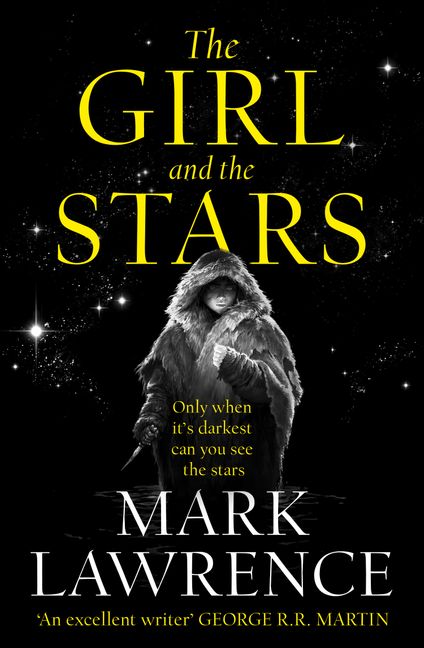
The Girl and the Stars by Mark Lawrence

The Girl and the Stars 2

Publisher: Harper Voyager (Trade Paperback – 20 April 2020)

Series: Book of the Ice – Book One

Length: 473 pages

My Rating: 5 out of 5 stars

Amazon     Book Depository

From the mind of fantasy and science fiction superstar Mark Lawrence comes The Girl and the Stars, a superb and endlessly fascinating novel which takes the reader on an epic adventure in a unique new setting.

Mark Lawrence is a science fiction and fantasy fiction author who burst onto the scene in 2011 with his debut novel, Prince of Thorns. Since then, he has gone from strength to strength, having written several additional books across four intriguing series, all of which have received a lot of attention and praise. Indeed, when some of his latest novels were released (Grey Sister and Holy Sister in particular), you couldn’t escape reviews of his books even if you tried, as every single review site I followed seem to have some commentary about how much they enjoyed them. Despite seeing all this online praise about his work, I have not actually read any of Lawrence’s previous novels. This is not because his books do not interest me; quite the opposite! I actually consider this inadvertent exclusion of his work to be a major hole in my fantasy/science fiction knowledge. However, I just never seem to be able to fit his books into my reading schedule, even after I featured The Broken Empire series on my Top Ten Series I Want to Get Into list. So when I was lucky enough to receive a copy of Lawrence’s new book, The Girl and the Stars, I thought that I would take the opportunity to finally read something from this author, and I ended up getting really sucked into this cool and clever novel.

This book is set on the planet Abeth, a dying world that is slowly being frozen over by vast sheets of ice. Despite the cruel and harsh conditions, several human tribes exist out on the ice, scraping a living and managing to survive. However, there is no tolerance of variation or differences out on the ice, and only those people who are whole and normal are considered capable of living their lives out in the cold. For the rest, there is the Pit of the Missing, a vast and gaping black chasm that burrows deep into the ice and the earth from which no one has ever returned.

Every several years, the various tribes living on the ice gather around the Pit, and their children are inspected by the regulators. If a child is normal, they are returned to their parents and allowed to live their lives, but if a child is shown to be different, either because they are weak or they are in the process of developing unique abilities that may cause them to burn out faster on the ice, they are thrown into the Pit in what is considered a mercy killing.

Yaz has always known that she is weaker and not as resilient as the fellow members of her tribe, but she is able to survive thanks to a source of power only she can access. Prepared to be pushed into the Pit, Yaz is instead chosen by the regulators to be taken to their fortress and trained. However, when the regulator pushes her little brother down into the pit, Yaz does not hesitate before diving in after him.

Against all the odds, Yaz survives and finds herself in a strange and wonderful new world under the ice, illuminated the powerful gems, or stars, that provide heat and light deep beneath the surface. As Yaz explores the vast underground labyrinth, she discovers that the other children thrown into the pit over the years have survived and formed their own society. But as Yas searches for her brother, she soon discovers that life underground is not as the utopia it seems. Many dark and terrible things lurk under the ice, determined to claim the bodies and souls of those people it encounters. But Yaz is different; her power seems to affect the star-like gems surrounding her and may prove to be the tool needed to free those people trapped in the darkness. But Yaz’s potential has been noticed, and soon everyone is fighting to get their hands on her power, which can flip the war being fought beneath the surface. Can Yaz save her brother and escape the darkness of the Pit, or is she doomed to be consumed by the conflict?

The Girl and the Stars is a clever and addictive novel from Lawrence that serves as the first entry in his brand new Book of the Ice series. This latest book is set in the same world as the author’s bestselling Book of the Ancestor series and focuses on a new group of protagonists in a unique and compelling setting. Featuring a unique blend of fantasy and science fiction elements, The Girl and the Stars contains an elaborate and epic narrative. Lawrence once again excels at drawing the reader into his novel with the compelling story of a young woman discovering her powers in a strange world. Told with a deeply detailed writing style which forces the reader to absorb and enjoy every word of this epic book, The Girl and the Stars was an incredible novel, and I had an outstanding time reading it.

At the heart of this intriguing book is a compelling and sophisticated adventure story that sees the protagonist encounter all the dangers that live underneath the ice, whilst finding her own inner strength and resolve. This story, which at times reads a bit like a young adult narrative, turns intense rather quickly, as within the first 25 pages the protagonist has already jumped into the unknown to save her brother. What follows is a non-stop thrill ride which sees Yaz encounter a huge raft of crazy characters and strange horrors underneath the ice. The story continues a brisk and exciting pace, as the protagonist jumps from one situation to the next with intriguing plot developments every couple of pages. There are some big set pieces, plenty of daunting opponents, cunning intrigues and manipulations, fun side characters and a fast-paced storyline, all of which come together to produce a really captivating and exciting read, topped off with a shocking cliffhanger of a conclusion. Lawrence sets up a number of intriguing plot points for the future entries in this series, and I am rather curious to see what happens in the next book, and what adventures the protagonist will find herself on next.

The major highlight of this book has to be the incredibly inventive and intricate settings that Lawrence produced. The Girl and the Stars actually has two really cool settings in which the characters find themselves. The first is the wild ice fields of Abeth, a harsh and unforgiving landscape populated by hardy and practical tribes of humans, who are controlled by a wise and manipulative priesthood. Lawrence does an incredible job of introducing the reader to this setting in the first chapter, making it sound like a fun and intriguing location for the book. However, the second chapter sees the protagonist go into the Pit of the Missing, which takes her to a different world under the ice. This new landscape underneath the pit is far more complex and imaginative than the great ice setting at the start of the novel, filled with a huge collection of different landscapes, from icy caverns, fields of fungi, labyrinthine structures, ancient alien cities and areas of darkness. Into these clever locations, Lawrence installs a number of different groups, factions and monsters, which the protagonist needs to understand or avoid if she is going to survive. The sheer number of features and settings proves to be extremely beneficial to the story, as the reader is left wondering what new obstacle or ally the protagonist is going to meet next. I also rather enjoyed how Lawrence blended together fantasy and science fiction elements throughout the course of the book, with the characters tapping into seemingly magical abilities to survive, and with their major opponents appearing to be demons. However, there is a more scientific explanation to these abilities and antagonists that ties into the origins of the planet and its previous inhabitants. There are also a variety of pure science fiction elements, including mechanical monstrosities, sentient cities and ancient technology. All of these elements, whether they appear more fantasy or science fiction based, prove to be really fascinating, and I quite enjoyed seeing how they played into the book. Overall, this was a really unique and memorable setting, and I loved how the author cleverly wove his compelling story throughout it, allowing it to enhance the narrative with its inventive and distinctive elements.

I have to admit that I was initially a little hesitant when it came to reading The Girl and the Stars, mainly because it was connected to Lawrence’s previous series, which I have not read. From what I have heard, the Book of the Ancestor series contains quite an elaborate narrative and setting, and I was worried that my lack of knowledge about the previous books would impact my understanding of the plot of The Girl and the Stars. However, once I dived into this book’s compelling story my fears proved to be rather unfounded, as I had no trouble following the plot or understanding the unique elements. No prior knowledge of any of Lawrence’s previous books is needed, especially as the story follows a brand new protagonist who has no idea of the events of the Book of the Ancestor’s novels, and who herself needs a crash course in the planet’s history, the varied physiology of the humans who inhibit it and other integral plot elements. As a result, this is an extremely accessible book for readers unfamiliar with Lawrence’s work, and, based on my experiences, I would say that it is a good introduction the author’s writing style and wild imagination

That said, I could tell that The Girl and the Stars is also going to be extremely appealing to fans of the Book of the Ancestor’s series, who will no doubt appreciate the similarities this novel has to Lawrence’s previous work, following a young female protagonist who is new to her power through this unique world. While I did not personally understand the significance of them, this book was obviously chock full of references and world-building knowledge that people who are familiar with the previous books are going to really appreciate and find intriguing. I do have to admit that I was bit uncertain about when The Girl and the Stars occurred in relation to the Book of the Ancestors series, and I really have no idea about whether this book is a prequel, sequel or is running concurrently to the previous books. While this did not impact my enjoyment of The Girl and the Stars in any way whatsoever, I did feel that this is something that Lawrence could have made a little clearer for new readers, especially if there are some connections between this series and the previous books is revealed later in the trilogy. Overall, I would definitely recommend this new entry from Lawrence to any science fiction and fantasy fans, whether they are established readers of the author or new readers looking for something interesting to check out.

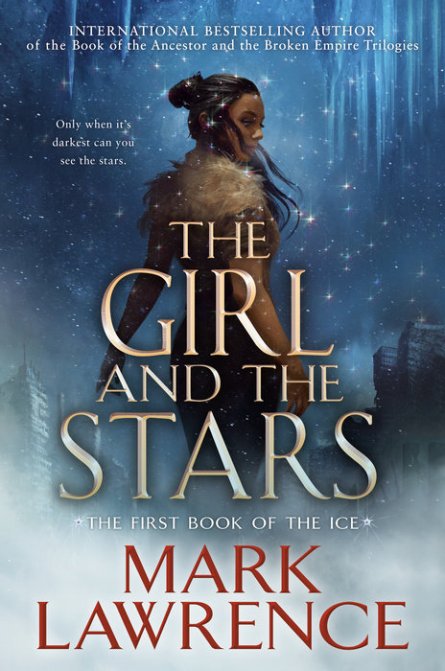
I also have to spend a little bit of time highlighting the amazing and eye-catching cover my copy of The Girl and the Stars had (see above). While the alternative cover (see below) was also cool, I really loved the cover that my edition had, which was done by artist Jason Chan. Chan, who has done work for several Lawrence’s previous novels, did a fantastic job with this artwork, producing a cover that is striking and which perfectly reflects the unique setting that the book’s protagonist finds herself in. I absolutely loved it the first time I saw it, and this appreciation only grew once I started reading The Girl and the Stars and fully understood what Chan is portraying. This is an excellent bit of artwork, and it is one of my favourite pieces of cover art I have seen so far this year.

The Girl and the Stars is an exceedingly inventive and exceptionally exciting novel that expertly blends together fantasy and science fiction elements to create a widely entertaining and compelling read. I absolutely loved the unique and imaginative setting that Lawrence came up with for this book, and it proved to be a fantastic background to the novel’s enjoyable story. This was easily one of my favourite books from the first half of 2020, and it has become clear to me that I must read more of Lawrence’s books in the future. Highly recommended.

The Girl and the Stars Cover 2

Amazon     Book Depository

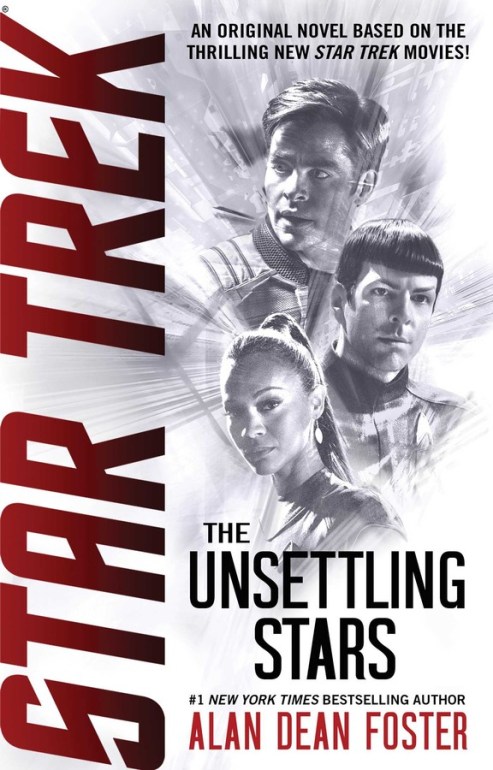
Star Trek: The Unsettling Stars by Alan Dean Foster

The Unsettling Stars Cover

Publisher: Simon & Schuster Audio (Audiobook – 14 April 2020)

Series: Star Trek: Kelvin Timeline – Book One

Length: 8 hours and 5 minutes

My Rating: 4 out of 5 stars

Amazon     Book Depository

My continued exploration of the fun and entertaining genre that is Star Trek fiction continues, as I check out the latest tie-in novel, Star Trek: The Unsettling Stars by Alan Dean Foster, an intriguing read which serves as a tie-in to the alternate Kelvin timeline, the spinoff timeline that occurred during the 2009 Star Trek film.

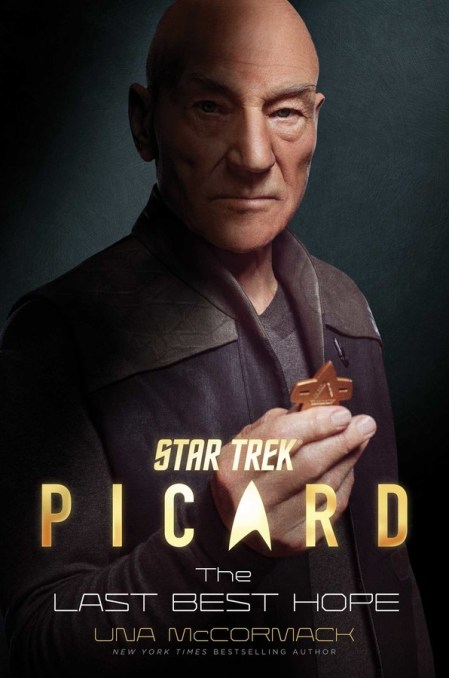
The Unsettling Stars is a rather interesting Star Trek read that is the first original novel set in the Kelvin timeline, except for official film novelisations and the Star Trek: Starfleet Academy young adult miniseries. This book was originally set for release back in 2010 under the title Refugees, but it was pulled from publication along with three other proposed novels that tied in to the most recent Star Trek movies. Another one of these books, More Beautiful Than Death by David Mack, is set for release later this year, and no doubt the other two proposed novels from 2010 will be published at some point as well. The Unsettling Stars is the third Star Trek novel released this year (behind The Last Best Hope and The High Frontier), and it is the first one in a series of Star Trek novels I identified in a recent Waiting on Wednesday article. As a result, I was rather pleased to get a copy of the audiobook format of this novel, especially as this book was written by the acclaimed author Alan Dean Foster.

Foster is a veteran science fiction and fantasy author who has been writing since the 1970s. He has written a multitude of novels over the years, including books set in his long-running Humanx Commonwealth Universe, The Damned trilogy, the Spellsinger series, The Taken trilogy, The Tipping Point trilogy and a huge range of standalone novels. Foster also has a large amount of experience writing tie-in novels to popular franchises, having written the official novelisations to several series, including the Alien movies, the Transformers movies, Terminator Salvation and The Chronicles of Riddick. Foster also has a deep connection with the Star Wars franchise, having ghost-written the official novelisation for the original Star Wars movie. He also wrote Splinter of the Mind’s Eye, which was intended to be a low-budget spinoff from Star Wars if the first movie did badly in the box office. Seeing that Star Wars was a major success, Splinter of the Mind’s Eye was released as the first official Star Wars novel, meaning that Foster started the Star Wars expanded universe (which has become a major staple for this blog). Foster has since gone on to write a second Star Wars novel, The Approaching Storm, and he recently wrote the official novelisation to Star Wars: The Force Awakens, nearly 40 years after he first got involved with the franchise.

Foster also has some rather interesting connections to the Star Trek franchise. While The Unsettling Stars is the first original novel that he has written for Star Trek, he has produced some official novelisations of several shows and movies over his career. Back in the 1970s, he wrote the official novelisations for Star Trek: The Animated Series, contained in 10 separate books. He also wrote the official novelisations for the 2009 Star Trek film, as well as for its sequel, Star Trek Into Darkness. However, his most significant contribution to the Star Trek universe has to be the fact that he wrote the story for the original Star Trek film, 1979’s Star Trek: The Motion Picture. As a result, Foster is definitely an interesting author to check out, and while I have not had the pleasure of reading any of his stuff previously, I was rather intrigued to see how this novel would turn out.

Years ago, a time travelling Romulan ship attacked and destroyed the Federation starship the U.S.S. Kelvin, killing the father of James T. Kirk. The changes which occurred following the destruction of this ship resulted in a whole new timeline, similar to the main Star Trek universe in most ways, but with a number of key differences. In this new timeline, Kirk, with the help of his young crew aboard the U.S.S. Enterprise, was eventually able to defeat this powerful Romulan ship, but not before it destroyed the Vulcan home planet. Now, after being promoted to captain of the Enterprise, Kirk and his crew embark on their first mission together.

With their ship repaired after the battle with the Romulan ship, the crew of the Enterprise take it out of spacedock in what is seen as a simple shakedown cruise. However, not long after they set out, they receive a distress signal from a ship just outside of Federation space. Arriving at the source of the signal, they find a single colony ship belonging to an alien race known as the Perenorean. Appearing to be peaceful refugees, the Perenorean request help as they have sustained damaged and are lacking the resources to travel to their original destination. But within moments of contact between the two ships, a second group of unknown alien ships arrive, determined to wipe out the Perenoreans. Despite not knowing the full history of this conflict, Kirk eventually comes to the aid of the Perenoreans, sending their attackers running, although not before they give the crew of the Enterprise a cryptic warning about the people they just saved.

Meeting with the Perenoreans, Kirk and his comrades discover that their new acquaintances are an extremely advanced group of beings whose capacity to learn and innovate seems limitless. Extremely grateful and determined to repay those who have helped them, the Perenoreans endear themselves to the Enterprise’s crew, who decide to help them relocate to a nearby planet. However, not everything is as it seems with the Perenoreans, whose desire to help and improve everything around them comes with its own unique set of issues. Can the crew of the Enterprise find a solution to the problems their new friends are causing or have they unwittingly unleased a terrible scourge on the Federation?

The Unsettling Stars proved to be a compelling and exciting Star Trek novel that I was able to get through quite quickly. Foster comes up with a rather clever and entertaining central story, set in the unique Kelvin alternate timeline, that revolves around a classic Star Trek first contact mission, with some interesting twists to it. The author crafts together a great story that spends a good amount of time with the key members of the Enterprise crew, with a particular focus on Kirk, Spock, McCoy, Uhura and Scott, as well as introducing several other new members of the crew, who each have a couple of scenes. The Unsettling Stars comes across like a typical Star Trek adventure, featuring a good blend of action, adventure, diplomacy and scientific discussion, similar to an episode of one of the shows. No real prior knowledge about the greater Star Trek universe is needed to enjoy this book, although it is geared more towards those readers who have a greater appreciation for the franchise, and who have at least watched the 2009 Star Trek film. Overall, The Unsettling Stars is a gripping and enjoyable Star Trek novel with a great story that I had a fantastic time listening to.

One of my favourite elements of this book was Foster’s inclusion of the new alien race, the Perenoreans. The Perenoreans are a group of extremely friendly aliens that the Enterprise rescue and help relocate to a new colony planet. The Perenoreans are an interesting new alien species in the Star Trek canon, characterised by their great intelligence, ability to adapt and evolve to any situation, and their desire to help anyone they come across. While it is also intriguing to see a new fictional alien species, a large amount of this book’s narrative lies around the crew discovering the true intentions and motivations of this species. While they seem friendly, you just know that they are going to turn out to be sinister or problematic in some way or another. The way that they genuflect is way over the top, and there is no way a whole race of people is that friendly. Also, there would not be much of story if they did not turn out to be problematic in some way. Foster does an excellent job of slowly hinting at their true nature, and it helps build up a good amount of tension throughout the course of the book. The eventual reveal of their secrets is rather fascinating and makes for a great payoff after all the build-up. I also really liked the conclusion to their whole arc, especially as it made use of a fun, but seemingly unimportant story element to wrap the whole thing up. These aliens are an amazing part of this book’s story, and it was one that made me enjoy The Unsettling Stars a whole lot more.

I also think that Foster did a good job of writing this book like it was set in the Kelvin timeline. The Kelvin timeline is filled with all manner of intriguing differences to the main Star Trek timeline, and the author spent a bit of time incorporating these differences into The Unsettling Stars. While at times the book did a feel a little like a tie-in to The Original Series, Foster was always quick to showcase some key elements of the Kelvin universe. Kirk is a little more arrogant and eager for glory in this book, and there are several discussions about his rapid promotion to captain, which results in a bit more scrutiny from Starfleet. McCoy is a bit more of a grump in this novel, and he has a bit more of an antagonistic relationship with Spock. There is also a bit of time spent exploring the new relationship between Spock and Uhura, and there are several mentions about Spock’s new dynamic as a member of a refugee species. I liked seeing the return of Simon Pegg’s fun version of Scotty, whose inclusion makes for several entertaining and enjoyable scenes. I also have to highlight the excellent reference to Star Trek: The Motion Picture that occurred in this book, as the crew of this version of the Enterprise come across a key item from this film well before it becomes a problem. It’s not often that a writer gets to erase the entirety of a film they scripted over 40 years previously, and I quite liked how this event turned out as part of the larger story. I had a fantastic time exploring the Kelvin timeline in this book, and I look forward seeing more of it in the future novels set in this timeline.

As I mentioned above, I ended up checking out The Unsettling Stars in its audiobook format, which was narrated by Robert Petkoff. This is a rather short audiobook, which runs for just over eight hours. While it took me a few days to get through (mainly due to lack of listening time than anything else), most readers should be able to listen to the whole book rather quickly, especially once they get engrossed in the intriguing story. Like every other Star Trek book I have so far listened to, The Unsettling Stars audiobook featured the vocal talents of Robert Petkoff, who seems to be the primary narrator for Star Trek audiobooks. Petkoff is an amazingly talented narrator who has come up with some incredibly realistic voices for key members of the various Star Trek television shows. In particular, he has come up with some fantastic voices for the members of The Original Series, which he uses throughout The Unsettling Stars to great effect, bringing the main crew of the Enterprise to life, while also coming up with great voices for some of the additional members of the crew and the various aliens that they encounter. All of this is really cool, and hearing these similar voices helps bring the reader into the Star Trek zone. If I had one criticism, though, it would be that Petkoff uses the same voices here that he uses for all the other audiobooks based around The Original Series. While I appreciate that the characters in the Kelvin timeline are supposed to be versions of the cast from The Original Series, hearing the Kelvin timeline characters speak in the same voice as their counterparts was a tad disjointing, and it made me forgot at times that this book is supposed to be set in an alternate timeline. A little bit of variation from Petkoff could have potentially helped this, although I am uncertain about what exactly he could have done to set this apart. Despite this minor criticism, I still really enjoyed listening to the audiobook version of this book, and I would recommend this format to anyone who wanted to check out The Unsettling Stars.

The Unsettling Stars is an excellent and exciting new Star Trek novel from the legendary author Alan Dean Foster. I had a great time unwrapping the cool mystery around the new race of aliens that Foster came up with for this novel, and it was fun to see a story in the Kelvin universe. This was a fantastic addition to the Star Trek canon, and I would recommend this to any fans of the franchise who want a clever new read.

Amazon     Book Depository

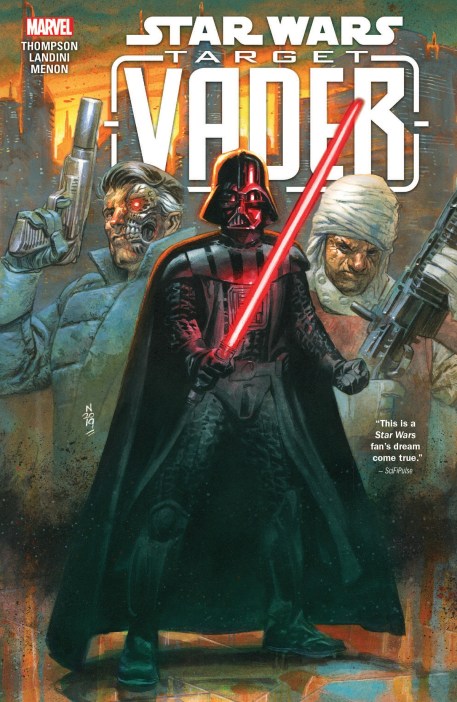
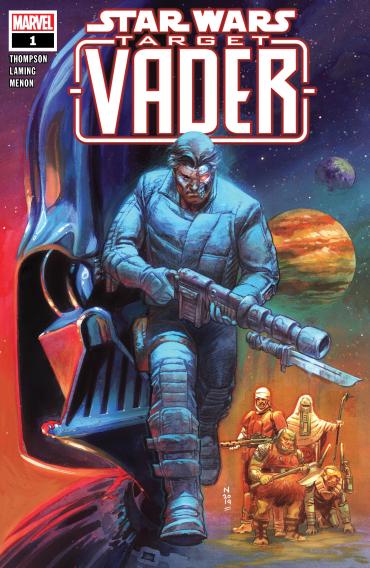
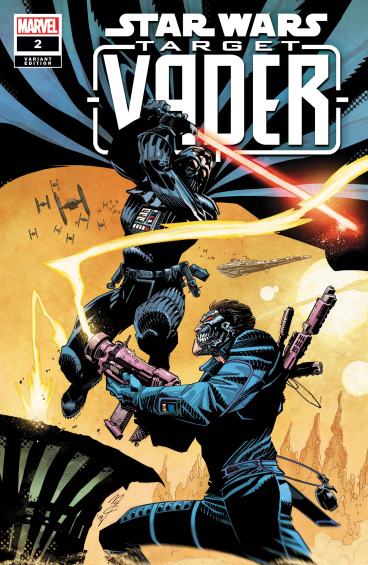
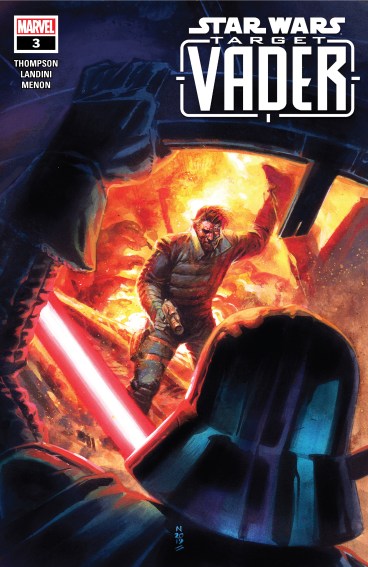
Star Wars: Target Vader

Star Wars - Target Vader

Publisher: Marvel Comics (Paperback – 11 February 2020)

Series: Standalone

Writer: Robbie Thompson.

Artists: Marc Laming (#1), Cris Bolson (#1, #5), Stefano Landini (#2-4, #6), Marco Failla (#5), Roberto Di Salvo (#5-6) and Georges Duarte (#6)

Colour Artists: Neeraj Menon (#1-4, #6) and Rachelle Rosenberg (#5-6), with Jordan Boyd (#1), Andres Mossa (#1), Federico Blee (#1, #4), Erick Arciniega (#1) and Giada Marchisio (#4).

Letterers: VC’s Clayton Cowles (#1) and Joe Caramagna (#2 – 6)

Length: 136 pages

My Rating: 4.25 out of 5 stars

Amazon

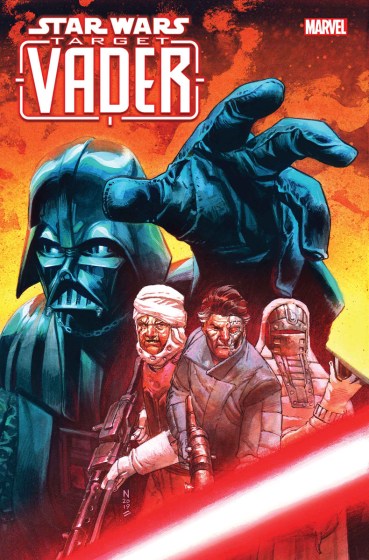
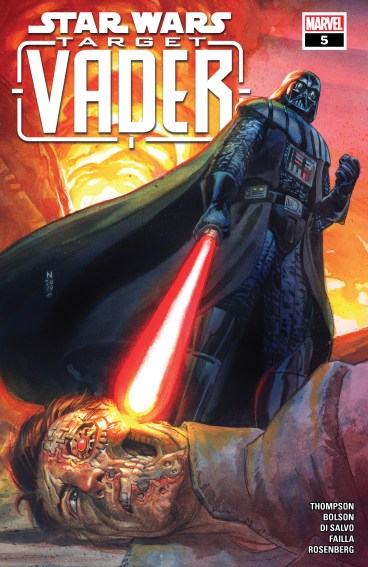
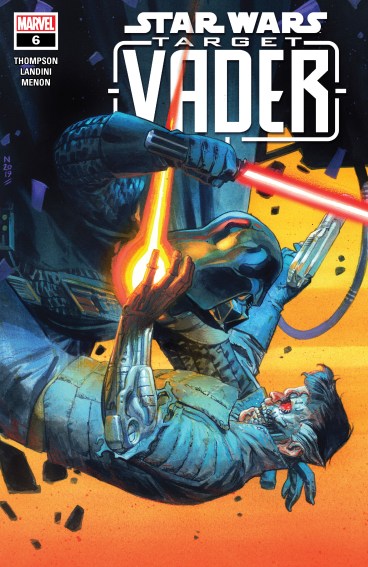
Have you ever wondered what would happen if a bunch of crazy bounty hunters went after Darth Vader? Wonder no more, as writer Robbie Thompson and a massive artistic team present Star Wars: Target Vader, a fun and action-packed adventure comic that sets a dangerous team of bounty hunters against the Dark Lord of the Sith.

TargetVader-1

There is a new criminal organisation dominating the known galaxy, calling itself The Hidden Hand. This nefarious and secretive group smuggles and sells weapons across all of Imperial Space, and while this might ordinarily be tolerated or barely noticed by the Empire, one of The Hidden Hand’s biggest clients is the Rebel Alliance, and this has attracted the worst kind of attention, in the form of Darth Vader. Vader has made it his mission to wipe out any trace of The Hidden Hand, and he has started scouring the galaxy for them, brutally destroying anyone who has had any contact or dealings with them.

Desperate to save themselves from a violent and painful death at the hands of Vader, The Hidden Hand attempt to turn the hunter into the hunted by hiring a group of bounty hunters to go after the evil Sith Lord. The man they choose to lead this suicidal mission is the notorious Beilert Valance, a former dedicated imperial soldier turned unscrupulous bounty hunter. Valance has a long and complicated history with the Empire, and he eagerly jumps at the chance to take a shot at Vader.

TargetVader-2

Valance finds himself in command of a crack team of bounty hunters, each of whom bears a grudge against Vader or the Empire and is willing to do anything to get their target. However, Vader is no ordinary quarry, and it will take far more than brute strength and firepower to take him down. Valance will need to make use of every ounce of skill and determination he has if the team is to succeed in their mission and kill the unkillable. But everyone involved on this mission has a secret. Who can really be trusted, and can a divided team truly bring down the most feared and dangerous man in the known galaxy?

This comic was written by Robbie Thompson, who is probably best known as a screenwriter for Supernatural, having written several excellent episodes between season 7 and 11 (including the 200th episode, which was an awesome meta musical). Thompson has moved to comic book writing in recent years, having written several series for Marvel Comics including Silk, Spidey, Dr Strange, the Solo comic adaption and Han Solo – Imperial Cadet. Target Vader also features a substantial team of artists, colour artists and letterers who helped this fun story jump off the page. The Target Vader collected edition contains issues #1 – 6 of the Target Vader limited series, which is set just before the events of The Empire Strikes Back.

TargetVader-3

Target Vader is a fantastic and enjoyable comic that I had an excellent time reading. Pretty much the moment I heard that this series was going to feature a group of bounty hunters going after Darth Vader, I knew that I had to grab it and check it out (I mean frankly, who could possibly resist such a cool concept). The creative team behind this great comic did an amazing job bringing this exciting concept together and turning it into such an awesome read, with some impressive action sequences, an intriguing look at the criminal underbelly of the Star Wars universe and a great overall story.

This was an excellent standalone comic book series, which most fans of Star Wars fiction are going to enjoy. No real familiarity with the extended Star Wars universe is required to appreciate this story; all you really need to know is that Darth Vader is a badass, the Empire is evil, bounty hunters are crazy scum, and you are going to have an entertaining time watching Vader go up against some dangerous criminals. That being said, those readers who are familiar with the expanded universe are going to get a lot more out of this comic than more causal fans, especially as it presents the reader with a great look at the bounty hunters and criminals that inhabited the galaxy during the events of the original trilogy. This will also be an interesting lead-in comic to the new ongoing Star Wars comic series, Bounty Hunters, which will also feature Valance as a lead character, and which will be set after the events of Target Vader (the Bounty Hunters series is going to be set between The Empire Strikes Back and Return of the Jedi).

TargetVader4-CoverArt

I have to say that I really enjoyed the cool story that Thompson came up with for Target Vader. As I have mentioned above, the entire scenario for this comic is pretty awesome, and it ended up producing a compelling tale of betrayal, revenge and redemption, as the various main characters each try to achieve their own goals. I liked the places this story went, and there are some fun double-crosses and betrayals set throughout this colourful landscape of the Star Wars universe. Aside from the central characters of Valance and Vader, the creative team filled this comic with a great array of side characters, including a primitive tracker; a crazed, four gun wielding slicer; a Tusken Raider sniper; and of course Dengar, the turban-wearing bounty hunter who was part of the group Vader hired in The Empire Strikes Back, and who has featured heavily in both expanded universes after the film. This diverse group of bounty hunters come together as an intriguing and entertaining team, and they nearly succeed in their mission with their unique skills. Vader of course comes across as a total badass in this comic, which is always fun to see, and I really enjoy comics that showcase this iconic villain. There is so much to love about this amazing story, and readers are guaranteed an exciting team exploring the cool narrative within this comic.

TargetVader-5

Target Vader also features a rather intriguing central character in Beilert Valance, the cyborg bounty hunter who leads the team against Vader. Valance is a character with an interesting past in Star Wars lore as he originally appeared many years ago in a Star Wars Legends comic, where had an excellent character arc. He has the distinction of being one of the few expanded universe characters from the Legends era who has been reintroduced into the new Disney Star Wars canon. Thompson is actually the writer who brought this character into the current canon, as he was first shown in the comic adaption of Solo: A Star Wars Story, and subsequently formally identified and strongly featured as a character in Han Solo – Imperial Cadet. In his latest appearance, Thompson does a deeper dive into his character, showing off a past full of fire, combat and death, as well as examining his motivations and his drive to keep on fighting no matter what. There are some interesting surprises involved with his actions in this limited series, I liked seeing his complex history with Vader, the Empire and other organisations featured within the comic. Valance is also shown to be a crafty and skilled individual who is actually a threat to Vader. His whole plan to assassinate Vader is rather clever, and the way that he is eventually able to outsmart everyone is pretty cool. Overall, Valance served as an excellent central character for this book, and I look forward to seeing more of him in the upcoming Bounty Hunters comic (Valance and Boba Fett should be a fun combination).

I also enjoyed the fantastic artwork that is shown throughout Target Vader. As you can see from the breakdown of contributors at the top of this review, this comic features the talents of a huge range of different artists, and there are some varied collaborations on each separate comic issue. Now I have to admit that I’m not the biggest fan of having so many artists contributing to one single series and I personally like a bit of consistency, but this great team (some of whose work I have seen before in comics such as Doctor Aphra, Vader: Dark Visions and Uncanny X-Men – Wolverine and Cyclops), did some amazing work in Target Vader, illustrating some awesome and action-packed sequences. There are some great explosive scenes featured within this volume, and these artists did an outstanding job showcasing all the intense action that occurred as part of the story. The artistic highlight of Target Vader has to be the massive and exciting fight between Vader and the bounty hunters, which was really cool to see. I also really enjoyed all the character designs featured within the volumes, and this team made sure to feature a number of the distinctive Star Wars alien races throughout the comic. All of this amazing artwork really enhances the enjoyable story, and readers are in for an intense visual treat with this comic.

TargetVader-6

Target Vader is an awesome and deeply exciting limited series which I had a really fun time reading. This fantastic comic features an excellent story, some impressive artwork and a bunch of great characters, all of which comes together for a captivating and enjoyable piece of Star Wars fiction. I look forward to seeing more Star Wars bounty hunter adventures in the future, and this is a wonderful and recommended read for those Star Wars fans looking for something fast-paced and very entertaining.

Amazon

Star Trek: Picard: The Last Best Hope by Una McCormack

Star Trek - Picard Cover

Publisher: Simon & Schuster Audio (Audiobook – 11 February 2020)

Series: Star Trek: Picard – Book One

Length: 11 hours and 40 minutes

My Rating: 4.5 out of 5 stars

Amazon     Book Depository

Get ready to dive back into the Star Trek universe with Picard: The Last Best Hope by Una McCormack, the latest Star Trek novel which ties into the events of the Picard television show. The Last Best Hope is an outstanding novel that serves as a bridge between Star Trek: The Next Generation show and the current Picard series.

Nearly 20 years before the events of Picard, both the United Federation of Planets and the Romulan Star Empire faced an unprecedented calamity. Scientists have just discovered that the Romulan sun is in the process of going supernova, turning into a destructive force that will devastate the Romulan home system and have significant negative follow-on effects on the remaining planets within Romulan Space. In order to ensure the evacuation of their people, the Romulans grudgingly request aid from the Federation, who assign Jean-Luc Picard to the mission.

Picard, promoted to the rank of admiral, quickly finds himself in charge of the largest and most difficult operation in Starfleet history. The evacuation mission is a vast undertaking, requiring Starfleet to relocate hundreds of millions of Romulans to distant planets in only a few short years. Lacking resources and manpower, Picard begins the evacuation process as best he can, with the invaluable help of his new first officer, Rafaella “Raffi” Muskier. Meanwhile, back in the Federation, Geordi La Forge attempts to come up with new ways to increase Starfleet ship production on Mars. The best solution is the creation of a new, synthetic workforce, and La Forge calls in an old colleague, the brilliant scientist Bruce Maddox, who reluctantly halts his lifelong work on artificial life to help build these new synthetics.

As the evacuation progresses, Picard takes solace in every small victory his team can achieve, but this mission seems doomed to fail. Debates from ambitious Federation politicians, distrust and fear from the Romulans they are trying to help, and interference from the Tal Shiar, the Romulan secret police, all hinder the mission. However, Picard is not one to give up easily and is determined to save every Romulan he can from the impending disaster. But even the great Jean-Luc Picard is unprepared for how his mission will end. Everything is about to change, and Picard and the galaxy will never be the same again.

Star Trek is one of those popular franchises that always produces a ton of extra content each year in the forms of novels and comics, so it was no surprise that material related to Picard would eventually be released. The Last Best Hope is the very first Picard tie-in novel, although I expect that additional books will come out in the future. Indeed, IDW has already released a Picard tie-in comic, Countdown, which I will probably check out at some point. This first Picard novel was written by veteran tie-in author Una McCormack, who has previously delivered several great Star Trek books, including last year’s Star Trek: Discovery tie-in, The Way to the Stars. McCormack does an amazing job with The Last Best Hope, producing a captivating and incredible read that expertly leads into the new show.

Before I dive too deep into this review, I think that it is necessary to point out that this book was released on the 11th of February, between the third and fourth episodes of Picard. That means that this book contains quite a few mentions of events and reveals that occur in the initial episodes of the show, especially as McCormack clearly had early access to the show’s scripts. While this ensures The Last Best Hope a much more complete and in-depth tie-in novel, it does mean that this book contains some spoilers for the television series. In addition, as I have been religiously watching Picard every week, my review is influenced by the events of the first six episodes and it also contains some spoilers from the show.

The Last Best Hope is a wide-ranging Star Trek canon novel, set across several years of Star Trek history (2381 to 2385) that explores one of the biggest prequel events mentioned within Picard, the explosion of the Romulan sun and the attempts by Picard to evacuate them. This leads into a powerful and clever novel which shows all the trials and tribulations associated with this exercise, as well as several other events that lead into the show. McCormack makes excellent use of a number of different character perspectives to create a full and rich narrative around this plot, which also explores some major Picard characters. While I did think that parts of the story ended rather suddenly, with no real lead-in to the disaster on Mars that changes everything, this book is a first-rate novel which I powered through in extremely short order.

One of the major appeals of this book is the fact that it serves as a prequel to the events of Picard and provides readers with additional background and context to the adventures currently happening in the show. This is done in a number of ways, from providing the reader with greater background about certain characters, showing the origins of a number of the storylines from the show and serving as a bridge between the events of Picard and The Next Generation. The Last Best Hope features an excellent introduction to several of the newer characters in the show, such as Agnes Jurati, Raffi, Elnor and the Qowat Milat nuns, and it was intriguing to see how these characters slotted into the pre-history of the show. At the same time, McCormack also examines what happened to several established characters from The Next Generation after the events of Star Trek: Nemesis, including Picard, Bruce Maddox, Geordi La Forge and even a little bit about Worf (he becomes captain of the Enterprise!). McCormack also provides an explanation about several key occurrences and storylines that are touched on within the show, such as the creation of the synthetic workers that destroyed Mars, Picard’s resignation from Starfleet and the extent of several key relationships. There are also some potential hints at where the show might go in the future, and I will be interested in seeing if those pan out at all. I was pleasantly surprised with how much background that McCormack was able to fit into The Last Best Hope, and the different revelations and expansions on the information provided in the show make this a fantastic read for those currently watching Picard.

The Last Best Hope features some very impressive character work, and I feel that McCormack did an excellent job capturing the personalities and histories of several key characters from the new show. I really appreciated her portrayal of Picard, and this book featured several key aspects of his character, such as his dark moods, his determination and his ability to inspire absolute loyalty in his subordinates. I liked how the reader gets to see how Picard deals with the seemingly impossible task assigned to him, especially as his emotions throughout the book range from hope to absolute despair, as multiple obstacles and problems seem to dog everything he does. One of the major parts of his character explored in this book is the way that Picard’s ideals and beliefs seem a little out of touch with the world he lives in. This is something that is shown throughout the Picard television show, as the old-school captain is now living in a much darker and more desperate world. I am really glad that McCormack tried to capture this in her novel, and it was really compelling to see Picard being completely oblivious about the darker realities of the galaxy. All of this is really compelling to see, and I think that it serves as a good basis for some of the ways Picard acts in the current show.

Aside from Picard, a number of other characters are featured throughout the book, many of whom have some really interesting and compelling stories. I personally found the tale of Raffi, Picard’s new first officer, to be particularly good, as the reader gets to see how she became so messed up and obsessed with proving that the Romulans where behind the destruction of Mars. You also get a better understanding of why she was so mad that Picard quit on her and the mission, especially after she sacrifices everything for him, thanks to the way he inspired her. McCormack also spends significant time exploring the character of Bruce Maddox, and it was especially intriguing to see this character between his appearances in The Next Generation and Picard. You also got to see the origins of his relationship with Agnes Jurati (indeed, based on release dates you learn about this relationship in this book before it is mentioned in the show), and it was great to see how it unfolded and how close the two of them were. Of course, this also has a more sinister and heartbreaking edge to it if you look back at this relationship after the events of the fifth episode of Picard. I also liked the Geordi La Forge storyline; it was interesting to see his struggle to increase Starfleet ship production. However, the best part of this portrayal occurs at the end of the book, and I will be curious to see how they show off his survivor’s guilt if the character ever appears in Picard.

One of the things that I really enjoyed about this book was the way McCormack slowly starts to alter the tone of the novel to represent the change between the lighter The Next Generation and the darker Picard shows. At the start of the book, the story is more in line with the tone of The Next Generation, with Picard embarking on a humanitarian mission with his idealism and belief in the greater good intact. However, as the mission progresses, things start to get darker, as the various obstacles to the Romulan relief mission become more apparent. The dark and callous manipulation of the Romulan leaders and Tal Shiar as well as the xenophobic politics of certain Federation politicians becomes more and more apparent, resulting in a darker tone. McCormack also attempts to replicate the more adult tone of the current show with a greater reliance on swearing (never have I seen so many F-bombs dropped in a Star Trek novel, oh the humanity!) and hints of mass murder, genocide and extinction-level events. All of this makes for a slightly different Star Trek tie-in novel experience, and I personally enjoyed some of the subtle changes McCormack made to the tone.

I personally really enjoyed seeing the entirety of Picard’s attempts to evacuate the Romulans from their soon to be exploding sun. This has been one of the most fascinating events mentioned in the show, with several parts shown or alluded to in Picard. McCormack really dived into this event, showing many of the various aspects of such an operation, including the science, politics and diplomacy associated with it. From the start, this whole mission is painted as a near impossibility, not just because of the scale of calamity and the number of people affected but because of the mindset and suspicion of the Romulans they are trying to save. To put it into context, this operation would be like the United States trying to evacuate a similar sized country that had North Korean levels of state led secrecy and distrust towards the organisation trying to save them. The sheer scale and difficultly of this mission are constantly raised, and yet Picard and his team seem to find a solution to many of the problems presented to them. Of course, anyone who has seen the first episode of the show knows how this is going to end, so seeing the characters getting so invested in their mission is a bit of an emotional blow. That being said, this book contains a lot more context for some of the Federation’s decisions, and in particular the character of Admiral Kirsten Clancy (Starfleet’s CNC in the second episode of Picard), comes across as a whole lot more sympathetic. Overall, I felt that this was an amazing expansion on the events mentioned in the show, and it was really cool to see how the whole operation unfolded.

Another great facet of The Last Best Hope which made it such an intriguing book was its compelling examination of the Romulan people. McCormack really dives into Romulan culture and society in this book, presenting some intriguing details about this race. In particular, she examines the Romulans’ deep-seated need for privacy and secrecy, which is a defining part of their species. McCormack does an excellent job highlighting how this desire for secrecy impacts them as a race and a culture (secret multi-room Romulan music for the win!), and how they barely trust other members of their own species, let alone members of the demonised Federation. Seeing how this obsession with lies, secrecy and the appearance of saving face with the Federation impacted the species’ chance for survival is a compelling and intriguing part of the book. McCormack also dives into other parts of Romulan culture and society, mainly the role of the Tal Shiar, the Romulan secret police, who have long been a shadowy force within Star Trek lore. Seeing the fear and apprehension that this organisation causes amongst ordinary Romulan citizens, as well as the lengths they will go to maintain secrecy and security, is pretty crazy and it certainly enhances an established Star Trek antagonist species. I also enjoyed seeing more of the Qowat Milat, the Romulan warrior nuns who Picard befriends and helps evacuate from Romulan space. The Last Best Hope contains several encounters with the Qowat Milat, and we get to learn a bit more about them, the role they play in Romulan society and how they interact with the Tal Shiar, with whom they have an adversarial relationship. All of this is deeply, deeply fascinating, especially for those readers who love learning about Star Trek lore, and I really enjoyed seeing all the Romulan inclusions featured in this book.

I ended up listening to the audiobook version of The Last Best Hope, which is narrated by Robert Petkoff. This new Star Trek audiobook runs for 11 hours and 40 minutes, which can be listened to fairly quickly, especially once you get stuck into the compelling story. I really enjoyed listening to The Last Best Hope, mostly thanks to the incredible voice work of Robert Petkoff. Petkoff seems to be the go-to narrator for all things Star Trek these days, as he has lent his superb vocal talents to a huge number of other Star Trek audiobook adaptions in recent years. I have previously enjoyed his work on such books as The Antares Maelstrom by Greg Cox, The Captain’s Oath by Christopher L. Bennett and Available Light by Dayton Ward. In each of these previous books, I have been greatly impressed by Petkoff’s ability to recreate the voices of key characters from the Star Trek television shows, including most of the characters in The Original Series and The Next Generation. He continues this amazing voice work in The Last Best Hope, providing near-perfect impressions of characters like Picard and La Forge, which really helps the reader immerse themselves into the story. While his impressions of some of the newer characters from Picard are not as accurate (keep in mind Petkoff would have recorded this book before Picard aired), he does provide clear and distinctive voices for each of the characters utilised in the books. I also love the accents he provides to the various alien races and nationalities in this book, and I especially enjoy hearing him attempt to replicate the speech patterns of certain aliens, like the Vulcans. Thanks to this incredible voice work, I absolutely loved listening to the audiobook for The Last Best Hope, and I would strongly recommend this format to anyone interested in this latest Star Trek novel.

Picard: The Last Best Hope by Una McCormack is an excellent and deeply captivating read which serves as a perfect prequel tie-in novel to the current Picard show. There is so much information and detail about the Star Trek universe prior to the events of the current television series contained within in this novel, and I loved seeing the author expand on the intriguing new universe that has been hinted at in the show. This is a must-read book for all Star Trek fans, especially those who have been loving Picard, and even non-Star Trek fans will enjoy this book’s powerful story and the fantastic plot device of the Romulan rescue mission. The Last Best Hope is probably the best Star Trek novel I have had the pleasure of reading so far, and I am extremely excited to see what other tie-in novels they release around the awesome new Picard series.

Amazon     Book Depository

Deathwatch: Shadowbreaker by Steve Parker

Deathwatch Shadowbreaker Cover

Publisher: Black Library (Audiobook – 25 April 2019)

Series: Warhammer 40,000/Deathwatch – Book Two

Length: 16 hours and 37 minutes

My Rating: 4.5 out of 5 stars

Amazon

Prepare to dive into the extended universe of Warhammer 40,000 (Warhammer 40K or 40K), as science fiction author Steve Parker presents Deathwatch: Shadowbreaker, an action-packed and exceedingly exciting sequel to his 2013 novel, Deathwatch, which pits the deadly Deathwatch Space Marines against an entire planet full of T’au.

Thousands of years in the future, the galaxy is constantly at war. Humankind has survived as the massive Imperium of Man, under the divine protection of their long-dead Emperor. However, this beacon of humanity is under constant threat from all sides. Destructive alien races, demons from the warp and the traitor forces of Chaos continuously assault its borders, whilst heretics, mutants and witches attempt to destroy it from within. Over the millennia, the Imperium has created many different forces to protect their worlds from these threats; however, none is more feared or revered than the Adeptus Astartes, the Space Marines. Space Marines are legendary warriors genetically modified to become significantly stronger, larger and faster than a normal man. Swathed in power armour and armed with the deadliest of weapons, the Space Marines are a force to be reckoned with on the battlefield, bringing the Emperor’s wrath down on all who oppose them.

But even amongst these deadliest of soldiers, there is one organisation of Space Marines who are respected above all others for their fighting ability and skill, Deathwatch. Deathwatch is an elite group made up of best Space Marines veterans from across the Chapters, trained to become the ultimate tools in one of the Imperium’s holiest missions, the extermination of the xenos, the alien. Utilising the most advanced technology in the Imperium and receiving specialist instruction in the strengths and weaknesses of their foes, Deathwatch work in small kill-teams under the Ordo Xenos of the Imperial Inquisition in order to hunt down and destroy the most dangerous xenos threats in the galaxy.

Lyandro Karras, Codicier of the Death Spectres, is a powerful Space Marine Librarian serving in the Deathwatch as the leader of the kill-team, Talon Squad. Barely recovered from the disastrous events of their last mission, Karros and Talon Squad once again find themselves under the command of the mysterious Inquisitor Sigma. Their new mission takes them to a former Imperial world that has been conquered by the alien T’au, who have indoctrinated the majority of the human population into their society and philosophy. An Imperial Inquisitor, Epsilon, has gone missing in T’au space, and Sigma believes that she is being kept prisoner on the planet. Desperate to free her before the T’au extract vital secrets about the Imperium from her, Talon Squad and a force of Ordo Xenos Storm Troopers are deployed to find her. Working with the local human resistance, Talon Squad identify the prison she is located in and must work to release her before the massive T’au garrison knows they are on planet. But what happens when Epsilon refuses to accompany Talon Squad back to the Imperium?

Deathwatch: Shadowbreaker is part of the massive extended universe which has formed up around the Warhammer 40K tabletop miniature game produced by Games Workshop. Warhammer 40K, which was first released in 1987 and pits armies of science fiction miniatures against each other, has always contained an interesting and grim science fiction narrative to serve as a background to the game. With every new edition of Warhammer 40K that was released, this background narrative got more and more detailed, resulting in an extremely deep, compelling and gothic-themed fictional history surrounding all of the different races, armies and characters featured within this tabletop game. Due to the popularity of the Warhammer 40K universe, a huge amount of expanded material has also been released over the years, including several videogames, comics, board game spinoffs, an animated movie (with a remarkably good cast of British actors) and there is currently a television series in production. However, the main medium that has been utilised as part of this expanded universe is books.

Over the years, there has been a tremendous amount of Warhammer 40K books produced, featuring the works of a number of skilled and talented science fiction authors. There are now hundreds of Warhammer 40K books currently published, covering the different periods and races featured in the tabletop game. In 2019 alone there were nearly 20 different novels, anthologies and audio dramas associated with Warhammer 40K. This is a very impressive amount of material, and I have not even mentioned the multiple book releases associated with the separate Warhammer Fantasy universe.

While I am a man of many, many different fandoms, the products of Game Workshops are among the earliest fantasy and science fiction products that I was a major enthusiast of. I was extremely into Warhammer Fantasy when I was a kid and I have many fond memories of painting and battling with the models, reading the company’s monthly White Dwarf publication and playing some of the Warhammer 40K computer games, such as Dawn of War. While I was solely playing with Warhammer Fantasy models, I did learn a lot about Warhammer 40K at the same time, especially as I really enjoyed reading all the lore and background of the various Games Workshop products. I have been meaning to read some Games Workshop fiction for a while now, and I have previously mentioned that I want to read the cool-sounding Gaunt’s Ghosts series. However, I ended up reading the recently released Deathwatch: Shadowbreaker instead, mainly because it featured two of my favourite groups from the Warhammer 40K lore, Deathwatch and the T’au, facing off. Shadowbreaker is the latest book from Steve Parker, a science fiction author, who has primarily written Warhammer 40K fiction. Shadowbreaker is his first release since 2016, and it is actually a sequel to his 2014 novel, Deathwatch, which featured the same group of primary characters.

I am actually really glad that I chose to read and review Shadowbreaker, as this excellent 40K novel contains an awesome and extremely entertaining story that features all manner of action, adventure and intrigue, while also diving deep into several fascinating parts of 40K’s lore. Shadowbreaker is an excellent sequel to the author’s previous book, Deathwatch, and Parker does an amazing job of continuing the story that was started in this prior book, while at the same time setting up some intriguing potential directions for the series to go next. Prior knowledge of the events of Deathwatch is not a necessity to enjoy this book, as Parker does a good job of re-introducing all the relevant events of the previous novel, and readers should be able to follow Shadowbreaker’s story without any real issues. Parker has created a rich narrative for this book that utilises a huge number of character viewpoints to not only examine the development within several characters but also explore a number of different angles and features of the harsh gothic universe in which this book is set. These multiple viewpoints work especially well during Shadowbreaker’s extended action sequences, as they allow Parker to show off every aspect and side of the brutal battles, resulting in some exciting and detailed combat set pieces. Shadowbreaker’s story ends up going in some rather intriguing directions, featuring some fun twists and reveals, and this was an overall fantastic and exciting story to check out.

While Shadowbreaker is an amazing novel, it might not be as appealing to those readers who are not familiar with the Warhammer 40K universe. This book is pretty lore heavy, containing a whole lot of references to history, technology, alien races and other unique aspects of this fictional universe. While I felt that Parker did a great job of explaining most of the Warhammer 40K elements that are relevant to the story, a certain amount of prior knowledge about this massive universe will really help readers understand what is going on. Do not get me wrong; readers unfamiliar with the franchise will easily be able to follow and enjoy Shadowbreaker’s story, but they may have trouble appreciating all the interesting lore references or depictions from the miniatures game. As a result, I would probably recommend this book more to established fans of the 40K universe, although casual science fiction readers are definitely going to have a good time reading this. That being said, I note that some other readers of this book who are more familiar with the actual tabletop game than me were put off by a couple of apparently incorrect depictions of weapons, armour and vehicles. While these apparent anomalies in no way impacted my enjoyment of the book (honestly, I am not knowledgeable enough about battle gear to have really picked up on this), I can imagine that this could annoy some hardcore 40K fans, so fair warning about that.

For me, one of the major appealing aspects of this book was its excellent examination of fascinating elements from the Warhammer 40K universe. As I mentioned above, the universe of the 40K games are filled with all manner of fantastic, complex and unique features which are all backed up with a ton of lore and fictional history. Parker does an awesome job of setting Shadowbreaker within this universe and he ends up utilising quite a lot of detail from the games in the story. There is actually quite a lot going on within this book. Not only do you have the primary storyline of Space Marines versus T’au but you also have storylines that relate to infighting and intrigue within the Ordo Xenos, examination of the constant threat that is the Tyranid, the machinations of the Eldar, and the long-term plots of a demon lord thrown in on top. All these various storylines actually come together really well into an outstanding story, and fans of the 40K franchise are almost guaranteed to have some mention or discussion about their preferred army or race in the game (with a couple of exceptions).

However, the thing that really excited me the most about this book was the central conflict between Deathwatch and the T’au. I am a major fan of both of those groups and have always been really intrigued by the cool lore and background that surrounds them. When I started reading this book, I was half-expecting the story to be shown purely from the perspective of the Deathwatch characters. If this had been the case, the author would have been forced to do a classic humans versus aliens storyline, where aliens are automatically the bad guys due to the Space Marines’ inherent hatred of all things alien. Therefore, I was pleasantly surprised when Parker presented a much more complex storyline which showed neither side as “good” or “evil”. Instead, thanks to the author’s excellent use of multiple perspectives, it is shown that both sides of this conflict are dominated by dangerous fanatics driven by their beliefs, either in the purity of destroying all things alien or the defining T’au philosophy of the “Greater Good”. This belief results in both sides doing some very questionable things in order to achieve their objectives, most of which result in large amounts of destruction and death. Interesting enough, it is Lyandro Karras and some of the members of Talon Squad who are the most reasonable characters in this book, and all of them have been heavily indoctrinated about the evils of the alien. This all makes for a much more intriguing and clever story, and I loved how it helped highlighted how complex this universe can get.

Shadowbreaker contains quite a bit of information about how the legendary Deathwatch operates, which is just downright fascinating, and I can imagine a lot of readers would be really interested to learn more about. While there was a lot more about the layout of the organisation and their training in the initial Deathwatch book, readers of Shadowbreaker learn a lot about them in this book. For example, Shadowbreaker contains information about Deathwatch’s unique relationship with the Inquisition, their skills in battle, their knowledge of the aliens they fight and the fact their ranks consist of Space Marines from various chapters. All of this is really cool, and there were a fantastic central organisation to centre the book on.

I also quite enjoyed the examination of the different Space Marines that make up the various Deathwatch kill-teams featured within this book. Thanks to the author’s use of multiple character perspectives, the reader gets to see through the eyes of a number of Space Marine characters. Parker cleverly utilises this to show off the varied personalities of the Space Marines, and it was interesting to see how diverse these genetically enhanced and indoctrinated killing machines can really be. A lot of this is due to the specific Chapters that they come from, as each character seems to reflect the traits of their Chapter and their founding father. I liked how the multiple perspectives helped highlight he different fighting styles of the various members of the Deathwatch kill-team, especially as each of them utilises different weapons and tactics to achieve their goals, reflecting the defining skills of their original Chapter. For example, the Raven Guard character continuously utilises a jump pack and lightning claws in his fights, while the Imperial Fist preferred to use heavy weapons. These different combat techniques add an extra layer of spice to the various fight sequences, and I really liked seeing the different characters in action. I was also really intrigued by the author’s deep dive into the history and peculiarities of two of the lesser-known Space Marine chapters, the Death Spectres and the Exorcists. Parker reveals some really interesting facts about these two Chapters, mostly when these respective characters think back on their past or their Chapter. I really didn’t know that much about these two Chapters before this book, and I really enjoyed learning more about them, especially as they have some very cool and unique traits (one summons and betrays demons for an initiation test; the other has a mysterious glass throne hidden on their home planet). As a result, fans of Space Marine history and lore are really going to love this book, and even non-fans will appreciate the world-building associated with them.

In addition to the intriguing examination of Deathwatch and other Space Marine Chapters, Parker also features an excellent look at one my favourite races in the Warhammer 40K universe, the T’au (or Tau). The T’au are probably the newest race in 40K canon (although that was quite a few years ago) and have been featured in a couple of books and have even had their own video game, Fire Warrior. T’au are a young race of aliens whose empire has quickly expanded in recent years thanks to their advanced technology and wiliness to incorporate alien races into their empire. Their sudden expansion has made them a real threat to the stagnant Imperium of Man. Parker does an amazing job incorporating the T’au into this book, and there are some fantastic depictions of their technology and unique physiology. The T’au serve as excellent primary antagonists for this book, and Parker takes an interesting view of them, diving into the darker side of their empire. Thanks to the various character perspectives contained within Shadowbreaker, the reader gets to see more than their typical depiction as a beatific race who merely wish to share their technology and their message of the “Greater Good” throughout the universe. Instead, you get to understand how slavishly devoted to their philosophy they really are, and the lengths that some of them will go to achieve their race’s goals. There are some really interesting discussions about how they control the populations they conquer, as well as some brief but curious mentions of T’au who do not follow the Greater Good and are persecuted or punished for this. I also really liked the detailed examination of a human world that is being ruled by the T’au, especially as you get to see all the various benefits and downfalls of this control. The fact that neither the T’au nor the Imperium actually care about the planet or its people is a bit of a dark spot in the novel, and some of the conclusions of the book reveal just how much better off this planet would have been on its own. If I had one complaint about Parker’s depiction of the T’au, it would be that they went down way too easily in a fight. While a couple of their units and commanders were able to hold their own for a bit, the rest of the T’au forces were pretty much slaughtered in one-sided battles throughout the book. While I appreciate that the author was probably trying to demonstrate Deathwatch’s skill at killing aliens, I think he could have perhaps added in a bit more of a fight from this popular race. Still, I really enjoyed this inclusion of the T’au, and I need to check out some other books that feature them.

I ended up listening to the audiobook format of Shadowbreaker, which was narrated by Andrew Wincott. Shadowbreaker clocks in at just over 16½ hours, so it is a fairly substantial audiobook which takes a little bit of effort to get through. I was very impressed by this format of the book, and I personally found it a great way to absorb all the amazing things occurring in the story. Wincott is a really good narrator, coming up with some distinctive and appropriate voices for the huge raft of characters that were featured in this book. I really liked how Wincott was able to capture the emotion and mood of the various characters, and I was especially impressed with the harsher tone that he took for many of the Imperial characters, which fitted perfectly into the gothic style of the Imperium. As a result, I would highly recommend the audiobook format of Shadowbreaker to anyone who is interested in checking this book out, and it is a wonderful way to enjoy this great piece of Warhammer 40K fiction.

Deathwatch: Shadowbreaker by Steve Parker was an incredible read which I found to be extremely entertaining and which proved to be a perfect reintroduction for me to the Warhammer 40,000 franchise. Parker presents an exciting and compelling story that dives deep into the universe’s lore while also exploring some of the complexities of the various featured races and armies. Overall, this is an outstanding novel and I am really glad that I checked it out. I fully intend to read more Warhammer 40K fiction in the future, especially after enjoying this book so much, and I hope that Parker continues his Deathwatch books in the future as well.

Amazon

Throwback Thursday – Extinction Machine by Jonathan Maberry

Extinction Machine Cover.jpg

Publisher: Macmillan Audio (Audiobook – 26 May 2013)

Series: Joe Ledger Series – Book Five

Length: 14 hours and 53 minutes

My Rating: 4.75 out of 5 stars

Amazon     Book Depository

Reviewed as part of my Throwback Thursday series, where I republish old reviews, review books I have read before or review older books I have only just had a chance to read.

For my latest Throwback Thursday, I once again go back to one of my absolute favourite series as I check out Extinction Machine by Jonathan Maberry, the fifth book in the exciting Joe Ledger series.

Long-term readers of this blog will be familiar with my recent obsession with the Joe Ledger thriller novels. The Joe Ledger series is one of the main bodies of work from bestselling author Jonathan Maberry, which follows a secret military organisation that targets any organisations or individual who attempts to utilise the latest science and technology for their own dangerous ends. I absolutely fell in love with this series in late 2018, when I read the 10th book, Deep Silence, and I have been slowly reading my way through the earlier Joe Ledger books ever since. So far, each of the Joe Ledger books I have read has been absolutely amazing novels, and I have awarded all of them a full five stars. I also recently read the first book in Maberry’s sequel Rogue Team International series, Rage, which was released a couple of months ago and which I consider to be amongst one of the best books (and audiobooks) of 2019. I am actually reviewing Extinction Machine a little out of order, as I have already reviewed the sixth book in the series, Code Zero, despite reading Extinction Machine first.

For years, Joe Ledger and the Department of Military Sciences (DMS) have faced off against some of the most advanced and devious weapons human ingenuity and insanity is capable of creating. However, what happens when they are forced to go up against something that is literally out of their world? In Extinction Machine, a series of strange and seemingly unrelated events begin occurring around the world. America’s leading weapons manufacturers are being targeted by elaborate computer attacks that are impossible to trace. An advanced prototype stealth fighter is destroyed during its test flight by an impossibly fast craft, while sightings of UFOs are occurring all around the world. In the midst of all this chaos, the impossible happens: the President of the United States vanishes from the White House. The only evidence of his abductors is a crop circle on the White House lawn.

Despite being officially sidelined by the corrupt Vice-President, the DMS attempts to investigate after receiving a strange message from the missing President promising unprecedented destruction. Ledger and his team soon find themselves caught in the midst of massive conspiracy involving alien technology and the deepest secret of America’s military industrial complex. Can the DMS uncover the full conspiracy before it is too late, or will the world tremble at the hands of mysterious beings who want their technology back?

Extinction Machine proved to be yet another thrilling and enjoyable entry in the Joe Ledger series, and I really had a great time listening to it. Maberry has produced another fantastic and elaborate story which utilises a number of his trademark and classic storytelling elements to produce a first-rate read. The reader is once again treated to a fast-paced and captivating narrative which is enhanced by the author’s clever use of different perspectives, point-of-view characters and time periods, which not only focus on the protagonists hunt for answers but also showcases all the fascinating aspects of the villain’s complex master plan. Extinction Machine also continues to feature some outstanding action sequences and a number of amazing and relatable protagonists, including the series’ titular character, Joe Ledger, whose ultra-sarcastic narration and half-broken psyche make him one of the most fascinating and enjoyable action heroes out there. All of these familiar elements have made the previous Joe Ledger books some of my favourite thrillers out there, so I quite enjoyed the fact that Maberry once again utilised them for Extinction Machine, especially as they were once again used to great effect to produce an overall excellent story.

In addition to using all the awesome trademark storytelling elements of the Joe Ledger series, Maberry also makes Extinction Machine stand out from the existing novels in the series by including several new and exciting plot inclusions. At the centre of this is a fantastic overarching story about alien craft that have crash landed on Earth sparking a long-term hidden arms race. This is a deeply fascinating main plot point for the book, which explores a vast and complex conspiracy theory that turns out to be true, as not only have the crashed alien craft allowed the world’s leading arms manufacturers to advance their technology at an accelerated rate, but now the world’s various superpowers all have top-secret programs aimed at obtaining certain alien components and using them to construct a working alien craft, known as a T-Craft. Maberry does an amazing job of introducing the full history and breadth of this alien technology conspiracy at an excellent pace, and it was really intriguing to see him craft an action-packed story around it as Ledger and his team must try to counter not only the antagonist’s plans to utilise the alien technology for their own twisted purposes but also the unexpected consequence of all this secret work. I also think that this story was an excellent way to introduce the concept of aliens into the series as a whole, especially as it is used again in some of the later books. Having Ledger straight up face off against aliens in this book (and presumably win) would have been a bit too much, even for a series that has so far featured genetically modified Nazis and vampires. But by having the protagonists deal with self-interested humans who have spent generations researching mysterious alien technology, Maberry is able to introduce the concept at a much more controlled pace which works a heck of a lot better.

There are a number of other amazing elements introduced or utilised in this novel that were a real highlight for me. These include a several excellent action set-pieces, including a well-choreographed fight sequence out in the woods between Ledger and a lethal hit team and a large-scale assault on the enemy’s compound; some cool new characters, including a major love interest for Ledger; and the first time political attacks hampered the DMS (which later becomes a recurring theme). I also liked the idea of Ledger and his team essentially going up against the Men in Black (known here as the Fixers), who are the henchmen for the book’s antagonists. The Fixers have some devastating alien technology which really help amp up some of the action scenes, and they are also able to pull of a pretty major attack against the DMS with it. Finally, I had a real laugh at the way that one of the main antagonists, the apparently most lethal member of the Fixers, is taken down, especially as Maberry telegraphs how it’s going to happen by mentioning a certain movie scene. All of these new elements are fantastic additions to the story, and I felt that they worked extremely well with the author’s existing writing style for the Joe Ledger books to create another awesome read.

While I really enjoyed Extinction Machine, I have to admit that it is probably my least favourite Joe Ledger book that I have read so far. To be fair, part of this might be because it falls between two of my absolute favourite entries in the series, Assassin’s Code and Code Zero, and I might be unfavourably comparing Extinction Machine to them (especially as I read these three books back-to-back in quick succession). However, in my opinion Extinction Machine’s story went a bit too slowly in places and it lacked the truly compelling villains that the other books in the series feature (even if the antagonists in this book do manage to pull off the biggest attack against DMS yet) all of which slightly tanked my enjoyment of this book. That being said, this is still an amazing read, and even my least favourite book in this series still deserves 4.75 out of 5 stars.

The audiobook is my format of choice for enjoying the Joe Ledger series, and I ended up listening to Extinction Machine over a couple of weeks while I was away travelling. The Extinction Machine audiobook runs for a little under 15 hours and is narrated by the incredible Ray Porter, who has leant his amazing vocal talents to all of the other Joe Ledger audiobooks. I have spent a lot of time over the last year singing the praises of Porter for his work with the Joe Ledger series; in my opinion, he is one of the best audiobook narrators out there. Porter has the rare ability to fully encapsulate the characters that he is voicing, and his perfect take on the character of Joe Ledger is so very impressive. Needless to say, he does another standout job with Extinction Machine, and I highly recommend this format to anyone interested in checking this book out.

Overall, I felt that Extinction Machine was another excellent addition to the Joe Ledger series, and I had a real blast checking it out. There are a lot of cool elements to this book, and I really liked where Maberry took the story this time around. This is a must-read for fans of the Joe Ledger series, and I would also highly recommend it to anyone looking for a fun and exciting science fiction thriller.

Amazon     Book Depository

Throwback Thursday – Star Wars: Scoundrels by Timothy Zahn

Star Wars Scoundrels Cover

Publisher: Random House Audio (Audiobook – 1 January 2013)

Series: Star Wars Legends

Length: 13 hours and 57 minutes

My Rating: 4.5 out of 5 stars

Amazon

Reviewed as part of my Throwback Thursday series, where I republish old reviews, review books I have read before or review older books I have only just had a chance to read.

If you like the sound of a widely entertaining read that combines a clever heist-themed storyline with iconic Star Wars elements, then you need to check out Star Wars: Scoundrels by Timothy Zahn.

Scoundrels is set shortly after the events of A New Hope and follows Han and Chewie after they have temporarily left their friends in the Rebel Alliance to return to their old jobs as smugglers. The two are desperate to make some money in order to repay Han’s debt to Jabba the Hutt and have travelled to the planet of Wukkar to meet a contact. Instead of their contact, Han and Chewie are approached by a local businessman who wishes to recruit the pair to help him break into a local crime lord’s supposedly impenetrable vault to recover a vast fortune in stolen credits.

Lured in by the promise of a rich reward, Han sets about recruiting a team of highly skilled thieves, con artists and specialists, including their old friend Lando Calrissian, to help them pull off the heist. However, as they start to put together a master plan to enter the vault, they make a startling discovery: their target is a high-ranking member of the notorious Black Sun crime syndicate, who is currently hosting one of the organisation’s most powerful leaders. More importantly, in addition to the stolen credits, the vault now contains a collection of Black Sun’s blackmail files, which are a vital and closely guarded part of their operation.

Still determined to pull off the job, Han and his team need to work out a way to break into the unbreakable vault without painting a massive target on their backs. However, they are not the only group interested in the blackmail files, as an ambitious Imperial Intelligence agent is determined to capture them. Caught between two of the most powerful organisations in the entire galaxy, these scoundrels will need every trick up their sleeve to survive and raid the vaults. But when the stakes are this high, can any of them really be trusted?

Scoundrels is a fast-paced and well-written novel that does an outstanding job setting a compelling and entertaining heist story inside the Star Wars universe. This book was written by legendary Star Wars author Timothy Zahn, who I have mentioned several times before on my blog, especially for his recent Thrawn trilogy (Thrawn, Alliances and Treason). Scoundrels is a standalone novel that was released in 2013 and was the last Star Wars novel Zahn wrote before the Disney buyout of Lucasfilm. As a result, Scoundrels technically never happened in the current canon of the franchise and is instead part of the Star Wars Legends range.

At the heart of this novel is a complex and amazing heist storyline that sees the protagonists attempt to steal a vast fortune from a high-security vault. Scoundrels, or Solo’s Eleven, as I started to think of it, features a pretty classic heist set-up, with an impossible job offered and accepted, Solo building up a team of skilled criminals to help him pull off the job, recon, various complications, and then the attempt to break into the vault. I did find in some ways this part of the story was a bit typical and derivative of other examples of the heist genre, although I think a lot of the reason why I was having these thoughts is because I saw Rick and Morty’s excellent take-down of heist movies, One Crew over the Crewcoo’s Morty, immediately before I started reading this book (literally all I could think whenever a new crew member was recruited was “You son of a bitch, I’m in”).

However, this was still an incredibly entertaining novel and Zahn did create a storyline that was unique in a number of ways. In particular, Zahn makes excellent use of the technology (a combination of pre-introduced technology and stuff that Zahn made up himself) and the political turmoil in the Star Wars Legends universe to create a truly captivating piece of crime fiction. The story is loaded with all manner of twists, turns and doublecrosses, and I really enjoyed a number of the big reveals that were featured throughout the book (the character reveal at the very end of the book was pretty cool, for example). The entire plan for breaking into the vault and stealing its contents was also extremely clever and memorable, containing an excellent combination of subtly, manipulation, improvisation and number of massive explosive distractions. Also, the way they actually got out of the heavily armed compound was very cool, and definitely one of the best heist moves I’ve ever seen. All of this results in a first-rate heist thriller storyline which I deeply enjoyed and which has actually put me in the mood for more heist-centric books.

Another great part of Scoundrels is the fantastic group of characters that the story focuses on. Not only does the book showcase the classic partnership of Han and Chewie but we also get to see more of the suavest man in the galaxy, Lando Calrissian. Han is a great leader for the team, able to come up with a cool plan and improvise when they are faced with chaos, while Lando shines as the charismatic front man of the operation, able to charm or swindle everyone he comes in contact with. Quite a bit of time is spent exploring the turbulent relationship between Han and Lando at this point of their friendship, as several prior operations (some of which were featured in other novels and comics in the Star Wars Legends range) have fallen through, resulting in some bad blood between them. While both claim that they have forgiven the other for the sake of this operation, they both have a lot of doubts and are worried that the other is going to screw them over. This adds a whole bunch of extra drama to the story and ends in a rather entertaining and typical manner.

In addition to Han, Chewie and Lando, the rest of the heist crew is made up of some strong and distinctive characters who are a lot of fun. All of these characters bring a lot of team, and at no point did any of them feel unnecessary to the plot. Zahn also goes out of his way to establish each of these characters separate backstories and motivations, which adds a large amount of substance to their inclusion. As these different motivations mean that there is also a constant potential for betrayal and sabotage, which is another layer to the heist aspect of the book. There is also a great look at the Black Sun underboss and his main security chief as they attempt to understand the threat coming their way, while also trying to stay on the right side of the powerful Black Sun overlord, who is staying at the manor and playing mind games with them. There is a growing sense of desperation and irrationality from the two of them as the various manipulations push them closer to the edge, so much so that a deal with Darth Vader actually seems like a tempting offer. I also loved the inclusion of the Imperial Intelligence agent who attempts to utilise the planned heist for his own ends. His ambitious attempts to undermine Black Sun are interesting, and he brings a whole new edge to the overall story. All of these amazing characters add so many different things to the books plot and it was a lot of fun to see how their various character arcs progressed.

As I mentioned above, Scoundrels falls within the now non-canon Star Wars Legends expanded universe. While I have not read a lot of fiction from the Star Wars Legends range recently (with the exception of Death Troopers by Joe Schreiber), I have always been impressed with the wide range of different stories and plot lines that make it up, many of which are being utilised or referenced to in the current canon (the inclusion of Zahn’s character of Grand Admiral Thrawn in the Star Wars Rebels animated show is a prime example of this). However, there are some significant differences between the two canons, and some of these can be seen in Scoundrels.

One of the most noticeable differences between these two canons is the dominance of the Black Sun crime syndicate. While they only have a few minor appearances in the current canon (and they potentially would not have been included at all if they did not show up in a couple of episodes of The Clone Wars animated show, which remained canon after the buy-out), there were a major part of the original canon as one of the premier criminal organisations the protagonists would go up against. A lot of this comes out of the 1996 novel, Shadows of the Empire (which I actually read a long, long time ago), which showed the Black Sun leader, Prince Xizor, having nearly as much power and influence as the Emperor, and as a result, was a major rival for Darth Vader. Much of the book’s plot that involves the members of Black Sun or the Imperial Intelligence agent revolves around this rivalry, as the agent is hoping to damage Black Sun to gain favour with Vader. The protagonists, knowing this, also attempt to use this conflict to their advantage, and it becomes a major part of the book. The examination of the various criminal organisations available during this period is also pretty darn fascinating, and it serves as a wonderful, larger setting behind the main story.

In addition to this focus on the criminal underbelly that was featured in the old canon, Zahn made sure to fill his book with all manner of references to other books and comics in the Star Wars Legends canon, especially those that featured Han, Chewie and Lando. No specific knowledge of these events is needed to understand these references, as Zahn makes sure to explain the necessary parts, which mostly revolve around Han having terrible luck when it comes to prior jobs. Other examples of the history and unique storylines that existed in the old Star Wars canon are also pretty fascinating, but you do not need to be an expert on any of this to enjoy Scoundrels. Indeed, anyone who has seen the original trilogy will be fully able to appreciate the cool story contained within, although, as always, those Star Wars fans with a bit more background knowledge of the franchise will get a bit more enjoyment out of this book.

Like a great many of the Star Wars books I enjoy, I ended up listening to the audiobook format of Scoundrels. Narrated by Marc Thompson, it runs for just under 14 hours, which makes it slightly longer than most Star Wars audiobooks. Scoundrels contains all the fun features of a typical Star Wars audiobook format, with the narration permeated with all manner of iconic Star Wars music and sound effects. I love hearing the amazing Star Wars music as I have the story read to me, and in many places having the music played really enhances the emotion or the significance of a scene. Scoundrels also contains an impressive abundance of various sound effects which are utilised in nearly every scene. Having blaster fire sizzling past your ears in a fire fight or listening to the gentle susurration of the crowd in a big party sequence is just amazing, and it helps bring the story to life as you listen. I was also very impressed with the way that they showed how helmets and comm links could distort a character’s voice, and the use of sound effects for Chewbacca’s communications was a smart choice.

I also have to say how impressed I was with Marc Thompson’s narration of this book. Thompson is one of the premier narrators of the Star Wars audiobook, having lent his vocal talents to a number of novels in both the Star Wars Legends and Disney canons, including for the recently released Resistance Reborn. I have previously listened to Thompson’s narration for the first book in Zahn’s recent Thrawn trilogy, and I loved the work he did on that, especially when it came to the voice he produced for the trilogy’s titular character. He also does an extraordinary job with this format of Scoundrels, producing a huge number of unique and memorable voices for the various characters featured within it. His portrayals of Han and Lando were very accurate, especially Han’s voice, and that really helped me enjoy this novel so much more. Scoundrels was a first-rate audiobook, and I would strongly recommend this format to anyone who wishes to enjoy this book.

Star Wars: Scoundrels was an outstanding read, and I cannot praise the clever combination of a heist storyline with Star Wars elements enough. Zahn really is one of the best authors of Star Wars fiction out there, and I was never in any doubt that I would love this novel. He has a new book coming out in a few months, and I am very much looking forward to it. In the meantime, I will have to check out a few more of his earlier books, and I might also look up some other novels in the Star Wars Legends range.

Amazon