Play of Shadows by Sebastien de Castell

Play of Shadows Cover

Publisher: Jo Fletcher Books (Trade Paperback – 26 March 2024)

Series: Court of Shadows – Book One

Length: 482 pages

My Rating: 5 out of 5 stars

Amazon

Prepare yourself for a riveting good time in the impressive and wildly entertaining fantasy novel, Play of Shadows by the always amazing Sebastien de Castell.

Last year I had the very great pleasure of being introduced to Sebastien de Castell when I received a copy of his book The Malevolent Seven.  Set outside his major series, The Malevolent Seven was a wickedly clever and chaotic book that followed seven dangerous mages who suddenly find themselves as humanity’s last hope.  I had a wonderful time with The Malevolent Seven, and it honestly was one of the most entertaining fantasy books I read in 2023.  As such, I was curious to read more from de Castell and I recently got the chance when I received a copy of his new novel, Play of Shadows.  Serving as the first official book in his new Court of Shadows series, Play of Shadows is set within de Castell’s overarching Greatcoats universe, where most of his novels have been set, including his original Greatcoats books, the Spellsinger series and his Argosi series.  While I haven’t had the pleasure of reading any of de Castell’s Greatcoats books before, I loved the awesome sounding story of Play of Shadows, and I decided to check it out, which proved to be a very wise decision.

Damelas Chademantaigne is one of the most unfortunate people in the entire city of Jereste.  The grandson of two legendary Greatcoats, Damelas has always had a strong sense of justice, but he lacked the skills with a sword needed to back it up.  So when he finds himself forced to accept a duel from the Vixen, the most feared duellist in the entire city, to save his ailing grandfather, his chances of surviving the night seem impossible.  However, a fleeing Damelas finds sanctuary in the most unlikely of places: the Operato Belleza and its resident acting company, the Knights of the Curtain.

Now part of the illustrious company, Damelas finds himself protected by the city’s laws regarding actors and begins to eek a living as a minor player.  However, his temporary haven soon becomes a deadly trap when one night he spontaneously manifests the spirt of the city’s greatest historical villain, Corbier, the Red-Eyed Raven.  Identified as a newly emerged Veristor, an actor who can literally bring the past to life during a play, Damelas begins to constantly hear Corbier’s voice in his head and finds himself exploring the notorious rogue’s life each time he appears on stage.  Forced to continue by the machinations of Jereste’s new duke, Damelas begins to tell the untold true history of Corbier, and it soon becomes apparent that he was far from the unrepentant monster everyone believed him to be.

As the play continues, Damelas gains the attention of the entire city, who become enthralled with finding out the truth.  However, not everyone wants the past to come out, and soon Damelas finds out just how dangerous the theatre can be as he is targeted by the city’s nobles, a militant band of bravos, and the Vixen seeking her pound of flesh.  Diving deeper into Corbier’s mind, Damelas beings to uncover a deadly conspiracy that threatens the entire realm.  But can a mere actor, even one personifying a legendary fighter, survive the onslaught of villains on his tail?  It’s going to take all of Damelas’s courage and skills as an actor, as well as the help of an eccentric collection of fellow players to make it to final curtain.

Wow, now this was an outstanding and epic book that I could just not put down.  I was unprepared for how impressive Play of Shadows would be as de Castell unleashes a brilliant and complex read, loaded with intrigue, adventure, and a ton of theatrical humour.  Entertaining and enthralling in equal measures, this was an incredible read and one that gets a full five-star review from me.

Play of Shadows is an epic book full of big personalities, big stakes, and an elaborate story of intrigue, adventure, and self-discovery.  Set in the Three Musketeer’s inspired realm of the Greatcoats books, Play of Shadows initially seems set to feature the same focus on duels, bravos and rogues, as the rest of the series as the protagonist is forced to flee a fight from the infamous duellist, the Vixen, which sets him on course for his destiny.  However, the first scene of Play of Shadows, in which Damelas escapes his pursuers by tricking his way into becoming an actor, changes expectations and perfectly sets the scene for the rest of the exciting, compelling, and wildly entertaining novel.  I love how de Castell set a fantasy novel around the theatre , and having the protagonist be an actor rather than a master swordfighter is a great touch, especially for a Greatcoats book.  Indeed, much of the book is set out like a play, which proves to be a clever guideline for the plot, while also allowing in the author’s fantastic humour about actors, the theatre, and the protagonist’s unlikely situation.

From there the story evolves into a compelling direction, as Damelas finds himself at the centre of the all the intrigue infecting the city, especially once he starts to manifest the great historical villain Corbier, the Red-Eyed Raven, as part of a legendary magical gift.  This allows him to showcase the true events surrounding the past, which differ very greatly from the established history of the city.  Due to the deep secrets hidden amongst the true history, the protagonist finds himself the target of many interested parties and becomes a tool in the battle between shadowy forces.  The plot of Play of Shadows then begins to revolve around the three separate acts of the resulting play that tells the real story of Corbier.  Each of these different acts reveal new secrets about the past that impact the present, and prove to be excellent centres for the plot, especially as each performance becomes increasingly deadly for Damelas and his fellow players, and there intense, action-packed, tragic moments occurring after each of them.

Between each of these acts of the play, Damelas is forced to interact with a variety of deadly and over-the-top figures, each of whom have a different motive to help or to kill the protagonist.  The author also uses this time to provide new insights into both the historical and present-day conspiracies being uncovered as Damelas and his friends attempt to discover the true secrets of the city.  De Castell does a really good job of building up the stakes in each of these intermissions, and there are some amazing set-pieces loaded here, from high-intensity duels, larger-scale battles between unlikely foes, and a raft of political intrigue and personal issues.  Everything leads up to Play of Shadow’s massive climax, where the final act of the play unfolds, and all the secrets are revealed.  There are some excellent twists and turns here, and while a couple of reveals are a little overly foreshadowed, the overall picture that is exposed is quite interesting and ensures that the rest of the trilogy is going to be very interesting.  The big climax fight is so over-the-top bonkers, as all manner of magic, betrayals, personal vendettas, duels, and even an outrageous monologue, are used to resolve the issue.  The reader comes away intensely satisfied, amused, and very curious about the future of the series.

Play of Shadows was a fast-paced, exciting, and continuously amusing book that was so much fun to get through, while also maintaining a darker edge that struck readers with tragedy and intense moments when they least expected it.  This set-up of the book around the various acts of the play worked extremely well, and I loved how de Castell kept bringing the book back to the importance of the arts, even in the swordcraft-focused nation of the Greatcoats series.  The magic of performance, both literal and figurative, is a major part of the book’s setting, which I thought was a clever choice from de Castell that made Play of Shadows really stand out.  Much of the book’s humour is derived from the outrageous members of the acting troupe and their takes on the dramatic events overtaking their city.  This comedic feature of the book was so much fun, and some of the best scenes involved the actors attempting to pivot the scenes around the protagonist’s unlikely visions.  Other highlights include impromptu moments that made the actors great heroes in real life, or a sudden, extremely risqué monologue that manages to keep an approaching army at bay.  This overarching action and entertaining theatre focus is well-balanced by a high level of intrigue and a dash of mystery, due to the elaborate conspiracies that seem to be infesting the city.  De Castell does an exceptional job of contrasting these intriguing elements throughout Play of Shadows, and I really got drawn into its story as a result.

As I mentioned above, Play of Shadows falls within de Castell’s wider Greatcoats universe, which I personally don’t have any experience with.  I must admit that I was initially a little wary of reading Play of Shadows, not only because I had no pre-knowledge of the other Greatcoats books, but because de Castell also released another Court of Shadows book last year with Crucible of Chaos, which serves as book zero in the series (Play of Shadows is the first official novel).  However, my fears proved to be for naught as Play of Shadows stands on its own and easily welcomes new readers in.  While there are references to the wider Greatcoats universe, having no pre-knowledge of this doesn’t impact a reader’s enjoyment or understanding of this book, and anything that does is naturally explained.  Even the inclusion of a couple of characters from the previous series towards the end of the story was well handled, and the reader can easily follow what is happening while getting a good idea about who the characters are.  The same is true for the apparent prequel, Crucible of Chaos, and people can easily start the Court of Shadows series here, rather than with book zero.  While I am sure that established Greatcoats fans would probably get a little more out of these references than I was, this is a very good book for those readers who want to experience de Castell’s style or wider universe for the first time.  As such, I would recommend Play of Shadows to all fantasy fans, and you really don’t need to do any other reading first.  I am really looking forward to seeing how the Court of Shadows series continues, and I may also go back and read some of the other Greatcoats’ books, mainly because I am really enjoying de Castell’s writing and unique stories.  I must try and read Crucible of Chaos before anything else though, and I will be interested in seeing how it unfolds and connects with this current book.

One of the great highlights of Play of Shadows is the excellent cast of characters featured throughout the book, all of whom add so much to the fantastic plot of the book.  Naturally, most of the focus goes towards central protagonist and point-of-view character Damelas Chademantaigne, whose unexpected exploits in the theatre lead to so much drama.  Damelas is a great entertaining fantasy protagonist, with a complex past, an often-irreverent take on current events that leads to a good chunk of the book’s excellent humour, and a desire to change the world, even if it wants to kill him.  De Castell works in some amazing character development for Damelas, as he attempts to escape his pragmatic past that saw him run from a duel, to become the unlikely hero of his city.  Watching him gain the skills and courage he needs thanks to the murderous spirit in his mind is just great, and de Castell does a wonderful job of highlighting his abilities as a Veristor.  The tight line between controlling his gift and insanity is quite thin, and I loved the various sequences where he tried to showcase the past on stage, only for it to go in unexpected directions.  Damelas goes through a lot in Play of Shadows, especially as he witnesses the many tragic consequences of his search for the truth, and I felt that de Castell perfectly showcases his doubts, fears and anger at how he is being manipulated.  This was some incredible character work and I look forward to seeing how de Castell features Damelas in the future books now that he has found his purpose.

The rest of the cast of Play of Shadows are also quite impressive, and I love the huge array of outrageous and memorable figures that de Castell expertly dropped into the story.  The historical ghost, Corbier the Red-Eyed Raven, was a brilliant ethereal figure in Damelas’s head, and the author has a lot of fun contrasting the instinctive and expert killer that is Corbier, with the inexperienced and pragmatic Damelas.  In addition, Damelas’s acting companions, the Knights of the Curtain, also prove to be exceptional figures, and you really grow to care for this outrageous and eclectic group of actors.  Every Knight brings something fun to the table, although my favourite had to be Damelas’s best friend, Beretto, the gentle giant, who steals every scene he’s in with his jokes, insights, and desire to ship Damelas with dangerous killers.  However, props also need to go to head actor Abastrini and director Shoville, both of whom rise above expectations and show they have heart and the true passion of an actor.  I also had a lot of fun with the Vixen, the ruthless duellist who serves as one of the best villains in the book.  Her vengeful pursuit of Damelas is a major part of the book, and the various encounters they have, especially once Damelas gains the skills and courage to fight back, are very awesome.  Throw in a beautiful assassin, a sarcastic musician who doubles as a secret agent, a duke with a complex past, and Damelas’s grandfather, a legendary retired Greatcoat who has some brilliant scenes, including one amazing sequence that shows why you don’t mess with old fighters, and the cast of Play of Shadows is something truly special.  I had so much fun witnessing the battles and hijinks of this amazing group of characters, and I cannot wait to follow their future adventures in the rest of the series.

Overall, Play of Shadows was a particularly impressive novel from Sebastien de Castell that has made me very keen to read the rest of his books.  Loaded with action, intrigue, humour, and an entertaining ode to the magic of the theatre, Play of Shadows was a remarkable and highly fun fantasy novel that I could not get enough of.  Easily one of the best books I have so far read in 2024, Play of Shadows comes highly recommended, and I cannot wait to see how this outstanding series continues.  You will not be disappointed by this book!

Amazon

Desperate Undertaking by Lindsey Davis

Desperate Undertaking Cover 2

Publisher: Hodder & Stoughton (Trade Paperback – 12 April 2022)

Series: Flavia Albia – Book 10

Length: 398 pages

My Rating: 5 out of 5 stars

Amazon

Buckle up for an intense, captivating and exceedingly memorable historical murder mystery as bestselling author Lindsey Davis unleashes the 10th entry in the deeply clever and compelling Flavia Albia series, Desperate Undertaking.

It’s that awesome time when I get to gush about the newest entry in Davis’s excellent, long-running Flavia Albia series, which has been a major fixture in my reading schedule for the last several years.  The sequel series to her iconic Marcus Didius Falco novels, the Flavia Albia novels follow the daughter of Davis’s original protagonist as she solves unusual murders across ancient Rome.  Thanks to the series’ typical great combination of intriguing characters, complex mysteries, excellent historical elements and great humour, I always have an amazing time reading these novels, which usually get very high ratings from me.  Some of the more intriguing Flavia Albia novels in recent years include The Third Nero, Pandora’s Boy, A Capitol Death, The Grove of the Caesars (one of my favourite books of 2020) and A Comedy of Terrors.  Due to the quality and entertainment capability of this series, I eagerly keep an eye out for Davis’ new book each year and I was exceedingly chuffed when I got a copy of Davis’ latest novel, Desperate Undertaking.

Rome, 89 AD.  The year is coming towards an end and the city is ready to enter a sleepy holiday period.  Unfortunately, murderers are notoriously bad at taking breaks, and Flavia Albia, paid informer, dogged investigator and daughter of notorious busybody Marcus Didius Falco, is about to get dropped into the most disturbing case of her life.  With her parents away on holiday and her impromptu family preparing to settle in for the quiet period, Albia receives a job request she cannot refuse.  An aged actor, part of a troupe her parents travelled with in their youth, has been killed, horribly crucified in a public place.  Starting her investigation, Albia and her husband, Tiberius, are shocked to discover this is not the only murder confronting them as they suddenly discover the first victim’s widow was also murdered in terrible circumstances.  Her last words to Albia: “The undertaker did it…”.

Determined to find the person responsible for the horrific murders of her parent’s friends, Albia begins her investigation, diving into Rome’s theatre scene.  But when another actor associated with the troupe is killed in a cruelly inventive way, Albia begins to realise that these are no ordinary murders.  A twisted and determined serial killer is on the loose, bearing a terrible grudge against the actors and anyone associated with them.  Worse, their exceedingly public killings all bear striking similarities to some of the most brutal moments in classic plays, causing their victims to suffer in horrific ways.

With the bodies piling up and the city in an uproar, Albia must solve the most unusual and deadly case of her career before more of her parents’ friends end up dead.  But the closer she gets to the truth, the more she begins to realise that these murders bear a strong connection to one of her father’s past cases.  Worst, Albia soon realises that her connection to the currently absent Falco has made herself and everyone she loves a target of a demented killer determined to get revenge.

Davis does it again with Desperate Undertaking, producing a wildly entertaining and exceedingly clever historical murder mystery that I had a brilliant time reading.  Perfectly bringing together a disturbing mystery with an excellent historical setting, some great characters and the author’s trademark humour, Desperate Undertakings is an outstanding read and it ended up being yet another Flavia Albia book that gets a full five-star rating from me.

I must admit that I have sometimes found Davis to be a bit of an inconsistent writer; while most of her novels are extremely good, a few of them do not quite measure up in terms of substance or entertainment.  However, Desperate Undertakings is easily one of the better books in the Flavia Albia series as Davis pulled together an exceptional and dark murder mystery narrative that will leave a memorable impression on the reader.  For this latest story, Davis drops a lot of the family/household storylines that have been a significant, if slightly distracting, feature of the previous novels, and instead focuses on an intense and elaborate murder mystery that effortlessly grabbed my attention and ensured I was extremely hooked on this fantastic novel.  The book starts off extremely strong, firstly with a foreboding introductory short chapter, and then with a great series of compelling early chapters that drag the protagonist into the investigation.  These early chapters feature two dramatic (literally) and elaborate murders that really stand out due to their brutal and distinctive nature (the second one is particularly gruesome and over-the-top), as well as their connections to some of Davis’s iconic protagonists.  As such, the reader becomes really invested in the case early on, and you soon get thrust into an elaborate in clever murder inquiry storyline.  Davis sets up this investigation really well, and there are a series of great leads, potential suspects and unique theories that pan out as the novel proceeds in an excellent way.  While the novel slowed down slightly after the initial murders, the next series of killings picks the pace right up again, which the story maintains for the rest of the book.  I really enjoyed how the entire mystery came together, and there are some really clever twists and turns here, with seemingly minor characters or story elements coming back in some big ways later in the book.  Everything leads up to a big and impressive conclusion and readers will be left rocked by the elaborate and powerful nature of the plot, as well as how damn dark this novel got in places.

Desperate Undertakings is extremely well written and I loved how Davis pulled this entire novel together.  Davis once again hits the perfect blend of murder mystery, historical elements and character driven story elements in this book, as the reader is engrossed in this brilliant Roman based tale.  I did feel that this one was significantly darker in places than some of Davis’s previous novels, which I really liked, especially as it results in some particularly gruesome killings.  The story is once again told from the perspective of central character Flavia Albia as she traverses the mean streets of Rome to find her culprit.  This central focus allows for much of the books fantastic humour, as Albia’s comedic and exceedingly modern perspective of events is extremely entertaining, while also providing a Roman noir feel for the murder investigation.  Like most of the books in the Flavia Albia series, Desperate Undertakings can easily be read as a standalone read, with any relevant elements from the previous novel rehashed for the new reader.  However, Desperate Undertakings also bears a strong connection to one of Davis’s older novels, the sixth book in the Falco series, the 1994 release Last Act in Palmyra.  Multiple characters and elements from this book make an appearance here, with several of them serving big roles in this book, either as supporting characters, suspects or victims.  Davis rehashes the events of this previous book extremely well, and readers who haven’t had the chance to enjoy it are still able to enjoy Desperate Undertakings without any issues, while those who have will no doubt enjoy the fun call back.  I felt that these past elements were utilised extremely well, especially as these past events also impacted the present storyline.  This entire novel came together brilliantly, and I was extremely enthralled by its great writing and powerful story the entire way through.

I always deeply enjoy how Davis portrays the historical elements in her novels and Desperate Undertakings was a particularly good example of this.  The reader is once again treated to breathtaking depictions of ancient Rome, with everything from the chaos of the streets, the culture of the people, and the slapdash take on law enforcement used to full effect throughout the course of the plot.  There are some brilliant descriptions of some of ancient Rome’s earlier sties, especially as the murders make use of some iconic locations for the sites of their crimes, and you get an excellent sense of the city thanks to Davis’s descriptive and powerful writing.  However, the best part of these historical elements is the dive into the Roman theatre scene, which is a key part of the books plot.  Davis provides an intriguing and entertaining look at the city’s theatre elements throughout the novel, and you soon become deeply engrossed in her entertaining portrayal of these eccentric and proud actors and entertainers.

Desperate Undertakings also takes quite an intriguing look at the various plays and performances put on during this period as the killer utilises some of Rome’s bloodiest and most elaborate plays as a basis for setting up their murders.  This causes the protagonist to really dive into all the plays of the period and you get a good idea of several of the more iconic and distinctive ones, especially those that have elements of death involved.  I found it really interesting to find out about this part of Roman culture, especially the deadly twists that are sometimes involved with them, and it was a great part of the plot.  I also felt that Davis did a remarkable job working these historical theatre aspects into the plot of Desperate Undertakings, and it really helped to make the murder mystery stand out.  I particularly enjoyed how the author broke the book down into sections, each one of them named after a play that corresponds to the murder that Flavia is about to discover.  This allows for a glorious bit of foreshadowing, especially for those with an interest in classics and theatre, and it was an excellent addition to the book.  I deeply appreciate how Davis utilised these historical plays as the inspiration for her murders in Desperate Undertaking and it really gave this book a very distinctive feel.  Readers are warned that some of the murders are a bit graphic thanks to how they are portrayed in these plays, and you are in for some barbaric punishment as a result.

Another strong aspect of Desperate Undertakings was the excellent and compelling characters that Davis featured throughout.  As usual, this great cast is headed up by the intrepid Flavia Albia, who serves as the main protagonist and point-of-view character for the book.  Albia is a really entertaining protagonist, especially as Davis presents her as a cynical private investigator with very specific views of the reality of life in ancient Rome.  The daughter of another cynical protagonist, Falco, Albia spends most of the book making astute and hilarious observations about the people, locations, and events around her, and much of the book’s humour results from the amusing and noticeably modern way she sees the world around her.  As such, Albia really adds a lot to this intriguing story and it is always so much fun to see her waltzing around Rome solving her elaborate cases.  It was particularly interesting to see her reactions to the murders that occur in Desperate Undertakings.  Despite her familiarity with death and Rome’s underbelly, these killings really hit her hard due to their brutal nature and the connection that the victims have to her parents.  I felt this was a really compelling and powerful change to the character, and it really helped to highlight just how dark this book got in places.

Desperate Undertaking also features a wide cast of characters, all of whom have some entertaining or intriguing moments through the book.  Davis utilises a blend of established characters, new figures and even several characters who have not appeared since the Falco series.  All these characters are utilised extremely well in this novel, and the author does a good job of introducing (or reintroducing) them throughout the course of the plot.  As usual, this includes Albia’s husband, Tiberius, who serves as a good straight man to Albia’s eccentric antics, and helps to focus the investigation in places.  Other interesting characters include a newly introduced cop who balances between competence and political expediency and serves as another excellent foil to Albia’s more unusual investigation methods.  The various actors and theatre related figures are pretty entertaining, and Davis introduces some eccentric characters, many of whom serve as potential suspects or victims as you get to know them more.  I also felt that Davis did a good job with the killer (or killers) featured in this book, as they have a unique motivation, and a compelling personality that is slowly uncovered throughout the course of the book.  Finding out just who they are and why they are doing these dreadful killings is extremely fascinating and results in some brilliant character moments.  Other supporting characters are also extremely entertaining, including a very strong butcher and two very cultured vigils, and I had a brilliant time getting to know them all.

With the extremely awesome and captivating Desperate Undertakings, the always incredible Lindsey Davis continues to reign from atop the historical murder mystery mountain.  This latest Flavia Albia novel is exceedingly epic, containing a brilliant and dark investigation story that sees the series’ outstanding protagonist encounter a truly demented killer.  With some fascinating and distinctive historical elements, especially those surrounding the bloody and memorable plays, Desperate Undertakings really stands out and was an amazing amount of fun to read.  This was one of the better and more memorable entries in this excellent long-running series, especially with its vicious murders and great character work, and it comes extremely highly recommended.

Desperate Undertaking Cover 1

Amazon

Throwback Thursday – Batman: Under the Red Hood

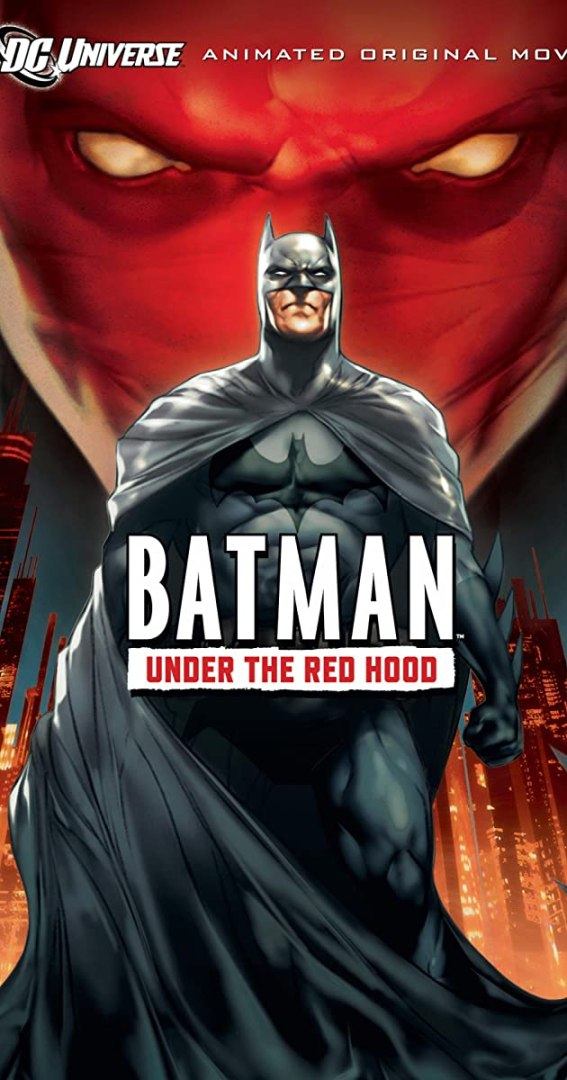
Under the Red Hood Cover

Studio: Warner Bros. Animation and DC Entertainment

Series: DC Universe Animated Original Movies – Film Eight

Director: Brandon Vietti

Writer: Judd Winick

Producers: Bruce Timm and Bobbie Page

My Rating: 5 out of 5 stars

Welcome back to my Throwback Thursday series, where I republish old reviews, review content I have enjoyed before or review older books I have only just had a chance to read.  For this latest Throwback Thursday, I am going to keep following a recent trend of looking at animated movies and review Batman: Under the Red Hood.

Ever since I reviewed Justice League Dark: Apokolips War last year, I have been focusing a little more on one of my favourite forms of entertainment, animated films based on comic books.  Not only did I have a great time listing my favourite comic book based animated films and television shows, but I have also done some cool reviews for Batman: Soul of the Dragon and Batman: Assault on Arkham.  After I got some positive responses to my review for Assault on Arkham last week, I thought I would use this Throwback Thursday to highlight the incredibly awesome Batman: Under the Red Hood, which is probably my absolute favourite DC Comics inspired animated film.

Released in 2010, Under the Red Hood was an early entry in the DC Animated Originals Movies range, and it remains one of the best that they have ever done.  Directed by Brandon Vietti and written by Judd Winick, this film is an adaptation of the iconic Batman comics storyline Under the Hood, which was also written by Winick.  Not only does this film contain an excellent story that does an amazing job capturing the original comic but it also features an all-star voice cast and some excellent animation, resulting in a dark and exciting film that is also rich in emotion and tragedy.

Years ago, Batman suffered the greatest defeat in his entire crime-fighting career when the Joker did the unthinkable by brutally killing his sidekick, Jason Todd, the second Robin.  Despite this terrible loss, Batman left the Joker alive and continued his non-lethal mission for justice, fighting from the shadows to save Gotham City from its criminal element.

In the present, Gotham is controlled by the ruthless crime boss, Black Mask, who has managed to take over the entire criminal underworld.  But a new player in town, the mysterious Red Hood, is making moves to disrupt Black Mask’s interests and take control of the city.  With some incredible skills, brilliant manoeuvring and intense violence, Red Hood soon becomes a major thorn in Black Mask’s side, taking parts of the city from him.  At the same time, Red Hood has placed himself right in the path of Batman and his former sidekick, Nightwing, determined to test his abilities against those of the Dark Knight.

As Batman attempts to stop the latest wave of violence sweeping the city, he notices something disturbingly familiar about the Red Hood.  His skills and training are too familiar, and even more shocking, he knows that Batman is Bruce Wayne.  With Black Mask on the warpath, the mysterious Ra’s al Ghul watching from the shadows, and the Joker always a menacing presence in Arkham, Batman gets closer to finding out the terrible truth about who Red Hood truly is.  But is he prepared for the darkness and tragedy he will find under the hood, or will the ghosts of his past finally push Batman over the edge?

Under the Red Hood is a dramatic, exciting, and overall tragic animated feature, which is brought together beautifully to produce an epic and powerful film, anchored by an exceptional narrative.  The film starts in a very dark place, with a malicious and hilarious Joker brutally killing Robin just before Batman can save him.  This perfectly sets the tone for the entire film, as the story advances to modern times and shows a new brutal crime war between the Black Mask and newcomer the Red Hood.  At the same time, Batman becomes embroiled in their war, when he interrupts a ploy by the Red Hood to steal an Amazo superweapon.  This leads to an action-packed middle section of the film, as Batman and Nightwing attempt to capture Red Hood, who is also dealing with assassins sent by Black Mask.  After several impressive fight sequences, Batman learns the shocking truth about Red Hood’s identity (which is as a tad obvious, even for those unfamiliar with the comics), resulting in some extreme drama, as Batman is forced to confront the dangerous ghosts of his past.  As Batman attempts to come to terms with his discovery, Red Hood forces his opponents to make some dramatic moves, which work into his plans.  What follows is a fantastically powerful and intense final act, as Batman confronts Red Hood and finds out the tragic and touching reasons behind his motivations.  What follows is emotional blow after emotional blow, as Batman, Red Hood and the Joker have their final confrontation.  The aftermath of this is absolutely heartbreaking and will leave you breathless and utterly moved: “This doesn’t change anything; this doesn’t change anything at all!”  This is an epic and exceptional narrative that I have so much love for.

Under the Red Hood serves as an exceptional adaptation of the Under the Hood Batman comic storyline, although as the film and the comic share the same writer, that’s pretty understandable.  This film does a great job fitting all the key points of the comic into its 75-minute runtime, and you get the full enjoyable story, as well as some useful backstory, especially around Jason Todd’s death.  This is mostly a pretty straight adaption, although there are a few noticeable changes designed to make the movie flow a little better.  I think these changes work extremely well, and Winick adds several great new scenes into this film that make for a different and, in some ways, better experience than the comic source material.  This is mainly because the Under the Hood comic was set amid several other ongoing Batman storylines, as well as the major crossover event, Infinite Crisis, which impacted Under the Hood’s overall narrative.  As it would have been too confusing to include some of these elements in the film, their removal resulted in a few notable changes.  While this did result in a few fun parts from the comics being removed, such as having the opponents in the Batman/Red Hood team-up fight change from members of the Secret Society of Supervillains, such as Captain Nazi and Count Vertigo, to a group of mechanised martial artists (it’s still a great fight though), some of the other changes worked really well.  I loved the alterations to the Joker’s story, as it was clever to have the Red Hood orchestrate Joker’s release to kidnap him.  It also results in some amazing scenes, including that great cell scene with Black Mask, and the fantastic scene with the truck on the bridge.

One disadvantage that I felt the film version had was that the big reveal over Red Hood’s identity is a lot less impactful.  When the Under the Hood comic first came out, it was a major revelation and there were some great surprise elements to it.  However, by the time the film came out, every comic fan knew who Red Hood really was, so that really cut down on the surprise factor of the reveal.  In addition, even if you were unfamiliar with the Under the Hood comic, the Jason Todd death scene at the start of the film ensured that most viewers would be easily able to figure out this twist as soon as the mysterious Red Hood appeared.  This was kind of unavoidable though, as the rest of the film wouldn’t have made sense without the establishing scene.  I did think that the reason behind Robin’s resurrection was handled a lot better in the film.  The original story, in which he is brought back to life due to Superboy-Prime punching a dimensional barrier, never really worked for me, so having it purely be the result of a Lazarus Pit resurrection was a lot neater and simpler (well, as simple as a magical resurrection pit can be).  Overall, I think that Under the Red Hood proved to be a really good adaption of the original comic, and in many ways I felt that in enhanced the source material while also compensating for the changed canons.

I am always deeply impressed by the fantastic and well-crafted animation of Under the Red Hood.  This entire film features a constant stream of beautiful and amazing sequences that are an absolute joy to behold.  The action is seamless throughout, and the creative team make sure to feature several sequences that show off the various skills of the main characters, while also bringing some iconic scenes from the comics to life.  I really must call out the two excellent extended chase sequences, as Red Hood flees from Batman and Nightwing.  These scenes are full of excitement and major moments, and the fantastic running sequences, equipped with all the players using their various gadgets and tricks, are so cool, and they are just animated perfectly.  However, these chase scenes pale in comparison to some of the epic fight sequences featured throughout the film.  While I do deeply enjoy the Amazo fight sequences at the start of the film, which expertly highlights the way Batman and Nightwing work together as a team, the best ones are the two fights involving Batman and Red Hood.  The first of these, which sees the two former partners team up against the anime-inspired team of assassins, the Fearsome Hand of Four, is so deeply cool, especially as the amazingly drawn martial arts techniques are beautifully paired with the over-the-top gadgets (one guy gets thrown through the air with explosives several times).  The animators save the best for last, with a brutal brawl between Batman and Red Hood near the end of the film.  This impressive and dramatic fight sequence is teased throughout the entire film, and when it goes down it does not disappoint.  The two heroes go to war with each other, each of them bringing lethal fighting abilities and an entire arsenal of toys and gadgets against each other for some incredible action.  The fight goes from the alley where the two first met, to the rooftops, all the way to a dilapidated apartment bathroom, where bodies are brutally thrown through fixtures and walls.  There is so much intensity in this sequence, and the animators outdid themselves bringing this major and spectacular fight to the screen.  You will be so impressed by this terrific animation.

You cannot talk about Under the Red Hood without out mentioning the incredible collection of characters and the outstanding voice cast that perfectly portrayed each of them.  Unsurprisingly for a Batman film, the cast is anchored by the Dark Knight himself, who is voiced by the talented Bruce Greenwood.  This is a great portrayal of Batman and the writer really captured the complexities of the veteran version of this superhero.  This Batman has been fighting crime for a very long time, and has been struck by tragedy after tragedy, especially the death of Jason Todd.  This comes into play throughout the film, and there are some major emotional moments, especially in the final climatic scene with the Red Hood.  Watching this film, it is impossible not to see Batman as a tragic figure, always destined to experience heartbreak and trauma as the result of his relentless crusade.  I did love the amazing animation featured around Batman’s various fight scenes, and it contrasts nicely with some of the other characters, such as Red Hood, with more of a focus on his experience and placing the right move at the right time.  I also really enjoyed Bruce Greenwood’s portrayal of Batman, who brings a gruff and determined depiction of the character which really works.  Greenwood delivers several great dialogue sequences which show the depth and complexity of this iconic character, and I had a fantastic time following him in this film.

Another major character is the character of Jason Todd/Red Hood (I would add a spoiler alert, but after all these years it’s kind of redundant), voiced by Jensen Ackles.  The Red Hood featured in this film is an amazing and outstanding version of the character, and you run the entire emotional gambit with him.  I loved the fantastic and clever introduction of the character, where he manages to take over a large criminal organisation with just a bag and a machine gun.  This evolves into a very fun game of cat and mouse between Red Hood and Batman, while he also works to take over from Black Mask.  The eventual reveal about Red Hood works extremely well: “You haven’t lost your touch, Bruce,” and I loved the various chase scenes between the two, as well as their joint fight sequence against the Fearsome Hand of Four.  All this perfectly leads up to the great final confrontation with Batman, with a big elaborate fight scene and that extremely dramatic sequence opposite Batman.  Ackles adds some real cockiness to the character, and his various interactions with the supporting characters are pretty funny and really fun.  However, it is his sequences with Batman that are the best, as Ackles adds all the appropriate drama of a murdered child when encountering his former mentor.  The revelation of Red Hood’s motive is deeply captivating, and the entire scene where he, Batman and the Joker are reunited is so very tense and powerful.  You also have to love how the final scene in the film features the younger version of Robin on his first night of crime-fighting, as his innocence and childlike joy at being a hero stands in such contrast to his eventual fate: “This is the best day of my life.”  This is an outstanding portrayal of one of the most complex characters in the DC canon.

I also really must highlight the incredible version of the Joker that is featured in this film, who is voiced by the always entertaining John DiMaggio.  This is a great interpretation of the Joker, and you get to see just how vicious and ruthless he can be.  I love how the writers and actor did a great job capturing his insane mentality when it comes to the Batman, especially as his greatest ambition is to drive Batman insane enough to kill him.  I was honestly surprised at how awesome John DiMaggio was in this role, especially as the purely evil Joker is very different from the comedic characters he is best known for portraying.  However, he brings some very excellent menace to this character, and while there are a lot of humorous undertones to his actions, the sheer insanity and joy he has at other people’s suffering is more than evident.  Joker has some incredible scenes throughout this movie, which DiMaggio really enhances with his unique take on the character.  The opening sequence in which he beats Jason Todd half to death with a crowbar is pretty dark, despite the constant jokes, and his later confrontation with Batman in Arkham really captures his overall insanity.  However, his best sequences occur later in the film.  The first of these is the cell scene with Black Mask, where he accepts a job offer in the most boss way possible (never hand the Joker a cup of any variety).  The follow sequence on the bridge, where he attempts to draw the Red Hood out with a truck, some guys and some gasoline is really great, especially when it is revealed that the Black Mask is also amongst his hostages.  However, DiMaggio shines best in the final sequence where Batman and Red Hood finally have their dramatic showdown with the Joker in the middle.  The Joker revels in all the drama and emotion in the room, especially when Red Hood attempts to force Batman to kill Joker: “This is turning out even better than I hoped!”  The final bit of the confrontation where Joker, realising that Red Hood’s bomb will kill them all, joyfully attempts stop Batman, “This is perfect…. I’m the only one who’s going to get what they want tonight,” really captures the character’s chaotic mentality and is a great conclusion to his story arc.

The other major character in the film is Nightwing, former Robin Dick Grayson, who is portrayed by the legendary Neil Patrick Harris.  Mostly featured in the first half of the film, Nightwing serves as the traditional sidekick role, bringing a lighter comedic role to the dynamic duo and playing off the ultra-serious Batman perfectly.  I loved the fantastic coordination in the action sequences between these two, and the animators do an outstanding job showing how their fighting styles complement each other and they instantly know what the other one is doing.  Harris’s voice work is great, hyping up the characters comedic, banter-laden fight style, and while it didn’t fit as well as some other versions of Nightwing I have seen, this was still a pretty epic bit of casting.

Aside from these above four main characters, I deeply appreciated Jason Issacs and Wade Williams as Ra’s al Ghul and Black Mask respectfully.  Issacs does an outstanding job bringing the enigmatic and ruthless al Ghul to life, and it was great to see the respect and personal code this version of the character has, especially once his actions result in Jason Todd’s death.  Williams’s unhinged version of Black Mask is also incredibly good, and I loved the ultra-anger he brings to the role, especially as he slowly becomes more and more targeted by Red Hood and Batman.  His reactions to the crazy antics of the other characters is pretty fun, and you’ve got to love the look on his face when he sees Red Hood targeting him with a giant rocket launcher.  I also want to call out Kelly Hu as Black Mask’s assistant, Ms Li, a gender-swapped version of the assistant character in the comic.  Ms Li serves a pretty cool counterpart to Black Mask and is a constant calm presence in his chaotic administration, barely batting an eye at any of his angry or violent outbursts.  These great supporting characters compliment the main cast perfectly, and I felt the film’s entire collection of characters and actors helped to turn Under the Red Hood into something incredibly special.

While there have been some incredible DC animated movies out there, none have eclipsed the exceptional and awesome Batman: Under the Red Hood.  Featuring an impressive adaption of an iconic and cool comic story arc, this amazing film contains a fantastic narrative loaded with action, excitement, and intensity, as the characters engage in a dramatic and tragic battle.  With a perfect voice cast and some outstanding animation, Under the Red Hood is a must-watch animated film that I have seen and deeply enjoyed so many times.  An easy five-star watch that is highly recommended; if you love Batman, you need to see this film.

Hit-Girl, Vol 4: In Hollywood by Kevin Smith and Pernille Ørum

Hit-Girl in Hollywood Volume 4

Publisher: Image Comics (Paperback – 19 June 2019)

Series: Hit-Girl – Volume 4

Writer: Kevin Smith

Artist: Pernille Ørum

Colourist: Sunny Gho

Letterer: Clem Robins

Length: 112 pages

My Rating: 3.5 out of 5 stars

Amazon     Book Depository

Lights, camera, bloodshed and mayhem! The world’s most dangerous pre-teen assassin, Hit-Girl, travels to Hollywood in the fourth instalment of the brilliant and exciting Hit-Girl series.

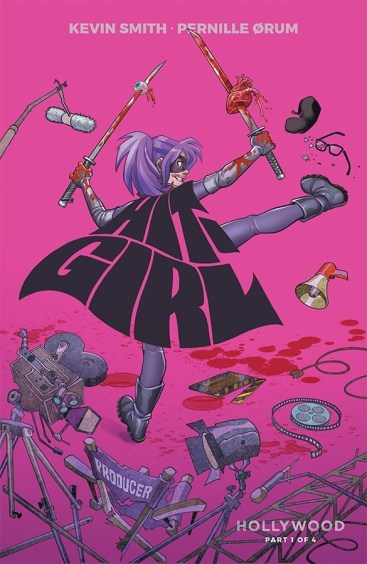
Hit Girl S2 #1

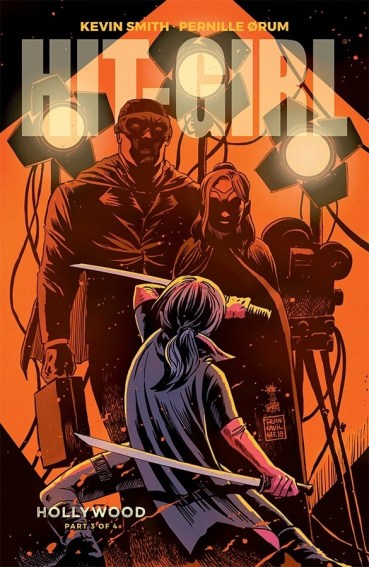
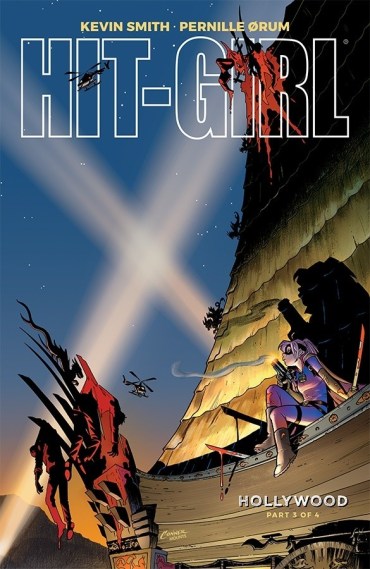
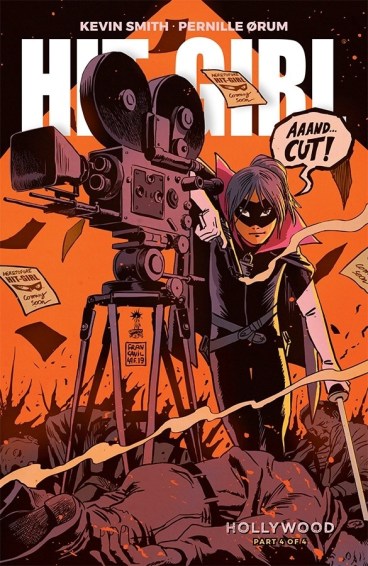
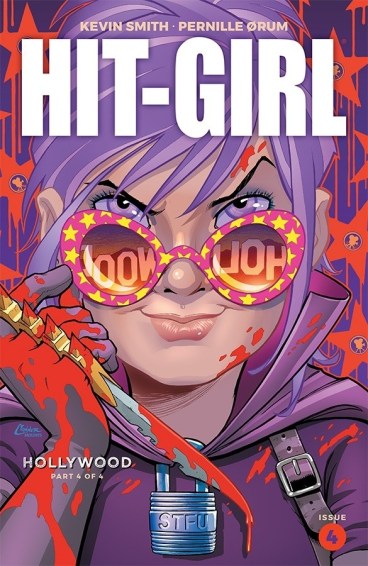
This current Hit-Girl series has been a lot of fun, as it follows Hit-Girl on her world tour of destruction and vigilante justice, with a new creative team at the helm of each volume (which are each made up of four issues). I have been really getting into this series, and I loved the first three volumes, having previously reviewed the first and third volumes, Hit-Girl in Columbia and Hit-Girl in Rome. This fourth volume, Hit-Girl in Hollywood, is another interesting addition to the series, featuring the intriguing creative team of Hollywood screenwriter Kevin Smith and artist Pernille Ørum, and contains Season 2, Issues #1-4 of the Hit-Girl series.

I have to say that I was rather looking forward to this fourth volume. Not only does it have a cool-sounding premise but it also features the writing talents of Kevin Smith, who has written and directed some rather entertaining and distinctive comedy movies (my favourite is Dogma). Smith has also written several comics over the years, which have ranged from the good to the controversial. I am a massive fan of several of his comics, including the incredible Daredevil: Guardian Devil, and his run on Green Arrow back in the early 2000s, which brought back the titular character and set up one of my favourite comic book series of all time. Some of his other work has been a little less well received, such as Batman: The Widening Gyre (which featured the infamous “bladder” spasm incident), but Smith has always been able to create an entertaining story. As a result, I was rather intrigued to see his take on the character of Hit-Girl, and the result was a rather unique and memorable tale.

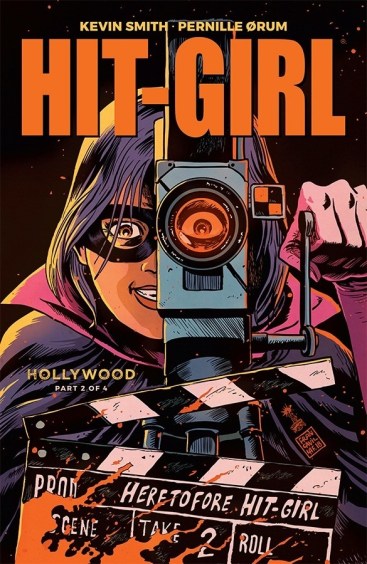
Hit Girl S2 #2

Mindy McCready, the pre-teen vigilante known as Hit-Girl, is living her best life, killing bad guys and distributing her lethal brand of justice across the world. However, during her most recent mission she becomes aware of something truly terrible: someone is making a big Hollywood movie of her life and it is going to feature a dramatic re-enactment of her father’s death. Determined to stop the movie from being made, Mindy travels to Hollywood to crack some heads and put the fear of Hit-Girl into the movie makers. Deciding to strike at the very top, Mindy breaks into the set to have a “talk” with the studio boss, however, she instead comes across a rather disturbing scene that she was not expecting.

It turns out that there is another vigilante running around Hollywood, and she has in her sights the most evil and vicious predators there are: Hollywood executives who prey on young women. Her latest vicious attack on the studio boss behind the Hit-Girl movie has garnered a large amount of attention, and Hit-Girl is now the main suspect. Hit-Girl needs to find this new vigilante and get out of town fast. But with both the FBI and the remnants of the Genovese mob family gunning for her, can Hit-Girl survive, and what happens when she meets up with a vigilante who has even more issues than she does?

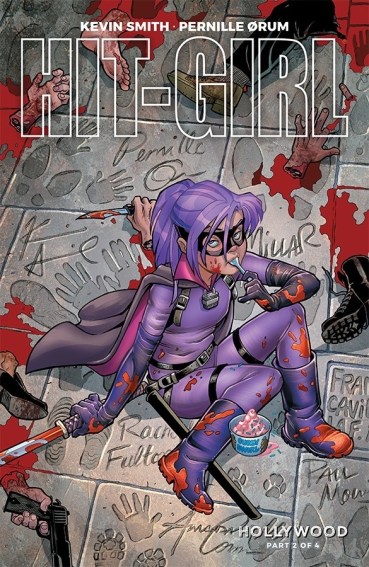
Hit GIrl S2 #2b

Wow, now that was something! I have to admit that I did have a suspicion that Hit-Girl in Hollywood was going to be a rather weird entry in the series, but I was not expecting just how crazy Smith and the artistic team ended up making it. I honestly think the best way to describe this comic is with the phrase “over-the-top”, as this comic features some rather extreme examples of violence and vengeance that a lot of people are going to find rather uncomfortable. I personally found the comic to be quite entertaining, and I liked seeing the crazy character of Hit-Girl in a whole new setting, especially one that makes fun of the Hollywood elite and dramatic method actors who fall deep for their beloved craft. However, even I had to admit that this comic had some issues which made it just a little too insane to completely enjoy.

Hit GIrl S2 #3

The comic actually starts by displaying a graphic and somewhat unexplained school shooting, which is probably going to turn away a bunch of potential readers right off the bat. Hit-Girl brutally intervenes to stop the shooting (graphically killing the two teen killers), but becomes more concerned when she discovers she has an unauthorised biography which is being adapted into a movie, and she travels to Hollywood to put an end to it. Once there she discovers that another teen girl is running around town in a Hit-Girl inspired costume, castrating predatorial Hollywood executives as “Dick-Taker”, whose introduction made me crack up and stop taking this comic seriously. While I could maybe overlook the portrayal of a school shooting at the start of the comic, Dick-Taker officially made this story way too over-the-top for me, especially as Dick-Taker wears a very disturbing and artistic cape that appears to made up of the stitched together skins of the male extremities she has removed (I kid you not!).

Hit Girl S2 #3b

All of this is way too crazy, and it does not help that Hit-Girl in Hollywood’s story is a bit weak in places. The big shoot-out in the fourth issue is cool, but it all happens rather suddenly, and all the key players are in the same place at the same time, prompting Hit-Girl and Dick-Taker to team up, which happened just a little too easily for my taste. I wasn’t a big fan of seeing Hit-Girl fighting the FBI either, as she has a “no killing cops” mindset which was a big part of the end of Kick-Ass 2: Balls to the Wall. I also thought that it was a bit of a waste to use the remnants of the Genovese mob in this story, and the manner in which the final member of the family that has been the main antagonists of Hit-Girl and Kick-Ass was taken down is a tad odd.

Hit Girl S2 #4

Now, despite the flaws and over-the-top extreme nature of much of the comic, I did like parts of Hit-Girl in Hollywood, which made it a mostly fun read. This comic is chock full of gratuitous violence, expertly brought to life by the artistic team, which, let us be honest, is one of the main reasons that you would buy a Hit-Girl comic. I also really liked how the entire first issue was told completely without any dialogue, except for in the final scene. This first issue turns out to be rather cool, as watching Hit-Girl’s outrage grow as she finds out that not only did someone write a book about her but it’s being turned into a movie is pretty entertaining, and showing her sitting on the Hollywood sign saying “I see dead people” in the very last panel is a great way to foreshadow the death and destruction that is bound to follow. I also liked Smith’s take on the crazy, fake town of Hollywood, and it definitely made for an interesting setting, filled with several entertaining characters, quotes from popular movies and a relevant storyline about sexual predators in Hollywood getting what’s coming to them. The whole storyline around the origin story of Dick-Taker is also a rather intriguing version of extreme method actors, and I thought it was interesting to see how inspiring someone like Hit-Girl could potentially be to other disenfranchised young women. My favourite part of this comic had to be the emotional scenes where Hit-Girl visits the set of the Hit-Girl movie and sees them recreate the moment her father died. The combination of anger, fear, regret and sadness that is shown on Hit-Girl’s face and in her thoughts is pretty intense, and it makes for a rather great scene.

Hit Girl S2 #4b

Overall, I’d say that Hit-Girl in Hollywood is an interesting addition to the series that dials up the action and excitement but which is probably not going to be everyone’s cup of tea. I personally liked most of it, but I have to admit that parts of it were off-putting and the whole comic is a bit too crazy for its own good. Still, people looking for an extreme and explosive comic with some memorable moments to it could do a lot worse than Hit-Girl in Hollywood, and you are guaranteed to have a few laughs with this one. I am giving it 3.5 out of 5 stars, although I can imagine that a lot of other people will not be as generous with their ratings as I am. I am looking forward to seeing where the next volumes of this series go, and I cannot wait to get my next Hit-Girl fix.

Amazon     Book Depository

Star Wars: Dooku: Jedi Lost

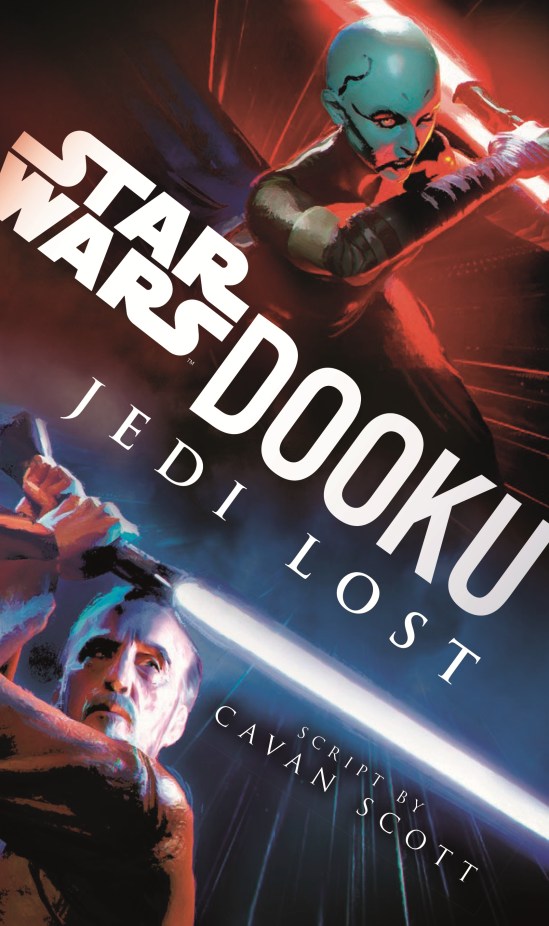
Dooku - Jedi Lost Cover

Publisher: Penguin Random House Audio (Audio Production – 30 April 2019)

Script: Cavan Scott

Cast: Orlagh Cassidy, Euan Morton, Pete Bradbury, Jonathan Davis, Neil Hellegers, Sean Kenin, January LaVoy, Saskia Maarleveld, Carol Monda, Robert Petkoff, Rebecca Soler and Marc Thompson.

Length: 6 hours and 21 Minutes

My Rating: 4.5 out of 5 stars

Amazon

Prepare for another deep dive into the Star Wars canon with an audio drama that explores the past of one the biggest villains from the prequel movies, Count Dooku, with Dooku: Jedi Lost.

Dooku: Jedi Lost was one of the more interesting pieces of Star Wars fiction that was released last year. Based on a script written by Cavan Scott, an author who has written a multitude of comics, novels and radio drama tie-ins for several different franchises, Jedi Lost was originally released as an audio production featuring several different actors, with the script also released in novel format a few months later. I have been meaning to check out this unique story for some time, as it was one of the few pieces of Star Wars fiction that I did not read in 2019. This is actually one of the first entries I am ticking off my Books I Wish I Read in 2019 list (barring The Russian by Ben Coes, which was an honourable mention), and I am really glad I decided to check this piece of fiction out.

For many in the galaxy, Count Dooku of Serenno is one of the most dangerous and evil villains that ever lived. The leader of the ruthless Separatists during the Clone Wars, apprentice to Darth Sidious and master of several ruthless assassins, Dooku is rightfully feared and hated by many. However, he once was one of the most respected and powerful members of the Jedi Council. A former apprentice to Yoda himself, and the mentor to two exceptional Padawans, Rael Averross and Qui-Gon Jinn, Dooku dedicated decades of his life to the Jedi, before suddenly leaving and taking a different path. But how did such a revered Jedi turn to the dark side of the Force? That is a question that Dooku’s new apprentice, Asajj Ventress, is trying to understand when she is given a mission to find Dooku’s missing sister. Searching for leads through Dooku’s journals and messages, Ventress is given unprecedented access into Dooku’s past.

The son of the ruthless Count of Serenno, Dooku was abandoned as baby by his father the moment his abilities with the Force were identified, only to be rescued by Yoda. Upon learning the truth about his birth years later, Dooku struggles with balancing his duties as a Jedi with his connections to his family and home planet. Conflicted, Dooku finds comfort in his friendship with the troubled young Jedi Sifo-Dyas and the mysterious Jedi Master Lene Kostana, whose mission of locating and studying Sith artefacts fascinates Dooku and leads him to his first experiences with the dark side of the Force. As Dooku rises through the ranks of the Jedi Order, he finds himself stymied by the bureaucracy and corruption of the Republic and the hypocrisy of the Jedi Council. As the first waves of darkness fall across the galaxy, how will the younger Dooku react, and what will Ventress do when she realises what sort of person her new master is?

Dooku: Jedi Lost is an incredible and deeply captivating piece of Star Wars fiction that cleverly dives into the past of one of the franchise’s most iconic villains to present a compelling and intriguing story. I ended up listening to the full cast audio production of Jedi Lost, and I really enjoyed this fantastic and intriguing book. The plot of Jedi Lost is uniquely set across several different time periods, with the details of Dooku’s life being relayed to a younger Ventress at the start of her Sith apprenticeship through journal entries, detailed messages, oral histories and even some visions of the past. Scott did an excellent job of setting his story across multiple time periods, which allowed Jedi Lost to showcase the life of the titular character while also presenting an exciting, fast-paced and at times dramatic narrative that includes several plot threads that jump from timeline to timeline. All of this results in an excellent Star Wars story which features some fascinating inclusions to the franchise’s lore and which is enhanced by the incredible audio production.

At the centre of this book lies an intriguing and captivating exploration of one of the most significant antagonists in the Star Wars canon, Count Dooku. Jedi Lost contains quite a detailed and compelling backstory for this character, and you get to see a number of key events from his life. This includes his complicated childhood, the forbidden communication he had with his sister, the connection he maintained with his home planet, parts of his apprenticeship under Yoda, the tutelage of his own two apprentices, his time on the Jedi council, his first brushes with the dark side of the Force and finally the chaotic events that led him to leave the Jedi order and take up his position as Count of Serenno. Every part of this background proved to be extremely fascinating and it paints Dooku as a much more complex character, with understandable motivations and frustrations. He actually comes across as a much more sympathetic person thanks to this production, and readers are going to have an amazing time finding out what events and betrayals drove him away from the Jedi and towards his new master. The storytelling device of having Ventress read and analyse Dooku’s old messages and journal entries ensures that the story quickly jumps through the events of his life, and no key events really seem to be missing. I personally would have like to see some more detail about Dooku’s training under Yoda or his teaching of his apprentices, although I appreciate that this was already an expansive production and there was a limit on what could be included in the script. I also wonder what sort of story this could have turned into if this was told exclusively from Dooku’s point of view, however, this first-person narration probably wouldn’t be as feasible as a full cast audio production. Overall, those fans who check out Jedi Lost are in for quite an in-depth and fascinating look at the great character that is Count Dooku, and I am sure many will enjoy this exciting examination of his backstory.

In addition to exploring the character of Count Dooku, Jedi Lost also presents those dedicated Star Wars fans with a new canon look at the Star Wars universe before the events of The Phantom Menace. You get an intriguing look at the Republic and the Jedi Order in the years leading up to events of the Skywalker Saga, and it was fascinating to see the similarities and differences between the various eras in the Star Wars lore. In particular, I found in interesting to see that the groundwork for the Clone Wars and the fall of the Jedi order had already begun, with ineffectual leadership, corruption in the Senate and complacency in the Jedi Council all eventually leading the dark events of the future. Jedi Lost also shows the earlier days of several Jedi who were supporting characters in either the movies or the animated shows. In particular, this entry focuses on Sifo-Dyas, the Jedi who foresaw the Clone Wars and was manipulated into creating the Republic’s clone army. The story explores how Dooku and Sifo-Dyas were close friends growing up, while also showing the origin of his prescient powers, and he proved to be a rather compelling side character. Jedi Lost also saw the introduction of Jedi Master Lene Kostana to the canon. Lene Kostana was a rebellious Jedi who scoured the galaxy for Sith artefacts in the belief that the Sith were going to rise again. She proved to be an interesting mentor character for Dooku, and her recklessness and unique way of thinking had some major impacts in Dooku’s character development.

I also liked how this piece of Star Wars fiction focused on the early career of Asajj Ventress, one of the best Star Wars characters introduced outside of the movies. Much of the story is set immediately after Dooku claims Ventress as his apprentice and personal assassin, which allows the reader a compelling view of Ventress’s early brushes with the dark side of the Force and the initial corruption and manipulation she experienced under Dooku. This proved to be quite an interesting part of the novel, especially as the reader got to see Ventress’s thoughts and reactions to several revelations about Dooku’s past. Thanks to the way that the audio production is set out, Scott also included a rather cool element to Ventress’s character in the way that she is hearing the voice of her dead former Jedi Master and mentor, Ky Narec. While Ky Narec’s voice was mainly included to allow Ventress to share her thoughts in this audio production without becoming a full-fledged narrator, this ethereal character gives the reader a deeper insight into Ventress’s character. I also enjoyed the discussion about Ventress’s past with Narec, and it helped produce a much more in-depth look at this fascinating character from the expanded universe.

Like most pieces of expanded universe fiction, Jedi Lost is best enjoyed by fans of the Star Wars franchise, who are most likely to appreciate some of the new pieces of lore and interesting revelations. This production also bears some strong connections with another piece of Star Wars tie-in fiction that was released last year, Master & Apprentice by Claudia Gray. Master & Apprentice was one of the most impressive Star Wars novels released last year, and it featured a story that focussed on Dooku’s apprentices, Rael Averross and Qui-Gon Jinn. Jedi Lost heavily references some of the events that occurred or are represented in Master & Apprentice, and it was interesting to see the intersections between the two separate pieces of fiction. I particularly enjoyed seeing more of the unconventional Jedi, Rael Averross, and it was great to see some additional interactions between the proper and noble Dooku, and this rough former apprentice. Despite all of this, I believe that Jedi Lost can easily be enjoyed by more casual Star Wars fans, although some knowledge about the prequel films is probably necessary.

People familiar with this blog are going to be unsurprised to learn that I chose to listen to the audio production of Jedi Lost rather than read the book that was produced from the script. I have a well-earned appreciation for Star Wars audiobooks, which are in a league of their own when it comes to production value; however, Jedi Lost is on another level to your typical Star Wars audiobook. As I mentioned above, Jedi Lost was released as a full cast audio production, which is essentially an audio recording of a play. This was the first piece of Star Wars fiction I had experienced in this medium, and I really loved how it turned out. The cast did an amazing job with the script, and they acted out a wonderful and highly enjoyable production which I thought was just incredible. The production runs for just over 6 hours and 20 minutes, and they manage to fit a lot of plot into this shorter run-time (in comparison to normal Star Wars audiobooks), as the use of dialogue results in a lot less narration. Due to the way Jedi Lost is structured, with Ventress reading out journal entries or having Dooku’s tale told to her, there is a little more narration of events then a production like this would usually have. I think this was necessary to ensure the reader was clear on what was going on at all times, and it didn’t ruin the overall flow of Jedi Lost in any way.

Jedi Lost features a very impressive and talented group of actors who go above and beyond to make this an awesome audio production. As you can see from the cast list above, this production made use of 12 separate narrators, each of whom voice a major character (with some of the actors also voicing some minor characters as well). Many of these narrators have expansive experience with voicing Star Wars audiobooks, and I have actually had the pleasure of listening to several of these actors before, including Euan Morton (Tarkin by James Luceno), Jonathan Davies (Master & Apprentice), Sean Kenin (Death Troopers by Joe Schreiber), Robert Petkoff (multiple Star Trek novels, most recently Picard: The Last Best Hope by Una McCormack) and Marc Thompson (Dark Disciple by Christie Golden, Loki: Where Mischief Lies by Mackenzi Lee and Scoundrels and Thrawn by Timothy Zahn).

There is some truly outstanding audio work done in this production, with several actors producing near-perfect replication of several iconic characters from the Star Wars franchise. I particularly have to praise Orlagh Cassidy for her exceptional portrayal of Asajji Ventress; her take on the character sounded exactly like the Ventress that appeared in The Clone Wars animated show. I was also deeply impressed by Jonathan Davis’s Qui-Gon Jinn and Marc Thompson’s Yoda, both of which were incredible replications of the characters from the movies. Davis also did a great job once again portraying Rael Averross, a fun character who he first brought to life in Master & Apprentice, and I loved the somewhat laidback voice he provides for Rael, especially as it reminds me of an older cowboy character from a western (I personally always picture Sam Elliott when I hear it). Other standout stars in this production include Euan Morton, who came up with a great take on the titular character Count Dooku. Morton was able to produce an impressive and commanding presence for this character, and he did a great job modulating the character’s voice to represent the various jumps in age that the character experienced. The same can be said for Saskia Maarleveld’s Jenza and Sean Kenin’s Sifo-Dyas, whose characters also aged extremely well throughout the course of the production. I also really loved the voice that Carol Monda provided for new character Lene Kostana, and I felt that it fit the character described in Jedi Lost extremely well. I honestly loved all the rest of the voices that were provided throughout this production, and each of them brought some real magic to Jedi Lost.

Just like with a normal Star Wars audiobook, one of the standout features of the Jedi Lost production was the incredible use of the franchise’s iconic music and sound effects. I really cannot emphasise enough how amazing it is to have one of John Williams’s epic scores playing in the background of a scene. Not only does it really get you into the Star Wars zone, but this music markedly enhances the mood of any part of the book it is playing in. Hearing some of the more dramatic scores during a touching or tragic scene really helps the reader appreciate how impactful the sequence truly is, and nothing gets the blood pumping faster during an action sequence than Duel of the Fates or some other fast-paced piece of Star Wars music. The sound effects utilised throughout this production are not only really cool but they also have added significance for an audio production like Jedi Lost which relies on dialogue rather than narration to establish the scene. Having the various classic Star Wars sound effects reflect what is going on can be really helpful, and often the clash of lightsabers and the pew-pew of blaster bolts give life to a battle sequence. I always appreciate the way that certain sound effects can help paint a picture of what is happening in the room that the dialogue is taking place. Having the susurration of a crowd or the light hum of a starship engine in the background always makes a book seem more impressive, and it makes for a fun overall listen.

Dooku: Jedi Lost was an incredible and wonderful production which I had an extremely hard time turning off. Cavan Scott’s clever and intricate script, combined with the outstanding audio production, is a truly awesome experience which I deeply enjoyed. I loved learning more about the character of Count Dooku, and I think that Scott came up with a fantastic and intriguing background for the character. Jedi Lost is an excellent piece of Star Wars fiction, and I am extremely happy that I listened to it. Highly recommended to all Star Wars fans, and if you decide to check out Jedi Lost, you have to listen to the spectacular audio production, which is just amazing.

Amazon