Star Wars: Thrawn: Alliances by Timothy Zahn

Star Wars Thrawn Alliances Cover

Publisher: Century

Publication Date – 24 July 2018

Amazon

Two Star Wars fan favourite villains come together in the ultimate bad guy team-up in the latest novel from the extended universe icon, Timothy Zahn.  I reviewed the previous Star Wars release, Last Shot here: https://unseenlibrary.com/2018/05/30/star-wars-last-shot-by-daniel-jose-older/

It is the height of the Empire’s tyranny over the galaxy, but threats are always on the horizon.  When the Emperor senses a disturbance in the edge of imperial space, he despatches his two most capable servants.  One is his apprentice, the powerful dark lord of the Sith, Darth Vader, and the other is the master tactician, Grand Admiral Thrawn.  While both men are fiercely loyal to the Emperor, Vader and Thrawn are rivals for his favour and have differing views when it comes to command, combat, tactics and the future of the Empire, especially over the construction of the Death Star.

Vader and Thrawn travel to the planet of Batuu in the Unknown Regions, the vast, uncharted areas of space outside of the imperial galaxy.  As these two ambitious individuals attempt work together, they encounter a threat not only to the Empire but to Thrawn’s secret plans.  Can these two succeed in their mission, or will Vader’s distrust of Thrawn result in the Grand Admiral’s early death?

This is not the first time these two men have worked together.  Back during the Clone Wars, Jedi General Anakin Skywalker encountered Commander Mitth’raw’nuruodo of the Chiss Ascendancy.  Their chance encounter resulted in these two combining forces to uncover a Separatist plot that has resulted in the disappearance of Senator Amidala.  But as these soldiers, now known as Vader and Thrawn, grow to respect each other, their differing priorities may break their newfound alliance apart.  What connections do these two missions have to each other, and what will happen when their tragic past is brought into the present?

Grand Admiral Thrawn is one of the more interesting characters in the Star Wars universe.  Created by Zahn back in the 1991 story Heir to the Empire, Thrawn was the commander of the Imperial Remnant following their defeat in Return of the Jedi and was presented as the ultimate tactician and a major threat.  Appearing in several books, he quickly became a massive fan favourite character, and is easily one of the most popular creations in the entire Star Wars extended universe.  However, following the Disney buyout of the franchise, the books that introduced Thrawn to the Star Wars fandom are no longer considered canon.

But the Grand Admiral could not be denied and has since resurfaced in the new Disney official Star Wars universe in all his villainous glory.  First reappearing in the third season of TV’s Star Wars Rebels, voiced by Lars Mikkelsen, Thrawn serves as one of the series’ primary antagonists, masterminding plots that devastate the heroes.  In addition, a new series of books dedicated to the character of Thrawn were commissioned as part of the new extended universe, which sees the return of Timothy Zahn to the fold.  The first of these books, 2017’s Star Wars: Thrawn, saw Zahn recreate  Thrawn’s origins to fit into the new universe and detail the rise of the alien officer to the rank of Grand Admiral in the xenophobic Imperial Navy.

In addition to the two novels mentioned above, Zahn has created a huge number of books since his first release in 1983.  In the last 35 years, he has released over 50 books, most of which were science fiction novels, as well as a number of short stories, novellas and graphic novels.  Of these books, 12 are set within the Star Wars universe, with many of them representing significant entries in the now defunct extended universe.

Thrawn: Alliances is evenly split between two separate timelines, both set in different parts of the Star Wars canon.  The main story is set after the events of the third season of the Star Wars Rebels television show, which is set in the period between the Revenge of the Sith and A New Hope movies.  The repercussions of that dramatic season finale are certainly felt within this book.  The Alliances storyline set in the past focuses on a time period after the end of the Clone Wars television show, which is set between the Attack of the Clones and Revenge of the Sith movies.

Like in Zahn’s previous books, Thrawn once again shines as the best part of Alliances.  The cool, tactical way he approaches everything is a fantastic character trait, and I could almost hear Lars Mikkelsen’s voice every time Thrawn spoke in the book.  The author continues to portray Thrawn as an incredibly insightful being who is able to come to perceptive conclusions from the most mundane of items or actions.  These insights come into effect throughout the book as Thrawn comes up with some unique and effective tactics in his various encounters.  While Thrawn is an awesome character, Zahn has also included one of the greatest film villains of all time within his story.  Darth Vader is a great character throughout this book and has some destructive and memorable scenes.  Fans who enjoyed his devastating appearance in Rouge One will love to see him power through his opponents is this story.  There are also other excellent sequences where he shows off his renowned piloting skills, this time in a TIE Defender.  Readers will also see a great comparison between the styles of the two imperial commanders that really highlights the strengths and weaknesses of both characters.  Vader’s immense power and Thrawn’s tactical ability are on display as a result, but they also show off Vader’s barely contained rage and his limited ability to trust anyone.  Overall, this is a creative and thrilling use of two of these two amazing Star Wars characters.

For fans of science fiction action adventures, one of the most exciting elements of this book is the significant amount of space combat throughout the story.  Ship-on-ship battles in the darkness of space have always been some of the most impressive parts of the Star Wars screen instalments, and Zahn goes all out to showcase this in Alliances.  There are a huge range of these sequences, from smaller fighter-on-fighter combat, to demonstrations of the destructive power of a Star Destroyer, to even a large-scale space battle between multiple ships.  Zahn has spread the story across multiple characters, including imperial naval commanders and members of the stormtroopers, to really showcase these battle sequences, and this also allows him to present several boarding actions being led by the stormtroopers.  Seeing Thrawn in command of all of these engagements is also fantastic, as his well-documented tactical abilities come to the fore again.  These space engagements are a great part of the story and will prove to be exciting for the reader.

The use of the two split timelines is also an excellent way of telling this story and provides a number of noticeable benefits to the book.  There are a number of connections between the two separate storylines that come into effect throughout the book, and it’s always fun to view some hints about the past hidden in the storylines set in the present.  This split storyline is also an exceptional way to expand on the connection between Vader and Thrawn, two characters who, despite their respective service to the Empire, have never had much to do with each other before.  Having one storyline feature Vader and one storyline feature Anakin is also a smart way to show the differences between the two aspects of the one man.  Not only does Zahn examine how much Vader has changed since the Clone Wars but he also hints at the darkness already inside Anakin even back then.  This is further showcased by examining the relationship Thrawn has with both Anakin and Vader and how the character has gone from being a trusting individual to a creature more concerned about his ties to the Emperor.  That being said, Thrawn provides several taunting hints about knowing who Vader really is, and the reader is constantly wondering if the master tactician has actually worked out the biggest secret in the Star Wars universe.

Alliances also takes the reader to a more obscure part of the Star Wars universe: past the Outer Rim and into the Unknown Region.  There is less of a focus on the central story of Rebels versus the Empire which is heavily featured in the films and television series, and more on the exploration of an area never seen on screen.  This is an intriguing change of pace for this newer extended universe and opens up some interesting options for future books.

Legendary Star Wars author Timothy Zahn once again returns to what he knows best with another book focused on his most iconic and memorable character, Grand Admiral Thrawn.  Alliances sees Thrawn team up with Darth Vader in an electrifying and powerful adventure into the unfamiliar areas of the Star Wars universe.  This book is definitely geared towards the hardcore Star Wars fans, but it is also extremely accessible to the more causal science fiction reader, who will appreciate the inclusions of two sensational main characters, substantial action and combat, and a clever use of different perspectives and timelines.  This is another sensational read from Zahn, and I can’t wait to see where his greatest creation, Thrawn, next appears in the Star Wars universe.

My Rating:

Four stars

Amazon

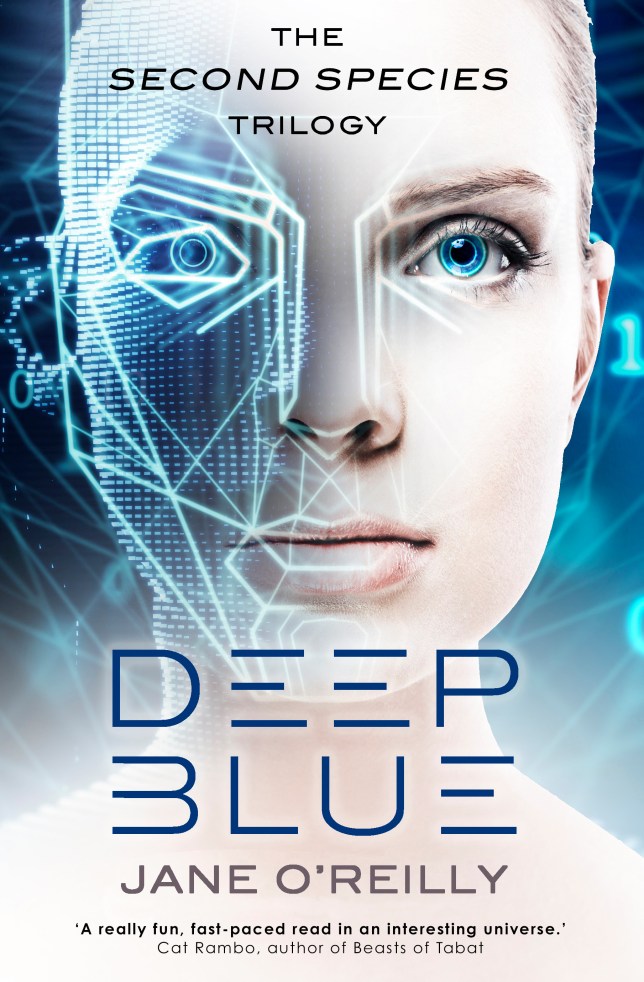
Deep Blue by Jane O’Reilly

Deep Blue Cover

Publisher: Piatkus

Publication date – 31 July 2018

Amazon     Book Depository

Following on from her 2017 release, Blue Shift, Jane O’Reilly returns to her electrifying science fiction universe for another exciting and action-packed adventure among the stars.

In the distant future of 2207, Earth is dying and humanity’s only hope for survival is a brand new planet on the other side of the galaxy.  Travel to this new sanctuary requires passage through the territory of several alien species who are unwilling to let a ragged human fleet anywhere near their areas of space.  In order to convince these aliens to allow humans access to a new planet, the government has initiated the Second Species programme to create the only resource the aliens want: human slaves genetically altered with alien DNA.

Former bounty hunter Jinnifer Blue, after failing to reveal the terrible truth about the Second Species programme, has been captured by its creator, her mother, Ferona Blue.  Now genetically altered with alien strength and pissed beyond all belief, Jinnifer escapes from the lab where she was held.  Having given up on warning humanity about the government’s sinister plans, Jinnifer’s only desire is to be reunited with her lover, the pirate Caspian Dax.

But Dax was also captured by Ferona and is now serving a brutal alien race as a mindless gladiator on the planet of Sittan.  Jinnifer has no choice but to travel to Sittan and attempt to rescue Dax, while at the same time organising the rescue of another friend, Eve, who has been captured by another dangerous alien species.  Gathering together allies and an old enemy into a ragtag team, Jinnifer initiates two desperate rescue missions to save her friends.  Can Jinnifer succeed, or has Dax fallen too far under the sway of the dangerous Sittan empress?

Deep Blue is the second book in the Second Species trilogy and a brilliant sequel to O’Reilly’s first science fiction book, Blue Shift.  This is a fun and fast-paced action series that makes use of an inventive and dangerous universe filled with unique aliens and desperate humans.  Deep Blue has a very busy plot told from a variety of viewpoints that are combined together in a clever fashion to create one thrilling narrative.  Each of the various exciting storylines also contain some flawed and damaged characters, most of whom are seeking some form of redemption.

Just like in Blue Shift, I found that the parts of the book that I enjoyed the most were the chapters that followed the machinations of the book’s central antagonist Ferona Blue.  Her despicable political manipulation on Earth was a highlight of the first book, and this continues to be the case in Deep Blue.  The added focus on Ferona’s negotiations with alien politicians, including the book’s other main antagonist, the Sittan empress, is a brief but fun addition to this equation.  Deep Blue’s other storylines are also very fascinating and contain some great sequences, including having four storylines featuring rescue missions and alien captivity running simultaneously within the book.

Readers who enjoyed the first book of the Second Species trilogy will also enjoy the significant development that the central character, Jinnifer, has undergone since the start of Blue Shift.  The character has evolved from an uncaring loner to the leader of her own small crew who harbours deep concerns for her friend’s wellbeing.  There is also a shift in the character dynamics between Jinnifer and Dax that is quite noticeable.  In the first book, Jinnifer was constantly being rescued by Dax, who ended up sacrificing everything to save her.  This is reversed in Deep Blue, as Dax is the one who is trapped and Jinnifer is the one attempting to save him by undertaking a dangerous rescue mission.  It is a fun change to the established character dynamic and readers of Blue Shift will appreciate the interesting change of pace O’Reilly takes in this second book.

O’Reilly has also created an excellent original universe to serve as the setting for her series.  There are a ton of intriguing science fiction elements, including an interesting prediction for the future of Earth and humanity and a number of unique alien species.  In Deep Blue, O’Reilly goes into greater detail of two of her alien races, the Sittan and the Shi Fai.  There is some exploration of both races’ history, culture, technology and way of life, as well as a visit to both home planets.  While there is a larger focus on the Sittan and their militaristic, female-dominated society, including using the Sittan empress as one of the book’s main antagonists, the scenes on the Shi Fai home planet are certainly memorable and more disturbing.  Other science fiction elements that readers are bound to find entertaining within Deep Blue include O’Reilly’s look at intergalactic politics, Earth’s political manipulation with advanced technology and the inclusion of human-alien hybrids.

This is a fairly action-packed book with some great combat sequences infused into the story to excite the readers.  The main character spends significant parts of the book utilising the swords she has implanted within her arms to great effect, and O’Reilly ensures that her two main characters spend significant time in gladiator-style death fights.  The author also is not too attached to some of her characters, so prepare for a few shocks and surprises.

O’Reilly once again sends the reader on an imaginative science fiction adventure through a dark and dangerous universe.  Deep Blue is a deeply fun and action-orientated story that will appeal to a wide audience and have readers hanging out for the final book in this exciting trilogy.

My Rating:

Four stars

Amazon     Book Depository

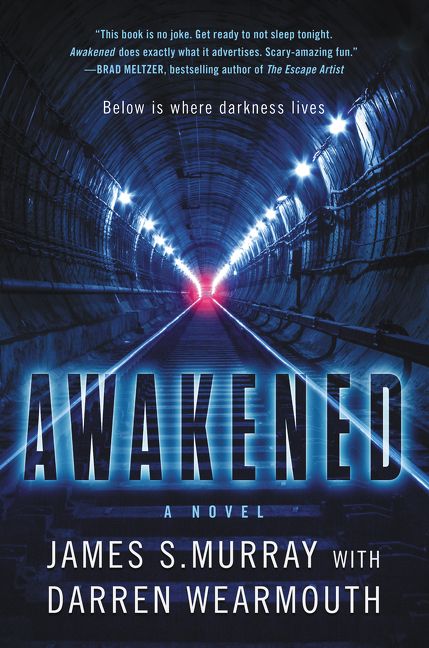
Awakened by James S. Murray and Darren Wearmouth

Awakened Cover.jpg

Publisher: Harper Voyager

Publication Date – 26 June 2018

Amazon     Book Depository

First-time author James Murray, of Impractical Jokers fame, teams up with veteran science fiction writer Darren Wearmouth to bring you the fast-paced, action-packed horror extravaganza, Awakened.

It is the unveiling of New York’s newest subway line, one of the most ambitious underground construction programs in the world.  The new express line will travel through a series of new tunnels that are now connecting the various suburbs previously separated by the Hudson River.  At the centre of this new expansion is the Visitor’s Pavilion, a gleaming state-of-the-art control centre and shopping hub situated beneath the Hudson.

The first run of the new system has been set up as a massive event, featuring the press, civic dignitaries, New York City’s mayor and even the president of the United States.  However, when the train rolls into the Visitor’s Pavilion it is not the triumphant occurrence that the waiting crowd was expecting; instead it is a scene of carnage.  The train that arrives is deserted, with all the passengers missing.  Not only that, but ragged holes have been made in the side of the carriages and the floors are covered in blood.

As the crowd panics and attempts to flee what appears to be a massive terrorist attack, an explosion rocks the tunnels and methane starts to flood the entire subway system.  As the tunnels begin to fill with gas and the slightest spark could result in another explosion, those trapped in the Visitor’s Pavilion soon discover that a far more dangerous threat is stalking them.  Something has been living under New York and the construction of the new tunnels has woken it up.  As this new threat starts to pick off both the trapped crowd and the rescuers attempting to reach them, it falls to New York’s mayor Tom Cafferty, NYPD SWAT member Sarah Bowcut and subway technician Diego Munoz to discover what is down in the dark with them.  The more they dig, the more they realise that they are dealing with something far more dangerous than they could possibly imagine, and that a sinister conspiracy has been keeping it hidden from the rest of the world.

This bold new book is the result of a collaboration between comedian James “Murr” Murray and Darren Wearmouth, a science fiction and horror writer with a number of joint novels already under his belt.  The idea for Awakened was originally developed by Murray some years ago, and represents the first novel in a new series that the two authors have been working on, with two future additions already planned for 2019 and 2020.

Awakened is a captivating adventure, science fiction and horror hybrid that goes straight for the reader’s imagination whilst throwing their action centres into overdrive.  This is one of the fastest-paced novels of 2018, as the book’s characters are forced to be quick and decisive in order to escape death.  There are ton of great sequences as the characters encounter the various dangers converging on them and must work on a range of elaborate and desperate escape and rescue attempts.  Murray and Wearmouth are able to weld together some exciting scenarios around this concept, and readers will enjoy watching the characters adapting to the problems they encounter, such as methane in the tunnels stopping them from using guns or flames to defend themselves.  In addition to these excellent action sequences, Awakened contains some truly creepy scenes that will really appeal to horror aficionados.  The characters are assailed with a range of strange sightings, noises from the darkness and the disturbing voices of children crying for help from just outside the character’s line of sight.  This pulse-pounding content is absolutely fantastic and ideal for those who love a startling adventure.

Murray and Wearmouth have also created an intriguing monster to attack the protagonists in the subway tunnel.  Without giving too much away, Awakened’s monstrous element is unique and plays into humanity’s fear of the dark and the creatures that could reside there.  The nature of the threat is revealed at just the right time, as the authors waited until the audience would be sufficiently engrossed in the book.  The eventual full reveal is one of the most memorable parts of the book, as it contains some great reactions from the characters encountering them, whilst at the same time rewarding the reader’s curiosity in a big way.  The authors work to ensure that their audience’s imagination and curiosity is continuously piqued throughout the entire story.  There is also a complex and fascinating conspiracy element that is woven into this part of the book which is intriguing to discover and unravel.  It is definitely a notable part of the story, and it looks like it will be major part of the next books in series.

The authors make significant use of multiple perspectives and viewpoints throughout Awakened.  This type of storytelling often works well for these large-scale horror novels, and this book is no exception.  This breakdown of point-of-view characters allows the reader a much larger picture of what is going on, especially as the various viewpoints tie together into one massive, high-powered story.  It is fun watching the actions of one group of people impact the decisions or choices of another group of people who are located in a different part of the book’s sprawling, underground setting.  This also allows the reader to see smaller scenarios that add to the whole story, such as one fantastic sequence which sees someone attempt to rescue the passengers only to meet their doom.  Despite it being this character’s only scene, his death affects the rest of the characters and there are multiple viewings of his corpse throughout the book to spook those who had no idea of his fate.

It is also worth noting that Murray and Wearmouth have made several homages to other works of horror within Awakened.  I was particularly drawn to several noticeable references and parallels throughout the book to Jurassic Park.  For example, there is a great reference early in the book involving the phrase “no expense had been spared” being used when discussing the celebrity written audio elements of the initial ride.  In addition, some of the characters actually compare their situation to Jurassic Park, which I found to be amusing.  These are a fun element to watch out for, and readers will enjoy noticing these throughout the book, while at the same time, appreciating that they do not overwhelm Awakened’s central horror based theme.

Awakened is a fantastic horror read that really amps up the adventure and action, leaving the reader excited for more.  With a sinister monstrous element and an enjoyable narrative containing an elaborate conspiracy-laden storyline, this collaboration between Murray and Wearmouth is a roaring success and readers should be eager to see what this duo cooks up next.

My Rating:

Four stars

Amazon     Book Depository

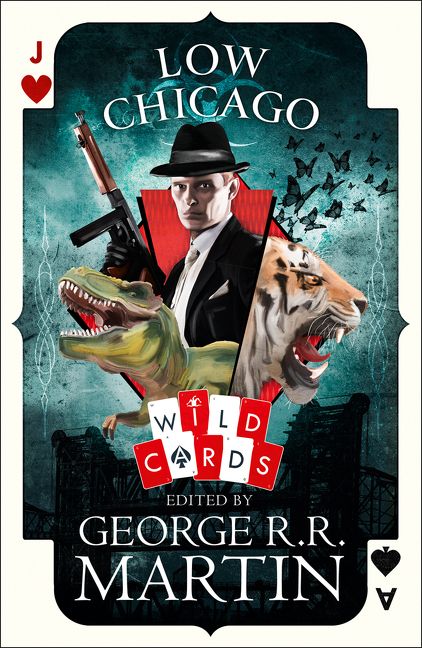
Low Chicago Edited by George R. R. Martin

Low Chicago Cover.jpg

Publisher: Harper Voyager

Publication Date – 12 June 2018

Amazon     Book Depository

From of eight of the world’s leading science fiction and fantasy writers comes the latest addition to the superhero-filled Wild Cards universe, edited by fantasy legend George R. R. Martin.

Wild Cards is one of the more interesting series currently running in the world today due to its distinctive anthology format and the unusual way the series came into existence.  The stories that would eventually form the Wild Cards books were originally written as part of a lengthy Superworld role-playing game campaign that had Martin as gamemaster.  Martin and the other players, all of whom were science fiction writers, created elaborate backstories for the campaign and characters, which were eventually incorporated into the first book in the series, a dark and gritty superhero based anthology also called Wild Cards.  The following entries in the series, despite routinely changing authors, tended to follow the same format as the original book by combining together a series of short stories into a connected narrative.  Low Chicago is the 25th Wild Cards book to be released since the 1987 debut, with two other entries due to be published later in 2018.

The Wild Cards books are set in an alternative universe where an alien virus, known as the Wild Card virus, was released in 1946 above New York City.  This virus affected thousands throughout the planet, killing most of the people it came into contact with and altering the DNA of the survivors.  The vast majority of the infected who remained alive were mutated physically and are now referred to as Jokers.  However, a small percentage gained superhuman abilities and powers and are referred to as Aces.  The stories that followed have been set between 1946 and a time period that usually corresponds to the book’s real world publication date.

In Low Chicago, Martin continues to serve as editor.  The book includes input from two long-running Wild Cards contributors, John J. Miller and Melinda M. Snodgrass, who authored stories in the original Wild Cards.  There is also input from previous contributors Paul Cornell, Marko Kloos, Mary Anne Mohanraj and Kevin Andrew Murphy, as well as newcomers to the series, Saladin Ahmed and Christopher Rowe.

Low Chicago starts in 2017, where a high-stakes poker game has been set up in the city’s famous Palmer House Hotel by a prominent mafia boss.  Each of the seven players has a one million dollar buy-in, and is allowed to bring two attendants including bodyguards.  However, all hell breaks loose when a mysterious assailant targets one of the players, causing the other players and attendants, many of whom are powerful Aces, to unleash their abilities throughout the room.  In the middle of the chaos one of the bodyguards unleashes his own mysterious power and accidently scatters everyone in the room back in time.

Now with history changing outside the hotel, it falls to John Nighthawk and the Sleeper, Croyd Crenson, to travel back to various points of Chicago’s past and find the people trapped there before the present unravels.  But among those who have been sent back are some of the world’s most dangerous criminals, who have decided to change time for their own benefit.  Stuck throughout key points of Chicago’s history, can the time travellers be recovered before the present is permanently altered?

Like many of the books in the franchise, Low Chicago is an anthology featuring several short stories that have been combined together into one overarching and interconnected narrative.  Each of the short stories is unique and features one or more of the characters sent back in time, or inhabitants of the timeline they encounter.  Whilst these short stories all have the same starting plot point, they all have different focuses thanks to that story’s specific characters or time periods.  As a result there are several varied stories, each with their own unique features.  For example, the story Stripes, by Markos Kloos, features a fantastic narrative about the half-human, half-tiger character Khan being trapped in Chicago in 1929 and getting involved in the events surrounding the St. Valentine’s Day Massacre.  Not only is the narrative about an obviously powered individual attempting to influence such an iconic moment in a mob war fun and exciting, but Kloos also includes some significant and heartfelt ethical and emotional decisions that really make you feel for the character of Khan.  At the same time, the story Meathooks on Ice is a complex and emotional story from Saladin Ahmed that focuses on a young and troubled Ace, Meathooks, as he attempts to find redemption and his place in the world back in prehistoric times.

In addition to the overarching time travel plot feature, each of these short stories is also connected together by the characters of John Nighthawk and Croyd Crenson, who could be considered the book’s main protagonists.  Nighthawk and Crenson either appear in the stories themselves or later interact with a story’s central character in order to resolve the specific storyline.  Nighthawk and Crenson are also the main characters of the book’s central storyline, A Long Night at the Palmer House, written by one of the founding authors of Wild Cards, John J. Miller.  This central storyline, told from the viewpoint of John Nighthawk, a character created by Miller in a previous book, is broken up into 11 parts and spread between Low Chicago’s other stories.  The first part of this storyline features the initial poker game and shows the events leading up to the other characters being sent back in time, while the reminder of this storyline focuses on the protagonists’ attempts to find them.  Large portions of this storyline directly tie into Low Chicago’s other short stories, but there are also some sections where they hunt down characters not featured in any of the other short stories.  Miller has included some great scenes in this central storyline, and they get particularly compelling when they encounter the results of the other characters meddling in time and they have to discuss the ethical implications of resetting the timeline.  One particularly outstanding example of this is a sequence that requires the characters to navigate through and fix up a messed up dystopia caused by one of the runaway Aces.

Despite the different authors and the varied content of Low Chicago’s stories, many of the entries complement each other and fit together really well as a result.  Nearly all of the stories contain links to the Wild Cards universe, make full use of Chicago’s rich history, have a comparable dark humour, feature intense action sequences, tell the story in the third person from point of view characters, and have a very similar pace.  There is however, one story that doesn’t follow this trend.  A Bit of a Dinosaur, by Paul Cornell, stands out from the rest of the entries in Low Chicago, as it breaks from third person narration that the other authors utilised, and is instead written in the first person.  Cornell capitalises on this by ramping up the humour in the story and making it a little lighter in tone than the other stories in the book.  The first line of A Bit of a Dinosaur, “I think it’s important to say, immediately, that I am no way responsible for the extinction of the dinosaurs” really sets the tone for this whole short story and it only gets better from there.

One of the most enjoyable parts of Low Chicago is the rich history of the book’s titular city, Chicago.  Throughout all of the short stories, the reader is transported to various periods of Chicago’s history in order to witness several of the most significant events in the city’s past.  These include The Great Chicago Fire of 1871, the Black Sox scandal of 1919, the opening of the first Playboy Club, the St. Valentine’s Day Massacre, the disastrous 1968 Democratic National Convention and the 1893 World’s Columbian Exposition.  All of the authors take significant pains to explore the significance of these events and the impact they had on Chicago and the rest of America.  The reader is given a crash course in the history of these proceedings, and also experiences the author’s interpretation of several key historical figures.  Many of these events occurred before the 1946 release of the Wild Card virus which removed the Wild Cards universe storyline from real world history, and it is fun to watch these events get altered due to the inclusion of several super-powered beings.  It is also extremely fascinating to see the various authors’ interpretations of the historical occurrences that happened after 1946, as they occur in a world where superpowers and mutations are rampant.  As a result, the authors have provided some inventive and captivating alterations that will prove to be highly enjoyable for the reader.

Fans of the Wild Cards universe will also love the deep connections that Low Chicago’s stories have with the rest of the franchise.  In addition to some interesting and complex new characters, Low Chicago features a huge range of characters who originated in the previous Wild Cards books.  There is a deep focus on the history of many of these characters and the readers get to see them placed in a range of unique and compelling situations.  In addition, the authors make full use of the overarching time travel storyline as they visit a range of characters who were killed off in previous books or whose main adventures occurred in storylines set many years before 2017.  Long-time fans of this series will love the inclusion of or nods to these early characters, especially as several have significant roles in the narrative.

Readers unfamiliar with this series may be slightly overwhelmed at the start of the book, but all of the authors contributing to Low Chicago do an amazing job of providing the relevant exposition and explanation for all the characters and the overall history of the Wild Cards universe.  Indeed, Low Chicago might be a perfect book for first time readers of the Wild Cards franchise, as the huge range of characters and the focus on time travel provides the reader with a huge amount of backstory and history that the previous books did not need to contain.

Low Chicago is an outstanding new release that is a sensational and memorable inclusion to one of the best science fiction series currently on the market.  It makes incredible use of its distinctive anthology format and the overarching time travel storyline throughout Chicago’s history that is an inspired and marvellous in its execution.  Low Chicago really stands out from the rest of the books in the Wild Cards franchise and readers will not be disappointed by this latest offering.

My Rating:

Four and a half stars

Amazon     Book Depository

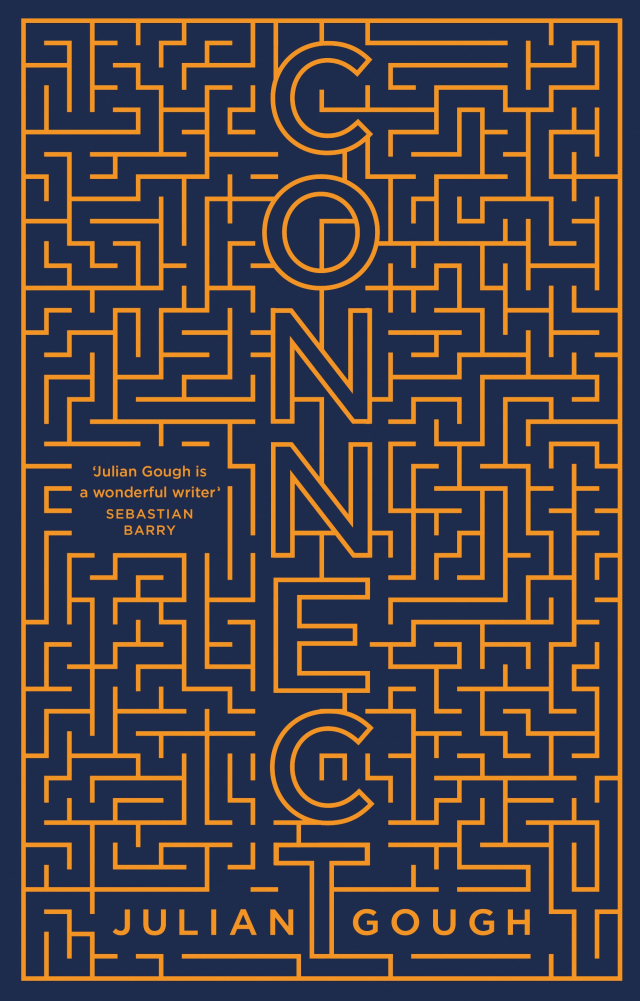
Connect by Julian Gough

Connect Cover

Publisher: Picador

Publication Date – 8 May 2018

Amazon     Book Depository

For those looking for a darkly complex and intense techno-thriller, look no further than Connect by Julian Gough, a unique novel that also critiques future trends and humanity’s increasing reliance on technology.

In the very near future, computer technology has been incorporated into nearly everything, linking the world and helping with all aspects of day to day life.  In Nevada, awkward young teen Colt is a talented hacker living with his mother, Naomi.  Seeking to create a perfect replication of the real world in virtual space, Colt has also developed a dangerous fascination with his mother’s biotech research.

When Colt submits his mother’s revolutionary work to a biotech conference, Naomi comes to the attention of the government, including Colt’s father, a high-ranking spook, Ryan, concerned with its potential implications.  However, Colt has also taken the opportunity to inject himself with the experimental biotech, turning himself into something new: a hybrid of man and technology.  Colt and Naomi are soon considered to be threats to the government, and Ryan activates an experimental defence network to hunt them down.  Colt and Naomi are forced to go on the run and must try to avoid a barrage of killer drones programmed to target and kill them at any cost.  Will Colt’s new abilities be enough to overcome the computer intelligence seeking them, or will the future of technology be changed forever?

Connect is an inspired new novel from Gough which represents a different direction from his previous writings.  Connect is a fascinating read and an interesting techno-thriller that examines the future of technology, creates a compelling dialogue and makes significant use of some excellent narrative elements.

The main story is an absorbing thriller that pits the protagonists against some sizeable opponents and threats.  One of their main opponents is an advanced and experimental computer program that is connected to every piece of technology in the country.  As a result, the protagonists are forced to find ways to avoid the overwhelming surveillance hunting them. Not only must they avoid pursuit from teaching devices and video cameras but they must also find a way to go low tech in a society that has computers connected to everything.  There are some great scenes where the characters are forced to out-think drones hunting them and try to find ways around the tracking programs that determine when and where to attack.  All of these play wonderfully into the book’s thriller storyline, and there is some real excitement when the protagonists encounter and attempt to counter these technological threats.

Gough spends a significant amount of Connect examining the future of technology and ends up offering some significant commentary on our reliance on technology and its potential influence on us.  The story is set in the immediate future, where everything is controlled by computers and certain things common in our current world no longer exist.  For example, most cars are self-driven, everything has become exceedingly automated and cash has become nearly obsolete.  In other words, it is a picture of how our world is likely to turn out in the next few years, based on current advances in technology.  Gough scrutinises how this over-reliance on technology could be detrimental to humanity, and how it could be turned against us by hackers and governments.  There is also an examination of the automation of a nation’s defence and security as an advanced security program is activated to hunt down the protagonists.  The debate around such a program is very in-depth, and the readers will be fascinated by some of the arguments presented.  Naturally, the program starts getting out of hand as it is manipulated into seeing the protagonists as a bigger threat than they are and it starts to dramatically escalate its attempts to destroy its targets.  This thought-provoking discussion and examination of the future of technology is a key part of Connect and will prove to be one of the most intriguing parts of the book for some thoughtful readers.

One of the most noticeable parts of the book is the unusual format that Gough has chosen to implement throughout his book.  The story is broken up into 12 chapters, and then further broken down into 149 sub-chapters, and is formatted in a way that vaguely reminded me of code within a computer program.  The inclusion of such a visually distinctive writing format does not break up the flow of the story, nor does it affect the reader’s ability to follow the story.  It does, however, dramatically change towards the end of the book in a way that ties in nicely with some of the significant plot elements occurring during this part of the book.  Gough has also chosen to include a number of relevant quotes at the start of each of the chapters.  I personally enjoyed reading those and connecting them to the plot of the upcoming chapter, and may prove to be more amusing to those of a more computer or technical mindset than myself.  Overall, the consistent use of this unique format and the attention grabbing quotes work well with the technology-centric plot and are a clever addition by Gough.

The point of view of Connect is mostly shared between the book’s protagonists, Colt and Naomi, although the main human antagonist, Ryan, also features in a few of the book’s chapters.  These separate viewpoints offer different subjects to the reader, and Gough has done a fantastic job of presenting unique content for both of his protagonists.  The scenes that follow Colt are a stimulating experience, allowing the reader a real sense of Colt’s social awkwardness and the disconnectedness he feels with the real world, especially when he focuses on his recreation of the real world in his virtual reality.  This virtual world appears in quite a number of scenes and plays a pivotal role in the end of the plot, and it is curious to watch Colt attempt to live most of his life within this world.  The characterisation of Colt shifts subtly after he injects himself with the experimental biotech and he starts to change.  It is interesting to watch his character change and mature after this point, especially as he attempts to initiate a very awkward romance with another young hacker.  The interactions he has with technology after this point, including with the advanced defence program hunting him, are some great scenes, especially as he creates and utilises some clever work-arounds to manipulate the computer networks to his advantage.

The scenes that feature Naomi’s perspective are significantly different, representing a noticeable change of pace for the reader.  Naomi is a very damaged person who presents herself in very different way to her socially awkward son.  Gough has made sure to communicate her multiple neuroses and issues to the reader, which adds a lot of drama to the story as she must attempt to save her son whilst trying not to get overwhelmed.  Like her son, she also undergoes substantial character development throughout the story, and the reader will enjoy watching her work towards a better relationship with her son.  In addition to this excellent piece of character work, the chapters featuring Naomi as the focal point are generally a lot darker and more adult.  For example, one of these sub-chapters features one of the most memorable and disturbing death scenes that I’ve ever read.

Connect is deep thriller that revels in its use of technological elements to create a distinctive and eccentric story.  Julian Gough’s discussion and consideration of a technologically advanced future and the problems this could create is compelling and thought-provoking, and his great use of characters and formatting elements turns this into one of the most unique pieces of literature you are likely to read this the year.

My Rating:

Four stars

Amazon     Book Depository

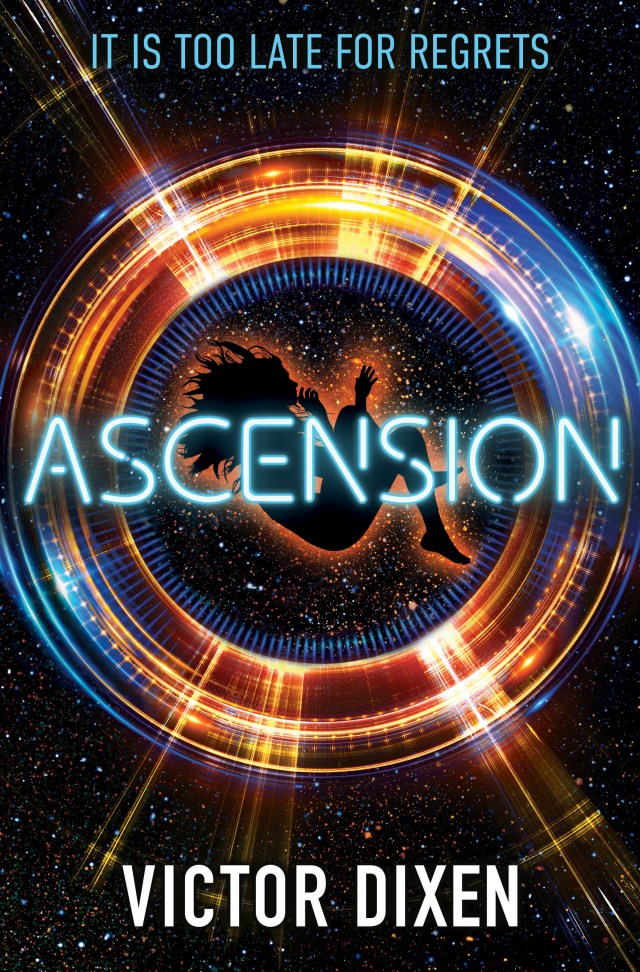
Ascension by Victor Dixen

Ascension Cover

Publisher: Hot Key Books

English Edition Translated by Daniel Hahn

Publication Date – 28 June 2018

Amazon     Book Depository

The first book in the bestselling French Phobos series is finally here.  Ascension is a fun guilty pleasure read geared towards a young adult audience that explores the dark side of reality television.

In the near future, a private company has bought NASA and is about to send the first humans to Mars as part of the Genesis program.  However, this will not be a typical voyage to another planet; it will be the most ambitious reality television show of all time.  The international group of young astronauts has been chosen through a worldwide contest, and the entire voyage into space will be broadcast back to Earth to be viewed by the masses.  Not only will these six young men and six young women colonise Mars but they will also be expected to pair up into couples by the time they reach Mars through an insane bought of speed-dating.

The boys and girls will be placed into separate bays of the same spaceship and will only be allowed to interact with the person of their choosing for six minutes each week.  In these six minutes they will meet and try to seduce their counterparts and attempt to determine who their perfect match is.  By the end of their trip, each of them must choose a partner to marry and live with once they reach the red planet.

For one of the contestants, Léonor, the Genesis program is her chance to escape from a planet where she has only ever experienced pain.  The one-way trip is the biggest opportunity of her life and she is eager for glory and love.  But as they move further away from Earth, Léonor begins to learn that this journey is far more dangerous than she had expected.  A deadly conspiracy surrounds this journey and it is far too late for regrets.

Ascension is written by Victor Dixen, a French author who has contributed multiple series to the Young Adult genre.  His previous works included a reimagination of classic fairy tales in the Animale series, and the science fiction based The Strange Case of Jack Spark series.  Ascension is part one of his exciting Phobos series, which was first published in France back in 2015.  Phobos will be the first of Dixen’s series to be translated into English, with the next two books in the series, Distortion and Collison both set to be published in English within the next year.

Ascension is a fantastic book with a lot of parts to it that make for a highly compelling and interesting read.  The overarching concept of a space exploration being turned into a reality television contest is a little crazy, but Dixen has some great explanations for this plot set-up that sound actually plausible and realistic.  With the current political craziness around the world and humanity’s constant fascination with reality television, you can’t help but think that this could be a distinct possibility.

Dixen is a talented author who is able to perfectly recreate the feel of a large-scale reality television show within his book, with all of the worst parts included.  The male and female contestants are kept apart from each other for the whole journey and are constantly aware of the world watching them through all the cameras, and they act accordingly.  Dixen shows off the various ways the producers are trying to manipulate the contestants, such as misleading messages from their host and group showings of each contestant’s ratings and accrued prize money, all in the name of creating drama.  There are also a number of scenes that show large groups of people watching the show and becoming obsessed with it in a way reminiscent of the early days of Big Brother and American Idol.  There are fun inclusions to show this off, such as having scenes where people back on Earth change their hairstyles and looks to match their favourite contestant, the contestants’ home countries showing massive support for them, and a fun scene where a cynic has to listen to other people gossip about the show.

While the parts of the book reminiscent of a typical reality television show are fantastic by themselves, they are taken to a whole other level when they are seen in conjunction with the backstage production meetings scenes.  Reality television show production meetings are probably already fairly sinister but Dixen is really able to amp this up by showing the show’s producers and host engaged in some ominous discussions involving deaths, murder, manipulation and their own bonuses.  Ascension contains a great main antagonist in Serena McBee, the host.  Serena is pretty much the ultimate villain for young people, as she acts like their friend while she tries to manipulate them, thinking she knows everything about them and how to control them.  All of these sinister surroundings create a compelling read that will really draw the reader in.

I have to admit that when I started to read Ascension the last thing I thought I would be interested in would be the potential relationships between the contestants.  However, Dixen puts significant effort into introducing the 12 contestants and describing their personalities and histories, ensuring the reader becomes invested in their futures.  While Léonor is the main character that the author focuses on, the reader is also shown many of the dating segments that the other contestants are involved with to dramatic effect.  There are also a number of discussions between the female characters as they discuss their tragic histories, their hopes for the future and who their preferred partners will be.  As a result, the reader does find themselves really caring about the characters becoming extremely interested in who will end up with whom.

Dixen also enhances his terrific narrative inclusions, sinister overtones and compelling character interactions with a range of useful visual elements included in the text.  These include flyers for the show, tables with the results of the contestants’ prize money and survey results, and detailed technical diagrams of the spaceship and the Mars habitations.  The diagrams of the ship help the readers visualise the ship and habitats, while the flyers and tables make them feel like part of the show’s audience.  These elements are well used within Ascension and are a great addition to the book.

Ascension by Victor Dixen is an exciting and invigorating young adult read that can now finally be enjoyed by an English-speaking audience.  Readers will love how the author has included an extremely realistic reality television setting into a dramatic science fiction story filled with all the emotion and manipulation you would expect from the trashiest of dating shows out there.  This crazy and brilliant read should captivate the young adult audience of the English-speaking world, just like it did with its French-speaking audience, and I will be keeping an eye out for the next two parts of this series.

My Rating:

Four stars

Amazon     Book Depository

Empire of Silence by Christopher Ruocchio

Empire of Silence Cover.jpg

Publisher: Gollancz

Publication Date – 3 July 2018

Amazon     Book Depository

First time author Christopher Ruocchio boldly introduces himself with his five-star debut, Empire of Silence, an extraordinary and spellbinding science fiction epic.

In the far future, humanity has left Earth behind and made its home in the stars by colonising thousands of the planets.  However, expansion was halted when the humans encountered the Cielein, the only other race in the galaxy with the ability to travel through space.  For years, the humans and the Cielein fought a brutal and devastating war against each other, until one man changed everything.

That man is Hadrian Marlowe, who, for the best of reasons, destroys a sun and burns every last Cielein from the stars.  This destruction also results in the deaths of four billion humans, including the Emperor of Sollan Empire.  After this infamous act, Hadrian is considered throughout the galaxy as both humanity’s greatest hero and its most terrible villain, known as The Sun-Eater, Starbreaker, Palekiller and Deathless.  But how did one man who was neither a soldier nor a hero seize such a responsibility and commit such atrocities?  The Sun Eater series is the chronicle of Hadrian’s life, of which Empire of Silence is the first part.

Born the eldest son of a noble house, Hadrian fled his family and his overbearing father to escape his future as a member of the Chantry, The Stella Empire’s state religion.  When the ship he chartered is mysteriously abandoned en route to his destination, Hadrian finds himself stranded on the wrong planet with no means of escape and none of his family’s resources available to him.  Forced to fight his way up from the gutters, Hadrian attempts to survive on this strange new world by any means necessary.  Starting out as a beggar and thief, Hadrian eventually embarks on a career as a gladiator in the hope of making enough money to buy a ship.  But when his true identity is revealed, Hadrian must find a way to survive in a foreign court, where powerful enemies lurk around every corner.

However, all of Hadrian’s problems become immaterial when the Cielein arrive above the planet, searching for something.  Drafted into a war he never wanted to be involved in, Hadrian seeks to understand the Cielein, but finds only mysteries and secrets.  Hadrian’s path to becoming The Sun-Eater is set, and his journey begins here.

Empire of Silence is the first volume in Ruocchio’s incredibly ambitious debut series, The Sun Eater.  Featuring fantastic storytelling and a galaxy-wide setting that is breathtaking in its scope and content, this is an outstanding first book and an excellent start to a series with real potential.

Many readers will be interested to know that Empire of Silence is already receiving quite a few comparisons to Patrick Rothfuss’s highly regarded fantasy epic, The Name of the Wind.  It is an easy comparison to make, as there are a large number of similarities between the two books.  Both books contain utterly compelling content designed to capture the reader’s imagination; however, the major similarity is the use of a chronicle format to tell their massive, character-driven epics.  Like The Name of the Wind, Empire of Silence is told solely from the point of view of the protagonist, Hadrian, and takes the form of a written retrospective explaining the terrible act that makes him infamous throughout the galaxy.  The series will completely explore Hadrian’s life, examining every action that leads up to this event.

The chronicle format is a superb choice for the Empire of Silence’s epic story.  Not only does it allow the author to produce a complex and extremely detailed epic storyline but it also allows him to add to the story’s gravitas by having the narrator comment on and reflect on his actions in hindsight.  This great format also allows the author to show off his protagonist in a range of different circumstances.  Because of various science fiction elements, Hadrian is destined to have an extremely long life span and a great many opportunities for adventure.  Within Empire of Silence alone, Ruocchio portrays Hadrian performing a range of different roles, including the presumed heir to a planet, a scholar, a fugitive, a beggar, a thief, a gladiator, a companion and tutor to noble children, an amateur archaeologist, a translator, a torturer, a negotiator and an irregular member of the military.  Each of the different roles that Hadrian plays influences his mindset and viewpoint, which allows the reader to see him evolve in front of their eyes.  It is also interesting to note that Ruocchio has not pre-emptively indicated how many books will be in his series, a mistake some other authors using a chronicle format have made before.  This will allow him to tell the whole story he envisioned without compromising on pacing, world-building or character development in order to reach a hasty conclusion, and will no doubt result in a much more complete and enjoyable series.

The overall plot of Empire of Silence contains various storytelling elements that are masterfully combined throughout the book.  It contains everything from science fiction elements and action sequences to long discussions of the history of the galaxy in which the series is set.  There is also a series of significantly dramatic storylines, such as Hadrian dealing with the difficulties of having a self-interested and manipulative father and an uncaring family.  There are some great coming-of-age moments within the storyline as Hadrian first seeks independence from his family and their history and then tries to find his own way on a new world where he has none of his power and influence.  The reader gets to witness several powerful scenes in which Hadrian’s life changes dramatically and he desperately attempts to claim some sense of normality or sanity in this new world.  Of particular note are some very emotional scenes during Hadrian’s first encounters with the Cielcin.  In these scenes, Hadrian is forced to contend with his own curiosity, conscience and morality while stuck between his own species, represented by the cruel and domineering Empire, and the aliens that somehow appear to bear much more humanity.  This results in some truly spectacular scenes that make this book impossible to put down.

One of the most impressive and enjoyable aspects of Empire of Silence is the vast and imaginative universe in which the story is set.  Ruocchio has an extremely interesting vision of the future that readers will find quite intriguing.  The entirety of the first book is set within the Sollan Empire, which represents the largest faction of humans in the future galaxy.  This civilisation, whilst retaining some advanced technology, such as spaceships, has reverted socially and culturally following a catastrophic event many years before.  There is a rigid class system, with the nobles wielding considerable power and disregard for the ordinary people.  A religious organisation holds sway over much of the empire, using inquisitor-like tactics to control the population and prevent what they consider heresy, which includes an aversion to advanced technology.  An interesting twist to this is the large number of cameras and drones that they and the nobles use to continually survey and intimidate the populace.  The Empire’s culture appears to be strongly inspired by the ancient Roman and Greek civilisations, and their various influences can be seen throughout the book.  This is an excellent setting for such an expansive story, and the reader gets to experience a unique and compelling combination of science fiction advancements and old school ideals.

Aside from the main setting of the Sollan Empire, Ruocchio has also stacked his universe with a range of characters, aliens, mysteries and side storylines that prove to be massively intriguing for the reader.  Several of these of mysteries and side stories are explored to an extent throughout the book; however, many are left open and will carry through to later books in the series.  The protagonist interacts with a massive of number of characters, which plays into the overall concept of him having a busy life.  In order to assist the reader in keeping track of the cast of thousands, who sometimes have limited scenes within the story, Ruocchio has provided extensive indexes.  Not only do these indexes contain details of all the characters the protagonist encounters but they also contain a huge amount of history, definitions and other useful information to help the audience absorb this massive new universe.

In one of the most impressive and elaborate science fiction novels of the year, first-time author Christopher Ruocchio has shown himself to be one of the brightest new stars in the science fiction genres.  Empire of Silence contains an absolutely amazing story that makes full use of its original and immense overarching setting, and is guaranteed to capture the reader’s imagination.  This is epic science fiction at its very best, and I cannot wait for the second book in Ruocchio’s The Sun Eater series.

My Rating:

Five Stars

Amazon     Book Depository

A People’s History of the Vampire Uprising by Raymond A. Villareal

A History of the Vampire Uprising Cover

Publisher: Hachette

Publication Date – 29 May 2018

Amazon     Book Depository

From the inspired mind of Raymond Villareal comes one of the most captivating and thought-provoking literary achievements of 2018.  Have you ever wondered what would happen if vampires came into existence in the modern world?  Villareal’s debut novel, A People’s History of the Vampire Uprising, explores the possibility of such an event through a comprehensive fictional oral history, much like Max Brooks’ observation of a zombie apocalypse in World War Z.

The body of a young woman in an Arizona morgue awakens and disappears into the night.  This mysterious event will start a chain reaction around the world that no one could predict.  The CDC investigator consulting on the case soon discovers that the woman was suffering from a mysterious disease with several incredible symptoms.  Subjects are stronger, faster, suffer a violent reaction to sunlight, have unnaturally long lives and are utterly enthralling to humans.  More importantly, they must consume blood to survive and can pass the disease on by biting another human.  As attempts to quarantine the disease fail and additional bodies start disappearing, the world quickly realises that vampires are real and here to stay.

As more and more people are infected, many of those who have been turned begin to reintegrate back into society.  These new creatures call themselves ‘gloamings’, finding the term ‘vampires’ to be derogatory.  Soon, many of the rich and famous are flocking to the gloamings, hoping to join their ranks and be re-created.  With their natural talents enhanced, the gloamings start accumulating significant wealth, power and influence as they infiltrate all levels of human society while attracting followers to their side.  Gloamings infiltrate the government, powerful companies and the Catholic Church.  One gloaming even begins a run for high political office.

However, not everyone is enamoured by the gloamings.  A faction of the church is determined to stop the vampire incursion and has formed its own militia to fight gloamings throughout the world.  Following a series of high profile cases, the FBI starts a taskforce focusing on crimes by gloamings.  The original CDC investigator continues her research into the virus despite intense political and social pressure to stop.  In New Mexico, a skilled political motivator soon discovers a terrible secret about his employers.  This is the start of the vampire uprising; the world will never be the same.

Written in the format of a history book, A People’s History of the Vampire Uprising is an epistolary novel that uses a series of fictional documents and testimonials to tell the story.  Villareal presents a large portion of the story within chapters representing testimonials from certain characters specifically taken for a history book.  Other chapters are written in the format of important documents from the fictional world and are made to represent interrogation notes, congressional transcripts, government reports and articles in scientific and legal journals.  In addition to these longer chapters, Villareal has also included numerous shorter entries that are presented as news stories, public interest articles, transcripts pulled from popular media sites, emails and the comments section of a message board.  As a result of all these different formats and documents types, A People’s History of the Vampire Uprising has the uncanny feel of an actual history book, which is further reinforced by the inclusion of footnotes in most of the longer chapters, and three short appendices slipped into the back on the book.  This is a marvellous way to structure the book and it speaks to Villareal’s skill that he was able to tell such a captivating narrative using this style of writing.

By employing fictional testimonies and documents originating from a number of different characters, Villareal is able to tell an extremely wide-reaching story about the introduction of vampires.  Most of the longer chapters are written in the style of testimonies from characters in the United States, while many of the shorter articles show a wide view of the rest of the world.  This allows Villareal to focus his main story in one specific country and focus his analysis on how the United States would react to such an event.  At the same time Villareal is also able to illustrate a much wider story showing how the vampire uprising would affect the entire world.  Exceptions to this are the chapters featuring the gloamings causing a religious and ideological schism within the church.  These chapters focus the plot on characters throughout Europe and represent some of the more fascinating fictional postulations within A People’s History of the Vampire Uprising.

While the book contains numerous narrators, authors and interviewees telling their specific stories, Villareal is still able to produce a clear overall narrative about the introduction of vampires to the world.  While Villareal initially has the individual narrators tell their own stories, eventually the characters meet and interact, allowing the multiple storylines to combine into one overarching plot.  The smaller articles and extra details within some of the longer features also allow the reader to have an amusing examination about how some social groups and individuals may react to the introduction of vampires, including celebrities such as Taylor Swift.  The end result is very well-done, overarching narrative that takes the multiple storylines within and turns it into an exciting and comprehensive overall plot.

While this is a piece of fiction, it also serves as an examination and critique of modern society.  Villareal postulates that if vampires ever did appear society would be split between distrusting such creatures and worshiping them, while the rich, famous and powerful would all try to join them, turning the gloamings into the ultimate elitist clique.  Villareal examines extremely plausible ways in which the gloamings could influence humans and attempt to win them to their side, with one chapter in particular describing how a vampire might win an election.  The result is a perceptive and astute examination of current human nature that will leave readers spinning.

A People’s History of the Vampire Uprising is one of the most impressive books of the year.  Raymond Villareal produces an insanely compelling story while using a unique and clever format that clearly highlights his skill and imagination.  In addition to being incredibly entertaining, A People’s History of the Vampire Uprising is also an insightful piece of social commentary that will greatly amuse readers.  This is a truly magnificent piece of fiction and an outstanding debut from Villareal.

My Rating:

Five Stars

Amazon     Book Depository

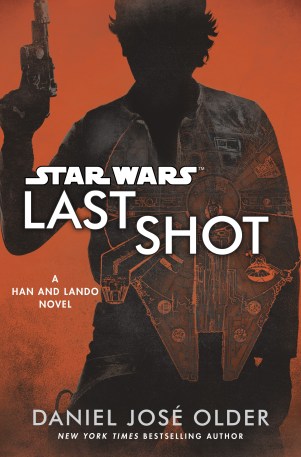
Star Wars: Last Shot by Daniel Jose Older

Last Shot Cover.jpg

Publisher: Century

Australian Publication Date – 30 April 2018

World Publication Date – 17 April 2018

Amazon     Book Depository

Han and Lando return in Last Shot, the latest Star Wars novel, released just ahead of the characters’ upcoming prequel movie, Solo: A Star Wars Story.

The Phylanx Transmitter is one of the most secretive and dangerous weapons in the galaxy.  Built by the psychotic Fyzen Gor, over the years it has been sought by some of the most nefarious people in the galaxy, from criminal gangs to bounty hunters and even the Empire.  Two captains of the Millennium Falcon have gone up against Gor in an attempt to claim the Phylanx Transmitter.  In the early days of his career, the dangerously charismatic Lando Calrissian and his pilot droid, L3-37, encountered a prototype of the transmitter and barely survived.  Years later, a young Han Solo and the Wookiee Chewbacca raced through the criminal underworld to reach the transmitter before it disappeared into the stars.

Since then, the Empire has fallen and the New Republic has taken its place.  Lando has become a successful business owner and the respected administrator of Cloud City, while Han has settled down with Princess Leia and is now trying to be a good father to young Ben Solo.  While Lando and Han both believe they have put their former lives as thieves and smugglers behind them, the past has a way of catching up with everyone.

Having escaped custody, Gor is holding Cloud City hostage and demands that Han and Lando find and reclaim the Phylanx Transmitter.  Forced to fly under the radar, the two scoundrels must find the transmitter and prevent Gor from using it to rain down untold destruction across the galaxy.  In order to succeed, they recruit a brand new team, including a young hotshot pilot, a brilliant Ewok slicer, a woman who may be the love of Lando’s life, and, of course, the best and fluffiest co-pilot around, Chewbacca.  However, even their new team may not be able to withstand Gor and his twisted droid creations.

Last Shot is the latest book from the acclaimed Daniel Jose Older, author of the young adult fantasy sensation Shadowshaper.  This represents his first venture into Star Wars fiction.

Ever since the original Star Wars movies, vast amounts of books, comics, video games and a television series have been created, resulting in a massive extended universe.  Since Disney’s purchase of Lucasfilm in 2012, the vast majority of this extended universe has been expunged, with only the movies and a few products, such as The Clone Wars, now considered canon.  Some elements of the original extended universe have resurfaced over the years, such as fan favourite character Grand Admiral Thrawn, who recently appeared as an antagonist in Rebels and was the subject of last year’s Thrawn by Timothy Zahn.  Last Shot is the latest book in the smaller Star Wars canon extended universe which has been cultivated in the Disney years.  This stand-alone book has been released as a companion piece to the upcoming movie, Solo: A Star Wars Story, and features four of the characters who are going to appear in it.

Last Shot contains a clever combination of four separate storylines set in different points in time throughout the franchise’s history.  The main story is set a couple of years after the events of Return of the Jedi, and features the characters forced to return to their lives of crime.  Two of the side storylines follow the main characters on a separate mission in their past, and these subplots are set on either side of the upcoming Solo movie.  The final storyline is set over a period of years and follows the rise of Fyzen Gor.  Older does a skilful job of switching between the various storylines to reveal certain clues and show the reader the hidden history the two main characters have with the protagonist.

This book will strongly appeal to fans of Star Wars, particularly those who like to dive deeper into the lore and storylines of the extended universe.  However, even dedicated fans may feel a little overwhelmed by the constant references to other elements of canon and the inclusion of nearly every alien race in the galaxy.  Even the addition of The Force Awakens fan favourite character Maz Kanata seems a bit forced and unnecessary.  Despite this, casual fans will easily be able to follow the story and enjoy the funny and action-packed adventure within.

Last Shot sets itself apart from many of the other Star Wars stories by avoiding the Jedi-saturated and force-fixated storylines that define most of the movies and books.  This book doesn’t even feature a single Jedi, but instead focuses on the criminal underworld of the galaxy as the main characters fight, cheat and steal their way to victory.  This is a refreshing story which seems to mirror the crime-orientated plot of the upcoming Solo movie.

In addition to the crime-centric story and the multitude of action-packed scenes, the readers will really enjoy the substantial humour that Older has included within book.  In particular, most readers will appreciate the number of self-deprecating jokes and references towards elements of the Star Wars universe.  For example, one particularly enjoyable sequence involves a Gungan who is annoyed with how his species is perceived by the galaxy thanks to the actions of a certain individual.  Despite there being a 40-year gap between the events of this book and those of The Phantom Menace, some shade is still thrown over the infamous Jar Jar Binks.  Not only does the book come across as more humorous and less serious than other Star Wars stories, the book has also been written in a much more adult way, as there are a number of jokes and allusions that would never get included in the family friendly movies.  As a result, Last Shot is an incredibly entertaining story that stands apart from previous works of Star Wars fiction.

Star Wars: Last Shot is an outrageously fun new novel that will greatly appeal to all fans of the Star Wars franchise.  Filled with innumerable references and jokes about the wider Star Wars universe, readers will love to see Han Solo and Lando Calrissian being the very best scoundrels they can be.  This is amazing and addictive new adventure in a galaxy, far, far away.

My Rating:

Four stars

Amazon     Book Depository

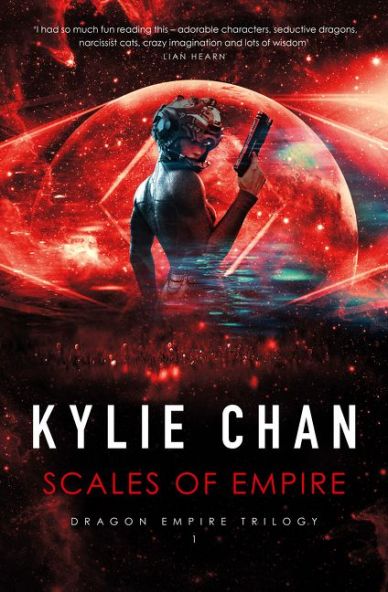
Scales of Empire by Kylie Chan

Scales of Empire Cover

Publisher: Harper Voyager

Publication Date – 19 February 2018

Amazon     Book Depository

Can humanity survive the arrival of an alien dragon with an offer of love?  Find out in this curious novel about first contact with aliens from bestselling Australian author Kylie Chan.

In the near future, Earth’s ecosystem is failing and humanity’s only hope for survival lies in escaping our solar system and finding viable new planets to colonise.  Corporal Jian Choumali has been chosen to accompany one of the huge generation ships that is preparing to journey to a distant planet.  However, the launch is interrupted by the arrival of a giant alien spaceship above Earth that will change humanity forever.

The ship is piloted by an alien known as a dragon, which bears a striking resemblance to the beasts of legend.  Dragons are the ruling members of a vast technologically and culturally advanced empire made up of numerous alien races.  The Dragon emissary, Shiumo, brings offers of peace, love and advanced technology to humanity as she introduces Earth to a wider universe.

Jian and her commander, Richard Alto, are chosen to be the first delegates to meet with Shiumo, and they soon become her guides to Earth.  Shiumo becomes a sensation overnight, providing humanity with longer lives, faster-than-light travel and a solution to Earth’s failing ecosystem.

However, the more Jian gets to know Shiumo, the more it becomes apparent that the Dragons may not be as benevolent as they seem.  What price will humanity really have to pay to join the Empire, and what role will the Dragons’ cat-like enemies play in the future of Earth?

Scales of Empire is the first book in the intriguing Dragon Empire trilogy, written by Australian author Kylie Chan.  This is Chan’s first voyage into science fiction, having previously written the Chinese mythology inspired Xuan Wu series.

Scales of Empire has a number of cool features that make it an amusing and thought-provoking science fiction novel.  Chan has constructed a first contact story that explores how humanity could potentially interact with an advanced alien race.  Chan provides a series of fascinating postulations about what human products would prove desirable to an alien species, what humanity could use in our defence against potential alien threats, and what our place would be among a vast interstellar empire.  The Dragons are the stars of this book, as Chan has imbued them with several distinctive abilities and personality quirks.  There is also a fun origin story to explain the similarities between the alien Dragons and the Earth dragons of myth and legend.  Having the other main alien race also resemble an Earth species, in this case cats, is a little over the top very unrealistic.  However, the behaviour of this other species acts as a good foil to the apparently benevolent and socially advanced Dragons.

Science fiction aficionados will also appreciate Chan’s descriptions and theories about what would be required for humans to reach and colonise other inhabitable planets in the galaxy.  Chan spends some of the early parts of the book highlighting her theories about how humans in the near future would achieve this.  Her descriptions of large ships that would require ten generations of its crew to live in space before they even reached the planet is fascinating, as are her suggestions about the ideal initial crewmembers; not a lot of other writers would suggest that colonisation ships should have large crews mostly made up of bisexual women with good genetic diversity.  In addition, there is also some intriguing discussion about the colonisation of other planets, and several chapters are dedicated to the training and initial colonisation of a planet, which many readers will find enticing.

While these science fiction aspects of the book are good reasons to try Scales of Empire, one of the most compelling and memorable aspect of this book is the constant examination of whether the Dragons are as benevolent as they seem, or if they have their own secret agenda.  This becomes a central focus of the story as the human characters analyse all of the Dragons’ actions while coming up with countermoves and their own attempts at manipulation.  There are many twists and turns, and at points it becomes hard to tell whether the Dragons or the humans come off as the worst species during these interactions.  This results in a really compelling narrative which serves as a superb central focus for the book and will keep you hooked until the final reveal.

The new book from Kylie Chan is an intriguing start to a promising science fiction trilogy.  Examining humanity’s potential first contact with an alien species, Chan asks the question: between an alien species with its own agenda and mistrustful and calculating humans, who is the greater evil?  This is a brilliant bit of fiction that provides a distinctive and in-depth discussion and is definitely worth exploring.

My Rating:
Three and a half stars

to

Four stars