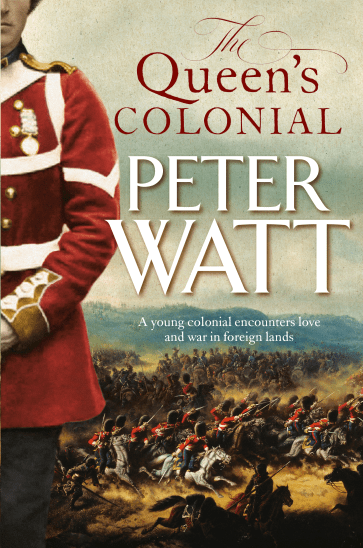
The Queen’s Colonial by Peter Watt

The Queen's Colonial Cover.png

Publisher: Macmillan

Publication Date – 13 November 2018

Amazon     Book Depository

Following the conclusion of his long-running Frontier series, one of Australia’s most intriguing authors, Peter Watt, returns with a brand new adventure that features several intriguing characters involved with unique historical events during the Victorian era.

For as long as he could remember, colonial Ian Steele has always wanted to serve as an officer in the Queen’s army.  However, for a humble blacksmith living just outside of Sydney Town, this seems like an impossibility.  That is until 1852, when he meets Samuel Forbes, a young English aristocrat, poet and former Second Lieutenant in the army, who bears a striking resemblance to Ian.  After prematurely finishing his commission following a terrifying campaign against the Maori warriors in New Zealand, Samuel is living with his uncle in Australia, avoiding returning home to a father who hates him and forced him to join the army against his will.

Samuel presents Ian with an interesting proposition.  In order to receive a massive family inheritance, he needs to complete 10 years’ service in the army, but after his previous combat experiences he has no intention of heading back, preferring to seek adventure in America with the man he loves.  However, wanting to receive the money and spite the father who abandoned him, Samuel has come up with a plan: send Ian in his place and then split the inheritance between them.

After the death of his mother, Ian accepts the offer and journeys to England to take his place as a captain in the Forbes family regiment.  As he successfully integrates himself in the Forbes household, he becomes acquainted with the members of his new family.  While Samuel’s sister and younger brother welcome him with open arms, Ian quickly discovers that Samuel’s father and older brother have no intention of giving up Samuel’s portion of the inheritance.

Ian’s desire to prove himself in battle is soon rewarded, as the regiment departs England for the continent.  Nicknamed “the Queen’s colonial” by his soldiers, he gains a reputation in the fight against the Russians in the Crimean war.  But while the Russians and disease are a constant danger, the greatest threat to Ian may come from his own side.  An Australian fugitive hiding out in the regiment knows who Ian really is and could easily report him, while the devious plots of the Forbes family could strike him down at any time.

Peter Watt is a well-established historical fiction author who has been writing Australian based novels since 2000.  The Queen’s Colonial is Watt’s 19th book, and is the first book he has written since concluding his 12-book Frontier series.

In The Queen’s Colonial, Watt continues with the same distinctive style that made his previous books such a treat to read.  Throughout the book, the reader is shown various sides of the story from multiple point-of-view characters, as both the protagonists and antagonists journey through history’s most intriguing events and wars.  There is also a minor hint of spirituality, although rather than the spirit of a vengeful Indigenous Australian that was such a major character in the Frontier series, The Queen’s Colonial features visions based around old British druids.  Watt is a master of utilising multiple character perspectives to tell a strong and addictive narrative.  While a large portion of the book is focused on the main character of Ian, several of the other characters are given starring roles throughout the book, and their adventures run parallel to the main storyline featuring Ian.  This is a great way to tell a larger narrative, and it is fascinating to see how the actions of one character could impact on a different storyline.  Each of the side storylines are pretty intriguing and allow the author to expand on several fun side characters throughout the course of the novel.  Watt has engineered quite a lot of coincidental connections, which, while a tad unrealistic, is a great way of connecting these character storylines in various intriguing ways.  I was somewhat surprised that Watt did not really show what Samuel Forbes was getting up to.  Despite him being majorly important to the plot, very little is seen of his adventures after the start of the book.  I would have been interested in seeing what he was getting up to, as well as his reactions to the events happening in the other storylines.  Hopefully Watt will explore his subsequent focus on him a little more in any books that follow on from The Queen’s Colonial.

One of the best ways that Watt utilises his multiple perspectives is by showing the villainous actions of two of his main antagonists as they plot and scheme to rid themselves of the protagonist.  These storylines are mostly told from the point of view of the oldest Forbes son Charles, and feature him and his father coming up with ways to kill the man they think is the second Forbes son, Samuel, but is really Ian in disguise.  Watching them come up with several devious plans and commit terrible acts is pretty intense, especially as you watch these plots unfold in the sections of the book told from Ian’s point of view.  It is quite fun for the reader to see Ian react to events that they knew was coming, and works to make an intriguing overall narrative.

I loved Watt’s depiction of the Crimean War, as the author does a fantastic job highlighting the brutality and harsh reality of this war, and the terrible conditions that the British troops had to deal with.  Watt really captures the horrors of battle in his writing, and the reader is constantly brought into the middle of the book’s battle sequences thanks to the author’s detailed descriptions and historical features.  While the battles are harrowing and bloody, quite a number of scenes show the horrifying results of the biggest killer of the British during this war, dysentery and other diseases.  Watt is quite critical of most of the British officers who lead this army, and places most of the blame for the war’s disasters on the backs of inexperienced or incompetent officers.  This is particularly exemplified by the character of Jenkins, who is promoted up through the army thanks to his family’s connections and money, and ends up getting many people killed thanks to his cowardice, incompetence and personal prejudices.  History buffs will enjoy Watt’s focus on this war, which is often overlooked in historical fiction, especially the author’s determination to show the trials and tribulations of an infantry regiment in this war.

Peter Watt’s new book, The Queen’s Colonial, is an excellent piece of historical fiction that takes the reader on a fantastic adventure through time.  Following a 19th century New South Wales colonial into the Crimean War is a great story, and I loved Watt’s great use multiple character perspectives to tell an overarching narrative.  Watt once again shines as one of Australia’s best authors of historical fiction and readers of his latest novel will enjoy a cleverly crafted and captivating story.

My Rating:

Four and a half stars

Amazon     Book Depository

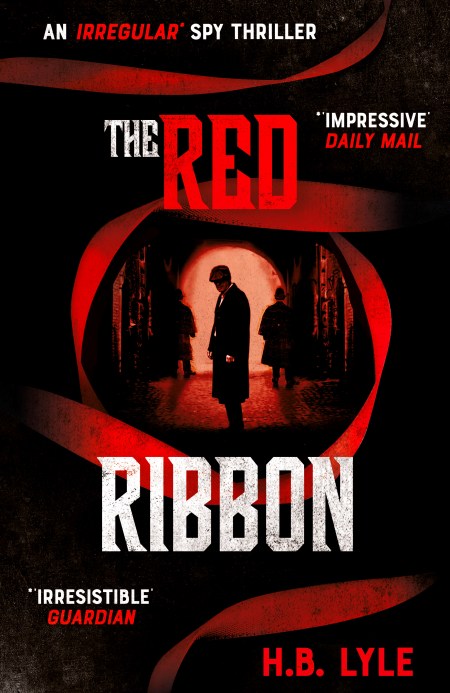
The Red Ribbon by H. B. Lyle

The Red Ribbon Cover.jpg

Publisher: Hodder & Stoughton

Publication Date – 23 August 2018

Amazon     Book Depository

Return to pre-World War I London for another compelling spy adventure in H. B. Lyle’s second book, The Red Ribbon, which is set in the same universe as Sherlock Holmes and features three exciting characters with an intriguing look at early 20th century British history and espionage.

In London, in 1910, Captain Vernon Kell is still attempting create a secret intelligence service capable of protecting England from foreign spies and infiltrators.  Despite the early success of the Secret Service Bureau, Kell’s organisation is constantly under pressure from the country’s politicians and is in danger of being absorbed into Special Branch of London’s police.

Unfortunately, Kell’s only agent, Wiggins, is distracted with his own cases and unwilling to play the political games needed to help the service survive.  Wiggins is the former leader of Sherlock Holmes’s street urchin surveillance organisation, the Baker Street Irregulars, and has picked up a few of his old master’s deductive tricks while retaining his lower-class charm and street smarts.  Wiggins is obsessed with finding the infamous anarchist, Peter the Painter, the man responsible for the death of one of Wiggins’s oldest friends, and is scouring the streets for him.

Looking for a missing girl on behalf of one of his contacts, Wiggins begins to investigate a mysterious embassy located in the affluent neighbourhood of Belgravia.  The embassy is actually a high-class brothel frequented by the rich and powerful of London.  When another girl associated with the embassy is found murdered, Wiggins attempts to find justice; however, the embassy is under the protection of someone Wiggins knows well: Tommy, a fellow former member of the Irregulars.

However, Wiggins’s personal investigations intersect with his work for Kell, as the two of them hunt for the source of a series of leaks at the highest level of government.  With the help of Kell’s wife, the suffragist Constance, Wiggins and Kell must find the connection between the events occurring around London in order to keep the country safe from sinister foreign influences.

The Red Ribbon is the follow-up to Lyle’s debut novel, The Irregular: A Different Class of Spy, and is the second book in the Irregular Spy Thriller series.  This is a great series that will appeal to a huge range of readers, as Lyle combines compelling historical fiction elements with a thrilling espionage story that has fictional links with one of the most iconic book series of all time, Sherlock Holmes.

The story within The Red Ribbon is split between the book’s three main protagonists and takes a look at each character’s different and exciting adventures.  Wiggins and Kell continue their missions from the first book, and while their investigations are ostensibly separate from each other, they eventually intersect in several clever ways.  The relationship between Wiggins and Kell is an important part of these two storylines, as Kell despairs of Wiggins’s personal investigations and wants Wiggins to solely work missions for the service.  The third focal character is Kell’s wife, Constance, who was a supporting character in the first book.  Constance becomes a much more significant character in The Red Ribbon, as the book focuses on her involvement with the suffragist and suffragette movements.  Both Wiggins and Kell become involved with Constance’s storyline in different capacities, while Constance provides significant assistance with her husband’s espionage work.  With three semi-connected stories, it does at times feel like there is too much going on for one cohesive narrative.  However, each of the stories comes together quite well in the end and provides the reader with an extremely captivating overarching narrative.

Having three separate storylines allows Lyle to highlight the differences in social classes during this historical period and highlights how different groups of people were treated.  Kell, as the influential gentleman, is forced to constantly deal with the upper-class politics and attitudes during his attempts to keep the service going.  Wiggins, who was raised on the street, deals more with the average Londoner and experiences the poverty and desperation many of them encounter.  He must also deal with the distain of the upper classes in the course of his espionage work.  While he is clearly the most competent agent in the entire British service, he is constantly looked down upon and ignored by his government superiors.  There are also several instances where Wiggins is assigned to infiltrate labour movements, something he is very reluctant to do due to his world views and background.  This divide often serves to create some significant tension with Kell, who, despite fully understanding Wiggins’s value, skills and point of view, is often exasperated by him.  The beefed-up storyline around Constance allows the reader a significant look at the suffragist movement and the early battles these women fought for equality.  In The Red Ribbon, Constance joins the much more militant suffragettes, and is constantly infuriated by the reactions of the male politicians and their oppressive policies.  The oppression of women also becomes a major point of conflict between Kell and Constance which results in a decline in their relationship, although the final payoff of this storyline is quite sweet.  I really enjoyed the way that Constance and Wiggins developed a fun comradery in this book, as their poor treatment by the upper-class men allow them to bond, with Wiggins even teaching Constance some anti-surveillance techniques.

Lyle cleverly incorporates several important historical events into this book, such as the funeral of Edward VII, the Black Friday suffragettes and suffragists protest outside Parliament and the Siege of Sidney Street.  These events are quite significant in their own right, and Lyle spends substantial time filling in their background and ensuring the reader is aware of why they are happening and why they are important.  However, they also serve as very compelling background events for the plot of The Red Ribbon and work well to enhance this already fascinating story.  In addition to these intriguing and important historical events, Lyle has also packed a number of historical figures into this story.  Quite a few prominent politicians and British civil servants have significant roles in the plot, including a young Winston Churchill, which makes the story feel a lot more authentic.  The author’s continued use of the enigmatic Peter the Painter as one of the book’s principal antagonists is another brilliant stroke, and the reader is provided with some intriguing theories about who he actually was and what his eventual fate was.  Lyle does slightly go overboard by adding in some other famous historical figures in small cameo roles, and the shoehorning in of people such as Charlie Chaplin and members of the 1910 British Antarctic Expedition seems a bit unnecessary.  That being said, it was amusing to watch Chaplin use his drunken tramp routine to help Wiggins escape a conflict in a theatre.

One of my favourite components of this book was the author’s detailed and unique look at British espionage and counter espionage in the early 20th century.  One of the book’s protagonists, Captain Kell, is an actual historical figure who is credited for creating Britain’s domestic spy service, which morphed into the modern MI5.  This fictionalised account of the early days of this organisation are quite fascinating, especially when the author looks at some of its early challenges, the political battles Kell might have had to face, and the sort of work this organisation was originally looking at.  In addition to the domestic espionage work, the protagonists of The Red Ribbon find themselves drawn into one of the most infamous espionage incidents of the era: the capture of British agents Captain Trench and Lieutenant Brandon in Germany in 1910.  This is a highly fictionalised account of the incident, as Lyle has inserted Kell and Mansfield Cummings, one of the founders of MI6, as being there.  It plays marvellously in Kell’s overall storyline, while also featuring some great scenes as the three protagonists’ attempt to evade arrest by the Germans.  Trench and Brandon are not portrayed in the best light, as Lyle has used them to further the class prejudices in Britain, portraying the two soldiers as quite incompetent spies who are captured as a result of wilfully ignoring Wiggins’s advice due to him not being a gentleman.

Another fun part of The Red Ribbon is the connection the book shares with the Sherlock Holmes novels.  The Irregular Spy Thriller series is set in the same universe as the Sherlock Holmes books.  Wiggins was mentioned several times in Arthur Conan Doyle’s original works as the leader of the Baker Street Irregulars.  As a result, Wiggins comes across as a rougher Sherlock Holmes, who uses the classic deductive method while also fighting, drinking and speaking in a lower-class manner.  As in the first book of this series, the great detective himself makes a brief appearance, providing Wiggins with a case-breaking suggestion, while casually enjoying his retirement.  The use of the Sherlock Holmes elements is definitely a defining element of the book, and while it is mostly used to draw interested readers into this historical spy thriller, Lyle successfully uses it to create a unique and enjoyable main protagonist.

B. Lyle has followed up his superb 2017 debut with another fun and exhilarating read. Continuing to use his Sherlock Holmes inspired character to great effect, Lyle weaves a full and captivating narrative that presents several unique stories chock full of adventure, mystery and interesting historical content. The Red Ribbon is an amazing second outing from Lyle which also sets up an exciting concept for a third book in the series.

My Rating:

Four and a half stars

Amazon     Book Depository

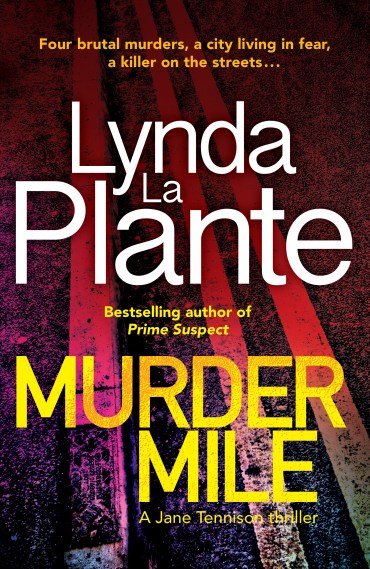
Murder Mile by Lynda La Plante

Murder Mile Cover.jpg

Publisher: Zaffre

Publication Date – 23 August 2018

Amazon     Book Depository

One of English crime fiction’s most distinctive voices, Lynda La Plante, returns with her iconic female detective, Jane Tennison, for another dark and shocking case.

In February 1979, recently promoted Detective Sergeant Jane Tennison has been posted to Peckham CID, one of the toughest beats in all of London.  Previously known as the Golden Mile due to its well-to-do shopping areas, the area is now in decline, a fact not helped by the garbage strikes besetting the entire city, ensuring that the entire area is covered rubbish and filth.

When the body of a young woman is found in the heart of Peckham, Jane and her team must investigate the suspicious circumstances surrounding her death.  But when another body is found nearby, the possibility of a serial killer raises all sorts of problems.  The media scrutinise the case and rename the area Murder Mile.  Even worse, the second victim’s son is well connected, and several important people want the matter dealt with quickly.

As more bodies are uncovered, Tennison must use all of her investigative ability to uncover this dark murderer, while also dealing with the police force’s inherent sexism and disregard for her talent that she has dealt with her entire career.  Can Tennison catch this killer, or will they find a terrible and unexpected way to win?

Lynda La Plante is a talented author and screenwriter responsible for several hit British crime series and movies.  She achieved early success with the 1983 television series, Widows, which has been adapted into a major motion picture set to be released in November this year.  Other successful shows that La Plante has created include Trial and Retribution and Above Suspicion, with nearly all of her books having been either adapted into screenplays or inspired by one of her televisions shows.  Murder Mile is the fourth book in her Jane Tennison series, which serves as a prequel series to one of La Plante’s most successful and iconic shows, Prime Suspect, which features Helen Mirren as an older Jane Tennison.  The first book in this prequel series, Tennison, also served as the basis for the short-lived prequel television series Prime Suspect 1973.

Murder Mile features a dark and disturbing mystery that serves as the central focus of this book.  The protagonist must investigate a series of murders spread out among the dilapidated Peckham area. La Plante has created an intriguing and compelling investigation storyline as Tennison and her team follow a series of promising leads across Peckham and the rest of London, finding clues in a variety of places, as well as several other bodies.  While the majority of the book leading up the conclusion of the story and the solution of the mystery is captivating in its own right, the best part of the book has to be its chilling conclusion.  Not only is the revealed antagonist a despicable creature, but the way in which they attempt to manipulate Jane and the rest of the police characters is just plain creepy.  The conclusion of the story and the ultimate reveal of the antagonist’s last actions are particularly shocking in their execution and extent.  Worse, both the reader and the protagonist can see that the villain is planning something, but you just cannot predict the terrible lengths they will go to win and spite the police.  This memorable conclusion serves as the perfect end to this dark and powerful story and represents some excellent writing from La Plante.

This story is set in 1970s London, and the author does a fantastic job bringing this iconic city to life during a period of economic downturn.  There is a certain gloom around the city, especially in Peckham, where the majority of the book’s investigation takes place.  The plot of Murder Mile is set during the infamous Winter of Discontent, a period of strikes and financial uncertainty that hit the country during 1978 and 1979.  There are several discussions about the situation from the characters and it is interesting to see a fictional perspective of this part of England’s recent history.  In addition, some of the physical effects of the ‘Winter of Discontent’ have some significant impacts on the case.  During January and February 1979, the waste collectors of London were on strike, resulting in a build-up of rubbish throughout the city.  As a result, many of the scenes set in the city feature streets strewn with garbage and littered with filth and rats.  La Plante also examines the parks that were filled with rubbish by London authorities as a stopgap measure for this situation.  This becomes particularly important in the story, as the police discover a dismembered body in one of these parks as the murderer attempted to utilise the situation for their own ends.  The author has also cleverly highlighted the police techniques and technologies that would have been available during the time.  Overall, La Plante has made full use of this chaotic period in Murder Mile, and readers will enjoy her vivid descriptions of these events.

In addition to the general descriptions of 1970s England, one of the key features of La Plante’s latest book is an examination of the inherent sexism in the London police force.  Jane as a Detective Sergeant must continue to fight to gain respect from her co-workers.  In Murder Mile she is constantly talked down to by her superiors, deals with disrespectful comments from the rank-and-file police, and must also deal with having her authority undercut by colleagues she considers to be her friends as they step in quickly to defend her.  It is infuriating to see how senior police ignore Tennison’s detective work and observations, especially as she is right most of the time.  This sexism also requires Tennison to act in a more maverick way, as her frustrations force her to work outside the main police investigation in order to prove herself – a decision that will have significant impacts on her life and career.

While the portrayal of sexism mentioned above has been used in all of the books of the Jane Tennison series, in Murder Mile La Plante has chosen to also focus on police homophobia and how it affects the investigation.  The police homophobia is quite prevalent throughout the series, especially when one of the suspects is revealed to be gay.  The police response to this is extreme, as several of the characters are quite hostile to this suspect and his relatives, alienating potentially helpful people in the investigation.  In addition, there is the stupid assumption that all homosexual males were automatically paedophiles, and this sends the investigation into several biased directions.  Tennison and several of the other characters attempt to change the minds of their colleagues, often without much success.  In addition, one of the more approachable and capable members of the police team is revealed to be homosexual in this book, which serves as a good counterpoint to the more old school and homophobic cops.  Overall, this is an intense and important part of the story, and it is intriguing to see how these old biases would likely have affected cases in the past.

Crime legend Lynda La Plante returns in fantastic form with Murder Mile, an exciting continuation of her Prime Suspect prequel series.  Featuring some deep and powerful examinations of the 1970s London police force, this absorbing mystery takes its readers to the edge of darkness and beyond.  Featuring an incredibly dark and unforgettable ending, Murder Mile is another exceptional release from La Plante and a highly recommend piece of crime fiction.

My Rating:

Four and a half stars

Amazon     Book Depository

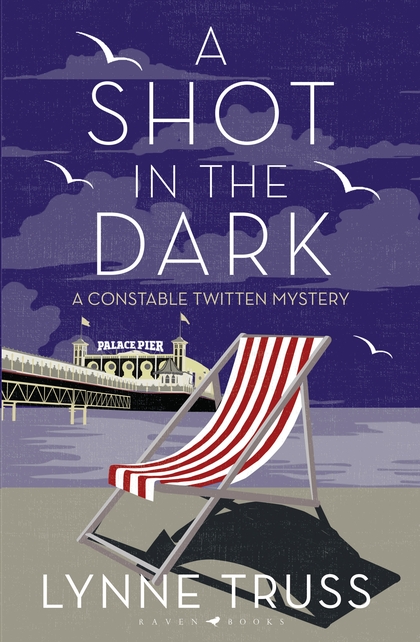
A Shot in the Dark by Lynne Truss

A Shot in the Dark Cover

Publisher: Raven Books

Publication Date – 28 June 2018

Amazon     Book Depository

From Lynne Truss, one of England’s most creative minds, comes A Shot in the Dark, a hilarious take on the historical murder mystery that sets three fantastic and exaggerated police characters against a sinister and surprising criminal mastermind.

Brighton, 1957.  Following a terrible massacre that saw the death of every member of two rival gangs some years before, the city of Brighton is now clear of all crime.  At least, that’s what Inspector Steine believes, and, as he is the famous and inspirational police detective whose actions allowed the eradication of these vicious gangs, that’s what the rest of the Brighton Constabulary believe as well.  Unfortunately for everyone, Inspector Steine is nowhere near as smart as he thinks he is.  Despite all the evidence, he simply refuses to believe the theory of his long suffering ‘bagman’ Sergeant Brunswick that a mysterious third crime boss organised the massacre and is currently running crime in Brighton.

So when the young, keen and exceedingly annoying Constable Twitten arrives in Brighton and starts investigating a series of burglaries, Steine is particularly aggrieved.  Despite Steine’s insistence that Brighton’s criminal element is no more, Twitten seems determined to find criminal activity – and he does.  The opening night of a new controversial play is unfortunately ruined when the opinionated and unpleasant film critic that Twitten is sitting next to is shot in the head.  Finally a crime that even Steine can’t ignore.

Who could have wanted the critic dead?  Is his death due to the multiple plays and productions that his reviews have destroyed?  Or is it perhaps related to a bank robbery that the critic witnessed many years ago, and that Steine failed to solve.  As Twitten and Brunswick start their investigation and Steine provides his own special brand of ‘help’, a second body is found.  As the case continues, Brighton’s newest constable is about to uncover a dark secret about his city and the sinister figure manipulating everything behind the scenes.

Truss is a highly talented writer, author and radio personality who has produced a huge range of different works, including the non-fiction book Eats, Shoots & Leaves: The Zero Tolerance Approach to Punctuation.  Truss has also created several other fictional and non-fictional books, as well as a number of popular radio series.  A Shot in the Dark is Truss’s fifth fiction novel and is the first book in her Constable Twitten Mystery series.

One of the most interesting features of A Shot in the Dark is that it is actually a novelisation of Truss’s popular radio comedy drama series, Inspector Steine, which ran between 2007 and 2013 and starred the inimitable Michael Fenton-Stevens.  This is a great introduction to the franchise that will have a massive amount of appeal both to fans of the radio show and people who are unfamiliar with this great comedy series.  Rather than being a simple write-up of one of the Inspector Steine episodes, A Shot in the Dark is a combination of several different episodes, containing plot elements from various seasons of the show’s run.  In particular, it contains components borrowed from the series one episodes While the Sun Shines, Separate Tales and The Deep Blue Sea, the series two episode The Entertainer, and the series three episode While the Sun Shines.  As a result of this combination, people unfamiliar with this series get to experience several of the radio show’s best stories and plot points in their first outing.  On the other hand, fans of the radio series get a completely new adventure that re-imagines Constable Twitten’s early days at Brighton.  Storylines listeners may be familiar with have been altered in some new and substantial ways to create a fun and excellent combination of some key stories in the series.

In the original Inspector Steine series, Truss created some amazing characters who are not only terrific by themselves but who played off each other extremely well.  The author has done an amazing job transplanting these characters into a completely different format.  The three main characters are Inspector Steine, Constable Twitten and Sergeant Brunswick.  Inspector Steine is your classic self-important senior management figure who thinks they are so much smarter than they actually are.  Steine is extremely self-absorbed and very easily manipulated, but ultimately well meaning, given he is completely convinced that all the crime in Brighton was erased years ago as a result of his brilliant actions.  Twitten, on the other hand, is actually as smart as he thinks and has no trouble letting everyone he meets know it.  His clever investigative work is capable of solving the crime, but his cleverdick attitude ensures that no-one, especially Inspector Steine, will actually listen to him.  Sergeant Brunswick plays straight man to both of his colleagues, and seems to be the middle ground between these two extreme personalities.  However, while he is a competent investigator, he is also easily manipulated, and fails to see that his brilliant plans to go undercover on every case are hampered by the fact that all of Brighton’s criminals already know who his is.  These three are all extreme examples of some of the classic police characters.  In a normal piece of crime fiction, these three characters work well together (think Endeavour for example), but in A Shot in the Dark they bring out the worst in each other and combine together for great comedic value.

While the three police characters are excellently used and a whole lot of fun by themselves, special mention needs to be given to the brilliant antagonist of this story.  Whiles fans of the radio series will not be surprised about their identity, I will try to avoid revealing too much in order not to ruin the surprise for any new readers.  That being said, this character is an excellent villain who is able to manipulate the three police characters in some suitably comedic ways.  The various and often quite unsubtle ways in which this villain manoeuvres the protagonists in A Shot in the Dark is absolutely hilarious, especially when their ridiculous plots actually work.  New readers will have a fantastic time finding out who this character is and how they’ve gotten away with their crimes, while fans of the radio series will love seeing this outstanding antagonist in all their criminal glory once again.

A Shot in the Dark contains a fantastic story that expertly combines a clever murder mystery with hilarious comedy elements.  As mentioned above, due to main characters’ various shortcomings and the devious nature of the villain, this is not your standard criminal investigation.  The protagonists have to deal with some absurd situations as well as various unusual plans to stop them solving the case.  That being said, the police do perform an investigation and the truth of the various crimes are eventually uncovered, although again without the standard solution crime fiction readers would be used to.  The crime elements are compelling and there is a really interesting mystery contained within this book, with some imaginative twists leading up to the conclusion.  In addition, the two murders are connected together in some clever ways, and the overarching conspiracy about Brighton is particularly intriguing.  While the book contains some gripping mystery elements, it is a comedy at heart; there are some really amazing comedy elements, including some great sequences that really cracked me up.  In addition to the shenanigans of the main characters, there are a range of other eccentric characters throughout the book that provide some fun moments of comic relief with their antics.  These elements come together perfectly, and it is incredibly fun watching all attempts at a serious investigation get disrupted in various silly ways.

Truss set the Inspector Steine series within Brighton in the early 1950s.  While this would already be an interesting setting, the author has amped this up by using elements from the classic crime novel and movie, Brighton Rock.  Truss has stated that her series is based on captions at the start of the 1948 movie which declared that Brighton went from a crime hub between the two World Wars to an area completely free of criminals and corruption by the 1950s.  While many people would be somewhat suspicious of such a statement, the Inspector Steine series is based on the idea that a member of the police actually believed this and acted accordingly.  As a result, the whole city has, on the surface, a wholesome family atmosphere.  That makes the crime hiding underneath a lot more fun to see, especially as the criminals really don’t need to do too much to disguise their activities, secure in Steine’s blissful ignorance.  In addition, fans of the crime classic may be interested to know that there are a number of elements from Brighton Rock that play a key part in the story.  As both the book and the movie exist within the Inspector Steine universe, Inspector Steine actually blames the events of this book on Graham Greene, the original author of Brighton Rock (a sentiment shared by Truss).  In addition, various characters within A Shot in the Dark are obsessed with the events of the classic crime book, and many locations from the Brighton Rock book and movie become major plot settings in the story.  In particular, there are several sequences based around one certain murder from the movie that results in some very entertaining scenes.  Overall, this is a great setting for this excellent comedy-mystery hybrid, which also has some fantastic tie-ins to a classic post-war crime novel.

Lynne Truss delivers an extremely fun and very entertaining adaption of her popular Inspector Steine radio series with A Shot in the Dark.  Featuring all of the exceptional characters that were a standout feature of the original series, A Shot in the Dark is an excellent piece of comedy that also contains some intriguing mystery elements and a unique settings with ties to the crime classic Brighton Rock.  This five-star book comes highly recommended and is guaranteed to leave you laughing for hours.  I am already looking forward to the next Constable Twitten Mystery.

My Rating:

Five Stars

Special thanks need to be given to my partner, Alex, who, on top of her usual editorial expertise for my reviews, happens to be a geek for BBC Radio 4 comedies and was able to help me properly analyse A Shot in the Dark without spoiling the identity of Brighton’s greatest criminal mastermind.

Amazon     Book Depository

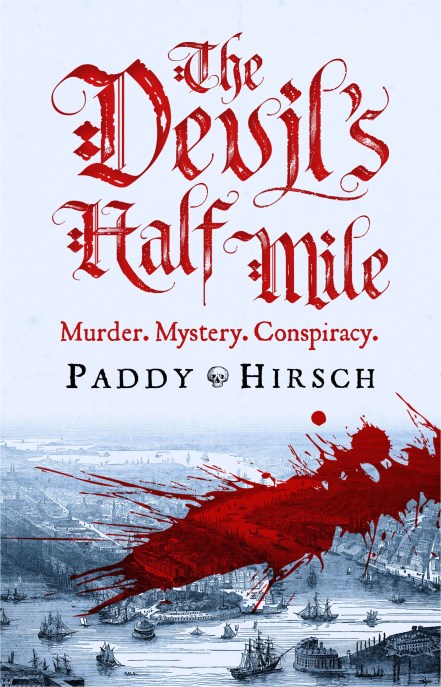
The Devil’s Half Mile by Paddy Hirsch

The Devil's Half Mile Cover.jpg

Publisher: Corvus

Australian Publication Date – 25 July 2018

World Publication Date – 22 May 2018

Amazon     Book Depository

The Devil’s Half Mile is a spectacular debut from new author Paddy Hirsch that combines history, mystery and financial wrongdoings into one gripping read set in the heart of historic 1799 New York.

On the eve of the 19th century, freshly graduated lawyer Justice “Justy” Flanagan, returns to his home city of New York after fighting the English in the Irish Rebellion.  Changed by his education and his memories of the vicious war, Justy is determined to investigate the tragic death of his father.  Most people believe that his father, a speculative trader, committed suicide following his role in the Wall Street Panic of 1792.  However, Justy is convinced that his father was actually murdered and he is determined to find out the truth.

After reconnecting with old friends and family, Justy starts his investigation by seeking work in the fledging Wall Street stock market.  As he begins to examine the fraud and the people that led up to the last great financial panic, he finds that his most promising leads are all long gone, while any new witnesses he encounters soon turn up dead.  In addition, Justy is drawn into the case of a brutal killer who is stalking the streets of New York, targeting women and leaving them dead and disfigured.

Establishing a connection between the death of his father, the 1792 crash and the current spate of murders, Justy finds himself embroiled in a massive conspiracy that could bring down the fledgling American nation.  With his friends in danger and with few people that he can trust, Justy must use all his skills to unravel this plot or else wind up the same way as his father.

The Devil’s Half Mile is an excellent piece of historical crime fiction that contains an impressive dark mystery designed to enthral the reader with its rich and compelling cat-and-mouse game between the protagonist and the antagonists facing him.  There are a number of great twists and turns throughout this story, as well as some truly surprising reveals, astonishing character decisions and dark and unique motivations for the underlying conspiracy.  Hirsch has also filled this book with some dark and tense moments, including a fantastic sequence in which the protagonists and his comrades engage in a shadowy fight aboard a docked ship, with both sides trying to find and outthink the other in the darkness.

A real standout part of this book is Hirsch’s fabulous use of the historical setting of New York.  Back in 1799, New York was a large town, quickly growing in size and importance.  The author includes some amazing descriptions of the city’s landscape and buildings during this period as the reader is brought back in time to this historical cityscape.  There is a real effort to showcase how the people of this era lived, and includes examinations of the people inhabiting the city and the young nation of America, with a particular focus on the criminals, the former slaves, the Wall Street traders and the fledgling police force.  The author has also done a spectacular job of conveying how people of New York felt during this time, as well as the sense they had about the importance and potential future of the city.

Hirsch has also ensured that this novel is filled with a huge amount of time-appropriate vocabulary.  This vocabulary is inserted throughout the entire story and gives it a real sense of authenticity and accuracy.  This also includes a comprehensive appendix that contains all the slang and terms used throughout the book.  If you have ever been keen to see ‘fart catcher’ or ‘snakesman’ used in context with a story, this is the book for you.

The book’s title, The Devil’s Half Mile, is a reference to Wall Street, the banking and stock-trading hub of New York.  Because of its prominence in the book’s overarching mystery storyline, significant time is spent examining the financial aspects of this young city, with a particular focus on one early example of modern economic history, the Panic of 1792.  The Panic of 1792 was a financial credit loss that rocked America only a few years after the country’s banking service was first introduced.  Hirsch, who has a financial background, explores the origins of this panic and does an amazing job tying it into the plot of the story and using it as a motive for the book’s various murders.  There are some absolutely captivating descriptions of the early Wall Street stock market, as the author explores its origns in coffee houses, how trade was undertaken, and the rules and early regulations that controlled it back then.  This examination of the stock market is a fascinating part of The Devil’s Half Mile, and all of it works well as a part of dark, murder mystery story.  Readers should also keep an eye out for mentions and brief cameos from American historical figures that were a part of the burgeoning bank scene, including Alexander Hamilton.

The author has created a great protagonist for this story.  While at first Justy seems to be a basic main character, with a huge range of skills and plans, such as being a lawyer, soldier, policeman and man familiar with the city’s criminal element, it soon becomes apparent that he has a dark side to him, as the author spends time examining his history during the 1798 Irish Rebellion.  The protagonist has been changed by his wartime experiences, and this plays well into the main story, as he tries not to let the horrors he experienced and perpetrated affect who he is.  This deeper examination of the character’s past also allows the reader a glimpse of the Irish Rebellion, a part of history rarely even mentioned in historical fiction.  Examining the cause, how it was fought and some of the people involved is a great story in itself, and I can easily see parts of it being used in future books in this series.  It also gives a bit of backstory for Lars Hokkanssen, the large half-Irish, half-Norwegian sailor comrade of Justy, who is definitely one of the best side characters in the book.

Filled with an enthralling overarching mystery and brilliant settings, this superb story is an amazing debut from newcomer Paddy Hirsch.  Featuring unique looks at underutilised parts of history and one of the best examinations of old school New York you’re likely to find in all of fiction, this is a highly recommended read and a great piece of historical fiction.

My Rating:

Four stars

Amazon     Book Depository

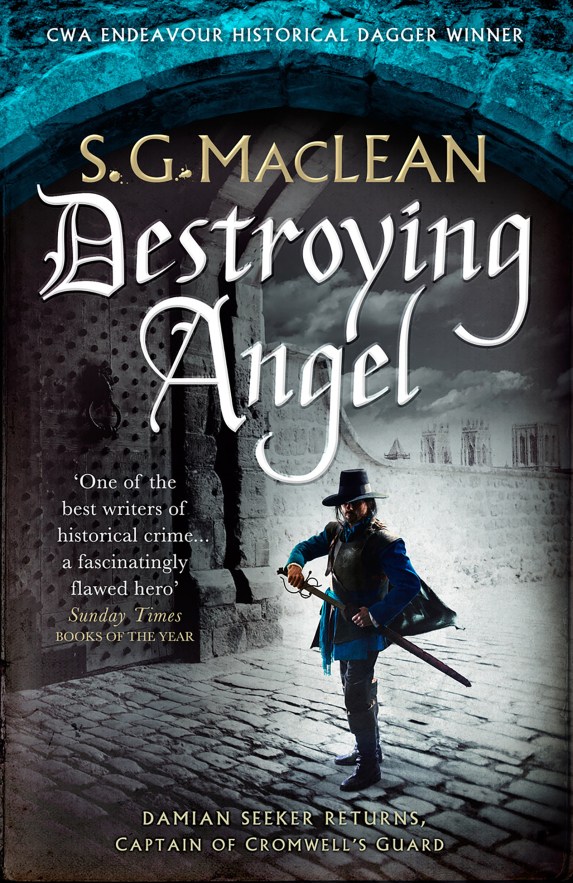
Destroying Angel by S. G. MacLean

Destroying Angel Cover.jpg

Publisher: Quercus

Publication date – 12 July 2018

Amazon

Prepare to experience an excellent multi-mystery story set deep in the heart of Cromwell’s Puritan England in Destroying Angel, the new book from historical thriller sensation S. G. MacLean.

It is 1655, a time of great change for England.  Oliver Crowell’s forces have cleared the Royalist armies from England, and exiled the King and his court to the continent.  The country is now in the grip of Puritan morals and the rule of Cromwell’s major-generals.

In York, Captain Damian Seeker of Cromwell’s army is responsible for hunting down Royalist elements hiding within the country and quelling dissent against the new regime.  His latest mission requires him to journey to the small village of Faithly on the Yorkshire moors to deliver the government’s new laws and ordinances and inspect the area for traitors.  In addition, a fugitive member of the King’s exiled court may have returned to his family estates near Faithly, and Seeker is charged with searching the village and the surrounding countryside.

But upon arriving in Faithly, Seeker bears witness to the tragic death of the young ward of the town’s commissioner.  Her death appears to be the result of poisoned mushrooms, slipped to her at a formal dinner attended by Seeker and several of the village’s notable citizens.  Was she the intended target or just a causality of a far larger game?  As Seeker begins to investigate, he soon finds that Faithly is a seething hotbed of resentment and fear.  Plots, secrets, lies and petty jealousies lie just beneath the surface, and many of the village’s inhabitants seek to use the dramatic changes in England’s rule for their own gain.  As Seeker attempts to navigate the chaos he finds in Faithly, a chance encounter from his past will change everything for the captain.

MacLean has once again delivered a fantastic and intensely thrilling piece of historical fiction.  Destroying Angel is the third book in the Captain Seeker series, and the seventh overall book from MacLean, who has also published four historical thrillers in his Alexander Seaton series.  In his latest book, Maclean has created several compelling mysteries that are expertly combined with the book’s fascinating historical background.

The main storyline of Destroying Angel is a fantastic investigation into the secrets and mysteries surrounding a small village.  When the book’s protagonist arrives at Faithly, the central location of the plot, he encounters a village that is brimming with hidden secrets and lies.  While the core mysteries revolve around the poisoned girl and the location of the fugitive Royalist lord, the protagonist is forced to uncover all of the village’s many secrets in order to find the solutions to the murder and treachery that he encounters.  The reader is presented with a massive stream of information about many of the characters in the book, all of which is cleverly woven into a series of intriguing solutions.  For example, the eventual motives for the poisoning of the commissioner’s ward are particularly captivating, and fairly tragic.  MacLean ensures that every single secret and hidden past is tied into the overall story and has created an outstanding narrative that highlights his substantial skill at historical mysteries.

In addition to the huge range of mysteries that MacLean has inserted into his book, there is also a significant storyline that will prove to be extremely interesting to fans of the previous books in the Captain Seeker series.  While performing his other investigations, the protagonist is thrust into an emotive storyline when he suddenly encounters ghosts from his past.  This new storyline is particularly intriguing as it goes deep into the protagonist’s past, uncovering old wounds and substantially increasing his emotional stake in the story.  Previous readers of this series will find it intriguing to see the usually implacable character of Seeker so rattled and unbalanced in this story.  The sudden and violent introduction into this storyline is particularly memorable and represents a noticeable change in the book’s tone, and is an excellent inclusion in an already fantastic read.

One of the most impressive and enjoyable elements of this book is the author’s spectacular use of an absorbing historical setting.  During this period, England is experiencing significant change, as the King and his followers have all been expelled from the country and a new group of people have risen in power.  Despite it being a significant part of England’s history, not too many historical fiction authors have chosen to set their books during this period.  MacLean does an amazing job of exploring the various aspects of this new regime and tying them into the overall plot of Destroying Angel.  This includes the new laws that have been put in place, the changes to local governance and the effect of military rule on the people.  However, one of the most fascinating aspects of the entire plot is MacLean’s examination of the Puritan moralities that were imposed on the people of England.  Destroying Angel focuses on how this affected day to day life, what role the new church had in England and how they treated priests who didn’t meet Puritan expectations.  One of the best parts of the book is the blatantly biased trial of the priest of Faithly village, as members of the populace and a special state examiner, known as ‘the Trier’, attempt to remove him from his parish.  The author has chosen a great location to showcase these examples of life under Cromwell, as the small village setting allows the reader to see how it affected normal, everyday people.  It also allows the reader to get an idea about some of the discontent and petty power plays that could have possibly resulted from the changes to the system.  Overall, MacLean has set his series with a deeply interesting time period that serves as the perfect background for a murder and conflict ridden story.

Destroying Angel is a fantastic and incredibly enjoyable novel that serves as an outstanding and powerful new addition to MacLean’s Captain Seeker series, combining several captivating mysteries with an outstanding and rarely utilised historical setting.  Readers will find so much to love about this book, which is historical murder mystery at its very best.

My Rating:

Five Stars

Amazon