Throwback Thursday – Warhammer 40,000: Hereticus by Dan Abnett

Warhammer 40,000 - Hereticus Cover

Publisher: Black Library (Audiobook – 30 July 2022)

Series: Eisenhorn – Book Three

Length: 9 hours and 48 minutes

My Rating: 5 out of 5 stars

Amazon     Book Depository

Welcome back to my Throwback Thursday series, where I republish old reviews, review books I have read before or review older books I have only just had a chance to read.  For this latest Throwback Thursday, I finish off the outstanding and iconic Eisenhorn trilogy by legendary Warhammer author, Dan Abnett, by reviewing the exceptional novel, Hereticus.

I have mentioned several times in the last few weeks that one of my absolute favourite authors of Warhammer fiction lately is the amazingly talented Dan Abnett, whose works have shaped a generation of lore and extended fiction.  I have really enjoyed several of the books in his excellent Gaunt’s Ghosts novels, such as First and Only, Ghostmaker and The Vincula Insurgency, which provide some captivating depictions of the common soldier in the Warhammer 40,000 universe.  However, based on what I have read so far, Abnett’s best series is the epic Eisenhorn trilogy, which follows titular character Inquisitor Eisenhorn as he attempts to protect humanity from a range of diabolical threats.  The first book, Xenos, served as an excellent introduction to Eisenhorn and his major supporting characters, while Malleus showed an older Eisenhorn as he attempts to unravel a massive conspiracy painting him as the villain.  I absolutely loved these outstanding novels and they both got a full five-star rating from me, and I immediately dove into the third and final book, Hereticus, as I really wanted to find how everything ended.

For over 150 years, Inquisitor Gregor Eisenhorn has loyally served the Imperium of Men, disrupting and ending multiple conspiracies and plots by heretics, daemons, and malicious xenos.  Throughout all this time, Eisenhorn has always tried to avoid the lure of the radical path that many of his fellow inquisitors tread, determined not to be corrupted by the forces he has sworn to destroy.  But desperation can drive even the best man towards the brink and Eisenhorn’s previous deal with a dark figure is coming back to haunt him.

Overseeing a Inquisitorial examination of the planet of Durer, Eisenhorn receives news that an old foe, one who cost him the life of a dear friend, is active on world.  Assembling his forces, Eisenhorn is unprepared for the full horror that awaits him, as his enemy unleashes an ancient evil capable of destroying worlds.  Facing tragedy and near death, Eisenhorn is forced to do the unthinkable and use foul rites to summon forth a greater evil in the form of the daemonhost Cherubael to survive.

Shocked and disgusted by his actions, Eisenhorn attempts to recover and atone for his mistakes.  However, before he can begin, his manor house is raided by a dangerous army of mercenaries and all his forces throughout the sector are brutally destroyed in an instant.  On the run with only a few loyal followers left, Eisenhorn needs to discover the identity of whoever is orchestrating his downfall before it is too late.  But to defeat his enemy, Eisenhorn is forced to dive deeper into heresy and call upon dark forces that are best left untouched.  Can Eisenhorn retain his sanity and soul, or is the price of his victory his own utter damnation?

Wow, just wow.  After how epic Xenos and Malleus proved to be, I knew that there was no way that I wasn’t going to love Hereticus.  However, I was unprepared for just how brutal and intense Abnett made this final book in the Eisenhorn trilogy, as Hereticus ended up being an exceptional read that perfectly ends his great series on a very high note.  Loaded with action, intrigue, and some amazingly complex characters, Hereticus gets another five-star rating from me, and this is honestly one of the best trilogies I have ever read.

Part of the reason why I enjoyed Hereticus so much is because it has an exceptionally epic story to it that really drags you in from the offset.  Set 50 years after the events of Malleus (150 years since the start of the series), Hereticus starts off big and never really slows down.  The book has a calamitous introduction that sees Eisenhorn and his comrades forced to confront a Chaos Titan which decimates them and forces Eisenhorn to call upon his captured daemonhost Cherubael.  This fantastic introduction not only perfectly continues the story from Malleus but also shows Eisenhorn’s progression towards radicalism as he uses his new knowledge in some pretty dark ways.  Following this introduction, which splits his main team up, the story continues strongly, as there is a major and extended battle sequence in the heart of Eisenhorn’s sanctum, which sees him forced out on the run.  Becoming a fugitive from new enemies, old foes, and the Inquisition itself, the rest of the novel is a very captivating and intense character-driven read that shows a desperate Eisenhorn continue to make radical decision after radical decision, all in the name of defeating his enemies, no matter the cost.  There are some extremely moving and powerful scenes scattered through the second half of the book, as Eisenhorn comes to terms with many of his long-running comrades, many of whom do not agree with his methods, as well as some deadly confrontations.  Everything leads up to a trippy and action-packed finale, as Eisenhorn finally faces down an old enemy.  While the ultimate confrontation is short and the main antagonist only has a brief appearance in the book, the real joy of the story is the hunt to find out who they are and what they are after, with a focus on investigation, intrigue, and ethics.  The conclusion leaves everyone extremely satisfied, and Abnett leaves the series open for follow-up, even if a ton of character-centric storylines are permanently closed by a series of deaths and destruction.

The author once again does an amazing job presenting the complex story contained within Hereticus and I have a lot of love for the writing style that Abnett utilised in this series.  Blending tense galaxy-spanning intrigue with the hunt for dark forces, massive mysteries, complex revenge plots, and a focus on the corruption of the spirit, there is a ton of fun for a lot of readers in this book, and I loved the elaborate conspiracy that was the fantastic focus of the plot.  I especially enjoyed the overall theme of Hereticus that saw Abnett try and bring a lot of storylines and character arcs full circle back to the original novel in the trilogy, Xenos.  The history of all the characters in the book, as well as multiple prior events, are essential parts of Hereticus’s plot, and I loved how the author was able to tie together a ton of compelling overlying storylines that really highlights the importance of the first two novels.  The primary storytelling method, a chronicle style from Eisenhorn’s perspective, adds a lot of power and flair to the overall book, especially as it enhances the character-driven aspect of the story and gives you some intriguing insights into the conflicted protagonist’s mind.  There are a ton of great scenes showcased as result of this first-person perspective, from multiple massive battles, to intimate conversations and even a very well-written psychic interrogation sequence.  Abnett has a great eye for detail and some of the resulting action sequences and unique locations are painted in such a way that the reader fully grasped every action or cool element of the setting.  This, and so much more, really helps Hereticus’ exceptional story shine through and I had so much fun seeing how this entire novel unfolded.

Like most of Abnett’s books, Hereticus can be read as a standalone novel, especially as the author does an exceptional job of recapping key events, characters, and relationships from the previous Eisenhorn entries.  However, to get the full emotional impact of epic narrative, I would strongly recommend checking out Xenos and Malleus first, as you really understand how the character has changed over the course of the series, as well as how well the storylines have continued.  I also felt that Hereticus proved to be a particularly good entry into the wider Warhammer 40,000 canon as Abnett continues to explore some of the most intriguing parts of this grim universe, including the dark cults that are constantly a threat to the Imperium’s stability and the Inquisitors who hunt them.  The fantastic dive into the different types of Inquisitors and their different ways of fighting the enemy is pretty cool and I loved seeing the various rivalries and discussions that eventuated, especially as Eisenhorn has an opinion on everything.  This book also takes the reader to a variety of unique locations within the Warhammer universe, with several unique planets becoming key settings for the plot.  I loved seeing the variety of worlds out there in this massive universe, and Abnett has fun tying the events of this book into some of the wider canon aspects of the franchise.  I would say that overall the Eisenhorn trilogy really is one of the best series to start reading Warhammer 40,000 fiction with, especially as you get a completely different and more elaborate story than the classic military fiction plots that make up the majority of the genre.

As always, I can’t go away from an Eisenhorn book without talking about the exceptional character work that Abnett brings to the table.  This is especially true in Hereticus, as Abnett brings so many compelling character arcs to a tragic and moving end, while also ensuring that his impressive protagonist is changed forever.

As you would expect, the focus of Hereticus is on protagonist Gregor Eisenhorn, who serves as the book’s primary narrator.  I mentioned during my previous reviews of these books that I have loved the complex and powerful story that Abnett has woven around Eisenhorn.  Starting off as a relatively innocent and uncontroversial Inquisitor who was just trying to do what is right, Eisenhorn has slowly slipped down the path of the radical by employing the methods and powers of his heretical foes.  Abnett has showcased this gradual fall perfectly in the first two books, and while he made some questionable decisions out of desperation in Malleus, you still believed that he could be redeemed.  Hereticus really has you doubt this as he begins to employ darker methods during this book, which not only cost him but impact the people around him.  However, this is not entirely his fault, as forces outside of his control drive him to do so.  Pretty much every mistake that Eisenhorn has made in his past seems to come back to bite him in Hereticus, and these events, and more, force him to make hard decisions to survive and defeat foes who are even worse than him.  While he does bad things, you can fully understand and appreciate why he feels he needs to do so, even if you don’t agree with them.  Despite these bad things, Eisenhorn remains a sympathetic character for most of the book, and his own realisation that what he is doing is wrong just makes the entire story that much sadder.  However, there is a layer of arrogance over this that makes you slightly concerned about Eisenhorn’s actions, and you’re never quite sure just how far he has truly fallen.  Abnett covers Eisenhorn’s overall character arc pretty damn perfectly, and while the author throws the protagonist’s decline into overdrive in this book, it felt pretty natural and showcases just how destructive desperation is as his good intentions lead him to hell.

On top of Eisenhorn, Hereticus features a bevy of compelling supporting characters who add their own complex spin to the story.  Many of the supporting characters from the first two books are once again featured in this third Eisenhorn novel, and I really appreciated how Abnett sought to bring many of their arcs and storylines full circle here.  Unfortunately for fans of the series, wrapping up their storylines results in most of the supporting character’s deaths or severe injury, and quite a substantial number of supporting figures from the first two books have their final appearance here.  While I won’t go into too much detail, several of these deaths are pretty damn tragic, especially after they follow on from some noble self-sacrifices or major character moments.  I was honestly shocked at how brutal Abnett was when it came to killing off his supporting characters, but all of these instances really worked in the context of the story and ensured that Hereticus ended up being particularly memorable.  Before these major deaths, though, the author dives into the powerful relationships that each of these supporting characters has with Eisenhorn, and there are some deeply emotional moments scattered through, especially as each of them have their own opinion about Eisenhorn’s recent actions and whether he has gone too far.  Watching his oldest friends become disgusted or outraged by his actions really hammers home how far Eisenhorn has fallen, especially as he drags several characters down with him.  Throw in some outstanding central antagonists, all of whom have a complex history with Eisenhorn, and some intriguing cameos from the previous novels, and this was an exceptionally character rich novel designed to hit you in the feels.

As with all of Abnett’s books to date, I grabbed the audiobook version of Hereticus, which was once again an exceptional way to enjoy this amazing novel.  Coming in at just under 10 hours and featuring the impressive narration of Abnett’s go-to audiobook narrator, Toby Longworth, this format was an excellent way to enjoy this book, and I managed to power through this entire story in no time at all.  Longworth really brings the entire story to life with his excellent narration, and he makes sure to infuse all the characters with a ton of personality, while also tailoring their voices to match their history and physical (or metaphysical) attributes.  I also thought that several of the best scenes of this book, including some desperate battles, a cool interrogation scene, and some particularly poignant character interactions, were made even more epic in this format, as the exceptional acting from Longworth showcased them in a way they truly deserved.  I was utterly enthralled the entire way through Hereticus’s audiobook and this was easily the best way to experience Abnett’s compelling tale.

Overall, I felt that Hereticus was a pretty amazing book and a suitably epic finale to Dan Abnett’s original Eisenhorn trilogy.  Bringing together a powerful story with some unique Warhammer 40,000 elements and an exceptional dive into the mind of a fallen inquisitor, Hereticus was utterly addictive and ended up being one of the best Warhammer books I have ever read.  I was really impressed with how Abnett concluded this incredible trilogy, and I felt that Hereticus was an excellent final entry that tied together some of the complex storylines from the first two books.  I cannot recommend this entire trilogy enough; it truly is one of the cornerstones of Warhammer 40,000 fiction.  I look forward to reading more from Abnett in the future, especially as there are several spin-offs associated with this trilogy, as well as a recently released fourth Eisenhorn book in The Magos.  However, I think I will try and get through some Gaunt’s Ghosts books first, before diving back into Abnett’s Inquisitor stories, although if I ever want a powerful Warhammer thriller, I know where to look.

Amazon     Book Depository

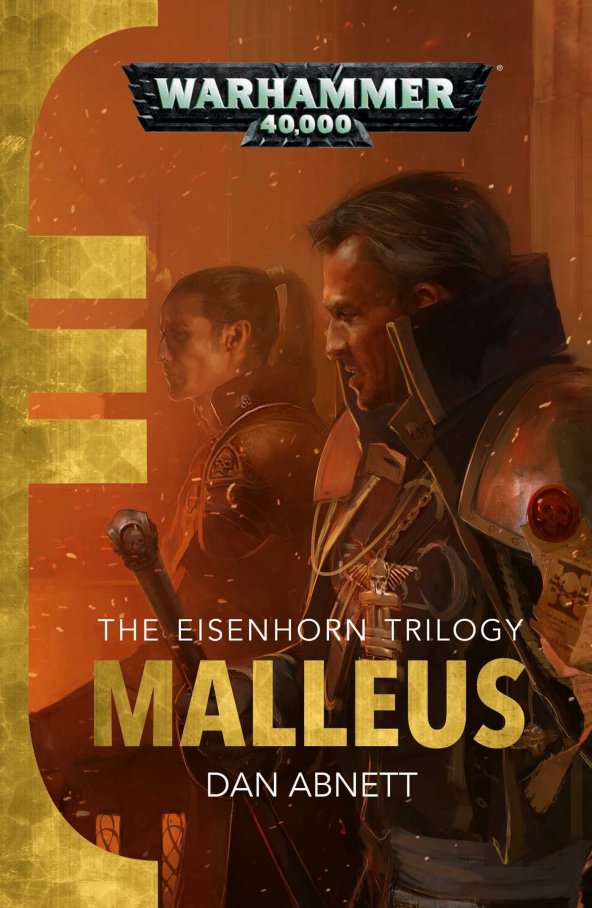
Throwback Thursday – Warhammer 40,000: Malleus by Dan Abnett

Warhammer 40,000 - Malleus Cover

Publisher: Black Library (Trade Paperback – 27 December 2001)

Series: Eisenhorn – Book Two

Length: 10 hours and 13 hours

My Rating: 5 out of 5 stars

Amazon     Book Depository

Welcome back to my Throwback Thursday series, where I republish old reviews, review books I have read before or review older books I have only just had a chance to read.  For this week’s Throwback Thursday, I continue my extensive dive into the Warhammer 40,000 universe with the awesome, galaxy-spanning thriller, Malleus by Dan Abnett.

For one of my latest Throwback Thursday reviews, I took a look at one of Dan Abnett’s iconic Warhammer 40,000 novels, Xenos, the first book in the incredible Eisenhorn trilogy.  This fantastic book, which followed Inquisitor Gregor Eisenhorn, a hunter of dark influences in the Imperium of Man, was a clever and compelling read that saw Eisenhorn face off against a range of terrible foes who seek to destroy humanity from within.  I had an outstanding time with Xenos, which really showcased Abnett’s skill as an author (I have also really enjoyed his Gaunt’s Ghosts novels, including First and Only, Ghostmaker and The Vincula Insurgency).  Indeed, I enjoyed it so much that I quickly decided to continue the Eisenhorn trilogy by listening to the second book in the series, Malleus, another exceptional read that takes its protagonist on another dark and engrossing adventure.

In the 41st Millennium, the dark enemies of mankind, whether they be heretical, daemonic, or alien in nature, continue to try and destroy the Imperium of Man from within.  It falls to dedicated inquisitors, such as Gregor Eisenhorn, to battle their malign influences by whatever means they deem necessary.  But what happens when the very institutions that Eisenhorn has long fought to uphold are turned against him?

Whilst battling against deadly alien influences on an isolated planet, Eisenhorn is made aware of certain allegations against his character which suggest that he has been corrupted by the influence of Chaos.  Initially planning to ignore the rumours and continue his vital work safeguarding humanity, his plans are put on hold when a terrible act of destruction unfolds on the planet of Thracian Primaris.  Investigating its causes, Eisenhorn is thrust into another deadly conspiracy, one tied to a foe he last encountered 100 years before, the daemonhost Cherubael.

Chasing after Cherubael and his minions, Eisenhorn attempts to discover what their latest unholy plan is.  However, his investigation reveals that Cherubael is just a pawn, and that the true mastermind of the plot he has uncovered may be a fellow inquisitor.  However, before Eisenhorn can find and confront them, he himself is declared a heretic and renegade by puritan members of his order, forcing him to flee.  Chased by the members of the Ordo Malleus, as well as other deadly hunters loyal to Imperium, Eisenhorn must work outside the bounds of his usual authority to prove his innocence and find the true culprits.  But to defeat his enemies, Eisenhorn may be forced to cross a dangerous line and become the very thing he has sworn to destroy.

Damn, Abnett was on a major roll when he wrote the Eisenhorn novels, as the second book, Malleus, is getting another five-star rating from me.  Brilliantly combining a taut and intrigue-laden plot with the darkest elements of the Warhammer 40,000 universe, Malleus is an addictive and powerful read that proves near impossible to stop listening to.

Malleus has an incredible story that I found to be pretty damn addictive.  Set 100 years after the events of Xenos, Malleus continues to follow Inquisitor Eisenhorn as he investigates several malign cults and figures throughout his sub-sector of space.  The story soon ties into some of the lingering storylines from Xenos as the daemonhost Cherubael makes another appearance, framing Eisenhorn as a heretic.  After a massive and suitably destructive series of events, Eisenhorn is thrust into a whole new investigation, trying to finally hunt down the figures that vexed him during the events of Xenos.  Traversing the sector in pursuit of Cherubael and other rogue inquisitors, Eisenhorn finds himself thrust into battle after hopeless battle, and his constant losses war with his determination to finish the case.  The protagonist faces several major hurdles towards the middle of the book, including capture and imprisonment by a fellow inquisitor for false crimes.  Eventually escaping, Eisenhorn spends much of the book as a fugitive hunted by loyalist forces, which is an exciting new element that Abnett plays to full effect to enhance the plot.  The overarching mystery/conspiracy plot of the book comes together extremely well, and I loved the outstanding investigation angle that follows as Eisenhorn desperately tries to find the evidence that not only ends the threat but exonerates him.  This hunt for answers is actually set over a substantial period of time, mainly due to the delays associated with space travel, but this only increases the power of the plot as you witness Eisenhorn lose years of his life being hunted.  Everything leads up to a massive confrontation with plenty of bloody battles and dangerous decisions that leave several fantastic characters dead or damaged.  The ultimate conclusion is pretty impressive, especially as Abnett really starts to showcase his protagonist’s inevitable fall from grace here, and he leaves the book on a particularly dark note that was so damn awesome.

Just like with Xenos, Abnett has a fantastic writing style that really helps to enhance Malleus’s narrative and make the book very addictive and exciting.  Perfectly utilising an excellent chronicle style that allows you to see inside Eisenhorn’s head, you are swiftly drawn into the complex plot.  Abnett keeps up a swift and intense pace the entire way through, and you barely have a moment to stop and breathe before the next intriguing event takes over.  The blend of intrigue, Inquisition politics, sector-spanning conspiracies, complex character development, unique Warhammer concerns, and impressive action is a heady mix and you get really get caught up in the hunt for the antagonists and Eisenhorn’s fight to prove his innocence.  I loved how intense and deadly some of the crazy battle scenes got and Abnett has great skill at showcasing his characters in mortal danger.  His attention to detail also results in some breathtaking sequences, and I was really impressed by that epic parade sequence, especially its ultra-chaotic ending.  Abnett also takes the time in Malleus to set up some future storylines and alternate books, with some fun hints at novellas/short stories you should check out, while also quickly introducing his next major protagonist, Ravenor.  All these brilliant writing elements, and more, really help to drag you into this elaborate narrative, and I deeply enjoyed the more intrigue-focused stories that are the hallmark of the Eisenhorn books.  A worthy and powerful sequel to Xenos that really showcases the awesome characters and continues the outstanding and elaborate storylines.

I really loved the elaborate Warhammer 40,000 elements that Abnett featured within Malleus as the author dives right into the heart of the Inquisition and their battles.  Just like with Xenos, you get a great understanding of the various internal threats that the Imperium faces in this universe, as Eisenhorn attempts to combat various conspiracies and threats.  However, there is also a much deeper look at the inner workings of the often hidden Inquisition Ordos, especially as Eisenhorn is forced to work against the factions associated with them, including the Ordo Malleus, who think he has been compromised.  The ensuing hunt for answers leads the protagonist, and by extension the reader, on a mighty chase around various unique planets in the Imperium, including Cadia before the fall, and Abnett has a lot of fun exploring the intriguing elements associated with these locations, as well as the general lore surrounding inquisitors, daemons and more.  I did find it interesting that one of the major McGuffins of the book, the mysterious pylons of Cadia, ended up seeming a little more important in hindsight after the 13th Black Crusade, and you have to wonder if the antagonist’s villainous plan didn’t actually have some merit.  I felt that this was a particularly awesome Warhammer 40,000 book and I deeply appreciated how the universe’s unique elements and lore were able to seamlessly support the elaborate tale that Abnett wrote here.  Due to Abnett’s detailed and compelling writing style, new Warhammer readers could easily start their exploration of the franchise with Malleus and get a rather good idea of the universe.  However, I would really recommend starting with Xenos, as you get a much better introduction to key details and characters there.  An overall exceptional read that makes full use of the massive, extended setting.

A highlight of any Abnett book is always the outstanding and highly complex characters, and Malleus has those in spades.  The focus is once again on series protagonist and narrator, Gregor Eisenhorn, who grows as a character with each passing adventure.  I really liked how Abnett portrayed Eisenhorn in Malleus and his compelling mission for justice and redemption is pretty intense.  The Eisenhorn here is a different creature to that in Xenos, especially as, after 100 additional years in the Inquisition, he is a lot more experienced and skilled in his work.  Now commanding a small army of followers, Eisenhorn has different methods and resources than before, but the same determination, loyalty and kindness (at least compared to other inquisitors) is still there.  However, Malleus sees Eisenhorn go through some major battles, both mentally and physically, as he is forced to confront an enemy within his own order while defending his own methods and character.  Watching him declared a heretic by his fellow inquisitors is pretty brutal, and Abnett throws in a heartbreaking prison scene to keep the readers intrigued.  These events, coupled with some personal losses, and the continued presence of beings far more powerful than him, force Eisenhorn to make deals and cross lines he really shouldn’t.  I love how each of the Eisenhorn books show the protagonist’s slow fall towards radicalism, and Malleus is an interesting starting point for that, as you understand why Eisenhorn is forced to go down this route.  While he ends the book with most of his humanity and integrity intact, that brilliant final scene shows that he is getting awfully comfortable with his feet over a line he previously feared, and I cannot wait to see how far he falls in the next Eisenhorn novel.

On top of Eisenhorn, Abnett features a pretty awesome collection of supporting characters who assist the inquisitor in his investigation and they each add their own distinctive personality to the narrative.  There is a good continuation of character arcs from the first book as several of his followers from Xenos make a return here, including the entertaining Savant Aemos, former Arbites investigator Fischig and his dedicated psychic blank Bequin.  Each of them is a little older, wiser and more familiar with the hardships of being an inquisitor’s acolyte, and I liked the stronger relationships that developed amongst them, particularly Bequin, who really comes into her own in this book as a veteran.  There are several interesting new characters added as well, such as the bounty hunter Nayl or brash pilot Medea Betancore (replacing her father Midas), and I felt that their distinctive personalities added a fun and entertaining edge to the narrative.  I was surprised that new character Gideon Ravenor, who goes on to get his own spinoff series, only had a relatively small appearance in this book, as I figured he would be a pretty major character to get his own story.  Still, he gets a good introduction here and it will be interesting to see how his arc plays out in the future.

Malleus also features several intriguing antagonists, each of whom test Eisenhorn and his colleagues in different ways.  While there are the usual array of cultists, aliens and other creatures, most of the antagonists in this novel prove to be other inquisitors, who are either working on their own radical plots or who believe that Eisenhorn is the true heretic who needs to be stopped.  This adds a very interesting dynamic to the story and it was fascinating to see the varied philosophies and plots amongst the rival orders and factions.  I did find it interesting that the main villain of the story, a mysterious inquisitor acting from the shadows, only had a very minor appearance in the book, and while you feel his presence, a bigger appearance from him might have been in order.  However, this character is more than made up for by his principal minion, the daemonhost Cherubael, who returns after his fantastic appearance in Xenos.  Cherubael is a brilliantly sinister character who steals every single scene they are in thanks to their menacing monologues and intriguing insights.  The outstanding obsession he forms with Eisenhorn is a great deal of fun and I loved seeing this evil figure toy with the inquisitor and force him to go to great lengths to defeat him.  Abnett really knows how to write an outstanding character, even in a limited amount of time, and it will be fascinating to see what happens to these characters in the next Eisenhorn book.

I of course chose to listen to Malleus on audiobook, as it is my preferred way of enjoying great Warhammer books, and I was not disappointed with how it turned out.  This fantastic format once again deeply enhanced the quality of the story and you can practically see the awesome battle scenes and other breath-taking elements of the wider Warhammer 40,000 universe.  Narrator Toby Longworth, who is the go-to narrator for all of Abnett’s Warhammer audiobooks, does another outstanding job with Malleus, and I loved how he was able to keep the pace of the production going.  He also has an outstanding voice that really conveys the dark and dangerous nature of the universe, while also perfectly bringing the characters to life.  I deeply appreciated how Longworth made sure to utilise the same character tones that he previously featured in Xenos here, and it gave the Malleus audiobook a great sense of continuation.  All the new characters are also given excellent voices, and I loved how awesome he made them sound, especially the more supernatural or alien beings that the protagonist comes across.  I was frankly hooked on this audiobook from the very start, and it is an exceptional way to enjoy this epic narrative.  With a run time of just over 10 hours, I managed to power through this audiobook very quickly, and this is definitely the best format for the Eisenhorn series.

Dan Abnett continues to showcase why he is one of the absolute best Warhammer authors out there with the second book in his superb and beloved Eisenhorn trilogy, Malleus.  Featuring a powerful and incredibly captivating narrative of conspiracy, heretics and desperation, Malleus takes Abnett’s compelling protagonist on an even darker journey of despair, compromise and hard choices.  Brutal, intense and impossible to put down, Malleus is easily one of the best Warhammer books I have ever read, and I cannot get over how exceptional it was.  A very highly recommended book, I plan to check out the third and final Eisenhorn book soon as I can to see how this epic series ends.

Amazon     Book Depository

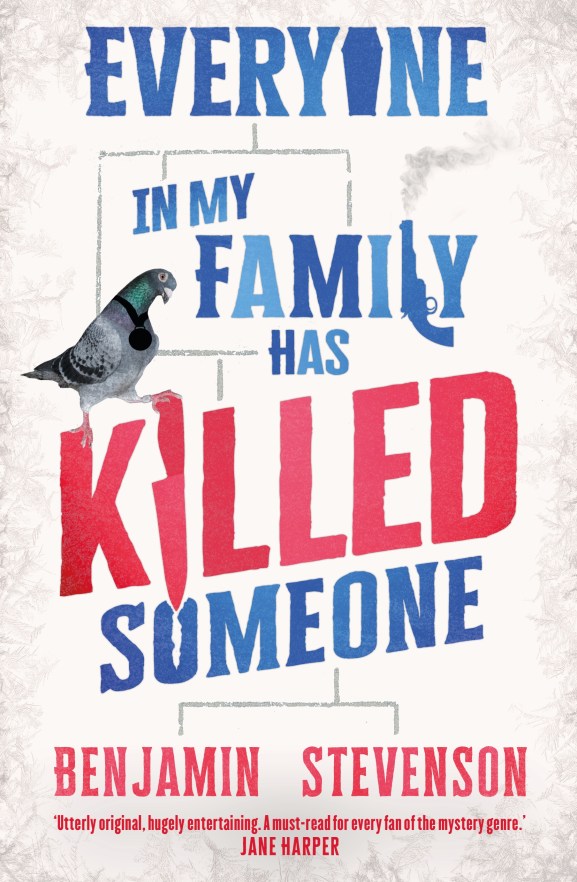
Quick Review – Everyone in My Family Has Killed Someone by Benjamin Stevenson

Everyone in My Family Has Killed Someone Cover

Publisher: Michael Joseph (Trade Paperback – 29 March 2022)

Series: Ernest Cunningham – Book One

Length: 384 pages

My Rating: 5 out of 5 stars

Amazon

One of Australia’s fastest rising crime fiction stars, comedian turned mystery writer Benjamin Stevenson, returns with an outstanding standalone book that might be one of the best Australian crime fiction reads of 2022, Everyone in My Family Has Killed Someone.

One of my favourite Australian crime fiction authors now is the exceedingly talented Benjamin Stevenson, who has written some amazing works over the last couple of years.  Stevenson’s writing career began in 2018 when he released the amazing murder mystery Greenlight (which was subsequently released as Trust Me When I Lie and She Lies in the Vines outside of Australia).  A fantastic Australian crime fiction book with true crime elements to it, Greenlight followed a successful television producer who reinvestigates a murderer who was freed thanks to his show.  Stevenson followed Greenlight up in 2020 with the epic sequel, Either Side of Midnight, which saw the same protagonist investigate an impossible murder in what was one of my favourite Australian books of 2020.  Both these readers were pretty damn impressive, but Stevenson has saved his best work for the 2022 release, Everyone in My Family Has Killed Someone, which luckily has an outstanding story that matches the very cool title.

Plot Synopsis:

Everyone in my family has killed someone. Some of us, the high achievers, have killed more than once. I’m not trying to be dramatic, but it is the truth. Some of us are good, others are bad, and some just unfortunate.

I’m Ernest Cunningham. Call me Ern or Ernie. I wish I’d killed whoever decided our family reunion should be at a ski resort, but it’s a little more complicated than that.

Have I killed someone? Yes. I have.

Who was it?

Let’s get started.

EVERYONE IN MY FAMILY HAS KILLED SOMEONE

My brother

My stepsister

My wife

My father

My mother

My sister-in-law

My uncle

My stepfather

My aunt

Me

As the title and the intriguing plot synopsis above suggests, Everyone in My Family Has Killed Someone is an awesome read that sees Stevenson serve up an addictive narrative that is one part insane family drama and one part homage to classic detective novels.  I had an incredible time reading this book early on in 2022 and I honestly should have written a review for it well before now.

The plot of Everyone in My Family Has Killed Someone is pretty bonkers as it follows a very damaged protagonist, teacher and crime fiction mega-fan Ernest Cunningham, as he attends one of the most awkward family reunions in history.  Written from Ernest’s perspective as part of an in-universe book, Everyone in My Family Has Killed Someone sees Ernest reunite with the fellow members of the infamous Cunningham family at an isolated ski resort.  The black sheep of a dark family with criminal connections, Ernest has been invited to attend a special event: the release of his brother Michael from jail after Ernest testified against him.  However, once his brother arrives, a series of murders start to strike the resort, killing off several people.  With the ski resort cut off from the outside by the snow, it falls to Ernest to discover who is killing the remaining guests at the lodge.  However, everyone in his family is a suspect, as all of them have killed someone before, including Ernest, who has just as much motive as the rest.  As the book continues, it becomes very clear that someone in the Cunningham family has killed again, it’s just a matter of finding out which one did it.

I have to admit that I was pretty in love with this book from the opening pages, especially as it becomes clear early on that Stevenson planned to blend the book’s mystery with some great humour and brilliant homages to classic murder mysteries.  Stevenson lays out this story in a fun way that simultaneously focuses on the infamous main family, their complex past and relationships, while also presenting a compelling murder investigation that intentionally steals a lot of cues from classic whodunnits.  Stevenson introduces an outrageous cast of complex characters for the story, and they were very intriguing to follow, especially as they all have deeper issues brought on by the deaths they are responsible for.  The story at time transforms into a very moving and entertaining family drama, which helps to make the story richer and even more amusing.  The mystery itself is very clever, and I loved the multiple compelling twists and reveals that accompanied it as the protagonist is forced to dive back into every terrible event his family has been involved in, including murder, robbery, police corruption and kidnapping, all of which leads to final, devastating solution.  While the identity of the killer is a tad obvious, the reveal of why they are committing their crimes more than makes up for it, and Stevenson came up with one doozy of a motive.  However, the real highlight of the book is the way in which Stevenson sets out Everyone in My Family Has Killed Someone in the manner of an in-story chronicle written by the protagonist, which simultaneously takes on every established trope and rule of old-school detective novels and moulds it into itself.

As I mentioned a few times above, Everyone in My Family Has Killed Someone also acts as a homage to classic crime fiction novels, as Stevenson goes out of his way to simultaneously parody and revere the iconic detective genre.  The book starts with two intriguing elements: the membership oath of the Detectives Club (a secret society of classic crime fiction writers), and Ronald Knox’s ’10 Commandments of Detective Fiction’.  Both of these inclusions acknowledge the general tropes and rules of golden-age detective fiction, and they actually end up being used by the protagonist, and by extension Stevenson, as the main guideline for the mystery.  The author continuously refers back to this list as the novel continues (he even suggests folding this page down so you can revisit it when needed), and I loved how this mystery came together as the author tried to avoid breaking any of these rules.  The author also cheekily informs the reader in advance when in the book someone is going to die with an accompanying page number, ostensibly to allow the reader to jump ahead if needed.  However, as most people will continue through at the normal pace, it heightens the suspense a little as you get closer and closer to the page on which you know a death is going to occur.  Various elements like this, as well as a ton of self-referential internal monologues and discussions about the rules of whodunnits, gives this book an incredible meta feel, which Stevenson uses to full effect to tell a particularly hilarious story.  The author’s background as a comedian is on full display here as he creates an incredibly funny book, even with the continued murders and human tragedy.  These clever references are a great love letter to the classic detective novels, especially as he addresses them in such a satirical way, and all mystery lovers will get a real kick out this book as a result.

Overall, Everyone in My Family Has Killed Someone is an absolutely outstanding book that I cannot recommend enough.  While I have enjoyed Benjamin Stevenson’s mystery novels in the past, I think that Everyone in My Family Has Killed Someone is where he finally reveals his full potential.  Not only is the mystery itself brilliant, loaded as it is with compelling characters and a dark family history, but Stevenson finally showcases his impressive comedy skills and uses them to produce a truly delightful and incredibly addictive novel.  The combination of mystery, humour and a clever homage to the classics, is an intoxicating mixture, and it was near impossible to put this book down once you started reading it.  As such, I must give Everyone in My Family Has Killed Someone a full five-star rating, and it was one of the most entertaining books I read in all of 2022.  I have so much love for this book and I was very excited when I heard that Stevenson is releasing a sequel in October titled Everyone On This Train Is A Suspect.

Amazon

Throwback Thursday – Warhammer 40,000: Xenos by Dan Abnett

Warhammer 40,000 - Xenos Cover

Publisher: Black Library (Audiobook – 1 May 2001)

Series: Eisenhorn – Book One

Length: 9 hours and 55 minutes

My Rating: 5 out of 5 stars

Amazon

Welcome back to my Throwback Thursday series, where I republish old reviews, review books I have read before or review older books I have only just had a chance to read.  In my latest Throwback Thursday I continue to review the awesome Warhammer 40,000 works of Dan Abnett with his impressive and dark space thriller, Xenos.

For my Throwback Thursday last week, I talked about legendary Warhammer fiction author Dan Abnett and his Gaunt’s Ghosts series, which is one of the pillars of Warhammer 40,000 fiction.  I have already had a lot of fun reading several of the Gaunt’s Ghosts novels (including First and Only, Ghostmaker and The Vincula Insurgency), so I thought I would take the opportunity to check out one of Abnett’s other major Warhammer entries, the Eisenhorn series, which I have heard some extremely good things about.  Set in a different area of the Warhammer 40,000 universe than the Gaunt’s Ghosts books, the Eisenhorn books are a darker and more intense series that follows a troubled Imperial Inquisitor hunting down a deadly conspiracy at the heart of humanity.

In the dark future, the Imperium of Man is under constant attack from aliens, monsters and daemons who seek to destroy or corrupt all within.  However, the greatest threat to the Imperium comes from within as diabolical heretics, witches and cultists work from the shadows to weaken the Imperium, worship the forces of Chaos, and bring humanity crashing down around them.  The only protection humanity has against these nefarious and hidden threats are the members of the Inquisition, deadly agents who wield great power and authority to pursue their investigations by any means necessary.

Gregor Eisenhorn is a talented and experienced Inquisitor who has long fought against the shadows constantly threatening stability and order.  When he finally corners and kills an old adversary amid a dark ritual, Eisenhorn hopes that his actions have permanently ended an ongoing source of Chaos and despair in the Imperium.  However, evidence he recovers from the crime scene hints at a greater conspiracy that threatens several local systems.

Travelling to a prosperous system hub, Eisenhorn restarts his investigation, determined to get to the bottom of this new danger.  However, he is unprepared for the full scope of the hidden forces of Chaos that wait for him, as a massive and hidden cabal rises in opposition against him.  As multiple planets within the system burn due to the action of the Chaos cultists, Eisenhorn works with a series of unique allies to bring this cult to heel before they cause irreparable damage to the Imperium.  However, the more sinister danger may come from the prize that his enemies are seeking, an ancient and dark tome of knowledge, known as the Necroteuch, which has the potential to burn the universe and turn the entire Inquisition against Eisenhorn.

Xenos was another exceptional novel from Abnett, and one that really showcases his ability to tell a varied and complex tale.  This is a dark, powerful, and impressive character-driven read, and I loved the switch to dark intrigue and heretical investigations, which made for such an incredible story.  I was an instant fan of Xenos’s clever and highly addictive plot, and I must give it a full five-star rating for how awesome it was.

I was deeply impressed with the outstanding and compelling story that Abnett featured in Xenos, especially as it was very different in style and substance to his previous works I have enjoyed.  While the Gaunt’s Ghosts novels are gritty war stories that focus on the common soldier, Xenos was a powerful and twisty space thriller that saw a determined Inquisitor attempt to root out the manipulations of Chaos far away from the battlefields.  The story itself is extremely clever and well-paced, and it swiftly draws you in with its dark events, especially its intense and action-packed introduction.  Despite killing his nemesis early in the story, Eisenhorn is forced to keep digging even further as he uncovers more conspiracies and plots.  Utilising undercover methods, interrogations, obscure evidence and a series of bloody fights, Eisenhorn and his unique comrades follow the trail across the sub-sector, attempting to discover the true plot of their enemies.  This leads to several large and memorable set pieces, and I loved the constant change of locations, especially as it allowed you to get a whole new idea of the scope of their foes plans and the desperate battles being fought to stop them.  I also enjoyed the quieter scenes that were laid out between them as they not only added some great intrigue, but also highlighted the personal nature of the protagonist’s quests and the bonds he forged along the way.  The plot is eventually resolved after several major battles, including some very trippy sequences, and I came away from this book very satisfied and wanting more, especially as Abnett laid some intriguing hints about deeper conspiracies towards the end.  I was absolutely hooked the entire way through this narrative and I had such an amazing time reading this exciting and compelling story.

Xenos was an extremely well written Warhammer novel, and I really appreciated how Abnett was able to seamlessly change writing style and tone for this darker read.  The author makes excellent use of a first-person perspective for Xenos, as the story is in a chronicle format being written by the central character of Inquisitor Eisenhorn.  This allows for a much more personal and protagonist-centric narrative which really draws you into the hunt as you see the protagonist’s obsession with capturing the heretics and ending the threat to the Imperium.  Abnett keeps the pace pretty fast and intense throughout the entirety of Xenos, even during the sequences between the main action-packed scenes, and you are constantly engaged with the hunt or the intriguing relationships between the characters.  I was personally very impressed with how Abnett was able to blend a lot of distinctive story elements together throughout Xenos to produce an excellent story.  The way that the author combines Warhammer, thriller, mystery, science fiction and even horror (the Chaos creatures can get pretty bad at times) elements together is just amazing, and it opens up the appeal of the book to a wide range of readers.  I loved the continued and powerful hunt throughout the Imperium, especially as all the protagonist’s actions and attempts to end the threat result in major consequences for those around him.  This was a deeply captivating and intense read, and I cannot empathise how addictive and fun I found it.

One of the main reasons I chose to check out Xenos and the Eisenhorn series, aside from generally loving Abnett’s writing, is it is generally considered to be one of the best series to start a dive into Warhammer fiction.  After powering through Xenos, I can confirm this as Abnett uses the lore and the darker side of the Warhammer universe to its full advantage throughout this fantastic thriller tale.  While some slight knowledge of the large Warhammer 40,000 universe might be helpful to understand parts of Xenos, new readers unfamiliar with the franchise can easily dive into this book and follow the story with no problem, and any science fiction fan can have an amazing time reading it.  Abnett patiently and competently explores key details of the Warhammer universe as the story continues, although never in a way that interferes with the captivating flow of the book.  As such, you get a good view of the overall state of humanity and the Imperium during this novel, with a particular focus on the Inquisitors and their mission.  The Inquisitors have always been a fascinating and complex part of Warhammer 40,000 lore, and this series really highlights just how dangerous their tasks are, as well as the fine line they walk in their hunt for justice and purity.  Naturally, this dive into the Inquisition will also make this book very appealing to experienced Warhammer readers as well, and Abnett is considered to be one of the best franchise authors for a reason.  I have a deep appreciation for all the cool lore elements that were featured here, and I particularly enjoyed how Xenos offers a very different story to many of the other Warhammer 40,000 books out there, and really highlights just how complex the universe can be.

I was also very impressed by the exceptional character work that Abnett featured with Xenos, as this compelling read features some great characters.  The primary figure of this book is naturally Inquisitor Gregor Eisenhorn, who serves as the main protagonist and narrator of the story.  I felt that Xenos served as a particularly good introduction to this iconic Warhammer figure, and I found myself getting quite attached to his journey.  A no-nonsense and extremely practical Inquisitor, Eisenhorn is seen by many as a cold and calculating man, although deep down he is a caring individual who feels great attachment to his friends and comrades.  Abnett portrays Eisenhorn as a pretty reasonable figure, preferring subtle investigations, which makes him appear a bit radical to some of his fellow Inquisitors whose preferred methods are to kill anyone with any potential for evil.  It was very interesting to see him as a pretty strait-laced guy in Xenos, especially as I have heard of how radical he gets in the future, and I think it was very smart of Abnett to showcase him in this way first to enhance the impact of his future actions.  However, Eisenhorn does go through a lot in Xenos, including mental, psychical and spiritual tortures, and you can really see the damage done to him and how his desire for vengeance and getting the job done by any means grows.  I cannot wait to see how his story advances in the next few books, as I know that Abnett has damaging days in store for him.

In addition to Eisenhorn, Abnett loads Xenos with a ton of interesting supporting characters, all of whom are seen through Eisenhorn’s eyes.  This includes Eisenhorn’s eccentric entourage of follows and agents, including a data-obsessed scholar, a skilled pilot, a grim justice operative and his newest associate, Bequin, a psychic blank who is drafted into the war against Chaos against her will.  This unusual team prove to be great backup to the dour Eisenhorn, and I liked the genuine connection that Eisenhorn forms with them, especially as it shows that he really isn’t the monster many people think he is.  Other characters of note include the varied and distinctive fellow inquisitors that either assist or oppose Eisenhorn, and the various deadly enemies he goes up against.  Rather than have one specific antagonist in Xenos, Abnett featured a cabal of Chaos worshipping foes, each of whom despises Eisenhorn for what he represents.  While there isn’t a massive focus on any specific villain, each of the major players in the cabal are pretty distinctive, and I liked the overall effect that Eisenhorn is fighting a multi-faced beast in Chaos, rather than a specific evil.  These outstanding characters really enhanced this epic and captivating narrative and I look forward to seeing what other insane figures show up in this series as it progresses.

Unsurprisingly, I chose to enjoy Xenos in its audiobook format, which is frankly the best way to experience any Warhammer novel.  With a run time of just under 10 hours, I absolutely powered through this audiobook and I found that it perfectly conveyed all of Abnett’s elaborate and compelling story elements.  This was partially due to the brilliant narration of veteran voice actor Toby Longworth, who has lent his fantastic vocal talents to most of Abnett’s Warhammer books.  Longworth did another remarkable job here with Xenos, and I loved his take on this slighter darker narrative.  I deeply appreciated all the voices he provided to the characters in Xenos, especially as he is not just recycling the voices he uses in the Gaunt’s Ghosts books.  Each of the voices here are pretty fitting to their respective character and there is some fantastic variation based on plot details such as the speaker’s planet of origin, species, inclination, and personality.  This excellent voice work really enhanced my enjoyment of this captivating read and I would strongly recommend this format to anyone interested in reading Xenos.

The first entry in Dan Abnett’s Eisenhorn series, Xenos, lives up to all the hype surrounding it as it proved to be an exceptional and highly addictive read.  Perfectly combining an elaborate thriller story with the dark Warhammer 40,000 universe, Xenos was a joy to read from start to finish.  I cannot recommend this novel enough and my plan is to listen to yet another book from Abnett in the next couple of days.

Amazon

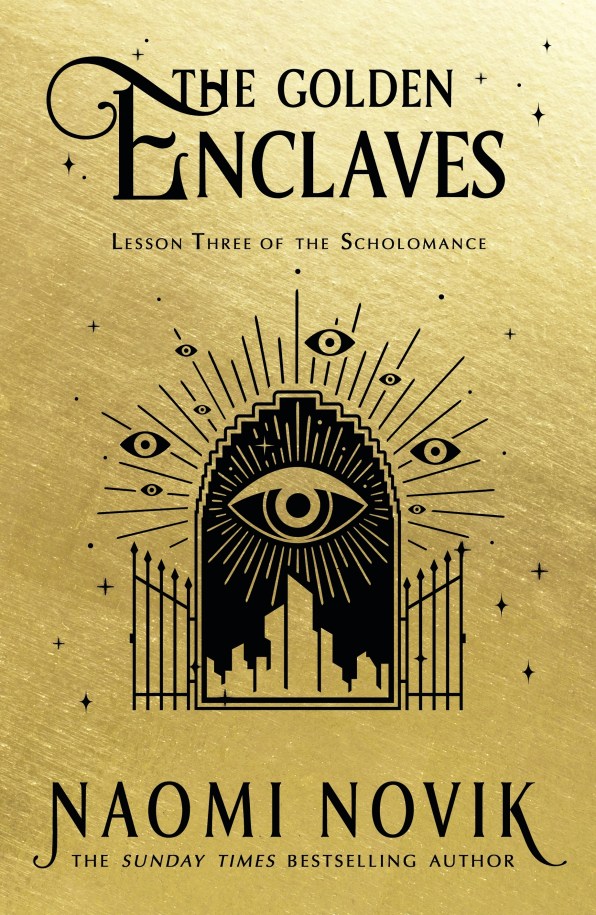
The Golden Enclaves by Naomi Novik

The Golden Enclaves Cover Better

Publisher: Del Rey (Trade Paperback – 20 September 2022)

Series: Lesson Three of the Scholomance

Length: 408 pages

My Rating: 5 out of 5 stars

Amazon

Naomi Novik ends her addictive and clever Scholomance trilogy in a big way with the very impressive The Golden Enclaves, which takes the protagonists out of the school and into a whole new world of trouble.

For the last few years I have been having an epic time with the exceptional Scholomance series by acclaimed author Naomi Novik.  Novik, who is best known for her Temeraire series, as well as the standalone novels Uprooted and Spinning Silver, has been absolutely killing it with the Scholomance books, which serve as a compelling, dark homage to classic magical school fantasy novels.  Set within the deadly magic school, the Scholomance, the trilogy follows a group of teenage magic users who are attempting to hone their skills while surviving the school and the many dangerous magical creatures, known as maleficaria (mals) who inhabit it.  The first book, A Deadly Education, introduced the reader to protagonist Galadriel “El” Higgins, a loner student who has a big secret, she is an unbelievably powerful magic user, capable of easily unleashing destructive magic that could level cities.  Teaming up with Orion Lake, a mal hunter with a hero complex, El attempts to survive the school and ensure her and her friends survive.  A Deadly Education was an excellent read and it ended up being one of my favourite books of 2020.  Novik followed it up perfectly last year with The Last Graduate (one of my favourite books of 2021), which brilliantly continued the story while also ending it on a traumatic cliff-hanger which I may never forgive Novik for.  Needless to say, I have been extremely excited for The Golden Enclaves and it was one of my most anticipated reads for 2022.

After trapping most of the worlds mals in the Scholomance and untethering it from reality, El looks to have finally defeated fate.  Instead of turning into the city-destroying dark witch she was prophesied to become, she is now a hero who has saved generations of young magic users from needing to hide in the deadly school.  However, her victory has come at a great cost, as the love of her life, Orion Lake, chose to stay behind in the dying school to wage his eternal war against the mals, including the ravenous maw-mouth that finally claimed him.

Traumatised, El attempts to regain her sanity at home, her only plan to one day implement her dream of ending the elite enclave system and using the Golden Stone sutras book she liberated from the school to bring about a new era of magical communities.  However, fate still has other ideas in store for her, and El is about to come face-to-face with the full horrors that her world has in store for her.

Someone is attacking the previously protected enclaves, striking at their very cores, and inflicting untold damage on those who rely on them for shelter.  When two fall within days of El coming back into the real world, she is recruited to find out who is responsible and hunt them down before an all-out enclave war erupts amongst the world’s magic users.  However, El is far more concerned with finding a way back into the Scholomance, the school she fought so hard to destroy, and attempt to either save Orion or kill the maw-mouth that ate him.  However, her mission will lead her to a dark truth that lies at the very heart of the enclave system and which will turn the entire world on its head.  Worse, it will finally force El to face the truth, that she really is destined to be a destroyer, no matter how much she hates it.

There is a lot to unpack here with The Golden Enclaves and it is partly one of the reasons why it has taken me so long to write a review for it.  I honestly did not know what to expect when The Golden Enclaves was released, especially as it was missing the great dark magic school setting which was one of the things that I most liked about the first two books.  It was also clear that Novik would have to work very hard to follow on from her last book after she left it on such a major and heartbreaking cliff-hanger, and I did not know if this book would live up to all these expectations.  Despite these concerns, I dove into The Golden Enclaves as soon as I got my hands on it, as I desperately wanted to see how everything was going to end.  I quickly powered through the book itself and I found the final product to be extremely interesting and not at all what I was expecting.  I did end up giving this book a full five-star rating, but this rating comes with some caveats.

Firstly, I should state that I really loved The Golden Enclaves and I felt that it perfectly wrapped up the series.  Not only do the main characters get some further interesting development, as well as even more trauma and emotional damage, but the story goes in some very unique directions which ties together all the various loose ends.  The story itself is pretty fast paced, if loaded with a lot of fantasy exposition, and follows on right from the events of The Last Graduate.  The impact of Orion Lake’s decision to stay behind in the Scholomance really messes with El and she spends a good part of the book attempting to come to terms with it, often in some very unhealthy ways.  However, before she can get too bereaved, she is forced to help the enclaves (magical communities that offer protection from mals to magic users) to try and discover who is responsible for destroying them.  This results in a compelling, multi-continent trip where she visits various magic communities, gets involved with deadly world politics, as well as checking in with the supporting cast from the first two books, trying to discover answers.  El also searches for a way to rescue Orion from the Scholomance, which culminates in her visiting the mostly destroyed school and finding out some heartbreaking revelations about the man she loves.  Those aren’t the only big secrets El and her companions uncover as they soon discover the true terrible price of the enclave system, as well as who is truly behind the destruction of the enclaves and why.  Novik layers these revelations perfectly, so each new one is even more impactful than the last, culminating in a particularly major gut punch regarding El and her prophesied destiny.  All this leads up to a fantastic and complex final confrontation where El is faced with a terrible choice and must try to find a way out of it.  Everything ends on an interesting and mostly satisfying conclusion, which I think ended the series on the right hopeful note, especially after all the dark trauma the characters have witnessed.

While the story itself is pretty compelling, I personally don’t think it stood on its own legs as much as the first two books in the series.  Not only does it get a bit slow in places, but parts of the big conclusion are a little weak and not as impressive as I was expecting.  Readers also really need to have read the first two books in the series; The Golden Enclaves would be pretty hard to appreciate without some context going in.  For these reasons and a few more (I really missed the school), I might have been tempted to give this a lower rating if not for the big revelations which are deeply connected to the events of the first few books.  Novik expertly ties the entire series together in The Golden Enclaves and if you look at this novel from a larger series perspective, than it is a pretty exceptional book with some very awesome moments to it.  You soon release just how clever Novik has been with her first two novels as she previously set up every big revelation in The Golden Enclaves extremely well.  The various discussions about the enclaves, the outside world and the character’s history comes full circle in this final entry and every lingering question you ever had is answered completely here.  I was so damn impressed with how everything was wrapped up, especially with some emotionally devastating discoveries that were in line with the darker tone of this series, that I honestly could not put this book down.  Novik really is an extremely talented author with an exceptional ability for planning out long-term storylines and this book really proves it.

In addition, I also deeply appreciated how Novik expanded and explained various fantasy elements that she introduced in the previous books and merged them into her outstanding story.  While many of these fantasy elements, such as enclaves, maw-mouths, the creation of the Scholomance and the magical politics that dominate the world, have been discussed in the prior novels, Novik brings everything about them together in this final read and it works extremely well.  The secret histories and crazy lore behind these events are fully revealed in The Golden Enclaves, and the true horror about magic and what people have done to hold onto it is pretty damn shocking.  Novik does a remarkable job in filling in all the gaps she purposefully left out of the first two books and the reader finally gets to appreciate just how complex and integral to the plot they truly were.  She also has a lot of fun expanding out the magical universe substantially in this final book as the reader is finally introduced to some settings outside of the magical school.  I loved the elaborate international enclaves that the protagonist visits throughout this final book and the subsequent political squabbles, discussions of magical castes and the larger worldview of magic becomes a fascinating part of the book.  All this intriguing expansion, as well as the impressive revelations about certain magical elements in the previous books, mostly make up for the lack of the magical school setting you’ve come to love so much, and I think that Novik handled a story outside of the Scholomance extremely well.

The final thing I want to mention is the outstanding character work contained within The Golden Enclaves.  While I don’t want to go into too much detail here, I think that Novik hit the main characters out of the park in this final book and I loved the brilliant examinations of trauma, grief and deep psychological damage that many of them had after spending years inside a hellish death school.  El continues to shine as the main protagonist and only point-of-view character, and her expansive, if highly cynical worldview, helps you get stuck into the narrative.  El goes through a huge emotional roller coaster in The Golden Enclaves, as she is wracked with guilt, grief and anger for much of it, especially after her perceived failure to save Orion from himself.  Watching her break down at the start of the book is extremely heartbreaking, and she never really seems to recover as she keeps finding herself getting dragged into crazy events in the real world.  Many of these events impact her even further, especially once she realises just how evil many of the enclavers are, and she must work very hard to not unleash her destructive fury.  However, one major final revelation really knocks her around, especially as it ties into her extended family who have long abandoned her, as well as her destined place in the world.  I deeply appreciated the outstanding work that Novik put into El, and I also really enjoyed the supporting cast who were featured here as well.  Many of your favourite characters from the first two books make another appearance here, and it was very interesting to see how they were dealing with the aftermath of their Scholomance education, as well as seeing their place in the wider world.  There are a few surprising choices for major supporting characters in The Golden Enclaves, and some interesting interactions that resulted.  Without spoiling too much, I will say that Orion does appear in The Golden Enclaves, and the storylines around him, especially the deep dive into his past, prove to be an outstanding and traumatic part of the plot.  An exceptional expansion of the amazing character work that was such as distinctive feature of the first two novels.

Overall, The Golden Enclaves proved to be an epic final chapter in Naomi Novik’s amazing Scholomance series and I had an outstanding time reading it.  While I did think that The Golden Enclaves had a few flaws, the way that Novik used it to tie the entire series together blew my mind and I was so deeply impressed with how every loose thread and inventive fantasy element was dragged together to create an outstanding final inclusion.  The subsequent shocking and dark revelations, powerful character work and the compelling expansion of Novik’s fantasy universe help to make this a pretty incredible book and it is one that I had a wonderful time reading.  I really cannot get over how well set up this final novel was and I think that it serves as a brilliant conclusion to one of my most favourite recent fantasy series.  As such, I have to award The Golden Enclaves a five-star rating as one of the better books of the year, especially as I don’t think Novik could have written a more powerful and moving end to the incredible Scholomance books.

Amazon

The Bullet That Missed by Richard Osman

The Bullet That Missed Cover

Publisher: Viking/Penguin Audio (Audiobook – 15 September 2022)

Series: Thursday Murder Club – Book Three

Length: 11 hours and 17 minutes

My Rating: 5 out of 5 stars

Amazon

Murder, comedy and the most badass team of investigators you are every likely to read about come together perfectly in the new Thursday Murder Club novel, The Bullet That Missed by Richard Osman.

Over the last three years, some of the most impressive and outright entertaining murder mystery novels have been part of the Thursday Murder Club series by British television personality Richard Osman.  Set in a luxury retirement village in the English countryside, the Thursday Murder Club books follow the adventures of four outrageous pensioners who spend their free time solving cold cases.  However, their lives get even more complicated when several murders occur around their village, and they endeavour to find out who committed them.  The series started with The Thursday Murder Club in 2020, which had an outstanding blend of mystery, great characters and humour, all of which came together in a perfect and deeply addictive read.  The Thursday Murder Club ended up being one of my favourite books, audiobooks and debuts of 2020, and I cannot rave about it enough.  Osman followed this first book up last year with The Man Who Died Twice, an excellent sequel that presents the reader with another great mystery, while also exploring the characters even further.  I had another amazing time with The Man Who Died Twice, and it also ended up being one of the best things I read all year, making my top books and audiobooks of 2021 lists.  Needless to say after the first two epic books, I have been very excited for the third Thursday Murder Club novel, and The Bullet That Missed has been one of my most anticipated reads for 2022 for a while now. 

After their last exciting adventure, Elizabeth, Joyce, Ibrahim and Ron, are continuing to solve murders in their spare time.  Their latest case sees them dive into an infamous cold case in which a young, highflying television reporter was murdered just before breaking a story on a major crime ring, with her body never recovered from the ocean.  Teaming up with the reporter’s famous presenter colleague, the Thursday Murder Club eagerly begin their investigation, hoping to shed light on her murder while having fun with their new high-profile friends.

However, it soon becomes apparent that the people behind the reporter’s death might still be active and are attempting to cover their tracks.  Their only witness in the case is found dead in her prisoner cell shortly after the club attempts to question her, and even the notorious crime lord many believe responsible for killing their original victim is afraid to talk.

Not ones to be deterred, the club continues their investigation and soon long-hidden secrets from the past come spilling out.  However, as they close on the killer, a completely different threat emerges from Elizabeth’s past.  A mysterious new nemesis wants Elizabeth to return to her assassin roots and kill an old contact from her spy days, if she does not, everyone close to her will die.  Forced to choose between her friends and her conscience, Elizabeth needs to find a way to defuse the situation before someone gets hurt.  But is this new encounter just the thing the Thursday Murder Club needs to solve their latest crime before the murderer strikes again?

Well damn, what another brilliant and impressive read.  Richard Osman went all out for his third book and I honestly think that The Bullet That Missed is some of his best work yet, possibly even eclipsing the original The Thursday Murder Club.  Bringing together an elaborate and deeply enjoyable mystery storyline with some brilliant characters, outstanding humour, and a heck of a lot of great twists, I was instantly addicted to this latest book from Osman and couldn’t wait to find out how everything ended.  An extremely captivating read, The Bullet That Missed gets a very emphatic five-star rating from me, and I had an incredible time reading it.

I loved, loved, loved the exceptional story that Osman came up with for The Bullet That Missed, especially as Osman provided a perfect blend of mystery, character growth and genuine human moments that the reader can’t help but eat up.  Starting off shortly after the events of the last book, The Bullet That Missed sees the Thursday Murder Club using their usual charm and manipulative practices to investigate another cold case, gaining insight through the victims’ old colleagues, while also dragging in their usual friends and police colleagues.  They soon find themselves in the middle of a cracking mystery and use their connections and well-earned insights to examine the various clues and persons of interests associated with the case.  At the same time, Elizabeth is quite literally dragged into a dark place by a mysterious new figure who knows about her past and who forces her to choose between killing an old colleague from her spy days or watching Joyce and the rest of her friends die.  This side plot adds quite a bit to the overall story, especially the introduction of several awesome new characters, and I really enjoyed how Osman tied it into the main mystery. 

Combined with the various scenes that show the day-to-day lives of the many characters in the book, as well as some genuinely heartbreaking moments of love and loss, this proves to be one heck of a story that I was particularly rivetted to.  I loved the unique investigation that resulted from the mystery, and the characters have so many clever and hilarious ways of getting to the truth.  Osman throws in an appropriate number of red herrings and suspects, which serves to effectively muddy the water and keep the readers in suspense as they try to work out which of the many suspicious characters might have had a hand in the killings.  I was able to pick out the main villain a fair bit in advance, although the journey to getting there and the eventual reveal was really good, and I loved every single second of it.  I also didn’t see a bunch of the final twists coming, and you really appreciate all the cleverly hidden hints and clues that Osman seeded throughout the book.  I came away from The Bullet That Missed exceedingly satisfied with how the story unfolded, and I really cannot emphasise just how amazing and awesome the plot was.

On top of this, Osman has an awesome writing style that I feel really enhances the elaborate and powerful narrative of The Bullet That Missed.  I particularly enjoyed how the author made great use of multiple character perspectives throughout the book to tell the elaborate narrative.  While the focus is generally on the four members of the Thursday Murder Club, the perspectives of all the other characters in the book are shown several times throughout the story.  Not only does this allow you to get multiple intriguing views of the main mystery and the club’s actions, including from the book’s many suspects, but it also ensures that the reader gets closer to all these characters by learning their motivations, feelings, and personal histories.  This makes for a much more compelling narrative, especially as you grow attached to the new characters quickly, while also getting to experience the powerful human developments impacting the main cast.  Osman does a great job of keep the pace pretty consistent and enjoyable throughout the entirety of The Bullet That Missed, and you are constantly exposed to intriguing mystery developments, deeper emotional moments from the characters, or a ton of entertaining humour which can’t help but make you chuckle.  This keeps up throughout the entire book, although it does pick up at several points, especially when the club are making some big moves, and it always works out well. 

While one of the best things about The Bullet That Missed is the compelling mystery, a discussion of this book really would not be complete without mentioning the fantastic humour loaded into it.  Osman is undeniably a very funny man, and he puts his excellent comedic skills to great use in this series, and particularly in The Bullet That Missed, with nearly every page containing some subtle, fun, comedic elements that I absolutely loved.  A large amount of this humour revolves around the various ways in which the older characters of the book manage to outwit and manipulate the younger people they come across, whether it be by acting senile, or forcing them to accommodate them out of politeness.  At the same time, the main characters’ very diverse and highly amusing viewpoints of the world around them, especially involving modern society or pop culture, are extremely funny, and it is entertaining to see an older perspective on this crazy modern world.  Osman fits in quite a huge number of references to British culture throughout the course of the book, and I had a lot of fun hearing all the clever references to iconic shows and products that the character’s mention throughout the book, especially as they often talk about them in a very clever way.  Throw in some fantastic coincidences, a lot of jokes about turning old, several hilarious self-referential jabs about the trouble with writing crime novels, and the perfect banter that occurs between the four main protagonists and their exasperated cohorts, and The Bullet That Missed was an exceedingly funny read that is guaranteed to keep you wildly amused with its various antics.

As always, one of the strongest parts of this latest Thursday Murder Club novel is the characters.  Osman has created an amazing group of protagonists for this series, and he continues to build on them with each book, showcasing their strengths, personalities, and inherent vulnerabilities, as the find themselves in dangerous and unique situations.  Most of the focus is again on the four members of the Thursday Murder Club who, by this third book, are really quite well established, and the reader is already very attached.  Osman keeps up the wonderful interpersonal dynamic that was such an impressive feature of the first two books, and it continued to work extremely well in The Bullet That Missed, with several great new developments added in.  Elizabeth and Joyce are once again set up as the book’s main characters, with a huge chunk of the book dedicated to them.  Elizabeth, the former spy, proves to be an excellent manipulator, and it is always fun to see her talk about her days as a trained assassin, especially when her past comes back to haunt her.  Joyce, on the other hand, is a legitimate sweetheart, and she really is the heart and soul of the book.  I love how Osman changes the perspective in all her chapters to reflect her journalling the events of the story, and she provides some of the best descriptions of the events going on in the book.  It is also very fun to see her in action as, despite appearing to be a harmless, sweet old lady, she is a tough as nails and can be just as manipulative as Elizabeth when she needs to be (the scene in which she meets the Viking was perfect). 

Ron and Ibrahim are also used to great effect in The Bullet That Missed and both have some impressive outings in this book.  I loved the many scenes featuring Ron, especially as he really stands out from the rest of the crowd by being a blue-collar rabble rouser who holds on to the old-school tough guy mentality.  A lot of Ron’s story in The Bullet That Missed revolves around the other characters breaking through his tough exterior, especially as he has a new love interest in this book who gets him to open up in several amusing ways.  I also loved the sense of vulnerability that surrounds Ron when he starts to realise that a lot of the men of his generation are starting to go and he suddenly doesn’t have as many people to connect with anymore, which gets used to great effect when he manages to get information by playing snooker with an old criminal with a similar mindset to him.  The final main character is Ibrahim, who is honestly one of the nicest, most genuine characters you are ever likely to meet in fiction.  Ibrahim gets an outstanding showing in this book, and it was really a relief to see him recovered after the terrible beating he received in The Man Who Died Twice.  I loved how he was able to use his psychology skills in this book, and he even spent time working with the woman responsible for his beating, which results in some excellent scenes.  All four of these main characters continued to impress me in this latest book and I cannot wait to see how their next adventure unfolds.

Aside from these major characters, The Bullet That Missed also contains a substantial supporting cast of entertaining characters who Osman uses to great effect throughout the course of the narrative.  These characters include a combination of some entertaining new figures, as well as many returning characters who made such an impact in the previous novels.  Many of these returning characters have been built up in a big way in the previous books, and it was great to see a lot of their character development continue, especially as they are generally better off after having met the Thursday Murder Club.  I really loved that the three main supporting characters from the first novel, DCI Chris Hudson, PC Donna De Freitas and Bogdan, each come into The Bullet That Missed with some positive storylines surrounding them, and the new romance between Donna and Bogdan was so damn nice. 

All the new characters in The Bullet That Missed were also very entertaining: an older makeup artist who takes a liking to Ron, a gigantic Scandinavian crime lord known only as the Viking, an eccentric local TV news host, and the local Chief Constable who also moonlights as a less-than-successful mystery writer.  These great characters added a lot of flavour to the narrative, and it was fascinating to see how many were worked into the plot, especially as Osman was setting several of them up for returning appearances.  I particularly loved the retired KGB officer turned criminal finance advisor, Viktor Illyich, who is an old contact of Elizabeth and who finds himself being hunted.  He was a brilliant and entertaining addition to the plot, especially with his great methods of manipulation.  You have to love that amazing scene where he applies his techniques to a young Virgin Media representative. 

However, the best recurring character has to be Elizabeth’s husband, Stephen, who has been a bit of a tragic figure throughout the series due to his dementia, which Elizabeth tries to hide from the world.  Stephen is perhaps the best character Osman has written, as the author provides a deep and extremely powerful view of the impacts dementia has on the sufferer and those closest to them.  Watching Stephen slowly lose himself while Elizabeth suffers beside him has provided some of the most heartbreaking parts of this series.  Stephen still proves himself to be a brilliant and caring figure, and Osman writes some great scenes for him in the series, especially when he plays chess with Bogdan, and it is always fun when he provides fantastic insights into Elizabeth’s cases.  He was particularly effective in this book, especially after being kidnapped, and his knowledge and surprising criminal contacts allow Elizabeth to outsmart one of their enemies in several amazing scenes.  Of course, these scenes are also loaded with sadness; with every positive step Stephen takes, he also loses a little, and every time he forgets a detail or a person it breaks your heart a little bit more.  Honestly, every character in this book is pretty damn epic, and clearly creating amazing characters is one of Osman’s biggest strengths as a writer.  I look forward to all the amazing character work that is bound to appear in the next Thursday Murder Club, and I am sure that I will fall in love with every single cast member once again.

While I did receive a physical copy of The Bullet That Missed, I chose to instead grab the audiobook version of this novel, as I had such an amazing time listening to the first two books in this format.  As it was, I ended up being surprised and slightly disappointed to discover that Lesley Manville, who narrated the first two Thursday Murder Club books, wasn’t returning for this third entry.  However, my disappointment was exceedingly short lived when I found out that she had been replaced by the amazing Fiona Shaw, who I have loved for years in things like the Harry Potter films, Killing Eve and Andor.  Unsurprisingly, Shaw did an outstanding job narrating The Bullet That Missed, and she masterfully portrayed all the characters in a very fun and entertaining way.  I loved all the great voices she used for this awesome audiobook, and each character got their own distinctive tone that allowed the reader to easily pick up who they were.  Shaw brings a huge range of different accents to the table, and while her Swedish accent was purposely a little silly, it still fit the character extremely well.  However, what really impressed me was the effort that Shaw took in matching the voices of most of the recurring characters with Lesley Manville’s previous take on them.  All the four main members of the cast, as well as supporting characters like Donna and Bogdan, sounded extremely like their appearances in the previous two audiobooks, and while Shaw did do her own take on a couple of figures, I personally deeply appreciated her attempts to keep some continuity with the previous audiobooks.  Shaw also kept the audiobook rolling along at a brisk pace, and the 11 hour and 17 minute runtime passed along in no time whatsoever, especially as you get deeper and deeper into the plot.  Throw in another lovely interview with Richard Osman at the end and I felt that this was an absolutely incredible audiobook, and definitely the best format by which to enjoy The Bullet That Missed.  I will be extremely happy if Shaw chooses to come back for the fourth Thursday Murder Club audiobook next year.

Richard Osman continues to show the world just how much talent he has a murder mystery writer with the third exceptional entry in the amazing Thursday Murder Club series, The Bullet That Missed.  Continuing to follow his brilliant pensioner protagonists as they solve a complex murder in some clever and funny ways, The Bullet That Missed was an incredible addition to the series that is guaranteed to have you hooked from start to finish.  I cannot recommend this book enough, and if you haven’t started reading the Thursday Murder Club books yet, you are really missing out.

Amazon

Dragon Mage by M. L. Spencer

Dragon Mage Cover

Publisher: Stoneguard Publications/Podium Audio (Audiobook – 19 December 2020)
Series: Rivenworld – Book One

Length: 27 hours and 18 minutes

My Rating: 5 out of 5 hours

Amazon

Prepare for an epic fantasy adventure with a great classic feel to it, as awesome author M. L. Spencer presents the massive and captivating fantasy novel, Dragon Mage.

Back in 2020, the fantasy book world was abuzz with talk about the compelling and impressive fantasy fiction epic, Dragon Mage by M. L. Spencer, who was already known for her Rhenwars Saga and Chaos Cycle books.  While I have not had the opportunity to read any of her previous works, Dragon Mage definitely caught my eye, especially with the very cool cover with the awesome art.  While I never got the chance to read this book when it was first released, I did grab an audiobook copy of it and have been looking for an opportunity to listen to it for some time.  When I found myself in the mood for some great high fantasy a few weeks ago, I decided it was finally time to listen to Dragon Mage, especially as a future Rivenworld book is apparently on the horizon, and boy did I have an outstanding time with it.

Aram Raythe is a simple lad from a small fishing village in the middle of nowhere.  A strange boy with a love of knots and an inability to understand people, Aram thinks that he will go through life alone and hopes for a quiet existence as a sailor.  However, Aram has a secret that he has never told anyone: he can see the colourful strands that make up the world, and he can manipulate them to do magic.

When a bard arrives at the village, seeking an apprentice, Aram uses his powers to help the only person who was ever nice to him, fellow teen Markus Galliar, get chosen; however, he is unprepared for the chaos that this action will unleash upon his life.  While the bard, who recognises his potential, attempts to take him to safety, Aram accidently unleashes his power to cause a rift in the world.  Soon the village is visited by an Exilari sorcerer, who captures Aram and Markus, seeking to drain Aram’s essence and use it to power his own magical abilities. 

Aram’s destiny lies not in the torturous extraction cellars of the Exilari but with an order of dragon riders from another world.  When fate drags him to them, Aram will find acceptance and friendship for the first time in his life, as well as the opportunity to fight against the Exilari, their dark allies in this new world, and the ancient monsters who control them.  But to do that, Aram will need to learn to tap into the massive power lying deep within him and figure out how to use it to become a true Champion, the most powerful beings in two worlds.  Can Aram become both a Champion and a dragon rider, and what role will Markus play in his turbulent life?

I am really regretting not reading this book when it first came out.  While it was a lengthy read, Dragon Mage proved to be an excellent and captivating high fantasy adventure, and it was exactly what I was in the mood for.  Featuring an elaborate and massive narrative, complete with unique fantasy elements and some exceptional characters, Dragon Mage was an outstanding book that gets a full five-star rating from me.

Spencer produced an extremely epic and complex narrative for Dragon Mage that I had a particularly awesome time getting through.  Now, I do have to admit that Dragon Mage has a pretty lengthy story and it takes a considerable amount of time and effort to get through it.  In addition, the narrative does get a bit slow in places, especially at the beginning, and there were a few points where I struggled to make progress.  However, if you set aside the time for it and make an effort to keep going, I guarantee that it is more than worth it, as it unfolds into an epic, multidimensional coming-of-age story that has a real classic fantasy vibe to it.  The impressive, self-contained tale within will keep you entertained and stick with you well after you have finished reading it.

The story itself starts off with an extended introduction to the main characters of Aram and Markus, which showcases their personalities, histories and views of the world, while also featuring their first meeting and the start of their friendship.  I struggled a little to get through this opening part of Dragon Mage, mainly because I did not initially connect with Aram and his distinctive personality.  However, once you get several chapters in, the excitement starts to increase, as you see the full potential of the protagonist, as well as the introduction of a brilliant antagonist, Sergan Parsigal, who really moves the narrative along.  He quickly captures the two protagonists, which leads to several brilliant scenes, including an awesome and exciting escape from monsters from outside of reality.  From there, the story evolves into more of a magical school narrative, which I naturally loved (see my recent list about favourite books with magical schools in them), although it doesn’t last too long, as Spencer throws in a pretty dark twist and a heartbreaking time skip.

Following this time skip, the story evolves again, with Markus and Aram separated for a while after Markus rescues Aram.  The two characters soon develop in different story arcs, with Aram spending time in a completely new world, which sees him finally starts to explore his full potential.  After some more chapters in a whole different magical school setting, the main characters converge again, with some great drama.  Without going into too much detail, the rest of Dragon Mage keeps building on the plot from the first half of the book, and the characters are thrown into a ton of deadly situations as they continue to grow and discover their destiny.  Spencer layers the rest of Dragon Mage with a great combination of adventure, war, character development, training, romance, friendship, conflict and tragedy, which comes together into an extremely powerful narrative.  There are some truly epic scenes throughout this second half of the book, and you really grow attached to all the major characters in the book, which Spencer will make you pay for in some dark sequences.  Some of the major appeal is watching the slow but steady growth of the protagonist as he evolves from being unconfident and isolated to a powerful hero, helped along by the friendships he forms with those close to him.  Everything ends with a massive pulse-pounding confrontation that will keep you on your toes and ensure you cannot put down this book as you wait to see how everything turns out.  Readers will come away from Dragon Mage extremely satisfied, and the author leaves open some intriguing storylines for the future, that I hope the author will continue. 

One of the things that I particularly appreciated about Dragon Mage was the elaborate and compelling fantasy elements that Spencer introduced.  Dragon Mage actually features two separate realities, which were previously joined before being separated into The World Above and The World Below during a historical cataclysm.  These worlds can still be journeyed through by breaches caused by magic users and much of the plot revolves around the characters trying to stop an evil plot to recombine the words in a new cataclysm.  The book starts off in The World Above, a typical medieval setting which is ruled over by a despotic empire controlled by an order of magicians known as the Exilari, who gain their power through draining the essence of anyone with magical potential.  The second half of the book is set in The World Below, which features a range of magical creatures, including dragons, magical horses, and other creatures.  The World Below is in the grip of deadly war between an evil demigod (one of several who rule both worlds) and an order of dragon riders, who serve as its primary protectors.  Spencer does a great job introducing both worlds throughout the course of Dragon Mage and while they might not be as heavily explored as if there was only one world, you get a good sense of how they different and the histories that surround them.  Both are very distinct in their own way and I had a lot of fun seeing both, especially as they provide a compelling contrast to each other as two halves of the same coin.  I really like the switch between worlds that occurred halfway through the book and having the focus change to the more magical World Below made for quite an enjoyable and exciting read. 

I was also a fan of the unique magical elements contained within Dragon Mage, which, as the name suggests, is big on magic and dragons.  The magic itself is quite interesting, if a little ethereal in its description, and there are a few different versions of it.  The primary form of magic is shown through Aram’s eyes and is tied into the strands of energy that make up the world.  These strands, which only a few people can see, can be manipulated and tied into knots by the magic user for various magical effects.  This is a very unique system, and it ties in well with Aram’s peculiarities, especially as he spends much of the early part of the book obsessed with knots without anyone understanding why.  This results in some awesome displays of magic, and I found Aram’s perception of the magic and how it works to be extremely fascinating.  Other forms of magic include Markus’ magical immunity, natural passive magic from other characters and items, as well as the magic of the Exilari, which they gain be stealing the essence from magic users like Aram.  The destructive Exilari make for exceptional villains in this book, especially as they bask in their stolen power in a very creepy way, and I deeply appreciated that Spencer spent the time to explore their organisation, especially as the protagonists spend time in their training facility.

Then of course, there are the dragons, which inhabit The World Below.  I always enjoy a good dragon focused story, and this one was pretty fun as Spencer goes for a sentient dragon that bonds with a rider.  While this has been done before, I think that Spencer altered it enough, especially as quite a lot of the book is dedicated to them and their place in the world.  The author spends a substantial time exploring the bond between human and dragon, and you get to see the entire process, from the initial training of the human recruits, the hatching of the dragons, their bonding, and then their eventual use in combat.  There are a huge number of dragon characters in this book, and you get to see inside many of their minds and their bonds, especially as Aram can communicate with all of them.  The bond itself is a deep and personal connection, and I loved the scenes that examine how lethally strong it is, with human or dragon rarely surviving the death of their partner.  Having the emotional connection to a dragon becomes a key aspect of several of the key characters and it was really moving to see characters who have lost a lot in their life find new companionship with a soul bonded dragon.  The subsequent scenes of dragon combat are extremely awesome, and I appreciated that Spencer introduced some equalisers to make sure that they didn’t come across as too overpowered.  I had a wonderful time with all the fantasy elements in this great book and Spencer made great use of all her unique or fun elements to enhance and tell a brilliant story.

On top of the elaborate narrative and compelling fantasy elements, I was also very impressed by the amazing characters that Spencer featured in Dragon Mage.  The story revolves around an outstanding cast of complex and damaged characters, each of whom brings their own light and pull to the book.  Spencer sets all of these characters up extremely well, and while it might take you a while to appreciate a couple of them, once you do, you become extremely invested in their story and want to find out what is going to happen to them next.

The most prominent character in Dragon Mage is the extremely unique character of Aram Raythe, and this book is primarily his story from childhood to adulthood.  Aram is a particularly fascinating choice for central protagonist; while he is shown to be a chosen one with great power, he also portrayed as socially inept and with many strange behaviours.  I believe that Spencer wrote Aram as an autistic character (or the fantasy equivalent), especially as he is usually described as a Savant.  I personally really enjoyed this, as you don’t see a lot of autistic characters in fiction, and it was a great twist on the classic chosen one story.  Aram has a very different viewpoint of the world, and once you understand him you find that he is one of the sweetest and nicest fantasy protagonists you are likely to find, and you really start to care.  Unfortunately, Spencer decides to punish you for caring for this character, as the author puts Aram through all manner of hell and torture which really ups the emotional impact of the story.  Not only does Aram already have a distinct lack of confidence and social issues, but he is also repeatedly tortured and is deeply traumatised for much of the book.  There is also a hidden history to his parentage and a ton of secrets that his mentors are keeping from him that will cause him further grief and impact his confidence.  Watching him overcome all of this is very moving, and it is nice to seem him find some friends and slowly build up his confidence.  Of course, there is still a lot of trauma coming for him, and you will continue to suffer as you watch him grow.  Personally, I deeply appreciated Aram’s powerful character arc and it was one of the most enjoyable and compelling things about Dragon Mage.  His entire character history and personality really set him apart from other fantasy protagonists and I appreciated the work that Spencer put into developing him and making him so appealing to the reader, especially as it pays off once he finally finds his confidence and starts to truly become a Champion.

While much of the narrative focuses on Aram, Dragon Mage is also the story of Markus Galliar, who befriends Aram early in the story and shares in many of his adventures as they become close.  Markus becomes fascinated by Aram and his unique view of the world, especially when Aram tries to help him escape his abusive father.  This friendship soon takes on new heights once Markus discovers Aram’s abilities and he starts to become his protector, a job helped by his own immunity to magic.  Constantly forced together, they form a strong bond which survives being captured by the Exilari and several other misadventures.  Despite being separated several times throughout the book, the two keep getting drawn back together and Spencer writes a great continuous narrative about their strong connection.  The two share a very heartwarming friendship throughout Dragon Mage, and I really appreciate the interesting dynamic they form which sees Markus act as both protector and social guide, even when Aram develops his immense power.  While this did have the potential to be a bit one-note, and indeed Spencer did feature way too many scenes of Markus worrying about Aram or waiting over his sick bed, I felt that the author featured a great balance with their relationship, which really pays off once Aram matures and becomes a better friend.  The author also ensures that Markus develops outside of his friendship with Aram, and he soon becomes his own man, forced to deal with the horrors of his past to survive.  Markus ends up being an extremely compelling and well-rounded protagonist and the author used him perfectly in combination with his unique central character.

Aside from Aram and Markus, I also really need to highlight two other excellent major characters in Esmir Revin and Sergan Parsigal.  Esmir is a former dragon rider and Warden to the last Champion, who died due to his failure.  Locked in his own despair and regret, as well as the distain of everyone around him, Esmir is given new life when he encounters Aram and Markus and begins training them to be Champion and Warden.  I really enjoyed Esmir as a character, especially as Spencer really captured his grief, regret, and self-loathing over his past mistakes.  Watching him become a gruff, but kind teacher, represented a great redemption arc in the book and I felt that he was a particularly complex and enjoyable supporting figure that the author did a great job with.

I was also really drawn to the character of Sergan Parsigal, who is one of the major villains of Dragon Mage.  The Exilari sorcerer who discovers and initially captures Aram and Markus, Sergan is an ambitious and powerful magic user who seeks to turn his discovery to his advantage.  Highly arrogant and malicious, Sergan cuts a distinctive and sinister figure throughout the story, even when he appears to be on the protagonist’s side, especially as he spends most of the book gobbling up magical essence to power his own spells.  I loved how Spencer portrayed him as both an adversary and a mentor to Aram and Markus at different points of the book and he ends up forming quite a complex relationship with the protagonists.  While at times Sergan is shown to be potentially thoughtful and caring, especially during an early conversation with Aram, he keeps reverting to his own selfish form, and he ended up being one of the best and most complex antagonists in this entire story.  I had a wonderful time with these brilliant characters and I’m barely scratching the surface, as Spencer featured a range of great supporting figures and villains throughout the novel, all of whom deeply enhanced this amazing narrative.

To check out this impressive fantasy read, I chose to grab Dragon Mage on audiobook, which is my go-to for massive pieces of fantasy fiction like this.  With a runtime of over 27 hours (currently the 13th longest audiobook I have ever listened to), the Dragon Mage audiobook represents a substantial time investment for audiobook fans, although I personally think it was worth it.  I tend the find that the audiobook format really enhances my appreciation of the elaborate words that authors create, but it also really brings me into the narrative.  This was definitely the case with Dragon Mage, as this format did an outstanding job enhancing the story and I loved hearing all the intense detail about Spencer’s new, unique world and its fantasy elements.  It also helped that they got an excellent narrator for Dragon Mage in the form of Ben Farrow, who did a remarkable job here.  Farrow is a deeply impressive narrator who perfectly brought this story to life and moved it along at a crisp pace.  Not only was he able to recount the massive amount of detail and lore that Spencer fit into the story, but Farrow also came up with a huge selection of fitting voices for all the characters in Dragon Mage.  Using a range of different tones and accents, Farrow dove into the cast, and I loved how he was able to capture each character’s essence with his voices.  For example, he perfectly showcases Aram’s hope and childlike wonder at the world, while also capturing his fear, uncertainty, and lack of confidence, especially after all the hell he goes through in the early chapters of the book.  Other characters are expertly portrayed as well, and I loved how Farrow showcased Markus’ determination, Esmir’s weariness, and even Sergan’s intense arrogance and distain for everyone else.  This outstanding voice work helped to turn the Dragon Mage audiobook into something very special, and I had an exceptional time listening to it.  I would strongly recommend the audiobook version for anyone interested in checking out Dragon Mage and you are in for an excellent and captivating time if you do.

Overall, Dragon Mage was an amazing fantasy novel that really showcased M. L. Spencer’s skill as an author of epic fantasy.  Featuring a captivating narrative that follows great characters around an elaborate new fantasy world, Dragon Mage is exciting, moving and awesome in all the right ways.  I had an exceptional time reading this outstanding read and I look forward to seeing how Spencer will follow it up in the future.  Recommended reading for anybody looking from some classic fantasy fun.

Amazon

Usagi Yojimbo: Volume 37: Crossroads by Stan Sakai

Usagi Yojimbo - Crossroads Cover

Publisher: IDW (Paperback – 15 November 2022)

Series: Usagi Yojimbo – Volume 37

Length: 137 pages

My Rating: 5 out of 5 stars

Amazon

The always impressive Stan Sakai presents another outstanding volume in his epic Usagi Yojimbo comic series with the fantastic and fun 37th volume, Crossroads.

I think we can all agree that 2022 has been a rather mixed year; while the world of books has been fruitful as ever, the world at large does seem to be getting crazier and crazier.  However, one thing that is guaranteed to make me happy is the fact that, for the first time since 2003, this year has seen the release of not one but two volumes of the exceptional Usagi Yojimbo comic.  Fans of this blog will know that I love, love, love the Usagi Yojimbo series, and it is easily one of my very favourite comic book series.  Written and drawn by the exceedingly talented Stan Sakai, the Usagi Yojimbo series is set in an alternate version of feudal Japan inhabited by anthropomorphic animals.  The series primarily follows the character of Miyamoto Usagi, a rabbit ronin who travels the land facing all manner of evil, including criminals, monsters, ninja and rival samurai.

Usagi Yojimbo - #22 Cover

Thanks to the compelling narratives, complex characters, and exceptional artwork, the Usagi Yojimbo series has always really appealed to me, and I have always tried to grab the new volume as soon as it is released.  The 36th volume, Tengu War! came out in March, and it was pretty damn epic.  Usually, I would have to wait an entire year to get my next Usagi Yojimbo fix, but Sakai appears to be on a roll, as he released the 37th volume, Crossroads, earlier this month.  Needless to say, I was extremely excited about this, and Crossroads was one of my most anticipated reads for the second half of 2022.  I was very happy when I received my copy of Crossroads, and I ended up reading it literally as soon as I got my hands on it.  I of course loved every second of it, and it proved to be another captivating read that really drew me in with its brilliant artwork and cool stories.

Crossroads is the 37th volume of the Usagi Yojimbo series and the fourth volume that has been released in colour by IDW (other volumes in colour include Bunraku and Other Stories and Homecoming).  Containing issues #22-26 of the IDW run on Usagi Yojimbo, this comic was once again completely written and drawn by Sakai, with Hi-Fi Design doing the colouring.  This latest volume only contains two stories over five issues, but Sakai loads up some fantastic narratives and character work into this instalment.

Usagi Yojimbo - #22 Alternate Cover

The first story in this volume is a lengthy entry titled Ransom, which runs for a full three issues.  Following on closely after the last story in Tengu War!, Yukichi, Ransom sees Usagi travelling the roads of Japan with his newly discovered cousin Yukichi, a gifted samurai who is a little naïve of the way of the world.  However, Yukichi is about to get a crash course in the shadier side of life when, upon arriving a new town, the pair of samurai run into the chaotic thief Kitsune and her apprentice Kiyoko.  Up to her usual tricks, Kitsune has stolen a valuable ledger from the local crime boss that she is planning to ransom back to him.  However, the crime boss’ men soon catch up with them, and when Kiyoko is captured, Usagi, Yukichi and Kitsune must launch a desperate rescue before it is too late.

Usagi Yojimbo - #23 Cover

This is a fantastic and fun starting comic for this volume, and it is one that has a lot of excellent great parts to it.  While the story will be familiar, mainly due to Sakai reusing elements of previous Kitsune stories, such as Kitsune trying to sell a stolen document back to a criminal (as in The Return of Kitsune, in Volume 7: Gen’s Story), this still proved to be a relatively fresh narrative, due to some new characters involved and the eventual story progression.  The story moves at an intense and captivating pace, with the protagonists forced into several complex and extended fight sequences throughout the course of the comic.  At the same time, they face other concerns, as a certain Snitch gets involved to undermine their plans, while a rival samurai starts to rediscover his honour.  Sakai’s depictions of these fights are pretty awesome, and the multiple pages of animalistic samurai battling it out are cool as always, especially in colour.  At the same time, there is a good covering of humour to this story, which makes it very light-hearted, even with the kidnapping and threat for life.  I had a fantastic time getting through this amazing story, and it was another classic Usagi Yojimbo romp featuring the always fun Kitsune.

Usagi Yojimbo - #23 Alternate Cover

Although this story shares similar plot beats with earlier entries, I do think that this one stands apart thanks to Sakai’s excellent character work.  I loved his continued focus on the new character of Yukichi, who has been quite an interesting inclusion to the Usagi Yojimbo series.  Shown as a bit naïve in the ways of the world having spent his entire life inside the rigid confines of a sword school, Yukichi is generally unprepared for the rough life on the road that his cousin has chosen.  As such, watching him interact with the wily and sneaky Kitsune was rather fun, as it put me in mind of Usagi’s initial interactions with the thieving fox, especially as Kitsune and Kiyoko immediately rob him in a very fun scene.  While he does mature a little throughout Ransom, including his constant checking of his purse every time Kitsune touches him, he still has a lot to learn, and I feel that is going to be a recurring theme of the next few stories.  I also quite enjoyed seeing how Usagi interacted with his new companion in this story, and there is a certain protectiveness that was quite touching, and it was great to see Usagi in the mentor role again.  I think that Sakai did a great job with how he featured Yukichi in this story, and I look forward to seeing him interact with some of Usagi’s other outrageous friends in future books.

Uagi Yojimbo - #24 Cover

Aside from Usagi and Yukichi, this was also quite a fun story for established characters Kitsune and Kiyoko, who are once again at their thieving ways.  This fantastic master-and-apprentice thief team is always very entertaining, especially with how they play off the more serious Usagi, and their enjoyable banter with the other characters is always great to see.  This was a very interesting story for both these characters, especially as it continued to showcase the growth of Kiyoko into a master thief, as she is successfully able to change the situation to her own advantage multiple times.  It was also very moving to see how much Kitsune cares for Kiyoko, as she was willing to risk giving up her career to save her (a promise she later recants, but only once Kiyoko is safe).  These two were very humorous, and they always end up being the life of any story they are featured in.  Throw in the curious new character Aoki, the only honourable samurai working for Ransom’s crime lord antagonist, and this excellent story featured an outstanding cast, who really added to the power and impact of this story.  I had a wonderful time reading Ransom, and it ended up being a strong start to this latest volume

Usagi Yojimbo - #24 Alternate Cover

The second story in this volume is the two-issue entry, Crossroads, which the volume is named after.  The Crossroads story sees Usagi and Yukichi once again on the road.  Deciding to take an impromptu shortcut, their road sees them discover the recent massacre of a group of pilgrims.  Determining that the murderers were a group of unsavoury ronin that Usagi and Yukichi passed earlier, the two samurai head back, determined to catch the killers before they strike again.  Their pursuit becomes complicated when, upon reaching a fork in the road, they are unable to determine which way the culprits travelled.  Splitting up, Usagi and Yukichi take a separate path to find the killers, hoping that they will be able to regroup before engaging their foes in battle.  However, while one samurai finds the killers, the other finds something even more dangerous, the dark and soulless Blade of the Gods, Jei.

Whew, now this was an exceptional Usagi Yojimbo entry, and it is easily my favourite of two stories contained in the Crossroads volume.  Sakai tells an intense and captivating tale in this story that really drew me in right away, especially as it starts with a classic Usagi Yojimbo move of the characters choosing a less travelled path only to wind up in trouble.  The initial set up works very well, and the sudden change from light-hearted talk to serious action once the first bodies are found is pretty striking.  The subsequent chase for the killers has some powerful tension to it, especially once the two protagonists are forced the split up.  And that is when the story gets extremely good, as while Usagi finds the culprits and engages them in a brutal fight, Yukichi finds something far more dangerous in Jei and his young ward Keiko.

Usagi Yojimbo - #25 Cover

Now, fans of Usagi Yojimbo will know that Jei is probably the best villain in this entire series, and he has been a wonderful nemesis for Usagi since first appearing in the third volume, The Wanderer’s Road.  A dark and mysterious spear-wielding killer with a unique look and way of speaking, for much of the series Jei has been a constant mystery, with readers unsure if he is an actual demon, a dark warrior of the gods, or just a deluded killer.  While some of that mystery has been revealed, Jei still cuts a fantastically dark figure in Crossroads, especially as it has been several years since his last major appearance, and there was absolutely no warning that he was going to appear in this story until his latest victim was discovered.  His inclusion in this story was just perfect, as you can only watch in horror as the completely unprepared Yukichi runs into Jei and ends up having a lengthy, philosophical conversation with them.  While Yukichi can tell that something is off, he has no idea how much danger he is in, and you spend the entire time worrying that Jei is just about to strike.  Their dark conversation is a real highlight of this entire volume, as not only and you are totally on edge the entire time, but it is quite compelling to see these two very different characters interact.

Usagi Yojimbo - #25 Alternate Cover

The use of this amazing sinister force proved to be a very excellent inclusion from Sakai, and Jei adds so damn much to any story he is involved in.  The rest of the story unfolds in an amazing way, especially as Usagi and Yukichi’s eventual battle with the true antagonists of the story is the best drawn fight in the entire volume.  The teamwork and care shown between the two protagonists is extremely moving, and it was great to see them work together while exhausted to take down a well-written and dangerous group of criminals.  Sakai ends this entire masterful story perfectly, as not only does Jei get another fantastic appearance, doing his trademark laugh, but you also have Yukichi recount his encounter to a horrified Usagi.  Watching the dawning realisation of who Yukichi is talking about appear on Usagi’s face is breathtaking, especially as you can imagine all the dark terror in his heart that his most dangerous opponent is still alive and stalking his loved ones.  That final scene with Usagi naming the dark spearman to an oblivious Yukichi is so damn impressive, and if nothing else, it will ensure that you definitely come back for the next volume, as you will want to see the follow-up to that revelation.  This ended up being such a strong and captivating entry in this volume, and I am so glad that Sakai chose to bring back his very best villain.

Usagi Yojimbo - #26 Cover

As with all of Stan Sakai’s comics, I was once again deeply impressed with the cool artwork contained within Crossroads.  The art in these comics is just absolutely gorgeous and it always works to support the amazing narratives, bringing the fantastic actions of the characters to life in stunning detail.  Not only does he do a wonderful job showcasing the various animal characters throughout the comics, but the various action sequences are so much fun to see, especially as Sakai always manages to capture the movement of the characters, allowing the reader to see how the sword fights would pan out.  However, it’s not just the characters and the action that are great about the artwork; there is also the elaborate backgrounds and surrounding settings that bring all the scenes together.  Nearly every panel has some degree of the unique Japanese setting in it, whether it’s the historical towns filled with people wearing period-appropriate clothing, the beautiful forests and mountains of Japan, or even a busy highway filled with people going about their business.  All this artistic detail brings the reader into the story, and you can really envision this version of Japan filled with these unique characters.  I am also still really loving seeing all the art in colour, which is a relatively new feature of these comics.  While I will always have a soft spot for the monochrome style of the original Usagi Yojimbo comics, the extra colour in the IDW volumes gives these new comics a little more impact, and I enjoy the clearer pictures being produced.  I particularly liked how the colour made Jei look even more sinister in his scenes, and the artwork around this creepy and malevolent character was extremely cool in Crossroads, and I love how much it enhanced his menace.  Sakai continues to produce some epic artwork in this comic, and I loved every single panel in this latest Usagi Yojimbo volume.

Usagi Yojimbo - #26 Alternate Cover

Stan Sakai does it again as his latest volume of the exceptional Usagi Yojimbo series was another instant classic that proved to be an amazing read.  Featuring two great stories, loaded with excellent characters, impressive action, cool artwork and even a few surprises, Crossroads was just epic and I had a fun time getting through it.  This was another easy five-star rating from me, and I am still so ecstatic that I got two volumes in 2022.  Even better, I won’t have much longer to wait for my next Usagi Yojimbo fix, as Sakai has another volume, The Green Dragon, coming out in February.

Amazon

Desert Star by Michael Connelly

Desert Star Cover

Publisher: Allen & Unwin Australia (Trade Paperback – 8 November 2022)

Series: Ballard and Bosch – Book Four

Length: 393 pages

My Rating: 5 out of 5 stars

Amazon

Legendary crime fiction author, Michael Connelly, returns with another impressive and deeply enjoyable read that once again brings together two of his best protagonists for a compelling investigation, with Desert Star.

Connelly is an author who needs very little introduction, having spent the last 30 years dominating the crime fiction world.  His various outstanding works often cover several diverse subgenres of crime fiction, and his unique and captivating protagonists all exist in one shared universe, primarily set around Los Angeles.  Ever since I started properly reading crime fiction a few years ago, Connelly has been an author I have particularly enjoyed each year, and I have had a wonderful time reading several of his most recent books.  This includes the fantastic Mickey Haller legal thriller, The Law of Innocence, and the intense Jack McEvoy journalistic investigative read, Fair Warning (one of my favourite novels of 2020).  However, some of my favourite Connelly books have been the more classic police investigation novels, all of which have been part of the Ballard and Bosch subseries.

The Ballard and Bosch books are an intriguing set of recent novels that bring together Connelly’s two main police protagonists into one investigative team.  These two protagonists are female detective Renée Ballard and Connelly’s original protagonist, Harry Bosch, who has long retired from the LAPD but is still in the detective game.  These two form a fantastic team, and it is always fun to see their interesting mentor/mentee relationship as they investigate a series of cases.  There have so far been three Ballard and Bosch books, and I have had a wonderful time with each of them, including Dark Sacred Night, The Night Fire (one of my favourite books and audiobooks of 2019) and The Dark Hours (one of my favourite books of 2021).  Due to how awesome these last three books have been, I was quite excited to see that Connelly had a new one coming out in 2022, and that book, Desert Star, was one of my most anticipated reads for the second half of 2022.

Desert Star is set a year after the events of The Dark Hours, which saw Renée Ballard quit the LAPD after encountering sexism, corruption, and obstacles to solving her cases.  Lured back after being offered a dream job, Ballard now finds herself leading an elite cold cases unit which hopes to find justice for the many unsolved murders throughout Los Angeles.  While Ballard has already pulled together an effective team, there is still one person she needs to complete it: Harry Bosch.

While angry at Ballard following their last encounter, Bosch is lured back as a volunteer investigator after Ballard offers him help on the one cold case that has haunted him for years, the slaying of the Gallagher family.  Years ago, the entire family of four was found brutally killed, their bodies buried in the desert, and Bosch has never forgotten them or the fact that he was unable to find the man he knows killed them.  In return for access to the resources of Ballard’s unit, Bosch agrees to help Ballard solve her own cold case.

To keep their unit alive and well funded, Ballard needs to solve the rape and murder of a councilman’s sister years ago.  There are few avenues for a further investigation, and Ballard hopes that Bosch’s unique views may be the key to solving it.  However, after a chance clue connects their case to another brutal murder, Ballard and Bosch find themselves taking their investigation in some very dangerous directions.  At the same time, Bosch’s obsession with finding the Gallagher family’s killer grows even more, as he finds himself determined to catch him before it’s too late.  Can Ballard and Bosch solve their crimes, or will tragedy strike right at the heart of their partnership?

This was another outstanding crime fiction read from Connelly that combines a cool series of murder mystery cases with some intense character work to create and excellent story.  Desert Star gets off to a quick start, bringing back the two main protagonists and showing what changes have gone through their lives in the last year, as well as introducing the new cold case unit.  The reader is swiftly then brought across the two central murder cases that the protagonists are investigating.  The initial focus is on the murder of councilman’s sister, which has political connotations for the cold case unit, but Bosch also spends a large amount of time examining his personal case.  After some interesting breaks in the main case, Ballard and Bosch find themselves stuck looking far closer to home than they imagined, when clues point to a serial killer with connections to the very politician who created their unit.  There are some great twists and turns towards the centre of the book as they come close to their revelations, and the identity of this killer is pretty clever, with several interesting clues in the lead-up to the big confrontation.  At the same time, Bosch starts closing in on the main suspect in his case after revisiting witnesses from his initial investigation.  This leads him down a long, dark road as he contemplates what he’s willing to risk to get justice.  Everything leads up to a heart-pounding finale, which will leave readers on the edge of their seat as you honestly have no idea how far Connelly is going to take everything.  Desert Star ends on a particularly satisfying note, and it will be interesting to see where Connelly’s narratives go next, as he has left several intriguing storylines open.

This was a pretty addictive and fast-paced read, and it really doesn’t take long to get drawn into the two intriguing cases.  I loved the focus on cold case investigation in this book, which is a classic Connelly story element, and the author presents some excellent mystery elements.  I had a lot of fun with both cases, one because it was a seemingly unsolvable case with huge political issues behind it, the other because of one protagonist’s intense obsession with cracking it.  Connelly does a good job splitting focus between the two cases, which is made easier with the use of two perspective characters, Ballard and Bosch.  Both have very different views of the investigations, and the split in perspectives helps to ratchet up the tension in several scenes extremely well.  Connelly goes for a pretty fast pace in Desert Star, and you really find yourself powering through the narrative, especially once you get caught up in the excellent investigation arcs.  I loved how both cases turned out, and Connelly puts in some great build-up for both of their powerful conclusions.  Like most of the books in this shared crime universe, Desert Star can be easily read as a standalone novel, and no prior knowledge of either character is really required to enjoy it.  However, this latest Ballard and Bosch book is coming off a lot of emotional build-up and character development from the previous entries, so you’ll appreciate Desert Star more if you’ve checked them out first.  Connelly also throws in a ton of references to some previous novels, mainly some of Bosch’s older adventures, which established fans will really appreciate.  I loved Desert Star’s amazing story and how it was presented, as will all die-hard Connelly readers.

As always with a Connelly read, there is a noticeable and impressive focus on the central characters, with the author diving deep into his two point-of-view protagonists, Renée Ballard and Harry Bosch.  Both characters have a ton of history behind them at this point in Connelly’s joint universe, both as a team and as established, independent protagonists of their own novels.  As such, Connelly takes a little less time introducing them in Desert Star than he would previously, and instead starts highlighting their current issues and concerns, as well as re-establishing the teamwork between them.  While there is a little friction at the start of the book, mainly due to the fallout of The Dark Hours, Ballard and Bosch mostly get their investigative teamwork groove back and become an effective unit.  While Bosch does take on the mentor role in this book, it isn’t as prevalent as it has been previously, mainly because Ballard is now in control of her own unit and is the boss.  This forces her to supervise and try to control Bosch, with limited success, and this impacts their previous established dynamic.  At the same time, Ballard also relies on Bosch’s unpredictability and dislike of the rules to solve their more difficult, politically associated case, so that creates some odd friction and reliance that I rather enjoyed.

Most of the best character work in Desert Star revolved around old favourite protagonist Harry Bosch.  Bosch, who Connelly has aged up naturally over the last 30 years, is retired from the police, but he comes back to help Ballard with her case, and I loved seeing his maverick attitude reassert itself here.  However, he is primarily concerned with his own cold case, and swiftly reignites his obsession with finding the man responsible for the murder of a family.  This obsession soon starts to overwhelm him, and while he helps Ballard, he risks a lot to find his target while there is still time.  Connelly paints a powerful picture of Bosch in this book, and there are some big reveals about him that have been a long time coming.  While I won’t go into too much detail here, this is one of the more powerful and compelling Bosch narratives in a while, and Connelly does an outstanding job building up some tension around his storylines here.  Ballard also gets some interesting development in this book, and it was great to see her as a leader in this book, especially after spending so many years as the LAPD’s unwanted pariah for her attempts to report a superior for sexual harassment.  However, Ballard also encounters the darker side of leadership as she is forced to play politics and encounters various attempts to cover up the whole truth for expediency and self-gain.  This forces her to make some tough choices, and she becomes a bit more like her mentor, Bosch, with every case.  All this excellent character work really adds some impressive impact to Desert Star’s narrative, and this was one of the more significant novels for both of this amazing and iconic Connelly protagonists.

Michael Connelly continues to dominate the crime fiction scene with another epic and captivating read, Desert Star.  Bringing back two outstanding protagonists for a joint investigation, Desert Star contains a compelling and clever investigation into two fascinating murders.  Featuring a great story, some exciting pacing, and the amazing use of two complex protagonists, Desert Star was another exceptional read from Connelly that I had an awesome time reading. I can’t wait to see what Connelly writes next, and no doubt it will tie into the powerful moments raised in this incredible book.

Amazon

In the Shadow of Lightning by Brian McClellan

In the Shadow of Lightning Cover

Publisher: Macmillan Audio (Audiobook – 21 June 2022)

Series: The Glass Immortals – Book One

Length: 24 hours and 53 minutes

My Rating: 5 out of 5 stars

Amazon

One of the most inventive and compelling authors of fantasy fiction, Brian McClellan, kicks off an awesome new series with In the Shadow of Lightning, the first book in The Glass Immortals series.

Few authors over the last 10 years have had more of an explosive impact on the world of fantasy fiction then Brian McClellan.  Debuting in 2013, McClellan quickly set the world ablaze with The Powder Mage trilogy, which saw chaos and destruction unravel in a new fantasy world where gunpowder-powered mages face off against an enraged god.  I had a brilliant time with the first book in the series, Promise of Blood, and McClellan followed this initial trilogy off with the sequel, Gods of Blood and Powder trilogy, set in the same universe.  While I still need to finish the Powder Mage novels off, I was very excited to hear that McClellan was starting a new series with In the Shadow of Lightning, the first book in the author’s The Glass Immortals series.  This is an impressive and outstanding read that introduces readers to a distinctive new fantasy world, this time with a fascinating focus on glass magic.

Demir Grappo was once one of the most respected politicians, tacticians and glassdancers in the Ossan Empire.  A rising star in the assembly, a proven governor, and the only son of a prominent family, Demir’s promising career is suddenly shattered in the immediate aftermath of his greatest military victory when his army sacked and destroyed the entire city of Holikan, apparently on his orders.  Mentally broken by the massacre done in his name, Demir abandons his army and vanishes into the provinces, giving up his life of privilege for one of anonymity.

Now, nine years after the sacking of Holikan, Demir is a very different man, having spent the intervening time as a grifter with no true home.  However, everything changes when news reaches him that his mother was murdered, brutally beaten to death in public in an apparent political attack.  Determined to find her killers, Demir returns to the city of Ossa to reclaim his seat as the head of his family.  But not everyone is happy that he has returned, and Demir soon finds himself in the midst of several deadly conspiracies, while Ossa goes to war against its neighbour, all in the name of avenging his murdered mother.

To get to the centre of these conspiracies, Demir must find allies, including old friends and new acquaintances if he is to gain the power and influence he needs find answers, especially those hidden by the powerful guild families who rule Ossa.  However, as he searches, and soon finds a much more troubling secret: godglass, the source of magic within the world, is running out, and when it goes, chaos will reign.  The key to securing the future may lie in a device that could re-power inert pieces of godglass, and only one girl appears to have the skill to create such a device.  But as Demir fights to secure this new vital ally, he finds himself fighting against a mysterious new enemy, one that seems determined to destroy anyone who gets in their way.

McClellan impresses again with another incredible fantasy novel that had me instantly enthralled.  Presenting the reader with a multifaceted narrative that combines great characters with intriguing fantasy elements, In the Shadow of Lightning proved to be an outstanding start to McClellan’s new series and I had an exceptional time reading it.  Epic in scope, ambition and potential, In the Shadow of Lightning gets a full five-star rating from me and I am still reeling from just how good this was.

In the Shadow of Lightning is a particularly addictive novel, especially as McClellan presents the reader with an outstanding and complex narrative that pulls them in on so many levels.  Starting off with a compelling prelude that perfectly introduces central protagonist Demir Grappo and shows his dramatic and bloody fall from grace and sanity, the novel then undergoes a time skip which takes the reader into the current storyline, right as events are kicking off.  The initial focus is on Demir, who, after finding out his mother has been murdered, returns to Ossa to take over the family business and discover her murderers.  However, he soon finds that his mother was involved in complex dealings that might have led to her death, and that her assassination has been blamed on a neighbouring city Ossa is going to war with.  The story then splits as McClellan introduces three additional point-of-view characters, each other whom has their own distinctive story arc, closely related to Demir and the politics of Ossa.

These new characters include Thessa Foleer, a siliceer (godglass worker) from Ossa’s neighbour Grent, the breacher Idrian Sepulki and Kizzie Vorcien, an enforcer for a powerful guild-family who Demir hires to investigate his mother’s death.  Each of these new characters have their own individual storylines that tie into the plot points introduced in Demir’s initial chapters.  While these character arcs go in their own direction, their storylines are loosely connected together and form a great overarching narrative as they are dragged into war, imprisonment, political battles, conspiracies and criminal investigations.  I loved the cool blend of character-driven storylines, and everything comes together extremely well to show that something very rotten is going on within Ossa.  This is a very fast-paced story, and McClellan keeps multiple compelling plotlines running simultaneously to keep the reader’s attention, with some great reveals and amazing fight scenes scattered throughout the book.  Most of these reveals are set up and foreshadowed extremely well, with a couple of exceptions, and I didn’t see some of the twists coming, which was pretty fun.  Everything comes to a head towards the end of the novel, as all four characters find themselves in their own extremely dangerous and concerning situation.  Not only is there a massive battle for the future of Ossa but there are some shocking revelations about who is involved in the conspiracy and why.  The author leaves everything on an amazing note that not only leaves readers satisfied with the conclusion of some of the storylines but which also leaves a lot of questions unanswered and the reader wanting more.  An excellent and impressive story that dragged me in extremely quickly.

I was very impressed with how In the Shadow of Lightning’s story came together, as McClellan presented an epic and addictive offering that I snapped up extremely quickly.  I especially loved the use of four separate narrators to tell this story, and McClellan did an outstanding job of separating out their narratives.  Each narrator has their own unique story to tell, and what is really good is that they also explore a different aspect of the author’s new fantasy world, which often breaks across the associated genres.  For example, Thessa’s story focuses on the magical science behind godglass, and examines the political and social elements associated with this branch of magic.  Idrian’s tale comes across as a war tale as he is forced to participated in the deadly conflict between Ossa and Grent, where his particularly magical expertise makes him a living weapon.  Kizzie’s chapters come across as an investigation arc, as she attempts to uncover who killed Demir’s mother, and is forced to dive into the intrigues and shifting allegiances amongst the Ossan families, uncovering a deep conspiracy.  Demir serves as a bit of a joining figure; while he also has his own unique adventures, especially around Ossan politics, a lot of his arc involves interactions with the other three point of view characters.  Not only does this ensure that we get another viewpoint on the other character’s actions, as he gets involved in the godglass, espionage and the war elements that they are solely focussed on, but he helps to bring the other protagonist’s disparate storylines together into one solid and compelling narrative.

All four character-driven storylines are pretty exceptional in their own right, and this was one of those rare multi-perspective novels where you honestly can’t choose which character arc is the most intriguing or enjoyable.  I was particularly impressed with how McClellan brought these storylines together into one outstanding novel, and it makes for quite the epic read, especially as the author ensures you get the right blend of intrigue, action, magic and mystery throughout.  Despite its longer length, In the Shadow of Lightning has a pretty fast pace to it, and the readers are constantly treated to fantastic scenes that really keep your interest, either by being directly exciting, or featuring excellent examples of character development or world building.  I also really have to highlight the outstanding and amazing action sequences featured throughout this book.  McClellan has an impressive way of making these fight scenes really come to life in your mind, and it so easy to see all the epic events unfold.  These action scenes are particularly impactful when combined with the new magical features that the author has come up with, and I had so much fun seeing them unfold.  This really was an exceptional and highly entertaining read, and I loved how this entire amazing story was presented to the reader.

One of the things that most impressed me about In the Shadow of Lightning was the way in which McClellan envisioned and introduced the reader to an entirely new fantasy realm, equipped with its own distinctive magical system, all of which was substantially different from the elements featured in his previous Powder Mage novels.  While there are some similarities, namely that the Glass Immortals series also features magic, firearms, and a similar level of technology, there are quite a few differences which really make this new series stand out.  Most of the book is set in the Ossan Empire and its capital city of Ossa, which proves to be an excellent background location for the complex story.  Ossa, as well as some of the other nations mentioned reminded me of an Italian city-state, and I felt that it was an interesting change of pace to the French/English influences of Powder Mage universe.  The city is ruled by rival merchant guild families who are constantly battling for dominance, while the influence of the cities extends out to various provinces in the extended empire.  There is an intricate society set up around Ossa, and I loved the compelling interplay of industries, politics and intrigue that resulted.  McClellan examines various aspects of Ossan society, including sports, leisure, the military, and the various social levels, all of which were pretty intriguing to discover, and which painted Ossa and its people in a compelling light.  I particularly enjoyed their innate love for intrigue, contracts and business above everything else, and the fact that their national sport involves two magically enhanced people beating each other with cudgels tells you a lot about them.  Throw in some compelling snapshots of other relevant nations, as well as some sneaky hints at other mysterious beings, and the reader is given a really impressive and detailed introduction to this new world in this first book in the series, which McClellan did an outstanding job setting up.

However, the most distinctive part of this new universe is the cool magical system that forms the basis for much of the plot.  Just like with the Powder Mage novels, there are actually several different variations of magic and magic users in this series, which are connected to various forms of glass.  The first of these is the magical godglass, empowered glass items that give its users various abilities, such as strength, intelligence and enhanced senses, or which can be used to control a person.  Godglass is the most common form of magic in this series, which anyone can use, and indeed the entirety of human society in this world is based around the use of these items.  Pretty much every action a character does in this book is helped out in some way with godglass, resulting in some excellent sequences, especially during fights, and McClellan spends a lot of time exploring how it fits into his new world.  This includes multiple scenes set inside glassworks, where the godglass is forged, and you get an idea of how it is made and the significance it holds to the people of this world, including the fact that many of the characters have piercings that allow them to attach godglass to them.  Godglass actually becomes a key part of the book’s plot, once it is revealed that the supplies of magical cindersand that is used to create it is running low, resulting in an undercover war to control the remnants or finding a means of regenerating it.

The other magical elements of this new series involve the inbuilt talents of several characters, who have various degrees of sorcery in them.  The most prominent of these are the glassdancers, sorcerers who can control glass (except godglass) to an astonishing degree, and use it as a weapon.  There are multiple glassdancer characters featured throughout In the Shadow of Lightning (including the central protagonist), and you get to see multiple fights involving them, which are pretty badass.  You would never consider just how dangerous someone controlling glass could be until reading this book, and the brutal and quick ways in which they kill their opponents are pretty damn impressive.  The other major form of magical user are glazalier, who have more of a passive ability that allows them to resist the negative impacts of godglass (too much magic starts to eat away at someone) while still being able to use them.  These glazaliers are deployed as breachers, heavily armoured soldiers equipped with a ton of godglass that make them unstoppable tanks in battle, capable of killing units of men by themselves.  Acting as both a hammer and shield to their comrades, they are a lot more brutal than the subtly lethal glassdancers, and I loved the compelling contrast between the two major magical soldiers featured in this book.  McClellan does an outstanding job introducing, explaining and showcasing all these different magical elements in this first book, and I deeply enjoyed seeing the many cool ways these magical abilities and the godglass could be used, especially in the book’s many awesome action sequences.  I look forward to seeing how McClellan expands on them in the future, and I am still so impressed by how much magic the author could work into glass.

Another area where McClellan really excels as a writer is with the complex and multi-layered characters he is able to create.  This was really evident in his new novel, where several great point of view protagonists and fascinating supporting characters are perfectly introduced to the reader and become exciting focal points for the brilliant plot.

The most prominent of these is central protagonist, Demir Grappo, a brilliant strategist and politician, whose entire life is shattered in the opening prologue.  Forced back into public life after the death of his mother, Demir takes control of his family and attempts to rebuild his legacy while also finding answers.  Utilising the swindling, bluff and manipulation skills he built in the decade he was away, Demir proves to be a tough political adversary and quite an interesting figure to follow.  I loved his impressive and unique storyline, and watching him regain his political skills and self-confidence was really enjoyable, especially as he acts as a deadly glass sorcerer, businessman, politician, leader and even a general.  There are great sequences that highlight his skills, and I loved how he was able to manipulate everyone in many different ways, from being an agreeable political ally, to acting like a smarmy lord who is able to bluff his way around by sheer force of personality.  While he does come across as arrogant at times, which is partially due to the fear and respect everyone gives him due to his sorcerous abilities, McClellan ensures that the protagonist is aware of it, and works to fix his character flaws as he goes.  However, the biggest character aspect of Demir involves the trauma he carries after his actions apparently led to the massacre of an entire city.  Still haunted by the scenes from that night, Demir is forced to revisit them throughout the course of the book, especially when he meets a survivor while trying to find out who was actually responsible.  His roiling emotions around these events are his one weak spot, and the author slips in some powerful and understandable scenes where he loses control.  McClellan did a great job setting up Demir in this first book, and I have no doubt his story is going to get even more complex and painful.

McClellan ensures that all his intriguing characters have their own distinctive and compelling motivations, as well as a dark history that is explored throughout the course of In the Shadow of Lightning.  This includes Thessa Foleer, whose heartbreaking narrative and past worked perfectly in concert with Demir’s, which was appropriate as their storylines were the most closely linked.  Thessa’s story is one of constant loss, especially as everyone who seems to get close to her dies or suffers in some way, and the character goes through some major grief and trauma as a result.  The author does a good job balancing the focus on her past and her feelings of loss, with the scenes depicting her work as a siliceer, and I liked how you get some of the best insights about this book’s primary fantasy elements throughout her chapters.  McClellan sets up Thessa as quite a major character in this novel, and it will interesting to see how her story progresses in the future.

The other two point-of-view characters are Idrian Sepulki and Kizzie Vorcien, who add a lot more excitement and fun to the story.  Idrian’s scenes are some of the most action-packed, and it is very cool to see him in battle, especially as he tends to plough through entire units of men like a human tank.  However, Idrian is one of the most caring and likeable figures in the entire novel.  Primarily concerned for the lives of his comrades, Idrian goes into the battle to protect them, and the close friendships he builds with his men help define him.  However, Idrian is also battling some inner demons, and it is clear that McClellan has some tragedy planned for him in the future.  This is a little heartbreaking, as you really cannot help but enjoy Idrian’s straightforward nature and natural integrity, and anything bad that happens to him is going to strike the reader twice as hard as a result.  Kizzie, on the other hand, is a scrappy enforcer, forced to survive the intense politics of the city’s guild families.  The bastard daughter of the Vorcien family head, Kizzie desperately seeks legitimisation and acceptance from her father, if only to protect her from vicious brother.  Dragged into Demir’s hunt for his mother’s killers, Kizzie dives into the world of political intrigue and family espionage, only to find herself conflicted by the answers she seeks.  Forced to choose between friends and family, as well as between her desires and what his right, Kizzie has some great moments in this book, and her inner conflicts add a great amount of drama to the plot.

These central protagonists are well rounded out by an impressive and enjoyable series of supporting characters, each of whom add to the plot in their own unique way.  McClellan does a great job introducing all the key supporting characters featured in the plot, and there are some amazing and distinctive characters featured here, from long-time friends of the characters, to bitter enemies with their own agendas.  My favourite supporting character would probably be Baby Montego, Demir’s adopted brother who returns to help Demir with his exploits and find out who killed their mother.  A massive brute of a man and a former cudgeling world champion, Baby is considered to be the deadliest man on the planet, even though he doesn’t have any magical abilities and can’t use godglass.  He more than lives up to this reputation throughout the book, and he has some of the most exciting and action-packed sequences in the entire novel as he casually deals out violence.  At the same time, he is also a cunning thinker, and his dry humour and complete self-confidence really make him standout.  It was fantastic to see amazing characters like Baby interact with the point-of-view characters, and you get some impressive moments as a result.  Honestly, every character featured in this book was amazing in their own way, and I cannot emphasise enough how well McClellan wrote them.

As I tend to do with most massive fantasy novels, I chose to check out In the Shadow of Lightning in its audiobook format, which proved to be pretty damn awesome.  Coming in with a runtime of just under 25 hours, this is a lengthy audiobook to listen to (it comes in at number 15 on my latest longest audiobooks I have listened to list), and it took me a decent amount of time to get through it.  However, I felt that was time well spent, as I was relentlessly entertained every single second I spent listening to In the Shadow of Lightning, and there were times I wished it was even longer.  This epic novel really came to life in the audiobook format, and I loved how impressive and cool some of the big action sequences and confrontations felt when being listened to.  While I did initially struggle to keep track of the side characters in this format (having the ability to easily go back and figure out who people were would have been helpful), I was soon able to figure out who everyone was, while also absorbing a heck of a lot more detail about the new universe and its unique elements.

I was also deeply impressed with the outstanding narration In the Shadow of Lightning featured, thanks to the work of Damian Lynch.  Lynch is a veteran audiobook narrator with several epic fantasy series under his belt and he swiftly made me a big fan with his great voice work here.  He really dove into the various characters featured in the book, and you got a great sense of their personalities, emotions and actions as he narrated them.  I had fun with several of the voices he provided in this book, and I thought that protagonists like Demir, Idrian and Baby Montego, were really good, especially as you get notes of weariness in the old veteran Idrian, and the barely contained violence that resonates off Baby every time he talks.  I particularly liked the cool European accents that Lynch gave to the various characters, which helped to reinforce the Italian city-state nature of the main location, and people from other nations or cities had subtly different accents, which I thought was a very nice touch.  All this, and more, makes for an outstanding audiobook and this is easily the best way to enjoy In the Shadow of Lightning.  I had a wonderful time with this exceptional audiobook and I will definitely be grabbing the next book in this format when it comes out.

As you can no doubt see from this lengthy review, I deeply enjoyed In the Shadow of Lightning, which was such an epic book.  Brian McClellan did a remarkable job with this new novel, and he really proved his ability to set up another distinctive and exceptional fantasy series.  Loaded with so many amazing story elements, a cool new fantasy world with unique magical elements, and some impressive and complex characters, In the Shadow of Lightning was so very addictive, and I really could not stop listening to it.  A highly recommended read, especially in its audiobook format, In the Shadow of Lightning was one of the best books of 2022 and is a must read for all fantasy fans, especially those who have enjoyed McClellan’s work in the past, and I am exceedingly excited to see how The Glass Immortals series progresses from here.

Amazon