Saevus Corax Captures the Castle by K. J. Parker

Saevus Corax Captures the Castle Cover

Publisher: Orbit (Trade Paperback – 21 November 2023)

Series: Corax – Book Two

Length: 321 pages

My Rating: 5 out of 5 stars

Amazon

One of the funniest fantasy authors in the game presents a fantastic second entry in his closely released Corax trilogy with the hilarious and brutally brilliant Saevus Corax Captures the Castle.

In 2023, fantasy author K. J. Parker (a pseudonym of author Tom Holt), had an incredible blast of creativity as he managed to release an entire trilogy within the space of a month with the outstanding Corax series.  Set to follow an infamous battlefield salvager, the titular Saevus Corax, as he finds himself getting dragged into all manner of unusual scenarios, this series sounded so damn fun.  I was particularly intrigued, especially as these books were set in the same universe as his epic The Siege series, which featured Sixteen Ways to Defend a Walled City (one of my favourite books of 2019), How to Rule an Empire and Get Away with It (one of my favourite books of 2020) and A Practical Guide to Conquering the World (one of my favourite books of 2022).

While I managed to get all three of Parker’s Corax books last year, I only had the chance to read the first novel, Saevus Corax Deals with the Dead before 2023 ended.  This first entry in the trilogy was pretty damn incredible, and I loved the wonderful and highly entertaining story it contained, especially as it was masterfully layered with Parker’s trademark humour.  Saevus Corax Deals with the Dead got an easy five-star rating from me, and it ended up being one of my favourite books of 2023.  As such, I really want to get through the other two Corax books as soon as possible so I quickly powered through the second one, Saevus Corax Captures the Castle, last weekend.  Saeuvs Corax Captures the Castle was another outstanding read that I had such I wonderful time with.

Several years after his last outrageous adventure when he was crowned a king against his will, Saevus Corax is back to what he knows best, battlefield salvage.  While it is not the most glamorous work, it provides a living for his large crew of outcasts and rogues, as they tour their world’s many scattered battlefields, rescuing and repurposing everything they can recover from the dead.  However, a nemesis with a personal grudge will send Corax on a dangerous path he might have no escape from.

When several of his men are kidnapped, Corax’s only apparent chance to save them is to capture a delipidated castle in the middle of nowhere.  Utilising his unconventional tactics and knowledge of warfare, Corax begins his impromptu siege, only to discover that his old flame, the beautiful con artist Stauracia, is in charge of the castle’s defence, and she has no intention of losing to Corax again.

But why is Corax’s new unwelcomed employer so determined to capture the castle, and what are they hoping to achieve by using Corax’s motley crew?  The truth has the potential to plunge the whole world into war if Corax can’t keep it under wraps.  However, Corax soon finds himself distracted by revelations from his past, as he finds hope being dangled before his eyes.  Can Corax survive this latest misadventure and the dastardly rivals it brings, or has he finally met his match?

The second Corax book proved to be just as funny, addictive, and inventive as the first awesome entry, and I had such an outstanding time with Saevus Corax Captures the Castle.  Placing his wonderfully witty and world-weary protagonist on the course for more unusual conflict, Saevus Corax Captures the Castle had me fully hooked from the very first word and I just had to give it another full five-star rating.

Parker came up with a pretty clever and memorable narrative for Saevus Corax Capture the Castle, which proved to be a lot of fun to read.  Starting with another entertaining look at one of the group’s salvage jobs, the book soon places Corax’s entire group in a bad situation when members of the salvage band are kidnapped, and the only way to get them back is by capturing a castle.  So begins a battle of wits as Corax pits his innate knowledge of war and human nature against the manipulation of his old foe Stauracia, as they both try and work out why they have been charged with looking after an isolated castle.  This impromptu siege between two groups of people who do not actually want to be there proves to be quite entertaining, and it serves as a fun focus for the first half of the book.  This first half also features several flashbacks into Corax’s past, especially the events that have occurred since Saevus Corax Deals with the Dead, which provides some interesting motivations and looks at the connections between Corax and the book’s main antagonist.

Thanks to some deeply personal manipulations, there is an interesting and dramatic plot change in the second half of Saevus Corax Captures the Castle, as Corax finds himself motivated to journey alone to a forbidden nation.  This change from a siege to an independent journey actually works really well in the context of the story, and it builds on a lot of cleverly hidden elements and clues from the earlier plot.  You are really on the edge of your seat during this second part of the book, especially as Corax is in the direst of scenarios, and I loved seeing him use his understanding of people to get out of trouble.  The ending of this misguided quest proves to be very clever and a little heartbreaking, as Corax finds what he is looking for, but it’s not what he wants.  It does allow him a few bits of knowledge that let him destroy his opponents back home and get the payday, although nothing is every that simple for Corax.  I liked the intriguing tone that Parker left this second book on, especially as like the first book, the protagonist soon realises that he’s happiest when back doing what he does best.

Saevus Corax Captures the Castle features the exact same writing style as the first book in the series, which you tend to notice when you read these books in quick succession.  I personally liked this continuation of style, especially as it is what made me a fan of Parker in the first place, and it results in quite an entertaining story.  Told in a chronicle format from the perspective of main character Saevus Corax, the book is his account of events, filled with his commentary, observations and memories, to tell an intriguing tale.  Corax proves to be a very fun narrator, and his ultra-cynical take on the world has an entertaining influence on the story which is hard not to enjoy.  The resulting mixture of betrayals, manipulations and unconventional warfare really comes together into quite a comprehensive and fun story thanks to this great narration, and I was chuckling the entire way through.

The series continues to utilise the unique world that Parker came up with for both the Corax books and The Siege novels, and the fun references to some of the prior events are quite amusing.  As I mentioned in my review for Saevus Corax Deals with the Dead, this series is in some ways more of an alternate history novel rather than a fantasy book, as it does not feature any magic or unnatural elements.  Instead, we get a world of war, politics, and domineering nations, which acts as a satirical mirror of our own history.  I would still prefer some form of map up front to keep track of where the characters are going and where some of the nations being discussed are in relation to each other, but you can get by without one.  While there are a few mentions of the previous novel in the series, Saevus Corax Captures the Castle is for the most part a standalone novel, and anyone interested in a particularly fun tale can dive in here no problem.  However, I would personally suggest going from the start of the trilogy, if for no other reason than some of the jokes in this sequel are a little funnier after Saevus Corax Deals with the Dead, and you get the full understanding of the unique relationship between Corax and Stauracia.  It also solves one of the main mysteries from the first book, and it would not surprise me if a couple of story elements from this novel are featured in the third and final novel in the series.

As you would expect from a first-person perspective novel like this, most of the focus is on the titular Saevus Corax, whose unique adventures we are following.  Corax is a very typical Parker protagonist, in that he is an intelligent and cynical being who would rather live a simple life doing what he does best, but instead finds himself thrust into complex and dangerous events.  This proves to be a fun character dynamic, and I loved seeing the often-exasperated Corax forced to deal with people trying to outsmart and manipulate him while he is just trying to do the right thing.  Luckily his strong ability to understand how people think and then use that to outplay them often keeps him out of trouble, and it is quite entertaining to see him casually stop a clever enemy plan, just because they are doing exactly what he would.  His distrustful, intense, and often very honest outlook on life really impacts how the reader sees the world he lives in, and you really grow to appreciate his take on events, especially as he knows everyone is out to get him.  However, readers do get to see another side of Corax in this second book, especially as you get to see how his one previous attempt at romance worked out, and the impacts its tragic ending has on him cause him to act out in some big ways.  As such, this is a very intriguing book for this great character, and I had a wonderful time seeing him develop even further.

Aside from Corax, the cast of Saevus Corax Captures the Castle is pretty fun, as Parker comes up with an interesting group of self-centred, occasionally loyal, but mostly treacherous figures to partner up with our favourite rogue.  The most prominent of these is Stauracia, who was both a secondary antagonist of the first novel and the protagonist’s love interest.  Stauracia is a con-artist who has run afoul of Corax and his group before, and who finds herself forced to work both with and against them in this novel.  Smart, manipulative, and utterly lovely, Stauracia is the perfect foil for the more subdued Corax, and they have some amazing chemistry in this book.  I loved the unique relationship that bloomed between them that is often driven more by dislike or mistrust than anything else, but both of them come away a bit better from knowing the other.  Other major characters include the group of unlikely companions that make up Corax’s battlefield scavengers.  Their constant bickering makes for a fun background to many scenes, and I like how they are usually annoyed with Corax’s antics, although they keep following because no-one else could do the job better.  Throw in a great villain, whose prior connections to Corax result in some brutal plots against him, and the cast of Saevus Corax Capture the Castle are extremely entertaining, and I loved seeing the unique narrative that formed around them.

Overall, Saevus Corax Captures the Castle was a highly fun and utterly amazing novel from K. J. Parker that I cannot recommend enough.  Featuring all the humour, entertaining cynicism and clever characters that made the first Corax book so incredible, Saevus Corax Captures the Castle serves as an outstanding sequel that continues the series in an awesome way.  An outstanding and epic read, this was such a great book and I cannot wait to read the final Corax novel as soon as I can.
Amazon

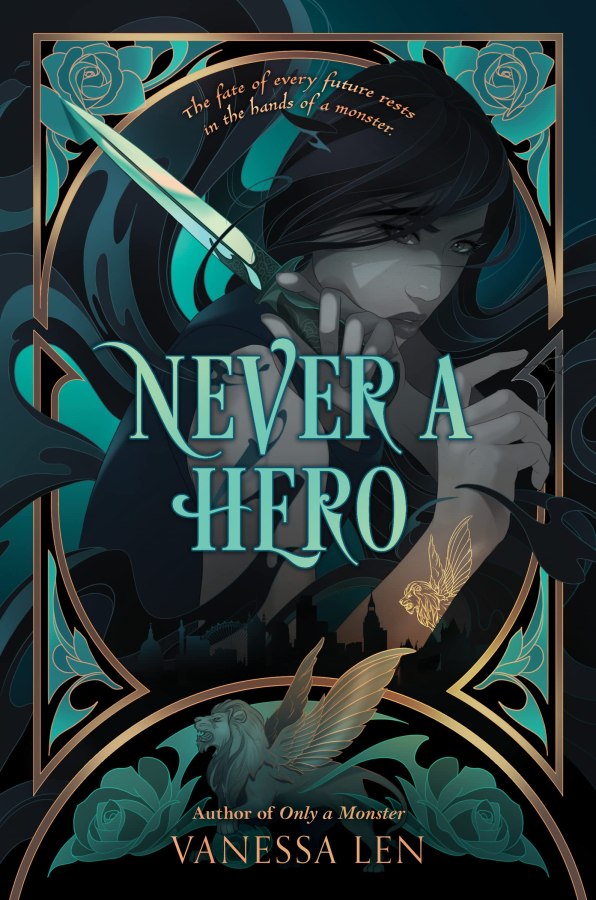
Quick Review – Never a Hero by Vanessa Len

Never A Hero Cover

Publisher: Allen & Unwin (Trade Paperback – 29 August 2023)

Series: Only a Monster – Book Two

Length: 475 pages

My Rating: 4.75 out of 5 stars

Amazon

New Australian fantasy author Vanessa Len follows up her outstanding debut with her second book, Never a Hero.

Back in 2022 I was lucky enough to receive a copy of Vanessa Len’s awesome debut novel, the young adult fantasy Only a Monster.  This amazing and clever read saw a young woman find out that she was a monster, part of a community of people who can travel through time by absorbing the life force of ordinary humans.  When her crush is revealed to be a deadly monster hunter determined to destroy her and everyone she loves, she is forced to flee through time to try and save her family.  I loved the unique concept that Len came up with in her debut, and the resulting story was powerful, compelling, and very moving, especially as the author finished it off with a major twist and some heartbreaking decisions.  Only a Monster proved to be so damn good, and it ended up being one of my favourite debuts and Australian novels of 2022.  As such, I was quite excited when I saw that Len had a sequel to Only a Monster coming out last year, and I really enjoyed the unique way that she chose to continue her brilliant narrative.

Plot Synopsis:

This sequel to the contemporary fantasy Only a Monster will take Joan deeper into the monster world, where treacherous secrets and even more danger await.

Despite all of the odds, Joan achieved the impossible. She reset the timeline, saved her family – and destroyed the hero, Nick.

But her success has come at a terrible cost.

She alone remembers what happened. Now, Aaron, her hard-won friend – and maybe more – is an enemy, trying to kill her. And Nick, the boy she loved, is a stranger who doesn’t even know her name. Only Joan remembers that there is a ruthless and dangerous enemy still out there.

When a deadly attack forces Joan back into the monster world as a fugitive, she finds herself on the run with Nick – as Aaron closes in.

As the danger rises – and Nick gets perilously closer to discovering the truth of what Joan did to him – Joan discovers a secret of her own. One that threatens everyone she loves.

Torn between love and family and monstrous choices, Joan must find a way to re-gather her old allies to face down the deadliest of enemies, and to save the timeline itself.

Vanessa Len’s stunning Only a Monster trilogy continues with this second instalment, a thrilling journey where a secret past threatens to unravel everyone’s future.

Len comes up with quite an outstanding story for Never a Hero that hits the ground running fast and never lets up with the feels, action and deadly reveals.  The story starts with Joan living in a slightly different world thanks to her manipulations of the timestream, where her former love interest, Nick, has no memory of who she is or that he used to be a monster hunter.  However, an attack by the agents of the Monster Court forces her to once again jump back into that world to try and unravel a deadly conspiracy hinted at in the first novel.  However, this time she is the expert, dragging along the very human Nick, who quickly learns about the monster world as Joan desperately tries to keep him from remembering his deleted past as a monster hunter.  At the same time, her former ally from the first book, Aaron Oliver, has no idea who she is and is instead leading the hunt for her.

The resulting story proves to be quite exciting and intense, as the protagonists stay on the run, connecting with old allies and trying to discover why they are being chased and what deadly new plot has impacted their lives.  While there are some deliberate similarities with the first book, Never a Hero goes in some different directions, especially as Joan is aware of what it means to be a monster.  The book really goes in some interesting directions, and I loved how Len chose to wrap everything up.  The conclusion has so many heartbreaking revelations about the characters’ pasts, and the resulting secrets will shake readers to the core.  I love how well Len set up many of these reveals, and it was great to get a satisfying pay-off to some of the secrets and questions left unanswered in Only a MonsterNever a Hero ends on a big and ground-shaking note, hinting at a big final novel that will push the characters to their limits.

Len did an outstanding job following up her amazing debut here in Never a Hero, and this was another intense and moving character-driven read that expertly built on the elaborate story of her first book.  This was a great piece of young adult fantasy fiction that will attract both a mature teenage audience as well as older fans of inventive fantasy fiction.  While written in the same style as Only a Monster, Never a Hero definitely has a different feel to it, mainly because Len is weaving in some complex and inventive additional time travel elements.  In particular, the protagonist is forced to manoeuvre through a different world brought on by the changes to timeline she made at the end of the last book.  There is a constant reintroduction of supporting characters, locations and events, often in a much different context as the protagonist tries to work out the consequences of her actions.  At the same time, the reader is also treated to some additional lore surrounding the various monster families and there is some substantial and imaginative world building as a result.  I love how effectively and effortlessly Len utilised these complex fantasy concepts throughout her second novel and it really enhances an already exciting and memorable story.  While Len does work to make Never a Hero more accessible to new readers, the focus on differing timelines and alternate characters does slightly restrict who is going to enjoy this book.  I personally would strongly recommend reading the first novel before diving into Never a Hero, and that is honestly the best way to enjoy this story.

One of the best aspects of Never a Hero was the amazing character work of Len, who did an amazing job bringing together several intense and compelling story arcs around her excellent protagonists.  The main three characters of the book, Joan, Nick and Aaron, each have impressive appearances and scenes in Never a Hero, and what was particularly great about them is that they were so different from their prior appearance in Only a Monster.  Thanks to the time manipulations, each of them experiences an interesting new narrative in this book, and Len works this into the overall narrative of the book extremely well.  Joan, the only one who effectively remembers the prior events, is burdened by all manner of guilt, not only because of her monster heritage but because she killed off a version of Nick in the previous novel.  This guilt and despair only grows as the novel continues, especially when she realises the true consequences of her actions.  At the same time, Joan is constantly trying to hide the evil of her species from Nick, while also trying to come to terms with the other dramatic changes and revelations in her life.

The other two major characters, Nick and Aaron, also have some amazing sequences in this book.  Nick, who spent the previous novel hunting Joan as a monster hunter, is reborn for this book as a normal teen with a happy home life.  However, he is soon forced back into the world of monsters when he and Joan are attacked, and it was fascinating to see him experience everything from the other side, especially as a single wrong move from the other characters could turn Nick back into a ruthless killer.  Len also dives into the complex past around Nick’s various incarnations, and I deeply appreciated the tragic story about how he became a killer.  Aaron, on the other hand, is a monster from a noble family who was a reluctant ally to Joan in the previous book, before something else formed between them.  However, in Never a Hero, Aaron remembers nothing about this adventure or Joan, and instead he finds himself hunting her.  This was an outstanding move from Len, as readers of the first book had grown to care for Aaron, so it was jarring to see him evil again in this sequel.  The author wove quite an interesting storyline around Aaron, especially when it came to his connection with Joan, and there were some amazing scenes where the protagonist tried to bring him back onside by using secrets she previously learned from him.  These three characters and their unique personal stories formed a powerful emotional heart to Never a Hero, especially when combined with the excellent supporting cast and a wonderfully wicked villain.

Never a Hero proved to be quite an impressive and outstanding follow-up to Vanessa Len’s epic debut.  This amazing young adult fantasy novel had me quite enthralled and I loved the clever and powerful ways Len continued her unique narrative.  Len is truly proving to be one of Australia’s best new fantasy authors and I cannot wait to see how she wraps this series up with her next amazing novel.

Amazon

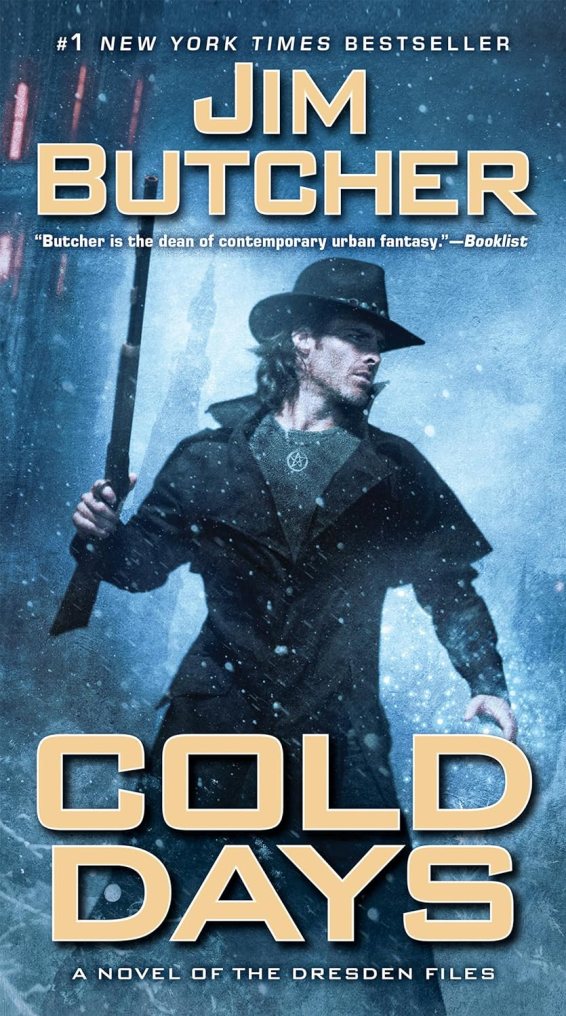
Throwback Thursday – Cold Days by Jim Butcher

Cold Days Cover

Publisher: Penguin Audio (Audiobook – 27 November 2012)

Series: Dresden Files – Book 14

Length: 18 hours and 47 minutes

My Rating: 5 out of 5 stars

Amazon

Welcome back to my Throwback Thursday series, where I republish old reviews, review books I have read before or review older books I have only just had a chance to read.  For this week’s Throwback Thursday, I check out yet another exceptional entry in Jim Butcher’s outstanding Dresden Files urban fantasy series with Cold Days.

Readers of this blog will know that I have been having an incredible time getting through the epic Dresden Files series by Jim Butcher.  An iconic urban fantasy series, the Dresden Files follows maverick wizard Harry Dresden as he defends the city of Chicago from all manner of supernatural threats.  This series is so impressive, and I have been steadily making my way through out it since 2020.  My previous burst of reading saw me get through four of these amazing books in a row, including Small Favor, Turn Coat, Changes and Ghost Story, and while that momentarily sated my interest in this series, I am still very keen to continue, and I’m hoping to finish it off this year.  I’m already off to a good start as I just knocked off the 14th book in the series, Cold Days, which proved to be another gripping and clever read.

Despite his best efforts, professional wizard Harry Dresden is once again alive, and his troubles are only just beginning.  Forced into a Faustian deal to gain the power he needed to save his daughter, Dresden, now finds himself indebted to Mab, Queen of Air and Darkness and ruler of the Winter Court of the Faerie.  While he’d hoped his murder would get him out of this dark responsibility, Mab had other plans and now Dresden finds himself dragged back to life as the Winter Knight, Mab’s personal champion and hitman.

Determined not to fall under the alluring sway of his new position and power, Dresden finds himself once again thrust into the middle of a conflict outside of his abilities when Mab sets him on his first mission, killing her own immortal daughter.  Grappling with such an impossible task, Dresden returns to his beloved Chicago, only to find even more trouble awaiting him there.  Demonreach, the mystical island in the middle of Lake Michigan that Dresden bound himself to, is under magical siege, and it if falls, billions will die.

With only 24 hours to complete both his allotted assassination and save Demonreach, Dresden soon finds himself under attack from all manner of foes, including manipulative faeries, dangerous beings originating from outside of reality, and former friends with new agendas.  To survive, Dresden will need to reconnect with his old allies and work with them to prevent a dark cataclysm.  But faced with impossible choices and hidden enemies, Dresden soon finds himself unsure who to trust.  Worse, his new powers are working to change him into something primal and dark.  Can Harry defeat both his foes and his own inner darkness before it is too late?

I doubt anyone is going to be surprised to find out that I loved Cold Days.  Butcher did a wonderful job continuing his exceptional series, especially as he presents the reader with a complex and intriguing new adventure, loaded with mystery, sacrifice and surprises.  A gripping read from start to finish, Cold Days gets another easy five-star rating from me, and I had an amazing time getting through it.

At this point in the series, Butcher had been on a real roll, and the last two books, Changes and Ghost Story, had exceptional stories that dramatically shifted the status quo for the protagonist.  This trend continued in Cold Days as Butcher simultaneously reintroduced Dresden back to the world after his death, showed his first adventure as the Winter Knight, and provided some massive detail about the major antagonist that his been hinted about since the start of the series.  I honestly was hooked on Cold Days the second I started it, especially as it begins with a particularly entertaining training montage, before dumping the protagonist right into the midst of complex Winter Court politics.  From there, Dresden is given an impossible task, and his attempts to understand his new mission reveal additional obstacles, including the danger posed by Demonreach.  This swiftly morphs into a classic Dresden Files novel, with the protagonist attempting to solve several concurrent mysteries, while entertaining antagonists try to take him off the board.  A lot of the story involves the always fascinating and manipulative Faeries, and I liked how well Butcher expanded the lore surrounding them.  Naturally, this means that the protagonist must deal with politics, intrigue, and so many betrayals, as he finds himself in the middle of their deadly games.

Once Dresden fully understands the stakes of his new mission, he is forced to make some big decisions, especially as the true antagonists of this book are obscured and hidden.  Everything leads up to a massive and extended final confrontation, which was pretty damn awesome to see, especially as Dresden leads some interesting forces to war and finds himself going up against some big players.  There are some brilliant and well-setup twists at the end of Cold Days that really highlight just how manipulative a certain character is, as well as how good Butcher is at planning ahead with his writing, and the status-quo of the series changes once again.  This entire story was so damn entertaining, clever and moving, and I just flew through it.

As always, I love the excellent first-person style that Butcher utilises to tell his Dresden Files stories, and Cold Days came across in a fun and entertaining way.  Told exclusively from the perspective of protagonist Harry Dresden, you are given a front row seat to the chaotic events of the book as they occur, and I always love the fantastic blend of mystery, action, humour and character moments that result from this.  Cold Days was a particularly good example of this, and it featured an amazing pace, loaded with major set pieces and powerful interactions between the protagonist and other characters.  The action scenes were particularly fun, and I loved how well Butcher was able to enhance the battles with the continuously expanding lore surrounding his excellent series.  Everything about this book was a lot of fun, and this ended up being an impressive entry in the wilder Dresden Files series.

One of the things I particularly enjoyed about Cold Days was the intriguing and impressive ways that Butcher provides some massive expansions to his universe.  Cold Days features some major revelations which completely shift the entire perspective of the Dresden Files, especially as you get some reveals about who the true antagonists of previous books were.  The protagonist’s place in this universe is greatly enhanced, as not only does he get some major power boosts but the true responsibilities of certain posts he took on are revealed.  As such, the stakes of Cold Days and the future books in the series are now higher than ever, which I personally enjoyed.  These changes were an outstanding natural progression of story elements from the previous 13 novels, and it was great to get some payoffs to some of the clever hints Butcher has been lacing into the series since book one.  Because of this, I would strongly recommend that readers go back and read the series from the start rather than beginning with Cold Days, as you will get so much more out of it.  At the very least, I think you need to read the previous two novels, Changes and Ghost Story first, as some of the major story elements and character arcs from there are concluded or continued here.  However, if you decide to start reading the series here at Cold Days, you should still be able to follow along, especially as Butcher always ensures that key elements and characters are always succinctly and effectively reintroduced.

I must really highlight the excellent character work featured in Cold Days, as Butcher does an outstanding job featuring a huge cast of fascinating figures, each of whom plays an important role in the complex plot.  Naturally most of this focus revolves around the point of view protagonist, Harry Dresden, who has been going through a real emotional and personal roller coaster in the last few books.  Not only did he recently find out he had a daughter who was hidden from him, but he was forced to accept a deal with Mab to save her, which he then tried to get out of by dying.  Fully resurrected by the start of Cold Days, Dresden is forced to deal with the consequences of his choices.  It was interesting to see the usually moral and independent Dresden under the control of a historically malevolent figure like Mab, and his attempts to understand her motivations and his place in this new regime are a huge part of the plot.  At the same time, his new powers are slowly changing him, and he is constantly forced to fight back against various primal urges.  This results in some very interesting personal moments, especially as Dresden is finally properly reunited with his friends and family.  I loved how emotional and powerful parts of this book get, especially as Dresden comes to terms with some of the darker moments and thoughts that have plagued him over the last few adventures.  As such, this is an important entry in Dresden’s personal story, and I look forward to seeing what other develops occur in the future.  Of course, while this book does get emotional and moving at times, Dresden was still mostly the same funny and disrespectful figure he always was, and much of Cold Days’ humour was derived from him making fun of and picking fights with people way outside his weight class.  I have so much love for most of Dresden’s character traits, even when being turned slowly evil, and Cold Days is so much more entertaining with him as the narrator.

In addition to Dresden, Cold Days featured a great batch of returning figures, each of whose storylines are also expanded on once Dresden returns.  I loved some of the interactions that occurred in Cold Days, especially as we once again got to see the fun sibling relationship Dresden has with his brother, Thomas, and there was finally some movement on the long-simmering romance between Dresden and Karin Murphy.  It was great to also see more of recurring characters Butters, Bob the skull and Dresden’s dog, Mouse, who are all quite entertaining in their own way.  However, I think the most interesting character development occurred around Dresden’s apprentice, Molly Carpenter.  Like Dresden, Molly has gone through a ton of trauma in the last few books, and it was great to see her mostly on her feet in this novel.  Of course, as Butcher is a cruel author, we had to know it wouldn’t last, and some very significant changes occur to Molly in the big conclusion.  Butcher did a great job setting the scene for these changes, and it will be interesting to see how much her personality changes in the next few books.  I still don’t love the constant hints about a potential romance between Dresden and Molly that were featured here; if they ever get together in a future book, it will be gross.

Aside from these familiar figures, Butcher also loads Cold Days up with nearly every Faerie character and figure he had, including several sinister new antagonists.  The Dresden Files books featuring the Faerie Courts and characters can often be quite entertaining and I think Butcher did a really good job of showcasing the intricate figures who make up these courts in Cold Days. Mab was a fantastic, dark and sinister figure for much of the book as Dresden’s new master, and I enjoyed how she cast a big shadow over much of the plot.  While mostly shown to be villainous, Butcher did attempt to humanise her in places, and it was great to finally get some more depth around her.  The rest of Faeries all had their own unique purpose in the story, and you are never quite certain whose side they are on, especially when more revelations come through as part of this book.  All the characters in Cold Days were very impressive and well-written, and I really appreciated how their complex character arcs helped to enhance an already powerful story.

As usual, I ended up enjoying Cold Days on audiobook, which is honestly just the best way to enjoy a Dresden Files novel.  Coming in with a run time of just under 19 hours, Cold Days was one of the longest Dresden Files audiobooks, but I still managed to power through it in one fantastic week.  Butcher’s outstanding storytelling is always deeply enhanced by this format, and you really get the full experience of the action, unique fantasy elements and cool characters through it.  Of course, the epic voice work from long-running narrator James Marsters is a huge factor in this.  Marsters always moves the story along perfectly, and it is hard not to get caught up in the plot when he dives into the cool features and narrative.  I still really love all the unique and enthusiastic voices he brings to the table, and all the characters, be they new or established, came across perfectly here.  I always deeply appreciate how well Marsters can dive into protagonist and point of view character Harry Dresden, and his narration once again pulled out all this character’s pain, inner turmoil, and relentless cheek.  Marsters also has a lot of fun with the various monsters, faeries and other ethereal figures featured throughout Cold Days, and he always ensures these mysterious creatures come across as something inhuman or terrifying.  This great voicework really turns the Cold Days audiobook into something deeply addictive and fun, and I really cannot recommend this format enough.

Look, there was no way I wasn’t going to enjoy Cold Days, as frankly the entirety of the Dresden Files series has been pretty damn impressive.  However, I felt that Jim Butcher did a really good job with this 14th book, as Cold Days features a compelling and emotionally charged narrative that expertly continues some of the most impressive storylines from the last few entries.  Loaded with action, compelling lore expansion, and Butcher’s distinctive humour, Cold Days was an exceptional book that I cannot recommend enough.  I love this series so much and I cannot wait to finish it off this year.

Amazon

Top Ten Tuesday –Most Anticipated Fantasy/Science Fiction Books Releasing in the First Half of 2024:

Top Ten Tuesday is a weekly meme that currently resides at The Artsy Reader Girl and features bloggers sharing lists on various book topics. For the first Top Ten Tuesday, I will be listing my most anticipated upcoming books for the first half of the year.  This is a regular post I do each year and I always look forward to highlighting the most awesome looking books for the start of the year.  Because there are so many incredible reads coming out across the genres, I am doing two versions of this list, this first one that will exclusively look at upcoming fantasy and science fiction books, and another that will focus on upcoming books from other genres, including thrillers, crime fiction, historical fiction and more.

2024 is shaping up to be an outstanding year for fantasy and science fiction with a ton of epic and amazing sounding novels set for release throughout the year.  I am particularly excited about the next six months as there are some deeply impressive books coming out that I am extremely keen for.  This includes some fantastic sounding sequels, continuations to brilliant series, and several cool new novels from some very talented authors.  I have already highlighted several of these books in some previous lists and Waiting on Wednesday articles which has made me really appreciate just how awesome the upcoming year is going to be in the fantasy and science fiction space, hence this list.

Just like with my other list of the night, I am only featuring books that are set for release in Australia or on Netgalley between 1 January 2024 and 30 June 2024 which I have some descent details about.  Despite only being fantasy and science fiction books, I ended up with a huge collection of exceptional novels that I wanted to feature, which made completing this list surprisingly difficult.  I was eventually able to break it down to the best 10 books (with honourable mentions), and I feel that I have capture the books that are going to be the best fantasy and science fiction reads of 2024.  So let us see what made the cut.

Honourable Mentions:

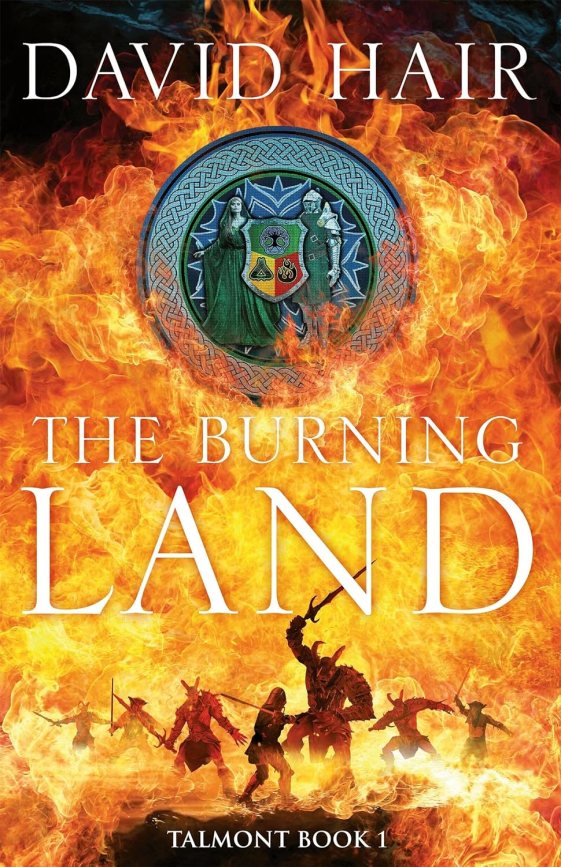
The Burning Land by David Hair – 1 February 2024

The Burning Land Cover

An intriguing and awesome sound fantasy adventure that will see a group of knights go rogue to try and find the truth about the supposedly holy order that they serve.

Amazon


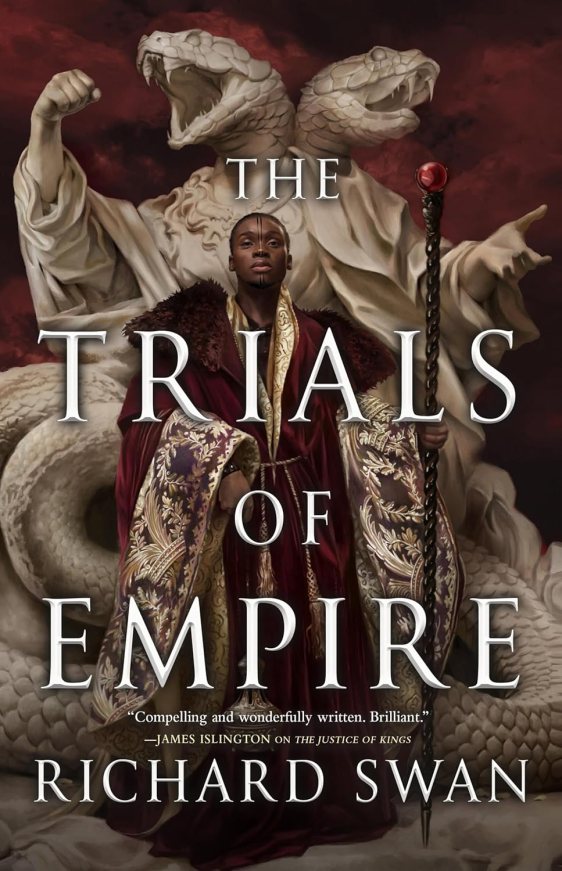
The Trials of Empire by Richard Swan – 13 February 2024

The Trails of Empire Cover

While I am sure that The Trials of Empire is going to be high up on many people’s to-read list for 2024, I’m going to keep it as an honourable mention mainly because I haven’t had the chance to read the second novel, The Tyranny of Faith, yet.  I am hoping to read The Tyranny of Faith before The Trials of Empire comes out, so I can enjoy this awesome sounding novel later this year.

Amazon


Exit Black by Joe Pitkin – 20 February 2024

Exit Black Cover

An intriguing science fiction thriller about a futuristic space hotel for the wealthy taken over by terrorists.  Should be very, very fun.

Amazon

Top Ten List:

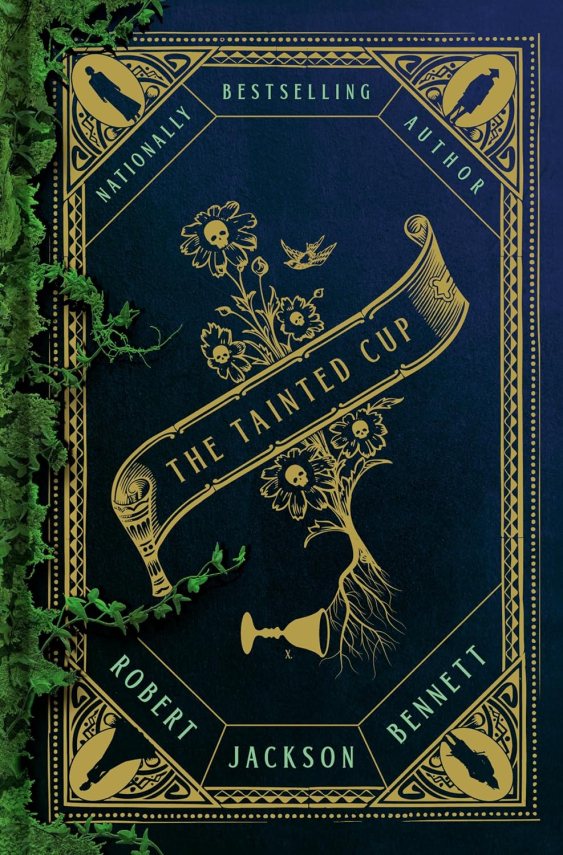
The Tainted Cup by Robert Jackson Bennett – 13 February 2024

The Tainted Cup Cover

One of the most anticipated fantasy releases of 2024, The Tainted Cup is an awesome and intricate novel that will force two unusual detectives to investigate a death apparently committed by impossible magic.  Robert Jackson Bennett is an outstanding author, and I look forward to immersing myself in his new elaborate world.

Amazon


Alien Clay by Adrian Tchaikovsky – 28 March 2024

Alien Clay Cover

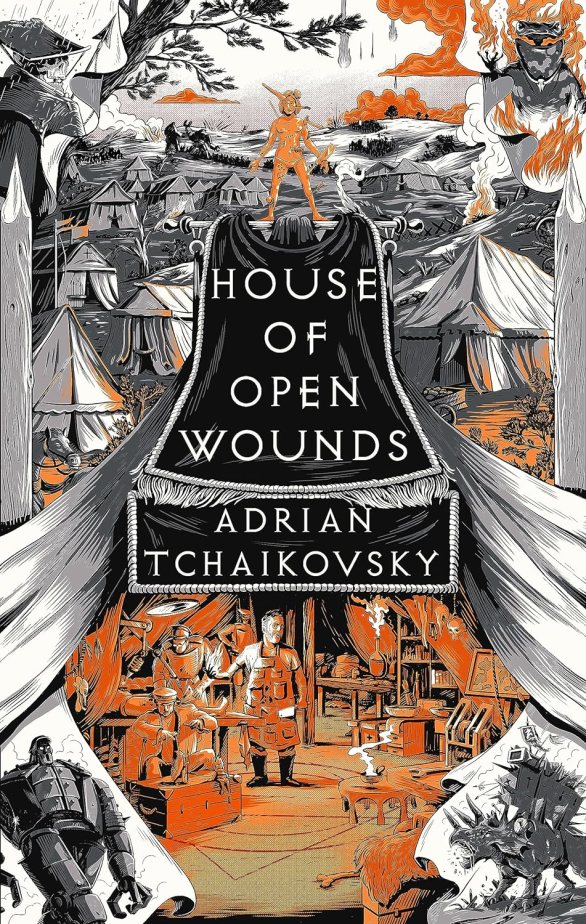
An intriguing science fiction thriller set in a massive prison on an alien world, Alien Clay will follow a scientist’s attempts to uncover the secrets of the planet while also dodging the prison’s dangerous warden.  I have really grown to enjoy Tchaikovsky’s writing, especially after his amazing 2023 novels, City of Last Chances and House of Open Wounds, and I have no doubt that Alien Clay will be a fun and impressive read.

Amazon


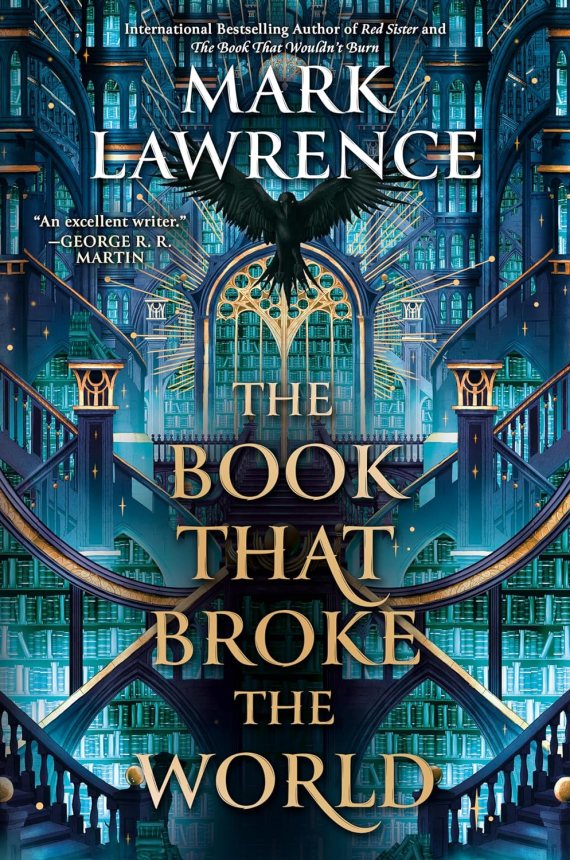
The Book That Broke the World by Mark Lawrence – 9 April 2024

The Book That Broke the World Cover

After deeply impressing me with the incredible and inventive The Book That Wouldn’t Burn (one of my favourite books of 2023), Mark Lawrence continues The Library trilogy in a big way with The Book That Broke the World.  Continuing to follow his intriguing protagonists as they attempt to uncover the crazy secrets of the impossible library at the centre of their lives, The Book That Broke the World looks set to provide more peak Lawrence creativity and imagination and I cannot wait to see what happens next in this amazing series.

Amazon


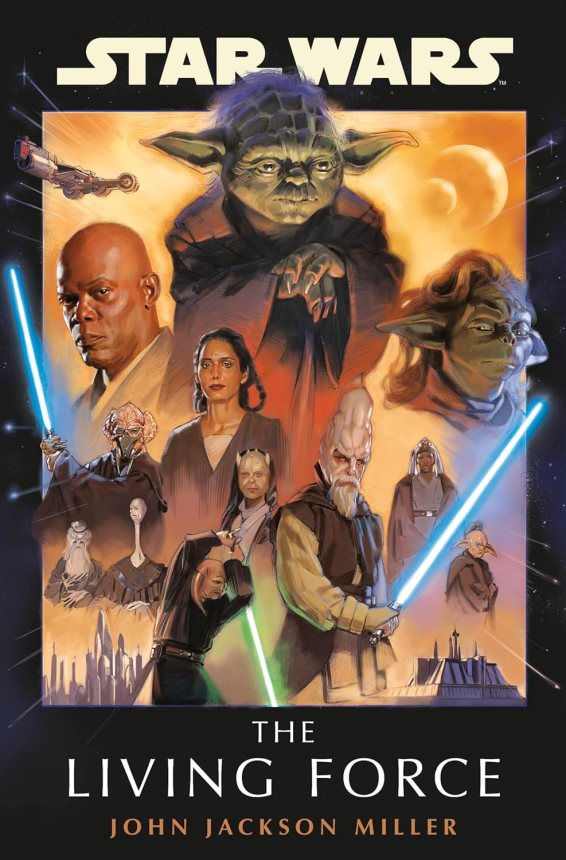
Star Wars: The Living Force by John Jackson Miller – 9 April 2024

Star Wars - The Living Force Cover

I’ve been a bit remiss with my Star Wars reading lately, and I’m hoping to make that up this year by checking out the cool new novel by John Jackson Miller, Star Wars: The Living Force.  Set before the events of The Phantom Menace, The Living Force will follow Qui-Gon Jinn, Obi-Wan Kenobi and all twelve members of the Jedi Council as they investigate how Jedi are perceived in the universe.  Authored by one of the top authors of tie-in fiction, The Living Force should be a pretty awesome read and I am deeply intrigued about a story focusing on the Jedi Council and their politics.

Amazon


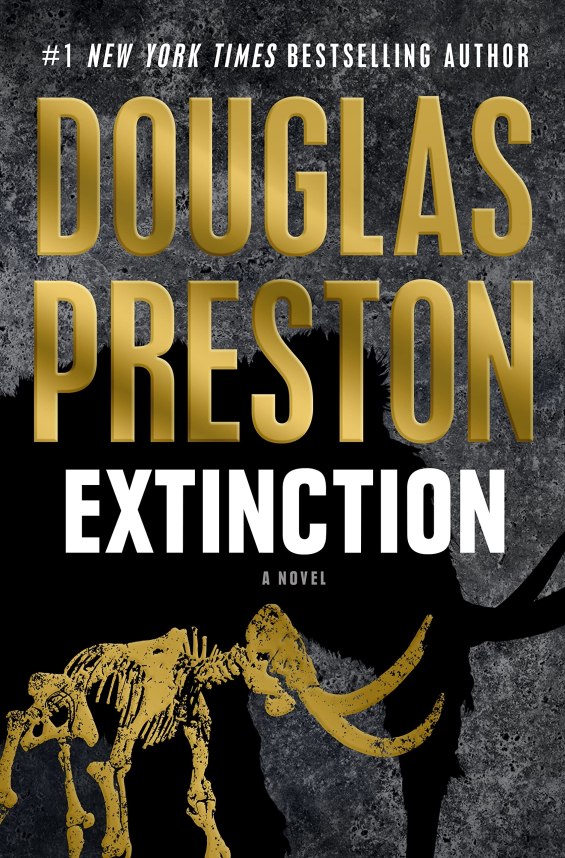
Extinction by Douglas Preston – 23 April 2024

Extinction Cover

One of the more entertaining and awesome upcoming books of 2024 is Extinction by veteran thriller and science fiction author Douglas Preston.  Set in a resort where ancient animals have been brought back to life with genetic manipulation (when does that ever go wrong), the book will see guests murdered and kidnapped by a gang of eco-terrorists.  Sounding like a fantastic mix of Die Hard and Jurassic Park, I love everything about Extinction, and I am hoping to read it soon.

Amazon


Warhammer 40,000: Deathworlder by Victoria Hayward – 23 April 2024

Warhammer 40,000 - Deathworlder Cover

It wouldn’t be one of my lists without at least one Warhammer 40,000 novel, which has been such an epic franchise for me lately.  While there are several great Warhammer 40,000 books coming out in 2024, the one from the first half of the year that appeals to me the most is Deathworlder by Victoria Hayward.  Hayward’s debut novel, Deathworlder will pit two of this universe’s best jungle fighters against each other, as the human Catachan troopers attempt to navigate a world actively being consumed by the insidious alien Tyranids.  This will probably end up being a disturbing and grim survivalist adventure, and I know I will love every second of it.

Amazon


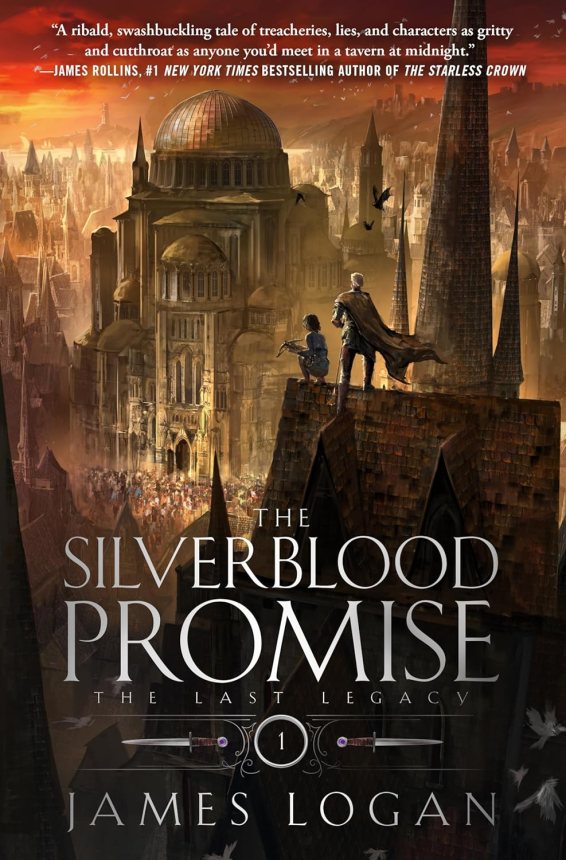
The Silverblood Promise by James Logan – 7 May 2024

The Silverblood Promise Cover

One of the books I’m particularly excited for this year is the excellent fantasy debut, The Silverblood Promise by James Logan. This awesome novel will follow a disappointing and caddish heir to a noble house who is thrust into a leadership position and must find out who is responsible for his father’s death in a deadly city of rogues and liars.  I love the sound of this book and it has the potential to be one of the best debuts of 2024.

Amazon


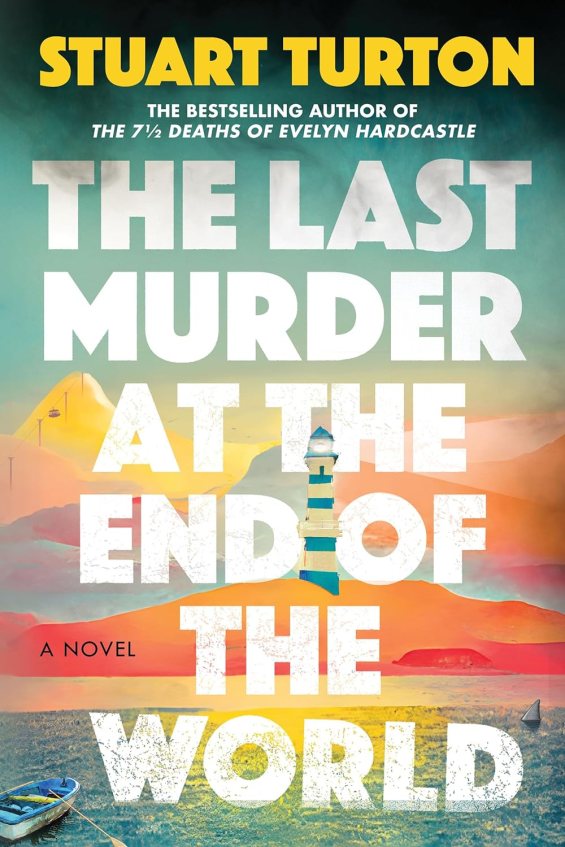
The Last Murder at the End of the World by Stuart Turton – 21 May 2024

The Last Murder at the End of the World Cover

An awesome science fiction murder mystery that I am really looking forward to in 2024 is the intriguing and complex The Last Murder at the End of the World by Stuart Turton.  Set in the last human settlement after a mysterious apocalypse, the book will see a deadly murder occurs that threatens the entire colony.  To stay alive the protagonists will need to solve the murder before their sanctuary is destroyed, however, the settlement’s security protocols have been activated and erased everyone’s memory of the night in question, even the killers.  Bound to be one of the most compelling and unique murder mysteries of 2024, I am very hyped for The Last Murder at the End of the World, and this should be an exceptional read from Turton. 

Amazon


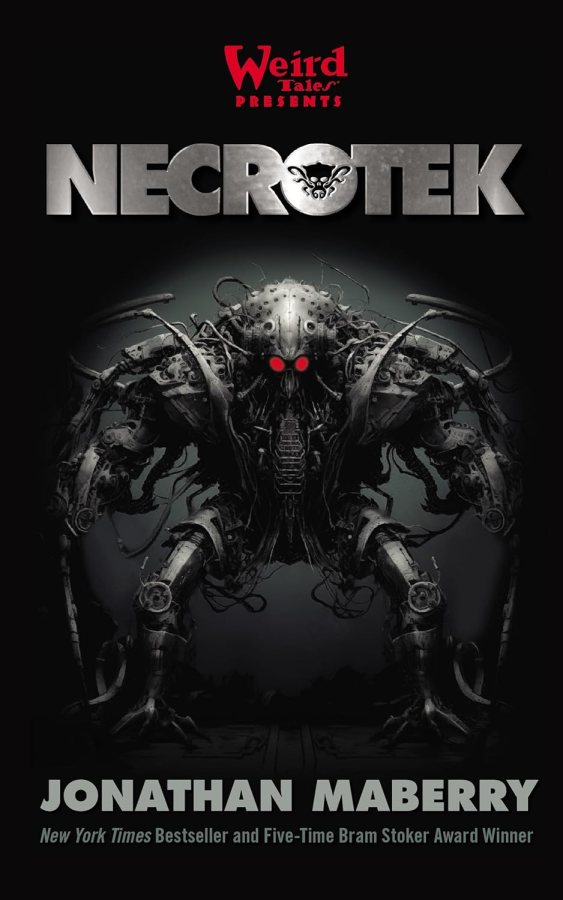
Necrotek by Jonathan Maberry – 28 May 2024

Necrotek Cover

One of my favourite authors, Jonathan Maberry, returns with an awesome and intense new book in 2024, with Necrotek.  Maberry, who deeply impressed me with his 2023 releases, Son of the Poison Rose and Cave 13 (both of which were amongst my favourite books and audiobooks of 2023), has a great writing style and I look forward to seeing how it translates across to the science fiction genre with Necrotek.  Featuring a dark and horror themed narrative, Necrotek will be Maberry’s first pure science fiction novel, and I cannot wait to dive into his elaborate tale of eldritch space horrors, ancient alien technology, and immortal souls being lodged in deadly machinery.  I have no doubt this will be one of my favourite books of 2024 and I am so damn excited for it.

Amazon


Service Model by Adrian Tchaikovsky – 4 June 2024

Service Model Cover

Another outstanding Adrian Tchaikovsky novel coming out in the first half of 2024 is the epic sounding Service Model.  Following a service robot who gains sentience and decides to rebel against its human masters, Service Model has a particularly entertaining plot behind it that looks to be quite amusing while also serving as a critique humanity’s growing reliance on technology.  This honestly sounds like one of the funniest books of the year, and I look forward to seeing even more outrageous adventures, witty comedy and intense social commentary from one of science fiction’s top authors.

Amazon


Well, that’s the end of this first list.  As you can see, there are some mighty impressive fantasy and science fiction books coming out the first half of this year.  All the above entries on this list have an incredible amount of potential and I have a feeling I am going to deeply enjoy every single of one of these great reads.  2024 is going to be an outstanding year for these two genres, not only with these amazing books, but because of some of the other ones potentially coming out later this year.  I look forward to seeing how all these cool novels turn out and I think I am going to have an incredible time reading fantasy and science fiction in 2024.  Make sure to also check out my other Top Ten List that looks at the top upcoming books of 2024 from the other genres.

Waiting on Wednesday – The Book That Broke the World by Mark Lawrence

Welcome to my weekly segment, Waiting on Wednesday, where I look at upcoming books that I am planning to order and review in the next few months and which I think I will really enjoy.  I run this segment in conjunction with the Can’t-Wait Wednesday meme that is currently running at Wishful Endings.  Stay tuned to see reviews of these books when I get a copy of them.  For this week’s entry I look at one of the most anticipated and potentially imaginative fantasy novels of 2024 with The Book That Broke the World by Mark Lawrence.

The Book That Broke the World Cover

Amazon

In early 2023 I was extremely lucky to receive a copy of the latest book from Mark Lawrence, The Book That Wouldn’t Burn.  The first entry in Lawrence’s The Library trilogy, The Book That Wouldn’t Burn was a bold and compelling novel set in an intriguing new setting of an impossibly large library.  Following two damaged protagonists who have very different experiences about the library and its secrets, The Book That Wouldn’t Burn was an exceptional novel, whose scope, creativity and unique story really drew me in.  I had an incredible time reading The Book That Wouldn’t Burn, and not only did it get a full five-star rating from me, but it was also an easy inclusion on my recent Favourite Books of 2023 list.  I was so very impressed with The Book That Wouldn’t Burn, and I have been eagerly waiting to find out details about a potential sequel and luckily it doesn’t look like I’ll have to much longer to wait.

This upcoming sequel is The Book That Broke the World, which is currently set for release in April 2024.  The Book That Broke the World will take place after the chaotic conclusion of The Book That Wouldn’t Burn and will see the two protagonists thrust into a whole new level of peril as they try to save themselves, their friends, and the library itself.

Plot Synopsis:

Two people living in a world connected by an immense and mysterious library must fight for those they love in the second book in a new trilogy from the international bestselling author of The Book That Wouldn’t Burn.

The Library spans worlds and times. It touches and joins distant places. It is memory and future. And amid its vastness Evar Eventari both found, and lost, Livira Page.

Evar has been forced to flee the library, driven before an implacable foe. Livira, trapped in a ghost world, has to recover the book she wrote—one which is the only true threat to the library’s existence—if she’s to return to her life.

While Evar’s journey leads him outside into a world he’s never seen, Livira’s path will taker her deep inside her own writing, where she must wrestle with her stories in order to reclaim the volume in which they were written.

The secret war that defines the library has chosen its champions and set them on the board. The time has come when they must fight for what they believe, or lose everything.

This sounds like a pretty awesome read and I am so looking forward to it.  Lawrence has cooked up a very interesting plot for The Book That Broke the World, especially as it seems that he is planning to do a reversal on the protagonist’s fates, with Evar trapped outside the library after a lifetime stuck within, while Livira, the cagey outsider who entered the library after her childhood in the desert, will be trapped within learning more about its secrets and herself.  I have no doubt this will be a particularly character-driven plot, and I look forward to seeing how both likeable, yet troubled, protagonists continue to develop.

Based on Lawrence’s writing in the past, I have no doubt that he will continue to develop the elaborate world that surrounds the series in The Book That Broke the World, and I assume we are going to see more timelines, more visions of past and future wars, and more of the long-running conflict between the two races that trade control of the library and its resources.  This, combined with the excellent story and character work, should make for one hell of a read and I cannot wait to dive even further into this amazing series.  As such, The Book That Broke the World is one of my most anticipated books for 2024 and I am so damn excited to see what incredible new narrative threads Lawrence has in store for us.

Saevus Corax Deals with the Dead by K. J. Parker

Saevus Corax Deals With the Dead Cover

Publisher: Orbit (Trade Paperback – 10 October 2023)

Series: Corax – Book One

Length: 359 pages

My Rating: 5 out of 5 pages

Amazon

One of the most unique and funny authors of fantasy fiction, K. J. Parker, returns with an outstanding and hilarious read about a likeable protagonist caught up in the middle of so much drama, with Saevus Corax Deals with the Dead.

Few authors have the comedic chops and inventiveness of K. J. Parker, whose work I have been deeply enjoying over the last few years.  A pseudonym of established fantasy author Tom Holt, Parker has written a ton of unique and compelling reads over the years, including some outstanding novels that set outrageous and clever protagonists against the stupidity of their world in some impressive scenarios.  I particularly enjoyed Parker’s recent The Siege series, which saw three very different men take advantage of a major siege in very different ways.  All three Siege books were extremely epic, and they all got five-star ratings from me because of their clever stories, entertaining characters, and fantastic comedy.  This includes Sixteen Ways to Defend a Walled City (one of my favourite books of 2019), How to Rule an Empire and Get Away with It (one of my favourite books of 2020) and A Practical Guide to Conquering the World (one of my favourite books of 2022).

Due to how much I enjoyed Parker’s last series, I was very excited when I found out that he had a fun new trilogy coming out in 2023.  This series, the Corax trilogy, follows Saevus Corax, a professional battlefield looter who runs afoul of multiple groups, nations and people in his quest for survival and the big score.  Parker, who seems to be an unstoppable force when it comes to writing, released all three Corax books in the space of around a month, which is pretty damn impressive.  I have so far had the great pleasure of reading the first of these, Saevus Corax Deals with the Dead, which proved to be an exceptional novel and one of my favourite books of 2023.

Saevus Corax is a man with a twisted and hidden past, who seeks to make a new future for himself by looting the many, many battlefields that scatter his world.  Leading a professional band of scavengers, Corax makes his living by selling recovered and repaired gear from the dead to warring armies desperate or greedy enough to buy from him.  While not the most glamorous work, it’s a job Corax excels at, and it allows him to escape his complicated history.  But the past always has a habit of coming back when you least expect it, especially when there is a great deal of money on the line.

Finishing up a lucrative job, Corax and his men are shocked to discover that they are being accused of committing a brazen heist and now have a price on their heads.  Assuming that he is the true target of this bounty, Corax soon finds himself targeted by the two most powerful banking organisations on the continent.  Forced to flee, Corax finds himself the most wanted man alive, with several nefarious organisations, as well as vengeful members of his own family, placing a massive bounty on his head.  But who is Corax really, and why does everyone want him either alive or dead?

To understand that you’ll need to unwrap Corax’s complex history, and the events that turned him into the most important figure in world politics.  But Corax is sick of being a pawn in everyone else’s game, and he soon starts to make his own moves to ensure his independence.  Will Corax survive, or will his attempts at upsetting the board result in chaos and destruction across the world?

This was an absolutely amazing read from K. J. Parker that placed a very likeable and relatable protagonist into one heck of an elaborate bind.  Filled with a wry humour, outrageous scenarios and constant treachery, Saevus Corax Deals with the Dead was an outstanding read that gets a very easy five-star rating from me.

Saevus Corax Deals with the Dead has a great story that is told in a first-person chronicle format from the perspective of titular protagonist Saevus Corax.  This is the exact way that Parker wrote The Siege trilogy, and indeed this book is set in the same world several hundred years down the line.  This results in a different landscape for the story, with the bulk of the technology, culture, and certain story elements reminiscent of medieval times rather than the previously seen Romanesque setting, and Parker uses this to his full advantage, especially as the protagonist finds himself caught in a battle between this world’s equivalent of the historic banking giants, the Knights Templar and the Knights Hospitaller.  While nominally a fantasy novel, as it is set in a different world, this series often comes across more as an alternate history novel with comedic undertones, which is highly fun.

The author comes up with an awesome tale surrounding this scenario, as the compelling protagonist is thrust into this conflict against his will thanks to certain aspects of his birth.  Corax recounts this entire adventure in detail, as he first attempts to ascertain who is trying to capture him after framing him for a crime, before eventually going on the run.  Despite promising the reader to always tell the truth, Corax proves to be a somewhat unreliable narrator, mainly because he doesn’t have a desire to share his own personal history unless he must.  However, this hidden history comes into play quite a lot, as his past ensures he is immensely important for just being him.

Inevitably betrayed and captured, Corax is sent off to experience his destiny, which results in some substantial carnage as the protagonist attempts to either escape or turn the situation to his advantage.  This leads to several amusing battles, impractical wars, and other major confrontations, as Corax and the other characters lie, backstab and manipulate to try and get what they want.  Watching a highly practical man with a professional understanding of warfare and a capable imagination face off against various foes who constantly underestimate him makes for some great entertainment, and the various twists and turns that emerge are so much fun.  This entire story comes together extremely well, and the sheer number of betrayals, changing loyalties and attempts by people to use the protagonist for their own advantage ensure you’re never certain who’s going to come out on top of every brilliant scene.  The conclusion of Saevus Corax Deals with the Dead’s plot is very clever, and it brings together a lot of the unique world and compelling story elements that have been built up over the course of the story.  The way that the protagonist overturns everything just to maintain his life is so much fun, and the fitting rewards all the characters get is very fun.

I have so much love for how this story comes together, as the protagonist’s recounting of events really works to give you a personal and complex take.  Every moment of the story is told through Saevus Corax’s cynical and distrustful eye, which adds a certain slant to events, and the author does a great job of providing some fun, but detailed, context to the events unfolding.  Much of this book’s excellent humour is lifted from these outrageous situations that the protagonist finds himself in.  The protagonist does a great job of expressing the ridiculousness of many of these moments, as well as the funny ways he manages to oppose them, often by using simple human nature or flaws in various systems to his advantage.  I loved how well Parker introduced his protagonist is this novel, and Corax’s excellent narration of current events, as well as the compelling and often emotionally charged retelling of his personal history, comes together well to tell an impressive story.  I really cannot emphasise enough how well this first-person narration works, and the detailed recounting of events from a grounded, sensible and exasperated figure really makes for a unique tale.

As the first book in this new trilogy, Saevus Corax Deals with the Dead is a self-contained book, and readers don’t need to have read any of Parker’s previous novels to appreciate it.  As a fan of The Siege series, I enjoyed that the Corax books are set in the same world, especially as the author slips in some fun references and allusions to prior events.  However, no prior knowledge of The Siege books is needed, as the protagonist provides all the relevant world history in his narration, with a few fun and ironic points about the unreliability of prior narrators.  Parker does a good job of quickly building and exploring the various nations and powers in this world, especially if they relate to the plot, and I liked some of the fun parallels that exist between some of them and real historical entities.  The interplay of politics, the rivalries between powers, and the simple desire many of these groups have to betray each other is well set out as a result, and this works into the plot of the book very effectively, especially once you begin to understand just who Corax is.  I really enjoyed how all these elements are explored in the plot, although I did on multiple occasions wish that Parker had included some form of map just so I could have kept track of locations and nations.  I honestly had such a great time returning to this amazing world, especially as we got to follow yet another unlikely leader who was able to change the world just by applying their own unique brand of knowledge and an understanding of how fallible humans can be.

Saevus Corax Deals with the Dead was an incredible novel from K. J. Parker that continues to showcase his exceptional and comedic writing style.  Setting a great protagonist down a chaotic road, Saevus Corax Deals with the Dead had an amazing story which Parker showcases in his well-honed and enjoyable style.  Immensely clever and exceedingly funny, Saevus Corax Deals with the Dead comes highly recommended, and I loved every second I spent reading it.  I already have both sequels, Saevus Corax Captures the Castle and Saevus Corax Gets Away with Murder (both with very intriguing titles), and I am hoping to read them as soon as possible as I know I will love them too.

Amazon

Murtagh by Christopher Paolini

Murtagh Cover

Publisher: Penguin (Audiobook – 7 November 2023)

Series: The Inheritance Cycle – Book Five

Length: 24 hours and 32 minutes

My Rating: 4.5 out of 5 stars

Amazon

Bestselling author Christopher Paolini returns to the iconic world of Alagaësia with Murtagh, a powerful novel that continues his original series while focusing on a complex and damaged protagonist.

I am very excited about this review as it offers me the first chance to review a recently released Paolini fantasy novel.  I am a massive fan of Christopher Paolini, having read every single novel he has written in his impressive career, including the science fiction Fractalverse series (To Sleep in a Sea of Stars and Fractal Noise).  However, the series that most readers will associate him with are the Inheritance Cycle novels.

The Inheritance Cycle is an awesome young adult fantasy series that follows a young man who bonds with a dragon to take down an evil tyrant.  A particularly iconic series, the original Inheritance Cycle consists of Eragon, Eldest, Brisingr and Inheritance, and it told a complex, well-established and exciting tale that saw the protagonist, Eragon, rise to great heights and eventually defeat the big bad.  I was gifted the Inheritance Cycle novels when I was growing up and it became a favourite fantasy series that I read multiple times.  While I tend to view it with a more critical eye these days, I still love it and its powerful adventure.  Due to how much I enjoy this series, I have been eagerly awaiting a sequel for years, and I was so damn excited when I found out that Paolini was releasing a follow-up book.  Murtagh was one of my most anticipated reads for 2023, especially when I saw that it was going to follow one of the best characters from the original series.

A year has passed since the war to free Alagaësia ended and the evil king Galbatorix was killed at the hands of the Dragon Rider Eragon and his companions.  Peace now reigns across the land as the people look to rebuild.  But there are two beings in Alagaësia who will never find peace: Eragon’s half-brother, Murtagh, and his dragon, Thorn.  Already reviled for being the son of the traitorous Dragon Rider, Morzan, Murtagh is hated by every race in Alagaësia for the involuntary role he played in Galbatorix’s evils.  Finally freed from Galbatorix’s iron control, Murtagh and Thorn travel the outskirts of the land, trying to find a semblance of harmony that has been lacking their entire lives.

However, the troubles of the world are always lurking, and the pair soon discover that not everything is as peaceful as it seems.  Following warnings and whispers from an ancient dragon spirit, Murtagh and Thorn become aware of a dark conspiracy building in the land, as unusual rumours of brittle ground, the scent of brimstone and mysterious beings reach their ears.

Determined to stop a new evil rising and wreaking havoc, the exiled rider and dragon begin their own investigation and soon uncover the source of this evil: a mysterious cult whose influence stretches across all the races and nations of Alagaësia.  Due to their surprising power and ability to manipulate the world, Murtagh and Thorn might be the only people capable of stopping them, and they set out to investigate.  However, they are unprepared for the dangerous witch at the centre of this cult, as well as the deadly power she represents.  Can Murtagh and Thorn defeat this evil before it is too late, or will they once again find themselves enthralled to a dangerous power beyond their comprehension?

Christopher Paolini returns with another outstanding book that takes the reader on an exciting and emotionally rich adventure which also cleverly expands his already elaborate setting.  While I am sure my review might be partially influenced by nostalgia, I found Murtagh to be an exceptional read that brings back all the things I loved about the original novels while also showcasing Paolini’s increased ability as an author.

For this new book, Paolini goes backs to basics and creates a classic epic fantasy around one of his most damaged and compelling characters.  Starting off a year after the climatic events of Inheritance, Murtagh follows the titular protagonist and his dragon as they try to unwrap a mysterious warning given to them in the last book.  This warning and an obsession with redeeming themselves leads Murtagh and Thorn to investigate troubling rumours and encounter a group of dangerous warriors and infiltrators utilising powerful magic.  This forces Murtagh into a search for knowledge while once again traversing areas of Alagaësia where he is the most wanted.  There are some intriguing moments as Murtagh embarks on a series of side quests that will allow him to achieve his goal, including infiltrating a city, killing a giant fish, encountering old “friends” and uncovering corruption at the heart of a regiment of city guard.  While I will admit that parts of this novel get a little slow in places, Paolini does a great job of reintroducing key elements of lore, building up a new growing threat and showcasing the main character elements of the protagonists, including their trauma, the bond between rider and dragon, and their unfairly given outcast status.

The second half of the book is extremely strong as Murtagh and Thorn come face to face with their new enemy, the witch Bachel and her unusual followers.  Paolini writes this entire half of the book extremely well, as Murtagh attempts to at first subtly uncover what Bachel is plotting and what power she controls.  Naturally things go wrong and this leads to a pretty dark and traumatic part of the story where Murtagh is at his lowest point.  This part of the book is painful to read, especially as you have really grown to care for the protagonist, but it is so damn well-written and emotionally charged.  Everything leads up perfectly to a much needed and exceptionally presented climax, where Murtagh manages to fight back and the resulting carnage is very therapeutic after all the dark scenes the reader has been forced to experience.  The big confrontation was very epic and really tied into the author’s excellent characterisation of the protagonists, allowing for some impressive moments.  The conclusion is both hopeful and worrying as a new big-bad looms on the horizon, and there are still many secrets left to unwrap.

I really liked how Murtagh came together as Paolini presents a powerful, character-driven read that really tries to capture the heart and feel of a classic epic.  Murtagh really had all the best elements of Paolini’s first book, with a lone character and his dragon navigating through a complex world, searching for a big bad on the horizon.  I loved these story elements, including the loosely connected quests, the elaborate and dark interactions in the second half of the book, as well as the general menace implied by the world’s new hidden threat.  This story is so damn good and served as an interesting continuation of the original Inheritance Cycle novels, adding to the overall plot of the series, while also allowing the new protagonist to strike out on his own and encounter the world on his terms.  Paolini really hits the right balance of elements in Murtagh, with a great focus on character work blending nicely with the complex story and great focus on expanding Alagaësia.  While this series is usually marketed as young adult fantasy fiction, I honestly would consider Murtagh to be more of an adult book due to its elaborate story, big world, and complex older characters.  Despite that, younger readers can still really sink their teeth into Murtagh as an early fantasy experience, and Paolini really hits the right balance of violence and other themes that ensures Murtagh is very palatable to a range of readers.

As I have made clear a few times already, Murtagh is a sequel to Paolini’s Inheritance Cycle series, where quite a lot of plot, character histories and elements about the world of Alagaësia were introduced.  Due to it being a direct sequel, a large amount of this detail was essential for Murtagh, which does put newer readers at a disadvantage.  I think Paolini did a good job of reintroducing these relevant story elements where needed, so new readers can dive into this book without too many issues.  However, the re-establishment of these elements does take a little time, so there might be some occasional blind spots for these newer readers, especially towards the beginning of the book.  As such, established Inheritance Cycle fans will get a lot more out of Murtagh than new readers, and there are tons of incidental references and callbacks that will make a lot more sense as a result.  I was just so glad to finally get a new Inheritance Cycle book, especially one with such an elaborate and well-written story that connects to the original books in some creative and meaningful ways.

One thing I have always particularly loved about Paolini’s works is the insane amount of effort and detail he puts into developing his elaborate fantasy world.  He did an outstanding job of this in the Inheritance Cycle, and the resulting world was filled with a fantastic history, some classic fantasy elements, and a complex evil empire ruled over by an all-controlling madman.  I had an outstanding time exploring Alagaësia when I was younger, and so one of the things I was most excited about with Murtagh was seeing how much this fantasy world has changed in the aftermath of the protagonist’s victory.  Paolini delivers this in spades, showcasing some intriguing changes as the nations rebuild, the other races once again integrate with humanity, and the compelling legends of Eragon’s victory over Galbatorix are built up, even if Murtagh’s role in that victory are largely forgotten.  Many of the well-established rules of magic and Dragon Riders are brought back for this sequel, and Paolini makes sure to reintroduce them effectively for new readers.

It was quite interesting to see Murtagh’s less-knowledgeable take on much of this fantasy lore, especially as that cleverly tied it with his more brutal tutoring in magic than Eragon had in the original series.  Indeed, Murtagh’s insights into many elements of this world are very different to those of the previous protagonists, and this helped to make a lot of the novel a lot more grounded and approachable.  While it was great to see these familiar elements again, I also liked the new fantasy features of Alagaësia that Paolini came up with for Murtagh.  While I won’t give too much away here, the new big bad of the series is very intimidating, and I loved how well Paolini set them up.  The author is subtle with this introduction, and its gradual reveal really increases its threat level, as it seems potentially even more dangerous than Galbatorix.  I look forward to seeing how Paolini expands on this, and I was so impressed with how much additional world building was featured in Murtagh.

A major highlight of this book had to be the compelling character arcs that formed the basis of the book.  Murtagh is extremely character driven, perhaps even more so than the other Inheritance Cycle novels, and Paolini writes an exceptional story around his characters.  Naturally most of this focus revolves around the titular character of Murtagh, who is the only point of view character in the novel.  I was happy that Paolini decided to focus an entire novel on Murtagh, as he was such a great character in the original trilogy whose perspective you never got to experience.  The son of a monstrous traitor who served Galbatorix, Murtagh eventually rebelled and tried to escape his fate, only to be captured again after meeting Eragon in the first book.  Forced to serve Galbatorix against his will, thanks to the torture levelled against his newly hatched dragon, Murtagh ended up being the secondary antagonist of the series, especially once it was revealed he was Eragon’s half-brother.  Murtagh was eventually able to free himself from Galbatorix’s control at the climactic battle however, despite the role he played in killing the big-bad, he is still very much reviled by the people due to the atrocities and murders he was forced to commit.

As such, the plot of Murtagh is essentially what happens if a somewhat redeemed Darth Vader (there are a lot of parallels between the two characters), was wondering the land trying to atone for the evils he caused and reflecting on all the mistakes in his life.  I loved that we got to see this unique and compelling character focus, and it proves to be a very intense and powerful central storyline, especially as Murtagh is forced to relive a lot of the pivotal moments of his plot from the original novels, in addition to some previously unseen backstory.  You really get to experience Murtagh’s regrets, despair and self-loathing, and Paolini does a great job of focusing on that, while also introducing some additional growth as Murtagh comes to terms with who he is.  Paolini writes a fantastic redemption arc in this novel, and Murtagh really grows into a character you can care for.  Naturally, Paolini rewards you for caring by showing some extended scenes of Murtagh suffering in some major ways, and some of these sequences, especially in the second half, pull at the heartstrings.  The author expertly ties this suffering into Murtagh’s journey of self-discovery, and the scenes where he overcomes major adversity again proves to be some of the most powerful in the entire book.  I also appreciated how Paolini portrayed him in a very different way to Eragon, as he is more angry, impatient, and less-well trained in many of the arts of magic.  The author portrays these differing character elements in an extremely impressive way, and the character history surrounding the protagonist really explains why Murtagh is so separate from his fellow Dagon Rider and half-brother.  I honestly was so impressed with how Murtagh was showcased in this book and he ended being a pretty exceptional character.

Due to their mental connection, Murtagh’s dragon Thorn is also a major character in the novel, and he proves to be an excellent alternative protagonist as a result.  Thorn proves to be a fun and over-protective companion to Murtagh, especially with their joint history of abuse, and Paolini always does a great job of showcasing the soul bond that exists between a dragon and rider.  In many ways, Thorn is very similar to Saphira from the original Inheritance Cycle novels, being proud, predatory and occasionally playful (very much like a cat).  However, unlike Saphira, Thorn has gone through a substantial amount of trauma thanks to the machinations of Galbatorix, who used magic to age him quickly and tortured him the entire way to make him even more vicious.  It was fascinating to see a psychologically traumatised dragon , especially as certain things set him off, and watching him try to mentally heal alongside his human is a very heartwarming part of the novel.  While he does suffer at times alongside Murtagh, he also gets to cut loose at the end in a particularly cathartic, if destructive, sequence, which was really great.

Murtagh also features an interesting array of new supporting characters, who ensure some interesting interactions with the two protagonists.  There is a noticeable lack of major characters from the original Inheritance Cycle novels, which I thought was a very clever move as it helped this novel to stand on its own.  I did think that one or two good characters from the previous novel, such as Angela, might have fit into this storyline well, but I’ll settle for seeing them later, especially after how successful their absence worked here.  As such, the supporting cast of Murtagh are all new characters, and Paolini did an outstanding job of introducing them and working them into the plot.  While many of these characters did not appear in the story for a long period, namely because of the protagonist’s transitory narrative, several characters did stand out.

I loved the Urgal shaman Uvek Windtalker who Murtagh encounters in the second half of the novel, whose interaction with the protagonist leads to some powerful scenes.  However, the true standout character in Murtagh had to be the main antagonist, Bachel.  A powerful which and apparent profit, Bachel is a mysterious and aloof figure, who proves to be quite sinister.  You end up getting quite a good look at just how malicious, arrogant and dangerous Bachel and her minions can be as the book continues, and Paolini does a remarkable job of building her up as someone to really despise.  This ensures that you are really pumped up for the big confrontations with her at the end of the novel, and I liked just how effective the author was able to make her.  These characters and more really help to push the narrative of Murtagh in some awesome directions, and I liked the more unique figures that were featured in this latest entry in the Inheritance Cycle.

While I did receive a paperback copy of Murtagh, I ended up listening to the audiobook version instead.  This is mainly because the last few times I enjoyed the Inheritance Cycle I chose to listen to the audiobook format, and I wanted some continuity from that since they brought back Gerard Doyle, the narrator from the original Inheritance Cycle, to voice this latest entry.  Doyle does an amazing job of narrating Murtagh, and I felt that he really enhanced the impact and enjoyment I had of the story.  Not only has he got a great basic tone that helps move the plot and lore heavy parts of the book along at a good pace, but he also has some excellent takes on the character voices.  His powerful voice for the titular character really hits all the right notes, and I love the range of emotion he can bring to this figure.  He brings back the classic ‘dragon’ voice for Thorn that featured in the other Inheritance Cycle books, and I loved the somewhat bestial nature to it, as well as the ethereal nature of a mental communication.  The rest of the intriguing cast is also well captured by Doyle, and he especially makes the main antagonist pretty sinister at times.  This outstanding voice work really drew me into the Murtagh, and I easily absorbed a lot more of the intense detail and lore in this format.  Coming in at 24 hours and 32 minutes, this is a pretty long audiobook (it would rank 15th on my current Longest Audiobook I’ve Listened To list), but it really worth a listen, especially if you enjoyed the original Inheritance Cycle novels in this format.

I think the multi-page ramblings above make it clear that I had an excellent time with Murtagh.  Christopher Paolini did an outstanding job of continuing his iconic Inheritance Cycle series, and I loved the compelling direction he is taking this story.  I also love how much Paolini appears to have improved as a writer, especially when it comes to complex character work, and I cannot wait to see what the next stage in Murtagh and Thorn’s journey is.  Murtagh is very-much worth the read, especially if you grew up reading the Inheritance Cycle books like I did.

Amazon

Quick Review – He Who Drowned the World by Shelley Parker-Chan

He Who Drowned The World Cover

Publisher: Mantle (Trade Paperback – 29 August 2023)

Series: The Radiant Emperor – Book Two

Length: 487 pages

My Rating: 4.5 out of 5 stars

Amazon

Rising Australian author Shelley Parker-Chan returns with the second part of her Radiant Emperor duology, He Who Drowned the World, an impressive and complex historical fantasy set in 14th century China.  He Who Drowned the World is the exciting sequel to the author’s first novel, She Who Became the Sun, which provided a compelling spin on a legendary Chinese Emperor by imagining them as a female who takes on her dead brother’s identity to achieve greatness.  She Who Became the Sun was a pretty awesome read, loaded with intriguing imagery, excellent characters, and a unique story.  I deeply enjoyed reading it when it first came out and it ended up being one of my favourite debuts and pieces of Australian fiction in 2021.  I was very excited to get a copy of He Who Drowned the World, especially as Parker-Chan does an excellent job of fishing off her epic story in a big and compelling way.

Plot Synopsis:

How much would you give to win the world?

Zhu Yuanzhang, the Radiant King, is riding high after her victory that tore southern China from its Mongol masters. Now she burns with a new desire: to seize the throne and crown herself emperor.

But Zhu isn’t the only one with imperial ambitions. Her neighbour in the south, the courtesan Madam Zhang, wants the throne for her husband – and she’s strong enough to wipe Zhu off the map. To stay in the game, Zhu will have to gamble everything on a risky alliance with an old enemy: the talented but unstable eunuch general Ouyang, who has already sacrificed everything for a chance at revenge on his father’s killer, the Great Khan.

Unbeknownst to the southerners, a new contender is even closer to the throne. The scorned scholar Wang Baoxiang has maneuvered his way into the capital, and his lethal court games threaten to bring the empire to its knees. For Baoxiang also desires revenge: to become the most degenerate Great Khan in history – and in so doing, make a mockery of every value his Mongol warrior family loved more than him.

All the contenders are determined to do whatever it takes to win. But when desire is the size of the world, the price could be too much for even the most ruthless heart to bear . . .


He Who Drowned the World
proved to be a unique and captivating novel that continued to follow former monk turned general Zhu Yuanzhang as she attempts to free China from the Great Khan, outwit her rivals, and take the throne as Emperor.  Parker-Chan dives right into this scenario as the book starts, and you are soon enthralled by the complex, multilayered story that emerges.  Thanks to the power shift from the first book, the battle for control of China turns into a fight for dominance with four armies in the field, while the shadowy Wang Baoxiang manipulates events in his favour from the shadows at the capital.  The events are shown from the various unique perspectives of the four main characters, each of whom is trying to survive and win the throne by their own methods.  I love the blend of storylines that evolved here, whether it is the main protagonist’s plan to seize her destiny no matter what, Ouyang’s destructive quest for revenge, Madam Zhang’s attempt to manipulate all the men in her life to gain power, or Wang Baoxiang’s careful and lustful politicking.  All these character arcs are deeply fun in their own right, although I must admit I found Wang Baoxiang’s storylines to be the most fascinating, mainly because he was so deliciously devious and swiftly rose up as a brilliant villain.

As the book continues, the reader is treated to some amazing story points, including Ouyang being forced to work with Zhu, who keeps winning with inventive tactics; Madam Zhang’s plots failing her left and right; and Wang Baoxiang’s malevolent rise to power, taking down everyone he gets close to.  Each of these characters gets their moment to shine, and I loved some of the interactions that emerged, especially when the characters begin to meet each other.  Zhu and Ouyang in particular play off each other perfectly, with Ouyang’s sheer anger finding no purchase with Zhu’s more Zen outlook on life, which only infuriates Ouyang more.  I really loved the part of the book that focused on the complex alliance between these two characters, and its dramatic end also works extremely well, especially as it leads to that haunting scene where Ouyang encounters his destiny only for it to destroy him.

The entire book moves at an outstanding pace, and the compelling detail, unique world-building, and fascinating characters continue to build as the novel reaches its zenith.  The final fate of Ouyang really was a major highlight of He Who Drowned the World, and the rest of the plot that follows had me hooked to the end.  The last part of the book was a little more subtle than I was expecting, but it still featured some great moments as Zhu, who is not as benevolent as you would think, sacrifices much to try and achieve victory.  The taut emotions, devastating betrayals, and determined attempts for revenge really help this conclusion stand out, and I was enthralled the entire way through.  Parker-Chan ends everything on a somewhat hopeful note, which was nice after how dark the rest of the book was, and the reader will come away from He Who Drowned the World satisfied, if a little emotionally raw and shaken.

I really must comment on the fantastic and unique setting that Parker-Chan utilised for this duology.  The overarching setting of 14th century China is pretty awesome in itself as the author worked hard to capture the unique cultural aspects of the period, such as the control by the Mongolian dynasty, while also presenting all the chaos and war that emerged when Zhu attempted to claim the throne.  However, things get even more interesting as the author works in some subtle but significant fantasy elements that really make these books standout.  These elements are all tied into a person’s right to rule as those with the will, ability and destiny are gifted with a literal Mandate of Heaven, which allows them to call forth an aurora of light and fire to show their divine right to rule.  Several key characters in the series are gifted by the mandate, and the way they use it, whether to install fear, show their divinity, or utilise it for even darker purposes, is pretty damn fascinating.  The other major fantasy element revolves around ghosts that only a few characters can see, which end up being an interesting part of the plot.  The protagonist’s ability to see and occasionally manipulate these ghosts adds a certain edge to their story, especially as it serves as a representation of their deeper guilt, regret or determination, and I felt it was a fitting character element.  The manipulation of ghosts also results in some dark scenes, especially when one of the antagonists does some horrible things to get a supernatural advantage.  This interesting blend of historical and fantasy elements really helped to give the world of these duology a fantastic and unique tinge, and I really enjoyed seeing the elaborate war story Parker-Chan set out in it.

I also enjoyed how nearly all the major characters in this book had some compelling gender and orientation feature to them, which helped to define their character and take them to some interesting places.  This includes the main protagonist taking over a male identity and entering a unique relationship with their wife, while General Ouyang deals with the shame of being a eunuch, although that doesn’t stop him from being the biggest badass in the book.  These elements were really well handled by the author, who featured them in a thoughtful and tasteful manner, and it was interesting to see how this defined them.  Parker-Chan really dove into the emotional, cultural and spiritual nature of these factors, especially in their historical context.  I particularly enjoyed how all these characters tended to rise up above the shame or taboo nature surrounding this character element, and indeed many of them used it to their advantage.  I really enjoyed seeing how well Parker-Chan utilised these elements in the plot and it made for some great representation.

I really enjoyed this distinctive and fascinating novel from Shelley Parker-Chan who produced a remarkable conclusion to her impressive debut duology.  He Who Drowned the World was a powerful, intense and complex read that really showcased the horrors of war, ambition and self-delusion.  Featuring a moving and devastating narrative, loaded with great characters and a unique take on Chinese history, He Who Drowned the World is an exceptional read and a worthy sequel to Parker-Chan’s first book.

He Who Drowned the World Cover 2

Amazon

House of Open Wounds by Adrian Tchaikovsky

House of Open Wounds Cover

Publisher: Head of Zeus (Ebook – 7 December 2023)

Series: The Tyrant Philosophers – Book Two

Length: 636 pages

My Rating: 5 out 5 stars

Amazon

The always deeply impressive Adrian Tchaikovsky returns with an exceptional and remarkable piece of fantasy fiction, House of Open Wounds, which presents the reader with a particularly unique and ruthlessly entertaining story, chock full of brilliant characters.

Few fantasy authors have the range and style of Adrian Tchaikovsky, whose distinctive contributions to the science fiction and fantasy fields are quite remarkable.  While Tchaikovsky has written several highly regarded series, I have only just scratched the surface of his works, having read a few of his recent reads.  This includes his first foray into the Warhammer 40,000 universe, with the captivating standalone read, Day of Ascension, as well as the brilliant and elaborate novella, Ogres.  However, my favourite book from Tchaikovsky so far would have to be the outstanding City of Last Chances.

The first book in The Tyrant Philosophers series, City of Last Chances was an outstanding read that I had the pleasure of enjoying earlier this year.  Set around a conquered city with several unique magical inclusions, City of Last Chances introduced the reader to a cool new world and told a range of character driven stories about resistance, religion and sacrifice.  City of Last Chances got a very easy five-star rating from me, and it honestly was one of the best books and audiobooks I enjoyed in the first half of 2023.  I had such a brilliant time with City of Last Chances that when Tchaikovsky announced he was releasing a sequel in the second half of 2023, I was ecstatic.  This sequel, House of Open Wounds, continued some of the complex storylines Tchaikovsky started in City of Last Chances, and it was one of my most anticipated books for the second half of the year.

There are few nations more feared or relentless than the ever-expanding Palleseen.  A rising empire of zealots who are determined to bring Perfection and Correctness to an imperfect world, the Palleseen have advanced out of their homeland in an unstoppable wave, wiping out all religion and superstition as they go.  As cities and kingdoms fall before their military might, their armies leave behind mounds of dead and wounded soldiers who require tending in field hospital tents just behind the frontline.

Into this chaos is thrust the god smuggler Yasnic.  A former priest, miracle healer and occasional rebel, whose previous experiences with the Palleseen saw him hanged, attacked and banished from his city, Yasnic has experienced many upheavals throughout his life.  Saved from another execution by the army bureaucracy, Yasnic and his box of orphan gods arrive at the frontlines, where he has been assigned to work in an unorthodox medical unit.

Made up of a mixture of former priests, gods, magicians, alchemists, artificers, necromancers and led by a gigantic brute known as the Butcher, the experimental medical unit treats the soldiers no one else can save and recycles the rest into the war effort.  Entrusted to save the Palleseen soldiers, but doomed if anyone ever discovers the full extent of their abilities, the surgeons and orderlies of this unit ply their bloody trade as best they can while living as part of an unusual family, but the arrival of Yasnic could change everything.

As Yasnic works to fit into the unit and save lives, his unusual connections to the weakened and hidden gods of the world slowly begin to cause chaos throughout the army.  Not only is he aware of the divine forces that secretly hang around the hospital, but his own illegal and crotchety God is determined to bring miracles to the Palleseen, whether that want them or not.  As an outbreak of impossible healing and sudden pacifism spreads through the regiment, can Yasnic keep himself and his gods alive, or will the full force of the Palleseen zealots come crashing down upon him?

This was another epic and truly remarkable novel from Tchaikovsky that had me hooked the entire way through.  Featuring a dark, bloody and fun story, House of Open Wounds was a particularly distinctive read that told its own captivating story while continuing some of the best elements from City of Last Chances.  Funny, thoughtful and moving in equal measures, House of Open Wounds was an incredible and addictive novel that gets another very easy five-star rating.

I was very impressed with the exceptional and moving narrative that Tchaikovsky pulled together for House of Open Wounds, and I was hooked the second I got into it.  After the events of City of Last Chances, the reader is thrust into a new part of Tchaikovsky’s fantasy world as you find yourself imbedded in a Palleseen battalion following the members of an unusual but effective military hospital.  Like City of Last Chances, House of Open Wounds is strongly character driven, as you follow the personal stories surrounding each of these unusual outsider characters and learn about their complex pasts while watching their lives play out in the present.  Much of the plot revolves around returning protagonist Yasnic and his God, who are drafted into the unit, and you get to see his experiences of the other characters, the wars, and the internal Palleseen bureaucracy.  Most of the first half of House of Open Wounds is dedicated to exploring the new cast of characters and introducing their unique stories, as they find themselves closely following a bloody and dangerous war.  This part of the book is primarily focused on the healing and medical work of the protagonists, as well as diving into their reasons for being there and the unique skills they bring to the surgical table.  Apart from that, there isn’t an amazing amount of major plot progression here, except when Yasnic starts to mix things up around the battalion.  While this pace is a little slow, this first half of the book was really fun and enjoyable, as you find yourself getting really lost in the characters’ lives, unique struggles, desires, and experiences.  It also helps that many of these character details, as well as the mundane events of the hospital, eventually lead to bigger things later in the main plot, and Tchaikovsky does an outstanding amount of set up here.

The plot picks up a lot more in the second half, when the main battalion moves to a different warzone and find themselves involved in a substantial fight that really pushes the medical unit to its limits.  The new battles, as well as the intriguing location they find themselves in, move several of the character arcs in some big directions, and you find out more and more about each of the main characters as a result.  The constant chaos that surrounds Yasnic also starts to take its toll on the main story, as his strangeness and the double-edged miracles he occasionally brings cause him to make enemies and upset the delicate balance of the Palleseen army.  At the same time, the Palleseen war machine starts to alienate the members of the medical unit, who find their talents being stolen to create weapons.  Everything leads up to the big finale, where the protagonists attempt to free themselves with an elaborate and ambitious plan.  This plan makes great use of all their individual skills and histories, and so many little details and elements from the story are used to bring a fun and creative conclusion to the book.  Each of the fascinating character arcs conclude nicely and I loved how Tchaikovsky masterfully brought everything together in a satisfying and entertaining way.

Tchaikovsky utilises his typical excellent and distinctive writing style to convey this elaborate and entertaining narrative to the reader, and I had such a wonderful time seeing it unfold.  As with the previous novel in the series, Tchaikovsky relies very heavily on perspective changes to tell a multilayered, character-driven story.  Like the previous book, many of the major characters are initially showcased in their own chapter at the beginning, which often leads to additional cast introductions.  As the book progresses, the chapters feature perspective changes so you can see more interactions and a wider view of the entire story.  I loved the immediate deep background on several of these characters, and while you still often must wait a while to get their full story, you learn enough to like them in the opening parts of the novel.  Tchaikovsky makes full use of these characters to tell a fantastic story, and I loved how well he showcases some unique events through their eyes.  As with the previous book, House of Open Wounds has a range of tones as Tchaikovsky works hard to produce the right balance of humour, excitement, and moving and powerful character moments.  The multiple detailed and confronting scenes of the bloody battlefield hospitals are well balanced out by the fantastic and subtle humour, which often comes from the outrageous situations that occur throughout the book, as well as the various character’s unique outlooks on life.  This made for a particularly compelling book as you found yourself moving from comedic scene to a more dramatic or tragic moment with frequent regularity, as you find yourself stuck onboard a well-thought-out emotional roller coaster.

House of Open Wounds proves to be an intriguing and clever follow-up to City of Last Chances, especially as the author deepens the lore surrounding this fantasy world and brings back two fantastic protagonists.  Readers of City of Last Chances will have an absolute blast with this book, as you get some interesting follow up to Yasnic’s compelling storyline while also seeing a different side to the antagonistic nation from the first book.  This is a somewhat loose follow-up, and you really don’t need to have read City of Last Chances to enjoy House of Open Wounds.  In many ways this is a good standalone novel, especially as most of the focus is on a whole new group of protagonists, and even Yasnic is given a new name for much of the book.  Tchaikovsky does ensure that some of the key details and plot points from the first book are carried over when needed, although he does leave a bit of context out in places so as not to overwhelm new readers.  As such, House of Open Wounds is a very accessible read, although established fans of Tchaikovsky are going to particularly enjoy this, especially if they loved City of Last Chances.

One thing you can always rely on Tchaikovsky to do is to pull together an elaborate and deeply compelling world to set his stories around.  This is extremely true in this series as Tchaikovsky has come up with a war-torn landscape filled with magic, gods, demons and a new rising empire.  The author did some interesting set up for this world in the previous novel, although the plot there was primarily contained inside a single city.  In House of Open Wounds, the reader gets to see a bigger chunk of this world, even though much of the plot takes place either on the battlefield or in the camp behind the lines.  Despite this, you get a better idea of the politics, wars and conquests that have taken place in recent history, and you particularly learn more about the Palleseen.  The Palleseen are a group of ideological zealots dedicated to bringing their version of perfection to the world, which primarily involves breaking everything down into logic and reason, and doing away with superstitions and beliefs.  As such, their goal is to rid the world of gods, deities and other superstitions, usually by conquering the lands and bringing them under the control of their relentless bureaucracy.  Most of this book is dedicated to exploring the nature of their war machine, and you really get to see just how corrupt and ambitious some of their members are as a result.

I loved the focus on the military hospital and the war camp for most of the book, especially as seeing the various members of Palleseen camp allows the reader to fully understand the many problems, compromises and cruelties the Palleseen experience on their road to perfection.  Tchaikovsky throws in some great critiques of militarisation and empire building throughout the book as you see these perfect Palleseen become racked with pride, ambition and greed to prove themselves and advance up the ranks.  Their determination to win means they turn a blind eye to gods and superstitions when it suits them, and that results in the experimental medical unit that serves as the centre of the book.  However, while they appear to only want the assembled gods, alchemists, and other strange magics for healing, really they are working to corrupt them into terrible weapons to further their war capability.  There are several great storylines that see the Palleseen turning benevolent tools and creatures into highly inventive tools of war, and it serves as a major plot point and motivation for several characters, including a few Palleseen who have enough of their colleague’s lust for power.  Combine that with the returning minor gods, who end up having their own impact on several characters, and the reader comes away with a very cynical look at the Palleseen, and empires in general, which both ridicules them and shows just how malevolent and insidious they can be.

The real key that pulls together House of Open Wounds is the huge array of memorable and complex characters that are introduced throughout the course of the plot.  Tchaikovsky does a remarkable job of introducing and swiftly building up some truly amazing characters in this novel, and their compelling and often traumatic personal stories become so highly ingrained in the plot as a result.  There are so many great protagonists and supporting figures in this novel, and I was personally impressed with how all of them were original characters that were not built up in the prior novel.

The main exception to this rule is Yasnic and his god, both of whom were introduced in City of Last Chances and who are masterfully inserted into this sequel.  Yasnic was honestly one of Tchaikovsky’s best characters in City of Last Chances and I was so glad to see more of him here, especially as the author somehow manages to work in even more development after all the defining character moments that shaped him in the prior novel.  Since we last saw him, Yasnic has moved on from being the last priest of a forgotten god and has instead become a more generalised religious figure, offering shelter and assistance to fallen and orphaned gods who no longer have any power or believers by carrying them around in a box on his back.  After everything he has gone through, including his own crisis of faith, Yasnic now has a different view of the world, although he is still being haunted by his demanding and petty god.  Yasnic has some wonderful moments in this book as he tries to fit into his new role while also hanging onto the trappings of his old life.  Desperate to save everyone he can, Yasnic finds his views and pacifism really badly damaged by the constant war and the relentless and orderly Palleseen, and he is forced to make some haunting compromises.  You really get some very interesting insights into Yasnic’s mind in this book, especially as you see how the aftermath of him abandoning his position as a priest impacted him.  You cannot help but feel for the extremely likeable Yasnic at times, as he is thrust into tragic and heartbreaking positions against his will, and his quiet determination and general positivity pluck at your heartstrings.  Throw in some great new friends, an unusual but surprisingly wholesome love interest and a series of unfortunate misunderstandings that frustrate even this gentle soul, and Yasnic once again stands out as a particularly awesome and likeable protagonist.

The other side of Yasnic’s character resides in the body of his tiny, stumpy, and petty deity, God, a former major healing god who has lost all his worshippers apart from Yasnic, but still maintains his powerful healing abilities.  However, God refuses to heal anyone unless they swear a vow of pacifism, and if they cause harm to someone in any way, it will result in their wounds automatically returning, generally resulting in a sudden death.  Thanks to his stubbornness, pride, and his whiny focus on Yasnic’s soul, God was one of the most entertaining characters in City of Last Chances, and I am really glad that Tchaikovsky brought him back for House of Open Wounds.  While he is still a judgemental, mischievous and ugly angel on Yasnic’s shoulder in this sequel, you get to learn more about God and why he refuses to help save people.  There are some surprisingly emotional scenes where God expresses why he is so bitter and you really get a much better understanding of his angry mind, especially when Yasnic makes the same mistakes, adding to God’s sadness.  I also loved how well God played off Yasnic as he proves to be a surprising and entertaining counterpoint to the humble and nice former priest.  While most of their dialogue is quite contentious, with God trying to control his increasingly independent former priest, you can see deep down that God cares about Yasnic, and they form quite an interesting and fun duo.  Tchaikovsky took God’s character arc in some interesting directions towards the end of House of Open Wounds, and I have a feeling he is going to be a real nuisance to people in the next book.

House of Open Wounds also features quite a fun range of supporting characters, each of whom has their own compelling story to tell.  This primarily includes the crazy and unusual group of associated healers and hospital workers that work in the experimental hospital unit, as well as the competitive and dangerous Palleseen officers controlling their destinies.  I won’t go into too much detail here, as I could honestly go one for a paragraph about each, but I was really impressed with how well Tchaikovsky set each of them up and explored their histories and stories as the booked continued.  There are some brilliant and very well fleshed out character arcs everywhere in House of Open Wounds, and I loved just how compelling a story Tchaikovsky was able to make as a result.

Adrian Tchaikovsky once again shows why he is one of the absolute best authors of complex and intelligent fantasy fiction with this outstanding and epic read.  House of Open Wounds is a deeply clever, compelling and moving read that hooks the reader with its unique scenarios, fantastic humour, and memorable characters.  I loved every single second I spent reading this novel and I really appreciated the amazing way Tchaikovsky chose to continue the great story started in City of Last Chances.  I cannot wait to see what over elaborate fantasy stories Tchaikovsky creates in this universe in the future, and this epic novel is one of the best pieces of fantasy fiction I enjoyed in 2023.

Amazon

Waiting on Wednesday – The Tainted Cup by Robert Jackson Bennett

Welcome to my weekly segment, Waiting on Wednesday, where I look at upcoming books that I am planning to order and review in the next few months and which I think I will really enjoy.  I run this segment in conjunction with the Can’t-Wait Wednesday meme that is currently running at Wishful Endings.  Stay tuned to see reviews of these books when I get a copy of them.  For this week’s entry, I check out one of the most anticipated fantasy novels of early 2024 with The Tainted Cup by Robert Jackson Bennett.

The Tainted Cup Cover

Amazon

Robert Jackon Bennett is a highly regarded fantasy author who has been producing captivating reads since 2010.  Have started out writing several intriguing standalone novels, such as his debut, Mr. Shivers, Bennett is probably best known for his complex fantasy series, including The Divine Cities trilogy and The Founders trilogy, both of which had elaborate settings and compelling stories behind them.  I personally had a wonderful time with his awesome novel, Foundryside, and while I haven’t had the chance to read anymore from Bennett since then, I have been keeping my eye out to see what he comes out with next.  As such, I heard some interesting stuff about his next novel, The Tainted Cup, which is already getting a lot of love from fantasy fans.

The Tainted Cup, which is set for release in February 2024, is the first book in Bennett’s new Shadow of the Leviathan series.  This first entry has a great story behind it that looks to combine a complex murder investigation with inventive fantasy elements and two fantastic sounding central characters.  The synopsis below sounds pretty damn amazing and I love the idea of a brilliant, if highly eccentric, detective, trying to solve a murder caused by the spontaneous growth of a tree in someone’s body.  Everything about this book sounds extremely cool and if Bennett is on his usual form this will probably be one of the top fantasy releases of 2024.

Plot Synopsis:

In Daretana’s most opulent mansion, a high Imperial officer lies dead—killed, to all appearances, when a tree spontaneously erupted from his body. Even in this canton at the borders of the Empire, where contagions abound and the blood of the Leviathans works strange magical changes, it’s a death at once terrifying and impossible.

Called in to investigate this mystery is Ana Dolabra, an investigator whose reputation for brilliance is matched only by her eccentricities.

At her side is her new assistant, Dinios Kol. Din is an engraver, magically altered to possess a perfect memory. His job is to observe and report, and act as his superior’s eyes and ears–quite literally, in this case, as among Ana’s quirks are her insistence on wearing a blindfold at all times, and her refusal to step outside the walls of her home.

Din is most perplexed by Ana’s ravenous appetite for information and her mind’s frenzied leaps—not to mention her cheerful disregard for propriety and the apparent joy she takes in scandalizing her young counterpart. Yet as the case unfolds and Ana makes one startling deduction after the next, he finds it hard to deny that she is, indeed, the Empire’s greatest detective.

As the two close in on a mastermind and uncover a scheme that threatens the safety of the Empire itself, Din realizes he’s barely begun to assemble the puzzle that is Ana Dolabra—and wonders how long he’ll be able to keep his own secrets safe from her piercing intellect.

Featuring an unforgettable Holmes-and-Watson style pairing, a gloriously labyrinthine plot, and a haunting and wholly original fantasy world, The Tainted Cup brilliantly reinvents the classic mystery tale.