Throwback Thursday – Warhammer 40,000: Kingsblade by Andy Clark

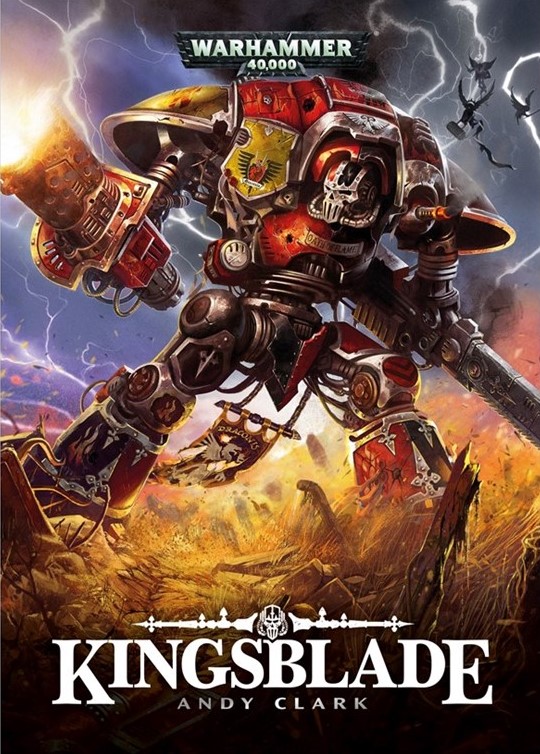
Kingsblade Cover

Publisher: Black Library (Paperback – 1 February 2017)

Series: Imperial Knights – Book One

Length: 365 pages

My Rating: 4.5 out of 5 stars

Amazon

Welcome back to my Throwback Thursday series, where I republish old reviews, review books I have read before or review older books I have only just had a chance to read.  In my latest Throwback Thursday post I look at an exciting novel about mecha fights in the Warhammer 40,000 universe with Kingsblade by Andy Clark.

I have been having so much fun with the Warhammer 40,000 books recently, especially in my Throwback Thursday columns, as I recently published reviews for Ghostmaker, Xenos, Malleus and Hereticus by Dan Abnett, and Deus Encarmine by James Swallow.  However, the fun is not over yet as I recently read the cool 2017 novel, Kingsblade by Andy Clark, who previously impressed me with his 2022 book, Steel TreadKingsblade, a lucky find I managed to pick up in a secondhand bookshop, was an outstanding read which frankly has one of the best Warhammer covers out there, as well as a great story to match it.

War is a certainty in the far future, and the Imperium of Man is constantly under threat, especially from the fell influence of Chaos.  When a planet falls, the Imperium have many forces that can be deployed to fight the invasion, but few armies are as feared or revered as the legendary Imperial Knights, giant, ancient suits of mechanised armour that support brave pilots of regal, knightly backgrounds.

When the Imperial world of Donatos falls to heresy thanks to the disruptive influence of the Word Bearers Chaos Space Marines, the Knights of the nearby planet of Adrastapol heed the call.  Leading five noble houses of Imperial Knights, as well as substantial forces from the Astra Militarum, High King Tolwyn Draconis hopes to swiftly end the insurrection and save Donatos’s soul.  However, when a great betrayal rips the very heart out of the king’s host and the flower of Adrastapol’s Knights falls, all hope looks lost.

As the battered remnants of the Imperial Knights attempt to recover, it soon becomes clear that the fate of both Donatos and Adrastapol will lie with two unblooded Knights Errant, Danial Tan Draconis and Luk Tan Chimaeros, both of whom are reeling from the actions of their parents.  On the run, outnumbered and unsure who to trust, Danial, Luk and their comrades need to find a way to strike back against the enemy especially as the World Bearers begin a massive unholy ritual, one that threatens everything.  But can these two young Knights defeat the enemy and redeem their world, or do the betrayals of their family and former comrades run too deep?

Kingsblade was an epic and incredible Warhammer 40,000 read by Clark that I had a ton of fun with.  Featuring a mecha-laden novel that contained awesome action sequence after awesome action sequence, this was a great addition to the wider Warhammer 40,000 canon and a must read for all fans of the franchise.

I had an amazing time getting through Kingsblade’s great story, especially as Clark clearly has a lot of fun fitting in as much action and mayhem as possible.  Starting with the classic Warhammer 40,000 war story, with the brave Imperial defenders arriving to save the world of Donatos, the narrative primarily focuses on several of the Imperial Knights who arrive, especially the young bloods Danial and Luk, who are thrust into the fires of war.  The first half of the book features the typical early battles and set-up you would expect, and Clark lays down some clever hints of what is to come.  Things of course take a turn for the worse after a massive betrayal, and the protagonists soon find themselves on the run, unsure of who to trust.  The major battle that follows this betrayal is pretty damn epic, especially as there is a real sense of desperation and confusion surrounding the characters, and the chaotic fallout of this pushes the protagonists in some intriguing new directions.  The second half of the novel sees the traumatised characters attempting to fight back whilst on the run, while also dealing with the many personal issues that have arisen.  Clark does a good job of blending the enjoyable action sequences with some intense character moments during this second half, and the powerful tale of camaraderie and honour that follows is one any Warhammer fan can get behind.  Everything leads up to the big, brutal and extended final battle sequence, as the characters find themselves wrapped up in a multi-sided fight to the death.  The action flies thick and fast during this last major confrontation, and the reader finds themselves on the edge of their seat the entire time, especially as there are some lethal fights and major risks to everyone involved.  The entire story comes together in a fantastic and enjoyable way, which also remains open for the sequel, and I absolutely powered through Kingsblade, especially in that epic second half.

I think that Clark presented this exciting and powerful story in a great way, and I honestly found myself pretty hooked the entire way through.  The faster pace of the story and the constant fun action sequences are very enticing, and I felt that Clark was able to balance this well with some universe building and clever character work to create an exceptional read.  The compelling range of different character perspectives is extremely effective, and I liked seeing the variety of insights and motivations that the various characters had, especially as that gives you some very deep and compelling insights into the mindset of the Imperial Knight characters.  I also liked the additional perspectives from some of the main antagonists, especially as it allowed Clark to highlight the various plots and subterfuges that the protagonists are about to walk into and attempt to disrupt.  However, the true highlight of Kingsblade is the battle sequences, especially when it comes to the Imperial Knights.  I already knew that Clark had some great ability when it came to showcasing vehicle on vehicle combat, but Kingsblade dials that up even further by showing the Imperial Knight mecha suits in action.  The action is always fast and ferocious, and you really appreciate just how crazy and brutal the fights involving the Knights are, especially as they face a range of deadly opponents.  The complex duels between rival Knight suits are particularly impressive, and you get the full sense of their intense fights thanks to Clark’s writing style, and every thrust, blast and explosion is recorded in epic detail.  I deeply appreciated how Clark wrote this epic story, and you are guaranteed to have an exciting and fun time as you get through this amazing book.

Kingsblade also proved to be a very fun addition to the wider Warhammer canon, as Clark dove into one of the more intriguing human sub-factions, the Imperial Knights.  I have always loved the Imperial Knights in Warhammer fiction, and I read a particularly good book about them last year (Assassinorum: Kingmaker by Robert Rath), that showed one of their feudal planets.  As such, I was very excited to see more of them in another book and Kingsblade delivered that in spades.  Not only does Clark perfectly showcase the over-the-top power of the Imperial Knights in combat (so much epic mecha combat), but there is an intriguing dive into the history and society surrounding this faction.  The blend of advanced technology and historical knightly values is particularly fun, and you really get a sense of what the knights believe and how they fight as the book continues.  This intriguing and compelling focus on Imperial Knight lore is expertly featured throughout the plot and I loved seeing the ritual, pomp and knightly codes helping to drive the protagonists forward.  I also thought Clark did a good job of introducing some of the general concepts and elements of the wider Warhammer 40,000 universe into this book, and you get a good sense of what is happening and the history surrounding the franchise.  Due to this, and the fact that the history of the Imperial Knights is explored strongly throughout the plot, I felt that Kingsblade would make a pretty good introductory novel to the Warhammer 40,000 universe, especially as it showcases just how fun and over-the-top the franchise can be.  I look forward to seeing how Clark expands upon this Imperial Knight lore in future books, especially if he balances it with some more awesome mecha-on-mecha combat.

The most moving and compelling parts of Kingsblade were the excellent characters that Clark introduced and featured throughout the narrative.  While there are a ton of brilliant figures utilised in the plot, most of the focus was on the younger characters of Danial Tan Draconis and Luk Tan Chimaeros, two rookie knights and best friends in their first war.  Clark does a wonderful job of setting both these characters up early in the plot, and the two friends have very different personalities, with Danial being a cautious and seemingly unready knight, while Luk is impatient and headstrong.  However, both characters are pushed to their absolute limit after the pivotal early events of Kingsblade’s narrative which result in Danial becoming king, while Luk is considered to be a heretical traitor.  This results in some outstanding character-driven plot, as Danial attempts to find his inner courage and sense of duty, while Luk is forced to redeem himself and his name after those he trusted the most turned on him.  Clark ensures both character arcs are pretty damn powerful, and they are woven into the large plot extremely well, ensuring that victory is only obtained after these figures finally get their acts together.  I really liked the wonderful and moving narrative that was wrapped around Danial and Luk, and it will be interesting to see how that alters further in the series.  The rest of the characters in Kingsblade are also really cool, and I particularly enjoyed seeing events through several of the Chaos character’s perspective, especially once separate factions emerge and go to war.  An overall epic group of characters that are seamlessly fitted into the wider tale.

Andy Clark continues to impress me with his outstanding Warhammer fiction work as his 2017 release, Kingsblade, proved to be another smash hit.  Perfectly blending intense action with cool universe elements and complex characters, Kingsblade was pure fun from start to finish and a real pleasure to read.  I had an epic time getting through this book and I cannot recommend it enough for all fans of the Warhammer 40,000 universe.  I will have to try and get a copy of the intriguing sequel, Knightsblade, and I cannot wait to see how Clark continues this compelling and powerful narrative.

Amazon

Throwback Thursday – Warhammer 40,000: Hereticus by Dan Abnett

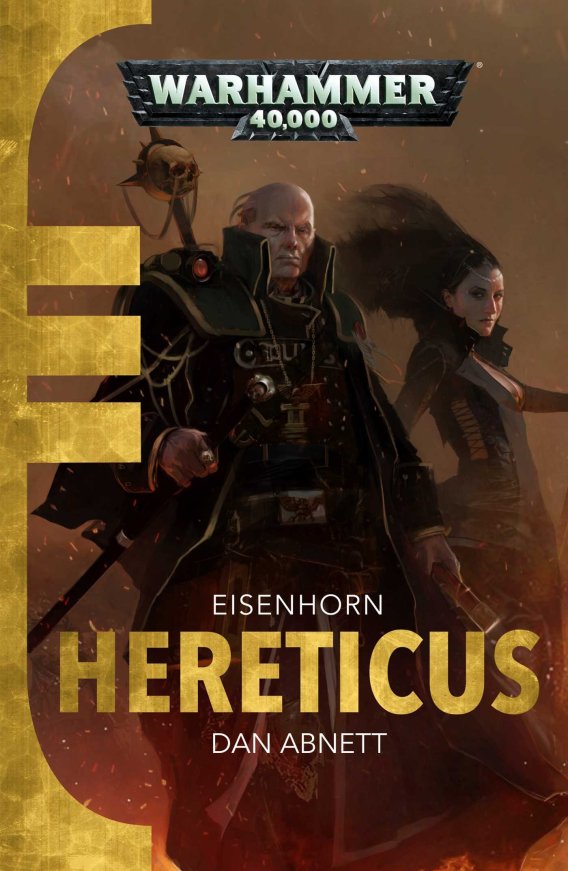
Warhammer 40,000 - Hereticus Cover

Publisher: Black Library (Audiobook – 30 July 2022)

Series: Eisenhorn – Book Three

Length: 9 hours and 48 minutes

My Rating: 5 out of 5 stars

Amazon     Book Depository

Welcome back to my Throwback Thursday series, where I republish old reviews, review books I have read before or review older books I have only just had a chance to read.  For this latest Throwback Thursday, I finish off the outstanding and iconic Eisenhorn trilogy by legendary Warhammer author, Dan Abnett, by reviewing the exceptional novel, Hereticus.

I have mentioned several times in the last few weeks that one of my absolute favourite authors of Warhammer fiction lately is the amazingly talented Dan Abnett, whose works have shaped a generation of lore and extended fiction.  I have really enjoyed several of the books in his excellent Gaunt’s Ghosts novels, such as First and Only, Ghostmaker and The Vincula Insurgency, which provide some captivating depictions of the common soldier in the Warhammer 40,000 universe.  However, based on what I have read so far, Abnett’s best series is the epic Eisenhorn trilogy, which follows titular character Inquisitor Eisenhorn as he attempts to protect humanity from a range of diabolical threats.  The first book, Xenos, served as an excellent introduction to Eisenhorn and his major supporting characters, while Malleus showed an older Eisenhorn as he attempts to unravel a massive conspiracy painting him as the villain.  I absolutely loved these outstanding novels and they both got a full five-star rating from me, and I immediately dove into the third and final book, Hereticus, as I really wanted to find how everything ended.

For over 150 years, Inquisitor Gregor Eisenhorn has loyally served the Imperium of Men, disrupting and ending multiple conspiracies and plots by heretics, daemons, and malicious xenos.  Throughout all this time, Eisenhorn has always tried to avoid the lure of the radical path that many of his fellow inquisitors tread, determined not to be corrupted by the forces he has sworn to destroy.  But desperation can drive even the best man towards the brink and Eisenhorn’s previous deal with a dark figure is coming back to haunt him.

Overseeing a Inquisitorial examination of the planet of Durer, Eisenhorn receives news that an old foe, one who cost him the life of a dear friend, is active on world.  Assembling his forces, Eisenhorn is unprepared for the full horror that awaits him, as his enemy unleashes an ancient evil capable of destroying worlds.  Facing tragedy and near death, Eisenhorn is forced to do the unthinkable and use foul rites to summon forth a greater evil in the form of the daemonhost Cherubael to survive.

Shocked and disgusted by his actions, Eisenhorn attempts to recover and atone for his mistakes.  However, before he can begin, his manor house is raided by a dangerous army of mercenaries and all his forces throughout the sector are brutally destroyed in an instant.  On the run with only a few loyal followers left, Eisenhorn needs to discover the identity of whoever is orchestrating his downfall before it is too late.  But to defeat his enemy, Eisenhorn is forced to dive deeper into heresy and call upon dark forces that are best left untouched.  Can Eisenhorn retain his sanity and soul, or is the price of his victory his own utter damnation?

Wow, just wow.  After how epic Xenos and Malleus proved to be, I knew that there was no way that I wasn’t going to love Hereticus.  However, I was unprepared for just how brutal and intense Abnett made this final book in the Eisenhorn trilogy, as Hereticus ended up being an exceptional read that perfectly ends his great series on a very high note.  Loaded with action, intrigue, and some amazingly complex characters, Hereticus gets another five-star rating from me, and this is honestly one of the best trilogies I have ever read.

Part of the reason why I enjoyed Hereticus so much is because it has an exceptionally epic story to it that really drags you in from the offset.  Set 50 years after the events of Malleus (150 years since the start of the series), Hereticus starts off big and never really slows down.  The book has a calamitous introduction that sees Eisenhorn and his comrades forced to confront a Chaos Titan which decimates them and forces Eisenhorn to call upon his captured daemonhost Cherubael.  This fantastic introduction not only perfectly continues the story from Malleus but also shows Eisenhorn’s progression towards radicalism as he uses his new knowledge in some pretty dark ways.  Following this introduction, which splits his main team up, the story continues strongly, as there is a major and extended battle sequence in the heart of Eisenhorn’s sanctum, which sees him forced out on the run.  Becoming a fugitive from new enemies, old foes, and the Inquisition itself, the rest of the novel is a very captivating and intense character-driven read that shows a desperate Eisenhorn continue to make radical decision after radical decision, all in the name of defeating his enemies, no matter the cost.  There are some extremely moving and powerful scenes scattered through the second half of the book, as Eisenhorn comes to terms with many of his long-running comrades, many of whom do not agree with his methods, as well as some deadly confrontations.  Everything leads up to a trippy and action-packed finale, as Eisenhorn finally faces down an old enemy.  While the ultimate confrontation is short and the main antagonist only has a brief appearance in the book, the real joy of the story is the hunt to find out who they are and what they are after, with a focus on investigation, intrigue, and ethics.  The conclusion leaves everyone extremely satisfied, and Abnett leaves the series open for follow-up, even if a ton of character-centric storylines are permanently closed by a series of deaths and destruction.

The author once again does an amazing job presenting the complex story contained within Hereticus and I have a lot of love for the writing style that Abnett utilised in this series.  Blending tense galaxy-spanning intrigue with the hunt for dark forces, massive mysteries, complex revenge plots, and a focus on the corruption of the spirit, there is a ton of fun for a lot of readers in this book, and I loved the elaborate conspiracy that was the fantastic focus of the plot.  I especially enjoyed the overall theme of Hereticus that saw Abnett try and bring a lot of storylines and character arcs full circle back to the original novel in the trilogy, Xenos.  The history of all the characters in the book, as well as multiple prior events, are essential parts of Hereticus’s plot, and I loved how the author was able to tie together a ton of compelling overlying storylines that really highlights the importance of the first two novels.  The primary storytelling method, a chronicle style from Eisenhorn’s perspective, adds a lot of power and flair to the overall book, especially as it enhances the character-driven aspect of the story and gives you some intriguing insights into the conflicted protagonist’s mind.  There are a ton of great scenes showcased as result of this first-person perspective, from multiple massive battles, to intimate conversations and even a very well-written psychic interrogation sequence.  Abnett has a great eye for detail and some of the resulting action sequences and unique locations are painted in such a way that the reader fully grasped every action or cool element of the setting.  This, and so much more, really helps Hereticus’ exceptional story shine through and I had so much fun seeing how this entire novel unfolded.

Like most of Abnett’s books, Hereticus can be read as a standalone novel, especially as the author does an exceptional job of recapping key events, characters, and relationships from the previous Eisenhorn entries.  However, to get the full emotional impact of epic narrative, I would strongly recommend checking out Xenos and Malleus first, as you really understand how the character has changed over the course of the series, as well as how well the storylines have continued.  I also felt that Hereticus proved to be a particularly good entry into the wider Warhammer 40,000 canon as Abnett continues to explore some of the most intriguing parts of this grim universe, including the dark cults that are constantly a threat to the Imperium’s stability and the Inquisitors who hunt them.  The fantastic dive into the different types of Inquisitors and their different ways of fighting the enemy is pretty cool and I loved seeing the various rivalries and discussions that eventuated, especially as Eisenhorn has an opinion on everything.  This book also takes the reader to a variety of unique locations within the Warhammer universe, with several unique planets becoming key settings for the plot.  I loved seeing the variety of worlds out there in this massive universe, and Abnett has fun tying the events of this book into some of the wider canon aspects of the franchise.  I would say that overall the Eisenhorn trilogy really is one of the best series to start reading Warhammer 40,000 fiction with, especially as you get a completely different and more elaborate story than the classic military fiction plots that make up the majority of the genre.

As always, I can’t go away from an Eisenhorn book without talking about the exceptional character work that Abnett brings to the table.  This is especially true in Hereticus, as Abnett brings so many compelling character arcs to a tragic and moving end, while also ensuring that his impressive protagonist is changed forever.

As you would expect, the focus of Hereticus is on protagonist Gregor Eisenhorn, who serves as the book’s primary narrator.  I mentioned during my previous reviews of these books that I have loved the complex and powerful story that Abnett has woven around Eisenhorn.  Starting off as a relatively innocent and uncontroversial Inquisitor who was just trying to do what is right, Eisenhorn has slowly slipped down the path of the radical by employing the methods and powers of his heretical foes.  Abnett has showcased this gradual fall perfectly in the first two books, and while he made some questionable decisions out of desperation in Malleus, you still believed that he could be redeemed.  Hereticus really has you doubt this as he begins to employ darker methods during this book, which not only cost him but impact the people around him.  However, this is not entirely his fault, as forces outside of his control drive him to do so.  Pretty much every mistake that Eisenhorn has made in his past seems to come back to bite him in Hereticus, and these events, and more, force him to make hard decisions to survive and defeat foes who are even worse than him.  While he does bad things, you can fully understand and appreciate why he feels he needs to do so, even if you don’t agree with them.  Despite these bad things, Eisenhorn remains a sympathetic character for most of the book, and his own realisation that what he is doing is wrong just makes the entire story that much sadder.  However, there is a layer of arrogance over this that makes you slightly concerned about Eisenhorn’s actions, and you’re never quite sure just how far he has truly fallen.  Abnett covers Eisenhorn’s overall character arc pretty damn perfectly, and while the author throws the protagonist’s decline into overdrive in this book, it felt pretty natural and showcases just how destructive desperation is as his good intentions lead him to hell.

On top of Eisenhorn, Hereticus features a bevy of compelling supporting characters who add their own complex spin to the story.  Many of the supporting characters from the first two books are once again featured in this third Eisenhorn novel, and I really appreciated how Abnett sought to bring many of their arcs and storylines full circle here.  Unfortunately for fans of the series, wrapping up their storylines results in most of the supporting character’s deaths or severe injury, and quite a substantial number of supporting figures from the first two books have their final appearance here.  While I won’t go into too much detail, several of these deaths are pretty damn tragic, especially after they follow on from some noble self-sacrifices or major character moments.  I was honestly shocked at how brutal Abnett was when it came to killing off his supporting characters, but all of these instances really worked in the context of the story and ensured that Hereticus ended up being particularly memorable.  Before these major deaths, though, the author dives into the powerful relationships that each of these supporting characters has with Eisenhorn, and there are some deeply emotional moments scattered through, especially as each of them have their own opinion about Eisenhorn’s recent actions and whether he has gone too far.  Watching his oldest friends become disgusted or outraged by his actions really hammers home how far Eisenhorn has fallen, especially as he drags several characters down with him.  Throw in some outstanding central antagonists, all of whom have a complex history with Eisenhorn, and some intriguing cameos from the previous novels, and this was an exceptionally character rich novel designed to hit you in the feels.

As with all of Abnett’s books to date, I grabbed the audiobook version of Hereticus, which was once again an exceptional way to enjoy this amazing novel.  Coming in at just under 10 hours and featuring the impressive narration of Abnett’s go-to audiobook narrator, Toby Longworth, this format was an excellent way to enjoy this book, and I managed to power through this entire story in no time at all.  Longworth really brings the entire story to life with his excellent narration, and he makes sure to infuse all the characters with a ton of personality, while also tailoring their voices to match their history and physical (or metaphysical) attributes.  I also thought that several of the best scenes of this book, including some desperate battles, a cool interrogation scene, and some particularly poignant character interactions, were made even more epic in this format, as the exceptional acting from Longworth showcased them in a way they truly deserved.  I was utterly enthralled the entire way through Hereticus’s audiobook and this was easily the best way to experience Abnett’s compelling tale.

Overall, I felt that Hereticus was a pretty amazing book and a suitably epic finale to Dan Abnett’s original Eisenhorn trilogy.  Bringing together a powerful story with some unique Warhammer 40,000 elements and an exceptional dive into the mind of a fallen inquisitor, Hereticus was utterly addictive and ended up being one of the best Warhammer books I have ever read.  I was really impressed with how Abnett concluded this incredible trilogy, and I felt that Hereticus was an excellent final entry that tied together some of the complex storylines from the first two books.  I cannot recommend this entire trilogy enough; it truly is one of the cornerstones of Warhammer 40,000 fiction.  I look forward to reading more from Abnett in the future, especially as there are several spin-offs associated with this trilogy, as well as a recently released fourth Eisenhorn book in The Magos.  However, I think I will try and get through some Gaunt’s Ghosts books first, before diving back into Abnett’s Inquisitor stories, although if I ever want a powerful Warhammer thriller, I know where to look.

Amazon     Book Depository

WWW Wednesday – 1 February 2023

WWW Wednesday is a weekly meme hosted by Taking on a World of Words, where bloggers share the books that they’ve recently finished, what they are currently reading and what books they are planning to read next. Essentially you have to answer three questions (the Three Ws):

What are you currently reading?
What did you recently finish reading?
What do you think you’ll read next?

So, let’s get to it.

What are you currently reading?

Downfall by Louise Carey (Trade Paperback)

Downfall Cover

I have just started reading the amazing science fiction thriller, Downfall by Louise Carey.  The third and final book in Carey’s debut Inscape series, Downfall follows on from the fantastic books Inscape and Outcast and follows a small group of cyperpunk rebels as they attempt to save an entire city from the malign control of an evil corporation.  I have made a descent amount of progress on Downfall so far and it is proving to be an excellent and exciting read that perfectly follows on from Outcast’s great cliffhanger ending.  I am very excited to see how this entire trilogy ends and it should end up being an exceptional overall book

Amazon     Book Depository


Warhammer 40,000: Hereticus by Dan Abnett (Audiobook)

Warhammer 40,000 - Hereticus Cover

After how epic the first two books in Dan Abnett’s incredible and iconic Eisenhorn trilogy turned out, there was no way I could leave this series unfinished, so I just started listening to the third and final book Hereticus.  An intriguing and powerful conclusion to the complex stories told in Xenos and Malleus, Hereticus shows Inquisitor Eisenhorn’s next major adventure, one that will tip him over the edge and make him the very thing that he has sworn to fight.  I have made a fair bit of progress on this book so far, and I am absolutely loving it, especially after that intense and heartbreaking opening sequence.  I have no doubt that the rest of Hereticus is going to be outstanding and I look forward to seeing just how far the protagonist falls.

Amazon     Book Depository

What did you recently finish reading?

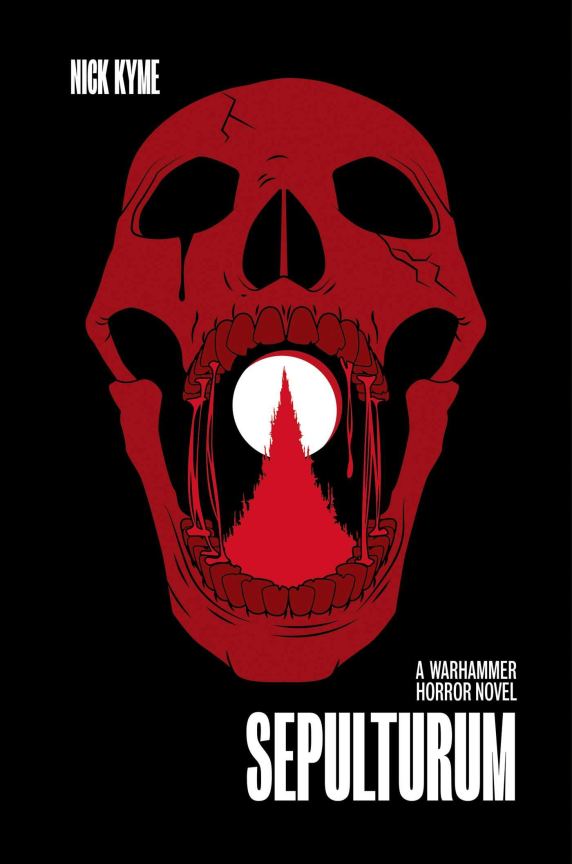
Warhammer 40,000: Sepulturum by Nick Kyme (Audiobook)

Warhammer 40,000 Sepulturum Cover

A zombie horror book in the Warhammer 40,000 universe, need I say more.

Amazon


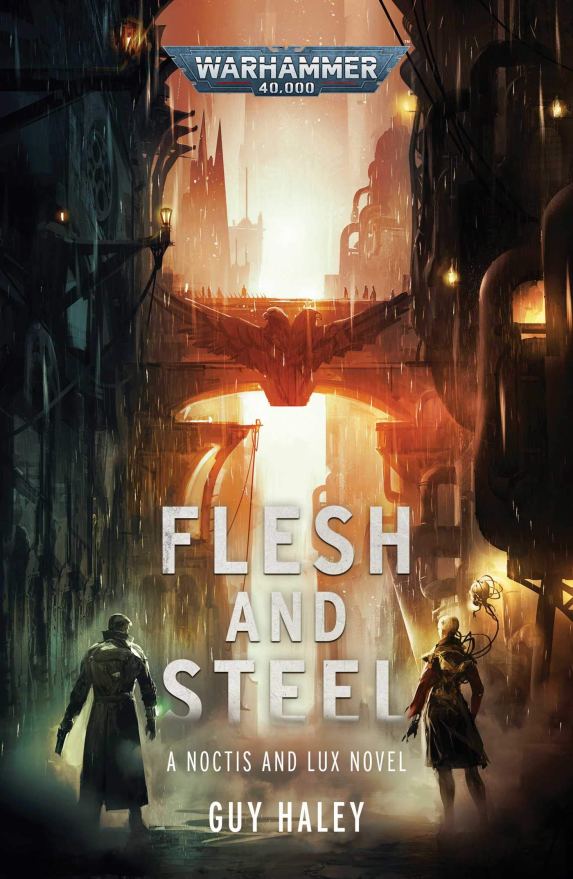
Warhammer 40,000: Flesh and Steel by Guy Haley (Audiobook)

Flesh and Steel Cover

An excellent, thrilling and deeply moving Warhammer Crime novel that I absolutely flew through.  Review to follow soon.

Amazon


Warhammer 40,000: Kingsblade by Andy Clark (Paperback)

Kingsblade Cover

A fantastic novel that focuses on mecha-on-mecha fighting in a major Warhammer 40,000 battlefield. Kingsblade was a very fun and exciting read that I am planning to focus in my next Throwback Thursday review.

Amazon

What do you think you’ll read next?

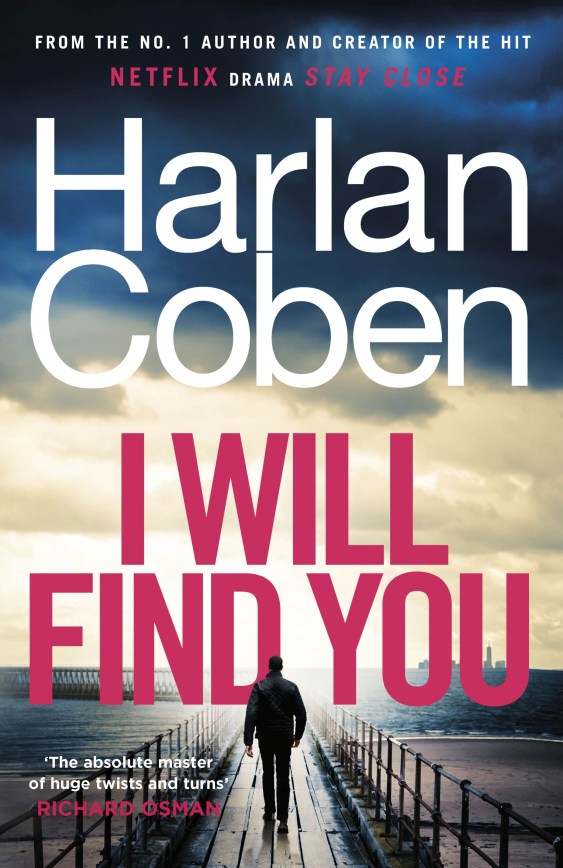
I Will Find You by Harlan Coben

I Will Find You Cover

Amazon     Book Depository


That’s it for this week, check back in next Wednesday to see what progress I’ve made on my reading and what books I’ll be looking at next.

Warhammer 40,000: Sepulturum by Nick Kyme

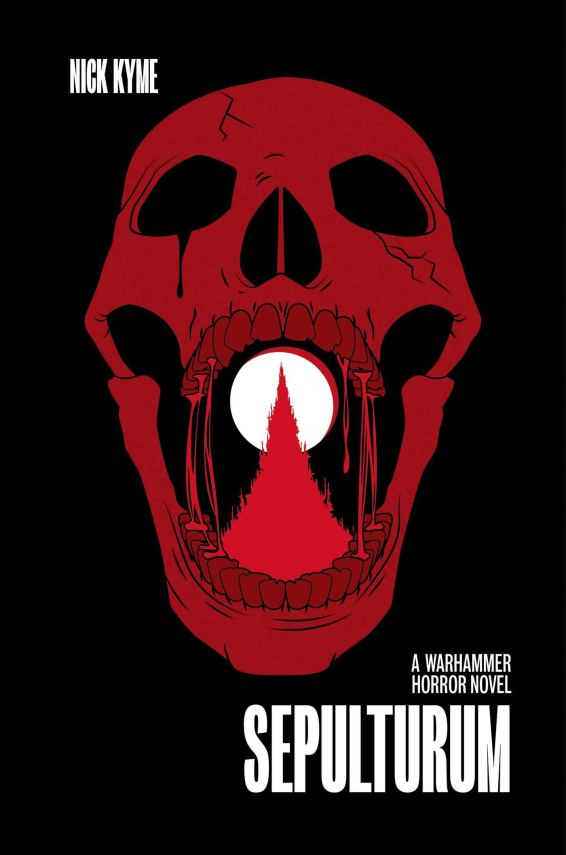
Warhammer 40,000 Sepulturum Cover

Publisher: Black Library (Audiobook – 3 March 2020)

Series: Warhammer Horror

Length: 7 hours and 9 minutes

My Rating: 4.25 out of 5 stars

Amazon

My obsession with Warhammer continues as I check out the grisly Warhammer Horror book, Sepulturum by Nick Kyme.

Over the last couple of years, I have had a lot of fun diving down into the epic Warhammer 40,000 universe.  This universe features so many epic and unique stories and characters, and I love all the fantastic tales that can be told across the genres.  One sub-genre of Warhammer fiction I’ve only had a little experience with so far is the Warhammer Horror books which, as the name suggest, blend gruesome horror elements with the already grim Warhammer universe.  I have so far enjoyed one Warhammer Horror book, the creepy and clever The Bookkeeper’s Skull by Justin Hill, which was brilliantly written and showcased.  I have been meaning to check out some other horror related Warhammer books, and when I saw that there was a zombie-centric Warhammer book, I knew it was something I would have to read.  This book is Sepulturum, a compelling read written by new-to-me author Nick Kyme.  Kyme is a veteran Warhammer writer, and I’ve got a couple of his other books sitting on my shelf already waiting for my attention.  However, my first experience of him was through Sepulturum, which proved to be a really fun and interesting adventure.

Something dark and deadly, something which hungers for blood and flesh, is stirring in the low-hive of Blackgheist.  The only person who can stop it is Inquisitor Morgravia Sanctus of the Ordo Sepulturum, whose investigation in Blackgheist revealed a terrible presence.  However, before she could act, something happened that destroyed her memories and left her scarred, broken and hunted.  Now with only one acolyte left, Morgravia attempts to find a psyker capable of restoring her mind to let her figure out what is chasing her and what their plans are.

Meeting with a broker from the criminal underworld, Morgravia believes that she has finally found the solution to her problems.  However, before she can proceed, a terrible attack is launched across Blackgheist which no one is prepared for.  The people of the hive have been turned into something violent, no-longer alive, and desperate to devour everything they come across.  These creatures are soon swarming across Blackgheist, destroying all before them and leading to untold chaos and destruction.

Soon, only small bands of survivors are left who hope to escape from the horrors surrounding them.  But as Morgravia leads one such group to safety, she soon discovers that not everything is as it seems.  Other deadly monsters are hunting throughout Blackgheist, while deranged cultists take the opportunity to seize power for themselves.  The truth behind the terrible events unfolding lies only within Morgravia’s mind, but is she truly prepared for the horrific secrets that are about to be unleashed?

Sepulturum was a fantastic and dark read that proved to be an outstanding addition to the Warhammer Horror range.  Kyme has produced a fast-paced and gruesome zombie story in an amazing novel that combines a clever story with some excellent horror elements.  The story itself is a fun zombie narrative as several characters attempt to survive a sudden onslaught of deranged and hungry former humans overrunning the city.  The story primarily focuses on the damaged Inquisitor Morgravia and a couple of her companions as they attempt to escape the horrors unleashed upon them and find its cause, although a second storyline revolves around a normal labourer, Cristo, as he tries to get his daughter to safety.  Both groups first encounter the zombie creatures in some pretty horrifying situations that leave them badly shaken and alone, and they are forced to navigate through the rest of the chaos in a daze.  Their subsequent attempts to evade the zombie creatures lead them further into danger, especially as there are other dark forces out in the city that provide additional awesome complications and conflicts, and there are betrayals, insanities and the feeling that the zombies are only a small part of the larger picture.  Everything leads up to some pretty disturbing final sequences that are loaded with brutal twists and major confrontations, especially as nobody is who they seem, and there is high need of some bloody self-sacrifice.  Readers will come away pretty satisfied with how the story ends, with horror fans no doubt liking the high body count, and the potential hint of a continuation in the future.

I loved how Kyme set out the story in Sepulturum, and it proves to be an outstanding read about survival and desperation in a Warhammer city.  The main setting for Sepulturum is already pretty gritty and unsavoury before the zombies, but everything only gets worse as the story unfolds.  The slow reveal of the zombie creatures is handled well, and I loved the slow-burn panic that sweeps the city.  The blend of character perspectives works well throughout the story, and while Morgravia and Cristo prove to be the main narrators, several other supporting cast members, often in Morgravia’s party, give an excellent alternative edge to the narrative while adding some fun moments to it.  Cristo’s separate storyline also works well in concert with the main narrative surrounding Morgravia and her survivors, and it was interesting to see their two stories play out simultaneously without the groups ever meeting.  Kyme has a lot of fun setting out some excellent elements of the story, and I particularly loved the attention to detail when it came to some of the fight scenes and the horror creatures the protagonists have to deal with.  There are also several great twists and reveals towards the end of the book, and while some are well foreshadowed, there is also one genuine surprise that I thought was pretty damn brilliant.  I did think the big conclusion ended up being a little to over-the-top metaphysical for its own good, but it was most a good ending with a fun last-minute inclusion from a whole other faction.  This ended up being a pretty good self-contained, standalone read within the wider Warhammer 40,000 universe, and not too much pre-knowledge of the Warhammer universe is needed to fully appreciate it, especially with the zombies there.  However, fans of the franchise will have the best time with it, and I felt this was a great inclusion into the wider Warhammer universe.

Naturally the real highlight of Sepulturum is the zombies, and it is always fun to see how Warhammer stories turn out when combined with genres like horror, especially as this universe already has some terrifying and shocking elements to it.  The zombies in Sepulturum are interesting inclusions to the story, especially as Kyme does a good job of brutally introducing them and then unleashing them upon a wider world.  While some members of the Warhammer 40,000 universe do have some concepts of what a zombie is, the vast majority do not, so the inherent panic and horror at what the creatures are is pretty crazy, and you have to love the reactions of the people who don’t know what they are dealing with.  All the zombie scenes are pretty ferocious, and the unstoppable horde coming at you is always pretty freaky to deal with.  I did quite like how the zombies themselves weren’t exactly what you thought they were from a Warhammer 40,000 lore perspective, and their presence heralds another threat, with some creepy alternate creatures.

In addition, Kyme also enhances other dark elements of the Warhammer 40,000 universe and uses that to increase the horror feel of the book.  The author affects a brooding and repressive tone across the entire book, and all the characters are caught up in intense feelings of despair and horror at what they are experiencing and the creatures they are encountering.  Kyme also introduces some gruesome body modification elements that work well with the zombies to create a terrifying read.  Body horror, including some of the more shocking elements around servitors, argumentation and other body modifications, is always close to the surface of any Warhammer story, but it was particularly bad here, especially as some characters are dissected or have elements contained within their bodies that Kyme showcases in distressing detail.  A lot of the horror is also derived from the craziness within people’s minds, as many of the characters break down in different ways after the initial zombie attack.  Watching characters go insane in various ways, whether through suicidal thoughts or with bloody religious fervour, really adds to the overall horror elements of the book, and I felt that Kyme had the right balance between outer and inner horror throughout this book.  The combination of the darker tone, zombies and other cool horror elements, really fits into the Warhammer universe well and I enjoyed the dark tale that Kyme told around it.

As is my usual practice, I ended up listening to Sepulturum on audiobook rather than seeking out a physical copy.  As always, it proved to be pretty epic.  I always love how well the audiobook format works to enhance the fantastic stories in the Warhammer universe.  This was especially good with Sepulturum, as the audiobook version helped to bring out some darker elements of the story and make Sepulturum feel even spookier.  Narrated by veteran audiobook narrator Antonia Beamish, who has worked on several Warhammer Horror books previously, the audiobook ensured that the darker tone and desperation of the characters really came through.  You really get a sense of the characters’ panic and despair through Beamish’s great narration, and I deeply appreciated how gruesome and ghastly all the horror details sounded when she described them.  The additional voices she used for several of the characters were pretty good as well, and you end up getting a good sense of each character’s personality, especially during the terrible encounters they go through.  Beamish’s voice work really helps to bring this entire audiobook together, and this ended up being an outstanding way to enjoy Sepulturum.  With a run time of just over seven hours, you can power through this audiobook quickly, and I deeply enjoyed listening to this gory book in this format.

The Warhammer universe offers further treasures as Nick Kyme has some zombie fun in Sepulturum.  A fantastic addition to the Warhammer Horror subseries, Sepulturum takes some great characters on a particularly dark and shocking adventure loaded with all manner of horror.  It’s an excellent and exciting read for fans of both Warhammer and horror fiction.  I deeply enjoyed this book and can’t wait to try out more awesome Warhammer Horror in the future.

Amazon

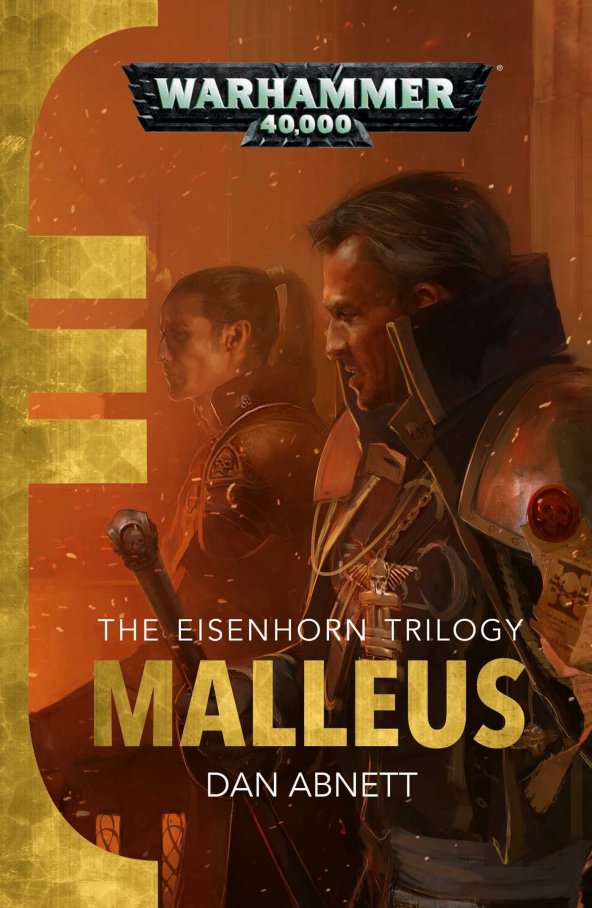
Throwback Thursday – Warhammer 40,000: Malleus by Dan Abnett

Warhammer 40,000 - Malleus Cover

Publisher: Black Library (Trade Paperback – 27 December 2001)

Series: Eisenhorn – Book Two

Length: 10 hours and 13 hours

My Rating: 5 out of 5 stars

Amazon     Book Depository

Welcome back to my Throwback Thursday series, where I republish old reviews, review books I have read before or review older books I have only just had a chance to read.  For this week’s Throwback Thursday, I continue my extensive dive into the Warhammer 40,000 universe with the awesome, galaxy-spanning thriller, Malleus by Dan Abnett.

For one of my latest Throwback Thursday reviews, I took a look at one of Dan Abnett’s iconic Warhammer 40,000 novels, Xenos, the first book in the incredible Eisenhorn trilogy.  This fantastic book, which followed Inquisitor Gregor Eisenhorn, a hunter of dark influences in the Imperium of Man, was a clever and compelling read that saw Eisenhorn face off against a range of terrible foes who seek to destroy humanity from within.  I had an outstanding time with Xenos, which really showcased Abnett’s skill as an author (I have also really enjoyed his Gaunt’s Ghosts novels, including First and Only, Ghostmaker and The Vincula Insurgency).  Indeed, I enjoyed it so much that I quickly decided to continue the Eisenhorn trilogy by listening to the second book in the series, Malleus, another exceptional read that takes its protagonist on another dark and engrossing adventure.

In the 41st Millennium, the dark enemies of mankind, whether they be heretical, daemonic, or alien in nature, continue to try and destroy the Imperium of Man from within.  It falls to dedicated inquisitors, such as Gregor Eisenhorn, to battle their malign influences by whatever means they deem necessary.  But what happens when the very institutions that Eisenhorn has long fought to uphold are turned against him?

Whilst battling against deadly alien influences on an isolated planet, Eisenhorn is made aware of certain allegations against his character which suggest that he has been corrupted by the influence of Chaos.  Initially planning to ignore the rumours and continue his vital work safeguarding humanity, his plans are put on hold when a terrible act of destruction unfolds on the planet of Thracian Primaris.  Investigating its causes, Eisenhorn is thrust into another deadly conspiracy, one tied to a foe he last encountered 100 years before, the daemonhost Cherubael.

Chasing after Cherubael and his minions, Eisenhorn attempts to discover what their latest unholy plan is.  However, his investigation reveals that Cherubael is just a pawn, and that the true mastermind of the plot he has uncovered may be a fellow inquisitor.  However, before Eisenhorn can find and confront them, he himself is declared a heretic and renegade by puritan members of his order, forcing him to flee.  Chased by the members of the Ordo Malleus, as well as other deadly hunters loyal to Imperium, Eisenhorn must work outside the bounds of his usual authority to prove his innocence and find the true culprits.  But to defeat his enemies, Eisenhorn may be forced to cross a dangerous line and become the very thing he has sworn to destroy.

Damn, Abnett was on a major roll when he wrote the Eisenhorn novels, as the second book, Malleus, is getting another five-star rating from me.  Brilliantly combining a taut and intrigue-laden plot with the darkest elements of the Warhammer 40,000 universe, Malleus is an addictive and powerful read that proves near impossible to stop listening to.

Malleus has an incredible story that I found to be pretty damn addictive.  Set 100 years after the events of Xenos, Malleus continues to follow Inquisitor Eisenhorn as he investigates several malign cults and figures throughout his sub-sector of space.  The story soon ties into some of the lingering storylines from Xenos as the daemonhost Cherubael makes another appearance, framing Eisenhorn as a heretic.  After a massive and suitably destructive series of events, Eisenhorn is thrust into a whole new investigation, trying to finally hunt down the figures that vexed him during the events of Xenos.  Traversing the sector in pursuit of Cherubael and other rogue inquisitors, Eisenhorn finds himself thrust into battle after hopeless battle, and his constant losses war with his determination to finish the case.  The protagonist faces several major hurdles towards the middle of the book, including capture and imprisonment by a fellow inquisitor for false crimes.  Eventually escaping, Eisenhorn spends much of the book as a fugitive hunted by loyalist forces, which is an exciting new element that Abnett plays to full effect to enhance the plot.  The overarching mystery/conspiracy plot of the book comes together extremely well, and I loved the outstanding investigation angle that follows as Eisenhorn desperately tries to find the evidence that not only ends the threat but exonerates him.  This hunt for answers is actually set over a substantial period of time, mainly due to the delays associated with space travel, but this only increases the power of the plot as you witness Eisenhorn lose years of his life being hunted.  Everything leads up to a massive confrontation with plenty of bloody battles and dangerous decisions that leave several fantastic characters dead or damaged.  The ultimate conclusion is pretty impressive, especially as Abnett really starts to showcase his protagonist’s inevitable fall from grace here, and he leaves the book on a particularly dark note that was so damn awesome.

Just like with Xenos, Abnett has a fantastic writing style that really helps to enhance Malleus’s narrative and make the book very addictive and exciting.  Perfectly utilising an excellent chronicle style that allows you to see inside Eisenhorn’s head, you are swiftly drawn into the complex plot.  Abnett keeps up a swift and intense pace the entire way through, and you barely have a moment to stop and breathe before the next intriguing event takes over.  The blend of intrigue, Inquisition politics, sector-spanning conspiracies, complex character development, unique Warhammer concerns, and impressive action is a heady mix and you get really get caught up in the hunt for the antagonists and Eisenhorn’s fight to prove his innocence.  I loved how intense and deadly some of the crazy battle scenes got and Abnett has great skill at showcasing his characters in mortal danger.  His attention to detail also results in some breathtaking sequences, and I was really impressed by that epic parade sequence, especially its ultra-chaotic ending.  Abnett also takes the time in Malleus to set up some future storylines and alternate books, with some fun hints at novellas/short stories you should check out, while also quickly introducing his next major protagonist, Ravenor.  All these brilliant writing elements, and more, really help to drag you into this elaborate narrative, and I deeply enjoyed the more intrigue-focused stories that are the hallmark of the Eisenhorn books.  A worthy and powerful sequel to Xenos that really showcases the awesome characters and continues the outstanding and elaborate storylines.

I really loved the elaborate Warhammer 40,000 elements that Abnett featured within Malleus as the author dives right into the heart of the Inquisition and their battles.  Just like with Xenos, you get a great understanding of the various internal threats that the Imperium faces in this universe, as Eisenhorn attempts to combat various conspiracies and threats.  However, there is also a much deeper look at the inner workings of the often hidden Inquisition Ordos, especially as Eisenhorn is forced to work against the factions associated with them, including the Ordo Malleus, who think he has been compromised.  The ensuing hunt for answers leads the protagonist, and by extension the reader, on a mighty chase around various unique planets in the Imperium, including Cadia before the fall, and Abnett has a lot of fun exploring the intriguing elements associated with these locations, as well as the general lore surrounding inquisitors, daemons and more.  I did find it interesting that one of the major McGuffins of the book, the mysterious pylons of Cadia, ended up seeming a little more important in hindsight after the 13th Black Crusade, and you have to wonder if the antagonist’s villainous plan didn’t actually have some merit.  I felt that this was a particularly awesome Warhammer 40,000 book and I deeply appreciated how the universe’s unique elements and lore were able to seamlessly support the elaborate tale that Abnett wrote here.  Due to Abnett’s detailed and compelling writing style, new Warhammer readers could easily start their exploration of the franchise with Malleus and get a rather good idea of the universe.  However, I would really recommend starting with Xenos, as you get a much better introduction to key details and characters there.  An overall exceptional read that makes full use of the massive, extended setting.

A highlight of any Abnett book is always the outstanding and highly complex characters, and Malleus has those in spades.  The focus is once again on series protagonist and narrator, Gregor Eisenhorn, who grows as a character with each passing adventure.  I really liked how Abnett portrayed Eisenhorn in Malleus and his compelling mission for justice and redemption is pretty intense.  The Eisenhorn here is a different creature to that in Xenos, especially as, after 100 additional years in the Inquisition, he is a lot more experienced and skilled in his work.  Now commanding a small army of followers, Eisenhorn has different methods and resources than before, but the same determination, loyalty and kindness (at least compared to other inquisitors) is still there.  However, Malleus sees Eisenhorn go through some major battles, both mentally and physically, as he is forced to confront an enemy within his own order while defending his own methods and character.  Watching him declared a heretic by his fellow inquisitors is pretty brutal, and Abnett throws in a heartbreaking prison scene to keep the readers intrigued.  These events, coupled with some personal losses, and the continued presence of beings far more powerful than him, force Eisenhorn to make deals and cross lines he really shouldn’t.  I love how each of the Eisenhorn books show the protagonist’s slow fall towards radicalism, and Malleus is an interesting starting point for that, as you understand why Eisenhorn is forced to go down this route.  While he ends the book with most of his humanity and integrity intact, that brilliant final scene shows that he is getting awfully comfortable with his feet over a line he previously feared, and I cannot wait to see how far he falls in the next Eisenhorn novel.

On top of Eisenhorn, Abnett features a pretty awesome collection of supporting characters who assist the inquisitor in his investigation and they each add their own distinctive personality to the narrative.  There is a good continuation of character arcs from the first book as several of his followers from Xenos make a return here, including the entertaining Savant Aemos, former Arbites investigator Fischig and his dedicated psychic blank Bequin.  Each of them is a little older, wiser and more familiar with the hardships of being an inquisitor’s acolyte, and I liked the stronger relationships that developed amongst them, particularly Bequin, who really comes into her own in this book as a veteran.  There are several interesting new characters added as well, such as the bounty hunter Nayl or brash pilot Medea Betancore (replacing her father Midas), and I felt that their distinctive personalities added a fun and entertaining edge to the narrative.  I was surprised that new character Gideon Ravenor, who goes on to get his own spinoff series, only had a relatively small appearance in this book, as I figured he would be a pretty major character to get his own story.  Still, he gets a good introduction here and it will be interesting to see how his arc plays out in the future.

Malleus also features several intriguing antagonists, each of whom test Eisenhorn and his colleagues in different ways.  While there are the usual array of cultists, aliens and other creatures, most of the antagonists in this novel prove to be other inquisitors, who are either working on their own radical plots or who believe that Eisenhorn is the true heretic who needs to be stopped.  This adds a very interesting dynamic to the story and it was fascinating to see the varied philosophies and plots amongst the rival orders and factions.  I did find it interesting that the main villain of the story, a mysterious inquisitor acting from the shadows, only had a very minor appearance in the book, and while you feel his presence, a bigger appearance from him might have been in order.  However, this character is more than made up for by his principal minion, the daemonhost Cherubael, who returns after his fantastic appearance in Xenos.  Cherubael is a brilliantly sinister character who steals every single scene they are in thanks to their menacing monologues and intriguing insights.  The outstanding obsession he forms with Eisenhorn is a great deal of fun and I loved seeing this evil figure toy with the inquisitor and force him to go to great lengths to defeat him.  Abnett really knows how to write an outstanding character, even in a limited amount of time, and it will be fascinating to see what happens to these characters in the next Eisenhorn book.

I of course chose to listen to Malleus on audiobook, as it is my preferred way of enjoying great Warhammer books, and I was not disappointed with how it turned out.  This fantastic format once again deeply enhanced the quality of the story and you can practically see the awesome battle scenes and other breath-taking elements of the wider Warhammer 40,000 universe.  Narrator Toby Longworth, who is the go-to narrator for all of Abnett’s Warhammer audiobooks, does another outstanding job with Malleus, and I loved how he was able to keep the pace of the production going.  He also has an outstanding voice that really conveys the dark and dangerous nature of the universe, while also perfectly bringing the characters to life.  I deeply appreciated how Longworth made sure to utilise the same character tones that he previously featured in Xenos here, and it gave the Malleus audiobook a great sense of continuation.  All the new characters are also given excellent voices, and I loved how awesome he made them sound, especially the more supernatural or alien beings that the protagonist comes across.  I was frankly hooked on this audiobook from the very start, and it is an exceptional way to enjoy this epic narrative.  With a run time of just over 10 hours, I managed to power through this audiobook very quickly, and this is definitely the best format for the Eisenhorn series.

Dan Abnett continues to showcase why he is one of the absolute best Warhammer authors out there with the second book in his superb and beloved Eisenhorn trilogy, Malleus.  Featuring a powerful and incredibly captivating narrative of conspiracy, heretics and desperation, Malleus takes Abnett’s compelling protagonist on an even darker journey of despair, compromise and hard choices.  Brutal, intense and impossible to put down, Malleus is easily one of the best Warhammer books I have ever read, and I cannot get over how exceptional it was.  A very highly recommended book, I plan to check out the third and final Eisenhorn book soon as I can to see how this epic series ends.

Amazon     Book Depository

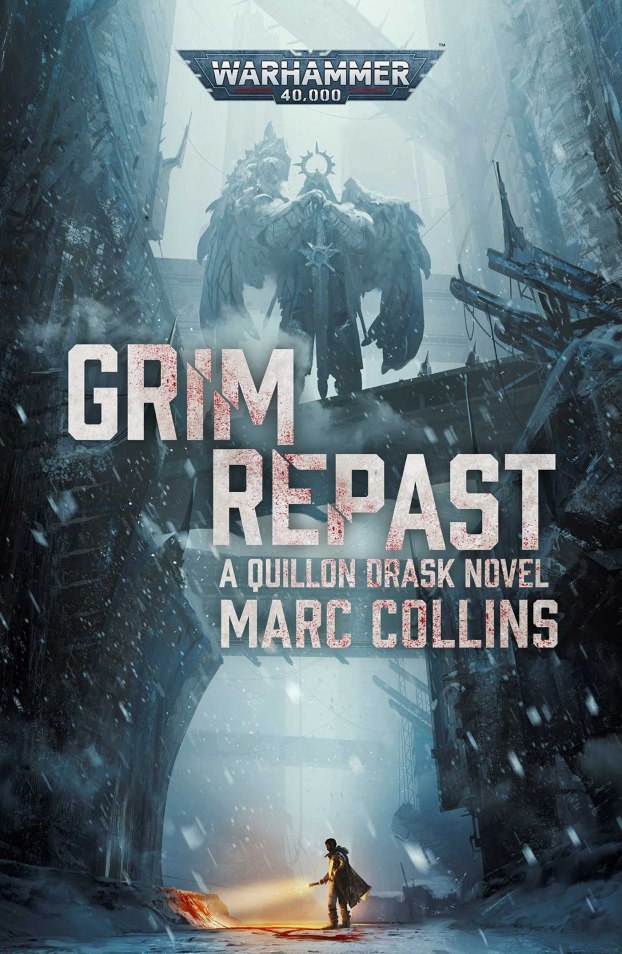
Warhammer 40,000: Grim Repast by Marc Collins

Warhammer 40,000 - Grim Repast Cover

Publisher: Black Library (Audiobook – 25 September 2021)

Series: Warhammer Crime

Length: 9 hours and 52 minutes

My Rating: 4.5 out of 5 stars

Amazon     Book Depository

Prepare for a gruesome and dark murder mystery novel in the gritty Warhammer 40,000 universe with the incredible and awesome Warhammer Crime novel, Grim Repast by Marc Collins.

I have made no secret of the fact that I am currently in the middle of a big Warhammer reading frenzy, having recently reviewed several awesome books, including two novels in my last Throwback Thursday posts (Xenos by Dan Abnett and Deus Encarmine by James Swallow).  However, I am still not done with the tie-in books in this very cool franchise as I have just finished another outstanding read, this time a book which is part of the Warhammer Crime sub-series.

The Warhammer Crime books are a fantastic and captivating series which, as the name suggests, blends crime fiction storylines with the epic Warhammer 40,000 universe.  All set within the tortured and sprawling human city of Varangantua, these great novels tell a range of entertaining and complex crime stories, including dark murder mysteries and elaborate thrillers, which make great use of the gothic futuristic setting.  I have so far enjoyed two Warhammer Crime entries, Dredge Runners and The Wraithbone Phoenix by Alec Worley, both of which were pretty epic reads.  These initial awesome reads really sold the Warhammer Crime series to me, and I have been interested in enjoying another entry.  I ended up choosing the great sounding read, Grim Repast, by rising Warhammer author Marc Collins.  One of Collins’s first full-length novels, Grim Repast is an exceptional read with one of the darkest crime narratives I have ever had the pleasure of reading.

“This city eats men….”

Veteran probator Quillon Drask thinks that he has seen all the dangers, depravities and villains that Varangantua has to offer, but he is about to discover a whole new level of horror.  Already traumatised and ostracised after his last lethal case and the betrayal that accompanied it, Drask’s first new investigation is not the simple job he was hoping for, as a body has been found in the dying district of Polaris.  The victim, a businessman on the wrong side of town, has been gruesomely mutilated, the implications of his injuries have frightening implications.

As more bodies are discovered, Drask finds himself chasing after a deadly killer who murders and dismembers without compunction and who has a sudden obsession with tormenting Drask.  Forced to play a deadly game that uncovers the corruption of his own organisation and sets him against the city’s elite, Drask finds himself alone and afraid against an enemy he doesn’t understand.  Only his twisted insights into the criminal mind, as well as the lessons of his career and devious dead mentor, offer the answers that he needs to solve the case and stop the killer.  However, not even Drask’s dark mind can comprehend the true horrors that lie beneath his city, one that connects to Varangantua’s past and a dangerous hunger that has always controlled people like him.

Wow, Marc Collins really came out swinging with this epic and outstanding Warhammer Crime entry.  Grim Repast is probably one of the best pure mystery novels set in the Warhammer universe that I have so far read, and I loved how seamlessly Collins was able to blend a dark, psychological crime fiction narrative with the grim and repressive atmosphere of a Warhammer 40,000 city.

Collins has cooked up a pretty wicked story for Grim Repast, which brings together multiple elements from across the genres to really highlight just how epic and complex a Warhammer story can be.  Following the compelling and damaged protagonist and narrator Probator Quillon Drask through the deadly streets of Varangantua as he chases after a lethal serial killer, Grim Repast is first and foremost a crime novel, and one that really grabs the reader’s attention.  Coming off as a dark psychological thriller with classic noir detective elements to it, the protagonist is forced to delve into the darkest heart of his massive, gothic city when he investigates several connected murders whose victims have been butchered in inventive and dark ways.

Collins sets up the case extremely well and then adds some intriguing complications to it where Drask is forced to investigate against the opposition of his bosses and their corporate controllers.  Bringing together a ton of character growth, disturbing developments in the murder case, as well as some fun action as Drask comes face-to-face with the killer in disguise, the plot moves quickly, and you are soon very hooked on finding the killer and the people pulling the strings behind them.  Forced to contend with the interference of a giant corporation, the protagonist finds himself in the middle of a dark conspiracy and, after the typical cop requirement of being suspended without his gun or badge, investigates on his own.  The mystery itself is well-set out and slowly unfolds, even if the overall culprit behind it isn’t too surprising.  However, the obvious suspect isn’t a narrative weakness, as the power of the story revolves around the protagonist fighting through the corruption and the insanity to confront his suspect, as well as the wider implications and horrors his investigation reveal.  The last third of the story is particularly brutal and grim as the protagonist uncovers some pretty horrendous crimes tied into the dark past of Varangantua, and is forced to face them by himself.  Everything ends in a pretty bloody manner, and I had a wonderful time seeing how this entire awesome crime narrative came together.  I loved the cool conclusion of this book, and the hints at some potential adventures for this character is something I would be extremely keen for.

This was a very well written book, and I really appreciated how Collins was able to tell such an effective and powerful story.  Featuring a quick pace and a brilliant focus on a very damaged protagonist, Grim Repast keeps you on your toes the entire time, and I loved how well it blended multiple crime fiction elements for the story while also making full use of the grim Warhammer setting.  The crime itself has some outstanding elements to it, and I was getting some major Jack the Ripper vibes from the plot as Drask receives several taunting notes from the killer.  Collins really brings about a dark and desperate tone around the characters and the city itself, and this lends itself perfectly to the complex crimes, especially as the murders have far deeper meaning and consequences than are initially seen.  The use of corruption and dangerous corporations helped to ensure that the character had even more mysteries and obstacles to overcome, which I thought was an outstanding bonus hook to the story.  The fantastic focus on murder and mystery rather than on wider universe elements ensures that Grim Repast also serves as a pretty good entry into Warhammer 40,000 fiction, especially for crime fiction lovers.  While some elements of the story hint or briefly discuss larger events or bits of the universe’s wider lore, you really don’t need to understand it to enjoy this book, and anybody who loves a complex and gloomy crime fiction can easily have their first taste of Warhammer fiction here without any issues.

Perhaps one of the best elements of Grim Repast that Collins featured was the setting of Varangantua itself.  While the continent-spanning city of Varangantua has appeared in the other Warhammer Crime books, I don’t think I fully appreciated just how good a setting it is until reading Grim Repast.  Collins sets out to make the city as dreary, deadly and dark as possible, and you find yourself getting lost amongst its constricting streets, compelling people and many hidden dangers.  The author honestly sets the city up as a character in itself, and it is quite powerful to see the protagonist move amongst its streets as Varangantua works to consume him, mind, body and soul.  To just make things a little grimmer, Collins chooses to set most of the story in the section of the city known as Polaris, an icy, desolate part of town that is slowly dying due to a lack of commerce.  I love how Polaris’s fortunes seem to match that of the protagonist himself, and Collins really amps up the noir vibes of Polaris with a ton of neon signs, dingy apartments and corrupt cops, making it feel that little bit more like a classic police story.

However, no matter how dingy and gothic Varangantua may be, it is still a futuristic city, so the universe’s advanced technology and other wider Warhammer elements are integrated into the city as well.  There are some great scenes where the city’s law enforcement utilises interesting investigation methods to solve the brutal murders, and I liked seeing the set up of a police force within the Warhammer 40,000 setting, especially as it is as corrupt or degraded as most things within the Imperium of Man.  I also really enjoyed how Collins was able to tie the mystery into the history of the city itself, with key parts of Varangantua’s past coming to the surface during the course of Grim Repast.  This gives the book a lot more substance when it is fully revealed, especially as it increases the overall stakes of the book, and I really appreciated and enjoyed how Collin’s utilised this brilliant setting throughout his book.

I also have to highlight the outstanding central protagonist and point-of-view character, Quillon Drask.  Collins created a wonderful character in Drask, a beaten down and emotionally damaged cop, reminiscent of classic pulp or noir detectives and investigators.  Still emotionally traumatised by the betrayal of his mentor during the last case, Drask attempts to find some normalcy in his work.  However, Drask is now isolated from the rest of his force, not just because of his propensity for finding the weirdest cases, but because of the taint surrounding his mentor.  Drask channels much of his anger and trauma into the new case, but he soon confronts forces that even he can’t fight through.  His obsession with this new case, his well-founded hatred of the aristocracy, and his desire for redemption, lead him to continue his investigation despite his boss’s orders, which leads him into all manner of trouble.  Collins did an outstanding job showcasing this character’s intense mental trauma throughout Grim Repast, and he really comes across as a complex and dark individual.  Despite being a troubled soul, you can’t help but like Drask, as his grim stubbornness just keeps forcing him towards the abyss, and nothing he does in the book, not even solving the murders, brings him any real comfort.  I loved how Collins also explored his penchant for getting into the darkest parts of the human mind and empathising with killers, and he reminded me a bit of Will Graham from the Hannibal Lector franchise, which isn’t too surprising considering that there are some major Thomas Harris influences in this book.  Drask gives a great running commentary on his dark observations of the city around him, and Collins really dives into the mind of his character throughout the course of the book.  This really adds to the book’s overall tone and quality, and I absolutely loved how Collins set out his central protagonist.

If I were to make one major complaint about Grim Repast, it would be that Collins relied a little too much on people reading his short story, Cold Cases, first.  Appearing in the Warhammer Crime anthology book, No Good Men, Cold Cases was the previous (and first) appearance of Quillon Drask, in which he hunted down another notorious killer.  Collins brought up Cold Cases multiple times throughout the course of Grim Repast, as the events helped form the protagonist and led to his mental/profession state in Grim Repast.  While I appreciate that Collins was trying to tie his new book back into this introductory story, I found it a bit confusing and irritating at times, mainly because I haven’t read Cold Cases.  I kind of got a little tired of the continued references to Cold Cases throughout Grim Repast, as it messed with the initial flow and enjoyment of this novel.  While you can pick up the events of Cold Cases through context as Grim Repast continues, I felt that Collins could have either eased up on the references a little or featured a better summary of this short story at the start, especially as it was such a big part of the protagonist’s motivations.  While this wasn’t a massive issue in my enjoyment of Grim Repast, it bugged me the entire way through, and it is something readers interested in Grim Repast should be aware of.  Overall, though, this was a pretty epic read, and I would recommend it, even with this issue.

To no-one’s surprise I ended up listening to the Grim Repast audiobook, which was pretty damn awesome.  I have so much love for Warhammer 40,000 audiobooks, especially as they are always so successful at capturing the dark tone of the settings as well as the complex stories.  I felt that Grim Repast was a particularly good example of this, as its audiobook really drew the reader into the cold surrounds of Varangantua and refused to let you leave.  It helped that Grim Repast was narrated by the highly talented Richard Reed, who previously impressed me with his narration of Nate Crowley’s The Twice-Dead King books, Ruin and Reign.  Reed has a naturally tough and rugged voice that does Grim Repast’s story a lot of justice, as his tones perfectly fit the noir-esque city of Varangantua.  I especially enjoyed how he portrayed Quillon Drask throughout the book, giving him a very gravelly tone that showcased his gruff exterior, while also expertly conveying the protagonist’s inner turmoil and pain.  You really get the full sense of who Drask is through Reed’s great voice work, and I really cannot emphasise how much value Reed’s narration added to this awesome audiobook.  With a runtime of just under 10 hours, Grim Repast is an easy audiobook to quickly power through, and you will really find yourself getting dragged into this elaborate and powerful tale in this format.

Fans of crime fiction, Warhammer fiction and everything in between should look no further than Grim Repast by Marc Collins for their next epic read.  Bringing together a complex and twisted murder mystery with the iconic setting of Varangantua in the Warhammer 40,000 universe, Grim Repast is an outstanding amalgamation of mystery, a dark psychological thriller, and the madness of the grim Warhammer 40,000 future, all of which makes for one hell of a dark and emotionally charged story.  I had an amazing time reading this powerful read, and it comes very highly recommended.

Amazon     Book Depository

WWW Wednesday – 18 January 2023

WWW Wednesday is a weekly meme hosted by Taking on a World of Words, where bloggers share the books that they’ve recently finished, what they are currently reading and what books they are planning to read next. Essentially you have to answer three questions (the Three Ws):

What are you currently reading?
What did you recently finish reading?
What do you think you’ll read next?

So, let’s get to it.

What are you currently reading?

#MurderFunding by Gretchen McNeil (Hardcover)

#MurderFunding Cover

After having it on my to-read list for years, this week I finally started reading the awesome young adult thriller, #MurderFunding by Gretchen McNeil.  The bloody sequel to the outstanding novel, #MurderTrending (which also had a prequel, #NoEscape), #MurderFunding deals with the insane consequences of the first book, while a nefarious group organize a new, bloody reality tv show.  I have made a bit of progress with this book in the last couple of days, and so far it is proving to be a very fun and compelling read.  I will hopefully finish it off by the end of the week and I am looking forward to seeing what insanity McNeil loaded into this fantastic novel.

Amazon     Book Depository


Warhammer 40,000: Malleus by Dan Abnett (Audiobook)

Warhammer 40,000 - Malleus Cover

After absolutely loving the first book in Dan Abnett’s Eisenhorn series, Xenos, I just had to see how the story continued so I started reading the intense and brilliant Malleus.  Continuing the adventures of the determined Inquisitor Eisenhorn, Malleus is an incredible read, loaded with action, intrigue, and a thrilling plot of galaxy-spanning corruption.  Abnett is widely considered one of the best Warhammer 40,000 authors for a reason, and this exceptional novel looks set to get another five-star rating from me.

Amazon     Book Depository

What did you recently finish reading?

Warhammer 40,000: Grim Repast by Marc Collins (Audiobook)

Warhammer 40,000 - Grim Repast Cover

A moody and captivating Warhammer Crime novel, Grim Repast effortlessly combines elements of a psychological thriller with the awesome setting of a dark and dying Warhammer 40,000 city.  Highly recommend with my review to follow soon.

Amazon     Book Depository

What do you think you’ll read next?

Downfall by Louise Carey (Trade Paperback)

Downfall Cover

I’m hoping to start Louise Carey’s latest science fiction novel, Downfall, next and boy is it going to be something special.  The thrilling final installment in Carey’s Inscape series, Downfall will pit a small team of rebels against a powerful, mind-crushing corporation in a dystopian future. Sure to be an epic read, I am very excited for Downfall.

Amazon     Book Depository


That’s it for this week, check back in next Wednesday to see what progress I’ve made on my reading and what books I’ll be looking at next.

Top Ten Tuesday – Top New-to-Me Authors I Read in 2022

Top Ten Tuesday is a weekly meme that currently resides at The Artsy Reader Girl and features bloggers sharing lists on various book topics.  The official topic for this week’s Top Ten Tuesday was Bookish Goals for 2023.  While this was an interesting topic, I have a slightly different Top Ten Tuesday schedule planned and instead I will be moving forward the official topic from next week and looking at New-to-Me Authors I discovered in 2022.  This is a list I have covered for the last couple of years (make sure to check out my 2019, 2020 and 2021 versions), and it is one that I always have fun doing.

Each year I am lucky enough to read a great number of awesome novels and this often includes some that were written by authors whose work I was previously unfamiliar with.  2022 was a particularly good example of this as there were an incredible collection of amazing novels written by authors who were completely new to me.  This included some debuting authors, as well as more established writers whose work I only got around to this year.  Many of these new-to-me authors produced some truly exceptional reads, some of which I consider to be some of the best books released in 2022, and I really feel the need to highlight them here.  As a result, this list may feature a bit of overlap with my top bookspre-2022 books and audiobooks lists of 2022 that I have previously published on this blog.

To appear on this list, the book had to be one I read last year and be written by an author who I was unfamiliar with before 2022.  If I had not read anything from this author before last year, it was eligible for this latest list, although I did exclude debut novels as I had another list prepared for them.  Despite this, I ended up with a massive list of potential inclusions on this list, as it appears that I read a ton of great new authors in the last year.  Despite my best efforts, I had a very hard time whittling this list down, so in the end I decided to face the inevitable and leave it as a top 20 list.  While I still had to exclude several great authors whose books I really liked, I think that I came up with a good overall list that represents which authors I am really glad that I decided to try out for the first time last year.

Top Twenty List:

Andy Clark – Steel Tread

Steel Tread Cover

One of the first new-to-me authors I check out in 2022 was Andy Clark, who immediately blew me away with his impressive writing skill in the Warhammer 40,000 novel, Steel Tread.  A gritty and character driven war story set in the close confines of a tank, Steel Tread was an exceptional read and one that I was instantly addicted to.  Easily one of the top Warhammer books of 2022, I loved Steel Tread so much and I will be diving back into Andy Clark’s catalogue of Warhammer novels when I get a chance.

Amazon     Book Depository


Sarah Barrie – Unforgiven and Retribution

Unforgiven Cover

I actually enjoyed two books from talented Australian crime fiction author Sarah Barrie this year, her 2021 book Unforgiven and the sequel Retribution.  Both were excellent dark crime thrillers that saw a damaged vigilante go after the very worst criminals Sydney had to offer.  I deeply enjoyed both books and their unique style has made Barrie a must-read Australian author from now on.

Amazon     Book Depository


Adrian Tchaikovsky – Day of Ascension

Day of Ascension Cover

It seems ridiculous that it took me until 2022 to finally read something from acclaimed science fiction and fantasy author Adrian Tchaikovsky, but that’s what happened.  While I have had the opportunity to read some of his other established series before, my first experience with Tchaikovsky’s writing was his debut Warhammer 40,000 novel Day of Ascension.  A complex and captivating read that sees a Genestealer Cult rise to overthrow a despotic government.  This was an outstanding book that combined Tchaikovsky’s unique writing style with the iconic Warhammer 40,000 setting.  I loved the gruesome and impressive story that resulted and I will have to make an effort to read more of Tchaikovsky’s books in the future.

Amazon     Book Depository


Boyd and Beth Morrison – The Lawless Land

The Lawless Land Cover

This was an interesting entry that actually features two new-to-me authors with the writing duo of thriller author Boyd Morrison and historian Beth Morrison.  Together these talented authors wrote one of my favourite books of 2022, The Lawless Land, an exciting and deeply entertaining historical epic that followed a fallen knight on a quest around war-torn Europe.  I had so much fun with The Lawless Land, which featured intrigue, betrayal, duels, jousts, war and so much more, and I ended up coming away a big fan of this brother/sister writing team.  There is a sequel to The Lawless Land coming out later this year, and I will make damn sure to get a copy of it when it comes out.

Amazon     Book Depository


Steve Lyons –Krieg

Warhammer 40,000 - Krieg Cover

Steve Lyons was a new-to-me author who particularly impressed me this year with his compelling and concise Warhammer 40,000 audiobook exclusive, Krieg.  Following one of the more iconic regiments of Imperial Guard in the franchise, the Death Korps of Krieg, Krieg is an excellent read that combines a harrowing modern war tale with an intriguing dive into the history of the planet Krieg and its deadly soldiers.  A tight and effective audiobook, Krieg comes highly recommended and I had an outstanding time listening to it.

Amazon     Book Depository


Dan Koboldt – Silver Queendom

Silver Queendom Cover

I was very lucky to enjoy the latest works from awesome fantasy author Dan Koboldt this year with Silver Queendom.  A deeply entertaining fantasy heist read, Silver Queendom was a lot of fun and I will be making a huge effort to read more of Koboldt’s work in the future, especially if he comes up with a sequel to this great book.

Amazon     Book Depository


Justin D. Hill – The Bookkeeper’s Skull

The Bookkeeper's Skull Cover

Justin D. Hill is a very well-known author in Warhammer circles, and I was very happy to finally read one of his books this year with the Warhammer Horror novel, The Bookkeeper’s Skull.  A compelling read that told a harrowing tale of murder and mutilation on a cursed farm, The Bookkeeper’s Skull was a great horror read centred around a clever mystery.  I was really impressed with the dark and tangible feeling of dread that hung over everything, and I think it really speaks to the author’s skill that he was able to tell such a compelling read in such a concise book.  I cannot wait to try out some of Hill’s other books in 2023, and I already know I am going to love them.

Amazon     Book Depository


Neil Gaiman – The Sandman

Sandman Act 1 Cover

I finally got around to reading something from epic author Neil Gaiman and boy was it a doozy of a tale.  I actually listened to the audiobook adaptation of his iconic The Sandman comic, which was such an incredible and dark story.  Following the immortal Dream, The Sandman features a complex and captivating tale all read out by an all-star cast.  Gaiman really showcases his incredible, if slightly insane, inventiveness in this comic and I loved how well this new format portrayed this fantastic story.

Amazon     Book Depository


Robert Rath – Assassinorum: Kingmaker

Assassinorum Kingmaker Cover

Few 2022 Warhammer books impressed me as much as the excellent and highly addictive Assassinorum: Kingmaker by new-to-me author Robert Rath.  A complex and action-packed tale of assassins, royal politics and mecha warfare, Assassinorum: Kingmaker is very over-the-top, even for a Warhammer 40,000 novel, and I loved every damn second of it.  The entire intense story came together perfectly and Robert Rath is definitely an author I will be reading more Warhammer books from in the future.

Amazon     Book Depository


Gillian McAllister – Wrong Place Wrong Time

Wrong Place Wrong Time Cover

Gillian McAllister had a brilliant year in 2022 when she released her compelling science fiction thriller, Wrong Place Wrong Time.  A twisty and complex novel that saw a mother forced back through time as she attempts to uncover the dark story behind the murder her son committed.  This was such a clever read and I have a feeling that McAllister is an author I am going to see a lot of in the future.

Amazon     Book Depository


Ben Counter – Van Horstmann

Van Horstmann Cover

A lucky find in a second-hand bookshop introduced me to the writings of Ben Counter when I grabbed a copy of his Warhammer Fantasy novel Van Horstmann.  An intense and entertaining read that followed a magical student’s quick slide into darkness, Van Horstmann was one of the better Warhammer Fantasy books I have ever had the pleasure of reading and I cannot wait to see what other delicious and impressive reads Counter has produced for the Black Library.

Amazon


Zoraida Cordova – Star Wars: Convergence

Star Wars - Convergence Cover

Outstanding new Star Wars author, Zoraida Cordova, ensured that the second phase of The High Republic sub-series started off in a big way with her amazing Star Wars novel Convergence.  An exciting and powerful novel that perfectly sets up future storylines while following several complex characters, Convergence was a brilliant read and one that really sets up Cordova as an author to watch out for.

Amazon     Book Depository


C. L. Werner – Runefang

Runefang Cover

Another new-to-me Warhammer Fantasy author I deeply enjoyed in 2022 was C. L. Werner, who wrote the gritty adventure novel Runefang.  An awesome book, Runefang followed a band of doomed heroes on a quest to recover a legendary sword to stop an undead horde, in a great, classic fantasy narrative.  Loaded with twists and surprise deaths, Runefang was an excellent read and Werner really shows off his talents with this great book.

Amazon


Justin Woolley – Catachan Devil

Catachan Devil Cover

I had to include Justin Woolley on this list, especially after I had such a fun time with his Warhammer 40,000 book, Catachan Devil.  A compelling and thoroughly entertaining story that completely explored the legendary Catachan Imperial Guards regiment, Catachan Devil was a brilliant, soldier-focused story that is really worth a read.  I look forward to seeing what other brilliant books Justin Woolley has coming out, especially if they are as good as Catachan Devil.

Amazon     Book Depository


Jon Hollins – Fool’s Gold

Fool's Gold Cover

One of the more entertaining new authors I tried out in 2022 was fantasy writer Jon Hollins (Jonathan Wood), as I started his epic Dragon Lords trilogy with Fool’s Gold.  A comedic and relentless fantasy heist book, Fool’s Gold followed a group of desperate adventurers as they attempt to steal a tyrannical dragons hoard.  However, when their plans go terribly wrong, they find the fate of the entire realm resting on their shoulders and must come up with an even more elaborate plan to survive.  A sharp and very, very fun book, Fool’s Gold was pretty damn awesome and I cannot wait to see what craziness Hollins featured in his other Dragon Lords novels.

Amazon     Book Depository


Graham McNeill – Storm of Iron

Storm of Iron Cover 2

One Warhammer author I am particularly glad I got the chance to read in 2022 was Graham McNeill with his awesome standalone novel, Storm of Iron.  A brutal and captivating siege tale that sees a giant army of Chaos Space Marines besiege an impregnable space fortress, Storm of Iron was a blast from start to finish and was near impossible to put down.  I always intended to read all of McNeill’s books at some point, but Storm of Iron ensured that I will be moving most of his novels to the very front of my to-read pile.

Amazon


M. L. Spencer – Dragon Mage

Dragon Mage Cover

I finally got around to reading M. L. Spencer’s Dragon Mage in 2022, a book I have had my mind on for a while.  Dragon Mage was an elaborate and classic fantasy tale about heroes and dragons which really showcased Spencer’s imagination and writing talent and took the reader on a complex, character-driven ride.  A great book from an exceptional author.

Amazon     Book Depository


Alec Worley – Dredge Runners and The Wraithbone Phoenix

The Wraithbone Phoenix Cover

Another exceptional new-to-me Warhammer author I read for the first time in 2022 was Alec Worley, who really impressed me with his outstanding work.  I actually read two things from Worley this year, the fun novella Dredge Runners and the exciting and compelling full novel The Wraithbone Phoenix.  Both books followed a unique duo of criminals in a futuristic Warhammer city as they engage in a series of bungled heists and cons against a range of outrageous foes.  Both of these entries were pretty damn exceptional, and Worley really showcased his amazing writing ability with them.  A very talented author who I am very glad I came across.

Amazon     Book Depository


Tessa Gratton and Justina Ireland – Path of Deceit

Star Wars - Path of Deceit Cover

The cool team of Tessa Gratton and Justina Ireland pulled out an awesome and solid young adult Star Wars book with Path of Deceit.  Serving as an outstanding prequel to the previous High Republic novels, Path of Deceit was an amazing novel from these authors, and I had a wonderful time reading some from this cool team for the first time.

Amazon     Book Depository


Edoardo Albert – Kasrkin

Warhammer 40,000 - Kasrkin Cover

I doubt anyone is too surprised that the final author on this list, Edoardo Albert is yet another writer of Warhammer fiction.  I was very happy to come across Albert’s latest novel in 2022, Kasrkin, which follows an elite unit of soldiers as they brave a desert planet, only to face off against a series of dangerous foes.  Tight, action-packed, and making excellent use of its Warhammer 40,000 elements, Kasrkin did a good job of highlighting Albert’s superb ability and I had an outstanding time with this great book. 

Amazon


Well, that’s the end of this latest Top Ten list.  I think it turned out rather well and it encapsulates some of the best new authors I checked out in 2022.  I look forward to reading more books from these authors in the future and I have no doubt they will produce more epic and incredible reads.  Make sure to let me know which new authors you enjoyed in 2022 in the comments below and make sure to check back next week for another exciting list.

Throwback Thursday – Warhammer 40,000: Blood Angels: Deus Encarmine by James Swallow

Deus Encarmine

Publisher: Black Library (Paperback – 1 December 2004)

Series: Blood Angels – Book One

Length: 252 pages

My Rating: 4.5 out of 5 stars

Amazon

Welcome back to my Throwback Thursday series, where I republish old reviews, review books I have read before or review older books I have only just had a chance to read.  This is actually my second Throwback Thursday post today as I also put up a review for the Warhammer 40,000 novel Xenos by Dan Abnett.  However, I have been in an extreme Warhammer mood lately so I figured I would do a double feature and review the other Warhammer 40,000 book I finished this week, the first entry in James Swallow’s Blood Angels series, Deus Encarmine.

One of the main things that really draws me into the Warhammer extended universe is that it contains works from a ton of awesome authors who have experience across the writing spectrum.  For example, James Swallow is a highly regarded thriller author who also contributed his talents to several extended universes, including the elaborate Warhammer universe.  While many readers may be familiar with his entries in the Horus Heresy sub-series, Swallow’s other major contribution to the Warhammer canon is the Blood Angels books, which provide dark adventures for one of the most iconic Space Marines chapters, the Blood Angels.  I managed to grab the first two books in this series from a second hand shop a few months ago and I just finished off the first entry, Deus Encarmine, this week.  It proved to be a fantastic and dark read that showcases the Blood Angels in a whole new light.

Out of all the Space Marines chapters who faithfully defend the Imperium of Man, few are as revered, respected or feared as the legendary Blood Angels.  The genetic descendants of the angelic primarch Sanguinius, the Blood Angels are proud warriors whose martial prowess and resolve are known across the galaxy.  However, their strength comes at a great cost, as the traumatic death of Sanguinius millennia before during the Horus Heresy still lingers in their shared genes and has the potential to drive even the best of them mad.

As the Imperium once again finds itself invaded by the forces of Chaos, one of the Blood Angels’ greatest tests is about to begin on the planet of Cybele.  A grave world dedicated to the memory of fallen Imperial warriors, Cybele is brutally invaded by Chaos Space Marines of the traitor Word Bearers legion, who overwhelm the Blood Angels honour guard stationed there and a relief force from the Blood Angels battle barge Bellus.  Only an ambitious plan by a young Battle-Brother, Arkio, turns the tide against the forces of Chaos, a victory that is considered by many to be a miracle.

As the Blood Angels follow the Word Bearers back to their base of operations, the conquered planet of Shenlong, more miracles seem to surround Arkio, leading his fellow Space Marines to believe that he is the blessed reincarnation of Sanguinius himself.  The only Blood Angel who doubts is Arkio’s older brother, Rafen, who notices strange changes in his sibling that his fellows are too blinded to see.  Only Rafen can discover whether Arkio’s gifts are a Chaos plot or the divine will of Sannguinius, but will he find out the truth before humanity’s greatest protectors are torn apart from within?

This was an excellent and captivating Warhammer novel from Swallow that tells a bleak and compelling story of faith, betrayal and family.  Making full use of the grim Warhammer 40,000 universe and the focus on the iconic Blood Angels, Deus Encarmine set up this first part of this series perfectly and you come away from this book extremely satisfied.

I really enjoyed the complex and dark story that Swallow featured in Deus Encarmine, especially as there are multiple layers to the narrative that drag you in with clever twists and turns.  Starting quickly and effectively with an extended and bloody war sequence, you really get a sense of the Blood Angels’ determination and resolve, as well as some of the deeper elements that impact them.  However, the real story doesn’t begin until after the massive battle at the start, as the characters are drawn into a deadly plot based around the Blood Angels’ history and beliefs.  Thanks to the efforts of a manipulative Inquisitor, as well as their own arrogance and faith, the Blood Angels are led to believe that the young Battle-Brother Arkio is the reincarnation of their founder, and they decide to follow him on a doomed quest to a Chaos controlled planet.  The build up to the invasion is amazing, especially as you get to see the various enemy moves to confuse the Blood Angels, as well as the failed attempts by the protagonists to discover what exactly is going on with Arkio.  Everything comes to a head when they reach their target, and the massive and brutal battle that follows reveals some dark truths about the despicable plans to destroy the Blood Angels.

I really got drawn into this awesome and compelling narrative and I loved the many impressive layers that Swallow added to it.  While many readers will be drawn in by the detailed and bloody war sequences, the real joy is in the intense manipulations and deceits that the villains unleash as the protagonists find themselves confronted by their own beliefs in dark times.  Swallow makes perfect use of the grim setting and the interesting history of the Blood Angels to turn this into an intense read, and you really get drawn in as you attempt to discover the truth behind Arkio and the enemy plan.  The author features various character perspectives to really showcase the differing views of the Blood Angels, as wells as the moves of the antagonists, and I loved how everything unfolded.  Readers come away from Deus Encarmine very satisfied, although the bleak cliff-hanger ending makes you instantly want to get out and grab the sequel.  I also felt that this was a pretty good entry novel for those readers looking to get into Warhammer fiction, as Swallow expertly introduces key elements of the wider universe and showcasing just home grim and deadly the war between Chaos and humanity can be.

Unsurprisingly, this first book in the Blood Angels series spends quite a bit of time focused on the titular chapter of Space Marines, the Blood Angels, who proved to be as awesome as always.  The Blood Angels are one of the most iconic and beloved factions in the entire Warhammer universe.  While all Space Marines are compelling and contain great potential for exciting stories (see my reviews for Deathwatch: Shadowbreaker by Steven Parker and Space Wolf by William King), the Blood Angels are particularly complex and striking figures.  Deadly and honourable warriors, the Blood Angels have a religious obsession with blood which borders on the vampiric, as well as major psychic daddy issues from their dead progenitor that can potentially drive them mad.  All this has tugged at the imagination of generations of Warhammer fans and Swallow uses that to full effect in Deus Encarmine.  Not only do you see these deadly warriors in multiple battle sequences, but Swallow dives into the history, culture and spirit of the chapter, including all the factors that helped turn them into such efficient and unstoppable killers.  All the key aspects of the Blood Angels experience are artfully captured and utilised throughout Deus Encarmine and fans of this chapter will be particularly excited, especially as Swallow adds in a ton of references and homages to various parts of the lore and previous fictional releases (I spotted a couple from Bloodquest).  I particularly loved that Swallow featured a Death Company in one of the battles, which was so damn cool as you got to see Blood Angels inflicted with the Black Rage tear apart their enemies one last time.  I also really appreciated how Swallow utilised the past and trauma of the Chapter as a key story point, and their faith and dedication to their primarch is used against them by their enemy.  All these elements, and more, make Deus Encarmine a must-read for all Space Marines fans, especially those who love to field/read about the Blood Angels, and Swallow had a wonderful time showcasing this faction.

I had a great time with the characters featured in Deus Encarmine and Swallow perfectly set them up and then inserted them into the complex tale.  Nearly all the major characters are members of the Blood Angels, and they share a joint history of suffering and bloodshed that binds them together.  While their training and history ensures some similarities, Swallow ensures that the central cast had some key differences and personalities.  The main character of Rafen was particularly compelling, and Swallow puts an interesting history around him.  His constant battle between the needs of his chapter and his loyalty to his brother is a major part of the book’s drama, and it is hard not to feel for him when he is the only one able to see that something is going terribly wrong.  The character of Arkio was also a fantastic addition to the cast, and I loved his gradual change throughout Deus Encarmine from a humble warrior to a dangerous religious figure.  Other characters, including the arrogant Sanguinary Priest Sachiel, the grizzled and suspicious veteran Koris, and even the entertaining Word Bearers characters who acted in counterpart to the protagonists, were all well written and I loved the elaborate narrative threads that Swallow wove around them.  However, my favourite character in Deus Encarmine was probably Inquisitor Stele.  Initially shown as an effective, if arrogant, ally, it is slowly revealed that Stele is a manipulative and callous being who is leading the Blood Angels towards a darker objective.  Watching him carefully and effectively divide and control the various Blood Angels characters was really awesome and I loved watching his dark scheme unfold.  I deeply enjoyed how Swallow utilised his characters in Deus Encarmine, and it will be intriguing to see who survives the deadly events of the next book.

Overall, I felt that Deus Encarmine was a pretty epic read and a powerful addition to the Warhammer canon.  James Swallow has written an excellent and captivating read here that perfectly blended intrigue, betrayal and an intense war story with the complex history and culture of the iconic Blood Angels Space Marines chapter.  An intense and addictive read, I absolutely loved this first Blood Angels and I plan to check out the sequel, Deus Sanguinius next, especially as I want to see how Swallow ends this fantastic duology.

Blood Angels Cover

Amazon

Throwback Thursday – Warhammer 40,000: Xenos by Dan Abnett

Warhammer 40,000 - Xenos Cover

Publisher: Black Library (Audiobook – 1 May 2001)

Series: Eisenhorn – Book One

Length: 9 hours and 55 minutes

My Rating: 5 out of 5 stars

Amazon

Welcome back to my Throwback Thursday series, where I republish old reviews, review books I have read before or review older books I have only just had a chance to read.  In my latest Throwback Thursday I continue to review the awesome Warhammer 40,000 works of Dan Abnett with his impressive and dark space thriller, Xenos.

For my Throwback Thursday last week, I talked about legendary Warhammer fiction author Dan Abnett and his Gaunt’s Ghosts series, which is one of the pillars of Warhammer 40,000 fiction.  I have already had a lot of fun reading several of the Gaunt’s Ghosts novels (including First and Only, Ghostmaker and The Vincula Insurgency), so I thought I would take the opportunity to check out one of Abnett’s other major Warhammer entries, the Eisenhorn series, which I have heard some extremely good things about.  Set in a different area of the Warhammer 40,000 universe than the Gaunt’s Ghosts books, the Eisenhorn books are a darker and more intense series that follows a troubled Imperial Inquisitor hunting down a deadly conspiracy at the heart of humanity.

In the dark future, the Imperium of Man is under constant attack from aliens, monsters and daemons who seek to destroy or corrupt all within.  However, the greatest threat to the Imperium comes from within as diabolical heretics, witches and cultists work from the shadows to weaken the Imperium, worship the forces of Chaos, and bring humanity crashing down around them.  The only protection humanity has against these nefarious and hidden threats are the members of the Inquisition, deadly agents who wield great power and authority to pursue their investigations by any means necessary.

Gregor Eisenhorn is a talented and experienced Inquisitor who has long fought against the shadows constantly threatening stability and order.  When he finally corners and kills an old adversary amid a dark ritual, Eisenhorn hopes that his actions have permanently ended an ongoing source of Chaos and despair in the Imperium.  However, evidence he recovers from the crime scene hints at a greater conspiracy that threatens several local systems.

Travelling to a prosperous system hub, Eisenhorn restarts his investigation, determined to get to the bottom of this new danger.  However, he is unprepared for the full scope of the hidden forces of Chaos that wait for him, as a massive and hidden cabal rises in opposition against him.  As multiple planets within the system burn due to the action of the Chaos cultists, Eisenhorn works with a series of unique allies to bring this cult to heel before they cause irreparable damage to the Imperium.  However, the more sinister danger may come from the prize that his enemies are seeking, an ancient and dark tome of knowledge, known as the Necroteuch, which has the potential to burn the universe and turn the entire Inquisition against Eisenhorn.

Xenos was another exceptional novel from Abnett, and one that really showcases his ability to tell a varied and complex tale.  This is a dark, powerful, and impressive character-driven read, and I loved the switch to dark intrigue and heretical investigations, which made for such an incredible story.  I was an instant fan of Xenos’s clever and highly addictive plot, and I must give it a full five-star rating for how awesome it was.

I was deeply impressed with the outstanding and compelling story that Abnett featured in Xenos, especially as it was very different in style and substance to his previous works I have enjoyed.  While the Gaunt’s Ghosts novels are gritty war stories that focus on the common soldier, Xenos was a powerful and twisty space thriller that saw a determined Inquisitor attempt to root out the manipulations of Chaos far away from the battlefields.  The story itself is extremely clever and well-paced, and it swiftly draws you in with its dark events, especially its intense and action-packed introduction.  Despite killing his nemesis early in the story, Eisenhorn is forced to keep digging even further as he uncovers more conspiracies and plots.  Utilising undercover methods, interrogations, obscure evidence and a series of bloody fights, Eisenhorn and his unique comrades follow the trail across the sub-sector, attempting to discover the true plot of their enemies.  This leads to several large and memorable set pieces, and I loved the constant change of locations, especially as it allowed you to get a whole new idea of the scope of their foes plans and the desperate battles being fought to stop them.  I also enjoyed the quieter scenes that were laid out between them as they not only added some great intrigue, but also highlighted the personal nature of the protagonist’s quests and the bonds he forged along the way.  The plot is eventually resolved after several major battles, including some very trippy sequences, and I came away from this book very satisfied and wanting more, especially as Abnett laid some intriguing hints about deeper conspiracies towards the end.  I was absolutely hooked the entire way through this narrative and I had such an amazing time reading this exciting and compelling story.

Xenos was an extremely well written Warhammer novel, and I really appreciated how Abnett was able to seamlessly change writing style and tone for this darker read.  The author makes excellent use of a first-person perspective for Xenos, as the story is in a chronicle format being written by the central character of Inquisitor Eisenhorn.  This allows for a much more personal and protagonist-centric narrative which really draws you into the hunt as you see the protagonist’s obsession with capturing the heretics and ending the threat to the Imperium.  Abnett keeps the pace pretty fast and intense throughout the entirety of Xenos, even during the sequences between the main action-packed scenes, and you are constantly engaged with the hunt or the intriguing relationships between the characters.  I was personally very impressed with how Abnett was able to blend a lot of distinctive story elements together throughout Xenos to produce an excellent story.  The way that the author combines Warhammer, thriller, mystery, science fiction and even horror (the Chaos creatures can get pretty bad at times) elements together is just amazing, and it opens up the appeal of the book to a wide range of readers.  I loved the continued and powerful hunt throughout the Imperium, especially as all the protagonist’s actions and attempts to end the threat result in major consequences for those around him.  This was a deeply captivating and intense read, and I cannot empathise how addictive and fun I found it.

One of the main reasons I chose to check out Xenos and the Eisenhorn series, aside from generally loving Abnett’s writing, is it is generally considered to be one of the best series to start a dive into Warhammer fiction.  After powering through Xenos, I can confirm this as Abnett uses the lore and the darker side of the Warhammer universe to its full advantage throughout this fantastic thriller tale.  While some slight knowledge of the large Warhammer 40,000 universe might be helpful to understand parts of Xenos, new readers unfamiliar with the franchise can easily dive into this book and follow the story with no problem, and any science fiction fan can have an amazing time reading it.  Abnett patiently and competently explores key details of the Warhammer universe as the story continues, although never in a way that interferes with the captivating flow of the book.  As such, you get a good view of the overall state of humanity and the Imperium during this novel, with a particular focus on the Inquisitors and their mission.  The Inquisitors have always been a fascinating and complex part of Warhammer 40,000 lore, and this series really highlights just how dangerous their tasks are, as well as the fine line they walk in their hunt for justice and purity.  Naturally, this dive into the Inquisition will also make this book very appealing to experienced Warhammer readers as well, and Abnett is considered to be one of the best franchise authors for a reason.  I have a deep appreciation for all the cool lore elements that were featured here, and I particularly enjoyed how Xenos offers a very different story to many of the other Warhammer 40,000 books out there, and really highlights just how complex the universe can be.

I was also very impressed by the exceptional character work that Abnett featured with Xenos, as this compelling read features some great characters.  The primary figure of this book is naturally Inquisitor Gregor Eisenhorn, who serves as the main protagonist and narrator of the story.  I felt that Xenos served as a particularly good introduction to this iconic Warhammer figure, and I found myself getting quite attached to his journey.  A no-nonsense and extremely practical Inquisitor, Eisenhorn is seen by many as a cold and calculating man, although deep down he is a caring individual who feels great attachment to his friends and comrades.  Abnett portrays Eisenhorn as a pretty reasonable figure, preferring subtle investigations, which makes him appear a bit radical to some of his fellow Inquisitors whose preferred methods are to kill anyone with any potential for evil.  It was very interesting to see him as a pretty strait-laced guy in Xenos, especially as I have heard of how radical he gets in the future, and I think it was very smart of Abnett to showcase him in this way first to enhance the impact of his future actions.  However, Eisenhorn does go through a lot in Xenos, including mental, psychical and spiritual tortures, and you can really see the damage done to him and how his desire for vengeance and getting the job done by any means grows.  I cannot wait to see how his story advances in the next few books, as I know that Abnett has damaging days in store for him.

In addition to Eisenhorn, Abnett loads Xenos with a ton of interesting supporting characters, all of whom are seen through Eisenhorn’s eyes.  This includes Eisenhorn’s eccentric entourage of follows and agents, including a data-obsessed scholar, a skilled pilot, a grim justice operative and his newest associate, Bequin, a psychic blank who is drafted into the war against Chaos against her will.  This unusual team prove to be great backup to the dour Eisenhorn, and I liked the genuine connection that Eisenhorn forms with them, especially as it shows that he really isn’t the monster many people think he is.  Other characters of note include the varied and distinctive fellow inquisitors that either assist or oppose Eisenhorn, and the various deadly enemies he goes up against.  Rather than have one specific antagonist in Xenos, Abnett featured a cabal of Chaos worshipping foes, each of whom despises Eisenhorn for what he represents.  While there isn’t a massive focus on any specific villain, each of the major players in the cabal are pretty distinctive, and I liked the overall effect that Eisenhorn is fighting a multi-faced beast in Chaos, rather than a specific evil.  These outstanding characters really enhanced this epic and captivating narrative and I look forward to seeing what other insane figures show up in this series as it progresses.

Unsurprisingly, I chose to enjoy Xenos in its audiobook format, which is frankly the best way to experience any Warhammer novel.  With a run time of just under 10 hours, I absolutely powered through this audiobook and I found that it perfectly conveyed all of Abnett’s elaborate and compelling story elements.  This was partially due to the brilliant narration of veteran voice actor Toby Longworth, who has lent his fantastic vocal talents to most of Abnett’s Warhammer books.  Longworth did another remarkable job here with Xenos, and I loved his take on this slighter darker narrative.  I deeply appreciated all the voices he provided to the characters in Xenos, especially as he is not just recycling the voices he uses in the Gaunt’s Ghosts books.  Each of the voices here are pretty fitting to their respective character and there is some fantastic variation based on plot details such as the speaker’s planet of origin, species, inclination, and personality.  This excellent voice work really enhanced my enjoyment of this captivating read and I would strongly recommend this format to anyone interested in reading Xenos.

The first entry in Dan Abnett’s Eisenhorn series, Xenos, lives up to all the hype surrounding it as it proved to be an exceptional and highly addictive read.  Perfectly combining an elaborate thriller story with the dark Warhammer 40,000 universe, Xenos was a joy to read from start to finish.  I cannot recommend this novel enough and my plan is to listen to yet another book from Abnett in the next couple of days.

Amazon