Warhammer 40,000 – Brutal Kunnin by Mike Brooks

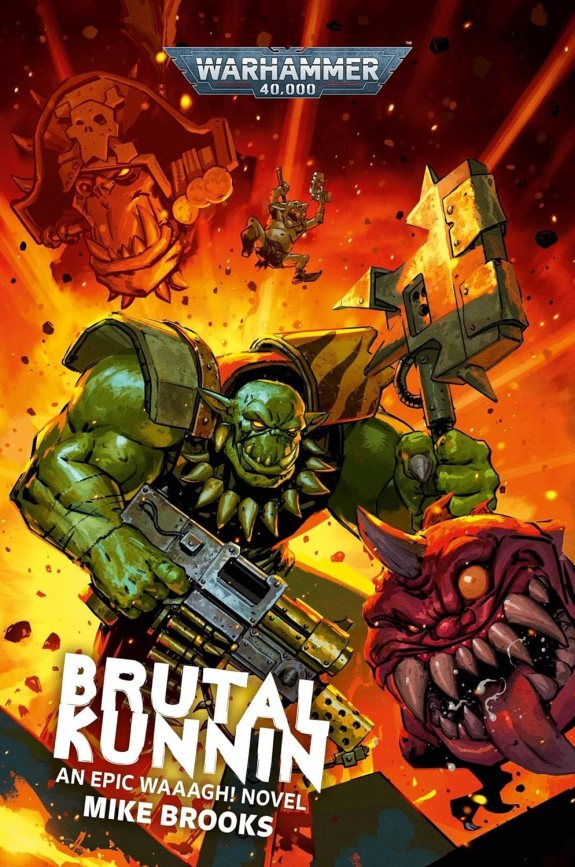
Brutal Kunnin Cover

Publisher: Black Library (Audiobook – 22 June 2001)

Series: Warhammer 40,000: Ufthak Blackhawk – Book One

Length: 8 hours and 20 minutes

My Rating: 4.5 out of 5 stars

Amazon

Get ready for a scrap as one of the fastest rising authors Warhammer fiction, Mike Brooks, presents a fast-paced and wildly entertaining book that follows the orks as they bring carnage to a new planet with Brutal Kunnin.

One of the most impressive rising stars in Warhammer fiction at the moment is Mike Brooks, who has been on an outstanding roll lately.  An excellent talent with a great understanding of Warhammer lore and factions, Brooks has written several impressive novels in the last few years, all of which have contained clever stories featuring unique figures from the franchise.  I have had a wonderful time with several of these books, with Huron Blackheart: Master of the Maelstrom, Warboss and The Lion: Son of the Forest (one of my favourite books and audiobooks of 2023) being outstanding in their own way.  Because Brooks has some intriguing books coming out this year, I thought I would go back and check out one of his first major contributions to the Warhammer 40,000 canon with the thrilling novel, Brutal Kunnin, which I ended up having an amazing time with.

Out of all the dangerous creatures that infest the known galaxy, few things have more potential for violence and destruction than an ork warband.  Unfortunately for the Adeptus Mechanicus forge world of Hephaesto, they are about to caught in the middle of two rival warbands ready to show each other just who the hardest gits truly are.

Ufthak Blackhawk is a newly minted nob in the fleet of Da Meklord, who eagerly follows his boss to Hephaesto, looking for loot, glory, and the chance to break some skulls.  However, when Da Meklord forces arrive in orbit, they soon discover that another ork force is already there, as the ships of Freebooter Kaptin Badrukk lay siege to the planet.  Rather than fighting each other, Da Meklord and Badrukk form a temporary alliance to kill the human defenders before turning on each other.

Leading his troops to the surface, Ufthak looks ready to prove himself, only to find himself coming face to face with the most advanced weaponry and upgraded troops in the entire Imperium of Man.  However, even the highly specialised and disciplined soldiers of the Adeptus Mechanicus are unprepared for the green tide about to roll down upon them, especially when their troops are bogged down by incompetent leaders and infighting from within.  Worse, a darker threat lies waiting in the bowels of Hephaesto, one that has no qualms about killing both ork and augmented humans to achieve its bloody goals.  Can Ufthak lead his troops to victory against all comers, including an enemy that even he can’t headbutt into submission?

Brutal Kunnin was a particularly fun and thrilling novel from Brooks that takes great looks at two fantastic Warhammer factions, while also presenting an action-packed story.  Funny, brutal and loaded with laughs, this is a particularly awesome novel that makes great use of the ork faction.

I really enjoyed the fantastic story featured within Brutal Kunnin, especially as Brook produced an addictive and exciting read.  The trick with ork focused Warhammer 40,000 novel is that you usually aren’t going to get a serious story out of it; instead the writer needs to lean into the humour surrounding the whole faction.  Brooks did a really good job of this, as he primarily focuses on the volatile orks as they land on Hephaesto and begin fighting against both the Adeptus Mechanicus soldiers and other orks due to the rival fleets in order.  While this is extremely fun, it doesn’t necessarily result in a complete or fully engrossing story, so Brooks cleverly adds in a parallel storyline which helps to turn Brutal Kunnin into something particularly awesome.

This secondary storyline follows members of the Adeptus Mechanicus, particularly Zaefa Varaz, who serves as an alternative protagonist, as they witness the ork invasion unfold.  About half the book is told from the perspective of the various Adeptus Mechanicus characters, which adds a lot of meat to the story.  Not only do you get the entertaining perspective of smart characters being completely unprepared for the unusual and direct actions of the orks, but there is a lot of internal conflict as the planet’s leadership fight amongst themselves.  At the same time, various conspiracies lurking beneath Hephaesto’s surface comes to life which present even greater threats to the defenders.  I really loved how well the intrigue laden human characters contrasted with the straightforward, action-packed ork chapters, and it helped to produce a very effective story.  Brooks loads in some big set pieces as the story rushes by, and you really get drawn into the carnage that unfolds as the orks get closer to their goal and all hell breaks loose within the main city of Hephaesto.  The author sets up a very entertaining ending for Brutal Kunnin, with the right characters coming away on top, while others get their just deserts.  An overall exceedingly amusing, exciting, and cleverly set up story that you can’t put down.

I felt that Brooks did a really good job of setting out Brutal Kunnin’s story, especially with the split between the ork perspective and that of the inhabitants of Hephaesto.  The ork chapters are exclusively shown from Ufthak Blackhawk’s perspective, while the rest of the book is shown from multiple point-of-view characters to tell their side of the narrative.  Having only one ork protagonist was a clever choice from Brooks, as it ensured that side of the story was focused, character driven and didn’t get watered down with a group of similar ork characters.  I loved how well Brooks was able to express the unique perspectives of the various characters throughout the course of Brutal Kunnin, and you really get the sense of how each of these races sees the universe.  The various ork chapters are naturally loaded with humour, mostly brought on by their unique insights into the humans they face, and you have to laugh at some of the outrageous events that occur there.  This humour blends in nicely with the more serious chapters focusing on the Adeptus Mechanicus, and Brook hits the right balance between silly and intense here.  The resulting action is also very well written, and Brook made sure to fill up the story with so many compelling and over-the-top fights, which anyone can appreciate.

Unlike some of the more elaborate Warhammer novels out there, I felt that Brutal Kunnin was particularly accessible to new readers, and indeed could be a good entry point into the Warhammer 40,000 universe.  Brooks really leaned into showing how crazy and dark this universe can be throughout the course of the book, and the unique humour, over-the-top action, and interesting figures will appeal to a wide audience, especially to those interested in seeing what Warhammer 40,000 is all about.  Of course, there is a lot in it for established fans of the franchise, especially as Brooks brings several fantastic factions to life.

Naturally most of this focus revolved around the orks, who are always some of the funniest figures in the canon.  Essentially the Warhammer universe’s answer to football hooligans, the orks are the rude, crude, and always entertaining green horde, who only live for a fight.  You know what you are in for with an ork book.  Brooks did a particularly good job of capturing the orks in Brutal Kunnin, especially as you see them from both interior and exterior perspectives.  Most of what you see comes from the eyes of Ufthak Blackhawk, whose insights into the ork horde, its leaders, and the unique culture of violence, strength and domination, prove quite intriguing and usually entertaining.  Blackhawk’s chapters are loaded with the typical ork humour, as well as the entertaining observations of the humans they face, and I loved how well Brooks captured the ork mind.  This is well complemented by scenes shown from the perspective of the orks opponents, most of whom are completely unable to comprehend the threat coming towards them.  Indeed, much of the ork’s success is due to the other factions underestimating them, and it was quite satisfying to see some of the more arrogant characters lose badly due to their false preconceptions.  Other distinctive characters also have some compelling views about the orks, with one daemon’s insights in the matter being particularly fascinating.  If I had one complaint about the orks in Brutal Kunnin, it would be that Brooks somewhat overpowers them, as they tear through everything in front of them.  While this worked for narrative purposes, and showcased just how advantaged the orks were by their opponent’s arrogance, I could see fans of the other factions getting a little annoyed about how quickly the orks take down some big units.  Still, this is a very minor complaint, and I felt that Brutal Kunnin ended up being a pretty awesome book about the orks, and I loved how much fun Brooks had writing this faction.

Aside from the orks, Brutal Kunnin has a surprisingly in-depth look at the Adeptus Mechanicus, the Tech Priests of Mars.  Essentially humanity’s mechanics, inventors, and mass production specialists, the Adeptus Mechanicus worship technology and live to perfect their devices and expand their knowledge.  About half the book is shown from several Adeptus Mechanicus personalities on the planet as they attempt to fight back against the orks, and there are various scenes that showcase their combat capabilities, weird units, and excessive augmentation.  However, the true highlight of Brook’s use of the Adeptus Mechanicus characters, was how well he captured their ambitious and machine altered mindset.  Every scene featuring an Adeptus Mechanicus character has that figures perception and mind influenced by internal calculations and computer augmentations, which helped to show how most of this faction are more machine than man.  However, no matter how augmented they are, these characters are still human, especially when it comes to their ambitious, desires, and inability to work together.  In many ways, the main antagonist of Brutal Kunnin was these character’s hubris rather than the orks, as these big personalities were often more concerned with each other, and this cost them dearly.  Throw in a mysterious outsider from another faction, and Brutal Kunnin ends up being a pretty interesting piece of Warhammer 40,000 fiction, that fans will have a lot of fun with.

As with most Warhammer novels I have the pleasure of enjoying, I chose to check out Brutal Kunnin on audiobook rather than seeking out a physical copy.  Naturally this proved to be a pretty fun experience as Brutal Kunnin has an outstanding audiobook format that really enhances the amazing and fun story of this book.  With a run time of nearly eight and a half hours, this is a pretty typical sized Warhammer audiobook which I was able to power through quickly thanks to its fast-paced story.  It also helped that Brutal Kunnin had an awesome narrator in Tom Allenby.  Allenby is a narrator who I wasn’t familiar with before this book, but he quickly impressed me with his excellent range of voices.  Allenby proved quite adept at voicing the various inhuman figures in the story, whether it be an ork or a member of the Adeptus Mechanicus.  He did such a good job capturing the essence of these figures throughout the production, and I loved how all the various characters got their own unique voice that proved fitting to their personalities.  Allenby also did a great job of narrating the intense and entertaining action throughout the course of Brutal Kunnin, and the listener really gets a good sense of what is going on.  As such, I would strongly recommend the Brutal Kunnin audiobook format to anyone interested in checking this piece of Warhammer fiction out, as you guaranteed to have an amazing time with it.

Mike Brooks continues to impress me with his outstanding additions to the Warhammer canon.  Brutal Kunnin was a pretty damn amazing read that showcased the author’s ability to showcase some of the more distinctive figures from the game.  This was a wildly entertaining and exciting Warhammer 40,000 novel that comes very highly recommended.

Amazon

War Cry by Ian Ross

War Cry Cover

Publisher: Hodder & Stoughton (Trade Paperback – 25 January 2024)

Series: de Norton trilogy – Book Two

Length: 387 pages

My Rating: 4.75 out of 5 stars

Amazon

Ready to dive into an intense and fantastic historical adventure, then look no further than the epic new novel from Ian Ross, War Cry.

Last year I had the very great pleasure of reading the epic novel, Battle Song.  Written by author Ian Ross, who had made a name for himself with his Roman historical fiction, Battle Song was an outstanding and compelling novel that really blew me away.  Set during Simon de Montfort’s rebellion against the English crown, Battle Song followed a rogue knight and his squire, as they attempt to find the best side to fight on.  I had an outstanding time with Battle Song, especially as Ross combined a unique story with intriguing historical background and some great characters.  Battle Song ended up being one of my favourite books of 2023, and I had such a great time getting through it.  As such, I have been eager to see how Ross was going to follow Battle Song up and I recently got my hands on the sequel War Cry.  One of my most anticipated reads for 2024, War Cry proved to be an outstanding book that I quickly powered through.

England, 1265.  Following his decisive victory at the Battle of Lewes, the English lord Simon de Montford is now the de-facto ruler of England.  Holding the king and the crown prince prisoner, de Montford has ambitious plans to increase the power of the nobles while he champions the rights of the common people.  However, de Montford’s control is not absolute, with several powerful lords still loyal to the royal family and desperately seeking to restore their rule.  Worse, many of de Montford’s allies in the initial rebellion have grown wary of his power and ambitions.

As the political climate of England once again changes, the recently knighted Adam de Norton finds himself reclaiming his ancestral lands.  Finally having everything he always longed for, Adam looks to settle down and enjoy the prosperous future set out before him.  But the dual loyalties of England weigh heavily around him, and soon rumours of a new rebellion emerge, dragging Adam back to war.

Returning to the service of de Montford, Adam seeks to prove his worth in battle.  However, despite owing everything to de Montford, Adam begins to wonder if he should truly be fighting this war.  As the war progresses, Adam finds himself pushed to the limit and his loyalties tested, especially when he finds himself on the opposite side of his former mentor and master, Robert de Dunstanville.  Can Adam survive the brutal civil war unfolding around him, or has he chosen the wrong side of the conflict?

This was an awesome book from Ian Ross, who provided an outstanding follow up to his previous epic read.  War Cry had an amazing and powerful story behind it, which honestly had me hooked the entire way through.  I had such a great time with this book, and I ended up powering through it in only a short couple of days.

War Cry featured a powerful, brutal, addictive narrative that expertly ties together a personal story, while also diving into a particularly unique and fascinating period of English history.  This story is told exclusively from the perspective of returning protagonist Adam de Norton, who, after his adventures in the first book, has become a knight with his family estates returned to him.  The initial scenes of War Cry follow Adam as he attempts to restore his lands, while also facing conflict from several intriguing new enemies.  However, he is also soon forced to navigate the new political situation of England.  Despite his desire to stay out of the war, Adam is compelled by honour to return to the side of Simon de Norton as his rivals rise in rebellion against him.

This leads to an intriguing narrative that follows the subsequent campaigns that occurred in the period after de Norton’s rise to power.  Adam finds himself caught up in several key conflicts and events, including the escape of a certain hostage, a quick siege, and a collection of deadly battles across the breadth of the country.  At the same time, Adam is also caught up in several personal dramas, as he tries to reconcile his loyalties to de Norton, his friendship with Robert de Dunstanville, and his forbidden romance with Joane.  Ross did a great job of blending the historical and the personal together, and you get a great simultaneous look at the protagonist’s struggles, while also seeing the events of the war progress around him.  Thanks to the historical record, events get grimmer and grimmer for the protagonist as War Cry continues and you get really invested in seeing how everything unfolds, especially if you aren’t familiar with this particular English civil war.  Everything leads up to another climatic battle, where Adam and many of the supporting characters of the book meet their fates, one way or another.  The book ends on a pretty unique and dark note, and you will come away shocked at the cliffhanger, while also longing for more.

I really enjoyed how War Cry came together, as this epic piece of historical fiction was designed to hit hard and keep you on your toes.  I particularly loved some of the book’s unique historical elements, as Ross continued to explore the Simon de Norton rebellion against the English crown, which was such a major highpoint of Battle Song.  This unique civil war was a brilliant backdrop for the series, and Ross meticulously covers all the key events that followed de Norton’s victory at the Battle of Lewes here in War Cry.  You really get invested in this historical element of the book, especially as Ross expertly showcases some of the deadliest battles and places his protagonist right in the middle of them.  All these fight scenes are extremely well written, and Ross excels at highlighting the chaotic feel of battle, as Adam constantly finds himself amid a brutal melee of battle, especially during the final fight, and one particularly intense sequence on a bridge.  However, War Cry is much more than a rendition of a compelling historical war, it is also a deeply personal tale of love, loyalty, honour, and friendship, as the protagonist attempts to come to terms with his complex life and relationships while caught up in the battles.  As such, there is a little something for everybody in War Cry, and most fans of historical fiction will absolutely love this book.  War Cry was also a very worth sequel to Battle Song, and I cannot emphasise just how well Ross built on his original narrative and provided a gripping continuation in this sequel.

As with Battle Song, War Cry features a compelling combination of characters, including a mixture of fiction and real historical figures caught up in the war.  Ross did a great job of blending the two groups together, and I loved the range of unique knights and lords that emerged and the compelling interactions that followed.  There is a real focus on twisted loyalties and uncertain honour as many of the characters change alliances throughout the book, desperate to be on the winning side.  I did think that Ross might have at times included too many supporting characters, especially when it came to the various knights and lords, as you sometimes get worn down with a flurry of knightly names and titles that proves hard to remember.  However, this is generally a minor issue, especially when most of the character focus is reserved for recurring protagonists from the first book.

I really enjoyed seeing more of protagonist Adam de Norton, who is such a compelling centre for much of the plot.  After witnessing his exploits as a squire in the first book, it was great to finally see Adam as a knight in War Cry, even though that causes him more trouble than he hoped for.  Constantly dragged through battle after battle thanks to his still somewhat naïve sense of duty, Adam finds his loyalties fraying at times as he tries to stay true to who he is.  This proves hard as he is once again going up against the more self-centred views of his mentor, while also harbouring a forbidden love that he knows he cannot act on.  Several other characters also shine throughout War Cry, although my favourite is probably Robert de Dunstanville, Adam’s former mentor and friend.  While we get less of Robert in War Cry than I expected, he still proves to be a fascinating figure, serving as Adam’s dark conscience and trying to get him to do the smart thing rather than the right thing.  The two come to blows at several points throughout War Cry, and it was fascinating to see how their relationship has changed now that Adam has become his own man.  Robert also has some of the more fascinating character arcs.  After finally getting he wanted, he is still unhappy, and his attempts to reverse that cause only heartache for him.  I really enjoyed seeing these characters and more develop even further in War Cry, and there are some surprising fates for several of them that I honestly did not see coming.  It will be interesting to see what happens to the remaining protagonists in the future, and I really hope we get a third book soon as I am very invested in their stories.

Overall, War Cry by Ian Ross was an outstanding piece of historical fiction that I cannot recommend enough.  Expertly continuing Ross’s outstanding 2023 novel, Battle Song, War Cry thrusts the reader into the bloody centre of a fascinating English historical war, while also focusing on some complex and likeable characters.  Loaded with battle, intrigue and relatable protagonists, War Cry proved to be highly addictive, and I had an incredible time getting through it.

Amazon

Agricola: Invader by Simon Turney

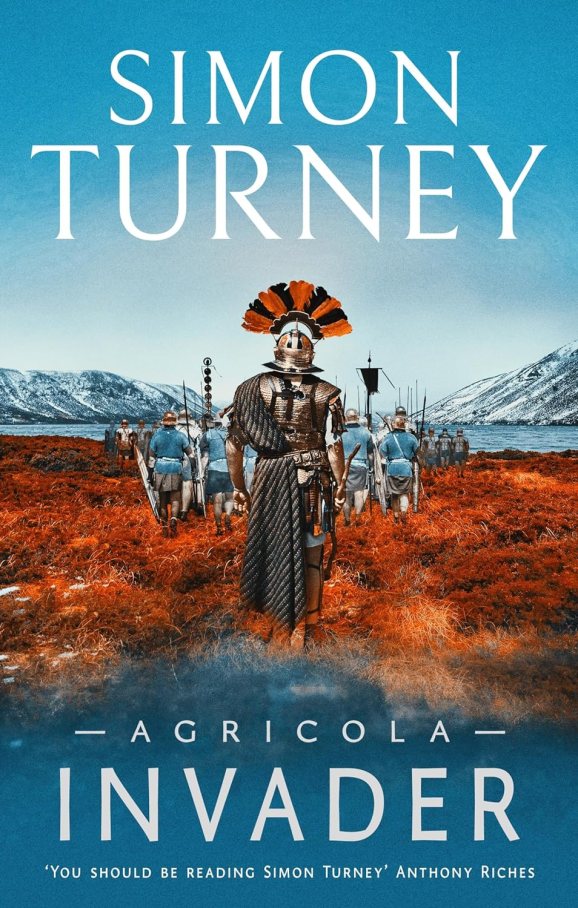
Agricola - Invader Cover

Publisher: Head of Zeus (ebook – 14 March 2024)

Series: Agricola – Book One

Length: 352 page

My Rating: 4.5 out of 5 stars

Amazon

I was in the mood for a compelling historical adventure, and the intriguing upcoming novel Invader, the first book in the Agricola series, seemed like the perfect choice, especially with the always impressive Simon Turney at the helm.

Simon Turney, who also writes as SJA Turney, is a well-established historian and historical fiction author who has been producing complex and action-packed reads for years.  Predominantly known for his Roman historical fiction works, including the Marius’ Mules, Tales of the Empire, Praetorian, Roman Adventure and Damned Emperors series, as well as the Knights Templar and Wolves of Odin books, Turney has a substantial catalogue of fantastic books to his name.  I have had some great experiences with Turney in the past, especially as I loved his 2019 novel Commodus, which perfectly captured the life of one of Rome’s most complex Emperors.  I have been meaning to read more from Turney for years and I finally got the chance when I received an early copy of his upcoming book, Invader.  The first book in a new series that will follow the life of famous Roman general Gnaeus Julius Agricola, a historical figure Turney is very familiar with, Invader was a great read that covered Agricola’s first military command.

58 AD, Rome.  Teenager Gnaeus Julius Agricola is the son of a distinguished Roman family that has languished into poverty since the death of his father.  Determined to bring honour and glory back to his family’s name, Agricola sets out to prove himself to the people or Rome through military service.  Utilising the last favour owed to his family, Agricola secures a posting as Tribune in the province of Britannia.

Determined to make the most of his opportunity, Agricola finds himself assigned to the staff of Roman general Suetonius Paulinus, who is about to launch an ambition campaign to capture more of the island and pacify the resentful tribes.  Marching across Britannia, Agricola begins to show himself a capable leader, especially while be forced to deal with rebelling locals, dangerous rivals, and an incompetent commander.

Soon, the war leads to the ancient stronghold of the druids, where Agricola finds his star on the rise.  However, great disaster awaits the Romans back at the heart of the province.  The warrior queen Boudicca has risen in revolt, determined to wipe out all the Romans in Britannia.  With the fate of the entire colony hanging in the balance, can Agricola help find a way to ensure victory for the Romans, even with the odds firmly stacked against them?

Invader was an epic and compelling piece of historical fiction from Turney, who starts up an awesome new series in a big way.  Loaded with action, intriguing characters, and some great historical detail, Invader was a highly addictive read that I was able to power through in two days.

Turney came up with an excellent story for the first Agricola book that quickly grabbed my attention and ensured I couldn’t stop reading.  Told exclusively from the focus on the new series, historical figure Gnaeus Julius Agricola, Invader serves to both introduce the protagonist, while also highlighting some of his early adventures.  The author starts the book off quick, setting the scene for the protagonist and ensuring you’re invested in his ambitions, before dropping him into a particularly chaotic period of the Roman occupation of Britania.

Thanks to the setting, most of the story focuses on General Paulinus’s massive campaign to conquer more territory and destroy the druids, which is a fascinating historical backdrop, especially considering where it led.  I liked how Turney primarily showed one leg of the invasion as the protagonist accompanied one of the split forces through a lengthy march of suppression, colonisation and negotiation.  This results in several interesting encounters and situations, especially as Agricola is desperate to prove himself against the enemy, while also dealing with internal issues, including a rival Tribune and a drunk commander.  This combination of obstacles helps to create a compelling story, and I enjoyed seeing the characters simultaneously involved with internal politics and external fights.  There are some great battles featured here, and this lengthy march of Agricola’s central force through the miserable British landscape proves to be one of the best parts of the entire book.

The rest of the story only gets better, as the protagonist and the supporting characters find themselves involved in two key conflicts, the Roman invasion of the island of Mona and Boudica’s revolt back in the settled provinces.  These scenes are loaded with more action as Turney does an excellent job of setting the protagonist right into the centre of the conflict, and the resulting chaotic warfare, personal worries and other issues really works to tell an engrossing story.  I was initially a little surprised that Turney chose to condense these two major events into the second half of the book, as you probably could have written a whole second Agricola novel about them.  However, after finishing the story, I think it worked well and honestly wasn’t too rushed.  This entire part of the novel proved to be highly entertaining and exciting, and I honestly couldn’t put it down as I waited to see how everything ended.  Turney also sets everything up nice for a sequel/continuing series, and it will be interesting to see how that turns out, especially now that we have the protagonist’s earliest adventures, a potential long-term rival, and a connection to the province Agricola is most known for.

I loved the historical elements that Turney featured in Invader as he did an outstanding job of capturing the feel of both the wild, unexplored areas of Britania and the conquering Roman legions advancing through it.  I loved the author’s great depictions of the various Roman units featured throughout Invader, and you really get a sense of the order, battle tactics and arrangements of a Roman army.  Turney also expertly portrays the intriguing events surrounding General Paulinus’s massive invasion of inner Britannia and, to a lesser degree, the events that led to Boudica’s uprising.  Many of the key recorded moments of these historical events are showcased in an amazing way in Invader, including some major battles, figures and locations.  I rather enjoyed how we saw these events from the perspective of a Roman soldier on campaign, who had no idea about the upcoming revolt that they would have to fight against, nor the wider political issues that led up to it.  Instead, you see how the army was forced to react and the resulting actions that led them to face off in the final battle against Boudicca.  As such, Invader proved to be a particularly impressive historical read, and I cannot wait to see how Turney portrays other key events that Agricola was involved within in future books of this series.

In addition to showcasing the historical events, Turney also features an intriguing range of characters who make up the story.  Most of this is shown through the eyes of series protagonist Gnaeus Julius Agricola, who serves as the point of view character.  Agricola is a historical figure that Turney is very familiar with, and Turney really does a great job featuring him.  While Agricola is generally strongly covered in historical texts (his son-in-law is one of the few surviving historical sources of the period), only a little is known about Agricola’s first visit to Britannia as a young man.  Turney does a great job of portraying Agricola as a hungry young man looking to prove himself, and I think he presented a great potential story about the character.  Watching Agricola battle against everything holding him back was very entertaining, and I look forward to seeing what happens next in the series.  Naturally, Turney places Agricola in the middle of every major battle or encounter he could find, mainly to flesh out the sparse historical notes, and it was interesting to see the combination of ambition, dedication, tactical ability and pride that the author imagined this figure would have in his youth.  Invader also features a great range of supporting characters, both from history and fictional inclusions, who all add a lot to the story.  Standouts include a frustrating rival for the protagonist, a drunk and unpredictable commander who the protagonist is forced to work around, and a native slave, Luci, with whom the protagonist forms an unusual friendship.  I really enjoyed these characters, and it will be interesting to see how their stories continue in the rest of the series.

Overall, Invader was an impressive piece of historical fiction from Simon Turney.  Featuring a great historically important protagonist, Invader served as a brilliant first entry in the new Agricola series, and I really enjoyed the intense and intriguing story that emerged.  Exciting, entertaining, and highly addictive, Invader was an outstanding read that comes highly recommended.  I had an awesome time reading Invader, and I cannot wait to see how Turney captures the rest of Agricola’s complex life throughout this series.

Amazon

Saevus Corax Captures the Castle by K. J. Parker

Saevus Corax Captures the Castle Cover

Publisher: Orbit (Trade Paperback – 21 November 2023)

Series: Corax – Book Two

Length: 321 pages

My Rating: 5 out of 5 stars

Amazon

One of the funniest fantasy authors in the game presents a fantastic second entry in his closely released Corax trilogy with the hilarious and brutally brilliant Saevus Corax Captures the Castle.

In 2023, fantasy author K. J. Parker (a pseudonym of author Tom Holt), had an incredible blast of creativity as he managed to release an entire trilogy within the space of a month with the outstanding Corax series.  Set to follow an infamous battlefield salvager, the titular Saevus Corax, as he finds himself getting dragged into all manner of unusual scenarios, this series sounded so damn fun.  I was particularly intrigued, especially as these books were set in the same universe as his epic The Siege series, which featured Sixteen Ways to Defend a Walled City (one of my favourite books of 2019), How to Rule an Empire and Get Away with It (one of my favourite books of 2020) and A Practical Guide to Conquering the World (one of my favourite books of 2022).

While I managed to get all three of Parker’s Corax books last year, I only had the chance to read the first novel, Saevus Corax Deals with the Dead before 2023 ended.  This first entry in the trilogy was pretty damn incredible, and I loved the wonderful and highly entertaining story it contained, especially as it was masterfully layered with Parker’s trademark humour.  Saevus Corax Deals with the Dead got an easy five-star rating from me, and it ended up being one of my favourite books of 2023.  As such, I really want to get through the other two Corax books as soon as possible so I quickly powered through the second one, Saevus Corax Captures the Castle, last weekend.  Saeuvs Corax Captures the Castle was another outstanding read that I had such I wonderful time with.

Several years after his last outrageous adventure when he was crowned a king against his will, Saevus Corax is back to what he knows best, battlefield salvage.  While it is not the most glamorous work, it provides a living for his large crew of outcasts and rogues, as they tour their world’s many scattered battlefields, rescuing and repurposing everything they can recover from the dead.  However, a nemesis with a personal grudge will send Corax on a dangerous path he might have no escape from.

When several of his men are kidnapped, Corax’s only apparent chance to save them is to capture a delipidated castle in the middle of nowhere.  Utilising his unconventional tactics and knowledge of warfare, Corax begins his impromptu siege, only to discover that his old flame, the beautiful con artist Stauracia, is in charge of the castle’s defence, and she has no intention of losing to Corax again.

But why is Corax’s new unwelcomed employer so determined to capture the castle, and what are they hoping to achieve by using Corax’s motley crew?  The truth has the potential to plunge the whole world into war if Corax can’t keep it under wraps.  However, Corax soon finds himself distracted by revelations from his past, as he finds hope being dangled before his eyes.  Can Corax survive this latest misadventure and the dastardly rivals it brings, or has he finally met his match?

The second Corax book proved to be just as funny, addictive, and inventive as the first awesome entry, and I had such an outstanding time with Saevus Corax Captures the Castle.  Placing his wonderfully witty and world-weary protagonist on the course for more unusual conflict, Saevus Corax Captures the Castle had me fully hooked from the very first word and I just had to give it another full five-star rating.

Parker came up with a pretty clever and memorable narrative for Saevus Corax Capture the Castle, which proved to be a lot of fun to read.  Starting with another entertaining look at one of the group’s salvage jobs, the book soon places Corax’s entire group in a bad situation when members of the salvage band are kidnapped, and the only way to get them back is by capturing a castle.  So begins a battle of wits as Corax pits his innate knowledge of war and human nature against the manipulation of his old foe Stauracia, as they both try and work out why they have been charged with looking after an isolated castle.  This impromptu siege between two groups of people who do not actually want to be there proves to be quite entertaining, and it serves as a fun focus for the first half of the book.  This first half also features several flashbacks into Corax’s past, especially the events that have occurred since Saevus Corax Deals with the Dead, which provides some interesting motivations and looks at the connections between Corax and the book’s main antagonist.

Thanks to some deeply personal manipulations, there is an interesting and dramatic plot change in the second half of Saevus Corax Captures the Castle, as Corax finds himself motivated to journey alone to a forbidden nation.  This change from a siege to an independent journey actually works really well in the context of the story, and it builds on a lot of cleverly hidden elements and clues from the earlier plot.  You are really on the edge of your seat during this second part of the book, especially as Corax is in the direst of scenarios, and I loved seeing him use his understanding of people to get out of trouble.  The ending of this misguided quest proves to be very clever and a little heartbreaking, as Corax finds what he is looking for, but it’s not what he wants.  It does allow him a few bits of knowledge that let him destroy his opponents back home and get the payday, although nothing is every that simple for Corax.  I liked the intriguing tone that Parker left this second book on, especially as like the first book, the protagonist soon realises that he’s happiest when back doing what he does best.

Saevus Corax Captures the Castle features the exact same writing style as the first book in the series, which you tend to notice when you read these books in quick succession.  I personally liked this continuation of style, especially as it is what made me a fan of Parker in the first place, and it results in quite an entertaining story.  Told in a chronicle format from the perspective of main character Saevus Corax, the book is his account of events, filled with his commentary, observations and memories, to tell an intriguing tale.  Corax proves to be a very fun narrator, and his ultra-cynical take on the world has an entertaining influence on the story which is hard not to enjoy.  The resulting mixture of betrayals, manipulations and unconventional warfare really comes together into quite a comprehensive and fun story thanks to this great narration, and I was chuckling the entire way through.

The series continues to utilise the unique world that Parker came up with for both the Corax books and The Siege novels, and the fun references to some of the prior events are quite amusing.  As I mentioned in my review for Saevus Corax Deals with the Dead, this series is in some ways more of an alternate history novel rather than a fantasy book, as it does not feature any magic or unnatural elements.  Instead, we get a world of war, politics, and domineering nations, which acts as a satirical mirror of our own history.  I would still prefer some form of map up front to keep track of where the characters are going and where some of the nations being discussed are in relation to each other, but you can get by without one.  While there are a few mentions of the previous novel in the series, Saevus Corax Captures the Castle is for the most part a standalone novel, and anyone interested in a particularly fun tale can dive in here no problem.  However, I would personally suggest going from the start of the trilogy, if for no other reason than some of the jokes in this sequel are a little funnier after Saevus Corax Deals with the Dead, and you get the full understanding of the unique relationship between Corax and Stauracia.  It also solves one of the main mysteries from the first book, and it would not surprise me if a couple of story elements from this novel are featured in the third and final novel in the series.

As you would expect from a first-person perspective novel like this, most of the focus is on the titular Saevus Corax, whose unique adventures we are following.  Corax is a very typical Parker protagonist, in that he is an intelligent and cynical being who would rather live a simple life doing what he does best, but instead finds himself thrust into complex and dangerous events.  This proves to be a fun character dynamic, and I loved seeing the often-exasperated Corax forced to deal with people trying to outsmart and manipulate him while he is just trying to do the right thing.  Luckily his strong ability to understand how people think and then use that to outplay them often keeps him out of trouble, and it is quite entertaining to see him casually stop a clever enemy plan, just because they are doing exactly what he would.  His distrustful, intense, and often very honest outlook on life really impacts how the reader sees the world he lives in, and you really grow to appreciate his take on events, especially as he knows everyone is out to get him.  However, readers do get to see another side of Corax in this second book, especially as you get to see how his one previous attempt at romance worked out, and the impacts its tragic ending has on him cause him to act out in some big ways.  As such, this is a very intriguing book for this great character, and I had a wonderful time seeing him develop even further.

Aside from Corax, the cast of Saevus Corax Captures the Castle is pretty fun, as Parker comes up with an interesting group of self-centred, occasionally loyal, but mostly treacherous figures to partner up with our favourite rogue.  The most prominent of these is Stauracia, who was both a secondary antagonist of the first novel and the protagonist’s love interest.  Stauracia is a con-artist who has run afoul of Corax and his group before, and who finds herself forced to work both with and against them in this novel.  Smart, manipulative, and utterly lovely, Stauracia is the perfect foil for the more subdued Corax, and they have some amazing chemistry in this book.  I loved the unique relationship that bloomed between them that is often driven more by dislike or mistrust than anything else, but both of them come away a bit better from knowing the other.  Other major characters include the group of unlikely companions that make up Corax’s battlefield scavengers.  Their constant bickering makes for a fun background to many scenes, and I like how they are usually annoyed with Corax’s antics, although they keep following because no-one else could do the job better.  Throw in a great villain, whose prior connections to Corax result in some brutal plots against him, and the cast of Saevus Corax Capture the Castle are extremely entertaining, and I loved seeing the unique narrative that formed around them.

Overall, Saevus Corax Captures the Castle was a highly fun and utterly amazing novel from K. J. Parker that I cannot recommend enough.  Featuring all the humour, entertaining cynicism and clever characters that made the first Corax book so incredible, Saevus Corax Captures the Castle serves as an outstanding sequel that continues the series in an awesome way.  An outstanding and epic read, this was such a great book and I cannot wait to read the final Corax novel as soon as I can.

Amazon

Rebellion by Simon Scarrow

Rebellion Cover

Publisher: Headline (Trade Paperback – 14 November 2023)

Series: Eagles of the Empire – Book 22

Length: 398 pages

My Rating: 4.5 out of 5 stars

Amazon

One of my favourite historical fiction authors of all time, Simon Scarrow, returns with another epic adventure that places his long-running Roman protagonists right in the middle of the deadliest fight imaginable with Rebellion.

I have made no secret of the fact that I am a massive fan of Simon Scarrow, especially when it comes to his main Roman historical fiction series.  While I have deeply enjoyed Scarrow’s books set in other periods, such as his awesome Berlin Wartime thrillers Blackout and Dead of Night, it is Scarrow’s Eagles of the Empire series that I come back to every time.  Following two veteran Roman officers who manage to find themselves sent to every battlefield imaginable, the Eagles of the Empire books have dominated the historical fiction market for over 20 years, and I have had such an incredible time reading every entry in this series.  Eagles of the Empire has been a staple series for this blog ever since I started The Unseen Library, and I have reviewed multiple entries, including The Blood of Rome, Traitors of Rome, The Emperor’s Exile, The Honour of Rome and Death to the Emperor.  Due to how much fun I have with these fantastic historical adventures, I always make time to read the latest Eagles of Empire book each year, and I finally managed to read the late 2023 entry, Rebellion.  The 22nd book in the series, Rebellion was an exceptional and bloody read that places Scarrow’s protagonists in their most dangerous battle yet.

AD 60, Britannia.  The Roman province of Britannia is in utter turmoil as the queen of the Iceni tribe, Boudica, leads her people in total rebellion after suffering the greed and cruelty of Rome too long.  Despite the best efforts of retired centurion Macro, Boudica’s growing force of Britons managed to destroy the veteran’s colony of Camulodunum, and now her army is emboldened to take back the entire province in a bloody spree of vengeance.

Campaigning on the other side of the province, Governor Suetonius desperately attempts to lead his army back to Londinium as soon as word reaches him about the uprising.  Forced to move ahead with a smaller force, led by Prefect Cato, Suetonius hopes to rally the rest of the troops in Britannia to make time for his army to arrive.  However, Suetonius is unprepared for the savagery of the desperate rebels and the incompetence of the officers he left behind, and he soon finds himself hopeless outnumbered.

As the Roman forces attempt to salvage the situation, Cato finds himself lost without his longtime comrade Macro beside him.  Convinced that Macro died at Camulodunum, Cato is determined to avenge his friend no matter the cost.  But Macro’s fate is far more complicated than the Roman’s realise, as he has been taken prisoner and is trapped in Boudica’s camp where everyone wants him dead.  As the Roman host desperately makes their final stand against the rebelling tribes, can these two grizzled soldiers survive this bloody battle, or has their luck finally run out?

Scarrow once again presents a fast-paced and powerful piece of historical fiction that proves impossible to put down.  Focusing on a particularly fascinating and iconic piece of history, Rebellion is an outstanding novel that once again thrusts Scarrow’s beloved protagonists right into the middle of the carnage.

The author had to achieve a lot in Rebellion, especially after the epic cliffhanger the prior novel, Death to the Emperor, left us on.  The events leading up to Boudica’s rebellion have been in play since the author’s very first book, and it was only a matter of time before Scarrow showcased it in this series.  Death to the Emperor did a really good job setting the rebellion in motion, and Scarrow needed to majorly capitalise on that in this latest novel.  Luckily, he was more than up to the task, presenting a captivating story that covers the key events of the rebellion.

After starting with a fun and bloody introduction that helps to highlight just how much trouble the Romans are in, Rebellion swiftly returns to the protagonists.  The first part of the book is told primarily from Cato’s perspective, as he accompanies the Roman general and a small force back to the imperilled capital in a desperate march.  This sets up a lot of the later narrative, especially as you get a sense of how out of position the Romans are and how desperate events have become.  Rebellion’s plot got even more interesting when the story spent several chapters focussing on Macro.  Now, I never for a second believed that Macro had been killed in the previous book, so I do not consider it a spoiler to mention that he was a major part of Rebellion.  His scenes were easily the highlight of the first half of Rebellion, especially as he endured being a prisoner of the rebelling tribes and his former lover, Boudica.  These scenes are so tense and emotionally charged, as Macro is forced to watch his comrades be butchered all around him, while also learning some surprising secrets.  Despite the horrors he witnesses, Macro still manages to be a bullish and utterly frustrating figure for his captors, and I loved seeing the various ways he tries to fight back.  Naturally, these two separate storylines converge as the book continues, although things only get darker once Cato and Macro are back together.

The second half of Rebellion is so damn fast-paced, exciting and intense that I honestly read the whole thing in a single night.  Everything about this second half is very impressive, as the characters go through hell time and again.  Much of this involves an extended chase sequence as the Romans are forced to flee the advancing wrath of Boudica.  The sheer desperation, despair and sacrifice involved in many of these scenes is extremely moving, and Scarrow did not sugarcoat just how brutal and bloody things got at the hands of the rebelling Britons.  The continued perspective spilt between Cato and Macro during these sequences works great, and Scarrow really captures just how fraught the situation is.

While I loved this long chase sequence and the brawls involved with it, the main highlight of Rebellion was always going to be the final battle between the Romans and Boudica.  Scarrow takes his time setting up this battle, which really heightens the anticipation, as the characters make their preparations and reflect on the fight to come.  The conclusive battle was everything you would hope it to be, and Scarrow showcases the epic confrontation, one of the bloodiest in Roman British history, in fantastic detail.  The action is intense, fast and shocking, and you are constantly on the edge of your seat waiting to see how events would unfold and whether the protagonists would survive.  Everything comes to a powerful and desperate finish, and readers will be thrilled by how this entire novel comes together.

As with most books in Scarrow’s Eagles of the Empire series, Rebellion can be read as a fun standalone novel, although in this case reading one or two of the previous entries might be beneficial.  This is because most of the storylines from the last few books have involved the events that led to Boudica’s revolt, and it was great to see it finally see this ongoing arc finally come to fruition.  At the very least, I would advise people to read the prior novel, Death to the Emperor, before getting into RebellionDeath to the Emperor was one of Scarrow’s best recent book in the series, and it ends with the battle for Camulodunum and a cliffhanger regarding Macro.  The two books form a powerful pairing, and I strongly believe that the impact of Rebellion was enhanced by reading the events of Death to the Emperor first.  However, if you choose to dive into Rebellion as a standalone, you will still be in for a good time because Scarrow ensures that the plot is very accessible and easy to follow for new readers.  This proves to be an awesome Eagles of the Empire book as a result, and I look forward to the next entry in the series, especially after some of the cool revelations that came out in this impressive novel.

I loved the historical aspects of Rebellion as Scarrow does an amazing job of exploring the events of Boudica’s revolt in detail.  As I mentioned above, the set-up for the revolt was handled flawlessly in Death to the Emperor, and Scarrow did a great job following it up with the main event here in this sequel.  Many of the key aspects of this conflict, including the sacking of Londinium, the forced march of the Roman army, and the general panic of the citizens in Britannia are shown in impressive detail, and Scarrow does a great job of setting the scene and showing just how close the Romans were to defeat.  The author does not pull any punches when it comes to how bad things got, and the inhuman actions both sides committed really raised the stakes of the book.  Scarrow also does an outstanding job of filling in historical details that were not effectively covered by the surviving sources.  For example, I liked his take on the destruction of the Ninth Legion at the start of the book, which was reminiscent of the Teutoburg Forest massacre.  Scarrow further enhances the story by providing an intriguing potential viewpoint on both sides of the revolt.  Interactions between Cato, Macro, and several different Briton characters really highlight how both sides thought they were in the right, and the differing views around the conflicts amped up the emotions of the story.  However, it was his fantastic depiction of the final battle that I particularly enjoyed.  Despite its fame, reliable details about this battle are scarce and I think that Scarrow presented a very reasonable depiction, showing the tactics the desperate Romans likely used.  This battle really came to life thanks to Scarrow’s outstanding storytelling, and you can just envision the fight between the tightly formed Roman legionaries and the massed hordes of Britons.  All this historical detail was just superb, and I loved how authentic and brutal it helped to make Rebellion.

In addition to the amazing and compelling historical elements, Rebellion also featured some moving character work.  The plot of Rebellion featured an interesting combination of long-running protagonists, real-life historical figures, and new characters introduced for this book.  I think this cool combination of characters worked extremely well, and it helped to tell an amazing and complex story.  Naturally, most of this focus goes towards the characters of Prefect Cato and Centurion Macro, who we have had so many adventures with over the years.  Cato is again showcased as the young but tough veteran campaigner and tactician, and I liked his intriguing storylines in Rebellion as he was involved in all the major battles and conversations.  While I am not sure that every key idea for Rome’s victory needed to come from Cato, it did allow him to serve a vital role in Rebellion, providing the reader with the best overview of Rome’s tactics and strategies during the war.

Due to Cato’s role as the leader, much of the more emotionally charged character work was left to the usually impassive and unflappable Macro.  Macro actually goes through a lot in Rebellion, as after losing several friends in Death to the Emperor, he is captured by the Britons.  Despite his steely resolve and fighting spirit, this imprisonment leaves its mark on Macro, especially when as he learns some disturbing secrets.  Macro also bears a certain amount of guilt in Rebellion, as he feels responsible for Boudica’s uprising, and he worries about all the deaths he seems to have caused.  I love this moving and powerful look at Macro, and it was great that Scarrow can still give him some additional depth this far into the series.  Throw in compelling and intriguing looks at the two opposing leaders of this war, Boudica and Roman Governor Suetonius, as well as some other great characters, many of whom do not survive the entire book, and Rebellion proved to be an exception novel that expertly showcased its amazing cast.

Simon Scarrow once again wows me with his outstanding Roman historical fiction novel, Rebellion.  This latest exceptional Eagles of the Empire book was everything I hoped it would be as Scarrow expertly places his protagonists in bloody heart of Boudica’s revolt.  Loaded with action, intriguing historical detail, and fantastic emotionally charged character moments, Rebellion had me hooked from the very beginning, and I loved every second I spent reading it.

Amazon

Warhammer 40,000: Creed: Ashes of Cadia by Jude Reid

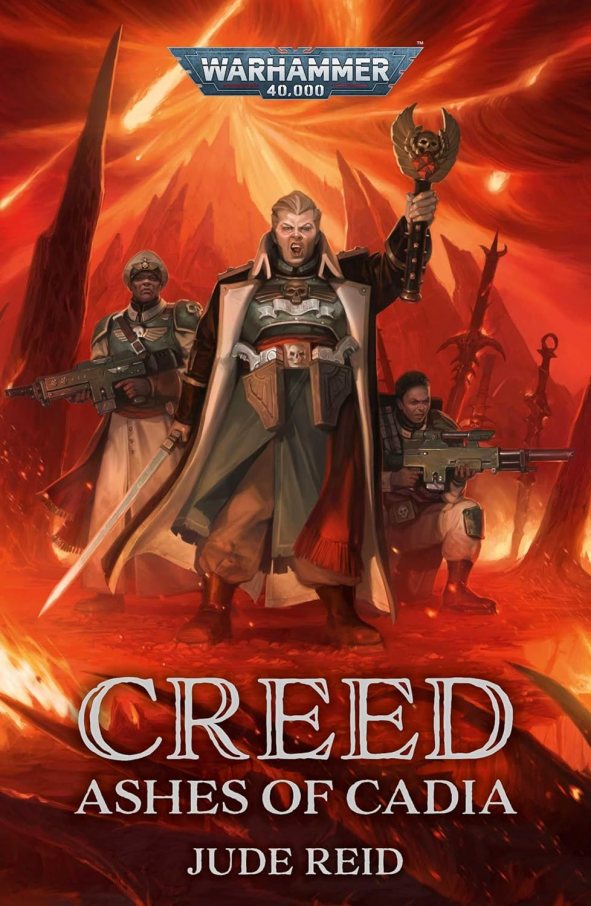
Creed - Ashes of Cadia Cover 2

Publisher: Black Library (Audiobook – 9 September 2023)

Series: Warhammer 40,000

Length: 14 hours and 36 minutes

My Rating: 4.5 out of 5 stars

Amazon

Exciting new Warhammer 40,000 author Jude Reid presents an action-packed and captivating novel that takes the reader to one of the most desolate places in the franchise’s universe, the ruins of Cadia, with the exciting novel Creed: Ashes of Cadia.

Last year proved to be an outstanding year for new authors producing their first Warhammer 40,000 novel, with several highly talented authors, such as Rob Young (Longshot) and Jonathan D. Beer (The King of the Spoil), producing amazing and intense reads in this fantastic universe.  One of the most interesting of these 2023 Warhammer 40,000 debuts was the impressive and captivating Creed: Ashes of Cadia by new author Jude Reid.  Reid’s first full novel after writing multiple Warhammer 40,000 short stories, Ashes of Cadia takes the reader on an epic journey with a new major protagonist.

Years after the fall of Cadia to the dread forces of Chaos, the Imperium of Man is still reeling from the carnage wrought in its aftermath which saw a massive warp rift cleave their besieged intergalactic realm in two.  Led by the returned Primarch Roboute Guilliman, humanity fights back as best it can in a great crusade, but its victories are never enough.  When word reaches Guilliman of a potential weapon on the most unlikely of locations, desperation requires him to investigate, and there is only one person he can call on for this dangerous mission.

After continually proving herself on the field of battle, Ursula Creed has succeeded her father, Ursarkar E. Creed, in becoming the new lord castellan of Cadia.  Leading the remaining Cadian forces in the Imperium, Ursula hopes to erase the stain of her legendary father’s great defeat, however, she can never seem to leave behind his complicated legacy.  When summoned by Guilliman for a secret mission, Creed is shocked to discover that she is being sent back to one place she never thought to return to, the shattered remains of Cadia.

Accompanied by a select team of Cadians with an unusual mixture of skills and experience, Ursula is sent to the surface to recover her father’s final battle plans and the secret weapons they supposedly lead to.  However, the surface of Cadia is a blasted wasteland, filled with foul energies and unnatural magic that causes even the dead to attack the invaders.  Left without support and hopelessly outnumbered, Ursula must lead her unprepared followers onwards in the hope of securing the prize.  But terrible evils lay claim to the remnants of Cadia, and Ursula will be forced to confront both the forces of Chaos and her own inescapable legacy as the daughter of Creed if she wants to survive.  Can Ursula succeed where her father failed and redeem Cadia, or is she already lost?

Reid had a very ambitious story idea for Ashes of Cadia, in that she needed to provide a human solider focused, character-driven adventure narrative that simultaneously examined the complex legacy of the Cadians in a new way, while also providing the reader with an intense and action-packed read.  Reid more than succeeded, as Ashes of Cadia takes the reader back to Cadia, one of the most significant landscapes in the Warhammer 40,000 universe and puts several intriguing and damaged protagonists through absolute hell.

Starting off a little slow to establish the main cast, remind people about the Cadian legacy, and set up the mission, Ashes of Cadia doesn’t really speed up until the protagonists land on shattered Cadia, and naturally all hell breaks loose.  The protagonists essentially find themselves thrust into a zombie apocalypse scenario, as a sorcerer attacks with a horde of living dead and decimates the protagonist’s team, leaving them trapped on the planet.  The disparate band of damaged and disillusioned survivors are forced to journey across the ravished planet to find either an escape or the rumoured secret weapon, encountering all manner of horrors, tragedy and continuous losses of supporting characters, all the while being hunted.  At the same time, the cast become more and more disheartened and internal conflicts seek to fracture them in a range of emotionally charged scenes.  This harsh adventure takes them to several key places on the ruins of the planet, as they get closer to their various personal goals.  There are some interesting false starts and twists, as well as some heartbreaking scenes, and you are constantly on edge, especially as a new danger of betrayal might emerge just around the corner.  I liked the reveal of Creed’s treasure in the novel, especially as it has some interesting potential consequences for the future of the Cadians, and the use of Creed’s daughter as a protagonist was a smart choice.  While I did see the big twist of the book regarding a certain traitor coming, it was still really well written, and I loved how Reid tried to misdirect with multiple bloody red herrings.  Everything leads up to a big, brutal, and over-the-top final confrontation, the sees the survivors redeemed in various ways, and it ended up being a fantastic and powerful piece of Warhammer 40,000 fiction.

Reid wrote a very intense and personal novel here with Ashes of Cadia, and I really enjoyed her captivating writing style.  Expertly splitting the focus of the book between several complex and unconventional soldiers with their own individual baggage, Ashes of Cadia becomes a much more emotionally charged novel than I was expecting, but the result was an impressive read, especially as you quickly get invested in the various character arcs.  However, Reid is no slouch when it comes to the action, as the many combat sequences are sharp and brutal, keeping you on your toes as any of your favourite figures can quickly fall.  While the pace of Ashes of Cadia does slow a bit at the beginning and in the middle, for the most part Reid keeps her novel moving along, and I had a hard time putting it down as a result.  I especially loved how well Reid portrayed the fallen planet of Cadia throughout this novel, especially as she really laid out the horrors and dangers associated with this planet.  Fans of Warhammer 40,000 fiction who know this planet well will be shocked by how disturbing and different it turns out, and I loved that we finally got an adventure in the ruins.  A brilliant and exceptionally written novel, you will have a lot of fun with this book.

As I have mentioned a few times in this review, Ashes of Cadia is a significant piece of Warhammer 40,000 fiction, mainly because it provides a continuation to a lot of the major story elements that have been a big part of the franchises fiction since the lore changes surrounding the fall of Cadia.  Quite a bit of in-universe time has taken place since that event, and most of the recently released Warhammer fiction focuses on how the loss of the planet effected the Imperium and the many Cadian soldiers fighting throughout it.  If followed through, the events of Ashes of Cadia are going to give these Cadian characters and stories new purpose, and I loved that we also have new Creed character to follow in Ursula.  Reid does an excellent job of building up to these reveals, and there was another interesting look at how traumatised and demoralised the Cadians are, which really fit into the plot of this book.  There are also a lot of references to other novels and events from the lore that fans of the franchise will appreciate, and I personally liked how it had some connections to another Warhammer 40,000 novel from last year, The Fall of Cadia by Robert Rath (one of my favourite books and audiobooks of 2023).  As such, Ashes of Cadia is probably best enjoyed by those established fans of the Warhammer 40,000 universe, especially those who have enjoyed the recent influx in Cadian fiction.  However, there is still a lot for newer readers to the franchise to enjoy, especially as Reid does a wonderful job of explaining the key lore elements that lead up to this story.  General fans of adventure, science fiction and even horror, can have a lot of fun with Ashes of Cadia, and this turned into quite an intense and bloody war narrative.

Easily the most distinctive part of Ashes of Cadia is the complex and damaged cast of characters that make up the main cast.  Reid produced some unique figures for this impressive narrative, and their individual stories, as well as the general despair of the Cadian trooper following the loss of their planet, proves to be a major driving point in the plot, and I really enjoyed seeing the various character arcs unfold.

Ashes of Cadia’s story had three primary point of characters, and Reid did a pretty good job of jumping the story around them, showcasing each of their unique and well-written storylines.  The most prominent of these is the titular Ursula creed, the current lord castellan of the lost planet of Cadia.  The daughter of the beloved Cadian leader who lost the planet before disappearing, Ursula has big boots to fill, especially as she is resentful for her father’s legacy and the fact she barely knew him.  The resulting insecurities, responsibilities and bitterness play a huge part in her character arc, and watching her walk in the steps of her father and attempt to become the leader he was proved to be a great part of the plot.

The next major character, Shael Laskari, adds a more general viewpoint to the story as a recently graduated cadet who is chosen to accompany Creed to the surface for propaganda reasons.  Inexperienced and fearful, Laskari is the everywoman of Ashes of Cadia, and it proved interesting to see her deal with the unknown horrors of the planet while also trying to find her courage in her squad.  Reid also does an exceptional job with the unique character of Mac Ossian.  A former medic and member of a Cadian regiment, Ossian was assigned to a penal legion after killing his former commander, and now finds himself back on Cadia as part an expendable distraction.  Managing to meet up with Creed’s unit, Ossian spends much of the book trying to prove his loyalty and worth, while also wondering if Creed and Cadia still deserves his surface.

These central characters are accompanied by several fantastic supporting cast members, several of which have their own exceptional character arcs.  I personally really enjoyed Colonel Hadrian Aurelius Van Haast, who serves as a guide with local knowledge of the area.  Van Haast is a stupendously arrogant figure, who you can’t help but dislike, and he added a fantastic dynamic to the cast.  However, this arrogance is a cover for a much darker secret, which Reid slowly and expertly reveals as the book continues.  I also must highlight Ossian’s fellow penal legionnaire Liga Yager, another prisoner who tries to survive after being dropped on Cadia to die.  Due to her much more cynical perception of Creed and the Cadians, as well as her compelling backstory, Yager goes on a very different path than Ossian, and proved to be a devil on his shoulder that speaks some much-needed truth.  Finally, I loved the villain of the story, the Death Guard sorcerer, Livor Opilionis, who is mostly called The Huntsman throughout the book.  The Huntsman is a gloriously sinister and dangerous foe, who relentlessly hunts them throughout the ruins of Cadia, heralded by his hunting horn and packs of plague zombies, and the confrontations the protagonists have with him always leads to carnage.  This outstanding cast of characters, and more, really turned Ashes of Cadia into an amazing novel, and I loved the brilliant character arcs that Reid developed around them.

As with most Warhammer 40,000 books I check out, I made sure to grab Ashes of Cadia on audiobook.  The Warhammer 40,000 audiobooks are always pretty damn awesome, and I love how much the action, horror and unique setting came through in this format.  Coming in with a decent runtime of just over 14 and a half hours, Ashes of Cadia was a very easy book to listen to, and I managed to knock it off quickly.  It helped that Ashes of Cadia was narrated by the superbly talented Colleen Prendergast, who is swiftly becoming the go-to narrator of Warhammer 40,000 audiobooks with female Cadian protagonists.  Prendergast has a great and intense voice for Warhammer 40,000 fiction, and I love how well she was able to move the plot along.  She also provides a series of great and fitting voices for the cast of this book, especially the female characters.  I loved how dignified and complex she made some of these characters, as well as how monstrous and threatening the main antagonist sounded in his terrifying scenes.  As such, Ashes of Cadia was an absolute joy to listen to and I would strongly recommend this audiobook version to anyone interested in this fantastic piece of Warhammer 40,000 fiction.

Creed: Ashes of Cadia was a fantastic, dark and captivating novel from Jude Reid, who produce an impressive debut with some intriguing potential for the wider Warhammer 40,000 universe.  Loaded with action, intrigue and several complex characters, Creed: Ashes of Cadia was an excellent read that cleverly ties into the history and existing lore of this complex and highly fun franchise.  Intense, moving, and oh so brutal, Ashes of Cadia comes highly recommended, especially for fans of Warhammer 40,000 fiction.

Amazon

Quick Review – The Hidden Book by Kirsty Manning

The Hidden Book Cover

Publisher: Allen & Unwin (Trade Paperback – 29 August 2023)

Series: Standalone

Length: 312 pages

My Rating: 3.75 out of 5

Amazon

Australian author Kirsty Manning presents an emotionally charged and compelling historical drama that follows a beleaguered group of protagonists during and after the horrors of World War II with The Hidden Book.

Plot Synopsis:

Europe, 1940

 Imprisoned in the Mauthausen concentration camp in Austria, Spanish fighter and photographer Mateo Baca is ordered to process images of the camp and inmates for a handful of photo books being made for presentation to top Nazi figures. Just five books in total, or so the officials think …

Mateo manages to make a secret sixth book and, with the help of a local woman, Lena Lang, it remains hidden until the end of the war.

Australia, present

 When thirteen-year-old Hannah Campbell’s Yugoslavian grandfather, Nico Antonov, arrives in Australia to visit his family, one of the gifts he brings with him is an intriguing-looking parcel wrapped in calico cloth which Roza, Hannah’s mother, quickly hides.

Later, Hannah sneaks off in search for the mysterious package. She is horrified to find in it a photo book full of ghastly historical photographs of a terrible place full of people suffering.

At first Hannah has little context for what she sees, but over the years as she experiences love, grief and trauma, she understands what these photos came to mean, for herself, her freedom and for those who risked their lives to ‘bear witness’ to history.

A startling story of clandestine courage and treachery in World War Two, and how we must meet and overcome our pasts to move into our futures.

This was a great piece of historical fiction from Manning, who has written several other intriguing novels in this genre over the years.  The plot of The Hidden Book is interesting as it combines a harrowing story of people caught up in the Holocaust with a complex narrative of a young person trying to understand the horrors they came from.  Half the novel follows several characters either imprisoned at the Mauthausen concentration camp, or living in the surrounding area, as they work together to record and smuggle out pictures of the atrocities being perpetrated against them.  The second storyline follows Hannah, the grandchild of one of the characters from the first storyline, who grows up in Australia, constantly wondering about the secrets of her grandfather’s book of pictures, and who finds her life defined by it.

Both of these storylines are interesting in their own way, and I think that Manning did a pretty good job of bringing them together into a fantastic overall story.  The half of the book, set in Mauthausen, is suitably dark and nerve-wracking, as you are constantly bombarded by the fear and determination of the characters imprisoned there in one shape or another.  This part of the book is an interesting retelling of real historical events surrounding Mauthausen, and Manning brings together a great group of characters here, including a sadistic camp commandant and a family of anti-Nazi locals who are afraid the Nazis will find out about their mentally impaired daughter.  This compelling and dark storyline serves as an excellent basis for much of The Hidden Book’s plot, and it leads into the second plot line extremely well.

This secondary plotline involves the character of Hannah Campbell finding her grandfather’s photo album covering the atrocities at Mauthausen and spending the rest of her life trying to make sense of them.  While I am not the biggest fan of historical dramas that rely on descendants finding old material from their ancestors (it is a bit of an overused story device), Manning presented some interesting storylines around it.  In particular, she uses it as a key part of Hannah’s coming-of-age storyline, as she experiences the highs and lows of life from childhood to parenthood.  Manning tells a great story of growing up in Australia, including country living and city life, and while parts of this storyline is are very frustrating, and it serves as an interesting counterbalance to the Holocaust tale while also providing insights into how the younger generations view the Holocaust and how knowing your history and change your present.

I enjoyed how well these two separate and distinctive storylines come together throughout the course of The Hidden Book.  The intensity, conflict and drive for survival in the historical part of the novel is well offset by a different layer of emotion in Hannah’s life story, and I liked the constant looks back to the past.  This proved to be a fast-paced and easy to read novel, and I liked the blend of characters, historical elements and two very different background settings that emerged.  Despite all that, I didn’t get amazingly emotionally invested in the plot, and I think parts of Hannah’s storyline slowed down the pacing at times.  Overall, I thought that The Hidden Book by Kirsty Manning was an intense and compelling read that I had good time with.  An excellent read for fans of historical drama, especially those that combine dark pasts and hopeful futures into powerful character driven narratives.

Amazon

Dark Arena by Jack Beaumont

Dark Arena Cover

Publisher: Allen & Unwin (ebook – 3 January 2024)

Series: The Frenchman – Book Two

Length: 456 pages

My Rating: 4.75 out of 5

Amazon

Former French spy Jack Beaumont presents a powerful and captivating sequel to his awesome debut with Dark Arena, a gripping read with a compelling look at European espionage.

Back in 2021 I was lucky enough to receive a copy of an outstanding debut spy thriller, The Frenchman.  Written by Jack Beaumont, the pseudonym of a former operative in France’s foreign secret service, The Frenchman was an incredible read that followed a French spy who attempts to stop an elaborate terrorist plot.  Featuring some amazing authenticity and a great story, The Frenchman was an exceptional read and it ended up being one of my favourite debuts of 2021.  I have been eager for Beaumont to follow up The Frenchman for some time, and I was extremely excited when I received an advanced copy of this long-awaited sequel, Dark Arena, especially as it quoted one of my Canberra Weekly reviews up front.  The first new novel I read in 2024, Dark Arena was another outstanding read from Beaumont that combined a powerful, character-driven narrative, with a complex look at recent European events and the potential underlying intrigue surrounding it.

When a member of the DGSE, France’s foreign secret service, is brutally murdered in front of his family by a team of Russian agents, Alec de Payns is brought in to investigate the mysterious circumstances surrounding his attack.  De Payns soon discovers that this bloody operation is related to a recent piece of intelligence the DGSE recovered, which identifies hostile actions the Kremlin is authorising throughout Europe.

Infiltrating a secret meeting of businessmen, terrorists and Russian mercenaries aboard a luxury yacht in the Mediterranean, Alec discovers details about a mysterious assassination plot that could tip the balance of power in Europe.  Determined to intervene for France’s advantage, de Payns and his team attempt to uncover the target of the assassination, as well as the underlying reasons for the death sentence.  But the more they dig, the more they begin to suspect that someone is manipulating the DGSE into a confrontation with the Russians.

Closing in on their targets, de Payns soon discover the full extent of their opponent’s plans, and the DGSE are soon left with hard decisions, especially as intervening could impact France’s energy security.  Caught between dangerous superpowers and with a war on the horizon, can de Payns and his team make the right choice, or will doing the right thing cost their country terribly?

This was a superb and extremely clever spy thriller sequel from Jack Beaumont, who expertly follows on from his debut with another outstanding novel.  Dark Arena is an incredible read, which I think I enjoyed even more than The Frenchman, due to its excellent twists and compelling examinations of European politics and espionage.

Dark Arena proved to be quite a thrilling read that got more intense the further you get into it.  Starting off with a shocking but important introduction that shows a French agent killed for the information he recovered, Dark Arena quickly moves onto the main plain, as Beaumont’s protagonist, Alec de Payns, is reintroduced and set to investigate.  The initial chapters of the book are a little slow as Beaumont reasserts his steady and methodical pace, but there are some vital and fascinating story elements introduced here, especially around the conspiracy the DGSE are hoping to unravel and the protagonist’s fraught personal life.  I enjoyed the slow build-up that Beaumont showcased here, mainly because it added the authenticity of the plot.  The story really starts to kick into high gear once de Payns begins his infiltration of a luxury yacht, and the scenes set aboard there are loaded with risk, threat, cunny tradecraft and realistic depictions of information gathering.

Dark Arena’s plot speeds up a lot more in the second half as de Payns and his colleagues begin to investigate several different angles and potential enemy agents.  The reveal that the Russians are planning an assassination is quite intriguing, especially as Beaumont ties it into the invasion of Ukraine, and it adds a certain layer of extra realism and intensity to the overall plot.  While I won’t go into too much detail about this here, I felt that Beaumont did an outstanding job working his complex narrative into these major real-world events, and it was fascinating to his take on some of the events leading up to the invasion and the world politics that ensured it happened.  There are also some great reveals surrounding the origin of the information that the DGSE and other European intelligence agencies have been working off, especially as it appears they are being manipulated by outside sources.  The protagonist’s personal life also gets thrown front and centre in the narrative, and while I wasn’t the biggest fan of the many coincidences that brought together his family with his mission, it was compelling to see him balance the two.  The full discovery of the various plots being orchestrated around Europe proves to be quite clever, and the resulting chaos as the DGSE tries to intervene despite a dangerous political situation results in some captivating moments.  There are some intricate action sequences, encounters between rival spies, and some big reveals, including finally getting a payoff regarding a character introduction from The Frenchman.  This ended up being a fantastic and awesome story, and I hope that we get some form of sequel to it soon.

I deeply enjoyed how Dark Arena was showcased as Beaumont has a very distinctive writing style, that relies heavily on detail and authenticity to enhance his compelling spy thriller storyline.  The focus on tradecraft and the multiple complex aspects of real-life espionage and intelligence work is so damn fascinating, and the author does such a good job of making all these elements seem so realistic.  Nearly every action the characters makes is loaded with intricate detail as Beaumont explains the reality of the intelligence officer’s life, and you will be enthralled by the various intricate ways that the characters attempt to outwit and avoid their opponents.  While references to these actions might seem a bit repetitive at times, I thought it was a great way of hammering home just how careful these characters need to be, especially after the shocking opening scene.  I really loved how much detail Beaumont shoved into every page of Dark Arena, and it made the resulting plot pop as you absolutely believed this was the sort of thing real spies would go through.  This already elaborate narrative is further enhanced by the multiple layers Beaumont added to the plot as he follows various members of the DGSE as they attempt to unwind the multiple mysteries presented to them throughout the book.  While I did occasionally feel that Beaumont was using too many characters, the various betrayals, secrets, and complicated loyalties that emerge from the various perspectives, including from a few antagonists, helps to create a powerful espionage tapestry, and I loved how well this amazing story came about.  While Dark Arena is a sequel to The Frenchman, most readers should be able to dive straight into this second novel, as Beaumont makes the plot of this book quite accessible and any necessary details from The Frenchman are covered again here.  Everything about this book is so well written, and I have a lot of love for Beaumont’s meticulous and distinctive style.

While there are several great characters in Dark Arena, the one who gets most of the focus is protagonist Alec de Payne.  A dedicated DGSE field agent, de Payne is a fascinating figure who serves as the heart and soul of the series.  His depiction as an agent is always very fascinating as Beaumont channels most of the espionage authenticity through his scenes.  However, the most compelling aspect of de Payne’s character lies within the struggles he has balancing his secretive profession with his life as a husband and parent.  Already away for long periods of time and constantly forced to lie to his friends and family, de Payne finds himself struggling more than ever in Dark Arena, especially when it comes to his relationship with his stressed wife.  Thanks to the events of The Frenchman, which saw his family temporarily kidnapped, De Payne finds himself pushed even further to the brink as his is suffering from paranoia and anger following the threat to his loved ones.  This really impacts his personal life, and the conflicts he experiences at home provide a powerful layer of drama to the plot, which I felt contrasted nicely with the intrigue and espionage of the rest of the book.  While elements of de Payne’s personal life do blend into his professional career, it is mostly kept separate, and I loved seeing the dichotomy between a stressed family man and an accomplished spy.  De Payne was such an incredible protagonist to follows as a result, and I felt his amazing story was a major highlight of this exceptional read.

Jack Beaumont provides an outstanding follow up to his epic debut with Dark Arena.  Once again featuring his ultra-authentic take on spies and international espionage, Dark Arena has a captivating and realistic plot that takes his excellent and complex characters into the heart of a recent history.  Intense, addictive, and so damn intricate, Dark Arena was an exceptional read from a rising star in the spy thriller game.

Amazon

Warhammer 40,000: The Fall of Cadia by Robert Rath

Warhammer 40,000 - The Fall of Cadia Cover

Publisher: Black Library (Audiobook – 5 August 2023)

Series: Warhammer 40,000

Length: 19 hours and 42 minutes

My Rating: 5 out of 5 stars

Amazon

Cadia Stands!  I ended 2023 on a very high note with one of the best Warhammer 40,000 novels of the year that follows one of the biggest events in the franchise’s recent lore, The Fall of Cadia by Robert Rath.

There were several amazing Warhammer 40,000 novels released in 2023, with some of my favourites including The Lion: Son of the Forest and Warboss by Mike Brooks, The King of the Spoil by Jonathan D. Beer and Cypher: Lord of the Fallen by John French, just to name a few.  However, in terms of sheer scale, epic battles, and larger-than-life characters, my favourite will have to be The Fall of Cadia.  As the name suggests, The Fall of Cadia follows the final battle for the planet of Cadia at the end of the 13th Black Crusade, which was a major campaign in the Warhammer 40,000 tabletop game.  The original 13th Black Crusade campaign happened back in 2003, with the official result being something of a draw.  However, in 2017, Games Workshop retconned the campaign to result in a much more substantial Chaos victory, which ended up having substantial impacts on the wider lore of the franchise, effectively reshaping the entire Warhammer 40,000 universe.

This change ended up being a pretty significant event, and Games Workshop provided some major write-ups about it that summarised the events and their explosive aftermath.  Indeed, the lore events initiated in this event have already been featured in several novels, and most of the current Warhammer 40,000 fiction examines the consequences of this campaign.  However, there has yet to be a novel solely dedicated to trying to capture the entirety of the action at the end, until now with The Fall of Cadia by Robert Rath.  Rath was a great choice of author to write this book as he is a truly amazing author of Warhammer 40,000 fiction.  His previous novels, Assassinorum: Kingmaker (one of my favourite books and audiobooks of 2022) and The Infinite and the Divine, have both been exceptional five-star reads, telling elaborate, character-driven stories that cleverly capture complex aspects of Warhammer 40,000 lore and turn them into impressive and addictive reads.  As such, he was the perfect choice to write The Fall of Cadia and he succeeded in creating a deeply moving and epic novel that perfectly brought the chaotic events that ended this infamous war to life.

In the far future of the 41st Millenium, few battlefields are more significant or more soaked in blood than that of Cadia.  A fortress world for the Imperium of Man, Cadia stands in the shadow of the Eye of Terror, a blazing rift that serves as a gateway into the Warp and the realm of the Chaos gods.  For any substantial invasion by the forces of Chaos into the Imperium to be successful, Cadia needs to be taken and destroyed, and for that task the Chaos Gods have chosen the Warmaster of the Black Legion, Abaddon the Despoiler.  Abaddon is a legendary warrior of hatred and spite who alone is capable of welding together the unruly and contentious forces of Chaos.  Over the millennia, Abaddon has launched 12 Black Crusades against Cadia, leading an unholy alliance of monsters, daemons, cultists and traitor Space Marines to battle.  However, each time Cadia has held, at great cost to the desperate Imperial defenders.  But now, as the forces of Chaos appear stronger than ever before, a 13th Black Crusade has been declared, one that looks set to destroy Cadia forever.

The Fall of Cadia starts well into the 13th Black Crusade, as, after weeks of heavy fighting, the forces of Cadia and humanity once again appear victorious, with the armies of Chaos retreating on all fronts.  However, despite the apparent victory over the heretics and the dark gods of Chaos, Lord Castellan Ursarkar Creed is uneasy, believing that the victory was too easy.  As the celebrations continue, Creed is soon proved right, as the Eye of Terror disgorges a new enemy force unmatched in size and deadly potential since the legendary Horus Heresy.

At its head flies a dread Blackstone Fortress, an alien superweapon capable of intense destruction and now crewed personally by Abaddon.  Faced with this threat, Creed attempts to bring together the various elements of humanities defenders, including legendary Space Marines, virtuous Sisters of Battle, the inhuman soldiers of the Adeptus Mechanicus, and the outmatched by steely rank-and-file troops of Cadia, determined to save their home.

As the final invasion of Cadia begins, Creed organises the defence the best he can to hold back the oncoming horde on land, in the sky, in space, and even far behind Cadian lines in their seemingly safe cities.  If Creed has any hope of succeeding, he will need to bring together the scattered armies of the Imperium on Cadia into a single cohesive force, but not all of the defenders are fighting for the same goals.  Even if these armies come together, can the legendary Creed hold off the fury of Abaddon and his dark gods?  Cadia’s last stand has begun, but who will be left alive at its end?

Robert Rath continues to showcase just how varied and impressive his talent for writing Warhammer 40,000 fiction is as he captures the incredible events of the last siege of Cadia.  The Fall of Cadia is epic in every way possible, as it presents the reader with a great coverage of these key lore events and the characters involved.  Elaborate, intense, and featuring so much damn carnage and war, The Fall of Cadia is an incredibly addictive read that got a very easy five-star rating from me.

I think it is important to point out that Robert Rath had a difficult task ahead of him when he was chosen to novelise the events surrounding the end of the 13th Black Crusade.  A lot of detailed lore has been written around this event, not only in the various guides, rulebooks and other material associated with the tabletop game but also in several years worth of novels and extended fiction that focused on the aftermath of the war.  Any novelisation about these events ran the risk of being a stale retelling of events that all Warhammer 40,000 fans already know about.  However, Rath rose to the challenge and presented a powerful, intense and memorable depiction of the events that really drags the readers in while showing just how incredible and epic a piece of Warhammer fiction can be.

To tell the events of The Fall of Cadia, Rath elected to cover everything in a massive, multilayered, character-driven narrative, told from every perspective imaginable.  Starting towards the final days of the battle, when Abaddon unleashes his true invasion of Cadia, the reader is soon engrossed a range of different storylines that cover many different angles of the battle.  Not only do we get to see the overall strategy of both sides but the reader is also thrust into personal wars and fights across the theatre.  So many amazing moments are covered, including a desperate last stand in the mountains, battles in the sky and space, Chaos infiltration in the cities, criminal enterprises, even internal dissension amongst the Chaos command.  These scenes are usually shown through the eyes of a complex characters, whose desperate fight for Cadia helps to define them and presents the reader with some impressive and captivating character arcs.  All these varied conflicts are expertly portrayed by Rath, who does a wonderful job capturing the intensity, brutality and lack of humanity involved in warfare, as his characters suffer on every battlefield imaginable.  The sheer epic and destructive nature of these conflicts really come across in Rath’s writing style, and I honestly visualised many of the scenes being described in cinematic detail in my head.

The first half of the book primarily focuses on these various scattered storylines, and it was a lot of fun to see the different theatres of war, especially as you start to get attached to the major characters.  All the battles featured are pretty awesome and intense in their own way, and I really have to emphasise just how skilled Rath is at bringing all the different elaborate bits of combat to life.  The complex story pieces start to come together in the second half, especially as each of the characters find themselves drawn to the same battlefields.  I really appreciated how the storylines tied together, and there are some brilliant moments featured here.  I also felt that the multiple deus ex machina moments towards the conclusion of a big battle sequence that Rath needed to include because they were part of the lore was handled about as well as they could be.  Rath did some good set-up for the most important of them earlier in the plot, and I liked how in many instances he tried to examine it from the perspective of the common soldier looking for miracles, so it often did not seem too ridiculous.

Everything leads up to the big final battle in the last third of the novel, and despite knowing how it was going to end, I still was extremely invested in the plot and eager to see how everything came about.  A lot of this was because I deeply enjoyed the compelling character arcs of the newer protagonists, but I was also very interested in seeing how Rath envisioned some of the more essential events.  The author really did not disappoint, as these epic and groundbreaking moments were expertly showcased to the reader in a powerful and captivating way.  The big deaths were pretty shocking and hurtful, especially if you did not know they were coming, and the major conflicts were so damn epic in their scope and impact.  The final devastating blows of the war really hit hard, especially as the climatic events featured some deeply personal moments alongside the mass devastation, which made everything that much more powerful.  I really loved how everything came together, and the poetic conclusion that highlighted the final fights of the surviving protagonists is going to stay with me for some time.  I am so damn impressed with how much passion and emotion that Rath was able to stick into this massive war story, and I honestly loved every single second spent reading The Fall of Cadia.

In addition to the amazing story, I really need to highlight the impressive array of characters featured throughout The Fall of Cadia.  Rath did a wonderful job of presenting the massive events of this book through a range of intriguing character perspectives on every side of the conflict, and there is a fantastic combination of new characters and established Warhammer 40,000 figures.  The author really tried to cover The Fall of Cadia’s narrative from every single angle he possibly could, and the resulting combination of generals, common soldiers, legendary warriors, ancient traitors and other interested onlookers, helped to make this Warhammer 40,000 story even more powerful and layered.  This includes several Chaos characters, whose tainted perspectives allow for a compelling view of both sides of the conflict.  The Fall of Cadia’s character arcs are mostly self-contained for the majority of the book, with their focus usually on that particular figure or theatre of the war.  However, there are some clever and moving interactions between the characters as the novel continues, and it is testament to Rath’s writing style and ability to create a massive web of overlaying character storylines that these interactions fit together so well into a cohesive and powerful narrative.  Rath really dove into the complex lives and personalities of every character he featured, even those that died quite quickly, and the resulting character arcs really added to the emotional impact of The Fall of Cadia.  You become heavily invested in these characters as a result, and waiting to see who survives the war is an important part of experiencing this novel.

So many big personalities were expertly featured throughout The Fall of Cadia and every reader is going to come away with their own favourites.  The better character arcs I personally loved included that of Major Marda Hellsker, who is forced to lead a desperate last stand for much of the book and grows into the leadership position thrust upon her.  Captain Hanna Keztral’s exploits in the sky also make for great reading, especially as she desperately tries to gain respect whilst flying an unarmed aircraft.  You also have to love the storylines surrounding Salvar Ghent, Cadia’s premier gangster, as he tries to exploit the war to his advantage before finding himself thrust into a much more prominent role.  I particularly loved how well Ghent interacted with some of the major figures in the book, and his entire storyline was one of the most entertaining.  The insatiable Necron collector Trazyn the Infinite was also a great inclusion in the plot, and Rath clearly had fun bringing back this hilarious character after featuring him so heavily in The Infinite and the Divine, and I got a good laugh at several of his pivotal scenes and petty moments.

However, the best characters in The Fall of Cadia had to be the opposing leaders of the war, Lord Castellan Ursarkar Creed and Abaddon the Despoiler.  Both are major figures in Warhammer 40,000 lore and Rath ensured that they were done justice in this novel.  Creed is shown to be a rough but brilliant commander, capable of inspiring an entire world while also suffering from the stresses of constantly being on the losing side.  I particularly enjoyed the subsequent inclusion of Colour Sergeant Jarran Kell alongside Creed as his long-suffering aide and best friend, and the two make for a very powerful character combination for many of the scenes shown from the defenders’ perspective.  Abaddon on the other hand is presented as the absolute beast that he is, and his obsessive desire to destroy Cadia is palpable.  I deeply appreciated that Rath showcased Abaddon as the ultimate villain in this universe, and his appearances were always exceedingly impactful.  Many of Abaddon’s appearances were cleverly shown through the eyes of his loyal servant, Dravura Morkath, whose rose-tinted opinions of her master barely covered the restrained evil within this figure.  I quite enjoyed Dravura as a character, especially as she has the most intriguing insights into the Chaos ranks, and the resolution of her storyline with Abaddon might be one of the most heartbreaking in the entire book.  These characters, and so much more, were such a brilliant part of The Fall of Cadia, and they helped turn what could have been a simple retelling of the lore into a particularly powerful and moving novel.

As with most Warhammer 40,000 novels, I feel that The Fall of Cadia is going to appeal to those fans of the franchise who already have a grip on the basics of the lore and main characters and can fully appreciate just how massive an event this book was.  Due to the material the book is based on, there were a lot of crazy events and characters featured here, some of which would be obscure even to casual fans of the game.  While Rath does an outstanding job of explaining and exploring the most important of these elements, some readers might occasionally be confused at what is going on or how certain characters came into being.  Still, I feel that most new readers can still have an exceptional time with this book, especially as the epic battles, impressive characters, and heartfelt military focused story, is so damn good.  The Fall of Cadia might even be a great gateway novel for those people trying to get into Warhammer 40,000 fiction, and it sure as hell encouraged me to read more Warhammer fiction.

One of the other things that I really appreciated about The Fall of Cadia was the way that Rath tried to paint a more nuanced picture of the planet of Cadia itself.  Cadia is usually portrayed as a bastion of military prowess and resistance without some of the issues other planets in the Imperium had, so it was quite interesting to see Rath’s different take on the subject, showing Cadia to be a planet with hidden issues and dissent.  In particular, Rath examines the problematic social structure of Cadia, where the active military are notably prioritized and those people who could not fight or be assigned other roles were considered a second-class citizen.  I loved how well Rath examined and focused on the issues surrounding this unique military class system, and it became a surprising key part of the book.  Indeed, the motivations of several characters are highly tied into these issues, with many seeking to prove themselves after being considered lesser for their contributions.  It also serves as an intriguing motivation for several antagonistic figures, and I loved just how well Rath was able to weave the structure of a planet into these intriguing character traits.  This, and more, really showcased Rath’s inventiveness and appreciation for the little details of the Warhammer 40,000 universe, and it is one of the reasons why I really enjoy his novels.

As with most Warhammer 40,000 novels, I chose to enjoy The Fall of Cadia on audiobook, which proved to be a very smart decision on my behalf as it was one of my favourite audiobooks of the year.  Coming in with a runtime of just under 20 hours, The Fall of Cadia is a bit longer than your typical Warhammer 40,000 audiobook, which reflects the massive story Rath came up with for this epic read.  I really loved how well this audiobook format brought the epic nature of this narrative to life and the many battles, wars, and unique characters felt even more impressive when read out.  I enjoyed the narration of Mark Elstob, who has previously lent his voice to other great Warhammer audiobooks, including Kal Jerico: Sinner’s Bounty by Josh Reynolds.  Elstob’s narration of The Fall of Cadia is extremely good, and I loved how passionately he presented every big event and piece of action.  I really enjoyed some of the great voices he came up with for the cast of The Fall of Cadia, and every larger-than-life character was gifted a fitting tone that perfectly captured their personalities and intensity.  His voices for the opposing leaders of the battle, Abaddon the Despoiler and Ursarkar Creed, are amazing examples of this, and you really get awesome impressions of both character’s opposing determination and charisma in some outstanding sequences.  I really cannot emphasise just how incredible this audiobook version of The Fall of Cadia is and it is definitely the best way to enjoy this world-shattering story.

Overall, The Fall of Cadia is a pretty exceptional piece of Warhammer 40,000 fiction that did such an impressive job of capturing this intriguing event from the game’s substantial lore.  Robert Rath is such an impressive author, and I am really glad he had the opportunity to cut loose and present this massive inclusion to the Warhammer 40,000 franchise.  The Fall of Cadia is easily one of my favourite books of 2023, and I loved how Rath told such an epic war tale in such a powerful and memorable way.  I honestly hope they make a movie based around this book in the future, because it would be so damn spectacular.  A highly recommended read that no Warhammer 40,000 fan should be without.

Amazon

The Armour of Light by Ken Follett

The Armour of Light Cover

Publisher: Macmillan (Hardcover – 26 September 2023)

Series: Kingsbridge – Book Four

Length: 737 pages

My Rating: 5 out of 5 stars

Amazon

Acclaimed author Ken Follett returns with another exceptional addition to his iconic Kingsbridge historical fiction series with the fantastic and captivating The Armour of Light.

Out of all the authors who dive into the complex and impressive genre of historical fiction, few are as well-known or epic as Ken Follett, who has been dominating the genre for years with his massive and epic thrillers.  I have only really had the chance to explore Follett’s historical fiction books, with his Century trilogy being a particular favourite of mine (one of my favourite trilogies of all time).  However, Follett’s most iconic work is his Kingsbridge series, which has long gained mass recognition and accolades

The Kingsbridge books are a series of massive, epic novels that chronicle the complex lives of the residence of the town of Kingsbridge in historical England.  Each book follows the lives of several intriguing characters as they attempt to survive the various challenges and turmoil of the age, often coming into conflict with each other in some elaborate and extended ways.  The series started in 1989 with The Pillars of Earth, which is probably Follett’s most successful novel.  Set over the course of 50 years in the 12th century, The Pillars of Earth showcased a range of personal, political, economic and social issues that the characters spent their lives overcoming in different ways, often loaded with dramatic or historical significance.  An exceptionally epic book, The Pillars of the Earth is very highly regarded and was turned into a compelling TV miniseries with an awesome cast.

Follett has since followed up his original novel several times throughout his career, with each of the Kingsbridge books set in a different period of the town’s history.  For example, the 2007 release World Without End (which was also adapted into a miniseries), is set in the 14th century around the start of the Hundred Year’s War.  The 2017 novel, A Column of Fire, was another compelling sequel that mirrored the life and reign of Queen Elizabeth I and featured a compelling plot involving Catholic spies and religious conflict.  The fourth book was the 2020 novel, The Evening and the Morning (one of my favourite books of 2020), which served as a prequel to the rest of the series and showed the founding of Kingsbridge in the early years of Viking infested 11th century.  All four of these books have been exceptionally good, and I love following a whole new group of characters while exploring the unique aspects and conflicts of their historical era.  Due to how much love I have for this amazing series, I was pretty damn excited when I found out that Follet had a new Kingsbridge novel coming out in late the 2023 with The Armour of Light.  Set during the early years of the English Industrial Revolution, The Armour of Light sounded so damn good, and it was one of my most anticipated books of 2023 as a result.

England, 1792.  As Napoleon Bonaparte begins his rise to power in France, the people of England look on in fear and curiosity at the changes wracking their neighbour.  As the march towards progress continues throughout England, many people find their way of life changing faster than they can adapt.  Nowhere is this felt more keenly that the town of Kingsbridge.  A major hub of England’s cloth industry, Kingsbridge has been transformed by the rampant industrialisation and modernisation of ancient textile processes.  Now the cloth workers of Kingsbridge are forced to work in crowded factories, pushing out vast amounts of material in often unsafe conditions.  But with each new advance and new dangerous machine, the number of workers needers diminishes, and soon many in Kingsbridge find themselves out of work and thrust into poverty.

As the march towards war with France continues, many inhabitants of Kingsbridge will find themselves thrust into a conflict between the rich and the poor of England.  Spinner Sal Clitheroe tries to make an honest living, but her stubborn determination to get justice continues to put her into conflict with the town’s rich and elite.  Wool merchant Amon Barrowfield attempts to salvage his family’s business, only to find tough rivals on every front.  Weaver David Shoveller attempts to run a fair business, but an ill-advised love affair could ruin everything, while Sal’s son Kit finds himself obsessed with the new machines manipulating the wool.  These figures personal struggles will define the struggle of their generation, as the fight for freedom and enlightenment coincides with a much bigger war.

Ken Follett has another fascinating and impressive character-driven read with The Armour of Light that once again follows several complex figures as they live their lives in historical England.  Clever, powerful and chock full of historical detail, The Armour of Light was an outstanding addition to the Kingsbridge series and just had to give it a full five-star review.

Much like the other books in the Kingsbridge series, The Armour of Light follows a group of intriguing characters as they navigate life during a turbulent period of England’s history and attempt to change their destiny and the destiny of the people they love.  Set between 1772 and 1824 (although most of the main story ends in 1815), you get an intriguing examination of each of these characters as they overcome all manner of adversity, oppression, war and more.  The scope of The Armour of Light’s story is pretty damn epic as Follett really lays on the challenges and tragedies for his characters to endure and overcome.  There is intrigue, politics, imprisonment, business rivalries, unexpected deaths, conscription, unrequited loved and much more as many of the protagonists find themselves going up against the system and often coming off second best.  You really grow attached to these characters as you follow them throughout the decades and see many of them grow up, find their callings, fall in love, and more, only to often see them then at their worst as they encounter setbacks they can’t overcome.  While most of the story deals with the industrial changes the characters are trying to get used to, the plot does also tie into the Napoleonic War.  Naturally, pretty much all the characters find themselves over in Belgium in 1815, so everyone is involved at Waterloo to some degree or another.  This proves to be an impressive end to the story, and it was fascinating to see where all the various characters ended up, especially after experiencing the deadliest of battles.  I had an outstanding time getting through this elaborate story, which honestly had me hooked the entire time.  Despite The Armour of Light’s near 750-page length, I managed to power through it in a matter of days, its story was that damn interesting.

As I mentioned, The Armour of Light is part of the Kingsbridge series and serves as a sequel to all four previous novels.  However, due to compartmentalised nature of the book’s plot and the focus on completely new characters, readers do not need a prior knowledge of the rest of the Kingsbridge books to enjoy The Armour of Light.  The novel is very accessible, and due to the substantial gap between it and A Column of Fire, readers should really consider this a standalone novel that any historical fiction fan can easily enjoy.  However, long-term fans of Follett and the Kingsbridge series will no doubt appreciate seeing how the setting of Kingsbridge has evolved over the years, especially in the face of industrial revolution, which changed the nature of the textiles industry that has always been central to the series’ plots.  There are also a bunch of clever references and connections to the previous novels, although if you don’t pick these up it in no way ruins your flow or enjoyment of the story.  As such, The Armour of Light is a book most readers and historical fiction fans will be able to enjoy, while also serving as an intriguing continuation to the Kingsbridge series.

One of the main reasons why I enjoy the Kingsbridge books so much is because Follett excels at showcasing fascinating historical periods and working his characters into unique situations based on the events of the period.  The Armour of Light is an incredibly good example of this as it examines the impact of the early Industrial Revolution on a textile town like Kingsbridge.  Follett really dives into the intricacies of the mechanised weaving process that would have taken place in factories like this, and the various issues they caused.  As the book progresses, the characters are introduced to new machines more efficient than the last, which causes more of the characters and inhabitants of Kingsbridge to lose work.  This leads to discontent amongst the working classes, many of whom are trying to raise themselves up through any means possible, and the rich factory owners and the other elites try to hold them down using various legal and political angles.  As such, the story captures interesting aspects about the English legal system and the controversial politics at the time, especially as parliament was so against unionisation and other actions after seeing the revolution in France.  I quite enjoyed the discussions that occurred surrounding the French Revolution and Napoleon at various points of the book, and it was fascinating to see the various classes reactions to these events, such as fear from the wealthy, and interest from the poor.  Other intriguing historical elements were also examined throughout the book, such as the growing rivalry between the Church of England and the Methodist faith, and I had a wonderful time seeing them all introduced into the plot.  Follett did a remarkable job working so many of these historical details into The Armour of Light’s story, and it helped to make this a fantastic and fascinating read I couldn’t put down.

Finally, I need to highlight the great characters featured throughout the plot.  Follett came up with an intriguing collection of figures to follow in The Armour of Light, and each of them goes through some compelling trials and tribulations.  I really enjoyed the range of different characters featured within the novel, although most of them were tied into the wool trade to some degree to really hammer home the novel’s main point about change and industrial revolutions.  Follett came up with some very interesting personal stories for each of these characters, and their powerful journeys through life, love and loss, was the true heart of the book.  This includes Sal Clitheroe, the heart and soul of the book, Amon Barrowfield, the always hopeful young merchant, and David Shoveller, a mostly noble figure who works to help those he can.  I also loved the striking Alderman Joseph Hornbeam, who served as the book’s main villain.  The wealthiest man in Kingsbridge, Hornbeam is determined to expand his empire no matter who he must crush to do so.  As such, he comes into conflict with many of the protagonists, and his actions are usually the crux for much of the book’s plot.  I really enjoyed Hornbeam as an antagonist, and Follett weaves some interesting storylines around him, including a hidden backstory, and a redeeming examination of his love of family.  Pretty much all the characters in The Armour of Light were extremely well written, although I thought it was a bit odd that every major female character either committed adultery or lusted after another man while married.  I’m not sure if that was commentary on women’s lack of choice back in the 18th and 19th centuries or some particularly interesting choices from Follett, but it was weird that it happened at least four times.

Ken Follett did an outstanding job continuing his amazing Kingsbridge series with the wonderful book, The Armour of Light.  A compelling and historically rich novel, The Armour of Light was another great read and I had such a fantastic time getting through it.  I have so much love for the Kingsbridge series, and I cannot wait to see what period Follett decides to explore next.  Highly recommended.

Amazon