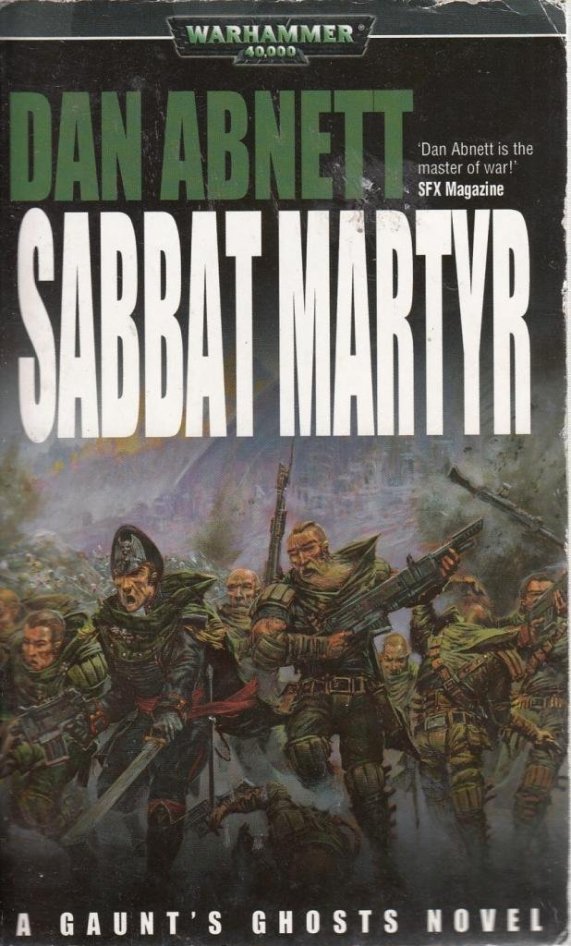
Warhammer 40,000: Deathworlder by Victoria Hayward

Warhammer 40,000 - Deathworlder Cover

Publisher: Black Library (Audiobook – 23 April 2024)

Series: Warhammer 40,000

Length: 11 hours and 1 minute

My Rating: 4.75 out of 5 stars

Amazon

Debuting author Victoria Hayward presents one of the year’s most compelling entries to the Warhammer 40,000 canon, with the outstanding and grim novel, Deathworlder.

I have made no bones about how much love I have for Warhammer 40,000 extended fiction, which honestly features some of the very best media tie-in novels currently being written.  One of the things I particularly love about Warhammer fiction is the sheer range of compelling and impressive authors that are adding to the lore and narrative of this universe.  While a good chunk of the novels come from grizzled veteran Warhammer authors, the Black Library has also been cleverly utilising a range of intriguing new writers to offer fresh stories to the franchise, and some of the best books in recent years have been an author’s very first novel.  In 2023 alone there were several outstanding Warhammer 40,000 novels from first time authors, including The King of the Spoil by Jonathan D. Beer, Creed: Ashes of Cadia by Jude Reid, and Longshot by Rob Young, all of which were among my favourite debuts of the year.

2024 also looks set to a be a good year for authors making their debut through Warhammer fiction, especially when it comes to Deathworlder, the very first novel by exciting new author Victoria Hayward.  Featuring a compelling and exciting plot, Deathworlder has been on my radar for a while, and I ended up grabbing Deathworlder on audiobook as soon as I could.

There are many dangerous foes and deadly enemies stalking the galaxy in the far future, but none are as insidious, destructive and terrifying as the alien menace, the tyranids.  Made up of innumerable biological lifeforms, the tyranids traverse the galaxy, devouring entire planets and adding it to their biomass.  Hundreds of former human planets have fallen to the hivefleets of the tyranids, and the next world to be consumed is the planet of Lazulai.

Once a magnificent planet of beauty and rich resources, Lazulai is currently on the brink of destruction.  The armies of humanity were unable to hold back the invading tyranid hordes, and now the planet has begun to change as it is devoured by the alien lifeforms covering its surface.  Only a few small pockets of resistance remain, including the 903rd Catachan Night Shrikes, who garrison one of the last fortresses still standing.  However, hope remains in the most unlikely of places.

Receiving intelligence about a mysterious piece of archeotech that may hold the key for saving the entire system, Major Wulf Khan is given one final mission to retrieve the technology.  Leading a small mixed squad, Major Khan must use all the innate Catachan skills of infiltration and survival in extreme environments to lead her soldiers through the alien jungles that have sprouted up in the wake of the tyranid advance.  However, while the Catachans might be the best jungle fighters humanity has to offer, they are facing off against an unstoppable foe, capable of adapting to the greatest of obstacles.  Can Khan and her Catachans prove they are the deadliest survivors in the galaxy or will the tyranid horde consume them alongside the last remnants of Lazulai?

Deathworlder was a particularly dark and intense Warhammer 40,000 novel that grabbed my attention from the very beginning.  Hayward came up with a wonderful story that expertly highlighted the opposing Warhammer factions while also making full use of some very strong character work to tell an emotionally charged narrative.

I really liked how Deathworlder’s story unfolded as it proved to be a gritty, character-driven tale of survival.  Starting off by expertly showing the end of the planet setting and the despair being felt by the various protagonists, the story quickly moves along into the main quest, with the Catachan protagonist, Major Wulf Khan, leading a small squad of troops out to recover valuable technology before the planet dies.  The story is primarily split between the perspectives of Khan and the Cadian Lieutenant Kaede Anditz, who joins the squad as a guide towards their final objective.  This leads to an intriguing first half of the book, as the eclectic squadron of protagonists begins their trek towards the objective.  There are some dark and grim moments here, especially as large chunks of the protagonist’s comrades get killed in the lead-up to their mission, and the reader is soon engulfed in the horrifying early stages of the destruction of the planet.

The second half of Deathworlder only gets darker, as the protagonists encounter more and more obstacles on their quest.  I really appreciated how Hayward focused on the alien and human monsters that the protagonists are forced to deal with, and the author ensures that emotions are constantly running hot as the characters encounter worse and worse things.  A particularly powerful moment splits the perspectives of the book even further, while also leading to some very dark experiences.  There are some excellent action set pieces, compelling character moments, and dark examinations of humanity on the edge, through this part of the book, and I honestly found it impossible to put Deathworlder down at times as a result.  Everything leads up to the final sequence as the protagonists encounter even darker surprises and revelations as they attempt to survive.  There are several exceedingly tense moments where you are constantly left wondering if any of the protagonists are going to make it, and I loved how desperate things got.  Hayward ends everything on an intriguing note, and readers will come away very moved by how this great narrative came together.

I felt that Hayward had a great dark tone for Deathworlder that really showcases just how deadly and hopeless parts of the Warhammer 40,000 universe can be.  The focus on characters who had already accepted that they were going to die, as well as the terrible changes that a loss in this universe can result in, gave a particularly intense edge to the book, which I felt made helped it really stand out.  Things get quite dark in Deathworlder, as Hayward really wanted to highlight the terrors of the tyranid, and I honestly got a major horror vibe at times, especially when it came to some particularly gruesome deaths (the field of stuck soldiers still makes me shudder).  While there is plenty of action, tragedy and lore dumps, I felt that the author’s decision to really focus on the book’s unique characters and camaraderie was very clever, and I became really invested due to the exceptional character work.  Deathworlder also proved to be a very strong addition to the Warhammer 40,000 franchise, and Hayward ensures that there is plenty of appeal for both established fans and new readers.  Indeed, I felt that Deathworlder would be a very good entry point into the larger fiction surrounding the Warhammer 40,000 franchise, especially as Hayward’s fresh writing shows just how complex a novel set in this grimdark universe can be.

While Deathworlder would be a good entry point for new readers, established Warhammer 40,000 fans will also get quite a lot out of this book, especially as Hayward expertly highlights two exceptional factions, the Catachans and the tyranids.

Essentially an army of Rambos, the Catachans have been a fan favourite regiment for ages and are always a great inclusion to any narrative.  I have read a few books around the Catachans, including Catachan Devil by Justin Woolley.  These novels, while fun, always tend to focus on the more stereotypical aspects of the Catachans: muscles, jungle craft and big knives.  However, Hayward takes a bit more of nuanced look at the Catachans in Deathworlder, showing them to be a complicated group of soldiers who fall back on the hard-talking jungle killer personas when the going gets tough.  While one very fun character does live up to the stereotype, primarily for comedic effect, for the most part the Catachans are shown as practical survivors, who in this book, are at the end of their tethers.  As such, you see a much more compelling side to the Catachans, and it was fascinating to see how complex the members of the regiment are, as well as how damaged they are by the constant fighting and slaughter.  The author’s use of alternative perspectives allows the readers to see the Catachans in various lights, both from within their own minds, and through the eyes of the Cadian Lieutenant Kaede Anditz, who grows to respect their culture and methods as the book continues.  I really appreciated this more realistic and grounded look at the Catachans in Deathworlder, and Hayward really showcased her ability to portray an iconic human regiment.

While the Catachans get a lot of the focus, you also really need to highlight the tyranids in Deathworlder, who serve as an outstanding antagonist.  While I have enjoyed a few great books where the tyranids were terrifying monsters, including Day of Ascension by Adrian Tchaikovsky, Leviathan by Darius Hinks and Duty Calls by Sandy Mitchell, Deathworlder might be one of the best portrayals of the tyranids that I have so far read.  That is primarily because Hayward’s story is set on a world already being devoured by the tyranids.  The resulting scenes of destruction, despair and digestion prove to be quite horrific, and few writers have really captured just how disturbing this scenario would be.  I felt the various scenes where the protagonists, who themselves are being slowly digested by falling spores, encounter the continuous horrors of the dying world, were so damn good.  The human experience with these horrors is a key part of Deathworlders appeal, and the despairing reactions from both the hardened soldier protagonists, as well as civilians they encounter along the way, really sells just how horrifying the situation truly is.  Even the more typical tyranid threat is well represented in Deathworlder.  The author really captures the fear associated with hordes of ravenous, chitinous aliens as they overrun simple soldiers.  While the tyranids are occasionally depowered by the protagonist’s plot armour, for the most part they are outstanding monsters, and the constant threat they could suddenly represent, proves to be a fantastic part of the novel.  As such, fans who love tyranids are in for a real treat with Deathworlder, and seldom are they a better monstrous villain than in this book.

I cannot write my review of Deathworlder without once again mentioning the impressive characters featured within this book.  Hayward excelled at introducing and exploring complex and damaged protagonists, and their very human, very determined actions, prove to be the true heart and soul of the narrative.  You go through a lot with these characters, and their overwhelming humanity in the face of continuous horrors and loss makes for a very powerful read.  There are some great characters here, including main protagonist Major Wulf Khan, a grizzled Catachan fighter who finds her desire to complete the mission constantly challenged by the losses of those around her.  Her trusted orderly, Sergeant Rutger Haruto, proves to be an excellent backup, especially as his constant curiosity and sensible nature helps to keep his commander in check.  Alternate point-of-view character Lieutenant Kaede Anditz is another excellent addition to the cast, and I think that his unique perspective of the Catachans he suddenly finds himself serving with ensured that their compelling portrayal in Deathworlder really came through.  Anditz is also going through a lot of trauma, especially after witnessing the slaughter of every Cadian soldier on Lazulai, and Hayward really ensures that his guilt and horror really shine through in his chapters.

While the characters above are great, my favourite was probably Trooper Falke Adair.  A muscled Catachan with a heavy flamer, Adair is essentially a walking Catachan stereotype, something she really acts up as the book continues.  Crass, disrespectful and always looking for a fight, Adair steals any scene she becomes a part of, and her over-the-top mannerisms and actions are very entertaining.  However, as the book continues, and characters, particularly Anditz, get closer to her, you see that much of her bravado is a front, and she proves to be one of the most complex figures in the entire novel.

I also must highlight the brilliant character of Lamya.  A Genestealer Cult propagandist, Lamya is captured at the start of the novel and dragged along by the squad for her knowledge.  An arrogant and slightly unhinged noble turned tyranid-worshipping stooge, Lamya plays off the other characters perfectly, and her distain for those around her is so much fun.  However, the more they traverse Lazulai, the more Lamya comes face to face with the horrors that her cult helped to bring to her planet.  Caught between her own beliefs and the horrors she witnesses, Lamya goes quite insane as the book continues, while also providing some of the most compelling perspective of events in the entire novel.  Throw in a scheming Tech Priest and a silent Catachan sniper, and this proves to be an outstanding cast of main characters that you really grow attached to as you watch their intense personal and physical journey.

Unsurprisingly, I chose to check out Deathworlder on audiobook, which is just the best way to enjoy a Warhammer novel.  This was very much the case with Deathworlder, and I loved how effectively and vividly the story came across as it was being read out to me.  The exciting action, captivating characters, and horrendous horrors of the narrative really came to life, especially when read out by talented narrator Gabrielle Nellis-Pain, whose work on The King of the Spoil audiobook last year was very fun.  Nellis-Pain did another outstanding job with Deathworlder, and I love how effectively she told Hayward’s elaborate story.  I particularly enjoyed the excellent voices she gifted to the various characters within Deathworlder, and she very effectively captured the cool protagonists in all their martial glory.  This was particularly true for the over-the-top Catachan protagonists, and you could really visualise the muscular characters as she narrated.  Nellis-Pain also ensured that appropriate alternate accents were given to characters from other human factions, such as the Cadians or the Adeptus Mechanicus, and I particularly enjoyed how well the narrator expressed the mechanical nature of the latter.  I honestly believe that this book wouldn’t have been as impactful if I had physically read it, and I strongly recommend the audiobook version as a result.  Coming in with a run time of 11 hours, Deathworlder was so much fun to listen to, and you can power through it in no time at all.

With her very first novel, Deathworlder, debuting author Victoria Hayward shows she is a writing force to be a reckoned with, especially when it comes to Warhammer fiction.  Deathworlder was an outstanding Warhammer 40,000 novel that features a truly dark and intense narrative, loaded with great characters and compelling depictions of Warhammer universe.  An exceptional read from start to finish, I cannot talk this novel up enough, and I am really intrigued to see how Hayward follows up her amazing debut.
Amazon

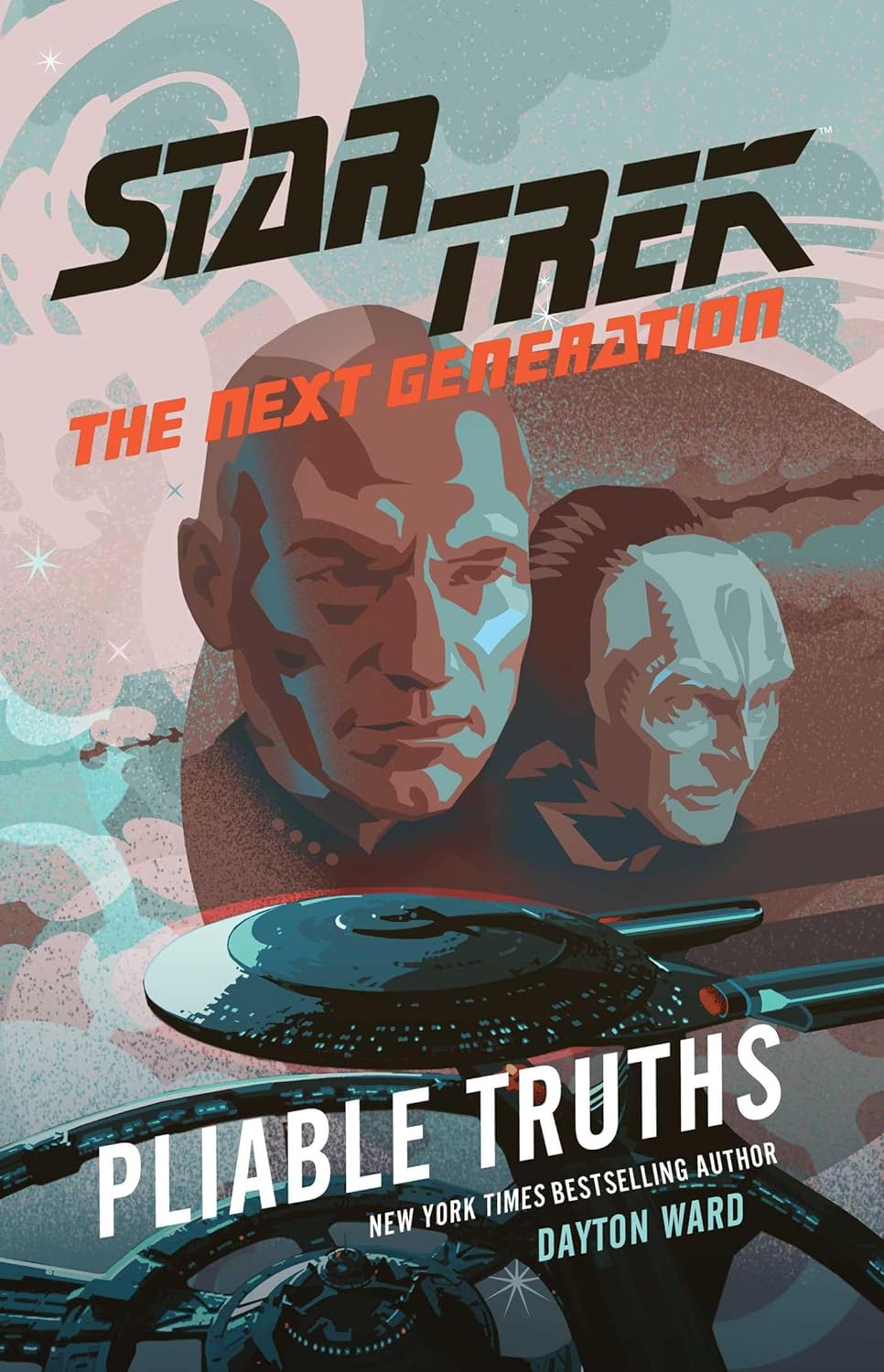
Star Trek: The Next Generation: Pliable Truths by Dayton Ward

Star Trek - Pliable Truths Cover

Publisher: Simon & Schuster Audio (Audiobook – 21 May 2024)

Series: Star Trek: The Next Generation

Length: 11 hours

My Rating: 4.5 out of 5 stars

Amazon

Leading Star Trek author Dayton Ward presents a compelling new tie-in novel that bridges the gap between two of the franchise’s most iconic shows in the outstanding and impressive Pliable Truths.

I have mentioned a few times on this blog that Star Trek extended fiction is amongst some of the richest and most comprehensive of all the assembled tie-in fiction.  There are hundreds of intriguing novels that expand on the universe introduced in the television series and movies, all of which are highly fascinating, especially for fans of the various shows.  While I haven’t explored Star Trek extended fiction as much as some other franchises out there, I have had the pleasure of reading several outstanding books, with some of my favourites including The Captain’s Oath by Christopher L. Bennett, The Last Best Hope by Una McCormack and Die Standing by John Jackson Miller.  Due to my enjoyment of these previous books, I keep an eye out for new Star Trek releases, and I was very intrigued when I saw that Dayton Ward had released a new book, Pliable Truths.

Dayton Ward is well-known science fiction author who has made a name for himself creating tie-in fiction for several different franchises.  Ward’s most comprehensive work involves writing Star Trek novels, with the author writing an intriguing collection of different Star Trek books connected to different series.  I have read a couple of Ward’s books in recent years, including The Next Generation novel, Available Light, and the Original Series novel, Agents of Influence.  These previous books from Ward both proved to be very impressive, and I had a great time reading them.  As such, when I saw that Pliable Truths was written by Ward, I knew it was going to be another fantastic read, especially as the author has a lot of experience writing fiction for the various Star Trek series, periods and timelines.  This latest novel, Pliable Truths, while ostensibly tied-into The Next Generation series, also serves as a compelling bridging novel between the events of The Next Generation and its spin-off series, Deep Space Nine.

Following a tumultuous series of events, Starfleet has managed to thwart a planned invasion of a Federation system by the Cardassians.  Thrown into political disarray by their military defeat, the Cardassian civilian government has acceded to Starfleet demands and ordered the withdrawal from the occupied planet of Bajor.  Long enslaved by the Cardassians, the Bajorans are determined to once again rule themselves, but they first reluctantly require the assistance of the Federation.

To ensure a peaceful transition of power to the new Bajoran government, Starfleet orders Captain Jean-Luc Picard and the Enterprise to the Bajor to oversee negotiations between the Bajorans and the Cardassians.  Still recovering from his own recent trauma suffered at the hands of a Cardassians torturer, Picard is unsure if he is ready to fairly arbitrate the question of recompense and justice.  But with no other choice, Picard travels to the massive Cardassian space station orbiting Bajor, Terok Nor.

Attempting to stay neutral and calm, Picard soon finds his patience tested by the disruptive tactics of the Cardassians, as they seek to gain advantage from the chaos surrounding the withdraw.  The situation looks to become even more complicated when Ensign Ro Laren receives a message from a long-missing friend, exposing deadly secrets from inside Cardassian space.  Forced to balance the needs of the Bajorans with a desire to stop a new war erupting between the Federation and the Cardassians, Picard will need to utilise all his diplomatic skills to salvage the situation.  But can even Picard remain calm when he comes face to the face with the man responsible for his recent torture?

Dayton Ward continues to showcase why he is one of the top authors of Star Trek fiction with this compelling and intriguing read.  Serving as a brilliant bridge between two key shows, Pliable Truths has an outstanding story behind it that does an amazing job diving into the iconic lore and characters of the Star Trek universe.

Pliable Truths had a great narrative behind it that sought to simultaneously fill in certain gaps between The Next Generation and Deep Space Nine, while also producing a standalone narrative that proved quite intriguing to get into.  Set between the events of The Next Generation episode Chain of Command and the first episode of Deep Space Nine, Pliable Truth’s main story primarily follows The Next Generation cast, as well as several of the best characters from Deep Space Nine, as they attempt to help Bajor adapt to its independence.  At the same time, a separate storyline follows a group of Bajoran labours working at a Cardassian prison camp, whose freedom is threatened by the dark secrets surrounding the camp.  I very much enjoyed how both storylines unfolded, as the Cardassian labour camp part of the narrative is quite intense and focuses on a raft of intriguing new characters engaged in a game of cat and mouse, as the prisoners try to work out why they are still imprisoned and how they can save themselves.  At the same time, the storyline around the Enterprise crew and Bajor focuses on the attempts to rebuilt Bajor and the future Deep Space Nine space station, as well as the ongoing negotiations between the Cardassians and the Bajorans, moderated by Picard.

This main storyline with the established characters of the two series proves to be an entertaining and enjoyable experience, especially as Ward works in so many references and key characters.  The unique interactions between the characters from both shows, most of whom never shared screentime, is very fun, and Ward does a great job playing up both the emotional and entertainment value of these interactions.  However, the heart of this story revolves around Picard as he comes face to face with the Cardassians after the events of Chain of Command where he was tortured (“There are four lights!”).  This proves to be an emotionally charged part of the story, especially when Picard is required to deal with his former torturer Gul Madred.  As Picard is forced to deal with his trauma, his crew encounter a series of complications and sabotages they need to overcome to save the station and the planet.

Both storylines come together extremely well as Pliable Truths nears its end, and I liked how well Ward balanced these separate narrative threads.  The darker moments of the Cardassian prison planet serves as an interesting contrast to the fanservice taking place in the main storyline, and I think this combination of storylines made for quite a distinctive narrative that stood on its own.  Ward brings a certain amount of tragedy to the end of Pliable Truths, which helped to enhance some of the more positive moments of the story, including Picard regaining his confidence, and the potentially bright future for Bajor.  All the main story elements get wrapped up satisfactorily, and I liked some of the entertaining twists that Ward through in there.  An overall impressive story and one that will appeal to a lot of Star Trek fans, Pliable Truths was a great read that I couldn’t get enough of.

Now this proved to be a very interesting Star Trek novel which is primarily going to appeal to fans of the franchise.  Ward, who knows more than most about Star Trek, does a wonderful job turning Pliable Truths into a compelling bridging novel between the two key series.  Showcasing the events that lead to the Federation having a presence on Deep Space Nine and the Cardassian withdrawal from Bajor, Pliable Truth fills in a lot of the gaps between The Next Generation and Deep Space Nine.  There is a lot of detail covered here in Pliable Truths as result, and I really enjoyed Ward’s take on the story and how the intervening events likely unfolded.  As a fan of both shows, I found this to be very cool, especially as Ward layers in a ton of clever and intricate references that fans of both shows, especially Deep Space Nine, will really appreciate.  Things like Riker’s legendary win at Quarks, the early machinations of Garak, the reasons behind O’Brien’s decision to stay at the station, and more are all featured here, and Ward obviously had fun including them in his story.  Ward also takes the time to cover the various atrocities of the Cardassian occupation of Bajor, which is referenced a lot in the shows, and which becomes a key part of this plot.  Discussing the various horrors committed by the Cardassians adds a darker tinge to much of the plot, and the obviously parallels to real-life occupations, ensure the reader comes away very thoughtful.  As such, Pliable Truths really is geared towards existing Star Trek fans, although I’m sure casual readers can probably have fun with this book, especially if they have watched some of Deep Space Nine.

One of the best parts of Pliable Truths was the excellent way in which Ward presented several iconic Star Trek characters and utilised them in the plot.  All of the key characters from The Next Generation were very strongly featured in Pliable Truths to various degrees, and even a few minor recurring characters had major showings in this book.  Each of them is featured in a manner very similar to how they appeared in the show, which I deeply appreciated, and it is a testament to Ward’s abilities as an author that he made them feel very realistic here.  The most prominent of these is Captain Jean-Luc Picard, who has the most compelling storyline in the entire novel.  Picard, who in the story recently suffered from immense torture during the Chain of Command episodes, is shown to still be in mental recovery during this book, especially as his latest ordeal compounds various other traumatic experiences Picard has suffered over the years.  As such, much of this book is dedicated to Picard facing his Cardassian-related demons, which becomes the emotional heart of the story.  This becomes especially true when Picard’s former torturer appears, and their resulting scenes together are some of the strongest in the books.

Aside from The Next Generation cast, quite a lot of Pliable Truths is spent focusing on several intriguing figures who would go on to become main characters in the Deep Space Nine series.  Ward does a great job setting the scene for them to enter the plot of the new show, and I liked the way in which the author bridged the gaps between their first appearances on Deep Space Nine and their established backstories.  The includes focusing on Miles O’Brien and examining the reasons why he chose to leave the Enterprise and become an engineer on the station.  Quark and Odo get several fun sequences, Deep Space Nine antagonist Gul Dukat gets to menace around in all his arrogant glory, while Major Kira has an extended sequence with her badass abilities on full display.  However, my favourite character appearance was the always entertaining Elim Garak.  The “former” Cardassian spy turned “simple” tailor, Garak has some great moments in Pliable Truths as he starts to come to terms with his exile, as well as the growing fortunes of his former comrades/rivals.  Ward does an outstanding job capturing the hilarious nature of Garak and his cutting remarks, and he proved to be a fantastic figure in Pliable Truths, especially with his final hilarious, if sinister, scene.  I loved seeing earlier versions of several key Deep Space Nine characters in this story, especially as they also have unique interactions with their The Next Generation counterparts, and any fan of the show will have a wonderful time seeing them in action here.

As with most pieces of tie-in fiction I enjoy, I ended up listening to Pliable Truths on audiobook, which proved to be an excellent experience.  I personally find that the Star Trek books come across extremely well in this format, and at times it almost feels like you are watching one of the television shows.  A lot of this is due to the excellent narration of Robert Petkoff, who has lent his voice to many Star Trek audiobooks over the years.  One of my favourite audiobook narrators, Petkoff is well known for his ability to replicate the voices of many of the characters from the Star Trek franchise, especially the original series.  His work in Pliable Truths is pretty damn epic, especially as he brings so many classic characters to life with his great impersonations.  I felt that his versions of many of the Next Generation cast members, particularly Picard, Riker, Worf and Data, came across extremely well in Pliable Truths, and I also liked his take on the various Deep Space Nine characters that appeared, including Odo, Quark and Garak.  In addition to his great take on many of the characters from the show, Petkoff also supplies fitting voices to various new figures who only appear in this book.  In this case, Petkoff takes care to really highlight the species of the relevant character, utilising accents and tones associated with them from the show.   This excellent voice work really helped to drag me into the story, and I had a brilliant time listening to this wonderful audiobook.  Coming in with a run time of 11 hours, this is a very easy audiobook to get through quickly, and I would strongly recommend Pliable Truths in this format.

Pliable Truths was an incredible new Star Trek novel from Dayton Ward that provides fans of the franchise with some great callbacks to two classic television series.  Featuring a fantastic story and great interpretations of so many amazing characters, I had a wonderful time listening to Pliable Truths and it was one of the better audiobooks I have so far listened to in 2024.

Amazon

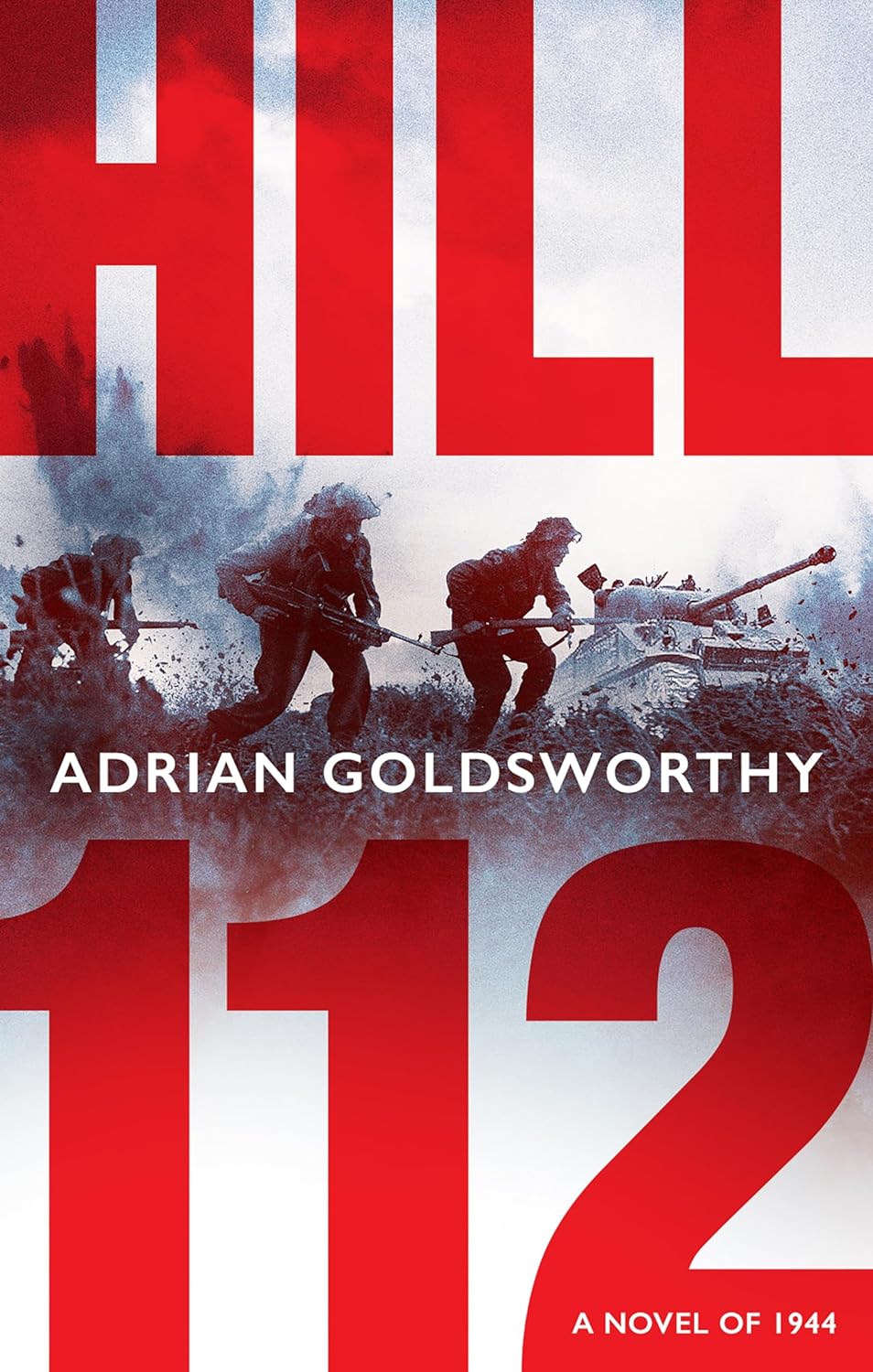
Hill 112 by Adrian Goldsworthy

Hill 112 Cover

Publisher: Head of Zeus (ebook – 23 May 2024)

Series: Standalone/Book One

Length: 495 pages

My Rating: 4.75 out of 5 stars

Amazon

Prepare to dive headfirst into the deadliest of struggles as acclaimed historical fiction author Adrian Goldsworthy provides a captivating look at the Normandy invasions with his epic novel, Hill 112.

Adrian Goldsworthy is an impressive historical fiction author who has been producing some great novels as of late.  A respected historian, Goldsworthy made the jump back to fiction in 2011 when he started his Napoleonic Wars series.  I had the great pleasure of reading the first few books in the series, including True Solider Gentlemen and Beat the Drums Slowly, and Goldsworthy prove to be an outstanding author who would focus his stories on intriguing historical elements.  His Napoleonic Wars series ended up featuring six novels before he dove into Roman historical fiction in 2017 with his Roman Britain series.  Starting with Vindolanda and also featuring six novels, the Roman Britain series sounds very awesome, and it is one I need to check out in the future.  Due to how much I enjoyed some of Goldsworthy’s previous books, I made sure to grab a copy of his latest release, Hill 112, which provides a compelling examination of the bloody invasion of Normandy during World War II.

June 6th, 1944.  After years of enduring the Nazi onslaught, the Allies are finally ready to begin their campaign to invade occupied France.  But to liberate France and free all of Europe, the Allies first must make a perilous landing and brave the full force of the German army waiting for them.  The destination for their fateful landing: Normandy!

As the Allies begin their invasion, three young soldiers, former classmates from south Wales, are amongst the troops landing in Normandy.  The charismatic James must put his previous experience as cricket captain into practice by leading a troop of Sherman tanks into fray.  The athletic Mark is forced to prove himself as the young officer in charge of a platoon of infantrymen, while Bill, the group’s resident firebrand, finds himself in the middle of the fighting as he serves as a private soldier.  However, none of these young men are truly prepared for the carnage to come.

The battle-hardened German army is determined to push the Allies back into the sea, and soon both sides find themselves caught up in a brutal battle for survival.  Into the middle of this, James, Mark and Bill find their courage and luck tested like never before as they finally experience the horrors of war and the seemingly unbeatable Germans.  Their fates, and that of the entire Allied war effort, will be decided in one of the most brutal fights of the Normandy campaign, the battle for Hill 112.

Goldsworthy brings together one of his heaviest and moving novels yet with the incredible Hill 112.  A gritty and realistic war story that seeks to capture the experiences of young soldiers during Normandy, Hill 112 was a fantastic and moving novel that drags readers right into the heart of the fighting.

Hill 112 has a great story to it that, while simple in concept, hits the reader hard and provides a powerful look into the realities of war.  Told from the perspective of three young soldiers as they experience their first taste of combat, Hill 112 is a very moving war novel that is hard to look away from at times.  Starting with the first day of the Normandy landings, you initially follow James, who leads the charge with his tank unit, while Mark and Bill wait back in England for their deployment to the front.  While this did make James’s chapters a lot more interesting and exciting than the others’ at the start of the book, I liked how Goldsworthy chose to start the remaining two characters off back in England.  Not only was historically realistic, but it allowed you to get to know these two protagonists and other supporting characters before the fighting, while also building up the tension, especially when you compared their experiences with what James was going through on the front.

It doesn’t take long for Mark and Bill to make it over to Normandy, and from there the reader becomes enmeshed in seeing all three protagonists facing the tough campaign in Europe.  There is a lot of action and a ton of tragedy in this part of the book, and it was fascinating to see them slowly adjust to the new normal of battle, as they experience the true horrors of war.  Goldsworthy continued to keep the three protagonists separated for most of the story, which allows each of them to grow, while also showcasing several different fronts at the same time.  Their storylines start to converge as the book continues, especially when they find themselves at the foot of the tactically significant Hill 112.  The last third of the book is essentially all out fighting as the three protagonists attempt to survive the desperate battle for the hill.  The carnage flies thick and fast in this part of the book, and you are constantly on edge as the three characters fight on, while also trying to understand the necessity and impacts of war.  I was deeply captivated for this entire part of Hill 112, and I couldn’t stop reading as I waited to see the fates of all three characters.  Goldsworthy did not disappoint, as the ending to this book was extremely shocking and powerful, and you come away wondering about the sacrifices, experiences and emotions of those involved in the fighting.  This was a such a great character-driven war story, and I came away very impressed with how it all unfolded.

I deeply enjoyed the compelling and powerful story that Goldsworthy created for Hill 112 that hits all the right notes for the reader.  Goldsworthy made the clever choice to provide the reader with a more insular look at the invasion, as the viewpoint is limited to the lower-ranked protagonists, more concerned with their own battles, rather than a look at the large war going on around them.  This proved to be an excellent choice of focus, and I deeply appreciated the way in which Goldsworthy was able to get into the mindset of the young soldiers fighting this war.  The constant switching between the three main protagonists allowed for a complex and intriguing story, as they experienced different battles while coming to terms with the fighting in their own ways.  Goldsworthy has a real talent for showing the chaos of war, and you are thrown into innumerable skirmishes, firefights and large-scale battles, all of which is captured in its full destructive glory.  You can honestly feel the bullets flying and the shells landing as you pour through Hill 112, and the constant conflict, danger and excellent portrayal of the fighting ensures that readers have a very hard time pulling their attention away from this amazing book.

Goldsworthy clearly did an exceptional amount of research for Hill 112 as this book is loaded with historical detail as the author meticulously covers key events of this initial invasion.  While the main regiments featured in Hill 112 are fictitious, Goldsworthy bases them on actual participants of the fighting, and you get incredibly detailed depictions of the early days of the Normandy campaign for the English and Canadian forces.  This includes events that followed from the initial landings on Normandy all the way to the conclusion of the fighting around the titular Hill 112, a key historical battle.  Readers get a very compelling and intensive look at how the campaign unfolded, and it was interesting to see how hotly contested this initial fighting in France was, especially as most modern war movies/television series usually show swift victory the moment the allies are off the beaches.  The battle of Hill 112 was naturally a compelling part of the book which the author covers in heavy detail, noting the movement of all the relevant units and the various attacks.  I got so engrossed in Goldsworthy’s recounting of this battle, and readers are left haunted and amazed that so much death occurred for a simple hill in the countryside.

The author really did not spare any detail when it comes to the fighting, and you get a comprehensive vision of the potential experiences of the participants in these battles.  Goldsworthy really dives into every single aspect of the solider experience, and you come away with insights into the conditions, equipment, training and attitudes of the troops, all of which greatly adds to the gritty realism of the story.  This is particularly true in the battle scenes, and it was very compelling to see how the soldiers would have fought, as well as other factors that came into play, such as the Allies’ overwhelming artillery.  I especially enjoyed the many scenes that focused on vehicular combat as one of the protagonists spends most of the book inside a Sherman tank, fighting against German armoured units.  The sequences in the tank are always a high-strung affair, and Goldsworthy expertly captures the cramped conditions, fast-paced fighting, and constant peril that the British crews experienced.  The author further increases the authenticity of the book by having his protagonists experience various incidents that were recorded to have happened during these invasions.  The author cleverly retells these events to feature his characters, and the various experiences, some of which are quite hellish, add a lot of intensity to the book.  Goldsworthy really pulls no punches when it comes to showcasing the experiences of Allied soldiers in Hill 112, and it proves hard not to deeply appreciate his ability to utilise a massive amount of historical detail to tell a good story.

I must also highlight the intriguing characters featured within Hill 112 who added a lot to the impact of the book.  The three main characters, James, Mark and Bill, are all quite intriguing in their own way, and I appreciated how they ran the gambit of young people who would have joined the war effort after leaving school.  Goldsworthy ensures that each of these main characters have a compelling backstory which contrasts in a moving way to their current experiences, and it was moving to see them grow up throughout the course of the horrendous ordeals they find themselves in.  These three main characters are also accompanied by a huge supporting cast of fellow soldiers, officers, tank crews and other figures, each of whom travel with the protagonists to engage in the fighting.  Many of these supporting characters are exclusive to the chapters told from the perspective of a particular protagonist, allowing for unique interactions, and Goldsworthy often provides relevant backstories for these supporting characters as well.  This cast of additional characters gets quite extensive as the book continues, which can make remembering everyone a little hard at times.  However, that proves to be a short-term problem at best, as the supporting players usually doesn’t last too long in the fighting.  This proved to be an excellent and intense character-driven novel, and I really appreciated how well Goldsworthy captured the experiences of these young soldiers in war.

Adrian Goldsworthy once again brings the past back to haunt his readers in the outstanding and moving novel, Hill 112.  A highly detailed and impressive war novel, Hill 112 does an incredible job capturing the experiences of young soldiers in the Normandy campaign and you will quickly become absorbed in the resulting story.  Highly recommended, especially for those fans of military history, Hill 112 was such an amazing read.

Amazon

Nero by Conn Iggulden

Nero Cover

Publisher: Michael Joseph (Trade Paperback – 28 May 2024)

Series: Nero – Book One

Length: 396 pages

My Rating: 4.5 out of 5 stars

Amazon

One of the absolute best authors of historical fiction in the world today, Conn Iggulden, returns with an exciting new series as he examines the life of Rome’s most infamous Emperor, Nero.

Conn Iggulden is a historical fiction author that I have a lot of respect for, especially as consistently presents intense and compelling reads that focus on some of the most interesting people and conflicts of the historical world.  Starting off over 20 years ago with his iconic Emperor series, which covered the complete life of Julius Caesar, Iggulden has moved through various historical periods and locations with his works.  This includes his impressive Conqueror series, which followed the life and legacy of Genghis Khan, his outstanding War of the Roses books, the fantastic standalone novel The Falcon of Sparta, and his clever Athenian series, made up of The Gates of Athens and Protector.  All these series have been really impressive, effectively balancing historical detail with exciting storytelling, and Iggulden is a favourite author of mine as a result.  Due this I have been really excited for his latest novel, Nero, which provides an intriguing look at the events that led to the ascension of the titular Emperor.

Rome, AD 37.  The greatest city in the world is in turmoil.  The decrepit and vengeful Emperor Tiberius has returned to Rome after a lengthy absence, and his first act is to order the strangulation of the man he left in charge.  As a flurry of sanctioned killings and destruction begins to reign down upon Rome, a young boy is born who is destined to burn everything around him.

Born Lucius Domitius Ahenobarbus, the boy is the son of a former champion charioteer of noble lineage, and Agrippina, the great-granddaughter of the Emperor Augustus.  With family ties reaching all the way back to original emperors, Lucius is already considered an eventual claimant to the Roman throne.  However, there are many within Rome who want power and influence for themselves and care little for the hopes and ambitions of a noblewoman and her young son.

With dark clouds on Rome’s horizon, Agrippina soon discovers that the greatest threat comes from closer to home than she realises in the form of her brother, Caligula.  Banished and robbed of everything, including her young son, Agrippina finds herself at the mercy of those around her.  However, Agrippina does not intend to be powerless forever, and when fate intervenes, she finds herself with the opportunity to influence the very heart of Roman politics.  Can Agrippina ensure the rise of her young son, the boy who will eventually be known as Nero, and will Rome ever be the same again?

This was an intriguing and gripping novel from Iggulden, who continues to show why he is one of the most consistent and entertaining authors of historical fiction.  Nero is a fascinating and thrilling read that cleverly examines the early life of the future emperor from those around him and proves very hard to put down.

Nero contains a typical Iggulden narrative, in which he focuses on a historical figure and follows them from birth to their eventual rise to power.  In Nero’s case, this book is clearly the first part of a larger series as it is dedicated to examining the childhood of the future emperor and the many events that lead to him to the throne.  As such, the focus of this novel is more on his parents, and the various other dangerous Roman figures who were around at this time.  Starting in the latter days of Tiberius’s reign, the author parallels Nero’s birth with the start of Tiberius’s purges in Rome, while also showcasing his troubled parents, including his mother Agrippina, who is essentially the main character here.  This proves to be an interesting start to the book, especially as you get a good look at many of the key figures the story is going to focus on, while also showcasing just how crazy stories recounting the history of Rome can get.

The author quickly moves the story along to the reign of Caligula, which drags the protagonists closer into the limelight due to Agrippina being the new emperor’s sister.  Naturally, it doesn’t take long for affairs to devolve into chaos, and there are some major changes that really impact the lives of the principal cast.  The second half of the book features a decent time skip which brings certain figures back into prominence and allows Agrippina to focus on her ambitions.  Iggulden does a great job showcasing Agrippina’s change of heart and new desire for power, and I liked the intrigue, political machinations and manipulations that were at the heart of this second half of Nero.  Everything leads up to an interesting conclusion, as Iggulden adds in some exciting military action, which contrasts nicely to the political and personal struggles of the first half of the plot.  The book ends on a solid note that ensures readers will come back to the series in the future, especially as the story of Nero is only just beginning.  This proved to be a very intriguing story, and I enjoyed how Iggulden showcased the many infamous historical events and wove a great, character-driven story around them.

Nero had a great tone that was a combination of character driven plot, over-the-top Roman antics and intriguing history, which I really enjoyed.  Loaded with a fast-paced and brutal story, you quickly get absorbed into the many political intrigues and dysfunctional relationships that lie at the heart of the plot, and Iggulden did an outstanding job flipping the perspective around a range of compelling historical figures and showcasing their unique views on intriguing events and the future emperor.  The story is constantly sharp and compelling, I liked how intense events got, especially as Iggulden ensured that certain dark moments of history are shown in all their glory.  I deeply enjoyed the author’s depictions of Roman history, and his take on events really stood out compared to some other series I have read set in the same period.  The chaotic nature of the antagonists, the mood of the city, and the general insanity of the times were all very impressive, and they formed a great background to the outrageous plot.  Iggulden has such a knack for displaying Roman history (as evidenced by his first epic series) and he really makes the ancient city, and iconic figures stand out for all readers.  While he does appear to take a few liberties with the historical record for storytelling purposes (honestly, what historical fictions author doesn’t ?), many of the most iconic moments of the time were captured perfectly, and he constantly ensured that the mood of the city was examined in detail.  I deeply enjoyed this fantastic and captivating historical tale, and Nero proved to be a highly addictive book to check out.

I want to also highlight some of the amazing characters featured in Nero, especially as most of them proved to be awesome takes on major historical figures.  As I mentioned before, the character of Nero himself doesn’t get a lot of time as a perspective figure in this first novel, mainly because he is quite young for most of the plot, although he does get a few intriguing moments in the second half of the book.  Instead, most of the book was dedicated to showing the formative events of his youth, as well as how he ended up in the position to eventually become emperor.  I felt that this was a smart decision on Iggulden’s behalf, and I really enjoyed seeing this in-depth examination of Nero’s history, especially as most Roman historical fiction series tend to include him as an overexaggerated villain rather than a product of the crazy times he grew up in.  I look forward to seeing how he evolves in future books, and it will be interesting to see how Iggulden utilises him as a major perspective character.

With Nero growing into the role, the character who probably gets the most focus is Agrippina the Younger, Nero’s mother and future empress.  Due to the way the plot plays out, Iggulden spends a lot of time exploring this controversial figure, and I rather enjoyed seeing the in-depth examination of the events that preceded her marriage to Claudius.  You get a very complex picture of Agrippina here, including the many tragedies surrounding her family, the violent marriage that resulted in Nero, and the terrible treatment by her brother Caligula.  Iggulden does an excellent job showcasing how these events impacted Agrippina’s personality, and you can see how and why she becomes more ruthless and determined to be the one in control.  While she does a lot of despicable things, Iggulden almost makes her a sympathetic character, although certain dark events stop you from ever truly loving her.  I deeply enjoyed the author’s portrayal of Agrippina in Nero, and she proved to be a compelling and intriguing force.

Other characters of note include Nero’s father, Gnaeus Domitius Ahenobarbus, a violent drunken former famous charioteer who Iggulden showcases in a manner similar to a modern-day angry failed sports star trying to relive their glory days.  Constantly enraged that the world has left him behind and caught up in events beyond his control, Gnaeus cuts a dark and brooding figure that proves very hard to love.  Despite this, Gnaeus was a very intriguing addition to the plot, and his fraught interactions with Agrippina left a mark that resulted in some intriguing plot points.  I must also mention the great depictions of the three emperors who preceded Nero, Tiberius, Caligula and Claudius.  All three of these emperors are notorious, and Iggulden went out of his way to show their many eccentricities and issues, as well as the impacts that they had on the Roman empire.  I always love seeing authors depict the unique events these figures were responsible for, and Iggulden did not disappoint.  As such, they all end up being major and memorable figures in Nero, which proved to be quite important, as their actions and reigns will no doubt be referenced and compared to Nero in the rest of the series.  Throw in a great collection of other fantastic historical figures, and Nero had a great cast that really brought some amazing monsters from history to life.

Conn Iggulden continues to showcase why he is one of the top authors of historical fiction.  Nero was an outstanding book that masterfully showcases the early life of the infamous emperor with a wildly entertaining story.  Exciting, dramatic and very over-the-top, Nero was an incredible read that I deeply enjoyed.  I look forward to seeing how Iggulden brings this series together in the future, and I am already very excited for the inevitable sequel.

Amazon

Warhammer 40,000: Cain’s Last Stand by Sandy Mitchell

Cain's Last Stand Cover

Publisher: Black Library (Audiobook – 1 January 2008)

Series: Ciaphas Cain – Book Six

Length: 10 hours and 30 minutes

My Rating: 4.75 out of 5 stars

Amazon

I’ve been on a real roll with the amazing Ciaphas Cain series by Sandy Mitchell (a pseudonym of Alex Stewart) lately, which is easily one of the funniest Warhammer 40,000 series out there.  Amazing books like For the Emperor, Caves of Ice, The Traitor’s Hand, Death or Glory and Duty Calls have all proved to be highly entertaining, and I like the author’s take on a less heroic figure in the martyr-filled grimdark Warhammer 40,000 universe.  As such, when in need of a particularly fun read, I made the very easy choice to power through another entry in this classic series last week with the sixth book, Cain’s Last Stand.  This was an unsurprisingly awesome book, and I loved the intriguing story that emerged.

Commissar Ciaphas Cain, legendary hero of the Imperium and self-professed fraudulent coward, has done the near impossible and survived decades of brutal service in the Imperial Guard.  Now effectively retired from active duty, Cain has returned to the planet of Perlia, which he helped save from an ork invasion early in his career, and now spends his time teaching Commissar cadets at the planet’s Schola Progenium.  However, the battle is never truly over for Cain, and soon dark forces begin to descend once again.

Half a galaxy away, Abaddon the Despoiler has launched his 13th Black Crusade, determined to invade the Imperium of Man.  While most of the fighting occurs around the fortress world of Cadia, a splinter fleet has broken off and is heading deep into the Imperium, defeating several forces sent to stop it.  When it becomes apparent that this fleet is heading directly for Perlia, Cain is once again forced into action, especially as he knows exactly what they are coming for.

An ancient alien device of devastating power lies hidden on Perlia, one capable of reshaping reality itself, and Cain is one of the few people who knows it’s there.  With no means of escape available and the fate of the galaxy in the balance, Cain is forced to lead the defence of Perlia against the oncoming Chaos tide.  With only a ramshackle army of local soldiers, militia and students from the Schola under his command, the defence of the planet looks grim, especially when faced with a charismatic Chaos lord and his fanatically loyal soldiers.  Worse, a far greater evil has its eyes on Perlia, one that Cain fears above all else.  Can the legendary hero of the Imperium pull out one last impossible victory before he rides off into the sunset, or has Cain finally met his match at the site of his greatest triumph?

Mitchell continues to bring joy to the dark Warhammer 40,000 universe with this epic sixth entry, which I had so much fun with.  Cain’s Last Stand was an excellent read, and I loved the cool and elaborate story that emerged.

I think Cain’s Last Stand might be one of my favourite stories that Mitchell has so far used for the Ciaphas Cain series, especially because it differs from the standard narrative patterns of the series, while also cleverly tying together some intriguing ongoing storylines.  Set further into the future than any of the previous books, you get to see a nearly retired Cain in action, as the series finally ties itself into the events of the 13th Black Crusade (the original version of it, not the darker recent retcon).  I liked how Mitchell takes the reader back to the setting of the fourth book, Death or Glory, and the initial scenes of Cain as a reluctant but capable teacher, were very fun.  The switch from Tyranids to Chaos as the main threat is handled extremely well, and I liked the continued niggle that even worse enemies are lurking around.  The subsequent reveal that the reason behind the invasion is due to the ancient artefact first hinted at in Death or Glory and then expanded on in Duty Calls was great, and Mitchell does an excellent job of tying the various ongoing storylines together.

The second half of Cain’s Last Stand proves to be a very fun planetary invasion arc, especially as Cain works to rally an unusual array of defenders, including untrained militia, under strength garrison forces, and his own students.  The forces of Chaos prove to be excellent foes for this story, and I liked the much more insidious nature of the threat that emerged, especially as there was a slow build to the reveal.  After plenty of action, clever ploys, some touching tragedy, and so much misdirection from the protagonist, the story eventually heads to the inevitable last stand, which cleverly mirrors a similar event from Death or Glory.  Mitchell does a great job of building up anticipation for this event, and it doesn’t disappoint as there are some excellent action sequences and fun revelations that occurred.  I particularly enjoyed the big bluff that leads to the death of a certain enemy, especially as it was a classic Cain antic.  The final reveal about the actual big bad of the story was well handled, and it leaves this storyline open for the future, which I am very excited for.  An overall excellent addition to the series that builds on the prior novels while offering existing fans something new to enjoy.

Mitchell continues to utilise the fantastic writing style that has made the other Ciaphas Cain books so much fun, and I love how it cleverly enhances the narrative of Cain’s Last Stand.  As always, the cool journal format, equipped with entertaining footnotes and in-universe texts from Inquisitor Amberley Vail, ensures that you get a frank and cynical look at events in the Warhammer 40,000 universe, and I love the inherent humour that results.  The various action scenes are exciting and fast-paced, and the constant commentary of complaints and annoyance that emerges from the protagonist are very entertaining.  This action and compelling humour are well offset by some of the darker elements of the plot, including some genuinely tragic moments, and you get thrown around the emotional ringer as a result.  This mixture of elements helped to create a much more impactful and complex read, and I appreciated some occasional seriousness to go with the impressive humour.

As with most books in the Ciaphas Cain series, Cain’s Last Stand can be read as a standalone read, especially as the author does a good job of rehashing relevant events from the prior novels.  However, for the full experience, especially when it comes to some fascinating storylines, reading the last two books would be good, and I really enjoyed how the author kept bringing the story back to these prior adventures.  While there was once again some repetition between books as Mitchell reutilises his favourite lines, I felt that the more original story and important connections to previous books ensured that Cain’s Last Stand stood out and got away from some of these minor issues.  An excellently written book that will appeal to both new readers and established fans of the series.

As always, I must give a callout to the outstanding characters featured in Cain’s Last Stand.  This of course includes Commissar Ciaphas Cain, the main protagonist and narrator, whose harrowing adventures we continue to follow.  I’ve talked a lot about the exciting dichotomy of Cain throughout my previous reviews, especially as he can be considered both a hero and a coward, and I loved seeing that occur again in Cain’s Last Stand.  Cain continues to be both a self-serving cad and a peerless commander, and it always fun to see himself plot to survive while discounting his own accomplishments.  His adventures in this book are particularly fun, and the inclusion of the protagonist as a teacher trying to get his methodology of command to Commissar cadets was a great choice from Mitchell and plays nicely on some of his offhand comments in previous books.  This, as well as the return to a planet important to his mythos, ensures that Cain has a lot to think about in Cain’s Last Stand, and I really enjoyed the way his past adventures keep coming back to haunt him.  This was a powerful adventure for Cain, and I always enjoy seeing the protagonist debate his own legacy whilst doing his trademark daring deeds.

The supporting cast for Cain’s Last Stand was also very good, and it provided an interesting mixed of established characters, returning figures, and raft of great new comrades.  This includes Inquisitor Amberley Vail, whose role as the overarching narrator of the book, as well as the person behind the footnotes, ensures that her fun influence is felt the entire way through.  Cain’s faithful bagman, Jurgen, was also a welcome inclusion, and his loyal service and fun interactions with Cain were as great as always.  Jurgen once again showed why he is the true MVP of the Ciaphas Cain series, and you have to love the entertaining contrast between his Baldrick-esque appearance and his impressive abilities.  Other great characters include a favourite character from Death or Glory, an interesting array of fellow teachers from Cain’s Schola Progenium, and other unique comrades for the protagonist.  I particularly enjoyed the class of Commissar cadets who are being instructed by Cain, and it was fun to see the range of different personalities they had.  Throw in a smarmy Chaos warlord whose charisma and influence outweighed his abilities and stature, and you had a great cast for Cain’s Last Stand, and I had a lot of fun seeing Cain interact with them.

I once again had an outstanding time with the audiobook format of this book, and frankly there is no better way to enjoy a Ciaphas Cain novel.  Thanks to the epic and well-cast multiple narrators, readers get an amazing experience when they listen to Cain’s Last Stand, especially as it helps to really capture the crazy nature of the plot.  The main narrators are Stephen Perring and Penelope Rawlins, who voice Cain’s perspective and Inquisitor Vail’s notes respectfully.  Perring once again does an incredible job voicing the main cast of the story, especially Cain and Jurgen, while Rawlins has a lot of fun including her character’s informative, if often sarcastic, comments throughout the plot.  These two main narrators complement each other extremely well, and I always have an awesome time listening to them.  The audiobook also features the talents of additional narrators Richard Reed, John Banks and Phillipe Bosher, each of whom voice fun in-universe texts and pieces of propaganda to liven up the main plot and provide some amusing context for the main story.  I have so much love for how these narrators bring the story together and this proved to be another impressive audiobook to listen to, especially as its great style really fit the fantastic story Mitchell came up with.  With a run time of 10 hours and 30 minutes, this is a very easy audiobook to get through quickly, and I managed to finish it off in no time at all.

Cain’s Last Stand was another amazing entry in the Ciaphas Cain series by Sandy Mitchell, and I have so much love for this entertaining and fun Warhammer 40,000 series.  This sixth book was a particularly impressive entry in the series, and I loved the complex story that emerged, especially as it brings together several previous adventures from Mitchell’s outstanding protagonist.  A clever, exciting and overall funny book that I could not get enough of, Cain’s Last Stand comes highly recommended and I look forward to continuing this series in the future.

Amazon

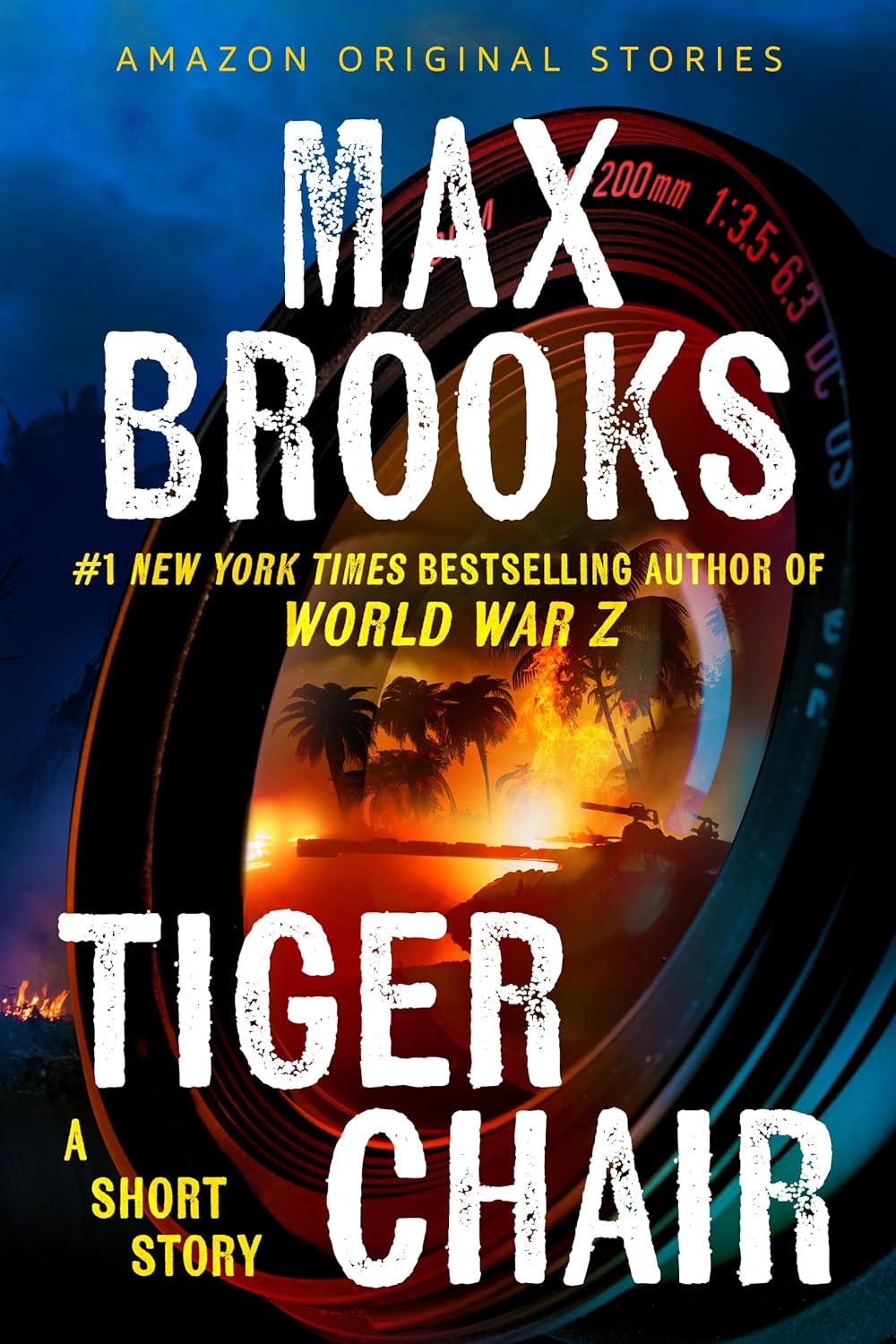
Quick Review – Tiger Chair by Max Brooks

Tiger Chair Cover

Publisher: Amazon Original Stories (ebook – 1 June 2024)

Series: Standalone

Length: 50 pages

My Rating: 4 out of 5 stars

Amazon

I was recently lucky enough to receive a copy of the new short story from acclaimed author Max Brooks, Tiger Chair, which instantly grabbed my attention.  Brooks is an author I have a lot of love for, especially as his two main novels are huge favourites of mine.  This includes his most iconic work, World War Z, which I had an exceptional time listening to a few years ago due to its complex story and the impressive array of celebrity narrators associated with the audiobook version of it.  Brooks followed this up a couple of years ago with the compelling horror read, Devolution, that saw an isolated community attacked by sasquatches in an outstanding and exciting read.  Devolution ended up being one of my favourite books of 2020 and ensured that I would check out anything else that came my way from Brooks.  As such, I made sure to read through Tiger Chair as soon as a got it, as I was intrigued by the content.

Plot Synopsis:

When China invades America, guerrilla warfare explodes on the streets of Los Angeles in this provocative short story about the future of war from Max Brooks, the #1 New York Times bestselling author of World War Z.

China thought it would be a quick war, an easy war. But now, years later, as the insurgency on the streets of Los Angeles escalates but the propaganda never changes, a Chinese officer can’t keep silent any longer. Torn between loyalty to his country and loyalty to his troops, he writes a brutally honest—and possibly suicidal—letter home to unmask the truth.

Brooks combines his signature meticulous research with unforgettable characters in this landmark work of speculative fiction.

This was a very interesting read from Brooks that I was able to power through in a short amount of time.  Set in the future, Tiger Chair is written as a secret letter from a Chinese officer involved in a fictional invasion of the United States to a friend back home.  In this letter, the officer describes the various hardships of the invasion, including the escalating insurgency in Los Angeles, who are pushing his soldiers to the limit with their intense attacks and low-tech strategies.  However, his priority in writing this potentially treasonous letter is to highlight his despair at the ineffective and inflexible strategies of his side, which care more for propaganda than the lives of their soldiers and the civilians, and his desire to see the war come to an end.

I felt this was a rather interesting choice of story for Brooks to write, and it reminded me of the cynical memories of a professional soldier during the zombie wars of World War Z.  Brooks paints a grim and gritty story of survival and duty in the Tiger Chair, and you can easily feel the frustration and fear of the protagonist as he attempts to highlight his feelings about how the war is being run and the various lies he and his soldiers have been fed by their superiors.  The author really captures the way that the protagonist is caught between loyalty to his country and his anger at how events have unfolded, especially as he is powerless to impart any effective change to the situation.

I was quite impressed by the various scenarios that Brooks imagined for this future war in Tiger Chair, and his vision for how events might unfold in this scenario, as well as the technology that would be utilised for it, is very fascinating.  While I am sure that there will be some criticism of Brooks trying to imagine the feelings of Chinese soldiers in a war they might not even undertake, I felt that the Tiger Chair was more of a general warning about the futilities of war, and the frustrations of the lower ranks at the mistakes of their politically motivated superiors.  Indeed, many of the issues the protagonist raises could be applied to many other historical or current wars, and there are several allusions to them in the plot.

Brooks does also attempt to get into the Chinese mindset, which I honestly think he did a good job of considering he had less than 50 pages in which to do so.  There is an interesting examination of the national identity and how their history and culture would influence them into going to war, and the various opinions people within the country would have about these battles.  Brooks also includes some commentary of recent well-known events and controversies involving China, which is more geared towards central criticism than specific critiques of the Chinese.  For example, while he mentions the way in which China influences American media and movies for their own purposes, the protagonist’s resulting criticism are more directed towards the media companies that allowed them to happen as they sacrificed their principles for money.  These and other observations an about current society are quite interesting and make for quite a compelling story.

Overall, I felt that Tiger Chair was a compelling and intense short story from Brooks that brings together some intriguing ideas and predictions.  While I probably would have avoided Tiger Chair if it weren’t Brooks writing it, mainly because I prefer full-length novels to short stories, I’m glad I checked this out, and it ended up being a fascinating and powerful read.

Amazon

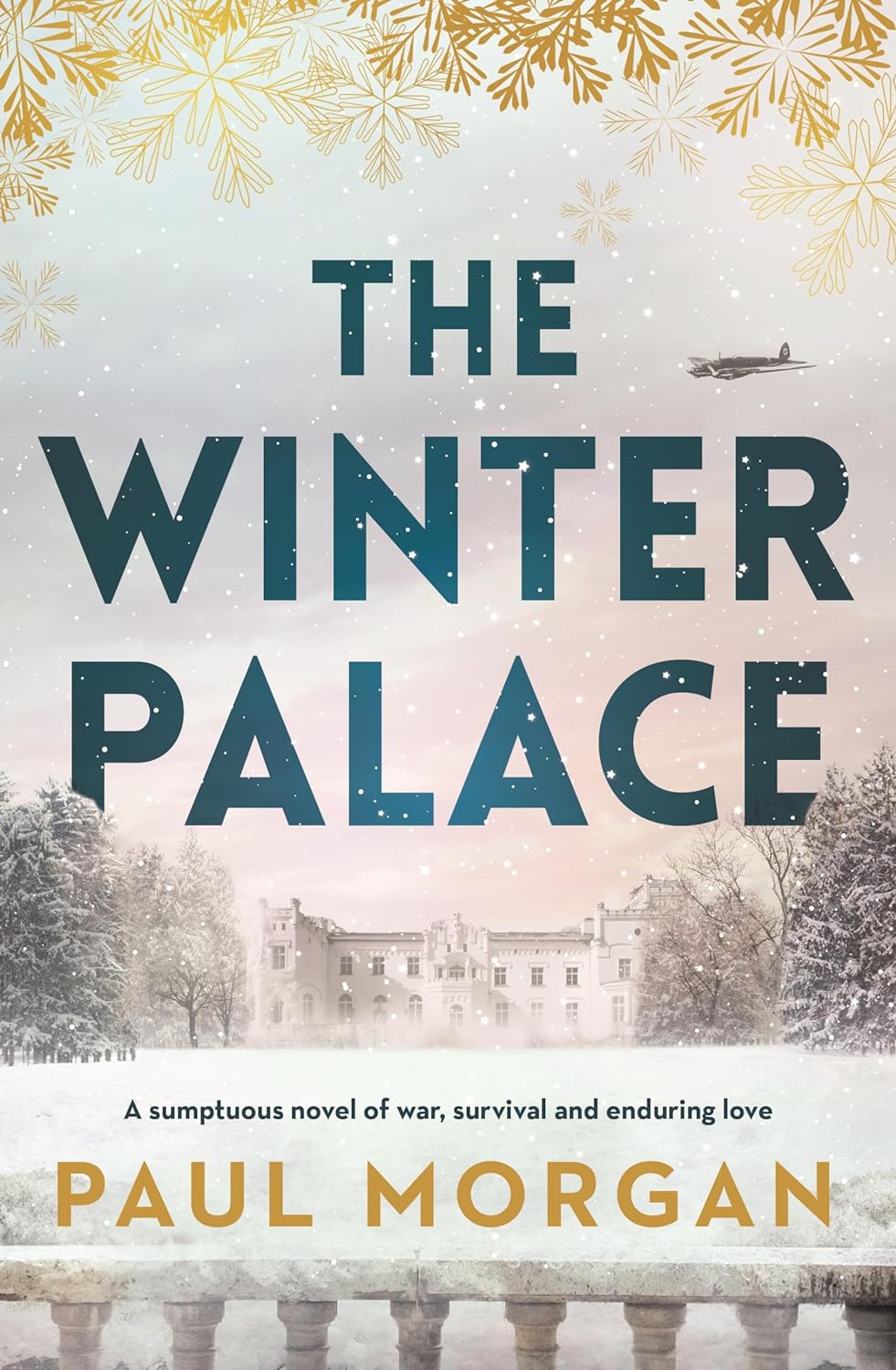
Quick Review – The Winter Palace by Paul Morgan

The Winter Palace Cover

Publisher: Penguin Books (Trade Paperback – 26 March 2024)

Series: Standalone

Length: 329 pages

My page: 4.25 out of 5 stars

Amazon

Compelling Australian author Paul Morgan presents an intense and intriguing historical drama that examines the tragic lives of a Polish husband and wife who find themselves torn apart by war and circumstance in The Winter Palace.

Plot Synopsis:

If he had died, I would know it in my heart.

In 1939, Anton, a captain in the Polish army, says goodbye to his wife, Elisabeth. He is leaving to defend their homeland against the invasion by Nazi Germany and Russia. They make a vow that – whatever happens, however much time passes – they’ll meet again at the Winter Palace, their stately home in the Polish countryside.

The winds of war draw them far apart. Anton is captured and sent to Siberia as a POW. He eventually joins a lost army that battles through snowstorms and scorching deserts in Central Asia to find freedom. Anton survives, driven by his determination to join Elisabeth again. She, meanwhile, is forced to be the ‘mistress’ of a Nazi officer before escaping to join the Polish resistance.

As the war ends, Anton and Elisabeth are at the opposite ends of the world. Anton is in Australia. Elisabeth is in Poland, awaiting his return for months and then years. Will they ever meet again at the Winter Palace?

From 1930s Europe to present-day Australia, this is a sweeping story of love that cannot be broken by time, distance, war or even death.

Morgan came up with a powerful and captivating tale in The Winter Palace which really hits hard.  Following Anton, a Polish military captain, and his wife Elisabeth, The Winter Palace features a well-planned-out split protagonist storyline that shows their respective dark journeys during the destructive chaos of World War II.

Both character-focused storylines are interesting and dark in their own ways, especially as the two protagonists go through hell and back as part of their respective war stories.  Anton’s plot follows the fate of the Polish soldiers who were captured during the joint Nazi and Soviet Invasion.  In Anton’s case, he experiences being a Soviet POW, a reluctant Soviet soldier fighting the Nazis, and then a member of the Allies when the Soviets send their freed Polish soldiers to Palestine.  Elisabeth’s story is more Poland focused, as she is forced to become a Nazi ‘mistress’ before escaping and finding purpose, first as a nurse, and then as a member of the Polish resistance.  Both storylines go in some very compelling directions, as the protagonists experience major traumas, tragedies and struggles, all while the two characters are convinced that they will never see their spouse again.

I honestly have a hard time saying which of these two storylines was my favourite, as both hit you in different ways.  Anton’s was possibly the more interesting to me as a fan of military history, and I found his constant struggle to survive the direct imprisonments he experienced to be both moving and intense.  There are some very direct tragedies in Anton’s experiences, including a particularly dark moment in the first half of the book, and I really found the story of the captured Polish soldiers to be extremely fascinating.  However, the other half the book that focuses on Elisabeth is just as dark, if not even more traumatic, especially as the protagonist experiences evil she can’t fight back against, at least not at first.  Watching her overcome her constant oppression and pull together a satisfying life that allows her to help people on many fronts was particularly inspiring, and I really enjoyed how her arc came together.

While these storylines are separate for the entirety of the plot, I felt that Morgan did a good job playing them off each other. The corresponding tragedies, the near misses in finding out each other’s fates, and the decisions they make as a result are all moving and captivating, and you are constantly enthralled to see if or how they will get back together.  I think that the ending Morgan left the book on was particularly moving, and it fit the overarching themes of the tragedy of war and not knowing about those left behind.  I also appreciated how Morgan didn’t overuse the trope of Australian descendants finding out the wartime secrets of their parents or grandparents.  Instead, readers were given a simple but highly effective connection to the present that ended the story on a thoughtful and peaceful note that was a great conclusion to such an intense story.

I really must emphasise how impressed and intrigued I was by some of the historical elements captured in The Winter Palace.  Morgan does an amazing job of showcasing various alterative experiences suffered by the Polish, from the initial invasion all the way up to the end of the war.  This includes a great rundown of how many citizens, especially women, were abused in Poland as the troops rolled in, which ensured a dark aura around the potential homecoming many characters were hoping for.  However, I found the historical details of the Polish soldiers and civilians captured in the opening days of the invasion to be the most interesting.  Watching the various hardships and journeys that these individuals had to go through during the war, including being POWs, having to fight alongside their former captors against the Nazis when they found themselves on the same side as the Soviets, and the transfer of their army to the Middle East to serve with the Allies on the Western front was extremely fascinating and it was an part of history you don’t see often in fiction.  These historical details from Morgan where some of my favourite parts of the book, and I deeply appreciated the compelling story he told around them.

Overall, The Winter Palace by Paul Morgan was an outstanding and compelling historical drama that really grabbed my attention.  Powerful, unflinching and focusing on a complex and dark period of our history, this was an emotionally charged and excellent read that is really worth checking out.

Amazon

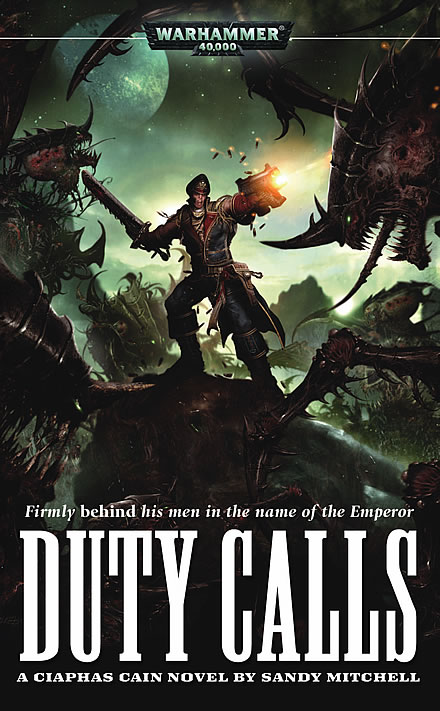
Warhammer 40,000: Duty Calls by Sandy Mitchell

Duty Calls Cover

Publisher: Black Library (Audiobook – 22 May 2007)

Series: Ciaphas Cain – Book Five

Length: 9 hours and 37 minutes

My Rating: 4.5 out of 5 stars

Amazon

One of the most entertaining authors of Warhammer fiction, Sandy Mitchell, continues to shine with the fifth book in his excellent Ciaphas Cain series, Duty Calls.

I doubt anyone is too surprised to hear that I broke a recent lull of reading by resuming the Ciaphas Cain series.  The Ciaphas Cain books, written by Sandy Mitchell (the alternate penname of author Alex Stewart), are an outstanding series that aims to bring a little humour to the crazy and dark battles of the gothic Warhammer 40,000 universe.  I have deeply enjoyed the first four books in this series, For the Emperor, Caves of Ice, The Traitor’s Hand and Death or Glory, and this honestly is one of the very best Warhammer 40,000 series out there.

Commissar Ciaphas Cain, hero of the Imperium and self-confessed self-serving coward, continues his exciting and deadly adventures when a new dark threat rises to destroy humanity.  After his last harrowing adventure with the Valhallan 597th, Cain is keen for a less deadly experience, and his new deployment to help crack down on civil unrest on the planet of Periremunda seems to be the ticket.  However, nothing is ever simple when Cain is involved.

Upon arriving on Periremunda, Cain quickly finds his life in danger as a series of assassination attempts are made against him.  Realising that his assailants are genestealers, the deadly scouts of the Tyranid swarm, Cain begins to understand the true danger Periremunda is in, as the genstealers herald the approach a Hive Fleet.  But unstoppable hordes of alien creatures are the least of Cain’s worries as he is reunited with his old flame, Inquisitor Amberley Vail.

Ostensibly on Periremunda to help the Imperial Guard stave off the Tyranid invasion, it soon becomes apparent that Vail is there for a darker reason.  Something incredibly important has been hidden on the planet that has the potential to change the entire Imperium.  Forced to assist Vail, Cain and his trusty aide, Jurgen, find themselves thrust into the deadly intricacies of a battle between hidden underground factions.  But with hungry Tyranids all around, deadly assassins gunning for Cain and a mysterious Chaos cult causing mischief, can Cain survive his deadliest encounter yet?

Duty Calls was an awesome addition to the Ciaphas Cain series that builds on several of the prior adventures, while also testing the protagonist in some fun new ways.  I loved the interesting story contained with Duty Calls, and this was one of Mitchell’s stronger additions to the series.

This fifth Ciaphas Cain novel had a great story behind it, although I am sure that prior readers will be familiar with the overall thrust of the narrative, with the seemingly cowardly Cain arriving on a new planet to face one threat, only to discover a much more dangerous enemy hiding beneath the surface that he is forced to reluctantly face and defeat, once again accidentally proving that he is a hero.  While Mitchell does try to break this story premise up throughout the series, this is a recurring story format, which can get a little too repetitive.  However, I think that Duty Calls stands on its own feet and Mitchell does a good job distinguishing it from the previous entries in the series.  The initial hidden threat of genestealers transforms into a massive Tyranid invasion, and it proved intriguing to see the protagonist face off against the ravening alien forces.  Tyranids are easily one of the best antagonists in the entire Warhammer 40,000 canon, and while they lose a little of their fighting ability in the face of Cain’s plot armour, they proved to be a great threat in Duty Calls.

While Mitchell could have probably left Duty Calls as simply a military novel, the inclusion of major recurring character Inquisitor Amberley Vail ensures that Cain is thrust into a much more subtle form of danger alongside the Tyranid invasion.  Caught between warring factions of the Inquisition and Adeptus Mechanicus, Cain is used as a pawn in the resulting shadow war, and there are some great scenes as Cain dodges assassination attempts, hidden Chaos cults, and other unseen dangers, all while trying to work out what the elaborate conspiracy is.  Novels that focus on the plots and conspiracies of Inquisitors are always very cool in the Warhammer 40,000 universe (see my reviews for Xenos, Malleus and Hereticus by Dan Abnett), and Mitchell fits Cain into this intrigue laden story arc extremely well.  It helped that there was some excellent set-up for this in the previous novel, and it was good to get a continuation here.  The resulting combination of storylines comes together really well, and Duty Calls has a really impressive and addictive narrative that will appeal to all fans of Warhammer 40,000 fiction.

As with the previous Ciaphas Cain novels, Mitchell does a great job of balancing the various elements of Duty Calls perfectly.  While primarily a military focused science fiction read, Duty Calls also has some great elements of intrigue and espionage, which ensures extra levels of excitement and danger.  However, I feel that the best part of Duty Calls is the inherent humour that Mitchell produces, which is a real rarity in Warhammer fiction.  Most of this is due to the hilarious and cynical narration of the main character, who pulls no punches when it comes to describing how ridiculous events are and the fact that he’s caught in the middle of them.  Extra humour is also built in due to the contained chronicle format that Mitchell has set the series out in, with the protagonist’s journal entries enhanced by extra documentation, descriptions, references and notes from Cain’s associate, Inquisitor Vail.  Vail’s sarcastic take on Cain’s description of events throughout these extra notes is a lot of fun, and the additional in-universe texts and broadcasts seek to showcase just how ridiculous humanity and the Imperium has gotten in the war-torn future, with over-the-top bits of propaganda and biased historical documents.  All this adds to quite a funny book, and this built-in comedy pairs remarkably well with the more serious parts of Duty Call’s narrative to create a truly addictive and fun read.

I felt that Duty Calls was a strong entry in the Ciaphas Cain series, especially as it builds nicely off the events of the preceding novel, Death or Glory.  Due to the series looking at different time periods of Cain’s career, Duty Calls is set between the second and third books, although it makes a lot of references to the first novel, and the events of Death or Glory, which took place many years before.  While the jumps around the timeline are a little confusing, Mitchell makes it work, and I liked seeing the return of several recurring characters, as well as a continuation of some mysterious storylines from the previous book.  Despite these connections, Duty Calls also works quite well as a standalone novel, and new readers can jump into the series here without too many issues.  Indeed, Duty Calls is a good introduction to both the Tyranids and the Warhammer 40,000 universe, and the Ciaphas Cain books are very much engineered for new Warhammer fans.  I will say that after reading several Ciaphas Cain books in a row, Mitchell’s proclivity for repeating elements from his other novels is a bit more obvious, and you do get a little weary of hearing the same phrases, descriptions and character depictions again and again.  Still, Mitchell ensures that Duty Calls is a particularly entertaining read, so its easy to really get stuck into it, and I deeply enjoyed seeing this unique series continue.

As always, I must mention the great characters featured within Duty Calls.  The most prominent of these is series protagonist Ciaphas Cain, who might be one of the more complex and debated figures in the Warhammer 40,000 canon.  Shown by his own admission to be a coward and a false hero, Cain spends most of the book trying to come up with ways to avoid combat and surviving the inevitable battles that his reputation and own bad luck force him to participate in.  His memoirs are filled with cynical allusions to the methods he utilises to survive, and you can see that Mitchell is trying to emulate classic characters like Flashman or Blackadder.  However, despite the character’s constant assurances that he is no hero, you see time and time again that there is far more to Cain, as he routinely defeats the enemy, often thanks to his own caution, survival instincts and ability to inspire his fellow troops.  I love how you are constantly rooting for Cain, despite his attempts to weasel out of trouble, and his self-deprecation about his actions really makes you feel for him, especially as its apparent that he is just one filled with self-doubt after not being an over-the-top martyr like the other heroes in the Warhammer 40,000 universe.  At the same time, Cain also provides a lot of the book’s humour, as you are bombarded with his fun comments and cynical attitude about everyone he encounters.  As such, I really appreciate Cain as a central character in this series, and it is always so much fun to follow him throughout his adventures.

Aside from Cain, there is an interesting array of characters featured in Duty Calls who I had a lot of fun with.  Many of them are recurring from the previous novels, and it was good to see various familiar faces again.  This includes Cain’s faithful aide, Jurgen, who Mitchell portrays in a manner like Baldrick from Blackadder, due to his apparent gormless attitude and poor personal hygiene.  However, in many ways Jurgen is just as much a hero as Cain, often being the one to save the day with his skills and big gun, and he forms a great team with Cain, especially as his Commissar is usually the one drawing the enemy’s attention from his aide’s attacks.  I also really enjoyed seeing the return of Inquisitor Amberley Vail, both as a character in Cain’s adventures and the person publishing his memoirs.  Vail proves to be the perfect foil to Cain for many reasons, and I like how she’s the only person who can effectively manipulate Cain and doesn’t fall for his lies and schemes.  Vail constantly calls out Cain, both in person and through the footnotes she amends to his chronicles, and I love how she has his number, while also clearly caring for Cain as a partner.  Duty Calls really shows just how dangerous Vail can be though, especially as she gets into the fight and makes some tough decisions.  Other interesting characters include several familiar soldiers from the Valhallan 597th, the outrageous members of Vail’s inquisitorial retinue, and a several intriguing antagonists who prove to be great and over-the-top opponents to the sensible Cain.  All these characters added a lot to the impact of the book, and I cannot wait to see how they fit into Cain’s adventures again in the future.

Readers who have seen my previous Ciaphas Cain reviews know that the only way I am going to enjoy this series is through its audiobook format.  All Warhammer novels make awesome audiobooks, but the Ciaphas Cain audiobooks are something particularly special thanks to the use of multiple narrators.  Duty Calls features six separate narrators who add a great deal to the production thanks to their fantastic voices and entertaining takes on the characters and universe.  Most of this narration is done by the superbly talented Stephen Perring, who lends his voice to all the chapters told from Cain’s perspective.  As such, he covers most of the first-person action and adventures of the main character, and his take on the complex Cain and his colleagues is exceptional.  The way he captures the various aspects of Cain’s character through his voice work is impressive, and you really get a sense of the multiple layers surrounding his motivations.  Perring also does a really good job of capturing the other intriguing characters Cain interacts with, including his aid Jurgen, and the eclectic members of the Inquisition that crosses his path.

After Perring, the most prominent narrator is Penelope Rawlins, who provides narrations for the various inclusions written by Inquisitor Vail.  As such, Rawlin’s voice is constantly interjected into the audiobook at various points as she reads out the footnotes, context pages, and personal remarks from Vail, as she attempts to make Cain’s story more readable.  Rawlins has really perfected her Vail voice over the course of the series, and it is always great to have the playful, informative, and often gently exasperated tones of a chronicling Inquisitor come through the plot.  There is also some good contrast between Perring and Rawlins, especially as both voice the character of Vail throughout Duty Calls, and they serve as a winning main team.

The other four narrators, Emma Gregory, Richard Reed, Tara Rawson and Andrew James Spooner are also very fun, even if they are used a little sparingly.  These four narrators’ voice extracts from various in-universe texts, chronicles and new casts that Inquisitor Vail has added to Cain’s manuscripts to give them more context.  These talented narrators go all out in voicing these intriguing and often over-the-top inclusions, and I love the humorous spin their excellent narration adds to them as a result.  Gregory is particularly noteworthy, especially as she once again voices the ridiculously patriotic memoirs of an officer fighting alongside Cain, but all these extra narrators do such a great job.  This excellent and entertaining combination of voice actors and audiobook narrators turns Duty Calls into a real treat to listen to, and I honestly cannot recommend this format enough to anyone interested in checking out the Ciaphas Cain series.

I continue to fall further in love with the Ciaphas Cain series as Sandy Mitchell produces another amazing and fun story in Duty Calls.  Loaded with action, humour, and a particularly complex protagonist, Duty Calls had everything I’ve come to expect from the Ciaphas Cain series, and I deeply enjoyed how Mitchell continues to showcase the Warhammer 40,000 universe in his own distinctive way.  I can think of no better way to highlight just how much of a great time I had with Duty Calls than to reveal that I automatically started listening to the sequel Cain’s Last Stand, the moment I finished it.  Highly recommended to all Warhammer fans and new readers wanting some fun science fiction adventures.

Amazon

Warhammer 40,000: Death or Glory by Sandy Mitchell

Death or Glory Cover 2

Publisher: Black Library (Audiobook – 28 February 2006)

Series: Ciaphas Cain – Book Four

Length: 8 hours and 50 minutes

My Rating: 4.75 out of 5 stars

Amazon

After recently getting through awesome Warhammer 40,000 novels like Straight Silver and Sabbat Martyr, I was in the mood for even more fantastic fiction, so I decided to check out the always reliable Ciaphas Cain series by Sandy Mitchell with Death or Glory.

The Ciaphas Cain books are an outstanding and highly entertaining Warhammer 40,000 series that shows the grimdark universe in a whole new light.  Written by talented author Sandy Mitchell (a pseudonym of Alex Stewart), the Ciaphas Cain books follow an unlikely hero, Commissar Ciaphas Cain.  Despite being a Commissar, officers who are supposed to be embodiments of duty, discipline and bravery, Cain is a highly practical and fearful man who wants to stay alive in the deadly Warhammer 40,000 universe.  However, his attempts to stay out of the fight usually result in him getting thrust into even more danger which he needs to survive using his trademark cunning and manipulation tactics.  His various adventures have also turned him into a legendary hero throughout the Imperium of Man, something that results in even more trouble for unlucky Commissar.

The Ciaphas Cain books are always a lot of fun to read, especially as Mitchell takes a comedic take to the Warhammer universe.  Loaded with unlikely coincidences, clever humour and over-the-top characters, the first three Ciaphas Cain novels, For the Emperor, Caves of Ice and The Traitor’s Hand, have been extremely awesome and this is easily one of my favourite Warhammer 40,000 series.  As such, when I needed something particularly entertaining to listen to, I chose the fourth book in the series, Death or Glory.

Relatively young Commissar Ciaphas Cain is not yet the hero of the Imperium he is fated to become, although he has already started to gain a reputation he doesn’t believe he deserves.  After stopping a genestealer infestation, Cain and the artillery unit he is attached to are ordered to the planet of Perlia, which has fallen under siege by the orks.  Happy to spend the next war far behind the lines with the artillery, Cain is unprepared for the dangers to come.

Upon arriving in the Perlia system, the ship Cain is travelling aboard comes under ork attack and Cain has no choice but to rapidly disembark in an escape pod.  Trapped with his aid, Jurgen, Cain’s pod is shot down before they can be rescued, which results in them crashlanding on Perlia.  Hoping to find sanctuary after a harrowing adventure in space, Cain is horrified to discover that they have crashed into the wrong side of the planet and are currently stuck well behind enemy lines.

Knowing that the only way to survive the ork hordes is to rejoin the main Imperial army, Cain has no choice but to embark on a dangerous road trip across the continent.  However, with thousands of brutish orks in the way, Cain will need help to survive.  Pulling together an unlikely army of scattered troops and desperate civilians, Cain heads off into the desert, hoping to find his salvation.  Their resulting journey will pit them against the full ork army and help turn Cain into a legend known throughout the galaxy.

Death or Glory was another exceedingly fun and deeply captivating entry in the Ciaphas Cain series that once again places Mitchell’s complex protagonist in all manner of trouble.  Action-packed, clever, and filled with excellent humour, Death or Glory was an outstanding read that I could not get enough of.

I really enjoyed the awesome story that Mitchell came up with for Death and Glory, particularly because it was a somewhat fresh take on the usual narrative.  Rather than following Cain as he works with his regiment to stop a hidden threat, Death or Glory shows Cain alone (except for Jurgen) and behind enemy lines on an ork controlled world.  Acting as a prequel to the previous novels in the series, you see the slightly younger Cain attempt to find his way back to safety, only to encounter multiple groups of refugees and scattered soldiers who turn to him for leadership.  The resulting story turns into a hilarious combination of Mad Max, Laurence of Arabia, and Kelly’s Heroes, as Cain leads his band, many of whom are crewing crude ork vehicles, across the ork controlled territories, including a vast desert.  There are several amazing battle scenes that see the humans fight back against the orks in desperate situations, often won thanks in part to Cain’s tactical insight and his unlikely manoeuvres designed to keep him alive.  This is a non-stop story, and you get really drawn into the constant travel, fighting and attempts at survival that emerge.  The orks prove to be great antagonists for the story, especially as Mitchell provides them as a mostly serious enemy.  While they are slightly underpowered in the face of the unbeatable Cain, and you do see the inherently sillier side of them, Mitchell also makes sure to showcase their prowess and brutality, which keeps the stakes high and the story even more captivating.  Ending on a final battle where Cain showcases his unlikely heroism by pure chance, Death or Glory had me hooked with its story the entire way through, and I loved the fantastic scenario that Mitchell came up with.

I have mentioned in previous reviews of the Ciaphas Cain series that Mitchell has an outstanding style that really enhance the story and bring out the innate humour within.  This is once again the case for Death or Glory, as the story is primarily told in the chronicle form from Cain’s perspective.  These unvarnished insights into Cain’s mind paint a vivid and fun picture of the events he was involved in, and you get some interesting insights into his actual motivations.  This fun story is further enhanced by the fact the memoirs have been modified by Cain’s associate, Inquisitor Vail, as she adds in a variety of notes, additional information, in-universe historical texts and footnotes.  Not only are these delightful additions informative and serve as a great way to quickly insert details of the larger war into the plot, but they are also quite funny due to the author’s sarcastic tone.  I love some of the entertaining jokes that emerge in the footnotes, especially as it allows the author to quickly reference certain ridiculous elements of life in the Warhammer universe, many of which are parodies of classic British activities.  These additional notes really change the tone of the entire book, and I love how it allows Mitchell to turn Death and Glory into something far more than a typical war story.

While there is a definite focus on humour in Death or Glory, there is still a ton of action and intense adventure here, as Mitchell draws inspiration from classic desert war movies.  The carnage of the orks is bleak, the battles are hard, and the situation is desperate as Cain and his comrades navigate the desert.  These darker elements play off the humour of Death and Glory extremely well, and I loved the complex narrative that emerged.  I enjoyed how Mitchell kept up the same excellent level of humour and compelling story elements that the previous entries were known for, and there was a strong effort to keep it consistent with the previous books.  You do notice that Mitchell utilises a bit of repetition in his books, with similar lines and descriptions used again and again.  While this is not too noticeable if you take a break in between books, it is very apparent for chain readers.  Still, this is a minor issue that Mitchell does a good job of dispelling in Death or Glory with the more unique storyline.

Like most of the entries in this series, Death or Glory can be read as a standalone novel with no real pre-knowledge of the previous books needed to enjoy it.  Indeed, Death or Glory is set earlier than the other Ciaphas Cain books, so this is a good entry point to the larger series.  There are a few references to the other Ciaphas Cain books, which established fans will enjoy, and Mitchell also provides clever hints at future events Cain will have to encounter.  Death or Glory also serves as a very fun introduction to the ork faction, especially as our protagonist has never encountered them before.  This allows the reader to get a fresh outside perspective on these alien characters, while also including details that hardcore Warhammer fans will appreciate.  As such, Death or Glory proves to be an awesome addition to the series that will appeal to fans of all levels and could easily spark a new reader to fall in love with Warhammer 40,000 fiction.

A recurring highlight of this series is the fantastic characters who populate the narrative, particularly main protagonist Ciaphas Cain.  Cain is a particularly complex Warhammer 40,000 character, mainly because he is both a renowned hero and a self-serving coward who only wants to avoid a fight.  Portrayed as a fun combination of Blackadder and Flashman, Cain is shown to be purely selfish, with his every move calculated to keep himself alive.  However, through accident or something else, his plans often backfire, forcing him into over-the-top dangerous situations that ensure others see him as an amazing hero.  This is on full display in Death or Glory as Cain pulls together a band of survivors that gets far larger and more chaotic the further they get along.  Despite his plan being designed to get himself to safety, many see him as a heroic revolutionary leader, which he is forced to maintain to keep his band of protectors loyal to him.  It is quite fun to see everyone misinterpret his decisions, and several fictional historical texts showcase the process of overexaggerating his deeds in hilarious detail.  However, despite all his protestations to the reader about being a coward, you once again see that there is far more to Cain than he lets on.  Rather than being a terrible person, he is just a sensible and tactically aware figure in a universe where the actions of unachievably brave heroes are constantly lauded.  This has led Cain to completely underestimate his own self-worth, even though he is routinely shown to be an impressive fighter, clever tactician, and caring leader.  I love this complex look at Cain, especially as his self-deprecating account ensures he is even more likeable, despite his selfish habits, and you really get drawn in to his crazy adventures.

Aside from Cain, several other figures were impressive in Death or Glory.  The most prominent, at least from impact on the book, is Cain’s associate Inquisitor Vail.  Despite not actually appearing as a character in the main adventure, Vail’s presence is strongly felt as she is the one editing and presenting Cain’s fictional memoirs.  As such, you are constantly gifted with Vail’s overlying narration and notes, especially as she provides greater context to the story and translates some of Cain’s wilder claims.  Thanks to her sarcasm, as well as her personal insights into Cain’s actual character, Vail provides a fantastic alternate viewpoint of events, and it is always fun to see her call out Cain for his lies and terrible writing style.  The other major character you must talk about is Cain’s aid and reliable bodyguard, Jurgen.  The Baldrick to Cain’s Blackadder, Jurgen is generally shown to be an unhygienic, smelly, and slightly dim companion who is utterly loyal to Cain.  However, despite this appearance, Jurgen proves to be an interesting and likeable figure, and he forms an excellent partnership with Cain.  His skills are well on display in Death or Glory, mainly due to his intimate knowledge about orks, and he once again showed himself to be an unappreciated part of Cain’s ultimate victory.  Throw in a band of intriguing survivors who flock around Cain, including several capable soldiers, a somewhat insane Tech-priest and determined troop of civilians, and Death and Glory had some great characters you can’t help but root for.

I have mentioned multiple times in the past that the best way to enjoy a Warhammer 40,000 novel is in its audiobook format.  Nowhere is that truer than the Ciaphas Cain books, which make excellent use of multiple narrators to expertly adapt the fantastically funny content of the novels.  Death or Glory is an outstanding example of this, as the brilliant production and excellent narrators produced something that I powered through very shortly, even with its nearly nine-hour long runtime.  The intense action, compelling story and outstanding humour is all amazingly highlighted in this format, and I especially loved the four amazing narrators who were brought in to voice the characters.  This includes returning favourites Stephen Perring and Penelope Rawlins, who fulfill their respective roles perfectly.  Perring is probably the most prominent narrator of the bunch as he voices all the chapters told from Cain’s perspective.  Perring is an awesome narrator as he perfectly captures the chaotic characters featured within the book, especially Cain and  Jurgen.  His portrayal of Cain is probably the best, as he expertly showcases the protagonist’s exterior boldness, as well as his interior fear and deep humanity.  Jurgen of course also comes out very well, and I love how Perring captures Jurgen’s unique persona and unquestionable loyalty to Cain.

While Perring voices the main chapters, Penelope Rawlins is just as important as she voices Inquisitor Vail, who writes the prelude, chapter introductions, additional material and footnotes that are scattered throughout the book, providing editorial notes and material to make the story more organised.  Rawlins’ voice is seamlessly worked into the main plot multiple times throughout the course of the audiobook, and I like how well her inclusions work with Perring’s main narration, especially as Rawlins perfectly captures both Vail’s sarcasm and the clear admiration she has for Cain.  This audiobook would not be as entertaining or clever as it is without these clever insertions by Rawlins, and she adds just as much to the production as Perring does.  In addition, Death and Glory brings two new narrators to the series with Joe Jameson and Richard Reed, who voice in-universe historical texts and autobiographies included to provide additional context to Cain’s ramblings.  I was very happy to hear from both familiar narrators, as Jameson lent his voice to the Necromunda novel Fire Made Flesh by Denny Flowers, as well as the Legacy of the Mercenary King series by Nick Martell (The Kingdom of Liars, The Two-Faced Queen and The Voyage of the Forgotten), while Reed narrated The Infinite and the Divine by Robert Rath, The Twice-Dead King series by Nate Crowley (Ruin and Reign) and Grim Repast by Marc Collins.  I really liked Jameson and Reed’s performances as a result, although both were a little underutilised thanks to the constraints of the narrative.  Still, these four narrators provided some exceptional voice work, and I had an amazing time listening to them throughout the course of this audiobook.  As such, Death and Glory comes very highly recommended in its audiobook format, and there is no better way to enjoy this book.

Sandy Mitchell continues to write one of the most entertaining Warhammer 40,000 series out there with this fourth entry in the epic Ciaphas Cain series.  An outstanding and hilarious novel that I absolutely powered through, I cannot recommend Death or Glory enough, and you will fall in love with this brilliant book.

Amazon

Warhammer 40,000: Sabbat Martyr by Dan Abnett

Sabbat Martyr Cover

Publisher: Black Library (Audiobook – 1 December 2002)

Series: Gaunt’s Ghosts – Book Seven

Length: 10 hours and 35 minutes

My Rating: 4.75 out of 5 stars

Amazon

In addition to my review for Straight Silver, I also present a review for the impressive and epic seventh novel in Dan Abnett’s Gaunt’s Ghosts series, Sabbat Martyr.  This was an outstanding and fantastic addition that perfectly followed on from some of the previous books in the series, including Necropolis, Honour Guard and The Guns of Tanith, while also throwing the beloved protagonists into all manner of trouble.

It is a time of miracles in the Imperium of Man.  As Warmaster Macaroth continues his extensive and exhaustive Sabbat World Crusade, the forces of the Imperium are stretched like never before.  However, word has reached the ears of all the faithful in the Sabbat Worlds that the legendary Saint Sabbat has reincarnated on the isolated and pious world of Herodor.  There, in Civitas Beati, a holy city dedicated to her, the reborn Saint awaits the faithful, the pilgrims, and the mighty warriors of the Imperium.

Amongst those summoned to Herodor are the battle tested and weary soldiers of the Tanith First-and-Only, better known as Gaunt’s Ghosts.  Thanks to their previous victories, as well as their involvement in miracles associated with the Saint, the Ghosts and their leader, Colonel-Commissar Gaunt, have been personally chosen by Sabbat to be her honour guard.  However, nothing on Herodor is as it seems, and Gaunt finds himself drawn into deceptive military politics and the manipulated beliefs of the city.  Worse, the forces of the Emperor of Mankind aren’t the only ones who have heard the call of the new Saint.

As Gaunt attempts to establish order in the city, an unstoppable danger appears on the horizon in the form of the infamous followers of Chaos, the Blood Pact.  Lead by the terrible Chaos warlord, Enok Innokenti, the invading forces of Chaos have one mission: find and kill the reborn Saint, and, by doing so, rob the Imperium of hope.  Desperately outnumbered and faced with impossible odds, Gaunt and his ghosts will need to do all they can to save the Saint and the city.  However, the dread Innokenti will have the Saint’s head by any means necessary and has sent nine deadly and corrupt killers to ensure this happens.  Can Gaunt and the Tanith First-and-Only pull off a miracle in the name of their blessed saint, or is this their final battle?

Abnett pumps up the feels and brings together some amazing storylines in this seventh excellent Gaunt’s Ghosts book.  An action-packed and highly intense read, Sabbat Martyr was another exceptional read, and one that I absolutely powered through thanks to its addictive and powerful story.

Sabbat Martyr has a pretty impressive story behind it, especially as Abnett wraps up the Saint sub-series within the larger Gaunt’s Ghosts books, in a big way.  Starting off fairly typically, with the Ghosts arriving on a new world to take care of some riffraff, Abnett quickly sets the scenes and revisits several of the key existing storylines and character arcs.  However, Sabbat Martyr goes in some intriguing new directions as Gaunt and his soldiers encounter what appears to be a reborn Imperial Saint, who has inspired a new bout of religious fervour and devotion in the region.  This proves to be an interesting new angle which ties this book into the larger concerns of the Warhammer 40,000 universe, rather than focusing on the fight of the common footslogger.  I liked this change of focus, especially as it fits with the hints raised in the preceding novels, and the initial intrigues of the novel added a level of uncertainty that worked quite nicely.  A fantastic, extended battle scene ended the first third of the book nicely, especially as it leads to some big revelations and sets the scene for the second half of the book.

The second half of Sabbat Martyr is where things get really interesting.  Abnett cleverly uses the start of this half to quickly extend several great character arcs, which sets some figures up for some dark times, while others are restored in interesting ways.  However, you don’t have a chance to fully appreciate that, as Abnett then launches the reader right into a new phase of war, as deadly enemies literally rain down around the protagonists.  Essentially the entire second half of the book is pure warfare, as the forces of Chaos arrive and harry the Imperial forces on every front, including with an extended space combat sequence.  From there, the enemy arrives on Herodor in force, including the nine promised deadly killers, and all the protagonists are thrust into a deadly battle for survival.

I loved this last part of the book, especially as Abnett knows how to write an exceptional war sequence.  Expertly splitting the story between numerous point-of-view characters, the resulting carnage is epic, with the protagonists forced into intense street fighting to survive.  All these battles are well crafted, and show the protagonists at their most desperate, as they are slowly pushed back with seemingly no hope to win.  I really loved these battles, as well as the simultaneous character arcs that tied into them, and you really get drawn in towards the big climax.  I did think that Abnett slightly rushed this last half, mainly because he was trying to fit in too much at once.  While the nine killers get a good introduction, they weren’t utilised as effectively as they could have been, and their appearances are a little briefer than you would have liked.  Indeed, there is so much potential material in this second half that Abnett could have honestly fit his story across two books and really expanded everything out.  Still all the big battles are very epic, and the big climatic fight sequence proves to be everything you could have wanted.  Abnett wraps everything up with some major tragedy, as multiple character arcs come full circle in a big and emotionally charged way.  As such, readers, especially established fans of the series, come away from Sabbat Martyr shaken while Abnett clearly and decisively ends a major chapter in the Gaunt’s Ghosts series.

Abnett does a really good job bringing this epic story to life, and I deeply appreciated just how dark and intense Sabbat Martyr got in places.  Expertly utilising multiple character perspectives to tell an elaborate story, you really get sucked into the massive carnage that emerges, and I really must commend Abnett for the impressive battle scenes.  Abnett has his methodology set for the Gaunt’s Ghosts books by this point in the series, and I love how smoothly his story unwinds.  The blend of character focussed storytelling and intense action makes for an exciting read, and I really got invested in this outstanding seventh entry in the series.  I did appreciate how Abnett took his protagonists into the much wider realm of faith, saints and holy power that is well established in other Warhammer 40,000 fiction, but not something we’ve typically seen in this series.  It honestly made for a unique change of pace, and Abnett does a great job wrapping ongoing storylines around it.  I also appreciated how several loose ends and antagonists from previous novels got revisited here, including one of the big issues I had with Honour Guard which got nicely resolved here.  This does mean that unlike the other Gaunt’s Ghosts books, Sabbat Martyr is less accessible for new readers, although Abnett does a good job of summarising old storylines where needed.  As such, this proved to be an epic entry in the wider series, and I really enjoyed how this chapter of the Gaunt’s Ghosts books came to an end.

As with all the Gaunt’s Ghosts books, the heart of Sabbat Martyr lays in the extended cast of protagonists from whom the elaborate story emerges.  Abnett has a very well-established cast of characters for Sabbat Martyr, and it was frankly moving to see how this story unfolded for them.  The author does a good job splitting the story amongst the cast, and I appreciated how this book, unlike the previous novel, didn’t overdo the number of primary cast members.  The resulting character arcs and personal stories proved to be very moving and intense to different degrees, and Abnett really got dark in places, especially when it came to bringing certain character storylines full circle.

Now, I won’t go into too much detail about the characters here, because I don’t want to ruin some major parts of the book.  However, I will say that Gaunt is once again a great central figure, and it was intriguing to see him impacted by his fate, as well as the many friendships he’s made throughout the series.  In addition, Gol Kolea gets a nice addition to his story, which I really appreciated, while one of the original Ghosts, Brin Milo, finds himself going on some bold new adventures that tie in nicely to his long-hinted destiny.  The feud between Lijah Cuu and Hlaine Larkin that was such a dark and memorable part of Straight Silver, comes to a great conclusion here, and Cuu really proves to be the ultimate villain of this series.  Agun Soric’s battle with his unusual messages is another highlight, especially as Abnett works in some powerful personal struggles, as well as a very dark ending that will leave you hurting.  All these character arcs, and more, are handled perfectly and all readers, especially those who have enjoyed the rest of the series, will really appreciate how Abnett continues or concludes them here.  However, I may never forgive Abnett for the big tragedy that occurs at the end that ensures the Tanith First-and-Only will never be the same again.

It goes without saying that I ended up listening to Sabbat Martyr on audiobook, especially after how impressed I have been with the previous Gaunt’s Ghosts audiobooks.  Coming in with a run time of 10 and half hours, Sabbat Martyr was another descent length Warhammer 40,000 audiobook that I just flew through.  This format works so well to tell epic Warhammer 40,000 stories, and I loved how effectively the fight sequences came through in Sabbat Martyr, as you can so easily envision Abnett’s massive action set pieces.  A lot of how effective Sabbat Martyr’s audiobook is comes down to excellent narrator Toby Longworth, who is one of my favourite audiobook narrators.  Longworth, the established narrator for all things Gaunt’s Ghosts (as well as Abnett’s other audiobooks like, Xenos, Malleus and Hereticus), has long perfected the voices he uses within these audiobooks, and it was great to hear his established tones and voices again.  The narrator really has all the key characters down and love the fitting and effective voice each of them has.  This impressive voice work deeply enhances an already awesome story, and you really get to feel the emotions and actions of each of the characters.  I honestly had such a great time listening to the Sabbat Martyr audiobook, especially in some of the more intense action scenes which swept my imagination away, and this is easily the best format by which to enjoy this amazing book .

With fire, blood and faith, Abnett wraps up a major part of his iconic Gaunt’s Ghosts series in a big way with the epic Sabbat Martyr.  Loaded with war, personal conflict, powerful developments, and some memorable tragedy, Sabbat Martyr was a worthy and intense addition to the series, and one that I couldn’t stop listening to.  I had such an exceptional time with this book, and Sabbat Martyr, and indeed the entire Gaunt’s Ghosts series, is required reading for all Warhammer 40,000 fans.

Sabbat Martyr Cover 2

Amazon