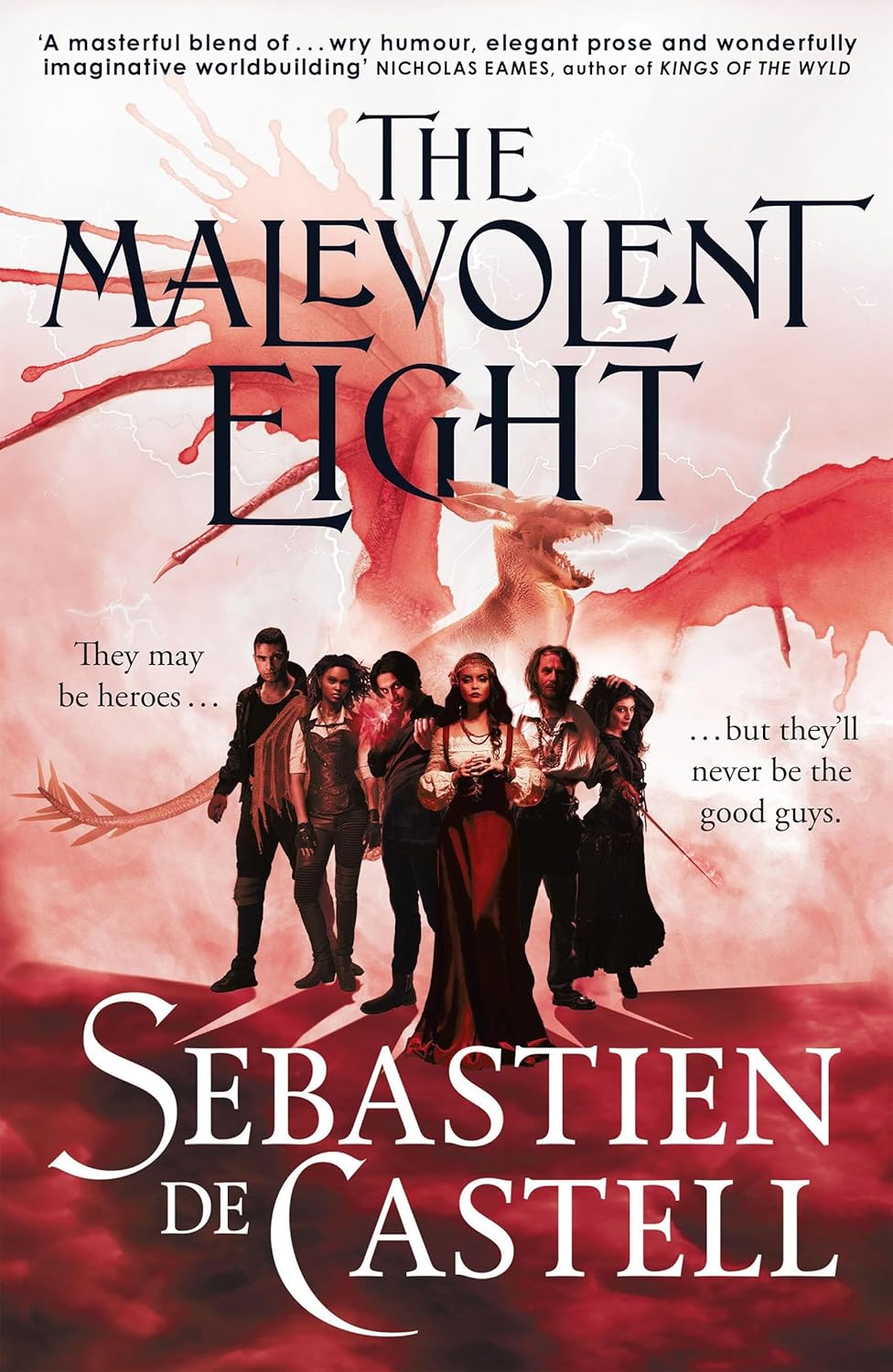
The Malevolent Eight by Sebastien de Castell

Publisher: Acardia (ebook – 27 May 2025)

Series: Malevolent series – Book Two

Length: 397 pages

Rating: 4.75 out of 5 stars

Amazon

The always entertaining Sebastien de Castell unleashes one of the funniest books of 2025 with the dark fantasy novel, The Malevolent Eight, a compelling and impressive sequel that I couldn’t get enough of.

Over the last couple of years, I have really become attached to the amazing Sebastien de Castell, a leading fantasy author with some outstanding stories under his belt.  Known for his impressive and varied stories, including his Greatcoats, Spellslinger and Argosi novels, de Castell has a brilliant imagination, and I love the range of complex settings and narratives he brings to life.  Some of my favourite de Castell books are from his recent The Court of Shadows fantasy murder mystery series, which serves as a sequel to his original Greatcoats books.  These include the witty and entertaining Play of Shadows (one of my favourite books of 2024) and the particularly clever Crucible of Chaos (one of my favourite audiobooks of 2024), both of which were real highlights of my reading calendar last year.  However, for this review I’m going to focus on a far more entertaining series of de Castell’s that I have had a blast with.

This series is the Malevolent collection of books, which contain dark magic, over-the-top characters and ridiculous humour.  Starting back in 2023 with The Malevolent Seven, this series followed seven morally questionable mercenary mages who come together into an unlikely team to defeat a group of dangerous wizard brothers.  However, their attempt to do the right thing spectacularly backfires on them when they are tricked into allowing the hosts of heaven and hell to simultaneously invade, turning their realm into the battleground for their final war.  I ended up having an exceptional time with The Malevolent Seven, and I really got drawn into it’s clever, if outrageous plot.  Naturally I was keen to see how the series continued, and the recently released sequel, The Malevolent Eight, has long been on my to-read list.

After a great betrayal, the mortal realm is in peril as the heavenly Lords Celestine and the dark Lords Devilish have simultaneously invaded, determined to fight their long-anticipated final battle on this unclaimed ground.  As both sides recruit as many additional human soldiers and followers as they can to their cause, the survival of humanity seems to lie in the hands of an unlikely group of rogue magic users.  Unfortunately for everyone involved, humanity’s saviours are the damn fools who caused this calamity in the first place, the insane mages better known as The Malevolent Seven.

At the head of this misfit band is Cade Ombra, a man who has known power and betrayal from both the Celestine and the Devilish and is determined to allow humans to remain free from their dual influences.  Forced to work with the most emotionally unstable group of mages and wonderists in the mortal realm, including a destruction-loving lighting slinger, a fallen angel, a righteous devil trying to serve the Celestine, an uncertain blood mage, a roguish rat admirer and their newest member, a vampiric kangaroo, Cade begins to wage a surprisingly moral war on both the Celestine and the Devish.

However, The Malevolent Seven aren’t the only beings attempting to disrupt the plans of the two invading armies.  Another group of mages, as well as a mysterious woman from Cade’s past with unimaginable power, are also fighting for their own purposes, and looking good while doing so.  Forced to contend against angels, devils, and ambitious mages, Cade will need to outthink all his enemies, while also ensuring that his own chaotic allies don’t make everything even worse.  However, the harder he fights, the more Cade begins to realise that he may have to sacrifice everything, especially when it becomes clear that the origin of the apocalypse lies in his gilded past.

De Castell continues to deeply impress with this brilliant, if somewhat unhinged, novel, as The Malevolent Eight was an exceptional dark fantasy sequel that comes very highly recommended.  Taking all the comedic craziness from the first book and amping it up to eleven, The Malevolent Eight was a perfect follow-up to de Castell’s previous narrative that takes the reader on an exceptional adventure you just won’t be able to look away from.

After having a ton of fun with the awesome first book in the series, I honestly wasn’t too sure what to expect with The Malevolent Eight’s story.  However, not even in my wildest dreams did I imagine just how unhinged, wild and downright insane this sequel’s plot would get as de Castell pumped the narrative all the way up to 11 and beyond.  Starting with a fun and particularly bloody sequence that not only reintroduces the unruly protagonists but also showcases the dark scenario that they find themselves in for this book, the readers are quickly thrust into The Malevolent Eight’s plot, and frankly after the first series of crazy events, you find yourself pretty hooked as the self-proclaimed Malevolent Seven’s attempt to fight both the armies of heaven and hell.  However, as the story progresses, the unconventional heroes soon find that there are far more dangerous beings involved in this war, including a mysterious mage with previously unknown destiny-altering magic.

Determined to find out more about their new opponent, Cade leads The Malevolent Seven to both the Lords Celestine and Devilish to find out what they know and soon begins to understand his unfortunate role in the outbreak of the apocalypse.  After some hilarious interactions with both sets of lords, the protagonists embark on a series of missions, only to encounter betrayals, hidden secrets, the consequences of Cade’s lies, capture, revelations and a surprisingly humorous torture sequence.  This leads up to the big conclusion of the story, as the protagonists find themselves in the middle of a battle against three separate sides trying to claim their world for various purposes, all while manipulative figures work from the sidelines.  This big finale for The Malevolent Eight gets a little overcomplicate and convoluted, especially as we dive into alternate realms and different realities, but the entire thing is highly entertaining to behold.  It finishes off on an interesting conclusion, which has a nice hopeful note to it (especially in comparison to the previous book), while also hinting at some dark events to come.  This is an overall quite entertaining and wild story that really highlights de Castell’s creativity and ability to craft over-the-top narratives.

I deeply enjoyed the wonderful style that de Castell utilised in The Malevolent Eight, as the author pulls together a chaotic and hilarious dark fantasy that hits a lot of over-the-top notes at the same time.  Perfectly told from the single perspective of main character Cade Ombra, The Malevolent Eight is a balls-to-the-wall blast, loaded with insane action, excessive blood, crazy moments and fantastic humour.  De Castell keeps the pace of the story moving pretty fast throughout The Malevolent Eight, and the reader absolutely powers through the fantastic combination of carnage, intrigue, and hidden motivations.  Working well as a sequel to the previous book, The Malevolent Eight cleverly returns to the author’s fun setting, which has been drastically altered due to the rival inter-dimensional armies fighting across it.  Serving as the perfect background to such an entertaining and oddball dark fantasy narrative, de Castell makes perfect use of the changed setting and existing book history to go all out with his narrative.  While a seemingly simple and insane book on the surface, de Castell also adds in some impressive extra depth to the story, including through its complex magic system and the inclusion of several alternate realms that allow or some interesting inclusions from the author’s wider fictional reserves.  There is also a great moral greyness to the entire setting, as even the most noble of people or beings in this setting is generally pretty flawed or evil in their own way, and I frankly loved how cynical things got at times.

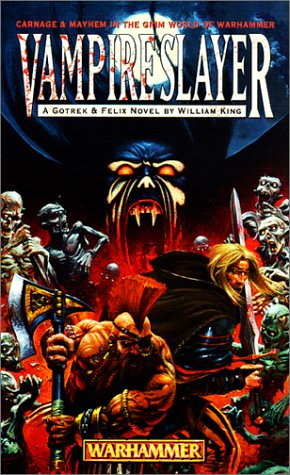
While this is a rather dark story, loaded with brutal combat and destructive magic, de Castell keeps the overall tone of The Malevolent Eight pretty light thanks to the excellent use of humour.  This is an insanely funny book, and while there is a certain subtly to some of the comedy contained within, for the most part de Castell utilises over-the-top scenarios (such as a swearing kangaroo), unhinged dialogue (the one swearword said kangaroo can say) and silly over-reactions for his comedy, which frankly fits the overall crazy feel of The Malevolent Eight.  The author gets a consistent amount of humour out of all the crazy antics of his characters, which stays pretty damn funny all the way through and never gets too tiring or overplayed.  Highlights of The Malevolent Eight’s humour for me included a very cleverly written demonic contract that spelled out the terms of a deal with the protagonists with some unique caveats, a particularly entertaining torture sequence where the protagonist causes more discomfort for his torturers than himself, ill-timed relationships with the book’s apparent antagonist, and so many crazy conversations between the seemingly sane point-of-view protagonist and every single person he encounters.  While I’m slightly salty about de Castell’s description of the Australian accent being “halfway between some poncy foreign nobleman and an inebriated fishmonger” (ok fine, it was pretty funny), this was quite a hilarious read, and I honestly laughed out loud multiple times in public as I read through this crazy comedic book.

One of the things I appreciated about The Malevolent Eight is the way in which de Castell made it accessible to all readers, even though who didn’t read the preceding novel.  While those who have checked out The Malevolent Seven are probably going to get the most out of this novel, especially as they can continue the hilarious character arcs from the first book, I feel that new readers can easily jump into The Malevolent Eight without any real context and still follow the story perfectly.  Indeed, I quite enjoyed how well de Castell cleverly and effectively recapped the events of the previous book, especially after a two-year gap between reading The Malevolent Seven and The Malevolent Eight.  Established de Castell fans will probably appreciate the references to the author’s other series, as a new major character in the novel is from the author’s Spellslinger universe and utilises that series’ unique magic to great effect in this novel.  While those readers who have read the Spellslinger books will no doubt find this inclusion really cool, people who are less familiar with this series can still follow The Malevolent Eight’s plot without any issue, especially as the events of the other series don’t really come into play here.  As such, I would recommend The Malevolent Eight to any fantasy readers looking for a dark comedic turn, although for the sake of completeness, try The Malevolent Seven first.

As with The Malevolent Seven, this excellent sequel features a fantastic cast of compelling damaged characters whose unique and often quite outrageous stories helped to ensure The Malevolent Eight was an impressive read.  Cleverly building on the storylines of the previous book, The Malevolent Eight features the immoral characters who make up titular Malevolent Seven attempting to be heroes in this book, often with mixed results.  This includes main protagonist and point-of-view character Cade Ombra, the leader of group and a man with quite a complex past.  Shown in the previous book to be a power hunger survivor with a conscience, The Malevolent Eight really dives into his characterisation even further as you look at his past as an arrogant holy warrior and his eventual fall from grace to work with demons.  His complex past becomes a key part of The Malevolent Eight’s plot, especially as much of the current issues lie in his past mistakes, and it was quite moving to see Cade attempt to make amends, especially as it gets him into even more trouble.  Despite this, Cade is still a massive bastard at times, and his manipulative nature and evil strategic mind are some of his greatest weapons.  Serving as the apparent straight man to a group of crazy friends, Cade sees himself as the sole voice of reason in the entire book, and it was fascinating to see his compelling perspective unwind throughout the book, especially when he faces certain realities about his friends and what he must do for redemption.

The rest of the cast of The Malevolent Eight is pretty crazy in comparison to Cade (at least from his perspective), and it was so much fun to see these outrageous personalities interact with each other.  My favourite supporting character is still the rude and crude Corrigan Blight, a thunder mage who serves as Cade’s unwieldly second.  Despite his outward appearance as an idiot controlled by his element (I mean, he is), Corrigan is a surprisingly deep figure and his ability to act as Cade’s conscious really highlights their great friendship.  The rest of the returning members of The Malevolent Seven, which includes a rat mage, a fallen angel, a holy demon and an uncertain blood mage, are slightly less well featured in this book, although de Castell does dive into their uncharacteristic attempts to be heroes, and their always fun interactions as a group allowed for some amazing moments.  I also must mention the newest member of team, Temper, a giant, swearing, vampiric kangaroo who has joined the team since the events of the first book.  Temper was quite a surprising figure to behold, and de Castell cleverly keeps the kangaroo’s origins somewhat hidden from the reader for much of the plot, allowing you to really enjoy his random presence without thinking too much about it.  This main cast was so much fun, and de Castell tops it off with a new magic user from Cade’s dark past with surprising connections to the Spellslinger universe, Cade’s former demonic benefactor whose intrigue, and paella, is to die for, and a variety of high demon lords and celestial beings whose motivations are never black and white.  These characters, and more, ensure that The Malevolent Eight is an exceptional read from start to finish, and I deeply enjoyed seeing these crazy characters in action.

Sebastien de Castell was in rare form with his impressive new dark fantasy novel, The Malevolent Eight.  A bold sequel that takes all the best elements from the first book and amps them up to a hilarious new height, The Malevolent Eight was an extremely entertaining read, with some brilliant comedic charm that worked well with the damaged characters and very dark fantasy elements.  Outrageous and excessive in all the best ways, The Malevolent Eight was such a great read and I couldn’t get enough of de Castell’s latest ultra-fun offering.  Make sure to also keep an eye out for de Castell’s other 2025 novel, Our Lady of Blades, later this year, which I strongly feel is going to be even more amazing.

Amazon

The Devils by Joe Abercrombie

Publisher: Gollancz/Macmillan Audio (Audiobook – 13 May  2025)

Series: The Devils – Book One

Length: 25 hours and 7 minutes

My Rating: 5 out of 5 stars

Amazon

The master of grimdark fantasy fiction presents a bold and over-the-top new story with The Devils, an outstanding, addictive and highly entertaining read that you will not be able to turn away from.

Joe Abercrombie is an impressive and compelling author who has been wowing fantasy fiction authors with his complex reads for nearly 20 years.  While he has written some other cool books, like his Shattered Sea trilogy, Abercrombie is best known for his iconic First Law series of dark fantasy novels, that followed a group of highly damaged people as they tried to survive war, magic and politics in a messed-up fantasy world.  I really enjoyed the original First Law trilogy, and Abercrombie has cleverly expanded it out over the years, including with three standalone novels and his sequel Age of Madness trilogy.  The Age of Madness novels were ones that I particularly enjoyed reading, and A Little Hatred (one of my favourite books of 2019), The Trouble With Peace (one of my favourite books and audiobooks of 2020) and The Wisdom of Crowds (one of my favourite books and audiobooks of 2021), were very highly rated by me, and I could not get enough of this series.

Needless to say, I am a pretty big fan of Abercrombie’s novels, and I have been eagerly awaiting a new book from him since I finished The Wisdom of Crowds.  While I had hoped that we would be getting a new First Law novel, Abercrombie instead decided to present readers with something a little different with his new The Devils series.  Starting off with The Devils, this series is another clever dark fantasy series, set in an alternative, magic filled version of medieval Europe.  One of my most anticipated books of 2025, The Devils sounded so damn good, especially with its crazy plot and intriguing new setting.

The lands of Europe are in dire peril.  Between the constant wars, dangerous monsters, ruinous famines and deadly plagues, the various kingdoms of Europe are in poor condition, barely held together by the fractured church.  However, the real danger lies outside its borders, as the mysterious elves gather their power in the Holy Lands, preparing for another invasion of Europe that will surely lead to the destruction of all humanity.

In response to the growing threat of the elves, the church and its juvenile pope determine that a new ruler needs to be placed upon the Serpent Throne of Troy after its evil sorcerous empress dies.  With all four of the empress’s duplicitous and power-hungry sons unfit for the crown, the church surprisingly finds that their ideal candidate is a lowly street thief from the Holy City called Alex.  A ferrety sneak with no noble bearing or confidence, Alex is shocked to discover that she is really the long-lost Princess Alexia Pyrogennetos of Troy, destined to reunite the churches of Europe by claiming the throne.

Turning the reluctant and terrified Alex into a potential princess is one thing, but getting her to Troy is a far more difficult prospect, especially as her rival contenders to the throne are stalking Europe with their deadly, magically enhanced followers, determined to claim Troy for themselves.  To succeed in marching Alex through the European hellscape and placing her on the Serpent Throne, the church will need far more than prayers and the blessing of saints; they are going to need devils.  Luckily, such devils are close at hand. 

Deep within the Holy City lies the Chapel of Holy Expediency, which binds dangerous heretics and monsters and forces them to seek redemption through holy missions for the pope.  Led by the hapless Brother Diaz, the congregation of the Chapel of Holy Expediency is charged with getting Alex to Troy and placing her on the throne.  But can a terrified monk, an immortal knight, an arrogant necromancer, an invisible elf, a sarcastic vampire, an uncontrollable Viking werewolf and the most experienced woman in Europe succeed in making a street-rat an empress, or will their new mission only bring even more death and destruction to the continent? 

Joe Abercrombie once again shows why he is one of the very best authors of dark fantasy fiction with his captivating and deeply impressive new novel.  The Devils was an ultra-entertaining read that perfectly introduced the author’s intriguing setting and populated it with highly amusing characters and dark deeds.  Exciting, clever and loaded with over-the-top humour, The Devils was an absolute joy to listen to, and I loved every second I spent with it.  One of the most addictive novels of 2025 so far, The Devils gets a very-well deserved five-star rating from me, and readers are guaranteed an extra fun time with this crazy novel.

I absolutely loved the cool and highly entertaining story that Abercrombie came up with for The Devils, which was essentially a fun dark fantasy iteration of The Dirty Dozen/Suicide Squad narrative with some amazing monsters.  Providing a quick introduction to the key characters, the reader soon becomes highly invested in the narrative, as the memorable and very amusing protagonists begin their trek to Troy.  What follows is a classic travelling adventure story with some dark and comedic twists, as the protagonists encounter all manner of foes on the way to their destination, which they are forced to dispatch with ruthless efficiency.  While parts of this story start to become a tad formulaic, especially as the protagonists are intercepted multiple times by one of Princess Alexia’s cousins, with each encounter resulting in a deadly battle for survival against different occult forces, you are generally so entertained by the compelling characters, interesting interactions, and over-the-top action sequences, you don’t even really mind.  Abercrombie works to break up these encounters with some fun side quests, as well as altering the circumstances by having the characters occasionally split up into unlikely pairings, exploring the fun alternate medieval Europe that works as such an effective setting for this book.  This allows for some interesting changes of pace in the main quest narrative, while also allowing for some outrageous character moments as the reader gets to know the protagonists a little better.

Everything nicely leads up to the last third of The Devil, which sees the protagonists arrive at their destination against the odds.  Without going into much detail, things naturally go to hell, and everybody is forced to fight for their lives.  This chaotic series of events isn’t unexpected, as the reader is waiting for the other shoe to drop the entire book, but the who and the how of it makes for great reading.  Some excellent twists come to life here, often revealed in a fun meta way, and, while you see a couple of them coming, the entire ball of surprises and reveals make for quite an exciting end sequence.  These twists are well backed up by some of the grittiest action sequences in the entire book, and you are constantly on your feet waiting to see what happens next.  The entire novel ends on a tragic, if thoughtful note, especially when you’re left to consider who the true monsters of the story are.  An overall impressive narrative, that blends alternate history and classic adventure narrative threads with Abercrombie’s wild imagination to create something exceedingly entertaining and addictive.

The Devils was a very fun and well-written story as Abercrombie provides a very intense and hard-hitting tale, bound together by dark humour, over-the-top sequences, and complex characters.  Abercrombie once again showcases his skill at balancing multiple distinctive perspectives to tell an integrated and ongoing narrative, with the story cleverly bouncing between the viewpoint of several impressive protagonists.  The continued switches between the characters allows for a very elaborate narrative, and the reader is drawn into both the overarching plot and the more personal battles of the protagonists.  I liked how Abercrombie was able to tailor the descriptive narration of each of the perspective chapters to suit the character it was following, and each chapter has a slightly different tone as a result.  However, this is a very dark overall story, as the characters encounter outrageous scenarios of death and destruction, and the resulting carnage allows for some intense moments.  I will say that The Devils did feel a little sillier than some of Abercrombie’s previous novels, although the author uses this extra layer of ridiculous energy to full effect to tell an extremely addictive story.

As you would expect from Abercrombie, the intense action sequences are a highlight of The Devils, with the many brutal sequences coming to life thanks to the author’s great descriptive style.  There was a certain casualness to some of the fights, especially those featuring the plot’s more dangerous killers, and which was enhanced by the clever overall narration of the writing.  I loved how Abercrombie set out all his scenes, with a lot of subtle humour revolving around cynical description of events, especially as the author provides some ironic results and meta commentary.  This more subtle writing of events is counterbalanced by the over-the-top humour of the dialogue, especially when it comes to certain characters.  A lot of the dialogue gets downright filthy at times, with some very adult discussions coming out in outrageous fashion.  While this excessive crass language had the potential to distract from the story, I think that Abercrombie got the right balance, with the ridiculously rude dialogue fitting in well amongst the crazy events of the plot.  While the combination of ugly events, adult humour and cooky carnage isn’t going to be everyone, I think most fantasy fans are going to have a ton of fun with it, especially as it plays into Abercrombie’s grimdark style.  Throw in a clever alternative medieval Europe as the elaborate setting which will delight history buffs with the intricate differences, and The Devils was a very impressive read that perfectly plays the author’s strengths and talent for entertaining and dark fantasy fiction.

Fans of Abercrombie will know that the author specialises at making damaged and captivating characters to set his narratives around, and The Devils is no exception to this.  The author introduces an amazing cast of complex and memorable characters in The Devils, and I love the very impressive storylines that emerge around them.  This includes six separate perspective protagonists, two major supporting characters, and an array of interesting figures throughout Europe who play various roles in the outcome of the plot.  Abercrombie does an excellent job of introducing and utilising this complex cast, with all the major characters getting their chance to shine in some impressive ways.  While some of the characters in The Devils didn’t quite have the complexity of the protagonists from the First Law books, Abercrombie instead amps up the entertainment aspect of these figures, introducing several particularly hilarious, ridiculous and highly relatable monsters, each of whom added a great deal to the overall reading experience.

The first two characters I want to talk about are major perspective protagonists, Brother Diaz and the newly discovered princess, Alex.  Despite neither being members of the titular devils, both have major roles in this book and are shaped by their experiences with the monstrous pawns of the church.  Brother Diaz, a simple monk who is brought in to guide the devils, is initially shown to be a hapless and terrified figure, clearly out of his depth when it comes to the dangerous mission he has been entrusted with.  Abercrombie has a lot of fun showcasing him as a useless social climber at the start of the novel, and he initially has more of a comedic role in the plot.  However, as the story progresses, Diaz starts to gain a little confidence as he continues to survive, and you soon see flashes of the man he could be.  Despite falling to temptation (repeatedly), Diaz ends up being quite a stalwart figure in the book, and I loved some of the scenes where he got to show off his intelligence (including one particularly entertaining legal battle).  The way in which Abercrombie subtly added more and more depth to Diaz’s personality as the story continued was very impressive, and his growth as a character was a highlight of the book.  The author also ensured that Diaz was one of the more relatable characters in The Devils, especially as he continuously makes mistakes, finds himself shaken by his fears and failings, yet continues to try to do the right thing.

Much like Diaz, the other non-devil perspective protagonist, Alex, is also shown to be an imperfect figure who finds themselves thrust into events outside of their control.  Initially shown as a simple thief, Alex, or Princess Alexia Pyrogennetos, is ill prepared for the events before her, and is forced to rise to the occasion when she is declared long-lost royalty.  Mostly shown as the book’s damsel in distress, Alex is generally scared and lacking confidence, especially as she knows she is not the princess everyone wants her to be.  Like Diaz, Abercrombie writes Alex slowly rising to the occasion throughout course of The Devils’ plot, as she learns to fight back and become a leader.  I really liked following Alex’s journey in The Devils, and while the journey to the character finding her self-confidence is a long and bloody affair featuring some good twists, it ended up being a powerful part of the book’s overarching narrative.

Outside of Alex and Diaz, a lot of time is also spent following the other perspective members of The Devils, including Balthazar, Sunny and Vigga, who are a necromancer, an elf and a werewolf respectively.  These three characters are amazing, and I liked how well they played off each other and the rest of the cast with a great mixture of serious and more comedic elements.  For example, Balthazar (or to introduce him properly, Balthazar Sham Ivan Draxi), is a highly arrogant figure who chafes at being captured and controlled by the church.  Much of his story focuses on his many attempts to break the Papal binding compelling him to help Alex, while also dealing with the realisation that he is helpless against those he considers his lesser.  Much of the entertainment around Balthazar is his complete lack of self-awareness or humility, especially within his own mind, and while there are times when it appears that he is going to become a better person, he usually returns to his old personality when he hits a wall.  Sunny the elf, on the other hand, is a far more sensible character, who serves as the team’s shadow thanks to her ability to become invisible.  Despite her nice and helpful personality, Sunny is shown as an alien creature, incapable of understanding the humans who generally hate and fear her.  Imbued with a more subtle humour than her fellow devils, Sunny proves to be quite an interesting figure, especially when you examine her past and her dark experiences with humans.  Probably one of the more likeable and selfless figures in the book, Sunny’s arc adds a lot to the overall story, especially through her unlikely romance angle, and Abercrombie clearly had fun writing the various scenes where she traipses around invisible.

One of the more memorable cast members of The Devils is Vigga, a former Viking raider who was cursed as a werewolf and then captured by the church.  Crass, constantly controlled by her urges, incapable of self-restraint and particularly deadly, even when not a massive wolf, Vigga powers through the entirety of The Devils’ narrative, leaving a major impression whenever she appears.  Featuring some of the more visceral and entertaining perspectives of the book, which includes a combination of hungry sequences from her wolf mind and her more entertaining insights as a human with no impulse control and an inability to focus on anything, Vigga is responsible for a large part of The Devils’ chaotic and outrageous tone, and the book would not be anywhere near as fun without her.  However, as this is Abercrombie, there are quite a few darker moments in Vigga’s story, and you soon become absorbed with her attempts to pull together her fractured mind and control the monster within, especially when she gets close to her travelling companions.  The dark depression that occasionally befalls her because of her uncontrolled actions adds some major drama to certain tragic parts of The Devils’ plot, and Vigga comes away as one of the more sympathetic, if scary, characters in the book.

While the above perspective characters are all particularly impressive, my favourite was the team’s resident knight, Jakob of Thorn.  An old soldier cursed with immortality who has been fighting battles on behalf of the church and God for hundreds of years, Jakob is a tired and haggard figure bound by his many vows.  Suffering from the degradation of his body due to age and the many injuries inflicted on him, Jakob is weariness personified as he attempts to deal with his pain, and the guilt from his long history of death and service to the church.  Readers familiar with the author will know that Abercrombie specialises at writing tired old warriors who are sick of the death and destruction they cause, and Jakob of Thorn is one of his better ones (which is saying a lot).  I loved all of Jakob’s scenes, especially as he doggedly continues to fight despite his pain, often providing some of the book’s best quotes and insights.  Unsurprisingly, Abercrombie makes Jakob suffer a lot in this novel (what else would this sadistic author do with an immortal character?), and you learn a lot about his resolve and psyche as a result, especially as he knows he is the biggest monster of them all.  I really think that Jakob’s grittier and more self-aware perspective chapters helped to balance out the more outrageous character arcs in The Devils, and he was a perfect addition to this outstanding narrative.

The final two major characters I want to highlight are Baron Rikard, an ancient vampire, and Baptiste, a rogue hired to keep the devils in check, who seems to have experience with every profession possible in Europe.  Both these characters are excellent additions to the plot and manage to shine through, despite not being perspective characters.  Indeed, I felt that their role in the book was enhanced by the readers not having direct insights about their motivations or actions, and instead you get to enjoy the mystery surrounding them as you see them through the eyes of the other characters.  Baron Rikard, who serves as a fun, sarcastic figure who only helps when it suits him, proves to be a great inclusion in the plot, especially as his gentlemanly manners and demeaner makes him stand out amongst the other characters.  While a ridiculously charming figure (especially when he starts talking about dumplings), you are initially given the impression that Rikard is another trapped monster keen to escape his binding.  However, Abercrombie nicely turns this assumption on its head as the story continues, and I really enjoyed the character’s revealed motivation, especially as it shades all the character’s actions in a new light.

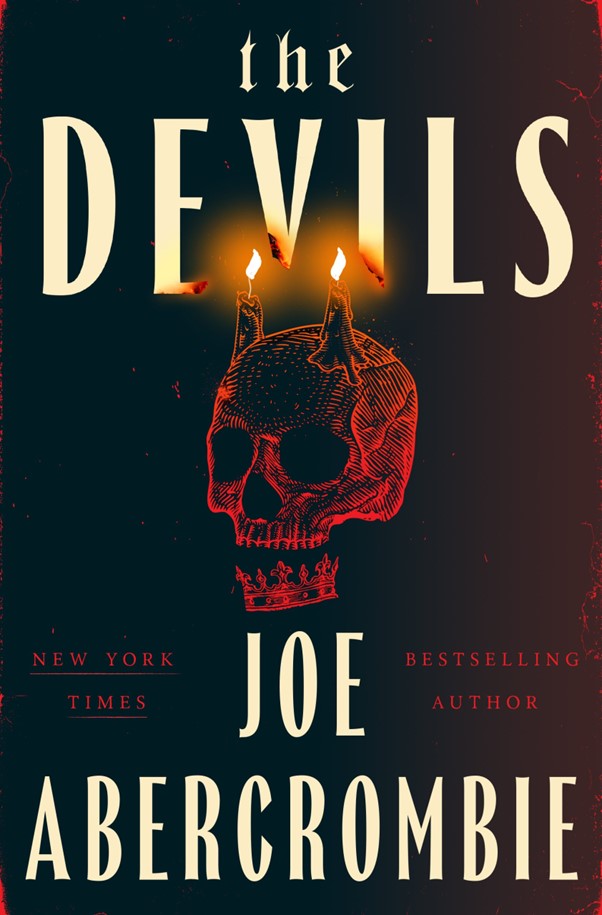
Baptiste, on the other hand, is a suave and entertaining figure whose impact on the book would be diminished if you got a deeper look at her thoughts, motivations or true history.  I particularly enjoyed how well Baptiste served as a foil to Balthazar, and they had a great back and forth that helped to define them both.  Throw in a range of other impressive supporting characters, including a barrage of outrageous or diabolical antagonists, and the cast of The Devils was something very special.  I cannot emphasise enough just how much fun all these characters were, and their moving and complex arcs and interactions really helped to give some powerful meat to The Devils’ entertaining narrative.  You really come away with some conflicted feelings for many of the protagonists, especially as none of your favourites have a truly happy ending, and it will be interesting to see what happens to the survivors in the future entries of the series.  A special shoutout as well to the fun artwork depicting several of these characters in The Devils paperback, especially as the artist really captures how the author wrote these colourful protagonists.

While I did receive a physical copy of The Devils, I ended up listening to this novel on audiobook, which was a fantastic choice.  Not only did the audiobook version allow for a fuller immersion in Abercrombie’s new fantasy universe and his crazy action sequences, but it also featured the superb voice of actor Steven Pacey.  Pacey, who is one of my favourite audiobook narrators, previously lent his voice to the audiobook versions of Abercrombie First Law novels, and he frankly does a perfect job of capturing the author’s unique tone and style.  Abercrombie’s complex writing, witty dialogue and excessive humour really come to the fore when read out by Pacey, and the narrator’s tone and cadence in The Devils always perfectly matched the intended mood of the scenes, no matter how dark or over-the-top they became.  Pacey also does some very entertaining and highly fitting voices for the key characters of The Devils, and it is amazing how well he captures all these outrageous figures.  All the defining character details, including the timid nature of Brother Diaz, the arrogance of Balthazar, the pain and weariness of Jakob, the wry amusement of Baron Rikard, the unearthly nature of Sunny and the sheer wildness of Vigga are all amazingly highlighted by Pacey’s various voices, and really come to love the characters the way that Pacey reads them out.  Thanks to Pacey’s brilliant acting and evident love for the content, this was an incredible listen, and I really cannot emphasise enough just how effectively he narrated this crazy story.  I flew through the books lengthy, 25-hour runtime due to this brilliant narration and epic narrative, and I honestly don’t believe that anyone but Steven Pacey could make Abercrombie’s amazing novels come to life in the same way.  An exceptional audiobook and one of the best things I have so far listened to in 2025.

With his trademark blend of chaos, fantastic humour and complex characters, Joe Abercrombie presents one of the very best books and audiobooks of 2025 with The Devils.  A unique and very entertaining fantasy adventure novel, The Devils pushed everything to 11 and beyond, ensuring that you couldn’t turn away.  An exceptional read from start to finish, I had so much fun with The Devils and I cannot wait to see how Abercrombie will continue this series in the future.
Amazon

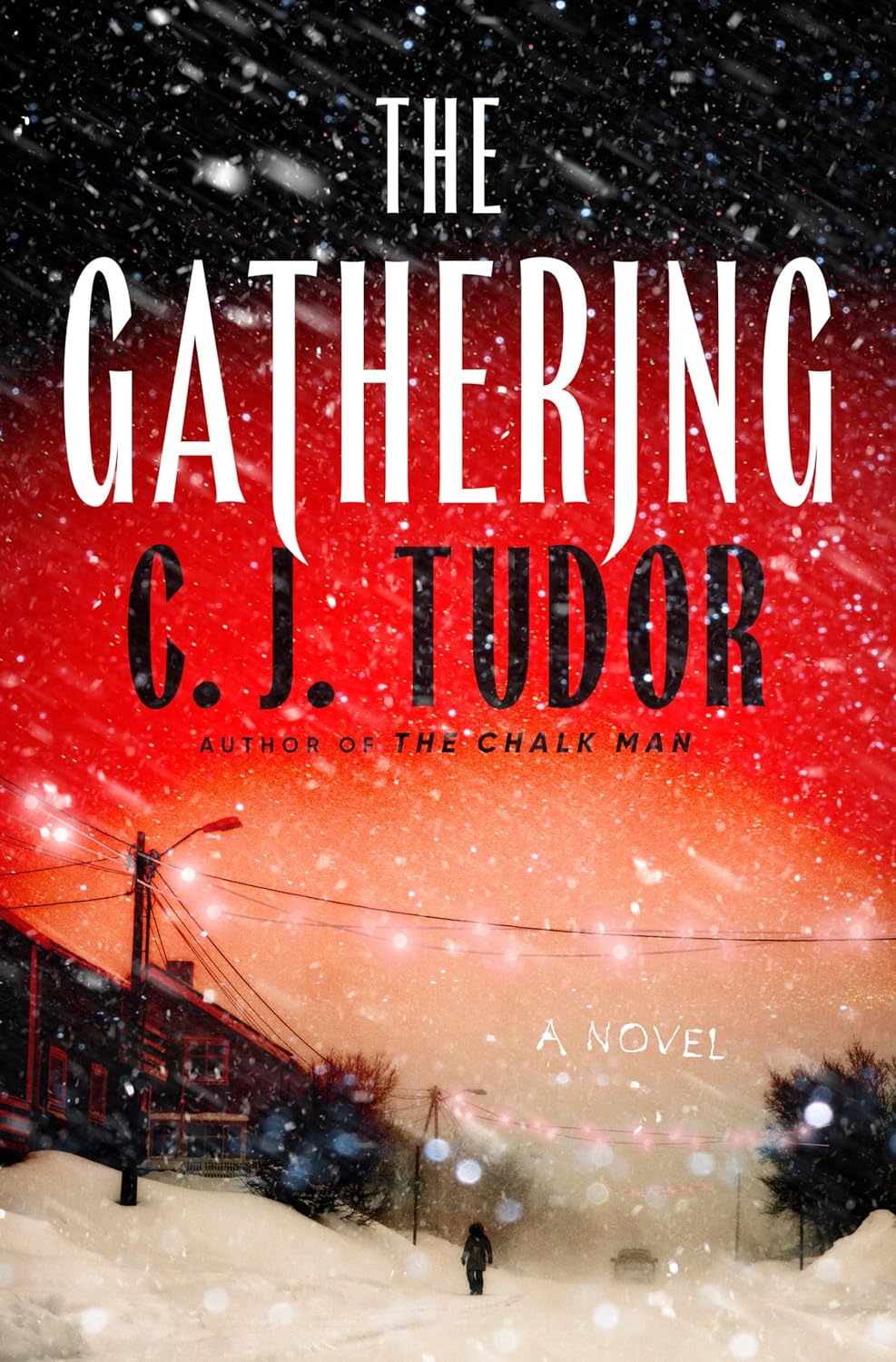
The Gathering by C. J. Tudor

The Gathering Cover

Publisher: Michael Joseph (ebook – 16 April 2024)

Series: Standalone/Book One

Length: 412 pages

My Rating: 5 out of 5 stars

Amazon

Acclaimed author C. J. Tudor continues her excellent run of clever and dark thrillers with the intense, inventive, and gripping horror murder mystery, The Gathering.

C. J. Tudor is a talented and highly inventive author who has been producing some intriguing reads over the last couple of years. Starting with her 2018 debut, The Chalk Man, Tudor has consistently produced some compelling books with clever horror or psychological thriller elements. Her other books include The Hiding Place (also titled The Taking of Annie Thorne), The Other People, The Burning Girls and The Drift.  While Tudor’s intriguing novels have often stood out to me, generally because their unique plots, I unfortunately haven’t had the opportunity to read any of her prior works, which is something I really regret.  However, this has recently changed as I was lucky enough to receive a copy of Tudor’s latest book, The Gathering, an intriguing murder mystery thriller with some distinctive element behind it.

Welcome to the small town of Deadhart, Alaska, home to a small population of living humans and a colony of vampyrs.  Maligned and hunted beings throughout the world, vampyrs in America now have legal protection from unsanctioned killings, as long as they don’t harm any humans.  While members of the Colony attempt to stay away from humans, old hatreds, prejudices and grudges rear their ugly head when a young teenager is found murdered with his throat ripped out and his body drained of blood.

Detective Barbara Atkins, a specialist in vampyr killings and physiology, is sent to Deadhart to determine if a vampyr committed the murder and authorise a cull if the Colony is unwilling to hand over the perpetrator.  Arriving in the small town, Barbara finds the local inhabitants afraid and angry, looking for vengeance for the death of the boy and determined to wipe out the vampyrs for good, especially as this case bears a striking similarity to a previous killing blamed on the Colony 25 years ago.

Beginning her investigation, Barbara soon discovers that there is far more to the case then initially appears.  Much of the evidence has been staged, and no one is willing to tell her the truth about what has really going on in town.  When more deaths occurring throughout Deadhart and the town in uproar, Barbara deputises former Deadhart sheriff Jenson Tucker, whose investigation into the previous killings nearly left him for dead.

As Barbara and Jenson attempt to discover the culprit, it soon becomes clear that someone is attempting to stir up a conflict between the people of Deadhart and their vampyr neighbours.  With both settlements on the warpath, Barbara and Jenson need to dive into Deadhart’s dark history to truly understand the crime before them.  But is the killer a bloodthirsty vampyr, a psychotic human with a taste for chaos, or something far worse?

Tudor absolutely blew me away with this exceptional and highly clever read.  The Gathering was a brilliant book that expertly combined an inventive and well-established concept with a complex murder mystery.  Loaded with intriguing and damaged characters and a dark story of death, revenge and oppression, The Gathering was an extremely awesome book that I could not turn away from.

Thanks to its vampyr focused murder mystery, I knew I was going to really enjoy the plot behind The Gathering well in advance of reading it, and boy was I proven right.  Tudor does a wonderful job quickly and effectively setting the scene, and you are soon introduced to the town of Deadhart, the concept of vampyrs and the particulars of the murder.  What follows is a complex case as protagonist Barbara Atkins is forced to investigate as an outsider, as most of the town is filled with anti-vampyr sentiment.  Further complications are added when Atkins finds a range of dark secrets hidden throughout Deadhart, both in the present and in the past, which have bearing on the modern case.  At the same time, the various residents of Deadhart and the Colony react in different ways to the murder, using it to restart old grudges or bring long-festering hurts to the surface.

The Gathering’s narrative progresses at a fast and compelling pace, and you are soon treated to revelation after revelation, as well as several additional killings.  I loved the combination of a modern-day investigation and dives back into various periods of Deadhart’s history that emerged, especially as clues in the past have huge bearings on the modern story.  Tudor cleverly builds up several simultaneous mysteries and ongoing storylines, and soon the protagonist is not only trying to discover who the killer is but prevent a war between Deadhart and the Colony.  Everything leads up nicely to a pretty epic conclusion, which was well foreshadowed, with some pretty awesome revelations coming to the fore.  I loved how well several compelling character arcs came full circle during this confrontation, and the main antagonist of the plot proved to be quite sinister and well established.  Several other tertiary mysteries are also solved near the end, and Tudor ensures that many storylines are tied off in a satisfying and clever way.  There are some awesome twists at the end, including one surrounding one of the book’s most compelling characters, and this last twist in particular is likely to lead to additional books in the series.  I honestly was the hooked the entire way through this amazing story, and I really appreciate how Tudor brought it together.

I’m a huge sucker for classic for thrillers with distinctive twists to them, and The Gathering was a great example of this.  Tudor managed to pull together a complex murder mystery that not only features an isolated Alaskan town with a dark history and multiple complex and haunted characters, but also contains an elaborate vampiric society and history.  All these elements are used extremely well throughout The Gathering, and I was extremely impressed with how Tudor was able to tie everything so effectively together.  Tudor makes sure to tell multiple character-focused storylines at the same time, which allows for a more multifaceted plot that goes in some very interesting direction.  The split focus on several captivating and distinctive figures works wonders to enhance this, and Tudor uses this to showcase the rising tension in the town, and the various perspectives surrounding it.  There are some great plot lines here, and the way that they interacted and came together was very impressive.  I was particularly impressed by the chapters that kept coming back to an unnamed figure being held prisoner by a mysterious captor.  This storyline was weaved throughout the novel, and I was constantly left guessing about who the figures were and how it would work into the main story.  The reveal surrounding it was not what I was expecting, but I loved how well it set up a major twist at the end.  Other character-focused storylines also proved to be just as compelling, and the way everything came together was very impressive.  I honestly knocked out this book in just over a day, it was that damn good, and I cannot emphasise how cleverly Tudor brought everything together.

One aspect of this book that I really must highlight is just how great a setting Deadhart proved to be as it enhances the plot of The Gathering in so many excellent ways.  The well-written depictions of the frigid Alaskan wilderness and secluding storms allows Tudor to bring together a classic thriller background of an isolated, snowed-in town, where the protagonist is unable to get backup and is forced to rely on unlikely help from the local outsider.  While this always makes for a great story background, Tudor enhances it by building up a dark history around Deadhart and the Colony, that plays so well into the modern storyline.  This unique history of the town was expertly explored by Tudor, and it worked to produce a much more complicated mystery, one dotted with historical grudges and family feuds.  I particularly loved how effectively Tudor explored the growing terror infesting Deadhart as the killings continue, as both the humans and the isolated vampyrs begin to fear what is to come.  This undercurrent of fear and the resulting rage it leads to is almost palpable at times, and you can fully understand how and why the various characters act the way they do.

Another element of The Gathering that really impressed me was how well Tudor set up an alternate world where vampyrs exist.  The whole concept of the vampyrs as biological offshoots with several classic vampiric traits, including blood drinking and an aversion to sunlight, is quickly and effectively established by Tudor, who does a wonderful job of immediately bringing readers into this world.  As the book continues, the reader gets a more in-depth look at the vampyrs, their biology, their psychology, and their history, especially when it comes to their interactions with humans.  This examination of the interaction with humans is particularly key, as Tudor explores the prejudices that emerged, as humans learned to hate the entire species.  Featuring some fantastic parallels between other social rights issues, the relationship between the two species is explored in detail, and then applied to isolated Deadhart.  Watching the prejudices of the town come to light again was a great part of the book, especially as it is well contrasted by looks at the vampyr community.  As the story continues, you soon realise that there are monsters on both sides of the biological line, and figuring out who is crossing this line is a major part of the plot.  Defining vampyrs in both a scientific and social way proved to be very interesting, and I liked the attempts at humanising the figures and making them less of a horror monster.  That being said, there are some dark and scary scenes in The Gathering, especially when the vampyrs get angry.  Overall, the use of vampyrs is in The Gathering was very cleverly, and Tudor really highlighted her writing ability by setting this up so effectively.

The final element of the book I want to highlight is the amazing group of complex and damaged characters featured throughout The Gathering.  Tudor clearly has an aptitude for bringing together a compelling cast, as the reader is treated to a range of different figures, each of whom have their own compelling histories and dark pasts mottled by the troubled relationships between humans and vampyrs.  The most prominent of these is the visiting detective, Barbara Atkins, who is forced to battle mystery, local hatred, and her own unique feelings about vampyrs as she determines whether a cull is required.  Showcased as the calm and reasonable inclusion to the investigation, Barbara finds herself severely tested by the town’s prejudices and mistrust, while trying to find the truth no matter what.  Much of Barbara’s actions are guided by rationality, although there is an intriguing look back into her past, as her own experiences with small towns with vampyr colonies plays a big role in her motivations.  As such, she is an excellent central protagonist, and I loved how well she played the outsider figure coming into town.

In addition to Barbara, The Gathering also features a complex group of locals, each of whom have their own connection to Deadhart’s dark history and the hostile relationship between the town and the Colony.  Standouts include former sheriff Jenson Tucker, whose previous investigation of a vampyr death left him as the town pariah.  Tucker goes through a powerful redemption arc in The Gathering, and he proved to be an able secondary protagonist as he comes to terms with his many secrets.  Other great characters include an ancient vampyr, trapped in the form of a child, whose connection to the dark side of Deadhart becomes a driving force for their revenge.  There is also a mysterious local preacher determined to bring violence to the vampyrs, and who proves to be an intriguing counterpoint to the main protagonist Barbara.  Finally, the various members of an original Deadhart family with a long simmering hatred for all thing vampyr, adds a great amount of drama to the plot, not only because of their connections to the previous killing in town but because their well-established fear of vampyrs leads to much of The Gathering’s conflict.  These characters, and more, are very well written, and their dark attitudes, fearful actions and unique viewpoints add a great deal to this already impressive and emotionally charged novel.

C. J. Tudor deeply impressed me as The Gathering turned out to be one hell of a read. Expertly utilising her inventive and clever alternate world in conjunction with a captivating mystery, Tudor wrote a particularly epic tale in The Gathering, and I had such a lot of fun getting through it. An intense and powerful read, The Gathering is one of the best books I have read so far in 2024 and I cannot recommend it enough.

The Gathering Cover 2

Amazon

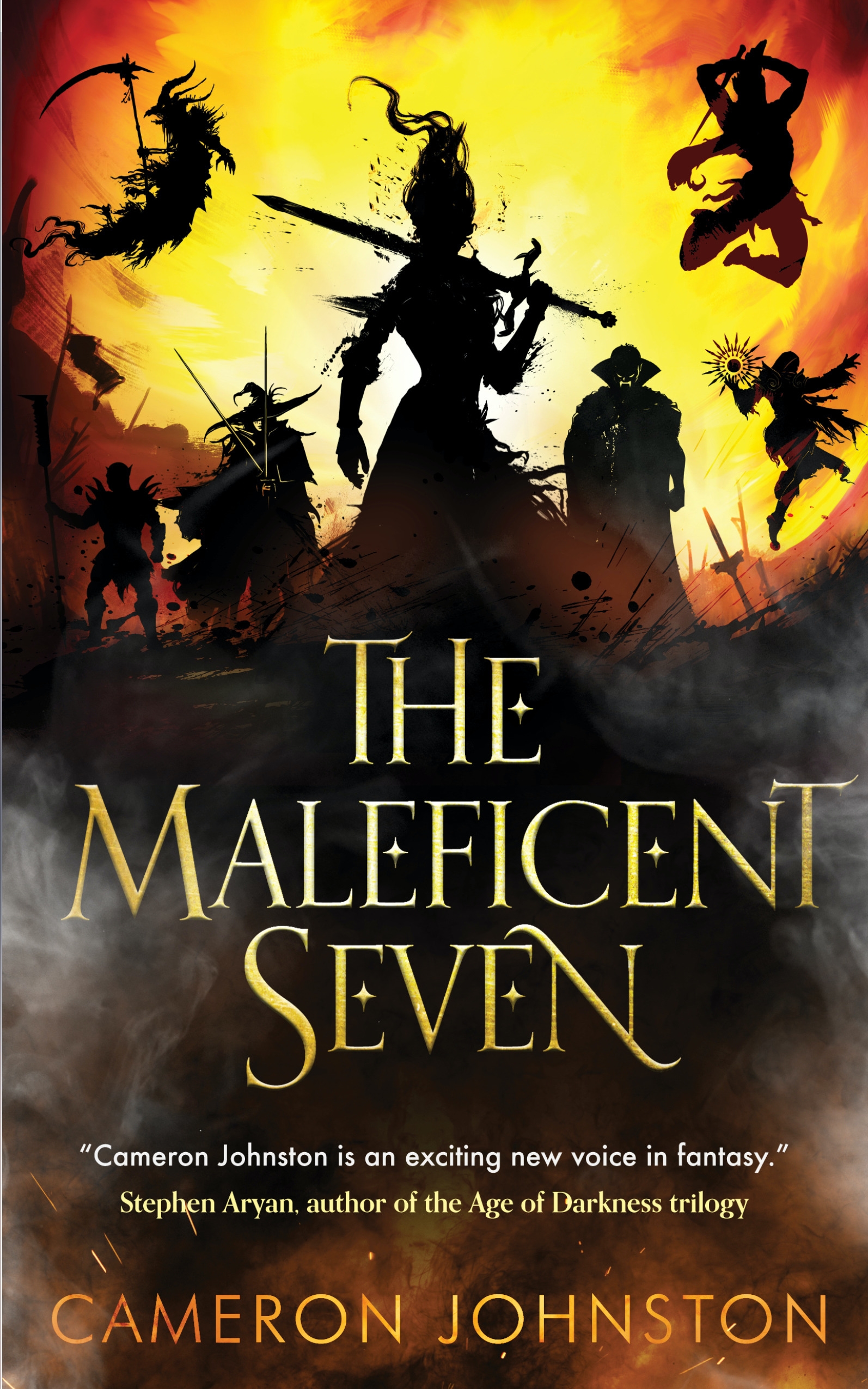
The Maleficent Seven by Cameron Johnston

The Maleficent Seven Cover 2

Publisher: Angry Robot (Trade Paperback – 10 August 2021)

Series: Standalone

Length: 416 pages

My Rating: 5 out of 5 stars

Amazon

One of the fastest rising authors of dark fantasy fiction, Cameron Johnston, returns with his most entertaining book yet, the outstanding and epic novel, The Maleficent Seven.

Cameron Johnston is a great author who I was lucky to come across a few years ago with his debut novel, The Traitor God.  Bought on a whim because it sounded cool, The Traitor God ended up being one of my favourite fantasy books of the year thanks to its excellent revenge storyline.  The Traitor God was such an epic read and I ended up grabbing the intriguing sequel the following year, God of Broken ThingsGod of Broken Things (one of my favourite books of 2019) proved to be an outstanding sequel, and it ensured that I would be keeping an eye out for more of Johnston’s work.  This included his 2021 novel, The Maleficent Seven, which had an awesome plot behind it.  I honestly have been meaning to read The Maleficent Seven for ages but could never fit it into my schedule.  That was until last year, when I managed to power through the entire book in a single plane ride.  The Maleficent Seven ended up being a pretty darn exceptional novel that I wish I read a hell of a lot sooner.

It is a dangerous time in the lands of Essoran, as the Lucent Empire, a nation of apparent holiness and light, continuously expands, sweeping away all opposition and either burning or converting the survivors to their faith.  Despite their apparent benevolence, the Lucent Empire has a dark side dedicated to destroying all magic, heretics, and anything it deems evil through fire, blood and death.  The final stage of their invasion is set, but to proceed they first need to cross through the mountain road, which exits at the small town of Tarnbrooke.  All looks lost for the inhabitants of Tarnbrooke, who are likely to burn in the Lucent Empire’s light, until an unlikely figure appears to lead them.

Forty years ago, the dread demonologist Black Herron led a black horde of bloodthirsty soldiers, dark creatures and monsters on a deadly campaign that rocked all Essoran.  Total conquest of the realm looked certain, until she suddenly disappeared the eve of the final battle.  Without the will of their leader to hold them together, the army fell to infighting allowing their enemies to prevail.  No one knew what happened to Black Herron, until she reappears in Tarnbrooke, having lived there in disguises for decades.

Determined to stop the Lucent Empire and their fanatical leader no matter what, Black Herron takes over the town and prepares it for siege.  But even a being as powerful as Black Herron is unable to stop an entire divinely infused army by herself.  Instead, Herron seeks to bring together the six deadly captains of her army, whose skills and ferocity helped her to nearly conquer the world.  Together, this assortment of dangerous beings, including a vampire, a necromancer, an orc chieftain, a war god, a pirate queen and a deranged alchemist, might stand a chance against the coming storm.  But first they need to learn to work together once more, especially as each of them have a very different reasons to fight with Black Herron again.

The Maleficent Seven is a powerful, captivating and fantastically over-the-top novel that showcases Cameron Johnston’s impressive writing skill and ability to bring together great characters with dark fantasy settings.

Now, as you can probably guess from the name, The Maleficent Seven is a dark fantasy take on classic films like The Magnificent Seven and its predecessor, Seven Samurai.  Johnston sets the scenario perfectly, first introducing protagonist Black Herron and her previous evil horde, which disbands in the starting chapter.  From there, we get a time skip and are introduced to the book’s antagonists in the form of the Lucent Empire, their divinely empowered inquisitors and their leader, the Falcon Prince.  Their initial actions are enough to paint them as dangerous religious zealots who use their divine light and apparent holiness as a shield for their dark ambitions.  Their quest leads them on the road to Tarnbrooke, where the elderly Black Herron waits for them, having decided to make a stand and bring together her six former captains.

The first half of the book is dedicated to recruiting the six captains, who have scattered across the world.  All evil or deadly figures, none of them particularly wants to fight another war, but each are drawn back for different reasons, including family, pride, revenge and more.  Johnston does a good job of breaking up the recruitment process throughout the early chapters, and each of the revealed captains turn out to be crazier than the last, enhancing your anticipation for how they are going to act in the coming battles.  At the same time, you get to know the Lucent Empire, as they send agents against the captains, trying to eliminate the danger they pose.  Johnston lays down some very solid groundwork in this first half of the book, and you quickly get drawn to each of the seven main characters for various reasons.  There are a great range of character arcs spread out amongst these unlikely protagonists, and while a couple of them are purposely irredeemable, the rest prove to be surprisingly likeable and complex.  Johnston also takes the time to build up the antagonist, showcasing just how sinister they truly are, while also providing some slightly predictable revelations about their leader.

The second half of the book is dedicated to the battle for Tarnbrooke, which after seeing how crazy the first half of The Maleficent Seven is, you know is going to be good.  There is some good additional setup once the captains arrive in town, with the building of siegeworks, the training of the townsfolk, and other unusual preparations, all of which is reminiscent of the films the book is an homage to.  Johnston also builds up some additional character interactions that I really enjoyed, as certain townsfolk become connected to different saviours and there is some good follow-up regarding the protagonist’s prior adventures.  The resulting siege is everything you could hope for and more.  I am a huge fan of sieges in fiction (check out my previous list on the subject) and The Maleficent Seven is a particularly good example of an epic siege, especially as Johnston goes very over-the-top when it comes to the different weapons and methods the defenders employ.  Everything from vampiric conversion, exploding pigs and drugged townspeople are used to hold the line against the enemy in several brilliant and brutal fight sequences, while a major sea battle simultaneously occurs, featuring, amongst other combatants, a giant kraken.  All the fighting is fierce, desperate, and pretty damn bleak, while the characters each go through their own intriguing and powerful journeys.  I honestly was enthralled once the main fighting started, and Johnston really did not let up until the end.

The final sequence of the main fight turns into an impressive and extremely horrific brawl for survival as the protagonists fight against increasingly desperate odds.  There are also several betrayals as certain telegraphed plots from the evil protagonists come to fruition, and everyone fights to survive and come out on top.  You will be a bit unprepared for who lives and who dies during the final few chapters as Johnston loads up some fantastic twists and cool revelations that constantly leave you guessing.  Even when you’re sure you know who is going to survive, Johnston swiftly changes everything around with a few hilariously ironic reveals, as well as some more tragic deaths.  I liked how Johnston imbued the story with a certain level of hope towards the end, even if that was somewhat overshadowed by the carnage surrounding it.  There were also some darker moments in the conclusion, as certain characters realise just how damned they truly are.  Throw in a final great twist that really tied together a hidden motivation from the very start, and Johnston ends The Maleficent Seven on the perfect note for the reader.

Johnston did a remarkable job with this awesome book, and I loved how dark, powerful, and compelling The Maleficent Seven turned out to be.  Thanks to the unique array of characters, insane fight sequences and entertaining twists, The Maleficent Seven will prove really appealing to a wide array of readers, especially as Johnston got the right balance of action, tragedy, and humour throughout the entire read.  I especially loved how well the author flipped the established concept of heroes defending a town from villains on its head with the inclusion of seven fantasy supervillains leading the charge against a holy army.  The clever reveal that the apparently good warriors are far more sinister than the literal monsters is so well handled, and it was impressive to see a classic idea so well refreshed.  Throw in some excellent world building, an interesting collection of fantasy creatures and the sheer overwhelming chaos of a desperate siege, and there is something in The Maleficent Seven for all fantasy fans.

Something I really loved about The Maleficent Seven was the cool collection of characters who made up the key cast.  All the titular seven are very well represented throughout the book, and it proves very hard not to fall in love with each crazy member of the team; thanks to the narrative split, you get some intriguing insights into their motivations, actions, and history.

Of these characters, my favourite was probably Tiarnach, the fading war god who has fallen on hard times.  Thanks to the death of all his followers and his inability to fight against the Lucent Empire, Tiarnach starts the book off as a broken, drunken figure with barely any power left.  Joining Black Herron’s cause to get revenge and some form of redemption, Tiarnach becomes the defenders’ nominal drill instructor, trying to whip the townsfolk into a fighting force.  The connection Tiarnach forms with the townsfolk, his journey towards redemption, and the fact that he is one of the few characters without ulterior motivations, ensures that readers are drawn towards him.  He easily has one of the best, most tragic character arcs in the entire book, and I really enjoyed how Johnston utilised him.  The same can also be said for the legendary orc warrior, Amogg.  Amogg leaves her responsibilities behind to sate her desire for battle and alleviate her restlessness.  Thanks to her blunt and entertaining personality, Amogg was another character the reader connects to.  However, Johnston ensured that she became a true favourite when she begins to turn the women of Tarnsdale into an effective fighting force against their will.  Watching her empower and lead a band of fighting women into battle was very impressive, and her storyline was heartwarming and bleak in equal measures.

The other five characters each have their moment to shine.  The vampire, Lorimer Felle, was a suave and brutal figure whose inability to die, connection to his one loyal servant, and desire for destruction left a major impression.  Verena, the pirate queen, was also really good, although she kind of gets overshadowed by the other characters.  Jerak the alchemist was the most unhinged, and I loved how he ended up becoming more of a danger to his friends than his enemies thanks to his gruesome experiments.  Maeven, the necromancer, has one of the more complex story arcs in the book as she blurs the line between ambition, revenge and a desire for family.  While she fights alongside the others, her own need for vengeance and power leads her down a dark path, especially with her connections to the Lucent Empire’s leader.  Maeven’s entire story goes in some very dark directions, and I appreciated the dark note Johnston left it on.  Finally, the leader of the group, Black Herron, has a very interesting storyline that runs the gambit from dark queen to unlikely hero.  Johnston does a great job showcasing her rise and fall throughout the story, and the question of why she chose to abandon her conquest and her army is a fantastic part of the book.  All these protagonists are outstanding in their own way, and I loved how Johnston was able to weave together some compelling, entertaining, and occasionally sad storylines around such wonderfully outrageous figures.

Look, with a story this awesome there was no way I wasn’t going to love The Maleficent Seven, and I think my lengthy review above proves this point extremely well.  Cameron Johnston was on fire when he wrote his third full-length novel, and The Maleficent Seven proved to be a particularly intense, clever and impressive read.  Bringing together entertaining characters with insane violence amid a classic story scenario, The Maleficent Seven proved near impossible to put down and I loved every second I spent reading it.  A highly recommended read for all fans of dark fantasy, I cannot wait to see how Johnston’s next book (coming out later this year) turns out.

Amazon

Proven Guilty by Jim Butcher

Proven Guilty Cover

Publisher: Penguin Audio (Audiobook – 1 February 2006)

Series: Dresden Files – Book Eight

Length: 16 hours and 16 minutes

My Rating: 5 out of 5 stars

Amazon

Welcome back to my Throwback Thursday series, where I republish old reviews, review books I have read before or review older books I have only just had a chance to read.  This week I dive into another awesome entry in the exceptional Dresden Files series by Jim Butcher with Proven Guilty.

I have been having an outstanding time reading Butcher’s iconic and fantastic Dresden Files books over the last couple of years.  One of the absolute best urban fantasy series ever written, the Dresden Files follows titular wizard and supernatural protector, Harry Dresden, as he investigates a series of crimes and magical conspiracies in Chicago.  I got into these books back in 2020 and have been slowly getting through the series from the start, with most of the entries getting five-star reviews from me as I go.  This includes the outstanding novels, Storm Front, Fool Moon, Grave Peril, Summer Knight, Death Masks, Blood Rites, Dead Beat and Battle Ground, as well as the novella The Law.  I had so much fun reading the previous novels that I just had to dive into the eighth book this week with Proven Guilty, which proved to be another amazing read.

A year after officially becoming a Warden for the White Council of Wizards, Harry Dresden is chafing under his new role, especially the part that forces him to punish young practitioners with no real knowledge of the magic they wield.  However, he must put aside his concerns when he is warned about black magic being used in Chicago, forcing him to start a new investigation into the city’s magical underbelly.

His investigations soon lead him to a seemingly normal horror movie convention where mysterious and sinister events are taking place.  Brought in by one of the convention’s staff, Molly Carpenter, the daughter of holy knight Michael Carpenter, Dresden soon finds himself attempting to stem a series of supernatural attacks against innocent humans.  The dangerous perpetrators all appear in the form of classic horror movie monsters, and their deadly attacks soon leaves a trail of mayhem across the convention.  Forced to circumnavigate the police and other dangers waiting for him, Dresden works to hold back the dark supernatural tide, only to discover dangerous secrets that shock him to his core.

Working with his faithful dog, his vampiric half-brother, a cop with her own problems, and the most dangerous mother on the planet, Dresden attempts to right all the wrongs in front of him.  But to succeed, he’ll need to confront the forces of the Nevernever, a rogue White Court Vampire, dangerous creatures forged from fear, and even the White Council itself.  Can Dresden succeed or will his actions lead to even more suffering for those he cares about the most?

Butcher keeps his epic Dresden Files going in an amazing way with this eighth book, and I had an outstanding time reading Proven Guilty.  Featuring an elaborate plot that effortless combines mystery and supernatural elements in modern day Chicago, while also serving as a key entry in the wider Dresden Files, Proven Guilty is a powerful and deeply captivating read that I had a great time listening to.  I have so much love for this fantastic series, and Proven Guilty got another five-star rating from me as a result.

Proven Guilty has an outstanding story to it which sees the protagonist go up against a cohort of deadly enemies, some of which are disguised as horror movies creatures.  I will admit that the start of the book was a tad slow, and I honestly thought that this was going to be more of a filler novel than anything else.  However, it soon develops into an excellent story that loads up a cool mystery with some exciting encounters, deep emotional moments, strong character development, and the continuation or creation of several major storylines for the entire series.  A conflicted Dresden is dragged into everything when Molly Carpenter requests his help, and he soon finds himself looking into the mysterious events at the horror convention.  The main story goes in some very interesting directions, and I liked the great combination of investigation and fantasy elements as it continued, while several compelling side stories see Dresden facing even more danger and mystery.  Several of these storylines came together quite nicely as the book continued, and Dresden soon identifies the main perpetrator of the threat, as well as other forces taking advantage of their actions.  The impact of the big reveal of who was responsible wasn’t as significant for me, as I’d had that spoiled in advance, but it was still well crafted, especially the motivations behind it.  However, the real meat of the story revolves around darker designs as unknown forces manipulate Dresden and his allies to do their bidding.  This results in some very impressive scenes, including a massive magic battle in the Fae realm, and I loved how everything came together while also leaving some big mysteries open for later in the series.  I also really enjoyed the complex wrap-up chapters, which saw Dresden go up against the White Council in some very intense scenes, as well as providing some excellent emotional resolutions that I deeply appreciated.  Everything comes together perfectly, and this proves to be a fantastic new addition to already impressive series.

Butcher applies his usual excellent writing style to Proven Guilty, which always works well to convey his complex narratives.  Like the rest of the series, Proven Guilty moves at a swift pace, quickly taking readers from one intriguing scene to the next, all of which is great in its own particular way, whether it be character interactions, plot developments, or lore downloads.  At the same time, readers are treated to a great blend of fantasy elements, emotional moments, and a compelling investigation storyline, all of which is overlayed with a fun and signature bout of humour and snark, often directed from the protagonist.  You really get drawn into Proven Guilty as a result, and I always love Butcher’s approach to the urban fantasy style, especially as both his unique fantasy world and the cool investigative story arcs work so well together.  Like the rest of the Dresden Files books, Proven Guilty can be read as a standalone novel, although Butcher is juggling a few ongoing storylines and character arcs that had been built up in the previous entries.  While the author always does a good job of recapping key events and reintroducing key characters, I really do feel that at this point in the series readers need to have enjoyed some of the previous books to get the full emotional and story impact Butcher is conveying.  I do really need to critique one part of Butcher’s writing style for Grave Peril though, particularly how he oversexualised a teenage female character.  The Dresden Files have always featured over-the-top descriptions of women, and while Butcher has gotten better about them as the series continues, he backslid here in Proven Guilty when it came to this character.  While I do get what he was trying to do from a literary perspective, i.e. showing the vulnerability and confusion of teenagers, and how they act out a result, it honestly felt really icky to me, and I think the book would have been better off without it.  Apart from that though, Proven Guilty is very well written, and I had a wonderful time getting through it.

I always really enjoy how well Butcher manages to utilise cool and complex fantasy elements into his narratives and Proven Guilty has some outstanding examples of this.  Thanks to Dresden’s promotion to Warden in the last book, he is now a very prominent member of the White Council, and this provides him some bigger insights into the council and its members.  This results in some great political scenes, as well as a deeper dive into the council’s law enforcement wing, which exists to hunt down and punish magic users who break the laws of magic.  I found this to be pretty interesting and compelling, especially as the council’s determination to enforce the laws leads to some dark moments in the plot, and I liked the clever comparisons between them and the Chicago PD.  The case also sees a return of the Fae Summer and Winter Courts, both of which have been featured heavily in the past, and Butcher has a lot of fun revisiting both and expanding the lore surrounding them.  One of the most pivotal moments of the plot sees Dresden and his allies invading one of the most significant locations of the Winter Court, and I loved the carnage that resulted.  As always, the various scenes of magical battle and encounters are a great highlight of Proven Guilty, and Butcher has a real talent for making the featured spells feel intense and spectacular.  I also rather enjoyed the use of a horror convention (SplatterCon!!!) as a major background for the plot, especially as it allowed for a menagerie of movie monsters to emerge and attack the convention goers.  There were a ton of fun homages here as a result, and it was very entertaining to see Dresden face off against several iconic monsters in some great scenes.  These fantasy elements merge with the rest of the plot extremely well, and it was fun to see Dresden dive through the worst parts of his world to save the day.

One of the major highlights of all the Dresden Files novels in the fantastic cohort of characters that Butcher features and Proven Guilty is no exception to this as the author has utilised another fantastic group of figures, each of whom brings something emotional or compelling to the plot.  The most prominent of these is naturally series protagonist Harry Dresden, who serves as the book’s main voice.  Cocky, confident, emotionally damaged and highly conflicted, Dresden makes a great focal character and I have deeply enjoyed seeing his personal journey throughout this series.  While still responsible for most of the book’s humour thanks to his jokes and fun observations about the other characters and all things magic, Dresden is decidedly a little more serious in Proven Guilty, especially as he is still recovering from some of the traumas of the previous books, including his injuries, his possession by a fallen angel, emotional conflicts with those closest to him, and the guilt over being forced to kill two people in his previous adventure.  This provides a noticeable change to Dresden in this book, and I felt that Butcher did a wonderful job showcasing this in several emotionally charged confrontations and scenes.  At the same time, Dresden is also dealing with his misapprehensions for working for the White Council as a Warden, especially as he is having trouble believing in all their rules.  This leads him into even greater conflict as the book continues, especially when he finds out who is truly responsible for the latest evils he uncovers.  All these personal issues and traumas help to provide a deep emotional layer to the plot, and it was one that Butcher masterfully addressed, providing some compelling and satisfying resolutions to several of them.  I particularly liked how Dresden’s story is coming full circle in some ways, and it will be interesting to see how that plays out in the future.

Aside from Dresden, there are a ton of other great characters featured through Proven Guilty who add their own flavour to the plot.  This includes an excellent range of new figures and well-established supporting characters, and I liked the mixture of storylines and character arcs that emerged.  Dresden’s usual allies, Karrin Murphy and Thomas Raith are very well utilised again here, both as supporting characters for Dresden’s adventures, and as individuals with considerable personal and professional issues to deal with.  Molly Carpenter, a minor figure from the previous novels, returns in a big way here and serves as an intriguing new addition to the plot.  While I have some major concerns about Molly’s portrayal at times, her storyline had some great depth and it will be interesting to see how that develops in the future.  This use of Molly also allowed a great focus on her mother Charity, another minor character from the previous novels, who gets a fantastic showing in Proven Guilty, especially as she shows herself to be an absolute badass.  Throw in Harry’s giant dog Mouse, who is one of my favourite characters in this series now, and differing voices of Dresden’s two supernatural advisors, Bob and Lasciel, the angel and demon on his magical shoulder (both literally and figuratively), and you have a pretty outstanding cast here, and one that I always have a great time following.

As always with one of the Dresden Files novels I really need to highlight the exceptional and awesome audiobook versions which are my favourite way to enjoy this amazing books.  The format really lends itself to the intense action, fast-paced storytelling and great characters contained within Proven Guilty, and I really found myself powering through this great audiobook in no time at all.  With a run time of over 16 hours, this is one of the longer Dresden Files audiobooks, but I still managed to knock it off in a few days, as I never got sick of listening to it.  The main reason for this is the outstanding narration of actor James Marsters, who has lent his powerful voice to the entire Dresden Files series.  Marsters effortlessly dives into the story each time, and he brings some real gravitas and feeling to the plot and characters.  The various voices he produces does each member of the complex cast great justice and I love how well he portrays their feelings, interactions, and personalities.  This is mostly easily seen in main character Harry Dresden, who is suffering from a lot of different abuses by this point in the series.  Marsters really does such a great job showcasing his various emotional and personal issues and I am always so impressed with how the narrator just gets this complicated character and brings that out with his voice.  This great performance does so much to enhance the experience of listening to Proven Guilty on audiobook and I cannot recommend this format enough to people interested in checking out this cool Dresden Files entry.

Unsurprisingly, I had an outstanding time with Proven Guilty and it proved to be an excellent continuation of Jim Butcher’s epic Dresden Files series.  Featuring another brilliant story, some fantastic character growth, and even more magic and mayhem, Proven Guilty was a ton of fun to get through, and I have so much love for this series.  Indeed, I had such an incredible time with Proven Guilty that I have already started listening to the next book in the series, White Night, which I will hopefully review next week. I honestly can’t give Proven Guilty a higher compliment than that, and this is a pretty damn amazing read.

Amazon

Throwback Thursday – Dead Beat by Jim Butcher

Dead Beat Cover

Publisher: Penguin Audio (Audiobook – 3 May 2005)

Series: Dresden Files – Book Seven

Length: 15 hours and 7 minutes

My Rating: 5 out of 5 stars

Amazon

Welcome back to my Throwback Thursday series, where I republish old reviews, review books I have read before or review older books I have only just had a chance to read.  For this latest review I dive back into the epic Dresden Files series by Jim Butcher with the seventh entry, Dead Beat.

Over the last couple of years, I’ve had a ton of fun finally getting into the iconic Dresden Files books by legendary author Jim Butcher.  Generally considered one of the very best urban fantasy series, the Dresden Files are a deeply captivating series that follows Chicago’s resident wizard, Harry Dresden, as he investigates a series of mystical cases throughout the city, often resulting in epic moments loaded with magic.  I started this series with the latest book, Battle Ground (one of my favourite books and audiobooks of 2020), and then went back to the start to experience the series from the beginning.  So far, I have managed to read Storm Front, Fool Moon, Grave Peril, Summer Knight, Death Masks and Blood Rites, as well as last year’s novella, The Law.  All these books have been extremely good in their own way, and I have loved the elaborate stories each of them contained.  As such, when I was in the mood for something I was guaranteed to love this week, listening to the next Dresden Files book on my to-read list was an easy choice for me, with the seventh book, Dead Beat.

Harry Dresden, private wizard detective and magical protector of Chicago is always willing to help a person in need no matter the cost.  But even he is unprepared for how far he’ll have to go when an old and merciless enemy imperils one of the people closest to him.  The ancient vampire Mavra has evidence that could destroy his best friend, Karrin Murphy, and threatens to unleash it unless Dresden recovers a powerful book of magic written by the legendary, long-dead necromancer Kemmler.

With no choice but to find the book, Dresden begins his search around Chicago, attempting to discover any trace of its location.  However, his search soon leads him into conflict with a new dark power arriving in the city.  Three of Kemmler’s students have their eyes on the book and the rituals it contains, and they are willing to destroy everyone and anyone to get it, including each other, especially when the prize at stake is godhood.

Caught between the three warring necromancers and their minions, Dresden needs to find the book first to stop their dark ultimate ritual before it can decimate Chicago.  However, each of Kemmler’s students far outclasses him in terms of magical ability and ruthlessness, and with only limited allies to call upon, it looks like even Dresden will have trouble saving the day again.  To survive, he might have to a make a dark deal with an even more malevolent evil, one that that has the potential to damn him forever.

I don’t know how he does it, but every single one of Jim Butcher’s novels that I read is so damn addictive and epic that I always struggle to put it down.  Dead Beat was another outstanding entry in the Dresden Files series, and honestly it might be one of the best I have read so far.  I absolutely powered through its clever and elaborate story as I tried to get to the end, and everything about it was highly enjoyable and fun.  Dead Beat gets another easy five-star rating and I have so much love for how amazing this seventh entry in the series turned out.

Dead Beat has an amazing story to it that effortlessly drew me in with the cool combination of magic, character moments and investigative angles.  Starting off quickly with Dresden drafted into the search for a powerful magic book, the protagonist begins his new investigation, only to discover the dangerous necromancers waiting for them.  Dresden soon has deadly encounters with all three necromancers in Chicago searching for the book, as well as their various minions and associates, which results in some brilliant scenes.  Dead Beat continues by setting Dresden and his allies on a dark course as they simultaneously attempt to find the book and the full extent of the warring necromancer’s plans, while also fending off their attacks.  Dresden keeps getting confronted again and again by his foes, barely escaping each time while also learning more about what is to come.  At the same time, he is forced to deal with certain personal issues, including trauma, complicated relationships, and a literal demon in his head, tempting him with power and knowledge.  There are some great twists, dark moments and emotionally powerful scenes set up around the middle of the novel, and I loved how well Butcher laid out the storylines and hinted at some big moments to come. Everything leads up to an epic concluding final third of the book as Dresden makes some hard decisions and compromises to save the day.  The final confrontation with the bad guys is pretty damn awesome, especially as the protagonist, utilising his usual restraint and good judgment, unleashes a very monstrous response to the antagonist’s minions.  This entire narrative was enthralling from start to finish, and I cannot emphasise just how addictive and entertaining the entire story was.

Dead Beat featured Butcher’s usual excellent writing style which once again lent itself extremely well to the elaborate narrative he came up with.  The pacing of this book was constantly fast and exciting, which guarantees that the reader is always paying attention, especially as every page has either action, some intriguing bit of lore or history, or some intense and compelling character development.  Butcher also ensures that this latest novel has the right blend of great story elements to it, and I deeply enjoyed how the fantasy and mystery elements are well featured as the protagonist is forced to do detective work to get the answers.  All this is overlayed by a great smattering of humour, mostly from the funny protagonist, who approaches the dark events and villains with his usual cockiness and disrespect.  The use of a first-person perspective from Dresden is also quite effective, and I loved seeing events through his eyes, as it allows readers to fully grasp the mystery, while also showcasing the great character developments.  While Dead Beat can be read as a standalone read, especially as Butcher is good at quickly recapping events, at this point in the series readers will benefit from going back and reading the earlier Dresden Files books first.  Dead Beat proves to be a key entry in the larger series, with multiple major events occurring here, and there are a ton of references to the preceding books, including the return of several fantastic characters.  I really got a lot more out of Dead Beat’s story for having read the previous novels, especially as you get to see how much Dresden has been through in the lead up to this book.  Overall, this was a very well-written and impressive novel, and Butcher really ensured that his cool story came through perfectly.

As with the rest of the Dresden Files books, I was really impressed with the blend of fantasy and urban fiction elements in Dead Beat, especially as Butcher has come up with such an elaborate world to set his stories in.  The author adds some cool new elements into his complex world throughout Dead Beat, as Dresden is forced to deal with a whole new branch of dark magic, necromancy.  Necromancy, or the control over the dead, is always a great villainous power in fantasy fiction, and Butcher makes excellent use of it in this book, with three rival necromancers vying for power.  Each uses a different form of necromantic magic in battle, and this results in some outstanding scenes where Dresden is forced to confront them.  The resulting magical mayhem is pretty epic, and Butcher’s unique depiction of zombies was both fun and a little scary.  This intriguing new form of magic ensured that Dead Beat really stood out, and I appreciated how Butcher turned it on its head towards the end when Dresden gets creative.  These excellent portrayals of magic fit within the fantastic setting of modern-day Chicago and it is always fun to see the elaborate balance of magical and mundane features that Butcher has set up within the city.  These great fantasy inclusions blend well with the character work and mystery elements of Dead Beat, and I look forward to seeing how Butcher further expands it in future books.

One thing that I felt Butcher did particularly well in Dead Beat was how he portrayed his brilliant cast of characters.  The Dresden Files always contain great protagonists and villains, but this novel had some of the best portrayals of them to date.  This is especially true for series protagonist and point-of-view character Harry Dresden, who had a great outing here.  Dresden has always been a damaged and conflicted figure in the series, but recent traumas are really weighing him down in Dead Beat as he struggles with a terrible hand injury, as well as the malign influence of the fallen angel bound to him, Lasciel.  The protagonist spends most of the book trying to deal with the influence of Lasciel who subtly manipulates him in many ways, tempting him with power or a solution to his many problems.  Each damaging and desperate encounter that Dresden survives in Dead Beat forces him to reconsider the wisdom of refusing her help, and the subsequent internal battles produce some of the most intense and compelling scenes in the novel.  This continued temptation and manipulation alters Dresden’s personality at times, and it was interesting to see how his allies and friends treat him, especially as Dresden begins to understand the different ways that members of the magical community view him.  Of course, Dresden hides most of his internal pain with his usual hilarious wit and humour, and his irreverent opinions, funny observations, and sheer ability to annoy anyone he encounters, results in most of the book’s humour and over-the-top moments.  Throw in other concerns, including complex relationships, unrequited love, and the character’s desire to prove himself and do the right thing, and this was some of the best character work that Butcher has ever done around his main protagonist.

On top of Dresden, Butcher also features a brilliant cast of support characters and villains that really help to enliven the book.  Dead Beat features a mixture of established supporting characters, as well as several great new ones, each of whom get some excellent moments to show off throughout the book.  I particularly enjoyed how well Butcher utilised the character of Waldo Butters in Dead Beat.  Butters, a kooky and big-hearted mortal medical examiner who had minor roles in a previous novel, is thrust into the limelight during this book, becoming a major ally to Dresden.  Butcher weaves some great storylines around him as he simultaneously finds his courage and begins to understand the magical world that keeps trying to kill him.  Butters proves to be a great supporting figure to Dresden in this book, and I loved their amusing team-up and developing friendship.  There is also a couple of great hints at some of the future storylines involving Butters, and I look forward to seeing more of him.

Aside from Butters, I also enjoyed the appearance of Dresden’s half-brother, the vampire Thomas Raith, who has been crashing at Dresden’s place.  Butcher paints a fun brotherly relationship between the two in this novel, which was quite entertaining at times.  However, the more humorous elements of their relationship are often overshadowed by the deep pain within Raith as he tries to overcome the emotional damage done to him in the previous novel.  I also loved learning more about Dresden’s skull spirit companion, Bob, in Dead Beat, and his dark history proves to be quite fascinating, especially as his former nature contrasts substantially with his usually entertaining persona.  The three necromantic villains, Grevane, the Corpsetaker and Cowl, each bring a certain level of sinisterness to the table, and they prove to be exceptional antagonists in their own way.  Finally, I must highlight the inclusion of Dresden’s new dog, Mouse, who has an awesome outing in Dead Beat.  A young and growing gentle giant, Mouse is a fun animal companion to Dresden and his allies, and I look forward to seeing more of his hijinks in the future.  Honestly, the entire cast of Dead Beat was pretty damn exceptional, and their powerful interactions and internal issues, added so much to the impact and power of this awesome novel.

As with all the Dresden Files novels, I chose to listen to Dead Beat on audiobook, which was an exceptional experience as the audio format helps to enhance the great characters and magical action.  Coming in at just over 15 hours, this is a substantial audiobook, however, I manage to knock it out in a few days, especially once I got caught up in fantastic story.  Naturally, the best thing about the Dead Beat audiobook is the return of actor James Marsters as the narrator.  Marsters, who is one of my favourite audiobook narrators thanks to his work on this series, did another brilliant job in Dead Beat and I have so much love for his outstanding performance.  After lending his voice to all the previous Dresden Files novels, Marsters has all the characters down, and each figure is given a fitting and powerful voice that carries through from book to book.  I particularly appreciated his portrayal of main character Harry Dresden, and Marsters perfectly captures the protagonist’s deep emotions and cocky demeaner, ensuring that you are both drawn to his pain and entertained by his antics.  In addition to the excellent voices, Marsters also has some noticeable and contagious enthusiasm in his narration, especially when it comes to the magical battles, and you can really feel his passion and excitement in parts of the story, especially when he loudly shouts out Dresden’s magical spells.  This narration from Marsters is so damn good, and it ensures that I had an exceptional time with Dead Beat’s audiobook, while is the absolute best way to enjoy a Dresden File novel.

In the seventh entry in his iconic Dresden Files series, Dead Beat, Jim Butcher has produced another exceptional read and one that I cannot recommended enough.  Featuring a particularly impressive and captivating narration, cool magical inclusions, and some of the best character work Butcher has ever done, Dead Beat is one the best Dresden Files novels I have read so far, and I loved everything about it.  This was such an amazing book, and I am very much intending to read several more entries in this outstanding series later this year.

Amazon

Throwback Thursday: Warhammer: Vampireslayer by William King

Vampireslayer Cover 2

Publisher: Black Library (Audiobook – August 2021)

Series: Gotrek and Felix – Book Six

Length: 11 hours and 13 minutes

My Rating: 4.75 out of 5 stars

Amazon     Book Depository

Welcome back to my Throwback Thursday series, where I republish old reviews, review books I have read before or review older books I have only just had a chance to read.  For my latest Throwback Thursday I continue my recent obsession with Warhammer Fantasy fiction by checking out another entry in the iconic Gotrek and Felix series by William King, Vampireslayer.

I have been on a real roll with looking at the cool fiction associated with the now defunct Warhammer Fantasy tabletop game over the last few weeks, including the fantastic novels Runefang and Van Horstman.  However, few Warhammer Fantasy books have grabbed my attention or interest more than the Gotrek and Felix series, which serves as one of the central pillars of Warhammer fiction.  The Gotrek and Felix books, which were originally written by William King, follow the titular characters, dwarf slayer Gotrek Gurnisson and his sworn human companion Felix Jaeger, as they journey around the Warhammer Fantasy realm, finding monsters to fight and kill, all in the hope of finding a worthy death for Gotrek.  This is an awesome and unbelievably exciting fantasy series that take the reader to some of the darkest parts of the Warhammer Fantasy world and sees them face off against all manner of crazy foes.

I have had an absolute blast getting through the Gotrek and Felix books over the last year, as there have been some cracking reads in there.  The previous books, Trollslayer, Skavenslayer, Daemonslayer, Dragonslayer and Beastslayer, have all had their own unique charm, and all of them have been well written and compelling reads.  Vampireslayer is the sixth book in the series, and as the name suggests, it pits Gotrek, Felix and their allies against one of the most dangerous creatures in the Warhammer canon, an ancient and deadly vampire count.

Following their victory at the siege of Praag, Gotrek, Felix and their surviving allies, have finally been able to relax after a never-ending series of battles. However, the ever-restless Gotrek is still determined to find a worthy death to fulfil his suicidal oath, and Felix knows it is only a matter of time before they journey out to face the rising hordes of Chaos that are building around the realms of man.  But before Gotrek and Felix can head out, a new evil rears its head; one that is far more cunning and ancient than anything they have faced before.

After accepting a job from a wealthy Praag nobleman, Gotrek and Felix find themselves investigating a mysterious man who is attempting to steal one of their client’s treasured artifacts.  But the closer they look, the more apparent it becomes that their target is no ordinary man, but a powerful ancient vampire named Adolophus Krieger, who has been stalking the streets of Praag, feasting on the innocent.  Determined to slay this beast, Gotrek and Felix’s confrontation goes poorly, when the vampire outsmarts them, steals the artifact and takes their companion, Ulrika Magdova, hostage.

Determined to save Ulrika and get their revenge on their foe, Gotrek and Felix, as well as their allies, Snorri Nosebiter, Max Schreiber and Ulrika’s father, Ivan Straghov, pursue the vampire lord.  To kill Krieger, they will have to travel to one of the most dangerous places in the Old World, the haunted lands of Sylvania.  Controlled by the Vampire Counts for generations, Sylvania is a wicked place where the dead never rest, and dark creatures lurk around every corner.  Worse, their foe is powered by an ancient artefact forged by Nagash and has designs on becoming the supreme vampire ruler, leading them in a new war against the living.  With the odds stacked against them, Gotrek, Felix and their companions must dig deep if they are to kill Krieger, rescue Ulrika and save the world.  But after spending time trapped with the vampire, can Ulrika truly be saved?

King once again shows why his Gotrek and Felix books were the defining Warhammer Fantasy series with this epic and fast-paced read.  Vampireslayer is easily one of the stronger entries in the series and takes its distinctive protagonists on an intense and captivating adventure that I deeply enjoyed.

Vampireslayer had an amazing fantasy narrative, and I think this was one of King’s more impressive and enjoyable stories.  Taking off right after Beastslayer, the initial story sees Gotrek, Felix and their allies still at the city of Praag, planning out their next adventures.  They quickly find themselves dragged into another adventure when a distant relative of Ulrika reaches out to them for help with a mysterious threat.  This initial part of the book was rather interesting, and not only does it have some great follow-ups from the previous entry in the series but it also sets up the narrative and the current characters really well.  There is a fantastic cat-and-mouse game going on in the early stages of the novel, as the protagonists attempt to discern the new evil they are going up against, while their vampiric assailant, Adolophus Krieger, puts his plans into motion.  Following the first encounter between the heroes and the vampire, which is set up and executed to drive up anticipation for later interactions, Krieger escapes and the protagonists are forced into a deadly chase across the world.

The rest of the novel is primarily set in the dread realm of Sylvania, and sees the protagonists chase after the vampire and his kidnapped victim.  This second part of the book is filled with some fun and exciting classic horror elements as the protagonists go up against a variety of foes from the vampire count’s army.  There is a lot of great action, fantastic chases, and some substantial character development occurring during this part of the novel, as the author brings together many of the threads from earlier in Vampireslayer, while also introducing some intriguing new supporting characters.  King makes particularly good use of multiple character perspectives throughout this part of the book, and I loved seeing the conflicted thoughts of the main protagonists (minus Gotrek as usual), as well as the many plots of the villain and his new minion.  This all leads up to the big confrontation between the protagonists and their foe at the legendary Drakenhof Castle, as the heroes face off against an army of the undead and the vampire himself.  The action flows thick and fast here, and King pulls no punches, showing the brutal and dark nature of the Warhammer Fantasy universe.  I did think that the final confrontation was a bit rushed, with the anticipated battle against Krieger lasting only a short while, but it was pretty fun to see.  There are a couple of good tragic moments in this conclusion, as well as some interesting developments for some long-running supporting characters, and King brings everything to a good close as a result.

I think that one of the things that made this story particularly enjoyable was that it was a lot more focused than some of the other books in the series.  This was mainly because it was the first book since Skavenslayer not to feature a sub-story that focused on recurring villain, Grey Seer Thanquol.  While Thanquol’s perspective was good for Skavenslayer, its use in the following novels, while usually very fun and entertaining, seemed a bit unnecessary and often affected the pacing or stole the impact away from the book’s actually antagonists.  This became more and more apparent in Dragonslayer and Beastslayer, especially when Thanquol’s actions rarely had any impact on the main plot.  As such, not having a Thanquol focused side story in Vampireslayer was a bit of a blessing, and it really increased the impact of the remaining storylines.  It also ensured that the parts of the book told from Krieger’s perspective really pop, as he was the only villain you could focus on.  I had a brilliant time with this impressive story and it ended up being an excellent adventure to follow.

Vampireslayer proved to be a pretty awesome entry to the wider Warhammer Fantasy universe, and I loved the cool details and references that King added in.  Like most of the books in the Gotrek and Felix saga, Vampireslayer can be read as a standalone novel (probably more so than the last three books in the series), and very little pre-knowledge about the Warhammer Fantasy or the previous books in the series is required to enjoy this excellent book.  King does a great job of once again introducing the key elements, recurring characters, and wider evils of this universe, ensuring that new readers get the information they need without making it too repetitive or boring for established fans.

One of the things that makes Vampireslayer standout a little more from some of the recent entries in the series is the move away from Chaos focused opponents and instead brings in a new faction from the universe in the form of a vampire and his undead hordes.  This is a fantastic change of pace, and I rather enjoyed seeing one of the more compelling factions from the game, even though I have bad memories of facing my brother’s Vampire Counts army.  King does a brilliant job diving into the lore and history of vampires and the general undead in the Warhammer universe, and the protagonists get a good crash course on them, which new readers will deeply appreciate.  I loved seeing a vampire antagonist in this novel, especially as it is one of the classic Vampire Counts types (a Von Carstein vampire).  This vampire has a lot of the classic European elements associated with Dracula, and it was fun to see the protagonist deal with this sort of creature, especially as Krieger takes the time to taunt them in a way they’ve never dealt with before.  King also adds in several of cool units from the Vampire Counts book, and it was pretty fun to see them in action in some brilliant fight scenes.  I also deeply enjoyed the dark setting of Sylvania, where much of the story takes place.  Sylvania, a Warhammer realm based deeply on Transylvania and ruled over by vampires, has always captured my imagination and it was fun to see it used in Vampireslayer.  You really get the sense of fear and despair surrounding the countryside, and all the locals, many of whom are just a step away from becoming some form of creature, are a depressing and scared group.  Watching the characters attempt to traverse this land was really entertaining, and I think all these awesome Warhammer Fantasy elements helped to make this great story even more impressive.

I also found some of the character work in Vampireslayer to be pretty intriguing, as King examines several great characters in this book.  The central two characters are naturally Gotrex and Felix, although not a great deal of character development went towards them in this book.  Gotrex is his usual gruff, murderous and unreadable self, who is essentially shown as an unkillable beast at this point, and you really don’t get much more from him, especially as Gotrex’s perspective is deliberately not shown.  Felix also doesn’t get much growth in this book, although he does serve as a primary narrator, recording and observing the events of the book.  Despite this lack of growth, Felix is a great everyman character to follow and it is really entertaining to see his quite reasonable reaction to facing off against the evils that gravitate towards Gotrek.

A large amount of focus went to the supporting characters of Max Schreiber and Ulrika Magdova, who have been major parts of the series since Daemonslayer.  The attention on both has been growing substantially through the last couple of books, especially in Beastslayer, and they had a massive presence in Vampireslayer.  Max, the team’s wizard, is pushed to the brink in this book after investigating a dangerous magical artefact and having his companion Ulrika kidnapped.  Max, who has always had a crush on Ulrika (it was pretty creepy at first, but better now), becomes obsessed with saving her before its too late, and this drives him to some extremes in this book.  Ulrika, on the other hand, must survive the evil attentions of the book’s villain, especially once the vampire takes an unhealthy obsession with her.  I must admit that I have always found Ulrika to be a fairly annoying character (which isn’t great when she’s usually the only female figure in the books), however, this was one of her best appearances as she goes through a physical, mental and magical wringer.  Her attempts to resist the vampire are extremely powerful and her eventual fall to darkness is one of the more compelling and best written parts of the book.  This was an excellent outing for both these supporting characters, and it actually serves as a wonderful final hurrah, as I know they don’t appear in many books in the future.

The final character from Vampireslayer that I need to talk about is the book’s primary antagonist, the titular vampire Adolophus Krieger.  Krieger, a centuries-old creature with connections to Vlad von Carstein, serves as a brilliant villain for this adventure novel, especially as King takes a substantial amount of time to dive into his history, personality and motivations.  Rebelling against his sire and attempting to become the next vampiric master of the Old World, Krieger is shown as a complex and intense being with some major issues.  Not only does he have to temper his intense ambition, but he also finds himself mentally deteriorating towards savagery and must constantly fight for control as his afterlife’s goals comes to fruition.  King does a great job capturing this compelling figure throughout the book, and I particularly enjoyed his introductory chapters where his temper and inability to suffer fools is shown with gruesome results.  Krieger has a brilliant presence throughout the novel, and he was a great villain opposite Gotrek and Felix with his gentlemanly airs (he has a great comeback to a line from Snorri Nosebiter).  I deeply enjoyed all the outstanding characters in Vampireslayer, and King did some superb work with them throughout this novel.

After reading paperback versions of Dragonslayer and Beastslayer, I’ve finally gotten back onto the Gotrek and Felix audiobooks with Vampireslayer, which was a lot of fun to listen to.  The audiobook format did an amazing job of capturing the dark tone and fast-paced action of this intense novel, and I felt that listening to Vampireslayer on audiobook really helped me appreciate a lot of the book’s more interesting details.  With a runtime of just over 11 hours, this is an easy audiobook to power through, and I personally managed to get through it in a few days.  This great audiobook was further enhanced by the excellent narration of Jonathan Keeble, who has narrated most of the other Gotrek and Felix audiobooks.  Keeble has an amazing voice for this sort of novel, and I loved the fantastic way he was able to move the story along at a brilliant pace while also enhancing the book’s horror and action elements.  I particularly loved the range of excellent voices he attributes to the various characters, many of which are carried over from his previous audiobook experiences.  All the characters get some distinctive and very fitting tones here, which I think worked extremely well.  Examples of some of the best voices include Felix, whose calm voice of reason, serves as the narrator’s base tone for most of the story; Gotrek, who is given a gruff and menacing voice that contains all the character’s barely restrained anger and regret; and even the new vampire character, Adolophus Krieger, who is gifted a French/European accent to match the classic vampire vibe that goes with the Vampire Counts characters in Warhammer, and the character’s likely origins as a Bretonnian Knight.  This expert voice work was extremely good and I had a brilliant time listening to this version of Vampireslayer.  As such, this format comes highly recommended and it is usually one of the best ways to enjoy a cool Warhammer novel.

Vampireslayer was another epic entry in the fantastic and ultra-fun Gotrek and Felix series by William King.  Bringing in a great new opponent who pushes the protagonists to new lows, this was an excellent adventure novel that shows some of the best parts of the Warhammer Fantasy world.  With a captivating and fast-paced narrative, this was one of the better entries in the series and I had an outstanding time getting through Vampireslayer.  An awesome read for all Warhammer and general fantasy fans, especially on audiobook.  I love this series so much!

Vampireslayer Cover

Amazon     Book Depository