The Voyage of the Forgotten by Nick Martell

The Voyage of the Forgotten Cover

Publisher: Gollancz (Audiobook – 3 November 2022)

Series: The Legacy of the Mercenary King – Book Three

Length: 19 hour and 47 minutes

My Rating: 5 out of 5 stars

Amazon     Book Depository

One of the very last books I read in 2022 might be one of the very best: the latest epic novel from Nick Martell, The Voyage of the Forgotten, which showcases just how much of an impressive, rising talent this outstanding author truly is.

Since 2020, one of my absolute favourite new fantasy authors has been the very, very talented Nick Martell, who burst into the scene in a big way with his elaborate and compelling The Legacy of the Mercenary King trilogy.  This series started with The Kingdom of Liars, an exceptional book that introduced Martell’s intriguing fantasy world and distinctive protagonist Michael Kingman.  The scion of a formerly great family whose patriarch was executed for a murder he didn’t commit, Michael spent most of The Kingdom of Liars trying to prove his father’s innocence while also finding himself dragged into various conspiracies infecting his home city of Hollow.  I had an amazing time reading The Kingdom of Liars, and it ended up being one of my favourite books, audiobooks and debuts of 2020.  Martell expertly followed his first novel up a year later with the equally incredible The Two-Faced Queen, which continued many of the fantastic story threads from the first book.  However, the stakes were raised even further with the protagonist forced to deal with immortals, dragons, assassins, serial killers and more, all while trying to stop the woman he loves from killing him.  This was another exceptional read, and The Two-Faced Queen was easily one of the best books and audiobooks of 2021.  Naturally, there was no way that I would not read the third and final book in the series as soon as I could.  This third book, The Voyage of the Forgotten, was one of my most anticipated reads of 2022, and I eagerly dove into it just before the year came to a close.

After proving his father’s innocence and restoring his family’s place in Hollow society, Michael Kingman should be happy.  However, the closer he comes to victory, the more tragedy and defeat he suffers.  Not only is the love of his life, Serena, the queen of Hollow, engaged to a merchant prince with his own elaborate agenda, but dangerous conspiracies centred on Michael seem to emerge from around every corner.  His sister is enslaved to an immortal Wolven King who seeks war with his soon to be freed brothers, while his mercenary mentor, Dark, is becoming one of the most dangerous creatures in existence, using his stolen dragon magic to wreak havoc and destruction in the name of love.  However, his true enemy remains Angelo Shade, Dark’s father, who seeks to bring back his dead wife and will burn the world, and everything Michael loves, to achieve it.

Thrust once again into this deadly battle of forces outside his league or ability to comprehend, Michael only has his wits, his barely trained magic ability, and a few dedicated friends to fight against the immortal schemers who have spent years bringing their elaborate plans to fruition.  However, Michael is well used to being outclassed and underestimated by everyone he goes up against, and he resolves once again to make everyone pay to keep those he loves safe from harm.

Gathering his allies, Michael embarks on a foolish quest to fully understand all the world’s secrets that have long been hidden from him and ensure that he has the weapons to survive.  But his course of action will put him at odds with the deadly mercenaries of Regal Company, all three of the ancient Wolven Kings, and even his own mercenary company.  Defeating all of them seems impossible, but that has never stopped him from trying before.  Can even the legendary stubborn Michael Kingman succeed and achieve his goals of becoming a Mercenary King when fate itself seems set against him?  And even if he succeeds, is he willing to pay the terrible price that victory demands?

Wow oh wow, what an epic book.  Nick Martell continues to deeply impress me with his captivating story writing ability as he brings this trilogy to a powerful and momentous end that I was instantly addicted to.  The Voyage of the Forgotten was a truly exceptional read, loaded with amazing characters, elaborate fantasy lore and an intense story that refused to drop my attention.  I can find no higher praise for this book than the fact that I named it one of my favourite books of 2022 well before I had even finished it; the first half was that damn good.

Martell has come up with a pretty epic narrative for The Voyage of the Forgotten, and it is one that I will not forget in a hurry.  However, the first thing that I need to say about the story is: if you haven’t read the first two The Legacy of the Mercenary Kings novels, go back and start at the beginning.  Martell has loaded the entire series with a ton of intricate and interesting lore, and he starts rapid firing back to the events of the last two books extremely early on in the story.  While there is a useful Dramatis Personae, as well as a fun summary of previous events from one of the side characters, which helped to refresh my memory, if you haven’t read the previous books you will get lost very quickly when trying to read The Voyage of the Forgotten.  The narrator is constantly making references to previous events, revelations, or characters who only appeared in the prior books, and it can get a little confusing if you don’t know what he is talking about.  As such, I would strongly recommend reading (or re-reading) The Kingdom of Liars and The Two-Faced Queen in advance, which is a very small chore considering how amazing they are.

Now, if you’re up to speed on the prior books, you are in for a real treat when it comes to The Voyage of the Forgotten’s story.  Told mainly from the perspective of protagonist and calamity-magnet Michael Kingman, Martell weaves together an intriguing, action-packed and character-driven conclusion to the elaborate story he set up in the first two books, which also leaves a lot of room for the larger series to grow in the future.  The author once again primarily utilises a chronicle style from Michael’s perspective, which really helps to tell this unique story, especially as it forces Michael’s chaotic and hilarious personality into the story and made every scene seem that little more entertaining and personal.

The narrative itself starts quickly and effectively, with a series of fun battles, big confrontations, and a horde of vengeful dragons, all of which ensures that the reader is quickly reintroduced to the chaotic main character and the multiple tangled webs and conspiracies that he has found himself involved in.  The story quickly advances to the main issue of this book as Serena Hollow loses her memory, and Michael is forced into an epic quest to find a cure.  This of course leads Michael to fight against the entire world, as everyone is opposed to his quest, and this ends up resulting in multiple intriguing or over-the-top encounters.  At the same time, Michael is constantly trying to unravel the mysteries of the world and his many enemies.  There are some epic scenes and sequences in this first half of the book that I really fell in love with, and Martell has some fantastic writing chops behind him that makes his outrageous concepts really work and come to life.  For example, one of the best sequences in the first half of the book sees Michael trapped in his own mind, forced to experience multiple loops of a historical battle from an ancient time.  The constant death and fighting that occurs over innumerable rotations slowly drives the protagonist mad, which Martell captures perfectly in exquisite detail.  Partnered with this intriguing sequence are several scenes showing an external view of Michael’s body, which has been taken over by a malevolent entity.  This ended up being one of the best moments of the entire book, especially as it has a very fun ending.

In addition to the action, Martell continues to unwind or add to the overlying layers of conspiracies, plots and personal or historical secrets that have always been such a fun part of this series.  Several long-running story threads are finally resolved in the first half of the book, and it is so much fun to see Michael finally get quite a few intriguing answers.  Martell really does not hold back with the revelations in The Voyage of the Forgotten, and the entirety of the book is loaded with characters unburdening their secrets (at least some of them) or discussing the unique history of the wider world.  I absolutely loved every sequence where revelations about this universe and its fun inhabitants came to the surface, and it was fascinating to see how they fit into the wonderful tapestry that Martell has woven throughout this trilogy.  This universe building is further enhanced by a series of great interludes with alternate narrators, which show events outside of Michael’s knowledge and experiences.  Not only do these help to showcase some of the fun supporting characters from the first two books but it also deepens the narrative and shows what schemes his friends, and more importantly his enemies, are up to, which provides some fun foreshadowing.

Everything really comes to a head in the second half of the book as Michael and his companions are thrust towards their destinies.  After several major setbacks and further revelations that show off the sheer scope and intricacies of the story, you and the protagonist are dragged back on the road towards the final epic confrontation.  The author sets all of this off perfectly by finally answering some big secrets that have been bedevilling the protagonist since the beginning, and there is a particularly cool twist that makes you rethink every major event of the first two books.  I really loved how Martell briefly changed the narration around when this big twist is revealed and had Michael address the audience directly to reveal why he never mentioned certain details in his previous storytelling.  This helped to really sell the effectiveness of this major reveal, as well as showcase a previously unseen alternate layer to the character’s personality, and I personally thought that this was bit of pure genius from Martell.  All this leads up to the big final confrontation as Michael finally comes face to face with Angelo Shade, the main architect of his family’s pain, as well as some other surprising foes.  This big conclusion is everything you would want it to be, with some epic moments, utter tragedy and multiple character arcs coming full circle in all the right ways.  While parts of this conclusion do get a bit overly complicated and metaphysical, I felt that it came together pretty damn perfectly in ways that really fit the universe and the controversial main character to a T.  Readers will come away from this conclusion both heartbroken and hopeful, and I felt that it was an exceptional and very on-brand ending to one of the more distinctive fantasy trilogies of the last few years.

I honestly think that Martell wrapped this book up extremely well, and my only major disappointment is that there was not more crammed in, as I would have gladly listened to several more hours of it.  The exceptional narrative, backed up with extensive lore, amazing character development and the very distinctive writing style helped to make this final book really pop, and I was honestly impressed every step of the way.  I was also very happy with how Martell handled the sheer range of extensive storylines that he had set up in the previous books.  My main concern before reading the final book was that Martell would be unable to wrap up every storyline or plot point he had set up.  Indeed, there are still quite a lot of potential storylines and questions that were unresolved by the end of the book, but Martell is clearly setting up a sequel trilogy of some design in the same universe.  Some of the best ongoing storylines have been left to continue in the future, and I for one am very excited for that as I hope to spend many more years getting lost in Martell’s world.  I felt that the author was cleverly selective when it came to which storylines ended in The Voyage of the Forgotten, as he chose to close off the ones connected with protagonist Michael Kingman, while leaving others open.  This ensures that any future stories will probably focus on some of the other characters that Martell has set up in this trilogy, and indeed it is pretty clear who that will be.  I personally look forward to seeing a new take on this universe in the future, and it will be very interesting to see how the narrative continues with a major change in perspective.

One of the things that has always impressed me about The Legacy of the Mercenary King trilogy is the elaborate and well-thought-out fantasy world that the story has been set in.  Its dark and grim nature, coupled with the intricate history, compelling magic system, and diverse people, has always added so much to the story, and this remains true in The Voyage of the Forgotten.  Because he did not shut off this universe completely, Martell was given free rein to continue to expand on his elaborate universe, and boy did he.  The reader is treated to a ton of extra information and history about this amazing world, including some of the strongest glimpses about the mysterious Wolven Kings, the world’s various immortals and other unique creatures, and their long-running battles throughout history.  There are several glimpses of the past thanks to magic, and you really learn a lot about what previously befall many of the immortal characters and how this affects their current motivations.  In addition, several new cities, islands, nations, groups and other great elements are featured heavily in the plot as Michael and his companions explore the wider world and engage on some massive sea voyages.  Martell does a great job of incorporating these new elements or character history into his wider narrative, with the protagonists either spending substantial time exploring this information, or else discussing it with the clear intention that it might become a major detail in the future.  I really enjoyed how many of the previous novel’s mysteries were answered thanks to world expansion featured in this novel, and it is very clear that Martell has a lot more planned for this fantasy world in the future.

Of course, I also need to mention the cool magical system that Martell features throughout The Voyage of the Forgotten, especially as it has some major and extremely clever implications on the plot.  Like the first two books, the main form of magic featured is Fabrication, which forces the user to sacrifice their memories to perform magic.  It is actually quite horrifying to see the consequences of Fabrication misuse, as some of the users forget friends, facts or family, and this is often enhanced by the user’s sacrifice or by the fact that they suddenly lose all concept of someone they’d grown close to.  However, this is nothing to becoming a Forgotten, someone who has completely lost their memories or sense of self, and this is strong explored in this book.  I deeply appreciate the amazing way that Martell utilises this memory loss throughout The Voyage of the Forgotten, especially when it relates to the protagonist, as he often does not remember what he is forgetting, and it is always very heartbreaking when you notice that he, or one of the supporting characters, has forgotten something or someone important.  This darker side of magic is well counterbalanced by the various impressive usages that occur throughout The Voyage of the Forgotten, and there are some rather elaborate battles that take place as a result.  Martell also does a very deep dive into the origins of magic in this novel, and you find out some interesting facts about Fabrication, as well as other magical disciplines that exist in this universe, many of which have been cleverly foreshadowed throughout the trilogy.  I really enjoyed seeing some of the over-the-top magic that was utilised by other characters throughout the various battles, and there are some very interesting moments as a result.  It will be very interesting to see what happens to the magic use in the future, especially considering the major changes to Fabrication theory that occurred at the end of The Voyage of the Forgotten, and I look forward to seeing how Martell continues that intriguing plot thread.

While I can go on about the story, setting, magic and writing, for me the true strength of The Legacy of the Mercenary King books has always been the outstanding and extremely complex characters.  This remains the case in The Voyage of the Forgotten as Martell brings many of his best characters back for a particularly emotional adventure.  There are so many major and dramatic character moments throughout this book as Martell used the end of the trilogy to wrap up multiple character storylines and events.  I really appreciated some of the fantastic development and big character moments that occurred throughout this final book in the trilogy, and fans of the first two novels are going to be very moved by what happens to their favourite characters.

The primary focus of the plot is naturally Michael Kingman.  Martell has done some real wonders around Michael Kingman in the last two books, and he has ended up being one of the most complex characters you are ever likely to encounter.  A highly damaged individual who has had his mind warped by magic, has seen his family destroyed, has been forced to live up to an impossible legacy, and has been kept apart from the love of his life, Michael has had a lot of growing to do in the last two books, and Martell has really laid on the character development.  As such, the Michael Kingman in The Voyage of the Forgotten is wiser and more mature than we have previously seen, although he still has some ways to go.  However, Martell ensures that this growth continues in this final book, as he keeps trying to become a better person, especially when faced with the certainty of his death and the loss of people he loves.  There are some major moments when Michael is forced to face damaging revelations or hard truths and each of them change him in some way, often during a pivotal and well-written scene.  Martell also cleverly includes some great secrets about his past and his life that I thought were pretty damn epic, especially as it answers some major questions about his personal history and why he is stuck in the middle of events.

Despite all this, Michael is still the same cocky bastard that he was at the start of the trilogy and his overconfidence, determination and sheer ability to enrage anyone he comes into contact with is so damn entertaining.  Seeing normally calm and collected characters trying to deal with the Michael problem always result in some of the funniest scenes, and I loved the often hilarious edge that the character brings to much of the story due to his amusing narration.  As such, you find it very hard to dislike Michael, no matter how hard you try, and his unique and heartbreaking tale is one that will appeal to many people.  Martell wraps up much of Michael’s great and intense story in this final book and it was very moving to see some of the dark sacrifices the character is forced to make to save his family and fix some of his biggest mistakes.  I guarantee you will not be prepared for everything that Michael goes through in The Voyage of the Forgotten, but you won’t be able to turn away as Martell does some dark, yet wonderful things, to his best creation.

In addition, quite a lot of the book focuses on major secondary character Serena Hollow, Queen and love of Michael’s life, who has had a turbulent relationship with her Kingman.  This relationship gets even more complex in The Voyage of the Forgotten, especially when Serena becomes a Forgotten without any idea of who she is or what her many responsibilities are.  You see a much more free version of the character in this book, and I found the differences between this person and the vengeful queen of the second book to be very intriguing.  The continued focus on the relationship between Michael and Serena hits extra hard as a result of this loss of memory, and it is fascinating and moving to see them attempt to rekindle what they had.  Honestly, their entire story is pretty tragic in this final book, but I was nice to see a powerful conclusion to their doomed love story and Martell features some damn fine character work when it comes to Serena.

Aside from Michael, The Voyage of the Forgotten features a rich and extensive cast of characters, many of whom are returning from the previous two books.  Standout characters include Dark, the mercenary killer who serves as Michael’s mentor and possibly most dangerous foe, as he attempts to find his own way to bring back the dead.  Dark is a brilliant character, and I love how Martell has written such an edge of menace around him, although by the events of The Voyage of the Forgotten Michael is pretty much immune to it, resulting in some very entertaining interactions.  You also have to love the sinister Angelo Shade as the main antagonist of the book.  Michael’s former foster father and the man responsible for his family’s downfall, Angelo has been an outstanding manipulative bugger the entire way through this trilogy, and I loved seeing more of his games in this final book.  Watching his elaborate plans come to fruition is pretty amazing, and Martell does a good job continuing to show his past and motivations, ensuring his obsession with bringing back his dead wife is mirrored by Michael’s attempts to save Serena.  Other great characters like Naomi, Chloe and Alexis have some fantastic moments in this book as the main supporters of Michael and Serena, and it was great to see some of their storylines.  The rest of the cast make some fantastic appearances as well, although it is interesting that several key characters from the first two novels only had minor appearances, and indeed I was a tad disappointed that some figures, such as amusing immortal nobleman, Charles Domet, were barely featured.  However, it is clear that Martell is saving them up for future entries in this larger series, and I look forward to seeing what happens to them next.  Overall, this was a great cast of characters and Martell should be congratulated on the amazing character work he did.

While I received a massive physical copy of The Voyage of the Forgotten, I chose to listen to the audiobook version of this book when it first came out, and boy was I glad that I did.  I have often said that the audiobook format is the perfect way to absorb vast amount of lore and universe elements (at least for me), and, with all the revelations and expansions that Martell featured here, that proved to be a major boon.  The story came across perfectly in this format, and you can easily visualise the powerful scenes, battles of wits, and some of the more outrageous actions of the characters, as they are read out to you.  It helps that this audiobook was once again narrated by one of my favourite audiobook narrators, Joe Jameson, who has impressed me before with the first two audiobooks in the series, and with his work on King of Assassins by R. J. Barker and the fun Warhammer 40,000 novel, Fire Made Flesh.  Jameson always does a remarkable job with his narration of Martell’s books, and his great tones and pacing help to move The Voyage of the Forgotten along at a fast clip.  However, the main advantage of Jameson as a narrator is the cool voices he brings out for the characters.  While I was not the biggest fan of a couple of his female voices, the majority of his narration was pretty much spot on and I felt that he really showcased the cool personalities and emotions of the key figures.  However, the best voice is saved for the main protagonist and narrator Michael Kingman, who Jameson perfectly encapsulates throughout the course of the audiobook.  Jameson really gets into Michael’s head with his narration and expertly portrays his personality, emotions and thought process.  This great portrayal of the central characters adds so much to overall quality of the entire audiobook, and my enjoyment of The Voyage of the Forgotten as a whole, and I loved every damn second of Jameson’s narration as a result.  This honestly was the best way I found to enjoy The Voyage of the Forgotten, and I very strongly recommend it as a result.  With a run time of just under 20 hours, it does take a little bit of effort to get through this audiobook, however, it is more than worth the effort as you will have a fantastic time.

If this extensive write-up didn’t give it away, I clearly deeply loved The Voyage of the Forgotten.  Nick Martell has wrapped up his The Legacy of the Mercenary King trilogy in an exceedingly epic way, and I deeply enjoyed how the elaborate, powerful, and character rich narrative came to an end.  This is some of Martell’s best work yet, and if you haven’t experienced this amazing fantasy author’s work yet, you are really missing out.  I look forward to seeing how Martell will continue this story in the future, and any follow-up trilogy that will jump to the top of my to-read list the moment it is announced.  In the meantime, make sure to check out this exceptional book, as well as the proceeding two novels in the trilogy, as The Voyage of the Forgotten gets one of the easiest five-star ratings I have ever given out.
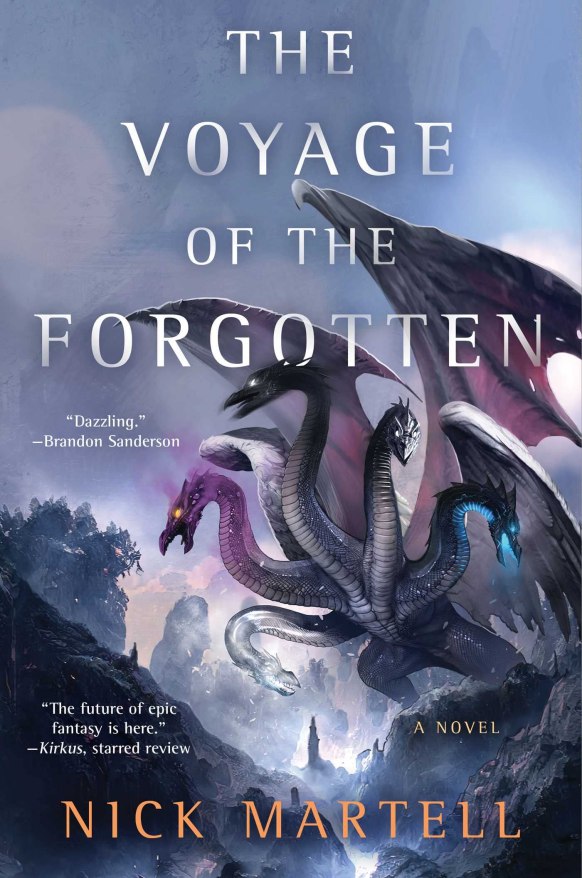
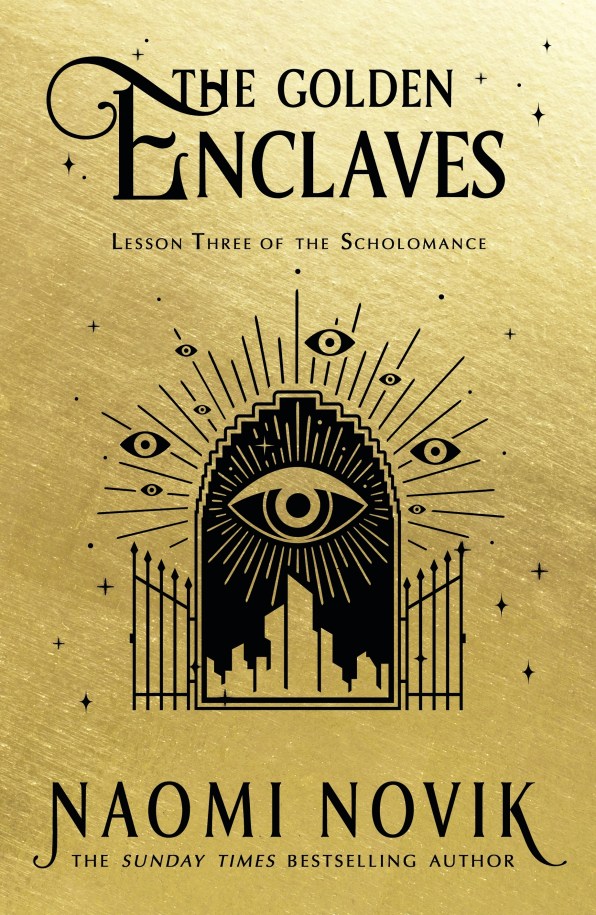
The Voyage of the Forgotten Cover 2

Amazon     Book Depository

The Golden Enclaves by Naomi Novik

The Golden Enclaves Cover Better

Publisher: Del Rey (Trade Paperback – 20 September 2022)

Series: Lesson Three of the Scholomance

Length: 408 pages

My Rating: 5 out of 5 stars

Amazon

Naomi Novik ends her addictive and clever Scholomance trilogy in a big way with the very impressive The Golden Enclaves, which takes the protagonists out of the school and into a whole new world of trouble.

For the last few years I have been having an epic time with the exceptional Scholomance series by acclaimed author Naomi Novik.  Novik, who is best known for her Temeraire series, as well as the standalone novels Uprooted and Spinning Silver, has been absolutely killing it with the Scholomance books, which serve as a compelling, dark homage to classic magical school fantasy novels.  Set within the deadly magic school, the Scholomance, the trilogy follows a group of teenage magic users who are attempting to hone their skills while surviving the school and the many dangerous magical creatures, known as maleficaria (mals) who inhabit it.  The first book, A Deadly Education, introduced the reader to protagonist Galadriel “El” Higgins, a loner student who has a big secret, she is an unbelievably powerful magic user, capable of easily unleashing destructive magic that could level cities.  Teaming up with Orion Lake, a mal hunter with a hero complex, El attempts to survive the school and ensure her and her friends survive.  A Deadly Education was an excellent read and it ended up being one of my favourite books of 2020.  Novik followed it up perfectly last year with The Last Graduate (one of my favourite books of 2021), which brilliantly continued the story while also ending it on a traumatic cliff-hanger which I may never forgive Novik for.  Needless to say, I have been extremely excited for The Golden Enclaves and it was one of my most anticipated reads for 2022.

After trapping most of the worlds mals in the Scholomance and untethering it from reality, El looks to have finally defeated fate.  Instead of turning into the city-destroying dark witch she was prophesied to become, she is now a hero who has saved generations of young magic users from needing to hide in the deadly school.  However, her victory has come at a great cost, as the love of her life, Orion Lake, chose to stay behind in the dying school to wage his eternal war against the mals, including the ravenous maw-mouth that finally claimed him.

Traumatised, El attempts to regain her sanity at home, her only plan to one day implement her dream of ending the elite enclave system and using the Golden Stone sutras book she liberated from the school to bring about a new era of magical communities.  However, fate still has other ideas in store for her, and El is about to come face-to-face with the full horrors that her world has in store for her.

Someone is attacking the previously protected enclaves, striking at their very cores, and inflicting untold damage on those who rely on them for shelter.  When two fall within days of El coming back into the real world, she is recruited to find out who is responsible and hunt them down before an all-out enclave war erupts amongst the world’s magic users.  However, El is far more concerned with finding a way back into the Scholomance, the school she fought so hard to destroy, and attempt to either save Orion or kill the maw-mouth that ate him.  However, her mission will lead her to a dark truth that lies at the very heart of the enclave system and which will turn the entire world on its head.  Worse, it will finally force El to face the truth, that she really is destined to be a destroyer, no matter how much she hates it.

There is a lot to unpack here with The Golden Enclaves and it is partly one of the reasons why it has taken me so long to write a review for it.  I honestly did not know what to expect when The Golden Enclaves was released, especially as it was missing the great dark magic school setting which was one of the things that I most liked about the first two books.  It was also clear that Novik would have to work very hard to follow on from her last book after she left it on such a major and heartbreaking cliff-hanger, and I did not know if this book would live up to all these expectations.  Despite these concerns, I dove into The Golden Enclaves as soon as I got my hands on it, as I desperately wanted to see how everything was going to end.  I quickly powered through the book itself and I found the final product to be extremely interesting and not at all what I was expecting.  I did end up giving this book a full five-star rating, but this rating comes with some caveats.

Firstly, I should state that I really loved The Golden Enclaves and I felt that it perfectly wrapped up the series.  Not only do the main characters get some further interesting development, as well as even more trauma and emotional damage, but the story goes in some very unique directions which ties together all the various loose ends.  The story itself is pretty fast paced, if loaded with a lot of fantasy exposition, and follows on right from the events of The Last Graduate.  The impact of Orion Lake’s decision to stay behind in the Scholomance really messes with El and she spends a good part of the book attempting to come to terms with it, often in some very unhealthy ways.  However, before she can get too bereaved, she is forced to help the enclaves (magical communities that offer protection from mals to magic users) to try and discover who is responsible for destroying them.  This results in a compelling, multi-continent trip where she visits various magic communities, gets involved with deadly world politics, as well as checking in with the supporting cast from the first two books, trying to discover answers.  El also searches for a way to rescue Orion from the Scholomance, which culminates in her visiting the mostly destroyed school and finding out some heartbreaking revelations about the man she loves.  Those aren’t the only big secrets El and her companions uncover as they soon discover the true terrible price of the enclave system, as well as who is truly behind the destruction of the enclaves and why.  Novik layers these revelations perfectly, so each new one is even more impactful than the last, culminating in a particularly major gut punch regarding El and her prophesied destiny.  All this leads up to a fantastic and complex final confrontation where El is faced with a terrible choice and must try to find a way out of it.  Everything ends on an interesting and mostly satisfying conclusion, which I think ended the series on the right hopeful note, especially after all the dark trauma the characters have witnessed.

While the story itself is pretty compelling, I personally don’t think it stood on its own legs as much as the first two books in the series.  Not only does it get a bit slow in places, but parts of the big conclusion are a little weak and not as impressive as I was expecting.  Readers also really need to have read the first two books in the series; The Golden Enclaves would be pretty hard to appreciate without some context going in.  For these reasons and a few more (I really missed the school), I might have been tempted to give this a lower rating if not for the big revelations which are deeply connected to the events of the first few books.  Novik expertly ties the entire series together in The Golden Enclaves and if you look at this novel from a larger series perspective, than it is a pretty exceptional book with some very awesome moments to it.  You soon release just how clever Novik has been with her first two novels as she previously set up every big revelation in The Golden Enclaves extremely well.  The various discussions about the enclaves, the outside world and the character’s history comes full circle in this final entry and every lingering question you ever had is answered completely here.  I was so damn impressed with how everything was wrapped up, especially with some emotionally devastating discoveries that were in line with the darker tone of this series, that I honestly could not put this book down.  Novik really is an extremely talented author with an exceptional ability for planning out long-term storylines and this book really proves it.

In addition, I also deeply appreciated how Novik expanded and explained various fantasy elements that she introduced in the previous books and merged them into her outstanding story.  While many of these fantasy elements, such as enclaves, maw-mouths, the creation of the Scholomance and the magical politics that dominate the world, have been discussed in the prior novels, Novik brings everything about them together in this final read and it works extremely well.  The secret histories and crazy lore behind these events are fully revealed in The Golden Enclaves, and the true horror about magic and what people have done to hold onto it is pretty damn shocking.  Novik does a remarkable job in filling in all the gaps she purposefully left out of the first two books and the reader finally gets to appreciate just how complex and integral to the plot they truly were.  She also has a lot of fun expanding out the magical universe substantially in this final book as the reader is finally introduced to some settings outside of the magical school.  I loved the elaborate international enclaves that the protagonist visits throughout this final book and the subsequent political squabbles, discussions of magical castes and the larger worldview of magic becomes a fascinating part of the book.  All this intriguing expansion, as well as the impressive revelations about certain magical elements in the previous books, mostly make up for the lack of the magical school setting you’ve come to love so much, and I think that Novik handled a story outside of the Scholomance extremely well.

The final thing I want to mention is the outstanding character work contained within The Golden Enclaves.  While I don’t want to go into too much detail here, I think that Novik hit the main characters out of the park in this final book and I loved the brilliant examinations of trauma, grief and deep psychological damage that many of them had after spending years inside a hellish death school.  El continues to shine as the main protagonist and only point-of-view character, and her expansive, if highly cynical worldview, helps you get stuck into the narrative.  El goes through a huge emotional roller coaster in The Golden Enclaves, as she is wracked with guilt, grief and anger for much of it, especially after her perceived failure to save Orion from himself.  Watching her break down at the start of the book is extremely heartbreaking, and she never really seems to recover as she keeps finding herself getting dragged into crazy events in the real world.  Many of these events impact her even further, especially once she realises just how evil many of the enclavers are, and she must work very hard to not unleash her destructive fury.  However, one major final revelation really knocks her around, especially as it ties into her extended family who have long abandoned her, as well as her destined place in the world.  I deeply appreciated the outstanding work that Novik put into El, and I also really enjoyed the supporting cast who were featured here as well.  Many of your favourite characters from the first two books make another appearance here, and it was very interesting to see how they were dealing with the aftermath of their Scholomance education, as well as seeing their place in the wider world.  There are a few surprising choices for major supporting characters in The Golden Enclaves, and some interesting interactions that resulted.  Without spoiling too much, I will say that Orion does appear in The Golden Enclaves, and the storylines around him, especially the deep dive into his past, prove to be an outstanding and traumatic part of the plot.  An exceptional expansion of the amazing character work that was such as distinctive feature of the first two novels.

Overall, The Golden Enclaves proved to be an epic final chapter in Naomi Novik’s amazing Scholomance series and I had an outstanding time reading it.  While I did think that The Golden Enclaves had a few flaws, the way that Novik used it to tie the entire series together blew my mind and I was so deeply impressed with how every loose thread and inventive fantasy element was dragged together to create an outstanding final inclusion.  The subsequent shocking and dark revelations, powerful character work and the compelling expansion of Novik’s fantasy universe help to make this a pretty incredible book and it is one that I had a wonderful time reading.  I really cannot get over how well set up this final novel was and I think that it serves as a brilliant conclusion to one of my most favourite recent fantasy series.  As such, I have to award The Golden Enclaves a five-star rating as one of the better books of the year, especially as I don’t think Novik could have written a more powerful and moving end to the incredible Scholomance books.

Amazon

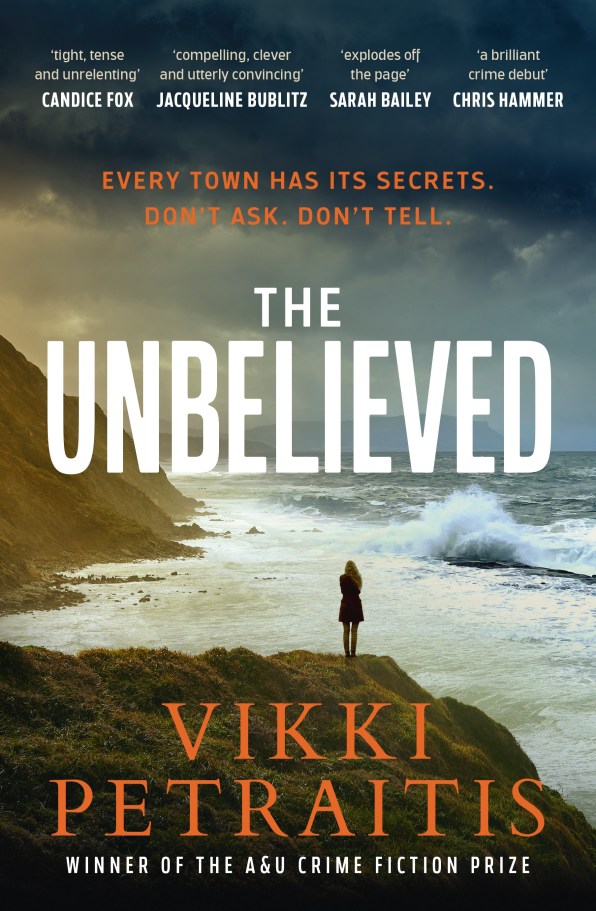
The Unbelieved by Vikki Petraitis

The Unbelieved Cover

Publisher: Allen & Unwin Australia (Trade Paperback – 2 August 2022)

Series: Standalone/Book One

Length: 373 pages

My Rating: 5 out of 5 stars

Amazon     Book Depository

Debuting author Vikki Petraitis delivers an impressive and deeply moving Australian thriller skilfully set around the powerful subject of sexual violence with The Unbelieved.  This is Petraitis’s first novel, which has been receiving a large amount of buzz, including some awards.  As such, I was very interested in checking it out, especially as it had a very interesting plot, and this ended up being one of the most compelling and memorable Australian debuts of 2022.

Senior Detective Antigone Pollard has spent many years investigating terrible and destructive crimes in Melbourne.  After one case goes horribly wrong, Antigone decides to seek the quieter life and moves to her grandmother’s house in the Victorian coastal town of Deception Bay, where she was raised.  However, her attempts at finding peaceful policing quickly go up in smoke when a series of drug assisted sexual attacks occur throughout Deception Bay and the neighbouring towns.

After a sting operation at the local pub reveals a suspect who attempts to drug her, Antigone believes that they have perpetrator dead to rights.  However, they are soon forced to let him go when the male witnesses to the event refuse to cooperate and her superior attempts to brush the case under the rug.  Reaching out to the community, she finds a wall of silence and shame surrounding sexual crimes in Deception Bay, which has failed to lead to any convictions in the town.

Determined to stop the attacks no matter what, Antigone continues her investigation against her superior’s wishes, and uncovers a series of attacks across town.  Attempting to break through the fears of the women of Deception Bay, Antigone and her partner begin closing on the information they need.  However, Antigone also finds herself under threat from all corners and must work swiftly before she is shut down for good.  But can she succeed before another girl is attacked, and what happens when the darkness from her past rears its ugly head again?

Wow, I was not prepared for just how good and moving The Unbelieved was going to be.  Vikki Petraitis has really shown off her skill and talented as a writer with her first book, presenting a powerful read on an extremely relevant subject that strikes the reader hard.  Featuring an exciting and very clever mystery storyline that also intensely examines violence against women in Australia, The Unbelieved is an outstanding novel that gets a full five-star rating from me.

At its centre The Unbelieved has an exceptional multifaceted narrative that follows detective Antigone Pollard as she finds herself investigating terrible events occurring around Deception Bay.  Detective Pollard initially attempts to stop a series of sexual attacks, but she soon becomes involved in several other cases while trying to fit in to the community, despite opposition from some of its male residents.  As her case develops and more victims come forward, Pollard also finds herself investigating a suspicious death, a historical murder-suicide, a series of domestic violence cases, and more.  These investigations are often hampered by her superior and problematic members of the community, and Pollard also finds herself being threatened or attacked as she attempts to do her duties.  At the same time, elements from her past in Melbourne are revealed through a series of well-crafted flashbacks that expand on her motivations and begin to bleed into her current cases, especially once a prior suspect is brought back into the light.

Petraitis takes the story in some interesting directions throughout the course of The Unbelieved, and I loved the fantastic combination of the compelling yet heartbreaking cases that are explored throughout.  This investigation angle is well balanced with the character development of the protagonist, as well as the emotional exploration of several interesting supporting characters, and you really get involved in the narrative and the character’s fates as The Unbelieved continues.  The story becomes more complex as the book unfolds, and the protagonist finds herself caught up in a devious local conspiracy that seeks to take her down at the same time.  There are some brilliant twists and reveals throughout the plot, and I loved how several of the storylines developed.  The entire book was very well paced out, and I found myself getting really absorbed in so many key elements of the plot, especially as the author blends compelling investigations with dark, emotional examinations of the victims.  This all leads to up to a moving, thought-provoking and extremely satisfying conclusion that will leave every reader caught up in the plot happy.  I particularly enjoyed the final twist that Petraitis left the story on, and the way it was hinted at through the rest of the novel was extremely clever.  I honestly had such a remarkable time reading this great narrative, and there are so many excellent story elements to enjoy within it.

Easily the most distinctive part of The Unbelieved is the author’s detailed and powerful examination of the current situation of sexual and domestic violence in Australia.  Most of the book’s plot revolves around the investigation and attempted conviction of multiple sexual predators, and the author does not hold back in showcasing just how dark and damaging these sorts of cases can be.  Multiple viewpoints of the impacts of these crimes are examined throughout The Unbelieved, and readers are in for some emotionally devastating moments as you see so many of the different aspects of them.  There is a particularly good and dramatic look at how police investigating sexual crimes are impacted, especially when they are unable to get justice for the victims.  More importantly, Petraitis spends a lot of time exploring how Australian society perceives sexual crimes, and the book is loaded up with characters who don’t see them as a big deal or attempt to blame the victim.  There are multiple interludes within The Unbelieved that show short transcripts of interviews with people involved with these crimes, either as a witness or the accused, and the unguarded and unsupportive comments they make are both enlightening and a little infuriating.  Throw in some comments and interviews by the author’s accurate depiction of a typical Australian radio shock jock, which really boil the blood, and you have an excellent depiction of some of the main issues and attitudes towards sexual crimes, such as victim blaming.  These issues become a key part of the book’s plot, especially when the system fails so many victims, and it leads to some extremely emotional and painful moments.  I felt that Petraitis did a spectacular job working this confronting subject into the plot of her novel, and it certainly gave The Unbelieved a powerful edge that is hard to ignore.

I also really appreciated Petraitis’s examination of regional towns in Australia, which proves to be a great setting for this compelling book.  Rural and remote settings are always an excellent feature of Australian fiction, and I think that Petraitis used it extremely well in The Unbelieved.  The transfer of a big-city cop to the small town she grew up in results in a great change of pace for the protagonist, and the change in priorities and issues helps to add to the narrative complexity of The Unbelieved.  The use of this small-town setting comes into play throughout The Unbelieved in multiple intriguing ways, from the constant spread of rumours, the lack of secrets, and the fact everyone knows each other, and I liked how this affected several aspects of the police investigation plot line.  However, the most important part of this setting is the wall of silence that springs up during the book.  Many people know about the sexual and domestic violence going in in Deception Bay, but are unwilling to talk for various reasons, often keeping secrets from the police.  This becomes a key complication in the investigation, and it was fascinating and moving to see the protagonist attempt to overcome it.  As such, I felt that this small-town setting worked extremely well for The Unbelieved’s plot, especially with its specific criminal focus, and it definitely enhanced the story for me.

The final thing that I need to highlight is the excellent protagonist that Petraitis works the story around in Detective Antigone Pollard.  Pollard is an emotionally charged badass who has returned to her hometown after a devastating case in Melbourne, and now finds herself amid all manner of dark criminal activity.  While she is raw from the impacts of her last case and there are some dramatic moments surrounding here, the author portrays her as a practical and very capable cop, who takes charge and starts to clean up Deception Bay.  I really do think that Petraitis hit the right balance of vulnerable and determined in Pollard, and you grow quite attached to her as the book continues, especially once you learn the full extent of her last case.  Combine Pollard with several other fantastic characters in The Unbelieved, such as her partner, Detective Senior Constable Warren “Wozza” Harvey, and her loyal dog, Waffles, as well as some slimy villains, and you have a great cast for The Unbelieved that really add to the overall quality of this remarkable book.

With her impressive debut novel, The Unbelieved, Vikki Petraitis has set herself up as an exceptional talent in the Australian crime fiction game and she is a major new author to watch out for.  The Unbelieved has an outstanding crime fiction narrative to it that does an amazing job balancing a compelling mystery storyline with powerful dive into a sensitive and highly relevant subject.  Thanks to its well-written plot, clever mystery, distinctive setting and great characters, The Unbelieved comes together perfectly, and it proves to be extremely hard to put down.  While this book might be best avoided by those readers triggered by depictions of sexual violence, I cannot recommend this powerful novel enough, and it stands as one of the better Australian crime fiction books and debuts of 2022 so far.

Amazon     Book Depository

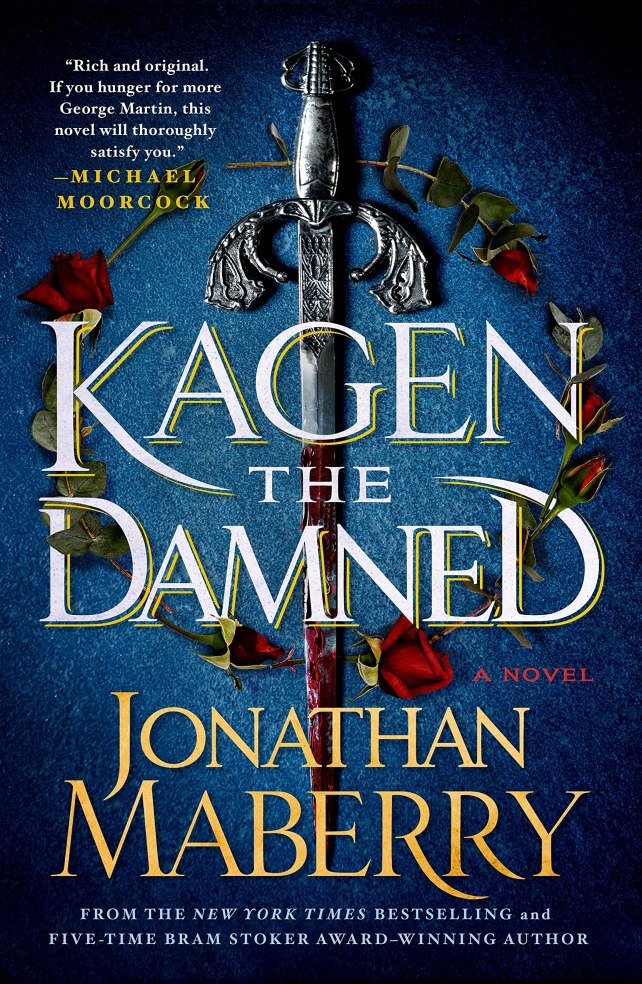
Kagen the Damned by Jonathan Maberry

Kagen the Damned Cover

Publisher: Macmillan Audio (Audiobook – 10 May 2022)

Series: Kagen the Damned – Book One

Length: 20 hours and 53 minutes

My Rating: 5 out of 5 stars

Amazon     Book Depository

One of my favourite unusual thriller writers, the legendary Jonathan Maberry, enters the world of fantasy in a big way with Kagen the Damned, a dark fantasy masterpiece with a brutal heart to it.

I have made no secret of the fact that I am a huge Jonathan Maberry fan.  I got into Maberry’s writings when I chanced upon a copy of his 10th Joe Ledger novel, Deep Silence, a few years ago, which introduced me to both Maberry’s unique writing and his iconic protagonist, the titular Joe Ledger, a badass action hero who saves the world from crazy and dark science creations.  I deeply enjoyed Deep Silence (it was one of my favourite books of 2018) and quickly moved onto his other Joe Ledger books, diving back to the start of the series with Patient Zero, and then working my way through the rest of the awesome entries, such as The Dragon Factory, Code Zero, Predator One and Dogs of War.  I also kept up with his latest releases, including the two entries in the follow-up Rogue Team International series, Rage (one of my favourite books and audiobooks of 2019) and Relentless (one of my favourite books and audiobooks of 2021), and his standalone novel Ink (one of my favourite books and audiobooks of 2020).  I have been very eager to see what awesome novel Maberry releases in 2022, and, luckily for me, that materialised in the form of Kagen the Damned.

Kagen the Damned is an interesting and unique read from Maberry, as it is his debut foray into the fantasy genre.  While many of his other books have had fantasy elements to them (albeit with a horror edge), this is his first pure fantasy fiction novel, as well as the start of his Kagen the Damned series.  Naturally I was rather curious about how Maberry would transition to a new genre, and while I was a tad disappointed that the Rogue Team International series isn’t getting a new entry any time soon, Kagen the Damned ended up pretty high on my most anticipated reads for 2022 list.  After a few weeks of other books getting in the way, I finally got the chance to listen to Kagen the Damned, and it turned out to be quite an impressive novel.

Kagen Vale was once one of the most trusted and revered fighters in the entire Silver Empire.  A scion of the legendary Vale family, who have served the Silver Empire for generations, Kagen was a beloved member of the royal court and so highly regarded that he was entrusted as the guardian of the Seedlings, the Empresses’ children.  That was until the fateful night when, out drinking and whoring, he was drugged and left for dead.  Awakening in a daze, Kagen found himself in the midst of hell as the capital of Silver Empire, Argentium, was besieged by a foe long thought dead, the dread nation of Hakkia, whose dark magic has once again emerged to blot out the world.

Arriving to the palace too late to save anyone, including the Seedlings, Kagen falls into despair at failing his sacred duty and can only watch in horror as the Gods of the Garden, the deities of the Silver Empire, turn their back on him and damning him for all time.  Now with everything and everyone he has ever known lost forever, Kagen the Damned wanders the ruined countryside a broken drunk, dreaming of revenge on the one man responsible for all his ills, the mysterious and feared Witch-king of Hakkia.

However, not everything is as lost as it seems, as shadowy figures across the world being to formulate their plans to repel the Witch-king’s evil.  As two young women embark on a deadly quest to awaken a sleeping, ancient god from beneath the waves, a covenant of resistance attempts to find their own magic to oppose the Witch-king with.  Determining that Kagen may bear the best chance of recovering the tools needed to succeed, they manipulate events to set him on his path to revenge.  However, what price will a doomed man truly pay to get the revenge he so desperately seeks, and will Kagen be ready for the terrible secrets he uncovers along the way?  Only the gods and the damned know for sure!

Well, it is now more apparent than ever that there is no Jonathan Maberry book I will not enjoy to the extreme.  Kagen the Damned is an incredible and very memorable novel from Maberry, who puts the ‘dark’ in dark fantasy, with this barbaric and action-packed journey into hell.  Making use of his trademark style, flair for horror and exceptional character work, Maberry pulls together a deeply addictive and extremely exciting story that I fell in love with very, very quickly.  This was another easy five star read for me, and I loved every single second I spent reading it.

Maberry once again blew me away with an outstanding and high-action narrative, and I quickly got very attached to Kagen the Damned.  This book has an extremely memorable start to it, showing the bloody fall of Argentium from the perspective of Kagen, who awakens from a drunken haze to find a vast army in his supposedly impenetrable city, destroying and killing everything they see.  This was a very compelling and brutal start the novel, and its one that I quite enjoyed, especially as you see just how dangerous the enemies are and the chaos they have unleashed.  Maberry does a great job of setting up multiple key storylines, settings and characters in this early section, and while the focus is primarily on Kagen, you get some interesting insights into other figures that will impact the rest of the book.  The entire first part of the book is very distinctive and really showcases how dark this novel is going to get, especially when it comes to the character of Kagen and the fate of the royal children.  This whole first section ends on a brilliant note, with Kagen left broken and damned, while the once great Silver Empire, which you only saw glimpses of, is destroyed and replaced with a new world order.

Following this epic start, the narrative slows down a little, as Maberry works to set up some alternate storylines and characters, while as taking the time to do some compelling and extended word building.  Set in the direct aftermath of the opening sequence, the story primarily splits into three different streams at this point, with the main one following a despondent Kagen as he traverses the former Silver Empire, lost in grief and drink.  At the same time, two separate storylines tell some great connected narratives, with one following two young women as they journey off into the unknown, while the rest focuses on the Hakkian takeover back in Argentium.  This focus on the Hakkians and their plans, as told by the Witch-king’s advisors, as well as a resistance group, is very awesome, and it was fascinating to see some impressive political intrigue going on behind the scenes as the antagonists work to consolidate power through various methods.  While the rest of the narrative continues in a straight line, the story around Kagen slowly adapts as he meets some new friends and begins his mission of revenge as planned, with some detours.

This leads up to the excellent final part of the book, which I powered through extremely quickly to see how everything ended.  All three major storylines are reaching there climax here, and they start to blend a lot more closely, especially the ones focusing on Kagen and the Hakkians.  Everything leads up to a highly anticipated confrontation that sees Kagen finally face his enemies, and it is just as epic as I was hoping.  There is a ton of action, tragedy, twists and revelations here, as many of the plot elements and storylines come full circle.  I loved the various reveals that happen here, and most have been set up really well throughout the extended course of the narrative.  I really should have seen the identity of the Witch-king coming, but it was the right choice by Maberry, which leaves some big questions open for the future.  Everyone will come away from Kagen the Damned extremely satisfied, as Maberry leaves everyone on a brilliant note, that ensures that readers will definitely come back for more.  This is an outstanding and deeply addictive narrative that is guaranteed to grab your attention early one and refuse to let go.

I really enjoyed how well Kagen the Damned was written, as Maberry brought his unique style to bear to help create an outstanding story.  In many ways, this novel proved to be essentially one of Maberry’s thrillers set in a fantasy universe.  Indeed, there were a lot of similarities in the style, the structure of the chapter, the pacing and even the use of familiar horror elements that I have previously seen and loved in the Joe Ledger books and I think this cool style worked well to tell an intense fantasy narrative.  As such, Kagen the Damned is a swift and well-structured book that pushes the story along at a swift pace, while also taking the time to build up the universe and the multitude of characters.  Maberry utilises a great range of story elements throughout this novel, and the readers are treated with a fantastic blend of action, intrigue, dark, over-the-top moments, horror, despair and humour, as the characters experience all manner of devastating trials and oppositions.

I also have a lot of love for the way that the author sets up the story and showcases the elaborate events that are occurring.  Maberry makes excellent use of a huge number of shorter, focused chapters told from a variety of viewpoints.  These briefer chapters really increase the pace and intensity of the book, and I deeply appreciated how the narrative quickly jumped across the various characters.  The interplay between the three central storylines, which are primarily anchored around Kagen, is extremely good, and I loved seeing the characters react to some of the same events or actions of their fellow cast members.  These storylines are also joined by a series of interludes that show the various impacts that the Hakkian invasion has on the wider world, especially those attuned to magic.  These interludes are usually very fascinating, and they are often used to introduce some minor supporting characters in a fun and unique way.  I loved the complexity that these interludes usually have, and the often self-contained stories are well structured and always feature a distinctive or chilling conclusion.  Maberry uses these interludes cleverly, often inserting them between major or extremely powerful chapters to help relieve tension, or to remind the reader of the wider stakes or events occurring around the main story.  I definitely enjoyed this larger look at the world that Maberry provided through them, and it was an outstanding part of Kagen the Damned’s story.

One of the major highlights of the writing in Kagen the Damned is the intricately described and fast-paced action, which is a major hallmark of Maberry’s writing style.  Maberry has always excelled at writing brutal fight scenes in a way that paints a vivid mental picture for the reader, and this was once again the case for Kagen the Damned.  The many, many action and fight sequences are brought to life in exquisite and bloody detail, and the reader is easily able to imagine every strike and slice as they happen.  This makes the action sequences really pop, and they were a particularly awesome highlight of this great book.  This focus on action and combat was really effective in this fantasy novel, and it was very cool to see Maberry bring his knowledge of combat and the accompanying writing skill to bear on large scale battles between armed and armoured fighters, while magic and gods blow stuff away around them.  There are some really great fight scenes loaded throughout this book, and I loved every skirmish, battle and duel that was featured within it.

While I did really love the action and brutal combat sequences within Kagen the Damned, I probably should add a warning about how dark and gruesome it can get in places.  Maberry’s writing style has always relied on over-the-top violence, cruelty and brutality to a degree, and this was once again the case in Kagen the Damned, which not only featured a ton of killing but also gruesome scenes of torture, corpse desecration and depictions of sexual violence.  While I think that these ultra-violent moments do work to showcase just how dark and savage the new world order is, they are often a bit hard to witness.  I will note that Maberry did take the time to discuss the emotional and social impacts of the various acts of sexual violence in the book, rather than just including them for gratuitous effect.  There are also some great scenes where the protagonist calls out and belittles several characters willing to commit such acts, before delivering his own violent justice, and I think that the author did his best to show have damaging it can be in his own way.  However, readers should probably be aware that these scenes exist, as people might find them to be a bit shocking.

I was also a major fan of the cool new fantasy universe that Maberry cooked up with Kagen the Damned, mainly because it is such a distinctive creation of the author.  Set on a giant continent made up of various nations, this is an impressive and compelling world, filled with a unique history, gods, people and settings.  The author does a great job of swiftly introducing this world and some of the key parts of its history in the early parts of the book, mainly so that readers can be a little more shocked at the early events and full appreciate the destruction and change that the Hakkian nation brings with it.  Maberry is clearly emulating some classic fantasy novels and settings throughout Kagen the Damned, and I loved seeing this bold new world that he has created.  There are some unique and cool elements featured within, and I liked how there are certain shades of grey shown when it comes to the morality and righteousness of the various factions.  Maberry also takes the time to highlight the changes that are coming to the world, thanks to the return of the Hakkian Witch-king, and the slow and steady resurgence of magic and the death of a certain pantheon of gods, are highlighted really well, both in the main story and the interlude chapters.

Perhaps one of the most distinctive features of this new world is the horror elements that Maberry worked into the plot.  I really should not have been surprised at the strong Lovecraftian elements that featured, as the author has used them strongly in some of his previous books.  However, it is even more explicit here in Kagen the Damned, with several notable Elder Gods playing key roles in the plot and even appearing in some epic scenes.  While I am not personally a fan of Lovecraft, I did quite like how Maberry utilised these elements throughout this book, and they gave parts of the book a darker and more eldritch quality that I quite enjoyed.  This, and certain discussions about other worlds and alternate realities, potentially links this series to some of Maberry’s existing works, and it wouldn’t surprise me if there were some form of crossover in the future, although it would have to be handled well.  I had a great time exploring this new fantasy world in Kagen the Damned, and I look forward to seeing what other surprises and dark gods appear in future entries of this series.

I also must highlight the incredible character work featured with Kagen the Damned, as Maberry went all out to create an excellent and unique cast of characters, whom the excellent narrative revolves around.  There are some amazing characters featured within this novel, and the author works hard to feature all of them in some impressive roles.  I had a lot of fun with the huge cast of Kagen the Damned, and there are deep and emotional figures featured here.

The most prominent and intriguing character is the titular Kagen, who takes on the moniker of Kagen the Damned.  Maberry really does a number on his central protagonist early on, as Kagen awakens from a drunken haze to find that everything he cared about and held dear had been lost while he slept.  Despite his best efforts to redeem himself in the battle that follows, he still fails miserably, and manages to escape the conquered capital in a fractured haze.  Broken, dazed and emotionally destroyed, Kagen becomes even more despondent when he sees his gods in the sky turn their back on him due to his failure to maintain his sacred oaths, which convinces him that he is damned.  Naturally, these events leave him severely emotionally damaged, and he spends most of the book trying to come to terms with his failure while also trying to find some way to get revenge on the Witch-king for all he has done.  A large amount of the book is dedicated to Kagen falling into despair, and Maberry presents a realistic depiction of a man who has lost everything and who is barely able to survive, relying heavily on drink and violence to get through his days.  While Kagen is eventually able to throw off much of this despair, it is still lurking within him, and he is often shown living in regret at his failure, even though no one else blames him as much as he does.  Kagen working through these complex feelings of failure results in much of the novels emotional strength, and Kagen serves as a moving and powerful heart for the entire novel.

While I did deeply enjoy this intriguing central character and his rough and emotional journey through this book, it is hard not to notice some similarities between Kagen and another one of Maberry’s protagonists from another series.  Kagen is in many ways a fantasy version of Joe Ledger, with similarities including a propensity for violence, extreme skill with knives (technically short-swords in Kagen’s case), and even a similar sense of humour during some of the lighter moments of the books.  There is also the same high level of mental damage brought on by extreme trauma, with both characters often seeking revenge against the people who wronged them and those they loved.  Despite these similarities, I still really appreciated Kagen as a protagonist, and I felt that some of his additional elements, such as his complex familiar bonds and strong sense of failure, did set him apart in some key ways.  No matter what, Kagen is a pretty awesome character to follow, and I loved seeing him continue to go through all his dark moments to keep going.

Aside from Kagen, there are several other amazing characters featured in this novel, all of whom have some outstanding storylines around them.  Two of the most prominent are Ryssa and Miri, who were in Argentium when the Hakkians invade.  Both junior members of the Silver Empire’s clergy, the two women initially appear to be primarily concerned with surviving the invasion.  However, it soon becomes apparent that Miri, whose knowledge of the gods and creatures of this world are far greater than they should be, has a different agenda.  Taking Ryssa with her on a big journey to a remote island nation, Miri soon engages in a plot to save the world her way.  Ryssa and Miri make up a fun combination that Maberry weaves some interesting storylines around.  While these characters aren’t explored as deeply as Kagen, you still get a great sense of who they are, particularly Ryssa, who is the primary point-of-view character between them.  Their entire storyline is covered in mystery and uncertainty as Ryssa is left in the dark about what is coming her way.  I liked the religious world-building that went into this character storyline, and there are some excellent moments in it loaded with tragedy and despair.  Even with their storyline being mostly separated from the rest of the characters, and it was a little predictable that Maberry would turn them into a lesbian couple, they had a compelling relationship and I felt that they added a lot to the narrative.

I also had a great deal of fun with the primary Hakkian characters featured in Kagen the Damned.  While they are ostensibly the antagonists of the book, Maberry takes the time to really establish the main four characters and presents them as a lot more complex and even sympathetic in places.  The main Hakkian character is their leader, the Witch-king, a character shrouded in mystery for most of the book.  A previously unknown figure, the Witch-king uses his magic to defeat the entire Silver Empire in a night and then spends the rest of the book trying to set himself up as the legitimate ruler of the land while also advancing the position of his brutal god.  I loved the way that Maberry kept the details about the Witch-king’s past and identity hidden for most of the narrative, although there is some great foreshadowing of his identity scattered throughout the novel.  The Witch-king cuts a fantastic and menacing figure for most of the book, and it was intriguing to see him present himself as a fair and loving ruler, while simultaneously exuding an aura of menace and dark magic.  It was pretty hilarious to see him terrify his key advisors for much of the book, and I loved all the hints about his true objectives.  An overall excellent central antagonist, I look forward to getting more details about him and his history in the rest of the series, especially after the revelations at the end of this book.

The other three key Hakkian characters are the Witch-king’s advisors, the chamberlain Lord Nespar, necromancer Lady Kestral, and newcomer Jakob.  Nespar and Kestral are fantastic characters who spend most of the book administrating the Witch-king’s will, running his empire, hunting for Kagen, and setting up the upcoming coronation of the Witch-king to become emperor.  While they are initially shown to be quite dangerous and evil, mainly due to their role in destroying the Silver Empire and Kestral’s disturbing magic, you eventually see that there is a lot more to them.  In particular, you see that they are actually extremely terrified of the Witch-king and are desperately obeying his will in order to survive.  You actually end up feeling a bit sympathetic for the pair of them, even after you see Kestral tear a corpse apart for a ritual, and I enjoyed the intrigue and politics they got involved with to rule the new empire.  The other character is Jakob, a Silver Empire historian who is drafted into the Witch-king service as his minister for propaganda.  Rechristened as Jakob Ravensmere, he becomes fully compliant in the Hakkian takeover and proves to be a very competent advisor and political mind while also working to rewrite history to increase the legitimacy of the Witch-king.  It was extremely fascinating to see Jakob discussing the control given by those who control history and propaganda, and I really enjoyed his role in the new empire.  It was also fun to see his rather quick slide towards the dark side as he fully embraces the Hakkian lifestyle and even starts to develop a taste for a power.  I always love seeing Maberry’s narrative unfold from the antagonist’s point of view, and this worked out extremely well again in Kagen the Damned.

The final characters I need to highlight are some of the excellent supporting cast surrounding Kagen.  Kagen has two excellent companions who work with him throughout the book, Tuke and Filia.  Tuke is a giant professional thief who recruits Kagen for a job that will help an anti-Hakkian resistance movement.  Tuke serves as the comic relief for much of the book, and I loved the outstanding chemistry he had with Kagen.  The two play off each other extremely well, and their excellent camaraderie and humour were pretty fun to see.  Not only does Tuke have some of the best lines (and the funniest curses) in the book, but he also serves as an emotional sounding board to Kagen, helping him get better after all the tragedy he experienced.  Filia is a strong-willed warrior and former associate of Kagen who finds herself dragged into the chaos around the war and Kagen’s wild adventures.  Filia’s no-nonsense attitude and sarcasm are a great counterpart to the other characters in Kagen the Damned, and I especially liked it when it combined with the humour of Kagen and Tuke.  These characters, and more, really enhanced the overall quality of this impressive narrative, and I loved seeing their powerful storylines unfold in some excellent and enjoyable ways.

There was no way that I was going to check out the new Jonathan Maberry novel in any format other than audiobook.  I have had some outstanding experiences with Maberry’s audiobooks over the years, and all of them have been deeply impressive and extremely enjoyable.  This again proved to be the case with Kagen the Damned, as I had an outstanding time having this dark epic read out to me, especially as it really helped me to absorb all the details of the characters and the impressive new universe.  With a runtime of just under 21 hours, this is a pretty lengthy audiobook to get through, but it is well worth the time investment, especially as it delivers the story in such an awesome way.

Easily the best thing about this audiobook is the outstanding narration from the very, very awesome Ray Porter.  Porter, who is one of my favourite audiobook narrators, who has previously narrated Maberry’s books, as well as contributing his voice to other works like The Apollo Murders and The Sandman audio adaptation.  As such, the moment I heard that Porter was also going to narrate Kagen the Damned, I knew that I had to get this audiobook.  Porter has an amazing ability to move the story along, and his voice is perfect for all the intense action, world-building and intrigue Maberry features in his novels.  I love the way that Porter dives into the various characters featured in the books, with every single person getting their own distinctive voice, while Porter also effortlessly emotes all their emotion to the listener.  This includes a very sinister voice that Porter saves for when the villains are talking or some incredibly dark moments are happening, and having him use variations of this voice to highlight just how brutal a moment is being, is always a great experience.  It also works well when the characters start speaking in the languages associated with the Elder Gods, and the resultant ceremonies and spells are quite spooky to hear in Porter’s voice.

Porter also did a particularly good job at inhabiting the voice of Maberry’s central protagonist, Kagen, and you get a real sense of who he is and the intense pain he is feeling throughout the book.  While the voice Porter uses from Kagen is a little like that of Joe Ledger from Maberry’s other audiobooks (a side effect of Porter ensuring that the main protagonist’s voice matches the tone he uses for basic narration), Porter does add a little more of a growl to it here, which helped to a degree.  This was another incredible performance from Porter, and I am so very glad that they got him back to narrate Maberry’s new series.  I cannot emphasise how outstanding the Kagen the Damned audiobook turned out to be (although I did feature it in my recent best audiobooks from the first half of 2022 list before I’d even finished it), and this is the absolute best way to enjoy Kagen the Damned.

Well, after rabbiting on for nearly seven pages, I think it is exceedingly obvious that I loved Kagen the Damned.  Jonathan Maberry’s latest novel was extremely compelling and deeply exciting, and I was really impressive with the author’s jump to the fantasy genre.  Featuring a clever, complex, and action-packed narrative loaded with destruction, thrilling revenge and some great, damaged characters, Kagen the Damned was an outstanding read and its one that I absolutely flew through.  Kagen the Damned is easily one of the top books of 2022 and this is a favourite new series for me.  I am extremely excited to see where the Kagen the Damned series will go in the future, and the next book, Son of the Poison Rose, is out in a few months’ time, and I cannot wait to get my hands on it.

Amazon     Book Depository

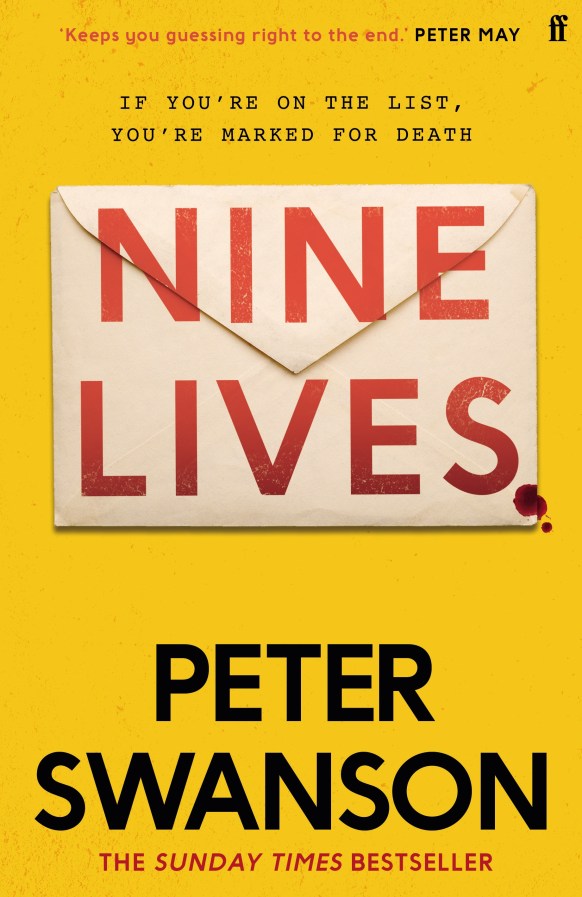
Nine Lives by Peter Swanson

Nine Lives Cover

Publisher: Faber (Trade Paperback – 29 March 2022)

Series: Standalone

Length: 321 pages

My Rating: 4.5 out of 5 stars

Amazon     Book Depository

Prepare yourself for an engrossing and captivating mystery from the talented Peter Swanson, with the standalone read Nine Lives.

Back in 2020 I was lucky enough to receive a very cool book called Rules for Perfect Murders (also released as Eight Perfect Murders), written by a new-to-me author, Peter Swanson.  This fantastic novel focused on a bookshop owner who discovers that a blog list he wrote about the most perfect murders in crime fiction was being used as inspiration by a serial killer.  I deeply enjoyed this awesome concept, not only because it was very unique read that served as a fantastic love letter to multiple classic crime fiction authors/novels, but also because the idea of a killer using a blog post to plan their crimes appealed to me as a blogger (think of all the Star Wars themed murders you could plan if you used my lists as a basis for crime).  I ended up having a great time reading Rules for Perfect Murders and have been interested in reading more stuff from Swanson ever since.  I recently got the chance when I received a copy of his latest novel, Nine Lives, a few weeks ago, and I quickly jumped at the chance to read it, especially as it had another unique plot.

On a seemingly normal day, nine random strangers receive a mysterious envelope at their homes.  Each unmarked envelope is unremarkable except for its contents: a single sheet of paper with nine names typed upon it.  None of the recipients recognise any of the names upon the sheets, except their own, and are baffled by the seemingly random piece of mail.  Most assume it to be an advertisement scam or a silly prank and start to go about their day, forgetting about the strange letter they received.  However, one of the recipients, an old man in Maine, is brutally killed the moment he receives his letter.

As the local police and FBI agent Jessica Winslow, who herself received one of these letters, attempt to investigate and discover the connection between the names, another person on the list is killed, this time in Massachusetts.  Quickly determining that the others on the list are at risk, the FBI jumps in and tries to protect the potential victims, but they soon discover they are facing off against an extremely clever murderer capable of killing their victims in elaborate ways.  But why is he targeting these specific people?

Desperate to find the identity of the killer before everyone on the list ends up dead, the investigators and the potential victims each attempt to find the connection between themselves.  However, it appears that they have nothing in common, as they live across the country from each other and have a range of jobs and backgrounds.  The truth behind the killings lies in a dark place, and the lengths the killer will go to for their revenge will rock everyone to their core.

This was a great murder mystery novel from Swanson, who really amped up the twists and turns to create a compelling and intriguing read.  Nine Live’s story starts off with the various characters each receiving the relevant list with their names on it in several short chapters told from their relevant perspectives, and I found this interesting introduction to be good way to grab the reader’s attention.  From there you start to get to know the characters in some detail, except for a couple of people on the list who are efficiently and systematically killed off.  This serves as a pretty good basis for this story, and I loved getting to know the various characters, as well as seeing the cool and clever investigation angle that forms around it as the FBI attempt to find the killer.  Swanson sets the entire narrative/mystery up extremely well, and there are some very clever moments at the start as important clues and hints are laid down for the observant reader.

The first few kills come quick to set the rest of the characters into a panic, and once you get to the third or fourth person on the list you start to have an idea of what the killer is after.  I felt that the novel started to get really good towards its centre, as there are some big surprises as certain events really did not turn out the way I expected.  Once a particularly massive and game-changing twist occurred, I was absolutely hooked and I honestly powered through the remainder of the novel extremely quickly.  The following plot falls into place extremely well, and I loved seeing the entire mystery unfold, especially as Swanson keeps the twists coming as more of the characters you get to know are targeted by the killer.  While I was able to see elements of the solution from a distance, I was pleasantly surprised by several reveals towards the end, and I really appreciated how well Swanson set everything up throughout the novel.  The book comes to an excellent end reminiscent of a certain classic crime novel, and readers will come away very satisfied with how this standalone read turned out.  I did think that Swanson went a twist too far, as a big reveal in the last four pages was completely unnecessary and the book would have honestly been better if the author had just left it out.  Still, this was a really impressive and fun mystery, and I had an absolutely brilliant time getting through it.

There are a lot of fun elements to this book that really help enhance the story and turn Nine Lives into an excellent read.  However, my favourite is probably the way that Swanson turns it into a massive homage to a specific classic murder mystery novel.  While I won’t reveal which one, I will say that Swanson did an extremely good job of utilising its iconic elements throughout Nine Lives.  Just like he did in Rules for Perfect Murders, Swanson provides a detailed examination of this classic novel through his character’s eyes, especially once they themselves start to realise the similarities between it and their own situation.  These similarities are slightly more subtle at the start of the book, but by the time you get to the end the homages are very striking and cleverly tie into some of Nine Lives’ big moments.  These intriguing connections and clever recycling of story and writing elements from this iconic crime fiction novel worked really well in Nine Lives, and I felt that it complemented the rest of Swanson’s story perfectly, helping to turn it into a particularly great read.  Swanson also throws in some references and discussions about similar notable mystery novels at various parts of Nine Lives to throw the author around and to highlight his passion for the classics.  I love how the author takes the time to reference his personal favourites in his own works, and hardcore crime fiction fans and aficionados of classic murder mystery novels will no doubt have a blast seeing how Swanson utilises parts from a famous novel throughout Nine Lives.

I also loved the fantastic characters contained within Nine Lives, and Swanson achieves quite a lot with them.  Even though there are 10 or more point of view protagonists in a relatively short novel, Swanson ensures that each character stands out.  I felt that each protagonist was set up extremely well and they have their own quirks and back stories.  You swiftly get to know all the main characters as the book progresses, even with the quick changes between perspectives, and once you have made a good dent into the book, the reader finds themselves getting attached to several of them.  There are some great character arcs featured throughout the novel, and I liked how these distinctive characters came together and interacted.  The focus on FBI agent Jessica Winslow, herself a person on the list, works to set up the investigative angle of the novel, and her storyline goes in some very interesting directions.  I also quite enjoyed the intriguing storyline around Ethan Dart and Caroline Geddes, who meet because of the list and form a moving, if inevitably tragic, relationship.  The antagonist is also set up brilliantly throughout the novel and I found their motivations and methods to be expertly portrayed and explored as the narrative continues.  None of these characters are perfect or particularly have their life together, and it fascinating to see how a random list of names can change this for better, or more likely, for worse.  Swanson really does some great character work in Nine Lives, just don’t get too attached as your favourites may not survive.

Peter Swanson continues his entertaining and unique blend of crime fiction with the extremely clever and highly addictive Nine Lives.  Featuring a compelling, wide-ranging mystery and some brilliant references to classic murder mysteries, Nine Lives proves to be highly entertaining and memorable read, and I really had fun getting through it.  A great novel to fulfil all your murder mystery needs, Nine Lives comes highly recommended and will not disappoint.

Amazon     Book Depository

Throwback Thursday – Identity Crisis by Brad Meltzer, Rags Morales and Michael Bair.

Identity Crisis Cover

Publisher: DC Comics (Paperback – 1 October 2005)

Series: Identity Crisis Limited Series

Writer: Brad Meltzer

Penciller: Rags Morales

Inker: Michael Bair

Letterer: Ken Lopez

Colorist: Alex Sinclair

Length: 288 pages

My Rating: 5 out 5 stars

Amazon     Book Depository

Welcome back to my Throwback Thursday series, where I republish old reviews, review books I have read before or review older books I have only just had a chance to read.  For this week’s Throwback Thursday I take a look at one of my absolute favourite comic book limited series, the epic 2004 DC Comics event, Identity Crisis.  (Quick warning, there are spoilers ahead).

Identity Crisis #1

It is fair to say that the early to mid-2000s was one of my favourite periods of comic books, with some truly cool and epic ongoing and limited series being released.  This was particularly true for DC Comics, who produced some of their best work during this time, many of which rank amongst my all-time favourite comic series.  This easily includes the exceptional and brilliant crossover event, Identity Crisis, which to my mind is one of the best limited series ever written.

Made of seven issues, Identity Crisis combines the unique writing talent of thriller author Brad Meltzer with the artistic stylings of veteran DC Comics collaborators Rags Morales and Michael Bair.  This ended up being a near perfect combination of talents and skill, and I have a lot of love for the exceptional story, which absolutely hooks me every time, and its outstanding associated artwork.  I particularly impressed with the addition of Meltzer, who, despite his more literary background has written some of the absolute best and most human comics I have ever had the pleasure of reading, including Green Arrow: The Archer’s Quest and the two Justice League of America storylines, The Tornado’s Path and The Lightning Saga.  However, his story in Identity Crisis is particularly powerful and thought-provoking, and it ends up being a comic that completely changes everything you knew about your favourite heroes.

For years the members of the Justice League of America have protected the world from all manner of evil and destruction, always prevailing no matter the odds.  But who can protect them when someone goes after those closest to them?  And what if they actually deserve the punishment being visited upon them?

On an unremarkable night, a mysterious attacker breaks into the home of long-serving Justice League associate, Ralph Dibny, the Elongated Man, and commits a terrible crime, the murder of Ralph’s beloved wife, Sue Dibny.  With no evidence about who the killer is and no idea how they breached the Dibnys’ impressive security, the superhero community rallies behind their bereaved friend and seeks to find the killer by any means necessary.

As the rest of the heroes seek answers at any potential suspect within the supervillain community, the Elongated Man and a small group his closest friends hunt for a minor villain, Dr Light, whose secret connection to the League’s darkest moment may hold the answers they seek.  However, when a second attack occurs on another publicly known relative of a superhero, Jean Loring, the former wife of the Atom, it soon becomes clear that someone else is targeting the heroes and their loved ones.

Identity Crisis #1b

As Batman, Superman, Green Arrow and others attempt to get to the bottom of the case, cryptic threats to one hero’s relative reveal that whoever is targeting them knows all of the League’s secrets, including their hidden identities.  As even more tragedies befall the superhero community, dark secrets from the League’s past are brought into the light and no-one will be prepared for the terrible truth behind these brutal murders.  Can the League weather this latest attack, or is this the beginning of the end for the world’s greatest heroes?

Damn, no matter how many times I read this comic, the tragic and powerful events of Identity Crisis still really get to me.  This exceptional comic contains one of the most impressive narratives I have ever seen in a limited series, taking the reader on a captivating and emotional dive into the world of your favourite heroes.  Perfectly combing a dark, mysterious narrative with incredible character work and some truly amazing artistic inclusions, this comic gets an extremely easy five-star rating from me.

For Identity Crisis, Brad Meltzer really went to the well, producing an insanely compelling and moving story that relentless drags you in and introduces you to a completely new side of your favourite heroes.  Utilising his experience as a crime thriller writer, he produces a powerful, character driven superhero narrative with detailed crime fiction elements to create an exceptional and unique story.  Identity Crisis has an amazing start to it, which not only carefully introduces several key figures but also installs some dark tragedy, as the wife of a superhero is killed off.  The subsequent investigation into her murder by the enraged superhero community is extremely compelling and intense, as the emotional heroes turn over every rock and stone, much to the horror of the villains.  However, it is soon revealed that several members of the Justice League are harbouring a devastating secret, one that could reveal the identity of the killer.  This secret becomes one of the most important parts of the first half of the series, and it leads to an epic, action-packed fight sequence against a particularly dangerous foe.

Identity Crisis #2

The story starts to go in a bit of a different direction at this point, with the above secret not really panning out regarding the investigation.  However, other superhero relatives, both public and secret, are targeted, resulting in pandemonium around the characters.  I loved the narrative’s move to a more classic investigation at this point, as the heroes start following every lead they can, while more character development and big moments are explored.  This all leads up to the defining moment when another superhero loses a loved one and the identity of the killer is seemingly revealed.  However, this turns out to be a bluff, as the real killer is still hidden.  The reveal of who did it and why are revealed pretty suddenly towards the end, with some curious and clever motivations exposed.  This leads to a tragic and heartbreaking conclusion, as more secrets are revealed, dangerous lies are uncovered, and several characters leave the story more broken and destroyed than ever before.  You will be thrown through the emotional wringer as you check this comic out.

I deeply enjoyed the way that Meltzer told Identity Crisis’s excellent story, especially as it quickly and effectively engrosses the reader and ensures their undivided attention.  The author utilises a mass-character narrative that follows a substantial collection of heroes and villains, many of whom have distinctive or semi-separate storylines.  This works to tell an intriguing, rich narrative that not only has some clever dramatic components but also allows for some intriguing and compelling retcons and expansions to the already elaborate DC universe.  It is very cool how the story developed into more of a murder mystery/thriller story as the comic progressed, and this really played to Meltzer’s strengths.  The investigation is handled very well, and I liked how the superhero elements altered and enhanced it in some clever ways.  The mystery itself is complex and clever, with Meltzer adding in some great twists, false leads and compelling surprises to keep the reader guessing.  The twist about the actual killer is pretty good, and Meltzer did a great job layering in hints and clues throughout the rest of the story while also introducing a few good alternative suspects.  While the motivations and complexities surrounding the killer’s actions are great, I did think that how the protagonists worked it out was a little abrupt, and it might have been a little better if they worked it out from some earlier clues.  The use of female characters wasn’t the best either, especially as most of them are there simply to be victims in one shape or another.  Having a long-established character getting both raped and murdered in a comic as a plot device is pretty unfortunate, and some stronger female figures might have helped balance this out.  Still, this ended up being an awesome read and I deeply enjoyed how it turned out.

One of the things that I really enjoy about Identity Crisis is the interesting examinations that were included as part of the plot.  Meltzer and the artistic team obviously had a lot of fun exploring or introducing some cool aspects of the DC Universe in this series, especially when it comes to the secret or hidden lives of superheroes and supervillains.  I particularly loved the in-depth examination about how both groups are officially or unofficially organised, and there are some very intriguing views of them socialising or working together.  The inclusion of a highly organised superhero death investigation squad, made up of a range of random heroes (the Ray, the Atom, Animal Man, Mister Miracle and two of the Metal Men) is particularly clever, as is the way the various heroes organise into a vengeful posse to question potential suspects.  The deep dive into the importance of a superhero secret identity also becomes an important part of the story, especially as the loss of the secret brings pandemonium thanks to the killer stalking them.  I also loved the counterbalance look at organised villainy, and there are some excellent scenes that see the villains gathering to socialise or talk shop.  Having an organising force like the Calculator, as well as a secret space station hangout, is pretty elaborate, and the deeper look at the villains of this universe, definitely gave Identity Crisis a compelling and intricate edge.

Identity Crisis #3

However, easily the most groundbreaking and compelling new inclusion to the universe is the reveal about the unofficial league within the Justice League who have some dark secrets.  Made up of heroes Green Arrow, Black Canary, Hawkman, Zatanna and Atom, as well as the Silver Age Green Lantern and Flash, this group of heroes apparently operated separately of the main Justice League during their classic Silver Age adventures, acting as their clean-up crew.  This retcon by Meltzer provides an interesting explanation for why villains never remember the secret identities of the heroes they switch minds with or whose dreams they invade, namely they have their mind erased by Zatanna’s magic after being captured by this inner-League.  While this is already a dark move by these established heroes, it gets even worse when they are forced to reveal that they intentionally destroyed Dr Light’s brain to make him less of a threat.  This and other revelations, acts to make many of your favourite heroes appear much more morally grey and fallible, and it was a particularly impressive and monumental inclusion, that will have grave consequences down the line for the entire universe.

Unsurprisingly for something written by Meltzer, Identity Crisis contains some insanely complex and impressive characters who form the heart of the tale.  Due to the way the story is told, Identity Crisis follows a massive cast of comic characters, including several obscure or underappreciated figures.  Meltzer does a brilliant job of utilising all these established characters throughout his story, with nearly every major cast member getting a moment to shine in some way or another, and multiple figures who were underutilised or unappreciated before this comic were given brilliant and defining second chances here.  While the use of multiple focus characters had the potential for a scattered narrative, Meltzer was able to direct the flow of the story around all these various protagonists and antagonists perfectly, and you still get a tight and concise story, which also takes the time to dive into each of these figures and showcase them to their greatest degree.  As I mentioned before, there is a real focus on highlighting the darker side of the superhero characters throughout Identity Crisis, and you end up really seeing these fantastic figures in a whole new scary light.

Let’s start with Ralph and Sue Dibny.  I must admit that the very first time I ever read Identity Crisis, many years ago, I honestly had no idea who Elongated Man and his wife were, as they were a little obscure.  However, Meltzer really goes out of his way to feature them in this story (even adding in a few retcons) and you are given a great introduction to them at the start.  In just a few panels, you understand who these characters are and what they mean to each other and the other superheroes, as well as some unique characteristics and relationship quirks.  This excellent introduction makes you start to care about them just as Meltzer brings the hammer down and kills Sue.  The subsequent grief, rage and despair from Elongated Man is just heartbreaking, and you go through the rest of the comic seeing him attempt to recover from these terrible events.  This amazing use of characters at the start of the comic has a great flow-on effect to the rest of the story, and you become exceedingly invested in finding the killer as a result.

Identity Crisis #4

From there, a lot of the superhero focus goes to the surviving members of the Justice League who formed the league within the League I mentioned above.  There is some exceptional character work around some of these team members, especially as they come to terms with the decisions they made in the past and how they are impacting them now.  I loved seeing them attempt to justify their actions to the other heroes, even their darkest decisions, especially as you can understand why they did what they did, while also feeling disappointed in them.  You really get a sense of determination and shame from them as the story continues, and you see all of them go through a lot in both the past in the present story.  Despite multiple differences, this team are still friends and comrades, and watching them come together to brawl with some of the most dangerous characters is pretty heartwarming, even if darker elements lie just beneath the surface.

While there is a focus on these inner-Leaguers, some of them are utilised a lot more frequently than others, particularly the original Green Arrow, Oliver Queen.  Green Arrow is an excellent figure in this comic and is probably the closest thing to a heroic narrator/central protagonist the story has.  His unique perspective on the events acts as a good foil to many of the other characters, such as Batman and Superman, and he proves to be a calm, if potentially vengeful figure for much of the story, organising many of the League actions and forensic investigations.  He also proves to be the voice of reason for the inner League, calmly justifying many of their actions and serving as a bridge between this existing group and the newer Flash and Green Lantern.  Despite his belief that they are doing the right thing, you can see some real emotion and regret in his face, especially when the further revelations about Dr Light and Batman come out.  I also appreciated the deeper look into his antagonistic relationship with Hawkman, which partially originated in the past events mentioned here, and it is interesting to see how the events of this comic impact future Green Arrow storylines.

Aside from Green Arrow, other members of this secret League who get an intriguing focus include the Atom, Ray Palmer, and his ex-wife, Jean Loring.  Due to his status as another public hero, Atom and Jean are also targeted throughout the story, and you end up getting a rather intense and fascinating look at both.  Watching their failed relationship rekindle is a nicer part of most of the comic, although eventual reveals and tragedies naturally ruin it and smash everything around.  Still, their complicated emotions and issues surrounding their fractured relationship make for some of the best parts of the comic.  I liked the interesting look at Zatanna throughout the comic, especially as she is largely responsible for some of the worst moments of this group of heroes, as she clearly feels guilty about her magic messing with the villain’s minds.  I also need to highlight the younger Flash, Wally West, who finds out about the actions of the other characters during the current events of the comic.  It is absolutely heartbreaking to see Wally learn that his mentor and predecessor, Barry Allen, was not as perfect as he imagined, and actually participated in some of the team’s worst events.  The distress he exhibits with every subsequent reveal is showcased through the comic’s art extremely well, and his subsequent guilt as he is forced to keep it secret from other Leaguers like Batman is quite noticeable.

Identity Crisis #5

As you can expect from any major DC Comics crossover event, members of DC’s Big Three are strongly featured throughout Identity Crisis.  While Wonder Woman only has a few intriguing scenes, in which you get to see both her ferocity and her kindness, there is much more of a focus on Superman and Batman.  Superman gets some great sequences throughout Identity Crisis, especially as the creative team sinisterly focus on his family and friends, all of whom are potential targets.  Watching Superman slowly get frustrated with the investigation, especially when Lois is threatened, helps to enhance the seriousness of the story, and he has some powerful moments here.  I did appreciate the way in which Meltzer attempted to paint the big blue Boy Scout in a darker light, as it is revealed that even the supposedly righteous Superman is not as innocent as you’d believe.  It is subtly implied that Superman always knew what the inner League was up to (yay for super hearing), and chose to ignore it for convenience.  This brilliant and dark suggestion that even Superman isn’t infallible is a pretty weighty one that  helps to enhance the weight and power of Identity Crisis’s narrative.

Batman is a lot more involved in the story and leads his own investigation into who is behind the killing.  Even though he does not actually appear until halfway through the comic, he is a heavy presence throughout Identity Crisis, both because of his brusque, loner ways of trying to solve the crime, but because of the dark shadows of the past.  There are multiple moments that revisit his childhood and the death of his parents, which parallels some of the other losses in Identity Crisis, and you get to see the human side of grief impacting this usually stoic character.  Batman’s storyline gets even more intense when it is revealed that part of his memory was erased by his fellow Leaguers to cover up their actions surrounding Dr Light, which is a very haunting inclusion.  Meltzer makes this even more intriguing by having Green Arrow suggest, mostly out of guilt, that Batman likely has done something similar in the past, while also acknowledging that he has likely already deduced that his memories were erased.  This really makes you consider Batman’s relationship with the rest of his heroes, and it certainly has a big impact on future Batman storylines.

The Batman impact on this story is also felt through the great focus on the current Robin, Tim Drake, who plays a surprisingly big role in the events of Identity Crisis.  At the start of the comic, Tim is one of the few members of the Bat-family who still has a father, which puts him at odds with Batman and the Robin predecessors.  As his father has only just discovered his dual identity as Robin, he becomes one of the more interesting protagonists, as the comic explores the stress of the superhero lifestyle on family.  Tim’s storyline ends up being extremely tragic when his father is murdered.  Watching Robin talk to his father over the phone as he’s about to die is just damn horrific, and your heart can’t help but break during that epically drawn-out scene where he and Batman arrive too late.  The subsequent parallel between him, Bruce Wayne and previous Robin Dick Grayson during this moment is particularly poignant, and it results in a whole new chapter of this amazing incarnation of Robin.

Identity Crisis #6

While there are a few other interestingly featured heroes in Identity Crisis, I’m going to start talking about the villains, as many of them have a brilliant role in this comic.  Thanks to Meltzer’s fantastic writing, Identity Crisis proves to be just as much about the villains as the heroes, as many of them are deeply impacted by the events disclosed here.  While I won’t reveal the identity of the killer here (I’m keeping some spoilers locked up), I will say that their motivations are pretty fascinating and provide a compelling insight into the super lifestyle.  The rest of the villains in Identity Crisis are fair game for discussion, though, and I deeply loved the creative team’s excellent examination of them.

Easily the villain I need to talk about the most is Dr Light, an old school Justice League villain who had not been really utilised in recent years.  Mostly known before this comic as the Teen Titans’ punching bag, Meltzer completely revitalised the character in Identity Crisis and, with a stroke, turned him onto one of the most deranged and dangerous figures in the entire universe.  It is revealed throughout the comic that Dr Light used to be an extremely powerful villain, but after invading an empty Watch Tower and raping Sue Dibny, the League brutally took him down, erased his memory of the event and then magically lobotomised him.  This resulted in him becoming the moronic and weakened villain who was routinely taken down by the teenage heroes and other embarrassing foes.  This entire reveal is pretty damn epic and horrifying at the same time.  Not only does Dr Light seem excessively evil and deranged in the flashback scenes, but the shocking revelations of his actions immediately make you hate him.  Meltzer’s explanation for why he turned into such as pathetic creature (aside from the real reason of capricious authors) really hits home hard, and even though Dr Light is a terrible person, you can’t believe that members of the Justice League went so far.  The subsequent scenes where Dr Light regains his memories and his powers feature some of the best artwork in the comic, and while he doesn’t do much here, the scenes with him brooding and plotting hit at his returned and future malevolence.  I deeply appreciated how much Meltzer was able to morph this villain, and while the reliance on rape for antagonist purposes is a bit low, he succeeded in making him a very hateful and despicable figure.

Aside from the killer and Dr Light, several other villains hold interesting and significant roles in Identity Crisis, and I deeply enjoyed how they were portrayed.  This includes Green Arrow villain Meryln, who serves as an interesting shadow to Oliver Queen throughout the comic (more so than usual).  While Green Arrow provides the superhero community’s viewpoint on events, Merlyn’s narration examines the supervillain community and their various reactions.  I loved his fun insights into his fellow villains, and he ends up being an interesting inclusion to the cast.  The same can be said for the Calculator, a formerly silly figure who has turned himself into a non-costumed villain who acts as an anti-Oracle, providing the villain community with tech support and intelligence by charging them $1,000 per question.  I loved this interesting revamp of this minor character, especially as this suave, behind-the-scenes information broker became his default look for years.  Calculator’s conversations and business dealings offer some compelling insights into the superhero community, and I loved the occasional jokes about his old costume.  Meltzer also makes exceptional use of one of my favourite villains, Deathstroke, who once again shows why he is the DC universe’s ultimate badass.  Hired by Dr Light to protect himself from the League, Deathstroke takes on an entire team of heroes single handily and essentially spanks them.  I love how the creative team not only showcase his insane physical abilities, but also his tactical knowhow, as he expertly takes down major heroes in brilliant ways (he takes down the Atom and Hawkman with a laser pointer, true story).  His scene in the centre of the comic is the best action sequence in Identity Crisis, and it perfectly showcased this awesome villain (seriously, give this man a movie), while also hinting at some future grudges.

Identity Crisis #7

The final character I want to talk about is the lecherous and always entertaining Captain Boomerang, who has a major role in the plot.  I absolutely loved the exceptional story that Meltzer wrote around this infamous villain, and it is easily one of his most defining depictions.  Captain Boomerang has always been shown as a bit of a joke, but this comic shows him as a fat, washed up has-been, who leaches off his fellow villains and is generally looked down upon by them.  However, he gets a very intense and emotional story in this comic, as he meets his long-lost son and starts to develop a relationship with him.  The father/son moments add a rather interesting and nice edge to the main story and seem slightly disconnected from the rest of the plot.  That is until the final killing, when it is revealed that Captain Boomerang has arrived to kill Robin’s father.  The implied suggestion that Captain Boomerang of all people might be behind the killings is pretty iconic, and I loved the split panels that contrast his phone call to his son with the phone conversation between Robin and his father.  The subsequent results of the attack, as well as the reveals in the aftermath are pretty awesome, and I really appreciated the fun second chance that Meltzer and the artistic team gave to this iconic, old-school villain.

While I have gone a lot about story elements and characters, I also really need to highlight the incredible artwork featured in Identity Crisis.  The artistic team of Rags Morales and Michael Bair did an outstanding job in this limited series, producing some of the absolute best artwork from this era of DC Comics which perfectly enhances Meltzer’s epic storytelling.  There are so many impressive and memorable artistic moments and sequences throughout Identity Crisis, and I loved the various ways in which the artists convey movement, action, and emotion in their detailed and captivating panels.  There are so many brilliant action sequences in this comic, with my favourite being the Deathstroke vs Justice League fight I mentioned above, although a few others are also very cool to see.  I also loved the character designs featured throughout Identity Crisis, especially as the creative team took the opportunity to seriously reinvent several heroes and villains.  The streamlined look of the Calculator is particularly fun, and I also loved the balding and fat version of Captain Boomerang.  While I didn’t love how a couple of characters looked (what was with the hair on Connor Hawke?), most of it was pretty exceptional, and I love how it was later reutilised by other artists.

There are multiple truly brilliant and eye-catching artistic highlights of Identity Crisis that I must highlight, including the massive and powerful funeral sequence that takes place in the early part of the series.  There is an incredibly elaborate double-page public funeral spread that shows every single emotional superhero in attendance, with the various heroes organised by team or connection to the grieving family.  The use of the multiple heroes and associates is pretty awesome, especially as there are a range of character-appropriate reactions, and I loved seeing the whole costume crowd surrounded by members of the press and public as they mourn.  You also get also some excellent and heartfelt sequences in the subsequent scenes which show the eulogies, especially when Elongated Man starts to literally deteriorate due to his grief, which is just so powerful.  Other great examples of the artist’s work include the fun flashback scenes that allowed them to draw events in various classic comic styles, that offer a little bit of simplicity compared to the darker modern spread.

I particularly loved some of the brilliant sequences that are set around Dr Light, as not only do you see him at his most dangerous in the past but you also have some outstanding scenes when he regains his memories and powers.  The excellent parallels between the Justice League’s takedown of Dr Light and their attack on Deathstroke are incredible, and the subsequent massive panel of blinding light around Dr Light’s face is perfection.  However, the absolute best-drawn sequence in Identity Crisis must be the panels leading up to the death of Robin’s father.  Watching the insane amount of emotion on Batman and Robin as they realise that Robin’s father is about to die is so damn moving, especially the anguish on Robin.  The most moving of these panels is the one that focuses on Batman’s face after Robin begs his mentor to save his father.  The look of pure dread, fear and despair on Batman’s face takes my breath away every single time I look at it, and it perfectly conveys all of Batman’s repressed feelings as he realises that history is once again going to repeat itself.  While there are some other great scenes, the above are easily the cream of the artistic crop and definitely make this comic stand out.  I have so much love for the artistic work of Morales and Bair here, and it markedly enhances the already exceptional story, turning Identity Crisis into a true epic classic.

Well, that’s pretty much everything I have to say about Identity Crisis here.  As you can no doubt guess from the excessive way I have waffled on, I have a lot of love for this exceptional comic and I’m not afraid to show it.  The brilliant creative team behind Identity Crisis did an incredible job with this comic and they really turned out something special.  Perfectly bringing together a deep and clever story with impressive artwork, amazing characters, and so much damn emotion, this comic has something for everyone and is so very highly recommended.  I deeply enjoy everything about Identity Crisis, especially how it leads to some other epic comic books (the continuation of the mindwipe stuff in Justice League of America, Green Arrow, Teen Titans and more is particularly good).  One of the most distinctive and amazing comics ever and a must read for all DC Comics fans.

Amazon     Book Depository

Her Perfect Twin by Sarah Bonner

Her Perfect Twin Cover

Publisher: Hodder Studio (Trade Paperback – 25 January 2022)

Series: Standalone

Length: 329 pages

My Rating: 5 out of 5 stars

Amazon     Book Depository

Prepare yourself for shocks, twists and so many sweet surprises as impressive new author Sarah Bonner presents her epic debut thriller, Her Perfect Twin.

Megan Hardcastle has always lived in the shadow of her estranged twin, Leah, who always took everything Megan had, while exploiting their dramatic family past to obtain fame, fortune and the freedom to do anything she wanted.  Despite that, deep down Megan still loves her sister, until she finds explicit photos of her on her husband’s phone.  Rushing to her sister’s house, she is unable to contain her rage, and their argument ends tragically when she kills Leah.

Determined not to get caught, Megan comes up with the desperate plan to become Leah, fooling the world into thinking she is still alive.  Diving deep into Leah’s perfect life, Megan starts to become her sister and soon finds her carefree life intoxicating and irresistible, especially when she falls in love with the new man in Leah’s life.  As life at home with her controlling husband gets even more difficult, Megan decides to give up her entire existence and start living as Leah.  However, just before she can enact her escape, the pandemic lockdown hits.

As the country adjusts to a new normal, Megan struggles to maintain two separate lives under lockdown.  Her problems are only just beginning when it becomes clear that someone else knows her secret and they are willing to use it to take everything from her.  Soon, Megan finds herself engaged in a deadly game of cat and mouse against a sadistic foe with her life, freedom and identity on the line.  However, not everything is as it seems, and all the dark secrets from these twin’s life are about to come out.

OMG, well that turned out to be exceedingly epic and amazing.  Sarah Bonner has come out of the gates swinging here, and her first book was such an outstanding and epic read.  Her Perfect Twin is easily one of the best psychological thrillers of the year, and I loved the exceptionally clever and wildly entertaining story it contained.  Loaded with complex and deeply flawed characters as well as some impressive examinations of self and identity, Her Perfect Twin is an incredibly addictive novel that gets a five-star rating from me.

Let me just start off here saying that you are going to really fall in love with the intense and captivating narrative contained within Her Perfect Twin.  Bonner has gone out of her way here to create an exceptional read that quickly drags you in and then hits you with clever twist after clever twist, until the only thing you can think about is getting to the end of the story.  Her Perfect Twin starts off strong, introducing the protagonist Megan and showing the events through her eyes as she uncovers her husband’s affair with her twin sister, Leah, who she then kills after they get into an argument.  The reader slowly gets to see Megan enjoying the new freedoms and fun associated with living her sister’s life, while she also plans to escape from her normal life and terrible marriage.  This first part of the book is very good and I enjoyed seeing the protagonist dive into her new identity, especially as she grows as a person under it.  While I liked this part of the story, I thought I could see where the story was going, including the introduction of lockdown part way through.  However, it turns out that I was so very, very wrong, as Bonner had some amazing tricks up her sleeve.

The first real indication you get about how much Her Perfect Twin is going to change happened about halfway through when, after a major and surprising reveal, the narrative suddenly starts getting told from the perspective of an entirely different character.  This honestly altered everything, as not only did it throw you right into the mind of a psychopath but it starts showing some of the previous events of the book in an entirely new context, revealing just how much set up and foreshadowing Bonner included in the first half of the novel.  From there you are forced to watch an incredibly evil villain make their move, manipulating the situation to their advantage while appearing to have total control, which is both infuriating and extremely compelling at the same time.  And then, just when you think you have a handle on the situation, Bonner throws another big twist at you, along with another new point-of-view character, and you honestly have no idea what the hell is going to happen next.  At this point, I was honestly reeling with all the revelations as I began to fully understand just how talented Bonner is as an author, but the story isn’t done yet.  There are even more great reveals and twists from there as the third character tells their story, which changes everything that you thought you knew already.  A final major shift occurs for the last part of the book, which seeks to wrap up everything and showcases the full cleverness and feelings off all the previous characters.  While this final part of the book is a tad slower and seems a little disconnected from the main plot, it concludes everything up beautifully and leads to an impressive and well-thought-out ending that will leave you incredibly satisfied.

This was a pretty incredible story, and it is one that I had so much fun getting through.  I honestly read the last 250 pages in a single sitting, and it was physically impossible for me to put down the book after the first big reveal.  I cannot emphasize enough just how clever and brilliant all the twists in Her Perfect Twin were, and Bonner sets all of them up perfectly.  I loved how multiple small details and seemingly throwaway lines came back in a big way as the novel progressed, and there was some brilliant planning here.  Bonner writes a pretty dark psychological tale here, and Her Perfect Twin does an impressive dive into the inner psyches of its various characters, with a particular focus on identity, freedom and the terrible secrets that bind us together.  While a few scenes get a bit disturbing and might be upsetting for some readers, it all works for the greater good of the story, and every brutal scene is incredibly well written and impressively moving.  I did appreciate the way in which Bonner was able to work England’s COVID-19 lockdowns into the story.  While some recent novels tend to shoe-horn lockdowns into their story, Bonner’s examination and use of the lockdowns was particularly clever, expertly tying into the story and becoming one of the better inclusions of it that I have seen in recent years.  An overall incredible and powerful narrative, you will fall in love with Her Perfect Twin’s perfect story.

I must also highlight the incredible characters that Bonner featured throughout Her Perfect Twin, although I might avoid specifics to keep some of the twists hidden.  All the characters in this book are extremely well developed, and Bonner produces some intricate and powerful backstories for them that drive them to do the bad things in this novel.  Megan was extremely well written, and her constant battles with her identity, her devious twin, and the constant fear of obtaining the same memory issues that plague her mother, become important parts of her story.  Watching her develop and attempt to find happiness is pretty satisfying, although she goes through a lot in this novel, especially as the story gets darker and darker.  The rest of the main characters were also really good, and you get some intriguing perspectives as the novel progresses, which help to produce such a rich and striking story.  A particular shoutout must go to the main antagonist of the book, who is quite frankly one of the best/worst villains I have seen in fiction.  This antagonist is a malicious, deceitful and sadistic figure who puts all the other characters through the emotional wringer as they attempt to get their ultimate goal.  I hated this character so much in Her Perfect Twin, especially after finding out the full extent of their plans, and once the book jumps to their arrogant perspective, you will grow to hate them too.  Watching them put their devious designs into motion is pretty horrific, and you will hang in there just to wait and see if they fail.  You will really come to love or hate these characters by the end of Her Perfect Twin, which just goes to show how awesome an author Bonner really is.

I think it is clear from my excitable ramblings up above that I really loved this incredible novel.  Her Perfect Twin was an exceptional debut from Sarah Bonner and I still cannot get over how much I loved its cool and clever story.  Loaded with insane twists and powerful characters, this novel is just so damn good, and you honestly will not be prepared for how crazy the story gets.  A must-read for all fans of the thriller genre; I cannot recommend Her Perfect Twin enough.

Amazon     Book Depository

City of the Dead by Jonathan Kellerman

City of the Dead Cover 2

Publisher: Century (Trade Paperback – 15 February 2022)

Series: Alex Delaware – Book 37

Length: 319 pages

My Rating: 4.5 out of 5 stars

Amazon     Book Depository

Prepare to dive back into the excellent world of Jonathan Kellerman’s Alex Delaware series with the latest fantastic entry, City of the Dead.

There are some awesome crime fiction authors out there now who have some brilliant long-running series, but one I have been particularly drawn to is bestselling author Jonathan Kellerman.  Kellerman, who debuted in 1985, is an impressive murder mystery author who is best known for his Alex Delaware books.  This fantastic series follows titular protagonist psychologist Alex Delaware as he helps his police detective best friend solve some of the strangest or disturbing murders throughout Los Angeles.  I started reading this book a few years ago and have had an excellent time with the last three entries, The Wedding Guest, The Museum of Desire and Serpentine, all of which had an impressive and clever murder mystery narratives.  As such, I made a real effort to grab City of the Dead when it came out as I knew I was going to have a great time with it.  City of the Dead is the 37th Alex Delaware book and features another twisty and powerful mystery.

On a dark LA early morning, a moving truck runs over a naked body on the street.  As the police investigate this tragic accident, they discover a blood trail, which leads them to a nearby house, where the body of a murdered female is found.  Finding many of the details of this case to be unusual, LAPD homicide lieutenant Milo Sturgis once again brings in his friend, psychologist Dr Alex Delaware, to consult.  While the identity of the naked male out on the street is unknown, Alex is shocked to discover that he knows the female victim from one of his custody cases.

The victim, Cordelia “Cordi” Gannett, was a fraudulent mental health practitioner who specialised in manipulating the vulnerable for her own advantage.  Concerned that her deceptive practices may have led to her death, Alex and Milo examine her past to try and discover who killed her.  But as they dig into her intriguing life, Alex and Milo quickly discover that their victim had a troubled past, filled with mistakes, betrayals and bad influences.  But the more they uncover, the more they begin to question everything they think they knew about this terrible murder.  Was Cordi the dangerous manipulator everyone believes, or was she something far more vulnerable?  And what role, if any, did the dead man on the street play in her death?  A dangerous and disturbed murderer lies behind this crime, and their reasons for killing will shock even the hardened team of Alex and Milo.

Kellerman has done it again, producing an excellent and compelling murder investigation that will quickly hook you and take you to some dark places.  I loved the brilliant narrative of City of the Dead, which combines a complex mystery with interesting characters and the author’s unique style and perspective.  The author sets the start the story perfectly, with a couple of bodies discovered in unique positions that immediately grabs the reader’s attention.  This interest is intensified once the connection between Delaware and the victim are established, which also reveals the victim’s scandalous past.  From there the story continues at a slower pace, with Alex and Milo carefully building their case and their profile of the victim through intriguing interactions with various people with connections to the victim and her past.  This helps to set the scene for the rest of the novel, and the reader gets to see how all the details of this case are collected and pulled together.  The plot picks up a notch about halfway through when certain interesting developments to key suspects occur, producing extra complexity to the case, although I question the use of a couple of outrageous figures around this point.  From there the story reaches its zenith, as the protagonists get closer to their answers and a big reveal comes to light.  I really liked the twist towards the end, although it did kind of come out of nowhere and relied a little too much on coincidence.  However, I was very impressed by how Kellerman set up the big reveal from the very beginning of the book, especially as it helped to soften the randomness factor of the sudden reveal.  The entire motivation behind the killings was pretty bonkers (in a good way), and I loved how dark the story got, as well as the intriguing connections to the protagonist’s psychology background.  While I did think the story ended a tad too abruptly after this reveal, this was still a great story and I honestly could not put this down once I started.

Kellerman has a great writing style which I think complemented this fantastic narrative perfectly.  There is a really unique feel to each of his novels, especially as the characters have a distinctive way of interacting and talking, which I feel is a little more natural, even if they sometimes go off on some odd tangents.  I definitely liked Kellerman’s sense of pacing, and he strings this story our extremely well, with the slower, investigative side of the narrative perfectly balanced with the more intense and powerful moments.  The author hits all the right notes when it came to timing and fun reveals, with every great scene or unique character receiving a great introduction that brings the reader in.  Like all of Kellerman’s Alex Delaware novels, I found City of the Dead to be extremely inclusive to new readers, and the reader does an excellent job of re-introducing the recurring characters, plot threads and dynamics.  City of the Dead can easily be read as a standalone novel, and people with no pre-knowledge of the series can jump in here without any problems.  I had a great time getting through this impressive story and I ended up powering through the last 200 pages in less than a day, especially after I got really invested in the outstanding mystery.

One of the main things that I love about the Alex Delaware novels is the grounded and realistic approach that Kellerman takes to investigating a murder.  The characters investigate each case, including the one in City of the Dead, with a very methodical style, assessing the facts and slowly building up the case one fact at a time.  There is a particular focus on interviews and research, with the characters talking to multiple people who might know something to gain insight into the victims or potential suspects, while also diving into their past anyway they can.  This, combined with other real-life details such as delayed lab results or overworked cops and technicians, makes for a much more accurate portrayal of a murder investigation.  I personally love this style of mystery solving, and it helps to give City of the Dead a much more unique feel than some other murder mysteries out there.  I will say that some of the jumps were a bit over-the-top in places, and certain key revelations are only gained due to coincidental interactions outside of the main investigation.  Still, this is a great crime fiction story and I have a lot of fun with how a typical Kellerman investigation unfolds.

The final thing I need to discuss are the great characters of City of Dead, especially the two protagonists, Alex Delaware and Milo Sturgis.  By this point at the series, Kellerman has established an excellent dynamic between these two characters, and the brilliant psychologist and the seasoned police detective play off each other perfectly.  You can really sense the close friendship they have, and their excellent and distinctive back-and-forth banter is very entertaining.  Pretty much any story involving this partnership really works, and I have a lot of fun with this great team.  I also was quite impressed with the unique character of Cordi, the main victim of the story.  While we never see the character when she’s alive, Kellerman does a deep dive into her past and personality throughout the course of the novel as the two protagonists attempt to find out everything about her.  While you initially form a negative opinion of Cordi (even though she’s a murder victim), Kellerman successfully builds some nuance around her as the investigation continues.  The resultant picture, of a neglected and damaged person who is determined to never be poor or mistreated again, is very moving, especially as it speaks to some of her notable character choices and mistakes.  This makes for a very striking and compelling figure, and it is fascinating how much you become invested in finding her killer.  The killer was also an interesting choice from Kellerman, and while I won’t reveal too much here, I liked how they connected into the narrative, and I had a lot of fun when their motivations were revealed.  An excellent group of characters who enhance a compelling and exciting narrative.

With this latest amazing novel, City of the Dead, Jonathan Kellerman continues to shine as one of the more interesting crime fiction authors currently writing.  This fantastic novel brilliantly continues the long-running Alex Delaware series and presents the reader with an entertaining and thought-provoking murder mystery narrative.  Filled with a great story, some excellent investigation elements and a fantastic cast, City of the Dead was an impressive and addictive read that comes highly recommended, especially to fans of the iconic Jonathan Kellerman.

Amazon     Book Depository

Kill Your Brother by Jack Heath

Kill Your Brother Cover

Publisher: Allen & Unwin Australia (Trade Paperback – 30 November 2021)

Series: Standalone

Length: 339 pages

My Rating: 5 out of 5 stars

Amazon     Book Depository

One of Australia’s most brilliant and potentially psychotic crime fiction authors, Jack Heath, returns with a powerful and captivating thriller, Kill Your Brother, which was one of the best pieces of Australian fiction I read all year.

Would you kill your brother to save your own life?

That is the question that Elise Glyk is forced to ask herself after being placed in an impossible situation.  Elise, a disgraced athlete hated by the entire country, is a woman on a mission.  Her brother, Callum, a popular local teacher, has been missing for a month, and the police have been unable and unwilling to find him.  Determined to locate Callum, Elise’s investigation eventually leads her to a dilapidated local farm, where she is shocked to discover her brother being held prisoner in a modified septic tank.  However, before she can rescue him, Elise is captured and thrown into the same hole as her brother.

Their captor is heartbroken former sheep farmer Stephanie Hartnell, who believes that Callum is responsible for her daughter’s death and has been attempting to force him to confess to his supposed crimes.  However, Stephanie doesn’t have room for two prisoners, and while she doesn’t want to hurt the innocent Elise, she needs to make sure that she won’t immediately go to the police.  To that end, she offers Elise a deal: kill your brother and you’re free to go.

Not even considering the deal, Elise attempts to find another way to gain their freedom.  Trying to find a way to escape while also working to prove Callum’s innocence to Stephanie, Elise hopes that someone will eventually be able to find them before time runs out.  However, the more Elise digs into her brother’s story, the more inconsistencies she discovers.  What is her brother really hiding, and how will either sibling react when the truth comes out?

Kill Your Brother was an awesome and impressive novel that I powered through in a couple of days due to its incredible narrative and amazing twists.  This was a great standalone book from Jack Heath, an author from my home city of Canberra, who has written some fantastic thrillers over the years.  This includes his bestselling Timothy Blake series, the third book of which, Hideout, was one of my favourite pieces of Australian fiction in 2020Kill Your Brother was originally released as an Audible original audiobook, with the paperback version I read subsequently rewritten and adapted into a novel format.  I had an outstanding time reading this book, and it was an excellent and impressive Australian thriller.

This book has an incredible story that takes the reader on a powerful thrill ride that they cannot get off if they tried.  Told using several character perspectives, Kill Your Brother quickly launches into the book’s deadly and compelling scenario, with Elise, a universally hated woman, attempting to find her brother.  Her hunt, which has been going on for months, has been largely unsuccessful, and the evidence found at her brother house’s, combined with her own reputation, means that everyone in her life constantly brushes her off.  However, Elise’s perseverance pays off when she finds Callum being held in a septic tank in Stephanie Hartnell’s backyard.  Posing as a private investigator, Elise tries to reason with Stephanie while plotting an escape, but she is soon forced into the ultimate no-win situation when given the option to kill her brother.  From there, the story devolves even further, with several escape attempts and mounting danger from their captor, and the two siblings turning against each other as their situation gets more desperate.  As the story progresses, several viewpoints on the situation and the events leading up to it are presented.  As the protagonist attempts to survive you get an interesting view of what Callum is accused of, and the eventual reveal of the full picture really influences the rest of the narrative.  This all leads up to the gripping and deadly finale in which every secret comes out and no-one is left untouched by the revelations and accompanying violence.

I really cannot exaggerate how awesome this cool narrative is.  Heath has gone out of his way to make Kill Your Brother’s story as clever and thrilling as possible, and I loved every single second that I spent reading it.  This book is filled with some brilliant twists and reveals, and Heath does a wonderful job of setting each of them up and slowly revealing them as the book progresses.  I honestly did not see half the twists coming and I loved how several small and seemingly inconsequential details eventually come back with amazing significance towards the end.  Heath also perfectly utilises a series of flashbacks that examine Elise’s past, showing why she is so disliked, while also revealing several clues about her family and the circumstances that lead to her brother’s imprisonment.  This was a really good standalone read, and potential readers are guaranteed a satisfying ending after getting stuck into the unique mystery and scenario.  I deeply enjoyed how this novel flowed, and there were no obvious issues with this being an adaption of an audiobook novella.  The impressive combination of character history, twisty writing and fast-paced storytelling ensured that I was deeply addicted within a few pages of starting.

One of the things that I must highlight is the fantastic central protagonist, Elise.  Elise is a brilliantly complex and sympathetic figure due to her complicated and tragic past, which has led to her current ostracism from her community and the hatred of the entirety of Australia.  I really enjoyed the impressive and complex backstory that surrounds this interesting and unique protagonist, especially as Heath did a great job of gradually introducing the full character history as the book progressed.  The whole angle is perfectly portrayed, including her motivations and the distinctly unfortunate events surrounding her disgrace, as well as the predicted reaction of the ordinary Australian sports fans.  This compelling and damaging backstory gives her quite an interesting insight and set of emotions regarding the events around her, as well as some intense determination to survive no matter the odds.  This helps produce a really fascinating character driven narrative, and I deeply enjoyed seeing the captivating and emotionally rich development that surrounded this brilliant protagonist.

I also deeply appreciated the way that Heath captured the feel of small-town Australia in his writing.  Most of the story is set in the fictional town of Warrigal, which draws a lot of inspiration from the small rural settlements throughout Australia, such as Braidwood, where Heath apparently wrote a good portion of this novel.  I really think that Heath did an amazing job of portraying the attitudes and mindsets of people in these sorts of locations, and you get an impressive sense of the location.  Watching the protagonist attempt to deal with the challenges of being the biggest pariah in her small town is pretty fascinating, and it was also compelling to see some of the limitations of a police investigation in this location, especially when it comes to locating a missing teacher.  The impacts of growing up in such a location also become a major part of the protagonist’s backstory, especially as the pressures of succeeding and representing her family and town drive her to make some mistakes.  I also must highlight the tiny pit that the protagonist and her brother find themselves held captive in.  Heath ensures that the reader gets the full sense of claustrophobia and the feeling of being trapped as the book progresses, especially once the characters become weaker and start turning on each other.  This intense and claustrophobic setting really helps to amp up the tension, and you will feel very uncomfortable during the scenes set down there.  Finally, I had a lot of fun with the author’s occasional visits to Canberra throughout the book, mainly because it was interesting to see the author’s take on my home city.  Overall, these settings are perfectly portrayed and the reader gets a real sense of them, especially the small-town lifestyles.  These work in the narrative extremely well, and it was a lot of fun to see the various characters’ experiences and impressions of them.

Kill Your Brother was an exceptional read from Jack Heath, who is quickly becoming one of Australia’s most impressive thriller writers.  This brilliant, dark and exceedingly clever thriller takes the reader on an incredible ride, and I loved seeing all the unique and captivating twists and turns that Heath came up with.  Focused around an amazingly complex protagonist and making full use of the rural Australian landscape, Kill Your Brother’s story is just incredible, and I am still reeling about some of the twists it contains.  This is a highly recommended read that gets a well-deserved five-star rating from me.  I am extremely excited to see what Heath writes next.

Amazon     Book Depository

The Housemate by Sarah Bailey

The Housemate Cover

Publisher: Allen & Unwin (Trade Paperback – 31 August 2021)

Series: Standalone

Length: 454 pages

My Rating: 5 out of 5 stars

Amazon     Book Depository

Impressive Australian author Sarah Bailey returns with The Housemate, an outstanding and intense murder mystery that takes a complex protagonist through a dark journey as they attempt to solve an infamous murder.

It was the crime that shocked all of Australia: one night, after a fractious party in the suburbs of Melbourne, three female housemates would become infamous for all the wrong reasons.  In the morning, one of the housemates is found brutally murdered, another is found covered in her blood, while the third goes missing and her body is never found.  Dubbed the Housemate Homicide, the unexplained murder, the mysterious disappearance, and the subsequent controversial court case has baffled and enthralled the country for years.  This includes Olive Groves, a journalist who got her first big break covering the murder and who then became obsessed with cracking the case.

Nine years later, the body of the missing housemate is found in a remote property in the Victorian countryside.  Despite dealing with her own dark personal issues, Olive is assigned to cover the story, and soon finds herself once again dragged into her deepest obsession.  Teamed up with millennial podcaster Cooper Ng, Olive begins to immerse herself in the details of the murder, reigniting her fiery obsession.

As Olive and Cooper work to uncover new details about the case and the three women at the heart of it, they start to make some startling discoveries.  None of the housemates were what they seemed, and all had dark and terrible secrets that have remained hidden for years.  What really happened to these three friends, and what secret was so terrible that they would kill to protect it?  Olive is about to discover that there is a dark conspiracy at work throughout this case, one whose roots may lay far closer to home than she ever imagined, and whose discovery may end up breaking her.

This was an incredible and extremely clever dark murder mystery from Sarah Bailey, who has previously produced some impressive and compelling pieces of Australian fiction.  The Housemate was pretty exceptional read and I quickly found myself getting really caught up in this remarkable and well-written piece of crime fiction.  The author weaved together a dark and compelling tale of betrayal, murder and tainted love, featuring an extremely damaged protagonist and multiple epic twists.

The Housemate has a pretty amazing and memorable murder mystery narrative that follows a reporter as she attempts to uncover the truth behind an infamous cold case.  Bailey does a great job setting up the plot of this book in the early pages, showing the protagonist’s involvement in reporting the initial discovery of the murder, before initiating a time skip nine years in the future.  Once there, the author spends a little time exploring how the protagonist’s life has changed in the intervening years, before swiftly starting the next stage of the mystery, with the discovery of a body out in the Victorian countryside that has connections to the murders.  The rest of the book flows by at a quick pace after this, as the reader gets stuck into the re-opened investigation.  Bailey starts the various twists flying early, and the reader is soon struck with a series of theories, leads, potential suspects and connected side characters, all of which add to the overall tapestry of the mystery, while also serving to keep you guessing about who is responsible for the murder, and that isn’t even mentioning the compelling flashbacks from the surviving housemate.

As the investigation continues, The Housemate’s story continues to get even more complex, as the personal life of the protagonist, Olive, gets dragged into the plot, especially as Olive is in a complex relationship with the widower of the primary police investigator of the original case.  This results in some extremely intense moments as Olive begins to suspect everyone, which has a major impact on her grip on reality.  I deeply appreciated the psychological thriller aspects that were worked in, as the reader starts to really question Olive’s grip on her sanity, and it helped to make the story even darker and more unpredictable.  Everything really kicks off in the final third of the novel, especially after the case becomes even more potentially convoluted and connected to a wider conspiracy.  There were some great reveals in this final third of the novel, and a pretty major and surprising event that really changes everything.  I found myself absolutely glued to this book in the final stages, as I couldn’t wait to see what happened.  While I did think that the author was a little too heavy handed when it came to suggesting that one particular character was the murderer, I thought the eventual reveal of who was behind everything was extremely clever.  The solution to the historic murder was very impressive, especially as some of the elements were set up extremely early in the novel and you didn’t even realise it.  I really loved the impressive way the case was wrapped up, although the end of the final confrontation was a tad too coincidental for my taste.  Still, it was a really great way to finish the novel, and I was well and truly hooked by this awesome and dark tale of murder.

You can’t talk about The Housemate without mentioning the author’s great characters, especially protagonist, Olive Groves (a fun name).  Olive is a complex and damaged woman, who has been obsessed with the novel’s central case ever since she saw the suspected killer and the various family members emerging from the house during the initial media coverage.  Years later, Olive now has a complex life, as she is living with the controlling widower of the cop who was originally investigating the crimes, something she is immensely guilty and conflicted about.  Her already fragile mental state is put at risk when she starts working on the latest developments in the Housemate Homicides case, which reawakens her long-dormant obsession.  This obsession drives her to investigate the case by any means and takes her to some dark spaces as she tries to get into the head of the three housemates and figure out what happened to them.  Olive slowly goes downhill as the novel progresses thanks to a combination of stress, obsession, anger, and multiple personal reasons, such as the actions of her emotionally abusive partner and her own massive guilt for sleeping with him while his wife was still alive.  Olive has a big breakdown towards the end of the novel, especially after a major surprise event, and it was fascinating to see such a dramatic and powerful burst of emotion.  This compelling personal crisis is perfectly worked into the plot of the book, and it really helped to enhance the main murder mystery storyline, especially as you become really concerned for Olive’s mental and physical safety.  I appreciated the way in which Bailey wrapped up Olive’s character arc by the end of the novel, and I cannot emphasise what an impressive bit of character work Bailey did around her.

Aside from Olive, there is a great collection of complex side characters throughout the novel, each of whom play a vital role in the case.  The main one is Cooper Ng, the socially shy tech expert and social media whiz who is assigned to help Olive investigate, with the two required to develop a new podcast for their paper.  Cooper is a fun and energetic figure who stands as the complete opposite to Olive’s gruffer and irritable personality.  Cooper and Olive make for an interesting partnership throughout the book, and it was fun to see them combine their vastly different skills and experiences.  The author also spends a bit of time examining each of the three housemates who were at the centre of the book’s mystery.  It initially appears that all three were bright and optimistic students when the fateful night occurred.  However, as the book progresses you begin to see that they are a lot more complex than that, with all three involved in something dodgy.  Seeing how they were driven to the events that occurred the night of the killing is pretty fascinating, and I really appreciated the dark and intense storyline that Bailey weaved around them.  All these characters, and more, added a lot to the story, and I loved the fantastic and realistic interactions that occurred within.

The final thing that I wanted to highlight about The Housemate was its interesting examination of Australian journalism.  I have always rather liked journalist protagonists in fiction, due to their less formal way of investigating crimes, and this worked very well in the context of The Housemate, with Olive employing some interesting methods to get answers.  The focus on obtaining information for a story rather than attempting to bring someone to justice is very compelling and I loved seeing the protagonists setting up stories and podcasts.  I also quite enjoyed the interesting examination of the evolving form of journalism that was represented by the two main characters, Olive and Cooper.  Olive is the more old-school reporter, who just wants to do good journalism without resorting to popular gimmicks.  Cooper, on the other hand, is the flash new kid, focusing on social media and podcasting, which he sees as the future of journalism.  This fun comparison between reporting styles formed an interesting basis for their partnership, especially as they are brought together to do a podcast on the murders, and I felt that this was a great inclusion to an already exciting and entertaining narrative.

The Housemate by Sarah Bailey was an exceptional and captivating read that I had an outstanding time reading.  Featuring a dark and thrilling mystery storyline, this Australian murder mystery was incredibly addictive, especially once you get caught up in the unique investigation and complex personal life of the protagonist.  I really enjoyed seeing this fantastic story come together, and I was really impressed with how Bailey tied her brilliant mystery together.  Easily one of the best pieces of Australian fiction I have read all year, The Housemate gets a full five-star rating from me and is a very highly recommended read.

Amazon     Book Depository