Top Ten Tuesday – My Favourite Literary Trilogies – April 2024

Top Ten Tuesday is a weekly meme that currently resides at The Artsy Reader Girl and features bloggers sharing lists on various book topics.  While the official topic for this week’s Top Ten Tuesday required participants to list the 10 characters they would like to go on vacation with, I have decided to do something a little different, and instead I will be updating my favourite literary trilogies list from a few years ago. 

Trilogies in literature are a long-running and deeply fun tradition that packs an epic connected tale, into three consecutive novels.  There are some truly amazing trilogies out there, from the classics, like The Lord of the Rings, to some recent trilogies that I have been deeply enjoying.  Indeed, 2023 just saw the end of several epic and outstanding literary trilogies, while 2024 will see some intriguing new trilogies start up.  I have had the great pleasure of reading some truly awesome and exciting trilogies over the years, and back in 2021 I had a wonderful time coming up with a list that featured my absolute favourite literary trilogies.  Since I had so much fun last week updating my favourite Warhammer 40,000 fiction list, I figured it was also time to update my previous trilogy list, especially as I had more than enough new entries to highlight.

This proved to be a fun update to pull together, especially as I had a great wealth of new potential trilogies to feature on this list.  To be eligible, the proposed trilogy must consist of three, inter-connected novels.  I only included series that were intended to end after three novels, rather than by happenstance, so that means that series like The Gentleman Bastards will not be featured (it technically has a fourth novel on the way).  This meant that a previous entry, the Planetside books by Michael Mammay (made up of Planetside, Spaceside and Colonyside), had to be taken off this new list because Mammay has just announced a fourth book.  I also excluded trilogies that I have not yet completed, even if I have already read and deeply enjoyed the first two novels.  This is because I really need to see how the third book turns out, as a bad third entry can easily spoil a trilogy that starts out strong.

Even with these restrictions, I ended up with a descent list of trilogies, which took me a little while to cull down and which resulted in a generous honourable mentions section.  I am judging these trilogies on several factors, including how complete their story is, how well connected the novels are, and whether the component novels provide good introductions, conclusions and connections to the other books in the trilogy.  Overall, I am very happy with how this latest version of this list turned out, even though I combined a couple of entries together, and I think that this accurately represents the best trilogies that I have so far finished.

Honourable Mentions:

Swords and Fire trilogy by Melissa Caruso
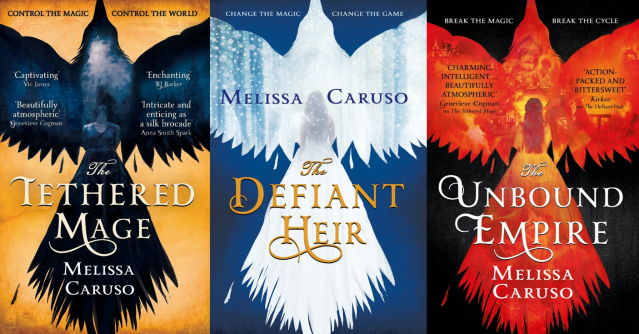
Swords and Fire Trilogy

My first honourable mention is the debut trilogy from talented fantasy author Melissa Caruso.  Featuring The Tethered Mage, The Defiant Heir, and The Unbound Empire, the Swords and Fire trilogy tells the tale of the unlikely partnership of an ambitious noble and a reckless, ultra-powerful mage, whose fates are literally bound together.  This is an amazing and inventive fantasy trilogy that pits this duo against conspiracies, a nation of terrifying magical users, and their own substantial personal issues.

Amazon


Star Wars: Alphabet Squadron trilogy by Alexander Freed

Alphabet Squadron Cover

There are some great Star Wars series out there, and one of the very best is the Alphabet Squadron trilogy by Alexander Freed.  Made up of Alphabet Squadron, Shadow Fall and Victory’s Price, this trilogy followed a group of pilots in the immediate aftermath of Return of the Jedi, as they continue to fight the brutal war to claim the universe.  This trilogy combined a gritty and complex war story with the iconic Star Wars universe to create three impressive novels that work brilliantly as an overarching series. 

Amazon


The Century trilogy by Ken Follett

Century Trilogy

A massive and comprehensive historical fiction trilogy, made up of Fall of Giants, Winter of the World and Edge of Eternity.  These books take place throughout the 20th century and follow three generations of several families as they navigate the century’s big historical events, including two world wars and the Cold War.  Some of the best historical fiction writing you are ever likely to see; this is a powerful and captivating series.

Amazon


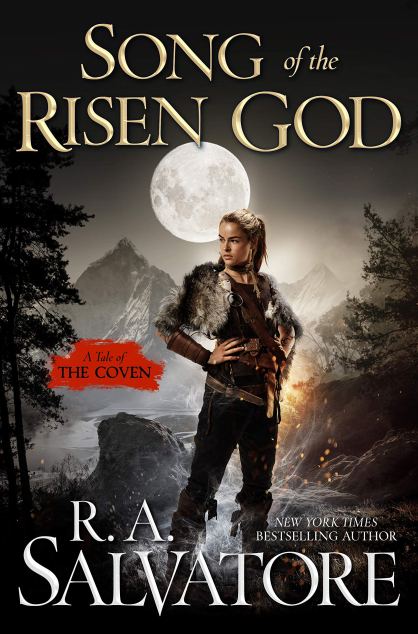
The Icewind Dale trilogy by R. A. Salvatore

Icewind Dale Trilogy

Iconic fantasy author, R. A. Salvatore, has made a career out of writing trilogies, and there were several I could have included, especially his Dark Elf trilogy.  However, I think that his debut Icewind Dale series, is his most consistently impressive trilogy.  While the first novel, The Crystal Shard is a tad rough, the second and third books, Streams of Silver and The Halfling’s Gem, more than make up for it, and produce a brilliant overall story that perfectly set up all his iconic characters for decades to follow. 

Amazon

Top Ten List:

The First Law trilogy by Joe Abercrombie
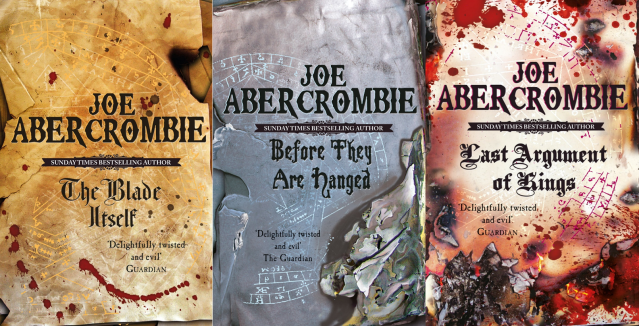
First Law Trilogy

Let us start this list off with the dark fantasy masterpiece that is Joe Abercrombie’s The First Law trilogy.  Consisting of The Blade Itself, Before they are Hanged and Last Argument of Kings, this amazing trilogy follows a group of extremely complex and damaged characters as they attempt to navigate a dark world filled with betrayal, uncontrolled ambition, and all manner of human monsters.  All three books are really incredible, with The Blade Itself providing an outstanding introduction, while Last Argument of Kings wraps everything up perfectly and leaves the reader with a troubling but memorable conclusion.  I powered through this trilogy in a very short time, and it remains one of my all-time favourite pieces of fantasy fiction.

Amazon


Warhammer 40,000: Eisenhorn trilogy by Dan Abnett
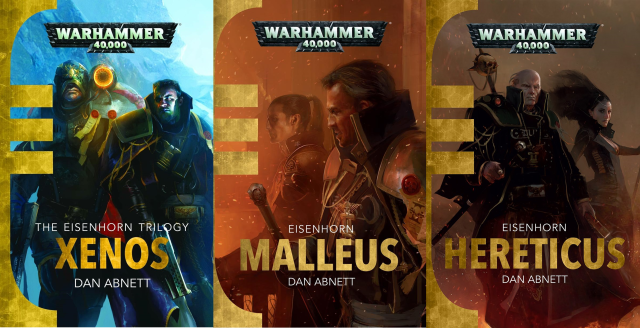
Eisenhorn Trilogy

It was inevitable that a Warhammer 40,000 trilogy was going to end up on this list at some point, and no trilogy deserves it more than the Eisenhorn books (Xenos, Malleus and Hereticus) by Dan Abnett.  Considered one of the pillars of Warhammer 40,000 fiction, the Eisenhorn books follow an Imperial Inquisitor, the titular Eisenhorn, as he attempts to root out hidden alien and Chaos threats to humanity.  However, throughout the course of the trilogy, Eisenhorn starts to use the methods of his enemies and slowly becomes corrupted by them without even noticing.  A brilliant collection of three books that spawned some intriguing sequel series, I cannot recommend this trilogy enough and it is essential readding for all Warhammer fans.

Amazon


The Empire trilogy by Raymond E. Feist and Janny Wurts
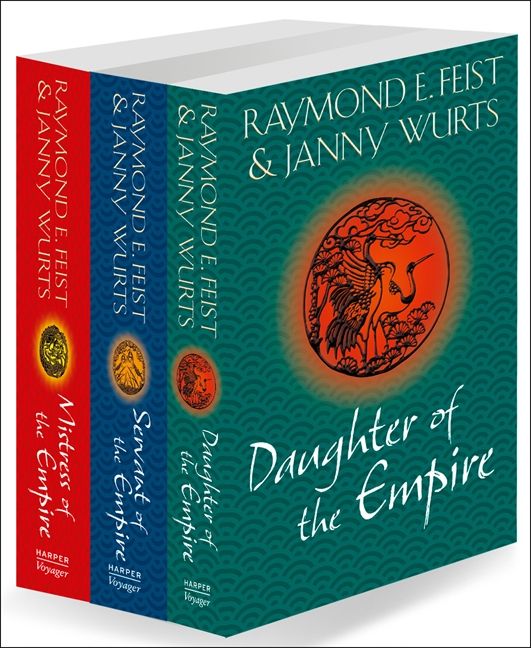
The Empire Trilogy Cover

I was spoiled for choice when it came to Raymond E. Feist and his multitude of great trilogies, from his iconic Riftwar Saga to his more recent The Firemane Saga (King of Ashes, Queen of Storms and Master of Furies).  However, I think his most consistent and impressive trilogy were The Empire books he cowrote with Janny Wurts.  Set at the same time as the Riftwar Saga, this trilogy explored an alien fantasy world with some major Japanese influences.  An intense and action-packed fantasy trilogy loaded with political intrigue, family feuds and a female ruler battling for control in a male-dominated world, The Empire books, Daughter of the Empire, Servant of the Empire and Mistress of the Empire, form an exceptional trilogy that is really worth reading.

Amazon


The Siege trilogy and Corax trilogy by K. J. Parker

Siege and Corax Trilogies

Since my original list in 2021 I have finished two awesome trilogies by K. J. Parker, The Siege trilogy and the Corax trilogy, both of which were outstanding pieces of fantasy fiction that leaned heavily on humour and cynical insights into human nature to tell their entertaining tales.  While the Siege books tell three separate stories connected to the siege of a massive city, the Corax trilogy follows the misadventures of the titular Saevus Corax, a conman battlefield salvager.  The Siege books featured three amazing reads, Sixteen Ways to Defend a Walled City, How to Rule an Empire and Get Away with It, and A Practical Guide to Conquering the World, while the Corax series featured the excellent books Saevus Corax Deals with the Dead, Saevus Corax Captures the Castle and Saevus Corax Gets Away with Murder (review to follow soon).  Both series were very exciting, clever, and featured a heavy dose of dark wit I honestly found irresistible, enough so that all six books mentioned here got five-star reviews from me.  Due to the similarities in style, comedic inclusions, and the fact they are set in the same universe, I had an extremely hard time determining which of these trilogies I enjoyed the most.  In fact, it proved so impossible to choose, I ended up calling it a tie and combined the trilogies together into a single entry.  Both trilogies are quite impressive, and you are guaranteed to have an outstanding time with all the books in them.

Amazon


The Tide Child trilogy by R. J. Barker
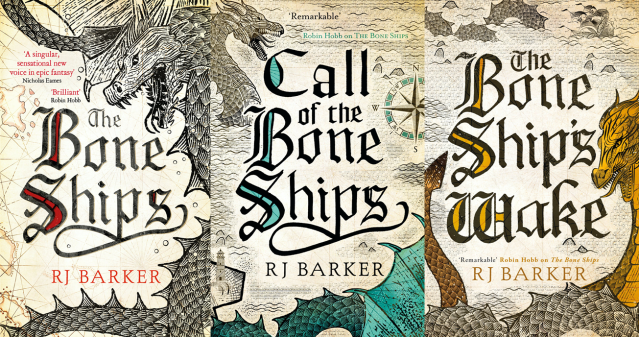
The Tide Child Trilogy

The trilogy that inspired me to write the first version of this list was the exceptional The Tide Child trilogy by rising fantasy fiction start R. J. Barker.  Barker did some incredible work here producing an intense and addictive dark fantasy series that takes place primarily on a naval vessel made from dragon bones.  With some exceptional character work, beautifully written scenes, and some truly unique fantasy features, The Tide Child series is one of the absolute best fantasy trilogies out there.  All three novels, The Bone Ships (one of my favourite books and audiobooks of 2019), Call of the Bone Ships, and The Bone Ship’s Wake, are incredible and enchanting reads, which come together to form a brilliant and highly recommend trilogy.

Amazon


Lessons of the Scholomance trilogy by Naomi Novik
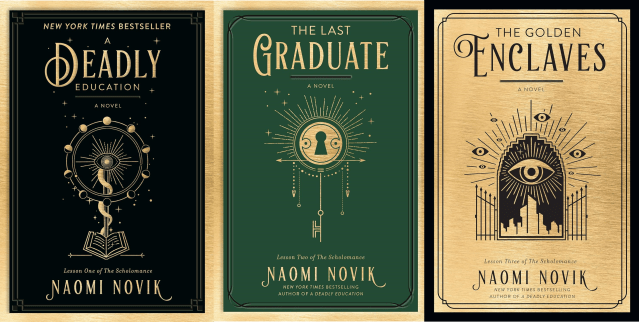
Scholomance Covers

Few trilogies impressed me more in recent years than the Lessons of the Scholomance books by veteran fantasy author Naomi Novik.  Essentially a dark take on the magical school genre, the Scholomance books follows a trouble and ultra-destructive teenage magic user who has been sent to the Scholomance, a magical school filled with harsh lessons and infested with hungry monsters.  I really got drawn into this elaborate series, especially with its unique setting, damaged characters, and fantastic stakes.  Made up of three excellent reads, including A Deadly Education, The Last Graduate and The Golden Enclaves, the Scholomance books were a very powerful series that traumatised the reader (I still haven’t recovered from The Last Graduate’s ending) and took its characters through hell and back, all while also making great use of Novik’s inventive concepts.  A brilliant, beautiful, and intense three books that you will not regret picking up.

Amazon


Legacy of the Mercenary King trilogy by Nick Martell

The Voyage of the Forgotten Cover

Out of all the exceptional fantasy trilogies I have enjoyed over the years, few have struck me as hard as the Legacy of the Mercenary King trilogy from Nick Martell.  Martell’s debut trilogy, the Legacy of the Mercenary King books follows the scion of a disgraced family who fights to uncover various conspiracies and lies inflicting his city as dark forces move to destroy everything.  Starting with The Kingdom of Liars (one of my favourite books, debuts and audiobooks of 2020), the series kept moving from strength to strength as the following two books, The Two-Faced Queen (one of my favourite books and audiobooks of 2021) and The Voyage of the Forgotten (one of my favourite books of 2022), moved the story in some outstanding directions while continuing to introduce and expand on the series’ impressive characters.  Easily one of the best trilogies from a debuting fantasy author I have had the pleasure of reading, the Legacy of the Mercenary Kings books are extremely exceptional, and a guaranteed hit for anyone looking for something fresh and addictive.

Amazon


The Age of Madness trilogy by Joe Abercrombie

Age of Madness Trilogy

Not content with only having one exceptional fantasy trilogy, Joe Abercrombie had to double down and write the epic sequel trilogy, The Age of Madness, which frankly I had no choice but to give a separate entry on this list.  Set a generation after The First Law trilogy, the three Age of Madness novels, A Little Hatred, The Trouble with Peace and The Wisdom of Crowds, contains another outstanding dark fantasy tale following a whole new group of complex and troubled protagonists.  This brilliant trilogy featured Abercrombie’s trademark character work, dark storytelling, and cynical edge, which resulted in three outstanding five-star reads.  These amazing novels form a deeply thrilling and powerful trilogy which is just as good, if not better than the original First Law novels.

Amazon


The Covenant of Steel trilogy by Anthony Ryan
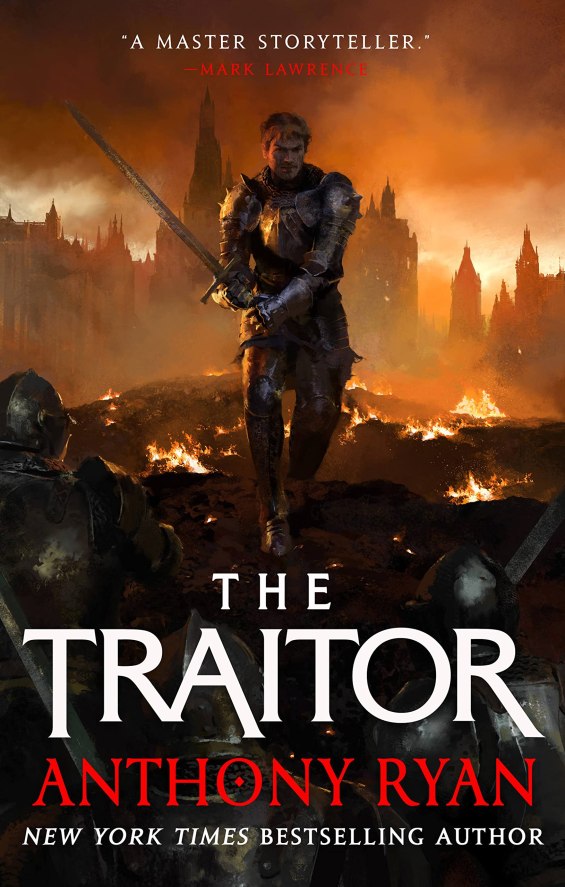
The Traitor Cover

Another brilliant fantasy trilogy that I fell in love with recently is The Covenant of Steel books by acclaimed author Anthony Ryan.  Made up of The Pariah, The Martyr and The Traitor, The Covenant of Steel books tell the tale of a bandit turned scribe who finds himself caught up in deadly, kingdom changing events, including war, religious upheaval, and supernatural calamities.  All three books in this series were quite exceptional, and I love the intricate and impressive overarching narrative they told, which drew you in with powerful storytelling, great characters, and dark twists.  I will have to go back and check out some of Ryan’s other series in the future, but for the moment, my eye is on a new trilogy of his, debuting later this year with A Tide of Dark Steel.  I have no doubt this new trilogy will be a strong contender for future versions of this list, and I cannot wait to see how Ryan’s next captivating adventure unfolds.

Amazon


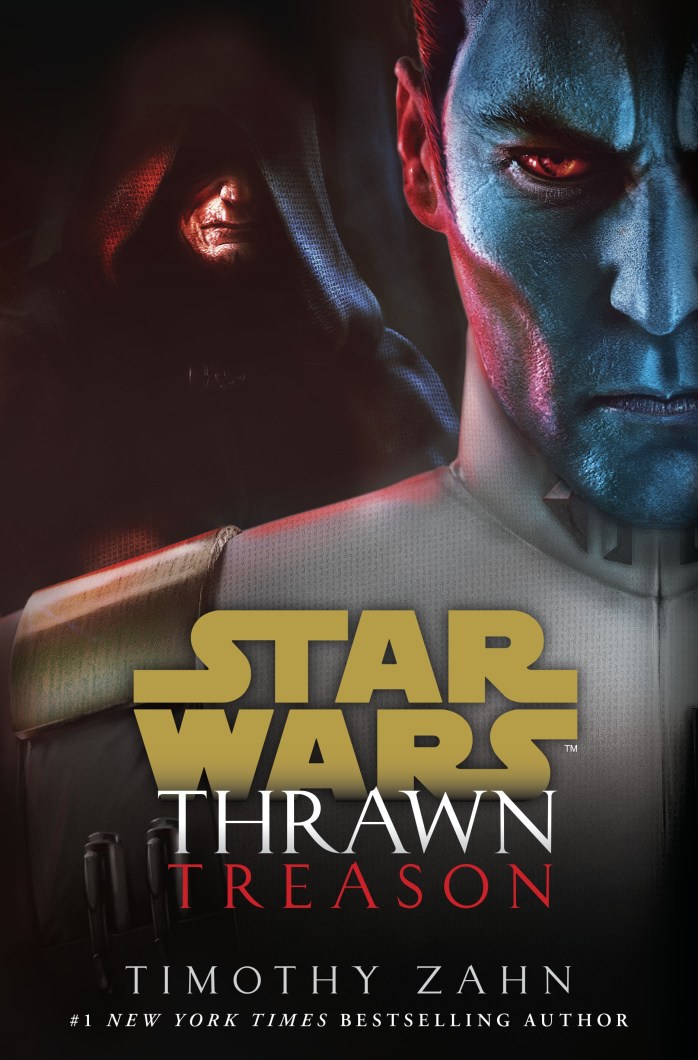
Star Wars: Thrawn and Thrawn Ascendancy trilogy by Timothy Zahn

Thrawn Ascendancy Trilogy Covers

The final entry on this list is another joint entry with the epic Thrawn and Thrawn Ascendancy trilogies by Timothy Zahn.  Bringing back his iconic extended universe character, Grand Admiral Thrawn, to the new Star Wars canon, these trilogies expand on the character’s appearances in recent shows and provide a whole new history to the character.  The first trilogy, made up of Thrawn, Alliances and Treason, provides a great coverage of Thrawn’s service to the Empire before the finale of Star Wars: Rebels, while the Thrawn Ascendancy trilogy, made up of Chaos Rising, Greater Good and Lesser Evil, dives into his complex past on his home world.  Both trilogies are very well balanced, although I would say they each have a strongest and weakest point to them.  I was initially going to feature these as two separate entries, much like I did with John Abercrombie’s books above, however, due to the way they support each other, and because they are both very similar, I felt it was better to combine them into a single entry.  All six book are very awesome, and feature some of the best novelised Star Wars space combat sequences you are likely to see.  A must read for all Star Wars fans, I really hope that Zahn comes back and writes more Thrawn books, especially after the character had his live action debut last year.

Amazon


Well, that’s the end of this list.  As you can see, I have read some awesome trilogies over the last few years, and I think this update does a great job highlighting some of the best recent additions.  I am planning to come back to this list again in a year or two, especially as there are some more outstanding trilogies, I am currently in the middle of that will easy make this list in the future.  In the meantime, let me know what your favourite trilogies are in the comments below.
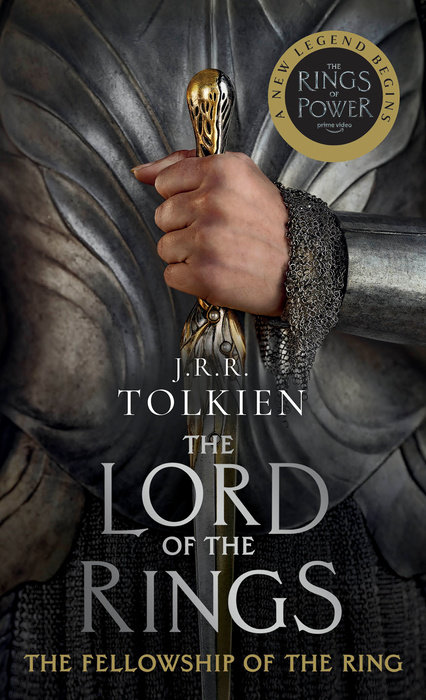
Guest Review – The Lord of the Rings Trilogy by J. R. R. Tolkien (Audiobook)

For this Throwback Thursday we have a rare treat with a guest review from my awesome editor/wife, Alex.  Long-time readers of this blog may remember that Alex previously provided some guest reviews of books like The Power and The Testaments, although she hasn’t provided us with anything for a long while (don’t worry, I’ve judged her very harshly because of this, so much judgement!!!).  Alex recently endeavoured to read all three The Lord of the Rings books, and I of course convinced her into writing a review for them.  I think her review below is pretty awesome (I may be slightly biased), and it has made me interested in listening to the latest audiobook version of The Lord of the Rings novels.

Publisher: HarperCollins and Recorded Books – Audiobook

Rating: 5 out of 5 stars

The Fellowship of the Rings

Amazon

First of all, this is not really a review of The Lord of the Rings. You don’t need me to tell you that these books are good, and Tolkien scholars have already built up mountains of literary analysis over the decades. This is instead a review of one particular way to enjoy the story: the audiobook edition recently published by HarperCollins and Recorded Books and narrated by Andy Serkis.

But I should say that this review is written from the perspective of someone who adores the Lord of the Rings movies but had never before read the books. I loved reading The Hobbit as a kid, and the cinematic masterpiece of The Fellowship of the Ring blew my 10-year-old mind. At that age, however, I found myself too impatient to enjoy the slower pace of the novel (not to mention the preliminary chapters on hobbit anthropology) but also too prideful to simply skip to ‘the good stuff’, so Fellowship was sent back to the library in frustration before Frodo had even reached the Prancing Pony. But recently watching The Rings of Power reminded me that I have been missing out on the full, glorious Tolkien canon experience.

The Lord of the Rings - The Two Towers Cover

Amazon

Regular readers of The Unseen Library will know that the Chief Librarian is constantly praising audiobooks as the very best way to absorb a story, so when I heard that there was a new edition narrated by Andy Serkis, I had to have it. And of course I loved it, as I always knew I would. The world Tolkien created is beautiful, and the themes, histories, cultures, languages, characters and journeys within defined an entire genre. The story is epic in the truest meaning of the word, but you already know that. Here instead let me answer two things you will want to know about this particular edition of the story:

  • Yes, it is unabridged.
  • Yes, he does the voices.

The first thing I checked before starting this audiobook was that it was an unabridged edition; if I were to finally read The Lord of the Rings, I would do it properly! This audiobook is actually an extension of a charity project in which Andy Serkis livestreamed himself reading The Hobbit to raise money for the NHS in the early days of the pandemic. This was followed up by an official reading of The Hobbit published later in 2020, and then The Lord of the Rings in 2021.

The Lord of the Rings - The Return of the King

Amazon

I can think of few more appropriate actors for this project than Andy Serkis. An audiobook demands a distinctive voice for each character, especially for a book with such an enormous cast of characters, and Serkis definitely delivers, seizing the opportunity to show off his acting talents. What’s more, he has made an effort to echo the voices of his fellow Lord of the Rings film alumni. For example, he affects a Scottish accent for Pippin, a West Country accent for Samwise and Merry, and a gruff Yorkshire brogue for Boromir. He gives Aragorn the same strong but quiet dignity Viggo Mortensen did, and he gives Frodo a higher, younger-sounding voice that echoes a 20-year-old Elijah Wood more than the 50-year-old Frodo of the books. And, of course, he reproduces the definitive portrayal of Gollum for which he has been so celebrated. As a fan of the films, I greatly appreciated these choices as it meant I didn’t have to recalibrate my imagining of the characters too greatly. It would have been rather distracting if, say, Merry sounded Scottish and Pippin didn’t, and I had to concentrate all the more simply to work out who was speaking. Instead I was able to relax and focus on simply enjoying the story.

Andy Serkis Picture 1

But while the voices are clearly based, for the most part, on those of the film actors, the performances are wholly informed by the text, and Serkis has made it his own. For example, whereas Ian McKellen almost whispered Gandalf’s final command, ‘Fly, you fools!’, Serkis performs the line as if shouted while falling from the great height of the Bridge of Khazad-dum. He brings the poetic prose and dialogue to life with amazing energy and passion. He uses a narrative voice that perfectly fits the text and adjusts the pacing of the telling according to each scene, keeping the story flowing and keeping the listener totally captivated. Each of the three books is a little over 20 hours long, but with the combined storytelling skills of Tolkien and Serkis mesmerising me I was never eager to hit the pause button and get back to real life, so it took only a few days for me to get through each book.

Andy Serkis Picture 2

Howard Shore’s brilliant film score sadly isn’t featured; instead, the audiobook relies wholly on the talents of Andy Serkis. The films were very sparing in their use of the songs Tolkien wrote, which made Pippin’s haunting ballad in The Return of the King all the more impactful. I was delighted that the songs are here performed in full and in the voices of their singers—no mean feat! I’m sure Serkis exhausted himself playing the boisterous Tom Bombadil in particular, whom I had always found quite tiresome, but Serkis gives him a mysterious charm. The songs are a core element of the books, giving us glimpses into Middle Earth’s cultures and histories that aren’t otherwise shared in the prose, and I’m so glad they’ve been given such a treatment.

Andy Serkis Picture 3

There are a few small drawbacks to an audio edition of these books. A few times I would have wanted to flip back a few pages to double-check my understanding of certain details (‘Hang on, was that the name of a person or a river?’), but that wasn’t all that easy to do without losing my place, at least not with the media software I was using. The other thing missing, because it could not possibly be reproduced in audio despite Andy Serkis’s considerable talent, is the maps of Middle Earth which usually feature in any Tolkien book. As a kid reading The Hobbit I would be constantly checking the map to trace the hero’s journey through the world. I can highly recommend the interactive map at lotrproject.com as a companion piece to this audiobook for those who wish to do the same.

The Lord of the Rings, as read by Andy Serkis, is the ultimate audiobook for fans of the films. I can highly recommend it to those who have never read the books before, and I’m sure it would be a similarly excellent experience for those who have and who would like to revisit the canon after watching The Rings of Power. I can only hope that Serkis completes the series with a reading of The Silmarillion and other supplementary works by Tolkien, because I am so in love with this telling of the story of Middle Earth that the 75-odd hours’ worth already recorded simply isn’t enough. I am so glad to finally say that I have read The Lord of the Rings; I only wish I had done it sooner.

A Practical Guide to Conquering the World by K. J. Parker

A Practical Guide to Conquering the World Cover

Publisher: Orbit (Trade Paperback – 11 January 2022)

Series: The Siege – Book Three

Length: 352 pages

My Rating: 5 out of 5 stars

Amazon

2022 is off to a very good start for me, especially as I have already read an amazing novel that quite frankly may end up being one of my favourite books of the year.  This awesome read was the third and final book in K. J. Parker’s clever and compelling The Siege series, A Practical Guide to Conquering the World.

Over the last few years, I have been having an incredible time reading the incredible and deeply entertaining fantasy Siege series from K. J. Parker.  Parker, a pseudonym for bestselling author Tom Holt, has come up with something very special with The Siege series that combines an interesting new fantasy world with some brilliant humour and intriguing insights into human nature and reactions.  The first entries in The Siege series, Sixteen Ways to Defend a Walled City and How to Rule an Empire and Get Away with It, were both exceptional reads and they were among my absolute favourite books of 2019 and 2020 respectfully.  As such I have been eagerly waiting for a long time, and while I was initially disappointed that A Practical Guide to Conquering the World was delayed until the start of 2022, it ended up being such a great read and worth the wait.

The Siege series is set in an alternate fantasy world that bears some interesting similarities to ancient Europe.  The first book in the series, Sixteen Ways to Defend a Walled City, introduces the Robur Empire, a Roman-esque empire that is destroyed at the start of the novel by a coalition of enemies.  The one exception to this destruction was the Robur capital, simply known as The City, which was able to survive thanks to the actions of a military engineer and conman who was able to come up with some very inventive defences.  The second book, How to Rule an Empire and Get Away with It, was set a few years later and followed a new protagonist, an actor and playwright who is forced to impersonate the City’s figurehead after his death to keep the population’s morale and unity up to keep fighting the ongoing siege.  However, this second protagonist eventually takes control of the city and manages to evacuate it, leading the people to a new life.  The third and final book, A Practical Guide to Conquering the World, occurs during and beyond the events of both the first and second novel (if these books occurred the way they are portrayed) and features a new protagonist in a different land.

Aemilius Felix Boiannes the younger is a minor diplomat and translator assigned to the Robur embassy in the mighty Echmen Empire.  Content to live a relatively blameless life away from the people that wronged him, Felix’s life is forever changed when news of the fall of Robur reaches the Echmen.  Almost killed by the Echmen for no longer having a country, Felix’s life is only spared thanks to a debt owed by barbarian princess.  Determined to no longer live by the whims of others, Felix embarks on an ambitious plan that will reshape all of history.

When the Echmen attempt to enslave the princess’s people, Felix saves her and leads her out of Echmen territory.  Able to convince his new friend to unite the various barbarian tribes, Felix utilises his knowledge as a scholar to lead them to victory over the Echmen.  However, his ambition is not limited to conquering the greatest empire in existence, Felix is determined to take over the entire world and he already has all the tools to do so.  However, not even Felix is able to foresee all the consequences of his actions, and soon the entire world will be turned upside down.  For good or for bad, the story of Felix, the most influential and dangerous man in history, is about to begin.

Well damn, now this was one hell of a read.  Parker has come up with another exceptional read here with A Practical Guide to Conquering the World, combining a brilliant and clever story with incredible humour and an entertaining and compelling look into the human psyche.  Filled with constant laughs, intriguing developments and a truly addictive narrative, this book got an easy five-star rating from me and is near impossible to put down once you start it.

I have had a lot of fun with the great stories that Parker comes up with for this cool trilogy, especially as they are exceedingly entertaining and very unpredictable, even if, due to their complexity and cleverness, they are a bit hard to explain in my inevitable glowing reviews.  Like the rest of the series, A Practical Guide to Conquering the World is a standalone novel that can be read either by itself or as a continuation of the first two books in the series.  This novel is told in the chronicle style and tells the autobiography of the protagonist, Felix, a translator and scholar who finds himself in all manner of trouble when his nation is destroyed while he is in a foreign land.  Able to survive thanks to a recent good deed, Felix is soon dragged into the politics of the nation he is trapped in and attempts to stop the Chinese inspired Echmen empire from destroying and enslaving several neighbouring barbarian tribes.  Forced to put his scholarly knowledge to the test, Felix devises multiple brilliant and unpredictable plans to not only manipulate everyone around him, but to also defeat a massive empire and bend all its power to his ultimate goal of world domination and beyond.  This story goes in some extremely fun directions, and you honestly will not be able to put it down once you start as you become engrossed in seeing what elaborate idea Felix will come up with next.  There are some fantastic ploys and captivating twists scattered throughout this novel, and it is fascinating to see this nobody slowly gain more and more power thanks to his wit and ability to understand people.  I had an outstanding time getting through this story and it is extremely hilarious and very exciting.

A Practical Guide to Conquering the World is part of a larger series which switches protagonists with each entry, providing a new and unique tale of the aftermath of the siege of the City.  This third novel starts around the same time as the first book, Sixteen Ways to Defend a Walled City, and covers several years, going past the events of the second book, How to Rule an Empire and Get Away With It.  It is really interesting to see how this third book ties into everything, especially as the protagonist only has second-hand knowledge of the events of the prior two novels and, thanks to several clever inclusions in this book, as well as the unreliability of the narrators of the other entries, you’re not even certain those events actually occurred.  While new readers don’t need to have any knowledge of the other Siege novels to enjoy A Practical Guide to Conquering the World, I had a lot of fun seeing the mentions and discussions about the events of these prior books, especially as the protagonist is very disbelieving about what he hears.  The inclusion of a recurring character from the past book increases the connection to the rest of the series, although as she is also rather cagey, you have no idea how reliable her recollection of events is.  I loved how compelling this loosely connected series turned out to be, and it was a lot of fun to see how the entire funny saga come together into one entertaining collection.

Just like with the first two books in the series, A Practical Guide to Conquering the World is set around a single protagonist, with the story reflecting their personal account of what they experienced.  This new protagonist, Felix, is another entertaining and interesting central character, a former soldier who, after making some big mistakes and paying the cost for them, is banished to a diplomatic post in another country.  This, and his ability for languages, ironically ensures that he survives the destruction of his homeland and places him in a unique position for his goals.  I personally really enjoyed the cool story that Parker places around Felix and while there are some notable similarities between him and the other protagonists of the Siege books, mainly the fact that he is a conniving and selfish person with impressive insights into human nature and reaction, I think that there are enough differences to keep readers of the series happy.  I loved the focus on his experience with languages and scholarly research, which he uses to great effect throughout the book, manipulating translations for his advantage and then coming up with obscure or historical solutions to the various problems he faces.  Watching him turn this unique knowledge to his advantage, especially once he is inadvertently placed in the centre of world-shaping events, is really cool, and I loved seeing him succeed in his goals.  Parker adds in a great attempted redemptive arc around Felix, which serves as a surprising driving force for much of what he does.  However, readers do have to take Felix on face value, as, like the previous two protagonists of the Siege books, Felix is a bit of an unreliable narrator who may or may not be altering the story to make himself sound better to history.  The final stinger of the book, which hints at the falseness of Felix’s account, is a clever and amusing touch from Parker, and you will come away wondering just how much you believe this character.

Easily the highlight of this book is the amazing humour that Parker has laced his impressive story with.  Parker has an incredible and wicked ability with subtle comedy which permeates the entirety of A Practical Guide to Conquering the World thanks to the unique abilities that occur within.  Much of this humour is derived from the eccentric protagonists’ impressive insights into the human mind, which allows him to manipulate events and people to his favour.  Thanks to some great setup and some outrageous events, the readers get to see this protagonist subtly manipulate everyone, and his explanations for how he gets away with it and the subsequent reactions are extremely amusing.  At the same time, Parker also satirises large parts of the human experience and culture, including the inefficiencies of bureaucracy, the inevitability of betrayal in the name of survival, the herd mentality of groups of people, the unpredictability of starting your own religion, and the inherent suspicion that everyone has inside them.  All of this comes together quite brilliantly throughout the book, and you will honestly be chuckling straight from the beginning, especially as the first joke, about a massive bureaucracy nearly killing the wrong person due to a case of mistaken identity, is very cleverly put together.

Overall, K. J. Parker really did not disappoint with the third and final entry in his hilarious and impressive Siege trilogy.  A Practical Guide to Conquering the World was just as fun and clever as the first two books, and I had a brilliant time reading this captivating fantasy novel.  Containing a wildly inventive narrative set around a compelling protagonist, you will fall in love with this outstanding book, especially as Parker’s comedic inclusions will keep you laughing.  A Practical Guide to Conquering the World is easily going to be one of the best books of 2022 and if you have not checked out The Siege series yet, do yourself a favour and dive into these hilarious and addictive books.

Amazon

Top Ten Tuesday – My Favourite Literary Trilogies

Top Ten Tuesday is a weekly meme that currently resides at The Artsy Reader Girl and features bloggers sharing lists on various book topics.  While the official topic for this week’s Top Ten Tuesday required participants to list the 10 characters they would love an update on, I have decided to do something a little different, and instead will be listening my favourite literary trilogies.

Trilogies in literature are a long-running and deeply fun tradition that packs an epic connected tale, into three consecutive novels.  There are some truly amazing trilogies out there, from the classics, like The Lord of the Rings, to some recent trilogies that I have been deeply enjoying.  Indeed, 2021 alone has seen the end of several epic and outstanding literary trilogies.  I just finished one particularly incredible trilogy, and it got me thinking about some of the other amazing three-book series I have read.  That inspired me and I thought I would take this opportunity to try and list my 10 favourite novel trilogies of all time.  I have had the great pleasure of reading some truly awesome and exciting trilogies over the years, and I feel this is the perfect time to highlight them, especially if anyone is looking for a new trilogy/series to get addicted to.

This proved to be a fun list to pull together, especially as I had a great wealth of potential trilogies to feature on this list.  To be eligible for this list, the proposed trilogy must consist of three, inter-connected novels.  I only included series that were intended to end after three novels, rather than by happenstance, so that means that series like The Gentleman Bastards will not be featured (it technically has a fourth novel on the way).  I also excluded trilogies that I have not yet completed, even if I have already read and deeply enjoyed the first two novels.  This is because I really need to see how the third book turns out, as a bad third entry can easily spoil a trilogy that starts out with some fantastic novels.

Even with these restrictions, I ended up with a descent list of trilogies, which took me a little while to cull down and which resulted in a good honourable mentions section.  I am judging these trilogies on several factors, including how complete their story is, how well connected the novels are, and whether the component novels provide good introductions, conclusions and connections to the other books in the trilogy.  I am pretty happy with how this latest Top Ten Tuesday turned out, and I think that perfectly represents the best trilogies that I have so far finished.

Honourable Mentions:

The Wounded Kingdom trilogy by R. J. Barker

Wounded Kingdom Trilogy

A fun and awesome dark fantasy trilogy that follows an assassin as he finds himself fighting for the future of a kingdom.  Featuring a great first novel (Age of Assassins), a powerful middle entry (Blood of Assassins) and an epic ending (King of Assassins), this debut series from R. J. Barker was pretty damn awesome and really worth a read.


DiscworldMoist von Lipwig trilogy by Terry Pratchett

Moist von Lipwig Trilogy

Terry Pratchett’s exceptional Discworld series featured several interconnected sub-series and standalone reads, but only the Moist von Lipwig books can really be considered a trilogy.  Made up of Going Postal, Making Money and Raising Steam, these are some of Pratchett’s final books, and have a different, but still entertaining, writing stye to them.  While I love these three novels, I have decided to leave this trilogy as an honourable mention due to its potential premature ending and its complex status within the larger Discworld series.


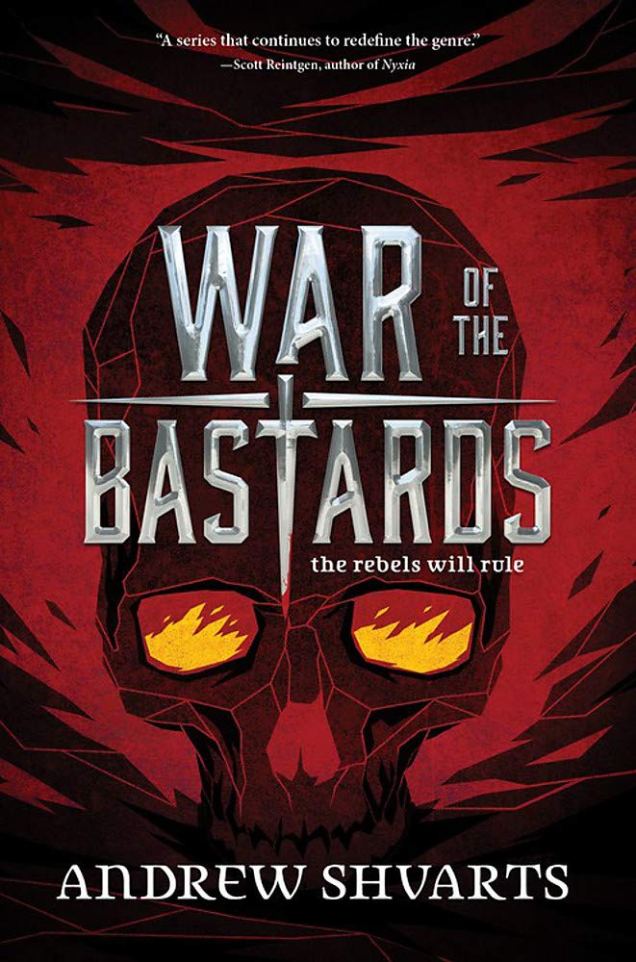
Royal Bastards trilogy by Andrew Shvarts

Royal Bastards Cover

A fantastic and clever young adult fantasy series that followed the illegitimate children of treacherous nobles as they try to right the wrongs of their parents.  Consisting of Royal Bastards, City of Bastards and War of the Bastards, this is an impressive and captivating trilogy with some dark storylines and complex characters.


The Hunger Games trilogy by Suzanne Collins

Hunger Games Trilogy

I had to include the iconic Hunger Games novels by Suzanne Collins on this list.  Made up of The Hunger Games, Catching Fire and Mockingjay, this is a great and fast-paced dystopian series that I have read a few times now.  All three novels are a lot of fun, although the first book is probably the best.  A recent prequel novel, The Ballad of Songbirds and Snakes came out last year and is also worth a read.

Top Ten List:

The First Law trilogy by Joe Abercrombie

First Law Trilogy

Let us start this list off with the dark fantasy masterpiece that is Joe Abercrombie’s epic and exceptional The First Law trilogy.  Consisting of The Blade Itself, Before they are Hanged and Last Argument of Kings, this amazing trilogy follows a group of extremely complex and damaged characters as they attempt to navigate a dark world filled with betrayal, uncontrolled ambition, and all manner of monsters.  All three books are pretty incredible, with The Blade Itself providing an outstanding introduction, while Last Argument of Kings wraps everything up perfectly and leaves the reader with a troubling but memorable conclusion.  I powered through this trilogy in a very short time, and it remains one of my all-time favourite pieces of fantasy fiction.


Star Wars: Thrawn trilogy by Timothy Zahn

Thrawn Trilogy

Next, we have an amazing and complex Star Wars series by the legendary Timothy Zahn, who brings back his iconic extended universe character, Grand Admiral Thrawn.  Based in the new Disney canon, the Thrawn trilogy seeks to expand on the character’s appearances in Star Wars: Rebels and presents a complex and intriguing picture of this master tactician.  Featuring Thrawn, Alliances and Treason, this is a very well balanced and fascinating trilogy that is a must read for all Star Wars fans and is probably worth checking out before the character’s live action debut next year.  I was also tempted to include Zahn’s Thrawn Ascendancy novels (made up of Chaos Rising, Greater Good and Lesser Evil), but I am only halfway through the final book, and I really want to see how it concludes first.


The Icewind Dale trilogy by R. A. Salvatore

Icewind Dale Trilogy

Iconic fantasy author, R. A. Salvatore, has made a career out of writing trilogies, and there were several I could have included, especially his Dark Elf trilogy.  However, I think that his debut Icewind Dale series, is his most consistently impressive trilogy.  While the first novel, The Crystal Shard is a tad rough, the second and third books, Streams of Silver and The Halfling’s Gem, more than make up for it, and produce a brilliant overall story.  This series expertly introduces several of Salvatore’s key protagonists (who he is still writing about to this day) and sets up some outstanding plot points.  High fantasy at its very best, The Icewind Dale trilogy is an intense, classic trilogy that I can read again and again.


The Century trilogy by Ken Follett

Century Trilogy

Another author with some big series under his belt is talented thriller and historical fiction author Ken Follett.  My personal favourite Follett series is The Century trilogy, a massive and comprehensive historical fiction trilogy, made up of Fall of Giants, Winter of the World and Edge of Eternity.  This book takes place throughout the 20th century and follows three generations of several families as they navigate the century’s big historical events, including two world wars and the Cold War.  Some of the best historical fiction writing you are ever likely to see; this is a powerful and captivating series.


The Tide Child trilogy by R. J. Barker

The Tide Child Trilogy

The trilogy that inspired me to write this list was the exceptional The Tide Child trilogy by rising fantasy fiction start R. J. Barker.  Barker did some incredible work here producing an intense and addictive dark fantasy series that takes place primarily on a naval vessel made from dragon bones.  With some exceptional character work, beautifully written scenes, and some truly unique fantasy features, The Tide Child series is one of the absolute best fantasy trilogies out there.  All three novels, The Bone Ships (one of the best books and audiobooks of 2019), Call of the Bone Ships, and The Bone Ship’s Wake, are exceptional and enchanting reads, which come together to form a brilliant and highly recommend trilogy.


Planetside trilogy by Michael Mammay

Planetside Cover

Another great trilogy I finished this year was Michael Mammay’s outstanding Planetside science fiction thriller trilogy.  Consisting of Planetside (one of the best books of 2018), Spaceside and Colonyside (one of the best books and audiobooks from the first half of this year), this epic trilogy follows a cynical military veteran who is dragged in to investigate a series of conspiracies, which continually forces him to commit genocide.  One of the cleverest series I have read in recent years, Mammay is an exceptional author, and I had a lot of fun getting through this trilogy.


The Age of Madness trilogy by Joe Abercrombie

Age of Madness Trilogy

Not content with only having one exceptional fantasy trilogy, Joe Abercrombie had to double down and write the epic sequel trilogy, The Age of Madness.  Set a generation after The First Law trilogy, the three Age of Madness novels, A Little Hatred, The Trouble with Peace and The Wisdom of Crowds, contains another outstanding dark fantasy tale following a whole new group of complex and troubled protagonists.  This brilliant trilogy has only just come to an end and featured three outstanding five-star reads.  These amazing novels form a deeply thrilling and powerful trilogy, and The Age of Madness books are some of the best pieces of fantasy fiction of the last three years.


The Empire trilogy by Raymond E. Feist and Janny Wurts

The Empire Trilogy Cover

I was spoiled for choice when it came to Raymond E. Feist and his multitude of great trilogies, from his iconic Riftwar Saga to his current The Fireman Saga (King of Ashes and Queen of Storms).  However, I think his most consistent and impressive trilogy was The Empire trilogy he cowrote with Janny Wurts.  Set at the same time as the Riftwar Saga, this trilogy explored an alien fantasy world with some major Japanese influences.  An intense and action-packed fantasy trilogy loaded with political intrigue, family feuds and a female ruler battling for control in a male-dominated world, The Empire books, Daughter of the Empire, Servant of the Empire and Mistress of the Empire, form an exceptional trilogy that is really worth reading.


Star Wars: Alphabet Squadron trilogy by Alexander Freed

Alphabet Squadron Cover

Another exceptional trilogy that finished this year was the amazing Star Wars: Alphabet Squadron series by Alexander Freed.  Made up of Alphabet Squadron, Shadow Fall and Victory’s Price, this trilogy followed a group of pilots in the immediate aftermath of Return of the Jedi, as they continue to fight the brutal war to claim the universe.  This trilogy combined a gritty and complex war story with the iconic Star Wars universe to create three impressive novels that work brilliantly as an overarching series.  All three books are really good, although Victory’s Price proved to be an exceptional conclusion that brought everything together perfectly.  A great read for Star Wars fans looking for some darker tie-in content.


Swords and Fire trilogy by Melissa Caruso

Swords and Fire Trilogy

The final entry on this list is the debut trilogy from talented fantasy author Melissa Caruso.  Featuring The Tethered Mage, The Defiant Heir, and The Unbound Empire, the Swords and Fire trilogy tells the tale of the unlikely partnership of an ambitious noble and a reckless, ultra-powerful mage, whose fates are literally bound together.  This is an amazing and inventive fantasy trilogy that pits this duo against conspiracies, a nation of terrifying magical users, and their own substantial personal issues.  I deeply enjoyed this cool trilogy and I really need to start reading the sequel series Caruso is currently working on.


Well, that’s the end of this list.  As you can see, I have read some awesome trilogies over the years, and I think this list does a great job highlighting them all.  I will probably end up coming back to this list at some point in the future, especially as there are some outstanding trilogies, I am currently in the middle of that will easy make this list in the future.  In the meantime, let me know what your favourite trilogies are in the comments below.
The Bone Ship’s Wake by R. J. Barker

The Bone Ship's Wake Cover

Publisher: Orbit/Hachette Audio (Audiobook – 28 September 2021)

Series: The Tide Child Trilogy – Book Three

Length: 20 hours and 49 minutes

My Rating: 5 out of 5 stars

Amazon     Book Depository

One of the fastest rising fantasy authors in the world today, the brilliant and exceedingly talented R. J. Barker, brings The Tide Child trilogy to an end in epic fashion with the exceptional and powerful The Bone Ship’s Wake, one of the best fantasy reads of 2021.

There have been some really impressive fantasy authors producing great reads over the last few years, but in my opinion none have been as consistently amazing and addictive as R. J. Barker.  Barker burst onto the scene in 2017 with Age of Assassins, the first book in The Wounded Kingdom trilogy, and soon followed it up with two additional outstanding reads, Blood of Assassins and King of Assassins.  While I have a lot of love for this brilliant trilogy, especially the final novel King of Assassins, Barker has since eclipsed it with his second series, The Tide Child trilogy.

The Tide Child trilogy is a grim and powerful series that follows a unique set of characters in an exceptional, character driven, adventure tale.  The Tide Child books are set in a dark fantasy world, primarily made up of deadly oceans and seas which have produced a harsh breed of warring humans.  The inhabitants of this world traverse these oceans in ships made of the harvested bones of sea dragons, known as the keyshans, the creation of which led to the mass extinction of these dragons.  The first novel in this series, The Bone Ships, set the scene for this great series and introduced the primary characters as they set out on an epic quest to hunt the last sea dragon aboard the boneship, Tide Child.  This was an exceptional read that ended up being one of the best books and audiobooks of 2019.  Barker followed this up in 2020 with Call of the Bone Ships, a great sequel that saw the crew of Tide Child engage in a rebellion against the established order.  Call of the Bone Ships ended on a pretty massive cliffhanger that set the scene for an exceptional and stunning conclusion.  As such, the final entry in this trilogy, The Bone Ship’s Wake, was one of my most anticipated reads of 2021, and Barker did not disappoint here, as he produced an epic and captivating read.

It has been a year since the climactic battle that saw the boneship Tide Child and the rebel fleet barely escape the wrath of the Hundred Isles after being forced to abandon shipwife Meas Gilbryn.  In that time, loyal deck keeper Joron Twiner has taken on the mantle of leadership for the rebel black ships and turned them into a fleet of marauding pirates.  Now known by all as the feared Black Pirate, Joron constantly raids the Hundred Isles, determined to weaken its fleet and devastate its defences for an invasion from the rival Gaunt Islands, Joron’s only true priority is to discover the location of his lost commander and rescue her.

After a particularly vicious raid nearly sees the destruction of Tide Child, Joron is only more determined to find the shipwife before the entire fleet is lost.  With time running out for Joron thanks to the insidious keyshan’s rot that is slowly eating away at his body, Joron embarks on an ambitious plan to find and rescue Meas by returning to the most dangerous place in the world, the capital city of the Hundred Isles.

Accompanied by a small crew, Joron hopes to infiltrate the city and force Meas’s location from the ruthless rule of the Hundred Isles, Meas’ estranged mother.  However, all Joron will discover is blood and betrayal, as dangerous forces seek to take control of the oceans for their own nefarious ends.  Worse, Joron must continue to struggle with the dangerous legacy of the magical gullaimes, who believe that he is the Caller, the man who can sing up the keyshans and use them to destroy the world.  Will Joron and his crew succeed against impossible odds, or will the final voyage of the Tide Child result only in the death of everyone and everything Joron loves and cares about?

Well damn, now that was an incredibly awesome book.  I have said time and time again that Barker seems to get better with every book he writes, and I honestly believe that The Bone Ship’s Wake is the very best so far.  The Bone Ship’s Wake has an exceptional narrative filled with emotion, tragedy and powerful action on the high seas, which perfectly wraps up this epic series and provides the reader with an emotional and captivating goodbye.  Easily one of the best books of the year, The Bone Ship’s Wake gets a full five-star rating from me.

This final entry in The Tide Child trilogy has an extremely powerful, character-driven narrative to it, which perfectly continues the epic tales told in the preceding novels while also providing an extremely satisfying and moving conclusion to the entire series.  Told nearly exclusively from the perspective of central protagonist Joron Twiner, The Bone Ship’s Wake starts one year after Call of the Bone Ships, with some major changes occurring to the world and the characters during this period.  Told in three parts, this book has a bit of a slower introduction, which Barker uses to full effect to highlight the situation the characters find themselves in, while also reintroducing all the key elements of the fantasy world.  The first part of the novel is primarily used to show how far Joron has come, placing him in command of a ship as he faces off against his enemies.  This outstanding introduction sets up several key storylines while also featuring a tense and detailed chase out on the seas, with deadly and monstrous consequences.  The second part of the novel follows a desperate Joron, after leaving his ship and most of his crew behind, as he embarks on a dangerous all-or-nothing quest to save his shipwife and bring her back to the fleet.  This second part is loaded with some major dramatic moments, intrigue, treachery, and politics, which does an outstanding job expanding the already captivating storylines, while also serving as a great buffer from the nautical heavy start and end of the novel.  The story goes in some amazing directions here, and Barker throws in some captivating and surprising twists that alter everything you thought about how the story would end.

All this leads up to the conclusion of the novel, which sees the surviving primary characters caught in a desperate situation on the high seas.  After some daring actions and clever plans which have some unfortunate costs, all the characters are perfectly set up for their final places the series’ brilliant storyline.  This last part of the novel is deeply thrilling and powerful, and it honestly proves impossible to put it down as you wait to see how everything comes to an end.  Barker really amps up the desperation and hopelessness during this part of The Bone Ship’s Wake, as the crew of Tide Child and its allies are pressed in some destructive naval actions.  It all leads up to one final gambit, with the lives and the hopes of the survivors held in the balance.  This epic conclusion is extremely dramatic and powerful, with some big sacrifices and major character moments that will leave you breathless and deeply moved.  I thought that this amazing conclusion perfectly wrapped up the entire series, with all the key storylines and character arcs coming to a very satisfying and emotional end.  I loved every single second I spent getting through this exceptional story, and every brilliant turn, clever revelation and powerful character moment is still firmly engrained in my mind.

I really need to highlight Barker’s fantastic writing style, which brings this brilliant story to life.  It has been an absolute pleasure to see Barker grow as an author throughout the last few years, especially as he utilises more and more complex techniques with each passing novel.  The Bone Ship’s Wake is a particularly good example of this, as an amazingly well paced novel that slowly builds momentum as the story requires, with the intensity of the book turning on a dime, from the deep slowness of sailing to the fast pace of an epic nautical battle.  This is often accentuated by the author’s great use of repetition, with key sentences throughout the novel repeated multiple times to build up tension or to highlight the rapidity of duty aboard a ship.  This pacing and repetition almost gives The Bone Ship’s Wake a pulse, and you can feel the rhythmic build towards the high points of a novel.

I was once again deeply impressed by Barker’s incredible ability to produce a nautically focused novel.  Nautical novels require an insane amount of detail and dedication to work, and Barker has done that in spades throughout The Tide Child trilogy.  Thanks to Barker’s ultra-detailed writing style, life aboard the boneships is brought to life for the reader, showcasing every single action of the crew or movement of the ship.  The reader gets an amazing sense of what is happening aboard Tide Child, and you feel that you are aboard the ship itself, watching the crew in action.  This works particularly well during some of the intense, high-concept naval battles, where the actions of multiple ships are followed, ensuring that the reader gets a great idea about what is going on.  Barker also works in a lot of ship details that are unique to the series’ fantasy universe, allowing for a much more distinctive and compelling time at sea.  The combination of traditional nautical elements and fantasy features, such as ships crafted from dragon bone, ultra-powerful bolt throwers, wind calling bird men and the various monsters stalking the deeps is particularly striking and really helps this cool trilogy stand out.  This is honestly one of the best series set on a ship you are ever likely to read, and I am still so impressed with how well Barker was able to feature it in his novels.

I also must highlight the cool, dark fantasy world that Barker has created for this series.  Throughout this trilogy Barker has put an amazing amount of work into crafting this complex and deadly fantasy world, containing hostile oceans with only a few small islands, where the inhabitants are forced to fight on ships made from dragon bone.  I have had an outstanding time exploring this complex and compelling landscape, and I have a lot of love for some of the more unique details, including the enslaved gullaime (bird-like windtalkers), crazy monsters, the gender reversed human society which includes subtle changes like ships being consider male by their crews, and the constant naval warring and raiding such a landscape has created.  Barker does some very interesting expansions in this final entry, resulting in some substantial changes and journeys to new locations within the world.  There are some cool new creatures, including a mist-spewing kraken, as well as some fascinating and intense developments amongst the established creatures, including the gullaimes and the keyshans.  I similarly appreciated the way Barker examined the troubles with his female dominated society, especially as the motivations for some of the antagonists are closely tied into it.  Overall, I had a wonderful time with my last exploration of this unique and dangerous setting, and I cannot wait to see what sort of distinctive setting Barker comes up with next, although I already know it will be pretty incredible.

You cannot talk about any novel in The Tide Child series without praising the outstanding character work that Barker has done.  Each of these novels has done an exceptional job of building up all the major characters, from the central point-of-view perspective, to the various supporting characters found upon the central ship setting.  I have deeply enjoyed seeing each of these characters develop into better and well-rounded figures as this series has progressed, and Barker makes sure to give them an impressive send-off in this final entry.  Pretty much all the key surviving characters get some great moments throughout The Bone Ship’s Wake, and most of their associated storylines come to an end, one way or another.  This naturally results in some intense emotional moments throughout the novel, especially as readers of this series will have become deeply attached to a lot of these characters, and you will not be prepared for how some of these characters go out!

Just like in the previous two novels, the central focus of The Bone Ship’s Wake was on Joron Twiner, the deck keeper (first mate) of Tide Child, who has grown from scared drunkard to experienced officer within the course of the series.  Twiner has gone through an incredible amount during the last two books, and when we first see him again in The Bone Ship’s Wake, he is a very different person.  Joron has since lost a leg and is now infected by the keyshan’s rot, an incurable disease that is slowly eating him alive.  Despite this, he has finally taken on command of his vessel and an extended fleet and fashioning himself a new persona, that of the Black Pirate, a notorious killer of ill-repute.  This is a fascinating change for Joron, and it is absolutely amazing to see how the differences between this character and the one we first saw in The Bone Ships.  While this change is substantial, it has been well built up in the last few books, and it was great to finally see Joron take on the command he was always meant to have.  Despite this, Joron still has some uncertainty dogging his steps that proves great to explore, especially as he is hesitant to risk the lives of those under his command on his missions.  Joron is also forced to deal with the insane prophecy and power hanging over his head, as he is forced to contemplate his ability to summon the sea dragons and potentially end the world.  Throw in his unwillingness to take on the role of his mentor, and the extreme guilt he feels for all the lives he has taken in her name since the conclusion of the last book, and you have a quite a conflicted figure, desperate to do anything to redeem himself.  This makes for some amazing character moments, and I really appreciated the sheer amount of development that went into Twiner in this novel.  A lot of Twiner’s storylines come full circle in this novel, and there are some extremely satisfying moments  between him and the other characters in the novel.  I deeply enjoyed this flawed and uncertain protagonist throughout this series, and Baker ensures that he is given a fitting and powerful ending.

The novel also spends a lot of time examining Tide Child’s shipwife, Meas Gilbryn, also known as Lucky Meas.  When we last saw Meas, she was surrendering herself to the Hundred Isles to give her fleet a chance to escape.  In the year that follows, she has been brutally tortured by her captors, who are attempting to gain all her secrets, especially regarding the sea dragons.  Due to her capture, and the primary focus on Joron, we don’t see that much of Meas for the first half of The Bone Ship’s Wake, and when we finally do, she is very different.  Rather than the always confident captain we are used to, we have a broken and brooding figure, unsure of the correct actions to take and unprepared for how much her legend has spread in the year she has been gone.  This makes for a very interesting counterpoint to the growth in Joron, and it is fascinating to see the slight role reversal that occurs between them.  I loved this exceptional character change that occurred around Meas, and Barker uses it to full effect to create some dramatic and emotionally charged moments.  The author also ensures that several lingering questions about Meas are answered, especially as she finally gets some closure with members of her family, such as her mother.  It was also amazing to see the unique relationship she forged with Joron come full circle, as the man she chose to be her second surpasses her.  The outstanding character work surrounding Meas, especially when it comes to her connection to Joron, added so much to the overall quality of this novel, and it was great to see how Barker altered and explored this character in The Bone Ship’s Wake.

I have to highlight the outstanding storylines surrounding the Gullaime, the ship’s windtalker of legendary power, who is destined to destroy the world alongside Joron.  This humanoid bird creature is always an entertaining figure in the novel, due to their unique appearance and outrageous behaviour and Barker does an exceptional job giving unique avian features to it.  However, like the other characters, the Gullaime goes through some big events in this final novel, especially once certain species detail is revealed, as well as the full scope of its powers and prophesised responsibilities.  Out of the all the characters in this series, the Gullaime is probably the easiest to like, and the end of its story cuts deep to the heart.

I also really appreciated Cwell’s storyline in this novel, especially after all the changes that occurred around her in this series.  Cwell initially started as a secondary antagonist who led a mutiny against Joron in the previous novel.  Despite this, Joron spared her life and kept her as his shadow, a silent bodyguard always watching his back.  This final book really explores the extent of this bond forged between them, as Cwell’s loyalty is tested multiple times throughout the course of the novel.  Barker is such a canny writer when it comes to Cwell, and it was fascinating to see some of her final depths in this book, especially as you honestly have no idea what she is going to do and whether she will end up betraying Joron.  It was also great to see more of Farys, the young woman Joron mentored through the series, and who now finds herself as his second.  Farys has a complex and compelling storyline in this novel, and I really appreciated how much time Barker put into enhancing her role in this final novel.  I also want to give callouts to recurring characters Mevans, Solemn Muffaz and Aelerin the courser, who all have some great moments in this novel, and whose roles each had their own emotional weight.  There is also a certain interesting reveal about one side character, right at the end of the novel that was a little surprising to me, but which I really appreciated, especially as Barker set up some great hints about them as the novel progressed.  Overall, all the side characters in this book are extremely awesome, and I am so deeply impressed with the work that Barker put into them, and the outstanding impacts that had on this already epic and captivating tale.

While I did receive a physical copy of The Bone Ship’s Wake, I ended up enjoying this novel in its audiobook format, not only for scheduling reasons but because I knew that I would have an amazing experience with it.  The Bone Ship’s Wake’s audiobook format has a substantial runtime of just under 21 hours, which does require a substantial time investment to enjoy.  I can guarantee that the time spent is well worth it, as the audiobook format perfectly gets the reader into the flow of the story and the detailed fantasy world of the series, and I found myself really absorbing all the many details Barker places into his writing.  I was also deeply impressed with the narration of Jude Owusu, who really threw himself into voicing the various books in The Tide Child trilogy.  Owusu has a brilliant voice that perfectly fit the epic, marine based tale, and which perfectly translated every single action and move to the listener.  Owusu has an excellent range of voices for the various characters featured throughout the novel, and each character ended up with a distinctive voice that perfectly fit their personality and demeanour.  I particularly enjoyed the weird and hyper-excited voices he utilised for the various gullaime characters, fully highlighting their birdlike characteristics in his voicing.  I felt that the narrator did an amazing job of injecting all the relevant emotion into the tale, and you have no doubt what the characters are feeling as they speak.  This brilliant and powerful voice work really helped to bring this epic tale to life, and I loved every single second of this fantastic audiobook.  This format comes very highly recommend, and it was easily one of the best audiobooks I have had the pleasure of listening to in 2021.

With The Bone Ship’s Wake, the final incredible and epic entry in The Tide Child trilogy, the unstoppable R. J. Barker has once again shown the world he is the future of the fantasy genre.  This outstanding and captivating nautical fantasy novel masterfully wrapped up one of the best trilogies I have ever read, ensuring that the reader will be emotionally blasted by this brilliant and clever tale.  The entire story came together perfectly, and fans of this series will be amazed and moved by the fates of so many well-established characters.  Not only was this Barker’s best book to date, but The Bone Ship’s Wake is also one of the most impressive novels I have enjoyed all year.  An exceptional five-star read that comes very highly recommended, especially in its audiobook format.  Anyone who loves fantasy needs to read this series!

Amazon     Book Depository

The Wisdom of Crowds by Joe Abercrombie

The Wisdom of Crowds Cover

Publisher: Gollancz (Audiobook – 14 September 2021)

Series: The Age of Madness – Book Three

Length: 23 hours and 36 minutes

My Rating: 5 out of 5 stars

Amazon

One of the best authors of dark fantasy, Joe Abercrombie, returns with the final book in his brilliant Age of Madness trilogy, the thrilling and deeply captivating The Wisdom of Crowds.

Joe Abercrombie is a particularly impressive author whose work I have been really enjoying over the last few years ever since I dove into his iconic First Law trilogy.  This great dark fantasy trilogy followed a group of complex and damaged characters who are thrust into a series of dangerous adventures in a corrupt fantasy world.  The original trilogy was pretty damn perfect, and I loved the outstanding story and universe that Abercrombie came up with.

Following his original books, Abercrombie wrote three standalone novels that continued the universe’s overall story in different ways before introducing his Age of Madness trilogy in 2019.  The Age of Madness trilogy is set around 20 years after the events of the First Law books and follows the children of the original trilogy’s protagonists as they are engulfed in additional chaotic events, including war, revolution, and lots of betrayal.  This trilogy has already featured two outstanding five-star novels, A Little Hatred (one of the best books of 2019) and The Trouble With Peace (one of the best books and audiobooks of 2020).  Due to how awesome the previous novels were, I was deeply excited for The Wisdom of Crowds, and it turned out to be another exceptional read with an impressive story to it.

Following King Orso’s decisive victory over the rebellious young hero Leo dan Brock and his wife, Savine dan Glokta, Orso believes that he has finally gained control of the Union.  However, he is unprepared for the chaos and destruction that is about to befall the kingdom.  The revolution, known as the Great Change, has finally descended upon the Union, with the people rising up and overthrowing the hated nobles.  Led by former Arch Lector Pike, known by the masses as the Weaver, the rebelling Breakers and Burners soon take the capital, Adua, bringing hope and destruction in equal measure.

Imprisoned by the mob, Orso soon discovers that there is nothing lower than a deposed king.  The freed Citizen Leo and Citizeness Savine must adapt and find new ways to manipulate a mob that both loves and hates them.  The newly raised up Chief Inspector Teufel must soon decide where her loyalties lie as she begins to see the insanity of the new rulers, while former soldier Gunnar Broad once again finds himself causing trouble as a key citizen of the new regime.  At the same time, the magically prescient Rikke has taken control of the North, capturing the former King Stour Nightfall.  However, taking the North and keeping it are two very different things, especially as the forces of her family’s old enemy, Black Calder, advance towards her, determined to free Stour.  With enemies around every corner and even her closest allies beginning to doubt her, Rikke must implement a drastic plan and make use of every tool at her disposal, even notorious turncoat Jonas Clover.

As the Great Change starts to devolve into anarchy, the death toll starts to rise and no one is safe, least of all those who have profited in the past.  Soon hard choices will need to be made and only the strongest and most cunning will survive.  The Age of Madness is well and truly here, but who will live and who will die as the fires of anger, resentment and despair burn throughout the land?  No matter who survives, the Union and the North will never be the same again, especially with unseen hands manipulating events from the shadows.

How the hell does Abercrombie do it?  I knew in advance that this was going to be an awesome book, but I was yet again blown away by the author’s clever blend of captivating storylines, outstanding characters, and outstanding dark fantasy settings.  The Wisdom of Crowds served as an excellent conclusion to the Age of Madness trilogy, and I found myself absolutely powering through this amazing novel in no time at all.  This gets another five-star review from me as I had such an incredible time reading it.

Abercrombie has come up with an exceptional narrative for his latest novel, and I deeply enjoyed the captivating and extremely dark story contained within The Wisdom of Crowds.  This novel has an impressive and memorable start to it with the aftermath of the previous novel immediately giving way to the Great Change.  This uprising quickly overcomes the existing government and changes everything, with Orso imprisoned, Savine and Leo freed from captivity and incorrectly hailed as heroes of the people, and characters like Gunnar Broad and Inquisitor Teufel pushed to the fore due to their suffering under the previous regime.  After a great extended revolution sequence, Abercrombie spends a good chunk of the first act of the novel showcasing all the severe changes to the setting of the Union, including the impacts to the protagonists, as well as the nation’s quick decline after the initial glorious revolution.  At the same time, you have the events in the North occurring at the same pace, with Rikke trying to solidify her power in the face of a rising opposition.  Most of the novel’s major storylines are either set up here or transported over from the previous novels, and it moves at a great pace with some fantastic moments.  The novel really heats up in the second act, when a group of extremists take over the Union and Rikke’s war in the North gathers speed.  The storyline set in the Union during this section of the novel is filled will all manner of insanity and terror, and this is probably one of the darkest parts of the entire book.  While there is a noticeable focus on the craziness of a Burner revolution, there is also a lot of character development occurring here, with most of the protagonists starting their last bit of major growth here, with their big plans set up.  This second act is capped off with a massive battle in the North that changes the entire fabric of that setting and provides a great deal of fantasy action and bloodshed to keep the reader satisfied, while also featuring a pretty fun story twist.

All this leads up to an impressive final act which takes up the last third of the novel.  Most of this is set in the Union and showcases the protagonists making their moves.  There are some very good scenes here, with a mixture of big character moments, destructive fights, and a cool trial sequence, which help this part of the book really stand out.  All of this leads to a major change in the plot that occurs with roughly a quarter of the novel left to go.  While there are some great scenes involved with this big shift, I must admit I was a little surprised that the book didn’t end right there, due to the resulting significant change of pace, and I wonder if Abercrombie might have been better off using this final quarter in another novel.  However, the story is still extremely cohesive, especially as it leads up to some major reveals and big character moments that had me gasping with surprise.  I really did not see some of the big twists coming, even though they were really well set up throughout the trilogy (although I really should have known who was behind everything).  The book concludes on an interesting note, with some noticeable tragedy and some outstanding character moments as the surviving protagonists settle into their new roles.  I did think that Abercrombie may have spent too much time setting up events for his next trilogy, with multiple scenes containing open-ended events that will clearly get picked up in later books.  However, to be fair it did get me excited for the next novel like it was supposed to, and I don’t think it took too much away from the overall narrative.  This was such an awesome story, and The Wisdom of Crowds’ character focus had me hooked the entire way through.

Abercrombie has a real talent for writing awesome and complex dark fantasy novels, and I really enjoyed his outstanding and compelling style.  I deeply appreciated his excellent use of multiple character perspectives to tell a rich and vibrant tale, as the story seamlessly flicks between seven major characters throughout the book.  The spread of character perspectives has been an outstanding feature of all the author’s First Law novels, and it is extremely cool to see this complex tale told from various points of view.  Not only does it ensure you get a brilliant, multifaceted exploration of the setting and the progress of the plot, but it really helps the reader get into the mind of the characters and see their personalities, emotions and opinions.  I also really appreciated the two great extended sequences that were told through the eyes of multiple supporting or one-off characters, especially as it captured the chaos and destruction of both revolution and a major battle.  The author has quite a vivid and adult writing style, which works with the realistic characters and complex storylines extremely well.  Not only does this result in some particularly graphic and powerful action sequences, including one amazing and massive pitched battle, but it also works in some distinctive and very adult dialogue.  While some of the language gets a tad over the top at times, it does give the book a very realistic feel and is a lot of fun.  Readers should be warned that this is a pretty dark tale including torture, ultra-violence and a lot of brutal deaths.

I have to say that I was quite impressed with the changes to the major setting of the Union in this novel.  While the other significant setting, the North, remains pretty much the same (its always snow, death and blood there), the Union is majorly impacted quite early on as part of the revolution known as the Great Change, which Abercrombie had been expertly setting up throughout the trilogy.  The Great Change, which was brought on by rioting workers and peasants disenfranchised by the industrial revolution that was such an amazing and distinctive feature of this trilogy, hits the city with most of the nobles, the wealthy, the ruling Closed Council, and the King all arrested.  This initial overthrowing was done pretty perfectly, with several chaotic sequences, and it eventually leads to a whole new era for the nation.  This part of the novel was very clearly inspired by the French Revolution, and I deeply appreciated the way in which the author evoked the iconic imagery of destructive historical events into his fantasy novel.  I loved the initial set-up of the new democratic government that replaced the monarchy, and I had a good chuckle at the character’s glorious ideas of a utopian society with a pompous constitution.  However, the real fun occurs when these high ideals fail miserably and are replaced by a general purge where no-one is safe.  Abercrombie did a really good job here of capturing the terror, uncertainty and horrible human nature that accompanies these sorts of purges, with a series of one-sided trials and brutal executions in front of a cheering crowd.  This chaotic setting serves as an outstanding backdrop to novel’s various storylines, and it was an amazing and dark part of The Wisdom of Crowds that made it really stand out.

As with the rest of Abercrombie’s books set in this connected universe, one of the absolute best things about The Wisdom of Crowds was the exceptional and complex characters.  Just like the previous two novels in the Age of Madness trilogy, the story is primarily shown from the perspective of seven unique and well-established point-of-view characters.  Each of these characters is extremely complex and layered as Abercrombie has been setting up some fantastic storylines around each of them throughout the course of the series.  These characters include:

  • Orso – the son of King Jezal, a point-of-view character from the original trilogy, and current High King of the Union, for whatever that title is worth. Orso is a very fun character who has probably grown the most out of all the characters featured in this series, going from a foppish, unmotivated prince, to a decisive, competent and victorious king in the second novel.  Despite his victory over his rival Leo and his secret half-sister (and former lover) Savine, Orso soon finds himself a prisoner when the Great Change leads to a people’s revolt.  Despite being imprisoned and constantly mocked by everyone, Orso keeps most of the confidence he built up in the previous novels and is a constant figure of comedy, especially with his great sarcastic observations of the events around him.  Abercrombie has done a masterful job with Orso over the last three books, and I really appreciated his growth and humour, making him one of my favourite characters in this trilogy.  Due to this it is pretty hard to see him get taken down and condemned by his people, especially as he is a much better ruler than everyone thinks he is.  I once again found myself really pulling for him in this novel, and I think he was the character I wanted to survive and win the most.
  • Savine dan Brock (formerly dan Glokta) – a formidable businesswoman and adoptive daughter of Arch Lector Glokta (the best character from the original series). Savine has been an awesome character in this trilogy, experiencing some massive highs and significant lows.  After marrying Leo and organising a revolt against her half-brother Orso in the previous novel, Savine starts this novel in chains.  However, once the Great Change occurs, she is quickly freed and must find her place amongst the revolutionaries.  Rightly terrified of being tried for her ruthless business practices, and changed by motherhood, Savine engages in charity works and tries to save herself through generosity.  I quite enjoyed Savine’s storyline in this latest novel and it had some awesome moments.  While I do think she was a bit underutilised in the middle of the book, she eventually emerges in full form and shows everyone why she is the most dangerous person in the Union.  There are some outstanding scenes surrounding her, especially that awesome court sequence, and I quite liked where her story ended up.
  • Leo dan Brock – the former governor of Angland and shining hero of the Union, before he had an arm and leg blown off during his big battle against Orso in the previous book. Leo starts this novel a shell of his former self, full of regret that his recklessness and arrogance caused his injuries and the death of his friends.  However, this regret soon turns to anger and ruthlessness as he uses his hero status to become a key part of the Great Change, attempting to manipulate it for his benefit.  I must admit that Leo was always my least-favourite character in this series, and I liked how the features I disliked about him led to his downfall in the previous book.  Abercrombie perfectly follows this up by making him a much more unlikable character in this novel, and I deeply appreciated the realistic way his personality was twisted and darkened by anger, jealousy and frustration, giving him a new ruthless edge.  Out of the characters in The Wisdom of Crowds, Leo probably goes through the most development in this novel, and it was pretty captivating to see where his new hate and frustrations led him.
  • Rikke – a Northern protagonist and the daughter of the Dogman, Rikke has had a very interesting story arc within this series due to her magical Long Eye, which allows her to see into the future. Rikke was able to outsmart all her opponents in the previous novel, taking the Northern capital and capturing her opponent, Stour Nightfall.  Now Rikke is forced to lead her people against Stour’s father, Black Calder, while also trying to balance the concerns and treachery of her allies.  I have been really impressed with Rikke’s storyline throughout The Age of Madness, and I liked the great transition from scared girl to effective leader.  This book continues to showcase her skills, even if she still appears a bit rash and too clever for her own good.  She ends up being forced to make some hard and heartless decisions, which really highlights just how far she has come.  There are some outstanding movements with Rikke in this novel, and I particularly loved the good twist around her that occurred at the big battle scene (I did see it coming, but it was still a lot of fun).  I also loved the fantastic scene where she confronts Bayaz, the First of the Magi, as it was one of the first times that you see the master manipulator of the series appearing rattled and impotent.  Rikke was a really well set up character and I really appreciated the epic and compelling storylines around her.
  • Vick dan Teufel – a Union inquisitor and protégé of Arch Lector Glokta, Vick is a master spy and investigator. Despite all her skills, Vick was taken by surprise by the revelation that Pike is the Weaver and is forced into supporting the Great Change against her will.  Falling back on her old survivalist mentality to support the winners, Vick is eventually shaken into action by the destruction caused by the Burners and finds herself supporting the losing side.  After being a little underused in the previous novel, Vick has a very strong outing in The Wisdom of Crowds and her character changers are quite essential to the plot.  Like Leo, Vick goes through a fair bit of development in this novel, although her development is a lot more positive as she tries to do what is right rather than what will keep her alive.  Vick also experiences some very crushing moments, and it was fascinating that out of all the characters, she maintained the moral high ground the best.
  • Gunnar Broad – a former Union soldier with a gift for extreme violence, who has been both a Breaker and a servant to Savine as an enforcer and bodyguard. Imprisoned after the last book, Gunnar is freed with Savine and Leo and once again finds himself drawn into the fight, despite his desire to stay out of trouble and get back to his family.  While he once again tries to be a good person at first, he is eventually seduced by the dark appeal of the Burners and truly loses himself, giving into his inner violence and anger.  While he does do some redemptive actions, Gunnar remains a bit of a lost cause, which is pretty tragic to see.  Gunnar proved to be a great character throughout this series, despite a lack of any real development, and I enjoyed his darker scenes and compelling personal insights.
  • Jonas Clover – the cunning and treacherous veteran Northern warrior who, after spending the last two books serving Stour Nightfall, betrayed him at the end of The Trouble with Peace and sided by Rikke. However, he soon finds his loyalty divided between Rikke and Black Calder, with both sides aware of his tendency to turn on the losing side, and he must finally decide who to support.  Due to his very entertaining personality and cynical viewpoint about the world, Clover was my favourite character in the series, and I love all the clever insights and subtle jokes that are characteristic of his scenes.  I really appreciated his mindset of patience, self-restraint and picking your moment, which is mostly unheard of amongst the other Northerners, and which usually sees him through most conflicts.  Despite this, Clover is finally forced to face the music in this novel after his various betrayals come back to bite him.  While he doesn’t always make the best decision, his entertaining and canny attitude ensures that the reader is constantly amused by his antics, and I am really glad that Abercrombie included him in this series.  It will be interesting to see how he is utilised in the future, especially as the author tried to evoke some similarities between his journey and that of original character Logan Ninefingers.

I deeply enjoyed each of these impressive characters, with each one bringing something very memorable and entertaining to the table.  While a couple of these characters were a bit underutilised in previous novels, I think that Abercrombie struck the right balance in The Wisdom of Crowds, with each of them shown in pretty much equal measure.  All seven character arcs are pretty awesome in their own right, but the real strength is the way that they come together to tell the overall story.  It was pretty cool to see multiple character perspectives of the same events, especially as each of these complex characters have very different views on what has happened.  I think that each of the arcs ended extremely well, with each of the characters going in some very interesting and surprising directions.  I was a bit surprised by who was left standing and in control at the end of the novel, and I must admit that I really did not foresee the fates of several of the characters.  Abercrombie sets up each of these events incredibly well, and there were some very fitting endings or transformations here.  It was interesting to see how some of these characters ended up mirroring the cast of the First Law trilogy, which seemed fitting as some were inspired by these prior characters, while others tried to escape becoming them.  I also really appreciated the way that barely any of the primary characters end up being portrayed as good people by the end of it.  While all of them initially tried to do the right thing, even the best of them is forced to make some terrible compromises which shatter their morality and impact their personality.  As a result, the reader is left with little sympathy for some of the surviving characters, and it was once again really amazing to have such morally ambiguous and naturally selfish characters.  It looks like Abercrombie might strongly feature the remaining characters again in his next trilogy, and I cannot wait to see how their various story arcs are continued.

Aside from the seven focal characters above, The Wisdom of Crowds also featured a vast collection of supporting and side characters, each of whom added a ton to the novel.  Most of the supporting characters where previously introduced in the first two novels of this trilogy, as well as a few holdouts from the original trilogy, and there weren’t too many new characters in this final novel.  The author ensures that the reader has a pretty good idea of these characters’ feelings and motivations, and it was fascinating to see the complex and powerful storylines told around several of them.  There are some really good twists around a few characters in particular, and I have to admit that I did not see most of them coming, with Abercrombie doing some masterful writing to set up these reveals throughout the entire trilogy.  Many of these side characters inspired some excellent and moving storylines, although readers should be aware that, as this is the final novel, quite a few of these characters did not survive, and I was particularly cut up by the death of one major supporting character near the end.  It will be very interesting to see what happens to the survivors in the future, and I am especially curious about a couple of key characters from the original trilogy who are set for some major events in Abercrombie’s next outing.

While I did get a physical copy of this book, I ended up listening to the audiobook instead, which proved to be an awesome decision.  The Wisdom of Crowds has a substantial runtime of 23 hours and 36 minutes (it would have placed 17th on my latest longest audiobooks list).  However, despite its length, I was able to power through it in about a week, especially after I got pretty damn hooked on the awesome story.  I found that this format moved the story along at a pretty fast pace, and it was a great way to absorb the fun and compelling details of this dark and epic tale.  It also works extremely well thanks to the outstanding voice work of the incredible Steven Pacey, who is one of my absolute favourite audiobook narrators at the moment.  Pacey, who has narrated all the other books in the First Law and Age of Madness trilogies, does another outstanding job with The Wisdom of Crowds.  Not only does he ensure that every aspect of the narrative comes across in a fun and compelling way; he also ensures that every character is perfectly brought to life.  Pacey brings back all the fun and fitting voices that were featured in Abercrombie’s previous novels, which proved to be a lot of fun, especially as he perfectly captures the unique personalities and characteristics of these fantastic figures.  Pacey makes a lot of effort to portray all the emotion and intensity of the characters, and you really get a sense of the heartbreak and darkness that surrounds all of them, especially by the end of the story.  This results in another incredible audiobook which I had an outstanding time listening to; at one point I managed to listen to it for over five hours straight and was not bored in the slightest.  As a result, I would strongly recommend The Wisdom of Crowds’ audiobook version, and it is easily one of the best audiobooks I have listened to in 2021.

With another incredible and powerful story, filled with outrageous and complex characters, impressive settings and clever twists, Joe Abercrombie brings his latest trilogy to end with the brilliant The Wisdom of Crowds.  This final book in the Age of Madness trilogy was an exceptional read, and I deeply enjoyed the dark and clever places this amazing book went.  An epic and captivating dark fantasy experience, readers are guaranteed to power through The Wisdom of Crowds in no time at all, especially as they become more and more engrossed with the excellent central protagonists.  A must-read for all Abercrombie fans, this was easily one of the best books I have read in 2021 so far and I cannot wait to see what madness and destruction are unleashed in the author’s next awesome series.

The Wisdom of Crowds Cover 2

Amazon

Song of the Risen God by R. A. Salvatore

Song of the Risen God Cover

Publisher: Audible Studios (Audiobook – 28 January 2020)

Series: Coven trilogy – Book Three

Length: 17 hours and 3 minutes

My Rating: 5 out of 5 stars

Amazon     Book Depository

Legendary fantasy author R. A. Salvatore brings his Coven trilogy to an explosive and enthralling end with the third and final novel, Song of the Risen God.

The Coven trilogy is an exciting series that Salvatore has been writing over the last three years, which is set in the world of Corona, the setting of his previous series, The DemonWars Saga. This new trilogy follows the adventures of an interesting group of characters in the lands surrounding Loch Beag, including the imposing mountain, Fireach Speuer. The first two novels in this series, Child of a Mad God and Reckoning of Fallen Gods, have both been extremely good, and I have been enjoying reading some of Salvatore’s non-Forgotten Realms fantasy work. I am a massive fan of Salvatore’s writing and I have been looking forward to finishing this series off for some time now. Salvatore certainly did not disappoint with the final entry in this trilogy, as this final novel is potentially my favourite book in the entire series.

War has once again come to the world of Corona, as a new evil leads its forces on a mission of conquest and destruction. The wild lands surrounding Loch Beag and Fireach Speuer have never been peaceful, but now a massive army of invaders is marching across them, determined to conquer and kill all before them. These mysterious invaders are the Xoconai, a lost race of humanoids from the other side of Fireach Speaur. Now, with their reborn god leading the charge on his mighty dragon, the Xoconai are commanded to expand their empire to the opposing coast.

With no hope of defeating the vast host that has suddenly appeared above them, the few surviving inhabitants of the villages surrounding Loch Beag flee through the wilds to find sanctuary. Led by the powerful witch Aoelyn, the frontiersman Talmadge and the ranger Aydrian Wyndon, the villagers move towards the apparent safety of Honce-the-Bear, the most powerful human kingdom in Corona. There they hope to warn the people of Honce-the-Bear of the approaching danger and gather a force that can push back the Xoconai.

However, the dark ambition of the Xoconai god, Scathmizzane, knows no limit, and his magical powers are as vast as they are terrifying in their origin. Using these powers, Scathmizzane is able to accelerate the Xoconai invasion at a tremendous pace, striking right at the heart of Honce-the-Bear, and managing to overpower both their armies and the magic of the Abellican monks. As the Xoconai horde advances, it falls to Aoelyn, Aydrian and their companions to stop them by any means necessary. But can even the most powerful magic user on the continent and a fallen king be able to throw back the invading armies, or will Scathmizzane’s dark power fall across all the lands?

Song of the Risen God is a really impressive and captivating read that provides the reader with an entertaining adventure in one of Salvatore’s detailed and expansive fantasy universe. This final book in the Coven trilogy is a cool addition to the trilogy that not only acts as a satisfactory conclusion to this new series but which also ties it even more firmly into the wider world of Corona.

This book contains an epic and wide-ranging narrative that showcases the dramatic aftermath of the second novel in the series, Reckoning of the Fallen Gods, which saw a massive army and a dragon-riding god descend on the isolated setting of the first two novels. In this third novel, the protagonists are chased all the way to one of this world’s key settings, the kingdom of Honce-the-Bear, where they must fight to save the world from the invading horde. This turned out to be a rather interesting departure from the previous novels in the Coven trilogy, which were much smaller in their scope, tending to focus on a handful of closely related villages in a single location. I actually liked this change of pace, as it made for a much more impressive conclusion, and I quite enjoyed seeing the characters interact with the wider world. This turned out to be an extremely exciting and fast-paced novel that contained a lot of entertaining action and large-scale battle sequences, although the author does not skimp on the intriguing dialogue, creative world building or compelling character development. Salvatore utilises a host of point-of-view characters to tell this story from a variety of different angles, which leads to a rich and comprehensive overall narrative. I am also glad that the author continues to feature in-world texts at the beginning of each part of the novel, which provides some fascinating insights into some characters, and contains some clues about a big twist towards the end of Song of the Risen God. Overall, this was an extremely captivating story with a great blend of elements, and I had a fantastic time reading it.

One of the more distinctive parts of Song of the Risen God is how it connects with some of the previous books set in the world of Corona. Corona is a unique fantasy world created by Salvatore, which has previously served as the setting for 13 novels, including the previous two Coven books. The first seven of these books are all part of the same series, known as The DemonWars Saga, which established many elements of this world, including the kingdom of Honce-the-Bear, the Abellican order of monks and the world’s gem based magical system. The Coven series has always been set in Corona, but the first novel in this trilogy, Child of a Mad God, had very little to do with these prior books. More of a connection was established in Reckoning of Fallen Gods, especially with the appearance of Aydrian, who was a major figure in the later DemonWars books. However, in Song of the Risen God, Salvatore fully combines this trilogy with his prior series, by bringing the protagonists and antagonists of the previous Coven books into the main location of The DemonWars Saga and having them interact with these established characters and settings.

Immersing this series more fully into the wider fantasy world was an interesting choice from Salvatore, and it one of the major things that distinguishes Song of the Risen God from the previous books in the trilogy. This was not a sudden or random decision from Salvatore, as there have been hints that this was going to happen in the previous two books, especially once Aydrian was introduced as a major character. I rather enjoyed the way that Salvatore so dramatically expanded the setting and started using elements from The DemonWars Saga in this novel, as it made for a much more expansive and fascinating story. I never actually read any of the books in The DemonWars Saga (a regrettable gap in my Salvatore knowledge), and before reading Song of the Risen God, I had no real idea what happened in this series, aside from what was discussed in the second Coven novel. However, I found that you really didn’t need any pre-existing knowledge of these earlier books, as Salvatore spends a good amount of time explaining some of the major story events that occurred during these novels and how they impact the current plot. As a result, at no point while reading Song of the Risen God was I in anyway confused by what was going on, and I always had a good idea how the plot was tied into the wider universe. I really appreciated being able to enjoy the entirety of the plot without having to read The DemonWar Saga first (which admittedly sounds pretty awesome, and I might have to check them out at some point), and I think that Salvatore did a fantastic job recapping the events of this prior series in text. Fans of The DemonWars Saga will no doubt like the fact that Salvatore is once again exploring this world, and many will be interested in seeing how much the universe has changed in the intervening years, as well as the major developments that occur as part of Song of the Risen God.

As I mentioned above, Song of the Risen God is the third and final book in the Coven trilogy, which does mean that this book might be a bit harder to follow for those readers who try to jump into the series at the very end (although that would be true for any trilogy). Salvatore does do a good job of recapping and exploring some of the key events of the first two novels, so most readers should be able to follow it well enough. I think that Song of the Risen God proved to be a great conclusion to the entire trilogy, as all of the major storylines were wrapped up rather well. The ending of the book also suggests that Salvatore is planning an additional Corona based series in the future, and if so, it is likely to focus on some of the major characters from the Coven trilogy. I personally would be extremely interested in a follow up series to these books, especially after all the major events that occurred in this novel, and I look forward to seeing what Salvatore cooks up next.

One of the major highlights of Song of the Risen God was the incredible raft of characters. This book had a massive and diverse group of characters featured within it, including the protagonists of the previous two books, characters from The DemonWars Saga and original characters who appeared for the first time within this book. Salvatore did a fantastic job diving down into several of these protagonists, and there was some rather intriguing character development that occurred throughout Song of the Risen God, most of which has some interesting roots in some of Salvatore’s previous novels.

A good portion of the book focuses on Aoelyn, who has served as the main protagonist for the first two Coven novels. Aoelyn is a witch who has spent the previous books trying to escape the clutches of her vicious tribe, the Usgar. In this novel, Aoelyn finally has her freedom, and finds herself in a brand new world, although she still seems to be dealing with some of the same prejudices and problems that occurred amongst the Usgar. Aoelyn spends a good portion of this book continuing to come to terms with her magical powers, which both define her and frighten her, as she has seen how magic can corrupt individuals, and she also attempts to take responsibility for the Xoconai invasion, which she inadvertently caused by killing a demon in the first Coven novel. I felt that Salvatore covered her character arc rather well, and there were quite a few intriguing moments, including Aoelyn making new friends and finding closure with some of the antagonists from the first two novels. I also liked some of the interesting developments that occurred towards the end of the novel with Aoelyn, which not only impact her outlook on life, but which may have some major impacts on any future Corona novels that feature her.

In addition to Aoelyn, quite a few other characters have some fantastic moments within Song of the Risen God. Bahdlahn, the former Usgar slave and Aoelyn’s childhood friend, probably had the most dramatic character development of all within this novel, as he grew and grew with every new encounter and experience within the plot. You cannot help but get attached to Bahdlahn, especially as he goes from wide-eyed former slave who had barely seen anything of the world, all the way up to an elite knight and resistance fighter in Honce-the-Bear. Bahdlahn is another character who has some interesting developments towards the end of this novel, and it looks like Salvatore has some big plans for him in the future. The former Usgar witch Connebragh also has a rather fascinating, if shorter, storyline within this book, as she befriends two former inhabitants of the lakeside villages, despite the long hostility between her tribe and theirs, and helps them survive the Xoconai invasion. The frontier explorers Talmadge and Khotai are also well utilised towards the front of the book, and there are some great moments with them, especially as Khotai regains her mobility in a rather unique way, although both disappear for the last third of the book. Salvatore also invests time in showing the viewpoint of a couple of key Xoconai characters, which I think really adds a lot to the story. Rather than having the Xoconai solely being mindless followers of Scathmizzane, these character perspectives help show them as being rather similar to humans, and two characters in particular have some very interesting viewpoints that lead them to question the word of their god as they attempt to fight his holy war.

All of these character arcs are great, but my personal favourite has to be the one surrounding Aydrian Wyndon. Aydrian is a major character within The DemonWars Saga, as the son of the original protagonists, who eventually became the main antagonist of the series after being possessed by a demon. Freed from his corruption at the end of the series and banished from Honce-the-Bear, which he ruled for a brief time, Aydrian has taken up the role of a ranger, which led to him meeting and helping the protagonists of the Coven series in the previous novel. In this book, he finds the threat of the Xoconai so great that he is forced to return to Honce-the-Bear, despite his banishment, to warn his former people. This leads to several outstanding scenes where he revisits the hurt and despair that he previously caused as a despotic and murderous king, and it serves as a fantastic defining characteristic as he searches for redemption. Aydrian has an absolutely incredible storyline throughout this novel, and his inclusion really added a whole lot to the overall narrative.

In addition to the fantastic story and amazing characters, I also have to once again highlight some of the enjoyable fantasy elements that Salvatore includes in this novel. At the fore of this is the cool gem-based magic that is one of the defining features of the stories set in Corona. This gem magic is an excellent concept, and it proved to be particularly fascinating in this novel as Aoelyn, a self-taught magical gem user, encounters members of the Abellican Church, who also use this form of magic, although in an apparently lesser way. Salvatore makes full use of all this cool magic throughout Song of the Risen God, and there are some rather impressive and destructive examples of the universe’s various magics, which were a lot of fun to see. I really enjoyed some of the cool and unique fantasy elements contained within this book, and it was a rather exciting addition to the story.

I ended up listening to the audiobook format of Song of the Risen God rather than grabbing a physical copy. This audiobook runs for just over 17 hours and is narrated by Tim Gerald Reynolds, who has provided narration for several of Salvatore’s previous books, including the other Coven books. I really enjoyed the audiobook version, and it proved to be a fantastic way to absorb and experience the cool story and the intriguing settings and characters. This is a bit of a longer audiobook and it took me over a week to fully listen to it, although my audiobook listening schedule has been a bit messed up lately. I felt that Reynolds did a really good job narrating this audiobook, and his fantastic voice really helped me get sucked into this fun story. Reynolds had a great handle on all the characters featured within Song of the Risen God, and I liked all the voices that he came up with for them. I ended up having an amazing time listening to this audiobook, and this is a truly excellent format to enjoy this novel in.

Song of the Risen God is a very impressive and deeply enjoyable fantasy novel that comes highly recommended. R. A. Salvatore once again shows why he is one of my favourite authors as he produces a slick and captivating read which is not only fantastic in its own right but which concludes an epic trilogy and ties it into a wider fantasy universe. This proved to be an absolutely amazing read, and I think I have to award it a full five-star rating based on how much fun I had listening to it. Salvatore has done it once again, and I look forward to checking out his next book in a few months.

Amazon     Book Depository

Ember Queen by Laura Sebastian

Ember Queen Cover

Publisher: Pan Macmillan Australia (Trade Paperback – 11 February 2020)

Series: Ash Princess – Book Three

Length: 465 pages

My Rating: 4.25 out of 5 stars

Amazon     Book Depository

Young adult fantasy fiction author Laura Sebastian brings her debut series to a close in a big way with Ember Queen, the excellent and exciting conclusion to the Ash Princess trilogy.

Years ago, when the vicious Kalovaxians invaded the island of Astrea, they killed their queen, enslaved the Astrean people and stole their sacred magical gems. Princess Theodosia, heir the Astrean throne, was imprisoned and spent over 10 years as a captive of the Kalovaxian Kaiser, belittled by the mocking title of “Ash Princess”. However, this imprisonment didn’t break Theo; instead, with the help of her friends, she was able to escape to forge her own destiny. Now Theo has returned to Astrea, leading an army made up of freed Astreans, pirates, refugees and forces from the other nations the Kalovaxians have ruined. Hoping to free her people, Theo and her friends believe that they finally have the advantage over the Kalovaxians. However, the sins of Theo’s past have come back to haunt her.

Cress is a young Kalovaxian noblewoman who claimed Theo as her best friend during Theo’s imprisonment, despite being the daughter of the man who killed Theo’s mother. Theo chose to poison Cress and her father when she made her escape, and while she succeeded in killing Cress’s father, the magical poison she used had unexpected side effects on Cress. Despite being burned and mutilated, Cress survived, with the fire-imbued poison granting her powerful and deadly magical abilities. Using these to her advantage, Cress has done the unthinkable, killing the Kalovaxian Kaiser, poisoning Theo and claiming power over Astrea as the Kaiserin.

Barely surviving her own poisoning after a sojourn down into the magical Fire Mine, Theo must now find a way to free Astrea from her former best friend. With her own fire magic greatly increased, Theo plots to take the fight straight to the Kalovaxians. However, Cress has her own plans, and whole of Astrea may burn in order for her to get her revenge. Who will rise as the Ember Queen, and will the winner have anything left to rule?

Wow, talk about an impressive end to a great trilogy. Ember Queen is an amazing book from Laura Sebastian, who over the last couple of years has done an excellent job establishing herself as one of the best new young adult fantasy fiction authors. This is the third and final book in Sebastian’s debut Ash Princess trilogy, and this is definitely another superb addition to this fun series. I have been enjoying this trilogy since the beginning, reading Ash Princess in 2018 and Lady Smoke in 2019, both of which are pretty fantastic novels. Ember Queen turned out to be an excellent conclusion to this entire trilogy, and I had a great time reading it.

Sebastian has pulled together an excellent story for the final volume of the Ash Princess series, and I really liked the way in which she wrapped up the entire trilogy. After the first two novels dealt with the oppression of Astrea by the Kalovaxians, we finally get to see Theo’s big attempt to free her country from the invaders. I loved the way that Sebastian changed the theme of each novel, with the first novel relying on espionage, the second on diplomacy, and this third book on war. Sebastian produced a compelling narrative around this battle for the control of Astrea, and I really liked some of the directions that the story went into, especially when some intriguing new fantasy elements were introduced by the antagonist. Overall, I was really impressed with how Ember Queen turned out, especially as Sebastian used it to expertly conclude this awesome trilogy.

One of the main strengths of the Ash Princess trilogy has always been its great characters, who evolve throughout the course of the books. This is particularly true for Ember Queen, as Sebastian wraps up many of the character threads that have been introduced in the previous books, resulting in some excellent character devolvement as well as some satisfying conclusions for many character arcs. The main example of this is the series protagonist and point-of-view character, Princess Theodosia (Theo). Throughout the course of the first two books, Theo has grown substantially as a character, from a meek and seemingly broken prisoner to a cunning spy and manipulator, to a canny diplomat to finally an effective military commander. We finally get to see Theo take up the reins of leadership and responsibility that she has been somewhat apprehensive of in the previous books, as she starts making the hard decisions needed to ensure the freedom of her people. I really liked seeing all this character growth from the protagonist and I also appreciated the fact that Sebastian had Theo look back and own many of her prior mistakes and decisions that she regretted. Overall, I thought that Sebastian did an amazing job portraying Theo’s entire arc, and I think that she concluded her story in an impressive and enjoyable manner.

Sebastian has also produced some great conclusions to the arcs of the various side characters that were featured within this trilogy. For example, Soren has an intriguing story during Ember Queen, as he finds himself once again caught between the woman he loves and supports, Theo, and his people, the Kalovaxians. Like Theo does with the Astreans, Soren must come to a decision about his role as a leader of the Kalovaxians, and I think that his story and romance with Theo came together quite well. Blaise, Theo’s childhood friend and secondary love interest, also has an excellent arc within this book, finally getting some closure over his relationship with Theo, as well as the conclusion to his mine-madness arc. Several of the other supporting characters get some great advancement within this book as well. Artemisia, Erik and Heron all have their individual tales expanded on, and it’s great to see how comfortable and close they, Theo, Soren and Blaise have come together as a group. I particularly liked the way that Theo has gotten closer to Artemisia, her tough-as-nails cousin and bodyguard, and I had a good laugh at the way that Art allowed Theo a one-off session of girl talk as a way of calming her down before the final battle. New character Maile is an interesting addition to the series, and while she initially comes across as rather abrasive, she eventually becomes part of the group, resulting in a significant revelation for one of the characters.

The main thing that really made Ember Queen stand out to me was the complex relationship between the protagonist of the book, Theo, and the antagonist, Cress. This has always been a rather interesting relationship, as within the first book Theo and Cress were, in theory, best friends, referring to the other as their heart’s sister, even if Cress was actually rather controlling and manipulative. Theo eventually allowed Cress and her father to be poisoned at the end of the first book, and Cress now holds a heavy grudge against Theo for her betrayal. She has also evolved as a character since this first book, morphing into a much more confident woman who has taken control of her people in a way that is somewhat reminiscent of Theo’s growth as a leader. However, this is where some of the similarities end, as Cress is now a bit of a black mirror to Theo, as she is cruel, ruthless, determined to win whatever the cost and has no compunction about killing innocents. Despite all this, Theo is still drawn to her old friend, and the two of them have a compelling emotional bond (as well as an actual magical bond) throughout this novel. Theo feels guilty for the way that she betrayed and poisoned Cress, and she has a bit of a hard time seeing the evil person that she has become, and is more inclined to consider mercy than her friends would like. Cress, on the other hand, acts as ruthlessly as possible towards Theo and her friends, and is actually an extremely convincing antagonist for this book. Despite her actions, the reader gets to see that Cress is still deeply concerned with what Theo thinks about her and her plans, and there are still hints of a connection. However, her sense of betrayal, anger and determination to keep her newfound power always start to overwhelm any connection she feels to her old friend, and this leads to some devastating and heart-breaking confrontations. This whole dynamic between protagonist and antagonist is a really amazing part of Ember Queen, and adds significantly to the overall quality of the story.

I have always appreciated the magical system that Sebastian has featured in her Ash Princess books. This magic is elemental in nature, based around fire, earth, water or air (similar to the magic in Avatar: The Last Airbender, with a few key differences), and is exclusive to the Astreans, due to the presence of the magical mines located on their island. This magic has been a bit of an understated affair in the previous books, as the plots of those novels focused on espionage and diplomacy and required smaller, more subtle displays of magic. However, in Ember Queen, the Astreans are now at war, and so the magical gloves are off. This book is filled with a number of great examples of just how powerful or effective Astrean magic can be and it is a really cool addition to the series. Seeing the formerly enslaved or dispossessed Astreans unleash their power against their oppressors is a little cathartic, and it certainly makes for some great, if devastating, scenes. Sebastian also does some intriguing morphing of her magical system when it comes to Theo, Cress and some other characters, and this results in a rather interesting plot line that I liked.

Like the rest of the books in this series, Ember Queen is a rather good piece of young adult fiction. Sebastian has created an amazing story that features a group of young people growing as characters and sacrificing everything for freedom, friendship and justice. This a great book for younger readers, and while there is plenty of violence, war and fighting, there is nothing too graphic or over-the-top that makes it inappropriate for younger readers. I personally really appreciated Sebastian’s excellent portrayal of several LGBT+ characters within this book, especially as two of these characters had one of the best romantic relationships in the entire series. Despite being angled towards younger readers, Ember Queen is one of those books that can be enjoyed by a wider audience of people. There is definitely something for everyone in this book and it is really worth checking out.

Ember Queen by Laura Sebastian is a wonderful novel that not only contains a captivating story, but which also does an awesome job concluding the author’s debut trilogy. In this final book in the Ash Princess trilogy, Sebastian presents a desperate battle for freedom, complete with intriguing magical elements, excellent characters, complex interactions between the protagonist and antagonist and a fantastic story. All of this comes together in a first-rate read, which is a great conclusion to this series. I note that Sebastian has her next body of work already planned out, with the first book in her upcoming young adult fantasy series, Constellation of Chaos, set for release next year. This new book has an interesting plot synopsis out already and I am planning to grab this book when it comes out. Until then, Ember Queen is an excellent book from Sebastian and it is really worth seeing how this fantastic trilogy ends.

Amazon     Book Depository

Star Wars: Thrawn: Treason by Timothy Zahn

Thrawn Treason Cover

Publisher: Century (Trade Paperback – 25 July 2019)

Series: Thrawn – Book 3

Length: 333 pages

My Rating: 4.5 out of 5 stars

Amazon

The master of Star Wars extended universe novels, Timothy Zahn, returns with a third incredible book in his outstanding Thrawn series, Treason, which features the final adventure of his most iconic protagonist, Grand Admiral Thrawn, before his last appearance in Star Wars: Rebels.

While the new Disney Star Wars extended universe has produced some truly exceptional entries in the last couple years, the Thrawn series of books has been a real bright spot amongst them. Grand Admiral Thrawn was the antagonist of Zahn’s original Thrawn trilogy back in the 1990s, and quickly became a fan favourite character among the Star Wars fandom. After Thrawn was introduced into the new Star Wars canon as the primary antagonist of Star Wars Rebels in seasons 3 and 4, Zahn was brought back to write a series of novels that provided an updated history for this character.

The Thrawn series has so far consisted of two books, Thrawn and Alliances. In Thrawn, we are introduced to Mitth’raw’nuruodo, or Thrawn, a member of the Chiss Ascendancy, a race of aliens from outside the known galaxy, who was marooned within Imperial Space. Thanks to a secret connection to Anakin Skywalker and a clear demonstration of his tactical ability, the Emperor takes Thrawn into his service and employs him as an officer in the Imperial Navy. Accompanied by a young officer, Eli Vanto, who serves as his translator, aide and student, Thrawn rises through the ranks all the way to Grand Admiral by defeating a series of rebel and pirate forces. Towards the end of the book, it is revealed that Thrawn is still in service to the Chiss Ascendancy, and his loyalty to the Empire may be conditional on the Empire not threatening his people. In addition, he has sent Vanto to the Chiss, as he believes that his tactical abilities, honed under Thrawn’s tutorage, may be of benefit to their forces. Alliances, which is set after the events of the third season of Star Wars Rebels, reveals the history between Thrawn and Anakin Skywalker, and has Thrawn work with Darth Vader to investigate mysterious events in the Unknown Regions. There the reader is introduced to the Grysk, a dangerous alien species living in the Unknown Regions who are making aggressive moves against both the Empire and the Chiss Ascendancy. Together, Thrawn and Vader are able to foil the Grysk’s immediate plans, although they remain a dangerous force.

I really enjoyed both of the previous books in the Thrawn series. Thrawn is probably the best expanded Star Wars book I have had the pleasure to read so far, while Alliances did a great job continuing the series and featured a fantastic team-up between two of my favourite Star Wars characters. I personally enjoyed the first book a lot more than the second, although this may be because I did read the series out of order, starting with Alliances and then going back to Thrawn. I have been looking forward to the third book in the series for a while now. Not only did I look at it for one of my Waiting on Wednesday articles, but it also featured on my recent Top Ten Most Anticipated July-December 2019 Releases list.

In Treason, which is set in the midst of the fourth season of Star Wars Rebels, Thrawn is forced to postpone his campaign against the Rebels on Lothal when Grand Moth Tarkin informs him that funding for his Tie Defender Program is at risk of being reappropriated by Director Krennic’s secret program, Stardust. Placed in the middle of a political battle between Tarkin and Krennic, Thrawn must ensure the security of Stardust’s supply chains in order to retain his funding. What at first appears to be a routine mission against a dangerous form of alien space vermin quickly reveals that the supply lines are actually being targeted pirates who have knowledge about the materials being sent to Project Stardust.

The subsequent arrival of a Chiss ship with his former protégé Eli Vanto serving aboard raises further problems, when they reveal that a force of Grysk ships are active deep within Imperial Space. Now Thrawn must not only find out what the Grysk’s mission is but also foil a large-scale conspiracy from within the Empire. As Thrawn engages his opponents in space, the real danger comes when his loyalty to the Empire is called into question. Can Thrawn continue to serve both the Emperor and the Chiss Ascendancy, or will the Emperor finally tire of his treason?

Treason was another outstanding outing from Zahn, who once again produces an addictive and clever entry in the Star Wars expanded universe that does an exceptional job showing off his iconic protagonist. Treason was a real pleasure to read, and I found myself unable to put it down at times, as I was so engrossed by the excellent story and the fantastic examples of action in the Star Wars universe. The end result was amazing book which wraps up Thrawn’s current storyline and ties it into his appearances in the wider Star Wars universe.

Just like the previous books in the series, my favourite aspect of Treason is the focus on the titular character of Thrawn. Thrawn is one of the most tactically minded and analytical individuals in the entire Star Wars universe and is an unsurpassed military genius, able to defeat superior forces with his tactics and intelligence. Zahn has always done a spectacular job of portraying a character like this in his books, and Treason is no exception. Throughout the course of the book, Thrawn comes up with a series of tactical plans and deductions to confound his opponents and defeat their forces totally. The sheer range of different strategies and plans he comes up with are pretty ingenious, as are the ways that he is able to deduce how his opponents think, such as by analysing their artwork or their body language and movements. This results in some pretty amazing sequences throughout the book and included one extremely epic conclusion that sees Thrawn defeat a massively superior force without even being on the command deck of his ship. Instead, he leaves step-by-step instructions with his subordinate to perfectly counter and defeat his opponents. Honestly, I wish I could elaborate more because it was such an epic sequence, but that would require revealing some pretty big spoilers. I really love the focus on Thrawn and hope we get to see some more of his adventures and battles again in the future.

Despite the focus on Thrawn, much of the story is told from the perspective of some of his colleagues and subordinates, although many of these scenes also feature Thrawn’s observations on the other character’s body language and intentions. The use of all these point-of-view characters actually works really well, as it allows the reader to see Thrawn’s various tactical moves through the eyes of a normal character, thus requiring Thrawn or one of his protégés to explain in detail how he was able to come up with his actions, kind of like how Watson was used in the Sherlock Holmes novels. The characters of Eli Vanto and Commodore Faro have both served this purpose in the previous two books in the series, and it was good to see them both at it again in Treason. However, both have pretty major story arcs within this book, and it was interesting to see how their characters have evolved since first meeting Thrawn. This book also features several Chiss characters, such as Admiral Ar’alani, and it was intriguing to see their view on Thrawn’s actions and his role within the Empire. Zahn has also included a new character, Assistant Director Ronan, who has a major point-of-view role within the book. Ronan is a fairly annoying character most of the time, due to his arrogance and blind worship of his superior, Director Krennic. However, he does offer some pretty cool insights into Thrawn and the other character’s actions, and it was fun to see his respect for Thrawn reluctantly grow through the course of the book. These alternate point-of-view characters also allowed for some enjoyable speculation about Thrawn’s actual loyalties, and whether he currently serves the Emperor or the Chiss, and I felt that using all these side characters really added a whole lot to the overall story.

Like all of the other books in the Thrawn series, Zahn includes a huge number of action-packed sequences that are very exciting to read. Due to the focus on characters in the Imperial Navy, the vast majority of these battles are set within space and feature battles between the various spacecraft of the Star Wars universe. These space battle sequences are written extremely well, and they allow the reader to get an excellent idea of the cool fights that are occurring on the pages. Many of these sequences are enhanced by the various protagonists’ reliance on advanced tactics and stratagems, and as a result you get a much more complex and entertaining fight than some of the other space battles that occur in other examples of Star Wars fiction. I really enjoyed all the cool battles in this book, and the ones featured in Treason are a real highlight of the entire series.

Honestly, Treason is probably best explored by hardcore Star Wars fans. Not only does it deal with some quite obscure characters and aspects of the Star Wars universe but it is also the third book in a series with strong connections to Star Wars Rebels. I would therefore strongly recommend that readers check out the first two books in the Thrawn series first, as this will give them a more solid base to the story within Treason and provide them with some useful background into the Star Wars universe. However, for those readers who do not have any prior experience of the Thrawn books or some of the storylines explored in Star Wars Rebels, this is still an extremely accessible book, and Zahn does a good job of exploring key events of the previous stories featuring the character of Thrawn. I think that all readers, even those who only have knowledge of the franchise’s films, will also enjoy the deep dive into Star Wars lore that is featured within this book.

The entire Thrawn series so far has explored a number of aspects of the Empire before the events of the first Star Wars film, A New Hope, which I have found to be exceedingly fascinating. This is continued in Treason, where the author continues to examine the running of the Imperial Navy and also looks at the creation of the Death Star, namely the supply lines heading out to the construction zone. This book also features an intriguing look at the rivalries and politics that existed at the highest echelons of the Imperial power structure. In particular, Thrawn finds himself in the middle of the conflict between Grand Moth Tarkin and Director Krenic, which was shown in the Rogue One film. This was a particularly intriguing part of the book, and it is always interesting to see Thrawn engaged in political activities, as it very much outside his wheelhouse, although the results of this political battle were extremely fun. Treason also features more details on the species that inhabit the mysterious Unknown Regions of space, in particular the Chiss Ascendancy and the Grysk. Neither has been explored too much in the current canon, and Thrawn has been the only Chiss featured so far. All these explorations of the Star Wars lore are a really interesting part of the book that I loved reading and found extremely fascinating.

Treason is set in the fourth season of the Star Wars Rebels television show. In particular, the start of the book mirrors a scene in the 10th episode, Jedi Knight, and ends with the set–up of the final two episodes of the series. Unfortunately, this probably means that Treason will be the last Thrawn book for a little while as Star Wars Rebels ended (spoilers! although it’s been over a year since the finale) with Thrawn and the protagonist of Rebels, Ezra Bridger, being transported off into an unknown area of space. While the end of the episode hinted that Ezra was still alive (and therefore Thrawn would be as well), it may be some time before we find out his eventual fate. While there are no current plans for a continuation or sequel to Star Wars Rebels, I could see them trying to do something after the release of the seventh season of the related The Clone Wars show. Zahn has also stated that he is planning to write some additional Thrawn novels, although these are tied up until the ninth Star Wars film, The Rise of Skywalker, is finalised. Whether these Thrawn books will be tied into any future animated versions of Thrawn or be set before the end of Star Wars Rebels remains to be seen, although I personally would love to see what happens to Thrawn and some of the other supporting characters from these series.

Treason by Timothy Zahn is another exceptional entry in the Thrawn series, which once again explores one of the best characters in the Star Wars universe. Thrawn is a fantastic character, and Zahn does an exceptional job showing off his tactical prowess through a series of intense and complex battles in space. I really loved seeing how this part of Thrawn’s adventure unfolded, and Zahn has really produced a compelling story that proved exceedingly hard to stop reading. A first-rate Star Wars tie-in novel, Treason is really worth checking out. I honestly can’t think of any character I would love to see more of in the future than Grand Admiral Thrawn.

Amazon

War of the Bastards by Andrew Shvarts

War of the Bastards Cover 2

Publisher: Hyperion (Hardcover – 4 June 2019)

Series: Royal Bastards trilogy – Book 3/Final

Length: 392 pages

My Rating: 5 out of 5 stars

Amazon     Book Depository

War, rebellion, magic and one hell of kickass story! Shvarts brings the outstanding Royal Bastards trilogy to an end with War of the Bastards, the relentlessly entertaining conclusion that rounds out the series with an epic bang. The Royal Bastards trilogy is the debut work of author Andrew Shvarts, who has produced an incredible young adult fantasy series that has been an absolute delight to read over the last three years. Set in the fantasy nation of Noveris, the series follows the adventures of its protagonist, Tilla, and her friends as they try to navigate the treachery and war that has engulfed their nation.

I had an absolute blast reading the second book in the trilogy, City of Bastards, last year. Not only did the book feature a compelling story style and an amazingly captivating plot, but it ended with an outstanding cliff hanger with the protagonist failing to stop the antagonist’s sinister plot, which results in the entire royal family being killed off and the enemy gaining control of the throne. This was such an epic ending, especially because the massacre of the entire royal family was just so unexpected (I really was expecting a last-minute rescue from the protagonists), and I have been extremely curious to see how this story ended for quite a while.

It has been a year since the destructive events that changed Noveris forever. After orchestrating the explosion that decimated the royal court of Noveris, killing the King and Queen and most of Noveris’s nobles, Lord Elric Kent has assumed the throne. With a huge number of powerful bloodmages under the command of his ruthless Inquisitor, Miles Hampstedt, Kent’s rule over Noveris looks to be nearly absolute. However, many are still fighting back against the despotic new rule, including Kent’s bastard daughter, Tilla.

Tilla is a member of the resistance group known as the Unbroken, which fights to return Tilla’s friend, the rightful Queen, Lyriana Volaris, back to the throne. With the help of her lover, Zell, and Lyriana’s cousin, Ellarion, Tilla and the Unbroken are engaged in a brutal guerrilla war against the new regime. However, the situation looks dire and victory near impossible to achieve, until a mission to rescue a major source of rebel intelligence reveals that their informant was none other than King Kent himself. Kent’s rule has been usurped by Miles, whose absolute control over the bloodmages has allowed him to take over Noveris without anyone noticing. While attempting to deal with the implications of capturing Tilla’s father, the Unbroken also free Syan Syee, a young woman from the Red Wastes with mysterious magical powers, who brings an urgent message to the people of Noveris. Syan warns of a coming apocalypse and believes that defeating Miles is the key to stopping it. Needing new allies, Tilla, Lyriana, Zell, Ellarion, Kent and Syan journey to the Red Wastes, hoping to recruit Syan’s people to their cause. However, what they discover in the Red Wastes will change everything. With this new knowledge, can Tilla and her friends save Noveris, or will Miles’s lust for power and control tear their world apart?

Before I started reading this book, I honestly thought that Shvarts was going to have an extremely hard time matching the awesomeness of City of Bastards. However, I am pleased to report that War of the Bastards is an incredible and massively compelling read that I enjoyed just as much as the second book in the series. While it may lack the shocking cliff hanger ending of City of Bastards, War of the Bastards has an excellent fast-paced story that proves extremely hard to put down once you start.

I really loved the story contained within War of the Bastards and felt that it was an amazing conclusion to the trilogy. The tale of an epic battle to free a kingdom is a classic, but the author has put some fantastic modern twists on it, and his entertaining writing style and dedication to bringing out huge moments, really turns this into something special. Shvarts has included a number of cool twists and turns throughout this book, and I really liked where the story went at times. There was also a slight turn away from fantasy towards another genre about two-thirds through the story that proved to be a bit surprising, but I found it to be an interesting addition to the story. Without giving too much away, I was very satisfied with the clever way that the antagonist was taken down at the end of the book, and it was a nice call-back to earlier events in the series. I really enjoyed how this story turned out, and it was an outstanding conclusion to the epic tale that had been told throughout the Royal Bastards trilogy.

In the previous books in the series, the author tended to only set the story in one general setting, such as the West for the first book and the Lightspire for the second book. In War of the Bastards, Shvarts continues to expand on his fantasy world, but this time he takes his characters to several new locations that had been alluded to in the other books. The story starts in the Heartlands and focuses on the characters fighting their guerrilla war there. This land has been transformed by the oppression of Kent and Miles, and it was intriguing to see how bad things had gotten under their rule. The protagonists also journey through the Southlands and the Red Wastes, both of which are pretty fascinating and distinctive locales. The Red Wastes was definitely the most unique location, ravaged by terrifying magical storms and featuring interesting new civilisation. Overall, these new locations are pretty cool, and readers will enjoy exploring more of this great fantasy world.

One of the major strengths of Shvarts’s previous books has been the excellent character work. Each of the major characters has gone through tremendous growth through the course of the first two books, and this growth has continued through the course of War of the Bastards. Tilla has gone from being two different types of social outcast (a bastard in the first book and a traitor’s daughter in the second) to a respected rebel warrior fighting the good fight. However, despite knowing she is fighting for what is right, Tilla is not natural killer and has to constantly deal with the guilt of her actions, keeping a running mental count of all those she has killed. She also has to finally come to terms with her strained relationship with her father once he joins them on their quest. Due to her status as a bastard, her father has always kept a certain distance with her. Now, with him joining their band, Tilla is forced to have several emotional confrontations with him over the terrible things he has done in previous books and how he treated her in the past. This results in some dramatic moments within the book, and the exploration of their relationship makes for great reading. Tilla still serves as the book’s narrator and point-of-view character, and it is through her eyes that we see the story unfold. This is extremely fortunate, as her sassy and sarcastic outlook on the events occurring around her leads to a lot of the book’s humour. All in all, I have always found Tilla to be a pretty awesome main character, and it was great to see how her story ended.

In addition to Tilla, the other three main characters from the previous Royal Bastards books all get great character arcs within this book. Lyriana spends this book as the Queen in exile of her people and is burdened with the responsibility of being a figurehead. However, she rises to the challenge and proves herself to be powerful badass and war leader thanks to her epic magical abilities. This was a massive change in her character from the second book, where she was devastated with loss and trauma, and it was great to see her at her full potential. Readers will also like the new relationship she finds herself in, and it was nice to see her finally get some emotional happiness. I would say that Zell is character least utilised in this book, but we do get to witness him trying to come to terms with guilt from the previous book thanks to the inadvertent role he had in facilitating the massacre. The character most impacted by the events of the previous book is Ellarion, Lyriana’s cousin and the most powerful magician in the lands. He lost his hands at the end of City of Bastards when defending his friends from the massive explosion and must now learn how to live without them and, more importantly, the magic they allowed him to perform. Shvarts did an amazing job portraying Ellarion’s despair at his situation and the longing he has for his lost magical arts. Some interesting things happen to him in this book and he has a major moment that readers will absolutely love.

Two new characters join the main characters in this book: Syan from the Red Wastes and Tilla’s father, Lord Kent. Syan is a pretty cool lesbian character who has some significant secrets in her past. Shvarts does a great job telling her entire story within this one book, and I found her to be quite an enjoyable character. Lord Kent was another fantastic addition to the main group of protagonists. While he has appeared in both of the previous books in the trilogy, we have never really gotten his side of the story before. In addition to all the drama surrounding his relationship with Tilla, we also get to see his motivations for his actions, as well as the regret for what he has brought about. I really liked the inclusion of Kent in War of the Bastards and thought it was a clever touch from Shvarts because of all the extra emotional complexities and drama he brings to the story.

I should quickly mention the main antagonist of this book, Miles. Miles has always been a pretty unlikeable character, especially after betraying the group in the first book due to his jealousy over Tilla choosing Zell. Shvarts really makes him even more despicable in War of the Bastards by showing him as the facilitator of all the worst things that have been done in Noveris in the last year. Later confrontations with him reveal that he has no remorse and really does not see himself as the bad guy. His continued obsession with Tilla is pretty messed up (cough, harem, cough), but I do like how that was used against him at times. Overall, Miles makes for an excellent series villain, and Shvarts did an amazing job utilising him in this final book.

The author has a very creative mind when it comes to the magic and fantasy elements contained within this series. The magical abilities and rules that govern the lands of Noveris are extremely interesting and have led to some impressive magical destruction and battles in the past. Shvarts continues to do this in the final book, and the exploration of the origins of magic and the devastating consequences of using it are really fascinating. Shvarts came up with some cool and unique new magical abilities in War of the Bastards, especially for the magic utilised by the people of the Red Wastes. The author has been really creative in this final book, and I am sure readers will like some of the ideas he comes up with.

Like the previous books in the series, War of the Bastards is being marketed towards the young adult audience. However, it should only really be read by the older teen audience, as it features a lot of adult content. While it does not have as much sex, drugs and drinking as City of Bastards did, it does feature a heck of a lot more violence, and some of the action scenes are pretty gruesome. This does mean the book is really easy for older readers to enjoy, and I would strongly recommend this to all adult fantasy readers.

While I am sad to see the Royal Bastards series end, War of the Bastards was such an incredible conclusion to the story that it does not seem too devastating. Due to its near perfect blend of electrifying story content, excellent characters and entertaining writing style, I found that it was near impossible to put War of the Bastards down, and I had an amazing time reading it. This is easily a five-star read, and I reckon this is my favourite young adult book of 2019 so far. With his debut trilogy, Andrew Shvarts has shown himself to be an extremely talented author, and I will be eagerly keeping an eye out for his next series.

Amazon     Book Depository