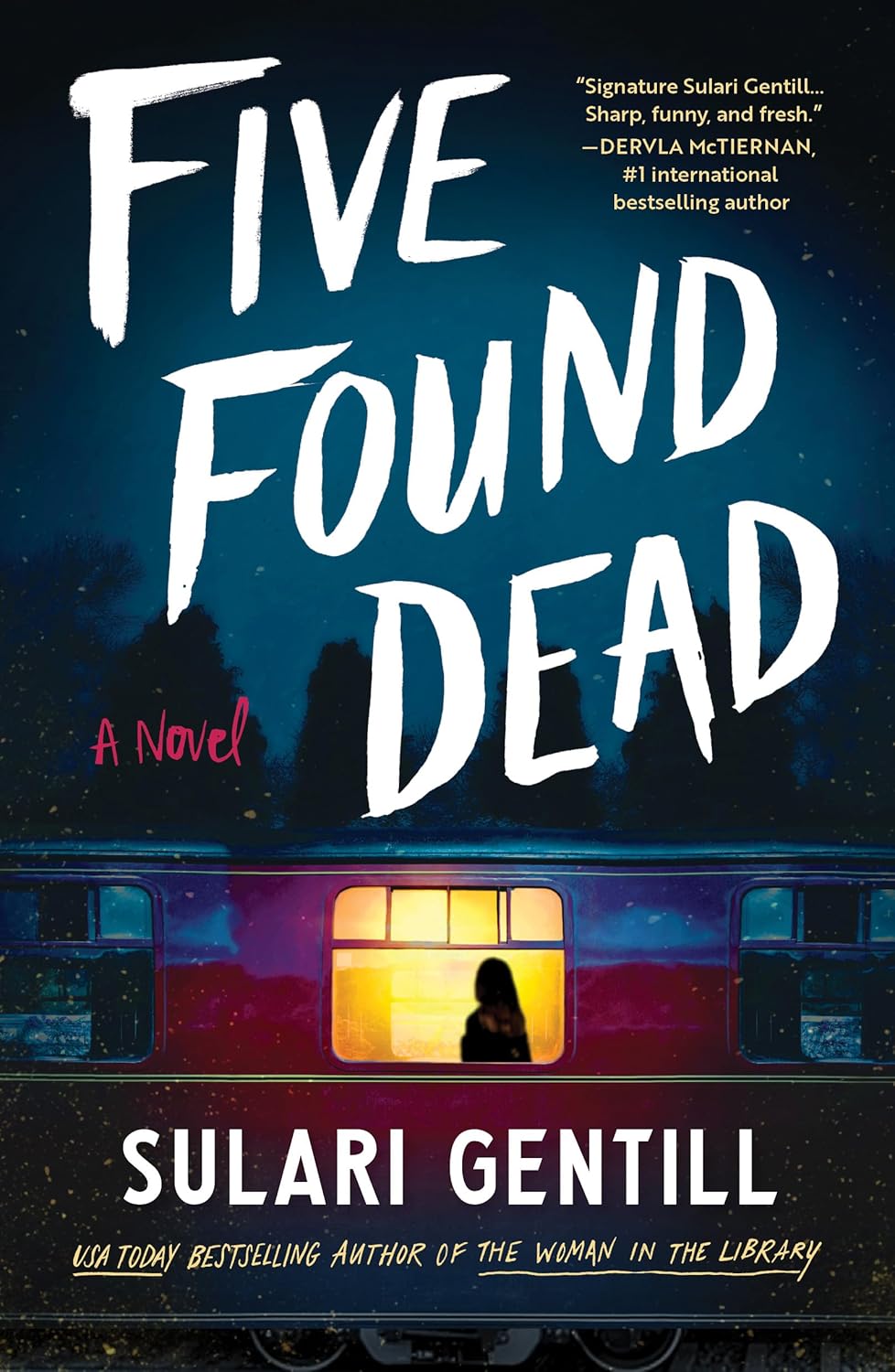
Five Found Dead by Sulari Gentill

Publisher: Poisoned Pen Press (ebook – 19 August 2025)

Series: Standalone

Length: 310 pages

My Rating: 4.5 out of 5 stars

Amazon

Those looking for a fun and very meta murder mystery that looks back at the classics should check out the very amusing new novel from Australian author Sulari Gentill, Five Found Dead.

There are few Australian crime fiction authors whose works have entertained me over the years as much as Sulari Gentill’s have.  An amazing author who knows how to combine unique premises with compelling mysteries, Gentill has written some great novels over the years.  I am a particular fan of her Rowland Sinclair series about an unlikely gentleman protagonist in the 1930s who solved crimes loaded with historical cameos, while some of her more recent standalone novels, such as Crossing the Lines, The Woman in the Library and The Mystery Writer, have also received critical acclaim.  As such, I was very happy to get my hands on her latest novel, Five Found Dead, which had a very fun plot behind it which resulted in quite an exciting and fast-paced read.

Plot Synopsis:

On a train, there are only so many places to hide…

Crime fiction author Joe Penvale has won the most brutal battle of his life. Now that he has finished his intense medical treatment, he and his twin sister, Meredith, are boarding the glorious Orient Express in Paris, hoping for some much-needed rest and rejuvenation. Meredith also hopes that the literary ghosts on the train will nudge Joe’s muse awake, and he’ll be inspired to write again. And he is; after their first evening spent getting to know some of their fellow travelers, Joe pulls out his laptop and opens a new document. Seems like this trip is just what the doctor ordered…

And then some. The next morning, Joe and Meredith are shocked to witness that the cabin next door has become a crime scene, bathed in blood but with no body in sight. The pair soon find themselves caught up in an Agatha Christie-esque murder investigation. Without any help from the authorities, and with the victim still not found, Joe and Meredith are asked to join a group of fellow passengers with law enforcement backgrounds to look into the mysterious disappearance of the man in Cabin16G. But when the steward guarding the crime scene is murdered, it marks the beginning of a killing spree which leaves five found dead—and one still missing. Now Joe and Meredith must fight once again to preserve their newfound future and to catch a cunning killer before they reach the end of the line.

Gentill brings the fun with this very compelling and exciting crime fiction novel that serves as a great love letter to a classic Agatha Christie novel.  Bringing together a colourful array of characters, including an overabundance of cliche detectives and setting them loose against an apparent serial killer, Five Found Dead was a very easy book to fall in love with, and I ended up powering through it in less than a day.

The plot for Five Found Dead had a lot of interesting elements to it, which resulted in a very fast-paced novel that hit a lot of entertaining notes.  Starting off with some quick introductions to the lawyer protagonist and her author brother, you soon find yourself aboard the iconic Orient Express.  A natural setting for any murder mystery, Gentill brought together an amusing array of characters inspired by classic crime fiction novels, many of whom are revealed to have law enforcement backgrounds, as well as a very similar grudge.  The story naturally soon devolves into a compelling murder mystery when a guest disappears from their blood-soaked room.  Thanks to a new strain of coronavirus infecting part of the train, the passengers find themselves stuck on the rails, and it falls to the protagonists and the various assembled detectives to solve the case.  However, a series of additional murders quickly unfold across the train, resulting in chaos and anarchy, especially when the normal passengers of the train attempt to escape the growing massacre.

I loved the excellent and fast pace of Five Found Dead as Gentill cleverly lays out the respective murders and keeps increasing the stakes of the plot.  While much of the story is intentionally silly, including the appearance of so many stereotypical detectives with connections to the initial victim, the author works it into a great investigation angle, and I had fun working out who was behind the killings.  There are some fantastic twists and turns throughout the book, and while I saw a few reveals coming thanks to the featured clues, the identity of the actual antagonist hit me by surprise.  Some of this was due to the clever red herrings and potential alternate suspects that Gentill included, although I must admit the brilliantly crazy disguise utilised by the killer helped a lot.  This led to a very exciting and over-the-top conclusion, where all the secrets come out and the various fun storylines come together.  I had an absolute blast getting to the end of Five Found Dead, and Gentill crafted an extremely exciting murder mystery here that served as an homage to the classic, while also bringing its own flair to the occasion.

While Five Found Dead is loaded with amazing and familiar characters, I feel that I need to highlight protagonist Meredith Penvale and her brother Joe as the two best written characters in the novel.  A pair of Australian twins, Meredith and Joe have journeyed to the Orient Express to celebrate Joe’s recent cancer remission and to rejuvenate his writing muse.  While much of the story revolves around Meredith’s inadvertent role as amateur detective aboard this train of suspicious souls, Gentill also spends time examining the emotional health of these two main characters, and as a result dives deep into the impacts of cancer and the effects it can have on both the sufferers and their loved ones.  In this case, Meredith is the loyal sister who sacrificed a successful career to care for her brother and, now that he’s recovered, is wondering where her life will go and whether to follow her true passions.  Joe, on the other hand, is a seemingly light-hearted figure who has an amusing meta initial arc about a murder mystery set onboard the Orient Express.  However, there is also a lot of hidden fear in Joe about his cancer returning, which sees him literally running from bad news, while also trying to keep this potential truth from his long-suffering sister.  You can tell that Gentill put a lot of herself into these two characters, and their personal focuses outside the mystery are extremely realistic and powerful.  Indeed, these personal concerns and the powerful writing that accompanies them gives Five Found Dead some much needed emotional heft that helped to evolve this novel into something truly special.  Throw in all the additional eccentric figures that accompany Meredith and Joe onto the Orient Express, and Five Found Dead has a truly amazing cast who enhance the entire story.

Overall, I found Five Found Dead to be an addictive and engaging novel that I honestly couldn’t stop reading.  Sulari Gentill’s latest standalone novel was a wonderful blend of mystery, charming humour and complex characters, that came together into something extremely awesome.  I really enjoyed Five Found Dead, and it is an excellent read for someone in the mood for a light-hearted murder mystery with some amazing heart to it.

Amazon

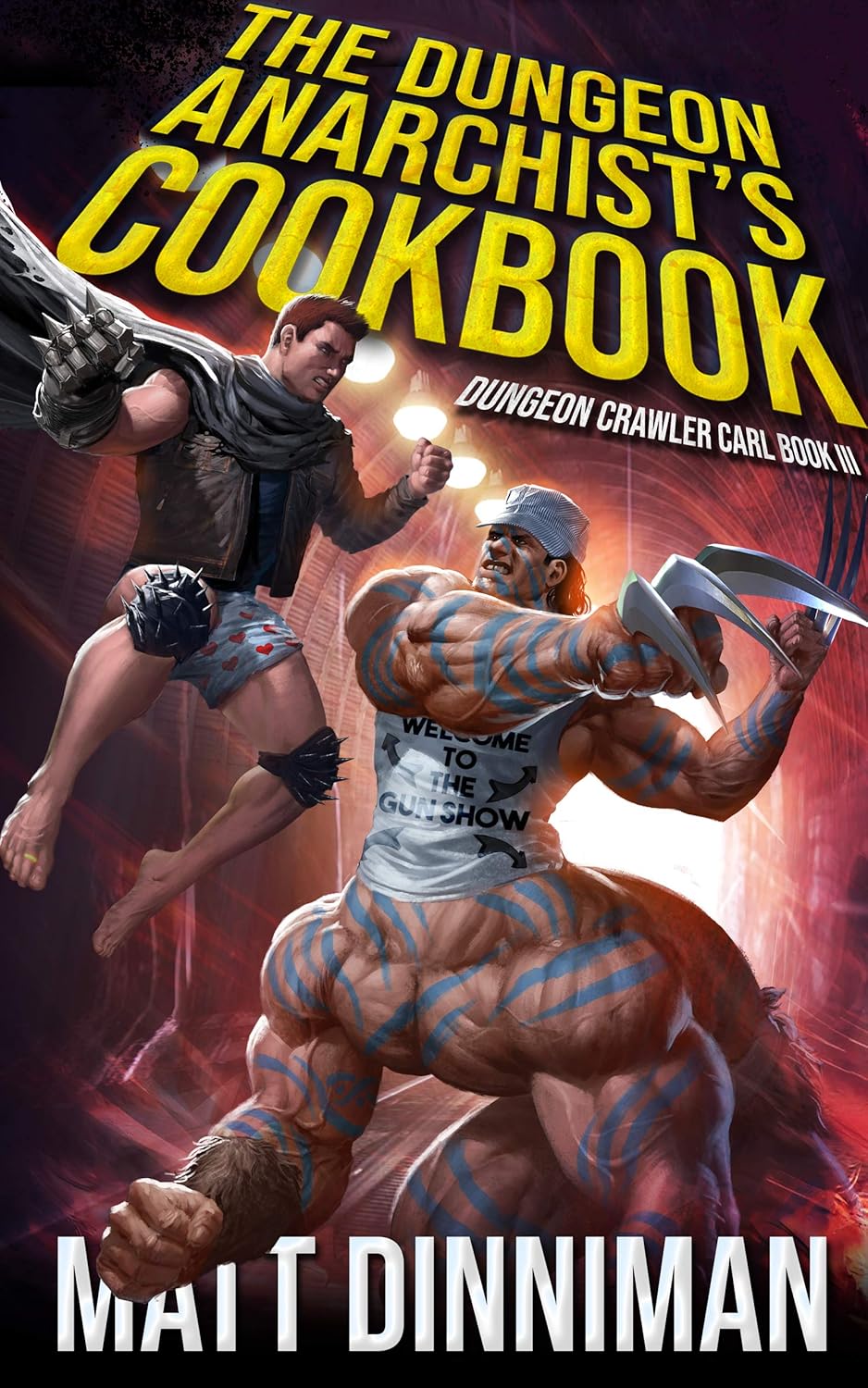
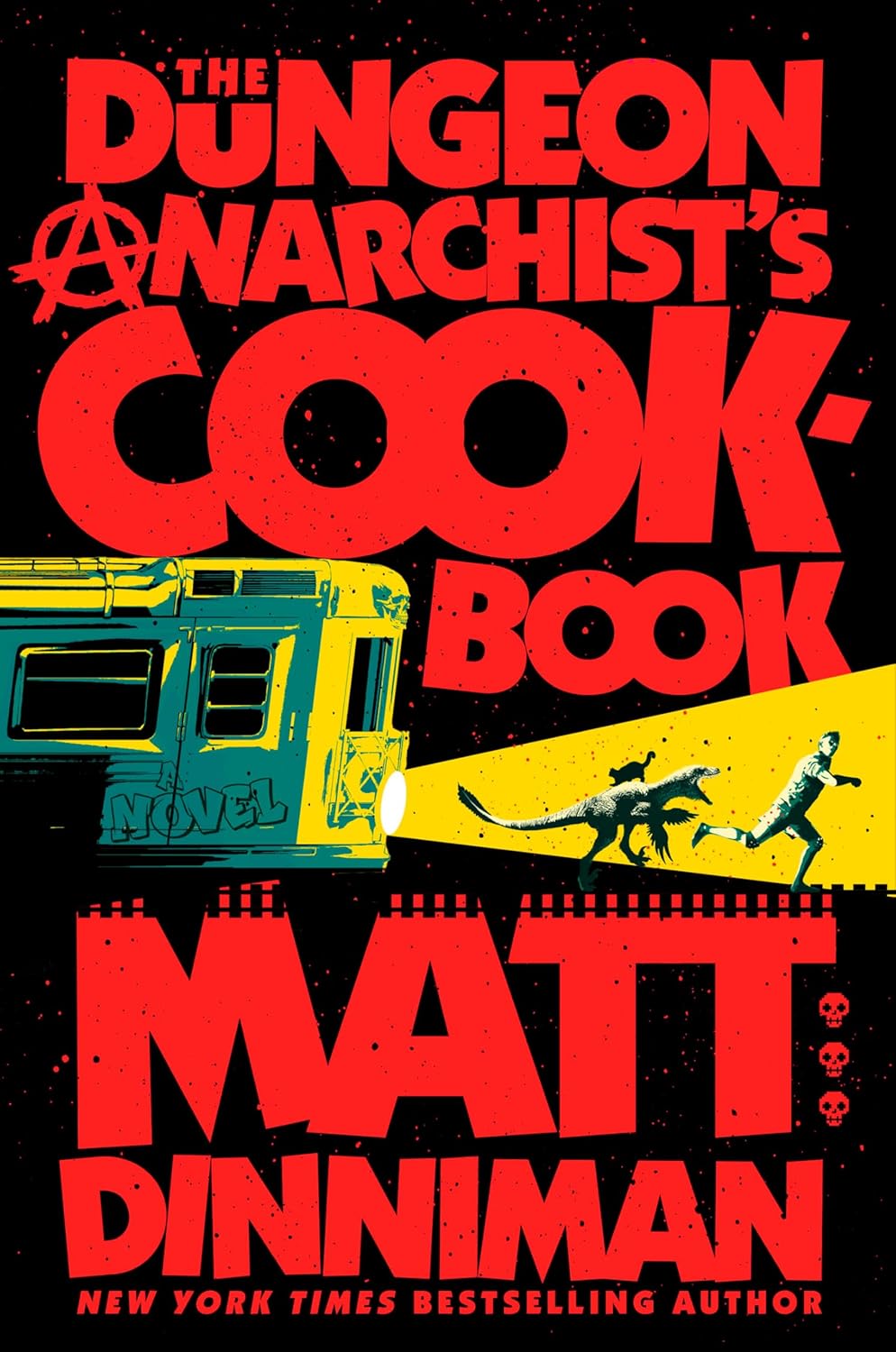
The Dungeon Anarchist’s Cookbook by Matt Dinniman

Publisher: Soundbooth Theater (Audiobook – 19 March 2021)

Series: Dungeon Crawler Carl – Book Three

Length: 16 hours and 54 minutes

My Rating: 5 out of 5 stars

Amazon

Matt Dinniman’s elaborate tale of carnage and comedy continues with the third entry in the Dungeon Crawler Carl series, The Dungeon Anarchist’s Cookbook, another exceptional and highly addictive novel that I could not get enough of.

Those familiar with this blog will know that I recently discovered the sheer insanity that is Matt Dinniman’s epic Dungeon Crawler Carl books.  An outstanding LitRPG series that sees Earth demolished by aliens and turned into a massive, multi-layered fantasy dungeon that the surviving humans need to fight through and descend, all in the name of reality television, the Dungeon Crawler Carl novels are an incredible collection of books with some amazing depth to them as they follow two of the more explosive dungeon crawlers, the gruff Carl and his now sentient cat, Princess Donut.  I powered through the first two books in the series, Dungeon Crawler Carl and Carl’s Doomsday Scenario, in no time at all, and both were epic five-star books.  Due to how incredible these first two books were, I just had to continue the series, and I instantly started listening to the third book, The Dungeon Anarchist’s Cookbook, as soon as I finished off Carl’s Doomsday Scenario, and boy was it something special.

After the cataclysmic end to the third floor of the dungeon, Carl, Princess Donut, their dinosaur pet Mongo, and new party member Katia have arrived on the fourth floor.  This new floor opens all manner of changes for the crawlers, with sponsorship programs, advanced living quarters, new crafting areas and a leaderboard, all needing to be considered by Carl and his companions.  At the same time, the difficulty of the game is ramping up, and this new level is far more complicated than anything they have faced before.

Known as the Iron Tangle, the fourth floor of the dungeon is a mass of interwinding subway tunnels and stations built from the world’s pillaged railway systems.  Tied together in an elaborate knot, thousands of different lines populate this level, filled with random subway and train cars loaded with monsters.  To survive and find the stairs to the next floor, the crawlers need to work out the elaborate puzzle of the Iron Tangle, including which areas are safe, where the monsters are coming from, and what trains can be used to get to important destinations.  However, the dungeon’s creators have populated this floor with all manner of nasty surprises, surprises designed to swallow all the crawlers they can find.

Faced with a seemingly impossible puzzle before them, Carl, Donut and Katia will need to work with all the crawlers on the floor if they want to decipher the mystery of the Iron Tangle.  Only by coming together can the remnants of humanity survive the horrors before them and find a way to continue descending to the bottom of the dungeon.  But can Carl trust his fellow crawlers, especially now that he has a bounty on his head and a potential traitor in his own party? 

Wow, wow, wow!  I honestly didn’t believe that the series could get even better than the awesome first book, but Dinniman once again proves me wrong by producing a particularly elaborate third entry that I once again fell in love with.  Featuring a clever and memorable new scenario, The Dungeon Anarchist’s Cookbook was an exceptional continuation of the series, bringing back all Dinniman’s great characters, complex RPG elements and insane humour, and producing a particularly special story with it. This is another incredible Dungeon Crawler Carl book that gets a well-deserved five-star rating from me.

Like the previous entry in the series, the plot of The Dungeon Anarchist’s Cookbook covers the protagonists’ attempts to journey through a single level of the dungeon, in this case the massive fourth floor, which is made up of an elaborate tangle of monster-filled subway tunnels.  Thanks to The Dungeon Anarchist’s Cookbook having a longer length than the previous novels and not requiring any substantial introduction material, Dinniman is able to spend a substantial amount of time fleshing out the exploration of this level, and the primary focus of the plot focuses on the characters trying to find the various tricks of the Iron Tangle.  While the narrative of The Dungeon Anarchist’s Cookbook is a little slower paced than the previous entries in the series, you soon get engrossed in this complex adventure narrative, especially as there is the usual fun humour, cool character dynamics and the inevitable explosive solutions to all the problems the characters encounter.  Dinniman also spends time expanding on some of the background character plots and wider universe narrative threads that give greater context to the events of the dungeon.  While these parts aren’t as prevalent as in the original novel, you still get some interesting continuation of the wider conspiracies and issues surrounding the crawl and the whole series, which come into play in some compelling ways.

While the first half of the book is very awesome and has some great moments, it is the second part of The Dungeon Anarchist’s Cookbook that really ensures that readers will come away from this novel particularly happy.  Starting with a fantastic and particularly bloody rescue sequence when Carl and his associates attempt to save a bunch of trapped fellow crawlers and initiate a group stand against the horrors of the Iron Tangle, the plan swiftly breaks down in some particularly memorable ways, with the entire dynamic of the dungeon changing in a single moment.  Other great scenes, including a confrontation between Carl and one of his main enemies in the dungeon, also add to the general drama of the novel, and I love how these complex moments, as well as the entire plot of the second half of the book, perfectly flows from the great build up Dinniman featured in the first half of The Dungeon Anarchist’s Cookbook, as well as a multitude of other great plotlines the author has been building up throughout the series.

This impressive narrative eventually leads up to the big and massively destructive conclusion of the book, which was a perfect end to such a captivating novel.  Dinniman cleverly builds up the tension in the lead-up to this finale, and you know that the other shoe is about to drop in a big way.  When it does, Dinniman does not disappoint, forcing the protagonist into some elaborate life and death scenarios, including one particularly epic showdown.  I really loved how all these intense and action-packed sequences came together, and you are constantly on your edge of your seat as you wait to see what happens next.  The protagonist’s various creative plans and failed solutions in the face of these over-the-top scenarios really add to the outrageous entertainment value of the book, and I cannot emphasise enough what an awesome conclusion The Dungeon Anarchist’s Cookbook had.  The author also cleverly sets up the events for the next book, with several hints at key moments to come, and you are left eagerly waiting for even more of the series, especially after seeing how crazy and intense things got in this novel.

Dinniman did another outstanding job writing this third Dungeon Crawler Carl book, and I really appreciated how he brought the same energy and level of excitement to The Dungeon Anarchist’s Cookbook.  The reader is once again treated to an amazing amount of complex action, intriguing LitRPG elements, captivating character growth, and the author’s outstanding humour, which equates to a particularly gripping and intense read.  I liked that The Dungeon Anarchist’s Cookbook had a much more effective pace than the second novel, and the entire journey through the floor was very well set out and quite captivating.  While the labyrinthine nature of the Iron Tangle is a little hard to follow at times, I think this worked well in the context of the story, as it helped to underscore the confusing puzzle that the protagonists had to solve, and you really have to appreciate the sheer inventiveness that the author threw into this distinctive fourth floor.

As with the second novel, I felt that people interested in trying out this series really shouldn’t start with The Dungeon Anarchist’s Cookbook, and instead they need to read the preceding novels first.  While this third novel does have a bit more internal recapping, as the protagonist thinks back to key events, Dinniman does drop the reader into the story immediately after the closing moments of Carl’s Doomsday Scenario, which will confuse most new readers.  The author again builds on the cool LitRPG elements of the previous novels, adding in even more classic gaming features that the protagonists, and through them the readers, need to keep in mind as the book progresses.  All these features have an effective introduction so that anyone can understand their impact, no matter their experience with RPGs, and Dinniman works them into the wider plot extremely well.  As always, a lot of the dryer LitRPG elements of the book are made a lot more entertaining thanks to the over-the-top explanations, clever jokes, and the general insane manner in which the protagonists utilise them, and those reader’s with less interest in stats, abilities or equipment, will still have fun with the scenes focussed on them, especially as they feature some of the book’s funniest lines.  The rest of the novel also features a great comedic tone, and I laughed so many times throughout The Dungeon Anarchist’s Cookbook, especially as Dinniman keeps upping the ante with the plot and forcing the protagonist into even more ridiculous scenarios.

This great humour is well balanced by the often more serious character moments that Dinniman does a wonderful job inserting into the story.  Most of these revolve around the perspective character, Carl, who serves as the voice of the entire story.  A sarcastic, gruff and scarred figure, Carl serves as an excellent everyman protagonist for the series, and you soon get very attached to him, especially as he attempts to be the dungeon’s hero and save everyone he can.  The author builds up some really moving storylines around Carl in this third book, and I loved seeing his continued growth as the team’s unofficial leader, as his accurate insights and tactical ideas really move the plot along.  There are some very dramatic moments loaded in as Carl encounters the various dark sides of the dungeon, and I loved the big anti-authoritarian aspect to the character that Dinniman is expanding upon, especially as he witnesses more and more of the dungeon’s cruelty.  The inclusion of the titular Dungeon Anarchist’s Cookbook, a secret in-game book that gives him hints and ideas to survive in the dungeon, was a fun twist, and I loved how it gave him even more explosive ideas, while allowing the author to explore his rebellious side even more.  Despite being a mostly serious figure, there is still a lot of humour around Carl, mainly from him being the straight man in a very ridiculous place, and you have to love his very reasonable reactions to some of the weird things he witnesses.  Dinniman also continues the very funny trend of having Carl gain a well-deserved reputation of being one the craziest crawlers in the dungeon, mainly due to his tendency of solving all his problems with explosives, and there is a lot of entertainment in seeing Carl’s various plans go further off the rails than intended.

In comparison to Carl, sentient cat Princess Donut is the fun face of the team, and it’s impossible not to love her various antics and over-the-top attitudes.  Her many entertaining quirks, including her obsession with fame, hilarious insights into humans, her long-running grudge against all Cocker Spaniels, her relentless use of all-caps in chat mode, and her general cat-like personality all add a lot of amusement to the novel, and you have to love the odd-couple relationship that forms with Carl.  So many of The Dungeon Anarchist’s Cookbook’s funniest sequences result from Donut’s antics and Carl’s subsequent reactions, and this novel would not be as entertaining without her.  Despite mostly being a comedic figure, Donut does get some serious interactions with the other characters, which help to showcase her character growth and protective nature.  Her occasional vulnerable and honest discussions with Carl really highlight their bond, and she has one of the best moments in the entire book when she overreacts after a friend is hurt.  I really cannot emphasise enough what a great character Donut is, and I really love that Dinniman decided to make this hilarious sentient cat one of his main protagonists.

I also must mention the newest member of the protagonist’s party, Katia, a shy woman who has taken on a shapeshifting race that allows her to act as an effective tank.  I must admit I wasn’t too certain about Katia as a character at the start of The Dungeon Anarchist’s Cookbook, due to her understated personality and somewhat random introduction and inclusion to the team in the second half of the previous novel.  However, Dinniman steadily builds up her complex personality as the book continues, and thanks to the continued support of her new party, as well as Carl’s various attempts to hack her race features, she becomes quite an effective crawler, gaining a lot more confidence.  Her unique abilities and likeable personality nicely compliment the already existing team of Carl and Donut, and they end up becoming a well-balanced trio thanks to her inclusion.  The author also sets up an intriguing storyline around Katia’s conflicting loyalties between her previous party and the current group of Carl and Donut, which come into play perfectly during one of the novel’s big moments.  Katia ends up becoming quite an awesome part of the book thanks to these scenes, and I loved the excellent new dynamic she brings to the series.

Aside from these main three characters, The Dungeon Anarchist’s Cookbook features a really impressive supporting cast, especially as Dinniman brings back a lot of awesome characters from the previous two novels.  This includes Donut’s pet, Mongo, a giant velociraptor who was once again a fun addition to the plot.  While Mongo does get used a little less in the book thanks to the compact train cars of the setting, he made an impact when he did appear (especially to a certain gnoll) it is very entertaining to see Donut finally able to ride him.  The group’s manager, Mordecai, was once again perfect as the reluctant and exasperated mentor figure, who plays off the personalities of the main protagonists perfectly.  One excellent scene in the book ended up limiting Mordecai’s role in The Dungeon Anarchist’s Cookbook, which serves as an effective handicap for the protagonists, while also hinting at Mordecai’s traumatic past, and I look forward to the author expanding on that in the future.

This lack of Mordecai also allows for the author to feature a lot of additional characters, which fits the giant group teamwork focus of the plot, and it was fun to see some of Carl and Donut’s acquaintances from the previous two books return here, especially as several have changed in some very entertaining ways.  I need to highlight the return of antagonist Frank Q, whose big scene with Carl was one of the most powerful moments of the novel, especially as Frank seemingly gets his revenge.  Other previously mentioned antagonists, including some introduced outside the dungeon, are brought back here, often in a big way, and their interactions with Carl are always quite destructive.  Dinniman also focuses on an array of NPC characters in The Dungeon Anarchist’s Cookbook, and the dark plight of these poor figures helps to showcase both the protagonist’s empathy and the twisted nature of the entire dungeon process.  Finally, I again need to mention the hilarious AI who runs the dungeon, as the disembodied figure is easily the most hilarious character in the series thanks to his unhinged descriptions, brilliant references, and the twisted way he manipulates the crawlers to get the funniest result for the audience.  I love how Dinniman showed how the AI is starting to crack a little, especially when it begins rebelling against the corporation running the game (how dare they appeal the AI’s decisions), and I laughed so hard at so many things the AI said.  All these characters, and more, were very entertaining to follow, and I love the many rich character arcs and moments that the author cleverly inserted into the novel’s plot.

I have been having an absolute blast with the Dungeon Crawler Carl audiobooks, and I didn’t even hesitate in choosing to also listen to The Dungeon Anarchist’s Cookbook on this format.  Unsurprisingly, this was another exceptional listen as the audiobook version of The Dungeon Anarchist’s Cookbook really helped to highlight all the best aspects of the book, including the great action, amazing characters and brilliant, over-the-top humour.  Coming in at nearly 17 hours, this was the longest Dungeon Crawler Carl audiobooks yet (they only get even longer from here), although I still managed to power through it in very quick order.  A large reason this audiobook was so good was because the very talented Jeff Hays once again impressed as narrator.  Thanks to his zany voices Hays makes this audiobook truly come alive, and I love how perfectly he inhabits all the crazy and complex characters featured within this book.  There is an outstanding array of accents, parody voices, and over-the-top tones from Hays in this audiobook, and all the voices were a lot of fun, especially for some of the big or exaggerated monsters.  I again need to highlight his excellent voices for Carl and Princess Donut, and it’s just amazing how he can embody both very divergent characters.  I also loved the voice he used for the system AI, especially as Hays brings out all the disembodied figure’s sass, anger and sadistic comedy with his reading of the announcements, especially when the AI gets freaky or mad.  This Dungeon Crawler Carl audiobook also features the voice of Youtube personality The Critical Drinker, who voices a minor character in a well-done, if unnecessary, inclusion.  I felt this entire audiobook came together pretty damn perfectly, including the very funny ad for Soundbooth Theater thrown in at the end, and I honestly don’t think I would enjoy this series nearly as much if it weren’t for these fantastic audiobook productions.  I plan to listen to all future Dungeon Crawler Carl novels on audiobook, and I know I am going to have so much damn fun doing so.

With yet another explosive story, loaded with great characters, clever RPG inclusions and the author’s outstanding humour, The Dungeon Anarchist’s Cookbook was extremely epic, and I could not get enough of it.  The best book in the Dungeon Crawler Carl series so far, The Dungeon Anarchist’s Cookbook was ultra-impressive, and Matt Dinniman did an exceptional job bringing everything together.  I enjoyed this novel so much that I once again decided to start reading the next book in the series the moment I finished this one and then continued after that.  As such, I am currently in the middle of the fifth book in the series, The Butcher’s Masquerade, after loving the fourth book, Gate of the Feral Gods, and both are incredibly awesome and so much fun.
Amazon

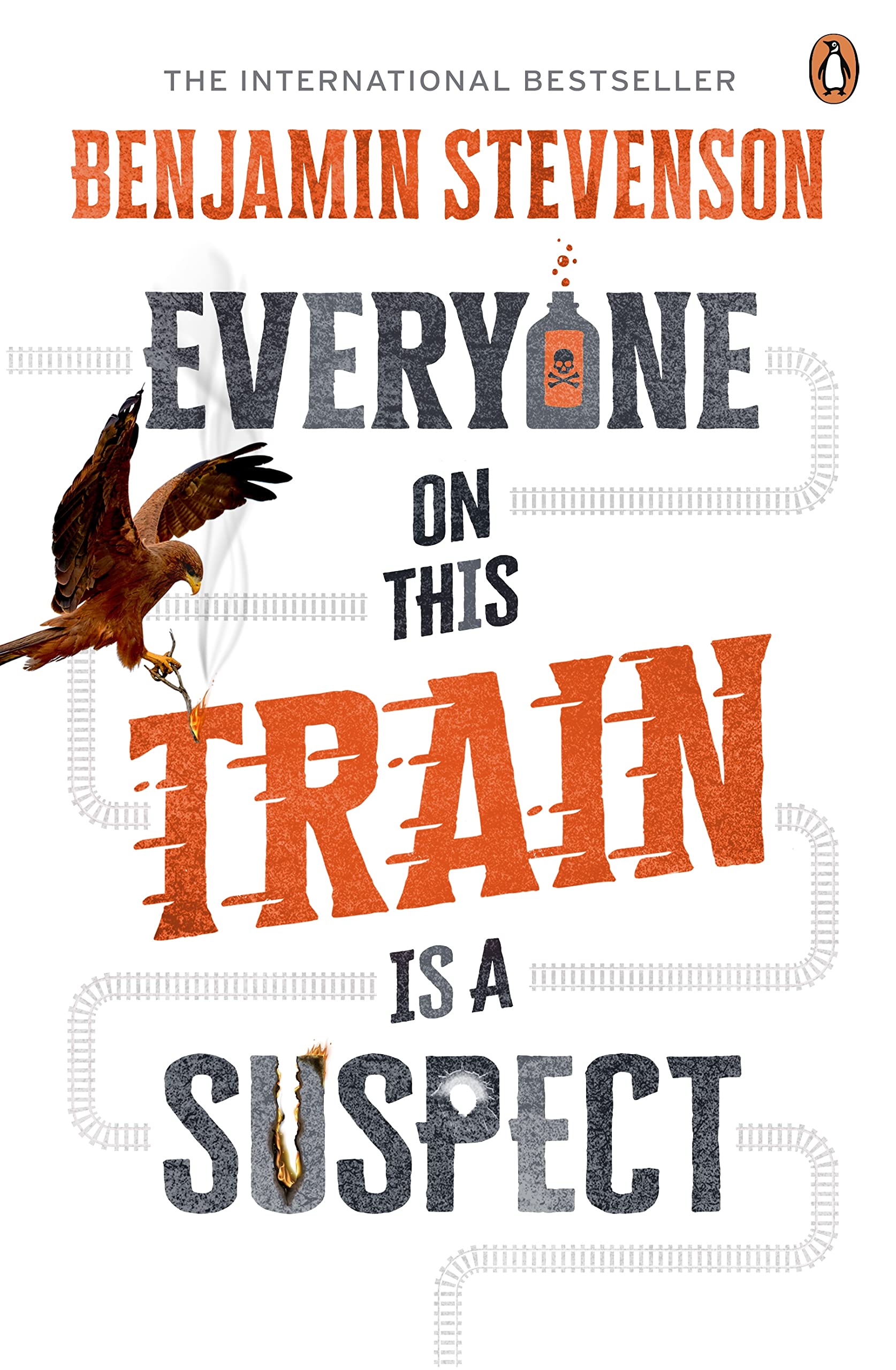
Everyone on this Train is a Suspect by Benjamin Stevenson

Everyone on this Train is a Suspect Cover

Publisher: Michael Joseph (Trade Paperback – 17 October 2023)

Series: Ernest Cunningham – Book Two

Length: 318 pages

My Rating: 4.75 out 5 stars

Amazon

Impressive Australian author Benjamin Stevenson returns with another hilarious and outstanding murder mystery that once again acts as a clever homage to the classics with Everyone on this Train is a Suspect.

Over the last few years, one of the most consistently enjoyable authors of Australian crime fiction has been the remarkably talented Benjamin Stevenson.  Best known prior to his writing career for his comedic work with his brother James, Stevenson adapted well to crime fiction and made his first impression with his debut novel, Greenlight.  Also released as Trust Me When I Lie and She Lies in the Vines, Greenlight was an outstanding read, and Stevenson quickly followed it up with the cool sequel Either Side of Minute.  While both of these books had great murder mystery plots with some unique twists to them, I think Stevenson didn’t truly display his writing ability until his next novel; Everyone in my Family has Killed Someone.

Everyone in my Family has Killed Someone was an exceptional 2022 novel that saw a fictional murder mystery expert try to solve a classic locked room murder that was likely committed by a member of his notorious family, each of whom has killed someone in the past.  Everyone in my Family has Killed Someone was so damn good as not only did it feature a clever case but Stevenson excelled at producing a very funny novel in his unique style that parodied the classics of the genre.  Due to its entertaining and meta storytelling, Everyone in My Family has Killed Someone was such a joy to read and it ended up being one my favourite pieces of Australian fiction in 2022.  As such, I have been eager to see what Stevenson would produce next, and while I was initially a little surprised to see that he would be writing a sequel to Everyone in my Family has Killed Someone, it was something that really excited me.  This sequel, Everyone on this Train is a Suspect, was one of my most anticipated releases for 2023, and I had another outstanding time getting through it.

Plot Synopsis:

6 WRITERS. 5 DETECTIVES. 4 DAYS. 3 WEAPONS. 2 MURDERS. 1 TRAIN…

When the Australian Mystery Writers’ Society invited me to their crime-writing festival aboard the Ghan, the famous train between Darwin and Adelaide, I was hoping for some inspiration for my second book. Fiction, this time: I needed a break from real people killing each other. Obviously, that didn’t pan out.

The program is a who’s who of crime-writing royalty:

the debut writer (me!)
the forensic science writer
the blockbuster writer
the legal thriller writer
the literary writer
the psychological suspense writer.

But when one of us is murdered, six authors quickly turn into five detectives. Together, we should know how to solve a crime.

Or commit one.

How can you find a killer when all the suspects know how to get away with murder?

Stevenson once again presents an outstanding and wildly entertaining Australian crime fiction novel that proves impossible to put down.  Thanks to his impressive story and wonderfully distinctive style for this series, Everyone on this Train is a Suspect was a particularly funny novel that takes some fun shots at classic murder mysteries, modern crime fiction and the publishing world at large.

I absolutely loved the story Stevenson came up with for Everyone on this Train is a Suspect, which essentially traps his returning protagonist, Ernest Cunningham, on the Australian version of the Orient Express with a group of other famous crime fiction authors.  Ernest, who has achieved a certain amount of literary fame writing a true-crime book about the familial murder he solved, is the somewhat ostracised newcomer to the group and is currently suffering from writer’s block.  Hoping to gain inspiration from meeting some of his fellow authors, most of whom are homages to famous crime fiction authors (Ian Rankin and Patricia Cornwell, for example), Ernest instead finds himself caught up in another deadly murder, this time involving suspicious writers, greedy publishers, scheming agents, angry mega-fans and other fun figures from the literary world.  The resulting plot is extremely fun, as an obsessed Ernest attempts to solve the crime, only to encounter additional murders, opposition from his fellow writers, unique interactions, and all manner of ridicule.

This entire story is really well written, as it features all the elements that made Everyone in my Family has Killed Someone great, including a clever mystery, outrageous characters and an irrepressible sense of humour.  Just as with Everyone in my Family has Killed Someone, Everyone on this Train is a Suspect is told in the form of a true-crime book written by the protagonist as he recounts the events that unfolded aboard the train.  I really enjoyed this fun and clever way of writing the story, especially as the character of Ernest has such an amusing and satirical outlook on life and murder mysteries.  The author also believes in challenging the classic ways of writing crime fiction and providing clues to the reader, and as such the book is loaded with a ton of hints from the protagonist about who the killer is and the events to come.  For example, he indicates how many times he is going to mention the killer’s name early on and then keeps a running countdown going throughout the book to narrow down the suspect pool.  In addition, several characters’ fates, actions and other clues are mentioned well in advance, just to heighten anticipation.  While you would imagine that this would spoil much of the plot, I felt it honestly enhanced it, as you eagerly wait to see how these events occur or try to keep track of who is being talked about and in what context.  Stevenson also does not always play it fair with these hints, with a few flagrant mistruths sprinkled through by the protagonist to mislead the reader, although this is all done in good fun.

As such, by the time you get to the second half of Everyone on this Train is a Suspect, you are really invested in the overall mystery that Stevenson has cooked up.  All the various clues, hints and other interesting story details have been cleverly built up and you are eager to see how everything unfolds.  There are a few hilarious set pieces loaded here, including an unnecessary chase sequence, a failed denouement gathering, and some major misunderstandings, all of which add to the chaotic nature of the plot.  This exciting and funny story also makes great use of its iconic background setting of the Ghan, one of Australia’s most famous trains, and Stevenson works in some fantastic personal drama for the protagonist who finds that crime solving and romance do not mix.  The eventual solution to the mystery is just great, as it blends multiple motivations, character histories and various subtle clues in an outstanding way.  Even all the overt clues that the protagonist had been directly feeding the reader come into play, although not always in the way you would expect it to.  This leads to an intense and memorable conclusion, which I thought wrapped things up nicely, especially with that fun twist designed to surprise readers familiar with first-person stories.

As with Everyone in my Family has Killed Someone, this second novel serves as a great homage and parody of classic murder mystery tropes, as the protagonist once again finds himself in a locked-room scenario.  The parallels between this story and Murder on the Orient Express are purposely obvious, and I loved seeing the very self-aware protagonist revel in them as the plot continues.  Stevenson also modernises his references by including homages to more modern mystery and crime fiction sub-genres.  The legal thriller, forensic science, modern detective and psychological suspense genres are all featured here in some ways, as fictional authors of these genres are present as supporting characters, and all their specialties are considered when it comes to solving the crime.  Stevenson works these into the plot perfectly, and it was a great deal of fun to see each of these elements discussed, satirised, and then utilised to a degree.  As such, this proves to be quite a fun book for all manner of crime fiction fans, and the fun references, jokes and hints will greatly appeal to the wider murder mystery audience.

Another awesome aspect of Everyone on this Train is a Suspect that I liked was the exploration of the literary world.  Due to the events of the first book, the protagonist finds himself as a published author, with all the baggage that brings with it.  As such, this sequel is filled with a ton of fun discussions and jokes about being a writer, with Stevenson no doubt utilising his own personal experiences to give it a splash of realism.  Most of these inclusions are done to provide another comedic edge to the story, especially as Ernest has been thrown into the deep end with a group of experienced writers who have no respect for him.  The scenes where they discuss their works while also putting down his less successful book are so damn funny, although I could not help but feel a little self-conscious with some of the comments (I know I use too many adverbs).  Stevenson also really dives into the dark side of writing and publishing, with sketchy agents, dodgy backroom deals, story thefts, and personal compromises all being featured quite heavily in the plot.  These elements make for some great potential motives, but you have to appreciate the heavy level of cynicism that Stevenson is throwing into the mix.  I deeply enjoyed the way that Stevenson explored the minefield of life as a murder mystery writer, as well as other connected literary issues, and it ensured that the protagonist’s storyline about being a new author was simultaneously funny and intriguing.

Benjamin Stevenson continues to impress as one of my favourite authors of crazy Australian crime fiction.  His amazing latest novel, Everyone on this Train is a Suspect, is so damn good, as it combines a clever mystery with Stevenson’s unique style that satirises the entire crime fiction genre.  Loaded with some brilliant homages to all manner of murder mystery, and mixing an intense murder plot with jokes, outrageous characters, and fantastic way to tell the story, Everyone on this Train is a Suspect was a blast of epic fun from start to finish.  A worthy and incredible sequel to Everyone in my Family has Killed Someone, Everyone on this Train is a Suspect is funny, brilliant and occasionally dark, and you are guaranteed to love every second of it.

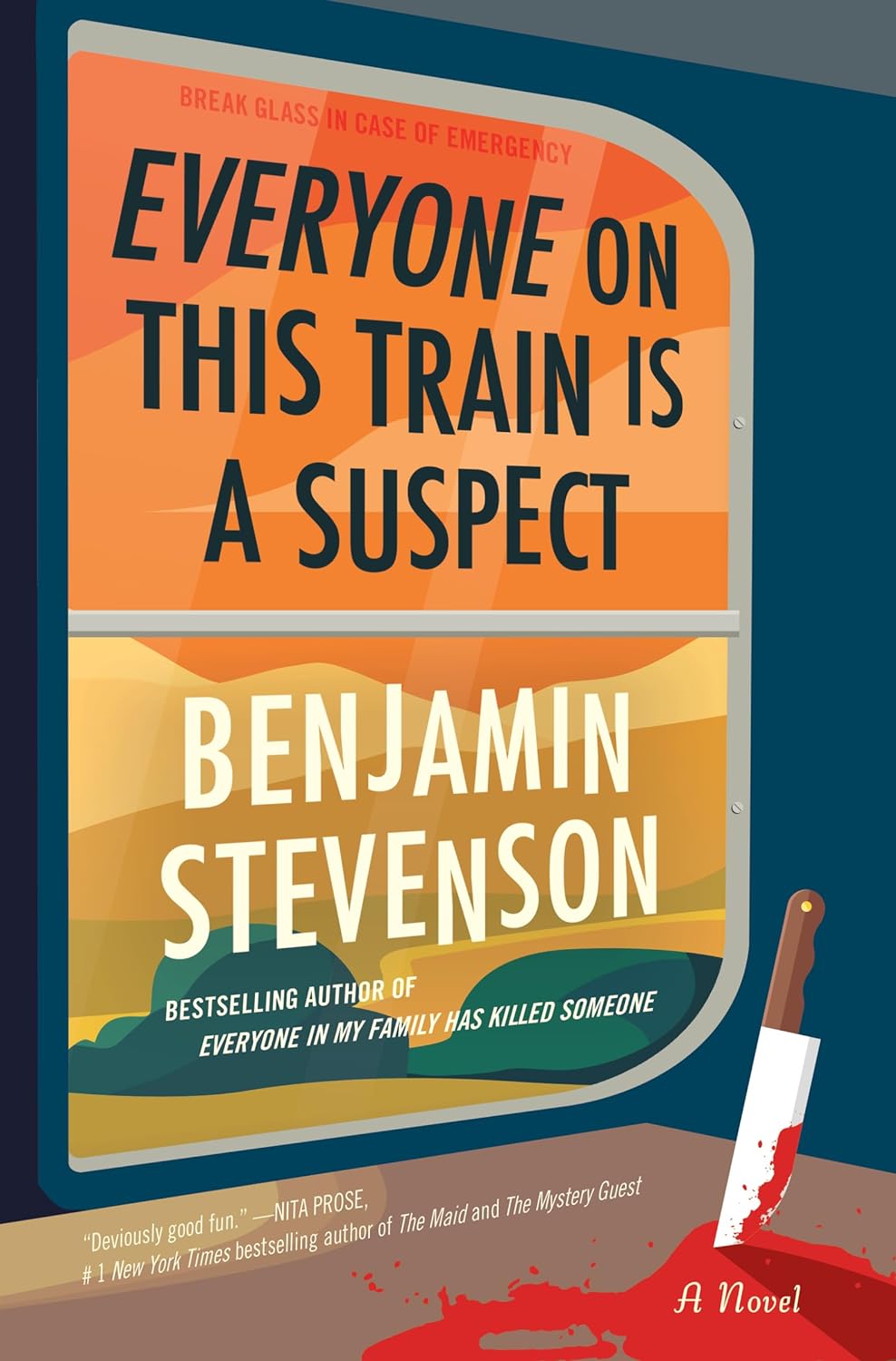
Everyone on this Train is a Suspect Cover 2

Amazon

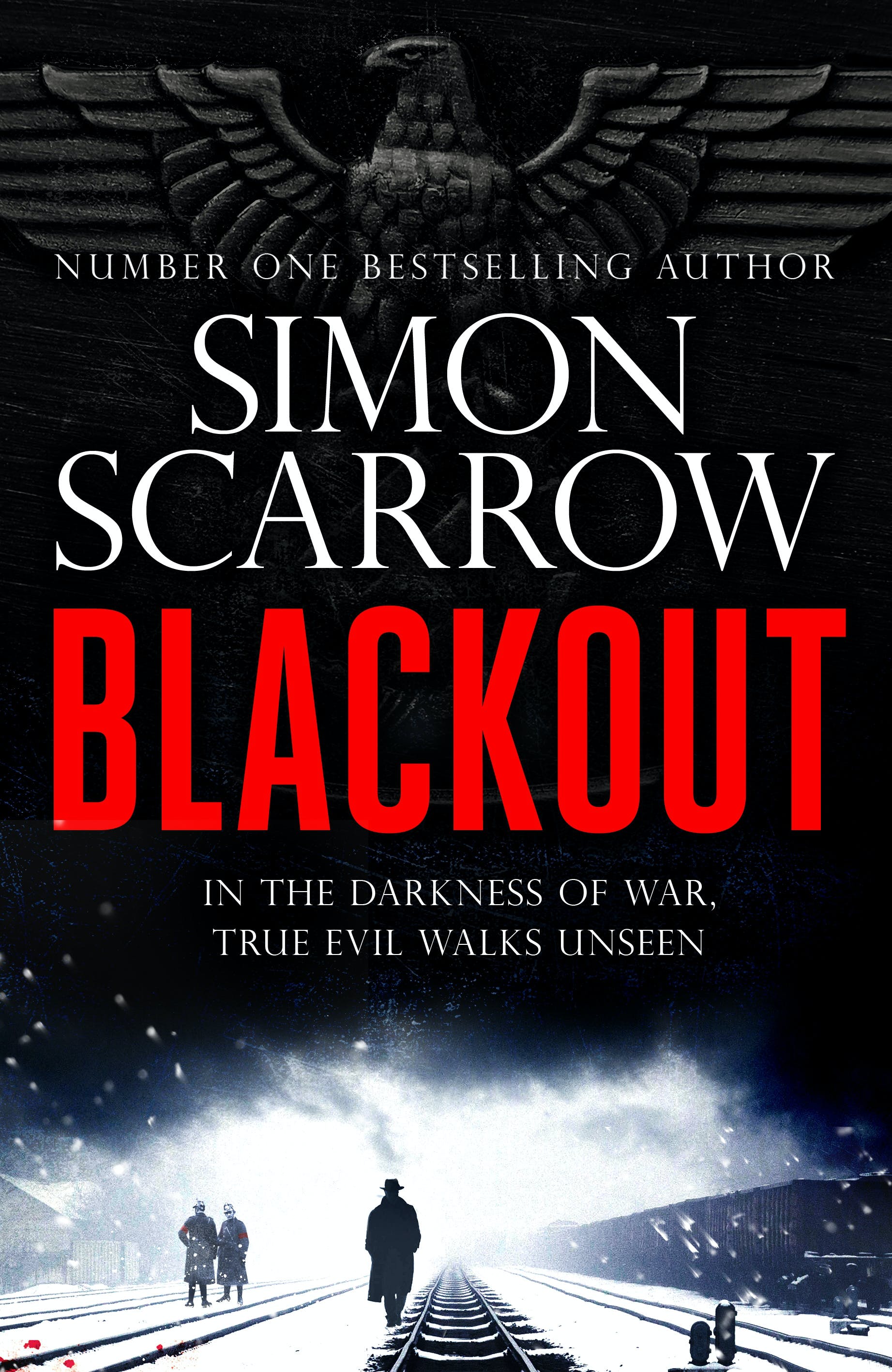
Blackout by Simon Scarrow

Blackout Cover

Publisher: Headline (Trade Paperback – 30 March 2021)

Series: Standalone/Book One

Length: 424 pages

My Rating: 4.5 out of 5 stars

Amazon     Book Depository

One of the leading authors of historical fiction, Simon Scarrow, breaks new ground in a thrilling and captivating historical murder mystery, Blackout.

Berlin, December 1939.  As the citizens of Berlin worry about a potential upcoming conflict with Britain and France, the Nazi party continues to sink their claws into every aspect of German society.  But as a bleak winter sets in and enforced blackouts plunge the city into darkness, a far more sinister threat begins to stalk the streets of Berlin.

A young woman has been found brutally murdered near a busy set of train tracks.  The victim is a former famous actress with a powerful husband.  Due to her marital connections, as well as a scandalous past with various high-ranking Nazi figures, including Goebbels, her case has dangerous political implications.  To that end, her case is assigned to Criminal Inspector Horst Schenke of the Kriminalpolizei, the Kripo, one of the few police officers not to join the party.  Due to his apparent disregard for the party and the importance of the victim, Horst is under intense pressure from the head of the Gestapo to solve this case.  However, what begins as an easy murder case swiftly devolves into something far more dangerous when a second body is found, and Horst is forced to face the reality that he is chasing a serial killer.

As the bodies of more young women are discovered, Horst rushes to find a killer before the government attempts to hush up the fact that a killer is loose within their perfect Nazi society.  But with the Gestapo interfering at every step and key suspects protected by the Abwehr, German Military Intelligence, this case proves difficult to solve.  When a survivor is found, Horst thinks this may be the opportunity to find the killer.  However, when the witness is revealed to be Jewish, Horst is forced to find a way to protect her from both the killer and the Gestapo.  Can Horst find the killer before it is too late, or will he discover that disloyalty to the Nazi government is considered a far worse crime?

This was another amazing novel from one of my absolute favourite authors.  Scarrow is best known as a Roman historical fiction author due to his long-running and impressive The Eagles of the Empire series, which I am a particular fan of (see my reviews for The Blood of Rome, Traitors of Rome, and The Emperor’s Exile).  However, Scarrow has also branched out into other historical periods with his Revolution quartet, the standalone novels The Sword and the Scimitar and Hearts of Stone, and a modern crime novel he wrote with his colleague Lee Francis, Playing with Death (which I really need to check out).  His latest book, Blackout, is an interesting change of pace from some of the previous Scarrow novels I have enjoyed, presenting a compelling murder mystery story with the dark historical setting of Nazi Germany.  Blackout, which was unfortunately delayed from last year, proved to be an excellent read, and I loved the complex and powerful story that Scarrow came up with.

Scarrow’s latest book has an outstanding narrative that starts with a Nazi social party scene quickly leading to the brutal murder.  This shocking opening in the dark of a blacked-out Berlin sets the scene for the rest of Blackout perfectly, and lets the reader know that they are in for an intense and dark tale.  The narrative then advances to the next day, with a great introduction to central protagonist Inspector Horst Schenke, who gets to showcase his deductive ability while also covering his personality and feelings about the Nazi government.  Once the case proper begins, Horst and his team are thrust into a lethal hunt for a serial killer, while also having to contend with the vicious politics and intrigue of the Nazi party.  Horst finds himself caught between the Gestapo, German Military Intelligence, and other influential Nazis, each of whom are attempting to manipulate the situation for their own ends.  This blend of mystery and dangerous political intrigue makes for a fantastic read, and I enjoyed the compelling balance that Scarrow produced.  The mystery itself is well crafted, with the author ensuring there is a complex and tangled web to unravel, with several promising suspects.  There are some very cool twists added into the plot, and I quite enjoyed the exciting conclusion and eventual reveal of the killer.  This is also a very effective standalone mystery, which would serve as a great introductory novel if Scarrow ever wanted to revisit this setting and characters in the future.  A series set around this book could go in some interesting directions, and I for one would be quite keen for that.

Easily the most captivating and fascinating part of this novel is the amazing historical setting that Scarrow used as the backdrop to his amazing mystery.  While several great mystery series have used World War II Germany as a setting before (the Bernie Gunther series by the late, great Philip Kerr comes to mind), I think that Blackout was a particularly good example of how it could be done, with Scarrow making sure that it really enhanced this already incredible story.  Scarrow skilfully works several fantastic and intriguing elements of this iconic setting into his narrative.  This includes the blacked-out winter streets and train lines of 1939 Berlin, which serve to hide the killer’s actions and ensures an easy hunting ground.  I also appreciated the air of worry and uncertainty that inhabited many of the characters as they are constantly left wondering if their country is heading towards a bigger war with Britain and France, not knowing of their government’s master plan.  There is also a certain amount of nationalism, patriotism and casual racism/anti-Semitism on the streets, which is a confronting and concerning aspect that the protagonist has to deal with.  There is also a fascinating focus on the way in which the Nazis infested all aspects of the German government and administration, particularly the police.  Inspector Horst is constantly butting heads with other members of the police force who were only promoted due to their party allegiances, rather than any skill or ability, which impacts the protagonists to successfully investigate his crime.  Add in the compelling depictions of German politics and Nazi interference that I mentioned before, and you have a very impactful and distinctive setting, which really helped to turn this crime novel into something very special.

Scarrow has a knack for creating some interesting and likeable characters, and this is certainly true for Blackout.  Inspector Horst is a fantastic protagonist, a former famous race car driver who experienced a traumatic crash several years ago.  He has since reworked himself as a talented police investigator and a rare man of honour in troubled times.  There is a lot to like about Horst, including his brilliant investigative skills, his courage in the face of danger, and his complete disregard for the Nazi leadership.  As one of the few senior police officers who has not joined the Nazi party, Horst is a bit of a black sheep amongst the ranks of his organisation, especially as he barely contains his disdain for the Nazis and what they are doing to his country.  This invariably leads him into a whole mess of trouble, which sees him in the crosshairs of the Gestapo and other Nazi figures, who seek to use his neutrality and skill for their own advantages.  I had a lot of fun following Horst throughout this novel, and it was great to see how a non-Nazi supporter would survive amongst the authoritarian ranks of German police in this period.  There are several great storylines surrounding this character, including about the trauma he is experiencing from his crash, as well as guilt at his failure to save the people closest to him.  I really enjoyed this character in Blackout, and it seems likely that Scarrow would have some very compelling storylines in place for this character if he ever revisited this series.

Aside from Horst, there are several other compelling side characters in this novel, which include a mixture of fictional characters and real historical figures.  One of the better characters is Ruth, the only apparent survivor of one of the serial killer’s attacks.  Ruth is a feisty and combative character, made so by her position as one of the few Jewish people still remaining in Berlin.  Despite being threatened by the entire German apparatus as well as a serial killer, Ruth remains strong throughout the book and is a very inspirational character to follow.  I also quite enjoyed the character of Liebwitz, a Gestapo agent assigned to Horst’s unit to spy on him and report back to the Gestapo commander.  However, Liebwitz proves to be a rather unusual Gestapo agent, more concerned with facts and analysis, rather than Nazi internal politics, and it was fascinating to see an honest and non-sociopathic member of the Gestapo.  While there is a lot of mistrust for Liebwitz in the beginning, he soon becomes a major part of the investigation, and Scarrow sets up some very interesting storylines for him.  Finally, I also quite enjoyed the killer of the story.  Several sequences in Blackout are shown from his point of view, although his identity is kept hidden towards the end of the book.  Scarrow paints an interesting picture of this killer’s mental state, and it was interesting to see his motivations run parallel to the goals of the Nazi party, which he uses to justify some of his actions, and indeed his actions are something that the Nazi leadership might approve of.  I felt that the author did a good job setting this antagonist up throughout the novel, and I rather liked the twist surrounding their eventual reveal.

Simon Scarrow continues to show why he is one of the leading authors of historical fiction with the outstanding and captivating historical murder mystery, Blackout.  Breaking into a whole new historical period and setting, Scarrow produces a fantastic and powerful murder investigation which makes amazing use of its complex characters and detailed historical setting.  Featuring all manner of twists, political intrigue and devious Nazi characters, Blackout was a compelling and intriguing read that comes highly recommended.  I cannot wait to get my next hit of Scarrow, and luckily I don’t have to be patient for long as the next Eagles of the Empire book, The Honour of Rome, is out in a few months time.

Amazon     Book Depository

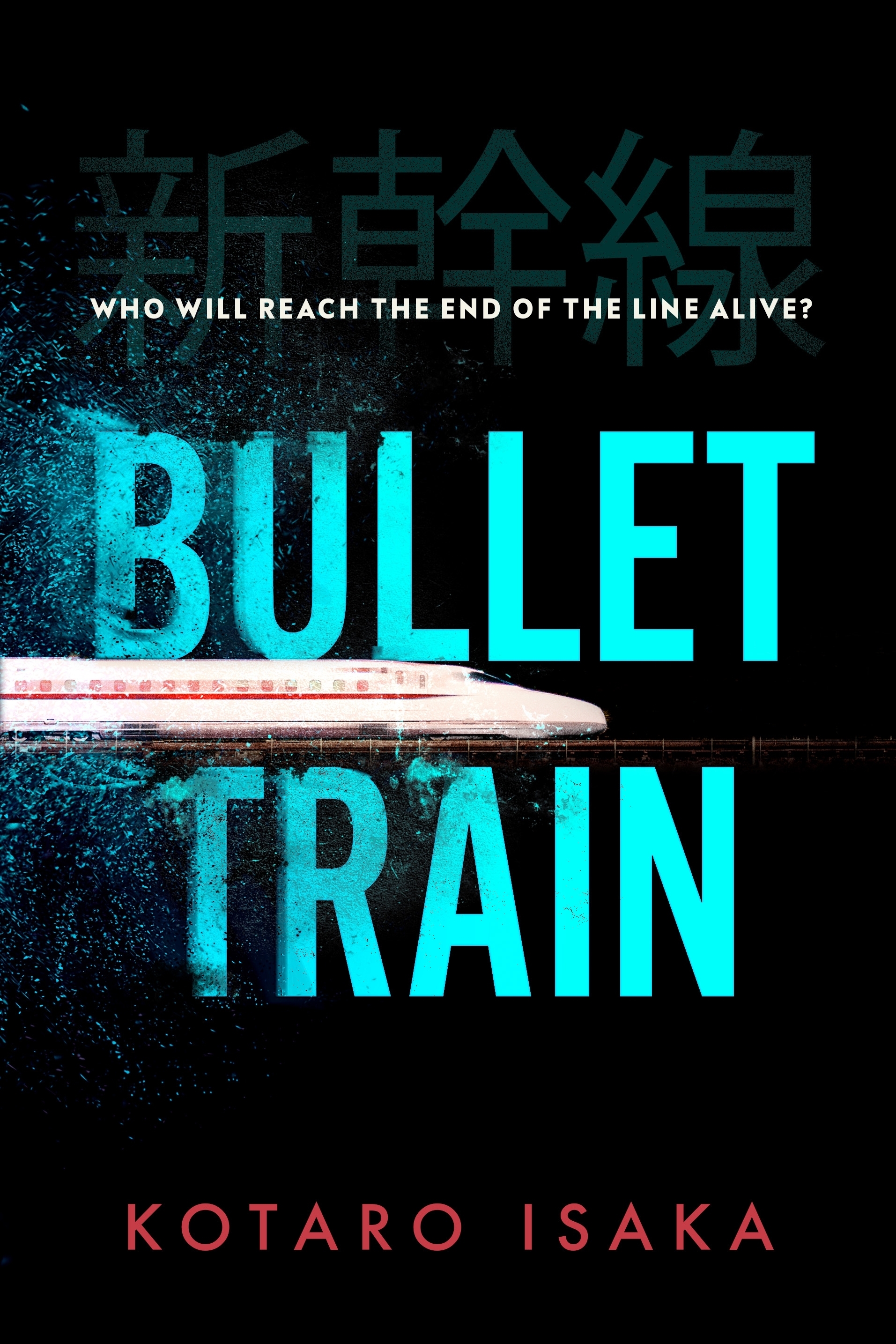
Bullet Train by Kōtarō Isaka

Bullet Train Cover

Publisher: Harvill Secker (Trade Paperback – 16 March 2021)

English translation by Sam Malissa

Series: Standalone

Length: 415 pages

My rating: 4.5 out of 5 stars

Amazon

Thriller is a genre that I have only really started reading in the last couple of years and it is swiftly growing to become one of the top types of novels I tend to check out.  While most of the thrillers I read are somewhat mainstream and from authors I have read before, I occasionally branch out and check out something from an unfamiliar author if it has an unusual-sounding plot synopsis which really grabs my attention.  One of the most recent of these was Bullet Train by bestselling Japanese author Kōtarō Isaka, which I was lucky enough to receive a copy of a little while ago.  Bullet Train, which is the first English translation of Isaka’s 2010 standalone novel, Maria Bītoru (Maria Beetle), is a unique and clever thriller which follows five very unusual killers who find themselves aboard the same ill-fated train ride.

On a seemingly normal day, a bullet train is setting out from Tokyo, making its regular trip to Morioka, with several stops planned along the way.  As the train leaves, everything appears quiet, except for the fact that five dangerous killers are on-board, each of them with a very different mission in mind.  The youngest killer, Satoshi, looks like an innocent schoolboy, but in reality his is a psychotic master manipulator, easily able to get people to do what he wants.  His latest victim was Kimura’s young son, who is now in a coma after being thrown off a building.  Kimura, a former hitter turned alcoholic, has tracked Satoshi to the train and intends to kill the youth in revenge.  However, when Kimura underestimates his opponent, he soon finds himself in the middle of a dangerous game of survival, as he and Satoshi encounter some of the other passengers on board.

Nanao, the self-proclaimed ‘unluckiest assassin in the world’, has a relatively simple retrieval job that requires him to spend only a few minutes on the train.  However, when his unnatural bad luck conspires to keep him trapped aboard, he is forced into a desperate battle for survival.  At the same time, the lethal and unconventional assassin partners, Tangerine and Lemon, are also travelling to Morioka, until an untimely death puts them in the crosshairs of a notorious crime lord.  When a suitcase full of money also disappears, all five killers are forced to show their hands, beginning a desperate battle aboard the moving train.  However, as things get serious, the killers begin to wonder why all of them are aboard the same train and who is really pulling their strings.  As the bullet train pulls closer to its destination, betrayals, manipulations and secrets are revealed, and not everyone will survive to reach the last station.

Now this was an extremely awesome and deeply impressive novel that I am so very glad I decided to check out.  This translated novel from Isaka, an author who has written a massive collection of mystery and thriller novels over the last 20 years, including several that have been adapted into films, was a clever, fast-paced thrill ride that follows several awesome and captivating assassin characters.  This resulted in an epic and compelling read which proved to be extremely addictive and is one of the most entertaining books that I have read this year.

I absolutely loved Bullet Train’s slick and clever story that quickly dives between the book’s various characters.  Split between the five central killer protagonists, as well as a few intriguing supporting characters, Bullet Train has a particularly intricate narrative that is heavy on the twists, rapid turns and unique moments.  Isaka does an exceptional job setting the scene and introducing each of the great characters, and the reader is soon engrossed in seeing how the story and individual character arcs play out.  It does not take long for all five main characters to find themselves involved in some surprising and dangerous situations, which they must work to extricate themselves from.  As each character attempts to deal with their own problems, be they a dead client, stolen money, blackmail or being suddenly forced to deal with a dead body, their various storylines soon begin to intersect.  The way in which the individual storylines come together works extremely well and it proves to be extremely entertaining to see to the vibrant and distinctive personalities of each of the protagonists clash against each other when they meet.  Their intriguing interactions include some intense action sequences, clever manipulations and even some amusing confrontations that include anything from philosophical debates to discussions about a certain children’s show.  At the same time, the characters are also forced to contend with several additional complicating factors, including other killers aboard the train, seemingly oblivious onlookers, secrets from the past and a dangerous long-reaching plot.  All of this leads to an epic and clever conclusion that sees several protagonists die and a number of clever twists come to fruition.  I honestly did not see some of these cool twists coming and I ended up on the edge of my seat waiting to see what would happen next and which of the characters were going to survive the whole thing.  I ended up being really impressed with this cool book and I really enjoyed this thrilling and compelling read.

While Bullet Train’s narrative itself is extremely cool, the true highlight of this epic book is the five killer main characters of the story.  All of these main characters are a lot of fun and the author has imbued them with some excellent and memorable traits and personalities.  All five characters add so much to the story in their own right, but their real strength is the way in which they interact with each other.  The way in which these unique protagonists play off each other is just perfect and it was great to see them get the measure of each other and fully understand just whom they are dealing with.  You really get invested in each of these five characters fates and it is rather interesting to see who survives until the end and who comes out on top.

The first two major characters featured within the book are the interesting combination of vengeful former hitman Yuichi Kimura and teenage manipulator Satoshi Oji.  Kimura is a recovering alcoholic who is hunting Satoshi due to the teen’s role in Kimura’s son getting pushed off a roof and ending up in hospital.  However, his attempts at revenge are quickly thwarted by Satoshi, whose nickname “the Prince” tells you pretty much all you need to know about the kid.  Using threats towards his comatose son, the Prince manipulates Kimura into helping him investigate the strange events occurring on the train, and the two quickly find themselves in the middle of the dangerous situations, with Kimura attempting to find a way to save his son while the Prince attempts to work the situation to his own advantage.  Both fantastic killers are well-written and compelling characters who add a significant amount to the tale.  You really get invested in Kimura’s struggle to save his son and overcome his own inner demons, while Satoshi serves as a particularly unlikeable villain, who you really want to suffer, even if he is a teenager.  Isaka also throws in a few intriguing flashbacks which highlight how the rivalry between the two started, and which helps to dive into both insecurities and fears.  Both end up having fantastic story arcs within this book, and I really enjoyed the complex web that the author wove around the two.

Another of the main characters is Nanao, a young professional killer with a conscience who has only recently entered into the game.  Nanao is an absolute sweetheart whose most defining characteristic is his abysmal bad luck, which plagues him throughout the course of the book.  It proves rather amusing to see all the dramatic and amusing setbacks that happen to Nanao during Bullet Train, and it quickly becomes apparent that he is actually cursed, a fact that he faces with particular sadness and a certain amount of fatalism.  You cannot help but feel for Nanao as the book progresses, and there is something about his general unhappiness with the situation that draws the reader to him.  Thankfully, he is also a particularly skilled operative, especially in dangerous situations, which gives him a fighting chance against his opponents, and the times when this resourcefulness appears are pretty awesome.  I personally felt that Nanao’s story arc was one of the best in all of Bullet Train and I really loved seeing the other side of the characters’ unluckiness eventually come into play, even if the protagonists never realised just what happened to him.

The final two killers featured within Bullet Train are the memorable partnership of Tangerine and Lemon.  Despite their similar appearance which makes many people believe that they are twins, Tangerine and Lemon are very different people, both with unique personalities that clash with one and other.  While Tangerine is the well-organised professional with a love for classic literature, Lemon is the wild card, a seemingly flaky and eccentric killer with an unnatural appreciation for the children’s show Thomas and Friends.  This makes for a very entertaining odd-couple pairing, as the two characters, who at times appear not to even like or understand each other, need to sort through the chaotic situation about the train.  While Tangerine is an enjoyable character who serves as a good straight man to some of the more outrageous personalities aboard, I definitely enjoyed Lemon way more.  Lemon is a wildly entertaining and captivating character whose unique viewpoint on life, which is inspired by Thomas and Friends, is both childlike and clever at the same time.  I really enjoyed seeing some of Lemon’s reactions and solutions to the problems he encounters, especially as he mainly draws on lessons from the characters in Thomas in Friends, when it comes to judging people (you really do not want to be a mean old Diesel).  This leads to some great scenes, especially as he can see through manipulations that have tricked some of the other characters.  It was also great to see the full breadth of the friendship between Tangerine and Lemon become clear as the book continued, especially as it leads to one of the best scenes in the entire book.  Each of these character arcs ended up being truly spectacular and I had an outstanding time seeing each of their unique tales unfold.

Bullet Train by Kōtarō Isaka was an epic and immensely captivating read that comes highly recommended.  I deeply enjoyed the unique and exciting tale told within it, loaded as it was with all manner of cool twists and surprise reveals, and I cannot emphasise how awesome the main five characters were.  This was a superb read and I will have to keep an eye out for English translations of any of Isaka’s other books.  I am also quite excited for the upcoming film adaption of this book, also titled Bullet Train.  I assume that this English translation novel is the result of the major Hollywood adaption of Maria Bītoru that is currently in production, and which looks set to feature an impressive array of actors including Brad Pitt, Joey King, Aaron Taylor-Johnson, Zazie Beets, Lady Gaga and Sandra Bullock.  While I am a little uncertain about why a film set on a bullet train in Japan is going to feature a primarily American cast, this looks set to be a fun movie, especially if it lives up to this impressive and clever novel.

Amazon

Make sure to also check out my review for the connected Kotaro Isaka novel, Three Assassins, here.