Nero by Conn Iggulden

Nero Cover

Publisher: Michael Joseph (Trade Paperback – 28 May 2024)

Series: Nero – Book One

Length: 396 pages

My Rating: 4.5 out of 5 stars

Amazon

One of the absolute best authors of historical fiction in the world today, Conn Iggulden, returns with an exciting new series as he examines the life of Rome’s most infamous Emperor, Nero.

Conn Iggulden is a historical fiction author that I have a lot of respect for, especially as consistently presents intense and compelling reads that focus on some of the most interesting people and conflicts of the historical world.  Starting off over 20 years ago with his iconic Emperor series, which covered the complete life of Julius Caesar, Iggulden has moved through various historical periods and locations with his works.  This includes his impressive Conqueror series, which followed the life and legacy of Genghis Khan, his outstanding War of the Roses books, the fantastic standalone novel The Falcon of Sparta, and his clever Athenian series, made up of The Gates of Athens and Protector.  All these series have been really impressive, effectively balancing historical detail with exciting storytelling, and Iggulden is a favourite author of mine as a result.  Due this I have been really excited for his latest novel, Nero, which provides an intriguing look at the events that led to the ascension of the titular Emperor.

Rome, AD 37.  The greatest city in the world is in turmoil.  The decrepit and vengeful Emperor Tiberius has returned to Rome after a lengthy absence, and his first act is to order the strangulation of the man he left in charge.  As a flurry of sanctioned killings and destruction begins to reign down upon Rome, a young boy is born who is destined to burn everything around him.

Born Lucius Domitius Ahenobarbus, the boy is the son of a former champion charioteer of noble lineage, and Agrippina, the great-granddaughter of the Emperor Augustus.  With family ties reaching all the way back to original emperors, Lucius is already considered an eventual claimant to the Roman throne.  However, there are many within Rome who want power and influence for themselves and care little for the hopes and ambitions of a noblewoman and her young son.

With dark clouds on Rome’s horizon, Agrippina soon discovers that the greatest threat comes from closer to home than she realises in the form of her brother, Caligula.  Banished and robbed of everything, including her young son, Agrippina finds herself at the mercy of those around her.  However, Agrippina does not intend to be powerless forever, and when fate intervenes, she finds herself with the opportunity to influence the very heart of Roman politics.  Can Agrippina ensure the rise of her young son, the boy who will eventually be known as Nero, and will Rome ever be the same again?

This was an intriguing and gripping novel from Iggulden, who continues to show why he is one of the most consistent and entertaining authors of historical fiction.  Nero is a fascinating and thrilling read that cleverly examines the early life of the future emperor from those around him and proves very hard to put down.

Nero contains a typical Iggulden narrative, in which he focuses on a historical figure and follows them from birth to their eventual rise to power.  In Nero’s case, this book is clearly the first part of a larger series as it is dedicated to examining the childhood of the future emperor and the many events that lead to him to the throne.  As such, the focus of this novel is more on his parents, and the various other dangerous Roman figures who were around at this time.  Starting in the latter days of Tiberius’s reign, the author parallels Nero’s birth with the start of Tiberius’s purges in Rome, while also showcasing his troubled parents, including his mother Agrippina, who is essentially the main character here.  This proves to be an interesting start to the book, especially as you get a good look at many of the key figures the story is going to focus on, while also showcasing just how crazy stories recounting the history of Rome can get.

The author quickly moves the story along to the reign of Caligula, which drags the protagonists closer into the limelight due to Agrippina being the new emperor’s sister.  Naturally, it doesn’t take long for affairs to devolve into chaos, and there are some major changes that really impact the lives of the principal cast.  The second half of the book features a decent time skip which brings certain figures back into prominence and allows Agrippina to focus on her ambitions.  Iggulden does a great job showcasing Agrippina’s change of heart and new desire for power, and I liked the intrigue, political machinations and manipulations that were at the heart of this second half of Nero.  Everything leads up to an interesting conclusion, as Iggulden adds in some exciting military action, which contrasts nicely to the political and personal struggles of the first half of the plot.  The book ends on a solid note that ensures readers will come back to the series in the future, especially as the story of Nero is only just beginning.  This proved to be a very intriguing story, and I enjoyed how Iggulden showcased the many infamous historical events and wove a great, character-driven story around them.

Nero had a great tone that was a combination of character driven plot, over-the-top Roman antics and intriguing history, which I really enjoyed.  Loaded with a fast-paced and brutal story, you quickly get absorbed into the many political intrigues and dysfunctional relationships that lie at the heart of the plot, and Iggulden did an outstanding job flipping the perspective around a range of compelling historical figures and showcasing their unique views on intriguing events and the future emperor.  The story is constantly sharp and compelling, I liked how intense events got, especially as Iggulden ensured that certain dark moments of history are shown in all their glory.  I deeply enjoyed the author’s depictions of Roman history, and his take on events really stood out compared to some other series I have read set in the same period.  The chaotic nature of the antagonists, the mood of the city, and the general insanity of the times were all very impressive, and they formed a great background to the outrageous plot.  Iggulden has such a knack for displaying Roman history (as evidenced by his first epic series) and he really makes the ancient city, and iconic figures stand out for all readers.  While he does appear to take a few liberties with the historical record for storytelling purposes (honestly, what historical fictions author doesn’t ?), many of the most iconic moments of the time were captured perfectly, and he constantly ensured that the mood of the city was examined in detail.  I deeply enjoyed this fantastic and captivating historical tale, and Nero proved to be a highly addictive book to check out.

I want to also highlight some of the amazing characters featured in Nero, especially as most of them proved to be awesome takes on major historical figures.  As I mentioned before, the character of Nero himself doesn’t get a lot of time as a perspective figure in this first novel, mainly because he is quite young for most of the plot, although he does get a few intriguing moments in the second half of the book.  Instead, most of the book was dedicated to showing the formative events of his youth, as well as how he ended up in the position to eventually become emperor.  I felt that this was a smart decision on Iggulden’s behalf, and I really enjoyed seeing this in-depth examination of Nero’s history, especially as most Roman historical fiction series tend to include him as an overexaggerated villain rather than a product of the crazy times he grew up in.  I look forward to seeing how he evolves in future books, and it will be interesting to see how Iggulden utilises him as a major perspective character.

With Nero growing into the role, the character who probably gets the most focus is Agrippina the Younger, Nero’s mother and future empress.  Due to the way the plot plays out, Iggulden spends a lot of time exploring this controversial figure, and I rather enjoyed seeing the in-depth examination of the events that preceded her marriage to Claudius.  You get a very complex picture of Agrippina here, including the many tragedies surrounding her family, the violent marriage that resulted in Nero, and the terrible treatment by her brother Caligula.  Iggulden does an excellent job showcasing how these events impacted Agrippina’s personality, and you can see how and why she becomes more ruthless and determined to be the one in control.  While she does a lot of despicable things, Iggulden almost makes her a sympathetic character, although certain dark events stop you from ever truly loving her.  I deeply enjoyed the author’s portrayal of Agrippina in Nero, and she proved to be a compelling and intriguing force.

Other characters of note include Nero’s father, Gnaeus Domitius Ahenobarbus, a violent drunken former famous charioteer who Iggulden showcases in a manner similar to a modern-day angry failed sports star trying to relive their glory days.  Constantly enraged that the world has left him behind and caught up in events beyond his control, Gnaeus cuts a dark and brooding figure that proves very hard to love.  Despite this, Gnaeus was a very intriguing addition to the plot, and his fraught interactions with Agrippina left a mark that resulted in some intriguing plot points.  I must also mention the great depictions of the three emperors who preceded Nero, Tiberius, Caligula and Claudius.  All three of these emperors are notorious, and Iggulden went out of his way to show their many eccentricities and issues, as well as the impacts that they had on the Roman empire.  I always love seeing authors depict the unique events these figures were responsible for, and Iggulden did not disappoint.  As such, they all end up being major and memorable figures in Nero, which proved to be quite important, as their actions and reigns will no doubt be referenced and compared to Nero in the rest of the series.  Throw in a great collection of other fantastic historical figures, and Nero had a great cast that really brought some amazing monsters from history to life.

Conn Iggulden continues to showcase why he is one of the top authors of historical fiction.  Nero was an outstanding book that masterfully showcases the early life of the infamous emperor with a wildly entertaining story.  Exciting, dramatic and very over-the-top, Nero was an incredible read that I deeply enjoyed.  I look forward to seeing how Iggulden brings this series together in the future, and I am already very excited for the inevitable sequel.

Amazon

Desperate Undertaking by Lindsey Davis

Desperate Undertaking Cover 2

Publisher: Hodder & Stoughton (Trade Paperback – 12 April 2022)

Series: Flavia Albia – Book 10

Length: 398 pages

My Rating: 5 out of 5 stars

Amazon

Buckle up for an intense, captivating and exceedingly memorable historical murder mystery as bestselling author Lindsey Davis unleashes the 10th entry in the deeply clever and compelling Flavia Albia series, Desperate Undertaking.

It’s that awesome time when I get to gush about the newest entry in Davis’s excellent, long-running Flavia Albia series, which has been a major fixture in my reading schedule for the last several years.  The sequel series to her iconic Marcus Didius Falco novels, the Flavia Albia novels follow the daughter of Davis’s original protagonist as she solves unusual murders across ancient Rome.  Thanks to the series’ typical great combination of intriguing characters, complex mysteries, excellent historical elements and great humour, I always have an amazing time reading these novels, which usually get very high ratings from me.  Some of the more intriguing Flavia Albia novels in recent years include The Third Nero, Pandora’s Boy, A Capitol Death, The Grove of the Caesars (one of my favourite books of 2020) and A Comedy of Terrors.  Due to the quality and entertainment capability of this series, I eagerly keep an eye out for Davis’ new book each year and I was exceedingly chuffed when I got a copy of Davis’ latest novel, Desperate Undertaking.

Rome, 89 AD.  The year is coming towards an end and the city is ready to enter a sleepy holiday period.  Unfortunately, murderers are notoriously bad at taking breaks, and Flavia Albia, paid informer, dogged investigator and daughter of notorious busybody Marcus Didius Falco, is about to get dropped into the most disturbing case of her life.  With her parents away on holiday and her impromptu family preparing to settle in for the quiet period, Albia receives a job request she cannot refuse.  An aged actor, part of a troupe her parents travelled with in their youth, has been killed, horribly crucified in a public place.  Starting her investigation, Albia and her husband, Tiberius, are shocked to discover this is not the only murder confronting them as they suddenly discover the first victim’s widow was also murdered in terrible circumstances.  Her last words to Albia: “The undertaker did it…”.

Determined to find the person responsible for the horrific murders of her parent’s friends, Albia begins her investigation, diving into Rome’s theatre scene.  But when another actor associated with the troupe is killed in a cruelly inventive way, Albia begins to realise that these are no ordinary murders.  A twisted and determined serial killer is on the loose, bearing a terrible grudge against the actors and anyone associated with them.  Worse, their exceedingly public killings all bear striking similarities to some of the most brutal moments in classic plays, causing their victims to suffer in horrific ways.

With the bodies piling up and the city in an uproar, Albia must solve the most unusual and deadly case of her career before more of her parents’ friends end up dead.  But the closer she gets to the truth, the more she begins to realise that these murders bear a strong connection to one of her father’s past cases.  Worst, Albia soon realises that her connection to the currently absent Falco has made herself and everyone she loves a target of a demented killer determined to get revenge.

Davis does it again with Desperate Undertaking, producing a wildly entertaining and exceedingly clever historical murder mystery that I had a brilliant time reading.  Perfectly bringing together a disturbing mystery with an excellent historical setting, some great characters and the author’s trademark humour, Desperate Undertakings is an outstanding read and it ended up being yet another Flavia Albia book that gets a full five-star rating from me.

I must admit that I have sometimes found Davis to be a bit of an inconsistent writer; while most of her novels are extremely good, a few of them do not quite measure up in terms of substance or entertainment.  However, Desperate Undertakings is easily one of the better books in the Flavia Albia series as Davis pulled together an exceptional and dark murder mystery narrative that will leave a memorable impression on the reader.  For this latest story, Davis drops a lot of the family/household storylines that have been a significant, if slightly distracting, feature of the previous novels, and instead focuses on an intense and elaborate murder mystery that effortlessly grabbed my attention and ensured I was extremely hooked on this fantastic novel.  The book starts off extremely strong, firstly with a foreboding introductory short chapter, and then with a great series of compelling early chapters that drag the protagonist into the investigation.  These early chapters feature two dramatic (literally) and elaborate murders that really stand out due to their brutal and distinctive nature (the second one is particularly gruesome and over-the-top), as well as their connections to some of Davis’s iconic protagonists.  As such, the reader becomes really invested in the case early on, and you soon get thrust into an elaborate in clever murder inquiry storyline.  Davis sets up this investigation really well, and there are a series of great leads, potential suspects and unique theories that pan out as the novel proceeds in an excellent way.  While the novel slowed down slightly after the initial murders, the next series of killings picks the pace right up again, which the story maintains for the rest of the book.  I really enjoyed how the entire mystery came together, and there are some really clever twists and turns here, with seemingly minor characters or story elements coming back in some big ways later in the book.  Everything leads up to a big and impressive conclusion and readers will be left rocked by the elaborate and powerful nature of the plot, as well as how damn dark this novel got in places.

Desperate Undertakings is extremely well written and I loved how Davis pulled this entire novel together.  Davis once again hits the perfect blend of murder mystery, historical elements and character driven story elements in this book, as the reader is engrossed in this brilliant Roman based tale.  I did feel that this one was significantly darker in places than some of Davis’s previous novels, which I really liked, especially as it results in some particularly gruesome killings.  The story is once again told from the perspective of central character Flavia Albia as she traverses the mean streets of Rome to find her culprit.  This central focus allows for much of the books fantastic humour, as Albia’s comedic and exceedingly modern perspective of events is extremely entertaining, while also providing a Roman noir feel for the murder investigation.  Like most of the books in the Flavia Albia series, Desperate Undertakings can easily be read as a standalone read, with any relevant elements from the previous novel rehashed for the new reader.  However, Desperate Undertakings also bears a strong connection to one of Davis’s older novels, the sixth book in the Falco series, the 1994 release Last Act in Palmyra.  Multiple characters and elements from this book make an appearance here, with several of them serving big roles in this book, either as supporting characters, suspects or victims.  Davis rehashes the events of this previous book extremely well, and readers who haven’t had the chance to enjoy it are still able to enjoy Desperate Undertakings without any issues, while those who have will no doubt enjoy the fun call back.  I felt that these past elements were utilised extremely well, especially as these past events also impacted the present storyline.  This entire novel came together brilliantly, and I was extremely enthralled by its great writing and powerful story the entire way through.

I always deeply enjoy how Davis portrays the historical elements in her novels and Desperate Undertakings was a particularly good example of this.  The reader is once again treated to breathtaking depictions of ancient Rome, with everything from the chaos of the streets, the culture of the people, and the slapdash take on law enforcement used to full effect throughout the course of the plot.  There are some brilliant descriptions of some of ancient Rome’s earlier sties, especially as the murders make use of some iconic locations for the sites of their crimes, and you get an excellent sense of the city thanks to Davis’s descriptive and powerful writing.  However, the best part of these historical elements is the dive into the Roman theatre scene, which is a key part of the books plot.  Davis provides an intriguing and entertaining look at the city’s theatre elements throughout the novel, and you soon become deeply engrossed in her entertaining portrayal of these eccentric and proud actors and entertainers.

Desperate Undertakings also takes quite an intriguing look at the various plays and performances put on during this period as the killer utilises some of Rome’s bloodiest and most elaborate plays as a basis for setting up their murders.  This causes the protagonist to really dive into all the plays of the period and you get a good idea of several of the more iconic and distinctive ones, especially those that have elements of death involved.  I found it really interesting to find out about this part of Roman culture, especially the deadly twists that are sometimes involved with them, and it was a great part of the plot.  I also felt that Davis did a remarkable job working these historical theatre aspects into the plot of Desperate Undertakings, and it really helped to make the murder mystery stand out.  I particularly enjoyed how the author broke the book down into sections, each one of them named after a play that corresponds to the murder that Flavia is about to discover.  This allows for a glorious bit of foreshadowing, especially for those with an interest in classics and theatre, and it was an excellent addition to the book.  I deeply appreciate how Davis utilised these historical plays as the inspiration for her murders in Desperate Undertaking and it really gave this book a very distinctive feel.  Readers are warned that some of the murders are a bit graphic thanks to how they are portrayed in these plays, and you are in for some barbaric punishment as a result.

Another strong aspect of Desperate Undertakings was the excellent and compelling characters that Davis featured throughout.  As usual, this great cast is headed up by the intrepid Flavia Albia, who serves as the main protagonist and point-of-view character for the book.  Albia is a really entertaining protagonist, especially as Davis presents her as a cynical private investigator with very specific views of the reality of life in ancient Rome.  The daughter of another cynical protagonist, Falco, Albia spends most of the book making astute and hilarious observations about the people, locations, and events around her, and much of the book’s humour results from the amusing and noticeably modern way she sees the world around her.  As such, Albia really adds a lot to this intriguing story and it is always so much fun to see her waltzing around Rome solving her elaborate cases.  It was particularly interesting to see her reactions to the murders that occur in Desperate Undertakings.  Despite her familiarity with death and Rome’s underbelly, these killings really hit her hard due to their brutal nature and the connection that the victims have to her parents.  I felt this was a really compelling and powerful change to the character, and it really helped to highlight just how dark this book got in places.

Desperate Undertaking also features a wide cast of characters, all of whom have some entertaining or intriguing moments through the book.  Davis utilises a blend of established characters, new figures and even several characters who have not appeared since the Falco series.  All these characters are utilised extremely well in this novel, and the author does a good job of introducing (or reintroducing) them throughout the course of the plot.  As usual, this includes Albia’s husband, Tiberius, who serves as a good straight man to Albia’s eccentric antics, and helps to focus the investigation in places.  Other interesting characters include a newly introduced cop who balances between competence and political expediency and serves as another excellent foil to Albia’s more unusual investigation methods.  The various actors and theatre related figures are pretty entertaining, and Davis introduces some eccentric characters, many of whom serve as potential suspects or victims as you get to know them more.  I also felt that Davis did a good job with the killer (or killers) featured in this book, as they have a unique motivation, and a compelling personality that is slowly uncovered throughout the course of the book.  Finding out just who they are and why they are doing these dreadful killings is extremely fascinating and results in some brilliant character moments.  Other supporting characters are also extremely entertaining, including a very strong butcher and two very cultured vigils, and I had a brilliant time getting to know them all.

With the extremely awesome and captivating Desperate Undertakings, the always incredible Lindsey Davis continues to reign from atop the historical murder mystery mountain.  This latest Flavia Albia novel is exceedingly epic, containing a brilliant and dark investigation story that sees the series’ outstanding protagonist encounter a truly demented killer.  With some fascinating and distinctive historical elements, especially those surrounding the bloody and memorable plays, Desperate Undertakings really stands out and was an amazing amount of fun to read.  This was one of the better and more memorable entries in this excellent long-running series, especially with its vicious murders and great character work, and it comes extremely highly recommended.

Desperate Undertaking Cover 1

Amazon

Quick Review – A Comedy of Terrors by Lindsey Davis

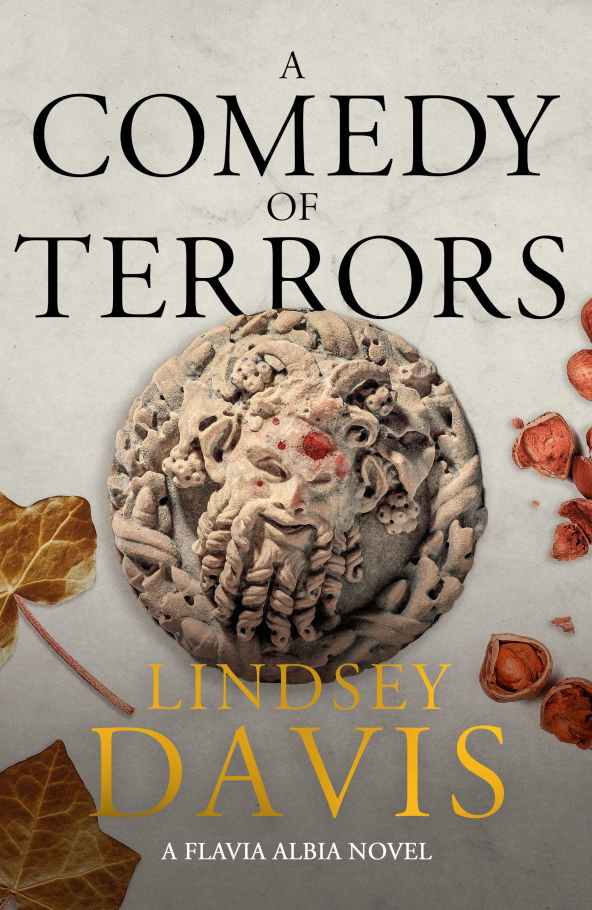
A Comedy of Terrors Cover

Publisher: Hodder & Stoughton (Trade Paperback – 1 April 2021)

Series: Flavia Albia – Book Nine

Length: 386 pages

My Rating: 4 out of 5 stars

Amazon

I am a big fan of several great historical fiction series currently running, but one I find to be particularly entertaining is the Flavia Albia series from bestselling author Lindsey Davis.  Davis has been dominating the ancient historical murder mystery scene for years, first with her extensive Marcus Didius Falco novels, and then with the successor Flavia Albia series, which follows the daughter of the original series’ protagonist.  While I never had the opportunity to get into the Falco novels, I have been reading the Flavia Albia books since the outset and have had a brilliant time with all of them, including The Third Nero, Pandora’s Boy, A Capitol Death, and The Grove of the Caesars, each of which have been excellent in their own way.  Indeed, this is such a great series that I have been pretty eager to start reading the latest novel, Desperate Undertaking, which I just got my hands on a couple of days ago.  I really want to read it next, but before I start, I absolutely must do a review of the preceding novel in the series, A Comedy of Terrors.

A Comedy of Terrors was the ninth book in the Flavia Albia series and was released this time last year.  I had initially planned to read A Comedy of Terrors when it first came out, but unfortunately, it took me a little longer to grab it than I intended.  By the time I was able to fit it into my reading schedule, I was a bit rushed off my feet with other reviews and other reading (excuses, excuses!), so I never got a chance to really write anything about it when I finished.  This was an inexcusable oversight of my behalf, and it is one that I really wanted to fix before checking out Desperate Undertaking, so here we are.

Plot Synopsis:

In Rome, 89 A.D., poisonings, murders, and a bloody gang war of retribution breaks out during the festival of Saturnalia, and when her husband, Tiberius, becomes a target, it’s time for Flavia Albia to take matters into her own hands — in Lindsey Davis’s next historical mystery, A Comedy of Terrors.

Flavia Albia, daughter and successor of private informer Marcus Didius Falco is twiddling her thumbs with no clients during the December festival of Saturnalia. But that doesn’t mean all is quiet. Her husband Tiberius and the Fourth Cohort are battling organized crime interests that are going to war over the festival nuts. A series of accidental poisonings, then bloody murders of rival nut-sellers, and finally a gruesome warning to Tiberius from the hidden criminal powers to back off.

Albia has had just about enough and combines forces with Tiberius to uncover the hidden criminal gangs trying to worm their way into the establishment at a banquet of the emperor Domitian.


A Comedy of Terrors
was another fun book from Davis that takes the reader back to ancient Rome to investigate an intriguing mystery.  In this case, the book revolves around Flavia and her family’s dangerous interaction with a criminal gang who are trying to take advantage of a religious festival and have come into conflict with Flavia’s husband Tiberius.  This results in an interesting story which sees Flavia getting involved in several conflicts, intimidation attempts, assorted mysteries and other connected events, all in the name of investigating the gang’s activities and trying to bring them down.  At the same time, Flavia is dealing with multiple personal and familial issues, as she and Tiberius now find themselves responsible for Tiberius’s semi-orphaned nephews.

I must admit that this wasn’t my absolute favourite Flavia Albia novel, and I felt that the story was lacking some of the usual flair and tight storytelling that I usually so enjoy from Davis’s novels.  A Comedy of Terrors’s narrative was a bit unfocused in places, particularly when it came to main storyline involving the ancient Roman gang.  Rather than the series’ typical attention on a central investigation, this was a bit more of a meandering affair, which, while interesting in places, did seem to go on some random tangents.  There was also a much greater examination of the protagonist’s home life, as not only did Flavia and Tiberius have their young relatives to look after, but there was also some domestic drama around their unusual household of slaves, servants and random family members.  While I enjoyed seeing the continued domestic evolution of the formerly wild Flavia and the notoriously honest Tiberius, which resulted in several rather entertaining scenes, I could see newer readers who came for the mystery getting a bit frustrated with this extra attention on family life.  Still, A Comedy of Terrors did have some great moments throughout its plot, and Davis did the usual excellent job of combining crime fiction and historical elements together into an entertaining story filled with the writer’s fantastic sense of humour.  In addition, the characters were sharply written as always, there were some intriguing historical crime fiction elements to the plot (who would have thought there was criminal opportunity in festival nuts?), and I still really enjoy the author’s inclusion of modern attitudes and reactions in this historical environment.  I particularly loved the final resolution of the case which saw a classic gangster move turned around on its user in dramatic fashion, which served as an amazing end to this fantastic book.

Overall, A Comedy of Terrors was another great addition to the Flavia Albia series by Lindsey Davis.  While it lacked some of the focus and compelling mystery of some of Davis’ most impressive reads, this was still a clever piece of historical crime fiction, and I loved seeing the continuation of her character-driven storylines.  A must read for fans of this series, I cannot wait to see what happens in the 10th book, Desperate Undertakings.

Amazon

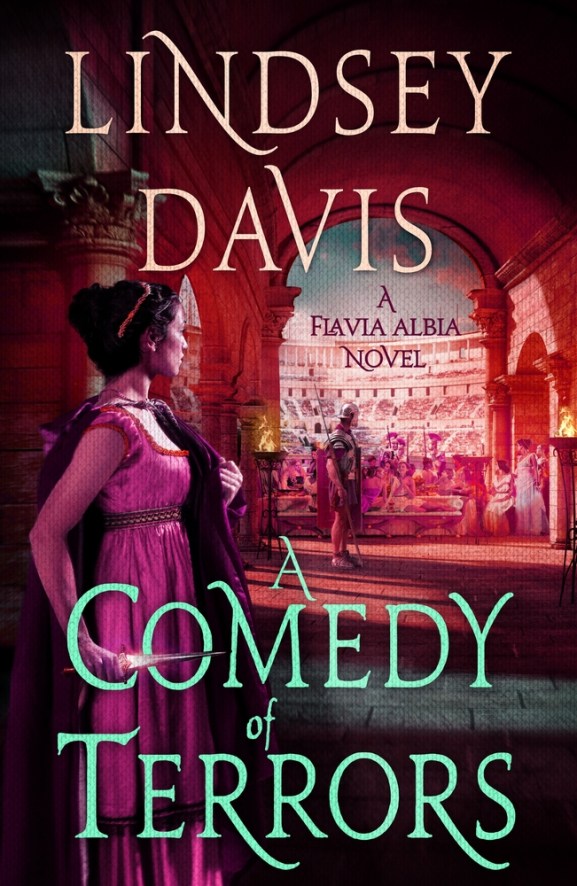
A Comedy of Terrors Cover 2