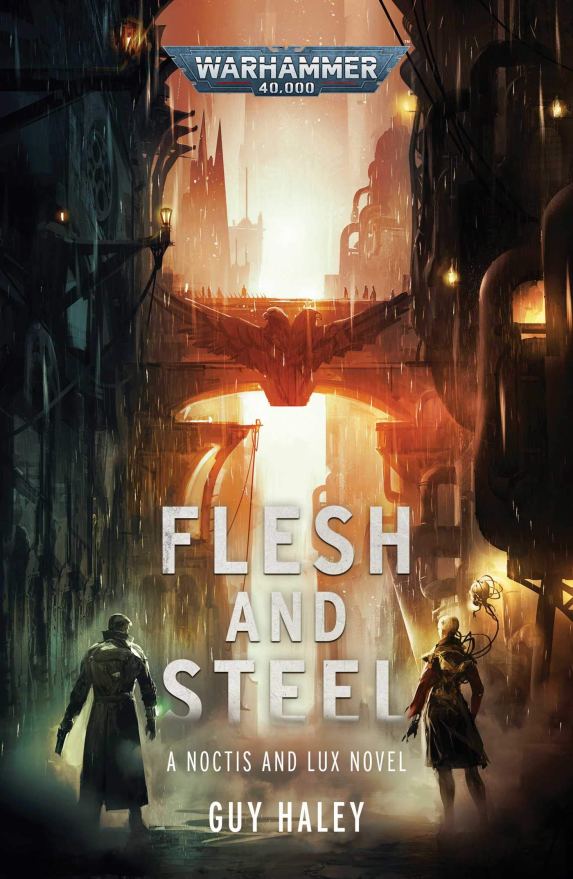
Warhammer 40,000: Flesh and Steel by Guy Haley

Flesh and Steel Cover

Publisher: Black Library (Audiobook – 3 October 2020)

Series: Warhammer Crime

Length: 9 hours and 23 minutes

My Rating: 4.75 out of 5 stars

Amazon

I’m on a major Warhammer 40,000 review roll, so after checking out the awesome books Malleus and Hereticus by Dan Abnett, Sepulturum by Nick Kyme, For the Emperor by Sandy Mitchell and Kingsblade by Andy Clark, I’m moving on to the awesome Warhammer Crime book, Flesh and Steel by Guy Haley, which proved to be an exceptional read.

I have said this several times in the past, but one of the true strengths of Warhammer 40,000 fiction is that the franchise can cover so many different types of stories or genres and still result in some epic reads.  A particularly good example of this is the Warhammer Crime subseries that melds intriguing and classic crime fiction concepts with a grim Warhammer 40,000 setting.  I have deeply enjoyed the previous Warhammer Crime books I have read, including the twisty and fast-paced crime thrillers Dredge Runners and The Wraithbone Phoenix by Alec Worley, and the noir inspired psychological thriller Grim Repast by Marc Collins.  As such, I just had to read another fantastic entry from this series with the intriguing Flesh and Steel by Guy Haley which saw a classic odd-couple police story meet a unique thriller from the Warhammer universe in glorious fashion.

The vast continent-sprawling city of Varangantua on the planet of Alecto is home to many vile and heartless crimes, most of which are ignored by the over-taxed enforcers of the Lex Alecto.  However, some murders are so spectacular that they cannot be ignored, especially when they threaten the stability of the city’s entire economy.

Probator Symeon Noctis is a man who knows all about the obscene wealth that Varangantua can produce.  A scion of one of the city’s richest houses, Noctis has fled from his cruel family and his tragic past by joining the enforcers and attempting to help the downtrodden inhabitants of the Nearsteel district.  However, even someone as jaded and cynical as Noctis is unprepared for the strangeness of his next case when a bisected corpse is discovered in a neutral zone between Nearsteel and the Adeptus Mechanicus enclave of Steelmound, the two halves of the body neatly left on either side of the border.

Forced to cooperate with the Adeptus Mechnanicus, Noctis is partnered with Procurator Rho-1 Lux of the Collegiate Extremis to investigate the crime.  But when all evidence suggests that the murder was committed by a mindless servitor, Noctis is dragged into a terrible conspiracy inside the Adeptus Mechanicus.  Faced with tech-heresy, illegal modifications to servitors and even more bodies littering the streets, Noctis and Lux need to work together to solve this insidious crime before both their organisations are dragged down.  But with more and more people gunning for them, can this unlikely duo survive to crack the case?

Now this was an awesome Warhammer Crime book.  Loaded with great, complex characters, a compelling case, and some impressive Warhammer 40,000 elements, Flesh and Steel grabs your attention from the very start and refuses to let go.  A fantastic novel that shows off just how incredible and inventive a tie-in to the Warhammer universe can be.

Flesh and Steel has a brilliant and deeply addictive narrative that I had an amazing time getting through.  Told primarily from the perspective of protagonist Probator Symeon Noctis, the plot of Flesh and Steel revolves around an intriguing murder, where two halves of the same body have been placed on either side of the border between the main city and an Adaptus Mechanicus manufacturing enclave.  With two competing jurisdictions, Noctis is forced to work with the Mechanicus investigator Rho-1 Lux, especially after the murder weapon is determined to be the victim’s servitor and additional victims are discovered.  What follows is an intriguing buddy cop romp of a unique series of murders, as certain figures throughout the city are involved in crimes involving the always terrifying mindless man/machine hybrids, servitors.  Forced to work together despite their differences, Noctis and Lux prove to be a skilled team, investigating both the Mechanicus and the businesses in the city.  At the same time, Noctis is forced to deal with other concerns, such as an impossible missing person’s case, the machinations of his wealthy family, and his own intense personal issues as he tries to reconcile his complex life and the mistakes from his past.  The result is a fantastic and moving tale that has the right blend of crime fiction, Warhammer 40,000 and character elements to it.  While the mystery surrounding the various crimes isn’t too complex, especially as the perpetrators are obvious from the outset, the resulting conspiracy, and the impacts it has on the protagonists more than makes up for it, as you are drawn into a crime story that could only occur in the Warhammer universe.  Haley ends the book on an interesting note that not only highlights the full extent of the protagonist’s personal issues but hints at future adventures and tragedies to come.

I really liked the cool setup-up surrounding this story, as well as the distinctive writing elements that Haley utilised, and I was particularly impressed with how the author was able to utilise some classic crime fiction scenarios in this unique Warhammer setting.  The concept of a bisected body left across a border forcing a joint investigation between two agencies is reminiscent of The Bridge (or The Tunnel), and I liked the intriguing spin that Haley does on this by bringing in the Adeptus Mechanicus, who most humans have a very hard time relating to.  This leads to the unique partnership between Noctis and Lux, which I felt Haley utilised to its full effect, especially as he does a remarkable job diving into each of their intriguing lives.  While I mentioned that the mystery isn’t as complex as you would hope, Haley more than makes up for it by featuring some deeply compelling character elements, as well as perfectly fitting it into the already fantastic setting of Varangantua and the wider Warhammer 40,000 universe.  I also really enjoyed the excellent way Haley told his story through the lens of Noctis’s journals.  Not only does this provide some compelling and tragic hints at what is to come but it also paints the story through Noctis’s cynical viewpoint, which I quite enjoyed, especially as his infectious humour and sarcasm helped to make this one of the more light-hearted Warhammer Crime books at times.  This distinctive and compelling read had me hooked the entire way through, and I felt that Haley came up with something extremely special for Flesh and Steel.

I was really impressed by the excellent Warhammer 40,000 elements featured, especially as some of the more distinctive elements of this universe were used to full effect to create a gripping and powerful read.  Now, as with most of the Warhammer Crime books, I felt that Flesh and Steel stood well on its own and no prior reading is needed to fully understand this book, not even the preceding short story Haley published in the No Good Men anthology.  Indeed, due to the great use of crime fiction elements, the strong focus on characters, and Haley’s attention to detail, readers unfamiliar with the franchise can easily jump into Flesh and Steel and have a good time, and it would serve as a good bridging novel for readers more familiar with crime fiction than anything else.

However, both new and established fans will deeply appreciate Haley’s compelling and all-encompassing examination of some very interesting elements of Warhammer lore that are cleverly and expertly utilised throughout the story.  I was particularly impressed with the deep dive into the Adeptus Mechanicus, the inhuman tech-worshippers of the Imperium, who play a big role in the plot.  This was honestly one of the more intriguing novels I have so far read that deals with the Adeptus Mechanicus, and I loved the author’s depictions of their elaborate and occasionally nightmarish settlement within the wider city of Varangantua.  The protagonist spends quite a bit of time diving into their society, and I loved his cynical, if accurate, descriptions of them, as well as the apparently hypocritical role they serve in the wider Imperium.  One of the most intriguing aspects of the Adeptus Mechanicus featured in Flesh and Steel involve servitors, the cyborgs who act as mindless manual labour machines throughout the Imperium.  The creation and use of servitors, who are a common, if terrifying, background feature of the universe, becomes quite a key part of the plot, as they are end up being the murder weapons.  This helps to shape Flesh and Steel into a particularly unique mystery story, one which could only occur within the Warhammer universe, and I loved the I-Robot homages (book and the movie) that resulted from them.  Haley also treats us to several scenes that depict the creation of servitors, a process which involves lobotomising condemned criminals and turning them into barely human creations.  These scenes honestly turn Flesh and Steel into one of the most horrifying Warhammer 40,000 books out there, and these gruesome inclusions work wonders to shock both the reader and the protagonist, while also deeply enhancing the complex murder case.

In addition, Haley also spends a good amount of time expanding on the already epic setting of Varangantua, which has been such an amazing background for the rest of the Warhammer Crime novels.  There are many distinctive districts and areas to the vast city of Varangantua, and this great book introduces us to even more of them with new district of Nearsteel, which borders the Adeptus Mechanicus enclave and has its own range of issues and features.  In particular, the area is slowly dying thanks to the actions of the Mechanicus, who are killing of the industries contained within, and you get to see the decay and degradation that follows.  Haley keeps up the cool background of neon signs, dark bars, and corrupt police, that are a key feature of the wider Varangantua, and I loved the impressive Blade Runner resemblances that result.  Haley further enhances the effect of these poorer districts by also visiting the high spires and estates of Varangantua uber-wealthy, as the protagonist, a former rich boy himself, makes several visits there.  The elaborate manors, parties, and hang-outs of the gilded make for a fun and compelling comparison to the slums and desolate industrial areas of the rest of the novel, and I deeply appreciated how Haley used this multifaceted city to mirror the complex main protagonist and help show that he doesn’t really fit in anywhere.  I always have a ton of fun exploring these new areas of Varangantua, and Haley really did a great job showcasing the city, and other key Warhammer 40,000 elements throughout Flesh and Steel’s narrative.  I cannot wait to see what other crazy areas that Haley explores in some of his future books and stories, and I know I am going to love it.

While the story, the writing style, the dark setting and the cool Warhammer elements all made this book really stand out, I personally felt that the main strength of Flesh and Steel was the exceptional central characters, Probator Symeon Noctis and tech-priest Rho-1 Lux.  Haley did a remarkable job with both these complex and damaged characters and both of them carry the main story extremely well.  The combination of dramatic and tragic character arcs, combined with a fun overarching theme of them both being outsiders, is an essential part of the book’s narrative and you grow deeply connected to both the characters, and the book, as a result.

Most of the focus is on Noctis, who serves as the primary narrator, due to his personal journal (which is also an extended note to his lost daughter), being read out.  Noctis is a very fun and cocky character, who seems to treat many of the events that he encounters in an inconsequential way.  However, this is a major façade, as deep down Noctis is probably one of the most damaged and guilt-ridden characters you are likely to see in Warhammer fiction.  A member of one of the richest families on the planet, Noctis was already pretty messed up before he became a cop, due to the terrible family dynamics and his controlling father.  Further traumatic events, which are explored later in the novel, nearly break him, and he decides to escape some of his father’s control by joining the enforcers to help others.  However, his family influence and wealth still follow him and he is considered an outsider by most of his colleagues.  Despite this, Noctis doggedly continues and proves to be a very competent and capable investigator, even if he breaks all the rules and pisses off his boss to do so.  His eye for the inequity of the city and the wealthy gives the story a bit of a preachy anti-capitalist vibe, but I felt that this fit his character arc perfectly, especially as he knows better than most just how badly the lower classes are being exploited.  I also quite enjoyed how, despite Noctis’s dislike for his family’s intense wealth and intense hatred for all the nobility, he still uses their money to buy nice things for himself, including a fancy car and secure apartment.  This apparent inconsistency between what he preaches and what he does, is addressed several times by both the protagonist and other characters, and his eventual and simple explanation of, “I never said I was perfect,” is a recurring theme of this character’s existence.  Watching this conflicted and troubled figure attempt to reconcile his past and guilt with the current investigation and the people he meets is a powerful part of Flesh and Steel’s appeal, and the story would not be as strong without it.

The other major character is Procurator Rho-1 Lux, an Adeptus Mechanicus Tech Priest who acts as a detective and law enforcement officer who investigates crimes committed by or against the Mechanicus.  Lux is a great character for a number of reasons, especially as the whole idea of a Adeptus Mechanicus cop is a pretty damn cool one.  Initially shown to be an unflappable and rigid figure, you soon find a deeper layer underneath her augmentation as she proves to be just as emotionally unsure and determined for justice as Noctis.  A member of an obscure order, Lux is a rare individual who converted to the machine cult rather than being born into it.  This also makes her a bit of an outsider as she is not fully accepted by the Adeptus Mechanicus and is no longer fully human.  This forces her to accept one of the few jobs that none of the other tech priests want, and it is interesting to see her views on humanity, the Mechanicus, and the law, which surprisingly often mirror Noctis’ cynical thoughts.  Lux served as an interesting bridge between the human characters and the mysterious cyborgs of the Mechanicus, and it is fascinating to see how she changes her persona depending on who she talks to.  Haley does a wonderful job of portraying Lux’s dual persona throughout the course of Flesh and Steel, and he even shows a couple of chapters from her perspective as extracts from her data core.  These chapters have a more sterile and mechanical feel, and you see her data-laden observations in these compelling scenes.  Probably the best part of her character arc though revolves around her interactions with Noctis, as the two form a very unusual team.  Lux serves as straight person for much of Noctis’s antics, especially when it comes to their interactions with other Mechanicus figures, and usually tries to maintain her mechanical indifference.  However, the two soon form an intriguing relationship, which forces Lux to examine some of her long-hidden emotions.  I felt that the two played off each-other perfectly throughout the course of the book, and the joint explorations of their various pains and dark histories makes for quite a gripping read.  I look forward to seeing more from this distinctive and surprisingly fun duo in the future, even if Noctic’s journals hint at more tragedies to come.

As is my usual practice with Warhammer 40,000 novels, I checked out Flesh and Steel on audiobook, which proved to be an epic and deeply enjoyable experience.  Coming in at just under nine and a half hours, Flesh and Steel was a very easy audiobook to get lost in, and I felt that this amazing format really worked to enhance the exceptional story.  The journal format of Haley’s storytelling, as well as the occasional jumps to other perspectives, is expertly portrayed on audiobook and I loved how some of the darker or grander elements of the book, especially the horrors surrounding the Adeptus Mechanicus workshops, became even more distinctive or sinister when listened to.  It helps that the primary narration of Flesh and Steel was done by impressive voice actor, James Macnaughton, who really throws himself into the production.  Each of his key characters are expertly showcased through his voice work and you really get a sense of their inner selves through his performance, whether it’s Noctis’s cockiness, disdain or self-loathing, or the strangeness of Lux, Macnaughton manages to encapsulate it all with his acting and this combines extremely well with Haley’s strong character-focused writing.  A secondary voice is also utilised for the several chapters written from Lux’s perspective, and I liked how this different voice really helped to differentiate that the events were being shown from Lux’s internal processors.  This performance, combined with the usual enticement of the audiobook format, ensures that this is the best way to enjoy Flesh and Steel, and I would strongly recommend it to anyone who wants to try this epic book out.

Overall, Flesh and Steel is a pretty remarkable novel from Guy Haley that has ensured my continued addiction to all things Warhammer 40,000 and Warhammer Crime.  Featuring a complex and powerful story that simultaneously explores a compelling mystery and some brilliant characters, it is very easy to get hooked on Flesh and Steel and I had a wonderful time powering through it.  I cannot rave about this book enough and I am really hoping that Haley produces a sequel to Flesh and Steel very soon.

Amazon

Throwback Thursday – Warhammer 40,000: Hereticus by Dan Abnett

Warhammer 40,000 - Hereticus Cover

Publisher: Black Library (Audiobook – 30 July 2022)

Series: Eisenhorn – Book Three

Length: 9 hours and 48 minutes

My Rating: 5 out of 5 stars

Amazon     Book Depository

Welcome back to my Throwback Thursday series, where I republish old reviews, review books I have read before or review older books I have only just had a chance to read.  For this latest Throwback Thursday, I finish off the outstanding and iconic Eisenhorn trilogy by legendary Warhammer author, Dan Abnett, by reviewing the exceptional novel, Hereticus.

I have mentioned several times in the last few weeks that one of my absolute favourite authors of Warhammer fiction lately is the amazingly talented Dan Abnett, whose works have shaped a generation of lore and extended fiction.  I have really enjoyed several of the books in his excellent Gaunt’s Ghosts novels, such as First and Only, Ghostmaker and The Vincula Insurgency, which provide some captivating depictions of the common soldier in the Warhammer 40,000 universe.  However, based on what I have read so far, Abnett’s best series is the epic Eisenhorn trilogy, which follows titular character Inquisitor Eisenhorn as he attempts to protect humanity from a range of diabolical threats.  The first book, Xenos, served as an excellent introduction to Eisenhorn and his major supporting characters, while Malleus showed an older Eisenhorn as he attempts to unravel a massive conspiracy painting him as the villain.  I absolutely loved these outstanding novels and they both got a full five-star rating from me, and I immediately dove into the third and final book, Hereticus, as I really wanted to find how everything ended.

For over 150 years, Inquisitor Gregor Eisenhorn has loyally served the Imperium of Men, disrupting and ending multiple conspiracies and plots by heretics, daemons, and malicious xenos.  Throughout all this time, Eisenhorn has always tried to avoid the lure of the radical path that many of his fellow inquisitors tread, determined not to be corrupted by the forces he has sworn to destroy.  But desperation can drive even the best man towards the brink and Eisenhorn’s previous deal with a dark figure is coming back to haunt him.

Overseeing a Inquisitorial examination of the planet of Durer, Eisenhorn receives news that an old foe, one who cost him the life of a dear friend, is active on world.  Assembling his forces, Eisenhorn is unprepared for the full horror that awaits him, as his enemy unleashes an ancient evil capable of destroying worlds.  Facing tragedy and near death, Eisenhorn is forced to do the unthinkable and use foul rites to summon forth a greater evil in the form of the daemonhost Cherubael to survive.

Shocked and disgusted by his actions, Eisenhorn attempts to recover and atone for his mistakes.  However, before he can begin, his manor house is raided by a dangerous army of mercenaries and all his forces throughout the sector are brutally destroyed in an instant.  On the run with only a few loyal followers left, Eisenhorn needs to discover the identity of whoever is orchestrating his downfall before it is too late.  But to defeat his enemy, Eisenhorn is forced to dive deeper into heresy and call upon dark forces that are best left untouched.  Can Eisenhorn retain his sanity and soul, or is the price of his victory his own utter damnation?

Wow, just wow.  After how epic Xenos and Malleus proved to be, I knew that there was no way that I wasn’t going to love Hereticus.  However, I was unprepared for just how brutal and intense Abnett made this final book in the Eisenhorn trilogy, as Hereticus ended up being an exceptional read that perfectly ends his great series on a very high note.  Loaded with action, intrigue, and some amazingly complex characters, Hereticus gets another five-star rating from me, and this is honestly one of the best trilogies I have ever read.

Part of the reason why I enjoyed Hereticus so much is because it has an exceptionally epic story to it that really drags you in from the offset.  Set 50 years after the events of Malleus (150 years since the start of the series), Hereticus starts off big and never really slows down.  The book has a calamitous introduction that sees Eisenhorn and his comrades forced to confront a Chaos Titan which decimates them and forces Eisenhorn to call upon his captured daemonhost Cherubael.  This fantastic introduction not only perfectly continues the story from Malleus but also shows Eisenhorn’s progression towards radicalism as he uses his new knowledge in some pretty dark ways.  Following this introduction, which splits his main team up, the story continues strongly, as there is a major and extended battle sequence in the heart of Eisenhorn’s sanctum, which sees him forced out on the run.  Becoming a fugitive from new enemies, old foes, and the Inquisition itself, the rest of the novel is a very captivating and intense character-driven read that shows a desperate Eisenhorn continue to make radical decision after radical decision, all in the name of defeating his enemies, no matter the cost.  There are some extremely moving and powerful scenes scattered through the second half of the book, as Eisenhorn comes to terms with many of his long-running comrades, many of whom do not agree with his methods, as well as some deadly confrontations.  Everything leads up to a trippy and action-packed finale, as Eisenhorn finally faces down an old enemy.  While the ultimate confrontation is short and the main antagonist only has a brief appearance in the book, the real joy of the story is the hunt to find out who they are and what they are after, with a focus on investigation, intrigue, and ethics.  The conclusion leaves everyone extremely satisfied, and Abnett leaves the series open for follow-up, even if a ton of character-centric storylines are permanently closed by a series of deaths and destruction.

The author once again does an amazing job presenting the complex story contained within Hereticus and I have a lot of love for the writing style that Abnett utilised in this series.  Blending tense galaxy-spanning intrigue with the hunt for dark forces, massive mysteries, complex revenge plots, and a focus on the corruption of the spirit, there is a ton of fun for a lot of readers in this book, and I loved the elaborate conspiracy that was the fantastic focus of the plot.  I especially enjoyed the overall theme of Hereticus that saw Abnett try and bring a lot of storylines and character arcs full circle back to the original novel in the trilogy, Xenos.  The history of all the characters in the book, as well as multiple prior events, are essential parts of Hereticus’s plot, and I loved how the author was able to tie together a ton of compelling overlying storylines that really highlights the importance of the first two novels.  The primary storytelling method, a chronicle style from Eisenhorn’s perspective, adds a lot of power and flair to the overall book, especially as it enhances the character-driven aspect of the story and gives you some intriguing insights into the conflicted protagonist’s mind.  There are a ton of great scenes showcased as result of this first-person perspective, from multiple massive battles, to intimate conversations and even a very well-written psychic interrogation sequence.  Abnett has a great eye for detail and some of the resulting action sequences and unique locations are painted in such a way that the reader fully grasped every action or cool element of the setting.  This, and so much more, really helps Hereticus’ exceptional story shine through and I had so much fun seeing how this entire novel unfolded.

Like most of Abnett’s books, Hereticus can be read as a standalone novel, especially as the author does an exceptional job of recapping key events, characters, and relationships from the previous Eisenhorn entries.  However, to get the full emotional impact of epic narrative, I would strongly recommend checking out Xenos and Malleus first, as you really understand how the character has changed over the course of the series, as well as how well the storylines have continued.  I also felt that Hereticus proved to be a particularly good entry into the wider Warhammer 40,000 canon as Abnett continues to explore some of the most intriguing parts of this grim universe, including the dark cults that are constantly a threat to the Imperium’s stability and the Inquisitors who hunt them.  The fantastic dive into the different types of Inquisitors and their different ways of fighting the enemy is pretty cool and I loved seeing the various rivalries and discussions that eventuated, especially as Eisenhorn has an opinion on everything.  This book also takes the reader to a variety of unique locations within the Warhammer universe, with several unique planets becoming key settings for the plot.  I loved seeing the variety of worlds out there in this massive universe, and Abnett has fun tying the events of this book into some of the wider canon aspects of the franchise.  I would say that overall the Eisenhorn trilogy really is one of the best series to start reading Warhammer 40,000 fiction with, especially as you get a completely different and more elaborate story than the classic military fiction plots that make up the majority of the genre.

As always, I can’t go away from an Eisenhorn book without talking about the exceptional character work that Abnett brings to the table.  This is especially true in Hereticus, as Abnett brings so many compelling character arcs to a tragic and moving end, while also ensuring that his impressive protagonist is changed forever.

As you would expect, the focus of Hereticus is on protagonist Gregor Eisenhorn, who serves as the book’s primary narrator.  I mentioned during my previous reviews of these books that I have loved the complex and powerful story that Abnett has woven around Eisenhorn.  Starting off as a relatively innocent and uncontroversial Inquisitor who was just trying to do what is right, Eisenhorn has slowly slipped down the path of the radical by employing the methods and powers of his heretical foes.  Abnett has showcased this gradual fall perfectly in the first two books, and while he made some questionable decisions out of desperation in Malleus, you still believed that he could be redeemed.  Hereticus really has you doubt this as he begins to employ darker methods during this book, which not only cost him but impact the people around him.  However, this is not entirely his fault, as forces outside of his control drive him to do so.  Pretty much every mistake that Eisenhorn has made in his past seems to come back to bite him in Hereticus, and these events, and more, force him to make hard decisions to survive and defeat foes who are even worse than him.  While he does bad things, you can fully understand and appreciate why he feels he needs to do so, even if you don’t agree with them.  Despite these bad things, Eisenhorn remains a sympathetic character for most of the book, and his own realisation that what he is doing is wrong just makes the entire story that much sadder.  However, there is a layer of arrogance over this that makes you slightly concerned about Eisenhorn’s actions, and you’re never quite sure just how far he has truly fallen.  Abnett covers Eisenhorn’s overall character arc pretty damn perfectly, and while the author throws the protagonist’s decline into overdrive in this book, it felt pretty natural and showcases just how destructive desperation is as his good intentions lead him to hell.

On top of Eisenhorn, Hereticus features a bevy of compelling supporting characters who add their own complex spin to the story.  Many of the supporting characters from the first two books are once again featured in this third Eisenhorn novel, and I really appreciated how Abnett sought to bring many of their arcs and storylines full circle here.  Unfortunately for fans of the series, wrapping up their storylines results in most of the supporting character’s deaths or severe injury, and quite a substantial number of supporting figures from the first two books have their final appearance here.  While I won’t go into too much detail, several of these deaths are pretty damn tragic, especially after they follow on from some noble self-sacrifices or major character moments.  I was honestly shocked at how brutal Abnett was when it came to killing off his supporting characters, but all of these instances really worked in the context of the story and ensured that Hereticus ended up being particularly memorable.  Before these major deaths, though, the author dives into the powerful relationships that each of these supporting characters has with Eisenhorn, and there are some deeply emotional moments scattered through, especially as each of them have their own opinion about Eisenhorn’s recent actions and whether he has gone too far.  Watching his oldest friends become disgusted or outraged by his actions really hammers home how far Eisenhorn has fallen, especially as he drags several characters down with him.  Throw in some outstanding central antagonists, all of whom have a complex history with Eisenhorn, and some intriguing cameos from the previous novels, and this was an exceptionally character rich novel designed to hit you in the feels.

As with all of Abnett’s books to date, I grabbed the audiobook version of Hereticus, which was once again an exceptional way to enjoy this amazing novel.  Coming in at just under 10 hours and featuring the impressive narration of Abnett’s go-to audiobook narrator, Toby Longworth, this format was an excellent way to enjoy this book, and I managed to power through this entire story in no time at all.  Longworth really brings the entire story to life with his excellent narration, and he makes sure to infuse all the characters with a ton of personality, while also tailoring their voices to match their history and physical (or metaphysical) attributes.  I also thought that several of the best scenes of this book, including some desperate battles, a cool interrogation scene, and some particularly poignant character interactions, were made even more epic in this format, as the exceptional acting from Longworth showcased them in a way they truly deserved.  I was utterly enthralled the entire way through Hereticus’s audiobook and this was easily the best way to experience Abnett’s compelling tale.

Overall, I felt that Hereticus was a pretty amazing book and a suitably epic finale to Dan Abnett’s original Eisenhorn trilogy.  Bringing together a powerful story with some unique Warhammer 40,000 elements and an exceptional dive into the mind of a fallen inquisitor, Hereticus was utterly addictive and ended up being one of the best Warhammer books I have ever read.  I was really impressed with how Abnett concluded this incredible trilogy, and I felt that Hereticus was an excellent final entry that tied together some of the complex storylines from the first two books.  I cannot recommend this entire trilogy enough; it truly is one of the cornerstones of Warhammer 40,000 fiction.  I look forward to reading more from Abnett in the future, especially as there are several spin-offs associated with this trilogy, as well as a recently released fourth Eisenhorn book in The Magos.  However, I think I will try and get through some Gaunt’s Ghosts books first, before diving back into Abnett’s Inquisitor stories, although if I ever want a powerful Warhammer thriller, I know where to look.

Amazon     Book Depository

Throwback Thursday – Warhammer 40,000: Malleus by Dan Abnett

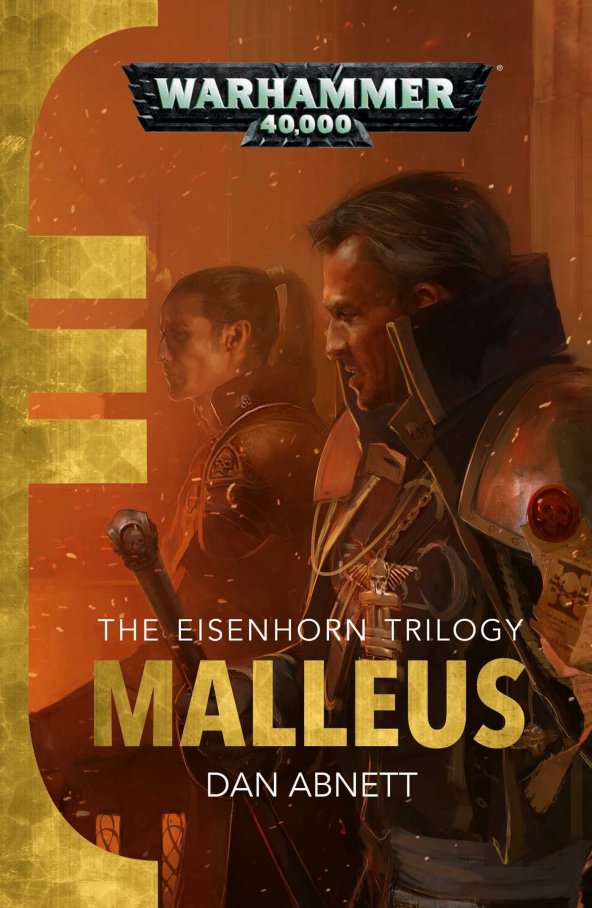
Warhammer 40,000 - Malleus Cover

Publisher: Black Library (Trade Paperback – 27 December 2001)

Series: Eisenhorn – Book Two

Length: 10 hours and 13 hours

My Rating: 5 out of 5 stars

Amazon     Book Depository

Welcome back to my Throwback Thursday series, where I republish old reviews, review books I have read before or review older books I have only just had a chance to read.  For this week’s Throwback Thursday, I continue my extensive dive into the Warhammer 40,000 universe with the awesome, galaxy-spanning thriller, Malleus by Dan Abnett.

For one of my latest Throwback Thursday reviews, I took a look at one of Dan Abnett’s iconic Warhammer 40,000 novels, Xenos, the first book in the incredible Eisenhorn trilogy.  This fantastic book, which followed Inquisitor Gregor Eisenhorn, a hunter of dark influences in the Imperium of Man, was a clever and compelling read that saw Eisenhorn face off against a range of terrible foes who seek to destroy humanity from within.  I had an outstanding time with Xenos, which really showcased Abnett’s skill as an author (I have also really enjoyed his Gaunt’s Ghosts novels, including First and Only, Ghostmaker and The Vincula Insurgency).  Indeed, I enjoyed it so much that I quickly decided to continue the Eisenhorn trilogy by listening to the second book in the series, Malleus, another exceptional read that takes its protagonist on another dark and engrossing adventure.

In the 41st Millennium, the dark enemies of mankind, whether they be heretical, daemonic, or alien in nature, continue to try and destroy the Imperium of Man from within.  It falls to dedicated inquisitors, such as Gregor Eisenhorn, to battle their malign influences by whatever means they deem necessary.  But what happens when the very institutions that Eisenhorn has long fought to uphold are turned against him?

Whilst battling against deadly alien influences on an isolated planet, Eisenhorn is made aware of certain allegations against his character which suggest that he has been corrupted by the influence of Chaos.  Initially planning to ignore the rumours and continue his vital work safeguarding humanity, his plans are put on hold when a terrible act of destruction unfolds on the planet of Thracian Primaris.  Investigating its causes, Eisenhorn is thrust into another deadly conspiracy, one tied to a foe he last encountered 100 years before, the daemonhost Cherubael.

Chasing after Cherubael and his minions, Eisenhorn attempts to discover what their latest unholy plan is.  However, his investigation reveals that Cherubael is just a pawn, and that the true mastermind of the plot he has uncovered may be a fellow inquisitor.  However, before Eisenhorn can find and confront them, he himself is declared a heretic and renegade by puritan members of his order, forcing him to flee.  Chased by the members of the Ordo Malleus, as well as other deadly hunters loyal to Imperium, Eisenhorn must work outside the bounds of his usual authority to prove his innocence and find the true culprits.  But to defeat his enemies, Eisenhorn may be forced to cross a dangerous line and become the very thing he has sworn to destroy.

Damn, Abnett was on a major roll when he wrote the Eisenhorn novels, as the second book, Malleus, is getting another five-star rating from me.  Brilliantly combining a taut and intrigue-laden plot with the darkest elements of the Warhammer 40,000 universe, Malleus is an addictive and powerful read that proves near impossible to stop listening to.

Malleus has an incredible story that I found to be pretty damn addictive.  Set 100 years after the events of Xenos, Malleus continues to follow Inquisitor Eisenhorn as he investigates several malign cults and figures throughout his sub-sector of space.  The story soon ties into some of the lingering storylines from Xenos as the daemonhost Cherubael makes another appearance, framing Eisenhorn as a heretic.  After a massive and suitably destructive series of events, Eisenhorn is thrust into a whole new investigation, trying to finally hunt down the figures that vexed him during the events of Xenos.  Traversing the sector in pursuit of Cherubael and other rogue inquisitors, Eisenhorn finds himself thrust into battle after hopeless battle, and his constant losses war with his determination to finish the case.  The protagonist faces several major hurdles towards the middle of the book, including capture and imprisonment by a fellow inquisitor for false crimes.  Eventually escaping, Eisenhorn spends much of the book as a fugitive hunted by loyalist forces, which is an exciting new element that Abnett plays to full effect to enhance the plot.  The overarching mystery/conspiracy plot of the book comes together extremely well, and I loved the outstanding investigation angle that follows as Eisenhorn desperately tries to find the evidence that not only ends the threat but exonerates him.  This hunt for answers is actually set over a substantial period of time, mainly due to the delays associated with space travel, but this only increases the power of the plot as you witness Eisenhorn lose years of his life being hunted.  Everything leads up to a massive confrontation with plenty of bloody battles and dangerous decisions that leave several fantastic characters dead or damaged.  The ultimate conclusion is pretty impressive, especially as Abnett really starts to showcase his protagonist’s inevitable fall from grace here, and he leaves the book on a particularly dark note that was so damn awesome.

Just like with Xenos, Abnett has a fantastic writing style that really helps to enhance Malleus’s narrative and make the book very addictive and exciting.  Perfectly utilising an excellent chronicle style that allows you to see inside Eisenhorn’s head, you are swiftly drawn into the complex plot.  Abnett keeps up a swift and intense pace the entire way through, and you barely have a moment to stop and breathe before the next intriguing event takes over.  The blend of intrigue, Inquisition politics, sector-spanning conspiracies, complex character development, unique Warhammer concerns, and impressive action is a heady mix and you get really get caught up in the hunt for the antagonists and Eisenhorn’s fight to prove his innocence.  I loved how intense and deadly some of the crazy battle scenes got and Abnett has great skill at showcasing his characters in mortal danger.  His attention to detail also results in some breathtaking sequences, and I was really impressed by that epic parade sequence, especially its ultra-chaotic ending.  Abnett also takes the time in Malleus to set up some future storylines and alternate books, with some fun hints at novellas/short stories you should check out, while also quickly introducing his next major protagonist, Ravenor.  All these brilliant writing elements, and more, really help to drag you into this elaborate narrative, and I deeply enjoyed the more intrigue-focused stories that are the hallmark of the Eisenhorn books.  A worthy and powerful sequel to Xenos that really showcases the awesome characters and continues the outstanding and elaborate storylines.

I really loved the elaborate Warhammer 40,000 elements that Abnett featured within Malleus as the author dives right into the heart of the Inquisition and their battles.  Just like with Xenos, you get a great understanding of the various internal threats that the Imperium faces in this universe, as Eisenhorn attempts to combat various conspiracies and threats.  However, there is also a much deeper look at the inner workings of the often hidden Inquisition Ordos, especially as Eisenhorn is forced to work against the factions associated with them, including the Ordo Malleus, who think he has been compromised.  The ensuing hunt for answers leads the protagonist, and by extension the reader, on a mighty chase around various unique planets in the Imperium, including Cadia before the fall, and Abnett has a lot of fun exploring the intriguing elements associated with these locations, as well as the general lore surrounding inquisitors, daemons and more.  I did find it interesting that one of the major McGuffins of the book, the mysterious pylons of Cadia, ended up seeming a little more important in hindsight after the 13th Black Crusade, and you have to wonder if the antagonist’s villainous plan didn’t actually have some merit.  I felt that this was a particularly awesome Warhammer 40,000 book and I deeply appreciated how the universe’s unique elements and lore were able to seamlessly support the elaborate tale that Abnett wrote here.  Due to Abnett’s detailed and compelling writing style, new Warhammer readers could easily start their exploration of the franchise with Malleus and get a rather good idea of the universe.  However, I would really recommend starting with Xenos, as you get a much better introduction to key details and characters there.  An overall exceptional read that makes full use of the massive, extended setting.

A highlight of any Abnett book is always the outstanding and highly complex characters, and Malleus has those in spades.  The focus is once again on series protagonist and narrator, Gregor Eisenhorn, who grows as a character with each passing adventure.  I really liked how Abnett portrayed Eisenhorn in Malleus and his compelling mission for justice and redemption is pretty intense.  The Eisenhorn here is a different creature to that in Xenos, especially as, after 100 additional years in the Inquisition, he is a lot more experienced and skilled in his work.  Now commanding a small army of followers, Eisenhorn has different methods and resources than before, but the same determination, loyalty and kindness (at least compared to other inquisitors) is still there.  However, Malleus sees Eisenhorn go through some major battles, both mentally and physically, as he is forced to confront an enemy within his own order while defending his own methods and character.  Watching him declared a heretic by his fellow inquisitors is pretty brutal, and Abnett throws in a heartbreaking prison scene to keep the readers intrigued.  These events, coupled with some personal losses, and the continued presence of beings far more powerful than him, force Eisenhorn to make deals and cross lines he really shouldn’t.  I love how each of the Eisenhorn books show the protagonist’s slow fall towards radicalism, and Malleus is an interesting starting point for that, as you understand why Eisenhorn is forced to go down this route.  While he ends the book with most of his humanity and integrity intact, that brilliant final scene shows that he is getting awfully comfortable with his feet over a line he previously feared, and I cannot wait to see how far he falls in the next Eisenhorn novel.

On top of Eisenhorn, Abnett features a pretty awesome collection of supporting characters who assist the inquisitor in his investigation and they each add their own distinctive personality to the narrative.  There is a good continuation of character arcs from the first book as several of his followers from Xenos make a return here, including the entertaining Savant Aemos, former Arbites investigator Fischig and his dedicated psychic blank Bequin.  Each of them is a little older, wiser and more familiar with the hardships of being an inquisitor’s acolyte, and I liked the stronger relationships that developed amongst them, particularly Bequin, who really comes into her own in this book as a veteran.  There are several interesting new characters added as well, such as the bounty hunter Nayl or brash pilot Medea Betancore (replacing her father Midas), and I felt that their distinctive personalities added a fun and entertaining edge to the narrative.  I was surprised that new character Gideon Ravenor, who goes on to get his own spinoff series, only had a relatively small appearance in this book, as I figured he would be a pretty major character to get his own story.  Still, he gets a good introduction here and it will be interesting to see how his arc plays out in the future.

Malleus also features several intriguing antagonists, each of whom test Eisenhorn and his colleagues in different ways.  While there are the usual array of cultists, aliens and other creatures, most of the antagonists in this novel prove to be other inquisitors, who are either working on their own radical plots or who believe that Eisenhorn is the true heretic who needs to be stopped.  This adds a very interesting dynamic to the story and it was fascinating to see the varied philosophies and plots amongst the rival orders and factions.  I did find it interesting that the main villain of the story, a mysterious inquisitor acting from the shadows, only had a very minor appearance in the book, and while you feel his presence, a bigger appearance from him might have been in order.  However, this character is more than made up for by his principal minion, the daemonhost Cherubael, who returns after his fantastic appearance in Xenos.  Cherubael is a brilliantly sinister character who steals every single scene they are in thanks to their menacing monologues and intriguing insights.  The outstanding obsession he forms with Eisenhorn is a great deal of fun and I loved seeing this evil figure toy with the inquisitor and force him to go to great lengths to defeat him.  Abnett really knows how to write an outstanding character, even in a limited amount of time, and it will be fascinating to see what happens to these characters in the next Eisenhorn book.

I of course chose to listen to Malleus on audiobook, as it is my preferred way of enjoying great Warhammer books, and I was not disappointed with how it turned out.  This fantastic format once again deeply enhanced the quality of the story and you can practically see the awesome battle scenes and other breath-taking elements of the wider Warhammer 40,000 universe.  Narrator Toby Longworth, who is the go-to narrator for all of Abnett’s Warhammer audiobooks, does another outstanding job with Malleus, and I loved how he was able to keep the pace of the production going.  He also has an outstanding voice that really conveys the dark and dangerous nature of the universe, while also perfectly bringing the characters to life.  I deeply appreciated how Longworth made sure to utilise the same character tones that he previously featured in Xenos here, and it gave the Malleus audiobook a great sense of continuation.  All the new characters are also given excellent voices, and I loved how awesome he made them sound, especially the more supernatural or alien beings that the protagonist comes across.  I was frankly hooked on this audiobook from the very start, and it is an exceptional way to enjoy this epic narrative.  With a run time of just over 10 hours, I managed to power through this audiobook very quickly, and this is definitely the best format for the Eisenhorn series.

Dan Abnett continues to showcase why he is one of the absolute best Warhammer authors out there with the second book in his superb and beloved Eisenhorn trilogy, Malleus.  Featuring a powerful and incredibly captivating narrative of conspiracy, heretics and desperation, Malleus takes Abnett’s compelling protagonist on an even darker journey of despair, compromise and hard choices.  Brutal, intense and impossible to put down, Malleus is easily one of the best Warhammer books I have ever read, and I cannot get over how exceptional it was.  A very highly recommended book, I plan to check out the third and final Eisenhorn book soon as I can to see how this epic series ends.

Amazon     Book Depository

Quick Review – Stay Awake by Megan Goldin

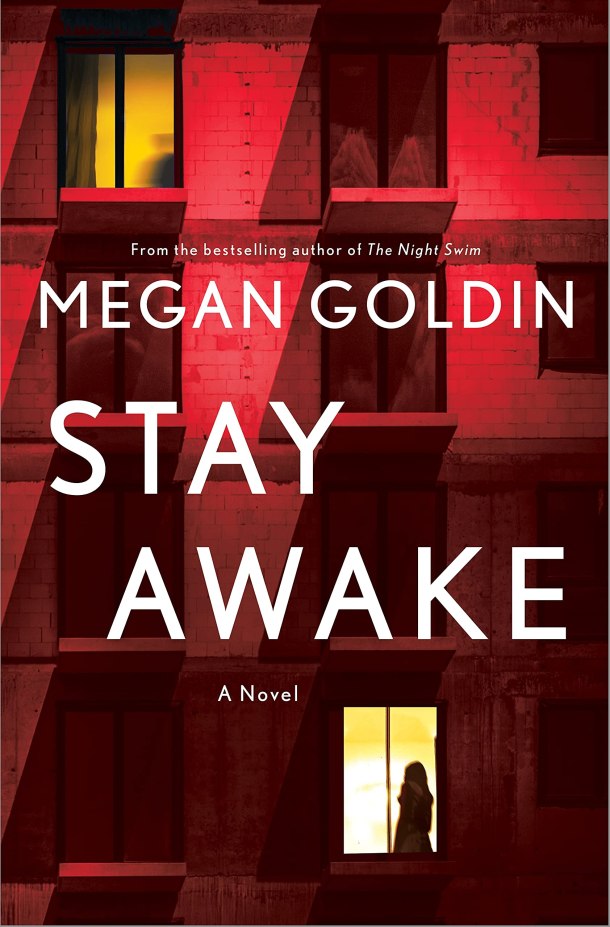
Stay Awake Cover 2

Publisher: Michael Joseph (Trade Paperback – 16 August 2022)

Series: Standalone

Length: 352 pages

My Rating: 4.5 out of 5 stars

Amazon     Book Depository

One of Australia’s most talented crime fiction writers, Megan Goldin, returns with another powerful and captivating read, Stay Awake, a unique and gripping novel that deals with memory, murder and a ton of traumatic suspense.

Over the last few years, crime fiction fans have been getting more and more impressed with the outstanding writings of Australian author Megan Goldin.  Goldin has so far written several epic and clever thrillers, and I have had a lot of fun reading two of her most recent books, The Escape Room (one of the best Australian books of 2018) and The Night Swim (one of the best Australian books of 2020).  Both of these books had outstanding plots, whether it was The Escape Room’s twisty tale of revenge or The Night Swim’s deep and emotionally charged story of justice for women, and I cannot recommend them enough.  After having such an epic time with her previous novels, I was very excited when I received a copy of Goldin’s latest book, Stay Awake, last year.  Featuring an outstanding story with an awesome hook to it, Stay Awake was an epic read that lived up to all my expectations.

Plot Synopsis:

Liv Reese wakes up in the back of a taxi with no idea where she is or how she got there. When she’s dropped off at the door of her brownstone, a stranger answers―a stranger who now lives in her apartment and forces her out in the cold. She reaches for her phone to call for help, only to discover it’s missing, and in its place is a bloodstained knife. That’s when she sees that her hands are covered in black pen, scribbled messages like graffiti on her skin: STAY AWAKE.

Two years ago, Liv was living with her best friend, dating a new man, and thriving as a successful writer for a trendy magazine. Now, she’s lost and disoriented in a New York City that looks nothing like what she remembers. Catching a glimpse of the local news, she’s horrified to see reports of a crime scene where the victim’s blood has been used to scrawl a message across a window, the same message that’s inked on her hands. What did she do last night? And why does she remember nothing from the past two years? Liv finds herself on the run for a crime she doesn’t remember committing as she tries to piece together the fragments of her life. But there’s someone who does know exactly what she did, and they’ll do anything to make her forget―permanently.

In the vein of SJ Watson’s Before I Go to Sleep and Christopher Nolan’s cult classic Memento, Megan Goldin’s Stay Awake is an electrifying novel that plays with memory and murder.

This was a fantastic and captivating read by Goldin that really highlights her amazing ability as an author.  Stay Awake is a fast-paced and exceedingly addictive novel that grabs your attention early on and refuses to let go thanks to its very clever story.  Starting off with the main character, Liv Reese, finding herself covered in blood and with everything she thought she knew gone or altered around her, Goldin sets up an incredible introduction that sets up an amazing follow up story.

The book gets even more interesting once the author introduces Liv’s peculiar situation: thanks to a past trauma, her mind resets itself each time she goes to sleep and she cannot remember anything from the past two years.  This results in a brilliant story, which features three separate intriguing perspectives of events.  Not only do you get the exciting main story of a confused Liv running through New York City, attempting to get to grips with her lost life, but you also see events from two years in the past which led up to the trauma that claimed her memory.  At the same time, the book also follows Detective Darcy Halliday, who is assigned to investigate a dead body connected to Liv, and soon becomes obsessed with finding the amnesiac protagonist.  These three major plot lines are expertly weaved together as the book continues and you soon find yourself drawn into the exciting mystery of who Liv is and whether she committed the murder that Darcy is investigating.  Goldin also amps up the story by having Liv being chased by a mysterious figure who is intent on finding and killing her to protect their secret.

However, the real highlight of Stay Awake’s story has to be the continued memory lapses experienced by the protagonist throughout the course of her chapters in the present.  Due to her condition, Liv actually loses her memory several times throughout the course of her storyline, causing her mind to completely reset to two years in the past.  This is a very fascinating character element, and I felt the author used it extremely well.  It is very compelling and a little scary to watch Liv make the same mistakes and visit the same people repeatedly, especially as she has no knowledge of the last two years, such as certain deaths or relationships.  Watching her come to grips with her chaotic life, only to lose it again in the next chapter, is simultaneously heartbreaking and fascinating, and you honestly cannot tear yourself away from this gripping book.  Thanks to the killer using Liv’s condition against her, the story further devolves into a dark and unique game of cat and mouse, with Liv forced to find answers about her life while avoiding a danger that she unaware exists.  Everything comes together extremely well as the book concludes, and I loved the clever solution to the main mystery of Liv and the various murders, especially as the hints to it are subtly laid down in the three alternate plot lines, even if the protagonists doesn’t remember them.  A truly awesome crime fiction narrative that is expertly written by its talented author, who has produced another very unique crime story.

Overall, I was once again deeply impressed with Goldin, and I felt that Stay Awake was a particularly great novel from her.  Goldin really pulls together a distinctive crime fiction story in this standalone thriller, and I was really glad that the amnesia angle of her plot paid out so effectively.  Stay Awake really helps to cement Goldin as one of Australia’s, and the world’s, most inventive new authors, and I cannot wait to read her next book, Dark Corners, which is set for release later this year.

Stay Awake Cover

Amazon     Book Depository

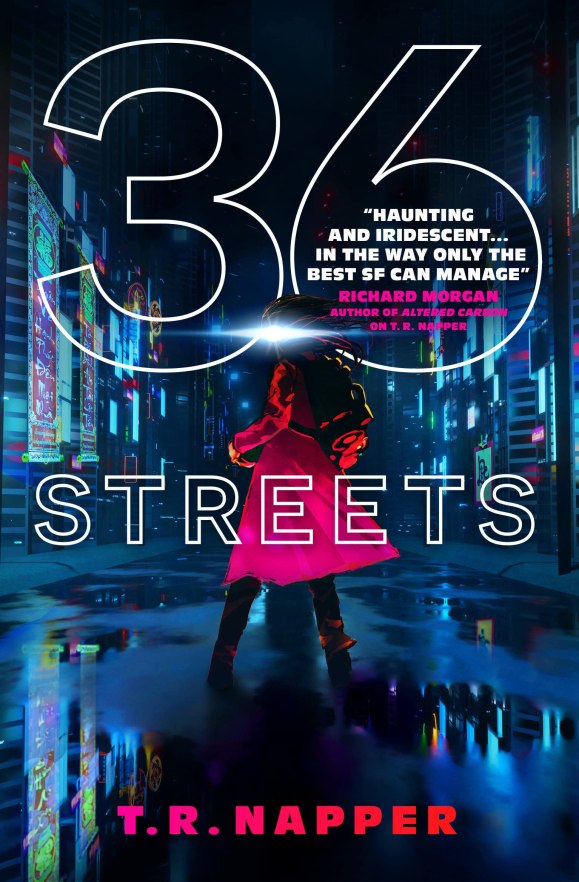
Quick Review – 36 Streets by T. R. Napper

36 Streets Cover

Publisher: Titan Books (Trade Paperback – 19 January 2022)

Series: Standalone/Book One

Length: 433 pages

My Rating: 4.25 out of 5 stars

Amazon     Book Depository

One of the most unique reads by an Australian in 2022 had to be the action-packed and deeply compelling cyberpunk thriller, 36 Streets by new-to-me author T. R. Napper.

Plot Synopsis:

Altered Carbon and The Wind-Up Girl meet Apocalypse Now in this fast-paced, intelligent, action-driven cyberpunk, probing questions of memory, identity and the power of narratives.

Lin ‘The Silent One’ Vu is a gangster and sometime private investigator living in Chinese-occupied Hanoi, in the steaming, paranoid alleyways of the 36 Streets. Born in Vietnam, raised in Australia, everywhere she is an outsider.

Through grit and courage Lin has carved a place for herself in the Vietnamese underworld where Hanoi’s crime boss, Bao Nguyen, is training her to fight and lead. Bao drives her hard; on the streets there are no second chances. Meanwhile the people of Hanoi are succumbing to Fat Victory – a dangerously addictive immersive simulation of the US-Vietnam war.

When an Englishman comes to Hanoi on the trail of his friend’s murderer, Lin’s life is turned upside down. She is drawn into the grand conspiracies of the neon gods – of regimes and mega-corporations – as they unleash dangerous new technologies.

Lin must confront the immutable moral calculus of unjust wars. She must choose: family, country, or gang. Blood, truth, or redemption. No choice is easy on the 36 Streets.


36 Streets
was a particularly unique and ultra-exciting novel that tells a powerful and memorable story of intrigue, conspiracy and the various families you make in life.  Set in a futuristic Hanoi in the midst of a Chinese occupation, 36 Streets begins as a cyberpunk gangster tale following Lin Vu, a deadly enforcer and fighter for a Vietnamese street gang.  Raised in Australia before being deported to Vietnam, Lin is a damaged and angry figure who has found purpose as an ultra-violent gang member, and is somewhat content with her current life of drinking, drugs and womanising.  However, her latest job for a mysterious English executive leads her and her gang into the middle of a dark conspiracy that could influence the entirety of Vietnam and which pits her against a deadly rival gang, the Chinese government, and a corrupt corporation.

Napper tells a fast-paced and compelling story in 36 Streets, and I was constantly intrigued where the plot was going, especially as the author blends interesting character work, futuristic cyberpunk elements and an intense conspiracy storyline to create a great overall read.  Lin’s attempt to find answers and discover the full and terrible truth of the events she has been dragged into serves as an outstanding base to the story, and the author throws in some great twists and swerves as the story continues.  Brutal and sharp action scenes are interspersed with a compelling street-based investigation, as well as fascinating showcases of the cool cyberpunk technology, including a trippy video game that shows an alternate version of the Vietnam War, all of which creates a distinctive and dark overarching tone for the book, which I felt matched the compelling conspiracy story extremely well.  Napper further adds to intensity of the plot by diving into his complex protagonist’s past, which includes unique family dynamics, rejection from every country she has ever lived in, and some of the most brutal training sequences you are ever likely to find in a fiction novel.  Everything comes together in a shocking and bloody conclusion, which leaves the reader satisfied, saddened, and wanting more.

There are so many great elements to this book that I could talk about, but a true highlight of 36 Streets is Napper’s intriguing examination and portrayal of the soul and culture of Vietnam, as well as the beautiful historic city of Hanoi.  The intrepidness and distinctive personality of the Vietnamese people are on full display throughout the entirety of 36 Streets’ story, and the author spends substantial time exploring the history and culture of Vietnam through his complex characters.  This dive into the Vietnamese people and their mindset, actually becomes a key and intriguing part of the book’s overall plot, and I loved how the conspiracy that Lin is investigating ties into elements of the Vietnam War and country’s inbuilt ability to resist.  I was also quite impressed with Napper’s outstanding portrayal of his version of Hanoi, especially as he perfectly blended the new cyberpunk elements of his story with the distinctive historical elements and culture of the city that exists today.  Another intriguing setting element he included was the fictional future Chinese invasion and occupation of Hanoi and greater Vietnam, especially as it results in a second Vietnamese War, with a new Vietcong now fighting and beating the Chinese from the other side of the country.  All of these outstanding elements, including the unique futuristic setting and the powerful examinations of Vietnam and its people, add a memorable impact to the larger story, and I felt that this book benefited greatly from Napper highlighting the Vietnamese people in this way.

I honestly was not sure how 36 Streets was going to turn out when I initially started reading it.  However, after enjoying everything about its cool story, fantastic insights and brilliant character work, I have to say that this was a pretty amazing read and one that I am very glad I grabbed a copy of.  Australian author T. R. Napper has created something very impressive with 36 Streets and I cannot emphasise what a powerful and compelling book this turned out to be, especially with its Vietnamese setting and fantastic cyberpunk inclusions.  Highly recommended!

Amazon     Book Depository

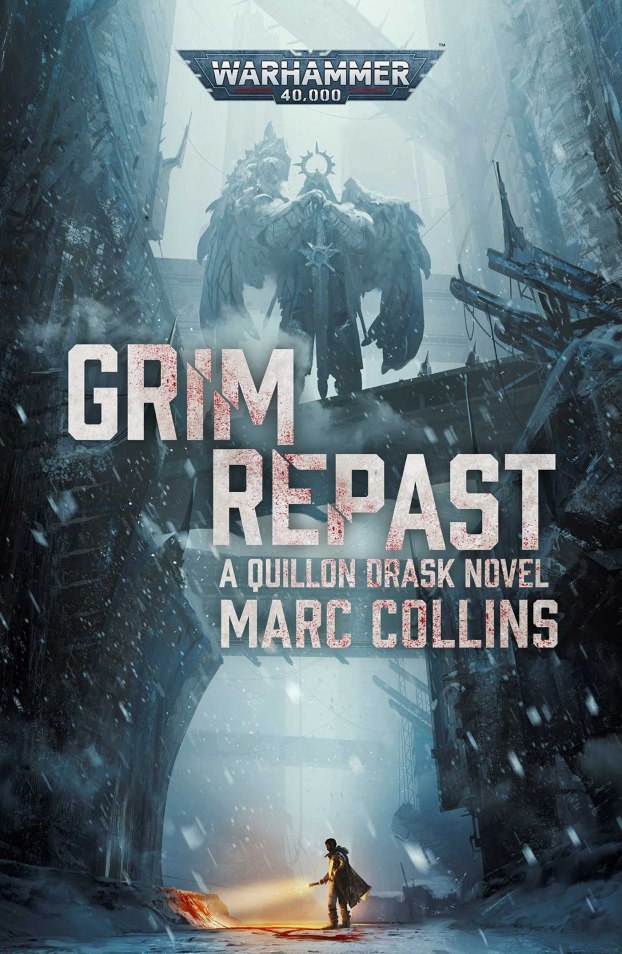
Warhammer 40,000: Grim Repast by Marc Collins

Warhammer 40,000 - Grim Repast Cover

Publisher: Black Library (Audiobook – 25 September 2021)

Series: Warhammer Crime

Length: 9 hours and 52 minutes

My Rating: 4.5 out of 5 stars

Amazon     Book Depository

Prepare for a gruesome and dark murder mystery novel in the gritty Warhammer 40,000 universe with the incredible and awesome Warhammer Crime novel, Grim Repast by Marc Collins.

I have made no secret of the fact that I am currently in the middle of a big Warhammer reading frenzy, having recently reviewed several awesome books, including two novels in my last Throwback Thursday posts (Xenos by Dan Abnett and Deus Encarmine by James Swallow).  However, I am still not done with the tie-in books in this very cool franchise as I have just finished another outstanding read, this time a book which is part of the Warhammer Crime sub-series.

The Warhammer Crime books are a fantastic and captivating series which, as the name suggests, blends crime fiction storylines with the epic Warhammer 40,000 universe.  All set within the tortured and sprawling human city of Varangantua, these great novels tell a range of entertaining and complex crime stories, including dark murder mysteries and elaborate thrillers, which make great use of the gothic futuristic setting.  I have so far enjoyed two Warhammer Crime entries, Dredge Runners and The Wraithbone Phoenix by Alec Worley, both of which were pretty epic reads.  These initial awesome reads really sold the Warhammer Crime series to me, and I have been interested in enjoying another entry.  I ended up choosing the great sounding read, Grim Repast, by rising Warhammer author Marc Collins.  One of Collins’s first full-length novels, Grim Repast is an exceptional read with one of the darkest crime narratives I have ever had the pleasure of reading.

“This city eats men….”

Veteran probator Quillon Drask thinks that he has seen all the dangers, depravities and villains that Varangantua has to offer, but he is about to discover a whole new level of horror.  Already traumatised and ostracised after his last lethal case and the betrayal that accompanied it, Drask’s first new investigation is not the simple job he was hoping for, as a body has been found in the dying district of Polaris.  The victim, a businessman on the wrong side of town, has been gruesomely mutilated, the implications of his injuries have frightening implications.

As more bodies are discovered, Drask finds himself chasing after a deadly killer who murders and dismembers without compunction and who has a sudden obsession with tormenting Drask.  Forced to play a deadly game that uncovers the corruption of his own organisation and sets him against the city’s elite, Drask finds himself alone and afraid against an enemy he doesn’t understand.  Only his twisted insights into the criminal mind, as well as the lessons of his career and devious dead mentor, offer the answers that he needs to solve the case and stop the killer.  However, not even Drask’s dark mind can comprehend the true horrors that lie beneath his city, one that connects to Varangantua’s past and a dangerous hunger that has always controlled people like him.

Wow, Marc Collins really came out swinging with this epic and outstanding Warhammer Crime entry.  Grim Repast is probably one of the best pure mystery novels set in the Warhammer universe that I have so far read, and I loved how seamlessly Collins was able to blend a dark, psychological crime fiction narrative with the grim and repressive atmosphere of a Warhammer 40,000 city.

Collins has cooked up a pretty wicked story for Grim Repast, which brings together multiple elements from across the genres to really highlight just how epic and complex a Warhammer story can be.  Following the compelling and damaged protagonist and narrator Probator Quillon Drask through the deadly streets of Varangantua as he chases after a lethal serial killer, Grim Repast is first and foremost a crime novel, and one that really grabs the reader’s attention.  Coming off as a dark psychological thriller with classic noir detective elements to it, the protagonist is forced to delve into the darkest heart of his massive, gothic city when he investigates several connected murders whose victims have been butchered in inventive and dark ways.

Collins sets up the case extremely well and then adds some intriguing complications to it where Drask is forced to investigate against the opposition of his bosses and their corporate controllers.  Bringing together a ton of character growth, disturbing developments in the murder case, as well as some fun action as Drask comes face-to-face with the killer in disguise, the plot moves quickly, and you are soon very hooked on finding the killer and the people pulling the strings behind them.  Forced to contend with the interference of a giant corporation, the protagonist finds himself in the middle of a dark conspiracy and, after the typical cop requirement of being suspended without his gun or badge, investigates on his own.  The mystery itself is well-set out and slowly unfolds, even if the overall culprit behind it isn’t too surprising.  However, the obvious suspect isn’t a narrative weakness, as the power of the story revolves around the protagonist fighting through the corruption and the insanity to confront his suspect, as well as the wider implications and horrors his investigation reveal.  The last third of the story is particularly brutal and grim as the protagonist uncovers some pretty horrendous crimes tied into the dark past of Varangantua, and is forced to face them by himself.  Everything ends in a pretty bloody manner, and I had a wonderful time seeing how this entire awesome crime narrative came together.  I loved the cool conclusion of this book, and the hints at some potential adventures for this character is something I would be extremely keen for.

This was a very well written book, and I really appreciated how Collins was able to tell such an effective and powerful story.  Featuring a quick pace and a brilliant focus on a very damaged protagonist, Grim Repast keeps you on your toes the entire time, and I loved how well it blended multiple crime fiction elements for the story while also making full use of the grim Warhammer setting.  The crime itself has some outstanding elements to it, and I was getting some major Jack the Ripper vibes from the plot as Drask receives several taunting notes from the killer.  Collins really brings about a dark and desperate tone around the characters and the city itself, and this lends itself perfectly to the complex crimes, especially as the murders have far deeper meaning and consequences than are initially seen.  The use of corruption and dangerous corporations helped to ensure that the character had even more mysteries and obstacles to overcome, which I thought was an outstanding bonus hook to the story.  The fantastic focus on murder and mystery rather than on wider universe elements ensures that Grim Repast also serves as a pretty good entry into Warhammer 40,000 fiction, especially for crime fiction lovers.  While some elements of the story hint or briefly discuss larger events or bits of the universe’s wider lore, you really don’t need to understand it to enjoy this book, and anybody who loves a complex and gloomy crime fiction can easily have their first taste of Warhammer fiction here without any issues.

Perhaps one of the best elements of Grim Repast that Collins featured was the setting of Varangantua itself.  While the continent-spanning city of Varangantua has appeared in the other Warhammer Crime books, I don’t think I fully appreciated just how good a setting it is until reading Grim Repast.  Collins sets out to make the city as dreary, deadly and dark as possible, and you find yourself getting lost amongst its constricting streets, compelling people and many hidden dangers.  The author honestly sets the city up as a character in itself, and it is quite powerful to see the protagonist move amongst its streets as Varangantua works to consume him, mind, body and soul.  To just make things a little grimmer, Collins chooses to set most of the story in the section of the city known as Polaris, an icy, desolate part of town that is slowly dying due to a lack of commerce.  I love how Polaris’s fortunes seem to match that of the protagonist himself, and Collins really amps up the noir vibes of Polaris with a ton of neon signs, dingy apartments and corrupt cops, making it feel that little bit more like a classic police story.

However, no matter how dingy and gothic Varangantua may be, it is still a futuristic city, so the universe’s advanced technology and other wider Warhammer elements are integrated into the city as well.  There are some great scenes where the city’s law enforcement utilises interesting investigation methods to solve the brutal murders, and I liked seeing the set up of a police force within the Warhammer 40,000 setting, especially as it is as corrupt or degraded as most things within the Imperium of Man.  I also really enjoyed how Collins was able to tie the mystery into the history of the city itself, with key parts of Varangantua’s past coming to the surface during the course of Grim Repast.  This gives the book a lot more substance when it is fully revealed, especially as it increases the overall stakes of the book, and I really appreciated and enjoyed how Collin’s utilised this brilliant setting throughout his book.

I also have to highlight the outstanding central protagonist and point-of-view character, Quillon Drask.  Collins created a wonderful character in Drask, a beaten down and emotionally damaged cop, reminiscent of classic pulp or noir detectives and investigators.  Still emotionally traumatised by the betrayal of his mentor during the last case, Drask attempts to find some normalcy in his work.  However, Drask is now isolated from the rest of his force, not just because of his propensity for finding the weirdest cases, but because of the taint surrounding his mentor.  Drask channels much of his anger and trauma into the new case, but he soon confronts forces that even he can’t fight through.  His obsession with this new case, his well-founded hatred of the aristocracy, and his desire for redemption, lead him to continue his investigation despite his boss’s orders, which leads him into all manner of trouble.  Collins did an outstanding job showcasing this character’s intense mental trauma throughout Grim Repast, and he really comes across as a complex and dark individual.  Despite being a troubled soul, you can’t help but like Drask, as his grim stubbornness just keeps forcing him towards the abyss, and nothing he does in the book, not even solving the murders, brings him any real comfort.  I loved how Collins also explored his penchant for getting into the darkest parts of the human mind and empathising with killers, and he reminded me a bit of Will Graham from the Hannibal Lector franchise, which isn’t too surprising considering that there are some major Thomas Harris influences in this book.  Drask gives a great running commentary on his dark observations of the city around him, and Collins really dives into the mind of his character throughout the course of the book.  This really adds to the book’s overall tone and quality, and I absolutely loved how Collins set out his central protagonist.

If I were to make one major complaint about Grim Repast, it would be that Collins relied a little too much on people reading his short story, Cold Cases, first.  Appearing in the Warhammer Crime anthology book, No Good Men, Cold Cases was the previous (and first) appearance of Quillon Drask, in which he hunted down another notorious killer.  Collins brought up Cold Cases multiple times throughout the course of Grim Repast, as the events helped form the protagonist and led to his mental/profession state in Grim Repast.  While I appreciate that Collins was trying to tie his new book back into this introductory story, I found it a bit confusing and irritating at times, mainly because I haven’t read Cold Cases.  I kind of got a little tired of the continued references to Cold Cases throughout Grim Repast, as it messed with the initial flow and enjoyment of this novel.  While you can pick up the events of Cold Cases through context as Grim Repast continues, I felt that Collins could have either eased up on the references a little or featured a better summary of this short story at the start, especially as it was such a big part of the protagonist’s motivations.  While this wasn’t a massive issue in my enjoyment of Grim Repast, it bugged me the entire way through, and it is something readers interested in Grim Repast should be aware of.  Overall, though, this was a pretty epic read, and I would recommend it, even with this issue.

To no-one’s surprise I ended up listening to the Grim Repast audiobook, which was pretty damn awesome.  I have so much love for Warhammer 40,000 audiobooks, especially as they are always so successful at capturing the dark tone of the settings as well as the complex stories.  I felt that Grim Repast was a particularly good example of this, as its audiobook really drew the reader into the cold surrounds of Varangantua and refused to let you leave.  It helped that Grim Repast was narrated by the highly talented Richard Reed, who previously impressed me with his narration of Nate Crowley’s The Twice-Dead King books, Ruin and Reign.  Reed has a naturally tough and rugged voice that does Grim Repast’s story a lot of justice, as his tones perfectly fit the noir-esque city of Varangantua.  I especially enjoyed how he portrayed Quillon Drask throughout the book, giving him a very gravelly tone that showcased his gruff exterior, while also expertly conveying the protagonist’s inner turmoil and pain.  You really get the full sense of who Drask is through Reed’s great voice work, and I really cannot emphasise how much value Reed’s narration added to this awesome audiobook.  With a runtime of just under 10 hours, Grim Repast is an easy audiobook to quickly power through, and you will really find yourself getting dragged into this elaborate and powerful tale in this format.

Fans of crime fiction, Warhammer fiction and everything in between should look no further than Grim Repast by Marc Collins for their next epic read.  Bringing together a complex and twisted murder mystery with the iconic setting of Varangantua in the Warhammer 40,000 universe, Grim Repast is an outstanding amalgamation of mystery, a dark psychological thriller, and the madness of the grim Warhammer 40,000 future, all of which makes for one hell of a dark and emotionally charged story.  I had an amazing time reading this powerful read, and it comes very highly recommended.

Amazon     Book Depository

Waiting on Wednesday – Fire With Fire by Candice Fox

Welcome to my weekly segment, Waiting on Wednesday, where I look at upcoming books that I am planning to order and review in the next few months and which I think I will really enjoy.  I run this segment in conjunction with the Can’t-Wait Wednesday meme that is currently running at Wishful Endings.  Stay tuned to see reviews of these books when I get a copy of them.  In this week’s Waiting on Wednesday, I check out an awesome upcoming thriller from a particularly talented Australian author, Fire With Fire by Candice Fox.

Fire With Fire Cover

Amazon     Book Depository

Over the last few years, I have been lucky enough to read several books from one of Australia’s premier authors, Candice Fox.  Fox is an exceptional author who has been wowing Australian crime fiction audiences since 2014 with her Australian crime fiction books, including the Archer and Bennet series and the Crimson Lake books (recently adapted into the Australian television show, Troppo).  In recent years, Fox has moved on to a larger international audience with several amazing books set in America, as well as some great collaborations with legendary thriller author James Patterson, including her Detective Harriet Blue series.  I personally have had the pleasure of reading her last three books, the standalone novels Gathering Dark, The Chase, and 2 Sisters Detective Agency (co-written with James Patterson), and all of them were exceedingly good reads (2 Sisters Detective Agency was one of my favourite Australian books of 2021).

After how incredible her last three books were, there is no way I am going to miss out on her next epic read, and luckily for me, there is only a couple of months until her new book, Fire With Fire, is out.  Set for release in early April 2023, Fire With Fire is another gritty crime-read set in America that will push several complex characters over the edge.  I absolutely love the sound of the epic plot below, especially the idea of desperate parents holding an evidence lab hostage, and there is no way that this doesn’t result in an intense, emotionally powerful crime fiction read.  With Fox’s proven writing ability, Fire With Fire is sure to be an outstanding novel and it wouldn’t surprise me if it becomes one of the best books by an Australian author released in 2023.

Plot Synopsis:

A married couple launch a deadly plan to find their missing child.
A half-dead man washes up on a Los Angeles beach.
A rookie cop is fired on her first day.

Ryan and Elsie Delaney don’t accept the official line that their young daughter drowned on Santa Monica beach. Her body has never been found and their pleas for a proper investigation are rejected.

So now the desperate pair are raining hellfire on the police.

Taking three hostages at the Hertzberg-Davis Forensic Science Center, they give law enforcement an ultimatum: if Tilly isn’t located in the next 24 hours, they will destroy evidence in several major cases.

Detective Charlie Hoskins only just survived five years embedded with the ruthless gang known as the Death Machines. All his work is in that lab. If the police won’t look for Tilly, he will. Even if that means accepting help from Lynette Lamb, the rookie officer sacked for blowing his cover – and having him thrown to the sharks.

Finding Tilly is now a matter of life and death – for the Delaneys, for their hostages, for Charlie and Lamb, and for the little girl who one day simply vanished . . .

Friends Like These by Jennifer Lynn Alvarez

Friends Like These Cover 2

Publisher: Penguin Books (Trade Paperback – 15 November 2022)

Series: Standalone

Length: 377 pages

My Rating: 4.75 out of 5 stars

Amazon     Book Depository

Hot off her impressive debut in the world of young adult thrillers, outstanding author Jennifer Lynn Alvarez presents another intense and deeply addictive read with Friends Like These, a compelling and twisty novel about secrets, lies, and teenage mistakes.

In 2021 I was lucky enough to receive a copy of Lies Like Wildfire by Jennifer Lynn Alvarez, which I instantly fell in love with.  The author’s first foray into the young adult fiction genre, Lies Like Wildfire told the story of a close group of teenage friends whose lives are torn apart when they accidently start a fire that destroys their hometown.  Desperate to avoid the consequences of their actions, the group tries to keep their involvement secret, but they soon turn on each other with tragic consequences.  I loved Alvarez’s powerful and relatable story and Lies Like Wildfire was one of the best debuts I read in 2021.  Due to her strong first young adult novel, I was very eager to see how Alvarez would follow it up, and I was very happy when I received a copy of Friends Like These.

For the teenage residents of Crystal Cove, California, the annual end of summer beach party is the social event of the year, the party that heralds the upcoming start of the senior year.  However, for three young people, this party will be the most pivotal event of their lives, which they will never recover from.

Jessica Sanchez has never been a fan of big parties and really has no desire to attend this latest big bash, especially as it is being hosted by her nemesis, Tegan Sheffield, the ex of her current boyfriend, Jake Healy.  However, Jake is always keen for a drunken bash and manages to convince Jessica and their friends to attend.  While Jessica girds herself for confrontation and awkwardness, nothing will prepare her for a terrible video prank that breaks her heart and destroys any trust she has in the man she thought she loved.

However, the worst is yet to come, as the video prank goes viral and everyone is dragged into the resultant chaos.  Not only are the police and the FBI looking into the video but they are investigating the disappearance of Tegan, who hasn’t been seen since the party.  As the case gains media attention and the whole nation is transfixed by their plight, Jessica and Jake attempt to weather the storm surrounding them, which only worsens when a body is found in the water.  However, both teenagers are hiding dark secrets, and as the investigation continues, the truth will be unleashed, and nothing will be the same again.

Alvarez continues to shine as a brilliant new voice in the young adult thriller genre, with another exceptional read.  Loaded with intrigue, drama and powerful characters, Friends Like These is an epic and powerful read that will leave you hanging until the very end as you grow deeply attached to its dark and personal tale of teenage woe and bad decisions.

I was deeply transfixed by the epic and captivating story in Friends Like These as Alvarez has woven together another complex tale of betrayal, murder and the loss of teenage innocence.  Alvarez cleverly tells the story from three separate perspectives based on her three main characters, Jessica, Jake and Tegan.  Jessica and Jake’s chapters are told in the present and follow the events of the party and its tragic consequences from their perspectives.  Both experience very different events and consequences as a result of the party and the subsequent disappearance of Tegan, which completely destroys their lives and places them in a terrible situation.  At the same time, Alvarez alternates some chapters from Tegan’s perspective in the weeks leading up to the party.  These prequel chapters give some compelling extra context to the main story and help to provide deeper meaning behind the motivations and actions of all the characters as you get a better look at the relationship the missing Tegan had with everyone.

The story proceeds at a pretty quick pace after the party, and Alvarez loads in a good combination of mystery, suspense and emotionally charged scenes as you try to unwrap everyone’s actions.  Jessica and Jake are both forced to deal with the consequences of the video prank and Tegan’s disappearance in their own ways, especially as their lives are being effectively destroyed as a result.  While Jessica attempts to discover what really happened to Tegan, while also hiding her own involvement in the events, Jake finds himself breaking down as he finds himself the main suspect in Tegan’s disappearance.  The story goes in some intriguing and dramatic directions, and Alvarez loads in a ton of compelling and well-executed twists and reveals that constantly shock the reader and completely throw them off the scent.  While I was able to predict a few of the reveals, I honestly did not see every twist coming, and I was constantly wondering what was going to happen next.  The intriguing mystery, the excellent use of alternating timelines, and the complex and emotionally charged characters really served to keep me hooked the entire way through and I honestly could not put the novel down in places.  The entire book ends on a fantastic, if dark, note as the final reveals about who was behind both the infamous prank and the subsequent disappearances and murders really leave you shocked.  None of the characters come out unscathed, and you will come away from Friends Like These extremely thoughtful as you contemplate the character’s actions, as well as your own teenage mistakes.

One of the things I most liked about Friends Like These was how Alvarez wrote a complex and captivating read that will really appeal to a wide range of readers, especially its intended teenage audience.  Just like with Lies Like Wildfire, Alvarez attempts to dive into the mindset of a group of teenage characters with a dark cautionary tale about the lifelong impacts of bad decisions.  Alvarez presents the reader with a plausible, terrible scenario that could potentially happen to modern teenagers, and shows both the events that led up to it, and destructive impacts that follow.  Alvarez covers a huge range of heavy topics in this book, including drinking, grief, obsession, drugs, abusive relationships, online videos, teenage sex, rape, and more.  It also prominently covers the malicious sharing of intimate videos, and showcases the many different ways it can impact people involved, whether it’s the emotional damage or the legal troubles the participants can find themselves in.  The author pulls no punches when it comes to these terrible topics and shows all the different ways that the characters attempt to deal with the consequences.  I really appreciate how Alvarez really doesn’t talk down to the young adult audience this book is targeted at and instead she tries to engage her audience and really hammer home how things you think might be harmless can actually destroy lives.  This is really highlighted in the way that all the characters are severely impacted by events they originally think are harmless, and it isn’t until the full impacts of their actions emerge that they realise just how much trouble they are in and panic as a result.  Not only does this ensure that the young adult audience are going to strongly engage with the story, but it also helps older readers connect as it brings them back to their own turbulent teenage years and the many mistakes they no-doubt made there.  Alvarez really has a gift when it comes to portraying complex teenage issues and it is definitely one of the things that makes her such an incredible young adult author.

Finally, I must highlight the outstanding characters that Alvarez wove such an amazing and heartfelt story around, especially the three central point of view protagonists, Jessica, Jake and Tegan.  Alvarez came up with some amazing character arcs for these three protagonists, as each of them are far more complex than initial impressions would let you believe.  Just like any real-life teenagers, all three come into the book with some emotional baggage and relatable damage, which are fully explored and become a major part of the plot as Friends Like These continues.  Jake, for example, is highly traumatised by the recent death of his father.  Despite the help of his family, friends and girlfriend, Jake has turned to alcohol as a coping mechanism, and this leaves him wide open to the terrible events of the party.  While initially shown to be a bit of a cad, Jake is actually a victim, especially as he is forced to suffer all the consequences of a terrible video prank.  Even though he is a major suspect in the subsequent murders, you can’t help but feel for Jake the entire way through, and Alvarez wrote a particularly captivating and emotionally rich narrative around him.

One of the other major characters is Tegan, who is initially shown as the villain of the story and Jake’s bitter ex.  However, as the book progresses and you see more and more preceding chapters from Tegan’s perspective, you begin to realise that Tegan isn’t as mean or as manipulative as you are initially led to believe.  Instead, she is a loyal friend who has been emotionally abused by her mother her entire life and one of the few good things she had, Jake, was taken away from her by circumstance.  Bitter over that and egged on by her peers and rivals, Tegan impulsively initiates the events of the party without fully knowing how everything would unfold.  Her entire arc was an outstanding part of the overall plot of the book, especially as it paints her in a much more flattering light, and I am very glad that Alvarez ended up featuring them here.

The final character is Jessica, who in some ways is the main protagonist.  A seemingly normal girl who is caught up in terrible circumstances, her story revolves around her trying to escape the events of the party while also making big mistakes due to her conflicted feelings for Jake.  While she initially appears to be a suitable and stable protagonist, Alvarez eventually reveals some hidden secrets about Jessica that completely change your view of her and make the reader question everything you’ve seen her do up until that point.  I deeply enjoyed how Alvarez would continually change your expectations about her protagonists as the book proceeded and the resultant development and portrayals helped to turn Friends Like These into quite an exceptional read.

Jennifer Lynn Alvarez continues to shine as one of the most complex and talented authors of young adult fiction.  Her latest novel, Friends Like These, is another clever and captivating thriller that explores the powerful consequences of teenage choices.  Loaded with outstanding characters, a highly relevant plot, and a compelling mystery, Friends Like These was one of the best young adult reads of 2022 and I cannot recommend it enough.  I look forward to seeing what brilliant and relatable story Alvarez features in her next gripping novel, and I already know it is going to be quite impressive.

Amazon     Book Depository

Silver Queendom by Dan Koboldt

Silver Queendom Cover

Publisher: Angry Robot (Trade Paperback – 1 November 2022)

Series: Standalone/Book One

Length: 407 pages

My Rating: 4.5 out of 5 stars

Amazon     Book Depository

For some fun fantasy heist goodness, make sure to check out the awesome recent release from Dan Koboldt, Silver Queendom.

I am always on the lookout for very fun sounding books, especially in the fantasy genre, and I was lucky enough to come across a particularly outstanding example of this late last year with Silver Queendom.  The latest novel from intriguing author Dan Koboldt, Silver Queendom had an outstanding plot to it that blended fantasy fiction with a compelling heist storyline.  I cannot emphasise how awesome this plot sounded when I first heard it, and it ended up living up to my expectations as a fantastic and exciting read.

In a disreputable corner of the queendom of Rethalta lies the notorious Red Rooster inn, a place of poor ale and even worse service.  Seen over by grouchy innkeeper Darin, beautiful, if lazy, barmaid Evie and gigantic bouncer Big Tom, the Red Rooster attracts few paying customers.  Luckily, the staff of the Red Rooster have other ways of making money, as they are secretly one of the best team of thieves and con artists in the entire Old Queendom.

However, when their latest job goes bust and the find themselves owing the wrong crime boss a load of money they do not have, Darin and his team are going to have to get inventive if they want to survive.  A chance meeting with a mysterious stranger offers the best possibility of paying off their debt when they are tasked with stealing a cart of the most valuable substance on the continent, imperial dreamwine from the Jewel Empire.  Created through secretive means and capable of mentally transporting the drinker to their version of heaven, dreamwine is worth its weight in gold, and is infinitely more precious.  It is also impossible to steal, as the elite warriors of the Jewel Empire guard it fanatically, ensuring that it always reaches its destination.

With time running out before their debt is called in, the Red Rooster crew have no choice but to take the job and attempt to steal the unstealable.  Teaming up with the inn’s new brewmaster, Kat, Darin begins to work out a master plan that will allow them to steal the wine and get paid.  But between rival gangs, a traitor in their midst, their own nefarious employer, and the horde of angry soldiers from the Jewel Empire hunting them down, survival doesn’t look likely.  However, the Red Rooster crew are the best for a reason, and they are just getting started.

Silver Queendom was an extremely compelling and fast-paced novel that I had an outstanding time reading.  Told from the perspective of four outrageous characters, Silver Queendom takes the audience on an intriguing journey of crime and cons in a cool new fantasy setting.  Starting with an amusing party scene that quickly and efficiently shows off the protagonist’s main character traits, as well as their relevant skills and personalities, you are soon dragged into the story as the characters engage in a series of early cons and schemes while also bonding as a team.  You grow to quickly appreciate the protagonists and the way that the author blends unique fantasy elements with great crime thriller storylines, even before you get to the main heist.  I must admit that I was a tad surprised at how long it took the author to reach the theft of the imperial dreamwine, as I thought that plan would be introduced closer to the start of the book.  Instead, Koboldt eased the reader into this central plot point, taking the time to establish the team, the setting, and some of the other players in the story, which helped to increase the anticipation for the main heist.

The second half of the book is all about the quest for the dreamwine as the protagonists start pulling together their scheme to steal the treasure and get away with it.  Koboldt does a good job laying out just enough of the heist plans in advance to keep the reader intrigued without giving away the whole game.  At the same time, additional obstacles are built up for the protagonists, including disputes within the team, rival players, and even their own duplicitous employers.  Everything comes to a head in the fantastic heist part of the book, which really shows off Koboldt’s flair for writing elaborate sequences of utter chaos.  The way that the heist unfolds is very clever and quite funny, especially as they plan all manner of insane surprises that come together in quite an entertaining way.  While I do think that some of the inevitable double-crosses were a little too predictable and solved in some coincidental fashions, the rest of the plot unfolds in an amazing way, and I loved how most of the problems were solved by the protagonists.  Everyone comes away from the story extremely satisfied and there is even room for Koboldt to expand this book into a larger series, which I really hope he does.  The author did a really good job of blending together the fantasy and heist elements in this book, and the unique story and characters really kept me engaged the entire way through, especially as there is a constant fast pace with a lot of humour attached.  This is an overall awesome and captivating read.

While the crime story itself is a lot of fun, I was also quite impressed with the intriguing new fantasy landscape that Koboldt set out within Silver Queendom.  A classic, if grim and entertaining fantasy world, Silver Queendom takes place on a large continent broken up into four separate realms.  While having the continent’s four realms be broken up into near perfect quarters was a tad lazy, I felt that Koboldt did a good job of effectively conveying key parts of this world to the reader and working the crime focused plot into the new universe.  The author primarily focused on one of these realms in Silver Queendom, Rethalta, where the Red Rooster inn is located, and you get a good idea of its politics and people, especially as the protagonists journey all around it getting into all manner of mischief.  Koboldt also takes the time to explore elements of one of the other realms, the Jewel Empire, mainly as that is the realm the dreamwine is coming from, although certain character perspectives about it indicate the author’s plans to spend more time there in the future.  These intriguing realms serve as a great background for the book and Koboldt further adds to the fantasy fun with some unique magic that was a key part of the plot.  Magic in this universe primarily revolves around silver, which is a much more precious metal than gold as magic users are able to gain great power by manipulating and utilising silver.  This results in several really cool scenes, especially as there are some intriguing magical abilities available that were well featured during the course of the narrative.  All of these elements, and more, were quite fantastic, especially when paired with the brilliant story, and I think there is some real potential for the author to really expand this setting in future books.

Finally, I need to highlight the excellent character work contained within Silver Queendom as Koboldt introduces an excellent cast of protagonists that are very fun to follow around.  As I mentioned above, the story is told from the perspective of the four main characters, each of whom has their own unique personality and history that comes into play throughout Silver Queendom.  Koboldt does a great job of breaking up the story between these main characters, which produces an excellent and compelling mixture of development and personalised plots.  Each of the four protagonists brings something unique to the table, whether it’s Darin Fields’s battle to control his untrained magic or ingrained hatred of the Jewel Empire, Evie Garraway’s family shame, Big Tom’s capacity for violence which is tempered by his likeable personality and occasional lapse in judgement, or maternal character Kat’s introduction to the criminal lifestyle.  Throw in an outstanding supporting group of characters, which includes a humorous witch mentor, an ultra-violent rival gang, a gentile crime lord and a self-serving employer, and you have a pretty exceptional overall cast who really help to make this story just that little more personal and entertaining.

I really enjoyed Silver Queendom by Dan Koboldt and I was very glad that I got a chance to read it before the end of 2022.  Cleverly combining outrageous fantasy elements with an amazing heist storyline and fantastic characters, Silver Queendom is exceedingly entertaining from start to finish and you are guaranteed to have an awesome time reading it.  An excellent and highly recommended read, I hope that Koboldt provides some sequel to Silver Queendom in the future, especially after impressing here.

Amazon     Book Depository