
Quick Review – He Who Drowned the World by Shelley Parker-Chan

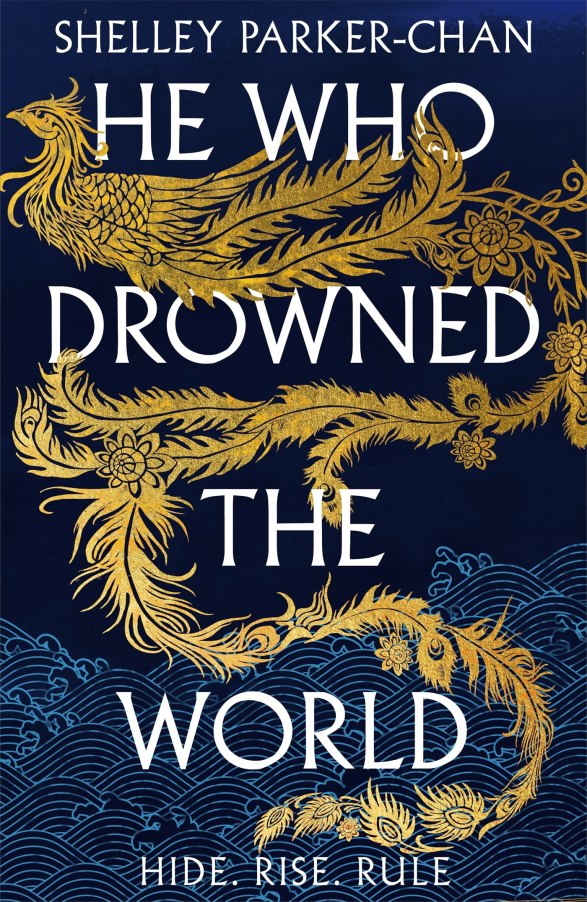
He Who Drowned The World Cover

Publisher: Mantle (Trade Paperback – 29 August 2023)

Series: The Radiant Emperor – Book Two

Length: 487 pages

My Rating: 4.5 out of 5 stars

Amazon

Rising Australian author Shelley Parker-Chan returns with the second part of her Radiant Emperor duology, He Who Drowned the World, an impressive and complex historical fantasy set in 14th century China.  He Who Drowned the World is the exciting sequel to the author’s first novel, She Who Became the Sun, which provided a compelling spin on a legendary Chinese Emperor by imagining them as a female who takes on her dead brother’s identity to achieve greatness.  She Who Became the Sun was a pretty awesome read, loaded with intriguing imagery, excellent characters, and a unique story.  I deeply enjoyed reading it when it first came out and it ended up being one of my favourite debuts and pieces of Australian fiction in 2021.  I was very excited to get a copy of He Who Drowned the World, especially as Parker-Chan does an excellent job of fishing off her epic story in a big and compelling way.

Plot Synopsis:

How much would you give to win the world?

Zhu Yuanzhang, the Radiant King, is riding high after her victory that tore southern China from its Mongol masters. Now she burns with a new desire: to seize the throne and crown herself emperor.

But Zhu isn’t the only one with imperial ambitions. Her neighbour in the south, the courtesan Madam Zhang, wants the throne for her husband – and she’s strong enough to wipe Zhu off the map. To stay in the game, Zhu will have to gamble everything on a risky alliance with an old enemy: the talented but unstable eunuch general Ouyang, who has already sacrificed everything for a chance at revenge on his father’s killer, the Great Khan.

Unbeknownst to the southerners, a new contender is even closer to the throne. The scorned scholar Wang Baoxiang has maneuvered his way into the capital, and his lethal court games threaten to bring the empire to its knees. For Baoxiang also desires revenge: to become the most degenerate Great Khan in history – and in so doing, make a mockery of every value his Mongol warrior family loved more than him.

All the contenders are determined to do whatever it takes to win. But when desire is the size of the world, the price could be too much for even the most ruthless heart to bear . . .


He Who Drowned the World
proved to be a unique and captivating novel that continued to follow former monk turned general Zhu Yuanzhang as she attempts to free China from the Great Khan, outwit her rivals, and take the throne as Emperor.  Parker-Chan dives right into this scenario as the book starts, and you are soon enthralled by the complex, multilayered story that emerges.  Thanks to the power shift from the first book, the battle for control of China turns into a fight for dominance with four armies in the field, while the shadowy Wang Baoxiang manipulates events in his favour from the shadows at the capital.  The events are shown from the various unique perspectives of the four main characters, each of whom is trying to survive and win the throne by their own methods.  I love the blend of storylines that evolved here, whether it is the main protagonist’s plan to seize her destiny no matter what, Ouyang’s destructive quest for revenge, Madam Zhang’s attempt to manipulate all the men in her life to gain power, or Wang Baoxiang’s careful and lustful politicking.  All these character arcs are deeply fun in their own right, although I must admit I found Wang Baoxiang’s storylines to be the most fascinating, mainly because he was so deliciously devious and swiftly rose up as a brilliant villain.

As the book continues, the reader is treated to some amazing story points, including Ouyang being forced to work with Zhu, who keeps winning with inventive tactics; Madam Zhang’s plots failing her left and right; and Wang Baoxiang’s malevolent rise to power, taking down everyone he gets close to.  Each of these characters gets their moment to shine, and I loved some of the interactions that emerged, especially when the characters begin to meet each other.  Zhu and Ouyang in particular play off each other perfectly, with Ouyang’s sheer anger finding no purchase with Zhu’s more Zen outlook on life, which only infuriates Ouyang more.  I really loved the part of the book that focused on the complex alliance between these two characters, and its dramatic end also works extremely well, especially as it leads to that haunting scene where Ouyang encounters his destiny only for it to destroy him.

The entire book moves at an outstanding pace, and the compelling detail, unique world-building, and fascinating characters continue to build as the novel reaches its zenith.  The final fate of Ouyang really was a major highlight of He Who Drowned the World, and the rest of the plot that follows had me hooked to the end.  The last part of the book was a little more subtle than I was expecting, but it still featured some great moments as Zhu, who is not as benevolent as you would think, sacrifices much to try and achieve victory.  The taut emotions, devastating betrayals, and determined attempts for revenge really help this conclusion stand out, and I was enthralled the entire way through.  Parker-Chan ends everything on a somewhat hopeful note, which was nice after how dark the rest of the book was, and the reader will come away from He Who Drowned the World satisfied, if a little emotionally raw and shaken.

I really must comment on the fantastic and unique setting that Parker-Chan utilised for this duology.  The overarching setting of 14th century China is pretty awesome in itself as the author worked hard to capture the unique cultural aspects of the period, such as the control by the Mongolian dynasty, while also presenting all the chaos and war that emerged when Zhu attempted to claim the throne.  However, things get even more interesting as the author works in some subtle but significant fantasy elements that really make these books standout.  These elements are all tied into a person’s right to rule as those with the will, ability and destiny are gifted with a literal Mandate of Heaven, which allows them to call forth an aurora of light and fire to show their divine right to rule.  Several key characters in the series are gifted by the mandate, and the way they use it, whether to install fear, show their divinity, or utilise it for even darker purposes, is pretty damn fascinating.  The other major fantasy element revolves around ghosts that only a few characters can see, which end up being an interesting part of the plot.  The protagonist’s ability to see and occasionally manipulate these ghosts adds a certain edge to their story, especially as it serves as a representation of their deeper guilt, regret or determination, and I felt it was a fitting character element.  The manipulation of ghosts also results in some dark scenes, especially when one of the antagonists does some horrible things to get a supernatural advantage.  This interesting blend of historical and fantasy elements really helped to give the world of these duology a fantastic and unique tinge, and I really enjoyed seeing the elaborate war story Parker-Chan set out in it.

I also enjoyed how nearly all the major characters in this book had some compelling gender and orientation feature to them, which helped to define their character and take them to some interesting places.  This includes the main protagonist taking over a male identity and entering a unique relationship with their wife, while General Ouyang deals with the shame of being a eunuch, although that doesn’t stop him from being the biggest badass in the book.  These elements were really well handled by the author, who featured them in a thoughtful and tasteful manner, and it was interesting to see how this defined them.  Parker-Chan really dove into the emotional, cultural and spiritual nature of these factors, especially in their historical context.  I particularly enjoyed how all these characters tended to rise up above the shame or taboo nature surrounding this character element, and indeed many of them used it to their advantage.  I really enjoyed seeing how well Parker-Chan utilised these elements in the plot and it made for some great representation.

I really enjoyed this distinctive and fascinating novel from Shelley Parker-Chan who produced a remarkable conclusion to her impressive debut duology.  He Who Drowned the World was a powerful, intense and complex read that really showcased the horrors of war, ambition and self-delusion.  Featuring a moving and devastating narrative, loaded with great characters and a unique take on Chinese history, He Who Drowned the World is an exceptional read and a worthy sequel to Parker-Chan’s first book.
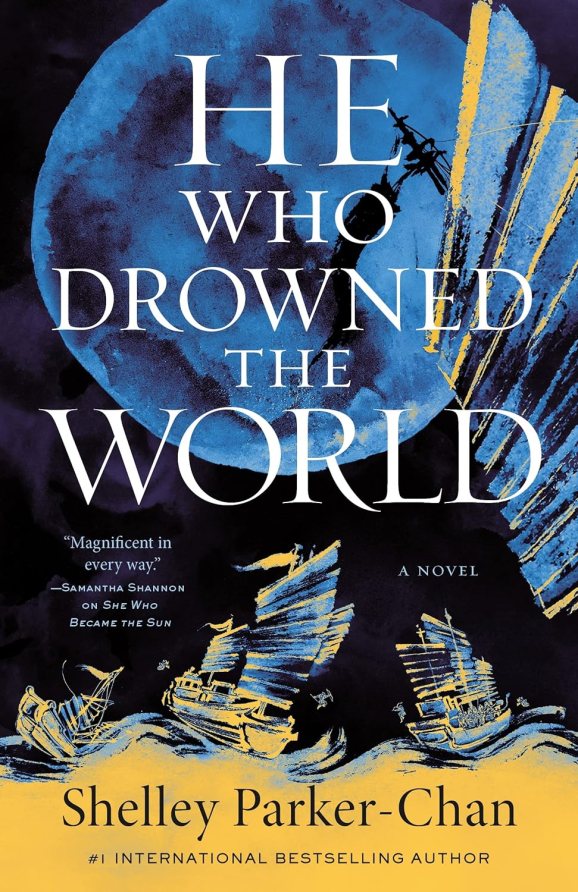
He Who Drowned the World Cover 2

Amazon

She Who Became the Sun by Shelley Parker-Chan

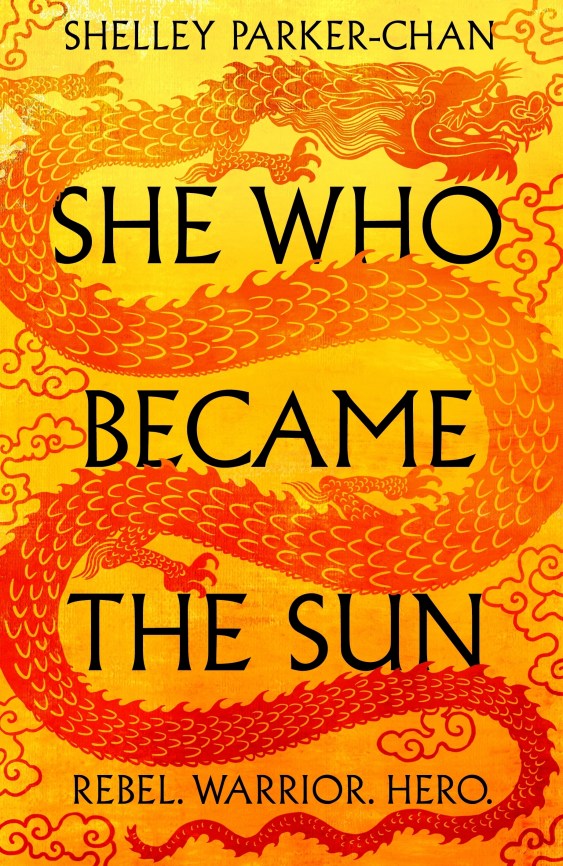
She Who Became the Sun Cover

Publisher: Mantle (Trade Paperback – 27 July 2021)

Series: The Radiant Emperor – Book One

Length: 414 pages

My Rating: 4.5 out of 5 stars

Amazon

Intriguing new Australian author Shelley Parker-Chan presents one of the most unique debuts of 2021 with the awesome She Who Became the Sun, a powerful historical read with a compelling twist.

In 1345 AD China languishes under the rule of the Yuan dynasty, descendants of the Mongolian invaders who have taken control and punished the southern Chinese citizens.  As famine and banditry stalk the land, the fate of the country will be decided by the most unlikely of people.  In a small village in the south, a seer predicts the future for two siblings.  For the favoured son, the seer sees greatness and unlimited potential, while for the daughter he sees nothing in her future at all.

When a bandit raid wipes out the village, only the daughter is left alive as her brother succumbs to his grief and despair.  Determined not to die an insignificant death and prove the seer right, the daughter plans the impossible.  Stealing the identity of her dead brother, she attempts to cheat fate and take her brother’s destiny for herself.  But how far can the newly named Zhu Chongba truly go, even with a fake identity and a stolen fate?

Travelling to a nearby monastery, Zhu impresses the Abbot and is soon accepted as a novice.  Growing up amongst the monks, Zhu finds a purpose for the first time.  But when a rampaging general destroys the monastery, Zhu is forced to find a new path that sets her against the emperor and the entire Yuan dynasty.  Joining with the Red Turban rebellion, Zhu manages to prove herself and soon leads her forces to several crucial victories.  But the eye of an old rival is upon Zhu, and not even this brilliant monk will be able to emerge unscathed.  The path to China’s future begins here, and soon the fate of the entire country will fall on the poor second daughter, destined to become the nation’s first female emperor.

This was a really compelling debut from Shelley Parker-Chan, who produced an epic and unique historical tale of war, destiny, identity and fate.  Serving as the first book in Parker-Chan’s The Radiant Emperor series, She Who Became the Sun was one of the most anticipated new releases for 2021, and I had an incredible time reading it, especially once I got caught up in its fantastic story.

She Who Became the Sun has an awesome and powerful narrative that proves to be extremely addictive.  The book first shows the protagonist as an unnamed daughter, destined for nothing until she adopts the identity of her brother, Zhu, and grows into a confident and capable young adult at a nearby monastery.  The first quarter of the book is primarily told from the perspective of Zhu and serves as a rather good introduction to the character and the overarching setting.  However, the story shifts dramatically after the eunuch General Ouyang, who serves under a noble family of the Yuan dynasty, burns down the monastery and leaves Zhu a medicant monk.  Determined to gain the destiny her brother was promised, Zhu joins with the rebel movement known as the Red Turbans.  The story then focuses on several interesting storylines, including Zhu’s ascent to commander in the Red Turbans, the volatile internal politics of the rebels, as well as troubles facing the wider Yuan dynasty.  The story adds in two additional point-of-view characters a quarter of the way through, with a particular focus on General Ouyang.  Ouygang is engaging in his own plot against the Yuan, and his fate soon becomes intertwined with that of Zhu.  This results in a pretty epic tale, especially as the various story threads tie together perfectly and produce an interesting and addictive overall narrative.  This leads up to an intense and fantastic conclusion that shows how much the protagonist has changed and how determined they are to see their destiny.  It also does an excellent job setting up the future novels in this series, and I have to say that I am pretty excited to see where Parker-Chan takes this tale next.

I was deeply impressed by the cool setting of She Who Became the Sun, especially as Parker-Chan worked in some excellent and compelling historical elements.  The novel is set in 14th century China during the Yuan dynasty and features an interesting retelling of the life of famed emperor Zhu Yuanzhang, founder of the Ming dynasty.  While there are a few major changes, like Zhu being a woman in disguise, She Who Became the Sun captures several key aspects of this figure’s early life, such as their peasant upbringing, their training as a monk, and their rise to power through the Red Turbans.  I really enjoyed the great examination of China during this period, and Parker-Chan does an excellent job of capturing the tyrannical rule of the Mongol invaders, the famines and crisis their ineffective rule caused, as well as the rebellion that rose to oppose them.  The author also makes sure to include several key historical figures, such as Zhu’s major supporters, and it proved to be a fun re-imagining of their relationship with the future emperor.  While this is primarily a historical fiction novel, Parker-Chan includes a lot of other interesting elements that alter the feel of She Who Became the Sun.  For example, there are several mystical features, such as some key individuals who can summon an aurora of visible light to show they have the divine right to rule.  Zhu also has the ability to see ghosts and finds herself haunted and at times damaged by malevolent spirits, angry at her decision to steal another person’s destiny.  These supernatural elements give She Who Became the Sun an intriguing and unique feel, and I really love it when authors subtly work in some subtle alternate genre inclusions into their work.

I also must mention the excellent inclusion of major LGBT+ elements into this book, especially around central character Zhu Chongba.  Zhu spends the entirety of the novel in the role of her late brother, pretending to be a man so she can rule and lead.  This was a really fascinating and distinctive choice by Parker-Chan, and one that makes She Who Became the Sun really stand out.  While there are some understandable comparisons to Disney’s Mulan, Parker-Chan instead frames it as a choice made from a desire to survive and to be more than what her sex would usually allow her to be in this period, especially under Yuan control.  Zhu spends most of the novel trying to hide her birth gender from everyone around her, allowing her to continue to achieve her.  While a few characters find out, Zhu is able to ensure their secrecy, which leads to some fascinating scenes.  I particularly love the interactions between Zhu and female characters who discover her secret, and the understanding that flows through these scenes is extremely powerful.  Other LGBT+ elements are later added to the story, especially around Zhu’s marriage to her wife Ma, and I really appreciated the clever and compelling way that it was worked into the plot.

Another impressive aspect of this outstanding book I want to highlight is the great use of characters.  This novel featured some amazing point-of-view characters whose journeys become the focus of She Who Became the Sun.  The main character is Zhu, the woman destined to become Emperor, who spends most of the book trying to live up to the legacy she believes she deserves.  I really liked the compelling character growth featured as her personality changes throughout the course of the book.  Initially meek and barely able to keep her secret, Zhu develops her cunning and her skills of manipulation to become a major figure in the monastery and the Red Turbans.  I loved the depiction of her rise to power, including that fun scene where she manages to win a battle with a prayer, and it was really entertaining to see her use the mild-mannered, humble monk routine to fool the people around her.  Having grown up with nothing, Zhu is more resilient against setbacks than some of the other characters and is able to overcome major hardships.  While Zhu spends most of the book as a good person, the desires for power and a great destiny eventually grows within her, encouraging her to do some evil things to win.  I really liked this subtle shift in personality as the novel continued, and the way that her character arc in this novel ends was really surprising and intense.

The other major character I really want to talk about is Ouyang, a general serving the powerful noble Lord Esen-Temur, son of the Prince of Henan.  Ouyang has a complex past, the son of a family declared traitor by the Emperor and the Prince of Henan, his entire family was killed, while Ouyang was made a eunuch.  Eventually able to work his way up from slave to general, Ouyang is initially portrayed as a petty, vicious, and vindictive figure, especially as he destroys the monastery that Zhu was living in.  However, as the novel progresses, you get to see how much Ouyang has suffered throughout his life, even though he is the best friend of Lord Esen-Temur.  Due to his status as a eunuch, there are some really interesting parallels between Ouyang and Zhu, especially as neither of these outsiders is comfortable in their body.  However, despite their similarities, they form a bitter rivalry, although occasionally working towards the same goals.  I really enjoyed Ouyang’s storyline, especially as it provided an intriguing alternative to the scenes focusing on the Red Turbans, providing the reader with a look at the politics of the Yuan dynasty and the fractious family dynamics surrounding Lord Esen-Temur.  It also leads to an excellent storyline where Ouyang slowly gets his long-awaited revenge and makes some moves to obtain even more power and control.  Ouyang served as an excellent antagonist for the novel, and his dark and brooding perspectives of life and the Yuan dynasty really enhanced She Who Became the Sun’s overall narrative.

Overall, I deeply enjoyed the unique and intricate book that was She Who Became the Sun, and it turned out to be an outstanding read.  Australian author Shelley Parker-Chan did an exceptional job with this impressive debut novel, and I loved the brilliant and epic historical tale she wove, especially as it contained some complex and intriguing characters.  This book comes highly recommended by me, and it is easily one of the best debuts I have so far read in 2021.

Amazon