Three Assassins by Kotaro Isaka

Three Assassins Cover

Publisher: Harvill Secker (Trade Paperback – 14 April 2022)

English Translation: Sam Malissa

Series: Standalone

Length: 254 pages

My Rating: 4.5 out of 5 stars

Amazon     Book Depository

Legendary Japanese author Kotaro Isaka brings us another fast-paced, intriguing and unique thriller with the English release of Three Assassins.

Last year I was lucky enough to receive a copy of the first English translation of Kotaro Isaka’s 2010 novel, Maria Bītoru (Maria Beatle), which was released in the Western world as Bullet Train ahead of a movie adaptation of the same name.  I had a lot of fun with this impressive novel which set several distinctive and crazy assassins against each other aboard a speeding bullet train.  Now, with the Bullet Train film only a couple of months away, an English version of another of Isaka’s novels, the 2004 novel Gurasuhoppā (Grasshopper) has just been released.  This novel, translated by Sam Malissa and released under the title Three Assassins, presents another intense and clever thriller read that was incredibly fun to read.

Suzuki is a former schoolteacher who has joined the notorious Tokyo criminal gang, Fräulein, to get revenge for his dead wife by killing the murderous son of the gang’s leader.  However, his revenge mission goes downhill when, moments before his flimsy cover is blown, his target falls onto the road and is run over by a van.  With the shocked gang watching on, Suzuki is sent to chase after someone he sees fleeing the scene, who the gang believes killed the leader’s son.

Convinced the man responsible is the elusive assassin known as the Pusher, Suzuki’s Fräulein contact demands that he reveal the location of the person he followed.  However, Suzuki is uncertain about whether the man is actually responsible or just a random passer-by, especially when he meets the man’s young family.  But with the gang determined for revenge, Suzuki must decide whether to pass on the information or attempt to flee for his life.  Worse, his actions have attracted the attention of other notorious assassins, each of whom have their own reasons for hunting down the Pusher.

The Whale is deadly and forlorn soul who can convince anyone to kill themselves just by talking to them, while Cicada is a talkative and deadly knife expert.  The Whale wants revenge on the Pusher for his part in a prior death, while Cicada is determined to make his own rep by killing this notorious assassin.  Both are determined to find Suzuki and have him lead them to the Pusher by any means necessary.  Can Suzuki survive the barrage of killers, gangsters and monsters being unleased upon him, or will he be forced to compromise his principles and morals to survive?

This was an awesome and exciting novel from Isaka that proved to be extremely fun to read.  Written in Isaka’s distinctive style, and featuring some unique twists, turns and characters, Three Assassins is an entertaining read that I powered through in a day and which is really worth checking out.

Three Assassins has a brilliant fast-paced story to it that readers will swiftly become addicted to.  Written in a distinctive style that emphasises odd character traits and relies heavily on intriguing anecdotes, you are quickly introduced to three captivating point of view characters: Suzuki, the Whale and Cicada.  All three have unique and compelling storylines: Suzuki is thrust into survival mode as he hunts for the elusive Pusher, the Whale is involved in political assassinations before being forced to turn on his employer, while the wildcard Cicada balances his killing desires with frustrations with his overbearing boss.  These storylines soon start to come together when the Whale and Cicada learn about Suzuki’s situation and his apparent connection with the infamous Pusher, and both try to get their hands on Suzuki before the gang does.  However, nothing is as it seems, and all three must battle with their own demons (literally in the case of the Whale), while also trying to outsmart each other and some of the other unique people populating the streets of this version of Tokyo.

All three separate character-driven storylines come together perfectly as the story progresses, and you will love seeing these amazing characters interact as each reaches their own unique destiny.  There are several fantastic and impressive confrontations towards the later part of the book, as well as some great twists, the best of which will leave you reeling and completely change how you viewed the first three quarters of the novel.  While I saw a couple of twists coming, I was pleasantly surprised by several of the reveals, revelations and story turns that occurred, and there are some fantastic moments scattered throughout this book.  I loved how fast-paced Three Assassins turned out to be and there is honestly not a single slow moment to be found as you get through it.  That, combined with its shorter length, will encourage readers to power through it in a very short amount of time, and you will not be disappointed when you see what happens with this entertaining and amusing story.

Like Bullet Train, Three Assassins is a standalone novel that requires no familiarity with any of Isaka’s previous novels to appreciate the clever story or intense action.  It does however have some interesting connections to Bullet Train that fans will really appreciate.  Three Assassins is noticeably written in a similar style to Bullet Train, with a familiar plot focused on multiple unusual Tokyo assassins, as well as certain unique types of characterisations, interactions and writing flow.  These similarities are intentional as the original Japanese version of Three Assassins, Grasshopper came out several years before Maria Beetle.  This means that Three Assassins is actually a precursor to Bullet Train, hence the stylistic similarities.  As such, Three Assassins features a couple of characters who would end up having minor roles in Bullet Train, such as the Pusher, who has a few short point-of-view chapters as the character Morning Glory in Bullet Train, and the assassin duo known as the Hornet.  I have to admit that when I read Bullet Train, I did wonder about why these characters were featured, as some relevant context appeared to be missing.  However, after reading Three Assassins I see that they were there as a reference to this preceding novel and you actually get to understand their role in Bullet Train a little better after reading this book.  I really liked the cool connections this novel had to Bullet Train, and it is really worthwhile checking Three Assassins out alongside it.  While I do think that I preferred Bullet Train a little more than Three Assassins, as its story was stronger and the characters a little more entertaining, Three Assassins really stands on its own and proves to be an excellent read.

Isaka clearly had a lot of fun with the awesome characters contained within Three Assassins, as this book features an eclectic mix of unusual and entertaining figures who make Tokyo’s underworld seem like a weird and deadly place to explore.  This novel is primarily anchored by its three main point-of-view characters, each of whom is a particularly complex and unique being that will quickly drag the reader in with their intriguing stories or antics.  This includes central character Suzuki, the former teacher turned attempted gangster, who is initially involved with this plot for revenge, and who has done some dark things in order to get there.  However, when the target of his revenge is killed and Suzuki seems to find the life of the Pusher and his family in his hands, he starts to have a real crisis of conscience and must determine what he really wants to do.  Watching him attempt to weigh up the lives of the family he encounters versus some hostages Fräulein potentially has is extremely intense and results in some major examinations of his conscience.  Suzuki also serves the role of the unenlightened character for most of the book as he is mostly ignorant of the various assassins and outrageous characters running around out there.  As such, he serves as a good introductory character for many of these unique world elements, and it was very entertaining to see him interact with some of the other characters for the first time without a clue about who or what they are.

The Whale and Cicada are both complex and weird figures for very different reasons.  The Whale is a highly unusual assassin who specialises in arranging deaths to look like suicides.  A large man with an unnatural aura, the Whale is “blessed” with a near supernatural ability to talk people into killing themselves.  This is a pretty unique and cool character trait which Isaka does a wonderful job portraying throughout Three Assassins.  Watching this character slowly and calmly talk various characters into killing themselves results in some naturally dark scenes, but they are a great part of the book and really add something to the distinctive feel of the book.  At the same time, Isaka tries to humanise the Whale to a degree by showing him to be haunted by the ghosts of everyone he has killed.  These ghosts routinely appear before him, airing their grievances with him while also blotting out his ability to see other people or things.  This serves to be an intriguing handicap for this otherwise unstoppable figure, and it proved fascinating to see this merciless killer face some substantial reservations about his work and slowly start to rethink his life and choices.  The Whale easily has some of the most complicated and intriguing scenes in the entire novel and it proves extremely fascinating to see his entire arc unfold.

Cicada, on the other hand, is a somewhat less complex figure who serves as the book’s comic relief.  A skilled knifeman who lacks empathy, Cicada has earned a reputation as a man who can take on the unpleasant jobs and is often hired to kill women and children.  However, Cicada finds himself in a very hostile working relationship with his boss and handler, Iwanishi, who treats him poorly.  This toxic relationship becomes the imperative for Cicada to engage in the hunt for the Pusher, as a form of finding his own independence, although nothing goes to plan.  Cicada is an excellent and enjoyable character, and you will quickly find yourself getting attached to the quick-talking killer, even when he does some terrible things.  The most physically gifted of all the characters, Cicada is often dragged into some of the book’s best fight scenes, and it was exciting to see his knife skills in action.  Thanks to his unique humour and continual banter, Cicada proves to be a great counterpoint to the book’s darker or more emotionally distressed characters like Suzuki and the Whale, and I think that his inclusion really helped to balance out the tone of the book.  All three characters and their chapters play off each other extremely well, and they help to form a captivating and amusing overall story.

Three Assassins was another awesome read from Kotaro Isaka that takes readers on a wild and exciting journey to Japan’s outrageous underworld of assassins.  Filled with quirky characters, surprising turns and intense action, this is a fantastic novel and you will swiftly get addicted to its entertaining and captivating story.  A must read for fans of this legendary Japanese author, especially in advance of the upcoming Bullet Train film, Three Assassins comes highly recommended and is really worth checking out.
Amazon     Book Depository

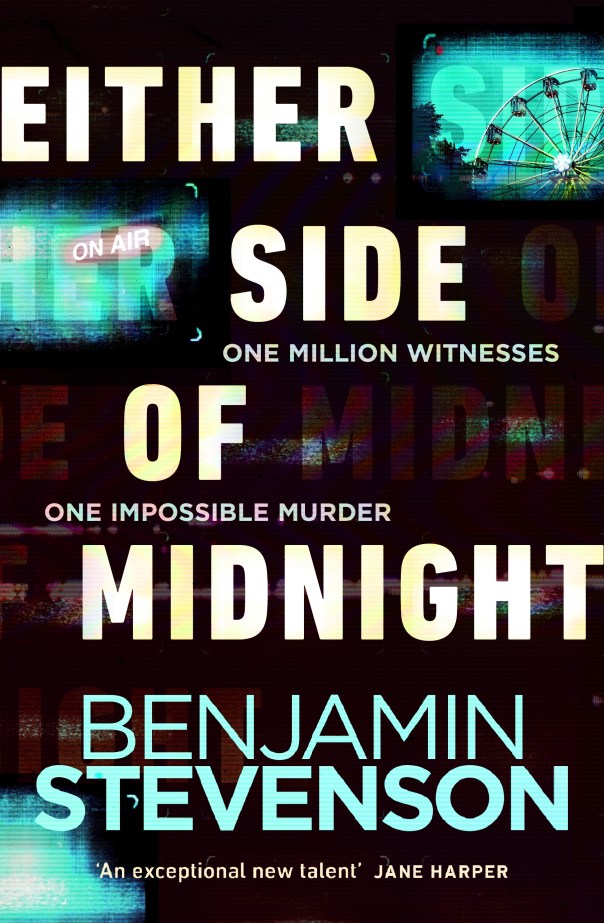
Either Side of Midnight by Benjamin Stevenson

Either Side of Midnight Cover

Publisher: Michael Joseph (Trade Paperback – 1 September 2020)

Series: Jack Quick – Book Two

Length: 327 pages

My Rating: 4.5 out of 5 stars

Amazon

Following his outstanding 2018 debut, up and coming Australian crime fiction author Benjamin Stevenson returns with an excellent and exciting new novel, Either Side of Midnight.

Sam Midford is a man who seems to have it all.  The host of a popular current affairs program, Midnight Tonight, Sam routinely provides fun and insightful jokes to the Australian public.  But his latest show is about to deliver something very different for the audience, as a nervous Sam pulls out a gun on live television and shoots himself in the head.  The resulting video is seen by millions, and the entirety of the country is shocked by his actions, believing it to be the tragic suicide of a secretly disturbed and haunted individual.

However, there is one person who is convinced that Sam’s death was something very different from suicide: his twin brother, Harry.  Harry believes that Sam was murdered, but with incontrovertible evidence of his suicide seen by a multitude of witnesses, how can this possibly be the case?  Determined to prove that there is more to his brother’s death, Harry seeks the help of someone who is almost as notorious as his dead brother, disgraced former television producer and true crime documentary maker Jack Quick.

Following the infamous and deadly conclusion to his documentary series, Jack is currently serving time in prison for tampering with evidence in a murder investigation.  In the final days of his sentence, Jack is approached by Harry, who believes that he is the only person capable of finding out the real truth behind Sam’s death.  In desperate need of money to support his family, Jack reluctantly accepts the case, believing that all he will uncover is proof that Sam committed suicide.  However, he soon discovers several inconsistencies in Sam’s death as well as evidence that connects his suicide to that of a young girl in the brothers’ past.  Diving deeper, Jack begins to think that there is a sinister killer at work, using subtle and deadly methods to murder their victims.  There is more than one way to kill someone, and Jack is about to discover just how dangerous his new obsession is.

Either Side of Midnight is a fantastic and outstanding read from one of the rising stars of Australian fiction, Benjamin Stevenson.  Stevenson is a Canberra-born comedian and musician who recently made the jump to crime fiction author with his debut novel, Greenlight (which was subsequently released as Trust Me When I Lie and She Lies in the Vines outside of Australia).  Greenlight was a compelling and intriguing novel that followed a guilt-ridden true crime documentary maker who suddenly became convinced that the man his show released from prison was actually guilty.  Set amongst the distinctive scenery of Australia’s wine country, Greenlight was a deeply impressive debut that provided the reader with a dark and clever murder mystery.  Either Side of Midnight is the sequel to Greenlight and is set 18 months after the events of the first book, with the same protagonist engaging in another sinister investigation.

Either Side of Midnight contains an outstanding story that presents the reader with another captivating and intense investigation told through the eyes of the series’ damaged and dark protagonist.  Stevenson has come up with a very clever story for this novel which forces the characters to investigate a murder that appears to be a very public suicide.  I really liked this cool plot premise when I first heard about it and I was glad that Stevenson was able to work it into such a captivating and cohesive narrative.  The investigation starts off quick and fast and does not slow down throughout the entire book, as the author comes up with some excellent twists and dark turns to throw the reader on an emotional rollercoaster, and I was deeply surprised with the final reveals of this mystery.  The entire premise of how the victim is killed is extremely clever and topical, and while I cannot talk about it without spoiling the plot, I felt that Stevenson came up with a great story around it and did a fantastic job tying it into real-world events.  I also really enjoyed Either Side of Midnight’s intense and impressive ending, not only because of the eventual reveal of the true perpetrator of the murder was extremely clever and perfectly set up, but also because of the thrilling and deadly confrontation with the protagonist, which includes the villain setting up extraordinarily evil and extremely memorable means of taking Jack out.

Either Side of Midnight also serves as an excellent sequel to Stevenson’s first novel and I felt that the story elements from Greenlight flowed really well into the plot of this second novel.  This fantastic mystery can also be easily read as a standalone novel, as the author does a great job of revisiting some of the key plot elements from the previous entry.  This ended up being a fantastic read, and I really appreciated the very dark edge that Stevenson gave to the story, which allowed for an extremely compelling and dangerously addictive tale.  I do need to point out that this book is probably best avoided by readers who are triggered by mentions of suicide, as there are some rather graphic scenes and discussions, so be warned about that.  That being said, I had an amazing time reading this new novel from Stevenson and I ended up powering through this intense story in less than a day.

You cannot talk about Either Side of Midnight without discussing the compellingly damaged main protagonist, Jack Quick, who returns for another harrowing adventure.  When we last left Jack, he had been sentenced to two years in prison for manipulating evidence to ensure the success of his true crime documentary.  Jack, who was extremely emotionally and mentally strained in the first book, has started to recover somewhat since the events of Greenlight, having finally started to get help with his bulimia and having confessed his darkest secret to his father.  But life once again gets substantially complicated for Jack when he is reluctantly drawn back into the triggering world of lies, murder and television production due to his family obligations.  I liked Stevenson’s portrayal of Jack in this novel; the events of the first book have made him a little more responsible and compassionate and less of a dick than before.  However, he is still a clever and somewhat manipulative person who manages to BS his way towards the truth and proves to be an entertaining protagonist to follow.  Stevenson continues to examine Jack’s battle with bulimia, a particularly distinctive character trait for a male crime fiction protagonist, in a realistic manner and I really appreciated the way in which the author dives into the psychology of the disorder.  There is also a fantastic continuation of the storyline from the first novel around Jack’s older brother Liam who, after an accident Jack witnessed as a child, has been in a permanent vegetative state.  The fate of Liam and the guilt that Jack feels for his condition is a major part of the protagonist’s character arc in Either Side of Midnight, especially as Jack and his father are forced to discuss ending his care, and it proved to be an excellent and touching part of the novel’s plot.  I really enjoy Stevenson’s outstanding portrayal of this complex character and the examination of his various battles and issues was an essential part of Either Side of Midnight’s outstanding plot.

While the obvious focus of Either Side of Midnight is Jack, Stevenson has also loaded up his second novel with several other damaged and distinctive characters, each of whom add some intriguing angles to this great story.  The most significant of these characters are the Milford twins, Sam and Harry, who serve as the victim and main driving force of the novel respectfully.  The Milford twins, also known as the Midnight Twins, are a former comedy duo who split apart several years earlier, when Sam went on to host his television show and Harry vanished into obscurity.  The author really dives into the background and psyche of these two characters.  Sam was haunted by the guilt over his lost girlfriend, who died while the two twins were trapped on a Ferris wheel.  Harry, the younger twin, is filled with regret and sadness over how their partnership ended, and their relationship soured.  Both characters ended up being complex and damaged individuals, and their struggles have major impacts on Either Side of Midnight’s narrative.  Stevenson did a fantastic job with these characters, and I really appreciated the intriguing storylines that he weaved around them.  It was also interesting to see Benjamin Stevenson portray a set of twin comedy entertainers, as he himself is a member of a comedy duo, known as The Stevenson Experience, with his twin brother James.  You have to assume that Stevenson used a lot of his own experiences to build up these characters and their comedy routine, and I felt this was a fantastic part of the novel, although I’m going to avoid reading too much into the author killing off one of the twins.  I also really enjoyed some of the other damaged characters featured throughout the book, and the protagonist is forced to examine several compelling and tragic backstories to get to the truth of this case.  There is a particular focus on loss and the impacts it has on relatives of the deceased that I particularly appreciated, especially as three major characters (Jack, Harry and side character Ryan) each survived a great tragedy that impacted an older sibling.  I had an incredible time getting to know the broken and bereaved characters in this novel, and it turned out to be a significant part of this fantastic narrative.

One of the other cool features of this book was the author’s excellent use of the rugged Australian setting, which was also one of the most distinctive features of the first entry in the series.  While this book does not spend as much time in the rough countryside as Greenlight did, with most of Either Side of Midnight taking place in urban Sydney, a good part of the plot does take place in a small coastal town.  I really liked the parts of the novel set within this small-town environment as it proved to be an isolated and at times dark setting for this excellent mystery.  The author did a fantastic job of bringing a distinctively Australian rundown town to life in a way that is very realistic to anyone who has done some travel around coastal Australia, which was really cool to see.  I also liked how Stevenson takes the time to examine and parody some elements of wider Australia, particularly its television industry, with the investigation centred on a fictional Australian television network.  This fictional network shares a lot in common with some of the real-life television networks here in Australia.  Anyone who is familiar with some of the main Australian networks will really appreciate Stevenson’s portrayal of these television stations, as he mirrors the stations’ numerical names, provides notable callouts to some extremely popular shows, and portrays some of bitter rivalries the main commercial networks have with each other.  This actually becomes a major part of the plot, and I loved seeing the cynical protagonist navigating the cutthroat rivalries based around a series of soap operas and reality television programs (especially as I am not a big fan of these sort of shows, and they are absolutely saturated in our programming).  Overall, I felt that the author provided a very Australian setting which proved to be an amazing backdrop to this excellent novel.

Either Side of Midnight was an exceptional and amazing second novel from Australian author Benjamin Stevenson that comes highly recommended.  Stevenson has produced an addictive and dark crime fiction story that sees an excellent protagonist investigate an impossible crime.  Featuring great characters, an impressive mystery and a fantastic setting, Either Side of Midnight is an excellent novel that is easily one of my favourite Australian fiction novels of 2020.

Amazon

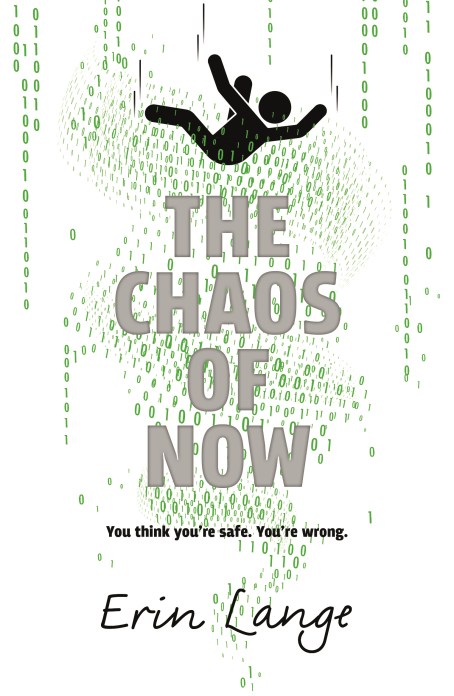
The Chaos of Now by Erin Lange

The Chaos of Now Cover.jpg

Publisher: Faber & Faber

Publication Date – 2 October 2018

Amazon     Book Depository

From one of the most intriguing authors of modern young adult fiction comes this powerful story about bullying in the modern cyber world and the potential impacts our choices can have on those around us.

One year ago, a student at Haver High, Jordan Bishop, walked into the school cafeteria and committed suicide by setting himself on fire, a reaction to the relentless online bullying he was experiencing.  Since that event, life at Haver High has not been the same.  Not only do the scars of Jordan’s actions remain but radical legislation brought in to combat cyberbullying ensure that students’ online lives are openly monitored by federal cybersnoops.

Eli Bennett is a young hacker who is desperate to graduate and leave town in order escape his father and his father’s new girlfriend, Misty.  Eli is happy enough at school with his only friend, Zach, although he wouldn’t mind getting to know the beautiful Isabel.  But when he is approached by fellow hackers Seth and Mouse, he finds himself drawn into an entirely new challenge.  Seth and Mouse were Jordan’s friends, but have had to keep their relationship with him a secret to avoid backlash from the other students.  Desperate to get some sort of justice for their fallen comrade, they are seeking a way to get back at those students who drove Jordan to kill himself.  Their idea is to create a website where Jordan’s bullies can be publicly shamed, and they need Eli to make it untraceable to the authorities.  Despite being haunted by a previous hacking mistake, Eli agrees to help, interested in the potential of this sort of website.

Calling the website ‘Friends of Bishop’, the site provides the students of Haver High with an anonymous forum to post videos about bad behaviour in the school.  With the help of a few bombshell videos, the site becomes a hit, and Eli and his friends believe they are making some real changes.  With the cybersnoops desperately try to shut down the site, the hidden Friends of Bishop revel in their notoriety and the praise of many of their classmates.  But when their quest for justice takes a nasty turn, Eli finds himself facing the real-world consequences of his actions and must try and work out what the right thing to do is.

The Chaos of Now is the fourth book from the talented and at times controversial young adult author, Erin Lange.  Lange is probably best known for her 2012 debut novel, Butter, which focused on a bullied obese boy’s plan to eat himself to death on a live internet broadcast.  Her next two books, Dead Ends and Rebel, Bully, Geek, Pariah also looked at the lives of socially isolated high school students, as well as the consequences of bullying behaviour.  The Chaos of Now takes a deeper focus on extreme cyberbullying and the potential impacts it can have.  I absolutely enjoyed The Chaos of Now and powered through it in less than a day as I became absorbed in its fantastic narrative, its emotional and moral heart and its very intriguing elements and warnings.

This book contains a poignant and well-thought-out story that takes its protagonist on a captivating adventure as he is faced with a series of moral dilemmas and explores the resultant consequences of his decisions on himself and those around him.  There are some incredible emotional scenes as the main characters examine their anger, grief, guilt and internal moral compasses when they look back at what they did or what they failed to do.  There is also a heartrending plot twist towards the end of the book which paints the entire narrative in a completely new light while also upping the stakes for the protagonist and his friends.

At the centre of this incredible book lies a powerful message about the modern epidemic of cyberbullying and the dangers of our modern computer based world.  Within the context of the story, the protagonist is drawn into a quest for justice after a young man who is bullied online commits suicide.  The architects of this revenge are the victim’s friends, who feel guilty for not standing up for their friend and not coming forward after his death.  As part of their quest, they create an anonymous website where embarrassing and incriminating videos can be posted about the people who drove Jordan to commit suicide, as well as videos about any other bullies or people the protagonists believe need to be taken down a peg.  Lange does an incredible job exploring all the aspect of this cyberbullying, from an examination of the events that led up to Jacob’s suicide to the impacts of the posted videos on the people they are shaming.  Lange does not try to shape this as a black and white issue; instead, everything that occurs has the potential for negative consequences.  For example, throughout the course of the book, the protagonists post several videos, each of which appears to have different levels of embarrassing or incriminating footage.  While the potential impacts of some of these videos appear to be minor, some are later revealed to have major consequences for the people involved.  At the same time, the more explicit videos have huge, life-altering consequences for the people involved.  Through the course of her narrative, Lange shows the full effect of these videos, whether they are extreme or seemingly innocuous, and shows how the people’s lives are affected and how other people treat them because of what is revealed.  Often these outcomes are quite devastating, and the protagonists, having become cyberbullies themselves, are left examining whether their victims actually deserved to have their lives ruined in this way, and if their actions can truly be considered justice.  The final message of this book, that cyberbullying or any form of negative online actions can have severe and often unforeseen consequences, is quite powerful, and I thought that Lange did an incredible job highlighting this throughout her novel.

Another intriguing part of this book is the extreme way the government attempts to deal with the problem of cyberbullying.  In this book, following the extreme suicide of Jordan, the government introduces harsh and controlling rules about internet privacy for students and gives government officers known as cybersnoops the ability to monitor everything young people do on the internet.  This is a thought-provoking reaction, and one that could potentially be used in the real world to address the problem of cyberbullying.  Readers will be interested to see Lange’s thoughts on such a program being introduced and how the youth impacted by it may react.  The resultant story comes across as a cautionary tale.  While more needs to be done to combat the issues of cyberbullying, Lange’s stories suggests that certain approaches could be just as problematic, as many of the protagonist’s actions are as a result of the restrictions imposed upon them.

I really enjoyed the coding aspects of this book, and it was fascinating to see the various computer and coding terms included throughout the story.  Lange’s ensures that these technical aspects are explained to the reader in a clear and concise manner so that even technical luddites like this reviewer are able to have a good understanding of what is going on in the story.  Readers of The Chaos of Now should also take note of the various ways in which the internet or someone’s personal electronic devices can be used against them, and is definitely an informative inclusion.

Lange’s focus on her protagonist’s personal relationships is another great part of this book, and provides an invaluable social heart to this novel.  At the start of the book, Eli only has one friend, Zach, a fellow coder who serves as Eli’s social and hacking conscience.  When Eli makes friends with Seth and Mouse, he is happy to have new friends and works with them on their website.  But, as the book progresses, Eli’s relationship with Zach suffers as he constantly hides his dodgy actions with the Friends of Bishop website.  It is interesting to see how Eli is forced to assume the more moral and cautious role with Seth and Mouse, who are much more obsessed with revenge than Eli is.  Having assumed this role, Eli feels a lot more guilt for the group’s actions, as he knows he should do more to curtail their more reckless actions.  This is further compounded when Eli gets angry and momentarily abandons his moral position, and the resultant actions cause significant harm.  The later part of the relationship with Seth and Mouse is very intense and contains one hell of a climactic scene.  The Chaos of Now also contains the heart-warming story of the growing relationship between Eli and his father’s girlfriend, Misty, who becomes one of the most likable characters in the entire book.  I also enjoyed the relationship between Eli and the bully Malcolm who Eli has several negative encounters with at the start of the book.  While Eli at first wants to destroy him like the other bullies at Haver High, his discovery of Malcolm’s deeper problems and the future awaiting him makes Eli rethink his position.  This focus on the protagonist’s relationships is an extraordinary part of the book, which weaves into the story very well and plays a big part in the protagonist’s decisions and actions.

The Chaos of Now is a great piece of young adult fiction that provides an amazing insight into one of the key issues affecting the youth of today.  With some mature themes, this book is definitely intended for the slightly older teen audience and is probably most appropriate for high school students who are a similar age to the characters of this book.  As this book provides an intriguing and powerful insight into the modern day issue of cyberbullying and presents a look at the extreme consequences that could result from these actions, I would strongly recommend it to these students, as they would be most interested in the message and story that it contains.  While not intended for older readers, the content of this book is instantly relatable for anyone who has ever been to high school and is aware of the current issues surrounding cyberbullying and problems with the internet.

Lange has created a terrific book which I felt covered some of the issues around cyberbullying perfectly.  Featuring a heartfelt and at times crushing story that tries to understand the different sides of this complex problem, this is another superb and memorable release from an incredible young adult fiction author.

My Rating:

Four and a half stars

Amazon     Book Depository