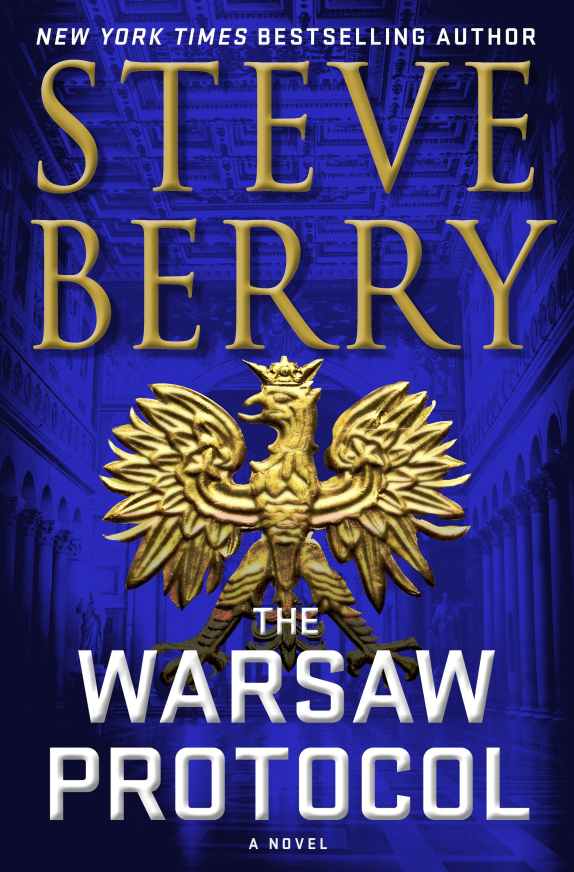
The Warsaw Protocol by Steve Berry

The Warsaw Protocol Cover

Publisher: Hodder & Stoughton/Macmillan Audio (Audiobook – 25 February 2020)

Series: Cotton Malone – Book 15

Length: 11 hours and 48 minutes

My Rating: 4.5 out of 5 stars

Amazon

In the mood for an exciting thriller that not only features an intense, high-stakes spy adventure but also an intriguing and detailed examination of a nation’s history and culture? Then you are going to love The Warsaw Protocol, the latest novel from bestselling thriller author Steve Berry and the 15th novel in his long-running Cotton Malone series.

Former United States Justice Department agent Cotton Malone is now retired and enjoying his life as a rare book dealer and occasionally supplementing his income with some freelance intelligence work. In Bruges to attend a book fair, his holiday takes an unexpected turn when he attempts to stop the theft of a rare religious artefact. His interference accidently places him in the centre of a new conspiracy threatening to engulf Poland, one with massive global ramifications.

A notorious information broker has obtained a series of documents that reveal troubling secrets about the President of Poland, Janusz Czajkowski, and his past during the communist occupation of his country. These secrets, if revealed, would ruin the political career of Czajkowski and are the ultimate form of blackmail. With a controversial proposal surrounding an advanced American missile defence system in Poland on the table, both the United States and Russia want these documents, as do several other interested nations. The documents will be auctioned off in a secret location, with the price of admission one of seven sacred Christian relics located around the world.

Recruited by his former boss, Stephanie Nelle, Cotton attempts to steal one of the remaining relics in order to enter the US into the auction. However, despite the best-laid plans of the new President of the United States, the auction turns into a disaster, with Russian duplicity, Polish intelligence agents and a rival information broker all coming into play. As Cotton attempt to recover the documents, he is faced with severe moral implications, should he really be party to an American plan to blackmail a foreign nation?

Berry is an outstanding thriller author who has been producing consistent and enjoyable work since his 2003 debut, The Amber Room. While he has produced several standalone novels, his main body of work is the Cotton Malone novels, which started in 2006 with The Templar Legacy. So far, I have only read the prior book in the Cotton Malone series, The Malta Exchange, which came out last year. I really enjoyed The Malta Exchange and became an instant fan of the way that Berry combined exciting thriller storylines with historical conspiracy theories and deep dives into the history and culture of various nations. I have been looking forward to The Warsaw Protocol for a while now, and I even featured it on my recent Most Anticipated Books for the First Half of 2020 list.

Like the rest of the books in the series, The Warsaw Protocol can easily be read as a standalone novel, with absolutely no knowledge of any of the prior books required to enjoy the fun and exciting story contained within. Long-term fans of the series will definitely enjoy this new entry, not only because of its great story but because some of the events depicted are likely to have major repercussions for future books in the series. Berry makes excellent use of multiple viewpoints to tell this story, with several major characters getting a number of chapters to themselves, which not only show their actions in the current day but also dive into their own personal history and the history of the people or places they are interacting with. This leads to a richer overall narrative, and I think it was the best way to tell this complex story. Overall, I am really glad that I decided to dive further into the Cotton Malone series, as I found The Warsaw Protocol to be another fantastic and captivating thriller with some first-rate depictions of the complex nation of Poland.

At the centre of this book lies an outstanding thriller which sees the agents of several different nations fighting over sensitive material that could change the balance of power in the world. Berry takes this thriller storyline in some fantastic directions, and I really enjoyed the fast-paced and exciting final result. I loved seeing the past coming back to haunt people, especially as this allowed the author to dive back into Poland’s history when it was part of the Soviet Union. The Warsaw Protocol contains several excellent action sequences, although the book has more of a focus on uncovering the past and solving historical clues. I felt that the author’s use of multiple viewpoints worked really well to increase story’s suspense and intrigue, especially as you get to see the various major players react and enact countermoves against each other. I was a tad surprised that the author did not really do much more with the holy relics the auction participants needed to collect, especially as I spent a good part of the book thinking they were going to lead to some other great Polish treasure. There were also some other McGuffins and secrets that were mentioned or discovered throughout the book that didn’t really go anywhere either, and I would have been interested to see what impact they would have had on the plot if the protagonist had known about them. Still, this was an incredibly captivating piece of thriller fiction, and thanks to the fast-paced and exciting story, I had a really hard time putting The Warsaw Protocol down.

One of the main things that draws me to the Cotton Malone series is the way that Berry makes sure to dive into the history and culture of the countries in which his books are set. I really loved the in-depth look at Malta in his previous book, and I have a great appreciation for all the intriguing details about Poland that he features in his latest novel. Make no mistake, while this book does mainly follow the story of an American intelligence agent, The Warsaw Protocol is first and foremost a novel about Poland, featuring examinations of the nations troubled history and its unique cultural mindset. I am a huge history buff, so I absolutely loved Berry’s examination of these elements of Polish history. His major focus was on Poland when it was controlled by the Soviets following World War II, although he also looks back at the medieval history of the country as well. I found this examination of the Communist occupation of Poland to be quite fascinating, although Berry makes sure to point out the terrible circumstances that the people found themselves in and the lasting impact Communist control has had on the nation. The author sets up the seeds of the book’s central thriller in the country’s Communist past, and the resultant bloom turned out to be an excellent story.

In addition to the country’s history, Berry also attempts to showcase the social and cultural identity of Poland, while examining how the country’s long history of dissention, political upheaval and oppression from other nations has helped to create a unique society of people with a distinctive social mindset and way of life. Berry obviously has a lot of love for the people of Poland, and his examination of their national personality is quite intriguing. It is also another element of this book that works well with the overarching thriller storyline, as several of the point-of-view characters are able to predict how the general population of Poland will react if the information up for auction is released, motivating several of the characters. All in all, this was an incredibly fascinating and compelling examination of one of Europe’s most distinctive and important countries, and I really liked how Berry was once again able to use these captivating elements to produce an excellent spy thriller.

Berry also spends a lot of time bringing several iconic Polish locations to life to serve as backdrops for his story. There are some absolutely fantastic locations featured within this novel, including a number of major cities, some important castles, significant religious sites and even a world-famous salt mine. Berry has apparently spent a lot of time faithfully replicating these sites within his book, with some minor exceptions for plot reasons. The author really paints a vibrant picture when he presents these locations to the reader, and many of them sound like incredible places to visit (I personally would love to see the aforementioned salt mine after reading this book, as it sounds pretty damn awesome). There is also a rather fun sequence at the start of the book set in the Belgium city of Bruges, which the author uses to full advantage, setting a great chase sequence in the city’s iconic canals. There are also descriptions of several real-life restaurants, cafes and other such locations throughout this book, and it is clear that the author has really done his homework. Indeed, the author has even included a substantial notes section at the back of the book discussing the accuracy of his portrayals of history and locations. All of these are amazing backdrops for this fast-paced thriller storyline, and I really enjoyed seeing some of the action taking place in this amazing historical and cultural locations. Those readers who have been to these locations in Poland are bound to get a kick out seeing them so lovingly portrayed in this book, and I think that Berry did a wonderful job of bringing these places to life.

One of Berry’s inclusions that I found particularly interesting was the character of the new US President, Warner Fox. Fox is a brash, undiplomatic and ill-informed former businessman who practices cronyism and is generally painted as being an incompetent and unworthy President by the book’s characters. This sort of US President is becoming more and more common in thriller novels these days for obvious reasons, and I always find it intriguing to see what perceived impacts authors believe such a person would have on the intelligence community. In The Warsaw Protocol, the President is portrayed in an antagonistic manner, as Cotton Malone greatly disagrees with him and his methods. The President and his advisors blunder through the entire book, failing to listen to the advice of seasoned intelligence operators and generally make the entire situation far worse, while the other world leaders easily run rings around them. This actually becomes a major issue for the protagonist, as not only does it make his mission more difficult, but this new President ends up shifting the entire landscape of the series. I thought that this was a really intriguing, if somewhat horrifying, addition to the novel, especially as it is a potentially accurate depiction of how the current administration would interfere with or attempt to control intelligence agencies, and I look forward to seeing how Berry expands on this point in future novels (especially after the next election).

Just as I did with the previous book in the Cotton Malone series, I chose to listen to The Warsaw Protocol’s audiobook format. The Warsaw Protocol audiobook is narrated by Scott Brick and runs for just under 12 hours, allowing for a relatively quick read for a determined listener. I personally find that the audiobook is a great format to enjoy Berry’s books with, as listening to the story helped me appreciate his vivid descriptions and intriguing examinations of history a lot more. Brick is an excellent audiobook narrator who has narrated nearly all of the Cotton Malone books in the past and also provides his vocal talents to a number of other thriller novels, such as the recently released Into the Fire by Gregg Hurwitz. I find that Brick has a fantastic voice for thriller novels such as The Warsaw Protocol, and he is able to present the complex story in an enjoyable way, as well as provide some great Eastern European accents for some of the individuals featured in the novel. If I had to make a complaint, though, I did find it a little hard at times to distinguish between a couple of characters with similar voices, especially when they are having a conversation with each other. This was not a major issue; it just occasionally left me wondering for a couple of seconds who was talking, although it was usually made clear right after I had that thought. As a result, I would strongly recommend the audiobook format to anyone who is interested in checking this book out, and I personally loved listening to the story unfold.

Steve Berry has once again produced an incredible and deeply enjoyable thriller novel that utilises his trademark love for all things historical and cultural to create a fantastic read. The Warsaw Protocol does a wonderful job of combining an exciting story with an in-depth look at the vibrant, distinctive and at times chaotic nation of Poland, and I loved the final result. I cannot wait to see what amazing adventure Berry comes up with next time, and I fully intend to keep reading all the Cotton Malone books he brings out. This is a highly recommend thriller that I think a lot of people are going to enjoy.
Amazon

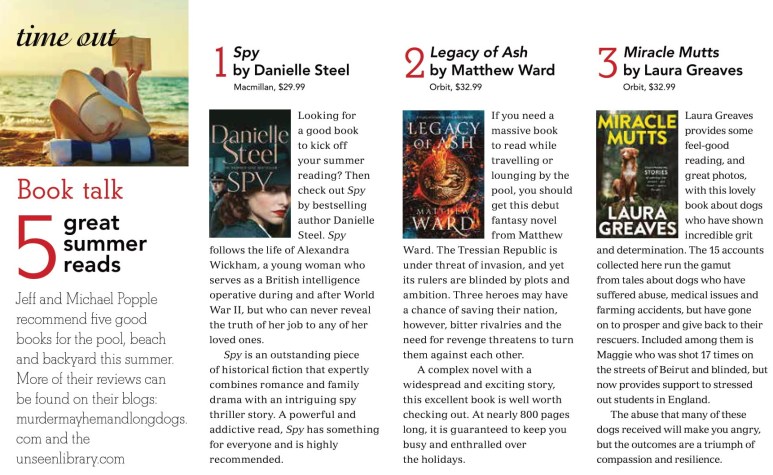
Canberra Weekly Column – Suggested Holiday Reads

Canberra Weekly - 2 January 2019 - Holiday Reads Part 1 (cropped).jpg

Canberra Weekly - 2 January 2019 - Holiday Reads Part 2 (cropped).jpg

Originally published in the Canberra Weekly on 2 December 2019 and done in conjunction with Jeff from Murder, Mayhem and Long Dogs.

The reviews of Spy, Legacy of Ash and Asterix and the Chieftain’s Daughter were done by me, while Jeff reviewed Miracle Mutts and The Strangers We Know.

Make sure to also check out my extended reviews for Spy and Legacy of Ash.

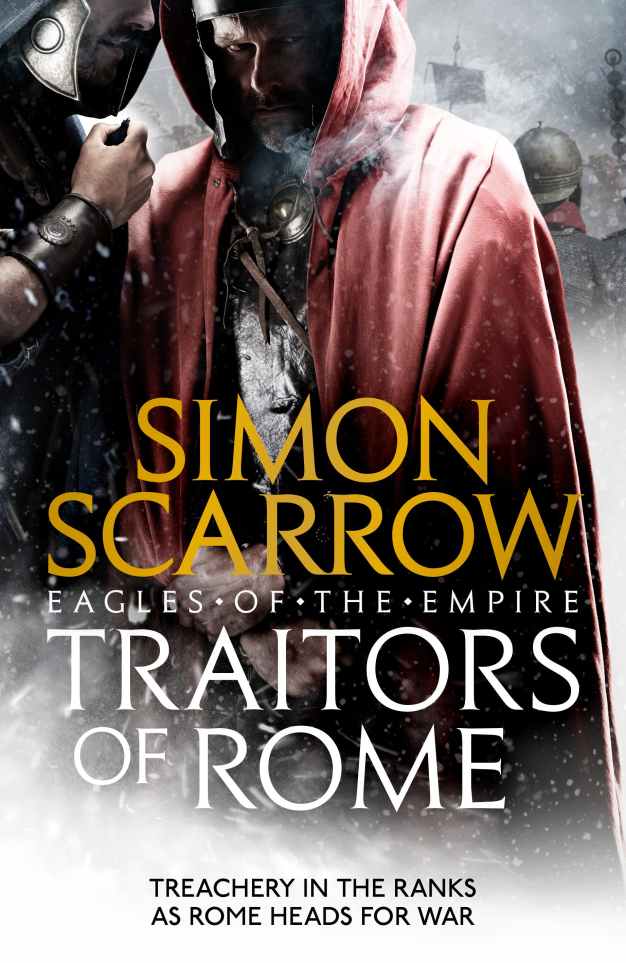
Traitors of Rome by Simon Scarrow

Traitors of Rome Cover

Publisher: Headline (Trade Paperback – 12 November 2019)

Series: Eagles of the Empire – Book 18

Length: 447 pages

My Rating: 4.5 out of 5 stars

Amazon

From one of my favourite historical fiction authors, Simon Scarrow, comes the 18th book in his long-running Eagles of the Empire series, Traitors of Rome, which once again sends his protagonists, Cato and Marco, into another dangerous scenario against Rome’s enemies. This is another of Scarrow’s books I have really been looking forward to, especially after enjoying the previous entry in the series, The Blood of Rome.

In AD 56, Rome and its great eastern rival, Parthia, are on the brink of war. Both the Roman Emperor Nero and Parthia’s king, Vologases, are in need of a great victory to fully secure their rule, and Rome’s territory has already begun to experience raids from a Parthian noble. Into this chaos Tribune Cato and Centurion Marco have been sent. Leading a cohort of Praetorian Guards, Cato and Marco have been assigned to serve under General Corbulo, who has gathered a force of over 20,000 Roman soldiers to fight against the Parthians. Unfortunately, most of the men under his command are badly trained and ill-prepared for battle, and Corbulo is desperate for more time to get them into shape.

To that end, he orders Cato to lead an embassy into Parthia to negotiate a peace treaty with Vologase. This embassy’s purpose is to delay the Parthian offensive long enough for Corbulo to finalise his preparations. Leading a small group of soldiers and accompanied by one of the general’s agents, Cato makes his way into Parthia, beset by raiders and pirates, with an uncertain reception from Vologase and his nobles awaiting him.

At the same time, the small kingdom of Thapsis on the border near Parthia has risen in revolt against Roman rule. Determined to swiftly end the revolt Corbulo leads a force to retake the kingdom with Marco at his side. However, what was initially believed to be an easy victory quickly turns into an arduous campaign as the Romans encounter heavy resistance. Worse, the harsh conditions and the even harsher discipline of Corbulo soon begin to wear on the soldier’s morale and loyalty. As Cato and Marco attempt to succeed in their missions, both officers are beset by unexpected setbacks and suspicious activities. It soon becomes apparent that a Parthian spy has infiltrated the Romans and is sabotaging their efforts and stoking a mutiny amongst the Roman ranks. Can Cato and Marco catch them before it is too late, or will this be their final mission?

This latest book from Scarrow is a fantastic and enjoyable read which features a cool new story with some unique and intriguing elements to it. I really like where Scarrow took the plot in Traitors of Rome, as he utilises two separate but equally enjoyable storylines by splitting up the two protagonists and sending them on separate missions. Both of the storylines are fairly different from each other, with Marco’s storyline being the more classic Roman military operation, while Cato’s storyline features a clandestine operation behind enemy lines with major political and espionage ramifications to it. This makes for a more complex narrative, but I found that the two different storylines worked very well together, and I really enjoyed seeing both of these plots progress. Scarrow does a good job of splitting the book between these two thrilling adventures and both of these storylines are a lot of fun.

I like some of the different elements that Scarrow featured in this fantastic, action-packed story. For example, the Cato plot had a really good team-up between Cato and the mysterious “clerk” Apollonius of Perga, a shrewd and ruthless agent of the general who lives to be mysterious and who Cato does not know if he can trust. Their relationship eventually evolves into grudging mutual respect, especially after they are forced to escape from Parthia in a great part of the book which sees them pursued by the army and other opportunists across the land. The Marco plot is also really intriguing, as it focuses on the difficult campaign to conquer Thapsis and the resultant hardships faced by the Romans when their supply lines are broken. This devolves into a messy situation where the men are fast losing their morale and General Corbulo’s harsh and unjust punishments to maintain military order and discipline start to push them in the direction of a mutiny. How this whole situation breaks down over the course of the campaign is rather fascinating, and of course Marco is caught in the middle of it. These two separate storylines come together in a great way towards the end of the book, and it looks like the series will be going in a new direction for the next book.

As always, Scarrow is a master of writing excellent historical action sequences, and after 18 books his depictions of Roman military combat have gotten pretty darn good. There are a few large-scale battle scenes throughout this book which show off Roman close-combat fighting, and the reader gets to see several other Roman battle strategies put into play. There are also several smaller-scale fights, especially in the Cato storyline, where Cato and his men face off against a more disparate array of opponents, from Parthian patrols to pirates. All of these action sequences are really well written and provide the reader with all their required excitement and thrills.

Overall, Traitors of Rome was another fantastic addition to Scarrow’s outstanding Eagles of the Empire series. Scarrow has produced another intense and exciting adventure story which goes in some cool new directions and once again puts his likeable protagonists in the middle of some major conflicts with their lives on the line. This is still one of my favourite historical fiction series of all time and is probably the best long-running Roman military sagas out there. It does feel like this series is starting to wrap up, especially as Marco gets married in this book and starts talking about retirement; however, this might be some sort of prelude to a great tragedy that keeps him in the army. Still, I am very much looking forward to the next book in the series, and I cannot wait to see where the story goes next.

Amazon

WWW Wednesday – 11 December 2019

WWW Wednesday is a weekly meme hosted by Taking on a World of Words, where bloggers share the books that they’ve recently finished, what they are currently reading and what books they are planning to read next. Essentially you have to answer three questions (the Three Ws):

What are you currently reading?
What did you recently finish reading?
What do you think you’ll read next?

So, let’s get to it.

What are you currently reading?

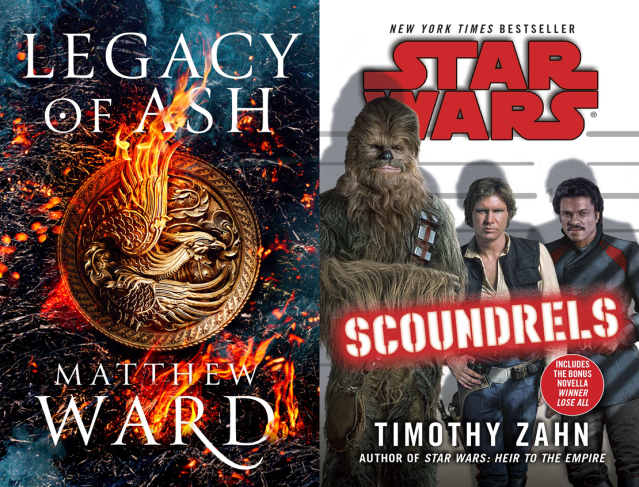
Legacy of Ash, Scoundrels Cover.png
Legacy of Ash by Matthew Ward (Trade Paperback)

I just started reading Legacy of Ash, and so far I am really enjoying this detailed fantasy debut.  As this book is nearly 800 pages long, this might be one I’m stuck on for another week or so, but if I get a bit of free time I don’t think it will take me too long to power through this compelling read.

Star Wars: Scoundrels by Timothy Zahn (Audiobook)

I was in the mood for another exciting Star Wars novel, so I decided to check out this amazing sounding book from one of the best authors of Star Wars extended fiction, Timothy Zahn.  I have really enjoyed Zahn’s recent Thrawn series (made up of Thrawn, Alliances and Treason), and I was curious to see what his work in the Star Wars Legends canon was like.  I am nearly halfway through this audiobook at the moment, and it is a very fun novel, featuring Han, Chewie and Lando as they try to pull of a major heist.

What did you recently finish reading?

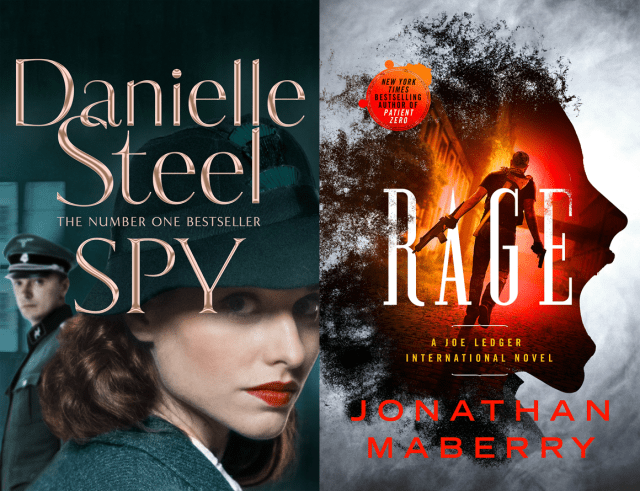
Spy, Rage Cover
Spy by Danielle Steel (Trade Paperback)

A rather good historical drama with some great World War II spy thriller elements to it.

Rage by Jonathan Maberry (Audiobook)

Absolutely loved it, one of my top books of the year.

What do you think you’ll read next?

A Little Hatred by Joe Abercrombie (Audiobook)

A Little Hatred Cover


That’s it for this week, check back in next Wednesday to see what progress I’ve made on my reading and what books I’ll be looking at next.

Spy by Danielle Steel

Spy Cover

Publisher: Macmillan (Trade Paperback – 26 November 2019)

Series: Standalone

Length: 273 pages

My Rating: 4.25 out of 5 stars

Amazon     Book Depository

From the mind of the fourth-bestselling author of all time, drama and romance novelist supreme Danielle Steel, comes an excellent and compelling story about life, war and espionage that is really worth checking out.

Alexandra Wickham is the youngest child of a well-to-do British family living out on their estate in the country. A beautiful and intelligent young lady, Alex appears to be set for a life of privilege and marriage. However, the outbreak of World War II in 1939 allows Alex to throw off the shackles of expectation, and she moves to London, volunteering as a nurse. However, her fluency in French and German attracts the attention of a new government organisation, the Special Operations Executive (SOE), who are desperate to recruit her.

Suffering from personal losses and determined to do her part for her country, Alex joins the SOE and quickly becomes a skilled and valued agent. Trained in various forms of combat, sabotage and espionage, Alex makes several journeys into German territory to obtain valuable information. However, the hardest part of her new life is keeping her work secret from her friends and family, including her worried parents and the brave pilot she falls in love with.

Even after the war ends, Alex finds that she is unable to stop spying. When her husband, Richard, enters into the foreign service, Alex is recruited into MI6 and tasked with obtaining information from the various people she meets socially. As she follows her husband from one volatile end of the world to the next, Alex must reconcile the two separate parts of her life if she is to survive. But who is she? The loving wife and parent or the government agent who can never reveal her secret to those closest to her?

Now, I have to admit that before this year Danielle Steel was not an author that I really went out of my way to read. Steel writes a staggering number of novels each year (seven in 2019 alone), and most of them do not appeal to me (I think a quick perusal of some of the previous books I’ve read will give you a good idea of what my usual literary tastes are like). However, after enjoying Turning Point earlier this year (which I checked out because I do enjoy medical dramas), I decided to try Spy, as I was kind of curious to see how Steel would handle the historical spy genre. What I found was a captivating and enjoyable story which I was really glad I grabbed a copy of.

Spy is a historical fiction novel that follows the life story of the fictional protagonist, Alexandra Wikcham, who serves as the book’s point-of-view character. This was a rather full and exciting story that not only focuses on the main characters career as a secret government agent but also explores her personal life, such as her interactions and relationship with her family, how she fell in love, and how she become a caring wife and mother. Spy’s overall narrative is a fantastic blend of drama, historical fiction, spy thriller and romance novel, which proves to be quite addictive and rather enjoyable. I loved seeing the full progression of the main character’s life, and I found myself getting attached to several of the characters featured within.

This was the first historical fiction by Danielle Steel that I have read, and I have to say that I was impressed with the various periods that were explored. The first half of the book is set during the events of World War II, and Steel does an incredible job of portraying this iconic part of the 20th century. The story is primarily set in England during this part of the war, and the reader gets a real sense of the events that are occurring, the struggles facing normal citizens during the conflict and the various contributions that the English people were making during the war. Spy also explores the damage, both physical and emotional, that the war produced, as the main character experiences great loss and despair throughout the course of the conflict and sees the impact on people that she cares for.

In addition to the great portrayal of World War II, Spy also examines a number of other intriguing historical events, periods and locations. The second part of the book is set over a much longer period of time and follows Alex and her husband, Richard, as they travel the world as English diplomats. These diplomatic assignments place them in a number of different countries during significant periods in history. For example, Alex and Richard end up in India during the end of British rule, when India is split into two countries. Other countries they end up in include Morocco, Hong Kong, America and the Soviet Union. All of these visits are only for a short part of the book, but they offer some intriguing snapshots into the various countries during significant parts of history. These combined historical periods make for a truly captivating and enjoyable novel, and they really work well with the dramatic and espionage aspects of the book, enhancing these other story elements with the cool historical settings.

I really enjoyed the espionage parts of Spy, as Steel has come up with a fascinating underlying thriller plot for this book. The actions of the SOE during World War II have long formed a great basis for historical spy stories over the years, and Steel did a fantastic showcasing how their female agents were recruited, often from organisations such as the First Aid Nursing Yeomanry, trained, and then dropped into Europe for missions. The various missions that the protagonist undergoes in Europe are quite interesting, and range from various reconnaissance missions, to more complex information gathering exercises. The protagonist’s actions after the war are also quite intriguing, as she is recruited by MI6 to spy on the various people her husband comes into contact with as a diplomat, and this results in her getting involved in some major historical events. It was quite fascinating to see with both missions during and post-World War II, the importance of information obtained from gossip or a leading conversation with a beautiful woman, and the impacts such information could have. This espionage part of the book is also the part of the book that I personally found the most thrilling and entertaining, and it was really cool to see all the danger and intrigue that followed this central character.

As Spy is a Danielle Steel novel, there is of course a central romance storyline that dominates the course of the book. At the beginning of the war, Alex meets and falls in love with Richard, a handsome and charming English fighter pilot, and they form a great relationship that lasts over 50 years. This is a really nice and supportive relationship, which is able to overcome some rather substantial obstacles, mainly World War II and Alex’s career as a spy. Not only are the forced to put their relationship on hold during the course of the war, in fear that one of them might die, but Alex is required to keep all of her espionage activities a secret from Richard. Even when they are married, Alex is unable to tell him that she is a MI6 Agent or warn him that she might be putting their lives at risk in foreign countries. All this secrecy weighs heavily on the mind of Alex throughout the course of the book, and it adds a whole new dramatic edge to their relationship. However, I really liked the way it ended, and this was a fantastic and heart-warming romantic storyline that I quite enjoyed.

The latest Danielle Steel novel, Spy, proved to be a really compelling and moving story of life and love during the turbulence of the 20th century. Featuring a gripping story which followed the entire life of a female British espionage agent, Spy was an excellent novel that honestly has something for everyone in it. I was really impressed with this novel, and I am planning to check out more Danielle Steel novels in the future. Her next release, Moral Compass, sounds particularly intriguing, and I have already requested a copy of it.

Amazon     Book Depository

WWW Wednesday – 4 December 2019

WWW Wednesday is a weekly meme hosted by Taking on a World of Words, where bloggers share the books that they’ve recently finished, what they are currently reading and what books they are planning to read next. Essentially you have to answer three questions (the Three Ws):

What are you currently reading?
What did you recently finish reading?
What do you think you’ll read next?

So, let’s get to it.

What are you currently reading?

Spy, Rage Cover.png

Spy
by Danielle Steel (Trade Paperback)

After rather enjoying Turning Point earlier in the year, I thought I might try another Danielle Steel novel, especially if it is a World War II spy thriller.  I only just started this one today, but so far it is really interesting.

Rage by Jonathan Maberry (Audiobook)

This is probably one of my most anticipated books for the end of 2019, and I have been wanting to read it for a while.  I am about two thirds of the way through at the moment, and it is pretty darn epic.

What did you recently finish reading?

Traitors of Rome
by Simon Scarrow (Trade Paperback)

Traitors of Rome Cover
Star Wars: Force Collector by Kevin Shinick (Audiobook)

ForceCollector-Cover
The Light at the Bottom of the World by London Shan (Hardcover)

The Light at the Bottom of the World Cover
What do you think you’ll read next?

Legacy of Ash by Matthew Ward (Trade Paperback)

Legacy of Ash Cover
Legacy of Ash is a fantastic new fantasy release that I am very curious about.  It sounds like a really interesting read, and I look forward to diving into this massive volume.

That’s it for this week, check back in next Wednesday to see what progress I’ve made on my reading and what books I’ll be looking at next.

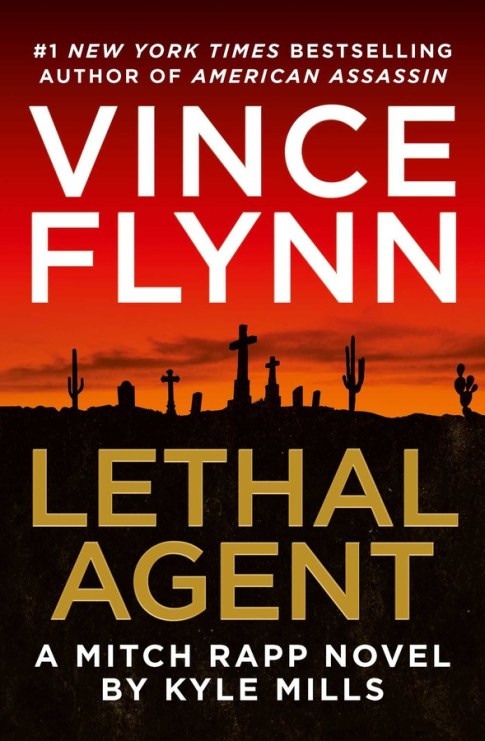
Lethal Agent by Kyle Mills (based on the series by Vince Flynn)

Lethal Agent Cover

Publisher: Simon & Schuster Audio (Audiobook – 24 September 2019)

Series: Mitch Rapp – Book 18

Length: 9 hours and 50 minutes

My Rating: 4.5 out of 5 stars

Amazon     Book Depository

Prepare to dive into a thriller rife with action, political intrigue and a killer plot with the latest book in the long-running Mitch Rapp series, Lethal Agent.

Lethal Agent is the 18th book in the Mitch Rapp series, which started back in 1999 with Transfer of Power. Initially written by Vince Flynn, since 2015 the series has been written by thriller author Kyle Mills following Flynn’s passing in 2013. I started reading the Mitch Rapp series last year, when I picked up a copy of the 17th book in the series, Red War, mainly because it had a really fascinating plot featuring a dying president of Russia going to war with the rest of the world. I ended up really enjoying Red War and I have gone out of my way to check out more military thrillers since then (this year’s Red Metal and Treason for example). In Lethal Agent, Mills takes the series back to its anti-terrorist thriller roots, as the series’ titular character, Mitch Rapp, goes up against a deadly terrorist while also having to navigate the toxic minefield that is modern American politics.

For years, legendary CIA operative Mitch Rapp has been responsible for the deaths of hundreds of America’s enemies, including numerous terrorists, fanatics, criminals and operatives of hostile foreign powers. Among those he believed he killed was the intelligent and dangerous leader of ISIS, Sayid Halabi. However, Halabi secretly managed to escape Rapp’s last attempt to kill him, and has been plotting in the shadows ever since, determined to find a way to strike back at Rapp and America.

Hiding out in Yemen, Halabi is able to capture a brilliant French microbiologist who has been working on a cure for a rare and deadly respiratory disease. Using the microbiologist to make anthrax, Halabi embarks on a campaign of terror, producing slick propaganda videos to create tension and panic within the United States. However, his real plan is to create a deadly bioweapon that will wipe out large swathes of the world’s population.

Rapp is determined to hunt Halabi down and end him once and for all, but he finds himself unable to act thanks to one enemy even he cannot defeat; politics. The upcoming battle for the presidency has become extremely ugly, and the leading candidate, Christine Barnett, is using Amercia’s fear of Halabi to make the current administration and the CIA look incompetent. She also has Rapp and his boss, Irene Kennedy, in her sights, and is determined to make them suffer for defying her. Hamstrung by the political atmosphere and no longer able to make an official move, Rapp is forced to go rogue and infiltrate a dangerous Mexican cartel who have been smuggling Halabi’s anthrax and operatives into the US. However, as Rapp moves closer to finding Halabi’s location and determining the nature of the bioweapon heading towards the states, he must deal with the fallout from Barnett’s political manoeuvring, which could end his life.

This latest book in the Mitch Rapp series is another fantastic and exhilarating read that I had a wonderful time listening to. Lethal Agent contains a thrilling, fast-paced story that goes in some fun directions, such as Rapp’s violent but effective infiltration of a Mexican drug cartel. The author does an excellent job of mixing this compelling story with fast-paced action and some clever and depressingly realistic political intrigue to create an enjoyable read that did a great job of keeping my attention until the very end. While there are some strong connections to a previous novel in this series, Lethal Agent can easily be read as a standalone novel, and I would strongly recommend it to anyone who is looking for an exciting read.

I have to say that I was impressed by Mills’s use of several point-of-view characters to tell the overall narrative of this story. While a large amount of the plot is told from the perspective of protagonist Mitch Rapp, a lot of it is also shown through the eyes of several other characters. Even though the viewpoints of Rapp, Rapp’s allies and some of the minor characters are quite fun or interesting, I personally loved the scenes shown from the perspective of the book’s various antagonists. This includes showcasing the twisted and self-serving political agenda of presidential hopeful Christine Barnett, whose attempts to take the Oval Office through fearmongering and attacks on the country’s intelligence agencies has some interesting impacts on the hunt for Rapp’s terrorist targets. I also enjoyed seeing a few scenes from the perspective of the Cartel boss Rapp is trying to get close to, and there are some great sequences where the usually confident gangster begins to realise how out of his depth he is with an operator like Rapp.

However, I thought that the chapters shown from the perspective of the book’s main antagonist, Sayid Halabi, were some of the best parts of the whole book. Halabi is an enemy of Rapp who was thought to have been killed in Enemy of the State, although the prologue of Lethal Agent shows how he managed to stay alive. Various chapters of this book are shown from Halabi’s point of view as he attempts to find a way to defeat Rapp and America, and they serve as a thrilling counterpart to the protagonist’s subsequent hunt for him. I thought it was fascinating to see the various ways that Halabi was plotting to attack America in these chapters, especially as at times he uses fear and propaganda to scare the country into immobility, rather than launch an actual attack. It was also a little disturbing to see this terrorist mastermind attempt to manipulate America’s political system by deliberately fuelling an incompetent politician’s fear mongering strategy. The use of this split perspective format really helped create a compelling novel, and Mills did a wonderful job coming up with some great antagonists for this book.

While all the espionage and spy thriller aspects of the book are extremely compelling and entertaining, the parts of the book that I found most intriguing were the various sections of political intrigue. Mills does an incredible job imitating the politics of modern-day America in his book and showing off how destructive and noxious the current political system is, especially for those people who want to become president. The focus on a politician being more concerned with their ambitions than the safety of the country, and who is willing to hamper or ignore the concerns of intelligence agencies for their own ends is something that many people can relate to at the moment. The inclusion of fearmongering as a politician’s central political tactic is also something that can be seen in the real world, and I felt that Mills had a really good depiction of it in this book, showcasing how effective it can be, and how it can impact people. While I am sure that readers from both sides of the political spectrum will be able to see politicians they despise in the character of Christine Barnett, I think that Mills was more taking aim at the rot that is infecting the entire political system rather than a particular individual. Palpable weariness seems to come out of the page whenever the book starts to talk about the modern politics in America, and a number of characters are obviously starting to become exhausted with the entire circus. The story also contains a lot of criticism towards the politics that is reducing the effectiveness of America’s intelligence community, and the story examines the potential damage that such politics could have on the country’s safety. All of this makes for an extremely intriguing inclusion into the book, which can be fascinating, aggravating and depressing all at the same time.

As you would expect from a Mitch Rapp thriller novel, Lethal Agent is chock full of enough violence and thrills to keep any action junkie sated. Rapp, a highly feared and skilled killer, tears through a ton of enemies in this book, mostly without receiving a single scratch in return. While the near-invincible action protagonist is a little played out, I did quite enjoy the various ways he showed off his skills and abilities in this book. The sequences where he systematically takes out the cartel forces are really entertaining, and I had a good laugh at a scene where he picks a lock on a cage with the fibula of one of his jailers. There is also a pretty awesome set-piece at the end of the book, which features a mass of vehicular carnage as Rapp tries to stop a terrorist attack. I did think that the sequence when he is forced to knock out coked-up facsimiles of Justin Bieber and Selena Gomez was a little weird. I understand showing two exceedingly influential but dysfunctional celebrities go insane in the same scene where the old-school Rapp reflects on the current state of America, but it was still a somewhat odd inclusion. Overall, though, if you are a fan of action-packed thrillers, then you are going to enjoy Lethal Agent.

While I enjoyed reading a physical version of Red War last year, I chose to listen to Lethal Agent on audiobook instead. This format of Lethal Agent runs for around nine hours and 50 minutes and is narrated by legendary audiobook narrator George Guidall. Despite the fact that Guidall has narrated over a thousand audiobooks in his career, this was actually the first piece of his work that I have experienced. Guidall has a fantastic voice which works very well for a high-stakes thriller novel. He also does a great job capturing the emotion of the various politicians, and there is some appropriate weariness in his voice when he describes the American political situation. If I had one criticism, it would be that most of the characters sounded very similar to each other, and it was a little hard to distinguish one person from the next. Still, I had a lot of fun listening to this book, and thanks to the intense story and short run-time, it only took me a few days to get through this book.

Lethal Agent is an excellent new addition to the Mitch Rapp series, and I loved some of the cool and intriguing directions that the author took the story. Kyle Mills has been doing a sensational job with the series since he took up the mantle of author, and I am really excited to see what sort of story he comes up with next. This is an excellent book and I would strongly recommend it to any fan of the thriller genre.

Amazon     Book Depository

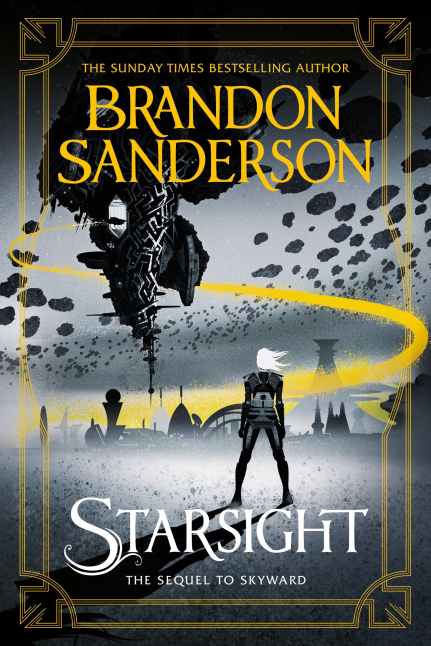
Starsight by Brandon Sanderson

Starsight Cover 2.jpg

Publisher: Gollancz (Trade Paperback – 26 November 2019)

Series: Skyward – Book 2

Length: 461 pages

My Rating: 5 out of 5 stars

Amazon

From one of the best authors of fantasy and science fiction in the world today, Brandon Sanderson, comes Starsight, an outstanding and addictive young adult science fiction read which continues the wildly entertaining adventures of a young starfighter years in the future.

Starsight is the second book in the Skyward series and follows on from the 2018 release of the same name. Skyward was a fantastic young adult science fiction book that told a compelling tale of bravery, determination and camaraderie in humanity’s distant future. Skyward was an amazing read, and it was easily one of my favourite books of 2018. As a result, I have been looking forward to Starsight for a while now, and it was one of my most anticipated releases for the second part of this year.

The Skyward series is set on the planet of Detritus, a desolate world that houses a population of humans in the caverns beneath the surface. The humans on Detritus are the remnants of a once great intergalactic human civilisation that has been destroyed in a war with a superior alien civilisation. Forced into hiding within the planet for hundreds of years, humanity eventually returned to the surface utilising scavenged starfighters to escape and build a military outpost to fight back against the alien ships who continue to harass the planet.

In Skyward, the reader is introduced to Spensa Nightshade, a young woman determined to become a pilot in the Defiant Defence Force (DDF), the military organisation that fights the alien invaders. While talented, Spensa faced opposition to being accepted into the military due to an apparent act of cowardice by her father years before. Despite the odds, Spensa was accepted in the DDF and was trained to become a skilled pilot, fighting in a number of actions against the enemy, while also trying to find out what actually happened to her father. Along the way, Spensa discovered an ancient but advanced human ship that had crash-landed on Detritus. Upon repairing the ship, Spensa discovered it had an AI installed in its computers, which she called M-Bot. After stopping an extremely destructive alien attack with the help of M-Bot, Spensa was compelled to fly through Detritus’s atmosphere, where she made several startling discoveries, the first of which was that Spensa and her family are powerful cytonics, beings with mental powers who are capable of traversing vast distances through space with their ability. The second discovery she made was that the aliens attacking Detritus were not simply mindless aggressors determined to wipe out humanity; instead they are members of an interstellar conglomeration called the Superiority, who are attempting to contain humanity within the planet. The Superiority hold a great fear of humans, who they see as an extremely dangerous and violent species, and Detritus is actually a prison planet/wildlife preserve where humans can live without disrupting the rest of the galaxy. Unfortunately, the actions of the DDF in reclaiming the surface and utilising spaceships have forced the Superiority to reconsider their approach, and they are now working to kill all the humans.

Usually this is the part of the review where I would give a brief plot synopsis of the new book and then go into an analysis of what I liked about it. However, this is going to prove a little hard to do without revealing some spoilers. While I don’t typically avoid talking about plot points that occur around 50-100 pages into book (I don’t particularly consider something happening that early to be a spoiler), I am a little more wary with Starsight. This is mainly because the plot of the book features some immediate substantial changes from the story that appeared in Skyward, none of which are really hinted at in any of the official online plot synopsis or book blurbs. As I am publishing this review a week before Starsight’s official release date, I think it is best that I put up a spoiler alert below, before I start going into the book in any real detail.

For those readers who do not want to risk any spoilers, I will say now that Starsight is an incredible book that I really, really enjoyed. Sanderson tells a wildly entertaining and highly addictive story that features some memorable characters, high-stakes events, some of the best science fiction action I have ever read and a ton of inventive world building. I honestly think that this is one of the best releases of 2019, and it easily gets a full five-star rating from me (if only I could go higher). I would highly recommend this book to anyone interested in an epic science fiction read, and if you loved Skyward, you are going to love this book.

Anyway, if you are not interested in learning any more details about this book’s plot or characters (which I do explore to a substantial degree), I would suggest you stop reading now, as everything below this paragraph has a spoiler alert in effect.

SPOILER ALERT:

Starsight is set a few months after the events of Skyward, and humanity has been busy. Thanks to Spensa and Skyward Flight, as well as the advanced technology contained with M-Bot, the DDF has managed to capture several of the planet’s ancient orbiting defensive platforms, which have allowed them to push the Superiority forces out of Detritus’s obit. However, despite these successes, humanity is still trapped on Detritus, and the eventual Superiority mass retaliation will likely wipe out everyone on the planet. Their only chance at survival is to flee from Detritus and find a new planet to make their home, somewhere the Superiority cannot find them. However, the only way to do this is with some form of hyperdrive, which humanity lacks access to, and Spensa’s cytonic teleportation abilities are too restrictive for mass use.

The crash-landing of an unknown alien spacecraft on Detritus may provide the solution that will ensure humanity’s survival. The pilot of this craft is a member of a non-Superiority species who has been invited for diplomatic reasons to enlist in a new Superiority fighter squadron, and she is able to pass on the cytonic coordinates to the squadron’s base to Spensa. Disguised with M-Bot’s holographic technology, Spensa travels to the Superiority space city, Starsight, in order to infiltrate the Superiority military and find and steal a working hyperdrive.

Joining the new Superiority squadron, Spensa discovers that she and her fellow recruits are being trained to fight the delvers, titanic inter-dimensional beings that dwell in the nowhere, who are capable of devastating planets if they are drawn into our dimension by an over-use of cytonic ability. But as Spensa attempts to complete her mission, she finds herself caught amidst the politics of the various Superiority races, many of whom wish for the complete and utter destruction of her people. Can Spensa navigate the strange new world she finds herself in, or will her actions result in the destruction of all she knows?

As you can see from the above synopsis, Starsight goes in some very interesting and unpredictable directions. I personally loved all of these new story elements, and the idea of Spensa having to infiltrate a mostly unknown alien society was a really clever and intriguing central plot idea that I think worked extremely well. The subsequent narrative is a fantastic blend of different story elements, which includes some great new characters, settings and plot directions, as well as some of the best parts of Skyward. For example, not only do you get to see a whole new take on the excellent space fighter training plot point that made the first book so amazing, but you also get a science fiction spy thriller story filled with all manner of political intrigue. This was a fantastic book to get into, and Sanderson has made sure that the plot is accessible to readers who did not get a chance to check out Skyward last year. However, I would strongly recommend reading Skyward first, not only because it will give you a better idea of the characters and certain plot elements, but because it is such an awesome book in its own right.

One of my favourite things about the first book in the Skyward series was the excellent group of characters that Sanderson focused on, including Spensa, M-Bot and the members of Skyward Flight. Throughout Skyward the reader got to know and care for these characters, and it was actually a little bit distressing when bad things happened to them. Skyward continues to look at several of the characters from the first book, although readers who grew attached to Skyward Flight might be a tad disappointed as Sanderson shifts the focus away from them and introduces the reader to a whole new group of alien characters.

Spensa is still the main point-of-view character for this second book and serves as a fantastic central protagonist. In many ways, Spensa is still the same impatient and reckless pilot that was such to see in the first book. However, it soon becomes obvious that the experiences, relationships and life lessons that she has faced since joining the DDF have tempered her in many ways, especially as she has to deal with the intense responsibility of being her people’s greatest hope for survival. I really enjoyed watching Spensa as she was forced to assimilate into the alien cultures on Starsight, and it was interesting to see how she reacted when she realised not everyone there is as evil as she believed. The opinions and support she gives to her alien friends result in some emotional moments, and it was really heart-warming to see how far she has progressed since the last book.

While Spensa is a great central protagonist, to my mind the best character in the entire book is still her sentient ship, M-Bot. M-Bot is the snarky and hilarious artificial intelligence that Spensa discovered crashed on Detritus, and together they form an efficient and enjoyable team. M-Bot honestly has all the best lines in the book, and nearly every interaction with Spensa results in some excellent jokes or banter. Despite the humour, M-Bot is a pretty complicated character, especially as in this book he is attempting to work out the full limits of his consciousness and code. He is continuously attempting to prove that he is actually alive, and these attempts result in safeguards in his system attempting to shut him down. I really enjoyed the way that Sanderson continues to utilise M-Bot. Even though he is a ship, he is still a fantastic and highly enjoyable character to focus on and we even get a reason for his mushroom obsession in this book.

Spensa’s new flight of Superiority comrades features an eclectic bunch of aliens, each with their own quirks and unique personalities. These include a figment called Vapour, who is essentially a sentient smell that can take control of ships and pilot them. Vapour is the ultimate spy and requires Spensa to be constantly on her toes. There is also the dione draft, Morriumur. Dione are a race of non-violent aliens high up in the Superiority hierarchy, who have a unique breeding system that combines the parents into one new being. This is a process that can take several goes, as the family of the newly bred dione may choose to reform a young dione so that they have an ideal personality. Morriumur is a draft, spending the first few months of their life testing out their personality to see if they are an ideal member of the species. Morriumur, who has slightly more violent tendencies than most of their species, is trying to prove that they belong as a starfighter, but the combined expectations of their family and the inner thoughts that they are not worthy, are a constant hindrance to them as a pilot.

While both of the above characters are pretty cool, and Sanderson spends a good amount of time exploring them, two members of Spensa’s new flight really stood out. The first of these is Brade, a human from another prison world who has been recruited as a cytonic enforcer by one of the book’s central antagonists. Brade, after being taken from her parents as a child, has essentially been brainwashed all her life to consider humans as evil and inferior, and this has a major damaging effect on her psyche. The interactions between her and Spensa throughout the book are quite fascinating, and she proved to be one of the most complex characters in this book. My favourite new character, however, had to be Hesho, who is totally not king of the kitsen. The kitsen are a race of tiny gerbil-like aliens who have recently converted from a monarchy to a democracy in an attempt to become a Superiority race. Hesho leads a group of around 50 kitsen who pilot one heavily armed fighter in Spensa’s squadron like it’s a capital ship. Hesho and the kitsen are really hilarious characters, mainly because Hesho is attempting to convince the Superiority that he is no longer ruling his people as a king, and instead the kitsen have embraced democracy. Unfortunately, despite Hesho insisting he is no longer a monarch in every interaction he has, his people continue to worship him, which kind of undercuts this message. I also found the similarities in the personalities between the kitsen and the Spensa we first encountered in Skyward to be very amusing, as the kitsen attempt to compensate for their size with extreme confidence and boasting like Spensa used to (for example, the first ship we see the kitsen flying is called Big Enough to Kill You).

All of the above characters are great, and I really loved the way that I was once again drawn into their various personalities and histories. It was a bit of a shame not to see too much of the characters I liked so much from the first book (although we do get an idea of what various members of Skyward Flight are up to), but I think the new characters that Sanderson introduced more than made up for it.

In addition to the fantastic character work, one of the other best features of Starsight is the epic and fast-paced action sequences that punctuate much of the book. Just like in Skyward, Sanderson presents a huge number of different scenes where Spensa is fighting or training in a fighter. The sheer amount of detail that goes into these various action sequences is pretty amazing, and I was able to picture all the flying and manoeuvres perfectly. The author comes up with a number of clever new scenarios in this book, including the fancy flying and combat required to fight a delver, or having Spensa fly in the type of craft she has been fighting against for her entire military career. All of the action in this book is first-rate, and I can guarantee that you will get lost in some of the incredible action sequences.

I have always been impressed by the elaborate worlds that Sanderson can create for his stories. Whether it is the vast fantasy world that he came up with for The Stormlight Archive, the supervillain dominated alternate version of Earth that appeared in The Reckoners trilogy, or the fantastic science fiction planet of Detritus that was the main setting for Skyward, Sanderson always delivers complex and intricate settings for his story, complete with huge amounts of backstory. In Starsight, Sanderson once again produces a huge and detailed new setting for his outstanding story. The alien civilisation that is living on Starsight is very impressive, and I love all the different alien races that he has come up with for this story. Many of the aliens have some very complex and fascinating history, a great deal of which featured in the story. I really look forward to seeing how Sanderson expands this universe even further in the final book in the trilogy, and I cannot wait to see what new aliens or civilisations he comes up with.

As you can see from this rather lengthy review, there is a lot to love about this book. Sanderson does an impressive job of combining the intriguing new story direction, the amazing characters, intense action and fascinating new setting into one concise narrative, and the end result is a perfect book. While Starsight is being marketed as a young adult book, and indeed it would prove appropriate for most young readers, it is really a novel that can be enjoyed by any reader of any age. I cannot recommend this book enough, and I am eagerly awaiting the next book in this series (which seems to be 2021 at this point, so far away!).

Amazon

Book Haul – 5 November 2019

In the last couple of weeks I have been lucky enough to receive copies of several amazing new releases, and figured it was time for another Book Haul post.  This Book Haul features a range of really interesting and diverse books, all of which I am very excited for.

Star Wars: Resistance Reborn by Rebecca Roanhorse

Resistance Reborn Cover 2.jpg

Let us start this post off with the book I was probably most eager to receive, Star Wars: Resistance RebornResistance Reborn is set to be the main tie-in novel to the upcoming The Rise of Skywalker movie, and I have already featured this book in a Waiting on Wednesday post and my Top Ten Most Anticipated Releases for July-December 2019 list.  Needless to say after receiving it last week, I have already read it, and will hopefully get a review up in the next few days.

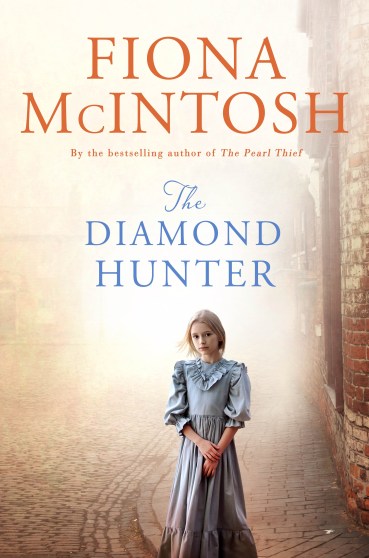
The Diamond Hunter by Fiona McIntosh

The Diamond Hunter Cover

Another book that I received recently and have already read.  The Diamond Hunter was a really good historical drama written by Australian author Fiona McIntosh.  A short review of this book is going to run in the Canberra Weekly in a couple of days, and I am hoping to get a longer review done up as well.  In the meantime, make sure to check out my review of McIntosh’s last book, The Pearl Thief.

The Wailing Woman by Maria Lewis

The Wailing Woman Cover.jpg

This is a really intriguing piece of urban fantasy about banshees from Australian author Maria Lewis.  I am actually in the process of reading this book at the moment, and so far it is pretty good.

The Magnolia Sword by Sherry Thomas

The Magnolia Sword Cover.jpg

This is an interesting sounding retelling of the classic tale of Mulan.  I have heard some promising things about this book from other reviewers and I am looking forward to checking it out.

A Murder at Malabar Hill by Sujata Massey

A Murder at Malabar Hill Cover.jpg

This is an interesting sounding book that is set to be released next year.  I really like the sound of a murder mystery set in 1920’s Bombay, and it should prove to be a fantastic read.

Spy by Danielle Steel

Spy Cover.png

Now, I have to admit that Danielle Steel is not usually the sort of author I would read.  However, this sounds like quite a compelling historical thriller, and I did rather like one of Steel’s other 2019 releases, Turning Point, so I think I will check this book out.

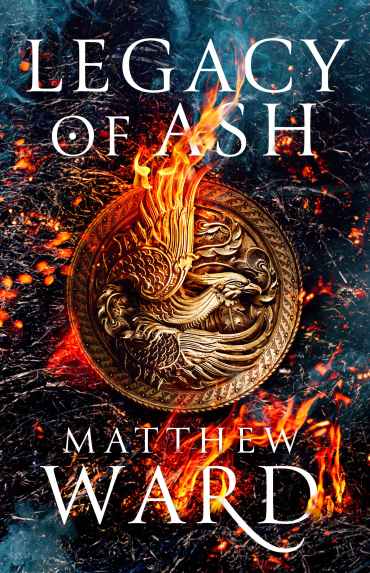
Legacy of Ash by Matthew Ward

Legacy of Ash Cover

The final book on this post is an exciting and massive fantasy debut I just received today.  I have actually had my eye on this book for a little while now, and this book is quite high on my reading list at the moment.

I am very happy with the above books, and I am extremely confident that I am going to enjoy all of them.  Let me know which of these books interests you the most.

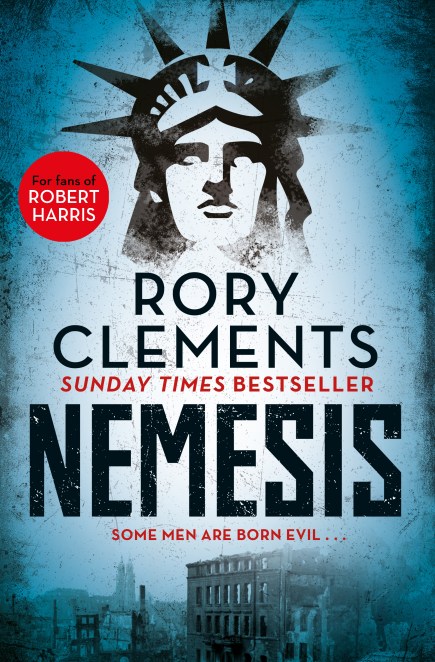
Nemesis by Rory Clements

Nemesis Cover.jpg

Publisher: Zaffre (Trade Paperback Format – Australia – 3 March 2019)

Series: Tom Wilde – Book 3

Length: 317 pages

My Rating: 4 out of 5 stars

Amazon     Book Depository

Historical thriller and murder mystery author Rory Clements returns with the third book in his electrifying and clever Tom Wilde series, Nemesis.

August 1939.  War is on the horizon, and while most of the world is preparing for the next great conflict, Cambridge Professor Tom Wilde is enjoying a holiday in France with his partner, Lydia.  That is, until a mysterious man alerts him to the fact that one of his former students, an idealistic young man by the name Marcus Marfield, is currently being held in an internment camp on the France-Spain border after his involvement in the Spanish Civil War.  When Wilde finds Marfield at the camp he moves quickly to secure his release, and they flee the country just as the Germans begin their invasion of Poland.

Back in England, the country moves to a war footing, as the Allies attempt to persuade America to join them against the Nazis.  While many Americans oppose joining the war, the sinking of the passenger ship the SS Athenia may be the spark that brings them into the war.  With the Nazis attempting to convince the world that Churchill orchestrated the sinking of the Athenia to galvanise American support against Germany, Wilde and his companions return to Cambridge.

Once back in the city, Wilde begins to notice a change come over Marfield.  At first attributing it to his shell shock following his battles in Spain, a series of mysterious deaths around Cambridge all seem to link to the recently returned Marfield.  These events are tied to a deadly conspiracy to keep America out of the war for good.  A spy ring is active in Cambridge, and Wilde must find a way to uncover it before it is too late.  Can Wilde once again avert disaster, and what role does Marfield play in this conspiracy?

After the excellent first two books in his Tom Wilde series, Corpus and Nucleus, Clements continues the adventure of his series’ titular character, Tom Wilde, as he investigates a series of Nazi espionage activities around Cambridge in the lead-up to World War II.  I have quite enjoyed this series in the past and was looking forward to continuing the story in Nemesis.  The latest book is a thrilling story that takes place just at the outset of the war and utilises the several historical events and figures to turn this into quite an intriguing tale.

Nemesis is a really good historical thriller which combines a great spy story with the historical context of early World War II.  The previous books in the Tom Wilde series have all contained compelling and complex mysteries with huge implications for England and the allies, and Nemesis is no different.  Clements has crafted together an excellent mystery that has massive, worldwide implications, and I really enjoyed unravelling the mystery, especially as the author presents all sorts of doublecrosses, twists, cover-ups and mysterious deaths to confuse the reader away from the main goal of the antagonists.  The antagonists’ master plan is quite out there, and it is one of those plots that would have had massive historical implications.  I quite like the role that new character Marcus Marfield played in this plot, as the protagonists and the reader are constantly trying to work out what his secrets are and what kind of person he truly is.  Overall, I found the thriller and mystery elements of this book to be quite clever and captivating, and readers will enjoy uncovering the full extent of the antagonist’s overall plot.

One of the most interesting parts of the Tom Wilde series so far was its setting during the chaotic pre-World War II period.  In Nemesis, Clements sets his story right at the start of the war and immediately shows all the panic and preparation that followed this declaration of war.  Clements did a fantastic job portraying the low-key sense of dread and paranoia that the inhabitants of England would have felt in the build-up to the war in the previous books in the series, and in Nemesis these feelings are realistically amplified now that the war has begun.  The author has quite a good grasp on a number of historical events and feelings during this period, and I quite liked seeing the Cambridge viewpoint of the war.  The Cambridge setting has always been a fantastic highlight of this series, but it was quite intriguing to see the author incorporate all the various changes to the city that occurred as a result of the war into his novel.  Clements dives deep into the Cambridge lifestyle when it comes to the war, whether it involves the removal of the rare books from the colleges, the preservation of the stained glass windows, the roles that the professors were being assigned in the war effort or even the many Communist professors throwing away their party membership cards when it became clear that the Soviets were supporting the Nazis.

Clements also ties his story in quite closely with one of the more interesting early events of World War II: the sinking of the passenger liner the SS Athenia as it sailed across the Atlantic.  I was deeply fascinated not only with the depictions of this event, but the discussions and conspiracy theories that resulted from it.  This was especially true when it came to the examination about the sinking of the ship being used to bring the United States into the war.  The likelihood of America joining in the war became a major part of the story, and it was interesting to see what the European characters thought about America’s reluctance to enter the war, especially as one of the protagonists is an American character, and one of the chief architects of America’s isolationist policy, Joe Kennedy, was the United States Ambassador to England at the time.  I thought that the historical elements that Clements explored were a real highlight of this book, and readers will enjoy his literary examination of these events.

While the main focus of the book’s story is a conspiracy and the start of the war, Clements does take his time to continue to develop a number of the characters introduced in the previous books.  For example, Wilde continues to deepen his relationship with his romantic partner, Lydia, and I quite liked the role that Lydia played in investigating the case alongside Wilde.  There is also a significant focus on Wilde’s American friend Jim Vanderberg and his family, especially as Vanderberg’s family are passengers aboard the Athenia.  Phillip Eaton, the British spy who was hit by a car in the last book of the series makes a return in Nemesis, and the reader gets to see his struggles to recover from his horrific injuries while still working as an intelligence officer.  A number of intriguing new characters are introduced in this book and it will be interesting to see what role they and the existing characters will play in any future entries in this series.

In the latest book of his enjoyable Tom Wilde series, Nemesis, Rory Clements once again delivers a captivating historical thriller that brings the reader into the early days of World War II.  Featuring an incredible overarching mystery and some detailed examinations of intriguing historical events and settings, Nemesis is a deeply interesting book that is well worth checking out.  I am very curious to see where Clements takes the series next, and I look forward to seeing what impact Thomas Wilde will have on the rest of World War II.

Amazon     Book Depository