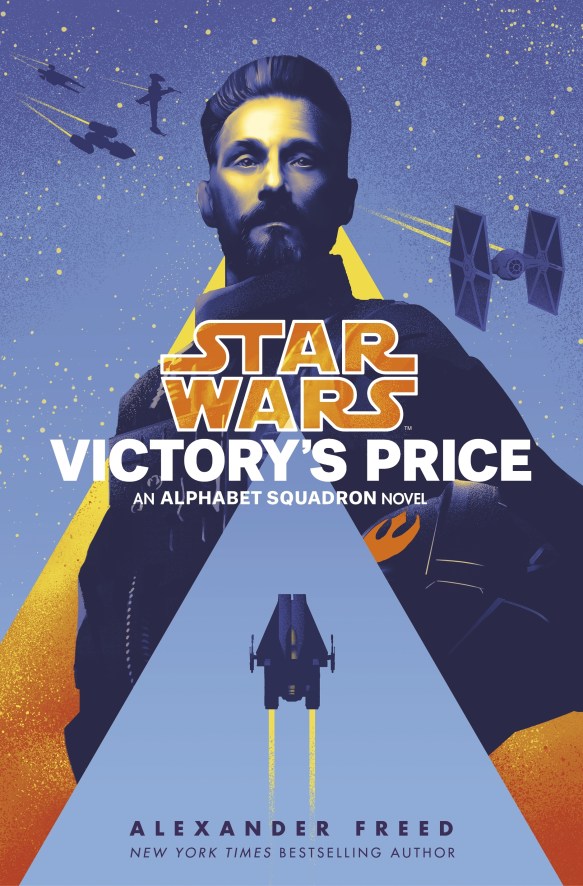
Star Wars: Victory’s Price by Alexander Freed

Star Wars - Victory's Price Cover

Publisher: Random House Audio (Audiobook – 2 March 2021)

Series: Star Wars: Alphabet Squadron – Book Three

Length: 16 hours and 19 minutes

My Rating: 5 out of 5 stars

Amazon

One of the best Star Wars tie-in series comes to an epic and impressive end, as Alexander Freed presents Star Wars: Victory’s Price, the amazing third and final entry in the awesome Alphabet Squadron trilogy.

Since its inception in 2014, the current Star Wars extended universe has featured an amazing range of novels that tie into the various movies and television series.  One of the best has been the Alphabet Squadron trilogy from acclaimed author Alexander Freed.  Alphabet Squadron is a particularly compelling trilogy that follows a fantastic group of mismatched Rebel and Imperial pilots who continue to fight in the aftermath of Return of the Jedi.  This series has so far featured two excellent entries: the great introductory novel Alphabet Squadron, and the outstanding second entry, Shadow Fall, both of which I have deeply enjoyed.  As a result, I have been looking forward to seeing how the series ends and I think that Freed has left the best to last with this epic and powerful read.

The Emperor and Darth Vader may be dead, and the second Death Star destroyed, but the war is far from over.  Nearly a year after the battle of Endor, conflict still reigns in the galaxy between the forces of the New Republic and the remnants of the Empire.  In nearly every battlefield, the Empire’s forces are in retreat and disarray, apart from the notorious pilots of the 204th Imperial Fighter Wing, better known as Shadow Wing.  Led by the dangerous Imperial TIE Fighter ace, Colonel Soran Keize, Shadow Wing continue to bring death and destruction to the Empire’s enemies, slipping away when their vile deeds are done.

However, despite their skills and strategies, Shadow Wing is in constant danger as New Republic forces, under the command of General Hera Syndulla, are pursuing them.  Syndulla is determined to end the threat of Shadow Wing utilising the ragtag pilots of the unique unit known as Alphabet Squadron, each of whom has a score to settle with Shadow Wing, to lead the fight against them.  However, the members of Alphabet Squadron, Wyl Lark, Chass na Chadic, Nath Tensent and Kairos, are still recovering from their last traumatic encounter with Shadow Wing on Cerberon, as well as the revelation that their former leader, Yrica Quell, was an active participant of Operation Cinder, the Emperor’s genocidal last order to destroy multiple disloyal planets.

As Hera and Alphabet Squadron attempt to find their prey, they begin to discover just how dangerous the cornered Shadow Wing has become, as their opponents begin to enact a new version of Operation Cinder.  Worse, Alphabet Squadron are shocked to discover that Yrica Quell is still alive and has re-joined her old comrades in Shadow Wing.  As the two forces engage in battle again, the loyalties of Alphabet Squadron will be tested like never before while Quell attempts to determine just whose side she is truly on.  The conflict will finally end above the skies of Jakku, as the Imperial and New Republic fleets engage in their final battle.  Can Alphabet Squadron finally put an end to the evils of Shadow Wing, or will Soran Keize’s master plan change the entire galaxy forever?

Now this is what all pieces of Star Wars fiction should be like.  Victory’s Price is an exceptional and impressive novel that had me hooked from the very beginning.  Not only does Freed do an amazing job of wrapping up the Alphabet Squadron trilogy but he also provides the reader with fantastic action sequences and some outstanding characters.  This is easily one of the best Star Wars novels I have read in ages and it gets a full five-star rating from me.

For this final book, Freed has come up with a powerful story set within the iconic Star Wars universe.  Starting right after the events of Shadow Fall, Victory’s Price sees the members of Alphabet Squadron separated and traumatised as their protracted and personal conflict with Shadow Wing begins.  This leads into a series of exciting encounters and battles in space as Alphabet Squadron pursues Shadow Wing during their latest mission, while the leader of Shadow Wing hatches a plan to end the war on his terms.  At the same time, each of the characters attempts to deal with issues or distress raised in the previous novels, whether it be Quell’s conflicted loyalties or Chass’s post-fight trauma.  All of this leads to some epic and impressive final confrontations as the two sides meet for the very last time.  This was an extremely good character-driven read, and I loved the very cool way that Freed finished off this amazing series.

While it is an amazing Star Wars novel, Freed focuses more on the war part of the book, turning this into a gritty story of survival, loyalty and conflict, which makes for a powerful piece of fiction.  While obviously best enjoyed by those readers familiar with the rest of the series, Victory’s Price is a very accessible novel which new readers can follow without any trouble.  Thanks to the awesome use of multiple character perspectives, Victory’s Price has an excellent flow to it, and the readers are supplied with clever twists, cool action sequences and impressive character moments as the protagonists come to terms with their place in the universe and the constant fighting.  This ended up being quite an intense tale of war and life, which not only perfectly wrapped up the Alphabet Squadron series but which also had me engrossed from the very minute I started reading it.

One of the major things that I liked about this book was the way in which it added to the Star Wars expanded universe.  This series has always done a cool job of exploring what happened after Return of the Jedi, and it is always interesting and somewhat more realistic to see that the war did not end as soon as the Emperor died.  However Freed has painted this period as a particularly dark and deadly part of the war, and I love seeing how he envisioned what happened to members of the New Republic and Empire after Endor.  Victory’s Price focuses on the very end of the civil war, showing another side of the events that lead up to the battle of Jakku and fitting its original characters into this conflict.  This is a cool part of the book, and I loved seeing another version of the epic battle of Jakku, a major conflict that has been featured in several other novels and pieces of fiction.  Freed also takes the time to explore and answer several other intriguing questions, such as the mystery behind the Emperor’s messengers, the creepy red-clad droids who project holograms of the Emperor’s face, which sought out various Imperial commanders after Endor and ordered the various genocides of Operation Cinder.  The solution surrounding the messengers ends up being rather intriguing, and there are even some clever parallels to World War II in there.  Due to the intriguing elements of Star Wars lore featured within, Victory’s Price, like the rest of the Alphabet Squadron series, will probably be enjoyed most by major fans of the franchise, but there are a lot of compelling elements that readers of all knowledge bases will appreciate.  This was truly an exceptional piece of Star Wars fiction and I cannot wait to see what Freed adds to the canon next time.

I really must highlight the outstanding action scenes that Freed came up with for this book.  I am a man who likes his Star War’s action, and I have to say that Victory’s Price has some of the best sequences that I have ever had the pleasure of enjoying.  Due to the novel’s focus on fighter pilots, there are naturally a huge number of amazing combat scenes as the rival pilots engage in complex battles in space.  Freed has saved the best for last in this final Alphabet Squadron novel, as the opposing pilots find themselves fighting in a range of unique situations.  The battle scenes are extremely well crafted, filled with elaborate details and fantastic depictions of complex manoeuvres and clever tactics that are guaranteed to keep you on the edge of your seat with their intense action.  They are also quite emotionally rich, as you witness your favourite characters constantly face near-death experiences in this final entry in the series.  Highlights of these great battle sequences included two fantastic duels between the protagonists and the leader of Shadow Wing, which sees some fancy flying between some of the most skilled pilots in the series in some very distinctive landscapes.  I also really loved the final, elaborate battle set above Jakku, which proved to be a major part of the second half of the book.  Not only do you get the desperate and packed main conflict between the entire New Republic and Imperial fleets, which features destruction and death in every direction, but you also get a more private and quiet final battle between a group of Alphabet Squadron led New Republic fighters and Shadow Wing.  This smaller pitched battle between the two sides fits perfectly into the midst of the wider conflict and is filled with personal turmoil and antagonism as these two rival squadrons meet for a final time.  All these battles come out as being extremely epic and powerful, and I loved every second of the gritty and deadly fights they contained.

While I have a lot of love for Victory’s Price’s epic story, intense action, and clever Star Wars connections, easily the best thing about this book are the complex and well-written characters.  Each of the major characters featured in Victory’s Price have been introduced in the previous Alphabet Squadron novels with some complex and powerful storylines.  In Victory’s Price, all these great arcs reach a climax as the characters meet their final destiny and their stories comes to an end.  I really enjoyed the satisfying conclusions that Freed came up with for his outstanding characters, although in many ways it was sad to see their stories finish.  Still, I really appreciated all the great character arcs contained in this final novel, and Freed ensures they go through the emotional wringer before they go.

At the forefront of these outstanding characters are the five members of Alphabet Squadron who have served as the focal point for the entire series.  The pilots in Alphabet Squadron, so named for their use of a different Rebel Alliance fighter (A-Wing, X-Wing, B-Wing, U-Wing and Y-Wing), are layered and complex individuals, each of whom has experienced their own trauma or betrayal throughout the course of the lengthy war.  All five of these original characters have gone through significant development throughout the course of the previous two novels, and Freed does an exceptional job continuing their journeys in this final book.

The main protagonist of this series is Yrica Quell, a former member of Shadow Wing, who joined Alphabet Squadron in the first novel to help neutralise her former Imperial comrades.  However, it was eventually revealed that Quell, despite claiming she defected from the Empire after refusing to participate in Operation Cinder, aided in the destruction of a planet.  This revelation caused a massive rift in her relationship with the rest of Alphabet Squadron, and she ended up reuniting with Shadow Wing at the end of the second novel.  In this final book, it is revealed that Quell has infiltrated Shadow Wing to bring them down from the inside.  However, upon spending time with her Imperial comrades, she begins to experience doubts about her plan, especially as she sees that the Imperials are just as damaged by the war as she and the New Republic pilots are.  Her plans are further complicated due to her relationship with the leader of Shadow Wing, Soran Keize, her former mentor and the person who initially convinced her to defect to the New Republic.  Quell still has an immense amount of respect for Keize, and strongly believes in several of his plans.  This re-remembered loyalty to Shadow Wing strongly conflicts with her friendships with Alphabet Squadron and the guilt she feels for her role in Operation Cinder, placing Quell in a major quandary for most of the book.  This uncertainty and inner conflict is a really clever part of Quell’s story, and the reader is deeply impacted by her struggle and conflicted loyalties.  This was easily one of the best and most powerful character arcs in Victory’s Price and I really appreciated the outstanding character story that Freed set around Quell.

Victory’s Price also spends a significant amount of time following Quell’s fellow Alphabet Squadron members, Wyl Lark and Chass na Chadic, both of whom have compelling arcs that highlight different aspects of warring soldiers.  Wyl Lark is the young, optimistic member of the squadron who took over leadership at the end of the second novel.  Lark has developed a significant amount throughout the course of this series, and it is great to see him come into his own as a leader and pilot.  However, despite his apparent ease at the role, Lark is plagued by doubts and concerns about the morality of this fight, especially as it conflicts with some of the teachings of his race.  He spends a great deal of this final book coming to terms with his morals, and even attempts to once again contact the members of Shadow Wing to try and find some common ground or a way to end the conflict.  His actions go a long way to humanising the antagonists of the novel and his hope is a refreshing beacon of light in this darker Star Wars book.  I deeply enjoyed seeing the way in which Lark attempts to change the outcome of the war his way, and it was a fascinating addition to the story.

Chass, on the other hand, is easily the most damaged character in the entire series.  A music-loving veteran pilot who is more afraid of the end of the war and her inevitable slide into irrelevance and despair than her own death, Chass has always been on edge throughout the series.  However, in Victory’s Price, Chass is even more traumatised, especially after learning of the betrayal of her love interest, Quell (which is an intriguing LGBT+ relationship for a Star Wars novel) and has since turned to the teachings of a cult to gain some clarity.  Despite this, Chass is still driven by her anger and her rage and is constantly lashing out at everyone around her, with her death wish a constant anchor around her neck.  Freed has written a complex and moving story around Chass and her suffering, and I deeply appreciate the portrayal of her as a troubled veteran.  I think that Chass’s story comes to a fantastic end in this final novel, especially as she gets closure with several important people in her life.  Both characters are incredibly well written and are fantastic examples of Freed’s exceptional writing ability.

Next up are the final two Alphabet Squadron pilots, Nath Tensent and Kairos.  While both characters have been somewhat overshadowed throughout the series, Freed has developed some intriguing storylines around them which come full circle perfectly in this final novel.  Nath Tensent, a pilot who served both the Empire and the Rebels during the war, has an enjoyable and likeable personality and is the sort of guy who quickly becomes everyone’s best friend.  However, despite the easygoing façade he projects to the world, even Nath is feeling the effects of the war and the constant worry and responsibility is getting to him.  This is particularly exacerbated in Victory’s Price when he becomes a decorated military hero with greater responsibilities and is forced to balance his own selfish goals with the lives of people who look up to him, as well as his very strong concerns for Wyl Lark.  This results in a particularly clever and enjoyable arc, and it was great to see him finally take some responsibility in this war.  I liked the way in which Freed ended Nath’s storyline, especially as it potentially opens another series in the future.

The final member of the squadron is the mysterious Kairos, an alien of unknown origin with a strong hatred for the Empire and terrifying combat skills.  Despite her intriguing introduction in Alphabet Squadron, Kairos was somewhat left out of the second book after receiving an injury.  However, this is more than rectified in Victory’s Price, as Kairos is featured more prominently and we finally get to see some of her backstory.  Freed comes up with quite the intriguing, if tragic, story for Kairos, and it was fascinating to see her unique alien beliefs and culture, as well as a powerful story of renewal and redemption that accompanies her.  Kairos becomes quite close to two characters in this book, especially after the closest people in her life died in the previous novel, and it was great to see her finally connect, even if only for a short while.  Freed did a fantastic job setting up Kairos’ story in the previous two novels, and I personally loved finally getting some answers regarding this curious character’s identity.

Aside from the members of Alphabet Squadron, several other characters are also shown in great prominence throughout this book.  The one I liked the most was Hera Syndulla, the New Republic general commanding Alphabet Squadron.  Hera is one of the few characters in this novel who Freed did not come up with, as Hera originated in the Star Wars: Rebels animated series and serves as a bridging character to the larger franchise.  Due to how much I love Star Wars: Rebels, I have really enjoyed seeing more of Hera in this series, not only because I am very curious about her post-Rebels life but because she also serves as a great mentor character to the members of Alphabet Squadron.  Hera features a lot more prominently in this final novel and her perspectives are shown nearly as much as the members of Alphabet Squadron.  This extra perspective really added a lot to the story as a whole and I personally really enjoyed seeing Hera take charge and attempt to hunt down Shadow Wing, while also attempting to determine the course of the entire war.  I also really enjoyed the fact that this book shows Hera’s role in the battle of Jakku, which as the largest space battle in the entire civil war, you had to assume she would be a part of.  Hera is naturally a bit of a badass in this battle, as you would expect, and I appreciated that Freed featured more of her in this novel.

The other major character featured within Victory’s Price is Colonel Soran Keize.  Keize is a fantastically complex character who serves as the leader of Shadow Wing and Quell’s Imperial mentor.  Despite nominally being the antagonist of this book, Keize is portrayed as a more of a tragic and misunderstood figure, one who is sick of war and who only has the best concerns of his men at heart.  As a result, Keize is running his own game throughout Victory’s Price and works to get the best result for the members of Shadow Wing.  His convictions, sense of honour and understandable motivations make him a hard character to dislike, and his role in mentoring Quell ensures that she is extremely conflicted when it comes to betraying him.  Keize is also probably the best pilot in this entire series, as he is regarded as the Empire’s ace of aces, and Victory’s Price is where you get to see him soar as he engages in several great battles and duels.  Thanks to this, and his curious character development, Keize is a great character to follow, and I really enjoyed the unique tale Freed told through him.

Freed also focuses on some of the other pilots on both the New Republic and Imperial sides.  This results in a great combination of complex side or minor characters, each of whom have their own reasons for fighting in the war.  Freed attempts to show that, despite fighting on different sides of the war, these characters really are not that different.  Instead, all of them are soldiers, with several similarities, including their own trauma, PTSD and issues with the war that they are fighting in.  I think it is a testament to Freed’s writing ability that he was able to get me to care about members of the Imperial navy, and it was pretty spectacular the way in which he attempted to show the humanity buried deep within them.  It does mean that the action sequences more emotionally loaded and potentially devastating as you end up not wanting to see some of the pilots dying, but I really appreciated the way in which Freed took the time to explore these compelling side characters.

While I have previously enjoyed the first two Alphabet Squadron novels in their paperback format, circumstances required me to check out Victory’s Price as an audiobook instead, which was pretty damn awesome.  Not only did Victory’s Price feature the usual blend of iconic sound effects and music that makes all Star Wars audiobooks such a treat to enjoy, but I found that the story flowed incredibly well in this format.  With a lengthy runtime of 16 hours and 19 minutes, I absolutely blasted through this book as I became so engrossed in the awesome story and the way in which it was performed as an audiobook.  I also thought that the use of the iconic Star Wars music in the Victory’s Price was particularly impressive, and not only did the music make several of the extended space battle sequences even more epic, but they also really highlighted some of the most emotional scenes in the book and made them strike my soul even more emphatically.  I also really enjoyed the amazing narration from January LaVoy, who has previously provided her voice to the other Alphabet Squadron books.  LaVoy is a particularly skilled narrator whose work on the Star Trek: Discovery tie-in novel, Die Standing, I really enjoyed.  Not only does LaVoy present the awesome details of Victory’s Price in a quick and exciting manner, making each of the action scenes sound particularly cool, but she also provides some great voices for the various characters.  Each of the main characters gets a unique voice which fits them perfectly and which really helps the listener get to grips with their personalities and inner thoughts.  While all of the character’s voices were done extremely well, the best voice that LaVoy did was probably Hera Syndulla’s, which sounded extremely close to the character’s voice in the Star Wars Rebels animated series.  All of this helps to make Victory’s Price’s audiobook an immensely enjoyable experience and I would highly recommend this format to anyone and everyone.

Star Wars: Victory’s Price is an exceptional and powerful novel from Alexander Freed that is one of the best books I have so far read in 2021.  Featuring a dark and gritty war story set during a fascinating period of Star Wars history, Victory’s Price perfectly wraps up the impressive Alphabet Squadron trilogy while also providing some cathartic conclusions to outstanding character arcs that Freed has built up during the previous book.  I absolutely loved this final novel (hence the massive review), and I think that this was probably the best entry in the entire series.  A highly recommended read, especially if you have already enjoyed the rest of the trilogy, this was a truly epic Star Wars novel.

Amazon

Star Wars: The High Republic: Light of the Jedi by Charles Soule

Star Wars - Light of the Jedi Cover

Publisher: Random House Audio (Audiobook – 5 January 2021)

Series: Star Wars – The High Republic

Length: 13 hours and 35 minutes

My Rating: 4.5 out 5 stars

Amazon

Boldly venture into a bright new era of the Star Wars universe as acclaimed science fiction author Charles Soule introduces the first entry in the High Republic multimedia publishing project, Light of the Jedi.

We are all the Republic!

Two hundred years before the events of The Phantom Menace and the Skywalker Saga, the Republic was at its absolute height in influence, technology and culture, in a period of time known as the High Republic.  With the glorious Jedi Order leading the charge, nothing seems capable of slowing down the inevitable expansion of the Republic, especially with the creation of the Starlight Beacon, a vast space station designed to bring Republic influence to the darkest corners of the Outer Rim.

However, all it takes is one event to threaten everything.  In the depths of hyperspace, tragedy strikes when the transport ship Legacy Run, taking settlers to the Outer Rim, encounters something while travelling at light speed and is torn apart.  Shortly after, in the agricultural system of Hetzal, chunks of the ship emerge from hyperspace at incredible speeds and begin to rain down across the systems, planets and moons in an extinction-level event.  Disaster is only partially averted by the arrival of the Jedi, who work tirelessly and valiantly in an effort to save as many lives as possible.

As more pieces of debris begin to strike other systems within the Republic and the Chancellor initiates a hyperspace blockade, the Jedi are tasked with determining the origin of the crashed ship before more tragedies can occur.  As the Jedi, led by Master Avar Kriss, begin to investigate, they quickly determine that a mysterious new party has taken a twisted interest in the disaster, the Nihil.   The Nihil are a group of ruthless and chaotic raiders with dark secrets and a sinister origin, who appear out of nowhere and take what they want.  Armed with unique technology and abilities, the Nihil are about to engage in a deadly campaign against the Republic and the Jedi which the galaxy may never recover from.

I think it is fair to say that the High Republic is off to a smashing start with this exciting and captivating novel.  The High Republic is an intriguing new publishing campaign that aims to present a bold new era of Star Wars tie-in fiction.  Set around 200 years before the events of the earliest Star Wars film, the High Republic will consist of a series of connected novels, including adult, young adult and young reader books, as well as several comics, manga and audiobooks, all set in the same period of Star Wars history, with a whole new range of different characters and storylines.  The High Republic project has been in the works for some time, with several of the best Star Wars tie-in fiction authors banding together to come up with the overarching story and universe.  These various storylines are likely going to lead into some form of movie of television series in the future, especially after the success of shows like The Mandalorian, representing a whole new creative frontier for these amazing authors.

The subject of this review is Light of the Jedi, the first book in the High Republic range, which introduces readers to this fascinating time period in the Star Wars universe.  This essential introductory novel was written by the extremely talented Charles Soule, who is one of the main creative voices of this project.  Soule is a fantastic author who, in addition to writing several cool science fiction novels, is probably best known for his work in the comic book world, having authored a number of major series, such as Thunderbolts vol. 2, She-Hulk vol. 3, Death of Wolverine, and Daredevil vol. 5, just to name a few.  I personally know Soule best from his various Star Wars comics, including the very cool Poe Dameron series, The Rise of Kylo Ren miniseries and his current run on the main Star Wars series (I really need to review the first volume of that).  My favourite of Soule’s Star Wars comics is the exceptional Darth Vader: Dark Lord of the Sith series, which followed Darth Vader in the immediate aftermath of his turn to the dark side.  This was a deeply impressive series (check out my reviews for Volume 2: Legacy’s End and Volume 3: The Burning Seas, the latter of which was one of my favourite releases of 2018), with some captivating and clever storylines, and it easily one of my favourite Star Wars comics of all time.  As a result, I have been eagerly awaiting this impressive author’s first Star Wars novel, and Light of the Jedi did not disappoint as Soule created a fantastic and epic tale that I really enjoyed.

At the heart of this great novel is an exciting and compelling narrative that takes the reader on a wild adventure into the depths of Star Wars space and beyond.  Soule presents a brilliant multifaceted tale in Light of the Jedi, told from the perspective of a huge number of different characters, each of whom add some fantastic perspectives to the wider narrative.  This novel has an amazing start, with the first third of Light of the Jedi showing the cataclysmic event that rocks the galaxy and the subsequent attempts to avert it in great detail.  This entire first part of the book is pretty fantastic, filled with destruction, heroics and amazing character introductions, all of which is overlayed to a countdown clock that hints at a bigger and more destructive event to come.  I really enjoyed this fast-paced and intense start to the book, especially as Soule adds in some fantastically written action-packed scenes, loaded with some dramatic and tragic moments, setting up the novel’s subsequent story perfectly.  The rest of the book splits into several separate but related storylines that show the aftermath of the opening chaos, introduces and highlights the overall antagonists of the book, and expands on the introduced characters.  All of the storylines featured in this part of the book are extremely interesting and compelling, presenting several unique adventures with some excellent twists, while also examining cool aspects of the Star Wars universe.  The huge range of storylines and character arcs complement each other really well, producing a balanced and captivating tale that comes together extremely well in the end.  All of this leads up to an epic conclusion that not only serves as a great ending to the various storylines featured in Light of the Jedi but which also sets up some intriguing storylines for the future High Republic novels.

Perhaps the most interesting part of this book is the huge extensions that Soule, and the associated High Republic creative brain trust, made to the Star Wars universe.  The High Republic period, as portrayed in this novel, is a gleaming beacon of civilisation and democracy, where unity and positivity run rampant, especially with their near-religious catchphrase of “We are all the Republic”.  Light of the Jedi serves as the perfect introduction to this period, and Soule does an amazing job exploring all the key aspects of it, including the technology, the set-up, the significant figures and the major differences between this period and future eras of the Republic that readers are more familiar with.  I liked the overall setting of this version of the Star Wars universe, especially as it has a very distinctive frontier feel to it, with people moving out from the settled core of the Republic and encountering some of the hidden and malicious dangers in the less settled regions.  There is also something shiny and exquisite about a lot of inclusions in this book, and I particularly liked all the depictions of the spaceships and technology featured.  This historical Republic is definitely at a high-point of culture and technology, and as such this book is loaded with a ton of elegant and beautiful battleships, which sound so much more impressive than rougher technology featured even in the prequel films.

I also appreciated the way in which the author portrays people having a general sense of naivety throughout the Republic, as they all believe that everything is peaceful and nice.  This will no doubt change in future entries in the series, and it will be interesting to see if this peaceful version of the Republic starts to go downhill a bit as a result of the events featured within this series.  For me though, one of the highlights of Light of the Jedi had to be the titular Jedi.  The Jedi featured in the High Republic series are at the height of their power and majesty, and they prove to be a very impressive bunch in their white and gold robes.  There is a really fascinating collection of unique Jedi throughout the novel, and it looks like Soule attempted to feature Jedi of nearly every Star Wars species he could think of.  The thing that really stood out to me were all the cool Jedi powers that they had, as the Jedi characters in this novel were doing a ton of amazing force techniques that none of the characters featured in the films seemed possible of doing.  All of this was really cool to see, and I think that Soule and Light of the Jedi did an amazing job of introducing this impressive setting.

Another very intriguing inclusion is the Nihil.  The Nihil, who are set to be the main antagonists of the entire High Republic range, are a group of ultra-violent raiders who live by a simple code of taking what they want, when they want, and are massively opposed the ideas of law and order imposed by the Republic and the Jedi.  Soule does an amazing job introducing these antagonists in Light of the Jedi, with their first scene showing them coming out of nowhere and brutally pillaging a fleet of ships.  There was something particularly savage and intense with this first sequence, and I was getting serious Mad Max or Firefly Reaver vibes in the way that they attacked, using harpoons and vicious boarding tactics.  The author continues to expand on these antagonists throughout the course of the book, and the reader is given a solid idea of their structure, tactics, history and general mindset, as a number of chapters are told from their perspective.  The Nihil have some very interesting and unique characteristics to them, and there is a certain Viking theme to them, especially with their storm motif.  I loved the portrayal of them throughout the book, and this group of mask-wearing, savage aliens really left an impression on me, especially with their gas-based weapons, under-handed battle tactics (there is one particularly awesome sequence around that) and unique hyperspace technology.  I was slightly worried that the Nihil were going to simply be portrayed as a group of common raiders throughout the course of this series, and it appeared at times within Light of the Jedi that this is what was going to happen.  However, this was a bit of clever misdirection from Soule, who produced a very compelling and well-written story arc around these antagonists that really sets them up as a major deadly force in the Star Wars universe.  A lot of this menace is due to the many cool hints and reveals about the Nihil’s hidden secrets throughout the course of the story, especially surrounding Nihil’s mysterious leader, the Eye, and I look forward to unravelling them in future entries in this series.

Soule introduces a large range of compelling characters in Light of the Jedi, including a range of intriguing new Jedi.  Due to the author going for a mass perspective story, this novel really does not have a main character; instead Soule splits the tale across many characters, each of whom have their own unique storylines and arcs.  I have to admit that before reading this novel I was slightly concerned that the High Republic series would have a bit of a hard time gaining traction with characters, as the only figure from the films to actually be alive at this point is Yoda (and apparently Yarael Poof, who I mostly recognise from a fun Robot Chicken sketch).  However, I quite enjoyed a lot of the characters featured within this book and I appreciated the way that Soule was able to build them up into compelling and unique individuals within the series of shorter story arcs that they had.

Some of the key characters include Jedi Master Avar Kriss and Jedi Knight Elzar Mann (the two humans on the cover), powerful Jedi with unique abilities who are being set up as two of the main characters of the entire franchise.  Kriss and Mann, who are lifelong friends, form an intriguing team, especially with their underlying romantic tensions that they cannot act on (Soule makes a fun joke about Jedi and their lightsabers earlier in the novel that works perfectly there).  Another fantastic pair are Twi’lek Jedi Loden Greatstorm (awesome name) and his Padawan, Bell Zettifar, a more action orientated pairing who get into some scrapes throughout the novel.  Loden and Bell have an excellent arc throughout the novel and I enjoyed their great master-and-apprentice relationship, which mainly consists of Loden throwing Bell off high locations for training purposes.  Both characters, especially Loden, end the novel in an interesting position, and it will be very cool to see how these two characters develop and change in future entries in the series.  Other highlights for me include the Trandoshan Jedi Sskeer, mainly because of his cool look and species, and the Wookiee Padawan Burryaga Agaburry, who the reader swiftly warms up to, even if he doesn’t say anything comprehensible throughout the book.

In addition to the Jedi mentioned above, I really have to highlight some of the chaotic and intense Nihil characters, who make for some great antagonists.  The main one of these is the mysterious Marchion Ro, a leader and mystic of the Nihil with a hidden past and a sinister agenda who is being set up as the major villain of this franchise.  Ro, is a unique new antagonist, with hints of other Star Wars villains in his inspiration (particularly Kylo Ren), who has a fun arc within Light of the Jedi, completely changing and manipulating his followers for his own betterment.  I also quite liked the Tempest Runner Kassav Milliko, the drugged up, vicious and opportunistic Nihil warlord who clashes with Ro throughout the book and who serves as a major catalyst for story advancement throughout the book.  All of these characters and more prove to be quite compelling to follow, and I look forward to seeing what happens to them in future entries in this overarching publishing project.

Like I do for many Star Wars novels, I ended up grabbing Light of the Jedi in its audiobook format.  This proved to be a fantastic decision on my behalf, as the Light of the Jedi audiobook is really awesome, featuring the usual outstanding blend of great narration, epic music and clever sound effects to create an intense and enjoyable listening experience.  It had a reasonable runtime of 13 hours and 35 minutes, which listeners should be able to get through rather quickly; I personally was able to power through it rather quickly once I really got into the fantastic story.  The audiobook’s creative team did an exceptional job enhancing the story with the iconic Star Wars sound effects, and I loved the amazing ambiance that every single scene had, whether it was the sounds of destruction that occurred during a fight scene, or the simple sounds of people whispering that gave realistic life to group scenes.  The Star Wars music was also on point again, and I cannot emphasise how much emotion and excitement the awesome musical scores added to each scene in the novel.  For example, they expertly utilised John Williams’ tune of Anakin’s Betrayal during one particularly sudden and tragic scene, giving it an added layer of depth and despair that really struck me.  Many other different and iconic Star Wars musical scores were featured at various points throughout the novel, and I quite enjoyed the inclusion of several numbers that were a little less familiar to me, and which gave this audiobook a more unique flair.  Listeners will also really appreciate the cool heavy metal music that ran in the background of some of the Nihil scenes.  Identified as “wreck punk” by some of the characters (apparently created by instruments made from the metal of wrecked star ships), this heavy metal music adds an additional Mad Max edge to the Nihil in battle, and I loved how the audiobook’s creators went the extra mile to make these villains even more edgy.

In addition to the excellent musical inclusions and awesome sound effects, the Light of the Jedi audiobook also featured the superb vocal talents of veteran narrator Marc Thompson.  Thompson, who I recently mentioned in my review of Thrawn Ascendancy: Chaos Rising, did another fantastic job with Light of the Jedi, telling the story at a swift and enjoyable pace, while also giving voice to all the fun characters featured within the story.  Each of the characters gets their own unique voice, ensuring the reader can identify who is speaking at all times.  I felt that these voices fit each character perfectly, and Thompson has fun giving some of these character distinctive accents.  Thompson is also able to convey an amazing amount of emotion with his tone, adding fear, suspense and anguish into both his main narration speech, as well as the voices of the various characters.  This great outpouring of emotion in his dramatic voice helps to enhance several scenes, drawing listeners in with its realism and intensity.  I should note that listening to the audiobook did give me a clue at a fun little twist that Soule added to the story, as you can identify who a hidden speaker is at one point via his voice, something someone reading a physical copy of the book would not get.  This did not ruin the book for me in any way shape or form; indeed I kind of liked having this hint and it added a little more intrigue to the overall story.  Overall, this was some exceptional voice work from Thompson, which makes this audiobook an outstanding way to check out Light of the Jedi.

Star Wars: Light of the Jedi by Charles Soule is a fantastic and exciting new novel that serves as an intriguing and powerful introduction into the new High Republic range of novels and comics.  Featuring an epic and action-packed narrative, some awesome new characters, and an impressive amount of universe-building, this is an incredible book that was really fun to read.  Thanks to the introductory nature of the story, it is very accessible to fans with various levels of franchise knowledge, and may even prove to be a good entry point into the wonderful world of Star Wars novels.  I am a little uncertain at this point how this new Star Wars franchise is going to proceed in the future and how some of the storylines will continue, but I am really looking forward to finding out.  The future of Star Wars tie-in fiction leading into the High Republic looks bright, especially if we get more outstanding novels like Light of the Jedi, and this should be an interesting new chapter in Star Wars history.

Amazon

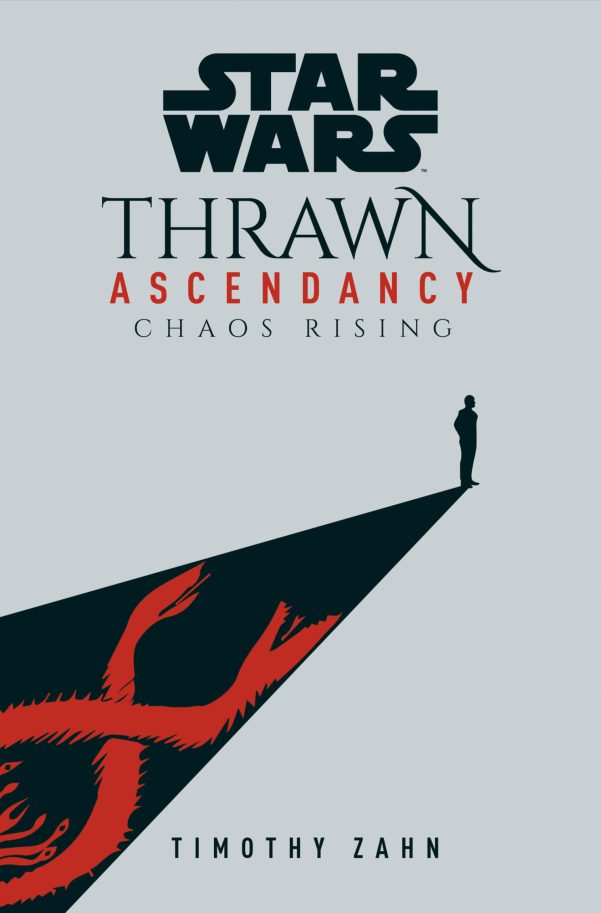
Star Wars: Thrawn Ascendancy: Chaos Rising by Timothy Zahn

Thrawn Ascendancy - Chaos Rising Cover

Publisher: Random House Audio (Audiobook – 1 September 2020)

Series: Thrawn Ascendancy – Book One

Length: 15 hours and 5 minutes

My Rating: 4.5 out of 5 stars

Amazon

The master of Star Wars fiction, Timothy Zahn, returns with a brand-new series that explores the early days of his most iconic character, Grand Admiral Thrawn, with the first book in the Thrawn Ascendancy trilogy, Chaos Rising.

A long time ago, beyond a galaxy far, far away…

Beyond the edges of the known galaxy, past the borders of the Republic, beyond even the backwater Outer Rim, lies the Unknown Regions.  The Unknown Regions are a chaotic and barely explored section of space, where hyperspace travel is difficult and dangers lurk around every corner.  Despite this, many species flourish in this region, fighting for their survival and forming civilisations hidden from the eyes of the Republic and the Separatists as they fight their bitter civil war.  However, out of all these races, none are more mysterious, secretive and dangerous than the Chiss Ascendancy.

The Chiss have long considered themselves to be one of the most powerful races within the Unknown Regions.  Boasting vast fleets of powerful vessels which can appear anywhere within the Unknown Regions thanks to their great secret weapon, the force-sensitive children who can navigate hyperspace in the Unknown Regions, known as Skywalkers, the Chiss believe themselves safe and secure.  However, a sudden ill-fated attack on their home planet by a mysterious fleet quickly shatters this allusion.  While many, including the Chiss ruling council, are convinced that the attacking ships are a precursor to an invasion and begin preparations to withdraw their outer fleets, Supreme General Ba’kif believes that there is more to this attack then what is apparent.  In order to explore his suspicions, Ba’kif calls upon one of his most talented officers to investigate, the young tactical genius Senior Captain Mitth’raw’nuruodo, better known as Thrawn.

Many years before he became the Emperor’s most effective weapon as a Grand Admiral in the Imperial Navy, Thrawn, served his own people as a member of the Chiss Expansionary Defence Fleet.  Already renowned for his rare tactical ability, as well as his disregard for the politics and rules of the Ascendancy, Thrawn begins his investigation into the attack and swiftly determines that it was merely a feint, designed to draw the Ascendancy’s attention away from a much more dangerous threat.  A new malevolent alien empire is building strength in the Unknown Regions, and its eyes are firmly fixed on the Chiss.  With his hands tied by protocol and with his political enemies within the Ascendancy trying to take him down, Thrawn may be unable to stop the upcoming attack before it is too late.  However, Thrawn always has a plan, and the Unknown Regions are about to understand just how dangerous he truly is.

This was another fantastic outing from Timothy Zahn, who has produced a cool and intriguing prequel novel to his previous series.  Zahn is one of the most experienced and highly regarded authors of Star Wars tie-in fiction in the world today, having written several impressive novels for both the current Disney-owned canon, and the previous Star Wars Legends canon.  While he has written various Star Wars novels, such as the fun standalone novel Scoundrels, Zahn is probably best known for his 1991 release, Heir of the Jedi, which is generally considered to be the start of a whole new era of Star Wars tie-in fiction.  While there are a number of interesting aspects to Heir of the Jedi, one of the most important things about it was that it introduced Zahn’s most distinctive and popular creation, Grand Admiral Thrawn, a rare alien officer in the xenophobic Imperial Navy who was revered as their ultimate tactician.  Thrawn proved to be a very popular character whose backstory and characterisation was later expanded on in a number of Zahn’s other Star Wars Legends novels.

Due to the Disney purchase of the Star Wars franchise and the subsequent removal of everything except the movies and the animated series from canon, Thrawn was temporarily erased as a canon character until the third season of the Star Wars Rebels animated television series, where he was reintroduced with an altered backstory and history.  As part of this reintroduction, Zahn was contracted to write several new Star Wars novels examining this new history of the character, and thus he wrote the Thrawn trilogy, featuring the excellent novels Thrawn, Alliances and Treason, which are among some of the best pieces of Star Wars tie-in fiction I have so far read.  This trilogy ended in 2019, but Zahn is far from done, having started a new trilogy, the Thrawn Ascendancy series, last year.  The Thrawn Ascendancy trilogy, of which Chaos Rising is the first entry, is an intriguing and detailed series that serves as a prequel to the novel Thrawn and which show a younger version of the character as he serves the Chiss during the same time period as the Clone Wars.  Chaos Rising is an excellent and enjoyable novel which I read a few months ago, but which I have only just had a chance to review.  It was fantastic to see this complex and compelling character in action again, as well as more of Zahn’s impressive world-building.

This new novel from Zahn contains an amazing story that looks at the earliest adventures of Thrawn.  This is a very clever and layered tale that explores the main character in more detail while also providing him a new opponent to face in this book as he attempts to engage in battle against a dangerous enemy threatening his people.  Zahn builds a great narrative around the fight against this new antagonist, with Thrawn forced to engage in a number of intricate campaigns in order to obtain information and determine which points of weakness to exploit, whilst also have to contend with the machinations of members of his own race who are concerned with the reckless Thrawn’s actions.  At the same time, the author builds up a number of intriguing side characters who help to tell the tale of Thrawn in greater detail and with some interesting personal arcs.  This main storyline proves to be an extremely enjoyable and captivating read which flows at a great pace for most of the book, broken up with a number of cool and impressive battle sequences.  The main story is also supported by a fantastic collection of flashback sequences that depict an even younger version of Thrawn, showing some of his earlier encounters with many of the characters featured in the novel and highlighting how different the character has always been.  These flashbacks are used to great effect throughout the novel, not only building up the various characters’ pasts and personalities but also creating a great pace for the novel, with several key events from the protagonist’s life introduced where necessary to the main plot.  All of this helps to turn Chaos Rising, and indeed the entire Thrawn Ascendancy series, into an intriguing prequel to the Thrawn trilogy as it begins to set up the various reasons why Thrawn was sent away by his people and recruited by the Empire.  One part of Chaos Rising even directly ties into the events of one of the books from the previous trilogy, Alliances, with the reader seeing an alternate viewpoint to Thrawn meeting with Anakin Skywalker that gives an entertaining context to the events of that previous book.  All of this results in a fantastic and clever story that is easy enjoy and which sets up some more intriguing adventures in the later entries in this series.

One of the things I always try to address while reviewing a Star Wars novel is what level of franchise knowledge a reader needs to have in order to fully enjoy the story.  While most Star Wars novels are generally fairly accessible to new readers or casual fans, I would say that Chaos Rising is one of those books that should primarily be read by major fans of the franchise.  This is because Zahn loads this novel up with a ton of Star Wars references and details, including details of obscure parts of Star Wars lore and characters.  While the author does do a good job of explaining all the relevant aspects of this extended universe through the book, I would say that having some pre-knowledge about some of these elements is important.  At a minimum I would suggest that the readers read Zahn’s original Thrawn trilogy first, especially as Chaos Rising serves as a prequel to them, although fans with some basic knowledge of the character of Thrawn should be able to follow along without too much difficulty.  For new readers who do get through Chaos Rising, you are going to experience a huge amount of new information about the Star Wars universe as Zahn does a substantial amount of universe building throughout this book.  In particular, the author explores the legendary Chiss Ascendancy, a mysterious alien empire existing outside of the main Star Wars galaxy.  This is the first time that the Chiss planets and culture have been explored in any real detail in the current canon, and it proves to be a fascinating experience learning more about them and seeing the culture that produced such a unique character as Thrawn.  This novel contains a lot of detail about this alien race, as well as many other aspects of life outside the main galaxy setting of the Star Wars franchise, and while it is a tad overwhelming at times, I had a great time expanding my Star Wars knowledge and exploring this new, intriguing region.  It seems likely that Zahn will go into even more detail about this part of the Star Wars universe in future novels in the trilogy, and I look forward to seeing what other cool aspects he comes up with.

One of the best things about this book was seeing the return of the amazing and compelling character of Thrawn.  Thrawn is a very unique and enjoyable character, mainly because he has an unfathomable mind and is able to tactically outthink and outmatch any opponent that he comes across.  A highly analytical being who is able to discern fantastic insights about a person or species’ intentions, personalities and general mindsets from viewing some aspects of their creativity, mainly their artwork, Thrawn is easily able to predict actions and provide effective or crazy counters that shock and surprise everyone watching.  This makes him an incredibly fun character to see in action, especially as he makes some amazing and credible leaps of logic off the smallest details that Zahn features in his descriptions.  These analytical leaps then lead into a number of awesome and cool scenes where he outsmarts everyone around them, including in the book’s various battle sequences, which are awesome to read as there are some truly outrageous and clever tactical moves that no one can see coming.  Because of his way of thinking, Thrawn has a very closed off and odd personality that unnerves a lot of the people he deals with and makes many wary of his motivations and actions.

Just like he did in the previous novels, Zahn portrays Thrawn as a little less vicious and dangerous than he appears in Star Wars Rebels, with a little more humanity (or the Chiss version of it) added into his character.  Zahn also continues to explore the character’s lack of political awareness, a major flaw in his thinking that continues to cause him trouble as he constantly battles against the overarching hierarchy to take actions he knows will benefit or save his people.  I felt that Chaos Rising took a very interesting look at the character’s history, personality and backstory, and I quite liked the examination of his earliest trials and battles.  Thanks to the author’s use of flashback sequences, the reader gets a great view at different parts of his history, and you see the various steps that he takes rising up the military ladder and the various aliens and people he crossed or destroyed on the way.  All of this proved to be really cool to see, and Thrawn remains one of my favourite characters in the Star Wars canon, especially after this great outing from his past.

One of the most distinctive parts of any novel that follows Thrawn is the fact that none of the story is shown from his point of view; instead other characters tell his story.  This is mainly done to really highlight just how brilliant Thrawn is and to ensure that his eventual plans and insights come as a major surprise to the reader, much in the same way that a Sherlock Holmes novel is told from Watson’s perspective.  Chaos Rising features several different point-of-view characters, including one or two antagonists, who encounter Thrawn throughout the course of this novel and witness him utilise his tactical acumen.  I love seeing the various characters react to Thrawn’s impressive and clever schemes, and it is always fun when they realise that the impossible is happening right in front of them.  Several of these characters, particularly Thrawn’s allies, also provide a much deeper examination of the main character’s personality and mentality, and you see a different side to the character as a friend and mentor.

While these characters are primarily there to follow Thrawn, Zahn does take the time to explore each of these characters, with a particular focus on Thrawn’s impact on their life.  Many of these characters have some excellent and enjoyable backstories to them, and it was fascinating to see these great characters have their carefully planned out lives completely thrown around when they meet Thrawn.  While I failed to connect to some of these point-of-view side characters (for example, I just could not get invested in the arc surrounding the Skywalker Che-ri), others proved to be quite intriguing to follow.  Examples include Admiral Ar’alani, Thrawn’s former classmate at the academy, who becomes a lifelong friend and constantly finds herself trying to protect the protagonist from himself, or Thalias (Mitth’ali’astov) a former Skywalker whose encounter with a young Thrawn inspired her to join his clan and gave her a new vision for the future.  I also rather enjoyed following Qilori, an Unknown Regions navigator-for-hire, who secretly serves the Nikardun Destiny while also taking jobs for other clients like Thrawn and the Chiss.  It was immensely entertaining seeing Qilori attempting to manipulate Thrawn on the orders of the main antagonist, especially as Thrawn sees through every single one of his tricks.  Each of these great side characters added their own edge to the story, and I really appreciated having so many varied and unique viewpoints of the fantastic main character.

While I did receive a physical copy, I decided to listen to the audiobook format of Chaos Rising, not only because it made my reading schedule easier but because Star Wars audiobooks are always so much fun to listen to.  I think that I made the right decision here, as the Chaos Rising audiobook was a very awesome experience and I had a great time listening to it.  With a run time of just over 15 hours, this is a somewhat longer Star Wars audiobook, although once you get wrapped up in the story you don’t really mind.  Everything about this audiobook is cool, from the classic Star Wars sound effects, which help to drag the listener into the story (it is so much easier to imagine a dangerous fight scene when you can hear the blaster shots), to the outstanding use of John Williams’ iconic musical score, which just makes everything epic.  This audiobook also features the superb narration of the amazing Marc Thompson, who does a wonderful job.  Thompson, who has a vast experience voicing Star Wars audiobooks (for example, all the previous Thrawn novels, Dark Disciple, and roles in the Count Dooku and Doctor Aphra audio dramas), has an exceptional range of different voices which he uses to full effect throughout Chaos Rising.  Each of the characters is given a distinctive and enjoyable voice which allows the listener to easily follow who they are, while also getting an impressive and comprehensive idea of the character’s emotions and passion.  However, his most impressive work is saved for the main character himself.  Thompson has an excellent Thrawn voice, which very closely matches the voice of Lars Mikkelsen, the actor playing Thrawn in the Star Wars Rebels animated show, which helps to bring the character to life in vivid and impressive detail.  Thompson’s take on the character captures the character perfectly, and you get an amazing sense of the character’s deep analytical nature and constantly calm façade.  This was an exceptional bit of voice work from Thompson, and it really added so much to my enjoyment of the story to have this character’s words read out to me.  An overall exceptional and outstanding audiobook, this is the perfect format to check out Chaos Rising.

Thrawn Ascendancy: Chaos Rising is another outstanding novel from amazing Star Wars author Timothy Zahn that provides the reader with a captivating look at the early life of the incredible character of Grand Admiral Thrawn.  Featuring a clever and intriguing tale set deep in an unexplored area of the Star Wars universe, this novel serves as a fantastic and addictive prequel to Zahn’s impressive Thrawn trilogy and adds new layers to the author’s most iconic creation.  The second entry in this series, Greater Good, is set for release in a few months and looks set to be one of the most intriguing Star Wars novels of 2021, especially with renewed interest in the character of Thrawn after the second season of The Mandalorian.  I am extremely keen to see how the next novel turns out, but if it as good as Chaos Rising, then we should be in for a treat.

Amazon

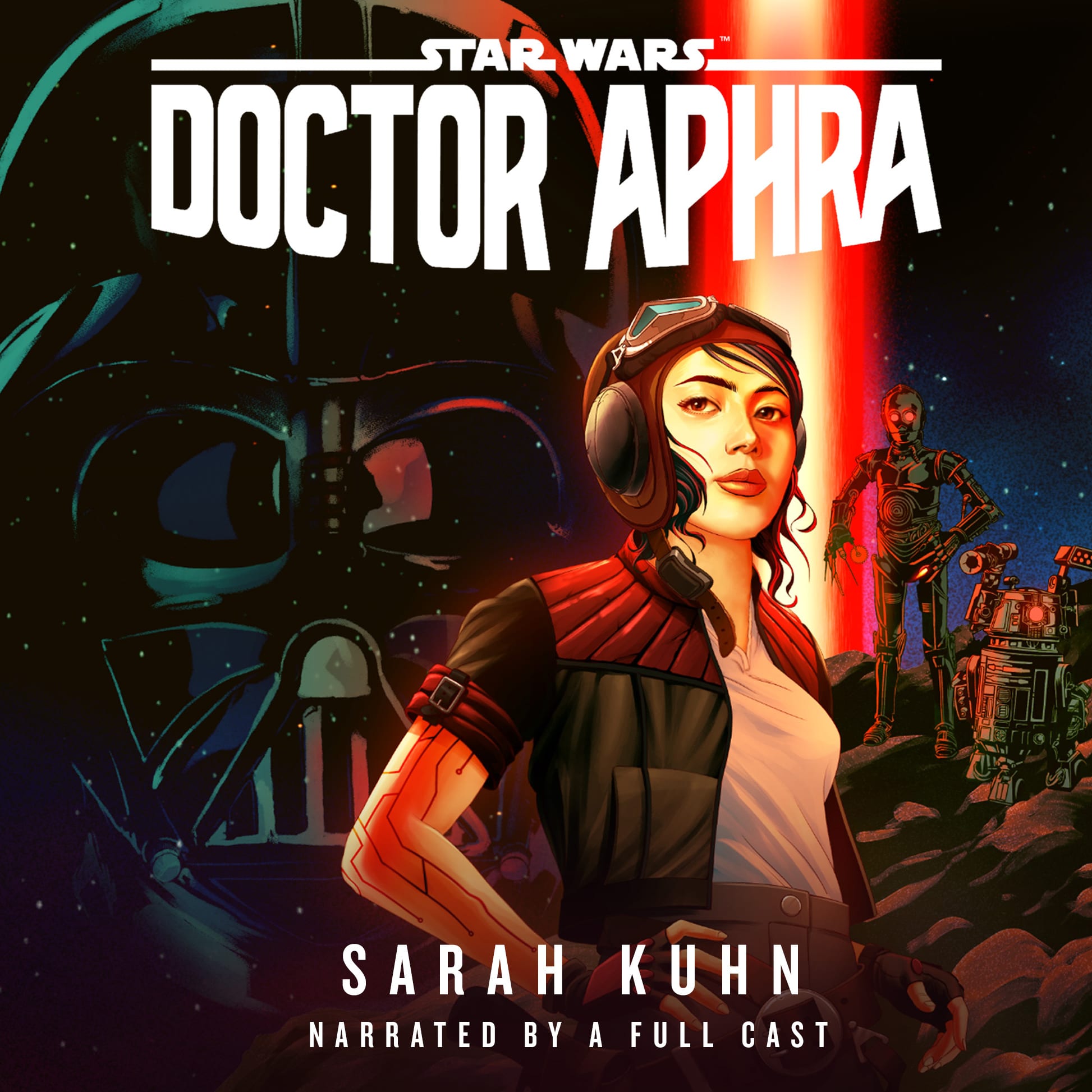
Star Wars: Doctor Aphra written by Sarah Kuhn and performed by a full cast

Doctor Aphra Audio Cover

Publisher: Random House Audio (Audio Drama – 21 July 2020)

Series: Star Wars

Script: Sarah Kuhn

Cast: Emily Woo Zeller, Jonathan Davis, Sean Patrick Hopkins, Sean Kenin, Nicole Lewis, Carol Monda, Euan Morton, Catherine Taber and Marc Thompson

Length: 5 hours and 35 minutes

My Rating: 4.5 out of 5 stars

Amazon

The most brilliant and conniving archaeologist in the entire Star Wars canon gets her own audio drama as author Sarah Kuhn and an exceedingly talented cast of audiobook narrators present Star Wars: Doctor Aphra, the audio drama.

Throughout the galaxy Doctor Chelli Lona Aphra is renowned as a criminal and bringer of chaos without peer, but in her own eyes she is simply an archaeologist and technology enthusiast, albeit one willing to sell her findings to the highest bidder.  However, her latest venture is about to get her into the worst type of trouble, the sort that will haunt her for the rest of her incredibly short life.  Attempting to steal a dangerous weapon from a restricted alien vault, Aphra finds herself surrounded and slated to die, that is until Darth Vader, Dark Lord of the Sith and overall badass suddenly appears and saves her. 

Vader is engaging in a high-risk power play against the Emperor and Aphra has just become his most useful pawn, whether she likes it or not.  Working as his agent, Aphra must utilise her skills as a con-woman, genius technician and criminal mastermind to help Vader achieve his goals: depose the Emperor and find his new obsession, the pilot who blew up the Death Star, Luke Skywalker.  Determined to stay on Vader’s good side, Aphra, with the help of her two friendly murder droids, Triple-Zero and BT-1, helps her new master engage in all manner of shenanigans across the universe, including kidnappings, torture and elaborate heists.  However, Aphra knows that all it will take is just one mistake or slip-up to earn her new employers’ deadly wrath.  To avoid her inevitable appointment with Vader’s crimson lightsaber, Aphra will need to pull out every trick in her impressive arsenal if she is to survive.  But can even the great Doctor Aphra outsmart Darth Vader and the entire Empire, or has the smartest woman in the galaxy finally met her match?

Well this is an exceedingly fun and entertaining entry in the Star Wars expanded universe which provides a new angle to the tale of Doctor Aphra.  Doctor Aphra is an incredible and complex character who has only been recently added into the canon.  Introduced in the opening issues the 2015 Darth Vader comic book series, Doctor Aphra served as a major supporting character for much of the series run, entertaining readers with her antics and ability to survive working for Darth Vader.  Aphra proved to be an extremely popular character, and this resulted in the character getting her own comic book series (which ironically lasted more issues than the Darth Vader series she was introduced in).  The Doctor Aphra series ended up being an amazing hit thanks to some exceptional writing and it is one of my favourite pieces of Star Wars tie-in fiction (make sure to check out my reviews for the last two volumes in the series, Unspeakable Rebel Superweapon and A Rogue’s End), and there is even a second Doctor Aphra series on its way.  It seems that Aphra’s popularity has continued to grow as earlier this year this Doctor Aphra audio drama was released, written by talented author Sarah Kuhn.  This proved to be an exceptionally impressive audio release that does an amazing job bringing this fantastic character into an entirely new format.  This audio drama has a run time of around five and a half hours, which listeners are able to breeze through in no time at all.

The Doctor Aphra audio drama contains an intriguing and captivating story that follows the character as she engages in all manner of adventures in service to Darth Vader and her own survival.  Told entirely from the perspective of Aphra as she makes a series of recordings to an unknown person, and set shortly after the events of Star Wars: A New Hope, this story follows Aphra through the entirety of her ill-fated association with Darth Vader.  This employment places her in all manner of danger, as she completes a series of tasks important to Vader, including an elaborate heist; gets in the middle of a deadly conflict between Vader, one of his rivals in the Empire, and the protagonists of The Original Trilogy; and finds herself a prisoner of the Rebel Alliance before eventually attempting to manipulate the Emperor for her own ends.  At the same time, Aphra is constantly balancing on a knife’s edge, as her beloved boss has made it abundantly clear that he will kill her the moment she displeases him.  This forces Aphra into a number of tense and dangerous situations as she needs to convince Vader to keep her alive throughout the entire book.  This struggle to stay alive adds a substantial amount of suspense to the audio drama, as the listener really wants this entertaining character to survive, and it eventually leads to an outstanding and epic conclusion.  All of this proves to be an exceedingly captivating adventure, and listeners are in for an exciting and hilarious time, especially with Aphra’s entertaining and over-exaggerated narration of the events occurring. 

While I did really enjoy the story contained within this audio drama, I do need to point out that it is not actually an original tale; instead it is an adaption of several canon comic book series, namely the comics that featured Aphra’s early adventures.  The first part of the audio drama adapts most of the first two volumes of the 2015 Darth Vader comic series, Volume One: Vader and Volume Two: Shadows and Secrets.  From there the story follows the course of the crossover limited series, Vader Down, before moving on to the events of the fourth volume of the 2015 Star Wars comic, Rebel Jail.  Finally, the story returns to the Darth Vader comic, utilising parts of the fourth and final volume, End of GamesDoctor Aphra proves to be an exceptional adaptation of these comics although they only show off the events that Aphra herself witnessed or was a part of.  I had an amazing time listening to this adaptation and I really enjoyed seeing several of the amazing events that originally occurred on the page being brought to life by this enjoyable performance. 

People interested in listening to this audio drama do not need to have read the adapted comics first, as Kuhn provides Aphra with a great deal of narration that explains her role in the story and all the events leading up to the comics.  As someone who has read the comics before listening to this audio drama, I found that there was a lot in this production for fans of the comic.  I personally really enjoyed seeing these events from Aphra’s perspective (as the original comics mostly followed main characters such as Vader, Luke, Leia, and Han), and it was extremely interesting to see her thoughts on the various events occurring.  The author also comes up with a lot of additional backstory that helps to enrich Aphra’s involvement in the narrative, which fans of the character will really appreciate.  While I had a great time listening to this audio drama, I did notice that several events were glossed over, mainly because Aphra did not witness them occur in the comics.  For example, you have no idea who is behind several of the battles or attacks that Aphra finds herself in the middle of, with Aphra herself giving limited explanations for them.  While I knew full well what was going on, people who haven’t read the comics are going to be full of questions and this may make the audio drama a little confusing at times.  That being said, this was still an outstanding and deeply enjoyable production, and perhaps it will encourage listeners to check out some of the adapted comics (trust me, they are awesome).

One of the best things about this audio drama was the way in which the narrative explored the complex and exceedingly likeable character of Doctor Chelli Aphra.  Aphra is a clever, impulsive and chaotic rogue archaeologist who is obsessed with ancient technology, particularly unusual droids and dangerous weapons.  Aphra is a wildly entertaining character who is essentially an amoral version of Indiana Jones that has no problems cheating or betraying people who she encounters, as long as she gets to hold onto the valuable antiques or can sell them for vast amounts of money (none of her loot belongs in a museum!).  Aphra appears to have a relentlessly positive personality, providing the listener with a string of continual jokes and funny observations with an infectious amount of enthusiasm.  However, deep down Aphra is actually a deeply damaged individual who has suffered a number of losses and betrayals that impact her current outlook on life and other people. 

Despite the fact that Aphra is the very definition of an unreliable narrator (she literally deletes or edits the parts of the story she does not like to suit her agenda), I felt that this audio drama does an amazing job exploring this wily protagonist.  Having Aphra’s inner monologue about the events occurring during this story proved to be not only entertaining but also very enlightening, and it showed some fascinating glimpses of her inner personality and emotional state.  While much of Aphra’s story was previously explored in the comics that Doctor Aphra is based on, this adaptation does go a little further, pulling in some backstory that was introduced in the later Doctor Aphra comics and expertly working it into this narrative.  Kuhn also comes up with some additional history that is unique to this production, including a number of scenes that explore her previous romantic relationship with Sana Starros.  While this relationship has been mentioned and discussed in several of the comics, this is probably the most in-depth examination of it in the canon and it becomes an important part of the overall plot.  I really enjoyed the way in which Doctor Aphra examined its titular protagonist and I felt that the story really captured her essence and outrageous personality.

This audio drama sports an amazing voice cast and each of them does a fantastic job in this production.  However, I really must highlight the performance of Emily Woo Zeller, who portrayed the titular character.  Zeller is an experienced and talented narrator who has contributed to a huge raft of audiobooks, including several I am quite interested in checking out, such as Cyber Shogun Revolution by Peter Tieryas.  Due to how the audio drama is written, Zeller’s voice is the one we hear the most throughout Doctor Aphra, as she recounts all of the characters dialogue and the overall narration of this book.  I really loved the way that Zeller portrayed the character of Aphra in this audio drama and I thought she got all the aspects of the character down perfectly.  Zeller gives a particularly energetic performance throughout this adaption, and listeners get a real sense of the mischievous and over confident outer shell that Doctor Aphra portrays to everyone she meets.  However, Zeller also captures the vulnerable nature of this complex protagonist, showing off the character’s full range of emotions when she is scared, angry or contemplating her many regrets.  This rich and amazing performance from Zeller really helps to make this audio drama something special, and I am really glad that she was able to bring Doctor Aphra to life in such an exceptional way.

Doctor Aphra also makes use of several other impressive voice actors throughout this audio drama, each of whom are portraying major Star Wars characters who Aphra interacts with through the course of this adventure.  This audio drama features a who’s who of Star Wars audiobook narrators, many of whose works I have previously enjoyed in a range of productions including the previous Star Wars audio drama, Dooku: Jedi Lost.  These additional narrators include Jonathan Davis (who I previously enjoyed in Star Wars: Master and Apprentice and Lords of the Sith), Sean Kenin (Death Troopers), Euan Morton (Tarkin), Catherine Taber (Queen’s Peril and Queen’s Shadow), Marc Thompson (Thrawn, Thrawn: Chaos Rising, Dark Disciple and Scoundrels), Sean Patrick Hopkins, Nicole Lewis and Carol Monda.  Each of these voice actors did an exceptional job of bringing their various characters to life throughout Doctor Aphra.  I particularly enjoyed Marc Thompson’s Darth Vader and Euan Morton’s Emperor, as both voice actors brought some realistic menace to these iconic villains.  Catherine Taber, who is best known for her portrayal of Padme Amidala in The Clone Wars animated series, does an excellent Princess Leia in this production, and I really appreciated the choice to cast her.  Sean Patrick Hopkins does a really cool Luke Skywalker, and I was really struck by how close he got to a younger Mark Hamil’s voice.  I also really enjoyed Sean Kenin’s Triple-Zero, and I felt he really captured the essence of this crazy character.  Each of these side characters added a lot to the production as a whole and, while they were not as heavily featured as Aphra, each of them had their own entertaining moments and interactions.  I particularly loved the threatening aura that Darth Vader exhibited towards Aphra, and there is also a very entertaining interaction between Aphra and Han Solo that results in some of the best jokes in the entire production.  You also have to love the fact that Aphra ends up with a posse that essentially reflects the main characters from The Original Trilogy, with a protocol droid (Triple-Zero), an Astromech (BT-1) and a Wookie (Black Krrsantan).  Of course, Aphra’s friends are all dangerous killers, which makes for some extremely entertaining and deadly encounters.

In addition to featuring an impressive voice cast, Doctor Aphra also features the full range of iconic Star Wars sound effects and musical scores that were made famous in the movies.  Pretty much every action that occurs within the book is accompanied by a sound effect, whether it be blaster fire, the sound of engines or even a susurration from other people in a crowded room.  I always love how these sound effects helped to create an atmosphere throughout the course of a Star Wars novel, and I felt that they were particularly useful for this audio drama format due to the lack of narration that a standard audiobook would have.  I also have to talk up the excellent use of the incredible Star Wars musical score that features during several key scenes of the novel.  Hearing this music during some of the most pivotal, dramatic or action-packed sequences makes the narrative seem that much more epic, and I absolutely loved hearing this music throughout this production.  The use of the sound effects and music enhances the story in immeasurable ways, and it helps to turn this audio drama into an exceptional treat for the ears. 

Star Wars: Doctor Aphra is an impressive and deeply enjoyable audio production that brings fan-favourite character Chelli Aphra into a whole new light.  Cleverly adapting several amazing Star Wars comics, the Doctor Aphra audio drama features an interesting story from author Sarah Kuhn that shows the events from the perspective of the chaotic and duplicitous titular protagonist.  Featuring an exceptional voice cast, Doctor Aphra proves to be an extremely entertaining and exceedingly addictive listen that I had a very hard time turning off.  I personally think this was one of the best audio productions of 2020 and it comes highly recommended both to general Star Wars fans and to those who have read the adapted comics.  I had an amazing time listening to this audio drama and I hope that they think about adapting the later Doctor Aphra comic book series next as there are some impressive storylines featured in there.

Amazon

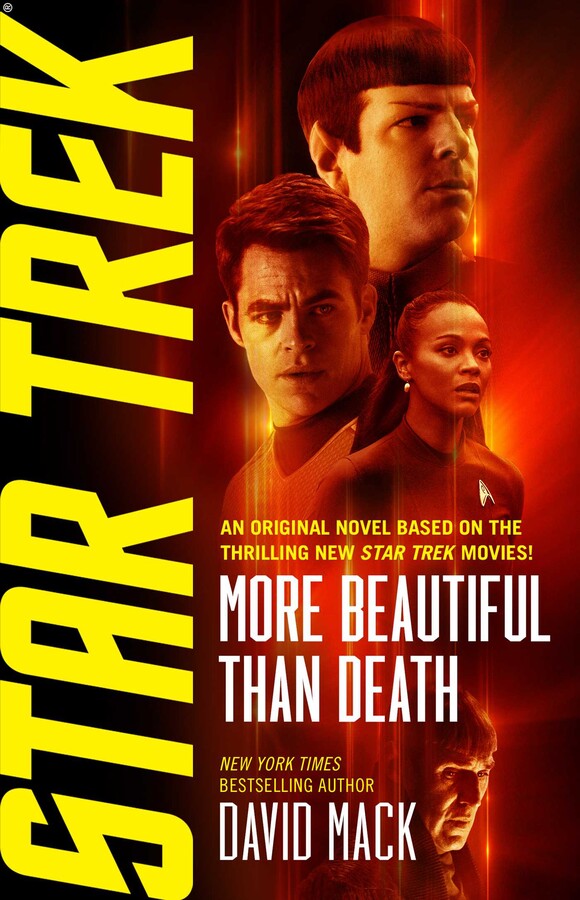
Star Trek: More Beautiful Than Death by David Mack

Star Trek More Beautiful than Death Cover

Publisher: Simon & Schuster Audio (Audiobook – 11 August 2020)

Series: Star Trek – Kelvin Timeline – Book Two

Length: 8 hours and 16 minutes

My Rating: 4.5 out of 5

Amazon     Book Depository

Prepare to once again dive into the alternate timeline version of the Star Trek universe, known as the Kelvin timeline, in this latest exciting tie-in novel from acclaimed author David Mack, Star Trek: More Beautiful Than Death.

Set shortly after the events of the 2009 Star Trek film, in which the planet of Vulcan was destroyed by the mad Romulan Nero, Captain James T. Kirk is now captain of USS Enterprise.  Given a new mission, the Enterprise and its crew are ordered to rendezvous with Spock’s father, Ambassador Sarek, and escort him to the planet of Akiron.  Akiron, a resource-rich world containing a substantial amount of dilithium, has recently sent out a distress signal to the Federation, who are hoping to exchange aid for favourable trading rights.

Arriving at Akiron, they find the planet in a state of chaos as the population are under attack by demonic dark-energy creatures, known as wights, who strike from the darkness, eat energy, and appear to suck the life right out of any living being.  Determined to save the people of Akiron no matter what, Kirk begins his preparations to investigate the wights.  However, before he can act, Sarek orders Kirk to abandon the mission and leave Akiron.

Refusing to obey Sarek’s orders, Kirk attempts to find the cause of the terrible events on Akiron and save who he can.  With the help of an old mystic who believes that Kirk has faced the wights in his prior lives the Enterprise crew are soon able to discover the source of the wights on Akiron and the deadly potential their invasion has.  As Kirk and his crew attempt to save the entirety of the planet they must overcome several deadly attacks as well as the sinister agenda of Sarek’s Vulcan aide, L’Nel, who hatches a dangerous personal plan to kill Spock.  Can the Kirk and the Enterprise succeed, or will darkness engulf everything it touches?

Over the last couple of years, I have had a great pleasure of reading/listening to several amazing pieces of Star Trek fiction and I always love seeing the unique and varied tales that the talented team of tie-in authors can come up with.  More Beautiful Than Death is an excellent example of this as it features a fantastic and captivating tale of exploration and desperation within an interesting part of the Star Trek canon.  This latest novel is written by a true veteran of Star Trek fiction, David Mack, who has not only written a ton of different tie-in novels but who also has writing credits for two episodes of Star Trek: Deep Space NineMore Beautiful Than Death is set in the alternate timeline introduced in the 2009 film Star Trek, known as the Kelvin timeline.  This is the second Kelvin timeline novel I have read this year after previously enjoying The Unsettling Stars, and it set between the events of Star Trek and Star Trek: Into DarknessMore Beautiful Than Death ended up being an impressive and exciting Star Trek novel, and I had an amazing time listening to it.

Mack has come up with an excellent narrative for More Beautiful Than Death which sees the crew of this alternate timeline Enterprise attempt to defend an alien planet from a series of demonic creatures.  The author writes this much like an episode of a Star Trek series, with the crew arriving at the planet, analysing the situation, facing all manner of conflicts, getting beat up and then engaging in a course of action to save the day.  I felt that this worked extremely well for the novel and readers are treated to a captivating and dramatic science fiction story that easily keeps the attention from start to finish.  The stakes are high throughout More Beautiful Than Death, and Mack keeps the tension and excitement going through much of the book, focusing both on the mission at hand and on the contentious personalities aboard the ship.  There are a number awesome action-packed sequences throughout the book, and I especially enjoyed the various scenes that showed the Enterprise being attacked by the wights, forcing the crew to flee from an opponent they cannot even touch.  There is also a particularly good subplot around the Vulcan characters aboard the Enterprise, with the mysterious character of L’Nel apparently plotting to kill Spock.  I really enjoyed the way that Mack explored this subplot, showing L’Nel’s attack on Spock as a prelude to the rest of the book, and then slowly exploring the events that led up to it in the main story.  This subplot combined with the main narrative extremely well and the result is a deeply compelling overall novel that I had an amazing time listening to.

Like many Star Trek tie-in novels, More Beautiful Than Death is best enjoyed by those readers who have some familiarity with the franchise.  However, I felt that Mack made his latest book extremely accessible to new readers, and anyone can have a great time enjoying the fast-paced and intriguing novel with minimal knowledge of Star Trek lore.  There are a lot of fun Star Trek elements associated with this novel, and I really enjoyed the author’s intriguing additions to the canon.  Not only does this book serve as an excellent follow-up to the 2009 movie, showing the early missions of this younger Enterprise crew, but Mack also utilises the alternate timeline setting of this novel to come up with clever alterations to the classic Star Trek lore.  One part of the book’s narrative ends up being an extremely ingenious homage to a key episode of The Original Series.  Mack cleverly inserts this compelling altered version of this episode throughout the book, and it was deeply fascinating to see it unfold, especially as the events of the Star Trek film have ensured it is sufficiently different.  This revision of a classic Star Trek episode was extremely impressive and it was one of my favourite parts of the entire book.  All of this makes for an amazing Star Trek read, and fans of the franchise are in for a real treat with this book.

In addition to some cool call-backs to The Original Series, Mack also does an exceptional job bringing the Kelvin timeline versions of the Enterprise crew to life.  The author ensures that all of the main characters in this book are portrayed slightly differently to how they are in The Original Series.  For example, Kirk is a lot more impulsive, younger and combative than the classic version.  Spock is a little stiffer, as he has only been influenced by Kirk a short while.  Uhura is a lot more combative and emotional, mainly due to her relationship with Spock.  Scotty is a lot more humorous, channelling his inner Simon Pegg, while McCoy is a lot gruffer and even more reluctant to get involved in the usual crazy Enterprise adventures (if that was possible).  All this makes for a tie-in novel that is a lot more in line with the newer generation of films and I personally appreciated the effort from the author.  I was tad disappointed that Sulu and Chekhov were not featured as heavily as the other major characters in the novel (something I have noticed in other Star Trek tie-in novels), but this was still a great novel for Star Trek characters.

I also appreciated how Mack takes the time to explore the psyches of several of his major characters, especially as it produces some compelling and dramatic results.  This includes a deep dive into this version of Captain Kirk, such as exploring his mental state after the events of the 2009 film, with a particular focus on the guilt and hopelessness he felt over watching the destruction of Vulcan, which has made him more determined to save entire worlds.  There is also an intriguing inclusion about Kirk’s past lives, with a couple featured as part of the plot.  This leads into some great discussion about how the character is destined to be thrust into great and tumultuous events, which I quite enjoyed.  Spock also gets a major focus in More Beautiful Than Death, thanks to the author’s inclusion of other Vulcan characters like Sarek and L’Nel.  Spock’s complicated relationship with his father and other Vulcans is a major theme throughout the novel, and aspects of his life aboard the Enterprise, particularly Spock’s romantic attachment to Uhura and his loyalty to Kirk, increase the tension.  This adds an excellent amount of drama to the narrative and it plays extremely well into the clever subplot around L’Nel, resulting in an intriguing and compelling narrative arc.  I had a great time diving down into several of these characters, and it helped to produce a much more complete and emotionally driven narrative.

As I do with most Star Trek books, I ended up checking out More Beautiful Than Death in its audiobook format rather than getting a physical copy.  The More Beautiful Than Death audiobook has a run-time of just over eight hours, making it an extremely easy audiobook to get through quickly.  I had an amazing time listening to this audiobook, especially as it features the vocal talents of the outstanding Robert Petkoff.  I have mentioned Petkoff before in several my reviews as he is the go-to narrator for any piece of Star Trek fiction that gains an audiobook format, due to his fantastic ability to perfectly replicate the cast members of both The Original Series and The Next Generation television shows.  Petkoff did another exceptional job in More Beautiful Than Death, expertly bringing every key member of the Enterprise’s crew to life and providing fantastic voices for each of them.  While they do sound more like The Original Series cast than the actors from the 2009 Star Trek film, this was still excellent work from Petkoff, and listeners are well aware which character is speaking at every point in the audiobook.  I also liked the voices that Petkoff utilised for the various supporting characters in More Beautiful Than Death, and there are some great differentiation in tones between the various alien species, such as for the Vulcan characters Sarek and L’Nel.  All of this makes for an epic listen, and Star Trek fans are strongly advised to check out More Beautiful Than Death in its audiobook format.

With his latest novel, David Mack continues to explore and add to the Star Trek expanded universe, this time diving into the intriguing Kelvin timeline.  More Beautiful Than Death is an excellent and entertaining read that takes the reader on a gripping adventure in space.  Thanks to the author’s excellent use of characters, Star Trek elements and his fantastic and unique narrative, More Beautiful Than Death is a fantastic Star Trek tie-in novel which will really appeal to established fans of this franchise.  Highly recommended.

Amazon     Book Depository

Star Trek: Discovery: Die Standing by John Jackson Miller

Die Standing Cover

Publisher: Simon & Schuster Audio (Audiobook – 14 July 2020)

Series: Star Trek: Discovery

Length: 12 hours and 15 minutes

My Rating: 4.5 out of 5 stars

Amazon     Book Depository

One of the leading authors of media tie-in fiction, John Jackson Miller, returns with his second Star Trek: Discovery novel, Die Standing, an awesome and captivating read that follows the adventures of an excellent protagonist, the evil version of Michelle Yeoh’s Philippa Georgiou.

After the dramatic conclusion of the first season of Star Trek: Discovery, Emperor Philippa Georgiou, former ruler of the Terran Empire, a power-hungry and xenophobic human interstellar empire from a twisted alternate universe, has been stranded in the main Federation’s universe.  Biding her time while trapped on the Klingon home planet of Qo’noS, Georgiou is finally given a the opportunity she has been waiting for when Starfleet’s covert spy organisation, Section 31, offers her a chance to work as one of their agents.  However, Georgiou is far more interested in gaining her freedom and plotting to use Section 31’s resources to flee beyond Starfleet’s control.

Georgiou’s plans change when she receives news about a mysterious attack on one of Starfleet’s military vessels by a malicious and dangerous cosmic entity, one that her counterpart in this universe may have seen years before.  Intrigued by the description of the attack, Georgiou decides to remain with Section 31, especially as it bears a striking similarity to a powerful superweapon that was kept from her when she was Emperor.

Determined to use this weapon to regain her stolen power and take control of this weaker universe, Georgiou accepts Section 31’s proposal to travel to an isolated section of space where the creature was first witnessed.  Travelling with two mismatched minders who are already well out of their depth, Georgiou attempts to contact an old flame of this universe’s Georgiou, one who has a lot of influence in this quadrant of space.  Forced to conduct a subtle investigation amongst the secretive alien races of the sector, Georgiou and her companions follow the clues that will lead them to the entities they seek.  But what will happen when the former Terran Emperor has ultimate power within her grasp?  Will she ensure the safety of the Federation she despises, or will another universe bow before her might?

This was a fun and impressive new novel from bestselling author John Jackson Miller.  Miller is an interesting author who has a lot of experience writing tie-in stories, having previously written several pieces of Star Wars fiction as well as some notable Star Trek novels.  I have not previously read anything from Miller before, although I think that will have to change due to how much I enjoyed Die Standing.  Miller has written a couple of books that have been on my radar for a bit, including a previous Star Trek: Discovery novel, The Enterprise War, and the Star Wars: A New Dawn novel, which ties into the Star Wars: Rebels animated show.  This latest novel from Miller is an exceptional read, as he has come up with a wildly entertaining and clever novel based around the excellent character of Philippa Georgiou.  Backed up with an extremely compelling story, some interesting side characters and some wonderful universe-building, this is one of the better if not the best Star Trek novels of 2020, and ended up being an awesome read.

At the heart of this fantastic novel is a captivating and intense narrative that sees the protagonist and her companions venture into an unknown area of space in search of a creature with deadly potential.  This was an extremely clever and well-written character-driven story that features an excellent Star Trek narrative, filled with all manner of espionage, betrayal and war.  I really liked the way that the author blended together familiar Star Trek elements with a thrilling espionage narrative, especially one that was centred on a morally ambiguous protagonist who plans to betray everyone she encounters.  This makes for a number of great scenes, and I really liked the fascinating and clever places that the story went.  There are a number of particularly good twists featured throughout the book, and while I was able to predict where some parts of the story were going to go, I found myself pleasantly surprised and intrigued at some of the other reveals.  I also enjoyed the way in which Miller worked in some compelling comparisons between the two mirror universe, one mostly good and the other mostly evil, and it served as a clever and distinctive part of the book, especially as Miller does a lot with only one scene set in the Terran universe.  All of this makes for an exciting and powerful story that readers are going to have a wonderful time reading.  I really enjoyed the dark, thrilling and twist laden narrative and it honestly did not take me long to become hopeless addicted to this incredible Star Trek novel.

Die Standing is one of those tie-in novels that require some prior knowledge of its associated content to fully enjoy.  In this case, readers really do need to have a good understanding of the Star Trek: Discovery television show, as much of the story is derived from key events in the first and second seasons.  In particular, knowing the full tale around the character of Philippa Georgiou (both versions) is quite essential to fully appreciate the book’s story elements and character work.  At the very least, having some general knowledge of the Star Trek universe and the events of some of the shows would be useful, especially as the book is fairly dependent on some established story elements, such as the evil alternate universe.  That being said, Miller does do a really good job making this novel accessible to those readers whose knowledge of the genre might be lacking, and many of the key elements are explained in sufficient detail to follow the story and enjoy it.  However, this is definitely a novel most suitable for established Star Trek fans, especially as the author loads it up with a ton of fun or clever references to Star Trek: Discovery and some of the other television shows.  For example, this novel features the great inclusion of a younger version of the Dax symbiont (see more below), and I personally really liked how a major part of the book’s plot revolved around a key moment from Captain Kirk’s backstory (from The Original Series episode Obsession), not only showing the event from a different perspective, but also adding in some explanation for its origins and the reaction from Starfleet.  Die Standing also serves as a rather good bridge between the first and second seasons of Star Trek: Discovery, and it does an excellent job setting up the main character for her reintroduction to the show.

While this book did have an exceptionally captivating story and some cool Star Trek elements, the absolute highlight of this book has to be its wonderful protagonist (and occasional antagonist), the evil Terran version of Philippa Georgiou.  Die Standing features Georgiou in all her evil glory and she quickly makes an impression of the reader, especially after one particularly brutal and entertaining prison break sequence at the start of the book.  Pretty much every scene that features Georgiou is highly entertaining, and the snarky, arrogant personality she displays to anyone she meets proves to be spot on to how she is portrayed in the television show.  While I really enjoyed this character in Star Trek: Discovery (she is easily one of the best parts of the show) I personally felt that Miller actually helped to make Georgiou an even more compelling character throughout the course of this book.  The author really dives down into her personality and motives, showing just how twisted and self-serving she can be while also reflecting on all the things she has lost and the changes she is forced to deal with.  Georgiou goes through some fascinating self-examinations in Die Standing, especially when she is confronted with the legacy of her dead counterpart in this universe, and this serves as a fantastic emotional centre of the book.  The author’s impressive use of this fantastic character works extremely well, and it certainly helps Die Standing stand out from some of the other Star Trek novels of 2020.

Die Standing also features an excellent cast of side characters who add a lot to the story.  There are two characters who particularly stand out, Emony Dax and Sean Finnigan, who both serve as alternate protagonists, with significant parts of the book told from their perspective.  While Dax and Finnigan are nowhere near as dynamic as Georgiou, they are both distinctive in their own ways, and Miller does a good job at making them both likeable and compelling parts of Die Standing.  Emony is a young Trill gymnast who is the third host of the Dax symbiont.  This makes her an earlier incarnation of the Dax character who appeared in the Star Trek: Deep Space Nine television in two different guises (Jadzia Dax and Ezri Dax).  Thanks to her youth, both as a symbiont and a host, this version of Dax is a little more unsure and scared then her later counterparts, but is determined thanks to the terrible things she witnesses at the start of the book.  While she is initially extremely cowed by Georgiou’s overwhelming personality, Dax grows throughout the book and is eventually able to influence Georgiou.  Deep Space Nine fans will no doubt enjoy seeing this earlier version of Dax, and I rather appreciated the excellent character growth she experienced.  The other main character, Sean Finnigan, is definitely one of the more entertaining characters in this book.  Finnigan is an unashamedly Irish character who serves as the book’s comic relief.  A wild and unruly former Star Fleet officer, Finnigan is drafted into the mission due to an interesting connection he has to Georgiou, as a murderous, brainwashed version of himself served as the Emperor’s assassin in the mirror universe.  While Finnigan is a mostly entertaining character, joking, drinking and socialising with all everyone he meets, there are some deeper elements to his character, especially as he spends a good part of the book trying to balance his real personality with the more insane version of himself that Georgiou tries to bring out.  Dax and Finnigan form a compelling team with Georgiou, and they ended up being an extremely good trio the anchor the story around.

I also quite enjoyed the intriguing Star Trek universe-building that Miller featured throughout Die Standing.  A key part of this book’s story is set within an isolated section of space that is home to three distinctive alien races who are attempting to stay separate from the Federation.  All of these species are quite intriguing and inventive, and include a race of giant living spindles, an intensely warlike species of living tanks and a group of gaseous psychics.  Miller does an exceptional job exploring each of the three new alien species throughout the course of the book and giving them each unique characteristics, histories, and personalities.  Not only are these aliens quite fascinating in their own right but each of their specific traits plays into the overall story extremely well, with some fantastic twists tied into them.  In addition, Miller also spends time exploring some of the differences between the main Star Trek universe and the mirror universe that contained the Terran Empire.  Not only is there an excellent opening sequence set in this mirror universe that showcases the brutal nature of this alternate reality, but there are a number of fantastic discussions that examine how different these universes could be.  Miller ensures that the protagonist Georgiou spends a good amount of time recounting some of the horrifying details of her universe to her companions (mostly to unnerve them), and it proves quite entertaining to hear all of her various stories, especially as most are apparently not exaggerated.  I also loved the fun way that Miller altered famous historical quotes to show how different the universes could be, with a number of classic lines twisted into something far more brutal and cynical, such as “Let them eat field rations” from General Antoinette.  The book itself is also broken up into five separate sections, based upon the Terran stages of grief (for coping with a loss of status): defiance, murder, plundering, destruction and vengeance, with each sections starting up with a quote from the Terran universe that describe its history.  Needless to say that Star Trek fans are going to love the cool additions that Miller works into the expanded universe in this novel, and I personally had a wonderful time seeing all the inventive and entertaining things that the author could come up with.

Like most of the Star Trek books I have had read in the past, I chose to check out Die Standing’s audiobook format.  This was, as always, an excellent way to enjoy this clever Star Trek novel, and I had a wonderful time listening to the story unfold.  Die Standing has a run time of 12 hours and 15 minutes, which is actually the longest Star Trek audiobook that I have so far listened to, but I was still able to breeze through it in relatively short order once I got hooked on the story.  In order to tell this amazing book, Die Standing makes use of the vocal talents of narrator January LaVoy.  This is the first audiobook I have heard narrated by LaVoy, although she did voice a minor character in Star Wars: Dooku: Jedi Lost.  She has also served as narrator for several books I have physically read, such as Star Wars: Galaxy’s Edge: Black Spire, Star Wars: Last Shot and The Night Swim, and she has also narrated a couple of books I am hoping to checking out in the future, including Star Wars: Phasma.  I have to admit that I was initially a little thrown to have LaVoy as narrator, as this was the first Star Trek audiobook I have listened to that was not narrated by Robert Petkoff.  However, it makes a lot more sense to feature LaVoy as narrator due to the female lead, and I really enjoyed listening to her narration of this book.  LaVoy did an incredible job bringing the characters to life throughout Die Standing and she ascribed some very apt and distinctive voices to each of them.  I was particularly impressed with the fantastic voice she utilised for Philippa Georgiou, and I felt it was very similar to how the character was portrayed in the television show.  LaVoy makes sure to channel all of Georgiou’s scorn and sarcasm to the reader, and it was an absolute treat to listen to her villainous rants throughout the book.  I also quite enjoyed the voice that LaVoy utilised for Sean Finnigan, Irish accent included, and it helped to enhance him as a fun and entertaining character.  All of this leads to quite an exceptional Star Trek audiobook and I would strongly recommend this format to anyone interested in checking out Die Standing.

Star Trek: Discovery: Die Standing is an amazing and impressive Star Trek novel from John Jackson Miller that was an absolute joy to read.  Miller has crafted together a captivating and clever narrative for this book that follows several excellent protagonists on a high-stakes adventure through all manner of intrigue and betrayal.  Featuring some compelling story elements, fantastic world-building and an awesome evil protagonist, Die Standing was an exceptional novel and it ended up being one of my favourite Star Trek novels I have so far had the pleasure to read.  A highly recommend piece of tie-in fiction, fans of the Star Trek: Discovery television show really need to check this fantastic book as soon as possible.

Amazon     Book Depository

Star Trek: Agents of Influence by Dayton Ward

Agents of Influence Cover

Publisher: Simon & Schuster Audio (Audiobook – 9 June 2020)

Series: Star Trek: The Original Series

Length: 11 hours and 41 minutes

My Rating: 4 out of 5 stars

Amazon     Book Depository

One of the leading figures in the Star Trek expanded universe, Dayton Ward, returns with another exciting and compelling novel about the Enterprise, Star Trek: Agents of Influence.

For years, the United Federation of Planets and the Klingon Empire have been engaged in a dangerous cold war, with each side trying to gain an advantage over the other through any means necessary.  Starfleet Intelligence has launched an ambitious secret plan to infiltrate the Klingons with surgically altered spies.  Thanks to radical surgery, advanced technology and intensive cultural and linguistic training, these undercover agents have managed to infiltrate the highest echelons of the Klingon government, obtaining some of the most sensitive intelligence about Klingon technology, military plans and political ploys.

However, Starfleet’s three most highly placed agents have somehow been discovered.  With their cover blown, the agents manage a daring escape from the Klingon home world and engage their emergency extraction procedure.  The agents successfully make their rendezvous with the USS Endeavour at the edge of Klingon space before everything goes terribly wrong.  A Klingon warship suddenly engages them in combat while mysterious energy fluctuations ensure that both ships are destroyed.

With hostilities between the Federation and the Klingons building, Starfleet dispatches Captain James T. Kirk and the crew of the USS Enterprise to the crash site in the hope of salvaging the situation.  Forced to comb through some of the most dangerous territory in the entire galaxy, Kirk hopes to find the remnants of the Endeavour and any survivors of their crash.  However, mysterious events are occurring within the border zone and the Enterprise soon encounters unnatural conditions, pirates, Klingon warships and a top-secret weapons experiment.  Kirk and his crew must navigate through all these dangers carefully if they are to avoid another destructive war.  However, it soon becomes clear that Starfleet are not the only ones with highly placed spies and Kirk must find a way to uncover an enemy agent if his crew are to survive.

Dayton Ward is a veteran science fiction author who is easily best known for his work on the Star Trek expanded universe.  Ward has written a significant number of Star Trek novels over the years, which tie-in to several of the different Star Trek television series and movies.  I have so far only read one of his books before, Star Trek: The Next Generation novel, Available Light, which I really enjoyed.  This new novel from Ward, Agents of Influence, is a brilliant standalone novel that follows the Enterprise during the period that Star Trek: The Original Series was set.

One of the things that I really like with Star Trek extended fiction is the amazing range of different stories that the authors can produce within the expanded universe.  Agents of Influence is a really good example of this, as Ward has come up with an excellent story that highlights a very interesting aspect of life in this universe: espionage between the various alien races.  This proves to be a really cool plot basis which the author utilises to his full advantage by producing an exciting and action-packed narrative.  This is a fast-paced book that sees the various characters involved in all manner of danger and intrigue as they attempt to extract the spies and thwart the efforts of their Klingon opponents.  There are several excellent action sequences designed to get the blood pumping, including a couple of fights between starships and one particularly cool pitched battle between two large opposing forces in spacesuits in the bowels of an asteroid.  There is also a really compelling storyline that sees the protagonists attempt to locate a spy aboard their ship, with a number of potential suspects adding in intrigue and drama as a result.  The author makes effective use of multiple narrators to tell his story and this ensures that the reader gets to see every side of this exciting and enjoyable narrative, including from several antagonist characters.  This helps to really pump up the intrigue and action, and I really appreciated seeing the different sides of the conflict, especially as you get to see rival plans go up against each other.  The various character perspectives also helps to build up all the major side characters present throughout the book, allowing the readers to get a good idea of who they are and what their stakes in the plot are.  All of this comes together into an exciting and compelling overall read that is very easy to enjoy.

Agents of Influence was also excellent piece of Star Trek fiction, set during the events of Star Trek: The Original Series.  Ward once again does an incredible job capturing the tone and feel of the original Star Trek television series into this book and it actually felt like I was watching an episode of the original show.  The author is really talented at bringing iconic Star Trek characters to life in his novel and each of The Original Series characters featured in this book gets their chance to shine throughout the narrative.  Like most novels that tie in to a particular media franchise, Agents of Influence is a book that will mainly appeal to dedicated Star Trek fans, who will appreciate Ward’s latest contributions to the extended universe.  There are a variety of fun references to various episodes of The Original Series, including some of the episodes that featured characters using plastic surgery to alter their appearance and disguise themselves as members of other species, such as the iconic episode The Trouble with Tribbles.  Ward also makes several references to some of the other novels in the Star Trek expanded universe, especially those featured in the Star Trek: Vanguard series of books.  This includes the USS Endeavour and its crew, who previously appeared in these novels, with some of their previous adventures and their interactions with the Enterprise explored throughout the course of the book.  However, all of these references are really well explained to the reader and even people who have less familiarity with Star Trek and some of the expanded fiction should still be able to enjoy this novel without any issues.

I ended up checking out the audiobook version of Agents of Influence, which turned out to be an extremely fun and easy way to enjoy this fantastic book.  The Agents of Influence audiobook has a run time of nearly 12 hours and is narrated by Robert Petkoff.  This is a fairly typical length for a Star Trek audiobook, and I found that I was able to power through this one’s intriguing narrative in rather short order while getting a feel for the plot and the characters.  One of the main reasons for this is the exceptional narration provided by Robert Petkoff, who is easily the most prominent narrator of Star Trek fiction.  Petkoff is an amazingly skilled narrator whose work I have really appreciated in a range of previous Star Trek audiobooks, including The Unsettling Stars, Picard: The Last Best Hope, The Captain’s Oath and The Antares Maelstrom.  Petkoff has the amazing ability to replicate the voices of the various cast members of The Original Series (as well as the cast members from The Next Generation), and this is on full display in the Agents of Influence audiobook.  Petkoff once again did an outstanding job bringing all the key Enterprise crew members to life, and at times you would be hard pressed to tell the difference between some of the voices he did and the original crew.  This, combined with the amazing species specific voices that Petkoff produces, really helps to bring the reader into the story, and I had an awesome time listening to the story unfold.

Star Trek: Agents of Influence is a compelling and clever standalone Star Trek tie-in novel that takes the reader on a bold new adventure back with the cast of The Original Series.  Dayton Ward has produced a slick and enjoyable Star Trek novel chock full of action, intrigue and references, that I had an amazing time listening to.  A highly recommend read for those fans of the Star Trek franchise which will also appeal to more casual viewers and science fiction readers.

Amazon     Book Depository

Throwback Thursday – Redshirts by John Scalzi

Redshirts Cover

Publisher: Audible Frontiers (Audiobook – 5 June 2012)

Series: Standalone

Length: 7 hours and 41 minutes

My Rating: 4.5 out of 5 stars

Amazon     Book Depository

Reviewed as part of my Throwback Thursday series, where I republish old reviews, review books I have read before or review older books I have only just had a chance to read.

Prepare to dive into one of the most meta and entertaining novels you will ever read with Redshirts by John Scalzi, a fun and clever Star Trek parody that explores what it must be like to be a background character in a science fiction series.

John Scalzi is a well-established and highly regarded science fiction author responsible for a number of impressive and expansive series.  Some of his best-known works include his Old Man’s War series, his Lock In novels and his The Interdependency series, the last of which I have been eying off for a couple of years now and have been meaning to check out.  Each of these series sounds really exciting and have received a lot of positive praise from readers and reviewers.  In addition, Scalzi has also written three standalone novels, each of which has a very fun concept behind it, including the focus of this review, Redshirts.  While I am extremely interested in some of Scalzi’s other works, the moment I found out that he had written a Star Trek parody novel told from the perspective of a redshirt, I grabbed myself a copy of its audiobook format and I have been looking for a chance to listen to it.  Last weekend I had a long car trip with my wife/editor Alex, and we decided that listening to Redshirts would be the perfect entertainment for the drive.

Redshirts takes place in humanity’s far future, aboard the flagship of the Universal Union, the starship Intrepid.  The Intrepid is the pinnacle of human ingenuity and exploration, containing only the most talented crew and scientists that humanity has to offer.  In all respects it seems like the perfect posting for newly commissioned Ensign Andrew Dahl, but it does not take long for Dahl to suspect that there is something seriously wrong aboard the Intrepid.  Not only does the lab that Dahl is assigned to have a magical box which solves every major problem that the ship runs into (with only seconds to spare, without fail), but the entire crew is terrified of the captain and his senior officers, actively trying to avoid them and the near constant away missions.  The crew has come to realise that the away missions are guaranteed to be lethal, with any crew member who joins likely to die while the senior officers constantly walk away without a scratch (with the exception of the unlucky Lieutenant Kerensky).  Now a great deal of energy is place into avoiding an away mission at all cost, with new transfers to the ship kept in the dark until it is too late.

As Dahl and his friends begin to realise the full extent of the terror that has engulfed the ship they attempt to find some sort of answers for what is going on.  However, the more deadly adventures that they go on the more obvious it becomes that some mysterious force is controlling their actions and causing their deaths.  With the lives of every crewmember aboard the Intrepid at stake, Dahl and his friends are left with only one crazy plan, to hunt down the beings controlling them and convince them to stop no matter the cost.  However, what happens when these expendable redshirts end up meeting their own creators?

I am going to say right of the bat that both Alex and I absolutely loved this book and we had an incredible time listening to it.  A good indication of how much we enjoyed it can be seen in the fact that we easily and eagerly powered through it during the two halves of our car trip without any breaks, laughing our asses off the entire time.  Redshirts is an extremely funny and clever novel that acts as both a parody of and a love letter to the Star Trek television show.  Scalzi has come up with a truly awesome and enjoyable novel that combines an amazing amount of humour and parody with a clever and heartfelt story.  This results in a memorable and addictive tale which you cannot help but enjoy, especially if you are a major fan of Star Trek.

For this great novel, Scalzi has come up with a very compelling and enjoyable story that acts in many ways like a unique combination of Galaxy Quest, The Cabin in the Woods and The French Mistake episode of Supernatural.  The story focuses on Ensign Dahl and his friends as they begin to work out the issues aboard the Intrepid.  This is a very fast-paced narrative and the reader is soon introduced to all the mysterious events occurring on the ship, from the terrified crew, the weird science, the exceedingly dangerous and improbable away missions and the strange characters who seem to have the answers.  All of this is shown to the reader in a very clever way, and while you are expecting many of these events occur, especially if you are familiar with Star Trek, seeing these characters react to the various odd occurrences with realistic shock and scepticism is a great source of entertainment.  Following the initial introduction, you get several chapters of the protagonists humorously traversing a chaotic ship full of self-aware redshirts desperately trying to avoid their fates.  The various attempts by the characters to understand what is going on and change their fates are amazing, if a little tragic in places, and this is a very comedic part of the book loaded with some of the best jokes at Star Trek’s expense.  The story then takes a very interesting change of direction as the protagonists undertake a desperate plan (inspired by a classic Star Trek film) to save the ship and prevent their upcoming deaths.  This third part of the book is exceedingly meta, and fans of both Star Trek and surreal, self-referential fiction will love where the story goes and various clever character interactions that occur.  These distinctive parts of the book come together extremely well and form an intricate and captivating overall narrative that fits a lot of story elements into a relatively short novel.  I had an amazing time listening to this complex story, as not only did it make me laugh, but it also made me care about the various characters who are introduced throughout the course of the book (something which the author is aware of and sadistically exploits at times, especially with that last joke at the end of the main story).

In addition to the main story, Scalzi also features three substantial codas at the end of the novel.  These codas are essentially short stories that follow side characters the protagonist meets during the course of the main narrative.  While I would normally be a little concerned about some concluding material taking up so much space from an already shortish novel, these codas are extremely well written and contribute a great deal to the book.  Titled Coda 1, 2 and 3, the codas are told in the first, second and third person narrative respectively, and contain some truly impressive and touching character-driven narratives.  These extremely clever codas really dive down into the psyches and emotions of their respective characters, showing their own complex histories and how their encounter with the protagonist had such a major impact on them.  Of the three, my favourite is probably Coda 1, which is easily the funniest, containing a very humorous series of blog posts, although Codas 2 and 3 are both emotionally rich and heart-warming.  While some readers may be tempted to skip these codas after the main story is finished, I would very strongly recommend checking each of these out as you are guaranteed to come away being extremely attached to each of these great side characters and also feeling a lot better after hearing each coda’s happy ending.

While Redshirts also has its own unique and captivating story at its heart it is an extremely funny parody of the iconic Star Trek television show.  Scalzi is clearly a fan of the series as he expertly works all manner of fun jokes and references to the show into the novel.  The Intrepid and its bridge crew are clear parodies of the Enterprise and the main characters of The Original Series, and Scalzi does an amazing job working his narrative around them, emphasising all their iconic character traits and showing just how ridiculous they and their actions are to the eyes of a normal person.  This includes the captain’s dramatic tone and way of over exaggerating events, and the poor junior officer with a Russian accent who gets the crap kicked out of him every single episode and yet is fully recovered by the next adventure without a hint of injury or PTSD.  Redshirts contains all manner of references or parodies to the over-the-top, badly written or ridiculous elements of the show, and Scalzi lovingly features and critiques them in an amazingly funny way; everything from the evolutionarily questionable alien monsters, the repetitive space battles (those poor people on decks six to twelve!) and the high death toll of the normal crew.  The highlight of the book has to be the terrified and disbelieving reactions that each member of the crew has to the events going on around them, and the fun and exaggerated attempts to survive them.  I also really loved the comedic metafiction elements of the book, which allowed Scalzi to take some humorous shots at the writers and creators of shows like Star Trek.  While this humour is obviously geared towards Star Trek fans, you really do not need to have a lot of in-depth knowledge of the series to appreciate the humour.  Anyone who has a passing knowledge of Star Trek and its tropes will find this book deeply amusing and hilarious and you are guaranteed to have a fun time getting through it.

While I absolutely loved Redshirts’ story, I did find that the dialogue was a little clunky in places.  While most of the conversation is quite fun and snappy, the overabundance of dialogue tags and the extreme overuse of the word “said” gets repetitive and distracting, especially in scenes where the conversations fly thick and fast.  In some heavy dialogue scenes, “character 1 said”, “character 2 said”, “character 3 said” repeats about 20 times in a minute, which is really distracting.  If Scalzi had used more variety in indicating which character said what, this book would have been pretty damn perfect.  But the story and the comedy were strong enough to overcome most of these issues, and I chose to focus on them instead.  However, I can easily see other readers getting a little frustrated with this, which would be a real shame as this is a very fun book.

The audiobook format of Redshirts ran for 7 hours and 41 minutes, although it is a closer to six hours if you decide to skip the codas at the end of the book.  This was an extremely easy audiobook to listen to quickly and we absolutely flew through it.  One of the main reasons that we were so interested in this book is because the audiobook is narrated by Wil Wheaton.  Now, there is obviously a lot of appeal to Wil Wheaton, or any cast member of a Star Trek television show, getting involved in a parody like this, but Wheaton did a pretty good job narrating this audiobook.  Wheaton had a great voice for this novel, and he was able to keep the audience’s attention through the entirety of the story.  While he did not really change his voice from character to character, the listener was generally able to tell when someone new was talking (ironically thanks to the author’s overuse of “said”).  Wheaton was, however, extremely adept at expressing the relevant emotions of the characters through his voice, and the fear, anger, frustration and sheer disbelief of the protagonist and the people he encounters really shines through.  I also really enjoyed his portrayal of the Intrepid’s senior crewmembers, each of whom is a parody of the main characters from Star Trek: The Original Series.  I particularly had a lot of love for the Captain’s “dramatic voice” that Wheaton did, which really captured the over-the-top tone Kirk had when he was excited or animated.  Overall, the audiobook format is a fantastic way to enjoy Redshirts and I would definitely recommend it to anyone interested in checking this novel out.

Redshirts by John Scalzi is a masterful and hilarious novel that presents the reader with a wonderful and clever parody to the classic Star Trek television series.  While there are some style issues associated with the dialogue, the story is loaded to the brim with all manner of great jokes, interesting characters, compelling plot elements and a whole lot of meta comedy.  An absolutely fantastic read that will appeal to all manner of Star Trek fans or people in need of a good laugh, Redshirts comes highly recommended and I can guarantee that Wil Wheaton’s audiobook format will serve as a great form of entertainment for a long road trip.

Amazon     Book Depository

Aurora Burning by Amie Kaufman by Jay Kristoff

Aurora Burning Cover

Publisher: Allen & Unwin (Trade Paperback – 5 May 2020)

Series: Aurora Cycle – Book Two

Length: 497 pages

My Rating: 4.5 out of 5 stars

Amazon

The powerhouse writing team of Amie Kaufman and Jay Kristoff, two of Australia’s best authors, return with the second book in their epic young adult science fiction series, the Aurora Cycle, with Aurora Burning.

Far in the future, and the universe has never been in more trouble.  A sinister new threat has emerged in the galaxy, the ancient menace known as the Ra’haam, plant-like parasites that wish to incorporate all life in the universe into their hivemind.  In order to facilitate their goals, the Ra’haam have taken over humanity’s premier intelligence organisation, the GIA, and are using them to manipulate everyone towards war.  Luckily, a squad of the intergalactic peacekeeping organisation, the Aurora Legion, is on the case, desperate to stop the Ra’haam at any cost.  Unfortunately for us, the scrappy and mismatched Squad 312 are a bunch of hormonal teenagers with some serious personal issues.

Following the tragic events that occurred on Octavia III, which saw one of their members fall, Squad 312 needs to regroup and rethink their strategy.  Already disowned by the Aurora Legion and hunted by GIA, their task becomes infinitely harder when they are framed for a terrible crime and become the most wanted beings in the galaxy.  Worse, the squad’s Syldrathi tank Kal’s long lost sister is also on their trail, determined to achieve a fatal family reunion, and she has a small army of genocidal Syldrathi warriors backing her up.

As the Squad flees from those hunting them, they attempt to work out a plan to save everyone.  Their only hope is to get their resident psychic girl out of time, Auri, to the Trigger, a powerful weapon left behind by an ancient enemy of the Ra’haam, which Auri can use to wipe the plant parasites out and save everyone else.  However, they have no idea where it is, and their only clue is the salvaged remains of the colony ship Auri was trapped on for hundreds of years.  Attempting to recover the ship’s black box, the Squad soon find themselves in a whole new world of trouble.  Can they overcome their various problems and opponents before it is too late, or is the whole universe doomed?

I actually read this book a little while ago, and while I did do a short review of it in the Canberra Weekly I have been meaning to do a longer review for a while as I did have a great time reading this book.  Aurora Burning is another fun and fast-paced novel from Kaufman and Kristoff that serves as an amazing follow up to the epic first entry in the Aurora Cycle, 2019’s Aurora Rising.  This was an absolutely fantastic book that features an amazing young adult science fiction story based around several excellent characters.  Readers are guaranteed an awesome read with Aurora Burning, and it was an absolute treat to read.

At the centre of this book is a fast-paced, action-packed, character-driven narrative that follows the adventures of a mismatched and entertaining group of protagonists as they attempt to save the universe.  The story is deeply enjoyable and very addictive, allowing readers to power through this exciting novel in a remarkably short amount of time.  The story starts off extremely strong, and readers are quickly catapulted into all the fun and excitement as the team encounter all manner of problems and obstacles that they need to overcome in their own special and chaotic way.  The plot is also extremely accessible to those people who have not had the chance to read Aurora Rising first, especially with the exceptionally detailed character synopsis and history contained at the start of the book and the succinct plot replays from the various characters.  I loved the excellent science fiction adventure story that Kaufman and Kristoff have come up with for Aurora Burning, especially as it contains a great blend of action, adventure, drama and romance, all wrapped up with the series’ unique of sense humour.  I also really liked where the story went throughout the course of the book.  The authors drop in some big twists and reveals throughout Aurora Burning which have significant impacts on the plot and ensure some rather dramatic moments in the story.  All of this proves to be extremely compelling, especially as the plot leads up to some high stakes and memorable cliff-hangers at the end of the book, with the fate of many of the characters left to chance.  This pretty much ensures that I am going to have to get the next entry in the series when it comes out next year, and if the authors keep up the amazing writing that they did in Aurora Burning, I really do not have a problem with that.

Just like in the first book, Aurora Burning’s story is told from multiple perspectives, as all of the surviving members of Squad 312 serve as point-of-view characters throughout the course of the novel.  There are currently six members of the squad, including Aurora (Auri), the physic girl who the squad rescued in the first book, Tyler the team’s Alpha (leader), Kalis (Kal) the Tank (fighter extraordinaire), Scarlett the Face (team diplomat), Finian the squad’s Gearhead (mechanic) and Zila the Science Officer.  These protagonists are an eclectic and damaged group of characters, and I liked how each of them represented different young adult fiction character archetypes.  For example, Auri is the powerful chosen one, Tyler is the charismatic leader trying to live up to his heroic father’s legacy, Kal is the broody outsider with secrets, Scarlett is the team’s voice of reason and overconfident heartbreaker, Finian is the insecure one who overcompensates with sarcasm, while Zila is the brilliant but socially awkward one.  Each of these protagonists narrates several chapters throughout the book, which allows the authors to dive into their history and feelings, showing their opinions and thoughts on the events that occur throughout the course of the book.

I personally really enjoyed each of these central characters as individuals as each of them have their own unique personalities and idiosyncrasies which the authors highlight in each character’s various point-of-view chapters.  It was interesting to see how each of them has developed since the first books, with the squad coming together as a team and working together and supporting each other, as well as how the revelations and tragedies that occurred at the end of Aurora Rising have impacted them.  Each of these protagonists have their own specific story arc in Aurora Burning, and the story sees several of the characters get separated from the rest of the group and embarking on their own adventures.  There are some really interesting developments that occur throughout the book, with some characters having more of their backstory revealed, while others have major revelations about themselves be made public.  While the focus of the book is generally split rather fairly between the members of Squad 312, Auri and Tyler did rather stand out in the first novel as the main characters.  This continues in Aurora Burning, although Kal also gets a substantial amount of focus, not only due to his romance with Auri, but because his sister is introduced as a determined antagonist, resulting in secrets from his past coming out.  This does mean that Scarlett, Finian and Zila do get a little less focus, although substantial time is spent on exploring them and their personalities, such as Zila’s previously hidden past, or certain hinted relationships or personal revelations.  These entertaining and neurotic point-of-view characters are one of the main reasons this book was such a fantastic read and I really liked where the authors took their various relationships and story arcs.  It will be really interesting to see where they end up in the third book, and I am looking forward to finding out their final fates.

As a result of where the story goes, the authors continue to explore and expand on the fun and compelling universe that Aurora Burning is set in.  There are a number of interesting new elements to this book as a result, including some great new side characters, such as Kal’s murderous family, more alien races, a dive into the history of this universe and an examination of the Ra’haam and their ancient, long-dead enemies the Eshvaren.  I rather enjoyed learning more about this universe, and I particularly liked how the authors use Aurora’s defective uniglass Magellan (think an advanced iPad with an annoying and snarky AI personality), to explore extra details.  Not only does Magellan act as a sort of seventh protagonist for the book, but he also provides in-universe information summaries at the start of several chapters, as well as providing the readers with the detailed character bios at the start of the novel.  These information summaries are rich in historical and social details about several elements of this universe, and they really help to expand on the information provided throughout the story.  Naturally, Magellan provides entries that are a little more personalised and different that a standard history or encyclopedia record would be, and it was often quite amusing to see the humorous and light-hearted changes that are added in.  Overall, the novel features some rather big and dramatic reveals about the universe and what has been happening in it, resulting in some major story moments with significant and captivating consequences.

Aurora Burning is marketed towards the young adult fiction crowd, and in many ways it is a great book for a younger audience, featuring a group of diverse teens rebelling against authority and doing things their own way.  However, due to the mild sexual content, which includes quite a bit of innuendo, this is probably best suited to older teenagers who will no doubt enjoy the exciting narrative and dynamic characters.  Like many young adult fiction novels, Aurora Burning is also quite a good book for older readers who are interested in the story.  Indeed, this is one of the easiest young adult fiction novels for adult readers to get into, as the story is quite well written and exceedingly entertaining.  As result, this second book in the Aurora Cycle is a great read to check and I think that it will appeal to a wide and diverse audience of readers.

I have to say that I had an incredible time reading Aurora Burning and it turned out to be quite an excellent read.  Kaufman and Kristoff do an outstanding job of continuing the fun and action packed narrative that started in Aurora Rising and I loved the blend of fast-paced storytelling, universe building, humour, all told through the eyes of six distinctive and fantastic point-of-view characters.  This book comes highly recommended and I cannot wait to see how these awesome Australian authors finish off this series next year.

Amazon

Demon in White by Christopher Ruocchio

Demon in White Cover 1

Publisher: Gollancz (Trade Paperback – 28 July 2020)

Series: Sun Eater Sequence – Book Three

Length: 776 pages

My Rating: 5 out of 5 stars

Amazon     Book Depository

One of the most impressive new science fiction authors on the block, Christopher Ruocchio, returns with the third incredible novel in his epic Sun Eater series, Demon in White.

Far in the future, most of humanity is part of the Sollan Empire, which controls vast systems of space and countless people within them.  The Sollan Empire has long reigned supreme and unopposed in the galaxy, but now it faces its greatest threat, a protracted war against the vicious alien race known as the Cielcin.  While the Cielcins typically engage in random raids and attacks at the leisure of their various chieftains, now a series of coordinated strikes are crippling the borders of the Empire.  The mastermind of these attacks is a powerful new Cielcin ruler, Syriani Dorayaica, who has managed to forge together a mighty alliance with one purpose, the complete destruction of the Empire and every human within it.

As the Empire struggles to combat this threat, all eyes turn to an unlikely hero, the rogue nobleman, adventurer and former gladiator, Hadrian Marlowe.  Following his infamous exploits across the galaxy, Hadrian has been made a knight in service of the Emperor and now finds himself stationed on the Empire’s capital, Forum.  Thanks to a series of successful campaigns against the Cielcin, Hadrian’s popularity and fame has spread across the Empire and many view him as the best hope to defeat the alien menace.  In addition, rumours of his unnatural survival of a lethal wound from a Cielcin prince and his prophetic visions of the future have created a cult-like following around him, heralding him as a divine saviour of humanity.

However, fame and popularity have a price, and Hadrian must now contend with threatened and jealous lords, politicians, and members of the royal family as they plot to undermine and disgrace him.  After several attempts on his life, Hadrian leaves to pursue his true agenda, research into the mysterious celestial being known as the Quiet, who has been manipulating Hadrian’s life while showing him terrifying glimpses of the future.  Hadrian’s mission will take him to some new and dangerous places throughout the universe, until finally he comes face to face with Syriani Dorayaica, who is determined to destroy Hadrian no matter the cost.  Hadrian’s road to the future seems set, but will he truly become the man who commits the greatest act of slaughter in the galaxy, or does a darker fate lie in store for him?

Now that was one heck of an awesome and expansive piece of science fiction.  Ruocchio has been absolutely killing it over the last couple of years ever since he burst onto the scene in 2018 with his debut novel and the first book in his Sun Eater series, Empire of Silence.  I loved this incredible debut and I was especially impressed when he managed to follow it up with an amazing sequel, Howling Dark.  I have had a blast reading Ruocchio’s prior novels, and both of them have been amongst my favourite books of 2018 and 2019 respectfully.  As a result, I have been really looking forward to Demon in White, and Ruocchio certainly did not disappoint as he has produced an outstanding and intensely captivating third entry in this series.

Demon in White is the third act in an expansive and compelling space opera that chronicles the life of Hadrian Marlowe, a man destined to destroy a sun, which will make him both humanity’s greatest hero and its most reviled monster.  The story is told in chronicle form from the perspective of an older Hadrian as he writes the account of his life after the events of this book.  Just like with Howling Dark, the story within Demon in White is set many years after the events of the previous book and details the next major stage of Hadrian’s life.  Ruocchio does an amazing job of reintroducing the readers to his universe and also examining the events that occurred during the gap between the two books (some of which occurred during the 2019 novella, Demons of Arae).  Despite the year-long gap between reading the second and third novels and the substantial amount of detail and information that they contained, I was able to pick up and continue the story without too many issues, quickly remembering who the characters where and what events they had experienced with the protagonist.  I do think that reading the prior two novels in the series first is a must, as I could easily see readers unfamiliar with the Sun Eater books having hard time following the expansive plot of Demon in White at this late stage of the overall story.  Still, this book’s ambitious and exciting narrative might prove enough to keep them going, especially if they make use of the substantial index and character list contained in the rear of the novel.

I really can not speak highly enough of the intense and clever story of Demon in White, as Ruocchio produced an epic and addictive narrative that drew me in and refused to let go.  The author does a fantastic job of bringing together a ton of great elements, including the tale of a doomed protagonist, a galaxy-spanning war, a deep dive into the history of the universe and so much more, into one impressive narrative that I had an absolute blast reading.  One of the things I liked the most about the book was the fact that the first half of the novel is primarily set on the capital planet of the Sollan Empire, essentially a science fiction version of Rome, which results in the protagonist getting involved in all manner of plots and political intrigue.  Due to the protagonist’s popularity with the people, and the rumours that he is unkillable, Hadrian is targeted by politicians, lords, members of the Royal Family, military administrators and the Empires powerful religious organisation, and he has to deal with a number of tricky situations.  I really liked this more intrigue and politics laden part of the story, and it was an interesting change from some of the previous novels.  Ruocchio also dives into some more cosmic and action based inclusions as well and there are some explorations of the universe, examinations of the unknown and a several major and enjoyable battle sequences.  All of this comes together extremely well, and I found myself powering through this 700+ page book to find out how it ended.

Another fantastic part of Demon in White’s story that I really enjoyed was the continued examination of the fascinating and compelling protagonist, Hadrian.  Hadrian is a fantastic and intriguing protagonist for the series, since the reader knows far in advance his story is going to end in fire and death.  The chronicling of his life story that is contained within these novels is always quite enjoyable, especially as the older Hadrian compiling these tales adds in his own spin to the story, ensuring that the novel is filled with his regrets and revelations made in hindsight.  The protagonist also goes through some interesting character development throughout the course of the book.  Not only is he introduced to a number of key figures who will have substantial impacts on his future life but he also starts to come to grips with his eventual destiny.  The younger Hadrian is given some tantalising and terrifying glimpses into the future and he struggles to comprehend his potential fate as a result.

The Hadrian in this book is also a very different character than in the prior novels.  Rather than the idealistic dreamer who hopes to one day make peace with the alien Cielcin, Hadrian is far more mature and battle hardened, especially after the traumatic events at the end of Howling Dark.  This version of Hadrian is convinced that there is no hope of peace with his foe, and he has become more ruthless and determined as a result.  However, despite these revelations, there are still fragments of the old Hadrian scattered throughout the novel, which contrasted well with his newer persona.  The sense of wonder he got at seeing a group of alien auxiliaries was very reminiscent of the Hadrian we saw in the first book, especially as this wonder ended up getting him in trouble.  I also liked the scenes that showed Hadrian trying to come to terms with his own legend, as his deeds and adventures have given rise to a cult-like following, with many people convinced that he is some form of divine champion or immortal being.  This proved to be a fantastic aspect of Hadrian’s character throughout Demon in White, as he does not want this attention or praise, not only because it will result in conflict with the various factions in the Empire but also because he does not want to be anyone’s worshipped hero.  However, many of the events that are focus of this cults worship, such as surviving being beheaded or his visions of the future, are actually true (in a sense), and he ends up having to rely on these abilities to survive the events of this novel, which is going to result in some interesting consequences.

There are also some major and fantastic emotional moments for the protagonist scattered throughout the book, such as when a long-running side character leaves him, or when he encounters a major figure from his past again.  I also enjoyed seeing more of his relationship with his main love interest, Valka, and their unconventional romance has flourished over the centuries that this series has been set.  Valka serves as a fantastic grounding force for Hadrian, and it is quite nice seeing them together, although the reader’s joy at seeing them together is somewhat tempered by the narrator’s hints that something tragic is bound to happen between them.  All of this makes for a very intriguing protagonist, and I have enjoyed seeing him flourish and grow over the course of the first three books, moving towards his eventual destiny.  I look forward to seeing how his story continues in the next novel, especially after the major events that occurred at the end of Demon in White.

I have always been impressed with the detailed and massive science fiction universe in which Ruochhio has set his series, and each of the Sun Eater books have added some new depth and unique features to this overarching setting.  Unlike the prior book, Howling Dark, which was set out in the wilds of space and alien planets, Demon in White returns to the confines of the Sollan Empire, a repressive, technophobic and tradition bound galactic kingdom that is stylistically based on ancient Rome.  I really enjoyed this creative science fiction setting, as it is a very dark and gothic location which clashes well with the mostly good-natured protagonist and narrator.  Demon in White adds a huge amount of detail to this universe, especially as the first two thirds are primarily set on new Imperial worlds, including the capital planet Forum.  As a result, there are a ton of intriguing new details and discussions about the politics, history and administration of the Sollan Empire, as well as the introduction of many significant characters, including the Emperor who Hadrian is destined to kill.  The later part of the book also contains some terrific new detail, and we get a really intriguing view about how this dark Empire was founded, including more details about the war against the machines created by the precursor empire, the Mericannii (Americans).  I really liked some of these dives into the past, especially as Ruocchio does a fantastic job of portraying a historical timeline that has been altered or hidden by war, destruction and political or religious censorship.  As a result, the protagonists believe in a very different version of history, and wildly incorrect discussions about historical events are often quite amusing, especially their ideas about American history.  Ruocchio also provides the clearest view of the origins and nature of the cosmic entity, the Quiet, who has been an overarching influence over the prior two books.  This was a rather intriguing, and at times metaphysical, examination of this being, and some of the revelations in this book, including about the connection the Quiet has with Hadrian, the Sollan Empire and the Cieclin, are rather major, and will have significant impacts in the next few books.  All of this proves to be exceedingly fascinating and I cannot wait to see how the author will expand on this setting in his future novels.

I also really have to highlight some of the incredible action sequences that occurred throughout Demon in White.  While a substantial amount of the plot is dedicated to the political intrigue that the protagonist finds himself involved with, there are some great action sequences in this book, including a major war sequence against the Cieclin in the last quarter of the book.  Ruocchio has done an amazing job building the Cieclin up as a major threat and the various bloody battle sequences against them help to reinforce this.  I particularly enjoyed the great scenes where the protagonist faces off against his foe in tight and confined spaces, such as on a ship or in the depths of a city, and the author ensures that the reader gets to enjoy them in all their claustrophobic glory.  Ruocchio adds to the horror by introducing a new form of antagonists in the form of giant Cieclin warriors who are cyborg hybrids enhanced with Extrasolarian (rogue human scientist) technology.  These terrifying hybrids act as very dangerous opponents for Hadrian and his allies, resulting in some dramatic and high-stakes battles.  Hadrian also gets some new combat abilities in this book, which add some intriguing new elements to the fight scenes and are generally quite fun to check out.  Overall, those readers who are interested in seeing some intense science fiction action will not be disappointed with this book as Demon in White delivers some impressive and memorable fight sequences that really help to get the heart pumping.

In this latest novel, Christopher Ruocchio has delivered another extraordinary and captivating science fiction epic that does a terrific job expanding on his fantastic Sun Eater series.  Demon in White contains an incredible and exciting story that sends its complex protagonist on a series of intriguing adventures throughout this rich and unique science fiction universe.  I had an awesome time reading Demon in White and I cannot recommend it highly enough.  This outstanding book gets a full five-star rating from me and if you are not already reading the Sun Eater series you need to start now!

Demon in White Cover 2

Amazon     Book Depository