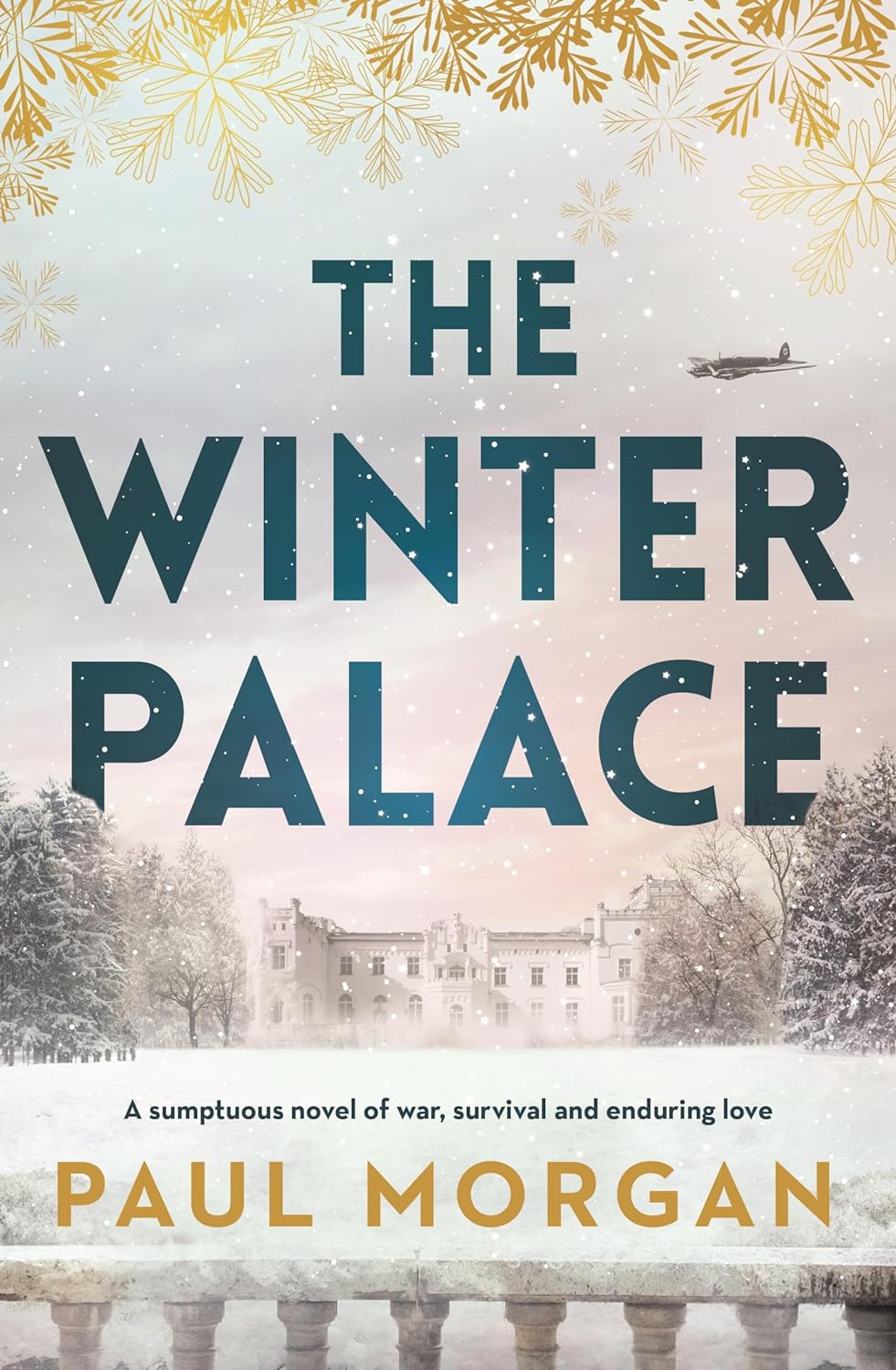
Quick Review – The Winter Palace by Paul Morgan

The Winter Palace Cover

Publisher: Penguin Books (Trade Paperback – 26 March 2024)

Series: Standalone

Length: 329 pages

My page: 4.25 out of 5 stars

Amazon

Compelling Australian author Paul Morgan presents an intense and intriguing historical drama that examines the tragic lives of a Polish husband and wife who find themselves torn apart by war and circumstance in The Winter Palace.

Plot Synopsis:

If he had died, I would know it in my heart.

In 1939, Anton, a captain in the Polish army, says goodbye to his wife, Elisabeth. He is leaving to defend their homeland against the invasion by Nazi Germany and Russia. They make a vow that – whatever happens, however much time passes – they’ll meet again at the Winter Palace, their stately home in the Polish countryside.

The winds of war draw them far apart. Anton is captured and sent to Siberia as a POW. He eventually joins a lost army that battles through snowstorms and scorching deserts in Central Asia to find freedom. Anton survives, driven by his determination to join Elisabeth again. She, meanwhile, is forced to be the ‘mistress’ of a Nazi officer before escaping to join the Polish resistance.

As the war ends, Anton and Elisabeth are at the opposite ends of the world. Anton is in Australia. Elisabeth is in Poland, awaiting his return for months and then years. Will they ever meet again at the Winter Palace?

From 1930s Europe to present-day Australia, this is a sweeping story of love that cannot be broken by time, distance, war or even death.

Morgan came up with a powerful and captivating tale in The Winter Palace which really hits hard.  Following Anton, a Polish military captain, and his wife Elisabeth, The Winter Palace features a well-planned-out split protagonist storyline that shows their respective dark journeys during the destructive chaos of World War II.

Both character-focused storylines are interesting and dark in their own ways, especially as the two protagonists go through hell and back as part of their respective war stories.  Anton’s plot follows the fate of the Polish soldiers who were captured during the joint Nazi and Soviet Invasion.  In Anton’s case, he experiences being a Soviet POW, a reluctant Soviet soldier fighting the Nazis, and then a member of the Allies when the Soviets send their freed Polish soldiers to Palestine.  Elisabeth’s story is more Poland focused, as she is forced to become a Nazi ‘mistress’ before escaping and finding purpose, first as a nurse, and then as a member of the Polish resistance.  Both storylines go in some very compelling directions, as the protagonists experience major traumas, tragedies and struggles, all while the two characters are convinced that they will never see their spouse again.

I honestly have a hard time saying which of these two storylines was my favourite, as both hit you in different ways.  Anton’s was possibly the more interesting to me as a fan of military history, and I found his constant struggle to survive the direct imprisonments he experienced to be both moving and intense.  There are some very direct tragedies in Anton’s experiences, including a particularly dark moment in the first half of the book, and I really found the story of the captured Polish soldiers to be extremely fascinating.  However, the other half the book that focuses on Elisabeth is just as dark, if not even more traumatic, especially as the protagonist experiences evil she can’t fight back against, at least not at first.  Watching her overcome her constant oppression and pull together a satisfying life that allows her to help people on many fronts was particularly inspiring, and I really enjoyed how her arc came together.

While these storylines are separate for the entirety of the plot, I felt that Morgan did a good job playing them off each other. The corresponding tragedies, the near misses in finding out each other’s fates, and the decisions they make as a result are all moving and captivating, and you are constantly enthralled to see if or how they will get back together.  I think that the ending Morgan left the book on was particularly moving, and it fit the overarching themes of the tragedy of war and not knowing about those left behind.  I also appreciated how Morgan didn’t overuse the trope of Australian descendants finding out the wartime secrets of their parents or grandparents.  Instead, readers were given a simple but highly effective connection to the present that ended the story on a thoughtful and peaceful note that was a great conclusion to such an intense story.

I really must emphasise how impressed and intrigued I was by some of the historical elements captured in The Winter Palace.  Morgan does an amazing job of showcasing various alterative experiences suffered by the Polish, from the initial invasion all the way up to the end of the war.  This includes a great rundown of how many citizens, especially women, were abused in Poland as the troops rolled in, which ensured a dark aura around the potential homecoming many characters were hoping for.  However, I found the historical details of the Polish soldiers and civilians captured in the opening days of the invasion to be the most interesting.  Watching the various hardships and journeys that these individuals had to go through during the war, including being POWs, having to fight alongside their former captors against the Nazis when they found themselves on the same side as the Soviets, and the transfer of their army to the Middle East to serve with the Allies on the Western front was extremely fascinating and it was an part of history you don’t see often in fiction.  These historical details from Morgan where some of my favourite parts of the book, and I deeply appreciated the compelling story he told around them.

Overall, The Winter Palace by Paul Morgan was an outstanding and compelling historical drama that really grabbed my attention.  Powerful, unflinching and focusing on a complex and dark period of our history, this was an emotionally charged and excellent read that is really worth checking out.

Amazon

The Defector by Chris Hadfield

The Defector Cover

Publisher: Quercus (Trade Paperback – 10 October 2023)

Series: The Apollo Murders – Book Two

Length: 369 pages

My Rating: 4.5 out of 5 stars

Amazon

Former astronaut turned thriller author Chris Hadfield returns with his second excellent novel, the intriguing and clever historical read, The Defector.

Back in 2021, I was lucky enough to receive a copy of superstar astronaut Chris Hadfield’s cool and much-hyped debut novel, The Apollo Murders.  Set during the Cold War, The Apollo Murders depicted an alternate history adventure where a fictional Apollo flight mission to the moon suffered all manner of calamity, including murder, treachery, and unexpected Russian hitchhikers.  Thanks to Hadfield’s knowledge of history and spaceflight, this turned out to be quite the gripping read, and The Apollo Murders ended up being one of my top debuts for 2021.  As such, I have been eager to see how Hadfield planned to follow up his first book, and I was quite excited when I saw that his second novel was a sequel to The Apollo Murders.  This book, The Defector, was an excellent and compelling thriller which I had a brilliant time getting through.

Israel, 1973.  On the eve of the Yom Kippur War, a Soviet test pilot makes the bold decision to fake a crash in his state-of-the-art MiG fighter and secretly land in Israel.  Claiming that he wants to defect to the United States, the pilot, known by his codename, Grief, and his plane are traded to the Americans, who desperately want to know the secrets of the MiG and how it achieves such impressive altitude.

Having witnessed Grief’s defection while on holiday in Israel, NASA flight controller and former Navy test pilot Kaz Zemeckis is quickly drafted in to take carriage of the captured MiG and to work with Grief to fully understand the plane’s limitations and capabilities.  Their unlikely partnership eventually takes them to the most secure and secret location in the United States, Area 51, where Grief looks set to provide all the information the Americans have ever wanted about the MiG.  However, not everything is as it seems, and it soon becomes apparent that Grief has his own reasons for wanting to defect to the United States.  Can Kaz get to truth before it is too late, or has he let a wolf right into the heart of America’s most secret air base?

This ended up being an excellent and exciting novel from Hadfield that successfully follows up his original debut and provides a cool and intense new story that proves very hard to put down.  Hadfield tells a pretty tight and compelling story in The Defector that starts strong with the mysterious Grief defecting right in the middle of the Yom Kippur War.  This initial excitement morphs into an intense and gripping game of cat and mouse, as Kaz attempts to utilised Grief’s knowledge and keep his defection secret from the Soviets, while the Russian pilot works to initiate his own plans.

This continues for much of the book, and I thought this ended up being a much more focused and well-structured thriller narrative than we previously saw from Hadfield in The Apollo Murders.  The focus on espionage and military secrets was a great centre for the plot, and Hadfield did a good job on also utilising some intriguing characters, especially Kaz and the mysterious Grief.  The inclusion of a couple of fictional supporting characters from The Apollo Murders, namely a cosmonaut and a major Soviet antagonist, was also quite interesting, although as they were mainly there to set up a future entry in the series it did disrupt the narrative flow a little.  Everything leads up to the big conclusion, which Hadfield set up nicely throughout the course of the story.  While I do think that Hadfield might have considered utilising a twist to change the antagonist around, it was still really fun to see the full plan unfold, as well as the real reasons behind the defection.  Watching the manipulation and the resulting violence unfold was very impressive, and it led to a satisfying, if slightly predictable, final showdown with the protagonist that ended everything on a high note.

I really enjoyed how well The Defector came together, especially as Hadfield reused all his best writing elements from The Apollo Murders, while also strongly utilising his own personal experiences and knowledge as a test pilot.  The constant switching between perspective characters, as well as several interludes and flashback sequences, helped to produce a complex, multilayered storyline, and I liked seeing the various players in the plot attempt to work out what everyone else is doing.  It also allowed Hadfield to hide some good hints about the antagonist’s true motivations and feelings, which came out perfectly at the end of the book.  There was also some great character growth around the protagonist Kaz, especially as Hadfield successfully built on his personality and relationships from the first book, and it is clear that the author has some future adventures planned for him.

However, the real strength of The Defector lies in Hadfield’s encyclopaedic knowledge of military airplanes, Cold War espionage history and spaceflight, which was masterfully inserted into the plot.  Much of the plot revolves around the desire for both sides of the Cold War to get a better understanding of their opponent’s aircraft capability, and Hadfield expertly examines the history and mechanics around this.  The discussions about aircraft, fighter capabilities and more, are all quite fascinating, and Hadfield does a wonderful job of exploring them in a highly detailed way that readers unfamiliar with aircraft can easily understand.  His experience also allows for some highly realistic and intense aerial combat sequences, and I really enjoyed the elaborate scenes that resulted, especially the cool conclusion.  This grasp of aircraft, the history surrounding their development, and the espionage involved, are well worked into the plot of The Defector, and I loved how much it increased the authenticity of the book, making it so much better.

Overall, The Defector was an outstanding second novel from Hadfield that I had a wonderful time reading.  Containing a clever and well-paced spy thriller narrative loaded with intriguing details about aircraft and the cold war, The Defector had me hooked from its first awesome scene, and I managed to power through this book in no time at all.  Compelling and action packed, The Defector was an outstanding follow-up to The Apollo Murders and I cannot wait to see what Hadfield writes next.

The Defector Cover 2

Amazon

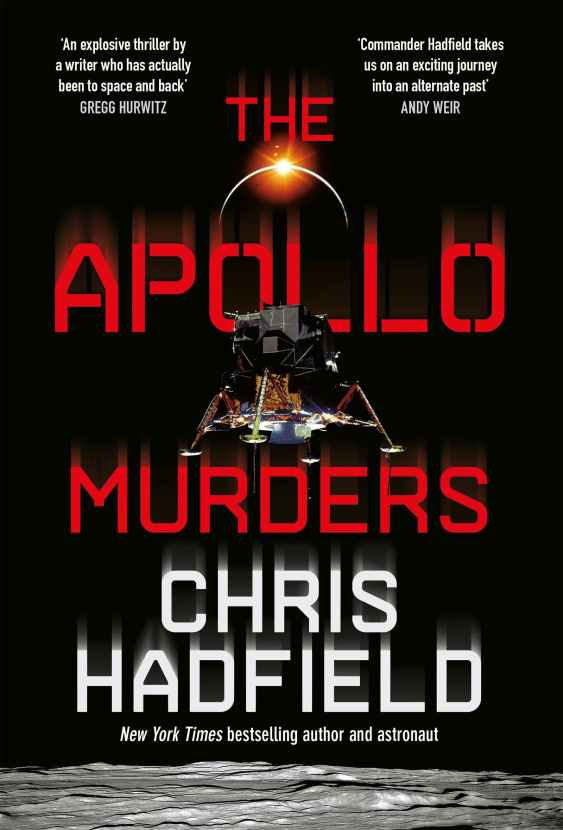
The Apollo Murders by Chris Hadfield

The Apollo Murders Cover

Publisher: Quercus/Hachette Audio (Audiobook – 12 October 2021)

Series: Standalone/Book One

Length: 15 hours and 14 minutes

My Rating: 4.5 out of 5 stars

Amazon

Prepare for one of the most impressive and complex debuts of 2021, with the exciting alternate history science fiction thriller, The Apollo Murders, by former astronaut Chris Hadfield.

In 1973, former test pilot turned government liaison officer Kazimieras “Kaz” Zemeckis arrives at Huston to supervise NASA’s latest voyage into space for their 18th Apollo mission.  On paper, NASA plans to send three astronauts to the moon, seemingly on a scientific expedition.  However, Kaz is also under orders to prepare the military astronauts on board for a covert operation to investigate the Russians’ recent rover mission to the moon as well as a secret spy satellite orbiting Earth that could give the Soviets an invaluable advantage in the Cold War.

As the crew prepares for their mission, tragedy strikes when a helicopter crash results in the death of one of the astronauts.  Forced to take on a new crew member at the last minute, the team launches and begins to make for their primary mission, the spy satellite.  However, the Americans are unprepared for the satellite to be manned by Russian cosmonauts determined to defend their station.  The encounter results in a terrible accident and a cosmonaut being trapped aboard the Apollo craft as it hurtles towards the moon.

As the American and Soviet governments argue over the unfortunate events, the Apollo crew attempt to undertake a moon landing with limited crew and resources.  Forced to work together with their Russian stowaway, the crew begins to descend towards the moon on an apparent joint venture.  However, back on Earth, the Soviet government is determined to turn this to their advantage by any means necessary, even if it means utilising a long-hidden intelligence asset.  Worse, it soon becomes clear that the helicopter crash that killed one of the astronauts was no accident.  Forced to contend with the knowledge that an Apollo astronaut in space might be a murderous saboteur with nothing to lose, Kaz and the flight team at Huston can only watch helplessly as events unfold and the future of space travel is changed forever.

This was a pretty impressive debut from Chris Hadfield, who really showed a lot of talent in this book.  Hadfield, a former astronaut known for his excellent rendition of ‘Space Oddity‘ filmed aboard the ISS, was able to construct a compelling and fast-paced novel with an amazing story to it.  Combining detailed science with a complex alternate history thriller, The Apollo Murders ended up being an excellent and powerful read that I deeply enjoyed.

At the heart of this novel lies a captivating and multilayered narrative surrounding a doomed mission into space.  Set in the 1970s during the golden age of spaceflight, The Apollo Murders follows a fictional 18th Apollo mission that goes very differently than intended, with fantastic espionage thriller elements combining with the science and historical fiction storyline.  Told from a huge range of different perspectives, this book initially focuses on the planning for an Apollo flight, which intends to both explore the moon and disable a Soviet spy satellite.  However, the story takes a turn when one of the astronauts is killed, and from there the story ramps up as the astronauts blast off into space while the other characters, both American and Russian, attempt to follow them while also conducting their own investigations and espionage missions.  The novel has an explosive middle, in which the American and Soviet astronauts encounter each other in space with disastrous results.  The consequences of this encounter lead into an epic second half filled with lies, deceit, sabotage and backstabbing, as two characters in space attempt to manipulate the situation to their advantage, while everyone on the ground, including Kaz, the astronauts, mission control, the Russians and a variety of other characters try to influence what is happening.  This all builds to one hell of a conclusion, with interesting consequences for several of the characters, and one surprise after another.

I really enjoyed this cool story, and I loved the fun blend of genres that Hadfield featured throughout it.  On paper, a thriller and murder mystery set around a fictional historical space flight seems a bit too complex for its own good, but Hadfield made it work, and the story is crisp and easy to follow, with none of the component parts overwhelming any of the others.  The reader is swiftly drawn into the story and it was fun to see everything unfold, especially as Hadfield ensures that you can see all the various angles and treacheries as they occur.  The author made excellent use of multiple character perspectives to tell a rich and captivating story, and it was extremely fun to see how the various characters viewed the situation and reacted to certain events.  Each of the characters featured in this novel is set up extremely well, and the reader quickly get to see their unique personalities, history and motivations surrounding the events of this book, which makes them extremely relatable and easily to follow.  While the identity of the person responsible for the murder at the start of the novel was a tad obvious, Hadfield uses this to its full advantage, helping to establish the book’s main antagonist, turning him into quite an arrogant and unlikable figure whom the reader really starts to root against.  It was really fascinating to see all the various character arcs and storylines come full circle by the end of the narrative, and The Apollo Murders ended up being a brilliant and compelling self-contained novel.

Easily one of the best things about The Apollo Murders was the incredible amount of detail about space flight and the science of space featured within.  Throughout the narrative, Hadfield spends an amazing amount of time explaining all the relevant science and technology that is relevant to the plot as the protagonists encounter it.  At the same time, the author also features a ton of relevant anecdotes or discussion about the history of spaceflight up to this point, which often serves to highlight the scientific information being provided at the same time.  All of this is worked into the plot extremely well, and the reader is soon given insight into what the characters are doing and the significance of their actions.  While all this information had the potential to be extremely overwhelming, Hadfield manages to dole it out in appropriate snippets, ensuring that there is never too much science or history in one scene, only enough for the reader to follow what happens.  This information is usually very easy to follow, and Hadfield’s writing style ensures that all the relevant facts are explained appropriately as the reader requires.  As such, the reader is never left confused at any point, and it leaves them open to enjoy some of the epic scenes.  I really must highlight some of the great spaceflight sequences featured throughout this book, including some of the epic take-off and landing scenes.  Hadfield really paints a beautiful picture here with his writing, and the reader gets a detailed understanding of every element of the flight and what the astronaut characters are experiencing or attempting to do.  These spaceflight elements are extremely well written, and I really must commend Hadfield for the work he put into making them seem as realistic and accurate as possible.

I must also highlight the great historical elements featured in this novel.  I rather expected this to be one of the weaker spots of the book, especially with so much focus on the spaceflight or the thriller parts of the book.  Instead, the reader is treated to a detailed and compelling discussion about the state of the world in the 1970s, especially surrounding the Cold War and the capabilities of both America and the Soviet Union.  A lot of this history relates to space travel, which is probably why Hadfield knows so much about it, and he uses it to great effect throughout the novel, giving the story an appropriate feel.  However, Hadfield also takes the time to examine the competing nations of America and the Soviet Union, and there are some brilliant scenes set in both, especially when it comes to the covert geopolitical battle occurring between them.  Hadfield portrays this period perfectly, and I especially liked his great use of multiple real historical characters, including politicians, NASA flight crew, espionage heads and even a few famous astronauts such as Alan Shepard, all of whom played vital roles in fleshing out the espionage elements of the plot.  While a lot of this book is based on historical events and facts, it is set around a fictional 18th Apollo mission.  This alternate history element is a fun part of the book, and I really appreciated the way in which Hadfield tried to envision how the various governments would react to such as disastrous mission to the moon.  I feel that Hadfield captured the political and social elements of this period extremely well, and I really appreciated this examination into history, especially as it combined with the thriller and space faring elements of the book extremely well to produce an outstanding and compelling narrative.

While I did receive a physical copy of The Apollo Murders, I was unable to resist the audiobook version, which proved to be really impressive.  With a run time of just over 15 hours, I was able to power through this audiobook quickly, especially once I got engrossed in the cool story.  I felt that the audiobook format was very conducive to following the various scientific elements featured throughout the novel, and I had a wonderful time imagining the elaborate space manoeuvres brought to life by the narration.  However, the main reason that I wanted to listen to this book was due to its narrator, Ray Porter.  Porter is one of the best audiobook narrators in the world today, and I am a big fan of his voice work in the thrillers of Jonathan Maberry (such as Code Zero, Deep Silence, Rage, Relentless and Ink).  Porter ended up providing an excellent narration for The Apollo Murders, with each of the various characters presented with a compelling and fitting voice that fit their personalities and nationalities.  While it was a bit weird in places to hear a voice from one of the other books I have heard him narrate, Porter was able to produce an excellent flow throughout The Apollo Murders, and the story swiftly moved across at a great pace.  This ended up being an excellent way to enjoy this novel and I would strongly recommend checking out this audiobook version of The Apollo Murders.

The Apollo Murders is a brilliant and powerful literary debut from former astronaut Chris Hadfield, who blew me away with this amazing first novel.  The Apollo Murders contains a fantastic and complex story that blends several genres into an exciting and clever read that takes the reader on a wild and thrilling adventure into space.  Featuring a deeply fascinating look at historical space flights and based around a fictional 18th Apollo mission, The Apollo Murders was one of the best debuts of 2021 and I had a fantastic time listening to it.  This is a great novel to check out and I cannot wait to see what Hadfield writes next.

Amazon

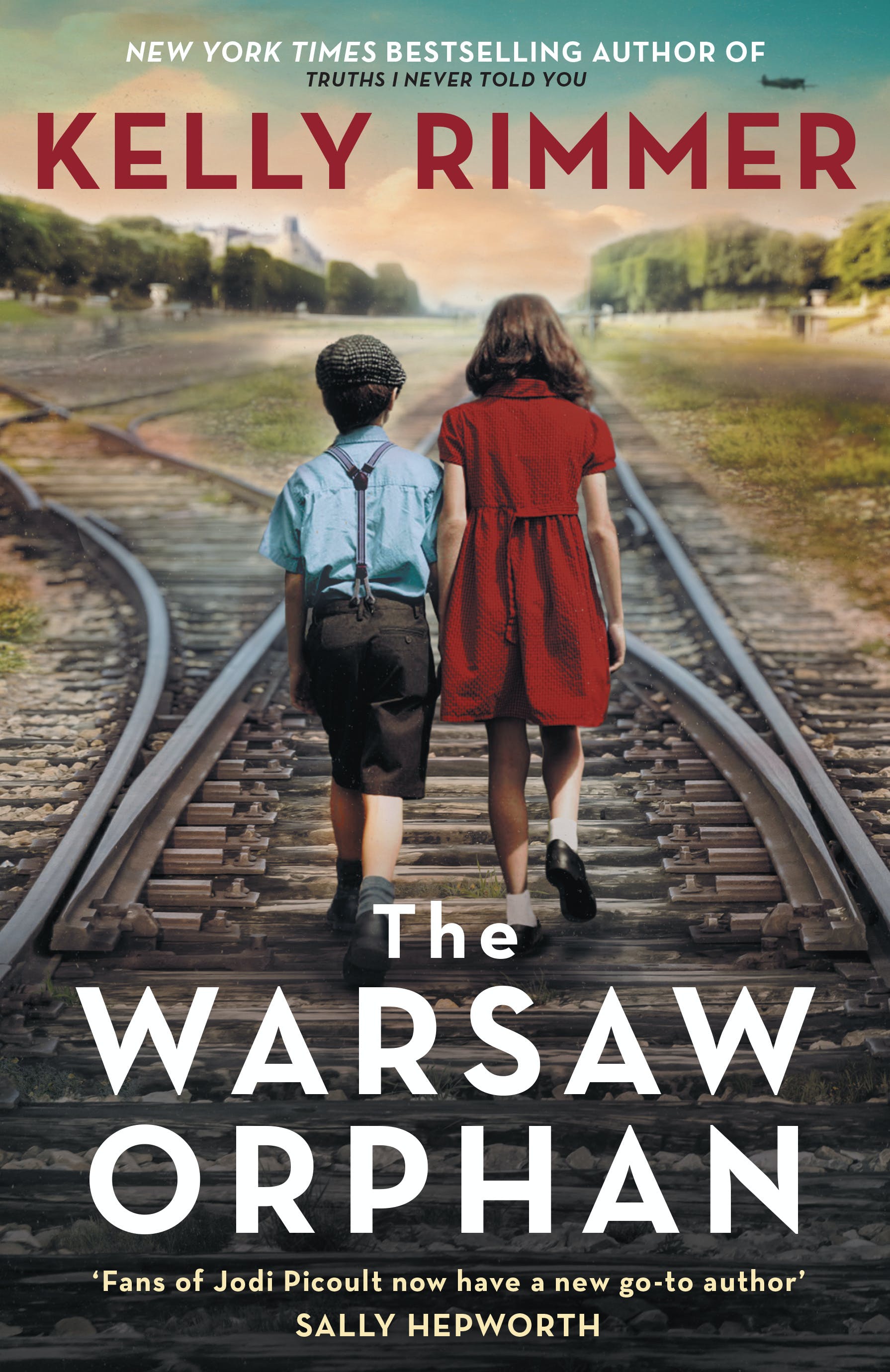
The Warsaw Orphan by Kelly Rimmer

The Warsaw Orphan Cover

Publisher: Hachette Australia (Trade Paperback – 28 April 2021)

Series: Standalone/sequel to The Things We Cannot Say

Length: 416 pages

My Rating: 5 out of 5 stars

Amazon

Prepare to have your heart broken again and again as Australian author Kelly Rimmer presents a captivating, powerful and dark historical drama, The Warsaw Orphan.

Warsaw, 1942.  The Nazis have a firm control over all of Poland and have moved the entire Jewish population into the infamous Warsaw Ghetto.  Vastly overcrowded and with limited supplies, life is extremely hard in the Ghetto, and many have given up all hope.  For Jewish teen Roman Gorka, all he can do is try to survive and earn enough to keep his family alive.  However, when rumours spread through the Ghetto about the Nazi plans to transport them to “work camps” out in the forest, Roman knows that it is time to act.  Knowing that the lives of himself and his parents are already forfeit, Roman attempts to find a way to save his younger siblings.

At the same time, a young woman, Elzbieta Rabinek, has just arrived in the city and appears to be a typical Polish girl living with her family.  However, Elzbieta is hiding a dangerous secret: her real name is Emilia, and she is the younger sister of an executed Jewish sympathiser.  Fleeing her village with her new family, Emilia is kept hidden from any potential pursuers.  But when Emilia discovers the truth about the Ghetto, she becomes determined to help and joins an underground group of women working to smuggle Jewish children to safety.

As Emilia becomes more involved with the secret work of her organisation, she soon encounters Roman.  Working together to save Roman’s younger sister, the two grow close and soon their fates are inevitably tied together.  But when a terrible tragedy strikes, both Roman and Emilia will be thrown into disarray.  As Warsaw becomes overwhelmed with fire and despair, can these two young people survive with hope, or will they be washed away in a flood of righteous anger?

Wow, just wow.  This was an incredibly touching historical drama that has really impressed me thanks to its moving story and striking portrayals of life in World War II Warsaw.  The Warsaw Orphan is the latest novel from Australian author Kelly Rimmer, who has previously produced moving novels such as Truths I Never Told You and Before I Let You GoThe Warsaw Orphan is actually a sequel to Rimmer’s previous book, The Things We Cannot Say, with some of the supporting characters from the previous novel appearing in more prominence in this latest novel.

I was lucky enough to receive a copy of The Warsaw Orphan a few weeks ago and thought it sounded like an intriguing novel, especially as it was from a new-to-me Australian author.  Based on the synopsis for the book, I knew going in that this would be a dark and emotionally rich novel, but I was very surprised with how compelling and poignant the narrative it contained would be.  Using the perspectives of the two narrators, Roman and Emilia, Rimmer paints a grim and powerful picture of the situation in Warsaw which the two protagonists find themselves in at the start of the book.  Both story arcs progress on their own separate way for a while, and it is intriguing to see the different experiences of two people living only a few streets away from each other in Warsaw.  It does not take long for the protagonists to encounter each other, combining the narrative together.  While the initial joining of their character arcs brings some hope to the story, Rimmer makes sure to quickly crush that with despair and heartbreak as both protagonists experiences tragedy after tragedy, as a series of different historical catastrophes engulf Warsaw and its people.  Every time the two central characters appear to be close to some sort of happiness, some new danger or disaster seems to befall them, and the reader is forced to sit back and watch as they endure their latest hardship.  While this novel is emotionally tough to read at times, Rimmer’s excellent storytelling ensures that you keep moving forward, especially as you become really invested in the lives of her two protagonists and the struggles of the various peoples of Warsaw.  While you may be left emotionally ragged and drained by the end of this book, readers will come away from this story extremely satisfied and with a little bit of hope.

I must really highlight the author’s outstanding and powerful depiction of historical events and places throughout The Warsaw Orphan.  Rimmer has clearly done her research on the subject and utilises a lot of fascinating and horrifying historical elements to great effect throughout the narrative.  For example, much of the story surrounding Emilia and the organisation she joins that helped to smuggle Jewish children out of the Ghetto is based on real life Polish hero Irena Sendler, with various features of Sendler’s work and personality imparted on some supporting characters.  The portrayal of occupied Warsaw is also extremely impressive, and you get a real sense of life in the city.  This is especially true of the Ghetto, as the author spends a significant amount of time exploring what happened within.  Rimmer pulls no punches when it comes to the horrors of the Ghetto and the brutalities the Nazi regime imparted on the Jewish population.  The various descriptions of the Ghetto are extremely harrowing, but through them the reader gets a sense of what the people within would have experienced.  I particularly appreciated the way in which she tried to capture the uncertainty that many of the characters, both Jewish and non-Jewish, had about the Nazis’ plans and you get a real sense of the fear and confusion in the lead up to the deportations.  Rimmer ends up covering all the key events that occurred in Warsaw between 1942 and 1947, and readers get some powerful and detailed views of the forced deportations to the camps, the Warsaw Ghetto Uprising, the Warsaw Uprising, the German retreat and the subsequent Soviet occupation.  The author shows every dark aspect of these historical events as her point-of-view characters find themselves involved in them, often to their great detriment.  All these powerful and remarkable historical events and locations serve as a great backdrop to this dramatic tale, and I found it fascinating to learn more about some of these events.

Rimmer has come up with an incredible pair of young point-of-view characters for this book, Roman and Emilia.  Roman is a Jewish teen living in the Warsaw Ghetto with his family.  Through his eyes you get to see many of the horrors of the Ghetto, starvation, Nazi oppression and the constant fear and death.  Rimmer does an impressive job of capturing the inner thoughts and feelings of someone caught up in these terrible events, and I really appreciated the strong sense of survival and desperation you get from him.  This quickly morphs in anger, righteousness and revenge when Roman experiences one tragedy too many, and he becomes in a number of dangerous fights against his oppressors.  Not only does this result in a number of brutal war sequences, but Rimmer paints a picture of a rebellious soul whose anger and moral outrage overwhelm his senses and force him to do darker and more dangerous deeds.  This depiction of anger and rage is quite powerful, and definitely fits an individual who loses everything and does not know what to do.

Emilia, on the other hand, is a somewhat more innocent figure, who, despite not being Jewish, has her own experiences with oppression after witnessing her brother dying in The Things We Cannot Say.  Due to the events of this previous book, she has fled to Warsaw with her adoptive parents, hiding under an assumed name.  Despite the troubles she is running from, Emilia chafes under the rules her guardians put in place, especially once she learns what is happening in the Ghetto.  Despite her fear, uncertainty and loyalty to her guardians’ wishes, Emilia soon becomes involved in the smuggling of children.  I really liked how Rimmer decided to utilise her previous character in this novel, and the author does a great job of revisiting parts of her story so that new readers can appreciate what has happened in her past.  Emilia proves to be a really interesting character throughout the book, and I loved the contrast in views between her views of Warsaw and Roman’s darker experiences.  Watching a non-Jewish citizen experience the horrors of the Ghetto for the first time is pretty moving, and the reader feels a certain kinship to her as they are also witnesses to the various tragedies.  I loved the storyline surrounding Emilia joining the movement to save Jewish children, and the author utilises her to tell this group’s very unique tale extremely well. 

Both Roman and Emilia have some fantastic storylines in The Warsaw Orphan, and I really liked the way their two separate character arcs come together.  These two characters experience an immense amount of grief, regret, violence and despair throughout the book, and their connection is one of the few things to keep them going.  Rimmer sets up both characters extremely well throughout The Warsaw Orphan and readers will quickly become obsessed with their unique tales and harrowing experiences.  I think both character storylines worked extremely well on their own, but together they tell an even more tragic story, as these two fall in love amongst the worst moments of human history.  Seeing the various tragedies and poor decisions that impact their relationship is pretty heartbreaking, and the reader is left in hope that they both survive in the end.  I think that Rimmer did an exceptional job creating and developing these two characters, and it is a mark of her writing ability that I ended up caring so much for them both. 

The Warsaw Orphan by Australian author Kelly Rimmer is an exceptional and incredible historical drama that comes highly recommended.  Rimmer has produced a first-rate story that perfectly utilises two tragic protagonists, an extremely dark and atrocious historical period and an addictive, if tragic, story of love, loss and survival.  The Warsaw Orphan is a powerful and compelling book that will stick in your mind long after you finish its final harrowing page.

Amazon

Heads You Win by Jeffrey Archer

Heads You Win Cover.png

Publisher: Macmillan

Publication Date – 30 October 2018

Amazon

From the mind of one of modern fiction’s most controversial authors comes a two-in-one fantastic and elaborate piece of historical fiction that utilises an intriguing narrative device to create one of 2018’s most unique stories.

Young student Alexander Karpenko is the bright, talented and ambitious child of two hardworking citizens of the Soviet Union.  Living in Leningrad in 1968, Alexander’s dream is to become the first democratically elected president of his country.  However, when he is betrayed and his father is killed by the KGB, Alexander and his mother realise that their only hope is to flee Russia and make a new life for themselves in another country.

Arriving at the docks, Alexander and his mother are given a choice between two different ships: one heading to London or one heading to New York.  The decision is made by the flip of a coin, and Alexander’s life splits into two separate paths: one where he heads to Britain and one where he heads to America.  Alexander arrives in these countries with great ambition and a desire to succeed no matter what.

Over the next 30 years, in both these lives, Alexander finds success in a two separate ways.  He fights his way up from the bottom as a lowly immigrant to an influential person, overcoming obstacles and antagonists along the way.  Both Alexanders’ journeys are inspirational, but no matter what these two Alexanders accomplish, the fate of their home country is always on their minds, and the shadow of the Soviet Union constantly surrounds them.

Jeffrey Archer is a rather interesting individual, with a very eventful and controversial background.  A former British MP, Archer is probably better known for the various accusations of fraud he has attracted throughout his life, and he has even spent some time in jail as a result.  However, rather than let that ruin his public profile, Archer has used his experience and imagination to create a number of fascinating novels, many of which utilise aspects of his political, academic or professional life or expertise to some degree.  As a result, Archer is now one of the most high-profile authors in the world and has written over 20 adult novels, including the three books in his Kane and Abel series and the seven books in his bestselling Clifton Chronicles.  On top of that, Archer has also written a number of short stories, a couple of plays, several children’s books and his Prison Diaries, three non-fiction novels that chronicle his life in prison.

Heads You Win is an extremely fascinating novel from Archer, which takes his protagonist on two separate adventures through over 30 years of American and British history and life.  Archer utilises a very clever divergent timelines narrative device (think Sliding Doors), which creates two separate timelines around the different outcomes of one event, in this case, the outcome of a coin toss.  As a result, in one timeline, the protagonists and his mother get on a ship to London, while in another timeline they board a ship bound for New York.  This is a very interesting concept to utilise in this story, and one that works to create two separate narrative threads to follow.  Both of these storylines focus on the protagonist attempting to find his place in the country that he eventually ends up in, and then moves onto the protagonist becoming a powerful and influential individual in his own way, all the while dealing with the terrible people that seem to inhabit Archer’s world.

I rather enjoyed both of the separate storylines in this book, and had a lot of fun seeing the different or similar ways that the protagonist attempted to make his fortune in each lifetime.  The differences between these two storylines happen right away, as in the London timeline, Alexander and his mother find themselves on a nice ship with a friendly crew who mostly want to help, while the New York timeline finds them in a poorly maintained vessel with a self-serving crew who seek to exploit the two main characters.  I found it rather fascinating to see the way that their treatment and the environments they find themselves in change the way in which they act.  For example, Alexander’s experience in the English setting encourage him to seek the full Cambridge academic lifestyle, while his American counterpart was less focused on his formal education and learned more on the street.

Both of these divergent timelines feature an intriguing look at the cities and countries that the protagonists end up in, and both serve as a good historical backdrop to each of the main storylines, featuring several real historical events and some historical characters.  For example, the Alexander who ends up in the American timeline is forced to fight in the Vietnam War, while the British Alexander rubs elbows with a number of the country’s prominent politicians.  I liked how the divergent ways that the two separate protagonists gained their power and prestige matched the country that there were in.  The American Alexander became rich through his business acumen and financial brilliance, while the British Alexander went the academic route and eventually become deeply involved with the British political system, something close to the author’s heart.  Not only does this help match the locations and people that the protagonist deals with, but it allows the two separate stories to diverge out slightly, with the British storyline containing political intrigue, while the American storyline reads a little bit more like a financial thriller.  While the focus on the protagonist’s two adopted homelands is a great part of this novel, the protagonist’s history in the Soviet Union is a major part of this story.  The initial chapters capture the uncertainty and despair that inhabitants of the Soviet Union would have felt in the 1960s, while the character’s subsequent visits helped highlight the obvious differences between the Soviet Union and the countries that Alexander escaped to.  There is also a rather exciting reveal about one of the Russian characters towards the end of the book that will prove to be the most memorable part of Heads You Win, and is definitely something to look out for.

While I enjoyed the divergent timelines narrative device that Archer employed throughout Heads You Win I did feel that he could have done more with it.  I would have loved to see a bit more crossover between the two separate timelines, and, for example, see how key characters from one storyline would have fared without their Alexander in their lives.  Instead there is minimal crossover between these two separate storylines, which feels like a bit of a missed opportunity.  I am also not the biggest fan of what these quick crossovers revealed, as it strongly hinted that both storylines actually exist together at the same time, and as a result, there are two Alexanders existing in the world at the same time.  This is a bit of a weird twist, and while it does not negatively impact the vast majority of either storyline, it does result in a conclusion that some may find slightly confusing.  As a result, while this did slightly mark down my rating of Heads You Win, the split storyline concept is a fantastic and unforgettable part of this book and makes it quite a distinctive read.

This latest novel from one of the world’s most colourful professional authors is a fun, historical thrill ride that features a very unique and memorable narrative device.  With a great look at two different countries during the same historical time period and featuring two separate by similar stories of life, adversity and success, this is an extremely enjoyable novel that will appeal to a varied range of readers.  Heads You Win is definitely worth checking out, and I am planning to keep an eye out for the next read from Archer.

My Rating:

Four stars

Amazon

The Lace Weaver by Lauren Chater

The Lace Weaver Cover.jpg

Publisher: Simon & Schuster

Publication Date – 19 March 2018

Amazon     Book Depository

Love, war, suffering, oppression, hope and lace all come together in this emotionally charged debut from Australian author Lauren Chater.

It has been two years since the outbreak of World War II.  Following their respective expansions, Nazi Germany and the USSR now control much of Europe between them.  The small country of Estonia, located on the border of the USSR, has been occupied by the Soviets and is now controlled by Stalin’s Red Army, who have brutally installed their communist ideals.  Now all of Estonia’s resources are controlled by the Soviets and any signs of opposition are brutally cracked down on.

In the middle of this horrific occupation lives Katarina, a young Estonian woman whose family survives because their farm produces food for the occupying forces.  While the Soviets are attempting to control all parts of Estonian life, Katarina works to preserve her family’s culture through their lace shawls, which contain intricate and unique patterns and stories.  She must also deal with her feelings for her old friend Oskar, who is leading the revolution against the Soviets.

At the same time in Moscow, another young woman, Lydia, lives an ostensible life of privilege, but is really living in a gilded cage, controlled by her ruthless guardian.  Fleeing to Estonia, the land of her mother, Lydia attempts to find sanctuary but finds out just how far her captivity truly extends.

When a Soviet crackdown forces Katarina and Lydia together, these two women must find a way to survive the horrors of the occupation.  As they become part of Oskar’s resistance against the Soviets, Katarina and Lydia must learn to work together, even when Lydia falls for Katarina’s brother Jakob.  But their situation is about to get even worse, with the forces of the Third Reich set to invade.

This is fantastic first book from Chater, who has woven together an amazing tale filled with great characters and an outstanding and underused historical location.  This book is also an extraordinary piece of dramatic literature.  All of the main characters experience significant loss, heartache and disappointment as they attempt to survive the most turbulent time in our world’s history.  These heartbreaking losses of friends, family and other loved ones draw the reader in, while Chater’s fantastic writing makes them feel the character’s loss and grief as she highlights the brutal reality of those caught in the middle of war.

Perhaps the most memorable part of The Lace Weaver is the story’s central setting of Estonia.  During World War II, Estonia was in the unfortunate position of being one of the countries that fell between the Soviet Union and Nazi Germany.  Estonia was a significant theatre of war where many horrors occurred, and yet very few novels focus on this part of World War II.  Chater’s decision to focus on this underused period of war history is intriguing, and she has done a commendable job of calling attention to the horrors experienced by the Estonians during the time that they were occupied by two of the world’s most brutal regimes.

Estonia was brutally occupied by the Soviets in 1940, and a large portion of this book is set during this period.  Chater does an amazing job of describing this brutal period through the eyes of her Estonian characters.  There is a serious sense of dread from these characters as they anticipate what horrible crimes might occur next.  The descriptions of the Soviet soldiers’ brutality and contempt for the Estonians is at times harrowing, and there is one sequence describing a mass deportation that will stick in the reader’s mind.  While the scenes describing the occupation of the Soviets are pretty distressing, one of the most disturbing parts of this story is that for much of the book many of the characters, especially Oskar and Jakob, believe that their salvation and freedom could be granted to them by the Nazis.  Reading this can prove to be disquieting as you are forced to watch the characters help the Nazis occupy their country.  The characters working out what they have let into their country is chilling to behold, and by this point readers will be desperate to see what happens next in Estonia.

In addition to focusing on the terrible occupations Estonia suffered during the war, The Lace Weaver also contains an insightful look into some aspects of Estonian culture.  This is mainly shown through the use of the lace shawls, which are described as an important part of Estonian culture and history.  Chater spends a large part of the book investigating these shawls, and the reader soon appreciates their importance.  Katarina spends a significant part of her narration describing the significance of these shawls to her family, and her interactions allow the readers to see how vital they were to her social and familiar circles.  These shawls are also very important to the story as they draw many of the characters together, especially the two main characters, Katarina and Lydia.  The scenes in which the shawls are being worked can also be seen as an indicator of the periods when the characters are managing to survive and have some hope for the future, and are to be cherished, especially as the reader grows to care for these characters.

There are some great characters within The Lace Weaver that readers will find themselves deeply invested in.  Narration of this story is split evenly between the two main characters, Katarina and Lydia, both of whom have unique stories to tell.  Lydia’s transformation from a sheltered girl in Russia to a hardboiled Estonian survivor is particularly gripping, and revelations about who she actually is offer big thrills in the first part of the book and up her personal stakes.  Katarina’s story of survival and her attempts to keep the cultural ways of life she inherited from her beloved grandmother are also heartfelt and compelling.  The unique stories that these two characters have are deeply absorbing and emotional, and Chater does a masterful job of eventually combining these two stories together into one extraordinary and captivating tale.

The Lace Weaver is a deep and emotional wartime drama that makes full use of its dark setting, rare historical fiction location and amazing characters.  Australian author Lauren Chater has produced a very impressive first book and readers will fall in love with this fantastic tale.

My Rating:

Four stars

Amazon     Book Depository