
Quick Review – The Paris Agent by Kelly Rimmer

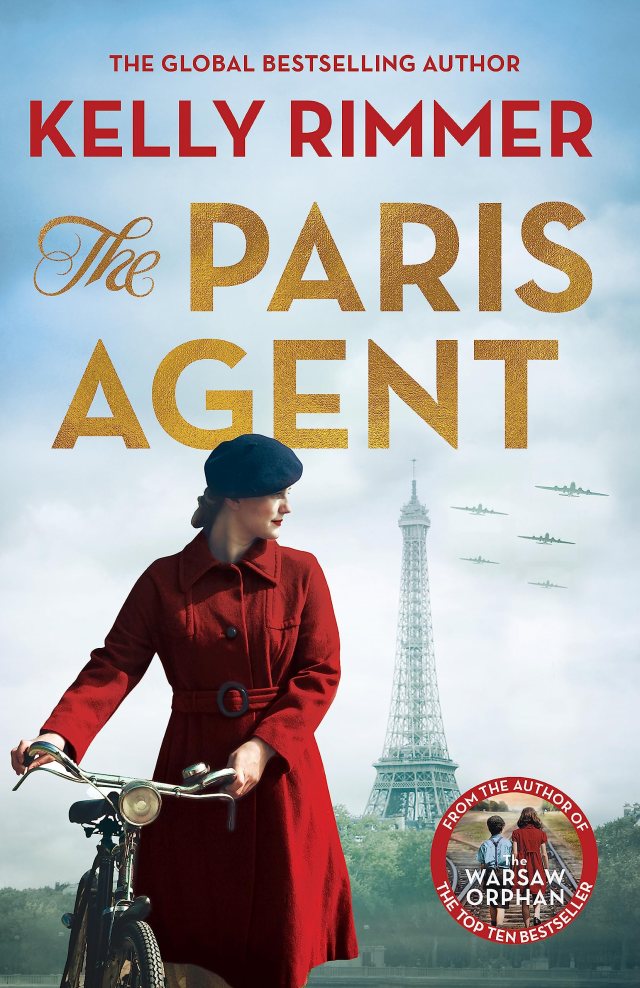
The Paris Agent Cover

Publisher: Hachette Australia (Trade Paperback – 28 June 2023)

Series: Standalone

Length: 337 pages

My Rating: 4.5 out of 5 stars

Amazon

One of Australia’s premier authors of historical fiction, the supremely talented Kelly Rimmer, returns with another moving and intense novel that dives into the horrors of World War II, The Paris Agent.

Over the last couple of years, I have been deeply impressed with the works of Kelly Rimmer, a well-established Australian author whose previous novels have been excellent historical dramas set during the Second World War.  Rimmer’s books are pretty spectacular, as they masterfully blend powerful personal stories with intense depictions of key parts of the war, especially those involving the evils of the Nazi regime.  Her last two books, The Warsaw Orphan (one of my favourite Australian books of 2021) and The German Wife (one of my favourite books and Australian books of 2022), were exceedingly moving, and I now make it a point to grab her new books each year.  Her latest novel, The Paris Agent, presented the reader with an interesting new story, one that focuses on female espionage agents in occupied France.

Plot Synopsis:

Two otherwise ordinary women become spies in WWII France in this sweeping new novel of historical suspense by New York Times bestselling author Kelly Rimmer

Twenty-five years after the end of the war, ageing British SOE operative Noah Ainsworth is reflecting on the secret agent who saved his life when a mission went wrong during his perilous, exhilarating years in occupied France. He never knew her real name, nor whether she survived the war.

His daughter Charlotte begins a search for answers. What follows is the story of Fleur and Chloe, two otherwise ordinary women who in 1943 are called up by the SOE for deployment in France. Taking enormous risks with very little information or resources, the women have no idea they’re at the mercy of a double agent within their ranks who’s causing chaos.

As Charlotte’s search for answers continues, new suspicions are raised about the identity of the double agent, with unsettling clues pointing to her father.

This was another powerful and clever novel from Rimmer, who takes on another aspect of World War II and weaves together an outstanding story.  The focus on Allied female spies being dropped into occupied France is a well-established and highly utilised topic in historical fiction and historical dramas, and Rimmer manages to produce a very distinctive read in The Paris Agent that I found very hard to put down.

To tell her story, Rimmer utilises an excellent multi-perspective narrative, with some interesting time differences also added in for each of the timelines.  The first timeline, shown from the perspective of Charlotte, is set in 1970, and follows the protagonist’s attempts to find out more about her amnesic father’s activities during the war after she finds out he was a spy in France.  The other two storylines focus on the characters of Fleur and Chloe respectively.  Both characters were dropped into France at different points of the war to do their own specific missions, including committing sabotage and investigating reports that the local network had been compromised.  These two past storylines are set across a couple of years in the war, with the two protagonists interacting with each other, and Chloe’s father, Noah, at various points, and together the three storylines wrap together to provide a complex and powerful narrative of espionage, personal relationships, and betrayal, all set in front of the brutal Nazi occupation of France.

All three stories are brought together throughout the course of The Paris Agent, and I liked the complex and intriguing narrative threads that emerged.  The risks and sacrifices of the characters during the war are pretty intense, and the emotional connections that they make bring a compelling balance to the dark story elements of espionage and betrayal.  The third storyline that focuses on Charlotte and her father is also very good, both on its own and for how it supports and enhances the other two plot lines.  This more modern storyline gives some great hints at the tragedy to come in the other storylines, while also underlying further the cost that these intelligence agents had to make.  The intriguing hints that Noah might have been a traitor responsible for terrible events is very compelling, and it is fascinating to see the impact that the war was still having on survivors like him.

The two storylines in the past eventually come together in the last quarter of the novel, and some of the compelling twists that come from this are moving and dark.  The identity of the traitor, while not overly surprising, does have some major emotional heft to it, and you can’t help to despise the antagonist, especially as Charlotte’s storyline serves to underline all the terrible things they did.  Both the Fleur and Chloe storylines end on a very tragic, if inspiring, note, and readers will come away from that exceedingly saddened but impressed by how well written these storylines were.  I did think that the ending of the Charlotte storyline was a little weaker, mainly because it relied on a little too much on coincidence, and I think that the author left some intriguing story opportunities closed.  Still, I really appreciated how cleanly and powerfully these three separate storylines came together, and it resulted in an overall exceptional read.

Rimmer utilises some intriguing writing elements to ensure her story is extra impactful.  As I mentioned before, the use of multiple character perspectives and timelines was a major part of this book, and I was mostly happy with how that turned out.  I must admit that I am not the biggest fan of historical novels that features a storyline where someone in the present day attempts to uncover family secrets, as frankly it is bit of a cliché at this point.  However, I think that Rimmer did a good job here, as it was set far closer to the war, and the family secrets that the protagonist is trying to uncover are the result of amnesia, which is well balanced by the potential spy aspect.  The rest of the story flows through extremely well as a result, and I loved how cleverly the separate wartime storylines interacted and enhanced each other, especially when it came to Noah’s connected story and the examination of the potential treachery.

However, one of the best things about The Paris Agent for me was the outstanding and deep portrayals of the Nazi occupation of France and the espionage efforts the Allies utilised in response.  Rimmer always excels at diving into some of the darkest and most intriguing parts of World War II history, and The Paris Agent was another great example of this.  The author provides some intriguing examinations of how the Nazis controlled France during the war, and Rimmer tries to showcase the occupation from several different sets of eyes in various French settings.  However, the real focus of the book is on the intelligence networks that the Allies set up in France during the war and the missions they engaged in.  This compelling part of the war is always rich ground for historical fiction authors, and I think that Rimmer’s take on it was particularly noteworthy.  She really captures the intensity and dedication that these agents had, as well as the constant risk that they found themselves in.  The focus and portrayal of tradecraft, intelligence gathering, and communication was very realistic, and I cannot emphasise how well each of the major spy protagonists were developed and featured throughout the book.  Of course, as this is a Rimmer book, The Paris Agent does get very dark in places, mainly when it comes to the fate of captured spies and intelligence agents.  Rimmer pulls no punches when it comes to how badly these prisoners were treated, nor when it comes to the terrible fates they experienced.  The fact that many of the characters are based on real historical people makes parts of the book hit even harder, and you really won’t come away from The Paris Agent without a tear in your eye.

Kelly Rimmer continues to showcase why she is one of Australia’s best writers of intense and moving historical fiction.  The Paris Agent was an excellent piece of historical drama that features a powerful and compelling story about spies, tragedy and betrayal.  Cleverly written and guaranteed to stick with you long after you’ve finished reading it, The Paris Agent is an outstanding and highly recommend book that I am really glad I got to experience.
Amazon

Quick Review – Resistance by Mara Timon

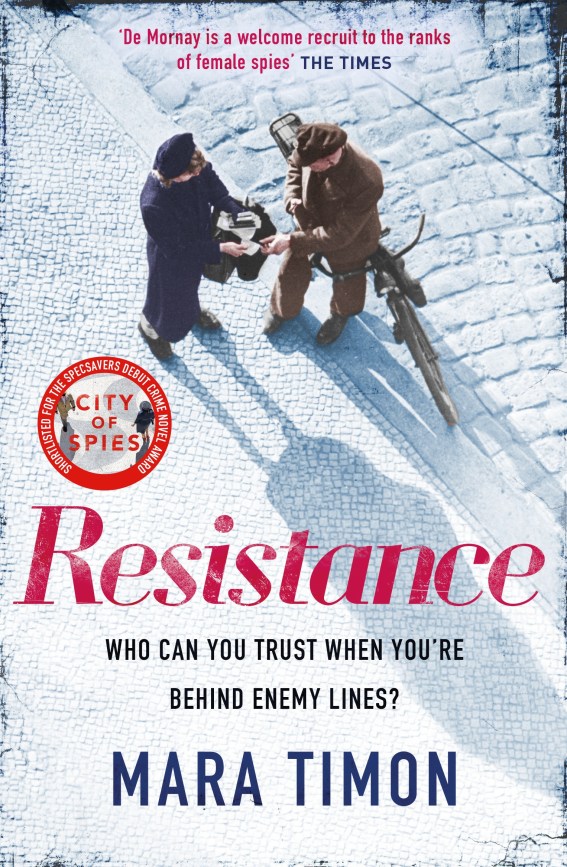
Resistance Cover

Publisher: Zaffre (Trade Paperback – 30 November 2021)

Series: City of Spies – Book Two

Length: 416 pages

My Rating: 4.25 out of 5 stars

Amazon     Book Depository

Prepare to dive into the intricacies of World War II espionage with a second fantastic historical thriller from Mara Timon, Resistance.

Timon is a brilliant author who debuted in 2020 with her intriguing novel, City of Spies, which followed a British agent sent to infiltrate neutral Portugal and encounter all manner of dangers and deceit.  Timon has now followed up this impressive debut with an intriguing sequel, Resistance, which follows the protagonist of City of Spies as she is sent to German-occupied Normandy days before the Allies invade.

Synopsis:

Three women. One mission. Enemies everywhere.

May 1944. When spy Elisabeth de Mornay, code name Cécile, notices a coded transmission from an agent in the field does not bear his usual signature, she suspects his cover has been blown– something that is happening with increasing frequency. With the situation in Occupied France worsening and growing fears that the Resistance has been compromised, Cécile is ordered behind enemy lines.

Having rendezvoused with her fellow agents, Léonie and Dominique, together they have one mission: help the Resistance destabilise German operations to pave the way for the Normandy landings.

But the life of a spy is never straightforward, and the in-fighting within the Resistance makes knowing who to trust ever more difficult. With their lives on the line, all three women will have to make decisions that could cost them everything – for not all their enemies are German.


Resistance
was an impressive and clever historical spy thriller that proves to be extremely addictive and exciting.  Set several months after the events of City of Spies, Resistance sees the protagonist and point-of-view character Elisabeth sent to infiltrate occupied Normandy under a new cover identity to assist the local French Resistance as a wireless operator.  Simultaneously gathering intelligence and investigating a potential mole in the French organisation, Elisabeth works with several other female spies in the area and is forced to contend with traitors, radicals and the Gestapo.  This story gets even more intense the further it goes, not only because a figure from the protagonist’s past comes into the picture and complicates events, but because the last third of the novel features the D-Day landings at the nearby Normandy beaches.  This forces the protagonist and her friends to encounter several attacks and betrayals amid the chaos of invasion and it leads to an incredibly exciting and captivating final section that is honestly impossible to put down.  While I did think that a couple of character arcs were a bit underdeveloped and unnecessary to the plot, this was an overall epic story and I really appreciated the complex and powerful narrative that Timon came up with.

I felt that new readers could easily get into Resistance with having read the preceding novel City of Spies.  Timon does an excellent job of explaining all the key events of the first novel, and readers are quickly informed of everything that would impact that plot of this sequel.  That said, fans of City of Spies will find this to be a pretty good sequel as several intriguing storylines are continued throughout the plot of the book.  Not only do key characters make significant reappearances but you also have a continuation of the fantastic romantic arc between Elisabeth and German officer Eduard Graf, who got married in the first novel.  Despite being an unusual relationship, this was an excellent storyline to continue and it was great to see the two interesting characters continue their forbidden love in the midst of war and intrigue, especially as both have major secrets (one is a spy, the other is planning to assassinate Hitler; it’s complicated) and are trying not to expose each other to their enemies.  I will be really intrigued to see where this series goes next, especially if Elisabeth is dropped into Germany either during Operation Valkyrie or the dying days of the war

One of the things that I most liked about Resistance was how this book ended up being a particularly solid and compelling historical thriller that emphasised its gritty and realistic spy elements.  Timon strives to strongly emphasise all the historical espionage aspects of the plot, and it was fascinating to see all the cool details about spy craft and being an undercover radio operator.  There was also a great focus on the abilities of Britain’s legendary female operatives, and Timon ensured that this book felt as realistic and compelling as possible.  Throw in some cool historical characters, such as members of the SOE and key German soldiers, like Erwin Rommel, and you have a particularly good historical thriller that was a lot of fun to explore.

With her second book, Resistance, impressive author Mara Timon continues to shine as a bright new figure in the historical thriller genre.  Perfectly combining realistic espionage elements with an iconic and dangerous historical setting, Resistance serves as an excellent sequel to Timon’s debut, City of Spies, and proves to be extremely addictive and compelling.  An awesome and highly recommended read.

Amazon     Book Depository

Spy by Danielle Steel

Spy Cover

Publisher: Macmillan (Trade Paperback – 26 November 2019)

Series: Standalone

Length: 273 pages

My Rating: 4.25 out of 5 stars

Amazon     Book Depository

From the mind of the fourth-bestselling author of all time, drama and romance novelist supreme Danielle Steel, comes an excellent and compelling story about life, war and espionage that is really worth checking out.

Alexandra Wickham is the youngest child of a well-to-do British family living out on their estate in the country. A beautiful and intelligent young lady, Alex appears to be set for a life of privilege and marriage. However, the outbreak of World War II in 1939 allows Alex to throw off the shackles of expectation, and she moves to London, volunteering as a nurse. However, her fluency in French and German attracts the attention of a new government organisation, the Special Operations Executive (SOE), who are desperate to recruit her.

Suffering from personal losses and determined to do her part for her country, Alex joins the SOE and quickly becomes a skilled and valued agent. Trained in various forms of combat, sabotage and espionage, Alex makes several journeys into German territory to obtain valuable information. However, the hardest part of her new life is keeping her work secret from her friends and family, including her worried parents and the brave pilot she falls in love with.

Even after the war ends, Alex finds that she is unable to stop spying. When her husband, Richard, enters into the foreign service, Alex is recruited into MI6 and tasked with obtaining information from the various people she meets socially. As she follows her husband from one volatile end of the world to the next, Alex must reconcile the two separate parts of her life if she is to survive. But who is she? The loving wife and parent or the government agent who can never reveal her secret to those closest to her?

Now, I have to admit that before this year Danielle Steel was not an author that I really went out of my way to read. Steel writes a staggering number of novels each year (seven in 2019 alone), and most of them do not appeal to me (I think a quick perusal of some of the previous books I’ve read will give you a good idea of what my usual literary tastes are like). However, after enjoying Turning Point earlier this year (which I checked out because I do enjoy medical dramas), I decided to try Spy, as I was kind of curious to see how Steel would handle the historical spy genre. What I found was a captivating and enjoyable story which I was really glad I grabbed a copy of.

Spy is a historical fiction novel that follows the life story of the fictional protagonist, Alexandra Wikcham, who serves as the book’s point-of-view character. This was a rather full and exciting story that not only focuses on the main characters career as a secret government agent but also explores her personal life, such as her interactions and relationship with her family, how she fell in love, and how she become a caring wife and mother. Spy’s overall narrative is a fantastic blend of drama, historical fiction, spy thriller and romance novel, which proves to be quite addictive and rather enjoyable. I loved seeing the full progression of the main character’s life, and I found myself getting attached to several of the characters featured within.

This was the first historical fiction by Danielle Steel that I have read, and I have to say that I was impressed with the various periods that were explored. The first half of the book is set during the events of World War II, and Steel does an incredible job of portraying this iconic part of the 20th century. The story is primarily set in England during this part of the war, and the reader gets a real sense of the events that are occurring, the struggles facing normal citizens during the conflict and the various contributions that the English people were making during the war. Spy also explores the damage, both physical and emotional, that the war produced, as the main character experiences great loss and despair throughout the course of the conflict and sees the impact on people that she cares for.

In addition to the great portrayal of World War II, Spy also examines a number of other intriguing historical events, periods and locations. The second part of the book is set over a much longer period of time and follows Alex and her husband, Richard, as they travel the world as English diplomats. These diplomatic assignments place them in a number of different countries during significant periods in history. For example, Alex and Richard end up in India during the end of British rule, when India is split into two countries. Other countries they end up in include Morocco, Hong Kong, America and the Soviet Union. All of these visits are only for a short part of the book, but they offer some intriguing snapshots into the various countries during significant parts of history. These combined historical periods make for a truly captivating and enjoyable novel, and they really work well with the dramatic and espionage aspects of the book, enhancing these other story elements with the cool historical settings.

I really enjoyed the espionage parts of Spy, as Steel has come up with a fascinating underlying thriller plot for this book. The actions of the SOE during World War II have long formed a great basis for historical spy stories over the years, and Steel did a fantastic showcasing how their female agents were recruited, often from organisations such as the First Aid Nursing Yeomanry, trained, and then dropped into Europe for missions. The various missions that the protagonist undergoes in Europe are quite interesting, and range from various reconnaissance missions, to more complex information gathering exercises. The protagonist’s actions after the war are also quite intriguing, as she is recruited by MI6 to spy on the various people her husband comes into contact with as a diplomat, and this results in her getting involved in some major historical events. It was quite fascinating to see with both missions during and post-World War II, the importance of information obtained from gossip or a leading conversation with a beautiful woman, and the impacts such information could have. This espionage part of the book is also the part of the book that I personally found the most thrilling and entertaining, and it was really cool to see all the danger and intrigue that followed this central character.

As Spy is a Danielle Steel novel, there is of course a central romance storyline that dominates the course of the book. At the beginning of the war, Alex meets and falls in love with Richard, a handsome and charming English fighter pilot, and they form a great relationship that lasts over 50 years. This is a really nice and supportive relationship, which is able to overcome some rather substantial obstacles, mainly World War II and Alex’s career as a spy. Not only are the forced to put their relationship on hold during the course of the war, in fear that one of them might die, but Alex is required to keep all of her espionage activities a secret from Richard. Even when they are married, Alex is unable to tell him that she is a MI6 Agent or warn him that she might be putting their lives at risk in foreign countries. All this secrecy weighs heavily on the mind of Alex throughout the course of the book, and it adds a whole new dramatic edge to their relationship. However, I really liked the way it ended, and this was a fantastic and heart-warming romantic storyline that I quite enjoyed.

The latest Danielle Steel novel, Spy, proved to be a really compelling and moving story of life and love during the turbulence of the 20th century. Featuring a gripping story which followed the entire life of a female British espionage agent, Spy was an excellent novel that honestly has something for everyone in it. I was really impressed with this novel, and I am planning to check out more Danielle Steel novels in the future. Her next release, Moral Compass, sounds particularly intriguing, and I have already requested a copy of it.

Amazon     Book Depository