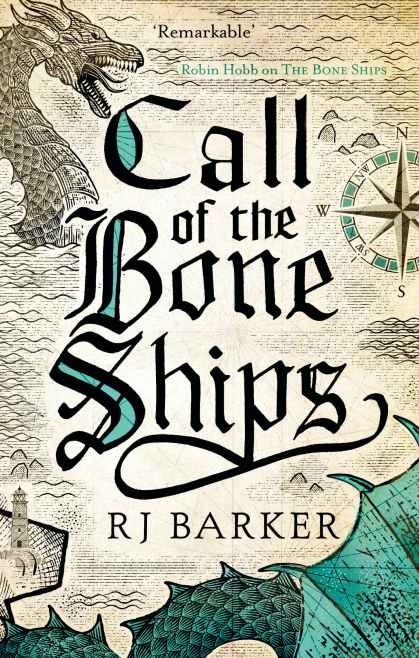
Call of the Bone Ships by RJ Barker

Call of the Bone Ships Cover

Publisher: Orbit (Trade Paperback – 24 November 2020)

Series: The Tide Child – Book Two

Length: 491 pages

My Rating: 5 out of 5 stars

Amazon     Book Depository

One of the biggest rising stars in fantasy fiction, the always impressive RJ Barker, returns with the second novel in The Tide Child trilogy, Call of the Bone Ships, an epic read that was one of the best fantasy releases of 2020.

Welcome back to the boneship known as Tide Child, a black ship of the damned crewed by those condemned to death for various crimes in the Hundred Isles and tasked with fighting in a war against their nation’s rivals, the Gaunt Islanders.  Following their first grand adventure, which saw Tide Child save the last of the vast sea dragons from whose bones the powerful ships are made, much has changed in the world.  The Shipwife of Tide Child, Lucky Meas Gilbryn, seeks to undermine her mother, the ruler of the Hundred Isles, by working with black ships of both nations to create a new settlement outside of their tyrannical controls.  However, their previous decision to save the last dragon has had unexpected consequences, and soon the ocean is alive with the news that more dragons have returned.  With their return comes the battle to kill the creatures and harvest their bones to create more ships, as the nation with the most ships will rule the waves.  However, the crew of Tide Child find themselves drawn into a different conflict when they chance upon a damaged ship with a hold full of dead or dying prisoners.

Attempting to find out more about the mysterious cargo, Meas and Tide Childs’ Deckkeeper, Joron Twiner, try to follow it to its original destination, only to discover that their new island sanctuary has been destroyed and its people carried off for a nefarious purpose.  As they start to fight back against their former comrades in the Hundred Isles, Tide Child finds itself in the midst of a dark conspiracy which will push the entire world into chaos and conflict.  A new war is coming to the oceans, and no-one is safe from its deadly consequences.

Well damn, how does Barker keep on doing it?  Over the last few years, RJ Barker has been one of the most consistent and outstanding fantasy fiction writers out there, producing several incredible and deeply enjoyable novels.  I was a major fan of his debut, The Wounded Kingdom trilogy, as all three novels, Age of Assassins, Blood of Assassins and King of Assassins were amazing reads, with each one being better than the last.  However, Barker’s writing was on a whole other level in 2019 when he published the first entry in The Tide Child trilogy, The Bone Ships, an epic read that detailed the trials and tribulations of a condemned crew aboard a ship made from dragon bones.  I absolutely loved The Bone Ships and it was one of my favourite books and audiobooks of 2019.  Needless to say, I was extremely eager to receive my copy of Call of the Bone Ships, and it was one of my most anticipated reads for the second half of 2020.  Unfortunately, circumstances forced me to hold off reading this novel until the end of the year, which I deeply regret as this was another awesome novel from Barker that got an easy five-star rating from me.

For Call of the Bone Ships, Barker has come up with another exciting and amazing narrative which follows a unique group of protagonists on a deadly adventure through a dark fantasy world.  Told primarily from the point of view of Tide Child’s Deckkeeper (first mate), Jordon Twiner, this is a massive character-driven story filled with action, intrigue, and betrayal.  While the first novel in this series focused on a wild adventure as a ship followed their new captain on a quest to find a sea dragon, this second novel focuses more on the politics of the Hundred Isles, as the Tide Child and their allies attacking as undercover rebels to undermine the cruel ruling hierarchy and determine what their plans are.  After an intriguing introduction, Call of the Bone Ships swiftly devolves into a war novel, as Meas and her crew begin to fight back against the oppressive Hundred Islanders who oppose them.  At the same time, Joron is forced to deal with a number of personal issues aboard the ship as he finds himself thrust into the midst of danger and betrayal as everything in his life goes to hell around him.  The plot of Call of the Bone Ships goes into some dark but captivating directions, and the Tide Child crew are hit with some major curveballs and tragic events.  All of this leads up to an impressive conclusion which is highlighted by a major and dramatic cliff-hanger that is going to require any reader of this book to desperately wait for the final entry in this series to be released.  While this book was a tad slow to start, especially if you were unfamiliar or somewhat forgetful of the events of The Bone Ships, it eventually resulted in a truly epic and outstanding story that proves impossible to put down once you get wrapped in its intense and captivating narrative.  The plot of Call of the Bone Ships has a fantastic flow on from the previous entry in the series and served as an excellent sequel, making great use of several of the story elements introduced in The Bone Ships and more than living up to the hype Barker established with the first The Tide Child novel.

One of the things that I have been most impressed with for this series is the author’s ability to create a gripping and consistently well-written maritime story.  Narratives that are primarily set aboard boats are notoriously hard to write, but Barker has risen to the challenge, writing a novel rich in naval and maritime detail, with a major fantasy fiction edge to it.  Call of the Bone Ships contains an intense amount of intriguing detail about the coming and goings aboard the ship out at sea and Barker does an amazing job highlighting the various day-to-day actions a crew are expected to undertake, as well as all the unique features that makes a ship in this fantasy universe different from real-world ships.  This impressive attention to detail translates extremely well into several naval battles and combat sequences, and it was cool to see the Tide Child engage in battle with other ships in some outstanding and beautifully written sequences.  In addition, Barker ensures that every major character in this novel had a real nautical feel to them.  Everything about these characters, from the way they spoke to how they act or think aboard the ship made you think of old sea-salts who had spent a lifetime on the waves, which helps to bring an interesting ring of realism to the story.  I also really love the intense and encapsulating atmospheres that Barker creates with his excellent writing ability, and you get a real sense of the moods of the entire ship throughout the novel, whether it be despair at something bad that has befallen the ship, or the sense of repetitive boredom that arrives from the ship doing the same action day after day with no break in routine.  All of this helps to produce a truly exceptional narrative, and I cannot emphasise how impressive the author’s various nautical inclusions are.

While the series is nominally about the dangerous events that the Tide Child finds itself involved with, in many ways its plot is driven by the growth and development of the main protagonist and point-of-view character Joron Twiner.  At the start of this series, Joron was a depressed and embittered young man who was unjustly forced aboard the black ship and made its Shipwife due to his lack of courage and determination.  But after meeting Meas and beginning to serve under her, Joron has become a competent officer who has the respect of most of his crew and who is now dedicated to Meas and her mission.  Call of the Bone Ships turns out to be a major novel for Joron as he participates in several adventures and battles, showing his skill as a commander, warrior and leader throughout the novel.  However, participation in these adventures has severe consequences as Joron gets beaten down and broken apart multiple times from injuries, betrayal and personal tragedy.  Watching Joron suffer is quite a hard part of this novel as the reader becomes extremely attached to him due to his likeable personality and sheer determination.  However, it is worth it to see Joron rise again as a stronger and much more developed person, and this ended up being a fantastic part of his personal story arc.  A lot of this book is also dedicated to Joron’s mysterious ability as the caller, someone who is prophesied by the Gullaime (the enslaved avian wind mystics who provide power to the ships) as a great saviour.  Joron, who first experienced these powers while calling a sea dragon to his aid, continues to develop certain abilities which prove to be rather effective and spectacular throughout the novel and opens up a lot of opportunities for the character.  The end of Call of the Bone Ships leaves Joron in an extremely intriguing position, and I am deeply curious about how his story will end in the final novel.

In addition to his complex protagonist, Barker also includes a literal raft of impressive and captivating characters, most of whom serve as members of Tide Child’s crew.  These great characters each have distinctive personalities and add a great deal to the narrative.  The main side character is easily Lucky Meas, the Shipwife of Tide Child who has turned her ship from a bastion of reprobates to a group of heroes with a noble purpose (mostly).  Meas is a truly inspirational character who has served as a close mentor to Joron and who continues to lead her crew with wisdom, experience, and humility.  Meas was a little less utilised in this novel than in the first book, with Joron taking more of a lead now that he has some command experience.  She was still a fantastic and distinctive character within this latest novel, and I really enjoyed where her personal story arc went, even though we still do not have that much information about her backstory.  Another great character was Tide Child’s ultra-powerful Gullaime, who continues to work along the crew, especially Joron, who has a special connection to the creature.  The Gullaime also has a rather intriguing arc in this novel, and it is clear that he will play a rather substantial role in the ending of the overall series.  The mysterious bird creature also develops a lot more as a character in this novel, especially after encountering different members of his species, although he continues to provide his entertaining tirades of broken speech to the crew.  The rest of the crew prove to be extremely compelling, and I liked the fact that Barker spent time expanding out the roles and personalities of a huge number of side characters, including giving several of them brief point-of-view chapters.  However, in some of these cases it did seem that the author only gave these characters more of a role so that he could then brutally kill them off, much to the heartbreak of the reader.  A number of these characters do get some rather substantial and enjoyable story arcs, and it will be interesting to see where the remaining members of the crew end up in the final book.

I have a lot of love for the dark and elaborate fantasy worlds that Barker creates in his novels, and the one featured in The Tide Child series is particularly amazing.  I deeply enjoyed this harsh and cruel world of small islands, deadly seas and warring nations, especially with the cool gender-bent world (for example, captains are known as Shipwives, while boats are referred to as him).  I really enjoyed returning to this amazing and creative world, especially as it proves to be an incredibly rich setting for the novel’s awesome and addictive narrative.  Barker does some excellent world-building in this second entry in the series, and you get some cool features, such as different groups of Gullaimes who lack wind powers but serve as jailers for their powered brethren, some new powers for the characters and some intriguing new locations.  All of this helped to create a more elaborate and impressive narrative and it is always cool to see more of this grim and deadly fantasy universe, especially as Barker’s awesome writing bring so many of the more impressive elements, such as the giant dragons, to life in such epic fashion.

The final thing I wanted to praise about Call of the Bone Ships were all the little details featured within the paperback version of the novel, that I would have previously missed in the first The Tide Child novel due to me checking out The Bone Ships in audiobook format.  I definitely have to highlight the impressive and intricate cover above, which was drawn by talented artist Edward Bettison.  The covers for this series are extremely cool, and I cannot wait to see what amazing design the artist comes up for the final entry in the series.  I also really liked the awesome artwork that was featured within the novel.  Not only is there a fantastic and detailed map at the very front of the book but there is also some sweet artwork at the start of each chapter, which depicts locations, creatures and characters from within the book.  Barker has also featured a short index at the end of the novel which contains some of the crew titles that were created for the series, detailing what each crew member is supposed to do.  All of these details are great and eye-catching inclusions to the novel, and I felt that it made Call of the Bone Ships just a little bit more special.

Call of the Bone Ships by RJ Barker was another epic and outstanding novel that shows why Barker is one of the most impressive new fantasy talents in recent years.  This incredible sequel to 2019’s The Bone Ships contains an exceptional and addictive story at sea, featuring rich and complex characters and all set within a creative and vibrantly dark fantasy world.  The combination of these awesome elements helps to create a captivating and powerful read which turned out to be one of the best books of the year.  I cannot recommend this novel enough.  If you have not found out about RJ Barker yet, you are really missing out!
Amazon     Book Depository

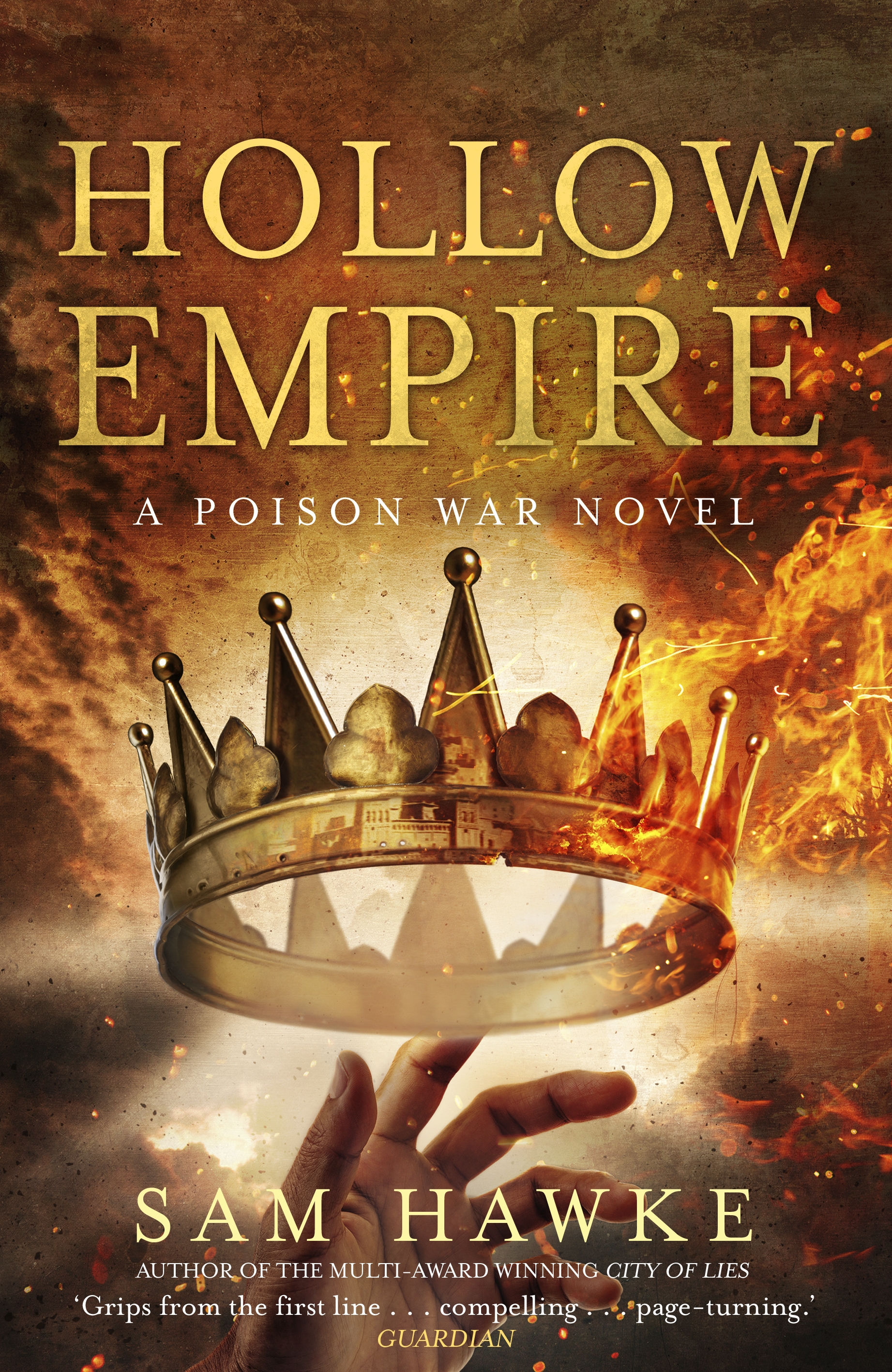
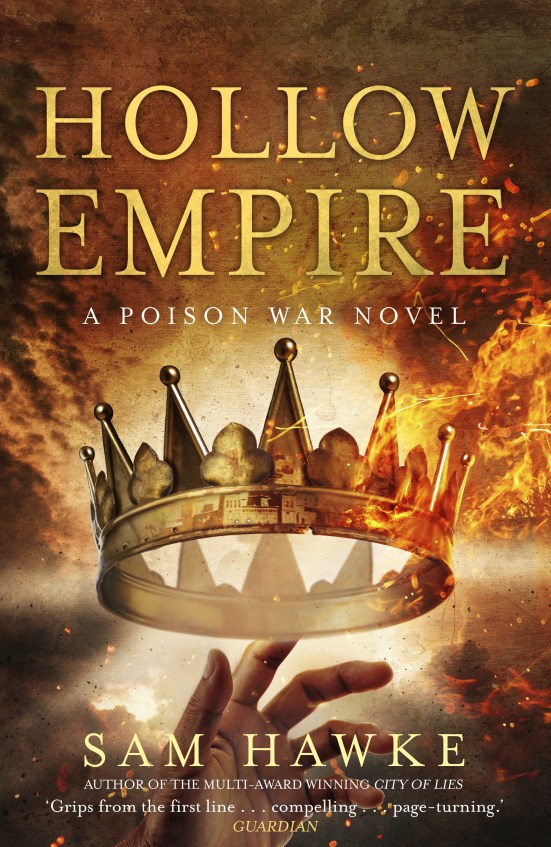
Hollow Empire by Sam Hawke

Hollow Empire Cover 2

Publisher: Bantam Press (Trade Paperback – 1 December 2020)

Series: Poison War – Book Two

Length: 560 pages

My Rating: 5 out of 5 stars

Amazon     Book Depository

After a two-year wait, we finally get to see the epic sequel to Australian author Sam Hawke’s impressive debut novel, City of Lies, with her blockbuster new novel, Hollow Empire.

Two years after the siege of the city of Silasta, where the oppressed Darfri minority were manipulated into attacking the capital by an unknown outside force, the city has started to recover.  While the city focuses on rebuilding and reconciliation with their former besiegers, the poison-eating siblings Jovana and Kalina Oromani, secret protectors of the Chancellor, continue their efforts to work out who was truly behind the attack on their city.  However, to their frustration, no-one else in the city shares their concerns; instead they have grown complacent with the returned peace.

But no peace lasts forever, especially as Silastra celebrates the karodee, a grand festival, to which representatives of all the nations surrounding the city state have been invited.  While the focus is on peace and forging ties between nations, the siblings begin to suspect that their unknown enemy is using it as an opportunity to launch a new attack against Silastra.  In order to determine what is happening, Jovana attempts to hunt down a dangerous and deadly killer that only he seems to have noticed, while Kalina navigates the treacherous world of politics and diplomacy as she works to determine which of their neighbours may have been involved in the prior attack on their city.

Working together with the Chancellor Tain and the Darfri mystic Hadrea, the Oromani siblings get closer to finding some of the answers that they desire.  However, both siblings find themselves under attack from all sides as their opponents attempt not only to kill them but to discredit their entire family.  Determined to protect Silasta no matter what, Jovana and Kalina will risk everything to find out the truth, even if the answers are too much for either of them to bear.

Hollow Empire was another awesome novel from fellow Canberran Sam Hawke, which serves as the compelling and enjoyable second entry in her Poison War series, which follows on from her 2018 debut, City of Lies.  I am a big fan of Hawke’s first novel; not only was it one of my favourite books of 2018 but it is also one of my top debuts of all time.  As a result, I have been looking forward to seeing how the story continues for some time now and I was incredibly happy to receive my copy of Hollow Empire several weeks ago.  The wait was definitely worth it, as Hawke has come up with another impressive and clever novel that not only serves as an excellent sequel to City of Lies but which takes the reader on an intrigue laden journey into the heart of an exciting fantasy city filled with great characters.

Hawke has come up with an excellent narrative for this latest novel which takes the protagonists on a wild journey throughout their city and beyond as they attempt to uncover a dangerous conspiracy threatening to destroy everything they love.  Told from alternating perspectives of the two main characters, Jovana and Kalina, Hollow Empire’s story was a clever and exciting thrill-ride of intrigue, lies, politics, crime and treachery, as the protagonists attempt to find out who is targeting them and plotting to destroy their city.  This proved to be a fun and captivating narrative, and I liked how Hollow Empire felt a lot more like a fantasy thriller than the first book, which focused a bit more on the siege of the city.  The protagonists must dig through quite a few layers of lies, hidden history and alternate suspects to find out what is happening in Silasta, and while there was a little less focus on the fun poison aspects that made the first novel such a treat, I really enjoyed how the story unfolded.  Hawke comes up with several great twists and reveals throughout the book, some of which really surprised me, although I was able to guess a couple of key ones.  I did think that the eventual reveal of the ultimate villain of the story was a tad rushed, but it resulted in an intense and fast-paced conclusion to the novel which also opens some intriguing avenues for any future entries in this series.  Readers may benefit from rereading City of Lies in advance of Hollow Empire, especially as there has been a bit of gap between the first and second novels’ releases.  However, for those wanting to jump right in, Hawke did include a fun recap at the start of the book, which sees the protagonists watching a theatrical recreation of the events of City of Lies.  Not only is this a rather entertaining inclusion (mainly due to how Jovana is portrayed) but it also serves as a good summary of some of the book’s key events, and readers should be able to follow through this second book without any trouble, even if they have not had a chance to read City of Lies.  Overall, this was an epic and impressive story, and I really enjoyed seeing how the Poison Wars continued in Hollow Empire.

I really enjoyed some of the cool writing elements that Hawke featured in Hollow Empire which added a lot to my overall enjoyment of the book and its great story.  The most noticeable of this is the use of the split perspectives, with the main protagonists, Jovana and Kalina, each getting alternating chapters shown from their point of view.  These split chapters worked extremely well in City of Lies, and I am really glad that Hawke decided to use them once again in her second book.  While the primary use of these alternate chapters was to show the different angles of investigation that the siblings were following, it does result in some additional benefits to the narrative.  I particularly liked the way in which the author uses the split perspectives to create tension and suspense throughout the novel, such as by one protagonist lacking information that the other character (and the reader) has knowledge of, or by leaving one protagonist’s fate uncertain.  It was also interesting to see the different opinions that the protagonists had on various characters and the specific relationships and friendships that they formed.  I also liked the way in which Hawke placed some intriguing in-universe poison proofing notes before each chapter, which recounted various poisonings that Oromani family has prevented or investigated over the years.  These notes were quite fun to check out and it really helped to highlight the importance the main characters place on protecting the Chancellor and their city from poison attacks.  These clever elements enhanced an already compelling narrative, and I imagine that Hawke will continue to utilise them in some of her future novels.

One of the major highlights of this book was the return to the author’s great fantasy setting that is the city of Silasta and its surrounding countryside.  Silasta is an extremely woke city full of artists, inventors and scholars who believe in equality between genders and acceptance of all sexualities and gender identities (for example, Hawke introduces a non-binary character in Hollow Empire).  While this was a fun city to explore in the first novel, especially as it was besieged for most of the book, I quite like how the author has altered the setting for Hollow Empire.  There is a significant focus on how Silasta has changed since the ending of the siege two years previously, especially on the attempted reconciliation efforts between the somewhat elitist citizens of Silasta and the Darfri, who were previously treated as second-class citizens doing the menial jobs.  While there have been changes to this relationship since the end of the first book, much is still the same and the difficulties in reconciling these two groups becomes a major and intriguing plot point within Hollow Empire.  Hawke also adds in an intriguing crime element to the novel, as several criminal gangs have used the chaos following the siege to build power within the city, peddling new drugs to the populace.  These new elements make for a different city than what the reader has previously seen, and I really liked how Hawke explored the negative elements of the aftermath of the first book and implemented them in Hollow Empire’s narrative, creating a fantastic and intriguing story.

In addition to focusing on the changes to the main city setting, I also really enjoyed the way in which Hawke decided to expand out her fantasy world.  This is mainly done by introducing emissaries from several of the nation’s neighbouring Silasta and bringing them to the city, resulting in the protagonists learning more about their respective histories and cultures, especially as they are convinced that one of them is responsible for the attack against them.  The story also explores the history of Silasta itself, with several storylines exploring how the city came into existence and its hidden past.  The author also worked to expand the magical system present within her universe by examining the spirit magic that was introduced in City of Lies and exploring more of its rules and limitations.  This results in several intriguing scenes, especially when one of the major characters, Hadrea, finds new ways to manipulate her magic.  In addition, some new forms of magic are introduced within the book.  These new magics have an origin in some of the new realms that are further explored in Hollow Empire and included an interesting and deadly form of witchcraft that differs wildly from the magical abilities that the characters utilised in the first book.  Not only are these new and inventive world-building elements quite fun to explore, but their inclusion becomes a key inclusion to the narrative.  All of this results in an enjoyable expanded universe, and it looks like Hawke has plans to introduce further lands and histories in the next Poison Wars book.

Another great part of Hollow Empire is the complexity of the characters, all of whom have evolved in some distinctive and compelling manner since the first novel.  As mentioned above, the main protagonists are the Oromani siblings, Jovana and Kalina, who serve as the book’s point-of-view characters.  Jovana is the Chancellor’s poison proofer, his secretive bodyguard who prepares his food and ensures that everything he eats is poison-free.  However, since the events of City of Lies, Jovan has become a lot more well-known throughout the city due to the role he played during the siege.  This requires him to adjust his role in society, especially as many people are now questioning how he and his family gained such prominence.  Jovan is also a lot more cautious when it comes to the Chancellor’s security after several near misses in the first novel, so that he appears almost paranoid at points throughout Hollow Empire.  This paranoia serves him well as he is forced to fight against an assassin who is using some clever means to attack his family and allies.  Jovan has also entered into a mentoring role within this book as he takes his young niece, Dija, as his new apprentice, teaching her the ways of proofing and ensuring that she has an immunity to toxins by poisoning her himself, in a similar way to how his uncle raised and taught him.  All of these add some intriguing new dynamics to Jovan’s character, and I really enjoyed seeing how he has changed since the first book.  Kalina also proves to be an excellent character throughout Hollow Empire, and I quite enjoyed reading her chapters.  Like her brother, Kalina has become a much more public figure in Silasta, although she is seen more as a hero than a suspicious poisoner like her brother.  Kalina’s chapters mainly focus on her attempts at finding out the truth through diplomacy as she interacts with the foreign delegations visiting the city.  Her investigations are just as dangerous as Jovan’s, and I really enjoyed seeing how her distinctive narrative unfolded, as well as how her character has also evolved, including with a fantastic new romance.  Both protagonists serve as excellent centres for the story and I look forward to seeing how they progress in later books in the series.

Hollow Empire also boasts a raft of fantastic side characters, many of whom have some exceptional arcs throughout the book.  The main two supporting characters are probably Chancellor Tain and Hadrea, both of whom were significant figures in City of Lies.  Like the main protagonists, Tain has also changed a lot since City of Lies, where he was the young and bold ruler thrust into a chaotic position.  Now he is a much more measured and cautious man, especially after narrowly avoiding death by poisoning in the first novel.  Tain continues to be the focus of the protagonist’s advice and protection throughout the novel, and the friendship he has with Jovana and Kalina becomes a major part of the book’s plot, resulting in some dramatic and powerful moments.  Hadrea, the young Speaker whose spirit magic saved the city in the first novel, also gets a lot of focus throughout Hollow Empire and is quite a major character.  In addition to being Jovan’s love interest, Hadrea also serves as the protagonist’s magic expert as they attempt to understand some of the mystical elements attacking them.  Hadrea’s magical power ends up becoming a major story element of Hollow Empire as she attempts to find new ways to use her magic while also chafing under the instruction of her superiors.  It looks like Hawke has some major plans for Hadrea in the future books, and I am curious to see what happens to her next.  These characters, and more, end up adding a lot to the story, and I quite enjoyed the way that Hawke portrayed them.

Hollow Empire by Sam Hawke was an impressive and deeply enjoyable novel that serves as an excellent sequel to City of Lies.  Featuring a thrilling and clever main narrative, great characters and an inventive, if damaged, fantasy setting, Hollow Empire was an epic read from start to finish that proves exceedingly hard to put down.  I had a wonderful time reading Hollow Empire and it ended up being one of my favourite books of 2020.  A highly recommended read, I cannot wait to see how the series continues in the future.

Amazon     Book Depository

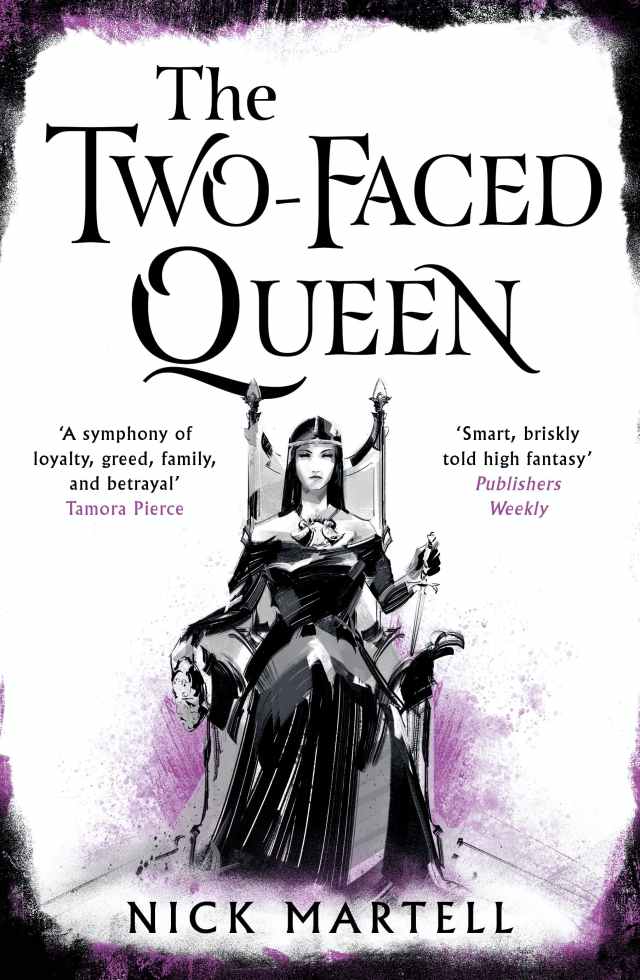
Waiting on Wednesday – The Two-Faced Queen by Nick Martell

Welcome to my weekly segment, Waiting on Wednesday, where I look at upcoming books that I am planning to order and review in the next few months and which I think I will really enjoy.  I run this segment in conjunction with the Can’t-Wait Wednesday meme that is currently running at Wishful Endings.  Stay tuned to see reviews of these books when I get a copy of them.  In this latest Waiting on Wednesday article, I check out The Two-Faced Queen by Nick Martell, the exciting upcoming sequel to one of my favourite debuts of 2020, The Kingdom of Liars.

The Two-Faced Queen Cover

The Two-Faced Queen is an amazing upcoming fantasy novel that is currently set for release in late March 2021.  This new novel from Nick Martell serves as the second novel in his The Legacy of the Mercenary Kings series and follows on from the events of his first book from earlier this year, The Kingdom of Liars.  I only just recently read and reviewed The Kingdom of Liars (I literally finished reviewing it about five minutes before writing this sentence), and it ended up being an exceptional and deeply captivating read, that contained an addictive narrative, complex characters, and an inventive fantasy world, including a magical system that exchanges memories for spells.  I really enjoyed The Kingdom of Liars and not only did it receive a five-star rating from me but it easily one of my favourite debuts of 2020.  As a result, I am extremely eager to see how this series continues and luckily there is a new book coming out in a couple of months.

The Two-Faced Queen looks set to be a pretty awesome new fantasy novel and based on the synopsis that has already been released (as well as the two cool covers), I am extremely confident I am going to love this second entry in The Legacy of the Mercenary Kings series when it is released.  I cannot wait to see what intrigue, conspiracies, manipulation and magical madness awaits readers of The Two-Faced Queen and this is one going to be one of my most anticipated releases for the first half of 2021.

Synopsis:

The Hollows is gripped in unrest and on the brink of civil war as an insurgency of anarchists rise, and brother and sister vie for the throne in the second novel in the critically hailed Legacy of the Mercenary King series which Brandon Sanderson called “excellent.”

Michael Kingman thought he was going to die by the executioner’s axe, forever labeled as a traitor. Still alive, and under the protection of the Orbis Mercenary company, Michael and his family and friends are deeply involved in the seemingly rival conspiracies that are tearing The Hollows apart. With the death of the King, both the Corrupt Prince and his sister Serena are vying for the throne, while the Rebel Emperor is spreading lies amongst the people, and all of them want Michael dead. This is a story of betrayal, murder, and rebellion, and in this direct sequel to the debut novel The Kingdom of Liars, also some hope for justice.

The Two-Faced Queen Cover 2

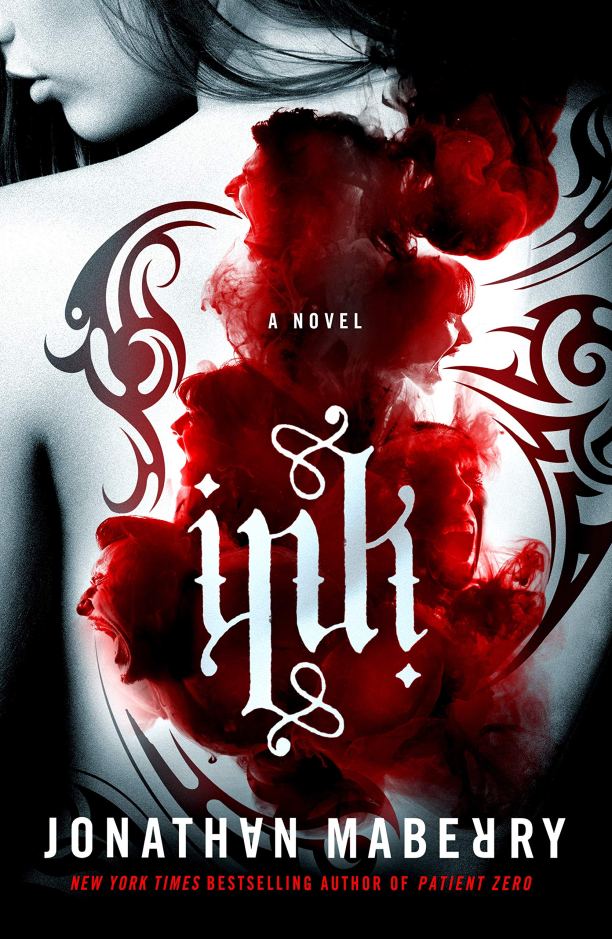
Ink by Jonathan Maberry

Ink Cover

Publisher: Macmillan Audio (Audiobook – 17 November 2020)

Series: Standalone/Pine Deep series

Length: 15 hours and 9 minutes

My Rating: 4.75 out of 5 stars

Amazon     Book Depository

Prepare to journey back to the weirdly dangerous town of Pine Deep as one of my favourite authors, Jonathan Maberry, presents his latest novel, Ink, an intriguing and clever horror thriller that dives down into the world of memories and tattoos.

Pine Deep, Pennsylvania is a town long-steeped in blood and death.  After barely surviving the terrible events of 15 years ago, now known by the locals as The Trouble, the town has slowly recovered, with fresh businesses and people bringing in new life.  However, no one is ever truly safe in Pine Deep, especially with a malicious predator haunting the streets, one with very particular appetites.

Monk Addison is man who has experienced many weird and horrifying things in his life, but what he is about to encounter in Pine Deep will shake him to his core.  A bounty hunter who has sought redemption in life by covering his body with tattoos depicting the faces of murder victims, Monk has recently moved to Pine Deep to be closer to his friend and tattoo-artist Patty Cakes, but what he arrives he finds Patty in a state of shock.  An important tattoo on Patty’s hand has started to disappear, and as it fades, so do the memories associated with it until Patty can no longer remember anything about, not even the precious person who inspired it.

As Monk desperately tries to understand what is happening to his friend, a pattern begins to emerge.  Several people within Pine Deep are experiencing losses of traumatic or significant memories, and in every case tattoos related to these events have also disappeared.  Worse, in some cases new tattoos are appearing on people, forcing them to do terrible deeds.  Working with Pine Deep’s chief of police, Malcolm Crow, and his adopted son, Mike Sweeney, Monk, Patty and other impacted residents of Pine Deep attempt to discover who or what is behind these stolen memories.  But can they find who is responsible before their memories fade, or will this predator continue to feast on the very thing that makes them human?  The Lord of the Flies is hungry, and his reign of terror has only just begun!

Over the last couple of years, I have become a major fan of Jonathan Maberry’s writings, and I only just recently finished reading all 10 Joe Ledger novels, as well as the first Rogue Team International book, Rage, so I was very excited to get my next fix of Maberry excitement with InkInk was one of my most anticipated novels for the second half of 2020, and it really did not disappoint in any way, as Maberry has produced an intense and captivating horror novel that proved to be both extremely exciting and deeply terrifying.

Ink is an outstanding and impressive book that contains one heck of a story that sees several remarkable characters attempt to deal with a weird and powerfully scary supernatural threat that is attempting to destroy what is most precious to them.  Maberry has crafted together a fantastic narrative for this book that is equal parts clever, compelling and scary, and which dives down deep into the psyche of several complex individuals.  The author utilises his trademark style to produce a wide-ranging, multi-character story that shows the full impact of the antagonist’s dark machinations, and the slow hunt of the protagonists to comprehend what is happening to them, and their subsequent attempts to combat the threat.  While I did think that the story was a little slow at the start, once it gets going the reader has a hard time putting it down, as they become obsessed with seeing the full extent of the horror, as well as becoming connected to the characters featured within.  While Ink contains a lot less action than a typical Maberry novel, this is an extremely exciting and fast-paced read, with the thrilling game of cat and mouse between the villain and his victims proving to be quite intense.  Readers should be warned that this is an extremely adult read, containing some fairly graphic sequences of violence, torture, mental manipulation and sexual content, which may not be for everyone.  Overall though, this is an exceptional read, and I really loved getting to the end of this enthralling and excellent narrative.

While Ink is ostensibly a standalone novel, in many ways it is a sequel to Maberry’s debut series, the Pine Deep trilogy, while also being set in the same universe as several of his other books, namely the Joe Ledger novels.  The entirety of Ink is set in the town of Pine Deep, which was the titular setting of the original trilogy.  As a result, several characters from these books appear throughout the course of the novel and there are a lot of mentions of the events of the Pine Deep trilogy, some of which play into the plot.  While you potentially could get a little more out of Ink by reading the Pine Deep novels first, I would say that you really do not need any prior knowledge of these books to enjoy Maberry’s latest novel.  Like always, Maberry’s writing is very inclusive, providing the reader with relevant information about the events that occurred in these previous novels.  As a result, the reader gets a decent summary of what occurred in the Pine Deep trilogy and how it relates to Ink.  This allows readers unfamiliar with the Pine Deep books to enjoy Ink without any issues, and this might even be a good Maberry starter novel for anyone who has been interested in reading some of his books.  On the other hand, those fans of Maberry who are familiar with this prior trilogy will no doubt really enjoy the return to this iconic setting and will have an amazing time seeing what has happened in the 15 years following the end of Bad Moon Rising (the third and final book in the Pine Deep trilogy).  The summaries of the Pine Deep novels contained within Ink are rather easy to get through and Maberry works them into the story extremely well, so those people familiar with these prior works should be able to read them without getting bored of a forced recap, and this is book that any horror or thriller fan can easily enjoy.

At the heart of Ink are the excellent main point-of-view characters that Maberry utilises to tell his complex tale.  There are several major characters featured throughout the book, including several original characters created specifically for Ink.  The most notable of these is Monk Addison, the relentless and scary former soldier who is desperately seeking redemption after a long and bloody life.  Monk turned out to be an amazing central character for this book and I loved the way that Maberry slowly revealed his past in order to show just how special he his.  Monk goes through a fair bit of development in this novel, and I found myself getting quite attached to him as the story progressed.  In addition to Monk, Ink also has a particular focus on Patty Cakes, Monk’s tattoo artist friend whose memories are impacted by the book’s antagonist.  Patty is a deeply tragic and magical character who has gone through a lot in her life and who now finds herself being attacked in a much more personal and devastating way.  Seeing Patty being overwhelmed by the loss of her memories is really disturbing and heartbreaking and you cannot help but feel her loss deep in your soul, which is a testament to Maberry’s excellent writing.  Patty is another character who you grow to care for as the story unfolds and the constant danger she is put into, both mentally and physically, keeps the reader on edge.  The other two original major characters I need to highlight are Dianna and Gayle.  Dianna is a medium who also has her memories stolen by Ink’s antagonist, while Gayle is someone who builds a connection to Dianna, who is then impacted by Gayle’s lost memories in a different way.  I liked the way that Dianna and Gayle were worked into the story, and they helped to provide a new angle to the narrative.  Watching them team up with Patty added some enjoyable female empowerment elements to the novel, and there is a touching LGBT romance between Dianne and Gayle that I thought Maberry handled well, even if it was a tad explicit.

In addition to these new characters, Maberry also makes use of the protagonists from the Pine Deep novels who return as major characters in Ink.  This includes major characters Malcolm Crow, Mike Sweeney, Val Guthrie and Jonatha Corbiel (now Jonatha Newton).  While Val and Jonatha have mostly smaller roles in this book, Malcolm and Mike are major point-of-view characters, performing their own investigation of the latest batch of weird events occurring around Pine Deep.  Both proved to be exceptional additions to the cast, as not only are they complex characters (especially after the events of the Pine Deep trilogy), but they also add some distinctive viewpoints into the investigate parts of the book.  Maberry does a fantastic job introducing these characters to new readers, while those who have read the Pine Deep books will deeply appreciate seeing what has happened to them since the events of this initial trilogy.  While I am sure that many of Maberry’s readers would have hoped for happy lives for Malcolm, Mike and Val after all they have been through, all three characters have experienced additional difficulties and tragedies in the last 15 years.  These additional life events, as well as their traumas from the Pine Deep books, are expertly incorporated into their characterisation for Ink, and it proved deeply compelling to see their arcs unfold.  I personally enjoyed seeing the new protagonists’ reactions when encountering Malcolm and Mike, and there are a lot of depictions about realising how dark, dangerous and damaged both of them are.  Some of these new characters are also in for a hair-raising surprise when it comes to Mike, and it was interesting to see how that certain aspect of Mike’s character has evolved since his last book.  All of the characters featured in Ink were deeply compelling, and I felt that Maberry did an exceptional job featuring them throughout this novel.

If there is one thing that Maberry is particularly good at it, it is creating iconic and despicable antagonists for his novels.  Ink is no exception to this, as Maberry has once again produced a dark and sinister figure in Owen Minor, the self-proclaimed Lord of the Flies.  Owen is an inherently creepy and deeply disturbing individual who has gained the ability to steal people’s tattoos and the associated memories with them, as well as several other abilities.  Thanks to a series of intriguing interludes, Maberry dives into the history of Owen, showing his origins as a character, what his motivations are and how he realised what his powers were.  This examination of Owen’s psyche and history is both fascinating and unsettling and getting this deeper look into the character’s soul makes the reader dislike him even more, especially as you begin to realise just how twisted he truly is.  The author also includes a number of chapters from the point of view of several different side characters who have been infected by Owen in some way or another.  These scenes not only help to explore the true extent of his abilities but they also show the lengths he is willing to go to get his favourite meal.  The way in which he attacks his victims and then revels in their mental agony ensures that the reader builds a deep hatred for him and you really cannot wait to see him get some form of comeuppance.  All in all, this was another great antagonist from Maberry, and I look forward to seeing what sort of maniac creature he comes up with next time.

As I mentioned above, Maberry returns to his iconic town of Pine Deep for this latest novel, with most of the story set within it.  This proves to be a fascinating and dark location for this great book, and I think that Maberry had fun revisiting this haunted town.  The author really loads a sense of menace and despair into nearly every scene set within the town, and this is enhanced by every character recognising just how weird and dangerous the place can be.  There is a lot of history associated with Pine Deep, as during the original Pine Deep trilogy the town was nearly destroyed by dark forces, with the survivors deeply traumatised as a result.  These events, now know by everyone as The Troubles, are a major part of the town’s identity, and Maberry does a great job teasing out what happened during The Troubles to new readers, with only hints and vague comments describing for the first part of the book.  It proved to be quite fascinating to see how the town has recovered in the roughly 15 years since the events of the Pine Deep trilogy, and Maberry fans will have an amazing time seeing this continuation of the setting.  I really enjoyed seeing the characters explore Pine Deep once again and I hope that Maberry has plans to revisit again in some of his future novels.

One of the more compelling elements of this book is the author’s examination of the importance of tattoos and the memories that people associate with them.  I have to admit that I am not particularly into tattoos; while I can appreciate the cool art that other people get, it is really not something I would consider doing for myself.  However, I deeply enjoyed the way in which Maberry explored the tattoo world in this novel, examining both tattoo artists and the people who desire the art on their body.  In particular, he explores the way in which people get tattoos to mark special or significant occasions, or how tattoos can be used to memorialise tragedy or dark moments from someone’s life and the emotional and memory connections that result from the tattoos.  This becomes quite a significant part of the novel, because the antagonist steals the tattoos to get to the memories associated with it.  As a result, Maberry than examines the impact of losing such a memory and what it could potentially do it to a person.  While some characters manage ok with losing these darker memories, a lot of them are deeply troubled by it, as going through these events and overcoming them, are key to their identity.  Without these memories, and the tattoos that personify them on their body, these characters become despondent, and in many cases it becomes too much for them to bear.  It helps to really emphasise just how evil and malignant the actions of the antagonist is, and I really appreciated the author’s dives into the human psyche and his compelling depiction of what happens when someone loses their memory and identity.  The removal of certain memories from the various point-of-view characters also adds a new level of difficulty to the protagonist’s investigation, as they have to try and find a way to hunt down someone who they can’t remember.  These inclusions really added a lot to the story, and readers may come away with a deeper understanding of how important tattoos can be to people.

As with all of Maberry’s novels that I have so far enjoyed, I really could not resist grabbing the audiobook version of Ink.  The Ink audiobook has a run time of just over 15 hours, which is a typical length for one of Maberry’s novels, and I found it extremely easy to power through this book in less than a week.  Part of this was because of the excellent narration of long-time Maberry narrator, Ray Porter, who once again lends his awesome vocal talent to this thrilling book.  Porter is probably one of my favourite audiobook narrators at the moment, and I cannot imagine listening to one of Maberry’s novels without his amazing voices.  Just like he does in the Joe Ledger novels, Porter really dives into the characters he is portraying, ensuring that the full range of their emotions become abundantly clear to anyone to who listening to the story.  He is also does an amazing job enhancing the horror elements of this book with some of his creepier tones, and the listener can get chills at the horrible and slimy voices he uses for the antagonist or for some of the darker scenes in Ink.  While it was a little disconcerting at time to hear some of the familiar voices from the Joe Ledger audiobooks in this new novel, Porter was once again fantastic narrating Ink, and I would strongly recommend this format as the ideal way to check this book out.

Jonathan Maberry once again shows why he is one of the preeminent authors of the weird thriller novel, with this outstanding horror book InkInk is an extremely clever and thrilling horror book that grabs the reader’s attention from the beginning and refuses to let go.  Thanks to the outstanding narrative, impressive characters and interesting themes, Ink proves to be a captivating and exciting read, especially when combined with the distinctive setting of Pine Deep from Maberry’s previous novels.  As a result, Ink comes highly recommended, especially in its audiobook format, and this novel is worth checking out.  I had an exceptional time reading this book and I cannot wait for Maberry’s next novel, Relentless, which comes out in several long months.

Amazon     Book Depository

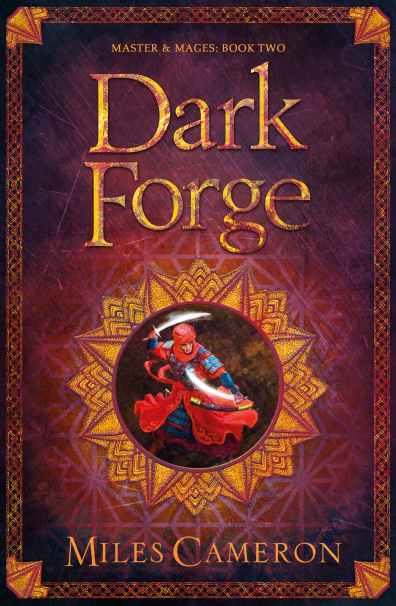
Quick Review – Dark Forge by Miles Cameron

Dark Forge Cover

Publisher: Hachette Audio (Audiobook – 24 January 2019)

Series: Masters & Mages – Book Two

Length: 16 hours and 58 minutes

My Rating: 5 out of 5 stars

Amazon     Book Depository

After finally getting around to doing a quick review of King of Assassins by R. J. Barker the other day, I thought I would take this opportunity to do a quick review for the exceptional 2019 fantasy novel, Dark Forge, the second entry in the Masters & Mages trilogy by Miles Cameron.

Miles Cameron is an interesting and talented author who has written several amazing fantasy novels over the last couple of years.  I am a little more familiar with Cameron under his main writing name, Christian Cameron, which he uses for his enjoyable and detailed historical fiction novels, such as last year’s The New Achilles.  However, I really got into his fantasy fiction last year when I read the first Masters & Mages book, Cold Iron, which proved to be a particularly captivating and impressive novel that is really worth checking out.  After enjoying Cold Iron I also decided to have listen to its sequel, Dark Forge, late last year, and while I had a fantastic time reading it, I completely failed to write a review for.  This is a shame because Dark Forge was a really great read and I actually considered it to be one of the best books (and audiobooks) I read in 2019.

Synopsis:

Only fools think war is simple.
Or glorious.

Some are warriors, some captains; others tend to the fallen or feed the living.

But on the magic-drenched battlefield, information is the lifeblood of victory, and Aranthur is about to discover that carrying messages, scouting the enemy, keeping his nerve, and passing on orders is more dangerous, and more essential, then an inexperienced soldier could imagine . . . especially when everything starts to go wrong.

Battle has been joined – on the field, in the magical sphere, and in the ever-shifting political arena . . .

Dark Forge is an excellent novel which takes the reader on a vast and complex adventure through Cameron’s detailed fantasy world.  The book follows the life of its protagonist, student Aranthur Timos, who, after getting involved in some intense espionage and intrigue in the previous novel, now finds himself on the battlefield as his city state goes to war to stop a dangerous and tyrannical new empire gaining power and destroying the current, benevolent status quo.  There is a lot going on in this book, and the authors sets the reader on an impressive and extensive adventure which proves extremely hard to put down.  Cameron starts this book off in impressive fashion, with the protagonist and many of the key side characters from the first novel involved a brutal and elaborate battle sequence that sees magic, gunpowder and troops utilised to a destructive degree.  From there, the story follows Aranthur as he engages in an extended scouting mission, where he attempts to work out the origin of his enemies and the full extent of their plan.  This is followed up with a particularly desperate siege before Aranthur finds himself back in the city that served as the main setting of Cold Iron, where political shenanigans see him branded a traitor and force him to sneak around the city in order to save his friends.

The author blends a lot of different story elements together into this book, which I felt came together well and helps to produce an extremely enjoyable narrative.  The author continues to utilise his distinctive, detail-orientated writing style which fits the scope and tone of the series and helps to produce a fun read with the feel of a classic fantasy novel.  I ended up having an outstanding time seeing the various fun and compelling places where Cameron took this great story, and it ended up being quite an enjoyable book.  It also leaves open some compelling storylines for the final entry in the series and it will be interesting to see how the author ends him impressive overarching plot.  I do think that readers who are interested in checking out Dark Forge should really read Cold Iron first.  While Cameron did do a good job of examining some of the key events that occurred in the first novel, Cold Iron contained an immense amount of story detail, and I personally feel that readers would be well suited to have this story fresh in their mind before getting into Dark Forge.

One of the things that I like the most about the first entry in this series, Cold Iron, was the way in which it served as a coming-of-age story for the protagonist, Aranthur.  Cameron continues this in Dark Forge, as the protagonist once again goes through a lot of growth.  Not only does he begin to become a key player in the fight against the Master (the antagonist of the series), but he also starts to come into his own as a magical user, a swordsman and a leader.  While he is somewhat reluctant to become a warrior and a killer, despite his clear aptitude for it, he eventually becomes more confident in his role, especially after seeing all the dangers and darkness out in the world.  All this great growth continued to endear me to Aranthur, and it was a lot of fun to see the author portray a normal character who has vast responsibilities and adventure thrust upon him and must either adapt or crumble as a result.  Dark Forge also continued to showcase several of the amazing side-characters who were initially introduced in Cold Iron.  Each of these characters gets their own intriguing arcs throughout the book and it was fantastic to see them, and their relationships with Aranthur, evolve over the course of their extended adventure.  Several new compelling characters were also introduced in this novel and their unique narratives helped to enhance Dark Forge’s story.  All of these excellent characters are a lot of fun to follow and I look forward to seeing where they end up at the end of this series.

I also have to highlight the impressive world-building that Cameron featured in Dark Forge.  The author continues to dive down deep into the lore and history of his new realm, particularly as the characters spend most of the novel exploring a new continent that was mentioned but not featured in Cold IronDark Forge’s narrative spends significant time expanding the reader’s knowledge of this new continent, mainly because the protagonists engage in an epic and lengthy trek throughout it, and it was fascinating to see the cool new landscapes that Cameron describes.  In addition, I really enjoyed the expansion of the awesome magical system featured throughout the series.  Much of this is because of a world-changing event that increases the importance and power of magic, but it is also because Aranthur is becoming much more proficient with his magical abilities.  Not only does this result in a deeper understanding of this universes magic systems work, but you also get to see some much more destructive and elaborate displays of magical ability, which results in some very impressive sequences throughout the book.  I personally found the authors inclusion of a series of magical roadside booby traps to be particularly clever, and I also had a lot of love for one of the scenes at the start of the book where the protagonist speeds up his own body in the midst of a battle, ensuring that everyone, except a few opponents, is fighting in slow motion in comparison to him.  I found all of this to be extremely cool and I really appreciated all the amazing new features that Cameron was able to fit into Dark Forge.

Like the first book in this series, I ended up checking out the audiobook version of Dark Forge, which is narrated by Mark Meadows.  The Dark Forge audiobook has a run time of just under 17 hours, which is a couple of hours shorter than Cold Iron, making for a quicker listen, and dedicated listeners can get through it in a short amount of time (I know I did).  I had an amazing time listening to this audiobook, and I really think I followed this novel a lot more closely by listening to it.  I was also really glad that Meadows returned to narrate this second novel in the series.  Meadows’s voice serves as a perfect match for Cameron’s unique writing style and he did a fantastic job moving the story along and bringing the various characters to life.  As a result, I would really recommend the audiobook format for anyone interested in checking out Dark Forge and it ended up being an excellent way to enjoy this outstanding book.

Dark Forge by Miles Cameron is an impressive and captivating fantasy read that presents the reader with an intense adventure that follows a relatable and likeable protagonist.  Filled with all manner of action, great side-characters and clever world building, Dark Forge serves as an amazing second entry in the Masters & Mages series, and I had an exceptional time listening to it.  This book gets a full five-star rating from me and I really need to check out the final entry in the series, Bright Steel, next year.

Amazon     Book Depository

Hidden in Plain Sight by Jeffrey Archer

Hidden in Plain Sight Cover

Publisher: Macmillan (Hardcover – 27 October 2020)

Series: William Warwick – Book Two

Length: 304 pages

My Rating: 4.25 out of 5

Amazon

Bestselling author Jeffrey Archer returns with the second book in his William Warwick historical crime fiction series, Hidden in Plain Sight.

London, 1986.  Following the failed attempt to put his nemesis, expert art thief Miles Faulkner, behind bars, William Warwick has been promoted to Detective Sergeant and now has a whole new focus: drugs.  William and his team have been assigned to take down a notorious drug kingpin, one who has all of South London in his pocket and who takes great pains to hide his identity and methods.  However, despite their focus on catching this mysterious drug lord, known only as the Viper, Warwick is still determined to take down Faulkner.

When William coincidently arrests an old acquaintance from his school days, Adrian Heath, it unexpectedly provides him with the opportunity that he has been looking for.  Not only does Adrian have information about the identity of the Viper, but he also has a connection to Faulkner that could be exploited to finally throw his adversary behind bars.  As William attempts to close the net around his targets, he must also counter the moves of his enemies, even when they attempt to ruin his life or his upcoming marriage to Beth.  However, it will take more than personal attacks and clever setbacks to discourage William, and he soon has Faulkner and the Viper exactly where he wants them.  But even in defeat, Miles Faulkner is a dangerous opponent, especially now that he has his vengeful eyes fully set on William and everyone he loves.

Hidden in Plain Sight was another exciting and clever novel from Jeffery Archer featuring a compelling historical crime drama set around the life of a fun fictional character.  The protagonist of this series, William Warwick, actually first came into existence in Archer’s iconic Clifton Chronicles series of historical fiction books, where he was introduced as the in-narrative fictional protagonist of a series of detective books written by the Clifton Chronicle’s main character, Harry Clifton.  After Archer concluded the Clifton Chronicles a couple of years ago, he decided to provide his fans with a more detailed exploration of this fictional detective, and this series is the result.  The William Warwick series looks set to be Archer’s next major long-running series and it will explore the entire career of Warwick, from eager young recruit to hardened and brilliant detective.  This is the second William Warwick novel following last year’s Nothing Ventured, and Archer has come up with an enjoyable new tale that proved really hard to put down.

This second entry in the William Warwick series contains another intriguing and exciting character driven narrative that sees the protagonists engage in a game of wits with some despicable criminals.  This proved to be an excellent historical crime fiction novel that not that not only continues the compelling narrative set up in the previous book in the series but which also sees the protagonist go after an entirely new foe.  Archer presents a great recreation of 1980s London and takes the story in an interesting new direction by having William attempt to combat the city’s crippling drug trade.  However, the story still has a fascinating focus on the world of art and antiquities and its associated criminal underbelly, thanks to the amazing returning antagonist from the first novel.  This story proved to be really exciting and fast-paced, and I enjoyed the variety of different crime fiction elements that Archer included in the plot, as the protagonists attempt to take down their quarry in a number of different manners.  Readers are treated to a range of great sequences, from pulse-pounding police raids, detailed investigations, cunning undercover operations and even a very entertaining courtroom sequence.  Archer has loaded Hidden in Plain Sight’s story with all manner of twists and turns, so much so that the reader is often left surprised at who ends up on top and where the story will go next.  This was a really enjoyable narrative that I found to be extremely addictive, resulting in me powering through the entirety of Hidden in Plain Sight in just over a day.  Fans of the previous entry in the series (as well as the Clifton Chronicles) will have a great time continuing the fun story started in Nothing Ventured, while new readers will also be able to quickly dive into this novel and become engrossed in the story.

Like all of Archer’s books, the narrative of Hidden in Plain Sight is strongly driven by the excellent characters that the plot follows.  Archer utilises a range of different character perspectives to tell his story, presenting a rich and multifaceted narrative that explores the lives of several intriguing protagonists, as well as a couple of great villains.  Most of the story focuses on the series’ titular character, William Warwick, the determined, ambitious and righteous police officer who has dedicated his life to fighting crime.  Warwick continues to grow as a detective throughout Hidden in Plain Sight, losing more of his “choir boy” personality and gradually becoming more addicted to the job and the danger.  Despite that he still maintains his strong moral code and proves to be a very likeable central character, especially as Archer spends a lot of time exploring his personal life and his various relationships.  In addition to Warwick, Archer also dedicates a large amount of the book to several key side characters including Warwick’s police colleagues, the major antagonists and members of Warwick’s family.  These various additional characters and perspectives really added a lot to the story’s flow, and it was a much more effective way to tell this narrative than through the eyes of Warwick alone.  Most of these characters are only featured for a small amount of time throughout the book, but I felt that Archer made the most of their appearances, showcasing their personalities and motivations in an excellent manner and making sure that the reader was concerned for their various story arcs.

While these books are mostly focused on the exploits of William and his crime fighting associates, the character I have the most love for is the villain, Miles Faulkner, who is a constant highlight of each book.  Faulkner is a debonair and brilliant criminal mastermind who specialises in elaborate art thefts and forgeries and who gained the attention of the protagonists in Nothing Ventured.  Faulkner serves as a brilliant foil to William and the other police, continually outsmarting them at every turn and thoroughly acting as the cocky master villain.  Faulkner pretty much steals every scene he appears in, and you cannot help but enjoy his antics, even when you are pulling for the protagonists to knock him off his pedestal.  Archer introduces a number of entertaining and clever twists around Faulkner throughout Hidden in Plain Sight, and it was extremely entertaining to see the various ways in which this antagonist manages to manipulate everyone around him and generally come up on top, even when it appears that he has lost.  I personally liked the more vindictive streak that appeared as part of Faulkner’s character in this book, following his various losing encounters with William and the other protagonists.  Not only does this result in a number of clever and elaborate revenge ploys but it also gives a harder edge to Faulkner as the overall antagonist of the series, and hints that he may have some diabolical plans for William in the future entries of this series.  I had a lot of fun with this excellent antagonist and I cannot wait to see what villainy he unleashes next.

Hidden in Plain Sight is another fun and clever novel from Jeffery Archer that comes highly recommended.  Archer has done an excellent job of continuing his William Warwick series, and readers are in for an exciting and enjoyable time with this book.  I really liked where Archer took the story in Hidden in Plain Sight and I am looking forward to seeing how the series will continue next year.

Amazon

Waiting on Wednesday – Hollow Empire by Sam Hawke

Welcome to my weekly segment, Waiting on Wednesday, where I look at upcoming books that I am planning to order and review in the next few months and which I think I will really enjoy.  I run this segment in conjunction with the Can’t-Wait Wednesday meme that is currently running at Wishful Endings.  Stay tuned to see reviews of these books when I get a copy of them.  For this week’s Waiting on Wednesday entry I take a look at Hollow Empire by Sam Hawke, an excellent sounding upcoming fantasy novel that serves as a sequel to one of my favourite books from 2018, City of Lies.

Hollow Empire Cover 2

City of Lies was an impressive and clever debut from Australian author (and fellow Canberran) Sam Hawke that I absolutely loved when it came out.  Hawke’s first book was an amazing fantasy novel that followed a pair of siblings trained in the art of poison detection as they attempted to save their friend and their city from an invading army and the sinister conspiracy behind it.  I loved the combination conspiracy and siege storyline and it proved to be an outstanding and deeply captivating read.

I have been hoping a sequel to City of Lies for some time now and I was deeply excited when I saw that Hollow Empire was coming out soon.  This second book from Hawke, which will be the second and final entry in her Poison War duology, is currently set for release in early December 2020, and it looks like it is going to be another epic and enjoyable read.

Synopsis:

You never get used to poisoning a child . . .

Two years after a devastating siege tore the country apart, Silasta has recovered. But to the frustration of poison-taster siblings Jovan and Kalina, sworn to protect the Chancellor, the city has grown complacent in its new-found peace and prosperity.

And now, amid the celebrations of the largest carnival the continent has ever seen, it seems a mysterious enemy has returned.

The death of a former adversary sets Jovan on the trail of a cunning killer, while Kalina negotiates the treacherous politics of visiting dignitaries, knowing that this vengeful mastermind may lurk among the princes and dukes, noble ladies and priests. But their investigations uncover another conspiracy which now threatens not just Silasta and the Chancellor but also their own family.

Assassins, witches and a dangerous criminal network are all closing in. And brother and sister must once more fight to save their city – and everyone they hold dear – from a patient, powerful enemy determined to tear it all down . . .

I really like the sound of the above synopsis as it looks like Hawke has come up with another compelling and fanatic story.  I love the idea of the two siblings once again investigating a complex, multilayered conspiracy that is set to engulf their city and loved ones, and having it set around a massive festival playing host to various dangerous parties and rivals sounds really intriguing.  I am really hoping that this sequel features more of the poison-based plot elements that made City of Lies such a distinctive read, as seeing the protagonist countering the various poisoning attempts was a fantastic highlight of the first book.  I am also really curious to see how the author continues the story from City of Lies as well as how she intends to finish off the series.

Based on the strength of Hawke’s debut alone, I am already excited for Hollow Empire and I am extremely confident that I am going to enjoy this next entry in the series.  When combined with the fantastic sounding plot, I have no doubt that Hollow Empire is going to be an impressive and exciting read and I fully expect it to be one of the best fantasy novels of 2020.

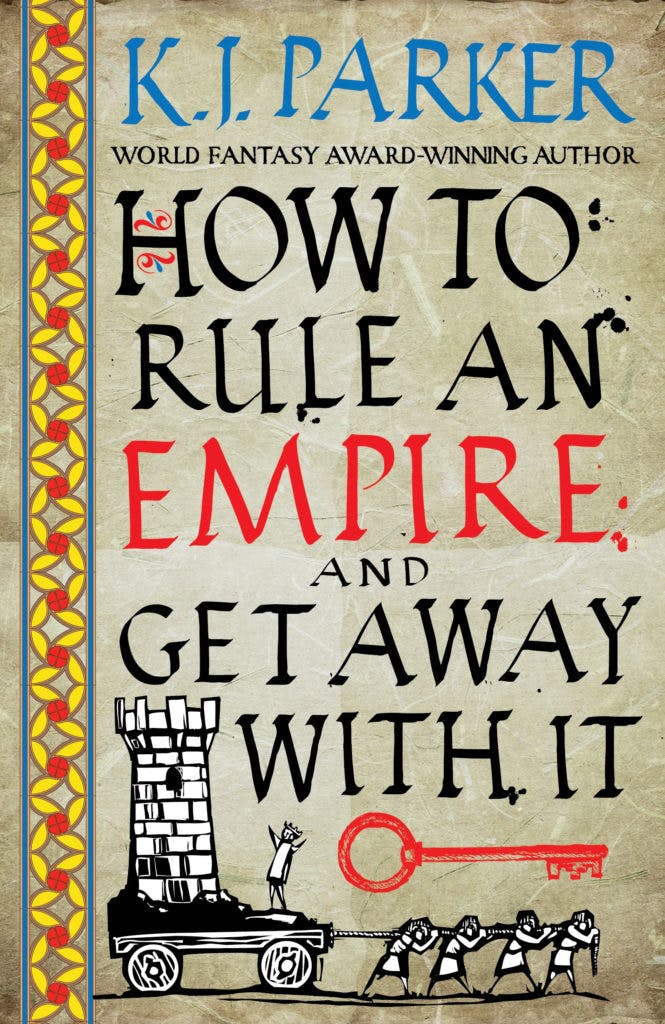
How to Rule an Empire and Get Away with It by K. J. Parker

How to Rule an Empire and Get Away With It

Publisher: Orbit (Trade Paperback – 18 August 2020)

Series: The Siege – Book Two

Length: 357 pages

My Rating: 5 out of 5 stars

Amazon

Prepare to laugh like crazy with How to Rule an Empire and Get Away with It by K. J. Parker, an intensely funny and clever fantasy read that was one of my most anticipated releases of 2020.

Several years after their home fell under a brutal and prolonged siege, the inhabitants of the City have settled into a new way of life.  There may be a vast army camped on the plains outside and the occasional catapult shot may demolish a house or two, but that does not mean that people cannot make some money and get on with their lives.  This includes Notker, an acclaimed actor, skilled lookalike and mediocre playwright, who scrapes a living by impersonating the rich and powerful of the City at parties while trying to get someone to pay him money for his latest play.  However, what Notker does not know is that fame, opportunity, and a rather large boulder are about to land in his lap.

When the City’s greatest hero and nominal leader, Lysimachus, secretly dies, his followers/handlers, desperate to stay in power, recruit Notker to play the role of a lifetime.  Impersonating Lysimachus, Notker continues to act as the city’s figurehead, allowing life to go on, and he even begins to think he has a handle on this simple job, until someone tries to murder him.  Now he finds himself in the midst of a brutal and ongoing power struggle as the various power players in the city attempt to manipulate him for their own ends resulting in him being crowned as Emperor of the entire Robur Empire (or what is left of it).

As Notker attempts to find some sanity within his home, he begins to understand what a fragile position the City is in.  With enemies surrounding them and the besiegers slowly overcoming the City’s defences, Notker needs to choose between making a run for it or trying to save the City.  But what difference can one very good actor make in a war?  If Notker has anything to do with it, everything!

How to Rule an Empire and Get Away with It is another spectacular and extremely entertaining fantasy novel from legendary fantasy writer, K. J. Parker.  Parker, a pseudonym of bestselling author Tom Holt, has written a vast catalogue of books over the years, including a substantial collection of humorous and satirical fantasy novels.  I first really got into Parker’s work last year when I was lucky enough to receive a copy of the awesome Sixteen Ways to Defend a Walled City, a very funny novel that focused on a conniving engineer as he thwarted a massive army through guile, tricky and a substantial amount of BS.  Sixteen Ways to Defend a Walled City was an amazing read and it was easily one of my favourite books of 2019.  As a result, I have been eagerly keeping an eye out for any additional releases from Parker and was very excited when I saw that How to Rule an Empire and Get Away with It was coming out.  I was especially intrigued when I learnt that this latest Parker novel was some form of sequel to Sixteen Ways to Defend a Walled City, and I was very, very happy when I got my copy of this latest book.

This new novel from Parker proved to be an extraordinary read and it was easily one of the funniest novels of 2020.  The author writes a clever, fast-paced and addictive story that utilises the author’s unique sense of humour to create a very entertaining piece of literature.  This is a very enjoyable read, and fans of Parker’s work will love that How to Rule an Empire and Get Away with It is a sequel to Sixteen Ways to Defend a Walled City, continuing some of the great storylines from the prior book.  I had an outstanding time reading this book and it gets an easy five-star review from me.

Parker presents another brilliant and witty story for How to Rule an Empire and Get Away with It that follows the adventures of another unlucky and jaded protagonist as he tries to survive the chaotic events unfolding around him.  Just like with Sixteen Ways to Defend a Walled City, this novel is written purely from the perspective of the protagonist as he chronicles his actions and personal history into a historical text.  This results in a very fast-paced and hilarious story, as the main character bounces from one bad situation to another, encountering plotters, ambitious politicians, angry crime bosses, dangerous invaders and one particular fierce actress who serves as Notker’s leading lady.  I absolutely loved the various outrageous and challenging situations that the protagonist finds himself in, and Parker does a fantastic job presenting them in a humorous way, showing how silly everything is and the various, clever and well-written solutions to these problems.  The entire story goes in some very fun and compelling directions and this ends up being an overall excellent narrative that is extremely well written.  I was able to predict the overall conclusion of the story somewhat in advance, but Parker did an amazing job setting it up and it resulted in a very entertaining and satisfying conclusion.  This was such an amazing story and I had an absolute blast getting through it, laughing my head off the entire time.

As part of this awesome and entertaining story, Parker sets up a whole new protagonist for this novel, Notker the liar.  Notker is another fun protagonist in a similar vein to the main character of Sixteen Ways to Defend a Walled City, in that he is a self-serving and opportunistic individual who is mostly looking out for his own wellbeing.  This changes once he takes on the assignment of impersonating the dim-witted but charismatic Lysimachus and soon finds himself responsible for the safety of the city.  While at first he is mostly trying to survive and find a way to escape from all the insanity and backstabbing that is his life, once he becomes more aware of the situation facing the City and the danger it is really in he begins to take on more responsibility, manipulating everyone so that they can start fighting a more effective war.  I really liked seeing this protagonist attempt to take control of the situation surrounding the City, especially as he appears to be one of the only sane people around.  Watching his various incredulous reactions to the problems presented to him and his various solutions, which are a combination of common-sense responses and brilliant but out-there tactics, is really entertaining.  I especially loved how Parker played up the actor/screenwriter aspect of the character as many of his greatest tricks are derived from theatre techniques, such as selling something to a crowd, misdirection or the value of good lighting.  There is also a great underlying aspect to the character as he pretends to be Lysimachus and he needs to strike a balance between responses that Lysimachus would have done and his own common sense and craftiness.  This compulsion to act like Lysimachus actually becomes a major problem for Notker as he enjoys being the heroic former gladiator and soon begins emulating him instead of acting in his usual manner of self-preservation.  All of this results in another complex and likeable central character who the reader cannot help but root for as he attempts to survive.  I really liked how Notker’s story progressed and it was a real joy to read about him from start to finish.

Another thing that I really enjoyed about this book was the way in which it acts as a fantastic and humorous follow-up to Sixteen Ways to Defend a Walled CityHow to Rule an Empire and Get Away with It is set in the same city as the author’s 2019 release, and the story begins a few years after the events of this proceeding novel.  This new novel mostly presents a new story, told from the perspective of a different protagonist, but it does have a lot of connections to the previous novel.  The individual Notker is impersonating, Lysimachus, was a side character in the first novel, serving as a bodyguard to the original protagonist.  In this book it is revealed that following Sixteen Ways to Defend a Walled City, Lysimachus, a champion gladiator and a revered public figure, was given all the credit for the original protagonist’s efforts following his death.  Parker does a fantastic job revealing this to the reader, and it is extremely fitting in the scope of the first novel as this original protagonist was always getting overshadowed and overestimated.  The author makes sure to really drive this point home by completely excluding the name of the previous protagonist throughout How to Rule an Empire and Get Away with It, just to emphasise how no one in the city truly remembers who he was or what he did, which is pretty darn hilarious.  The novel contains a number of fantastic references to the events that occurred with the previous book, including giving Notker a copy of the previous protagonist’s memoirs (which formed the basis of Sixteen Ways to Defend a Walled City).  Notker of course then provides his own witty two cents to this memoir, providing a writer’s critical analysis, including doubting some of the events that occurred, such as the coincidence around the protagonist being the childhood friend of the mastermind of the siege.  All of this definitely adds a lot to the book’s overall humour, and it is always entertaining to see an author make fun of his own work.

Despite these fun references and the continuation of some story elements from Parker’s previous book, How to Rule an Empire and Get Away with It is very much its own novel, taking the reader on a whole new fun adventure.  As a result, you really do not need to have read Sixteen Ways to Defend a Walled City first, although it is a lot of fun to see the previous book’s events lampooned in this novel.  Indeed, due to the fact that the protagonist and point-of-view character has no idea of the full events of the previous book, you get a good overview as everything is explained to him, which is fun.  Overall, this serves as a very entertaining sequel to this amazing previous book and I will be interested to see if Parker decides to continue the story in some way, which I have no doubt will be another incredible read.

How to Rule an Empire and Get Away with It is a truly awesome and enjoyable read, and author K. J. Parker lived up to all my expectations with this book.  Not only does it contain a captivating and addictive narrative anchored by a likeable and complex main character, but it is also intensely funny.  I loved every second that I spent reading How to Rule an Empire and Get Away with It, and this was without a doubt one of the best books that I have read this year.

Amazon

Harrow the Ninth by Tamsyn Muir

Publisher: Recorded Books (Audiobook – 4 August 2020)

Series: The Locked Tomb – Book Two

Length: 19 hours and 51 minutes

My Rating: 5 out of 5 stars

Amazon     Book Depository

Sensational author Tamsyn Muir follows up her incredible 2019 debut with another epic, complex and infinitely entertaining hybrid novel, Harrow the Ninth.

Tamsyn Muir burst onto the writing scene with a real vengeance last year with her debut novel, Gideon the Ninth, the first book in The Locked Tomb series.  Gideon the Ninth was an extremely clever and compelling novel that followed a group of spacefaring necromancers who were summoned to the house of their Emperor and god, and given an opportunity to learn from him and become Lyctors, immortal beings with immense necromantic power who are considered to be living saints.  What they instead found was a haunted manor filled with secrets, weird experiments and mysterious hints at the past.  The protagonist of this first novel was the titular Gideon, a smart assed, foul mouthed lesbian swordswoman who was reluctantly serving the necromantic lady of the Ninth House, Harrowhark Nonagesimus.  I absolutely loved Gideon the Ninth and it was easily one of my favourite debuts of 2019.  As a result, I was rather intrigued when I heard about its sequel, Harrow the Ninth (which, as you can see above, featured another intense and beautiful cover by the talented Tommy Arnold) and I eagerly grabbed an audiobook copy of it when it came out.  I have to say that I am extremely glad that I decided to do so as Harrow the Ninth turned out to be a truly outstanding book and I had an incredible time reading it.

Harrow the Ninth is set shortly after the dramatic conclusion to Gideon the Ninth and switches the focus of the novel over to Harrowhark, who has succeeded in becoming a Lyctor at great personal cost.  Now alone, mentally scarred and more powerful than ever, Harrow finds herself in the personal care of the Emperor of the Nine Houses, who is determined to use his new Lyctor in a deadly war against an ancient and powerful terror, a Resurrection Beast, the insane and vengeful ghost of a murdered planet.

Travelling to the Mithraeum, the Emperor’s isolated sanctum, Harrow finds herself trapped aboard a desolate space station with her god and her fellow Lyctors.  Each of her companions on the station has their own agenda and motive for being there, and all of them are seeking to use Harrow for their own ends.  Worse, as Harrow attempts to learn the full extent of her new powers and abilities, it becomes apparent that something has gone wrong with her transition to Lyctorhood.  Her body keeps failing her, her swordcraft is shoddy, her blade makes her nauseous and her mind keeps presenting her with impossible scenarios.

As the Resurrection Beast comes ever closer to the Mithraeum, Harrow desperately attempts to understand everything that is happening to her and learn how to survive the oncoming attack.  However, she finds herself distracted with the machinations and plots of her untrustworthy rival and the attitudes of her three ancient tutors, especially as at least one of them is trying to kill her.  Can Harrow unwrap all of the dark secrets that lie hidden on the Mithraeum before it is too late, or will the entire Empire fall into ruin before them?

Well damn, now that was a truly enjoyable and incredible read.  Harrow the Ninth is a complex, clever, entertaining and exceptionally well written novel that does an awesome job following on from Muir’s impressive first novel.  I had an absolutely amazing time reading this fantastic book, which I think in many ways is somewhat stronger than Gideon the Ninth.  Not only does Harrow the Ninth have a deeply captivating story that successfully utilises elements from a range of different genres, but it also features some memorable and compelling characters, excellent universe building and a magical system that really stands out thanks to its descriptive necromantic powers.  Harrow the Ninth also serves as a marvellous follow-up to Gideon the Ninth, continuing the clever story from the first book with the same distinctive tone and writing style, while also featuring an intriguing reimagining of prior events.  All of these makes for an epic read which gets a full five-star rating from me.

At the heart of this amazing novel is an intense and multilayered narrative that presents a compelling tale of love, tragedy, treachery and self-discovery.  The story is actually split into several distinct sections, with the main storyline focusing on Harrow after her transformation to Lyctorhood as she spends time in the Mithraeum with the Emperor and the other Lyctors.  This part of the book expertly jumps back and forth through time and is an extremely entertaining part of the book, detailing Harrow’s education under the Emperor and the other Lyctors and her attempts to survive the various internal politics, plots and personal chaos.  The other major part of the story shows a curious alternate version of the events of Gideon the Ninth, shown from Harrow’s point of view, made distinctive due to the complete lack of Gideon, who appears to be erased out of existence.  This alternate version of the prior book is a really intriguing part of Harrow the Ninth’s story, and while I was initially a little confused about why it was included and where Gideon had disappeared to, it proved to be an extremely clever and compelling part of the book, especially when everything becomes fully revealed.  Due to this reimagining of already existing narrative, as well as the continued references to the events of the first book, readers interested in checking out Harrow the Ninth really do need to have read Gideon the Ninth first, as the story gets a little confusing and significantly less impactful without this established knowledge.

These separate storylines complement each other is exceedingly cleverly.  This novel does start off a tad slow, but this is mainly because Muir is re-establishing the narrative from the previous book and loading up the front end of the story with hints and foreshadowing about the multitude or revelations that come throughout the course of the plot.  A lot of big events and reveals occur towards the end of Harrow the Ninth, including a few reveals that were hinted at in the previous novel, and I felt that the author set all of these up perfectly.  This results in an extremely epic conclusion to the novel and I was really impressed by how it all turned out.  This novel contains a unique blend of genres, as Harrow the Ninth features elements from the fantasy, science fiction, psychological thriller and murder mystery genres.  All of these disparate features work together extremely well in the story and it helps to produce a distinctive and entertaining narrative, especially as Muir adds on a rather good comedic edge.  The end result is a fascinating and exceedingly captivating overarching narrative, and I had an outstanding time getting pleasantly blindsided by the inventive twists and turns.

This excellent and unique story is expertly supported by a distinctive writing style that I felt did an amazing job enhancing the narrative.  Perhaps one of the most noticeable elements is the clever narration that accompanies the story.  While Harrow is the point of view character for most of the novel, she is not actually the one narrating the story.  Instead Harrow’s actions, emotions and thoughts are identified, summarised, and relayed back to Harrow by an unidentified second person narrator.  Naturally, this proved to be an interesting and unusual way to tell this story, although it works well in the context of the overall narrative, even if it takes a little to get used to.  This narrative format plays into certain character reveals and plot points of the novel and it makes a lot of sense once you get further into the book, with the style itself actually being a hint about what is happening with Harrow.  This narration style changes at a certain point towards the end of the book in accordance with certain plot developments and the subsequent deviation is clever and reminiscent of past events.  I also really must highlight the author’s extremely descriptive form of story writing, as every event, person or location is described in overly vivid detail.  Not only did this ensure that the reader got the full breadth of certain magical action and developments but it also helped to enhance the overall gothic feel of the book and ensure that reader was able to easily imagine the various locations the protagonist found themself in.  This really helped the story to shine and I have a lot of love for how Muir was able to work story elements into this style.

In addition to the great story that Muir has come up with for this book, Harrow the Ninth also boasts an impressive array of amazing characters.  The central protagonist is the titular Harrow, who takes over from Gideon as the main character after the first book.  Harrow is a vastly different character to Gideon as she has a much more subdued personality, less self-esteem, and a more restrained, subtler sense of humour.  Due to Gideon’s somewhat biased narration in the first novel Harrow was mostly viewed as an extremely arrogant, confident, and brilliant person, and this is how Harrow attempts to act throughout most of the novel.  However, certain vulnerabilities in Harrow’s character that were previously explored in Gideon the Ninth once again come to the fore in this second novel.  Harrow was already an extremely complex individual, having been birthed by dark magic, ended up being responsible for the death of her own parents and having an interesting love interest.  However, following her alteration into Lyctorhood, Harrow is a much more damaged person due to the absorption of her cavalier.  Harrow’s already fractured psyche is made even worse throughout the course of the book, as she sees all manner of things that are not there and has some very different ideas of the past or how she perceives the world.  In addition, Harrow bears an immense amount of guilt on her shoulders as a result of various events in her past and the many deaths on her conscience.  Harrow needs to work through all these issues throughout the course of the story if she has a chance to survive, and this becomes a major and dramatic part of the story that was really intriguing to explore.  I had an amazing time seeing the story primarily through Harrow’s eyes and it was a refreshing and compelling change of pace from the first book.

Harrow the Ninth also focuses on a great collection of supporting characters who add some intrigue and drama to the story.  Perhaps the most distinctive side characters in this novel are the five beings that Harrow finds herself trapped with aboard the Mithraeum, the Emperor of the Nine Houses and his four other Lyctors.  This is an extremely fascinating collection of people and much of the story revolves around Harrow’s unique interactions with them as each of them attempts to teach her, manipulate her or kill her at various points within the book.  These characters are really entertaining and distinctive, from the seemingly kind, patient, and infinitely calm Emperor, to the three ancient Lyctors, the cool and confident Augustine, the exceedingly self-involved Mercymorn and the ultra-focused and lethal Ortus.  In addition, we see the return of the manipulative Ianthe, who became a Lyctor at the same time as Harrow and who forms a very distinctive relationship with her throughout the course of the book.  I really enjoyed the complex interactions and relationships that forms between all of these characters (including some wild relationships between various participants), with the Emperor acting as the father figure, the three existing Lyctors portrayed as older siblings who have a complicated power dynamic with each other, while Ianthe and Harrow are the younger sisters learning the ropes from the others.

I also have to highlight the inclusion of several other characters who previously appeared in Gideon the Ninth.  It was rather intriguing to see many of these characters return, especially as most of them died or appeared to die in the prior novel.  Muir does a fantastic job working them into the fabric of this novel, such as by featuring some of them in the alternate version of the events of the first book, changing their roles and impacts on the story as a result.  I particularly enjoyed the extended role of Ortus, cavalier of the Ninth House.  Ortus, not to be confused with the Lyctor mentioned above (although the names are actually a clever clue to a big reveal), died early on in the events of Gideon the Ninth.  But in this book the dour Ortus serves as a fantastic yet reluctant companion to Harrow, with surprising hidden depths and an entertaining obsession with gloomy epic poems and verse.  He is also essentially the complete opposite to Gideon, resulting in a very different dynamic between necromancer and cavalier then we saw in the prior book.  Overall, I have to say that I was exceedingly impressed with the characters featured within this amazing novel.  Each of these complex and memorable characters added a heck of a lot to the story and it was deeply fascinating to see each of their storylines unravel and come to their compelling conclusions.

One of the major elements of this series that I love so much is the weird and wonderful necromantic magical system complements the science fiction of the book.  Pretty much all of the main characters in this book are powerful necromancers, specialising in a different form or style of necromantic magic.  All of this magic is extremely cool, and it was really awesome seeing it utilised in fight sequences and other scenes throughout the book.  Most of the magical elements revolve around Harrow’s bone magic, as she creates skeleton and bone constructs, manipulates her own bones to either enhance herself or detach them to make weapons or other creations, as well as elements of biological alteration.  Muir does an outstanding job explaining the full range of different powers that Harrow has, and there are some amazing scenes where the young necromancer does some really inventive and clever things with her bones.  There is one sequence in particular that sticks in the mind, and I’ll certainly remember it when eating soup in the future. 

In addition to Harrow’s abilities, Muir also showcases the creative and impactful abilities and magical powers that some of the other characters have.  These various abilities are all biological or spiritual in nature, and it was quite fun to see what the different necromancers can do, especially when they go up against Harrow’s bone magic.  All these magic scenes feature some rather vivid imagery and descriptions from Muir as she tries to show the full biological manipulations that are occurring, which really help to make these scenes pop.  The author also does a truly fascinating deep dive into the origins and mechanics of her unique magical system.  A lot of these new magical elements are explained to protagonist in some detail from one of her teachers, so the reader is able to understand these elements really well, and a lot of the lessons and explanations of magic have major impacts on the story down the line.  This proved to be an extremely interesting and enjoyable part of the book and I have a lot of love for Muir’s creativity when it comes to her version of necromantic magic.

I also have a lot of love for the distinctive gothic settings that Muir has imagined up for this series.  Each of the central story locations are filled up with all manner of dark and macabre trappings and features, which the author does a fantastic job bringing to life with her descriptive writing.  This includes the dreary and dark Mithraeum, a vast and mostly abandoned space station where most of the story takes place, as well as an alternate version of the First House that appeared in Gideon the Ninth.  All of these locations are described in great detail and each of these fun and distinctive settings helps to present a darker vibe to story and helps makes this series more unique and memorable as a result.  Harrow the Ninth also contains some rather captivating and inventive universe building expansions as the author attempts to introduce new things into her universe.  All of these extensions to this universe are really clever, playing into the story really well and I loved learning more about this fun fictional setting which does so much to enhance the story. 

I found that the audiobook format of Harrow the Ninth proved to be an excellent way to enjoy this amazing novel.  With a run length of just under 20 hours the Harrow the Ninth audiobook does require a bit of a commitment to get through it, although I felt that it was really worth the time investment.  I do have to admit that it took me a little while to finish this audiobook, especially at the start.  However, I absolutely flew through the second half of the novel once I became extremely invested in the story, and I managed to knock out the final six hours in rather short succession.  I have to highlight the fantastic narrator for this audiobook, Moria Quirk, who does an outstanding job telling the story and bringing the various characters to life.  I felt that Quirk utilised perfect voices for each of the main characters and you get a real sense of each character’s personalities and emotions from this vocal work, from the calm, composed tones of the Emperor to the exceedingly petulant voice of the Lyctor Mercymorn.  This excellent voice work really added a lot to this audiobook. I really think that Harrow the Ninth translates well into the audiobook format, and listening to it really added to my enjoyment of this second novel, especially as I absorbed a lot more of the detail and gothic atmosphere through the narration.

Harrow the Ninth by Tamsyn Muir was an epic and exceptional piece of fiction that I deeply enjoyed, and which comes highly recommended.  Not only did Muir present an impressive follow-up to her amazing debut novel, Gideon the Ninth, but she was able to turn out a complex and beautifully written sequel that proved extremely hard to stop listening to.  Powerful, cleverly written and just generally outrageous, Harrow the Ninth is an outstanding read and you have no discovered Tamysn Muir and her fantastic pieces of literature, you are really missing out. 

Amazon     Book Depository

Queen of Storms by Raymond E. Feist

Queen of Storms Cover

Publisher: Harper Voyager (Hardcover – 14 July 2020)

Series: The Firemane Saga – Book Two

Length: 471 pages

My Rating: 4.5 out of 5 stars

Amazon

Legendary fantasy author Raymond E. Feist returns to his new series, The Firemane Saga, with Queen of Storms, an amazing and exciting fantasy novel that takes the reader on some intriguing adventures.

I have long been a fan of Raymond E. Feist and his epic works of fantasy.  His long-running Riftwar Cycle books were amongst some of the first fantasy novels that I ever read and many of them, including the excellent Empire trilogy that he cowrote with Janny Wurts, are still some of my favourite books of all time.  After finalising the Riftwar Cycle back in 2013, Feist released King of Ashes in 2018, which was the first book in The Firemane Saga.  I really enjoyed the fun and compelling new story featured within King of Ashes, and I have been looking forward to seeing how the series continued for a while now.  This second book, Queen of Storms, continues right after the events of King of Ashes and has some intriguing new twists and turns for readers.

In the ancient and magical world of Garn, war is coming to continent of Tembria and its first blow will fall on the trading town of Bernan’s Hill.  Many people call Bernan’s Hill home, but none are more mysterious than the new owners of the town’s inn, Hatushaly and his wife Hava.  Despite their simple outward appearances, Hatu and Hava were born on the secret island of Coaltachin and both serve their continent-spanning criminal and spy network.  A series of mysterious events have been occurring throughout the kingdoms and lands of Tembria, and Hatu and Hava are tasked with observing Bernan’s Hill and reporting anything out of the ordinary.

Having befriended the town’s blacksmith, Declan, Hatu and Hava appear content in their new lives and are they are planning to be officially married during the midsummer festival.  However, even their training and information will not prepare them for the horrors that are about to be visited upon Bernan’s Hill, as a new and mysterious force attacks without warning, plunging the entire continent into war.  Separated from each other, each of these young people embarks on their own adventure.  While Hava attempts to find her lost husband, and Declan sets out to get revenge, Hatu is kidnapped by those who wish him to fulfill his fiery legacy as the secret heir to the kingdom of Ithrace.  His family, the legendary Firemanes, have long been rumoured to contain a spark of magic, and Hatu, as the last remaining Firemane, may hold the key to the survival of magic itself.  As these three young people set out to realise their destinies, they will experience horrors and tragedy as it soon becomes apparent that a whole new threat seeks to destroy all within Tembria.

Queen of Storms was a captivating and fun book which I found myself reading in only a couple of days due to how much I enjoyed it.  Feist has come up with a fantastic and impressive story within this novel, and I liked how it followed a group of excellent characters caught up in the chaos of a mysterious war.  There is all manner of action, adventure, subterfuge, character development and exploration of a new fantasy universe that comes together extremely well into a compelling overall narrative.  Readers should be forewarned that Feist makes some rather bold plot choices throughout this book, with a major event around halfway through the book really altering the course of the story in some interesting and dramatic ways.  I also liked how Queen of Storms served as a great sequel to King of Ashes, and there are a number of amazing reveals and revelations that add to the storylines established in the first book.  For example, the real antagonists of this series are revealed in more detail in this sequel after they were foreshadowed in the previous novel while the reader focused on a different antagonist, who had the potential to be the main villain.  This bait-and-switch came together well in Queen of Storms, and I enjoyed uncovering more about these antagonists and their motives.

Queen of Storms contains a multi-character narrative which follows several key protagonists as they explore this new world from Feist and get involved in the politics and battles of the world.  The majority of the story is told from the perspective of the novel’s three major characters, Hatu, Hava and Declan.  Each of these characters gets some substantial focus throughout the course of this novel, with some interesting storylines.  For the first part of the book their various storylines are very closely intertwined, as all three are based in the town of Bernan’s Hill in various capacities.  However, after the novel’s major event around halfway through, these three characters are separated and each of them embarks on their own exciting and enjoyable adventure.  Hatu’s story is a classic tale of a chosen one finding his destiny, which sees him journey off into the unknown to learn more about his past and his secret abilities.  As Hatu is the most central protagonist, this storyline got a lot of focus, and it was interesting to learn more about his role in the world and about how his life is bonded to the world’s magic.  Declan’s story becomes an interesting one about a young man learning to become a solider to avenge the death of his loved ones.  Declan had some life events occur throughout this book and while it was a little sad to see some of the things he fought for in the first novel go up in smoke, it does serve as a good motivation for his character and it looks like Feist has some interesting plans for him in the future.  Out of the three, I think I ended up enjoying Hava’s storyline the most.  Hava attempts to find out what happened to Hatu and gets captured by slavers.  She ends up using her abilities to free herself and her fellow slaves and becomes a successful ship’s captain, chasing after her husband while also exploring the lands outside the continent of Tembria.  All three of these main character arcs are really enjoyable and together they form a fantastic heart for Queen of Storms, allowing for a rich and powerful narrative.

In addition to these main characters, Feist also utilises several minor point-of-view characters who add in some extra narrative threads to the book.  For example, Donte, Hatu and Hava’s childhood friend who was captured by sea witches in King of Ashes, returns and a small part of the book is dedicated to his attempts to find Hatu and kill him.  You also get several parts of the book told from some of the key players in fight for the continent, such as Baron of Marquensas Daylon Dumarch, the sinister adviser Bernardo Delnocio, as well as a handful of other characters.  Each of these minor point-of-view characters provide their own insights and priorities to the mix and their various storylines and actions add a lot to the narrative and provide some interesting support to the main storylines.  I also liked some of the supporting characters who rounded out the cast of Queen of Storms and several of them proved to be quite enjoyable and likable, even if they have a greater chance of getting killed off.  Overall, Feist continues to write some great characters in this novel, and I look forward to seeing where each of these intriguing protagonists end up next.

The author also did a good job of continuing to expand on the amazing new fantasy world that the series is set in.  While a substantial part of the novel is set around Brenan’s Hill, which was introduced in the prior book, the story eventually starts to examine some other parts of the world.  In particular, several storylines are set around the islands and continents on the other side of the planet, none of which have been explored by any of the point-of-view characters.  These new additions to the story proved to be quite intriguing, especially as the character’s various explorations revealed some shocking truths about the world, as well as some troubling revelations about the series’ main antagonists.  It looks like the next book is set to feature some new areas of the world and should provide some more fascinating expansions down the line, which will no doubt provide some interesting backdrops and settings from the narrative.

While I did really enjoy Queen of Storms, I did find that some of the elements within it might be a little hard to follow if you had not read the first novel in the series.  Feist does do a good job of recapping the major events of the first book throughout the course of the story, but there were a few moments in the story when the significance of certain characters, locations and events were not as highlighted as they could have been, and new readers might get a little lost at this point.  There were even a few points at which I lost track of who a new character was, mainly because of the two-year gap between reading King of Ashes and Queen of Storms.  Still, I was usually able to remember who the character was after some prompting, and it worked out fine.  While this lack of certainty might occasionally impact the flow of the story for new readers, I think they can generally follow without too much difficulty.

Queen of Storms was an outstanding and exciting second entry in this fantastic new series from one of my favourite authors of all time, Raymond E. Feist.  This was an amazing and enjoyable novel, filled with adventure, great characters, and a compelling narrative.  I had an awesome time reading this book and I cannot wait to see how Feist continues The Firemane Saga in the next book.  A must-read for fans of fantasy fiction; this one is really worth checking out.

Queen of Storms Cover 2

Amazon