The Last Kingdom by Steve Berry

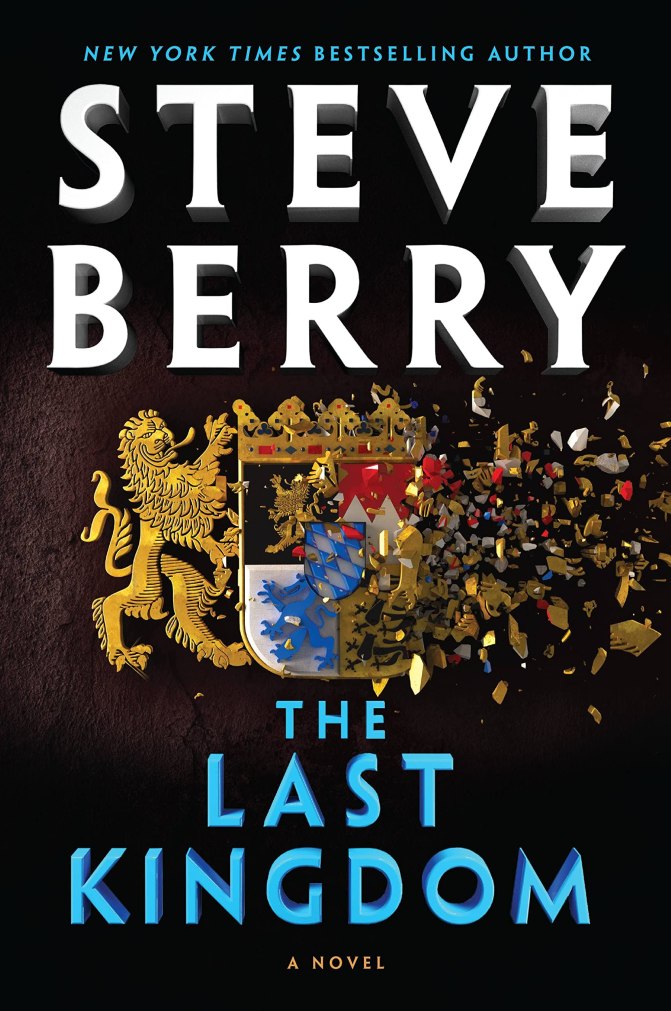
The Last Kingdom (Steve Berry) Cover

Publisher: Hachette Audio (Audiobook – 21 February 2023)

Series: Cotton Malone – Book 17

Length: 14 hours and 20 minutes

My Rating: 4.75 out of 5 stars

Amazon

Prepare for a remarkable and captivating mystery from out of history as acclaimed thriller writer Steve Berry presents another outstanding and riveting novel in The Last Kingdom.

Ever since I started reading thrillers a few years ago, one of my favourite authors in the genre, as well the most consistently entertaining, is the fantastic Steve Berry.  A veteran author who has been producing compelling reads since the early 2000s, Berry has over 25 books to his name that blend intense modern thriller narratives with intriguing history elements.  His most iconic body of work is his long-running Cotton Malone series, which follows a US Justice Department agent as he investigates unique historical conspiracies or secrets whose revelation will have major implications in the modern world.  I first fell in love with Berry’s writing back in 2019 when I read The Malta Exchange.  Since then I have gone on to read several more Cotton Malone novels including The Warsaw Protocol and The Kaiser’s Web, as well as the standalone novel The Omega Factor, each of which have contained some addictive stories that I’ve deeply enjoyed.  As such, I made sure to read his 2023 release, The Last Kingdom, as a soon as I could.  The 17th Cotton Malone novel, The Last Kingdom presented the reader with another brilliant conspiracy from history that was pretty awesome to behold.

There are many strange tales scattered throughout the history of Europe, but few are more unusual than that of King Ludwig II of Bavaria.  An unstable and fanciful figure who loved stories, solitude, and magnificent castles, King Ludwig dreamed of a magical kingdom, one far different from the lands he ruled.  Determined to find such a kingdom, he despatched agents throughout the world before his murder in 1886.  History suggests that he never found what he was looking for, but what if he did?

Now, in modern day Bavaria, freelance intelligence agent Cotton Malone has been hired by his old friend and protégé Luke Daniels to help him infiltrate a small group of radical separatists with dreams of securing Bavaria’s independence from Germany.  The focus of Luke’s investigation is the prince of Bavaria who seeks to usurp his older brother, the duke, and restore the ousted Wittelsbach monarchy with himself as king.  But to achieve his dreams, the prince needs the ultimate leverage, the Last Kingdom of King Ludwig II.

Following clues throughout several significant sites in Bavaria, Cotton and the Prince’s men are soon caught in a race to find a mysterious deed, one that Germany, China and the United States would kill for and which could greatly shift the balance of power in the world.  With the White House, Chinese intelligence, a mysterious Bavarian secret society and a rogue group of former CIA agents all vying for the prize, Cotton desperately attempts to solve the puzzle of the Last Kingdom and the terrible legacy it holds.  But can Cotton once again defeat the odds and keep the word safe from another historical mystery, or will the world be irrevocably altered by a secret form another century?

Well damn, now that was a pretty awesome read.  I have so much damn love for Steve Berry’s work, and The Last Kingdom is probably one of my favourites so far.  Perfectly combining an excellent thriller storyline with an elaborate and deeply captivating tale of history, The Last Kingdom was an exceptional read and one that I honestly could not stop listening to.

Berry has produced an amazing and addictive masterpiece of a thriller in The Last Kingdom with a particularly strong story behind it.  Like most of Berry’s books, The Last Kingdom is primarily a modern day thriller that introduces an original conspiracy that took place in history and has remained hidden until Cotton Malone wanders along (that man finds ancient mysteries wherever he goes).  As such, what starts as a simple infiltration at a famous Bavarian palace soon devolves into an elaborate treasure hunt for unique piece of history.  This latest historical mystery revolves around the eccentric and tragic final kings of Bavaria, and their desires to either retain power or find their own place in the world.  Berry expands on this historical detail throughout the entire course of the book, providing a good combination of real facts and some exaggerated fictional elements, which works into the main plot extremely well.  This modern day storyline gets some legs really early on as the protagonist and his companions are dragged into a major shadow war with several different factions attempting to take advantage of the situation and the hunt for the historical mystery.  Cotton soon finds himself working for several old colleagues, including a reckless CIA agent, while other groups, including the Bavarian prince and a rogue group of former CIA agents, start to use deadly force to solve the clues and find the hidden deed.

Berry keeps the pace of The Last Kingdom quick and compelling by raising the various stakes of the book while still showing off the entirety of Bavaria and its historic beauty.  There is a good reveal of why everyone is after the deed about halfway through which sets everyone on the road to a big confrontation.  While the full details of the conspiracy are a little over-the-top, Berry fits it into the story well, and the examination of modern and historical concerns surrounding is quite clever and intriguing.  The final half of the book is an intense thrill ride in several great ways, as Berry loads up the story with fun reveals, clever twists and so many betrayals.  I loved how the mystery of the King’s deed unfolded, and Berry really mixed the various original puzzle pieces of his conspiracy with the overlying historical detail to create a fantastic scavenger hunt.  The modern day thriller elements flitted around this extremely well, and watching the various participants in the hunt betray or outwit each other to try and get the prize was deeply exciting and led to some big moments.  The conclusion to the story is very good, and readers will come away extremely satisfied, both with how the story came together, and with all the extra knowledge Berry leaves you with.

I have a very deep appreciation for how Berry writes his outstanding novels and I think that The Last Kingdom was a particularly impressive example of this.  The blend of a high-intensity modern thriller storyline wrapped around a mystery loaded in historical detail is always entertaining, and I felt it turned out well again in The Last Kingdom.  The way that Berry splits the story out using alternate perspective chapters is particularly useful, as you get to see each of the characters interpreting the historical elements from different perspectives.  At the same time, several of the chapters are set in the 19th century and provide some deeper historical context to the story, which I felt was particularly useful and fun.  Berry really excels in simultaneously showing the different aspects of his story, and readers come away from The Last Kingdom having had fun with the thriller elements, while also learning so much more about some fascinating topics.  I really think that The Last Kingdom had one of the better thriller storylines associated with it thanks to inclusion of spies, disaffected royals, and several warring governments, and the way that story element unfolded had me pretty damn hooked the entire way through.  Like most of the Cotton Malone novels, The Last Kingdom can be read as a mostly standalone book, and readers don’t need to have any real knowledge of the previous entries in the series to enjoy this great novel.  While there are references to previous adventures and mysteries, the relevant details of these are well explained and new readers won’t be thrown by them.  However, long-term fans of the series will appreciate the continuation of several recent storylines, especially around Cotton’s feud with the US President, and I liked how that unfolded.

As I have mentioned a few times already, one of the best things about The Last Kingdom, and indeed all of the Cotton Malone novels, is the way that Berry dives into unique and intriguing parts of history to really give his stories a captivating kick.  In The Last Kingdom, this takes the form of a focus on the unique history of the kingdom of Bavaria, specifically the last 19th and early 20th century and the last three monarchs of the Wittelsbach line.  I have to admit, this was an area of history that I was not familiar with, but that changed after reading The Last Kingdom.  Berry conveys an immense amount of detail about this period and the relevant kings to the reader throughout the course of the book, so by the time you are done, you know so much about them.  However, Berry does it in such a way that ensures that the reader don’t get bored with it, as he showcases the more compelling elements of their reigns and the nation’s history around it, while also hinting at how it ties into the big conspiracy/mystery of the story.  I particularly enjoyed the detailed and fascinating examination of eccentric King Ludwig II.  Berry covers so many parts of his compelling life in this story, including his complex reign, his unusual outlook on the monarch, and his infamous end that saw him deposed and murdered.  The mysteries of Ludwig II and his search for a new kingdom proved to be a deeply compelling centre for the entire plot and I am really glad I got to learn more about them.  Another nation’s history, which I mention for spoiler reasons, is also concisely featured here, and I liked how Berry tied it together with Bavaria, resulting in a cool mixture that perfectly fed into the modern-day thriller.  The author clearly has so much fun researching and utilising all this historical detail in his books, especially if the extensive author’s notes section at the back is anything to go by.  Featuring all this historical detail works to create a great story, and I cannot emphasise how awesome it can be, especially in Berry’s capable hands.

In addition to all the historical elements of the book, I also really need to highlight how well Berry showcased Bavaria as a whole throughout the course of The Last Kingdom.  Many of the Cotton Malone novels act like a tourist brochure as the protagonists travel from one picturesque area of the country to the next, visiting all manner of historical sites.  This is very much the case for The Last Kingdom as the characters are forced to travel to several impressive locations throughout Bavaria, including iconic cityscapes, famous cathedrals, and beautiful landscapes.  Berry really spares no detail when it comes to describing these locations, and you can easily visualise them in all their stunning glory.  Some of the best descriptions are the iconic three castles that King Ludwig II built, which were strongly connected to his life story.  These castles form the basis for much of the plot’s historical scavenger hunt, and Berry really goes into the history and layout of them, even describing the furniture and the decorations.  You really grow to appreciate these locations around Bavaria, and I know that if I ever get the chance to visit, several of them are going to be on the top of my list of places to check out.  However, it is not just these iconic locations that are explored.  Berry also spends substantial time trying to show off the intangible nature of Bavaria, including its politics, its current attitudes, the state of its old monarchy, its place within larger Germany, and various other elements of its culture, including a real secret society dedicated to King Ludwig II.  All these elements are masterfully researched, examined, and showcased throughout The Last Kingdom, and all of them add to the authenticity of the story in immeasurable ways.

Aside from the excellent story and complex historical details, I also need to mention the great characters featured throughout The Last Kingdom.  Berry always writes fantastic figures, and it was awesome to see more of his central protagonist, Cotton Malone, as well as recurring supporting character Luke Daniels.  Both are well utilised throughout The Last Kingdom, and it was always great to see them working, especially as they have some major veteran presence at this point and work well against the various forces coming for them.  I did think that there was not a lot of development between the two, as both are essentially the same people they were in their last appearances, but they still make solid and likeable central focuses for the story.  However, there was some fantastic character development occurring outside of these main characters, especially as Berry introduces an amazing supporting cast of aging spies, angry deposed royalty, intriguing members of Bavarian society and deadly foreign agents.  Several of these characters have key roles in the book and Berry utilises them perfectly as great alternate perspectives for large swathes of the plot, producing a complex and powerful extended plot.  I loved the utilisation of Derrick Koger, a veteran CIA agent who has history with Cotton and has worked with him/against him in the past.  The funny and morally ambiguous Koger plays off the honourable Cotton perfectly as they work together in this book, and it was interesting to see them teaming up.  I liked how several of the antagonists, as well as Koger, shared a compelling character theme of people who believe they were overlooked or betrayed by their peers or people, and it serves as a great driving force for them to do bad things.  This group of characters and their conflicting priorities are an excellent part of The Last Kingdom and I had an outstanding time following them along this powerful quest.

I once again chose to check out this latest Steve Berry novel on audiobook, which is always a pretty epic experience.  Coming in at nearly 14 and a half hours, The Last Kingdom is medium length audiobook, although once you get caught up in the compelling story it flies by extremely quickly.  I personally love the Cotton Malone audiobooks as the narration really enhances all the elaborate detail of the story, especially the historical background, and ensures that they stick in the mind.  Hearing the key historical facts again and again really drives them home and I find that this helped me get even more fixated on the narrative as I was extremely eager to see how everything came together.  It helps that The Last Kingdom once again features narration from Scott Brick, one of the premiere thriller audiobook narrators out there who has lent his voice to all the previous Cotton Malone audiobooks.  Brick has a great voice for thrillers and I find his narration really fits Berry’s cool stories, especially as he gives some gravitas and complexity to both the modern day events and the historical elements.  Brick also has a great array of accents that he employs to full effect throughout The Last Kingdom, which I deeply appreciated.  His various American accents, which includes one from the wilds of Tennessee, are very well done, and I was once again extremely impressed by his dazzling array of German and European tones.  Even his Australian accent, something I am particularly sensitive about, was passable, if slightly stereotypical, and this fantastic choice of voices enhanced the audiobook experience.  Due to this outstanding voice work, as well as the great impact this format has on some of the key parts of the book, I would strongly recommend The Last Kingdom audiobook, and it is always one of my favourite ways to enjoy a good Steve Berry novel.

Steve Berry continues to impress with his latest outstanding Cotton Malone novel, The Last Kingdom.  Featuring his typical blend of exciting and intense thriller storylines and fascinating historical detail, The Last Kingdom is a brilliant read that powerfully showcases Bavaria in all its glory.  Examining key elements of the state’s past, as well as its current beauty, and perfectly working them into an excellent story, this was an exceptional outing from Berry and one that I had such an amazing time reading. Highly recommended!

Amazon

Quick Review – The Codebreakers by Alli Sinclair

The Codebreakers Cover

Publisher: HQ (Trade Paperback – 3 March 2021)

Series: Standalone

Length: 460 pages

My Rating: 4.5 out of 5 stars

Amazon     Book Depository

Interested in a fantastic historical fiction novel that looks at a unique and overlooked part of Australia’s history?  Then make sure to check out The Codebreakers by bestselling author Alli Sinclair, an amazing and dramatic novel that I found to be extremely captivating and powerful.

Synopsis:

1943, Brisbane: The war continues to devastate and the battle for the Pacific threatens Australian shores. For Ellie O’Sullivan, helping the war effort means utilising her engineering skills for Qantas as they evacuate civilians and deliver supplies to armed forces overseas. Her exceptional logic and integrity attract the attention of the Central Bureau-an intelligence organisation working with England’s Bletchley Park codebreakers. But joining the Central Bureau means signing a lifetime secrecy contract. Breaking it is treason.

With her country’s freedom at risk, Ellie works with a group of elite women who enter a world of volatile secrets; deciphering enemy communications to change the course of the war. Working under immense pressure, they form a close bond-yet there could be a traitor in their midst. Can the women uncover the culprit before it’s too late?

As Ellie struggles with the magnitude of the promise she’s made to her country, a wedge grows between her and those she holds dear. When the man she loves asks questions she’s forbidden to answer, how will she prevent the double life she’s leading from unravelling?

The Codebreakers was an amazing and well-written historical drama from Australian author Alli Sinclair, who has previously penned several other great historical novels.  This latest book from Sinclair tells the impressive and captivating tale of some of the most unique women in Australia’s storied war history, the secret codebreakers of Central Bureau.  This proved to be an impressive and captivating read that I powered through in a quick amount of time, especially as Sinclair came up with a clever and compelling narrative.

Throughout this outstanding tale, Sinclair not only covers the intricacies of a fascinating group of female codebreakers, also known as the Garage Girls (they worked out of a garage), but also includes some excellent character-driven drama as the protagonist is forced to come to terms with the secrecy of her work as well as the various tragedies that befall her and her friends as the war takes it harsh toll.  Throw in an intriguing spy thriller angle, as the Garage Girls find out that one of their own may be a traitor, and this becomes quite an intriguing and exciting read.  I loved the great blend of excitement, adventure and tragedy that the author produced, and I really liked how she not only showed the protagonist’s entire tenure with the Garage Girls but also featured the tragic aftermath of the war, where the consequences of the protagonist’s decisions and the loneliness of missing friends and colleagues forces her to choose a different path.  Readers will swiftly find themselves very attached to the main protagonist and her amazing story, and I had a great time seeing this entire tale unfold.

I must highlight the excellent historical aspects of The Codebreakers as Sinclair has clearly done some intense research on this period.  I really enjoyed the intriguing examination of the Central Bureau codebreakers who were active in Brisbane during WWII and who helped to decrypt transmissions and provide vital information to the Allies.  Throughout this great book, Sinclair really goes into great detail about the work the codebreakers would have done and some of the impacts of their work.  She also tries to examine the mentality that surrounded these codebreakers, both in their work and outside it, as each codebreaker was forbidden to talk about their work to anyone, both during the war and after it.  This proves to be an intriguing and intense central part of the novel’s drama, and it is apparently based on interviews that Sinclair did with surviving members of the real-life Garage Girls.  This was an impressive and amazing basis for this great story and I deeply enjoyed learning more about this fascinating and formerly-secret women.

I also enjoyed the way in which the author perfectly captured the feel of mid-war Brisbane throughout The Codebreakers’ story.  Sinclair laces her narrative with a lot of fascinating discussions about various military attacks that hit Australia, wartime polices and general thoughts and feelings about the war and the people involved with it.  However, I was most impressed with Sinclair’s attempts to capture the mentality of the people on the home front in Brisbane at the time.  Not only did you get the frustrations of the common Australian citizen/soldier as they dealt with the deployed American soldiery, but there is also the sadness and regret of those that survived.  You could almost feel the despair of several characters in this book, especially after the deaths of some of their loved ones, and it was a truly moving inclusion in this fantastic and powerful read.  All of these historical inclusions were really remarkable, and I had an outstanding time exploring Sinclair’s vision of this intriguing and momentous period of Australian history.

The Codebreakers by Alli Sinclair was an awesome and moving historical drama that proved to be an exceptional examination of a truly unique group of Australian women.  Sinclair makes perfect use of the amazing historical basis for her novel and turns it into quite an exciting and captivating tale of resilience, friendship and romance, which comes highly recommended.  I really enjoyed this fantastic novel and I loved learning so much about the codebreakers of Australia’s Central Bureau.

Amazon     Book Depository

Hitler’s Secret by Rory Clements

Hitler's Secret Cover

Publisher: Zaffre (Trade Paperback – 3 March 2020)

Series: Tom Wilde – Book Four

Length: 420 pages

My Rating: 4.5 out of 5 stars

Amazon     Book Depository

From the mind of bestselling author Rory Clements comes another captivating historical spy thriller in Hitler’s Secret, the fourth book in Clements’s excellent Tom Wilde series.

In 1941, Hitler’s Germany is at the height of its power, with England under constant bombardment, Europe under German control and the powerful Nazi army smashing aside all resistance in Soviet Russia. At this point in history, Hitler seems unbeatable, and desperate measures are needed if the Allies are to succeed.

In Cambridge, American expat and history professor Tom Wilde attempts to do his bit for the war effort and becomes an intelligence officer. While America is still officially staying out of the war, an upcoming fight with Germany is inevitable. Wilde finds himself enlisted into a top-secret mission that could change the entire course of the war.

Smuggled into Germany under a false identity, Wilde is tasked with recovering a package and delivering it safely back to England. This package is the key to undermining Hitler’s image and influence, as it reveals a terrible secret about the Führer, one that even Hitler himself was unaware of. Trapped deep behind enemy lines, Wilde must use every trick at his disposal to complete his objective and escape the deadly forces closing in on him. However, the more he learns about his mission, the more he is convinced that this is a secret that needs to stay buried, no matter the cost, and he soon must contend not only with the Nazis but with members of his own intelligence agency.

Wow, now that was a really good historical spy thriller. Clements is a fantastic author, and I have been a fan of his for a while now. Clements started writing back in 2009 with Martyr, the first book in his John Shakespeare series of Elizabethan thrillers. I read a couple of the books in this series, and quite enjoyed the fun stories that they contained, but I really started getting into Clements’s work with the Tom Wilde series. I was lucky enough to get a copy of the first book in this series, Corpus, back in 2017, and I absolutely loved the fantastic story that it contained. I ended up sticking with the story in the following years and I managed to read and review the next two books, Nucleus and Nemesis, both of which were rather good reads. I was very happy when I received my copy of Hitler’s Secret, as I thought that the plot sounded pretty cool. It did not disappoint, as Clements has come up with a fantastic and thrilling new read that might be my favourite Tom Wilde book since Corpus.

At the heart of this book lies a truly great thriller storyline, which sees the protagonist journey into Nazi Germany in order to retrieve a special package while also contending with the interests and machinations of several different groups and nations. This turned out to be a fantastic central story element, and I loved all the action, intrigue and danger that results from this mission. Wilde and his allies end up getting hunted throughout the breadth of German occupied territory by some vile and unrepentant villains, including an insane English expat who is having a fun time living in Nazi Germany (which pretty much tells you just how evil he is). Even when Wilde reaches relative safety, he must contend with being hunted by Nazi agents while also trying to avoid supposedly friendly operatives with whom he has a moral disagreement. I loved the constant hunting and running that resulted from this awesome story concept, and the characters engage in a pretty impressive game of cat and mouse. Clements makes good use of multiple character perspectives to show the various sides of this battle of spies, and it was great to see the hunters and the hunted attempt to outwit each other. It was also interesting to see the perspective of the various antagonists, especially as Clements used these scenes to show how evil they are, ensuring that the reader is determined that they fall. All of this led to an impressive and compelling thriller story that made this book extremely hard to put down.

I have to say that I liked Clements’s choice of MacGuffin for this book, which in this case was the titular secret of Hitler. I won’t go into too much detail about what this is, although the secret is revealed rather early in the story, but I did think that it proved to be a fantastic story element. Not only does Clement use this MacGuffin as an excellent centre to his story, but it was also rather interesting to see what secret the author envisions that could have potentially taken down Hitler. Clements made a unique choice regarding that, coming up with something that could have impacted Hitler’s most fanatical base of support. I thought it was quite a clever story element, and I liked how it allowed the author to come up with a couple of exciting conspiracies with multiple sides involved. I also appreciated the moral implications that the MacGuffin inspired, and it made for some great scenes where Wilde was left to choose between the war effort and what he thought was right.

I also really enjoyed Clements’s choice of setting for this book, as most of the story takes place within Nazi Germany in 1941. Clements has come up with some excellent historical settings for the Tom Wilde series in the past, and I have always liked his central setting of Cambridge in the pre-war period, as it serves as an amazing location for the series’s espionage elements. However, I think that Clements outdid himself by setting Hitler’s Secret in Nazi Germany. This proved to be an incredible and thrilling backdrop to the story, especially as Wilde is forced to navigate vast swathes of the country to get to freedom, contending with patrols, enemy agents who are actively hunting him and even a troop of Hitler Youths. Clements does an amazing job exploring what life would have been like in Germany during this period, showing off the fear and resentment of some of the citizens, the control and surveillance that the Nazis and the Gestapo had over everyone, the brainwashing of German children at school, how the country was locked down and the growing cracks as the invasion of the Soviet Union started to stall and America began entering the war. I also really liked that Clements dived into the complex relationships and rivalries amongst the Nazi high command, especially as part of that rivalry played into the overall story. I particularly appreciated the extensive look at the role of Martin Bormann, Hitler’s secretary, who achieved great power in the Nazi regime. Bormann is a little underutilised in historical fiction, so it was fascinating to see him used in this book, and he proved to be a despicable overarching villain for the story. Clements use of Nazi Germany as a setting for Hitler’s Secret was a brilliant move, and I felt that it helped take this story to the next level.

Hitler’s Secret by Rory Clements was an outstanding fourth entry in the author’s thrilling Tom Wilde series. I loved the complex and captivating story that Clements came up with for this book, and he managed to produce an impressive historical thriller. Hitler’s Secret is a highly recommended book, and I had a wonderful and electrifying time reading it.

Amazon     Book Depository

Young Justice – Book Three by Peter David and Todd Nauck

Young Justice 3.jpg

Publisher: DC Comics

Publication Date – 4 December 2018

Amazon

Before the third season of the Young Justice television show debuts after its long hiatus, go back to the comic book series that inspired it all, with the third volume of DC Comics’ reprint of the 1990s Young Justice comic book series, which includes the full collection of the Sins of Youth crossover event from 2000.

Young Justice is an interesting comic series.  Most people would probably be familiar with the 2010 television series of the same name.  The original comic book series started in the 1990s and was created in a unique period of DC Comics.  Many of the traditional sidekicks had grown up in recent years and taken on different identities to distinguish themselves from their mentors.  For example, the first Robin, Dick Grayson, had has own identity as Nightwing; the original Kid Flash, Wally West, had succeeded his mentor as the Flash; the original Wonder Girl, Donna Troy, had become Troia; while the original Speedy and Aqualad had taken on the identities of Arsenal and Tempest respectfully.  In order to fill the void, DC Comics creators in the 1990s created several new young sidekicks for their key heroes.  At the same time, with most of the former sidekicks in their early 20s, DC needed a new group of young heroes to appeal to their younger readers.  With the former sidekicks already formed up as the Titans, these younger heroes were placed into their own team, Young Justice.

Starting in 1998, this series ran alongside DC’s Titans series before both were cancelled in 2003 following the Graduation Day crossover event.  Young Justice was a successful way to launch several of its featured character outside their mentors’ orbit, much like the original Teen Titans series did for the first round of sidekicks, and many of its key characters are still used in DC Comics to this day.  Despite this, the series is probably best known for having the same name of one DC’s most popular animated shows, the Young Justice television show.  The show, which started in 2010, features a team based more on the Teen Titans comics rather than the Young Justice comics, with only one member of the original comic run of Young Justice, Superboy, appearing in the first season, although other members of the team did appear in the second season.  It did, however, make use of a number of storylines and villains from the original series, many of which were adapted into first-rate episodes.  The show received high ratings, but was cancelled after only two seasons.  However, continued petitioning from its dedicated fanbase has seen a revival of the show, with a third season airing in January 2019.  A new comic book reboot of the Young Justice comic series is also planned for 2019 and will see several of the original characters reunite for the first time in years.  Starting in 2017, DC started reprinting the original Young Justice comic run into a new set of collected editions, and this review is focused on the third volume of this reprinting.

Before this new reprinting of the original series I had not had much of a chance to read Young Justice, but it has always been high on my list of must-read comics.  This is mainly because I am such a big fan of Geoff John’s 2003 run on Teen Titans, which followed several characters from Young Justice after their team was disbanded.  This run on Teen Titans has to be one of my all-time favourite series and I was always very curious to see what happened to the characters during their Young Justice years.  So I was very happy when DC decided to reprint this original run and I have been having fun seeing these younger versions of some of my favourite characters before they got more mature and serious after the events of Graduation Day.

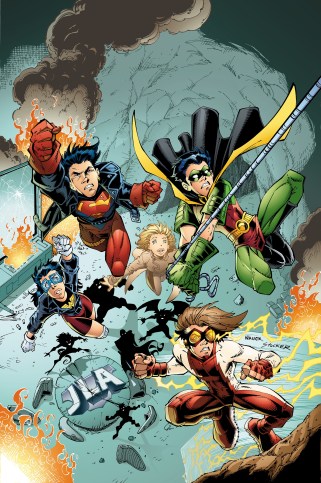
They are the next generation of superheroes, but being the second round of sidekicks to the leading members of the Justice League is tough, and sometimes having your own group of friends is what you need.  So Young Justice was formed: part superhero team, part friendship group.  Originally made up Robin (Tim Drake), Superboy (Kon-El/Conner Kent), Impulse (Bart Allen) and Wonder Girl (Cassandra Sandsmark), the team was later joined by new heroes Arrowette and Secret, while also being monitored by veteran hero Red Tornado.

Recent events have rocked the group and exposed them to negative attention.  The team have continuously been drawn into destructive fights and been forced to partially destroy Mount Rushmore, and Arrowette has been forced to retire after nearly killing a suspect.  At the same time, a new superhero team, Old Justice, made up of the aging sidekicks of the Golden Age of heroism, have been calling out the actions of their younger counterparts.  Railroaded by the press, politicians and even their mentors in the Justice League, the situation keeps going from bad to worse for the young heroes when they lose their base to an attack from a new superpowered group, the Point Men.

Attempting to regain public opinion, Young Justice and a supporting group of heroes attempt to hold a rally in support of young heroes, but a villainous presence wants to stop the young heroes from developing to their full potential.  A mysterious organisation, Agenda, headed by Lex Luthor’s ex-wife Contessa Erica Alexandra Del Portenza, wants to discredit all superheroes and believes that Young Justice is their weakest link.  Agenda uses the magical agent, Klarion the Witch-Boy, to cause havoc at the event, and Klarion’s magic leads to some accidental side effects.

The members of Young Justice have all been aged into adults, while their contemporaries, the members of the Justice League of America and the Justice Society of America, have all been turned into children or teenagers.  Worse, these de-aged heroes now have the emotional maturity of their age, while the members of Young Justice have the patience and wisdom of their mentors.  Forced to switch roles with the world’s greatest heroes, the members of Young Justice must find a way to not only stop the sinister machinations of Agenda but also find a way to reverse the effects of the spell.  Can Young Justice grow up to be the heroes they were always meant to be, or is the future of the DC universe a whole lot darker than anticipated?

This third volume of the reprint is another fantastic collection of a great original storyline.  I have been really enjoying this reprinting of Young Justice, and it was great to see this full collection of one of their most iconic storylines in full.  Not only does this new volume contain issues #18-19 of the original series but it also contains a huge number of tie-in storylines that feature most of the other heroes of that period of the DC universe, following their adventures as they have been de-aged or aged up.  As a result, this volume contains input from a gigantic range of DC creative talent, as the writers and artists of these other connected series do a one-shot version of the series they were working on at the time.

There is quite a lot going on in this volume and it definitely takes a while to get through.  There are a also a lot of technical and obscure comic book characters and teams that become the focus of the various stories within Young Justice Volume 3, so it might become a bit confusing for some people.  The volume is broken up by a couple of Young Justice storylines that introduce and finalise the story, while also providing the explanation for how this event unfolds and the villains responsible for it.  Once this is established, the volume goes into a series of different short stories that focus not only on the members of Young Justice but on some of the other superheros that have been caught up in the events of this crossover.  Each of these storylines show how the various heroes deal with being de-aged or turned into adults, and then follows up with an adventure, often with that particular team or hero working to find a solution to the curse afflicting them.  The four best storylines deal with the aged-up sidekick members of Young Justice (Robin, Wonder Girl, Superboy and Impulse) as they are forced to team up with teenage versions of their mentors.  There are some good jokes in this as the characters reverse roles and the younger heroes are forced to act as the mature anchors for their biggest heroes in the DC Universe.  These jokes range from Bruce Wayne being forced to pretend to be a moody Robin while his sidekick takes on the role of Batman for the first time, to Wonder Girl being forced to reign in a destructive Wonder Woman while making several snide comments about the practicality of her uniform, to a very young Flash attempting to hit on his fully grown wife.  There are also some quite heartfelt moments as the mentors are finally placed in their misunderstood sidekicks’ shoes and find a way to emphasise with them in a way they haven’t managed before.

In addition to these stories around the Young Justice sidekicks and their well-established mentors, there are a number of other interesting stories splashed through this volume.  I particularly enjoyed the short one that featured a teenage Aquaman teaming up with an adult Lagoon Boy to stop a crisis under the water.  This one is not only fun, as the teenage Aquaman is a bit of a bold ladies man, but it also shows how he was a hero even as a teenager, as he sacrifices a potential solution to his problem to restore a devastated city.  There is also a story that focuses on the Titans, which brings its founding members back to their Teen Titans days, with a storyline that reminds the readers of their classic adventures.  I was less of a fan of the storyline that focused completely on a teenage version of the Justice League, and I really disliked the storyline that contained an all-child version of the Justice Society going on an adventure.  Overall though, this huge collection of stories comes together in a fun and cohesive narrative that not only presents a massive, whole DC Universe event, but one that focuses on the core team at the heart of the adventure.

A major feature of this volume is the examination of the negative perceptions that older people have for the world’s youth.  Even 20 years later this is still incredibly relevant, as most older people these days are quite dismissive of today’s youth culture (those darn millennials).  Young Justice goes out of its way to show a group of teenagers who try to do the right thing but are constantly dismissed by adults as nuisances who do not try to see their side of the story.  After being hounded for a good part of this and the previous volume, Wonder Girl gives an impassioned speech to the media that gets the worlds attention, divides some of the older heroes and rallies several other prominent young heroes to their cause.  The creative team follows this up by putting its young heroes in the position of responsibility and showing that they can act in a mature and responsible way when given the chance, while their established mentors act irresponsibly when turned back into teenagers.  All of this is a great examination of how young people are perceived by their elders and how they can surprise you when given a chance.  This is still a great storyline to enjoy to this day and one that will resonate with the modern youth culture.

While I have been having quite a lot of fun with this re-print run of Young Justice, it may prove a little harder to get into for people who are not as familiar with some of the other 1990s DC Comics storylines which were happening at the time.  That being said, it is a series well worth getting into, especially for fans of any of the Teen Titan runs that followed the cancellation of Young Justice, as many of the members of these teams were originally featured in this series.  Fans of the Young Justice television show will probably also get a lot out of this series, as several of the show’s best storylines and villains originated in this original comic series.  Overall, Young Justice is a fantastic series that will appeal to both younger readers and well-established comic book fans.  This third volume features a full and fantastic collection of one of this series’ most iconic story events, which provides an intriguing examination of youth culture perception and a great examination of the additional hazards of being a young hero.  Extremely entertaining and a lot of fun to read, I am really glad that DC decided to do this re-print of Young Justice.

My Rating:

Four and a half stars

Amazon