
Project Hail Mary by Andy Weir

Project Hail Mary Cover

Publisher: Del Ray (Trade Paperback – 4 May 2021)

Series: Standalone

Length: 476 pages

My Rating: 5 out of 5 stars

Amazon

Prepare to ride off into the unknown with Project Hail Mary, an utterly compelling and powerful science fiction novel from bestselling author Andy Weir.

Andy Weir is a fascinating and highly regarded author who has been a major figure in the science fiction genre after writing a few fantastic novels.  While he has also written books such as Theft of Pride, Artemis and James Moriarty, Consulting Criminal, Weir is best known for his science fiction masterpiece, The Martian, which has been adapted into an epic movie of the same name.  I absolutely loved the film version of The Martian, which made me very curious about some of Weir’s other works.  As a result, I was excited when I received a copy of his latest novel, especially as it sounded like an intriguing read.

Ryland Grace is having a very interesting time in space.  Waking up aboard a ship he does not recognise, Grace has idea who he is or what he is doing there; all he knows is that he has been asleep for a very long time, he is currently millions of miles from home and he is alone except for two corpses.  But as he explores his ship, the Hail Mary, glimpses of his past life slowly come back to him, as well as details of the desperate mission he is a part of.

Grace is the only surviving member of a crack crew of scientists and astronauts who were sent one a one-way trip to a distant star in order to find out how humanity can stop alien microbes, known as Astrophage, draining our sun and cooling the Earth to an apocalyptic level.  Alone, disorientated, and finding himself with a massive and impossible burden upon his shoulders, Grace must find the courage and skill to analyse the problem before him and find a way to save our planet.  When a second ship arrives in the system, Grace finds himself with an unexpected ally.  As he forms a usual friendship and gets lost in his work, Grace will need every bit of knowledge and science at his disposal to find the answer before it is too late.  However, success is no certainty, and Grace will have to overcome his own hidden past if he is to save everyone and everything he cares about.

Wow, just wow.  I suspected that I would be in for an amazing time with Project Hail Mary when I started, especially as there were positive reviews on the cover from the notable trio of George R. R. Martin, Brandon Sanderson and Blake Crouch, three authors who know a lot about epic, outstanding reads.  However, I was blown away by how much I enjoyed this incredible book and I swiftly became engrossed with the awesome narrative contained within Project Hail Mary.  This was a deeply impressive and captivating read which is easily one of the best science fiction novels of 2021 and which gets a full five-star rating from me.

Project Hail Mary contains an epic and deeply addictive narrative of science, adventure and personal growth.  This entire novel begins with a rather interesting hook, with the protagonist coming out of a coma aboard a spaceship with no memory of how he got there and two corpses lying next to him.  Watching this then unnamed character explore and attempt to work out what is happening to him is pretty fascinating and it drags the reader in with its mystery.  As the protagonist regains his memory, Project Hail Mary morphs into more of a science based adventure story with massive stakes, as the character finds himself engaging in a suicide mission to save Earth.  This progresses at a great pace for the first third of the novel, and there is a nice rhythm of the character becoming familiar with the Hail Mary while also regaining his memories of the lead-up to of the mission.  Weir then introduces an intriguing and compelling major story development that completely morphs the structure of the plot and turns Project Hail Mary from the doomed adventure of a lone man to something else entirely.  I loved what the narrative turned into from this point, especially as it featured some captivating camaraderie, a unique relationship and fascinating science fiction elements.  All of this leads up to the novel’s big conclusion, which features several memorable moments and an excellent conclusion that will leave readers extremely satisfied.  This was an outstanding story, and I could not believe how quickly I become obsessed with finding out how the clever and exciting story would end.

A major highlight of Project Hail Mary is the fantastic use of flashbacks throughout the book’s narrative.  These flashbacks represent the protagonist slowly regaining memories of the events that led up to the mission, and which highlights the entirety of the Astrophage arrival near the sun, all the way up to the launch of the Hail Mary.  I really enjoyed the way in which the author utilised these flashbacks, which provided the reader with substantial detail about the character, the purpose of his mission, and the ship that serves as the novel’s setting, all of which comes into play as the story progresses.  The various flashbacks really helped to enhance the plot, especially as the protagonist was forced to battle his own ignorance and lack of memory, as well as only gradually learn about what was happening back on Earth.  It also ensured a smoother flow throughout the book, saving substantial exposition at the start of the novel, and leaving the background plot open for surprises and clever moments.  All these flashbacks lead to an epic and incredibly clever twist near the end of the novel that completely changes everything and shines a completely new light on the protagonist’s actions and everything the reader thought they knew.  I deeply, deeply enjoyed this twist, and it was one of the most memorable literary moments I have experienced in a while.  This cleverly set up and brilliantly utilised format helps to create an exceptional story that readers will deeply enjoy and which will be stuck in their heads for a very long time.

People familiar with Weir’s writings will know that the author loves featuring vast amounts of science talk and terminology in his stories, and Project Hail Mary is no exception.  Weir’s latest novel is absolutely packed full of science, technology and intriguing scenarios, all of which revolve around space travel, alien life, resource management, solar bodies and much, much more.  Nearly every page of this novel contains the protagonist engaging in some scientific adventure, using science to solve a specific problem, or answering some unusual mystery.  While this may seem a little repetitive, I found all the science talk and subsequent solutions to be extremely compelling and I enjoyed seeing what unexpected pieces of science the protagonist would use next.  I felt that the author did an amazing job of explaining all of the underlying scientific principles contained within Project Hail Mary, and despite my own lack of a scientific background I was able to follow everything pretty closely and I always had a good idea of what his protagonist was talking about.  I will admit that I would have no idea about how practical or realistic some of the ideas contained within this novel are, so if Weir has chucked in some incorrect science about space flight, biology or physics, I would not have a clue.  However, everything seemed realistic and well explained to me, so I am choosing to believe that most of what happened is potentially possible.

I quite enjoyed the unique scenarios featured within Project Hail Mary, especially regarding the degradation of our sun.  As shown in the excellent flashback sequences, energy from the sun is being absorbed by the Astrophage microbes, eventually causing a new ice age.  The whole idea of the Astrophage is very intriguing, and I enjoyed seeing the planet’s reaction to this new life form and various nations banding together to save the planet.  The Astrophage turn out to be a clever plot device; while they are dooming the planet, some of their other unique abilities may lead to its survival.  I liked seeing the various ways in which these microbes could be used, and it proved to be a fascinating addition to the plot.  I also quite enjoyed seeing the changes that occurred on Earth as the Hail Mary project came into being, especially as the measures put in place to prolong human life and come up with the necessary power for the mission, resulting in some big planetary changes.  Weir also comes up with some outstanding first-contact scenes throughout the novel, and I really appreciated seeing the protagonist communicate with a previously unknown species.  The author comes up with some great scenes around this, and it was cool to see how and why humans would try talking to and working with another race.  All the science and technology were worked into the novel extremely well, and I felt that it helped to make this amazing story more compelling and realistic.

Another great highlight of Project Hail Mary is the great characters.  The most prominent character is of course Ryland Grace, who serves as primary narrator and point-of-view character for the novel.  Grace is a fantastic leading character as he proves to be both entertaining and relatable.  A former biologist turned school science teacher, Grace is drafted into the mission to save Earth from the Astrophage due to his expertise and unique scientific outlook.  Weir does an amazing job portraying this fantastic character, especially as you see him both aboard his one-way flight aboard Hail Mary and during his time on Earth in the lead up to the mission, which presents a really interesting view of his personality and motivations.  Grace is a very science-orientated person, able to find a solution to any problem that presents to himself.  This “do the science, work the problem” attitude is very reminiscent of The Martian, and readers will no doubt see some similarities between the two.  I really enjoyed Grace as a character, especially as he approaches nearly every event with a clever and irreverent wit, which results in most of the book’s humour.  Grace goes through several major moments throughout Project Hail Mary, and I loved seeing the development that occurred for him between the earlier flashbacks and the end of the novel.  The protagonist really changes for the better throughout Project Hail Mary, and I deeply enjoyed some of the catalysts for this change, which included utterly surprising twists and the heart-warming moments.  This was an awesome protagonist and readers will find themselves growing very attached to him.

Aside from Grace, there is a small selection of supporting characters, the vast majority of whom only appear in the protagonist’s memory flashbacks.  The one exception to this is Rocky, with whom Grace forms a unique and touching friendship with in the main storyline.  While I do not want to spoil too much about this amazing character, I will say that Rocky proves to be an outstanding addition to the narrative and readers will find themselves really invested in his story and his friendship with Grace.  I also quite enjoyed the character of Eva Stratt, the head of the UN task force designed to combat the problems caused by the Astrophage, who recruits Grace for the Hail Mary mission.  Stratt is a bureaucrat given absolute power and authority by every world government to move the mission along as fast as possible without any delays or interference.  Appearing exclusively in Grace’s flashbacks, Stratt is a very no-nonsense character, and it was really entertaining to see her bully her way through every problem, such as when she manages to undermine the authority of a court by showing up to the trial with the US Army.  Stratt serves as a great foil to Grace throughout the flashbacks, and it proved to be quite fun to see Stratt keep Grace on track while also indulging some of his seemingly impossible requests and suggestions.  Stratt is also responsible for one of the best moments in the entire novel, and I love how so much of her story and development built up to this one major moment.  These characters, and some others, added so much to novel, and I had an outstanding time getting to know them as the story progressed.

Project Hail Mary is an outstanding and incredible read that sees the amazing Andy Weir at his very best.  Mixing cool science, clever writing techniques and intriguing characters together into a fun and powerful story, Project Hail Mary was deeply compelling and near impossible to put down.  I had an exceptional time getting through this novel, and this was one of the best novels I have read so far in 2021.  A highly recommended book for all science fiction fans or anyone interested in an intelligent and exciting read, I am very excited to see how the planned film adaption turns out.
Amazon

Star Trek: More Beautiful Than Death by David Mack

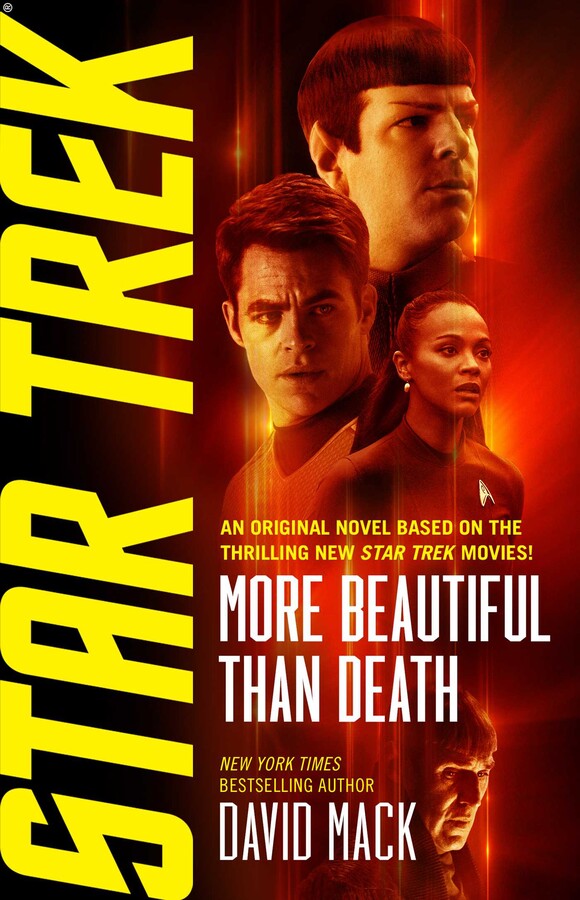
Star Trek More Beautiful than Death Cover

Publisher: Simon & Schuster Audio (Audiobook – 11 August 2020)

Series: Star Trek – Kelvin Timeline – Book Two

Length: 8 hours and 16 minutes

My Rating: 4.5 out of 5

Amazon     Book Depository

Prepare to once again dive into the alternate timeline version of the Star Trek universe, known as the Kelvin timeline, in this latest exciting tie-in novel from acclaimed author David Mack, Star Trek: More Beautiful Than Death.

Set shortly after the events of the 2009 Star Trek film, in which the planet of Vulcan was destroyed by the mad Romulan Nero, Captain James T. Kirk is now captain of USS Enterprise.  Given a new mission, the Enterprise and its crew are ordered to rendezvous with Spock’s father, Ambassador Sarek, and escort him to the planet of Akiron.  Akiron, a resource-rich world containing a substantial amount of dilithium, has recently sent out a distress signal to the Federation, who are hoping to exchange aid for favourable trading rights.

Arriving at Akiron, they find the planet in a state of chaos as the population are under attack by demonic dark-energy creatures, known as wights, who strike from the darkness, eat energy, and appear to suck the life right out of any living being.  Determined to save the people of Akiron no matter what, Kirk begins his preparations to investigate the wights.  However, before he can act, Sarek orders Kirk to abandon the mission and leave Akiron.

Refusing to obey Sarek’s orders, Kirk attempts to find the cause of the terrible events on Akiron and save who he can.  With the help of an old mystic who believes that Kirk has faced the wights in his prior lives the Enterprise crew are soon able to discover the source of the wights on Akiron and the deadly potential their invasion has.  As Kirk and his crew attempt to save the entirety of the planet they must overcome several deadly attacks as well as the sinister agenda of Sarek’s Vulcan aide, L’Nel, who hatches a dangerous personal plan to kill Spock.  Can the Kirk and the Enterprise succeed, or will darkness engulf everything it touches?

Over the last couple of years, I have had a great pleasure of reading/listening to several amazing pieces of Star Trek fiction and I always love seeing the unique and varied tales that the talented team of tie-in authors can come up with.  More Beautiful Than Death is an excellent example of this as it features a fantastic and captivating tale of exploration and desperation within an interesting part of the Star Trek canon.  This latest novel is written by a true veteran of Star Trek fiction, David Mack, who has not only written a ton of different tie-in novels but who also has writing credits for two episodes of Star Trek: Deep Space NineMore Beautiful Than Death is set in the alternate timeline introduced in the 2009 film Star Trek, known as the Kelvin timeline.  This is the second Kelvin timeline novel I have read this year after previously enjoying The Unsettling Stars, and it set between the events of Star Trek and Star Trek: Into DarknessMore Beautiful Than Death ended up being an impressive and exciting Star Trek novel, and I had an amazing time listening to it.

Mack has come up with an excellent narrative for More Beautiful Than Death which sees the crew of this alternate timeline Enterprise attempt to defend an alien planet from a series of demonic creatures.  The author writes this much like an episode of a Star Trek series, with the crew arriving at the planet, analysing the situation, facing all manner of conflicts, getting beat up and then engaging in a course of action to save the day.  I felt that this worked extremely well for the novel and readers are treated to a captivating and dramatic science fiction story that easily keeps the attention from start to finish.  The stakes are high throughout More Beautiful Than Death, and Mack keeps the tension and excitement going through much of the book, focusing both on the mission at hand and on the contentious personalities aboard the ship.  There are a number awesome action-packed sequences throughout the book, and I especially enjoyed the various scenes that showed the Enterprise being attacked by the wights, forcing the crew to flee from an opponent they cannot even touch.  There is also a particularly good subplot around the Vulcan characters aboard the Enterprise, with the mysterious character of L’Nel apparently plotting to kill Spock.  I really enjoyed the way that Mack explored this subplot, showing L’Nel’s attack on Spock as a prelude to the rest of the book, and then slowly exploring the events that led up to it in the main story.  This subplot combined with the main narrative extremely well and the result is a deeply compelling overall novel that I had an amazing time listening to.

Like many Star Trek tie-in novels, More Beautiful Than Death is best enjoyed by those readers who have some familiarity with the franchise.  However, I felt that Mack made his latest book extremely accessible to new readers, and anyone can have a great time enjoying the fast-paced and intriguing novel with minimal knowledge of Star Trek lore.  There are a lot of fun Star Trek elements associated with this novel, and I really enjoyed the author’s intriguing additions to the canon.  Not only does this book serve as an excellent follow-up to the 2009 movie, showing the early missions of this younger Enterprise crew, but Mack also utilises the alternate timeline setting of this novel to come up with clever alterations to the classic Star Trek lore.  One part of the book’s narrative ends up being an extremely ingenious homage to a key episode of The Original Series.  Mack cleverly inserts this compelling altered version of this episode throughout the book, and it was deeply fascinating to see it unfold, especially as the events of the Star Trek film have ensured it is sufficiently different.  This revision of a classic Star Trek episode was extremely impressive and it was one of my favourite parts of the entire book.  All of this makes for an amazing Star Trek read, and fans of the franchise are in for a real treat with this book.

In addition to some cool call-backs to The Original Series, Mack also does an exceptional job bringing the Kelvin timeline versions of the Enterprise crew to life.  The author ensures that all of the main characters in this book are portrayed slightly differently to how they are in The Original Series.  For example, Kirk is a lot more impulsive, younger and combative than the classic version.  Spock is a little stiffer, as he has only been influenced by Kirk a short while.  Uhura is a lot more combative and emotional, mainly due to her relationship with Spock.  Scotty is a lot more humorous, channelling his inner Simon Pegg, while McCoy is a lot gruffer and even more reluctant to get involved in the usual crazy Enterprise adventures (if that was possible).  All this makes for a tie-in novel that is a lot more in line with the newer generation of films and I personally appreciated the effort from the author.  I was tad disappointed that Sulu and Chekhov were not featured as heavily as the other major characters in the novel (something I have noticed in other Star Trek tie-in novels), but this was still a great novel for Star Trek characters.

I also appreciated how Mack takes the time to explore the psyches of several of his major characters, especially as it produces some compelling and dramatic results.  This includes a deep dive into this version of Captain Kirk, such as exploring his mental state after the events of the 2009 film, with a particular focus on the guilt and hopelessness he felt over watching the destruction of Vulcan, which has made him more determined to save entire worlds.  There is also an intriguing inclusion about Kirk’s past lives, with a couple featured as part of the plot.  This leads into some great discussion about how the character is destined to be thrust into great and tumultuous events, which I quite enjoyed.  Spock also gets a major focus in More Beautiful Than Death, thanks to the author’s inclusion of other Vulcan characters like Sarek and L’Nel.  Spock’s complicated relationship with his father and other Vulcans is a major theme throughout the novel, and aspects of his life aboard the Enterprise, particularly Spock’s romantic attachment to Uhura and his loyalty to Kirk, increase the tension.  This adds an excellent amount of drama to the narrative and it plays extremely well into the clever subplot around L’Nel, resulting in an intriguing and compelling narrative arc.  I had a great time diving down into several of these characters, and it helped to produce a much more complete and emotionally driven narrative.

As I do with most Star Trek books, I ended up checking out More Beautiful Than Death in its audiobook format rather than getting a physical copy.  The More Beautiful Than Death audiobook has a run-time of just over eight hours, making it an extremely easy audiobook to get through quickly.  I had an amazing time listening to this audiobook, especially as it features the vocal talents of the outstanding Robert Petkoff.  I have mentioned Petkoff before in several my reviews as he is the go-to narrator for any piece of Star Trek fiction that gains an audiobook format, due to his fantastic ability to perfectly replicate the cast members of both The Original Series and The Next Generation television shows.  Petkoff did another exceptional job in More Beautiful Than Death, expertly bringing every key member of the Enterprise’s crew to life and providing fantastic voices for each of them.  While they do sound more like The Original Series cast than the actors from the 2009 Star Trek film, this was still excellent work from Petkoff, and listeners are well aware which character is speaking at every point in the audiobook.  I also liked the voices that Petkoff utilised for the various supporting characters in More Beautiful Than Death, and there are some great differentiation in tones between the various alien species, such as for the Vulcan characters Sarek and L’Nel.  All of this makes for an epic listen, and Star Trek fans are strongly advised to check out More Beautiful Than Death in its audiobook format.

With his latest novel, David Mack continues to explore and add to the Star Trek expanded universe, this time diving into the intriguing Kelvin timeline.  More Beautiful Than Death is an excellent and entertaining read that takes the reader on a gripping adventure in space.  Thanks to the author’s excellent use of characters, Star Trek elements and his fantastic and unique narrative, More Beautiful Than Death is a fantastic Star Trek tie-in novel which will really appeal to established fans of this franchise.  Highly recommended.

Amazon     Book Depository

V2 by Robert Harris

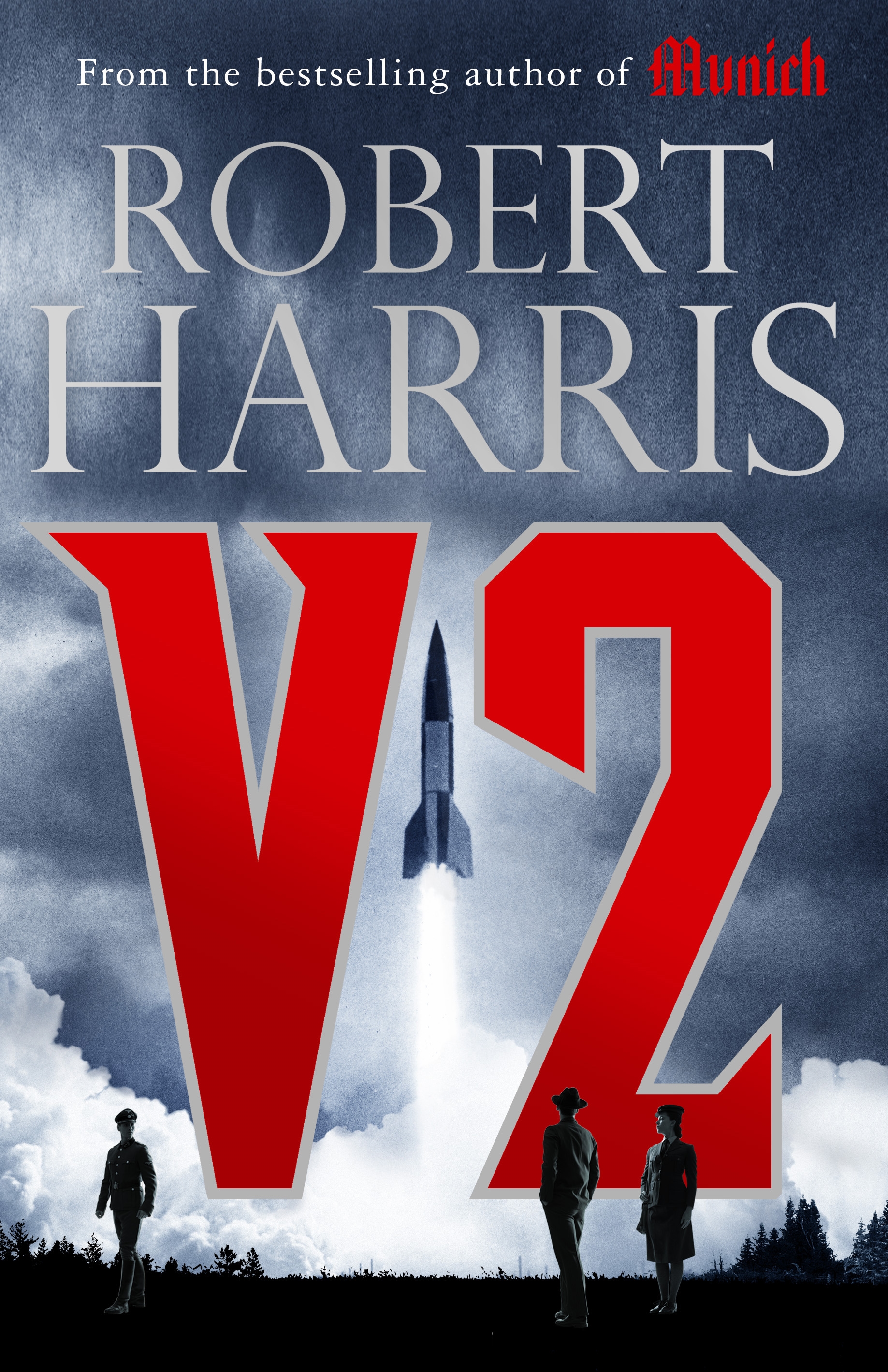
V2 Cover

Publisher: Hutchinson (Ebook – 15 September 2020)

Series: Standalone

Length: 312 pages

My Rating: 4.25 out of 5 stars

Amazon

One of the most talented historical fiction authors in the game, Robert Harris, dives deep into the history of the infamous Nazi V2 rocket program in his latest novel, V2.

Harris is an impressive and well-regarded novelist who has been writing fiction for nearly 30 years.  A former journalist, Harris’s initial books were a series of non-fiction novels in the 1980’s on various subjects, including a book that is considered to be the definitive account of the investigation into The Hitler Diaries scandal which later inspired a drama-documentary miniseries.  His first fiction novel was the 1992 release, Fatherland, an alternate history novel that depicted Germany wining World War II.  He has since gone on to write a number of other fascinating novels, most of which have a historical edge to them, including Pompeii, The Ghost (later adapted into the film The Ghost Writer), The Fear Index and Munich.  Harris is one of those authors I have been meaning to read more of, but so far I have only checked out his 2013 release, An Officer and a Spy, which featured a fascinating account of the Alfred Dreyfus affair in 19th century France, and which was an outstanding piece of historical fiction.  I also currently have his 2019 release, The Second Sleep, on my bookshelf and it was one of the novels I most regret not reading last year.  As a result, I was rather interested when I got a copy of V2, which sounded like quite a fun and intriguing historical read.

In November 1944, while the Allies advance on Berlin, the Nazis are desperate to avoid defeat at all cost.  Placing his hopes in new technology, Hitler funnels vast resources into his V2 rocket program, the most sophisticated weapon on the planet.  The V2s are powerful ballistic missiles capable of delivering an explosive warhead deep into enemy territory at immense speeds.  Hitler has ordered the production of 10,000 rockets and from an isolated forest in occupied Holland, the Germans launch them towards London, causing immense damage.

Rudi Graf is a German scientist who has long dreamt of sending rockets to the moon, and who now regrets his role in the creation of the V2.  Stationed at the V2 launch site, Graf desperately tries to hang onto his humanity as he watches his dream cause only destruction and death.  At the same time, in London, Kay Caton-Wash, an officer in the WAAF, is experiencing the full horror of the V2 rockets as she barely survives one of their strikes.  Over the course of five days, these two strangers are about to be connected by their circumstances.  As Graf is forced to launch even more of his rockets at London, Kay becomes involved with a secret mission to locate and destroy the V2 launch sites in Holland.  Travelling to Belgium, armed with only a slide rule and some equations, Kay works to end the V2 menace once and for all.  However, danger and duplicity are around every corner, and both Graf and Kay soon begin to realise that they cannot trust anyone.  As both rush towards their destinies, their actions will have unintended consequences on the over, changing the course of history forever.

V2 was a clever and compelling novel from Harris, who did a wonderful job wrapping an intriguing, character-driven story around one of the most remarkable military programs of World War II.  Like the majority of Harris’s novels, V2 is a standalone book that can be easily enjoyed by anyone in the mood for informative historical tale or war story that shows the horrors of war and the terrible ways that a person’s dreams can be twisted for evil purposes.

Harris has come up with a captivating narrative for this book.  The focus of V2 is split between two fictional point-of-view characters, Kay and Graf, and follows their respective experiences over a period of five days, with several flashback scenes thrown in for context.  This proved to be a rather intriguing read, and I liked how the author tied a mostly fictional story around some fascinating historical events, such as the creation and implementation of the V2 rockets.  Both of the two separate storylines are quite intriguing and both go in some exciting directions, including Kay getting involved in a secret military operation while Graf tries to keep his sanity as he navigates the politics, treachery and sadism of his Nazi controllers.  However, the real appeal of this narrative is the way in which the two separate story arcs intersect throughout the novel.  For example, the novel starts with Graff witnessing and assisting the launch of a V2 rocket, which then lands and changes Kay’s life.  As the story proceeds, the various actions and reactions of these two point-of-view characters impacts the events occurring around the other character, resulting in danger and tragedy in equal measures.  While I really liked the fascinating individual narratives and the cool way in which the storylines overlapped, I did think that the main story ended rather suddenly and lacked a substantial or satisfying conclusion.  This narrative desperately needed some big, exciting hook at the end to really tie everything together, even if it was historically inaccurate.  Still, V2’s story was really good and easy to get into, and I had a fantastic time reading it.

In order to tell this fascinating tale, Harris utilises two great fictional characters, Kay and Graf, through whose eyes we see the events unfold.  Both of these characters are rather interesting and I quite enjoyed both their individual character arcs.  However, of the two, I definitely found Graf to be the more compelling character.  This is because Graf is a particularly tortured individual, a brilliant scientist who is forced to work for the Nazis to bomb England.  There are some excellent scenes throughout this book that show Graf agonising over his actions working for the Nazis, who have perverted his childhood dream of creating spacefaring rockets into weapons of mass destruction.  Harris also spends much more time exploring Graf’s past, investing in a series of flashbacks that show how Graf became obsessed with rocketry, how he became involved with the V2 project and some of the tragedies that working with the Nazis have brought.  Add in a very captivating storyline that shows Graf starting to rebel against the actions of his Nazi handlers and attempting to find a small measure of redemption out in the wilds of Holland and you have a very impressive and enjoyable character arc that does rather outshine the storyline Harris sets up for Kay.  That being said, Kay is still an interesting focus character in V2, and I did enjoy her arc of trying to find and destroy the V2 launch sites by travelling to Belgium with several other members of the WAAF to work out the trajectories of the rocket flights.  It was also really cool to see this portrayal of a WAAF, a female air force officer, throughout the book, especially one deployed outside of England, and I found it interesting to examine the varied roles that they played throughout the war.  Overall, these two characters do an outstanding job telling this story, and I had a great time seeing how their individual arcs unfolded.

The real highlight of this novel has to be the author’s incredible and captivating portrayal of the infamous V2 rocket program.  Harris has clearly done his research on the subject as he does an amazing job examining all the key aspects of the program and bringing them to life.  This includes a detailed examination of the history of the project, the technical aspects of the rockets and various examinations of how they fly and what they can do.  Harris makes good use of the various flashback sequences in Graf’s chapters to examine the full fascinating history of the project, including the origins of the rockets, identifying who the key architects of the project were and how the project came to the attention of the Nazis.  This includes some compelling depictions of several major historical figures associated with the V2s, such as the project’s leader and main creative driver, Wernher von Braun, as well as several key Nazi characters who had a hand in the project in some way or another.  The author also provides the reader with an unfiltered depiction of the devastating effect that these rockets had on the inhabitants of London when they hit and he actually features several real, historical rocket strikes that occurred during the timeline of the novel, including the most devastating attack that hit London.  The depictions of the horror and the carnage that the rockets caused were really striking, especially as Harris tries to capture the psychological impact that these unstoppable and ultra-fast rockets had on the populace.  I really loved learning more about the V2 rockets and it was easily the most fascinating and captivating part of the entire book.  I especially appreciated the way in which Harris used his dual character perspectives to examine the project from the point of view of the Germans and the Allies, and it was great to see the clash of understandings and opinions about the rockets.  It was also really fascinating to learn more about the Allies’ covert attempts to identify and demolish the V2 launch sites, and this was a great addition to the novel.  All of these historical aspects are immensely enjoyable and fascinating and they add a heck of a lot to the story.

V2 by Robert Harris is a particularly clever and intriguing World War II novel that presents the reader with a fascinating and memorable examination of the infamous V2 rocket program.  Featuring a compelling story, fantastic characters and an outstanding historical focus, V2 was an awesome and captivating read that is really worth checking out.

Amazon