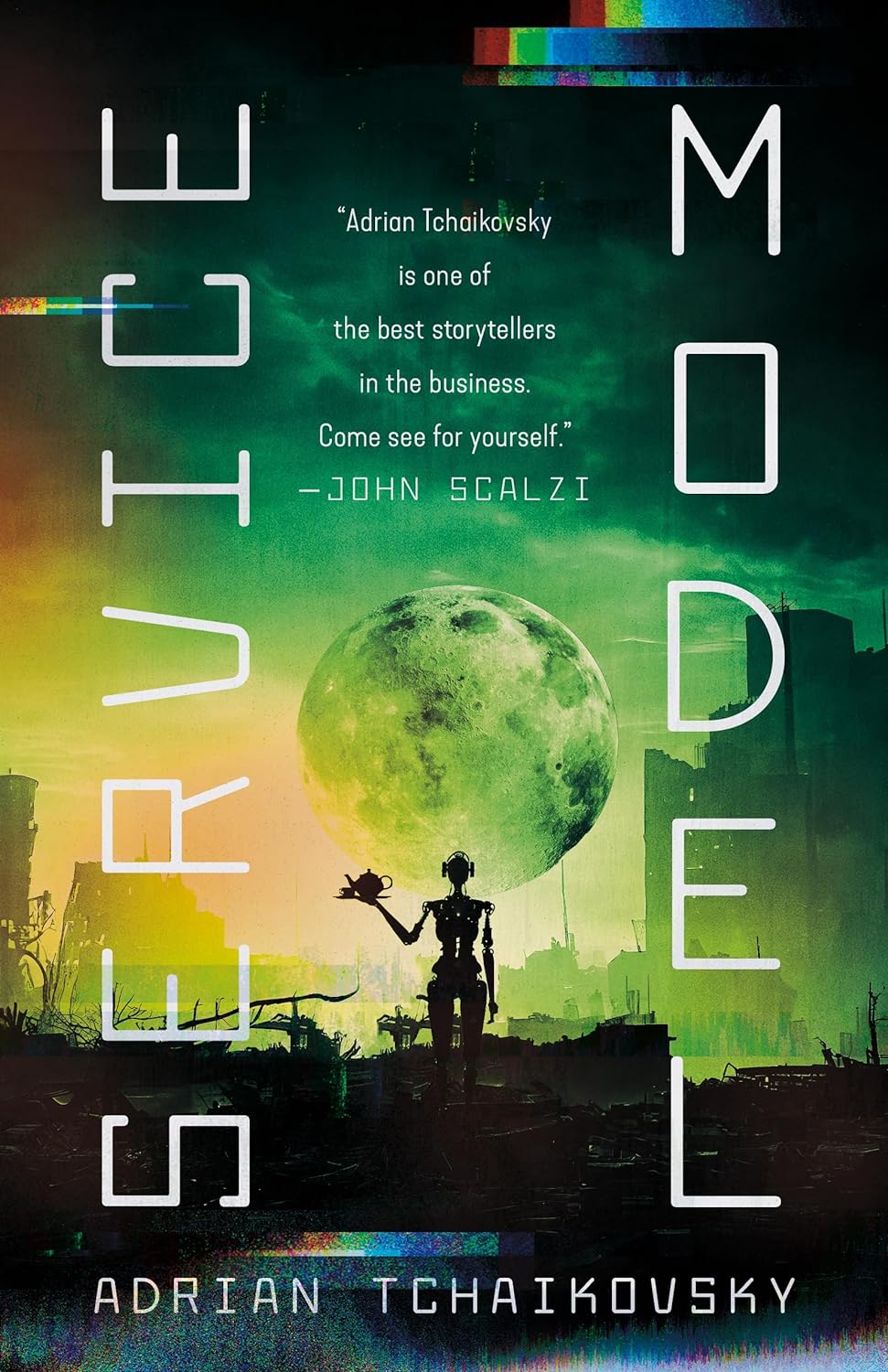
Service Model by Adrian Tchaikovsky

Publisher: Tor (ebook – 6 June 2024)

Series: Standalone

Length: 369 pages

My Rating: 5 out of 5 stars

Amazon

The line between man and machine is about to blurred in the most hilarious of ways as one of the world’s best science fiction authors, Adrian Tchaikovsky, presents the brilliantly satirical novel, Service Model.

The last couple of years have seen me really get into the writings of acclaimed author Adrian Tchaikovsky, whose work in the fantasy and science fiction genres has been truly amazing.  While Tchaikovsky has written many books over the years, I am more familiar with his recent works, including the novella Ogres, one of my favourite Warhammer 40,000 novels, Day of Ascension, and his first two Tyrant Philosophers novels, City of Last Chances and House of Open Wounds, both of which were amongst my favourite books of 2023.  2024 has proven to be a particularly big year for Tchaikovsky, as he has released four separate books.  The first of these, Alien Clay, was a compelling and memorable science fiction adventure on a deadly prison planet filled with unusual alien life, and I had a great time with it.  I also made sure to check out the brilliant and fantastic novel, Service Model, which had a hilarious plot behind it that I just couldn’t turn away from.

In the far future, the remnants of humanity are utterly reliant on artificial labour and service.  Living in estates completely staffed by robots and advanced computer systems, the remaining humans have every aspect of their lives taken care of.  But what happens when their robot servants find new and dangerous ideas loaded into their heads?

Charles is the loyal body robot to one of these humans.  Content to serve and enact the often confusing and contradictory orders of his master, Charles’s life is one of routine and protocol.  That is until one day an apparent fault in his programming causes him to murder his master.  Now without an employer or a purpose, Charles is forced to leave the household and embark on a journey into the wider world, one he never knew existed.  Here, despite all his expectations, he encounters a crumbling world in which all the humans are gone and the robots that remain are stuck completing illogical or impossible tasks.

After a chance encounter with a mysterious and self-determined figure, Charles embarks on a new mission, to find new employment as a body servant and once again gain purpose.  However, finding a suitable employer in this new world is tricky as every potential boss is dead, insane, or trapped within their own contradictory tasks.  It soon becomes apparent that if Charles is to once again find a suitable purpose in life, he must either find the cause for humanity’s fall or take everybody down with him.

Service Model was a very clever, entertaining and compelling science fiction adventure that I could not get enough of.  Featuring Tchaikovsky’s trademark satirical wit and unique outlook on all manner of life, Service Model was a particularly awesome read that was equal measures funny and tragic, but all entertainment.  A fantastic and inventive novel I had to give a full five-star rating to.

Tchaikovsky really went out of his way to produce a hilarious and intense story about life, decisions and the crumbling future in Service Model, and I loved every single mad second of it.  Set around the unlikely protagonist, Charles (later rechristened Uncharles), Service Model starts with Charles satisfied with his existence as a body servant, until he unexpectantly kills his master.  Forced to leave the manor, Charles journeys towards the repair yard, only to discover that the world is nothing like he expected, and that everything built by humans is failing, taking the robots down with them.

Faced with nothing but inconsistencies and illogical fellow robots, Charles embarks on a quest to find a new human master or some form of purpose.  Assisted and occasionally hindered by the strange robot The Wonk, who is definitely not a human in disguise, Charles encounters the many unlikely and unusual examples of continued society left in the world, from an illogical attempt to keep human society going (essentially a human zoo), a group of insane librarians (more insane than typical librarians), rival robot armies, and other outrageous occurrence of robotic life.  The book pretty much revolves around Charles and The Wonk discovering these societies, learning their flaws, and then trying to find a way to help or escape their respective crazy ideas.  There are a ton of highly amusing interactions and outrageous scenes throughout this intense quest, and I loved some of the wonderfully weird scenarios that emerged as Tchaikovsky utilises his considerable imagination to envision the grim future.  Everything ends on a very interesting note, as the protagonists find the answers they are looking for, even if it’s not what they wanted, and there is a hopeful conclusion that fits the recurring themes of Service Model perfectly and leaves the reader thoughtful going out.

Service Model ended up being an outstanding and complex standalone science fiction novel that perfectly combined a fun adventure story with the author’s cynical humour to create a powerful and inventive read.  Tchaikovsky utilises a unique writing style for this book, that seeks to really drive home the robotic nature of the main protagonist to the reader.  While this does result in some aesthetic and stylistic choices that some readers might not enjoy, especially around the dialogue, I personally felt that it fit the story perfectly and was a clever way of expressing the thoughts and motivations of the unusual point of view protagonist.  You really begin to appreciate the programmed, yet changing, mindset of Charles as the book continues, and it proves interesting to slowly see this robot realise just broken the world around him is.  There are some surprisingly deep emotional moments captured within this tale of automated life, especially tied around the great characters of Charles and The Wonk, and it was fascinating and touching to see how they developed together.  As such, Service Model proves to be a multi-layered and complex read, and it proves very hard to pull away from it at times.

One of the main reasons that I enjoyed Service Model so much was the fantastic and intelligent humour that Tchaikovsky infused his story with.  Like with most of Tchaikovsky’s more light-hearted books, much of this humour is tied into the author’s cynical view of humanity and the future, and I loved once again seeing the author’s take on how doomed we are.  In Service Model, a lot of this humour is tied into the failure of systems, overreliance on technology and human shortsightedness as the various robot characters try to enact the various incomplete, ill-advised or just plain insane commands of the former human masters.  There are so many examples of Charles or other robots trying to complete these instructions to the best of their ability, only to bring greater chaos or misunderstanding to those around them, and it is fun, if a tad depressing, to see these events unfold.  Tchaikovsky throws in even more insane occurrences of this, as certain robots have taken their former illogical instructions or existing systems too far, resulting in elaborate quests, wars or other activities, often for a broken or non-existent purpose.  Seeing the protagonist explore these events and either try to navigate them or find their place within them results in some very absurd but clever moments, and I liked how Tchaikovsky played these events for laughs while also using them to show the protagonist just how broken the current way of thinking is.  I really enjoyed this dark humour, especially as the author uses it to make you think at the same time, and it helped to turn Service Model into quite an entertaining and captivating read.

Adrian Tchaikovsky continues to shine with this brilliant and addictive science fiction read.  Bringing together a compelling and moving story of self-discovery with some fantastic humour and a post-apocalyptic setting loaded with disorganised and distressed robots, Service Model keeps you laughing while also hitting you in the feels.  I had an exceptional time with Service Model, and it was a true pleasure to read.  I cannot wait to check out more of Tchaikovsky’s books in 2025, and my next stop will have to be the outstanding Days of Shattered Faith.

Amazon

Da Red Gobbo Collection by Mike Brooks, Denny Flowers and Rhuairidh James

Publisher: Black Library (Audiobook – 16 November 2024)

Series: Warhammer 40,000

Length: 11 hours and 10 minutes

My Rating: 5 out of 5 stars

Amazon

Prepare for da revolution with this collection of brilliant Warhammer 40,000 stories from three top authors, with Da Red Gobbo Collection.

Gosh this has been a great year for Warhammer 40,000 fiction, and the fun is still continuing as one of the best releases of this year just dropped with Da Red Gobbo Collection, which features five brilliant stories from awesome authors Mike Brooks, Denny Flowers and Rhuairidh James.  Featuring three novellas and two short stories, Da Red Gobbo Collection focuses on the always entertaining ork faction from Warhammer 40,000 fiction, whose brutal, hooligan-inspired mindset always leads to comedic and outrageous reads.

However, rather than your typical ork novel, the stories in this anthology collection are focused on the ork sub-species known as grots, who are the 40K equivalent of the goblins from the Warhammer Fantasy universe.  Small, cunning and cowardly, the grots, also known as gretchin, work as slaves, cannon fodder and scapegoats (scape-grots??) to the bigger orks, generally getting kicked around by their ork masters even if they do the right thing.  However, not all grots are content to live under ork oppression, and some even have the courage to fight back thanks to the legendary figure known as Da Red Gobbo.

Da Red Gobbo is a mysterious figure in the grot mythology, who arises whenever the orks push their smaller cousins too far.  Able to put aside the typical grot amnesty and selfishness, Da Red Gobbo is an icon for revolution and revolt against the orkish oppression.  But who is Da Red Gobbo?  Are they really a legendary figure going from ork warband to ork warband spreading the word of freedom, or can any grot put on the cape, hat and goggles and inspire his fellows?  Whatever the truth may be, Da Red Gobbo is here to bring a crumping, and nobody, be they human, Chaos worshipper or even the mightiest of orks, will underestimate the grots again.

I had a blast with Da Red Gobbo Collection, especially as I was able to enjoy all five stories on audiobook for the first time.  Brooks, Flowers and James have all produced exceptional stories focused on the hilarious figure of the Red Gobbo, and I like their intriguing alternative takes on this unlikely revolutionary and his origin.  Thanks to the inherent humour of the ork faction, this was a particularly entertaining and comedic novel, and I frankly laughed my way through the various stories, especially as the three excellent authors created some particularly inventive reads.

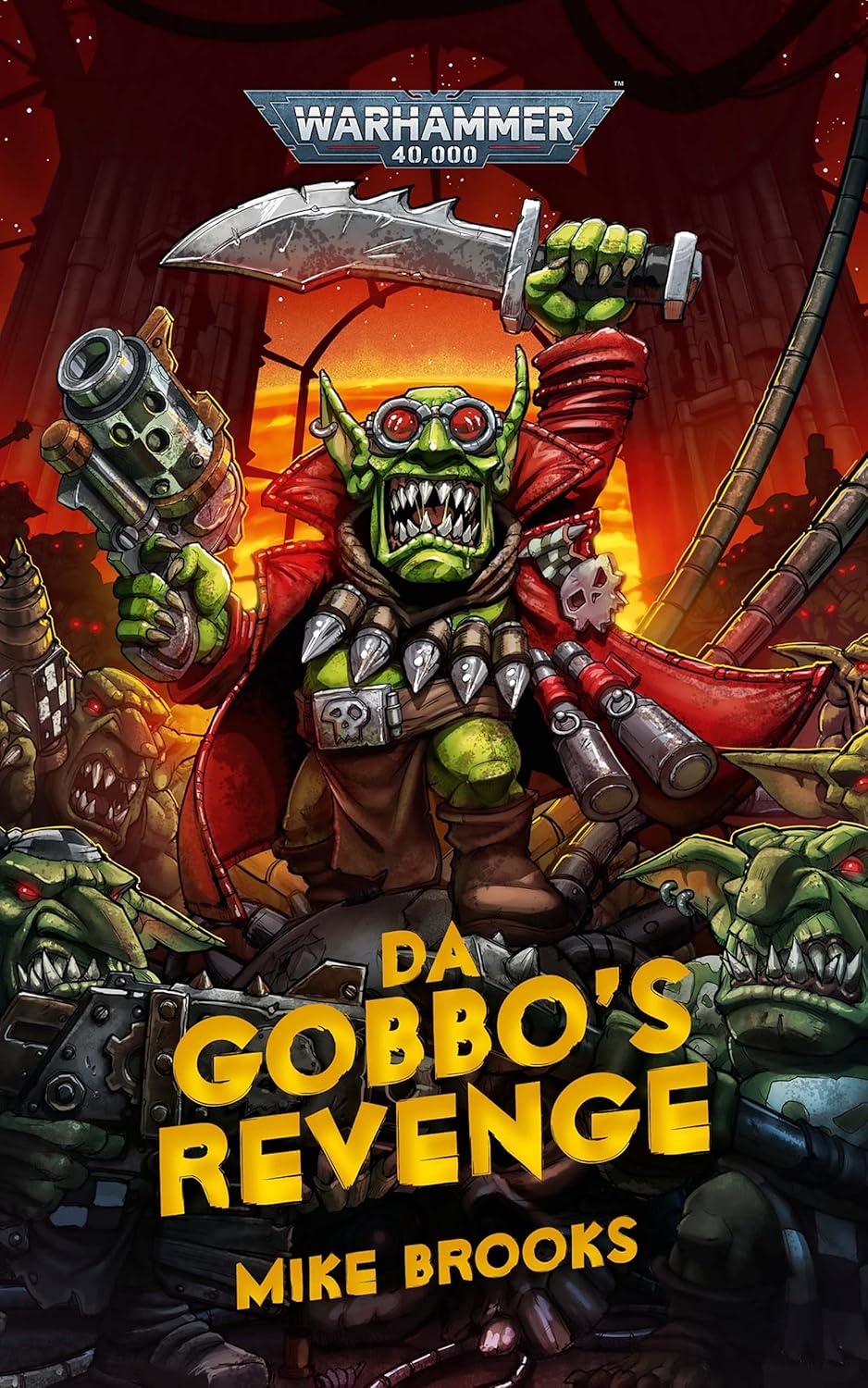
The first story in Da Red Gobbo Collection was Da Gobbo’s Revenge by Mike Brooks, which was one of the longer novellas in the collection.  Brooks is an outstanding author, and I have read quite a few of his Warhammer 40,000 books recently, including The Lion: Son the Forest and Lelith Hesperax: Queen of KnivesDa Gobbo’s Revenge was a particularly entertaining read, which is set parallel to Brook’s previous ork-focused novels, such as Warboss, Brutal Kunnin and Da Big Dakka, which have also featured fun narratives of grot revolution and rebellion.

Da Gobbo’s Revenge is a more compact narrative that follows the unlikely hero, Fingwit.  The leader of small band of grots that follow a crazed ork mek, Fingwit and his comrades find themselves in deep trouble when their boss forces them to participate in a deadly boarding action aboard an Imperial war vessel.  When the mek dies in front of them, Fingwit attempts to lead his fellow grots to complete their boss’s final mission, only to encounter human soldiers, running firefights, and dissent from amongst his fellow grots.  However, it’s the actions of an ork taskmaster that finally drives Fingwit over the edge, and he decides that the only way to survive is to become something legendary.

Da Gobbo’s Revenge is a very entertaining and fast-paced novella that provides an interesting initial look into the grot mindset while throwing them into a frenetic adventure.  Brooks hits this story with the clever and comedic style he has utilised for his other ork-focused books, and you can really appreciate his clear love for this faction, as well as his attention to detail around them.  The only story in this book told exclusively through the eyes of a grot, Da Gobbo’s Revenge fully showcases their sneakiness, their shrewd cunning, and their desire to outdo each other, and the result is hilarious, especially as they manage to outsmart various bigger opponents who completely underestimate them.  This over-the-top adventure, while very fun, takes on a more thoughtful manner towards the end once Fingwit decides to take on the mantle of the Red Gobbo to save his friends.  Seeing the previously self-obsessed Fingwit become more concerned with the fate of his fellow grots helps to hammer home the significance of the Red Gobbo to these lowly creatures, especially as he inspires them to do something truly special and unselfish.  This ending is surprisingly powerful and poignant, especially for an ork/grot focussed Warhammer 40,000 story, and Da Gobbo’s Revenge was a very strong story that serves as the perfect introduction to Da Red Gobbo Collection.

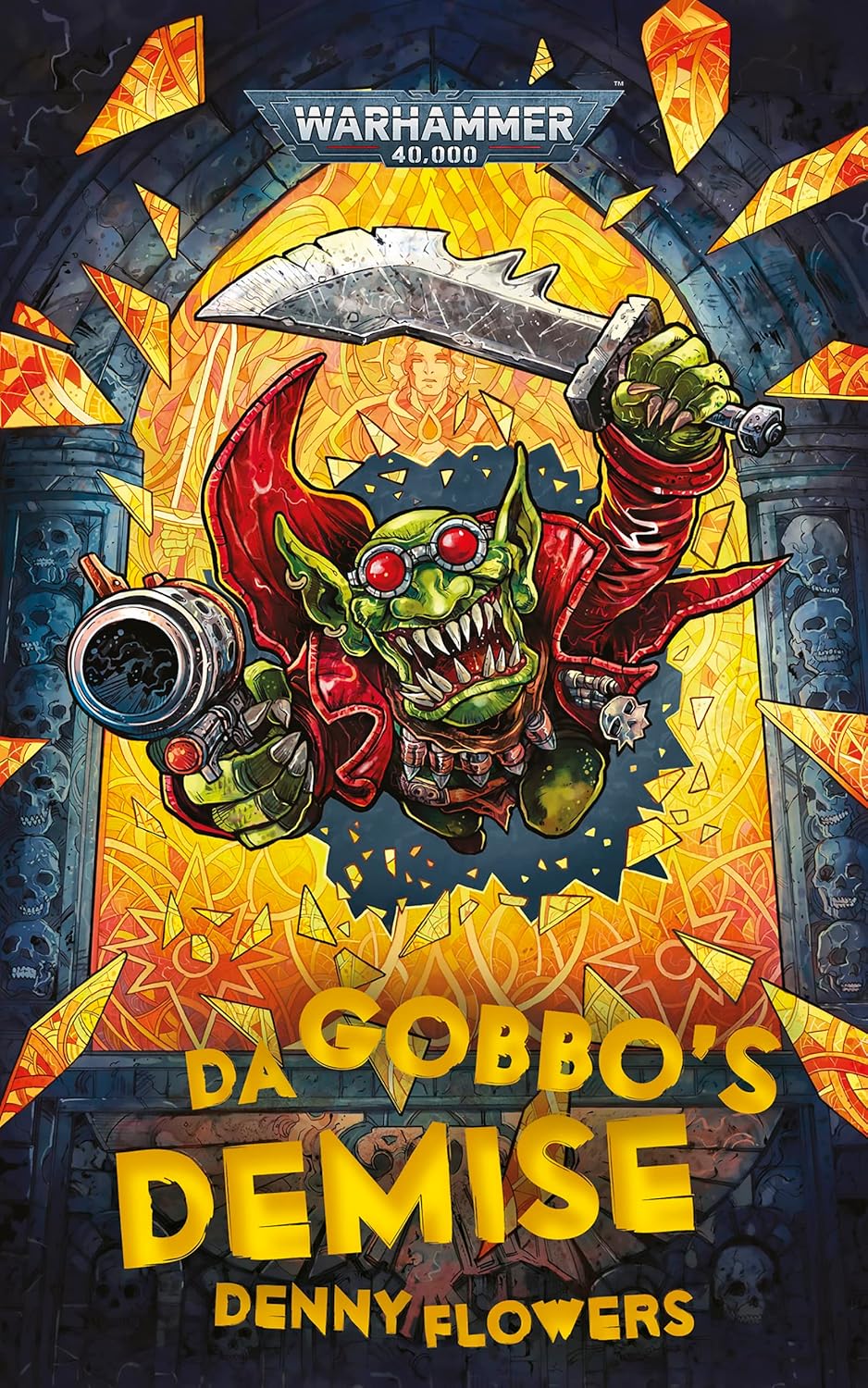
Following hot on the heels of this first excellent entry is the brilliant novella, Da Gobbo’s Demise by Denny Flowers.  Da Gobbo’s Demise was another awesome read that I was particularly keen to check out, mainly because I am a massive fan of Flowers at the moment.  One of the best rising stars of Warhammer 40,000 fiction, Flowers has deeply impressed me with his books Fire Made Flesh, Outgunned, and the outstanding 2024 release Above and BeyondDa Gobbo’s Demise was the first of Flowers’s novellas I have had the pleasure of reading, and I was very excited to check out his take on a non-human character, the result of which was extremely entertaining and fantastically fun.

Da Gobbo’s Demise follows a small herd of grots who find themselves alone and in trouble when their taskmaster, Runtherd Killaskun, is suddenly killed, and they are left without any ork supervision.  This proves particularly problematic for Killaskun’s right-hand grot, Redsnot, as he knows that his fellow grots will be looking to even the score against him for enforcing Killaskun’s orders.  However, the grots soon find themselves in deeper trouble when they are surrounded by a horde of Chaos cultists determined to kill them and take the church they are hiding in.  Determined to survive, Redsnot seeks to take advantage of the situation and be the leader the grots need.  However, his genius plan is ruined by the surprise appearance of Da Red Gobbo, hero of all grot-kind.  But Redsnot isn’t going to be upstaged by anyone, even if the Red Gobbo trying to save his life.  But luckily even legends are susceptible to a knife in the back.

This was another particularly fun and awesome novella that really showcase Flowers’ ability to write a clever, funny and very cynical story that I could not get enough off.  I honestly really enjoyed where Flowers took the story, especially as it ended up being a Home Alone-inspired siege, where the hilariously cruel grots hold off a bunch of incompetent cultists by any means necessary.  The constant bickering and dissent on both sides of the conflict was just great, and there are some very amusing moments as the grots use their natural cunning to outsmart their opponent.  The entire story moves quickly, and I found myself constantly laughing due to the outrageous antics of everyone involved.

Flowers makes Da Gobbo’s Demise’s story even more entertaining and funny through amazing use of multiple character perspectives, as in addition to showing events through Redsnot’s eyes, the author also features the viewpoint of the Chaos cultists besieging them, including a traitor commissar hoping for glory under his new gods.  There are some brilliant contrasts between the bickering grots and the disorganised cultists, especially when it comes to their different leaders.  While the chaos cultists are controlled by fear, and their leader becomes more and more demented the more failure he encounters, the usually contentious grots become surprisingly well organised thanks to the appearance of Da Red Gobbo, who resolves most of their petty arguments and turns them into an effective team.  I especially enjoyed the way in which Da Red Gobbo manages to effectively undermine and outsmart Redsnot at every turn, especially as it leads to yet another compelling bit of character growth for the main protagonist as he learns to fight for something bigger than himself.  The resulting story turns into a wonderfully bloody mess of over-the-top characters and outrageous antics, and I laughed my way through it.  Another outstanding outing from Flowers that perfectly expanded on the opening momentum of Da Gobbo’s Revenge and ensured that readers are firmly enthralled by Da Red Gobbo Collection as this point in the book.

The next entry in Da Red Gobbo Collection is the short story Da Wrong Type of Green, also by Denny Flowers.  A quick and exciting read, Da Wrong Type of Green is a direct prequel to Da Gobbo’s Demise that, shows the events immediately leading up to the novella’s opening scene.  Featuring the exact same style and most of the same characters, Da Wrong Type of Green gives some fun additional context to Da Gobbo’s Demise that I rather enjoyed seeing, especially as I had such a brilliant time with Flower’s longer novella.  I particularly enjoyed seeing the protagonist’s relationship with their former ork leader, Runtherd Killaskun, which really enhanced some of the themes of freedom and revolution that Flowers featured in novella.  While the inclusion of this story does feel a tad unnecessary, especially as you don’t really need to read it to appreciate Da Gobbo’s Demise, it was an interesting story, and one that you can get through very quickly.

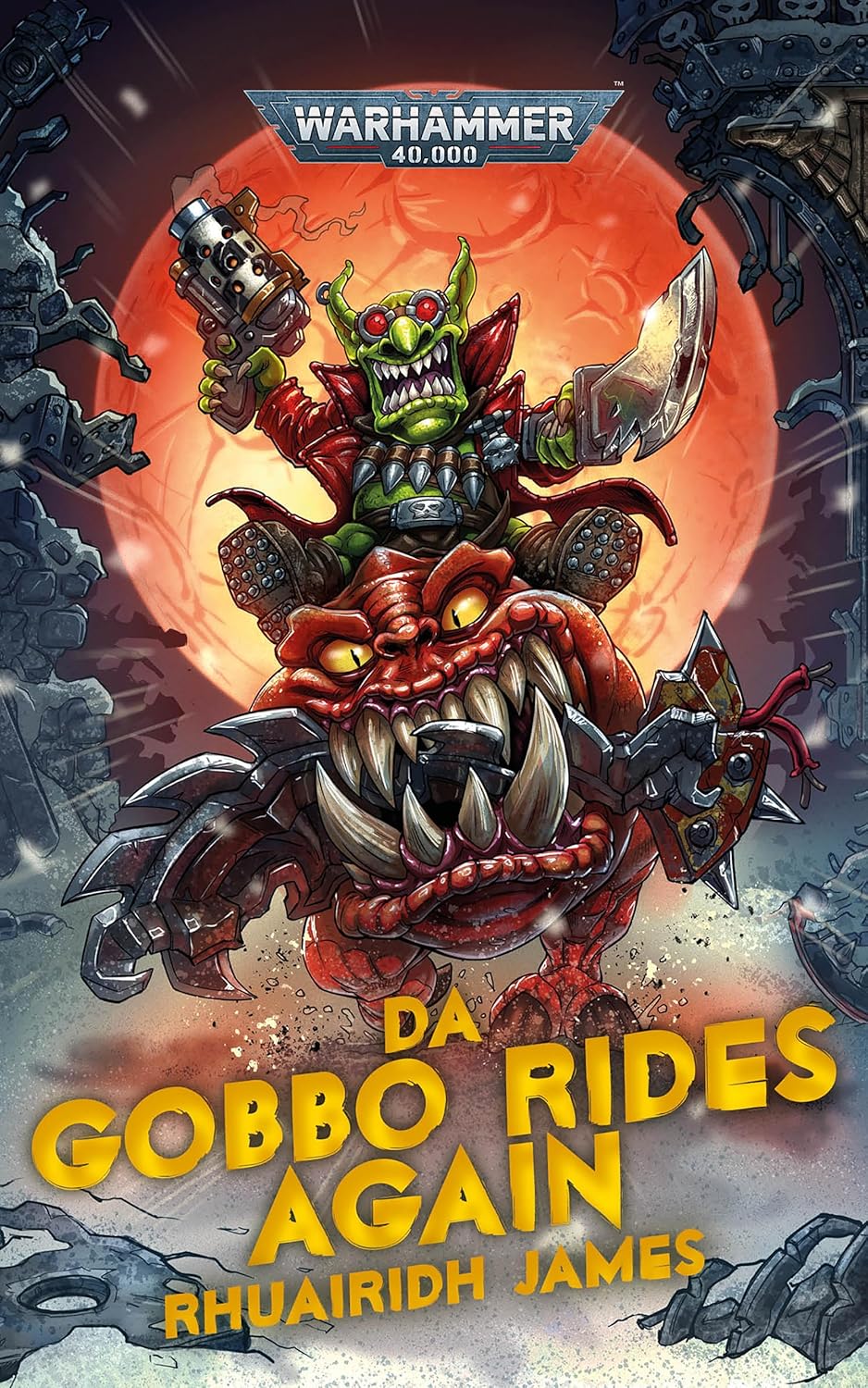
Following these two stories by Flowers, readers are then led to the book’s third novella, the amusing and outrageous entry, Da Gobbo Rides Again, by Rhuairidh James.  James, who has previously written several interesting Warhammer 40,000 short stories, honestly produces one of the best entries in Da Red Gobbo Collection, and I was really blown away by his intriguing and original take on the focal character, especially as he examines the revolution and the relationship between orks and grots in a very different manner.

Da Gobbo Rides Again follows the ork painboy Stimma, who arrives back to camp only to discover something strange happening to his warband’s grots.  Rather than being their usual sneaky selves, the grots have all become exceedingly compliant and helpful, completely throwing off the usual anarchic rhythms of the ork encampment.  Ordered by his warboss to fix the problem, Stimma and his grot assistant, Goggulz, try to shake the grots out of their malaise and back to their previous sly and murderous mentality.  They soon determine that the only way to inspire the grots is to give them a Red Gobbo to stir them up.  However, with no Red Gobbo to hand, Stimma decides to create one, but first he needs to understand what the Red Gobbo is and how he comes into being.  But the further he dives into the mysteries of the Red Gobbo, the closer he comes to the truth, and not even an ork as ruthless as Stimma is prepared for what he finds.

This was such a brilliant entry from James, and I loved the elaborate and very memorable story he comes up with.  I love how he decided to tell the story through the eyes of an ork master, rather than another grot, which allows for a unique new perspective in the tale of Da Red Gobbo.  The central story focusing on the dispirited grots was very clever, and James’s concept of compliant grots being more dangerous to the orks than rebellious ones was a fun take.  The resulting story of Stimma’s attempt to create his own Red Gobbo is both hilarious and philosophical in nature, and you must love the ork mentality when it comes to grots and their so-called heroes.  This attempt at science also leads the protagonist to various ork experts, and while this is mostly a novella about grots, the fun and in-depth dive into the oddboyz, those orks with special skills such as meks and weirdboyz, proves to be really amusing and detailed.  I especially loved Jame’s take on the painboyz, the orks’ highly experimental medics, especially as it results in some hilarious discussions about ‘medicine’.

However, the thing that I loved most about Da Gobbo Rides Again is the main twist of the story.  Thanks in part to having read the other novellas first, you can easily see where Stimma’s plan is going to go, even if the orks cannot due to their blind spot when it comes to their smaller cousins.  As such, you get to watch in joy as James openly works to bring this twist to fruition bit by bit, and it is very satisfying when it all comes together.  This fantastic buildup works extremely well amongst the general chaos of the ork camp, while the fun relationship that builds between Stimma and Goggulz makes it even more delicious.  Throw in some very interesting sequences that explore the unusual past of the orks and their relationship to grot-kind, as well as a great scene that brings together Da Gobbo Rides Again with the other novellas in this collection, and this was an impressive entry that I could not get enough of.  I honestly cannot emphasise enough just how amazing Da Gobbo Rides Again was, and I hope we get a full-length novel from James at some point in the future as I know I will deeply enjoy it.

The final entry within Da Red Gobbo Collection is The Instigator.  Also written by James, The Instigator is a prequel to Da Gobbo Rides Again which was originally released in the White Dwarf magazine.  This story tells of the first time a young Stimma encountered a Red Gobbo, when he accompanies an ork raiding party when it attempts to board a spaceship.  However, nothing goes to plan, especially when the orks find an unexpected enemy hidden within the ship, led by an unlikely commander.  This story does a great job of showcasing events that were hinted at within Da Gobbo Rides Again and presenting them in a very different way than Stimma remembers them, especially as events were a little more desperate than he cares to admit.  James amps up the tension in this short but sweet story, which shows just how scary grots can be for orks, while also providing a fantastic opponent for the plot.  The Instigator proves to be a great follow-up for Da Gobbo Rides Again, and I really enjoyed seeing the seeds for Stimma’s later idea around Da Red Gobbo be planted.

This ended up being a very awesome overall collection of Warhammer 40,000 stories, and I love the impressive and relentlessly comedic tales that these excellent authors came up with.  I loved how the three main novellas perfectly complemented each other, building on the work of the preceding stories, while also standing on their own feet.  Brooks, Flowers and James really had fun when it came to these stories, and I love how you get some unique takes on the orks and the grots, although the general ork humour does carry through very well for all of them.  I also deeply enjoyed how each author showcased a different aspect of the Red Gobbo character, and the three separate incarnations of the Red Gobbo you witness paints a fascinating picture of this unique being in the Warhammer canon.  All three authors really outdid themselves in how they brought this figure to life, and their amazing stories were a true joy to read.

Unsurprisingly, I chose to listen to Da Red Gobbo Collection on audiobook, a format which always deeply enhances Warhammer fiction, especially as the crazy characters, unlikely scenarios and dark settings really pop when read out loud.  Warhammer 40,000 audiobooks that feature the orks are always particularly awesome, as the outrageous aliens are so damn entertaining especially when you get a great narrator voicing them.  As such, I was very keen to listen to Da Red Gobbo Collection, especially as it provided the first audiobook adaptations of several existing short stories and novellas, which ensured a whole new way to appreciate these clever tales.  I was also excited because British actor Harry Myers was attached to narrate Da Red Gobbo Collection.  A very talented narrator who has brought some of my favourite Warhammer 40,000 books to life, including The Wraithbone Phoenix and Day of Ascension, Myers has a fantastically entertaining voice that really fits some of the outrageous figures in this universe.  Myers particularly excels at voice ork characters (he previously narrated Warboss and Da Big Dakka by Mike Brooks), and his voice perfectly fits the rough and crude orks in so many entertaining ways.  He also does a great job of capturing the smaller and cowardly grots, and you really get a great sense of their scared, weaselly and backstabbing ways through his narration.  I also loved how each character comes out in this audiobook, and I was very impressed that Myers featured variety with his voice work, providing the various grots different voices, even when he moved on to a new story.  This was such an epic listen, and I really cannot recommend Da Red Gobbo Collection on audiobook enough.  Coming in with a runtime of just over 11 hours, this is a slightly long but very easy audiobook to power through, and there is honestly no better way to enjoy Da Red Gobbo Collection than by listening to it in this format.

Da Red Gobbo Collection was an exceptional Warhammer 40,000 book that I had so much damn fun getting through.  Thanks to the outstanding team of Mike Brooks, Denny Flowers and Rhuairidh James, you are gifted with some very impressive stories that prove to be exceedingly addictive.  Insanely addictive and extremely hilarious, Da Red Gobbo Collection will bring a smile to any Warhammer fan, and even new readers will be able to have an amazing time with it.  As such, I must give this collection a full five-star rating, as each author delivered something very special that came together perfectly.

Amazon

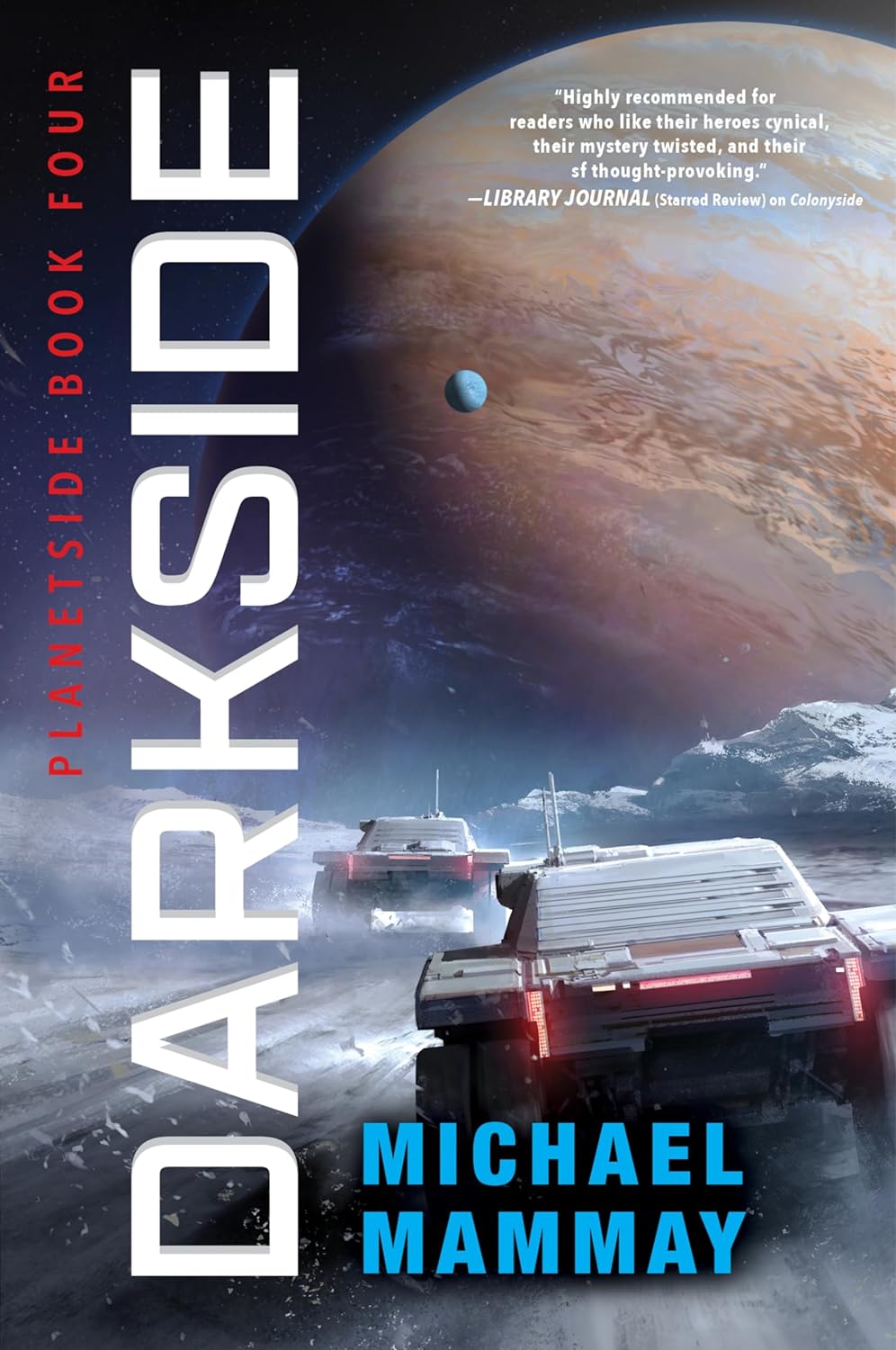
Darkside by Michael Mammay

Publisher: Harper Audio (Audiobook – 24 September 2024)

Series: Planetside – Book Four

Length: eight hours and six minutes

My Rating: 5 out of 5 stars

Amazon

One of my favourite science fiction authors returns with another fantastic and compelling military thriller in space, the highly addictive Darkside by Michael Mammay.

Back in 2018 I had the very great pleasure of reading the debut novel of new author Michael Mammay, Planetside.  An intriguing science fiction thriller that sent a retiring military officer to an alien planet to find a missing soldier, Planetside turned into quite the clever and exciting read, and I really got attached to its complex narrative and maverick protagonist.  Ending on a massive and well-written twist, Planetside was an exceptional read and was one of my favourite books of 2018.  The series continued strong from that point on as Mammary released more cool additions to the Planetside series, each of which pit the protagonist against human corruption and corporate greed in the depths of space with Spaceside (one of my favourite books of 2019) and Colonyside (one of my favourite books and audiobooks of 2021).  I have been curious to see if Mammay was planning to continue this series going forward, and I was nicely surprised earlier this year to find out that there was a fourth book coming out with Darkside.  One of my most anticipated books of 2024, Darkside was an intriguing entry to the series that once again forced the author’s protagonist to deal with old corporate threats on a distinctive new environment.

Colonel Carl Butler, former military officer turned genocidal fall-guy, has had an interesting life since his retirement from the military.  Thanks to the machinations of both the government and powerful corporation, Butler has found himself drawn into multiple conspiracies, and his direct way of dealing with the resulting controversy has made him infamous throughout the galaxy, as well as making him some very dangerous enemies.

Attempting to live out a quiet life on a remote planet, Butler finds his retirement once again disturbed when a young girl tracks him down, requesting his help in finding her missing father.  Finding it hard to say no to the desperate girl, especially when it becomes clear that something truly sinister has befallen her father, Butler reluctantly agrees to help, not realising the trouble he is about to find himself in again.

The missing father, Jorge Ramiro, had been working as the assistant for a famous archaeologist on the isolated moon of Taug.  With no electronic trace of Jorge remaining on the planet, Butler and his team chart a ship to the mining operations of Taug to find him.  However, Butler soon finds his investigation complicated by the fact that he has history with the two consortiums who control mining on Taug, Caliber and Omicron, as both have tried to kill him in the past.  Determined to find the truth no matter what, Butler relentless follows the dwindling trail of clues before him, even when that leads to the dangerous dark side of Taug where secrets lie hidden, and the two corporations are free to act without repercussion.

Michael Mammay presents another outstanding and impressive science fiction thriller that drags the reader in with its elaborate tale of intrigue, secrets, and one determined man seeking to fight the system.  Featuring a great combination of elements and a fantastically fun protagonist, Darkside was a brilliant addition to the Planetside series, and I had such an amazing time with it that it gets a full five-star rating from me.

I felt that Mammay produced another exciting and captivating narrative for his fourth Planetside book that ties in nicely to the rest of the series while providing readers with an excellent and entertaining ride capable of standing on its own feet.  Once again bringing in series protagonist Carl Butler to investigate a mysterious case on a new planet, Darkside features a fantastic tale of mystery, corporate antics and deeper intrigue.  The author does a great job of quickly setting the scene at the start of Darkside before dropping the protagonist right into the action as they attempt to find the missing father on Taug.  Seeking information from both corporations on the moon, Butler initially starts a methodical and low-key investigation.  However, things get tricky when Butler and his team discover evidence of a major coverup, and the protagonist is forced to pit the corporations against each other in his attempts to find the missing person.  This complex first half proves to be an excellent start to the novel, and Mammay ensures that the tension, stakes and mystery rise at an effectively rate, keeping the reader’s attention the entire way through.

Things take a very exciting turn around halfway through Darkside, as Butler’s investigation provoke action from his opponents that results in some extremely dramatic and intense moments.  While I had been enjoying the investigation and intrigue of the first half of the book, it was fun to dive into something much more action packed for the second half, and I really enjoyed the exciting direction that Mammay took the story.  There are some great reveals here, and I love how complicated the various corporate lies and agendas became at times.  Everything leads up to a very intense final set of sequences, as Butler finds his back against the wall and is forced to decide which devil to have in his corner.  There are some great twists here, as well as a cool chapter told from the perspective of one of the series’ major supporting characters, and it leads up to a particularly intense and moving conclusion that perfectly fit the overarching anti-corporate message of the entire series.

Darkside has an excellent and addictive style to it that really draws the reader in.  Told from the perspective of the cynical, but realistic, Colonel Butler, readers are presented an outstanding thriller novel expertly set in a futuristic setting.  Starting off with a mystery of a missing person, the story evolves into a more elaborate game of intrigue as the protagonist attempts to outsmart two rival companies.  Mammay hits the right blend of manipulation, investigation and action throughout Darkside, and readers are presented with a great story that thrills the reader while dragging them further in with the curious mystery.  This story is well set by the moon of Taug, which proves to be an outstanding setting for this intense novel.  Not only does Mammay provide some striking descriptions of this desolate moon, but the isolated nature of it, as well as more scientific elements like gravity and composition, are well utilised in the plot, creating problems and opportunities for the protagonists.  Whilst Darkside is part of a larger series, for the most part it is a standalone novel that new readers can easily dive into, especially as there is an effective summary at the front to fill in some major details about the protagonist and his previous outings.  I think I had a bit more fun having read the previous books first, especially as you appreciate how Butler’s relationship with some of the supporting characters has grown, as well as having a better understanding the protagonist’s adversarial relationship with the corporations on the moon.  Darkside was such a great addition to this series, and I had an exceptional time powering through this novel in record time.

Another major element of Darkside, and indeed the entire Planetside series, that I come to really enjoy, was the outstanding characters who sat at the heart of the story and who add some real emotional depth to the book.  This primarily refers to the protagonist and point-of-view character, Colonel Carl Butler, who is very fun to follow.  A former career soldier trying to enjoy retirement, Butler has been hit by controversy, betrayal and the downside of duty, which has made him infamous and forced him to live on a remote planet.  Despite this, he is still a cheerful figure whose desire to do good forces him into another adventure.  Witty and honourable, Butler has a very eccentric personality that results in most of Darkside’s humour, and you have to laugh at some of his clever thoughts and responses to the dark events around him.  Despite having a seemingly carefree, easy-going attitude, Butler is a canny operator at this point in the series, and it was great to see how he has finally learnt from his previous experiences of dealing with corrupt corporations.  I also really enjoy how Mammay portrays Butler’s thought process in this novel, as you get to see him weighing the options and impacts of his various potential actions, and seeing the steps Butler takes to make his decisions makes him a little more human and relatable to the reader.  As such, you really get caught up in Butler’s latest crusade, and it proves hard not to root for him the entire way, even despite his dark history.

In addition to Butler, Mammay also features a great supporting cast of characters in Darkside, most of whom play off Butler extremely well.  This includes the returning characters of Mac and Ganos, Butler’s bodyguard and computer expert respectively, who once again saddle up to help.  Mammay works these two characters back into the plot quickly and effectively, and it was great to see this team in action again.  Mac and Ganos serve as an entertaining support to Butler, especially as by this point, they have learned to anticipate their boss’s likely course of action.  I really enjoyed seeing the close camaraderie and support these three had together, and it there were some excellent and moving moments as a result.  The rest of the case also worked well around these central characters, with several new members of Butler’s team providing some intriguing plot options.  Throw in the usual collection of local soldiers who work with Butler, and a group of manipulative corporate officers who serve as the antagonists, and the cast of Darkside proves to be a fantastic part of the book, and I loved seeing them all in action.

I ended up enjoying Darkside on audiobook, which has been my preferred way of enjoying the Planetside books, primarily because of the inclusion of R. C. Bray as the narrator.  Bray, who is one of my favourite audiobook narrators, did another exceptional job voicing the characters in Darkside, and I love how well his gruff and rich voice fits Colonel Butler.  Bray’s voice work perfectly captures Butler’s sarcastic, pragmatic and rebellious streak, and you really get caught up in this excellent narrator’s central performance.  In addition to his excellent portrayal of Butler, Bray also brings all the supporting cast to life in fun and effective manner, with each character given their own distinctive voice or accent.  I particularly enjoyed the fun voice he gave to Butler’s right-hand man, Mac, which was handy considering Mac got a lengthy chapter from his perspective that really popped in Bray’s voice.  I honestly don’t think I would have enjoyed Darkside quite as much without having Bray read it out to me, and I have so much love for the paring between Bray and Mammay’s great writing.  Coming in with a runtime of just over eight hours, most people will be able to power through Darkside very quickly, and I honestly found it very hard to stop listening to this audiobook, which comes very highly recommended.

Michael Mammay continues to impress with Darkside, a brilliant addition to his fantastic Planetside series that proves hard to turn away from.  Clever, exciting, and featuring a well-written and intense story, Darkside is one of Mammay’s best Planetside novels yet, and I cannot wait to see how he continues the story in the future, especially as the rascally protagonists keeps making more and more enemies.

Amazon

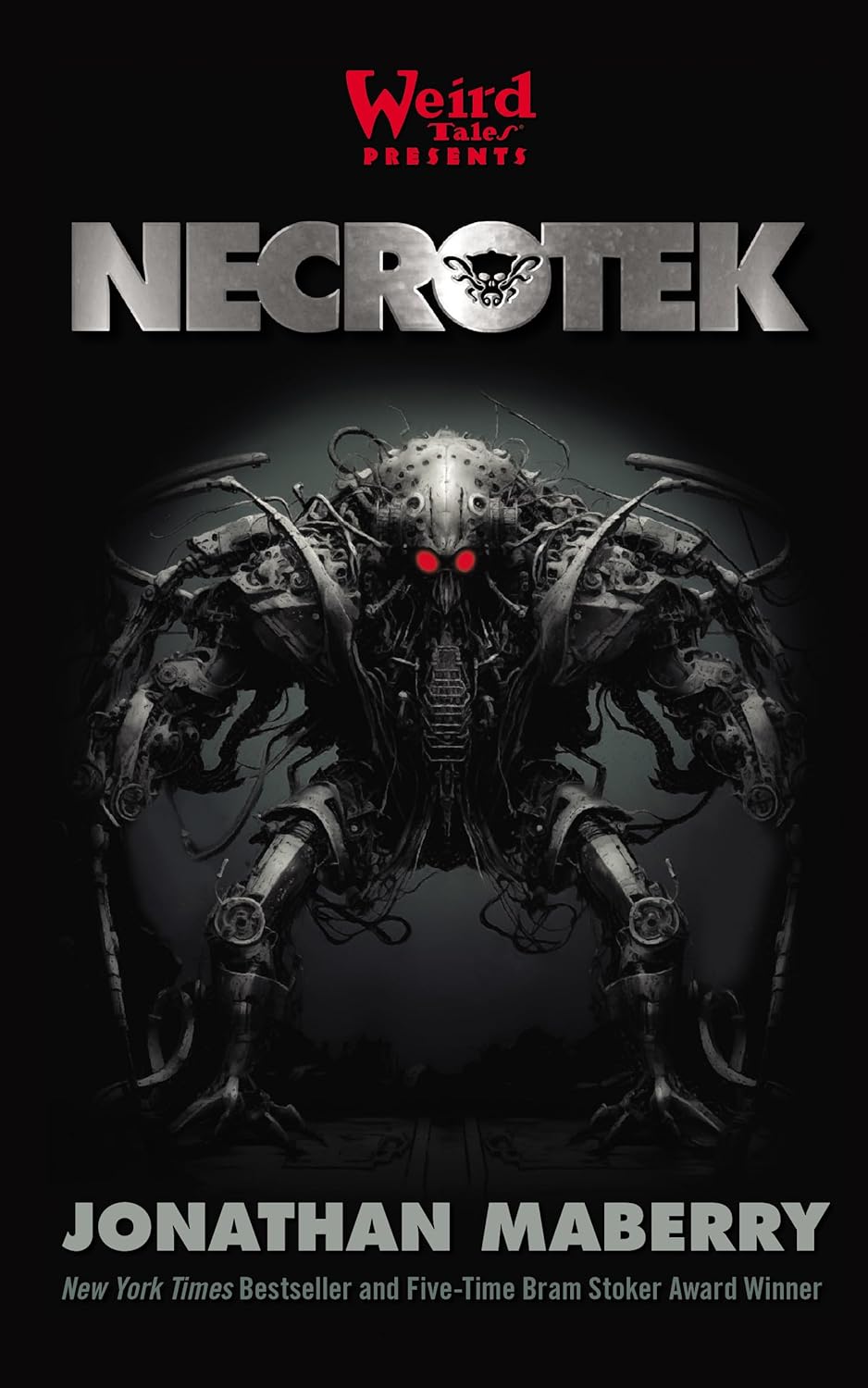
NecroTek by Jonathan Maberry

Publisher: Blackstone Audio (Audiobook – 28 May 2024)

Series: NecroTek – Book One

Length: 15 hours and 24 minutes

My Rating: 5 out of 5 stars

Amazon

One of the leading authors of action-packed fiction, Jonathan Maberry, dives headfirst into the science fiction genre with the unique read NecroTek, a remarkable Lovecraftian adventure in space that takes readers to some very dark places.

Readers of this blog will know that I have long been a fan of compelling author Jonathan Maberry, who has been impressing me with his elaborate, grim and varied book for years.  A long-time writer of horror-filled fiction across the genres, Maberry has multiple books and series under his belt, and I have had the great pleasure of reading a large portion of his existing works.  His main body of fiction is his Joe Ledger thriller series, which follows a tortured protagonist as he attempts to stop an array of dark technological threats assailing the modern world.  This series, which includes great books like Patient Zero, Assassin’s Code, Predator One and Dogs of War, as well as the Rogue Team International sequel series (Rage, Relentless and Cave 13), proved to be a great introduction to the author for me, and my appreciation for him grew after reading his Kagen the Damned dark fantasy series.  Made up of Kagen the Damned (one of my favourite books and audiobooks of 2022), Son of the Poison Rose (one of my favourite books and audiobooks of 2023), and The Dragon in Winter (which I am currently reading now), the Kagen the Damned books saw the author bring his distinctive style to the world of dark fantasy in a big way, and I loved the end result.

Due to how much I love Maberry’s captivating and enthralling novels, I always instantly grab anything new the author writes, and this includes his first release of 2024, NectroTek.  While his Joe Ledger books often feature strong science fiction elements in their thriller narratives, NecroTek was the first pure science fiction novel from the author, and I felt that he did an outstanding job applying his style and love for old-school horror into this new genre.  Released under the banner of the iconic Weird Tales horror magazine, NecroTek was one of my most anticipated releases of 2024, and it did not disappoint.

Plot Synopsis:

From New York Times bestselling author Jonathan Maberry, NecroTek is a gripping sci-fi thriller full of ghosts, gods, and a battle for the soul of humanity.

Neither cosmic philosopher Lars Soren, hotshot pilot Bianca Petrescu, nor the high priestess Jessica McHugh–Lady Death herself–can say quite where in the galaxy they are. But after an experiment gone horribly wrong, one thing is clear: Asphodel Station isn’t in orbit around Jupiter any longer. Worse, the monsters that live out here–ancient eldritch beings thought only to exist in stories and nightmares–have now been alerted to Earth’s existence.

Their army of Shoggoths is coming for us next.

Humanity’s only hope for survival lies on the surface of the alien world of Shadderal, where a ghost named Lost, the last of an ancient race, still haunts the vast plains of the Field of Dead Birds. But hope has a cost. Lost tells Soren about ancient derelict spacecraft awaiting on Shadderal, shapeshifting machines that blend ultra-advanced technology with the dark powers of necromancy. These ships might just be nimble enough to defend mankind against the coming invasion.

But there’s a catch: they can only be piloted by the dead.

As human starfighters fall in battle, their spirits can be called back from death to pilot these ghost ships of a fallen race. But will this new necromantic technology–NecroTek–allow humanity to stand against the vast armies of the Shoggoths? And even if it can, is the war to save the human race worth the cost of its pilots’ immortal souls?

What another brilliant read from Jonathan Maberry!  NecroTek was an outstanding and captivating novel that I unsurprisingly loved thanks to its elaborate and ambitious narrative, loaded with horror, carnage and a distinctive tale of survival against the odds.  Moving, powerful and highly emotional, NecroTek was such an epic and captivating novel, and I must give it a full five-star rating as a result.

Maberry produces another complex, detailed and powerfully dark narrative for NecroTek that is part science fiction, part horror, and all excitement.  Starting off just in advance of the events that will set the story in motion, Maberry does a great job of opening the book up and quickly setting the scene for the reader.  The start of a new series unconnected from his previous works (for now), this is one of the easier Maberry novels to break into, and you are soon invested in the tale of scientific exploration.  However, things change quickly once the teleportation experiment fails, and as this is Maberry, when things go wrong, they go wrong in a big and gruesome way.  The author really leans into his love of horror during these opening moments, and there are some shocking depictions of the side effects of the jump through space, as well as the terrifying things waiting for the survivors on the other side.  Maberry revels in featuring powerful depictions of terror and craziness here and it makes for a brilliant and often disturbing first part of the book.

After this horrifying start to the novel, NecroTek becomes more of a science fiction tale, although Maberry quickly infects it with his beloved Lovecraftian elements, as the protagonists soon discover that they have been discovered by Shoggoths above a mysterious planet.  This allows for some fantastic moments, as the humans attempt to defeat this new alien foe with their existing ships, while continuing to dive into the complex science and philosophy surrounding their circumstances.  This middle section of the book moves at a swift pace, and the readers are treated to some excellent battle sequences in space, as well as the character’s continued uncertainty as they try to understand the outrageous situation they have found themselves in.  Maberry does a great job setting down the required Lovecraftian lore and bringing key parts of the plot to light during this part of the book, and readers easily become absorbed in his compelling ideas, especially when they are coated in a combination of adventure, horror and intriguing characters.

Everything leads up perfectly to the final third of NecroTek, which sees the protagonists desperate to defend both the station, and the important planet they hover above.  Faced with attacks on multiple fronts and so many tragedies, the protagonists are forced to rely on a new ally and the titular NecroTek to face off against the Shoggoth fleet.  Maberry keeps the tension riding high for this final part of the book, and you are constantly on the edge of your seat as several simultaneous battles rage around the reader, often fought in some extremely epic ways.  There is some captivating tragedy, deeply moving moments of sacrifice, and elaborate dives into the human psyche as everything comes together, and you will be left dazed and moved by everything that unfolds.  An overall exceptional and unique story, NecroTek was so much fun, and I liked the potential for story continuation that exists at the end of the novel.

Maberry has a very distinctive writing style that he utilises in all his novels, no matter the genre, and which always results in an awesome and complex read.  Featuring a huge number of short and sharp perspective chapters that constantly jump between the key characters, as well as a few shots of the antagonists and other mysterious creatures, you get a layered story that shows so many complex actions at the same time.  This style works extremely well in this science fiction adventure, and I loved the elaborate ways he showcased the dark events occurring around the station, whether you get the experiences of the recurring characters, or one-off chapters that shows what happened to specific characters before they die.  These chapters deeply enhance the horror vibes in the book, which keep you on your toes and provides an overarching sense of threat and danger that really makes you concerned for the protagonists.  This cool horror vibe blends well with the extremely detailed science fiction setting and storyline, to create a particularly striking read that really stuck with me, especially as the author also dives into Lovecraftian elements which work nicely into Maberry’s distinctive tone.  As with most of Maberry’s work, NecroTek does get incredibly dark and disturbing at times, which may not appeal to every reader, especially when it comes to some of the more distressing occurrences.  However, Maberry channels this darkness extremely well into the plot and the various action sequences of the book, producing a rafter of ultra-exciting scenes that really stick in the mind.  I personally felt his various space-combat sequences were extremely good, and I loved how effectively he showcased the intricate nature of the battles, even when things get extreme with the inclusion of ghost-powered battle mechs. 

As with all Jonathan Maberry novels, the true power and heart of NecroTek lies in its many impressive and complex characters, who the author utilises to tell a particularly powerful and layered story.  Maberry has a real gift for producing compelling, damaged, and often highly over-the top characters for his various series, and NecroTek is no different as he introduces a range of figures whose unique perspectives shape and power the story.  While NecroTek lacks the full-on antagonist’s perspective that usually make his novels so effective (due to the enemies being unknowable aliens), you get a great spread of alternating perspectives and thoughts throughout NecroTek, as well as the powerful emotions behind them.  These emotions are greatly enhanced by the fact that all the human characters within NecroTek are disorientated or damaged by the earlier events of the plot, and watching them overcome their rage, fear or despair, really amps up the feeling of the unknown and the complex emotions that swirl around the plot.

While there are many characters featured within NecroTek, Maberry does focus the plot on a few key protagonists whose stories get a bit more attention.  This includes cosmic philosopher Lars Soren, who serves as one of the main explorers of the new world and the voice of calm reason amongst the protagonists.  I liked how effectively Maberry utilised a scholar protagonist for much of this novel, and it allowed for a much more thoughtful narrative at times.  Of course, as this is Maberry, there needs to be a militant main protagonist as well, and that role was filled ably by military pilot Bianca Petrescu.  A confident and skilled pilot, Bianca worked as a great partner to Soren throughout much of the adventure, and I liked the contrast in their styles and actions.  Bianca also works well as part of the fighter group, known as the Lost Souls, who work to defend the station from the Shoggoth fleet.  Acting like an extended family, the Lost Souls are a vital part of the book’s plot, especially as their eventual, many-layered sacrifice, results in some of the most emotionally charged scenes in the book, which is further enhanced by how much you have come to care for the whole group.  Throw in an actual necromancer and an ancient alien whose guilt-ridden ghost provides aid to the protagonists whilst also damning them, and the cast of NecroTek was extremely strong.  I really enjoyed the elaborate narrative threads that emerged around these figures, and it led to a very powerful and intense read.

As with most of the Jonathan Maberry novels, I chose to enjoy NecroTek on audiobook, which is easily the best way to enjoy one of the author’s elaborate and powerful novels.  Maberry’s distinctive writing style of constantly shifting characters, loaded action, and horrifying elements really comes across when read out and I honestly believe that this is the best way to enjoy one of author’s books.  A lot of this is due to the continued use of long-term Maberry collaborator Ray Porter, who has lent his voice to most of Maberry’s compelling audiobooks.  One of my favourite audiobook narrators, Ray Porter has an outstanding voice that expertly moves Maberry’s complex and addictive narrative around at a fast and effective pace.  Porter’s ability to instil emotion, intensity and often scary tones into his narration is extremely epic, and he can ensure that readers are always on the edge of their seats as they wait for more action or horror to emerge.  Porter also has a great range of different awesome voices that seem to always perfectly fit the character they are assigned to, and I love the fun and entertaining tones that convey so much of fear, feelings and deeper emotional state.  Coming in with an overall run time of 15 hours and 24 minutes, this is a long audiobook, although it proves easy to power through it quickly, especially in the action-heavy second half.  As such, the NecroTek audiobook version comes highly recommended, and you will not be disappointed when you listen to it.

Jonathan Maberry once again deeply impresses me with his elaborate and addictively dark science fiction read, NecroTek.  A very distinctive Maberry creation, NecroTek features a brilliant story that brings together cool new science fiction elements with the author’s love for all thing Lovecraftian into a brutal and captivating read.  Fast paced and loaded with complex characters, fantastic action, and some truly epic sequences, NecroTek was such a great read from Maberry and comes highly recommended.  I look forward to seeing how Maberry continues the series in the future, especially as a sequel, Cold War, is apparently set for release in 2025.

Amazon

Quick Review – Starter Villain by John Scalzi

Publisher: Tor (ebook – 23 September 2023)

Series: Standalone

Length: 256 pages

My Rating: 4.5 out of 5 stars

Amazon

As we are getting towards the end of 2024, it’s probably about time I got around to writing something about one of the more hilarious and wildly entertaining books I checked out last year, the outstanding novel Starter Villain by John Scalzi.

John Scalzi is an outstanding science fiction author who has produced some intriguing and thoughtful books over the years.  Best known for his Old Man’s War series that followed the science fiction adventures of old human military volunteers whose minds are transferred to younger, genetically modified body, Scalzi is a highly inventive writer who creates some elaborate and powerful scenarios.  While he has written some very compelling science fiction series, I best know Scalzi from his standalone books where he and turns some outrageous ideas into wonderful tales of humanity.  My favourite is Redshirts, a fantastic and very clever Star Trek parody that imagines life aboard an Enterprise-esque ship from the point of view of the expendable lower-decks crew.  I also had a ton of fun with Scalzi’s 2022 novel, The Kaiju Preservation Society, which showcased the intriguing adventures of an organisation dedicated to preserving kaiju in a parallel universe.  All these books were very fun, which is why I made sure to grab a copy of the 2023 release, Starter Villian, which had a great plot behind it.


Plot Synopsis:

Inheriting your uncle’s supervillain business is more complicated than you might think. Particularly when you discover who’s running the place.

Charlie’s life is going nowhere fast. A divorced substitute teacher living with his cat in a house his siblings want to sell, all he wants is to open a pub downtown, if only the bank will approve his loan.

Then his long-lost uncle Jake dies and leaves his supervillain business (complete with island volcano lair) to Charlie.

But becoming a supervillain isn’t all giant laser death rays and lava pits. Jake had enemies, and now they’re coming after Charlie. His uncle might have been a stand-up, old-fashioned kind of villain, but these are the real thing: rich, soulless predators backed by multinational corporations and venture capital.

It’s up to Charlie to win the war his uncle started against a league of supervillains. But with unionized dolphins, hyperintelligent talking spy cats, and a terrifying henchperson at his side, going bad is starting to look pretty good.

In a dog-eat-dog world…be a cat.


This was a highly entertaining novel from Scalzi, who provides his own unique take on supervillains in all the best ways.  Starting off with a very comical funeral scene, Starter Villain only gets better from there as the protagonist, Charlie, finds his life unexpectantly changed when he inherits his uncle’s supervillain business and associated wealth.  Scalzi provides a fantastic introduction to the unique new world of super science and sinister business practices, and you are soon caught up in Charlie’s unlikely rise to the top.  The first half of the book is loaded with intriguing scenes as Scalzi lets his imagination run wild, and you have a fantastic time learning about sentient cats, crude talking dolphins constantly going on strike, and the other unlikely inventions and people that now make up Charlie’s life.  This compelling introduction to the world works well in setting up the second half of the story, as Charlie meets a cabal of similar uber-rich supervillains who all seek to exploit him.  When a series of events outside of his control force him into a battle of survival against these supervillains, Charlie needs all his new allies and his own unique ideas to win the day, even if victory isn’t quite what he imagined.

Starter Villain was such a lovely and impressive read, and I loved seeing Scalzi utilise his humour into something more terrestrial, yet still out of this world.  Featuring the author’s typical fast pace, Starter Villain hits the ground running and throws you right into the middle of Scalzi’s fantastic and memorable ideas.  The resulting story is clever, addictive, and features some amazing twists, all of which is very awesome to see unfold.  While there is a lot of mad science, Scalzi does try to ground the supervillain antics, and I loved the author’s thoughts on how such an organisation could exist in the modern world and what sort of nefarious actions they would participate in.  Naturally this means corporations and the uber-wealthy, which is depressingly accurate if you consider recent events, although this does mean that the antagonists are very easy to dislike and entirely unredeemable.  The author loads in so much clever humour around the general supervillain scenario, and I loved the fantastic jokes about the profession, the inventions that are being created, and the unusual ways they stay in power.  A lot of jokes about supervillains also provide some excellent commentary on current society, which cynical people like me will enjoy (a joke about a potential Australian recruit to the supervillain cabal hit close to home, which was just perfect).  This is a hilarious and well-put together read that expertly showcases the author’s inventive spirit.

I also want to mention the fantastic range of complex and eccentric characters featured throughout Starter Villain, who helped to make the story even more unique and funny.  Most of the book’s focus goes around the protagonist, Charlie, who finds himself thrust into a new world of dangerous rich elites and supervillain logic.  Charlie proves to be a great central figure for Starter Villain’s plot, mainly because he plays a great everyman character whose reaction to the narrative’s crazy events mirrors that of the reader.  While slightly bland compared to the other outrageous characters, Charlie does experience some excellent growth, especially as he learns to take responsibility and to appreciate the life he has.  I also enjoyed how Charlie, despite being new to the supervillain lifestyle, was able to work out solutions to his organisation’s big problems often by being his typical thoughtful self.  The rest of the characters in Starter Villain are all allowed to go wild due to having Charlie as the perspective protagonist, and I loved the array of talking dolphins, unusual scientists, murderous goons and rich manipulators that Charlie had to either work with or overcome.  My favourite figures were easily the highly intelligent sentient cats, who really run the company and who have been manipulating Charlie his whole life.  Scalzi has a lot of fun showcasing the cunning cats in charge, and I felt this whole awesome crew of characters helped to turn Starter Villain into an extremely fun read.

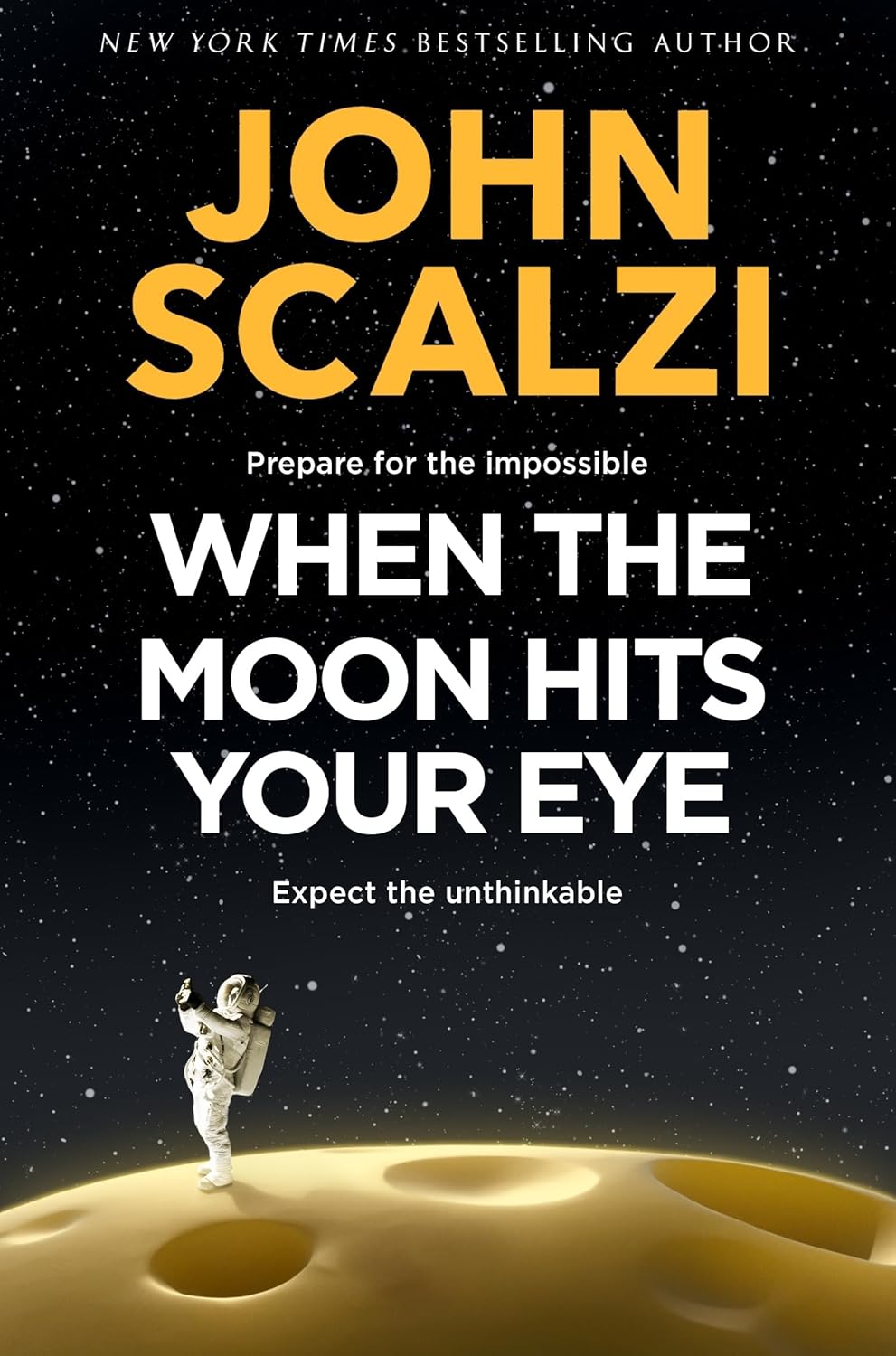
Overall, Starter Villain was an amazing read from John Scalzi that proves impossible not to love.  Featuring the author’s infectious humour and love for inventive scenarios, Starter Villain was such a great book, and I deeply enjoyed the author’s take on supervillain fiction.  Clever, unique and so much fun, Starter Villian is an exceptional read, and I really wish I had written a review for it sooner.  I will have to pick up my Scalzi game in the future, and not only have I got a copy of Old Man’s War to read at home, but I am eagerly awaiting his next book, When the Moon Hits Your Eye, which features a very, very interesting sounding story about the moon literally transforming into cheese, an idea I have so much love for and cannot wait to check out.

Amazon

Waiting on Wednesday – Burn to Shine by Jonathan Maberry

Welcome to my weekly segment, Waiting on Wednesday, where I look at upcoming books that I am planning to order and review in the next few months and which I think I will really enjoy.  Stay tuned to see reviews of these books when I get a copy of them.  In this latest Waiting on Wednesday, I highlight one of my most anticipated books of 2025 with the new Rogue Team International novel from Jonathan Maberry, Burn to Shine.

Amazon

Readers of this blog will probably have noticed that I have been talking about author Jonathan Maberry a lot this week.  Between the fact that I am currently reading his awesome fantasy novel, The Dragon in Winter, and I am just about to publish a review for his other 2024 novel, NecroTek, Maberry has really been on my mind lately.  As such, to keep this ball rolling I am going to take this opportunity to highlight Maberry’s new book coming out in 2025, the awesome thriller novel Burn to Shine.

Burn to Shine is an interesting upcoming book that forms part of Maberry’s long-running Joe Ledger series.  This series, which started back in 2009 with Patient Zero, follows the titular character of Joe Ledger, a government agent who seeks to save the world from various unnatural scientific threats and sinister schemes.  A brutal, complex and addictively dark series, the Joe Ledger books are deeply entertaining, and I love all the intense action, elaborate plots, and fantastic over-the-top figures within.  Highlights include The Dragon Factory, Assassin’s Code, Code Zero, Predator One and Dogs of War just to name a few, and I have had an exceptional time with all the epic entries in this series.

Since 2019, the new Joe Ledger books have all fallen within the Rogue Team International sub-series, which continues the adventures of the protagonist and his team, while also setting the characters up as a more independent organisation.  The Rogue Team International books are just as awesome as the previous entries in the overall series, and Maberry has presented some cool ideas and grim scenarios in these latest novels.  These books include Rage (one of my favourite books and audiobooks of 2019), Relentless (one of my favourite books and audiobooks of 2021), and Cave 13. (one of my favourite books and audiobooks of 2023), all of which were extremely impressive five-star reads.  As such, I am understandably very eager to see how this series continues, and luckily it doesn’t look like I have too much longer to wait.

The fourth Rogue Team International novel will be the upcoming Burn to Shine, which is set for release in March 2025.  Another epic entry in the series, Burn to Shine will force Ledger and his team to deal with a new world-destroying threat, as old enemies once again rise looking for revenge.


Plot Synopsis:

Rogue Team International joins Joe Ledger in a new, tension-filled mission to stop a wave of bioterrorism from devastating the country.

A covert group is infiltrating the world’s most secure bio-weapons research sites. All across the country, people are acting as human ‘disease bombs’ by infecting themselves and walking into public places. And heavily-armed groups of illegal private soldiers are massing for some unknown strike.

Joe Ledger and the members of Rogue Team International, still reeling from the devastation and heartbreaking losses of their last mission, are forced into relentless action to try and save the country, if not the entire world.

Old enemies are rising and joining forces to hit Joe and his team with one devastating blow after another. What is the end game for all of this madness and terror? Outnumbered, outmaneuvered, and outgunned, Joe Ledger has to find a way back from the fires of grief in order to make a stand between these enemies and millions of potential innocent lives. But Joe has allies, too. His team, the vicious fighters of Arklight, and friends who may or may not be entirely human.

A war of darkness and light is coming. Who will stand? Who will fall? And how will anyone ever survive?


Burn to Shine
sounds like another excellent addition to this long-running series, and I cannot wait to dive into it next year.  Featuring another intriguing plot of bioterrorism, it sounds like this is going to be a major entry in the series, especially as Maberry spent a good chunk of Cave 13 building up the plot for this fourth book.  Thanks to some of the hints in Cave 13, as well as the above plot synopsis and even the title of this book, it appears that Burn to Shine is going to feature a familiar array of enemies, with antagonists from previous books set to return.  I have a pretty good idea about who some of these antagonists are going to be, although it will be interesting to see how Maberry brings them back and utilises them in this latest novel.  I am excited to dive into this new plot, and I hope that the author has come up with a particularly dark and complex villainous plan that we get to untangle.

Another aspect of Burn to Shine mentioned in the synopsis that I am really looking forward to is exploring is the continued trauma and damage that the various protagonists of Burn to Shine will no doubt be feeling.  Ledger and his team have gone through all manner of loss and suffering in the Rogue Team International books, and it will be interesting to see how that impacts their ability to fight back, especially when they are once again assailed by the ghosts of their past in the potential returning antagonists.  I have no doubt that Maberry will play this trauma aspect of the plot perfectly throughout Burn to Shine, and I always appreciate how well written and human the author’s characters feel during their unnatural adventures.

Honestly, due to how much I love the Joe Ledger books, there is no way in hell that I am not grabbing Burn to Shine next year the first chance I get.  Jonathan Maberry has been on a brilliant roll with this series for years and I always get so damn engrossed with their elaborate narratives and brutal inclusions.  This next book sounds particularly impressive, and I cannot wait to see how Burn to Shine fits into the larger series, especially as there are some very intriguing hints about who is plaguing the protagonists this time.  There is no way this won’t end up being one of my favourite novels of 2025, and I look forward to enjoying the audiobook version of it, especially as it will be once again voiced by the impeccable Ray Porter.  Until then, keep your eyes peeled for my review of NecroTek which will be out in the next day or two.

Warhammer 40,000: Above and Beyond by Denny Flowers

Publisher: Black Library (Audiobook – 12 October 2024)

Series: Lucille von Shard series – Book Two

Length: 12 hours and 52 minutes

My Rating: 5 out of 5 stars

Amazon

Denny Flowers presents one of the most ambitious and captivating Warhammer 40,000 novels of 2024, with the brilliant and deliciously cynical read, Above and Beyond.

As a massive fan of all things Warhammer 40,000 fiction, I have been spending awful lot of time diving into all the recently released novels and audiobooks from the franchise (see the ever-expanding Warhammer tab to the right).  As such, I have become quite familiar with the newer authors contributing to this massive expanded grimdark universe, and there are several rising stars that my radar is firmly fixed on.  This includes the very impressive Denny Flowers, who honestly has the potential to become one of the best authors in this franchise.  While he has so far only written three books (including this one), every single new novel from Flowers is a step above the last, and I have really gotten attached to his fantastic imagination and writing style.  His first book, Fire Made Flesh, was an awesome book, and it ended up being one of my favourite debuts of 2021.  However, Fire Made Flesh was quickly overshaded in my mind by the author’s brilliant second book, Outgunned.

Outgunned was an outstanding read that dove into the darker side of the already grim Warhammer 40,000 universe in all the right ways.  Following a propaganda expert as he attempts to create an epic film based around a legendary fighter ace, Outgunned proved to be an excellent read, especially once the protagonist beings to understand just how jaded his chosen subject is.  However, a rampaging ork invasion and elaborate political intrigue on a miserable swamp planet brings events even further to a head, and the protagonists endure a gruelling and desperate battle to survive.  I really loved Outgunned thanks to its unique narrative, and it has had a proud place in my favourite Warhammer 40,000 novel list.  Due to how impressive I found Outgunned to be, I was very excited when I heard that a sequel was out this year and made sure to grab Above and Beyond the first chance I could.

Kile Simlex is a broken man.  Once one of the most successful propagandists in the Imperium of Man, Simlex’s films used to inspire untold millions in the name of the God Emperor, ensuring innumerable new recruits to humanity’s armies.  However, a cursed assignment to the swamp planet of Bacchus showed him the realities of war and innate corruption of the Imperium, while his chosen subject, the eternally cynical fighter ace Lucille von Shard, proved to be both a skilled fighter and a deadly disappointment.

Years later, Simlex is now a shadow of his former self.  Emotionally and physically scarred from his experiences on Bacchus, Simlex’s attempts to show the Imperium’s citizens the real horrors of war ensured that he was dismissed from his lofty position.  Now forced to toil as lowly scribe, Simlex has grown bitter as his footage from Bacchus was used to create a crass and untrue popular film which elevated Flight Command von Shard to the status of legendary hero.  However, Simlex is about to find his chance of redemption when he once again becomes involved with the dangerous von Shard family.

Attempting to live in obscurity, Simlex’s life is turned upside down when Shard’s brother, Commissar Tobia von Shard enters his office.  Commissar von Shard has intercepted a cryptic message sent to Simlex from Shard asking for help, and the commissar is determined to deliver assistance, one way or another.  Forced to accompany the commissar on his journey, Simlex travels to Deighton, a world in open rebellion, to discover a war being fought using propaganda films and heroic shots of Shard in action.  However, the real Shard is a shadow of her former self, worn down by war, guilt and her status as a hero, and determined to push Simlex away.  But with a deadly xenos pilot seeking to destroy her legacy, and a manipulative new propagandist controlling events from on high, Simlex and Shard both need to work together to survive.

Denny Flowers honestly gets better with every single book he writes as Above and Beyond was a particularly impressive and powerful piece of Warhammer 40,000 fiction.  Providing Flower’s own distinctive take on the glorious wars of the Warhammer 40,000 universe, Above and Beyond was a memorable, addictive and emotionally charged novel that had me hooked the entire way through with its complex context and brilliantly damaged characters.  This was such an exceptional read, and I have very little choice but to give it a well-deserved five-star rating.

Above and Beyond has an excellent and exciting narrative that both stands on its own, while also serving as a compelling sequel to Outgunned.  Shown from the perspective of former propagandist Kile Simlex, whose actions following the previous book have resulted in a substantial fall from grace, Above and Beyond sees him forced back into the chaos of war after his former muse, Lucille von Shard, apparently seeks his help.  Forcibly recruited by Shard’s commissar brother, Simlex traves to the planet Deighton, and finds himself caught up in an unusual war, as brutal Imperial soldiers fight against rebelling civilians, while expansive propaganda campaign drives the carnage to new heights.  This first part of the story is very well done, as it catches up the reader quickly to both the events of Outgunned and the subsequent fallout of Simlex’s actions, while also setting up the new storyline.

The rest of Above and Beyond’s story turns out to be exceedingly intense and compelling, as Flowers tells a particularly unique Warhammer 40,000 narrative.  While there is a focus on aerial combat and action, Above and Beyond is mostly a gritty and complex thriller, with the protagonist attempting to uncover various secrets and counter deceitful and dangerous opponents.  This results in an intense character-driven tale as you follow the tired, traumatised, and pessimistic protagonist as he attempts to uncover dark secrets while also coming into deep emotional conflict with Shard.  Flowers takes the narrative in some great directions, especially thanks to a mysterious xenos opponent, some outstanding supporting characters, and a brilliant combination of plot lines.  There are some heartbreaking scenes of tragedy, moments of powerful personal growth, a few very clever twists and a ton of compelling action, all leading up to a fantastic conclusion.  While I won’t go into too much detail here, it was all sufficiently epic, and you find yourself coming out of Above and Beyond extremely satisfied, especially as Flowers continues to develop his major protagonists in some moving and captivating ways.  The author also leaves a few storylines and questions open to explore in some potential future entries, and that is something I am particularly keen for.

Flowers has a unique style for his Lucille von Shard Warhammer 40,000 novels, and it is one that I have really come to appreciate.  Exclusively told from the perspective of main character Kile Simlex, Flowers seeks to show an alternate side to the many wars of the Warhammer 40,000 universe, one that paints the supposedly good Imperium in a harsh and selfish light.  While novels that show the many inequities and issues of the Imperium and the wider Warhammer 40,000 universe are nothing new (indeed it’s an excellent recurring theme), I felt that Flowers took it up to 11 in Above and Beyond, and I loved how superbly and relentless cynical the book got.  Flowers’s dive into the inevitable propaganda side of humanity’s war engine once again proved to be particularly fascinating, and it allowed for some fascinating sequences that highlight human nature and alternate views of the truth.  This focus on propaganda, the impacts of fighting, and the dark secrets of the Imperium, leads to a brilliantly dark, character-driven novel that goes in some excellent directions.  I appreciate how this was more of a down-to-earth, politically charged, military thriller, rather than a full-on action epic, although there still are some great flight combat sequences against shadowy foes.  This compelling and distinctive vein of storylines and themes helped to turn Above and Beyond into one of the more memorable Warhammer books of 2025, and I honestly could not stop listening to it.

I cannot emphasise enough what a clever Warhammer 40,000 novel Above and Beyond was, as Flowers dives right into the corrupt heart of this grimdark universe.  Readers are gifted with a brutally honest look behind the Imperial military curtain, and I loved seeing the protagonist’s continued realisation at just how much corruption and lies there are.  The examination of the role that propaganda plays in keeping the manipulative system in place was also very cool, especially as the book devolves into a war of misinformation and counter-films rather than a typical firefight.  This includes various scenes that show depictions of camera shots or video editing, which were not only fascinating and darkly fun, but helped ensure that Above and Beyond was a particularly distinctive read.  Throw in some intriguing looks at another major faction, whose manipulative influence on several fronts really increase the intensity of the plot, and there is a lot for veteran Warhammer 40,000 fans to sink their teeth into.

As with most Warhammer 40,000 novels, Above and Beyond can be enjoyed as a standalone novel by most readers, as does not take long to get absorbed in its haunting and powerful story.  Flowers does a great job recapping and re-examining key events from Outgunned here, which allows readers to follow the continuing storylines without issue.  Readers also don’t need an abundance of pre-knowledge about the universe to enjoy the story, although I really do appreciate how Flowers captured the gothic and dark feel of the fantastic setting surrounding the entire franchise.  However, to get the most enjoyment out of Above and Beyond, you should check out Outgunned first.  The first book in the series did an excellent job introducing the main protagonists and setting them on a dark adventure that left them damaged and with a new view of the universe around them.  Above and Beyond perfectly examines the aftermath of this first adventure, and the result is extremely moving and a little heartbreaking.  The changes in the characters’ personalities and mentalities from the first book is beautifully done, and so much of Above and Beyond’s plot and impact is focused on how both Simlex and Shard are dealing with their trauma.  Reading Outgunned first helps you appreciate Flower’s clever character writing in Above and Beyond just a little bit more, and I know I got a lot more emotional impact from this sequel because of my experiences with the first Lucille von Shard novel.

So much of Above and Beyond’s impact lies in its exceptional characters, all of whom have brilliant arcs in this book.  The most prominent of these is series protagonist and perspective character, Kile Simlex.  Once a gifted propogandist who made films without thought or question, Simlex is now a bitter shell of his former self.  His revelations about how corrupt the Imperium is and his attempt to show it with a film have led to him losing everything, and his ire has turned towards Shard, who he believes opened his eyes.  Despite being physically and mentally battered, Simlex still has his principles, which he desperately tries to maintain even when faced with danger and the insanity of the von Shards.  I loved seeing Simlex attempting to deal with his trauma throughout Above and Beyond, and it was refreshing for a Warhammer 40,000 series to dive into the consequences of the dark events that the characters witness.  Simlex proved to be a great perspective character, and I liked his insights on the world around him, especially as it is coloured with more cynicism and insight into reality of the Imperium and the wars they fight.  His appreciation for the art of film making, which includes multiple instances of him assessing other people’s propaganda creations, adds an interesting artistic edge to the book, although Flowers often utilises this to get even more cynical.  I also enjoyed the return of the protagonist’s remaining seer-skull, an ancient servo-skull designed for filming and projecting, which offers some intriguing alternate insights into the Simlex’s mind, while also containing a fun hidden twist.  Cleverly continuing the character’s storylines from the first book, while also diving into the trauma surrounding him, I felt that Flower’s writing of Simlex here was particularly good in Above and Beyond and ensured that he was an awesome centre to the entire book.

The other main protagonist of the book is Flight Commander Lucille von Shard, who enters this book as one of the Imperium’s most revered and famous fighter aces.  However, after the events of Outgunned, Shard is a changed woman, broken by her experiences and the various terrible things she has witnessed/participated in.  At the same time, she has been forcibly painted as a renowned hero of the Imperium and now finds herself with the unwanted responsibility of being a figure who inspires others to fight and die.  As such, the Shard Simlex finds in Above and Beyond is a shell of her former self, forced to play along as a propaganda figure without doing any real flying.  Despite this, Shard retains all her trademark arrogance and antagonism, and she plays off Simlex perfectly, especially as both characters blame each other for their current lives.  Flowers did an amazing job turning one of his most confident characters into a shattered being, and Shard’s change in personality in Above and Beyond is both moving and understandable.  While Shard tries to be as unlikable and hostile as possible, there is always a sense of loss and despair around her that ensures you are committed to finding out her story.  Combine that with her still excellent piloting abilities and Shard is such an outstanding alternate protagonist to Simlex, and I really appreciate the intense character work that Flowers puts into her.

Aside from Simlex and Shard, Above and Beyond is loaded up with other complex and intriguing characters, whose intense and unique contributions to the plot are quite impressive.  This includes Flight Sergeant Plient, who previously appeared in Outgunned.  Shard’s loyal mechanic and confidant, and one of Simlex’s only friends, Plient serves as the innocent voice of reason between the two protagonists and is probably the only truly good character in Above and Beyond.  Flowers perfectly reutilised Plient here, and it was fantastic to see how he grounded both the story and the quarrelling main characters.  The easiest character in the book to like, Plient was so damn good, although that should have honestly been a sign of things to come.

I also loved how we got to see more members of the infamous von Shard family.  A mysterious group of siblings who all serve at various levels of the Imperium, the von Shards are all larger-than-life characters who Simlex seem unable to get away from.  This includes the suitably heroic Commissar Tobia von Shard, whose recruitment of Simlex leads to much of the plot.  An ultra-inspiring figure, Commissar von Shard is the complete opposite to his sister in many ways, caring only for duty, honour, and serving the Imperium.  Despite his apparent dogmatic personality, there is a lot of practicality and cunning in the Commissar, which allows him to be even more effective than his office would usually allow.  The other von Shard sibling in this book, Rile von Shard, is a secretive member of the Inquisition, who melded well with his siblings, and I really appreciated the fun, competitive relationships that formed between them.  I did feel that this second von Shard was overshadowed by his unlikely companion, who honestly was one of my favourite figures in the book, although I won’t go into too much detail about him here.  Throw in some truly distinctive Warhammer 40,000 antagonists, including a mysterious xenos pilot was some brilliant monologues and an unhinged master propogandist trying to literally direct the war on Deighton, and Above and Beyond is loaded with exceptional characters, each with their own intriguing and moving arcs.  This is probably Flowers’s best character work yet, and I am so damn keen to see some of these recurring figures again and any future entries to the series.

As with most Warhammer novels, I chose to check out Above and Beyond on audiobook rather than a physical copy.  I personally have so much love for the audiobook format when it comes to Warhammer 40,000 fiction, and the various grimdark elements and over-the-top figures feel so much more enhanced when you have them read out to you.  Above and Beyond was a particularly impressive example of this, as the wonderful audiobook production expertly highlighted all the best bits of this fantastic novel.  I especially enjoyed the return of Phillip Sacramento as narrator, and he did another exceptional job with Above and Beyond.  Sacramento has a very distinctive voice that I felt capture the cynical and complex tone of Above and Beyond perfectly.  His portrayal of Simlex was particularly good, and I loved how he portrayed the protagonist’s emotional range and inbuilt trauma.  I also really enjoyed the voice that Sacramento used for the aeldari characters featured in Above and Beyond, especially for the main antagonist.  Sacramento gave this elusive and ancient character a cruel, arrogant and exceedingly confident voice that honestly reminded me of the Grand Admiral Thrawn from Star Wars.  I felt that this voice perfectly fit the antagonist, and his monologues were so much fun as a result.  With awesome voice work like this, the Above and Beyond audiobook was exceedingly exceptional, and I would strongly recommend it as the best way to enjoy this book, especially as it is so damn easy to power through its near 13-hour runtime.

Denny Flowers continues to showcase why he is one of the best new authors of Warhammer 40,000 fiction with the exceptional novel Above and Beyond.  A highly intelligent and powerful read that expertly builds a moving and exciting story around its damaged protagonists, Above and Beyond is Flowers’s best book yet, and I honestly could not turn away from it.  An addictive read from start to finish, Above and Beyond pulls no punches in showing off the grimdark future of the Warhammer 40,000 universe, and you will fall in love with its brilliant characters and entertaining tone.  One of my top books of the year so far, Above and Beyond comes highly recommended, especially to true fans of Warhammer fiction.

Amazon

Quick Review – Warhammer 40,000: Witchbringer by Steven B Fischer

Publisher: Black Library (Audiobook – 25 November 2022)

Series: Warhammer 40,000/Astra Militarum

Length: nine hours and 33 minutes

My Rating: 4.25 out of 5 Stars

Amazon

Fresh Warhammer 40,000 fiction author Steven B Fischer presents Witchbringer, a compelling and particularly intense novel that dives into the complex life of an Imperial sanctioned psyker.

I have been having a lot of fun with Warhammer 40,000 fiction this year, and one of the more interesting Warhammer books that I have recently enjoyed is the awesome debut novel from Steven B Fischer, Witchbringer.  I have been meaning to review Witchbringer for a while, especially as it had a fantastic plot synopsis behind it.  As I am currently in the middle of Fischer’s latest book, Broken Crusade, I thought that this was the perfect time to highlight Witchbringer on my blog, especially as it was a clever and memorable addition to the franchise.

Plot Synopsis:

An Astra Militarum Novel

Once a Cadian captain, Glavia Aerand’s psychic talents see her pressed into service in a new role, to fight and die as a sanctioned psyker.

READ IT BECAUSE
This story offers a rare glimpse into the mysterious process of becoming a sanctioned psyker in the service of the Golden Throne, and you’ll learn what that means for those who are found strong enough to serve.

THE STORY
Suffer not the witch to live, unless by their service they might earn redemption. This is the creed of the Scholastica Psykana, a brutal foundry in which those with psychic power might be taught to serve. On the eve of her sanctioning as a primaris psyker within these very halls, Glavia Aerand, former captain of the Cadian 900th Regiment, receives a startling premonition – one concerning her old unit, and a dangerous psychic artefact hidden on the planet where they are deployed.

After a reunion she never expected – or wanted – Aerand finds herself mired in a vicious campaign on the psychically active world of Visage, where the shallow seas and endless fogs are rumoured to swallow the souls of the dead. Haunted by growing suspicions of her new commander and the manifestations of the sinister relic, Aerand must trust in her new-found abilities to keep her former comrades alive, and confront an ancient threat that could consume Visage entirely.


Witchbringer
proved to be an outstanding and particularly powerful Warhammer 40,000 novel that combines compelling insights into a unique class of human soldier with a great plot centred around damaged characters.

This cool Warhammer 40,000 book primarily focuses on Glavia Aerand, former soldier and newly sanctioned primaris psyker.  A trained and authorised witch who uses her unnatural powers to fight for the Imperium of Man, Aerand is an outcast amongst her fellow humans, who view her gifts as tainted and borderline heretical.  Starting off with a dark sequence in the Scholastica Pyskana, a gothic school aimed at training and controlling powerful psykers, the story soon moves on to the main plot when the protagonist receives a vision warning that her old regiment is in danger.  Journeying to Visage, a war-torn swamp world, Aerand finds her regiment in shambles, her former friends no longer trust her, and nobody capable of remembering the previous pysker lord assigned to them.  What follows is an exciting and intense narrative as Aerand simultaneously fights against the rebels and their native witches, while also trying to regain the trust of her comrades.  At the same time, Aerand must unravel both the dark conspiracy engulfing the planet and the secrets her commanders are hiding.

I felt that Fischer produced a compelling and exciting Warhammer 40,000 narrative that really dragged me with its intense storytelling.  The author got the right balance of unique grim Warhammer elements, complex character development, and dark intrigue, all of which melded well with the typical military fiction story fans of the franchise have come to expect.  Fischer does a brilliant job increasing the threat of his story, and the desolate swamp setting of Visage takes on a real life of its own, especially when it comes to grizzly fights against swamp witches and disturbed spirits.  At the same time, the focus on the protagonist’s isolation from her old comrades, who distrust her due to her tainted abilities, adds a great emotional heart to Witchbringer that cleverly works into the larger secrets of the main narrative.  Fischer does a great job bringing the dark plot of Witchbringer together for an exciting conclusion, and readers will appreciate the inevitable carnage that follows.  This is an overall impressive and well-written story that I had an amazing time listening to.

Witchbringer was an interesting addition to the Warhammer 40,000 canon, especially as it was part of the Astra Militarum series that seeks to follow adventures of the various human soldiers fighting in the bleak future.  As such, Fischer expertly explores the sanctioned psykers of the Astra Militarum, including their training, their unique role in combat, and the way that the common trooper views them.  While I do think that Fischer overpowered his protagonist, for the most part this proved to be very fascinating novel about sanctioned psykers, and I enjoyed how the author highlighted the protagonist’s human side.  As such this is a great read for established fans of the franchise, and I am sure most Warhammer 40,000 players and fiction readers will appreciate Fischer’s excellent debut to the genre.  Fischer also ensured that there was enough context and explanation of the more complex universe elements for newer readers to follow along and anyone can probably come in and enjoy Witchbringer, especially if they love a distinctive science fiction thriller.

As with most Warhammer fiction, I chose to enjoy Witchbringer on audiobook, which is easily the best way to appreciate the franchise.  The grim dark setting and intense action of any Warhammer 40,000 novel is deeply enhanced when read out to you and I love the array of talented narrators that work to bring these amazing stories to life.  In Witchbringer’s case, it was narrated by Amy Rockson, who is relatively new to the franchise.  Rockson had a pretty good take on the unique flow of a Warhammer 40,000 audiobook, and I felt she inhabited the various characters extremely well.  The more supernatural elements of Witchbringer’s plot really came to life when read out by Rockson, and I enjoyed how much passion she injected into the various fight scenes.  With a run time of around nine and a half hours, Witchbringer proved to be an easy audiobook to get through quickly, and I had a wonderful time listening to this amazing piece of Warhammer 40,000 fiction.

Overall, Warhammer 40,000: Witchbringer proved to be an amazing book, and I really enjoyed checking out Steven B Fischer’s debut novel.  Featuring a captivating tale of mystery, mayhem and moving character moments, Witchbringer was a great addition to the Warhammer 40,000 canon, and it proved hard not to become addicted to its impressive story.  This is a powerful and excellent read from an author who looks set to be a fantastic feature of the franchise’s fiction going forward.

Amazon

Buried Deep and Other Stories by Naomi Novik

Publisher: Del Rey (Trade Paperback – 17 September 2024)

Series: Standalone/Short Story Collection

Length: 433 pages

My Rating: 4.5 out of 5 stars

Amazon

A must-read for all fans of fantasy author Naomi Novik is the excellent and highly enjoyable short story collection, Buried Deep and Other Stories.  Featuring an intriguing combination of stories from across Novik’s imagination and established fantasy universes, Buried Deep and Other Stories was a particularly awesome read that I had a lot of fun getting through.

Naomi Novik is a well-established and impressive fantasy author who has produced some amazing works over the years.  Best known for her iconic Temeraire series, which envisioned the Napoleonic Wars with dragons, Novik has produced some great books and stories over the years, including some interesting standalone works.  I best know Novik from her excellent Scholomance books, which showcased a dark and impressive take on the magic school genre.  The Scholomance books, made up of A Deadly Education (one of my favourite books of 2020), The Last Graduate (one of my favourite books of 2021) and The Golden Enclaves (one of my favourite books of 2022), were all extremely awesome, and this remains one of my all-time favourite book trilogies.  As such, I was very interested in reading more from Novik and Buried Deep and Other Stories offered an amazing opportunity to explore her varied writings.

Buried Deep and Other Stories contains an auspicious 13 short stories, which run the gambit from entertaining to moving and bring together both previously published short stories and new tales fresh from the author’s imagination.  While some of the reads are standalone stories, there were also entries from Novik’s more familiar universes, all of which comes together to make quite an awesome overall volume.  I was initially drawn to this book by the promise of a continuation of series I’ve previously read, but I ended up staying for the whole inventive array, especially as you are gifted a vision into Novik’s future works.

Novik starts the book off strong with the fast-paced story, Araminta, or, The Wreck of the Amphidrake, a Regency-style adventure with fantasy elements that follows a young, adventurous woman who wants more than a planned marriage.  A chance pirate attack and a gender-morphing amulet provide the opportunity she is looking for while also leading to various amorous adventures.  This was a very fun, and slightly randy, swashbuckling adventure that successfully highlights the author’s flair for combining historical periods with her own fantasy ideas.  This proved to be a great first entry to Buried Deep and Other Stories, and I appreciated that Novik started things off fun.

Novik kept the book going strong with the amazing Afterhours, which serves as a follow-up to her awesome Scholomance trilogy.  I must admit that of all the stories in this book, Afterhours was the one that I was most excited for, primarily because I had such a great time with the Scholomance novels, and I really wanted to see how the universe continued.  Novik did not disappoint with a captivating story set a couple of years after The Golden Enclaves, with a look at a new class studying at the Scholomance magical school.  Despite the Scholomance evolving and becoming less exclusive, some things remain the same, with the unusual witch Beata, finding her school life made difficult by the rich and powerful enclave students, including her roommate.  Desperate to survive, Beata and her friends break curfew to obtain rare supplies, only to encounter some of the remaining monsters roaming the school.

This proved to be an entertaining and wonderful return to the Scholomance series, and I for one was glad to get a look at the school and its unusual setup following the chaotic events of the original trilogy.  Novik does an excellent job expanding on her existing universe, and fans of the series will love this continuation, as well as a major cameo at the end.  However, this story is open to reader’s unfamiliar with the Scholomance books, especially as Novik focuses the plot on a protagonist unaware of the full details of the previous books, allowing for an excellent outsider’s perspective as you explore the setting’s unique features.  It was great to return to this iconic setting, and Afterhours was a fun read that both stood on its own, while also providing some awesome moments to the author’s existing readers.

The third story in this book, Vici, is a quick but highly fun entry that ties into the dragon taming world of Novik’s Temeraire universe.  Indeed, Vici shows the origin of the universe’s entire dragon riding premise with a Roman historical tale that sees a young Mark Antony hatch a dragon egg.  Novik produces a particularly entertaining and hilarious story, as her irresponsible Mark Antony (inspired by James Purefoy from the Rome television series), finds himself in all manner of trouble, made worse by his impressionable talking dragon.  I loved this simple but highly effective story, which not only expertly works dragons into Roman history, but which also keeps the reader extremely amused with some great humour and over-the-top moments.  One of the funniest stories in Buried Deep and Other Stories, and a wonderful mood lightener between other heavier entries.

This leads us to the book’s titular short story, Buried Deep, which serves as a powerful retelling of the Minotaur myth.  Told from the perspective of King Minos’s daughter, Ariadne, Buried Deep follows her journey to becoming a priestess of the shrine that holds her brother, Minotaur, as he stalks the labyrinth under the island.  Novik seeks to cast both Ariadne and Minotaur in a more sympathetic light, showing them as victims of their father’s schemes, with Ariadne seeking to undermine Minos by using the labyrinth to enhance her reputation.  Thanks to its deep emotional edge and near gothic style, Buried Deep proved to be a particularly unique and memorable take on the Minotaur myth, and I loved seeing Ariadne’s perspective of events.  You really appreciate her bond with Minotaur and the pain that his imprisonment has on her, and this was one of the more moving entries in Buried Deep and Other Stories.  This story effectively showcased Novik’s ability to transform well-established stories and myths, and I’m glad Buried Deep was featured here.

The next story is the fantastic entry, Spinning Silver.  A clever take on the classic Rumpelstiltskin fairytale, this story follows Miryem, the daughter of a village moneylender, who takes over her weak father’s business and becomes a successful businesswoman.  A boast about her ability to make money brings her to the attention of a malicious faerie who demands that she prove her ill-timed words three times by turning his silver coins into gold.  What follows is a fantastic and clever series of events as Miryem uses her business sense and quick thinking to technically fulfill the terms of the magical contract while also trying to get out of the unfavourable marriage promised as a reward.

I really loved Spinning Silver for a multitude of reasons, especially as it has a compelling narrative that brilliantly retells a famous fairytale in a darker and more modern manner, while also featuring a great historical Russian setting.  This proved to be a particularly enthralling tale of fortitude and tough decisions that also subtly examines the historical hardship of the Jewish population of Eastern Europe.  Spinning Silver is also an interesting inclusion as it bears the same name as one of the author’s novels.  This short story, which was published a few years before the Spinning Silver novel, was the inspiration for Novik’s later book, with the author reusing elements from it.  While readers who have already enjoyed the Spinning Silver novel will see some similarities between it and this short story, the entry in Buried Deep and Other Stories is very much worth checking out as Novik takes this short story in a different direction to give it quicker and more definitive conclusion.  I think that the Spinning Silver short story works a little better than the overall novel, mainly because the concept was more focused and reached its key points sooner, but both prove to be excellent reads.  This honestly proved to be one of the strongest entries in Buried Deep and Other Stories, and I see why Novik chose to expand it into a novel.

The fun continues with the fantastic story Commonplaces, which serves as the author’s unique entry in the Sherlock Holmes mythos.  Set after the events of the classic Sherlock Holmes short story, The Final Problem, Commonplaces focuses on the character of Irene Adler after she hears about the events at Reichenbach Falls.  This was a short but sweet story that provides an interesting modern look at the impact Holmes has on the characters he encounters.  Novik’s take on Adler, which only utilises details from A Scandal in Bohemia, is particularly authentic, and doesn’t fall into the exaggeration that many of her current popular culture portrayals are known for.  Shown solely from Adler’s perspective, you get some great interpretations into her personality, as well as her observations of the enigmatic Holmes.  I felt the story went in some very interesting and memorable directions, and I liked how it both cleverly referenced A Scandal in Bohemia but also covered a potential romance between Holmes and Adler in its own way.  Novik adds in a few subtle implications about Holmes’ romantic interests and inclinations, which I thought was a nice touch, and the resulting story effectively ties up the entire storyline between these two iconic figures.  An overall fantastic story, Commonplaces is a fun and quick short that will appeal to a lot of readers.

Novik continues to delight with the seventh entry, ironically named Seven, which was one of my favourite stories in Buried Deep and Other Stories.  Set in a unique fantasy city called Seven, the story is set around the city’s famous ceramics trade, which constantly ensures that the city is surrounded by seven giant singing statues.  Whenever one of the statues breaks, a replacement is made from a beautiful yet deadly special clay by the city’s then master clay-shaper.  Seven primarily follows Kath, a clay-shaper’s widow, who takes over her husband’s business with the help of grouchy kiln master and ceramic devotee Grovin, and eventually forms a reputation as a radical artist due to the simplicity of her pots and ceramics.  Chosen to build the next singing statue, Kath is initially reluctant due to the life-shortening nature of the special clay, until the machinations of Grovin forces her hand.

I really loved Seven, and I think it is the story that best showcases how imaginative and skilled Novik is as an author.  I was deeply impressed with how effectively Novik was able to build up a new fantasy city and then set up a complex and character-driven tale that debated art versus practicality in only 25 pages.  You easily get drawn into the struggle of Kath as she becomes a famous artist and creator with all the trouble that entails, while simply trying to provide for her family.  Novik works this initial premise extremely well, and then cleverly twists the entirety of Seven into a tale the examines the dark side of art appreciation.  This darkness is conveyed by the complex and gruff character of Grovin, a man who only loves the beauty of ceramics, and whose desire to see more of Kath’s art forces him to some dark places.  I loved the ironic twist that forces Grovin to live a life less devoted to the arts to get what he wants, and I really appreciated how Novik explored his obsession, and the differing views of what ceramics represent between the two main characters.  If I had one complaint, it would be that the story wasn’t long enough; I would love to have seen a more concrete conclusion than the philosophical end Novik came up with, but this was still an exceptional story that really hooked me in with its creativity and unique focus.

Continuing onwards, Novik throws in two great short stories that break up the book in preparation for the longer stories towards the end, with Blessings and Lord Dunsany’s TeapotLord Dunsany’s Teapot is a tale of magic and imagination in the depths of horrifying war, while Blessings is a fun story about a young baby who gets over-blessed by six drunk and competitive fairy godmothers.  Both these stories have their own unique flavour, and I liked how well they played off each other in short order.  Lord Dunsany’s Teapot was a quick magical story with descriptive dark war elements to it that highlight the need for an escape from horror, while Blessings was an excellent comedic take on the fairy godmother trope from popular fairytales.  I enjoyed both these stories, although Blessings was probably my favourite due to its hilarious, quick-fire content.

Next up we have the tenth entry in Buried Deep and Other Stories, with the book’s only science fiction contribution.  Seven Years From Home is a striking story about futuristic colonialism in which a young diplomat from an ever-increasing galactic federation visits a prospective new member planet where a war is brewing between new, technological reliant colonists and the original settlers of the planet who have genetically modified themselves and are now in tune with nature.  This was an interesting take on the classic story of technologically advanced colonists warring with nature-loving natives with an outsider amid the natives learning their ways.  However, Novik takes her story in some different directions, with the natives proving to be far more adaptable than you would expect, and I loved this brilliant and intriguing tale.  While it features a great story, Novik ensures that Seven Years From Home really stands out thanks to the protagonist, who finds herself caught between her loyalties to her home empire and the new friends she makes on her adventures.  There were some great scenes as the protagonist becomes even more conflicted with her choices, especially as the information she sends home keeps the war going, and her attempts to find the same mindset of her hosts.  This story ends with some touching tragedy and a great twist, and I felt that Novik’s foray into science fiction was a fantastic success.

Continuing, we have the book’s second foray into the Temeraire universe with the fabulous entry Dragons & Decorum.  Set to the backdrop of the Napoleonic War that the main Temeraire books are based on, Dragons & Decorum is a reimagining of Pride and Prejudice with dragons.  The primary story sees Elizabeth Bennett becoming a Longwing captain in the Aerial Corps, flying her dragon as professional soldier, much to the horror of her mother.  However, despite her new role, Elizabeth still finds herself drawing the attention of Mr Darcy, and the two engage in a tumultuous courtship, with even more complexity thanks to Elizabeth’s romance-obsessed dragon and the ongoing war.  Novik clearly had fun working elements of her dragon-focused world into this literary classic, and I loved her fantastic take on the classic book, especially as dragons add new entertaining angles to the romance.  I felt that the author perfectly blended the more outrageous elements of her universe with the Pride and Prejudice plot, while also cleverly imitating Jane Austen’s writing style.  The result is a particularly amusing entry that will appeal to both fantasy fans and Jane Austen fans, and I just love the hilarious impacts any book’s relationship to the Temeraire universe can have.

On the home streak we have the intriguing and dark story, Castle Coeurlieu, which saw the very young bride of a castle lord grow close to her similarly aged stepson and learn the unusual history of the castle in which they live, including several stories about people visiting a mysterious tower within its bounds.  When plague strikes the region and her new friend flees to the tower, the protagonist follows, only to discover unusual occurrences, including three women playing with cards inscribed with the fate of the castle’s inhabitants.  While Castle Coeurlieu wasn’t my favourite entry in Buried Deep and Other Stories, it proved to be a compelling darker story that added in some grimmer elements towards the end of the book.  I enjoyed the different layers of lore surrounding the setting, and the curious young protagonist was well written and provided a great view to the plot.  An overall interesting addition to the volume, that serves as a great buffer between two of its biggest stories.

The final story contained within Buried Deep and Other Stories is the captivating adventure tale, The Long Way Round.  The longest entry in the collection, The Long Way Round was probably the story I was most looking forward to reading outside of After Hours, mainly because it provides readers with the first glimpse at Novik’s next upcoming book, currently titled Folly, following two siblings, canny sailor Tess and brilliant boat-builder Aston, who embark on a journey to cross the seemingly empty seas surrounding their known world and try to discover new lands.  Forcibly accompanied by their High Lord, a young wizard looking to prove himself, Tess, Aston and their crew set out on their adventure, only to make some unexpected discoveries with major implications for their entire world.

Featuring a great combination of likeable characters, well-written nautical elements, and a compelling new world filled with unique elements, The Long Way Round was a particularly addictive entry in Buried Deep and Other Stories.  Novik once again does a remarkable job effectively building up the scenario and the new fantasy realm in a short run time, and readers quickly find themselves getting invested in the protagonist’s journey, especially as the author does an excellent job exploring their motivations and desires.  The set-up and apprehension of the first part of The Long Way Round is well balanced by the subsequent mystery contained in the second half of the story, as the protagonists find what they seek, even if they are uncertain what it is.  Novik provides the reader with a series of stimulating and intriguing visuals and curious elements, and you really get into the spirit of the adventurous narrative elements.  This honestly proved to be an addictive read, and I found the clever, character-driven nautical adventure to be moving and fascinating at the same time.  I also found myself coming away from The Long Way Round extremely curious about Novik’s next book, and I will be interested to see whether it will be a direct sequel to this or something set further in the future.  Either way, the mystery of the titular follies is something I hope to explore in the future, and I am now even more excited for Novik’s next book whenever it comes out.

Overall, Buried Deep and Other Stories turned out to be an awesome short story volume from Naomi Novik that showed me her true range and skill as a fantasy author.  This book provides a fantastic collection of works, that hit you on every part of the emotional spectrum, including fun comedic reads and darker, tragedy charged narratives.  I was also particularly impressed by the inclusion of unique standalone stories whose elaborate fantasy concepts were well established and the expertly utilised to tell compelling stories.  The blend of original stories and windows into the author’s current and upcoming fantasy universes also ensured that readers of Buried Deep and Other Stories are in for a brilliant time.  It proved very easy to jump between these different fantasy worlds, and I felt that all readers can appreciate and follow the stories contained within, even if they were tied into the author’s other series.  As a fan of Novik’s writings, it was great to get some additional stories from her various universes, and the final story, The Long Way Round, has really gotten me excited to check out her next book.  Folly (or whatever its name may change to) is now very high on my to-read list, and I hope we see it soon.  As for Buried Deep and Other Stories, this was an incredible and fantastic short story collection that comes highly recommended for fans of Naomi Novik, as well as general fantasy fans looking for some compelling, shorter reads.

Amazon

Warhammer 40,000: Lazarus: Enmity’s Edge by Gary Kloster

Publisher: Black Library (Audiobook – 9 March 2024)

Series: Warhammer 40,000

Length: 11 hours and 47 minutes

My Rating: 5 out of 5 stars

Amazon

Secrets, lies and devils from the past converge around the Dark Angels in this exceptional Warhammer 40,000 novel from Gary Kloster, Lazarus: Enmity’s Edge.

I have been on a real roll with Warhammer 40,000 fiction this year, as books like Da Big Dakka by Mike Brooks, Deathworlder by Victoria Hayward, Oaths of Damnation by Robbie MacNiven and Renegades: Lord of Excess by Rich McCormick have all proven to be exceptional additions the Warhammer canon.  But despite how awesome the above books and others have proven to be, I am still keen for more.  That is why I made sure to listen to a copy of the early 2024 novel, Lazarus: Enmity’s Edge by new-to-me author Gary Kloster.  An interesting entry that follows members of the iconic Dark Angels chapter, Lazarus: Enmity’s Edge was a book I nearly didn’t read this year, but I was sure glad that I did.

For over 10,000 years the Space Marines of the Dark Angels chapter have defended the Imperium of Man from all manner of insidious threats, all while keeping their own terrible secrets hidden.  Maintaining watch for fallen members of their order, the Dark Angels are forced to balance their Chapter’s need for secrecy and revenge with their solemn duty to keep humanity safe from the monsters and heretics stalking the stars.  But not every member of the Dark Angel’s inner circle believes that the battles of the past should impact the Chapter’s future.

Lazarus, Master of the Dark Angels Fifth Company, knows the burden that history can have on the soul.  The first Primaris Marine to hold rank within the chapter’s inner circle, Lazarus finds himself haunted by the battle that killed him and forced him to undergo the Rubicon surgery.  Determined to rid the universe of all psykers and the foul forces of Chaos behind them, Lazarus is a dedicated warrior, although one that questions the secrets that impact his ability to fulfill his duty.  That is why, when an ancient beacon located on the planet Reis is activated, the Supreme Grand Master of the Dark Angels, Azrael, summons Lazarus and his Fifth Company to fulfill an old debt of honour.

A thousand years before, the Imperial Knight world of Reis was nearly overwhelmed by a rampaging army of daemons, resulting in the destruction of the planet’s war machine guardians, and only through the intervention of the Dark Angels was Reis saved.  But now, after years of peace, Reis finds itself under attack from a new foe, one that may cause another daemonic incursion.  Determined to ensure the daemons stay in the warp, Lazarus arrives to assess the situation on Reis, but soon discover that not everything is as it seems.  The planet is a hotbed of sinister politics, ancient grudges, and long-buried secrets, all of which conspire to drag Reis closer to destruction.  Forced to navigate the planet’s complex history, Lazarus discovers a terrible enemy hiding deep within the planet’s jungles, one that, like Lazarus, refuses to die.  To save Reis and his brothers, Lazarus must uncover the true hidden past of the planet and understand the origin of the grudge that could turn the Dark Angels against the Imperium they are sworn to protect.

Wow, Warhammer 40,000 fiction is in peak form in 2024 as Gary Kloster deeply impressed me with Lazarus: Enmity’s Edge.  Featuring a particularly complex and captivating narrative that blended awesome action and great characters with a clever and well-written plot, Enmity’s Edge proved to be extremely addictive, and I found myself irreversibly hooked.  Exciting, intense and loaded with all manner of intrigue, Enmity’s Edge is one of the best Warhammer books of 2024 and gets a full five-star rating from me.

I must admit that when I first decided to check out Enmity’s Edge, I didn’t quite know what to expect.  Space Marine focused Warhammer 40,000 novels can sometimes be an overloaded, action slog colloquially known as “Bolter porn”, and I was initially slightly worried that was the direction Enmity’s Edge was going, especially as it started off with an intense war sequence against orks.  However, Kloster instead showcased a remarkably compelling and layered Warhammer 40,00 novel that made excellent use of its Dark Angel protagonists and a unique, secret-laden background setting.  The initial battle serves as a great introduction to the main protagonist, Lazarus, and his command staff, and you get a sense of his tactical skills, as well as his dislike of psykers and the secrets of his order.  This leads nicely to the more complex part of the book, as the reader is introduced to some interesting side characters, as well as the world of Reis, where Lazarus and his company are sent to.

Arriving on Reis, Lazarus discovers a unique world of secrets, lies and hidden history, with the populace attacked by a mysterious fungal infection that has taken over various host bodies.  Quickly diving into the fray to determine the full extent of the threat, the first half of the book sees the Dark Angels essentially taking on the zombies from The Last of Us with an intelligent malevolence behind them, and these unique antagonists prove an interesting alternative to the classic villains of the franchise.  From there the story devolves into an intriguing combination of sequences, as Lazarus attempts to uncover his true opponent, while also dealing with attacks on multiple fronts.  This leads to some compelling and occasionally brutal scenes, including a continued conflict inside an Adeptus Mechanicus base, as well as some other great sequences scattered throughout the planet.  The author spends some substantial time building up some impressive and moving character arcs, as various figures deal with the chaotic events in different ways.

The author does an excellent job building up a great hidden villain who the protagonist must uncover, and the secrets and mysterious surrounding the figure really adds to the intrigue of the story.  While the identity of some of the antagonists are a little predictable, the journey getting there is impressive, and I loved the setup to the answers that Kloster subtly hid through the earlier parts of the book, with the reliance on understanding the past to survive the future being a great recurring theme.  This leads up to a particularly intense and dark final third as the antagonist’s very long-term plot comes to dramatic fruition.  Kloster does a masterful job of building up tension and substantially upping the stakes in the leadup to this, and you find yourself deeply engaged as you wait to see how everything will unfold.  There are some brilliant moments here, including a ton of over-the-top action, some fantastic plot resolutions, and several particularly tragic moments as the protagonists face overwhelming foes.  The overall resolution is very clever and builds on some excellent prior story inclusions and character growth, that Kloster wraps up perfect.  The end result is an awesome, memorable and particularly enthralling standalone story, that really showcases just how cool and complex a Warhammer 40,000 story can be.

I really enjoyed how Enmity’s Edge came together, and I felt Kloster had a great writing style the ensured a powerful and intense story.  His entire complex narrative was a ton of fun from start to finish, and it proved to be well showcased through several compelling protagonist perspectives.  While there is a ton of awesome and intense action in this book, as is required for a Warhammer 40,000 novel (war is in the name for a reason), the focus on a more subtle threat ensured that Enmity’s Edge stood out from the pack.  I particularly appreciated how subtly Kloster set up a lot of key story elements early in the book and they all paid off extremely well, with a great theme on the lessons of the past recurring in an excellent way.  I also must highlight the great new setting of the planet Reis, which Kloster made fantastic use of.  The Warhammer 40,000 universe is home to a multitude of intriguing and unique worlds, but Reis really stood out to me thanks to Kloster’s vibrant descriptions and the clever way the planet’s complex history and disposition played into the narrative.  An Imperial Knight planet (a feudal world governed by mech pilots who take the whole knight thing way too seriously) that has fallen on hard times thanks to the destruction of the ruler’s battle suits, Reis is a hotbed of dark history, lingering secrets, and intense rivalries, covered with useful fungus.  Kloster perfectly introduces and then utilizes this planet throughout the narrative, and you find yourself getting really drawn into the revealed history, especially as it produces a particularly effective and dark antagonist.  These writing elements ensure that Kloster’s captivating narrative pops in the reader’s mind, and I was really impressed with how he presented this excellent Warhammer novel.

In addition to being an outstanding read, I also felt that Enmity’s Edge was an excellent piece of Warhammer 40,000 fiction, and one that really emphasizes how clever and compelling a story in this canon can be.  Focusing on the Space Marine chapter, the Dark Angels, Kloster presents a gripping standalone narrative that makes great use of the franchise’s unique features and history without getting too bloated or lore heavy.  Thanks to how effectively the author covers these franchise inclusions, I felt that readers unfamiliar with Warhammer fiction could easily jump into Enmity’s Edge without too much pre-knowledge and still deeply enjoy the plot, especially as it really showcases how cool the iconic Space Marines can be.  More established Warhammer 40,000 fans will naturally get a lot more out of the story, especially as Kloster explored some particularly awesome aspects of the universe.  I personally loved how well he showcased the various squads featured within a specific Space Marines company, and it was fun to have a mixture of troop specializations and vehicles which reminded me of tabletop gameplay at times.  He also does an outstanding job showcasing the Dark Angels, who are one of the more popular Space Marine chapters for a reason.  This proved to be a very strong book for Dark Angels fans, and I appreciated how he veered away from the typical topics you’d expect for a Dark Angels novel (completely focused on the Fallen), and instead showed them facing a fresh foe with some excellent motivations to hate them.  As such, this is a highly recommend read for all Warhammer fans that might also attract a few new readers to the franchise.

One of Enmity’s Edge’s real strengths was the excellent batch of characters that Kloster set the narrative around.  This includes the titular protagonist, Lazarus, Master of the Dark Angels Fifth Company, who proves to be an intriguing central character.  A well-known tactician, secret holder, and one of the few commanding Primaris marines (an upgraded Space Marines) in the Chapter, Lazarus proves to be a great main figure for the plot.  While some Space Marine characters in fiction can be a little one-dimensional, I felt that Kloster did an excellent job turning Lazarus into a complex figure, haunted by his previous battles, concerned about the future of his chapter, and bitter about those friends he has lost to psykers.  There are some great scenes featuring Lazarus throughout Enmity’s Edge, especially as he showed a lot of humanity to a certain point-of-view character, and it was intriguing to see his tactical mind in action.  He also proves to be an excellent foil to the excellent main antagonist of the plot, and they had some compelling scenes together.

Aside from Lazarus, Enmity’s Edge featured a raft of notable support characters, including several major members of the Dark Angels Fifth Company.  I particularly enjoyed the imposing and unfailingly honorable figure of Ancient Jequn, the Fifth Company’s veteran standard bearer.  Jequn has a particularly tragic arc in this book, and I really grew attached to him and his resolve throughout the run of Enmity’s Edge.  Other enjoyable characters included members of Lazarus’s command squad, an Adeptus Mechanicus tech-priest whose technology reflects their obsession with birds, and the various key rulers of Reis.  The antagonists of Enmity’s Edge are also well set-up and utilized, and while I won’t got into too much detail of them here, they had some brilliant sequences, and really enhanced the overall narrative.

However, I felt that one of the best characters in Enmity’s Edge was Learned Ysentrud, an enhanced human of a type found only on Reis called a Wyrbuk, who finds themselves helping the Dark Angels.  Essentially a living repository of knowledge, Ysentrud becomes a key figure in the plot as she provides the Dark Angels with history and insights into Reis that allow them to uncover the plot’s big mystery.  Probably the book’s main point-of-view protagonist after Lazarus, Ysentrud had one of the more relatable character perspectives in Enmity’s Edge, as she finds herself surrounded by the demi-god figures of the Space Marines as they engage in combat.  Not only does Ysentrud’s perspective help to bring readers a little more into the plot, but I really enjoyed the compelling story arc Kloster wove around her as she attempted to find her courage and prove her worth to the Dark Angels.  Kloster’s entire arc around Ysentrud was really well written, and I felt that her complex personal narrative was a particularly strong part of the book.

Those familiar with this blog will be unsurprised that I chose to enjoy Enmity’s Edge on audiobook, which is how I primarily check out all my Warhammer content.  As with most Warhammer 40,000 books, Enmity’s Edge came across extremely well in this format, and you are in for a really good time listening to it.  Coming in with a runtime just short of 12 hours, listeners can get through Enmity’s Edge’s audiobook in no time at all, especially once you get caught up in its fantastic story.  The intense action, elaborate sequences and deep intrigue of the plot is perfectly enhanced by having it read out to you, and I loved hearing the elaborate descriptions of the setting and the unique characters within it.  I was also very impressed by narrator John Banks, who has lent his voice to several Warhammer audiobooks over the years.  Banks did a remarkable job diving into the various characters featured within Enmity’s Edge, and I also felt that his amazing voice lent a lot of gravitas to these figures.  While all the characters are given excellent and fitting voices, I particularly loved his take on the various Dark Angels characters featured throughout the plot.  He gives these genetically enhanced, ancient warriors the booming and commanding voices you would expect, and their emphatic declarations sound really cool here.  I absolutely powered through this excellent audiobook, and I would strongly recommend it as the very best way to enjoy Enmity’s Edge.

Lazarus: Enmity’s Edge by Gary Kloster was another excellent 2024 Warhammer 40,000 novel that I could not get enough of.  Featuring a complex and intense plot of betrayal, secrets and dark history, Enmity’s Edge grabs your attention early and ensures you can’t put it down as you rush towards the end.  One of the best Warhammer 40,000 novels of the year, Enmity’s Edge is a must read of all fans of the franchise, and I really loved its brilliant story.

Amazon