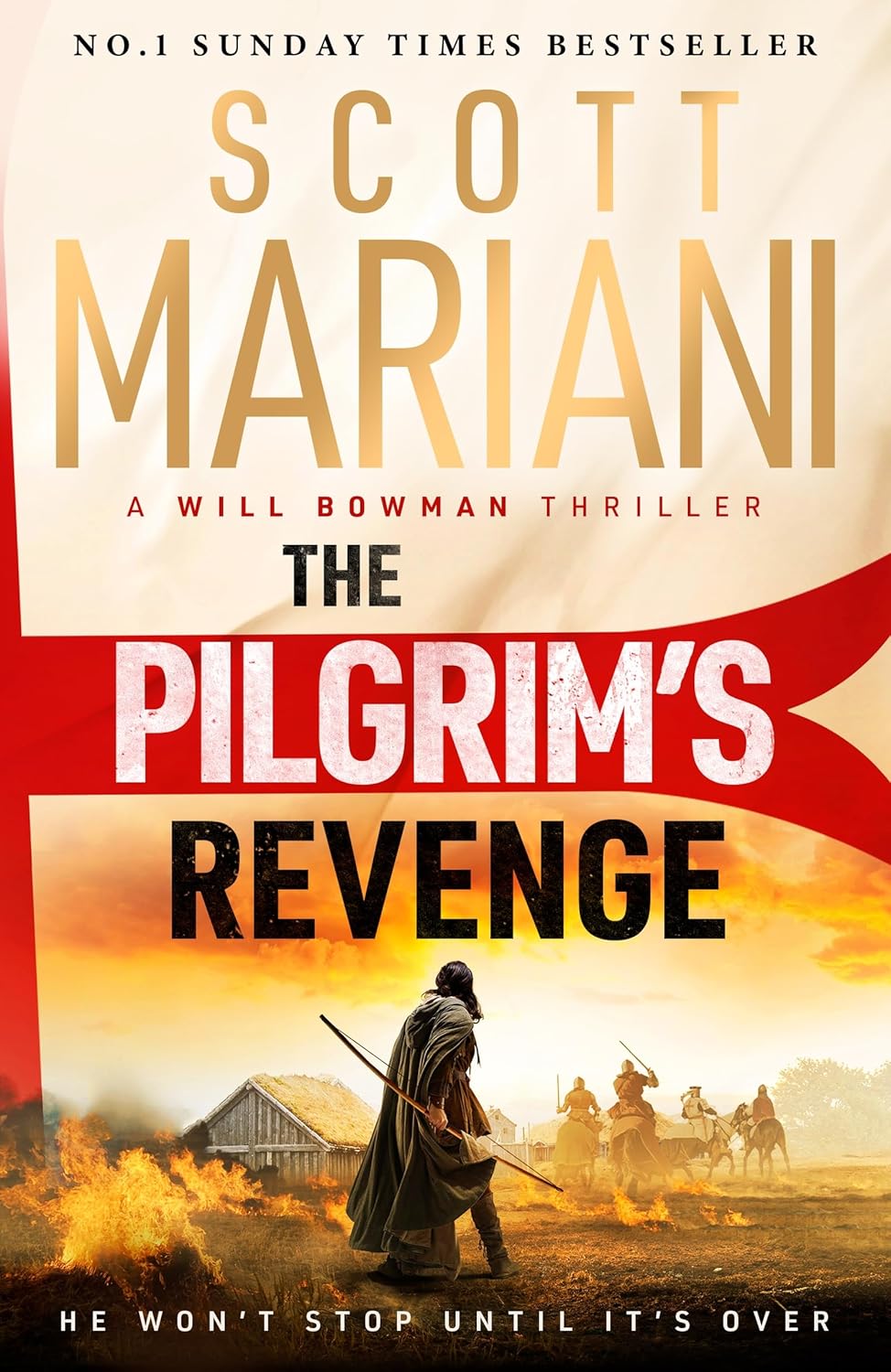
The Pilgrim’s Revenge by Scott Mariani

Publisher: Hodder & Stoughton (Trade Paperback – 26 August 2025)

Series: Will Bowman – Book One

Length: 323 pages

My Rating: 4.5 out of 5 stars

Amazon

Prepare for war in Scott Mariani’s compelling and action-packed historical thriller, The Pilgrim’s Revenge, an awesome read with some real heart to it.

Scott Mariani is a veteran author whose work I have been meaning to check out for a while.  A major thriller author, Mariani is best known for his long-running Ben Hope series which features modern spy fiction narratives with the protagonist unwinding puzzles and conspiracy theories from history.  While I haven’t had the chance to read any of Mariani’s thrillers, his 2025 release, The Pilgrim’s Revenge caught my eye, especially as it is the first time that Mariani has written a full historical fiction novel.  The first book in Mariani’s new Will Bowman series, The Pilgrim’s Revenge was an intense and captivating take on the classic medieval historical fiction adventure, featuring a great revenge twist.

Plot Synopsis:

1190 – Humble layman Will Bowman lives in the countryside with his pregnant wife, when soldiers from Richard Lionheart’s army tear through his home. Will is beaten unconscious, and awakes to find his wife murdered, his farm burnt down, and his life forever changed.

In vengeance, Will infiltrates Richard’s army to find the marauding gang, and finds himself swept along in the march of the Crusades. With the help of new allies and fuelled by his loss, Will crosses Europe with the King’s army.

Can Will avenge his wife? Or will he be swept away by the unstoppable force of Richard’s Crusade?

The Pilgrim’s Revenge was an outstanding and action-packed novel from Mariani, who dives into full historic fiction with great enthusiasm.  Setting the scene quickly, with an introduction to point-of-view protagonist Will Bowman, a minor landowner and skilled hunter, the book soon takes a dark twist when a group of pillaging soldiers kill his pregnant wife, burn his farm and leave Will for dead.  Determined to get revenge, Will takes up his bow and starts following the attackers, determining them to be pilgrims on the way to join Richard the Lionheart’s attack on the Holy Lands.

After a good initial period in England, where Will encounters friendship and additional heartbreak as part of his personal journey, the protagonist soon boards a ship towards the Holy Land.  This middle section of the novel is useful for introducing several great supporting characters and provides some compelling historical context to the events that Will is a part of.  After some exciting sequences at sea, as well as a sudden action-packed siege, the plot takes the protagonist into King Richard’s orbit in Sicily as part of some established historical events.  Mariani also gives Will the first glimpses of his goal, which ends in an exciting and tense series of encounters that add some excellent drama and risk.  Following some surprising developments, Mariani continues to explore the early parts of Richard’s crusade, including his landing in Cyprus, which provides some awesome fight sequences, before setting the protagonist up for the big confrontation of the novel.  While the development of the later part of this story isn’t too surprising, it features some fantastic and exciting moments, and plays into the established historical events really well.  Wrapping up on an excellent, if unexpectedly complete, note, Mariani leaves the story open for more adventures, which we’ll probably see very soon.

I think that the author provided a strong story for The Pilgrim’s Revenge, and this proved to be an excellent piece of historical fiction with a bit of a thriller flair to it.  Loaded with action, intriguing descriptions of the period, as well as some entertaining characters, The Pilgrim’s Revenge was a great historical adventure, which Mariani ensures stands out from the various other novels set in this period thanks to its central character and he’s unique motivations.  I particularly appreciated the author’s use of the third-person perspective through the eyes of protagonist Will Bowman, which really paints a personal and insightful look at the events of the Third Crusade.  Having a simple English farmer, who has relatively little knowledge of the land outside his local community, slowly learn about the lands of the later 12th century as part of his own personal journey, really allowed new readers with less historical knowledge to dive into the events of this book a lot easier.  At the same time, Mariani clearly puts the work in describing the historical elements of the book, whether it’s the details of the crusade, interesting depictions of real-life figures, or even complex depictions of day-to-day life and the social, technological and military element of the time.  Thanks to the exciting, action-packed plot, readers can power through The Pilgrim’s Revenge quickly, but for those who stop to savour the author’s compelling writing, there are some amazing details and compelling character moments to appreciate.

Overall, The Pilgrim’s Revenge was an outstanding and captivating novel, as Scott Mariani sets up an exciting new series.  Featuring an enjoyable, action-laden plot, The Pilgrim’s Revenge was an amazing novel to get through, especially with its compelling depictions of war and life in the 12th century.  A very exciting read, I quickly flew through The Pilgrim’s Revenge and is worth checking out especially if you enjoy intense and detailed historical reads.  I look forward to continuing the Will Bowman series going forward, and I’ve already got a copy of the sequel, The Knight’s Pledge, which I am hoping to read soon.

Amazon

The Fury of the Gods by John Gwynne

Publisher: Orbit/Little Brown Audio (Audiobook – 22 October 2024)

Series: The Bloodsworn Saga – Book Three

Length: 19 hours and 30 minutes

My Rating: 5 out of 5 stars

Amazon

John Gwynne brings his awesome Bloodsworn trilogy to a truly epic conclusion with the outstanding novel, The Fury of the Gods.

For the last few years one of the most compelling fantasy series has been the Bloodsworn Saga trilogy from acclaimed fantasy author John Gwynne.  This series is set in a Norse-inspired fantasy world shattered by warring gods and now filled with monsters, voyaging warriors and the human descendants of the gods whose power often see them collared and controlled as thralls.  The series started back in 2021 with the impressive read, The Shadow of the Gods, which introduced the main characters and set them on their quests.  I almost missed The Shadow of the Gods when it came out, but I was glad that I didn’t, as it turned out to be one of my favourite books and audiobooks of 2021.  Gwynne continued the series in a big way the next year with the excellent sequel, The Hunger of the Gods, which expertly continued the series and ended up also being a top book and audiobook of 2022.  Due to how amazing the first two entries in the trilogy proved to be, I have been eager for to the finale of the trilogy for a while, and I was so happy we got one in 2024.  One of my most anticipated books in the second half of 2024, The Fury of the Gods was everything I hoped it would be and more, and I listened to it the very first chance that I got.

The gods have returned, and all must pay the price!

After centuries of imprisonment following the last great war of the gods, the evil and crazed dragon-god Lik-Rifa has been released and now seeks to rule over the land of Vigrid.  With the cunning rat-god Rotta at her side, Lik-Rifa leads a vast army made up of her monstrous children, as well as ambitious mercenaries and Tainted warriors.  Determined to place the entire continent under her dark rule, Lik-Rifa turns her eyes to the stronghold of Snakavik and moves to destroy the last vestige of resistance against her.

However, not all is lost, as some seek to stand against Lik-Rifa.  Elvar, leader of the Battle-Grim, has killed her father and taken control of Snakavik.  Bound by fate and her oaths, Elvar must balance her new responsibilities as ruler while she plans for war against Lik-Rifa, a seemingly impossible task.  However, Elvar has done the impossible before by resurrecting Lik-Rifa’s hated brother, the wolf-god, Ulfrir, and binding him to her will.  Now her most potent weapon and the ultimate bait for Lik-Rifa, Elvar seeks to use Ulfrir to destroy the gods coming for her.  But even a giant wolf-god might not be enough to win the war, and Elvar needs even more allies to help her.

After scouring a bloody path across Vigrid, Orka Skullsplitter has rescued her son, but still seeks vengeance against Lik-Rifa’s forces.  To that end, Orka reunites with her old warband, the Bloodsworn, and sets them to join Elvar’s growing host.  Made up of deadly Tainted warriors, including their latest recruit, Varg No-Sense, the Bloodsworn have many reasons to fight against the dragon-god’s followers.  Together, the Bloodsworn, Battle-Grim and their various allies prepare to face Lik-Rifa’s army in the greatest battle the world has ever known.  But no-one is prepared for the chaos that is about to engulf Vigrid, as greater threats arise to devour all.

Gwynne continues to impress with this third and final Bloodsworn Saga novel.  The Fury of the Gods was another high-octane, character driven, dark fantasy novel, that takes the reader on a powerful adventure.  Loaded with fantastic moments and amazing action, The Fury of the Gods proved to be an outstanding conclusion to the Bloodsworn Saga, and I had such an awesome time getting through it.

The Fury of the Gods featured a spectacular and captivating narrative that starts off strong and refuses to slow down the entire way through.  Taking off immediately after The Hunger of the Gods, Gwynne effectively sets the stage for the oncoming battles as the various character arcs continue at breakneck pace.  Once again telling the story through the eyes of five distinctive protagonists (Orka, Elva, Varg, Biorr and Gudvarr), you get drawn into their intriguing personal tales as they recount the events they observe.  The first half of the book keeps these protagonists mostly separated, and their various storylines continued in similar directions to The Hunger of the Gods.  Orka is still set on her bloody revenge mission and must overcome her imprisonment by the rat-god Rotta.  Varg and the Bloodsworn journey back from their rescue mission in the neighbouring nation of Iskidan, encountering new threats along the way.  Elvar takes up the responsibility of ruling Snakavik after killing her father and finds herself leading the war against Lik-Rifa.  Finally, Biorr and Gudvarr provide intriguing insights into Lik-Rifa’s camp, as both the conflicted Biorr and the snivelling Gudvarr try to survive the rise of dragon-god in their own different ways.

Gwynne does a good amount of set-up in this first half of the book, and it was nice to see the various characters continue to breathe on their own for a bit, while also amping up the dangerous antagonists.  You once again get quickly drawn into each of the protagonists narratives, and I think that it is a testament to Gwynne’s writing that each of these storylines proved to be as entertaining and compelling as the rest.  Unlike other multiple-perspective novels I have read, I honestly loved every single character perspective in The Fury of the Gods, and I was excited to continue each of them.  Indeed, I find it hard to choose a favourite, as they were all fun while offering something a little different.  That being said, Elvar’s chapters moved the plot along the most, and Gwynne did his best character work with her in this book.

Everything leads up to a particularly epic final half, as Gwynne brings together all five point-of-view characters to the same location for the first time in the series.  With the protagonists spread out on each side of the conflict, you get a great view of the massive extended war as the god-led armies fight it out on several fronts, including in a brutal siege.  Gwynne kept the action going thick and fast here, and there are some great encounters and moments as the various characters meet on the battlefield.  Everything leads up to a massive confrontation nearly two-thirds of the way through, and there are some highly dramatic moments here, especially as the first big-death was a little unexpected.  This major fight ends in an interesting way, although details of it are spoiled a little by the awesome cover above.  This leads to some more fantastic moments, including the final battle between both sides.  The author chucks in a few more tragic moments in this final bit of the book, although I must admit that there weren’t a lot of surprises here, with many of the big reveals well telegraphed in advance.  I also thought that the various revenge arcs cluttered up the plot in a predictable manner, and I wish Gwynne had thrown a twist or two in here.  Still, everything ended on an extremely epic note, and readers who enjoyed the previous Bloodsworn Saga books will come away very satisfied and happy with the finalised character arcs.

As with the previous Bloodsworn Saga novels, Gwynne brings a distinctive style to The Fury of the Gods, which I felt greatly enhanced the story.  The blend of compelling Norse-inspired fantasy elements, great character work, and brutal action makes for awesome reading, and Gwynne presents it all in an accessible and enjoyable way.  I loved how the characters’ dialogue and inner thoughts fell in line with the book’s historical inspiration, and while this style might not be for everyone, elements of it, such as the repetition of certain thoughts and phrases, gives it a real saga feel.  As with the previous entries in the series, Gwynne makes excellent use of multiple character perspectives to tell his elaborate narrative, with his five point-of-view characters helming various chapters.  The split between these five characters worked extremely well, and you get some intriguing alternate perspectives of events that blend well as the book continues.  Gwynne makes excellent use of this split during some of the bigger combat scenes, and the use of shorter chapters when things get particularly exciting allows the reader to quickly switch amongst the action.  Talking of action, Gwynne ensures that the combat in The Fury of the Gods is as bloody and well-written as in the previous books, and his brilliant action scenes are so well described and bring you right into the midst of the fighting.

As The Fury of the Gods is the third and final book in an epic fantasy trilogy, it obviously isn’t the most ideal place for readers to dive into the overarching story, and you really should start at the beginning of the series for the full emotional impact.  However, for those who want to start with The Fury of the Gods, Gwynne does make this book somewhat accessible to new readers.  Between the detailed summary of the prior books, glossary of terms, character lists and the callbacks to the previous events during the plot, new readers can follow The Fury of the Gods easily enough and have fun.  This includes enjoying the full impact of the cool fantasy setting of Vigrid that Gwynne has lovingly set up during the three books.  The clever use of Norse-inspired elements really lends itself to the epic revenge driven narrative that Gwynne features, and the mixture of mythological, fantasy and historical elements proved to be a winning combination.  I still love seeing the various warbands using Viking war tactics against dark dangers and massive gods, and Gwynne really went all out making so many traditional Norse elements, such as weaponry, armour, ships and mentality, seem as realistic as possible.  At the same time, the book’s fantasy inclusions, such as the various monsters and Tainted, the human descendants of the gods, add so much to the story, through their vicious nature, intriguing descriptions, and underlying societal issues.  This was an overall pretty awesome setting, that Gwynne uses to full effect to tell his compelling tale.  I hope that Gwynne returns to this world at some point in the future, and it wouldn’t surprise me if some of the younger characters featured here get their own story.

In addition to The Fury of the Gods’ fantastic story and great writing, I also need to talk about the awesome characters.  Throughout the Bloodsworn Saga, Gwynne has put a lot of work into building up his various characters, and by this point in the trilogy you are highly invested in their respective stories.  As such, there aren’t a lot of new figures in this final book, and you generally know what to expect when one of the protagonists’ chapters begins.  However, it still proved awesome to see these figures in action again, and their compelling character arcs and differing personalities deeply increase the impact of the narrative.  Of the main cast, I would say that Elva steals the show the most in The Fury of the Gods.  While she has not always been the most exciting character in the series, this third and final book was where she really shined, primarily because she takes on the role of war leader against Lik-Rifa, and the increased responsibility changes her.  As such, it was outstanding to follow her storyline, and I appreciated seeing how conflicted she got at times, especially when it came to treating the Tainted in her domain.  Due to this, as well as some other badass scenes, Elva was one of the most compelling protagonists in The Fury of the Gods for me, and Gwynne provided an interesting conclusion to her narrative that I felt really worked.

The other four main characters all proved to be brilliant additions to the book, and their perspectives ensured quite an elaborate story.  The dangerous fighters, Orka and Varg, were both solid point-of-view characters in The Fury of the Gods, and I really enjoyed seeing how their respective arcs continued, especially as they were the main avenue to seeing the Bloodsworn warband.  Of all the protagonists, you were most likely to see action with Orka or Varg, and their various bloody sequences were a lot of fun.  That being said, Gwynne went a little light with the character development for these figures in this book, and while they have some moving moments (Orka comes out of her solitude to find people she cares about, while Varg finally cements his place in the Bloodsworn), I felt that Gwynne focused way too much on their respective hunts for revenge, which resulted in some of their stuff getting a little repetitive.

However, Gwynne more than overcomes any minor deficiencies with Orka and Varg through his use of the antagonistic perspective characters Biorr and Gudvarr, both of whom have joined Lik-Rifa’s cause.  Biorr proves to be a complex figure in The Fury of the Gods, and I loved how conflicted he become as his longstanding fanaticism slowly beings to wear away in the face of meeting his gods.  Gwynne did a really great job with Biorr, and his personal journey and attempted redemption made for some powerful moments.  On the other hand, we have the entertaining and despicable Gudvarr, whose chapters I always have fun with.  Gudvarr is an impressively annoying figure who has spent the last two books trying to avoid danger only to find himself getting stuck in progressively worse situations.  However, because he is naturally cowardly, weaselly and vindictive figure, you really don’t feel sorry for him, especially as every bad situation is the result of some failed ploy to gain influence or power.  While Gudvarr is a particularly contemptible figure, it honestly proves impossible not to enjoy his chapters, as they are generally the most amusing in the entire book thanks his snarky inner monologue, the deadly situations he barely escapes from, and the near certainty that he is going to come to a sticky end.  As such, I really enjoyed following Gudvarr and you can’t help but look forward to seeing what dangerous or manipulative situation he finds himself in next.

Finally, I must highlight all the awesome and impressive supporting characters that are featured in The Fury of the Gods.  Gwynne has built up an exceptional and massive cast of characters throughout the series, all of whom add something to book.  I loved seeing the many complex interactions that occurred between all these characters in The Fury of the Gods, and it was fun to see many of them meet for the first time in this final book, especially once all the perspective characters are together.  Highlights include the key members of the Battle-Grim and Bloodsworn warbands, all of whom have gone through so much throughout the trilogy.  Several of the best characters from both bands experience major tragedy in The Fury of the Gods, and it proves hard not the feel for them.  I also need to mention the main antagonists, Lik-Rifa and Rotta, two vengeful gods whose desire for revenge and control move much of the plot along.  I loved seeing the various human and Tainted characters interact with these dark gods, and Gywnne ensured they came across as a massive and dangerous threat.  Two entertaining giant ravens, a fun talking head, and so many other great characters ensured that The Fury of the Gods was a moving and deeply personal read, and I am so glad I got the opportunity to know them during the run of this trilogy.

As with the previous books in the Bloodsworn Saga, I chose to grab The Fury of the Gods on audiobook, which proved to be a particularly awesome way to enjoy this epic read.  Featuring a runtime just under 20 hours, The Fury of the Gods audiobook is a lengthy but highly exciting listening experience, and I found myself powering through this audiobook, namely because the format deeply enhances the intense story and intricate writing.  Narrator Colin Mace, who has lent his voice to the other Bloodsworn Saga books, did another brilliant job with The Fury of the Gods, and his impressive voicework leant some additional impact and gravitas to the book.  Mace perfectly portrays the Norse-inspired fantasy elements of the book, and I really loved how effectively he captured the various hard-nosed characters of the series.  I especially loved Mace’s take on the gigantic gods and other dark creatures haunting the lands, and I felt that the narrator was a key reason why I had so much fun with this audiobook.  Probably one of the best formats to enjoy The Fury of the Gods, listeners will have such an epic time with this audiobook.

With blood, fury and vengeance, the Bloodsworn Saga comes to a brilliant end that I could not get enough of.  The Fury of the Gods was another exceptional read from John Gwynne, and I was so very happy to see how this entire epic narrative concluded.  Loaded with action, excellent fantasy elements, and so many impressive characters, The Fury of the Gods was an outstanding book on its own, as well as an incredible conclusion to one of the most epic fantasy trilogies out there.  One of my favourite fantasy books of 2024, The Fury of the Gods was an excellent read that gets an easy five-star rating from me.

Amazon

The Gathering by C. J. Tudor

The Gathering Cover

Publisher: Michael Joseph (ebook – 16 April 2024)

Series: Standalone/Book One

Length: 412 pages

My Rating: 5 out of 5 stars

Amazon

Acclaimed author C. J. Tudor continues her excellent run of clever and dark thrillers with the intense, inventive, and gripping horror murder mystery, The Gathering.

C. J. Tudor is a talented and highly inventive author who has been producing some intriguing reads over the last couple of years. Starting with her 2018 debut, The Chalk Man, Tudor has consistently produced some compelling books with clever horror or psychological thriller elements. Her other books include The Hiding Place (also titled The Taking of Annie Thorne), The Other People, The Burning Girls and The Drift.  While Tudor’s intriguing novels have often stood out to me, generally because their unique plots, I unfortunately haven’t had the opportunity to read any of her prior works, which is something I really regret.  However, this has recently changed as I was lucky enough to receive a copy of Tudor’s latest book, The Gathering, an intriguing murder mystery thriller with some distinctive element behind it.

Welcome to the small town of Deadhart, Alaska, home to a small population of living humans and a colony of vampyrs.  Maligned and hunted beings throughout the world, vampyrs in America now have legal protection from unsanctioned killings, as long as they don’t harm any humans.  While members of the Colony attempt to stay away from humans, old hatreds, prejudices and grudges rear their ugly head when a young teenager is found murdered with his throat ripped out and his body drained of blood.

Detective Barbara Atkins, a specialist in vampyr killings and physiology, is sent to Deadhart to determine if a vampyr committed the murder and authorise a cull if the Colony is unwilling to hand over the perpetrator.  Arriving in the small town, Barbara finds the local inhabitants afraid and angry, looking for vengeance for the death of the boy and determined to wipe out the vampyrs for good, especially as this case bears a striking similarity to a previous killing blamed on the Colony 25 years ago.

Beginning her investigation, Barbara soon discovers that there is far more to the case then initially appears.  Much of the evidence has been staged, and no one is willing to tell her the truth about what has really going on in town.  When more deaths occurring throughout Deadhart and the town in uproar, Barbara deputises former Deadhart sheriff Jenson Tucker, whose investigation into the previous killings nearly left him for dead.

As Barbara and Jenson attempt to discover the culprit, it soon becomes clear that someone is attempting to stir up a conflict between the people of Deadhart and their vampyr neighbours.  With both settlements on the warpath, Barbara and Jenson need to dive into Deadhart’s dark history to truly understand the crime before them.  But is the killer a bloodthirsty vampyr, a psychotic human with a taste for chaos, or something far worse?

Tudor absolutely blew me away with this exceptional and highly clever read.  The Gathering was a brilliant book that expertly combined an inventive and well-established concept with a complex murder mystery.  Loaded with intriguing and damaged characters and a dark story of death, revenge and oppression, The Gathering was an extremely awesome book that I could not turn away from.

Thanks to its vampyr focused murder mystery, I knew I was going to really enjoy the plot behind The Gathering well in advance of reading it, and boy was I proven right.  Tudor does a wonderful job quickly and effectively setting the scene, and you are soon introduced to the town of Deadhart, the concept of vampyrs and the particulars of the murder.  What follows is a complex case as protagonist Barbara Atkins is forced to investigate as an outsider, as most of the town is filled with anti-vampyr sentiment.  Further complications are added when Atkins finds a range of dark secrets hidden throughout Deadhart, both in the present and in the past, which have bearing on the modern case.  At the same time, the various residents of Deadhart and the Colony react in different ways to the murder, using it to restart old grudges or bring long-festering hurts to the surface.

The Gathering’s narrative progresses at a fast and compelling pace, and you are soon treated to revelation after revelation, as well as several additional killings.  I loved the combination of a modern-day investigation and dives back into various periods of Deadhart’s history that emerged, especially as clues in the past have huge bearings on the modern story.  Tudor cleverly builds up several simultaneous mysteries and ongoing storylines, and soon the protagonist is not only trying to discover who the killer is but prevent a war between Deadhart and the Colony.  Everything leads up nicely to a pretty epic conclusion, which was well foreshadowed, with some pretty awesome revelations coming to the fore.  I loved how well several compelling character arcs came full circle during this confrontation, and the main antagonist of the plot proved to be quite sinister and well established.  Several other tertiary mysteries are also solved near the end, and Tudor ensures that many storylines are tied off in a satisfying and clever way.  There are some awesome twists at the end, including one surrounding one of the book’s most compelling characters, and this last twist in particular is likely to lead to additional books in the series.  I honestly was the hooked the entire way through this amazing story, and I really appreciate how Tudor brought it together.

I’m a huge sucker for classic for thrillers with distinctive twists to them, and The Gathering was a great example of this.  Tudor managed to pull together a complex murder mystery that not only features an isolated Alaskan town with a dark history and multiple complex and haunted characters, but also contains an elaborate vampiric society and history.  All these elements are used extremely well throughout The Gathering, and I was extremely impressed with how Tudor was able to tie everything so effectively together.  Tudor makes sure to tell multiple character-focused storylines at the same time, which allows for a more multifaceted plot that goes in some very interesting direction.  The split focus on several captivating and distinctive figures works wonders to enhance this, and Tudor uses this to showcase the rising tension in the town, and the various perspectives surrounding it.  There are some great plot lines here, and the way that they interacted and came together was very impressive.  I was particularly impressed by the chapters that kept coming back to an unnamed figure being held prisoner by a mysterious captor.  This storyline was weaved throughout the novel, and I was constantly left guessing about who the figures were and how it would work into the main story.  The reveal surrounding it was not what I was expecting, but I loved how well it set up a major twist at the end.  Other character-focused storylines also proved to be just as compelling, and the way everything came together was very impressive.  I honestly knocked out this book in just over a day, it was that damn good, and I cannot emphasise how cleverly Tudor brought everything together.

One aspect of this book that I really must highlight is just how great a setting Deadhart proved to be as it enhances the plot of The Gathering in so many excellent ways.  The well-written depictions of the frigid Alaskan wilderness and secluding storms allows Tudor to bring together a classic thriller background of an isolated, snowed-in town, where the protagonist is unable to get backup and is forced to rely on unlikely help from the local outsider.  While this always makes for a great story background, Tudor enhances it by building up a dark history around Deadhart and the Colony, that plays so well into the modern storyline.  This unique history of the town was expertly explored by Tudor, and it worked to produce a much more complicated mystery, one dotted with historical grudges and family feuds.  I particularly loved how effectively Tudor explored the growing terror infesting Deadhart as the killings continue, as both the humans and the isolated vampyrs begin to fear what is to come.  This undercurrent of fear and the resulting rage it leads to is almost palpable at times, and you can fully understand how and why the various characters act the way they do.

Another element of The Gathering that really impressed me was how well Tudor set up an alternate world where vampyrs exist.  The whole concept of the vampyrs as biological offshoots with several classic vampiric traits, including blood drinking and an aversion to sunlight, is quickly and effectively established by Tudor, who does a wonderful job of immediately bringing readers into this world.  As the book continues, the reader gets a more in-depth look at the vampyrs, their biology, their psychology, and their history, especially when it comes to their interactions with humans.  This examination of the interaction with humans is particularly key, as Tudor explores the prejudices that emerged, as humans learned to hate the entire species.  Featuring some fantastic parallels between other social rights issues, the relationship between the two species is explored in detail, and then applied to isolated Deadhart.  Watching the prejudices of the town come to light again was a great part of the book, especially as it is well contrasted by looks at the vampyr community.  As the story continues, you soon realise that there are monsters on both sides of the biological line, and figuring out who is crossing this line is a major part of the plot.  Defining vampyrs in both a scientific and social way proved to be very interesting, and I liked the attempts at humanising the figures and making them less of a horror monster.  That being said, there are some dark and scary scenes in The Gathering, especially when the vampyrs get angry.  Overall, the use of vampyrs is in The Gathering was very cleverly, and Tudor really highlighted her writing ability by setting this up so effectively.

The final element of the book I want to highlight is the amazing group of complex and damaged characters featured throughout The Gathering.  Tudor clearly has an aptitude for bringing together a compelling cast, as the reader is treated to a range of different figures, each of whom have their own compelling histories and dark pasts mottled by the troubled relationships between humans and vampyrs.  The most prominent of these is the visiting detective, Barbara Atkins, who is forced to battle mystery, local hatred, and her own unique feelings about vampyrs as she determines whether a cull is required.  Showcased as the calm and reasonable inclusion to the investigation, Barbara finds herself severely tested by the town’s prejudices and mistrust, while trying to find the truth no matter what.  Much of Barbara’s actions are guided by rationality, although there is an intriguing look back into her past, as her own experiences with small towns with vampyr colonies plays a big role in her motivations.  As such, she is an excellent central protagonist, and I loved how well she played the outsider figure coming into town.

In addition to Barbara, The Gathering also features a complex group of locals, each of whom have their own connection to Deadhart’s dark history and the hostile relationship between the town and the Colony.  Standouts include former sheriff Jenson Tucker, whose previous investigation of a vampyr death left him as the town pariah.  Tucker goes through a powerful redemption arc in The Gathering, and he proved to be an able secondary protagonist as he comes to terms with his many secrets.  Other great characters include an ancient vampyr, trapped in the form of a child, whose connection to the dark side of Deadhart becomes a driving force for their revenge.  There is also a mysterious local preacher determined to bring violence to the vampyrs, and who proves to be an intriguing counterpoint to the main protagonist Barbara.  Finally, the various members of an original Deadhart family with a long simmering hatred for all thing vampyr, adds a great amount of drama to the plot, not only because of their connections to the previous killing in town but because their well-established fear of vampyrs leads to much of The Gathering’s conflict.  These characters, and more, are very well written, and their dark attitudes, fearful actions and unique viewpoints add a great deal to this already impressive and emotionally charged novel.

C. J. Tudor deeply impressed me as The Gathering turned out to be one hell of a read. Expertly utilising her inventive and clever alternate world in conjunction with a captivating mystery, Tudor wrote a particularly epic tale in The Gathering, and I had such a lot of fun getting through it. An intense and powerful read, The Gathering is one of the best books I have read so far in 2024 and I cannot recommend it enough.

The Gathering Cover 2

Amazon

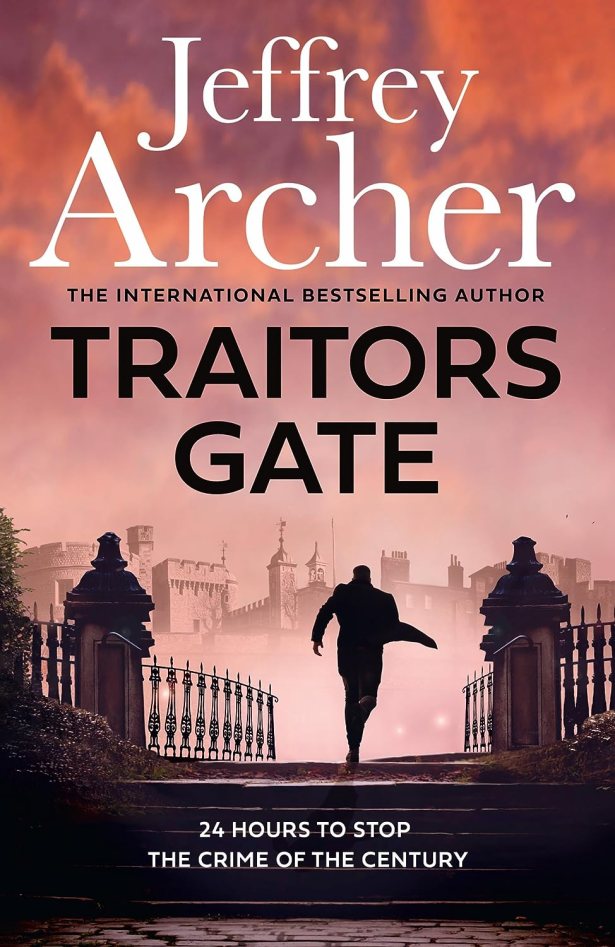
Traitors Gate by Jeffrey Archer

Traitors Gate Cover 2

Publisher: Harper Collins (ebook – 26 September 2023)

Series: William Warwick – Book Six

Length: 384 pages

My Rating: 4.5 out of 5 stars

Amazon

Bestselling author Jeffrey Archer returns with another exciting addition to his fun and compelling William Warwick series with Traitors Gate.

Jeffrey Archer is a well-known and interesting British figure: a former politician, a convicted criminal, a life peer and member of the House of Lords.  However, these days Archer is best known as a bestselling author, having written a large catalogue of novels that usually contain a historical or thriller element to them.  Some of his works include the Kane and Abel series, his well-known Clifton Chronicles and a range of standalone books like Heads You Win.  I particularly enjoy the William Warwick series, which is a fun and entertaining collection of historical thrillers.

The William Warwick novels, which originated within the fiction universe of the Clifton Chronicles series, follows the life and career of titular protagonist William Warrick, an idealistic London police officer who rises through the ranks while solving a series of dastardly crimes.  This series, which is defined by its character-driven plots, new criminal focuses for each novel, and the protagonist’s bitter rivalry with a notorious crook, are always very entertaining and feature some compelling stories.  I personally really enjoyed the first three books in the series, Nothing Ventured, Hidden in Plain Sight, and Turn a Blind Eye, although I unfortunately missed the next two books in the series.  Luckily, I was able to grab a copy of the upcoming sixth William Warwick book, Traitors Gate, which honestly might be one of the best entries in the series.

London, 1996.  There is nothing more sacred nor valuable in the entire realm than the crown Jewels of England.  Kept secure within the Tower of London, the jewels are only brought out once a year for the Queen to attend the State Opening of Parliament.  Providing security for the transfer between the Tower and the palace is one of the most important jobs done by the Metropolitan Police, and this vital duty is now overseen by Chief Superintendent William Warwick and his crack team.  Thanks to all the elaborate precautions around the transfer, the jewels are considered unstealable, but there is one audacious crook who is about to prove them wrong.

For years, William has sought to bring down notorious criminal mastermind Miles Faulkner, a gentleman thief and deadly rogue who has brought nothing but misery to William’s friends and family.  But despite the best effort of William and the men under his command, Faulkner has always managed to elude justice as he continues to hatch his despicable plots and thefts.

However, Faulkner also has a vengeful streak, and when William manages to finally get one over on his rival by recovering a stolen artwork, Faulkner decides it is time to get his final retribution against William and everyone close to him.  Pulling together a team of rogues and villains, Faulkner sets in place his boldest plan yet: steal the Crown Jewels and ruin the career of William and the other police involved in its protection.  Can William stop this plan before everything he loves is destroyed, or has Faulkner finally won their decades-long game of cat and mouse?

Archer continues to impress with his latest William Warwick book, which honestly had me hooked the entire way through.  An intriguing continuation of his fun ongoing series, Traitors Gate was a great character-driven thriller that was fun from start to finish.

Traitors Gate has a great story to it that expertly combines existing storylines from the series with an excellent and wildly entertaining new plot.  Once again focusing on protagonist William Warwick and fantastic antagonist Miles Faulkner, Archer sets up a great story that takes their rivalry to a new level.  The author does an outstanding job of setting this up, with the early parts of the novel recapping key events from the previous William Warwick novels whilst highlighting the protagonist’s current role in protecting the Crown Jewels.  The first half of Traitors Gate follows some intriguing story threads focused on several key existing characters that eventually lead to William getting one over on Faulkner in their long-running feud.  This first half of this book is very entertaining, especially as the rivalry between the protagonist and antagonist is so damn fun, and you really get drawn into the unique and continuing character stories.

The second half of the book really amps up a notch as Faulkner initiates a series of elaborate and daring revenge plots against those who wronged him, while also setting up his master heist.  These various storylines, which include a con job and a fantastically fun court sequence, work together well to tell an excellent overall story, and they play into the build-up for the big conclusion extremely well.  However, the crown jewel (pun intended) of the plot has to be the great heist scene, which was so damn tense and exciting.  Archer sets the entire thing up perfectly, and by constantly switching back and forth between various characters on both sides, you get quite the intense and captivating sequence.  This entire heist is a ton of fun from conception to implementation and leads to a compelling final part of the novel which sees the characters all desperately trying to come out on top.  The various elements of this, from the fun characters involved, the multiple elaborate steps the antagonists take, and the ticking clock the protagonists need to beat, are designed to keep the reader on their toes, and I had such a fun time seeing everything unfold.  The entire story honestly comes together extremely well, and frankly this was one of the more impressive and addictive stories that Archer has come up with yet.

Archer pulled this excellent story together in his typical style that focuses on the characters and makes great use of quick jumps between various perspectives.  I loved the multiple fantastic storylines that emerge as a result, and the author does a great job of balancing the various elements and character arcs.  Archer also proves very apt at building suspense and laying down the ground work for the key sequences for his story where the real magic happens.  Watching some of the more impressive scenes, such as the excellent entertaining court sequences (which are generally the highlight of all the William Warwick books) and the brilliant heist, are so much fun, and you really appreciate the planning and build-up he puts into it.  The author also makes excellent use of the 1990s London setting for the majority of the plot, and I have really enjoyed how the William Warwick books have moved from the 80s to the 90s, incorporating real-life events as they go.  The 1996 election plays a key role in the plot of Traitors Gate, and I loved the historical colour that Archer added to the plot, including a great in-story presentation about Colonel Blood and his own infamous Crown Jewel heist.  I also really need to highlight the way that Archer makes each of his novels inclusive and open so that new readers can easily dive into Traitors Gate.  Thanks to some quick and effective recaps and reintroductions, new readers can start the series at Traitors Gate without any issues, and indeed even after missing the last two books in the series, I was able to dive in without any pause at all.  This book comes together so well and I had a great time reading it.

I really need to highlight the fantastic and outrageous characters the plot of Traitors Gate follows.  Throughout the course of six William Warwick books, Archer has built up quite an intriguing cast of characters to follow, and he does an excellent job of breaking up the story between them.  There is a notable divide between the protagonists and the antagonists throughout the course of Traitors Gate, and watching the cast play off each other with their moves and countermoves is exceedingly fun.  Each of the protagonists, especially the police characters, are very righteous in their dealings (William goes by the nickname “Choir Boy”, for example), although they aren’t averse to breaking the rules if it gets them justice, which makes for some great scenes.  However, it’s the baddies are the ones who really make the book extremely entertaining.

Archer has done such a great job building up main antagonist Miles Faulkner throughout the course of the series, and the elaborate and spiteful rivalry he forms with William and his friends drives so much of the plot.  Faulkner honestly steals every scene he is in with his elaborate schemes, villainous persona, and sheer petty hate of the protagonists, and I have so much fun following throughout the book.  I also have a lot of fun with secondary antagonist Booth Watson QC, Faulkner’s lawyer, who seems to act for every criminal and villain in the William Warwick series.  A morally corrupt lawyer who specialises in every devious legal trick you can think of, Watson is nearly as bad as Faulkner, and he proves to be such a delightful thorn in the protagonist’s side.  Watching him legally manipulate and pontificate is so much fun, especially when he faces off against William’s straightlaced and proper father, Sir Julian Warwick, who he brings out the worst in.  These two characters are at their best when they face off against each other in the courtroom, and it so damn entertaining to see them get childish and outraged in the middle of a trail.  These characters, and more, add so much enjoyment to Traitors Gate and I look forward to seeing the epic rivalry between William and Faulkner continue in the future.

Jeffery Archer has produced a fantastic and awesome new addition to his always entertaining William Warwick series with Traitors Gate.  Featuring a fun and inventive narrative that makes great use of the bitter rivalries of Archer’s well-established cast, Traitors Gate is a highly addictive and exciting novel that has some outstanding moments to it.  Slick, hilarious and always compelling, Traitors Gate is an amazing novel that is well worth checking out.

Traitors Gate Cover

Amazon

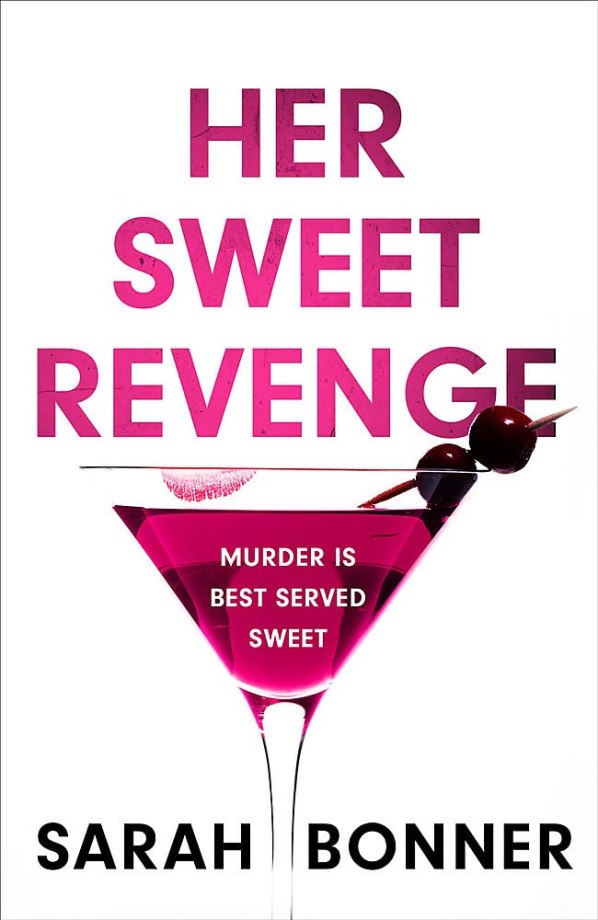
Her Sweet Revenge by Sarah Bonner

Her Sweet Revenge Cover

Publisher: Hodder & Stoughton (Trade Paperback – 6 April 2023)

Series: Standalone

Length: 408 pages

My Rating: 4.75 out of 5 stars

Amazon

Last year I was lucky enough to receive a copy of the fun and twisty thriller novel, Her Perfect Twin by Sarah Bonner, an outstanding read that got a full five-star rating from me and which ended up being one my top debuts of 2022.  I have a lot of love for Her Perfect Twin thanks to its murderous plot and brilliant surprises, and I have been eager to see how Bonner was going to follow up her first book.  As such, I was pretty excited to see that she had a second cool thriller, Her Sweet Revenge, coming out this year, and I just finished it off.  Her Sweet Revenge was another outstanding read that blends complex characters with a fantastic and complex revenge plot to create an outstanding story.

Helena is a successful fashion blogger living in Exeter and married to a seemingly perfect man.  While her controlling in-laws seem to be her biggest problem, Helena is hiding a dark secret, one that could twist her entire life around and turn everyone against her.  When a series of notes begin to arrive, threatening to expose her, Helena desperately tries to keep her secrets hidden from her husband and evil mother-in-law.  But her attempts to stop the truth leaking out have lethal consequences.

Several years later, Thea is still mourning the loss of her best friend, Helena, and is convinced that her death was no accident.  Digging into the mysterious circumstances surrounding Helena’s demise, Thea is contacted by someone who claims to have known Helena and is also convinced that her death was deliberate.  Determined to get revenge for her friend’s murder, Thea dives even further down the rabbit hole and soon begins to create a lethal plot against those she thinks is responsible.  But not everything is as it seems, and the secrets surrounding Helena’s death are far more complex and dark than anyone realises.  As she gets closer to her target, Thea will need to determine just how far she is willing to go for revenge, and who truly deserves her wrath.

This was another exceptional novel from Bonner, who really looks set to make a name for herself in the thriller genre.  Her Sweet Revenge was another brilliant standalone novel which takes the reader on a wild and dark journey through death, bad relationships and revenge, and which proves near impossible to put down.

Bonner came up with quite the intricate and complex narrative for Her Sweet Revenge, and it really worked to tell a unique and powerful story.  Told in a similar style to her first book, Her Sweet Revenge is broken up into several parts and employs a series of time jumps and different character perspectives to tell a particularly intense story.  The first part of the book, which is one of the more substantial sections of Her Sweet Revenge, is told from the point of view of Helena in 2018 and Thea in 2022, with the story jumping between them chapter to chapter.  Both character-focused storylines set the scene extremely well, with the Helena chapters showing her turbulent life and the events that led up to her death, with the Thea chapters show the characters initial investigations into her friend’s death.

These two disparate timelines complement each other extremely well, and the reader is soon drawn into each character’s distinctive emotionally charged narratives.  Both storylines are pretty powerful in different ways, with Helena’s story focusing on her abuse by her in-laws and the trauma of being blackmailed for her secrets.  Watching Helena’s slow dive into instability is both shocking and moving, and you can’t help but feel for the injustices that the character is experiencing.  These feelings are further expanded on in the Thea chapters, as you feel the pain the character is experiencing at the loss of her friend, as well as the guilt that drives her to investigate Helena’s death and find the truth.  Bonner makes great use of this first part of the book to primarily set the scene for the rest of the plot, as well as introduce the key characters to the reader, and as such there are limited big reveals or twists at this point in the plot.  However, Bonner does do a good job of whetting the reader’s anticipation for what is to come by leaving several plot points unfinished and really showcasing just how bad all the people involved are.  The jump between 2018 and 2022 works really well, and it was interesting to see events from Helena’s chapters play into Thea’s storyline, especially when you know that there are still secrets being kept from both characters.

The second act of Her Sweet Revenge is where the plot really starts to fire up.  This section of the book is primarily focused on revenge, as Thea finds out some truths about Helena’s death and starts to plot about how to get her justice.  This section is solely shown from Thea’s perspective, and Bonner uses this to full effect to really dive down into the character and show how she got so vengeful and clever.  There are a lot of great moments here, especially when it comes to the plotting for revenge, and I loved the great character focuses that emerged.  There still aren’t a lot of twists at this part of the book, as Bonner is mostly building on what was revealed in the first half of the novel, but the author does do some good set-up here that works perfectly for the rest of the story.

The final third of the book is broken up into several separate parts, each of which is told from a different perspective character.  I won’t go into too much detail, but it works really well in the context of the story, and it is very interesting to see who gets focused on and why.  Bonner really starts to layer in her trademark twists and turns here, as everything you thought you knew about several characters turns out to be false, as motivations change, people are revealed to be something completely different, and the author includes some great dives into the past to show what really happened to Helena.  All the accompanying revelations have been masterfully set up in the earlier chapters, and I loved how the twists and turns seemed to build on top of one and other, with one betrayal or lie for a character followed by a bigger lie from another.  You honestly don’t know where the story is going at times, and I was extremely hooked for the last 150 pages as I waited to see who was going to come out on top and just who was getting revenge on whom.  While there are a lot of twists and reveals, Bonner keeps the story pretty tidy, and at no point did things get too convoluted or unbelievable.  I loved fully untangling the clever web that Bonner came up with, and the final result is pretty amazing and highly satisfying, especially as the very last reveals are some of the best, with everyone who should be punished getting what they deserve.  This was such a well-written and impressively crafted thriller narrative, and I guarantee that you won’t be able to stop yourself from reading more and more, just to see how everything ends.

In addition to the meticulously crafted narrative, I really need to highlight the outstanding characters featured throughout Her Sweet Revenge, each of whom is driven to edge in various different ways.  Bonner does an excellent job of introducing and building up several great characters throughout the course of her plot, and each of them was distinctive in their own way.  A good chunk of the plot’s focus is on the initial point-of-view characters, Helena and Thea, old friends who go through quite a lot during the novel.  Bonner introduces some excellent development to both in different ways, with Helena given a crash course in personal destruction, while Thea is slowly built up as a caring friend with a scary vengeful streak.  You get very invested in both of their respective storylines, one because of how sudden and emotionally crushing it is, and the other because of the reader’s natural sense of justice and loyalty, and I felt they were great focuses for so much of the book.  The rest of the cast is interesting and distinctive as well, mainly because so many of them are just naturally bad or dislikeable characters, with Helena’s mother-in-law, Geraldine, being an extremely good example.  Everything about Geraldine is designed to aggravate the reader and make them feel extreme sympathy for Helena, and Bonner made excellent use of her throughout the plot as a compelling side character.  These complex figures and more added a ton to the impact of the narrative, and I deeply appreciated Bonner’s ability to create intriguing characters with such fantastic nasty streaks behind.

Her Sweet Revenge was another outstanding thriller from Sarah Bonner, who produces a brilliant and captivating narrative, loaded with fantastic twists and surprising turns.  The revenge focused story is deeply addictive, and you find yourself quickly getting dragged into the intense and clever book.  I had a wonderful time reading Her Sweet Revenge, and it comes very highly recommended to anyone who wants a slick and memorable thriller read.

Amazon

Kagen the Damned by Jonathan Maberry

Kagen the Damned Cover

Publisher: Macmillan Audio (Audiobook – 10 May 2022)

Series: Kagen the Damned – Book One

Length: 20 hours and 53 minutes

My Rating: 5 out of 5 stars

Amazon     Book Depository

One of my favourite unusual thriller writers, the legendary Jonathan Maberry, enters the world of fantasy in a big way with Kagen the Damned, a dark fantasy masterpiece with a brutal heart to it.

I have made no secret of the fact that I am a huge Jonathan Maberry fan.  I got into Maberry’s writings when I chanced upon a copy of his 10th Joe Ledger novel, Deep Silence, a few years ago, which introduced me to both Maberry’s unique writing and his iconic protagonist, the titular Joe Ledger, a badass action hero who saves the world from crazy and dark science creations.  I deeply enjoyed Deep Silence (it was one of my favourite books of 2018) and quickly moved onto his other Joe Ledger books, diving back to the start of the series with Patient Zero, and then working my way through the rest of the awesome entries, such as The Dragon Factory, Code Zero, Predator One and Dogs of War.  I also kept up with his latest releases, including the two entries in the follow-up Rogue Team International series, Rage (one of my favourite books and audiobooks of 2019) and Relentless (one of my favourite books and audiobooks of 2021), and his standalone novel Ink (one of my favourite books and audiobooks of 2020).  I have been very eager to see what awesome novel Maberry releases in 2022, and, luckily for me, that materialised in the form of Kagen the Damned.

Kagen the Damned is an interesting and unique read from Maberry, as it is his debut foray into the fantasy genre.  While many of his other books have had fantasy elements to them (albeit with a horror edge), this is his first pure fantasy fiction novel, as well as the start of his Kagen the Damned series.  Naturally I was rather curious about how Maberry would transition to a new genre, and while I was a tad disappointed that the Rogue Team International series isn’t getting a new entry any time soon, Kagen the Damned ended up pretty high on my most anticipated reads for 2022 list.  After a few weeks of other books getting in the way, I finally got the chance to listen to Kagen the Damned, and it turned out to be quite an impressive novel.

Kagen Vale was once one of the most trusted and revered fighters in the entire Silver Empire.  A scion of the legendary Vale family, who have served the Silver Empire for generations, Kagen was a beloved member of the royal court and so highly regarded that he was entrusted as the guardian of the Seedlings, the Empresses’ children.  That was until the fateful night when, out drinking and whoring, he was drugged and left for dead.  Awakening in a daze, Kagen found himself in the midst of hell as the capital of Silver Empire, Argentium, was besieged by a foe long thought dead, the dread nation of Hakkia, whose dark magic has once again emerged to blot out the world.

Arriving to the palace too late to save anyone, including the Seedlings, Kagen falls into despair at failing his sacred duty and can only watch in horror as the Gods of the Garden, the deities of the Silver Empire, turn their back on him and damning him for all time.  Now with everything and everyone he has ever known lost forever, Kagen the Damned wanders the ruined countryside a broken drunk, dreaming of revenge on the one man responsible for all his ills, the mysterious and feared Witch-king of Hakkia.

However, not everything is as lost as it seems, as shadowy figures across the world being to formulate their plans to repel the Witch-king’s evil.  As two young women embark on a deadly quest to awaken a sleeping, ancient god from beneath the waves, a covenant of resistance attempts to find their own magic to oppose the Witch-king with.  Determining that Kagen may bear the best chance of recovering the tools needed to succeed, they manipulate events to set him on his path to revenge.  However, what price will a doomed man truly pay to get the revenge he so desperately seeks, and will Kagen be ready for the terrible secrets he uncovers along the way?  Only the gods and the damned know for sure!

Well, it is now more apparent than ever that there is no Jonathan Maberry book I will not enjoy to the extreme.  Kagen the Damned is an incredible and very memorable novel from Maberry, who puts the ‘dark’ in dark fantasy, with this barbaric and action-packed journey into hell.  Making use of his trademark style, flair for horror and exceptional character work, Maberry pulls together a deeply addictive and extremely exciting story that I fell in love with very, very quickly.  This was another easy five star read for me, and I loved every single second I spent reading it.

Maberry once again blew me away with an outstanding and high-action narrative, and I quickly got very attached to Kagen the Damned.  This book has an extremely memorable start to it, showing the bloody fall of Argentium from the perspective of Kagen, who awakens from a drunken haze to find a vast army in his supposedly impenetrable city, destroying and killing everything they see.  This was a very compelling and brutal start the novel, and its one that I quite enjoyed, especially as you see just how dangerous the enemies are and the chaos they have unleashed.  Maberry does a great job of setting up multiple key storylines, settings and characters in this early section, and while the focus is primarily on Kagen, you get some interesting insights into other figures that will impact the rest of the book.  The entire first part of the book is very distinctive and really showcases how dark this novel is going to get, especially when it comes to the character of Kagen and the fate of the royal children.  This whole first section ends on a brilliant note, with Kagen left broken and damned, while the once great Silver Empire, which you only saw glimpses of, is destroyed and replaced with a new world order.

Following this epic start, the narrative slows down a little, as Maberry works to set up some alternate storylines and characters, while as taking the time to do some compelling and extended word building.  Set in the direct aftermath of the opening sequence, the story primarily splits into three different streams at this point, with the main one following a despondent Kagen as he traverses the former Silver Empire, lost in grief and drink.  At the same time, two separate storylines tell some great connected narratives, with one following two young women as they journey off into the unknown, while the rest focuses on the Hakkian takeover back in Argentium.  This focus on the Hakkians and their plans, as told by the Witch-king’s advisors, as well as a resistance group, is very awesome, and it was fascinating to see some impressive political intrigue going on behind the scenes as the antagonists work to consolidate power through various methods.  While the rest of the narrative continues in a straight line, the story around Kagen slowly adapts as he meets some new friends and begins his mission of revenge as planned, with some detours.

This leads up to the excellent final part of the book, which I powered through extremely quickly to see how everything ended.  All three major storylines are reaching there climax here, and they start to blend a lot more closely, especially the ones focusing on Kagen and the Hakkians.  Everything leads up to a highly anticipated confrontation that sees Kagen finally face his enemies, and it is just as epic as I was hoping.  There is a ton of action, tragedy, twists and revelations here, as many of the plot elements and storylines come full circle.  I loved the various reveals that happen here, and most have been set up really well throughout the extended course of the narrative.  I really should have seen the identity of the Witch-king coming, but it was the right choice by Maberry, which leaves some big questions open for the future.  Everyone will come away from Kagen the Damned extremely satisfied, as Maberry leaves everyone on a brilliant note, that ensures that readers will definitely come back for more.  This is an outstanding and deeply addictive narrative that is guaranteed to grab your attention early one and refuse to let go.

I really enjoyed how well Kagen the Damned was written, as Maberry brought his unique style to bear to help create an outstanding story.  In many ways, this novel proved to be essentially one of Maberry’s thrillers set in a fantasy universe.  Indeed, there were a lot of similarities in the style, the structure of the chapter, the pacing and even the use of familiar horror elements that I have previously seen and loved in the Joe Ledger books and I think this cool style worked well to tell an intense fantasy narrative.  As such, Kagen the Damned is a swift and well-structured book that pushes the story along at a swift pace, while also taking the time to build up the universe and the multitude of characters.  Maberry utilises a great range of story elements throughout this novel, and the readers are treated with a fantastic blend of action, intrigue, dark, over-the-top moments, horror, despair and humour, as the characters experience all manner of devastating trials and oppositions.

I also have a lot of love for the way that the author sets up the story and showcases the elaborate events that are occurring.  Maberry makes excellent use of a huge number of shorter, focused chapters told from a variety of viewpoints.  These briefer chapters really increase the pace and intensity of the book, and I deeply appreciated how the narrative quickly jumped across the various characters.  The interplay between the three central storylines, which are primarily anchored around Kagen, is extremely good, and I loved seeing the characters react to some of the same events or actions of their fellow cast members.  These storylines are also joined by a series of interludes that show the various impacts that the Hakkian invasion has on the wider world, especially those attuned to magic.  These interludes are usually very fascinating, and they are often used to introduce some minor supporting characters in a fun and unique way.  I loved the complexity that these interludes usually have, and the often self-contained stories are well structured and always feature a distinctive or chilling conclusion.  Maberry uses these interludes cleverly, often inserting them between major or extremely powerful chapters to help relieve tension, or to remind the reader of the wider stakes or events occurring around the main story.  I definitely enjoyed this larger look at the world that Maberry provided through them, and it was an outstanding part of Kagen the Damned’s story.

One of the major highlights of the writing in Kagen the Damned is the intricately described and fast-paced action, which is a major hallmark of Maberry’s writing style.  Maberry has always excelled at writing brutal fight scenes in a way that paints a vivid mental picture for the reader, and this was once again the case for Kagen the Damned.  The many, many action and fight sequences are brought to life in exquisite and bloody detail, and the reader is easily able to imagine every strike and slice as they happen.  This makes the action sequences really pop, and they were a particularly awesome highlight of this great book.  This focus on action and combat was really effective in this fantasy novel, and it was very cool to see Maberry bring his knowledge of combat and the accompanying writing skill to bear on large scale battles between armed and armoured fighters, while magic and gods blow stuff away around them.  There are some really great fight scenes loaded throughout this book, and I loved every skirmish, battle and duel that was featured within it.

While I did really love the action and brutal combat sequences within Kagen the Damned, I probably should add a warning about how dark and gruesome it can get in places.  Maberry’s writing style has always relied on over-the-top violence, cruelty and brutality to a degree, and this was once again the case in Kagen the Damned, which not only featured a ton of killing but also gruesome scenes of torture, corpse desecration and depictions of sexual violence.  While I think that these ultra-violent moments do work to showcase just how dark and savage the new world order is, they are often a bit hard to witness.  I will note that Maberry did take the time to discuss the emotional and social impacts of the various acts of sexual violence in the book, rather than just including them for gratuitous effect.  There are also some great scenes where the protagonist calls out and belittles several characters willing to commit such acts, before delivering his own violent justice, and I think that the author did his best to show have damaging it can be in his own way.  However, readers should probably be aware that these scenes exist, as people might find them to be a bit shocking.

I was also a major fan of the cool new fantasy universe that Maberry cooked up with Kagen the Damned, mainly because it is such a distinctive creation of the author.  Set on a giant continent made up of various nations, this is an impressive and compelling world, filled with a unique history, gods, people and settings.  The author does a great job of swiftly introducing this world and some of the key parts of its history in the early parts of the book, mainly so that readers can be a little more shocked at the early events and full appreciate the destruction and change that the Hakkian nation brings with it.  Maberry is clearly emulating some classic fantasy novels and settings throughout Kagen the Damned, and I loved seeing this bold new world that he has created.  There are some unique and cool elements featured within, and I liked how there are certain shades of grey shown when it comes to the morality and righteousness of the various factions.  Maberry also takes the time to highlight the changes that are coming to the world, thanks to the return of the Hakkian Witch-king, and the slow and steady resurgence of magic and the death of a certain pantheon of gods, are highlighted really well, both in the main story and the interlude chapters.

Perhaps one of the most distinctive features of this new world is the horror elements that Maberry worked into the plot.  I really should not have been surprised at the strong Lovecraftian elements that featured, as the author has used them strongly in some of his previous books.  However, it is even more explicit here in Kagen the Damned, with several notable Elder Gods playing key roles in the plot and even appearing in some epic scenes.  While I am not personally a fan of Lovecraft, I did quite like how Maberry utilised these elements throughout this book, and they gave parts of the book a darker and more eldritch quality that I quite enjoyed.  This, and certain discussions about other worlds and alternate realities, potentially links this series to some of Maberry’s existing works, and it wouldn’t surprise me if there were some form of crossover in the future, although it would have to be handled well.  I had a great time exploring this new fantasy world in Kagen the Damned, and I look forward to seeing what other surprises and dark gods appear in future entries of this series.

I also must highlight the incredible character work featured with Kagen the Damned, as Maberry went all out to create an excellent and unique cast of characters, whom the excellent narrative revolves around.  There are some amazing characters featured within this novel, and the author works hard to feature all of them in some impressive roles.  I had a lot of fun with the huge cast of Kagen the Damned, and there are deep and emotional figures featured here.

The most prominent and intriguing character is the titular Kagen, who takes on the moniker of Kagen the Damned.  Maberry really does a number on his central protagonist early on, as Kagen awakens from a drunken haze to find that everything he cared about and held dear had been lost while he slept.  Despite his best efforts to redeem himself in the battle that follows, he still fails miserably, and manages to escape the conquered capital in a fractured haze.  Broken, dazed and emotionally destroyed, Kagen becomes even more despondent when he sees his gods in the sky turn their back on him due to his failure to maintain his sacred oaths, which convinces him that he is damned.  Naturally, these events leave him severely emotionally damaged, and he spends most of the book trying to come to terms with his failure while also trying to find some way to get revenge on the Witch-king for all he has done.  A large amount of the book is dedicated to Kagen falling into despair, and Maberry presents a realistic depiction of a man who has lost everything and who is barely able to survive, relying heavily on drink and violence to get through his days.  While Kagen is eventually able to throw off much of this despair, it is still lurking within him, and he is often shown living in regret at his failure, even though no one else blames him as much as he does.  Kagen working through these complex feelings of failure results in much of the novels emotional strength, and Kagen serves as a moving and powerful heart for the entire novel.

While I did deeply enjoy this intriguing central character and his rough and emotional journey through this book, it is hard not to notice some similarities between Kagen and another one of Maberry’s protagonists from another series.  Kagen is in many ways a fantasy version of Joe Ledger, with similarities including a propensity for violence, extreme skill with knives (technically short-swords in Kagen’s case), and even a similar sense of humour during some of the lighter moments of the books.  There is also the same high level of mental damage brought on by extreme trauma, with both characters often seeking revenge against the people who wronged them and those they loved.  Despite these similarities, I still really appreciated Kagen as a protagonist, and I felt that some of his additional elements, such as his complex familiar bonds and strong sense of failure, did set him apart in some key ways.  No matter what, Kagen is a pretty awesome character to follow, and I loved seeing him continue to go through all his dark moments to keep going.

Aside from Kagen, there are several other amazing characters featured in this novel, all of whom have some outstanding storylines around them.  Two of the most prominent are Ryssa and Miri, who were in Argentium when the Hakkians invade.  Both junior members of the Silver Empire’s clergy, the two women initially appear to be primarily concerned with surviving the invasion.  However, it soon becomes apparent that Miri, whose knowledge of the gods and creatures of this world are far greater than they should be, has a different agenda.  Taking Ryssa with her on a big journey to a remote island nation, Miri soon engages in a plot to save the world her way.  Ryssa and Miri make up a fun combination that Maberry weaves some interesting storylines around.  While these characters aren’t explored as deeply as Kagen, you still get a great sense of who they are, particularly Ryssa, who is the primary point-of-view character between them.  Their entire storyline is covered in mystery and uncertainty as Ryssa is left in the dark about what is coming her way.  I liked the religious world-building that went into this character storyline, and there are some excellent moments in it loaded with tragedy and despair.  Even with their storyline being mostly separated from the rest of the characters, and it was a little predictable that Maberry would turn them into a lesbian couple, they had a compelling relationship and I felt that they added a lot to the narrative.

I also had a great deal of fun with the primary Hakkian characters featured in Kagen the Damned.  While they are ostensibly the antagonists of the book, Maberry takes the time to really establish the main four characters and presents them as a lot more complex and even sympathetic in places.  The main Hakkian character is their leader, the Witch-king, a character shrouded in mystery for most of the book.  A previously unknown figure, the Witch-king uses his magic to defeat the entire Silver Empire in a night and then spends the rest of the book trying to set himself up as the legitimate ruler of the land while also advancing the position of his brutal god.  I loved the way that Maberry kept the details about the Witch-king’s past and identity hidden for most of the narrative, although there is some great foreshadowing of his identity scattered throughout the novel.  The Witch-king cuts a fantastic and menacing figure for most of the book, and it was intriguing to see him present himself as a fair and loving ruler, while simultaneously exuding an aura of menace and dark magic.  It was pretty hilarious to see him terrify his key advisors for much of the book, and I loved all the hints about his true objectives.  An overall excellent central antagonist, I look forward to getting more details about him and his history in the rest of the series, especially after the revelations at the end of this book.

The other three key Hakkian characters are the Witch-king’s advisors, the chamberlain Lord Nespar, necromancer Lady Kestral, and newcomer Jakob.  Nespar and Kestral are fantastic characters who spend most of the book administrating the Witch-king’s will, running his empire, hunting for Kagen, and setting up the upcoming coronation of the Witch-king to become emperor.  While they are initially shown to be quite dangerous and evil, mainly due to their role in destroying the Silver Empire and Kestral’s disturbing magic, you eventually see that there is a lot more to them.  In particular, you see that they are actually extremely terrified of the Witch-king and are desperately obeying his will in order to survive.  You actually end up feeling a bit sympathetic for the pair of them, even after you see Kestral tear a corpse apart for a ritual, and I enjoyed the intrigue and politics they got involved with to rule the new empire.  The other character is Jakob, a Silver Empire historian who is drafted into the Witch-king service as his minister for propaganda.  Rechristened as Jakob Ravensmere, he becomes fully compliant in the Hakkian takeover and proves to be a very competent advisor and political mind while also working to rewrite history to increase the legitimacy of the Witch-king.  It was extremely fascinating to see Jakob discussing the control given by those who control history and propaganda, and I really enjoyed his role in the new empire.  It was also fun to see his rather quick slide towards the dark side as he fully embraces the Hakkian lifestyle and even starts to develop a taste for a power.  I always love seeing Maberry’s narrative unfold from the antagonist’s point of view, and this worked out extremely well again in Kagen the Damned.

The final characters I need to highlight are some of the excellent supporting cast surrounding Kagen.  Kagen has two excellent companions who work with him throughout the book, Tuke and Filia.  Tuke is a giant professional thief who recruits Kagen for a job that will help an anti-Hakkian resistance movement.  Tuke serves as the comic relief for much of the book, and I loved the outstanding chemistry he had with Kagen.  The two play off each other extremely well, and their excellent camaraderie and humour were pretty fun to see.  Not only does Tuke have some of the best lines (and the funniest curses) in the book, but he also serves as an emotional sounding board to Kagen, helping him get better after all the tragedy he experienced.  Filia is a strong-willed warrior and former associate of Kagen who finds herself dragged into the chaos around the war and Kagen’s wild adventures.  Filia’s no-nonsense attitude and sarcasm are a great counterpart to the other characters in Kagen the Damned, and I especially liked it when it combined with the humour of Kagen and Tuke.  These characters, and more, really enhanced the overall quality of this impressive narrative, and I loved seeing their powerful storylines unfold in some excellent and enjoyable ways.

There was no way that I was going to check out the new Jonathan Maberry novel in any format other than audiobook.  I have had some outstanding experiences with Maberry’s audiobooks over the years, and all of them have been deeply impressive and extremely enjoyable.  This again proved to be the case with Kagen the Damned, as I had an outstanding time having this dark epic read out to me, especially as it really helped me to absorb all the details of the characters and the impressive new universe.  With a runtime of just under 21 hours, this is a pretty lengthy audiobook to get through, but it is well worth the time investment, especially as it delivers the story in such an awesome way.

Easily the best thing about this audiobook is the outstanding narration from the very, very awesome Ray Porter.  Porter, who is one of my favourite audiobook narrators, who has previously narrated Maberry’s books, as well as contributing his voice to other works like The Apollo Murders and The Sandman audio adaptation.  As such, the moment I heard that Porter was also going to narrate Kagen the Damned, I knew that I had to get this audiobook.  Porter has an amazing ability to move the story along, and his voice is perfect for all the intense action, world-building and intrigue Maberry features in his novels.  I love the way that Porter dives into the various characters featured in the books, with every single person getting their own distinctive voice, while Porter also effortlessly emotes all their emotion to the listener.  This includes a very sinister voice that Porter saves for when the villains are talking or some incredibly dark moments are happening, and having him use variations of this voice to highlight just how brutal a moment is being, is always a great experience.  It also works well when the characters start speaking in the languages associated with the Elder Gods, and the resultant ceremonies and spells are quite spooky to hear in Porter’s voice.

Porter also did a particularly good job at inhabiting the voice of Maberry’s central protagonist, Kagen, and you get a real sense of who he is and the intense pain he is feeling throughout the book.  While the voice Porter uses from Kagen is a little like that of Joe Ledger from Maberry’s other audiobooks (a side effect of Porter ensuring that the main protagonist’s voice matches the tone he uses for basic narration), Porter does add a little more of a growl to it here, which helped to a degree.  This was another incredible performance from Porter, and I am so very glad that they got him back to narrate Maberry’s new series.  I cannot emphasise how outstanding the Kagen the Damned audiobook turned out to be (although I did feature it in my recent best audiobooks from the first half of 2022 list before I’d even finished it), and this is the absolute best way to enjoy Kagen the Damned.

Well, after rabbiting on for nearly seven pages, I think it is exceedingly obvious that I loved Kagen the Damned.  Jonathan Maberry’s latest novel was extremely compelling and deeply exciting, and I was really impressive with the author’s jump to the fantasy genre.  Featuring a clever, complex, and action-packed narrative loaded with destruction, thrilling revenge and some great, damaged characters, Kagen the Damned was an outstanding read and its one that I absolutely flew through.  Kagen the Damned is easily one of the top books of 2022 and this is a favourite new series for me.  I am extremely excited to see where the Kagen the Damned series will go in the future, and the next book, Son of the Poison Rose, is out in a few months’ time, and I cannot wait to get my hands on it.

Amazon     Book Depository

Throwback Thursday – Warhammer: Van Horstmann by Ben Counter

Van Horstmann Cover

Publisher: Black Library (Paperback – 1 February 2013)

Series: Warhammer Fantasy

Length: 415 pages

My Rating: 4.75 out of 5 stars

Amazon

Welcome back to my Throwback Thursday series, where I republish old reviews, review books I have read before or review older books I have only just had a chance to read.  For my latest Throwback Thursday I review another awesome Warhammer Fantasy novel, the compelling and unique Van Horstmann by Ben Counter.

Another week, another Warhammer tie-in novel that I must review.  I have been really diving into this franchise over the last year; to be fair, there are some incredible books there, including the two 2022 Warhammer 40,000 releases that got a full five-star rating from me, Ghazghkull Thraka: Prophet of the Waaagh! by Nate Crowley and Assassinorum: Kingmaker by Robert Rath.  Some of the best of these books are tie-ins to the now destroyed Warhammer Fantasy universe, including the novel from last week’s Throwback Thursday, Runefang by C. L. Werner.  Well, my current obsession with all things Warhammer continued again as I recently read the awesome Van Horstmann by Ben Counter.  Counter is a well-established author of Warhammer fiction, having made a ton of impressive contributions to the franchise, including his Grey Knights and Soul Drinkers series, as well as his entries in the massive Horus Heresy series.  I was really drawn to Van Horstmann when I picked it up, not only because it has a great cover (love a cover with a dragon on it), but because of its intriguing plot, which sounded extremely awesome.

In the human realm known as the Empire, magic has been feared and mistrusted through most of its history, with practitioners hunted down and burned at the stake.  However, following the Great War against Chaos, the elven mage Teclis was allowed to train various talented humans in the use of magic, establishing the eight Colleges of Magic that train scholars and battle mages to help the armies of the Empire.  Out of all the colleges that were formed, the most revered are the College of Light, whose powerful light magic can be used to push back the darkness of Chaos.

Years after its formation, a young wizard manages to find the College of Light, hidden behind a magical barrier in the Imperial capital, Altdorf.  This wandering wizard, Egrimm van Horstmann, is a talented young mage whose desire for knowledge and skill at manipulating the Wind of Hysh immediately impress his new teachers, and many believe that he will rise high in the order.  However, van Horstmann has a dark secret that burns deep within him, and knowledge, power and ambition aren’t the only reasons for his joining the Light Order.

As van Horstmann rises in the ranks of his order, it soon becomes apparent that he has a diabolical plan.  Working with dangerous forces, including daemons, cursed items and even the Chaos god Tzeentch, van Horstmann begins to manipulate his order, the other colleges, and even the emperor to get what he wants.  But the closer he gets to achieving the goal, the more enemies he makes, and soon factions within the Light Order and the greater Empire begin to move against him.  Can van Horstmann succeed in his mission before his dark purpose is discovered, or will his dastardly designs unleash the great and uncontrollable power hidden at the very heart of the College of Light?

This was an impressive and deeply captivating Warhammer Fantasy novel, and I absolutely loved the elaborate and clever narrative that Counter came up with.  Focusing on an intriguing villainous figure and crafting an addictive story around him that also explores key aspects of the franchise’s lore, Van Horstmann was an outstanding novel, and it was probably the best Warhammer fantasy novel I have read so far.

Counter has come up with an excellent and impressive narrative for Van Horstmann, which, as the name suggests, is completely focused on the character of Egrimm van Horstmann.  For those who don’t know, van Horstmann was a minor special character for the Chaos army in some of the earlier editions of the games, but he didn’t have that much background or lore surrounding him.  I personally knew him due to his name being associated with one of my favourite magical items available to Empire armies in the later editions, Van Horstmann’s Speculum, which is a very fun surprise for an unwary foe (I have fond memories of using Van Horstmann’s Speculum in a game to switch stats between my Master Engineer and my brother’s Manfred von Carstein in a duel.  The look on his face as his ultimate general was suddenly weaker than my minor hero was just hilarious).  However, Counter manages to take the short background summary of the character and uses it as the basis for this novel, expanding on the tale of van Horstmann and showing how and why he infiltrated the Light Order and ended up betraying them, which results in an epic story.

Van Horstmann has a bit of a slow start to it, as Counter takes the time to set up key parts of the story, including an intriguing prelude that examines the first wizards of the Empire and their darkest secret.  From there, the story introduces the main character, van Horstmann, and shows his entry into the Light Order and his start as a student.  The story gets quite interesting after this, especially as you see van Horstmann involved in a demonic exorcism, which quickly highlights just how ruthless and cunning he can be.  The story picks up pace from there as you begin to witness van Horstmann’s inevitable rise to power as the full scope of his desire and despicable nature become fully apparent.  Most of the middle of the book showcases the characters careful and evil manipulations, as he manages to fool everyone and become more and more powerful through deals with daemons and the Chaos gods.  There are some brilliant scenes here as you witness the full scope of his plans, from a great battle scene against the skaven, to organising several duels between the various magical factions, all in the name of gaining power.  Counter really does a good job of showcasing this viewpoint through multiple perspectives, and while much of the focus is on the gloating van Horstmann, you also see how his actions impact several supporting characters, many of whom start to get suspicious.  The entire narrative has a great dark fantasy edge to it, that occasionally borders on horror (especially when the character interacts with some of the daemons and their dark gods), and I found myself really getting drawn into this story once everything had been set up.

This leads up to the epic conclusion that sees van Horstmann’s master plan enter its final phase while his enemies begin to realise his evil nature.  This ended up being an extremely impressive conclusion, and it really becomes apparent just how much stuff Counter had set up in the first two-thirds of the book.  Everything comes together here, as compelling story elements such as van Horstmann’s long-term plans, his troubled past, all his terrible actions while part of the order, the revelations about the foundation of the Light Order, several great secondary character arcs, and the attempted investigation by van Horstmann’s enemies, all pay off.  I really appreciated the brilliant and dark way that these storylines worked out, and there are some great revelations, especially around van Horstmann’s motivations and the full scope of his careful actions.  I loved the deep and very personal reasons behind the events, especially as van Horstmann has some extremely fantastic revenge planned, which was pretty epic to behold.  The entire novel ends on a brilliant note that sets up the character for his future appearances as a special character in the tabletop game, while also stabbing home that van Horstmann isn’t the absolute master manipulator that he thought it was.  This clever conclusion was the perfect ending to this gripping plot about a conniving and dangerously intelligent villain, and it was so much fun to see how everything ended.  These final pages and the outstanding conclusion they contained, definitely increased the overall awesomeness of the entire narrative, and seeing just how well every great twist and turn was set up is incredibly awesome.

This ended up being an excellent addition to the overall Warhammer Fantasy canon, and Counter did a wonderful job of working this elaborate and impressive story into the wider universe.  As I mentioned above, Van Horstmann adapted basic character notes from an older game book, and I felt that Counter expanded on all these details extremely well, working them into the wider history of the Empire.  There are some great explorations of several key factions throughout this novel, particularly the Empire and some of the forces of Chaos, and the reader really gets an impressive view of the iconic setting of Altdorf, where much of the narrative takes place.  However, the most detailed and fascinating part of Counter’s dive into the Warhammer Fantasy world revolves around the exploration of the Colleges of Magic in the Empire.  Without a doubt, Van Horstmann contains some of the best explanations of how human wizards perceive magic that you are every likely to see in a Warhammer novel and Counter spends a ton of time examining this.  While some of the explorations surrounding magic do get a bit overly metaphysical for their own good, they are always pretty compelling to see, and I loved how there is a fun focus on the various different orders of magic, especially Light and Gold magic, as there are some awesome fights between these groups.  However, it is the Light Order that gets the most attention in this novel, as the main character is nominally a member of this group.  There is so much detail put into showcasing the Light Order’s elaborate, hidden headquarters, as well as how their particular brand of magic works, and you come away with a pretty intense understanding of this, which I deeply enjoyed.

Now, due to the sheer level of intriguing detail and Warhammer Fantasy lore contained within this novel, Van Horstmann is a book best enjoyed by those already a fan of the franchise.  Counter dives into some fantastic and occasionally obscure parts of the lore, and established Warhammer fans will really appreciate the clever touches and revelations featured within.  That being said, Counter also spends time ensuring that new readers will be able to follow the narrative rather easily, and a lot of the book’s exposition is spent establishing the history, magical elements, and some of the key factions for new readers.  As such, pretty much anyone who loves a good dark fantasy story can easily enjoy Van Horstmann as a novel, and I am sure that most people will have an excellent time with its very clever and intense narrative.  However, Warhammer fans are going to get the most out of it, and this probably isn’t the best first book for those readers interested in exploring the Warhammer Fantasy universe (the Gotrek and Felix novels, such as Trollslayer, would be my recommendation).  Nevertheless, this is an exceptional Warhammer Fantasy read that will appeal to a wide cadre of readers.

There is some great character work featured in Van Horstmann, which naturally focuses primarily on the titular character.  Counter really gets into the mind of van Horstmann in this book, and while most of the time you only see the supremely confident wizard who delights in manipulating men, wizards and daemons, there is a lot more under the surface.  This includes a tragic backstory that serves as the motivation that drives him to do all the terrible things he wants to do here.  While it would be rather easy to hate this character, especially with his inherent arrogance, I found myself getting drawn into his multiple plots and machinations, and you end up rooting for him just to see how all his plans unfold.  Despite that, it is also quite fun to see misfortune strike him, especially the fun twist at the very end of the book where his overconfidence comes back to bite him in a big way.  I had an outstanding time following van Horstmann in this fantastic novel and he proved to be a very fun central figure in this book.

Due to the massive focus on van Horstmann, Counter doesn’t spend a lot of time building up a lot of the side characters.  Despite that, there are a few interesting supporting characters and storylines that add a fair bit to the narrative and which have some compelling connections to the main plot.  Various members of the Light Order are featured throughout, and I liked the way that Counter portrayed them as mostly being quite full of themselves and unable to consider treachery from within their order.  Watching them get taken down a massive peg by van Horstmann is a little satisfying at times, especially when their fates are well deserved, although there are a few tragedies thrown in at the same time.  Other great characters include the manipulative Skull of Katam, a sentient magical skull who guides van Horstmann for its own reasons, and who served as an untrustworthy accomplice for a good part of the book.  Finally, there is also the interesting character of Witch Hunter Argenos, a rabid religious zealot who hunts agents of dark magic and the Chaos gods.  Argenos serves as a good counterpoint to many of the more magical characters, and his deep drive and desire for religious justice, helps to turn him into an excellent threat to van Horstmann.  These side characters, and more, have some interesting moments in the book, and I liked their excellent contributions that combined with Van Horstmann’s main tale in some fantastic ways.

Containing an addictive, powerful and brilliant story, Van Horstmann by Ben Counter is an incredible and awesome Warhammer Fantasy novel that follows a fantastic villain as he dives deep into the world of magic.  I loved the elaborate and captivating tale of revenge and dark power that Counter came up with here, and readers will swiftly get drawn into this amazing novel.  An excellent in the Warhammer Fantasy canon, Van Horstmann is an exceptional read that comes very highly recommended.

Amazon

Star Wars: The High Republic: Tempest Runner written by Cavan Scott and performed by a full cast

Star Wars - Tempest Runner Cover

Publisher: Random House Audio (Audio Drama – 31 August 2021)

Series: Star Wars – The High Republic

Script: Cavan Scott

Cast: Jessica Almasy, Dan Bittner, Orlagh Cassidy, Sullivan Jones, January LaVoy, Kathleen McInerney, Tara Sands, Vikas Adam, Jonathan Davis, Neil Hellegers, Saskia Maarleveld, Soneela Nankani, Marc Thompson and Shannon Tyo

Length: 6 hours and 5 minutes

My Rating: 4.5 out of 5 stars

Amazon

The epic High Republic era of Star Wars fiction continues in Tempest Runner, the brilliant and captivating full-cast audio drama written by impressive author Cavan Scott.

Ever since its beginnings in early 2021, I have been having a lot of fun with the cool new focus of the Star Wars extended universe known as The High Republic.  Set hundreds of years before the Skywalker Saga, The High Republic has featured several impressive novels, comics and other media releases that tell a grim story of destruction and strife in the golden age of the Republic and the Jedi.  One of more interesting pieces of this fiction from late 2021 was this fantastic full-cast audio drama, Tempest Runner, which focused on one of this era’s best villains, the Nihil Tempest Runner, Lourna Dee.  This awesome audio drama was authored by the exceedingly talented Cavan Scott, who not only wrote my favourite High Republic book so far, The Rising Storm, but also a great previous Star Wars audio drama, Dooku: Jedi Lost.

Synopsis:

The Nihil storm has raged through the galaxy, leaving chaos and grief in its wake. Few of its raiders are as vicious as the Tempest Runner Lourna Dee. She stays one step ahead of the Jedi Order at the helm of a vessel named after one of the deadliest monsters in the galaxy: the Lourna Dee. But no one can outrun the defenders of the High Republic forever.

After the defeat of her crew, Lourna falls into the hands of the Jedi – but not before she hides her identity, becoming just another Nihil convict. Her captors fail to understand the beast they have cornered. Just like every fool she’s ever buried, their first mistake was keeping her alive.

Lourna is determined to make underestimating her their last.

Locked onto a Republic correctional ship, she’s dragged across the galaxy to repair the very damage she and her fellow Tempest Runners inflicted on it. But as Lourna plans her glorious escape, she makes alliances that grow dangerously close to friendships. Outside the Nihil – separated from her infamous ship, her terrifying arsenal, and her feared name – Lourna must carve her own path. But will it lead to redemption? Or will she emerge as a deadlier threat than ever before?

Tempest Runner ended up being an entertaining and captivating piece of Star Wars fiction.  Featuring another excellent story from Scott that not only dives into the past of great character Lourna Dee but continues the story set up in several of the past High Republic novels.  Perfectly told using a full cast of narrators, this was an outstanding audio drama that I had a wonderful time listening to.

It was clear that Scott was on quite a roll last year when it came to fantastic storytelling.  Tempest Runner is set after the events of The Rising Storm and continues several interesting storylines from this novel, as well as other pieces of High Republic fiction such as Light of the Jedi and Out of the Shadows.  Starting off with Lourna’s capture by the Jedi, the story shows her successfully hide her identity and get imprisoned aboard a Republic prison ship doing hard labour as punishment.  Trapped with some of the worst criminals in the galaxy, as well as former Nihil members who utilise her identity for her own good, Lourna is forced to survive while also coming to terms with who she is, what drives her and what she wants from the future, especially when she connects with one of the prison guards.  However, an enemy from her past has found out where she is and is determined to kill her no matter what.  This leads to several intense and brutal confrontations as Lourna is forced to once again bring out her inner monster to save herself and defeat her opponents, while also setting her path for future endeavours in the High Republic universe.

Tempest Runner’s narrative ended up being pretty intense, and I loved the cool and intriguing plot, especially as there are several fun twists and reveals, including that great one towards the end.  While this is a mostly self-contained piece of Star Wars fiction, there are multiple intriguing connections to other High Republic novels and comics.  I particularly loved how several of the best villains from the main two novels were used here, and it also sets up Lourna’s storyline for the next book in the series.  Scott employs an interesting and roundabout way of telling Tempest Runner’s story, utilising a series of flashbacks and interludes to continue the main plot which occasionally helps compensate for the lack of descriptive words that is characteristic of the audio drama format.  I really need to highlight the book’s great opening section in which the capture of the protagonist is recounted in compelling detail to the novel’s main antagonist, with the storyteller and his audience providing questions and commentary during the dramatisation of the events being discussed to provide context.  The storyline has a great blend of elements, and I loved the fantastic prison story, the intrigue of the Nihil, the fantastic revenge plot surrounding the antagonist, as well as the massive amount of character development that occurs around the main character.

Scott really went out of his way to explore the character of Lourna Dee in Tempest Runner.  Despite being one of the most distinctive and entertaining villains in the High Republic canon, very little was known about Lourna Dee before now, except that she is an unassailable badass who is even capable of hanging with a Jedi in a fight.  Tempest Runner, however, dives deep into the heart of this cool character, and I liked the complex and intriguing development and history around her.  Most of the story is dedicated to the modern Lourna, who, after being captured, attempts to turn over a new leaf in the prison system to survive.  This provides some interesting insights into her mind and motivations, especially as she is not as mindless a killer as some of the previous books would lead you to believe.  Instead, she is quite a complex and tragic figure, something that is made clear when you see the various flashbacks to her past that Scott comes up with.  These flashbacks tell a captivating tale of betrayal and heartbreak, showcasing what led an innocent girl to a life of hardship and crime.  This backstory is extremely fascinating, with some powerful moments of love, loss, and revenge.  In addition, the story also dives into how she became a member of the Nihil and rose in its ranks.  This interesting background weaved into the main plot extremely well, and I think that Scott showcased the character’s past perfectly, ensuring that it explains her current mentality and motivations.  I am deeply happy that we finally got to see this character’s backstory, and it really did not disappoint.

While most of Tempest Runner’s focus was on Lourna Dee, a couple of other characters really stood out to me.  This included Tasia, the former Nihil member who blackmails Lourna to help her survive in prison.  Tasia is a fun secondary antagonist, and it was very entertaining to see her try and make a power play on Lourna once she was no longer in control.  I also loved seeing more of Pan Eyta, a former Nihil Tempest Runner who was betrayed by Lourna in The Rising Storm.  Pan, who is dying thanks Lourna, goes on a big revenge mission here and ends up being the major antagonist of this novel.  I personally thought this was an amazing conclusion to his compelling character arc established in the previous novels and it was great to see him and Lourna have several aggressive and deeply personal confrontations throughout Tempest Runner.  I also enjoyed seeing a young version of High Republic arch-antagonist Marchion Ro, before he took control of the Nihil, as well as a glimpse of his often-discussed father Asgar Ro.  Several other supporting characters in this novel were also pretty fun, and I had a great time seeing some of their storylines unfold.

While I had to highlight Tempest Runner’s cool narrative and great characters, you can’t talk about this amazing piece of Star Wars fiction without mentioning the awesome audio drama format.  I have a lot of love for Star Wars audiobooks and audio dramas (such as Doctor Aphra), and this was a particularly good one.  The team behind this epic audio drama did an amazing job of combining Scott’s great story with a team of brilliant voice actors, as well as the typical Star Wars sound effects and music.  With a run time of just over six hours, this is a very easy audio drama to quickly power through, and I think I managed it in just over a day myself.  While some people unfamiliar with the format might have some issues regarding the full reliance on descriptive dialogue and sound effects rather than expositional text to describe action, I thought that Tempest Runner was adapted extremely well and I had an absolute blast getting through it.

I must highlight the exceptional cast of voice actors that were featured in this awesome audio drama, as the team behind it pulled together a great group of narrators, including several actors well known for their work bringing Star Wars audiobooks to life.  The most prominent actor in this group is probably Jessica Almasy, who voiced main character Lourna Dee.  Almasy brings a great deal of complexity to the role and I loved the semi-French accent she utilised throughout Tempest Runner, which was reminiscent of how Twi’lek characters speak in shows like Star Wars: Rebels.  I thought that Almasy did a brilliant job of highlighting Lourna’s true feelings and personality in this audio drama, and it was great to see her transform the character in several intense, emotional scenes.  This was some brilliant voice work and it was an amazing highlight of this exceptional production.

I also deeply appreciated the great work that the other actors contributed to Tempest Runner and its characters.  While there were a few new narrators here whose work I enjoyed, the ones that impressed me the most were established narrators from other Star Wars audiobooks.  This includes January LaVoy, who voiced the character of Tasia, providing her with some much-needed depth and spite.  LaVoy, who I loved in works such as Star Wars: Victory’s Price (one of my favourite books and audiobooks of 2021) and Star Trek: Discovery: Die Standing, was just great here and I really appreciated the characterisation her voice added to Tasia.  Marc Thompson, who has previously narrated all the main High Republic novels, as well as the Thrawn Ascendancy books (Chaos Rising, Greater Good and Lesser Evil), was another standout narrator, especially as he voiced three characters, including antagonists Pan Eyta and Marchion Ro.  Having this cool continuation from Light of the Jedi and The Rising Storm for these great villains helped me enjoy their appearances in Tempest Runner a lot more, especially as Thompson has come up with some extremely sinister and fitting voices for them.  I also had a lot of fun with Jonathan Davis (who previously narrated Master & Apprentice, Lords of the Sith and Maul: Lockdown), who voiced two characters here.  I particularly enjoyed his work on the mysterious Asgar Ro, and the calm and wise tone he utilises for him (which is reminiscent of another major Star Wars character), works perfectly to give him some great depth.  An overall exceptional collection of narrators, I had an amazing time listening to this audio drama.

With a great cast, a brilliant story and a great focus on an incredible central character, Tempest Runner was an outstanding addition to the High Republic range of Star Wars fiction.  The always impressive Cavan Scott came up with an awesome narrative for Tempest Runner and I loved learning more about fun character Lourna Dee.  A must-listen for all fans of The High Republic, you really won’t regret checking out Tempest Runner.

Amazon

Relentless by Jonathan Maberry

Relentless Cover

Publisher: Macmillan Audio (Audiobook – 13 July 2021)

Series: Rogue Team International – Book Two / Joe Ledger – Book 12

Length: 18 hours and 29 minutes

My rating: 5 out of 5 stars

Amazon     Book Depository

One of my absolute favourite series returns with an absolute bang as Jonathan Maberry produces another incredible, intense and thrilling Joe Ledger novel with Relentless, the second novel in the Rogue Team International series.

Readers of my blog will be well aware of how much I love Jonathan Maberry’s Joe Ledger series.  This science fiction thriller series, which follows the titular protagonist and his team of elite soldiers as they fight all manner of crazy scientific and supernatural threats, is so much fun and is one of my favourite series.  After reading one of these fantastic books a few years ago, I sat down and listened to the entire series, from Patient Zero, all the way to the final entry, Deep Silence.  It also led me to some of Maberry’s other novels, including last year’s excellent horror novel, Ink, which was one of my favourite books and audiobooks of 2020.  The author also started the Rogue Team International series in 2019 as a sequel series to the original Joe Ledger books, featuring the same characters and universe.  The first entry in this sequel series, Rage, got a five-star rating from me and was one of the best books and audiobooks of 2019.  Due to Rage’s epic conclusion, as well as how much I enjoy Maberry’s writing, I have been eagerly awaiting Relentless for some time now and I ended up being blown away by how awesome it was.

During Rogue Team International’s (RTI) first mission, Joe Ledger and his team faced off against the dangerous pairing of criminal mastermind Kuga and his fearsome enforcer Rafael Santoro, barely managing to stop their insidious, world-changing plot.  However, their victory came at a terrible price, as Santoro delivered fiery vengeance on his foe by killing every member of Ledger’s family in a revenge attack at Christmas.  Santoro and Kuga hoped that their destructive blow would mentally destroy their hated enemy forever; instead, it unleashed their worst nightmare.

After returning to the field, Ledger leads an RTI team to an advanced laboratory where terrible genetic, biological and cybernetic experiments are being performed.  While the mission begins as a textbook RTI operation, everything changes when Ledger comes across a room full of deformed lab subjects and their cruel tormentors.  With his already fragile psyche pushed to the limit by the death of his family, Ledger finally snaps and lets something dark and dangerous from deep within take control.  With blood and bodies trailing in his wake, Ledger abandons his team and goes truly rogue.

Accompanied only by his loyal combat dog, Ghost, Ledger rampages across Europe, killing and destroying anything related to Kuga’s operation and questioning anyone who knows where he and Santoro are.  Even more concerning for the villains, Ledger is also beginning to get close to their next major operation.  Utilising cutting edge technology, Kuga’s group have developed biologically enhanced super soldiers, equipped with some of the most destructive weapons available.  Their next plan will unleash a devastating attack within America that will change the political and social landscape for generations to come.  However, not even their most advanced troops may be enough to stop the dark thing that Ledger has become, and Kuga is soon forced to make a Faustian deal with someone, or something, whose evil eclipses Ledger’s insanity.  Can Ledger defeat his hated foes and save his own soul at the same time, or will he finally be overwhelmed by his own inner darkness?

Once again Maberry shows why he is one of the most exciting and impressive thriller writers out there as Relentless was another epic and wildly captivating novel.  This latest Rogue Team International novel contains a complex and thrilling narrative that sets its already complex main character into a horrific quest for vengeance and redemption.  Throw in an incredible amount of action, a very clever and well-written story, and some memorable characters, and you have an outstanding novel that gets a full five-star rating from me.

In Relentless, Maberry produces an extremely intense and fast-paced novel that is both character driven and loaded with some of the best action you will ever read.  Following up from the dramatic conclusion of Rage, Relentless is one of the darker and more inventive books in the Joe Ledger franchise, presenting the reader with a brutal revenge story as the protagonist puts the rogue in Rogue Team International to kill anyone associated with his foes.  Maberry once again makes great use of the unique writing style that has been such a hallmark of this series, with the novel made up of shorter chapters told from a vast number of different perspectives, including several interludes set in the past, to produce a more complex and multifaceted tale and showcase the elaborate plans of the antagonists.

However, the author also tries something new in this book, with a noticeable change of focus away from the protagonist for a good portion of the early novel to highlight some major character developments.  This results in a bit less humour during the first part of the book, but this is more than made up for with a darker and more powerful storyline.  The story focus does eventually revert to the series’ usual form about halfway through the novel, just in time for the protagonist to find himself with information about a complex and intriguing evil plot that only he can stop.  This leads to a pretty epic conclusion with some fun twists and several major moments of worry and surprise, especially as you get some massive concurrent scenes as Ledger and his allies battle the enemy in several destructive and dangerous battles.  The action throughout Relentless is typical Maberry, with some very detailed and graphic depictions of the techniques and damage done, and it is near impossible not to get sucked in the combat as the powerful scenes unfold.  Readers should be warned that parts of this novel can get a little dark and gruesome as Maberry pulls no punches, but it is very much worth sticking through the blood and guts to see the captivating narrative unfold.  I quickly became sucked into his awesome story, and I loved every second of it, managing to finish it off in extremely short order.  It looks like Maberry has some intriguing plans for the future of this series, and I for one am extremely excited for that.

Like most of the Joe Ledger/Rogue Team International novels, Maberry has made Relentless extremely accessible to new readers.  While I personally would suggest reading Rage first, due to the tragic ending that plays into the events of this novel, people unfamiliar with the preceding books can jump in here and still have an excellent time reading this book.  Maberry does an amazing job recapping all the key events of the prior novels, including character bios, descriptions of technology and summaries of various cases.  As a result, the reader is never left in the dark about what is happening and who is being talked about, although the certain significance of some characters or revelations might be slightly tempered until the protagonist describes them.  One thing I would note after having read all the Joe Ledger books in the last couple of years is that Maberry tends to reuse the same phrases and terms when it comes to describing certain characters or events.  While this was fine the first few times, by book 12 in the overall series, it is very noticeable and slightly detrimental to the flow of the story.  However, this was an overall incredible novel with more than enough unique features to make it really stand out from the rest of the books in the series.

One of the best parts of any of Maberry’s novels are the complex and likeable characters featured within them.  Over the years Maberry has produced some truly great and memorable characters for the Joe Ledger novels, and it was great to see so many of them return for Relentless, especially as most of them go through some major development.  The most prominent of these is titular protagonist Joe Ledger, who has one of his most significant roles here in Relentless.  Ledger has always been an extremely troubled and damaged protagonist, which has grown more and more apparent as the series progressed as he is forced to deal with additional traumas.  However, this is the book where he truly snaps, as he is dealing with the brutal death of every member of his family.  While Ledger starts the book mostly fine (by his already low standards), it doesn’t take him long to lose the plot.  Fans of this series will understand Ledger’s mind is already broken up into three distinct personalities, the Cop, the Modern Man, and the Killer, which together form his mostly balanced psyche.  However, the events of Rage have resulted in a fourth personality, the Darkness, which subverts Ledger’s mind and leads him to commit acts of terrible violence and destruction while massively freaking everyone out.  The Darkness completely takes over Ledger, ensuring that you don’t see into his head for a good portion of the novel, which is an interesting change considering that Ledger is the only character in the series with a first-person perspective.  While this really changes the tone of this novel, it perfectly highlights just how far-gone Ledger is.  Even when he regains control of his mind and becomes a prominent point-of-view character again, the Darkness is still there, and he has to fight hard to control it.  All this makes for quite a fantastic and deep read, and it was captivating to see the protagonist deal with the traumatic events of a previous novel in such a dramatic and destructive manner.  Maberry really amps up how dangerous Ledger can be in this novel, and there are some truly disturbing and concerning scenes when the Darkness takes over.  It will be really interesting to see how Ledger comes back from the events of this book in the future, and I am extremely curious to see what happens to the character next.

In addition to the outstanding central protagonist, Maberry fills up Relentless with great supporting characters, most of whom have been introduced in previous Joe Ledger novels.  Maberry really likes a wide spread of characters throughout his novels, resulting in an interesting group of perspectives as the various supporting characters and minor inclusions experience the events of the narrative.  It was great to see many long-running side characters return in Relentless, especially as they are severely impacted by Ledger’s walk on the dark side.  While a couple of usually major characters only have a couple of scenes in this book, the usual DMS/RTI mainstays are all there.  Ledger’s squad mates, Top and Bunny, have a particularly intriguing storyline in this novel, which sees them go undercover to infiltrate Kuga’s operation while being conflicted about Ledger’s actions.  It was also great to see more of mysterious RTI leader, Mr Church, the guy who totally isn’t some sort of avenging angel or benevolent god (those are my two top guesses at this point).  While Church doesn’t get as much focus as he has in previous books, he is still a major presence, and there some more hints at his past with one of the antagonists.  There are also a couple of fun new unique characters introduced who Ledger meets up with as he pursues his quest for vengeance.  Several of them are cool, and I look forward to seeing if they show up again.

Out of all the many supporting characters, there are two that I particularly want to focus on as they had some very strong arcs within this book.  The first is Alexander Chismer, better known as Toys, the former villain who is seeking redemption and is now a close friend of Ledger’s partner Junie.  Toys goes back into the field to find Ledger, even though they really dislike each other.  Toys is a pretty smooth operator, and it was fun to see him go back to his criminal roots, even though it was for a good cause.  When he eventually catches up to Ledger, their meeting doesn’t go amazingly well (someone gets shot), but they do end up having a rather fantastic and entertaining heart-to-heart.  The comparison between their respective paths to redemption is rather deep and fascinating, and it was very intriguing to finally see these two characters interact in an extended way.  The other character I absolutely must talk about is Ledger’s dog, Ghost, the bestest boy in all of fiction.  Ghost has a pretty rough time in this novel, as he is Ledger’s only companion during his master’s dark spells and ends up getting into some very violent confrontations.  Maberry is extremely good at writing canine characters, and most readers will find it next to impossible not to fall in love with this savage, sassy cuddle monster.  Due to the many bad circumstances that Ledger and Ghost finds themselves in, I found myself feeling a lot of worry for Ghost, especially as Ledger seemed crazy enough to hurt him at times.  The fact that I felt strongly anxious for a fictional dog should tell you all you need to know about Maberry’s ability to write likeable characters, and readers should be warned that they will be experiencing feels in this novel.

It wouldn’t be a Maberry book without some impressive and complex antagonists, and this novel is chock full of villains with an intriguing master plan.  The main antagonists of Relentless are the same as Rage, with the fun combination of Kuga and Rafael Santoro.  Both Kuga and Santoro are recurring Joe Ledger antagonists (Kuga was the main villain of Kill Switch under a different name, while Santoro was a significant antagonist in The King of Plagues).  As a result, they have an amazing amount of history with Ledger and the RTI, which makes them quite dangerous foes.  Both are a bit more unhinged in this novel, especially once it becomes clear that a deranged Ledger is on their tail, and it was great to see them slowly become a little more desperate.  Despite this, they have a pretty intense and detailed plot to make a large amount of money through the sale of their advanced weapons, technology and enhanced mercenaries.  Their master plan for destruction and manipulation is very clever and takes a while to fully become apparent to the protagonist and the reader.  Maberry lays the groundwork for this plan perfectly throughout his narrative and the eventual reveal of what they are hoping for is pretty cool and leads to several amazing scenes that play off current events really well.

In addition to the antagonists that appeared in Rage, Relentless also features one of Maberry’s most mysterious and sinister villains.  Going by the name of Mr Sunday in this book (which I assume is a fun little nod to Mr Church’s fake name), this antagonist is a very creepy and dangerous being who has had some impressive appearances before (Assassins Code, Predator One and Dogs of War for example).  The moment he appeared in this book, I knew that I was going to be in for a good time, as this character is essentially the devil incarnate (there is a strong chance he is the devil).  Maberry does an incredible job building him up once again in this novel, and he ends up terrifying his potential allies just as much as his enemies.  This character’s appearance has some major implications for Ledger and Mr Church, and it is highly implied that his appearance is causing some of Ledger’s instability.  While he is mostly just coasting off Kuga and Santoro’s plans in this book, he also has his own sinister plans which come into fruition perfectly.  As a result, he is a pretty fantastic addition to the plot, and I loved the entertaining interludes that featured his elaborate sales presentations.  It looks like Maberry has some big plans for this character in the future, and I am very excited to see what chaos he has in stall for the world next.

Aside from the main villains I mentioned above, Maberry also utilises some great supporting antagonists who act as assassins and henchmen.  This includes the deranged Eve, who was introduced in Rage and who lost her partner and lover, Adam, to Ledger.  This loss has driven her even more insane, and there are several crazy chapters shown from her perspective, and she represents the typical sexual degenerate antagonist that Maberry likes.  There is also a new henchman character in Michael Augustus Stafford, a hired gun considered one of the best assassins in the world and is often referred to as the anti-Ledger due to his similar appearance to the protagonist.  Stafford leads Kuga’s hunt for Ledger throughout Europe and America and is a dogged tail for much of the book.  There are some very intense cat-and-mouse scenes occurring between the two as they attempt to get the upper hand on each other.  I really appreciated the way in which the author took the time to building up these less prominent antagonists throughout the novel, and you get a great sense of their personalities and abilities.  I would say that they don’t live up to their full potential at the end of the novel, but it was still fantastic to see their entire storyline unfold.

Another hallmark of a great Maberry book is some of cool technology featured in the story, especially as it results in some excellent and over-the-top fight scenes.  The villains get some impressive and over-the-top toys in this novel, including biological enhancements, advanced body armour that has a lethal kick to it and massive armoured exoskeletons loaded with giant guns.  Maberry has some fun building up the capability of these devices through several of the interludes, and they do not disappoint, causing all manner of chaos and destruction around the world.  That ensures that when the protagonists encounter them they are in for a real fight, as it gives their enemies an edge against RTI agents who usually have the most advanced tech.  It was really cool to see this technology in action, and Maberry dreams up some outstanding scenes around them.  All the fight sequences featuring them in Relentless are ultra-impressive, and readers are in for some great scenes, especially as many of them involve the less destructive and sleeker RTI technology versus the purely destructive Kuga weapons.  I really enjoyed seeing these advanced weapons in use, and it helps to give some of the action scenes a major boost.

Just like I have with every other Jonathan Maberry book I have enjoyed, I ended up grabbing the audiobook version of Relentless.  I have a lot of love for the Maberry audiobooks, and in my opinion it is the best way to enjoy these cool novels.  The main reason for this is the amazing recurring narrator, Ray Porter, who has lent his voice to the audiobook versions of nearly every single one of Maberry’s novels.  Porter is one of my absolute favourite narrators, and if he is voicing something, I know I am going to love it.  This narrator always manages to deftly drag the listener in and keep their complete attention throughout the entire production.  He really dives into the various characters, ensuring every one of them has an appropriate voice, with cool accents and relevant speech patterns.  He is also extremely good at portraying emotion, and he always goes out of his way to highlight a character’s feelings in their speech patterns, whether it be excitement, grief, anger, or something darker.  This is particularly noticeable with protagonist Joe Ledger.  I have noted before at how effortlessly Porter inhabits the role of this complex character, ensuring that the reader gets his full range of feelings, including his boundless rage and outrageous sense of humour (he really gets Ledger’s sarcasm).  Porter does another amazing job in Relentless, and it was really cool to hear his take on the more unhinged Ledger, and he really helps to add an extra sense of menace and anger during the scenes where Ledger is out of control.  Each of the voices used in this book are extremely good (I would critique the voice of one Australian character, but it’s a fairly minor role), and it was an absolute joy to once again listen to his narration.  With a run time of just under 18 and a half hours, this is a rather long Joe Ledger novel, although I powered through it in less than a week due to how much fun I was having.  This version of Relentless comes highly recommended, and it is already one of the best audiobooks I have listened to all year.

Well, that was a damn impressive novel.  As you can see from my rather long and happy review above, I had an outstanding time reading Relentless by Jonathan Maberry, and I found it to be an incredible read.  The Rogue Team International series continues to be one of the most thrilling series out there, and I loved the complex damaged characters and intense storyline this latest novel contained.  Easily one of my favourite books of the year, Relentless gets a five-star rating from me and is highly recommended to anyone wanting guaranteed action, fun and comprehensive darkness.

Amazon     Book Depository

Usagi Yojimbo: Volume 35: Homecoming by Stan Sakai

Usagi Yojimbo - Homecoming

Publisher: IDW Publishing (Paperback – 13 April 2021)

Writer, Artist and Letterer: Stan Sakai

Colourist: Tom Luth

Series: Usagi Yojimbo – Volume 35

Length: 192 pages

My Rating: 5 out of 5 stars

Amazon

It is that time of the year again when I absolutely gush about the latest volume of the epic and outstanding Usagi Yojimbo comic series by the infinity talented Stan Sakai.  This time I look at the 35th volume in this incredible long-running series, Homecoming, which presents the reader with a rich and emotional tale of regret and loyalty as Usagi returns home.

Anyone who has spent any amount of time reading my blog will already know of my deep love for the amazing Usagi Yojimbo series.  Following the adventures of the rabbit ronin Miyamoto Usagi, this series is set in an alternate version of Feudal Japan populated by anthropomorphic animals, and features incredible stories about samurais and honour.  Homecoming, which contains issues #8-14 of the IDW run on the Usagi Yojimbo series, is the second volume printed completely in colour, and features the work of colourist Tom Luth in addition to Sakai’s writing and drawing.  This latest volume follows on shortly after the events of previous volume, Bunraku and Other Stories, and continues three intense and powerful unique stories.

The first story in this volume is the two-issue entry TatamiTatami sees Usagi return to the lands of his former master, the late Lord Mifune, now ruled over by nefarious series villain, Lord Hikiji.  Journeying through a now hostile countryside, Usagi finds himself following an armed procession who are transporting high-quality tatami mats to the castle of one of Lord Hikiji’s rivals.  Usagi finds the caravan under attack by the Neko Ninja, who are determined to destroy the tatami.  When Usagi’s long-time ally and former Neko Ninja head, Chizu, appears, it soon becomes apparent that Hikiji has dispatched the ninja to destroy the tatami in order to damage his rival’s reputation.  Determined to defy Hikiji, Usagi and Chizu travel with the caravan to help guard the tatami from attack.  However, Chizu soon comes into conflict with her rival, Kagemaru, as they fight for leadership of their clan.  Can Usagi and Chizu disrupt the plans of Hikiji and Kagemaru, or will the dark lord continue to reign supreme?

Anyone who thinks it impossible to write a compelling story with death, politics and ninja around tatami mats has clearly never had the joy of reading one of Sakai’s stories before.  Throughout the Usagi Yojimbo series, Sakai has written some thrilling and intense stories around unique elements of Japanese culture, including seaweed farming, pottery making, sake brewing, and giant kite making, just to name a few.  This latest example, Tatami, is no exception to this, as Sakai crafts together a fascinating story that not only highlights the importance and prestige of tatami mats but which also perfectly ties into the wider Usagi Yojimbo universe.  Tatami starts strong, with a fantastic and exquisitely drawn sequence that shows the crafting process behind the tatami, from harvesting the reeds, to the lengthy weaving process.  The story then introduces Usagi to the narrative, also providing some key background for the main storyline in the Homecoming volume.  The action swiftly follows with the tatami caravan under attack from cunning ninja, and Usagi is convinced to help guard the tatami with the help of Chizu.  This all leads up to an epic night fight as Usagi and his allies face off against a horde of ninja.  This fight scene is particularly well drawn and features some great examples of sword play, a beautiful scene of fire and intensity as Usagi appears to stand alone in front of a swarm of ninja, and several massive explosions as the ninjas detonate black powder bombs.  This all leads up to a rather poignant finale, as Usagi suffers from a rare and moving defeat and people he respects are called upon to sacrifice everything for their samurai sense of honour.

In addition to the main story surrounding the tatami, there is also a rather interesting side-plot surrounding Chizu and her battle with Kagemaru for control of the Neko Ninja.  This has been a long-running conflict going back all the way to 11th volume, Seasons, and it was great to see some more progress on it, especially as it ties Tatami into some of the wider Usagi Yojimbo storylines.  This subplot proves to be pretty damn cool, as Chizu works to manipulate Kagemaru and her former followers, using the catspaw of Usagi and the other tatami guards.  This ends up in a fun ninja duel, as Chizu faces off against Kagemaru and another ninja, Kimi, above the plain where Usagi is fighting.  This is a fast-paced and deadly fight which makes use of several different ninja tricks and weapons, and which proves to be an exciting and cool addition to the plot.  There are a couple of intriguing, if slightly predictable, developments within this narrative, although it does hint that we are getting closer to a conclusion of this long-running Neko Ninja plot line.

The real highlight of the Chizu subplot, and indeed the entire story, is the outstanding epilogue where Kagemaru meets with Lord Hikiji’s main advisor, the giant serpent Lord Hebi.  While Kagemaru is initially expecting praise for his actions, it becomes apparent that Hebi and Hikiji are displeased that Chizu continues to disrupt their plans when Kagemaru is offered unique sake, brewed using poisonous serpents.  There is an incredible amount of menace in this entire sequence, especially once Hebi pours out the dead serpent from the sake, and then proceeds to eat in front of Kagemaru (nothing is more intimidating that some light cannibalism).  Hebi’s simple warning: “Do not ever fail us, Kagemaru,” is an amazing way to end this scene, and the mighty ninja leader is left absolutely shaken as he leaves Hebi’s presence.  This epilogue was perfectly written and drawn, and it proves to be an outstanding way to end this story arc, while also hinting that the Chizu-Kagemaru rivalry is about to heat up.  I absolutely loved this great first story, and Tatami proves to be an exceptional start to the entire volume.

The next story in this volume is the moving and intriguing Mon, which also follows Usagi’s travels through the land of his former lord, Mifune.  However, Usagi soon encounters much fear and resentment from the people he encounters, many of whom try to avoid his attention.  He soon discovers that they are shunning him because he still wears the mon (crest) of his former lord on his clothes, reminding people of the costly war that Mifune fought and lost against Lord Hikiji.  The tense situation gets even worse for Usagi when several Hikiji soldiers notice him and attempt to take their anger and resentment out on him, which does not go well for them.  Further, when a desperate innkeeper and former Mifune soldier works out who Usagi truly was, various ambitious Hikiji soldiers gather to claim the substantial bounty of Usagi’s head.

This was another fantastic entry, and one that proves to be rather touching and dramatic.  Sakai does a wonderful job setting up the main story around the Mifune mon and why it is currently feared and hated throughout his former lands.  The impeccably loyal Usagi is forced to deal with unexpected hatred and concern from those he encounters, which once again makes him think about the past with great regret and concern, especially as he continues to battle with his own conflicted loyalties about whether he should continue to serve a dead master.  There are several fantastic references to Usagi’s role in the war’s final battle, as shown in Volume 2: Samurai, and it was interesting that there is still fallout after all these years.  It was also great to learn more about mons and the importance that they can have to the people wearing them.  This is explored to a degree within the story itself, but Sakai also includes a detailed author note at the end of Mon which describes the history behind mons in general and their current role in Japanese society, while also discussing Usagi and the Sakai family mons.  I particularly liked the story surrounding the innkeeper, who, after years of desperation, finally loses his loyalty to the Mifune cause by informing on Usagi.  The final encounter between Usagi, the Hikiji troops and the bartender is also amazingly drawn, and the dramatic cliffhanger helps turn this into a pretty impressive story.

The final story in Homecoming is the powerful tale, The Return, which finds Usagi in the one place he has been trying to avoid the most, his old home village.  After the conclusion of Mon, Usagi washes up in his village and soon finds himself in the care of the love of his life, Mariko, and her husband, Kenichi.  As the usual feelings of regret, anger and resentment quickly grow between the childhood friends once more, Usagi finds himself forced into a far more serious conflict.  A cadre of former Mifune samurai have arrived in town and captured all the villagers.  Led by the fanatical Kato, these samurai seek vengeance for their lord and plan to destroy Hikiji’s influence and power by attacking an emissary of the Shogun as he travels through the village.  Torn between loyalty to his dead lord and the survival of his village, Usagi must work with Kenichi if there is any chance to save the people they love most in the world.

The Return is an exceptional and moving story which serves as the centrepiece and main entry of the Homecoming volume.  There is a lot going on in this final story, and Sakai manages to craft together an outstanding narrative that continues the dramatic and touching arc surrounding the failed love between Usagi and Mariko and the multiple complications accompanying it, and which also places Usagi and everyone he loves in great danger.  The Return continues immediately after the events of Mon, and Usagi is quickly engulfed in both the drama surrounding Mariko and Kenichi and the overall danger of the former Mifune samurai.  This soon results in a conflicted Usagi forced to bluff his way through the encounter in order to try and save his village from the samurai’s deadly revenge plot.  Working together with Mariko and Kenichi, Usagi’s plan eventually results in a bloody, extended battle against the invading samurai.  This proves to be a pretty epic and intense narrative, and Sakai really amped up the action and the stakes of the entire story by setting Usagi up against some of his former comrades.  There are so many great elements to this story, although you have to love the extended battle sequence at the end, especially once recurring characters Katsuichi and Jotaro make their appearance.  The final parts of this entire story are pretty touching, as the various characters say their goodbyes, and Sakai leaves this entire volume on an intriguing note, as for the first time it hints at another fencing master Usagi trained after, and which makes me eager for the next volume in this series.

The most intriguing elements of the entire story are the complex antagonists that are former comrades of Usagi who are willing to commit atrocities in the name of their dead lord.  For years, the former followers of the late Lord Mifune are seen in a bit of a tragic light, with most of them, especially Usagi, portrayed as extremely honourable men, much in the vein of their deceased lord.  As a result, it is extremely jarring to see former Mifune samurai engage in such vile actions, especially as they justify as part of their oaths to their lord: “A samurai cannot live under the same sky as the killer of his lord!”  There are some clear 47 Ronin inspirations here, with former samurai gathering after many years to achieve a final vengeance, even if this story is a little darker than the classic Japanese tale.  There are also some deep and compelling discussions about honour and loyalty throughout The Return, especially as Usagi is forced to balance his loyalty to his late lord against his own personal honour, feelings about his childhood village, and his own memories about Lord Mifune’s character.  The inevitable confrontation between Usagi and his former comrades is pretty harsh, and it was interesting to see a fight between two different groups of Mifune supporters who believe that their way is the right way.  I felt that the use of colour was particularly effective in The Return, as it made the final battle sequence really pop.  It was also very memorable to see Usagi face off against samurai dressed in the same Mifune clothes and colours that Usagi has worn in every comic.  Seeing a group of similarly coloured and clothed characters facing off against Usagi makes for a very different battle sequence, and it was really interesting to see.

Easily the thing I was most looking forward to in this volume was the emotional fireworks that would occur when Usagi eventually returned to his home village.  This has previously happened in two separate occasions, in Volume 1: The Ronin and Volume 6: Circles, both of which proved to be utterly heartbreaking.  Much of this revolves around the complicated love triangle between Usagi, who is still deeply in love with Mariko, who is married to his old rival, Kenichi.  While Mariko still has great feelings for Usagi, she is bound to Kenichi by her honour, and will not leave them, especially as it will shatter her whole family.  At the same time, Kenichi, who has always resented Usagi for his talent and luck, knows that Usagi and Mariko have feelings for each other, which breaks his heart, as he has also always loved Mariko.  All this is further complicated by the fact that Mariko and Kenichi’s son, Jotaro, is really Usagi’s child, who Kenichi willingly raised as his own son.  This has resulted in much conflict and despair amongst the three in the past, and it honestly does not take long for the anger and resentment to build up once more in The Return, especially as Kenichi is angry that Usagi encouraged Jotaro to seek out his old fencing master rather than go to the school Kenichi learned from.  While there are several great sequences where Usagi and Mariko once again display their unspoken love, much of the focus of The Return revolves around the intense rivalry between Usagi and Kenichi.  The story starts with their usual resentment and anger towards each other, but the two eventually start to work on their differences, especially as they prepare to save their villages.  There are several fun flashbacks to some of their adventures as children, which showed their early rivalries, as well as the two of them achieving great things together.  This comes to the fore as the story progresses, and the two are once again able to set aside their differences for the greater good.  This was an amazing thing to see, especially as they have been mostly antagonistic to each other throughout the entire series, and I liked how Sakai worked to resolve their conflict.  There were also several touching scenes between Jotaro and both of his fathers, which really represented one of the most important things the two former rivals have in common, and I loved that Sakai included Jotaro in this story.

There were some amazing moments in The Return, and I was deeply impressed with the incredible story that Sakai used as the centrepiece of this volume.  I really liked how Sakai successfully blended together so much action and intrigue with a powerful character-driven narrative, and I loved the cool examinations of honour and loyalty as a formerly bitter rivalry started to come to an end.  This final entry really delivered on all the potential of Homecoming and Sakai has done an exceptional job here crafting this story together.  I also really appreciated the way in which the other stories within Homecoming served as prequels to The Return, with key plot elements introduced in the earlier entries in the volume.  This was some extremely clever storytelling, and it really helps Homecoming to stand out as an exceptional and fantastic volume in this epic series.

As usual, the art of this Usagi Yojimbo comic was absolutely exquisite, and Sakai has worked his typical visual magic, creating several striking and powerful sequences throughout the entire volume.  In addition to some of the impressive action sequences and scenes I have mentioned above, Sakai produces some outstanding shots of the iconic Japanese landscape, with some incredible drawings of forests, mountains, towns and plains.  Each of these is pretty breathtaking, especially now that they are in colour, as the recently introduced colour work of Tom Luth really adds some new depth to the already awesome drawings.  I absolutely love the way in which Sakai matches his simple yet beautiful drawings with the complex storylines contained within Homecoming, and readers are in for a fantastic visual treat when they check this volume out.

Even after 35 outstanding volumes of the Usagi Yojimbo series, the amazing Stan Sakai continues to show why he is one of the best comic creators in the business with the incredible Homecoming.  Featuring several touching and powerful stories, which are backed up with some exceptional character work and stunning artwork, Homecoming is another superb collection of Usagi Yojimbo tales.  Fans of this long-running series are going to have an absolute blast reading this latest volume and it is very much worth checking out.

Amazon