The Enemy Within by Tim Ayliffe

The Enemy Within Cover

Publisher: Simon & Schuster (Trade Paperback – 28 July 2021)

Series: John Bailey – Book Three

Length: 353 pages

My Rating: 4.5 out of 5 stars

Amazon

One of Australia’s fastest rising crime fiction authors, Tim Ayliffe, returns with another impressive and brilliantly relevant novel, The Enemy Within.

Ayliffe is a great author whose work I have been really enjoying over the last couple of years as he sets some fantastic stories around contemporary Australian subjects.  Debuting in 2018, this journalist wrote a compelling and intriguing first novel with The Greater Good, which looked at political corruption and the growing influence of China in Australia.  He followed it up in 2019 with State of Fear, which looked at Islamic terrorism and featured a dramatic and impactful story.  Now Ayliffe checks out the complete opposite end of the political spectrum in The Enemy Within, which features a look at growing right-wing radicals.

As the smoke from devastating January 2020 bushfires covers Sydney, investigative reporter John Bailey is covering a far more dangerous threat in the suburbs.  Barely recovered from the traumatic events that took the love of his life from him, Bailey is now working for a news magazine.  His first story will cover the re-emergence of right-wing nationalists and white supremacist groups in Australia.  Attending one of their meetings, where a controversial American social media star whose entrance into the country has gained much political opposition and protest, Bailey attempts to gain the pulse of this movement, only to face violence and an anti-media mentality from the crowd.

Working on his story, Bailey has no idea of the chaos that is about to rain down on his life.  After he meets with an old contact and informant, Bailey’s house is raided by the Australian Federal Police.  The police are investigating him for a story he ran back while he was a war correspondent that highlighted the alleged war crimes Australian soldiers committed in the Middle East.  Armed with a warrant granting them access to his phone, computer and all his files, the police tear through Bailey’s life and throw him in gaol for attempting to impede their search.

With the entire nation’s media covering his plight, Bailey is released from prison and soon discovers that someone orchestrated the police raid to delete evidence from the rally.  Attempting to investigate further, Bailey is shocked when his contact ends up dead in mysterious circumstances and the police fail to investigate.  With Sydney on the verge of a race war, Bailey continues his investigation and soon uncovers proof about a dangerous conspiracy that aims to shake the very foundations of Australian life.  With only his old friend CIA agent Ronnie Johnson as backup, Bailey attempts to stop this plot before it is too late.  But with a seemingly untouchable enemy targeting him from the shadows, has Bailey finally met an opponent even more determined than he is?

This was an awesome and captivating novel from Ayliffe who once again produces an intense, character-driven narrative.  Set around some very relevant and controversial topics, The Enemy Within is a powerful and exciting novel that takes the reader on a compelling ride.  I had a fantastic time reading this clever book and I loved the fascinating examinations of one of the more insidious threats facing Australia.

Set in the blistering, smoke covered streets of early 2020 Sydney, this story starts with protagonist John Bailey engaged in a controversial story about the rising far-right wing.  After a predictably violent confrontation, the narrative takes off like a shot, with the protagonist investigating a series of concerning events, including several murders, racial attacks, and a re-opened investigation into an old story of his that sees the AFP raid his house.  Each of these separate investigative threads are drawn together as the book progresses, and the reader is treated to an impressive and deadly conspiracy with several clever allusions to real-world issues and events.  This was a very exciting and captivating novel to get through, and I found myself reading it extremely quickly, nearly finishing it off in a day.  The story leads up to an awesome and intense conclusion, where Bailey uncovers the entire scope of the plot and races to stop it.  While the identity of some of the participants is very clear since the character’s introductions, their full plan, methods, and reach are more hidden and it was great to see the protagonist uncover them all, especially as several were cleverly hidden in innocuous moments earlier in the novel.  There is even an excellent twist towards the end of the book that reveals a well-hidden antagonist, which I particularly enjoyed as it was so skilfully inserted into the story.  I ended having an excellent time getting through this amazing narrative, and this might be one of the best stories that Ayliffe has so far written.

One of the things that I have always enjoyed about the John Bailey novels is the way in which so much of the amazing story was tied to how extremely damaged the titular protagonist is.  John Bailey is a veteran reporter whose previous life as a war correspondent has left him extremely broken, especially after being tortured by a dangerous terrorist leader.  This eventually led to him becoming an alcoholic, which ruined his career and separated him from his family.  However, since the start of the series, Bailey has shown some real character growth, although this is usually accompanied by some traumatic events or tragic moments.  In The Enemy Within, as Bailey is still recovering from the loss of his lover at the end of State of Fear.  Despite making some strides to recover, Bailey is still reeling from the loss, and this becomes a major aspect of his character in this latest book.  This is especially true as Ayliffe does an outstanding job of highlighting the grieving process and showing Bailey’s feelings of despair.  It was really moving to see Bailey in this novel, and I was glad to see him continue to recover from all the bad events of his life, including stopping drinking and getting a dog.  However, Bailey still has an unerring knack to annoy the subjects of his stories, and he ends up getting into all sorts of danger.  It was great to see him getting to the root of this story by any means necessary, and I continued to appreciate his impressive development.

I also love the way that the each of Ayliffe’s novels feature some fascinating contemporary issues facing Australia or the wider world.  In The Enemy Within, the main issue is the rise of Australian right-wing and white supremacist groups in recent years.  Like in the rest of the world, these groups have been becoming a bit more prominent recently in Australia, and Ayliffe does an excellent job analysing this issue throughout his novel.  The author does a deep examination of the movement as the story progresses, and the reader is given a good insight into their concerns, motivations, and the reasons why the movement has been gaining progress in recent years.  There are some clever parallels between the events or people portrayed in the novel and real life, which was interesting to see.  Examples of this include the government allowing controversial right-wing figures into the country despite protests, and the reactions of certain right-wing media groups.  I liked how Ayliffe once again featured the character of Keith Roberts, a right-wing commentator who is a pastiche of several Australian radio personalities.  It was also quite fascinating to see how the concerns and motivations of the right-wing groups were extremely like some of the Islamic terrorists featured in State of Fear, with both groups feeling disconnected from and attacked by mainstream Australian society.  Not only is this extremely fascinating and thought-provoking but it also serves as an amazing basis for Ayliffe’s narrative.  The author does a fantastic job of wrapping his thrilling story around some of these elements, and it makes the overall narrative extremely relevant.

I also must highlight another significant contemporary inclusion that was featured in The Enemy Within, and that was the Australian Federal Police’s raids on Bailey’s house.  This police raid is a direct reference to a series of controversial raids that occurred on several media organisations, including ABC News (who Ayliffe works for), in relation to articles they published.  Ayliffe uses these real-life examples to really punch up what happens within The Enemy Within, and he produces some realistic scenes that were comparable to this.  The subject of the articles that prompt the raids are also very similar and feature another topic that is quite controversial in Australia in the moment, that of alleged war-crimes by Australian soldiers fighting in the Middle East.  Just like with the other divisive topics featured in this novel, Ayliffe did a fantastic job re-imagining these events in his novel, and it produces some excellent inclusions that will particularly resonate with an Australian audience.  I deeply appreciated the way in which he was able to work these events into his story, and I think that it made The Enemy Within a much more compelling and distinctive read.

I have to say that I also really loved the author’s use of setting in The Enemy Within.  This latest book is set in early 2020, when Sydney was surrounded by some of the worst bushfires in Australian history and the entire city was covered in smoke for months.  Ayliffe does an excellent job portraying these terrible conditions, no doubt drawn from his own personal experiences, and the reader gets a good idea of how difficult life was under those conditions (it certainly brought me back to that time, although we didn’t have it quite as bad down in Canberra).  Ayliffe uses this unique setting to full effect throughout the book and it provides some fitting atmosphere for the narrative, especially as the landscape reflects the simmering tensions flaring up within the city.  This was one of the more distinctive features of The Enemy Within, and I really appreciated the way the author used it to enhance his great story.  I also quite enjoyed the throwaway references to COVID-19, with none of the characters particularly concerned about it considering everything else that was happening, and I have no doubt that Ayliffe’s next novel will make great use of the pandemic in some way.

With his latest novel, The Enemy Within, Tim Ayliffe continues to showcase why he is one of the best new writers of Australian crime fiction.  The Enemy Within had an awesome and incredible story that perfectly brings in amazing contemporary Australian issues and settings, which are expertly worked into a thrilling novel.  I had an outstanding time reading this fantastic read and it comes highly recommended.
Amazon

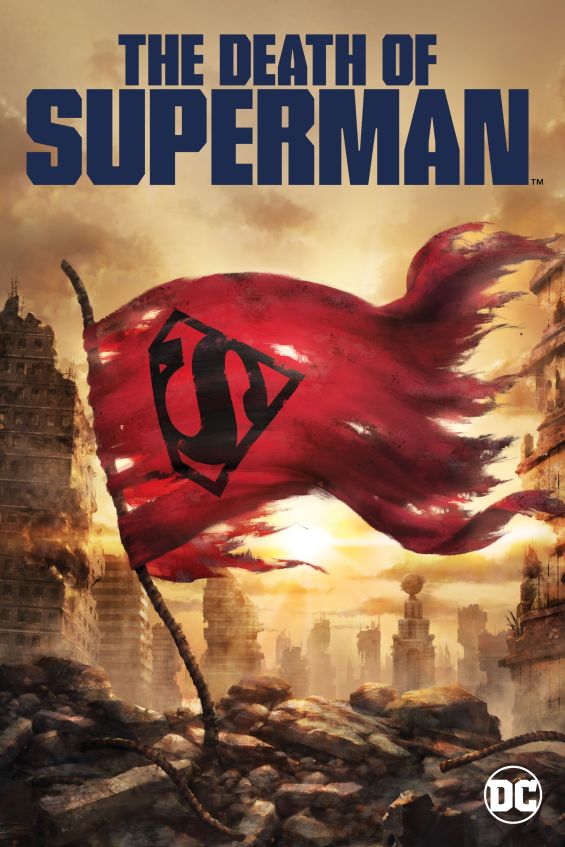
Throwback Thursday – The Death of Superman

Death of Superman Poster

Studio: Warner Bros. Animation and DC Entertainment

Series: DC Universe Animated Original Movies – Film 32 / DC Animated Movie Universe – Film 11

Directors: Sam Liu and Jake Castorena

Writer: Peter J. Tomasi

Producers: Sam Liu and Amy McKenna

Length: 81 Minutes

My Rating: 5 out of 5 stars

Welcome back to my Throwback Thursday series, where I republish old reviews, review content I have enjoyed before or review older books I have only just had a chance to read.  This week, after the fun I’ve had recently reviewing Batman: Assault on Arkham and Batman: Under the Red Hood, I continue to check out some awesome DC comic book animated features, with the impressive and powerful The Death of Superman.

Easily one of the most iconic comic book arcs of all time is the 1992/1993 storyline, The Death of Superman, which (spoiler alert) saw Superman die at the hands of new villain Doomsday.  Not only did the act of actually killing off Superman shock the world but the series was a massive financial success, becoming one of the bestselling comics of all time.  Due to its popularity, DC have attempted to adapt the storyline multiple times, with Smallville, the animated Justice League show, and Batman v Superman: Dawn of Justice, all using elements of it in one form or another.  There has even been another direct animated attempt at recreating the storyline, with the 2007 release, Superman: Doomsday, the very first film of the DC Universe Animated Original Movies.  However, in my opinion, none of them successfully conveyed the tone or the fantastic story as well as the 2018 animated film, The Death of Superman.

Directed by Sam Liu and Jake Castorena and written by Peter J. Tomasi, The Death of Superman is an incredible and amazing film that really gets to grips with the original comic, while also adding in some unique details to create a memorable and deeply moving experience.  As the 32nd instalment in the DC Universe Animated Original Movies, it also sat in the joint DC Animated Movie Universe, and was a major instalment in this series, setting up several storylines that would later be utilised in later entries, such as the final film, Justice League Dark: Apokolips War.  Featuring an awesome story, a fantastic voice cast and some exceptional animation, The Death of Superman is easily one of the best films in the entire DC Animated Movie Universe and is one of my all-time favourite animated comic book adaptions.

After saving the world multiple times, both by himself and with the Justice League, Superman reigns as one of the planet’s most popular superheros, inspiring the world with his spirit and determination to do good.  His latest act of heroics saved the mayor of Metropolis from the notorious Intergang, who made use of a large arsenal of advanced weaponry, likely supplied by an apparently incarcerated Lex Luthor.  However, despite his larger-than-life personality, Superman is also Clark Kent, a down-to-earth man from small-town America, trying to make his new relationship with fellow reporter Lois Lane work.  As Clark finally opens himself up to Lois and reveals his biggest secret to her, a brand-new threat arrives on Earth, bringing with it only death and destruction.

A mysterious meteorite has rapidly entered the solar system and crashed down on Earth, landing in the ocean.  When a team sent by Luthor and a group of Atlantean soldiers arrive, they find that the meteorite was a containment pod, and inside is something monstrous.  Killing everyone it encounters, the beast escapes the ocean and makes landfall, heading towards the largest population centre it can find, Metropolis.  With no-one able to slow it down, and even the Justice League powerless against it, it falls to Superman to engage it as Earth’s last standing defender.

Engaging in battle in the heart of Metropolis, Superman and the monster, Doomsday, begin a bloody battle that tears through the streets and levels buildings.  Superman may by the strongest person on the planet, but his new foe is a deranged and unstoppable killing machine, concerned with only death, destruction, and dominance.   Can Superman once again prevail and defeat his foe or has the Man of Steel finally met his match.  Whatever, happens, the world with never be the same again, and everyone who Superman has inspired may suddenly have to deal with the death of their greatest champion.

I must admit that when I first saw that they were doing yet another adaption of The Death of Superman comic, I was a little ambivalent, as I have not been too impressed by some of the other versions out there.  However, I still grabbed a copy as soon as it came out, and I was frankly blown away by how good it was.  This film has everything you could want in a brilliant animated feature, including an exceptional story and some amazing actors, but what this film has in abundance is heart.  Throughout its run time, you swiftly become attached to the great characters contained within, especially Superman and Lois, and then you are forced to watch as they suffer the most tragic moment of their lives.  This results in an extremely moving and powerful film, which became an instant classic in my book, and it is one that I have no problem awarding a full five-star rating.

When writing this film, Peter J. Tomasi had to do a lot with a limited amount of time.  Not only did he have to produce a pretty accurate adaption of the original Death of Superman comic, but he also had to work it into the wider DC Animated Movie Universe, which had already had its own unique history.  He easily succeeded on both fronts, as The Death of Superman contains an excellent and powerful story, that I have an extremely hard time faulting in any way whatsoever.  The story starts off with a shot of Superman saving the city and painting a pretty rosy picture of himself as Metropolis’s favourite son and defender.  After the title card, which contains the grim name of the film, the movie works to quickly introduce all the key characters, relationships, and settings, most of which had only been briefly touched on in the preceding DC Animated Movie Universe films.  This makes for a rather light-hearted start to the film; however, it also works to get you to know the characters and other key aspects of the Superman mythos and backstory, and all the setup is essential for you to get the full emotional and dramatic reactions during the second half of the film.  I also liked the way in which the film is tied into the other films of the universe, mostly using the Justice League, especially Batman and Wonder Woman, and it was great to see more of that version of the League.  All of this serves as a great set-up for the intense and action-packed second act, which is where all the action and mayhem begins.

About halfway through, the film really picks up the action with the Justice League, sans Superman, engaging Doomsday in a small town.  The action here is fast and furious, as the various members of the League get their best shots in and are then taken down in some quite brutal ways.  While this is happening, Clark is on a date with a frustrated Lois, where he finally reveals to her that his is Superman.  This date scene is done really well, and Lois’s reaction to the revelations runs the full range of emotions, especially once Superman, forced to leave to confront the threat reveals his other secret: that he loves her.  This is a great scene, and it is one that helps solidify the relationship and emotional bond between Superman and Lois while also making the viewer care for the characters just a little bit more.  However, the focus is quickly changed back to the fight with Doomsday, who has managed to take out the entire League, with only Wonder Woman hanging in.  As she falls, Superman steps in and begins a massive and brutal fight throughout Metropolis.  The creative team behind The Death of Superman really do not hold back here, as they present a knockdown brawl between the two, with Superman forced to also try and save civilians as they fight.  Their battle is a truly intense and amazing extended sequence, and there are some outstanding scenes featured throughout it.  You get some great reaction shots from the various supporting characters, and Lois and Lex Luthor have some outstanding moments as well, as they get involved for various reasons.  However, despite everything, it soon becomes clear just how indestructible and dangerous Doomsday is, and how even Superman doesn’t stand a chance.

The entire film leads up to the final climatic sequence, where the inevitable finally happens and Superman dies taking down Doomsday.  This entire scene is done perfectly, with a near-defeated Superman spurred on to make one final effort against Doomsday as the monster advances towards a seemingly hopeless Lois, who reveals to a downed Clark that she loves him too.  The blow itself is beautifully rendered with a powerful and lethal shot to Doomsday, but it is the aftermath that really turns this film into a five-star watch, as Superman is fatally impaled on a spike.  Watching a grieving Lois slowly release that the love of her life is dying in her arms is so hard to watch, and the creative team really turn up waterworks with Superman giving some touching last words: “what a lucky man I was”.  The eventual death is extremely moving, with the entire world witnessing his death and Lois’s grief, while standing in absolute shock.  Even the Justice League is moved to tears, with the usually taciturn Batman’s reaction being the most telling.  This entire sequence is deeply enhanced by a brilliant orchestral score that really plays up the emotion of the scene and strikes home every time you hear it.  This is such a powerful and impactful sequence, and it is swiftly followed by a moving funeral, with all the major characters in attendance, and then a final shot of several characters reacting in a post-funeral grief while Superman superfan Bibbo Bibbowski narrates a fitting final prayer for the character.  This entire sequence leaves me breathless, even after several re-watches, and it easily one of the most moving animated sequences I have watched.  The film then does a decent wrap-up, with several concluding sequences and post-credit scenes setting up the events of the sequel film.  However, it is the moving conclusion that will stick with you well past the films end, as it really brought everything about this movie together.

While I would be plenty happy with this film with only the outstanding story and amazing conclusion, The Death of Superman is also backed up with some incredible animation and a fantastic musical score which deeply enhance this fantastic film.  The animation is really great, and I loved the designs for the various characters, most of which hark back to their original comic book appearances.  The most impressive animation is reserved for the excellent and impactful action sequences involving Doomsday.  The animators show no hesitation in showing the blood and gore as Doomsday literally tears through everything in his way.  The initial fight with the Justice League is brilliant, especially as Doomsday brutally counters all their unique abilities and absolutely destroys them.  However, it is the giant fight with Superman which is the true highlight of The Death of Superman.  This fight is pretty extraordinary, and the animators really highlight the desperation and inspiration of the two participants.  Each of them is well and truly battered, and it is really shocking to see all the damage that Superman takes throughout the fight.  There is also some very dramatic damage to the city of Metropolis, with even the Hall of Justice being turned to a pile of rumble as these two duke it out.  I cannot emphasise how awesome this animation is, and it was so cool to see these battles unfold.

I also really need to highlight the fantastic use of music throughout this film, which works well in concert with the animated sequences.  The Death of Superman features an exceptional orchestral score, with the various tunes often harking back to classic Superman music.  This music is used perfectly throughout the various scenes in this film and help to really enhance the drama or emotion of the scene.  There are some great scenes with music throughout the film, although nothing tops the fantastic climatic sequence I mentioned above.  This animation and music are so very awesome, and it was an absolute joy to behold.

This film contains a pretty cool range of different characters, including iconic heroes, major Superman supporting characters and even a few more obscure characters.  This helps to turn The Death of Superman into quite a unique and fun film, and I really loved the range of reactions and character arcs that it contained.

Unsurprisingly, the most highlighted character in the film is Superman, who is voiced by Jerry O’Connell, who voiced the character in most of the DC Animated Movie Universe entries.  Up until this point, I felt that Superman was a bit underutilised.  Most of the previous films have focused on Superman’s relationship with Wonder Woman, while also featuring him as the League’s powerhouse.  However, this is easily Superman’s film, as the writers take substantial time to examine his history, relationships, inner personality and the duality between Superman and his Clark Kent persona.  You really get some intense insights into both versions of the same person, especially when you see his evolving relationship with Lois, and you swiftly grow to care for him in a way that some of the recent live-action films really didn’t make you.  His character really shines through during the battle with Doomsday, as he refuses to stay down, especially when people’s lives are on the line, and even risks himself to save his most hated enemy.  His sheer determination and intensity is really inspirational, and it starts to hurt a little inside to see him get beaten down by his opponent.  I felt that O’Connell does such a great job portraying Superman, and he really brings out the best of the character, showing his true heart and soul, and making him such a likeable character, who, despite his alien heritage, was still so very human.  I was really impressed and shocked by how much I grew to love Superman by the end of this film, which of course, ensures that you are so moved by the final scenes.  Seeing this character die in Lois’s arms in front of the world is just heartbreaking, and you guaranteed to be moved by his portrayal in this film.

While there is a natural focus on Superman, in many ways The Death of Superman is just as much a film about Lois Lane.  Voiced by the talented Rebecca Romijn, this version of Lois is bold and fearless in her career but also a little guarded in her personal life, especially as she senses that Clark is hiding something from her.  This film really builds up Lois extremely well in its short run-time, and you get a great sense of who she is and what she cares about.  I felt that the character had some amazing chemistry with Clark, which really isn’t surprising as Romijn is married to O’Connell in real life, so I’m sure they channelled a lot of that film.  I really was impressed by the way they showed Lois’s growing relationship with Clark as the film progresses, and the revelation about Superman’s true identity at the centre of the film really helps to solidify it, especially once Clark declares his love for her.  The subsequent battle sees Lois go through hell, as she chases the fight throughout Metropolis and has to watch Superman continuously get beaten up.  The scene where she tries to distract Doomsday and then gives up as he turns towards her is so dramatic, especially as she follows it up with her own declaration of love for Clark.  The final grief laden scene with Superman really moves me every time, and I felt that the sheer emotion coming off Lois was just amazing.  This might be one of my all-time favourite portrayals of Lois Lane, especially as Romijn does some exceptional follow ups in later DC Animated Movie Universe films.

The other major character I really want to highlight is Lex Luthor, who was voiced by the always entertaining Rainn Wilson.  Like Superman, Lex had been really underutilised in the DC Animated Movie Universe; his reveal in the Throne of Atlantis post-credit scene really did not pan out in a meaningful way in Justice League vs. Teen Titans.  However, this dramatically changed in The Death of Superman as they go out of their way to build up the showcase and show him as the maniacal yet brilliant businessman and criminal mastermind.  The creative team did a lot with Luthor in a short amount of time, and you get a really good idea of his genius, his various plans, and his unrelenting antagonism with Superman, born out of jealousy.  He proves to be a good secondary antagonist for the film, eventually turning into an erstwhile ally, abet for his own purposes, and he has some great scenes.  I was particularly impressed by Rainn Wilson’s voice work in this film, as he brings all the arrogance he can to the film, while also giving character a bit of a slimy edge.  I think he really captured Luthor’s various nuances, and ensures you see him lose his cool when faced with defeat.  I really liked the scene where Luthor can only watch in horror as Superman, despite being beat to hell, saves his life, and that results in some interesting changes in the later films.  I also liked how they captured a bunch of fun aspects of Luthor’s character from the 1990 comics, such as a nod to the Lex Luthor II persona that appeared in The Death of Superman comic.

I also need to highlight the main antagonist, Doomsday.  Despite not saying anything, Doomsday is a major presence, mainly due to his brutality and capability for destruction.  Doomsday is perfectly introduced and I loved the slow reveal of his true form, as the suit containing him is destroyed after several fights.  I must again really highlight how cool he looks in a fight, and the battles between the Justice League, Wonder Woman and Superman are just so damn impressive and pretty intense.  This was a really good portrayal of the character that perfectly harkens back to its comic origins, and it was a nice palate-cleanser after his cave-troll look in Batman v Superman: Dawn of Justice.

The Death of Superman also contains a pretty substantial supporting cast of characters, each of whom add a fair bit to the overarching narrative of the film.  Some of the most prominent of these are the various members of the Justice League, with most of the actors from the earlier DC Animated Movie Universe films reprising their roles.  Each of these characters and their actors have been perfectly introduced in the previous films, so they are inserted into The Death of Superman with minimal effort and form a fantastic cohort around Superman.  The leading two characters are probably Batman, voiced by Jason O’Mara, and Wonder Woman, voiced by Rosario Dawson.  Both characters have unique relationships with Superman, particularly Wonder Woman, and his death really impacts them both.  I also liked the combination of Green Lantern (Nathan Fillion) and Flash (Christopher Gorham), who form a fun comedic duo, while also having some great action moments.  I had a great laugh during the Justice League meeting scene where Flash does a good imitation of Batman joining the PTA of Damien’s school, and Batman’s glaring reaction is pretty funny.

I also loved the inclusion of a couple of unique Superman supporting characters.  Despite the role he played in the original comic, I was really surprised to see so much of Bibbo Bibbowski, Superman’s biggest fan, in this film.  Bibbo is a bit of a dated character, to be honest, but he slides into this film really well, and I loved the voice work done by Charles Halford.  His comedic interactions with both Superman and Clark Kent in the early parts of the film are pretty fun, and there is something amusing about a big, rough sailor type fanboying about a superhero.  It also proves to be quite heartbreaking to see this fan watch Superman die in front of him, and you can see it really breaks him.  I felt that Bibbo’s Hail Mary prayer at the end, which overscored some great visuals of people in mourning, and the subsequent breakdown on the dock was quite touching.  I also liked Erica Luttrell’s Mercy Graves, especially as she forms a great counterpoint to Luthor, especially as she calls him out on some of his more outrageous plans.  Overall, I think that this film was incredibly well cast, and I loved the fantastic group of characters that they brought together.

The Death of Superman is a truly great and powerful animated film that continues to reign as one of my absolute favourite animated comic book adaptions.  Featuring a near-perfect adaption of one of the most iconic comic stories of all time, The Death of Superman is intense, exciting, and downright heartbreaking, as it shows the greatest hero in his final battle.  I was moved to tears the first time I saw this film, and I have so much love and admiration for the work the creative team did to revitalise the character of Superman in one short film.  A highly recommend film to watch, this is one of the better Superman adaptations (live action or animated) I have ever seen.

The 22 Murders of Madison May by Max Barry

The 22 Murders of Madison May Cover

Publisher: Hachette Australia (Trade Paperback – 30 June 2021)

Series: Standalone

Length: 322 pages

My Rating: 4.5 out of 5 stars

Amazon     Book Depository

From the unique mind of leading Australian science fiction author Max Barry comes the fantastic and very clever alternate universe thriller, The 22 Murders of Madison May.

Madison May has been murdered and she has no idea why!

Madison, a young real-estate agent suddenly finds herself on the wrong side of a knife wielding client with zero regard for keeping his identity hidden from the police.  His final act before killing her is to profess his undying love to her.  However, Madison has never seen her murderer before in her life, at least, not in this life.

When word of Madison’s death reaches the desk of the Daily News, it falls to rising reporter Felicity Staples to follow up.  Despite a dislike for murder cases, Felicity soon finds herself wrapped up in investigating the brutal killing of the beautiful Madison May, especially as some unusual designs have been carved into the walls.  However, things take a turn for the strange when Felicity sees the suspected murderer at the subway in a dangerous confrontation with another fugitive from justice.  Moments after seeing them, Felicity can only watch in surprise as they vanish before her eyes and her universe is turned upside down.

Returning to her apartment, Felicity notices several minor changes to her life.  Her boyfriend suddenly knows how to cook, one of her cats is missing, and no-one at work remembers anything about her story or Madison May.  As strange events keep occurring, Felicity is soon forced to face the fact that she has been transported to an alternate dimension.  Reeling from the revelation, Felicity is even more stunned when a slightly different Madison May turns up murdered, the victim of the same killer.  Chasing after the mysterious people hovering around the case, Felicity discovers that a dangerous stalker is moving from dimension to dimension, determined to find the perfect Madison May to fall in love with, and killing any version he doesn’t like.  Can Felicity stop the killer before he takes out another version of Madison May, or will her forays into interdimensional travel have consequences she could never imagine?

Wow, this was a very fun and captivating read that I really enjoyed.  The 22 Murders of Madison May is the latest novel from Australian Max Barry, an author of several intriguing science fiction novels, including Providence, Jennifer Government, and Machine Man.  This was the first novel of Barry’s that I have had the opportunity to read, and I am very glad that I did, as Barry has created an outstanding and fun science fiction thriller that makes great use of some cool alternate dimension travel to produce an exquisite and awesome story.

Barry has come up with an extremely exciting and compelling narrative for this fantastic novel, which makes excellent use of its unique science fiction hook.  The novel starts off with the brutal murder of the first Madison May, which leads to the involvement of protagonist Felicity.  It does not take long for Felicity to get dragged into an alternate universe after encountering the killer and a fugitive engaged in a fight.  Forced to deal with the unusual differences in her life and the revelations of what has happened to her, Felicity attempts to save the lives of several different Madison Mays, while also avoiding the attentions of a group of interdimensional travellers who jealously guard their secrets.  What follows is a series of thrilling scenes where Felicity and her ally, Hugo, jump from alternate universe to alternate universe trying to stop the killer, with varying degrees of success.  This all eventually leads up to a fantastic and impressive conclusion where Felicity is forced to make some major, life-altering decisions, while also facing off against the monster she’s been chasing.  This proved to be an extremely captivating and fascinating novel, which honestly takes no time at all to get hooked on.  I loved the brilliant blend of psychological thriller and compelling science fiction elements, which seamlessly work together to produce an outstanding and memorable standalone story.  I powered through this book in a couple of days, and I deeply enjoyed every second I spent reading this intense and cleverly written story.

I have to say that I deeply appreciated the fascinating concept of alternate dimensions and interdimensional travel that Barry features.  Not only does the author do a good job explaining the science and philosophy behind this science fiction feature, but he also ensures that it works to full effect within the narrative.  In this book, dimensional travellers move from one reality to the next, taking over the lives of the version of themselves living in that dimension.  This results in the travelling characters awakening in a world with slight deviations from the last one they visited.  Barry features several separate dimensions within The 22 Murders of Madison May, and it was always quite fascinating to see the slight differences that occur, good and bad.  This is most prominently shown through the eyes of protagonist Felicity, who ends up visiting several alternate realities, some of which severely shake her.  However, you likewise get to see several different versions of the titular murder victim, Madison May, which results in a fascinating examination of how decisions and missed opportunities can impact your life.  It was also cool to see the various ways in which the alternate dimension travel could be manipulated, most noticeably by the book’s antagonist.  This vicious killer was constantly manipulating events to find a version of Madison May that would love him the same way that he loved her, and it was both creepy and intriguing the way in which Barry combined an alternate reality story with a tale of a fanatic serial killer.  It was very interesting to see the way the villain was able to change the course of his dimensional travels to suit his needs, such as by framing one of his pursuers for murder, and then ensuring that they only travelled to dimensions where they were locked up in prison.  I felt that Barry did a great job introducing and utilising this cool concept, and it really worked to create an epic and powerful narrative.

The author has also come up with some fun and complex characters in The 22 Murders of Madison May, who are enhanced by the fact that you get a very detailed and compelling snapshot into various versions of their lives.  The main character is Felicity Staples, a bold and clever reporter who finds her entire life upside down.  Felicity initially lives an ordinary life, with a boyfriend and two cats, while hunting for political corruption.  However, the events of this story really mess her around, as she is bounced around slightly different versions of her life.  These various involuntary jumps really have an impact on her, especially as she experiences both positive and negative changes which make her question her choices and relationships.  At the same time, she becomes obsessed with saving Madison May and stopping the killer, so much so that she constantly throws her life in danger.  The combination of these choices and the changing realities proves to be quite wearing on her, especially as she is forced to make some major sacrifices in her own life to try and save Madison’s.  This makes for quite a strong and likeable protagonist, and I deeply enjoyed seeing her intense and tragic narrative unfold completely.

I also really enjoyed supporting character Madison May.  The Madison Mays are essentially nobodies who have the very classic backstory of being a struggling actress who moved the big city and is dealing with a terrible boyfriend.  However, in one reality she was given her big break and appeared in a film in a small role.  However, this big break was a double-edged sword, as it gained the attention of a stalker, who, upon failing to meet her in his world, travelled between dimensions and started hunting her down.  Throughout the course of the book, you see multiple versions of Madison May, each of whom has a slightly different life, whether she is still struggling as an actress, on the cusp of a big break, or has given up acting altogether.  The author does a really good job of quickly and concisely setting up each of these new versions of Madison May, and you quickly get a feel for who the character is and the choices that change her.  Because she is not travelling through alternate dimensions, it is always fascinating to see the different interactions she has with her killer, as well as the reactions to the strange events occurring around her.  As a result, you get a fairly detailed examination of this character’s life, and it proves very hard not to like her and hope that she is able to overcome the latest attempts on her life.

The final character I want to focus on is the novel’s main antagonist and the killer of Madison May, Clayton Hors.  Clayton is a compelling and intense villain who starts his journey as an obsessed fan who falls in love with Madison May after seeing her in a movie in his reality and starts stalking her, eventually getting caught.  While this would usually be the end of the story, Clayton was able to obtain an item that allowed him to travel through dimensions, so he started stalking Madison in every reality he can find, assessing each version to find the perfect match to the one he fell in love with, and then attempting to make them love him in return.  This is some deeply disturbing antagonist creation here, and I really appreciate the way in which Barry amps up a dangerous and obsessed sociopath by giving them the ability to stalk their victims across the dimensions.  There are so many elements to this character which turn them into quite a memorable villain, from his unwavering determination to get what he wants, his short and violent temper, an inability to be satisfied with the girls he finds, and an obsession that can withstand constant dimensional travel.  I particularly found the descriptions of his arms, which are scarred and cracked by the various bite marks of Madison May from across the dimensions, to be a horrific masterstroke from Barry, and it was very disturbing to see versions of Madison May who attempt to bite down on his arm in self-defence to find that their teeth already match the indentations there.  Clayton was an outstanding and disturbing villain, and he really helped turn this excellent science fiction thriller into something very special and dark.

The 22 Murders of Madison May is a brilliant and distinctive science fiction thriller that I had an amazing time reading.  Australian author Max Barry has written an exceptionally clever story that perfectly combines a disturbing tale of murder and obsession, with an adventure in interdimensional travel.  I loved this awesome story, and I will have to make sure I check out some more of Max Barry’s novels in the future because I had a fantastic time getting through The 22 Murders of Madison May.  A highly recommended read.

Amazon     Book Depository

Fair Warning by Michael Connelly

Fair Warning Cover

Publisher: Allen & Unwin (Trade Paperback – 26 May 2020)

Series: Jack McEvoy – Book Three

Length: 404 pages

My Rating: 4.5 out of 5 stars

Amazon

Prepare for another incredible murder mystery from leading crime fiction author, Michael Connelly, as he brings back one of his more intriguing protagonists, reporter Jack McEvoy, for another fantastic novel, Fair Warning.

Following several of his past misadventures, veteran reporter Jack McEvoy is now working for the independent reporting website, Fair Warning, investigating scams and consumer issues. However, McEvoy’s true passion is the murder beat, which he once again finds himself dragged into when LAPD detectives accost him one night, asking him questions about a woman he had a one-night stand with several months ago. The woman has been murdered in a particularly brutal manner, and McEvoy is seen as a key suspect in the case.

Against the wishes of the police and his editor, McEvoy begins to dissect the case on his own, and discovers that several women across the country have died in a similar manner. Investigating each of these deaths, he manages to find a unique connection between the victims that points to a serial killer that has been operating unnoticed for years and who has a disturbing way of finding his next kill.

Determined to hunt down this murderer and bring him to justice, McEvoy recruits his old flame, former FBI agent Rachel Walling, to help his investigation. However, this is no ordinary killer they are hunting. Calling himself the Shrike, their prey is brilliant, meticulous and utterly devoid of any compassion. Can McEvoy and Walling bring him to justice, or have they just painted a target on their back?

Wow, Connelly really knocks it out of the park again with Fair Warning, another excellent and captivating piece of crime fiction. I have been really getting into Connelly’s books over the last couple of years, ever since I read his 2018 release, Dark Sacred Night, which was followed up by one of my favourite books of 2019, The Night Fire. Fair Warning is the 34th book in Connelly’s shared universe of crime fiction (which includes his Harry Bosch and Mickey Haller novels), and it is the third book to feature Jack McEvoy as a protagonist. This latest release proved to be an exceptional read, and I was able to power through it in a short period of time. I loved the fantastic mystery that was featured within it, and Connelly has included several unique features that make it stand out from his main police investigation novels, resulting in an amazing and enjoyable read.

At the heart of this amazing novel lies an impressive and clever murder mystery storyline that proved to be a lot of fun to explore. The book focuses on a hunt for a wicked and terrifying serial killer who has been hunting women across the country and getting away with it. The subsequent investigation into the killer is a compelling and multilayered affair, as the protagonist becomes obsessed with solving the case. The entire mystery storyline is an epic and intriguing affair, and Connelly lays it out in a methodical manner that helps to draw the reader right into the middle of the investigation. I really liked where the investigation goes, and it contains some interesting leads, opposition from law enforcement agencies who do not want a report snooping around and several other unique challenges. Just like with the other Jack McEvoy books, Connelly has come up with a distinctive and driven serial killer for the protagonist to pursue. This killer is a ruthless and intelligent hunter with a terrifying method of eliminating his prey, which he parlays into his disturbing but apt moniker the Shrike. He serves as a worthy antagonist for this excellent mystery, and it proved to be really intriguing to fully investigate and unwind all his actions and intent, although there is still some mystery around this antagonist towards the end of the book. I personally liked the occasional glimpse into the killer’s mind that Connelly provided, as there were a few short chapters told from his perspective, which proved to be rather intriguing. An additional chapter from a third character’s point-of-view also introduced the reader to a couple of witnesses, who, while not directly involved with the killings, had their hands in their case in an interesting but messed up way, which added compelling wrinkles to the entire mystery, and also ensured that the reader had additional villains to wish some comeuppance upon. Overall, this was an excellent and enjoyable murder mystery storyline, and I had an amazing time following it from one end to the next.

Connelly has the rare ability to keep coming up with great and distinctive protagonists for his crime novels, and Jack McEvoy is one of his more intriguing characters. McEvoy is a bit of an autobiographical character for Connelly, as both the author and his creation were crime journalists for the Las Angeles Times. He has been utilised as the main character of two previous novels, The Poet and The Scarecrow, and has also had appearances in some other Connelly books, such as A Darkness More Than Night and The Brass verdict. Long-term fans of Connelly’s writing will enjoy learning about how his life has progressed in the intervening years, and about his current journalistic endeavours. It was great to see him once again involved in a murder investigation, especially another one where he has an emotional attachment to the case, having briefly known the first victim. McEvoy is portrayed as a somewhat reckless and impassioned investigator throughout the book, and he ends up riding some moral lines as he attempts to work out what is more important, the story or catching the killer. It was also great to see the return of Rachel Walling, who has served as the main supporting character and love interest of the previous Jack McEvoy books. McEvoy and Walling’s complex relationship is once again a central piece of this story, and the two of them struggle to work together with their romantic entanglements and complicated past. After all this time the reader cannot help but hope that the two of them will end up together, although there are significant barriers to this happening, such as McEvoy’s suspicious and cynical personality, and their often-opposing viewpoints. Both characters are fantastic additions to the story, and their personal issues serve as pleasant emotional backdrop to the murder mystery angles of the book. I really liked their complicated partnership and it looks like Connelly may have some plans for them in the future.

I was also a big fan of the reporting angle that Fair Warning had. The protagonist is not cop, instead he is a reporter who finds himself involved with the story. As a result, while the protagonist does want to bring the killer to justice, he is also interested in writing the story behind it. This leads to several distinctive differences between this investigation and the more traditional police inquiry, including different ways of obtaining information, being less bound by legal procedures and a different way of dealing with potential witnesses or sources. The book also features several faux journalistic articles (which must have brought Connelly back to his reporting days) that cover key events of the book, and there are some great discussions about the techniques behind writing a newspaper article.

One of the most interesting parts of this reporting element, is the fact that the McEvoy is employed at the reporting website, Fair Warning. Fair Warning is an actual real-life website that provides independent watchdog reporting on consumer issues, which features Connelly as a member of the website’s board of directors. The website’s real-life founder and editor, Myron Levin, appears as a character within the book, and I think that it was a fun inclusion from Connelly that did a great job of showing the current state of journalism in the world today. This is the first Jack McEvoy book written in the era of ‘fake news’, and Connelly spends some time exploring how traditional newspapers are suffering and how the role and status of reporters is changing. This proves to be an intriguing background element to the story, and I am glad that Connelly spent the time raising it within the novel, as well as highlighting the importance of an impartial and observant journalists. Other great parts of the reporting aspect of the book include several fun reporting anecdotes (I really, really hope that the story about one of Levin’s articles distressing a grifter so much that he sued the paper claiming the article caused him rectal bleeding, is true), as well as the examination of other parts of other parts of journalism, such as the emergence of podcasts as a source of media.

Another fantastic element to the story was the author’s examination of the massive industry that has formed around DNA testing for criminal, scientific and personal reasons. Through the course of his investigation, McEvoy discovers that the connection between several of the victims is due to DNA testing. This prompts him to investigate the DNA testing from a consumer watchdog perspective, which allows Connelly to examine a number of potential issues behind the current craze of DNA testing, and he shows it to be an extremely unregulated industry where a lot of unethical actions and behaviours can occur. This proves to be an extremely fascinating part of the book’s plot, especially as Connelly puts forth several different ways that such an industry could be abused for personal or criminal purposes, some of which are rather disturbing in their implications. Connelly did an amazing job exploring the downsides of DNA testing in this book, and it was both extremely fascinating and little scary (it made me glad that I’ve never sent my DNA in for testing, that’s all I’m saying), especially in the way that it was tied into Fair Warning’s mystery.

Michael Connelly has once again showed why he is one of the world’s preeminent authors of crime fiction as he has written another outstanding and highly addictive novel. Fair Warning contains an excellent and captivating story that I could not get enough of. I had an incredible time reading this amazing and clever novel and it comes highly recommended. It has also got me extremely excited for Connelly’s next novel, The Law of Innocence, which comes out later this year.

Amazon

Deceit by Richard Evans

Deceit Cover

Publisher: Impact Press

Publication date – 18 June 2018

Amazon     Book Depository

From former politician Richard Evans comes one of the most incredible fictional examinations of the Australian political system with Deceit, an exciting and superb political thriller.

When corrupt Australian Prime Minster Andrew Gerrard makes a deal with his Indonesian counterpart, he embarks on a plan to build up a retirement nest egg by passing a controversial funding bill for overseas detention centres over a period of several years.  However, when key members of his party die in a tragic plane accident, Gerrard decides to process all of the funding in one go and receive the full amount of his payoff.

Outnumbered in the House of Representatives, and with only one week to pass the bill through both houses of parliament, the task looks impossible.  But the Prime Minister is a canny political operator with no conscience to speak of and with the Speaker deep in his pocket and with no conscience to speak off.  Equipped with a master plan, Gerrard starts to manipulate the bill through parliament.

The only person who may be able to stop him is the outgoing Clerk of the House of Representatives, Gordon O’Brien, who suspects that the Prime Minister’s mysterious last-minute bill is more sinister than it appears.  As one of the few people who believe in the sanctity of the parliament, O’Brien will risk everything to find out the truth and ensure no wrongdoing is done on his watch.  Utilising all the tools at his disposal, including the opposition and investigative journalist Anita Devlin, O’Brien prepares to move against the Prime Minister.  Let the political games begin!

Evans is a former Australian politician who served two terms as a federal member of parliament in the 1990s.  Evans has decided to utilise his political experience and expertise by creating a series of Australian politics based thrillers and dramas, with several books planned for release in 2019 and 2020.  Deceit is his debut novel and the first book of his planned Democracy trilogy, with the second book in this series, Duplicity, already set to be released in 2019.  Readers interested in fictional depictions of Australian politics should also keep an eye out for his upcoming Referendum and Jack Hudson series, both of which will start to be published in the next two years.

Deceit is a fabulous political thriller with a fantastic story that twists and turns through multiple layers of manipulation, deceptions, lies and double-crosses.  The book’s main antagonist, Australian Prime Minister Andrew Gerrard is a selfish, manipulative and sleazy character who serves as a perfect villain for this story and whose plots are a highlight of this book.  Evans has done a clever job of spreading the story out among multiple point-of-view characters, as this allows the reader to view the impact of Gerrard’s manoeuvrings and lets them see how they are received by members of the opposition, the media and O’Brien.  Evans is a very talented storywriter, and the entire plot of Deceit is extremely compelling and very well thought out.  Readers will fall in love with this amazing story and will find its overall conclusion very satisfying.

As someone who lives and works in the book’s main setting, Australia’s capital city, Canberra, I have received a lot of exposure to Australian politics.  As a result, I loved the author’s exceedingly realistic and accurate depictions of the Australian political system and how it was used within this story.  There is some great coverage of Australia’s parliamentary procedure and the creation and passage of bills and laws through both houses of parliament that are presented in a precise and well-described way.  There are also a number of characters who hold roles that are actually part of Australia’s political and civil service.  These positions and roles are explored in detail, and the reader is given significant insights into what work and requirements are needed by the people holding them.  Evan’s does a fantastic job of weaving these usually dry subjects into a very enthralling narrative, and readers will be intrigued to see how the fictional Prime Minister plans to get a dodgy bill past the entire country without anyone noticing what he is doing.

The standout scene of the book has to be an extended chapter that featured a session of question time in the House of Representatives.  Question time is a daily occurrence during the parliamentary sitting period during which government and non-government members of parliament ask ministers questions about their various portfolios.  As someone who has been exposed to many question times, I was struck by how genuine Evans’s description of this event was.  Evans perfectly encapsulates the entire process from start to finish and was able to recreate the snarky and sometimes petulant nature of the discourse that are the usual fare of question time.  The author expertly links the overarching storyline of political corruption into this scene, as one member of the opposition is suspicious and starts to ask the Prime Minister leading questions about the controversial bill he has put forward.  The political back-and-forth around these questions was amazing, and it was fascinating watching them being tied into the rest of the story.  Overall, this sequence was exceedingly compelling, and the entire time I was reading it I was physically incapable of putting the book down.

Deceit also contains some detailed and enjoyable depictions of Australia’s Parliament House and the capital city, Canberra.  Parliament House is a beautiful building, and Evans does a wonderful job describing Parliament House in detail and examining various parts of the building, from the Prime Minister’s office and courtyard, to the various gardens, media offices and even cafes.  Other little nuances of life within Parliament House are also captured within the text, no doubt because of Evans’s prior experiences working within the building.

I also really enjoyed seeing my home city of Canberra featured in this book.  Despite being the capital city, Canberra does not feature much in fiction, due to it being a smaller and newer city than Sydney or Melbourne.  Deceit, however, contains some great depictions of the areas of Canberra close to Parliament House.  There are several references to some real restaurants and cafes that politicians are known to frequent and where several big political discussions are known to have taken place.  There are also several scenes where the characters explore other parts of Canberra as part of the book’s plot.  I for one found it incredibly amusing and disconcerting to read a scene about a secretive handoff of documents set in a cinema that I’ve watched The Hunger Games and Doctor Who specials in.  Canberra locals will love seeing their city as a major fixture of this book, and other readers will get to explore Australia’s capital and see its potential as a setting in this exciting thriller.

Richard Evans’ first book, Deceit, is a five-star thriller that brings the Australian political process to life.  Former politician Evans brings all of his insight and expertise to this new book, and readers will be astounded by the realistic descriptions of Australian politics and the way it has been utilised in this exciting and first-rate story.  This is an outstanding debut from Evans, and this terrific read comes highly recommended.

My Rating:

Five Stars

Amazon     Book Depository

The Greater Good by Tim Ayliffe

The Greater Good Cover

Publisher: Simon & Schuster

Publication Date – 23 April 2018

Amazon

Australian author Tim Ayliffe presents a fantastic debut thriller set in iconic Sydney that delves into the heart of politics and the role of the media in the modern world.

John Bailey was a brilliant war correspondent for the Australian paper, The Journal.  However, his life took a downward turn when he was kidnapped in Iraq and tortured for several months.  Now, years later, Bailey is living a life of alcoholism and self-destruction, only occasionally contributing articles to The Journal.

However, when a prostitute is found murdered in her high-end Sydney apartment, his editor and old friend, Gerald Summers, sends him to investigate the crime, claiming that Bailey is the only person he trusts to report the story.  The prime suspect in the case is an influential political advisor who had a close relationship with the victim.  When Bailey encounters the advisor, he claims to have information that will clear his name, while at the same time implicating his boss, the defence minister.

After a run-in with an old friend in the CIA, Bailey soon realises that there is much more to this story than a simple murder.  Investigating further, he soon discovers that the murder was committed to cover up a massive conspiracy that the defence minister is linked to.  When witnesses to the crime start turning up dead and the police are pressured to drop their investigation, Bailey is determined to uncover the truth and publish the full story.  But powerful people are invested in keeping this case quiet, and Bailey soon finds himself in their crosshairs.

This is an exciting and high-energy first book from Ayliffe, who makes full use of his journalistic experience and political insights to create a smashing thriller with a tangible Australian presence.  The investigation into the conspiracy and its associated murders works well as the heart of this story, and readers are invited along on a wild thrill ride as the protagonists rush through this murky world of Australian politics and espionage in a quest to find the truth.

The character of Bailey serves as a great central narrator for this frenetic story, and readers will love the maverick approach he has to investigating the case and the lack of restraint of manners he has when it comes to dealing with Sydney’s political and financial elite.  Ayliffe also spends a significant amount of time attempting to humanise his main character by examining his past as a prisoner and the effects his PTSD has had on his life and career.  There are some great, emotional scenes as Bailey attempts to get over his problems with the help of other characters, and Bailey comes across as a much more grounded and damaged protagonist as a result.  The other main narrator in The Greater Good is Sharon Dexter, who serves as the official police investigator and Bailey’s main love interest.  Her investigation focuses more on cover-ups, sexism, and corruption in the police force, and these parts of the book serve as a great counterpoint to the sections featuring Bailey.

Ayliffe has made full use of his political knowledge and insight throughout this book.  A large amount of the plot revolves around both Australian and international politics, and readers will be amazed at the potential conspiracy he is able to create.  Various Australian political elements are dragged into the story and play a key part of the plot.  These include discussions about pre-selections of federal seats, government spending and the role of several federal government agencies.  World politics and the current status of Australia on the world stage are also examined within the story.  There is a large focus on the expanding role of China, and the discussion about whether Australia should strengthen its relationship with this new world power or whether it should maintain its current relationship with the United States.  This discussion is a key part of understanding the plot, and plays out in the book in a similar manner to current debates on the subject within Australia.  This adds a real sense of realism to the story and makes readers, especially those familiar with current Australian news and politics, very thoughtful.

Throughout The Greater Good, the main characters are attempting to obtain evidence of a conspiracy so that they can print it in their newspaper, The Journal.  As a result, the role of print media in keeping government’s honest and uncovering political corruption is examined in some detail.  It is clear that Ayliffe, a career Australian journalist, is very supportive of the media remaining in this role, and many of his characters are quite critical of attempts to stall the publication of these stories.  This allegorical analysis of the current role of media in politics and society is an intriguing part of the book and many readers will find this exceedingly relevant in light of recent world events.

Readers also need to keep an eye out for Ayliffe’s clever and entertaining inclusion of characters that are clearly based on real life Australian personalities.  For example, the fictional Australian Prime Minister is described as an athletic man who is known for his fun runs and surfing, in a way reminiscent of former Prime Minister Tony Abbott.  In addition, certain plot twists towards the end of the book will also remind the audience of another previous Prime Minster.  Another example is a minor character who is introduced as a prominent talk show radio host.  This character appears to be a composite creation of several of Australia’s right-wing radio commentators and comes across in a very similar manner to these real life presenters.  These cheeky additions are a fun inclusion that will amuse readers with even a passing knowledge of these Australian personalities.

In many ways The Greater Good can be considered a love letter to the author’s home city of Sydney, as it contains a number of different locations and references that will be quite familiar to Sydneysiders.  The narrator visits a number of different suburbs within Sydney, including Palm Beach, King Street, Finger Wharf at Woolloomooloo, Bondi and Chinatown, and also frequents some real life Sydney venues, such as Harry’s Café de Wheels.  Not only is the food, geographical location and description of this Sydney café described in the text, but the author has also included a write-up of the restaurant’s owners and its history.  In addition to furnishing the story with real life Sydney locations, Ayliffe also includes brief references to events and occurrences that Australians would recognise the significance of, such as Australian rugby, lockout laws and the current ice epidemic.  While none of these locations or occurrences is essential to the plot, they do add a certain sense of reality to the entire novel, and Australian readers will enjoy seeing locations and scenarios that they recognise and understand.

Tim Ayliffe’s debut novel, The Greater Good, is a fun and exhilarating political crime thriller that is guaranteed to electrify and entertain in good measure.  Making full use of Ayliffe’s extensive knowledge of Australian politics, culture and media, this very topical book is an excellent read for Australian audiences and those international readers keen to explore Australia’s potential for thrillers.

My Rating:

Four stars

Amazon