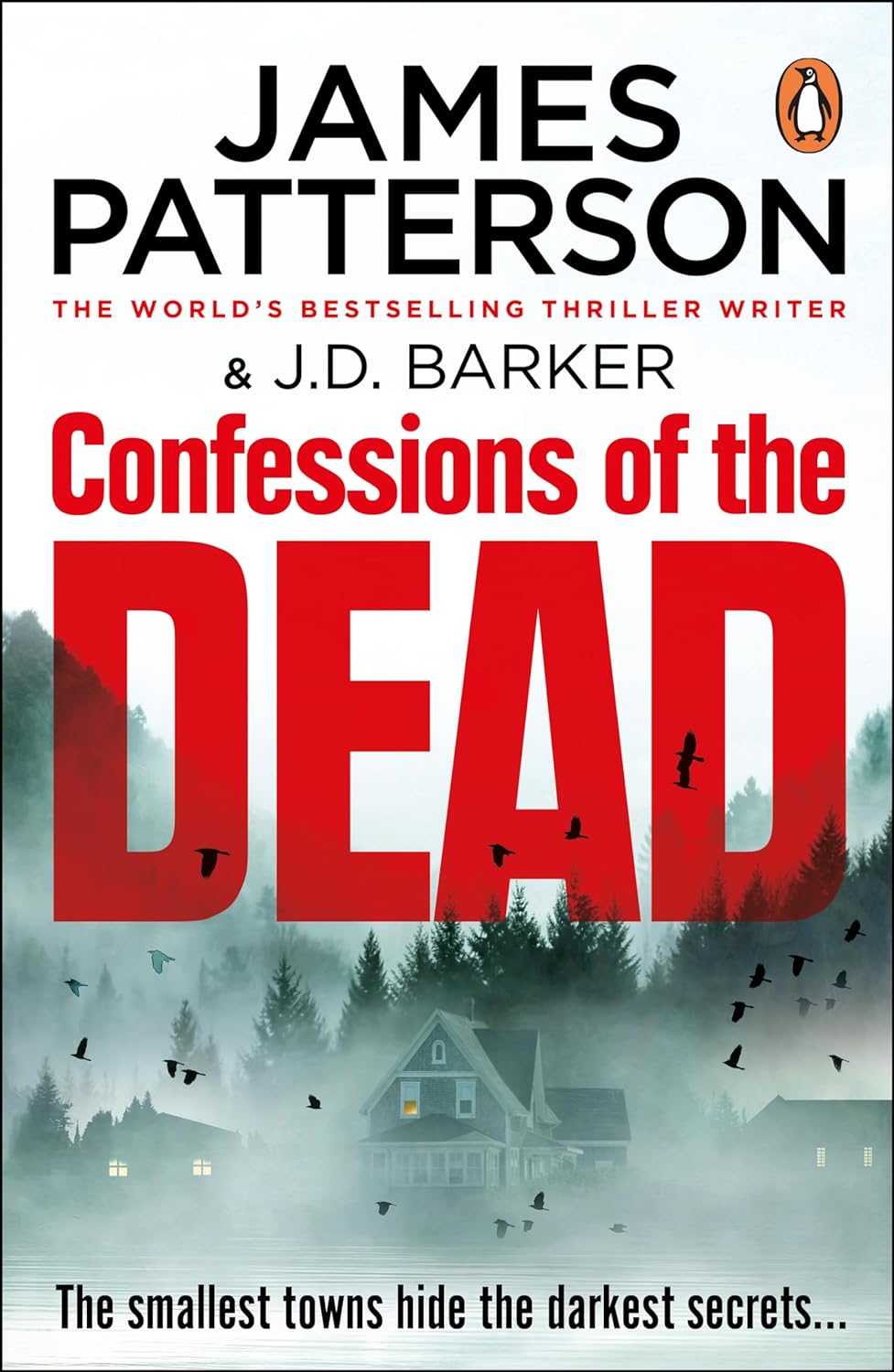
Quick Review – Confessions of the Dead by James Patterson and J. D. Barker

Publisher: Century (Trade Paperback – 2 July 2024)

Series: Standalone

Length: 454 pages

My Rating: 4.25 out of 5 stars

Amazon

One of the weirder and more compelling thrillers of 2024 so far has to be the unique Confessions of the Dead by the superstar team of James Patterson and J. D. Barker.

2024 has been an excellent year for both Patterson and Barker, as both authors have produced some excellent books.  Barker wrote the engrossing and highly adult thriller, Behind a Closed Door, while Patterson has continued to release a raft of compelling thrillers cowritten with talented authors, including The No. 1 Lawyer with Nancy Allen and The Murder Inn with Candice Fox.  As such it is unsurprising that the two would come together again this year with another collaboration, this time with the intriguing novel, Confessions of the Dead.  Their last collaboration, Death of the Black Widow, was one of my favourite books of 2022, so I was very excited to read Confessions of the Dead, especially as it featured a particularly interesting plot.

Plot Synopsis:

The smallest towns hide the darkest secrets . . . Drawing elements from the horror genre, this eerie standalone suspense thriller is perfect for fans of Stephen King.

The dead tell no tales . . .

Hollows Bend is a picture-perfect New England town. The crime rate – zero – is a point of pride for Sheriff Ellie Pritchett.

The day the stranger shows up is when the trouble starts.

The sheriff and her deputy investigate the mysterious teenage girl. None of the locals can place her. She can’t – or won’t – answer any questions. She won’t even tell them her name.

While the girl is in protective custody, the officers are called to multiple crime scenes leading them closer and closer to a lake outside of town that doesn’t appear on any map . . .


Confessions of the Dead
proved to be an intense and captivating horror/thriller hybrid as Patterson and Barker make the full use of their inventive narrative to unleash death, destruction and horror onto a seemingly innocent small town.  Starting off with a rain of suicidal birds hitting main street, and only getting darker and weirder from there, Confessions of the Dead follows several intriguing characters as they witness their fellow townspeople descend into madness and begin to enact dark and violent acts against each other, all while a mysterious teenage girl silently witnesses their hatred and crimes.  Things get even weirder, when it becomes clear that their town has become fully isolated from the outside world, with shadowy soldiers holding watch from the outskirts of town.  The various storylines soon reveal the dark secrets of Hollows Bend and the young girl seemingly causing the chaos, and you will not be prepared for the full truth that is revealed, and the terrifying implications.

This proved to be a rather interesting and horror-laden story that takes the readers in some surprising directions.  The narrative within Confessions of the Dead is spooky, deeply personal, and occasionally outrageous, as dark deeds slowly begin to sweep the town, turning the innocent townspeople against each other.  Patterson and Barker do a really good job of building up the mystery in the first half of the book.  There are so many intriguing secrets and mysteries lurking in this first part of the book, which are well matched by scenes of horror and human violence.  The fast-paced chapter changes that are such a distinctive part of Patterson’s writing style work wonders in conveying the unusual situation, and I loved how well the plot switched between multiple unique characters, all of whom have some dark secret they are hiding, even if they don’t know what it is.  The authors also add in some intriguing wrinkles to the plot through the use of multiple well-placed interludes that show a point in the future where one of the book’s protagonists is being interviewed by a member of the mysterious organisation keeping the town.  These inclusions really helped to build up tension as they hinted at events to come, while the elaborate setup surrounding the interviews, gave some idea of how serious the situation really was.

Everything leads up to a very intense second half of the book, as Confessions of the Dead’s story gets darker and darker.  Indeed, the authors build together a real horror/thriller vibe for Confessions of the Dead, which I honestly enjoyed, and it was great to see a more unusual and inventive thriller come out of the Patterson production machine.  There is an interesting combination of storylines in the second half of the book, from vigilante townspeople, monstrous killers, and even a Stranger Things/Goonies inspired sideline following a group of the town’s younger residents as they try to investigate the chaos engulfing the lives of their parents.  The authors set up a big and intriguing conclusion to the story, that provides a particularly unique ending that will stick in the reader’s mind.  I did think that Patterson and Barker did perhaps make the ending a little too complicated and meta for its own good, and that certain aspects of the crazy conclusions impacted my overall enjoyment of the book.  Still, this was for the most part a great story, and I had fun getting through it.

Confessions of the Dead was a particularly fascinating and memorable 2024 thriller that I was glad I checked out.  Written by the brilliant team of James Patterson and J. D. Barker, Confessions of the Dead had a wonderfully dark and brutal plot behind it, that allowed for quite the outrageous read.  Grim, intense, and featuring some interesting concepts, Confessions of the Dead proved very hard to put down and it will be interesting to see where these two authors go the future.
Amazon

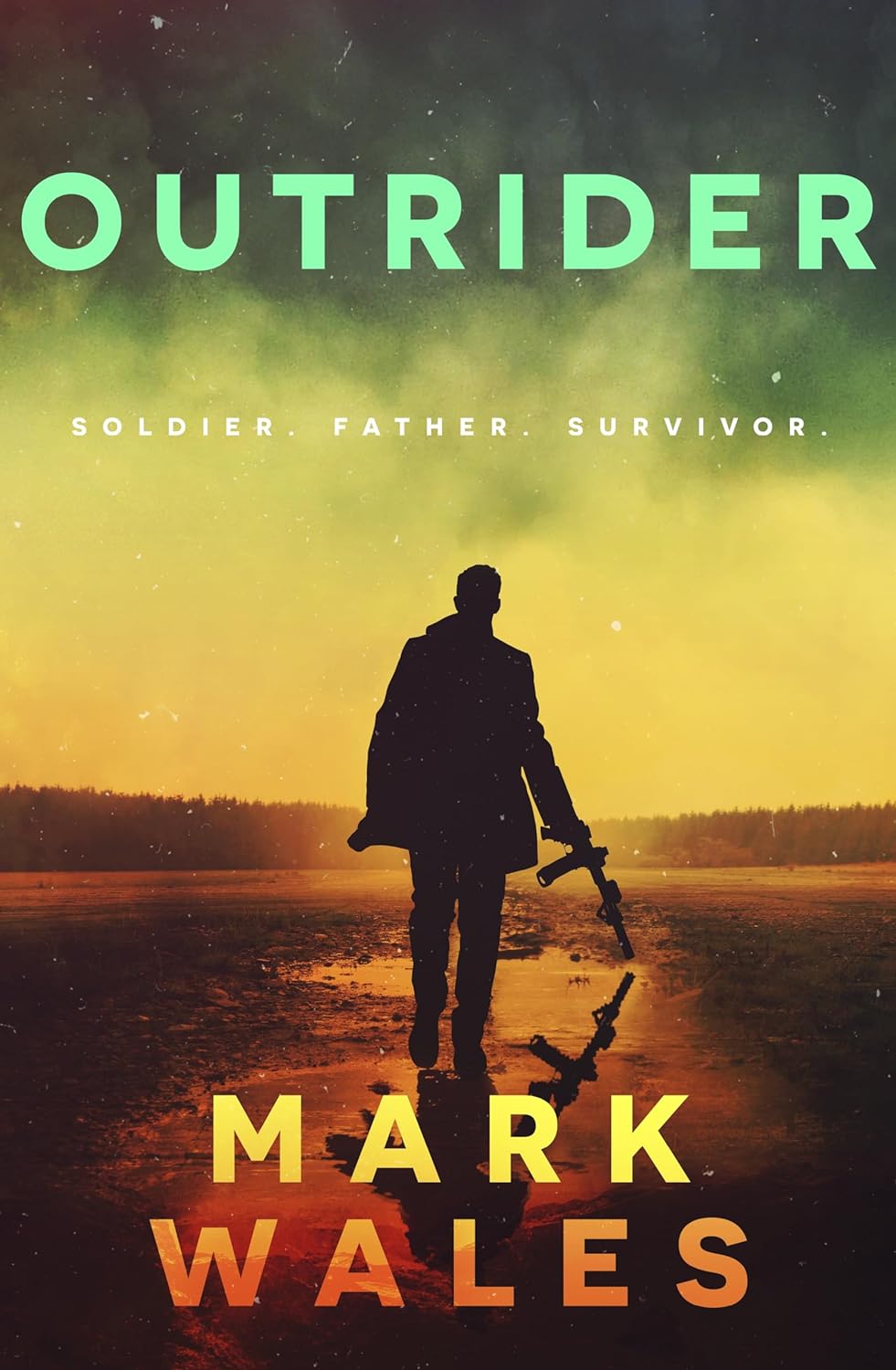
Quick Review – Outrider by Mark Wales

Publisher: Pan Macmillan Australia (Trade Paperback – 25 June 2024)

Series: Standalone/Book One

Length: 354 pages

My Rating: 4 out of 5 stars

Amazon

Former Australian soldier and current media personality Mark Wales presents a particularly exciting debut novel with the gripping thriller Outrider.  A gritty, intense, and absolutely action-packed dystopian thriller, Outrider is an awesome Australian novel readers will have a hard time getting away from.

Plot Synopsis:

Jack Dunne will do anything to save his son.

A violent civil war. An unstoppable enemy. One road to freedom.

In the wake of a global conflict, foreign forces occupy part of Australia, quashing all but a few pockets of local resistance. The tense stalemate ends in 2034, when Jack Dunne reignites the war.

Dunne is an Outrider, one of the last elite special operations soldiers in the Resistance. As the enemy prepare to eliminate the freedom fighters once and for all, he is tasked with his final mission.

If Dunne and his eleven-year-old son achieve the impossible, and survive, they’ll secure their future across the border in Free Australia.

But the road to victory will be bloody.

A cinematic action-thriller from bestselling author and veteran Mark Wales. Explosive and exhilarating, Outrider is a heartfelt father-and-son story of survival, resistance and hope.


Outrider
was an intriguing and complex novel that envisions a dark near future for Australian and sets loose a bold new action hero into the resulting carnage.  Set after a Chinese invasion of Australia, Outrider follows formidable resistance solider Jack Dunne and his son, Harry, as they attempt to save the lives of the last standing rebel fortress in Victoria from an upcoming war.  Given a mission to journey across occupied Australia to recover a military asset who can provide specialised assistance in the upcoming battle to come, Jack and his son will need to run a gauntlet of bandits, Chinese soldiers and members of the collaborating Victorian militia working for them.

This was an intense and exciting piece of Australian fiction, and Wales really dug deep to present an authentic tale of desperation and war.  Quickly and effectively introducing the 2034 dystopian setting, Wales takes the reader right into the action with a series of brutal early encounters that also set the rest of the narrative in motion.  From there, the story turns into an intense, Mad Max-style road trip as Jack and Harry embark on their journey to reach the required military asset and bring them back before it was too late.  This proves to be an excellent continued sequence, as the protagonists encounter obstacles and conflict, while also endearing themselves to the reader with a dive into their motivations and the history of events that drive Jack on.  The second half of Outrider proves to be even more epic and intense, as the protagonists desperately attempt to overcome the deadly forces coming for them.  This all leads up to the massive and impressive full on war sequence, with the fate of free Australia in the balance.  Wales does not disappoint when it comes to this final massive fight sequence, and readers will be blown away by how impressive the carnage gets.

Wales really dug deep here and produced an outstanding and fantastic debut novel that I just could not get enough of.  Making excellent use of his initial plot idea of a futuristic invaded Australia, Wales launches into a sharp and exciting narrative, that keeps grown in intensity as the book continues.  Unsurprisingly, considering the author’s background, the action sequences in Outrider are particularly well written, and Wales does an excellent job portraying the carnage of combat to the reader.  Each of these action sequences are well paced out and highly realistic (well, besides the highly advanced weapons), and the reader gets really drawn into them as a result as you can practically feel every shot or explosion.  While the main appeal of Outrider is the action and exciting story, I really appreciated that Wales took the time to set up several complex and compelling characters.  I felt that his protagonist, Jack Dunne, was an outstandingly damaged and angry main figure, whose loss of his wife is still raw for much of the book.  These intense emotions, as well as the bond he continues to form with his young son as they journey across Australia, adds a powerful edge to Wales’ narrative, and it helped Outrider be more than just an awesome action novel.

The final fantastic element I want to highlight about Outrider is the intriguing background setting of an invaded Australia.  Wales paints a haunting and disturbing picture of how this potential invasion would occur and in what form it would look like, and I liked the dark realism behind his ideas.  I particularly enjoyed how he portrayed the Chinese as only occupying key sections of Australia, rather than the whole continent, which honestly makes a lot of sense, and it allows the protagonist to slip between different parts of the country as a result.  The dive into collaborators and traitor militias continuing most of the fighting against the resistance, with China and the US playing proxy wars in the background, also had a tinge of realism behind it, even if we’d like to think differently.  Finally, the grim details surrounding the invasion add an urgent edge to the plot, and you find yourself pulling for the protagonists even more, especially after a powerful scene where they witness certain train carriages going by.  All of this proves to be an incredible background to a particularly exciting and engrossing read, and I loved seeing Wales’ intense look into the future.

Outrider by Mark Wales proved to be a particularly cool Australian thriller that I had an awesome time getting through.  An inventive and intense debut novel from Wales, Outrider comes highly recommended, especially for fans of Australian fiction with a ton of action, and it is really worth checking it.

Amazon

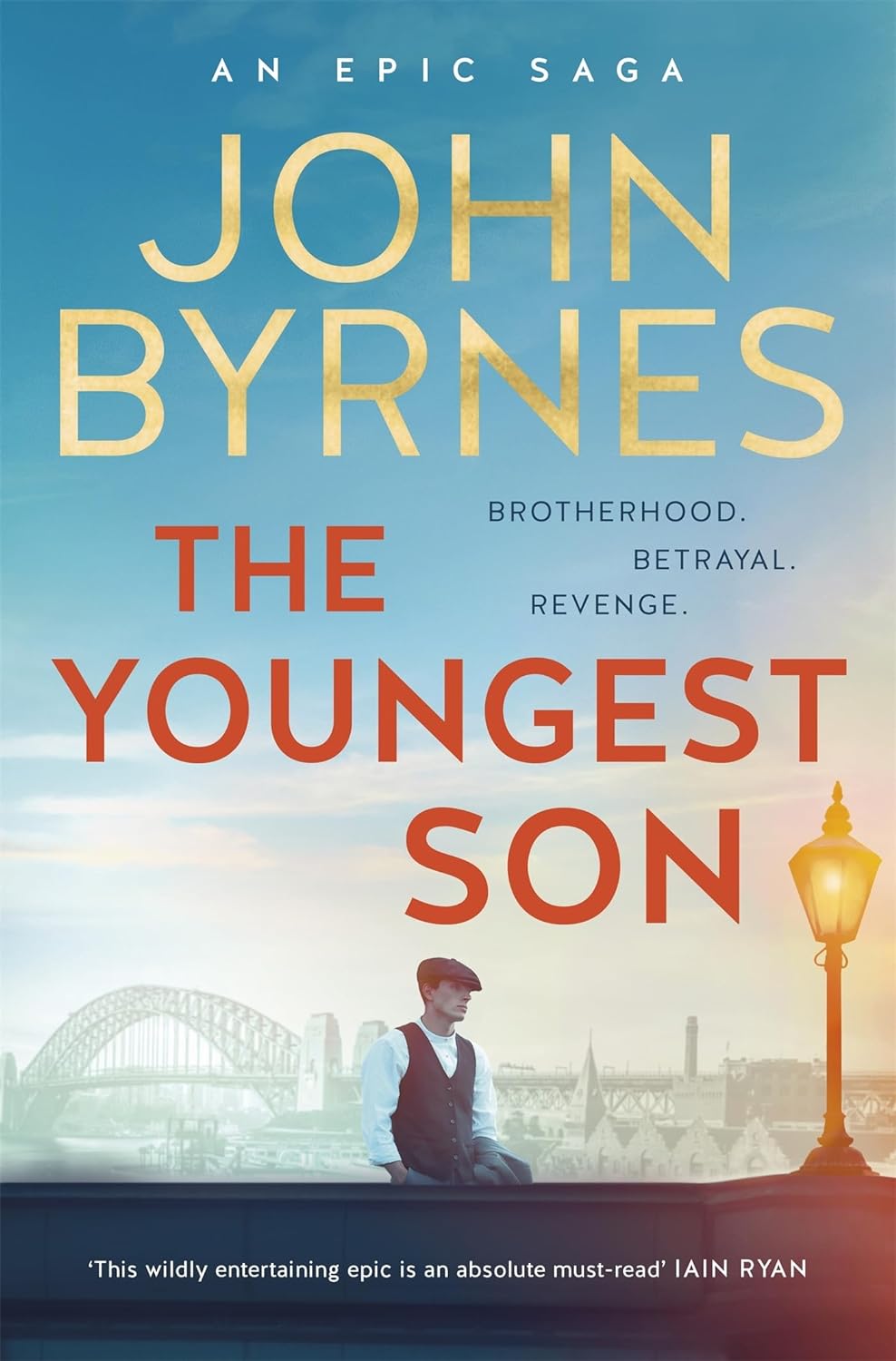
Quick Review – The Youngest Son by John Byrnes

Publisher: Pan Macmillan Australia (Trade Paperback – 30 July 2024)

Series: Standalone

Length: 386 pages

My Rating: 4.25 out of 5 stars

Amazon

Rising Australian author John Byrnes dives into a new genre with the fascinating and compelling historical fiction novel, The Youngest Son, which focuses an exciting and moving narrative around one damaged family.

Plot Synopsis:

On the unforgiving streets of 1920s Sydney, the Leach family have nothing but each other.

In a tale spanning decades, three children of the broken, working-class family find adventure, heartache and trouble as their lives drift apart.

John finds faith and love at a young age. The inevitable clash between the two leads him into a different kind of brotherhood as war clouds gather.

Maureen dreams of a life ‘just like the movies’ and waits to be swept off her feet. Yet at every crossroad, she makes the wrong choice.

Bob discovers a natural talent with his fists and an instinct for trouble. But with every win he earns the hard way, more enemies rise.

From police corruption and gambling dens to brothels and blood feuds, the Leach family toil in Sydney’s seedy underbelly and on battlefields far away. Against the backdrop of the Great Depression and the Second World War, The Youngest Son chronicles one family’s mesmerising fate in a grand saga and a masterclass in epic storytelling.

The Youngest Son was a fast-paced and addictive novel that cleverly followed the youngest members of a disadvantaged working class 1920s Sydney family through the highs and lows of early 20th century Australian history.  Byrnes, who really impressed me last year with his first novel, the gripping modern thriller Headland (one of my favourite debuts of 2023), did an outstanding job diving into the historical fiction genre, and I enjoyed the excellent and personal story that emerged.

The plot of The Youngest Son works very well, as Byrnes follows the varied lives of the three Leach children, John, Maureen and Bob, as well as a raft of other entertaining and complex characters.  Starting in the 1920s and continuing towards the end of World War II, The Youngest Son’s narrative splits between each of these primary characters and follows the highs and lows of their lives.  This includes the criminal activities of the youngest son, Bob, whose career fighting for Sydney’s criminal underbelly leads him into trouble time and time again.  The oldest son, John, attempts to live a good life and join the church, but misfortune and deceit instead lead him towards the horrors of war.  Finally, the daughter of the Leach family, Maureen, tries to find the excitement and glamour missing from her working-class life, but finds only heartbreak and bad decisions as she is constantly led along the wrong path in life.  Each of these characters experience conflict, betrayal, and tragedy as they attempt to find their way in life, and it helps produce one hell of a story.

I really enjoy historical fiction books that follow the lives of multiple characters as they follow their own path amid the backdrop of real-life history, and it is a format that has served many authors, such as Ken Follett, Jeffrey Archer and Peter Watt extremely well over the years.  Byrnes is another great author who perfectly utilised this story telling method, and I had a lot of fun getting to know the Leach family and their various friends and associates.  The author pulls together a great layered narrative, and I loved the mixture of story elements that emerged, including personal stories of self-discovery, a gritty war narrative, and a continued dive into the criminal underbelly of Sydney during the 1930s and 40s.  While all these major storylines are great in their own way, I personally found myself drawn more to Bob’s narrative, mainly because his dangerous dive into the world of underground boxing is full of excitement and action.

Each of the three main protagonists have intriguing journeys in their respective chapters, and I deeply enjoyed where each of their specific storylines go.  All their story arcs have a great mixture of success, tragedy and self-discovery, and you grow attached to all of them as a result.  The storylines also blend into a fantastic major narrative, and while for the most part they are kept separate from each other, they play off each other well, ensuring that readers get a good mixture of emotions and different experiences, as well as alternating character highs and lows.  Byrnes also makes excellent use of the 1930s and 40s background setting throughout The Youngest Son, and the author ensures each character’s story cleverly evolves to face the various changes occurring around Sydney.  The entire narrative goes in some interesting directions, and you willingly follow these characters wherever they end up, even if that leads you even deeper into tragedy.

While the three main characters are all entertaining in their own ways, I felt that the fourth perspective character Byrnes added in really helped to make The Youngest Son especially special.  This fourth character is the villainous Vince, a cowardly street thug who makes a big impact on the Leach family’s lives in different ways.  Vince proves to be a great recurring antagonist, and his slimy story of success blends in well with the alternating fortunes of the Leach children while also providing some real entertainment value.  You really cannot help but dislike Vince as he succeeds, but you really can’t look away as he succeeds, especially as his various dastardly and snivelling interactions with the other characters, primarily Bob and Maureen, prove to be excellent bridges between these protagonist’s respective storylines.  I really appreciate how Byrnes wove the story of Vince amongst the other major narrative threads of The Youngest Son, and the use of the excellent antagonist continuously moves the plot in the best direction, including with the big finale.

Overall, I felt that this was a great book from John Byrnes, who created an amazing and captivating novel with The Youngest Son.  A slick and easy-to-read novel with some real heart that makes excellent use of its impressive character-driven narrative, historical setting, and engaging protagonists, The Youngest Son is an awesome book to get lost in, and it was fantastic to see how Byrnes has grown as an author.

Amazon

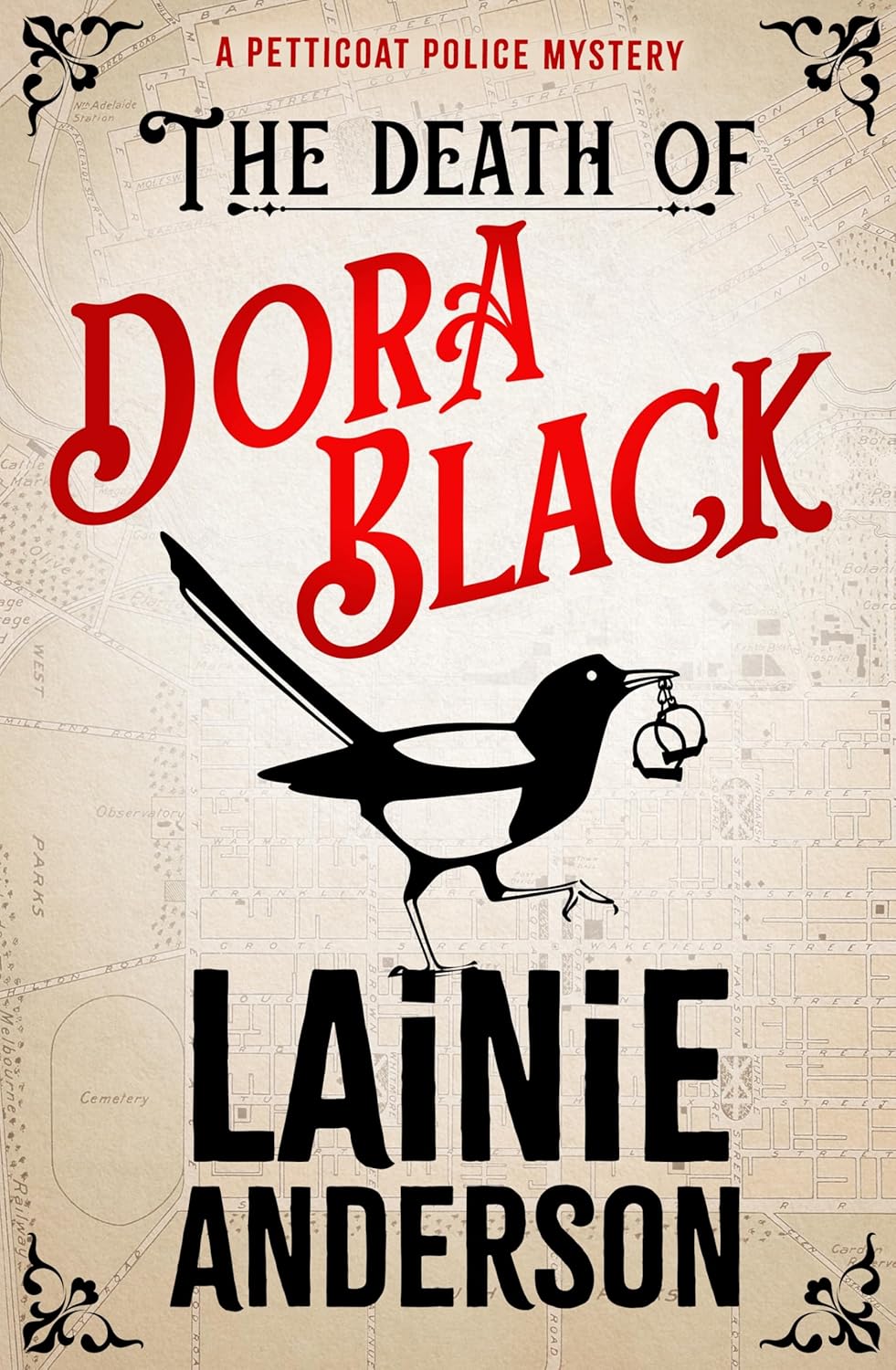
Quick Review – The Death of Dora Black by Lainie Anderson

Publisher: Hachette Australia (Trade Paperback – 28 August 2024)

Series: Petticoat Police Mystery – Book One

Length: 312 pages

My Rating: 4.25 out of 5 stars

Amazon

Australian author Lainie Anderson presents a fun and compelling historical murder mystery that looks at a unique Australian historical figure with The Death of Dora Black.

Plot Synopsis:

Summer, Adelaide, 1917. The impeccably dressed Miss Kate Cocks might look more like a schoolmistress than a policewoman, but don’t let that fool you. She’s a household name, wrangling wayward husbands into repentance, seeing through deceptive clairvoyants, and rescuing young women (whether they like it or not) with the help of a five-foot cane and her sassy junior constable, Ethel Bromley.

When shop assistant Dora Black is found dead on a city beach, Miss Cocks and Ethel are ordered to stay out of the investigation and leave it to the men. But when Dora’s workmate goes missing soon after, the women suspect something sinister, and determine to take matters into their own hands. After all, who knows Adelaide better than the indomitable Miss Cocks?

*In 1915, Fanny Kate Boadicea Cocks became the first policewoman in the British Empire employed on the same salary as men. This novel is a rich exploration of that little-known chapter of Australian history.*


The Death of Dora Black
was a particularly interesting and entertaining read from Lainie Anderson, who has struck upon a fascinating figure to set her book around.  The first book in Anderson’s new Petticoat Policy Mystery series, The Death of Dora Black was a clever novel that blended the real-life history of the infamous Miss Kate Cocks with the author’s own crime fiction narrative.

Starting out in Adelaide, 1917, the book’s story sees formidable real-life police officer Miss Kate Cocks become embroiled in a deadly murder mystery when shop assistant Dora Black is found dead on the city’s beach.  What follows is an excellent story that blends the historical exploits of Cocks, which included helping the needy of Adelaide in her own unique way and attempting to save the morality of the young women of the city with her cane, with a gritty informal murder investigation.  This later investigation of course adds most of the meat to the story, as Cocks, and her junior constable Ethel Bromley, uncover a dark conspiracy of murder, drugs and kidnapping, with its roots deep in the heart of the city.

Anderson brings these disparate elements together into a fantastic overall read, and it was fascinating to see the more cozy and historical elements you would associate with Kate Cocks and her real-life actions blend with a darker murder plot.  I felt that Anderson’s main murder mystery was very well set out, and the resulting investigation by two underestimated women got quite thrilling and exciting.  There are some dark moments and intriguing twists featured throughout this plot, and Anderson produces a particularly powerful crime fiction narrative.  The entire murder mystery and the investigative arc came together extremely well, and I really enjoyed seeing Anderson’s unique protagonists trying to solve the case in their own unique way.  The background setting of Adelaide during World War I also added quite a lot to the narrative, and the author provided a complex and detailed recreation of the historical setting.

The real highlight of The Death of Dora Black was the intriguing main protagonists, Miss Kate Cocks and her junior constable Ethel Bromley.  The two protagonists play off each other extremely well throughout the course of the novel, and the blend of personalities, with the strict but caring Kate and the sassy and exceedingly keen Ethel, proved to be a winning combination.  Readers will particularly enjoy Anderson’s portrayal of Miss Kate Cocks in this book, especially as the author tried to capture all this unique figures’ quirks and historical reputation.  Anderson, who is a major expert on Kate Cocks, paints her as a particularly complex and conflicted figure driven by her religious principals but also willing to do the moral choice and help anyone in need.  It was fascinating to see Miss Cocks wander around historical Adeliade, distributing her moral judgement with her cane, while also solving problems no-one else can.  Anderson succeeded in capturing various aspects of her occasionally controversial history, and I really appreciated the way in which she converted her into a fearsome crime-fighting force, capable of hunting down murderers and drug smugglers.  The utilisation of this very distinctive figure helped to turn The Death of Dora Black into something very special, and I look forward to more exploits with Miss Kate Cocks in the future.

Overall, I felt that The Death of Dora Black was an amazing and highly entertaining novel from Lainie Anderson, who successfully brings her real-life historical protagonist to life and sets a wonderfully enjoyable crime fiction book around her.  Clever, fascinating, and with a lot of crossover appeal to many different readers, The Death of Dora Black was a great book, and I had a ton of fun getting through it.

Amazon

Quick Review – Song of the Samurai by C. A. Parker

Publisher: Running Wild Press (ebook – 7 May 2024)

Series: Standalone

Length: 283 pages

My Rating: 4.25 out of 5 stars

Amazon

Intriguing new author C. A. Parker dives into an intriguing area of Japanese history with his debut novel, Song of the Samurai, a fantastic and deeply compelling historical read that I had a wonderful time getting through.

Fans of this blog will know that I have a lot of love for historical fiction, as it was one of the original genres that I started with as a book reviewer, and I still try to enjoy a range of great historical reads whenever I get the chance.  I also have a lot of love for Japanese history due to some amazing personal travels as well as my long-running fandom of the Usagi Yojimbo comics by Stan Sakai.  While there have been some very interesting Japanese historical fiction novels over the years (Child of Vengeance by David Kirk comes to mind), this setting doesn’t get utilised as some other historical backgrounds, which is a real shame when you consider just how awesome and complex the setting truly is.  As such, when I came across Song of the Samurai, I couldn’t pass it up, as it sounded like such an intriguing read.

Plot Synopsis:

Japan, 1745, is a land under the iron grip of the Tokugawa shoguns. Roads are monitored, dissent stifled, and order maintained through blackmail and an extensive network of informers. Amid rumors of rebellion, Kurosawa Kinko– samurai and monk– is expelled in disgrace as the head music instructor of his Zen temple in Nagasaki. He begins an odyssey across Japan, dogged by agents and assassins from an unknown foe. Along his journey, Kinko encounters a compelling cast of merchants, ronin, courtesans, spies, warriors, hermits, and spirits, on a quest to redeem his honor. Inspired by the life of the historical Kurosawa Kinko (1710-1771), master of the shakuhachi flute and founder of the Kinko-ryu school, Song of the Samurai takes the reader on a richly-textured exploration of feudal Japan and the complexities of the human spirit.


Song of the Samurai
is the debut novel of C. A. Parker and provides readers with a compelling and fascinating historical adventure that also utilises the author’s personal passions and passes on a heartfelt message about spirituality and self-determination.

The plot of Song of the Samurai is a fictionalised narrative of real-life historical figure Kurosawa Kinko, who is known for his teachings and spiritual journeys to learn the Japanese shakuhachi flute.  Parker reimagines Kinko’s history somewhat by showing him as a young man who undertakes an extended pilgrimage from his original temple in Nagasaki all the way to the capital in Edo.  Banished from his temple due to a romantic scandal, Kinko initially starts the journey in disgrace, but soon embraces his pilgrimage, learning more and more about the people of Japan.  This ended up feeling like a bit of a quest narrative, and Parker throws in some fantastic side stories brought on by the multitude of intriguing and unique supporting characters the protagonist encounters along the way, including bandits, spies, courtesans, peasants, fellow monks and more.

While many of these side storylines don’t last too long, they do weave together into a compelling tapestry of events that aim to enhance Kinko’s personal journey.  There is a particular focus on the spiritual, as Kinko begins to fully appreciate the significance of the shakuhachi and the music that he plays, as well as the many different people who make up the nation of Japan.  I loved the impressive character development that surrounded the protagonist throughout this book, and the growth in spirit and attitude makes for a moving heart to this great narrative.  Parker also works in a compelling recurring storyline about espionage and potential rebellion against the ruling Shogun family, as Kinko finds himself wandering the outskirts of dangerous actions.  This part of the book adds in a little necessary excitement and action, and I think it balanced well with the historical and personal elements of the narrative.  While I did think this espionage element could have been a stronger part of the plot, especially as it gets sidelined several times throughout Song of the Samurai, for the most part this was a particularly engrossing and captivating story, and one that I had had a fun time getting through.

As a huge admirer of Japanese history, I felt that Parker did an exceptional job of capturing the feel and impact of the setting throughout his narrative, and the many, many depictions of Feudal Japan was an impressive part of Song of the Samurai.  Thanks to his wandering protagonist, Parker visits a ton of major cities and towns throughout Japan, and I loved the elaborate descriptions that were featured, especially as the author goes out of his way to cover some of the most intriguing parts of the country.  I personally loved it when Kinko visited locations I have been to, and you can really feel the author’s love for the setting through his writing.  Parker also makes sure to fit in a lot of discussion about key parts of Japanese history and mythology throughout the book, often included as part of a conversation or the protagonist’s thoughts.  While some of these historical inclusions weren’t as organic as they could have been, for the most part I found them to be very fascinating, and they added some excellent context to the locations the protagonist visited.

Unsurprisingly when you consider the title of the book and the author’s passion for the shakuhachi flute, there is a huge focus on music in Song of the Samurai.  The playing of the shakuhachi is a huge part of the protagonist’s identity as a monk and as a man, and the author really tries to capture Kinko’s love of the flute with his excellent writing.  The many, many scenes of Kinko playing his music are some of the best parts of Song of the Samurai, and it allowed the author to showcase the protagonist’s spiritual connection to the music and provide him with new insights into the world around him, especially as he finds music in many different people and locations.  The extended sequence where Kinko spent time learning music from a hermit monk on-top of the mountain was particularly fascinating, and I liked how moving those scenes came across.  I felt that the author did an excellent job of readapting Kurosawa Kinko’s life story in the book by showcasing these early stages of his lifelong mission to collect and understand music, and you will come away from Song of the Samurai with a whole new appreciation for traditional Japanese music.

Overall, I felt that Song of the Samurai was an outstanding and intriguing debut novel from C. A. Parker, and one I was very glad I decided to check out.  Featuring an outstanding historical story that blended great characters with unique locations, Song of the Samurai was an excellent read, and one of the more unique novels of 2024.

Amazon

Quick Review – Alien Clay by Adrian Tchaikovsky

Alien Clay Cover

Publisher: Tor (Audiobook – 28 March 2024)

Series: Standalone

Length: 13 hours and 55 minutes

My Rating: 4.5 out of 5 stars

Amazon

Adrian Tchaikovsky continues to dominate the science fiction genre with his intriguing new novel, Alien Clay, an awesome read that blends high-concept science with a fantastic and insightful look at human nature.

Chronic overachiever Adrian Tchaikovsky is an author who is swiftly becoming one of my favourite science fiction and fantasy writers.  A master of complex and highly inventive fiction, Tchaikovsky has deeply impressed me in recent years with some of his outstanding works, including Day of Ascension (one of my favourite Warhammer 40,000 novels), the novella Ogres, City of Last Chances (one of my favourite audiobooks of 2023) and House of Open Wounds (one of my favourite books of 2023).  Due to how awesome these recent books have been, I have been keeping a close eye on Tchaikovsky’s upcoming releases, and I was pleasantly surprised to find out that he had four books coming out in 2024, including three science fiction reads and a cool fantasy release.  The first out this year is the fantastic novel, Alien Clay, which saw a group of convicts deal with unnatural issues inside and outside their prison complex on a hostile alien world.

Plot Synopsis:

They travelled into the unknown and left themselves behind . . .

On the distant world of Kiln lie the ruins of an alien civilization. It’s the greatest discovery in humanity’s spacefaring history – yet who were its builders and where did they go?

Professor Arton Daghdev had always wanted to study alien life up close. Then his wishes become a reality in the worst way. His political activism sees him exiled from Earth to Kiln’s extrasolar labour camp. There, he’s condemned to work under an alien sky until he dies.

Kiln boasts a ravenous, chaotic ecosystem like nothing seen on Earth. The monstrous alien life interacts in surprising, sometimes shocking ways with the human body, so Arton will risk death on a daily basis. However, the camp’s oppressive regime might just kill him first. If Arton can somehow escape both fates, the world of Kiln holds a wondrous, terrible secret. It will redefine life and intelligence as he knows it, and might just set him free . . .


Alien Clay
was another awesome and complex read from Tchaikovsky that combined his trademark love of high-concept science fiction, with cynical examinations of human nature and society.  Set in a dark future where a tyrannical government places intense doctrinal limitations on scientific study, Alien Clay is told from the perspective of Professor Arton Daghdev, an ecologist who has been exiled to the Kiln labour camp in dramatic fashion due to his radical scientific and political thoughts.  Initially employed as a lab assistant researching the highly unusual biology and apparent extinct intelligent life on Kiln, Arton walks the thin line between rebel and survivor.  However, his actions soon lead to him to be forced to explore the planet’s surface, and the changes wrought by the alien biology outside will have a profound effect on everyone left on Kiln.

This proved to be another excellent standalone novel from Tchaikovsky, and you must appreciate his ability to craft another unique setting and set up a compelling narrative within it.  The alien planet the narrative is set around is loaded with unusual biological life that bonds with both itself and the human invaders in a very memorable manner, and I loved how weird things got at times.  Tchaikovsky blends the story of the protagonist attempting to survive on the planet, with an intriguing focus around political ideology, revolution, and scientific freedom of the future human society.  As such, Alien Clay turns into a mixture of science fiction adventure and a political dystopian thriller, as the protagonist is forced to navigate both to survive.  These elements are explored in immense detail by the author, and I loved how effortlessly he brings the unique future to life while also layering in some subtle critiques and observations about our own current society and where it is possibly going.

Tchaikovsky did a great job of showcasing all the unique features of Alien Clay through the eyes and mind of his protagonist, who is the position to understand all the science, politics, and social elements of the setting.  Loaded with a tragic and complex backstory, Arton proves to be a compelling and relatable protagonist to follow.  Forced to overcome the enforced conflicts of his society, the shock at being trapped on an alien world, his stymied scientific curiosity, and so many more setbacks, Arton attempts to find solace in the groundbreaking biology of Kiln.  However, when his plans for Kiln go out the window, thanks to the fantastically villainous warden of the prison camp, Arton and a group of other entertaining and compelling prisoners find out just how alive Kiln can be.  Tchaikovsky does an excellent job of combining various story elements, including the adventures on Kiln, Arton’s personal rebellious history, and all manner of scientific weirdness, into a single cohesive narrative, and the resulting explosive plot goes in some very interesting directions.  The author keeps the tension and intrigue up for as long as he can, including through cleverly skipping a key part of the story and only featuring it later through flashbacks.  The ending of the book is very Tchaikovsky and makes excellent use of his scientific and social observations and messaging.

I ended up listening to the audiobook version of Alien Clay, which proved to be a very enjoyable and interesting experience.  The audiobook, which had a run time of just under 14 hours, did a great job of telling Tchaikovsky’s complex story, and I appreciated how the story was presented in this format.  The unique and intriguing ideas from Tchaikovsky, both scientific and political in nature, really come across more effectively in this format, and I felt that I understood the many nuanced themes and messages that Tchaikovsky was trying to impart with his story a little better.  I also really enjoyed the narration featured in the Alien Clay as narrator Ben Allen proved to be an excellent addition to the production.  Allen did an amazing job capturing the complex figures with Alien Clay, and his compelling tones really helped to convey all the weird science and alien creatures that the protagonist encountered, as well as the intense personal issues surrounding the protagonist and his companions.  I honestly really enjoyed the Alien Clay audiobook, and I felt that this was a really great way to enjoy this compelling story.  There is also a fun interview between Allen and Tchaikovsky at the end, that will definitely appeal to fans of the author.

Overall, Alien Clay was a clever and unique science fiction novel that I had a fantastic time listening to.  Blending Adrian Tchaikovsky’s brilliant imagination and ability to tell a compelling and complex story, Alien Clay had me hooked the entire way through, and I loved how inventive and scientifically crazy the story got at times.  I am hoping to get to Tchaikovsky’s second novel of the year, Service Model, soon, and I have no doubt it is also going to be an outstanding read.

Amazon

Alien Clay Cover 2

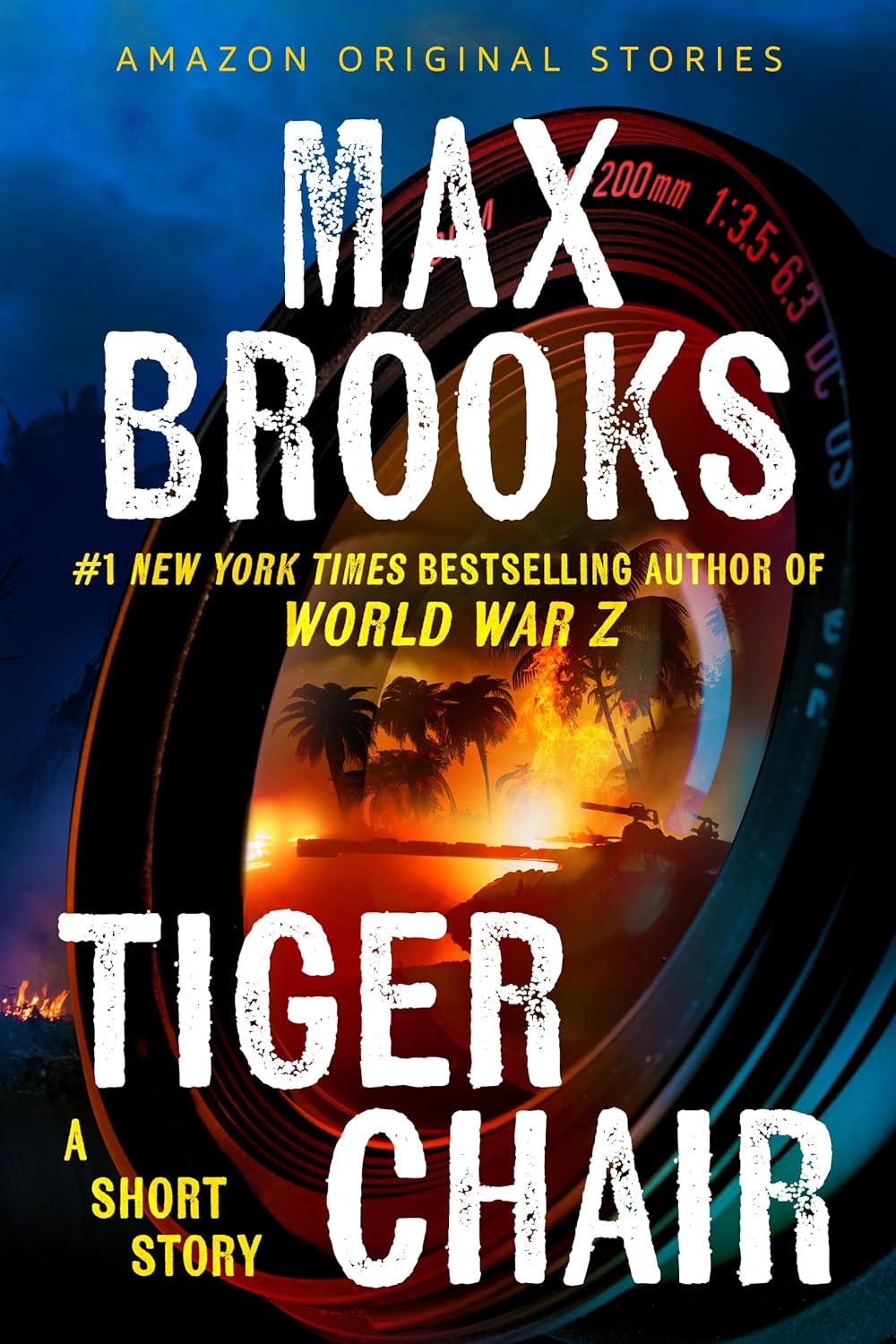
Quick Review – Tiger Chair by Max Brooks

Tiger Chair Cover

Publisher: Amazon Original Stories (ebook – 1 June 2024)

Series: Standalone

Length: 50 pages

My Rating: 4 out of 5 stars

Amazon

I was recently lucky enough to receive a copy of the new short story from acclaimed author Max Brooks, Tiger Chair, which instantly grabbed my attention.  Brooks is an author I have a lot of love for, especially as his two main novels are huge favourites of mine.  This includes his most iconic work, World War Z, which I had an exceptional time listening to a few years ago due to its complex story and the impressive array of celebrity narrators associated with the audiobook version of it.  Brooks followed this up a couple of years ago with the compelling horror read, Devolution, that saw an isolated community attacked by sasquatches in an outstanding and exciting read.  Devolution ended up being one of my favourite books of 2020 and ensured that I would check out anything else that came my way from Brooks.  As such, I made sure to read through Tiger Chair as soon as a got it, as I was intrigued by the content.

Plot Synopsis:

When China invades America, guerrilla warfare explodes on the streets of Los Angeles in this provocative short story about the future of war from Max Brooks, the #1 New York Times bestselling author of World War Z.

China thought it would be a quick war, an easy war. But now, years later, as the insurgency on the streets of Los Angeles escalates but the propaganda never changes, a Chinese officer can’t keep silent any longer. Torn between loyalty to his country and loyalty to his troops, he writes a brutally honest—and possibly suicidal—letter home to unmask the truth.

Brooks combines his signature meticulous research with unforgettable characters in this landmark work of speculative fiction.

This was a very interesting read from Brooks that I was able to power through in a short amount of time.  Set in the future, Tiger Chair is written as a secret letter from a Chinese officer involved in a fictional invasion of the United States to a friend back home.  In this letter, the officer describes the various hardships of the invasion, including the escalating insurgency in Los Angeles, who are pushing his soldiers to the limit with their intense attacks and low-tech strategies.  However, his priority in writing this potentially treasonous letter is to highlight his despair at the ineffective and inflexible strategies of his side, which care more for propaganda than the lives of their soldiers and the civilians, and his desire to see the war come to an end.

I felt this was a rather interesting choice of story for Brooks to write, and it reminded me of the cynical memories of a professional soldier during the zombie wars of World War Z.  Brooks paints a grim and gritty story of survival and duty in the Tiger Chair, and you can easily feel the frustration and fear of the protagonist as he attempts to highlight his feelings about how the war is being run and the various lies he and his soldiers have been fed by their superiors.  The author really captures the way that the protagonist is caught between loyalty to his country and his anger at how events have unfolded, especially as he is powerless to impart any effective change to the situation.

I was quite impressed by the various scenarios that Brooks imagined for this future war in Tiger Chair, and his vision for how events might unfold in this scenario, as well as the technology that would be utilised for it, is very fascinating.  While I am sure that there will be some criticism of Brooks trying to imagine the feelings of Chinese soldiers in a war they might not even undertake, I felt that the Tiger Chair was more of a general warning about the futilities of war, and the frustrations of the lower ranks at the mistakes of their politically motivated superiors.  Indeed, many of the issues the protagonist raises could be applied to many other historical or current wars, and there are several allusions to them in the plot.

Brooks does also attempt to get into the Chinese mindset, which I honestly think he did a good job of considering he had less than 50 pages in which to do so.  There is an interesting examination of the national identity and how their history and culture would influence them into going to war, and the various opinions people within the country would have about these battles.  Brooks also includes some commentary of recent well-known events and controversies involving China, which is more geared towards central criticism than specific critiques of the Chinese.  For example, while he mentions the way in which China influences American media and movies for their own purposes, the protagonist’s resulting criticism are more directed towards the media companies that allowed them to happen as they sacrificed their principles for money.  These and other observations an about current society are quite interesting and make for quite a compelling story.

Overall, I felt that Tiger Chair was a compelling and intense short story from Brooks that brings together some intriguing ideas and predictions.  While I probably would have avoided Tiger Chair if it weren’t Brooks writing it, mainly because I prefer full-length novels to short stories, I’m glad I checked this out, and it ended up being a fascinating and powerful read.

Amazon

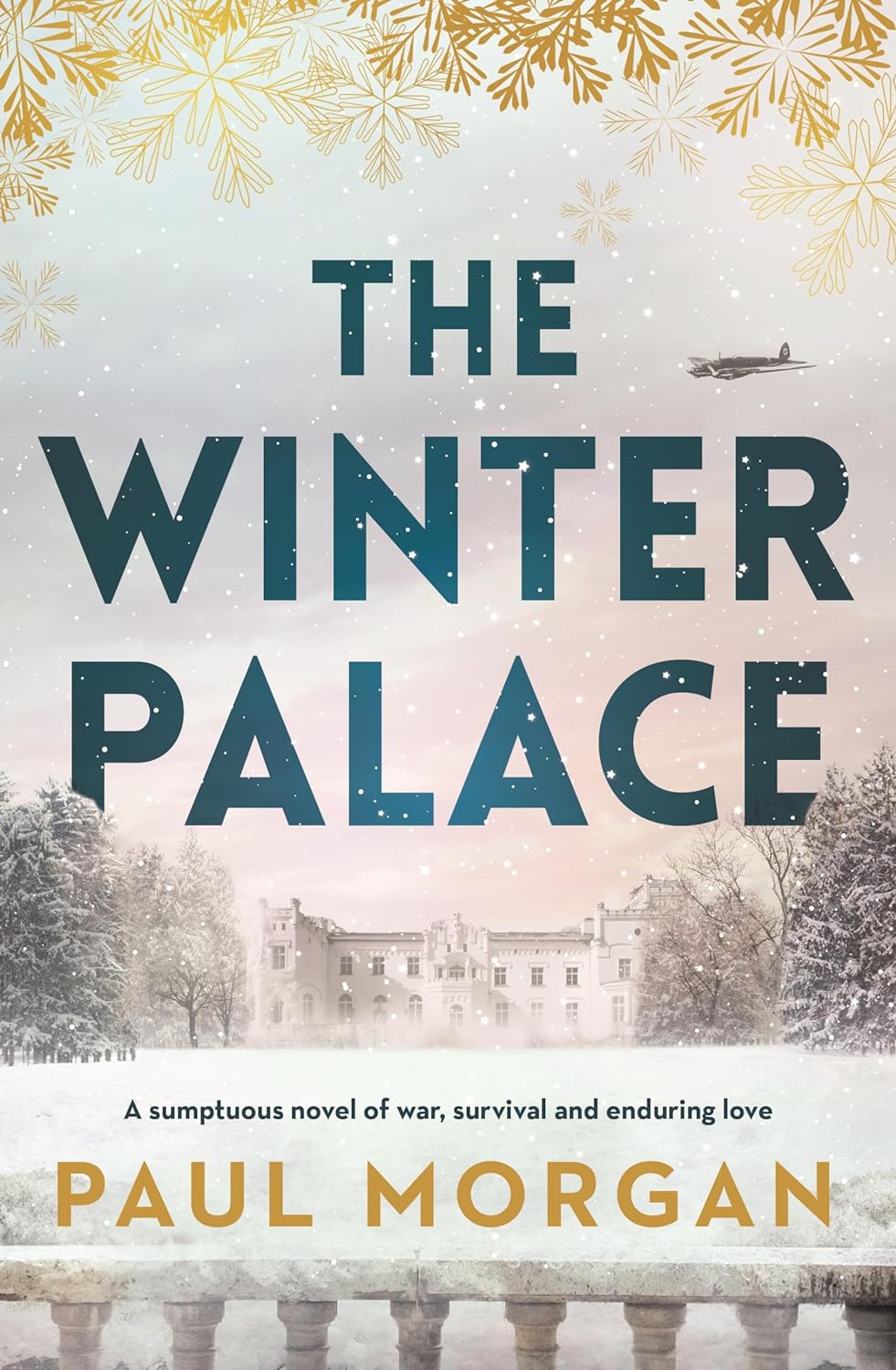
Quick Review – The Winter Palace by Paul Morgan

The Winter Palace Cover

Publisher: Penguin Books (Trade Paperback – 26 March 2024)

Series: Standalone

Length: 329 pages

My page: 4.25 out of 5 stars

Amazon

Compelling Australian author Paul Morgan presents an intense and intriguing historical drama that examines the tragic lives of a Polish husband and wife who find themselves torn apart by war and circumstance in The Winter Palace.

Plot Synopsis:

If he had died, I would know it in my heart.

In 1939, Anton, a captain in the Polish army, says goodbye to his wife, Elisabeth. He is leaving to defend their homeland against the invasion by Nazi Germany and Russia. They make a vow that – whatever happens, however much time passes – they’ll meet again at the Winter Palace, their stately home in the Polish countryside.

The winds of war draw them far apart. Anton is captured and sent to Siberia as a POW. He eventually joins a lost army that battles through snowstorms and scorching deserts in Central Asia to find freedom. Anton survives, driven by his determination to join Elisabeth again. She, meanwhile, is forced to be the ‘mistress’ of a Nazi officer before escaping to join the Polish resistance.

As the war ends, Anton and Elisabeth are at the opposite ends of the world. Anton is in Australia. Elisabeth is in Poland, awaiting his return for months and then years. Will they ever meet again at the Winter Palace?

From 1930s Europe to present-day Australia, this is a sweeping story of love that cannot be broken by time, distance, war or even death.

Morgan came up with a powerful and captivating tale in The Winter Palace which really hits hard.  Following Anton, a Polish military captain, and his wife Elisabeth, The Winter Palace features a well-planned-out split protagonist storyline that shows their respective dark journeys during the destructive chaos of World War II.

Both character-focused storylines are interesting and dark in their own ways, especially as the two protagonists go through hell and back as part of their respective war stories.  Anton’s plot follows the fate of the Polish soldiers who were captured during the joint Nazi and Soviet Invasion.  In Anton’s case, he experiences being a Soviet POW, a reluctant Soviet soldier fighting the Nazis, and then a member of the Allies when the Soviets send their freed Polish soldiers to Palestine.  Elisabeth’s story is more Poland focused, as she is forced to become a Nazi ‘mistress’ before escaping and finding purpose, first as a nurse, and then as a member of the Polish resistance.  Both storylines go in some very compelling directions, as the protagonists experience major traumas, tragedies and struggles, all while the two characters are convinced that they will never see their spouse again.

I honestly have a hard time saying which of these two storylines was my favourite, as both hit you in different ways.  Anton’s was possibly the more interesting to me as a fan of military history, and I found his constant struggle to survive the direct imprisonments he experienced to be both moving and intense.  There are some very direct tragedies in Anton’s experiences, including a particularly dark moment in the first half of the book, and I really found the story of the captured Polish soldiers to be extremely fascinating.  However, the other half the book that focuses on Elisabeth is just as dark, if not even more traumatic, especially as the protagonist experiences evil she can’t fight back against, at least not at first.  Watching her overcome her constant oppression and pull together a satisfying life that allows her to help people on many fronts was particularly inspiring, and I really enjoyed how her arc came together.

While these storylines are separate for the entirety of the plot, I felt that Morgan did a good job playing them off each other. The corresponding tragedies, the near misses in finding out each other’s fates, and the decisions they make as a result are all moving and captivating, and you are constantly enthralled to see if or how they will get back together.  I think that the ending Morgan left the book on was particularly moving, and it fit the overarching themes of the tragedy of war and not knowing about those left behind.  I also appreciated how Morgan didn’t overuse the trope of Australian descendants finding out the wartime secrets of their parents or grandparents.  Instead, readers were given a simple but highly effective connection to the present that ended the story on a thoughtful and peaceful note that was a great conclusion to such an intense story.

I really must emphasise how impressed and intrigued I was by some of the historical elements captured in The Winter Palace.  Morgan does an amazing job of showcasing various alterative experiences suffered by the Polish, from the initial invasion all the way up to the end of the war.  This includes a great rundown of how many citizens, especially women, were abused in Poland as the troops rolled in, which ensured a dark aura around the potential homecoming many characters were hoping for.  However, I found the historical details of the Polish soldiers and civilians captured in the opening days of the invasion to be the most interesting.  Watching the various hardships and journeys that these individuals had to go through during the war, including being POWs, having to fight alongside their former captors against the Nazis when they found themselves on the same side as the Soviets, and the transfer of their army to the Middle East to serve with the Allies on the Western front was extremely fascinating and it was an part of history you don’t see often in fiction.  These historical details from Morgan where some of my favourite parts of the book, and I deeply appreciated the compelling story he told around them.

Overall, The Winter Palace by Paul Morgan was an outstanding and compelling historical drama that really grabbed my attention.  Powerful, unflinching and focusing on a complex and dark period of our history, this was an emotionally charged and excellent read that is really worth checking out.

Amazon

Quick Review – Body of Lies by Sarah Bailey

Body of Lies Cover

Publisher: Allen & Unwin Australia (Trade Paperback – 27 February 2024)

Series: Gemma Woodstock – Book Four

Length: 470 pages

My Rating: 4.5 out of 5 Stars

Amazon

One of Australia’s best authors of crime fiction brings to life another complex and intense murder mystery with Body of Lies by Sarah Bailey.

Plot Synopsis:

A car crash victim clings to life and is rushed to hospital but can’t be saved. Hours later, her corpse is stolen from the morgue. No one knows who the dead woman was or why her body was taken.

Detective Sergeant Gemma Woodstock is back in her hometown of Smithson on maternity leave when the bizarre incident occurs. She is intrigued by the case but reluctant to get involved, despite the urging of her journalist friend Candy Fyfe. But in the days after the body goes missing, the town is rocked by another shocking crime and Gemma can’t resist joining the investigation.

Candy and Gemma follow the clues the dead woman left behind. As they attempt to discover the identity of the missing woman, Gemma uncovers devastating secrets about the people she thought she knew best. The closer Gemma gets to the truth, the more danger she is in. She desperately needs to confide in someone—but is there anyone she can trust?

This was another interesting and compelling read from Bailey, who really impressed me back in 2021 with her standalone novel, The Housemate, which ended up being one of my favourite books and Australian novels of that yearBody of Lies is another outstanding book from Bailey, which serves as the fourth entry in her Gemma Woodstock series and provides the reader with an amazing and dramatic mystery.

I had a lot of fun getting through Body of Lies as Bailey comes up with an elaborate story that really draws you in.  Whilst it is part of a larger series, Body of Lies is easily read as a standalone novel, with Bailey doing a good job of reintroducing key elements from the previous novels where necessary.  Thanks to this, Body of Lies has a quick start which reconnects readers with the protagonist while also providing key information about the initial death, as well as the unusual circumstances surrounding the missing body.  Despite still being on maternity leave, protagonist and main point-of-view character Gemma Woodstock begins investigating, and soon finds herself drawn into a series of additional crimes in the Smithson area that may or may not be related to the stolen body.

This resolves into quite an awesome story, as you really get drawn into Body of Lies’s intense and intricate mystery.  Bailey keeps making the case even more complex thanks to additional deaths and other unusual events, and the constant raising of stakes ensures the reader’s attention stays on the story.  At the same time, the protagonist’s personal life also takes centre stage in the plot as Gemma deals with a new baby, a traumatised older child, a lying family, a pushy friend, and multiple work conflicts as she attempts to reintegrate back into her own job.

While I got really invested in the story, I think that the final third of Body of Lies got a little off the rails.  Not only are there a huge number of emotional and family dramas surrounding the protagonist, many of which seem a little unnecessary, but there proves to be a huge number of personal connections to the case that drive the protagonist on.  While I liked the increased motivations for the protagonist, these connections seemed way too coincidental, and honestly it stole a lot of realism from the plot.  I also did get a little tired of the many personal dramas that seemed to surround the protagonist.  While I realise that Bailey was trying to showcase the complex life of her protagonist, much of which is driven by the tragic events of the prior books, as well as the side effects of single-minded determination to finding the truth, it honestly got a bit frustrating to follow her at times.  Still, Gemma’s struggles out of her own obsessed mind added some excellent drama and substance to the narrative and Bailey certainly kept her story arc interesting.

The solution to the big mystery turns out to be pretty darn bonkers, and I guarantee most people won’t see the full extent of it coming.  While Bailey did do a good job of setting this reveal up and laying down some hints, it ended up being a very surprising and over-the-top solution that might not work for everyone.  Still, readers are left with an excellent final confrontation and the mystery ends up wrapping up in a satisfying and intriguing way.  There is also a really good twist around a hidden antagonist, which is guaranteed to shock readers and keep them on their toes.  As such, this was a pretty awesome story, and I had a wonderful time getting through it.

In the end, Body of Lies proved to be an outstanding and highly exciting novel that drew me in with its elaborate mystery.  While I didn’t love everything about Sarah Bailey’s new narrative, Body of Lies was still an amazing piece of Australian crime fiction, and well worth a read for anyone looking for a complex and impressive mystery with compelling character elements behind it.

Amazon

Quick Review – Glenrock by Lee Christine

Glenrock Cover

Publisher: Allen & Unwin Australia (Trade Paperback – 30 January 2024)

Series: Standalone

Length: 320 pages

My Rating: 4.25 out of 5 stars

Amazon

Bestselling Australian author Lee Christine brings together a compelling and intriguing crime fiction read with the excellent Glenrock; a fantastic mystery set around the Australian city of Newcastle.

Plot Synopsis:

A murdered judge. Two missing lawyers. A thrilling tale of mystery and suspense from the bestselling author of Charlotte Pass and Dead Horse Gap.

When Justice Maurice Tempest is murdered in the Glenrock State Conservation Area in Newcastle, local detective Senior Sergeant Callan O’Connor is the first on the scene. News of a second body, found in the same location days later, makes what had looked like a revenge killing into so much more.

Angela Avery, formerly a political journalist, is spending a lot of time at the Hunter Valley Prison interviewing a soon-to-be-released forger, Benjamin Reid. When O’Connor’s investigation reveals an interest in Ben, Angela is determined to protect both her source and her fledgling relationship with O’Connor.

Meanwhile, two young, female lawyers have disappeared after making a devastating discovery in an upcoming case. Can O’Connor unravel the connections before the body count rises further? And how much does Angela Avery really know?’…


Glenrock
was a great and fast-paced crime fiction novel that I had the great pleasure of reading earlier in the year.  Christine came up with a fantastic story that really drew you in thanks to its multilayered mystery, compelling characters and high stakes.

The main mystery of Glenrock is set around the murder of a prominent judge in the Glenrock National Park area, which sets off an elaborate investigation primarily seen through the eyes of Senior Sergeant Callan O’Connor.  O’Connor is a great central protagonist, and I enjoyed his intriguing insights into the case, especially as it pairs well with his complex family life and adversarial past with the Sydney homicide detective who arrives to take over the case.  While the murder of a judge would be an interesting focus for the book by itself, especially when the apparent murderer is found in the most unlikely of scenarios, Christine raises the stakes by introducing two parallel storylines that combine into one heck of a novel.

The first of these storylines revolves around Angela Avery, a journalist for the local paper who finds herself drawn into the larger murder story thanks to the human-interest story she was writing.  Thanks to her relationship with Callan, which provides a good romantic subplot for the story, Angela gets more involved with the case, especially as her investigation reveals connections to two young lawyers who disappeared the day of the murder.  These two lawyers, who went on the run to save themselves, provide the third overlapping storyline, and it was fascinating to see their attempts to flee, especially as they provide some compelling context to the main mystery.

All three storylines prove to be very entertaining on their own, but their real strength is the way that they wrap together and form a complex, overarching narrative.  Christine ensures that all three character-focused storylines stand on their own before bringing the various characters together in a sensible and compelling way.  I really enjoyed seeing the various story arcs come together, and Christine enhances this with several moving dives into the complex characters.  The focus on O’Connor’s family life is a prominent one, although I was particularly drawn to the character of Angely Avery, the plucky reporter who drives much of the plot’s investigative angle.  Christine draws together a complex and harrowing past for Avery, as her previous reporting experiences resulted in great pain, and I would be very interested to see Christine revisit these characters in the future.  The entire story, including the clever mystery, comes together extremely well, and Christine ensures there are some intriguing twists and reveals that keep you hanging in to the very end.  Throw in some excellent depictions of Sydney and the picturesque area surrounding Newcastle, including Glenrock, and this proves to be quite an impressive read.

Overall, Glenrock was an excellent piece of Australian crime fiction by Lee Christine that I had a wonderful time reading.  The combination of a compelling story, fantastic characters and an intriguing mystery is hard to resist, and readers will come away from Glenrock very satisfied.  An amazing and exciting read from a talented Australian author.

Amazon