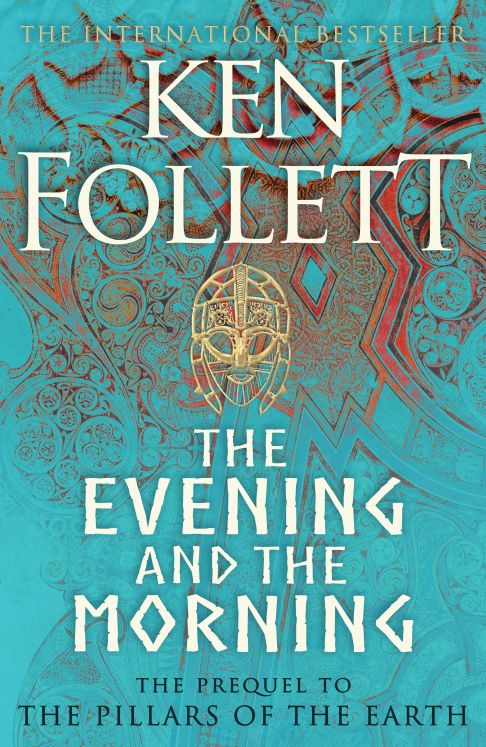
The Evening and the Morning by Ken Follett

The Evening and the Morning Cover

Publisher: Macmillan (Hardcover – 15 September 2020)

Series: Kingsbridge – Book 0

Length: 819 pages

My Rating: 5 out of 5 stars

Amazon     Book Depository

Following three long years of waiting, one of the best authors of historical fiction in the world today (and one of my all-time favourite authors), Ken Follett, returns with another historical epic, The Evening and the Morning.

Follett is a highly acclaimed author who has written a number of impressive bestsellers over his 45+ year writing career.  After starting off with thriller novels, Follett really hit his literary stride when he moved on to massive historical fiction novels.  After experiencing great success with the iconic The Pillars of the Earth, he has gone on to produce several other epic books, including two sequels to The Pillars of the Earth and the outstanding The Century trilogy.  I have been a major fan of Follett for years ever since I had the great pleasure of reading The Century trilogy.  This was followed up with the second sequel to The Pillars of the Earth, A Column of Fire, which was easily one of my favourite books of 2017.  Thanks to how overwhelmingly compelling each of these previous novels were, I have been eagerly waiting to read his latest novel, The Evening and the Morning, for a while now, and it has been one of my most anticipated novels for the second half of 2020.

The Evening and the Morning is a character driven historical fiction novel that is set near the end of the Dark Ages of England.  The novel actually serves as a prequel to Follett’s bestselling The Pillars of the Earth and is part of Follett’s Kingsbridge series.  The Kingsbridge novels are all set within the fictional town of Kingsbridge, which each novel exploring a different period of English history (for example The Pillars of the Earth is set between 1123 CE and 1174 CE, while its sequel, World Without End, starts in 1327 CE).  This prequel is once again set in the same area, with the novel running between 997 CE and 1007 CE.

At the end of the 10th century, England is far from settled and faces attack from external threats.  One particularly vicious Viking raid causes untold damage at the town of Combe, near the city of Shiring, and sets off a chain of events that will change the area forever.

Following the raid, one of the survivors, a young boat builder named Edgar is forced to abandon his home and follow his family to the small hamlet of Dreng’s Ferry.  Living amongst the unwelcoming locals and corrupt landlord, the brilliant Edgar chafes and tries to find a new way to provide for his family.  At the same time, a Norman noblewoman, Ragna, falls in love with the ealdorman of Shiring and travels to England to marry him.  However, she soon discovers herself engulfed in a brutal battle for power with her husband’s family, and any misstep could cost her everything.  These characters are joined by Aldred, a young and ambitious monk who wishes to turn the abbey at Stirling into an academic hub.  However, his strong sense of right and wrong gets him into trouble as he searches for justice in all the wrong places.

As all three of these characters try to survive the troubles of the location, they find themselves drawn into each other’s lives.  Together they have the power to solve each of their problems and prosper together.  However, each of them has run afoul of the area’s corrupt Bishop, who is determined to gain power and influence no matter the cost.

Unsurprisingly, I absolutely loved this new novel from Follett, who has once again composed an outstanding historical epic.  The Evening and the Morning is another exceptional book that takes the reader on a powerful and captivating ride through an exciting period of English history with an addictive story told through the eyes of several great characters.  I had an outstanding time reading this book, and despite its length (at 800+ pages, it is one of the longest novels I have ever read), I powered through this book in relatively short order as I found the compelling narrative that Follett produced to be deeply addictive and hard to put down.  This was a fantastic read, and it gets a full five-star rating from me.

The Evening and the Morning contains an impressive and addictive character driven narrative that sees three distinctive protagonists attempt to change their destiny and the destiny of the people they love over a period of 10 years.  Set during a turbulent period of England’s history, The Evening and the Morning follows these characters as they attempt to survive Vikings, hunger, bandits and the machinations of a dangerous bishop.  The scope of this book’s story is truly epic as Follett ensures that his protagonists are forced to contend with all manner of challenges and tragedies, from political intrigue, direct attacks, imprisonment and so much more.  The resulting story is deeply compelling, extremely intelligent and wildly entertaining, especially as Follett comes up with a ton of unique and intriguing scenarios for his characters to work around.  I had an incredible time reading The Evening and the Morning’s story and it proved extremely hard to put down.

As I mentioned above, The Evening and the Morning is part of the Kingsbridge series and serves as a prequel to the first book in the series, The Pillars of the Earth.  Despite this, I would say that readers really do not need to have any prior knowledge of the rest of the Kingsbridge books to enjoy The Evening and the Morning.  This latest novel from Follett is extremely accessible, and as it is set more than 100 years before the events of The Pillars of the Earth, readers really should consider this a standalone novel that any historical fiction fan can easily enjoy (that is true for every entry in this series).  That being said, long-term fans of Follett and the Kingsbridge series will no doubt really appreciate seeing this early version of this iconic fiction setting, especially as the author includes a number of clever connections to the future novels in the series.  I particularly liked seeing how the titular Kingsbridge of the series was created, and you also get more of a look at how important the clergy were to the early inhabitants of the town, which is fascinating if you consider how the relationship between the church and the townspeople changes over the course of the series.  As a result, I would say that The Evening and the Morning is a book that most readers will be able to enjoy, while also serving as an intriguing entry in the Kingsbridge series.

The Evening and the Morning’s story follows three major point-of-view characters, Edgar, Ragna and Aldred, and shows the reader 10 key years of their lives.  These three characters form the heart of this story, and it does not take long for you to get really drawn into their individual stories.  Each of these characters has their own intriguing and emotionally charged story arcs, such as the creative Edgar’s attempts to rebuild his life in a hostile new village after experiencing a series of terrible losses, Ragna’s marriage and the subsequent battle to gain power and influence, and Aldred’s bid for justice and knowledge.  I really enjoyed each of these character’s individual arcs, but their real strength lies in the way that their stories and lives tie into one and other.  All three major characters becoming incredibly entwined as the book continues, as they form a strong friendship between themselves and attempt to help each other come the various struggles they encounter.  These separate character storylines come together extremely well into one powerful and cohesive narrative which sees the reader become deeply engrossed in all their lives.  You really grow to care for all three of these characters as the story progresses, becoming deeply invested in their wellbeing and happiness.  While this is evidence of some outstanding writing on Follett’s behalf, it is a little unfortunate as a lot of bad things happen to each of these characters (especially Ragna), and it makes for some emotionally hard reading at times.  There is also a rather intriguing love triangle between these three characters with some interesting LGTB+ elements attached, which adds an additional level of drama to the story.  I ended up being quite satisfied with how these character arcs unfolded, and readers are going to have an incredible time seeing how they turn out.

In addition to the main three characters, there is also another major point-of-view character, Wynstan, the Bishop of Shiring.  Wynstan is the book’s main antagonist, a cunning and ruthless manipulator who is desperate to gain power and influence at the expense of others.  Wynstan is the half-brother of Ragna’s husband, who uses his familiar connections and his corrupted followers to control much of Shiring and the surrounding area.  Follett has created an extremely despicable and aggravating villain with Wynstan, who comes into conflict with all three major protagonists, as each of them cross him in some way or another.  Wynstan is an extremely vengeful and dangerous opponent, who manages to do some fairly evil deeds throughout the book, while avoiding too many repercussions.  I found myself really growing to hate Wynstan and his followers as the book progressed, becoming fairly aggravated whenever he managed to weasel his way out of trouble.  This emotional response to Wynstan is exactly what you want when you write an antagonistic character, and I think that he helped add a lot to the overall narrative.

Follett has also loaded up his story with a ton of side characters who the point-of-view characters interact with throughout their lives.  There are quite a substantial number of side characters in this book, but thanks to Follett’s excellent writing the reader is able to keep track of each of them; at no point during this book did I become lost working out who someone was.  Many of these supporting characters have their own minor story arcs throughout the book, and it is interesting to see how they evolve and change over the years.  While quite a few of them are fairly despicable (indeed, at times it seems like the three main characters are the only decent or sensible people in the story), you do grow attached to them and become wrapped up in what happens to them.  That being said, readers are advised not to get too attached to them, as they have a much higher mortality rate, although there are a few happy endings in there which are guaranteed to satisfy.  Overall, Follett does an exceptional job with all the characters in this novel, and watching their lives unfold was a real emotional rollercoaster.

I also quite enjoyed the author’s fascinating depiction of England (with a bit of Normandy thrown in for good measure) during the late 10th and early 11th century.  While the setting of this book, Shiring and its surrounding environs, are fictional, they come across as period-appropriate settlements and the reader gets a real sense of what life in the various villages and towns would have been like.  Due to the broad scope of the story and what the characters witness, the reader gets a look at a huge range of different people who would have existed during this period, including the nobility, the various members of the clergy, the common people and even slaves.  Follett does an amazing job of highlighting how these various characters would have lived, what their professions or stations were like and the problems they would have typically experienced.  The author really replicates the hard nature of the times, allowing the reader a fascinating glimpse into the harsh and dangerous lives of our ancestors.  Follett also works in some broader historical elements, such as the increased attacks from the Vikings and the political situation at the time.  A lot of these historical inclusions, such as having King Ethelred the Unready appear as a minor character, proved to be really intriguing, and I loved how the author dived back into history to enhance his tale.

With The Evening and the Morning, Ken Follett has once again shown why he is one of the top historical fiction authors in the world today.  This latest novel presents the reader with an exceptional and captivating tale of love, connection and triumph over adversity at the end of England’s dark ages.  Serving as a prequel to Follett’s bestselling The Pillars of the Earth, The Evening and the Morning contains an amazing story that follows some driven and likeable protagonists during this dark period.  The end result is an epic and incredibly addictive read that comes highly recommended and is easily one of the best books of 2020.  There is a reason why Follett is one of my favourite authors of all time, and I cannot wait to see what elaborate novel he comes up with next time.
Amazon     Book Depository

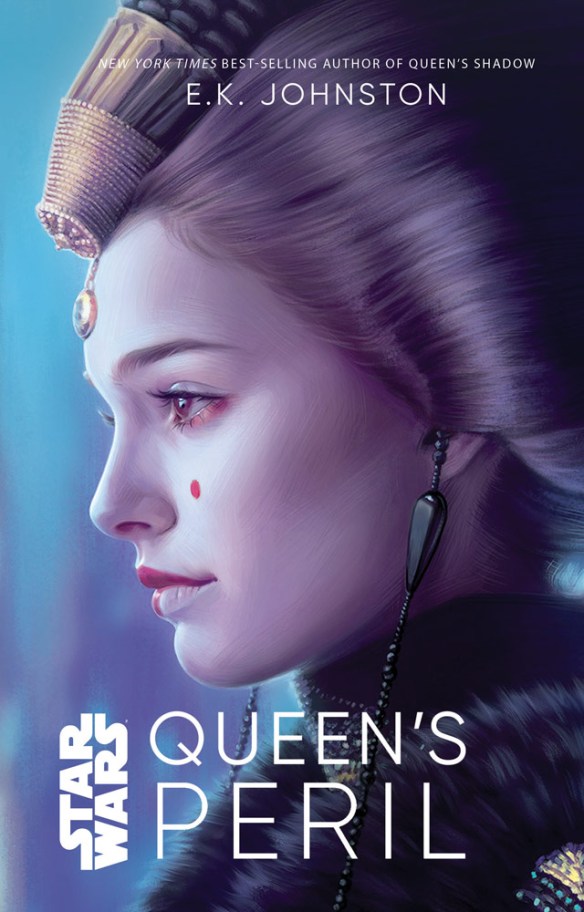
Star Wars: Queen’s Peril by E. K. Johnston

Queen's Peril Cover

Publisher: Random House Audio (Audiobook – 2 June 2020)

Series: Star Wars

Length: 6 hours and 10 minutes

My Rating: 3.75 out of 5 stars

Amazon

Prepare to dive back into a galaxy far, far away, as bestselling young adult author E. K. Johnston presents the very first Star Wars novel of 2020, Star Wars: Queen’s Peril.

Padmé Naberrie has always wanted to serve the people of her home planet of Naboo, and she knows that the best way to do that is to become Queen. Entering the competitive election, the 14-year-old politician is elected as ruler of Naboo. Casting aside her real identity for the protection of herself and her family, Padmé takes on a new name, Amidala, and moves into the royal palace, determined to bring change to Naboo. However, even a ruler as brilliant and diplomatic as Padmé is unable to do everything by herself, and she finds out that she is going to need help.

In order to keep her safe and to assist her with her needs, Padmé is introduced to a group of talented young women who will serve as her handmaidens. Acting as her assistants, confidantes, bodyguards and decoys, each of her handmaidens brings something different to the group, and it is up to Padmé to turn them into an effective team. Together, Padmé and her new friends seem capable of dealing with any challenge that may impact them.

However, there is a dark plot at work within the Republic, and its mastermind has Naboo in their sights. Soon Naboo is invaded by the armies of the Trade Federation, who seek to capture Queen Amidala and force her to sign away the planet. Forced to flee in disguise, Padmé sets out to reclaim her home and will do anything to free her planet. While Jedi, soldiers and a young chosen one may rally to their cause, the fate of Naboo ultimately rests on the shoulders of a young queen and her loyal handmaidens.

Queen’s Peril is an intriguing and enjoyable new addition to the Star Wars canon from bestselling author E. K. Johnston. I have been rather enjoying some of Johnston’s recent Star Wars releases, and I had a fun time reading her 2016 novel, Ahsoka, as well as last year’s fantastic release, Queen’s Shadow. Queen’s Peril is the first of several Star Wars books being released in 2020 (although some have been delayed), and I have been looking forward to seeing how this book turns out. This new novel acts as a prequel to Queen’s Shadow and is set both before and during the events of the first Star Wars prequel film, The Phantom Menace. This ended up being a fun and interesting read that explores some unique parts of Star Wars lore.

This latest Star Wars novel contains an intriguing tale that starts from the moment that Padmé is elected queen and takes on the Amidala persona. The first two thirds of this book follow the early days of Amidala’s reign, introducing Padmé and her handmaidens and showing how they became such a tight-knit team. There are a number of great moments during this first part of the story, and it was interesting to see the origin of a number of elements of the Amidala character that are shown in The Phantom Menace, such as her voice, the establishment of the decoy system, and a huge range of other compelling features. There are also several scenes that are dedicated to exploring why the Trade Federation decided to target Naboo and what the origins of their conflict were. I really enjoyed the first two thirds of this book, and I feel that the final third kind of let it down a little. The last part of the book focuses on the invasion of Naboo and follows the events of The Phantom Menace. While it was cool to see some different perspectives on the events of the film, this part of the book felt rather rushed, as the narrative jumped between a number of sequences from the movie in rather quick succession. Despite the problems with the ending, this was still a rather compelling story, and I did enjoy Johnston’s additions to the Star Wars universe.

While on the surface this book appears to be purely about Padmé, Queen’s Peril is actually about a number of different characters who made Padmé’s role as Queen Amidala possible. Padmé is naturally one of the main characters of the book, but all five of her handmaidens are just as important to the story. Johnston previously introduced each of these handmaidens in Queen’s Shadow, and briefly explored their unique skills and what they brought to the group. She does this again in Queen’s Peril, although this is done in greater detail, as this book shows each character’s history and how each of them became a handmaiden. Each of the handmaidens is given a distinctive personality, and all five get a number of scenes told from their point-of-view. I really enjoyed learning more about these characters, and it was great to see them come together as a group and work towards ensuring that Padmé was protected and an effective queen. While each of the characters are explored in some detailed, the biggest focus is on Sabé, Padmé’s first handmaiden and her main decoy (played by Keira Knightly in the film). The author spends time showing the unique relationship between Sabé and Padmé, and it was captivating to see the trust between them grow. Because she was so heavily focused on in the movie, Padmé does not get a lot of scenes in the last third of the book, so quite a bit this part of the story is told from the perspective of all the handmaidens. It was rather interesting to see how each of these characters went during the course of the film, and it was particularly cool to see some scenes with Sabé as she pretended to be the Queen.

In addition to Padmé and her handmaidens, Queen’s Peril also featured point-of-view chapters or scenes from pretty much all the key characters from The Phantom Menace film. The use of all these extra characters was an interesting choice from Johnston, and I liked how it expanded the story and showed some fresh perspectives and backstory for several major Star Wars protagonists. Most of these appearances are rather brief, with characters like Anakin, Obi-Wan Kenobi and Qui-Gon Jinn only getting a few minor scenes. However, other characters do get some extended sequences, especially Captain Panaka, the head of Amidala’s palace guards. Several chapters are told from Panaka’s perspective, and he becomes quite a key character within the book, mainly because he is the person who finds and recruits all of the handmaidens. Panaka is a major driving force of the plot, and it was interesting to see his role expanded from the films, especially as you get more insight into why he is so dedicated to the Queen. I also really liked how the book features several sequences told from the perspective of Senator Palpatine/Darth Sidious. These scenes were fun, as they showed a lot of Palpatine’s earliest manipulations, including how he was able to organise the invasion of Naboo. Overall, I rather appreciated how the author utilised all the characters within Queen’s Peril, and watching their development and interactions proved to be quite compelling.

Like the author’s other Star Wars novels, Queen’s Peril is intended for a young adult audience, and Johnston does a fantastic job tailoring it towards younger readers. This book has a lot of great young adult moments to it, especially as it focuses on a group of teen girls working together to outsmart a variety of adults and then eventually save their entire planet from an invasion. Queen’s Peril has some fantastic portrayals of these teen protagonists, and there are a number of sequences which show them stepping up or dealing with complicated issues that younger female readers will appreciate. While it is intended for younger readers, Queen’s Peril, like most young adult Star Wars novels, is also very accessible to all readers who are major fans of the franchise, and it is easy for older readers to get into and enjoy the plot of the book and its intriguing new additions to the Star Wars lore.

I did have a minor complaint about the release order of the books in Johnston’s series about Padmé. While I enjoyed both Queen’s Peril and Queen’s Shadow, I really do think that it was an odd decision to release Queen’s Shadow first, and then release a prequel novel a year later. It would have been better to release Queen’s Peril first to introduce the various handmaidens and help build up the emotional connection between them and Padmé, making their use and inclusion in Queen’s Shadow a bit more impactful. It might also have made a bit more sense to have Queen’s Peril only focus on events before The Phantom Menace, have another book focus exclusively on what was happening with the handmaidens and Padmé during the course of the film (which would have ensured that Queen’s Peril did not feel as rushed as it did towards the end), and then release Queen’s Shadow. While I am sure that there is some reason why the order for these books was a bit off, probably at the publisher level, I think they could have planned this out a little better.

I ended up grabbing the audiobook version of Queen’s Peril, and I had a great time listening to this book. Queen’s Peril has a short run time of just over six hours, so it is rather easy to get through this book quickly. Like all Star Wars audiobooks, this version of Queen’s Peril was a real auditory treat, due to the excellent use of the iconic Star Wars sound effects and scores from the movies, which are used to enhance each of the scenes. While it was great to once again hear all the fantastic music and intriguing background noises, Queen’s Peril’s greatest strength as an audiobook comes from its fantastic narrator, Catherine Taber. Taber is the actress who voiced Padmé in The Clones Wars animated television show, and, short of getting Natalie Portman in, is the perfect person to narrate a novel about the character. Taber also narrated the previous Johnston book about Padmé, Queen’s Shadow (indeed all of Johnston’s Star Wars books have featured the character’s voice actor as a narrator for their audiobook), and it was great to see her return. She naturally does a perfect voice for the character of Padmé, as well as for the handmaidens, who had similar speaking patterns due to their role as decoys. There are some great vocal scenes between these characters, especially when they are trying to perfect the Amidala voice, and they go through several variations throughout the book. In addition, because Queen’s Peril features nearly every major character from The Phantom Menace, Taber also had to voice several different people who were brought to life by some amazing actors in the original film. I felt that Taber did a fantastic job as imitating some of these voices, and it proved to be a real showcase for her skills as a voice actor. Overall, I had an amazing time listening to this audiobook, and I would strongly recommend this format to anyone interested in checking out Queen’s Peril.

Star Wars: Queen’s Peril is an intriguing and exciting new young adult Star Wars release from E. K. Johnson that acts as a sequel to her previous awesome novel, Queen’s Shadow. Johnston comes up with another compelling story that explores the early life of Padmé/Queen Amidala and her loyal handmaidens. While it does have some flaws, it is a very good book, and it should prove to be a fun read for established fans of the franchise and younger readers who are interested in breaking into the expanded universe. I had an amazing time listening to this book and I look forward to seeing what sort of Star Wars story Johnston produces next.

Amazon

The Ballad of Songbirds and Snakes by Suzanne Collins

The Ballad of Songbirds and Snakes Cover

Publisher: Scholastic Audio (Audiobook – 19 May 2020)

Series: The Hunger Games – Book 0

Length: 16 hours and 16 minutes

My Rating: 4 out of 5 stars

Amazon

It is time to return to Panem as bestselling young adult fiction author Suzanne Collins presents the thrilling prequel to her acclaimed The Hunger Games series, The Ballad of Songbirds and Snakes.

It has been 10 years since the third and final book in The Hunger Games trilogy was published. Since then the series has gone from strength the strength, thanks to the four films that converted these books into an ultra-popular franchise. Like many, I jumped onto The Hunger Games bandwagon after the first film was released, and I ended up listening to all three of the novels in quick succession. This of course turned me into a pretty major fan of the franchise, and I eagerly watched the next three films as they were released. As a result, I was extremely intrigued when I heard that Collins was writing a prequel novel, and I have been looking forward to it for some time. I ended up listening to the audiobook version of The Ballad of Songbirds and Snakes right after its release, and it proved to be an extremely interesting book that I rather enjoyed.

It has only been a decade since the Capitol won the war that ravished Panem, defeating the Districts and forcing them back under Capitol control. As punishment for their crimes, every year two children from each of the 12 surviving Districts are forced to compete in the Hunger Games, a brutal fight to the death from which there is only one survivor. While many in both the Capitol and the Districts view the Games as distasteful, for one young man it represents an invaluable opportunity.

Coriolanus Snow is a young academy student whose family has fallen on hard times after the war. Coriolanus’s one chance to get into the Capitol university and have a chance at wealth and prestige is to successfully mentor one of the tributes in the annual Hunger Games and ensure that they win. The odds seem to be against him when he is given the female tribute from District 12, generally considered the lowest tribute with the worst odds of surviving. However, when his tribute, the wild and alluring Lucy Gray Baird, sings on stage at the reaping, Coriolanus’s hopes rise, as her antics capture the attention of everyone in the Capitol. Determined to succeed no matter the cost, Coriolanus soon finds his fate entwined with that of Lucy Gray. But as he gets closer and closer with his tribute, just how far is Coriolanus willing to go, and how will his decisions now affect the future of Panem forever?

The Ballad of Songbirds and Snakes is a captivating and entertaining read that serves as a fascinating prequel to the original Hunger Games novels. Collins comes up with a fantastic, character-driven story that focuses on the main antagonist of the first trilogy, President Snow, while also diving back into the past of her unique dystopian future, showing the early days of the Hunger Games. I have to admit that I had rather high expectations going into this novel, and I ended up being a little disappointed at times with how it turned out. This was a rather less exciting read than the previous Hunger Games books, as Collins spends a lot of time exploring society, human nature and the psyche of the villainous protagonist. It was also way too long, and I think it could have been shortened down a little. Despite probably being my least favourite Hunger Games novel so far, The Ballad of Songbirds and Snakes is still a really good book that I had an amazing time listening to it.

This book contains an intriguing plot that follows the protagonist as he becomes involved in the events of the 10th annual Hunger Games. The story is broken up into three distinctive parts, each of which takes up about a third of the book’s narrative. The first part deals with the lead-up to the Hunger Games, the second part follows the actual Hunger Games as Snow watches from the outside, while the last third of the book details the aftermath of the games, and features a new adventure for the protagonist. Each of these three parts proved to be enjoyable in their own right, and together they formed a rather compelling overall narrative. I was a little surprised that the actual Hunger Games ended about two-thirds of the way into the story. When the novel suddenly jumped to a post-Hunger Games storyline with third of the book still to go, I honestly thought that Collins had made a mistake, and would have been better off portraying an extended Hunger Games. However, this third part served as a rather good conclusion to the entire novel, and I actually really liked some of the major plot elements that occurred there, especially as they were the most transformative part of the novel for the main character. There are a lot of cool moments within this story, as well as a bevy of supporting characters, many of whom Collins is able to give a bit of depth to with a few short paragraphs. I actually really enjoyed where this story went, and while I did envision it going in a different direction, I think that Collins did a good job with it in the end.

One of the key things about The Ballad of Songbirds and Snakes is that it serves as an origin story for President Snow, the main antagonist of the original Hunger Games trilogy. It features an 18-year-old Snow as the main character and is told completely from his perspective. I understand that quite a few people were not exactly thrilled that President Snow was the focus of this novel, and many did not want to see a book that followed a young version of him. While I can understand their feelings about this, I personally enjoyed seeing something that focused on Snow and his early history. I have read and enjoyed many stories in the past that focus on a villain, or which features them as a major protagonist, and it can often be quite fun to see their perspectives and motivations. The Ballad of Songbirds and Snakes is a good example of this, and I found it fascinating to see a younger Snow and watch his involvement in his first Hunger Games.

Collins has an interesting take on the character of the young President Snow, and presents the reader with some key moments from his life, as well as some of the people who helped shape him into the villain we know in the later books. The author spends time exploring elements of his childhood, such as showing how he suffered during the war, not only losing both his parents, but also nearly dying from starvation as the Districts besieged the Capitol. There are also some intriguing examinations of his family, such as the grandmother who gifted him his love of roses, and the revelation that the character of Tigress, who appeared in the third book (fourth movie), is actually Snow’s cousin and closest living relative. However, despite these more humanising elements, Snow is shown to be a truly irredeemable person even before the transformative events of the novel. From the very start of the book, Collins portrays him as a manipulative and conceited individual, constantly sucking up to people in order to get what he wants, resentful of those around him who have more than he does and concerned most of all with status. While there are some intriguing nature versus nurture elements to his early behaviours, Snow is shown to be just an unpleasant person. This of course makes him a hard protagonist to get behind for this book, and for most of the story you really were not rooting for him to succeed. Despite this, I found his story to be rather compelling and I enjoyed seeing this mostly amoral teenager attempt to succeed, while presenting the reader with various, weak or selfish justifications for his actions in his mind.

While he is already a pretty despicable person, it is the events of The Ballad of Songbirds and Snakes that truly turn him into the cutthroat person that takes control of the Capitol in the future. Thanks to a combination of his experiences and some perceived betrayals (which are always worse from his point of view), as well as the mentorship of the Capitol’s sadistic head gamemaker, Doctor Gaul, Snow becomes much more ruthless and ambitious, and some of his actions towards the end of the book show just how evil he has become. It was also cool to see him embrace the philosophy around the Hunger Games, as well as developing a hatred of District 12 and certain other symbols and songs, all of which the character would carry with him to the main trilogy 60 years in the future. All of this analysis of Snow’s character formed a captivating heart to the story, and I liked the more villain-centric novel, even if this great antagonist did come across as a winy child at times. I will be intrigued to see more of the events that influenced Snow in the future, although I can appreciate that many others would prefer stories based around Collins’s protagonists.

The other major character that I have to discuss is Snow’s tribute from District 12, Lucy Gray Baird. Lucy Gray is an entertaining and likeable character who steps off the page right at the moment of her introduction and sticks in the mind. Lucy Gray is a very different tribute to that of Katniss from the main trilogy, being a singer and rebellious entertainer who effortlessly makes everyone fall in love with her, and who relies on cunning and underhanded tactics to survive rather than martial prowess. She also serenades both the reader and the other characters with a variety of different songs, and I quite enjoyed seeing several of the musical numbers she came up with, especially as you find out the origins of one of the musical pieces that appear in the original trilogy. Lucy Gray is the character who the reader is most drawn to, and you find yourself even hoping that Snow succeeds, as this will ensure Lucy Gray’s survival. Snow and Lucy Gray end up having a bit of an awkward romance, which on the surface seems nice, although you only see it from Snow’s point of view, and he becomes rather possessive of her in his own mind. I would have been interested to see Lucy Gray’s thoughts on Snow, as it could have really changed the whole dynamic of their relationship. Overall, though, Lucy Gray is a great new character, and the way her arc in this book ends really helps drive home how terrible Snow can be.

The thing that I think most people, especially established fans of The Hunger Games novels, will enjoy about this prequel novel is the substantial world building that Collins does. The author does an outstanding job showing off an early version of Panem, which is still recovering from the impacts of the war, and where control over the Districts is not yet complete. This is a rather different Capitol to what you see in the other The Hunger Games books, as there are no elaborate costumes, outrageous styles, strange cosmetic surgery or excessive luxuries. Instead it is a far more subdued Capitol, with less food, traumatised people and rubble still in the streets. This made for a curious contrast to what we see in the future books, and it was interesting to see the differences and similarities. There are also some exciting flashbacks to the war itself from the memory of Snow, and it was cool to learn a little more about that. Naturally, The Ballad of Songbirds and Snakes contains a lot of foreshadowing to the events of the original Hunger Games trilogy, and fans will enjoy seeing historical views of certain key events, locations and people.

One of the most fascinating aspects of this world building is the author’s exploration of the early Hunger Games and how they took place. These Games are very different to the elaborate affairs shown in the original trilogy. Up until this point the Hunger Games are rather basic, with the tributes simply thrown into an abandoned sports arena with a bunch of weapons. There are some great comparisons between these more basic games and the games that we are more familiar with, such as the way that the tributes are treated, as rather than the luxurious train with all the fancy food that Katniss and Peeta travelled in, the tributes for these Hunger Games arrive starved and injured in a livestock train. This is also the games where they start to experiment with some of the elements that are recognisable from the main games, such as having a mentor, brief interviews with a Flickerman (in this case, Lucky Flickerman, the local news weatherman and amateur magician), gambling and sponsors. It was really cool to see the origins of these ideas, and why they were implemented, and it makes for a truly fascinating addition to the book. Collins also really dives into the philosophy behind the Games, and why the leaders of the Capitol were so eager for them to succeed and why they believed that they helped control the Districts. The origin of the Games is also revealed, as well as some of the key players, and I think it served as an invaluable piece of this universe’s lore. I quite liked learning more about the early days of the Hunger Games, and I imagine that a lot of readers will love to find out how such a terrible event came to pass.

The actual Hunger Games that took place in The Ballad of Songbirds and Snakes was a shorter and more barebones affair than what we have seen before. The tributes are fighting in an actual sporting arena, rather than a terraformed zone, and most of them spend the time hiding in the tunnels. Due to the fact that we are seeing it from Snow’s point of view, and because the arena only has a couple of cameras that only cover a fraction of the area, there are a lot of periods of inactivity and blank time, where the reader has no idea what is going on. This made for a much more disrupted experience, and while it was interesting to see the games unfold from the outside (something we saw a little bit of in the movie, but not in the books), it was nowhere as exciting as it could have been. That being said, there are still some really cool moments of child murder, and I did like seeing the mentor’s role in winning the games. The way in which the games came to an end was also rather clever, and it played into the events occurring outside with Snow. While it could have been longer, more exciting and perhaps more intense, this was still a fun part of the novel, and I look forward to seeing more fights to the death in any future Hunger Games novels Collins writes.

As I mentioned above, I ended up listening to the audiobook version of The Ballad of Songbirds and Snakes rather than grab a physical copy, and I am rather glad that I did, as it proved to be a great way to enjoy this book. The Ballad of Songbirds and Snakes audiobook is narrated by Santino Fontana and has a run time of just over 16 hours. This was a rather extensive run time for a Hunger Games novel; it was around five hours longer than any of the previous audiobooks in the series. That being said, I was able to get through this audiobook in a rather short period of time, and I found myself really engaged by this format, as it helped explore all the elements of this earlier version of Panem. Santino Fontana proved to be a very good narrator for this novel and he does an excellent job bringing the book’s large host of characters to life. The various voices he does fit the characters rather well, and I thought that his narration helped to highlight how horrible Snow could be at times. I also liked how Fontana’s narration worked with the multiple songs that Collins featured throughout the novel, and his spoken version of them sounded rather cool. As a result, I would definitely recommend the audiobook version of The Ballad of Songbirds and Snakes to people interested in checking this book out, as it was a wonderful format to enjoy this great story with.

The Ballad of Songbirds and Snakes was a curious and unique new addition to The Hunger Games franchise, which I thought turned out to be a rather good read. Collins ended up writing an intriguing, character-based narrative that showed a new side to the main antagonist of her original trilogy. While this book is not without its flaws, I had a wonderful time reading it, and once I got into its plot I had a hard time putting it down. Ideal for those fans of the previous Hunger Games novel, this book should make for an interesting movie in the future, and I am planning to grab any future novels from Collins set in this universe.

Amazon

Star Trek: Picard: The Last Best Hope by Una McCormack

Star Trek - Picard Cover

Publisher: Simon & Schuster Audio (Audiobook – 11 February 2020)

Series: Star Trek: Picard – Book One

Length: 11 hours and 40 minutes

My Rating: 4.5 out of 5 stars

Amazon     Book Depository

Get ready to dive back into the Star Trek universe with Picard: The Last Best Hope by Una McCormack, the latest Star Trek novel which ties into the events of the Picard television show. The Last Best Hope is an outstanding novel that serves as a bridge between Star Trek: The Next Generation show and the current Picard series.

Nearly 20 years before the events of Picard, both the United Federation of Planets and the Romulan Star Empire faced an unprecedented calamity. Scientists have just discovered that the Romulan sun is in the process of going supernova, turning into a destructive force that will devastate the Romulan home system and have significant negative follow-on effects on the remaining planets within Romulan Space. In order to ensure the evacuation of their people, the Romulans grudgingly request aid from the Federation, who assign Jean-Luc Picard to the mission.

Picard, promoted to the rank of admiral, quickly finds himself in charge of the largest and most difficult operation in Starfleet history. The evacuation mission is a vast undertaking, requiring Starfleet to relocate hundreds of millions of Romulans to distant planets in only a few short years. Lacking resources and manpower, Picard begins the evacuation process as best he can, with the invaluable help of his new first officer, Rafaella “Raffi” Muskier. Meanwhile, back in the Federation, Geordi La Forge attempts to come up with new ways to increase Starfleet ship production on Mars. The best solution is the creation of a new, synthetic workforce, and La Forge calls in an old colleague, the brilliant scientist Bruce Maddox, who reluctantly halts his lifelong work on artificial life to help build these new synthetics.

As the evacuation progresses, Picard takes solace in every small victory his team can achieve, but this mission seems doomed to fail. Debates from ambitious Federation politicians, distrust and fear from the Romulans they are trying to help, and interference from the Tal Shiar, the Romulan secret police, all hinder the mission. However, Picard is not one to give up easily and is determined to save every Romulan he can from the impending disaster. But even the great Jean-Luc Picard is unprepared for how his mission will end. Everything is about to change, and Picard and the galaxy will never be the same again.

Star Trek is one of those popular franchises that always produces a ton of extra content each year in the forms of novels and comics, so it was no surprise that material related to Picard would eventually be released. The Last Best Hope is the very first Picard tie-in novel, although I expect that additional books will come out in the future. Indeed, IDW has already released a Picard tie-in comic, Countdown, which I will probably check out at some point. This first Picard novel was written by veteran tie-in author Una McCormack, who has previously delivered several great Star Trek books, including last year’s Star Trek: Discovery tie-in, The Way to the Stars. McCormack does an amazing job with The Last Best Hope, producing a captivating and incredible read that expertly leads into the new show.

Before I dive too deep into this review, I think that it is necessary to point out that this book was released on the 11th of February, between the third and fourth episodes of Picard. That means that this book contains quite a few mentions of events and reveals that occur in the initial episodes of the show, especially as McCormack clearly had early access to the show’s scripts. While this ensures The Last Best Hope a much more complete and in-depth tie-in novel, it does mean that this book contains some spoilers for the television series. In addition, as I have been religiously watching Picard every week, my review is influenced by the events of the first six episodes and it also contains some spoilers from the show.

The Last Best Hope is a wide-ranging Star Trek canon novel, set across several years of Star Trek history (2381 to 2385) that explores one of the biggest prequel events mentioned within Picard, the explosion of the Romulan sun and the attempts by Picard to evacuate them. This leads into a powerful and clever novel which shows all the trials and tribulations associated with this exercise, as well as several other events that lead into the show. McCormack makes excellent use of a number of different character perspectives to create a full and rich narrative around this plot, which also explores some major Picard characters. While I did think that parts of the story ended rather suddenly, with no real lead-in to the disaster on Mars that changes everything, this book is a first-rate novel which I powered through in extremely short order.

One of the major appeals of this book is the fact that it serves as a prequel to the events of Picard and provides readers with additional background and context to the adventures currently happening in the show. This is done in a number of ways, from providing the reader with greater background about certain characters, showing the origins of a number of the storylines from the show and serving as a bridge between the events of Picard and The Next Generation. The Last Best Hope features an excellent introduction to several of the newer characters in the show, such as Agnes Jurati, Raffi, Elnor and the Qowat Milat nuns, and it was intriguing to see how these characters slotted into the pre-history of the show. At the same time, McCormack also examines what happened to several established characters from The Next Generation after the events of Star Trek: Nemesis, including Picard, Bruce Maddox, Geordi La Forge and even a little bit about Worf (he becomes captain of the Enterprise!). McCormack also provides an explanation about several key occurrences and storylines that are touched on within the show, such as the creation of the synthetic workers that destroyed Mars, Picard’s resignation from Starfleet and the extent of several key relationships. There are also some potential hints at where the show might go in the future, and I will be interested in seeing if those pan out at all. I was pleasantly surprised with how much background that McCormack was able to fit into The Last Best Hope, and the different revelations and expansions on the information provided in the show make this a fantastic read for those currently watching Picard.

The Last Best Hope features some very impressive character work, and I feel that McCormack did an excellent job capturing the personalities and histories of several key characters from the new show. I really appreciated her portrayal of Picard, and this book featured several key aspects of his character, such as his dark moods, his determination and his ability to inspire absolute loyalty in his subordinates. I liked how the reader gets to see how Picard deals with the seemingly impossible task assigned to him, especially as his emotions throughout the book range from hope to absolute despair, as multiple obstacles and problems seem to dog everything he does. One of the major parts of his character explored in this book is the way that Picard’s ideals and beliefs seem a little out of touch with the world he lives in. This is something that is shown throughout the Picard television show, as the old-school captain is now living in a much darker and more desperate world. I am really glad that McCormack tried to capture this in her novel, and it was really compelling to see Picard being completely oblivious about the darker realities of the galaxy. All of this is really compelling to see, and I think that it serves as a good basis for some of the ways Picard acts in the current show.

Aside from Picard, a number of other characters are featured throughout the book, many of whom have some really interesting and compelling stories. I personally found the tale of Raffi, Picard’s new first officer, to be particularly good, as the reader gets to see how she became so messed up and obsessed with proving that the Romulans where behind the destruction of Mars. You also get a better understanding of why she was so mad that Picard quit on her and the mission, especially after she sacrifices everything for him, thanks to the way he inspired her. McCormack also spends significant time exploring the character of Bruce Maddox, and it was especially intriguing to see this character between his appearances in The Next Generation and Picard. You also got to see the origins of his relationship with Agnes Jurati (indeed, based on release dates you learn about this relationship in this book before it is mentioned in the show), and it was great to see how it unfolded and how close the two of them were. Of course, this also has a more sinister and heartbreaking edge to it if you look back at this relationship after the events of the fifth episode of Picard. I also liked the Geordi La Forge storyline; it was interesting to see his struggle to increase Starfleet ship production. However, the best part of this portrayal occurs at the end of the book, and I will be curious to see how they show off his survivor’s guilt if the character ever appears in Picard.

One of the things that I really enjoyed about this book was the way McCormack slowly starts to alter the tone of the novel to represent the change between the lighter The Next Generation and the darker Picard shows. At the start of the book, the story is more in line with the tone of The Next Generation, with Picard embarking on a humanitarian mission with his idealism and belief in the greater good intact. However, as the mission progresses, things start to get darker, as the various obstacles to the Romulan relief mission become more apparent. The dark and callous manipulation of the Romulan leaders and Tal Shiar as well as the xenophobic politics of certain Federation politicians becomes more and more apparent, resulting in a darker tone. McCormack also attempts to replicate the more adult tone of the current show with a greater reliance on swearing (never have I seen so many F-bombs dropped in a Star Trek novel, oh the humanity!) and hints of mass murder, genocide and extinction-level events. All of this makes for a slightly different Star Trek tie-in novel experience, and I personally enjoyed some of the subtle changes McCormack made to the tone.

I personally really enjoyed seeing the entirety of Picard’s attempts to evacuate the Romulans from their soon to be exploding sun. This has been one of the most fascinating events mentioned in the show, with several parts shown or alluded to in Picard. McCormack really dived into this event, showing many of the various aspects of such an operation, including the science, politics and diplomacy associated with it. From the start, this whole mission is painted as a near impossibility, not just because of the scale of calamity and the number of people affected but because of the mindset and suspicion of the Romulans they are trying to save. To put it into context, this operation would be like the United States trying to evacuate a similar sized country that had North Korean levels of state led secrecy and distrust towards the organisation trying to save them. The sheer scale and difficultly of this mission are constantly raised, and yet Picard and his team seem to find a solution to many of the problems presented to them. Of course, anyone who has seen the first episode of the show knows how this is going to end, so seeing the characters getting so invested in their mission is a bit of an emotional blow. That being said, this book contains a lot more context for some of the Federation’s decisions, and in particular the character of Admiral Kirsten Clancy (Starfleet’s CNC in the second episode of Picard), comes across as a whole lot more sympathetic. Overall, I felt that this was an amazing expansion on the events mentioned in the show, and it was really cool to see how the whole operation unfolded.

Another great facet of The Last Best Hope which made it such an intriguing book was its compelling examination of the Romulan people. McCormack really dives into Romulan culture and society in this book, presenting some intriguing details about this race. In particular, she examines the Romulans’ deep-seated need for privacy and secrecy, which is a defining part of their species. McCormack does an excellent job highlighting how this desire for secrecy impacts them as a race and a culture (secret multi-room Romulan music for the win!), and how they barely trust other members of their own species, let alone members of the demonised Federation. Seeing how this obsession with lies, secrecy and the appearance of saving face with the Federation impacted the species’ chance for survival is a compelling and intriguing part of the book. McCormack also dives into other parts of Romulan culture and society, mainly the role of the Tal Shiar, the Romulan secret police, who have long been a shadowy force within Star Trek lore. Seeing the fear and apprehension that this organisation causes amongst ordinary Romulan citizens, as well as the lengths they will go to maintain secrecy and security, is pretty crazy and it certainly enhances an established Star Trek antagonist species. I also enjoyed seeing more of the Qowat Milat, the Romulan warrior nuns who Picard befriends and helps evacuate from Romulan space. The Last Best Hope contains several encounters with the Qowat Milat, and we get to learn a bit more about them, the role they play in Romulan society and how they interact with the Tal Shiar, with whom they have an adversarial relationship. All of this is deeply, deeply fascinating, especially for those readers who love learning about Star Trek lore, and I really enjoyed seeing all the Romulan inclusions featured in this book.

I ended up listening to the audiobook version of The Last Best Hope, which is narrated by Robert Petkoff. This new Star Trek audiobook runs for 11 hours and 40 minutes, which can be listened to fairly quickly, especially once you get stuck into the compelling story. I really enjoyed listening to The Last Best Hope, mostly thanks to the incredible voice work of Robert Petkoff. Petkoff seems to be the go-to narrator for all things Star Trek these days, as he has lent his superb vocal talents to a huge number of other Star Trek audiobook adaptions in recent years. I have previously enjoyed his work on such books as The Antares Maelstrom by Greg Cox, The Captain’s Oath by Christopher L. Bennett and Available Light by Dayton Ward. In each of these previous books, I have been greatly impressed by Petkoff’s ability to recreate the voices of key characters from the Star Trek television shows, including most of the characters in The Original Series and The Next Generation. He continues this amazing voice work in The Last Best Hope, providing near-perfect impressions of characters like Picard and La Forge, which really helps the reader immerse themselves into the story. While his impressions of some of the newer characters from Picard are not as accurate (keep in mind Petkoff would have recorded this book before Picard aired), he does provide clear and distinctive voices for each of the characters utilised in the books. I also love the accents he provides to the various alien races and nationalities in this book, and I especially enjoy hearing him attempt to replicate the speech patterns of certain aliens, like the Vulcans. Thanks to this incredible voice work, I absolutely loved listening to the audiobook for The Last Best Hope, and I would strongly recommend this format to anyone interested in this latest Star Trek novel.

Picard: The Last Best Hope by Una McCormack is an excellent and deeply captivating read which serves as a perfect prequel tie-in novel to the current Picard show. There is so much information and detail about the Star Trek universe prior to the events of the current television series contained within in this novel, and I loved seeing the author expand on the intriguing new universe that has been hinted at in the show. This is a must-read book for all Star Trek fans, especially those who have been loving Picard, and even non-Star Trek fans will enjoy this book’s powerful story and the fantastic plot device of the Romulan rescue mission. The Last Best Hope is probably the best Star Trek novel I have had the pleasure of reading so far, and I am extremely excited to see what other tie-in novels they release around the awesome new Picard series.

Amazon     Book Depository