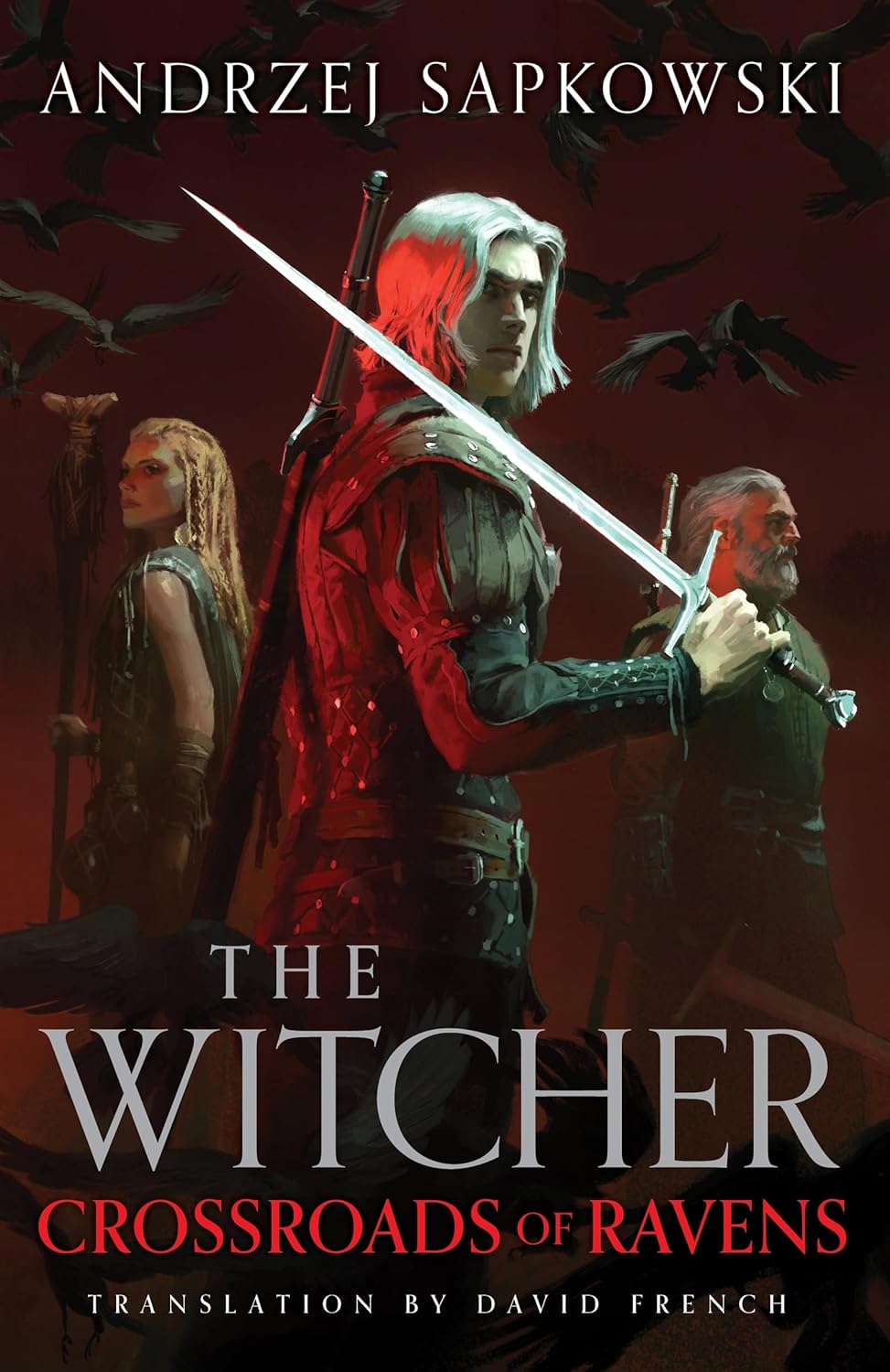
The Witcher: Crossroads of Ravens by Andrzej Sapkowski

Publisher: Gollancz (Trade Paperback – 30 September 2025)

English Translator: David French

Series: The Witcher – 0.1

Length: 310 pages

My Rating: 4.5 out of 5 stars

Amazon

Legendary fantasy author Andrzej Sapkowski returns to the epic world of The Witcher with the outstanding and awesome prequel novel, Crossroads of Ravens.

I doubt anyone familiar with fantasy fiction is unaware of the cultural juggernaut that is The Witcher franchise.  An exciting and intense fantasy series revolving around Geralt of Rivia, a wandering, monster hunting witcher who finds himself drawn into chaotic events that threaten the entire world.  The initial series birthed seven original novels that were released in Poland the 1990s (later released in English), as well as a series of short stories.  However, The Witcher novels would gain prominence around the world after they were used as the inspiration for an incredible video game series, as well as a later Netflix television show.  I personally have enjoyed several excellent pieces of The Witcher fiction over the years, including the previous novel Season of Storms.  As such, I was very happy when I received an early copy of the new prequel novel from the series, Crossroads of Ravens, which proved to be a gripping read.

Long before the events that would make him a legend, grant him the sobriquets of the White Wolf or the Butcher of Blaviken, or even before he claimed to be from Rivia, Geralt was a young, recently graduated witcher.  Descending from the witcher stronghold of Kaer Morhen for the first time, Geralt soon discovers that the world is a harsh place where ideals of heroism only get you into trouble, and that the entire continent holds nothing but disdain for his kind.

Swiftly finding himself on the wrong side of the law and a noose, Geralt is only saved by the intervention of grizzled veteran witcher Preston Holt.  An enigmatic and damaged figure with his own agenda, Holt takes the young Geralt under his wing, teaching him the true reality of being a witcher and honing the important skills that the future White Wolf needs to survive. 

Emboldened by this training, Geralt soon begins to gain fame as a witcher, serving the people previously protected by the ailing Holt.  However, as Geralt wanders the land, he finds many eyes on him, including those who hold a grudge against his order.  As new adversaries and dangerous secrets from the past are uncovered, Geralt will have to decide whether to become the noble hero he always envisioned himself to be, or the monster the world believes all witchers are.

Andrzej Sapkowski continues to expertly expand the lore of The Witcher universe with this exciting and action-packed prequel.  Crossroads of Ravens was an amazing novel that takes the readers on a series of intense adventures, loaded with intrigue, conspiracy and death that all fans of the franchise are going to have an outstanding time with.  I ended up powering through this novel in less than a day, and it proved to be a very impressive read.

Crossroads of Ravens was an outstanding and very exciting novel that piled on the action, intrigue and adventure in its fantastic story.  Starting off with an effective bang that sees a young Geralt in trouble during his first foray out as a witcher, Sapkowski does an excellent job of quickly setting up the scenario and introducing Geralt, and the reader, to a new mentor figure with the entertaining Preston Holt.  What follows is a series of compelling adventures, as Geralt initially learns from Preston, before journeying off into the wilds, facing off against various monsters and the even more troublesome human population of the land.  Sapkowski has fun placing Geralt into a new, mostly self-contained adventure each chapter of Crossroads of Ravens, the events and characters of which may reappear later in the book.  This allowed for a quick-paced and very interesting overall narrative, and it was entertaining to see the young Geralt in action.

While there is a good focus on Geralt’s independent adventures, Crossroads of Ravens has a larger, overarching narrative, that sees Geralt seeking knowledge of a historical attack on Kaer Morhen many years earlier.  Thanks to hints revealed in some of the earlier adventures, a run-in with a complex secondary antagonist, and in-universe notes from intelligence officers keeping watch on Geralt and Preston, readers get the general shape of this matter in the first half of the book, and it lies like a dark shadow over Geralt’s main adventures.  Everything comes to a head perfectly towards the last quarter of the book, as Geralt fully understands the threat towards him and those he cares about, and decides to act.  This leads to a tragic series of events, especially as Geralt faces the consequences of his action and his order’s history, while also trying to determine whether he should stay as a selfless witcher or become something far more vengeful.  Sapkowski makes sure that several open story threads from the protagonist’s previous adventures are also tied together by the end of the book, and it was interesting to see how certain plot elements from these earlier chapters came into play in the conclusion.  The result was an excellent and highly enjoyable story that serves well as both a standalone adventure and a prequel to the rest of The Witcher series.

I rather enjoyed how this great prequel Witcher novel came together, as Sapkowski imbues Crossroads of Ravens with his usual flair and wry humour.  Loaded with action, quick-paced stories and an array of unique monsters, Crossroads of Ravens was very reminiscent of early Witcher novels, especially as containing certain adventures to a specific chapter is very similar to the series’ original short-story format.  Naturally, this novel will be best enjoyed by those established fans of The Witcher franchise, especially readers of Sapkowski original novel series.  Crossroads of Ravens features various references to future events or characters in its pages, which long-running readers of the series will enjoy, and there is some great early characterization of the protagonist as well.  There are also interesting alternate versions of events readers might have seen in other media, including the historical attack on Kaer Morhen, which was featured in the Nightmare of the Wolf anime film.  While older fans will get the most of this book, anyone with any knowledge of the franchise will be able to enjoy Crossroads of Ravens to a great degree, especially as it is the earliest book in the current canon of The Witcher series.  As such, this novel will have a lot of appeal to wide array of readers, who will be in for a great time with the action and adventure.

As with all The Witcher books, Crossroads of Ravens features an excellent array of characters, including a great supporting cast around protagonist Geralt.  I very much enjoyed Geralt in this novel as Sapkowski features a young and inexperienced version of his iconic protagonist.  It was fascinating to see Geralt’s initial forays into both the world of ignorant humans, and monster hunting, especially as his reactions to both are different at a young age.  A great example of this can be seen in one adventure where Geralt attempts to save a girl turned into a striga, which parallels The Witcher short story, which is the first entry in Sapkowski’s original novel/short story collection, The Last Wish.  This adventure in Crossroads of Ravens goes very differently from the author’s original story, and it was fascinating to see how a younger, less confident Geralt dealt with the same situation.  I also quite enjoyed seeing Geralt, upon experiencing loss, go on a mission of vengeance, which threatens his previous attempts to be a respected hero rather than a monster.  I felt that Sapkowski cleverly balanced Geralt’s conflicting emotions in these sequences, and the end scene where he makes a choice about what sort of witcher he is, was a great finish to his story.  Throw in an array of excellent additional characters, including a wise, vengeful mentor, a dedicated investigator, a kind healer and many other fun figures, and Crossroads of Ravens proves to be an awesome book for fans of Sapkowski’s entertaining characters.

With another fun and captivating adventure, Andrzej Sapkowski’s The Witcher series continues in all its monster-hunting glory with Crossroads of Ravens.  An outstanding prequel novel that features an array of fantastic storylines and characters, Crossroads of Ravens serves as a highly entertaining entry in this acclaimed series that will appeal to a wide audience of fantasy fans.  I had a great time reading Crossroads of Ravens, and it’s worth checking out for anyone in the mood for fun action and an interesting narrative from an excellent established series.

Amazon

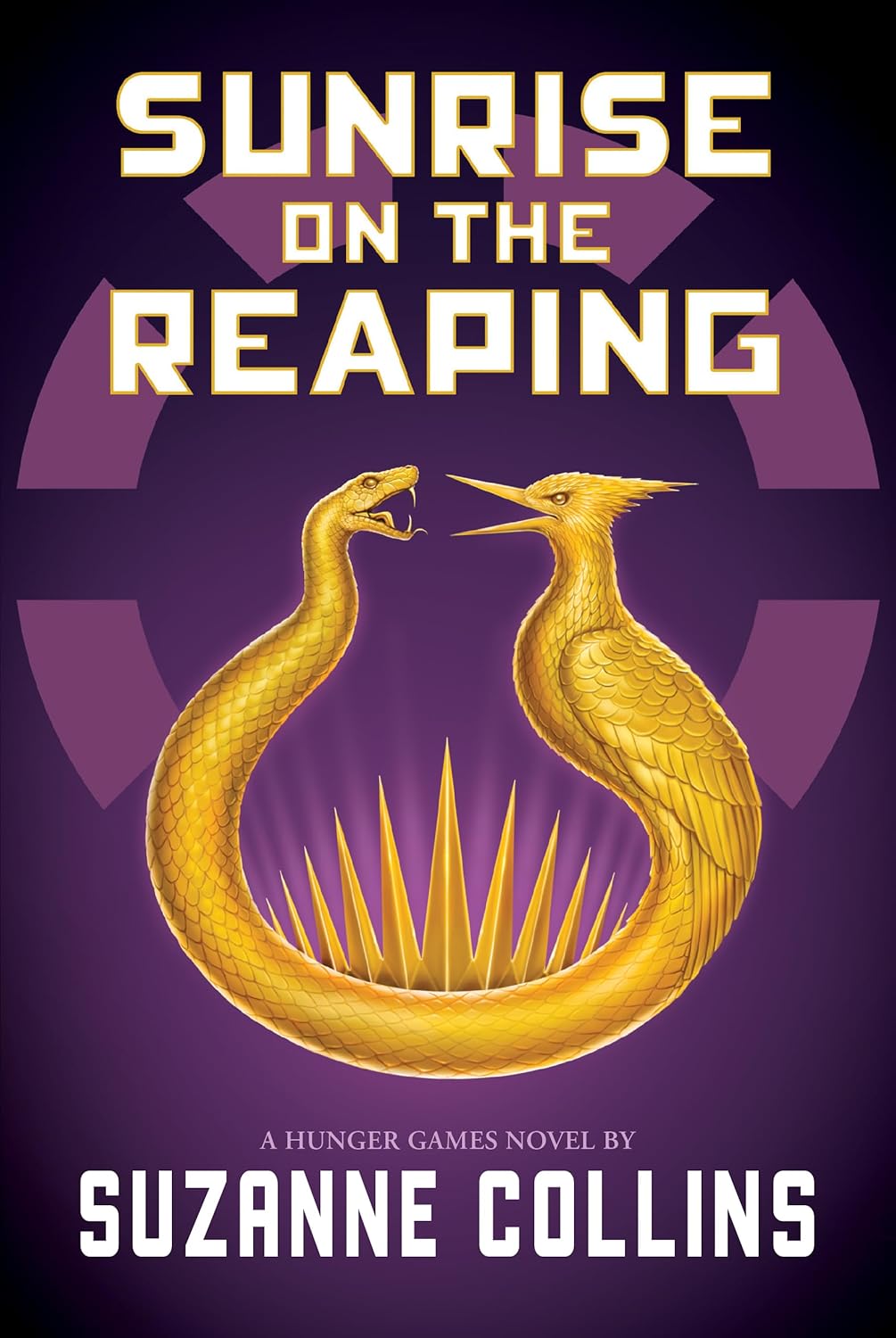
Sunrise on the Reaping by Suzanne Collins

Publisher: Scholastic Audio (Audiobook – 18 March 2025)

Series: The Hunger Games – Book 0.5

Length: 12 hours and 48 minutes

My Rating: 5 out of 5 stars

Amazon

Acclaimed author Suzanne Collins presents the next epic and heartbreaking entry to her iconic Hunger Games series with the brilliant prequel, Sunrise on the Reaping.

Unless you’ve been living under a rock for the last few years, then you’ll probably be more than familiar with the Hunger Games series by Suzanne Collins, as well as the major film franchise that it spawned.  Set in a dystopian future where 24 teenagers are forced to fight to the death each year, the Hunger Games franchise is a very cool and inventive young adult series that expertly blends great characters, an overarching anti-authoritarian narrative and a ton of complex action with its excellent central concept.  I have been a massive fan of the Hunger Games since watching the first movie, which I went into blind and ended up deeply enjoying.  I have since read all the books, including Collins’s previous prequel, A Ballad of Songbirds and Serpents, all of which are extremely awesome and contain exceptional stories that cleverly add to the larger setting.

While I have enjoyed all the awesome Hunger Games books that Collins has so far written, there has always been one intriguing story from the universe that I always felt needed to be expanded on, that of the rascally old drunk mentor Haymitch Abernathy (played perfectly by Woody Harrelson in the films).  I especially have always wanted more detail about Haymitch’s own Hunger Games, which were briefly summarised in the second novel, Catching Fire.  Well, Collins has just granted one of my fondest literary wishes as her latest book captures just that with Sunrise on the ReapingSunrise on the Reaping has been very high on my to-read list since it was first announced, and it was one of my most anticipated novels of 2025, as well as a much-anticipated film in late 2026.  I had a real blast listening to it, and boy did Collins take her story to all the dark places I wanted, and further beyond.

May the odds be ever in your favour!

As the dawn breaks on the 50th annual Hunger Games, few people have cause to celebrate, even young District 12 bootlegger Haymitch Abernathy, whose birthday unfortunately falls on Reaping Day each year.  Despite growing up in a totalitarian dictatorship, Haymitch believes that he has a good life, with friends, family and the love of his life.  However, he is unprepared for just how badly a single moment can change everything.

Selected as one of his district’s Hunger Games tributes, Haymitch suddenly finds himself torn away from everything he loves and must contemplate fighting for his life to survive in the Capitol’s arena.  However, this is no ordinary Hunger Games, it is the second Quarter Quell, and twice as many tributes have been taken from each of the districts, ensuring that his games will be the largest and most brutal battle ever seen.

Forced to compete alongside three other District 12 tributes, including one of his best friends, an oddsmaker whose family prospers by betting on the games, and the most stuck-up-girl in town, Haymitch knows that his chances of survival are slim.  However, something within Haymitch wants to fight back against both the Capitol and the controlling President Snow.  Finding unlikely allies, Haymitch seeks a way to make his impending death mean something and to strike a blow that the Capitol can’t ignore.  But can Haymitch survive long enough to make his stand, while still keeping true to his own loyalties and friendships? The fires of rebellion start to burn here, but Haymitch will soon find out that when flames start, people get burnt.

Well hot damn, that is how you do a prequel.  Suzanne Collins once again shows why she is the leading lady of dystopian young adult fiction, with the brilliant and powerful Sunrise on the Reaping.  A devastating prequel to her original Hunger Games trilogy that perfectly tells the haunting tale of Haymitch Abernathy, Sunrise on the Reaping was an exceptional novel that I can’t help but give a full five-star rating to.  This is a must-read for all fans of the Hunger Games series, but be warned: you won’t be prepared for how tragic the book gets.

I honestly have so much to say about the epic new story that Collins came up with for Sunrise on the Reaping, although I really don’t want to ruin anything for those who have yet to read it.  I will say that if you think you know the story from the summary in Catching Fire, then you are very, very wrong, as Collins twists everything you thought you knew about the 50th Hunger Games and Haymitch Abernathy, while breaking your heart in so many ways.

This dive into tragedy is very well established, and Collins does a brilliant job of initially setting the scene around young Haymitch and showing his early life, family and the other connections he has around District 12.  It doesn’t take long for Collins to turn the expected narrative on its head, thanks to a very clever bait-and-switch, and from that moment on, you really don’t know what to expect.  While much of Sunrise on the Reaping does follow the story beats you would expect from reading the previous books and from Catching Fire’s summary, Collins keeps cleverly turning or twisting them around, so that events like the Tributes parade, the pre-game training and the interviews go in some surprising and often even more traumatic directions.  At the same time, Haymitch has interesting interactions with an array of great supporting characters, many of whom will be very familiar to those who have read the previous Hunger Games books.  All this works to provide much more depth to a story that could have simply been about a massive teenage deathmatch, and which helps to drag you even more into the story, especially as it gives you some intriguing context about Haymitch’s upcoming actions.

Things get pretty crazy once the characters get into the games proper at around the halfway point, and Collins keeps this part of the story fast paced, as you watch Haymitch navigate the arena, surviving the fights and trying to enact his own plans.  This is the part of the book that really deviates from the previously shown version of these games, and I loved how much more detail and complexity Collins gives this latest batch of carnage as Haymitch tries to enact his own hidden goals alongside the previously known narrative.  This works to form quite a compelling plot, which I won’t talk about too much to avoid spoilers.  I will say that there are some truly devastating moments, and you cannot help but feel despair as you witness what really happened to Haymitch and his fellow tributes.  There are so many heartbreaking scenes scattered throughout this part of the book, as well as some great moments of rebellion and humanity, all of which keeps you hooked as you wait to see the brutal final moments of these games.  Collins does an amazing job wrapping everything up in a powerful way, although the conclusion is guaranteed to gut you.  While you know something bad is coming, the full enormity and devastation of the ending really does break you and ensures that will come away from Sunrise on the Reaping haunted and with a deeper appreciation of the rest of the series.

I deeply enjoyed how this epic novel came about, as Collins delivered a complex, powerful and distinctive character-driven read that has the right balance of moving character arcs, desperate survival, brutal tragedy and clever word building, all brought together by a series of shocking twists and heart-breaking reveals.  Once again told exclusively from the protagonist’s perspective, you witness events through the eyes of the young and rebellious Haymitch, which narrows the reader’s vision of the plot.  While I do hope that the film makers show some alternative perspectives like they did in the original Hunger Games films (i.e. what was happening in the control room), I think that this single-character perspective worked extremely well for the book, allowing the reader to get closer to the protagonist, appreciate his emotional reactions to the dark events unfurling around him, while also provide a great outsider perspective to the craziness of the Capitol and the arena.  Collins utilises this to tell a dark and haunting tale, and you are soon inundated with the many injustices Haymitch experiences that Haymitch experiences as he makes his may towards the inevitable Hunger Games.  I really appreciated how well Collins set out the various pivotal events of Sunrise on the Reaping, especially as there are some subtle hints about some of the big events cleverly scattered throughout both the early part of the book, as well as the brief synopsis of the games featured in Catching Fire.  I felt the author did an excellent job pacing everything out, and the reader is constantly on their toes as unexpected events hit the protagonist, and you never quite know what is going to happen next.

As with most of the books in this series, I found Sunrise on the Reaping to be a novel that will appeal to a wide range of readers, including both its intended young adult audience and older fans.  Thanks to the protagonist covering his adventure from start to finish, new readers can easily jump into the series here if they wanted to and not lose any of the book’s intensive impact.  Unsurprisingly, though, Sunrise on the Reaping is going to be best enjoyed by those readers who have enjoyed the rest of the Hunger Games books or movie adaptations.  Collins layers in a ton of references, cameos and hints at events to come, throughout the course of Sunrise on the Reaping’s plot, and eagle-eyed readers will have a lot of satisfaction picking up on them.  I personally loved some of the clever references to the previous prequel, A Ballad of Songbirds and Serpents, including one scene where President Snow utilises some of his knowledge gained from his sojourn to District 12 to rattle Haymitch.  I also quite liked the author’s depictions of the games 24 years before the events of the first novel, and it was interesting to see the similarities and differences between the events, especially after the more basic version that was showcased in A Ballad of Songbirds and Serpents.

One of the things that fans of the series will no doubt be interested in seeing is how the events of Sunrise on the Reaping are widely different to the summary included in Catching Fire.  While certain broad strokes of the event are the same as what Katniss and Peeta saw in the recording, most of what happened in the actual games and its lead-up is vastly different, with Collins showing some very surprising motivations and hidden events throughout the course of the book.  I found this to be extremely fascinating, mainly because it so cleverly invokes the overlapping theme of Sunrise on the Reaping: control of information as a powerful tool of authoritarian governments.  There are some very clever scenes where the Capitol edits and rewrites key events of the plot to suit their own propaganda, and it was fascinating to see tragedies, injustices and occasional flashes of kindness hidden away or completely erased to make Snow look good and Haymitch and the other tributes look like animals or noble patriots.  This allowed Collins to hide a very compelling early rebellion storyline amongst the events of the book, which puts the events of the main trilogy in a whole new light and makes you full reevaluate some of the supporting cast members.  Collins did this in a very clever manner which doesn’t devalue or contradict the events of the other Hunger Games novels but which allowed Sunrise on the Reaping to stand out as a major entry in the larger canon, with events that would resonate down the years.  I really cannot emphasise enough what an impressive act of long-term series writing this is, and you can tell that Collins put an exceptional amount of thought and planning into bringing this unique story to life.

This compelling read features an excellent and varied array of major and supporting characters, including a whole collection of major existing characters from the franchise, as well as several great new figures.  Collins wrapped some amazing storylines around these outstanding figures, and I was really impressed by how attached I grew to several of them, even though I knew what their eventual fate was likely to be.

Due to his role as the book’s main narrator and point-of-view character, most of Sunrise on the Reaping’s focus was around the young Haymitch Abernathy, and it was particularly fascinating to see a younger version of this iconic figure.  Initially shown to be a hopeful and confident teenager with ambitions of love and a future, you soon become quite attached to the young Haymitch due to his selflessness and his willingness to protect his friends and loved ones leading up to the games, as well as the inherent rebellious nature that makes him a target of the Capitol and Snow.  However, as the book continues and Haymitch experiences multiple tragedies, including a series of dark deaths, you witness his spirit start to break piece by piece.  While you had to know that Haymitch was going to have a hard time in this novel, especially after seeing the drunk and damaged figure from the original trilogy, it was still very heartbreaking to see every dark event that befalls him, especially while witnessing all his thoughts and emotions.  I really loved this deeper dive into Haymitch’s life, especially as you get to see why he had so little hope or resolve when you first met him in The Hunger Games, and this makes his entire story from the main trilogy even more impactful.  A truly amazing origin story for one of the best characters in the Hunger Games series.

Aside from Haymitch, Sunrise on the Reaping contains an outstanding array of supporting characters, many of whom Collins makes shine in the time that they appear.  This includes several great new figures, primarily those fellow tributes of Haymitch, whose story alongside the protagonist is highly impactful.  I’m not going to go into too much detail to avoid spoilers, but I felt that several of these new characters were extremely cool, and will no doubt become even larger than life on the big screen.  Highlights for me include Wyatt Callow, a young oddsmaker whose family business makes the other tributes distrust him; Louella McCoy, the youngest tribute from District 12, whose story is especially tragic; and Ampert Latier, a tribute with connections to a major character from the original trilogy.  Lenore Dove Baird, Haymitch’s love interest back home, is a very enthralling figure who has some potential connections to a major figure from A Ballad of Songbirds and Serpents, which allows for some very compelling and moving scenes.  Other interesting new figures included the cruel Capitol escort, Drusilla Sickle, and the reptile-obsessed stylist Magno Stift, while several other great characters step up in their own way.  However, it was the final District 12 tribute, Maysilee Donner, who really stole the show for me, and her fantastic wit and brutal barbs helped turn her into a major favourite of mine, especially when you realise that she isn’t as stuck up as people believe she is.

Collins wraps up this cast with several characters introduced in the original trilogy who have some memorable appearances here.  However, they aren’t just there to please the fans; Collins used them strategically to give a lot more depth to some of these recurring characters as you witness early key events in their personal history.  Many of these appearances helped to underscore why they are so willing to rebel or help Katniss, and I loved how well they were featured in the plot.  Special mention must go to a returning President Snow (the only character to appear in all five books), who was a spectacular antagonist in this latest Hunger Games book.  The author made sure to showcase Snow at his most cruel and vindictive during his scenes, and Collin’s use of him here was a pure masterclass of evil that you had to love.  I also need to highlight the fantastic deeper dive into Plutarch Heavensbee, whose motivations during the Catching Fire, are a little clearer after reading Sunrise on the Reaping, and it was awesome, if initially a little surprising, to see him so well utilised in this novel.

Overall, I think that the character work in Sunrise on the Reaping was quite exceptional, and I loved how well all these characters were featured in this book.  While the particularly large cast of supporting characters did mean that some tributes weren’t as well featured or explored as they could have been (this is also a side effect of there being twice as many tributes), the figures who were highlighted more than made up for this, and I loved the various complex and tragic story arcs that surrounded them.  I cannot wait to see how many of these characters come across in the upcoming Sunrise on the Reaping film, although based on the recent casting announcements, they are going to shine so brightly when they appear.

As with the rest of the books in the Hunger Games series, I chose to listen to Sunrise on the Reaping on audiobook, which is an exceptional way to absorb Collins’s dark and brutal tale.  Featuring a runtime of just under 13 hours, Sunrise on the Reaping has a decent length that I managed to move through quickly.  Thanks to some great narration and an excellent pace, the audiobook format did an outstanding job of enhancing many of the best elements of Sunrise on the Reaping, especially the central characters and the emotional depth of the protagonist.  The narrator of this audiobook, actor Jefferson White, was particularly effective, and I loved how he brought the story to life with his voice.  His take on many of the characters was pretty damn perfect, with his voice for the young Haymitch being particularly effective.  His young Haymitch, which was the default tone for much of the audiobook, was a great take on a younger Woody Harrelson, and I really felt that he captured the characters many nuances and emotions.  I also liked how White tried to sing out the various melodies that were so intrinsic to the plot of Sunrise on the Reaping, which ensured that they were a little more impactful.  This outstanding narration really helped to enhance my enjoyment of the books’ epic plot, and I honestly felt that this was the best way to enjoy this exceptional addition to the Hunger Games franchise.

I think the above five pages are more than enough to showcase just how much I loved Sunrise on the Reaping, which was such a brilliant addition to the Hunger Games series.  Suzanne Collins honestly outdid herself with this incredible prequel, and you will not be prepared for how complex and emotionally traumatising this outstanding novel is.  I honestly cannot not stop thinking about how Sunrise on the Reaping turned out and this is easily one of the better books (and audiobooks) I have so far enjoyed in 2025.

Amazon

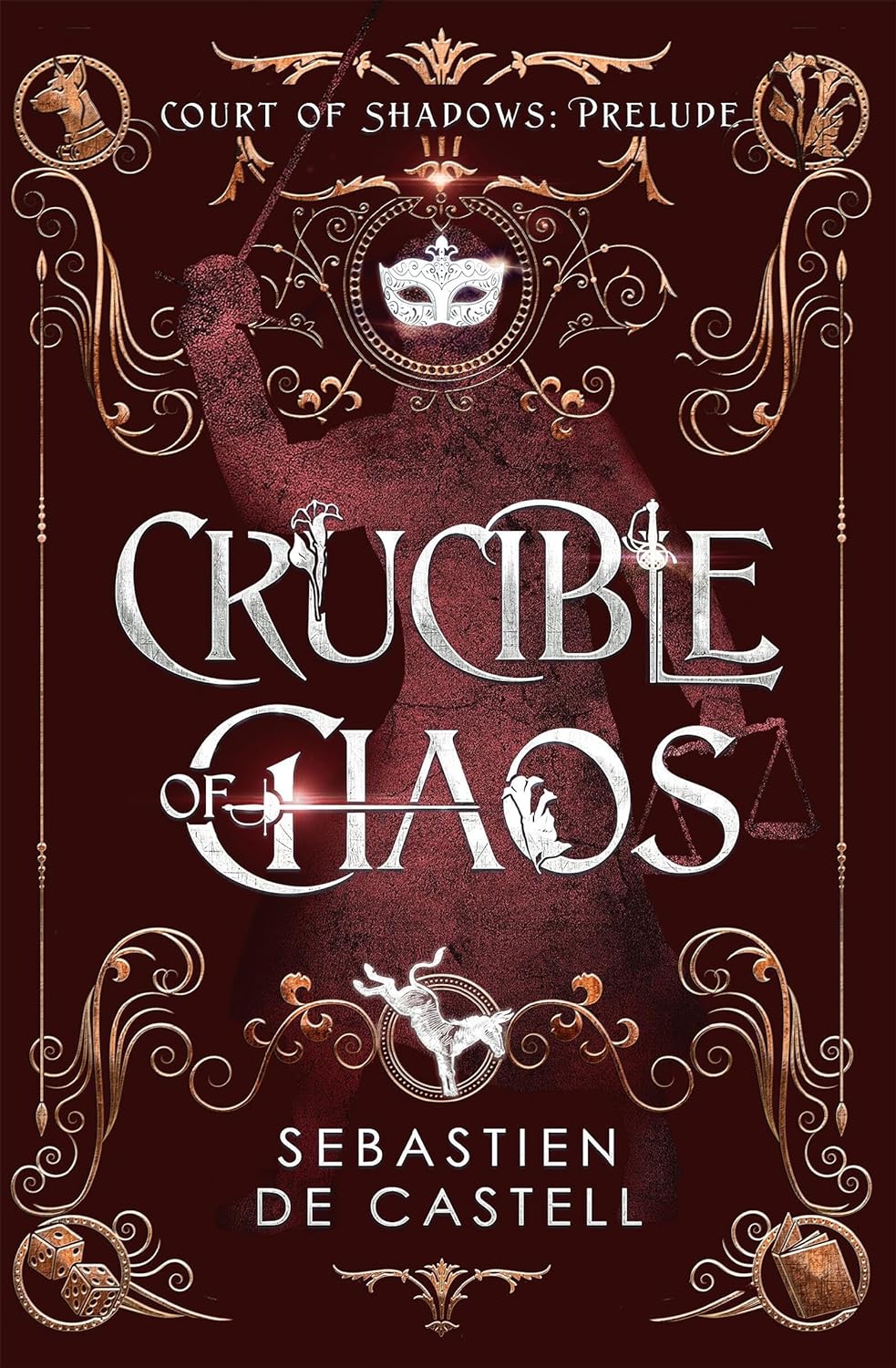
Crucible of Chaos by Sebastien de Castell

Crucible of Chaos Cover

Publisher: Jo Fletcher Books (Audiobook – 7 December 2023)

Series: Court of Shadows – Book 0.5

Length: 12 hours and 32 minutes

My Rating: 5 out of 5 stars

Amazon

In the mood for a witty, intense and highly unusual murder mystery?  Make sure to grab Crucible of Chaos, an outstanding and impressive novel from Sebastien de Castell, which serves as a prelude to his Court of Shadows series.

Earlier this year I was very lucky to receive the first book in Sebastien de Castell’s Court of Shadows series, Play of Shadows.  Set in the author’s Greatcoats universe, Play of Shadows was a truly epic and outstanding read that saw an unlucky actor with unusual gifts attempt to unravel a dark conspiracy inflicting his city.  I deeply enjoyed Play of Shadows, which was one of the best books I have read so far in 2024, and I was intrigued to check out more from de Castell, an author who had previously impressed me with his hilarious standalone novel, The Malevolent Seven.  While de Castell has several great series to his name, the book that caught my eye the most was the late 2023 release, Crucible of Chaos, which apparently served as a prelude to the other Court of Shadows novels.  Curious to see how this prequel would turn out, I grabbed the audiobook version of Crucible of Chaos and started listening to it, and boy was I glad that I did.

Travelling duellist and scholar Estevar Borros is a Greatcoat, one of the king’s legendary sword-fighting magistrates.  However, even amongst the unusual ranks of the Greatcoats, Estevar is peculiar, not just for his girth, but because of skills in deductive reasoning and his obsession with investigating the supernatural.  Known as the King’s Crucible, Estevar has travelled the lands of Tristia, seeking out unusual occurrences and trying to determine whether their cause is natural or supernatural.  However, even this renowned investigator of supernatural is unprepared for the chaos awaiting him in Tristia’s most holy site.

Summoned by his old acquaintance Abbot Venia, Estevar travels to Isola Sombra, an isolated island abbey considered the religious heart of Tristia.  According to Venia’s letter, the monks of the abbey are starting to fracture into factions following the recent murder of the gods, each with their own ideas of who the nation should worship in the future.  A frightened Venia needs Estevar, in his position as a magistrate and an authority on the supernatural, to arbitrate the debate and to help keep the fighting monks in line.

Despite his better judgement, Estevar, already suffering from a wound after a failed duel, agrees to travel to Isola Sombra, but what he finds there will chill him to his very soul.  Arriving amid a brutal storm, Estevar finds that the monks have fallen into madness, and now three factions are at war on the island, desperate to claim it for their own.  Worse, the abbot has been murdered, and evidence of dark magic lingers throughout the abbey.

Determined find a reasonable explanation for the insanity infesting Isola Sombra, Estevar begins his investigation, hoping to find the source of the chaos rippling across the island.  Alone except for a mysterious girl and his trusty mule, a wounded Estevar needs to face off against three very dangerous groups of monks, each of whom have deadly intentions for the interfering Greatcoat.  Worse, there are far more dangerous things awaiting the inhabitants of Isola Sombra, even if Estevar doesn’t believe in them.  Can the justice-loving Estevar stop the insanity of Isola Sombra with his deduction, sword and courtroom etiquette before it’s too late, or has the King’s Crucible finally found a mystery to insane for even him?

Wow, what an amazing and compelling novel.  Crucible of Chaos was another outstanding book from de Castell, and one that really grabbed my attention from the very beginning.  Containing an elaborate story, great writing, amazing characters, and so much more, Crucible of Chaos was a joy to read from start to finish, and one that I have little choice but to give a full five-star rating.

De Castell came up with an impressive novel that sets a classic detective story into The Three Musketeer inspired Greatcoats universe.  Readers are quickly introduced to two of the main characters, Estevar Borros and his trusty steed, as the dejected pair arrive at Isola Sombra to investigate a religious feud enveloping the island and its abbey.  While that is an interesting premise for a story, de Castell raises the stakes by introducing murder, mysterious mysticism, fearful locals, unnatural storms, and three warring factions of monks, which Estevar needs to unravel to get his beloved justice.  What follows is a complex and highly entertaining murder investigation as Estevar, with the help of a mysterious girl, begins to interrogate key members of the remaining monks to find out what they know and how their fighting and the resulting murder came about.  This proves to be quite addictive, and I found myself getting really drawn into this excellent mystery and the unique fantasy elements surrounding it.

The story takes a very interesting turn around halfway through as Estevar gets some dramatic proof that the events on Isola Sombra are more supernatural than he thought they would be.  This leads the protagonist into some dark places as he tries to fully understand everything that is happening, and who is ultimately responsible for the crimes committed.  De Castell cleverly lays out some intriguing revelations, as well as some tragic secrets that are cleverly hinted at by false memory and lies, and I had so much fun following all the breadcrumbs.  Everything leads up to several great confrontations, as Estevar first deals with some political intrigue that ties Crucible of Chaos into the rest of the series, before once again facing the strange powers haunting the island.  There are some inspiring moments here, especially as strange bedfellows fight together against the darkness, before the protagonist initiates a unique trial to reveal the whole truth.  The solution to the mystery is very clever, and I was really impressed with how de Castell pulled the whole thing together.  The conclusion really goes over-the-top as justice meets religion in some dark ways, and you will come away very impressed and satisfied with the dark, yet hopeful, story that emerged.

I love the tone that de Castell set out for Crucible of Chaos, mainly because there are so many elements that he managed to fit into his story.  The blend of mystery, character development, and unique fantasy inclusions from his pre-existing universe is extremely awesome, and I loved how the author managed to create such an elaborate and focused story.  The investigation element of Crucible of Chaos was the book’s true heart, and I have a lot of respect for the complex series of crimes that emerged, especially as de Castell managed to incorporate religious conspiracies, political intrigues and supernatural occurrences into the mystery’s solution.  There are so many moments of desperation, despair, and dark hope contained within this book, and the reader is constantly left feeling either intrigued by the mystery or shocked by the revelations that emerged.  It helped that de Castell’s characters are all so vibrant and entertaining, and there is a captivating humour that runs through the book that proves hard not to enjoy.  This whole novel comes together with a great pace that never lets up, and I honestly could not stop listening to Crucible of Chaos at times, especially when all seemed dire, or the protagonist was on the hunt for justice.

As I mentioned above, I came to Crucible of Chaos after reading Play of Shadow, so I was interested in seeing how it would fit into both the Court of Shadows series and the Greatcoats universe.  While there are obvious connections to both, for the most part Crucible of Chaos is more of a standalone novel than anything else, as the plot is primarily focused on the intense mystery the protagonist finds himself trapped in.  While there are a lot of strong references to previous Greatcoats novels, de Castell does an outstanding job of rehashing these events in a thorough and sensible manner, allowing the readers to get all the necessary context that they need.  Readers also do not need to get this book first to enjoy the next book in the series, Play of Shadows, which was reassuring in hindsight, and I kind of like how independent the two books are from each other.  The only real connection lies in a couple of revelations towards the end of Crucible of Chaos that hint at dark deeds on the horizon and a shadowy hand manipulating events from afar.  As such, Crucible of Chaos is a very accessible book for new readers and serves as a great introduction to the various series associated with it.

I will say that Crucible of Chaos did provide some interesting insights into the nation of Tristia, which serves as the primary setting for the Greatcoats series.  There are substantial examinations of the nation’s history, the backstory from the prior books, and other worldbuilding that de Castell has previously come up with, and I found this to be quite fascinating.  The often fractured and duellist obsessed nation of Tristia is an amazing background for this story, and I enjoyed the multiple discussions about the role of the Greatcoats as magistrates and keepers of the king’s peace, especially as the protagonist is quite passionate about the ideals of justice they represent.  However, a lot of Crucible of Chaos’ focus lies around the religion of the world, as the gods of Tristia become a major aspect of the plot.  Indeed, key events of the original Greatcoats series become vitally important here as the protagonist needs to consider the impact that the previous murder of the gods has had on the current religious institutions.  I really liked the constant contrasts between the philosophies of human justice and religious practice that becomes recurring theme in Crucible of Chaos, and I rather enjoyed seeing both unique elements of this landscape.

While I loved the story and the dive into the Greatcoats universe, the absolute best part of Crucible of Chaos were the exceptional characters that de Castell set his narrative around.  Each of them was complex and endearing in their own fun way, and I really enjoyed the powerful storylines that the author wrote around them.  The most prominent of these is protagonist and point-of-view character Estevar Borros.  A member of the king’s Greatcoats, Estevar was a very distinctive protagonist, mainly because he didn’t fit the typical fantasy protagonist mould that most readers would be familiar with.  A rather girthy and older duellist, Estevar is nonetheless a formidable warrior, often able to overcome younger or more in shape opponents through skill and trickery.  However, for this adventure, Estevar recently lost a duel due to his own arrogance and is forced to investigate the events on Isola Sombra while wounded and exhausted, and with his tools and authority missing.  I deeply appreciated the multiple handicaps that de Castell placed on his protagonist, especially as it enhanced the intensity of the plot, and it was compelling to see Estevar deal not only with his wounds but his own dark temperament, while trying to solve the case.  Despite his disadvantages, Estevar proves to be a capable investigator, and his deductive ability, which results in him being shown as a supernatural obsessed cross between Sherlock Holmes and Porthos.  I deeply enjoyed how determined and curious Estevar was throughout the plot, and he was a fun character to follow as he keeps up a genial and pleasant demeaner for most of the book, with some fun cracks of humour.  However, we do see some great flashes of emotion from Estevar at key moments, especially when he realises just how deranged the crime he is investigating is.  I was a huge fan of Estevar from the opening pages, and he is a protagonist I would love to see again in the future.

Aside from Estevar, de Castell features several other exceptional characters that you have a fantastic time following.  This includes the mysterious young female lead, Caeda, who serves as Estevar’s impromptu assistant during the investigation, determined to help find the truth on the island.  Shown initially as an energetic and enthusiastic figure, Caeda plays well off Estevar, and I liked the entertaining partnership they formed, even if Caeda is keeping secrets, which eventually leads to some tragic revelations.  However, the character you are most likely to fall in love with is Estevar’s mule, Imperious.  Much more than a stubborn mule, Imperious is the bravest, most rambunctious and expressive character in the entire novel, and de Castell has a lot of fun throwing him into the story in entertaining ways.  A dangerous and near unstoppable figure, Imperious stole every scene he was in, and you honestly end up caring for this heroic mule more than any other character in the book.  Throw in a cadre of mad monks, including an obsessive inquisitor, a wannabe general, and a lecherous sorcerer lord, and the cast of Crucible of Chaos proves to be really fun and intriguing to follow.

While I was tempted to grab a physical copy of Crucible of Chaos, I ended up getting the audiobook version instead, which proved to be an epic format to enjoy the book in.  Coming in with a runtime of 12 and a half hours, this was a moderately long audiobook, but it was one I managed to power through in less than a week due to how caught up I got in the story.  I found that the audiobook format really helped me to enjoy the complex narrative that de Castell came up with, and having it read out helped me to appreciate the depictions of the dark abbey and the elaborate mystery that much more.  It helped that Crucible of Chaos was narrated by one of my favourite audiobook narrators, Joe Jameson, whose work I enjoyed so much in the Legacy of the Mercenary Kings audiobooks (The Kingdom of Liars, The Two-Faced Queen and The Voyage of the Forgotten).  Jameson has a great voice for fantasy fiction, and I loved how he brings the elaborate story of Crucible of Chaos to life with his recitation.  The narrator had some great voices for the various characters, and while a few are similar to those he used in other audiobooks his other works, they all expertly fit the character they were assigned to perfectly.  I particularly enjoyed the distinctive and overly accented voice that Jameson gave to the main character, Estevar Borros, which perfectly fit his foreign origins, as well as his personality and physical attributes.  This booming, cheerful, yet penetrating voice, really captured the protagonist, and I could always envision this amazing character whenever Jameson spoke.  This, and other great voices, really helped to turn the Crucible of Chaos audiobook into something really special, and I cannot recommend this format enough to someone interested in this book.

Overall, Crucible of Chaos proved to be a remarkable and highly impressive novel from Sebastien de Castell that I had such an outstanding time reading.  Combining a unique story with great characters and compelling elements from the Greatcoats universe, Crucible of Chaos was a truly epic novel that I could not get enough off.  I look forward to seeing what other intriguing adventures occur in the rest of the Court of Shadows books, and this is swiftly becoming one of my favourite ongoing fantasy series.

Amazon

Quick Review – Fractal Noise by Christopher Paolini

Fractal Noise Cover

Publisher: Tor (Trade Paperback – 16 May 2023)

Series: Fractalverse – 0.5

Length: 287 pages

My Rating: 4.5 out of 5 stars

Amazon

Return to the epic Fractalverse of the always awesome Christopher Paolini with this standalone prequel novel, Fractal Noise, a tense and impressive dark science fiction novel.

Christopher Paolini is an author that I have been a major fan of for a very long time thanks to his iconic and epic Inheritance Cycle series.  The amazing Inheritance Cycle first debuted over 20 years ago with the amazing fantasy novel Eragon, which told the compelling story of a young hero and his dragon companion as they fight to free a conquered land.  The Inheritance Cycle series is one of my all-time favourite series due to the great story, impressive world building, and the sheer nostalgia that I hold for them.  Indeed, I am particularly excited because Paolini is also releasing a sequel to the Inheritance Cycle books later this year with Murtagh, which is one of my most anticipated reads for the second half of 2023.  However, before we get to that there is even more Paolini goodness to unwrap this year as the author has also released the intriguing science fiction novel, Fractal Noise.  A standalone prequel to his science fiction epic from a few years ago, To Sleep in a Sea of Stars, Fractal Noise was an intriguing read that I had a lot of fun reading in the last week.

Plot Synopsis:

July 25th, 2234: The crew of the Adamura discovers the Anomaly.

On the seemingly uninhabited planet Talos VII: a circular pit, 50 kilometers wide.

Its curve not of nature, but design.

Now, a small team must land and journey on foot across the surface to learn who built the hole and why.

But they all carry the burdens of lives carved out on disparate colonies in the cruel cold of space.

For some the mission is the dream of the lifetime, for others a risk not worth taking, and for one it is a desperate attempt to find meaning in an uncaring universe.

Each step they take toward the mysterious abyss is more punishing than the last.

And the ghosts of their past follow.


Fractal Noise
was a very awesome book from Paolini that I had an outstanding time getting through.  I must admit that when I first received a copy of Fractal Noise, I wasn’t too sure that I was going to read it, mainly because while I enjoyed To Sleep in a Sea of Stars, it was a bit too long and overcomplicated, and I feared this potentially unnecessary prequel would be the same.  However, I decided to give it a shot, especially as Fractal Noise was considerably shorter than the original novel in this series, and boy am I glad that I did.

Paolini sets up a simple but very effective story in Fractal Noise that is set 23 years before the events of To Sleep in a Sea of Stars, which details the discover and early exploration of a mysterious alien artefact that was mentioned in the original novel.  Just like with To Sleep in a Sea of Stars, Fractal Noise is told from the perspective of a single scientific protagonist, this time a xenobiologist names Alex Crichton, and follows them and their team as they examine a newly discovered space anomaly, an uninhabited planet with a 50km-wide perfect hole in it that is constantly relaying a continuous, overwhelming beat.  This anomaly could only have been created by a sentient species, and the scientists aboard the ship decide to journey to the planet to find any additional signs of alien life and to discover more about the hole.  However, to make it to the edge they need to land a substantial distance away and trek to it by foot in an arduous journey with many potential complications.

Paolini does a good job of quickly and effectively setting up this compelling plot in the first 50 pages of Fractal Noise while also providing great introductions to the damaged protagonist, as well as the accompanying scientists that are taking the trek with him.  However, the real story doesn’t start until the protagonists land on the planet and begin walking the distance towards the hole.  The author really goes out of his way to make this trek as arduous as possible, as the characters need to walk through wind, dust and other obstacles, all while pulling a mechanised sled behind them that slowly breaks down.  The sheer repetitiveness of this task, combined with the desolate landscape, injuries, and the unique planet that rings with a loud “thud” every few seconds, works to slowly wear down the protagonists and force them into some very dark places of their mind.  The closer they get to their goal, the harder their task becomes as the vibrations and noise produced by the hole becomes more intense and places a bigger toil on their bodies and technology.  At the same time, every setback impacts their minds even further as the four scientists soon fall to dangerous infighting as each of them is haunted by their own ghosts and their own reasons for being there.

I really liked how the entire story slowly devolved into a dark and ultra-intense psychological science fiction thriller as Paolini worked to emulate desolate real-life expeditions (such as those old-school arctic journeys), with his excellent storytelling.  The slow but unstoppable mental decline of the characters is handled perfectly, and while you are initially more worried about the protagonist, Alex Crichton, due to the recent tragedies in his life, the other characters are the ones you have to watch out for as they become more and more deranged or determined in their own ways.  Watching everyone slowly turn on each other as the journey becomes harder and harder on them is extremely compelling, and it proves hard to turn away as things get darker and darker.  The author supplements this compelling narrative with some intriguing, realistic and very-well thought out science fiction elements, especially when it comes to the physics of the planet, the obstacles they are facing, and the technology they have access to.  However, there is also a certain primitive edge to the storytelling as no matter how advanced their technology is, when it starts to fail, they are forced to dive back into more a much more basic mindset.  All this combines well with the fantastic dive into Crichton’s bleak mental state, as the protagonist begins to see the expedition as an important quest that will give him some redemption for his recent losses.

The entire story continues along this dark vein all the way to its compelling conclusion, and I was honestly pretty addicted towards the end, knocking out the last couple of hundred pages in a single night.  Watching the final snap of each protagonist was pretty brutal, but it was a necessary commutation of the complex storytelling that had been leading up to at that point.  I loved how well the barren landscape served as a background to this great story, and the constant “thump” “thump” of the planet as they drew closer gave such an outstanding atmosphere to the plot.  Paolini really pulled together an excellent read here that both serves as a continuation of his existing universe, while also giving readers a story so very different to anything that he has produced before.

Overall, I found Fractal Noise to be an outstanding and epic new novel from Christopher Paolini, which I had such a great time with.  I cannot emphasise just how intense and complex this initially simple story becomes, and the author’s ability to create forbidding settings, damaged characters, and suffocating story atmospheres has clearly grow over the years.  Due to its connections to the history of his pervious novel, Fractal Noise is perfect for fans of To Sleep in a Sea of Stars, while also being very open to new readers interested in a compelling and bleak science fiction adventure.  Fractal Noise was an exceptional read that comes very highly recommended from me and I cannot wait to see more of Paolini’s writing later this year when Murtagh comes out.

Amazon

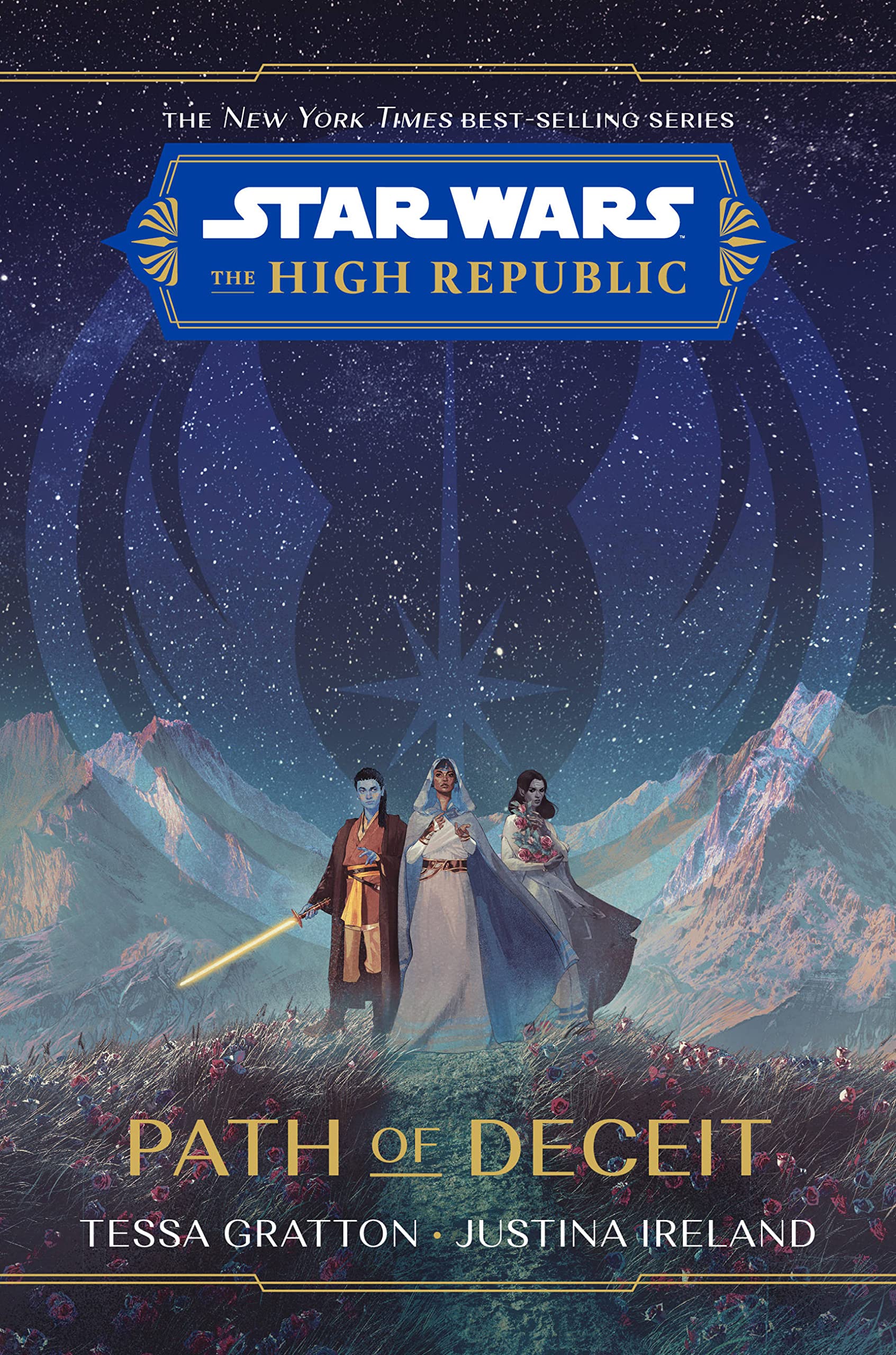
Star Wars: The High Republic: Path of Deceit by Tessa Gratton and Justina Ireland

Star Wars - Path of Deceit Cover

Publisher: Disney Lucasfilm Press (Audiobook – 4 October 2022)

Series: Star Wars: The High Republic – Phase Two

Length: 8 hours and 10 minutes

My Rating: 4.5 out of 5 stars

Amazon

The second phase of The High Republic begins with an absolute banger as the team of Tessa Gratton and Justina Ireland introduce Star Wars fans to a bold new young adult novel that ends up being epic in all the right ways with Path of Deceit.

For the last two years, Star Wars extended fiction has been firmly focused on the compelling multimedia project, The High Republic.  Set centuries before the prequel films, The High Republic takes readers to a whole new period of Star Wars history, where the Republic and the Jedi were at the absolute height of their power and influence.  However, not everything is perfect, and the Jedi characters are soon forced into conflict with dangerous forces bent on destroying them.  The first phase of The High Republic introduced readers to this new time period extremely well, while also setting up several fascinating characters, as well as the villainous Nihil, a group of space marauders who seek to destroy the order that the Republic represents.  I quickly fell in love with this cool new Star Wars subseries, and I enjoyed the massive range of different media present in this first phase, including comics, manga, children’s books, audio productions and a ton of novels.  The main story of this series is expertly told across the three main adult books, Light of the Jedi, The Rising Storm, and The Fallen Star, while other compelling, and often vital, stories take place in young adult books like Into the Dark, Out of the Shadows and Midnight Horizon, the associated comic series, as well as the audio production Tempest Runner.  This entire first phase came together extremely well, and I was really impressed with the range of stories they told, as well as the excellent new characters and elaborate new universe expansions that occurred.

After completing the first phase earlier this year, the various writers associated with The High Republic project, have just embarked on their ambitious second phase of High Republic fiction.  The second phase goes back even further into Star Wars history by being set 150 years before the events of the previous High Republic books.  The idea is that the second phase will act as a prequel to the first, showing how the Nihil were formed and the reasons behind their leader’s hatred for the Jedi.  These details will no doubt become extremely important for the third phase, while also helping the reader understand why the events of the first phase unfolded.  The first book in this second phase is Path of Deceit, written by the team of Star Wars fiction newcomer Tessa Gratton and established Star Wars writer Justina Ireland, who made a name for herself in the first phase with her young adult and middle school books.  Both authors really throw their heart into Path of Deceit, and the result in a fantastic and captivating read that presents Star Wars fans with something very epic indeed.

It is a time of exploration and discovery in the galaxy as the Republic enters an age of expansion.  Under the guidance of the Jedi, teams have been sent into the furthest corners of the Outer Rim, seeking out new planets, civilisations, and people to add to the delicate tapestry of life, diplomacy and trade that forms the basis for the Republic.  However, not all the discoveries being made are good, and many dangers lurk out in the far reaches of space.

Of these dangers, the most benign appear to be a small Force cult on the remote planet of Dalna.  Known as the Path of the Open Hand, this group believe that the Force should be free, and that no one should have the power to use and abuse it, including the Jedi.  Led by the charismatic Mother, the Path of the Open Hand is small, but features a fervent congregation of believers, including a hopeful young woman, Marda Ro.

Marda Ro always dreams of leaving Dalna to preach the message of the Path throughout the galaxy.  However, protected by her free-spirited cousin Yana Ro and held back by the Mother, Marda appears destined to remain always on Dalna.  That is until two Jedi, Jedi Knight Zallah Macri and her Padawan Kevmo Zink, arrive on Dalna, investigating the theft of several Force artifacts from surrounding systems.  Believing that the thefts are related to the Path, the two Jedi begin to investigate the group, and Marda and the young Kevmo soon form a tight bond as their connection grows.  However, not everything is as it seems on Dalna, and soon the Mother reveals a dark secret that will reverberate throughout the galaxy for centuries to come.

I have to admit that even before I started reading Path of Deceit, I kind of had some doubts about whether I was going to really enjoy it.  Not only was I surprised that this second phase of the High Republic was starting out with a young adult book, rather than the upcoming adult novel, Convergence, but I was also apprehensive about the reverse time skip between phases.  Setting this second phase 150 years before the events of the first phase was a bold choice, especially considering that The High Republic is a prequel series in itself.  However, if Path of Deceit is any indication of what is to come, then the entire second phase of The High Republic is going to be pretty damn impressive and fit into the wider High Republic extremely well.  The team of Gratton and Ireland did a remarkable job here, producing a slick, slow-burn Star Wars story that introduces many key elements of this new timeline while also giving some fantastic hints of what is to come.  I had an absolute blast getting through this book, and it is has definitely gotten me excited for the next round of High Republic fiction.

I was deeply, deeply impressed with the captivating story that the authors came up with for Path of Deceit.  Due to its position in this new High Republic phase, Gratton and Ireland had to achieve quite a lot during the narrative, not only introducing key characters and settings, but also tying them into the wider High Republic history.  However, I think they achieved this goal extremely well, and the subsequent story is very intriguing and intense.  I do need to warn people that the Path of Deceit does start of fairly slow and takes a long while for all its excellent storylines to pay off.

The book is primarily set on the planet of Dalna and follows three young central characters as they find themselves caught up in the actions of the mysterious Path of the Open Hand.  These central characters include Marda Ro, a devout member of the Path, her cousin Yana Ro, who leads the Path’s covert unit that steal Force artifacts, and Kevmo Zink, who arrives on the planet to investigate the Path and the recent thefts.  The first half of the book sees the various characters gradually get to know each other, while Marda and Kevmo grow closer, despite their different viewpoints of the Force.  As the story continues, you start to see some cracks in the serene appearance of the Path, with Yana growing more and more determined to leave as she begins to see the Mother for what she really is.  However, even with a few action scenes and a great flood sequence, the story is still moving at a gradual pace, with the authors laying down some subtle hints of what is to come.  All that changes in the last quarter of the novel, as everything comes together in a big and shocking way.  While the narrative appears to be heading in one certain direction, the authors suddenly unleash a pretty major twist that really surprised me.  This twist was extremely brilliant, not only because of how well set up it was but because its execution was very sudden and a major gamechanger.  The entire tone of the novel changes after that, with the characters taking on new roles, and you see just how well-connected Path of Deceit is to the books of Phase One.  This twist honestly makes you really appreciate the slow and careful pace of the rest of the book, and you realise just how cleverly they were setting everything up.  The entirety of Path of Deceit ends on an excellent and powerful note, and the reader is left eagerly looking forward to seeing how the rest of this second phase comes together.

The team of Gratton and Ireland set out this story in a very awesome way, and I felt that everything came together extremely well to enhance the fantastic narrative.  The split between the three main perspectives helped to produce a balanced and multifaceted narrative, and I liked seeing the distinctive alternate viewpoints of the cool events occurring.  While the pacing was initially a bit slow and there was a little less action than your typical Star Wars novel, Path of Deceit makes up for it by focusing more on the characters, setting up the new version of the universe, and featuring a great young adult story that will really appeal to the teenage audience.  The way that the characters interact and focus on their attractions is very typical of most young adult books, but I felt that it didn’t get too over-the-top.  Instead, it is just enough to help bring the younger reader in, while also still being intense and compelling enough to keep older readers still attached and entertained.  I personally deeply enjoyed how the story was presented, especially once the pace increased towards the end, and this entire novel was an absolute joy to read.

As I mentioned before, quite a lot of importance is attached to whether Path of Deceit did a good job featuring the relevant Star Wars and High Republic elements.  I say that Gratton and Ireland strongly succeeded, as they not only provided a great viewpoint of this new period of Star Wars fiction but they also provided some captivating and clever links to the first phase.  While most of the focus of Path of Deceit is primarily on one planet, so you don’t get the full galaxy view, I did like the initial glimpse of this universe.  There is a real Western frontier vibe to the entire setting, with explorers, settlers, pilgrims, and people looking for a fresh start interacting with new elements from the Outer Rim.  There are also some hints about how this version of the Republic and the Jedi are set up, and there is a very good mixture of elements that I think are going to come together very well in the future.  I also really enjoyed the mysterious and captivating Path of the Open Hand, who were introduced as an alternative Force cult who are completely opposed to the actions of the Jedi.  Their curious viewpoint of the Force, and their methods for preserving it, make for quite a fascinating group and I deeply enjoyed how they developed.  As for connections to the first High Republic phase, well let us say that Path of Deceit is a very key novel regarding this, as several key characters with connections to the future are brilliantly set up here.  So many key elements or organisations from the first phase are introduced in a completely different form here, and you will be surprised at the origins of some of the best bits from the established High Republic books.  I loved some of the impressive set up that Gratton and Ireland featured in Path of Deceit, and this young adult novel is a very key part of this phase of the High Republic, with story elements from it set to reverb through certain upcoming books all the way to the future in the third phase.

Now, one of the main questions I am sure many people are wondering is how much knowledge of the High Republic and wider Star Wars universe people need to enjoy Path of Deceit.  Naturally, as the introductory book in the second phase of an established Star Wars sub-series, people who have read the previous High Republic books are going to have a better time with Path of Deceit that readers who have not.  Not only do you have a better idea of what the earlier Star Wars period are going to look like, but you also will appreciate some of the revelations that appear in this book and have a better ability to make connections between this phase and the previous one.  As such I would strongly recommend checking out all the key previous High Republic content first (the three adult books at the very least), as you a really going to have a better time with Path of Deceit that way, especially as the big twist towards the end makes a lot more sense if you do.  However, this isn’t the absolute worst book to start the High Republic with, and maybe reading the prequel second phase first is a better way of enjoying these books.  Either way, Gratton and Ireland do a good job of making this book pretty accessible to new readers, and I think that anyone with a decent knowledge of Star Wars fiction will probably be able to enjoy and appreciate this book.

Path of Deceit contains a great group of central characters that the authors do an excellent job of introducing.  This includes three intriguing teenage protagonists who have a complex and fascinating narratives that see them engage with this new world in very different ways.  Marda Ro is the devoted adherent to the Path of the Open Hand, who believes in their mission and their leader with all her heart.  Marda has a deeply compelling and well-laid-out story arc in Path of Deceit that eventually sees her question her believes and connections to the Path once she meets Jedi Padawan Kevmo Zink.  Already feeling disconnected from the galaxy and people due to her species, which is renowned and reviled for unknown reasons, Marda was a real emotional tinderbox in this book, and her relationship with Kevmo only complicates this further.  However, the events of the book change her in a way no-one could really predict, even with the hints her name contain, and her metamorphosis from sweet character to something else is very clever and quite impactful.  I have a feeling that she is going to have one of the best character arcs in the entire second phase, and I look forward to seeing how her narrative completely unfolds.

I also like the storylines surrounding the main Jedi character, Padawan Kevmo Zink, and Marda’s cousin Yana Ro, both of whom have their own distinctive arcs that I was quite intrigued by.  Kevmo Zink is a great young Jedi character who is drawn by his own romantic urges and desire for connections as much by the Force.  Kevmo serves as a great newcomer character to Dalna and the Path of the Open Hand and provides a great alternate perspective to Marda’s strict commitment to their ways.  He also serves as an intriguing love interest to Marda, and the classic Star Wars relationship between a conflicted Jedi and a forbidden girl made for some great reading, without being too silly or over-the-top.  I had a lot of fun with Kevmo, and I liked his infectious humour and his extremely positive view of the universe.  His storyline also goes in some very surprising directions, and this ended up being a very intriguing character to follow.  Yana Ro on the other hand is a more wild and exciting addition to the cast, who acts extremely differently to her cousin Marda.  A less indoctrinated member of the Path, Yana knows that there is something rotten at their heart, and seeks a way out, mainly by stealing Force artifacts for the Mother.  Her journey is very emotionally rich, and a little bit tragic, and I had a wonderful time seeing her storyline come to fruition, especially as it puts her in a very exciting position for future entries in the series.  Yana’s realistic viewpoint of the Path, as well as her own species’ inclinations and reputation, stands in great contrast of that of Marda, and her more grounded and aggressive mindset also makes her stand out compared to Kevmo.  As such, there is a good balance of personalities in Path of Deceit amongst the point of view protagonists, and this helps to produce a fantastic and compelling read.

There are also several great side characters who add their own spice to the story.  The most prominent of these is Kevmo’s Jedi master, Zallah Macri, an extremely serious Jedi Knight who serves as Kevmo’s mentor and guide.  Zallah is a suitable cautionary figure throughout the book, trying to keep Kevmo focused on the Force and their investigation, despite his obsession with Marda.  The other side character I really want to focus on is the Mother, the Path of the Open Hand’s mysterious leader who has managed to take over the cult through to her apparent strong connection to the Force.  The Mother serves as a rather compelling antagonist throughout the book, especially as you spend most of the time wondering if she is really Force sensitive, or whether she is running a long con on her followers.  An aloof and secretive antagonist, it soon becomes very clear that the Mother has her own objectives and plans that run contrary to that of her followers, and the full extent of them proves to be very exciting and destructive.  I felt that the Mother was an excellent alternative character for Path of Deceit, especially as her plans have some major long-term impacts on the point-of-view characters, and she has some dark secrets that need to be explored further.  These, and other characters, really add to the overall strength on the novel and I deeply enjoyed the way that Gratton and Ireland introduced them and took them through a fascinating emotional ride.

As with most Star Wars novels, I chose to check out Path of Deceit’s audiobook format, which was a pleasurable and fun experience as always.  At just over eight hours, this was a relatively quick audiobook, and I managed to knock it out pretty quickly.  This format did an excellent job of presenting Path of Deceit’s compelling narrative, and I had fun having this book read out to me.  However, the real joy of a Star Wars audiobook always lies in the excellent extra production elements that have been added in.  The classic Star Wars sound effects are used very well throughout Path of Deceit’s audiobook, and hearing blasters, lightsabers and even the sounds of people in the crowds, helps to drag listeners into the story and its surrounding universe.  However, I am always more impressed with the fantastic use of the iconic Star Wars musical score that is threaded through multiple scenes in the audiobook.  Path of Deceit has a pretty cool selection of scores playing throughout it, and I liked how the music often reflected the more rural setting and the mystical elements it was exploring.  The various bits of music work extremely well at enhancing key scenes throughout the book, and there were several times when the careful application of these tunes enhanced the emotional impact of the entire book.

On top of the cool sound effects and powerful musical inclusions, much of my enjoyment of Path of Deceit’s audiobook lies in the excellent narrator who was telling the story.  Path of Deceit is narrated by actress Erin Yvette, who has done a lot of voice work recently in the video game space.  While Yvette hasn’t provided narration for too many Star Wars books yet, she did a great job here in Path of Deceit, and I loved how she read out the book.  Yvette’s voice fits the young adult tone of this Star Wars novel extremely well, and she ensures that the compelling tale is effectively shared out to the listener.  In addition, she also provides a range of excellent voices to the various characters featured throughout the book.  Each of her voices really fits the respective character, and you get a real sense of their nature, their bearing, and their emotional state as you hear Yvette narrate them.  Not only does she capture the youthful nature of characters like Kevmo Zink and Marda Ro well, but she also gets the proper Jedi character Zallah Macri, the more self-serving voice of Yana Ro, and the mystical, manipulative voice of the Mother, down perfectly.  This voice work is pretty damn impressive, and when combined with audiobook’s sound effects and outstanding Star Wars music, it helps to turn the Path of Deceit audiobook into an outstanding experience.  This was such an awesome way to enjoy this latest High Republic novel, and audiobook remains my absolute favourite way to enjoy a Star Wars tie-in book.

I am feeling a heck of a lot better about the second phase of the High Republic after powering through Path of Deceit.  The wonderful team of Tessa Gratton and Justina Ireland produced an outstanding young adult Star Wars novel that did a lot of remarkable things.  Featuring a well-crafted story that slowly but surely hooks you and some fantastic characters, Path of Deceit charts its own course while also brilliant tying into the High Republic novels that have come before.  I can’t wait to see where this phase goes following this impressive story in Path of Deceit and I am planning to read the next High Republic book as soon as I can.

Amazon

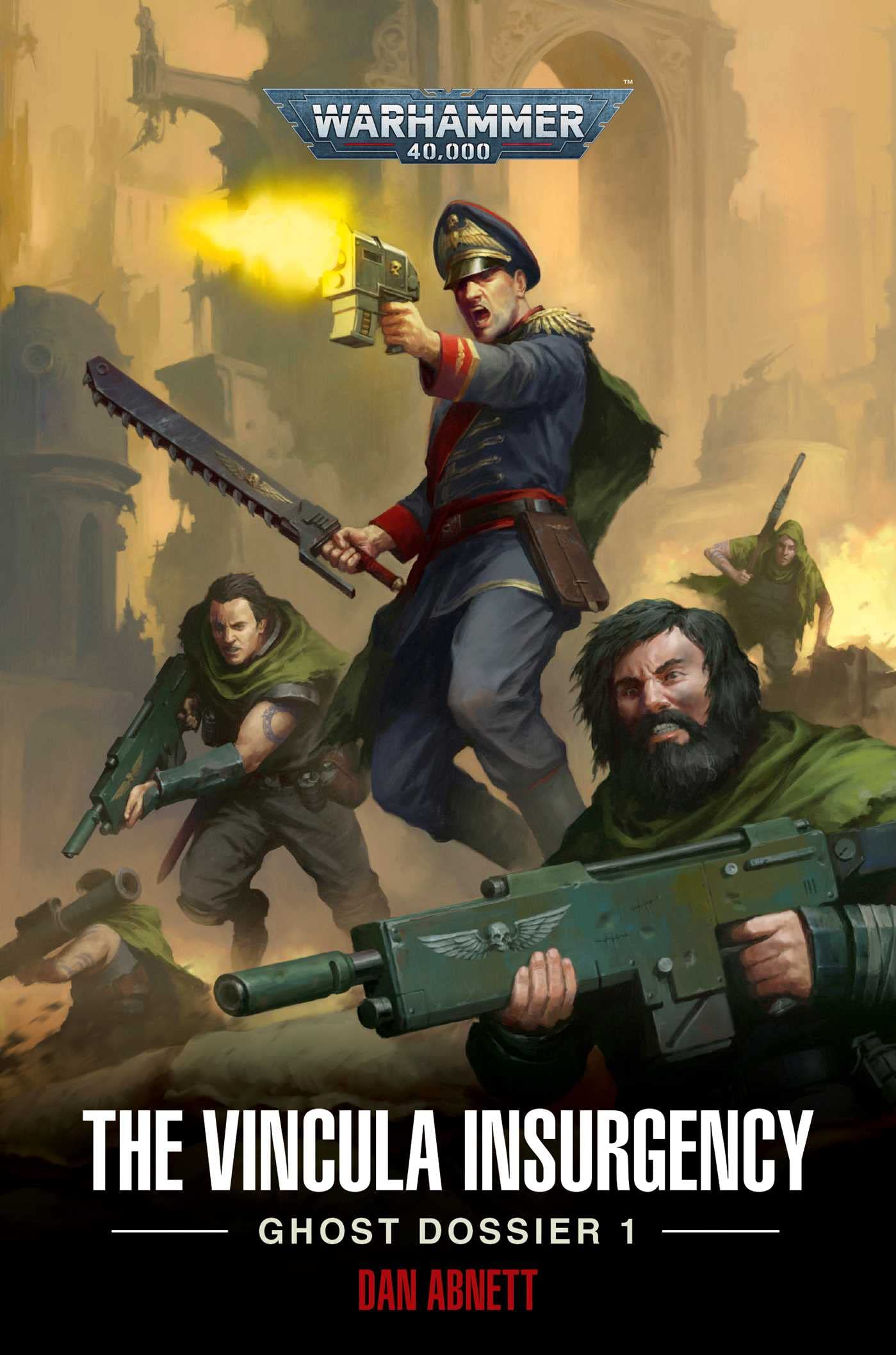
Warhammer 40,000: The Vincula Insurgency by Dan Abnett

The Vincula Insurgency Cover

Publisher: Black Library (Audiobook – 21 May 2022)

Series: Ghost Dossier – Book One

Length: 6 hours and seven minutes

My Rating: 4.5 out of 5 stars

Amazon     Book Depository

One of the leading authors of Warhammer fiction, Dan Abnett, returns to his iconic Gaunt’s Ghosts franchise in a big way with the compelling military thriller, The Vincula Insurgency.

Few people have excelled at tie-in fiction in the same way that acclaimed author Dan Abnett has over the years.  Not only has he written multiple awesome comics and several original novels but he has contributed tie-in books to several different fandoms, including Doctor Who and Tomb Raider.  However, his most significant work has easily been within the Warhammer extended universe.  Abnett has produced a ton of impressive and compelling Warhammer novels over his career in both the Warhammer 40,000 and Warhammer Fantasy sub-series.  Some of his more notable works include some cool-sounding Warhammer comics, the Tales of Malus Darkblade novels (I’ve got a copy on my shelf waiting to be read), and some major Warhammer 40,000 novels, including multiple entries in the massive The Horus Heresy series, as well as his Eisenhorn, Ravenor and Bequin novels, which together paint one of the most complete pictures of the Imperial Inquisition).  However, I would say that his most notable series is probably the Gaunt’s Ghosts series of novels.

Set in the Warhammer 40,000 universe, the Gaunt’s Ghosts novels are part of the larger Sabbat Worlds crusades arc of fiction (which have come out of this series) following a unique regiment of soldiers, the Tanith First and Only.  The Tanith First and Only, also known as Gaunt’s Ghosts in respect to their commander, Colonel-Commissar Ibram Gaunt, are a highly skilled unit who specialise in stealth and scouting missions.  Their planet, Tanith, was destroyed shortly after their formation, hence the designation First and Only.  The Gaunt’s Ghosts series follows their battles through the Sabbat Worlds as a major part of the crusades.  This series began back in 1999 with the awesome novel, First and Only, and the latest novel, Anarch, (book 15) came out in 2019.  Generally considered one of the most iconic and compelling series in the Warhammer 40,000 universe, I have been meaning to properly read this series for ages, although so far I have only had the chance to check out First and Only.  However, Abnett recently revisited this series with the intriguing The Vincula Insurgency.  The first entry in Ghost Dossier series, which presents never-before-seen stories of the Ghosts, The Vincula Insurgency acts as a prequel to the main series and tells an impressive and fun new tale of the early regiment.

Before the battles that would make them famous throughout the Sabbat Worlds Crusades, the Tanith First and Only, under the command of Colonel-Commissar Ibram Gaunt, are still coming together as a unit.  After fighting a gruelling campaign on the planet of Voltemand, politics has forced the Tanith to remain and take over security for a backwater agricultural province and its capital, Vincula City.  Determined to get off-world and back to the frontlines, Gaunt and his regiment grudgingly prepare for the arrival of a new provincial governor and his administrators.  However, life is about to get very interesting for the Tanith forces.

A highly skilled and deadly insurgency movement has emerged within Vincular City, determined to cripple the Imperial forces within and disrupt their ability to assist the rest of the crusade.  After a series of brutal bombings, Gaunt and his troops attempt to keep the peace within the province.  However, their actions are countered at an impressive rate by the local insurgency elements, who are receiving outside help and training from a dangerous opponent who knows all the Tanith’s tricks.  Can Gaunt and his unit pull together to defeat this deadly foe?  And what happens when they discover that their mysterious opponent is linked to the Ghost’s long-dead planet?

This was another extremely awesome Warhammer novel from Abnett who has produced an intense and clever prequel to his existing Gaunt’s Ghosts novels.  The Vincula Insurgency is a relatively short novel, with a somewhat compressed story.  However, despite this length, Abnett manages to achieve quite a lot.  Not only does it set up plot points for the main series, but it also features a brilliant and very entertaining self-contained narrative that is guaranteed to keep the reader entertained.  Shown from the perspective of several of your favourite Ghosts, the author tells an excellent story that sees the protagonists under attack from a well organised insurgency group.  This results in a very fast-paced narrative that perfectly brings together the science fiction Warhammer 40,000 elements with a military thriller storyline as the Ghosts attempt to overcome the enemy attacking them from all sides.  The action flies thick and fast here, and features some impressively written battle sequences that really drag you into the heart of the fighting.  In addition, the author keeps the tension levels high throughout most of the story, and the feeling that some bad things are about to happen is never far from the reader’s mind.  The multiple character driven storylines come together extremely well within The Vincula Insurgency to create a comprehensive and powerful narrative, and I really appreciated some of the unique story elements that Abnett came up with.  This cool novel ends on an interesting note, and I will be quite intrigued to see what additional new Gaunt’s Ghosts’ stories Abnett has planned.

This was a very interesting addition to the Warhammer canon as Abnett dives back into the earlier days of his established series.  The Vincula Insurgency serves as an excellent prequel to the Gaunt’s Ghosts series, and it was great to see more of the early history surrounding this awesome unit.  Abnett makes sure to load up the book with a ton of references and hints of the events that are to come in the series, which established fans will really appreciate.  However, even those readers who are unfamiliar with the Gaunt’s Ghosts series can have fun here, as Abnett tells a very inclusive narrative that anyone can enjoy, with plenty of exposition about who the Tanith are and what is happening in the Sabbat Worlds Crusades.  Indeed, The Vincula Insurgency serves as a very good introduction to the series’ characters and storylines, and many readers could use this as a jumping point into the main Gaunt’s Ghosts novels.  Abnett also takes this opportunity to do an interesting bit of lore expansion with the Tanith troops.  Due to certain plot points, the characters dive into the Tanith culture and history, which proves to be very fascinating, especially when it may connect to a new enemy.  This also serves as a very good introduction to the wider Warhammer 40,000 canon, especially as it showcases the common trooper’s role in this chaotic universe.  I often say that stories about the common Imperial soldiers result in some of the best Warhammer 40,000 novels (Steel Tread and Krieg for example), and this was extremely true in The Vincula Insurgency.  Abnett really nails the feel of an armed insurgency in the Warhammer 40,000 setting, and the parallels between the battles in this book and in some real-world conflicts are pretty uncanny (think Iraq or Afghanistan with laser rifles).  An overall excellent addition to both the Warhammer and Gaunt’s Ghost canon that is really worth checking out.

I had a lot of fun with the characters in The Vincula Insurgency, especially as Abnett features slightly younger versions of all your favourite original Gaunt’s Ghosts protagonists.  This is a slightly different version of the Ghosts that you have seen before, as they are still coming together as a regiment and aren’t yet a fully cohesive team.  Abnett does a brilliant job featuring multiple key Gaunt’s Ghosts characters in this book, with many getting their own distinctive storylines.  I liked his portrayal of unit leader Colonel-Commissar Ibram Gaunt, who is still relatively new in his command of the regiment.  While he is still incredibly confident, skilled and an absolute badass, it was interesting to see a few differences here, such as his inability to remember the names of the members of his unit.  Other key characters include Colonel Colm Corbec, the regiment’s second in command who is sent on an alternate mission for most of the book where he learns all the joys of interacting with the upper echelons of the Imperial Guard.  Major Elim Rawne, the rebellious member of the unit has a great outing in this book, not only showcasing his established resentment for Gaunt, but also featuring him in an intriguing romance with an Administratum official that deeply impacts him.  Brin Milo, the youngest member of the Tanith, also has a major arc in this book, with the novel focusing on both his uncanny insights, and his rise to become Gaunt’s official aid.  Other characters who get some good showings in this book include Ceglan Varl, Bragg, Tolin Dorden, Oan Mkoll, and more, with all of them getting their moment to shine in this book.  I had a brilliant time seeing earlier versions of these great characters, and Abnett clearly had fun revisiting them and showcasing their older attitudes.

I ended up grabbing The Vincula Insurgency audiobook, which proved to be an excellent adaptation of this book.  With a runtime of just over six hours, listeners can really speed through The Vincula Insurgency audiobook, and the story just flows along, especially with the impressive narration from Toby Longworth.  Longworth, who is one of the more prolific Warhammer narrators, having voiced all the previous Gaunt’s Ghosts novels, is a very talented voice actor who brilliantly brings this compelling story and its great characters to life.  Not only does he address every bit of action and exposition for a powerful and impressive tone, but each of the characters are given their own distinctive and fitting voice throughout the book.  I particularly liked how he gave all the Tanith characters similar accents to denote that they all come from the same planet, and it was a very nice touch, especially as it contrasts well with the various non-Tanith characters, some of whom have other, often strongly European, accents.  This incredible voice work really helped to drag me into this captivating story, and I found myself getting a lot more invested in the characters and the plot as a result.  Easily the best way to enjoy The Vincula Insurgency, this audiobook comes highly recommended.

The always impressive Dan Abnett returns with another awesome addition to his fantastic Gaunt’s Ghosts series with The Vincula Insurgency.  Featuring an outstanding and exciting prequel narrative, The Vincula Insurgency takes an earlier version of the Tanith First and Only on an intense and action-packed adventure in captured enemy territory.  Tense, fast-paced, and loaded with compelling characters, The Vincula Insurgency is an excellent and highly enjoyable Warhammer 40,000 novel that will appeal to wide range of readers.

Amazon     Book Depository

Three Assassins by Kotaro Isaka

Three Assassins Cover

Publisher: Harvill Secker (Trade Paperback – 14 April 2022)

English Translation: Sam Malissa

Series: Standalone

Length: 254 pages

My Rating: 4.5 out of 5 stars

Amazon     Book Depository

Legendary Japanese author Kotaro Isaka brings us another fast-paced, intriguing and unique thriller with the English release of Three Assassins.

Last year I was lucky enough to receive a copy of the first English translation of Kotaro Isaka’s 2010 novel, Maria Bītoru (Maria Beatle), which was released in the Western world as Bullet Train ahead of a movie adaptation of the same name.  I had a lot of fun with this impressive novel which set several distinctive and crazy assassins against each other aboard a speeding bullet train.  Now, with the Bullet Train film only a couple of months away, an English version of another of Isaka’s novels, the 2004 novel Gurasuhoppā (Grasshopper) has just been released.  This novel, translated by Sam Malissa and released under the title Three Assassins, presents another intense and clever thriller read that was incredibly fun to read.

Suzuki is a former schoolteacher who has joined the notorious Tokyo criminal gang, Fräulein, to get revenge for his dead wife by killing the murderous son of the gang’s leader.  However, his revenge mission goes downhill when, moments before his flimsy cover is blown, his target falls onto the road and is run over by a van.  With the shocked gang watching on, Suzuki is sent to chase after someone he sees fleeing the scene, who the gang believes killed the leader’s son.

Convinced the man responsible is the elusive assassin known as the Pusher, Suzuki’s Fräulein contact demands that he reveal the location of the person he followed.  However, Suzuki is uncertain about whether the man is actually responsible or just a random passer-by, especially when he meets the man’s young family.  But with the gang determined for revenge, Suzuki must decide whether to pass on the information or attempt to flee for his life.  Worse, his actions have attracted the attention of other notorious assassins, each of whom have their own reasons for hunting down the Pusher.

The Whale is deadly and forlorn soul who can convince anyone to kill themselves just by talking to them, while Cicada is a talkative and deadly knife expert.  The Whale wants revenge on the Pusher for his part in a prior death, while Cicada is determined to make his own rep by killing this notorious assassin.  Both are determined to find Suzuki and have him lead them to the Pusher by any means necessary.  Can Suzuki survive the barrage of killers, gangsters and monsters being unleased upon him, or will he be forced to compromise his principles and morals to survive?

This was an awesome and exciting novel from Isaka that proved to be extremely fun to read.  Written in Isaka’s distinctive style, and featuring some unique twists, turns and characters, Three Assassins is an entertaining read that I powered through in a day and which is really worth checking out.

Three Assassins has a brilliant fast-paced story to it that readers will swiftly become addicted to.  Written in a distinctive style that emphasises odd character traits and relies heavily on intriguing anecdotes, you are quickly introduced to three captivating point of view characters: Suzuki, the Whale and Cicada.  All three have unique and compelling storylines: Suzuki is thrust into survival mode as he hunts for the elusive Pusher, the Whale is involved in political assassinations before being forced to turn on his employer, while the wildcard Cicada balances his killing desires with frustrations with his overbearing boss.  These storylines soon start to come together when the Whale and Cicada learn about Suzuki’s situation and his apparent connection with the infamous Pusher, and both try to get their hands on Suzuki before the gang does.  However, nothing is as it seems, and all three must battle with their own demons (literally in the case of the Whale), while also trying to outsmart each other and some of the other unique people populating the streets of this version of Tokyo.

All three separate character-driven storylines come together perfectly as the story progresses, and you will love seeing these amazing characters interact as each reaches their own unique destiny.  There are several fantastic and impressive confrontations towards the later part of the book, as well as some great twists, the best of which will leave you reeling and completely change how you viewed the first three quarters of the novel.  While I saw a couple of twists coming, I was pleasantly surprised by several of the reveals, revelations and story turns that occurred, and there are some fantastic moments scattered throughout this book.  I loved how fast-paced Three Assassins turned out to be and there is honestly not a single slow moment to be found as you get through it.  That, combined with its shorter length, will encourage readers to power through it in a very short amount of time, and you will not be disappointed when you see what happens with this entertaining and amusing story.

Like Bullet Train, Three Assassins is a standalone novel that requires no familiarity with any of Isaka’s previous novels to appreciate the clever story or intense action.  It does however have some interesting connections to Bullet Train that fans will really appreciate.  Three Assassins is noticeably written in a similar style to Bullet Train, with a familiar plot focused on multiple unusual Tokyo assassins, as well as certain unique types of characterisations, interactions and writing flow.  These similarities are intentional as the original Japanese version of Three Assassins, Grasshopper came out several years before Maria Beetle.  This means that Three Assassins is actually a precursor to Bullet Train, hence the stylistic similarities.  As such, Three Assassins features a couple of characters who would end up having minor roles in Bullet Train, such as the Pusher, who has a few short point-of-view chapters as the character Morning Glory in Bullet Train, and the assassin duo known as the Hornet.  I have to admit that when I read Bullet Train, I did wonder about why these characters were featured, as some relevant context appeared to be missing.  However, after reading Three Assassins I see that they were there as a reference to this preceding novel and you actually get to understand their role in Bullet Train a little better after reading this book.  I really liked the cool connections this novel had to Bullet Train, and it is really worthwhile checking Three Assassins out alongside it.  While I do think that I preferred Bullet Train a little more than Three Assassins, as its story was stronger and the characters a little more entertaining, Three Assassins really stands on its own and proves to be an excellent read.

Isaka clearly had a lot of fun with the awesome characters contained within Three Assassins, as this book features an eclectic mix of unusual and entertaining figures who make Tokyo’s underworld seem like a weird and deadly place to explore.  This novel is primarily anchored by its three main point-of-view characters, each of whom is a particularly complex and unique being that will quickly drag the reader in with their intriguing stories or antics.  This includes central character Suzuki, the former teacher turned attempted gangster, who is initially involved with this plot for revenge, and who has done some dark things in order to get there.  However, when the target of his revenge is killed and Suzuki seems to find the life of the Pusher and his family in his hands, he starts to have a real crisis of conscience and must determine what he really wants to do.  Watching him attempt to weigh up the lives of the family he encounters versus some hostages Fräulein potentially has is extremely intense and results in some major examinations of his conscience.  Suzuki also serves the role of the unenlightened character for most of the book as he is mostly ignorant of the various assassins and outrageous characters running around out there.  As such, he serves as a good introductory character for many of these unique world elements, and it was very entertaining to see him interact with some of the other characters for the first time without a clue about who or what they are.

The Whale and Cicada are both complex and weird figures for very different reasons.  The Whale is a highly unusual assassin who specialises in arranging deaths to look like suicides.  A large man with an unnatural aura, the Whale is “blessed” with a near supernatural ability to talk people into killing themselves.  This is a pretty unique and cool character trait which Isaka does a wonderful job portraying throughout Three Assassins.  Watching this character slowly and calmly talk various characters into killing themselves results in some naturally dark scenes, but they are a great part of the book and really add something to the distinctive feel of the book.  At the same time, Isaka tries to humanise the Whale to a degree by showing him to be haunted by the ghosts of everyone he has killed.  These ghosts routinely appear before him, airing their grievances with him while also blotting out his ability to see other people or things.  This serves to be an intriguing handicap for this otherwise unstoppable figure, and it proved fascinating to see this merciless killer face some substantial reservations about his work and slowly start to rethink his life and choices.  The Whale easily has some of the most complicated and intriguing scenes in the entire novel and it proves extremely fascinating to see his entire arc unfold.

Cicada, on the other hand, is a somewhat less complex figure who serves as the book’s comic relief.  A skilled knifeman who lacks empathy, Cicada has earned a reputation as a man who can take on the unpleasant jobs and is often hired to kill women and children.  However, Cicada finds himself in a very hostile working relationship with his boss and handler, Iwanishi, who treats him poorly.  This toxic relationship becomes the imperative for Cicada to engage in the hunt for the Pusher, as a form of finding his own independence, although nothing goes to plan.  Cicada is an excellent and enjoyable character, and you will quickly find yourself getting attached to the quick-talking killer, even when he does some terrible things.  The most physically gifted of all the characters, Cicada is often dragged into some of the book’s best fight scenes, and it was exciting to see his knife skills in action.  Thanks to his unique humour and continual banter, Cicada proves to be a great counterpoint to the book’s darker or more emotionally distressed characters like Suzuki and the Whale, and I think that his inclusion really helped to balance out the tone of the book.  All three characters and their chapters play off each other extremely well, and they help to form a captivating and amusing overall story.

Three Assassins was another awesome read from Kotaro Isaka that takes readers on a wild and exciting journey to Japan’s outrageous underworld of assassins.  Filled with quirky characters, surprising turns and intense action, this is a fantastic novel and you will swiftly get addicted to its entertaining and captivating story.  A must read for fans of this legendary Japanese author, especially in advance of the upcoming Bullet Train film, Three Assassins comes highly recommended and is really worth checking out.

Amazon     Book Depository

Relentless by R. A. Salvatore

Relentless Cover

Publisher: Harper Audio (Audiobook – 28 July 2020)

Series: Generations – Book Three

Length: 15 hours and 9 minutes

My Rating: 4.5 out of 5 stars

Amazon     Book Depository

Legendary fantasy author R. A. Salvatore brings his latest trilogy of novels to an epic conclusion with his 2020 release, Relentless, the third and final book in the Generations trilogy.

War has once again come to the Forgotten Realms, as the Drow hordes of Menzoberranzan march to reclaim the soul of one of their own, the previously dead sword master Zaknafein Do’Urden.  Centuries ago, Zaknafein sacrificed his life to save his son, Drizzt Do’Urden, allowing him to become the greatest hero the lands had ever seen.  Thanks to the help of a mysterious Drow priestess, Zaknafein has been returned to life and finally reunited with his son.  However, their reunion has been far from perfect, as Zaknafein has trouble understanding some of his son’s choices, including his unusual companions and his marriage to a human.  Worse, Drow fanatics, utterly loyal to the dark god of Chaos, Loth the Spider Queen, have declared war on the surface, determined to capture and kill Zaknafein and Drizzt and everyone who stands with them.

A massive army of demons has invaded the dwarven kingdom of Gauntlgrym, trapping Zaknafein, the rogue Jarlaxle, Drizzt’s life-long friends and the legendary Companions of the Hall inside, while dark forces attack their allies on the surface.  At the same time, the massed armies of the Drow city of Menzoberranzan have been forced to war and now occupy the tunnels surrounding Gauntlgrym, cutting off any chance of escape.  However, all of this pales in comparison to the greatest tragedy that has occurred in the lands outside of Gauntlgrym, where a demonic device of great power tracked and disintegrated Drizzt as he tried to destroy the mechanical creature.

While things seem dire, the Companions of the Hall are far from defeated, and every man, dwarf, halfling and rogue dark elf is ready to fight.  As Zaknafein, Gauntlgrym’s dwarf king Bruenor and their allies attempt to hold back the hordes besieging them by any means possible, the barbarian warrior Wulfgar works to reclaim the city of Luskan with a small force of warriors.  As the battle begins in earnest, heroes will rise, empires will fall, and the world will change forever.  However, the fate of everyone involved in this battle may lay in Zaknafein’s secret history, as demons from his past come back to haunt him once again.

R. A. Salvatore has produced another incredible and wonderful fantasy read that takes several of his most iconic characters on a dark and dangerous journey. Salvatore is one of my favourite fantasy authors, having produced an immense and awesome collection of novels over the years. While he has written several series, such the novels set in his Corona universe (including his other 2020 release, Song of the Risen God), his main body of work is set within the shared Forgotten Realms fantasy universe and primarily follows the adventures of the Drow ranger Drizzt Do’Urden and his heroic companions.  Relentless is the third entry in the latest Drizzt Do’Urden trilogy of books, known as the Generations trilogy, which includes the preceding novels Timeless and Boundless.  This series continues the adventures of Drizzt and his companions, but features an intriguing new angle in the return of Drizzt’s father, who died in the 1990 novel, Homeland.  This has so far proven to be an impressive and exciting trilogy from Salvatore that contains an intriguing new narrative and pays homage to his earlier novels in the overarching series.  I have been looking forward to Relentless for some time, especially after the really cool cliffhanger that Salvatore featured at the end of Boundless.

In this latest book, Salvatore tells a complex and action-packed story that makes use of multiple character perspectives to tell an epic and exciting tale, especially after establishing so many excellent plot points in the previous two novels.  As he did in the other entries in this series, Salvatore features two distinct timelines throughout this impressive book.  Relentless is broken up into four separate parts (not including the prelude), with two of these parts set during in the universe’s modern era, depicting the current day battle for Gauntlgrym and the lives of the author’s beloved protagonist, while the other two parts of the novel are set deep in the past.  These two parts of the novel are set hundreds of years before the current events and follow Zaknafein, Jarlaxle and several other Drow characters during their younger days.  Both of these distinctive storylines have their own appeals, and I had a fantastic time reading both of them.

I probably enjoyed the prequel storylines the most, as I really enjoyed the deeper look at Zaknafein’s past and its intriguing implications on the events of Salvatore’s earlier books.  These prequel storylines are loaded with fantastic depictions of life in the chaotic and evil Drow city of Menzoberranzan, and it was extremely entertaining to see all the backstabbing, politics and brutal battles for supremacy that are a distinguishing feature of day-to-day Drow life.  These prequel storylines also contain some of the best action sequences in the book, mainly because they focus on the character of Zaknafein, the greatest sword fighter in the world, and Salvatore always portrays his epic fight sequences in intricate detail, capturing the sheer majesty of the character’s fighting ability.  I also quite enjoyed seeing more of the young, up-and-coming version of the Drow mercenary and conman, Jarlaxle, as he manipulates the entirety of the city, and all of his scenes are extremely fun.  This earlier storyline in Relentless is a great continuation of the other prequel storylines that appeared in the previous entries in the Generations trilogy, and I really enjoyed how this entire expanded storyline concludes.  It was fascinating to see how the events of Zaknafein’s past impacted the main storyline, and I felt that this was an outstanding addition to Relentless’s story.

While I did prefer the prequel storyline, the contemporary story contained within the other two parts of the book is still pretty epic in its own right, as it features a desperate fight for survival against the antagonists of the series.  Salvatore goes big for these parts of the book, featuring massive battles for supremacy, major character moments and some universe-changing twists and turns.  Like the prequel storyline, this main narrative thread flows on extremely well from the previous Generations books, and the author provides a satisfactory conclusion to the war which was set up in the last two novels.  The author more strongly utilises multiple character perspectives in these parts of the book, which I felt helped to tell a richer and more exciting story, especially as you got to see the action unfold from the eyes of many established characters.  A lot of the plot points established in the prequel storylines were masterfully exploited throughout these main parts of the book, and I think that the combination of time periods worked extremely well to create a powerful and memorable narrative.  The major events that occurred at the end of Relentless were rather interesting, and it looks like Salvatore has some intriguing plans for any future novels set in this universe.  Overall, this was an extremely enjoyable tale filled with some great action, well-established characters, and an incredible combination of compelling and varied storylines.

While I usually find all of Salvatore’s books to be extremely accessible to general fantasy fans who are unfamiliar with his prior works, Relentless is book probably best enjoyed by people who have read the rest of the entries in the Generations trilogy and who have some decent knowledge of the other Drizzt Do’Urden novels.  This is mainly because Relentless serves as the conclusion to the connected storylines established in Timeless and Boundless, and the story has gotten quite complex at this point, especially with the prequel storyline focusing on the young Zaknafein, which was carefully cultivated in the prior two novels.  While new readers can probably still follow and enjoy Relentless, fans of Salvatore’s work are going to be the ones who get the most out of it, especially as this latest book ties into some of the author’s earliest works.  For example, the prequel storyline has some extremely strong connections to one of the author’s earliest books, Homeland.  The Generations trilogy’s past-based storyline has primarily served as a compelling prequel to Homeland, and this latest book contains several scenes that shed new light on this previous book.  Indeed, some of the best scenes in Relentless serve as a direct precursor to key events of Homeland or provide alternate viewpoints to them, allowing for some fascinating new context and information.  I personally have always had a lot of love for Homeland, which is one of Salvatore’s best novels, and I really appreciated seeing this new take on the plot.  As a result, this is a must-read for fans of Salvatore’s fantastic series and readers are in for a real treat.

Another great part of this book were the excellent characters featured throughout the various time periods.  As has been the case with the other books in the Generations trilogy, much of the character development revolves around Zaknafein, as both time periods have a fascinating focus on him.  Salvatore continues to explore various parts of Zaknafein’s character throughout Relentless, both in the past and present, and it was great to see how he has evolved throughout the course of the trilogy.  I particularly enjoyed seeing Zaknafein’s development in the prequel storyline, especially as you get several extra scenes discussing Zaknafein’s conflicted feelings when Drizzt was born.  Salvatore spends a lot of time establishing how Zaknafein became the person who would eventually sacrifice his own life for his son, and it was great to see this whole new side of this iconic and fantastic character.

Several other characters featured throughout Relentless really stood out to me.  Foremost of these is of course the rogue Drow criminal and conman, Jarlaxle, who is a prominent character in both timelines.  Jarlaxle is so much fun to see in action, whether he is manipulating someone or getting involved in a fight with his fantastic arsenal of insane magical weapons and tools.  Drizzt, who is nominally the main character of this trilogy, and indeed most of Salvatore’s Forgotten Realms novels, was notably absent throughout this book, having been disintegrated at the end of Boundless.  Salvatore works his apparent death into the story extremely well, creating some emotionally deep moments as his friends mourn his passing and try to work out how to move on.  I think that Salvatore utilised his absence from the story to full effect, especially as it allowed other characters to have their moment to shine.  Drizzt’s eventual resurrection, which was so predictable it is not even really a spoiler, was set up beautifully and I really liked how it tied into some of the more mystical events of some previous Salvatore novels.  Aside from these Drow characters, the rest of the Companions of the Hall have major moments throughout Relentless, and each of them has a key storyline set around them.  Bruenor, Wulfgar, Regis, Catti-brie, Artemis Enteri and more are all utilised throughout the story, and it was great to see all of them in action.  Salvatore also focuses on several other side characters who have appeared in prior novels, and there are some notable storylines and character arcs scatter amongst them that will no doubt bear fruit in future Drizzt Do’Urden novels.  Overall, Relentless continues Salvatore’s exceptional character work, and it was fantastic to see all these complex personalities come to life.

Rather than grab a physical copy of Relentless I ended up getting this cool fantasy novel on audiobook, which was a fantastic way to enjoy Salvatore’s latest release.  The audiobook format of Relentless has a run time of just over 15 hours, which, while fairly substantial for an audiobook, is easy enough to get through once you become engrossed in the excellent narrative and is definitely worth the time investment.  I really enjoyed listening to this great book and I found that it was the perfect way to absorb all the unique fantasy elements and Salvatore’s intriguing twists.  Part of the reason why I enjoyed this format so much was the excellent voice work from narrator Victor Bevine.  Bevine is a veteran audiobook narrator who has provided his vocal talents to a huge number of Salvatore’s previous novels, including the other two entries in the Generations trilogy.  It is cool having the continuity of Bevine’s voice after enjoying so many Salvatore audiobooks, and I really enjoy the tone that he uses for this story.  Bevine moves Relentless along at a quick pace, and the listener never finds themselves stuck in a slow part of the novel.  I also quite enjoyed the excellent voices that Bevine utilised throughout the book.  Not only did these voices perfectly fit the characters they were assigned to, helping to bring them to life, but I loved all the fun accents he used for the various races featured within the book, such as the Scottish brogue that each dwarven character had.  All of this really enhanced my enjoyment of Relentless and this is a fantastic novel to check out on audiobook.

Relentless is another exceptional and epic read from the master of fantasy fiction, R. A. Salvatore, as he wraps up another amazing trilogy with a remarkable and memorable bang.  Salvatore remains at the top of his game for Relentless, providing the reader with a complex, multifaceted storyline, studded with intense action, fantastic characters and some really clever story elements.  I had an outstanding time reading this awesome book and I cannot wait to see what magic and mayhem Salvatore comes up with in his next captivating read.  Highly recommended.

Amazon     Book Depository

Star Wars: Thrawn Ascendancy: Chaos Rising by Timothy Zahn

Thrawn Ascendancy - Chaos Rising Cover

Publisher: Random House Audio (Audiobook – 1 September 2020)

Series: Thrawn Ascendancy – Book One

Length: 15 hours and 5 minutes

My Rating: 4.5 out of 5 stars

Amazon

The master of Star Wars fiction, Timothy Zahn, returns with a brand-new series that explores the early days of his most iconic character, Grand Admiral Thrawn, with the first book in the Thrawn Ascendancy trilogy, Chaos Rising.

A long time ago, beyond a galaxy far, far away…

Beyond the edges of the known galaxy, past the borders of the Republic, beyond even the backwater Outer Rim, lies the Unknown Regions.  The Unknown Regions are a chaotic and barely explored section of space, where hyperspace travel is difficult and dangers lurk around every corner.  Despite this, many species flourish in this region, fighting for their survival and forming civilisations hidden from the eyes of the Republic and the Separatists as they fight their bitter civil war.  However, out of all these races, none are more mysterious, secretive and dangerous than the Chiss Ascendancy.

The Chiss have long considered themselves to be one of the most powerful races within the Unknown Regions.  Boasting vast fleets of powerful vessels which can appear anywhere within the Unknown Regions thanks to their great secret weapon, the force-sensitive children who can navigate hyperspace in the Unknown Regions, known as Skywalkers, the Chiss believe themselves safe and secure.  However, a sudden ill-fated attack on their home planet by a mysterious fleet quickly shatters this allusion.  While many, including the Chiss ruling council, are convinced that the attacking ships are a precursor to an invasion and begin preparations to withdraw their outer fleets, Supreme General Ba’kif believes that there is more to this attack then what is apparent.  In order to explore his suspicions, Ba’kif calls upon one of his most talented officers to investigate, the young tactical genius Senior Captain Mitth’raw’nuruodo, better known as Thrawn.

Many years before he became the Emperor’s most effective weapon as a Grand Admiral in the Imperial Navy, Thrawn, served his own people as a member of the Chiss Expansionary Defence Fleet.  Already renowned for his rare tactical ability, as well as his disregard for the politics and rules of the Ascendancy, Thrawn begins his investigation into the attack and swiftly determines that it was merely a feint, designed to draw the Ascendancy’s attention away from a much more dangerous threat.  A new malevolent alien empire is building strength in the Unknown Regions, and its eyes are firmly fixed on the Chiss.  With his hands tied by protocol and with his political enemies within the Ascendancy trying to take him down, Thrawn may be unable to stop the upcoming attack before it is too late.  However, Thrawn always has a plan, and the Unknown Regions are about to understand just how dangerous he truly is.

This was another fantastic outing from Timothy Zahn, who has produced a cool and intriguing prequel novel to his previous series.  Zahn is one of the most experienced and highly regarded authors of Star Wars tie-in fiction in the world today, having written several impressive novels for both the current Disney-owned canon, and the previous Star Wars Legends canon.  While he has written various Star Wars novels, such as the fun standalone novel Scoundrels, Zahn is probably best known for his 1991 release, Heir of the Jedi, which is generally considered to be the start of a whole new era of Star Wars tie-in fiction.  While there are a number of interesting aspects to Heir of the Jedi, one of the most important things about it was that it introduced Zahn’s most distinctive and popular creation, Grand Admiral Thrawn, a rare alien officer in the xenophobic Imperial Navy who was revered as their ultimate tactician.  Thrawn proved to be a very popular character whose backstory and characterisation was later expanded on in a number of Zahn’s other Star Wars Legends novels.

Due to the Disney purchase of the Star Wars franchise and the subsequent removal of everything except the movies and the animated series from canon, Thrawn was temporarily erased as a canon character until the third season of the Star Wars Rebels animated television series, where he was reintroduced with an altered backstory and history.  As part of this reintroduction, Zahn was contracted to write several new Star Wars novels examining this new history of the character, and thus he wrote the Thrawn trilogy, featuring the excellent novels Thrawn, Alliances and Treason, which are among some of the best pieces of Star Wars tie-in fiction I have so far read.  This trilogy ended in 2019, but Zahn is far from done, having started a new trilogy, the Thrawn Ascendancy series, last year.  The Thrawn Ascendancy trilogy, of which Chaos Rising is the first entry, is an intriguing and detailed series that serves as a prequel to the novel Thrawn and which show a younger version of the character as he serves the Chiss during the same time period as the Clone Wars.  Chaos Rising is an excellent and enjoyable novel which I read a few months ago, but which I have only just had a chance to review.  It was fantastic to see this complex and compelling character in action again, as well as more of Zahn’s impressive world-building.

This new novel from Zahn contains an amazing story that looks at the earliest adventures of Thrawn.  This is a very clever and layered tale that explores the main character in more detail while also providing him a new opponent to face in this book as he attempts to engage in battle against a dangerous enemy threatening his people.  Zahn builds a great narrative around the fight against this new antagonist, with Thrawn forced to engage in a number of intricate campaigns in order to obtain information and determine which points of weakness to exploit, whilst also have to contend with the machinations of members of his own race who are concerned with the reckless Thrawn’s actions.  At the same time, the author builds up a number of intriguing side characters who help to tell the tale of Thrawn in greater detail and with some interesting personal arcs.  This main storyline proves to be an extremely enjoyable and captivating read which flows at a great pace for most of the book, broken up with a number of cool and impressive battle sequences.  The main story is also supported by a fantastic collection of flashback sequences that depict an even younger version of Thrawn, showing some of his earlier encounters with many of the characters featured in the novel and highlighting how different the character has always been.  These flashbacks are used to great effect throughout the novel, not only building up the various characters’ pasts and personalities but also creating a great pace for the novel, with several key events from the protagonist’s life introduced where necessary to the main plot.  All of this helps to turn Chaos Rising, and indeed the entire Thrawn Ascendancy series, into an intriguing prequel to the Thrawn trilogy as it begins to set up the various reasons why Thrawn was sent away by his people and recruited by the Empire.  One part of Chaos Rising even directly ties into the events of one of the books from the previous trilogy, Alliances, with the reader seeing an alternate viewpoint to Thrawn meeting with Anakin Skywalker that gives an entertaining context to the events of that previous book.  All of this results in a fantastic and clever story that is easy enjoy and which sets up some more intriguing adventures in the later entries in this series.

One of the things I always try to address while reviewing a Star Wars novel is what level of franchise knowledge a reader needs to have in order to fully enjoy the story.  While most Star Wars novels are generally fairly accessible to new readers or casual fans, I would say that Chaos Rising is one of those books that should primarily be read by major fans of the franchise.  This is because Zahn loads this novel up with a ton of Star Wars references and details, including details of obscure parts of Star Wars lore and characters.  While the author does do a good job of explaining all the relevant aspects of this extended universe through the book, I would say that having some pre-knowledge about some of these elements is important.  At a minimum I would suggest that the readers read Zahn’s original Thrawn trilogy first, especially as Chaos Rising serves as a prequel to them, although fans with some basic knowledge of the character of Thrawn should be able to follow along without too much difficulty.  For new readers who do get through Chaos Rising, you are going to experience a huge amount of new information about the Star Wars universe as Zahn does a substantial amount of universe building throughout this book.  In particular, the author explores the legendary Chiss Ascendancy, a mysterious alien empire existing outside of the main Star Wars galaxy.  This is the first time that the Chiss planets and culture have been explored in any real detail in the current canon, and it proves to be a fascinating experience learning more about them and seeing the culture that produced such a unique character as Thrawn.  This novel contains a lot of detail about this alien race, as well as many other aspects of life outside the main galaxy setting of the Star Wars franchise, and while it is a tad overwhelming at times, I had a great time expanding my Star Wars knowledge and exploring this new, intriguing region.  It seems likely that Zahn will go into even more detail about this part of the Star Wars universe in future novels in the trilogy, and I look forward to seeing what other cool aspects he comes up with.

One of the best things about this book was seeing the return of the amazing and compelling character of Thrawn.  Thrawn is a very unique and enjoyable character, mainly because he has an unfathomable mind and is able to tactically outthink and outmatch any opponent that he comes across.  A highly analytical being who is able to discern fantastic insights about a person or species’ intentions, personalities and general mindsets from viewing some aspects of their creativity, mainly their artwork, Thrawn is easily able to predict actions and provide effective or crazy counters that shock and surprise everyone watching.  This makes him an incredibly fun character to see in action, especially as he makes some amazing and credible leaps of logic off the smallest details that Zahn features in his descriptions.  These analytical leaps then lead into a number of awesome and cool scenes where he outsmarts everyone around them, including in the book’s various battle sequences, which are awesome to read as there are some truly outrageous and clever tactical moves that no one can see coming.  Because of his way of thinking, Thrawn has a very closed off and odd personality that unnerves a lot of the people he deals with and makes many wary of his motivations and actions.

Just like he did in the previous novels, Zahn portrays Thrawn as a little less vicious and dangerous than he appears in Star Wars Rebels, with a little more humanity (or the Chiss version of it) added into his character.  Zahn also continues to explore the character’s lack of political awareness, a major flaw in his thinking that continues to cause him trouble as he constantly battles against the overarching hierarchy to take actions he knows will benefit or save his people.  I felt that Chaos Rising took a very interesting look at the character’s history, personality and backstory, and I quite liked the examination of his earliest trials and battles.  Thanks to the author’s use of flashback sequences, the reader gets a great view at different parts of his history, and you see the various steps that he takes rising up the military ladder and the various aliens and people he crossed or destroyed on the way.  All of this proved to be really cool to see, and Thrawn remains one of my favourite characters in the Star Wars canon, especially after this great outing from his past.

One of the most distinctive parts of any novel that follows Thrawn is the fact that none of the story is shown from his point of view; instead other characters tell his story.  This is mainly done to really highlight just how brilliant Thrawn is and to ensure that his eventual plans and insights come as a major surprise to the reader, much in the same way that a Sherlock Holmes novel is told from Watson’s perspective.  Chaos Rising features several different point-of-view characters, including one or two antagonists, who encounter Thrawn throughout the course of this novel and witness him utilise his tactical acumen.  I love seeing the various characters react to Thrawn’s impressive and clever schemes, and it is always fun when they realise that the impossible is happening right in front of them.  Several of these characters, particularly Thrawn’s allies, also provide a much deeper examination of the main character’s personality and mentality, and you see a different side to the character as a friend and mentor.

While these characters are primarily there to follow Thrawn, Zahn does take the time to explore each of these characters, with a particular focus on Thrawn’s impact on their life.  Many of these characters have some excellent and enjoyable backstories to them, and it was fascinating to see these great characters have their carefully planned out lives completely thrown around when they meet Thrawn.  While I failed to connect to some of these point-of-view side characters (for example, I just could not get invested in the arc surrounding the Skywalker Che-ri), others proved to be quite intriguing to follow.  Examples include Admiral Ar’alani, Thrawn’s former classmate at the academy, who becomes a lifelong friend and constantly finds herself trying to protect the protagonist from himself, or Thalias (Mitth’ali’astov) a former Skywalker whose encounter with a young Thrawn inspired her to join his clan and gave her a new vision for the future.  I also rather enjoyed following Qilori, an Unknown Regions navigator-for-hire, who secretly serves the Nikardun Destiny while also taking jobs for other clients like Thrawn and the Chiss.  It was immensely entertaining seeing Qilori attempting to manipulate Thrawn on the orders of the main antagonist, especially as Thrawn sees through every single one of his tricks.  Each of these great side characters added their own edge to the story, and I really appreciated having so many varied and unique viewpoints of the fantastic main character.

While I did receive a physical copy, I decided to listen to the audiobook format of Chaos Rising, not only because it made my reading schedule easier but because Star Wars audiobooks are always so much fun to listen to.  I think that I made the right decision here, as the Chaos Rising audiobook was a very awesome experience and I had a great time listening to it.  With a run time of just over 15 hours, this is a somewhat longer Star Wars audiobook, although once you get wrapped up in the story you don’t really mind.  Everything about this audiobook is cool, from the classic Star Wars sound effects, which help to drag the listener into the story (it is so much easier to imagine a dangerous fight scene when you can hear the blaster shots), to the outstanding use of John Williams’ iconic musical score, which just makes everything epic.  This audiobook also features the superb narration of the amazing Marc Thompson, who does a wonderful job.  Thompson, who has a vast experience voicing Star Wars audiobooks (for example, all the previous Thrawn novels, Dark Disciple, and roles in the Count Dooku and Doctor Aphra audio dramas), has an exceptional range of different voices which he uses to full effect throughout Chaos Rising.  Each of the characters is given a distinctive and enjoyable voice which allows the listener to easily follow who they are, while also getting an impressive and comprehensive idea of the character’s emotions and passion.  However, his most impressive work is saved for the main character himself.  Thompson has an excellent Thrawn voice, which very closely matches the voice of Lars Mikkelsen, the actor playing Thrawn in the Star Wars Rebels animated show, which helps to bring the character to life in vivid and impressive detail.  Thompson’s take on the character captures the character perfectly, and you get an amazing sense of the character’s deep analytical nature and constantly calm façade.  This was an exceptional bit of voice work from Thompson, and it really added so much to my enjoyment of the story to have this character’s words read out to me.  An overall exceptional and outstanding audiobook, this is the perfect format to check out Chaos Rising.

Thrawn Ascendancy: Chaos Rising is another outstanding novel from amazing Star Wars author Timothy Zahn that provides the reader with a captivating look at the early life of the incredible character of Grand Admiral Thrawn.  Featuring a clever and intriguing tale set deep in an unexplored area of the Star Wars universe, this novel serves as a fantastic and addictive prequel to Zahn’s impressive Thrawn trilogy and adds new layers to the author’s most iconic creation.  The second entry in this series, Greater Good, is set for release in a few months and looks set to be one of the most intriguing Star Wars novels of 2021, especially with renewed interest in the character of Thrawn after the second season of The Mandalorian.  I am extremely keen to see how the next novel turns out, but if it as good as Chaos Rising, then we should be in for a treat.

Amazon

#NoEscape by Gretchen McNeil

#NoEscape Cover

Publisher: Freeform Books (Hardcover – 8 December 2020)

Series: #MurderTrending – Book 0 (prequel)

Length: 344 pages

My Rating: 4.5 out of 5 stars

Amazon     Book Depository

Bestselling author Gretchen McNeil returns with another murderous young adult thriller with #NoEscape, a gripping and fantastic prequel to her amazing #MurderTrending series.

Gretchen McNeil is a fantastic author who specialises in amazing young adult novels with horror or suspense twists to them.  She is probably best known for her Don’t Get Mad series of novels (which were adapted into the Netflix series, Get Even), and her 2012 novel Ten, which was turned into a Lifetime movie.  Other works of McNeil include Possess, 3:59 and I’m not Your Manic Pixie Dream Girl, all of which sound like fun and entertaining reads.  I am most familiar with McNeil due to her latest series of novels, the #MurderTrending books.  This series started in 2018 with #MurderTrending, which followed a group of young felons, known as the Death Row Breakfast Club, who had to survive their brutal public execution on reality television.  #MurderTrending was an extremely fun and thrilling book that not only presented an exciting narrative for a group of great character, but which also parodied society’s love for social media and reality television shows.  McNeil followed up this first entry in the series with the sequel #MurderFunding, an awesome-sounding book that followed another deadly reality television show.  While I really liked the sound of the second #MurderTrending novel, I did not get a chance to read it, although I might try to read it later this year.  Her latest novel, #NoEscape, serves as a prequel to #MurderTrending and is set 20 years before the events of the first book.

Seventeen-year-old Persey has been beaten down her whole life by her abusive parents and her overachieving brother.  While everyone considers her to be useless, Persey knows that there is one thing she is good at: escape rooms.  After solving a supposedly unbeatable escape room, Persey is given a chance by the parent company, Escape-Capades Ltd, to compete in an elite escape room challenge with a multi-million-dollar reward for whoever wins it.

In desperate need of the money, Persey reluctantly accepts the invitation and is taken to the Escape-Capades headquarters in Las Vegas with several other gifted teen competitors, each with substantial escape room experience.  Persey and the other participants are shocked when the challenge begins almost as soon as they arrive at the headquarters.  Entering a series of elaborate rooms, the group are instructed to work together to succeed within the set time frames.  While at first the challenges seem like normal escape room fare, it soon becomes apparent that something is off.

After one challenge that puts each contestant in mortal risk, they players are shocked when someone is killed in front of them.  Convinced it was faked as part of the game, the escapees continue to advance until someone else is killed.  As each room becomes more and more deadly, it becomes apparent that someone is out for blood and is determined to make the escapees suffer.  Forced to solve a series of gruesome and bizarre puzzles to survive, Persey begins to realise that each of her fellow participants has a secret they would die to protect.  Each contestant is related to each other in some way, and whoever is running the game is seeking vengeance.  Can Persey and her new friends survive, or will they become the first victims of a sick killer with dangerous ambitions for the future?

In this latest novel, Gretchen McNeil has come up with an exceptional tale of manipulation and vengeance as the protagonist finds herself trapped in a series of deadly escape room with a group of unpredictable allies.  This is an extremely fun and exciting novel that blends a tense situation, excellent characters and a series of clever twists to create a deeply compelling and highly addictive read.  I read through this book in one night as I became deeply engrossed with the plot and couldn’t wait to see how the story unfolded.  I love the idea of a group of teenagers caught in an escape room designed to expose secrets and kill its participants, and McNeil utilised her plot design to maximum effect, creating a dark and high-stakes read.  The novel features a great collection of distinctive and fun characters, each of whom stand out in their own way and bring something different to the story while also bringing in some excellent drama with their conflicting personalities.  The main protagonist and point-of-view character, Persey, is particularly intriguing, and the author spends significant time exploring her past, showing a series of flashbacks that highlighted her emotionally abusive parents and damaged brother.  All of these characters have some major secrets, and McNeil cleverly weaves hints of them into the plot before they are eventually revealed.  This book features a lot of excellent and cleverly written twists and turns, and while I was able to predict a good deal of them, it was still a lot of fun seeing them unfold and I was every taken by surprise with several major reveals.  Overall, this is a fantastic and fast-paced narrative that readers will quickly become addicted to and which has an outstanding and powerful conclusion.

One of the major appeals of this book is that it serves as a great prequel to #MurderTrending and #MurderFunding.  This makes it an opportunity to highlight the origins of some of the characters (mainly the antagonists) that appeared in the later books in the series.  Fans of the series will really love the excellent way McNeil ties the narrative into the other #MurderTrending novels and there are a lot of clever and fun references scattered throughout this latest book.  There is really no requirement for someone to read either of the other novels in the series first before trying out #NoEscape, and new readers will be able to easily enjoy this cool and exciting tale.  Indeed, this novel could even serve as a fantastic entry point into the series, and I would definitely recommend that anyone who enjoyed #NoEscape should definitely read #MurderTrending next.  I personally wish that I had read #MurderFunding first, as there were a couple of reveals that did not have as significant an impact on me as I think they were supposed to.  Still, I had an outstanding time reading this latest book from McNeil and I cannot wait to see what she comes up with next.  After getting hooked on this latest book, I might try and read #MurderFunding this year, especially if McNeil is planning any additional entries to this awesome series.

I really liked how McNeil utilised escape rooms in this novel, and it proves to be a fantastic setting for this amazing young adult thriller.  The author has come up with a huge range of intriguing and clever challenges for her participants to try and overcome, and I loved seeing all the various riddles and puzzles.  As the escape room continues, the rooms become more and more deadly, and it was quite fun to see all the unique and elaborate murder contraptions that the author imagines.  Some of the challenges and the deaths in this book were really over the top, and it proved to be exhilarating and nerve-racking to watch the protagonists attempt to overcome them, especially when a particularly fun character’s life was on the line.  McNeil also uses her novel to examine and somewhat parody the current escape room trend, with each of the characters being a major escape room user with a huge amount of enthusiasm for them.  As a result, this ends up being a particularly fun read for anyone who has done an escape room in the past, although I can guarantee that you will be rather suspicious about the next challenge that you undertake.  I had a lot of fun getting through these deadly escape rooms in the story and I cannot wait to see what McNeil uses as the major plot setting in her next novel.

Like the previous entries in this series, #NoEscape was written for a young adult audience and follows several teenage protagonists.  This is excellent novel for teenage readers; I know I would have loved to read this when I was younger.  I particularly liked how the author did not write down for a younger audience, instead presenting a detailed and complex tale, filled with intriguing characters, compelling story elements and several very dark sequences.  I would say that, due to the sometimes gruesome content, this book is probably best read by older teenagers, especially those who have a love of escape rooms.  This is also one of those young adult novels that can be easily enjoyed by adult readers, who will enjoy all the excitement and clever twists.  There are also a huge number of cool pop culture references throughout the book that will prove appealing to readers of many different ages, as McNeil covers a massive range of different genres and forms of entertainment, ranging from classic horror movies (there is a great clue hidden in one reference that older readers will particularly enjoy), anime, professional wrestling, books and movies (I loved one of the character’s Harry Potter themed shirt; shame it got blood on it).  Overall, this is a great young adult book, and I really appreciate the fact that McNeil has made it appealing to very wide audience.

#NoEscape is another fun and exciting young adult thriller from the amazing Gretchen McNeil.  Serving as a fantastic prequel to #MurderTrending, this is a clever and captivating read that is really worth checking out.  Readers are going to love this exhilarating and deadly narrative, and you are guaranteed to speed through this outstanding and thrilling novel in a very short amount of time.  Highly recommend.

Amazon     Book Depository