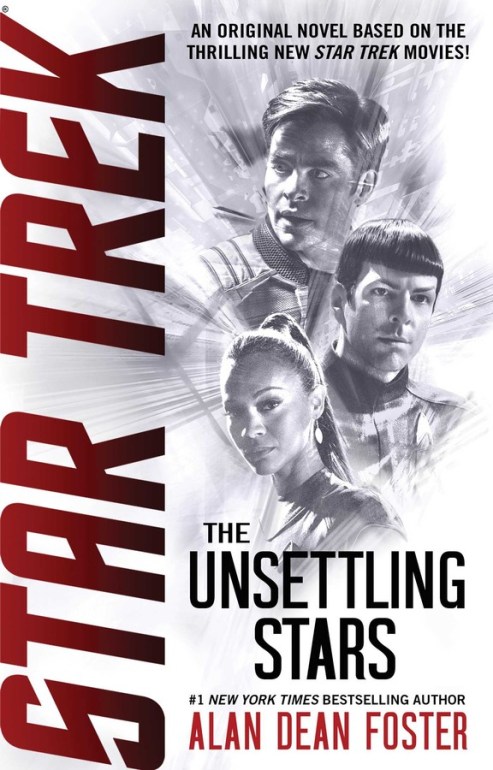
Star Trek: The Unsettling Stars by Alan Dean Foster

The Unsettling Stars Cover

Publisher: Simon & Schuster Audio (Audiobook – 14 April 2020)

Series: Star Trek: Kelvin Timeline – Book One

Length: 8 hours and 5 minutes

My Rating: 4 out of 5 stars

Amazon     Book Depository

My continued exploration of the fun and entertaining genre that is Star Trek fiction continues, as I check out the latest tie-in novel, Star Trek: The Unsettling Stars by Alan Dean Foster, an intriguing read which serves as a tie-in to the alternate Kelvin timeline, the spinoff timeline that occurred during the 2009 Star Trek film.

The Unsettling Stars is a rather interesting Star Trek read that is the first original novel set in the Kelvin timeline, except for official film novelisations and the Star Trek: Starfleet Academy young adult miniseries. This book was originally set for release back in 2010 under the title Refugees, but it was pulled from publication along with three other proposed novels that tied in to the most recent Star Trek movies. Another one of these books, More Beautiful Than Death by David Mack, is set for release later this year, and no doubt the other two proposed novels from 2010 will be published at some point as well. The Unsettling Stars is the third Star Trek novel released this year (behind The Last Best Hope and The High Frontier), and it is the first one in a series of Star Trek novels I identified in a recent Waiting on Wednesday article. As a result, I was rather pleased to get a copy of the audiobook format of this novel, especially as this book was written by the acclaimed author Alan Dean Foster.

Foster is a veteran science fiction and fantasy author who has been writing since the 1970s. He has written a multitude of novels over the years, including books set in his long-running Humanx Commonwealth Universe, The Damned trilogy, the Spellsinger series, The Taken trilogy, The Tipping Point trilogy and a huge range of standalone novels. Foster also has a large amount of experience writing tie-in novels to popular franchises, having written the official novelisations to several series, including the Alien movies, the Transformers movies, Terminator Salvation and The Chronicles of Riddick. Foster also has a deep connection with the Star Wars franchise, having ghost-written the official novelisation for the original Star Wars movie. He also wrote Splinter of the Mind’s Eye, which was intended to be a low-budget spinoff from Star Wars if the first movie did badly in the box office. Seeing that Star Wars was a major success, Splinter of the Mind’s Eye was released as the first official Star Wars novel, meaning that Foster started the Star Wars expanded universe (which has become a major staple for this blog). Foster has since gone on to write a second Star Wars novel, The Approaching Storm, and he recently wrote the official novelisation to Star Wars: The Force Awakens, nearly 40 years after he first got involved with the franchise.

Foster also has some rather interesting connections to the Star Trek franchise. While The Unsettling Stars is the first original novel that he has written for Star Trek, he has produced some official novelisations of several shows and movies over his career. Back in the 1970s, he wrote the official novelisations for Star Trek: The Animated Series, contained in 10 separate books. He also wrote the official novelisations for the 2009 Star Trek film, as well as for its sequel, Star Trek Into Darkness. However, his most significant contribution to the Star Trek universe has to be the fact that he wrote the story for the original Star Trek film, 1979’s Star Trek: The Motion Picture. As a result, Foster is definitely an interesting author to check out, and while I have not had the pleasure of reading any of his stuff previously, I was rather intrigued to see how this novel would turn out.

Years ago, a time travelling Romulan ship attacked and destroyed the Federation starship the U.S.S. Kelvin, killing the father of James T. Kirk. The changes which occurred following the destruction of this ship resulted in a whole new timeline, similar to the main Star Trek universe in most ways, but with a number of key differences. In this new timeline, Kirk, with the help of his young crew aboard the U.S.S. Enterprise, was eventually able to defeat this powerful Romulan ship, but not before it destroyed the Vulcan home planet. Now, after being promoted to captain of the Enterprise, Kirk and his crew embark on their first mission together.

With their ship repaired after the battle with the Romulan ship, the crew of the Enterprise take it out of spacedock in what is seen as a simple shakedown cruise. However, not long after they set out, they receive a distress signal from a ship just outside of Federation space. Arriving at the source of the signal, they find a single colony ship belonging to an alien race known as the Perenorean. Appearing to be peaceful refugees, the Perenorean request help as they have sustained damaged and are lacking the resources to travel to their original destination. But within moments of contact between the two ships, a second group of unknown alien ships arrive, determined to wipe out the Perenoreans. Despite not knowing the full history of this conflict, Kirk eventually comes to the aid of the Perenoreans, sending their attackers running, although not before they give the crew of the Enterprise a cryptic warning about the people they just saved.

Meeting with the Perenoreans, Kirk and his comrades discover that their new acquaintances are an extremely advanced group of beings whose capacity to learn and innovate seems limitless. Extremely grateful and determined to repay those who have helped them, the Perenoreans endear themselves to the Enterprise’s crew, who decide to help them relocate to a nearby planet. However, not everything is as it seems with the Perenoreans, whose desire to help and improve everything around them comes with its own unique set of issues. Can the crew of the Enterprise find a solution to the problems their new friends are causing or have they unwittingly unleased a terrible scourge on the Federation?

The Unsettling Stars proved to be a compelling and exciting Star Trek novel that I was able to get through quite quickly. Foster comes up with a rather clever and entertaining central story, set in the unique Kelvin alternate timeline, that revolves around a classic Star Trek first contact mission, with some interesting twists to it. The author crafts together a great story that spends a good amount of time with the key members of the Enterprise crew, with a particular focus on Kirk, Spock, McCoy, Uhura and Scott, as well as introducing several other new members of the crew, who each have a couple of scenes. The Unsettling Stars comes across like a typical Star Trek adventure, featuring a good blend of action, adventure, diplomacy and scientific discussion, similar to an episode of one of the shows. No real prior knowledge about the greater Star Trek universe is needed to enjoy this book, although it is geared more towards those readers who have a greater appreciation for the franchise, and who have at least watched the 2009 Star Trek film. Overall, The Unsettling Stars is a gripping and enjoyable Star Trek novel with a great story that I had a fantastic time listening to.

One of my favourite elements of this book was Foster’s inclusion of the new alien race, the Perenoreans. The Perenoreans are a group of extremely friendly aliens that the Enterprise rescue and help relocate to a new colony planet. The Perenoreans are an interesting new alien species in the Star Trek canon, characterised by their great intelligence, ability to adapt and evolve to any situation, and their desire to help anyone they come across. While it is also intriguing to see a new fictional alien species, a large amount of this book’s narrative lies around the crew discovering the true intentions and motivations of this species. While they seem friendly, you just know that they are going to turn out to be sinister or problematic in some way or another. The way that they genuflect is way over the top, and there is no way a whole race of people is that friendly. Also, there would not be much of story if they did not turn out to be problematic in some way. Foster does an excellent job of slowly hinting at their true nature, and it helps build up a good amount of tension throughout the course of the book. The eventual reveal of their secrets is rather fascinating and makes for a great payoff after all the build-up. I also really liked the conclusion to their whole arc, especially as it made use of a fun, but seemingly unimportant story element to wrap the whole thing up. These aliens are an amazing part of this book’s story, and it was one that made me enjoy The Unsettling Stars a whole lot more.

I also think that Foster did a good job of writing this book like it was set in the Kelvin timeline. The Kelvin timeline is filled with all manner of intriguing differences to the main Star Trek timeline, and the author spent a bit of time incorporating these differences into The Unsettling Stars. While at times the book did a feel a little like a tie-in to The Original Series, Foster was always quick to showcase some key elements of the Kelvin universe. Kirk is a little more arrogant and eager for glory in this book, and there are several discussions about his rapid promotion to captain, which results in a bit more scrutiny from Starfleet. McCoy is a bit more of a grump in this novel, and he has a bit more of an antagonistic relationship with Spock. There is also a bit of time spent exploring the new relationship between Spock and Uhura, and there are several mentions about Spock’s new dynamic as a member of a refugee species. I liked seeing the return of Simon Pegg’s fun version of Scotty, whose inclusion makes for several entertaining and enjoyable scenes. I also have to highlight the excellent reference to Star Trek: The Motion Picture that occurred in this book, as the crew of this version of the Enterprise come across a key item from this film well before it becomes a problem. It’s not often that a writer gets to erase the entirety of a film they scripted over 40 years previously, and I quite liked how this event turned out as part of the larger story. I had a fantastic time exploring the Kelvin timeline in this book, and I look forward seeing more of it in the future novels set in this timeline.

As I mentioned above, I ended up checking out The Unsettling Stars in its audiobook format, which was narrated by Robert Petkoff. This is a rather short audiobook, which runs for just over eight hours. While it took me a few days to get through (mainly due to lack of listening time than anything else), most readers should be able to listen to the whole book rather quickly, especially once they get engrossed in the intriguing story. Like every other Star Trek book I have so far listened to, The Unsettling Stars audiobook featured the vocal talents of Robert Petkoff, who seems to be the primary narrator for Star Trek audiobooks. Petkoff is an amazingly talented narrator who has come up with some incredibly realistic voices for key members of the various Star Trek television shows. In particular, he has come up with some fantastic voices for the members of The Original Series, which he uses throughout The Unsettling Stars to great effect, bringing the main crew of the Enterprise to life, while also coming up with great voices for some of the additional members of the crew and the various aliens that they encounter. All of this is really cool, and hearing these similar voices helps bring the reader into the Star Trek zone. If I had one criticism, though, it would be that Petkoff uses the same voices here that he uses for all the other audiobooks based around The Original Series. While I appreciate that the characters in the Kelvin timeline are supposed to be versions of the cast from The Original Series, hearing the Kelvin timeline characters speak in the same voice as their counterparts was a tad disjointing, and it made me forgot at times that this book is supposed to be set in an alternate timeline. A little bit of variation from Petkoff could have potentially helped this, although I am uncertain about what exactly he could have done to set this apart. Despite this minor criticism, I still really enjoyed listening to the audiobook version of this book, and I would recommend this format to anyone who wanted to check out The Unsettling Stars.

The Unsettling Stars is an excellent and exciting new Star Trek novel from the legendary author Alan Dean Foster. I had a great time unwrapping the cool mystery around the new race of aliens that Foster came up with for this novel, and it was fun to see a story in the Kelvin universe. This was a fantastic addition to the Star Trek canon, and I would recommend this to any fans of the franchise who want a clever new read.
Amazon     Book Depository

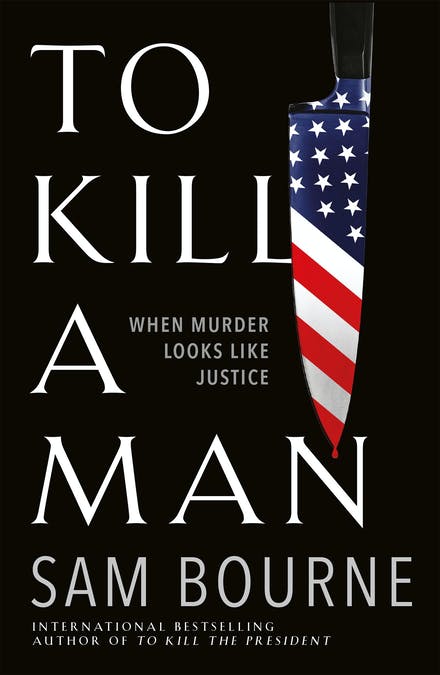
To Kill a Man by Sam Bourne

To Kill a Man Cover

Publisher: Quercus (Trade Paperback – 19 March 2020)

Series: Maggie Costello – Book Five

Length: 438 pages

My Rating: 4.5 out of 5

Amazon     Book Depository

Acclaimed thriller writer Sam Bourne delivers another captivating and intriguing novel about the dark side of American politics in his latest clever and exhilarating release, To Kill a Man.

In Washington DC, a woman is brutally assaulted in her own home by a masked intruder. Defending herself, she manages to kill her assailant, leaving him dead on the floor. While it seems to be a simple case of self-defence, the victim is no ordinary woman; instead, she is Natasha Winthrop, a high-flying lawyer whose highly publicised work during a House intelligence committee has many people wanting her to run for President of the United States.

As the events of this case are torn apart by the media, politicians and the general public, certain inconsistencies in Winthrop’s story emerge, and the police start to investigate the possibility that Winthrop knew her attacker and that she arranged the entire situation. With a hostile press and her potential political opponents swarming all around her, Winthrop calls in Maggie Costello, Washington’s top political troubleshooter for help.

Maggie eagerly takes on the case and quickly finds herself helping a woman at the centre of one of America’s most controversial and divisive news stories. While the country divides over whether Winthrop is innocent or guilty, and several violent retaliatory attacks against sexual offenders occur around the globe, Maggie is determined to find something that will prove her client’s innocence and allow her to keep her political future intact. However, the further Maggie digs, the more inconsistencies and surprises she uncovers. Who is Natasha Winthrop really, and what connections did she have to the man who attacked her? As the political sharks circle and the deadline for Winthrop’s announcement as a potential candidate gets closer, Maggie attempts to uncover the truth before it is too late. But what will Maggie do when the entire shocking truth comes to the surface?

To Kill a Man is an impressive and captivating political thriller from Sam Bourne, the nom de plume of British journalist Jonathan Saul Freedman, who started writing thrillers back in 2006 with his debut novel, The Righteous Men. He has since gone on to write eight additional thrillers, five of which, including To Kill a Man, have featured Maggie Costello as their protagonist. I have been meaning to read some of Bourne’s novels for a couple of years now, ever since I saw the awesome-sounding synopsis for his 2018 release, To Kill the President. While I did not get a chance to read that book back then, I have been keeping an eye on Bourne’s recent releases, and when I received a copy of To Kill a Man I quickly jumped at the chance to read it. What I found was a cool and intriguing novel with a compelling and complex plot that I had an outstanding time reading.

Bourne has come up with a rather intriguing story for To Kill a Man that sends the reader through a twisted political thriller filled with all manner of surprises and revelations that totally keeps them guessing. I honestly had a hard time putting this book down as I quickly became engrossed in this fantastic story, and every new reveal kept me more and more hooked right up until the very end, where there was one final revelation that will keep a reader thinking and eager to check out the next Bourne book. The entire story is rather clever, and I really liked how Bourne showed the plot from a variety of different perspectives around the world, from Maggie Costello and Natasha Winthrop, to the media, the police, Winthrop’s political opponents and their team, as well as several other people who are affected by the events of the narrative. This use of multiple point-of-view characters, even if they have only short appearances, makes for a more complete story, and I quite liked seeing how fictional members of the public perceived the events going on. While connected to the events of the previous Maggie Costello books, To Kill a Man is essentially a standalone novel, and no prior knowledge of any of Bourne’s other novels are required to enjoy this thrilling plot. I really enjoyed where Bourne took this great story, and this turned into a rather captivating thriller.

One part of the book that I particularly liked was the author’s exploration of America’s current political system, and how some of the events of this novel’s plot would play out in a modern effort to become president. As the main plot of To Kill a Man progresses, there are several scenes that feature both Maggie Costello and members of the election team of Winthrop’s main potential rival discussing the various pros and cons of someone in her position running and attempting to game plan how to defeat her if she did run. This was a rather intriguing aspect of the book, and Bourne really did not pull any punches when it comes to his portrayal of just how weird and depressing modern-day politics in America really is. The various political discussions show a real lack of decency and ethics around modern politicians, and there were multiple mentions of how a certain recent election changed all the rules of politics, making everything so much dirtier. The various news stories that followed such an event also had a rather depressing reality to them, especially as the various biases of certain networks and correspondents were made plain, and do not get me started on the various Twitter discussions that were also occurring. All of this works itself into the main story rather well, and some of the revelations that Maggie was able to uncover have some very real and significant real-world counterparts, some of which have not been solved as well in the real world as they were in this somewhat exaggerated thriller. I think all these political inclusions were a terrific part of the book and they really helped to enhance the potential reality of the story and make the story feel a bit more relatable to anyone who follows modern American politics.

To Kill a Man also featured an interesting and topical discussion about the scourge of sexual assaults and harassment that are occurring throughout the world. The main plot of this book follows in the aftermath of a sexual assault against a woman in which the victim fought back and killed her attacker. This results in a huge number of discussions from the characters featured in the novel, as they all try to work out the ethics of her actions in defending herself, and the perceptions of these actions from a variety of people makes for an intriguing aspect of the book, and feeds in well to the political aspects of the story. This also leads to some deep and powerful discussions about sexual assault in America (and the world), the impact that it has on people and the mostly muted response from the public and authorities. This sentiment is enforced by several scenes that show snapshots of women being assaulted and sexually harassed across the world that run throughout the course of the book. While the inclusion of these scenes does appear a little random at times, it ties in well with the main story and the overarching conspiracy that is being explored in the central part of the book. Bourne makes sure to show off the full and terrible effect of these actions, and many of these may prove to be a little distressing to some readers, although I appreciate that he was attempting to get across just how damaging such experiences can be for the victims. I also liked his subsequent inclusion of members of the extreme male right wing who were being used as weapons against some of the female characters in the book, which made for an interesting if exasperating (as in: why do people like this exist in the real world) addition to the story. This discussion about sexual crimes in the world today proved to be a rather powerful and visible part of the book’s plot that I felt worked well within the context of the thriller storyline.

To Kill a Man is an excellent new thriller from Sam Bourne, who produces a clever and layered narrative that really hooks the reader with its compelling twists, intriguing political elements and Bourne’s in-your-face examination of sexual crimes and how they are perceived in a modern society. To Kill a Man comes highly recommended, and I look forward to reading more of Bourne’s fantastic thrillers in the future.

Amazon     Book Depository

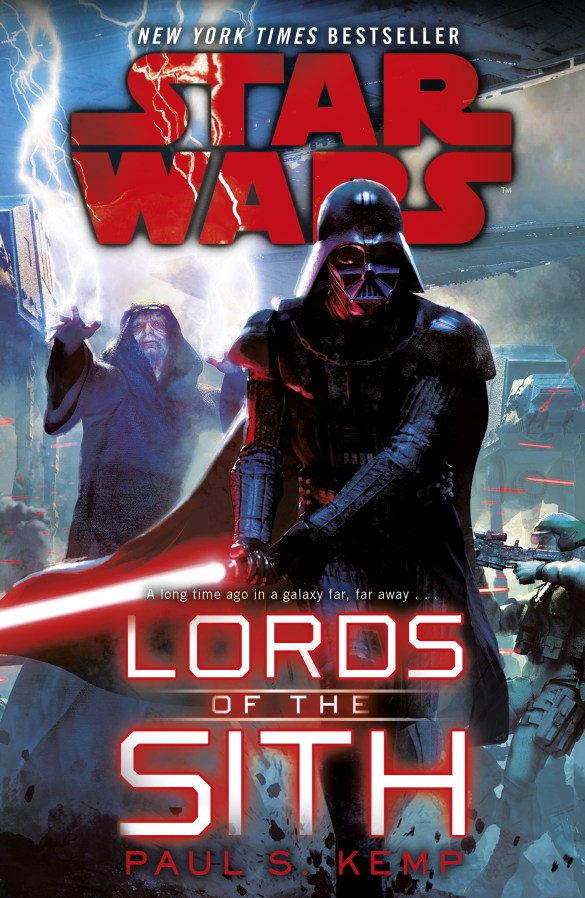
Throwback Thursday: Stars Wars: Lords of the Sith by Paul S. Kemp

Lords of the Sith Cover

Publisher: Penguin Random House Audio (Audiobook – 28 April 2015)

Series: Star Wars

Length: 10 hours and 56 minutes

My Rating: 4.5 out of 5 stars

Amazon

Reviewed as part of my Throwback Thursday series, where I republish old reviews, review books I have read before or review older books I have only just had a chance to read.

For my second Throwback Thursday article of this week (what can I say, I was in the zone for reviewing older content) I check out a fast-paced and addictive Star Wars novel that was released a couple of years ago, with Star Wars: Lords of the Sith by Paul S. Kemp.

It is the early days of the Galactic Empire. Under the reign of Emperor Palpatine, few openly oppose imperial rule, and those that do are swiftly dealt with by Palpatine’s ruthless apprentice, Darth Vader. But as the power and influence of the Emperor and Vader grow, so does their desire to rule and oppress every planet in the galaxy, and with that comes the first sparks of rebellion.

The planet Ryloth knows all about oppression and invasion. Following a brutal occupation during the Clone Wars, Ryloth now finds itself under the control of the Empire, which strips the planet of its natural resources while using the people for slave labour. In opposition to this occupation, an aggressive resistance moment has arisen, led by idealistic leader Cham Syndulla and his comrade Isval, a vengeful former slave. Thanks to their excellently placed sources, Syndulla’s resistance has been able to launch some substantial attacks against the Empire, but their actions have gained the attention of the Emperor and Vader. In a bid to assert his dominance on Ryloth, the Emperor sets out on a rare mission to the planet, accompanied by Vader. However, this is the opportunity that Syndulla has been waiting for.

Upon the Imperial’s arrival above Ryloth, the resistance fighters are able to do the impossible and blow up their Star Destroyer. Forced to abandon ship, the two Sith lords find themselves trapped on the dangerous surface of Ryloth with no means to communicate with Imperial command and no reinforcements on the horizon. In a bid to liberate the galaxy from their dark rule, Syndulla and Isval gather all their forces and resources to hunt the Emperor and Vader down. Surrounded by enemies, inhospitable terrain and terrible native fauna, the two Sith Lords appear to be at their most vulnerable. However, what Syndulla and his team fail to realise is that their prey are two of most dangerous beings in the galaxy, and together they are a force of unnatural destruction. Can the resistance fighters take on Emperor and Vader, and what happens when the two Sith lords work out that their biggest threat is each other?

Now this is a rather fantastic and captivating Star Wars novel that I have been wanting to check out for a while now due to the book’s cool concept. This is the first book that I have read by Paul S. Kemp, a fantasy author who has been writing since the early 2000s. His first novel, Twilight Falling debuted in 2003, after the author released several pieces of short fiction. Kemp then went on to write several fantasy series and standalone novels, including The Erevis Cale trilogy, The Twilight War trilogy and the Egil and Nix books, most of which fell within the Forgotten Realms shared fantasy fiction universe. Kemp has also written a few Star Wars novels, including Crosscurrent, The Old Republic: Deceived and Riptide, which were part of the old Star Wars Legends canon. Lords of the Sith is Kemp’s first novel in the new Star Wars canon, and he presents the reader with a fun and fast-paced novel that has some intriguing elements to it.

Kemp pulls together an excellent Star Wars novel that has a great story, is full of breathtaking action scenes and features compelling dives into some iconic Star Wars characters and elements of the universe. While I came for all the fun action that was bound to feature in a story surrounding the Emperor and Vader fighting against overwhelming odds, I stayed for the intriguing story that is full of betrayal and manipulations. The author does a fantastic job of utilising multiple character perspectives to tell a fuller story, which showed the perspectives of not only Vader and Syndulla’s resistance but also two Imperial officers stationed on Ryloth: one who is loyal to the Emperor and one who has been working for the resistance. This helped produce a really clever narrative, and it was interesting to see where Kemp took the story throughout Lords of the Sith.

The story is set five years after the events of Revenge of the Sith and focuses on the Emperor and Vader encountering some of the earliest forms of rebellion against the Empire. There are some strong elements from the extended Star Wars universe in this book, most notably with the inclusion of Cham Syndulla, a character who appeared in two Star Wars animated series, The Clone Wars and Star Wars Rebels, and is the father of Hera Syndulla, one of the main characters from Rebels (who is featuring in a lot of other pieces of Star Wars fiction at the moment). However, this is definitely a novel that can be enjoyed by the more casual Star Wars fan, and no real knowledge of the extended universe is needed to follow the plot. As always, though, those readers who are fans of some of the extended universe fiction are probably going to enjoy this book a little more. I myself enjoyed seeing the exploration of the early days of the Empire, an examination of Cham Syndulla’s history between the two animated shows and some exploration of the planet of Ryloth.

Without a doubt, the highlight of this book has to be the amazing action sequences featuring Darth Vader and the Emperor. Kemp went out of his way to show off just how badass these two characters can be, and he did not hold back any punches. Vader and the Emperor get into some major scrapes throughout the book, as they hunt or are hunted by members of the Ryloth resistance or some of the deadly creatures that reside on the planet’s surface. Needless to say, these two characters use all of their deadly Force abilities to take down swathes of opponents, and they come across as pretty impressive characters, especially in the eyes of some of the other point-of-view characters. I loved the reactions from characters like Syndulla or Isval, especially as it becomes more and more apparent to them that their opponents are something too much for them. I have always loved comics and books that showed off how badass Vader and the Emperor can be, and this is one of the better examples of this. Kemp started this book off strong by having Vader crash his fighter onto a ship to board it, before systematically taking down the crew one by one, while Syndulla and Isval are forced to listen from another ship (accompanied by Vader breathing heavily into a comms unit to freak everyone out). This is then followed by a plethora of other cool sequences, which includes Vader and the Emperor decimating a massive swarm of Ryloth’s apex predators and a particularly cool sequence where Vader started force choking several characters aboard a separate spaceship while he was flying upside down above them. All of this was exceedingly cool, and I loved Kemp’s amazing imagination when it comes to these two characters.

I also quite liked the intriguing examination of the unique relationship between Darth Vader and the Emperor that became an interesting central focus of the plot. While the story doesn’t show the Emperor’s point of view, you get Vader’s take on the situation, and through his eyes you see his perceptions of the Emperor, his thoughts on the partnership they have formed, and the knowledge that it will eventually end with Vader attempting to kill Palpatine to take his place. Palpatine, for his part, spends most of the story devising tests and challenges to get into Vader’s head and to ensure that his apprentice is loyal and has no thoughts of overthrowing him at the moment. I liked the compelling and clever examination of these two characters’ mindsets that Kemp pulled together, and I felt that he had a great handle on the personalities of these iconic Star Wars characters. I also rather enjoyed Kemp’s portrayal of the Emperor’s manipulative and purely evil nature, as it is revealed that everything that happens throughout the book is due to his design, and he threw away thousands of Imperial lives to achieve his goals. The revelation of this to some of key characters in this book makes for a great scene and I think that it really encapsulated just how evil the Emperor could be, which was pretty awesome.

Like with most Star Wars books that I read, I ended up checking out the audiobook format of Lords of the Sith, which was narrated by Jonathan Davis. This audiobook runs for just under 11 hours, and can be powered through quite quickly, especially once the listener hears the opening action sequence read out to them. I have to once again highlight that use of the cool music and sound effects that are included in all Star Wars audiobooks in order to enhance the story. Lords of the Sith had some great sound inclusions throughout its run time, and I felt that these definitely had a major impact on my enjoyment of this book. This audiobook features the audio talents of skilled narrator Jonathan Davis, whose work I have previously enjoyed in Star Wars books such as Master & Apprentice and Dooku: Jedi Lost. Davis does an incredible job narrating this book and he comes up with some impressive voices for the various characters featured throughout it. I particularly liked the great voices he came up for key characters like the Emperor and Darth Vader (with the help of some appropriate sound effects) and Cham Syndulla, and they sounded a lot like their appearances in the movies and animated shows. As a result, I really powered through this excellent audiobook, and I would strongly recommend this format to anyone who wants to check out Lords of the Sith.

Lords of the Sith is a fun and exceedingly entertainingly Star Wars novel that I had an outstanding time listening to. Kemp comes up with an exciting and action-packed story that not only explores some intriguing aspects of the expanded Star Wars universe, but which also contains some over-the-top action sequences that shows just how awesome a Star Wars novel can be. Lords of the Sith comes highly recommended to anyone looking for a fantastic and enjoyable read, and I hope that Kemp writes some more Star Wars novels in the future.

Amazon

Hitler’s Secret by Rory Clements

Hitler's Secret Cover

Publisher: Zaffre (Trade Paperback – 3 March 2020)

Series: Tom Wilde – Book Four

Length: 420 pages

My Rating: 4.5 out of 5 stars

Amazon     Book Depository

From the mind of bestselling author Rory Clements comes another captivating historical spy thriller in Hitler’s Secret, the fourth book in Clements’s excellent Tom Wilde series.

In 1941, Hitler’s Germany is at the height of its power, with England under constant bombardment, Europe under German control and the powerful Nazi army smashing aside all resistance in Soviet Russia. At this point in history, Hitler seems unbeatable, and desperate measures are needed if the Allies are to succeed.

In Cambridge, American expat and history professor Tom Wilde attempts to do his bit for the war effort and becomes an intelligence officer. While America is still officially staying out of the war, an upcoming fight with Germany is inevitable. Wilde finds himself enlisted into a top-secret mission that could change the entire course of the war.

Smuggled into Germany under a false identity, Wilde is tasked with recovering a package and delivering it safely back to England. This package is the key to undermining Hitler’s image and influence, as it reveals a terrible secret about the Führer, one that even Hitler himself was unaware of. Trapped deep behind enemy lines, Wilde must use every trick at his disposal to complete his objective and escape the deadly forces closing in on him. However, the more he learns about his mission, the more he is convinced that this is a secret that needs to stay buried, no matter the cost, and he soon must contend not only with the Nazis but with members of his own intelligence agency.

Wow, now that was a really good historical spy thriller. Clements is a fantastic author, and I have been a fan of his for a while now. Clements started writing back in 2009 with Martyr, the first book in his John Shakespeare series of Elizabethan thrillers. I read a couple of the books in this series, and quite enjoyed the fun stories that they contained, but I really started getting into Clements’s work with the Tom Wilde series. I was lucky enough to get a copy of the first book in this series, Corpus, back in 2017, and I absolutely loved the fantastic story that it contained. I ended up sticking with the story in the following years and I managed to read and review the next two books, Nucleus and Nemesis, both of which were rather good reads. I was very happy when I received my copy of Hitler’s Secret, as I thought that the plot sounded pretty cool. It did not disappoint, as Clements has come up with a fantastic and thrilling new read that might be my favourite Tom Wilde book since Corpus.

At the heart of this book lies a truly great thriller storyline, which sees the protagonist journey into Nazi Germany in order to retrieve a special package while also contending with the interests and machinations of several different groups and nations. This turned out to be a fantastic central story element, and I loved all the action, intrigue and danger that results from this mission. Wilde and his allies end up getting hunted throughout the breadth of German occupied territory by some vile and unrepentant villains, including an insane English expat who is having a fun time living in Nazi Germany (which pretty much tells you just how evil he is). Even when Wilde reaches relative safety, he must contend with being hunted by Nazi agents while also trying to avoid supposedly friendly operatives with whom he has a moral disagreement. I loved the constant hunting and running that resulted from this awesome story concept, and the characters engage in a pretty impressive game of cat and mouse. Clements makes good use of multiple character perspectives to show the various sides of this battle of spies, and it was great to see the hunters and the hunted attempt to outwit each other. It was also interesting to see the perspective of the various antagonists, especially as Clements used these scenes to show how evil they are, ensuring that the reader is determined that they fall. All of this led to an impressive and compelling thriller story that made this book extremely hard to put down.

I have to say that I liked Clements’s choice of MacGuffin for this book, which in this case was the titular secret of Hitler. I won’t go into too much detail about what this is, although the secret is revealed rather early in the story, but I did think that it proved to be a fantastic story element. Not only does Clement use this MacGuffin as an excellent centre to his story, but it was also rather interesting to see what secret the author envisions that could have potentially taken down Hitler. Clements made a unique choice regarding that, coming up with something that could have impacted Hitler’s most fanatical base of support. I thought it was quite a clever story element, and I liked how it allowed the author to come up with a couple of exciting conspiracies with multiple sides involved. I also appreciated the moral implications that the MacGuffin inspired, and it made for some great scenes where Wilde was left to choose between the war effort and what he thought was right.

I also really enjoyed Clements’s choice of setting for this book, as most of the story takes place within Nazi Germany in 1941. Clements has come up with some excellent historical settings for the Tom Wilde series in the past, and I have always liked his central setting of Cambridge in the pre-war period, as it serves as an amazing location for the series’s espionage elements. However, I think that Clements outdid himself by setting Hitler’s Secret in Nazi Germany. This proved to be an incredible and thrilling backdrop to the story, especially as Wilde is forced to navigate vast swathes of the country to get to freedom, contending with patrols, enemy agents who are actively hunting him and even a troop of Hitler Youths. Clements does an amazing job exploring what life would have been like in Germany during this period, showing off the fear and resentment of some of the citizens, the control and surveillance that the Nazis and the Gestapo had over everyone, the brainwashing of German children at school, how the country was locked down and the growing cracks as the invasion of the Soviet Union started to stall and America began entering the war. I also really liked that Clements dived into the complex relationships and rivalries amongst the Nazi high command, especially as part of that rivalry played into the overall story. I particularly appreciated the extensive look at the role of Martin Bormann, Hitler’s secretary, who achieved great power in the Nazi regime. Bormann is a little underutilised in historical fiction, so it was fascinating to see him used in this book, and he proved to be a despicable overarching villain for the story. Clements use of Nazi Germany as a setting for Hitler’s Secret was a brilliant move, and I felt that it helped take this story to the next level.

Hitler’s Secret by Rory Clements was an outstanding fourth entry in the author’s thrilling Tom Wilde series. I loved the complex and captivating story that Clements came up with for this book, and he managed to produce an impressive historical thriller. Hitler’s Secret is a highly recommended book, and I had a wonderful and electrifying time reading it.

Amazon     Book Depository

Throwback Thursday: Usagi Yojimbo: Volume 4: The Dragon Bellow Conspiracy by Stan Sakai

Usagi Yojimbo The Dragon Bellow Conspiracy

Publisher: Fantagraphics Books (Paperback – September 1991)

Series: Usagi Yojimbo – Book Four

Length: 179 pages

My Rating: 5 out of 5 stars

Amazon     Book Depository

Reviewed as part of my Throwback Thursday series, where I republish old reviews, review books I have read before or review older books I have only just had a chance to read.

For this slightly belated Throwback Thursday, I continue my trend of the last couple of weeks by checking out another volume of Stan Sakai’s ground-breaking and utterly addictive Usagi Yojimbo series with the fourth volume, The Dragon Bellow Conspiracy. Reviewing all these Usagi Yojimbo books has proven to be a lot of fun, and I am really glad that I have been able to show off my love for this series (make sure to check out my reviews for volumes One, Two and Three). The Dragon Bellow Conspiracy is another excellent early volume in this long-running series, which features a fantastic full-volume-length story.

Usagi 13

A storm is brewing throughout feudal Japan, as war and revolution against the Shogun lie just beyond the horizon. In his fortress, the ambitious and dastardly Lord Tamakuro has been plotting. Despite appearing to be a loyal supporter of the powerful Lord Hikiji, Tamakuro has his own plans to take control of the country and rule as Shogun, utilising an army of ronin armed with teppo, black powder guns imported from the barbarian lands outside of Japan.

However, despite his best attempts at discretion, Lord Tamakuro’s actions have not gone unnoticed. His neighbour, Lord Noriyuki, has sent his trusted advisor and bodyguard, Tomoe, to investigate Tamakuro’s castle, where she discovers the hidden armaments he is planning to use in his upcoming revolution. At the same time, Lord Hikiji, suspicious of Tamakuro’s true loyalties, has sent the notorious Neko Ninja clan to infiltrate his castle. When both Tomoe and the Neko Ninja are discovered, Tamakuro makes ready for war against all his opponents.

Usagi 14

Into this vast conspiracy walks the wandering ronin Miyamoto Usagi. A friend to Lord Noriyuki and Tomoe, Usagi witnesses Tomoe being captured and rushes to Tamakuro’s castle to save her. Despite his best efforts, Usagi finds himself outmatched by the powerful forces Tamakuro has pulled together. His only chance at saving his friend and averting a civil war is to team up with the Neko Ninja, a group he his fought many times in the past. Can Usagi and his new allies succeed, or will Tamakuro’s greed engulf the entire country? And what role will blind swordspig Zato-Ino and the bounty hunter Gennosuke play in the final battle?

Usagi Yojimbo: Volume 4: The Dragon Bellow Conspiracy is an outstanding and highly enjoyable comic that I have a huge amount of love for. Containing issues #13-18 of the Fantagraphics Books run of the Usagi Yojimbo series, this fourth volume is broken down into seven separate chapters. It is a major early edition in the series, as it contains a massive and wide-reaching story. This is the first storyline that takes up an entire volume (several notable stories do this later, such as the two Grasscutter volumes and the 33rd volume, The Hidden), and it presents the reader with an epic tale of war, friendship, honour, loyalty and uneasy alliances, while featuring a number of the best Usagi Yojimbo characters.

Usagi 15

The entire story contained within this fourth volume is quite spectacular and comes with minimal build-up from the Usagi Yojimbo issues that preceded this volume. Sakai does an amazing job introducing the relevant plot and new key players surrounding this storyline, and then telling a complex and detailed narrative within the confines of this one volume. In addition to the main conspiracy storyline, the story follows several different character-based storylines, all of which come together for one big epic confrontation. I really enjoyed where Sakai took the plot of this volume, and I liked how the story was broken up into several distinctive chunks defined by the respective chapter (the chapter names, which refer to parts of a storm, identify the intensity and importance of each chapter). The entire story is rather self-contained, and I think that the author did a great job wrapping it up and giving it several satisfying conclusions.

Like many of the Usagi Yojimbo issues out there, the true heart of The Dragon Bellow Conspiracy’s story is the outstanding characters, many of whom have appeared in prior issues in the series. Usagi once again accidently finds himself in the midst of a vast conspiracy and must risk everything to save his friend and stop a war. If I am going to be honest, Usagi has one of the weaker arcs in this volume, with several of the side characters getting much more interesting storylines and more development. That being said, parts of Usagi’s story are fairly intriguing, such as when he manages to infiltrate Lord Tamakuro’s castle as a new retainer in order to rescue Tomoe, or his guilt-ridden dream sequence where his regret over his perceived failure manifests itself as a series of ghosts and monsters. Usagi also has the fun job of recruiting reluctant and unusual allies to his cause, such as the Neko Ninja or his old foe Zato-Ino. Indeed, his whole storyline is similar to classic Japanese films such as The Seven Samurai (the inspiration for The Magnificent Seven) or The Hidden Fortress (which served as an inspiration for the first Star Wars movie), as he recruits or forms alliances with various people in order to take down an evil opponent (in a castle, no less, for The Hidden Fortress fans). He also has some rather fantastic interactions with several different characters throughout the volume, and it results in some major developments in his relationships with them.

Usagi 16

While Usagi’s storyline is quite enjoyable, several returning supporting characters also have some substantial and impressive arcs throughout this book, and I really loved the way in which Sakai brings back a number of key characters from earlier issues in the series. The best character in this entire volume is the blind swordspig, Zato-Ino. Both of Ino’s previous storylines have been extremely impressive, so it was great to see him return again for another volume. Ino, who had already found some measure of peace thanks to his new companion, the tokage lizard Spot, finds some major redemption in The Dragon Bellow Conspiracy, and he easily has the most character development. An entire chapter of this volume is dedicated to the eventual fate of Ino, and it was fantastic to see him finally find what he has been desperately searching for, even if he has to lose his only friend along the way. The rhino bounty hunter, Gennosuke, once again proves himself to be a fun and endearing character throughout this volume. Initially involved in a rather humorous hunt for Ino’s bounty, he finds himself working with him to fight Lord Tamakuro’s forces, although he always intends to betray him. However, Ino’s heroic actions end up changing his mind, and he once again reveals his hidden good nature by secretly assisting Ino and selflessly helping him. This is also the volume where Gen loses his horn, with all future versions of him appearing with just a small stump on his nose. His cut-off horn is quite an iconic look for the character, and after seeing him without out for all these years in later volumes, his earlier horned appearance just looks odd.

Recurring female samurai, Tomoe, also has an extremely strong appearance in The Dragon Bellow Conspiracy, as she finds herself captured within Lord Tamakuro’s castle quite early in the volume and is forced to resist his abuses. Tomoe has some great dialogue with Usagi about how her mission and her loyalty to Lord Noriyuki are more important than her own life, and she has to talk Usagi into abandoning her for the greater good. She also has a rather fantastic sequence where she manages to remain hidden in the fortress, right after she rides through various parts of the interior on a horse. I also really liked Shingen, the Neko Ninja chief who Usagi teams up within this volume. Shingen previously appeared in the Volume 3 story, The Shogun’s Gift, where he formed a great rivalry with Usagi. While the two clash in this volume, they eventually reach a level of mutual respect and work together for the greater good. Shingen gains multiple dimensions as a character in this volume, and it was interesting to see his discussion with Usagi about honour, and how even ninja have a code of duty. His story comes to a fantastic close towards the end of the volume, but Sakai really made him one of the standout characters of the volume: “A ninja’s duty in life is death!”

Usagi 17

In addition to the excellent inclusion of several amazing returning characters, The Dragon Bellow Conspiracy also featured a couple of terrific new characters, who really helped bring this story together. The evil Lord Tamakuro was a really good villain for this volume, and Sakai did a fantastic job of showing of his greed, brutality and utter disregard for anything except his own power. Needless to say, he was a rather vile character who the reader cannot help but dislike, making his eventual comeuppance all the sweeter. The best new character in this volume has to be the leader of Tamakuro’s samurai army, Captain Torame. Torame is a loyal and capable warrior, who is forced to serve an evil lord who takes him for granted. He forms a bond with Usagi when the protagonist infiltrates the fortress under the guise of a mercenary ronin, and they have several discussions about bushido, loyalty and the ways in which a samurai must serve his lord. Usagi’s subsequent betrayal in order to rescue Tomoe enrages Torame, who takes it as a personal afront. This leads to a fantastic duel later in the volume, although not before Usagi and Torame have one final discussion, in which Usagi attempts to talk Torame into abandoning Tamakuro. Torame however refuses, as his strict adherence to the samurai code forbids him betraying his lord, even if it is clear he disagrees with Tamakuro’s plans:

“is samurai honour so important?”

“Yes”.

The result of the quick and brutal duel that follows visibly saddens Usagi, who was once again forced to fight a man he respected. This volume also sees the brief introduction of the Neko Ninja Chizu, a major recurring character in later volumes of the series, whose one scene in this book was rather fun.

The Dragon Bellow Conspiracy is an extremely action-packed volume that actually features some of the best action scenes in the entire Usagi Yojimbo series. I absolutely loved all the action sequences in this book, as Sakai did an incredible job illustrating them and bringing the fights to life. The main action set piece of this volume has to be the assault on Lord Tamakuro’s fortress by Usagi, Ino, Gen, Shingen and a force of Neko Ninja armed with explosives, as they attempt to rescue Tomoe and put an end to Tamakuro’s ambitions. This entire extended action sequence is exceedingly impressive, and it was really cool to see all the characters engage in a massive battle throughout a castle complex. I also have to say how incredibly awesome it was to see a force of ninja face off against an army of samurai, predominately armed with European muskets. This made for some incredible fight scenes, all of which I really and truly loved. I also have to highlight a couple of duel sequences that occurred earlier in the volume. The first of this was a great fight between Usagi and Shingen, as the two face off against each other in a quick fight to the death. This duel focuses on the extreme clash of styles between the two, as Usagi had to contend with all manner of traps and ambushes before he got anywhere near this foe. However, this duel pales in comparison to the awesome fight between Ino and Gen that occurred towards the middle of the volume. This two engage in an incredible and beautifully drawn fight that lasted several pages. This fight did a fantastic job showing of their respective skills with the sword, and this fight helps feed into Sakai’s love for classic Japanese films, as this duel was essentially Zatoichi vs Yojimbo. This volume featured some first-rate action, which is really worth checking out.

Usagi 18

In addition to the extremely well-drawn action sequences, Sakai has filled this volume with some truly incredibly examples of his artistic style. This volume features so many impressive and iconic Japanese buildings, landscapes, traditional outfits and other aspects of the country, that the reader can’t help but feel they have been transported back to feudal Japan. I particularly loved the way he included a number of stormy backgrounds throughout this volume. The continued artistic rendering of rain, clouds, mud, wind and storms throughout the entirety of The Dragon Bellow Conspiracy really helped to set the mood of the entire volume, and I loved how the intensity of the storm seemed to match the volume’s story. I really enjoyed how a number of pages were streaked with massive bolts of lightning across cloudy or darkened skies, and several scenes, particularly the duel between Ino and Gen, were majorly enhanced by this artistic inclusion. As usual, this art does an amazing job backing up the volume’s fantastic stories, and I was once again left stunned by Sakai’s obvious and incredible artistic talent.

Usagi Yojimbo: Volume 4: The Dragon Bellow Conspiracy, is another exceptional and captivating comic which I am awarding a full five-star rating. Sakai is a truly incredible writer and artist, and this fourth volume did a fantastic job highlighting his talents for both. Not only does this volume feature some amazing and distinctive drawings, but it also contains an outstanding and enjoyable story backed up by some awesome characters. Sakai did an awesome job bringing together several key recurring characters into a compelling and well-written narrative, which I once again fell in love with. The Dragon Bellow Conspiracy is really worth checking out, and is a must read for fans of the masterpiece that is the Usagi Yojimbo series.

UY_Book_4_HC_cover

Amazon     Book Depository

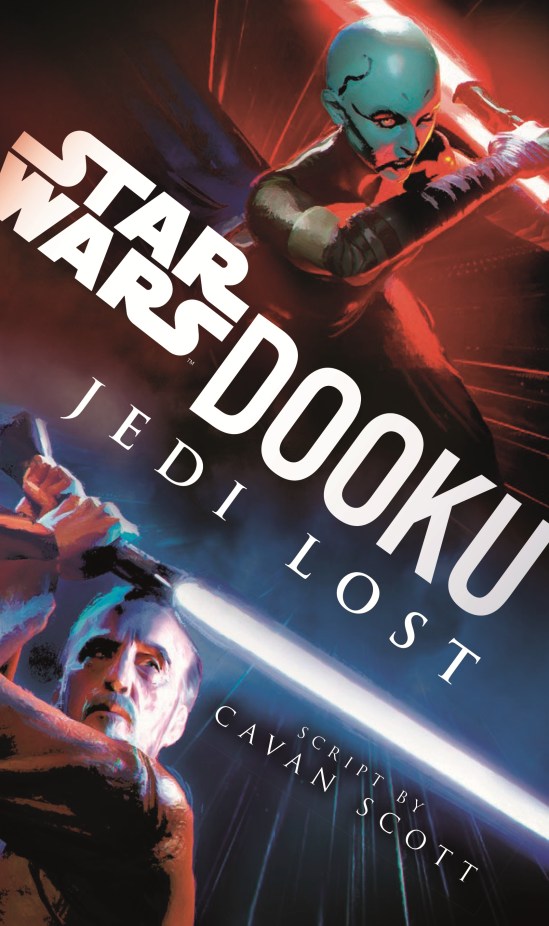
Star Wars: Dooku: Jedi Lost

Dooku - Jedi Lost Cover

Publisher: Penguin Random House Audio (Audio Production – 30 April 2019)

Script: Cavan Scott

Cast: Orlagh Cassidy, Euan Morton, Pete Bradbury, Jonathan Davis, Neil Hellegers, Sean Kenin, January LaVoy, Saskia Maarleveld, Carol Monda, Robert Petkoff, Rebecca Soler and Marc Thompson.

Length: 6 hours and 21 Minutes

My Rating: 4.5 out of 5 stars

Amazon

Prepare for another deep dive into the Star Wars canon with an audio drama that explores the past of one the biggest villains from the prequel movies, Count Dooku, with Dooku: Jedi Lost.

Dooku: Jedi Lost was one of the more interesting pieces of Star Wars fiction that was released last year. Based on a script written by Cavan Scott, an author who has written a multitude of comics, novels and radio drama tie-ins for several different franchises, Jedi Lost was originally released as an audio production featuring several different actors, with the script also released in novel format a few months later. I have been meaning to check out this unique story for some time, as it was one of the few pieces of Star Wars fiction that I did not read in 2019. This is actually one of the first entries I am ticking off my Books I Wish I Read in 2019 list (barring The Russian by Ben Coes, which was an honourable mention), and I am really glad I decided to check this piece of fiction out.

For many in the galaxy, Count Dooku of Serenno is one of the most dangerous and evil villains that ever lived. The leader of the ruthless Separatists during the Clone Wars, apprentice to Darth Sidious and master of several ruthless assassins, Dooku is rightfully feared and hated by many. However, he once was one of the most respected and powerful members of the Jedi Council. A former apprentice to Yoda himself, and the mentor to two exceptional Padawans, Rael Averross and Qui-Gon Jinn, Dooku dedicated decades of his life to the Jedi, before suddenly leaving and taking a different path. But how did such a revered Jedi turn to the dark side of the Force? That is a question that Dooku’s new apprentice, Asajj Ventress, is trying to understand when she is given a mission to find Dooku’s missing sister. Searching for leads through Dooku’s journals and messages, Ventress is given unprecedented access into Dooku’s past.

The son of the ruthless Count of Serenno, Dooku was abandoned as baby by his father the moment his abilities with the Force were identified, only to be rescued by Yoda. Upon learning the truth about his birth years later, Dooku struggles with balancing his duties as a Jedi with his connections to his family and home planet. Conflicted, Dooku finds comfort in his friendship with the troubled young Jedi Sifo-Dyas and the mysterious Jedi Master Lene Kostana, whose mission of locating and studying Sith artefacts fascinates Dooku and leads him to his first experiences with the dark side of the Force. As Dooku rises through the ranks of the Jedi Order, he finds himself stymied by the bureaucracy and corruption of the Republic and the hypocrisy of the Jedi Council. As the first waves of darkness fall across the galaxy, how will the younger Dooku react, and what will Ventress do when she realises what sort of person her new master is?

Dooku: Jedi Lost is an incredible and deeply captivating piece of Star Wars fiction that cleverly dives into the past of one of the franchise’s most iconic villains to present a compelling and intriguing story. I ended up listening to the full cast audio production of Jedi Lost, and I really enjoyed this fantastic and intriguing book. The plot of Jedi Lost is uniquely set across several different time periods, with the details of Dooku’s life being relayed to a younger Ventress at the start of her Sith apprenticeship through journal entries, detailed messages, oral histories and even some visions of the past. Scott did an excellent job of setting his story across multiple time periods, which allowed Jedi Lost to showcase the life of the titular character while also presenting an exciting, fast-paced and at times dramatic narrative that includes several plot threads that jump from timeline to timeline. All of this results in an excellent Star Wars story which features some fascinating inclusions to the franchise’s lore and which is enhanced by the incredible audio production.

At the centre of this book lies an intriguing and captivating exploration of one of the most significant antagonists in the Star Wars canon, Count Dooku. Jedi Lost contains quite a detailed and compelling backstory for this character, and you get to see a number of key events from his life. This includes his complicated childhood, the forbidden communication he had with his sister, the connection he maintained with his home planet, parts of his apprenticeship under Yoda, the tutelage of his own two apprentices, his time on the Jedi council, his first brushes with the dark side of the Force and finally the chaotic events that led him to leave the Jedi order and take up his position as Count of Serenno. Every part of this background proved to be extremely fascinating and it paints Dooku as a much more complex character, with understandable motivations and frustrations. He actually comes across as a much more sympathetic person thanks to this production, and readers are going to have an amazing time finding out what events and betrayals drove him away from the Jedi and towards his new master. The storytelling device of having Ventress read and analyse Dooku’s old messages and journal entries ensures that the story quickly jumps through the events of his life, and no key events really seem to be missing. I personally would have like to see some more detail about Dooku’s training under Yoda or his teaching of his apprentices, although I appreciate that this was already an expansive production and there was a limit on what could be included in the script. I also wonder what sort of story this could have turned into if this was told exclusively from Dooku’s point of view, however, this first-person narration probably wouldn’t be as feasible as a full cast audio production. Overall, those fans who check out Jedi Lost are in for quite an in-depth and fascinating look at the great character that is Count Dooku, and I am sure many will enjoy this exciting examination of his backstory.

In addition to exploring the character of Count Dooku, Jedi Lost also presents those dedicated Star Wars fans with a new canon look at the Star Wars universe before the events of The Phantom Menace. You get an intriguing look at the Republic and the Jedi Order in the years leading up to events of the Skywalker Saga, and it was fascinating to see the similarities and differences between the various eras in the Star Wars lore. In particular, I found in interesting to see that the groundwork for the Clone Wars and the fall of the Jedi order had already begun, with ineffectual leadership, corruption in the Senate and complacency in the Jedi Council all eventually leading the dark events of the future. Jedi Lost also shows the earlier days of several Jedi who were supporting characters in either the movies or the animated shows. In particular, this entry focuses on Sifo-Dyas, the Jedi who foresaw the Clone Wars and was manipulated into creating the Republic’s clone army. The story explores how Dooku and Sifo-Dyas were close friends growing up, while also showing the origin of his prescient powers, and he proved to be a rather compelling side character. Jedi Lost also saw the introduction of Jedi Master Lene Kostana to the canon. Lene Kostana was a rebellious Jedi who scoured the galaxy for Sith artefacts in the belief that the Sith were going to rise again. She proved to be an interesting mentor character for Dooku, and her recklessness and unique way of thinking had some major impacts in Dooku’s character development.

I also liked how this piece of Star Wars fiction focused on the early career of Asajj Ventress, one of the best Star Wars characters introduced outside of the movies. Much of the story is set immediately after Dooku claims Ventress as his apprentice and personal assassin, which allows the reader a compelling view of Ventress’s early brushes with the dark side of the Force and the initial corruption and manipulation she experienced under Dooku. This proved to be quite an interesting part of the novel, especially as the reader got to see Ventress’s thoughts and reactions to several revelations about Dooku’s past. Thanks to the way that the audio production is set out, Scott also included a rather cool element to Ventress’s character in the way that she is hearing the voice of her dead former Jedi Master and mentor, Ky Narec. While Ky Narec’s voice was mainly included to allow Ventress to share her thoughts in this audio production without becoming a full-fledged narrator, this ethereal character gives the reader a deeper insight into Ventress’s character. I also enjoyed the discussion about Ventress’s past with Narec, and it helped produce a much more in-depth look at this fascinating character from the expanded universe.

Like most pieces of expanded universe fiction, Jedi Lost is best enjoyed by fans of the Star Wars franchise, who are most likely to appreciate some of the new pieces of lore and interesting revelations. This production also bears some strong connections with another piece of Star Wars tie-in fiction that was released last year, Master & Apprentice by Claudia Gray. Master & Apprentice was one of the most impressive Star Wars novels released last year, and it featured a story that focussed on Dooku’s apprentices, Rael Averross and Qui-Gon Jinn. Jedi Lost heavily references some of the events that occurred or are represented in Master & Apprentice, and it was interesting to see the intersections between the two separate pieces of fiction. I particularly enjoyed seeing more of the unconventional Jedi, Rael Averross, and it was great to see some additional interactions between the proper and noble Dooku, and this rough former apprentice. Despite all of this, I believe that Jedi Lost can easily be enjoyed by more casual Star Wars fans, although some knowledge about the prequel films is probably necessary.

People familiar with this blog are going to be unsurprised to learn that I chose to listen to the audio production of Jedi Lost rather than read the book that was produced from the script. I have a well-earned appreciation for Star Wars audiobooks, which are in a league of their own when it comes to production value; however, Jedi Lost is on another level to your typical Star Wars audiobook. As I mentioned above, Jedi Lost was released as a full cast audio production, which is essentially an audio recording of a play. This was the first piece of Star Wars fiction I had experienced in this medium, and I really loved how it turned out. The cast did an amazing job with the script, and they acted out a wonderful and highly enjoyable production which I thought was just incredible. The production runs for just over 6 hours and 20 minutes, and they manage to fit a lot of plot into this shorter run-time (in comparison to normal Star Wars audiobooks), as the use of dialogue results in a lot less narration. Due to the way Jedi Lost is structured, with Ventress reading out journal entries or having Dooku’s tale told to her, there is a little more narration of events then a production like this would usually have. I think this was necessary to ensure the reader was clear on what was going on at all times, and it didn’t ruin the overall flow of Jedi Lost in any way.

Jedi Lost features a very impressive and talented group of actors who go above and beyond to make this an awesome audio production. As you can see from the cast list above, this production made use of 12 separate narrators, each of whom voice a major character (with some of the actors also voicing some minor characters as well). Many of these narrators have expansive experience with voicing Star Wars audiobooks, and I have actually had the pleasure of listening to several of these actors before, including Euan Morton (Tarkin by James Luceno), Jonathan Davies (Master & Apprentice), Sean Kenin (Death Troopers by Joe Schreiber), Robert Petkoff (multiple Star Trek novels, most recently Picard: The Last Best Hope by Una McCormack) and Marc Thompson (Dark Disciple by Christie Golden, Loki: Where Mischief Lies by Mackenzi Lee and Scoundrels and Thrawn by Timothy Zahn).

There is some truly outstanding audio work done in this production, with several actors producing near-perfect replication of several iconic characters from the Star Wars franchise. I particularly have to praise Orlagh Cassidy for her exceptional portrayal of Asajji Ventress; her take on the character sounded exactly like the Ventress that appeared in The Clone Wars animated show. I was also deeply impressed by Jonathan Davis’s Qui-Gon Jinn and Marc Thompson’s Yoda, both of which were incredible replications of the characters from the movies. Davis also did a great job once again portraying Rael Averross, a fun character who he first brought to life in Master & Apprentice, and I loved the somewhat laidback voice he provides for Rael, especially as it reminds me of an older cowboy character from a western (I personally always picture Sam Elliott when I hear it). Other standout stars in this production include Euan Morton, who came up with a great take on the titular character Count Dooku. Morton was able to produce an impressive and commanding presence for this character, and he did a great job modulating the character’s voice to represent the various jumps in age that the character experienced. The same can be said for Saskia Maarleveld’s Jenza and Sean Kenin’s Sifo-Dyas, whose characters also aged extremely well throughout the course of the production. I also really loved the voice that Carol Monda provided for new character Lene Kostana, and I felt that it fit the character described in Jedi Lost extremely well. I honestly loved all the rest of the voices that were provided throughout this production, and each of them brought some real magic to Jedi Lost.

Just like with a normal Star Wars audiobook, one of the standout features of the Jedi Lost production was the incredible use of the franchise’s iconic music and sound effects. I really cannot emphasise enough how amazing it is to have one of John Williams’s epic scores playing in the background of a scene. Not only does it really get you into the Star Wars zone, but this music markedly enhances the mood of any part of the book it is playing in. Hearing some of the more dramatic scores during a touching or tragic scene really helps the reader appreciate how impactful the sequence truly is, and nothing gets the blood pumping faster during an action sequence than Duel of the Fates or some other fast-paced piece of Star Wars music. The sound effects utilised throughout this production are not only really cool but they also have added significance for an audio production like Jedi Lost which relies on dialogue rather than narration to establish the scene. Having the various classic Star Wars sound effects reflect what is going on can be really helpful, and often the clash of lightsabers and the pew-pew of blaster bolts give life to a battle sequence. I always appreciate the way that certain sound effects can help paint a picture of what is happening in the room that the dialogue is taking place. Having the susurration of a crowd or the light hum of a starship engine in the background always makes a book seem more impressive, and it makes for a fun overall listen.

Dooku: Jedi Lost was an incredible and wonderful production which I had an extremely hard time turning off. Cavan Scott’s clever and intricate script, combined with the outstanding audio production, is a truly awesome experience which I deeply enjoyed. I loved learning more about the character of Count Dooku, and I think that Scott came up with a fantastic and intriguing background for the character. Jedi Lost is an excellent piece of Star Wars fiction, and I am extremely happy that I listened to it. Highly recommended to all Star Wars fans, and if you decide to check out Jedi Lost, you have to listen to the spectacular audio production, which is just amazing.

Amazon

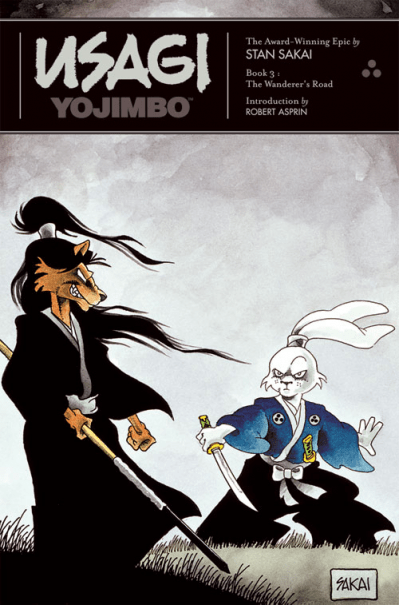
Throwback Thursday: Usagi Yojimbo: Volume 3: The Wanderer’s Road by Stan Sakai

Usagi Yojimbo The Wanderer's Road Cover

Publisher: Fantagraphics Books (Paperback – 17 January 1989)

Series: Usagi Yojimbo – Book Three

Length: 146 pages

My Rating: 5 out of 5 stars

Amazon     Book Depository

Reviewed as part of my Throwback Thursday series, where I republish old reviews, review books I have read before or review older books I have only just had a chance to read.

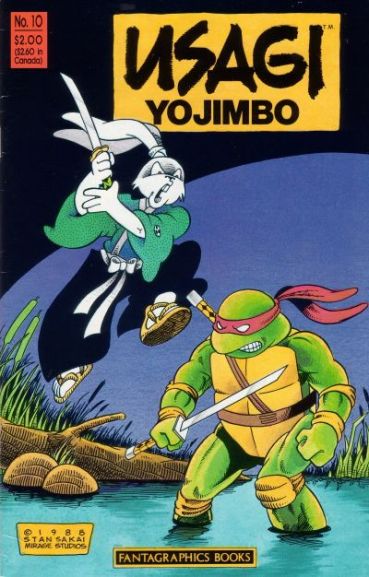
In this week’s Throwback Thursday, I check out the third volume of the outstanding Usagi Yojimbo comic book series, The Wanderer’s Road. I was originally planning to save this one until next week, but I just watched some episodes of the 2003 Teenage Mutant Ninja Turtles animated show today that featured Usagi, and so inspiration struck once again.

Usagi 7

The third volume of the Usagi Yojimbo series follows on from the events of the second volume, Samurai, and features several standalone adventures as the series’ titular protagonist, Miyamoto Usagi, continues to wander around this alternate version of Feudal Japan. The Wanderer’s Road features six first-rate and deeply enjoyable stories which were originally contained within issues #7 – 12 of the Fantagraphics Books’ Usagi Yojimbo series. It also contains a short bonus story from the Turtle Soup comic project which features a very special guest star.

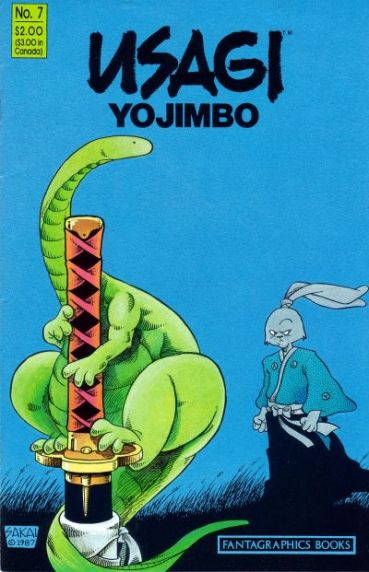
The first of the stories featured within The Wanderer’s Road is The Tower. This story revolves around a hungry tokage lizard (the dinosaur-like lizards that infest Usagi’s world), who finds himself in a spot of bother and is chased up a tower by an angry shopkeeper, who refuses to let it down. Usagi, arriving upon the scene, decides to intervene, and attempts to rescue the tokage; however, thanks to the vindictive shopkeeper, he finds himself also trapped atop the tower. Attempting to bond with the tokage, who he names Spot, Usagi endures the conditions on the tower, while enraging the shopkeeper even more, until the story comes to a crashing end. The Tower was a fantastic start to this third volume, and it features a rather enjoyable and fun story. While it is perhaps the weakest story in this volume, only by dint of how incredible the other issues featured in The Wanderer’s Road are, it was still an excellent entry in this series, and served as a great introduction to a fun recurring character in Spot. The Tower contains some funny moments, from the way Usagi inadvertently keeps messing with the bullying shopkeeper on the ground, to the tiny turtle with a ninja mask that Sakai hides away in one of the crowd shots. All of this results in a fantastic story which I rather enjoyed.

Usagi 8

For the second story in this volume, A Mother’s Love, we go from a comedy to a tragedy. In this story, Usagi and his new companion Spot befriend an old woman on the road and accompany her back to town. Once in town, it is revealed the that old woman is the mother of a ruthless moneylender whose thugs have been terrorising the populace. After a tense night at the moneylender’s house, the old lady begs Usagi to kill her son, as she cannot bear to see the evil creature that he has turned into. While Usagi refuses her request, he is soon forced into a fight with the moneylender’s men. However, it is revealed that the old woman has manipulated the guards into attacking Usagi so that she can use the distraction to kill her son herself. When Usagi and Spot discover this, the old woman beseeches a stunned Usagi to kill her and finally put her out of her misery. A Mother’s Love is an incredible and heartbreaking story, which puts Usagi in a no-win situation. The last three pages of the books have to be one of the most heartbreaking and tragic sequence in the entire series. The teary old woman sing a lullaby as she cradles her dead son in her arms while a heartbroken and defeated Usagi watches on is extremely sad. The way that the old woman’s lullaby suddenly ends heavily implies that Usagi fulfilled the old woman’s wish and killed her. His final statement, “I do pray the Gods will be merciful…. Mother” as his despondently leaves the moneylender’s house, accompanied by Spot’s mournful cry are a sad way to end this story, but it makes for one heck of a captivating sequence. Other highlights of this book include Usagi’s large-scale fight against an army of bodyguards, the fun inclusion of Spot in several of this fights (little dude is lethal with his tail), and a stare-down scene between Usagi and the moneylender, which highlighted how intimidating Usagi can be when he wants to. All in all, a perfect and compelling story which shows just how amazing Usagi Yojimbo can be.

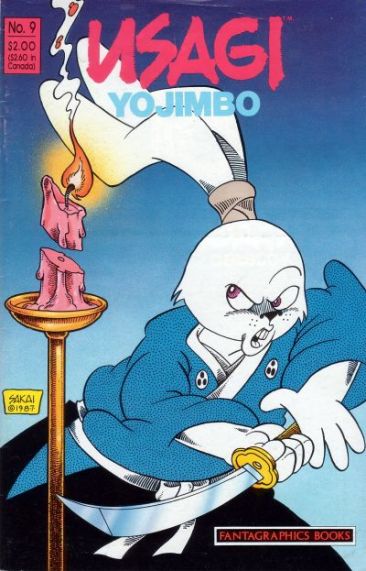
The next story in this volume, Return of the Blind Swordspig, is another masterpiece from Sakai, which features another outing from one of the best characters from Usagi Yojimbo, Zato-Ino, who was first introduced in The Ronin. This story sees the blind outlaw Zato-Ino travelling the road, still pursued by assassins and bounty hunters. Ambushed in the woods once again, Ino is able to fight off his attackers thanks to a timely warning from Spot, who had briefly walked away from Usagi. While Spot and Ino part ways, Ino soon catches up with Usagi, who cut off Ino’s nose the last time they met (he’s got a wooden nose in this book, it’s a transplant!). Ino follows Usagi to a nearby temple, where he is able to gain an advantage over Usagi in the dark as the two engage in an epic duel. Usagi’s life is spared only by the intervention of Spot, who stands between them, forcing Ino to back down, envious of the friendship Usagi is blessed with. Realising that the two souls have much in common, Usagi sends Spot to accompany Ino on his journey to find peace, and the two wonder off as friends.

Usagi 9

Return of the Blind Swordspig is another fantastic story that shows some complex and powerful character work. Sakai’s portrayal of Ino as a tortured and hate-filled loner is once again tragic and very moving, and it was fantastic to see him finally find a true friend and companion, something he has always desired. The way that Ino changes his travel songs from ballads about walking the roads alone to a melody about how he is grateful to have a companion is telling, and Usagi’s parting utterance of “Have a good life… both of you” matches the audience’s thoughts for these two great supporting characters. While the best thing about Return of Blind Swordspig is the continued examination of Ino’s complex personality and the progression of his character arc, I also really need to highlight the incredible swordfight in the dark between Ino and Usagi. Not only is this amazingly drawn, but the start of the duel where Ino slices the candle in half once again shows off Sakai’s love for classic Japanese movies. Slicing a candle to make a room dark is the trademark move of Zatoichi, the movie character that Ino in based upon, and Sakai backs this up by having Ino say “Now we’re both blind, Usagi” which is very similar to what Zatoichi says in these circumstances. All in all, this is an outstanding entry that really shows of Sakai’s ability to weave a powerful narrative around some exceptional characters.

The fourth story in this volume is Blade of the Gods, which introduces readers to the incredible antagonist Jei. Jei is a skilled and murderous spear-wielding samurai who wanders the land killing those he deems evil in the name of the Gods (spoiler: pretty much everyone is evil in Jei’s eyes). Encountering Usagi one night in a peasant’s hut (it is heavily implied that Jei killed the peasant before Usagi showed up), Jei suddenly declares Usagi to be evil and they engage in a brutal fight to the death both inside and outside the hut. Usagi is only saved by a blast of lighting and is left wondering if Jei was a madman or a true emissary of the gods. This was a compelling and fantastic story, which features one of the best fight sequences in the entire volume. The true highlight of this story is the introduction of Jei, who is easily one of the best characters in the entire Usagi Yojimbo universe. Jei is probably the most dangerous antagonist so far encountered in the Usagi Yojimbo series (Lord Hijiki really hasn’t revealed himself too much yet), and he serves as a wonderful recurring character. Sakai did an excellent job introducing Jei in this story, showing off his motivations, his style and the fact that he is a killer without peer and a fighter on par with Usagi. The character design for this villain is really striking, from his black-bladed spear to his pure white eyes and deranged wolf smile. I also liked the way that the reader is left wondering whether he is actually supernatural in origin or just a crazy person. While this is revealed in later volumes, the mystery of him is an exciting feature for the early Usagi Yojimbo stories that he appears in. I really love the character of Jei, who is actually based on Jason from the Friday the 13th movies (fun fact: when you use the Japanese honorific his name, Jei-san, becomes a pun on Jason), and I think that this was an excellent first appearance for him.

Usagi 10

The next story in The Wanderer’s Road is the fun entry, The Tea Cup. The Tea Cup sees the return of the bounty hunter Gen, who Usagi encounters on the road in the midst of a fight. Gen is escorting a precious tea cup to a tea master and must defend it from assassins who are trying to steal it. Accompanying Gen, Usagi helps him defend the cup with the samurai encountering a number of complications, including a band of killers, two orphaned children and the bad luck that follows Usagi and Gen when they team up. This was easily the funniest story in the entire book, thanks to the inclusion of Gen. Usagi and Gen have a hilarious relationship which is always fun to see, and they play off each other really well. This includes a number of running jokes from the previous Gen stories, the final entry in their game of sticking the other person with the lunch bill (which doesn’t go the way they planned this time) and several other hilarious scenes, including one joke that takes the entire story to come to fruition (he really was slow of mind). In this story, you get to see a bit of Gen’s softer side and the fact that, despite his rough exterior, deep down he is a good and caring person. Sakai also fills this story with a number of fantastic references to the cartoon, Groo the Wanderer, which Sakai previously did the lettering on, including a unique stylised poem at the start of the story, a fun imitation of Groo “Gen does what Gen does best”, and even cameo appearances from Sakai, Sergio Aragonés and the rest of the creative team behind Groo the Wanderer. All of this makes for a hilarious and entertaining tale, which is going to produce quite a few laughs for readers.

Usagi 11

The final full story in this volume is The Shogun’s Gift, which sees Usagi facing off against a Neko Ninja who has stolen a valuable sword from his friends Noriyuki and Tomeo of the Geishu Clan. This turned into quite an action packed and clever game of cat and rabbit (I mean cat and mouse), as Usagi puts on a great dumb samurai act to fool the ninja, Shingen. It was entertaining to watch Usagi continually encountering Shingen, especially as the ninja got more and more enraged each time Usagi appeared and casually poked holes in his story. The Shogun’s Gift ends with a great fight sequence and a rather clever bit of trickery from Usagi, which serves to turn this into a cool and enjoyable tale. I liked the introduction of Shingen, who has a big role in a future volume, and the scene where he is able to conceal the fact that he is hidden in the ceiling even after being stabbed is pretty badass. I also think that this volume did need a story that looked at the larger political picture of this world, including the nefarious plans of Lord Hikiji and the Neko Ninja, and it was good to see some more of that. Overall, this proved to be another phenomenal entry in this volume, and it served as a great concluding main story.

Usagi 12

In addition to all the big stories mentioned above, The Wanderer’s Road also contained the short bonus story, Turtle Soup and Rabbit Stew. This short story originally appeared in the Teenage Mutant Ninja Turtle comic project, Turtle Soup, and features the first encounter between Usagi and one of the turtles, in this case Leonardo. In this comical tale, Leonardo suddenly lands in Usagi’s realm and is immediately attacked by a band of ronin, while at the same time just down the road, Usagi is attacked by a group of Neko Ninja, the two fights join into one brawl, where Usagi and Leo are the only survivors. Upon seeing each other, the two assume that the other is part of the band that initially attacked them, and they run at each other to engage in battle, only for Leo to be dragged back to his Earth. This of course doesn’t stop the momentum they built up charging at each other, and it results in chaos and injury on both worlds. This was an exceedingly funny first meeting between these iconic comic characters, and this entire story is boundlessly amusing, even with its shorter size.

As you can see from my passionate descriptions above, each of the stories featured in this volume is an outstanding entry in its own right, and I deeply enjoyed each of them. I honestly cannot tell you which story in this volume was my favourite, as three in particular were quite exceptional. Sakai did a masterful job with each of these stories, and I really enjoyed how they are presented in this volume. I think that The Wanderer’s Road contains an excellent blend of stories, which range from the tragic, the dramatic and the comedic, and each of them contains some amazing examples of Sakai’s trademark artistic skill. I also think that having a volume made up entirely of shorter standalone stories also works really well, especially as Volume 3 falls between two other volumes made up of larger, multi-issue stories. The Wanderer’s Road gets another five-star rating from me, and I look forward to reviewing more Usagi Yojimbo volumes in the near future.

Amazon     Book Depository

Star Wars: Doctor Aphra: Volume 6 – Unspeakable Rebel Superweapon

Doctor Aphra Unspeakable Rebel Superweapon

Publisher: Marvel Comics (Paperback – 10 December 2019)

Series: Doctor Aphra – Volume Six

Writer: Simon Spurrier

Pencilers: Wilton Santos, Caspar Wijngaard, Andrea Broccardo and Cris Bolson

Inkers: Marc Deering, Walden Wong and Scott Hanna

Colour Artists: Chris O’Halloran and Stephane Paitreau

Letterer: VC’s Joe Caramagna

Length: 112 pages

My Rating: 5 out of 5 stars

Amazon

The most devious woman in the galaxy, Doctor Aphra, is back, and she’s got both side of the Galactic Civil War gunning for her in the sixth volume of one of the best Star Wars series out there. I have been meaning to review this volume since it first came out in December. However, I just picked up the seventh and final volume of the current run of Doctor Aphra, so I thought I would quickly review this volume first before I get around to that.

DoctorAphra-32

Doctor Aphra is one of the few ongoing Star Wars comic book series that has been released in the last couple of years, and in my opinion it is one of the strongest Star Wars series out there. The Doctor Aphra comics are set in the period of time between the fourth and fifth Star Wars films (A New Hope and The Empire Strikes Back), and follow the adventures of Doctor Chelli Aphra, renowned archaeologist, adventurer and master criminal. Aphra is an original character who was introduced in the first volume of the 2015 Darth Vader series, Vader, where she served as Darth Vader’s secret agent. Following the conclusion of the Darth Vader series, Aphra, who proved to be a very popular character, received her own spin-off series, which followed on after the events of Darth Vader and feature Aphra as she attempts to make money while trying to ensure Vader doesn’t find out that she is still alive. This series was initially written by one of the original creators of the Doctor Aphra character, Kieron Gillen, however, the second half of the series has been written by Simon Spurrier. Spurrier is the sole writer of this sixth volume of Doctor Aphra, which also features the artistic talent of a several talented artists.

In Unspeakable Rebel Superweapon, Aphra is up to her old tricks again. Despite only recently recovering from a life-threatening injury, Aphra has taken on a dangerous job robbing an alien robot death cult shrine with the help of her new sidekick and ward, Vulaada. However, while aboard the shrine, Aphra notices an ancient Jedi weapon, a sniper rifle that utilises lightsaber technology to kill opponents from vast distances. Unable to help herself, Aphra steals the rifle, starting a chaotic chain of events across the galaxy.

Already extremely unpopular with the Empire, this theft pops Aphra to the top of their most wanted list with a hefty bounty placed on her head. Captured by the Rebel Alliance first, Aphra learns that her stolen rifle is the key to a secret rebel superweapon that they plan to use to assassinate the Emperor. Sensing an opportunity to make some money and permanently get the Empire of her back, Aphra recruits her old associate, the Wookiee Black Krrsantan, in order to steal the rifle back from the Rebels. However, this puts her into conflict with her ex-girlfriend, Captain Tolvan, who is now working for Rebel Intelligence.

DoctorAphra-33

As Aphra recovers the rifle and flees to the Empire, she finds herself face to face with the mysterious Imperial Minister for Propaganda and Misinformation, Pitina Voor, the woman behind the latest Imperial manhunt for Aphra. Voor has plans for her, and Aphra is right in the middle of a vast scheme involving both the Rebels and the Empire. However, no plan has ever survived contact with the good doctor, especially when Aphra has revenge on her mind.

Unspeakable Rebel Superweapon was a superb and outstanding addition to the excellent Doctor Aphra comics, and this might actually be one of the strongest volumes in the entire series. Author Simon Spurrier tells a tight and compelling story within this volume which not only dives back into the past of the series’ titular character but which also showcases new elements of both sides of the Galactic Civil War. You also see the welcome return of several of the best characters from the series, such as Black Krrsantan and Aphra’s love interest, Captain Tolvan, as well as the introduction of an intriguing new antagonist. Featuring issues #32 – 36 of the Doctor Aphra series, this volume is a riot from start to finish (hell, the last two pages are the best in the entire volume), and I really loved the captivating tale that Spurrier wove together in these issues, especially as it features the series trademark dark humour and the focus on its self-destructive and conniving main character.

At the centre of Unspeakable Rebel Superweapon lies an amazing narrative of schemes, plots and lies as Aphra is hunted and manipulated by elements of both the Empire and the Rebel Alliance. Thanks to a recent archaeological theft, Aphra is thrust into the midst of a Rebel conspiracy to kill the Emperor and must decide what to do. Of course, Aphra being Aphra, she goes with the course of action that benefits herself the most and ends up backstabbing and manipulating both the Rebels and the Empire. This leads to some great scenes, including a heist aboard a Rebel spaceship and a sequence where Aphra hacks the entire Imperial communications system in order to sing her praises as an Imperial hero in order to avoid a summary execution. However, not everything is as it seems as the various sides are all trying to manipulate Aphra to their own ends, which results in a surprising number of different twists and turns (or as one character puts it “that is the most convoluted plan I’ve ever heard”). It was fascinating to see Aphra, the ultimate manipulator, being played by so many different sides, each of whom thinks they know how she is going to react. Aphra manages to end up on top, but it was cool to see the various ways she managed to get to the bottom of the plans surrounding her and use it to her own ends. Her motivations for doing so were really compelling, and it was amazing how the creative team had been building up to them throughout the course of the book. Of course, it doesn’t all end up Aphra’s way, and the end result of her schemes sees her come full circle to the last place she wants to be. This all makes for one hell of thrilling main storyline of intrigue and deception, and I really loved where all the twists and turns went.

DoctorAphra-34

Just as with the rest of the entries in this series, one of the best things about the Doctor Aphra series is the titular character herself. Aphra is a complex and haunted character who seemingly lacks a moral code and will only do what is in her own best interest. The character has a rather flippant and disrespectful attitude, and most of this volume’s amazing humour is down to her clever quips and humorous observations amongst the more serious Star Wars characters. One of the things that I have really enjoyed about the Doctor Aphra series has been the examination of Aphra’s self-destructive tendencies and the way that she makes the lives of everyone she comes into contact with worse. This is continued once again in Unspeakable Rebel Superweapon, as she runs from one bad situation to the next, with her every action making her life and the lives of those around her infinity more miserable and more complicated, which makes for some very dramatic and emotional sequences. This is such an expected trait that many of the characters who Aphra has dealt with in the past or who have studied her actually expect her to make these bad or selfish decisions, and I really liked the way that this was a central plot point in the intrigue and espionage storyline. I also loved Aphra’s interactions with her love interest, Captain Tolvan, especially because, during their last meeting, Aphra purposely altered her memories to make her believe she had killed Aphra in a jealous rage. While Aphra did this with the best of intentions (it was the only way to save both Aphra and Tolvan from Vader), this has obviously had a major negative impact on their relationship, and Tolvan now actively loves and hates Aphra in equal measure and apparently has zero trust in her. This is one of the many things haunting Aphra in this volume, as she clearly knows the damage she has done to woman she loves: “I broke her heart. She’s too smart to ever help me again.” Of course, this fraught relationship is another part of the intrigue surrounding Aphra, and it was rather clever the ways in which both sides tried to manipulate Aphra through it.

In addition to the all the awesome character work happening with Aphra in the present, the readers of this volume are also treated to a look back at the characters past. In particular, you finally get to see Aphra’s mother for the first time and learn the tragic circumstances around her death. This has been hinted at for some time, all the way back to the second volume of the 2015 Darth Vader series, Shadows and Secrets. As a result, it was great to finally see the full extent of this character background, and it was fascinating to see what happened and how this has impacted on the personality of Aphra. I enjoyed the way in which the scenes from the past were mirrored in the scenes from the present, and I really liked the similarities in the way that Aphra was raised with the harsh way she is treating her new ward, Vulaada. I was also impressed by the way in which seemingly innocuous details from Aphra’s past suddenly had a big impact on her current story, and the creative team did a great job hinting about these impacts throughout the entire volume. All of this helps build up a much more complex story around the character that is Aphra, and I found this dive into her past to be extremely compelling.

DoctorAphra-35

I also need to say how much I loved the parts of this book that featured Darth Vader, whose villainy and hatred for Aphra shine through in the few short scenes that he has. Aphra and Vader have a complicated history together, and Vader is desperate to kill Aphra once and for all (she’s faked her death on him a few times already), as she is the only living person in the galaxy who knows about his obsession with Luke Skywalker and his plans to overthrow the Emperor. Vader has two sequences in this book, both of which revolve around his determination to kill Aphra, no matter the perceived costs. While the first is really good, mainly due to Vader answering an Imperial officer’s request to state his rank with “Lord”, nothing quite beats the second appearance on the last two pages of the volume. After apparently beating all of her opponents, Aphra is sure of her safety due to her status as an Imperial hero, right up until Vader appears, lopping off heads with his lightsaber. The moment Aphra sees him, she knows she and Vulaada are dead, and she immediately hugs Vulaada and gets her to close her eyes. I really loved this scene, especially the resigned way in which she responds to Vulaada’s frantic belief that them being heroes is going to save them with “he doesn’t care”. This was a pretty outstanding end to the entire volume, and it was amazing to see the next chapter of the turbulent relationship between Aphra and Vader.

The Doctor Aphra series has always done a great job showing off several different sides of the Star Wars universe, including giving a closer look at parts of its criminal underbelly and its archaeological sector. However, in this book, we get to see new sides of both the Empire and the Rebel Alliance. In particular, we get to see the Empire’s Coalition for Progress, a sinister organisation led by new antagonist Pitina Voor that is dedicated to expanding and maintaining the Empire through manipulation, trickery and propaganda, rather than brute force. This is rather fascinating inclusion into the canon, and it was rather interesting to see a whole new side to the way that the Empire controlled the galaxy. Voor is also a rather intriguing character, with a unique vision for how the Empire should be run and maintained, and it was kind of fun to see her gripe about the PR problems that occur when you are being ruled by Sith Lords (I had to agree, the Emperor really isn’t adequately loveable). They also have a rather nifty little museum dedicated to some of the Empire’s greatest victories and propaganda coups, which the artistic team filled with several Easter eggs. I was also rather impressed by the way that the creative team explored the darker side of the Rebel Alliance by examining the covert and morally ambiguous actions of their intelligence agency. This is something that has been explored before in some other Star Wars entries, such as in Rogue One, but this volume of Doctor Aphra takes it to a new extreme with Rebel Intelligence apparently plotting to build a miniature Death Star in order to take out the Emperor and win the war. I rather liked this darker side of the Rebels, and it was interesting to see more of a Rebel organisation that uses less moral tactics to achieve their goals.

DoctorAphra-36

Unspeakable Rebel Superweapon features the work of several different artists, each of whom worked on a couple of different issues within the volume, which results in an interesting combination of styles. This means that this volume of Doctor Aphra contains a range of different art styles and techniques across the various issues. I actually liked the myriad changes that occurred issue to issue, and it was fantastic to see the different styles and artistic ideas that this large team produced. This volume contains some rather impressive and beautifully drawn scenes and sequences, which fit perfectly around Spurrier’s compelling story and which work really well together. The end result is a fantastically drawn and executed comic, which is a delight to look at.

This sixth volume of the always entertaining and incredible Doctor Aphra series, Unspeakable Rebel Superweapon, is an outstanding addition to the series, and it is one that I had an amazing time reading. This volume contains a complex plot of intrigue and doublecrosses, which sets the loveably dysfunctional protagonist down another road of self-destruction and manipulation in order to survive. Filled with some excellent and memorable story moments, and an incredible conclusion to this volume’s key storyline, Unspeakable Rebel Superweapon is relentlessly entertaining and endlessly captivating, and I had an absolute ball unwrapping it. A highly recommended read; if you have not read any Doctor Aphra yet, then you are missing out!

Amazon

Star Trek: Picard: The Last Best Hope by Una McCormack

Star Trek - Picard Cover

Publisher: Simon & Schuster Audio (Audiobook – 11 February 2020)

Series: Star Trek: Picard – Book One

Length: 11 hours and 40 minutes

My Rating: 4.5 out of 5 stars

Amazon     Book Depository

Get ready to dive back into the Star Trek universe with Picard: The Last Best Hope by Una McCormack, the latest Star Trek novel which ties into the events of the Picard television show. The Last Best Hope is an outstanding novel that serves as a bridge between Star Trek: The Next Generation show and the current Picard series.

Nearly 20 years before the events of Picard, both the United Federation of Planets and the Romulan Star Empire faced an unprecedented calamity. Scientists have just discovered that the Romulan sun is in the process of going supernova, turning into a destructive force that will devastate the Romulan home system and have significant negative follow-on effects on the remaining planets within Romulan Space. In order to ensure the evacuation of their people, the Romulans grudgingly request aid from the Federation, who assign Jean-Luc Picard to the mission.

Picard, promoted to the rank of admiral, quickly finds himself in charge of the largest and most difficult operation in Starfleet history. The evacuation mission is a vast undertaking, requiring Starfleet to relocate hundreds of millions of Romulans to distant planets in only a few short years. Lacking resources and manpower, Picard begins the evacuation process as best he can, with the invaluable help of his new first officer, Rafaella “Raffi” Muskier. Meanwhile, back in the Federation, Geordi La Forge attempts to come up with new ways to increase Starfleet ship production on Mars. The best solution is the creation of a new, synthetic workforce, and La Forge calls in an old colleague, the brilliant scientist Bruce Maddox, who reluctantly halts his lifelong work on artificial life to help build these new synthetics.

As the evacuation progresses, Picard takes solace in every small victory his team can achieve, but this mission seems doomed to fail. Debates from ambitious Federation politicians, distrust and fear from the Romulans they are trying to help, and interference from the Tal Shiar, the Romulan secret police, all hinder the mission. However, Picard is not one to give up easily and is determined to save every Romulan he can from the impending disaster. But even the great Jean-Luc Picard is unprepared for how his mission will end. Everything is about to change, and Picard and the galaxy will never be the same again.

Star Trek is one of those popular franchises that always produces a ton of extra content each year in the forms of novels and comics, so it was no surprise that material related to Picard would eventually be released. The Last Best Hope is the very first Picard tie-in novel, although I expect that additional books will come out in the future. Indeed, IDW has already released a Picard tie-in comic, Countdown, which I will probably check out at some point. This first Picard novel was written by veteran tie-in author Una McCormack, who has previously delivered several great Star Trek books, including last year’s Star Trek: Discovery tie-in, The Way to the Stars. McCormack does an amazing job with The Last Best Hope, producing a captivating and incredible read that expertly leads into the new show.

Before I dive too deep into this review, I think that it is necessary to point out that this book was released on the 11th of February, between the third and fourth episodes of Picard. That means that this book contains quite a few mentions of events and reveals that occur in the initial episodes of the show, especially as McCormack clearly had early access to the show’s scripts. While this ensures The Last Best Hope a much more complete and in-depth tie-in novel, it does mean that this book contains some spoilers for the television series. In addition, as I have been religiously watching Picard every week, my review is influenced by the events of the first six episodes and it also contains some spoilers from the show.

The Last Best Hope is a wide-ranging Star Trek canon novel, set across several years of Star Trek history (2381 to 2385) that explores one of the biggest prequel events mentioned within Picard, the explosion of the Romulan sun and the attempts by Picard to evacuate them. This leads into a powerful and clever novel which shows all the trials and tribulations associated with this exercise, as well as several other events that lead into the show. McCormack makes excellent use of a number of different character perspectives to create a full and rich narrative around this plot, which also explores some major Picard characters. While I did think that parts of the story ended rather suddenly, with no real lead-in to the disaster on Mars that changes everything, this book is a first-rate novel which I powered through in extremely short order.

One of the major appeals of this book is the fact that it serves as a prequel to the events of Picard and provides readers with additional background and context to the adventures currently happening in the show. This is done in a number of ways, from providing the reader with greater background about certain characters, showing the origins of a number of the storylines from the show and serving as a bridge between the events of Picard and The Next Generation. The Last Best Hope features an excellent introduction to several of the newer characters in the show, such as Agnes Jurati, Raffi, Elnor and the Qowat Milat nuns, and it was intriguing to see how these characters slotted into the pre-history of the show. At the same time, McCormack also examines what happened to several established characters from The Next Generation after the events of Star Trek: Nemesis, including Picard, Bruce Maddox, Geordi La Forge and even a little bit about Worf (he becomes captain of the Enterprise!). McCormack also provides an explanation about several key occurrences and storylines that are touched on within the show, such as the creation of the synthetic workers that destroyed Mars, Picard’s resignation from Starfleet and the extent of several key relationships. There are also some potential hints at where the show might go in the future, and I will be interested in seeing if those pan out at all. I was pleasantly surprised with how much background that McCormack was able to fit into The Last Best Hope, and the different revelations and expansions on the information provided in the show make this a fantastic read for those currently watching Picard.

The Last Best Hope features some very impressive character work, and I feel that McCormack did an excellent job capturing the personalities and histories of several key characters from the new show. I really appreciated her portrayal of Picard, and this book featured several key aspects of his character, such as his dark moods, his determination and his ability to inspire absolute loyalty in his subordinates. I liked how the reader gets to see how Picard deals with the seemingly impossible task assigned to him, especially as his emotions throughout the book range from hope to absolute despair, as multiple obstacles and problems seem to dog everything he does. One of the major parts of his character explored in this book is the way that Picard’s ideals and beliefs seem a little out of touch with the world he lives in. This is something that is shown throughout the Picard television show, as the old-school captain is now living in a much darker and more desperate world. I am really glad that McCormack tried to capture this in her novel, and it was really compelling to see Picard being completely oblivious about the darker realities of the galaxy. All of this is really compelling to see, and I think that it serves as a good basis for some of the ways Picard acts in the current show.

Aside from Picard, a number of other characters are featured throughout the book, many of whom have some really interesting and compelling stories. I personally found the tale of Raffi, Picard’s new first officer, to be particularly good, as the reader gets to see how she became so messed up and obsessed with proving that the Romulans where behind the destruction of Mars. You also get a better understanding of why she was so mad that Picard quit on her and the mission, especially after she sacrifices everything for him, thanks to the way he inspired her. McCormack also spends significant time exploring the character of Bruce Maddox, and it was especially intriguing to see this character between his appearances in The Next Generation and Picard. You also got to see the origins of his relationship with Agnes Jurati (indeed, based on release dates you learn about this relationship in this book before it is mentioned in the show), and it was great to see how it unfolded and how close the two of them were. Of course, this also has a more sinister and heartbreaking edge to it if you look back at this relationship after the events of the fifth episode of Picard. I also liked the Geordi La Forge storyline; it was interesting to see his struggle to increase Starfleet ship production. However, the best part of this portrayal occurs at the end of the book, and I will be curious to see how they show off his survivor’s guilt if the character ever appears in Picard.

One of the things that I really enjoyed about this book was the way McCormack slowly starts to alter the tone of the novel to represent the change between the lighter The Next Generation and the darker Picard shows. At the start of the book, the story is more in line with the tone of The Next Generation, with Picard embarking on a humanitarian mission with his idealism and belief in the greater good intact. However, as the mission progresses, things start to get darker, as the various obstacles to the Romulan relief mission become more apparent. The dark and callous manipulation of the Romulan leaders and Tal Shiar as well as the xenophobic politics of certain Federation politicians becomes more and more apparent, resulting in a darker tone. McCormack also attempts to replicate the more adult tone of the current show with a greater reliance on swearing (never have I seen so many F-bombs dropped in a Star Trek novel, oh the humanity!) and hints of mass murder, genocide and extinction-level events. All of this makes for a slightly different Star Trek tie-in novel experience, and I personally enjoyed some of the subtle changes McCormack made to the tone.

I personally really enjoyed seeing the entirety of Picard’s attempts to evacuate the Romulans from their soon to be exploding sun. This has been one of the most fascinating events mentioned in the show, with several parts shown or alluded to in Picard. McCormack really dived into this event, showing many of the various aspects of such an operation, including the science, politics and diplomacy associated with it. From the start, this whole mission is painted as a near impossibility, not just because of the scale of calamity and the number of people affected but because of the mindset and suspicion of the Romulans they are trying to save. To put it into context, this operation would be like the United States trying to evacuate a similar sized country that had North Korean levels of state led secrecy and distrust towards the organisation trying to save them. The sheer scale and difficultly of this mission are constantly raised, and yet Picard and his team seem to find a solution to many of the problems presented to them. Of course, anyone who has seen the first episode of the show knows how this is going to end, so seeing the characters getting so invested in their mission is a bit of an emotional blow. That being said, this book contains a lot more context for some of the Federation’s decisions, and in particular the character of Admiral Kirsten Clancy (Starfleet’s CNC in the second episode of Picard), comes across as a whole lot more sympathetic. Overall, I felt that this was an amazing expansion on the events mentioned in the show, and it was really cool to see how the whole operation unfolded.

Another great facet of The Last Best Hope which made it such an intriguing book was its compelling examination of the Romulan people. McCormack really dives into Romulan culture and society in this book, presenting some intriguing details about this race. In particular, she examines the Romulans’ deep-seated need for privacy and secrecy, which is a defining part of their species. McCormack does an excellent job highlighting how this desire for secrecy impacts them as a race and a culture (secret multi-room Romulan music for the win!), and how they barely trust other members of their own species, let alone members of the demonised Federation. Seeing how this obsession with lies, secrecy and the appearance of saving face with the Federation impacted the species’ chance for survival is a compelling and intriguing part of the book. McCormack also dives into other parts of Romulan culture and society, mainly the role of the Tal Shiar, the Romulan secret police, who have long been a shadowy force within Star Trek lore. Seeing the fear and apprehension that this organisation causes amongst ordinary Romulan citizens, as well as the lengths they will go to maintain secrecy and security, is pretty crazy and it certainly enhances an established Star Trek antagonist species. I also enjoyed seeing more of the Qowat Milat, the Romulan warrior nuns who Picard befriends and helps evacuate from Romulan space. The Last Best Hope contains several encounters with the Qowat Milat, and we get to learn a bit more about them, the role they play in Romulan society and how they interact with the Tal Shiar, with whom they have an adversarial relationship. All of this is deeply, deeply fascinating, especially for those readers who love learning about Star Trek lore, and I really enjoyed seeing all the Romulan inclusions featured in this book.

I ended up listening to the audiobook version of The Last Best Hope, which is narrated by Robert Petkoff. This new Star Trek audiobook runs for 11 hours and 40 minutes, which can be listened to fairly quickly, especially once you get stuck into the compelling story. I really enjoyed listening to The Last Best Hope, mostly thanks to the incredible voice work of Robert Petkoff. Petkoff seems to be the go-to narrator for all things Star Trek these days, as he has lent his superb vocal talents to a huge number of other Star Trek audiobook adaptions in recent years. I have previously enjoyed his work on such books as The Antares Maelstrom by Greg Cox, The Captain’s Oath by Christopher L. Bennett and Available Light by Dayton Ward. In each of these previous books, I have been greatly impressed by Petkoff’s ability to recreate the voices of key characters from the Star Trek television shows, including most of the characters in The Original Series and The Next Generation. He continues this amazing voice work in The Last Best Hope, providing near-perfect impressions of characters like Picard and La Forge, which really helps the reader immerse themselves into the story. While his impressions of some of the newer characters from Picard are not as accurate (keep in mind Petkoff would have recorded this book before Picard aired), he does provide clear and distinctive voices for each of the characters utilised in the books. I also love the accents he provides to the various alien races and nationalities in this book, and I especially enjoy hearing him attempt to replicate the speech patterns of certain aliens, like the Vulcans. Thanks to this incredible voice work, I absolutely loved listening to the audiobook for The Last Best Hope, and I would strongly recommend this format to anyone interested in this latest Star Trek novel.

Picard: The Last Best Hope by Una McCormack is an excellent and deeply captivating read which serves as a perfect prequel tie-in novel to the current Picard show. There is so much information and detail about the Star Trek universe prior to the events of the current television series contained within in this novel, and I loved seeing the author expand on the intriguing new universe that has been hinted at in the show. This is a must-read book for all Star Trek fans, especially those who have been loving Picard, and even non-Star Trek fans will enjoy this book’s powerful story and the fantastic plot device of the Romulan rescue mission. The Last Best Hope is probably the best Star Trek novel I have had the pleasure of reading so far, and I am extremely excited to see what other tie-in novels they release around the awesome new Picard series.

Amazon     Book Depository

Throwback Thursday – Usagi Yojimbo – Vol 1: The Ronin by Stan Sakai

Usagi Yojimbo The Ronin Cover

Publisher: Fantagraphics Books (Paperback – 1987)

Series: Usagi Yojimbo – Book One

Length: 144 pages

My Rating: 5 out of 5 stars

Amazon     Book Depository

Reviewed as part of my Throwback Thursday series, where I republish old reviews, review books I have read before or review older books I have only just had a chance to read.

We are now less than two months until the next amazing volume of Stan Sakai’s long running Usagi Yojimbo comic series, Bunraku and Other Stories, is released, and I am getting excited. This new volume is set to feature several brand new Usagi Yojimbo stories (including an extended story about a haunted puppet drama), but it is apparently also going to feature a look back at the very first Usagi story as part of an 35th anniversary special. For that reason, I thought that this would be an excellent time to go back and review volume one of the Usagi Yojmbo series, The Ronin, to serve as a good base for the upcoming review.

Usagi Yojimbo is a unique comic book series that Stan Sakai started back in 1984. It focuses on the adventures of Miyamoto Usagi, an anthropomorphic rabbit samurai who lives in a version of feudal Japan (early Edo period) completely populated with other anthropomorphic animals. Usagi is a ronin, a masterless samurai, who wanders the land on a warrior’s pilgrimage, helping those he encounters and occasionally working as a yojimbo (bodyguard) for hire. Throughout his journey he encounters all manner of friends and foes, including a number of creatures from Japanese folklore, and finds himself constantly drawn into the political plots of the land. This series is written and drawn in a more western comic/cartoon style rather than the Japanese magna style. However, the Usagi Yojimbo series is strongly inspired by Japanese history and culture, featuring a huge range of accurate depictions of historical events and cultural icons. This series is currently collected in 33 volumes from several different publishers, with each volume containing a number of different issues from the series. These issues are usually standalone adventures, although a number of longer storylines are continued through several issues or volumes.

I have been meaning to go back and review the first volume Usagi Yojimbo for a while now. The Usagi Yojimbo series is easily one of my favourite comic book series of all time, as Stan Sakai has created a truly epic and compelling series. While on paper a series following a rabbit samurai in a version of feudal Japan populated by other anthropomorphic animals does sound a bit ridiculous, these comics are anything but. Through a combination of outstanding storylines, complex characters, intense action, great uses of humour and an intriguing and compelling look at Japanese history and culture, Sakai has created a comic series that is extremely endearing and captivating. I have been a massive fan of this series for years, having started reading it when I was in high school (thank goodness for my surprisingly well-stocked public library) after I first saw the character in the 2003 Teenage Mutant Ninja Turtles animated series. I have previously reviewed the last two volumes of Usagi Yojimbo on my blog already (Volume 32: Mysteries and Volume 33: The Hidden), with Mysteries actually being the very first comic I ever reviewed. Both of these previous volumes received a five-star rating from me, which I have also awarded to this first volume.

Unlike the rest of the collected volumes, The Ronin doesn’t actually contain any issues from the Usagi Yojimbo series. Instead, it contains several earlier Usagi stories which were part of other publications, such as Albedo Anthropomorphics, Critters, Doomsday Squad and Usagi Yojimbo: Summer Special. All of these were collected together for the first time in 1987 into this volume (I have the 2007 reprint), and appear in chronological order. The Ronin contains 10 separate chapters of various lengths, each with their own story. These include:

  • The Goblin of Adachigahara: the very first story to feature Usagi, and the one that the upcoming Bunraku and Other Stories is going to revisit. This initial story features Usagi returning to the area near the battlefield of Adachigahara, where he lost his lord, Mifune, in a battle, forcing him to become a ronin. Seeking shelter in the hut of an old lady, he recounts his story of the battle to his host, including the betrayal of one his lord’s generals which cost them the battle. Later, Usagi battles a flesh-eating goblin, revealed to be not only the treacherous general but also the husband of his elderly host, and manages to defeat him, sparing the old lady who was going to allow him to be eaten. This was an excellent introduction to Usagi, as you got some vital information about his history, his status and his skill as a warrior. You also got a great look at his moral character, as he chooses to spare a woman who would have let him be eaten, and instead instructs her to perform funeral rights on the man who cost him everything.
  • Lone Rabbit and Child: this second story involves Usagi getting involved in the politics of the nation, as he comes to the aid of a young lord, Noriyuki, and his retainer the swordswoman Tomoe Ame. Noriyuki and Tomoe are being hunted by the agents of the evil lord Hikiji, who was also responsible for the death of Usagi’s previous lord years ago (it is later revealed he also killed Usagi’s father). Usagi agrees to escort them to safety, and they must contend with mercenaries, assassins and ninja on their quest. This is an amazing second outing, which expands on the world the series is set in, continues to show off Usagi’s skill, and sets up Hikiji as the main antagonist of the series (even if you see very little of him later on).
  • The Confession: This story follows on directly from the events of Lone Rabbit and Child, and features Usagi in the possession of a vital letter implicating Lord Hikiji in the attempt to kill Noriyuki. Usagi is ambushed by the Neko Ninja, who seek to reclaim the letter, leading to a prolonged and desperate fight in the woods. This proved to be an awesome follow-up to the previous story, which continued to highlight Usagi’s skills in combat and Sakai’s ability to drawn excellent, high-stakes fight scenes. It also showed just how nefarious an opponent Hikiji and his advisor Counsellor Hebi (a big terrifying snake) can be.
  • Bounty Hunter: Usagi is hired as a Yojimbo by the bounty hunter Gennosuke as he attempts to claim his latest bounty, the leaders of a local gang. Engaging the gang in a fight at a temple, Usagi and Gen are an effective team, eventually getting their targets, although their partnership ends on an interesting note. This was an entertaining story that served as a perfect introduction to a great character. Usagi and Gen have amazing chemistry together and Gen is an awesome side character. This is also one of the first stories to feature some more humour in the story, especially in the end, which turns out to fit in well with the overall feel of the series.
  • Horse Thief: Sakai features a lot more humour when Usagi, after interfering in a robbery by a gang of bandits, takes one of the bandit’s horses. He attempts to sell the horse in town, only to discover that it was stolen from the local magistrate, who chases him into the woods. Usagi’s problems only escalate from there, when he and his pursuers run into the bandits, prompting a massive battle in which Usagi is everyone’s enemy. The story has a great ending, steeped in irony which leaves Usagi and the reader laughing hysterically. I loved the author’s use of coincidence and bad fortune in this story, and it was fantastic to watch Usagi go from one bad situation to the next.
  • Village of Fear: This is a bit more of a horror story, as Usagi comes across a village held captive by a fearsome monster. This horror is compounded when it is revealed that the monster is a shapeshifter who has taken the form of one of the villagers. This was a relatively brief story, but it is set up and executed very well, with several great character moments, and there is even time for a quick Gone with the Wind joke.
  • A Quiet Meal: This is another of the more humorous stories in the volume, which features Usagi trying to have a quiet meal in an inn. Unfortunately, a gang of rough gamblers are causing trouble, throwing the other patrons out and trying their luck with Usagi. Usagi quickly shows them the error of the ways with some extremely fancy sword work, which causes them to flee in terror. The most noticeable feature of this entry is the fact that Usagi doesn’t speak once during the entire issue (he’s trying to have a quiet meal), and it’s up to his body language and the other characters to tell the story. This works extremely well and really helps to uplift the overall humour of the story. The way in which he sees off the ruffians is absolutely fantastic, and their absolute fear and disbelief at his skill, “this one’s been filleted”, is just great.
  • Blind Swords-Pig: This is a somewhat sadder and more dramatic story which features Usagi encountering and quickly befriending the blind pig, Zato Ino, who is seeking a peaceful place to settle down. Ino, however, is an extremely skilled warrior and wanted outlaw. Constantly hunted for his bounty, he relies on his sword skills and his ability to ‘see’ with his sense of smell. When Usagi finds out his true identity, the two engage is a fierce duel in which Ino loses his nose, truly becoming blind. This is one of the best stories in the whole of The Ronin, mainly because of the complex character that is Ino. He has a true desire for a peaceful life, but his past ensures that this can never happen, as even friendly characters like Usagi turn against him. This has turned him into a somewhat bitter creature, quick to hate those he meets “and what I hate, I kill!”, and the events of this first story help turn him into something even more angry, especially when it comes to Usagi.
  • Homecoming: This story sees Usagi return to the village of his childhood, but his return is not a peaceful one, as his village is under attack by the Mogura Ninja. Usagi must work with his childhood rival, Kenichi, to save the village; however, there is much enmity between Usagi and Kenichi, mainly because Kenichi married Mariko, the love of Usagi’s life. The two rivals must move past their differences, especially when Kenichi and Mariko’s son, Jotaro, is kidnapped by the Mogura Ninja. This was another exceptional entry in the volume, as it blends together tight action sequences with a deeper dive into Usagi’s past, including his complex and dramatic history with Kenichi and Mariko. The final pages of this issue are just heartbreaking, as it is revealed that Usagi and Mariko both kept the mementos they gave each other as young lovers, and they are both clearly in love with each other, even though they can never be together. I also really liked the Mogura Ninja in this book, especially as moles apparently make effective and deadly ninja.
  • Bounty Hunter II: This final story sees the return of Gen, who once again convinces Usagi to work with him to collect another bounty. Gen of course manages to complicate the job, and his actions backfire on Usagi, resulting in him getting into a major scrape. Despite Usagi’s understandable rage towards Gen, the two are able to part amicably, although Usage gets a small measure of appropriate revenge at the end of the story. I think that Sakai really hit his stride with the Usagi/Gen friendship in this second story, and the two of them play off each other extremely well. I really loved the end of this story, and it definitely got a big laugh out of me.

Overall, I felt that this volume contained a perfect blend of stories, and I really liked how Sakai jumped between action-based stories, to comedies and then to more dramatic tales, which helped produce a range of different emotional reactions. I did appreciate that the different issues also featured a range of different opponents and story basis, allowing the reader to understand that this series is going to focus on everything including banditry, ninja attacks, political intrigue and even the supernatural. I also think that the stories in The Ronin contained the right amount of character background for Usagi, providing enough for the reader to understand his motivations, while not being too overwhelming. This great blend of storylines and character arcs works extremely well together, and it makes for one heck of a complete volume.

The Ronin serves as an excellent introduction to this series, and I would strongly recommend that anyone interested in Usagi Yojimbo start with this volume. The stories within do a wonderful job of setting up the alternate version of historical Japan that this entire series takes place in. I absolutely love the combination of vibrant animal characters with feudal Japanese settings, and it works really well as the backdrop for an action series, especially with the political uncertainty and mass of unemployed samurai that accompanied the early years of shogunate rule. That being said, it is never quite explained why certain animals (horses and small dogs) are non-sentient, or why there are packs of dinosaur-like lizards (tokage) roaming the wilderness, although I kind of like the mystery. This volume also contains fantastic introductions for so many characters who are vital to the series, such as Gen, Tomoe, Mariko and more, and you get great insights into their characters, which are built up with each appearance they make. A lot of key character arcs or storylines start in the stories featured within this volume, and as each volume of Usagi Yojimbo is sequential, readers of the series are best served starting with this first volume. Luckily, The Ronin is a really good first entry in the series, and it is definitely worth checking out.

One of the most charming things about the Usagi Yojimbo series is the way in which Sakai sneaks so many different historical and cultural references into his stories. Most of the characters are either inspired by a real-life historical figure or a fictional character from Japanese or western culture. For example, Usagi himself is based on one of the most famed samurai of all time, Miyamoto Musashi, who is often credited with creating the two-sword fighting technique that Usagi utilises in the series, while Tomoe Ame is based on famed female samurai Tomoe Gozen. Other characters however are based on Japanese movie characters, such as Zato Ino who is a clearly a pig version of Zatoichi, the blind swordsman protagonist of a series of popular Japanese movies and televisions shows. Gen is based on the character that Toshiro Mifune portrayed in samurai films such as Yojimbo (which was later adapted into A Fistful of Dollars), and Usagi’s former lord Mifune gets his name from the actor. Other references include the title of the second story in this volume, Lone Rabbit and Kid which is a references to the manga series Lone Wolf and Cub (Sakai later creates the characters of Lone Goat and Kid as another homage to this series) and the fact that this series is partially named after the Yojimbo film. Two separate stories in this volume also reference Sakai’s previous work on the Groo the Wanderer comic, with Groo even briefly appearing in Lone Rabbit and Kid, sharing a fun stare down with Usagi. I had a great time with all these references (although I admit I had to look up a couple), and some of them are really clever. They add a lot of fun to this series and they are a real treat for readers, especially those already familiar with Japanese history, film or culture.

I am a big fan of Sakai’s art style, and each issue of Usagi Yojimbo is an absolute joy to view. Not only does he produce some outstanding action sequences with his drawings, many of which do an awesome job of depicting the samurai battle style, but he also creates some fantastic characters and breathtaking landscape scenes. Nearly every issue shows some inspiring and beautiful depiction of the Japanese countryside or a historical town, and the sheer amount of detail that he throws into his various scenes is just incredible. It’s also fun to see the various animals that can be turned into samurai, as everything from bulls, rabbits, crocodiles, rhinos, monkeys, pandas, cats and dogs appear in this first volume alone. For this first volume, however, the artwork is understandably a little inconsistent, mainly because Sakai had only just started drawing these characters. The various character designs are a little rough in places, especially if you are familiar with his later work, as Sakai is clearly experimenting with how he wants to depict these characters. A few of the action sequences are also a tad different from the later entries in this series, which can be a little jarring in places, but still really cool. Overall, though, most of the art in this book is pretty incredible, and it is fun seeking Sakai get into his groove with each new story. Sakai does an amazing job conveying emotion, action and intent through his drawings in this volume, and it turns out wonderfully. If I had to pick my favourite bit of art in this entire volume, it would be a scene in A Quiet Meal, where Usagi swings his sword around the head of a ruffian who is bothering him. While it first it appears that Usagi had done nothing, you slowly realise that the flies that Sakai had been subtly drawing around this character’s head before that point, are gone. The facial reactions of the various thugs when they realise what happened to the flies are just hilarious, and I absolutely loved it.

This first volume of the Usagi Yojimbo series, The Ronin, is an amazing and spectacular read, which I have a lot of love for. Not only does it serve as an excellent introduction to the Usagi Yojimbo series, but it contains some captivating storylines, impressive artwork and a heck of a lot of fun. Needless to say, The Ronin gets a full five stars from me, and I cannot recommend this volume and the Usagi Yojimbo series enough. Reading this first volume actually got me re-reading the entire series again, and I have already made it up to volume 17. In my book, all of them are five star reads, and you can probably expect some more reviews of them in some future instalments of Throwback Thursday. Stay tuned to see my review of the next volume of this epic series, which I already know I am going to love.

Amazon     Book Depository