A People’s History of the Vampire Uprising by Raymond A. Villareal

A History of the Vampire Uprising Cover

Publisher: Hachette

Publication Date – 29 May 2018

Amazon     Book Depository

From the inspired mind of Raymond Villareal comes one of the most captivating and thought-provoking literary achievements of 2018.  Have you ever wondered what would happen if vampires came into existence in the modern world?  Villareal’s debut novel, A People’s History of the Vampire Uprising, explores the possibility of such an event through a comprehensive fictional oral history, much like Max Brooks’ observation of a zombie apocalypse in World War Z.

The body of a young woman in an Arizona morgue awakens and disappears into the night.  This mysterious event will start a chain reaction around the world that no one could predict.  The CDC investigator consulting on the case soon discovers that the woman was suffering from a mysterious disease with several incredible symptoms.  Subjects are stronger, faster, suffer a violent reaction to sunlight, have unnaturally long lives and are utterly enthralling to humans.  More importantly, they must consume blood to survive and can pass the disease on by biting another human.  As attempts to quarantine the disease fail and additional bodies start disappearing, the world quickly realises that vampires are real and here to stay.

As more and more people are infected, many of those who have been turned begin to reintegrate back into society.  These new creatures call themselves ‘gloamings’, finding the term ‘vampires’ to be derogatory.  Soon, many of the rich and famous are flocking to the gloamings, hoping to join their ranks and be re-created.  With their natural talents enhanced, the gloamings start accumulating significant wealth, power and influence as they infiltrate all levels of human society while attracting followers to their side.  Gloamings infiltrate the government, powerful companies and the Catholic Church.  One gloaming even begins a run for high political office.

However, not everyone is enamoured by the gloamings.  A faction of the church is determined to stop the vampire incursion and has formed its own militia to fight gloamings throughout the world.  Following a series of high profile cases, the FBI starts a taskforce focusing on crimes by gloamings.  The original CDC investigator continues her research into the virus despite intense political and social pressure to stop.  In New Mexico, a skilled political motivator soon discovers a terrible secret about his employers.  This is the start of the vampire uprising; the world will never be the same.

Written in the format of a history book, A People’s History of the Vampire Uprising is an epistolary novel that uses a series of fictional documents and testimonials to tell the story.  Villareal presents a large portion of the story within chapters representing testimonials from certain characters specifically taken for a history book.  Other chapters are written in the format of important documents from the fictional world and are made to represent interrogation notes, congressional transcripts, government reports and articles in scientific and legal journals.  In addition to these longer chapters, Villareal has also included numerous shorter entries that are presented as news stories, public interest articles, transcripts pulled from popular media sites, emails and the comments section of a message board.  As a result of all these different formats and documents types, A People’s History of the Vampire Uprising has the uncanny feel of an actual history book, which is further reinforced by the inclusion of footnotes in most of the longer chapters, and three short appendices slipped into the back on the book.  This is a marvellous way to structure the book and it speaks to Villareal’s skill that he was able to tell such a captivating narrative using this style of writing.

By employing fictional testimonies and documents originating from a number of different characters, Villareal is able to tell an extremely wide-reaching story about the introduction of vampires.  Most of the longer chapters are written in the style of testimonies from characters in the United States, while many of the shorter articles show a wide view of the rest of the world.  This allows Villareal to focus his main story in one specific country and focus his analysis on how the United States would react to such an event.  At the same time Villareal is also able to illustrate a much wider story showing how the vampire uprising would affect the entire world.  Exceptions to this are the chapters featuring the gloamings causing a religious and ideological schism within the church.  These chapters focus the plot on characters throughout Europe and represent some of the more fascinating fictional postulations within A People’s History of the Vampire Uprising.

While the book contains numerous narrators, authors and interviewees telling their specific stories, Villareal is still able to produce a clear overall narrative about the introduction of vampires to the world.  While Villareal initially has the individual narrators tell their own stories, eventually the characters meet and interact, allowing the multiple storylines to combine into one overarching plot.  The smaller articles and extra details within some of the longer features also allow the reader to have an amusing examination about how some social groups and individuals may react to the introduction of vampires, including celebrities such as Taylor Swift.  The end result is very well-done, overarching narrative that takes the multiple storylines within and turns it into an exciting and comprehensive overall plot.

While this is a piece of fiction, it also serves as an examination and critique of modern society.  Villareal postulates that if vampires ever did appear society would be split between distrusting such creatures and worshiping them, while the rich, famous and powerful would all try to join them, turning the gloamings into the ultimate elitist clique.  Villareal examines extremely plausible ways in which the gloamings could influence humans and attempt to win them to their side, with one chapter in particular describing how a vampire might win an election.  The result is a perceptive and astute examination of current human nature that will leave readers spinning.

A People’s History of the Vampire Uprising is one of the most impressive books of the year.  Raymond Villareal produces an insanely compelling story while using a unique and clever format that clearly highlights his skill and imagination.  In addition to being incredibly entertaining, A People’s History of the Vampire Uprising is also an insightful piece of social commentary that will greatly amuse readers.  This is a truly magnificent piece of fiction and an outstanding debut from Villareal.

My Rating:

Five Stars

Amazon     Book Depository

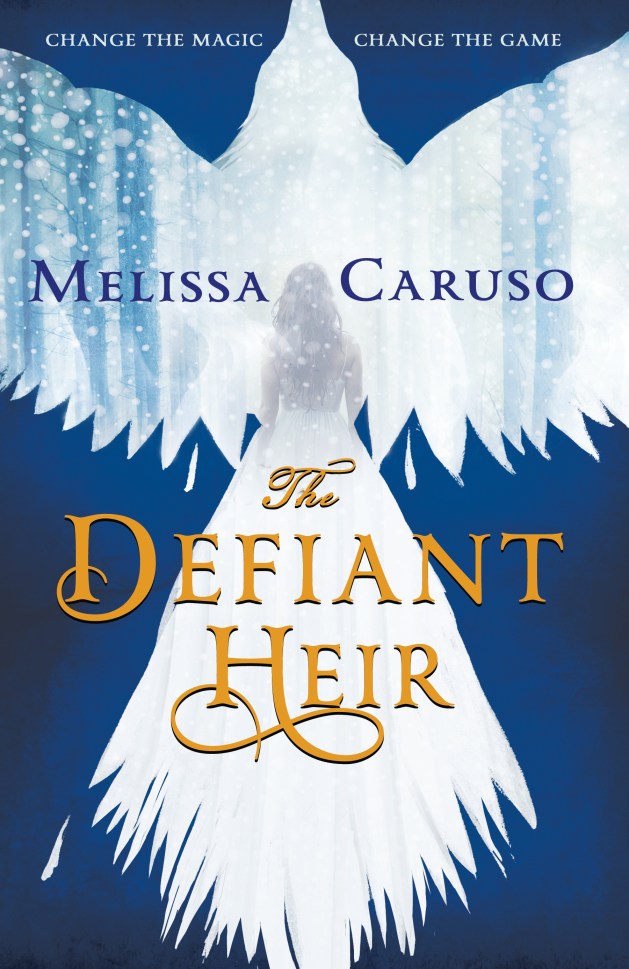
The Defiant Heir by Melissa Caruso

The Defiant Heir Cover.jpg

Publisher: Orbit

Australian Publication Date – 24 April 2018

World Publication Date – 19 April 2018

Amazon

Melissa Caruso follows up her extraordinary debut with another unmissable magical adventure.

On the continent of Eruvia lies the Serene Empire of Raverra.  Ruled by the Doge and the Council of Nine, the Empire’s power comes from its mages, the legendary Falcon Army.  When a mage comes to power in the lands of Raverra, they are conscripted as a Falcon and bound to a Falconer, a non-mage who can choose to unleash or bind their Falcon’s power with a word.

However, the Serene Empire is not the only great power on Eruvia.  To the north lies the mysterious nation of Vaskandar, controlled by a dangerous group of mages known as the Witch Lords.  Each Witch Lord is a powerful vivomancer whose magic grants them control over all living beings, such as animals, plants and even humans.  After years of peace, several of the Witch Lords desire additional territory and are preparing for war against the Serene Empire.  Large forces of soldiers and the Vaskandar’s dreaded chimeras amass on the border while covert attacks are undertaken against the Serene Empire’s most powerful Falcons.  But before the Vaskandar can formally declare war, all seventeen Witch Lords must meet in a conclave to agree to a course of action.

Lady Amalia Cornaro is heir to one of the oldest and most powerful families in all of the Serene Empire.  Formerly a sheltered academic, her life dramatically changed when she was accidently bonded to the rebellious teenage runway Zaira, a rare and destructive fire warlock and the most powerful mage in the Empire.  Despite a turbulent and resentful start to their relationship, Amalia and Zaira have come to a mutual understanding following their adventures in the city of Ardence.

As the tension between the two nations increases, Amalia and Zaira are sent as a military deterrent to the border province of Callamourne, ruled by Amalia’s grandmother.  Despite their presence, it quickly becomes apparent that forces are conspiring to bring the war to pass, especially with spies and assassins targeting Amalia and Zaira directly.  Determined to maintain the peace, Amalia knows that the only way to prevent the war is to infiltrate Vaskandar and attend the conclave on behalf of the Serene Empire.

Entering Vaskandar is a dangerous proposition.  Each Witch Lord has their own territory which they rule absolutely thanks to a mysterious bond to the land that allows them to control all living creatures within their boundaries.  In addition, Amalia already has powerful enemies among the Witch Lords.  The deadly Lady of Thorns holds a grudge against her entire family, and Amalia and Zaiara have experience with the machinations of the Skinwitch Ruven, whose plot could cause great destruction.

Their only hope to influence the conclave may come from the mysterious Crow Lord, who has taken an interest in Amalia.  However, the Crow Lord is playing his own game, and Amalia and Zaira are the perfect pawns.

Melissa Caruso is a relatively new fantasy author whose first book in the Swords and Fire series, The Tethered Mage, was released in late 2017.  The Defiant Heir is a direct sequel to this, and is set a few months after.

The Tethered Mage was one of the surprising hits of last year.  What started out as an intriguing sounding fantasy novel turned into one of the most exciting and memorable debuts of 2017 and proved near impossible to put down.  Caruso maintains this trend of excellent writing in The Defiant Heir, which continues to the provide the same great characters, fantasy adventure, worldbuilding and amazing story writing that made her first book such an irresistible read.

Caruso has chosen to expand her fantasy world in The Defiant Heir by detailing the nation of Vaskandar and focusing on its rulers, the Witch Lords.  While Vaskandar was mentioned and one of nation’s vivomancers, Prince Ruven, was a secondary antagonist, this area of her world wasn’t really explored in the first book.  For this book, Vaskandar is a major location and the protagonists spend a large portion of the story within its boundaries.  As a result, Caruso has produced a significant amount of fascinating lore about this country, especially when it comes to the Witch Lords.  The focus on the Witch Lords is particularly interesting as Caruso has developed complex backstories, powers, plots and motivations for many of them, which adds immensely to the story.  In addition, despite the fact that they all study the same branch of the magic, each of the Witch Lords has their own speciality and their appearance and abilities are different as a result.  This is especially noticeable during the numerous magical duels that occur throughout the book, where these differences allow for a wider variety of magical action.  It is also quite fun when the various Witch Lords use their powers to show off with memorable entrances and appearances during the opening scenes of the conclave.

Readers should also keep an eye out for Caruso’s focus on character development within The Defiant Heir for the two main characters.  Amalia’s growth is the most significant, as circumstances force her to become a more savvy and decisive political player, very much like her mother.  As a result, she is forced to make a number of tough decisions and struggles to maintain her morality in a harsh world where her options are becoming more and more limited.  There is also the growing realisation that her position may not allow her to have the personal life she wants, and this greatly affects her relationship with the dashing Captain Marcello, the main love interest of the first book.  This is a well done bit of character development that will draw the reader in emotionally, especially when it comes to Amalia’s most significant decision in the book.

Zaira’s development is more subtle, as she is not the book’s narrator, and is mostly a continuation of the transformation from inverted loner to team player that started in The Tethered Mage.  However, it is more realistic to see that this growth is a slow process, and her stubbornness is not automatically fixed in the span of one book.  The same could be said about the satisfying but gradual development in the relationship between the main characters.

Melissa Caruso once again shows why she is one of the brightest new stars in the fantasy fiction.  The Defiant Heir is an outstanding continuation of her first series that introduces significant and exiting lore to her already intriguing universe while providing significant development to her main characters.  If you haven’t already discovered the magic of Caruso’s Swords and Fire series, you are in for a serious treat.

My Rating:

Five Stars

Amazon

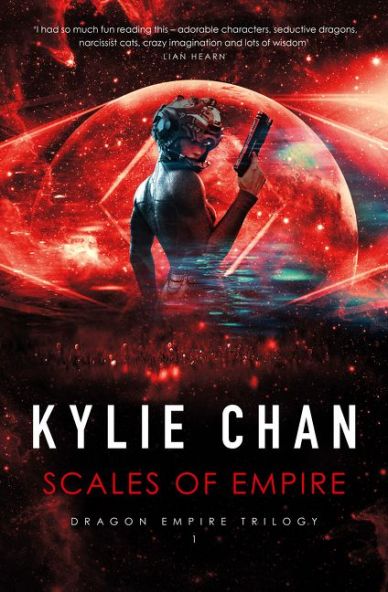
Scales of Empire by Kylie Chan

Scales of Empire Cover

Publisher: Harper Voyager

Publication Date – 19 February 2018

Amazon     Book Depository

Can humanity survive the arrival of an alien dragon with an offer of love?  Find out in this curious novel about first contact with aliens from bestselling Australian author Kylie Chan.

In the near future, Earth’s ecosystem is failing and humanity’s only hope for survival lies in escaping our solar system and finding viable new planets to colonise.  Corporal Jian Choumali has been chosen to accompany one of the huge generation ships that is preparing to journey to a distant planet.  However, the launch is interrupted by the arrival of a giant alien spaceship above Earth that will change humanity forever.

The ship is piloted by an alien known as a dragon, which bears a striking resemblance to the beasts of legend.  Dragons are the ruling members of a vast technologically and culturally advanced empire made up of numerous alien races.  The Dragon emissary, Shiumo, brings offers of peace, love and advanced technology to humanity as she introduces Earth to a wider universe.

Jian and her commander, Richard Alto, are chosen to be the first delegates to meet with Shiumo, and they soon become her guides to Earth.  Shiumo becomes a sensation overnight, providing humanity with longer lives, faster-than-light travel and a solution to Earth’s failing ecosystem.

However, the more Jian gets to know Shiumo, the more it becomes apparent that the Dragons may not be as benevolent as they seem.  What price will humanity really have to pay to join the Empire, and what role will the Dragons’ cat-like enemies play in the future of Earth?

Scales of Empire is the first book in the intriguing Dragon Empire trilogy, written by Australian author Kylie Chan.  This is Chan’s first voyage into science fiction, having previously written the Chinese mythology inspired Xuan Wu series.

Scales of Empire has a number of cool features that make it an amusing and thought-provoking science fiction novel.  Chan has constructed a first contact story that explores how humanity could potentially interact with an advanced alien race.  Chan provides a series of fascinating postulations about what human products would prove desirable to an alien species, what humanity could use in our defence against potential alien threats, and what our place would be among a vast interstellar empire.  The Dragons are the stars of this book, as Chan has imbued them with several distinctive abilities and personality quirks.  There is also a fun origin story to explain the similarities between the alien Dragons and the Earth dragons of myth and legend.  Having the other main alien race also resemble an Earth species, in this case cats, is a little over the top very unrealistic.  However, the behaviour of this other species acts as a good foil to the apparently benevolent and socially advanced Dragons.

Science fiction aficionados will also appreciate Chan’s descriptions and theories about what would be required for humans to reach and colonise other inhabitable planets in the galaxy.  Chan spends some of the early parts of the book highlighting her theories about how humans in the near future would achieve this.  Her descriptions of large ships that would require ten generations of its crew to live in space before they even reached the planet is fascinating, as are her suggestions about the ideal initial crewmembers; not a lot of other writers would suggest that colonisation ships should have large crews mostly made up of bisexual women with good genetic diversity.  In addition, there is also some intriguing discussion about the colonisation of other planets, and several chapters are dedicated to the training and initial colonisation of a planet, which many readers will find enticing.

While these science fiction aspects of the book are good reasons to try Scales of Empire, one of the most compelling and memorable aspect of this book is the constant examination of whether the Dragons are as benevolent as they seem, or if they have their own secret agenda.  This becomes a central focus of the story as the human characters analyse all of the Dragons’ actions while coming up with countermoves and their own attempts at manipulation.  There are many twists and turns, and at points it becomes hard to tell whether the Dragons or the humans come off as the worst species during these interactions.  This results in a really compelling narrative which serves as a superb central focus for the book and will keep you hooked until the final reveal.

The new book from Kylie Chan is an intriguing start to a promising science fiction trilogy.  Examining humanity’s potential first contact with an alien species, Chan asks the question: between an alien species with its own agenda and mistrustful and calculating humans, who is the greater evil?  This is a brilliant bit of fiction that provides a distinctive and in-depth discussion and is definitely worth exploring.

My Rating:
Three and a half stars

to

Four stars

The Throne of Caesar by Steven Saylor

The Throne of Caesars Cover

Publisher: Constable

Australian Publication Date – 6 March 2018

World Publication Date – 20 February 2018

Amazon

Steven Saylor’s long-running ancient Roman detective series returns as Gordianus the Finder deals with the most infamous murder in Roman history: the assassination of Julius Caesar.

For decades, Gordianus the Finder has been the most respected investigator in all of ancient Rome.  After a lifetime of solving crimes and murders for the city’s rich and powerful, Gordianus is determined to retire from the investigative game and enjoy a life of luxury.  However, one last surprise has been thrust upon him: Gordianus’ adopted son Meto has spent years in the service of Caesar as his trusted aid and ghost-writer, and Caesar now seeks to reward Meto by making his father a senator.  Reluctantly accepting this rise in station, Gordianus’ ascension will take place in five days’ time, on the Ides of March.

Caesar has an ulterior motive for meeting with Gordianus.  Warned by visions and prophets, Caesar believes that his life may be in danger, and that disaster may strike before the conclusion of the Ides.  He requests that Gordianus keep his ears to the ground and quietly question leading members of the Roman nobility to see if there is any basis to his concerns.  While initially sceptical of any attempts on the dictator’s life, Gordianus’ suspicions are aroused when one of Caesar’s old rivals, Senator Cicero, also asks him to watch out for potential conspiracies.  As Gordianus begins his investigation, he finds himself in the middle of dangerous historical events, and even the legendary Finder may be unable to stop what is to come.  The Ides of March are approaching, and Caesar’s life isn’t the only one at risk.

The Throne of Caesar is the 16th book in the Roma Sub Rosa series, a series that also includes three prequel novels and two collections of short stories.  Saylor began in 1991 with Roman Blood, set in 80 B.C. some 36 years before the events of this book, and he has slowly been working towards the assassination of Julius Caesar.  Indeed, the last three instalments of the series were prequels produced while Saylor perfected his account of this famous murder.  It was definitely worth the wait, as Saylor has produced an extremely detailed and well-researched account of the infamous killing.

Gordianus’ investigation and social interactions are used to introduce the reader to many of the key people involved with the plot, as well as to discuss the political atmosphere that lead up to the assassination.  The Ides of March is the centrepiece of the novel.  It is clear that Saylor has consulted the key historical records of the killings, as he has made sure to include several of the lesser-known events that happened on the day.  For example, Saylor includes descriptions of the supposed visions Caesar’s wife, Calpurnia, had the night before, and Decimus Brutus’ intervention at Caesar’s residence the morning of the Ides.  Saylor also dedicates a good part of the book to examining the aftermath of Caesar’s death, including the political manoeuvrings that immediately followed, as well as the violent funeral.  As a result, the description of the killings and the surrounding circumstances are first rate, and this aspect of the book will appeal to Roman history buffs.

As Saylor discusses in the author’s notes, writing a murder mystery around the assassination of Julius Caesar is particularly hard, as his death is one of the most well-known events in Roman history, with all the conspirators condemned to historical infamy.  Saylor, however uses this to his advantage and manages to create a large amount of suspense by counting down the days until the 15th of March and hinting at the events that are to come.  All the reader can do is keep going through the novel, knowing that Gordianus will be unable to stop the murder, even as he gets closer and closer to the truth.

Saylor also compensates for the lack of mystery around the death of Caesar by including a second murder subplot.  Elements of this additional murder mystery are hidden in the background of most of the book, as the reader’s attention is directed towards the upcoming assassination, and the investigation into the second murder comes to the fore after Caesar’s death.  The actual events of the second murder are unique and will be of particular interest to fans of a certain Shakespearean play.

One of the best features of The Throne of Caesar is the significant incorporation of Greek mythology throughout the book.  Several Greek myths are discussed, and parts of the plot mirror elements of these myths.  Many of these myths are also included as centrepieces of two Roman epic poems written by Gaius Helvius Cinna, a famous historical poet, which are a major part of the plot.  While one of the plays featured is completely fictional and with no historical basis, the other play is Zmyrna, considered by Cinna to be his greatest achievement, the text of which is unfortunately lost to history.  Saylor provides an interesting possible narrative for the lost play, which flows into the plot of his mystery with great effect.  The overall effect of Saylor including these myths and legends is very striking, and it provides the reader another viewpoint into the lives of the ancient Roman characters who put great stock in these old and religious stories.

The latest addition to the Roma Sub Rosa series is a meticulously detailed and well-crafted book that acts as a unique and powerful chronicle of an important historical crime.  A suspenseful and compelling read, The Throne of Caesar serves as a great continuation of the story of Gordianus the Finder, and it will be interesting to see where Saylor takes the series next.

My Rating:

Four and a half stars

Amazon

Blood of Assassins by R. J. Barker

Blood of Assassins Cover

Publisher: Orbit

Publication Date – 13 February 2018

Amazon     Book Depository

War, murder and magic return with R. J. Barker’s assassins in the sequel to his impressive debut, Age of Assassins.

It has been five years since assassins Girton Club-Foot and his master, Merela Karn, started a bloody civil war in the nation of Maniyadoc.  Since then, they have been in hiding, fighting in the borderlands as soldiers for hire to avoid the price on their heads.  However, when Merela is gravely injured, they have no choice but to return to Maniyadoc and seek shelter there.  Girton finds a far different land to the one he visited five years before.  War has turned much of the kingdom into a brutal hellscape, ruled over by war crazed marauders known as Nonmen, while giant flesh-eating pigs roam the wilds.

Amongst this chaos, three kings fight for power, their armies controlling what small tracts of inhabitable land remain.  Girton knows all three of the opposing kings, having spent time among them five years ago.  Two of them hate Girton and his master, falsely blaming them for the deaths of their relatives, the events which started the war.  However, the other of the warring kings, Rufra, owes Girton his life, and may be the only friend the young assassin has.  Since their last meeting, Rufra has turned into a noble king, weighed down by the responsibility of his office and personal grief.

Pledging his loyalty to Rufra, Girton immediately sets about trying to find a spy hidden among the king’s closest followers, navigating camp politics and the fragile alliances that hold the army together.  At the same time, Girton must also solve the murder of a fanatical religious leader whose dangerous followers demand retribution.  Rufra is the fractured nation’s best option for peace, but far too many people want him dead.  Each day the spy is active hastens Rufra’s defeat, and Girton must use every bit of his wit and skill to save his friend.

But the greatest threat to Rufra’s reign may be Girton himself.  Like all assassins, Girton uses forbidden magic to grant himself subtle advantages to aid him in his kills.  However, Girton’s magic has become far too powerful, and he can no longer control the terrible energies within him.  In a world were all magic is outlawed and feared, any evidence of Girton’s abilities would condemn him and everyone he loves to a bloody end.  The last uncontrolled sorcerer turned the kingdom of Maniyadoc into a barren wasteland, and Girton’s power may soon compel him to do the same.

This is the second book in Barker’s The Wounded Kingdom series and is the follow-up to last year’s successful and highly compelling debut, Age of AssassinsBlood of Assassins is a great addition to the series which builds up the anticipation for the upcoming King of Assassins, which is set to come out in Australia in August 2018.

The fantasy world that Barker has created is an interesting one with several unique features.  While most of the first book’s story was limited to the goings-on within one specific castle, Barker completely changes the script in this sequel by expanding the narrative to the whole realm of Maniyadoc and the fighting going on around it.  Readers of Age of Assassins will enjoy seeing how the devastation of the civil war has changed the kingdom.  The nation of Maniyadoc, which was already described as a fairly dismal place, is now haunted by a new range of monstrous creatures and humans created by neglect and the brutal fighting.  This noticeable change to the scenery of the story helps to affect the overall mood of the book and also acts as a mirror to Girton’s more depressed and hopeless mental viewpoint in the second book.

I often enjoy authors blending different genre types within fantasy books, and Blood of Assassins is a great example of this, as Barker has incorporated elements of political thrillers and murder mysteries.  The hunt for the murderers and traitors at the heart of Rufra’s camp is a well done and produces a compelling mystery that combines well with the book’s action, politics and magic.

Fans of action and battle will not be disappointed, as Barker makes full use of a range of fight scenes.  Action junkies will enjoy the numerous duels, clashes between assassins, larger pitched battles and one notable siege that sees that protagonist fighting to defend a village from a horde of crazed Nonmen while also attempting to hold his destructive magic at bay.  It is also interesting to see how Barker forgoes the enormous pitched battles that are a usual fantasy staple.  Instead this conflict is fought by small, desperate armies over limited amounts of land, which comes across as more realistic, considering the landscape.

Finally, Barker has also done a great job of showing how his main characters have developed since the last novel, particularly taking the time to illustrate how their relationships move and change throughout the book.  Girton has gone from a young and optimistic boy seeking the approval of his master to a taciturn and depressed man, actively resenting his master for the changes and problems in his life.  At the same time, Rufra has gone from a lowly squire seeking a friend and trying to avoid trouble to a man consumed by his responsibilities and personal grief.  These changes lie at the heart of the book and add emotional depth to the story.  It is also warming to see how the friendship between Girton and Rufra lightens both characters and helps heal their emotional wounds.

As a result, Blood of Assassins is a fantastic character-driven story that weaves together action and mystery in Baker’s excellent fantasy world to create a scintillating and addictive read.  This is a marvellous second outing from a bright new star in fantasy fiction.

My Rating:

Four stars

Amazon     Book Depository

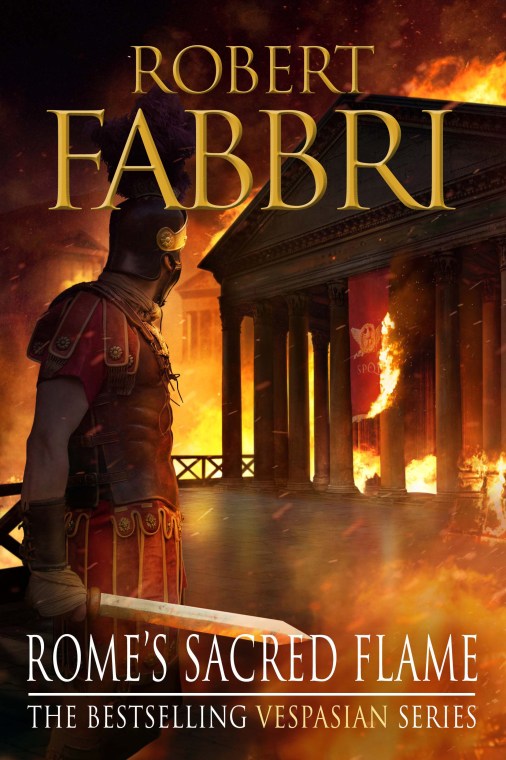
Rome’s Sacred Flame by Robert Fabbri

Rome's Sacred Flame Cover

Publisher: Corvus

Australian Publication Date – 1 February 2018

World Publication Date – 24 January 2018

Amazon

Explore the dark side of Roman history in the new novel from veteran historical fiction author Robert Fabbri.

In Rome, 63 AD, Nero reigns as Emperor.  Meanwhile, Vespasian has been given the lucrative appointment of Governor of Africa, exploiting the rewards of his previous adventures.  Before Vespasian can settle into the role of governor, he must first travel to the remote desert kingdom of Garama to negotiate the release of hundreds of Roman citizens held as slaves.  He and his companions, Magnus and Hormus, arrive on the eve of a slave revolt that threatens the entire kingdom.  Forced to flee across the desert with hundreds of freed slaves and few provisions, the Romans must avoid the chaos of Garama while also dealing with traitors in their midst and harsh desert conditions.

However, even revolting slaves and desperate conditions hold little danger compared to the problems brewing within Rome.  Nero’s reign has reached new peaks of insanity and chaos.  Like his predecessors, Nero is depraved and deranged, humiliating the citizens of Rome while destroying all who displease him. When he returns to Rome, Vespasian soon discovers that all the previous Emperors he had survived were nowhere near as dangerous as Nero.  Vespasian determines that it is time for the reign of Nero and the unstable Julio-Claudian bloodline to end.

However, Vespasian has made many enemies over the years, and all are plotting to use the unstable Emperor as a deadly weapon to destroy him and his family.  Vespasian must use all his skill and daring to survive while also trying to turn the chaos to his own advantage.  With conspiracies and danger all around, few will survive, especially with the Great Fire of Rome about to engulf the city.

Fabbri is a prominent and prolific author of Roman historical fiction whose distinctive books have one of the most entertaining examinations of Roman history.  Rome’s Sacred Flame is the eighth book in Fabbri’s Vespasian series, not including Arminius: The Limits of Empire, a recent standalone novel which runs parallel to the events of earlier books in the series.

This is an engaging series exploring the exploits of the future Emperor of Rome, Vespasian, during the earlier days of his life as he rose to power.  Fabbri makes use of what little is known about Vespasian’s early political career by including all the moments of his life recorded in the surviving Roman histories.  Fabbri also works the character of Vespasian into a number of key historical events that happened during his lifetime, such as famous deaths, ascensions, wars and other more infamous incidents.  All of the books in the Vespasian series describe a wide range of memorable episodes in Roman history, even though it is unlikely, but not impossible, that Vespasian, who was a prominent senator during these times, would have been involved.

Rome’s Sacred Flame continues this trend by inserting Vespasian right into the middle of some of the more interesting events of the Emperor Nero’s reign.  Through Vespasian’s eyes we see some of Nero’s infamous parties, one of the more significant plots against the Emperor’s life, the brewing persecution of the Christians, and, most importantly, the Great Fire of Rome, during which, some sources indicate, the Emperor played the lyre as the city burned.  Many fans of history will love the detail that Fabbri goes into when he examines all the events surrounding the fire: the politics of the time, the initial outbreak of the fire, the attempts to fight it, Nero’s supposed response, the fire’s conclusion and the eventual rebuilding of the city.

Readers will also be intrigued by Fabbri’s inclusion and interpretation of the Garmantes and their capital city of Garama.  The Garamantes were the people of a small kingdom that historians and archaeologists believe existed in south-western Libya around the same time as the Roman Empire was at its peak.  Many historical fiction writers have neglected the Garamantes in their works, instead favouring the more impressive enemies of Rome, so Fabbri’s use of the limited historical and archaeological facts available to create a unique society and civilization for his story is particularly interesting.

Like the other books in Fabbri’s Vespasian series, Rome’s Sacred Flame contains a large number of scenes that focus on the supposed depravity of Rome, especially during the reigns of last Julio-Claudian emperors.  This results in a compelling and engaging narrative, especially as Fabbri takes pains to describe these scenes in great detail, building a terrific story on what little historical evidence is available.  It is also offers something different to many of the other current Roman historical fiction series, which recently have tended to shy away from exploring these events to the same degree.

Once again, Fabbri has produced a highly exciting and thoroughly entertaining addition to his best-selling series.  Fans of Roman historical fiction will love the unique viewpoints and historical conclusions Fabbri explores in Rome’s Sacred Flame, as well as the exploration of Rome’s supposed dark side.

My Rating:

Four and a half stars

Amazon

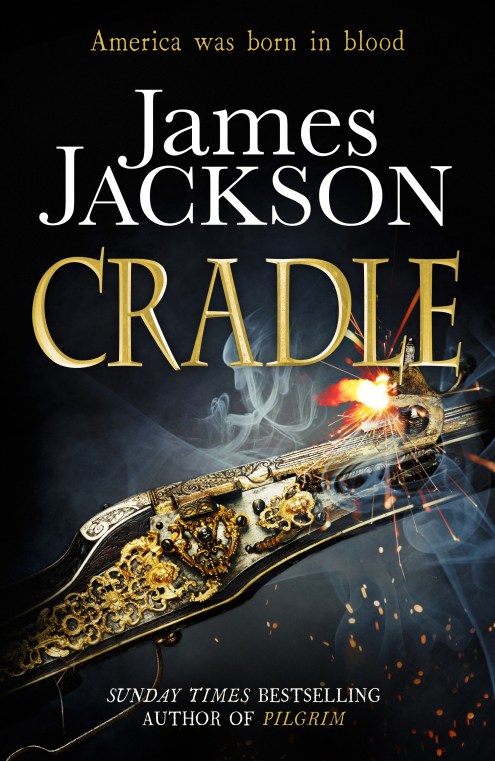
Cradle by James Jackson

Cradle Cover

Publisher: Zaffre

Australian Publication Date – 1 January 2018

World Publication Date – 2 November 2017

Amazon     Book Depository

Death, despair and political espionage!  Welcome to the dawn of America in Cradle, the latest book from historical fiction veteran James Jackson.

1607 AD. Jamestown, on the shore of Virginia, is England’s first colony in the New World.  Life is a dangerous struggle for survival, with the settlers forced to endure starvation, disease and relentless attacks from the natives.  Worse, Jamestown has the ire of its namesake, King James of England, who is violently opposed to the settlement.

However, while Jamestown suffers from the king’s displeasure, Prince Henry supports the mission and views Jamestown as a symbol of England’s ambition and colonial intent.  Resolute that Jamestown must succeed, the young prince instructs intelligencer Christian Hardy to travel to Virginia and ensure its survival against any threats.  In response, the king instructs his chief advisor, Hardy’s former employer, the spymaster Robert Cecil, to sabotage the colony.

Hardy finds Jamestown near starvation and constantly under attack by warriors of the Powhaten nation.  The town survives only through the actions of a brave few, including the legendary John Smith, while split loyalties, incompetence and dissent ensure that the colony moves closer to destruction.  As Hardy works to save the town, a far more insidious threat approaches: his old foe, the deadly renegade Realm.

This is the ninth book from Jackson and his third to feature the character of Christian Hardy as its protagonist.  A fourth book, Blood Rock, featured the Hardy’s father, also named Christian Hardy, as its protagonist.  Cradle is a direct sequel to Jackson’s previous novel, the action-packed Treason, which featured a captivating account of the Gunpowder Plot.

Jackson continues his examinations of some of the more interesting and unique areas of history, this time looking at the initial days of the Jamestown settlement.  The early settlement of Virginia falls within a turbulent time in world history, and creation of Jamestown itself is a fascinating example of colonisation gone wrong.  Jackson does an amazing job of capturing and conveying the brutality and depravation that the inhabitants of the town experienced during their ill-planned expedition.  The descriptive writing provides the reader with a vivid picture of the violent battles, ghastly conditions, cannibalism and torture that the settlers were forced to endure.

Readers will be love the large amount of well-researched historical detail about Jamestown that Jackson has included in Cradle.  The story covers a number of key events which occurred in America and England which affected the colony, and Jackson has made sure to include a large number of real life historical figures who were part of the Jamestown community.  Jackson’s dedication to historical detail shines through, as some of the events incorporated into the plot only have minor mentions in the historical record.  One particular inclusion that many will find enticing is a more accurate and realistic account of James Smith and Pocahontas.  People familiar with the Disney version of the story will find this retelling of events particularly enlightening.

A noticeable feature of Jackson’s novels, whether historical or contemporary, is his love of spies and espionage.  Many of his novels that focus on historical events include subplots or detailed examinations of espionage going on behind the scenes.  This is extremely prevalent in the novels featuring Christian Hardy, as they focus on the intelligence-gathering that started under the reign of Queen Elizabeth I.  Fans of this historical espionage will not be disappointed, as a large portion of Cradle is spent examining the espionage that may have been manipulating Jamestown, both in Virginia and back in Europe.  In addition, Jackson has done a superb job of combining the political thriller storylines into this historical fiction novel and including alternative but plausible motives for the actions of real historical figures.  The fictional character of Hardy is seamlessly inserted into this historical novel, and readers will enjoy watching him influence and bring about real historical events, like the brutal death of John Ratcliffe, who many may remember as the main antagonist of Disney’s Pocahontas.

The ninth book from James Jackson is an over-the-top account of the circumstances surrounding the original Jamestown settlement.  Featuring highly detailed and brutal descriptions of the formation of America and making full use for Jackson’s propensity for thrilling spy stories, Cradle is perfect for those looking for some exhilarating action and adventure in their historical fiction.

My Rating:

Four stars