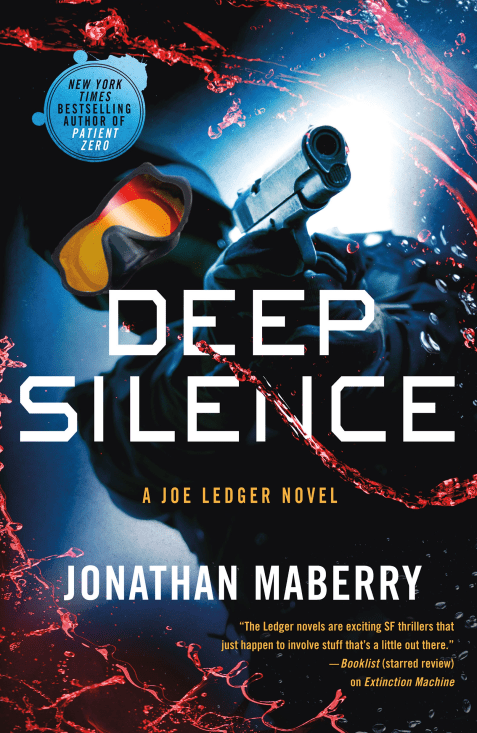
Deep Silence by Jonathan Maberry

Deep Silence Cover.png

Publishers: St. Martins Griffin

                        Macmillan Audio

Publication Date – 30 October 2018

Amazon     Book Depository

From horror legend Jonathan Maberry comes the 10th book in his weird-science based horror, thriller, science fiction Joe Ledger series, which takes the reader on a wild joyride through a world gone mad in this five-star adventure.

I have to admit that Maberry is not an author that I have had much experience with before.  The only work of his I have previously read was a fun short story that was featured in a volume of zombie short stories he jointly edited with George A. Romero in 2017 that I previously reviewed here.  However, I am extremely happy that I decided to check out this latest book as it exposed me to this incredible series, which I enjoyed immensely.  I can think of no greater praise for this novel then to say that upon finishing it, I immediately dropped everything and started reading the first book in the series, Patient Zero, which I will be reviewing in the next few weeks as part of my Throwback Thursday series.

I chose to listen to Deep Silence on audiobook rather than read a physical copy.  The audiobook format of this book is just under 16½ hours long and is narrated by Ray Porter, who has worked on several other books in the series.

In this latest book, a Russian splinter group have developed a powerful weapon with pieces of alien crystal seeded throughout the planet.  This new weapon can cause devastating earthquakes on a level never before seen and has the potential to destroy the entirety of the United States.  The weapon also has a chilling side effect: it causes people around the epicentre of the quake to engage in violent acts of madness, from suicide to ferocious attacks on others.  The first attack targets Washington, with mass violence erupting around the Capitol building.

America’s only hope may be the top-secret rapid response organisation, the Department of Military Sciences (DMS).  For years, the DMS has been the only line of defence against the insane science America’s enemies are utilising and developing in this new age of wonders.  From deadly diseases, ancient forbidden technologies, extreme acts of genetic manipulation, the latest forms of cyber and electronic attack, and even weaponised zombies, the DMS, led in the field by Captain Joe Ledger, has managed to stop all these threats and more.  Utilising the latest military and espionage equipment and the best and brightest soldiers and scientists America has to offer, the DMS operates just outside the government and can go further than any other agency can.

However, while the DMS attempts to combat this latest threat, they find themselves hindered by a megalomaniac President whose stupidity and paranoia make him more afraid of the DMS than the group unleashing earthquakes across his country.  As Joe and his team attempt to hunt down the origins of this attack they must contend not only with a dangerous Russian force but also with agents of their own Government and devices that can drive even the most dedicated DMS agent insane.  But as the Russians attempt to force the eruption of the Yellowstone caldera, the greatest threat may come from the creatures the technology was stolen from.

Deep Silence is the 10th book in Maberry’s Joe Ledger series, which started in 2009 with Patient Zero.  Maberry has been writing since 2006, with his debut book Ghost Road Blues forming the first book in the Pine Deep Trilogy.  Since then, Maberry has written a huge number of books, most of which have a horror theme or focus.  Apart from his Joe Ledger series, Maberry is probably best known for his Rot & Ruin series, a young adult zombie apocalypse series.  Aside from his fictional novels, Maberry has also written several comics for Marvel as well of a number of non-fiction books, which tend to focus on Maberry’s passions for martial arts and the supernatural.

Deep Silence is an exceptional book that combines together a number of genres, including science fiction, thriller, horror, military fiction and spy thrillers into one very captivating narrative.  The end result is a non-stop thrill ride that perfectly utilises the series’s bizarre nature and advanced science to create a devastating threat and a larger-than-life protagonist to face it.  There are so many amazing elements to this book, from its continuation of an enjoyable series, to the very weird elements that come into play, to the excellent writing style and enjoyable characters.  Once I started reading this book I just could not stop, and it is easily one of my favourite books of this year.

From what I understand, the Joe Ledger series started off mostly focusing on the mad sciences that humans are able to create and use against each other.  However, in recent books, the series has taken on a more Lovecraftian vibe, with unknown aliens, space demons and incredibly insane technology.  Deep Silence in particular seems to relate back to several of these previous alien technology based novels, as the devices, technology and motives that the book’s antagonists utilise are closely related to the adventures that occurred in previous books.  That being said, there is still the continuous use of more advanced human technologies utilised by many of the book’s characters, especially those working for the DMS.  All the crazy gadgets that they use are pretty impressive, but none (with one or two major exceptions) are outside the realm of possibility and reflect technologies that could potentially exist.  Indeed, in the introduction to Patient Zero, Maberry actually confirms that most of the technology he describes in his books is currently used or could soon be used by intelligence organisations around the world today.

One of the challenges of coming into a series late is the reader’s lack of knowledge about the universe’s background information, lore and the development of its main characters and the extent of their relationships.  Maberry does an incredible job bridging this gap throughout Deep Silence, providing the reader with descriptions of previous events, recaps of character descriptions and history and making use of a number of references to previous missions and adventures captured in the other books in the Joe Ledger series.  There are also a number of scenes that appeared to be callbacks to previous books, although the author was able to describe the pertinent details of these events.  As a result, I was never lost at any point and really appreciated the recaps and detailed descriptions the book’s various point-of-view characters provided throughout the novel.  It also made me very curious about some of the previous books in the franchise, and I am now very interested in checking out some of these insane and fun-sounding adventures.  As a result, Deep Silence is an excellent book if you want to get an idea of what the Joe Ledger series is all about.  At the same time, established fans of this long-running series will be interested to see the significant changes that occur to the book’s main characters, as well as the scenes detailing where the series will potentially be going in the future.

One of the things that I really enjoyed about Deep Silence was the way that Maberry presents the book’s narrative from multiple perspectives and across a range of different time periods.  Because of this, the reader is given a far wider view of the overall narrative.  Not only do they get to see the protagonists attempting to investigate and stop what is going on, but they get to see the antagonists coming up with their plans, discovering and researching their doomsday device over a period of years and then implementing their mission.  This also allows the reader to get a far deeper understanding of the antagonist’s objectives and mindscapes in committing these acts and what it costs them mentally and emotionally.  Nearly all the fun and eccentric characters working in the DMS get a few scenes told from their point of view.  This provides the reader with some high level, but easy to follow, scientific discussions, hacking sequences and the utilisation of incredibly exciting-sounding advanced espionage technology.  There is also a focus within Deep Silence of the politics around and behind the DMS, and how the organisation’s leader, the mysterious Mr Church (who is totally an alien, right?), deals with these situations.

While all of the other point-of-view characters are entertaining and it is intriguing to view their sides of the story, the best character has to be the series’s main protagonist, Joe Ledger.  Ledger is the extremely dangerous and slightly disturbed leader of the DMS field team, and has been at the forefront of all the adventures in this series.  It is interesting to note that Ledger is the only character in this book whose story is told from the first person perspective, which is fortunate because Ledger is one of the biggest smartasses in fiction, especially within the privacy of his head.  Nearly every single piece of the book told from Ledger’s point of view is filled with jokes, wisecracks, and exaggerated or sarcastic thoughts.  Ledger has some incredibly humorous observations about the world around him, especially the eccentric characters he encounters, and his thoughts are just as likely to be self-deprecating as they are to be insulting about the people he has to deal with.  He is also an eccentric being who does some incredibly funny things, from having fun with his opponents to humming the Mission Impossible theme as he breaks into a safe.  However, beneath this humorous exterior there is a deeply damaged character who is severely impacted by events that have occurred before and during this series.  Maberry spends significant time diving into this character’s history and psyche, which quickly gives the reader, even readers previously unfamiliar with the series, a good understanding of his life and the events that define him.  His deep and fractured mind becomes a key part of this story, especially when it encounters mind-altering alien crystal and events beyond the realm of human comprehension.  All of this helps create an amazing and incredibly relatable central character whom the reader becomes incredibly drawn to, and as a result, Ledger is one of the best things about this book.  Special mention should also be given to Ledger’s combat dog Ghost, who appears in nearly all the same scenes as Ledger and is just as much of an enjoyable character as his owner.

While the mad science elements and characters are great, Maberry has also ensured that this is the perfect book for those action junkies looking for fast-paced thrills.  Ledger is an absolute beast throughout this book and engages in a number of fantastic fights in a variety of different scenarios.  Maberry channels his love of martial arts through this character and includes a number of detailed and very quick fight scenes as Ledger dismantles his opponents with efficient skill.  The other characters are no slouches and there are number of great action sequences I enjoyed.  Two of my favourites have to be two separate and extended sequences which see Ledger and DMS’s Echo Team engage in massive fire fights with a range of opponents.  These scenes are absolutely incredible and make the reader feel like they are really in the middle of a gun battle.  The author takes pains to try and highlight how methodical and calm professional teams can be during battles while also highlighting the various strategies and combat advantages used.  The multiple perspectives come into play here perfectly, as the different members of Echo Team engage in various encounters around the main battle, really highlighting what an effective special ops team can accomplish in the field.  Maberry enhances the fun and the action to a crazy degree by also utilising the advanced technology available to the DMS agents.  This not only includes some insane and deadly weaponry, which is very cool in action, but also other pieces of advanced technology such as drones, body armour, goggles, and enhancements for Ghost that help turn the battles into massive and enjoyable set pieces.

Nothing, however, can top the sheer insanity that unfolds when the book’s antagonists unleash their super weapon against the world.  Maberry’s descriptive and skilled writing really brings these scenes to life.  The sheer devastation of the earthquakes that he describes is just incredible and very disturbing.  But nothing is more crazy or electrifying then the scenes where the people who are affected by the strange energy given off by the weapon go insane and start participating in a violent rampage against themselves or against each other.  Maberry pulls no punches here and all the violence is on full display, from terrible acts of violence against anyone around them to disturbing suicides or episodes of self-harm.  In many of these scenes the author attempts to get into the head of these characters and watch them slowly unfold from within.  This mostly prevalent with his protagonist, Joe Ledger, but other characters’ thoughts are shown.  Let’s just say you’ll never look at the Beatles song Revolution 9 the same again.  The biggest example of this insanity happens around the Capitol building in Washington DC, and quite frankly it reminded me of the church scene in Kingsman: The Secret Service, with the protagonists stuck in the middle of a crazy mob.

One of the more intriguing parts of Deep Silence is the side character of the President of the United States of America.  While this character is never explicitly named in the book, he is clearly supposed to be a Trump analogue.  The character is an easily manipulated, short-tempered, Twitter-obsessed moron who puts his own needs far above those of the country he is governing.  The resemblance to Trump is uncanny, and Maberry does an incredible job mirroring his arrogance and personality throughout the book.  While this character is a great addition by itself, Maberry spends a lot of time exploring how a character like this would deal with the advanced technology and extreme catastrophes that are a major part of this series.  The results are frustrating for the reader as they are forced to sit there and watch this character make all the wrong decisions and serve his own agenda or self-interest.  It was also very intriguing watching this President go up against the DMS as he routinely targets the department out of fear and ignorance.  The new political reality of Washington becomes a major factor throughout Deep Silence, and Maberry is understandably critical about how things are being run and the insanity currently gripping Washington.  It was very interesting to see Maberry incorporate the current unpredictable political reality of America into his new book, and readers will be very intrigued to see how this might impact the future of his long-running series.

I listened to the audiobook version of Deep Silence, narrated by Ray Porter.  The audiobook version does go for over 16 hours, so it’s one of the longer ones I have listened to lately.  That being said, due to its exceptional content, I found myself making a variety of excuses just to keep listening to this audiobook, and got through it very quickly.  The audiobook is an incredible way to experience this book, and I would highly recommend it, mainly because of Ray Porter’s narration.  Porter absolutely nails all of the characters and provides a number of amazing voices to fully capture the diverse accents and attitudes of this eccentric group of characters.  I was particularly enthralled with the calm, cool voice he gifted to the DMS Director, Mr Church, which really reminded me of Tom Hanks’s voice.  Special mention should also be given to his narration of the President.  The narrator created a fantastic Trump-like voice that fully conveyed the character’s high opinion of himself, as well as his dismissive and arrogant nature.  I actually had a visceral reaction when I heard that voice the first time, it was that good.  Porter’s narration for Joe Ledger was also perfect, as he does an incredible job portraying Ledger’s high-energy musings and the full tone of his personality.  Porter’s voice peaks and rises to meet the full intent of any of Ledger’s sentences, and he is a master at conveying Ledger’s innate sarcasm.  At the same time, he is also able to make his voice more serious and subdued during the darker scenes in which Ledger is deep within his head or his memories.  This is sterling work from Porter, and one of the best audiobook narrations I have ever listened to.  As a result, I highly recommend that the audiobook version of Deep Silence as the best way to experience this novel.

Bestselling author Jonathan Maberry once again takes his audience on a captivating thrill ride in the Joe Ledger Series.  Deep Silence provides the reader with an extraordinary and very engrossing story that proves extremely hard to put down.  Equally enjoyable for established fans of this long-running series and new readers who have yet to experience Maberry’s work, readers can and will have an incredible amount of fun with this book.  Best enjoyed in audiobook format, Deep Silence is guaranteed to make you a dedicated fan of the author and easily gets a five-star rating from me.

My Rating:

Five Stars

Amazon     Book Depository

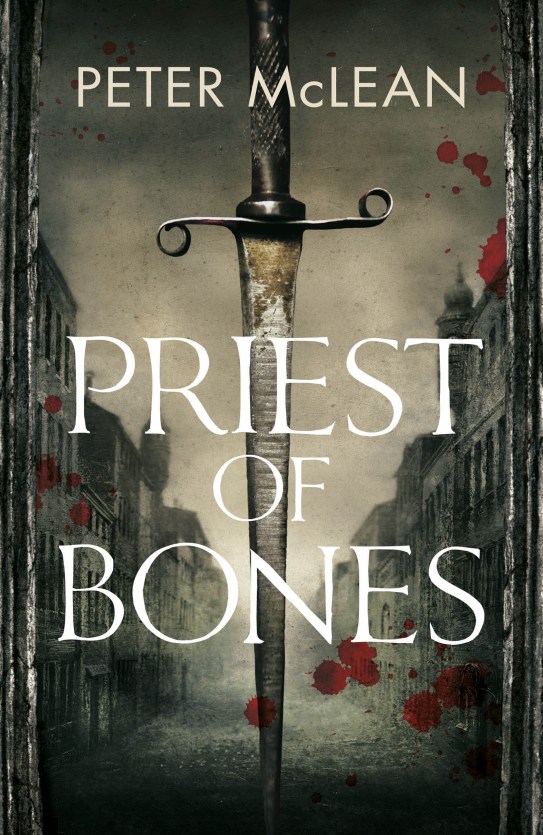
Priest of Bones by Peter McLean

Priest of Bones Cover.jpg

Publisher: Jo Fletcher Books

Publication Date – 2 October 2018

Amazon

For those looking for some down and dirty fantasy crime, look no further than Priest of Bones, the new release from fantasy author Peter McLean, which provides the reader with a dark, violent and downright entertaining story.

After achieving victory in a devastating war, thousands of soldiers begin the long and weary journey back home through a countryside ravished by war, plague and famine.  Among those soldiers returning to the industrial city of Ellinburg is Thomas Piety, priest of Our Lady of Eternal Sorrows and leader of a small and loyal band of killers.  Thomas has taken his duty as a soldier and a priest seriously, but now it is time for him to return to what he knows best: crime.

A successful crime lord before his conscription, Thomas believed he had left his territory in capable hands.  However, upon his return he discovers that his entire criminal empire has been taken over by a new gang that appears to have origins outside of Ellinburg.  With no choice but to reclaim what is his, Thomas and his soldiers, including his loyal sergeant, Bloody Anne, and his damaged brother, Jochan, do what they do best and go to war.

As Thomas and his gang, the Pious Men, reclaim territory and re-establish themselves in Ellinburg, they begin to realise that they are facing an opponent far more dangerous than the usual gangs and criminals of the city.  Their opponents are organised, have the best weapons money can buy and even have a couple of magic users.  To make matters worse, Thomas finds himself entrapped by one the deadly Queen’s Men, the feared order of spies and assassins loyal to queen, who have some special plans for the Pious Men.  Now, Thomas and his soldiers must embark on a dangerous and bloody crusade against the other gangs of Ellinburg.  Victory will mean control of the city’s crime, while defeat will spell doom for them all.

Priest of Bones is an excellent example of fantasy crime fiction done right as McLean has produced a story that is action-packed, incredibly intriguing and very enjoyable.  McLean has been writing fantasy for a few years and is probably best known for The Burned Man series, an urban fantasy crime series that focused on a magical hitman.  He also has a few short stories to his name, including some set in the Warhammer 40,000 universe.  Priest of Bones is the first book in his new War for the Rose Throne series, which will continue next year with the highly anticipated Priest of Lies.

The story contained within this first book is an amazing fantasy crime narrative which sees the protagonist work to reclaim his criminal holdings from a powerful new gang that has moved into the city while he was gone.  This starts out exactly as you would expect from this sort of story as the protagonists attempt to regain territory, one business at a time, while their opponents launch counterattacks and raids of their own.  The protagonists come up with some effective plans for taking territory and show what happens when a bunch of soldiers engage in some brutal urban combat.  There is a large amount of action throughout this book, which McLean records in bloody and enthralling detail.  This action mostly takes the form of small skirmishes and battles, although there are some magical battles which do result in some more gory and spectacular deaths.  All of this is incredibly fun, and it works very well with the intriguing side stories and character exploration to create a compelling overall narrative.  As the book progresses, an element of political intrigue takes hold as new players enter the game.  This represents an interesting but subtle change to the pace of the book and doesn’t result in any loss of action or excitement.  In many ways, it appears to be a setup for the next book in the series, which sounds like it’s going to have a much more political focus to it.  McLean wraps this all up with a memorable conclusion that I won’t elaborate on, but is the perfect ending for this outstanding and extremely enjoyable piece of fantasy crime.

The central gang that McLean looked at in the plot, the Pious Men, are a strong bunch of characters who serve as a fantastic focal point for this series.  All of the Pious Men are former soldiers who have recently survived the war and are still haunted by the horrors they experienced, especially at the devastating siege of Abingon.  Quite a few of the characters from this small band of soldiers are explored throughout the book, and while some of these characters only get minor mentions, a number do get expanded roles throughout the book and are shown to have some form of development or are slotted into a role that they make their own.  One of the most interesting features of this book is the way that McLean has focused on just how badly the war has messed up these characters, as pretty much all of them are suffering from PTSD in some way or another, referred to by the characters in the book as battle shock.  This is handled very well and allows for some fantastic scenes, as characters who initially come across as quite amiable for most of the book go berserk when attacked, while other characters who appear quite strong find themselves crippled by these memories.

The leader of this group of former soldiers turned criminals is Thomas Piety, who serves as the book’s main protagonist and only point-of-view character.  Thomas is a good central character to anchor this story, who for the most part comes across as a cold and calculating person who knows how to get what he wants.  As Priest of Bones continues, it is slowly revealed that there is a lot more to Thomas’s character than what is originally believed, as he is trying to hide not only the emotional damage from Abingon but the dark memories from his childhood that are still driving him to this day.  It is interesting to see Thomas try and reconcile his new role as a priest of Our Lady of Eternal Sorrows with his role as a soldier and crime lord.  It is also intriguing to see that one of his deeper motivations is based on his belief that his criminal enterprises not only will make his city a better place but may also save it from a similar fate to Abingon, something he is desperate to never see again.  As the story is completely shown through Thomas’s viewpoint, the reader gets the benefit of his cynical attitude as well as his humorous and accurate insights throughout the book.  This is a great focal character for this book, and I had fun exploring his full depths.

Quite a lot of time is also spent exploring the other members of the Pious Men that follow Thomas back from the war.  The best of these characters is easily Bloody Anne, the hard-as-nails sergeant who is Thomas’s most loyal soldier and friend.  There is detailed examination of Anne’s past which reveals a lot about her current character, including her distrust of magic users.  This turns into quite a nice side story, as Anne finally starts to overcome her past enough to start exploring a relationship with the prostitute Rosie.  Thomas’s brother, Jochan, is also an intriguing character who fits in well with this darker story.  Jochan is your standard unhinged killer, who has some of the funniest lines and can be found in the middle of all the big fight scenes.  His presence results in a lot of the book’s tension, as he and Thomas clash about everything.  McLean has also created a very traumatic backstory for Jochan that not only helps to humanise the character as the reader gets further into the book but also explains a lot about Thomas’s deeper motivation and the guilt he feels whenever he thinks of his brother.  Other great characters that the reader should keep an eye out for are the fake knight Sir Eland, the mysterious barmaid Ailsa and Billy the Boy, the Pious Men’s good luck charm who is clearly going to be a very important character throughout the rest of the series.

In Priest of Bones, Peter McLean has delivered a fast-paced and captivating piece of fantasy crime that is filled with a ton of graphic violence, a number of exhilarating fight scenes and some excellent character driven story work.  This new book is a wonderful introduction to the new War for the Rose Throne series, and I’m already looking forward to the follow-up book in 2019.  Clever, bloody and all sorts of fun, readers will have a blast checking this book out.

My Rating:

Four and a half stars

Amazon

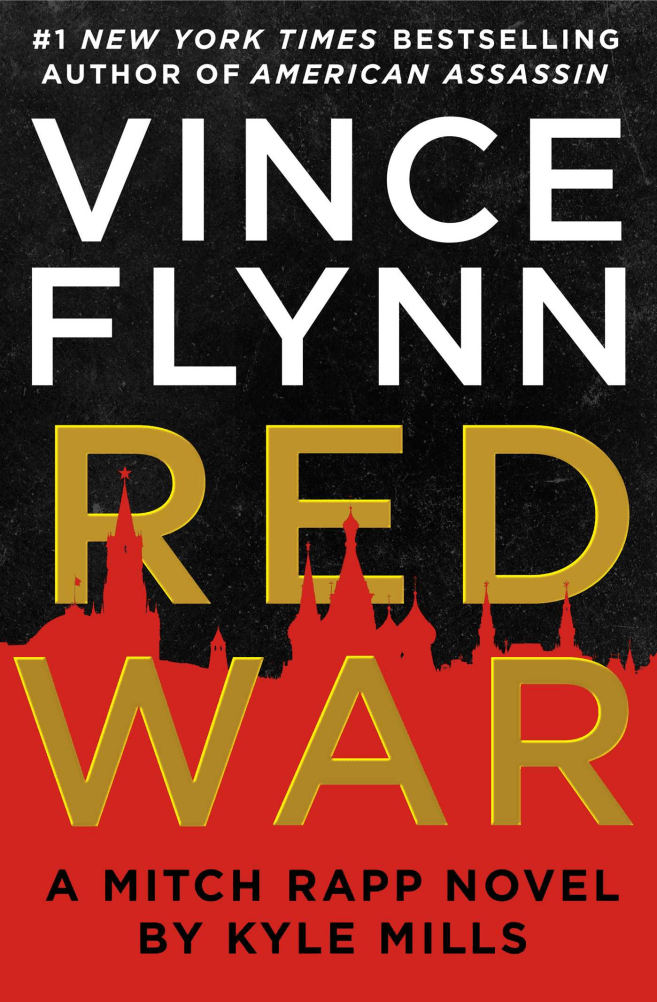
Red War by Kyle Mills (based on the series by Vince Flynn)

Red War Cover

Publisher: Simon & Schuster

Publication Date – 25 September 2018

Amazon     Book Depository

From the minds of two outstanding thriller writers comes Red War, the latest book in the iconic Mitch Rapp spy series.  This newest addition is an exhilarating and action-packed espionage novel that incorporates a captivating look at modern global politics into its exciting and enjoyable narrative.

For years, Russian president Maxim Krupin has ruled his country with an iron fist, and even recent setbacks to his ambitious plans in the Middle East have not lessened his power or influence.  However, Krupin is about to encounter an opponent even he may not be able to overcome: cancer.  With an inoperable brain tumour impacting his actions, the once calculating and selectively destructive strongman begins openly targeting all his enemies and opponents in order to retain his power and to distract attention away from his illness.

The Americans, especially the CIA, are alarmed and surprised by the Russian president’s sudden and unpredictable moves.  Uncertain of the motivations behind them, the CIA assign legendary covert operative Mitch Rapp to investigate and counter Krupin’s more aggressive moves, including the attempted assassination of Krupin’s former problem solver, Grisha Azarov.  When Rapp and the CIA uncover proof about Krupin’s medical condition, they begin to realise just how desperate and dangerous their opponent is.  With Russian troops massing on the border of Europe, it appears Krupin may even be willing to start a war with the West in order to maintain his position.  With World War III just around the corner, Rapp is given an impossible task: infiltrate Russia and assassinate the man many consider to be the most powerful person in the world.  Will Rapp and his allies succeed in this dangerous mission, or will their actions lead the world to the very brink of a nuclear war?

This is the 17th book in the Mitch Rapp series, which began in 1999 with the first book, Transfer of Power, which was written by Vince Flynn as a follow-up to his 1997 debut, Term Limit, which is set in the same universe as the Mitch Rapp books.  Following Flynn’s death in 2013, the series was continued by fellow thriller writer Kyle Mills, who has written 17 books since 1997, including the last three Mitch Rapp novels.  The Mitch Rapp books are a fast-paced and action-packed series that focuses on American espionage, and often features the titular character’s brutal war on Islamic terrorists.  Some who are unfamiliar with the books may have seen the film adaption of Flynn’s 2010 prequel novel, American Assassin, which was released in 2017, featuring Dylan O’Brien of Teen Wolf and The Maze Runner fame, as well as Batman himself, Michael Keaton.

In this latest book, Mills continues the series trend of providing the reader with eventful and compelling adventures.  Red War is chock full of action and combat as the protagonists attempt to counter the Russian president, the president’s personal assassin and the whole Russian army.  Readers will find plenty to keep them entertained, from small tactical skirmishes around the world between American and Russian covert forces, to large-scale battles and wars, with some devastating results.  While the main protagonist, Mitch Rapp, is starting to get a little old, he is still the same killing machine he has always been, and he powers through the vast majority of his opponents.  However, some of the other characters he encounters are the cream of the Russian army and have been enhanced by a combination of extreme training and performance-enhancing drugs.  This results in some very hectic shoot-outs and fight sequences, although there is very little doubt that Rapp will succeed.  A lot of these fights are tactical in nature as Rapp seeks to outsmart larger or more formidable forces he finds himself up against, resulting in some scenes with slower pacing that are used to create a more intense, but equally exciting, action sequence.  In addition, there are some fairly outrageous sequences throughout the book that readers will really enjoy.  For example, in a later part of the book Rapp suddenly finds himself leading an unusual army against his opponents, and a scene earlier in the book he decides to utilise a rocket-propelled grenade launcher in a fight after he starts “getting sick of these drugged-up, thirtysomething terminators whom Krupin was churning out”.

Mills has also made sure to include detailed examinations of the various intelligence-gathering and espionage techniques that his characters employ, as well as several scenes exploring the opposing nations planning and tactical sessions.  It is always fun to read about fictional tactical and intelligence meetings, especially in novels like Red War, when you see both these discussions from both sides of the conflict in order to focus on the various moves and countermoves each opposing side utilises.  In Red War, the motivation behind the Russian president’s actions is revealed to the reader within the first few pages of the book; however, all the American characters, and even some of the Russian characters, have no idea why he has escalated his campaign against his opponents.  It is very captivating to watch the various actions Krupin takes to not only stay in power, but also hide his illness from his own people.  As the book progresses and this becomes harder for him to manage, it is interesting to see the Americans begin to put the pieces together and see how well their theory fits into place.  Both the American and Russian characters do a lot of espionage and counterespionage moves throughout the novel as the Americans attempt to uncover the Russian leader’s unpredictable next move, while Krupin and his agents attempts to take out his various rivals while also frustrating the Americans.  The descriptions of these espionage moves and techniques feel very realistic, and there is enough going on to keep any lover of spy fiction very happy.

One of the most compelling and notable things about Red War is the way that it brushes on current politics and uses many recent real-world events in its story, by either referencing them or attributing them to the book’s fictional characters.  One of the main antagonists, the Russian president Krupin, is an athletic and powerful strongman that is clearly supposed to be a fictional version of Vladimir Putin, with several similar character attributes, including a propensity to use staged hunting propaganda shots out in the snow to promote his rugged, masculine image.  Many of Krupin’s actions and decisions throughout the book match those of Putin, down to the character revealing he utilises social media to influence international politics.  As a result, while the book focuses on a fictional antagonist, the reader is left thinking about what would happen if something similar were to happen to Putin or another world leader, and how other nations would respond.  The American and Russian characters discuss geopolitics throughout the book as they make their plots and plans, and many of the events they discuss have happened in the real world.  This allows the readers, especially those familiar with current world affairs, to enjoy a much more realistic read, especially when the characters look at real world events to justify their actions or responses.  These real-world inclusions help to turn Red War into a much more intriguing read for the readers that does an amazing job capturing its audience’s attention and interest.

Despite being the 17th book in the Mitch Rapp series, Red War is a very approachable book that is very easy for readers unfamiliar with the series to enjoy.  A perfect read for those who are intrigued by a fun and exciting plot concept, Red War delivers all the action and espionage you could possibly want, with some incredibly fascinating insights and references to modern global politics.  Mills has once again forged an incredible story from Vince Flynn’s original thriller universe, and fans of this series will not be disappointed by this latest offering.

My Rating:

Four and a half stars

Amazon     Book Depository

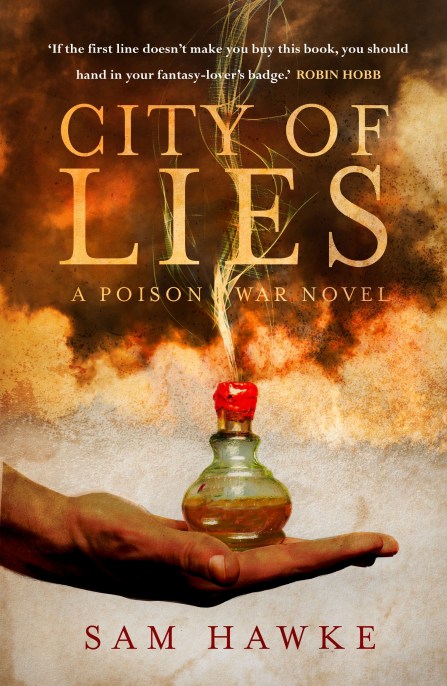
City of Lies by Sam Hawke

City of Lies Cover.jpg

Publisher: Bantam Press

Publication Date – 3 July 2018

Amazon     Book Depository

Poison, murder, conspiracy, and war are all on the way for readers of City of Lies, one of the best fantasy reads of the year from Canberra author Sam Hawke.

In the country of Sjona, the capital city of Silasta is a glittering beacon of culture and art.  Young nobleman Jovan and his family serve a special role, subtly protecting Sjona’s ruler, the Chancellor, and his heirs from being poisoned.  As a result of his training, Jovan is now capable of detecting and identifying poisons that could be slipped to his charges.  While his uncle and mentor directly protects the Chancellor, Jovan serves the Chancellor’s carefree young heir, Tain.

When Jovan and Tain return to the city following a diplomatic journey, they are soon placed in a terrible situation.  The impossible has happened: an unidentified poison has been slipped to the Chancellor, killing him and Jovan’s uncle.  Without their respective mentors’ guidance both young men are thrust into new roles: Tain as an untested Chancellor, and Jovan now responsible for the safety of his nation’s ruler.

However, things can always get worse.  A mysterious army has arrived undetected at the gates of Silasta, and the city, which has never known anything but peace, is soon besieged.  The army appears to be made up of Sjona’s peasants and contains powerful individuals in control of spirits.  With the majority of the military far away fighting in another conflict, few professional soldiers are left to defend Silasta, and Tain must lead a desperate defence against a superior force.

As the siege continues, it soon becomes apparent that not everything is as it seems.  Why is the city being attacked, and how did no one see this coming?  A deep conspiracy lies across the capital and no one can be trusted, not even Silasta’s ruling council.  It also appears that the person who killed the Chancellor is still at large within the city and is aiming to poison Tain as well.  As Jovan utilises all his skill to protect his friend, his sister Kalina searches for the traitors hiding inside their walls.

City of Lies is Australian author Sam Hawke’s debut novel and represents an outstanding first outing from a remarkable new talent.  This ambitious book contains a fantastic plot, with some unique story elements and an elaborate thriller narrative that combines perfectly with the book’s overarching fantasy narrative.  This is the first book in Hawke’s planned Poison War series, and is focused on two separate point-of-view characters, Jovan and Kalina, who each narrate around half the book.

This book contains an amazing and extremely compelling overarching thriller narrative that sees the protagonist attempt to unravel the conspiracies surrounding their city.  Hawke has put a lot of work into creating an elaborate and multilayered plot that draws the reader in with its significant intrigue.  The is so much for the reader to discover as the protagonists try to work out who the army attacking them is, what their motives are, and how the siege relates to the secrets of the ruling class.  This intrigue-driven storyline is amped up even more once it is revealed that the person who poisoned the chancellor might not be a member of the army camped outside the city.  Hawke presents the reader with a number of likely suspects, most of whom are on the city’s ruling council, as well as a range of interesting and plausible motives for the betrayal.  The full extent of the interwoven conspiracies is quite impressive, and Hawke presents an extremely captivating storyline of the protagonists unravelling the plot that is guaranteed to pull in the reader’s full attention.  This is definitely a high point of this fantastic book.

One of City of Lies’ standout features is Hawke’s substantial focus on poisons and role the main character plays in protecting the city’s ruler from harmful substances.  At the start of the story, the Chancellor and the protagonists’ uncle are both poisoned and killed by an unknown toxin.  Jovan, who already served Tain as his ‘proofer’, a combination food taster, poison master, and trusted personal chef, spends the rest of the book trying to defend Tain from a poisoner he knows is out there, who apparently has access to a poison he has no idea how to detect or cure.  The battle of wits between Jovan and the poisoner is an intense part of the book’s narrative, and the reader can feel the desperation that Jovan feels trying to keep his friend and, by extension, his city alive.  There are some great scenes throughout this book as Jovan attempts to work out how poison could be administered to Tain, as well as trying to work out potential cures and solutions to the poison’s victims.

In addition to examining the tension that the book’s poison elements elicit, Hawke also spends a significant amount of time exploring the various toxins of her universe and the techniques of the book’s poison ‘proofers’.  The descriptions of these skills in training is utterly fascinating, and the author has come up with some amazing ideas that prove to be enthralling for the reader.  In addition, Hawke has chosen to deepen the audience’s interest and knowledge of her universe’s poisons by including a page of the protagonist’s ‘proofer tome’ before each chapter in the book.  These pages contain a description of the poison, what effects it has when administrated and what clues the proofer can use to identify the poison in food, such as taste or texture.  This is a fun addition that also contains some information relevant to the book’s plot, and the readers will find themselves deeply exploring the lore being presented to them.  Another cool feature was the way in which Jovan uses his knowledge and cache of poisons in an offensive manner against his opponents to compensate for his lack of martial skill.  There are some fantastic scenes where Jovan uses a range of different substances in the middle of battles, as well as some excellent sequences where he doses potential opponents in advance of a confrontation.

Special mention should also be given to the wonderful fantasy setting that Hawke has created for City of Lies.  The vast majority of the plot is set within the capital of Silasta, a large city that has a reputation and preference for culture and the arts, whilst viewing violence and warfare as a distasteful profession.  The author does an amazing job describing this city’s many wonders, whilst at the same time creating a unique societal setup that plays brilliantly into the story’s intriguing elements.  While the focus of this book is solely within the nation of Sjona, expect the sequels to follow adventures in other countries mentioned.

The siege elements of this book are also very enjoyable and offer another interesting point to this fantastic book.  I’m always a fan of a good siege storyline, especially when it’s told from the point of view of the defenders.  The parts of the book that focus on the siege are extremely well written and provide the book with some substantial action sequences.  It is also fun to see how a city mostly made up of peace-loving artists and performers can defend itself without an army to help.  Hawke produces some great ideas for her defenders, which also ties into the fantastic poison elements above, when the protagonists use their knowledge to create some defences for their city.

Overall, City of Lies is an intrigue-studded masterpiece of a fantasy novel that combines together a range or magnificent story elements with an excellent setting and an addictive overarching thriller narrative.  Hawke’s use of poisons as a key plot point is just incredible and represents one of the most interesting parts of this book, and I am intrigued to see how she will continue to use poisons in future entries in this series.  This is a five-star debut from Hawke, and I would wholeheartedly recommend City of Lies to any fans of the fantasy genre.

My Rating:

Five Stars

Amazon     Book Depository

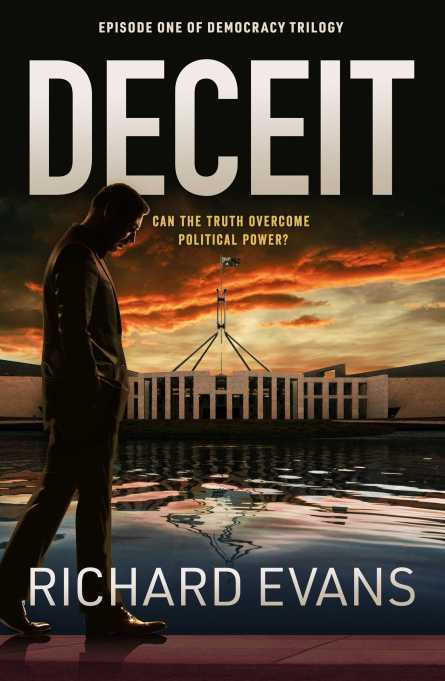
Deceit by Richard Evans

Deceit Cover

Publisher: Impact Press

Publication date – 18 June 2018

Amazon     Book Depository

From former politician Richard Evans comes one of the most incredible fictional examinations of the Australian political system with Deceit, an exciting and superb political thriller.

When corrupt Australian Prime Minster Andrew Gerrard makes a deal with his Indonesian counterpart, he embarks on a plan to build up a retirement nest egg by passing a controversial funding bill for overseas detention centres over a period of several years.  However, when key members of his party die in a tragic plane accident, Gerrard decides to process all of the funding in one go and receive the full amount of his payoff.

Outnumbered in the House of Representatives, and with only one week to pass the bill through both houses of parliament, the task looks impossible.  But the Prime Minister is a canny political operator with no conscience to speak of and with the Speaker deep in his pocket and with no conscience to speak off.  Equipped with a master plan, Gerrard starts to manipulate the bill through parliament.

The only person who may be able to stop him is the outgoing Clerk of the House of Representatives, Gordon O’Brien, who suspects that the Prime Minister’s mysterious last-minute bill is more sinister than it appears.  As one of the few people who believe in the sanctity of the parliament, O’Brien will risk everything to find out the truth and ensure no wrongdoing is done on his watch.  Utilising all the tools at his disposal, including the opposition and investigative journalist Anita Devlin, O’Brien prepares to move against the Prime Minister.  Let the political games begin!

Evans is a former Australian politician who served two terms as a federal member of parliament in the 1990s.  Evans has decided to utilise his political experience and expertise by creating a series of Australian politics based thrillers and dramas, with several books planned for release in 2019 and 2020.  Deceit is his debut novel and the first book of his planned Democracy trilogy, with the second book in this series, Duplicity, already set to be released in 2019.  Readers interested in fictional depictions of Australian politics should also keep an eye out for his upcoming Referendum and Jack Hudson series, both of which will start to be published in the next two years.

Deceit is a fabulous political thriller with a fantastic story that twists and turns through multiple layers of manipulation, deceptions, lies and double-crosses.  The book’s main antagonist, Australian Prime Minister Andrew Gerrard is a selfish, manipulative and sleazy character who serves as a perfect villain for this story and whose plots are a highlight of this book.  Evans has done a clever job of spreading the story out among multiple point-of-view characters, as this allows the reader to view the impact of Gerrard’s manoeuvrings and lets them see how they are received by members of the opposition, the media and O’Brien.  Evans is a very talented storywriter, and the entire plot of Deceit is extremely compelling and very well thought out.  Readers will fall in love with this amazing story and will find its overall conclusion very satisfying.

As someone who lives and works in the book’s main setting, Australia’s capital city, Canberra, I have received a lot of exposure to Australian politics.  As a result, I loved the author’s exceedingly realistic and accurate depictions of the Australian political system and how it was used within this story.  There is some great coverage of Australia’s parliamentary procedure and the creation and passage of bills and laws through both houses of parliament that are presented in a precise and well-described way.  There are also a number of characters who hold roles that are actually part of Australia’s political and civil service.  These positions and roles are explored in detail, and the reader is given significant insights into what work and requirements are needed by the people holding them.  Evan’s does a fantastic job of weaving these usually dry subjects into a very enthralling narrative, and readers will be intrigued to see how the fictional Prime Minister plans to get a dodgy bill past the entire country without anyone noticing what he is doing.

The standout scene of the book has to be an extended chapter that featured a session of question time in the House of Representatives.  Question time is a daily occurrence during the parliamentary sitting period during which government and non-government members of parliament ask ministers questions about their various portfolios.  As someone who has been exposed to many question times, I was struck by how genuine Evans’s description of this event was.  Evans perfectly encapsulates the entire process from start to finish and was able to recreate the snarky and sometimes petulant nature of the discourse that are the usual fare of question time.  The author expertly links the overarching storyline of political corruption into this scene, as one member of the opposition is suspicious and starts to ask the Prime Minister leading questions about the controversial bill he has put forward.  The political back-and-forth around these questions was amazing, and it was fascinating watching them being tied into the rest of the story.  Overall, this sequence was exceedingly compelling, and the entire time I was reading it I was physically incapable of putting the book down.

Deceit also contains some detailed and enjoyable depictions of Australia’s Parliament House and the capital city, Canberra.  Parliament House is a beautiful building, and Evans does a wonderful job describing Parliament House in detail and examining various parts of the building, from the Prime Minister’s office and courtyard, to the various gardens, media offices and even cafes.  Other little nuances of life within Parliament House are also captured within the text, no doubt because of Evans’s prior experiences working within the building.

I also really enjoyed seeing my home city of Canberra featured in this book.  Despite being the capital city, Canberra does not feature much in fiction, due to it being a smaller and newer city than Sydney or Melbourne.  Deceit, however, contains some great depictions of the areas of Canberra close to Parliament House.  There are several references to some real restaurants and cafes that politicians are known to frequent and where several big political discussions are known to have taken place.  There are also several scenes where the characters explore other parts of Canberra as part of the book’s plot.  I for one found it incredibly amusing and disconcerting to read a scene about a secretive handoff of documents set in a cinema that I’ve watched The Hunger Games and Doctor Who specials in.  Canberra locals will love seeing their city as a major fixture of this book, and other readers will get to explore Australia’s capital and see its potential as a setting in this exciting thriller.

Richard Evans’ first book, Deceit, is a five-star thriller that brings the Australian political process to life.  Former politician Evans brings all of his insight and expertise to this new book, and readers will be astounded by the realistic descriptions of Australian politics and the way it has been utilised in this exciting and first-rate story.  This is an outstanding debut from Evans, and this terrific read comes highly recommended.

My Rating:

Five Stars

Amazon     Book Depository

The Greater Good by Tim Ayliffe

The Greater Good Cover

Publisher: Simon & Schuster

Publication Date – 23 April 2018

Amazon

Australian author Tim Ayliffe presents a fantastic debut thriller set in iconic Sydney that delves into the heart of politics and the role of the media in the modern world.

John Bailey was a brilliant war correspondent for the Australian paper, The Journal.  However, his life took a downward turn when he was kidnapped in Iraq and tortured for several months.  Now, years later, Bailey is living a life of alcoholism and self-destruction, only occasionally contributing articles to The Journal.

However, when a prostitute is found murdered in her high-end Sydney apartment, his editor and old friend, Gerald Summers, sends him to investigate the crime, claiming that Bailey is the only person he trusts to report the story.  The prime suspect in the case is an influential political advisor who had a close relationship with the victim.  When Bailey encounters the advisor, he claims to have information that will clear his name, while at the same time implicating his boss, the defence minister.

After a run-in with an old friend in the CIA, Bailey soon realises that there is much more to this story than a simple murder.  Investigating further, he soon discovers that the murder was committed to cover up a massive conspiracy that the defence minister is linked to.  When witnesses to the crime start turning up dead and the police are pressured to drop their investigation, Bailey is determined to uncover the truth and publish the full story.  But powerful people are invested in keeping this case quiet, and Bailey soon finds himself in their crosshairs.

This is an exciting and high-energy first book from Ayliffe, who makes full use of his journalistic experience and political insights to create a smashing thriller with a tangible Australian presence.  The investigation into the conspiracy and its associated murders works well as the heart of this story, and readers are invited along on a wild thrill ride as the protagonists rush through this murky world of Australian politics and espionage in a quest to find the truth.

The character of Bailey serves as a great central narrator for this frenetic story, and readers will love the maverick approach he has to investigating the case and the lack of restraint of manners he has when it comes to dealing with Sydney’s political and financial elite.  Ayliffe also spends a significant amount of time attempting to humanise his main character by examining his past as a prisoner and the effects his PTSD has had on his life and career.  There are some great, emotional scenes as Bailey attempts to get over his problems with the help of other characters, and Bailey comes across as a much more grounded and damaged protagonist as a result.  The other main narrator in The Greater Good is Sharon Dexter, who serves as the official police investigator and Bailey’s main love interest.  Her investigation focuses more on cover-ups, sexism, and corruption in the police force, and these parts of the book serve as a great counterpoint to the sections featuring Bailey.

Ayliffe has made full use of his political knowledge and insight throughout this book.  A large amount of the plot revolves around both Australian and international politics, and readers will be amazed at the potential conspiracy he is able to create.  Various Australian political elements are dragged into the story and play a key part of the plot.  These include discussions about pre-selections of federal seats, government spending and the role of several federal government agencies.  World politics and the current status of Australia on the world stage are also examined within the story.  There is a large focus on the expanding role of China, and the discussion about whether Australia should strengthen its relationship with this new world power or whether it should maintain its current relationship with the United States.  This discussion is a key part of understanding the plot, and plays out in the book in a similar manner to current debates on the subject within Australia.  This adds a real sense of realism to the story and makes readers, especially those familiar with current Australian news and politics, very thoughtful.

Throughout The Greater Good, the main characters are attempting to obtain evidence of a conspiracy so that they can print it in their newspaper, The Journal.  As a result, the role of print media in keeping government’s honest and uncovering political corruption is examined in some detail.  It is clear that Ayliffe, a career Australian journalist, is very supportive of the media remaining in this role, and many of his characters are quite critical of attempts to stall the publication of these stories.  This allegorical analysis of the current role of media in politics and society is an intriguing part of the book and many readers will find this exceedingly relevant in light of recent world events.

Readers also need to keep an eye out for Ayliffe’s clever and entertaining inclusion of characters that are clearly based on real life Australian personalities.  For example, the fictional Australian Prime Minister is described as an athletic man who is known for his fun runs and surfing, in a way reminiscent of former Prime Minister Tony Abbott.  In addition, certain plot twists towards the end of the book will also remind the audience of another previous Prime Minster.  Another example is a minor character who is introduced as a prominent talk show radio host.  This character appears to be a composite creation of several of Australia’s right-wing radio commentators and comes across in a very similar manner to these real life presenters.  These cheeky additions are a fun inclusion that will amuse readers with even a passing knowledge of these Australian personalities.

In many ways The Greater Good can be considered a love letter to the author’s home city of Sydney, as it contains a number of different locations and references that will be quite familiar to Sydneysiders.  The narrator visits a number of different suburbs within Sydney, including Palm Beach, King Street, Finger Wharf at Woolloomooloo, Bondi and Chinatown, and also frequents some real life Sydney venues, such as Harry’s Café de Wheels.  Not only is the food, geographical location and description of this Sydney café described in the text, but the author has also included a write-up of the restaurant’s owners and its history.  In addition to furnishing the story with real life Sydney locations, Ayliffe also includes brief references to events and occurrences that Australians would recognise the significance of, such as Australian rugby, lockout laws and the current ice epidemic.  While none of these locations or occurrences is essential to the plot, they do add a certain sense of reality to the entire novel, and Australian readers will enjoy seeing locations and scenarios that they recognise and understand.

Tim Ayliffe’s debut novel, The Greater Good, is a fun and exhilarating political crime thriller that is guaranteed to electrify and entertain in good measure.  Making full use of Ayliffe’s extensive knowledge of Australian politics, culture and media, this very topical book is an excellent read for Australian audiences and those international readers keen to explore Australia’s potential for thrillers.

My Rating:

Four stars

Amazon

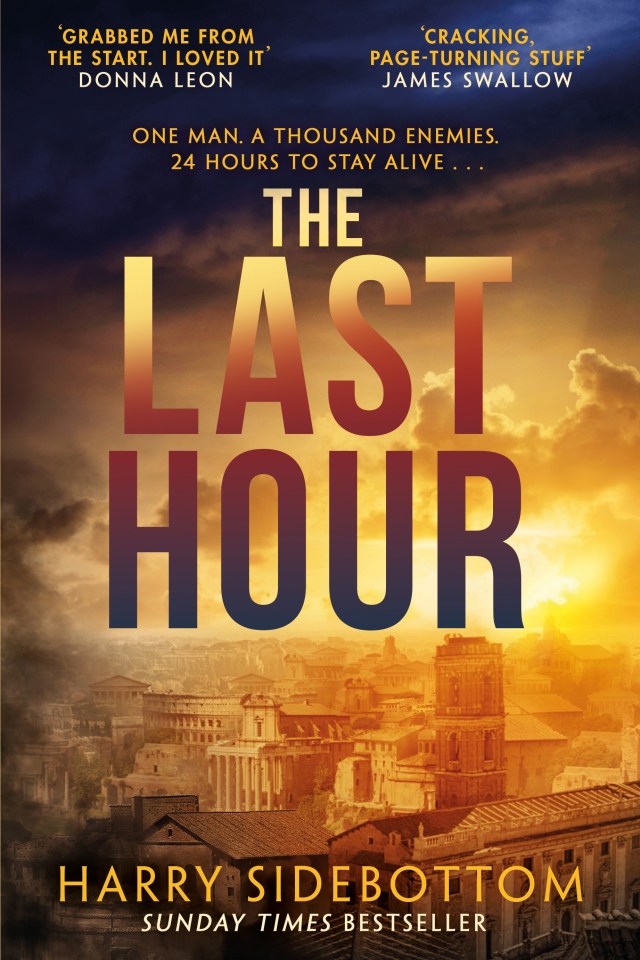
The Last Hour by Harry Sidebottom

The Last Hour Cover

Publisher: Zaffre

Australian Publication Date – 1 May 2018

World Publication Date – 8 March 2018

Amazon

Ballista is back, baby!  One of the best writers of Roman historical fiction, Harry Sidebottom, brings back his original protagonist for an incredibly gripping and action-packed novel that perfectly combines the thriller and historical fiction genres.

In Rome, in 265 AD, Marcus Clodius Ballista, former Dux Ripae of Rome and loyal friend of Emperor Gallienus, enters the Mausoleum of Hadrian to meet with an informant who wishes to talk to him about a plot to kill the emperor and usurp his throne.  But the meeting is a trap, the informant is murdered, and Ballista is forced to jump into the River Tiber to escape the horde of assassins sent to kill him.

Washed up outside of the city and pursued by killers, Ballista only has 24 hours until Gallienus is murdered.  With the conspirators still unknown to him, Ballista has no idea who he can trust and who can help him, but he must find a way to warn the emperor of the plot against him.  If he fails, not only will his friend will be assassinated but Ballista’s family will also die in the ensuing takeover.

Now alone, unarmed, and with no money, bodyguards or friends around him, Ballista must find a way to re-enter the city and transverse the entirety of Rome to get to the emperor’s side.  But the city is now a very dangerous place for him.  The city watch are fully mobilised and ordered to arrest Ballista at all costs.  In addition, mobs of disguised killers are searching for him everywhere, and they have no intention to taking him in alive.

As Ballista makes his way through the streets of Rome, he must find a way to avoid all the people searching for him while also overcoming the other dangers that lurk throughout the city.  Will Ballista be able to save his friend and his family, or will his final defeat take place in the heart of the empire he has spent his whole life protecting?

Harry Sidebottom is a renowned British historian and veteran author of Roman historical fiction, having previously written two best-selling series, Warrior of Rome and Throne of the CaesarsThe Last Hour is the 10th book from Sidebottom and a spinoff off from his Warrior of Rome series, featuring his original protagonist, Ballista.  Ballista is a heavily fictionalized version of a famous Roman prefect, and served as the main character of Sidebottom’s first six books.

I’ve always had a soft spot for Sidebottom’s works, as his debut novel, Fire in the East, was one of the first pieces of historical fiction that I ever read, and featured one of the best accounts of a siege that I have ever read.  His second book, King of Kings, was also one of the first books that I ever reviewed, and was a fantastic sequel that featured great story elements, set in an interesting and underused period of Roman history.  Sidebottom’s latest book, The Last Hour, is an amazing hybrid of the thriller and historical fiction genres, featuring an intense, high-stakes journey through the ancient city of Rome.

The thriller aspects of this book are exhilarating.  The protagonist is aware of a devastating assassination that is about to be committed and has only a limited time to reach and save the target.  Sidebottom incorporates a ticking clock element to the story, as Ballista is constantly aware of the passing of time and how short a period he has to complete his objective to save not only his friend but his entire family as well.  Needless to say, the author takes this story right down to the wire, and the reader has no idea whether Ballista will succeed or not; readers who are familiar with the previous books in the series will recall that King of Kings ended with Ballista and the previous emperor being both betrayed and captured by the enemy.  The story gains a significant amount of intensity as the protagonist has no idea of who he can trust, nor who is aligned against him.  Sidebottom also goes out of his way to ensure that the readers are in the dark about who the main conspirators are, even towards the end of the story.  This intrigue is compounded as Sidebottom gives his audience a tantalising view of the antagonists meeting while also frustrating the readers by ensuring that these characters use codenames when talking to each other.  As a result, the reader is intently drawn into the story by both the protagonist’s mad dash through the city and the immense desire to work out who the conspirators are and what their full plan is.

In addition to its electrifying thriller elements, The Last Hour also features an incredible exploration of ancient Rome and the range of people the protagonist encounters during his time in the city.  Sidebottom is determined to highlight several different groups of people that were a factor in the city, including the city watch, the Praetorian guards, the emperor’s Germanic bodyguards and the frumentarii, who served as the emperor’s secret police.  Each of these groups is an essential part of the emperor’s security and has a significant role to play in this novel, and the readers will be intrigued by Sidebottom’s descriptions of each of them.  Ballista also encounters a range of other Roman citizens, from simple shopkeepers and men of the street to members of the city’s criminal underground, cults of Egyptian priests, hidden Christians and even drunk Roman nobles looking to assault people they meet on the street.  Each of these adds to the rich tapestry of the historical city that Sidebottom has woven into existence.  This tapestry is further enhanced by Sidebottom’s determination to provide detailed examinations of several of ancient Rome’s buildings and locations.  These range from historically significant locations, like the coliseum, the Praetorian camp and the emperor’s palace, to more mundane locations that were a unique feature of the city of Rome, such as massive bathhouses and large apartment-style buildings.  All these historical elements serve as terrific background for this extraordinary thriller based story.

Readers of this book are also in for an action-packed treat as the protagonist rampages through ancient Rome, continuously fighting off either the people hunting him or the regular citizens of Rome attacking him for their own reasons.  As a result, The Last Hour is filled with innumerable action sequences that are guaranteed to amuse and delight all the action fanatics out there.  Readers will be gifted with sequences that include a crazy fight and flight across the rooftops of the city, and a down-and-dirty fight in the steamy and mechanical workings of a bathhouse.  There is also a siege on the roof of one of the city’s monuments and a large pitched battle in the streets of Rome.  These fight scenes are great fun and increase in intensity throughout the book as the protagonist’s countdown goes on.

Harry Sidebottom has once again produced an incredible, fast-paced and exceedingly exciting action novel that combines the very best elements of a first-rate thriller with all the research and detail of an excellent historical fiction novel.  A truly unique and utterly entertaining piece of literature, The Last Hour once again shows why Sidebottom is one of the very best authors writing about ancient Rome.

My Rating:

Four and a half stars

Amazon

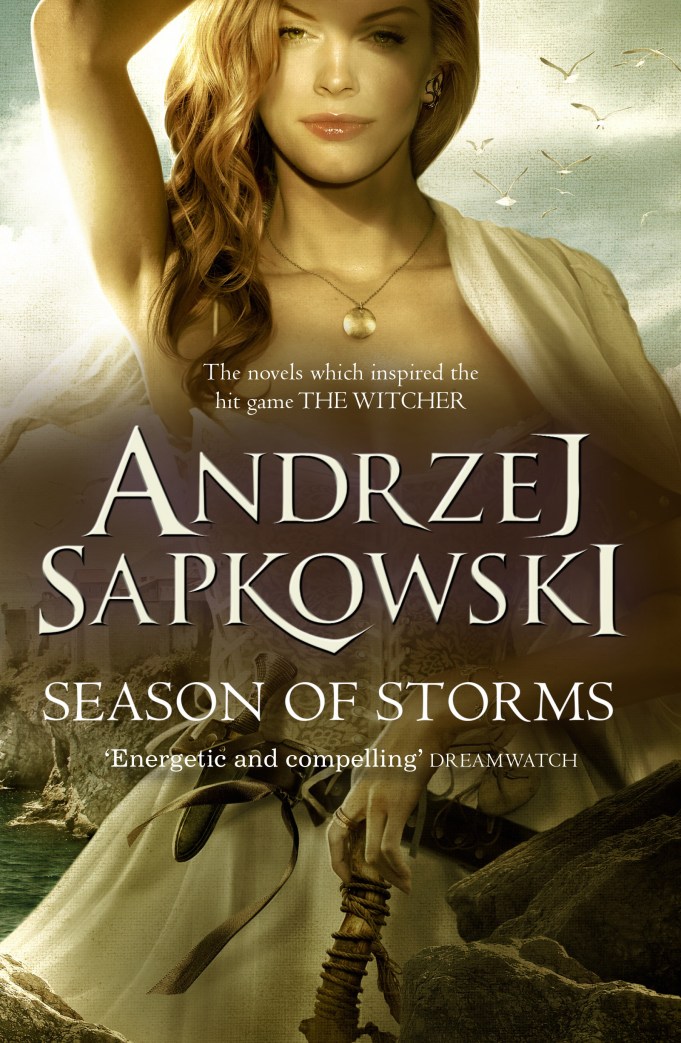
Season of Storms by Andrzej Sapkowski

Season of Storms Cover

Publication: Gollancz

English Edition Translated by David A. French

Publication Date – 19 April 2018

Amazon

The legendary Andrzej Sapkowski returns with a fun and exhilarating addition to one of the best fantasy franchises to ever come out of Europe, The Witcher.

Geralt of Rivia is a Witcher, a powerful mutant tasked with protecting ordinary people from the monsters that infest the various kingdoms and lands of the Continent.  Witchers wield a range of weapons in the fight against evil, from magical signs to powerful potions.  However, their main weapons are two swords: one made of steel, the other made of silver.  These swords are a symbol of status for a Witcher and are irreplaceable.

However, after being falsely arrested by corrupt city guards, Geralt’s swords disappear, having been stolen by unknown thieves.  Upon his release, Geralt will move heaven and earth to reclaim his weapons.  But all manner of people desire the weapons of a Witcher, and his search only throws up false leads.

The theft could not have come at a worse time.  In order to obtain his freedom, Geralt is coerced by the sorceress known as Coral into hunting a demon around the sorcerer stronghold of Rissberg.  Geralt must determine who among the fortress’s scheming sorcerers is summoning the demon forth, and stop their rampage.  At the same time, he and his old friend Dandelion must contend with the various plots taking place within the court of the King of Kerack as his heirs battle for power.

Can Geralt contend with the foes set against him, or will the loss of his faithful swords result in his destruction?

Sapkowski is one of the most popular and well-known writers of fantasy fiction in Central and Eastern Europe, where his books have achieved a cult following.  Sapkowski is best known for The Witcher series of books.  This series, which was mostly written in the 1990s, focuses on the monster hunter Geralt of Rivia and his adventures throughout Sapkowski’s dark fantasy landscape.  These books served as the basis for the popular video game series of the same name, which is how many people would be familiar with Sapkowski’s characters and stories.  The Witcher books were also adapted into both a movie and television series in Poland, called The Hexer, and Netflix has recently commissioned a new American television series based on the books, also called The Witcher, which is currently in the early stages of production.

Season of Storms is the latest The Witcher book Sapkowski has released.  It was originally published in 2013 in Polish, but an English translation of the book has only just been published.  This is a standalone book that is set between some of Sapkowski’s original short stories which were captured in his second book, The Last Wish.  While Season of Storms is a standalone book, it does contain a number of hints to some The Witcher stories chronologically set after it.  It also features a number of characters from the other books in the series, including a series of interludes that focus on Nimue, who appeared in two previous books and who many may recognise as the Lady of the Lake of Arthurian legends.  The scenes featuring Nimue in Season of Storms are set more than a hundred years after the rest of The Witcher books and contain some potential hints about the eventual fate of the series’ main characters, as well as some cryptic discussions between characters that could be open to some interesting interpretations.  As a result, people who have read the other books in the franchise will really appreciate Season of Storms for these call-backs and references.  However, while the book may be especially appealing to past readers, it is also a perfect place for readers unfamiliar with Sapkowski’s work to get started, as it does not rely on other books in the series for plot details.

Sapkowski continues to explore his fantastic fantasy world in this latest book, as Geralt quests into new areas of the Continent.  Most of the story focuses on locations and settings not previously explored in previous books of the series, giving fans of this franchise a much wider view of this detailed fantasy world.  Knowledge of the world is also expanded through the fun use of excerpts from in-universe fictional books, which offers a range of entertaining facts and jokes.  Readers will also be impressed by the wide number of foes and monsters that Sapkowski has fit in this book.  Throughout the story Geralt has to contend with magical mutations, humanoid hybrids, powerful magic users, werewolves, kitsunes, gangsters and marauding soldiers.  This rich array of opponents adds a lot to the story’s excitement and is wildly appropriate for a story about a monster hunter.

Another notable part of Season of Storms is the range of intriguing mysteries Geralt needs to solve in order to complete his quest and survive.  These mysteries are interspersed throughout the story’s fantasy adventure and include the main mystery of who stole Geralt’s swords, the political mysteries in the Kingdom of Kerack and the investigation into why summoned demons are attacking communities in the forest.  These mysteries have a large level of sophistication and do a great job of keeping the readers interested and intrigued throughout the book.  The various mysteries also combine really well with the book’s fantasy elements and strike a good balance within the book.  This exceptional combination of elements within Season of Storms impressively captivates the readers and creates an enticing overall story.

The latest book in The Witcher franchise is a brilliant new adventure that stands just to the side of the previous short stories and established longer series.  Season of Storms provides pulse pounding adventure in Sapkowski’s beloved fantasy world while also telling a series of intense interlocked stories that make great use of several riveting mysteries to drag in the reader’s attention.  This is definitely a strong recommendation for those readers who have enjoyed Sapkowski’s literary works in the past.  However, general fantasy fans and those who have only experienced The Witcher franchise through the games will enjoy this excellent and electrifying read.

My Rating:

Four stars

Amazon

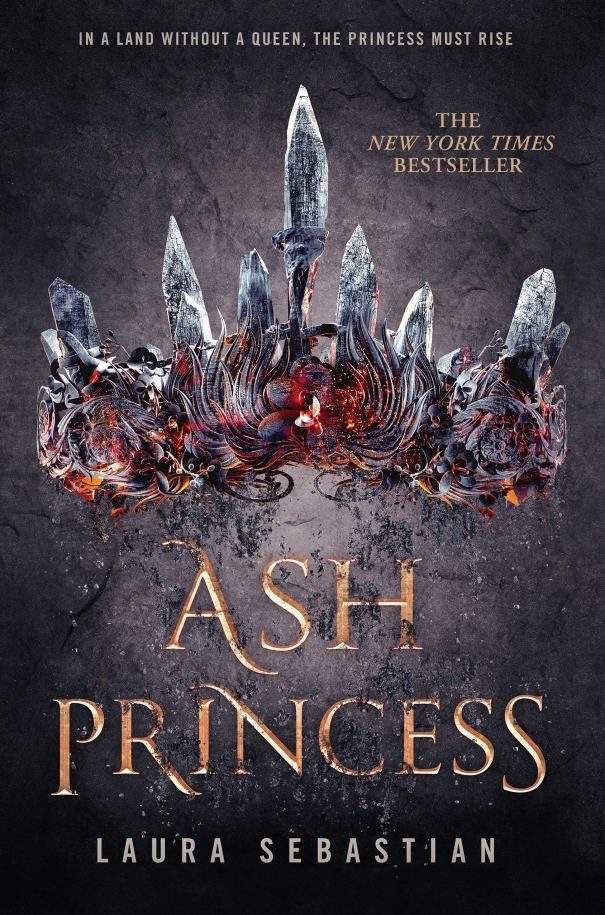
Ash Princess by Laura Sebastian

Ash Princess Cover

Publisher: Pan

Publication Date – 24 April 2018

Amazon     Book Depository

From an exciting new voice in young adult fantasy fiction comes a powerful tale of independence and freedom.

Ten years ago the Kalovaxians invaded the peaceful island nation of Astrea, killing its guardians and enslaving the entire populace to work in the island’s magical gem mines.

Theodosia was only six when Astrea was invaded and her mother, the Fire Queen, was murdered before her eyes. Since then she has lived in her former palace as a prisoner to the cruel and despotic Kaiser, who seeks to destroy all trace of the Astrea culture and language. Given a new title, the Ash Princess, and forced to endure constant humiliation and punishment for her people’s rebellion, Theodosia has become a subservient creature, trying to survive as she waits for any sort of rescue.

When the Kaiser forces her to perform a terrible act, Theodosia is no longer willing to stand back and watch her people suffer. With unexpected allies suddenly close at hand, Theodosia stops a plan for her escape and instead chooses to remain at court to obtain information for the rebellion.

However, the Kalovaxians are a cruel and merciless race of warriors who excel at raiding and destroying the lands they conquer. Theodosia soon realises that supplying information to her companions is not enough; she needs to find a way to strike at the heart of the Kalovaxians and disrupt their tight control of Astrea. When opportunity presents itself, she must risk everything to give her people a shot. It is time for the Ash Princess to rise.

Ash Princess is the debut novel from Laura Sebastian and the first book in a young adult trilogy with a lot of potential.

This story is told completely from the point of view of the main protagonist, Theodosia, with a large amount of the book dedicated to her growth as a leader. Theodosia starts the book as a completely broken person, having been oppressed and abused for years and kept as a symbol of humiliation. As the story continues, Theodosia detaches herself from the persona she created to survive and starts to finally oppose her captors. Watching her obtain the courage to fight back is an integral part of the book, and her attempts to become the ruler her people need are touching and emotive. There is also a riveting inner conflict within Theodosia as she debates whether to hurt people that she cares about, even if her actions could bring relief to her people. While Theodosia strongly wishes to save her people and defeat the invaders, there is also a great desire to not become like the enemies she hates. The character runs a fine line throughout the book as a result, and many readers will enjoy how Sebastian examines this inner conflict.

Sebastian has included an intricate background setting for her electrifying story. The nation of Astrea had been brutally subjugated 10 years before the start of the story and is currently ruled by the Kalovaxians. Because of how total this subjugation has been, with a large number of deaths and the rest of the populace forced to do heavy labour, very few characters originating from Astrea are featured within the story. This background of a near-obliterated country is dark and grim, but serves as the perfect setting for an inspiring story of freedom and rebellion. The antagonists of the story, the Kalovaxians, are also the perfect villains for such a story, as they are undeniably evil. All of the Kalovaxians–even the milder ones that consider themselves Theodosia’s friends–are power hungry, destructive and feel that they are superior to all other peoples. The use of the setting and the antagonists within Ash Princess adds significant impact to the main story and forces the reader to care about the fate of the main character.

Readers of Ash Princess will enjoy the covert activities that take place as part of the main story. In order to find a way to liberate her country, Theodosia needs to infiltrate and influence parts of the oppressive Kalovaxian society. The scenes were she attempts to seduce, manipulate and commits acts of sabotage are compelling and one of the more intriguing parts of the books. In addition to the protagonist’s actions, there are also the secret plans that the Kalovaxians are undertaking. These plans are rather dark and include magical experiments on Theodosia’s people. These Kalovaxian plans result in some interesting actions from Theodosia and play a significant part in the plot. The fascinating gem magic of the Astrea plays an interesting role in the clandestine actions of both the protagonist and antagonists, and fantasy-minded readers will enjoy the resultant exploration of this branch of magic.

Ash Princess is a poignant tale of hidden strength and the fight for freedom. This is a satisfying start to Sebastian’s first series which introduces a memorable main character and a powerful story that makes full use of its awesome background story elements. This is an ideal choice for readers looking for their new fix of young adult fantasy fiction.

My Rating:

Four stars

Amazon     Book Depository