Throwback Thursday – Changes by Jim Butcher

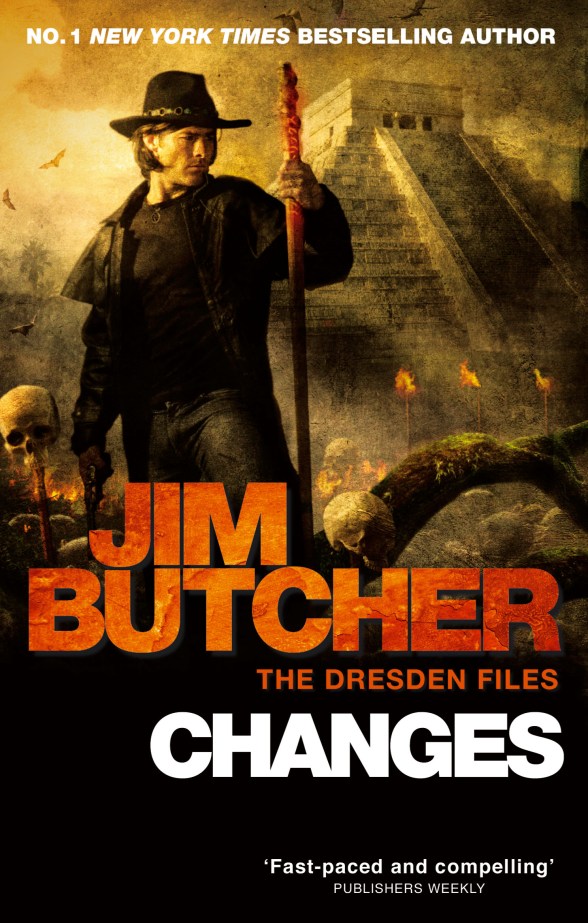
Changes Cover

Publisher: Penguin Audio (Audiobook – 15 April 2010)

Series: Dresden Files – Book 12

Length: 15 hours and 26 minutes

My Rating: 5 out of 5 stars

Amazon

As promised in the previous posts for Small Favour and Turn Coat, this Throwback Thursday is a four-way special as I look at another epic entry in the exciting and fun Dresden Files series by Jim Butcher.  This review looks at the 12th entry in the series, Changes, which is one of the most intense and compelling books that Butcher has so far produced.

It is Harry Dresden’s darkest hour.  For years, Dresden has been Chicago’s only defence against the various mystical and monstrous threats that seek to destroy it.  His crusade to keep Chicago safe resulted in a deadly war between the White Council of wizards and the vampires of the Red Court, with Dresden firmly in the centre of the battle.  After years of fighting, the Red Court look set to launch their final killing blow, aimed directly at a weak spot Dresden was unaware he even had: his daughter.

Kept from him by his former lover, Susan Rodriguez, Dresden is shocked to discover that he has a child and that she has been kidnapped by a vengeful vampire noble.  Determined to get his daughter back no matter the cost, a reckless Dresden begins a new battle against the Red Court.  However, with the White Council unwilling to back him, Dresden has few options available to him as he is relentlessly hunted by agents of the Red King.

Injured, tired and desperate, Dresden will need all his most powerful allies to survive, but even the full might of Dresden’s most loyal friends isn’t enough to overwhelm the forces in front of them.  To succeed, Dresden may be forced to compromise everything he has ever believed in, especially if it brings him the tools and power he needs to save his daughter.  But the price demanded may be far more terrible than anything he could imagine.

Well damn, now this must be one of the most intense and powerful entries in this already outstanding series.  Butcher outdid himself with Changes as he wraps up several brilliant storylines while also taking his protagonist to the very edge in the worst ways possible.

Butcher provides a very powerful start to Changes, which places Harry in a dark position as he finds out that he has a daughter and that she has been kidnapped by Red Court vampires.  This expertly follows on from several long-running storylines around Dresden’s war with the Red Court (including those started Grave Peril and Death Masks), and it was really interesting to see an emotionally untethered Dresden trying to come to terms with having a child and the evils being done to them.  The first half of Changes is highly compelling, especially as Dresden faces attacks and obstacles he hasn’t seen before, with his office building getting blown up and increased interest from law enforcement in the city.  There are several great set pieces here, and Butcher quickly builds up the many threats surrounding Dresden as well as unprecedented stakes.

However, Butcher really saves the best for the second half of the book, as Dresden finds himself going down some dark roads to save his child.  After a particularly heartbreaking moment in the centre of the book, the weakened Dresden is forced to make a Faustian deal in one of Changes most powerful scenes.  However, this proves to be only the beginning as Dresden leads all his allies to the big final battle, which was something particularly impressive.  There are several outstanding fight sequences, including a magical pitched battle with everyone involved, and the ending sequence of the entire event is pretty dark.  There are losses, tragedies and massive changes featured here, and you really are left blown away by just how epic and brutal Butcher made everything.  However, that is only the beginning as, after a series of revelations and sacrifices, Butcher chooses to end Changes on a massive cliffhanger, one that is guaranteed to shock every Dresden Files fan and force them to dive right into the next book.

Changes is definitely one of the most impressive and expansive entries in the entire Dresden Files series, and it had me hooked the entire way through.  Thanks to the massive battles, intense and extremely epic action scenes, and the game-changing and emotionally charged moments where the protagonist is forced to make all the hard decisions, it honestly proves very hard to put Changes down and I loved how well Butcher wrapped up several long-running storylines while setting up key elements for some of the later novels.  This is one of the darker books in the Dresden Files series, although Butcher still manages to maintain a good amount of inherent humour and investigative focus.  I felt that the typical Dresden humour blended well with the more desperate and brutal parts of the book, especially as it helps to underline just how grim Changes becomes in places.  Unlike some of the previous books in the series, I would not recommend Changes as a place to start reading the Dresden Files books.  While Butcher provides his usual excellent recap of prior events throughout the book, there are way too many ongoing storylines and complex character moments featured here that you won’t get the full effect of unless you understand the full history of the protagonist and all he’s overcome.  This was honestly one of the better books in the entire series, especially with how much Butcher raised the stakes, and I love just how well the entire story came together.

Out of all the Dresden Files novels Changes has some of the best character moments in the entire series, mainly because of just how big events turned out to be.  Dresden, despite his attempts to keep his usual defiant humour intact, is emotionally wrecked time and time again in this book following the revelation that he has a daughter he didn’t know about.  Enraged, desperate and determined to not leave her alone like he was as a child, Dresden is forced into some very dark places to save her, and the resulting scenes where he sells his soul are very heartbreaking and emotionally charged.  A lot of these compromises come after he has been physically chopped away at throughout the book, and you can really understand why he is forced to make these decisions and just how much they cost him spiritually and morally to do so.  As such, Dresden spends a good chunk of this book unsure of whether he is making the right decisions, but he remains determined to do so all the same and would even go further if needed.  Despite this, Dresden still has the support of his friends, and it was great to see how they kept him grounded and certain that he was on the right path.  I particularly enjoyed the fun Lord of the Rings analogy that was revealed to him by his friends to show how they see him (he’s more of a Sam than a Gandalf), and Dresden’s concern that he might instead be a different, less heroic character from the series hits you right in the feels.  I may never forgive Butcher for how brutally and effectively he tugged at my heartstrings in Changes when it came to Dresden and this is probably one of the most substantial novels in the entire series when it comes to his character development.

Aside from Dresden, Changes features a great range of supporting characters, many of whom return to help the protagonist in his hour of need.  A lot of focus went into Susan Rodriguez, Dresden’s former lover and the secret mother of his child, who has struggled with her vampiric corruption since the third book.  While there is a certain amount of resentment towards her for her actions, you can completely understand why Susan might try to keep her daughter away from both herself and Dresden, which is honestly heartbreaking.  Butcher does a great job of featuring Susan again here after a lengthy absence, and I felt that he wrapped up her storyline and the relationship she had with Dresden really well.  Several other characters get a great showing in Changes, with Murphy becoming a literal Holy Knight for one particularly glorious sequence and Dresden’s apprentice Molly really showcasing her skills and her emotional vulnerability.  I also must mention one of my favourite characters, Dresden’s dog, Mouse, who continues to be one of the best figures in the series, especially here where he reveals more of his supernatural potential and his actual intelligence.  The scene where you can hear him talking is just hilarious, especially as Mouse has a very different view about his relationship with his human.  These characters and more really help to turn Changes into one of the most emotionally charged books in the entire Dresden Files series, and I loved seeing each and every one of them.

As has been the recurring theme with the Dresden Files, I checked out Changes on audiobook, which was another epic listen.  Narrator James Marsters can do no wrong with this audiobook, and with a runtime of 15.5 hours, you will find yourself quite engrossed with this elaborate tale.  Thanks to Marsters’s exceptional narration, I absolutely powered through this audiobook, and I loved the sheer emotion and power he brought to the production.  The epic set pieces were particularly cool in this audiobook, and I loved how well the climatic battles came across in this format.  As a result, Changes is definitely best enjoyed as an audiobook and I cannot recommend this format enough.

Unsurprisingly, Changes also gets a five-star rating from me and it was honestly one of the most impressive Dresden Files novels that Butcher has written.  The powerful character work and brutal story had me hooked the entire way through, and it honestly has some of the most significant moments in the entire series.  In fact it was so good that it instantly made me start listening to yet another Dresden Files novel, Ghost Story (that cliffhanger at the end left me no choice), which I am also reviewing today.  This is an exceptional read that once again shows why Butcher is such an incredible author.
Amazon

Throwback Thursday – Turn Coat by Jim Butcher

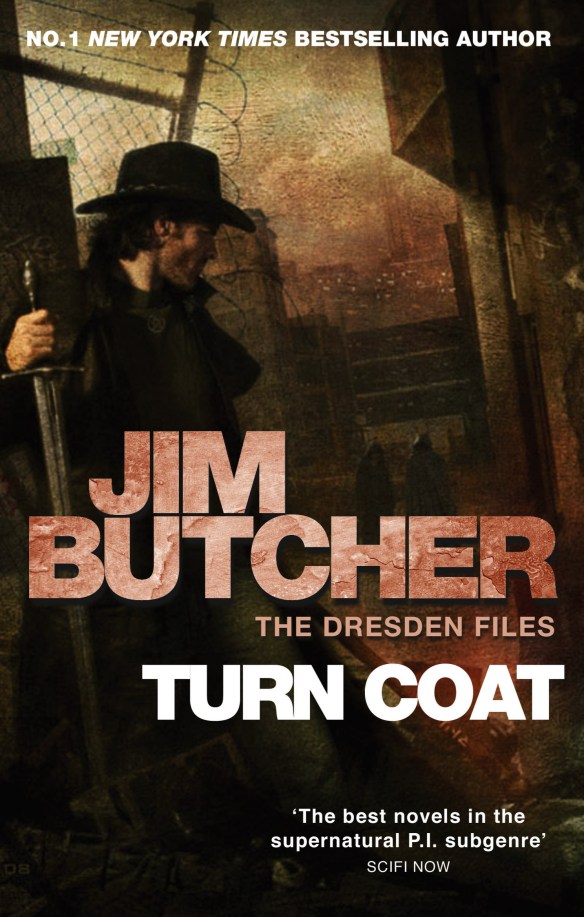
Turn Coat Cover

Publisher: Penguin Audio (Audiobook – 7 April 2009)

Series: Dresden Files – Book 11

Length: 14 hours and 36 minutes

My Rating: 5 out of 5 stars

Amazon

It’s a Dresden Files multi-feature today! In addition to reviewing Small Favour, I also check out the 11th book in the series, Turn Coat.

As I mentioned in my other post tonight, I have been in a real Dresden Files mood recently.  Thanks to how much fun I had with Small Favour, I immediately started listening to the 11th entry in the series, Turn Coat, which was another excellent novel.  I managed to finish off Turn Coat in a couple of days, and it proved to be another amazing entry in the series, tying up several long-running storylines while diving into some of the unique relationships surrounding the protagonist.

Throughout his entire magical career, professional wizard Harry Dresden has been feared and despised by the White Council of Wizard after killing his crazed mentor with magic.  Despite his crime being in self-defence, Dresden was watched and harassed for most of his life by a Warden of the White Council tasked with slicing his head off if he showed any dark magical inclinations.  The man who so relentlessly watched him was the implacable Warden Morgan, who still suspects Dresden of dark magic to this day.  So when Morgan shows up wounded at Dresden’s apartment asking for help, Dresden is reluctant to provide it.

Morgan has been accused of betraying the White Council and murdering one of its most senior members.  Despite the long history of hatred, Dresden agrees to help him, fully aware that Morgan is incapable of committing the acts he is accused of.  But by sheltering Morgan, Dresden has made himself a target of the White Council, and the only way to survive is to identify the real murderer before Morgan is discovered.

Digging into the case, Dresden soon uncovers an insidious conspiracy that threatens the fragile stability of the White Council and the world of magic it governs.  Forced to face off against friends, mercenaries, rogue vampires and one of the most dangerous mystical creatures in existence, a skinwalker, Dresden finds himself walking a razor’s edge.  If he succeeds, he could start a civil war within the White Council, but if he fails, he will be executed alongside Morgan.  With danger all around, can Dresden survive both his enemies and his own complicated feelings for Morgan?

This was a very interesting and compelling entry in the Dresden Files series, and I had quite a bit of fun with it.  Unlike the preceding novel, Small Favour, Turn Coat has a bit of a slower pace to it, and there is more of a focus on conspiracy, mystery and character growth rather than full on action.  The story has a very strong start, especially as Butcher brings back one of the more complex supporting characters: Morgan.  A lot of the story revolves around the contentious history between Dresden and Morgan, and the powerful tension between them makes for some excellent moments in the story.  I liked the central premise of Dresden attempting to uncover a conspiracy at the heart of the White Council and it follows up several key storylines from the rest of the series.  The shadowy plot that emerges is very intriguing, and the mixture of players, as well as a particularly terrifying antagonist, really ensures that the story is highly compelling the entire way through.  Everything leads up to the big fight sequence at the end of the book quite nicely and it was fun to see the unusual array of Dresden’s allies face off against a dangerous and deadly force.  The following big reveal of who the real antagonist of the story is was also very well set up and quite clever, although I was able to figure out the culprit some time in advance.  Still, this really didn’t detract from the impact of the reveal and the subsequent tragic events really hit the reader hard.  Butcher ends Turn Coat on a troubled and tragic note, with more questions than answers, and I quite enjoyed the darker, less hopeful tone that emerged as a result.

Butcher applied his typical writing style to Turn Coat, which I greatly appreciated, especially as it makes jumping from book to book in the series easy when I’m in the mood for something familiar to escape into.  Thanks to Butcher’s great continued use of the first-person perspective, you get a complex and intense story in Turn Coat, especially as much of the narrative focussed on Dresden’s hunt for the traitor and his other personal issues.  The protagonist’s usual glib outlook on life helped to provide much of the book’s humour, which melded well with the compelling fantasy and investigation elements of the book.  Butcher made Turn Coat particularly dark in places, and the haunting depictions of certain creatures and the inherent tragedy of much of the plot helped Turn Coat really stand out.  I personally enjoyed how well Butcher expanded the lore surrounding the White Council and the subsequent magical politics and backstabbing that emerged was a fascinating inclusion.  As with most of the Dresden Files books, Turn Coat can be read as a standalone novel or a starting point to the larger series, although much of the enjoyment of this 11th book relies on the continuation of key storylines and character arcs from the previous novels.  However, Butcher does an outstanding job of rehashing key events and characters were needed, so it is very easy to follow along if you start here.

I once again need to highlight some of the amazing characters featured in Turn Coat, each of whom expertly enhance the overall story.  Obviously, Dresden gets most of focus in Turn Coat and he proves to be as entertaining and enraging as usual.  Dresden has quite a lot of emotional baggage to unpack here, especially when it comes to his past with Morgan, and their hostility and inability to agree on the White Council and the laws of magic makes for some excellent scenes.  That being said, it is clear that Dresden has grown a lot as a person and a mentor by this point in the series, and his ability to plan ahead and outthink his opponents is quite impressive.  Thanks to how the story unfolds, the intriguing and harsh character Morgan got quite a lot of focus and I was really glad to see more of him here in Turn Coat.  Morgan has only had a few appearances in the series and is usually treated as a secondary antagonist thanks to his hostile attitude towards Dresden.  Butcher spends much of Turn Coat unpacking Morgan’s personality, and you finally get to understand why he’s so strict and concerned about dark wizardry.  The scenes featuring both Dresden and Morgan are some of the best in the book, and I deeply appreciated how Butcher was able to both expand upon and wrap up their turbulent relationship here.

Aside from Dresden and Morgan, Turn Coat also features an outstanding and compelling supporting cast, each of whom adds a lot to the overall story.  Recurring characters Molly Carpenter and Thomas Raith each get a great focus in Turn Coat for different reasons, with Molly trying to deal with the inherent prejudice of the White Council against her and Dresden, while Thomas is tortured for a good part of the book and reverts to his baser instincts.  Dresden’s current love interest, Anastasia Luccio, also has a great outing in Turn Coat, and certain elements of her emotional state prove quite vital to the story in some clever and quite tragic ways.  Dresden’s giant dog, Mouse, who is always a scene stealer, has some fantastic moments in Turn Coat, especially when he proves to be the only intelligent adult in the room when it comes to Molly, Morgan and Luccio.  There are also some great scenes featuring small pixie Toot-Toot and wizard elder Listens-to-Wind, who are very entertaining and fun in their own ways.  Finally, I really need to highlight one of the more sinister figures of the book, the skinwalker (also known as a Naagloshii), a Native American spirit who bursts into the scene by driving Dresden insane with fear.  Butcher did an amazing job building them up as a mega shapeshifting threat quite early in the story, and their powerful abilities and dark nature really comes across throughout the entire story.  These characters and more each added so much to the story and I had an amazing time seeing all of them get even further developed by this talented author.

As with Small Favour and the other Dresden Files books I have enjoyed over the years, I chose to grab the audiobook version of Turn Coat, which is just the best way to enjoy this amazing novel.  Thanks to the narration of the always talented James Marsters, Turn Coat was a real joy to listen to, and I love how well Marsters dives into the various characters.  His fun takes on many of the figures, especially protagonist Harry Dresden, are just perfect, and you must appreciate how well he knows all of the cast at this point.  Marsters does a lot of fantastic voices in Turn Coat, although I particularly enjoyed the voice he used for new character Binder, who sounds an awful lot like a certain blonde vampire from Buffy the Vampire Slayer.  I absolutely powered through this outstanding audiobook, and despite its 14 and a half hour run time, I managed to listen to it in an enjoyable two days.  Easily to best way to enjoy a Dresden Files novel, you will not be disappointed by the Turn Coat audiobook.

As you can no doubt tell from the gushy review about, I had a lot of fun with Turn Coat, and it was an outstanding addition to one of the very best fantasy series out there.  Slick, emotionally rich and building on some amazing long-running storylines, Turn Coat had so much going for it that I honestly could not put it down.  Heck, thanks to how awesome both Turn Coat and Small Favour was, I listened to yet another Dresden Files book, Changes, which I am also featuring today.  This is such an epic series, and Turn Coat is another five-star read that I cannot recommend enough.

Amazon

Throwback Thursday – Small Favour by Jim Butcher

Small Favour Cover

Publisher: Penguin Audio (Audiobook – 1 April 2008)

Series: Dresden Files – Book Ten

Length: 13 hours and 49 minutes

My Rating: 5 out of 5 stars

Amazon

Welcome back to my Throwback Thursday series, where I republish old reviews, review books I have read before or review older books I have only just had a chance to read. In a very special Throwback Thursday, I present reviews for four books in the legendary Dresden Files urban fantasy series by Jim Butcher starting with the 10th book in the series, Small Favour.

Over the last few years, I have been having an absolute blast getting through the outstanding and highly addictive Dresden Files urban fantasy series by Jim Butcher.  Following a maverick wizard as he investigates supernatural crimes in Chicago while also facing all manner of dark threats, the Dresden Files books are some of the best urban fantasy novels out there and I have had such a great time reading the rest of the series.  All the other Dresden Files novels I have read, including Storm Front, Fool Moon, Grave Peril, Summer Knight, Death Masks, Blood Rites, Dead Beat, Proven Guilty, White Knight, Battle Ground and The Law have gotten a full five-star rating from me and I have been very eager to continue this great long-running series.  As such, when I was travelling around and needed an audiobook I could listen to extremely easily, there was no better choice than the next Dresden Files book, Small Favour, which really did not disappoint.

Harry Dresden, Chicago’s only professional wizard and protector against the supernatural, has been enjoying a period of rare peace and productivity in his chaotic life.  But nothing ever lasts forever, and soon Dresden finds himself thrust into a dark battle between dangerous old enemies with the fate of the world at stake.

Thanks to a debt from his reckless youth, Dresden owes three favours to Queen Mab, manipulative monarch of the Winter Court of the fae, who seeks to turn Dresden into her greatest weapon.  Her latest favour sees Dresden drawn into a surprising conflict surrounding his old rival, Chicago crime boss John Marcone.  Marcone has been kidnapped by another deadly foe of Dresden’s, the Denarians, fallen angels who are determined to turn Marcone into a new host for one of their brethren.

Strongarmed by Mab, Dresden reluctantly agrees to help save Marcone from his fate and begins a new search for his foe throughout Chicago.  However, his acceptance not only forces him up against the Denarians and their twisted leader, Nicodemus, but also puts him in the sights of Mab’s rival, the Queen of the Summer Court, who sends her deadliest servants to kill him.  Caught between two unstoppable mystical forces can Dresden and his allies survive their deadliest battle yet, especially when Nicodemus’s full destructive plot is unleashed?

Unsurprisingly I loved Small Favour, which is easily one of the better Dresden File books in this already excellent series.  Combining a fast-paced story with elaborate world building, amazing action sequences and great characters, Small Favours masterfully builds on so many of the previous books and proves to be a highly addictive read that gets another five-star rating from me.

Butcher came up with an extremely amazing story for this 10th entry in the series, and I deeply enjoyed the elaborate and complex narrative that emerged.  Once again told solely through the troubled eyes of protagonist Harry Dresden, Small Favour sees the protagonist immediately under attack again as he is dragged into a deadly series of confrontations.  Thanks to a long-running story arc surrounding his relationship with the Winter Court, Dresden is forced to save his least favourite person in the world while also contending with the deadly Summer Court and his old enemies the Denarians.  Butcher does a great job of setting up this compelling scenario, and the early action scenes where Dresden faces down gun-wielding fairies really gets you caught up in the excitement.  Thanks to the inclusion of several excellent supporting characters, as well as some of Butcher’s best antagonists, the story moves along at a cracking pace, and there are two excellent, elaborate and bloody set pieces near the centre that really caught my attention, including a dark supernatural brawl at a train station, and a parley turned war at an aquarian, both of which are very well set out and which consistently raise the stakes again and again.

After the big twist in the middle of the book, where the antagonist’s full plot is revealed, the last third of Small Favour has a desperate and dark feel to it as Dresden and his allies attempt to save the day, while also dealing with darker concerns surrounding the protagonist.  There are several interesting reveals here, as well as good closure to several long-running storylines surrounding the attempted corruption of Dresden.  Everything leads up perfectly to the big final confrontation where Dresden and his allies face off against all manner of foes in his usual flippant and creative way.  There are some great moments here, including tragedies, sacrifices, intriguing confrontations, tricks, and Dresden finally getting his own against a superior foe.  I was one the edge of my seat the entire way through this massive confrontation and it was everything I hoped it would be and more.  The reader comes away from this part of the book very satisfied, if a little traumatised by certain heartbreaking moments, and Butcher really pulls together a great ending for Small Favour.

One of the things that I really like about the Dresden Files books is that Butcher has an effective and distinctive style that will be instantly recognisable to anyone reading one of his novels.  This style, which focuses on the first-person perspective of the protagonist, really brings out the best of the story and you are always guaranteed a great blend of action, adventure, comedy, mystery and impressive character moments while Butcher constantly builds up his extended universe around the story.  Small Favour is a great example of this as Butcher pulls out all the stops to make his excellent story even more enjoyable.  The action is fast-paced and powerful, the world according to Harry Dresden is both dark and hopeful, and the humour is continuous and hilarious as the main character constantly seeks to make light of all the terrible things he encounters.  I particularly enjoyed how well several of the major action pieces came together (the dark scene in the subway station is just amazing), and I loved the undercurrent of suspicion and dread that surrounded many of the scenes and this book can get quite bleak at times.  I also need to highlight a very clever bit of writing that Butcher worked into the story where certain typical elements of Dresden’s usual magical practice are missing, hinting at some darker elements behind his actions.  These writing elements and more really help to turn Small Favour into an excellent read and I had such a great time getting through it.

Like most of the books in the Dresden Files series, Small Favour can easily be read as a standalone read and Butcher does a great job recapping key events from the prior novels that are necessary to the main story.  However, the further you get into the series the more certain characters and storylines keep recurring, so dedicated fans of the series are probably going to get the most out of reading this novel.  Small Favour also proves to be an intriguing overall novel in the wider series, especially as Butcher introduces some key story elements and settings, as well as masterfully expanding on several characters from the previous novels.  There is a certain sense of a bigger evil starting to stir here (something that is explored a lot more in the next couple of books) and there are some very cool developments here as a result.  However, this is one of the easier books to start the Dresden Files series on then some others later in the series, although I will always recommend starting at the beginning to get the full impact of Butcher’s masterful work.

One of the true highlights of the Dresden Files series has to be the excellent characters featured within it.  Butcher builds up a complex and powerful cast in each novel, including several recurring characters, and it is always a real joy to see how they develop and grow with each book.  Of course, most of the focus is on the wise-cracking wizard protagonist and narrator Harry Dresden, who is such a fantastic character to focus on.  Witty, loyal, highly perceptive and utterly disrespectful of every evil creature he encounters, Dresden is an outstanding protagonist to set this series around, especially as Butcher always effectively dives into his deeper psyche.  Despite his comedic and irreverent exterior, which is responsible for most of the book’s humour, Dresden is a deeply troubled and damaged figure, having been forced to deal with so much pain and suffering throughout the series, all of which leaves a mark on him.  Small Favour really dives into his past trauma, especially when it comes to looking at certain dark influences that he only recently threw off, and Butcher manages to put some real unease around Dresden motivations and actions as a result.  I also liked seeing the continued growth of Dresden’s magical abilities, and the fun story around Dresden being forced to save one of his rivals is quite entertaining at times.  This works wonderfully along Butcher’s typical excellent portrayal of Dresden to tell a brilliant character-driven story ,and I really enjoyed some of the complex development that occurred around the protagonist as a result.

In addition to Dresden, Butcher did an excellent job utilising an extended cast of supporting characters and villains in Small Favour, and I really enjoyed how the author was able to weave them into his elaborate tale.  Many of Butcher’s best recurring characters make an appearance here, although I think the best in this book was Michael Carpenter, the calm and redemptive Knight of the Cross who serves as a voice of reason to Dresden’s more reactive desires.  Butcher has made great use of Michael in several of the previous novels, although this is probably one of his best, especially as he is forced to deal with both Dresden’s erratic behaviour and the return of his mortal enemies.  This leads nicely into the main antagonists of the story, Nicodemus and the Denarians, who are some of the more insidious foes in the series.  The Denarians have had one major appearance in the past and Butcher nicely expands on them here in Small Favour, diving into their motivations, introducing new members, and showcasing just how sinister, manipulative and destructive they can be.  The physical, mental and moral threat they represent to both the protagonists and the world are really well built up, and I loved the complex plan that Butcher attributed to them.  Throw in the assassins of the Summer Court, the Gruffs (based on the Three Billy Goats Gruff), who get bigger and more deadly with each appearance, and this was an excellent group of characters who really enhanced and already great story.

As with all the other Dresden Files books I have enjoyed so far, I chose to listen to Small Favour on audiobook.  This once again proved to be an outstanding choice, as the audiobooks are so damn good.  This is primarily because of narrator James Marsters, who is perfect for this series.  Marsters, who is one of my favourite audiobook narrators at the moment, does such a great job when reading these books out, and I love how enthusiastically he dives into the story and the characters.  Each of the figures in Small Favour is given a perfectly fitting voice, and I have so much love for how well he encapsulates protagonist Harry Dresden and his unique personality.  Marsters clearly has a lot of fun narrating these amazing books, and it proves near impossible to stop listening to his work as he narrates this cool series.  Coming in at just under 14 hours, this was an easy audiobook to get through quickly, and I cannot recommend this format enough to anyone interested in checking it out.

Jim Butcher does it again as his 10th Dresden Files book, Small Favour, proves to be another epic read.  Featuring a clever and compelling plot, loaded with emotion, action and complex characters, Small Favour was an addictive read from start to finish which I really could not stop enjoying.  I can think of no higher praise for this book than to say that the second I finished Small Favour, I immediately dove into the next book in the series, Turn Coat, because I wanted more Dresden Files goodness, and I ended up continuing and reading four Dresden Files books in a row.

Amazon

White Night by Jim Butcher

White Night Cover

Publisher: Penguin Audio (Audiobook – 3 April 2007)

Series: Dresden Files – Book Nine

Length: 14 hours and 12 minutes

My Rating: 5 out of 5 stars

Amazon

Welcome back to my Throwback Thursday series, where I republish old reviews, review books I have read before or review older books I have only just had a chance to read.  In my latest Throwback Thursday post, I continue to explore the epic Dresden Files series by Jim Butcher, with the exceptional White Night.

Readers of this blog will have noticed that my last few Throwback Thursday posts have been all about the amazing Dresden Files by Jim Butcher.  One of the most impressive and recognisable urban fantasy series in the world today, the Dresden Files are brilliant novels that follow Harry Dresden, a wizard and magical protector of humanity, as he faces off against all manner of unique supernatural foes and mysteries in modern day Chicago.  This series features so many incredible books, such as Storm Front, Fool Moon, Grave Peril, Summer Knight, Death Masks, Blood Rites and Battle Ground, as well as the novella The Law, all of which are five-star reads.  I have been reading this series on and off since 2020, and I recently got back into it, managing to finish off two more books, Dead Beat and Proven Guilty in recent weeks.  These outstanding novels were also pretty exceptional, and I was in such a Dresden Files mood I ended up also listening to ninth book in the series, White Night, which turned out to be a pretty awesome decision.

Harry Dresden, wizard, private investigator, and now Warden for the White Council, is Chicago’s only defence against a range of supernatural threats lurking around its exterior.  However, due to his growing power, the extended war between the White Council and the Red Court vampires, and his new position as a Warden, a lethal magical law enforcer, the ordinary magical users of Chicago have grown to fear him and no longer consider him one of their own.  As such, Dresden is shocked to discover that several lesser practitioners in the city have either died in apparent suicides or simply disappeared.

Investigating the crimes, he discovers several mysterious messages that hint at a serial killer stalking female magic users in the city, one who seems to be taunting Dresden directly.  Diving into the city’s hidden magical underbelly, Dresden soon finds a group of minor witches living in fear, all of whom are convinced that Dresden has something to do with their comrade’s deaths.  Attempting to gain their trust, Dresden tries to find the truth, only to discover that all the evidence points towards his secret half-brother, the vampire Thomas Raith.

Unwilling to believe that his brother has become a murdering monster, Dresden dives deeper, only to discover a far more sinister plot lying beneath the surface.  The vampires of the White Court are on the hunt, and their malevolent schemes are expanding to capture all of Chicago, including Dresden and his friends, in their web.  Working with a range of allies, including wizards, gangsters and an old flame, can Dresden untangle the web and stop the White Court before every human magic user on the planet becomes the ultimate prey?

Damn, it really is proving impossible for me to have a bad time with one of the Dresden Files books.  The ninth novel in this series by Butcher, White Night, was another incredible addition and one that I absolutely inhaled in only a few short days.  Featuring a brilliant and well-written story loaded with the series’ great characters, White Night is an amazing and captivating read that gets another easy five-star rating from me.

Butcher has come up with a pretty epic story for White Night, and it was one that had me hooked the entire way through.  The narrative starts off in familiar ground for a Dresden Files novel, with Dresden helping the Chicago police with a suspicious death that might have magical implications.  Butcher draws the reader in at first by presenting them with a juicy and compelling case, that of a serial killer stalking minor magical practitioners in Chicago and leaving taunting messages or Dresden to find.  This story gets even more intriguing when it turns out that many witnesses or the victims’ friends consider Dresden to be the main suspect, not only because of circumstantial evidence, but because his damaged reputation.  Despite this, Dresden keeps trying to investigate, only to come across evidence that suggests his half-brother, Thomas, a White Court vampire, might be behind some of the crimes.  He also encounters his first love, Elaine, who has been hired by a local group of witches for protection, and who Dresden teams up with again to solve the case.

I really appreciated the investigative focus for the first third of the book, and it really reminded me of some of the more classic Dresden Files adventures that started the series off.  This initial investigation soon leads the protagonists into a pretty massive confrontation, and I loved how deadly and destructive things got around halfway through.  Butcher also works in a rather good flashback sequence at this point, which lends itself well to explaining the protagonist’s mental state and providing some excellent context to his recent actions.  As the story continues, Butcher starts to layer out and fully explore the major mystery of White Night in some fantastic ways.  Not only is one of the killers exposed after some fun revelations, but a massive, elaborate conspiracy is also revealed that places Dresden and his allies in a major predicament.  This leads up to an extended confrontation sequence in the last third of the book where Butcher really cuts loose and provides the reader with all the action and intense scenes that they can handle.  Not only is their a beautifully written duel sequence that was pretty cool to see, but Butcher than provides a massive battle sequence that had so much going for it.  There are explosions, betrayals, carnage and sacrifices here, and it is an impressive extended sequences that was near impossible to put down, especially as Butcher loads in epic surprise after epic surprise.  The entire sequence comes together perfectly, and I had so much fun with it, especially as it opens up some cool storylines for the future.  It also serves as a great conclusion to the narrative, and I was really impressed at the ongoing storylines that were either wrapped up or strengthen.  Everything comes together really well and it honestly left me wanting even more Dresden Files.

Butcher once again backs up his amazing story with some outstanding writing that always works to drag the reader write into the middle of the plot.  Featuring a great first-person perspective from Dresden that showcases his unique view of events, as well as his own deep personal concerns, Butcher moves White Night along at a swift pace, ensuring that every scene has something deeply interesting or exciting to keep the reader’s attention.  I really appreciated the great blend of elements within White Night, as Butcher cleverly balances action, adventure, humour, character growth and dark moments, which, along with the investigation elements, ensures that there is a little something for everyone in this book.  I particularly enjoyed some of the elaborate and intense major action sequences in White Night, especially that epic one at the end, and it was cool how massive and deadly some of them got.  Just like most of the previous Dresden Files novels, White Night can be read as a standalone urban fantasy adventure, as Butcher makes sure to recap and reference and relevant prior event, character or storyline so new readers can easily follow along and still have fun.  However, as this is a key novel in the series which concludes or continues several long-running storylines and character arcs, White Night is best enjoyed by those who have checked out the earlier Dresden Files books, especially as the emotional elements of some revelations or actions are greatly enhanced by continuous reading.  I always have so much fun with Butcher’s style in this series, and I felt that White Night was particularly well served by the author’s ability to tell an amazing story.

I have a lot of love for the cool fantasy setting that the Dresden Files utilises as the combination of modern-day Chicago and classic fantasy monsters and magic is always makes for an excellent story.  There are so many excellent elements to this fantasy society that Butcher has dreamed up over the years, and at this point in the series the lore and history of magic and its various factions is very well established.  Despite this, Butcher always finds intriguing new elements to dive into each book, which is something I really appreciate.  In White Night, he takes the time to look at the less powerful magic users in this society, the ones that don’t have enough magic to bother the White Council or interact with Dresden.  These somewhat marginalised magic users have created their own societies and communities as a result, and it was really interesting to see Dresden interact with them, especially as, due to his position as a Warden, they all fear what he represents, which is a fun reversal of how Dresden was persecuted at the start of the series.  I really loved seeing magic through the eyes of the little guy, and Butcher works them into the story in a very intriguing way.

The book also features quite a few White Court vampires, who feed on emotion and mental energy rather than blood.  The White Court are always a rather distinctive inclusion in any Dresden Files novel, and of course there is the requisite extremely beautiful women and focus on lust that are a key part of the White Court vampires.  However, several of the other factions of vampires are finally introduced here, those that induce and feed off fear and despair.  This adds a rather darker angle to parts of the book, especially when these abilities are unleashed at full blast, and it was interesting to see how badly it can be weaponised.  The accompanying vampiric schemes and backstabbing plans are also very fun, and Butcher manages to weave several elaborate ruses and plots into the narrative with some effective results.  These fantasy elements, and more, really help to create a distinctive and captivating read, and I cannot get enough of Butcher’s ability to come up with and utilise the inventive elements.

As always, the characters contained within White Night were pretty damn amazing, and I felt that their complex and powerful character arcs added so much value and intensity to the plot.  The focus is once again on protagonist and point-of-view character, Harry Dresden, who finds himself under all manner of immense pressure in White Night, which blows up around him in some big ways.  Not only is he dealing with the dual responsibilities of having an apprentice and being the magical law in Chicago, but he also has some major family issues and a tone of intense mental trauma that has been building up over the last few books.  A lot of this comes to a head in White Night, and Dresden actually comes across as a lot more angry and frustrated than he has in previous novels, especially after experiencing more losses and seeing some dreadful things.  Butcher writes some compelling and complex storylines around Dresden’s many emotional concerns in White Night, and it proves very intriguing and powerful to see him try to work through them, especially as he is in denial about several of the more prominent concerns.  The author does an amazing job exploring Dresden’s inner psyche here, and you come away feeling closer to him as a result.  White Night is actually a pretty significant book for Dresden’s character growth, especially as several long-running storylines about his mental state finish up here, and this ends up being a pretty satisfying read as a result, especially if you like how he was portrayed in the previous few novels.  Despite, or perhaps because of, his many issues, Dresden still brings his typical humour and complete disregard for decorum or his opponents to the table in White Night, and his fun comments and witty observations are responsible for most of the book’s comedy and entertainment.  As such, Dresden remains a pretty impressive and likeable central character, and I cannot wait to see what future adventures and pain he has coming to him in the future.

White Night also features a great supporting cast of friends and antagonists to liven up the plot in some awesome ways.  While most of the focus of the story is on Dresden, you see a lot of these characters and there are some fantastic and complex storylines written around them.  The most prominent of these characters in White Night is probably Dresden’s half-brother Thomas Raith, who has been a major figure for the last few books.  Due to his banishment from his vampire family, Thomas has been somewhat adrift in recent books, and it was clear that he had been keeping secrets from Dresden for various reasons.  Most of his secrets are finally revealed here in White Night and it was interesting to see what resulted.  Some of them are quite intriguing, some are pretty funny, and it was nice to finally get some answers, especially as it helped to strengthen the relationship between the two brothers.  Other great characters in White Night include Dresden’s former lover, Elaine, who has managed to bounce back since her last appearance and is trying to become more like Dresden by helping people; Dresden’s dog, Mouse, who is such a fun supernatural canine character; and the fallen angel in Dresden’s head Lasciel, who has some of the most emotionally powerful scenes in the book.  However, my favourite supporting character in White Night is probably Chicago gangster John Marcone, a mortal crime lord who dips his toes in supernatural affairs and often serves as an antagonist/uneasy ally of Dresden.  Marcone is always very fun in these books, especially as he and Dresden play off each other perfectly, and he is the perfect foil to the hot-headed protagonist.  His appearance in White Night is particularly good, as you get a deeper look at his true character, and realise he isn’t as evil as he appears.  Despite that, he still proves to be rather ruthless and Butcher writes some amazing and compelling scenes around him.  These characters and more add so much to the power and impact of White Night’s story, and I love how captivating and complex Butcher makes them.

I can’t talk about a Dresden Files novel without once again raving about its audiobook format.  I love, love, love the Dresden Files audiobooks, and there is honestly no substitute to listening to these amazing stories, especially when all the audiobooks feature the incredible vocal talents of actor James Marsters.  Marsters, who is one of my favourite audiobook narrators thanks to this series, is so damn talented, and his take on the Dresden Files books is very special.  This proves to be the case again in White Night, as Marsters utilises all his intensity and passion to bring this epic story to life.  His grip on all the major characters in White Night is pretty damn amazing, and I love how he manages to expertly portray all the characters, ensuring that the reader fully understands their personalities, emotions and inner thoughts when Marsters speaks in their voice.  This is particularly true for protagonist Harry Dresden, a character that Marsters has always done an incredible job voicing, and I deeply appreciated how the narrator was able to capture his full emotional turmoil in this fantastic audiobook.  This brilliant narration, as well as the great story it follows, ensures that White Night was another exceptional listen, and I had an outstanding time getting through this audiobook.  Coming in at just over 14 hours, White Night was slightly shorter than some of the other Dresden Files audiobooks out there, but it still takes a little bit to get through it.  However, it is well worth the time investment, and I cannot recommend White Night on audiobook enough.

Just like every Dresden Files novel I have read, White Night is an exceptional and captivating read that I had an absolute blast getting through.  Jim Butcher’s novels always drag me in with their brilliant storytelling, complex scenarios and fantastic characters, and White Night is one of his more intense and exciting inclusions in the series.  A highly recommended read and an outstanding addition to the series.  I will be reading more Dresden Files novels as soon as I can.

Amazon

Proven Guilty by Jim Butcher

Proven Guilty Cover

Publisher: Penguin Audio (Audiobook – 1 February 2006)

Series: Dresden Files – Book Eight

Length: 16 hours and 16 minutes

My Rating: 5 out of 5 stars

Amazon

Welcome back to my Throwback Thursday series, where I republish old reviews, review books I have read before or review older books I have only just had a chance to read.  This week I dive into another awesome entry in the exceptional Dresden Files series by Jim Butcher with Proven Guilty.

I have been having an outstanding time reading Butcher’s iconic and fantastic Dresden Files books over the last couple of years.  One of the absolute best urban fantasy series ever written, the Dresden Files follows titular wizard and supernatural protector, Harry Dresden, as he investigates a series of crimes and magical conspiracies in Chicago.  I got into these books back in 2020 and have been slowly getting through the series from the start, with most of the entries getting five-star reviews from me as I go.  This includes the outstanding novels, Storm Front, Fool Moon, Grave Peril, Summer Knight, Death Masks, Blood Rites, Dead Beat and Battle Ground, as well as the novella The Law.  I had so much fun reading the previous novels that I just had to dive into the eighth book this week with Proven Guilty, which proved to be another amazing read.

A year after officially becoming a Warden for the White Council of Wizards, Harry Dresden is chafing under his new role, especially the part that forces him to punish young practitioners with no real knowledge of the magic they wield.  However, he must put aside his concerns when he is warned about black magic being used in Chicago, forcing him to start a new investigation into the city’s magical underbelly.

His investigations soon lead him to a seemingly normal horror movie convention where mysterious and sinister events are taking place.  Brought in by one of the convention’s staff, Molly Carpenter, the daughter of holy knight Michael Carpenter, Dresden soon finds himself attempting to stem a series of supernatural attacks against innocent humans.  The dangerous perpetrators all appear in the form of classic horror movie monsters, and their deadly attacks soon leaves a trail of mayhem across the convention.  Forced to circumnavigate the police and other dangers waiting for him, Dresden works to hold back the dark supernatural tide, only to discover dangerous secrets that shock him to his core.

Working with his faithful dog, his vampiric half-brother, a cop with her own problems, and the most dangerous mother on the planet, Dresden attempts to right all the wrongs in front of him.  But to succeed, he’ll need to confront the forces of the Nevernever, a rogue White Court Vampire, dangerous creatures forged from fear, and even the White Council itself.  Can Dresden succeed or will his actions lead to even more suffering for those he cares about the most?

Butcher keeps his epic Dresden Files going in an amazing way with this eighth book, and I had an outstanding time reading Proven Guilty.  Featuring an elaborate plot that effortless combines mystery and supernatural elements in modern day Chicago, while also serving as a key entry in the wider Dresden Files, Proven Guilty is a powerful and deeply captivating read that I had a great time listening to.  I have so much love for this fantastic series, and Proven Guilty got another five-star rating from me as a result.

Proven Guilty has an outstanding story to it which sees the protagonist go up against a cohort of deadly enemies, some of which are disguised as horror movies creatures.  I will admit that the start of the book was a tad slow, and I honestly thought that this was going to be more of a filler novel than anything else.  However, it soon develops into an excellent story that loads up a cool mystery with some exciting encounters, deep emotional moments, strong character development, and the continuation or creation of several major storylines for the entire series.  A conflicted Dresden is dragged into everything when Molly Carpenter requests his help, and he soon finds himself looking into the mysterious events at the horror convention.  The main story goes in some very interesting directions, and I liked the great combination of investigation and fantasy elements as it continued, while several compelling side stories see Dresden facing even more danger and mystery.  Several of these storylines came together quite nicely as the book continued, and Dresden soon identifies the main perpetrator of the threat, as well as other forces taking advantage of their actions.  The impact of the big reveal of who was responsible wasn’t as significant for me, as I’d had that spoiled in advance, but it was still well crafted, especially the motivations behind it.  However, the real meat of the story revolves around darker designs as unknown forces manipulate Dresden and his allies to do their bidding.  This results in some very impressive scenes, including a massive magic battle in the Fae realm, and I loved how everything came together while also leaving some big mysteries open for later in the series.  I also really enjoyed the complex wrap-up chapters, which saw Dresden go up against the White Council in some very intense scenes, as well as providing some excellent emotional resolutions that I deeply appreciated.  Everything comes together perfectly, and this proves to be a fantastic new addition to already impressive series.

Butcher applies his usual excellent writing style to Proven Guilty, which always works well to convey his complex narratives.  Like the rest of the series, Proven Guilty moves at a swift pace, quickly taking readers from one intriguing scene to the next, all of which is great in its own particular way, whether it be character interactions, plot developments, or lore downloads.  At the same time, readers are treated to a great blend of fantasy elements, emotional moments, and a compelling investigation storyline, all of which is overlayed with a fun and signature bout of humour and snark, often directed from the protagonist.  You really get drawn into Proven Guilty as a result, and I always love Butcher’s approach to the urban fantasy style, especially as both his unique fantasy world and the cool investigative story arcs work so well together.  Like the rest of the Dresden Files books, Proven Guilty can be read as a standalone novel, although Butcher is juggling a few ongoing storylines and character arcs that had been built up in the previous entries.  While the author always does a good job of recapping key events and reintroducing key characters, I really do feel that at this point in the series readers need to have enjoyed some of the previous books to get the full emotional and story impact Butcher is conveying.  I do really need to critique one part of Butcher’s writing style for Grave Peril though, particularly how he oversexualised a teenage female character.  The Dresden Files have always featured over-the-top descriptions of women, and while Butcher has gotten better about them as the series continues, he backslid here in Proven Guilty when it came to this character.  While I do get what he was trying to do from a literary perspective, i.e. showing the vulnerability and confusion of teenagers, and how they act out a result, it honestly felt really icky to me, and I think the book would have been better off without it.  Apart from that though, Proven Guilty is very well written, and I had a wonderful time getting through it.

I always really enjoy how well Butcher manages to utilise cool and complex fantasy elements into his narratives and Proven Guilty has some outstanding examples of this.  Thanks to Dresden’s promotion to Warden in the last book, he is now a very prominent member of the White Council, and this provides him some bigger insights into the council and its members.  This results in some great political scenes, as well as a deeper dive into the council’s law enforcement wing, which exists to hunt down and punish magic users who break the laws of magic.  I found this to be pretty interesting and compelling, especially as the council’s determination to enforce the laws leads to some dark moments in the plot, and I liked the clever comparisons between them and the Chicago PD.  The case also sees a return of the Fae Summer and Winter Courts, both of which have been featured heavily in the past, and Butcher has a lot of fun revisiting both and expanding the lore surrounding them.  One of the most pivotal moments of the plot sees Dresden and his allies invading one of the most significant locations of the Winter Court, and I loved the carnage that resulted.  As always, the various scenes of magical battle and encounters are a great highlight of Proven Guilty, and Butcher has a real talent for making the featured spells feel intense and spectacular.  I also rather enjoyed the use of a horror convention (SplatterCon!!!) as a major background for the plot, especially as it allowed for a menagerie of movie monsters to emerge and attack the convention goers.  There were a ton of fun homages here as a result, and it was very entertaining to see Dresden face off against several iconic monsters in some great scenes.  These fantasy elements merge with the rest of the plot extremely well, and it was fun to see Dresden dive through the worst parts of his world to save the day.

One of the major highlights of all the Dresden Files novels in the fantastic cohort of characters that Butcher features and Proven Guilty is no exception to this as the author has utilised another fantastic group of figures, each of whom brings something emotional or compelling to the plot.  The most prominent of these is naturally series protagonist Harry Dresden, who serves as the book’s main voice.  Cocky, confident, emotionally damaged and highly conflicted, Dresden makes a great focal character and I have deeply enjoyed seeing his personal journey throughout this series.  While still responsible for most of the book’s humour thanks to his jokes and fun observations about the other characters and all things magic, Dresden is decidedly a little more serious in Proven Guilty, especially as he is still recovering from some of the traumas of the previous books, including his injuries, his possession by a fallen angel, emotional conflicts with those closest to him, and the guilt over being forced to kill two people in his previous adventure.  This provides a noticeable change to Dresden in this book, and I felt that Butcher did a wonderful job showcasing this in several emotionally charged confrontations and scenes.  At the same time, Dresden is also dealing with his misapprehensions for working for the White Council as a Warden, especially as he is having trouble believing in all their rules.  This leads him into even greater conflict as the book continues, especially when he finds out who is truly responsible for the latest evils he uncovers.  All these personal issues and traumas help to provide a deep emotional layer to the plot, and it was one that Butcher masterfully addressed, providing some compelling and satisfying resolutions to several of them.  I particularly liked how Dresden’s story is coming full circle in some ways, and it will be interesting to see how that plays out in the future.

Aside from Dresden, there are a ton of other great characters featured through Proven Guilty who add their own flavour to the plot.  This includes an excellent range of new figures and well-established supporting characters, and I liked the mixture of storylines and character arcs that emerged.  Dresden’s usual allies, Karrin Murphy and Thomas Raith are very well utilised again here, both as supporting characters for Dresden’s adventures, and as individuals with considerable personal and professional issues to deal with.  Molly Carpenter, a minor figure from the previous novels, returns in a big way here and serves as an intriguing new addition to the plot.  While I have some major concerns about Molly’s portrayal at times, her storyline had some great depth and it will be interesting to see how that develops in the future.  This use of Molly also allowed a great focus on her mother Charity, another minor character from the previous novels, who gets a fantastic showing in Proven Guilty, especially as she shows herself to be an absolute badass.  Throw in Harry’s giant dog Mouse, who is one of my favourite characters in this series now, and differing voices of Dresden’s two supernatural advisors, Bob and Lasciel, the angel and demon on his magical shoulder (both literally and figuratively), and you have a pretty outstanding cast here, and one that I always have a great time following.

As always with one of the Dresden Files novels I really need to highlight the exceptional and awesome audiobook versions which are my favourite way to enjoy this amazing books.  The format really lends itself to the intense action, fast-paced storytelling and great characters contained within Proven Guilty, and I really found myself powering through this great audiobook in no time at all.  With a run time of over 16 hours, this is one of the longer Dresden Files audiobooks, but I still managed to knock it off in a few days, as I never got sick of listening to it.  The main reason for this is the outstanding narration of actor James Marsters, who has lent his powerful voice to the entire Dresden Files series.  Marsters effortlessly dives into the story each time, and he brings some real gravitas and feeling to the plot and characters.  The various voices he produces does each member of the complex cast great justice and I love how well he portrays their feelings, interactions, and personalities.  This is mostly easily seen in main character Harry Dresden, who is suffering from a lot of different abuses by this point in the series.  Marsters really does such a great job showcasing his various emotional and personal issues and I am always so impressed with how the narrator just gets this complicated character and brings that out with his voice.  This great performance does so much to enhance the experience of listening to Proven Guilty on audiobook and I cannot recommend this format enough to people interested in checking out this cool Dresden Files entry.

Unsurprisingly, I had an outstanding time with Proven Guilty and it proved to be an excellent continuation of Jim Butcher’s epic Dresden Files series.  Featuring another brilliant story, some fantastic character growth, and even more magic and mayhem, Proven Guilty was a ton of fun to get through, and I have so much love for this series.  Indeed, I had such an incredible time with Proven Guilty that I have already started listening to the next book in the series, White Night, which I will hopefully review next week. I honestly can’t give Proven Guilty a higher compliment than that, and this is a pretty damn amazing read.

Amazon

Throwback Thursday – Dead Beat by Jim Butcher

Dead Beat Cover

Publisher: Penguin Audio (Audiobook – 3 May 2005)

Series: Dresden Files – Book Seven

Length: 15 hours and 7 minutes

My Rating: 5 out of 5 stars

Amazon

Welcome back to my Throwback Thursday series, where I republish old reviews, review books I have read before or review older books I have only just had a chance to read.  For this latest review I dive back into the epic Dresden Files series by Jim Butcher with the seventh entry, Dead Beat.

Over the last couple of years, I’ve had a ton of fun finally getting into the iconic Dresden Files books by legendary author Jim Butcher.  Generally considered one of the very best urban fantasy series, the Dresden Files are a deeply captivating series that follows Chicago’s resident wizard, Harry Dresden, as he investigates a series of mystical cases throughout the city, often resulting in epic moments loaded with magic.  I started this series with the latest book, Battle Ground (one of my favourite books and audiobooks of 2020), and then went back to the start to experience the series from the beginning.  So far, I have managed to read Storm Front, Fool Moon, Grave Peril, Summer Knight, Death Masks and Blood Rites, as well as last year’s novella, The Law.  All these books have been extremely good in their own way, and I have loved the elaborate stories each of them contained.  As such, when I was in the mood for something I was guaranteed to love this week, listening to the next Dresden Files book on my to-read list was an easy choice for me, with the seventh book, Dead Beat.

Harry Dresden, private wizard detective and magical protector of Chicago is always willing to help a person in need no matter the cost.  But even he is unprepared for how far he’ll have to go when an old and merciless enemy imperils one of the people closest to him.  The ancient vampire Mavra has evidence that could destroy his best friend, Karrin Murphy, and threatens to unleash it unless Dresden recovers a powerful book of magic written by the legendary, long-dead necromancer Kemmler.

With no choice but to find the book, Dresden begins his search around Chicago, attempting to discover any trace of its location.  However, his search soon leads him into conflict with a new dark power arriving in the city.  Three of Kemmler’s students have their eyes on the book and the rituals it contains, and they are willing to destroy everyone and anyone to get it, including each other, especially when the prize at stake is godhood.

Caught between the three warring necromancers and their minions, Dresden needs to find the book first to stop their dark ultimate ritual before it can decimate Chicago.  However, each of Kemmler’s students far outclasses him in terms of magical ability and ruthlessness, and with only limited allies to call upon, it looks like even Dresden will have trouble saving the day again.  To survive, he might have to a make a dark deal with an even more malevolent evil, one that that has the potential to damn him forever.

I don’t know how he does it, but every single one of Jim Butcher’s novels that I read is so damn addictive and epic that I always struggle to put it down.  Dead Beat was another outstanding entry in the Dresden Files series, and honestly it might be one of the best I have read so far.  I absolutely powered through its clever and elaborate story as I tried to get to the end, and everything about it was highly enjoyable and fun.  Dead Beat gets another easy five-star rating and I have so much love for how amazing this seventh entry in the series turned out.

Dead Beat has an amazing story to it that effortlessly drew me in with the cool combination of magic, character moments and investigative angles.  Starting off quickly with Dresden drafted into the search for a powerful magic book, the protagonist begins his new investigation, only to discover the dangerous necromancers waiting for them.  Dresden soon has deadly encounters with all three necromancers in Chicago searching for the book, as well as their various minions and associates, which results in some brilliant scenes.  Dead Beat continues by setting Dresden and his allies on a dark course as they simultaneously attempt to find the book and the full extent of the warring necromancer’s plans, while also fending off their attacks.  Dresden keeps getting confronted again and again by his foes, barely escaping each time while also learning more about what is to come.  At the same time, he is forced to deal with certain personal issues, including trauma, complicated relationships, and a literal demon in his head, tempting him with power and knowledge.  There are some great twists, dark moments and emotionally powerful scenes set up around the middle of the novel, and I loved how well Butcher laid out the storylines and hinted at some big moments to come. Everything leads up to an epic concluding final third of the book as Dresden makes some hard decisions and compromises to save the day.  The final confrontation with the bad guys is pretty damn awesome, especially as the protagonist, utilising his usual restraint and good judgment, unleashes a very monstrous response to the antagonist’s minions.  This entire narrative was enthralling from start to finish, and I cannot emphasise just how addictive and entertaining the entire story was.

Dead Beat featured Butcher’s usual excellent writing style which once again lent itself extremely well to the elaborate narrative he came up with.  The pacing of this book was constantly fast and exciting, which guarantees that the reader is always paying attention, especially as every page has either action, some intriguing bit of lore or history, or some intense and compelling character development.  Butcher also ensures that this latest novel has the right blend of great story elements to it, and I deeply enjoyed how the fantasy and mystery elements are well featured as the protagonist is forced to do detective work to get the answers.  All this is overlayed by a great smattering of humour, mostly from the funny protagonist, who approaches the dark events and villains with his usual cockiness and disrespect.  The use of a first-person perspective from Dresden is also quite effective, and I loved seeing events through his eyes, as it allows readers to fully grasp the mystery, while also showcasing the great character developments.  While Dead Beat can be read as a standalone read, especially as Butcher is good at quickly recapping events, at this point in the series readers will benefit from going back and reading the earlier Dresden Files books first.  Dead Beat proves to be a key entry in the larger series, with multiple major events occurring here, and there are a ton of references to the preceding books, including the return of several fantastic characters.  I really got a lot more out of Dead Beat’s story for having read the previous novels, especially as you get to see how much Dresden has been through in the lead up to this book.  Overall, this was a very well-written and impressive novel, and Butcher really ensured that his cool story came through perfectly.

As with the rest of the Dresden Files books, I was really impressed with the blend of fantasy and urban fiction elements in Dead Beat, especially as Butcher has come up with such an elaborate world to set his stories in.  The author adds some cool new elements into his complex world throughout Dead Beat, as Dresden is forced to deal with a whole new branch of dark magic, necromancy.  Necromancy, or the control over the dead, is always a great villainous power in fantasy fiction, and Butcher makes excellent use of it in this book, with three rival necromancers vying for power.  Each uses a different form of necromantic magic in battle, and this results in some outstanding scenes where Dresden is forced to confront them.  The resulting magical mayhem is pretty epic, and Butcher’s unique depiction of zombies was both fun and a little scary.  This intriguing new form of magic ensured that Dead Beat really stood out, and I appreciated how Butcher turned it on its head towards the end when Dresden gets creative.  These excellent portrayals of magic fit within the fantastic setting of modern-day Chicago and it is always fun to see the elaborate balance of magical and mundane features that Butcher has set up within the city.  These great fantasy inclusions blend well with the character work and mystery elements of Dead Beat, and I look forward to seeing how Butcher further expands it in future books.

One thing that I felt Butcher did particularly well in Dead Beat was how he portrayed his brilliant cast of characters.  The Dresden Files always contain great protagonists and villains, but this novel had some of the best portrayals of them to date.  This is especially true for series protagonist and point-of-view character Harry Dresden, who had a great outing here.  Dresden has always been a damaged and conflicted figure in the series, but recent traumas are really weighing him down in Dead Beat as he struggles with a terrible hand injury, as well as the malign influence of the fallen angel bound to him, Lasciel.  The protagonist spends most of the book trying to deal with the influence of Lasciel who subtly manipulates him in many ways, tempting him with power or a solution to his many problems.  Each damaging and desperate encounter that Dresden survives in Dead Beat forces him to reconsider the wisdom of refusing her help, and the subsequent internal battles produce some of the most intense and compelling scenes in the novel.  This continued temptation and manipulation alters Dresden’s personality at times, and it was interesting to see how his allies and friends treat him, especially as Dresden begins to understand the different ways that members of the magical community view him.  Of course, Dresden hides most of his internal pain with his usual hilarious wit and humour, and his irreverent opinions, funny observations, and sheer ability to annoy anyone he encounters, results in most of the book’s humour and over-the-top moments.  Throw in other concerns, including complex relationships, unrequited love, and the character’s desire to prove himself and do the right thing, and this was some of the best character work that Butcher has ever done around his main protagonist.

On top of Dresden, Butcher also features a brilliant cast of support characters and villains that really help to enliven the book.  Dead Beat features a mixture of established supporting characters, as well as several great new ones, each of whom get some excellent moments to show off throughout the book.  I particularly enjoyed how well Butcher utilised the character of Waldo Butters in Dead Beat.  Butters, a kooky and big-hearted mortal medical examiner who had minor roles in a previous novel, is thrust into the limelight during this book, becoming a major ally to Dresden.  Butcher weaves some great storylines around him as he simultaneously finds his courage and begins to understand the magical world that keeps trying to kill him.  Butters proves to be a great supporting figure to Dresden in this book, and I loved their amusing team-up and developing friendship.  There is also a couple of great hints at some of the future storylines involving Butters, and I look forward to seeing more of him.

Aside from Butters, I also enjoyed the appearance of Dresden’s half-brother, the vampire Thomas Raith, who has been crashing at Dresden’s place.  Butcher paints a fun brotherly relationship between the two in this novel, which was quite entertaining at times.  However, the more humorous elements of their relationship are often overshadowed by the deep pain within Raith as he tries to overcome the emotional damage done to him in the previous novel.  I also loved learning more about Dresden’s skull spirit companion, Bob, in Dead Beat, and his dark history proves to be quite fascinating, especially as his former nature contrasts substantially with his usually entertaining persona.  The three necromantic villains, Grevane, the Corpsetaker and Cowl, each bring a certain level of sinisterness to the table, and they prove to be exceptional antagonists in their own way.  Finally, I must highlight the inclusion of Dresden’s new dog, Mouse, who has an awesome outing in Dead Beat.  A young and growing gentle giant, Mouse is a fun animal companion to Dresden and his allies, and I look forward to seeing more of his hijinks in the future.  Honestly, the entire cast of Dead Beat was pretty damn exceptional, and their powerful interactions and internal issues, added so much to the impact and power of this awesome novel.

As with all the Dresden Files novels, I chose to listen to Dead Beat on audiobook, which was an exceptional experience as the audio format helps to enhance the great characters and magical action.  Coming in at just over 15 hours, this is a substantial audiobook, however, I manage to knock it out in a few days, especially once I got caught up in fantastic story.  Naturally, the best thing about the Dead Beat audiobook is the return of actor James Marsters as the narrator.  Marsters, who is one of my favourite audiobook narrators thanks to his work on this series, did another brilliant job in Dead Beat and I have so much love for his outstanding performance.  After lending his voice to all the previous Dresden Files novels, Marsters has all the characters down, and each figure is given a fitting and powerful voice that carries through from book to book.  I particularly appreciated his portrayal of main character Harry Dresden, and Marsters perfectly captures the protagonist’s deep emotions and cocky demeaner, ensuring that you are both drawn to his pain and entertained by his antics.  In addition to the excellent voices, Marsters also has some noticeable and contagious enthusiasm in his narration, especially when it comes to the magical battles, and you can really feel his passion and excitement in parts of the story, especially when he loudly shouts out Dresden’s magical spells.  This narration from Marsters is so damn good, and it ensures that I had an exceptional time with Dead Beat’s audiobook, while is the absolute best way to enjoy a Dresden File novel.

In the seventh entry in his iconic Dresden Files series, Dead Beat, Jim Butcher has produced another exceptional read and one that I cannot recommended enough.  Featuring a particularly impressive and captivating narration, cool magical inclusions, and some of the best character work Butcher has ever done, Dead Beat is one the best Dresden Files novels I have read so far, and I loved everything about it.  This was such an amazing book, and I am very much intending to read several more entries in this outstanding series later this year.

Amazon

Quick Review – Ogres by Adrian Tchaikovsky

Ogres Cover

Publisher: Penguin Audio (Audiobook – 15 March 2022)

Series: Standalone (Novella)

Length: 4 hours and 58 minutes

My Rating: 4.75 out of 5 stars

Amazon     Book Depository

Fear, revolution, and the ultimate nature of humanity all lie in store for readers when they check out the impressive novella Ogres by highly regarded science fiction and fantasy author, Adrian Tchaikovsky.

Adrian Tchaikovsky is an acclaimed author whose highly regarded works often receive much applause for their unique stories filled with overarching themes, messages, and appreciation for both the fantasy and science fiction genres.  I have been meaning to read several of his more intriguing novels and series for a while, but my first direct experience with Tchaikovsky occurred last year when I was lucky enough to listen to a version of his debut Warhammer 40,000 novel, Day of Ascension.  Focusing on an insidious Genestealer Cult who have infiltrated a corrupt city and started a deadly revolution, Day of Ascension was an incredible read, and it was one of the best Warhammer 40,000 novels I have read.  This left me pretty enthralled with Tchaikovsky’s style and ability to quickly and effectively craft elaborate new worlds and peoples and I decided to read some more of his work this year.  I had intended to read his latest novel, City of Last Chances, next, but at the last minute I changed my mind and instead decided to quickly listen to his 2022 novella, OgresOgres was a very intriguing sounding novella that everyone was talking about last year, and I figured it was time to see what all the fuss was about.

Plot Synopsis:

Ogres are bigger than you.
Ogres are stronger than you.
Ogres rule the world.

It’s always idyllic in the village until the landlord comes to call.

Because the landlord is an Ogre. And Ogres rule the world, with their size and strength and appetites. It’s always been that way. It’s the natural order of the world. And they only eat people sometimes.

But when the headman’s son, Torquell, dares lift his hand against the landlord’s son, he sets himself on a path to learn the terrible truth about the Ogres, and about the dark sciences that ensured their rule.

Well damn, now that was a very impressive read.  Ogres was an excellent and captivating read and Tchaikovsky does an incredible job setting up a particularly unique and imaginative scenario and running with it to create a fantastic and highly addictive read.

I really loved the powerful and elaborate story that Tchaikovsky featured in Ogres, and what made it even more impressive was how much he managed to fit into this shorter novella format.  The story has a slightly slow start to it that sets up the world ruled by Ogres and introduces the reader to the protagonist, Torquell.  After a terrible incident forces Torquell to seek revenge, he goes on the run, only to find out more about the Ogres and the humans they enslave around the world than he ever expected.  This story goes into some very interesting places, blending several genres together and simultaneously providing some compelling commentary on the world of Ogres, and ours at the same time.  There are some great reveals at the centre of the story, especially as Torquell learns more and more about how the Ogres came to rule, and the revelations he uncovers drive him forward into revolution.  This entire last quarter of Ogres, when Torquell brings the fight to his foes, is pretty brilliant, and I loved seeing how he orchestrates his battle.  Everything leads up to a fantastic conclusion, which honestly left me pretty damn shocked and impressed beyond all belief.  Tchaikovsky brings a ton of great story elements together in the conclusion as you see everyone’s narrative come full circle in a big way.  However, the real joy is a particularly excellent and impactful twist that completely changes everything you thought you knew about Ogres and really upends the entire narrative.  I deeply loved how Tchaikovsky switches things up at the end, and this twist proves to be the perfect way to end this exceptional and intense novella.

I really must commend Tchaikovsky’s brilliant writing style in Ogres, as there are so many damn layers to how he brings this story together.  However, I must first highlight how well the author inserts such a complex story into such a short number of pages.  The full story is so well paced out, and he manages to fit in so much worldbuilding and detail, which really shouldn’t be possible.  However, it is, and he does, and I loved every damn second of it.  This story has a little something for everybody as it stretches between science fiction, fantasy, historical fiction, and political commentary.  Tchaikovsky fits in several intriguing messages about freedom, rights, modern society and more throughout this story, all of which ends up fitting the narrative frame of Ogres extremely well.  One of the more distinctive things about how Ogres is told is the use of a mysterious narrator who utilises a second person perspective to tell the story.  This was a unique way to bring Ogre’s narrative to life, and it really made this story stand out in several ways.  I must admit that at first, I wasn’t the biggest fan of this narration style at first, but as Ogres continues, I did get used to it, and I found that it worked to tell the complex story and give it a more classic, heroic edge.  However, you don’t realise just how clever this choice of narration style is until the very end of the book when the twist comes into play.  It turns out that there is a very specific reason why the story is told in this way, and I deeply enjoyed how this epic turn adds so much to everything you have just read.  Throw in some very well established and polished character journeys, especially around the protagonist, that sees them grow as a person (literally and figuratively), and you come away with a very deep appreciate for Tchaikovsky’s rare ability to tell a story.

While the story and the impressive writing are pretty damn epic, one of the main things that I loved about Ogres was the sheer inventiveness of the world that the story is set in.  Tchaikovsky has come up with another elaborate and fantastic scenario for his latest work, presenting a world in which Ogres rule over humans with their size and technology, and the corresponding world is such a joy to behold.  The initial view of the world shows the Ogres as domineering landlords ruling over multiple villages, acting very much like country lords romping around their estates, treating all the humans like edible serfs.  This was a great concept to behold, and it gets even better when the protagonist travels further afield.  He soon sees a world completely dominated by the Ogres, with humans crammed into factory towns, like classic London factories, other humans forced in a Napoleonic-esque war for the Ogres’ amusement, and a weird mixture of technology and society elements from across history are present throughout the world.  I loved how Tchaikovsky blended a race of Ogres with settings reminiscent of iconic periods of British history, and it gives the book such a distinctive flair.  However, the world gets even more complicated when you learn the full scope of who and what the Ogres are, which provides the book more of a science fiction edge at that point.  Tchaikovsky does a beautiful job of effectively introducing every single wonderful facet of his complex world to the reader, and you quickly understand everything about it in a very short amount of time.  The story balances wonderfully through this world and Tchaikovsky of course takes the time to add in a few societal messages, and I particularly enjoyed how well this setting skirted the genre boundary and made Ogres a compelling mix of historical, fantasy and science fiction features.

I ended up quickly listening to Ogres on audiobook, which was a great way to dive into this compelling book.  Coming in at just under five hours in length, Ogres was a very short listen, but it still has plenty of time to get you hooked and introduced to the entire unique world.  Narrator Emma Newman does a great job of dragging listeners in with her quick narration, and I liked her take on several of the characters, especially as when she makes the Ogres seem particularly brutal and cruel.  Her voice also works for the second person narration I mentioned before and I quite enjoyed the fantastic edge she gave to this overlying narration, especially towards the end.  As such, I would strongly recommend the audiobook format to anyone interested in checking out Ogres, and it proved to be a brilliant way to enjoy this shorter story.

I think it is fairly easy to say that I loved this awesome novella and I am really glad that I listened to it.  Ogres is such a clever concept and Adrian Tchaikovsky came up with a brilliant and powerful story that really keeps you engaged the entire way through.  The entire novella is extraordinary from start to finish and you will be utterly enthralled the entire way through.  I had such a great time with Ogres and I look forward to seeing what other elaborate stories that Tchaikovsky has created.

Amazon     Book Depository

The Bullet That Missed by Richard Osman

The Bullet That Missed Cover

Publisher: Viking/Penguin Audio (Audiobook – 15 September 2022)

Series: Thursday Murder Club – Book Three

Length: 11 hours and 17 minutes

My Rating: 5 out of 5 stars

Amazon

Murder, comedy and the most badass team of investigators you are every likely to read about come together perfectly in the new Thursday Murder Club novel, The Bullet That Missed by Richard Osman.

Over the last three years, some of the most impressive and outright entertaining murder mystery novels have been part of the Thursday Murder Club series by British television personality Richard Osman.  Set in a luxury retirement village in the English countryside, the Thursday Murder Club books follow the adventures of four outrageous pensioners who spend their free time solving cold cases.  However, their lives get even more complicated when several murders occur around their village, and they endeavour to find out who committed them.  The series started with The Thursday Murder Club in 2020, which had an outstanding blend of mystery, great characters and humour, all of which came together in a perfect and deeply addictive read.  The Thursday Murder Club ended up being one of my favourite books, audiobooks and debuts of 2020, and I cannot rave about it enough.  Osman followed this first book up last year with The Man Who Died Twice, an excellent sequel that presents the reader with another great mystery, while also exploring the characters even further.  I had another amazing time with The Man Who Died Twice, and it also ended up being one of the best things I read all year, making my top books and audiobooks of 2021 lists.  Needless to say after the first two epic books, I have been very excited for the third Thursday Murder Club novel, and The Bullet That Missed has been one of my most anticipated reads for 2022 for a while now. 

After their last exciting adventure, Elizabeth, Joyce, Ibrahim and Ron, are continuing to solve murders in their spare time.  Their latest case sees them dive into an infamous cold case in which a young, highflying television reporter was murdered just before breaking a story on a major crime ring, with her body never recovered from the ocean.  Teaming up with the reporter’s famous presenter colleague, the Thursday Murder Club eagerly begin their investigation, hoping to shed light on her murder while having fun with their new high-profile friends.

However, it soon becomes apparent that the people behind the reporter’s death might still be active and are attempting to cover their tracks.  Their only witness in the case is found dead in her prisoner cell shortly after the club attempts to question her, and even the notorious crime lord many believe responsible for killing their original victim is afraid to talk.

Not ones to be deterred, the club continues their investigation and soon long-hidden secrets from the past come spilling out.  However, as they close on the killer, a completely different threat emerges from Elizabeth’s past.  A mysterious new nemesis wants Elizabeth to return to her assassin roots and kill an old contact from her spy days, if she does not, everyone close to her will die.  Forced to choose between her friends and her conscience, Elizabeth needs to find a way to defuse the situation before someone gets hurt.  But is this new encounter just the thing the Thursday Murder Club needs to solve their latest crime before the murderer strikes again?

Well damn, what another brilliant and impressive read.  Richard Osman went all out for his third book and I honestly think that The Bullet That Missed is some of his best work yet, possibly even eclipsing the original The Thursday Murder Club.  Bringing together an elaborate and deeply enjoyable mystery storyline with some brilliant characters, outstanding humour, and a heck of a lot of great twists, I was instantly addicted to this latest book from Osman and couldn’t wait to find out how everything ended.  An extremely captivating read, The Bullet That Missed gets a very emphatic five-star rating from me, and I had an incredible time reading it.

I loved, loved, loved the exceptional story that Osman came up with for The Bullet That Missed, especially as Osman provided a perfect blend of mystery, character growth and genuine human moments that the reader can’t help but eat up.  Starting off shortly after the events of the last book, The Bullet That Missed sees the Thursday Murder Club using their usual charm and manipulative practices to investigate another cold case, gaining insight through the victims’ old colleagues, while also dragging in their usual friends and police colleagues.  They soon find themselves in the middle of a cracking mystery and use their connections and well-earned insights to examine the various clues and persons of interests associated with the case.  At the same time, Elizabeth is quite literally dragged into a dark place by a mysterious new figure who knows about her past and who forces her to choose between killing an old colleague from her spy days or watching Joyce and the rest of her friends die.  This side plot adds quite a bit to the overall story, especially the introduction of several awesome new characters, and I really enjoyed how Osman tied it into the main mystery. 

Combined with the various scenes that show the day-to-day lives of the many characters in the book, as well as some genuinely heartbreaking moments of love and loss, this proves to be one heck of a story that I was particularly rivetted to.  I loved the unique investigation that resulted from the mystery, and the characters have so many clever and hilarious ways of getting to the truth.  Osman throws in an appropriate number of red herrings and suspects, which serves to effectively muddy the water and keep the readers in suspense as they try to work out which of the many suspicious characters might have had a hand in the killings.  I was able to pick out the main villain a fair bit in advance, although the journey to getting there and the eventual reveal was really good, and I loved every single second of it.  I also didn’t see a bunch of the final twists coming, and you really appreciate all the cleverly hidden hints and clues that Osman seeded throughout the book.  I came away from The Bullet That Missed exceedingly satisfied with how the story unfolded, and I really cannot emphasise just how amazing and awesome the plot was.

On top of this, Osman has an awesome writing style that I feel really enhances the elaborate and powerful narrative of The Bullet That Missed.  I particularly enjoyed how the author made great use of multiple character perspectives throughout the book to tell the elaborate narrative.  While the focus is generally on the four members of the Thursday Murder Club, the perspectives of all the other characters in the book are shown several times throughout the story.  Not only does this allow you to get multiple intriguing views of the main mystery and the club’s actions, including from the book’s many suspects, but it also ensures that the reader gets closer to all these characters by learning their motivations, feelings, and personal histories.  This makes for a much more compelling narrative, especially as you grow attached to the new characters quickly, while also getting to experience the powerful human developments impacting the main cast.  Osman does a great job of keep the pace pretty consistent and enjoyable throughout the entirety of The Bullet That Missed, and you are constantly exposed to intriguing mystery developments, deeper emotional moments from the characters, or a ton of entertaining humour which can’t help but make you chuckle.  This keeps up throughout the entire book, although it does pick up at several points, especially when the club are making some big moves, and it always works out well. 

While one of the best things about The Bullet That Missed is the compelling mystery, a discussion of this book really would not be complete without mentioning the fantastic humour loaded into it.  Osman is undeniably a very funny man, and he puts his excellent comedic skills to great use in this series, and particularly in The Bullet That Missed, with nearly every page containing some subtle, fun, comedic elements that I absolutely loved.  A large amount of this humour revolves around the various ways in which the older characters of the book manage to outwit and manipulate the younger people they come across, whether it be by acting senile, or forcing them to accommodate them out of politeness.  At the same time, the main characters’ very diverse and highly amusing viewpoints of the world around them, especially involving modern society or pop culture, are extremely funny, and it is entertaining to see an older perspective on this crazy modern world.  Osman fits in quite a huge number of references to British culture throughout the course of the book, and I had a lot of fun hearing all the clever references to iconic shows and products that the character’s mention throughout the book, especially as they often talk about them in a very clever way.  Throw in some fantastic coincidences, a lot of jokes about turning old, several hilarious self-referential jabs about the trouble with writing crime novels, and the perfect banter that occurs between the four main protagonists and their exasperated cohorts, and The Bullet That Missed was an exceedingly funny read that is guaranteed to keep you wildly amused with its various antics.

As always, one of the strongest parts of this latest Thursday Murder Club novel is the characters.  Osman has created an amazing group of protagonists for this series, and he continues to build on them with each book, showcasing their strengths, personalities, and inherent vulnerabilities, as the find themselves in dangerous and unique situations.  Most of the focus is again on the four members of the Thursday Murder Club who, by this third book, are really quite well established, and the reader is already very attached.  Osman keeps up the wonderful interpersonal dynamic that was such an impressive feature of the first two books, and it continued to work extremely well in The Bullet That Missed, with several great new developments added in.  Elizabeth and Joyce are once again set up as the book’s main characters, with a huge chunk of the book dedicated to them.  Elizabeth, the former spy, proves to be an excellent manipulator, and it is always fun to see her talk about her days as a trained assassin, especially when her past comes back to haunt her.  Joyce, on the other hand, is a legitimate sweetheart, and she really is the heart and soul of the book.  I love how Osman changes the perspective in all her chapters to reflect her journalling the events of the story, and she provides some of the best descriptions of the events going on in the book.  It is also very fun to see her in action as, despite appearing to be a harmless, sweet old lady, she is a tough as nails and can be just as manipulative as Elizabeth when she needs to be (the scene in which she meets the Viking was perfect). 

Ron and Ibrahim are also used to great effect in The Bullet That Missed and both have some impressive outings in this book.  I loved the many scenes featuring Ron, especially as he really stands out from the rest of the crowd by being a blue-collar rabble rouser who holds on to the old-school tough guy mentality.  A lot of Ron’s story in The Bullet That Missed revolves around the other characters breaking through his tough exterior, especially as he has a new love interest in this book who gets him to open up in several amusing ways.  I also loved the sense of vulnerability that surrounds Ron when he starts to realise that a lot of the men of his generation are starting to go and he suddenly doesn’t have as many people to connect with anymore, which gets used to great effect when he manages to get information by playing snooker with an old criminal with a similar mindset to him.  The final main character is Ibrahim, who is honestly one of the nicest, most genuine characters you are ever likely to meet in fiction.  Ibrahim gets an outstanding showing in this book, and it was really a relief to see him recovered after the terrible beating he received in The Man Who Died Twice.  I loved how he was able to use his psychology skills in this book, and he even spent time working with the woman responsible for his beating, which results in some excellent scenes.  All four of these main characters continued to impress me in this latest book and I cannot wait to see how their next adventure unfolds.

Aside from these major characters, The Bullet That Missed also contains a substantial supporting cast of entertaining characters who Osman uses to great effect throughout the course of the narrative.  These characters include a combination of some entertaining new figures, as well as many returning characters who made such an impact in the previous novels.  Many of these returning characters have been built up in a big way in the previous books, and it was great to see a lot of their character development continue, especially as they are generally better off after having met the Thursday Murder Club.  I really loved that the three main supporting characters from the first novel, DCI Chris Hudson, PC Donna De Freitas and Bogdan, each come into The Bullet That Missed with some positive storylines surrounding them, and the new romance between Donna and Bogdan was so damn nice. 

All the new characters in The Bullet That Missed were also very entertaining: an older makeup artist who takes a liking to Ron, a gigantic Scandinavian crime lord known only as the Viking, an eccentric local TV news host, and the local Chief Constable who also moonlights as a less-than-successful mystery writer.  These great characters added a lot of flavour to the narrative, and it was fascinating to see how many were worked into the plot, especially as Osman was setting several of them up for returning appearances.  I particularly loved the retired KGB officer turned criminal finance advisor, Viktor Illyich, who is an old contact of Elizabeth and who finds himself being hunted.  He was a brilliant and entertaining addition to the plot, especially with his great methods of manipulation.  You have to love that amazing scene where he applies his techniques to a young Virgin Media representative. 

However, the best recurring character has to be Elizabeth’s husband, Stephen, who has been a bit of a tragic figure throughout the series due to his dementia, which Elizabeth tries to hide from the world.  Stephen is perhaps the best character Osman has written, as the author provides a deep and extremely powerful view of the impacts dementia has on the sufferer and those closest to them.  Watching Stephen slowly lose himself while Elizabeth suffers beside him has provided some of the most heartbreaking parts of this series.  Stephen still proves himself to be a brilliant and caring figure, and Osman writes some great scenes for him in the series, especially when he plays chess with Bogdan, and it is always fun when he provides fantastic insights into Elizabeth’s cases.  He was particularly effective in this book, especially after being kidnapped, and his knowledge and surprising criminal contacts allow Elizabeth to outsmart one of their enemies in several amazing scenes.  Of course, these scenes are also loaded with sadness; with every positive step Stephen takes, he also loses a little, and every time he forgets a detail or a person it breaks your heart a little bit more.  Honestly, every character in this book is pretty damn epic, and clearly creating amazing characters is one of Osman’s biggest strengths as a writer.  I look forward to all the amazing character work that is bound to appear in the next Thursday Murder Club, and I am sure that I will fall in love with every single cast member once again.

While I did receive a physical copy of The Bullet That Missed, I chose to instead grab the audiobook version of this novel, as I had such an amazing time listening to the first two books in this format.  As it was, I ended up being surprised and slightly disappointed to discover that Lesley Manville, who narrated the first two Thursday Murder Club books, wasn’t returning for this third entry.  However, my disappointment was exceedingly short lived when I found out that she had been replaced by the amazing Fiona Shaw, who I have loved for years in things like the Harry Potter films, Killing Eve and Andor.  Unsurprisingly, Shaw did an outstanding job narrating The Bullet That Missed, and she masterfully portrayed all the characters in a very fun and entertaining way.  I loved all the great voices she used for this awesome audiobook, and each character got their own distinctive tone that allowed the reader to easily pick up who they were.  Shaw brings a huge range of different accents to the table, and while her Swedish accent was purposely a little silly, it still fit the character extremely well.  However, what really impressed me was the effort that Shaw took in matching the voices of most of the recurring characters with Lesley Manville’s previous take on them.  All the four main members of the cast, as well as supporting characters like Donna and Bogdan, sounded extremely like their appearances in the previous two audiobooks, and while Shaw did do her own take on a couple of figures, I personally deeply appreciated her attempts to keep some continuity with the previous audiobooks.  Shaw also kept the audiobook rolling along at a brisk pace, and the 11 hour and 17 minute runtime passed along in no time whatsoever, especially as you get deeper and deeper into the plot.  Throw in another lovely interview with Richard Osman at the end and I felt that this was an absolutely incredible audiobook, and definitely the best format by which to enjoy The Bullet That Missed.  I will be extremely happy if Shaw chooses to come back for the fourth Thursday Murder Club audiobook next year.

Richard Osman continues to show the world just how much talent he has a murder mystery writer with the third exceptional entry in the amazing Thursday Murder Club series, The Bullet That Missed.  Continuing to follow his brilliant pensioner protagonists as they solve a complex murder in some clever and funny ways, The Bullet That Missed was an incredible addition to the series that is guaranteed to have you hooked from start to finish.  I cannot recommend this book enough, and if you haven’t started reading the Thursday Murder Club books yet, you are really missing out.

Amazon

Throwback Thursday: Blood Rites by Jim Butcher

Blood Rite Cover

Publisher: Penguin Audio (Audiobook – 3 August 2004)

Series: Dresden Files – Book Six

Length: 13 hours and 5 minutes

My Rating: 5 out of 5 stars

Amazon

Welcome back to my Throwback Thursday series, where I republish old reviews, review books I have read before or review older books I have only just had a chance to read.  For my latest Throwback Thursday I keep diving into the epic Dresden Files urban fantasy series with the impressive sixth book, Blood Rites.

Last week, in my review for the outstanding fifth book in the Dresden Files series, Death Masks, I mentioned how I had also started listening to the next book in the series, Blood Rites.  I honestly had so much fun reading Death Masks last week (as I did with the rest of the Dresden Files series, such as Storm Front, Fool Moon, Grave Peril, Summer Knight, Battle Ground and The Law), that I had to immediately dive into the next book as soon as I could.  The sixth novel in the series, Blood Rites, was another epic novel which had an impressive and captivating plot to it.

Harry Dresden, Chicago’s resident wizard and protector from the paranormal, continues to eke out a deadly living through his chaotic career of odd mystical jobs while also defending the city against the worst monsters lurking in the shadows.  However, his latest job may place him in the most uncomfortable spot yet, on the set of an adult movie, which finds itself under attack from a deadly and relentless curse.

Taking the case as a favour to his vampire friend and suspicious ally Thomas Raith, Dresden goes undercover on set and attempts to discover who is responsible for cursing the movie’s cast and crew, and why.  However, Dresden’s heroics on set make him a target, and he soon finds the curse striking at him, attempting to end his investigation before he can find the magical murderer.  Worse, enemies old and new are bursting out of the shadows, as two separate courts of vampires attempt to strike Dresden down.

As Dresden continues to search for the murderer wielding the curse, he is forced to fend off attacks from the lethal Black Court.  Led by a powerful elder vampire with a serious grudge against Dresden, the Black Court will stop at nothing to destroy him and any of his friends that gets in their way.  However, the greatest threat may reside in the White Court, to which Thomas belongs.  The White Court vampires are manipulative and subtle killers, using their alluring presence to suck the life out of everyone they touch.  Caught between warring members of the White Court family, Dresden must use all his wits to escape their wrath and uncover hidden truths if he is to survive.  But what secret from the past connects Dresden to the White Court and their machinations, and is Dresden really ready for the dark knowledge waiting for him?

Whelp, it seems that it is pretty impossible for Butcher to write a dud novel.  Blood Rites is an exceptional addition to the wider Dresden Files series, and it was another one that I have no choice but to give a full five-star review to.  Featuring an intense and deeply captivating narrative, Blood Rites was an incredible read and I quickly got sucked into its unique story, compelling mysteries and dark, damaged characters.

I just loved the elaborate, dark and powerful narrative that Butcher featured in Blood Rites, as the author comes up with a complex tale that expertly brings together a dark urban fantasy with a thrilling murder mystery storyline.  Like the rest of the Dresden Files books, Blood Rites exclusively follows protagonist and point-of-view character Harry Dresden as he finds himself forced to face off against a series of dangers and threats at the same time.  The most prominent of these includes an investigation into a deadly curse aimed at the female employees of an adult entertainment studio, which sees Dresden go undercover on set to try and save the remaining cast and determine who the killer is.  This also leads him into a confrontation with the White Court of the vampires, especially when his vampire friend, Thomas Raith, requests his help.  At the same time, vampires from the Black Court are after Dresden for his actions in Grave Peril, which forces him to call in some major backup to take them on.  Unfortunately, this also leads him into conflict with his supposed allies, as well as his former mentor, when secrets from the past are revealed.  Dresden is also hit with a whole bundle of personal drama, especially when he discovers unfortunate truths about his long-dead mother, and there is an interesting growth in the relationship between him and several supporting characters.

As a result, there are many plot elements scattered around Blood Rites, which makes for quite an elaborate overall story.  Luckily, Butcher does an excellent job of introducing all these separate narrative threads to the reader, and you swiftly get drawn into all of them.  After a good and necessary bit of setup, the story roars off at a quick and captivating pace, and the reader has a great time jumping from storyline to storyline.  Everything starts to come together near the middle of the book, where you get some excellent action scenes, including a particularly funny death sequence involving a vampire and a frozen turkey, and the fallout of these scenes leads to some great dramatic moments with big personal revelations.  Following this, the story zooms along, and you soon find a partial and problematic solution to the murder case, while the protagonist is also forced to deal with an all-out assault on the Black Court, while also dealing with dark secrets from his allies.  The attack on the Black Court was one of the best sequences in the book, and the surrounding drama results in some major revelations that fans of the series will lap up.  The remaining storylines then come together perfectly for the finale, as Dresden solves the murder and faces off against its overall architect in a brilliant and extended dark sequence.  I loved how this entire narrative unfolded, and some of the concluding notes will leave you wanting to dive into the rest of the series to see what happens next.

To bring Blood Rites’ great story to life, Butcher utilises his typical style and techniques, which I always immensely enjoy.  The entire narrative is paced perfectly, and you quickly get drawn into the various plotlines, especially with their great combination of characters, intriguing plots, fantasy elements, and dramatic moments.  All of this is overlayed with Butcher’s distinctive humour, most of which is expelled through his cocky point-of-view protagonist, and it helps to enhance the overall powerful and entertainment of the book, especially when the protagonist tries to deflect from his many issues with comedy.  The narrative pretty much goes non-stop, and you get bounced through multiple excellent and powerful scenes, all of which are very fun to see.  I loved how the author balanced out action, character growth, universe building and more in each of the sequences, and there is something quite entertaining and fun for all manner of readers.  I wasn’t as keen on Butcher’s continued attempts to spice up the story with more adult themes, such as the adult film set or the lust-inducing White Court vampires, although it was pretty tame compared to some of the scenes in the last book (that bondage scene, yikes!), and Butcher wove some very compelling narratives around all of them that I deeply enjoyed.  I did enjoy how inclusive Butcher made this novel to new readers, and anyone could easily jump into Blood Rites and enjoy it, even if they haven’t read a Dresden Files book before.  However, there is also a lot to appeal to established fans of the series, especially as there are multiple major reveals and secrets featured here, many of which will lead to big story moments down the track.  As such, I deeply appreciated how this story came together, and pretty much everyone will have a great time getting through it.

I really enjoyed some of the cool fantasy elements featured throughout Blood Rites as Butcher seeks to expand on the lore and magic of his unique universe.  There are some great and intriguing fantasy inclusions here, with the obvious focus being on the various Vampire Courts.  The three main factions of Vampires have all been featured in previous books, although most of the focus has been on the Red Court, whom Dresden is at war with.  Blood Rites, however, has a far bigger spotlight on the two of the other courts who have major differences in powers and appearances.  Most of the focus is on the White Court, who are essentially this universe’s version of succubi, extremely beautiful and seductive creatures who feed off the life energy of those who desire them.  The White Court go on to become a major faction in the Dresden Files series, but this is one of the first books that fully explores them in substantial detail.  As such, you quickly get across their unique abilities, strengths, weaknesses and powers throughout this book, and they come across as quite a distinctive group as a result.  You really get to understand their entire society and worldview, as well as seeing some very different members of the factions, and Butcher writes some compelling storylines around them, while also putting in some very vivid depictions of their powers in action.  I loved how sinister and villainous members of the White Court appear at times, and there is something quite insidious about their abilities that creeps out the protagonists and reader.  A truly complex and excellent group that I had a lot of fun exploring.

Almost in direct comparison to the White Court is the Black Court.  The Black Court are a completely different group of living dead, portrayed more like the classic vampires from Bram Stoker’s novel (indeed, the Dracula novel was an elaborate propaganda attack by their enemies).  Shown as ugly, decaying, blood-hungry creatures that are more monsters than their original human forms, the Black Court are a much more obvious threat with much clearer motives.  There are some brutal and powerful scenes featuring the Black Court in this book, and it was really interesting to see Dresden and his allies go up against them with some classic vampire-hunting weapons, albeit with some fun modern twists to them.  I also deeply appreciated the fantastic parallels between the Black Court and the White Court vampires featured in the Blood Rites; whilst they are both extremely dangerous, their diverse methods and powers troubled Dresden in different ways.  These cool vampires, plus some other great new supernatural threats, added a lot to the complexity of the narrative and I loved the excellent detail and lore that Butcher imbued them with.

As usual, one of the highlights of this Dresden Files book is the compelling and impressive characters the story revolves around.  Butcher features an intriguing and fantastic group of characters in this book, with a compelling blend of established supporting characters and several new figures, many of whom will go on to have substantial roles in the rest of the series.  I had a brilliant time with all these characters, especially as Butcher endeavours to write some outstanding and distinctive storylines around them.

As usual, the most prominent character is Harry Dresden, the wizard protagonist and point-of-view character of the series.  Like most of the recent books, Blood Rites is an emotionally damaging book for Dresden.  Not only is he forced to deal with another harrowing case that racks his sanity, but he also finds out some long-buried secrets that prove quite damaging to behold.  In particular, there is a deep dive into his past and his missing family, both of which are hard subjects for him, and he finds himself with some unexpected connections that he has long been missing.  It was truly fascinating to see this long buried and painful part of Dresden’s past explored, and Butcher ensures that the reader gets struck in the feels with some of the powerful scenes that are explored.  Other interactions and reveals see Dresden re-evaluate some of his relationships in this novel, and there were some intriguing and harsh discussions between him and other characters as a result.  I did think that Butcher is over-playing the whole chivalrous-to-a-fault aspect of Dresden, as he continues to be a tad sexist and constantly underestimates woman, usually to his own detriment.  It’s honestly getting a little old, and I hope it gets phased out a bit in future books.  Still, I deeply enjoyed the fantastic development around Dresden in Blood Rites, and it greatly enhanced the narrative.

This book also featured a great appearance from previous supporting characters Karrin Murphy and Thomas Raith, who both play a major role in Blood Rites.  This proved to be quite a pivotal novel for both characters, and I really appreciated the way that Butcher built on their previous appearances and used them to write some impressive and powerful storylines around them.  This proves to be one of the more intriguing looks at Murphy so far in the series, especially as it dives into her complicated family life, and I liked the early hints here about the future relationship between her and Dresden.  Murphy gets dragged far further into Dresden’s magical activities than ever before here, and she is forced to balance her responsibilities as a cop with the necessity of killing monsters, something she has great difficulty with.  An overall badass character, Murphy has some brilliant and action-packed scenes in Blood Rites, and I love how well she serves as a foil to the more ridiculous Dresden.

Thomas, on the other hand, gets quite an intense and deeply personal storyline here as you get the most in-depth look at this elusive and compelling vampire character.  Not only do you get a great look at the rest of his family as the book explores the White Court, but you finally find the reasons why he is always helping Dresden, which leads to some emotional and compelling scenes.  A lot of time is also spent exploring the battle between Thomas’s humanity and the monster within, especially when it comes to feeding on those around him.  This comes to a head when his need to feed and survive hurts someone close to him and he has trouble coming to terms with what he’s done, especially when Dresden harshly confronts him.  Throw in his complicated family and intense daddy issues, and Thomas goes through the emotional wringer in this book, which proves to be very illuminating.  Butcher sets Thomas up as quite a substantial supporting character in this book, and I look forward to seeing more of him in the future.

Aside from these main characters, there is also a great collection of supporting characters who add a lot to the story, and there are some awesome appearances here.  I really enjoyed seeing more of mysterious mercenary Kincaid in this book, especially after his fun appearance in Death Masks.  Kincaid is a badass killer who is hired by Dresden to kill the Black Court, only to end up being a bigger threat to Dresden when the wizard lacks to money to pay him.  Kincaid has some excellent and action-packed scenes, and I was intrigued by his backstory, especially the hints at his dark, dark past.  I also loved the use of Dresden’s mentor, Ebenezar McCoy, an older wizard who raised him and taught him magic.  Butcher writes some amazing scenes around McCoy, especially once Dresden finds out just how many secrets the old man has been keeping from him.  Throw in a batch of great vampire characters (including the sinister Lord Raith and the compelling Lara Raith), some entertaining members of the adult film industry (including the fantastic diva Trixie Vixen), and the first appearance of Mouse, Dresden’s puppy, and you have an amazing cast of characters here that Butcher gleefully and impressively wraps the story around.  Each of these characters is very fun and intriguing in their own way, and I loved the elaborate and moving scenes that they star in.

Naturally I chose to check out Blood Rites on audiobook, which I maintain is the absolute best way to enjoy the Dresden Files books.  The captivating story and excellent characters really fit into this format extremely well, and I find myself absorbing the narrative and the author’s fantastic style a lot better this way.  With a runtime of just over 13 hours, Blood Rites is the noticeably longer than the previous books in the series (they get progressively longer and longer as the series goes, with some later books like Cold Days reaching nearly 19 hours in length).  Despite the increased run time, I still found myself knocking this audiobook off in no time at all, especially once I got stuck into the excellent and powerful story.  I must also highlight the incredible voice work of the always awesome James Marsters, who did another spectacular job narrating this fantastic novel.  At this point in the series, Marsters has really hit his stride when it comes to narrating, and he voices each audiobook with some impressive passion, effortlessly bringing the dark events and complex characters to life and ensuring that everything sticks in the listener’s mind.  All the characters are voiced extremely well, with the highlight again being protagonist Harry Dresden, who Marsters inhabits effortlessly.  He really understands the character’s anguish, pain, and dark humour, and this comes across in his narration perfectly.  Thanks to his epic performance in Blood Rites, and the other Dresden Files audiobooks, Marsters remains one of my favourite audiobook narrators, and I cannot recommend the Blood Rites audiobook enough as a result.

My dive into the early Dresden Files novels continues to be incredibly epic, as I once again fell in love with one of Jim Butcher’s unique reads, Blood Rites.  This fantastic novel has so much going for it, and I had a brilliant time exploring the powerful urban fantasy/crime fiction based narrative.  Featuring a deeply compelling mystery, a ton of intriguing parallel storylines, and some impressive and emotionally charged character development, Blood Rites is another exceptional book that is so much fun to get through.  Honestly, if I didn’t have such a backlog of awesome recent audiobook releases, I would probably be diving into the seventh Dresden Files novel right now, but hopefully I will get a chance later this year.  If you haven’t checked out the Dresden Files books after my previous glowing reviews, then you really need to get your butt into gear and start reading them now!

Amazon

Throwback Thursday – Death Masks by Jim Butcher

Death Masks Cover

Publication: Penguin Audio (Audiobook – 1 August 2003)

Series: Dresden Files – Book Five

Length: 11 hours and 17 minutes

My Rating: 5 out of 5 stars

Amazon

Welcome back to my Throwback Thursday series, where I republish old reviews, review books I have read before or review older books I have only just had a chance to read.  For my latest Throwback Thursday, I highlight another excellent entry in Jim Butcher’s iconic Dresden Files series, with Death Masks.

Fans of this blog will know that I have been having a magical time (pun intended) discovering and getting into the long-running Dresden Files series by acclaimed fantasy author Jim Butcher.  Set in Chicago, the Dresden Files novels follow the adventures of Harry Dresden, wizard for hire and protector of the city against any supernatural threat that comes its way.  This has been Butcher’s major series for years, but I only got into it back in 2020 when I checked out the 17th entry, Battle Ground.  Due to its exceptional plot and the all-out magical war for Chicago that it depicted, this was a pretty epic novel that was not only one of the best books and audiobooks of 2020 but also an excellent recruiting tool for new Dresden Files fans.  It didn’t take me long after reading Battle Ground to check out some of the earlier entries in the series, such as Storm Front, Fool Moon, Grave Peril and Summer Knight, as well as the novella, The Law.  I have had such an epic time with this series that when I felt like a guaranteed five-star book, I immediately decided to check out the next book in the series, with the fifth Dresden Files entry, Death Masks.

Harry Dresden, Chicago’s resident professional wizard, is once again thrust into the middle of far more trouble than he ever dreamed of when a television panel show introduces him to an array of people who want something from him.  Not only does he find himself forced into a duel against a powerful Red Court vampire noble but he is also hired by a Vatican priest to recover a revered stolen holy relic, the Shroud of Turin.

Determined to make the most of these new events, Dresden takes the case and begins to search for the shroud while also preparing for his upcoming fight to the death.  However, many people are interested in obtaining the shroud for their own use, and Dresden finds himself under attack by hitman, gangsters, criminals, and far, far worse.  The Denarians, an ancient and despicable group of fallen angels, have designs on the shroud, and not even Dresden’s most powerful and holy allies, the Knights of the Cross, may be enough to save him.

As Dresden attempts to recover the shroud, he finds that the Denarians and their deadly leader, Nicodemus, have a nefarious plot for the shroud that could destroy everything that Dresden holds dear.  Working with allies old and new, Dresden must overcome the Denarian threat before it is too late, while also managing to defeat the Red Court vampire gunning for him.  With everything on the line, has Dresden finally bitten off more than he can chew?  And what happens when the lost love of his life returns to town, battling her own demons?

Wow, Butcher just cannot strike out!  This is yet another book from him that I have no choice but to award a full five-star rating to.  Death Masks has a deeply addictive narrative that grabs your attention from the very first page and refuses to let go, and some complex and entertaining characters to match.

Death Masks has a pretty awesome story to it that got really addictive very quickly.  Starting off a few months after the events of Summer Knight, Death Masks contains several, great layered storylines, all of which are pretty exciting and intense in their own way and which cross over well to create a complete and powerful narrative.  The first of these immediately places Dresden in the path of several dangerous enemies and opponents as he is dragged into a new case, recovering the stolen Shroud of Turin.  Despite being warned off by his allies, the Knights of the Cross, Dresden naturally pursues, which sets him against established foes, like Chicago’s gangster king, and a powerful new cadre of enemies, who represent one of the biggest threats that Dresden has gone up against at this point in the series.  At the same time, the protagonist is forced to accept a formal duel to the death against a powerful vampire lord, as part of the ongoing storyline about his war with the Red Court, and he also helps the police investigate a disfigured corpse that seems to have been simultaneously infected by every disease known to man.  These events are further complicated by the re-emergence of Susan Rodriguez, his former love interest whose romance was crushed when she was partially turned into a vampire, and who he still holds a massive torch for.

Each of these storylines is quite interesting on its own, and Butcher writes some interesting scenes around all of them, with the primary focus being on the search for the shroud and the fight against the Denarians.  These storylines start pulling together about hallway through the book, and Butcher really raises the stakes for the protagonist, especially when he experiences some major and heartbreaking setbacks.  I really loved the unique blend of character development, fantasy and urban crime that is utilised throughout most of this story, and it is always so much fun to see the protagonist attempting to understand the complex plots arranged against him as he tries to save his friends and city.  Everything leads up to an extremely exciting final third where Dresden and his allies are thrust into a series of battles with massive stakes involved that leave them broken and nearly beaten.  I honestly could not stop listening to the final few hours of this book, and I pretty much powered through the entire second half in less than a day.  There are some epic and very moving moments featured in the big conclusion, and Butcher did a brilliant job of bringing everything together and ensuring that the reader will come back for future instalments of his work.  I particularly loved the final little twist that saw the book’s major villain get one over the protagonist, and I am extremely keen to see what happens with that storyline going forward.

I have so much love for Butcher’s writing style when it comes to the Dresden Files novels, and Death Masks was a particularly good example of this.  Like the rest of the series, Death Masks is told exclusively from the perspective of its central character, Harry Dresden, and this places you right into the midst of all the action and investigations, and you see all the steps as Harry tries to outwit his various foes.  This use of Dresden as the central figure also ensures that the reader gets quite a lot of humour in the story, and the continuous jokes and funny insights really help to make the story that much more fun to enjoy.  There is a great focus on character development and introductions in this novel that I deeply enjoyed, and this works really well with the mystery elements and established fantasy setting to create an excellent narrative.  Butcher keeps the pace of the book sharp and fast here, and all the big events quickly and effectively fall into place where needed.  I liked how the protagonist dealt with multiple problems and cases simultaneously, and Butcher did a good job of balancing and combining these initially separated storylines and threats where necessary.  I did think that Butcher did go over the top in places when it came to the romance sequences, and some of the scenes were a little questionable at times.  Still, this didn’t impact my overall enjoyment of the Death Masks, and I had a blast seeing everything unfold.

Death Masks proved to be a particularly significant entry in the Dresden Files series, and it is a must-read for all fans as a result.  Butcher perfectly sets up several ongoing storylines here while also successfully continuing some established character arcs and introducing a whole new batch of great and interesting characters.  There are so many key events and interactions going on in Death Masks, many of which will be vital for the rest of the series, and I know it helped to give some additional context for some of the events in the later books I have read.  However, like most Dresden Files novels, Death Masks is extremely accessible to new readers, and Butcher always makes a point to expand on the existing storylines and characters in a way that new readers can understand and follow without boring the existing fans.  As such, this is a book with a lot of appeal to many readers, and all fantasy fans can dive in extremely easily.

Death Masks is also a major book for character work, and readers who love the impressive and exciting Dresden Files cast are in for a great time here.  I felt that Butcher presented a great balance of established and new characters in this novel, and there is an excellent focus on development and the emotional issues impacting the protagonist.  Many of the new characters will become major recurring figures in the series from now on and deeply enjoyed seeing how their story started.  Most of the character work hinged on protagonist Harry Dresden, who is the true heart and soul of the book.  I always enjoy quirky and rebellious protagonists in novels with a first-person perspective, and the Dresden Files are a great example of this.  Dresden was his usual funny and disrespectful self for the entirety of Death Masks, and it was so much fun seeing him sass every person he encountered, especially when it enrages the villains.  There is also a great emotional component to Dresden in Death Masks that I enjoyed, as he is still going through a lot of issues.  His already complicated feelings about his past failed romance come full circle here when the girl that got away (well, got turned into a vampire) returns and he is forced to finally confront his repressed feelings for her.  There are also some major moments where Dresden is forced to confront the consequences of his mistakes, especially when they cost other characters, and I loved some of the interactions that occurred as a result.

One of the big returns for Death Masks is the character of Susan Rodriguez, Dresden’s love interest who has been missing for a couple of books.  Susan was partially turned into a vampire during her last appearance and left Dresden as a result.  This book sees her return, and there is a complete change of character because of her transformation, being a lot more confident as well as some more notable abilities.  I liked most of the Susan storyline in this book, not only because fans finally get some closure for the romance between her and Harry but also because she now has some mysterious connections and is working as a covert anti-vampire agent.  There are some great moments with Susan in the book, although I did find one scene to be pretty ridiculous, even though it was supposed to be the sequence that served as the climax of the Dresden/Susan romance arc.  Who knew that all you needed to cure vampiric thirst was a bondage session (I’m barely joking here, that happened).  I mostly ignored this awkward scene (try listening to it whilst on your lunch break at work) from my overall grading of Death Masks, just because it was so much of an outlier, but it was a little weird.  Still, I’m glad we got a return from Susan, and it was interesting to see how much she had changed since the last book.

I also enjoyed the use of the Knights of the Cross in Death Masks, and they served as excellent comrade characters for Dresden.  The Knights of the Cross are three modern day crusaders who wield legendary holy swords and serve as God’s fist on Earth.  We had previously met one of them in Grave Peril, Michael Carpenter, and I loved seeing him again, especially as he is essentially a badass Ned Flanders with a sword and a mission from God.  His mentorship of Harry is a key part of his character arc in the series, and it is really interesting to see him serve as a conscience to the rebellious and faithless Harry.  The two other knights introduced in this book also add a lot to the plot.  The rookie knight, Sanya, was really fun, and I liked his more refreshing take on the role and responsibilities he wields.  However, the best of them was Shiro, the elder knight who acts as the group’s guiding light and who has stood against evil for decades.  I love the depiction of this Japanese badass who literally has fallen angels quaking in their boots, and he was a wise and brilliant character that did a lot in a few short appearances.  Shiro was probably my favourite of the three in this book, and his fantastic dialogue with Harry, especially that description of how he became a Christian, was some of Butcher’s best writing.

Finally, I must talk about the villains, who added a great deal to the story.  Readers are spoiled for choice in Death Masks when it comes to villains, as there are several different groups and individuals who turned up looking to kill Dresden throughout the book.  The first of these is Don Paolo Ortega, a Red Court vampire who seeks to end the war between his people and the wizards of the White Council by killing Dresden in a duel.  Ortega appears to be a mostly reasonable and honourable figure despite his desire to kill Dresden, and I liked the fun banter he had with the protagonist.  I was also glad to see more of Chicago gangster Johnny Marcone, who is one of the best recurring figures in the series.  Marcone always serves as such an excellent foil to Dresden, and their constant sparring and back and forth is a lot of fun to see.  It was particularly interesting to see Marcone become even more involved in the mystical world in this novel, mainly due to the respect he has for Dresden’s abilities, and this serves as a major step towards his current incarnation later in the series.

However, the best villains in the story are probably the group known as the Denarians, a collection of fallen angels possessing desperate or evil humans.  The Denarians are some of the most dangerous beings in the entire Dresden Files, and Butcher gives them an impressive introduction in this novel, showing them as agents of chaos determined to cause as much grief as possible.  Their leader, Nicodemus, is probably one of the most intriguing and sinister figures I’ve yet see Butcher write, and he pretty much always had Dresden on the ropes.  I particularly loved his first major interaction with the protagonist, especially as he was able to completely rattle Dresden, who could barely do anything in response.  The characters were barely able to survive his machinations throughout the book, and he truly showcased how much of a threat he could and would be.  A masterful villain, I cannot wait to see more of him in some of the future books.  All these characters, and more (future superstar Butters has an interesting introduction this book), really add to the captivating story, and I loved how well Butcher developed and featured them in Death Masks.

Unsurprisingly, I chose to enjoy Death Masks on audiobook, which was another excellent and impressive experience.  I really love the Dresden Files audiobooks and Death Masks was another good example of why.  Not only does the format really capture the essence of the story and help the listener become immersed in the urban fantasy world, but it also features some of the best voice work you are likely to find in an audiobook.  That is because Death Masks is narrated by actor James Marsters, who always does a spectacular job brining this series to life.  After providing narration for the first four books in the series, Marsters really knows what he is doing when he gets to Death Masks, and he swiftly dives in and gives the epic narrative everything it needs.  All the characters are voiced perfectly, with some extremely fitting and powerful voices given to them that expertly portray their personalities, ethnicities and mentalities.  Due to the great range of characters in Death Masks, Marsters is required to play a range of figures, from an evil fallen angel, three ultra-good holy knights, a gangster, multiple vampires and more, all of which come out really well.  However, the best work is saved for protagonist and point-of-view character Harry Dresden.  Marsters perfectly inhabits the role of Dresden, and you get the full breadth of his complexities, inner pain, and weird sense of humour, as Marsters narrates the book through his eyes.  You really get the best understanding of Dresden through Marsters’s voice work, and that really adds to the quality of the entire read.  As such, this format comes extremely highly recommended, and you need to try Death Masks’ audiobook as soon as you can.

Another Dresden Files book down, another five-star rating from me.  Death Masks was another epic and exceptional entry in this amazing series, and I continue to be impressed by how well Jim Butcher writes these great books.  Thanks to its excellent and utterly addictive narrative and brilliant character work, Death Masks is probably one of the best Dresden Files novels I have read so far, and I had such a great time with it.  I can think of no higher compliment than to say it made me so happy, I instantly started listening to the next book in the series, Blood Rites, the moment I finished Death Masks.  Make sure to come back next week to check that Throwback Thursday out.

Amazon