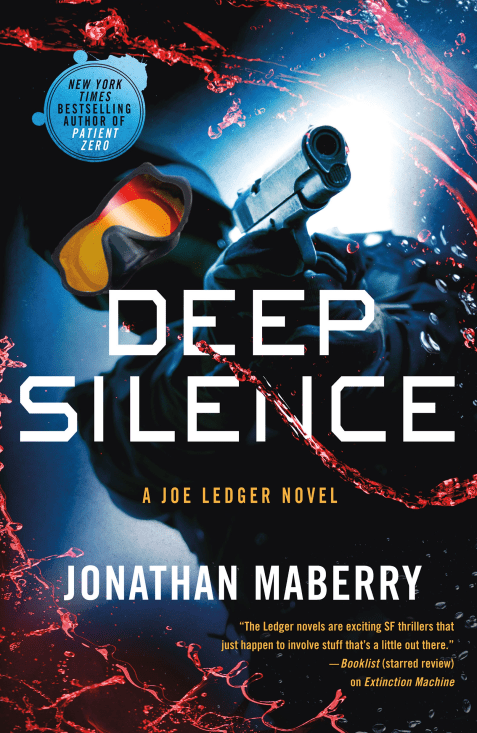
Deep Silence by Jonathan Maberry

Deep Silence Cover.png

Publishers: St. Martins Griffin

                        Macmillan Audio

Publication Date – 30 October 2018

Amazon     Book Depository

From horror legend Jonathan Maberry comes the 10th book in his weird-science based horror, thriller, science fiction Joe Ledger series, which takes the reader on a wild joyride through a world gone mad in this five-star adventure.

I have to admit that Maberry is not an author that I have had much experience with before.  The only work of his I have previously read was a fun short story that was featured in a volume of zombie short stories he jointly edited with George A. Romero in 2017 that I previously reviewed here.  However, I am extremely happy that I decided to check out this latest book as it exposed me to this incredible series, which I enjoyed immensely.  I can think of no greater praise for this novel then to say that upon finishing it, I immediately dropped everything and started reading the first book in the series, Patient Zero, which I will be reviewing in the next few weeks as part of my Throwback Thursday series.

I chose to listen to Deep Silence on audiobook rather than read a physical copy.  The audiobook format of this book is just under 16½ hours long and is narrated by Ray Porter, who has worked on several other books in the series.

In this latest book, a Russian splinter group have developed a powerful weapon with pieces of alien crystal seeded throughout the planet.  This new weapon can cause devastating earthquakes on a level never before seen and has the potential to destroy the entirety of the United States.  The weapon also has a chilling side effect: it causes people around the epicentre of the quake to engage in violent acts of madness, from suicide to ferocious attacks on others.  The first attack targets Washington, with mass violence erupting around the Capitol building.

America’s only hope may be the top-secret rapid response organisation, the Department of Military Sciences (DMS).  For years, the DMS has been the only line of defence against the insane science America’s enemies are utilising and developing in this new age of wonders.  From deadly diseases, ancient forbidden technologies, extreme acts of genetic manipulation, the latest forms of cyber and electronic attack, and even weaponised zombies, the DMS, led in the field by Captain Joe Ledger, has managed to stop all these threats and more.  Utilising the latest military and espionage equipment and the best and brightest soldiers and scientists America has to offer, the DMS operates just outside the government and can go further than any other agency can.

However, while the DMS attempts to combat this latest threat, they find themselves hindered by a megalomaniac President whose stupidity and paranoia make him more afraid of the DMS than the group unleashing earthquakes across his country.  As Joe and his team attempt to hunt down the origins of this attack they must contend not only with a dangerous Russian force but also with agents of their own Government and devices that can drive even the most dedicated DMS agent insane.  But as the Russians attempt to force the eruption of the Yellowstone caldera, the greatest threat may come from the creatures the technology was stolen from.

Deep Silence is the 10th book in Maberry’s Joe Ledger series, which started in 2009 with Patient Zero.  Maberry has been writing since 2006, with his debut book Ghost Road Blues forming the first book in the Pine Deep Trilogy.  Since then, Maberry has written a huge number of books, most of which have a horror theme or focus.  Apart from his Joe Ledger series, Maberry is probably best known for his Rot & Ruin series, a young adult zombie apocalypse series.  Aside from his fictional novels, Maberry has also written several comics for Marvel as well of a number of non-fiction books, which tend to focus on Maberry’s passions for martial arts and the supernatural.

Deep Silence is an exceptional book that combines together a number of genres, including science fiction, thriller, horror, military fiction and spy thrillers into one very captivating narrative.  The end result is a non-stop thrill ride that perfectly utilises the series’s bizarre nature and advanced science to create a devastating threat and a larger-than-life protagonist to face it.  There are so many amazing elements to this book, from its continuation of an enjoyable series, to the very weird elements that come into play, to the excellent writing style and enjoyable characters.  Once I started reading this book I just could not stop, and it is easily one of my favourite books of this year.

From what I understand, the Joe Ledger series started off mostly focusing on the mad sciences that humans are able to create and use against each other.  However, in recent books, the series has taken on a more Lovecraftian vibe, with unknown aliens, space demons and incredibly insane technology.  Deep Silence in particular seems to relate back to several of these previous alien technology based novels, as the devices, technology and motives that the book’s antagonists utilise are closely related to the adventures that occurred in previous books.  That being said, there is still the continuous use of more advanced human technologies utilised by many of the book’s characters, especially those working for the DMS.  All the crazy gadgets that they use are pretty impressive, but none (with one or two major exceptions) are outside the realm of possibility and reflect technologies that could potentially exist.  Indeed, in the introduction to Patient Zero, Maberry actually confirms that most of the technology he describes in his books is currently used or could soon be used by intelligence organisations around the world today.

One of the challenges of coming into a series late is the reader’s lack of knowledge about the universe’s background information, lore and the development of its main characters and the extent of their relationships.  Maberry does an incredible job bridging this gap throughout Deep Silence, providing the reader with descriptions of previous events, recaps of character descriptions and history and making use of a number of references to previous missions and adventures captured in the other books in the Joe Ledger series.  There are also a number of scenes that appeared to be callbacks to previous books, although the author was able to describe the pertinent details of these events.  As a result, I was never lost at any point and really appreciated the recaps and detailed descriptions the book’s various point-of-view characters provided throughout the novel.  It also made me very curious about some of the previous books in the franchise, and I am now very interested in checking out some of these insane and fun-sounding adventures.  As a result, Deep Silence is an excellent book if you want to get an idea of what the Joe Ledger series is all about.  At the same time, established fans of this long-running series will be interested to see the significant changes that occur to the book’s main characters, as well as the scenes detailing where the series will potentially be going in the future.

One of the things that I really enjoyed about Deep Silence was the way that Maberry presents the book’s narrative from multiple perspectives and across a range of different time periods.  Because of this, the reader is given a far wider view of the overall narrative.  Not only do they get to see the protagonists attempting to investigate and stop what is going on, but they get to see the antagonists coming up with their plans, discovering and researching their doomsday device over a period of years and then implementing their mission.  This also allows the reader to get a far deeper understanding of the antagonist’s objectives and mindscapes in committing these acts and what it costs them mentally and emotionally.  Nearly all the fun and eccentric characters working in the DMS get a few scenes told from their point of view.  This provides the reader with some high level, but easy to follow, scientific discussions, hacking sequences and the utilisation of incredibly exciting-sounding advanced espionage technology.  There is also a focus within Deep Silence of the politics around and behind the DMS, and how the organisation’s leader, the mysterious Mr Church (who is totally an alien, right?), deals with these situations.

While all of the other point-of-view characters are entertaining and it is intriguing to view their sides of the story, the best character has to be the series’s main protagonist, Joe Ledger.  Ledger is the extremely dangerous and slightly disturbed leader of the DMS field team, and has been at the forefront of all the adventures in this series.  It is interesting to note that Ledger is the only character in this book whose story is told from the first person perspective, which is fortunate because Ledger is one of the biggest smartasses in fiction, especially within the privacy of his head.  Nearly every single piece of the book told from Ledger’s point of view is filled with jokes, wisecracks, and exaggerated or sarcastic thoughts.  Ledger has some incredibly humorous observations about the world around him, especially the eccentric characters he encounters, and his thoughts are just as likely to be self-deprecating as they are to be insulting about the people he has to deal with.  He is also an eccentric being who does some incredibly funny things, from having fun with his opponents to humming the Mission Impossible theme as he breaks into a safe.  However, beneath this humorous exterior there is a deeply damaged character who is severely impacted by events that have occurred before and during this series.  Maberry spends significant time diving into this character’s history and psyche, which quickly gives the reader, even readers previously unfamiliar with the series, a good understanding of his life and the events that define him.  His deep and fractured mind becomes a key part of this story, especially when it encounters mind-altering alien crystal and events beyond the realm of human comprehension.  All of this helps create an amazing and incredibly relatable central character whom the reader becomes incredibly drawn to, and as a result, Ledger is one of the best things about this book.  Special mention should also be given to Ledger’s combat dog Ghost, who appears in nearly all the same scenes as Ledger and is just as much of an enjoyable character as his owner.

While the mad science elements and characters are great, Maberry has also ensured that this is the perfect book for those action junkies looking for fast-paced thrills.  Ledger is an absolute beast throughout this book and engages in a number of fantastic fights in a variety of different scenarios.  Maberry channels his love of martial arts through this character and includes a number of detailed and very quick fight scenes as Ledger dismantles his opponents with efficient skill.  The other characters are no slouches and there are number of great action sequences I enjoyed.  Two of my favourites have to be two separate and extended sequences which see Ledger and DMS’s Echo Team engage in massive fire fights with a range of opponents.  These scenes are absolutely incredible and make the reader feel like they are really in the middle of a gun battle.  The author takes pains to try and highlight how methodical and calm professional teams can be during battles while also highlighting the various strategies and combat advantages used.  The multiple perspectives come into play here perfectly, as the different members of Echo Team engage in various encounters around the main battle, really highlighting what an effective special ops team can accomplish in the field.  Maberry enhances the fun and the action to a crazy degree by also utilising the advanced technology available to the DMS agents.  This not only includes some insane and deadly weaponry, which is very cool in action, but also other pieces of advanced technology such as drones, body armour, goggles, and enhancements for Ghost that help turn the battles into massive and enjoyable set pieces.

Nothing, however, can top the sheer insanity that unfolds when the book’s antagonists unleash their super weapon against the world.  Maberry’s descriptive and skilled writing really brings these scenes to life.  The sheer devastation of the earthquakes that he describes is just incredible and very disturbing.  But nothing is more crazy or electrifying then the scenes where the people who are affected by the strange energy given off by the weapon go insane and start participating in a violent rampage against themselves or against each other.  Maberry pulls no punches here and all the violence is on full display, from terrible acts of violence against anyone around them to disturbing suicides or episodes of self-harm.  In many of these scenes the author attempts to get into the head of these characters and watch them slowly unfold from within.  This mostly prevalent with his protagonist, Joe Ledger, but other characters’ thoughts are shown.  Let’s just say you’ll never look at the Beatles song Revolution 9 the same again.  The biggest example of this insanity happens around the Capitol building in Washington DC, and quite frankly it reminded me of the church scene in Kingsman: The Secret Service, with the protagonists stuck in the middle of a crazy mob.

One of the more intriguing parts of Deep Silence is the side character of the President of the United States of America.  While this character is never explicitly named in the book, he is clearly supposed to be a Trump analogue.  The character is an easily manipulated, short-tempered, Twitter-obsessed moron who puts his own needs far above those of the country he is governing.  The resemblance to Trump is uncanny, and Maberry does an incredible job mirroring his arrogance and personality throughout the book.  While this character is a great addition by itself, Maberry spends a lot of time exploring how a character like this would deal with the advanced technology and extreme catastrophes that are a major part of this series.  The results are frustrating for the reader as they are forced to sit there and watch this character make all the wrong decisions and serve his own agenda or self-interest.  It was also very intriguing watching this President go up against the DMS as he routinely targets the department out of fear and ignorance.  The new political reality of Washington becomes a major factor throughout Deep Silence, and Maberry is understandably critical about how things are being run and the insanity currently gripping Washington.  It was very interesting to see Maberry incorporate the current unpredictable political reality of America into his new book, and readers will be very intrigued to see how this might impact the future of his long-running series.

I listened to the audiobook version of Deep Silence, narrated by Ray Porter.  The audiobook version does go for over 16 hours, so it’s one of the longer ones I have listened to lately.  That being said, due to its exceptional content, I found myself making a variety of excuses just to keep listening to this audiobook, and got through it very quickly.  The audiobook is an incredible way to experience this book, and I would highly recommend it, mainly because of Ray Porter’s narration.  Porter absolutely nails all of the characters and provides a number of amazing voices to fully capture the diverse accents and attitudes of this eccentric group of characters.  I was particularly enthralled with the calm, cool voice he gifted to the DMS Director, Mr Church, which really reminded me of Tom Hanks’s voice.  Special mention should also be given to his narration of the President.  The narrator created a fantastic Trump-like voice that fully conveyed the character’s high opinion of himself, as well as his dismissive and arrogant nature.  I actually had a visceral reaction when I heard that voice the first time, it was that good.  Porter’s narration for Joe Ledger was also perfect, as he does an incredible job portraying Ledger’s high-energy musings and the full tone of his personality.  Porter’s voice peaks and rises to meet the full intent of any of Ledger’s sentences, and he is a master at conveying Ledger’s innate sarcasm.  At the same time, he is also able to make his voice more serious and subdued during the darker scenes in which Ledger is deep within his head or his memories.  This is sterling work from Porter, and one of the best audiobook narrations I have ever listened to.  As a result, I highly recommend that the audiobook version of Deep Silence as the best way to experience this novel.

Bestselling author Jonathan Maberry once again takes his audience on a captivating thrill ride in the Joe Ledger Series.  Deep Silence provides the reader with an extraordinary and very engrossing story that proves extremely hard to put down.  Equally enjoyable for established fans of this long-running series and new readers who have yet to experience Maberry’s work, readers can and will have an incredible amount of fun with this book.  Best enjoyed in audiobook format, Deep Silence is guaranteed to make you a dedicated fan of the author and easily gets a five-star rating from me.

My Rating:

Five Stars

Amazon     Book Depository

Archenemies by Marissa Meyer

Archenemies Cover

Publisher: Pan

Publication Date – 6 November 2018

Amazon     Book Depository

Following on from her immensely popular 2017 release, Renegades, Meyer continues her exciting tale of superpowered duplicity and intrigue with Archenemies, the second book in the Renegades trilogy.

In an alternate version of Earth, superpowers exist and those that have them are known as prodigies.  For most of this world’s history, prodigies were tormented and persecuted and many were forced to live in hiding.  That was until the Age of Anarchy, when the world’s villainous prodigies rose up and established their own world order of chaos and destruction, led by the notorious Ace Anarchy.  It was not until the rise of the superhero syndicate, the Renegades, that order was restored and prodigies were accepted as a part of society.  While most people see the Renegades as symbols of hope and virtue, there are some who have good reason to hate them.

Nova is one of these people, and her hatred has led her to live a dangerous double life.  Most of the world knows her as Insomnia, a recent recruit to the Renegades, who serves as a member of a patrol team in Gatlon City, the location of the Renegade’s headquarters.  However, Nova is also secretly Nightmare, the niece of Ace Anarchy and a member of the Anarchists, a group of villains dedicated to destroying the Renegades.  Hating the Renegades for the role she believes they played in the death of her parents, Nova has infiltrated the superhero team in the hope of discovering all their secrets in order to destroy them from within.

While she has so far maintained her cover, Nova’s mission has become complicated due to her relationship with Adrian, and the son of the people she holds most responsible for her family’s tragedy.  But Adrian has secrets of his own.  While he leads Nova’s patrol team as Sketch, Adrian is also living a double life as the Sentinel, a vigilante superhero acting outside of the codes and restrictions of the Renegades.  Although Adrian was only attempting to help, his actions as the Sentinel have placed a target on his back, and the Renegades are determined to stop rogue prodigies.

While Nova is determined to complete her primary mission and retrieve a powerful artefact from within the Renegades’ headquarters, both hers and Adrian’s lives are about to get even more complicated.  The Renegades have revealed a game-changing new weapon which forces the two young prodigies to question everything they know about what justice is.  Can they keep their respective secrets from each other, or are their worlds about to come crashing down around them?

Archenemies is the latest book from bestselling young adult author Marissa Meyer, and the second book in her Renegades trilogy.  The first book in the trilogy, Renegades was one of last year’s most successful young adult hits.  Readers may also be familiar with some of Meyer’s other young adult works include The Lunar Chronicles, a series that focuses on a dystopian science fiction reimagining of classic fairy tales; Heartless, a prequel novel to Alice in Wonderland; and the young adult graphic novel series Wires and Nerve.

This second book in the trilogy continues Meyer’s incredible story of superhero intrigue and adventure.  The central story is a captivating tale told from the point of view of both Nova and Adrian and follows them as they attempt to live their double lives in this exciting world.  The storyline that follows Nova attempting to hide her affiliations with the Anarchists as she infiltrates the Renegades is a thrilling and exhilarating narrative.  Nova is constantly on edge as she must allay the suspicions and investigations into her background and her motivations for performing certain tasks around the Renegades’ headquarters.  The character must also deal with the emotional turmoil that she experiences as she struggles to stay on her original mission of betraying the Renegades, despite some conflicting feelings she develops.  The sections of the book that focus on Adrian are also very compelling, especially as his is the direct opposite to Nova’s story, as he begins to disobey the rules of the Renegades to engage in some illegal vigilante work.  His struggles about whether to keep up his activities become a major part of his storyline, especially as he experiences some severe consequences for going into the field without backup.  He is also determined to keep his identity as the Sentinel hidden from Nova, as she particularly dislikes the Sentinel, although Adrian gets the reason for the dislike completely wrong.

These two separate storylines combine together really well into one central narrative, and Meyer does an incredible job showing how the secret actions of one of the point-of-view characters impacts on the other character.  For example, part of Adrian’s storyline focuses of his investigation into the death of his mother, a famous superhero, and his search leads him to believe that Nightmare holds the answers he is looking for.  This becomes a big problem for Nova, as she has managed to fool most of the world into believing that Nightmare is dead, and Adrian’s investigation could blow her cover.  There are also several fantastic scenes where one of the protagonists comes across a clue that the reader knows could reveal the other character’s dual lifestyle.  The suspense that Meyer creates during these sequences is subtle but effective, as the reader is left holding their breath, waiting to see if this will be the event that will lead to the inevitable part of the trilogy when the two characters find out about each other.  This second book also contains some interesting hints towards some major reveals that are likely to occur in the final book of this trilogy, as well as some urgent plot points that can only lead to some intense and action-packed scenes in Meyer’s next release.

Meyer also continues the intriguing romance angle between the two main characters that began in the first book of the trilogy.  Rather than being ultra-intense, this romantic subplot comes across as more of a slow burn, as Nova and Adrian both like each other but are reluctant to act on their feelings due to the dual lives they are secretly leading.  Nova does spend most of the book attempting to heat this relationship up, but this is more in an attempt to seduce Adrian in order to help her further her goals for the Anarchists.  However, she truly has feelings for him, which continue to develop throughout the course of Archenemies.  There are several nice scenes throughout the book as the two point-of-view characters attempt to initiate the relationship, and despite the deceitful backdrop of the story, their relationship starts to feel like a genuine, heartfelt romance.  The eventual reveals about both characters’ secret identities will no doubt result in some significant drama within the next book, and readers will be interested to see the final result of this relationship.  For those interested in a less complicated romantic story, there is also a lighter romance angle between Renegades side characters Smokescreen and Red Assassin.  Their sweet and awkward flirting and courtship will be instantly recognisable and relatable to most readers, and you can’t help but hope that the two characters will realise how much they like each other.

I quite enjoyed the fantastic world that Meyer has created for the Renegades trilogy.  A world filled with superpowered beings is an excellent place to set an intrigue-studded young adult series such as this.  The creative and thrilling story of infiltration and morality is amplified by the rich number of superhero elements throughout the book.  There are a huge number of diverse superpowers, as well as mysterious and dangerous artefacts and weapons.  Meyer has created a number of interesting and unique superpowers, including a woman who makes practical weapons out of her own blood and a man whose power is to make people see the wonder in everything.  The sheer amount of different powers and technology available thanks to the author’s imagination allows for a number of cool fight scenes and action sequences throughout the book, which plays wonderfully with the other elements of the story.  A superb and creative background location.

While Archenemies’s dramatic story and fun superhero-based location forms a fantastic base for this novel, one of my favourite parts of the book was the moral and ethical issues raised by various characters throughout the story.  Both point-of-view characters have different opinions about whether the Renegades or the Anarchists are in the right and what constitutes justice.  While Nova’s opinions about the Renegades could potentially be explained away as brainwashing from her uncle and the other Anarchists, several of the actions and attitudes she encounters while undercover seem to justify her beliefs.  Her belief that the Anarchists might be in the right is supported by the fact that most of the remaining members of the team of villains seem to be really nice people who are supportive and helpful to Nova.  Several members also have somewhat tragic backgrounds which highlight why they choose to live their lives apart from the rest of society.  Adrian, on the other hand, has been raised to believe in the Renegades’ methods and code, but he has started to find them too restrictive and begins fighting crime outside them in his guise as the Sentinel.  However, he finds himself targeted by the Renegades for doing heroics outside of their code, and begins to wonder if they are making the right decisions, a feeling that becomes amplified thanks to his interactions with Nova.  Meyer further complicates matters by diving into the history of the prodigy persecution and discussing how it only ended when the villains rose up and took control, and this current golden age of super heroes only exists because they did.

This moral debate about what a group of superheroes should be able to do is further amplified by the introduction of the Renegades’ new weapon, Agent N, a formula that can permanently remove the powers of any prodigy.  Nova, in her guise as Insomnia, argues strongly against the Renegades’ policy of wilfully administrating Agent N against any rogue prodigy they encounter, believing that they don’t have the right to decide who gets to have powers and who doesn’t.  While her debates are mostly ignored by her team members, her concerns are validated thanks to the actions of a rogue team of Renegades who abuse Agent N in the field.  There is a great scene when Adrian as the Sentinel attempts to stop them committing a terrible crime, and these rogue Renegades actually believe they are still morally superior to Sentinel because they are members of a super team, and he’s not.  Despite her misgivings, Nova still utilises Agent N to achieve her own goals, and justifies it as being for the greater good.  Thanks to a series of escalating situations within the story, by the end of the book, the reader is left wondering which side, if either, is completely in the right, which personally has got me very excited for the final book in the trilogy.

Archenemies, the second book in the Renegades trilogy, is a captivating and excellent read from Meyer which presents a superb story about dual identities in a morally grey superhero universe.  While aimed at a young adult audience, this series will prove to be incredibly intriguing to older readers and is easily suitable for a younger teen audience.  Probably best read after enjoying the first book in the trilogy, Archenemies is still quite easy to follow for those who chose to enter the Renegades series at the second book, due to its detailed descriptions of major plot points that occurred earlier in the series.  I had a lot of fun with Archenemies and will definitely be checking out the final book in the trilogy when it comes out next year.  An incredible adventure from Meyer, this book comes highly recommended.

My Rating:

Four and a half stars

Amazon     Book Depository

The Queen’s Colonial by Peter Watt

The Queen's Colonial Cover.png

Publisher: Macmillan

Publication Date – 13 November 2018

Amazon     Book Depository

Following the conclusion of his long-running Frontier series, one of Australia’s most intriguing authors, Peter Watt, returns with a brand new adventure that features several intriguing characters involved with unique historical events during the Victorian era.

For as long as he could remember, colonial Ian Steele has always wanted to serve as an officer in the Queen’s army.  However, for a humble blacksmith living just outside of Sydney Town, this seems like an impossibility.  That is until 1852, when he meets Samuel Forbes, a young English aristocrat, poet and former Second Lieutenant in the army, who bears a striking resemblance to Ian.  After prematurely finishing his commission following a terrifying campaign against the Maori warriors in New Zealand, Samuel is living with his uncle in Australia, avoiding returning home to a father who hates him and forced him to join the army against his will.

Samuel presents Ian with an interesting proposition.  In order to receive a massive family inheritance, he needs to complete 10 years’ service in the army, but after his previous combat experiences he has no intention of heading back, preferring to seek adventure in America with the man he loves.  However, wanting to receive the money and spite the father who abandoned him, Samuel has come up with a plan: send Ian in his place and then split the inheritance between them.

After the death of his mother, Ian accepts the offer and journeys to England to take his place as a captain in the Forbes family regiment.  As he successfully integrates himself in the Forbes household, he becomes acquainted with the members of his new family.  While Samuel’s sister and younger brother welcome him with open arms, Ian quickly discovers that Samuel’s father and older brother have no intention of giving up Samuel’s portion of the inheritance.

Ian’s desire to prove himself in battle is soon rewarded, as the regiment departs England for the continent.  Nicknamed “the Queen’s colonial” by his soldiers, he gains a reputation in the fight against the Russians in the Crimean war.  But while the Russians and disease are a constant danger, the greatest threat to Ian may come from his own side.  An Australian fugitive hiding out in the regiment knows who Ian really is and could easily report him, while the devious plots of the Forbes family could strike him down at any time.

Peter Watt is a well-established historical fiction author who has been writing Australian based novels since 2000.  The Queen’s Colonial is Watt’s 19th book, and is the first book he has written since concluding his 12-book Frontier series.

In The Queen’s Colonial, Watt continues with the same distinctive style that made his previous books such a treat to read.  Throughout the book, the reader is shown various sides of the story from multiple point-of-view characters, as both the protagonists and antagonists journey through history’s most intriguing events and wars.  There is also a minor hint of spirituality, although rather than the spirit of a vengeful Indigenous Australian that was such a major character in the Frontier series, The Queen’s Colonial features visions based around old British druids.  Watt is a master of utilising multiple character perspectives to tell a strong and addictive narrative.  While a large portion of the book is focused on the main character of Ian, several of the other characters are given starring roles throughout the book, and their adventures run parallel to the main storyline featuring Ian.  This is a great way to tell a larger narrative, and it is fascinating to see how the actions of one character could impact on a different storyline.  Each of the side storylines are pretty intriguing and allow the author to expand on several fun side characters throughout the course of the novel.  Watt has engineered quite a lot of coincidental connections, which, while a tad unrealistic, is a great way of connecting these character storylines in various intriguing ways.  I was somewhat surprised that Watt did not really show what Samuel Forbes was getting up to.  Despite him being majorly important to the plot, very little is seen of his adventures after the start of the book.  I would have been interested in seeing what he was getting up to, as well as his reactions to the events happening in the other storylines.  Hopefully Watt will explore his subsequent focus on him a little more in any books that follow on from The Queen’s Colonial.

One of the best ways that Watt utilises his multiple perspectives is by showing the villainous actions of two of his main antagonists as they plot and scheme to rid themselves of the protagonist.  These storylines are mostly told from the point of view of the oldest Forbes son Charles, and feature him and his father coming up with ways to kill the man they think is the second Forbes son, Samuel, but is really Ian in disguise.  Watching them come up with several devious plans and commit terrible acts is pretty intense, especially as you watch these plots unfold in the sections of the book told from Ian’s point of view.  It is quite fun for the reader to see Ian react to events that they knew was coming, and works to make an intriguing overall narrative.

I loved Watt’s depiction of the Crimean War, as the author does a fantastic job highlighting the brutality and harsh reality of this war, and the terrible conditions that the British troops had to deal with.  Watt really captures the horrors of battle in his writing, and the reader is constantly brought into the middle of the book’s battle sequences thanks to the author’s detailed descriptions and historical features.  While the battles are harrowing and bloody, quite a number of scenes show the horrifying results of the biggest killer of the British during this war, dysentery and other diseases.  Watt is quite critical of most of the British officers who lead this army, and places most of the blame for the war’s disasters on the backs of inexperienced or incompetent officers.  This is particularly exemplified by the character of Jenkins, who is promoted up through the army thanks to his family’s connections and money, and ends up getting many people killed thanks to his cowardice, incompetence and personal prejudices.  History buffs will enjoy Watt’s focus on this war, which is often overlooked in historical fiction, especially the author’s determination to show the trials and tribulations of an infantry regiment in this war.

Peter Watt’s new book, The Queen’s Colonial, is an excellent piece of historical fiction that takes the reader on a fantastic adventure through time.  Following a 19th century New South Wales colonial into the Crimean War is a great story, and I loved Watt’s great use multiple character perspectives to tell an overarching narrative.  Watt once again shines as one of Australia’s best authors of historical fiction and readers of his latest novel will enjoy a cleverly crafted and captivating story.

My Rating:

Four and a half stars

Amazon     Book Depository

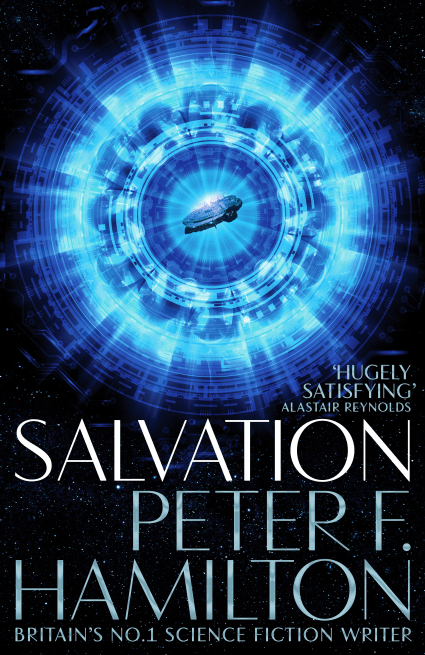
Salvation by Peter F. Hamilton

Salvation Cover.png

Publisher: Macmillan

Publication Date – 4 September 2018

Amazon     Book Depository

From one of the modern masters of the space opera comes a rich and ambitious piece of science fiction that that examines an exciting potential future for Earth and the intriguing adventures that could come as a result.

In 2204 AD, humanity has advanced by leaps and bounds and spread out among the stars.  Utilising advanced teleportation technology, next-gen computers and cutting-edge biotech, humanity has created a number of new and varied societies controlled by a handful of powerful corporations.  However, everything is about to change.  Out in the furthest reaches of human expansion, explorers have found a crashed alien craft.  While this is not humanity’s first contact with an alien species, the sinister cargo found onboard the crashed ship reveals a dangerous alien agenda.  Determined to ensure humanity’s survival, the Connexion Corporation assembles a task force to examine the craft and assess the potential threat that it could cause.  Led by Feriton Kayne, the task force is made up of Kandara Martinez, Yuri Alster, Callum Hepburn, Alik Monday and their assistants.  While on paper this group are the perfect people to investigate this potential threat, there is one significant problem: one member of the team is a hostile alien infiltrator.  As the team gets closer to the alien ship, secrets from their past are revealed and the future of the human race hangs in the balance.

Hundreds of years later, Dellian and his team of genetically enhanced soldiers are born and raised on a planet, far away from Earth.  An alien threat has forced humanity into hiding among the stars and pushed them to the edge of extinction.  As the young soldiers grow up, they encounter lessons from the past and discuss the legendary Five Saints who first encountered the invaders.

This is an absolutely spectacular piece of science fiction from bestselling author Peter Hamilton, who has once again created an elaborate and captivating space opera.  Hamilton has written a number of large-scale science fiction novels since his 1993 debut.  He first gained prominence with the Greg Mandel trilogy, which followed the adventures of a psychic detective in a dystopian future.  Hamilton followed this up with his first epic space opera series, The Night’s Dawn trilogy, which focused on souls of the dead coming back and possessing multiple human planets in the far future.  He continued with additional space operas, such as the Commonwealth Saga, the Void Trilogy, The Chronicle of the Fallers and the standalone novel Fallen Dragon, as well as the children’s fantasy series, The Queen of DreamsSalvation is the first book in Hamilton’s brand new trilogy, The Salvation Sequence, with the adventure continuing in the future releases, Salvation Lost and Saints of Salvation.

Salvation is an impressive and compelling read that combines a powerful and well-written story with a brand new, large-scale science fiction universe.  This story is told from of variety of different time periods set throughout Earth’s future.  The central story of this book is set in 2204 AD and features the exploration crew from the Connexion Corporation examining the crashed alien ship.  This storyline is narrated from Feriton Kayne’s point of view and is the only first-person narration in the entire book, except for a short flashback chapter examining Feriton’s infiltration of a different alien spacecraft.  Salvation also features five additional storylines that are set across various time periods.  Four of these storylines are presented as tales from the other four main characters in the 2204 AD timeline, Kandara Martinez, Yuri Alster, Callum Hepburn and Alik Monday.  Each of these flashback narratives is given its own significant chapter; for example the first of these flashback chapters lasts for 140 of the books 526 total pages.  The fifth storyline is set far in the future, and features a different group of characters who are living in the aftermath of these past adventures and is told across several shorter chapters.  The author makes spectacular use of these multiple time periods and combines them together into an excellent overarching narrative.  A significant amount of detail and a huge number of supporting characters are packed into this book, which falls just short of overwhelming the reader but creates the feeling of a massive universe with quite a lot going on.

Each of Salvation’s separate plotlines offers the reader a drastically different story to enjoy, and presents them with several unique adventures in one novel.  The storyline in 2204 AD is an intriguing first contact and exploration story that works incredibly well as the overall narrative that ties all the other storylines together.  The first flashback storyline is set in 2092 AD and features the story of how Callum Hepburn and Yuri Alster gained their antagonism towards each other.  It also shows the earlier days of Connexion and the darker side of their newly formed technology and world influence.  This first story is told from the point of view of Callum, Yuri and Callum’s wife, Savi, and features a thrilling spy tale that also reveals the unique and extreme form of criminal punishment that resulted from the new technology.  The second of these storylines is set in 2167 AD and focuses completely on Yuri as he searches for a missing person taken by the new and shadowy underworld that has taken shape amongst the stars.  This is the first of the flashback storylines to hint that an alien species may have nefarious plans for humanity, and also features some cool examinations of the power and tactics that Yuri and Connexion use.

The third storyline is a complex murder mystery storyline set in 2172 AD that focuses on the secretive FBI agent Alik Monday and presents another fantastic mystery with some unique science fiction elements.  The fourth storyline is set in 2194 AD and follows badass mercenary Kandara Martinez as she investigates corporate sabotage on the Utopial home planet.  This is a high-action thriller storyline that also examines the Utopials, a human society seeking to create a cultural utopia, while also going into genetic surgery in a big way.  The highlight of this storyline has to be the intense fight between Kandara and the mercenary Cancer, who had been a shadowy figure in some of the previous storylines.  The final prequel story follows the 2204 AD timeline narrator, Feriton Kayne, in 2199 as he infiltrates the large spaceship belonging to the Olyix, an alien race that humanity came in contact with some years before.  This is one of the shortest stories, but it contains the most detailed examination of the Olyix, who have appeared in several of the previous stories.

In addition to the stories set in and before 2204 AD there are also several chapters are set in the far future of humanity.  This timeline starts in 583 AA (After Arrival) and features the remnants of humanity as they prepare to fight back against the alien menace that pushed them away from Earth.  This is a rather intriguing storyline that examines children being turned into tight-knit teams of soldiers as they prepare for the war to come while also providing some hints about the events of the main storyline.  Each of the above stories are fairly self-contained and do an amazing job of showing off the sheer complexity of Hamilton’s new universe, while at the same time providing a series of unique and captivating tales across time.

Each of the prequel timelines has a storyline that could be considered either a murder mystery or thriller.  By themselves, each of these storylines is very well written and contains compelling mysteries and action packed sequences that are more than enough to keep the readers hooked to the book.  However, the real highlight of these prequel timelines is the way in which the play into Salvation’s larger mystery that is explored within the 2204 AD storyline, namely the identity of the alien race attacking humanity and which of the members of the research team is an infiltrator.  I really loved the way that these prequel stories hinted at the main mystery while also exploring the history of the main characters in an attempt to show their personality or a critical point in their lives.  The final twists in the 2204 AD storyline are very surprising and serve as a fantastic payoff for Salvation’s overall narrative.

The author has also included a significant amount of science fiction elements throughout the book that are presented in considerable detail.  It is fascinating to see Hamilton postulate how Earth may develop in the near future and the advanced technology that they would start to utilise.  The multiple timelines also come into play for this element of the book as they allow the reader to see the progression of technology over the years.  What is most interesting about this is that the main pieces of technology don’t change; instead the next generations of the same device are revealed throughout the book’s various stories before the technology eventually plateaus at its highest level.  The science fiction elements also come into play in several intriguing ways.  For example, they allow for some very creative mysteries, including a murder in a house containing teleportation gates that result in the victims being spread across multiple locations, including New York, the Moon, Mars and the Antarctic, creating a murder investigation with several unique complications.  The advent of space travel and other technology also allows the creation of some inventive new societies.  From futuristic utopias to desolate prison it is absolutely fascinating to watch these societies come together.  Overall the science fiction elements are a fantastic part of this book and add some intriguing elements to all of the book’s interconnected stories.

Peter Hamilton has produced another elaborate and powerful piece of science fiction space opera in Salvation.  With a new and unique universe that contains some fantastic and detailed new elements and multiple timelines that are combined together into an outstanding novel, this is an absolutely amazing read.  Epic science fiction at it’s very best, Salvation comes highly recommended and is a spectacular start to an exceptional new series.

My Rating:

Five Stars

Amazon     Book Depository

Absolute Proof by Peter James

Absolute Proof Cover.jpg

Publisher: Macmillan

Publication Date – 25 September 2018

Amazon     Book Depository

From one of the most pre-eminent authors of thrillers and murder mysteries comes this deeply spiritual book that spins a dangerous hunt for secrets around a strong and intriguing story of human belief and the search for religious proof.

Investigative reporter Ross Hunter has covered many world events and news items in his storied career, from warzones to crooked politicians.  But perhaps his most dangerous story might be his most bizarre.  Picking up the phone one day, he is brought into contact with Dr Harry Cook, who has a remarkable tale.  Cook believes that he has received a communication directly from God and has been gifted with three sets of coordinates that will provide the world with absolute proof of God’s existence.  This message has also instructed Cook to contact Ross and utilise his skills to spread Cook’s discoveries to the world.

Ross is naturally sceptical of this story, but certain facts that Cook knows convince him to dig a little deeper into the man’s claims and read the elaborate religious writings that he has created and left with him.  Unconvinced of the validity of Cook’s claims and about to drop his inquiries, Ross is stunned when he finds that the old man has been brutally murdered.  Could there be more to this story than Ross originally thought?

Travelling across the world to follow the coordinates, Ross finds hidden artefacts and relics which could reveal the second coming.  Still not convinced of the validity of these claims but unwilling to let go of this story, Ross investigates further and makes some startling discoveries that could shake the very foundations of the world’s collective faiths.  But Ross isn’t the only person interested in what Cook’s coordinates may uncover.  As various religious and spiritual organisations contact Ross about his findings, a powerful pharmaceutical company and a rich television evangelist have despicable plans for whatever Ross uncovers, and they are willing to kill anyone to get it.

James is one of the United Kingdom’s most experienced and prolific authors of crime fiction, with significant works in both the movie and book worlds.  In his career as a novelist, he has published nearly 35 novels since his 1981 debut.  Of particular note is his Roy Grace series of books, which focuses on the investigations of the titular Brighton based detective.  James has written 14 Roy Grace novels since 2005, including the May 2018 release, Dead if you Don’tAbsolute Proof is an intriguing piece of literature from James, as it combines an exciting and captivating thriller with an in-depth story of religion.  This is a standalone book from James, and is apparently based on a real phone conversation the author had back in 1989.

Absolute Proof contains an amazing and exciting thriller storyline that follows its protagonist, Ross Hunter, as he attempts to uncover one of the greatest mysteries of all time: whether God actually exists.  Following a series of vague clues that are mostly made up of geographical coordinates, Ross must uncover three specific items or locations that could combine into definitive proof of the divine.  The various investigative techniques and problem-solving that the protagonist utilises to uncover the clues left to him and solve the overall mystery are well written, very clever and result in a very unique and thought-provoking conclusion.  The protagonist’s quest for answers is complicated by the various groups and individuals that are attempting to hamper, compromise or misappropriate the results of his investigation and are targeting Ross and the other people associated with this case.  As a result, there is quite a lot action and excitement as these various groups attempt to attack or steal from Ross and he finds ways to get out these situations.  There are several intense and action-packed scenes where Ross must escape from thugs wielding guns from a helicopter, physical attackers and several vans attempting to run him off the road.  In addition to all these direct attacks, Ross is also being constantly tracked through a variety of electronic and physical techniques and must find ways to try and avoid them.  There is an interesting look at some DYI anti-espionage techniques as Ross attempts to outwit these various professionals with some limited success.  All of this comes together into quite the captivating narrative with lots to keep the reader glued to the page.

The overall story of Absolute Proof is mostly focussed around this massive religious mystery and the attempt to undermine it.  James has provided the reader with a lot of backstory and motivations for several of the book’s characters.  Much of these personal histories are intriguing and provide the reader with explanations about why the protagonist and antagonists have an interest or obsession with the results of the central investigation.  It also goes into some detail attempting to explain why the protagonist is so determined to find out the truth and why he refuses to drop the story for any reason.  The deeper examination of the antagonist’s motivations is particularly absorbing.  While both groups come to be involved with the cases by different means, it is curious to see how their main focus becomes profiting from the possible existence of God.  Split perspectives also allow the reader to see the antagonist’s various plans and the myriad ways that they are attempting to control or corrupt Ross’s investigation and the results he is uncovering.  This is useful because for much of the book Ross is unaware of the identity of the groups opposing him, so the use of these multiple perspectives works well with the book’s overall narrative.

Due to the focus on the search for proof of God’s existence, the author has included a substantial look into the world’s religions and beliefs.  This is a significant part of the book, and the various in-text theological discussions are deeply fascinating.  The protagonist has a numerous discussions with various religious individuals and attempts to work out what would constitute definitive and absolute proof of God’s existence in the modern era and how people from a variety of religions would react to someone uncovering this proof.  All of this proves to be a fantastic part of the book and it ensures that both the protagonist and the readers deeply consider the possible consequences of the central investigation of this story.  The author also examines the religious conviction or beliefs of many of the book’s main characters, including the main two antagonists.  This ties in nicely with the background motivations mentioned above, and it is fascinating to see how various people’s upbringings can impact their beliefs and future careers.  Overall, this in-depth and compelling discussion around religion and the focus on belief is an essential part of the story that works well with the book’s thriller storyline and creates an incredibly gripping narrative.

An interesting part of this book is the lack of really sympathetic characters in the story.  Most of the Absolute Proof’s main characters, including the antagonists and the protagonist’s wife, are fairly despicable characters that you can’t help but dislike.  However, the protagonist, Ross, isn’t too much better, as he becomes obsessed with the cases.  He dismisses all the concerns of his friends and families to follow his story no matter what, although he does have the time to get distracted by a cute girl he just met.  This does make it a bit hard to care about what happens to Ross at times, but luckily you tend to dislike the other characters a lot more.  The book’s antagonists’ stories do go in some interesting directions throughout the book, including a very surprising conclusion for one set of antagonists.

Peter James has delivered a deeply captivating and powerful mystery that sets his protagonist on an exhilarating journey around the world for the ultimate answer.  The narrative of people receiving and investigating coordinates that lead to definitive proof of God’s existence is really memorable and results in a very unique and interesting story.  The various religious discussions contained within this book turns into a surprisingly intriguing part of the story, and it is particularly fascinating to see James’s examinations of some of the world’s key religious beliefs.  Absolute Proof is a powerful and exciting book that expertly combines its thriller storyline with its deep and absorbing religious background to create a marvellous read that will leave you thinking about what you believe in.

My Rating:

Four stars

Amazon     Book Depository