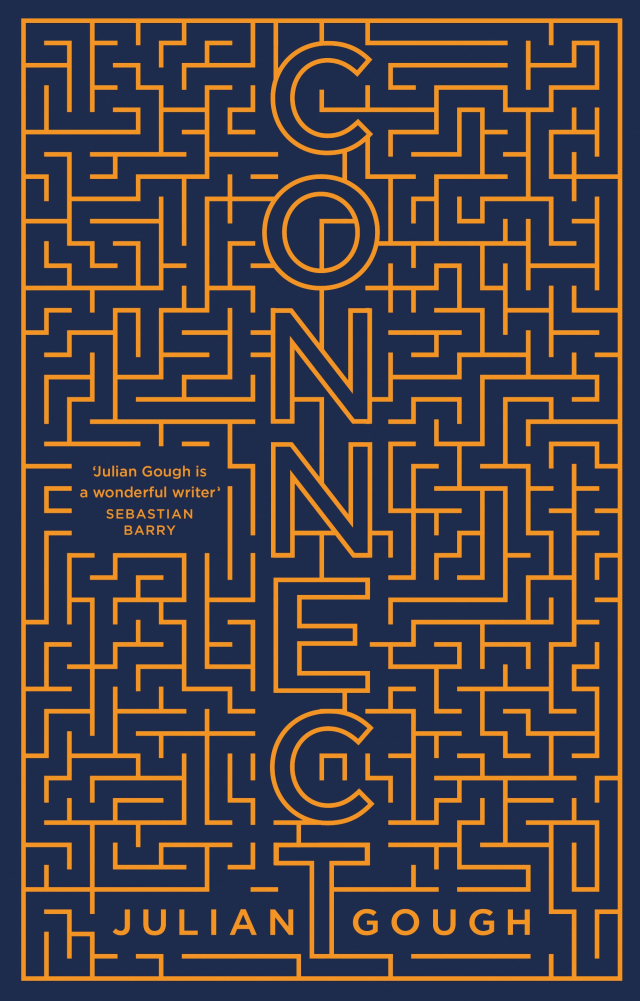
Connect by Julian Gough

Connect Cover

Publisher: Picador

Publication Date – 8 May 2018

Amazon     Book Depository

For those looking for a darkly complex and intense techno-thriller, look no further than Connect by Julian Gough, a unique novel that also critiques future trends and humanity’s increasing reliance on technology.

In the very near future, computer technology has been incorporated into nearly everything, linking the world and helping with all aspects of day to day life.  In Nevada, awkward young teen Colt is a talented hacker living with his mother, Naomi.  Seeking to create a perfect replication of the real world in virtual space, Colt has also developed a dangerous fascination with his mother’s biotech research.

When Colt submits his mother’s revolutionary work to a biotech conference, Naomi comes to the attention of the government, including Colt’s father, a high-ranking spook, Ryan, concerned with its potential implications.  However, Colt has also taken the opportunity to inject himself with the experimental biotech, turning himself into something new: a hybrid of man and technology.  Colt and Naomi are soon considered to be threats to the government, and Ryan activates an experimental defence network to hunt them down.  Colt and Naomi are forced to go on the run and must try to avoid a barrage of killer drones programmed to target and kill them at any cost.  Will Colt’s new abilities be enough to overcome the computer intelligence seeking them, or will the future of technology be changed forever?

Connect is an inspired new novel from Gough which represents a different direction from his previous writings.  Connect is a fascinating read and an interesting techno-thriller that examines the future of technology, creates a compelling dialogue and makes significant use of some excellent narrative elements.

The main story is an absorbing thriller that pits the protagonists against some sizeable opponents and threats.  One of their main opponents is an advanced and experimental computer program that is connected to every piece of technology in the country.  As a result, the protagonists are forced to find ways to avoid the overwhelming surveillance hunting them. Not only must they avoid pursuit from teaching devices and video cameras but they must also find a way to go low tech in a society that has computers connected to everything.  There are some great scenes where the characters are forced to out-think drones hunting them and try to find ways around the tracking programs that determine when and where to attack.  All of these play wonderfully into the book’s thriller storyline, and there is some real excitement when the protagonists encounter and attempt to counter these technological threats.

Gough spends a significant amount of Connect examining the future of technology and ends up offering some significant commentary on our reliance on technology and its potential influence on us.  The story is set in the immediate future, where everything is controlled by computers and certain things common in our current world no longer exist.  For example, most cars are self-driven, everything has become exceedingly automated and cash has become nearly obsolete.  In other words, it is a picture of how our world is likely to turn out in the next few years, based on current advances in technology.  Gough scrutinises how this over-reliance on technology could be detrimental to humanity, and how it could be turned against us by hackers and governments.  There is also an examination of the automation of a nation’s defence and security as an advanced security program is activated to hunt down the protagonists.  The debate around such a program is very in-depth, and the readers will be fascinated by some of the arguments presented.  Naturally, the program starts getting out of hand as it is manipulated into seeing the protagonists as a bigger threat than they are and it starts to dramatically escalate its attempts to destroy its targets.  This thought-provoking discussion and examination of the future of technology is a key part of Connect and will prove to be one of the most intriguing parts of the book for some thoughtful readers.

One of the most noticeable parts of the book is the unusual format that Gough has chosen to implement throughout his book.  The story is broken up into 12 chapters, and then further broken down into 149 sub-chapters, and is formatted in a way that vaguely reminded me of code within a computer program.  The inclusion of such a visually distinctive writing format does not break up the flow of the story, nor does it affect the reader’s ability to follow the story.  It does, however, dramatically change towards the end of the book in a way that ties in nicely with some of the significant plot elements occurring during this part of the book.  Gough has also chosen to include a number of relevant quotes at the start of each of the chapters.  I personally enjoyed reading those and connecting them to the plot of the upcoming chapter, and may prove to be more amusing to those of a more computer or technical mindset than myself.  Overall, the consistent use of this unique format and the attention grabbing quotes work well with the technology-centric plot and are a clever addition by Gough.

The point of view of Connect is mostly shared between the book’s protagonists, Colt and Naomi, although the main human antagonist, Ryan, also features in a few of the book’s chapters.  These separate viewpoints offer different subjects to the reader, and Gough has done a fantastic job of presenting unique content for both of his protagonists.  The scenes that follow Colt are a stimulating experience, allowing the reader a real sense of Colt’s social awkwardness and the disconnectedness he feels with the real world, especially when he focuses on his recreation of the real world in his virtual reality.  This virtual world appears in quite a number of scenes and plays a pivotal role in the end of the plot, and it is curious to watch Colt attempt to live most of his life within this world.  The characterisation of Colt shifts subtly after he injects himself with the experimental biotech and he starts to change.  It is interesting to watch his character change and mature after this point, especially as he attempts to initiate a very awkward romance with another young hacker.  The interactions he has with technology after this point, including with the advanced defence program hunting him, are some great scenes, especially as he creates and utilises some clever work-arounds to manipulate the computer networks to his advantage.

The scenes that feature Naomi’s perspective are significantly different, representing a noticeable change of pace for the reader.  Naomi is a very damaged person who presents herself in very different way to her socially awkward son.  Gough has made sure to communicate her multiple neuroses and issues to the reader, which adds a lot of drama to the story as she must attempt to save her son whilst trying not to get overwhelmed.  Like her son, she also undergoes substantial character development throughout the story, and the reader will enjoy watching her work towards a better relationship with her son.  In addition to this excellent piece of character work, the chapters featuring Naomi as the focal point are generally a lot darker and more adult.  For example, one of these sub-chapters features one of the most memorable and disturbing death scenes that I’ve ever read.

Connect is deep thriller that revels in its use of technological elements to create a distinctive and eccentric story.  Julian Gough’s discussion and consideration of a technologically advanced future and the problems this could create is compelling and thought-provoking, and his great use of characters and formatting elements turns this into one of the most unique pieces of literature you are likely to read this the year.

My Rating:

Four stars

Amazon     Book Depository

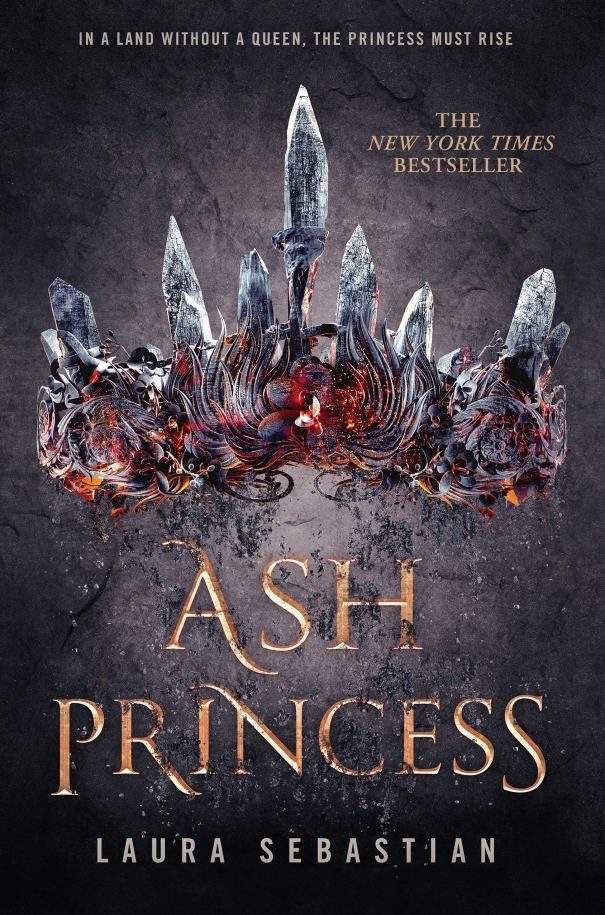
Ash Princess by Laura Sebastian

Ash Princess Cover

Publisher: Pan

Publication Date – 24 April 2018

Amazon     Book Depository

From an exciting new voice in young adult fantasy fiction comes a powerful tale of independence and freedom.

Ten years ago the Kalovaxians invaded the peaceful island nation of Astrea, killing its guardians and enslaving the entire populace to work in the island’s magical gem mines.

Theodosia was only six when Astrea was invaded and her mother, the Fire Queen, was murdered before her eyes. Since then she has lived in her former palace as a prisoner to the cruel and despotic Kaiser, who seeks to destroy all trace of the Astrea culture and language. Given a new title, the Ash Princess, and forced to endure constant humiliation and punishment for her people’s rebellion, Theodosia has become a subservient creature, trying to survive as she waits for any sort of rescue.

When the Kaiser forces her to perform a terrible act, Theodosia is no longer willing to stand back and watch her people suffer. With unexpected allies suddenly close at hand, Theodosia stops a plan for her escape and instead chooses to remain at court to obtain information for the rebellion.

However, the Kalovaxians are a cruel and merciless race of warriors who excel at raiding and destroying the lands they conquer. Theodosia soon realises that supplying information to her companions is not enough; she needs to find a way to strike at the heart of the Kalovaxians and disrupt their tight control of Astrea. When opportunity presents itself, she must risk everything to give her people a shot. It is time for the Ash Princess to rise.

Ash Princess is the debut novel from Laura Sebastian and the first book in a young adult trilogy with a lot of potential.

This story is told completely from the point of view of the main protagonist, Theodosia, with a large amount of the book dedicated to her growth as a leader. Theodosia starts the book as a completely broken person, having been oppressed and abused for years and kept as a symbol of humiliation. As the story continues, Theodosia detaches herself from the persona she created to survive and starts to finally oppose her captors. Watching her obtain the courage to fight back is an integral part of the book, and her attempts to become the ruler her people need are touching and emotive. There is also a riveting inner conflict within Theodosia as she debates whether to hurt people that she cares about, even if her actions could bring relief to her people. While Theodosia strongly wishes to save her people and defeat the invaders, there is also a great desire to not become like the enemies she hates. The character runs a fine line throughout the book as a result, and many readers will enjoy how Sebastian examines this inner conflict.

Sebastian has included an intricate background setting for her electrifying story. The nation of Astrea had been brutally subjugated 10 years before the start of the story and is currently ruled by the Kalovaxians. Because of how total this subjugation has been, with a large number of deaths and the rest of the populace forced to do heavy labour, very few characters originating from Astrea are featured within the story. This background of a near-obliterated country is dark and grim, but serves as the perfect setting for an inspiring story of freedom and rebellion. The antagonists of the story, the Kalovaxians, are also the perfect villains for such a story, as they are undeniably evil. All of the Kalovaxians–even the milder ones that consider themselves Theodosia’s friends–are power hungry, destructive and feel that they are superior to all other peoples. The use of the setting and the antagonists within Ash Princess adds significant impact to the main story and forces the reader to care about the fate of the main character.

Readers of Ash Princess will enjoy the covert activities that take place as part of the main story. In order to find a way to liberate her country, Theodosia needs to infiltrate and influence parts of the oppressive Kalovaxian society. The scenes were she attempts to seduce, manipulate and commits acts of sabotage are compelling and one of the more intriguing parts of the books. In addition to the protagonist’s actions, there are also the secret plans that the Kalovaxians are undertaking. These plans are rather dark and include magical experiments on Theodosia’s people. These Kalovaxian plans result in some interesting actions from Theodosia and play a significant part in the plot. The fascinating gem magic of the Astrea plays an interesting role in the clandestine actions of both the protagonist and antagonists, and fantasy-minded readers will enjoy the resultant exploration of this branch of magic.

Ash Princess is a poignant tale of hidden strength and the fight for freedom. This is a satisfying start to Sebastian’s first series which introduces a memorable main character and a powerful story that makes full use of its awesome background story elements. This is an ideal choice for readers looking for their new fix of young adult fantasy fiction.

My Rating:

Four stars

Amazon     Book Depository

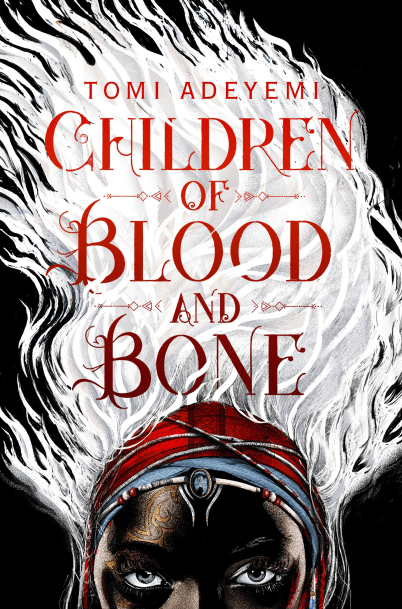
Children of Blood and Bone by Tomi Adeyemi

Children of Blood and Bone Cover.png

Publisher: Henry Holt and Company

Australian Publication Date – 13 March 2018

World Publication Date – 6 March 2018

Amazon     Book Depository

A brand new magical world is born in Children of Blood and Bone, the enthralling first book from a talented new author.

In the nation of Orisha, magic was once controlled by the maji, powerful practitioners who were respected and feared throughout the land.  However, that all changed eleven years ago, when magic suddenly and mysteriously died, leaving the maji powerless and confused.  Taking advantage of this uncertainty, the magic-fearing King Saran struck out, arresting and killing all the former maji.  Now the people of Orisha consider magic evil and all links to the old order are shunned.  Those children who would have become maji, if not for the death of magic, are known as diviners.  Made distinctive by their white hair, they have become a second-class citizenry within Orisha and are routinely targeted by abusive guards and crippling taxes as King Saran seeks to slowly kill them all off.

Zelie Adebola is one of these diviners and remembers what it was like before magic died.  Haunted by the death of her maji mother and still defiant after years of oppression, Zelie is determined to survive.  However, when a chance run-in with an ancient scroll awakens her latent magical abilities, Zelie is given an unexpected chance to restore magic to the world.  With the help of her brother, Tzain, and the rogue princess, Amari, Zelie must reclaim three artefacts and travel across Orisha before the solstice.  If they fail, magic will be gone forever.

As the trio encounter the dangers that lurk throughout Orisha they must also contend with a dangerous force that is following them.  Amari’s brother, Prince Inan, has been tasked by the king to hunt the fugitives down and ensure that magic can never return.  However, Inan’s own latent magical powers have surfaced, and he is torn between the burning powers in his head and his father’s instilled hatred of all things magical.  Will his sudden infatuation with Zelie save him, or will it lead to his destruction?

The greatest threat to the quest may come from Zelie herself, whose powers over life and death may turn out to be too dangerous to control.

Children of Blood and Bones is the first book from Nigerian American author Tomi Adeyemi.  It is a bold fantasy adventure targeted towards the young adult demographic, and has already received significant hype from various sources, including discussion about a possible movie adaption.

One of the most obvious things that will appeal to potential readers is the considerable work and imagination that Adeyemi has put into her fantasy creation.  The central focus on a group of oppressed magic users who have lost their power and influence is particularly engrossing, as is the distinctive magical practice and lore that Adeyemi has used.  The detailed landscapes and cities of the nation of Orisha do a wonderful job of catching the imagination, especially as the characters traverse a number of different locations, each with their own unique environments and features.  There are also a number of intricate battle scenes that add significant excitement to the narrative, including a particularly memorable sequence where the main characters participate in a massive ship-to-ship gladiatorial battle in a flooded desert arena.

In addition to the above elements, readers will enjoy the use of multiple character perspectives throughout Children of Blood and Bone.  Three of the main characters, Zelie, Amari and Inan, each narrate their own chapters and provide a detailed overview of the story from their point of view.  There are many quick-fire perspective changes that serve to give multiple different viewpoints of the same event.  This is particularly useful as much of the book is dedicated to Zelie, Amari and Tzain being closely pursued by Inan.  Seeing how close Inan gets to the protagonists through these separate perspectives adds a lot of tension and suspense to the book.  It also works well in enhancing many of the larger battle scenes, especially the above mentioned gladiatorial naval battle.  The different viewpoints also allow the reader a clear picture of the ideological breakdown of Adeyemi’s world, as the readers are given insight from both the oppressed diviners and the paranoid King Saran

Adeyemi’s clever use of multiple narrators also allows for a clearer view of the personal and group development of the main characters, which can be seen not just through their own eyes but through the eyes of the other narrators.  Amari’s change from spoiled princess to hardened warrior is fun and heart-warming.  The changes to Zelie and Inan as a result of their dramatic internal conflicts are much more intriguing and draw the audience in emotionally.

While Adeyemi explores several themes throughout the book, the most intriguing is her examination of power and the responsibility to wield it.  Within Children of Blood and Bone, the maji have had their magical power taken away from them and are oppressed by the king as a result.  The subsequent quest to return magic to the world raises certain ethical questions, like whether an oppressed group should suddenly have destructive powers returned to them?  Within the book there a number of characters who have dissenting views on the subject, but only Zelie and Inan are in the unique position of seeing both parts of this debate.  Inan has always been taught to fear and hate magic, but his perception of magic changes when he gains his own powers, meets Zelie and experiences the oppression brought on by his father.  As a result, his opinion about the future of magic is changed multiple times throughout the book.  Zelie on the other hand, has experienced oppression all her life, and is at first determined to bring back magic.  However, when she uses her own destructive powers and sees the devastation caused by other magic users, she starts to question her previously held beliefs.  This fascinating internal debate is masterfully woven in the story through the books narrators, and it will be interesting to see how this debate continues in any future books.

Children of Blood and Bone is an intricate and ambitious young adult fantasy debut that includes a first-rate, emotionally charged story.  Set in an inventive new universe and featuring slick use of characters and multiple narrators, Children of Blood and Bones lives up to its significant hype.

My Rating:

Four stars

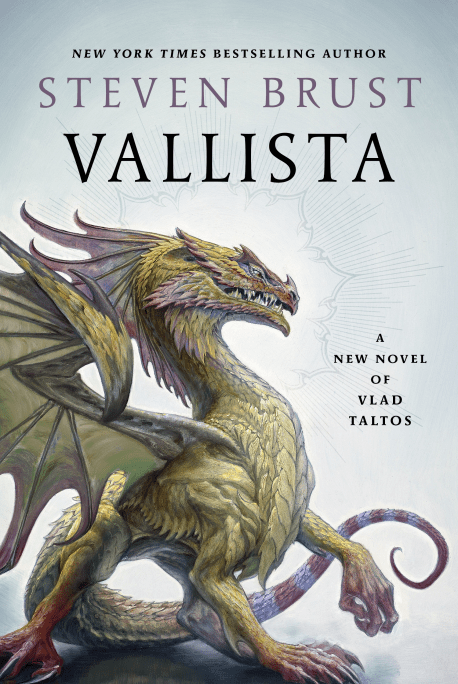
Vallista by Steven Brust

Vallista Cover

Publisher: Tor

Australian Publication Date – 28 November 2017

World Publication Date – 17 October 2017

Amazon     Book Depository

One of fantasy’s most iconic heroes returns in Vallista, the latest book from acclaimed fantasy writer Steven Brust.

In the world of Dragaera powerful and long-lived humanoids known as the Dragaerans are the planet’s dominant species, while humans, called Easterners, are second-class citizens.

Vlad Taltos is a rare anomaly, being an Easterner with a title, money and influence.  Having made his name as an enforcer and assassin, Vlad was a respected member of House Jhereg, the Dragaeran clan in charge of the Empire’s organised crime.  However, Vlad’s relationship with the Jhereg has deteriorated.  Having betrayed his clan, Vlad has spent the last few years on the run, hunted day and night by ruthless assassins.  Luckily, Vlad has friends in very high places, including the Empress, some powerful sorcerers, a necromancer and even a Dragaeran god.

Throughout his travels, Vlad has had several meetings with Devera, a small Dragaeran girl who is the daughter of one of his many powerful friends.  Devera is a mysterious creature of considerable power, an overabundance of enigma and a casual relationship with the rules of time.  Devera has once again appeared to Vlad, requesting his help and leading him to a mysterious manor that has suddenly materialised by the sea.

Despite the fact that the manor should not even exist, Vlad enters, only to find himself trapped with the manor’s mysterious inhabitants.  The inside of the manor is a weird collection of rooms and corridors altered by magic and no longer obeying the rules of reality.  Mirrors teleport people from room to room, mysterious portals lead to the ancient past, and a certain door leads to the Halls of Judgement, the Dragaeran afterlife.

The more Vlad explores, the more he understands that the manor is home to many lies and death.  The overly helpful servants are determined to keep the manor’s past a secret.  No one will explain how an unused and empty kitchen keeps providing Vlad with warm meals.  On top of this, Vlad encounters a ghost unaware of how she died, a mutant deformed by magic, and a powerful demon determined to kill him.

In order to escape, Vlad must uncover the manor’s bloody history and reveal all of its inhabitants’ dark secrets.  With his sarcastic familiars and a sentient sword to aid him, Vlad must use every trick at his disposal to survive while trying to interpret some beguiling visions of his own past lives.  If only Devera, his only guide, would stop disappearing in the middle of every conversation.

Vallista is the 15th book in Brust’s iconic Vlad Taltos series, and is set before the 14th book in the series, Hawk.

One of the most appealing features of Brust’s books has always been their trademark combination of fantasy world-building, action, adventure and fun comedic undertone.  Brust continues this trend in Vallista, creating a fast-paced book that delivers several exhilarating action scenes and a good amount of comedy without compromising the fantasy elements of the plot.  Fans of the Vlad Taltos series will be excited to see an in-depth look at Devera, a minor character who has long mystified readers, as well as visions into several of the titular character’s past lives.

Brust also has an enjoyable habit of combining elements of other genres into his stories.  This ensures that many of the books in the Vlad Taltos series are transformed into different genres, such as murder mysteries, political thrillers or heists contained within the fantasy setting.  Vallista continues this trend with its interesting and unique fantasy mystery.  The main character is forced to uncover the secrets of the mysterious manor in which he is trapped in order to escape.  As a result, Vallista reads a lot like a typical mystery, which is enhanced by the book’s various fantasy elements.

Vallista also borrows several elements from classic haunted house tales.  The main character is trapped and imperilled, the house is filled with servants reluctant to reveal their secrets, and ghosts, monsters and strange events are around every corner.  However, as this is a fantasy book, our hero has far more experience in dealing with such things, and quite a lot of the book’s humour revolves around Vlad responding to the manor’s various challenges.

Unsurprisingly, this book will appeal greatly to those readers who enjoyed the previous instalments of the Vlad Taltos series.  At the same time, this is one of the most inclusive fantasy series that I have ever read.  Burst is very good at succinctly explaining the universe’s lore so that new readers will easily be able to enjoy Vallista every bit as much as any seasoned veteran of the Vlad Taltos series.

Overall, Vallista is fun fantasy adventure that will appeal both to Brust’s established fans and to casual fantasy readers.

My Rating:

Four stars