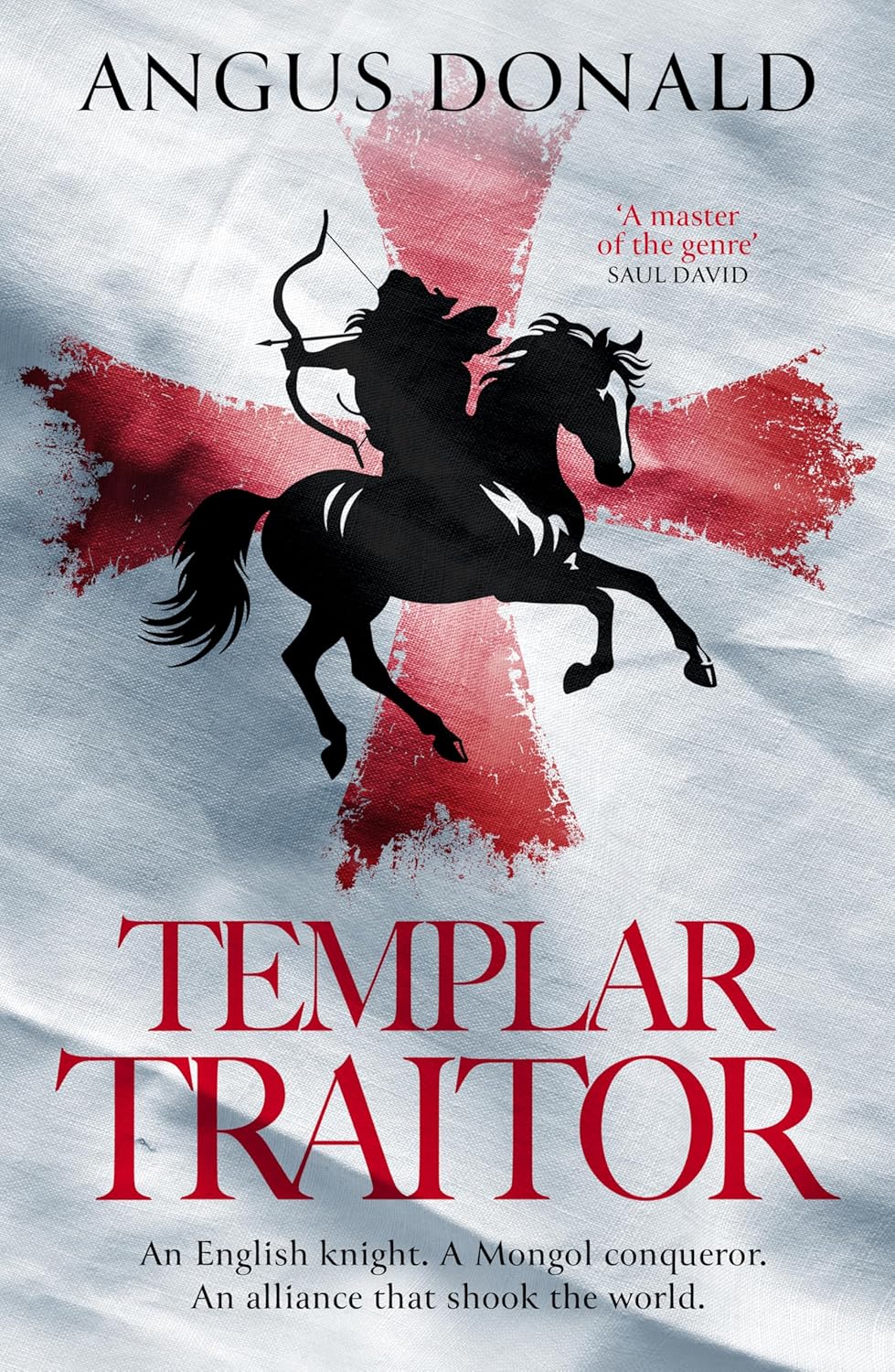
Templar Traitor by Angus Donald

Publisher: Canelo Adventures (ebook – 28 August 2025)

Series: The Mongol Knight – Book One

Length: 411 pages

My Rating: 4.5 out of 5 stars

Amazon

Those in the mood for an awesome and intense adventure should check out the soon-to-be-released historical fiction novel from Angus Donald, Templar Traitor, an outstanding book that I had a brilliant time getting through.

I have mentioned several times on my blog that my experiences with reviewing started with historical fiction, which was the main genre that I read for several years.  While I have progressed to a range of other genres since then, historical fiction still holds a very special place in my heart, and I always love to dive back into time and read a great adventure or moving tale set in our collective past.  One of the more enticing recent examples was Templar Traitor by Angus Donald.  Featuring a cool plot about an English knight fighting alongside the Mongolian horde, Templar Traitor is the first book in Donald’s The Mongol Knight series, which I really liked the sound of.  It helped that Donald is an author I have an interesting history with, as his early novel, Outlaw, was one of the first books that I reviewed professionally, and I was very keen to see how he had progressed as a writer since then.

Plot Synopsis:

“Do not lie to me, Templar, or it will be the last thing you do.”

July 1241. Christendom cowers in terror before the threat of a Mongol invasion. The swift-moving, invincible cavalry of Genghis Khan has smashed the proud, steel-clad knights of Russia, Poland and Hungary – and now Austria lies directly in their path.

At a skirmish outside the walls of Vienna, German knights capture a squad of Mongol scouts, and are astonished to discover one of their number is an Englishman – a Templar knight – who has been riding with these Devil’s horsemen for more than twenty years.

Interrogator Father Ivo of Narbonne is summoned to Vienna Castle to draw the truth from the imprisoned Englishman before his impending trial, to find out why he abandoned his Faith, his Brethren and his homeland to become… a traitor to Christendom.

This was a very impressive novel from Donald that nicely sets up a cool new historical fiction series, while also containing an intense and exciting story.  Loaded with action, adventure and some fascinating historical elements, Templar Traitor was an excellent read that I’m very glad I got to check out early.

Donald pulled together a very interesting story for Templar Traitor that cleverly makes use of a real recorded historical event and expands on it to create an elaborate tale of adventure, war and survival from the perspective of an initially eager young knight.  The framing device of the novel starts in Austria in 1241, with the capture of protagonist Robert of Hadlow, a knight from England who rides with the Mongols during their invasion of Europe.  From there, the captured Robert gives testimony to a priest with his own agendas, who is shocked to discover that Robert is a former Templar Knight who had journeyed to Mongol lands many years earlier.  From there the story dives back in time and chronicle of Robert’s life, following him as a young man ejected from Templars two decades earlier to becoming a wandering merchant travelling across Europe, before he is given the unique opportunity to try and establish an exclusive trade deal with Genghis Khan. This first part of the book was a very compelling introduction to the story, and it sets up the early story of the protagonist nicely, including his pressing reasons to undertake such a task, while also providing some fascinating historical contexts of the regions that the protagonist initially journeyed through.

From there Templar Traitor takes on a much more action-oriented edge, as Robert and his lone companion journey deep into Persia and beyond to find the Mongols, while pursued by rival European faction who seeks to secure trade for their own masters.  This resulted in some fast-paced and frenetic sequences, and the protagonist is soon dropped in amongst the Mongols, trying to find a way earn their favour.  Soon accepted as an envoy, Robert finds his place within the Khan’s army and witnesses their culture, people as well as their devastating war against the Khwarazmian Empire of Persia.  To gain Genghis Khan’s favour, Robert finds himself serving as a key figure in the invasion, which allows for multiple battle sequences, as the protagonist finds himself thrust into the centre of the war.  This resulted in a very rich and compelling historical novel, and it was fascinating to see some of Genghis Khan’s most famous battles through the lens of a western outsider.  Donald adds in a rather good twist near the end of the novel that completely alters your entire perspective of the events of Templar Traitor, while also setting up some very interesting storylines going forward.  This ended up being quite a fantastic overall story, and I appreciated how it contained a great, self-contained plot, while also working well as the first entry in a larger series.

Templar Traitor was a very strong historical fiction novel from Donald, and I really appreciated the layered book that emerged.  The use of an older, imprisoned protagonist giving his confession as a framing device for the main plot worked extremely well, especially as the experiences of the older Robert of Hadlow impact his narrative of the past.  The elaborate narrative of adventure and exploration allows Donald to really flex his historical writing ability, and he does an exceptional job exploring and showcasing the landscapes and cultures that his protagonist journeys through.  However, his best writing is saved for exploring the Mongolian armies of Genghis Khan, whom the protagonist spends more than half the book riding with.  Donald did an outstanding job diving into the complex culture and society of the Mongols throughout Templar Traitor, and the novel is loaded with compelling details and vivid descriptions.  This was further enhanced through the author’s decision to frame these descriptions through the eyes of an outsider, and it allows for some very complex scenes of misunderstanding and cultural exchange.

Naturally, much of this examination of Mongolian culture is focused on their military exploits (the protagonist did join a war camp), and you get a very detailed examination of their invasion of Persia.  The intense and bloody battle scenes are a true highlight of Templar Traitor, and you can easily imagine yourself riding amongst the Mongols as they fight through Asia, Europe and the Middle East.  I felt that Donald did an outstanding job of covering the history around this war, and it was an excellent choice to have the protagonist join the Mongols at the height of their power, rather than at the beginning of Genghis Khan’s rule.  I also enjoyed the fact that the scenes between the protagonist and his interrogator in 1241 were based on real events and Donald does an excellent job exploring a figure caught between his Christian upbringings in Europe, and his experiences living with his Mongol comrades.  The compelling narrative about the protagonist’s motivations for journeying into the East, as well as the hidden secrets beneath his main story, was featured extremely well, and I loved the complex layers that emerged around Robert.  This was a really impressive piece of historical fiction, and I really appreciated the skilled way that Donald set out his excellent story.

Overall, Templar Traitor was a great new novel from Angus Donald that is guaranteed to appeal to all historical fiction fans.  Expertly blending intense action with some great characters and a deeply intriguing historical period, Templar Traitor was a joy to read, and I look forward to continuing The Mongol Knight series in the future.

Amazon

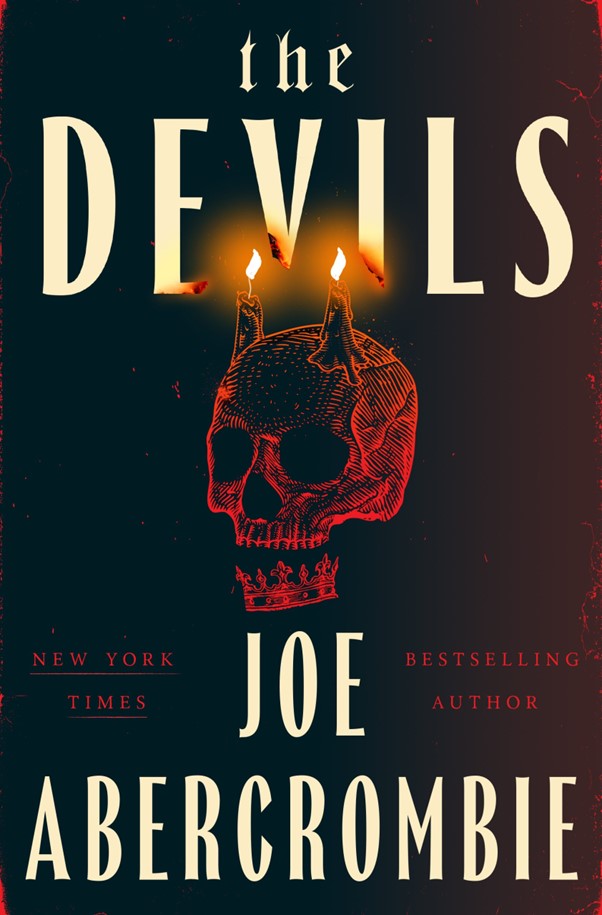
The Devils by Joe Abercrombie

Publisher: Gollancz/Macmillan Audio (Audiobook – 13 May  2025)

Series: The Devils – Book One

Length: 25 hours and 7 minutes

My Rating: 5 out of 5 stars

Amazon

The master of grimdark fantasy fiction presents a bold and over-the-top new story with The Devils, an outstanding, addictive and highly entertaining read that you will not be able to turn away from.

Joe Abercrombie is an impressive and compelling author who has been wowing fantasy fiction authors with his complex reads for nearly 20 years.  While he has written some other cool books, like his Shattered Sea trilogy, Abercrombie is best known for his iconic First Law series of dark fantasy novels, that followed a group of highly damaged people as they tried to survive war, magic and politics in a messed-up fantasy world.  I really enjoyed the original First Law trilogy, and Abercrombie has cleverly expanded it out over the years, including with three standalone novels and his sequel Age of Madness trilogy.  The Age of Madness novels were ones that I particularly enjoyed reading, and A Little Hatred (one of my favourite books of 2019), The Trouble With Peace (one of my favourite books and audiobooks of 2020) and The Wisdom of Crowds (one of my favourite books and audiobooks of 2021), were very highly rated by me, and I could not get enough of this series.

Needless to say, I am a pretty big fan of Abercrombie’s novels, and I have been eagerly awaiting a new book from him since I finished The Wisdom of Crowds.  While I had hoped that we would be getting a new First Law novel, Abercrombie instead decided to present readers with something a little different with his new The Devils series.  Starting off with The Devils, this series is another clever dark fantasy series, set in an alternative, magic filled version of medieval Europe.  One of my most anticipated books of 2025, The Devils sounded so damn good, especially with its crazy plot and intriguing new setting.

The lands of Europe are in dire peril.  Between the constant wars, dangerous monsters, ruinous famines and deadly plagues, the various kingdoms of Europe are in poor condition, barely held together by the fractured church.  However, the real danger lies outside its borders, as the mysterious elves gather their power in the Holy Lands, preparing for another invasion of Europe that will surely lead to the destruction of all humanity.

In response to the growing threat of the elves, the church and its juvenile pope determine that a new ruler needs to be placed upon the Serpent Throne of Troy after its evil sorcerous empress dies.  With all four of the empress’s duplicitous and power-hungry sons unfit for the crown, the church surprisingly finds that their ideal candidate is a lowly street thief from the Holy City called Alex.  A ferrety sneak with no noble bearing or confidence, Alex is shocked to discover that she is really the long-lost Princess Alexia Pyrogennetos of Troy, destined to reunite the churches of Europe by claiming the throne.

Turning the reluctant and terrified Alex into a potential princess is one thing, but getting her to Troy is a far more difficult prospect, especially as her rival contenders to the throne are stalking Europe with their deadly, magically enhanced followers, determined to claim Troy for themselves.  To succeed in marching Alex through the European hellscape and placing her on the Serpent Throne, the church will need far more than prayers and the blessing of saints; they are going to need devils.  Luckily, such devils are close at hand. 

Deep within the Holy City lies the Chapel of Holy Expediency, which binds dangerous heretics and monsters and forces them to seek redemption through holy missions for the pope.  Led by the hapless Brother Diaz, the congregation of the Chapel of Holy Expediency is charged with getting Alex to Troy and placing her on the throne.  But can a terrified monk, an immortal knight, an arrogant necromancer, an invisible elf, a sarcastic vampire, an uncontrollable Viking werewolf and the most experienced woman in Europe succeed in making a street-rat an empress, or will their new mission only bring even more death and destruction to the continent? 

Joe Abercrombie once again shows why he is one of the very best authors of dark fantasy fiction with his captivating and deeply impressive new novel.  The Devils was an ultra-entertaining read that perfectly introduced the author’s intriguing setting and populated it with highly amusing characters and dark deeds.  Exciting, clever and loaded with over-the-top humour, The Devils was an absolute joy to listen to, and I loved every second I spent with it.  One of the most addictive novels of 2025 so far, The Devils gets a very-well deserved five-star rating from me, and readers are guaranteed an extra fun time with this crazy novel.

I absolutely loved the cool and highly entertaining story that Abercrombie came up with for The Devils, which was essentially a fun dark fantasy iteration of The Dirty Dozen/Suicide Squad narrative with some amazing monsters.  Providing a quick introduction to the key characters, the reader soon becomes highly invested in the narrative, as the memorable and very amusing protagonists begin their trek to Troy.  What follows is a classic travelling adventure story with some dark and comedic twists, as the protagonists encounter all manner of foes on the way to their destination, which they are forced to dispatch with ruthless efficiency.  While parts of this story start to become a tad formulaic, especially as the protagonists are intercepted multiple times by one of Princess Alexia’s cousins, with each encounter resulting in a deadly battle for survival against different occult forces, you are generally so entertained by the compelling characters, interesting interactions, and over-the-top action sequences, you don’t even really mind.  Abercrombie works to break up these encounters with some fun side quests, as well as altering the circumstances by having the characters occasionally split up into unlikely pairings, exploring the fun alternate medieval Europe that works as such an effective setting for this book.  This allows for some interesting changes of pace in the main quest narrative, while also allowing for some outrageous character moments as the reader gets to know the protagonists a little better.

Everything nicely leads up to the last third of The Devil, which sees the protagonists arrive at their destination against the odds.  Without going into much detail, things naturally go to hell, and everybody is forced to fight for their lives.  This chaotic series of events isn’t unexpected, as the reader is waiting for the other shoe to drop the entire book, but the who and the how of it makes for great reading.  Some excellent twists come to life here, often revealed in a fun meta way, and, while you see a couple of them coming, the entire ball of surprises and reveals make for quite an exciting end sequence.  These twists are well backed up by some of the grittiest action sequences in the entire book, and you are constantly on your feet waiting to see what happens next.  The entire novel ends on a tragic, if thoughtful note, especially when you’re left to consider who the true monsters of the story are.  An overall impressive narrative, that blends alternate history and classic adventure narrative threads with Abercrombie’s wild imagination to create something exceedingly entertaining and addictive.

The Devils was a very fun and well-written story as Abercrombie provides a very intense and hard-hitting tale, bound together by dark humour, over-the-top sequences, and complex characters.  Abercrombie once again showcases his skill at balancing multiple distinctive perspectives to tell an integrated and ongoing narrative, with the story cleverly bouncing between the viewpoint of several impressive protagonists.  The continued switches between the characters allows for a very elaborate narrative, and the reader is drawn into both the overarching plot and the more personal battles of the protagonists.  I liked how Abercrombie was able to tailor the descriptive narration of each of the perspective chapters to suit the character it was following, and each chapter has a slightly different tone as a result.  However, this is a very dark overall story, as the characters encounter outrageous scenarios of death and destruction, and the resulting carnage allows for some intense moments.  I will say that The Devils did feel a little sillier than some of Abercrombie’s previous novels, although the author uses this extra layer of ridiculous energy to full effect to tell an extremely addictive story.

As you would expect from Abercrombie, the intense action sequences are a highlight of The Devils, with the many brutal sequences coming to life thanks to the author’s great descriptive style.  There was a certain casualness to some of the fights, especially those featuring the plot’s more dangerous killers, and which was enhanced by the clever overall narration of the writing.  I loved how Abercrombie set out all his scenes, with a lot of subtle humour revolving around cynical description of events, especially as the author provides some ironic results and meta commentary.  This more subtle writing of events is counterbalanced by the over-the-top humour of the dialogue, especially when it comes to certain characters.  A lot of the dialogue gets downright filthy at times, with some very adult discussions coming out in outrageous fashion.  While this excessive crass language had the potential to distract from the story, I think that Abercrombie got the right balance, with the ridiculously rude dialogue fitting in well amongst the crazy events of the plot.  While the combination of ugly events, adult humour and cooky carnage isn’t going to be everyone, I think most fantasy fans are going to have a ton of fun with it, especially as it plays into Abercrombie’s grimdark style.  Throw in a clever alternative medieval Europe as the elaborate setting which will delight history buffs with the intricate differences, and The Devils was a very impressive read that perfectly plays the author’s strengths and talent for entertaining and dark fantasy fiction.

Fans of Abercrombie will know that the author specialises at making damaged and captivating characters to set his narratives around, and The Devils is no exception to this.  The author introduces an amazing cast of complex and memorable characters in The Devils, and I love the very impressive storylines that emerge around them.  This includes six separate perspective protagonists, two major supporting characters, and an array of interesting figures throughout Europe who play various roles in the outcome of the plot.  Abercrombie does an excellent job of introducing and utilising this complex cast, with all the major characters getting their chance to shine in some impressive ways.  While some of the characters in The Devils didn’t quite have the complexity of the protagonists from the First Law books, Abercrombie instead amps up the entertainment aspect of these figures, introducing several particularly hilarious, ridiculous and highly relatable monsters, each of whom added a great deal to the overall reading experience.

The first two characters I want to talk about are major perspective protagonists, Brother Diaz and the newly discovered princess, Alex.  Despite neither being members of the titular devils, both have major roles in this book and are shaped by their experiences with the monstrous pawns of the church.  Brother Diaz, a simple monk who is brought in to guide the devils, is initially shown to be a hapless and terrified figure, clearly out of his depth when it comes to the dangerous mission he has been entrusted with.  Abercrombie has a lot of fun showcasing him as a useless social climber at the start of the novel, and he initially has more of a comedic role in the plot.  However, as the story progresses, Diaz starts to gain a little confidence as he continues to survive, and you soon see flashes of the man he could be.  Despite falling to temptation (repeatedly), Diaz ends up being quite a stalwart figure in the book, and I loved some of the scenes where he got to show off his intelligence (including one particularly entertaining legal battle).  The way in which Abercrombie subtly added more and more depth to Diaz’s personality as the story continued was very impressive, and his growth as a character was a highlight of the book.  The author also ensured that Diaz was one of the more relatable characters in The Devils, especially as he continuously makes mistakes, finds himself shaken by his fears and failings, yet continues to try to do the right thing.

Much like Diaz, the other non-devil perspective protagonist, Alex, is also shown to be an imperfect figure who finds themselves thrust into events outside of their control.  Initially shown as a simple thief, Alex, or Princess Alexia Pyrogennetos, is ill prepared for the events before her, and is forced to rise to the occasion when she is declared long-lost royalty.  Mostly shown as the book’s damsel in distress, Alex is generally scared and lacking confidence, especially as she knows she is not the princess everyone wants her to be.  Like Diaz, Abercrombie writes Alex slowly rising to the occasion throughout course of The Devils’ plot, as she learns to fight back and become a leader.  I really liked following Alex’s journey in The Devils, and while the journey to the character finding her self-confidence is a long and bloody affair featuring some good twists, it ended up being a powerful part of the book’s overarching narrative.

Outside of Alex and Diaz, a lot of time is also spent following the other perspective members of The Devils, including Balthazar, Sunny and Vigga, who are a necromancer, an elf and a werewolf respectively.  These three characters are amazing, and I liked how well they played off each other and the rest of the cast with a great mixture of serious and more comedic elements.  For example, Balthazar (or to introduce him properly, Balthazar Sham Ivan Draxi), is a highly arrogant figure who chafes at being captured and controlled by the church.  Much of his story focuses on his many attempts to break the Papal binding compelling him to help Alex, while also dealing with the realisation that he is helpless against those he considers his lesser.  Much of the entertainment around Balthazar is his complete lack of self-awareness or humility, especially within his own mind, and while there are times when it appears that he is going to become a better person, he usually returns to his old personality when he hits a wall.  Sunny the elf, on the other hand, is a far more sensible character, who serves as the team’s shadow thanks to her ability to become invisible.  Despite her nice and helpful personality, Sunny is shown as an alien creature, incapable of understanding the humans who generally hate and fear her.  Imbued with a more subtle humour than her fellow devils, Sunny proves to be quite an interesting figure, especially when you examine her past and her dark experiences with humans.  Probably one of the more likeable and selfless figures in the book, Sunny’s arc adds a lot to the overall story, especially through her unlikely romance angle, and Abercrombie clearly had fun writing the various scenes where she traipses around invisible.

One of the more memorable cast members of The Devils is Vigga, a former Viking raider who was cursed as a werewolf and then captured by the church.  Crass, constantly controlled by her urges, incapable of self-restraint and particularly deadly, even when not a massive wolf, Vigga powers through the entirety of The Devils’ narrative, leaving a major impression whenever she appears.  Featuring some of the more visceral and entertaining perspectives of the book, which includes a combination of hungry sequences from her wolf mind and her more entertaining insights as a human with no impulse control and an inability to focus on anything, Vigga is responsible for a large part of The Devils’ chaotic and outrageous tone, and the book would not be anywhere near as fun without her.  However, as this is Abercrombie, there are quite a few darker moments in Vigga’s story, and you soon become absorbed with her attempts to pull together her fractured mind and control the monster within, especially when she gets close to her travelling companions.  The dark depression that occasionally befalls her because of her uncontrolled actions adds some major drama to certain tragic parts of The Devils’ plot, and Vigga comes away as one of the more sympathetic, if scary, characters in the book.

While the above perspective characters are all particularly impressive, my favourite was the team’s resident knight, Jakob of Thorn.  An old soldier cursed with immortality who has been fighting battles on behalf of the church and God for hundreds of years, Jakob is a tired and haggard figure bound by his many vows.  Suffering from the degradation of his body due to age and the many injuries inflicted on him, Jakob is weariness personified as he attempts to deal with his pain, and the guilt from his long history of death and service to the church.  Readers familiar with the author will know that Abercrombie specialises at writing tired old warriors who are sick of the death and destruction they cause, and Jakob of Thorn is one of his better ones (which is saying a lot).  I loved all of Jakob’s scenes, especially as he doggedly continues to fight despite his pain, often providing some of the book’s best quotes and insights.  Unsurprisingly, Abercrombie makes Jakob suffer a lot in this novel (what else would this sadistic author do with an immortal character?), and you learn a lot about his resolve and psyche as a result, especially as he knows he is the biggest monster of them all.  I really think that Jakob’s grittier and more self-aware perspective chapters helped to balance out the more outrageous character arcs in The Devils, and he was a perfect addition to this outstanding narrative.

The final two major characters I want to highlight are Baron Rikard, an ancient vampire, and Baptiste, a rogue hired to keep the devils in check, who seems to have experience with every profession possible in Europe.  Both these characters are excellent additions to the plot and manage to shine through, despite not being perspective characters.  Indeed, I felt that their role in the book was enhanced by the readers not having direct insights about their motivations or actions, and instead you get to enjoy the mystery surrounding them as you see them through the eyes of the other characters.  Baron Rikard, who serves as a fun, sarcastic figure who only helps when it suits him, proves to be a great inclusion in the plot, especially as his gentlemanly manners and demeaner makes him stand out amongst the other characters.  While a ridiculously charming figure (especially when he starts talking about dumplings), you are initially given the impression that Rikard is another trapped monster keen to escape his binding.  However, Abercrombie nicely turns this assumption on its head as the story continues, and I really enjoyed the character’s revealed motivation, especially as it shades all the character’s actions in a new light.

Baptiste, on the other hand, is a suave and entertaining figure whose impact on the book would be diminished if you got a deeper look at her thoughts, motivations or true history.  I particularly enjoyed how well Baptiste served as a foil to Balthazar, and they had a great back and forth that helped to define them both.  Throw in a range of other impressive supporting characters, including a barrage of outrageous or diabolical antagonists, and the cast of The Devils was something very special.  I cannot emphasise enough just how much fun all these characters were, and their moving and complex arcs and interactions really helped to give some powerful meat to The Devils’ entertaining narrative.  You really come away with some conflicted feelings for many of the protagonists, especially as none of your favourites have a truly happy ending, and it will be interesting to see what happens to the survivors in the future entries of the series.  A special shoutout as well to the fun artwork depicting several of these characters in The Devils paperback, especially as the artist really captures how the author wrote these colourful protagonists.

While I did receive a physical copy of The Devils, I ended up listening to this novel on audiobook, which was a fantastic choice.  Not only did the audiobook version allow for a fuller immersion in Abercrombie’s new fantasy universe and his crazy action sequences, but it also featured the superb voice of actor Steven Pacey.  Pacey, who is one of my favourite audiobook narrators, previously lent his voice to the audiobook versions of Abercrombie First Law novels, and he frankly does a perfect job of capturing the author’s unique tone and style.  Abercrombie’s complex writing, witty dialogue and excessive humour really come to the fore when read out by Pacey, and the narrator’s tone and cadence in The Devils always perfectly matched the intended mood of the scenes, no matter how dark or over-the-top they became.  Pacey also does some very entertaining and highly fitting voices for the key characters of The Devils, and it is amazing how well he captures all these outrageous figures.  All the defining character details, including the timid nature of Brother Diaz, the arrogance of Balthazar, the pain and weariness of Jakob, the wry amusement of Baron Rikard, the unearthly nature of Sunny and the sheer wildness of Vigga are all amazingly highlighted by Pacey’s various voices, and really come to love the characters the way that Pacey reads them out.  Thanks to Pacey’s brilliant acting and evident love for the content, this was an incredible listen, and I really cannot emphasise enough just how effectively he narrated this crazy story.  I flew through the books lengthy, 25-hour runtime due to this brilliant narration and epic narrative, and I honestly don’t believe that anyone but Steven Pacey could make Abercrombie’s amazing novels come to life in the same way.  An exceptional audiobook and one of the best things I have so far listened to in 2025.

With his trademark blend of chaos, fantastic humour and complex characters, Joe Abercrombie presents one of the very best books and audiobooks of 2025 with The Devils.  A unique and very entertaining fantasy adventure novel, The Devils pushed everything to 11 and beyond, ensuring that you couldn’t turn away.  An exceptional read from start to finish, I had so much fun with The Devils and I cannot wait to see how Abercrombie will continue this series in the future.

Amazon

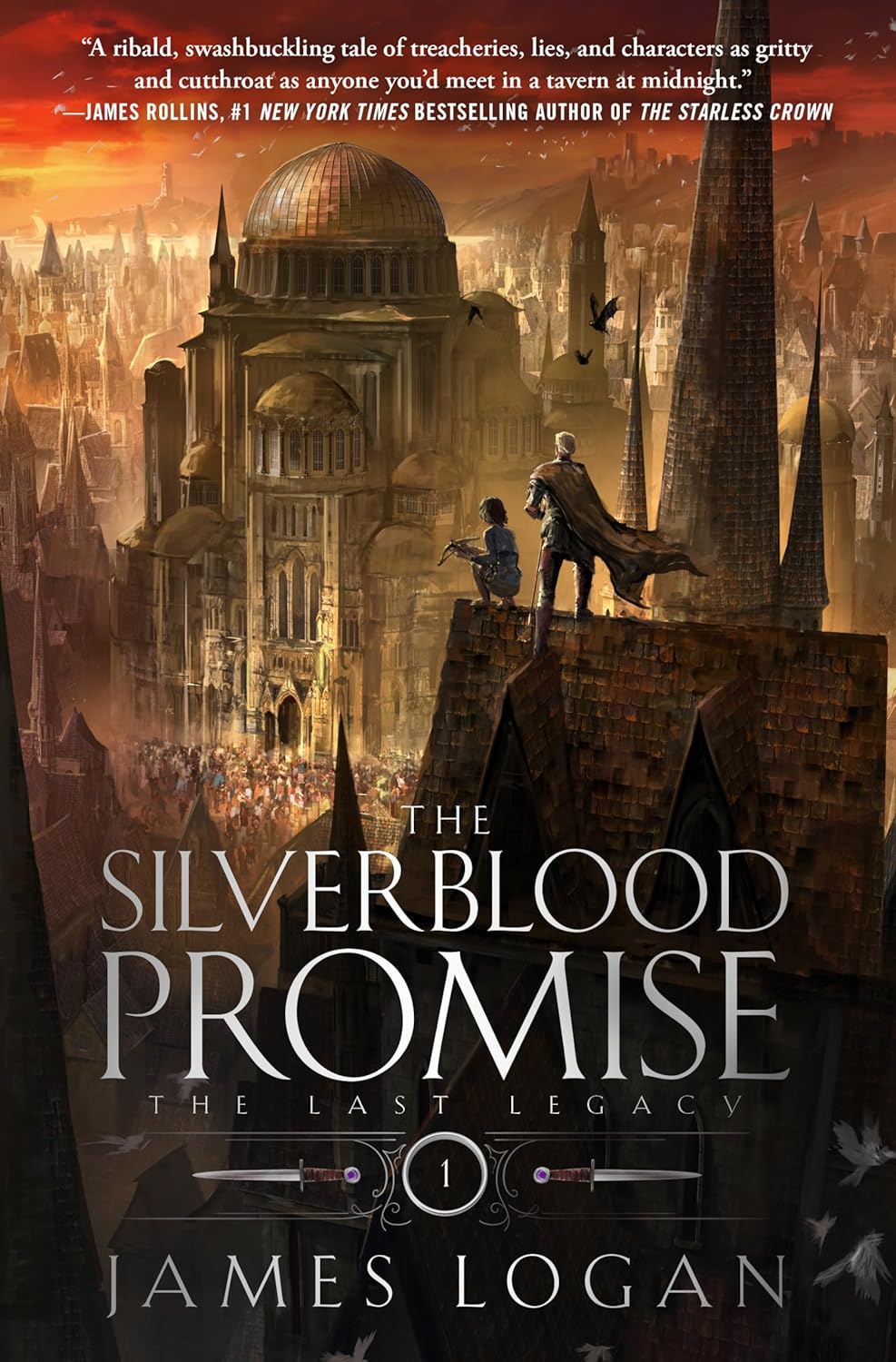
The Silverblood Promise by James Logan

The Silverblood Promise Cover

Publisher: Arcardia (Trade Paperback – 30 April 2024)

Series: The Last Legacy – Book One

Length: 595 pages

My Rating: 4.75 out of 5 stars

Amazon

Promising new author James Logan presents an epic fantasy debut in the form of The Silverblood Promise, the first entry in his planned The Last Legacy series, and one of my most anticipated books of 2024.

Lukan Gardova, the disgraced heir of a noble family, is a man who has lost everything following a duel that ended tragically.  Forced to drop out of his prestigious academy and abandoned by his family, Lukan travels the wild edges of the world, gambling, drinking, and seeking what adventure he can.  Despite his malaise and despair, Lukan is still shaken when he is informed that his estranged father has been murdered by mysterious assassins.

Armed with fresh purpose and a determination to find out who was responsible for his father’s death, Lukan follows the only clue he has, a note his dying father wrote in his own blood.  The names it contains lead him to Saphrona, an old and prosperous city ruled by merchant princes where everything can be bought.  Filled with rogues, scoundrels, thieves, and miscreants, Saphrona seems an unlikely place to find his reclusive, academic father’s killers.

Engaging in an exhaustive search throughout Saphrona, Lukan discovers that the answers he seeks lie with one of the city’s merchant princes.  Unfortunately, they have been condemned to death for the murder of another merchant prince, and if Lukan wants the information they have, he will first have to prove their innocence.  Working with an unlikely group of criminal acquaintances, Lukan follows the few clues surrounding the merchant prince’s unusual murder.  But the further he digs, the more danger he finds himself in.  There is a deadly conspiracy at work in Saphrona, one that seeks to undermine everything the city stands for.  Forced to contend with desperate nobles, deadly criminals, and dangerous forces beyond his comprehension, Lukan fights to keep his promise and find the truth behind his father’s murder.

Wow, now this was an awesome debut from Logan and one that I was really glad I got the chance to read.  The Silverblood Promise has been on my radar for a while, and Logan did not disappoint with its excellent and exciting story, which is loaded with action, intrigue, cool fantasy elements and some great characters.  Entertaining and fast-paced, The Silverblood Promise was an absolute joy to read, and I had an amazing time getting through it.

The Silverblood Promise has a deeply compelling narrative behind it that kept drawing me in with its intrigue, revelations and exciting adventure.  While this is a lengthy novel, I honestly powered through it as it proved very easy to get caught up in the story.  Logan maintains a very fast pace the entire way through The Silverblood Promise, and I enjoyed the mixture of action, character development and unique fantasy inclusions that the reader is treated to.  Starting off with a strong introduction that effectively showcases the protagonist and his current situation, the reader is quickly thrust into the main background city of Saphrona, which proves to be a fantastic setting.  Able to quickly interpret his one clue, the protagonist works with several connected figures to try and contact the person his father sent him after.  What follows is a series of interlocking quests as Lukan must befriend a master forger, mastermind a break-in to a notorious prison, and then discover who set up one of the city’s leaders for murder.  This results in a constant stream of adventures as Lukan jumps from one hurdle to the next, uncovering dark secrets about the city, and making unlikely friends.

The revelations about the true villain of the story occurs about two-thirds of the way through The Silverblood Promise, and while it isn’t too surprising, their methods and motivations are, especially as they reveal some interesting figures to the story.  Forced to go up against some big fish, Lukan is caught up in their power play, which adds a lot of chaos to the narrative, and must desperately come up with a plan to fight back.  The resulting carnage and confrontations are well handled, and I loved the great combinations of intrigue, battles and clever ploys that brought everything together.  All the action within The Silverblood Promise is sharp and well written, and you get drawn into the many confrontations and battles of wits that emerge.  Logan proved very able at hiding hints about the big bad’s schemes throughout much of the plot, and it was fun to see it all come together.  I had such a great time with this impressive story, and I ended up reading the last 300 pages of the book in less than a day, it was that damn good.  The reader comes away both satisfied and wanting more, which is lucky as it is clear Logan has some big plans for the series, with the adventure set to continue.

I felt that Logan came up with an excellent fantasy setting for The Silverblood Promise, and I really enjoyed how he utilised the new world throughout his plot.  Filled with magic, adventurers, complex cities, mysterious interdimensional beings, and powerful artefacts from long-lost advanced races, there is so much for the reader to enjoy here, especially when hints about far greater hidden powers are also included.  While a couple of the fantasy elements in The Silverblood Promise are a little derivative of other fantasy works, I personally didn’t mind, mainly because Logan makes them his own and they fit nicely into the fast and intense narrative of The Silverblood Promise.

While I loved the new fantasy world as a whole, the setting highlight of this book is the city of Saphrona, where most of the plot is set.  Saphrona proves to be a complex and compelling trade city ruled by merchant princes and filled with dangerous commerce, criminal enterprises, alien structures, unlikely monsters, and all manner of political intricacies and plots.  Readers will really enjoy unwinding the various elements of this city and it proved to be fun watching the protagonist explore Saphrona and attempt to find answers and stop a major disaster unfold.  In a way Saphrona becomes a character in its own right as the book progresses, and I really appreciated how effectively Logan introduced the reader to the setting and inserted the story in its survival and underlying politics.  Logan also ensured that readers got a good deal of information about some of the other locations outside of Saphrona, which are likely to become relevant to the plot in future books of the series.  While a of map of the continent or Saphrona would have been appreciated, readers come away with a great sense of the world and will be interested in seeing more stories within it.  Indeed, it looks like Logan plans to set each of The Last Legacy books in a different city of the world, and I for one am very excited to see what other memorable locations Logan will come up with.

I also really need to highlight the fun and memorable characters who were featured throughout The Silverblood Promise.  Logan did a great job pulling together an intriguing and often outrageous cast for his first book, and I loved some of the awesome storylines that emerged.  Most of the focus revolves around protagonist and primary point-of-view character, Lukan Gardova, a former noble turned roguish adventurer who finds himself way over his head in Saphrona.  Lukan is a great central figure for this book, and he brings a lot of emotion to the story due to his disastrous past and determination to find his father’s killer.  I felt that Logan provided just the right amount tragic history for his protagonist to enhance the dramatic tone of the book, and the character’s frustrations at the dangerous tasks he finds himself involved with, as well as his own stubborn need to move forward, were very relatable.  Lukan also provides a fun scoundrel vibe to the plot at times, and it was interesting to see his cynical perspective on events throughout the book.  I liked how Logan set Lukan up as a newcomer to the main setting of Saphrona, as this allowed the reader to see the city fresh through the eyes of someone unfamiliar with it, which enhanced the majesty, strangeness and cruelty of the setting.  As such, I felt that Lukan was an excellent central protagonist, and I look forward to seeing how his story evolves in the future, especially as there are many more secrets around his family that need to be revealed, and other character elements that need to be expanded upon.

Aside from Lukan, The Silverblood Promise features an interesting array of fun figures, the majority of whom are locals to Saphrona.  I loved all the unique characters that emerged, especially as Lukan is forced to deal with killers, scheming nobles, a mysterious forger, a blind beggar with way too much knowledge, an unlikely crime lord and a notorious band of mercenaries that Lukan is forced to alternatively fight or make deals with.  One of the most distinctive characters is an infamous thief who joins the main cast late in the story, but who proves to be a fantastic addition thanks to her skills, kindness and pragmatism.  However, my favourite character would have to be the young street urchin and pickpocket, Flea, who forms an unlikely partnership with Lukan early in the story.  Hired by Lukan to help him around the city, Flea proves to be an invaluable ally, despite her age, and works to keep her benefactor alive against all manner of dangers.  Bold, curious and utterly unflappable, Flea is a highly entertaining figure, especially as she keeps jumping into danger while also proving to be far wiser than Lukan.  Flea and Lukan serve as fun contrasts to each other, and I liked their entertaining banter and the touching bond they form throughout the course of the book.  This fantastic partnership really helped to make The Silverblood Promise that much more special, and all the characters featured within this book were really well written and cleverly featured.

Overall, The Silverblood Promise is an excellent and exciting fantasy novel that had me hooked the entire way through.  Intense, compelling and wildly entertaining, The Silverblood Promise was very awesome, and James Logan did wonders with his debut novel.  I will definitely be grabbing the eventual sequel to The Silverblood Promise when it comes out, and I cannot wait to see how this adventure continues and how Logan develops as an author.

Amazon

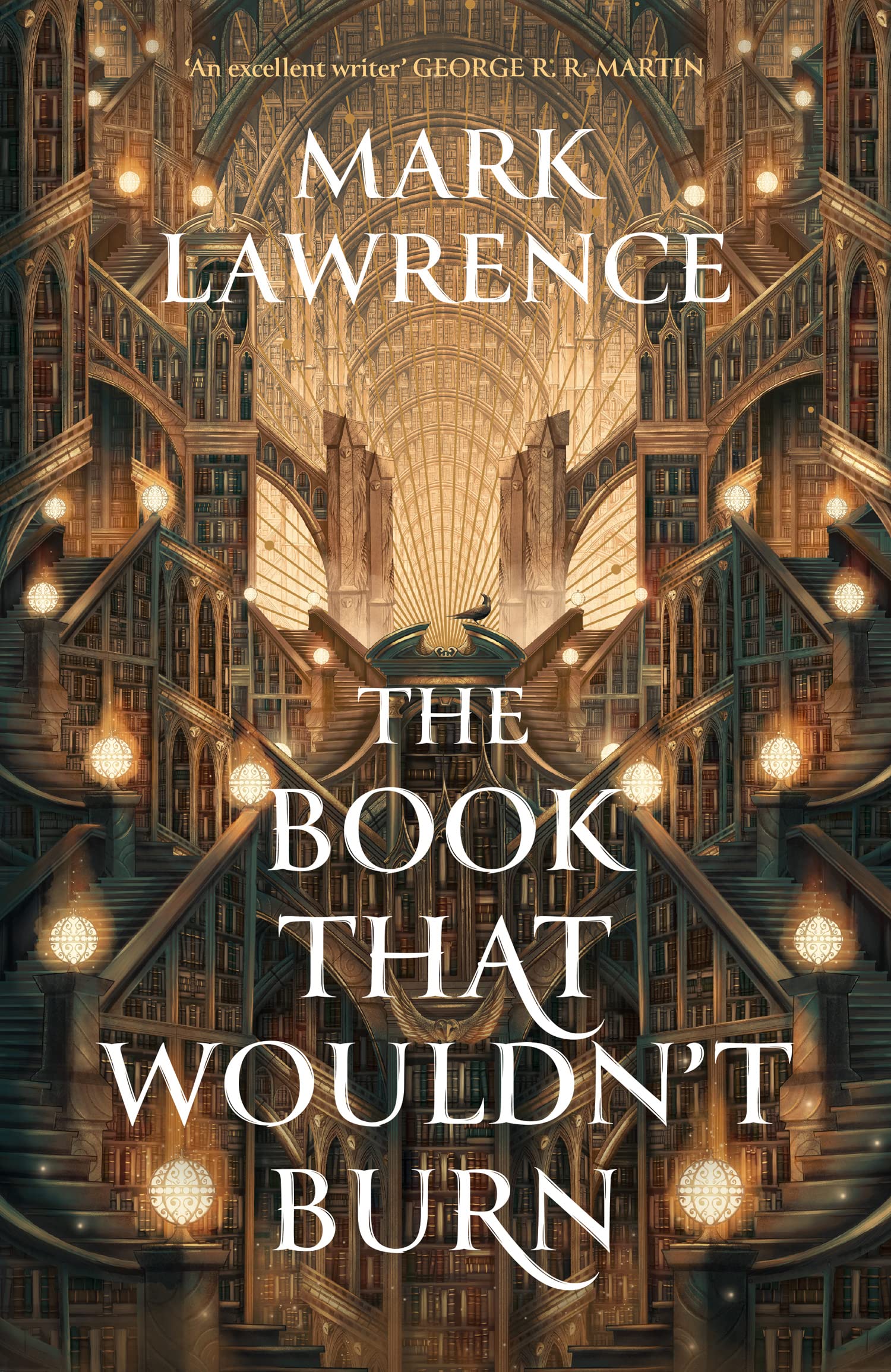
The Book That Wouldn’t Burn by Mark Lawrence

The Book That Wouldn't Burn Cover

Publisher: Harper Voyager (Ebook – 1 May 2023)

Series: The Library trilogy – Book One

Length: 570 pages

My Rating: 5 out of 5 stars

Amazon

One of the world’s inventive and compelling fantasy authors returns with one of his best novels yet, the highly addictive and ambitious novel, The Book That Wouldn’t Burn, which sets off his new The Library trilogy.

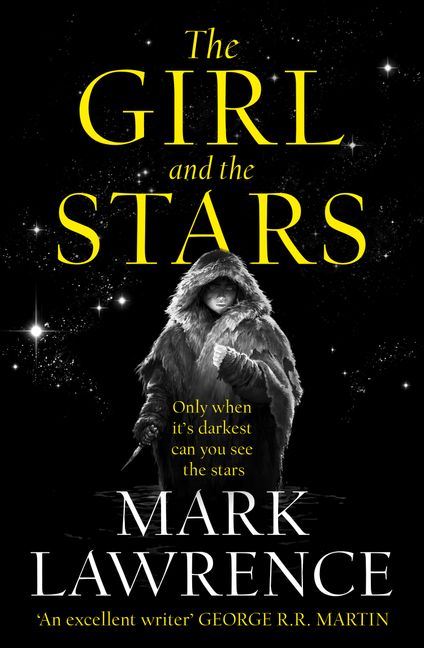
Few authors have had the impact on the fantasy genre than Mark Lawrence has in the last few years, as the author has truly impressed readers throughout the world with his unique and captivating novels that routinely blend fantasy and science fiction elements.  His series include The Broken Empire trilogy, The Red Queen’s War series, and The Book of the Ancestor series.  I myself only started reading Lawrence’s work a couple of years ago with his compelling The Book of the Ice series, which followed several powered teens on a grim frozen planet.  I had an outstanding time with this series, which included The Girl and the Stars and The Girl and the Mountains.  While I still have to read the third book, The Girl and the Moon, I really enjoyed these books, and it was a pretty clever series.  As such, I was very keen to check out Lawrence’s new novel, The Book That Wouldn’t Burn, especially as it had a very intriguing plot synopsis behind it.

Throughout the world, there is nothing more important, more significant, nor more permanent than the library.  Built inside a mountain near the great city of Crath, the library contains an impossible number of books fitted within innumerable rooms that no one person can access.  The sheer amount of knowledge contained within the library represents the greatest power in the world, allowing its keepers and the King of Crath to wield great control in the world.  Into this vast and elaborate repository of knowledge and secrets, two young people are about to meet in unusual circumstances.

Livira is a young girl raised in the Dust, the desolate wasteland that surrounds Crath.  Plucky, curious, and incapable of giving up, Livira is a rarity among her people as she seeks to know more about the world outside her home.  But when the alien sabbers destroy her village and kill her people, Livira finds herself lost in the wilderness.  Rescued and brought to Crath, Livira soon becomes certain that her future lies in the library.  Overcoming prejudice and her own humble background, Livira learns to navigate the library and soon begins to find out some of its deeper secrets.  However, the most mysterious of these might be another strange inhabitant of the library, Evar.

Evar and his small family have known nothing but the library their entire lives.  Released after unknown eons frozen as children inside the library’s mysterious Mechanism, Evar and his siblings have grown up in a vast chamber of the library, learning from the books and becoming masters of specialised subjects.  However, Evar has always desired more and has long tried to find a way to leave their book filled prison.  His discovery of a portal within his home soon leads him to a place outside of time where he meets an exploring Livira.  Together, the two attempt to find the true history of the library and the threats it has withstood over the years.  But dark evils haunt the library, and soon the two explorers must find a way to uncover the truth behind the sabbers, their own history, and other deadly threats waiting for them in the future.  Can these two children of the library survive the revelations in front of them, or will the truth tear them apart in ways they can’t even understand?

Well damn, now this was a seriously impressive and epic book.  Lawrence has honestly outdone himself here with this incredible read, and this might be one of the best books he is ever written, which is saying something.  The Book That Wouldn’t Burn features one of the most elaborate settings and narratives you are likely to see in fantasy fiction, and this results in a powerful and moving read that will keep you guessing time and time again.  I had an exceptional time reading The Book That Wouldn’t Burn, and it would be impossible for me to give it anything less than a five-star rating.

The Book That Wouldn’t Burn is told from two separate perspectives, that of Livira and Evar, and covers their very different lives and experiences within the libraries.  These two character-driven storylines are initially kept separate from each other as Lawrence spends a good chunk of the book introducing the protagonists, setting up their unique stories, and bringing together the elaborate setting that the story is based around.  Both of these storylines are very interesting and fun off the bat, with Livira having her life torn apart, only to find purpose in the library, while Evar details his life lived purely within the library.  While both storylines are really good, I initially got drawn into Livira’s the most, especially as her outsider perspective of the library allows you to really appreciate how alien and strange the massive house of books is.  Livira’s storyline advances at an extended clip, covering years of her life as she learns, grows, and fully develops her adventurous personality as she seeks to fully understand the secrets of the library and everything within it.  Evar’s storyline on the other hand is a little more sedate in its pacing, as it is set only along the course of a few days as he tries to finally understand the structure that has kept him prisoner for so many years.

The first half of the book that showcases these two characters’ initial introduction and growth are pretty damn entertaining, and it does a wonderful job of setting the scene for Lawrence’s elaborate story and background location.  However, the story doesn’t find its true strength until the two protagonists meet and their storylines becomes a lot more intertwined.  Due to the impossible physics and requirements of the library, there is a compelling time element to the meetings between the characters, which Lawrence captures masterfully, and which really alters their perspectives of each other.  Once they are able to properly interact, the two characters grow close and spend an interesting chunk of the novel exploring their respective worlds, as well as the history of the library.  Lawrence really lays the world building on thick during these parts of the book, and it serves to bring the two protagonists together, which just ensures the last act of the book is as tragic, moving and devastating as possible.  The author drops some massive bombshell twists around two-thirds of the way through, which completely throws you and makes you rethink everything you have thought about the preceding narrative.  I honestly was pretty damn shocked at this epic and devastating revelation, and while I had already been pretty damn addicted to the story by this point, this was the moment I realised what a masterpiece The Book That Wouldn’t Burn truly was.

The final third of the novel gets even better as certain background elements of Livira’s storyline finally come to fruition and her entire life begins burning around her.  This causes her and many of the supporting characters from her part of the book to end up interacting with the characters from Evar’s storyline, which is a very interesting change of pace from the previous parts of the book.  There are also some frenetic conflicts and some very dark moments as everything you have previously known about the settings, the characters and the history of the library is thrown around in some excellent and compelling ways.  There are several great new twists in this final section of the book, and Lawrence gets very metaphysical with the reveals, relying on his setting’s unique temporal properties to mess with your mind and bring you surprise after surprise.  I really loved just how cool and complicated this novel got towards the end, and Lawrence leaves an awesome and open conclusion for you to enjoy while drawing you in towards the next book in the series.  I came away from this narrative desperately wanting more, especially after being blown away by all the twists within the book, and I cannot wait to see what happens next.

Those who are familiar with Lawrence will know that he is a very impressive and talented author, and I really liked how he developed his story and displayed all its outstanding elements to the reader.  The Book That Wouldn’t Burn is a particularly complex read, loaded with damaged characters, elaborate storylines and an inventive major setting.  Lawrence approaches his latest novel with his usual flair and imagination, expertly showcasing every clever detail of this world to the reader and keeping them enthralled the entire way through.  Due to the complexity of the story, you really need to dive into every single word that Lawrence writes, and it honestly took me a little longer to get through this lengthy novel than I expected, mainly because of how much focus I needed to fully appreciate everything.  That said, it has a very good pace to it and there is never really a dull moment as you are constantly drawn into what is happening or the elaborate depictions of the library.

I felt that the author’s use of two narrators was particularly effective, especially as they give very different views of what is happening around them and the setting they find themselves in.  The extra expansiveness of the separate narration really helps to expand the scale of the book, and it takes some major temporal shifts for the two protagonist’s storylines to align.  Once they do, the two separate character arcs intertwine extremely well, and I loved seeing their interactions through each other’s eyes, as well as the elaborate adventures they find themselves involved with.

Lawrence also was very skilled at setting up some of the book’s big twists, and while many of them surprised me when I read them, looking back you could see the subtle clues leading up to them, and you really appreciate just how clever the author was in the earlier stages of the book.  The initial big twist is probably the best, and you really have to love how careful Lawrence was with some of the dialogue and character descriptions to pull that off.  Some of the subsequent twists are a little less shocking, mainly because you are on guard at that point, but I did like how well some of the reveals based around the protagonist’s journey through time were utilised and hinted at in earlier scenes.  The fact that there are completely different faces to some of the major early figures of the book was very cool, and it was clear that the author had a very impressive plan while writing the early stages of the book.  These excellent writing elements, and more, served to enhance an already captivating story, and I cannot get past how well Lawrence set everything up.

There is no way I can move forward without talking about the elaborate library setting that was such an epic centrepiece of The Book That Wouldn’t Burn.  I love how the author’s ultimate major setting is a library, which is something that all readers can really appreciate.  While we can all imagine a pretty massive or full library, Lawrence amped that imagination up to an 11 in this book, describing a seemingly impossible structure, made up of innumerable rooms filled with massive climbable bookshelves and a seemingly infinite number of books and tomes.  The sheer scale of this setting when described by Lawrence boggles the mind to a degree, and it really is an outstanding setting for this story as it is the perfect place for exploration, adventure, and even habitation.  The library naturally features Lawrence’s trademark blend of fantasy and science fiction elements, and the structure has a transdimensional or alien feel to it, as the protagonists find different mechanisms within the structure, as well as strange and unique ways to travel through it.  This blend of fantasy and science fiction elements worked particularly well, especially as you get to experience an intriguing contrast between ancient advanced technology and endless shelves of paper books.

The more unique elements of the library, including the portals, the robotic guardians, the locked doors, and more, are worked into the plot extremely well, and it was fascinating to see how they impacted the story, especially while the characters attempted to find out their origins.  The time travel aspects of the library proved to be particularly awesome, and I loved how Lawrence used them, and other cool features, to twist the narrative in some powerful and unexpected directions, completely changing everything you thought you knew.  It was also really effective how Lawrence explored the library through two very different sets of eyes, as Livira and Evar see it in different ways based on their respective history and cultures.  These alternate views added even more depth to the epic setting, and you have to love the continued focus on exploration, especially when it resulted in some of the best scenes in the book.  Honestly, I could go on and on for pages about just how impressive this outstanding setting is, so let me just be blunt and say: read The Book That Wouldn’t Burn, as you really won’t be disappointed when it comes to this elaborate library setting and the dark world it inhabits.

The final thing that I really need to highlight are the great characters contained within The Book That Wouldn’t Burn, which Lawrence did an outstanding job pulling together.  There is a rich and compelling cast of characters featured within this novel, and their unique stories and experiences play a big role in how the story develops.  However, most of the character work is saved for the point of view protagonists, Livira and Evar.  Both characters have intriguing and tragic backgrounds brought about by encounters with sabbers, and they have found sanctuary within the library as a result.  However, this is where their storylines differ as Livira seeks out the treasures of the library and works to get deeper within, while Evar looks to escape and find a whole new world to explore. This leads to some very conflicted character moments, and it was fascinating to see how these characters’ intriguing histories influences their understanding of the world and what they want.  Both protagonists are well established and utilized by the author in The Book that Wouldn’t Burn, and their distinctive character arcs give the book a different flavour chapter to chapter as you explore both their lives.

I personally enjoyed Livira a little more as a protagonist, as her adventurous spirit, drive to be the best and sheer pluck were quite entertaining to see, especially as it allowed her to uncover so many cool secrets about the library.  However, you also have to appreciate the darker background and narrative around Evar, a man trapped all his life in the library, and who has known only limited contact and love in his life.  Evar’s entire life has been nothing but uncertainty, abandonment and a certain amount of inadequacy as he has only known a few other people, each of whom are the absolute experts in their fields.  These two protagonists, when they meet, prove to be a powerful and interesting combination, and Lawrence was quite masterful and subtle when it came to weaving their chapters together.  You really appreciate the pain, loss and sacrifices that both protagonists make throughout the book, and the bond they formed together, soon becomes such a key part of the story.  While they do experience some major, mind-blowing setbacks, you grow really attached to both of them, and seeing them continue and dive even deeper into the unknowable heart of the library, makes for powerful reading.

Aside from Livira and Evar, The Book That Wouldn’t Burn features an extensive and compelling cast of supporting characters, whose interaction with the protagonists adds some intriguing elements to the plot, especially as many of them are filled with some great surprises.  Both Livira and Evar’s storylines had some excellent supporting figures whose appearances are primarily limited to their respective narrator’s timeline.  My favourite supporting character in the Livira chapters had to be Malar, a rough and tough solider who becomes Livira’s protector mostly against his will.  His gruff attitude is a fun contrast to Livira’s bright and curious nature, and they have some entertaining scenes together, especially as he grows to care for her, and Lawrence works in some particularly compelling story elements around him in the later part of the book.

Evar’s chapters also feature a great range of supporting characters, and due to the more constricted nature of his story and setting, you get to know them a lot better than some of the cast associated with Livira.  These characters include Evar’s adopted siblings, Starval, Kerrol and Clovis, who were also trapped in the Mechanism as children and grew up with him in the library.  However, unlike Evar, who emerged relatively normal, each of Evar’s siblings were warped by the knowledge of the Mechanism and are now masters of a particular subject, including assassination and espionage, war and psychology.  Each of these siblings is now fairly damaged as a result of their complex upbringings and childhood traumas, and it was fascinating to see their unique mindsets, especially through the eyes of Evar, who holds a special place in each of their hearts.  These characters were all raised by the animatronic constructs, the Assistant and the Soldier, servants of the library who took charge of them, and I liked the fun interactions that resulted from them, especially once Lawrence worked his twisty magic on them.  All of these characters and more are pretty damn interesting, and I loved how complex and emotionally charged their interactions became.

Frankly I could go on and on about this book, but I still do not think I would really be able to fully encapsulate just how much I enjoyed The Book That Wouldn’t Burn.  This complex and clever fantasy novel is a true masterpiece from Mark Lawrence, who utilised all his impressive writing skills and imagination to create a unique and powerful read.  The Book That Wouldn’t Burn’s elaborate narrative and massive library setting really grabbed my attention and I had such an epic time getting through this outstanding novel.  Easily one of the best fantasy books of 2023, you need to check The Book That Wouldn’t Burn out, especially if you are already a fan of Mark Lawrence’s amazing works.

Amazon

Dead Man’s Hand by James J. Butcher

Dead Man's Hand Cover

Publisher: Ace (Hardcover – 29 November 2022)

Series: The Unorthodox Chronicles – Book One

Length: 373 pages

My Rating: 4.5 out of 5 stars

Amazon     Book Depository

Murder, magic and mayhem are about to be unleashed in the impressive urban fantasy debut from exciting new author James J. Butcher, Dead Man’s Hand.

I think it is fair to say that no recent urban fantasy book has intrigued me more than the compelling Dead Man’s Hand by James J. Butcher.  Not only did it have a striking cover, a cool name, and an awesome synopsis, but the author himself is very interesting.  Despite the fact this is his first novel, Butcher is a name that comes with some expectations, due to him being the son of legendary fantasy author Jim Butcher.  Jim Butcher has pretty much set himself up as the gold standard of urban fantasy fiction thanks to his iconic Dresden Files series that follows wizards in modern Chicago.  I am a pretty big fan of the Dresden Files and when I first heard that Jim Butcher’s son was releasing his own book, I was immediately curious about it.  As such, I made sure to get a copy of Dead Man’s Hand as soon as it came out, and I was very happy that I did.  The first book in his series, The Unorthodox Chronicles, Dead Man’s Hand was a superb read that I had an amazing time getting through.

On the mean streets of Boston, a dark murder has occurred whose ramifications will shake the city’s magical community.  The victim was Samantha Mansgraf, an extremely powerful witch and one of the most effective agents of the Department of Unorthodox Affairs, the government department that polices magic users and keeps the peace between the ordinary Usuals and the paranormal Unorthodox.  Her body has been found mangled and tortured, and the only clue is a secret message she left behind which simply reads, “Kill Grimsby.”

This message can only relate to one person, Grimshaw Griswald Grimsby, whose future as an Auditor for the Department of Unorthodox Affairs was unceremoniously ruined by the victim.  Now working in a terrible fast food job extremely close to where Mansgraf was killed, Grimsby seems the most likely suspect for her murder.  However, there is one major flaw in this theory; Grimsby is magically incapable of committing the crime.  Only able to cast a few minor spells and hampered by an old injury, there is no way that Grimsby could have killed the victim.  But this fact isn’t going to be enough to stop everyone coming after him.

Targeted by both the Department and the monsters actually responsible for Mansgraf’s murder, Grimsby finds himself in a whole lot of trouble.  His only hope of survival is to team up with Mansgraf’s old partner, the legendary Huntsman Leslie Mayflower, an expert at killing all things magical, and find out who is really behind this gruesome murder.  However, Grimsby and Mayflower soon find themselves caught in the midst of a deadly magical conspiracy, one where every potential loose end needs to be killed.  To survive, Grimsby and Mayflower will need to dig deep and uncover the darkest secrets from Boston’s magical community.  However, can an old broken down Hunstman and a failed witch manage to take on the evil coming for them, or are they about to be as dead as Mansgraf?

Butcher comes out the gate swinging with his first magical adventure, and I really enjoyed the result.  Dead Man’s Hand is a clever and cool new novel that sets up Butcher’s planned series while also presenting the reader with a captivating character driven story, filled with mystery, murder and magical mayhem.  I managed to knock this book out in a couple of days, and it proved to be a wonderful and impressive debut.

Dead Man’s Hand has a great urban fantasy narrative to it that follows two interesting and complex characters caught in the middle of a magical conspiracy.  Butcher kicks the story off quickly, with Mayflower getting involved in the hunt for his former partner’s killer, which leads him to Grimsby, who is initially a suspect, until it becomes very clear he couldn’t have pulled off such a destructive killing.  When Grimsby is attacked by the apparent murderer, the two start to work together and they focus their investigation into finding a dangerous artefact that the victim had hidden before her death.  That leads them into all manner of trouble, including demonic gangsters, freaky constructs, and Department agents, all of whom are coming after them with lethal intent.  This results in a great twisty and slick narrative, as the characters need to uncover multiple mysteries while also confronting the many unusual creatures coming for them.  There are several great action-packed confrontations loaded into this book, and Butcher makes excellent use of his distinctive new magical universe to create some memorable sequences.  Everything leads up to a big and powerful conclusion where, after some personal betrayals, the two protagonists are forced to come together to take out the culprit and save the day.  While the ultimate reveal of who the killer is was a little predictable, Butcher did it in an entertaining way and the stakes were pretty damn high by the end of it.  Butcher also ramped up the tension for the final confrontation and you honestly had no idea how the book was going to conclude and who was going to pull through.  I was personally hooked all the way to end and I came away pretty happy with the conclusion, especially as Butcher sets up some potential sequels in the future and I have a feeling that this is the first entry in an awesome long-running series.

I quite enjoyed Butcher’s writing style for Dead Man’s Hand and I think that the excellent story came across really well in the end.  The story moved at a very quick pace, and Butcher really did not slow down for anything, hitting the reader with a ton of action, intrigue and moving character development from start to finish.  Like most good urban fantasy novels, Dead Man’s Hand had a fantastic blend of mystery and fantasy elements, and you are soon swept up in the hunt for the magical killer, especially as it reveals a complex and deadly conspiracy.  This helped to create quite a compelling and exciting read, which comes across like a buddy-cop romp thanks to the entertaining partnership between the two main characters.  The story is broken up between these two character’s perspectives and you get to see how they come together as a dysfunctional but effective team, and I loved the fun veteran/extreme-rookie dynamic that their partnership achieved.  Butcher further enhances the story by featuring a ton of comedic humour, most of which was brought in by the chatty and snarky main character.  Readers will no doubt notice that Butcher took some inspiration from his father when it came to writing humour, especially when it came to the main character’s snark, as well as some of the very over the top scenes and inclusions.  There are some pretty ridiculous moments, especially surrounding the character of Grimsby (his stint as a food entertainer was fun at the start), and things only get more over the top as you go (let’s just say that there is something very interesting in a box, and leave it at that).  While this was amusing, I was glad that most of the focus remained on the more serious elements of the book, which came together extremely well.  This ended up being a very strongly written book, especially for a debut, and I was pretty impressed with Butcher’s great style and writing ability.

Butcher’s series, The Unorthodox Chronicles, has an interesting urban fantasy setting to it, and I was impressed with the new world.  While I am sure that some will try to unfairly compare it to his father’s urban fantasy world, I felt that Butcher did a good job making it stand out on its own the reader is successfully introduced to many cool key details in this first book.  This series takes place in a version of Boston where the world is aware that magic exists, and magical creatures and magic users are kept in line by the Department of Unorthodox Affairs and their deadly agents known as Auditors.  I was quite intrigued by the inherent bureaucracy surrounding an unhidden magical world and it was fun how wizards are treated in a world where people are aware of them.  The visible magic itself is pretty simple, but effective, with magic users drawing their own inner-magic (Impetus) from within and launching it out using simple keyword spells.  Some of the effects of these spells are pretty fun and the protagonist manages to achieve a lot with some very basic combinations.  Butcher further populates his world with some freaky magical creatures, who give the book a darker and intense edge, especially those human familiars, who make for quite an effective and deadly enemy.  However, one of the most distinctive features of this universe is the Elsewhere, a dark, alternate magical realm that most wizards can perceive and which have its own rules.  The Elsewhere is so weird and crazy that all magic users need eye protection on all the time or else they will be driven mad by the things they see.  One excellent extended sequence sees the protagonist forced to visit the realm (which can be achieved by travelling through mirrors), and it came across as a pretty gruesome place to journey, thanks to all the creepy creatures and its inherent time dilation.  I loved all the cool details contained in this new world and I am quite excited to see how Butcher plans to expand on it in the future.

Aside from the amazing story and intriguing fantasy elements, one of the main strengths of Dead Man’s Hand was its excellent main two characters, who Butcher uses to great effect as alternating narrators of the story.  Both central protagonists are very damaged and complex in their own ways, and their eventual team-up helps them both to develop and escape the ruts they find themselves in at the start of the book.  The main character is Grimshaw Griswald Grimsby, an orphaned wizard who was badly scarred as a child in a fire that killed his family.  Grimsby previously attempted to become an Auditor for the Department, but he found his path blocked by the murder victim, mainly due to his inability to do complex spells and because his scars weaken his magic.  Now trapped in an embarrassing dead-end job, Grimsby starts the book off depressed and resentful, with zero confidence in himself.  However, this changes as the story continues and he is able to prove himself to his new mentor character, Mayflower, who, while gruff, helps mould him into a better person.  The one thing he cannot change is his motor mouth as Grimsby is constantly talking and joking, giving off a magical level of snark.  Much of the book’s humour comes from Grimsby’s irreverent view of the world and there are some great jokes flying out his mouth here.  I also loved seeing Grimsby’s inventiveness throughout the book, especially as he can only really cast three weaker spells, which requires him to be very imaginative in how he uses them, especially in self-defence.  There are also some fantastic storylines surrounding his traumatic past, as well as some more contemporary storylines about whether he actually belongs in this dangerous lifestyle or whether he should seek a quieter life.  While it would be easy to compare Grimsby to another snarky urban fantasy protagonist (say the one written by Butcher senior), I think that Grimsby stands on his own, and there are still quite a few layers for Butcher to uncover in the future.

The other major character is Leslie Mayflower, better known as the Huntsman, a bitter retired agent who specialises in killing magical creatures and beings.  Eternally grouchy and bitter at the Department, Mayflower dives into the case seeking revenge and comes across Grimsby, eventually partnering with him.  Mayflower is the direct opposite to Grimsby for much of the book, and I loved how Butcher portrayed him as a past-his-prime killer who returns for one last job.  Shown to be full of regret, self-loathing and a desire for revenge, Mayflower was a powerful part of the book, especially once Butcher pairs him with Grimsby.  These two made for a great team, and watching the positive Grimsby start to have an impact on Mayflower’s personality was a fun part of the book.  Despite still being mistrustful for most of the book, Mayflower soon grows to appreciate the partnership with Grimsby, and it was quite moving to see the character have something to live for again.  While you do see a lot of his personality and intensity in Dead Man’s Hand, I liked that Butcher was a little vague when it came to his past, and I am hoping that the author will dive into more of his history in future books.  Both central protagonists were extremely well written and very damaged in their own way, and this makes for a great story focus, especially as there are some excellent scenes when they start working together.

Overall, I thought that Dead Man’s Hand was an excellent and captivating first book from James J. Butcher, and it is one that I had an amazing time reading.  Fast-paced, hilarious, and filled with all manner of magical chaos, Dead Man’s Hand served as a powerful and enjoyable first entry in the author’s new series, and it comes highly recommended as a result.  I will definitely be grabbing the next book in this series when it comes out and I look forward to seeing how Butcher’s career progresses from here.

Amazon     Book Depository

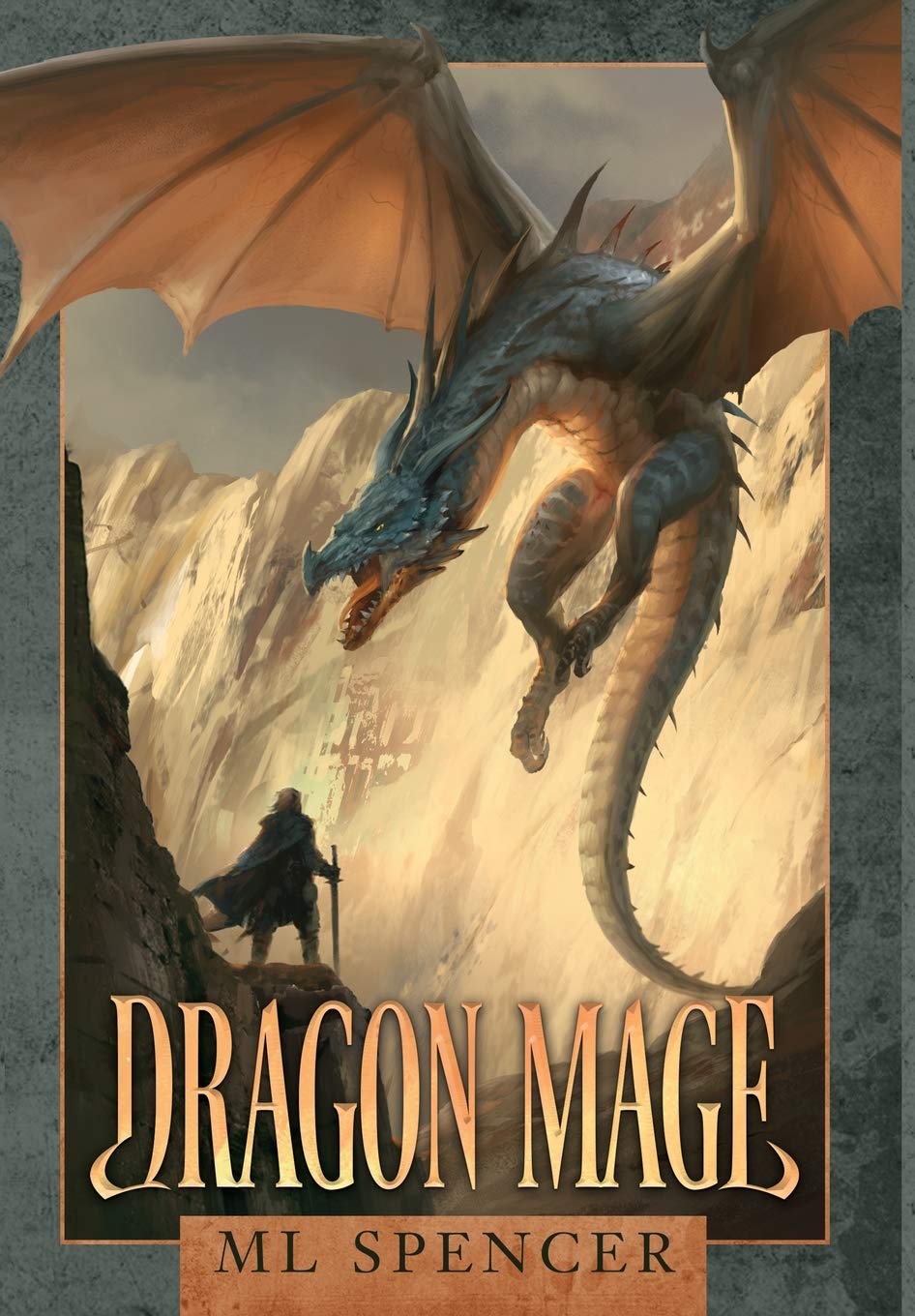
Dragon Mage by M. L. Spencer

Dragon Mage Cover

Publisher: Stoneguard Publications/Podium Audio (Audiobook – 19 December 2020)
Series: Rivenworld – Book One

Length: 27 hours and 18 minutes

My Rating: 5 out of 5 hours

Amazon

Prepare for an epic fantasy adventure with a great classic feel to it, as awesome author M. L. Spencer presents the massive and captivating fantasy novel, Dragon Mage.

Back in 2020, the fantasy book world was abuzz with talk about the compelling and impressive fantasy fiction epic, Dragon Mage by M. L. Spencer, who was already known for her Rhenwars Saga and Chaos Cycle books.  While I have not had the opportunity to read any of her previous works, Dragon Mage definitely caught my eye, especially with the very cool cover with the awesome art.  While I never got the chance to read this book when it was first released, I did grab an audiobook copy of it and have been looking for an opportunity to listen to it for some time.  When I found myself in the mood for some great high fantasy a few weeks ago, I decided it was finally time to listen to Dragon Mage, especially as a future Rivenworld book is apparently on the horizon, and boy did I have an outstanding time with it.

Aram Raythe is a simple lad from a small fishing village in the middle of nowhere.  A strange boy with a love of knots and an inability to understand people, Aram thinks that he will go through life alone and hopes for a quiet existence as a sailor.  However, Aram has a secret that he has never told anyone: he can see the colourful strands that make up the world, and he can manipulate them to do magic.

When a bard arrives at the village, seeking an apprentice, Aram uses his powers to help the only person who was ever nice to him, fellow teen Markus Galliar, get chosen; however, he is unprepared for the chaos that this action will unleash upon his life.  While the bard, who recognises his potential, attempts to take him to safety, Aram accidently unleashes his power to cause a rift in the world.  Soon the village is visited by an Exilari sorcerer, who captures Aram and Markus, seeking to drain Aram’s essence and use it to power his own magical abilities. 

Aram’s destiny lies not in the torturous extraction cellars of the Exilari but with an order of dragon riders from another world.  When fate drags him to them, Aram will find acceptance and friendship for the first time in his life, as well as the opportunity to fight against the Exilari, their dark allies in this new world, and the ancient monsters who control them.  But to do that, Aram will need to learn to tap into the massive power lying deep within him and figure out how to use it to become a true Champion, the most powerful beings in two worlds.  Can Aram become both a Champion and a dragon rider, and what role will Markus play in his turbulent life?

I am really regretting not reading this book when it first came out.  While it was a lengthy read, Dragon Mage proved to be an excellent and captivating high fantasy adventure, and it was exactly what I was in the mood for.  Featuring an elaborate and massive narrative, complete with unique fantasy elements and some exceptional characters, Dragon Mage was an outstanding book that gets a full five-star rating from me.

Spencer produced an extremely epic and complex narrative for Dragon Mage that I had a particularly awesome time getting through.  Now, I do have to admit that Dragon Mage has a pretty lengthy story and it takes a considerable amount of time and effort to get through it.  In addition, the narrative does get a bit slow in places, especially at the beginning, and there were a few points where I struggled to make progress.  However, if you set aside the time for it and make an effort to keep going, I guarantee that it is more than worth it, as it unfolds into an epic, multidimensional coming-of-age story that has a real classic fantasy vibe to it.  The impressive, self-contained tale within will keep you entertained and stick with you well after you have finished reading it.

The story itself starts off with an extended introduction to the main characters of Aram and Markus, which showcases their personalities, histories and views of the world, while also featuring their first meeting and the start of their friendship.  I struggled a little to get through this opening part of Dragon Mage, mainly because I did not initially connect with Aram and his distinctive personality.  However, once you get several chapters in, the excitement starts to increase, as you see the full potential of the protagonist, as well as the introduction of a brilliant antagonist, Sergan Parsigal, who really moves the narrative along.  He quickly captures the two protagonists, which leads to several brilliant scenes, including an awesome and exciting escape from monsters from outside of reality.  From there, the story evolves into more of a magical school narrative, which I naturally loved (see my recent list about favourite books with magical schools in them), although it doesn’t last too long, as Spencer throws in a pretty dark twist and a heartbreaking time skip.

Following this time skip, the story evolves again, with Markus and Aram separated for a while after Markus rescues Aram.  The two characters soon develop in different story arcs, with Aram spending time in a completely new world, which sees him finally starts to explore his full potential.  After some more chapters in a whole different magical school setting, the main characters converge again, with some great drama.  Without going into too much detail, the rest of Dragon Mage keeps building on the plot from the first half of the book, and the characters are thrown into a ton of deadly situations as they continue to grow and discover their destiny.  Spencer layers the rest of Dragon Mage with a great combination of adventure, war, character development, training, romance, friendship, conflict and tragedy, which comes together into an extremely powerful narrative.  There are some truly epic scenes throughout this second half of the book, and you really grow attached to all the major characters in the book, which Spencer will make you pay for in some dark sequences.  Some of the major appeal is watching the slow but steady growth of the protagonist as he evolves from being unconfident and isolated to a powerful hero, helped along by the friendships he forms with those close to him.  Everything ends with a massive pulse-pounding confrontation that will keep you on your toes and ensure you cannot put down this book as you wait to see how everything turns out.  Readers will come away from Dragon Mage extremely satisfied, and the author leaves open some intriguing storylines for the future, that I hope the author will continue. 

One of the things that I particularly appreciated about Dragon Mage was the elaborate and compelling fantasy elements that Spencer introduced.  Dragon Mage actually features two separate realities, which were previously joined before being separated into The World Above and The World Below during a historical cataclysm.  These worlds can still be journeyed through by breaches caused by magic users and much of the plot revolves around the characters trying to stop an evil plot to recombine the words in a new cataclysm.  The book starts off in The World Above, a typical medieval setting which is ruled over by a despotic empire controlled by an order of magicians known as the Exilari, who gain their power through draining the essence of anyone with magical potential.  The second half of the book is set in The World Below, which features a range of magical creatures, including dragons, magical horses, and other creatures.  The World Below is in the grip of deadly war between an evil demigod (one of several who rule both worlds) and an order of dragon riders, who serve as its primary protectors.  Spencer does a great job introducing both worlds throughout the course of Dragon Mage and while they might not be as heavily explored as if there was only one world, you get a good sense of how they different and the histories that surround them.  Both are very distinct in their own way and I had a lot of fun seeing both, especially as they provide a compelling contrast to each other as two halves of the same coin.  I really like the switch between worlds that occurred halfway through the book and having the focus change to the more magical World Below made for quite an enjoyable and exciting read. 

I was also a fan of the unique magical elements contained within Dragon Mage, which, as the name suggests, is big on magic and dragons.  The magic itself is quite interesting, if a little ethereal in its description, and there are a few different versions of it.  The primary form of magic is shown through Aram’s eyes and is tied into the strands of energy that make up the world.  These strands, which only a few people can see, can be manipulated and tied into knots by the magic user for various magical effects.  This is a very unique system, and it ties in well with Aram’s peculiarities, especially as he spends much of the early part of the book obsessed with knots without anyone understanding why.  This results in some awesome displays of magic, and I found Aram’s perception of the magic and how it works to be extremely fascinating.  Other forms of magic include Markus’ magical immunity, natural passive magic from other characters and items, as well as the magic of the Exilari, which they gain be stealing the essence from magic users like Aram.  The destructive Exilari make for exceptional villains in this book, especially as they bask in their stolen power in a very creepy way, and I deeply appreciated that Spencer spent the time to explore their organisation, especially as the protagonists spend time in their training facility.

Then of course, there are the dragons, which inhabit The World Below.  I always enjoy a good dragon focused story, and this one was pretty fun as Spencer goes for a sentient dragon that bonds with a rider.  While this has been done before, I think that Spencer altered it enough, especially as quite a lot of the book is dedicated to them and their place in the world.  The author spends a substantial time exploring the bond between human and dragon, and you get to see the entire process, from the initial training of the human recruits, the hatching of the dragons, their bonding, and then their eventual use in combat.  There are a huge number of dragon characters in this book, and you get to see inside many of their minds and their bonds, especially as Aram can communicate with all of them.  The bond itself is a deep and personal connection, and I loved the scenes that examine how lethally strong it is, with human or dragon rarely surviving the death of their partner.  Having the emotional connection to a dragon becomes a key aspect of several of the key characters and it was really moving to see characters who have lost a lot in their life find new companionship with a soul bonded dragon.  The subsequent scenes of dragon combat are extremely awesome, and I appreciated that Spencer introduced some equalisers to make sure that they didn’t come across as too overpowered.  I had a wonderful time with all the fantasy elements in this great book and Spencer made great use of all her unique or fun elements to enhance and tell a brilliant story.

On top of the elaborate narrative and compelling fantasy elements, I was also very impressed by the amazing characters that Spencer featured in Dragon Mage.  The story revolves around an outstanding cast of complex and damaged characters, each of whom brings their own light and pull to the book.  Spencer sets all of these characters up extremely well, and while it might take you a while to appreciate a couple of them, once you do, you become extremely invested in their story and want to find out what is going to happen to them next.

The most prominent character in Dragon Mage is the extremely unique character of Aram Raythe, and this book is primarily his story from childhood to adulthood.  Aram is a particularly fascinating choice for central protagonist; while he is shown to be a chosen one with great power, he also portrayed as socially inept and with many strange behaviours.  I believe that Spencer wrote Aram as an autistic character (or the fantasy equivalent), especially as he is usually described as a Savant.  I personally really enjoyed this, as you don’t see a lot of autistic characters in fiction, and it was a great twist on the classic chosen one story.  Aram has a very different viewpoint of the world, and once you understand him you find that he is one of the sweetest and nicest fantasy protagonists you are likely to find, and you really start to care.  Unfortunately, Spencer decides to punish you for caring for this character, as the author puts Aram through all manner of hell and torture which really ups the emotional impact of the story.  Not only does Aram already have a distinct lack of confidence and social issues, but he is also repeatedly tortured and is deeply traumatised for much of the book.  There is also a hidden history to his parentage and a ton of secrets that his mentors are keeping from him that will cause him further grief and impact his confidence.  Watching him overcome all of this is very moving, and it is nice to seem him find some friends and slowly build up his confidence.  Of course, there is still a lot of trauma coming for him, and you will continue to suffer as you watch him grow.  Personally, I deeply appreciated Aram’s powerful character arc and it was one of the most enjoyable and compelling things about Dragon Mage.  His entire character history and personality really set him apart from other fantasy protagonists and I appreciated the work that Spencer put into developing him and making him so appealing to the reader, especially as it pays off once he finally finds his confidence and starts to truly become a Champion.

While much of the narrative focuses on Aram, Dragon Mage is also the story of Markus Galliar, who befriends Aram early in the story and shares in many of his adventures as they become close.  Markus becomes fascinated by Aram and his unique view of the world, especially when Aram tries to help him escape his abusive father.  This friendship soon takes on new heights once Markus discovers Aram’s abilities and he starts to become his protector, a job helped by his own immunity to magic.  Constantly forced together, they form a strong bond which survives being captured by the Exilari and several other misadventures.  Despite being separated several times throughout the book, the two keep getting drawn back together and Spencer writes a great continuous narrative about their strong connection.  The two share a very heartwarming friendship throughout Dragon Mage, and I really appreciate the interesting dynamic they form which sees Markus act as both protector and social guide, even when Aram develops his immense power.  While this did have the potential to be a bit one-note, and indeed Spencer did feature way too many scenes of Markus worrying about Aram or waiting over his sick bed, I felt that the author featured a great balance with their relationship, which really pays off once Aram matures and becomes a better friend.  The author also ensures that Markus develops outside of his friendship with Aram, and he soon becomes his own man, forced to deal with the horrors of his past to survive.  Markus ends up being an extremely compelling and well-rounded protagonist and the author used him perfectly in combination with his unique central character.

Aside from Aram and Markus, I also really need to highlight two other excellent major characters in Esmir Revin and Sergan Parsigal.  Esmir is a former dragon rider and Warden to the last Champion, who died due to his failure.  Locked in his own despair and regret, as well as the distain of everyone around him, Esmir is given new life when he encounters Aram and Markus and begins training them to be Champion and Warden.  I really enjoyed Esmir as a character, especially as Spencer really captured his grief, regret, and self-loathing over his past mistakes.  Watching him become a gruff, but kind teacher, represented a great redemption arc in the book and I felt that he was a particularly complex and enjoyable supporting figure that the author did a great job with.

I was also really drawn to the character of Sergan Parsigal, who is one of the major villains of Dragon Mage.  The Exilari sorcerer who discovers and initially captures Aram and Markus, Sergan is an ambitious and powerful magic user who seeks to turn his discovery to his advantage.  Highly arrogant and malicious, Sergan cuts a distinctive and sinister figure throughout the story, even when he appears to be on the protagonist’s side, especially as he spends most of the book gobbling up magical essence to power his own spells.  I loved how Spencer portrayed him as both an adversary and a mentor to Aram and Markus at different points of the book and he ends up forming quite a complex relationship with the protagonists.  While at times Sergan is shown to be potentially thoughtful and caring, especially during an early conversation with Aram, he keeps reverting to his own selfish form, and he ended up being one of the best and most complex antagonists in this entire story.  I had a wonderful time with these brilliant characters and I’m barely scratching the surface, as Spencer featured a range of great supporting figures and villains throughout the novel, all of whom deeply enhanced this amazing narrative.

To check out this impressive fantasy read, I chose to grab Dragon Mage on audiobook, which is my go-to for massive pieces of fantasy fiction like this.  With a runtime of over 27 hours (currently the 13th longest audiobook I have ever listened to), the Dragon Mage audiobook represents a substantial time investment for audiobook fans, although I personally think it was worth it.  I tend the find that the audiobook format really enhances my appreciation of the elaborate words that authors create, but it also really brings me into the narrative.  This was definitely the case with Dragon Mage, as this format did an outstanding job enhancing the story and I loved hearing all the intense detail about Spencer’s new, unique world and its fantasy elements.  It also helped that they got an excellent narrator for Dragon Mage in the form of Ben Farrow, who did a remarkable job here.  Farrow is a deeply impressive narrator who perfectly brought this story to life and moved it along at a crisp pace.  Not only was he able to recount the massive amount of detail and lore that Spencer fit into the story, but Farrow also came up with a huge selection of fitting voices for all the characters in Dragon Mage.  Using a range of different tones and accents, Farrow dove into the cast, and I loved how he was able to capture each character’s essence with his voices.  For example, he perfectly showcases Aram’s hope and childlike wonder at the world, while also capturing his fear, uncertainty, and lack of confidence, especially after all the hell he goes through in the early chapters of the book.  Other characters are expertly portrayed as well, and I loved how Farrow showcased Markus’ determination, Esmir’s weariness, and even Sergan’s intense arrogance and distain for everyone else.  This outstanding voice work helped to turn the Dragon Mage audiobook into something very special, and I had an exceptional time listening to it.  I would strongly recommend the audiobook version for anyone interested in checking out Dragon Mage and you are in for an excellent and captivating time if you do.

Overall, Dragon Mage was an amazing fantasy novel that really showcased M. L. Spencer’s skill as an author of epic fantasy.  Featuring a captivating narrative that follows great characters around an elaborate new fantasy world, Dragon Mage is exciting, moving and awesome in all the right ways.  I had an exceptional time reading this outstanding read and I look forward to seeing how Spencer will follow it up in the future.  Recommended reading for anybody looking from some classic fantasy fun.

Amazon

In the Shadow of Lightning by Brian McClellan

In the Shadow of Lightning Cover

Publisher: Macmillan Audio (Audiobook – 21 June 2022)

Series: The Glass Immortals – Book One

Length: 24 hours and 53 minutes

My Rating: 5 out of 5 stars

Amazon

One of the most inventive and compelling authors of fantasy fiction, Brian McClellan, kicks off an awesome new series with In the Shadow of Lightning, the first book in The Glass Immortals series.

Few authors over the last 10 years have had more of an explosive impact on the world of fantasy fiction then Brian McClellan.  Debuting in 2013, McClellan quickly set the world ablaze with The Powder Mage trilogy, which saw chaos and destruction unravel in a new fantasy world where gunpowder-powered mages face off against an enraged god.  I had a brilliant time with the first book in the series, Promise of Blood, and McClellan followed this initial trilogy off with the sequel, Gods of Blood and Powder trilogy, set in the same universe.  While I still need to finish the Powder Mage novels off, I was very excited to hear that McClellan was starting a new series with In the Shadow of Lightning, the first book in the author’s The Glass Immortals series.  This is an impressive and outstanding read that introduces readers to a distinctive new fantasy world, this time with a fascinating focus on glass magic.

Demir Grappo was once one of the most respected politicians, tacticians and glassdancers in the Ossan Empire.  A rising star in the assembly, a proven governor, and the only son of a prominent family, Demir’s promising career is suddenly shattered in the immediate aftermath of his greatest military victory when his army sacked and destroyed the entire city of Holikan, apparently on his orders.  Mentally broken by the massacre done in his name, Demir abandons his army and vanishes into the provinces, giving up his life of privilege for one of anonymity.

Now, nine years after the sacking of Holikan, Demir is a very different man, having spent the intervening time as a grifter with no true home.  However, everything changes when news reaches him that his mother was murdered, brutally beaten to death in public in an apparent political attack.  Determined to find her killers, Demir returns to the city of Ossa to reclaim his seat as the head of his family.  But not everyone is happy that he has returned, and Demir soon finds himself in the midst of several deadly conspiracies, while Ossa goes to war against its neighbour, all in the name of avenging his murdered mother.

To get to the centre of these conspiracies, Demir must find allies, including old friends and new acquaintances if he is to gain the power and influence he needs find answers, especially those hidden by the powerful guild families who rule Ossa.  However, as he searches, and soon finds a much more troubling secret: godglass, the source of magic within the world, is running out, and when it goes, chaos will reign.  The key to securing the future may lie in a device that could re-power inert pieces of godglass, and only one girl appears to have the skill to create such a device.  But as Demir fights to secure this new vital ally, he finds himself fighting against a mysterious new enemy, one that seems determined to destroy anyone who gets in their way.

McClellan impresses again with another incredible fantasy novel that had me instantly enthralled.  Presenting the reader with a multifaceted narrative that combines great characters with intriguing fantasy elements, In the Shadow of Lightning proved to be an outstanding start to McClellan’s new series and I had an exceptional time reading it.  Epic in scope, ambition and potential, In the Shadow of Lightning gets a full five-star rating from me and I am still reeling from just how good this was.

In the Shadow of Lightning is a particularly addictive novel, especially as McClellan presents the reader with an outstanding and complex narrative that pulls them in on so many levels.  Starting off with a compelling prelude that perfectly introduces central protagonist Demir Grappo and shows his dramatic and bloody fall from grace and sanity, the novel then undergoes a time skip which takes the reader into the current storyline, right as events are kicking off.  The initial focus is on Demir, who, after finding out his mother has been murdered, returns to Ossa to take over the family business and discover her murderers.  However, he soon finds that his mother was involved in complex dealings that might have led to her death, and that her assassination has been blamed on a neighbouring city Ossa is going to war with.  The story then splits as McClellan introduces three additional point-of-view characters, each other whom has their own distinctive story arc, closely related to Demir and the politics of Ossa.

These new characters include Thessa Foleer, a siliceer (godglass worker) from Ossa’s neighbour Grent, the breacher Idrian Sepulki and Kizzie Vorcien, an enforcer for a powerful guild-family who Demir hires to investigate his mother’s death.  Each of these new characters have their own individual storylines that tie into the plot points introduced in Demir’s initial chapters.  While these character arcs go in their own direction, their storylines are loosely connected together and form a great overarching narrative as they are dragged into war, imprisonment, political battles, conspiracies and criminal investigations.  I loved the cool blend of character-driven storylines, and everything comes together extremely well to show that something very rotten is going on within Ossa.  This is a very fast-paced story, and McClellan keeps multiple compelling plotlines running simultaneously to keep the reader’s attention, with some great reveals and amazing fight scenes scattered throughout the book.  Most of these reveals are set up and foreshadowed extremely well, with a couple of exceptions, and I didn’t see some of the twists coming, which was pretty fun.  Everything comes to a head towards the end of the novel, as all four characters find themselves in their own extremely dangerous and concerning situation.  Not only is there a massive battle for the future of Ossa but there are some shocking revelations about who is involved in the conspiracy and why.  The author leaves everything on an amazing note that not only leaves readers satisfied with the conclusion of some of the storylines but which also leaves a lot of questions unanswered and the reader wanting more.  An excellent and impressive story that dragged me in extremely quickly.

I was very impressed with how In the Shadow of Lightning’s story came together, as McClellan presented an epic and addictive offering that I snapped up extremely quickly.  I especially loved the use of four separate narrators to tell this story, and McClellan did an outstanding job of separating out their narratives.  Each narrator has their own unique story to tell, and what is really good is that they also explore a different aspect of the author’s new fantasy world, which often breaks across the associated genres.  For example, Thessa’s story focuses on the magical science behind godglass, and examines the political and social elements associated with this branch of magic.  Idrian’s tale comes across as a war tale as he is forced to participated in the deadly conflict between Ossa and Grent, where his particularly magical expertise makes him a living weapon.  Kizzie’s chapters come across as an investigation arc, as she attempts to uncover who killed Demir’s mother, and is forced to dive into the intrigues and shifting allegiances amongst the Ossan families, uncovering a deep conspiracy.  Demir serves as a bit of a joining figure; while he also has his own unique adventures, especially around Ossan politics, a lot of his arc involves interactions with the other three point of view characters.  Not only does this ensure that we get another viewpoint on the other character’s actions, as he gets involved in the godglass, espionage and the war elements that they are solely focussed on, but he helps to bring the other protagonist’s disparate storylines together into one solid and compelling narrative.

All four character-driven storylines are pretty exceptional in their own right, and this was one of those rare multi-perspective novels where you honestly can’t choose which character arc is the most intriguing or enjoyable.  I was particularly impressed with how McClellan brought these storylines together into one outstanding novel, and it makes for quite the epic read, especially as the author ensures you get the right blend of intrigue, action, magic and mystery throughout.  Despite its longer length, In the Shadow of Lightning has a pretty fast pace to it, and the readers are constantly treated to fantastic scenes that really keep your interest, either by being directly exciting, or featuring excellent examples of character development or world building.  I also really have to highlight the outstanding and amazing action sequences featured throughout this book.  McClellan has an impressive way of making these fight scenes really come to life in your mind, and it so easy to see all the epic events unfold.  These action scenes are particularly impactful when combined with the new magical features that the author has come up with, and I had so much fun seeing them unfold.  This really was an exceptional and highly entertaining read, and I loved how this entire amazing story was presented to the reader.

One of the things that most impressed me about In the Shadow of Lightning was the way in which McClellan envisioned and introduced the reader to an entirely new fantasy realm, equipped with its own distinctive magical system, all of which was substantially different from the elements featured in his previous Powder Mage novels.  While there are some similarities, namely that the Glass Immortals series also features magic, firearms, and a similar level of technology, there are quite a few differences which really make this new series stand out.  Most of the book is set in the Ossan Empire and its capital city of Ossa, which proves to be an excellent background location for the complex story.  Ossa, as well as some of the other nations mentioned reminded me of an Italian city-state, and I felt that it was an interesting change of pace to the French/English influences of Powder Mage universe.  The city is ruled by rival merchant guild families who are constantly battling for dominance, while the influence of the cities extends out to various provinces in the extended empire.  There is an intricate society set up around Ossa, and I loved the compelling interplay of industries, politics and intrigue that resulted.  McClellan examines various aspects of Ossan society, including sports, leisure, the military, and the various social levels, all of which were pretty intriguing to discover, and which painted Ossa and its people in a compelling light.  I particularly enjoyed their innate love for intrigue, contracts and business above everything else, and the fact that their national sport involves two magically enhanced people beating each other with cudgels tells you a lot about them.  Throw in some compelling snapshots of other relevant nations, as well as some sneaky hints at other mysterious beings, and the reader is given a really impressive and detailed introduction to this new world in this first book in the series, which McClellan did an outstanding job setting up.

However, the most distinctive part of this new universe is the cool magical system that forms the basis for much of the plot.  Just like with the Powder Mage novels, there are actually several different variations of magic and magic users in this series, which are connected to various forms of glass.  The first of these is the magical godglass, empowered glass items that give its users various abilities, such as strength, intelligence and enhanced senses, or which can be used to control a person.  Godglass is the most common form of magic in this series, which anyone can use, and indeed the entirety of human society in this world is based around the use of these items.  Pretty much every action a character does in this book is helped out in some way with godglass, resulting in some excellent sequences, especially during fights, and McClellan spends a lot of time exploring how it fits into his new world.  This includes multiple scenes set inside glassworks, where the godglass is forged, and you get an idea of how it is made and the significance it holds to the people of this world, including the fact that many of the characters have piercings that allow them to attach godglass to them.  Godglass actually becomes a key part of the book’s plot, once it is revealed that the supplies of magical cindersand that is used to create it is running low, resulting in an undercover war to control the remnants or finding a means of regenerating it.

The other magical elements of this new series involve the inbuilt talents of several characters, who have various degrees of sorcery in them.  The most prominent of these are the glassdancers, sorcerers who can control glass (except godglass) to an astonishing degree, and use it as a weapon.  There are multiple glassdancer characters featured throughout In the Shadow of Lightning (including the central protagonist), and you get to see multiple fights involving them, which are pretty badass.  You would never consider just how dangerous someone controlling glass could be until reading this book, and the brutal and quick ways in which they kill their opponents are pretty damn impressive.  The other major form of magical user are glazalier, who have more of a passive ability that allows them to resist the negative impacts of godglass (too much magic starts to eat away at someone) while still being able to use them.  These glazaliers are deployed as breachers, heavily armoured soldiers equipped with a ton of godglass that make them unstoppable tanks in battle, capable of killing units of men by themselves.  Acting as both a hammer and shield to their comrades, they are a lot more brutal than the subtly lethal glassdancers, and I loved the compelling contrast between the two major magical soldiers featured in this book.  McClellan does an outstanding job introducing, explaining and showcasing all these different magical elements in this first book, and I deeply enjoyed seeing the many cool ways these magical abilities and the godglass could be used, especially in the book’s many awesome action sequences.  I look forward to seeing how McClellan expands on them in the future, and I am still so impressed by how much magic the author could work into glass.

Another area where McClellan really excels as a writer is with the complex and multi-layered characters he is able to create.  This was really evident in his new novel, where several great point of view protagonists and fascinating supporting characters are perfectly introduced to the reader and become exciting focal points for the brilliant plot.

The most prominent of these is central protagonist, Demir Grappo, a brilliant strategist and politician, whose entire life is shattered in the opening prologue.  Forced back into public life after the death of his mother, Demir takes control of his family and attempts to rebuild his legacy while also finding answers.  Utilising the swindling, bluff and manipulation skills he built in the decade he was away, Demir proves to be a tough political adversary and quite an interesting figure to follow.  I loved his impressive and unique storyline, and watching him regain his political skills and self-confidence was really enjoyable, especially as he acts as a deadly glass sorcerer, businessman, politician, leader and even a general.  There are great sequences that highlight his skills, and I loved how he was able to manipulate everyone in many different ways, from being an agreeable political ally, to acting like a smarmy lord who is able to bluff his way around by sheer force of personality.  While he does come across as arrogant at times, which is partially due to the fear and respect everyone gives him due to his sorcerous abilities, McClellan ensures that the protagonist is aware of it, and works to fix his character flaws as he goes.  However, the biggest character aspect of Demir involves the trauma he carries after his actions apparently led to the massacre of an entire city.  Still haunted by the scenes from that night, Demir is forced to revisit them throughout the course of the book, especially when he meets a survivor while trying to find out who was actually responsible.  His roiling emotions around these events are his one weak spot, and the author slips in some powerful and understandable scenes where he loses control.  McClellan did a great job setting up Demir in this first book, and I have no doubt his story is going to get even more complex and painful.

McClellan ensures that all his intriguing characters have their own distinctive and compelling motivations, as well as a dark history that is explored throughout the course of In the Shadow of Lightning.  This includes Thessa Foleer, whose heartbreaking narrative and past worked perfectly in concert with Demir’s, which was appropriate as their storylines were the most closely linked.  Thessa’s story is one of constant loss, especially as everyone who seems to get close to her dies or suffers in some way, and the character goes through some major grief and trauma as a result.  The author does a good job balancing the focus on her past and her feelings of loss, with the scenes depicting her work as a siliceer, and I liked how you get some of the best insights about this book’s primary fantasy elements throughout her chapters.  McClellan sets up Thessa as quite a major character in this novel, and it will interesting to see how her story progresses in the future.

The other two point-of-view characters are Idrian Sepulki and Kizzie Vorcien, who add a lot more excitement and fun to the story.  Idrian’s scenes are some of the most action-packed, and it is very cool to see him in battle, especially as he tends to plough through entire units of men like a human tank.  However, Idrian is one of the most caring and likeable figures in the entire novel.  Primarily concerned for the lives of his comrades, Idrian goes into the battle to protect them, and the close friendships he builds with his men help define him.  However, Idrian is also battling some inner demons, and it is clear that McClellan has some tragedy planned for him in the future.  This is a little heartbreaking, as you really cannot help but enjoy Idrian’s straightforward nature and natural integrity, and anything bad that happens to him is going to strike the reader twice as hard as a result.  Kizzie, on the other hand, is a scrappy enforcer, forced to survive the intense politics of the city’s guild families.  The bastard daughter of the Vorcien family head, Kizzie desperately seeks legitimisation and acceptance from her father, if only to protect her from vicious brother.  Dragged into Demir’s hunt for his mother’s killers, Kizzie dives into the world of political intrigue and family espionage, only to find herself conflicted by the answers she seeks.  Forced to choose between friends and family, as well as between her desires and what his right, Kizzie has some great moments in this book, and her inner conflicts add a great amount of drama to the plot.

These central protagonists are well rounded out by an impressive and enjoyable series of supporting characters, each of whom add to the plot in their own unique way.  McClellan does a great job introducing all the key supporting characters featured in the plot, and there are some amazing and distinctive characters featured here, from long-time friends of the characters, to bitter enemies with their own agendas.  My favourite supporting character would probably be Baby Montego, Demir’s adopted brother who returns to help Demir with his exploits and find out who killed their mother.  A massive brute of a man and a former cudgeling world champion, Baby is considered to be the deadliest man on the planet, even though he doesn’t have any magical abilities and can’t use godglass.  He more than lives up to this reputation throughout the book, and he has some of the most exciting and action-packed sequences in the entire novel as he casually deals out violence.  At the same time, he is also a cunning thinker, and his dry humour and complete self-confidence really make him standout.  It was fantastic to see amazing characters like Baby interact with the point-of-view characters, and you get some impressive moments as a result.  Honestly, every character featured in this book was amazing in their own way, and I cannot emphasise enough how well McClellan wrote them.

As I tend to do with most massive fantasy novels, I chose to check out In the Shadow of Lightning in its audiobook format, which proved to be pretty damn awesome.  Coming in with a runtime of just under 25 hours, this is a lengthy audiobook to listen to (it comes in at number 15 on my latest longest audiobooks I have listened to list), and it took me a decent amount of time to get through it.  However, I felt that was time well spent, as I was relentlessly entertained every single second I spent listening to In the Shadow of Lightning, and there were times I wished it was even longer.  This epic novel really came to life in the audiobook format, and I loved how impressive and cool some of the big action sequences and confrontations felt when being listened to.  While I did initially struggle to keep track of the side characters in this format (having the ability to easily go back and figure out who people were would have been helpful), I was soon able to figure out who everyone was, while also absorbing a heck of a lot more detail about the new universe and its unique elements.

I was also deeply impressed with the outstanding narration In the Shadow of Lightning featured, thanks to the work of Damian Lynch.  Lynch is a veteran audiobook narrator with several epic fantasy series under his belt and he swiftly made me a big fan with his great voice work here.  He really dove into the various characters featured in the book, and you got a great sense of their personalities, emotions and actions as he narrated them.  I had fun with several of the voices he provided in this book, and I thought that protagonists like Demir, Idrian and Baby Montego, were really good, especially as you get notes of weariness in the old veteran Idrian, and the barely contained violence that resonates off Baby every time he talks.  I particularly liked the cool European accents that Lynch gave to the various characters, which helped to reinforce the Italian city-state nature of the main location, and people from other nations or cities had subtly different accents, which I thought was a very nice touch.  All this, and more, makes for an outstanding audiobook and this is easily the best way to enjoy In the Shadow of Lightning.  I had a wonderful time with this exceptional audiobook and I will definitely be grabbing the next book in this format when it comes out.

As you can no doubt see from this lengthy review, I deeply enjoyed In the Shadow of Lightning, which was such an epic book.  Brian McClellan did a remarkable job with this new novel, and he really proved his ability to set up another distinctive and exceptional fantasy series.  Loaded with so many amazing story elements, a cool new fantasy world with unique magical elements, and some impressive and complex characters, In the Shadow of Lightning was so very addictive, and I really could not stop listening to it.  A highly recommended read, especially in its audiobook format, In the Shadow of Lightning was one of the best books of 2022 and is a must read for all fantasy fans, especially those who have enjoyed McClellan’s work in the past, and I am exceedingly excited to see how The Glass Immortals series progresses from here.

Amazon

Kagen the Damned by Jonathan Maberry

Kagen the Damned Cover

Publisher: Macmillan Audio (Audiobook – 10 May 2022)

Series: Kagen the Damned – Book One

Length: 20 hours and 53 minutes

My Rating: 5 out of 5 stars

Amazon     Book Depository

One of my favourite unusual thriller writers, the legendary Jonathan Maberry, enters the world of fantasy in a big way with Kagen the Damned, a dark fantasy masterpiece with a brutal heart to it.

I have made no secret of the fact that I am a huge Jonathan Maberry fan.  I got into Maberry’s writings when I chanced upon a copy of his 10th Joe Ledger novel, Deep Silence, a few years ago, which introduced me to both Maberry’s unique writing and his iconic protagonist, the titular Joe Ledger, a badass action hero who saves the world from crazy and dark science creations.  I deeply enjoyed Deep Silence (it was one of my favourite books of 2018) and quickly moved onto his other Joe Ledger books, diving back to the start of the series with Patient Zero, and then working my way through the rest of the awesome entries, such as The Dragon Factory, Code Zero, Predator One and Dogs of War.  I also kept up with his latest releases, including the two entries in the follow-up Rogue Team International series, Rage (one of my favourite books and audiobooks of 2019) and Relentless (one of my favourite books and audiobooks of 2021), and his standalone novel Ink (one of my favourite books and audiobooks of 2020).  I have been very eager to see what awesome novel Maberry releases in 2022, and, luckily for me, that materialised in the form of Kagen the Damned.

Kagen the Damned is an interesting and unique read from Maberry, as it is his debut foray into the fantasy genre.  While many of his other books have had fantasy elements to them (albeit with a horror edge), this is his first pure fantasy fiction novel, as well as the start of his Kagen the Damned series.  Naturally I was rather curious about how Maberry would transition to a new genre, and while I was a tad disappointed that the Rogue Team International series isn’t getting a new entry any time soon, Kagen the Damned ended up pretty high on my most anticipated reads for 2022 list.  After a few weeks of other books getting in the way, I finally got the chance to listen to Kagen the Damned, and it turned out to be quite an impressive novel.

Kagen Vale was once one of the most trusted and revered fighters in the entire Silver Empire.  A scion of the legendary Vale family, who have served the Silver Empire for generations, Kagen was a beloved member of the royal court and so highly regarded that he was entrusted as the guardian of the Seedlings, the Empresses’ children.  That was until the fateful night when, out drinking and whoring, he was drugged and left for dead.  Awakening in a daze, Kagen found himself in the midst of hell as the capital of Silver Empire, Argentium, was besieged by a foe long thought dead, the dread nation of Hakkia, whose dark magic has once again emerged to blot out the world.

Arriving to the palace too late to save anyone, including the Seedlings, Kagen falls into despair at failing his sacred duty and can only watch in horror as the Gods of the Garden, the deities of the Silver Empire, turn their back on him and damning him for all time.  Now with everything and everyone he has ever known lost forever, Kagen the Damned wanders the ruined countryside a broken drunk, dreaming of revenge on the one man responsible for all his ills, the mysterious and feared Witch-king of Hakkia.

However, not everything is as lost as it seems, as shadowy figures across the world being to formulate their plans to repel the Witch-king’s evil.  As two young women embark on a deadly quest to awaken a sleeping, ancient god from beneath the waves, a covenant of resistance attempts to find their own magic to oppose the Witch-king with.  Determining that Kagen may bear the best chance of recovering the tools needed to succeed, they manipulate events to set him on his path to revenge.  However, what price will a doomed man truly pay to get the revenge he so desperately seeks, and will Kagen be ready for the terrible secrets he uncovers along the way?  Only the gods and the damned know for sure!

Well, it is now more apparent than ever that there is no Jonathan Maberry book I will not enjoy to the extreme.  Kagen the Damned is an incredible and very memorable novel from Maberry, who puts the ‘dark’ in dark fantasy, with this barbaric and action-packed journey into hell.  Making use of his trademark style, flair for horror and exceptional character work, Maberry pulls together a deeply addictive and extremely exciting story that I fell in love with very, very quickly.  This was another easy five star read for me, and I loved every single second I spent reading it.

Maberry once again blew me away with an outstanding and high-action narrative, and I quickly got very attached to Kagen the Damned.  This book has an extremely memorable start to it, showing the bloody fall of Argentium from the perspective of Kagen, who awakens from a drunken haze to find a vast army in his supposedly impenetrable city, destroying and killing everything they see.  This was a very compelling and brutal start the novel, and its one that I quite enjoyed, especially as you see just how dangerous the enemies are and the chaos they have unleashed.  Maberry does a great job of setting up multiple key storylines, settings and characters in this early section, and while the focus is primarily on Kagen, you get some interesting insights into other figures that will impact the rest of the book.  The entire first part of the book is very distinctive and really showcases how dark this novel is going to get, especially when it comes to the character of Kagen and the fate of the royal children.  This whole first section ends on a brilliant note, with Kagen left broken and damned, while the once great Silver Empire, which you only saw glimpses of, is destroyed and replaced with a new world order.

Following this epic start, the narrative slows down a little, as Maberry works to set up some alternate storylines and characters, while as taking the time to do some compelling and extended word building.  Set in the direct aftermath of the opening sequence, the story primarily splits into three different streams at this point, with the main one following a despondent Kagen as he traverses the former Silver Empire, lost in grief and drink.  At the same time, two separate storylines tell some great connected narratives, with one following two young women as they journey off into the unknown, while the rest focuses on the Hakkian takeover back in Argentium.  This focus on the Hakkians and their plans, as told by the Witch-king’s advisors, as well as a resistance group, is very awesome, and it was fascinating to see some impressive political intrigue going on behind the scenes as the antagonists work to consolidate power through various methods.  While the rest of the narrative continues in a straight line, the story around Kagen slowly adapts as he meets some new friends and begins his mission of revenge as planned, with some detours.

This leads up to the excellent final part of the book, which I powered through extremely quickly to see how everything ended.  All three major storylines are reaching there climax here, and they start to blend a lot more closely, especially the ones focusing on Kagen and the Hakkians.  Everything leads up to a highly anticipated confrontation that sees Kagen finally face his enemies, and it is just as epic as I was hoping.  There is a ton of action, tragedy, twists and revelations here, as many of the plot elements and storylines come full circle.  I loved the various reveals that happen here, and most have been set up really well throughout the extended course of the narrative.  I really should have seen the identity of the Witch-king coming, but it was the right choice by Maberry, which leaves some big questions open for the future.  Everyone will come away from Kagen the Damned extremely satisfied, as Maberry leaves everyone on a brilliant note, that ensures that readers will definitely come back for more.  This is an outstanding and deeply addictive narrative that is guaranteed to grab your attention early one and refuse to let go.

I really enjoyed how well Kagen the Damned was written, as Maberry brought his unique style to bear to help create an outstanding story.  In many ways, this novel proved to be essentially one of Maberry’s thrillers set in a fantasy universe.  Indeed, there were a lot of similarities in the style, the structure of the chapter, the pacing and even the use of familiar horror elements that I have previously seen and loved in the Joe Ledger books and I think this cool style worked well to tell an intense fantasy narrative.  As such, Kagen the Damned is a swift and well-structured book that pushes the story along at a swift pace, while also taking the time to build up the universe and the multitude of characters.  Maberry utilises a great range of story elements throughout this novel, and the readers are treated with a fantastic blend of action, intrigue, dark, over-the-top moments, horror, despair and humour, as the characters experience all manner of devastating trials and oppositions.

I also have a lot of love for the way that the author sets up the story and showcases the elaborate events that are occurring.  Maberry makes excellent use of a huge number of shorter, focused chapters told from a variety of viewpoints.  These briefer chapters really increase the pace and intensity of the book, and I deeply appreciated how the narrative quickly jumped across the various characters.  The interplay between the three central storylines, which are primarily anchored around Kagen, is extremely good, and I loved seeing the characters react to some of the same events or actions of their fellow cast members.  These storylines are also joined by a series of interludes that show the various impacts that the Hakkian invasion has on the wider world, especially those attuned to magic.  These interludes are usually very fascinating, and they are often used to introduce some minor supporting characters in a fun and unique way.  I loved the complexity that these interludes usually have, and the often self-contained stories are well structured and always feature a distinctive or chilling conclusion.  Maberry uses these interludes cleverly, often inserting them between major or extremely powerful chapters to help relieve tension, or to remind the reader of the wider stakes or events occurring around the main story.  I definitely enjoyed this larger look at the world that Maberry provided through them, and it was an outstanding part of Kagen the Damned’s story.

One of the major highlights of the writing in Kagen the Damned is the intricately described and fast-paced action, which is a major hallmark of Maberry’s writing style.  Maberry has always excelled at writing brutal fight scenes in a way that paints a vivid mental picture for the reader, and this was once again the case for Kagen the Damned.  The many, many action and fight sequences are brought to life in exquisite and bloody detail, and the reader is easily able to imagine every strike and slice as they happen.  This makes the action sequences really pop, and they were a particularly awesome highlight of this great book.  This focus on action and combat was really effective in this fantasy novel, and it was very cool to see Maberry bring his knowledge of combat and the accompanying writing skill to bear on large scale battles between armed and armoured fighters, while magic and gods blow stuff away around them.  There are some really great fight scenes loaded throughout this book, and I loved every skirmish, battle and duel that was featured within it.

While I did really love the action and brutal combat sequences within Kagen the Damned, I probably should add a warning about how dark and gruesome it can get in places.  Maberry’s writing style has always relied on over-the-top violence, cruelty and brutality to a degree, and this was once again the case in Kagen the Damned, which not only featured a ton of killing but also gruesome scenes of torture, corpse desecration and depictions of sexual violence.  While I think that these ultra-violent moments do work to showcase just how dark and savage the new world order is, they are often a bit hard to witness.  I will note that Maberry did take the time to discuss the emotional and social impacts of the various acts of sexual violence in the book, rather than just including them for gratuitous effect.  There are also some great scenes where the protagonist calls out and belittles several characters willing to commit such acts, before delivering his own violent justice, and I think that the author did his best to show have damaging it can be in his own way.  However, readers should probably be aware that these scenes exist, as people might find them to be a bit shocking.

I was also a major fan of the cool new fantasy universe that Maberry cooked up with Kagen the Damned, mainly because it is such a distinctive creation of the author.  Set on a giant continent made up of various nations, this is an impressive and compelling world, filled with a unique history, gods, people and settings.  The author does a great job of swiftly introducing this world and some of the key parts of its history in the early parts of the book, mainly so that readers can be a little more shocked at the early events and full appreciate the destruction and change that the Hakkian nation brings with it.  Maberry is clearly emulating some classic fantasy novels and settings throughout Kagen the Damned, and I loved seeing this bold new world that he has created.  There are some unique and cool elements featured within, and I liked how there are certain shades of grey shown when it comes to the morality and righteousness of the various factions.  Maberry also takes the time to highlight the changes that are coming to the world, thanks to the return of the Hakkian Witch-king, and the slow and steady resurgence of magic and the death of a certain pantheon of gods, are highlighted really well, both in the main story and the interlude chapters.

Perhaps one of the most distinctive features of this new world is the horror elements that Maberry worked into the plot.  I really should not have been surprised at the strong Lovecraftian elements that featured, as the author has used them strongly in some of his previous books.  However, it is even more explicit here in Kagen the Damned, with several notable Elder Gods playing key roles in the plot and even appearing in some epic scenes.  While I am not personally a fan of Lovecraft, I did quite like how Maberry utilised these elements throughout this book, and they gave parts of the book a darker and more eldritch quality that I quite enjoyed.  This, and certain discussions about other worlds and alternate realities, potentially links this series to some of Maberry’s existing works, and it wouldn’t surprise me if there were some form of crossover in the future, although it would have to be handled well.  I had a great time exploring this new fantasy world in Kagen the Damned, and I look forward to seeing what other surprises and dark gods appear in future entries of this series.

I also must highlight the incredible character work featured with Kagen the Damned, as Maberry went all out to create an excellent and unique cast of characters, whom the excellent narrative revolves around.  There are some amazing characters featured within this novel, and the author works hard to feature all of them in some impressive roles.  I had a lot of fun with the huge cast of Kagen the Damned, and there are deep and emotional figures featured here.

The most prominent and intriguing character is the titular Kagen, who takes on the moniker of Kagen the Damned.  Maberry really does a number on his central protagonist early on, as Kagen awakens from a drunken haze to find that everything he cared about and held dear had been lost while he slept.  Despite his best efforts to redeem himself in the battle that follows, he still fails miserably, and manages to escape the conquered capital in a fractured haze.  Broken, dazed and emotionally destroyed, Kagen becomes even more despondent when he sees his gods in the sky turn their back on him due to his failure to maintain his sacred oaths, which convinces him that he is damned.  Naturally, these events leave him severely emotionally damaged, and he spends most of the book trying to come to terms with his failure while also trying to find some way to get revenge on the Witch-king for all he has done.  A large amount of the book is dedicated to Kagen falling into despair, and Maberry presents a realistic depiction of a man who has lost everything and who is barely able to survive, relying heavily on drink and violence to get through his days.  While Kagen is eventually able to throw off much of this despair, it is still lurking within him, and he is often shown living in regret at his failure, even though no one else blames him as much as he does.  Kagen working through these complex feelings of failure results in much of the novels emotional strength, and Kagen serves as a moving and powerful heart for the entire novel.

While I did deeply enjoy this intriguing central character and his rough and emotional journey through this book, it is hard not to notice some similarities between Kagen and another one of Maberry’s protagonists from another series.  Kagen is in many ways a fantasy version of Joe Ledger, with similarities including a propensity for violence, extreme skill with knives (technically short-swords in Kagen’s case), and even a similar sense of humour during some of the lighter moments of the books.  There is also the same high level of mental damage brought on by extreme trauma, with both characters often seeking revenge against the people who wronged them and those they loved.  Despite these similarities, I still really appreciated Kagen as a protagonist, and I felt that some of his additional elements, such as his complex familiar bonds and strong sense of failure, did set him apart in some key ways.  No matter what, Kagen is a pretty awesome character to follow, and I loved seeing him continue to go through all his dark moments to keep going.

Aside from Kagen, there are several other amazing characters featured in this novel, all of whom have some outstanding storylines around them.  Two of the most prominent are Ryssa and Miri, who were in Argentium when the Hakkians invade.  Both junior members of the Silver Empire’s clergy, the two women initially appear to be primarily concerned with surviving the invasion.  However, it soon becomes apparent that Miri, whose knowledge of the gods and creatures of this world are far greater than they should be, has a different agenda.  Taking Ryssa with her on a big journey to a remote island nation, Miri soon engages in a plot to save the world her way.  Ryssa and Miri make up a fun combination that Maberry weaves some interesting storylines around.  While these characters aren’t explored as deeply as Kagen, you still get a great sense of who they are, particularly Ryssa, who is the primary point-of-view character between them.  Their entire storyline is covered in mystery and uncertainty as Ryssa is left in the dark about what is coming her way.  I liked the religious world-building that went into this character storyline, and there are some excellent moments in it loaded with tragedy and despair.  Even with their storyline being mostly separated from the rest of the characters, and it was a little predictable that Maberry would turn them into a lesbian couple, they had a compelling relationship and I felt that they added a lot to the narrative.

I also had a great deal of fun with the primary Hakkian characters featured in Kagen the Damned.  While they are ostensibly the antagonists of the book, Maberry takes the time to really establish the main four characters and presents them as a lot more complex and even sympathetic in places.  The main Hakkian character is their leader, the Witch-king, a character shrouded in mystery for most of the book.  A previously unknown figure, the Witch-king uses his magic to defeat the entire Silver Empire in a night and then spends the rest of the book trying to set himself up as the legitimate ruler of the land while also advancing the position of his brutal god.  I loved the way that Maberry kept the details about the Witch-king’s past and identity hidden for most of the narrative, although there is some great foreshadowing of his identity scattered throughout the novel.  The Witch-king cuts a fantastic and menacing figure for most of the book, and it was intriguing to see him present himself as a fair and loving ruler, while simultaneously exuding an aura of menace and dark magic.  It was pretty hilarious to see him terrify his key advisors for much of the book, and I loved all the hints about his true objectives.  An overall excellent central antagonist, I look forward to getting more details about him and his history in the rest of the series, especially after the revelations at the end of this book.

The other three key Hakkian characters are the Witch-king’s advisors, the chamberlain Lord Nespar, necromancer Lady Kestral, and newcomer Jakob.  Nespar and Kestral are fantastic characters who spend most of the book administrating the Witch-king’s will, running his empire, hunting for Kagen, and setting up the upcoming coronation of the Witch-king to become emperor.  While they are initially shown to be quite dangerous and evil, mainly due to their role in destroying the Silver Empire and Kestral’s disturbing magic, you eventually see that there is a lot more to them.  In particular, you see that they are actually extremely terrified of the Witch-king and are desperately obeying his will in order to survive.  You actually end up feeling a bit sympathetic for the pair of them, even after you see Kestral tear a corpse apart for a ritual, and I enjoyed the intrigue and politics they got involved with to rule the new empire.  The other character is Jakob, a Silver Empire historian who is drafted into the Witch-king service as his minister for propaganda.  Rechristened as Jakob Ravensmere, he becomes fully compliant in the Hakkian takeover and proves to be a very competent advisor and political mind while also working to rewrite history to increase the legitimacy of the Witch-king.  It was extremely fascinating to see Jakob discussing the control given by those who control history and propaganda, and I really enjoyed his role in the new empire.  It was also fun to see his rather quick slide towards the dark side as he fully embraces the Hakkian lifestyle and even starts to develop a taste for a power.  I always love seeing Maberry’s narrative unfold from the antagonist’s point of view, and this worked out extremely well again in Kagen the Damned.

The final characters I need to highlight are some of the excellent supporting cast surrounding Kagen.  Kagen has two excellent companions who work with him throughout the book, Tuke and Filia.  Tuke is a giant professional thief who recruits Kagen for a job that will help an anti-Hakkian resistance movement.  Tuke serves as the comic relief for much of the book, and I loved the outstanding chemistry he had with Kagen.  The two play off each other extremely well, and their excellent camaraderie and humour were pretty fun to see.  Not only does Tuke have some of the best lines (and the funniest curses) in the book, but he also serves as an emotional sounding board to Kagen, helping him get better after all the tragedy he experienced.  Filia is a strong-willed warrior and former associate of Kagen who finds herself dragged into the chaos around the war and Kagen’s wild adventures.  Filia’s no-nonsense attitude and sarcasm are a great counterpart to the other characters in Kagen the Damned, and I especially liked it when it combined with the humour of Kagen and Tuke.  These characters, and more, really enhanced the overall quality of this impressive narrative, and I loved seeing their powerful storylines unfold in some excellent and enjoyable ways.

There was no way that I was going to check out the new Jonathan Maberry novel in any format other than audiobook.  I have had some outstanding experiences with Maberry’s audiobooks over the years, and all of them have been deeply impressive and extremely enjoyable.  This again proved to be the case with Kagen the Damned, as I had an outstanding time having this dark epic read out to me, especially as it really helped me to absorb all the details of the characters and the impressive new universe.  With a runtime of just under 21 hours, this is a pretty lengthy audiobook to get through, but it is well worth the time investment, especially as it delivers the story in such an awesome way.

Easily the best thing about this audiobook is the outstanding narration from the very, very awesome Ray Porter.  Porter, who is one of my favourite audiobook narrators, who has previously narrated Maberry’s books, as well as contributing his voice to other works like The Apollo Murders and The Sandman audio adaptation.  As such, the moment I heard that Porter was also going to narrate Kagen the Damned, I knew that I had to get this audiobook.  Porter has an amazing ability to move the story along, and his voice is perfect for all the intense action, world-building and intrigue Maberry features in his novels.  I love the way that Porter dives into the various characters featured in the books, with every single person getting their own distinctive voice, while Porter also effortlessly emotes all their emotion to the listener.  This includes a very sinister voice that Porter saves for when the villains are talking or some incredibly dark moments are happening, and having him use variations of this voice to highlight just how brutal a moment is being, is always a great experience.  It also works well when the characters start speaking in the languages associated with the Elder Gods, and the resultant ceremonies and spells are quite spooky to hear in Porter’s voice.

Porter also did a particularly good job at inhabiting the voice of Maberry’s central protagonist, Kagen, and you get a real sense of who he is and the intense pain he is feeling throughout the book.  While the voice Porter uses from Kagen is a little like that of Joe Ledger from Maberry’s other audiobooks (a side effect of Porter ensuring that the main protagonist’s voice matches the tone he uses for basic narration), Porter does add a little more of a growl to it here, which helped to a degree.  This was another incredible performance from Porter, and I am so very glad that they got him back to narrate Maberry’s new series.  I cannot emphasise how outstanding the Kagen the Damned audiobook turned out to be (although I did feature it in my recent best audiobooks from the first half of 2022 list before I’d even finished it), and this is the absolute best way to enjoy Kagen the Damned.

Well, after rabbiting on for nearly seven pages, I think it is exceedingly obvious that I loved Kagen the Damned.  Jonathan Maberry’s latest novel was extremely compelling and deeply exciting, and I was really impressive with the author’s jump to the fantasy genre.  Featuring a clever, complex, and action-packed narrative loaded with destruction, thrilling revenge and some great, damaged characters, Kagen the Damned was an outstanding read and its one that I absolutely flew through.  Kagen the Damned is easily one of the top books of 2022 and this is a favourite new series for me.  I am extremely excited to see where the Kagen the Damned series will go in the future, and the next book, Son of the Poison Rose, is out in a few months’ time, and I cannot wait to get my hands on it.

Amazon     Book Depository

The Girl and the Stars by Mark Lawrence

The Girl and the Stars 2

Publisher: Harper Voyager (Trade Paperback – 20 April 2020)

Series: Book of the Ice – Book One

Length: 473 pages

My Rating: 5 out of 5 stars

Amazon     Book Depository

From the mind of fantasy and science fiction superstar Mark Lawrence comes The Girl and the Stars, a superb and endlessly fascinating novel which takes the reader on an epic adventure in a unique new setting.

Mark Lawrence is a science fiction and fantasy fiction author who burst onto the scene in 2011 with his debut novel, Prince of Thorns. Since then, he has gone from strength to strength, having written several additional books across four intriguing series, all of which have received a lot of attention and praise. Indeed, when some of his latest novels were released (Grey Sister and Holy Sister in particular), you couldn’t escape reviews of his books even if you tried, as every single review site I followed seem to have some commentary about how much they enjoyed them. Despite seeing all this online praise about his work, I have not actually read any of Lawrence’s previous novels. This is not because his books do not interest me; quite the opposite! I actually consider this inadvertent exclusion of his work to be a major hole in my fantasy/science fiction knowledge. However, I just never seem to be able to fit his books into my reading schedule, even after I featured The Broken Empire series on my Top Ten Series I Want to Get Into list. So when I was lucky enough to receive a copy of Lawrence’s new book, The Girl and the Stars, I thought that I would take the opportunity to finally read something from this author, and I ended up getting really sucked into this cool and clever novel.

This book is set on the planet Abeth, a dying world that is slowly being frozen over by vast sheets of ice. Despite the cruel and harsh conditions, several human tribes exist out on the ice, scraping a living and managing to survive. However, there is no tolerance of variation or differences out on the ice, and only those people who are whole and normal are considered capable of living their lives out in the cold. For the rest, there is the Pit of the Missing, a vast and gaping black chasm that burrows deep into the ice and the earth from which no one has ever returned.

Every several years, the various tribes living on the ice gather around the Pit, and their children are inspected by the regulators. If a child is normal, they are returned to their parents and allowed to live their lives, but if a child is shown to be different, either because they are weak or they are in the process of developing unique abilities that may cause them to burn out faster on the ice, they are thrown into the Pit in what is considered a mercy killing.

Yaz has always known that she is weaker and not as resilient as the fellow members of her tribe, but she is able to survive thanks to a source of power only she can access. Prepared to be pushed into the Pit, Yaz is instead chosen by the regulators to be taken to their fortress and trained. However, when the regulator pushes her little brother down into the pit, Yaz does not hesitate before diving in after him.

Against all the odds, Yaz survives and finds herself in a strange and wonderful new world under the ice, illuminated the powerful gems, or stars, that provide heat and light deep beneath the surface. As Yaz explores the vast underground labyrinth, she discovers that the other children thrown into the pit over the years have survived and formed their own society. But as Yas searches for her brother, she soon discovers that life underground is not as the utopia it seems. Many dark and terrible things lurk under the ice, determined to claim the bodies and souls of those people it encounters. But Yaz is different; her power seems to affect the star-like gems surrounding her and may prove to be the tool needed to free those people trapped in the darkness. But Yaz’s potential has been noticed, and soon everyone is fighting to get their hands on her power, which can flip the war being fought beneath the surface. Can Yaz save her brother and escape the darkness of the Pit, or is she doomed to be consumed by the conflict?

The Girl and the Stars is a clever and addictive novel from Lawrence that serves as the first entry in his brand new Book of the Ice series. This latest book is set in the same world as the author’s bestselling Book of the Ancestor series and focuses on a new group of protagonists in a unique and compelling setting. Featuring a unique blend of fantasy and science fiction elements, The Girl and the Stars contains an elaborate and epic narrative. Lawrence once again excels at drawing the reader into his novel with the compelling story of a young woman discovering her powers in a strange world. Told with a deeply detailed writing style which forces the reader to absorb and enjoy every word of this epic book, The Girl and the Stars was an incredible novel, and I had an outstanding time reading it.

At the heart of this intriguing book is a compelling and sophisticated adventure story that sees the protagonist encounter all the dangers that live underneath the ice, whilst finding her own inner strength and resolve. This story, which at times reads a bit like a young adult narrative, turns intense rather quickly, as within the first 25 pages the protagonist has already jumped into the unknown to save her brother. What follows is a non-stop thrill ride which sees Yaz encounter a huge raft of crazy characters and strange horrors underneath the ice. The story continues a brisk and exciting pace, as the protagonist jumps from one situation to the next with intriguing plot developments every couple of pages. There are some big set pieces, plenty of daunting opponents, cunning intrigues and manipulations, fun side characters and a fast-paced storyline, all of which come together to produce a really captivating and exciting read, topped off with a shocking cliffhanger of a conclusion. Lawrence sets up a number of intriguing plot points for the future entries in this series, and I am rather curious to see what happens in the next book, and what adventures the protagonist will find herself on next.

The major highlight of this book has to be the incredibly inventive and intricate settings that Lawrence produced. The Girl and the Stars actually has two really cool settings in which the characters find themselves. The first is the wild ice fields of Abeth, a harsh and unforgiving landscape populated by hardy and practical tribes of humans, who are controlled by a wise and manipulative priesthood. Lawrence does an incredible job of introducing the reader to this setting in the first chapter, making it sound like a fun and intriguing location for the book. However, the second chapter sees the protagonist go into the Pit of the Missing, which takes her to a different world under the ice. This new landscape underneath the pit is far more complex and imaginative than the great ice setting at the start of the novel, filled with a huge collection of different landscapes, from icy caverns, fields of fungi, labyrinthine structures, ancient alien cities and areas of darkness. Into these clever locations, Lawrence installs a number of different groups, factions and monsters, which the protagonist needs to understand or avoid if she is going to survive. The sheer number of features and settings proves to be extremely beneficial to the story, as the reader is left wondering what new obstacle or ally the protagonist is going to meet next. I also rather enjoyed how Lawrence blended together fantasy and science fiction elements throughout the course of the book, with the characters tapping into seemingly magical abilities to survive, and with their major opponents appearing to be demons. However, there is a more scientific explanation to these abilities and antagonists that ties into the origins of the planet and its previous inhabitants. There are also a variety of pure science fiction elements, including mechanical monstrosities, sentient cities and ancient technology. All of these elements, whether they appear more fantasy or science fiction based, prove to be really fascinating, and I quite enjoyed seeing how they played into the book. Overall, this was a really unique and memorable setting, and I loved how the author cleverly wove his compelling story throughout it, allowing it to enhance the narrative with its inventive and distinctive elements.

I have to admit that I was initially a little hesitant when it came to reading The Girl and the Stars, mainly because it was connected to Lawrence’s previous series, which I have not read. From what I have heard, the Book of the Ancestor series contains quite an elaborate narrative and setting, and I was worried that my lack of knowledge about the previous books would impact my understanding of the plot of The Girl and the Stars. However, once I dived into this book’s compelling story my fears proved to be rather unfounded, as I had no trouble following the plot or understanding the unique elements. No prior knowledge of any of Lawrence’s previous books is needed, especially as the story follows a brand new protagonist who has no idea of the events of the Book of the Ancestor’s novels, and who herself needs a crash course in the planet’s history, the varied physiology of the humans who inhibit it and other integral plot elements. As a result, this is an extremely accessible book for readers unfamiliar with Lawrence’s work, and, based on my experiences, I would say that it is a good introduction the author’s writing style and wild imagination

That said, I could tell that The Girl and the Stars is also going to be extremely appealing to fans of the Book of the Ancestor’s series, who will no doubt appreciate the similarities this novel has to Lawrence’s previous work, following a young female protagonist who is new to her power through this unique world. While I did not personally understand the significance of them, this book was obviously chock full of references and world-building knowledge that people who are familiar with the previous books are going to really appreciate and find intriguing. I do have to admit that I was bit uncertain about when The Girl and the Stars occurred in relation to the Book of the Ancestors series, and I really have no idea about whether this book is a prequel, sequel or is running concurrently to the previous books. While this did not impact my enjoyment of The Girl and the Stars in any way whatsoever, I did feel that this is something that Lawrence could have made a little clearer for new readers, especially if there are some connections between this series and the previous books is revealed later in the trilogy. Overall, I would definitely recommend this new entry from Lawrence to any science fiction and fantasy fans, whether they are established readers of the author or new readers looking for something interesting to check out.

I also have to spend a little bit of time highlighting the amazing and eye-catching cover my copy of The Girl and the Stars had (see above). While the alternative cover (see below) was also cool, I really loved the cover that my edition had, which was done by artist Jason Chan. Chan, who has done work for several Lawrence’s previous novels, did a fantastic job with this artwork, producing a cover that is striking and which perfectly reflects the unique setting that the book’s protagonist finds herself in. I absolutely loved it the first time I saw it, and this appreciation only grew once I started reading The Girl and the Stars and fully understood what Chan is portraying. This is an excellent bit of artwork, and it is one of my favourite pieces of cover art I have seen so far this year.

The Girl and the Stars is an exceedingly inventive and exceptionally exciting novel that expertly blends together fantasy and science fiction elements to create a widely entertaining and compelling read. I absolutely loved the unique and imaginative setting that Lawrence came up with for this book, and it proved to be a fantastic background to the novel’s enjoyable story. This was easily one of my favourite books from the first half of 2020, and it has become clear to me that I must read more of Lawrence’s books in the future. Highly recommended.

The Girl and the Stars Cover 2

Amazon     Book Depository

The Russian by Ben Coes

The Russian Cover

Publisher: Macmillan Audio (Audiobook – 30 July 2019)

Series: Rob Tacoma – Book One

Lenght: 9 hours and 20 minutes

My Rating: 4 out of 5 stars

Amazon     Book Depository

Thriller author Ben Coes returns to the world of his Dewey Andreas series with The Russian, the first book in spinoff series which sets the CIA against the Russian mafia in a violent conflagration.

Since the break-up of the Soviet Union, some of the most dangerous and ruthless criminals from Russia emigrated to the United States in order to take advantage of the unique opportunities available there. This led to the creation of the Russian mafia, a group whose capacity for violence, murder and collateral damage knows no bounds. The Russian mafia are now the most effective and feared criminal organisation in the world, and conventional law enforcement seems unable to stop them. However, after elements of the Russian mafia organise the brutal assassination of two prominent American politicians, the President of the United States has had enough. Utilising a top-secret piece of legislation, the President authorises the CIA to run a small kill team on US soil. Their mission: kill those responsible for the assassinations while also taking down the Russian mafia by any means necessary.

Tasked with pulling together an elite two-man kill team to undertake this dangerous mission, the director of the CIA knows that his first recruit needs to be Rob Tacoma. Tacoma is one of the best killers the CIA ever produced, an operative without peer who is able to think on his feet and adapt to any situation. Tacoma is the perfect man for this dangerous and secretive job, especially as he already bears a hefty grudge against the Russian. However, this assignment begins poorly when Tacoma finds his new partner murdered by mafia hitmen before he even officially joins the team. The Russians already know what his mission is, and with his identity exposed, Tacoma is now being hunted by the entire Russian mafia. Can even this legendary CIA operative survive against a criminal army without rules, conscious or limits?

The Russian is the first book in the new Rob Tacoma series of thriller books. The Rob Tacoma books are a spinoff of Coes’s Dewey Andreas series, which ran between 2010 and 2018, featuring eight novels. Rob Tacoma was a popular supporting character in the Dewey Andreas books, and it’s interesting to see him getting his own adventures. I have had my eye on The Russian for a little while now due to its awesome-sounding plot, and I really wanted to read it last year when it first came out but I didn’t get a chance. As a result, when I was in the mood for an exciting thriller, The Russian was at the top of my list of books to check out. I ended up really enjoying The Russian as it has a fun, fast-paced story with a lot of action that I was able to power through in a very short period of time.

This new book from Coes features a rather intriguing plot idea of a CIA agent, and by extension the CIA, going to war with an organised crime group, the Russian mafia. I really loved this concept and I think that Coes did a wonderful job expanding it out into a thrilling and enjoyable story. The start of the book is set out perfectly, with the event that shows off the notoriety of the Russian mafia and prompts the President to set the CIA on them, presenting the reader with a pretty compelling start to the book. I appreciated the author taking the time to explore how the CIA were allowed to operate on US soil, and the explanation for this was a really cool plot element. I also loved the quick jump into the next part of the book, which saw Tacoma fall headfirst into trouble when the Russians find out who he and his partner are and send hitmen after him. From there you have a great, fast-paced story, as Tacoma works his way up the food chain of the Russian mafia to the very top. Coes does a fantastic job introducing the Russian mafia and setting them up as major antagonists. Not only does he examine the history of the mafia but he also explores the background of several of the major antagonists in the book, presenting them as real threats.

Among the highlights of this book were the awesome action sequences that Coes inserts throughout the story. In his attempts to take down the Russians, Tacoma engages in a number of gun fights and covert infiltrations to find and kill his targets. Each of these is a lot of fun to see unfold, and there are some really impressive sequences throughout this book. My personal highlight was an extended sequence in an airport, where Tacoma, in the midst of a busy crowd of civilians, must take down a team of assassins who are gunning for him. There were also several great and brutal scenes involving close-combat fighting, including some knockdown brawls between competing Russian gangsters, which of course Tacoma eventually gets caught right in the middle of. Needless to say, there is plenty in this book to keep those action junkies happy, and it I found it to be an enjoyable part of the book. However, readers should be warned that there are several gruesome torture scenes in this novel, which are probably not everyone’s cup of tea.

I felt that The Russian was an excellent introduction into a new major series for Coes, and I liked how he was able to change the direction of his antagonists away from more usual spy thriller targets and towards organised crime. While the author is moving in a new story direction, The Russian is strongly associated with the Dewey Andreas universe. There are a ton of references to the events that occurred in the previous books, and a number of characters from this original series are included, such as the titular Dewey Andreas. Coes does a great job of introducing all the relevant character backgrounds and previous plot events that the reader needs to know, and absolutely no knowledge of these prior books is required to enjoy The Russian. Still, fans of the original Dewey Andreas books will no doubt enjoy seeing how the universe has progressed, especially as The Russian includes a range of different characters from the previous book.

While I did really enjoy the story that Coes pulled together in The Russian, I did find that it was occasionally let down by elements of the author’s writing style. In my opinion, a bunch of plot points were repeated unnecessarily throughout the book and there were several inconsistencies in the book’s timing and characters that stood out to me. In addition, I had issues with some parts of the dialogue, which I found to be a bit unnatural in places. The above issues occasionally broke up the flow of the story for me and they were a bit discordant. However, I still really enjoyed this book, and I felt that the amazing and action-packed story really overcame some of these technical issues. That said, I did find that some of the book’s major twists were a tad easy to predict, especially the last one, which was tied into the background of Tacoma’s character and revisited several times by a bunch of different characters.

I ended up listening to the audiobook version of The Russian, which was narrated by Ari Fliakos, who has previously narrated one of the books in the Dewey Andreas series. The Russian is a relatively short audiobook which ran for 9 hours and 20 minutes. I quite liked the audiobook format of this novel, especially as it allowed me to get through the book really quickly. Fliakos is a pretty good narrator, and he was able to produce a number of excellent voices for the characters, giving many of them passable Russian accents. I did think that listening to The Russian on audiobook made several of the dialogue issues I discussed above stand out a little more, but overall this was a fantastic format on which to enjoy this book.

Overall, The Russian by Ben Coes is a fun and exciting read that I had an amazing time listening to. Coes has done a wonderful job spinning this book off from his previous series, and I really enjoyed the compelling and action-packed story that he came up with. At this point in time, I am planning to read the next book in the Rob Tacoma series when it comes out, and I am looking forward to seeing where this compelling series goes next.

Amazon     Book Depository