Originally published in the Canberra Weekly on 14 May 2020
The review can also be viewed on the Canberra Weekly website.
Expert reviews of the latest and the best in Fantasy, Historical Fiction, Science Fiction and Crime Fiction from an Australian reviewer.

Originally published in the Canberra Weekly on 14 May 2020
The review can also be viewed on the Canberra Weekly website.

Publisher: Zaffre (Trade Paperback – 3 March 2020)
Series: Tom Wilde – Book Four
Length: 420 pages
My Rating: 4.5 out of 5 stars
From the mind of bestselling author Rory Clements comes another captivating historical spy thriller in Hitler’s Secret, the fourth book in Clements’s excellent Tom Wilde series.
In 1941, Hitler’s Germany is at the height of its power, with England under constant bombardment, Europe under German control and the powerful Nazi army smashing aside all resistance in Soviet Russia. At this point in history, Hitler seems unbeatable, and desperate measures are needed if the Allies are to succeed.
In Cambridge, American expat and history professor Tom Wilde attempts to do his bit for the war effort and becomes an intelligence officer. While America is still officially staying out of the war, an upcoming fight with Germany is inevitable. Wilde finds himself enlisted into a top-secret mission that could change the entire course of the war.
Smuggled into Germany under a false identity, Wilde is tasked with recovering a package and delivering it safely back to England. This package is the key to undermining Hitler’s image and influence, as it reveals a terrible secret about the Führer, one that even Hitler himself was unaware of. Trapped deep behind enemy lines, Wilde must use every trick at his disposal to complete his objective and escape the deadly forces closing in on him. However, the more he learns about his mission, the more he is convinced that this is a secret that needs to stay buried, no matter the cost, and he soon must contend not only with the Nazis but with members of his own intelligence agency.
Wow, now that was a really good historical spy thriller. Clements is a fantastic author, and I have been a fan of his for a while now. Clements started writing back in 2009 with Martyr, the first book in his John Shakespeare series of Elizabethan thrillers. I read a couple of the books in this series, and quite enjoyed the fun stories that they contained, but I really started getting into Clements’s work with the Tom Wilde series. I was lucky enough to get a copy of the first book in this series, Corpus, back in 2017, and I absolutely loved the fantastic story that it contained. I ended up sticking with the story in the following years and I managed to read and review the next two books, Nucleus and Nemesis, both of which were rather good reads. I was very happy when I received my copy of Hitler’s Secret, as I thought that the plot sounded pretty cool. It did not disappoint, as Clements has come up with a fantastic and thrilling new read that might be my favourite Tom Wilde book since Corpus.
At the heart of this book lies a truly great thriller storyline, which sees the protagonist journey into Nazi Germany in order to retrieve a special package while also contending with the interests and machinations of several different groups and nations. This turned out to be a fantastic central story element, and I loved all the action, intrigue and danger that results from this mission. Wilde and his allies end up getting hunted throughout the breadth of German occupied territory by some vile and unrepentant villains, including an insane English expat who is having a fun time living in Nazi Germany (which pretty much tells you just how evil he is). Even when Wilde reaches relative safety, he must contend with being hunted by Nazi agents while also trying to avoid supposedly friendly operatives with whom he has a moral disagreement. I loved the constant hunting and running that resulted from this awesome story concept, and the characters engage in a pretty impressive game of cat and mouse. Clements makes good use of multiple character perspectives to show the various sides of this battle of spies, and it was great to see the hunters and the hunted attempt to outwit each other. It was also interesting to see the perspective of the various antagonists, especially as Clements used these scenes to show how evil they are, ensuring that the reader is determined that they fall. All of this led to an impressive and compelling thriller story that made this book extremely hard to put down.
I have to say that I liked Clements’s choice of MacGuffin for this book, which in this case was the titular secret of Hitler. I won’t go into too much detail about what this is, although the secret is revealed rather early in the story, but I did think that it proved to be a fantastic story element. Not only does Clement use this MacGuffin as an excellent centre to his story, but it was also rather interesting to see what secret the author envisions that could have potentially taken down Hitler. Clements made a unique choice regarding that, coming up with something that could have impacted Hitler’s most fanatical base of support. I thought it was quite a clever story element, and I liked how it allowed the author to come up with a couple of exciting conspiracies with multiple sides involved. I also appreciated the moral implications that the MacGuffin inspired, and it made for some great scenes where Wilde was left to choose between the war effort and what he thought was right.
I also really enjoyed Clements’s choice of setting for this book, as most of the story takes place within Nazi Germany in 1941. Clements has come up with some excellent historical settings for the Tom Wilde series in the past, and I have always liked his central setting of Cambridge in the pre-war period, as it serves as an amazing location for the series’s espionage elements. However, I think that Clements outdid himself by setting Hitler’s Secret in Nazi Germany. This proved to be an incredible and thrilling backdrop to the story, especially as Wilde is forced to navigate vast swathes of the country to get to freedom, contending with patrols, enemy agents who are actively hunting him and even a troop of Hitler Youths. Clements does an amazing job exploring what life would have been like in Germany during this period, showing off the fear and resentment of some of the citizens, the control and surveillance that the Nazis and the Gestapo had over everyone, the brainwashing of German children at school, how the country was locked down and the growing cracks as the invasion of the Soviet Union started to stall and America began entering the war. I also really liked that Clements dived into the complex relationships and rivalries amongst the Nazi high command, especially as part of that rivalry played into the overall story. I particularly appreciated the extensive look at the role of Martin Bormann, Hitler’s secretary, who achieved great power in the Nazi regime. Bormann is a little underutilised in historical fiction, so it was fascinating to see him used in this book, and he proved to be a despicable overarching villain for the story. Clements use of Nazi Germany as a setting for Hitler’s Secret was a brilliant move, and I felt that it helped take this story to the next level.
Hitler’s Secret by Rory Clements was an outstanding fourth entry in the author’s thrilling Tom Wilde series. I loved the complex and captivating story that Clements came up with for this book, and he managed to produce an impressive historical thriller. Hitler’s Secret is a highly recommended book, and I had a wonderful and electrifying time reading it.
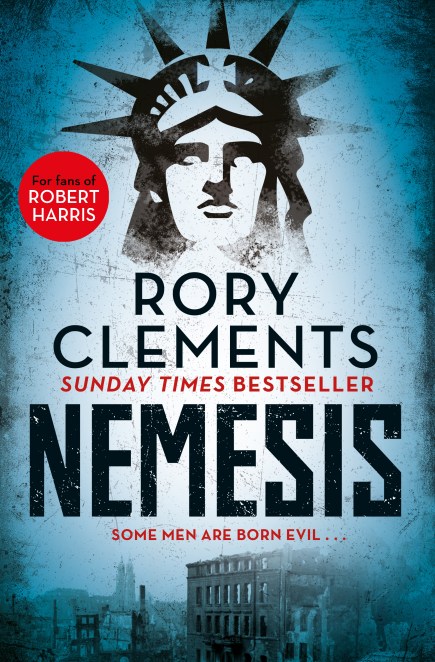
Publisher: Zaffre (Trade Paperback Format – Australia – 3 March 2019)
Series: Tom Wilde – Book 3
Length: 317 pages
My Rating: 4 out of 5 stars
Historical thriller and murder mystery author Rory Clements returns with the third book in his electrifying and clever Tom Wilde series, Nemesis.
August 1939. War is on the horizon, and while most of the world is preparing for the next great conflict, Cambridge Professor Tom Wilde is enjoying a holiday in France with his partner, Lydia. That is, until a mysterious man alerts him to the fact that one of his former students, an idealistic young man by the name Marcus Marfield, is currently being held in an internment camp on the France-Spain border after his involvement in the Spanish Civil War. When Wilde finds Marfield at the camp he moves quickly to secure his release, and they flee the country just as the Germans begin their invasion of Poland.
Back in England, the country moves to a war footing, as the Allies attempt to persuade America to join them against the Nazis. While many Americans oppose joining the war, the sinking of the passenger ship the SS Athenia may be the spark that brings them into the war. With the Nazis attempting to convince the world that Churchill orchestrated the sinking of the Athenia to galvanise American support against Germany, Wilde and his companions return to Cambridge.
Once back in the city, Wilde begins to notice a change come over Marfield. At first attributing it to his shell shock following his battles in Spain, a series of mysterious deaths around Cambridge all seem to link to the recently returned Marfield. These events are tied to a deadly conspiracy to keep America out of the war for good. A spy ring is active in Cambridge, and Wilde must find a way to uncover it before it is too late. Can Wilde once again avert disaster, and what role does Marfield play in this conspiracy?
After the excellent first two books in his Tom Wilde series, Corpus and Nucleus, Clements continues the adventure of his series’ titular character, Tom Wilde, as he investigates a series of Nazi espionage activities around Cambridge in the lead-up to World War II. I have quite enjoyed this series in the past and was looking forward to continuing the story in Nemesis. The latest book is a thrilling story that takes place just at the outset of the war and utilises the several historical events and figures to turn this into quite an intriguing tale.
Nemesis is a really good historical thriller which combines a great spy story with the historical context of early World War II. The previous books in the Tom Wilde series have all contained compelling and complex mysteries with huge implications for England and the allies, and Nemesis is no different. Clements has crafted together an excellent mystery that has massive, worldwide implications, and I really enjoyed unravelling the mystery, especially as the author presents all sorts of doublecrosses, twists, cover-ups and mysterious deaths to confuse the reader away from the main goal of the antagonists. The antagonists’ master plan is quite out there, and it is one of those plots that would have had massive historical implications. I quite like the role that new character Marcus Marfield played in this plot, as the protagonists and the reader are constantly trying to work out what his secrets are and what kind of person he truly is. Overall, I found the thriller and mystery elements of this book to be quite clever and captivating, and readers will enjoy uncovering the full extent of the antagonist’s overall plot.
One of the most interesting parts of the Tom Wilde series so far was its setting during the chaotic pre-World War II period. In Nemesis, Clements sets his story right at the start of the war and immediately shows all the panic and preparation that followed this declaration of war. Clements did a fantastic job portraying the low-key sense of dread and paranoia that the inhabitants of England would have felt in the build-up to the war in the previous books in the series, and in Nemesis these feelings are realistically amplified now that the war has begun. The author has quite a good grasp on a number of historical events and feelings during this period, and I quite liked seeing the Cambridge viewpoint of the war. The Cambridge setting has always been a fantastic highlight of this series, but it was quite intriguing to see the author incorporate all the various changes to the city that occurred as a result of the war into his novel. Clements dives deep into the Cambridge lifestyle when it comes to the war, whether it involves the removal of the rare books from the colleges, the preservation of the stained glass windows, the roles that the professors were being assigned in the war effort or even the many Communist professors throwing away their party membership cards when it became clear that the Soviets were supporting the Nazis.
Clements also ties his story in quite closely with one of the more interesting early events of World War II: the sinking of the passenger liner the SS Athenia as it sailed across the Atlantic. I was deeply fascinated not only with the depictions of this event, but the discussions and conspiracy theories that resulted from it. This was especially true when it came to the examination about the sinking of the ship being used to bring the United States into the war. The likelihood of America joining in the war became a major part of the story, and it was interesting to see what the European characters thought about America’s reluctance to enter the war, especially as one of the protagonists is an American character, and one of the chief architects of America’s isolationist policy, Joe Kennedy, was the United States Ambassador to England at the time. I thought that the historical elements that Clements explored were a real highlight of this book, and readers will enjoy his literary examination of these events.
While the main focus of the book’s story is a conspiracy and the start of the war, Clements does take his time to continue to develop a number of the characters introduced in the previous books. For example, Wilde continues to deepen his relationship with his romantic partner, Lydia, and I quite liked the role that Lydia played in investigating the case alongside Wilde. There is also a significant focus on Wilde’s American friend Jim Vanderberg and his family, especially as Vanderberg’s family are passengers aboard the Athenia. Phillip Eaton, the British spy who was hit by a car in the last book of the series makes a return in Nemesis, and the reader gets to see his struggles to recover from his horrific injuries while still working as an intelligence officer. A number of intriguing new characters are introduced in this book and it will be interesting to see what role they and the existing characters will play in any future entries in this series.
In the latest book of his enjoyable Tom Wilde series, Nemesis, Rory Clements once again delivers a captivating historical thriller that brings the reader into the early days of World War II. Featuring an incredible overarching mystery and some detailed examinations of intriguing historical events and settings, Nemesis is a deeply interesting book that is well worth checking out. I am very curious to see where Clements takes the series next, and I look forward to seeing what impact Thomas Wilde will have on the rest of World War II.

From acclaimed Australian author Fiona McIntosh comes a deep and powerful tale of loss, revenge and the traumatic shadows of World War II.
Severine Kassel is one of the Louvre’s top curators of antique jewellery and specialises in identifying pieces plundered by the Nazis during World War II. Seconded to the British Museum in 1963, Severine maintains a careful image of mystery, distance, French elegance and control. However, that image is shattered completely the moment Severine sets eyes on the Byzantine pearls, an incredible artefact of mysterious providence on loan to the museum. Severine knows exactly what the pearls are and may be the only person in the world who knows their full history. She also remembers the last time she saw them: in 1941 in the hands of the man who murdered her family, the brutal Nazi Ruda Mayek.
As she recovers from the shock of seeing the pearls again, Severine reveals to the world that she is actually Katerina Kassowicz, and her story is one of sorrow and torture. Katerina was the daughter of a prominent Jewish family in Prague during the war. Her family attempted to flee the Nazi purge but was betrayed by a man they considered a friend, Mayek, and only Katerina survived, although her life was never the same.
With the discovery of the pearls, it becomes apparent that Mayek may still be alive. Desperate to hunt down the man who took everything from her, Katerina begins a desperate investigation to find him and get her revenge. Assisted by the mysterious Daniel, a Mossad agent, Katerina’s only clue is the lawyer handling the transaction of the pearls. As Katerina’s search intensifies, old wounds are opened and life-changing secrets are revealed. But as she gets closer to the truth, she begins to wonder who is actually hunting who.
Australian Fiona McIntosh is a fantastic author with a diverse and intriguing bibliography to her name. She has been writing since 2001 and initially focused on the fantasy genre with her debut book Betrayal, which formed the first book in the Trinity series. She wrote several fantasy books over the next nine years, including The Quickening trilogy, the Percheron series and the Valisar trilogy. During this time she also wrote several pieces of children’s fiction, including the Shapeshifter series, as well as the adult crime Jack Hawksworth series under the pen-name Lauren Crow. In 2010, McIntosh switched to historical dramas and has written a number of these books, mostly featuring female protagonists. Examples include the 2012 release The Lavender Keeper and last year’s epic The Tea Gardens.
The Pearl Thief is the latest piece of historical drama from McIntosh. It plunges the reader right into the heart of occupied Czechoslovakia and explores the horrific impacts that World War II had on the book’s main character while also providing the reader with an intense thriller in the 1960s. Told from the point of view of several characters, the book follows an interesting format. This first part of the book mostly follows Katerina and Daniel in Paris, and is set around Katerina telling her life story to Daniel and recounting what happened to her and her family during the war. These flashbacks are different in style, being told from the first person perspective to highlight that Katerina is telling the story, rather than the third person perspective utilised during the rest of the book. These flashback chapters are also visually distinctive due to the use of italicised font. The second half of the book follows the protagonist’s hunt for Mayek, and features a different style to the first half of the book. This different style includes the uses several more point-of-view characters, in particular the lawyer Edward, and the focus on more individualised storylines fitting into one overarching narrative.
The way that McIntosh chooses to tell this story is not only distinctive, but it is a great way to tell this dark and complex narrative. By presenting the main character’s World War II storyline first, the author sets up just how evil the book’s antagonist is, which ups the stakes for the second half of the book as the reader is desperate to see Mayek receive the justice he deserves. This dislike for the antagonist helps the reader stay focused on the story and makes them more eager to quickly get to the conclusion of the book to see if the protagonists succeed in catching him. This early storyline also highlights just how damaged Katerina, and in some regards side character Daniel, really are and what impacts the war had on them. As a result, the reader is a lot more attached to them and is keen to see how they reconcile their hatred and grief while also attempting to move past these events nearly 20 years after the end of the war. Both parts of this book are very captivating and do a fantastic job of drawing the reader in to this deep and dramatic story.
This is a fairly grim tale and McIntosh does not pull any punches, especially when it comes to showcasing the horrors the Jewish community experienced during World War II in countries such as Czechoslovakia. There are some very disturbing sequences throughout these flashbacks, especially when Katerina describes the final fate of her family, and the reader cannot help but feel sorrow and anger at the horror these characters and their real life historical equivalents suffered. McIntosh focuses on the physical impacts and the persecution that these people suffered and the mental stresses and long-term emotional damage that these actions inflict both during the war and well into the 1963 storyline for the survivors. These emotional scenes start right from the front of the book, with the first chapter showing the Kindertransport, mercy trains that got Jewish children out of Czechoslovakia and forced a permanent separation between parents and their children. This opening scene is very emotional, and the readers are left wondering what they may have done in a similar situation. There are also some quite dark scenes in the second half of the book, as the main characters are forced to relive the horrors they experienced and deal with the emotional fallout and the darkness they feel when it comes to Mayek. McIntosh’s frank and grim depictions of these events turn this book into an incredible drama, and readers will be left with a memorable and emotional vision of these events.
The Pearl Thief is a deep and captivating historical drama from exceptional Australian author Fiona McIntosh. Featuring some highly detailed and realistically dark flashback story to World War II as well as a thrilling hunt for a despicable war criminal in the 60s, this is a highly emotional and dramatic piece of literature that is well worth checking out.


Love, war, suffering, oppression, hope and lace all come together in this emotionally charged debut from Australian author Lauren Chater.
It has been two years since the outbreak of World War II. Following their respective expansions, Nazi Germany and the USSR now control much of Europe between them. The small country of Estonia, located on the border of the USSR, has been occupied by the Soviets and is now controlled by Stalin’s Red Army, who have brutally installed their communist ideals. Now all of Estonia’s resources are controlled by the Soviets and any signs of opposition are brutally cracked down on.
In the middle of this horrific occupation lives Katarina, a young Estonian woman whose family survives because their farm produces food for the occupying forces. While the Soviets are attempting to control all parts of Estonian life, Katarina works to preserve her family’s culture through their lace shawls, which contain intricate and unique patterns and stories. She must also deal with her feelings for her old friend Oskar, who is leading the revolution against the Soviets.
At the same time in Moscow, another young woman, Lydia, lives an ostensible life of privilege, but is really living in a gilded cage, controlled by her ruthless guardian. Fleeing to Estonia, the land of her mother, Lydia attempts to find sanctuary but finds out just how far her captivity truly extends.
When a Soviet crackdown forces Katarina and Lydia together, these two women must find a way to survive the horrors of the occupation. As they become part of Oskar’s resistance against the Soviets, Katarina and Lydia must learn to work together, even when Lydia falls for Katarina’s brother Jakob. But their situation is about to get even worse, with the forces of the Third Reich set to invade.
This is fantastic first book from Chater, who has woven together an amazing tale filled with great characters and an outstanding and underused historical location. This book is also an extraordinary piece of dramatic literature. All of the main characters experience significant loss, heartache and disappointment as they attempt to survive the most turbulent time in our world’s history. These heartbreaking losses of friends, family and other loved ones draw the reader in, while Chater’s fantastic writing makes them feel the character’s loss and grief as she highlights the brutal reality of those caught in the middle of war.
Perhaps the most memorable part of The Lace Weaver is the story’s central setting of Estonia. During World War II, Estonia was in the unfortunate position of being one of the countries that fell between the Soviet Union and Nazi Germany. Estonia was a significant theatre of war where many horrors occurred, and yet very few novels focus on this part of World War II. Chater’s decision to focus on this underused period of war history is intriguing, and she has done a commendable job of calling attention to the horrors experienced by the Estonians during the time that they were occupied by two of the world’s most brutal regimes.
Estonia was brutally occupied by the Soviets in 1940, and a large portion of this book is set during this period. Chater does an amazing job of describing this brutal period through the eyes of her Estonian characters. There is a serious sense of dread from these characters as they anticipate what horrible crimes might occur next. The descriptions of the Soviet soldiers’ brutality and contempt for the Estonians is at times harrowing, and there is one sequence describing a mass deportation that will stick in the reader’s mind. While the scenes describing the occupation of the Soviets are pretty distressing, one of the most disturbing parts of this story is that for much of the book many of the characters, especially Oskar and Jakob, believe that their salvation and freedom could be granted to them by the Nazis. Reading this can prove to be disquieting as you are forced to watch the characters help the Nazis occupy their country. The characters working out what they have let into their country is chilling to behold, and by this point readers will be desperate to see what happens next in Estonia.
In addition to focusing on the terrible occupations Estonia suffered during the war, The Lace Weaver also contains an insightful look into some aspects of Estonian culture. This is mainly shown through the use of the lace shawls, which are described as an important part of Estonian culture and history. Chater spends a large part of the book investigating these shawls, and the reader soon appreciates their importance. Katarina spends a significant part of her narration describing the significance of these shawls to her family, and her interactions allow the readers to see how vital they were to her social and familiar circles. These shawls are also very important to the story as they draw many of the characters together, especially the two main characters, Katarina and Lydia. The scenes in which the shawls are being worked can also be seen as an indicator of the periods when the characters are managing to survive and have some hope for the future, and are to be cherished, especially as the reader grows to care for these characters.
There are some great characters within The Lace Weaver that readers will find themselves deeply invested in. Narration of this story is split evenly between the two main characters, Katarina and Lydia, both of whom have unique stories to tell. Lydia’s transformation from a sheltered girl in Russia to a hardboiled Estonian survivor is particularly gripping, and revelations about who she actually is offer big thrills in the first part of the book and up her personal stakes. Katarina’s story of survival and her attempts to keep the cultural ways of life she inherited from her beloved grandmother are also heartfelt and compelling. The unique stories that these two characters have are deeply absorbing and emotional, and Chater does a masterful job of eventually combining these two stories together into one extraordinary and captivating tale.
The Lace Weaver is a deep and emotional wartime drama that makes full use of its dark setting, rare historical fiction location and amazing characters. Australian author Lauren Chater has produced a very impressive first book and readers will fall in love with this fantastic tale.
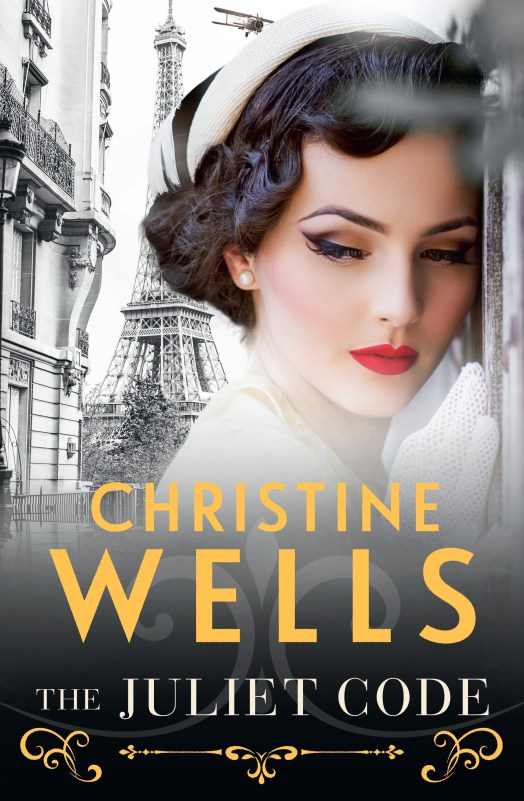
From acclaimed Australian author Christine Wells comes this touching and memorable tale of love, captivity and endurance in the darkest of times.
During World War II, Juliet Barnard was a British agent working for the Special Operations Executive. A skilled wireless operator, she was one of the few female agents that were dropped into occupied France to meet contacts and pass intelligence back to the Allies. While initially successful, she was only active in France for a short time before the Nazis captured her. Trapped in a prison that specialised in interrogating captured spies and infiltrators at Paris’s Avenue Foch, Juliet endured torture, drugging and manipulation and came out of the prison a different person.
Now, two years after the end of the war, Juliet is still recovering from her ordeal and trying to continue a relationship with Felix, the man she fell in love with during her training. Claiming to be suffering from memory loss, Juliet has managed to avoid providing any details about her time at Avenue Foch or about the man who held her captive, Sturmbannführer Strasser. Finding Strasser is the last thing Juliet wants to happen, because he knows a dark secret about Juliet – a secret she would kill to protect. However, when Juliet meets Mac, an SAS officer turned Nazi hunter whose sister served in the war with Juliet, her guilt compels her to return to Paris to help him locate Strasser.
This is the third book from Wells, who has previously written two English-based historical stories that feature a strong, female protagonist. The Juliet Code is the second book from Wells that focuses on British spy activities during World War II; her previous novel, The Traitor’s Girl, focused on a World War II MI5 operative. The Juliet Code is another excellent and intense romp into the history of World War II, and Wells has done an amazing job of creating this unique and emotional story. This book is a combination of a great dramatic story and a two-stage historical spy thriller wrapped up with a poignant romantic subplot.
Wells has injected considerable drama and emotion into her story, especially through her main character, Juliet, who goes through substantial emotional changes throughout the book. Before she is dropped into France, Juliet is portrayed as a shy girl, unsure of her abilities as a potential spy but eager to do her duty to her country. After the war she is more hardened individual who is suffering from guilt, both due to being one of the few agents to survive capture and because of her own actions during the war. These changes in the character are made obvious to the reader, not just because of Wells’s great writing ability but also because she switches between the mid-war and post-war scenes multiple times. Wells slowly reveals the main character’s wartime secret, which is a central part of the plot. While there are some hints to what this secret is early in the book, the full reveal is not done until later in the story, and makes use of a moving and artfully constructed confession scene.
The Juliet Code is set in the 1940s, and Wells has broken the story up into two distinct periods. The first period starts in 1943 and continues for the rest of the war, examining the main character’s training, her infiltration of occupied France and her time as a captive at Avenue Foch. The parts of the book set during the war are very intriguing and are some of the most appealing scenes from a historical fiction viewpoint. The sections that feature Juliet training and actively spying in France were some of my favourite parts of the plot, and I loved reading Wells’s descriptions about the French resistance networks, the British covert activities, their espionage techniques and the counteroperations the Nazis were undertaking to catch the operatives active in France. There are also some significant descriptions of how the British wireless transmitters functioned and British coding techniques. These very technical parts of the book contain some fascinating information while also providing the reader with a good understanding of this technology and what the operators were doing with it. There are also a number of scenes that follow Juliet after she is captured and held as an enemy spy in Paris. These parts of the book are, by necessity, darker in nature, depicting how these spies, especially female operatives, were treated during this period. There are also thorough descriptions of the historical locations used as prisons in Paris.
The second part of the book is set in 1947 and features Juliet and her companions revisiting the sites of Juliet’s captivity and attempting to hunt down her jailer. This part of the book comes across as more of a traditional spy thriller, and contains some vivid descriptions of post-war France. There are some examinations of how the Allies and the Soviets were attempting to capture or recruit former members of the Nazi regime, as well as some interesting looks into the post-war espionage that was occurring at this time. Wells also revisits characters and locations encountered by the protagonist during the war, and these scenes are used to provide clues to locate Strasser while also providing additional hints about what happened to Juliet during her captivity.
Among the defining features of The Juliet Code are the realistic and detailed characters that the reader gets to enjoy. They feel so realistic because these characters were inspired by real historical figures who served in similar capacities during the war. This touch of realism adds a lot to the book and serves as an inspirational reminder of those unsung heroes of British espionage. These fictional facsimiles do interact with a few real historical figures within the book, and readers will be captivated as they find out which of these unique wartime stories are actually historical fact.
Wells has included an enticing romantic subplot between the characters of Juliet and Felix. Readers will be able to feel the affection that these two characters have for each other, as well as the loss they experience as a result of Juliet’s capture. Their relationship is also masterfully woven into the main story, and elements of their romance become key plot points, such as some personal romantic poems that actually contain transmitter codes. Thankfully, Wells decided not to invest too much time in a love triangle between Juliet, Felix and Mac, although she does include the initial and somewhat entertaining jealousy you would come to expect from this situation. Overall, the romantic subplot is both absorbing and nicely subtle, as it does not overwhelm the rest of the story.
Australian author Christine Wells once again delivers an elegant piece of literature that makes full use of its well-paced dramatic story and an utterly stimulating historical setting and content. Fans of historical fiction will love The Juliet Code’s dive into World War II spycraft and counterespionage, as well as the excellent and electrifying thriller that blazes through post-war France. This is a phenomenal novel that sticks in the mind and will appeal to wide array of readers.

In June 1939, war is on the horizon. While many in England still hope to avoid another conflict with the Germans, it is becoming clearer that war may be unavoidable. Nazi Germany is aggressively moving throughout Europe, while back in England the IRA has embarked on a new bombing campaign.
While the world watches and waits, many governments have turned their focus towards a dangerous new arms race. Advances in nuclear fission have allowed scientists to envision a potentially game-changing weapon: an atomic bomb. Many believe that the research at Cambridge’s Cavendish Laboratory will lead to the creation of the first bomb, and the laboratory is now the subject of intense scrutiny.
While holidaying in America, Cambridge professor Tom Wilde is summoned to the White House to meet President Roosevelt. The president requests that Wilde use his position to spy on the research at Cavendish and report their progress to the Americans. Upon his return to Cambridge, Wilde begins to suspects that Nazi spies may have infiltrated the laboratory when one of the Cavendish researchers is brutally murdered. As he investigates further, he learns that the murder may be connected to a wealthy family with Nazi sympathies and the famous movie star sister of one of his colleagues. Wilde is forced into a web of spies and assassins as he tries to discover what terrible plans the Nazis have for Cavendish. What does his long-lost cousin have to do with this plot, and how do these attacks tie into a kidnapped child that Wilde’s girlfriend, Lydia, is searching for in Germany?
Nucleus is a pulse-pounding thriller that combines mysterious events and spycraft with a dark historical background and a grounding in nuclear physics. This is the second book in Clements’ Tom Wilde series, and the follow-up novel to his 2017 bestseller, Corpus, which was a stunning historical thriller that featured a plot against the royal family.
Clements has a lot of experience with historical thrillers, having previously examined espionage during the Elizabethan era in his acclaimed John Shakespeare series. In Nucleus, Clements combines several intriguing storylines into one compelling plot that will draw the reader into the book’s many mysteries. With a series of hidden adversaries, twisting character loyalties and several shocking conclusions, Clements tells a first-rate thriller that combines well with his story’s historical setting and locations.
Clements uses his latest book to once again explore the period of calm immediately before World War II. Clements does a masterful job of depicting the dread and apprehension filling England as the whole country found itself drawing closer and closer to war. This bleak and foreboding historical period is the perfect setting for Clements’ thriller, especially as the characters realise the major repercussions their actions could have on the world.
The historical locations used throughout Nucleus are an essential part of the book and add a lot to the story. Clements once again returns to the Cambridge backdrop that was one of the defining features of Corpus. The academic background is used less during this book, but the reader is compensated by being able to see the famous Cavendish Laboratory. There is also a harrowing journey into Nazi Germany for one of the characters, Lydia, which Clements uses to full effect, highlighting the terror many German citizens felt during that time and their attempts to flee the country before it was too late. Another highlight of the scenes set in Nazi Germany was the interesting focus on some of the groups attempting to get refugees out of the country, such as the Quakers and the staff at the British Embassy. The reader also experiences Lydia’s palpable dread as she comes into direct contact with the dark mechanisms of the Nazi machine, and these scenes contain an amazing and appropriate level of suspense.
Due to it being a major plot point for Nucleus, Clements spends a significant amount of time focusing on the state of nuclear science in the 1930s. Clements does a good job of explaining the science in some detail without it getting too complicated. As a result, the reader receives a basic understanding of nuclear science of the time, at least enough to appreciate what the spies and nuclear physicist characters within the book are up to and are attempting to achieve. This is a good balance to have and it allows the reader to experience the fascinating early history of nuclear fission and the early arms race for the atomic bomb.
By infusing his excellent storytelling with a dark historical period, Clements once again delivers with an exhilarating historical thriller. Featuring a gritty and captivating storyline and making full use of its excellent historical setting, Nucleus is guaranteed to blow you away.

 The Unseen Library