God of Broken Things by Cameron Johnston

god of broken things cover

Publisher: Angry Robot (Paperback – 11 June 2019)

Series: Age of Tyranny – Book 2

Length: 312 pages

My Rating: 4.75 out of 5 stars

Amazon

Those readers looking for the next entertaining grimdark fantasy adventure to sink their teeth into need look no further than God of Broken Things, the electrifying second book in Cameron Johnston’s Age of Tyranny.

It has only been a few short months since the devastating attack by the Skallgrim raiders on the city of Setharis, which severely weakened the city. Despite repulsing the Skallgrim and their monstrous hordes, Setharis is still in incredible danger. The Skallgrim forces are massing to launch another attack on Setharis, and the Skallgrim’s masters, the parasitic alien lifeforms known as the Scarrabus, are determined to enslave the entire city to their will. Setharis’s salvation once again rests in the hands of its most hated son, Edrin Walker.

Edrin is powerful magus whose rare abilities allow him to crack open and control the minds of all those around him. His breed of magus, known as tyrants, are feared throughout the world due to their propensity to lose control and use their magic to rule whole civilisations. Despite his role in saving the city from the Skallgrim, Edrin is still distrusted by both the common people and his fellow magus of the Arcanum. However, his skills may be the only thing that can win the war against the Skallgrim and the Scarrabus.

A massive force of Skallgrim are advancing over the mountain passes of the Clanholds, hoping to launch a fresh assault on Setharis. Against his will, Edrin is forced to lead a small army to reinforce the tribes of the Clanholds against the Skallgrim army. Accompanied by a small personal bodyguard of killers and thieves, Edrin leads his forces into the mountains, where far more dangerous things than the Skallgrim and their monsters lurk. Spirits, demons, gods and his own deadly past all lie in wait for Edrin, whose powers have been altered following his battle with a treacherous god. Can Edrin and his forces hold back the Skallgrim, or will he succumb to one of the many horrors in the mountains? And what happens when the tyrant comes out to play?

Johnston is a talented author whose debut novel, The Traitor God, really impressed me last year thanks to its awesome story and enjoyable main character. As a result, I was extremely keen to get a copy of the sequel, God of Broken Things, this year and was very happy when I received it a few weeks ago. God of Broken Things turned out to be a fantastic follow-up to the first book and I had an incredible time reading it. Not only does Johnston present another wildly entertaining story for the reader to enjoy, but he also does a fantastic job of expanding his dark fantasy world and exploring the complex mind of his main character.

I really liked where Johnston took the story in this book. While The Traitor God’s story of a hunt for answers in the dark fantasy city was cool, I really liked seeing the main character go to war in God of Broken Things. The whole storyline of Edrin leading an army up into the Clanholds, a dangerous mountainous environment filled with all manner of horrors and dangers was really cool, especially as he kept encountering worse situations and more terrifying opponents. This resulted in some epic moments and massive battles, and Johnston also took the opportunity to explore the history of several of the different races mentioned within the first books, including the Scarrabus, the Ogarim and some more mystical creatures like spirts and demons. This expansion of the Age of Tyranny universe was quite intriguing, and I wonder if there will be more exploration of the world and the various mentioned multiverses in future books. I also liked the deeper look that the author took into his protagonist’s past, showing some of the activities that occurred during the years he was exiled from Setharis. I loved the various twists and epic moments that Johnston sprinkled throughout the book’s plot, and there was never a dull moment in the entire story. I especially enjoyed how the final battle in God of Broken Things ended, especially as the author included a clever red herring in the book’s formatting to throw the reader off. Overall, this was an incredible story, and Johnston did an amazing job trapping me within this entertaining narrative.

One of the best parts of this book was the author’s continued focus on the protagonist, Edrin Walker, who serves as the book’s narrator and point-of-view character. Edrin was already a fairly complex character in The Traitor God, where he was portrayed as a powerful exiled magus hated, distrusted and ostracised by everyone due to the specific nature of his magical gift. Because of the way he is treated he acts hostile and uncaring to the world, while still participating in the odd act of heroism and compassion. This is continued in the second book, where Edrin continues to battle with his natural instincts and irritation while trying to do the right thing, especially for the few people who actually like or respect him. I really liked the way that the author continued to show Edrin exploring his moral side in this book as, against his better judgement, he actually attempts to help people and keep Setharis safe. The various sacrifices that he subsequently makes for the greater good are very much against the grain of his original character, and it is interesting to see this side of Edrin grow.

Due to the way he is treated, Edrin is an incredibly jaded character, and the author utilises this in a number of clever ways. Not only does this ensure that Edrin is the most likeable character in the book, mostly because he stands in sharp contrast to all the other magus characters, who are elitist snobs, but it also makes him a really entertaining narrator. The character’s sarcastic and mocking manner permeates the entire way he tells the story, resulting in some great reactions and a very amusing overall story.

Edrin continues to get into all sorts of entertaining misadventures in God of Broken Things, and it is hard not to love the unorthodox way he deals with things. Not only does he lead a bodyguard of deranged killers into battle but he rarely ever takes things seriously, no matter who he is dealing with. I love the disrespect and mockery that the character shows when encountering anyone in authority, be it friend or foe, magus or human, god or monster, and I laughed out loud at the way he got his revenge on one of Setharis’s gods in this book. It was also great to see the character apply his particular brand of bastardry to the battlefield, coming up with all manner of unconventional traps and attacks for the forces that are up against him. I particularly loved the cool way he took down the main antagonist of this book, and it really reflected both his cunning and his growth as a character.

The main character’s mind-bending magic continues to be a really cool part of this series, especially as his abilities become even more powerful in God of Broken Things. Johnston’s portrayals of the way that Edrin’s powers to break into and manipulate the minds of all those around him is done extremely well and it results in a number of epic scenes. I never realised how many creative ways someone could magically manipulate a person’s mind until seeing some of the scenes in this book, as Johnston comes up with some very inventive ways to utilises his protagonist’s magic. I especially loved seeing Edrin using these powers in the middle of the battle, as there are some awesome ways he disadvantages his enemies and helps his allies. However, the author also explores the consequences of the tyrant powers, as Edrin continuously runs the risk of taking things too far and grossly abusing his powers. Several examinations of the character’s guilt over some of the mental actions he commits become a compelling part of the story, and the character’s mental magic is a great part of the book.

Those readers who are looking for an explosive amount of fantasy action are in for a real treat with this book. Johnston makes sure to include a ton of battles and fight sequences in God of Broken Things, as the ragtag defenders of the Clanholds face off against a massive horde of Skallgrim, Scarrabus, demons and monsters. All of these fight scenes are incredibly brutal as Johnston depicts some amazing battles throughout this book. Most of these scenes are enhanced through the use of magic, and the sheer destructive power of the various characters’ magical abilities is pretty impressive. The various demons and monsters the protagonist finds himself up against in this book are pretty gruesome and offer up some pretty great battle scenes as a result. Overall, the action in God of Broken Things is quite superb, and fans of bloody fantasy fights will not be disappointed.

Cameron Johnston’s second outing, God of Broken Things, is an amazing piece of grimdark fantasy fiction that proved to be just as much fun as his debut novel, The Traitor God. I had an incredible time reading God of Broken Things as the excellent combination of story, magical action and character work kept me trapped until the very last page. Readers are guaranteed to love this outstanding dark fantasy read, and I strongly recommend this book to anyone looking for a fun and powerful adventure. The ending of the book makes it a little unclear if Johnston will continue the Age of Tyranny series, but I will be keeping a close eye out for any future books from this rising star in the grimdark fantasy genre.
Amazon

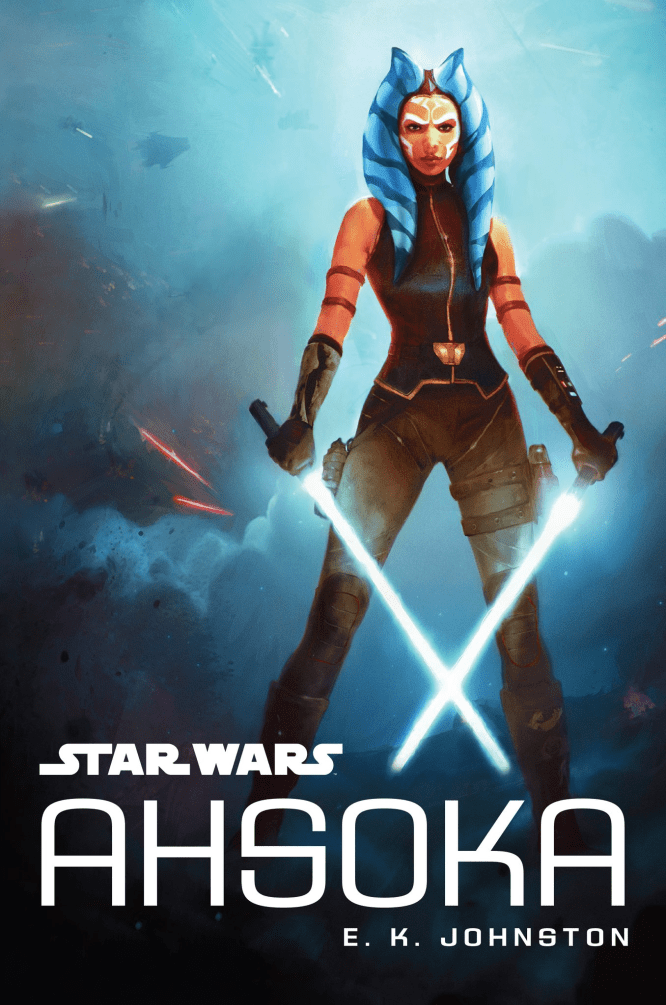
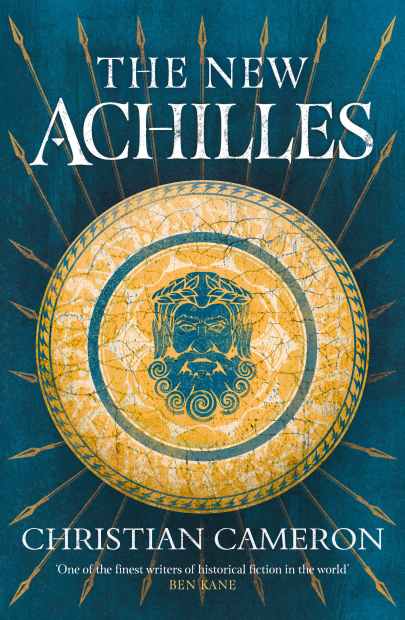
The New Achilles by Christian Cameron

The New Achilles Cover

Publisher: Orion (Hardcover – 18 April 2019)

Series: The Commander series – Book 1

Length: 399 pages

My Rating: 4 out of 5 stars

Amazon     Book Depository

Acclaimed historical fiction author Christian Cameron once again returns to his favourite setting of ancient Greece with his latest novel, The New Achilles.

Greece, 223 BCE. War has come to Greece, as the various Mediterranean powers, including Egypt, Rome and Macedon, engage in a proxy battle on Greek soil. In a sacred sanctuary near the city of Epidauros, Alexanor, a former marine from Rhodes, has spent several years training to become a healer, seeking to escape his violent past. However, war will find Alexanor once again when the Spartans invade the nearby city of Megalopolis, forcing the surviving defenders to bring their wounded to Alexanor’s sanctuary.

Among the wounded is the leader of the men who attempted to fight against the Spartans at Megalopolis, a young man called Philopoemen. After saving his life, Alexanor finds his future tied into that of Philopoemen, who is destined to become one of ancient Greece’s greatest military leaders. Allied with the armies of Macedon against the Spartans and their Egyptian paymasters, Philopoemen proves to be a capable military commander. More importantly, his bravery and skill in battle earn the respect of his fellow Greeks, many of whom consider him to be Achilles reborn.

When prevailing political and military currents require Philopoemen to help with a civil war on Crete, Alexanor travels with him. There they will attempt to take on the powerful city-state of Knossos with an eclectic mix of troops and minimal support from Macedon and the Achaean League. Can Philopoemen and Alexanor succeed, or will the new Achilles fall short of his destiny?

Christian Cameron is a skilled author who has written a number of books throughout his career. While the author is probably best known for his historical fiction work, he has also branched off into fantasy under his pseudonym of Miles Cameron, including his Masters & Mages series, the first book of which, Cold Iron, I previously reviewed here. His latest book, The New Achilles, is the first book in his The Commander series, which will follow the life of the historical figure Philopoemen. This is the third of Cameron’s series which focuses on ancient Greece, with his Tyrant and Long War series both focusing on different periods of ancient Greek history. I have always found that Cameron has a very thorough writing style, and he tends to throw himself into the historical details of his books. This is continued with The New Achilles, as the reader is presented with a very complex tale that may prove a little harder to connect with. However, this book is well worth sticking with, as the author has created an outstanding historical tale that focuses on quite a remarkable character from history.

While The New Achilles does contain some other story elements, at its core it is an intriguing story about the life of Philopoemen. Philopoemen was a skilled general and political leader who was responsible for turning the Achaean League into a viable military power in Greece. He is sometimes known as “the last of the Greeks” (I believe that the next book in this series will be called The Last Greek) due to being one of the last great Greek generals before the Roman era. I have to admit that this was a historical character I had no real experience with, so I was extremely curious to see the author’s vision of his life and deeds. Cameron tackled the story with his usual highly detailed writing style, presenting a comprehensive novelisation of several key events of Philopoemen’s life, his earliest successes and his campaign on Crete. However, there is apparently a large amount of this man’s story left to tell, as he accomplished a great many deeds during his long life. I felt that the author did a fantastic job of capturing the personality of this larger-than-life figure, and I really enjoyed the well-paced story that showed his early rise to prominence.

The story is told from the perspective of the fictional character Alexanor, who, after healing Philopoemen, continues to encounter him and eventually becomes his friend and confidant, accompanying him on several adventures. I liked the use of an outside narrator to tell Philopoemen’s story, and Alexanor is an excellent character in his own right, as he constantly has to balance his duties as a medically trained priest with his desire to help Philopoemen win his battles and his wars. There are issues from his past that he has to deal with, including trauma from a previous war, a lost love and family strife, all of which make for an intriguing character. Another benefit of having a priest as a narrator is that it allows the author to spend time exploring ancient Greek medicine. This was a particularly fascinating element of the book’s story and it was extremely intriguing to see how ancient medicine compares to more modern techniques, and the differences and similarities in knowledge are quite interesting. It also results in some compelling ethical deliberations from the narrator about the dissection of human corpses, which, while strictly forbidden, could result in greater medical knowledge. Overall, I quite enjoyed the author’s use of Alexanor as a narrator, and his focus on his life was an intriguing and enjoyable addition to the story.

This book is set during quite a chaotic period of Mediterranean history, with a huge number of different ancient empires and city-states engaging in various wars and conflicts, many of which have an impact on The New Achilles’s story. Cameron makes sure to examine the various political implications of many of the conflicts occurring around the same time as the events Philopoemen was involved with, and it is quite fascinating to see what effect something like the war between Carthage and Rome could have on the inhabitants of Greece. In addition to the consequences of these distant wars or events, Cameron also looks at the political and national makeup of the various forces arrayed in the conflicts that Philopoemen and Alexanor are involved with. These could get quite complex at times, with a range of alliances, competing city-states and mercenary forces involved or attempting to intervene in a conflict. An example of how complex things could get could be seen in the protagonists extended conflict on Crete, where Philopoemen led a force of Achaean League troops to support one Cretan city state against the on the behest of Macedon. The opposing Cretan city-state was supported by the Ptolemaic dynasty of Egypt, whose Spartan allies joined in and led the fight against Philopoemen. Various other mercenary groups of different nationalities such as the Thracians and the Illyrians were also employed in this conflict and had various roles in the battles and politics. While the sheer number of different historical groups can get a bit overwhelming at times, Cameron does a great job explaining their history and their allegiances, and it is quite fascinating to see the roles they played in various conflicts.

Like many of Cameron’s previous books, the author’s dedication to historical detail and accuracy in The New Achilles is extremely impressive. Each page is full of intriguing elements from history, and it is easy for the reader to find themselves transported to this classical historical landscape. The author not only looks at the military and political aspects of this historical setting; he also examines day-to-day life for the various Greek civilisations. Cameron also makes use of a whole glossary of historical Greek terms and names throughout The New Achilles, all of which gave his story a greater sense of authenticity.

The New Achilles features a huge number of battle scenes and sequences, as the author captures a number of the historical fights Philopoemen was involved with. These battle sequences were extremely exciting, as the author presents some gritty and blood battle scenes. These were quite spectacular, and I loved the realism contained within the story as even the victors find themselves covered in all manner of wounds, and rarely is there a battle where the main characters come out unscathed. This is particularly true for Philopoemen, who tends to suffer injuries in nearly every battle he gets involved with, due to throwing himself into the heart of the fight. I thought this was a clever inclusion from the author, as not only does this reflect some historical accounts of the relevant battles but it is incredibly refreshing to see a hero that does not emerge from a battle unscathed. I quite enjoyed the examination of Greek battle tactics and weaponry, and the battle sequences in this book are fairly spectacular and well worth checking out.

Christian Cameron’s latest book, The New Achilles is a detailed and compelling examination of a truly remarkable, if overlooked, historical figure. The story of Philopoemen’s life proves to be an amazing focus for the plot, and Cameron brings a number of intriguing aspects of the ancient Greek period to life with his trademark detail orientated writing style. This was an incredibly interesting and captivating read, and I am looking forward to seeing how Philopoemen’s life progresses from here in future instalments of The Commander series.

Amazon     Book Depository

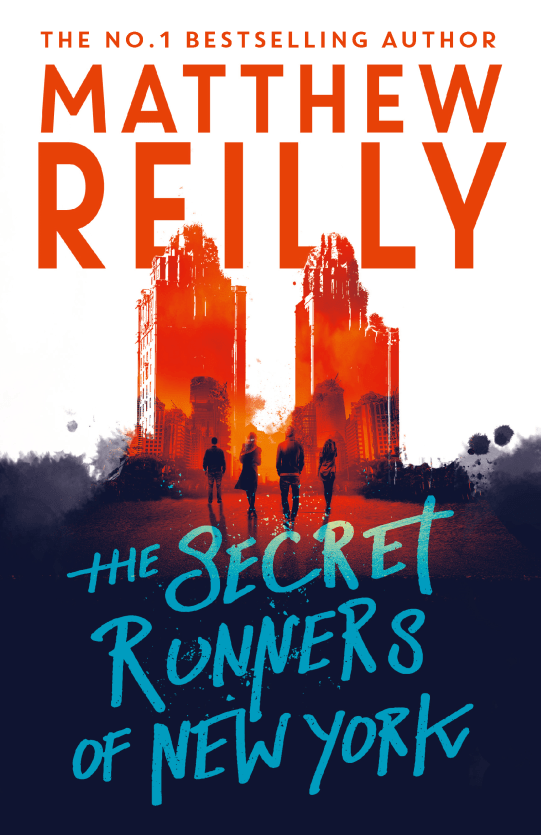
The Secret Runners of New York by Matthew Reilly

The Secret Runners of New York Cover

Publisher: Pan Macmillan Australia (Trade Paperback Format – 26 March 2019)

Series: Standalone/Book 1

Length: 328 pages

My Rating: 4.5 out of 5 stars

Amazon

The end of the world has nothing on the horrors of high school in this fast-paced and widely entertaining new book from bestselling Australian author Matthew Reilly.

When Skye Rogers and her twin brother, Red, are forced to move to New York city, they are enrolled in the prestigious The Monmouth School, learning institute of choice for the city’s ultra-wealthy and social elite.  Even among the children of the rich and powerful there exists a well-established hierarchy, and in The Monmouth School, the top of the social ladder are the friends and cronies of the Collins sisters, Misty and Chastity.  Despite only wanting a quiet existence in her new school, Skye finds herself drawn into their orbit against her better judgement.

Skye soon discovers that hanging out with the Collins sisters is very different from the usual high school cliques.  The social group is probably the most exclusive in New York, and it comes with certain privileges.  Thanks to an ancient family secret, the Collins sisters are able to activate an ancient tunnel beneath Central Park that allows teenagers to run through an alternate version of New York: a post-apocalyptic nightmare littered with ruined buildings and filled with crazed survivors.

When Skye and her fellow runners find evidence that the New York they are visiting is actually a future version of their own timeline, they need to find a way to come to terms with the end of the world, especially as the apocalypse appears to be only days away.  As society starts to crumble and the poor rise up against the rich, Skye tries to find a way to use her knowledge of the future to save everyone she loves.  However, Skye is about to learn that her new friends are far more concerned with revenge and are planning to use the end of the world to take her down.

Matthew Reilly is a veteran author of weird and electrifying fiction, having written a number of intriguing books in the last 20 years, many of which fall within the techno-thriller or science fiction genres.  In addition to a number of fun sounding standalone novels, Reilly has also published two substantial series, the Shane Schofield series and the Jack West Jr series.  Matthew Reilly is one of those authors that I have been meaning to check out for some time, as a number of his novels sound absolutely bonkers and really creative.  I am particularly drawn to his 2014 release, The Great Zoo of China, which essentially sounds like Jurassic Park with dragons; his 2013 historical thriller The Tournament; and the books in the Jack West Jr series, which features secret organisations fighting for control of ancient artefacts with world-and universe-ending potential.

I was therefore very excited to get an advanced copy of The Secret Runners of New York, due to its intriguing time travel and armageddon concepts.  I actually really enjoyed The Secret Runners of New York and had a lot of fun reading it.  The book features a surprisingly entertaining use of over-the-top high school drama that actually combines really well with the interesting science fiction elements mentioned above.  The result is an unpredictable and amusing overall story that I had a very hard time putting down and which I powered through in very short order.

The book revolves around the students at The Monmouth School (you have to say the “The”; it’s that type of place), New York’s premier high school for the rich and snooty.  Please remind me to never send any of my theoretical children to any school thought up by Reilly, as the author creates a learning institution that is essentially a viper’s nest of bitchiness, enforced social hierarchy and petty revenge, all of which is enhanced by the fact that the characters are all ultra-rich or have massive superiority complexes.  The quote below from main character Skye, one of the few well-adjusted characters in the book, shows her experiences within the first few minutes at The Monmouth School:

“In the space of a few minutes I’d seen a taunt about sluttiness, a threatened punch to the uterus, some humble bragging by the Head Girl about the school’s social status and a dose of good old-fashioned mean-girl passive aggressiveness from Misty.  School, I reflected sadly, was school no matter how high the tuition fees were.”

I have to admit I did find Reilly’s portrayal of most of the rich teenage girls in this book to be a tad extreme and unrealistic (yes, in a book featuring time travel, that’s what I am finding unrealistic).  I have never been and never will be a teenage girl, but I hope that teenage girls in high school couldn’t possibly be as petty and vicious as the girls portrayed within this book, even if they are the daughters of the uber-privileged.  That being said, I found this over-the-top viewpoint of high school life to be extremely entertaining and it was a fantastic element throughout the book.  Watching the level-headed and somewhat cynical protagonist have to deal with this insanity was a lot of fun, especially when you would imagine most people would be more concerned with the end of the world than with who made out with which guy.  An unbelievably amusing part of the story, these high school elements are great, just try and avoid thinking about it too much.

In addition to the look at the mean girls of high school, I did quite enjoy Reilly’s critique of the ultra-rich and powerful in New York City.  The protagonist finds herself drawn into the world of debutant balls, society politics and the other classy responsibilities of being rich in New York.  Again, this is an interesting part of the story, and the rich characters with their extravagant lifestyles do offer a nice disconnect from reality.  I liked Reilly’s examination of how the rich would be targeted during apocalyptic events such as the one portrayed within this book, and it played nicely into some of the current protests and perceptions of the 1%.  it’s another glorious over-the-top element for this book that provides the reader with a lot of entertainment and a real dislike of most of the privileged characters.

The science fiction parts of this book are incredibly well done and are an excellent part of this book.  Not only is there a devastating cosmic storm that will wipe out most of humanity in hours, but there is an unrelated magical tunnel that the protagonists can use to visit the future.  Reilly does an amazing job creating a devastating and crazy post-apocalyptic New York City for the readers to explore.  I was really impressed with all the brutal descriptions of how the city was in ruins and had been dramatically reclaimed by nature as the infrastructure falls into disrepair, and the whole thing is an amazing setting that Reilly uses to full effect.  I really liked how the author uses the time travel elements within the book.  Watching the protagonists slowly work out that this world is a future version of their own timeline is amazing, and it was great seeing them see all the testimonials and letters from their families describing the events that are yet to happen in their future.  The various time travelling shenanigans used by both the protagonists and antagonists of this book helped enhance this already exciting story, and I loved the way that the characters are able to see the consequences of their actions in both timelines before they actually happen.

The author has also utilised some eye-catching visual elements throughout the book to enhance the story being told.  There are a number of maps used to show the key locations of the book, and there are even a couple of diagrams used to explain the potential time travel issues in this book.  I personally liked the way that the font changed to signify the characters going into a different timeline and thought it was a nice touch.  A range of other text techniques are used to signify angry or desperate messages on different locations, such as walls or the entirety of buildings, often conveying the emotion behind these messages.  All these visual treats are great, and they really make this book stand out.

The Secret Runners of New York is currently being marketed to the teen and young adult audiences, but this book is really on the edge of what young adult fiction is.  While it is focused on teenage characters in high school, there are a significant number of very adult inclusions throughout the book.  It is interesting to note that in an interview at the back of the book, Reilly himself indicates that he does not see this story as being as a piece of young adult fiction, and I think that is shown in the way that he wrote this over-the-top story.  There is a high level of violence, drug use, coarse language and sexual references featured throughout this book, and as a result, I would say it is not really appropriate for the younger audiences and is probably more suited for older teenage readers.  This is definitely one of those young adult marketed books that adult readers can really enjoy, and there is no upper limit on enjoying this crazy tale.

This was an incredibly entertaining and captivating book that I had a lot of fun with.  Matthew Reilly pulls no punches when it comes to portraying the book’s petty and vicious teenage rich girl antagonists, which turns an already intriguing science fiction book into a wild thrill ride of revenge, betrayal and insanity.  I have to say that I quite enjoyed my first taste of Matthew Reilly’s writing and I am extremely keen to check out some of his other works in the future.  At the moment The Secret Runners of New York is a standalone book, although the author leaves a number of storylines open for sequels or prequels, and I would be interested to see where he takes the story next.

Amazon

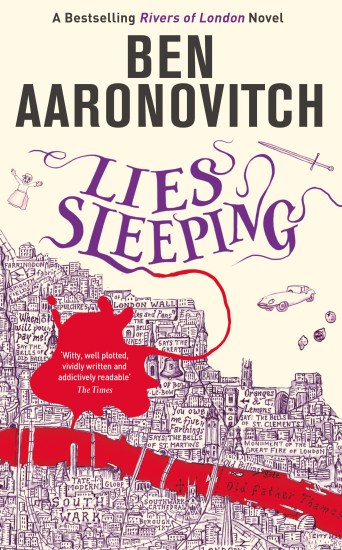
Lies Sleeping by Ben Aaronovitch

Lies Sleeping Cover.jpg

Publishers: Gollancz and Orion Audio (Audiobook format – 15 November 2018)

Series: Rivers of London – Book 7

Length: 10 hours 25 minutes

My Rating: 5 out of 5 stars

Amazon     Book Depository

Prepare to dive headfirst into one of the best urban fantasy series in the world today, with the seventh book in Ben Aaronovitch’s Rivers of London series, Lies Sleeping.

London is a magical place, especially for Peter Grant, Detective Constable and apprentice wizard.  Peter is a member of an elite unit of the London Metropolitan Police, known as the Folly, which is tasked with investigating magical crimes and protecting the city from all sorts of magical threats.  The person at the top of the Folly’s most wanted list is Martin Chorley, also known as the Faceless Man, a magical criminal mastermind who is determined to do whatever it takes to gain power.  However, despite the Met and the Folly’s considerable resources, Chorley is always able to stay one step ahead of those chasing him.

During a routine attempt to subtly panic several of Chorley’s known associates, a magical creature attacks a potential witness.  Peter’s investigation soon reveals that the witness had ordered the forging of a large and mysterious bell, which Chorley is desperate to get his hands on.  As Peter and his team dig deeper in the bell’s construction, they quickly begin to realise that Chorley is the final stages of his master plan, a plan tied deeply into the heart of London’s dark and bloody history, and one which could cause untold disaster for the entire city.

As the clock ticks down, Peter needs to work out the connection between London’s past and the mysterious magical events occurring all over the city.  Can Peter and his team once again save the day, or will their adversary finally obtain the power he has always desired?  Moreover, what will Peter do when he comes face to face with the woman who betrayed him to Chorley, his old partner in the Met, Lesley May?

Ben Aaronovitch is a highly regarded author with an interesting writing history to his name.  His writing career began back in the late 1980s and early 1990s, when he wrote a couple of Doctor Who television serials, including the highly regarded serial Remembrance of the Daleks, as well as three entries in the Virgin New Adventures series of Doctor Who books.  The Virgin New Adventure series chronicled the adventures of the Doctor after the television show’s hiatus in 1989.  Aaronovitch’s three entries in this book series sound incredibly interesting, although they were considered to be somewhat controversial at the time due to their more adult content.  Aaronovitch did not get around to writing his fantasy work until 2011, when he wrote the urban fantasy Rivers of London.  This was the first book in the author’s Rivers of London series of books (alternatively known as the Peter Grant series or the PC Grant series), for which the author is best known for.  The Rivers of London series is very highly regarded, and Aaronovitch has worked hard to expand on the story and universe of this series, writing a number of novellas, short stories and graphic novels on top of the series’ main seven books.

Before Lies Sleeping, I had never got around to reading any of Aaronovitch’s books, despite hearing good things about his main series.  As a result, I was very happy that I finally managed to check out the series earlier this year.  I did receive a trade paperback edition from Hachette Australia, but in the end, I chose to listen to the audiobook version of this book, narrated by Kobna Holdbrook-Smith.  I have to say that I was extremely impressed with this brilliant book and found that I really enjoyed the excellent and captivating story.  Lies Sleeping easily gets a full five-star rating from me, and I fully intend to go back and check out the other books in this series.  This book is an excellent blend of the fantasy and crime fiction genres, both of which come together perfectly to create an extremely compelling and complex read.

Lies Sleeping will prove to be extremely appealing to huge range of people; not only pre-existing fans of the series but also those readers who have not read any of the Rivers of London books before.  As a first-time Aaronovitch reader, I found that it was incredibly easy to step in and enjoy this series, as the author did a fantastic job making Lies Sleeping accessible to everyone.  While Aaronovitch has created a huge amount of lore around his series, including in his novellas and comics, the reader does not need to have any knowledge of these or the previous six books in the series to fully understand the entirety of Lies Sleeping’s story.  However, those readers who do have experience with this series will love how the story continues to development, as well as the massive and surprising twists that occur throughout the book.

At the core of this book lies a series of intriguing mysteries that take place throughout London.  In order to achieve his villainous goals, the antagonist has embarked on a series of seemingly random and chaotic crimes and ventures, all of which apparently form part of his master plan.  These various mysteries or criminal events were really interesting, and I liked trying to work out how they would all come together.  I particularly liked how various parts of these mysteries were deeply tied into the history of London, and the protagonist needed to gain a historical understanding of some of various myths and legends surrounding London.  Watching the protagonist attempt to unwind the complex plan of the book’s villains was extremely compelling, and I had a great time trying to work out what was happening myself.  One or two threads of these mysteries did go unsolved in this book, and I will be curious to see if they are picked up in any of the future entries in this franchise.

Aaronovitch is clearly a very creative writer, as he utilises a huge range of different and fairly unique fantasy elements throughout this book.  While there are a large number of wizards, spells and elvish beings throughout the book, the main focus is on the titular rivers of the series.  The more common magical beings encountered in this series are the personifications of the various rivers and waterways (current and historical) that flow through and around London.  These beings are similar to gods, although the term genius loci may be more appropriate, and have a huge range of powers.  These are a really intriguing addition to the book, and it was interesting to see the protagonist attempt to deal and interact with the various river characters, including his girlfriend, Beverly Brooke (yes, the main character of this series is dating a river).  There is also a huge range of other genius loci, or similar beings, that are featured within the story, including the mysterious and insane Mr Punch.  The magic that the human characters utilise is complex and slightly less ostentatious than some classic pieces of fantasy, but when the master wizards get to work it can be quite impressive.

One of the things I liked best about this book is how the author could create a realistic British police narrative and ensure magic became part of the procedure.  The Folly may be a special branch of the Metropolitan Police, but it is still part of the police force, and as such the characters are forced to follow standard procedure when investigating magical crimes.  Having these elite magical characters fill out paperwork and other various elements of day-to-day police life was deeply amusing.  I did like seeing how regular law enforcement tactics, anti-crime strategies and police combat techniques could be utilised against magical opponents.  The overall fantasy elements of this book are really enjoyable, but I really liked to see them be blended with a classic British police story.

Aaronovitch has done a fantastic job creating a huge and intriguing group of characters for this series.  The protagonist of Lies Sleeping and the Rivers of London series is Peter Grant, police officer and official wizard’s apprentice.  Peter is the sort of protagonist I really enjoy (sarcastic, funny and determined) so I quite enjoyed having him narrate the story, making a number of great jokes throughout.  The other police characters make up a great supporting and diverse cast, with a range of different abilities and characteristics.  I especially liked the classy and wise Detective Chief Inspector Thomas Nightingale, the last officially sanctioned English wizard and Peter’s mentor.  He is an extremely charming and old-fashioned character who has a huge amount of magical power at his fingertips and who can be quite intimidating if he puts his mind to it.  I also quite enjoyed the other magical characters that appeared throughout the book, as Aaronovitch has created a bevy of river gods and associated genius loci characters.  I liked how many of these ancient characters portrayed modern characteristics and ways of speaking, even when talking in a historical context.  Long-time readers of the series will also enjoy the further exploration of several recurring characters, including finally revealing the backstory of the mysterious Mr Punch.

While the protagonists and supporting cast are great characters, I really liked the antagonists in this story.  The main villain of the story is Martin Chorley, also known as the Faceless Man.  He is an excellent antagonist who is built up as a master planner, master magician and crazy villain before you even see him in the book.  His master plan was fairly complex, and the character’s overall arc in this book featured some massive twists that I did not see coming.  Lesley May is another really complex character who is a great addition to the series.  Her relationship with Peter is one of the best parts of the book, as even after her betrayals earlier in the series, he is still trying to save her from herself.  The way this works out in the end is quite dramatic, and it will be interesting to see where it goes from there.

While a large part of this book is set out more as a slow and steady police procedural, there are some fantastic action sequences within Lies Sleeping.  These come about when the protagonist attempts to stop the plans of the Faceless Man, and all manner of chaos erupts.  Nothing highlights this better than an extended action sequence which involves Peter chasing after a van on a bicycle, throwing fireballs, while all manner of debris is magically flung at him and several pursuing police vehicles.  The magical duels between some of the participants, mainly Nightingale and Martin Chorley, can be particularly impressive, but I personally liked how many of the confrontations devolved into fist fights as both sides attempt to distract the other and disrupt their castings.  Plus, where else are you likely to see British police with truncheons attempt to fight evil wizards?  These amazing action sequences really added to the story, and it was great to see all this magic in action, rather than being theorised the entire time.

While I would have already been tempted to give Lies Sleeping a five-star review, the thing that definitely clinches it for me is the amazing audiobook adaption of the novel, narrated by actor Kobna Holdbrook-Smith.  At nearly 10 hours and 30 minutes, this is a moderately easy audiobook to get through, and I had an absolute blast listening to it.  Holdbrook-Smith has an amazing voice and his work narrating this audiobook was just incredible.  His voice for protagonist and story narrator Peter perfectly encapsulated the character and got the full force of his witty and enjoyable personality across to the reader.  I really liked all the voices that Holdbrook-Smith created for the various characters featured throughout Lies Sleeping, especially for some of the magical creatures, who had an air of ancient wisdom in their voices.  However, without a doubt my favourite voice was the one for Nightingale.  The voice chosen for Nightingale is full of all sorts of old British class, and I thought it fit the character perfectly and was one of my favourite parts of this whole audiobook.  Aside from the outstanding voice work, I also quite liked the jazzy music that was played at the start of each chapter.  It gave the book a real noir private investigator feel, and I like how it added to the tone of the book as a whole.  The audiobook version of this book also helped me understand the story a bit better as an outsider to the series, and that, combined with Holdbrook-Smith’s brilliant voice work, makes me completely happy to recommend the audiobook format of Lies Sleeping.

Aaronovitch once again delivers a spectacular read that expertly combines amazing fantasy and crime fiction elements into one widely outstanding narrative.  There are so many excellent elements to this book, and I had absolutely loved my first foray into the Rivers of London series.  I strongly recommend listening to the Lies Sleeping audiobook, narrated by the very talented Kobna Holdbrook-Smith, but those readers who prefer to read their books will also find much to enjoy about this fantastic book.  This is one of the best urban fantasy books I have ever had the pleasure of reading.  I fully intend to go back and check out all the preceding books in this series, and I can’t wait to see where the series goes next.  Five stars all the way.

Amazon     Book Depository

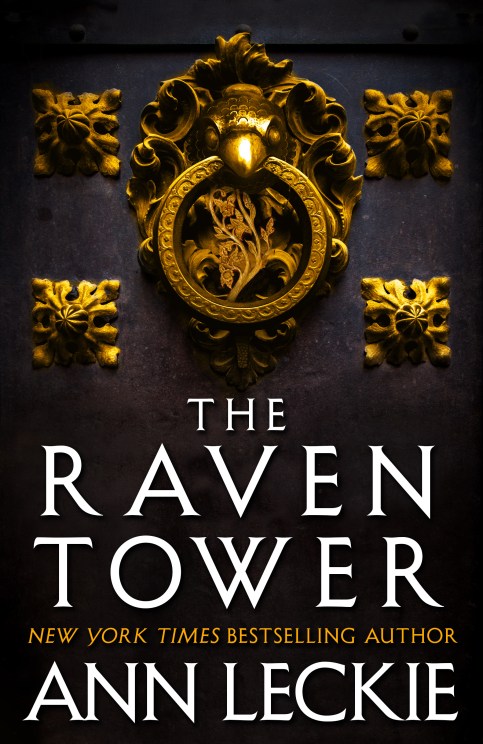
The Raven Tower by Ann Leckie

The Raven Tower Cover

Publishers: Orbit and Hachette Audio (Audiobook Format – 26 February 2019)

Series: Standalone/Book 1

Length: 12 hours and 1 Minute

My Rating: 4.25 out of 5 Stars

Amazon     Book Depository

The bestselling author of the Imperial Radch series, Ann Leckie, presents her first foray into fantasy fiction with The Raven Tower, an intriguing fantasy read that I have been looking forward to for a while, and which attempts something new and different in its presentation.

The Raven Tower is set in a world filled with gods whose power and abilities can be gifted to humans in exchange for worship and offerings.  For centuries, a powerful god known as the Raven has ruled over the rich kingdom of Iraden, offering protection and prosperity from atop a tower in the city of Vastai.  The human ruler of all of Iraden is known as the Raven’s Lease and has been chosen by the Raven to bear his power and enact the god’s will.  However, this power comes at a price, as each Lease must sacrifice himself to the Raven in order to keep the god strong and Iraden safe.

When Eolo and his lord, Mawat, heir to the Raven’s Lease, return to Vastai, they find the city in chaos.  Mawat’s father, the former Lease, went missing just before he was required to pay the Raven’s price.  In his place, Mawat’s uncle, Hibal, has taken the throne and has been named the new Raven’s Lease.  Determined to find out what happened to the former Lease and reclaim the throne for his master, Eolo attempts to uncover the many secrets of Vastai.  But as Eolo investigates he discovers that something ancient and mysterious is concealed within the Raven’s Tower: a secret from Iraden’s past that the Raven has kept hidden for centuries.  It is clear there will be a reckoning, but is Eolo ready to pay the price?

To be honest, I found that The Raven Tower was a very challenging book to critically examine and assign an overall rating for.  Before I had even started reading it, I saw that a number of other reviewers had noted that had great difficulty with this book, mainly due to the author’s unique way of narrating the story.  As a result, I chose to listen to the audiobook version of The Raven Tower, narrated by Adjoa Andoh, in the hopes that this would make it easier for me to follow along.  The audiobook version of the book is around 12 hours long, and I managed to get through it in around a week.  While I did also experience some issues with the way the book was set out, I actually began to appreciate this unique format the more that I stuck with the story, and this turned out to be a really enjoyable piece of fantasy fiction.

For this book, Leckie chose to utilise a noticeably different second person limited narration format to tell her story.  The story is told by a god known as the Strength and Patience of the Hill, who not only tells the main story in Vastai, specifically focusing on the character Eolo, but who also describes all the events of its own life that led up to this period of time.  This god has a very unique way of speaking that impacts how the Vastai story is told.  In particular, the god constantly describes what Eolo is doing, but, at the same time, it has no idea of what is going on inside Eolo’s head.  As a result, it makes very generic statements and guesses about Eolo’s memories, state of mind or thought process.  Take for example the following line, said as Eolo explores the docks near the tower: “I don’t think you grew up near the sea, and so you likely knew very little about boats or tides.”  Having this being make guesses about the protagonist’s thoughts or feelings is a little unusual, and I was very confused about why the author had written her book this way, and for a large portion of the book I really thought that it would have made more sense to have a more traditional narrator system.  However, as I read deeper into the story, it became a whole lot clearer why Leckie had set her story out in this way, and I was able to really appreciate it use.

As the book progresses, the two halves of the story start to come together.  Taken separately, both parts of the story are fairly interesting.  The storyline focusing on Eolo and the mystery surrounding the Raven’s Lease is fairly intriguing mystery filled with politics, murder, mystery and the fate of an entire nation.  The second storyline, which looks at the backstory of the Strength and Patience of the Hill, helps build up Leckie’s new world while also explaining much about the book’s primary fantasy element, the gods, as well as the Raven’s rise to power.  While both these storylines are quite fascinating in their own right, when they start coming together in the later part of the book, it creates a much more complete and intense story.  The author’s use of the Strength and Patience of the Hill as the book’s primary narrator becomes a lot clearer, and I actually really liked how this unconventional narration was utilised.  I also really enjoyed the fantastic twists that occurred at the end of the book, and the author’s excellent lead-up to these events was really quite clever and subtle.  Overall, this turned into quite an amazing story, and I was very glad that I stuck with it and got all the way through.

One of the main things that I enjoyed about The Raven Tower was the interesting fantasy elements that Leckie utilised throughout her story, mostly shown in the form of the gods that inhabit this world.  The gods in this book are quite an interesting creation from Leckie, who has come up with a number of rules surrounding them, all of which is explored by the narrator.  In this world, the gods have a finite amount of power, which they gain from worship and which they lose by altering the world, either for their own benefit or in order to answer prayers.  The gods’ power is tied to their speech; anything they say as a fact, their power will act to make it so.  For example, if they say that an object will turn, then their powers will act to make it turn.  However, if the action they want to accomplish takes more power than they have access to, then they will die or become extremely weak.  As a result, the gods are forced to speak extremely carefully, lest they inadvertently make a command that will take way too much energy.  The gods, therefore, try to avoid absolutes in their conversations and have to use words such as “I think” or “I heard” to get around this.  Leckie consequently has to have her narrator, the Strength and Patience of the Hill, utilise this language throughout the entire book, as to the god addresses the main character Eolo (even if Eolo does not hear them).  That is why there are so many unusual language choices throughout the book, such as the recurring “Here is a story that I have heard”.  While these language choices did throw me at first, once I understood why it was happening, I got used it and I thought it was extremely creative and commendable that the author stuck with this throughout the entire story.

In addition to this use of language, Leckie spends considerable time exploring the limitations and abilities of the gods throughout her book.  Leckie uses all sorts of different narrative devices to showcase this, from the Strength and Patience of the Hill’s personal memories and experiments, conversations they have with other gods, as well as telling stories about other gods and how they utilise their powers (there is one particularly amusing story about a god-powered spear I liked).  It is clear that the author put a lot of thought into her universe’s gods and the abilities that they have, and the exploration of these ideas were some of my favourite parts of the book.  I was also extremely impressed with how Leckie was able to utilise these fantasy ideas so effectively in her story, and I liked the bearing that they had on both the plot and the way the book was written.

Another interesting aspect of The Raven Tower is the characters that the author has used within the story.  The main protagonist is Eolo, whose attempts to get to the bottom of the mysterious events in Vastai are a large focus in the book.  Eolo is a pretty boss protagonist, able to disguise his intelligence and cunning behind an ignorant peasant facade, while quickly unravelling what has occurred in the city and then playing the politics to get the best result for her master.  Eolo is actually a transgender character, and I was really impressed with how well-written this part of the character’s identity was, and with how it was explored within the book.  In addition to Eolo, there are also several other intriguing characters used throughout the book.  Once you get the hang of its speech pattern, the Strength and Patience of the Hill is a pretty good narrator, and I found the god’s backstory and way of seeing the world to be incredibly intriguing.  I quite liked the character of Tikaz, who serves as one of the main female characters in the book, as well as Eolo’s potential love interest.  Tikaz is fleshed out incredibly well, and I loved the various interactions that she has with Eolo.  The book’s main villain, Hibal, is suitably evil and conniving, and he even has a pair of creepy twins serving as his henchmen.

I need to point out the fantastic job Leckie did coming up with one of the main characters in the book, Mawat.  Mawat is the heir to the Raven’s Lease, who finds his position usurped by his uncle.  However, rather than write him as a noble character we are supposed to feel sympathy for, Mawat immediately has a temper tantrum and spends the rest of the book acting as an unreasonable child, completely ignoring Eolo’s advice and even attacking his loyal servant whenever he hears something he does not like.  While a large amount of this is necessary for the story, I liked the reversal of the noble disenfranchised heir trope that is often utilised in fantasy, and instead we are left with a more complex character.

I quite liked the audiobook format of The Raven Tower and found it to be a really great way to enjoy this book.  I definitely think it helped me follow the plot and navigate the different narrative devices of this book, and I absorbed more information about Leckie’s fantasy elements.  I quite enjoyed Adjoa Andoh’s narration throughout the book and thought their voice was perfect for the mysterious and wise Strength and Patience of the Hill, who narrated most of the text.  I especially liked how Andoh was able convey the Strength and Patience of the Hill’s anger at certain key points of the book and to make the god’s voice quite menacing.  Apart from the Strength and Patience of the Hill, the other character voices throughout The Raven Tower were fairly distinctive and matched the personalities of the characters quite well.  I was especially fond of the fitting accents she assigned to some of the human characters, such as Tikaz or the god known as the Myriad.  Overall, I would strongly recommend that readers check out the audiobook format of The Raven Tower, as it may prove to be an easier way to enjoy this intricate story.

As I mentioned above, I had a hard time giving this book an overall rating.  When I first started reading it and I encountered the strange narration style for the first section of the book, I thought I might have to give it a low score.  However, once I started to get more into the story and the lore behind the gods of this world was explained in some detail, I ended up changing my score to something closer to 4 out of 5 stars.  This reflected my appreciation of Leckie’s inventiveness, but also had a few demerits due to the slow start and issues I had getting into the story.  However, I ended up changing this to a 4.25 out of 5 stars in the end, once I appreciated how the two separate storylines came together and that superb ending.  As a result, I would highly recommend The Raven Tower to fantasy readers, and I encourage people to see past the issues at the start of the book.  Leckie is an outstanding author, and her first foray into fantasy featured some unique elements that turned The Raven Tower into one of the most distinctive and clever reads of 2019.  The Raven Tower works incredibly well as a stand-alone book, but if the author decides to return to this world in the future I would be extremely curious to see where she takes the story next.

Amazon     Book Depository

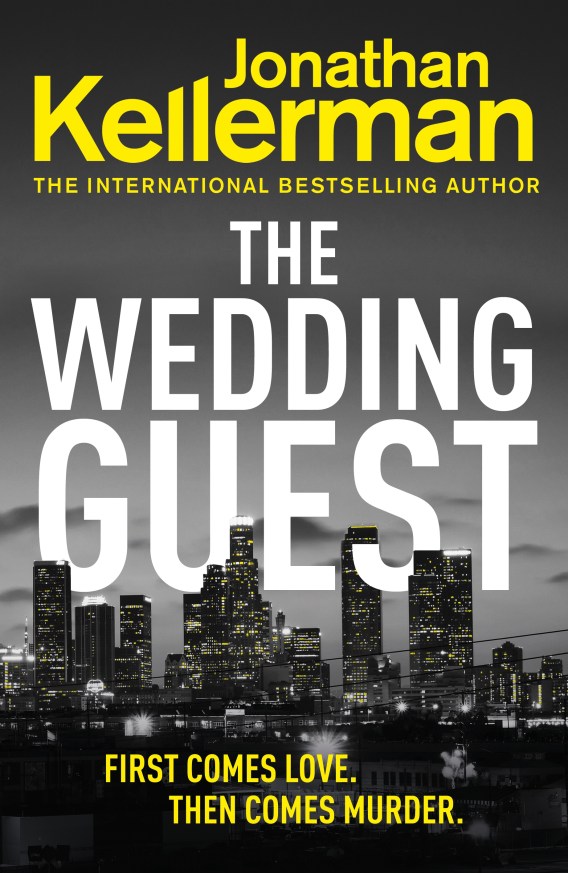
The Wedding Guest by Jonathan Kellerman

The Wedding Guest Cover.jpg

Publisher: Random House Audio (Audiobook Format – 5 February 2019)

Series: Alex Delaware – Book 34

Length: 12 hours 20 minutes

My Rating: 4.5 out of 5 stars

Amazon     Book Depository

Bestselling author Jonathan Kellerman returns with the 34th book in his long-running Alex Delaware crime series, The Wedding Guest, a clever and captivating murder mystery.

It is the couple’s big day, an elaborate wedding ending with a ‘Saints and Sinners’ themed reception in a former Los Angles strip club.  The only thing that could upstage the happy couple is the discovery of a well-dressed murder victim hidden in one of the club’s bathrooms.  None of the guests claim to know who the victim is, and she appears to have crashed the wedding without anyone noticing.

Psychologist Alex Delaware is called onto the case by his friend Detective Milo Sturgis.  With no obvious suspects at the wedding, Alex and Milo not only have to find out who the murderer is but also the identity of the victim.  As they slowly build up a picture of the events that led up to the murder, the investigators soon discover that this not the first time that the murderer has struck, and his is still at large in the city.

Kellerman is an extremely prolific and skilled crime fiction author, who has been writing books for over 30 years.  His first book, When the Bough Breaks, was released in 1985 and was the first book in his main body of work, the Alex Delaware series.  In addition to huge number of books in his main series, Kellerman has also written three shorter series: the Petra Connor series, the Jacob Lev series and the Clay Edison series.  The latter two series he wrote with his son, Jesse Kellerman.  In addition, he has also written several standalone novels, including two with his wife, Faye Kellerman, and several nonfiction books reflecting his career as an actual clinical psychologist.

As mentioned above, this is the 34th book in the Alex Delaware series, and I was a bit uncertain how easy it would be to come into this series this far in, having not previously read any of Kellerman’s books before.  Luckily, I found that The Wedding Guest was extremely accessible to new readers to the series as there were only minimal throwaway references to the previous books or cases that the main characters were involved in.  The author instead dives straight into the mystery and builds up his story from scratch.  The focus is on the main case, with only a brief look at the protagonist’s personal life, and as a result there is very little need to dive back into the series’ previous investigations.  I ended up really enjoying The Wedding Guest and thought it was an excellent piece of crime fiction.

The standout part of this book has to be the central investigation into the murder of the unexpected guest at the wedding.  The overall case is compelling, and I found myself getting pretty hooked on the story and trying to work out who the killer is, especially as the case expands further out.  Kellerman has a very interesting murder mystery writing style.  Rather than creating a fast-paced mystery that has the investigators barrelling from one massive clue to the next, Kellerman keeps the investigation within The Wedding Guest at a much slower and more realistic pace.  The investigators are forced to wait for test results and for technicians and coroners to get back to the office, and most of their investigation involves meeting and questioning people of interest.  The whole process is a lot more methodical that other crime fiction books I have read; it has a much more realistic investigative timeline.  The author has a very detailed orientating writing style, recording a large amount of details about the suspects, their possessions and the locations they are found in, so much so that you expect any of these details to become relevant at a later point in the text.  I loved how realistic the investigation came across, from the timelines and issues that real-life detectives would experience, to the impact of chance or coincidence on solving a case and the use of modern-day technology, such as social media or internet searches, to obtain information on suspects.  The case as a whole was deeply captivating, and my curiosity about who had committed the crime kept me deeply enthralled within The Wedding Guest.

This book is very character based, as the story focuses deeply on the lives of a huge range of secondary characters, most of whom are suspects, witnesses or victims of the crimes being convicted.  Through his protagonists, Kellerman dives into the lives of these characters, finding out surprising details and issues that may or may not have some impact on the case.  As a result, the reader is quite exposed to these secondary characters, in some way more so than some of the protagonists investigating the case.  Many of the characters who are suspects are fairly duplicitous or unlikeable in some way or another, making it rather easy for the readers to dislike them and see them as reasonable suspects for the murder.  In contrast to these interesting but deceitful characters are the main protagonists, Alex and Milo.  I loved the fun friendship between these two characters.  Who would have thought that a psychologist and a homosexual police detective would make for such an entertaining and enjoyable tandem?

In addition to the fantastic mystery and intriguing characters, this book contains a number of other great story elements for the reader to enjoy.  This includes the fantastic and detailed descriptions of the city of Los Angles.  Kellerman, a near life-long resident of the city of Los Angles, does an outstanding job of portraying the various components of city, and there is obvious affection for its many nuances and its inhabitants’ ways of life.  I also liked the psychological inclusions with The Wedding Guest.  The main character, Alex Delaware, is a child psychologist who assists with the police investigations and provides analyses of the suspects and the murderer.  While the psychological elements within The Wedding Guest are somewhat less prominent than in some of the other books in the series, such as the first book, When the Bough Breaks, it is still deeply fascinating, and it was intriguing to see things such as the character’s analysis of what kind of person the killer would be.

While did receive a physical copy of this book, I ended up choosing to listen to the audiobook format of The Wedding Guest, narrated by John Rubinstein.  This was an excellent way to the listen to this book, and at 12 hours and 20 minutes, it did not take me long to get through it.  Rubinstein does an incredible job of narrating this awesome story, and I felt that his fantastic voice really added a lot to this book.  The Wedding Guest is told from the point of view of the main character, Alex Delaware, and Rubinstein does a good base narration for everything the character sees and says.  I also really liked the other voices that Rubinstein does throughout this book, and he is able to impart some real personality into most of the other characters.  I especially loved the narration that he does for Milo, as he gives this character an exceptional cop voice that was really fun to listen to.  Overall, I felt that the audiobook version of this book was a great way to enjoy The Wedding Guest and I would strongly recommend this format.

The Wedding Guest was an excellent piece of crime fiction, containing a deeply compelling mystery that really drags the reader in and holds their attention for the entire book.  I quite enjoyed Kellerman’s use of characters and felt that it enhanced the mystery elements to create a wonderful overall story.  Easily accessible for those who have not read any of the previous books in the Alex Delaware series, The Wedding Guest is well worth checking out in both its paperback and audiobook formats.

Amazon     Book Depository

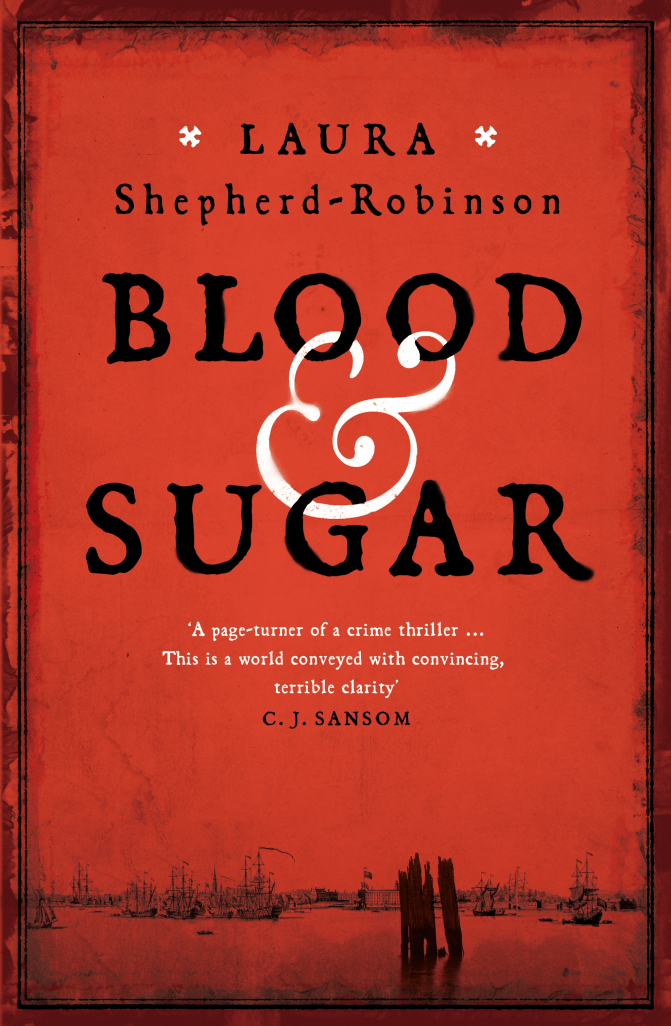
Blood & Sugar by Laura Shepherd-Robinson

Blood & Sugar Cover

Publisher: Mantle (Trade Paperback edition – 24 January 2019)

Series: Standalone/Book 1

Length: 432 page

My Rating: 5 out of 5 stars

Amazon     Book Depository

From the creative mind of Laura Shepherd-Robinson comes this powerful, dark and extremely captivating historical murder mystery, which might just be one of the most impressive debuts of early 2019.

In June 1781, a horrific murder is discovered on the dock of the slaver port of Deptford, outside of London.  The body has been brutally tortured in a variety of ways associated with the slave trade, and his chest has been branded with a slaver’s mark.  The dead man was Tad Archer, a passionate abolitionist who had been causing trouble throughout Deptford as part of his abolitionist campaign.

Days later, Captain Harry Corsham, a war hero who fought in the American Revolution, currently attached to the War Office and about to embark on a promising career as a politician, receives a visit from Tad’s sister, who is searching for her missing brother.  Tad, an old estranged friend of Harry’s, was apparently in Deptford to expose a secret that could potentially end the British slave trade.  Travelling to Deptford, Harry discovers the terrible fate of Tad and is determined to bring his killer to justice.

In order to discover who is responsible for his friend’s the murder, Harry must uncover the secret that Tad believed could permanently end the slave trade.  But as Harry investigates further, he finds himself embroiled in a conspiracy that reaches to the very heart of the realm.  Powerful forces wish to see murder covered up and anyone connected to the dark secret silenced.  Harry soon finds himself on the wrong side of men who can easily destroy his career and family.  Undeterred, Harry presses on with his investigation, but he may prove to be unprepared for the cruel killer stalking him through Deptford.

Blood & Sugar is the debut novel of Laura Shepherd-Robinson, a fantastic new voice in the historical murder mystery genre.  Shepherd-Robinson has created an outstanding novel that masterfully blends a fantastic and clever murder mystery with some powerful and evocative historical content.  The result is a terribly addictive novel that highlights this debuting author’s obvious ability to craft an excellent and compelling story.  From how the story is written, Blood & Sugar will probably be a standalone novel, although I do hope that Shepherd-Robinson sticks with the historical fiction and murder mystery genres, as she has an amazing talent with both.

At the heart of this amazing book is a complex and intriguing murder mystery that sets the book’s protagonist off on a dangerous and dark investigation of the slave trade.  While the investigation is originally focused on the murder of Tad Archer, it spirals out into to encapsulate several additional murders and a larger and more widespread conspiracy which may or may not be connected to the initial murder.  Each of these mysteries is clever, well thought-out and guaranteed to grab the reader’s curiosity and keep them going through the story to work out the incredible solution.  The author has also populated her story with a number of distinctive and complex characters, each of whom has their own hidden secrets and dark pasts.  In order to solve Blood & Sugar’s overarching mystery, the protagonist has to unravel each of these character’s lies and personal secrets, each of which add a new layer to book’s excellent plot.  These characters are all extremely self-serving and naturally suspicious, providing the reader with a huge pool of potential suspects.  The investigation into each of these mystery elements is extremely well written, and I really loved all the solutions to the book’s various mysteries.  I was really impressed with the conclusion to each of the personal mysteries that are uncovered throughout the narrative, and some of them were extremely satisfying to see come to a conclusion.

In addition to the outstanding mystery storyline, Shepherd-Robinson has also created an amazing and realistic historical setting for her story.  I felt that the author did a terrific job capturing the essence of 18th century England, from the streets of London to the docklands of Deptford.  There was a particular focus on the then port town of Deptford, which served as a major plot focus for the book, as well as several other riverside locations.  I loved this examination of Deptford, and I found the examination of this part of its dark history to be absolutely fascinating.  These locations serve as an appropriately dingy setting for such a dark story, and I really enjoyed it.

A major part of this book was the focus on the evil slave trade that was a major business during the 18th century in England.  As part of the plot, the author spends a significant amount of time exploring every facet of English slavery and the slave trade in the 1780s, including the economics behind it, the burgeoning abolitionist movement, slave laws throughout England during this period and how it was a major part of Deptford’s economy and way of life.  These details are extremely interesting and disconcerting, as Shepherd-Robinson pulls no punches when it comes to describing the brutal actions of the slavers and the cold business that they practiced.  The slave trade also serves as an incredibly effective background motive and catalyst for the murders and the conspiracy that the protagonist finds himself drawn into.  The author crafts an incredibly captivating mystery storyline around the English slave trade, and I was both intrigued and appalled to find that certain horrendous elements of this plot were based around a real-life historical slave event.  Blood & Sugar is definitely a must-read for those unafraid to learn more about the cruelty of the English slave trade and who wish to see it creatively used as a major plot point in this captivating story.

While Blood & Sugar featured a number of duplicitous and villainous characters who serve as excellent antagonists, Shepherd-Robinson has also crafted a compelling and layered protagonist to tell this story as the book’s narrator.  On the surface, Captain Harry Corsham is your typical English hero, a former soldier determined to find the man responsible for the death of his friend.  However, as the book progresses, the reader finds out that there is a lot more to Harry’s character than first meets the eye.  Harry is a deeply conflicted character in many ways, but throughout this book he struggles with his opinions about slavery and the abolitionist movement.  In his past he was a strong supporter of abolishing the slave trade, but since he has entered politics and married into an influential family, he is more aware of the current political realities around the slave trade.  But as he spends more and more time investigating the Deptford slave traders, he finds himself being drawn more and more into the abolitionist way of thinking.  The author has also written in a fairly realistic portrayal of PTSD for Harry after the horrors he experienced fighting in the American Revolution.  This is an intriguing character trait, and one that comes into play the more horrors that Harry experiences during this book.  Shepherd-Robinson has also included some amazingly well-written and very surprising personal developments for her protagonist that really change everything in the latter half of the book.  All these character elements add layers to this central protagonist, and I liked the emotional and ethical impacts that they caused on the story.

Overall, I thought that Blood & Sugar was a powerful and captivating historical murder mystery that expertly combines an intriguing and clever mystery storyline with some first-rate historical backgrounds and plot points.  This is an exceptional debut from Laura Shepherd-Robinson which showcases her amazing talent and superb ability as a writer.  This was an easy five stars from me, and I am really excited to see what sort of story this fresh and inventive author writes next.

Amazon     Book Depository

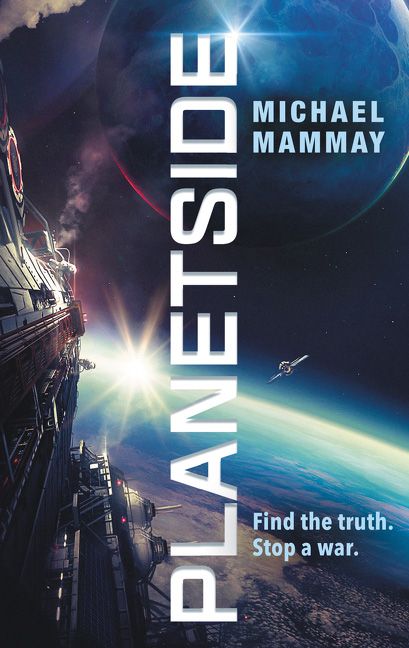
Planetside by Michael Mammay

Planetside Cover 2

Publishers: Harper Voyager

                        HarperAudio

Publication Date – 31 July 2018

Amazon

Well, that was an unexpectantly awesome book!  I am usually pretty good at predicting how good a book is going to be by its plot synopsis or my prior knowledge of the author.  When I first heard about Planetside I thought it sounded like an interesting concept from first-time author Michael Mammay.  While I had high hopes for the book, I did somewhat assume that it would just be another solid but enjoyable science fiction mystery.  What I was not expecting, however, was one of the best science fiction books of 2018 that easy achieves a five-star rating from me.

Set in the far future of Earth’s expansion, Planetside follows Colonel Carl Butler, a war hero living out a peaceful semi-retirement on a training base.  However, when his old friend General Serata calls him late at night and drags him all the way to headquarters, he obliges for old times’ sake.  Serata needs him to travel to the planet of Cappa, humanity’s current warzone, where members of a resilient and intelligent alien race known as the Cappans are fighting a gruelling insurgency against the humans attempting to exploit their planet.  Once there, he will head up an investigation into the disappearance of a young lieutenant who went missing after being wounded on the planet.  By all accounts, the wounded lieutenant was successfully evacuated from the surface, but the military hospital claims that he never arrived at their facility.  To makes matters worse, the lieutenant is the son of a high councillor, and the disappearance has become a highly publicised affair.  Despite knowing that there is more to the case than Serata is letting on, Butler agrees to find the missing officer.

Arriving at Cappa Base, the space station hovering over the planet, Butler soon finds that his investigation is going to be a lot harder than he anticipated.  All the soldiers he speaks to have the same rehearsed story, the head of the base’s military hospital flat out refuses to cooperate with him, the head of Special Ops is continuously unable to come off-planet to speak to him, and any witnesses or evidence that could point him in the right direction mysteriously disappears.  It is also damn suspicious that any time he takes a step in the right direction, somebody tries to have him killed.  Under pressure to wrap this investigation up, Butler decides to drop down onto the surface of Cappa, but what he finds down there will change everything.  Forced into an increasingly desperate situation, Butler must find the answers he needs before it is too late.

This is the first book from Michael Mammay, but it was more than enough to make me a dedicated fan of this author.  With a sequel already set to be released in 2019, Planetside is an extraordinary introduction to an amazing new series.  I chose to listen to this book in its audiobook format, read by R. C. Bray, and at 8 hours 38 minutes, this is a fairly quick way to enjoy this fantastic book.

Planetside’s story is based around the protagonist’s investigation into a missing human soldier on an alien planet that has been occupied by the human military.  As Butler arrives at the military base the solider was stationed out of, he begins to realise that there is something much more to the case than what was advertised.  Every single person he speaks to is hiding something, he seems only to uncover more lies, and some shadowy figures are actively trying to sabotage his investigation in any way they can.  Despite all these setbacks, the protagonist persists with his investigation throughout the course of the book and slowly begins to uncover the underlying conspiracy that the soldier’s disappearance is just one small part of.  There is so much about this mystery investigation to enjoy, as the author seamlessly combines the mystery and conspiracy part of this story with the science fiction element, creating a unique and captivating overall narrative.  The full scope of this conspiracy is very impressive, and Mammay’s slow burn reveal of the extent and implications of what Butler uncovers is well done to keep the reader in suspense.  I was intensely intrigued by this multilayered conspiracy, and was left constantly guessing at what the potential solution was.

The book is told from the point of view of its protagonist, Colonel Butler, and Mammay has created an excellent central character for this story that the reader is instantly drawn to and cannot help but like.  The author has done a fantastic job conveying the fact that Butler is a straight-shooting, no-bullshit, wily veteran soldier who has had enough of war and is just looking forward to retirement.  He is an amusing and intriguing choice to investigate the book’s intricate and potentially wide-reaching conspiracy, as he powers through the expected political niceties other investigators may have worried about without any concerns for his future or career.  His years of service also ensure that he has impeccable instincts when it comes to the people he is dealing with and is fully aware of when the other characters are bullshitting him, which occurs frequently throughout this book.  I had fun observing this rough and seemingly uncomplicated old-school soldier get to grips with this elaborate conspiracy and blow through all the careful plans of the book’s antagonists.  The colonel also has a sense of humour, something that the other characters encounter to various degrees of frustration, especially the people he is intentionally pissing off.  I also appreciated the self-deprecating and extremely honest reflections about the situation that Butler presents to the reader, as it made me like him even more.

The military aspects of this book are another amazing part of Planetside, as Mammay has perfectly captured elements of the modern day military and transplanted them into this science fiction storyline.  The majority of the story is set within Cappa Base, and the reader is made to feel like they are in a real military base.  The author also seeks to capture the full minutiae of military life throughout the book, and the reader is given insight into what tasks are undertaken on the base, the main characters experience and the respect he commands of the other soldiers in the story.  While most of the focus is on the investigation, there are a couple of action scenes throughout the book, including an extended battle sequence that see’s the protagonist and his allies engage in a protracted firefight with enemy forces on the planet’s surface.  The author’s use of the first-person perspective is perfect for these battle sequences and the reader is dragged right into the middle of these firefights, really experiencing the action through Mammay’s skilled and descriptive writing.  This battle sequences felt very realistic and had some noticeable similarities to real-life skirmishes in modern day battlefields.  The tactics the humans use during these conflicts on Cappa are highly reminiscent of American forces in the Middle East, although the inclusion of more science fiction appropriate weapons and technology allow for some interesting differences.

While the impressive investigation storyline does a fantastic job holding onto the reader’s interest, and the solution to the entire mystery arc is creative and clever, nothing compares to the book’s epic conclusion.  Without going into too much detail, I thought that the way that Mammay ended this book was just incredible, and is one of the main reasons why I am giving this book a five-star rating.  I also loved how, towards the end of the book, the protagonist becomes fully aware of how everything has to end, and at the same time he starts to understand that his oldest friend had sent him on this mission because he knew exactly how Butler would act upon uncovering the full extent of the conspiracy.  The final scene of the book was just perfect as the protagonist reflects on everything that has happened with one of the book’s side characters.  During this scene there is an excellent use of the end of a subtle countdown that has been occurring throughout the entire book, represented by a depleting number of whisky bottles, as well as an appropriate moment of happiness for Butler as he finally gets to have a whisky in a proper glass, which was just perfect.  As mentioned above, Mammay already has a sequel planned, and I am extremely curious to see where the story goes next.

The audiobook version of Planetside is a great way to enjoy this fantastic book, and I had a lot of fun listening to this format.  The audiobook’s narrator, R. C. Bray, manages to capture the gruff and grizzled personality of Butler perfectly, and for most of the book it really sounded like the old colonel was telling you his story.  Bray also does a good job producing distinctive voices for the rest of the characters in book, including several female characters, and the listener is able to distinguish between the various people without too much difficulty.  I also felt that listening to this story really helped bring me into the book’s awesome battle sequences as well as ensuring that I was fully invested in the success of the enjoyable main character.  Overall, I would recommend the audiobook format as an excellent way to enjoy this book, although readers will of course get a lot out of this book if they choose the paperback format.

Michael Mammay’s debut novel, Planetside, is an incredible piece of science fiction and is one of my favourite books of 2018.  Featuring a captivating mystery storyline that places the book’s likeable protagonist in the middle of a massive conspiracy, this book completely grabs the reader’s attention and refuses to let go until its powerful and memorable conclusion.  I cannot recommend this book enough and it is essential reading for all fans of the science fiction genre.  I am very much looking forward to Mammay’s sequel to Planetside, which is already at the top of my must-read list for 2019.

My Rating:

Five Stars

Amazon

Throwback Thursday: Veronica Mars: The Thousand-Dollar Tan Line by Rob Thomas and Jennifer Graham

Veronica Mars - The Thousand Dollar Tan Line Cover

Publishers: Vintage Books

                        Random House Audio

Publication Date – 25 March 2014

Amazon

Reviewed as part of my Throwback Thursday series, where I republish old reviews, review books I have read before or review older books I have only just had a chance to read.

For this week’s Throwback Thursday, I will be looking at the thrilling and enjoyable first tie-in novel to the Veronica Mars franchise, The Thousand-Dollar Tan Line.

Veronica Mars was a highly regarded (at least for the first two seasons) teen crime television series that aired for three seasons between 2004 and 2007.  The show, staring Kristen Bell in her breakout role as the titular character, was an incredibly fun and compelling mixture of teen drama and serious investigation.  Veronica Mars is a teenage private investigator who finds herself investigating the murder of her best friend, following a cover up by the town’s rich and powerful inhabitants.  The first two seasons featured epic season-long mysteries, while the third season contained two half-season mysteries.  Each episode also featured a mystery-of-the-week storyline that would often play some part in that season’s overarching storyline.  In addition to the intriguing and complex mystery based storylines, fans of the show could also enjoy the heartfelt drama and romance between the show’s main characters, as well as the interesting social dichotomy of the show’s main location, Neptune, California.  Unfortunately, the show was cancelled after its third season, and fans were given an unsatisfactory and incomplete series finale.

However, due to support of the Veronica Mars hardcore fans, referred to as “Marshmallows”, as well as an incredibly successful Kickstarter campaign, the show was revived with a 2014 Veronica Mars feature film.  This new movie was set nine years after the show’s third season and showed Veronica’s return to Neptune.  The creators attempted to capitalise on the success of the Veronica Mars film by creating some additional material in the Veronica Mars universe.  This included the meta web series Play it Again, Dick as well as two novels set in the aftermath of the movie.  The Thousand-Dollar Tan Line was the first of these novels released, coming out the same month as the Veronica Mars movie, while the second book, Mr. Kiss and Tell was published a year later in 2015.  Both books were written by series creator Rob Thomas and short story author Jennifer Graham, and Thomas has stated that they are both considered to be cannon.

I only ended up watching the Veronica Mars show a few years ago, but found myself really getting into the excellent storylines and memorable characters.  I managed to avoid any spoilers so I was able to enjoy the incredible mysteries of the first two seasons, both of which were very clever, with complicated and hard to predict solutions.  After enjoying both the shows and the movies, I also decided to check out the associated books and obtained an audiobook copy of The Thousand-Dollar Tan Line, which I have listened to several times.  With the recent announcement of a Veronica Mars revival series airing in 2019 to be set five years after the events of the film, I decided this would be the perfect opportunity to re-listen to and review The Thousand-Dollar Tan Line as part of my Throwback Thursday series.  I am particularly interested to see if Thomas will continue to consider this book as canon when the new series of the show is released, as there are significant narrative developments that may prove hard to explain to those who haven’t read this book.

Neptune, California is usually the home of sun, sand, the ultra-rich, their low-income employees and a corrupt sheriff’s department.  But something else has descended on Neptune: spring breakers.  With busloads of college students descending on Neptune, the town has been turned into one long and boozy event.  It’s all fun and games until one girl disappears from a party and her case is picked up by the conservative media as a call to action against Neptune and spring break.

After nine years away, Veronica Mars has returned to Neptune, the town where she experienced so many traumatic events.  After saving her former/current boyfriend Logan from a murder investigation, Veronica has given up her career as a lawyer and has returned to her old addiction, private investigating.  With her father still recovering from a suspicious car crash, Veronica has taken over Mars Investigations and is desperately trying to keep the business afloat with small, petty cases.

With the media storm around the missing girl intensifying, Veronica is called in to find her before Neptune’s spring break economy is ruined.  Diving into the parties and sordid holiday fun, Veronica soon finds that the house that the girl disappeared from is owned by a dangerous pair of brothers with serious criminal connections.  Though Veronica is convinced that the owners of the house are behind the disappearance, the case becomes even more complicated when a second girl disappears from the same house.  Worse, the second girl has a shocking connection to Veronica’s past that will rock her to the core.

While it would have been easy for the authors just to create a lazy tie-in novel, Thomas and Graham actually created a complex and multi-layered mystery narrative that serves to keep the readers excited and guessing the entire time they are enjoying it.  There is quite a lot going on within this mystery storyline, as for most of it, the protagonist is uncertain about what crime she is actually investigating.  There are a lot of false leads, suspects, hidden clues and several pulse-pounding scenes in which Veronica finds her life threatened as she attempts to uncover a major break in the case.  The final conclusion of the investigation is pretty clever and has a few sneaky twists that are hard to see coming.  The authors also amp up the drama during certain parts of the book as Veronica is forced to confront some heavy subjects from her past, as well as the anger and despair of the people she is investigating.  There is also further antagonism between Veronica and the towns’ corrupt sheriff, who Veronica is actively investigating for corruption, as well as a dramatic fight with her father, Keith, who is dismayed by his daughter’s decision to remain in Neptune as a private investigator, a decision which caused her much grief in the past.

One of the more interesting things about the original show was the social makeup of the fictional setting of the town of Neptune.  In the show, Neptune is home to both a rich upper class, known as the “09ers” in reference to Neptune’s fictional postcode, and the people who work for them or are employed in the town’s businesses and local economy.  As a result, several of the episodes of the original series focused on this discrepancy between these two distinct social classes, which was often represented by the rich students receiving unfair advantages at Neptune High.  This was continued in the 2014 Veronica Mars movie, which showed that the sheriff’s department had become especially corrupt and were more focused on protecting the rich and powerful than arresting real criminals, as seen when they framed a side character, Weevil, with a planted gun.  The Thousand-Dollar Tan Line continues to explore how corrupt the city has become under the new sheriff, and how incompetent the police have become.  This is shown early on in the book when Veronica is hired by the Neptune Chamber of Commerce to find the missing girls, as the town’s business leaders lack confidence in the sheriff’s investigative skills.  When Veronica queries why they still support him, they make it clear that his policy of doing what the richer citizens want makes him a desirable tool.  There are also some dark reveals about the serious crimes he turns a blind eye to in order to avoid confrontation and stay in power.

While there is less focus on the town’s social divide, the authors did add a new element to the plot of this Veronica Mars book: spring breakers.  The plot of this book shows the town completely overrun with drunk, drugged-up and sexually excited college students keen to enjoy the beaches and parties of Neptune.  Thomas and Graham pull no punches when it comes to these descriptions, attempting to fully encapsulate the chaotic and at times dangerous activities that the students get up to, often highlighting how their behaviour at times degenerates to the level of a drunken mob.  This spring break background serves as an entertaining and intriguing background for the murder mystery storyline.  There is a good amount of humour watching Veronica acting the part of a drunken sorority girl as she attempts to blend in with the crowd, as this is in complete opposition to her usual prickly demeanour.  This spring break storyline will also be an interesting read for those planning to check out the upcoming revived season of Veronica Mars, which is apparently going to focus on a spring break serial killer which initiates a conflict between the upper and lower classes of the town.

As this is a tie-in book to a television and movie franchise, The Thousand-Dollar Tan Line appeals to fans of Veronica Mars the most.  Readers will be relieved to see that Veronica still maintains her trademark sarcasm and the jaded personality she developed at a young age when she learned how much other people sucked.  This book is set only a few months after the Veronica Mars film, and shows the aftermaths of the events that occurred during it.  Long-time Veronica Mars characters Wallace Fennel, Keith Mars and Cindy “Mac” Mackenzie all appear in the book in significant roles, while minor movie antagonist, Dan Lamb, returns in a similar role for this book.  In addition, other popular characters like Logan Echolls, Dick Casablancas, Eli “Weevil” Navarro and Cliff McCormack have smaller roles within the book.  While it is good to see them again, their minor appearances have mainly been added in for fan service.  One of the most memorable things about this book for fans of the show are the significant developments that happen in Veronica’s personal life, as a character from her past returns with some massive changes.  While these developments serve an important part of the book’s plot and offer some excellent and well-appreciated emotional moments, I will be very surprised if they carry through into the new season of the television show.  Overall, The Thousand-Dollar Tan Line serves as a fantastic addition to the Veronica Mars franchise and contains a huge number of elements that will prove extremely appealing to fans of the original show.

The Thousand-Dollar Tan Line is definitely one of those novels that is best enjoyed in its audiobook format.  This is because the Rob Thomas and the producers of the audiobook were able to get Kristen Bell to come in and narrate this version of the book.  As Kristen Bell does a bit of in-show narration, it makes sense for her to continue it here, with Veronica serving as the only point-of-view character.  Having her narrate the actions of the book and everything she sees makes it feel a lot like the television show and gives it a natural and authentic feel.  It was also pretty amusing to hear Bell do the voices of her co-stars from the shows and movies throughout the book.  I think she does a pretty good job of her narration of the other character’s voices, as there are distinctive approximations of all the relevant characters, in addition to new voices for the exclusive book characters.  Overall, if fans of this franchise are keen to experience a new Veronica Mars adventure, this is their best option.  Written by the show’s creator and voiced by its lead actresses, the audiobook version of The Thousand-Dollar Tan Line is essentially just another episode of the show, and is the best way for fans of the Veronica Mars show to enjoy.  At 8 hours 43 minutes, it is a quick audiobook to get through.

The Thousand-Dollar Tan Line is an excellent piece of the amazing Veronica Mars franchise which presents the reader with a continuation of this fun universe and allows fans of the show to see what happens next to their favourite characters.  Featuring a clever and intricate central mystery that twists and turns in multiple unexpected ways, this book is a fantastic read as told by its iconic protagonist.  Best enjoyed in its audiobook format with the voice of Veronica Mars herself, Kristen Bell, narrating the story, this is a recommended read for all fans of the fans of the show, and may prove to be an intriguing introduction for newcomers to the franchise.

My Rating:

Four and a half stars

Amazon

Throwback Thursday: Star Wars: Ahsoka by E. K. Johnston

Ahsoka_novel_cover

Publishers: Disney Lucasfilm Press

                        Penguin Random House Audio

Release Date – 11 October 2016

Amazon

Reviewed as part of my Throwback Thursday series, where I republish old reviews, review books I have read before or review older books I have only just had a chance to read.

The apprentice lives.  One of the best Star Wars characters that originated outside of the live-action movies returns in this action-packed, character-driven novel, which follows Ahsoka Tano’s adventures after the destruction of the Jedi Order.

Those people familiar with my previous reviews may have noticed that I am a bit of a Star Wars fan, having reviewed several pieces from the current Disney Star Wars extended universe in the last few months.  Therefore, it should not come as a surprise to anyone that I have watched and enjoyed the Star Wars: The Clone Wars and Star Wars Rebels animated television shows.  Both of these shows are very well done, can be appreciated by a varied audience and contain a large amount of the classic Star Wars heart and respect for the franchise’s lore and history that was missing in some of the more recent movies.  While many memorable characters were introduced in these shows, perhaps the most significant to the lore is the titular character of this book, Ahsoka Tano, Anakin Skywalker’s apprentice.

For those of you failing to remember Anakin having an apprentice in the live-action movies, you are not going crazy; Ahsoka has yet to appear in any live action movie.  She was instead introduced in The Clone Wars animated movie and served as one of the main characters of The Clone Wars television series, all of which take place in the years between Attack of the Clones and Revenge of the Sith.  Despite being one of the most popular characters on the show, Ahsoka would leave the Jedi Order at the end of the fifth season of The Clone Wars and only appear in the sixth season as part of a short vision sequence.  As a result, fans of the both the show and the character were frustrated and confused about what Ahsoka’s fate was and whether she had survived the events of the third prequel movie.  Fans didn’t get their answer until a couple of years later, at the end of the first season of Star Wars Rebels, where it was revealed that Ahsoka had survived the Jedi purge, becoming a member of the early Rebel Alliance.  Ahsoka, now wielding a pair of white lightsabers, became a key character in the second season of Star Wars Rebels, in which she was still an incredibly cool and powerful warrior.  She was utilised to perfection in this new show and had what is easily the best scene in the entire run of Star Wars Rebels: her long-awaited confrontation with Darth Vader.  The sheer emotion and intensity as Ahsoka finally came face-to-face with her old master and discovered that he was responsible for the fall of the Jedi was just amazing and is one of my favourite moments from all of television.

Following her appearance in Star Wars Rebels, Disney commissioned a young adult Ahsoka book, which was announced on 31 March 2016, one day after the Star Wars Rebels season 2 finale.  This book was released in late 2016 and was written by young adult author and Star Wars fan E. K. Johnston.  Ahsoka was Johnston’s first foray into Star Wars fiction, although she is currently working on Queen’s Shadow, a young adult novel focused on a post The Phantom Menace Padme Amidala, set to be released next year.  I have no doubt that a review for Queen’s Shadow will appear on this website in due time.  Now, with the recent announcement of a seventh season of The Clone Wars and the reveal that Ahsoka will be appearing in this new season, I decided to check out this book to see if it did the character any justice.  I chose to enjoy this as an audiobook, rather than read a physical copy.

During the Clone War, Ahsoka Tano was a fierce warrior and a commander of the Republic’s clone troopers.  However, after the devastation of Emperor Palpatine’s Order 66, which saw the clones turn on the Jedi, everything changed.  Fighting on Mandalore, far away from her master, Anakin Skywalker, Ahsoka is unaware of his fall to the dark side of the Force, and only just manages to escape the purge of the Jedi Order.

Now, one year after the fall of the Republic and the rise of the new Galactic Empire, the former Padawan is in hiding on the outskirts of the galaxy, trying to avoid any Imperial attention.  Living under an assumed name and with her trusty dual lightsabres gone, Ahsoka scrapes a living as a mechanic, intentionally distancing herself from the Force in order to hide her Jedi abilities.

Ahsoka journeys to a remote farming settlement on the Outer Rim moon of Raada.  Settling into her new life and making connections with its inhabitants, Ahsoka believes that she has finally found her sanctuary.  But her hopes of a peaceful life in her new home are quickly dashed when the Empire arrives, imposing their totalitarian rule on the people of Raada.  The agricultural potential of the moon is vital to the future of the Empire, and the workers are being forced to farm a new and mysterious plant.  Determined to help her new friends and wanting to make a difference, Ahsoka uses her wartime experience to help form a resistance in order to undermine Imperial control.

But when she is forced to reveal her full powers in order to save her friends, she once again finds herself on the run.  However, this time her actions have not gone unnoticed.  Her old ally, Senator Bail Organa wants her to join his fledgling rebellion, while the sinister Inquisitor, the Sixth Brother, arrives on Raada with plans to capture her, using Ahsoka’s friends as bait.

Because I am a fan of the titular character, I did go into Ahsoka with some rather high expectations.  Luckily I quite enjoyed Ahsoka, powering through this book quickly while appreciating how Ahsoka’s new adventure fit into the existing Star Wars chronology.  This story is very good, with an excellent blend of character development, Star Wars lore and some scintillating action and adventure.  The book contains a well-paced narrative that not only features Ahsoka’s personal story, but also examines the viewpoint of several side characters, in order to move the plot along, while also showing the impacts of Ahsoka’s actions from a different viewpoint.

This book is mainly focused on the adventures of Ahsoka, and fans of the animated show will appreciate seeing how she not only managed to survived the purge of the Jedi, but how she became the hardened rebel agent we encountered in Star Wars Rebels.  I feel that anyone who reads this book will appreciate the considerable amount of character development and insight that occurs with the titular character.  At the start of the book, Ahsoka is afraid, hiding who and what she is from the world while also denying herself access to the Force.  She is filled with regrets, concerns for her missing Jedi family and guilt not just about surviving but also about leaving the Jedi Order before its fall.  Throughout the book, her adventures, the new friendships she develops, the people she helps and the role she plays on Raada all help her to find a new purpose, as well as re-establishing her connection with the Force.

There are a number of great scenes featuring or concerning Ahsoka in this book.  These include her battle with the Sixth Brother, the forging of her new white lightsabres and the epic scene where she unleashes her Force abilities for the first time in a year.  It was also intriguing to see her advising the farmers in guerrilla tactics and helping them sabotage the Imperial occupation.  Fans of Ahsoka will appreciate the similarities this has to one of the character’s most significant arcs from The Clone Wars that featured her training a guerrilla army to combat a Separatist invasion, including a young Saw Gerrera (Forest Whitaker’s character in Rogue One).  I also enjoyed Johnston’s focus on the connection between Ahsoka and the female character Kaedan Larte.  It was great seeing this character help get Ahsoka out of her shell, and the subtle romantic feelings between the two of them was an interesting character direction for Ahsoka.  Overall, I thought Ahsoka contained an incredible take on its titular character, as Johnston not only provides the reader with a much clearer picture of Ahsoka’s fate following The Clone Wars, but also provides a powerful look at her thoughts and feelings following the destruction of the Jedi.

In addition to exploring the fates of one of their favourite characters, fans of the franchise are also treated to another intriguing look at events in the Star Wars universe not covered in the movies or television shows.  Ahsoka is set one year after the events of Revenge of the Sith, and shows the early days of Imperial control in the galaxy.  There is a palpable and well-utilised feeling of dread throughout the book as the various point-of-view characters encounter the steady increases in Imperial control as their military expands its influence.  It is fascinating to see the early Imperial military machine in action, especially when it comes to controlling and pacifying smaller planets and moons.  One of the most interesting aspects of this is the type of troops being utilised.  By this point in the Star Wars’ chronology, the Empire has started to phase out their clone troopers, replacing them with the human stormtroopers that appear in the original trilogy.  During her encounters with them, Ahsoka notes that these stormtroopers are still quite green and are nowhere near the clones’ level of competency when it comes to battle, controlling territory or dealing with Jedi.  This changeover in troop type for the Empire has not really been covered in too much detail before and is quite fascinating to see.

The exploration of the Empire’s methods of hunting down the remaining Jedi is also intriguing, as one of Vader’s Inquisitors serves as the book’s main antagonist.  The Sixth Brother is shown not only hunting fully trained Jedi like Ahsoka but also tracking down Force-sensitive children for his masters.  The extent of the Inquisitor’s power and influence is explored in some detail here, and I enjoyed seeing Ahsoka’s impression of these Inquisitors’ skills and actions, especially as the Inquisitors were also trained by Darth Vader.  Readers will also note the obligatory hints at the creation of the Death Star throughout the plot of the book, which is an important part of the overall Star Wars chronology.

These early days of the Imperial military is not the only thing covered in the book, as Johnston also explores the opening actions that would lead to the formation of the Rebel Alliance.  Johnston uses minor Star Wars character Bail Organa to great effect here, showing the work he beings immediately after his heroics in Revenge of the Sith to oppose the Emperor.  Ahsoka also features several cameos from other characters in the Star Wars cannon, and readers can look forward to seeing fan favourite characters Darth Maul, Obi-Wan Kenobi, R2D2, a young Princess Leia and the Grand Inquisitor.  This is a compelling and insightful addition to the Star Wars extended universe, and readers will be amazed by this new viewpoint into one of the franchise’s most volatile periods.

As I mentioned above, I chose to listen to the audiobook version of Ahsoka rather than track down a physical copy to read.  This was mainly because the creators of the Ahsoka audiobook managed to score Ashley Eckstein as the narrator.  Eckstein is the actor who voices Ahsoka in both The Clone Wars and Star Wars Rebels, and I loved the idea of having the definitive voice of the character narrate this crucial Ahsoka story to me.  As Ahsoka is the most prominent point-of-view character, this works out incredibly well, and the reader can enjoy hearing Ahsoka tell the story of what is around her.  Eckstein also provides excellent voice work for all the other speaking characters that feature in the book, as each of these characters were given a distinctive voice that does not feel out of place.

While I really enjoyed hearing Eckstein narrate the story, another benefit of listening to Ahsoka on audiobook is the use of the iconic Star Wars music, as well as the book’s cool use of sound effects.  The creators of the Ahsoka audiobook have inserted John Williams’s iconic score from the movies into a variety of the book’s scenes.  While this is slightly distracting in one or two places where the music did not quite fit properly, it works incredibly well for most of the book.  Several of the story’s big scenes, such as the pivotal battle sequence where Ahsoka reveals her Jedi powers for the first time since she went into hiding, are underscored by this music.  With this grand and powerful music playing in the background, these scenes are given a real epic quality that you just do not get from reading a psychical copy of the book.  It also serves to make Ahsoka feel a lot more connected to the movies, as the listeners are provided with a score that is instantly recognisable as belonging to this franchise.  In addition to the spectacular musical inclusions, the audiobook also features a range of relevant sound effects that really add to the book’s atmosphere and authenticity.  These sound effects range from droid noises and the sounds of ships starting up, to background music when the characters hang out in the cantina.  None of these sound effects distracts from the story and for some of the battle scenes, the lightsabers and blasters sounds really add to the reader’s excitement and involvement in the action.  Another thing I found fun while listening to Ahsoka on audiobook was the producer’s use of some sort of voice modulator for when Eckstein narrates the voices of stormtroopers or other characters wearing helmets.  This is a nice touch and really speaks to the producer’s attention to detail.  I am unsure how effective this would have been if Darth Vader had appeared in the book, but I’m sure I would found the end result amusing one way or another.

Clocking in at just over seven hours long, this is an easy book to get through and the inclusion of the classic Star Wars music, fun sounds effects and the definitive voice of the titular character make it an excellent way to experience this fantastic story.

Ahsoka has been written with a young adult audience in mind, and is definitely an enjoyable book for younger readers who are curious about the Star Wars universe, are fans of the animated shows, or are just looking for an exciting adventure in space.  That being said, the book does not pull any punches, and features an extended torture scene and quite a few deaths, including one particularly gruesome kill by the Sixth Brother.  While some of this can be a tad heavy, I personally feel that anyone mature enough to be familiar with the Star Wars franchise is probably going to be mature enough to not be affected by this violence.  Despite being intended for a young adult audience, Ahsoka, like many of the Star Wars young adult range, is definitely a series that can be appreciated by an older audience, especially those familiar with the franchise and the titular character.

Overall, I was very happy that I checked out Ahsoka, as it not only provided greater insight into the history of one of my favourite Star War’s characters but also painted a detailed and intriguing picture about the early days of the Empire.  Featuring a surprisingly deep and emotional story, this is a fantastic addition to the Star Wars extended universe that will appeal to fans of the amazing animated show, while also offering character based adventure to the more casual reader.  Definitely best to check out in the audiobook format, readers will love how this morphs this impressive Star Wars story into a memorable experience that becomes very difficult to turn off.

My Rating:

Four stars

Amazon

If you enjoy Star Wars fiction, check out some of my previous reviews:

https://unseenlibrary.com/2018/08/12/star-wars-thrawn-alliances-by-timothy-zahn/

https://unseenlibrary.com/2018/05/30/star-wars-last-shot-by-daniel-jose-older/