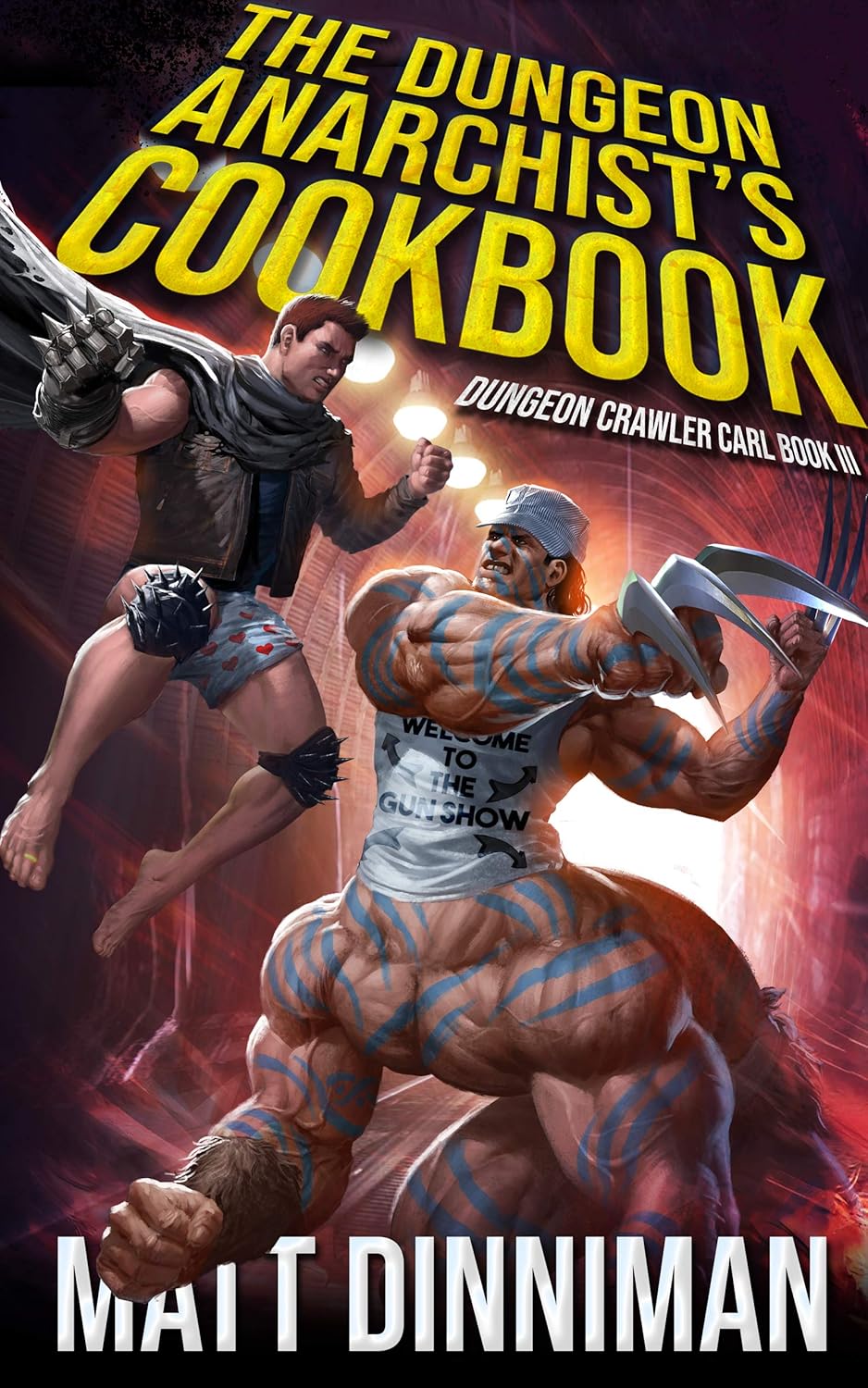
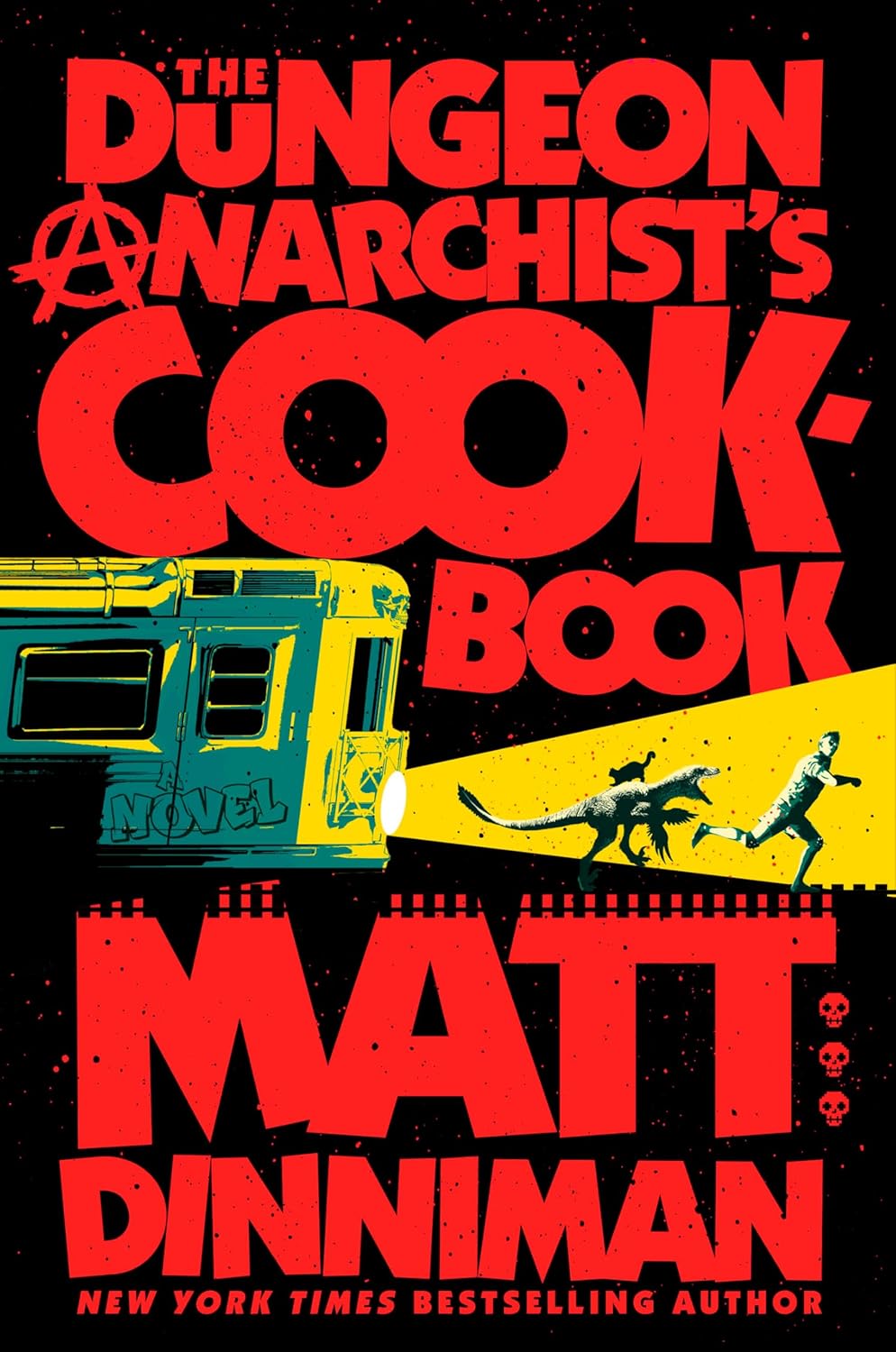
The Dungeon Anarchist’s Cookbook by Matt Dinniman

Publisher: Soundbooth Theater (Audiobook – 19 March 2021)

Series: Dungeon Crawler Carl – Book Three

Length: 16 hours and 54 minutes

My Rating: 5 out of 5 stars

Amazon

Matt Dinniman’s elaborate tale of carnage and comedy continues with the third entry in the Dungeon Crawler Carl series, The Dungeon Anarchist’s Cookbook, another exceptional and highly addictive novel that I could not get enough of.

Those familiar with this blog will know that I recently discovered the sheer insanity that is Matt Dinniman’s epic Dungeon Crawler Carl books.  An outstanding LitRPG series that sees Earth demolished by aliens and turned into a massive, multi-layered fantasy dungeon that the surviving humans need to fight through and descend, all in the name of reality television, the Dungeon Crawler Carl novels are an incredible collection of books with some amazing depth to them as they follow two of the more explosive dungeon crawlers, the gruff Carl and his now sentient cat, Princess Donut.  I powered through the first two books in the series, Dungeon Crawler Carl and Carl’s Doomsday Scenario, in no time at all, and both were epic five-star books.  Due to how incredible these first two books were, I just had to continue the series, and I instantly started listening to the third book, The Dungeon Anarchist’s Cookbook, as soon as I finished off Carl’s Doomsday Scenario, and boy was it something special.

After the cataclysmic end to the third floor of the dungeon, Carl, Princess Donut, their dinosaur pet Mongo, and new party member Katia have arrived on the fourth floor.  This new floor opens all manner of changes for the crawlers, with sponsorship programs, advanced living quarters, new crafting areas and a leaderboard, all needing to be considered by Carl and his companions.  At the same time, the difficulty of the game is ramping up, and this new level is far more complicated than anything they have faced before.

Known as the Iron Tangle, the fourth floor of the dungeon is a mass of interwinding subway tunnels and stations built from the world’s pillaged railway systems.  Tied together in an elaborate knot, thousands of different lines populate this level, filled with random subway and train cars loaded with monsters.  To survive and find the stairs to the next floor, the crawlers need to work out the elaborate puzzle of the Iron Tangle, including which areas are safe, where the monsters are coming from, and what trains can be used to get to important destinations.  However, the dungeon’s creators have populated this floor with all manner of nasty surprises, surprises designed to swallow all the crawlers they can find.

Faced with a seemingly impossible puzzle before them, Carl, Donut and Katia will need to work with all the crawlers on the floor if they want to decipher the mystery of the Iron Tangle.  Only by coming together can the remnants of humanity survive the horrors before them and find a way to continue descending to the bottom of the dungeon.  But can Carl trust his fellow crawlers, especially now that he has a bounty on his head and a potential traitor in his own party? 

Wow, wow, wow!  I honestly didn’t believe that the series could get even better than the awesome first book, but Dinniman once again proves me wrong by producing a particularly elaborate third entry that I once again fell in love with.  Featuring a clever and memorable new scenario, The Dungeon Anarchist’s Cookbook was an exceptional continuation of the series, bringing back all Dinniman’s great characters, complex RPG elements and insane humour, and producing a particularly special story with it. This is another incredible Dungeon Crawler Carl book that gets a well-deserved five-star rating from me.

Like the previous entry in the series, the plot of The Dungeon Anarchist’s Cookbook covers the protagonists’ attempts to journey through a single level of the dungeon, in this case the massive fourth floor, which is made up of an elaborate tangle of monster-filled subway tunnels.  Thanks to The Dungeon Anarchist’s Cookbook having a longer length than the previous novels and not requiring any substantial introduction material, Dinniman is able to spend a substantial amount of time fleshing out the exploration of this level, and the primary focus of the plot focuses on the characters trying to find the various tricks of the Iron Tangle.  While the narrative of The Dungeon Anarchist’s Cookbook is a little slower paced than the previous entries in the series, you soon get engrossed in this complex adventure narrative, especially as there is the usual fun humour, cool character dynamics and the inevitable explosive solutions to all the problems the characters encounter.  Dinniman also spends time expanding on some of the background character plots and wider universe narrative threads that give greater context to the events of the dungeon.  While these parts aren’t as prevalent as in the original novel, you still get some interesting continuation of the wider conspiracies and issues surrounding the crawl and the whole series, which come into play in some compelling ways.

While the first half of the book is very awesome and has some great moments, it is the second part of The Dungeon Anarchist’s Cookbook that really ensures that readers will come away from this novel particularly happy.  Starting with a fantastic and particularly bloody rescue sequence when Carl and his associates attempt to save a bunch of trapped fellow crawlers and initiate a group stand against the horrors of the Iron Tangle, the plan swiftly breaks down in some particularly memorable ways, with the entire dynamic of the dungeon changing in a single moment.  Other great scenes, including a confrontation between Carl and one of his main enemies in the dungeon, also add to the general drama of the novel, and I love how these complex moments, as well as the entire plot of the second half of the book, perfectly flows from the great build up Dinniman featured in the first half of The Dungeon Anarchist’s Cookbook, as well as a multitude of other great plotlines the author has been building up throughout the series.

This impressive narrative eventually leads up to the big and massively destructive conclusion of the book, which was a perfect end to such a captivating novel.  Dinniman cleverly builds up the tension in the lead-up to this finale, and you know that the other shoe is about to drop in a big way.  When it does, Dinniman does not disappoint, forcing the protagonist into some elaborate life and death scenarios, including one particularly epic showdown.  I really loved how all these intense and action-packed sequences came together, and you are constantly on your edge of your seat as you wait to see what happens next.  The protagonist’s various creative plans and failed solutions in the face of these over-the-top scenarios really add to the outrageous entertainment value of the book, and I cannot emphasise enough what an awesome conclusion The Dungeon Anarchist’s Cookbook had.  The author also cleverly sets up the events for the next book, with several hints at key moments to come, and you are left eagerly waiting for even more of the series, especially after seeing how crazy and intense things got in this novel.

Dinniman did another outstanding job writing this third Dungeon Crawler Carl book, and I really appreciated how he brought the same energy and level of excitement to The Dungeon Anarchist’s Cookbook.  The reader is once again treated to an amazing amount of complex action, intriguing LitRPG elements, captivating character growth, and the author’s outstanding humour, which equates to a particularly gripping and intense read.  I liked that The Dungeon Anarchist’s Cookbook had a much more effective pace than the second novel, and the entire journey through the floor was very well set out and quite captivating.  While the labyrinthine nature of the Iron Tangle is a little hard to follow at times, I think this worked well in the context of the story, as it helped to underscore the confusing puzzle that the protagonists had to solve, and you really have to appreciate the sheer inventiveness that the author threw into this distinctive fourth floor.

As with the second novel, I felt that people interested in trying out this series really shouldn’t start with The Dungeon Anarchist’s Cookbook, and instead they need to read the preceding novels first.  While this third novel does have a bit more internal recapping, as the protagonist thinks back to key events, Dinniman does drop the reader into the story immediately after the closing moments of Carl’s Doomsday Scenario, which will confuse most new readers.  The author again builds on the cool LitRPG elements of the previous novels, adding in even more classic gaming features that the protagonists, and through them the readers, need to keep in mind as the book progresses.  All these features have an effective introduction so that anyone can understand their impact, no matter their experience with RPGs, and Dinniman works them into the wider plot extremely well.  As always, a lot of the dryer LitRPG elements of the book are made a lot more entertaining thanks to the over-the-top explanations, clever jokes, and the general insane manner in which the protagonists utilise them, and those reader’s with less interest in stats, abilities or equipment, will still have fun with the scenes focussed on them, especially as they feature some of the book’s funniest lines.  The rest of the novel also features a great comedic tone, and I laughed so many times throughout The Dungeon Anarchist’s Cookbook, especially as Dinniman keeps upping the ante with the plot and forcing the protagonist into even more ridiculous scenarios.

This great humour is well balanced by the often more serious character moments that Dinniman does a wonderful job inserting into the story.  Most of these revolve around the perspective character, Carl, who serves as the voice of the entire story.  A sarcastic, gruff and scarred figure, Carl serves as an excellent everyman protagonist for the series, and you soon get very attached to him, especially as he attempts to be the dungeon’s hero and save everyone he can.  The author builds up some really moving storylines around Carl in this third book, and I loved seeing his continued growth as the team’s unofficial leader, as his accurate insights and tactical ideas really move the plot along.  There are some very dramatic moments loaded in as Carl encounters the various dark sides of the dungeon, and I loved the big anti-authoritarian aspect to the character that Dinniman is expanding upon, especially as he witnesses more and more of the dungeon’s cruelty.  The inclusion of the titular Dungeon Anarchist’s Cookbook, a secret in-game book that gives him hints and ideas to survive in the dungeon, was a fun twist, and I loved how it gave him even more explosive ideas, while allowing the author to explore his rebellious side even more.  Despite being a mostly serious figure, there is still a lot of humour around Carl, mainly from him being the straight man in a very ridiculous place, and you have to love his very reasonable reactions to some of the weird things he witnesses.  Dinniman also continues the very funny trend of having Carl gain a well-deserved reputation of being one the craziest crawlers in the dungeon, mainly due to his tendency of solving all his problems with explosives, and there is a lot of entertainment in seeing Carl’s various plans go further off the rails than intended.

In comparison to Carl, sentient cat Princess Donut is the fun face of the team, and it’s impossible not to love her various antics and over-the-top attitudes.  Her many entertaining quirks, including her obsession with fame, hilarious insights into humans, her long-running grudge against all Cocker Spaniels, her relentless use of all-caps in chat mode, and her general cat-like personality all add a lot of amusement to the novel, and you have to love the odd-couple relationship that forms with Carl.  So many of The Dungeon Anarchist’s Cookbook’s funniest sequences result from Donut’s antics and Carl’s subsequent reactions, and this novel would not be as entertaining without her.  Despite mostly being a comedic figure, Donut does get some serious interactions with the other characters, which help to showcase her character growth and protective nature.  Her occasional vulnerable and honest discussions with Carl really highlight their bond, and she has one of the best moments in the entire book when she overreacts after a friend is hurt.  I really cannot emphasise enough what a great character Donut is, and I really love that Dinniman decided to make this hilarious sentient cat one of his main protagonists.

I also must mention the newest member of the protagonist’s party, Katia, a shy woman who has taken on a shapeshifting race that allows her to act as an effective tank.  I must admit I wasn’t too certain about Katia as a character at the start of The Dungeon Anarchist’s Cookbook, due to her understated personality and somewhat random introduction and inclusion to the team in the second half of the previous novel.  However, Dinniman steadily builds up her complex personality as the book continues, and thanks to the continued support of her new party, as well as Carl’s various attempts to hack her race features, she becomes quite an effective crawler, gaining a lot more confidence.  Her unique abilities and likeable personality nicely compliment the already existing team of Carl and Donut, and they end up becoming a well-balanced trio thanks to her inclusion.  The author also sets up an intriguing storyline around Katia’s conflicting loyalties between her previous party and the current group of Carl and Donut, which come into play perfectly during one of the novel’s big moments.  Katia ends up becoming quite an awesome part of the book thanks to these scenes, and I loved the excellent new dynamic she brings to the series.

Aside from these main three characters, The Dungeon Anarchist’s Cookbook features a really impressive supporting cast, especially as Dinniman brings back a lot of awesome characters from the previous two novels.  This includes Donut’s pet, Mongo, a giant velociraptor who was once again a fun addition to the plot.  While Mongo does get used a little less in the book thanks to the compact train cars of the setting, he made an impact when he did appear (especially to a certain gnoll) it is very entertaining to see Donut finally able to ride him.  The group’s manager, Mordecai, was once again perfect as the reluctant and exasperated mentor figure, who plays off the personalities of the main protagonists perfectly.  One excellent scene in the book ended up limiting Mordecai’s role in The Dungeon Anarchist’s Cookbook, which serves as an effective handicap for the protagonists, while also hinting at Mordecai’s traumatic past, and I look forward to the author expanding on that in the future.

This lack of Mordecai also allows for the author to feature a lot of additional characters, which fits the giant group teamwork focus of the plot, and it was fun to see some of Carl and Donut’s acquaintances from the previous two books return here, especially as several have changed in some very entertaining ways.  I need to highlight the return of antagonist Frank Q, whose big scene with Carl was one of the most powerful moments of the novel, especially as Frank seemingly gets his revenge.  Other previously mentioned antagonists, including some introduced outside the dungeon, are brought back here, often in a big way, and their interactions with Carl are always quite destructive.  Dinniman also focuses on an array of NPC characters in The Dungeon Anarchist’s Cookbook, and the dark plight of these poor figures helps to showcase both the protagonist’s empathy and the twisted nature of the entire dungeon process.  Finally, I again need to mention the hilarious AI who runs the dungeon, as the disembodied figure is easily the most hilarious character in the series thanks to his unhinged descriptions, brilliant references, and the twisted way he manipulates the crawlers to get the funniest result for the audience.  I love how Dinniman showed how the AI is starting to crack a little, especially when it begins rebelling against the corporation running the game (how dare they appeal the AI’s decisions), and I laughed so hard at so many things the AI said.  All these characters, and more, were very entertaining to follow, and I love the many rich character arcs and moments that the author cleverly inserted into the novel’s plot.

I have been having an absolute blast with the Dungeon Crawler Carl audiobooks, and I didn’t even hesitate in choosing to also listen to The Dungeon Anarchist’s Cookbook on this format.  Unsurprisingly, this was another exceptional listen as the audiobook version of The Dungeon Anarchist’s Cookbook really helped to highlight all the best aspects of the book, including the great action, amazing characters and brilliant, over-the-top humour.  Coming in at nearly 17 hours, this was the longest Dungeon Crawler Carl audiobooks yet (they only get even longer from here), although I still managed to power through it in very quick order.  A large reason this audiobook was so good was because the very talented Jeff Hays once again impressed as narrator.  Thanks to his zany voices Hays makes this audiobook truly come alive, and I love how perfectly he inhabits all the crazy and complex characters featured within this book.  There is an outstanding array of accents, parody voices, and over-the-top tones from Hays in this audiobook, and all the voices were a lot of fun, especially for some of the big or exaggerated monsters.  I again need to highlight his excellent voices for Carl and Princess Donut, and it’s just amazing how he can embody both very divergent characters.  I also loved the voice he used for the system AI, especially as Hays brings out all the disembodied figure’s sass, anger and sadistic comedy with his reading of the announcements, especially when the AI gets freaky or mad.  This Dungeon Crawler Carl audiobook also features the voice of Youtube personality The Critical Drinker, who voices a minor character in a well-done, if unnecessary, inclusion.  I felt this entire audiobook came together pretty damn perfectly, including the very funny ad for Soundbooth Theater thrown in at the end, and I honestly don’t think I would enjoy this series nearly as much if it weren’t for these fantastic audiobook productions.  I plan to listen to all future Dungeon Crawler Carl novels on audiobook, and I know I am going to have so much damn fun doing so.

With yet another explosive story, loaded with great characters, clever RPG inclusions and the author’s outstanding humour, The Dungeon Anarchist’s Cookbook was extremely epic, and I could not get enough of it.  The best book in the Dungeon Crawler Carl series so far, The Dungeon Anarchist’s Cookbook was ultra-impressive, and Matt Dinniman did an exceptional job bringing everything together.  I enjoyed this novel so much that I once again decided to start reading the next book in the series the moment I finished this one and then continued after that.  As such, I am currently in the middle of the fifth book in the series, The Butcher’s Masquerade, after loving the fourth book, Gate of the Feral Gods, and both are incredibly awesome and so much fun.
Amazon

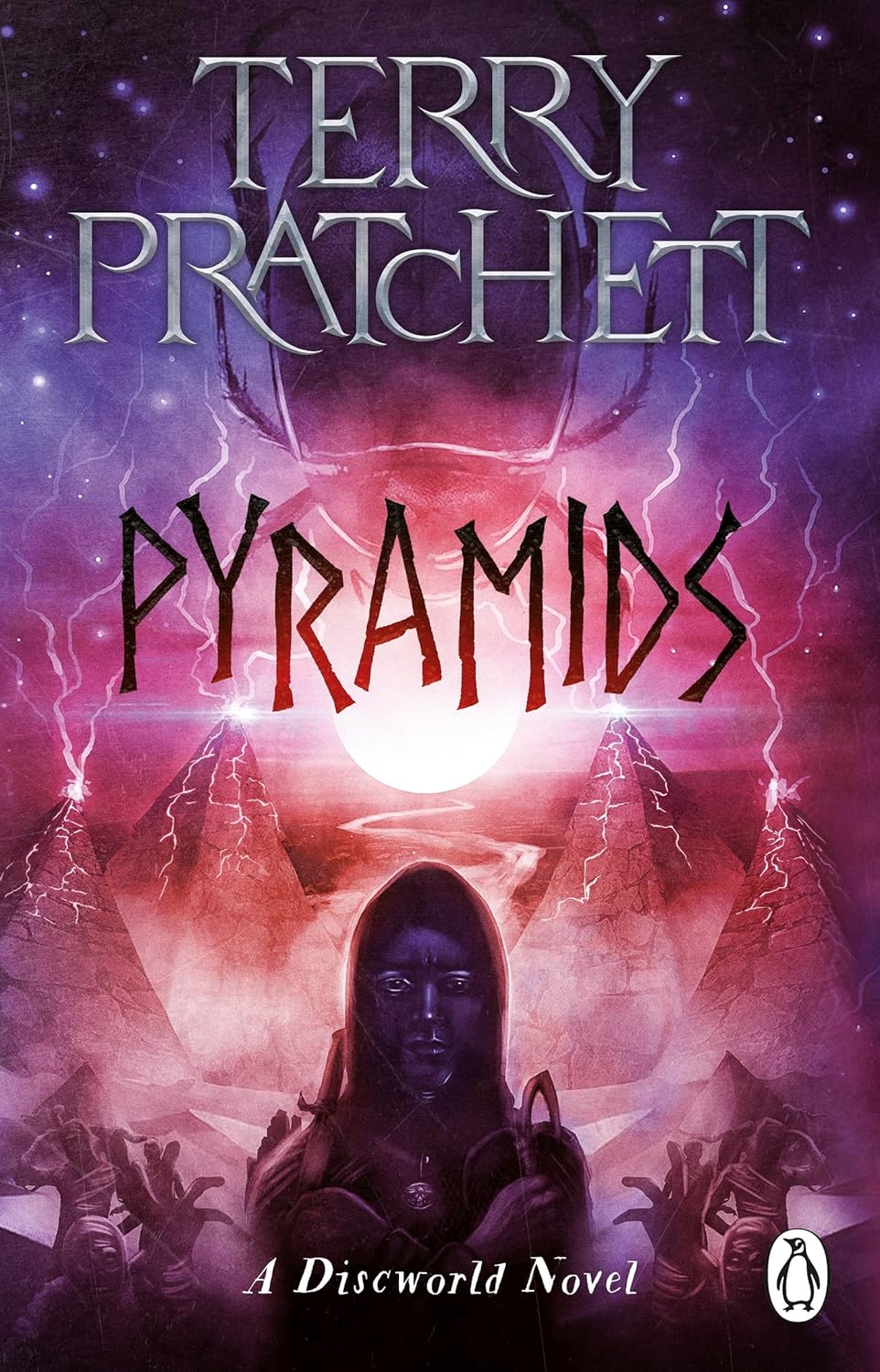
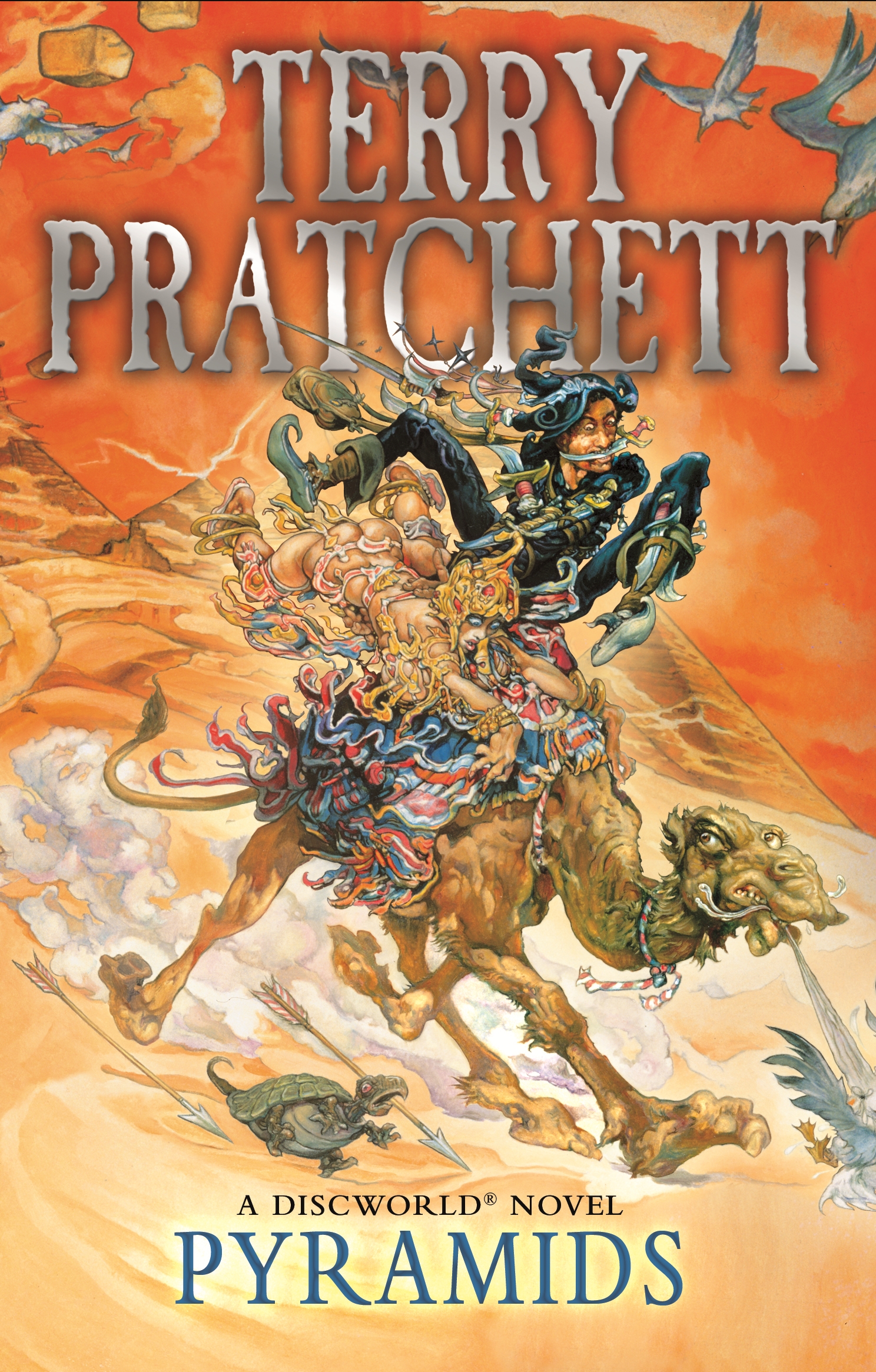
Pyramids by Terry Pratchett

Publisher: Gollancz/Penguin Audio (Audiobook – 1989)

Series: Discworld – Book Seven

Length: 9 hours and 8 minutes (Planer version)/9 hours and 53 minutes (Enoch version)

My Rating: 5 out of 5 stars

Amazon

After having an amazing time checking out the new audiobook versions of Guards! Guards!, Small Gods and Moving Pictures, I continue my latest revisit to Terry Pratchett’s Discworld series.  This time, I examine another one of my favourites with the deeply entertaining seventh novel in the overall series, Pyramids.  An outstanding standalone Discworld novel, Pyramids is a brilliant read that sees a young king go forth and then return to the insanity of his kingdom in a fun satire of ancient Egypt and its perception in Western media.

There are many mysterious realms on the magical Discworld, which travels on the back of four giant elephants standing on the back of a giant turtle.  However, few are more ancient than the tiny river kingdom of Djelibeybi.  Formerly a great empire that ruled over an entire continent, Djelibeybi is a mere shadow of its former self, its wealth drained away by the pyramids constructed to house its dead kings.  Nothing ever changes in Djelibeybi, that is until its young prince decides to get an education.

Prince Pteppicymon (Teppic), future ruler of the kingdom, has been sent away to the Assassins Guild of Ankh-Morpork, both to get the finest education on the Disc, and to learn a way to finally make his kingdom some money.  However, upon graduating, Teppic is forced to return to home when his father suddenly dies in embarrassing circumstances.

Now the god king of Djelibeybi, Teppic hopes to modernise his kingdom and introduce the comforts of the outside world.  However, Teppic has returned to a strange land he no longer understands and finds his desire for modernisation stymied by the controlling high priest Dios, whose intense love of tradition has long restricted Djelibeybi.  However, despite the best attempts of Dios, change is coming to the old kingdom, as a dark figure in the finest black stalks the city, while a massive new pyramid begins to mess with reality.  When disaster strikes, the people of Djelibeybi find themselves beset by both their gods and their dead, and only their king can save them.  But first, Teppic will need to work out how to find his kingdom again.

Pyramids continues to stand the test of time as one of my favourite Terry Pratchett books, as this compelling and wildly entertaining Discworld novel takes you on a wild ride through ancient kingdoms and eternal tradition, and every dangerous thing that comes with them.  An outstanding addition to the series that keeps you laughing the entire way through, Pyramids was peak Pratchett and gets another easy five-star rating from me.

I love the outstanding narrative that Pratchett came up with for Pyramids, which tells a fun adventure tale in an entertaining ancient Egypt facsimile.  While the narrative structure of Pyramids is slightly more basic than some of Pratchett’s other books, I think it is still quite a compelling story that keeps the reader entertained from start to finish.  Broken into several sections, Pyramids starts with an excellent introduction that showcases Teppic attempting to take his final exam at the Assassin’s Guild.  This proves to be a great fun opener, and I loved how Pratchett interspersed the over-the-top test with multiple flashbacks that showcase both Teppic’s childhood in Djelibeybi and his early days at the guild.  This works to set up a lot of key early story elements, while also serving as a memorable start, as the cool scenes of assassin testing are some of my favourites in the entire book.  This first section of Pyramids ends with Teppic finding out his father has died through an unlikely divine messenger, and he returns to Djelibeybi to take the throne.

Pratchett follows up this impressive introduction with a good central part of the story as you return to Djelibeybi proper and Teppic learns the downside to being a king.  Pratchett really works to explore the downsides of the kingdom, as Teppic begins to realise he is just a puppet with the high priest Dios truly in control.  There are some hilarious moments here, especially when it comes to the ridiculous traditions and history of Djelibeybi, and Teppic works well as a great outsider character who finally sees how silly everything is, although he is still bullied into constructing the biggest pyramid ever.  Pratchett also takes the time to introduces a colourful array of supporting characters with some compelling story arcs, including two ambitious embalmers, a disfunction family of pyramid builders, and the handmaiden Ptraci, who Teppic accidentally sentences to death.  His desire to save her leads to many of these issues coming to a head, with Teppic forced to flee from Dios, only to find himself trapped outside of the kingdom when the Great Pyramid goes off and splits Djelibeybi into its own reality.

This brings Pyramids into a compelling interim phase, as Teppic and Ptraci find sanctuary in Ephebe, while the trapped kingdom goes to madness, as all their many beliefs come to life, although not in the way they’d hoped.  I liked the fantastic contrast between the supernatural craziness going on in Djelibeybi and the more human-based chaos Teppic encounters in Ephebe as he tries to get answers out of the philosophers, before finally returning to the kingdom to save the day.  Eventually able to return thanks to a thirsty camel and an easily confused sphinx, Teppic works to destroy the Great Pyramid.  At the same time, several of the ongoing Djelibeybi storylines come together nicely, as the dead of the kingdom, including Teppic’s father, discover the truth about why they were mummified, and this leads to an outstanding and eventually explosive concluding sequence.  Pratchett wraps this up nicely with all the key characters getting the ending they deserve, and he leaves this story on yet another hopeful note that hints at an interesting future for the characters and the kingdom.

As with all the Discworld books, Pratchett does a wonderful job of telling a fun and compelling story in Pyramids that hooks you early with its fantastic elements, entertaining plot, complex satire, and great characters.  An interesting standalone entry in the Discworld series, Pyramids has a more straightforward story that is well split amongst an interesting cast of figures, each of whom find their role in the kingdom altered in some way, and I loved the chaotic plot that emerged.  Pratchett has a lot of fun exploring some great themes in Pyramids, including people attempting to break free of tradition (literally), and finding yourself.  The critique of unnecessary and restricting tradition works well as a central story element, and Pratchett leans into it heavily, showcasing how it can styme progress and lead to a slow death of a culture.  Thanks to that author’s great use of humour, you really begin to appreciate just how damaging or ridiculous some traditions can be, and I always get a chuckle at the hilarious sequences where Teppic’s over-long title is repeatedly read out again and again.

While there is some focus on death and assassination, for the most part Pyramids is a really light-hearted entry in the series, especially as Pratchett leans into the examination of ancient Egypt with its doppelganger in Djelibeybi and resulting satirisation of how ancient Egypt is portrayed in modern culture brings much of the book’s laughs.  Most of this becomes really apparent thanks to Teppic’s newly found modern sensibilities, but Pratchett also throws in some puns and lines that people with some knowledge of ancient Egypt will appreciate, and frankly I find a fun new joke every time I read this amazing book.  Many of Pratchett’s more modern takes on some of more well-known elements of Egyptian culture are very fun, with a lot of jokes about mummies, the economics of pyramid building, and what handmaidens do, proved to be really entertaining.

Much of the rest of the major jokes of Pyramids revolved around the varied reactions to the crazy events that seem to occur everywhere in the Discworld.  I personally laugh myself silly at the spontaneous football commentary that emerges when the various gods of Djelibeybi start to fight over the sun, and the resulting moments of theological debate end in a funny and snappy way.  The sequence with the Sphinx also makes for quite an entertaining inclusion, and Teppic’s assessment and rewriting of the classic riddle into a much more correct metaphor proves to be a lot of fun.  Finally, the opening assassin’s examination sequence is both tense and funny, and there is something about Pratchett imagining undergraduate assassins getting tested in a similar manner to student drivers that really shows off the inherent silliness of this series.  Throw in Pratchett’s usual array of clever puns, well-placed footnotes and witty dialogue, and Pyramids turns into a particularly funny read that still makes me laugh after all these years.

Out of all the amazing Discworld novels, Pyramids might be one of the best entries for a reader to start to explore this amazing series.  The very first standalone Discworld novel, Pyramids can be easily read without any knowledge of any of the previous books, and you really get a good sense of the larger setting and Pratchett’s ability to craft elaborate parodies of certain cultures or genres in a brilliant, self-contained manner.  While some of the elements of Pyramids are reutilised in some of the later books (the philosopher-filled city of Ephebe for one), for the most part none of the characters or storylines here are ever revisited, and you can really dive into Pyramids at any point of your Discworld reading experience.  The opening extended sequence set around Teppic’s exams and flashbacks does provide one of the best examinations of the Assassin’s Guild, a fun institution in the Discworld series, and it was really fun to see them in action here, even if the assassins do get slightly nerfed in some of the future books (especially the City Watch ones).  I do personally think that Pyramids was one of his true early classics, and this book lays at the start of a very big run of some of Pratchett’s best works, especially as he fully finalised his preferred style here.  As such, this is a great read for Discworld readers of all experiences, especially those looking to dip their toe into this amazing universe, and this is a very impressive example of Pratchett’s style and humour.

I do have to also provide a quick shoutout the fantastic array of characters featured within Pyramids, whose compelling storylines and well-thought-out story arcs really compliment the main narrative and help Pratchett explore his intricate central themes.  The main character, Teppic, serves as a great central figure for Pyramids, and his unlikely outsiders perspective allows for much of the plot change and chaotic moments.  Ptraci’s journey from passive handmaiden to unstoppable force of nature was very well handled, and I loved how Pratchett showcased just how much impact a suddenly confident woman can have on the world.  I also always find it quite hilarious that the previous king, Pteppicymon XXVII, only truly finds himself in death, and his later interactions with the embalmers Dil and Gurn lead to some truly heartwarming moments.  The Ptaclusp dynasty of pyramid builders added some fun family chaos to the mix, and their representation of the new generation taking over from the old was quite entertaining, even if the brothers (Ptaclusp IIa and Ptaclusp IIb) had differing views on what the future should be.  Teppic’s classmates from the Assassin’s Guild also added some excellent colour, especially the overconfident Chidder, although I felt that it was a shame that most of those great characters introduced in the opening part of the book where never utilised again.

Out of all the characters featured within the book, my favourite was probably Dios, who can probably be considered the antagonist of Pyramids.  The High Priest of Djelibeybi, Dios is the main administrator of the country, who strictly adheres to tradition and ritual and doesn’t allow Teppic to make any changes or independent decisions.  A strict and rigid person capable of bending anyone to his will, Dios is restricting tradition personified, and the lengths he goes to keep Djelibeybi the same is quite fascinating, while his struggles to keep Teppic in line lead to some amusing moments.  I honestly feel that Dios was one of Pratchett’s more compelling antagonists, as while he does some bad things he’s not actually a bad person; instead he’s someone stuck in the trap of always doing things a specific way and is incapable of thinking any other way.  You honestly feel a little sympathetic for him at times, especially when the full scope of his service is revealed, and while he continues to make the wrong decisions for the future of Djelibeybi, you can kind of understand why he is the way he is.  The final fate of Dios was really well written, if a little horrifying if you actually stop to think about it, although it fulfills his wish of everything staying the same.  A truly complex figure who plays off the rest of the outrageous and outgoing characters extremely well, Dios really tied this book together and I loved how well Pratchett featured him in Pyramids.

Unsurprisingly to anyone who has read my other rambling Discworld reviews, I have a lot to say about Pyramids on audiobook.  Audiobooks are my favourite way to enjoy any book, with the Discworld audiobooks being an exceptionally good example of how this format can make an already awesome novel even better.  Like the rest of the series, Pyramids has two really good unabridged audiobook versions, both of which come really recommended by me as brilliant ways to check out a classic book from Pratchett.

The first of these audiobook formats is the old-school version narrated by the legendary Nigel Planer.  I have mentioned Planer a few times over the years due to his exceptional work voicing over half the unabridged Discworld audiobooks and he remains one of my favourite audiobook narrators as a result.  His ability to come up with new character voices for every single audiobook was just incredible, and I love all his cool vocal choices, especially in Pyramids.  His take on the various characters was quite inspired, and you really get all the characters’ unique personalities, including Teppic’s modern spirit, Dios’s controlling reliance on tradition, the exasperation of the dead former king, and the overpowering personality of Ptraci.  Planer also perfectly showcases all the best jokes in Pyramids, including the fantastic over-the-top sequences where Dios repeats Teppic’s title, or the hilarious scene where the priest provides commentary for the divine fight for the sun.  I have so much love for all of Planer’s original Discworld work, and Pyramids is a particular favourite of mine as he takes that verbal gags that Pratchett sets up and makes them his own.

While the Planer version of Pyramids was the one that I grew up with, I have also had the pleasure of listening to the newer Pyramids audiobook that provides a fresh take on the story.  Part of the same Discworld audiobook series I have recently enjoyed for Guards! Guards!, Moving Pictures and Small Gods, this new version of Pyramids was also extremely good with some great voice work and a compelling pace.  Featuring a runtime just shy of 10 hours, this new audiobook is slightly longer than the Planer version and features the amazing voice work of Alfred Enoch, Bill Nighy and Peter Serafinowicz, with Enoch acting as the main narrator.

Enoch, who is probably best known for his role in the Harry Potter films, did an outstanding job as the main narrator for Pyramids, and I really appreciate his take on the compelling story.  His more youthful voice gave this version of Pyramids some additional energy, and you really move through the main story extremely quickly as a result.  I also really enjoyed how some of the protagonists turned out in this version of Pyramids, and while Enoch lacks the full range of fun character voices that Planer had, he still provides some impressive and fitting tones that expertly captures the various characters.  I felt that his voice for Teppic was especially well done, with his hopeful personality really shining through, while his voice for Dios had the commanding and controlling edge that it needed.  I felt that Dios was probably Enoch’s best voice, especially when it comes to the repetitive gag of having to intone Teppic’s full title.  I also actually quite like the voice he used for Ptraci, which was markedly different to the voice that Planer utilised in his version.  Enoch’s Ptraci voice was a little more curious and confident at times, and I got a much different personality vibe in this version which was quite interesting.  Enoch also ensured that his version of Pyramids stood out by pronouncing some of the character names in a different manner to Planer, mainly because he kept the P silent when it appears at some of the names (for example, Ptraci becomes Traci).  While this was a noticeable difference from the Planer version, I really liked it, as it actually captured Pratchett’s intended pronunciation based on how P is used in ancient Egyptian.  This ended up being an exceptional performance from Enoch, and one that I had a lot of fun with.

On top of Enoch’s main narration, this version of Pyramids also featured the voices of Bill Nighy and Peter Serafinowicz, who have the same roles in every audiobook of this new run.  Both play key parts in this audiobook, with Nighy voicing the various footnotes, while Serafinowicz was the voice of Death whenever he appeared.  Both provided an exceptional performance here, with Nighy in particular giving some excellent gravitas to the essential and humour-laden footnotes.  Serafinowicz’s role in Pyramids was a little more limited, mainly because Death only appeared a couple of scenes, but he really captured this awesome anthropomorphic personification perfectly when he did appear, providing a booming and impactful Death voice that was a lot of fun to hear.  Both Bill Nighy and Peter Serafinowicz’s inclusions were worked into Enoch’s overarching narration extremely well, and I felt that the three complemented each other nicely throughout the audiobook.  This ended up being an overall impressive take on Pyramids, and the new narrators really knew what they were doing here.  As such, this version also comes recommended, and while the Nigel Planer version is still living in my head rent free, this new take on Pyramids was very fun and I enjoyed hearing some new voices take it on.

Overall, Pyramids proved to be quite an awesome book, and I really think it was one of Terry Pratchett’s better early Discworld novels.  Featuring an outstanding story with some fantastic humour, Pyramids is an absolute joy to read, and I loved seeing the author’s distinctive parody of ancient Egypt.  Clever and loaded with complex comedic gold, Pyramids still cracks me up every time I read it, and I cannot recommend this book enough to anyone interested in checking out the exceptional Discworld books, especially in either of its epic audiobook formats.

Amazon

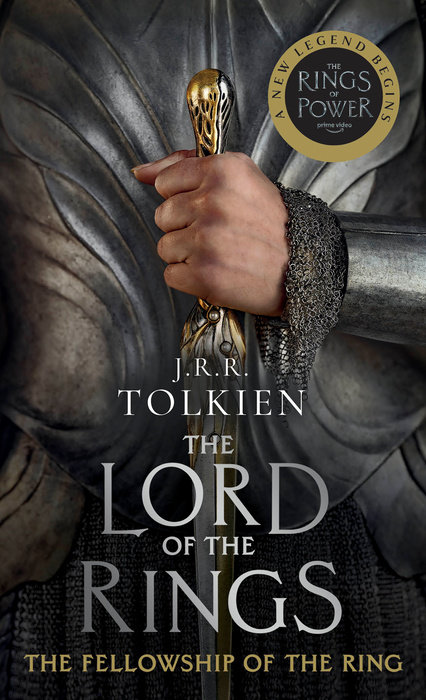
Guest Review – The Lord of the Rings Trilogy by J. R. R. Tolkien (Audiobook)

For this Throwback Thursday we have a rare treat with a guest review from my awesome editor/wife, Alex.  Long-time readers of this blog may remember that Alex previously provided some guest reviews of books like The Power and The Testaments, although she hasn’t provided us with anything for a long while (don’t worry, I’ve judged her very harshly because of this, so much judgement!!!).  Alex recently endeavoured to read all three The Lord of the Rings books, and I of course convinced her into writing a review for them.  I think her review below is pretty awesome (I may be slightly biased), and it has made me interested in listening to the latest audiobook version of The Lord of the Rings novels.

Publisher: HarperCollins and Recorded Books – Audiobook

Rating: 5 out of 5 stars

The Fellowship of the Rings

Amazon

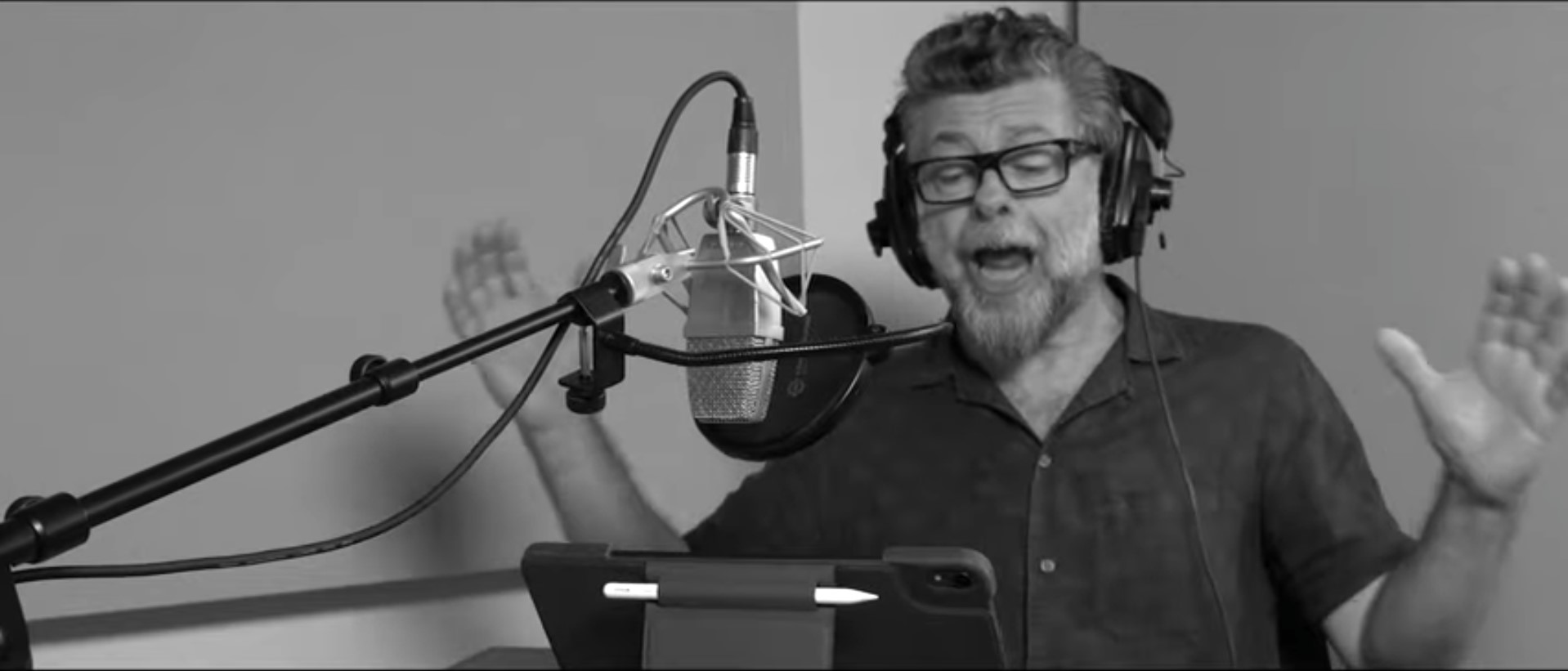
First of all, this is not really a review of The Lord of the Rings. You don’t need me to tell you that these books are good, and Tolkien scholars have already built up mountains of literary analysis over the decades. This is instead a review of one particular way to enjoy the story: the audiobook edition recently published by HarperCollins and Recorded Books and narrated by Andy Serkis.

But I should say that this review is written from the perspective of someone who adores the Lord of the Rings movies but had never before read the books. I loved reading The Hobbit as a kid, and the cinematic masterpiece of The Fellowship of the Ring blew my 10-year-old mind. At that age, however, I found myself too impatient to enjoy the slower pace of the novel (not to mention the preliminary chapters on hobbit anthropology) but also too prideful to simply skip to ‘the good stuff’, so Fellowship was sent back to the library in frustration before Frodo had even reached the Prancing Pony. But recently watching The Rings of Power reminded me that I have been missing out on the full, glorious Tolkien canon experience.

The Lord of the Rings - The Two Towers Cover

Amazon

Regular readers of The Unseen Library will know that the Chief Librarian is constantly praising audiobooks as the very best way to absorb a story, so when I heard that there was a new edition narrated by Andy Serkis, I had to have it. And of course I loved it, as I always knew I would. The world Tolkien created is beautiful, and the themes, histories, cultures, languages, characters and journeys within defined an entire genre. The story is epic in the truest meaning of the word, but you already know that. Here instead let me answer two things you will want to know about this particular edition of the story:

  • Yes, it is unabridged.
  • Yes, he does the voices.

The first thing I checked before starting this audiobook was that it was an unabridged edition; if I were to finally read The Lord of the Rings, I would do it properly! This audiobook is actually an extension of a charity project in which Andy Serkis livestreamed himself reading The Hobbit to raise money for the NHS in the early days of the pandemic. This was followed up by an official reading of The Hobbit published later in 2020, and then The Lord of the Rings in 2021.

The Lord of the Rings - The Return of the King

Amazon

I can think of few more appropriate actors for this project than Andy Serkis. An audiobook demands a distinctive voice for each character, especially for a book with such an enormous cast of characters, and Serkis definitely delivers, seizing the opportunity to show off his acting talents. What’s more, he has made an effort to echo the voices of his fellow Lord of the Rings film alumni. For example, he affects a Scottish accent for Pippin, a West Country accent for Samwise and Merry, and a gruff Yorkshire brogue for Boromir. He gives Aragorn the same strong but quiet dignity Viggo Mortensen did, and he gives Frodo a higher, younger-sounding voice that echoes a 20-year-old Elijah Wood more than the 50-year-old Frodo of the books. And, of course, he reproduces the definitive portrayal of Gollum for which he has been so celebrated. As a fan of the films, I greatly appreciated these choices as it meant I didn’t have to recalibrate my imagining of the characters too greatly. It would have been rather distracting if, say, Merry sounded Scottish and Pippin didn’t, and I had to concentrate all the more simply to work out who was speaking. Instead I was able to relax and focus on simply enjoying the story.

Andy Serkis Picture 1

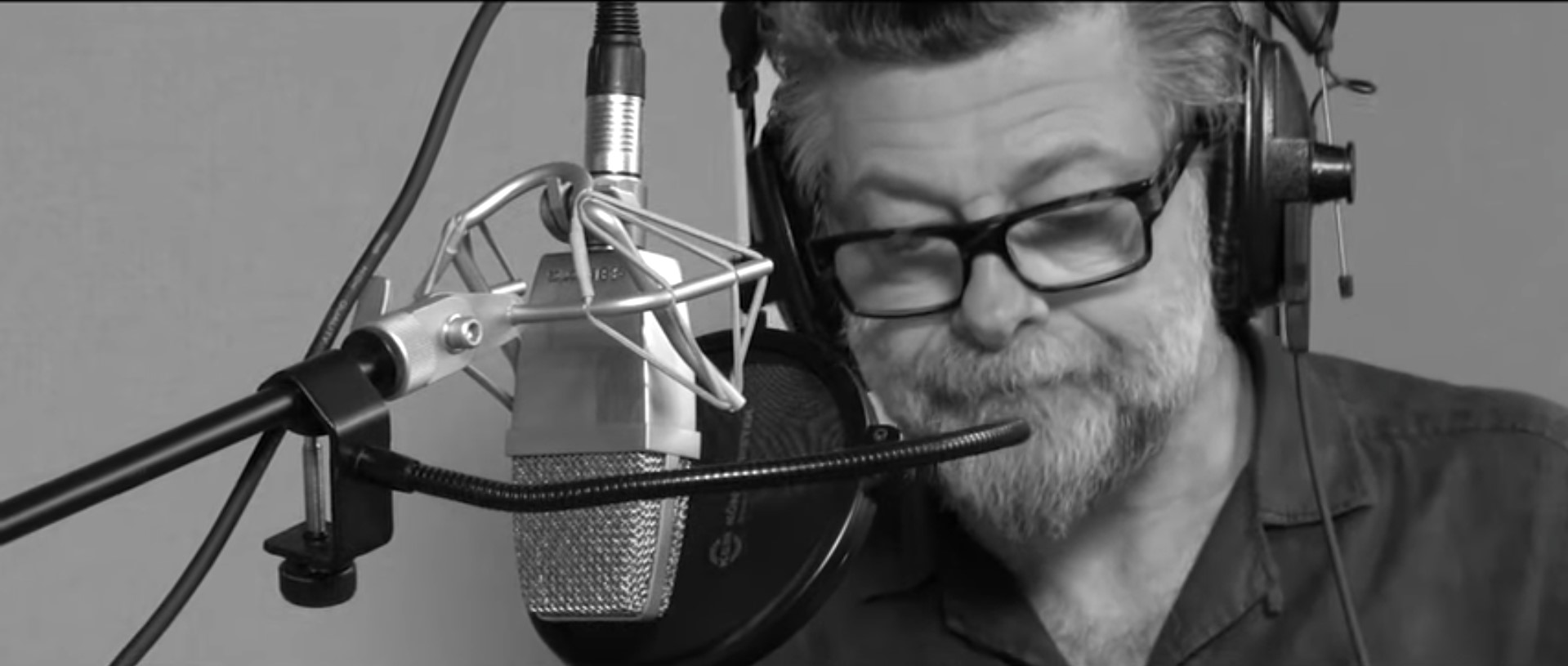
But while the voices are clearly based, for the most part, on those of the film actors, the performances are wholly informed by the text, and Serkis has made it his own. For example, whereas Ian McKellen almost whispered Gandalf’s final command, ‘Fly, you fools!’, Serkis performs the line as if shouted while falling from the great height of the Bridge of Khazad-dum. He brings the poetic prose and dialogue to life with amazing energy and passion. He uses a narrative voice that perfectly fits the text and adjusts the pacing of the telling according to each scene, keeping the story flowing and keeping the listener totally captivated. Each of the three books is a little over 20 hours long, but with the combined storytelling skills of Tolkien and Serkis mesmerising me I was never eager to hit the pause button and get back to real life, so it took only a few days for me to get through each book.

Andy Serkis Picture 2

Howard Shore’s brilliant film score sadly isn’t featured; instead, the audiobook relies wholly on the talents of Andy Serkis. The films were very sparing in their use of the songs Tolkien wrote, which made Pippin’s haunting ballad in The Return of the King all the more impactful. I was delighted that the songs are here performed in full and in the voices of their singers—no mean feat! I’m sure Serkis exhausted himself playing the boisterous Tom Bombadil in particular, whom I had always found quite tiresome, but Serkis gives him a mysterious charm. The songs are a core element of the books, giving us glimpses into Middle Earth’s cultures and histories that aren’t otherwise shared in the prose, and I’m so glad they’ve been given such a treatment.

Andy Serkis Picture 3

There are a few small drawbacks to an audio edition of these books. A few times I would have wanted to flip back a few pages to double-check my understanding of certain details (‘Hang on, was that the name of a person or a river?’), but that wasn’t all that easy to do without losing my place, at least not with the media software I was using. The other thing missing, because it could not possibly be reproduced in audio despite Andy Serkis’s considerable talent, is the maps of Middle Earth which usually feature in any Tolkien book. As a kid reading The Hobbit I would be constantly checking the map to trace the hero’s journey through the world. I can highly recommend the interactive map at lotrproject.com as a companion piece to this audiobook for those who wish to do the same.

The Lord of the Rings, as read by Andy Serkis, is the ultimate audiobook for fans of the films. I can highly recommend it to those who have never read the books before, and I’m sure it would be a similarly excellent experience for those who have and who would like to revisit the canon after watching The Rings of Power. I can only hope that Serkis completes the series with a reading of The Silmarillion and other supplementary works by Tolkien, because I am so in love with this telling of the story of Middle Earth that the 75-odd hours’ worth already recorded simply isn’t enough. I am so glad to finally say that I have read The Lord of the Rings; I only wish I had done it sooner.

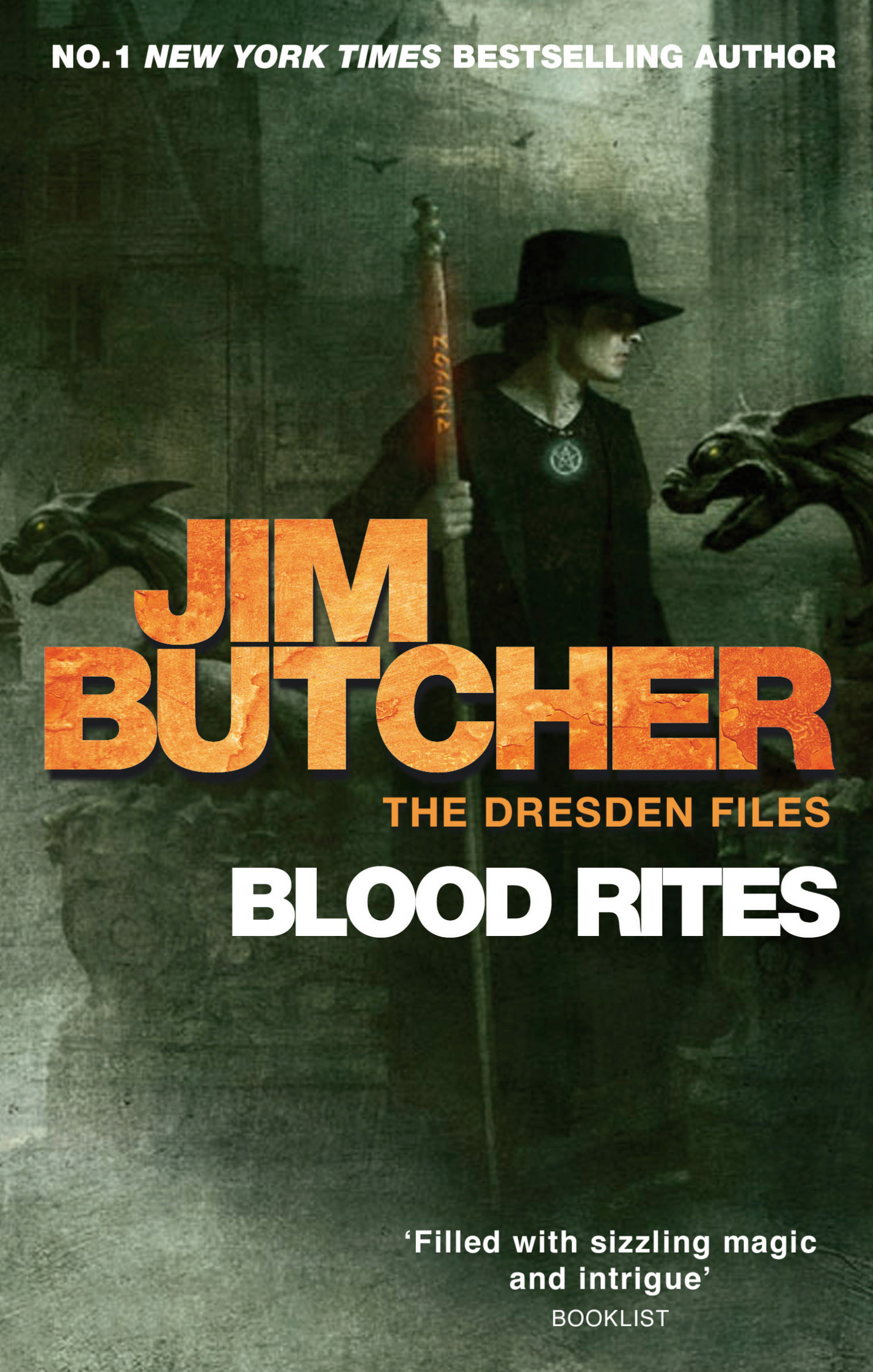
Throwback Thursday: Blood Rites by Jim Butcher

Blood Rite Cover

Publisher: Penguin Audio (Audiobook – 3 August 2004)

Series: Dresden Files – Book Six

Length: 13 hours and 5 minutes

My Rating: 5 out of 5 stars

Amazon

Welcome back to my Throwback Thursday series, where I republish old reviews, review books I have read before or review older books I have only just had a chance to read.  For my latest Throwback Thursday I keep diving into the epic Dresden Files urban fantasy series with the impressive sixth book, Blood Rites.

Last week, in my review for the outstanding fifth book in the Dresden Files series, Death Masks, I mentioned how I had also started listening to the next book in the series, Blood Rites.  I honestly had so much fun reading Death Masks last week (as I did with the rest of the Dresden Files series, such as Storm Front, Fool Moon, Grave Peril, Summer Knight, Battle Ground and The Law), that I had to immediately dive into the next book as soon as I could.  The sixth novel in the series, Blood Rites, was another epic novel which had an impressive and captivating plot to it.

Harry Dresden, Chicago’s resident wizard and protector from the paranormal, continues to eke out a deadly living through his chaotic career of odd mystical jobs while also defending the city against the worst monsters lurking in the shadows.  However, his latest job may place him in the most uncomfortable spot yet, on the set of an adult movie, which finds itself under attack from a deadly and relentless curse.

Taking the case as a favour to his vampire friend and suspicious ally Thomas Raith, Dresden goes undercover on set and attempts to discover who is responsible for cursing the movie’s cast and crew, and why.  However, Dresden’s heroics on set make him a target, and he soon finds the curse striking at him, attempting to end his investigation before he can find the magical murderer.  Worse, enemies old and new are bursting out of the shadows, as two separate courts of vampires attempt to strike Dresden down.

As Dresden continues to search for the murderer wielding the curse, he is forced to fend off attacks from the lethal Black Court.  Led by a powerful elder vampire with a serious grudge against Dresden, the Black Court will stop at nothing to destroy him and any of his friends that gets in their way.  However, the greatest threat may reside in the White Court, to which Thomas belongs.  The White Court vampires are manipulative and subtle killers, using their alluring presence to suck the life out of everyone they touch.  Caught between warring members of the White Court family, Dresden must use all his wits to escape their wrath and uncover hidden truths if he is to survive.  But what secret from the past connects Dresden to the White Court and their machinations, and is Dresden really ready for the dark knowledge waiting for him?

Whelp, it seems that it is pretty impossible for Butcher to write a dud novel.  Blood Rites is an exceptional addition to the wider Dresden Files series, and it was another one that I have no choice but to give a full five-star review to.  Featuring an intense and deeply captivating narrative, Blood Rites was an incredible read and I quickly got sucked into its unique story, compelling mysteries and dark, damaged characters.

I just loved the elaborate, dark and powerful narrative that Butcher featured in Blood Rites, as the author comes up with a complex tale that expertly brings together a dark urban fantasy with a thrilling murder mystery storyline.  Like the rest of the Dresden Files books, Blood Rites exclusively follows protagonist and point-of-view character Harry Dresden as he finds himself forced to face off against a series of dangers and threats at the same time.  The most prominent of these includes an investigation into a deadly curse aimed at the female employees of an adult entertainment studio, which sees Dresden go undercover on set to try and save the remaining cast and determine who the killer is.  This also leads him into a confrontation with the White Court of the vampires, especially when his vampire friend, Thomas Raith, requests his help.  At the same time, vampires from the Black Court are after Dresden for his actions in Grave Peril, which forces him to call in some major backup to take them on.  Unfortunately, this also leads him into conflict with his supposed allies, as well as his former mentor, when secrets from the past are revealed.  Dresden is also hit with a whole bundle of personal drama, especially when he discovers unfortunate truths about his long-dead mother, and there is an interesting growth in the relationship between him and several supporting characters.

As a result, there are many plot elements scattered around Blood Rites, which makes for quite an elaborate overall story.  Luckily, Butcher does an excellent job of introducing all these separate narrative threads to the reader, and you swiftly get drawn into all of them.  After a good and necessary bit of setup, the story roars off at a quick and captivating pace, and the reader has a great time jumping from storyline to storyline.  Everything starts to come together near the middle of the book, where you get some excellent action scenes, including a particularly funny death sequence involving a vampire and a frozen turkey, and the fallout of these scenes leads to some great dramatic moments with big personal revelations.  Following this, the story zooms along, and you soon find a partial and problematic solution to the murder case, while the protagonist is also forced to deal with an all-out assault on the Black Court, while also dealing with dark secrets from his allies.  The attack on the Black Court was one of the best sequences in the book, and the surrounding drama results in some major revelations that fans of the series will lap up.  The remaining storylines then come together perfectly for the finale, as Dresden solves the murder and faces off against its overall architect in a brilliant and extended dark sequence.  I loved how this entire narrative unfolded, and some of the concluding notes will leave you wanting to dive into the rest of the series to see what happens next.

To bring Blood Rites’ great story to life, Butcher utilises his typical style and techniques, which I always immensely enjoy.  The entire narrative is paced perfectly, and you quickly get drawn into the various plotlines, especially with their great combination of characters, intriguing plots, fantasy elements, and dramatic moments.  All of this is overlayed with Butcher’s distinctive humour, most of which is expelled through his cocky point-of-view protagonist, and it helps to enhance the overall powerful and entertainment of the book, especially when the protagonist tries to deflect from his many issues with comedy.  The narrative pretty much goes non-stop, and you get bounced through multiple excellent and powerful scenes, all of which are very fun to see.  I loved how the author balanced out action, character growth, universe building and more in each of the sequences, and there is something quite entertaining and fun for all manner of readers.  I wasn’t as keen on Butcher’s continued attempts to spice up the story with more adult themes, such as the adult film set or the lust-inducing White Court vampires, although it was pretty tame compared to some of the scenes in the last book (that bondage scene, yikes!), and Butcher wove some very compelling narratives around all of them that I deeply enjoyed.  I did enjoy how inclusive Butcher made this novel to new readers, and anyone could easily jump into Blood Rites and enjoy it, even if they haven’t read a Dresden Files book before.  However, there is also a lot to appeal to established fans of the series, especially as there are multiple major reveals and secrets featured here, many of which will lead to big story moments down the track.  As such, I deeply appreciated how this story came together, and pretty much everyone will have a great time getting through it.

I really enjoyed some of the cool fantasy elements featured throughout Blood Rites as Butcher seeks to expand on the lore and magic of his unique universe.  There are some great and intriguing fantasy inclusions here, with the obvious focus being on the various Vampire Courts.  The three main factions of Vampires have all been featured in previous books, although most of the focus has been on the Red Court, whom Dresden is at war with.  Blood Rites, however, has a far bigger spotlight on the two of the other courts who have major differences in powers and appearances.  Most of the focus is on the White Court, who are essentially this universe’s version of succubi, extremely beautiful and seductive creatures who feed off the life energy of those who desire them.  The White Court go on to become a major faction in the Dresden Files series, but this is one of the first books that fully explores them in substantial detail.  As such, you quickly get across their unique abilities, strengths, weaknesses and powers throughout this book, and they come across as quite a distinctive group as a result.  You really get to understand their entire society and worldview, as well as seeing some very different members of the factions, and Butcher writes some compelling storylines around them, while also putting in some very vivid depictions of their powers in action.  I loved how sinister and villainous members of the White Court appear at times, and there is something quite insidious about their abilities that creeps out the protagonists and reader.  A truly complex and excellent group that I had a lot of fun exploring.

Almost in direct comparison to the White Court is the Black Court.  The Black Court are a completely different group of living dead, portrayed more like the classic vampires from Bram Stoker’s novel (indeed, the Dracula novel was an elaborate propaganda attack by their enemies).  Shown as ugly, decaying, blood-hungry creatures that are more monsters than their original human forms, the Black Court are a much more obvious threat with much clearer motives.  There are some brutal and powerful scenes featuring the Black Court in this book, and it was really interesting to see Dresden and his allies go up against them with some classic vampire-hunting weapons, albeit with some fun modern twists to them.  I also deeply appreciated the fantastic parallels between the Black Court and the White Court vampires featured in the Blood Rites; whilst they are both extremely dangerous, their diverse methods and powers troubled Dresden in different ways.  These cool vampires, plus some other great new supernatural threats, added a lot to the complexity of the narrative and I loved the excellent detail and lore that Butcher imbued them with.

As usual, one of the highlights of this Dresden Files book is the compelling and impressive characters the story revolves around.  Butcher features an intriguing and fantastic group of characters in this book, with a compelling blend of established supporting characters and several new figures, many of whom will go on to have substantial roles in the rest of the series.  I had a brilliant time with all these characters, especially as Butcher endeavours to write some outstanding and distinctive storylines around them.

As usual, the most prominent character is Harry Dresden, the wizard protagonist and point-of-view character of the series.  Like most of the recent books, Blood Rites is an emotionally damaging book for Dresden.  Not only is he forced to deal with another harrowing case that racks his sanity, but he also finds out some long-buried secrets that prove quite damaging to behold.  In particular, there is a deep dive into his past and his missing family, both of which are hard subjects for him, and he finds himself with some unexpected connections that he has long been missing.  It was truly fascinating to see this long buried and painful part of Dresden’s past explored, and Butcher ensures that the reader gets struck in the feels with some of the powerful scenes that are explored.  Other interactions and reveals see Dresden re-evaluate some of his relationships in this novel, and there were some intriguing and harsh discussions between him and other characters as a result.  I did think that Butcher is over-playing the whole chivalrous-to-a-fault aspect of Dresden, as he continues to be a tad sexist and constantly underestimates woman, usually to his own detriment.  It’s honestly getting a little old, and I hope it gets phased out a bit in future books.  Still, I deeply enjoyed the fantastic development around Dresden in Blood Rites, and it greatly enhanced the narrative.

This book also featured a great appearance from previous supporting characters Karrin Murphy and Thomas Raith, who both play a major role in Blood Rites.  This proved to be quite a pivotal novel for both characters, and I really appreciated the way that Butcher built on their previous appearances and used them to write some impressive and powerful storylines around them.  This proves to be one of the more intriguing looks at Murphy so far in the series, especially as it dives into her complicated family life, and I liked the early hints here about the future relationship between her and Dresden.  Murphy gets dragged far further into Dresden’s magical activities than ever before here, and she is forced to balance her responsibilities as a cop with the necessity of killing monsters, something she has great difficulty with.  An overall badass character, Murphy has some brilliant and action-packed scenes in Blood Rites, and I love how well she serves as a foil to the more ridiculous Dresden.

Thomas, on the other hand, gets quite an intense and deeply personal storyline here as you get the most in-depth look at this elusive and compelling vampire character.  Not only do you get a great look at the rest of his family as the book explores the White Court, but you finally find the reasons why he is always helping Dresden, which leads to some emotional and compelling scenes.  A lot of time is also spent exploring the battle between Thomas’s humanity and the monster within, especially when it comes to feeding on those around him.  This comes to a head when his need to feed and survive hurts someone close to him and he has trouble coming to terms with what he’s done, especially when Dresden harshly confronts him.  Throw in his complicated family and intense daddy issues, and Thomas goes through the emotional wringer in this book, which proves to be very illuminating.  Butcher sets Thomas up as quite a substantial supporting character in this book, and I look forward to seeing more of him in the future.

Aside from these main characters, there is also a great collection of supporting characters who add a lot to the story, and there are some awesome appearances here.  I really enjoyed seeing more of mysterious mercenary Kincaid in this book, especially after his fun appearance in Death Masks.  Kincaid is a badass killer who is hired by Dresden to kill the Black Court, only to end up being a bigger threat to Dresden when the wizard lacks to money to pay him.  Kincaid has some excellent and action-packed scenes, and I was intrigued by his backstory, especially the hints at his dark, dark past.  I also loved the use of Dresden’s mentor, Ebenezar McCoy, an older wizard who raised him and taught him magic.  Butcher writes some amazing scenes around McCoy, especially once Dresden finds out just how many secrets the old man has been keeping from him.  Throw in a batch of great vampire characters (including the sinister Lord Raith and the compelling Lara Raith), some entertaining members of the adult film industry (including the fantastic diva Trixie Vixen), and the first appearance of Mouse, Dresden’s puppy, and you have an amazing cast of characters here that Butcher gleefully and impressively wraps the story around.  Each of these characters is very fun and intriguing in their own way, and I loved the elaborate and moving scenes that they star in.

Naturally I chose to check out Blood Rites on audiobook, which I maintain is the absolute best way to enjoy the Dresden Files books.  The captivating story and excellent characters really fit into this format extremely well, and I find myself absorbing the narrative and the author’s fantastic style a lot better this way.  With a runtime of just over 13 hours, Blood Rites is the noticeably longer than the previous books in the series (they get progressively longer and longer as the series goes, with some later books like Cold Days reaching nearly 19 hours in length).  Despite the increased run time, I still found myself knocking this audiobook off in no time at all, especially once I got stuck into the excellent and powerful story.  I must also highlight the incredible voice work of the always awesome James Marsters, who did another spectacular job narrating this fantastic novel.  At this point in the series, Marsters has really hit his stride when it comes to narrating, and he voices each audiobook with some impressive passion, effortlessly bringing the dark events and complex characters to life and ensuring that everything sticks in the listener’s mind.  All the characters are voiced extremely well, with the highlight again being protagonist Harry Dresden, who Marsters inhabits effortlessly.  He really understands the character’s anguish, pain, and dark humour, and this comes across in his narration perfectly.  Thanks to his epic performance in Blood Rites, and the other Dresden Files audiobooks, Marsters remains one of my favourite audiobook narrators, and I cannot recommend the Blood Rites audiobook enough as a result.

My dive into the early Dresden Files novels continues to be incredibly epic, as I once again fell in love with one of Jim Butcher’s unique reads, Blood Rites.  This fantastic novel has so much going for it, and I had a brilliant time exploring the powerful urban fantasy/crime fiction based narrative.  Featuring a deeply compelling mystery, a ton of intriguing parallel storylines, and some impressive and emotionally charged character development, Blood Rites is another exceptional book that is so much fun to get through.  Honestly, if I didn’t have such a backlog of awesome recent audiobook releases, I would probably be diving into the seventh Dresden Files novel right now, but hopefully I will get a chance later this year.  If you haven’t checked out the Dresden Files books after my previous glowing reviews, then you really need to get your butt into gear and start reading them now!

Amazon

Tribe by Jeremy Robinson

Tribe Cover 2

Publisher: Breakneck Media (Audiobook – 26 November 2019)

Series: Standalone/Infinite Timeline

Length: 10 hours and 36 minutes

My Rating: 4.5 out of 5 stars

Amazon     Book Depository

Gods, mortals and everything in between will clash in Tribe, the intriguing fantasy thriller from the always entertaining Jeremy Robinson.

Last year I decided to take a chance and check out an author whose work I was unfamiliar with, and boy did that work out for me.  Jeremy Robinson had a very impressive and extensive list of awesome books to his name, most of which straddled the border between thrillers and other genres like fantasy, science fiction and horror.  The first book of his I checked out was The Dark, which followed a very likeable protagonist who gets caught up in a terrifying and horrific invasion of his neighbourhood by a horde of demons.  The Dark was an outstanding read, and I really got drawn into its awesome story, intense pacing and fun characters.  After giving The Dark a full five-star rating, I had to make sure to grab the other 2021 release from Robinson, Mind Bullet, especially as it was in the same loosely connected series.  Mind Bullet was a fantastic and highly entertaining read that followed a psychic hitman being hunted by a series of unusual but deadly assassins.  Mind Bullet was another five-star read in my book, and I had such a great time reading it.  Indeed, I loved both The Dark and Mind Bullet so much that I included them both of my top books and audiobooks lists of 2021.

Naturally, this has made me quite eager to read some more of Robinson’s work, and while I had to miss one of his 2022 releases The Order (I need to read some of the lead-up books beforehand), I did recently decide to go back and try one of his older novels, the 2019 release, Tribe, from the same storyline as The Dark and Mind Bullet.  Not only does this allow me to better follow one of Robinson’s upcoming books in the Infinite series but it had a very fun-sounding story that I really wanted to check out.  It turns out Tribe was just as fun as I hoped it would be, and I had a wonderful time getting through it.

Sarah, a 20-year-old college dropout working at a donut shop in Boston, has long struggled with the bad turns her life has taken.  Constantly plagued by bad luck and misfortune, Sarah has no one in her life she can count on, until she runs into homeless teen street punk Henry.  Henry, a kid who literally knows no fear, has randomly blown into her life and the two find themselves with a strange attachment to each other that they can’t explain.  However, life is about to get much more complicated for both when they run into each other at the local bank.

Arriving at the same time, the two manage to work together to foil a robbery that seems focused on targeting a mysterious and wealthy woman named Helen.  Taking Sarah and Henry under her wing, Helen attempts to take them to her apartment, but before they can make it they find themselves under attack by members of an ancient cult who are determined to cause as much chaos and destruction as they can.

Separated from the incredibly capable and violent Helen, Sarah and Henry find themselves alone on the streets of Boston, pursued by the cult.  Forced to keep moving and face off against a stream of determined and dangerous foes, Sarah and Henry begin to realise that there is something special about them that allows them to fight back, and which is making them stronger.  However, if they want to survive, they will need to discover the truth about who they are and what dark legacy their blood contains.  But with a dangerous figure hunting them, can Sarah and Henry live out the day, or will they become links in a master plan spanning millennia?

Tribe was an extremely entertaining and action-packed novel from Robinson, who utilises his usual fun and thrilling style to create an excellent read.  Featuring a captivating and electrifying narrative based around a couple of interesting and damaged figures, Tribe was a truly unique and captivating read that I had a fantastic time with.

Robinson crafted together a very interesting and highly exciting narrative for Tribe, which is essentially a non-stop action adventure from the very first scene.  After a quick but memorable introduction to, Sarah and Henry, the story dives right into the action, when the protagonists chance upon a violent bank hold-up.  Thanks to the impulsive Henry, the two are forced to intervene, assisting the mysterious Helen, making them heroes.  While you would imagine that would allow them to have some quiet time, Robinson puts them into the next action set piece within a few pages, as they are forced to flee an army of angry and over-the-top cultists who are hunting them.  This results in a series of impressively violent and extremely compelling fight sequences and chase scenes, as the protagonists try to survive while their lives are changing in ways that they don’t fully understand.  These initial sequences fill up the first half of the novel well, and you quickly become pretty damn invested in the narrative, especially once Robinson finally reveals the reasons behind everything and how everyone connects into the wider plot.  This first half also does a great job setting up the novel’s style, and you soon get quite used to the fantastic combination of action, character development and slick humour as the outrageous characters experience an array of over-the-top situations.

There are some rather interesting dives into Greek mythology in the second half of Tribe, which alters the course of the story and impacts everything the protagonists thought they knew about the world and themselves.  After a couple of attempted separations, the characters find themselves in some pretty dark situations as they finally face off against the big bad of the story, who ended up being an extremely sinister baddie.  The action comes thick and fast in this second half of the book, as the protagonists keep going up against a series of unique and memorable foes.  These scenes really make you appreciate Robinson’s ability to write brilliant, fast-paced action sequences, and the fantastic detail and intriguing depictions of deadly fights are so much fun to see.  I also enjoyed the strong Greek mythological motifs and elements that are slipped into this half of the book.  I think that they melded with the thriller style of the plot extremely well, and a lot of the story felt like a cool fantasy/superhero combination.  Along with some powerful reveals, major trauma, and subsequent character evolution, the protagonists become ready for the final confrontation that lays everything on the line.  The entire narrative flowed into this intense and high-stakes conclusion extremely well, and readers are in for a fun and captivating time as the protagonists go all out.  I really liked how everything turned out, and while this wasn’t my favourite of Robinson’s narratives, it was pretty damn addictive and readers will come away extremely satisfied.

I had a lot of fun with Tribe, and I am very glad that I checked it out, especially with how it plays into Robinson’s wider universe.  As I mentioned above, Tribe is part of a loosely connected series of cool books that are part of the Infinite Timeline.  While most of them are standalone reads, the further you get into the series, the more the storylines start to blend a little more, and this will all lead to several massive crossover novels, such as one being released later this year.  This is one of the main reasons why I wanted to read Tribe, as the main characters from it have appeared in the two other Robinson books I have read and will also be part of the upcoming 2022 release, Khaos.  However, readers don’t need to do any pre-reading for Tribe to enjoy it; thanks to its relatively early position in the Infinite Timeline, it doesn’t noticeably feature characters or story elements from the other novels.  As such, it is a very accessible read, and anyone who likes a fun action story can have a great time reading it.  Still, those people who are interested in Robinson’s larger series will do well to read Tribe soon, especially as it sounds like the plot of Khaos is going to come back to key details from Tribe in a big way.

I also deeply appreciated how Robinson made use of some excellent and fun central characters, Sarah and Henry, two seemingly unconnected people.  The story is set up to continuously rotate between their perspectives, which really enhances the overall quality of the narrative, especially when you get two separate views of the same events, or the characters are dealing with separate outrageous events at the same time.  The author does a great job of building up both characters throughout the novel as they start to discover their destiny and their various shared connections.  A lot of the revelations around them result in some interesting abilities and moments for the characters and watching them react to it in very different ways was very entertaining.  They also go through a lot of trauma throughout the book, and again both of them deal with it differently, which I felt was an intriguing and realistic inclusion.  Both characters are quite interesting in their own way, and they serve to balance each other out in the narrative, with Sarah acting as the moral and sensible one (at least until she unleashes the inner beast), and Henry being the wildcard.  Henry is definitely the life and soul of the much of the book.  Due to a brain condition, he lacks any sense of fear whatsoever and has no filter when it comes to doing stupid stuff.  I have mixed feelings about this; while many of these random outbursts and actions are a lot of fun, they do start to get a little repetitive and annoying after a while.  I also felt that it ensured Henry started to overshadow Sarah in parts of the book.  Still, these were some great central protagonists you quickly get attached to, and with the fantastic supporting figures, you have a lot of fun characters in this book that really enhance the narrative.

One of the most appealing things about Robinson’s books is that they all make for an amazing audiobook.  Tribe was another excellent example of this, especially as listening to the story really allows you to get to grips with the incredible and powerful action sequences.  With a run time of just over 10 and a half hours, this is a relatively quick audiobook to get through, and it is very hard not to get attached to it, especially when it features brilliant narrator R. C. Bray.  Bray is a very skilled audiobook narrator who, in addition to providing his voice to most of Robinson’s books, has also narrated several other great books and series, such as Michael Mammay’s Planetside series (Planetside, Spaceside and Colonyside), all of which were excellent audiobooks.  Bray has an exceptional voice that works really well to tell high-stakes and powerful action orientated novels while also bringing a range of interesting characters to life.  He did another outstanding job in Tribe, and all the high-octane action fights are told perfectly, with Bray really highlighting the brutal fights with his telling.  He also provides powerful and insightful voices to all the characters, with all their quirks and interesting features perfectly brought to life as a result.  As such, I had a brilliant time listening to Tribe on audiobook and felt that Bray’s excellent narration really added to my overall enjoyment of this novel.  As such, I would very much recommend the audiobook version to anyone interested in trying out Tribe, as it was a lot of fun to listen to.

Overall, Tribe was a pretty fantastic and extremely entertaining book from Jeremy Robinson.  Loaded with all the intense action, clever references to Greek mythology and intriguing characters you need for an incredible narrative, Tribe was such an epic read and it comes very highly recommended, especially as an audiobook.  I had an outstanding time, with Tribe and it will be interesting to see how these characters, as well as the protagonists of The Dark and Mind Bullet, will feature in the upcoming Khaos.

Amazon     Book Depository

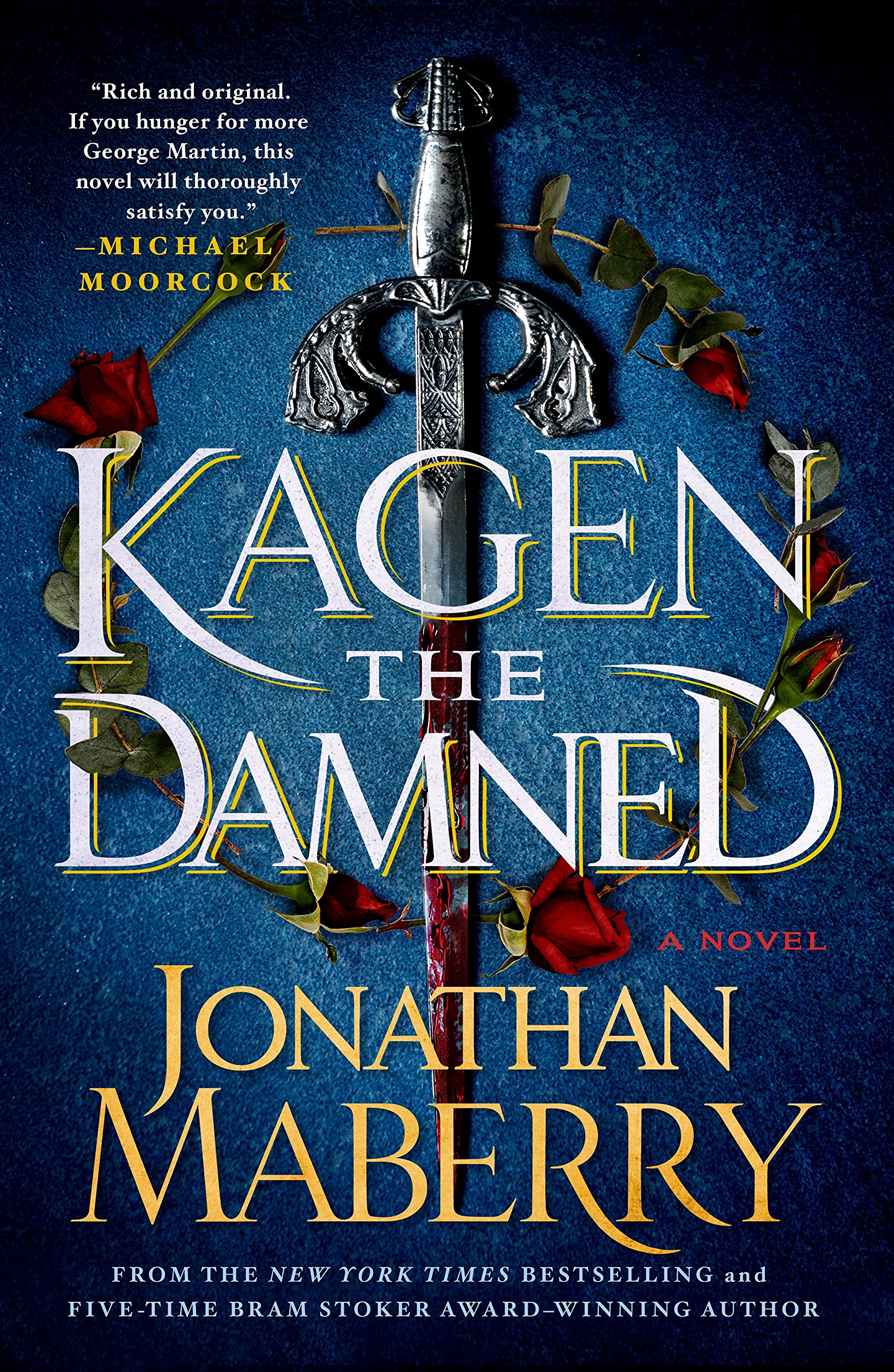
Kagen the Damned by Jonathan Maberry

Kagen the Damned Cover

Publisher: Macmillan Audio (Audiobook – 10 May 2022)

Series: Kagen the Damned – Book One

Length: 20 hours and 53 minutes

My Rating: 5 out of 5 stars

Amazon     Book Depository

One of my favourite unusual thriller writers, the legendary Jonathan Maberry, enters the world of fantasy in a big way with Kagen the Damned, a dark fantasy masterpiece with a brutal heart to it.

I have made no secret of the fact that I am a huge Jonathan Maberry fan.  I got into Maberry’s writings when I chanced upon a copy of his 10th Joe Ledger novel, Deep Silence, a few years ago, which introduced me to both Maberry’s unique writing and his iconic protagonist, the titular Joe Ledger, a badass action hero who saves the world from crazy and dark science creations.  I deeply enjoyed Deep Silence (it was one of my favourite books of 2018) and quickly moved onto his other Joe Ledger books, diving back to the start of the series with Patient Zero, and then working my way through the rest of the awesome entries, such as The Dragon Factory, Code Zero, Predator One and Dogs of War.  I also kept up with his latest releases, including the two entries in the follow-up Rogue Team International series, Rage (one of my favourite books and audiobooks of 2019) and Relentless (one of my favourite books and audiobooks of 2021), and his standalone novel Ink (one of my favourite books and audiobooks of 2020).  I have been very eager to see what awesome novel Maberry releases in 2022, and, luckily for me, that materialised in the form of Kagen the Damned.

Kagen the Damned is an interesting and unique read from Maberry, as it is his debut foray into the fantasy genre.  While many of his other books have had fantasy elements to them (albeit with a horror edge), this is his first pure fantasy fiction novel, as well as the start of his Kagen the Damned series.  Naturally I was rather curious about how Maberry would transition to a new genre, and while I was a tad disappointed that the Rogue Team International series isn’t getting a new entry any time soon, Kagen the Damned ended up pretty high on my most anticipated reads for 2022 list.  After a few weeks of other books getting in the way, I finally got the chance to listen to Kagen the Damned, and it turned out to be quite an impressive novel.

Kagen Vale was once one of the most trusted and revered fighters in the entire Silver Empire.  A scion of the legendary Vale family, who have served the Silver Empire for generations, Kagen was a beloved member of the royal court and so highly regarded that he was entrusted as the guardian of the Seedlings, the Empresses’ children.  That was until the fateful night when, out drinking and whoring, he was drugged and left for dead.  Awakening in a daze, Kagen found himself in the midst of hell as the capital of Silver Empire, Argentium, was besieged by a foe long thought dead, the dread nation of Hakkia, whose dark magic has once again emerged to blot out the world.

Arriving to the palace too late to save anyone, including the Seedlings, Kagen falls into despair at failing his sacred duty and can only watch in horror as the Gods of the Garden, the deities of the Silver Empire, turn their back on him and damning him for all time.  Now with everything and everyone he has ever known lost forever, Kagen the Damned wanders the ruined countryside a broken drunk, dreaming of revenge on the one man responsible for all his ills, the mysterious and feared Witch-king of Hakkia.

However, not everything is as lost as it seems, as shadowy figures across the world being to formulate their plans to repel the Witch-king’s evil.  As two young women embark on a deadly quest to awaken a sleeping, ancient god from beneath the waves, a covenant of resistance attempts to find their own magic to oppose the Witch-king with.  Determining that Kagen may bear the best chance of recovering the tools needed to succeed, they manipulate events to set him on his path to revenge.  However, what price will a doomed man truly pay to get the revenge he so desperately seeks, and will Kagen be ready for the terrible secrets he uncovers along the way?  Only the gods and the damned know for sure!

Well, it is now more apparent than ever that there is no Jonathan Maberry book I will not enjoy to the extreme.  Kagen the Damned is an incredible and very memorable novel from Maberry, who puts the ‘dark’ in dark fantasy, with this barbaric and action-packed journey into hell.  Making use of his trademark style, flair for horror and exceptional character work, Maberry pulls together a deeply addictive and extremely exciting story that I fell in love with very, very quickly.  This was another easy five star read for me, and I loved every single second I spent reading it.

Maberry once again blew me away with an outstanding and high-action narrative, and I quickly got very attached to Kagen the Damned.  This book has an extremely memorable start to it, showing the bloody fall of Argentium from the perspective of Kagen, who awakens from a drunken haze to find a vast army in his supposedly impenetrable city, destroying and killing everything they see.  This was a very compelling and brutal start the novel, and its one that I quite enjoyed, especially as you see just how dangerous the enemies are and the chaos they have unleashed.  Maberry does a great job of setting up multiple key storylines, settings and characters in this early section, and while the focus is primarily on Kagen, you get some interesting insights into other figures that will impact the rest of the book.  The entire first part of the book is very distinctive and really showcases how dark this novel is going to get, especially when it comes to the character of Kagen and the fate of the royal children.  This whole first section ends on a brilliant note, with Kagen left broken and damned, while the once great Silver Empire, which you only saw glimpses of, is destroyed and replaced with a new world order.

Following this epic start, the narrative slows down a little, as Maberry works to set up some alternate storylines and characters, while as taking the time to do some compelling and extended word building.  Set in the direct aftermath of the opening sequence, the story primarily splits into three different streams at this point, with the main one following a despondent Kagen as he traverses the former Silver Empire, lost in grief and drink.  At the same time, two separate storylines tell some great connected narratives, with one following two young women as they journey off into the unknown, while the rest focuses on the Hakkian takeover back in Argentium.  This focus on the Hakkians and their plans, as told by the Witch-king’s advisors, as well as a resistance group, is very awesome, and it was fascinating to see some impressive political intrigue going on behind the scenes as the antagonists work to consolidate power through various methods.  While the rest of the narrative continues in a straight line, the story around Kagen slowly adapts as he meets some new friends and begins his mission of revenge as planned, with some detours.

This leads up to the excellent final part of the book, which I powered through extremely quickly to see how everything ended.  All three major storylines are reaching there climax here, and they start to blend a lot more closely, especially the ones focusing on Kagen and the Hakkians.  Everything leads up to a highly anticipated confrontation that sees Kagen finally face his enemies, and it is just as epic as I was hoping.  There is a ton of action, tragedy, twists and revelations here, as many of the plot elements and storylines come full circle.  I loved the various reveals that happen here, and most have been set up really well throughout the extended course of the narrative.  I really should have seen the identity of the Witch-king coming, but it was the right choice by Maberry, which leaves some big questions open for the future.  Everyone will come away from Kagen the Damned extremely satisfied, as Maberry leaves everyone on a brilliant note, that ensures that readers will definitely come back for more.  This is an outstanding and deeply addictive narrative that is guaranteed to grab your attention early one and refuse to let go.

I really enjoyed how well Kagen the Damned was written, as Maberry brought his unique style to bear to help create an outstanding story.  In many ways, this novel proved to be essentially one of Maberry’s thrillers set in a fantasy universe.  Indeed, there were a lot of similarities in the style, the structure of the chapter, the pacing and even the use of familiar horror elements that I have previously seen and loved in the Joe Ledger books and I think this cool style worked well to tell an intense fantasy narrative.  As such, Kagen the Damned is a swift and well-structured book that pushes the story along at a swift pace, while also taking the time to build up the universe and the multitude of characters.  Maberry utilises a great range of story elements throughout this novel, and the readers are treated with a fantastic blend of action, intrigue, dark, over-the-top moments, horror, despair and humour, as the characters experience all manner of devastating trials and oppositions.

I also have a lot of love for the way that the author sets up the story and showcases the elaborate events that are occurring.  Maberry makes excellent use of a huge number of shorter, focused chapters told from a variety of viewpoints.  These briefer chapters really increase the pace and intensity of the book, and I deeply appreciated how the narrative quickly jumped across the various characters.  The interplay between the three central storylines, which are primarily anchored around Kagen, is extremely good, and I loved seeing the characters react to some of the same events or actions of their fellow cast members.  These storylines are also joined by a series of interludes that show the various impacts that the Hakkian invasion has on the wider world, especially those attuned to magic.  These interludes are usually very fascinating, and they are often used to introduce some minor supporting characters in a fun and unique way.  I loved the complexity that these interludes usually have, and the often self-contained stories are well structured and always feature a distinctive or chilling conclusion.  Maberry uses these interludes cleverly, often inserting them between major or extremely powerful chapters to help relieve tension, or to remind the reader of the wider stakes or events occurring around the main story.  I definitely enjoyed this larger look at the world that Maberry provided through them, and it was an outstanding part of Kagen the Damned’s story.

One of the major highlights of the writing in Kagen the Damned is the intricately described and fast-paced action, which is a major hallmark of Maberry’s writing style.  Maberry has always excelled at writing brutal fight scenes in a way that paints a vivid mental picture for the reader, and this was once again the case for Kagen the Damned.  The many, many action and fight sequences are brought to life in exquisite and bloody detail, and the reader is easily able to imagine every strike and slice as they happen.  This makes the action sequences really pop, and they were a particularly awesome highlight of this great book.  This focus on action and combat was really effective in this fantasy novel, and it was very cool to see Maberry bring his knowledge of combat and the accompanying writing skill to bear on large scale battles between armed and armoured fighters, while magic and gods blow stuff away around them.  There are some really great fight scenes loaded throughout this book, and I loved every skirmish, battle and duel that was featured within it.

While I did really love the action and brutal combat sequences within Kagen the Damned, I probably should add a warning about how dark and gruesome it can get in places.  Maberry’s writing style has always relied on over-the-top violence, cruelty and brutality to a degree, and this was once again the case in Kagen the Damned, which not only featured a ton of killing but also gruesome scenes of torture, corpse desecration and depictions of sexual violence.  While I think that these ultra-violent moments do work to showcase just how dark and savage the new world order is, they are often a bit hard to witness.  I will note that Maberry did take the time to discuss the emotional and social impacts of the various acts of sexual violence in the book, rather than just including them for gratuitous effect.  There are also some great scenes where the protagonist calls out and belittles several characters willing to commit such acts, before delivering his own violent justice, and I think that the author did his best to show have damaging it can be in his own way.  However, readers should probably be aware that these scenes exist, as people might find them to be a bit shocking.

I was also a major fan of the cool new fantasy universe that Maberry cooked up with Kagen the Damned, mainly because it is such a distinctive creation of the author.  Set on a giant continent made up of various nations, this is an impressive and compelling world, filled with a unique history, gods, people and settings.  The author does a great job of swiftly introducing this world and some of the key parts of its history in the early parts of the book, mainly so that readers can be a little more shocked at the early events and full appreciate the destruction and change that the Hakkian nation brings with it.  Maberry is clearly emulating some classic fantasy novels and settings throughout Kagen the Damned, and I loved seeing this bold new world that he has created.  There are some unique and cool elements featured within, and I liked how there are certain shades of grey shown when it comes to the morality and righteousness of the various factions.  Maberry also takes the time to highlight the changes that are coming to the world, thanks to the return of the Hakkian Witch-king, and the slow and steady resurgence of magic and the death of a certain pantheon of gods, are highlighted really well, both in the main story and the interlude chapters.

Perhaps one of the most distinctive features of this new world is the horror elements that Maberry worked into the plot.  I really should not have been surprised at the strong Lovecraftian elements that featured, as the author has used them strongly in some of his previous books.  However, it is even more explicit here in Kagen the Damned, with several notable Elder Gods playing key roles in the plot and even appearing in some epic scenes.  While I am not personally a fan of Lovecraft, I did quite like how Maberry utilised these elements throughout this book, and they gave parts of the book a darker and more eldritch quality that I quite enjoyed.  This, and certain discussions about other worlds and alternate realities, potentially links this series to some of Maberry’s existing works, and it wouldn’t surprise me if there were some form of crossover in the future, although it would have to be handled well.  I had a great time exploring this new fantasy world in Kagen the Damned, and I look forward to seeing what other surprises and dark gods appear in future entries of this series.

I also must highlight the incredible character work featured with Kagen the Damned, as Maberry went all out to create an excellent and unique cast of characters, whom the excellent narrative revolves around.  There are some amazing characters featured within this novel, and the author works hard to feature all of them in some impressive roles.  I had a lot of fun with the huge cast of Kagen the Damned, and there are deep and emotional figures featured here.

The most prominent and intriguing character is the titular Kagen, who takes on the moniker of Kagen the Damned.  Maberry really does a number on his central protagonist early on, as Kagen awakens from a drunken haze to find that everything he cared about and held dear had been lost while he slept.  Despite his best efforts to redeem himself in the battle that follows, he still fails miserably, and manages to escape the conquered capital in a fractured haze.  Broken, dazed and emotionally destroyed, Kagen becomes even more despondent when he sees his gods in the sky turn their back on him due to his failure to maintain his sacred oaths, which convinces him that he is damned.  Naturally, these events leave him severely emotionally damaged, and he spends most of the book trying to come to terms with his failure while also trying to find some way to get revenge on the Witch-king for all he has done.  A large amount of the book is dedicated to Kagen falling into despair, and Maberry presents a realistic depiction of a man who has lost everything and who is barely able to survive, relying heavily on drink and violence to get through his days.  While Kagen is eventually able to throw off much of this despair, it is still lurking within him, and he is often shown living in regret at his failure, even though no one else blames him as much as he does.  Kagen working through these complex feelings of failure results in much of the novels emotional strength, and Kagen serves as a moving and powerful heart for the entire novel.

While I did deeply enjoy this intriguing central character and his rough and emotional journey through this book, it is hard not to notice some similarities between Kagen and another one of Maberry’s protagonists from another series.  Kagen is in many ways a fantasy version of Joe Ledger, with similarities including a propensity for violence, extreme skill with knives (technically short-swords in Kagen’s case), and even a similar sense of humour during some of the lighter moments of the books.  There is also the same high level of mental damage brought on by extreme trauma, with both characters often seeking revenge against the people who wronged them and those they loved.  Despite these similarities, I still really appreciated Kagen as a protagonist, and I felt that some of his additional elements, such as his complex familiar bonds and strong sense of failure, did set him apart in some key ways.  No matter what, Kagen is a pretty awesome character to follow, and I loved seeing him continue to go through all his dark moments to keep going.

Aside from Kagen, there are several other amazing characters featured in this novel, all of whom have some outstanding storylines around them.  Two of the most prominent are Ryssa and Miri, who were in Argentium when the Hakkians invade.  Both junior members of the Silver Empire’s clergy, the two women initially appear to be primarily concerned with surviving the invasion.  However, it soon becomes apparent that Miri, whose knowledge of the gods and creatures of this world are far greater than they should be, has a different agenda.  Taking Ryssa with her on a big journey to a remote island nation, Miri soon engages in a plot to save the world her way.  Ryssa and Miri make up a fun combination that Maberry weaves some interesting storylines around.  While these characters aren’t explored as deeply as Kagen, you still get a great sense of who they are, particularly Ryssa, who is the primary point-of-view character between them.  Their entire storyline is covered in mystery and uncertainty as Ryssa is left in the dark about what is coming her way.  I liked the religious world-building that went into this character storyline, and there are some excellent moments in it loaded with tragedy and despair.  Even with their storyline being mostly separated from the rest of the characters, and it was a little predictable that Maberry would turn them into a lesbian couple, they had a compelling relationship and I felt that they added a lot to the narrative.

I also had a great deal of fun with the primary Hakkian characters featured in Kagen the Damned.  While they are ostensibly the antagonists of the book, Maberry takes the time to really establish the main four characters and presents them as a lot more complex and even sympathetic in places.  The main Hakkian character is their leader, the Witch-king, a character shrouded in mystery for most of the book.  A previously unknown figure, the Witch-king uses his magic to defeat the entire Silver Empire in a night and then spends the rest of the book trying to set himself up as the legitimate ruler of the land while also advancing the position of his brutal god.  I loved the way that Maberry kept the details about the Witch-king’s past and identity hidden for most of the narrative, although there is some great foreshadowing of his identity scattered throughout the novel.  The Witch-king cuts a fantastic and menacing figure for most of the book, and it was intriguing to see him present himself as a fair and loving ruler, while simultaneously exuding an aura of menace and dark magic.  It was pretty hilarious to see him terrify his key advisors for much of the book, and I loved all the hints about his true objectives.  An overall excellent central antagonist, I look forward to getting more details about him and his history in the rest of the series, especially after the revelations at the end of this book.

The other three key Hakkian characters are the Witch-king’s advisors, the chamberlain Lord Nespar, necromancer Lady Kestral, and newcomer Jakob.  Nespar and Kestral are fantastic characters who spend most of the book administrating the Witch-king’s will, running his empire, hunting for Kagen, and setting up the upcoming coronation of the Witch-king to become emperor.  While they are initially shown to be quite dangerous and evil, mainly due to their role in destroying the Silver Empire and Kestral’s disturbing magic, you eventually see that there is a lot more to them.  In particular, you see that they are actually extremely terrified of the Witch-king and are desperately obeying his will in order to survive.  You actually end up feeling a bit sympathetic for the pair of them, even after you see Kestral tear a corpse apart for a ritual, and I enjoyed the intrigue and politics they got involved with to rule the new empire.  The other character is Jakob, a Silver Empire historian who is drafted into the Witch-king service as his minister for propaganda.  Rechristened as Jakob Ravensmere, he becomes fully compliant in the Hakkian takeover and proves to be a very competent advisor and political mind while also working to rewrite history to increase the legitimacy of the Witch-king.  It was extremely fascinating to see Jakob discussing the control given by those who control history and propaganda, and I really enjoyed his role in the new empire.  It was also fun to see his rather quick slide towards the dark side as he fully embraces the Hakkian lifestyle and even starts to develop a taste for a power.  I always love seeing Maberry’s narrative unfold from the antagonist’s point of view, and this worked out extremely well again in Kagen the Damned.

The final characters I need to highlight are some of the excellent supporting cast surrounding Kagen.  Kagen has two excellent companions who work with him throughout the book, Tuke and Filia.  Tuke is a giant professional thief who recruits Kagen for a job that will help an anti-Hakkian resistance movement.  Tuke serves as the comic relief for much of the book, and I loved the outstanding chemistry he had with Kagen.  The two play off each other extremely well, and their excellent camaraderie and humour were pretty fun to see.  Not only does Tuke have some of the best lines (and the funniest curses) in the book, but he also serves as an emotional sounding board to Kagen, helping him get better after all the tragedy he experienced.  Filia is a strong-willed warrior and former associate of Kagen who finds herself dragged into the chaos around the war and Kagen’s wild adventures.  Filia’s no-nonsense attitude and sarcasm are a great counterpart to the other characters in Kagen the Damned, and I especially liked it when it combined with the humour of Kagen and Tuke.  These characters, and more, really enhanced the overall quality of this impressive narrative, and I loved seeing their powerful storylines unfold in some excellent and enjoyable ways.

There was no way that I was going to check out the new Jonathan Maberry novel in any format other than audiobook.  I have had some outstanding experiences with Maberry’s audiobooks over the years, and all of them have been deeply impressive and extremely enjoyable.  This again proved to be the case with Kagen the Damned, as I had an outstanding time having this dark epic read out to me, especially as it really helped me to absorb all the details of the characters and the impressive new universe.  With a runtime of just under 21 hours, this is a pretty lengthy audiobook to get through, but it is well worth the time investment, especially as it delivers the story in such an awesome way.

Easily the best thing about this audiobook is the outstanding narration from the very, very awesome Ray Porter.  Porter, who is one of my favourite audiobook narrators, who has previously narrated Maberry’s books, as well as contributing his voice to other works like The Apollo Murders and The Sandman audio adaptation.  As such, the moment I heard that Porter was also going to narrate Kagen the Damned, I knew that I had to get this audiobook.  Porter has an amazing ability to move the story along, and his voice is perfect for all the intense action, world-building and intrigue Maberry features in his novels.  I love the way that Porter dives into the various characters featured in the books, with every single person getting their own distinctive voice, while Porter also effortlessly emotes all their emotion to the listener.  This includes a very sinister voice that Porter saves for when the villains are talking or some incredibly dark moments are happening, and having him use variations of this voice to highlight just how brutal a moment is being, is always a great experience.  It also works well when the characters start speaking in the languages associated with the Elder Gods, and the resultant ceremonies and spells are quite spooky to hear in Porter’s voice.

Porter also did a particularly good job at inhabiting the voice of Maberry’s central protagonist, Kagen, and you get a real sense of who he is and the intense pain he is feeling throughout the book.  While the voice Porter uses from Kagen is a little like that of Joe Ledger from Maberry’s other audiobooks (a side effect of Porter ensuring that the main protagonist’s voice matches the tone he uses for basic narration), Porter does add a little more of a growl to it here, which helped to a degree.  This was another incredible performance from Porter, and I am so very glad that they got him back to narrate Maberry’s new series.  I cannot emphasise how outstanding the Kagen the Damned audiobook turned out to be (although I did feature it in my recent best audiobooks from the first half of 2022 list before I’d even finished it), and this is the absolute best way to enjoy Kagen the Damned.

Well, after rabbiting on for nearly seven pages, I think it is exceedingly obvious that I loved Kagen the Damned.  Jonathan Maberry’s latest novel was extremely compelling and deeply exciting, and I was really impressive with the author’s jump to the fantasy genre.  Featuring a clever, complex, and action-packed narrative loaded with destruction, thrilling revenge and some great, damaged characters, Kagen the Damned was an outstanding read and its one that I absolutely flew through.  Kagen the Damned is easily one of the top books of 2022 and this is a favourite new series for me.  I am extremely excited to see where the Kagen the Damned series will go in the future, and the next book, Son of the Poison Rose, is out in a few months’ time, and I cannot wait to get my hands on it.

Amazon     Book Depository

Throwback Thursday: World War Z by Max Brooks

World War Z Cover

Publisher: Random House Audio (Audiobook – 14 May 2013, originally published 12 September 2006)

Series: Standalone

Length: 12 hours and 9 minutes

My Rating: 5 out of 5 stars

Amazon

Welcome back to my Throwback Thursday series, where I republish old reviews, review books I have read before or review older books I have only just had a chance to read.  For my latest Throwback Thursday review I take a look at the zombie horror classic, World War Z by Max Brooks, a truly epic and outstanding read.

One of the biggest novels that I have been meaning to read for ages was the highly regarded zombie novel, World War Z, also known as World War Z: An Oral History of the Zombie War.  Written by Max Brooks as a follow-up to his first book, the non-fictional The Zombie Survival Guide, World War Z is a unique novel that fully examines a zombie apocalypse from multiple perspectives.  I had heard some great things about this novel, and I even enjoyed the movie adaptation when it came out (more on that later).  Unfortunately, I never got a chance to read it and I kind of figured for a while that it might stay in my to-read pile for a while.  However, it moved much higher up my list of books to check out after I read Brooks’s 2020 novel, Devolution, which was one of my favourite novels of 2020 (as well as one of my favourite all-time horror novels).  I had also heard a lot of praise for World War Z‘s awesome audiobook edition, so when my wife and I needed some entertainment during a recent cross-country road trip, this was our first choice.

Plot Synopsis:

The Zombie War came unthinkably close to eradicating humanity. Max Brooks, driven by the urgency of preserving the acid-etched first-hand experiences of the survivors from those apocalyptic years, traveled across the United States of America and throughout the world, from decimated cities that once teemed with upwards of thirty million souls to the most remote and inhospitable areas of the planet. He recorded the testimony of men, women, and sometimes children who came face-to-face with the living, or at least the undead, hell of that dreadful time. World War Z is the result. Never before have we had access to a document that so powerfully conveys the depth of fear and horror, and also the ineradicable spirit of resistance, that gripped human society through the plague years.

Ranging from the now infamous village of New Dachang in the United Federation of China, where the epidemiological trail began with the twelve-year-old Patient Zero, to the unnamed northern forests where untold numbers sought a terrible and temporary refuge in the cold, to the United States of Southern Africa, where the Redeker Plan provided hope for humanity at an unspeakable price, to the west-of-the-Rockies redoubt where the North American tide finally started to turn, this invaluable chronicle reflects the full scope and duration of the Zombie War.

Most of all, the book captures with haunting immediacy the human dimension of this epochal event. Facing the often raw and vivid nature of these personal accounts requires a degree of courage on the part of the reader, but the effort is invaluable because, as Mr. Brooks says in his introduction, “By excluding the human factor, aren’t we risking the kind of personal detachment from history that may, heaven forbid, lead us one day to repeat it? And in the end, isn’t the human factor the only true difference between us and the enemy we now refer to as ‘the living dead’?”

Note: Some of the numerical and factual material contained in this edition was previously published under the auspices of the United Nations Postwar Commission.

Holy hell, that was an exceptional book!  I loved the powerful and expansive narrative contained within World War Z as Brooks attempts to fully encapsulate the entire experience of a zombie apocalypse in impressive detail.  Literally all the good things I heard about this book were true, and I loved his unique and very captivating way of capturing the horrors of this sort of experience, both from the zombies and other humans.  An exceptional and impressively inventive read, World War Z gets an easy five-star read from me.

I cannot get over how awesome and distinctive World War Z was as a concept.  Rather than a traditional novel, Brook’s masterpiece is written as an epistolary novel, written as in-universe oral history anthology of a zombie apocalypse.  The book, which was compiled by this universe’s version of Max Brooks, contained multiple testimonials and interviews, as Brooks seeks out and talks to multiple people who experienced the apocalypse and pulls together their various unique stories.  This book contains around 40 individual stories set out across five chapters which look at the various stages of the zombie war, from its origins all the way up to the postwar ‘new normal’.

At this point I need to make a quick note about the version of World War Z that we checked out.  There are a couple of different World War Z audiobooks out there, but for our trip we listened to the World War Z: The Complete Edition, which combines two separate audiobook adaptations of the novel, and contains all the stories from the original book.  I did look over a paperback edition of World War Z before I started this review, and it looks like our audiobook version covered the full stories well, although I did notice that some of the stories were shortened or missing minor parts.  In addition, the audiobook version did not feature any of the paperback’s footnotes, which contained technical details and notes from the author.  However, I don’t think I lost out on too much of the plot from some of these missing gaps.

I really fell in love with the various individual stories contained with World War Z as Brooks went out of his way to produce the most unique and moving tales that he could.  These are mostly standalone tales, although there are a few interesting crossovers as the book continues, with some character’s mentioning events or supporting figures from other stories in their interviews.  However, as you follow the stories within these five chapters (made up of Warnings, Blame, The Great Panic, Turning the Tide, and Good-Byes), you get a full sense of the entire war, and it quickly comes apparent how cleverly Brooks was crafting everything here.  I personally deeply enjoyed both the individual shorter tales and the much larger connected story of World War Z, and I was deeply impressed with the excellent writing style behind it.  Brooks is a true master of writing deeply personal, character-driven tales of survival, and you swiftly become attached to the various protagonists as they tell their unique stories.  The action within is gruesome, fast-paced and deeply terrifying, and there are multiple over-the-top descriptions of zombie and human violence that will stick with you forever.  This was easily one of the best zombie novels I have read in terms of storytelling and action, and everything about this tale is so damn compelling.

As I mentioned, there are roughly 40 separate stories contained within this anthology, each of which contains its own unique protagonist, supporting characters, settings and unique circumstances.  Naturally, with so many stories you have a bit of a range in terms of storytelling, with some being substantially better than others.  However, I felt that Brooks did a very good job of writing each of these stories extremely well, and there were none that particularly dragged the novel down.  There is a real mixture of narratives here, with particularly gruesome horror stories mixed in with more human-focused narrative, political plotlines, military thrillers, stories that balance on the edge of science fiction, and everything in between.  The spread of these stories works pretty well, with Brooks providing an entertaining mixture of storylines throughout the book so readers aren’t constantly bombarded by tales of horror or tragedy.  Instead, there are often fascinating, humorous and humanising stories thrown in amongst the horror.  This works to make the entire novel flow at a fantastic pace.

While pretty much all these stories are fun and tell some outstanding tales of the zombie apocalypse, there are a few that stood out to me as being a cut above the rest.  I had some early fun with the Stanley MacDonald storyline, which showed an amoral illegal surgeon in Brazil unwittingly transfer a zombie heart into a patient, which led to one of the earliest outbreaks in South America.  The Jesika Hendricks plot showed a brilliant, if very dark, take on ordinary citizens trying to flee the zombies only to experience the other dangers of surviving the winter in a desperate community.  There are several amazing and cynical storylines, such as the Breckinridge Scott and Grover Carison testimonies that showcase the capitalist opportunism that surrounded the initial outbreaks.  I also really liked the South African focused storyline around Paul Redeker, which showed a former Apartheid strategist using his stark and brutal plans to save the country from the undead hordes.  I loved the particularly inventive and clever testimony surrounding the character of Arthur Sinclair Junior, which focuses on how America was reorganised after the initial stages of the war, with the country setting its sights towards industry, construction and warfare, which really highlights the author’s impressive insights into the world.

Two other fantastic World War Z storylines set in Japan focus on two unique individuals, one an “otaku” (a computer-obsessed outsider who tried to live entirely online), and a blind “hibakusha” (a person affected by the atomic bombs used in WWII).  Both characters were outsiders in Japan before the zombie war, but the zombie invasion changed their entire lives and led to them becoming renowned warriors and survivors against all the odds.  These two storylines are extremely compelling, and I loved the way that the author utilised unique subsections of Japanese society and tried to imagine how those sorts of people would survive the zombies.  There was also a really intense storyline, told by Admiral Xu Zhicai, that details a Chinese submarine’s attempt to escape the zombies with their families, which turns into a brilliant, powerful and occasionally disturbing tale of survival, loyalty and family.  I also must mention the Terry Knox testimony that details the actions aboard the International Space Station and the Darnell Hackworth story that looks at the US army’s canine units that helped scout and herd zombies (yay for mini dachshunds, the real heroes of this book).  However, out all the testimonies featured within World War Z, my favourite had to be the ones focussing on soldier Todd Wainio.  Todd battled the zombies at multiple stages of the war, and his multiple entries paint a pretty grim picture but are easily some of the best depictions of the horror of the zombies and the challenges faced by the armed forces.  His first testimony about the army’s initial inability to combat the zombies is very chilling, and it was fascinating to hear about the changes to his training and equipment as the military adapted to fight this new and strange enemy.  I am honestly just scratching the surface of these testimonials here, as pretty much all of them were great in their own way.  However, the ones I mentioned here were my personal favourites, and I had a blast listening to them and seeing how they fit into the wider narrative.

For me, one of the main highlights of World War Z was Brooks’s incredible inventiveness and insights when it came to envisioning a potential world-wide zombie apocalypse.  Thanks to his amazing range of stories, Brooks showcases a vast global catastrophe that impacts everyone no matter where they are.  I loved his depiction of how the apocalypse emerged, and rather than a continuous attack that pretty much destroys everything in a single day, Brooks imagines a gradual catastrophe that is initially ignored and mishandled before it spreads uncontrollably.  This is covered in the early chapters of the book with some substantial skill, and you really get to see how and why everything falls apart, with appropriate zombie violence included.  While there is an understandable focus on America, I found it fascinating to see how Brooks imagined different countries would deal with this crisis, with different culturally informed strategies, and there are even some compelling references to real-life figures (the Nelson Mandela facsimile reacts in a very different way than you’d expect).  The author really dives into all the details of a zombie attack and examines all the pros and cons of various strategies humans could utilise, from fleeing, staying in defensible positions, or fighting back.  There are some brilliant testimonies that cover all of them, and Brooks’s dark depictions of unprepared or overconfident humans failing to understand the threats in front of them and paying the price for it are shocking, bleak and captivating.  Brooks also comes up with some truly unique and clever problems or impacts of the zombies, many of which are referenced or experienced by multiple characters, including floating zombies, marine zombies, feral children who survived without their parents, looters, civil wars, and even crazed humans pretending to be zombies.

These intriguing insights from Brooks’s imagination are further expanded on in the later chapters of the novel, where the author explores how the world order changed because of the zombie war.  Again Brooks dives into multiple countries here, and it was fascinating to witness which countries the author imagines will be destroyed by the zombies and which would thrive.  I really enjoyed his examinations of the way that America needed to reorganise itself and its subsequent battleplans, which were perfectly covered by several of the best characters.  Seeing countries likes Russia, China, Japan and more change in drastic ways a result of this apocalypse was really cool and compelling, especially as the author covers it in such a reasonable and logical manner.  Countries like Cuba and the West Indies thriving due to their isolation was pretty fascinating, and they stood as an interesting contrast to more prominent countries that were disadvantaged or never stood a chance thanks to their socioeconomic issues or unsuitable landscapes.  I loved some of the unique issues that some countries experienced, such as the infested Paris catacombs or the mystery around North Korea, and they leave some intriguing afterthoughts as a result.  Brooks also cleverly examines other unique impacts that the zombies are having on the world, such as extinctions (goodbye whales), changes in global relations, and long-term problems, and I was deeply fascinated and enthralled by all this impressive thinking.  All of this compelling insight and imagination really enhances the stories being told by various characters, especially as they all impact humanity’s potential survival, and I really lost myself in the author’s powerful and impressive vision of a zombie apocalypse.

While World War Z is primarily about survival and the wider impacts of a zombie apocalypse, Brooks also takes the time to cover a few interesting themes.  In particular, he uses this novel about zombies to examine humanity.  While there is a certain overlying theme about the indomitable human spirit and our ability to triumph no matter the odds, there are some very noticeable depictions of the worst parts of human nature.  I found his initial depictions of most people ignoring or ridiculing the slow rising zombie threat to be pretty realistic (keep in mind that this was written 14 years before COVID).  There are also some major critiques about corruption and government incompetence in the face of disaster that I also found to be very intriguing and insightful.  Many of the early chapters that talked about military attempts to fight back had some interesting parallels to the wars in the Middle East, and I really appreciated the author’s clever critiques of these conflicts through the medium of a zombie war.  I felt that Todd’s testimony about the first major battle of the zombie war was a great example of this, as he regales the reader with how politically motivated leadership and incompetence led to a massacre.  All of this added a thought-provoking and entertaining edge to many of the storylines in the novel, especially the earlier testimonies, and I felt that Brooks did an amazing job bringing some of his own insights and critiques into his writing.

As I mentioned a few times above, I listened to the extended audiobook adaptation of this novel, which I personally felt was the absolute best way to enjoy this epic read.  Running at just over 12 hours in length, we absolutely powered through the World War Z audiobook during our road trip, and it served as an excellent entertainment for a long drive.  I often find that having a story read out to you really helps you to absorb everything about the story, and this was particularly true with World War Z.  Not only did the narration allow you to focus on all the details of the testimonials, but the horror elements and action felt a lot more intense, especially when you were dragged into some of the more gruesome scenes.  I also feel that the audiobook version of World War Z had a better flow than the paperback novel.  The testimonials with the audiobook are a lot more separated out, treated as a new chapter each time the narrator changes.  This is very different from the paperback version, which throws multiple testimonials in a quick fire manner, with everything crammed together into the five chapters.  As such, I really felt the audiobook helped to highlight the uniqueness of each testimonial and you really got to focus on each story a lot more.

However, easily the best thing about the World War Z audiobook was the truly impressive voice cast that were featured within.  Brooks, a voice actor himself, recruited a crack team of international actors to fill out his cast, including several A-listers, who give some outstanding and amazing performances.  All these actors really dive into their various roles here, conveying the emotion, fear and insights of their protagonists, and their great voice work definitely enhanced the already cool stories of their characters.  I deeply enjoyed all their voice work throughout the audiobook, and I know that I enjoyed several testimonies even more because of the talented actors voicing them.  This cast is led by Brooks himself, who voices the interviewer, asking all the questions and meeting all the various figures the novel is set around.  Brooks does a really good job here, and his calm, collected interviewing style and additional narration helps to set the scene for the entire novel and moves the other character’s stories along at a great pace.

Aside from Brooks, there are a good 40 or so voice actors featured in the World War Z audiobook, and I was pretty impressed with all their performances.  Some standout early performances include a brief appearance from Nathan Fillion as Canadian soldier Stanley MacDonald; Paul Sorvino, who gives a very fun performances as the sketchy doctor Fernado Oliveira; and Martin Scorsese, who gives an unrepentant portrayal of corrupt businessman Breckinridge Scott.  Other great performances include Kal Penn as Sardar Khan, an Indian soldier who serves an excellent witness to an act of heroism; the late, great David Ogden Stiers, who brings Ukrainian solider Bohdan Taras Kondratiuk to life perfectly as he watches a great act of evil from his government; Common as dog trainer Darnell Hackworth; and Rob Reiner as “The Whacko” a radical politician/former Vice President who shares his strong opinions in a very fun outing.  I really need to highlight some intriguing voice performances from Simon Pegg, who does a pretty good Texan accent in the role of Grover Carlson; and Alfred Molina, whose Australian accent was pretty accurate (a rare talent).

The performances of Masi Oka and Frank Kamai really brought to life the two Japanese characters I mentioned above, as does Ric Young for Chinese Admiral Xu Zhicai’s elaborate testimony.  I also really need to highlight the brilliant work of Alan Alda in this book as he voices pivotal administrator Arthur Sinclair Junior.  Alda, whose voice I have loved since M*A*S*H, perfectly inhabits the role of this intriguing figure, and I loved hearing his narration of how America’s economy was changed.  However, out of all the voice actors in World War Z, my favourite was the always impressive and remarkable Mark Hamill, who voiced standout character Todd Wainio.  Hamill was one of the main reasons why Todd was such a great character, and I loved his outstanding performance as a former ground soldier recounting all the horror of the front line of the zombie war.  There is so much weariness, trauma and cynicism in Hamill’s voice as he narrates Todd’s testimony, and you really feel the character’s resentment and anger.  The way that Hamill describes all the gruesome gore and zombie violence was just so great, and his impressive range and tone helped to really enhance the insanity and horror of the moment.  These voice actors, and the rest of the impressive cast, are extremely epic here, and they turned this production into something extremely impressive.

A quick final note about the World War Z film.  Until I read this book, I really did not appreciate how wildly off-book the film adaptation was.  None of the true magic from the original story appears in the film at all, as they turned it into a generic action flick rather than a clever analysis of how a zombie apocalypse would change the world.  While I did enjoy the World War Z movie on its own, it is a terrible adaptation, with only small elements from the book appearing in the film.  While I can appreciate that this is not the easiest book to turn into a film, they didn’t even try.  I really do hope that someone does a proper adaptation of World War Z at some point, as it frankly deserves a lot better than what it got (perhaps a television series with each episode recreating one of the testimonies).

As you can clearly tell from the massive essay above, I deeply enjoyed World War Z by Max Brooks.  This was easily one of the best zombie novels I have ever read, and it definitely deserves its epic and highly regarded status.  Brooks’s distinctive and brilliant story was just plain amazing and I loved the outstanding combination of smaller testimonies coming together into one connected and thought-provoking tale.  The author cleverly examines every single aspect of a potential zombie apocalypse, and you find yourself not only loving the insane horror elements, but the fascinating political and social impacts that come with such an invasion.  Best enjoyed in the full audiobook format which features so many impressive voice actors, World War Z comes extremely highly recommended and I cannot hype it up enough!

World War Z Cover 2

Amazon

World of Warcraft: Sylvanas by Christie Golden

World of Warcraft - Sylvanas Cover

Publisher: Penguin Random House Audio (Audiobook – 29 March 2022)

Series: World of Warcraft

Length: 15 hours and 38 minutes

My rating: 4.5 out of 5 stars

Amazon

Prepare to find out everything you every wanted to know about one of Warcraft’s most complex characters with the brilliant Sylvanas by the always impressive Christie Golden.

There have been some great tie-in novels coming out this year across multiple franchises.  While I have mostly been sticking to Star Wars and Warhammer novels, I recently decided to dive back into the fiction surrounding a personal favourite franchise of mine, the Warcraft games.  It may surprise some people to know that the Warcraft games, which includes the absolute institution that is World of Warcraft (WOW), has a massive extended universe surrounding it, with multiple novels and comics working to enhance and support the game’s already impressively deep lore.  I have had a lot of fun with some of these over the years, but I was particularly intrigued when I managed to get a copy of the latest tie-in novel, Sylvanas by Christie Golden.  Not only did this book cover the life of one of the best characters in this franchise, Sylvanas Windrunner, but it was also written by the amazingly talented Christie Golden, an absolute master of tie-in fiction.  Golden has written some impressive Warcraft novels, including Before the Storm and the brilliant War Crimes, and she has also written tie-in novels to multiple other franchises, including one of my all-time favourite Star Wars novels, Dark Disciple.  As such, I am always really keen to check out any of Golden’s additions to this complex canon, and this turned out to be a particularly great book.

Few inhabitants of the world of Azeroth have had more of an impact on its recent history and the devastating events that have befallen it than the infamous Sylvanas Windrunner.  The Banshee Queen of the Forsaken, Sylvanas has held many titles, names and positions as she has witnessed and manipulated the entire realm for both her people and herself.  However, Sylvanas has a far deeper goal than power; she also seeks to realign the injustices of life and the meaninglessness of death, finally achieving the peace and happiness that she and the world deserve.  To that end, Sylvanas has aligned herself with the mysterious and otherworldly afterlife entity known as the Jailer.  Bound to his side and now a fugitive from both the Alliance and the Horde, Sylvanas seeks to bring his goals to fruition, no matter the cost.  However, her final task from the Jailer appears to be the most difficult, securing the fealty of imprisoned human king Anduin Wyrnn.

Reluctant to force service upon Anduin against his will, Sylvanas attempts to sway him to their side through subtler means.  To that end, she regales him with the story of her life, believing its lessons will convince Anduin of the necessity of her actions and help bind him to the Jailer’s cause.  With her captive audience listening close, Sylvanas reveals the key events from her life that shaped her, including her childhood and the tragedies of the Windrunner family, her death and damned resurrection at the hands of Arthas, and her eventual ascension to leadership of the Horde as Warchief.

However, amongst these tales of tragedy, triumph and a deep despair, Sylvanas also reveals her history with the Jailer and her first journey to the Maw.  Discovering a dark truth behind the veil of death, Sylvanas hopes to end the injustices and terrible consequences that awaits all souls, including her, by helping the Jailer achieve her goals.  But to achieve victory, Sylvanas was forced to become a force of destruction, bringing war to Azeroth and forcing another conflict between the Alliance and the Horde.  However, her worst actions may be yet to come as the Jailer’s plan for Anduin will require Sylvanas to become what she hates the most.  Daughter, sister, hero, unwitting pawn, rebel queen, Warchief, and monster, the truth of Sylvanas is revealed, and you’ll have to decide whether she is Azeroth’s greatest hero or worst villain.

Golden continues to add more and more depth to the Warcraft canon with this rich and clever novel that serves as the ultimate guide to one of the franchise’s best characters.  I had an absolute blast with this exceptional read that expertly turned the established history of Sylvanas Windrunner into a powerful and moving tale of family, tragedy and the consequences of choices.

Sylvanas contains a brilliant character-driven narrative that I think perfectly tells the tale of Sylvanas Windrunner, expanding out her life and providing details and insights about her that have never been shown in various other parts of the Warcraft fiction.  Starting during the events of the Shadowlands expansion, where Sylvanas is holding Anduin prisoner, the story soon morphs into a chronicle tale as the titular character recounts her entire life story to Anduin.  Starting off during her childhood, the first substantial part of the novel is focused on Sylvanas’s early life, the complex family relationships she had, her surprising rise to the rank of Ranger General, and her first encounter with tragedy.  This initial section of the novel, which covers most of Sylvanas’s life before her appearance in the games, is extremely detailed as Golden firmly establish this part of her life and show how her early relationships and losses would shape the rest of her life.  While this first part of the book is intriguing and vital to the story, it was a tad less exciting than I was hoping and ended up being one of the slowest parts of the novel, although once the first real tragedy occurs, it does speed up to an entertaining pace.

Following this substantial introduction, Sylvanas’s story starts to feature some major time skips, with the narrative jumping to her encounter with Arthas and subsequent death, which is shown a bit more theatrically and briefly than you would expect.  The rest of the story happens at a blistering pace, with many of the key moments of the character’s life briefly shown as the story powers through the events of the various games and expansions.  There are some fascinating moments and scenes in this second half of the book, and I had a great time seeing Sylvanas’s resurrection and enslavement to Arthas, her rebellion against her deathless master, her rise to become a leader of the Forsaken and her early days as a member of the Horde.  The story really skips along extremely quickly here, although it slows down at times to highlight Sylvanas’s interactions with the Jailer and the various things she did as his command.  These scenes are some of the most important parts of the book, as they try to highlight when and how Sylvanas started working with this villain, as well as her motivations for joining him.  These pivotal scenes are extremely interesting, and Golden masterfully works in the novel’s earlier character development into Sylvanas’s reasons for her actions.  The rest of the novel showcases Sylvanas’ more villainous turn, until she completely becomes the antagonist we encounter in Shadowlands and the end of Battle for Azeroth, which brings us full circle to the interludes between Sylvanas and Anduin.  The book ends on a fantastic and compelling note, recreating a scene from the game, and serving as a fitting conclusion to Sylvanas’s story, while also providing the reader with some much needed hope and satisfaction at a potential happy ending in the future.

Golden used some interesting storytelling techniques throughout Sylvanas, and most of them paid off extremely well to create an intense and exciting story.  While many Warcraft novels are more concerned with immediate action and intrigue, Sylvanas works well as a chronicle story which focuses on its protagonist’s complex and damaged psyche, as well as an intense portrayal of family and the difficulties and joys associated with it.  Through her reminiscing, the protagonist highlights her story extremely well, and I liked the clever use of several interludes to take the story back to the present for Sylvanas to debate her actions and choices with Anduin, whose pensive and compassionate insights add to the emotional weight of the narrative.  Both these past events and the storyline set in the present have some great moments, and I loved the novel’s overarching theme of the importance of free-will and choice, especially as the protagonist is a person who often found the events of her life and death, controlled by others.  There is an excellent balance of story elements featured throughout Sylvanas, with Golden featuring a great blend of intense character moments with cool action scenes, fun interactions and attempts to bring the novel into the established events of the wider Warcraft universe.  However, I did have some issues with the pacing of the novel.  While most of the novel flowed well, I really disliked how the author would spend a substantial amount of time going over some periods of the characters life in high detail, before quickly jumping through multiple years of subsequent events in extremely short order.  While I could see the author’s reasons for doing this, it did limit the impact of the narrative and there were multiple interesting events and characters that were only lightly featured.  Still, I had a great time getting through the plot elements that the author included, and they ended up resulting in an excellent and intense character driven story that featured some very powerful moments as the protagonist goes through absolute hell and back.

Sylvanas ended up being a particularly interesting inclusion in the wider Warcraft canon and it is one that I am extremely glad I decided to check out.  Due the multiple appearances and impacts that this titular character has had, the plot of Sylvanas encompasses the events of all the Warcraft games, including the entirety of WOW (at this point).  At the same time, the novel also ties into some of the other books, comics and other pieces of extended Warcraft fiction that are out there, particularly some that were written by Golden.  As a result, there are an awful lot of references, locations and iconic events going on in here, and Golden does an excellent job to bring all of these to life throughout the novel, with a focus on Sylvanas’s role in them.  I loved seeing so many key moments from the games and the other extended fiction re-featured or referenced throughout this novel and it was fascinating to see how they connected with the events of this book.  While Golden does really try to explain the context or importance of all of them, some readers unfamiliar with the games (or who may have stopped playing in recent years), may have difficulty at times following what is happening.  This is partially mitigated by the fact that Golden chooses to avoid or only lightly feature multiple events, especially those covered in the games, other novels and comics (several of Golden’s books are only lightly brushed on).  While I can understand Golden trying to avoid unnecessarily rehashing events that Warcraft fans would have seen before, it was one of the main reasons for the pacing issues, as it ensured that the events of the character’s childhood, which has not really been seen before, got so much focus early on.  It also requires readers to have a bit of an idea of what happened in many of the other novels and comics, especially if you wanted to get the full emotional impact.  Still, attentive readers generally should not have any issues following the book’s plot, and established fans of the franchise will really love the intriguing world building elements and revealed character histories, especially those that help to fill in several of the gaps surrounding the Jailer and their actions.

Unsurprisingly, Sylvanas also proves to be a major character study of its intriguing protagonist Sylvanas Windrunner who serves as the main point of view character as she recounts her life story.  This was one of the main things that drew me to Sylvanas, as I have been a big fan of this character ever since Warcraft III.  Golden does a brilliant job featuring this titular protagonist here, and Sylvanas ends up being both a great recreation of the characters life and an in-depth study of one particularly damaged person’s darkest emotions.  I was really impressed with how much additional depth Golden added to this already well-established character, and there are some fascinating details included here that help to explain so much about her and her actions in the latest expansions.  Thanks to the chronicle style of the novel, you get an intense look at her life, and find out all her pivotal moments and the emotions she experienced throughout them.  Golden provides a particularly impressive focus on the character’s mostly previously unseen childhood and family life, which serves as a good basis for much of the character-driven narrative.  Her earlier tragedies and heartbreaks have a great lasting impact on her and serve as some of her motivation for serving the Jailor.  From there the story covers most of her appearances in the various games, and it is fascinating to get the new Sylvanas-orientated perspectives of these events, which adds substantially to the novel’s drama as you see Sylvanas reacting to the various terrible events, including her murder and subsequent enforced enslavement by Arthas.  Golden does a brilliant job of highlighting the character’s despair, anguish and helplessness during this period, and the change into the life-long hatred that infected her was extremely powerful, and many of these moments tie into the book’s overall them of choice and free will.  However, some of the most fascinating moments occurred after the Lich King’s death (at the end of the second WOW expansion), when Sylvanas, cheated of her revenge, takes some drastic actions never seen in the games.  These actions lead her to first meet the Jailer and her eventual villainous actions, and I think that Golden was extremely successful in finally showcasing the character’s motivations, which were a little clouded in the actual game.  As such, Sylvanas ends up being show as a far more sympathetic character in this novel, which ties into her great redemption arc in the game, and you end up getting very attached to her story.  This novel really was the ultimate Sylvanas Windrunner experience and I loved learning even more about this brilliant character.

Aside from Sylvanas herself, this novel contains a massive cast of supporting characters who have varying degrees of impact on the overall story.  Due to the scope of the book’s plot, this supporting cast ends up encapsulating most of the major characters from the various Warcraft games, which is a bit excessive.  Many of these characters are only included for brief moments or are featured merely as mentions, and it can be a bit overwhelming to be bombarded with character names, especially from some more obscure figures.  However, I liked how the use of all these characters and the various interactions they had with Sylvanas helped to set up her place in the universe, and Golden does ensure that the reader is aware of the reason why the character is there and what role they play in Sylvanas’s life.

While there is a huge cast of supporting characters, several do shine through in the plot, and it was great seeing the various relationships they have with Sylvanas.  For example, all the members of Sylvanas’ family are featured throughout the book, particularly in the first half, and Golden really captures the impact, joys and struggles of family, and showcases how the extreme nature of these can really impact a character’s life.  The inclusion of the least famous Windrunner sibling, Lirath, really adds to the overall story, especially due to the unique relationship they had with Sylvanas.  I have to say that I really enjoyed how much Nathanos Marris (eventually becoming Nathanos Blightcaller) was featured in this novel, and Sylvanas contains an in-depth exploration of the unique relationship they had with the protagonist both in life and in death.  This adds some intriguing depth to the actions of this supporting character, and it was fascinating to see how the loyalties and attachments of this character were formed, as well as the unusual romance they formed which lasted lifetimes.  The brief scenes of iconic villain Arthas were pretty intense, and I appreciated the look at the torment he inflicted upon Sylvanas, especially as it becomes such a big part of her life story.  The use of Alliance leader King Anduin Wyrnn as Sylvanas’s audience for her story was extremely good as well, especially as the kind and hopeful Anduin serves as a great foil to the more cynical Sylvanas.  Watching these two jab at each other in the interludes was an excellent and emotional part of the novel, with Anduin trying to convince her back into the light at the same time she’s trying to bring him towards her side.  These scenes get even more intense and emotional when you realise that the entire reason for these conversations is that Sylvanas is trying to be merciful and give Anduin a choice to serve, something Sylvanas was never given.  All these characters, and more, really help to tell the full story of Sylvanas and are an impactful and powerful inclusion in the overall narrative.

Like most tie-in novels I enjoy, I chose to check out Sylvanas in its audiobook format, which was outstanding.  This was mainly because Sylvanas was narrated by legendary voice actor Patty Mattson, who voices Sylvanas Windrunner in WOW.  There was absolutely no way I was going to turn down listening to a story about Sylvanas that is narrated by the ultimate voice of the character, especially after her epic performances in some of the recent cinematics.  Unsurprisingly, Mattson did an incredible job with this audiobook, and hearing Sylvanas telling her own tale really helps to bring you into the narrative in a big way.  Mattson does some excellent alterations to her voice to portray a younger Sylvanas in some of the earlier scenes, and it was also extremely cool to have Mattson recreate some of the most awesome lines from the games and cinematics throughout the plot.  Thanks to this impressive narration, the Sylvanas audiobook has an amazing flow to it, and you will swiftly find yourself powering through it, even with its 15 hour and 38 minute long runtime.  The ultimate way to enjoy Sylvanas, the audiobook format comes extremely highly recommended as it really enhanced my enjoyment of this novel.

Overall, Sylvanas by Christie Golden is a brilliant and impressive novel that serves as an excellent tie-in to the Warcraft franchise.  Containing a powerful and entertaining character driven narrative, Sylvanas serves as a definitive study of the damaged and brilliant game character, Sylvanas Windrunner, and I had an outstanding time seeing their entire character arc come together here.  A must-read for all Warcraft fans, especially those enjoying the recent expansions, Sylvanas is an amazing read that I had so much fun with.

Amazon

Warhammer 40,000: The Bookkeeper’s Skull by Justin D. Hill

The Bookkeeper's Skull Cover

Publisher: Black Library (Audiobook – 18 January 2022)

Series: Warhammer 40,000/Warhammer Horror

Length: 4 hours and 32 minutes

My Rating: 4.5 out of 5 stars

Amazon     Book Depository

Get ready to dive back into the crazy and terrifying Warhammer 40,000 universe with the clever and exciting read, The Bookkeeper’s Skull by acclaimed author Justin D. Hill, which serves as a great entry in the Warhammer Horror sub-series.

Despite not being even halfway done yet, 2022 has already produced some epic new entries in the Warhammer 40,000 universe, including Steel Tread by Andy Clark, Reign by Nate Crowley, Day of Ascension by Adrian Tchaikovsky and Krieg by Steve Lyons, just to name a few.  After these awesome reads, there was no way I wasn’t going to check out The Bookkeeper’s Skull, especially when it had such an intriguing name.  The Bookkeeper’s Skull is an awesome book that forms part of a sub-series of Warhammer tie-in fiction known as Warhammer Horror.  This series unsurprisingly presents the reader with horror-based stories in its various universes and has already produced some very cool sounding reads.  The Bookkeeper’s Skull is my first brush with this horror series, and I was very excited to read one, especially as it was written by Justin D. Hill, a fantastic author who has been impressing recently with several great novels, including his Cadia series.  I loved the unique and clever story that Hill came up with for The Bookkeeper’s Skull.

Throughout the Imperium of Man, many planets serve the God Emperor in different ways.  For the agri-world of Potence, its only duty is to meet the iron-firm food quotas levied upon it by Imperial hierarchy, ensuring that the armies of the Imperium are supplied with all the food they need to fight the aliens and the heretics.  The enforcers, implacable lawmen with the ability to deal out death on an arbitrary basis, roam the planet and the farms of Potence, ensuring that the populace and serfs do all there is to produce the appropriate amounts.

Rudgard Howe is a new enforcer recruit who has just reported to duty.  The son of the planet’s chief enforcer, Rudgard faces a deadly future which will eventually force him to kill his older brothers to claim his dying father’s position.  But before he faces his family, he must learn the ropes by journeying out to the farmsteads of the planet and ensuring they can meet their quotas.  Travelling with a veteran enforcer, Rudgard learns the hard truths about life in the Imperium and the necessities of justice in keeping the planet running.  However, no lessons will prepare Rudgard for the horrors awaiting the enforcers at their final destination, the far-flung farmstead of Thorsarbour.

Located out in an ancient and unknown region of the planet, Thorsarbour is a cursed settlement, with its overseers poorly led and its serfs living in terror of the strange presences they claim to feel.  Finding the settlement far behind its quotas, the enforcers attempt to whip the farm into shape, but between the unnatural feeling of the land surrounding Thorsarbour and the dangerous presence of a bloody sanguinary cult amongst the serfs, they have their work cut out for them.  Worse, a series of unexplained and brutal murders are occurring around Thorsarbour, each one accompanied by mysterious strawman placed near the body.  As Rudgard tries to uncover the cause of these mysterious deaths before they destabilise their work, the enforcers begin to discover something unnatural behind them.  Can they discover the culprit before it is too late, or will the horrors of Thorsarbour consume them all?

This was a really interesting first dive into the Warhammer Horror series for me and it is one that I am very glad that I undertook.  The Bookkeeper’s Skull is an excellent novel that very quickly grabbed my attention with its clever storytelling and fantastic, fast-paced plot.  Hill manages to do a lot with this story in a very short amount of time as The Bookkeeper’s Skull has a pretty short run time.  Despite this, the reader is quickly and succinctly introduced to the main character and narrator, Rudgard, and the world of Potence, in a great couple of opening chapters, before dropping them right into the horror of Thorsarbour.  Once the narrator arrives then you are quickly struck by the unnatural and freaky nature of the location, as they encounter several of the unusual issues surrounding the farmstead.  Following the initial discovery of a multitude of bodies and death, the protagonists encounter one dangerous situation after another, as they contend with religious fanatics, terrified serfs and overseers, monstrous farm animals, mysterious strawmen, a strange and prophetic girl, and a mysterious force brutally killing off everyone in the compound.  Even with so much happening, the pace of this novel never slackens, and there is a very high death count as everything goes wrong in some very brutal way.  I was pretty hooked on this novel from the very start, and I loved where the story went, even if it did get a little predictable towards the end.  I had a fairly good idea of who was going to live and die from the start, as well as who the killer was likely to be (the title is very suggestive).  I do think that the novel slightly fell apart at the very end, as Hill chooses to leave a little too much mystery behind what sort of force might be ultimately responsible for the events of the book, but this was still an amazing story that I had a lot of fun with.

The Bookkeeper’s Skull turned out to be a pretty good Warhammer 40,000 novel, and I liked how it fit into the wider universe.  This novel is closely related to one of Hill’s other novels, Cadian Honour, which is also set on the world of Potence and features an older version of the protagonist.  I love it when a novel provides an interesting connection to an author’s previous work, especially one that provides some exciting context and personal history, and this was a great example of that.  Despite this, people interested in checking out The Bookkeeper’s Skull don’t need to have any pre-knowledge of Hill’s writing or any other Warhammer 40,000 novels to enjoy this excellent book.  Indeed, this is a fantastic introduction to both Hill’s writing and the wider Warhammer universe and could be an interesting first book to readers curious about either.

I was very impressed with how the author was able to meld horror elements into this Warhammer 40,000 novel to create a unique and impressive story.  Hill did a beautiful job of creating a powerful and creepy atmosphere for this novel right off the bat, especially as the opening chapter features a sinister and freaky toy/companion that the protagonist had as a child (seriously, WTF).  This dark atmosphere only increases as the book continues, especially once the characters arrive at Thorsarbour.  Between the brutal conditions imposed upon the serfs, the unsettling atmosphere, the undercurrent of fear, the crazed religious cult of self-mutilating fanatics, the graphic murders and the haunting presence of several otherworldly characters, you have all the elements you need for a truly impressive and memorable horror tale.  The pacing of the killings is excellent, and the reader finds themselves drawn in by their cruel and bloody nature as the bodies keep dropping in even more elaborate ways.  These killings also work well with the presence of the cult and the appearance of all the strawmen and other agricultural elements, and the book ends up with vibes reminiscent of films like The Wicker Man or Children of the Corn, especially with a pale and potentially psychic child talking about a supernatural figure responsible for the killings.  This ended up being an awesome horror read, and I find myself getting really drawn into the creepy story thanks to some of the freaky elements it contained.

This proved to be a particularly good Warhammer 40,000 novel due to the distinctive setting.  The Bookkeeper’s Skull takes place on a seemingly peaceful agri-world, which gives the reader some intriguing insights into this wider universe.  I loved the cool look at the various archaic ways that this spacefaring civilisation gets food and other resources.  The entire agri-world acts in a mostly feudalistic manner, with practically enslaved serfs doing much of the work on farmsteads.  The blend of gothic science fiction with modern and ancient agriculture elements works really well and it serves as a brilliant background for this darker tale.  Indeed, many of the book’s horror elements are derived from just how bleak and harsh the Imperium of Man truly is and just how badly they treat their own citizens (and they’re the good guys, apparently).  Hill paints some truly shocking pictures of the conditions on this world, including some very gruesome depictions of a rabid self-mutilating cult and some brutal scenes of violence that the enforcers inflict upon the people.  However, the most disturbing part of this world is Gambol, a being who is revealed to be a former criminal who had their arms and legs amputated, his mind modified by technology, and then dressed as a clown to become the protagonist’s childhood toy.  This disturbing figure, equipped with his festering flesh-plugs (shudder!), is sprung on you in the first few pages of the book and really helps to set the horror mood for the reader, as well as just how dark and horrific the Imperium can get (they do this sort of thing to a lot of people).  I loved how grim and dark Hill made this Warhammer story and you really get a sense of just how messed up everything is.

I quite enjoyed the character of Rudgard, who serves as the central protagonist and narrator.  The Bookkeeper’s Skull is told from Rudgard’s point of view in a chronicle format, so you get a real sense of this excellent character both as an experienced enforcer and the young rookie he is in this novel.  This version of Rudgard is a young and inexperienced man who is trying to live up to his family’s legacy, which includes a cruel father, two murderous brothers and an insane mother.  Sent out on routine mission with veteran enforcer Tarrini, Rudgard quickly learns all the terrible truths about his job as he essentially becomes an executioner.  Because of his past and the terrible events of this book, you get to see Rudgard turn into the no-nonsense figure from Hill’s previous novels, and I liked the continued change in his character.  I enjoyed the excellent mentor/mentee relationship he forms with Tarrini, as well as the narrators continued comments attempting or excusing some of his actions.  These considered and compelling notations from the older Rudgard give some interesting context to both the younger and older versions of the character, and it is interesting to see how much he has changed and developed over the years.  While I did think that parts of his backstory were wrapped up a little too quickly, this was still a fantastic examination of a great character and I look forward to seeing more of him in some of Hill’s other works.

I made sure to grab the audiobook version of The Bookkeeper’s Skull, which proved to be an incredible way to enjoy this brilliant novel.  Due to the shorter length of the story, this is a relatively quick audiobook with a rough run time of four and a half hours, which can be powered through extremely quickly.  I found that the audiobook format was highly conducive to the powerful horror mood of the novel and I personally felt that it really enhanced the tension and fear that the story produced.  A lot of the reason why I enjoyed this audiobook was the excellent voice work from narrator Matthew Hunt.  Hunt, who has lent his voice to several Warhammer audio productions in the past, had an excellent voice for this audiobook, and I felt that he captured both the main character and the overall tension of this novel extremely well.  Hunt moved this audiobook along at a swift and compelling pace that really grabs the attention and ensures that you keep listening as events get darker and darker.  Throw in some fantastic and fitting voices (Gambol’s near childlike voice is pretty damn freaky, and I loved the sly and manipulative voice given to the cult leader), and you have an outstanding audiobook that is really worth checking out.

Overall, The Bookkeeper’s Skull by Justin D. Hill is an outstanding and epic Warhammer Horror novel that I had a brilliant time reading.  Hill came up with a clever and captivating story that does an excellent job combining freaky horror elements with the expansive and fun Warhammer 40,000 universe.  I loved my first taste of the Warhammer Horror brand and I look forward to checking out more of it in the future, as well as some more exceptional writing from Hill.

Amazon     Book Depository

Warhammer 40,000: Krieg by Steve Lyons

Warhammer 40,000 - Krieg Cover

Publisher: Black Library (Audiobook – 29 January 2022)

Series: Warhammer 40,000

Length: 9 hours and 33 minutes

My Rating: 4.5 out of 5 stars

Amazon     Book Depository

Death, dishonour and duty all collide as impressive author Steve Lyons returns to the epic Warhammer 40,000 universe with Krieg, which dives into the origins of one the most iconic regiments of Imperial Guard out there, the Death Korps of Krieg.

Damn this has been a good year for Warhammer fiction so far.  We may only be in March, but 2022 has already produced a great collection of awesome Warhammer novels, including Steel Tread, The Twice-Dead King: Reign and Day of Ascension.  I have deeply enjoyed all these cool books, and when another awesome sounding tie-in novel was released on audiobook, I just had to grab it.

This latest book is Krieg by veteran science fiction author Steve Lyons.  Lyons is a new author to me, but he comes with an impressive pedigree in tie-in fiction, having written several Warhammer novels and short stories, a ton of Doctor Who novels and audio dramas, and several other intriguing novels.  I knew that I was probably going to love Krieg and I turned out to be right, as this fantastic and dark Warhammer 40,000 novel contains an intense and captivating tale of a legendary regiment.

In the grim future of the universe, there is only bloodshed and death, especially near the system-spanning Octarius War, where two brutal alien races battle for supremacy, and Imperial forces fight to stop their conflict spilling out into the greater Imperium.  However, the latest round of fighting sees a massive orc ship break through Imperial lines and crash into the massive city of Hive Arathron.  As the desperate Imperial forces fail to contain the invading orcs, all hope looks lost until a new set of deadly reinforcements arrive: the Death Korps of Krieg.

The Death Korps of Krieg are a legendary unit of peerless soldiers who are utterly fearless in battle, fanatically loyal to the Emperor, and who seem to harbour an unnatural desire to die in battle.  But who are the men of Krieg under their gasmasks and coats, and why do they fight so hard to regain their lost honour?  The answer lies thousands of years ago when Krieg attempted to cede from the Imperium, thrusting the planet into a brutal civil war.  In the end, one man stepped forward to end the fighting, and his decision doomed Krieg to become a blasted wasteland where only soldiers are grown.

As the fighting around Hive Arathron continues, many of their fellow soldiers and inquisitorial observers begin to doubt the loyalty and sanity of the Death Korps, especially when their unusual habits and creeds keep them apart from the other members of the Astra Militarium.  However, a deadly discovery deep inside the Hive will show the Imperium just how invaluable the men of Krieg are, especially when history seeks to repeat itself.  Can the Death Korps succeed against the xenos, or will Hive Arathron and its planet soon share a similar fate to Krieg?

The Warhammer 40,000 hits just keep on coming as Krieg turned out to be a truly awesome read.  Steve Lyons has produced an epic and intense novel here, and I loved the brilliant story that not only showcased a dangerous alien threat but which also examined the past of an iconic and captivating faction.

I thought that Lyons came up with an exceptional and captivating narrative for Krieg, which takes the reader on several parallel journeys throughout the history of the Warhammer 40,000 universe.  I have said multiple times before that I think some of the best Warhammer stories out there focus on the common troops, and I was proved right again as Lyons does a brilliant dive into the mind of the average solider when they experience the very worst of circumstances.  The primary storyline is set in the modern era of the canon and shows a regiment of Krieg Imperial Guard dropped into the battle for Hive Arathron to fight the orcs.  This section, which is told entirely from the perspective of supporting non-Krieg characters, shows the Death Korps in battle, with a specific highlight on their unusual appearance and practices.  At the same time, another storyline dives back into the past and shows the civil war that occurred on Krieg and the events that led up to the destruction of the planet and the formation of the modern Death Korps.  Both these storylines take up about half the book and they present the reader with two unique and interesting tales which work to complement the story from the other timeline while also depicting their own brutal military actions.  The stories start to come together towards the end when the protagonists of the contemporary storyline discover nuclear weapons in Hive Arathron, which they need to recover.  This leads to an interesting conclusion that results in some clever parallels between the historical events and the current storyline.  All this leads to a satisfying, if grim, conclusion that reveals the various fates of the supporting characters and wraps up the remaining story elements.

I was really impressed with how Krieg was written, and I think that Lyon did a really good job here.  The story ended up perfectly toeing the line between examining the lore and history of the universe and providing the reader with all the necessary excitement and adventure.  I think the decision to split the book between the two separate timelines was pretty clever, and I had a brilliant time reading the unique storylines it produced.  Both timelines were really good, and I loved the grim and powerful plot points they contained, especially as the protagonists within both suffered defeats, setbacks and brutal character realisations.  If I had to choose a favourite it would probably be the historical storyline set on Krieg, mainly because it shows the more desperate situation and substantially more character development and tragedy.  The twin storylines also did a wonderful job complementing each other, ensuring that the reader gets two separate sides of the titular regiment.  It also results in a series of different battle sequences, and I loved the interesting comparisons between a protracted civil war and a short and brutal fight against orcs.  Krieg ended up being a good standalone read, with a concise, well-paced and beautifully set-up narrative that is pretty easy to get addicted to, especially once both storylines descend into the hell of battle.  This also proved to be an extremely accessible tie-in to the Warhammer 40,000 universe, with Lyons ensuring that newer readers can easily follow what is happening with a minimal of explanation about the universe.  As such I would strongly recommend this book to a wide range of readers, and both experienced Warhammer fans and general science fiction readers will really appreciate the powerful and action-packed story contained within.

Unsurprisingly for a novel named Krieg, there is an extensive and fascinating examination of the Death Korps of Krieg in this book.  Lyons does a brilliant job of diving into this distinctive Warhammer faction, and this novel ended up being a very detailed and impressive love letter towards the infamous regiment.  Every aspect of the modern regiment is shown in exquisite detail, and you get an extremely powerful look at their design, uniform (which is based on the uniforms of World War I German trench fighters), fighting style, equipment, unique regiments, and more, including the iconic Death Riders (I was so very happy they were included, especially as you get several great fight scenes with them, including against orc bikers).  However, the real focus is on their unusual behaviour, including their determination to die in combat, their complete resolve and the fact that they never remove their masks.  Lyons really hammers home the unusualness of this regiment by only showing the modern Krieg soldiers through the eyes of regular soldiers or member of the Inquisition, all of whom are at a loss about what the Krieg are or why they fight so hard.

However, while these outsider characters are left wondering about many of these events, the readers get multiple insights thanks to the chapters that explore the historical civil war on Krieg.  Lyons does an incredible job of portraying this conflict, and it is fascinating to see the events that led up to it and the lengthy and costly war that followed.  Watching the opposing mentalities on Krieg during this time is really fascinating, and you soon get caught up in the dramatic battle that follows, especially as the situation continues to deteriorate over time.  I loved how the origins of the Krieg’s many idiosyncrasies are featured here, and you soon see what necessitated the use of certain equipment or behaviours.  The real highlight is the eventual destruction of Krieg and the subsequent formation of the modern version of the Death Korps.  The scenes that cover this destruction are pretty damn brutal, and watching the slow transition from typical soldiers to the eventual shrouded figures is extremely compelling and awesome.  I really appreciated the way in which Lyons showed off the various stages of the Krieg regiments, and the use of both the historical version of the regiment and its current formation really helped to highlight just how distinctive and cool they are.  While there are still a few secrets left hidden (what’s under the mask??), the reader leaves this book with an impressive appreciation for this awesome regiment, and it wouldn’t surprise me if it convinces several Warhammer 40,000 players to start using the Death Korps in their games.

A quick shoutout also needs to go to the fantastic characters featured throughout Krieg.  Lyons makes use of a large cast to tell this interesting story, and I liked the excellent mixture that this novel contained.  The characters featured in the contemporary line are primarily made up of non-Krieg fighters who serve as an interesting counterpoint to the nameless, faceless Death Korp soldiers.  This includes Inquisitor Ven Bruin, an older witch hunter who leads the search for the hidden weapons in Hive Arathron.  Ven Bruin is a lot gentler and less cynical that a typical Imperial Inquisitor, and he has some intriguing viewpoints on the situation, with his decisions tempered by experience and weariness.  Ven Bruin ends up holding multiple secrets throughout Krieg, and it is emotional to see him impacted by his multiple hard decisions and the lives they cost.  You also get the compelling viewpoint of Sergeant Renick, a Cadian soldier who fights alongside the Krieg.  Renick, who is a surprisingly good female character for a Warhammer novel, gives the common soldier’s viewpoint of events, and I loved seeing her slow opinion change of the Death Korps after seeing them in action against the orcs.

While there are some great characters in the Hive Arathron storyline, Lyons saves his best character work for the historical storyline on Krieg, which highlights the key people in the deadly civil war that destroyed the planet.  While there are several intriguing figures here, most of the focus is given to Colonel Jurten, the Imperial Guard commander who fights to keep Krieg in the Imperium.  Jurten is a weary veteran character who borders on the fanatical, especially when it comes to saving his home from himself.  Throughout the course of the book, you see Jurten fight a desperate war for his believes that culminates in him making a terrible decision that will impact his people for generations.  Watching Jurten’s substantial resolve slowly chip away throughout the book is very intense, and Lyon really shows the weight his beliefs and determination bear on him, especially after he makes the very worst of choices.  The other characters in this past storyline serve as an excellent support cast, and it was great to see their concerns and opinions about the battles being fought, especially compared to the resilient Jurten.  My favourite is probably the mysterious Adeptus Mechanicus tech-priest, Greel, who acts as the devil on Jurten’s shoulder, convincing him to make the tough decision about the future of Krieg.  I am still a little uncertain whether Greel was a hero or a villain (probably both; it is Warhammer), and I would be curious to find out more about him and his motivations in the future.  An excellent group of characters, I would be interested to see more of some of them in the future.

Unsurprisingly, I made sure to grab the audiobook version of Krieg, which ended up being another excellent and enjoyable experience.  I deeply enjoy Warhammer audiobooks, especially as they tend to enhance the grim and brutal stories, while also highlighting all the cool details about the Warhammer universe.  I had amazing time with the Krieg audiobook, and with a runtime of only 9 hours and 33 minutes, this was a pretty easy audiobook to get through.  The audiobook did an excellent job capturing the grim battles and blasted warzones featured throughout this awesome novel, and I could easily envisage every fight and every brutal decision.  I was also really impressed with the voice work of narrator Timothy Watson, who brought a ton of gravitas and intensity to this book.  Watson’s voice fit perfectly into this grim universe, and he did an outstanding job of capturing the various larger-than-life characters featured within, while also providing great Germanic accents to all the characters who originated from Krieg.  You really get a brilliant range of voices throughout Krieg, and I loved Watson’s ability to showcase the devotion, despair and weariness of all these great figures.  Another brilliant and wonderful Warhammer audiobook, this is easily the best way to enjoy this amazing tie-in book.

Overall, Krieg by Steven Lyons was another awesome Warhammer 40,000 novel that did a wonderful job of examining one of the game’s more unique and enjoyable faction.  Containing an action-packed narrative that highlighted the fantastic Death Korps of Krieg and showcased the events that made the soldiers they are today; Krieg was an addictive and clever read.  I loved the excellent use of a split timeline narrative, especially when it dove back into the civil war on Krieg, and the result was a grim and haunting tale of regret, duty and honour.  Highly recommended to all fans of Warhammer 40,000, you will love this beautiful and moving love letter to the iconic Death Korps and their tragic origins.

Amazon     Book Depository