The Night Fire by Michael Connelly

The Night Fire Cover

Publisher: Hachette Audio (Audiobook – 22 October 2019)

Series: Ballard and Bosch – Book 2

Length: 10 hours and 4 minutes

My Rating: 5 out of 5 stars

Amazon

One of the masters of modern crime fiction, Michael Connelly, returns with another book in his bestselling interconnected crime universe. In The Night Fire, Connelly once again brings together the outstanding team of Ballard and Bosch for another exceptional murder mystery.

Back when he was a rookie detective, Harry Bosch was mentored by one of the LAPD’s best homicide detectives, John Jack Thompson, who helped stoke his internal fires of justice to ensure that no case ever goes unsolved. Now, years later, Thompson is dead, and at his funeral, the now retired Bosch is given a gift from his widow: a murder book for an unsolved crime. The case revolved around the murder of a young man in a gang-controlled alley nearly 30 years before, and it appeared that Thompson secretly took the book when he retired from the force. What was Thompson’s connection to the case, why was this one murder so important to him and why did he keep the murder book a secret for so long?

Determined to get answers, but already committed to helping his lawyer half-brother Mickey Haller defend his client in a tricky murder case, Bosch takes the book to Detective Renée Ballard for help. Ballard, Hollywood Division’s resident detective on the night shift (known as the Late Show), and Bosch have recently formed an unofficial partnership in order to work on some of Bosch’s old, unsolved cases. Identifying several inconsistencies in the cold case, Ballard decides to start digging deeper, while also investigating a suspicious death by fire that occurred on her beat.

Together Bosch and Ballard are an effective investigative team, and it does not take them long to identify a potential killer. However, the more they dig, the more they begin to realise that Thompson might not have taken the murder book to solve the murder, but to ensure that nobody ever tried to investigate it. Can these two detectives get to the truth, and what happens when their various investigations put them in the line of fire of some very dangerous people?

The Night Fire is the latest book in Connelly’s shared crime universe, which features the various adventures and investigations of several of his iconic protagonists. This new novel is a fantastic piece of crime fiction that once again combines together two of Michael Connelly’s most intriguing characters, Bosch and Ballard, after their outstanding first team-up in 2018’s Dark Sacred Night. This is the 22nd book featuring Bosch, Connelly’s original and most utilised protagonist, while Ballard has so far appeared in two prior novels. This book also briefly sees the return of Mickey Haller, another one of Connelly’s protagonists, who has appeared in several legal thrillers within the universe such as The Lincoln Lawyer (which was adapted into a film of the same name).

Just like in Dark Sacred Night, the plot of the book is shown from both Bosch’s and Ballard’s perspectives, as each of them gets a number of separate point-of-view chapters (about half each) to tell their respective stories. While there is a lot of crossover between the two characters, especially when they are working together on their joint cold case, both of them do their own independent investigations and have several chapters where they deal with their various personal issues without the other character being present. However, they also both appear in a number of chapters together, allowing the reader to not only get an interior view of the character but to see each of them through the other’s eyes.

One of the main things that I love about the Michael Connelly books I have read are the multiple cases that the protagonists investigate simultaneously, many of which may or may not be connected in some way. In The Night Fire for example, the story features one cold case that brings Ballard and Bosch together at the start of the book and which they work together on, while both characters have separate cases to work on. Bosch becomes involved in the legal defence of one of Mickey Haller’s clients who is on trial for murder, and this then evolves into the hunt for the murderer of a judge. Ballard on the other hand does most of the investigative work on the cold case, mainly because she is the one with access to the LAPD’s resources. At the same time, she is also investigating several other crimes that come across her desk during her night shifts at Hollywood Division. These include a homeless man who was burnt alive in their tent, the apparent suicide of a young girl and the discovery of a truckload of illegal immigrants. While some of these cases do not go anywhere or are investigated by a different part of the LAPD, Ballard does find herself fully investigating several different cases and getting some rather interesting results. I really enjoyed this cool combination of varied cases and examples of police work, especially as it combines together a decades-old murder with several recent crimes. There are some really complex and compelling mysteries involved with these cases, and I found myself getting drawn into each of them, as they all featured some clever police work and an intriguing bunch of potential suspects. The cold case in particular was great, as the reader not only needed to figure out who the killer was but also why Bosch’s mentor was so concerned with the murder. While it was a little disappointing not to get some follow-through on a couple of Ballard’s cases, I thought that all of these mysteries come together into an excellent overall narrative that does an outstanding job keeping the reader’s attention. I also loved how two of the cases eventually come together in an unexpected way, resulting in an explosive conclusion, while the results of another murder investigation had a very emotional impact on one of the protagonists.

In addition to the great mysteries and fictional examples of police work, one of The Night Fire’s biggest strengths is its two protagonists, Ballard and Bosch. Both of these protagonists are excellent characters with strong backstories, and I really enjoyed how the two of them played off each other. In this novel, both Ballard and Bosch are outsiders to the LAPD. Ballard has been banished to the night shift for reporting a sexual assault by a superior officer, and now has serious trust issues when it comes to many of her male counterparts. Bosch on the other hand, after a long career with the police, is now retired, and thanks to some of his actions that forced him out the LAPD, many of the police no longer see him as one of them, a point reinforced when Bosch helps Mickey Haller free a murder suspect. This outsider viewpoint makes the team-up between both of them a lot more interesting, as both characters are still learning to trust the other, even after the success of their first case. I really liked how the relationship between the two of them grew throughout this book, and their different viewpoints and experiences turn them into an effective duo. Both characters go through some big moments in this book, including some medical issues with Bosch, Ballard standing up to her attacker and the various emotional impacts of the case, and it was great to see how they helped each other out. This is definitely a team-up I want to see again in the future, and I really hope that Connelly continues more of these adventures with Ballard and Bosch.

Just as I did with Michael Connelly’s previous book, Dark Sacred Night, I ended up listening to the audiobook version of The Night Fire. This audiobook runs for just over 10 hours, and features the vocal talents of Titus Welliver and Christine Lakin. I quite enjoyed the audiobook version of The Night Fire, as not only did it allow me to power through this book is short order (I think it only took me three days to finish it off) but its use of two separate narrators was done really well. Throughout the course of the book, Welliver is the voice of Bosch (which is a good fit as Welliver actually plays this character in the Bosch television show), while Lakin is the voice of Ballard, and they each narrate the chapters for their respective characters, including most of the dialogue. Welliver and Lakin are exceptional vocal talents, who did an outstanding job of bringing Bosch and Ballard to life. Both of these narrators really get to grips with the characters and are able to capture a lot of their various nuances in their performances.

Another great thing about this audiobook was the amazing way they utilised the two separate narrators. I really liked how the book was split between them, and it ensured that both sets of chapters had a great distinctive feel throughout the book, and the reader was never left in doubt who was narrating the chapter. The only exception to this is any dialogue the other point-of-view character has in that chapter, as that character’s narrator will then speak instead. This means for example, while Welliver is the primary narrator during Bosch’s chapters, whenever Ballard speaks during these chapters you get Lakin’s voice. While it was a tad disconcerting at times to suddenly hear the other narrator’s voice in the middle of a lot of dialogue in the primary vocal talent’s chapter, it did save the reader from getting confused by having to listen to two different versions of the protagonist’s voices. Overall, I would strongly recommend the audiobook version of The Night Fire to anyone interested in checking out this book, and I know that I will be utilising this format again in the future for Connelly’s next book.

In his latest crime fiction masterpiece, Michael Connelly once again knocks it out of the park with this fantastic new addition to his connected crime universe. The Night Fire is an exceptional murder mystery that makes excellent use of its two main protagonists to tell a rich and exciting narrative, filled with a number of intriguing investigations and cases. This is probably my favourite Michael Connelly book that I have read so far, and it gets a full five stars from me. A fantastic new entry from the king of crime fiction, this is a must read for all fans of the genre.

Amazon

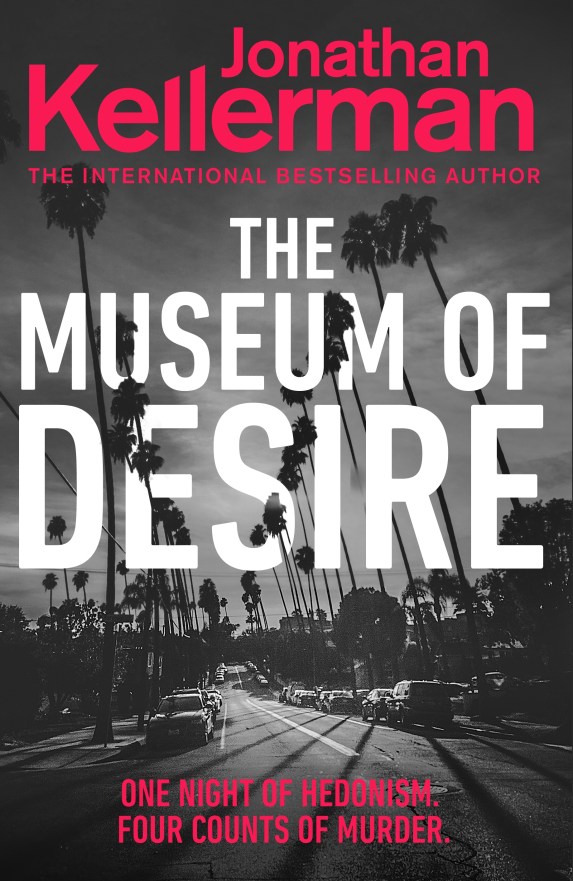
Waiting on Wednesday – The Museum of Desire by Jonathan Kellerman

Welcome to my weekly segment, Waiting on Wednesday, where I look at upcoming books that I am planning to order and review in the next few months and which I think I will really enjoy.  I run this segment in conjunction with the Can’t-Wait Wednesday meme that is currently running at Wishful Endings. Stay tuned to see reviews of these books when I get a copy of them. In this latest Waiting on Wednesday, I am going to take a look at the latest addition to a long-running modern murder mystery series that has a really cool plot synopsis with The Museum of Desire by Jonathan Kellerman.

The Museum of Desire Cover.jpg

The Museum of Desire will be the 35th book in Kellerman’s bestselling Alex Delaware series and is set to be released in February next year. The Alex Delaware novels follow psychologist Dr. Alex Delaware as he helps his friend, Lieutenant Milo Sturgis, solve a number of complex and unusual murders in the Los Angeles areas. I am only fairly new to this series, having only read the 34th book, The Wedding Guest, earlier this year. However, I was very impressed by the way that Kellerman was able to produce a methodical and realistic police investigation centred on an intriguing murder. As a result, I decided to keep an eye out for the next book in this series and I was very happy that I did once I read the following plot synopsis.

Goodreads Synopsis:

Psychologist Alex Delaware and detective Milo Sturgis struggle to make sense of a seemingly inexplicable massacre in this electrifying psychological thriller from the #1 New York Times bestselling master of suspense.

LAPD Lieutenant Milo Sturgis has solved a lot of murder cases. On many of them–the ones he calls “different”–he taps the brain of brilliant psychologist Dr. Alex Delaware. But neither Alex nor Milo are prepared for what they find on an early morning call to a deserted mansion in Bel Air. This one’s beyond different. This is predation, premeditation, and cruelty on a whole new level.

Four people have been slaughtered and left displayed bizarrely and horrifically in a stretch limousine. Confounding the investigation, none of the victims seems to have any connection to any other, and a variety of methods have been used to dispatch them. As Alex and Milo make their way through blind alleys and mazes baited with misdirection, they encounter a crime so vicious that it stretches the definitions of evil.

The Museum of Desire is classic Kellerman at his psychopathological best.

Now, that is an intriguing-sounding mystery. I really like the hook of an exceedingly complex case, especially one that features the deaths of four unrelated people in a cruel and creative manner. As a result, I cannot wait to read this book and see how Kellerman sets this mystery out, and I have a feeling that The Museum of Desire is going to be a first-rate read.

Gideon the Ninth by Tamsyn Muir

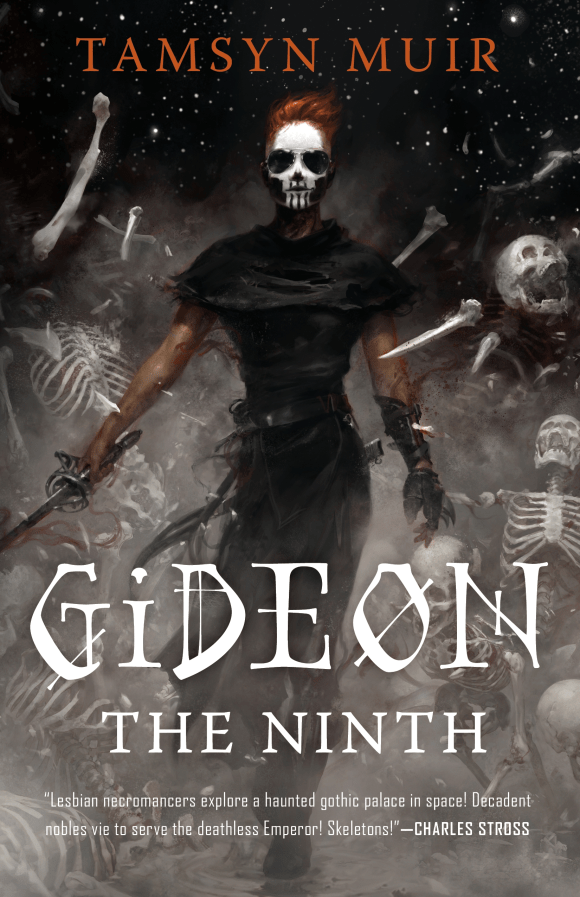
Gideon the Ninth Cover

Publisher: Tor (Hardcover – 10 September 2019)

Series: The Ninth House – Book One

Length: 448 pages

My Rating: 4.5 out of 5 stars

Amazon     Book Depository

From debuting author Tamsyn Muir comes a very unique and compelling science fiction novel filled with death, comedy and necromancers in space, Gideon the Ninth.

Before I begin reviewing Gideon the Ninth, I have to point out how impressive the design of the hardcover copy I received was. When I previously featured this book in one of my Waiting on Wednesday articles, I mentioned how much I loved the cover art. Indeed, the drawing of the book’s titular redheaded character with her face painted liked a skull surrounded by exploding skeletons is pretty damn cool. The hardcover copy also has some excellent visuals, as the outer rim of all the pages is coloured black, which definitely gives prospective readers a noticeable visual hook, especially when combined with the all-black binding underneath the jacket, emblazoned with gold writing on the spine and a single golden skull on the front. I really liked this fantastic presentation style, and it definitely left an impression on me as I started to read the book.

In the far future, a vast interstellar empire is ruled by necromancers whose control over the various magical disciplines of death make them a powerful force. Eight noble houses serve under the First House of the Emperor, and each of them has just received a message from their ruler. The heirs to each of these houses and their cavaliers, loyal sword-wielding protectors and companions, must attend the Emperor’s planet in order to compete to become the next generation of Lyctor, immortal beings of vast power.

Gideon Nav is an indentured servant to the Ninth House of the Empire, a small and impoverished house that carries a dark reputation. A skilled swordswoman, Gideon wants nothing more than to enlist in the imperial army to leave the dark crypts, the strict occult nuns and the multitude of skeletons that make up the Ninth Planet far behind. However, when her latest escape attempt fails, she finds herself offered an irresistible bargain: act as the Ninth House’s cavalier for the period of the trials and be granted her freedom. There is just one minor problem: Gideon and the heir to the Ninth House, Harrowhark Nonagesimus, an extremely powerful bone witch, absolutely hate each other.

Forced to temporarily put their differences aside, Gideon and Harrow travel to First House, only to discover it is a near ruin, looked after by a few old and mostly unhelpful servants. They soon learn that the secrets to becoming a Lyctor lie hidden within the walls around them, and the representatives of various houses can do whatever they wish to learn them. Trapped on the planet, Gideon and Harrow begin to explore the First House and encounter the heirs and cavaliers of the other houses. As the mismatched pair from the Ninth House start to unravel the various mysteries and challenges before them, a gruesome murder occurs. Something powerful is lurking within the First House, and it has the heirs in its sight. Can Gideon and Harrow work together, or will their own turbulent past and the secrets of their house tear them apart?

Gideon the Ninth is a chaotically clever and massively entertaining first novel from Tamsyn Muir, who has done an excellent job introducing readers to her intriguing new world. Gideon the Ninth is the first book in her The Ninth House series, which already has two planned sequels in the works, with the first of these currently set for release next year. After hearing the awesome plot synopsis for this book earlier in the year, I had picked this as potentially being on the best books for the latter half of 2019. I am glad to see that my instincts were once again correct, as this was an awesome read that gets four and a half stars from me.

Muir has produced an outstanding story for her first novel, as the plot for Gideon the Ninth is an amazing combination of humour, universe building, emotional character moments and a captivating set of mysteries as the protagonists attempt to uncover not only the vast secrets of the First House but the identity of the person or being that is killing them off one by one. The author has stacked this book with all manner of fantastic twists, and there are a number of major and game changing developments that are well paced out amongst the story. There is never a dull spot within the book, as even parts where no substantial plot developments are occurring are filled with excellent humour from the sarcastic narrator with a huge vocabulary of various swear words. There is also a substantial amount of action throughout the course of the book. The various fight scenes blister and explode off the page, especially thanks to the unique magical system that Muir has populated this world with. All of this results in an addictive and electrifying overall story with a very memorable ending.

The real heart of Gideon the Ninth lies in its incredible main characters, Gideon Nav and Harrowhark Nonagesimus, and the complex relationship the two of them have. Gideon is the badass, rebellious, coarse, girl-loving mistress of the blade, who serves as the book’s narrator and only point-of-view character. Gideon is an absolute blast as a main character, as she deals with every situation she comes across with an abundance of disrespect, anger and exaggerated responses, resulting in much of the book’s humour. Harrow, on the other hand, is the dark noble necromancer heir to the Ninth House, whose reserved persona, obsession with necromantic research and abilities, and vindictive nature work to make her initially appear as a polar opposite to Gideon. The relationship between these two main characters is initially extremely adversarial, as both characters declare their absolute hatred for each other, and Harrow seems determined to make Gideon’s life a living hell. As the book progresses, however, Muir really dives into the heart of the relationship between the two characters, revealing a complex history and a twin tale of woe and dark secrets that has defined them for their entire lives. The combined character arc of these two main characters was done extremely well. While you knew from the very start of the book that the two characters would eventually work together, the exact reason why this occurred was handled perfectly, and the final form of this cooperation helps create an epic and tragic conclusion to the entire book. While their relationship is not explicitly romantic (Harrow’s sexuality really is not explored in this book), they do become quite close by the end of the novel, and both characters are written exceedingly well.

In addition to Gideon and Harrow, Muir has also included a range of different characters, representing the heirs and cavaliers of the other major houses in the Empire. This results in an intriguing assortment of side characters who add a lot to the overall story. The author has made sure to invest in substantial backstories for all these additional characters, and this has a number of significant benefits for the story. Not only are the readers now blessed with an abundance of viable and duplicitous suspects for the story’s murder mystery, but each of the various representatives of the houses have their own individual secrets and motives for being at the First House. Learning more about each of these characters is quite fascinating, and a number of them have some pretty amazing character arcs. I particularly enjoyed the storyline of Palamedes Sextus of the Sixth House, who treats his necromancy more as a science than a form of magic. Sextus is the most logical character out of all the people in the book, and he serves as a major driving force of the investigation into the murders. His connection to some of the other characters in the book is a major part of the book, and the ultimate conclusion of his story arc is really cool. Muir has done an incredible job coming up with the book’s various characters, and it is a major part of why this book is so awesome.

It is quite clear that Muir has an amazing imagination, as she has produced a grim and compelling new universe to set this book in. Necromancy and a futuristic science fiction setting make for a fascinating combination, and I really loved her examination of an empire built on worshipping an immortal, necromantic Emperor and the various secrets that come with it. The sheer range of different necromantic magic featured within this book is pretty impressive, especially as each of the Imperial Houses has their own specific form of necromancy, all of which are examined throughout the book. Not only are all these different types of magic really fascinating to examine but it also results in some diverse pieces of magical action, as many of the necromancers unleash their various forms of magic throughout the book, resulting in some fantastic sequences. I do think that the author could have done a slightly better job of explaining some of the unique elements of her universe at the start of the book, as I got a little confused at some points towards the beginning; however, this was quickly chased away by deeper dives into the universe’s lore later in the book. Muir has left open a number of questions and plot directions to explore in future books in the series, and I am really curious to see what happens next.

Gideon the Ninth is a wild and exciting novel that makes use of an intriguing concept, some compelling characters and an excellent story to create an exceedingly entertaining book that was a heck of a lot of fun to read. Featuring laugh-out-loud humour, intense action and major emotional moments, this is an incredible read that is really worth checking out. Muir has hit it out of the park with her debut novel, and I cannot wait for the next book in the series.

Amazon     Book Depository

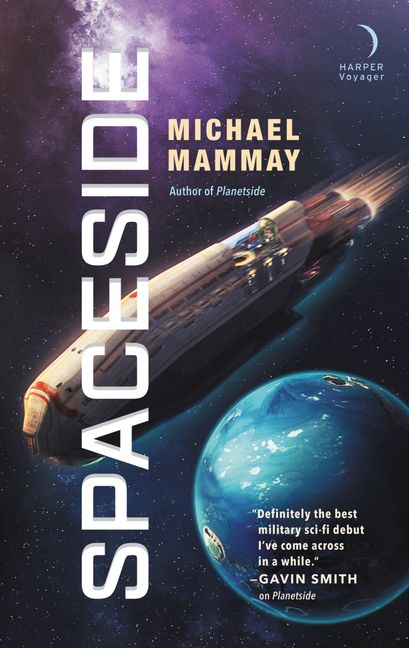
Spaceside by Michael Mammay

Spaceside Cover

Publisher: Harper Voyager (Ebook – 27 August 2019)

Series: Planetside – Book Two

Length: 336 pages

My Rating: 5 out of 5 stars

Amazon

Last year, Michael Mammay debuted an absolutely incredible book, Planetside, the outstanding science fiction thriller that absolutely blew me (and the planet of Cappa) away with its inventiveness, addictive story and explosive conclusion. Now Mammay attempts to follow up this amazing first novel with a second book in his Planetside series, Spaceside.

I mentioned several times already on my blog how much I loved Planetside last year. Mammay’s first book was a spectacular story that blended a science fiction story about an advanced human military occupying an alien planet with an intriguing thriller around a missing soldier. Planetside was easily one of the best books I read in 2018, and I still cannot get past that epic finale to the story.  As a result, when I found out that Mammay was following it up this year with Spaceside, I knew that I would have to read it, and featured it in both a Waiting on Wednesday post and my Top Ten Most Anticipated July-December 2019 Releases list. I was lucky enough to get an advanced electronic copy of Spaceside from Mammay and the publisher, and it did not take me long to dive in and read this book. I had pretty high expectations, considering how good the first entry in the series was.

In Planetside, veteran soldier Colonel Carl Butler is sent to the planet of Cappa to find a young officer who mysteriously disappeared following a mission against an insurgent group of the local aliens, the Cappans. Butler’s mission quickly revealed a massive conspiracy where elements of the occupying human military had been working with the Cappans to genetically modify humans with Cappan DNA, creating a dangerous hybrid species. After uncovering the existence of these hybrids and the full extent of the technology that had been traded to the Cappans, Butler is forced to make the terrible decision to initiate a major missile strike against Cappa to prevent a huge number of Cappans and hybrids from escaping into the wider galaxy. His actions stop the planned exodus and devastate the planet, killing a huge number of Cappans. Butler is subsequently arrested, frozen and sent back home for court martial, with his fate unrevealed in the last book.

Spaceside begins about two years after the events of Planetside, and reveals that Butler is now the most infamous man in the galaxy. While many view him as a hero, others consider him a genocidal monster. Forced out of the army, Butler now has an easy job as Deputy VP of Corporate Security for Varitech Production Company, a high-tech military company on the planet of Talca Four. In theory he helps protect the company against corporate threats, but in reality his job is to impress clients and utilise his substantial military connections for his bosses’ benefits.

As a result, he is surprised one day when he is called into the CEO’s office and given an actual security assignment. A rival tech company, Omicron Technology, has had a breach in their supposedly unhackable computer systems, and Varitech wants to know how it happened and whether their own systems are vulnerable. With no obvious leads and no-one claiming credit for the hack, Butler reaches out to one of his contacts working at the impacted company. However, shortly after their meeting, Butler’s contact is found dead and Butler is now the police’s prime suspect.

Determined once again to find out the truth no matter what, Butler starts to dig around at Omicron and discovers that they were working on a secret project with links to his time on Cappa. When information arrives from the most unlikely of places, Butler is once again drawn into a massive conspiracy that he is not meant to survive. Can he find a way out of this, or will he be forced to redo his greatest mistake?

Wow, just wow. This was another exceptional book from Mammay, who has once again produced a fantastic science fiction thriller hybrid with some amazing moments in it. I absolutely loved this follow-up to Planetside, which not only contains another addictive story with an amazing protagonist but also serves as an excellent sequel to the first book. I powered through Spaceside extremely quickly and loved every minute I spent glued to my screen. This gets another five out of five stars from me, and I reckon that I will once again be placing Mammay’s latest book on my top reads of the year list.

Just like the previous book in the series, Spaceside, is a compelling thriller set in a great science fiction environment and with some intriguing military thriller and science fiction elements thrown into it. However, in this book, the protagonist is no longer an official investigator for the military but a civilian involved in events that appear to be corporate espionage. This results in an intriguing change of pace from the first book that I quite enjoyed. Butler is much more of an outsider in this book, and his methods of investigating the potential crime and attempting to uncover the conspiracy are a lot more clandestine than before. Mammay takes this thriller based storyline to some interesting places and forces the protagonist to make some surprising alliances in order to survive and get to the bottom of the investigation. While the story is more focused on corporations than the army, there is still a strong military element to the book, as Butler is investigating military technology companies. There is also a strong amount of military action towards the end of the book as Butler once again sees combat against an enemy. Mammay writes some strong military action based sequences in his books, and the reader can almost see the detailed and well-written fight scenes. All of this results in an extremely strong main storyline that leaves open the potential for another intriguing entry into this series.

I was really happy that Mammay continued to follow the adventure of his protagonist from Planetside, Carl Butler. Butler, who serves as the story’s narrator and point-of-view character, is a fantastic protagonist who was one of my favourite parts of the first book. Butler is a blunt and honest old character, whose craggy, veteran solider outlook on life infects his narration of events and helps the reader connect with his story. Just like in Planetside, Butler is reluctantly dragged into the events of this book and goes up against a seemingly superior opponent, who thinks that they know how to manipulate the old soldier. However, Butler is a wily operator who is able to turn the situations to his advantage through his rough charm and experience of dealing with people, especially former military personnel, who assist him with his investigation and help keep him alive. I particularly liked the clever way that he was able to manipulate the situation towards the end of the book by playing on certain character’s weaknesses, military training and humanity, and while his final plan did not have the explosiveness of his actions at the conclusion of Planetside, it was still a great scene. I look forward to seeing what sort of trouble Butler gets up to in any future instalments of this series, as he is a truly enjoyable protagonist.

I felt that Spaceside also did a great job following on from the story established in the first book of the series. I really enjoyed seeing how the author followed through with several of the storylines left open at the end of Planetside, as well as how he explored a number of the consequences of the protagonist’s actions. The main way that this was achieved was by showing the reader how Butler’s life changed following his bombing of Cappa. Because the story is told from Butler’s point of view, we get to see how the guilt from his actions and the events that led up to them has affected his psyche. Despite the tough outer shell he shows most people, Butler is struggling with whether he did the right thing and must now deal with being the most infamous person in the galaxy, receiving glares or praise wherever he goes. These events and inner thoughts impact how he reacts to certain events later in the book, and it is a clever and natural progression for the character.

In addition to the focus on Butler, Mammay makes sure to include several characters from the first book so the reader gets to see how their storylines progressed. Not only does this help bring in a previously established sidekick for Butler, as well as a sassy reporter contact who gives him intel and clues, but it also brings back Butler’s old mentor and friend, General Serata, for a tense scene. Serata was the man who sent Butler to Cappa in the previous book, and in many ways he is responsible for the destruction on Cappa as he knew how his old friend would be forced to act in response to what was going on there. It was great seeing these two characters awkwardly try to discuss the events of the previous book and come to terms with Serata’s manipulation of Butler. All of this makes for a gripping follow-up to the first book, and I really enjoyed seeing how the author addressed some of the events from Planetside.

Spaceside is an incredible second outing from Michael Mammay, who has a truly bright future in the science fiction genre. I once again found myself drawn into the excellent story and fantastic central protagonist of this book, as Mammay does an outstanding job crafting together a clever and addictive narrative that does a spectacular job following on from the author’s amazing debut, Planetside. Spaceside gets a full five stars from me, and I am already looking forward to Mammay’s next enjoyable book.

Amazon

The Bone Fire by S. D. Sykes

The Bone Fire Cover

Publisher: Hodder & Stoughton (Hardcover – 25 July 2019)

Series: Somershill Manor Mystery – Book Four

Length: 310 pages

My Rating: 4.5 out of 5 stars

Amazon     Book Depository

In the mood for a clever and captivating historical murder mystery? Look no further than the latest book from the brilliant S. D. Sykes, The Bone Fire, which continues the adventures of her reluctant 14th century murder-solving protagonist, Oswald de Lacy, who this time finds himself stuck in a unique situation.

After several years of respite, the Plague returns to England in 1361. As a survivor of the original outbreak in 1350, Oswald de Lacy, lord of Somershill in Kent, knows the devastation the sickness can bring. Desperate to save his family, he accepts an invitation from one of his friends, Godfrey, to shelter for the winter in his remote castle in the Romney Marsh with a select company of friends and allies. The rules are simple: once the de Lacy family enters the castle, the gates will be closed and no-one will be allowed to leave until the Plague has passed.

Arriving just ahead of the Plague with his wife, son, mother and valet, de Lacy finds that Godfrey’s castle is a grim refuge filled with a disagreeable group of fellow guests and servants. Despite this, the castle appears to be the safest place for them, especially with the Plague already ravishing the outside countryside. That is until their host is found murdered in his own library.

As the residents deal with the shock of losing the lord of the castle, other bodies are discovered within the castle walls. With nowhere to run except onto the plague-infested island outside the castle walls, de Lacy must once again rely on his talent for solving mysteries to save the day. However, it soon becomes apparent that de Lacy is up against a ruthless killer who delights in violence and is seemingly able to move about the castle undetected. Can de Lacy solve this crime before it is too late, or will he and his family face a fate worse than the sickness keeping them trapped within the castle?

The Bone Fire is the fourth book in Sykes’s Somershill Manor Mystery series, which started back in 2014 with Plague Land. The Somershill Manor Mystery books are an intriguing historical mystery series which follows the investigations of its protagonist in the land devastated by the Black Death. I had not previously read any of Sykes’s books, although her preceding release, City of Masks, is probably one of the books I most regret not reading in 2017.

I was initially drawn to The Bone Fire by the beautiful cover and the really cool-sounding plot, and I thought that this novel had some real potential. I am extremely glad I decided to get a copy of this book, as I was blown away by the fantastic and clever story. Sykes does an excellent job of combining a complex and compelling murder mystery with a unique and fascinating historical setting. The entire story is extremely fast paced, and I found myself racing through the book in no time at all, especially as it proved to be pretty darn hard to disengage from the fantastic story.

Those readers who have not had the opportunity to read any of Sykes’s books can easily enjoy The Bone Fire without any foreknowledge of the previous entries in the Somershill Manor Mystery series. Each of the books in the series can be read as a standalone novel, although existing readers will note the continuation of character arcs from the earlier entries in the series. Some information from the previous books does play a role in the story, including how the protagonist survived the first outbreak of the Plague, however Sykes always does a careful job of reintroducing these elements in The Bone Fire well before they become relevant to the plot.

At the heart of this book lies an excellent murder mystery storyline, as the protagonist is forced to investigate a series of killings in a remote English castle. Sykes has come up with a thrilling murder mystery storyline that follows a twisting and intriguing investigation. The protagonist has a huge bevy of potential suspects, each of whom has their secrets and schemes, which de Lacy has to unravel in order to get to the bottom of the murders, and there are a variety of motives for the killings occurring in the castle. The case goes in some very interesting directions, and the end result was very satisfying, with some well-plotted-out twists and some truly unique motivations for a murder. I had a great time trying to figure out who the killer was, and this was a terrific storyline to centre the book upon.

While the murder mystery storyline is an excellent part of this book, readers will also be entranced by Sykes’s use of a fascinating historical setting. Like the first two books in this series, the author has set the story in the midst of plague-ravished England. However, unlike the previous books, which dealt with the first bout of the Black Death between 1348-51, this story is set in 1361, when a second plague hit the country. This time the populace, including all the characters in this book, were much more aware of how deadly the Plague could be and took steps to try and avoid it. Sykes does an amazing job capturing the subsequent sense of despair, fear and paranoia that emulates from people who previously experienced the Plague, and it makes for a fantastic emotional background to the story. The various theories and ideas of the cause of the Plague are pretty fascinating, as are the methods with which the protagonists attempt to protect themselves from its influence. It also results in some heartbreaking, if not cruel, decisions from the protagonist, who is still traumatised from his experiences during the first sickness, and results in some dramatic character moments.

I really enjoyed the way that Sykes utilised the Plague and other intriguing historical aspects, such as religion, to enhance the murder mystery storyline of this book. The restrictions of the Plague keeping the residence within the castle helped make the story feel like a classic whodunnit in places with a small group of suspects trapped in an enclosed location and only one investigator trying to sort out the entire case. The historical setting also resulted in a number of intriguing potential motives for the story, such as religious differences, complex inheritances, arranged marriages and even clocks, all of which adds a compelling edge to the story.

The Bone Fire by S. D. Sykes is an exciting and gripping historical murder mystery that is really worth checking out. The author did a fantastic job creating a clever mystery storyline that perfectly utilises its bleak and intriguing historical setting. The end result is a terrific fourth book from Sykes that was a lot of fun to read. It is safe to say that Sykes’s Somershill Manor Mystery series is now firmly on my reading radar, and I will be keeping an eager eye out for the next book in the series.

Amazon     Book Depository

Usagi Yojimbo – Vol 33: The Hidden by Stan Sakai

Usagi Yojimbo The Hidden Cover

Publisher: Dark Horse Books (9 July 2019)

Series: Usagi Yojimbo – Volume 33

Length: 200 pages

My Rating: 5 out of stars

Amazon     Book Depository

While there are a number of great books and comics coming out this year, one of the releases that I have been most keenly looking forward to was this year’s volume of Usagi Yojimbo. Usagi Yojimbo by Stan Sakai is a fantastic comic book series that utilises Japanese style, characters and history into an excellent series. This series is one of my favourite bodies of work, and I will move heaven and earth to get each instalment, and I especially loved last year’s volume, Mysteries. I was pretty darn excited to get the 33rd volume, The Hidden, and powered through it the afternoon that I received it.

Usagi 166.jpg

The Hidden continues the story of Miyamoto Usagi, a wandering ronin samurai who lives in a version of medieval Japan populated by anthropomorphic animals. Usagi’s life occurs in the early 17th century, during the Edo era of Japan. This is a pretty interesting time period to set a story, as with the land mostly at formal peace thanks to the rule of the Shogun, many samurai have been forced to roam the land without a master to serve. Usagi, a highly skilled samurai based on the legendary historical warrior Miyamoto Musashi, has been forced to live the ronin lifestyle after the death of his lord. Wandering the roads and seeking employment as a Yojimbo (a bodyguard), Usagi encounters all manner of rogues, bandits and criminals, as well as a number of supernatural foes from Japanese folklore.

The Hidden is made up of issues #166-#172 of the series and is actually one of the rare Usagi Yojimbo volumes to feature just one single adventure rather than multiple interconnected or standalone stories. This volume also continues to pair Usagi with Inspector Ishida for the entire volume. Ishida, who is essentially a Japanese Sherlock Holmes (although based on real-life Honolulu policeman Chang Apana), is a recurring character within the Usagi series who has appeared in multiple volumes, often for just one issue or adventure. However, after teaming up to investigate a murder a couple of volumes ago, Usagi has been living in Ishida’s town and assisting him with his investigations. As a result, Ishida has become a secondary protagonist for the last two volumes, with Mysteries, for example, focusing on the two solving several different crimes.

Usagi 167.jpg

This new volume starts with a brand-new case, when two samurai are pursued into the city and brutally murdered. When Usagi and Ishida discover crucifixes on the dead samurai’s bodies, they quickly realise that both the victims where Kirishitans (Christians). Christianity, which has been bought into the country by European missionaries, has recently been outlawed in Japan by the Shogun, and his agents are hunting down all practitioners. It soon becomes clear that the dead samurai were killed by agents of the Shogun who were attempting to recover a mysterious book of foreign design.

However, in a twist of fate, a petty thief manages to steal the book off the corpse of one of the samurai. This thief is now the most wanted man in the city, as the Shogunate agents and their hired killers attempt to find him and the book at all costs. As Usagi and Ishida work out what has happened, they are determined to bring the killers to justice. Hunting for both the book and the criminal who stole it, Usagi and Ishida, with the help of the masked master-thief Nezumi, manage to locate part of the book, and what they discover could rock the entirety of Japan. As they attempt to come to terms with their discovery, the Shogunate agents determine that the two investigators are a threat and decide to eliminate once and for all.

Usagi 168.jpg

While I may have had to wait a whole year to read this latest volume, it was definitely worth it. Sakai has once again produced an outstanding comic book that I could not have put down for anything. Not only has Sakai written an intriguing and clever story with a great mystery and an informative look at a new aspect of Japanese history, but he tells it through his beautiful Japanese-inspired artwork that really brings the characters and the landscape to life. Together this results in another exceptional piece of work that I absolutely loved.

Usagi 169.jpg

The main story focuses upon Usagi and Ishida’s investigation into the murders of Christian samurai and the hunt for the mysterious book the Shogunate agents are searching for. This was a really interesting story, and I liked how Sakai took the entire volume to really flesh out the investigation. The two characters go on a compelling adventure in this book, running into a number of colourful characters, dodging political restraints, interrogating a number of suspicious characters and getting into several deadly fights. However, what starts out as an intriguing investigation soon turns into a deep and powerful tale of convictions, belief and faith, and the things one must do to preserve all three. This is shown by a number of characters, including Usagi and Ishida, who risk everything to find the truth and more. There is also the amazing character arc of new character Hama, whose heart-rending sacrifice is one of the most memorable parts of this book. There is also a fairly major revelation about one of the other characters towards the end of the volume that actually changes the way you see the story and is guaranteed to make you look back to see the various things you missed the first time. Several recurring Usagi characters are used exceedingly well in this book. The mysterious masked thief Nezumi makes a great return, helping the protagonists with their investigation. It is always cool to see Nezumi in action, and I enjoy seeing the grudging respect build between him and Ishida, despite them living on opposite sides of the law. Everyone’s favourite snitch, Toady, makes another appearance, adding a lot of humour to the story as he attempts to weasel his way into more gold. Overall, this was another well-written and captivating story that was a real pleasure to read.

Usagi 170.jpg

One of my favourite aspects of the Usagi Yojimbo books is that Sakai often uses them to explore some fascinating piece of Japanese history, culture, mythology or industry and present them in a way that his western audience can appreciate. I was really glad that he continued this trend in The Hidden, as this time he takes an intriguing look at the role of early Japanese Christians in 17th century Japan. These Christians, who are the titular hidden ones of this volume, were an outlawed minority, due to Christianity directly contradicting a number of traditional Japanese beliefs and therefore challenging the authority of the Shogun. This latest volume shows this persecution in action, as the city is locked down by agents of the Shogun who are hunting for a valuable Christian item. The reader gets a sense of the illicit and hidden nature of these Christians and the way they were hunted, and Sakai also shows certain unique parts of this hunt, such as the fumi-e (trampling image). The fumi-e was an image of a cross that the Shogun’s enforcers placed on the ground in front of the gates of barricades that were set up at key points of the city. In order to pass through the barricades, pedestrians were forced to stamp on the image, showing their disdain for the Christian religion, and those who refused to step on the image were arrested as Christians. This was a fascinating part of Japanese history that I found incredibly interesting to see in action, and one that Sakai was able to cleverly work into the book’s plot. There were also a few fun scenes which looked at a black-market dealer who sold items which originated outside of Japan. Due to the Shogun isolating the country, these were incredibly valuable items, and I liked seeing what items this dealer considered valuable (the dealer’s European dress also made for a stunning visual as well). All of this was really cool to learn about, and I cannot wait to see what aspects of historical Japan the author explores in his next volume.

Usagi 171.jpg

Sakai’s fantastic artwork is once again one of the major highlights of this volume. Sakai is a particularly skilled artist who always does a fantastic job bringing the beauty and grace of Japan and its culture to life. The artwork on the surrounding landscape is just spectacular, and I always love attention to the historical detail on the buildings and people inhabiting his towns. One of the highlights of The Hidden that I particularly liked was the consecutive prayer gates leading up to a shrine that the characters visit. The visuals on all these gates were just amazing and very distinctive. I also really enjoyed the way that Sakai portrays his battle sequences in his series; he has a real talent for bring multiple high-energy battle scenes to life. I especially like how he manages to convey so much action and intensity in his still frames, and it really shows off some cool aspects of Japanese sword play. This was another beautifully illustrated volume, and the great art goes exceedingly well with the fantastic story Sakai has devised.

Usagi 172.jpg

Volume 33 of Usagi Yojimbo, The Hidden, was another excellent addition to this amazing series. Sakai once again produces a compelling story in his unique comic-book universe which results in a spectacular volume that I know I am going to read again and again in the future. While this was an outstanding Usagi Yojimbo story, I now have the downside of having to wait a whole other year to get my next Usagi fix. Make sure to check back next year when I will no doubt gush about how much I loved volume 34 of this series.

Amazon     Book Depository

A Capitol Death by Lindsey Davis

a capitol death cover

Publisher: Hodder & Stoughton (Hardcover – 4 April 2019)

Series: Flavia Albia – Book 7

Length: 383 pages

My Rating: 4 out of 5 stars

Amazon

For the last 30 years, Lindsey Davis has been one of the most prolific and impressive authors of ancient history murder mystery, writing 28 amazing books during this period. Starting in 1989 with The Silver Pigs, Davis introduced the world to Falco, the private investigator who solved murders in ancient Rome. This series, known as the Marcus Didius Falco series, eventually ended after 20 books in 2010; however, several of the characters and storylines explored in these books were continued in 2013’s The Ides of April, the first book in the new Flavia Albia series. In each of the following years, Davis has released a new book in this second series, resulting in A Capitol Death, which is the seventh Flavia Albia book to be released.

I was lucky enough to get a copy of The Ides of April when it first came out, and absolutely fell in love with the awesome main character and her fantastic investigations. I have since gone out of my way to grab every book in the Flavia Albia series, as Davis is one of my auto-buy authors, and I currently have reviews for the last two books in the series, The Third Nero and Pandora’s Boy on my blog. I really loved Pandora’s Boy last year, and it even got an honourable mention on my Top Ten Reads for 2018 list. As a result, I have been quite eager to get my hands on A Capitol Death for a while now.

In Rome, in 89 AD, while the city is preparing for the return of the cruel Emperor Domitian, murder is literally in the air. The body of a minor government official has been found at the base of the symbolic Capitoline Hill, and it appears that he was pushed off the top of the cliffs. While a case like this would usually be a low priority for the city’s authorities, the man who died was responsible for all the transportation during the Emperor’s upcoming triumph and his death is now politically sensitive.

Enter Flavia Albia, professional informer and adopted daughter of the legendary investigator Falco. Employed by her husband, the magistrate Faustus, to investigate the murder for the city, Flavia sets out to discover who is responsible for this crime. However, that is easier said than done, as the victim is revealed to have been an extremely unpleasant individual whose attitude and shady dealings made him a very unpopular person. With a huge list of suspects lining up before her, Flavia has her work cut out for her.

When a second murder occurs on the hill, the case becomes even more complicated. Flavia must work out the connection between the two victims and who would want to murder both of them. As the start of the Emperor’s triumph gets closer, Flavia must interrogate a lengthy list of people, including oyster farmers, slaves, diviners, goose handlers, seamstresses and more in order to find the killer. What happens when the killer finds her instead?

A Capitol Death was another great addition to the Flavia Albia series, and well worth the wait. Davis once again sets a compelling mystery within her excellent Roman historical setting, and sets her unconventional protagonist on the case to find out the truth in an ancient city that is portraying some very modern attitudes and mentalities. The result is a captivating and entertaining read that I was able to finish off in relatively short order. While I did not quite enjoy A Capitol Death as much as the last two Flavia Albia novels, this was still a fantastic piece of historical crime fiction and I will be grabbing the eighth instalment of this series when it comes out next year.

At the heart of this story is a well-thought-out and compelling murder mystery. Davis constructs a complex case, involving a deeply unpopular victim, a huge number of suspects with substantial motives, very little evidence and a complete lack of cooperative witnesses. Without modern forensic techniques in this ancient setting, the protagonist’s main investigative recourse is to talk to everyone with a connection to the victim in an attempt to find out who would want to kill him. As a result, Flavia digs her way through the lives of everyone involved in the case, finding out deficiencies in stories and the various connections between the various suspects and witnesses. I really enjoy the way that the protagonist investigates this case, and it is interesting to see the variety of evidence and leads she can come up with simply by asking the right questions. The case has a substantial number of twists and turns, as well as a huge number of likely suspects that act as good red herrings. The entirety of the case is very intriguing, and I really enjoyed the investigative angle of this book.

While the murder investigation is a key part of the main plot, Davis also spends a bit of time focusing on the chaotic personal life of series protagonist Flavia Albia. Between setting up her new home, dealing with her high-maintenance family and helping out a husband only recently recovered from a freak lightning strike, there is a lot going on for the character, even before she is forced to investigate a murder. While some readers might have trouble caring about a character setting up a household, entertaining her family or finding reliable domestic help, I actually found it to be an enjoyable part of the book, mainly because the author uses these scenes to make a number of jokes of humorous observations. In addition, after all these books, I have grown attached to the main character and I am genuinely interested to see how her life progresses.

Davis has always done a great job of utilising the ancient city of Rome as a setting for her stories, and she continues to do this in A Capitol Death. This story is set in 89 AD, during the reign of the Emperor Domitian, and features an interesting version of the city. In this book, Domitian is returning to the city after a military campaign and the city is organising a triumph in his honour. This means that the city is filled with all manner of secret agents, Praetorians and officials organising the triumph for the Emperor, which makes for an intriguing background setting for this story. I really enjoyed the author’s examination of the triumph, which becomes a big focus of the book due to several of the case’s suspects or persons of interest being involved in its planning and set-up. There are a number of sequences that show the huge amount of preparation that goes into the triumph, and it was entertaining to see how they may have faked certain required elements of the triumph, such as dressing up random citizens to use as fake captured prisoners.

In addition to the examination of the political make-up of the city and the preparation for the military triumph, Davis also spends this book looking at some other fascinating aspects of the city and its citizens. The presence of certain witnesses who live outside the city of Rome necessitates a visit to one of the smaller Roman towns on the Italian coast, and it is always interesting to see the protagonist leave the city. The visit also allows the author to spend some time highlighting the process behind the creation of the coveted imperial purple dye that was used for the priciest garments in ancient Rome. There was also an intriguing focus on Capitoline Hill as the site of a murder. The Capitoline Hill, as one of the original Seven Hills of Rome, is a major feature of city, and Davis really dives into its history and importance during the course of her book, giving the reader a great idea of what this historical location is like and what goes on there. I always love it when an author takes the time to teach the reader about some obscure aspects of history, and Davis showcases some really cool bits of historical trivial in A Capitol Death. This is a fun aspect of this book and one I quite enjoyed, especially as Davis does an excellent job of weaving it into the murder mystery part of the story.

I have always loved the way that Davis has introduced characters with more modern attitudes and personalities into her historical stories, as it makes for a funny and enjoyable story. Watching characters in an ancient setting act exactly like a person in a modern city is always enjoyable, and Davis makes sure to amp up the snark in each of her characters, making for a fun bunch of characters. Flavia is of course the snarkiest of them all, and as the story’s narrator and point-of-view character, her amusing opinions, thoughts, descriptions of the other characters and anecdotes from her past really help to give this book a light-hearted and entertaining tone. This is always a great feature of the Flavia Albia books, and I am glad that Davis continued it in this book.

This was another amazing outing from Davis that once again shows why she is the master of the ancient history murder mystery. Not only does she do an excellent job blending together a clever murder mystery with some fascinating historical details, but she also brings her trademark humour to the mix, creating another entertaining tale. I look forward to continuing this series next year, with The Grove of the Caesars, set to be released in April 2020, and I am sure I will have an incredible time reading the next instalment of the Flavia Albia series.

Amazon

Stranger Things: Darkness on the Edge of Town by Adam Christopher

Darkness on the Edge of Town Cover.jpg

Publisher: Century (Trade Paperback – 4 June 2019)

Series: Stranger Things

Length: 411 pages

My Rating: 4 out of 5 stars

Amazon     Book Depository

With the third season of the sensational and entertaining television show Stranger Things fast approaching (4 July cannot come fast enough), another tie-in novel, Darkness on the Edge of Town by Adam Christopher, has been released and offers another intriguing look into the wider Stranger Things universe. This story heads back into 1970s and focuses on the life of Hawkins police Chief Jim Hopper, portrayed in the show by David Harbour, and presents a thrilling and curious new adventure.

Stranger Things is one of the hottest televisions shows on at the moment, featuring a captivating plot, some incredible characters, amazing young actors and the fun use of 1980s nostalgia, all of which come together into one hell of a show. With the final season of Game of Thrones just wrapped up, the third season of Stranger Things is the next big release I am looking forward to (with the possible exception of Good Omens), and I fully intend to binge-watch it the weekend it comes out. It is not surprising that some tie-in material has been released to capitalise on the success of the show, and, truth be told, they have actually been a little restrained with it, with only one tie-in novel and one comic book series released so far. While I have not had a chance to the read the comic book series, The Other Side, which looks at Will Beyers’ time in the Upside Down in Season 1, I did previously read and review the first official Stranger Things tie-in novel, Suspicious Minds by Gwenda Bond, a few months ago. Suspicious Minds was set back in 1969 and looked at how Eleven was born and then subsequently stolen by the US Government, and it proved to be quite a thrilling read which explored some fascinating backstory to the television show.

As a result, I was very keen to check out what the next Stranger Things tie-in novel was like and what secrets it might reveal about the show. Darkness on the Edge of Town is set to be released on 4 June 2019, exactly one month before the release of Stranger Things’ third season, which is going to be set around Independence Day in 1985. Another Stranger Things book, which I will also try to get a copy of, Runaway Max, is also due out on 4 June, and this book will be aimed at a young adult audience.

Darkness on the Edge of Town was written by New Zealand-born author Adam Christopher, who has some experience with tie-in novels, having previously written three books that tie in to the Dishonoured video game and two books that tie in to the Elementary television show. Christopher is probably best known for his 2012 debut novel, Empire State, as well his Ray Electromatic Mysteries and Spider Wars series. I have not previously read any of Christopher’s work before, but several of his books, especially Empire State (a noir superhero thriller with parallel words, yes please!), sound like a lot of fun and I may have to check them out in the future.

Darkness on the Edge of Town’s story starts in December 1984, around two months after the end of the second season of Stranger Things. While enjoying a quiet Christmas with his adopted daughter, Eleven, Jim Hopper is suddenly brought back to his past when Eleven pulls out a cardboard box marked “New York”. Despite his reluctance, Hopper begins to tell Eleven the story of the greatest case he solved before tragedy forced him back to Hawkins.

On Independence Day in 1977, after returning from the Vietnam War, Jim Hopper is living in New York City with his wife, Diane, and his daughter, Sara. While the city deals with bankruptcy and a heatwave, Hopper, a rookie NYPD detective, finds himself investigating a series of brutal, ritualistic murders with his new partner, Rosario Delgado. The murderer has already killed three people, leaving a mysterious card at each crime scene. Before Hopper and Delgado can make any progress, their investigation is shut down by shadowy federal agents who order them off the case. Disobeying orders and putting his career on the line, Hopper continues to investigate the murders and is able to connect the deaths to the mysterious leader of the Viper gang, who is reputed to have paranormal powers. Going undercover to infiltrate the Vipers, Hopper makes some startling revelations about the scope and devastation of the gang leader’s sinister plans, and he must do everything he can to protect his city from an upcoming evil.

This was quite an interesting and engaging novel from Christopher, who not only manages to examine some interesting aspects of the Stranger Things television show but also creates his own intriguing story set during an interesting time in American history. The story is split between two separate time periods. Some of the story is set in December 1984 and follows the older Hopper as he tells the story to Eleven, while the majority of the book is set back in 1977 and follows Hopper and his partner as they investigate the brutal murders and the Vipers. Most of the book comes across as a dark murder mystery thriller that also spends significant time examining the psyche of its protagonist. I quite liked the murder mystery angles of the 1977 storyline, and it provides an interesting counterpoint to the more science fiction/horror/young protagonist focus of the television show.

The previous Stranger Things novel, Suspicious Minds, explored in detail events that featured in the show in flashbacks. Darkness on the Edge of Town, however, is a character study that may not have too much relevance to franchise’s overall story. While this might not appeal to some Stranger Things fans, it does allow Christopher a lot more freedom to explore the character of a younger Hopper. The result is a fantastic story that dives deep into the psyche of this great character and really lets the reader see what drives Hopper and what initially convinced him to become a police officer. There are some amazing parts to this examination of the character, but I personally liked the way that Christopher decided to focus on the lasting effects of Hopper’s service in Vietnam. This is explored in some detail, and the reader gets a really good idea of how emotionally vulnerable Hopper was even before his daughter became sick and his wife left him. I also thought that the author did a great job showing Hopper’s relationship with Eleven in the 1984 storylines, and their oddball father-daughter relationship comes across quite well.

In addition to the focus on the character of Hopper, this book also contains a few plot points that tie into the wider Stranger Things universe. The contents of the mysterious box Hopper had hidden in his house, which Eleven uncovered in Season 2, becomes a major part of this book’s story. In addition, there are several things that could potentially become significant in the future, and which the reader can leave to their own imagination. The first thing that comes up is a physic prediction about clouds or tendrils of darkness covering the world, mentioned a few pages in and repeated throughout the book. While events that occur later in the book do fit in with some of these predictions, the imagery of the Mind Flayer from the show comes to mind every time this vision is mentioned, and in some ways, it fits the predictions a little better. In addition, quite early in the book the antagonist is rumoured to have mental abilities as a result of government experiments. For a large part of the book, the reader is left wondering whether he actually has abilities like Eleven and, if he does, how he is connected to the institute that Eleven was being tested in. All of these, plus some other great references, will prove to be deeply appealing to fans of the television show, and I will be really intrigued to see if any of these references might appear in the third season of the show (do these authors have the inside track on the series?).

One of the most interesting parts of Darkness on the Edge of Town was its setting in 1970s New York City. The 1970s, especially 1977, were a pretty chaotic period in the city’s history, which serves as an excellent backdrop to this dark and gritty tale. Not only was the city suffering through a severe economic downturn but there was also a tremendous heatwave, especially in July of 1977, when the vast majority of the storyline is set. The Son of Sam killer was also active during this time, a fact commented on in several parts of the book, which also ties into the darker ‘70s crime nature of this book. I liked the way that Christopher was able to bring the atmosphere of this period to life in his book, as well as the way he was able to tie the story into a certain major event that occurred in New York in July 1977. This great use of setting really added a lot to the story and helped turn Darkness on the Edge of Town into quite a compelling read.

One of the reasons why Stranger Things is such a success is the show’s writers and creators have such an amazing ability to channel its viewers’ nostalgia for the 1980s into each episode. Writers of these tie-in novels also attempt to capitalise on this nostalgia by highlighting aspects of that decade’s culture in their writing. I previously felt that Gwenda Bond did an amazing job of that in Suspicious Minds, and Christopher also did his job exploring parts of that culture, specifically when it relates to New York City. As a result, there are several fun references to relevant movies, television shows, books, sports and music for fans of the 1970s to notice and reminisce about. Whether the characters are having fun thoughts about M*A*S*H or cheeky discussions about whether Princess Leia will end up with Luke or Han in Star Wars, there are some really fun inclusions throughout the book, and Christopher luckily does not go too overboard loading his story up with these references. I personally quite liked the way that the author envisioned the New York City gangs at this point, and the main one that Hopper encounters has a very Warriors vibe around it. An extended sequence later in the book kind of put me in mind of Escape from New York (although that was released in ’81). I really enjoyed the strong nostalgia included in the book, and it added a certain amount of fun to the book that fans of the show will greatly appreciate.

Darkness of the Edge of Town is a fantastic new addition to the burgeoning Stranger Things extended universe, and Adam Christopher does an amazing job of exploring one of the show’s main characters. The author’s examination of Jim Hopper is a deep and emotional dive into the character’s psyche, and it proves to be an effective and compelling centre to this book. Christopher is also able to utilise ’70s nostalgia and fan interest in the franchise quite effectively and turn this into an excellent tie-in novel to this complex and enjoyable show. The end result is an excellent character-driven story that will greatly appeal to fans of Stranger Things. This book is really worth checking out, especially before the third season of the show is released, and I look forward to seeing what other tie-in novels Christopher produces in the future.

Amazon     Book Depository

Nemesis by Rory Clements

Nemesis Cover.jpg

Publisher: Zaffre (Trade Paperback Format – Australia – 3 March 2019)

Series: Tom Wilde – Book 3

Length: 317 pages

My Rating: 4 out of 5 stars

Amazon     Book Depository

Historical thriller and murder mystery author Rory Clements returns with the third book in his electrifying and clever Tom Wilde series, Nemesis.

August 1939.  War is on the horizon, and while most of the world is preparing for the next great conflict, Cambridge Professor Tom Wilde is enjoying a holiday in France with his partner, Lydia.  That is, until a mysterious man alerts him to the fact that one of his former students, an idealistic young man by the name Marcus Marfield, is currently being held in an internment camp on the France-Spain border after his involvement in the Spanish Civil War.  When Wilde finds Marfield at the camp he moves quickly to secure his release, and they flee the country just as the Germans begin their invasion of Poland.

Back in England, the country moves to a war footing, as the Allies attempt to persuade America to join them against the Nazis.  While many Americans oppose joining the war, the sinking of the passenger ship the SS Athenia may be the spark that brings them into the war.  With the Nazis attempting to convince the world that Churchill orchestrated the sinking of the Athenia to galvanise American support against Germany, Wilde and his companions return to Cambridge.

Once back in the city, Wilde begins to notice a change come over Marfield.  At first attributing it to his shell shock following his battles in Spain, a series of mysterious deaths around Cambridge all seem to link to the recently returned Marfield.  These events are tied to a deadly conspiracy to keep America out of the war for good.  A spy ring is active in Cambridge, and Wilde must find a way to uncover it before it is too late.  Can Wilde once again avert disaster, and what role does Marfield play in this conspiracy?

After the excellent first two books in his Tom Wilde series, Corpus and Nucleus, Clements continues the adventure of his series’ titular character, Tom Wilde, as he investigates a series of Nazi espionage activities around Cambridge in the lead-up to World War II.  I have quite enjoyed this series in the past and was looking forward to continuing the story in Nemesis.  The latest book is a thrilling story that takes place just at the outset of the war and utilises the several historical events and figures to turn this into quite an intriguing tale.

Nemesis is a really good historical thriller which combines a great spy story with the historical context of early World War II.  The previous books in the Tom Wilde series have all contained compelling and complex mysteries with huge implications for England and the allies, and Nemesis is no different.  Clements has crafted together an excellent mystery that has massive, worldwide implications, and I really enjoyed unravelling the mystery, especially as the author presents all sorts of doublecrosses, twists, cover-ups and mysterious deaths to confuse the reader away from the main goal of the antagonists.  The antagonists’ master plan is quite out there, and it is one of those plots that would have had massive historical implications.  I quite like the role that new character Marcus Marfield played in this plot, as the protagonists and the reader are constantly trying to work out what his secrets are and what kind of person he truly is.  Overall, I found the thriller and mystery elements of this book to be quite clever and captivating, and readers will enjoy uncovering the full extent of the antagonist’s overall plot.

One of the most interesting parts of the Tom Wilde series so far was its setting during the chaotic pre-World War II period.  In Nemesis, Clements sets his story right at the start of the war and immediately shows all the panic and preparation that followed this declaration of war.  Clements did a fantastic job portraying the low-key sense of dread and paranoia that the inhabitants of England would have felt in the build-up to the war in the previous books in the series, and in Nemesis these feelings are realistically amplified now that the war has begun.  The author has quite a good grasp on a number of historical events and feelings during this period, and I quite liked seeing the Cambridge viewpoint of the war.  The Cambridge setting has always been a fantastic highlight of this series, but it was quite intriguing to see the author incorporate all the various changes to the city that occurred as a result of the war into his novel.  Clements dives deep into the Cambridge lifestyle when it comes to the war, whether it involves the removal of the rare books from the colleges, the preservation of the stained glass windows, the roles that the professors were being assigned in the war effort or even the many Communist professors throwing away their party membership cards when it became clear that the Soviets were supporting the Nazis.

Clements also ties his story in quite closely with one of the more interesting early events of World War II: the sinking of the passenger liner the SS Athenia as it sailed across the Atlantic.  I was deeply fascinated not only with the depictions of this event, but the discussions and conspiracy theories that resulted from it.  This was especially true when it came to the examination about the sinking of the ship being used to bring the United States into the war.  The likelihood of America joining in the war became a major part of the story, and it was interesting to see what the European characters thought about America’s reluctance to enter the war, especially as one of the protagonists is an American character, and one of the chief architects of America’s isolationist policy, Joe Kennedy, was the United States Ambassador to England at the time.  I thought that the historical elements that Clements explored were a real highlight of this book, and readers will enjoy his literary examination of these events.

While the main focus of the book’s story is a conspiracy and the start of the war, Clements does take his time to continue to develop a number of the characters introduced in the previous books.  For example, Wilde continues to deepen his relationship with his romantic partner, Lydia, and I quite liked the role that Lydia played in investigating the case alongside Wilde.  There is also a significant focus on Wilde’s American friend Jim Vanderberg and his family, especially as Vanderberg’s family are passengers aboard the Athenia.  Phillip Eaton, the British spy who was hit by a car in the last book of the series makes a return in Nemesis, and the reader gets to see his struggles to recover from his horrific injuries while still working as an intelligence officer.  A number of intriguing new characters are introduced in this book and it will be interesting to see what role they and the existing characters will play in any future entries in this series.

In the latest book of his enjoyable Tom Wilde series, Nemesis, Rory Clements once again delivers a captivating historical thriller that brings the reader into the early days of World War II.  Featuring an incredible overarching mystery and some detailed examinations of intriguing historical events and settings, Nemesis is a deeply interesting book that is well worth checking out.  I am very curious to see where Clements takes the series next, and I look forward to seeing what impact Thomas Wilde will have on the rest of World War II.

Amazon     Book Depository

Lies Sleeping by Ben Aaronovitch

Lies Sleeping Cover.jpg

Publishers: Gollancz and Orion Audio (Audiobook format – 15 November 2018)

Series: Rivers of London – Book 7

Length: 10 hours 25 minutes

My Rating: 5 out of 5 stars

Amazon     Book Depository

Prepare to dive headfirst into one of the best urban fantasy series in the world today, with the seventh book in Ben Aaronovitch’s Rivers of London series, Lies Sleeping.

London is a magical place, especially for Peter Grant, Detective Constable and apprentice wizard.  Peter is a member of an elite unit of the London Metropolitan Police, known as the Folly, which is tasked with investigating magical crimes and protecting the city from all sorts of magical threats.  The person at the top of the Folly’s most wanted list is Martin Chorley, also known as the Faceless Man, a magical criminal mastermind who is determined to do whatever it takes to gain power.  However, despite the Met and the Folly’s considerable resources, Chorley is always able to stay one step ahead of those chasing him.

During a routine attempt to subtly panic several of Chorley’s known associates, a magical creature attacks a potential witness.  Peter’s investigation soon reveals that the witness had ordered the forging of a large and mysterious bell, which Chorley is desperate to get his hands on.  As Peter and his team dig deeper in the bell’s construction, they quickly begin to realise that Chorley is the final stages of his master plan, a plan tied deeply into the heart of London’s dark and bloody history, and one which could cause untold disaster for the entire city.

As the clock ticks down, Peter needs to work out the connection between London’s past and the mysterious magical events occurring all over the city.  Can Peter and his team once again save the day, or will their adversary finally obtain the power he has always desired?  Moreover, what will Peter do when he comes face to face with the woman who betrayed him to Chorley, his old partner in the Met, Lesley May?

Ben Aaronovitch is a highly regarded author with an interesting writing history to his name.  His writing career began back in the late 1980s and early 1990s, when he wrote a couple of Doctor Who television serials, including the highly regarded serial Remembrance of the Daleks, as well as three entries in the Virgin New Adventures series of Doctor Who books.  The Virgin New Adventure series chronicled the adventures of the Doctor after the television show’s hiatus in 1989.  Aaronovitch’s three entries in this book series sound incredibly interesting, although they were considered to be somewhat controversial at the time due to their more adult content.  Aaronovitch did not get around to writing his fantasy work until 2011, when he wrote the urban fantasy Rivers of London.  This was the first book in the author’s Rivers of London series of books (alternatively known as the Peter Grant series or the PC Grant series), for which the author is best known for.  The Rivers of London series is very highly regarded, and Aaronovitch has worked hard to expand on the story and universe of this series, writing a number of novellas, short stories and graphic novels on top of the series’ main seven books.

Before Lies Sleeping, I had never got around to reading any of Aaronovitch’s books, despite hearing good things about his main series.  As a result, I was very happy that I finally managed to check out the series earlier this year.  I did receive a trade paperback edition from Hachette Australia, but in the end, I chose to listen to the audiobook version of this book, narrated by Kobna Holdbrook-Smith.  I have to say that I was extremely impressed with this brilliant book and found that I really enjoyed the excellent and captivating story.  Lies Sleeping easily gets a full five-star rating from me, and I fully intend to go back and check out the other books in this series.  This book is an excellent blend of the fantasy and crime fiction genres, both of which come together perfectly to create an extremely compelling and complex read.

Lies Sleeping will prove to be extremely appealing to huge range of people; not only pre-existing fans of the series but also those readers who have not read any of the Rivers of London books before.  As a first-time Aaronovitch reader, I found that it was incredibly easy to step in and enjoy this series, as the author did a fantastic job making Lies Sleeping accessible to everyone.  While Aaronovitch has created a huge amount of lore around his series, including in his novellas and comics, the reader does not need to have any knowledge of these or the previous six books in the series to fully understand the entirety of Lies Sleeping’s story.  However, those readers who do have experience with this series will love how the story continues to development, as well as the massive and surprising twists that occur throughout the book.

At the core of this book lies a series of intriguing mysteries that take place throughout London.  In order to achieve his villainous goals, the antagonist has embarked on a series of seemingly random and chaotic crimes and ventures, all of which apparently form part of his master plan.  These various mysteries or criminal events were really interesting, and I liked trying to work out how they would all come together.  I particularly liked how various parts of these mysteries were deeply tied into the history of London, and the protagonist needed to gain a historical understanding of some of various myths and legends surrounding London.  Watching the protagonist attempt to unwind the complex plan of the book’s villains was extremely compelling, and I had a great time trying to work out what was happening myself.  One or two threads of these mysteries did go unsolved in this book, and I will be curious to see if they are picked up in any of the future entries in this franchise.

Aaronovitch is clearly a very creative writer, as he utilises a huge range of different and fairly unique fantasy elements throughout this book.  While there are a large number of wizards, spells and elvish beings throughout the book, the main focus is on the titular rivers of the series.  The more common magical beings encountered in this series are the personifications of the various rivers and waterways (current and historical) that flow through and around London.  These beings are similar to gods, although the term genius loci may be more appropriate, and have a huge range of powers.  These are a really intriguing addition to the book, and it was interesting to see the protagonist attempt to deal and interact with the various river characters, including his girlfriend, Beverly Brooke (yes, the main character of this series is dating a river).  There is also a huge range of other genius loci, or similar beings, that are featured within the story, including the mysterious and insane Mr Punch.  The magic that the human characters utilise is complex and slightly less ostentatious than some classic pieces of fantasy, but when the master wizards get to work it can be quite impressive.

One of the things I liked best about this book is how the author could create a realistic British police narrative and ensure magic became part of the procedure.  The Folly may be a special branch of the Metropolitan Police, but it is still part of the police force, and as such the characters are forced to follow standard procedure when investigating magical crimes.  Having these elite magical characters fill out paperwork and other various elements of day-to-day police life was deeply amusing.  I did like seeing how regular law enforcement tactics, anti-crime strategies and police combat techniques could be utilised against magical opponents.  The overall fantasy elements of this book are really enjoyable, but I really liked to see them be blended with a classic British police story.

Aaronovitch has done a fantastic job creating a huge and intriguing group of characters for this series.  The protagonist of Lies Sleeping and the Rivers of London series is Peter Grant, police officer and official wizard’s apprentice.  Peter is the sort of protagonist I really enjoy (sarcastic, funny and determined) so I quite enjoyed having him narrate the story, making a number of great jokes throughout.  The other police characters make up a great supporting and diverse cast, with a range of different abilities and characteristics.  I especially liked the classy and wise Detective Chief Inspector Thomas Nightingale, the last officially sanctioned English wizard and Peter’s mentor.  He is an extremely charming and old-fashioned character who has a huge amount of magical power at his fingertips and who can be quite intimidating if he puts his mind to it.  I also quite enjoyed the other magical characters that appeared throughout the book, as Aaronovitch has created a bevy of river gods and associated genius loci characters.  I liked how many of these ancient characters portrayed modern characteristics and ways of speaking, even when talking in a historical context.  Long-time readers of the series will also enjoy the further exploration of several recurring characters, including finally revealing the backstory of the mysterious Mr Punch.

While the protagonists and supporting cast are great characters, I really liked the antagonists in this story.  The main villain of the story is Martin Chorley, also known as the Faceless Man.  He is an excellent antagonist who is built up as a master planner, master magician and crazy villain before you even see him in the book.  His master plan was fairly complex, and the character’s overall arc in this book featured some massive twists that I did not see coming.  Lesley May is another really complex character who is a great addition to the series.  Her relationship with Peter is one of the best parts of the book, as even after her betrayals earlier in the series, he is still trying to save her from herself.  The way this works out in the end is quite dramatic, and it will be interesting to see where it goes from there.

While a large part of this book is set out more as a slow and steady police procedural, there are some fantastic action sequences within Lies Sleeping.  These come about when the protagonist attempts to stop the plans of the Faceless Man, and all manner of chaos erupts.  Nothing highlights this better than an extended action sequence which involves Peter chasing after a van on a bicycle, throwing fireballs, while all manner of debris is magically flung at him and several pursuing police vehicles.  The magical duels between some of the participants, mainly Nightingale and Martin Chorley, can be particularly impressive, but I personally liked how many of the confrontations devolved into fist fights as both sides attempt to distract the other and disrupt their castings.  Plus, where else are you likely to see British police with truncheons attempt to fight evil wizards?  These amazing action sequences really added to the story, and it was great to see all this magic in action, rather than being theorised the entire time.

While I would have already been tempted to give Lies Sleeping a five-star review, the thing that definitely clinches it for me is the amazing audiobook adaption of the novel, narrated by actor Kobna Holdbrook-Smith.  At nearly 10 hours and 30 minutes, this is a moderately easy audiobook to get through, and I had an absolute blast listening to it.  Holdbrook-Smith has an amazing voice and his work narrating this audiobook was just incredible.  His voice for protagonist and story narrator Peter perfectly encapsulated the character and got the full force of his witty and enjoyable personality across to the reader.  I really liked all the voices that Holdbrook-Smith created for the various characters featured throughout Lies Sleeping, especially for some of the magical creatures, who had an air of ancient wisdom in their voices.  However, without a doubt my favourite voice was the one for Nightingale.  The voice chosen for Nightingale is full of all sorts of old British class, and I thought it fit the character perfectly and was one of my favourite parts of this whole audiobook.  Aside from the outstanding voice work, I also quite liked the jazzy music that was played at the start of each chapter.  It gave the book a real noir private investigator feel, and I like how it added to the tone of the book as a whole.  The audiobook version of this book also helped me understand the story a bit better as an outsider to the series, and that, combined with Holdbrook-Smith’s brilliant voice work, makes me completely happy to recommend the audiobook format of Lies Sleeping.

Aaronovitch once again delivers a spectacular read that expertly combines amazing fantasy and crime fiction elements into one widely outstanding narrative.  There are so many excellent elements to this book, and I had absolutely loved my first foray into the Rivers of London series.  I strongly recommend listening to the Lies Sleeping audiobook, narrated by the very talented Kobna Holdbrook-Smith, but those readers who prefer to read their books will also find much to enjoy about this fantastic book.  This is one of the best urban fantasy books I have ever had the pleasure of reading.  I fully intend to go back and check out all the preceding books in this series, and I can’t wait to see where the series goes next.  Five stars all the way.

Amazon     Book Depository