Quick Review – The Girl From London by Olivia Spooner

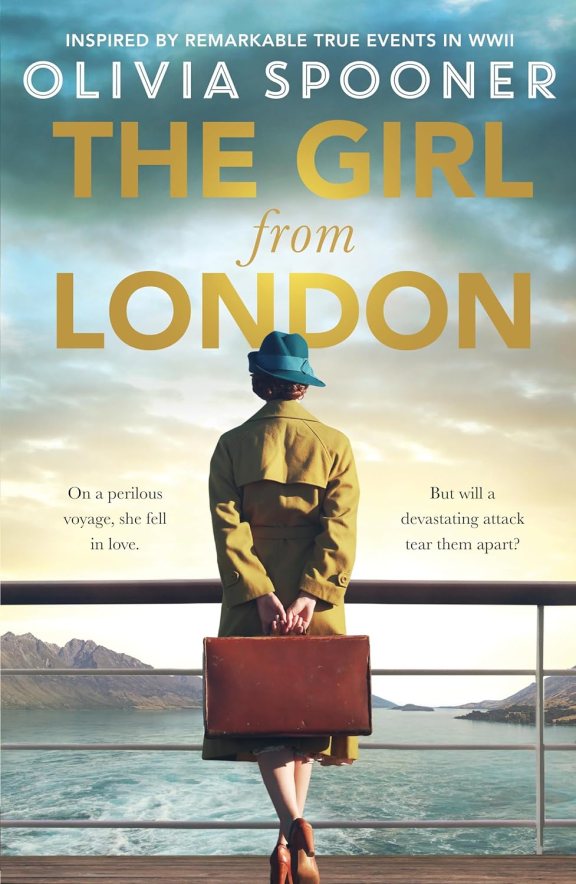
The Girl From London Cover

Publisher: Moa Press (Trade Paperback – 14 November 2023)

Series: Standalone

Length: 314 pages

My Rating: 4.25 out of 5 stars

Amazon

Fantastic New Zealand author Olivia Spooner presents her first dive into historical fiction, with the intriguing and clever historical drama, The Girl Form London, an outstanding read that proved quite fascinating.

Plot Synopsis:

London, 1940. Ruth, a young schoolteacher, volunteers as an escort helping to evacuate children from war-torn England to Australia and New Zealand. Her three-month voyage is fraught – their passage is perilous, and the children anxious and homesick. Nine-year-old Fergus is more troubled than most and Ruth forms an unexpected bond with the boy.

It’s not just Fergus who captures Ruth’s attention. Bobby, a fellow volunteer who initially infuriates Ruth with his laidback charm, somehow gets under her skin and throws her ordered life into chaos.

Tragedy strikes on their return voyage, when the Rangitane is attacked by German raiders. As the ship goes down, the surviving passengers are taken as prisoners of war aboard the German vessel. To the rest of the world, they are missing, presumed dead.

New Zealand 2005. Hazel boards a plane to London, eager to explore Europe. Sitting next to her is a man named Joe. On her lap is a treasured book from her grandfather, Fergus. A book that will finally reveal Ruth’s story.

A captivating, heart-wrenching story of love, loss, and the resilience of the human spirit that will stay with you long after you turn the final page.

This was an outstanding novel from Spooner that took the reader on an enchanting and tragic adventure during some very distinctive moments from World War II.  Spooner chose to tell The Girl From London’s narrative through the somewhat overused medium of a young person in modern times learning about the struggles their older relatives went through during the war.  However, I rather enjoyed Spooner’s take on this writing trope by having her modern characters getting invested in a novel that covers the adventure of Hazel’s grandfather and the people that were important to him as a child.  This not only allowed the author to dive back into the unique story generated in the past but also allowed for a quite good and heartfelt romance story to occur in the present as Hazel and Joe have a meet-cute which develops naturally into a compelling, complex relationship.

While this modern storyline was interesting, I much preferred the storyline set in the past surrounding Ruth’s journey from England to Australian and New Zealand and then the tragic events aboard the Rangitane.  That entire journey away from England was pretty darn fascinating, and I loved the captivating details of how the children were being transported to safety, the inherent tragedy of their journey, and the complicated figures who volunteered to help escort them to a new life.  Spooner covers the historical aspects of their journey extremely well and the first half of their story is quite powerful and lovely, especially as she takes the time to explore the various characters, their developing relationships, and their complex motivations for being on the ship.

The Girl From London takes a fascinating turn once the main characters start the second part of their journey aboard the Rangitane.  The historical events covering the sinking of this ship off the coast of New Zealand during the war is absolutely amazing, and despite a love for history and a good knowledge of World War II history, I had personally never heard of the Rangitane before.  As such I was really enthralled by this real-life tale, and Spooner told it magnificently, examining the taking of the ship in detail and showcasing all the remarkable events that followed.  While these events in themselves are fascinating, Spooner makes them even more compelling by tying her great characters into this historical event.  By this point of the book, you’ve come to care for the characters, so having them involved in this tragedy really raises the stakes for the reader, especially as you know something bad has to happen to Ruth at some point.  This entire part of the book was pretty remarkable, and I really got caught up in how everything unfolded.

I think that Spooner did a pretty good job of bringing the two separate storylines together in an effective and enjoyable way.  As I mentioned above, I liked Spooner’s version of the relative finding out their grandparent’s story here, and the constant breaks in the World War II storyline to explore Hazel and Joe’s burgeoning relationship gave the story a distinctive flavour.  Honestly having her grandfather’s story not become Hazel’s entire identity was quite refreshing compared to other historical dramas I’ve read and I liked the mixture of storylines that emerged.  Still, it was good to get some closure on the main storyline surrounding Ruth, and I liked the emotionally powerful way that Spooner chose to have her story be told.  The ending is both tragic and heartwarming in all the right ways and this ended up being quite an excellent read.

Overall, The Girl From London is a wonderful and compelling historical drama that I had a fantastic time reading.  Olivia Spooner produced a compelling and emotionally charged narrative, that examines romance, sacrifice and the power of choices across the generations, while also diving into a fascinating historical event.  This ended up being an amazing book and Spooner definitely showcased her ability as an author in her first foray into historical fiction.

Amazon

Quick Review – The Paris Agent by Kelly Rimmer

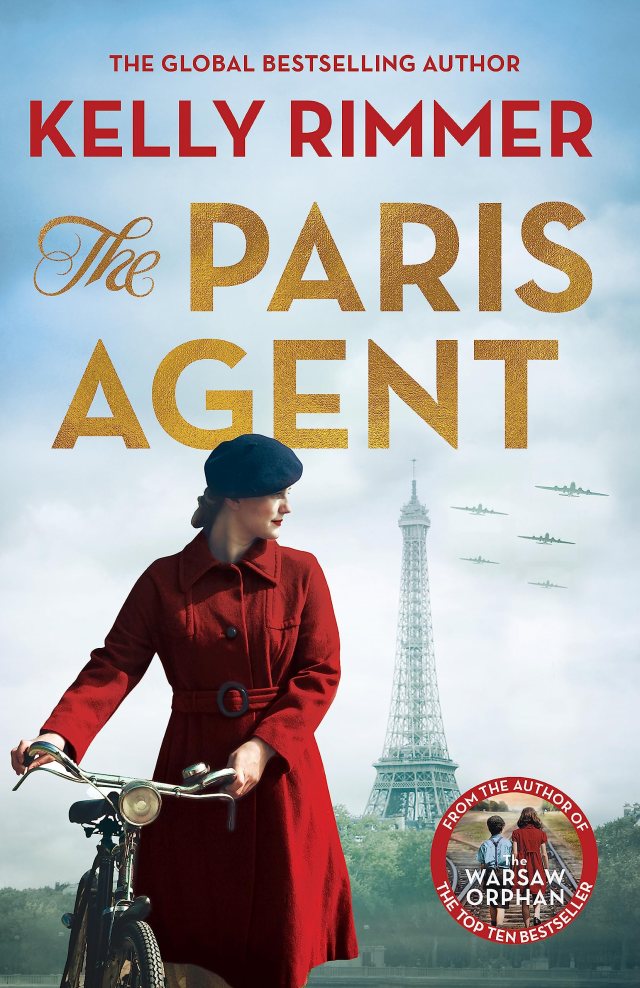
The Paris Agent Cover

Publisher: Hachette Australia (Trade Paperback – 28 June 2023)

Series: Standalone

Length: 337 pages

My Rating: 4.5 out of 5 stars

Amazon

One of Australia’s premier authors of historical fiction, the supremely talented Kelly Rimmer, returns with another moving and intense novel that dives into the horrors of World War II, The Paris Agent.

Over the last couple of years, I have been deeply impressed with the works of Kelly Rimmer, a well-established Australian author whose previous novels have been excellent historical dramas set during the Second World War.  Rimmer’s books are pretty spectacular, as they masterfully blend powerful personal stories with intense depictions of key parts of the war, especially those involving the evils of the Nazi regime.  Her last two books, The Warsaw Orphan (one of my favourite Australian books of 2021) and The German Wife (one of my favourite books and Australian books of 2022), were exceedingly moving, and I now make it a point to grab her new books each year.  Her latest novel, The Paris Agent, presented the reader with an interesting new story, one that focuses on female espionage agents in occupied France.

Plot Synopsis:

Two otherwise ordinary women become spies in WWII France in this sweeping new novel of historical suspense by New York Times bestselling author Kelly Rimmer

Twenty-five years after the end of the war, ageing British SOE operative Noah Ainsworth is reflecting on the secret agent who saved his life when a mission went wrong during his perilous, exhilarating years in occupied France. He never knew her real name, nor whether she survived the war.

His daughter Charlotte begins a search for answers. What follows is the story of Fleur and Chloe, two otherwise ordinary women who in 1943 are called up by the SOE for deployment in France. Taking enormous risks with very little information or resources, the women have no idea they’re at the mercy of a double agent within their ranks who’s causing chaos.

As Charlotte’s search for answers continues, new suspicions are raised about the identity of the double agent, with unsettling clues pointing to her father.

This was another powerful and clever novel from Rimmer, who takes on another aspect of World War II and weaves together an outstanding story.  The focus on Allied female spies being dropped into occupied France is a well-established and highly utilised topic in historical fiction and historical dramas, and Rimmer manages to produce a very distinctive read in The Paris Agent that I found very hard to put down.

To tell her story, Rimmer utilises an excellent multi-perspective narrative, with some interesting time differences also added in for each of the timelines.  The first timeline, shown from the perspective of Charlotte, is set in 1970, and follows the protagonist’s attempts to find out more about her amnesic father’s activities during the war after she finds out he was a spy in France.  The other two storylines focus on the characters of Fleur and Chloe respectively.  Both characters were dropped into France at different points of the war to do their own specific missions, including committing sabotage and investigating reports that the local network had been compromised.  These two past storylines are set across a couple of years in the war, with the two protagonists interacting with each other, and Chloe’s father, Noah, at various points, and together the three storylines wrap together to provide a complex and powerful narrative of espionage, personal relationships, and betrayal, all set in front of the brutal Nazi occupation of France.

All three stories are brought together throughout the course of The Paris Agent, and I liked the complex and intriguing narrative threads that emerged.  The risks and sacrifices of the characters during the war are pretty intense, and the emotional connections that they make bring a compelling balance to the dark story elements of espionage and betrayal.  The third storyline that focuses on Charlotte and her father is also very good, both on its own and for how it supports and enhances the other two plot lines.  This more modern storyline gives some great hints at the tragedy to come in the other storylines, while also underlying further the cost that these intelligence agents had to make.  The intriguing hints that Noah might have been a traitor responsible for terrible events is very compelling, and it is fascinating to see the impact that the war was still having on survivors like him.

The two storylines in the past eventually come together in the last quarter of the novel, and some of the compelling twists that come from this are moving and dark.  The identity of the traitor, while not overly surprising, does have some major emotional heft to it, and you can’t help to despise the antagonist, especially as Charlotte’s storyline serves to underline all the terrible things they did.  Both the Fleur and Chloe storylines end on a very tragic, if inspiring, note, and readers will come away from that exceedingly saddened but impressed by how well written these storylines were.  I did think that the ending of the Charlotte storyline was a little weaker, mainly because it relied on a little too much on coincidence, and I think that the author left some intriguing story opportunities closed.  Still, I really appreciated how cleanly and powerfully these three separate storylines came together, and it resulted in an overall exceptional read.

Rimmer utilises some intriguing writing elements to ensure her story is extra impactful.  As I mentioned before, the use of multiple character perspectives and timelines was a major part of this book, and I was mostly happy with how that turned out.  I must admit that I am not the biggest fan of historical novels that features a storyline where someone in the present day attempts to uncover family secrets, as frankly it is bit of a cliché at this point.  However, I think that Rimmer did a good job here, as it was set far closer to the war, and the family secrets that the protagonist is trying to uncover are the result of amnesia, which is well balanced by the potential spy aspect.  The rest of the story flows through extremely well as a result, and I loved how cleverly the separate wartime storylines interacted and enhanced each other, especially when it came to Noah’s connected story and the examination of the potential treachery.

However, one of the best things about The Paris Agent for me was the outstanding and deep portrayals of the Nazi occupation of France and the espionage efforts the Allies utilised in response.  Rimmer always excels at diving into some of the darkest and most intriguing parts of World War II history, and The Paris Agent was another great example of this.  The author provides some intriguing examinations of how the Nazis controlled France during the war, and Rimmer tries to showcase the occupation from several different sets of eyes in various French settings.  However, the real focus of the book is on the intelligence networks that the Allies set up in France during the war and the missions they engaged in.  This compelling part of the war is always rich ground for historical fiction authors, and I think that Rimmer’s take on it was particularly noteworthy.  She really captures the intensity and dedication that these agents had, as well as the constant risk that they found themselves in.  The focus and portrayal of tradecraft, intelligence gathering, and communication was very realistic, and I cannot emphasise how well each of the major spy protagonists were developed and featured throughout the book.  Of course, as this is a Rimmer book, The Paris Agent does get very dark in places, mainly when it comes to the fate of captured spies and intelligence agents.  Rimmer pulls no punches when it comes to how badly these prisoners were treated, nor when it comes to the terrible fates they experienced.  The fact that many of the characters are based on real historical people makes parts of the book hit even harder, and you really won’t come away from The Paris Agent without a tear in your eye.

Kelly Rimmer continues to showcase why she is one of Australia’s best writers of intense and moving historical fiction.  The Paris Agent was an excellent piece of historical drama that features a powerful and compelling story about spies, tragedy and betrayal.  Cleverly written and guaranteed to stick with you long after you’ve finished reading it, The Paris Agent is an outstanding and highly recommend book that I am really glad I got to experience.

Amazon

Blood Sugar by Sascha Rothchild

Blood Sugar Cover

Publisher: Trapeze (Trade Paperback – 26 April 2022)

Series: Standalone

Length: 328 pages

My Rating: 4.75 out of 5 stars

Amazon     Book Depository

Outstanding screenwriter Sascha Rothchild presents her debut novel with the utterly addictive Blood Sugar, an awesome and clever thriller with a sweet twist.

Ruby Simon has been a killer since she was five years old.  On a sunny day, young Ruby took an opportunity to rid herself and her sister of the school bully by helping him drown at the local Miami beach.  After managing to get away with her crime, Ruby expected to feel guilty for the life she took, but instead all she felt was relief that the boy would never hurt her sister again.  This action led to Ruby having a realisation that sometimes killing a terrible person is not necessarily a bad thing.

Twenty-five years later, Ruby appears to have it all.  A successful and driven psychologist in Miami, Ruby has killed several times over the intervening years and has never felt guilt for her actions.  However, everything she has built is about to come crumbling down when she finds herself in an interrogation room under suspicion of murder.  In front of her lie four photographs of people who she once knew and who are all now dead.

As the interrogation continues, Ruby soon discovers a significant problem: of the four victims she is accused of murdering, she has only killed three of them, and it is the death she is not responsible for that the police are most determined to bring her down for.  Can Ruby prove she is innocent of this one murder?  And even if she can, does she even deserve to be set free?

This was an impressive and compelling debut from Sascha Rothchild that I was really quite happy to get a copy of.  Not only did it have an awesome-sounding plot but I was also very intrigued by the author, as Rothchild already had some major writing creds after her work on several television shows, including GLOW, which I was a big fan of.  I ended up really loving Blood Sugar and I swiftly got drawn into its witty, humorous and powerful story set around an unlikely and extremely likeable murderer.

Blood Sugar has a distinctive and fun narrative that really grabs your attention from the beginning, starting as it does with child-on-child murder.  Told exclusively from the perspective of central character Ruby Simon, the book is an impressive, deep and occasionally humorous character study of a very unique fictional killer.  The initial narrative is split between events in the character’s present, where she is being interrogated by the police, and an extended look back at her past, as you see all the major events in her life.  These flashback sequences take up the majority of the first two thirds of the book, and they present some powerful and intriguing examinations of the protagonist and all the moments that led to her present.  In particular, they look at her key relationships, her schooling, the events that made her into the successful person she is today, as well as the moments where she decided to take a life.  These two separate narrative threads play off each other extremely well, with the character history providing some intriguing context to the character’s background and mindset, while the present-day interrogation does a good job at hinting at events that are still to be revealed in the flashbacks.  Rothchild’s excellent writing style and ability to forge interesting and compelling characters are on full display during this part of the novel, and she is effortlessly able to construct a powerful and natural life story around the very relatable protagonist, with her occasional murders cleverly worked in.  The blend of character history and justified killings really works well to keep your attention, while also making you really start to care about the protagonist and her future.  Both separate linear threads bind together perfectly as the novel progresses and leads the reader towards Blood Sugar’s awesome third and final act.

The final third of Blood Sugar takes on a completely new format as the first-person examination of the protagonist’s past is wrapped up and the book turns into an intense legal thriller.  This fantastic and powerful change of pace is quite jarring and sees the protagonist encounter all manner of personal setbacks and attacks as the police close in on her.  Thanks to all the awesome work that the author did in the first part of the novel, the reader is now incredibly invested in Ruby’s life story, and you feel incredibly sympathetic for her.  As such, it hurts a little to see her so terribly attacked, even though many of the things that they are accusing her of are true and a key part of her life.  This final part of the novel is incredibly intense, and Rothchild brings out all manner of intriguing twists and turns to shake the reader, especially as you still a little uncertain about who is responsible for one of the key events.  The author comes up with an intriguing and entertaining conclusion for the novel that really makes one of the supporting characters shine.  I really liked how everything wrapped up here, and it really did the rest of the book justice.  An overall impressive and highly addictive narrative that I powered through in very short order.

I deeply enjoyed some of the unique elements that Rothchild sprinkled throughout her novel.  While there is a natural focus on the morality of murder and the mindset of her protagonist, the author also takes the time to examine other interesting elements in her own entertaining way.  Many of these elements revolve around relationships, with the protagonist finding herself connected to multiple interesting people in a variety of complex ways, from a very close platonic friendship that experiences major highs and severe lows, to a loving relationship that tries to overcome mistrust and traumatic pasts.  The author also presents one of the most honest and powerful examinations of the relationships people have with their pets, as the protagonist becomes extremely close with several animals that she adopts.  While one of these ends quite tragically (I was legitimately heartbroken when this happened), it transitions into a very moving and accurate examination of the strong grief that people often feel for their pets, and it is one that every animal lover will understand and appreciate.  The various relationships featured in Blood Sugar form a key part of the story, and it was fascinating to see them unfold around the protagonist, especially as they brought out some unique family dynamics, and I really appreciated the clever ways that the author worked them into the wider plot.

There is also an outstanding look at the media circus that surrounds big crimes, especially once the protagonist finds their previous crimes under investigation.  Watching Ruby’s entire carefully constructed life come unravelled in the public eye is one of the more intense parts of Blood Sugar, and Rothchild pulls no punches when it comes to the savagery of the media and the isolation that accused people find themselves in.  I also appreciated the intense dive into the world of the personal psychology, as the protagonist uses her training to explore her mind as well as issues surrounding several of her clients.  This was a very intriguing part of the book’s plot, and I liked how Rothchild praised therapy, showing that it can be very beneficial to people, even trained psychologists and serial killers.  However, the most impressive story element that Rothchild worked into the novel was the in-depth examination of diabetes and the impacts it can have.  Due to a key plot point, quite a lot of the book revolves around a character’s diabetes, with their low blood sugar (yep, that is what the book is named after), become a major factor in the case against Ruby.  Rothchild has clearly done her research when it comes to the intricacies of diabetes, and I really appreciated how she was able to imagine a potential murder based around this disease.  All these distinctive elements and more are expertly utilised in the wider plot and become a key part of the protagonist’s unique and complex life.

Finally, I really must touch on Blood Sugar’s awesome protagonist of Ruby Simon, who stands out as one of the most original and surprisingly likeable literary characters of 2022.  Ruby is a very distinctive figure; she first killed at a very young age and has gone on to murder again several times through her life.  Even though she feels no guilt for these killings, Ruby is not portrayed as a psychopath or a serial killer; she is simply someone able to justify the actions she took in a very logical way.  Due to the way that the novel is set out, you see most of Ruby’s life through her eyes and you swiftly come to appreciate her point of view, especially as she appears as a mostly normal person who finds herself in some unique situations.  Each of her killings is laid out to the reader in a very logical and natural way, and you honestly have a hard time understanding and even supporting her reasons or justifications for the killings.  Due to this, as well as the extremely relatable way that Rothchild portrays her, you become strongly connected to the character, and you quickly start rooting for her to avoid being capture or prosecuted for her crimes.  I honestly cannot remember becoming as attached to a killer character as did with Ruby in Blood Sugar, and Rothchild really went out of her way to ensure that you liked her protagonist.  An excellent and memorable bit of character work.

Overall, Blood Sugar was one of the more unique and entertaining releases of 2022 so far, and I was really impressed with Sascha Rothchild’s first novel.  Featuring an extremely clever, hilarious, thrilling and addictive story, Blood Sugar was a very fun novel to dive into, especially once you become attached to the amazing main character.  Powerful, intense and very distinctive, Blood Sugar is easily one of the best debut novels of 2022 and it comes very highly recommended by the Unseen Library.

Amazon     Book Depository

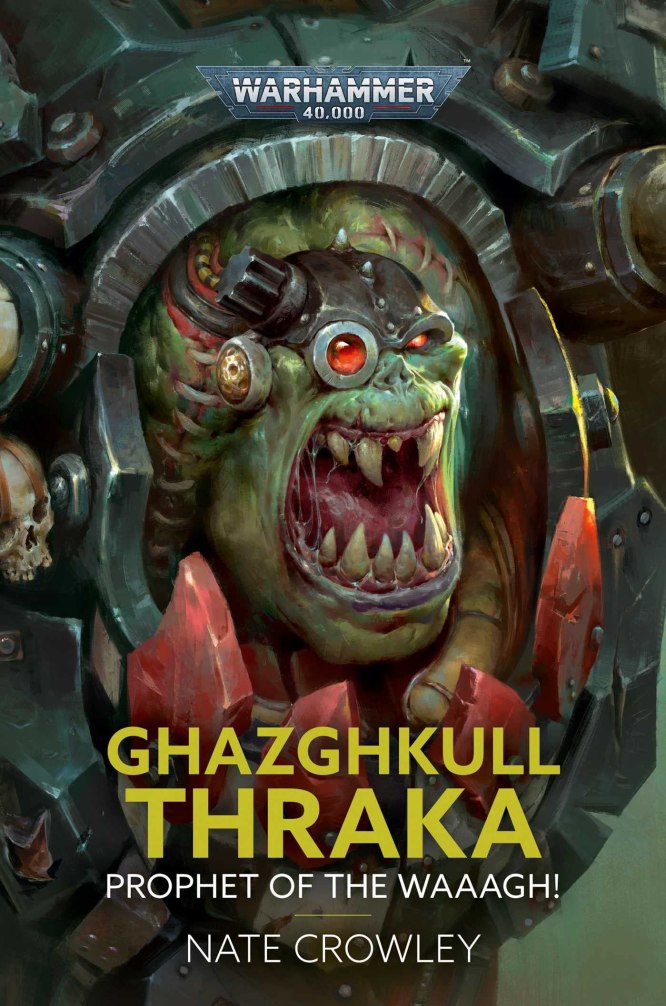
Warhammer 40,000 – Ghazghkull Thraka: Prophet of the Waaagh! by Nate Crowley

Ghazghkull Thraka - Prophet of the Waaagh! Cover

Publisher: Black Library (Audiobook – 15 March 2022)

Series: Warhammer 40,000

Length: 7 hours and 30 minutes

My Rating: 5 out of 5 stars

Amazon     Book Depository

Prepare to read one of the most amusing and downright entertaining recent additions to the Warhammer 40,000 canon with the hilarious and brilliant Ghazghkull Thraka: Prophet of the Waaagh! by outstanding author Nate Crowley.

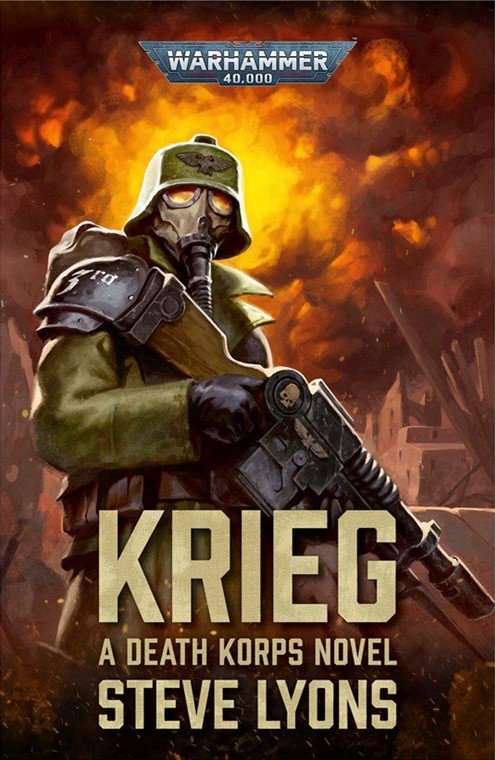
I have been having an immense amount of fun really diving into the massive wealth of tie-in fiction surrounding the Warhammer 40,000 tabletop game this year.  Books like Steel Tread by Andy Clarke, Krieg by Steve Lyons, The Bookkeeper’s Skull by Justin D. Hill and Day of Ascension by Adrian Tchaikovsky, have really highlighted just how diverse and intense this extended universe can be.  However, the latest tie-in novel I checked out may prove to be one of my absolute favourites, as I got to learn all about one of the most iconic ork characters in this universe with Ghazghkull Thraka: Prophet of the Waaagh!

Orks are the most notorious and dangerous creatures that roam the galaxy of the 41st millennium.  Billions upon billions of the powerful, war-loving creatures can be found throughout every sector of space, fighting anyone and anything they can find, especially each other.  However, out of all these monsters, none are more feared, respected or hated than the warlord Ghazghkull Mag Uruk Thraka, chosen of the ork gods Gork and Mork and proclaimed prophet of the Waaagh!

Throughout his legendary life, Ghazghkull has done what no other ork has been able to achieve.  Bringing together innumerable warbands into one massive horde of green, Ghazghkull has warred with every faction in the cosmos, while his infamous invasions of the Imperial planet of Armageddon are the stuff of bloody legend.  Everyone knows of his epic and rivalry with his indomitable foe, Commissar Yarrick, which turned Armageddon into a perpetual warzone, but does anyone know the true story of Ghazghkull and the events that made him?

Rogue Lord Inquisitor Tytonida Falx has long attempted to discover what lurks in the minds of the xenos her order faces.  When an opportunity to find out more about Ghazghkull presents itself, she eagerly jumps at the opportunity, bringing a unique prisoner aboard her heretical ship, Ghazghkull’s banner bearer, the grot Makari.  Interrogating him, Inquisitor Falx and her team soon discover that Makari might just be the only being in the universe who knows the full truth about who, or what, Ghazghkull is, and what he plans to do next.  But, as she listens to Makari’s tale, the Inquisitor soon discovers that the shadow of Ghazghkull’s rage and desire for violence far eclipses anything that the Imperium has ever believed.

Wow, now that was a really fun and captivating read.  I knew going into Ghazghkull Thraka: Prophet of the Waaagh! that I was going to have a great time, especially after enjoying author Nate Crowley’s The Twice-Dead King novels, Ruin and Reign, but I was blown away by how awesome Ghazghkull Thraka was.  Featuring a clever and wildly entertaining story, perfectly told through various unique eyes, as well as some deeply enjoyable characters, I quickly became absorbed in the impressive story and powered through it in a couple of days.  Not only was this my favourite book from Crowley but it also probably overtakes Kal Jerico: Sinner’s Bounty as the most amusing Warhammer novel I have ever read.

I had an absolute blast with the incredible story that Crowley whipped up for Ghazghkull Thraka, as it ended up being an inventive and entertaining way to showcase an iconic Warhammer figure.  Due to his prominence within the game and the extended fiction, Ghazghkull is probably one of the most utilised non-human characters in the canon, with many different novels, game books and comics already diving into his life.  As such, Crowley needed to come up with a completely new way to examine this great character that didn’t tread on any prior works.  I think his solution to this problem was exceedingly clever, as he chose to tell the story through the eyes of the most unlikely narrator and chronicler, the grot Makari, whose unique insights and worldview turned this already known backstory into something truly special.

The story starts off in the current timeline of the Warhammer 40,000 universe and shows Inquisitor Falx obtaining Makari and interrogating him about Ghazghkull.  This causes the book to dive back into the early days of Ghazghkull as Makari chronicle his master’s existence as he saw it.  As such, you get a very specific examination of Ghazghkull’s life, with a focus on his early trials, some of his pivotal moments, and more specifically his interactions with Makari.  At the same time, the story keeps jumping back to the present, with the Inquisitor and her followers interrupting to ask specific questions and discussing whether there is any truth in what he says.  The book keeps jumping between these different perspectives, and you end up with two distinctive storylines as Makari’s presence brings some big woes for the Inquisitor in the present day.  The chronicle storyline goes at a brisk pace, especially as Makari’s interrogators get him to skip or shorten specific sections, but there is a clever and impressive logic into what parts of Ghazghkull’s life are featured or ignored.  Not only are the past and present storylines exceedingly intriguing and entertaining in their own rights, but they also come together perfectly as well, with Makari’s insights into Ghazghkull and himself impacting the actions of Falx.  While the ending was slightly too metaphysical, it served as a brilliant and powerful conclusion to this great story, and I loved seeing the entire tale come full circle in some hilarious ways.

I deeply appreciated the way that Crowley put Ghazghkull Thraka’s story together, as its distinctive and clever style really helped to enhance the chronicle contained within.  The plot device of an interrogation of an alien prisoner works extremely well to set up the main narrative, and the constant interruptions, debates and revelations that occur whenever it snaps back to the present adds to the sense of mystery and mysticism surrounding the titular figure.  While Crowley takes the story in some interesting and complex directions at times, the entire novel is paced beautifully, and there is never a single boring or slow moment within the entire thing.  I particularly liked the near constant humour that was injected into the story, a fantastic side-effect of basing the book around the funny ork species, and I laughed out loud several times as I powered through this impressively amusing read.  Like many Warhammer novels, Ghazghkull Thraka can be enjoyed as a standalone read, and the author makes sure that it features a great self-contained narrative that anyone can enjoy, even those unfamiliar with the universe and the canon.  Indeed, this would be a decent introduction to the Warhammer 40,000 canon and associated extended universe, especially as it perfectly presents one of the key factions of the universe.  Most of the unique universe elements and wider history are explained sufficiently for new readers to follow along without any issues, although some could potentially get confused by the deliberate exclusion of events previously covered in other books.  Still, Ghazghkull Thraka should turn out to be an easy and entertaining read for any science fiction fan, and I thought that this Warhammer 40,000 novel was very well written and extremely clever.

One of the things I love the most about Nate Crowley’s Warhammer novels is his brilliant ability to dive into the unique alien races of the universe and then perfectly showcase their culture and mindsets.  This was the case again in Ghazghkull Thraka, where Crowley expertly dives into the heads of the various ork and grot characters.  No matter whose perspective is shown, every scene of this book features some excellent and often highly amusing depiction of greenskin culture, as Makari attempts to explain the ork perspective as well as his place in the society as a grot.  As such, you get some incredibly detailed and compelling insights into this crude and warlike race, including their brutal hierarchy, need for violence, insane technology, and very unique worldview, which generally results in most of the book’s fantastic humour.  However, rather than the dumb, brutal and one-note figures that most authors depict, Crowley really goes out his way to show that there is a lot more to orks than you realise.  Not only do you get some excellent insights into their various clans and organisations but the various ork characters are shown to be complex beings with unique needs and the ability to formulate some very cunning plans.  There is a particularly intriguing look at the ork religion that follows the gods Gork and Mork, and this novel ends up with a spiritual edge, especially as Crowley shows the orks being extremely successful because they choose to strongly believe in themselves.  As such, you see quite a unique and compelling side to the ork race in this book, and I loved how incredibly Crowley portrayed them.

Naturally, a big part of this examination of ork culture comes from the in-depth look at the life of Ghazghkull himself.  As I mentioned before, Ghazghkull is one of the best-known characters in the entire Warhammer 40,000 canon, so most veteran readers would already be quite familiar with him and his actions.  However, Crowley does an excellent job of examining a completely new side to this character, and mostly ignores his wars at Armageddon and his intense rivalry with Commissar Yarrick, both of which have been done to death in other books.  While certain parts of his history are revisited in this novel, Crowley completely changes their implications and causes, instead focusing on Ghazghkull’s unique orkish mindset and his role as the prophet of his gods.  This new take on Ghazghkull proves to be quite unique and very captivating, as he is shown to be an overburdened being, constantly pressured by his own visions and the influence of the gods to succeed and be a uniting force for his people.  While he still retains the casual violence of his race, you really see Ghazghkull as a deep thinker, and it is fascinating to see his inner ork face off against his grand ambitions and desires.  Crowley also adds some compelling supernatural elements to his character, as Ghazghkull, as seen by Makari, bears a direct connection to the gods which he can use to alter his fellows and himself.  While this isn’t too overpowered or strange, it adds a great extra layer of menace to the character, especially for the humans, and I loved seeing the Inquisitors trying to wrap their heads around the strange occurrences.  I had a lot of fun seeing this other side of Ghazghkull, and this novel ended up being a great analysis of who they are and what they represent to their race.

I also really enjoyed the inclusion of Makari as one of the central characters, and his use as the main witness to Ghazghkull’s life worked incredibly well.  While Makari has always been associated with the character of Ghazghkull, accompanying him in his battles and waving his banner as a source of luck, Crowley really changes him in this novel and paints him as an essential part of Ghazghkull’s success and relationship with the gods.  Shown to be there the moment that Ghazghkull became the prophet, Makari follows Ghazghkull through some of his big moments and it is hilarious to see his snide view on the subject, especially as, like most grots, he a massive coward who doesn’t want to be there.  A lot of this novel’s humour is derived from Makari’s observations and responses, and I loved some of the jokes set up around it.  Crowley does an awful lot with this character, and I particularly liked how the story explained certain aspects of his previous portrayals, such as the apparent multiple versions and his surprising luck.  These are worked into the story extremely well, but it’s the relationship with Ghazghkull that becomes the most fascinating.  Just like with Ghazghkull, there is a major spiritual edge to Makari, who appears to be just as chosen and important to the plan as his master.  Makari’s mystical and religious bond enables him to have a far bigger insight into Ghazghkull’s actions than anybody else, and this really enhanced the analysis of the titular character.  However, it is in Makari’s attempts to serve and help his master achieve his destiny that we see the best Makari scenes, especially when faced with Ghazghkull’s apparent depression, the manipulation of his other followers, and his own stubbornness.  While Ghazghkull does have the inherent ork reluctance to rely on a grot, and indeed he is extremely likely to kill Makari if he starts giving advice, the moments where Makari get through to him are powerful, and I really appreciated the character work surrounding them.  There are some rocky moments between them, especially when Ghazghkull becomes dismissive of his lucky grot, and Makari’s subsequent reactions is very funny and incredibly over the top, which was so very cool.  Overall, this ended up being an excellent and surprisingly compelling portrayal of Makari, and I am exceedingly glad that Crowley featured him in this novel the way he did.

Aside from the greenskin characters, a large amount of plot revolves around the team interrogating Makari.  Crowley really went out his way to create a particularly unique group of Imperial agents who bear surprising insights into the mind of the xenos.  This team is led by Inquistor Falx, a rogue Inquisitor who bears a dangerous obsession with the alien creatures.  Falx is desperate to learn everything she can about the aliens attacking the Imperium to help defeat them and finds herself stymied by the Imperium’s controlling and non-progressive government and religion.  As such, she takes some major risks in this book to understand Makari and Ghazghkull and has some unique and dangerous methods for achieving her goals that borders on the insane/heretical.  I quite liked Falx, despite her obsessive qualities, and she proved to be a great central figure for half the novels plot, especially as her frustrations, concerns and thoughts about the evils of the Imperium, are extremely understandable.

Falx also employs a unique team of interrogators to help her with Makari, including Brother Hendriksen, a Space Wolves rune priest assigned to Deathwatch who has also fallen out of favour with the Imperium thanks to his work with Falx.  Hendriksen serves as a beastly and powerful presence on Falx’s team, and he often provides a great counterpoint to the inquisitor in both technique and common sense, often despairing at her more dangerous choices.  Crowley’s diverse cast gets even larger with the truly unique character of Cassia, a female ogryn psyker who has grown as smart as a human.  This was a fantastic and extremely distinctive addition to the cast, and her surprisingly calm demeanour, which contrasts beautifully with her immense ogryn strength, works perfectly against Hendriksen’s impatience and anger.  The final member of the team is probably the most enjoyable, with the ork character, Biter (Bites-Faces-Of-The-Face-Biter-Before-It-Can-Bite).  Biter is a member of a Blood Axes mercenary band who have dealings with Falx and who sell Makari to her, remaining behind to interpret Makari’s testimony to the humans.  Due to being a member of the Blood Axes, a group who idolise human military culture, Biter is a very distinctive figure, wearing an approximation of a military uniform and appreciating complex tactics and strategy.  However, Biter is even more intelligent and cunning than most Blood Axes, and his near human tendencies really stand out, as it is pretty unexpected from an orc.  His fantastic reactions, comedic impressions of human behaviour, and determination to antagonise the Inquisitor really make him stand out, and he was an absolute joy to behold.  These four interrogators play off each other perfectly during the present-day scenes, and their arguments, discussions and interpretations of Makari’s story give it added depth, humour and impact, especially once they start realising just how valuable their prisoner is.  This entire cast was put together extremely well, and I had an incredible time with this unique and enjoyable collection of characters.

Like most Warhammer novels I check out, I chose to grab the audiobook version of Ghazghkull Thraka, which turned out to be such a wonderful and incredible listening experience.  Not only did the story absolutely fly by in this format, allowing me to get through its seven and a half hour runtime extremely quickly, but I found that the narrative and descriptions of ork life really popped when read out.  However, the best part about the Ghazghkull Thraka audiobook is the outstanding use of narrators.  This audiobook has three separate narrators, Kelly Hotten, Paul Putner and Jon Rand, each of whom have some experience narrating other Warhammer audio productions.  Not only are each of these narrators quite talented but the way they were featured in this audiobook is extremely clever, with the voice actor changing depending on who is witnessing or telling the events of the book.  For example, Kelly Hotten serves as the narrator for the various scenes and interludes where Inquisitor Falx is witnessing Makari’s interrogation, and Hotten does a brilliant job capturing the various players of these scenes, including the Inquisitor, her unique companions, and their orkish interpreter.  Paul Putner narrates the various scenes shown directly from Makari’s perspective, and he has a lot of fun in this role, not only capturing the cowardly and sneaky mannerisms of the grot protagonist, but also providing some amusing and deep voices for the ork characters.  Finally, Jon Rand has a memorable sequence voicing Brother Hendriksen when he psychically jumps into Makari’s mind and views some of the events occurring, and he gives the character a notable accent and internal growl that fit him extremely well.  The jumps between the voice actors were done perfectly and I really loved how it changed up depending on the perspective.  All three voice actors did an amazing job with their narration, and their work, plus some fun sound effects here and there, helped to turn this into such an impressive production.  Easily the best way to enjoy Ghazghkull Thraka, you will have an incredible time listening to this audiobook.

Nate Crowley continues to shine with another entry in the Warhammer 40,000 universe, with the unbelievably entertaining Ghazghkull Thraka: Prophet of the Waaagh!  Featuring a unique and deeply amusing story that re-examines on of the canon’s most iconic alien characters, Ghazghkull Thraka has a tight and cleverly written story, loaded with action, great characters and whole mess of outstanding humour.  Not only that, but this is without a doubt one of the best portrayals of the Warhammer 40,000 orks I have seen as Crowley obviously had a ton of fun bringing them to life.  Easily one of the best (and definitely the funniest) Warhammer 40,000 novels I have been lucky enough to enjoy, Ghazghkull Thraka comes extremely highly recommended, especially in its audiobook format, and is a must read for all fans of this wonderful fandom.

Amazon     Book Depository

Death of the Black Widow by James Patterson & J. D. Barker

Death of the Black Widow Cover

Publisher: Century (Trade Paperback – 12 April 2022)

Series: Standalone

Length: 520 pages

My Rating: 5 out of 5 stars

Amazon     Book Depository

Prepare for one of the trippiest and darkest thrillers of 2022 with Death of the Black Widow, the latest brilliant standalone novel from the all-star team of James Patterson and J. D. Barker.

Few thriller writers out there at the moment are as well-known or prolific as superstar author James Patterson.  Patterson has been absolutely dominating the thriller and crime fiction genre for nearly 30 years and has an incredible catalogue of works to his name, including his best-selling Alex Cross books.  In recent years, Patterson has released a torrent of works, including some solo books and several novels done in collaboration with other talented writers and even a few celebrities.  I personally have loved several of his previous collaborated books, including Lost (co-written with James O. Born) and 2 Sisters Detective Agency (co-written with Candice Fox).  However, one of the more intriguing authors he has teamed up with is acclaimed thriller and horror author J. D. Barker.  Barker, whose work I previously enjoyed on Dracul (co-written with Dacre Stoker), has already produced two intriguing novels with Patterson, The Coast-to-Coast Murders and The Noise.  I have been keen to check out this awesome writing team for a while (The Noise is currently sitting on my shelf waiting for my attention), and when I received a copy of their latest book, Death of the Black Widow, I made sure to read it as soon as possible.

It is a typical night in Detroit until former police officer Walter O’Brien and his comrades call in a bomb threat on a busy night club and use concentrated sniper fire to keep its patrons trapped inside.  When the police arrive on scene, Walter surrenders to them and offers them a simple choice: allow them to kill a single woman hidden within the club, or watch as the entire building is destroyed.  But who is this mysterious woman and what has driven Walter and his friends to such extremes?

The origins of these desperate actions date back decades to when a young Walter O’Brien is called to a murder scene on his very first night for the Detroit PD.  What he uncovers is a terrible and bloody crime scene: a scared and surprisingly alluring young woman has apparently escaped from captivity and skillfully bludgeoned her ruthless captor to death with a lamp.  Attempting to take her to hospital, Walter is shocked when she escapes from his custody, leaving an impression on him that will last a lifetime.

Years later, as a new homicide detective, Walter has a chance encounter with someone he believes to be same women from that fateful night.  Still obsessed with his previous encounter, Walter attempts to track her down, only to find a disturbing pattern between this mysterious and woman and several disturbing and unexplainable murders he is investigating.  But when his case takes an even more unusual twist, Walter finds himself thrust into something far bigger than himself.  A secret government agency is attempting to find this mysterious woman, and soon they and Walter begin to uncover a disturbing trend of murders going back years.  As Walter begins to lose himself more and more to obsession, he becomes determined to be the one to stop any more killings.  But what is he willing to do to stop the deaths once and for all?

Wow, now that was a fun and intense book.  Patterson and Barker have produced something very special with Death of the Black Widow, which was an utterly insane and awesome read.  I was actually a little surprised with how much I enjoyed this clever book, and I think I have very little choice but to give it a full five-star rating.

Now, I must admit that when I started reading Death of the Black Widow, I honestly did not know too much about the book, apart from what was in the synopsis.  From that and the name, I assumed that this was going to be a psychological thriller or a spy thriller.  However, while Death of the Black Widow does have thriller and murder mystery elements to it, and indeed it appears to be a purely crime fiction novel for the first few chapters, it actually turned out to be something entirely more complex.  Within the first 100 pages or so, you begin to realise that the authors are subtly including elements from other genres, and Death of the Black Widow soon starts to take on a distinctive horror vibe, with some incredible brutal killings done under extremely unusual circumstances.  While I was surprised by this, I cannot say that I was disappointed.  Instead, I felt that it was a brilliant move from the authors and one that played particularly well to Barker’s strengths.  This new genre combines well with the books existing thriller/crime fiction framework to create an intense and exhilarating read that is extremely easy to get into and very, very hard to put down.  I personally found myself powering through the last 350+ pages in less than a day, especially once I begun to fully understand just how clever and weird things were about to get.

I was really impressed with how Death of the Black Widow unfolded as a story, especially as Patterson and Barker went out of their way to make this standalone read as enticing and epic as possible.  The book starts in the present day and shows the older protagonist and his compatriots entering the end game of their confrontation with a mysterious woman.  This serves as a great setup to the rest of the story, which jumps back multiple decades to 1986, when Walter and the mysterious woman, known here as Amy Archer, first meet, and the strange and deadly circumstances behind their encounter.  The story then jumps forward several years to 1992, where Walter is investigating several strange murders when he has a chance encounter with someone he believes is Amy.  This results in an intriguing series of chapters where Walter deals with both the investigation and his growing obsession with this girl, before everything blows up terribly and the mystery becomes more convoluted and unusual with each new revelation.  This pattern continues throughout the book, with the story jumping ahead years at a time to show the multiple encounters between Walter and his obsession.  Each time period reveals some intriguing new angles and elements, and you find out new revelations about the woman the protagonist is hunting, resulting in the full truth about her finally being revealed.  The novel also keeps slipping back to the siege occurring in the present, with some new characters trying to uncover what Walter and his team are up to as the protagonists provide them with hints about who they are and what they are after.

I deeply enjoyed that the authors chose to utilise a split timeline for Death of the Black Widow, especially as it works extremely well to tell this outstanding narrative.  The switch between time periods and chronological length of the story really enhances just how mysterious the events of the book are and the powerful, life-altering impact they have on the protagonist.  There are many clever elements to the switches between the periods, and I loved the subtle inclusions in the present timeline that hint at the events in the past that the protagonist was yet to experience, and the full impacts of them.  There are also some fun summaries loaded at the front of each change between the past and the present that represent the protagonist’s notes on the case.  Not only can these be useful to remind the reader where they are, but it helps to highlight just how massive the case gets, especially towards the end of the book, as well as tracking Walter’s growing obsession (especially the last one).  This entire story is loaded up with brilliant reveals and shocking twists, and I was honestly surprised and very thrilled in some of the excellent directions that the authors took the story.  You will honestly have a hard time putting this novel down once you get past the halfway point, especially once the 1992 storyline comes to its shocking end, and the intense revelations and horrific scenes of the next few time periods ensures you will become unerringly trapped as you attempt to find out more about the antagonist and their past.  This entire story of obsession, murder and mystery concludes perfectly in the present, with some truly big moments, as everything comes full circle and twists that have been hidden in plain sight since the start come into the light.  This was such a great story, and I frankly loved every single second I spent reading it.

I cannot finish talking about this book without mentioning the excellent characters it contained.  Death of the Black Widow features an intriguing and unique cast, each of whom brings something fun and compelling to the story.  The most prominent of these is Walter O’Brien, who serves as the central point-of-view character for most of the story.  Thanks to how the book progresses, you get to see the entirety of Walter’s life unfold, from his young days as a rookie cop, all the way up to his present, when an older, dying Walter attempts to bring his great obsession to an end by finally catching the woman who has haunted him for decades.  This ensures you get a brilliant look at this character and it proves absolutely fascinating to see the various stages of his life and the continued impacts of his interactions with the woman he knows as Amy Archer.  One of the best parts of this is that you get to see the growing obsession that Walter builds towards this woman, as meeting her proves to be a defining experience for him.  Despite the fact that his interaction with her are relatively short, each time he meets Amy she changes his life in a different way and he soon becomes quite obsessed with her.  This obsession continues to bloom, even after certain revelations about her and her actions become known, and he is forced to fight his own feelings and observations throughout the entire book, especially once it becomes clear that this obsession is mutual and that Amy is drawn to Walter as well in a twisted romance that is so damn dark.  Watching this usually confident and capable person being haunted by this obsession proves to be powerful and captivating centre to this story, and you really feel for this protagonist as he struggles.  Walter ends up serving a great role as the central protagonist of this story, and I found his entire character arc to be extremely well written and cleverly exposed.

On the other side of the coin is the mysterious woman who serves as the titular Black Widow of the story.  Known to Walter as Amy, this woman serves as a shadowy and enigmatic figure in the book, especially as you have no idea who she truly is for most of it.  To avoid spoilers, I will not go into too much detail about her here, but I will say she was an exquisite and amazing character, and the authors did a remarkable job bringing her to life and fitting her into this remarkable story.  She is easily one of the most distinctive and memorable literary villains I have read for a while, and if they ever make a movie of this book (which they really should), I think a great actor could turn her into something very special.  These two characters, as well as some other great supporting characters (the members of Walter’s team in the present day, as well as some distinctive cops from the past timelines for example), prove to be the beating heart of this incredible story, and it was absolutely fascinating to see how their intriguing lives worked in to the plot of this book.

No doubt it, I was really, really impressed with Death of the Black Widow, which ended up being one of the most exciting and compelling reads of 2022 so far.  The outstanding team of James Patterson and J. D. Barker were absolutely amazing here, producing a clever and intricate thriller, loaded with unique characters, a deep obsession laden storyline and some excellent horror elements.  This was easily one of the most unique and memorable novels I have read in a while, and I loved every single second I was going through it.  A highly recommended read that will appeal to anyone interested in a dark and deadly read, you will not be disappointed with Death of the Black Widow.

Death of the Black Widow Cover 2

Amazon     Book Depository

The German Wife by Kelly Rimmer

The German Wife Cover

Publisher: Hachette Australia (Trade Paperback – 27 April 2022)

Series: Standalone

Length: 450 pages

My Rating: 5 out of 5 stars

Amazon

One of Australia’s best authors, Kelly Rimmer, returns with another beautiful and exceedingly moving historical drama, The German Wife, which takes readers to the edge of despair and back again with its deep and bleak plot.

Kelly Rimmer is an outstanding author who specialises in writing great historical drama novels and who was one of the better authors I was lucky enough to experience for the first time last year when I received a copy of her 2021 novel, The Warsaw OrphanThe Warsaw Orphan was a brilliant and extremely powerful read that showcased multiple sides of the horror and terror experienced in the Warsaw Ghetto while also telling the unique tale of two young people who tried to smuggle young children outside the ghetto walls.  Brutal, extreme and yet filled with hope, this was a deeply moving novel that ended up an incredible read.  Due to how great this novel was, I was extremely keen to check out more stuff from Rimmer and I was extremely happy when I found myself receive a copy of her latest novel, The German Wife.

Berlin, 1930.  Sofie Rhodes can only watch in horror as the Nazi Party starts to take control of her country, slowly morphing it into a nation of hatred and fear.  Already facing financial ruin after World War I and the Depression, Sofie and her husband, Jürgen, find themselves receiving special attention from the Nazis due to Jürgen’s scientific speciality.  When Jürgen is forcibly recruited to Hitler’s top-secret rocket project, Sofie finds herself constantly under surveillance and forced to conform to Nazi ideology, including turning her back on her Jewish best friend, Mayim.

Many years later, in 1950, Sofie and her remaining children emigrate to a small town in Alabama to be with Jürgen, whose past with the Nazis has been pardoned and erased in exchange for his work on the US space program.  Determined to make a new life for herself and her family in America, Sofie soon discovers old and new prejudices both from the hostile Americans and the other German families living in town with them.

Isolated and hated, Sofie finds her path crossing with American housewife Lizzie Miller, who has her own history of loss and despair during the Depression.  Shocked that her husband and government are so eager to be working with former Nazis, Lizzie keeps finding herself in conflict with Sofie, while rumour and gossip about the Rhodes family swirl around town.  When these rumours lead to violence and anger, the new community will be torn apart as the true history of the Rhodes family comes tumbling out.  Can this troubled family finally find redemption in a new land, or will the horrors of the war and Nazi ambition follow them wherever they go?

Damn, this was an intense and captivating read.  Rimmer went all out with the emotional feels here in The German Wife, producing a powerful, moving and tragic tale of love, loss and moral compromise.  Perfectly portraying some fascinating elements of the darkest part of our history, this was an exceptional read that gets a full five-star rating from me.

I cannot emphasise enough how good the story in The German Wife was as Rimmer produced a deeply dramatic historical tale with an impressive scope that comes together beautifully.  Split between its two point-of-view characters, Sofie Rhodes and Lizzie Miller, The German Wife presents a complex, time-hopping narrative as the reader is shown the protagonists conflict as well as the events that led them to meet for the first time.  Half the book takes place in 1950 Alabama, where both ladies live with their respective families, while the other half of the book goes back and sequentially examines their pasts from 1930 onward.  This provides the reader with an intriguing view of both the Depression in America and the rise of Nazism in Germany, while also providing some intriguing context for the characters’ actions in 1950.  This mixture of perspectives and time periods works extremely well, and Rimmer melds them together perfectly to tell a taught and emotionally rich tale.  The past injustices and emotional traumas that occur in these earlier timelines contrast perfectly with the issues they are having in the 1950s, and it was great to see all the events that built towards the attitudes and emotions they had when they were older.  It also provides three unique storylines (1930s America, 1930s Germany and 1950s America), all three of which contained some intriguing side characters and captivating historical elements, which was extremely compelling.

Out of the three main plot lines that The German Wife contained, I personally thought the examinations of Sofie and Jürgen’s time in Nazi Germany were the best.  These scenes are particularly compelling, as they show the characters thrust into the middle of events they can’t escape from as they are forced to work with the Nazis and accept the changes to the country.  Watching these inherently good characters make compromise after compromise and suffer constant emotional trauma and betrayal is pretty heartbreaking, but it produces some brilliant and memorable scenes that will really hit you in the feels.  This context, and Lizzie’s excellent backstory, are worked into the 1950s storyline extremely well, and the various time periods compliment each other well, especially as Rimmer works to provide several cryptic hints about past events in the future chapters, which really adds to the reader’s apprehension.  All these storylines, including the one in the 1950s, which examines the many issues the Rhodeses face when they emigrate to America, as well as the conflict that occurs between Sofie and Lizzie, are brilliantly written and loaded with emotional moments that hit you hard.  There is also some great character work contained with The German Wife as Rimmer really builds up her central two characters, as well as the excellent supporting cast, providing them with captivating and compelling personal histories, which are fully explored in the flashback scenes.  This great story, combined with the fantastic characters and the historical settings, is a narrative that will sit with me for a long time.

Rimmer also provides a detailed and impressive look at various historical elements that occurred between 1930 and 1950 in both America and Germany.  The author clearly did a ton of research on multiple subjects before writing this book, and it really shows as the story progresses.  These historical elements include a pretty comprehensive look at life in America during the Depression, as one point of view characters journeys around several parts of the deeply impacted South, and there are some great scenes, especially some of the early ones that take place in an extremely dusty climate.  There is also a great examination of both the Nazi and American rocket programs that occurred during this period, as Jürgen serves as a technician for both governments.  I found the examination of the V2 program to be extremely interesting, and Rimmer goes into exquisite detail here, with Jürgen serving as an intriguing stand-in for historical figure Wernher von Braun.  This allows for the reader to see a slightly abridged version of the program (its shown through the eyes of his wife who is getting most of her knowledge second hand), but there is still a lot of great detail here, including the eventual change in objectives, the continued failure, the desire for it to succeed by the Nazis, as well as all the terrible things that resulted from it.  However, a good part of the book is also reserved to examine one of the most fascinating parts of the Nazi rocket program, the subsequent responsive Operation Paperclip by the Americans, which pardoned many of the German scientists and moved them to America with altered pasts to help their fledgling space program.  I loved seeing this movement to another country told through the eyes of both a wife of one of the scientists and an American citizen who finds out about the program, and it produces some brilliant and clever scenes that help showcases this extremely well.

I also really need to highlight Rimmer’s examination of the Nazi takeover of Germany that occurred in all Sofie’s flashback chapters.  Rimmer already has a lot of experience showcasing the evils of the Nazis from her previous books, but The German Wife probably contains one of her best depictions of this as it showed how a normal German citizen’s life was turned upside down in just a few years.  The author really hammers home just how creatively evil the Nazis were in corrupting their own country, as you see the full gradual process take effect.  The author meticulously recounts every change that the Nazis implemented, all of which served to ensure the loyalty of its people and to terrorise those they hated.  You get to see the full range of controls that the Nazis enacted, including threatening job security, disappearances by the secret police, control of the media, turning friends and neighbours against each other, providing a common enemy, and even brainwashing children in the schools.  All of this is pretty damn intense, especially as there are some notable modern parallels, and it is darkly fascinating to see everything that the Nazis did.  However, the true brilliance of the way that Rimmer explores it in The German Wife, is to show how people like the Rhodes reacted to it.  Watching them become horrified by the changes to their country and the people around them is pretty intense, but the real drama occurs when they are forced to make compromises.  Sofia and Jürgen are constantly faced with the choice of helping the Nazis (either directly or indirectly by not opposing them), or to face various consequences for themselves and their families.  Their decisions, despite always appearing to be their best option, eventually drag them deeper into complicity with the Nazis, so much so that Jürgen becomes a reluctant member of the SS and bears some responsibility for utilising slave labour in terrible conditions.  This is such a horrifying thing to witness, especially as the reader is left to wonder what they would have done in a similar situation.  They way the scenarios are written, with the Rhodes punished every time they move away from the party goals really ensure that you have no idea how you would have acted it makes some of the reactions from the 1950s American characters sound extremely naïve as a result.  This was such a powerful and impressive inclusion from Rimmer and I felt that this brilliant portrayal of the Nazi’s techniques for control of their own citizens added so much to book’s outstanding plot.

With The German Wife, Kelly Rimmer continues to shine as one of Australia’s most exceptional authors of historical dramas.  This outstanding contains an extremely moving and heartbreaking tale from some of the darkest moments in 19th century history.  With powerful views of life during both the Depression and the rise of the Nazis, readers will quickly become engrossed with this impressive tale and well-written central characters.  The German Wife was insanely good and will leave readers stunned with how the story comes together.  A deeply memorable and intense read, I cannot recommend this book enough.

Amazon

Sierra Six by Mark Greaney

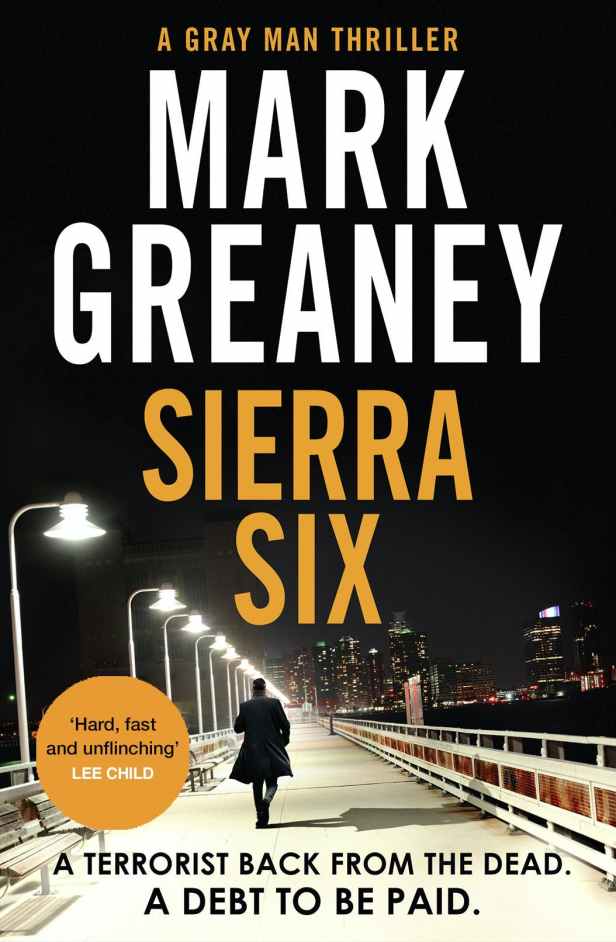
Sierra Six Cover

Publisher: Sphere/Audible Audio (Audiobook – 15 February 2022)

Series: Gray Man – Book 11

Length: 15 hours and 58 minutes

My Rating: 5 out of 5 stars

Amazon     Book Depository

Epic thriller author Mark Greaney returns with the latest entry in his incredible Gray Man series with Sierra Six, an intense and captivating spy thriller that will grab your attention and refuse to let go until the final explosion.

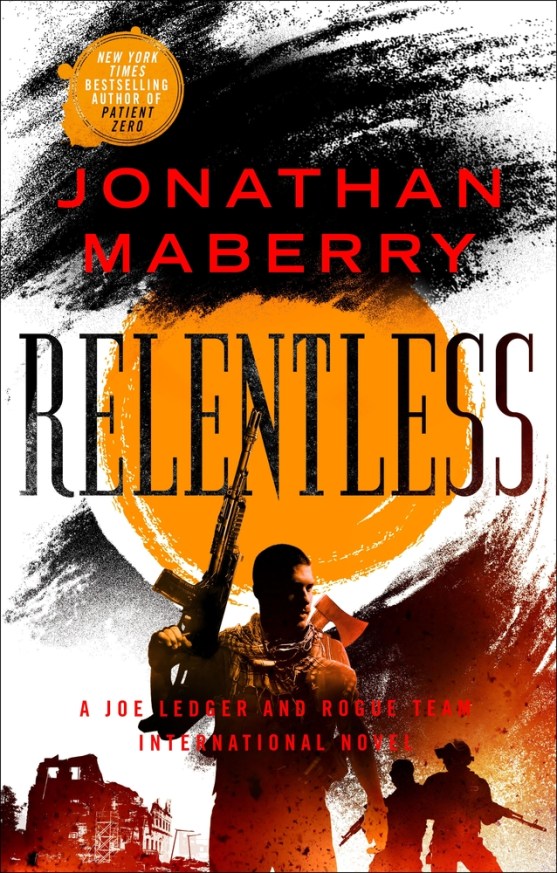
Over the last few years, I have been absolutely hooked on the incredible thrillers of Mark Greaney, who is easily one of the best authors of spy fiction in the world today.  Not only did he cowrite a very cool military thriller, Red Metal (one of my favourite books and audiobooks of 2019), but he has continued his exceptional Gray Man series.  The Gray Man books follow Court Gentry, the titular Gray Man, an elite assassin and undercover operator who has worked both for and against the CIA.  This series has been so very cool, from the first novel The Gray Man (set to become a Netflix movie later this year), to the last three awesome entries, Mission Critical, One Minute Out (one of my favourite books and audiobooks of 2020) and Relentless (one of my favourite books and audiobooks of 2021).  Due to how impressive this series has been, I have been really excited to read the next book, Sierra Six, and it was one of my most anticipated releases of 2022, especially as it had a very cool plot to it.

Court Gentry, the Gray Man, is once again the world’s most wanted spy, hunted by his former employers, the CIA, and every other intelligence agency on the planet.  Looking for work, Gentry accepts an easy infiltration mission in Algeria to spy on a delegation from Pakistan.  However, the mission goes sideways when Gentry recognises one of the Pakistanis and his rookie technical officer is captured.  Chasing after the kidnappers, Gentry follows their trail to India and must relive one of the darkest moments from his past.

12 years ago, long before he became the Gray Man, Court Gentry was a talented young agent for the CIA.  Specialising in solo operations, Gentry is suddenly reassigned to Ground Branch and must work as the junior member of veteran CIA action team, Golf Sierra.  Given a new designation, Sierra Six, Gentry is forced to adapt to a new way of fighting as he and his team attempt to hunt down a dangerous terrorist leader in Pakistan.  However, their mission resulted in a high body count and a great personal loss that has haunted Gentry ever since.

Now, as Gentry works his way through Mumbai, he must face the realisation that the target of his original Sierra Six mission is still alive and active after all these years.  Determined to finish the job once and for all, Gentry works with a small team of rogue operators to find his target.  However, his old foe has initiated a bold new plan that could have devastating consequences for all of India.  Can Gentry get his revenge before it is too late, or will the ghosts of his past finally finish him off?

Greaney is in fine form with Sierra Six as he has written another excellent and intense spy thriller that I deeply enjoyed.  Containing an action-packed and multilayered narrative loaded with major set pieces, exciting spy elements and some complex characters, this was another awesome Gray Man novel from Greaney.

Sierra Six was an absolutely thrilling read and I had an outstanding time getting through the impressive and addictive narrative.  Greaney does something a little different for this book and features an excellent and intricate split timeline narrative, with the book divided between the events of the past when Gentry was part of Golf Sierra, and the current events in Mumbai which see Gentry again contending with the target of this original mission.  The narrative switches between the two timelines every chapter or two and you get a great sense of what is happening in both well-established storylines.  These two plot lines advance at a great pace throughout the entire novel and feature their own range of distinctive and fun supporting characters, some of whom appear in both the contemporary and past storylines.  I had a lot of fun with the two separate periods, and I loved how they both made excellent use of interesting characters, fantastic developments and a ton of high-octane action sequences.

The timelines support each other extremely well, with certain hints about the events of the past contained in the contemporary storyline increasing anticipation for the historical storyline, while revealed details about the villain and the young Court Gentry from 12 years ago enhance the protagonist’s current adventure.  In both cases, Gentry and his allies embark on a methodical hunt for their quarry, with a high body count accumulating as they follow various leads and respond to their opponent’s counter plays.  While primarily told from Gentry’s perspective, both timelines utilise distinctive side characters to great effect, and you see intriguing supporting perspectives, including from the antagonist, that help to widen the picture and enhance the richness of the story.  Both timelines eventually lead up to an awesome final sequence, comprised of two near-suicidal missions that the protagonist is engaged in.  This final section of the novel is extremely fast paced, especially as Greaney shortens the chapters and introduces more frequent jumps between the timelines to make everything seem even more frenetic.  Both timelines end with some incredible and awesome major set pieces, and I loved how Greaney used the end of the past storyline to set up the antagonist’s eventual return.  The novel ends on a great note, with the two separate storylines coming together perfectly, and the reader is left very satisfied, if a little moved, at the tragic ending of the events from 12 years ago.  I was extremely impressed with how this fantastic story came together, and this ended up being an addictive read with so many awesome moments in it.

Sierra Six was a particularly good entry in this already awesome series, and I loved how Greaney was able to create a book that both stands on its own as a thriller, while also serving as an amazing entry in the wider series.  This novel is structured to be very accessible to new readers, and anyone can easily pick up this book and start reading it without any knowledge of the prior entries in the series, especially as certain key elements are carefully explained when necessary.  There is also a lot for established Gray Man fans to enjoy here, as Greaney provides a bit of an origin story for his long-running protagonist.  Not only do we get to see Court Gentry do some of his earliest work for the CIA, but you also get to see his first interactions with key supporting characters, including Matthew Hanley and Zack Hightower.  I also loved a couple of fun little cameo appearances and throwaway lines that reference some of the earlier books, including the quick but enjoyable inclusion of the antagonist from the original novel.  While there is are no major continuations of some of the established storylines this is still a key and intriguing Gray Man novel, and it is one that people familiar with this series will deeply enjoy.

I was very impressed with some of the unique elements of this book, particularly those involving tradecraft, espionage work and covert combat teams.  There is a real focus on tradecraft throughout Sierra Six, and the author ensures that everything feels exceedingly realistic and gritty as the characters play their spy games.  Not only do you get to see some of the usual undercover work that Gentry excels in but you also get a great look at paramilitary combat, as the protagonist learns from scratch the rules of fighting as part of a combat team.  All this tradecraft really adds to the authenticity of the story, although it did make parts of the book a little clunky in places, especially when the narrator or the characters explain certain espionage or military elements multiple times in overly descriptive ways.

I also rather enjoyed the exciting settings of the various timelines, as Greaney takes the reader to wartime Afghanistan, Pakistan and modern-day India.  This is an interesting change of pace from most of the Gray Man novels I have read, which have been primarily set in Europe, and I liked seeing the various descriptive landscapes and unique people.  Mumbai proved to be a great setting for most of the contemporary storyline, and it was very fun to see Gentry manoeuvre his way through the crowded districts and locals.  I also really enjoyed the focus on Pakistani intelligence and the Indian underworld, which proved to be very fascinating.  For example, the fiction criminal group B-Company are clearly based on the infamous real-life D-Company, and it was quite intriguing to see them worked into the story, while also examining their origin and goals of their leadership.  All these cool tradecraft elements and intriguing settings deeply enhanced the overall story, and it made for quite a fascinating and distinctive read.

There was some rather interesting character work going on in Sierra Six as Greaney takes his fantastic protagonist to some very dark places at various points in his timeline.  I really appreciated the dive back into the period before Court Gentry became the Gray Man, and Greaney paints a compelling figure of a habitual loner with no personal attachments only at the beginning of his espionage career.  Watching Gentry join a team and try to play nice with others was a captivating part of the book, and it was fascinating to see the rookie Gentry get rattled by stuff he’ll become much more used to in the future.  Greaney also enhances Gentry’s development by including a curious, but touching, relationship in the earlier timeline, which helped to humanise Gentry a lot.  However, certain tragic elements from this help mould him into the killer we all know and love, and Greaney subtly introduced the ripples from this into the contemporary storyline.  The reader leaves Sierra Six with a much better understanding of this cool character, and I had a great time seeing more of the Gray Man’s past.

Both timelines are filled with an excellent and comprehensive cast of side characters, each of whom add a great deal to the narrative and Gentry’s development in their own way.  While there are a few recurring characters from the previous Gray Man novels, most of the focus are on newer figures, who Greaney provides with compelling and interesting backstories.  I liked how the past and modern-day storylines both featured great female side characters who helped move the story along in their own distinctive ways.  This includes the socially awkward intelligence officer Julie Marquez, from the original Golf Sierra mission, and Indian tech guru Priyanka Bandari, who Gentry is forced to work with after saving her from kidnappers.  Both female characters add to the plot a great deal, and it is fascinating to see events unfold from their eyes, especially as they have diverse life experiences and are also seeing very different versions of the protagonist.  The storylines around both women are written extremely well, and I really appreciated where both went, especially as they both included tragedy, regret and definitive action.  I also must really highlight the use of long-running supporting character Zack Hightower, who was an excellent inclusion in the historical storyline.  Zack is always a great foil to Gentry, and I really enjoyed seeing him interact with the younger, cockier version here, especially as it shows some of the earlier dynamics between them.  Watching Gentry meet his mentor and friend for the first time was great, and I really enjoyed the cool storyline that developed between them and the other members of the Golf Sierra kill team.  All these characters were extremely impressive and I had a brilliant time getting to know them throughout the course of Sierra Six.

While I did receive a paperback version of Sierra Six, I went out of my way to also get this novel on audiobook as I have had some awesome experiences with the Gray Man books in this format before.  This proved to be an excellent decision as the Sierra Six audiobook was amazing, perfectly telling the cool story while enhancing the intriguing tradecraft and action elements.  The Sierra Six audiobook has a run time just short of 16 hours and so requires a bit of a time investment to get through it, although I think this was more than worth it and dedicated listeners should be able to get through rather quickly.  I was also very happy to see that this audiobook once again featured the vocal talents of Jay Snyder, who is one of my favourite audiobook narrators at the moment.  Snyder has a gruff and distinctive voice that fits the harder spy thriller feel of this novel perfectly and drags the listener into the intense tale.  Snyder does a brilliant voice with all the characters featured within, and you get a good sense of their various emotions and feelings, especially during some of the more action-packed sequences.  I had an outstanding time listening to this audiobook and it is an excellent format for anyone interested in trying out this latest Gray Man novel.

The always impressive Mark Greaney has done it again, producing an incredible and exciting new Gray Man novel.  Sierra Six, features a bold and captivating story that cleverly utilises two distinctive timelines to tell its intense and moving tale.  Loaded with fun character, brutal action sequences, and some intriguing espionage moments, this was another outstanding book I had a brilliant time reading.  Sierra Six comes highly recommended from me and I cannot wait to get my hands on the next Greaney book.

Sierra Six Cover 2

Amazon     Book Depository

Warhammer 40,000: Krieg by Steve Lyons

Warhammer 40,000 - Krieg Cover

Publisher: Black Library (Audiobook – 29 January 2022)

Series: Warhammer 40,000

Length: 9 hours and 33 minutes

My Rating: 4.5 out of 5 stars

Amazon     Book Depository

Death, dishonour and duty all collide as impressive author Steve Lyons returns to the epic Warhammer 40,000 universe with Krieg, which dives into the origins of one the most iconic regiments of Imperial Guard out there, the Death Korps of Krieg.

Damn this has been a good year for Warhammer fiction so far.  We may only be in March, but 2022 has already produced a great collection of awesome Warhammer novels, including Steel Tread, The Twice-Dead King: Reign and Day of Ascension.  I have deeply enjoyed all these cool books, and when another awesome sounding tie-in novel was released on audiobook, I just had to grab it.

This latest book is Krieg by veteran science fiction author Steve Lyons.  Lyons is a new author to me, but he comes with an impressive pedigree in tie-in fiction, having written several Warhammer novels and short stories, a ton of Doctor Who novels and audio dramas, and several other intriguing novels.  I knew that I was probably going to love Krieg and I turned out to be right, as this fantastic and dark Warhammer 40,000 novel contains an intense and captivating tale of a legendary regiment.

In the grim future of the universe, there is only bloodshed and death, especially near the system-spanning Octarius War, where two brutal alien races battle for supremacy, and Imperial forces fight to stop their conflict spilling out into the greater Imperium.  However, the latest round of fighting sees a massive orc ship break through Imperial lines and crash into the massive city of Hive Arathron.  As the desperate Imperial forces fail to contain the invading orcs, all hope looks lost until a new set of deadly reinforcements arrive: the Death Korps of Krieg.

The Death Korps of Krieg are a legendary unit of peerless soldiers who are utterly fearless in battle, fanatically loyal to the Emperor, and who seem to harbour an unnatural desire to die in battle.  But who are the men of Krieg under their gasmasks and coats, and why do they fight so hard to regain their lost honour?  The answer lies thousands of years ago when Krieg attempted to cede from the Imperium, thrusting the planet into a brutal civil war.  In the end, one man stepped forward to end the fighting, and his decision doomed Krieg to become a blasted wasteland where only soldiers are grown.

As the fighting around Hive Arathron continues, many of their fellow soldiers and inquisitorial observers begin to doubt the loyalty and sanity of the Death Korps, especially when their unusual habits and creeds keep them apart from the other members of the Astra Militarium.  However, a deadly discovery deep inside the Hive will show the Imperium just how invaluable the men of Krieg are, especially when history seeks to repeat itself.  Can the Death Korps succeed against the xenos, or will Hive Arathron and its planet soon share a similar fate to Krieg?

The Warhammer 40,000 hits just keep on coming as Krieg turned out to be a truly awesome read.  Steve Lyons has produced an epic and intense novel here, and I loved the brilliant story that not only showcased a dangerous alien threat but which also examined the past of an iconic and captivating faction.

I thought that Lyons came up with an exceptional and captivating narrative for Krieg, which takes the reader on several parallel journeys throughout the history of the Warhammer 40,000 universe.  I have said multiple times before that I think some of the best Warhammer stories out there focus on the common troops, and I was proved right again as Lyons does a brilliant dive into the mind of the average solider when they experience the very worst of circumstances.  The primary storyline is set in the modern era of the canon and shows a regiment of Krieg Imperial Guard dropped into the battle for Hive Arathron to fight the orcs.  This section, which is told entirely from the perspective of supporting non-Krieg characters, shows the Death Korps in battle, with a specific highlight on their unusual appearance and practices.  At the same time, another storyline dives back into the past and shows the civil war that occurred on Krieg and the events that led up to the destruction of the planet and the formation of the modern Death Korps.  Both these storylines take up about half the book and they present the reader with two unique and interesting tales which work to complement the story from the other timeline while also depicting their own brutal military actions.  The stories start to come together towards the end when the protagonists of the contemporary storyline discover nuclear weapons in Hive Arathron, which they need to recover.  This leads to an interesting conclusion that results in some clever parallels between the historical events and the current storyline.  All this leads to a satisfying, if grim, conclusion that reveals the various fates of the supporting characters and wraps up the remaining story elements.

I was really impressed with how Krieg was written, and I think that Lyon did a really good job here.  The story ended up perfectly toeing the line between examining the lore and history of the universe and providing the reader with all the necessary excitement and adventure.  I think the decision to split the book between the two separate timelines was pretty clever, and I had a brilliant time reading the unique storylines it produced.  Both timelines were really good, and I loved the grim and powerful plot points they contained, especially as the protagonists within both suffered defeats, setbacks and brutal character realisations.  If I had to choose a favourite it would probably be the historical storyline set on Krieg, mainly because it shows the more desperate situation and substantially more character development and tragedy.  The twin storylines also did a wonderful job complementing each other, ensuring that the reader gets two separate sides of the titular regiment.  It also results in a series of different battle sequences, and I loved the interesting comparisons between a protracted civil war and a short and brutal fight against orcs.  Krieg ended up being a good standalone read, with a concise, well-paced and beautifully set-up narrative that is pretty easy to get addicted to, especially once both storylines descend into the hell of battle.  This also proved to be an extremely accessible tie-in to the Warhammer 40,000 universe, with Lyons ensuring that newer readers can easily follow what is happening with a minimal of explanation about the universe.  As such I would strongly recommend this book to a wide range of readers, and both experienced Warhammer fans and general science fiction readers will really appreciate the powerful and action-packed story contained within.

Unsurprisingly for a novel named Krieg, there is an extensive and fascinating examination of the Death Korps of Krieg in this book.  Lyons does a brilliant job of diving into this distinctive Warhammer faction, and this novel ended up being a very detailed and impressive love letter towards the infamous regiment.  Every aspect of the modern regiment is shown in exquisite detail, and you get an extremely powerful look at their design, uniform (which is based on the uniforms of World War I German trench fighters), fighting style, equipment, unique regiments, and more, including the iconic Death Riders (I was so very happy they were included, especially as you get several great fight scenes with them, including against orc bikers).  However, the real focus is on their unusual behaviour, including their determination to die in combat, their complete resolve and the fact that they never remove their masks.  Lyons really hammers home the unusualness of this regiment by only showing the modern Krieg soldiers through the eyes of regular soldiers or member of the Inquisition, all of whom are at a loss about what the Krieg are or why they fight so hard.

However, while these outsider characters are left wondering about many of these events, the readers get multiple insights thanks to the chapters that explore the historical civil war on Krieg.  Lyons does an incredible job of portraying this conflict, and it is fascinating to see the events that led up to it and the lengthy and costly war that followed.  Watching the opposing mentalities on Krieg during this time is really fascinating, and you soon get caught up in the dramatic battle that follows, especially as the situation continues to deteriorate over time.  I loved how the origins of the Krieg’s many idiosyncrasies are featured here, and you soon see what necessitated the use of certain equipment or behaviours.  The real highlight is the eventual destruction of Krieg and the subsequent formation of the modern version of the Death Korps.  The scenes that cover this destruction are pretty damn brutal, and watching the slow transition from typical soldiers to the eventual shrouded figures is extremely compelling and awesome.  I really appreciated the way in which Lyons showed off the various stages of the Krieg regiments, and the use of both the historical version of the regiment and its current formation really helped to highlight just how distinctive and cool they are.  While there are still a few secrets left hidden (what’s under the mask??), the reader leaves this book with an impressive appreciation for this awesome regiment, and it wouldn’t surprise me if it convinces several Warhammer 40,000 players to start using the Death Korps in their games.

A quick shoutout also needs to go to the fantastic characters featured throughout Krieg.  Lyons makes use of a large cast to tell this interesting story, and I liked the excellent mixture that this novel contained.  The characters featured in the contemporary line are primarily made up of non-Krieg fighters who serve as an interesting counterpoint to the nameless, faceless Death Korp soldiers.  This includes Inquisitor Ven Bruin, an older witch hunter who leads the search for the hidden weapons in Hive Arathron.  Ven Bruin is a lot gentler and less cynical that a typical Imperial Inquisitor, and he has some intriguing viewpoints on the situation, with his decisions tempered by experience and weariness.  Ven Bruin ends up holding multiple secrets throughout Krieg, and it is emotional to see him impacted by his multiple hard decisions and the lives they cost.  You also get the compelling viewpoint of Sergeant Renick, a Cadian soldier who fights alongside the Krieg.  Renick, who is a surprisingly good female character for a Warhammer novel, gives the common soldier’s viewpoint of events, and I loved seeing her slow opinion change of the Death Korps after seeing them in action against the orcs.

While there are some great characters in the Hive Arathron storyline, Lyons saves his best character work for the historical storyline on Krieg, which highlights the key people in the deadly civil war that destroyed the planet.  While there are several intriguing figures here, most of the focus is given to Colonel Jurten, the Imperial Guard commander who fights to keep Krieg in the Imperium.  Jurten is a weary veteran character who borders on the fanatical, especially when it comes to saving his home from himself.  Throughout the course of the book, you see Jurten fight a desperate war for his believes that culminates in him making a terrible decision that will impact his people for generations.  Watching Jurten’s substantial resolve slowly chip away throughout the book is very intense, and Lyon really shows the weight his beliefs and determination bear on him, especially after he makes the very worst of choices.  The other characters in this past storyline serve as an excellent support cast, and it was great to see their concerns and opinions about the battles being fought, especially compared to the resilient Jurten.  My favourite is probably the mysterious Adeptus Mechanicus tech-priest, Greel, who acts as the devil on Jurten’s shoulder, convincing him to make the tough decision about the future of Krieg.  I am still a little uncertain whether Greel was a hero or a villain (probably both; it is Warhammer), and I would be curious to find out more about him and his motivations in the future.  An excellent group of characters, I would be interested to see more of some of them in the future.

Unsurprisingly, I made sure to grab the audiobook version of Krieg, which ended up being another excellent and enjoyable experience.  I deeply enjoy Warhammer audiobooks, especially as they tend to enhance the grim and brutal stories, while also highlighting all the cool details about the Warhammer universe.  I had amazing time with the Krieg audiobook, and with a runtime of only 9 hours and 33 minutes, this was a pretty easy audiobook to get through.  The audiobook did an excellent job capturing the grim battles and blasted warzones featured throughout this awesome novel, and I could easily envisage every fight and every brutal decision.  I was also really impressed with the voice work of narrator Timothy Watson, who brought a ton of gravitas and intensity to this book.  Watson’s voice fit perfectly into this grim universe, and he did an outstanding job of capturing the various larger-than-life characters featured within, while also providing great Germanic accents to all the characters who originated from Krieg.  You really get a brilliant range of voices throughout Krieg, and I loved Watson’s ability to showcase the devotion, despair and weariness of all these great figures.  Another brilliant and wonderful Warhammer audiobook, this is easily the best way to enjoy this amazing tie-in book.

Overall, Krieg by Steven Lyons was another awesome Warhammer 40,000 novel that did a wonderful job of examining one of the game’s more unique and enjoyable faction.  Containing an action-packed narrative that highlighted the fantastic Death Korps of Krieg and showcased the events that made the soldiers they are today; Krieg was an addictive and clever read.  I loved the excellent use of a split timeline narrative, especially when it dove back into the civil war on Krieg, and the result was a grim and haunting tale of regret, duty and honour.  Highly recommended to all fans of Warhammer 40,000, you will love this beautiful and moving love letter to the iconic Death Korps and their tragic origins.

Amazon     Book Depository

The Riviera House by Natasha Lester

The Riviera House Cover

Publisher: Hachette Australia (Trade Paperback – 1 September 2021)

Series: Standalone

Length: 452 pages

My Rating: 4.25 out of 5 stars

Amazon     Book Depository

Bestselling Australian author Natasha Lester returns with a powerful and intense historical drama that presents a multigenerational tale of love, loss, culture, and the horrors of the Nazi occupation of France, in The Riviera House.

Paris, 1939.  With the war about to start and fears of a Nazi invasion becoming more apparent, Éliane Dufort, a young art student who works part time at the Louvre, watches the staff store away the gallery’s most expensive artworks and begin to hide them throughout France.  Determined to survive the upcoming war, the last thing Éliane should have done was fall in love, however when she meets one of her brother’s friends, Xavier, she cannot help herself, and they soon begin a whirlwind romance.  However, with the Nazis right outside of Paris, Xavier leaves for England, breaking her heart.

With Xavier gone and most of her family killed by the Nazis as they tried to flee the city, Éliane vows to fight the invaders by any means necessary.  Her connection to the Louvre lands her a job working for the enemy in the vast warehouse the Nazis are using to store the artwork looted from France.  Working with the legendary Rose Valland, Éliane is tasked with recording every single piece of art that the Germans steal, as well as attempting to discover where they are being sent.  However, Éliane soon gains the unfortunate romantic attention of a powerful Nazi officer, while a returning Xavier, now a treacherous art expert working for Hermann Göring, threatens to destroy her cover.

Many years later, vintage fashion expert Remy Lang travels to the French Riviera and arrives at a beautiful house that was part of a mysterious inheritance from her unknown biological parents.  Hoping to escape from her intense grief at the loss of her husband and child, Remy soon becomes involved with a visiting family living at the neighbouring villa, including charming photographer Adam.  As she attempts to understand her feelings for Adam amidst her sorrow, Remy soon stumbles upon a shocking mystery when she chances upon a catalogue detailing artworks stolen from France during the war, which includes a painting that hung in her bedroom as a child.  Determined to get to the bottom of this mystery, Remy attempts to trace her past and the history of the unexplained painting.  But the story she uncovers is one of great tragedy and shocking revelations that will change everything Remy thought she knew about her past.

This was an outstanding and deeply impressive historical drama from Natasha Lester, who has previously written some great historical dramas, such as The Paris Secret and The French PhotographerThe Riviera House is a particularly compelling and intense novel that perfectly brings two separate timelines together into one moving narrative, while also focusing on two distinctive and complex groups of characters.  This results in a brilliant and moving read that is guaranteed to haunt you long after you finish reading.

Lester tells a deep and captivating tale in this novel that is moving, intense and very addictive to behold.  The author utilises a split timeline throughout The Riviera House, with one storyline set during World War II in Paris, while the other is based in the modern day and takes place in several locations, although primarily in the French Riviera.  The book jumps back and forth between these two timelines, with the speed of transition increasing the closer it gets to the conclusion.  Both storylines contain their own plot, characters, and interesting features, and they come together to form quite an intense overarching narrative.

The first storyline of The Riviera House is the World War II storyline, which follows the character of Éliane Dufort.  Éliane, after suffering several great losses because of the Nazi invasion, becomes embroiled with the French Resistance and soon gets a job working for the Nazis, assisting in their loot warehouse, and helping historical figure Rose Valland create her record of stolen works.  However, the story gets increasingly complicated as the book progresses, with Éliane torn between her remaining family, her love/hate relationship with the traitor Xavier, and her forced relationship with a powerful Nazi member who has fallen for her.  The entire story comes to a head in the closing days of the Nazi occupation, when Éliane is forced to risk everything dear to her, and soon encounters just how tragic the war is and how evil people can be, even those closest to you.

This part of The Riviera House is an amazing bit of historical fiction, exploring the history of the time while also featuring an emotional and moving tale of love, hope and courage.  I really connected with this half of the novel, due to the thrilling and intense story that shows a grim picture of the period and featuring some memorable moments.  The story of Éliane and her family is full of tragedy and suspense, and if you are looking for a happy read than you have come to the wrong place.  While I did see most of the major twists coming, I appreciated how this narrative came together, as well as the clever way it led into The Riviera House’s other timeline.  I also deeply enjoyed the unique historical aspects of this novel, particularly around the Nazis’ systematic looting of French art.  Lester really dove into this part of the war, providing a detailed account how the Germans stole the art, stored it, and eventually shipped it away as the war progressed.  This tale features several real-life historical figures who are worked into the plot extremely well and who add an extra layer of authenticity to the tale.  One of the most interesting historical figures is Rose Valland, the courageous art historian who risked everything to pull together a record of the looted artwork.  Valland, who has inspired characters in films such as The Train or The Monuments Men, was a fascinating character in this novel, and I liked how Lester tied Éliane’s story into that of Valland.  I felt that this examination of the Nazi art theft was both fascinating and cleverly utilised, and it helped to provide some extra power and intensity to the novel.

The other timeline in The Riviera House is based in modern times and follows Remy Lang, a fashion figure who is spending time in the French Riviera, trying to escape her grief over the tragic death of her husband and child, and soon meets some new people who help her move on.  This storyline was more of a pure dramatic tale and focuses on Remy’s grief, her new romance, and the friction brewing between the family she has just met.  I got quite attached to the potent emotional elements featured in this book, especially as Lester really focuses on the lingering impacts of grief, such as the guilt survivors feel when thinking about something new or considering moving on.  Add in quite a compelling mystery element to it, as Remy and her new friend Adam start investigating the connection that Remy had to the other story, such as her long-dead biological parents and several mysterious inheritances.  These connections to the storyline set in the past compliment the protagonist’s current issues and concerns extremely well, and it was really fascinating to see her work out how her life was shaped by the original protagonists many years before.

I ended up really liking both timelines within the novel, although I did prefer the storyline set in World War II due to its interesting historical research, complex characters riven by war, and terrible tragic moments.  I must admit that I am not usually the biggest fan of historical dramas that feature two separate timelines (it really is an overused device in historical dramas).  However, I think that it was utilised extremely well in The Riviera House, and the two separate storylines melded together into a fantastic overarching read.  I loved how Lester was able to provide subtle hints about the fate of the historical protagonists in the contemporary storylines, although the full revelations about them was often hidden and not revealed until later.  I also really appreciated finding out how the events of the World War II story led into the later plot, and the full truth about how everything occurred is not only great to behold in the historical storyline, but it also has some major impacts on the modern-day protagonist.  This really enhanced The Riviera House’s plot and the overall drama of the book, and it helped to produce an excellent overall narrative.

I also quickly wanted to highlight some of the cool and fascinating cultural elements that Lester slipped into her novel, particularly around art and fashion.  I already mentioned how much I enjoyed the interesting and in-depth examination of the Nazis’ looting and the plans to stop them, however, I also appreciated the way in which Lester examined the art itself, as well as the people who were fighting to protect it.  You really get a sense of the beauty and subtlety of the different artworks featured throughout the book, but more than that you also get to explore what makes people passionate for art.  This book contains several characters who appreciated the true value that this art had to themselves and the nation, so much so that they were willing to risk their lives for it.  This forms a major part of the historical storyline’s plot, and I think that Lester did a wonderful job exploring it.  In addition, the contemporary storyline features a compelling examination about the appeals of vintage fashion.  Lester, who has previously explored fashion in some of her past novels (for example, a major part of her previous novel, The Paris Secret, revolves around vintage gowns), did a good job explaining the current obsession with vintage fashion, as well as how people can make money off it.  While I usually care very little about any sort of clothing fashion, Lester’s descriptions proved to be very intriguing, and I found myself appreciating her obvious passion for the subject.  Both these cultural inclusions enhanced the story, especially as they were strongly related to the various protagonist’s motivations and obsessions, and I really appreciated they time that Lester took to feature them.

Overall, I felt that The Riviera House by Natasha Lester was an excellent and well-crafted historical drama with some powerful elements to it.  Lester did a wonderful job of crafting a compelling, multi-period storylines that combined historical and contemporary narratives into a single, moving tale.  I particularly enjoyed the cool focus on the Nazi occupation and art obsession, which resulted in a thrilling and very tragic tale.  The Riviera House is a highly recommended book and a must-read for all fans of historical drama.

Amazon     Book Depository

Relentless by Jonathan Maberry

Relentless Cover

Publisher: Macmillan Audio (Audiobook – 13 July 2021)

Series: Rogue Team International – Book Two / Joe Ledger – Book 12

Length: 18 hours and 29 minutes

My rating: 5 out of 5 stars

Amazon     Book Depository

One of my absolute favourite series returns with an absolute bang as Jonathan Maberry produces another incredible, intense and thrilling Joe Ledger novel with Relentless, the second novel in the Rogue Team International series.

Readers of my blog will be well aware of how much I love Jonathan Maberry’s Joe Ledger series.  This science fiction thriller series, which follows the titular protagonist and his team of elite soldiers as they fight all manner of crazy scientific and supernatural threats, is so much fun and is one of my favourite series.  After reading one of these fantastic books a few years ago, I sat down and listened to the entire series, from Patient Zero, all the way to the final entry, Deep Silence.  It also led me to some of Maberry’s other novels, including last year’s excellent horror novel, Ink, which was one of my favourite books and audiobooks of 2020.  The author also started the Rogue Team International series in 2019 as a sequel series to the original Joe Ledger books, featuring the same characters and universe.  The first entry in this sequel series, Rage, got a five-star rating from me and was one of the best books and audiobooks of 2019.  Due to Rage’s epic conclusion, as well as how much I enjoy Maberry’s writing, I have been eagerly awaiting Relentless for some time now and I ended up being blown away by how awesome it was.

During Rogue Team International’s (RTI) first mission, Joe Ledger and his team faced off against the dangerous pairing of criminal mastermind Kuga and his fearsome enforcer Rafael Santoro, barely managing to stop their insidious, world-changing plot.  However, their victory came at a terrible price, as Santoro delivered fiery vengeance on his foe by killing every member of Ledger’s family in a revenge attack at Christmas.  Santoro and Kuga hoped that their destructive blow would mentally destroy their hated enemy forever; instead, it unleashed their worst nightmare.

After returning to the field, Ledger leads an RTI team to an advanced laboratory where terrible genetic, biological and cybernetic experiments are being performed.  While the mission begins as a textbook RTI operation, everything changes when Ledger comes across a room full of deformed lab subjects and their cruel tormentors.  With his already fragile psyche pushed to the limit by the death of his family, Ledger finally snaps and lets something dark and dangerous from deep within take control.  With blood and bodies trailing in his wake, Ledger abandons his team and goes truly rogue.

Accompanied only by his loyal combat dog, Ghost, Ledger rampages across Europe, killing and destroying anything related to Kuga’s operation and questioning anyone who knows where he and Santoro are.  Even more concerning for the villains, Ledger is also beginning to get close to their next major operation.  Utilising cutting edge technology, Kuga’s group have developed biologically enhanced super soldiers, equipped with some of the most destructive weapons available.  Their next plan will unleash a devastating attack within America that will change the political and social landscape for generations to come.  However, not even their most advanced troops may be enough to stop the dark thing that Ledger has become, and Kuga is soon forced to make a Faustian deal with someone, or something, whose evil eclipses Ledger’s insanity.  Can Ledger defeat his hated foes and save his own soul at the same time, or will he finally be overwhelmed by his own inner darkness?

Once again Maberry shows why he is one of the most exciting and impressive thriller writers out there as Relentless was another epic and wildly captivating novel.  This latest Rogue Team International novel contains a complex and thrilling narrative that sets its already complex main character into a horrific quest for vengeance and redemption.  Throw in an incredible amount of action, a very clever and well-written story, and some memorable characters, and you have an outstanding novel that gets a full five-star rating from me.

In Relentless, Maberry produces an extremely intense and fast-paced novel that is both character driven and loaded with some of the best action you will ever read.  Following up from the dramatic conclusion of Rage, Relentless is one of the darker and more inventive books in the Joe Ledger franchise, presenting the reader with a brutal revenge story as the protagonist puts the rogue in Rogue Team International to kill anyone associated with his foes.  Maberry once again makes great use of the unique writing style that has been such a hallmark of this series, with the novel made up of shorter chapters told from a vast number of different perspectives, including several interludes set in the past, to produce a more complex and multifaceted tale and showcase the elaborate plans of the antagonists.

However, the author also tries something new in this book, with a noticeable change of focus away from the protagonist for a good portion of the early novel to highlight some major character developments.  This results in a bit less humour during the first part of the book, but this is more than made up for with a darker and more powerful storyline.  The story focus does eventually revert to the series’ usual form about halfway through the novel, just in time for the protagonist to find himself with information about a complex and intriguing evil plot that only he can stop.  This leads to a pretty epic conclusion with some fun twists and several major moments of worry and surprise, especially as you get some massive concurrent scenes as Ledger and his allies battle the enemy in several destructive and dangerous battles.  The action throughout Relentless is typical Maberry, with some very detailed and graphic depictions of the techniques and damage done, and it is near impossible not to get sucked in the combat as the powerful scenes unfold.  Readers should be warned that parts of this novel can get a little dark and gruesome as Maberry pulls no punches, but it is very much worth sticking through the blood and guts to see the captivating narrative unfold.  I quickly became sucked into his awesome story, and I loved every second of it, managing to finish it off in extremely short order.  It looks like Maberry has some intriguing plans for the future of this series, and I for one am extremely excited for that.

Like most of the Joe Ledger/Rogue Team International novels, Maberry has made Relentless extremely accessible to new readers.  While I personally would suggest reading Rage first, due to the tragic ending that plays into the events of this novel, people unfamiliar with the preceding books can jump in here and still have an excellent time reading this book.  Maberry does an amazing job recapping all the key events of the prior novels, including character bios, descriptions of technology and summaries of various cases.  As a result, the reader is never left in the dark about what is happening and who is being talked about, although the certain significance of some characters or revelations might be slightly tempered until the protagonist describes them.  One thing I would note after having read all the Joe Ledger books in the last couple of years is that Maberry tends to reuse the same phrases and terms when it comes to describing certain characters or events.  While this was fine the first few times, by book 12 in the overall series, it is very noticeable and slightly detrimental to the flow of the story.  However, this was an overall incredible novel with more than enough unique features to make it really stand out from the rest of the books in the series.

One of the best parts of any of Maberry’s novels are the complex and likeable characters featured within them.  Over the years Maberry has produced some truly great and memorable characters for the Joe Ledger novels, and it was great to see so many of them return for Relentless, especially as most of them go through some major development.  The most prominent of these is titular protagonist Joe Ledger, who has one of his most significant roles here in Relentless.  Ledger has always been an extremely troubled and damaged protagonist, which has grown more and more apparent as the series progressed as he is forced to deal with additional traumas.  However, this is the book where he truly snaps, as he is dealing with the brutal death of every member of his family.  While Ledger starts the book mostly fine (by his already low standards), it doesn’t take him long to lose the plot.  Fans of this series will understand Ledger’s mind is already broken up into three distinct personalities, the Cop, the Modern Man, and the Killer, which together form his mostly balanced psyche.  However, the events of Rage have resulted in a fourth personality, the Darkness, which subverts Ledger’s mind and leads him to commit acts of terrible violence and destruction while massively freaking everyone out.  The Darkness completely takes over Ledger, ensuring that you don’t see into his head for a good portion of the novel, which is an interesting change considering that Ledger is the only character in the series with a first-person perspective.  While this really changes the tone of this novel, it perfectly highlights just how far-gone Ledger is.  Even when he regains control of his mind and becomes a prominent point-of-view character again, the Darkness is still there, and he has to fight hard to control it.  All this makes for quite a fantastic and deep read, and it was captivating to see the protagonist deal with the traumatic events of a previous novel in such a dramatic and destructive manner.  Maberry really amps up how dangerous Ledger can be in this novel, and there are some truly disturbing and concerning scenes when the Darkness takes over.  It will be really interesting to see how Ledger comes back from the events of this book in the future, and I am extremely curious to see what happens to the character next.

In addition to the outstanding central protagonist, Maberry fills up Relentless with great supporting characters, most of whom have been introduced in previous Joe Ledger novels.  Maberry really likes a wide spread of characters throughout his novels, resulting in an interesting group of perspectives as the various supporting characters and minor inclusions experience the events of the narrative.  It was great to see many long-running side characters return in Relentless, especially as they are severely impacted by Ledger’s walk on the dark side.  While a couple of usually major characters only have a couple of scenes in this book, the usual DMS/RTI mainstays are all there.  Ledger’s squad mates, Top and Bunny, have a particularly intriguing storyline in this novel, which sees them go undercover to infiltrate Kuga’s operation while being conflicted about Ledger’s actions.  It was also great to see more of mysterious RTI leader, Mr Church, the guy who totally isn’t some sort of avenging angel or benevolent god (those are my two top guesses at this point).  While Church doesn’t get as much focus as he has in previous books, he is still a major presence, and there some more hints at his past with one of the antagonists.  There are also a couple of fun new unique characters introduced who Ledger meets up with as he pursues his quest for vengeance.  Several of them are cool, and I look forward to seeing if they show up again.

Out of all the many supporting characters, there are two that I particularly want to focus on as they had some very strong arcs within this book.  The first is Alexander Chismer, better known as Toys, the former villain who is seeking redemption and is now a close friend of Ledger’s partner Junie.  Toys goes back into the field to find Ledger, even though they really dislike each other.  Toys is a pretty smooth operator, and it was fun to see him go back to his criminal roots, even though it was for a good cause.  When he eventually catches up to Ledger, their meeting doesn’t go amazingly well (someone gets shot), but they do end up having a rather fantastic and entertaining heart-to-heart.  The comparison between their respective paths to redemption is rather deep and fascinating, and it was very intriguing to finally see these two characters interact in an extended way.  The other character I absolutely must talk about is Ledger’s dog, Ghost, the bestest boy in all of fiction.  Ghost has a pretty rough time in this novel, as he is Ledger’s only companion during his master’s dark spells and ends up getting into some very violent confrontations.  Maberry is extremely good at writing canine characters, and most readers will find it next to impossible not to fall in love with this savage, sassy cuddle monster.  Due to the many bad circumstances that Ledger and Ghost finds themselves in, I found myself feeling a lot of worry for Ghost, especially as Ledger seemed crazy enough to hurt him at times.  The fact that I felt strongly anxious for a fictional dog should tell you all you need to know about Maberry’s ability to write likeable characters, and readers should be warned that they will be experiencing feels in this novel.

It wouldn’t be a Maberry book without some impressive and complex antagonists, and this novel is chock full of villains with an intriguing master plan.  The main antagonists of Relentless are the same as Rage, with the fun combination of Kuga and Rafael Santoro.  Both Kuga and Santoro are recurring Joe Ledger antagonists (Kuga was the main villain of Kill Switch under a different name, while Santoro was a significant antagonist in The King of Plagues).  As a result, they have an amazing amount of history with Ledger and the RTI, which makes them quite dangerous foes.  Both are a bit more unhinged in this novel, especially once it becomes clear that a deranged Ledger is on their tail, and it was great to see them slowly become a little more desperate.  Despite this, they have a pretty intense and detailed plot to make a large amount of money through the sale of their advanced weapons, technology and enhanced mercenaries.  Their master plan for destruction and manipulation is very clever and takes a while to fully become apparent to the protagonist and the reader.  Maberry lays the groundwork for this plan perfectly throughout his narrative and the eventual reveal of what they are hoping for is pretty cool and leads to several amazing scenes that play off current events really well.

In addition to the antagonists that appeared in Rage, Relentless also features one of Maberry’s most mysterious and sinister villains.  Going by the name of Mr Sunday in this book (which I assume is a fun little nod to Mr Church’s fake name), this antagonist is a very creepy and dangerous being who has had some impressive appearances before (Assassins Code, Predator One and Dogs of War for example).  The moment he appeared in this book, I knew that I was going to be in for a good time, as this character is essentially the devil incarnate (there is a strong chance he is the devil).  Maberry does an incredible job building him up once again in this novel, and he ends up terrifying his potential allies just as much as his enemies.  This character’s appearance has some major implications for Ledger and Mr Church, and it is highly implied that his appearance is causing some of Ledger’s instability.  While he is mostly just coasting off Kuga and Santoro’s plans in this book, he also has his own sinister plans which come into fruition perfectly.  As a result, he is a pretty fantastic addition to the plot, and I loved the entertaining interludes that featured his elaborate sales presentations.  It looks like Maberry has some big plans for this character in the future, and I am very excited to see what chaos he has in stall for the world next.

Aside from the main villains I mentioned above, Maberry also utilises some great supporting antagonists who act as assassins and henchmen.  This includes the deranged Eve, who was introduced in Rage and who lost her partner and lover, Adam, to Ledger.  This loss has driven her even more insane, and there are several crazy chapters shown from her perspective, and she represents the typical sexual degenerate antagonist that Maberry likes.  There is also a new henchman character in Michael Augustus Stafford, a hired gun considered one of the best assassins in the world and is often referred to as the anti-Ledger due to his similar appearance to the protagonist.  Stafford leads Kuga’s hunt for Ledger throughout Europe and America and is a dogged tail for much of the book.  There are some very intense cat-and-mouse scenes occurring between the two as they attempt to get the upper hand on each other.  I really appreciated the way in which the author took the time to building up these less prominent antagonists throughout the novel, and you get a great sense of their personalities and abilities.  I would say that they don’t live up to their full potential at the end of the novel, but it was still fantastic to see their entire storyline unfold.

Another hallmark of a great Maberry book is some of cool technology featured in the story, especially as it results in some excellent and over-the-top fight scenes.  The villains get some impressive and over-the-top toys in this novel, including biological enhancements, advanced body armour that has a lethal kick to it and massive armoured exoskeletons loaded with giant guns.  Maberry has some fun building up the capability of these devices through several of the interludes, and they do not disappoint, causing all manner of chaos and destruction around the world.  That ensures that when the protagonists encounter them they are in for a real fight, as it gives their enemies an edge against RTI agents who usually have the most advanced tech.  It was really cool to see this technology in action, and Maberry dreams up some outstanding scenes around them.  All the fight sequences featuring them in Relentless are ultra-impressive, and readers are in for some great scenes, especially as many of them involve the less destructive and sleeker RTI technology versus the purely destructive Kuga weapons.  I really enjoyed seeing these advanced weapons in use, and it helps to give some of the action scenes a major boost.

Just like I have with every other Jonathan Maberry book I have enjoyed, I ended up grabbing the audiobook version of Relentless.  I have a lot of love for the Maberry audiobooks, and in my opinion it is the best way to enjoy these cool novels.  The main reason for this is the amazing recurring narrator, Ray Porter, who has lent his voice to the audiobook versions of nearly every single one of Maberry’s novels.  Porter is one of my absolute favourite narrators, and if he is voicing something, I know I am going to love it.  This narrator always manages to deftly drag the listener in and keep their complete attention throughout the entire production.  He really dives into the various characters, ensuring every one of them has an appropriate voice, with cool accents and relevant speech patterns.  He is also extremely good at portraying emotion, and he always goes out of his way to highlight a character’s feelings in their speech patterns, whether it be excitement, grief, anger, or something darker.  This is particularly noticeable with protagonist Joe Ledger.  I have noted before at how effortlessly Porter inhabits the role of this complex character, ensuring that the reader gets his full range of feelings, including his boundless rage and outrageous sense of humour (he really gets Ledger’s sarcasm).  Porter does another amazing job in Relentless, and it was really cool to hear his take on the more unhinged Ledger, and he really helps to add an extra sense of menace and anger during the scenes where Ledger is out of control.  Each of the voices used in this book are extremely good (I would critique the voice of one Australian character, but it’s a fairly minor role), and it was an absolute joy to once again listen to his narration.  With a run time of just under 18 and a half hours, this is a rather long Joe Ledger novel, although I powered through it in less than a week due to how much fun I was having.  This version of Relentless comes highly recommended, and it is already one of the best audiobooks I have listened to all year.

Well, that was a damn impressive novel.  As you can see from my rather long and happy review above, I had an outstanding time reading Relentless by Jonathan Maberry, and I found it to be an incredible read.  The Rogue Team International series continues to be one of the most thrilling series out there, and I loved the complex damaged characters and intense storyline this latest novel contained.  Easily one of my favourite books of the year, Relentless gets a five-star rating from me and is highly recommended to anyone wanting guaranteed action, fun and comprehensive darkness.

Amazon     Book Depository