Firefly: Big Damn Hero by James Lovegrove and Nancy Holder

Firefly Big Damn Hero Cover.png

Publisher: Titan Books (Hardcover edition – 20 November 2018)

Series: Firefly

Length: 334 pages

My Rating: 4.25 out of 5 stars

Amazon     Book Depository

Ready for something shiny? Serenity flies again in this fantastic new Firefly tie-in novel that takes the reader back to the original television series and reunites the crew of your favourite spaceship for another amazing adventure.

Firefly, for those people unfamiliar with it, was a science fiction television show that ran for one season back in 2002-03.  Created by Joss Whedon of Buffy the Vampire Slayer, Angel and The Avengers movie fame, Firefly is widely regarded as one of the best science fiction television shows of all time.  Featuring a fun group of main characters all played by amazing actors, this western-themed epic in space had some extremely clever and well-written storylines and an outstanding core concept.  Unfortunately, the show was cancelled after only one season (clearly the evillest thing that anyone at Fox has ever done), although it gained cult status after it was released on DVD.  Its post-airing popularity allowed Whedon to create the movie, Serenity, which closed one of the show’s major storylines, while also taking out a couple of major characters (I am still upset about one of those, he was a leaf on the wind, god damn it).  Following the movie, the Firefly universe has mostly continued in the form of several different comic books, usually created with Whedon’s direct input as either a writer or producer.  Do not be surprised if I review several of these Firefly/Serenity comics in the future, either as part of my Throwback Thursday series or when I review the collected edition of the current ongoing Firefly series.

If my notations above did not give it away, I am a huge fan of the Firefly franchise (and generally anything written/created by Joss Whedon), so I was always going to love this novel.  However, all prior biases aside, I found that Big Damn Hero was an excellent tie-in novel, and I powered through this book in extremely short order.

Big Damn Hero is written by James Lovegrove with bestselling author Nancy Holder (author of nearly 20 Buffy the Vampire Slayer tie-in books) credited as coming up with the original story concept.  Joss Whedon is also acknowledged as the original creator of the Firefly universe and is credited as a consulting editor.  Lovegrove is a veteran writer who has published a number of books since his 1990 debut, The Hope.  Readers may be familiar with his long-running Pantheon series, his recent work on the 2011 Sherlock Holmes series or the three books he has currently written for his The Cthulhu Casebooks series, which also features Sherlock Holmes.  Big Damn Hero is the first novel in a new Firefly tie-in trilogy from Titan Books which brings fans a completely new set of Firefly adventures.  Two additional books are set to be released later this year, with The Magnificent Nine coming out in March and Generations being published in October.

The Firefly franchise is set approximately in the year 2517, where humanity has expanded out into a new star system and terraformed a number of planets and moons.  The central planets were fully terraformed and heavily populated, while the outer planets and moons are more rugged, desert-like and with smaller populations.  The television series is set six years after the end of a brutal war between the Union of Allied Planets (the Alliance) and the Independents (also known as the Browncoats, a name also given to the fans of the franchise), which saw the Alliance gain complete control of the star system.

The show and associated media follow the adventures of the crew of the Firefly-class spaceship Serenity as they travel across the system participating in a variety of illegal or barely legal jobs.  The ship is captained by Malcom “Mal” Reynolds, a former sergeant in the Independent army who named the Serenity after the bloodiest battle in the entire war.  Joining him are former Independent army corporal and second in command of the ship Zoe; Zoe’s husband and Serenity’s pilot Wash; mercenary Jayne; ship’s mechanic Kayle; companion Inara; Shepherd Book; and the fugitive siblings Simon and River Tam.  Most of the crew’s adventures in the show followed their various jobs, personal stories and a particular focus on the events surrounding the Tam siblings becoming fugitives.

Big Damn Hero is set a few weeks after the events of the television show’s 12th episode, The Message, and starts the same way most Firefly adventures start, with the crew taking on a new job.  Initially contracted to transport volatile explosives off Persephone for their regular booker, crime lord Badger, the crew decide to take on some additional cargo from a mysterious new contact.  However, the meet turns out to be a trap and Mal is kidnapped and taken off-world.

With the explosives nearing a point of instability, the rest of Serenity’s crew is forced to leave Persephone to continue their original contract.  With only limited leads and the Alliance on their tail, the crew split up in order to locate their captain and maintain the safety of the ship.  Meanwhile, Mal awakens to find that he has been kidnapped by a squad of former Browncoats who are fanatically hunting down former members of the Independent army who they deem responsible for the Independents’ defeat in the war.  Mal has been named a traitor and a coward by old friend from before the war and must now defend himself in an impromptu trial.  As secrets from Mal’s past are brought to the surface, he finds himself at the mercy of a frenzied mob of former friends and comrades demanding his blood.  Can the crew of the Serenity save him, or will Mal pay for his past sins?

Perhaps the best praise I could heap on this book is that I very easily saw this story as a new episode of the show.  Like several of Firefly’s episodes, Big Damn Hero contains a compelling story that is split between the current adventures while also examining the past of one of its characters, in this case Mal.  This exploration into the past then comes into play for the main adventure, as it not only shows the reader events that were formative in Mal’s current character but also explains the actions of the book’s antagonists.  I felt that the plot of Big Damn Hero was a bit of an homage to the show’s fifth episode, Safe, as there were a number of similarities.  Safe was also interspersed with character flashbacks and the main plot of that episode features members of Serenity’s crew being kidnapped and subsequently imperilled while the rest of the crew are forced to take Serenity away from the area for an urgent plot reason.  Safe also featured the crew of Serenity arriving to save the day at the last minute in order to be the “big damn heroes”, a term the crew coined in Safe.  I also felt that the author tapped into elements of the lasting impacts of the war that were featured in episodes such as The Message or in the movie Serenity.  Throughout this book, various characters are shown to be negatively impacted by the war, whether this has made them cold and determined or raging bags of revenge.  Overall, I felt that the author captured the heart of these episodes quite well and helped turn them into a fantastic new addition to the Firefly franchise.

While this is mainly a book about Mal and his past coming back to haunt him, Lovegrove does spend a bit of time focusing on the other members of Serenity’s crew.  As a result, nearly all of the other crew members have at least one chapter told from their point of view.  This allows the reader, especially those who are unfamiliar with the television series, to get a good idea of who the characters are and what their general personality or motivation is.  Aside from Mal, Zoe gets the most focus out of all the other characters, as she not only attempts to find her missing captain but must also take command of Serenity to ensure its safety from other threats encroaching on it.  Zoe is pretty awesome in these chapters, and I felt that the author captured her determination, badassery and extreme loyalty to Mal after serving with him during the war.  Shepherd Book also gets a few entertaining chapters throughout the book, as he leads the investigation into Serenity’s missing captain.  Lovegrove continues to expand on Book’s mysterious past, as the supposedly humble shepherd has high-level military contacts, investigative skills and tactical abilities (those curious to find out Book’s past should check out the comic book Serenity: The Shepherd’s Tale).  Most of the rest of the characters also get their moments to shine: Jayne is his usual over-the-top violent self, Inara uses her position and companion training to manipulate several opponents, and River does River things, such as making fun of Badger’s accent or taking out armed goons surprisingly easily.  This focus on the whole crew of Serenity was very reminiscent of the show, and it is obvious that Lovegrove has a great appreciation for franchise’s characters.

In addition to looking at the main characters, Lovegrove also features a number of characters or references from the television show and movie that are likely to be extremely attractive to the franchises fans.  Lovegrove has included a huge range of stuff, from fan favourite side character Badger to Jayne’s fabulous knitted hat and a number of other call-backs to previous episodes and antagonists.  It is possible the author might have gone a bit overboard in places with these inclusions.  When the Hands of Blue are mentioned and it is implied that they could be nearby, that really got my hopes up and I was disappointed when they did not show up in any way.  However, I personally loved all the call-backs and references and it really played to my well-defined sense of nostalgia.

One of the inclusions I really enjoyed in Big Damn Hero was the new insight into main character Malcolm Reynolds’s backstory.  While the show and movie did provide some insights into his actions during the war against the Alliance, not a lot else about his past was ever shown.  Big Damn Hero, however, provides the reader with several chapters that delve into his past and show Mal as a rambunctious teenager on his home world of Shadow.  It is quite amusing to see several of Mal’s personality traits imposed on a younger version of the character, and fans will have fun getting this insight into the early days of this character.  I quite liked these flashback scenes, especially as they show some of Mal’s early tragedies and the events that led up to him joining the Independent army.  This is a fantastic addition to the plot, and I really appreciated this deeper look into one of my favourite characters.

Big Damn Hero is a superb new addition to the Firefly franchise that sees the crew of Serenity go on another dangerous adventure.  Not only does the author dive into the past of one of one of the show’s main characters but he presents a compelling and moving story of the harsh life at the edge of the verse while expertly utilising each of the show’s major characters.  The result is a fantastic tie-in novel that does a great job of capturing the Firefly universe and continuing one of my favourite science fiction series.  I had a lot of fun reading Big Damn Hero, although I am aware that a lot of that is due to my love of the show and movie.  People who are unfamiliar with the Firefly franchise will probably have a harder time following this novel, although I felt that Lovegrove did a good job setting this up as a book any science fiction fan could enjoy.  I am giving this book a rating of 4.25, although some of this rating is due to my nostalgia and love of the series as a whole.  I am very much looking forward to the next two Firefly tie-in novels that Titan Books are releasing later this year, and 2019 is going to be a great year for fans of the Firefly franchise.

Amazon     Book Depository

Stranger Things: Suspicious Minds by Gwenda Bond

Stranger Things Suspicious Minds Cover.jpg

Publisher: Century (Trade Paperback Edition – 5 February 2019)

Series: Stranger Things

Length: 301 pages

My Rating: 4 out of 5 stars

Amazon     Book Depository

From acclaimed young adult fiction author Gwenda Bond comes this first official tie-in novel to the television sensation, Stranger Things.

It is 1969, and while America languishes in the midst of the Vietnam War, shadowy events with long-term implications are starting to take place in the small town of Hawkins, Indiana.  The enigmatic Dr Martin Brenner has arrived at the Hawkins National Laboratory to start conducting a series of experiments as part of the CIA’s secretive MKUltra program.  Arriving with him is the doctor’s most gifted test subject, a young girl simply known by the number Eight, who can create illusions with her mind.

In a nearby college campus in Bloomington a young student, Terry Ives, signs up as a test subject for a government experiment at her university.  When she meets Dr Brenner her determination and curiosity impresses him enough to include her in his new experiment.  Travelling to and from the Hawkins National Laboratory in an unmarked van, Terry meets her fellow participants in the experiment, Alice, Gloria and Ken.  Each of the participants has a unique set of skills or abilities, which Brenner hopes to draw out through administration of psychedelic drugs and other invasive techniques.

As the months pass and the experiments become harsher and even more unethical, Terry attempts to find out more about who Dr Brenner really is and what the objective of his experiments are.  When Terry discovers Eight, she begins to question everything that Dr Brenner has done.  With their academic and personal lives deeply tied to the experiment, Terry and her fellow test subjects must find a way to leave the program.  But Dr Brenner is determined to keep each of them involved in his project, and he will do whatever he can to not only trap each of them, including doing the unthinkable to Terry.

It is near impossible to be unaware of the cultural phenomenon that is Stranger Things, the Netflix show that takes its audience on a dark journey into a world of alternate universes and psychokinetic powers with a healthy dose of 80s nostalgia.  Stranger Things: Suspicious Minds is the first official tie-in novel to the television series, and it provides its readers with a prequel story that not only reveals some much-needed backstory to one of the series’ most beloved protagonists (no, not Barb), but also highlights the true nature of a sinister character from the first series.  Suspicious Minds is written by young adult author Gwenda Bond, who has significant experience writing tie-in novels, having previously written the intriguing-sounding Lois Lane series, which focuses on a younger version of the famed comic book journalist.

Despite Bond’s background as a young adult fiction author, this book is much more targeted towards an older audience.  The overall story can be quite dark in places, featuring canon-typical violence and horror themes, and the final chapters of the book show the antagonist doing some exceedingly cold and ruthless actions towards the protagonists.  Due to me being a fan of the television series, I did have a good inkling about how this story was going to end, but I still really enjoyed the dark twist regarding the main character and antagonist at the conclusion of the book and thought that it was quite cleverly done.  One of the other reasons I enjoyed Suspicious Minds was due to Bond’s outstanding story that contained some excellent allusions to the Stranger Things television show and a brand-new historical context to set the story within.

It does need to be said that Suspicious Minds is really a story for those fans of the Stranger Things television show.  This book is set some years before the television show and reveals how Eleven came to be in the custody of the Hawkins National Laboratory.  As a result, one of the main characters of this book is Eleven’s mother, Terry Ives, who was briefly seen in Season 1 and Season 2 of the show.  Some investigation in the first season and pretty powerful flashback in the second season have revealed some of these events, but not a lot of context was given.  As a result, viewers were uncertain about how Terry came to the attention of the government, who or where Eleven’s father was, or why Eleven was considered to be so special even before she was born.  All of these questions and more are answered within Suspicious Minds, and Bond is able to construct a fantastic background for this part of the television show.

In addition to the focus on Terry Ives and the origin of Eleven, Bond spends a significant amount of time focusing on the character of Dr Martin Brenner.  Dr Brenner is one of the main antagonists of the first season of Stranger Things, as he is not only the person responsible for containing and abusing Eleven but also the man in charge of the cover-up surrounding Will Byers’s disappearance.  For a good part of Season 2 of the show, it was assumed that Dr Brenner had died in the Demogorgon attack in the Season 1 finale; however, it was eventually revealed that he was alive and in hiding.  This probably means that he will be a major character again in Season 3 of the show, which means that the content of this book is extremely interesting for fans of the show.  Throughout Suspicious Minds, Bond goes out of her way to highlight what a cold and calculating character Brenner really is and to examine in more detail the crimes that he perpetuated against Eleven’s mother.  I found this examination of Dr Brenner to be absolutely fascinating, and the battle of wits that occurred between Terry and Brenner was a fantastic plot focus for this book.  By the end of the story, Brenner has been built up as a considerable antagonist, and it will be extremely interesting to see how much of Suspicious Minds’ characterisation of him will appear in future episodes of the show.

Aside from the necessary focus on these main two characters and their creation of Eleven, Bond also included a few curious connections to the show that I did quite enjoyed.  For example, there is a bit of a focus on the character of Eight/Kali, who appeared in a second season episode of the television show.  Suspicious Minds shows her as a young child, and focuses on her relationship with the Dr Brenner and some other characters.  There are also a few obligatory references to the Upside Down and the Demogorgon which, while interesting, do not overwhelm the rest of the plot.  I was also rather amused by Bond spending some time explaining how a photograph of Dr Brenner and his test subjects was taken so it could fit into the plot of Season 1.  Overall, I did enjoy these references, but I was relieved that Bond did not go too overboard with them and instead focused on her own unique story, resulting in a narrative that stood by itself and could potentially be enjoyed by someone who has not watched the show.

One of the most beloved parts of the Stranger Things television show is its use of 80s nostalgia, as it provides its viewers with epic amounts of cultural and historical references.  Bond does a good job replicating this scene-setting in the book by highlighting parts of that late 60s and early 70s American culture and society.  While there are several fun cultural references throughout the book, I liked how a large amount of the plot and background story focused on America’s involvement in the Vietnam War, which was dominating society at this point.  Suspicious Minds contains a number of references to the war, and Bond spends a good amount of time highlighting the various attitudes towards the war, including the divide between younger students and the older generations.  Several key events of this time are either shown or alluded to, such as Nixon’s “Silent Majority” speech, the 1969 National Draft Lottery and the Kent State University Massacre.  These result in some great settings for the story, and the impacts that they have on the characters and the overall plot of this book are really quite clever and interesting.  I also quite enjoyed how Bond tried to replicate the fantasy roleplaying vibe of the Stranger Things kids in this book by having her protagonists take inspiration from a fantasy source.  As Dungeons & Dragons would not be released until a few years after the events of this book, Terry and her friends refer to themselves as the Fellowship of the Ring, as each of them are major fans of The Lord of the Rings books.  I really enjoyed Bond’s decision to include this as a reflection of the show, and I loved how she chose a more time-appropriate series to serve as their inspiration.

Gwenda Bond’s novel, Suspicious Minds, is a compelling new addition to the Stranger Things universe which serves as a fantastic prequel to the television series.  Utilising an excellent combination of Stranger Things characters and intriguing historical events, this novel paints a dark and tragic picture of the origins of one of the franchise’s most iconic characters, while also examining the dark side of an early antagonist.  Highly recommend for those readers interested in expanding their knowledge of the Stranger Things’ universe, this book is also a dark and captivating story that will stick in the reader’s minds even if they are not fans of the franchise.

Amazon     Book Depository

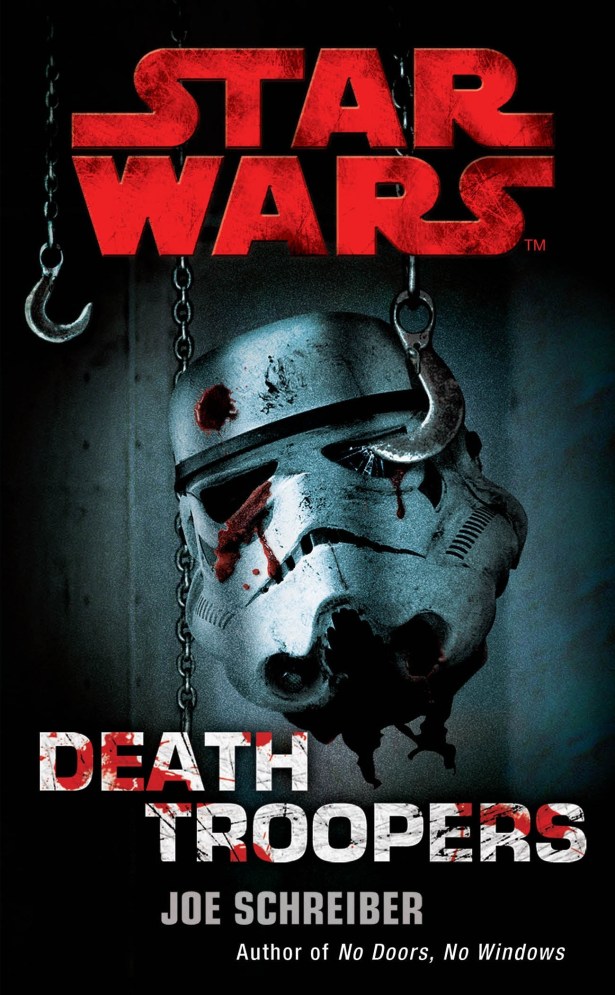
Throwback Thursday – Star Wars: Death Troopers by Joe Schreiber

Death Troopers Cover.jpg

Publisher: Random House Audio (Audiobook Edition 13 October 2009)

Series: Star Wars Legends

Length: 6 hours 42 minutes

My Rating: 4.25 out of 5 stars

Amazon

Reviewed as part of my Throwback Thursday series, where I republish old reviews, review books I have read before or review older books I have only just had a chance to read.

In this week’s Throwback Thursday, I look at an entertaining blend of horror and Star Wars with Death Troopers, a book from the Star Wars Legends collection which I listened to in its audiobook format.

Death Troopers is set a short time before the events of Star Wars: Episode IV – A New Hope.  The Imperial prison barge Purge is the temporary home of the galaxy’s worst criminals, rebels and murderers.  Carrying over 500 prisoners, as well as guards, stormtroopers and other personnel, the ship is a floating hive of scum and villainy, where the guards are just as bad as the inmates.  En route to a permanent prison facility, the engines fail, stranding the Purge in an uninhabited area of space.  Rescue appears to be weeks away, unless the crew can fix the engines.  The discovery of an apparently deserted Star Destroyer offers hope to the Purge’s crew, but the ghost ship contains a dark secret.

A boarding party sent to scavenge parts for the Purge inadvertently brings back something lethal: a virus that spreads incredibly fast and soon infects everyone aboard the ship.  Within hours, only a few survivors are left alive: the ship’s compassionate doctor, the sadistic captain of the guards, two young teenage brothers and a certain pair of smugglers.  However, these survivors soon discover that the sudden and bloody death of everyone on the ship is the least of their problems.  Shortly after dying the bodies of the Purge’s crew and passengers violently reanimate.  These creatures are driven, unstoppable and have a hunger for the flesh of the living.  As the survivors attempt to flee the Purge, they soon find that the Star Destroyer above is not as abandoned as they had believed.  The dead have risen, and their greatest desire is to infect the entire Star Wars universe.

Zombies!  In a Star Wars book!  How can I possibly resist that?  No seriously, tell me how it is even possible not to check out a book with that sort of premise.

Death Troopers is a 2009 release from horror, thriller and tie-in novel author Joe Schreiber, who wrote several fun-sounding books between 2006 and 2015.  These novels include two additional Star Wars novels, all of which fall in the Star Wars Legends line of novels.  Indeed, his third Star Wars novel, 2014’s Maul: Lockdown, was actually the last novel released in the Star Wars Legends series of books.  His other Star Wars novel, 2011’s Red Harvest, is a prequel to Death Trooper, and is set in the Old Republic, thousands of years before the events of Death Troopers.

The Star Wars Legends series of books is the current incarnation of the old Star Wars expanded universe, which, in addition to the six Star Wars movies that George Lucas produced, included all the books, comics, video games and television series that were endorsed by Lucasfilm.  All of these entries were considered canon, so at one point there were actually proper zombies in the Star Wars canon.  While the original expanded universe did have a dedicated fan base, it did not survive the Disney buyout of Lucasfilm intact.  In order to allow for the new movies, Disney declared that, with the exception of the films and The Clone Wars television show, everything created before 25 April 2014 would no longer be considered canon.  However, rather than disavow all of these previous Star Wars media items, Disney rebranded this original expanded universe as the Star Wars Legends collection and kept it as a deep pool of ideas and characters for any future writers of the franchise.

It’s no secret that I am a bit of a Star Wars fan, having reviewed several tie-in books and comics in the last year.  While my current interest mostly lies within Disney’s expanded universe, I did grow up with a number of books and games in what is now the Star Wars Legends range.  Star Wars books and comics are going to form a significant part of my upcoming Throwback Thursday entries, but I had not intended to dive back into the Star Wars Legends range until I had gotten through all the books in the Disney expanded universe, as I wanted to stick with what is currently canon.  However, I happened to come across the cover and plot synopsis for Death Troopers the other day, and the moment I saw it I knew that I had to read it.  I immediately grabbed an audiobook copy, narrated by Sean Kenin, and started listening to it.

While I loved the plot synopsis, I was worried that Death Troopers was going to be a Star Wars novel first that featured some light zombie elements and minimal gore.  However, what I was not expecting was an extremely terrifying and well-written zombie novel that makes full use of its Star Wars setting to create a dark, gruesome and somewhat scary story.  I was very impressed with Schrieber’s ability to craft an amazing zombie novel.  His creations are pretty darn terrifying, especially as the author paints some detailed and horrifying descriptions to go along with his story.  The introduction of the zombies is done perfectly, in my opinion, as Schreiber goes for a slow burn approach.  Following the introduction of the virus, the book’s survivors slowly explore the ship, searching for a way to escape.  The author slowly builds up the tension by having things move around out of the characters’ sight, the bodies slowly disappear, bloody handprints appear in places and the characters hear all sorts of noises.  The characters of course have no idea what is happening, and blame their imagination or paranoia, but the reader knows full well what is happening.  Even when the first zombie is actually seen, panic and realisation still does not immediately set in for the rest of the characters, much to the reader’s frustration.  It is not until well after halfway through Death Troopers that the zombies are revealed in all their horror, and from there the pace of the book picks up, as the characters must find a way to quickly get away from the creatures hunting them.  This slow introduction of the zombies was a fantastic part of the book and represents some outstanding horror writing from Schreiber.

Despite this being a Star Wars novel, Schreiber does not dial back on the blood, gore or horror, and there are quite a few dark scenes throughout the book.  I was on the edge of my seat for quite a lot of it and felt that this was a great piece of horror fiction.  There are quite a few dark scenes, such as cannibalism, jaunts in rooms full of body parts and some fairly gross surgical scenes, all of which Schreiber describes in shocking detail.  I did find the story to be a bit predictable in places, and it was pretty easy to predict which of the characters would live or die.  There were also quite a few unanswered questions (what the hell was the lung room for?), although they may be answered in the prequel book Schreiber wrote a couple of years later.  I also thought that the way Schreiber ended the plot line about the zombies attempting to escape the Star Destroyer and infect the rest of the universe was a bit of an anti-climax, but overall this was a pretty fun story that I quite enjoyed.

I felt that Schreiber was quite clever in his use of the Star Wars elements throughout Death Troopers.  It is quite obvious that Schreiber is a fan of the franchise and he has a wonderful understanding of the history, technology and characters that have appeared in other Star Wars works.  As a result, he is able to craft an excellent Star Wars setting for this story that presents the reader a good idea of how this book appears in relation to the rest of the franchise.  However, what I really liked was how Schreiber did not overuse the Star Wars elements, and the reader’s focus was never taken away from the zombie part of the book.  I also felt that several of the Star Wars elements really helped to enhance the horror aspects of the book.  Having the familiar turn into something different can often be quite scary for people, and to see the often-ridiculed Imperial Stormtrooper turned into a ravenous, mutilated zombie was quite something.  The inclusion of fan favourite characters Han Solo and Chewbacca was also a nice touch.  Not only do you have some familiar characters for the readers to enjoy but you also raise the stakes of the story when both of these beloved characters come close to being eaten by zombies.

Another benefit of combining Star Wars and zombie fiction is that for once characters are completely justified in not knowing what a zombie is.  There are quite a few other major zombie movies or television shows set in fictional worlds that are supposed to mirror ours, and yet the protagonists have no idea what zombies are, despite how much they are used in fiction.  This always frustrates me, and while it was a minor thing, I was very happy to read a book where the character’s lack of understanding about zombies is completely understandable.  Overall, I really liked how the author presented the Star Wars elements within the book, and I was impressed by the way he used it to make the zombie elements even scarier.

If you are tempted to check this book out, I would highly recommend that you listen to the book in its audiobook format.  At just over six and a half hours, this did not take me a long time to get through, but I was absolutely amazed at how much the audiobook format enhanced the story.  This is mainly down to the fantastic sound effects that were scattered throughout the story.  The producers of this book did a superb job inserting a range of zombie sound effects throughout the background of the book’s narration.  This includes sounds such as screams, disturbing eating sounds, moans and other assorted sounds of horror, with the continued screams being particularly off-putting.  None of these sounds overwhelm or totally distract from the narration, but I found hearing them when the narrator describes a horror scene really enhanced the tension and dread I experienced.  I also thought that the disconnected, whispered and screamed echoes of the chapter names was a very nice touch and it really added to the overall atmosphere of the book. In addition to these horror based sound effects, there are quite a few classic Star Wars sound effects for the reader to enjoy and get nostalgic about, including some of the classic music from the movies.

Sean Kenin’s narration was also extremely well done, as the narrator was able to create a series of fun and distinctive voices.  I thought that Kenin’s Han Solo was very convincing, and it sounded a lot like the movie version of the character.  I also found that having this horror story narrated to me helped bring me into the centre of the action and really experience the horror and dread that was present there.  The narration of the descriptions can be a bit disturbing at times, and I would recommend not eating during one or two scenes; trust me on that.  As a result, I would highly recommend that people wanting to check out Death Troopers should definitely use the audiobook version of it, as in my opinion it does an amazing job enhancing this already fun story.

I am happy to say that I was not disappointed by this entertaining combination of zombie literature and the iconic Star Wars universe.  This was a pretty dark story, which also includes some familiar elements from a franchise that I truly love.  Because of this I had an outstanding time reading Death Troopers and felt that it was a great example of both a zombie novel and a piece of Star Wars fiction.  In my mind the book itself is four stars out of five, but I had so much fun with its audiobook format that I am raising it up to four and a quarter stars.  An overall fantastic and unique read, Death Troopers is really worth checking out for fans of either zombies or Star Wars and is perfect for those who love both.  I am very curious to check out Schreiber’s other Star Wars books in the future, as both of them sound like a lot of fun.

Amazon

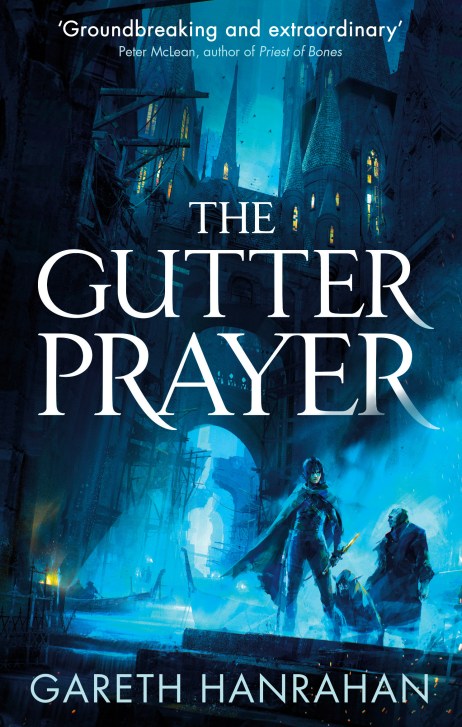
The Gutter Prayer by Gareth Hanrahan

The Gutter Prayer Cover.jpg

Publisher: Orbit (Paperback Edition – 17 January 2019)

Series: Black Iron Legacy (Book 1)

Length: 512 pages

My Rating: 4.5 out of 5 stars

Amazon     Book Depository

From debuting author Gareth Hanrahan comes the grimdark fantasy book that everyone has been talking about, The Gutter Prayer.  This debut novel has been getting some serious hype from a lot of fantasy reviewers, so I was very happy when I got my copy earlier in the week, as it will give me a chance to check it out for myself.

For thousands of years, the large, sprawling city of Guerdon has survived against all manner of attacks and calamity.  In recent years, the city’s alchemical industry has taken off, producing powerful weapons and twisted creations to sell to Guerdon’s warring neighbours, involved in the destructive Godswar.  But with the rival nation’s eyes on Guerdon, refugees flooding into the city and the city’s various factions fighting for power, the potential for chaos is great.

In the middle of all this, three mismatched young thieves – stranger to the city, Cari; the Stone Man, Spar; and Rat the ghoul – find their lives changed forever.  Hired by the leader of the city’s criminal element, these three thieves attempt to break into an important civic building, only to be nearly killed by a massive explosion and framed for the crime.  Pursued by the Alchemist Guild’s murderous enforcers, the Tallowmen, and the relentless thief-taker, Jere, the three friends attempt to escape their pursuers, but find themselves entangled in a terrible plot to bring destruction to the city.

Ancient creatures are rising from the city’s bloody past, and the city’s old gods are prepared to rise once again.  As Cari, Spar and Rat uncover the full extent of these gods’ power, they must contend with others who seek to use the chaos for their own ends.  With everything on the line, can the three friends find a way to stop the events unfolding, or will their failure result in the destruction of everything they hold dear?

This is Hanrahan’s first fictional book, although the author has written a number of gaming manuals and fantasy guides over the years.  However, with the evident popularity of The Gutter Prayer among the fantasy community, it seems extremely likely that this will not be Hanrahan’s only book.  Indeed, the author already has plans for a sequel, and The Gutter Prayer will form part of this planned Black Iron Legacy series.

I thought that The Gutter Prayer was an ambitious and intriguing new entry to the fantasy genre, and it is definitely worthy of the hype around it.  Hanrahan presents a wide-ranging and dark story of magic, religion and betrayal, and he sets it within an imaginative new fantasy landscape with a ton of unique fantasy elements and creatures.  The story is then based around several great characters, each of whom has their own compelling arc within the narrative.  The result is an excellent and memorable novel that showcases Hanrahan’s creativity and serves as an amazing introduction into a bold new fantasy universe.

This book contained a fantastic and intense story which focused on a variety of different characters and follows their attempts to investigate and forestall the strange events occurring around them.  I really enjoyed this story, although I had a little bit of a hard time getting into it at the start of the book due to mass of story and fantasy elements I was bombarded with.  However, I am extremely glad that I powered past this first part of the book because once I was able to place all the story elements together I appreciated the book’s wild and intricate plot.  One of the main things that I really loved about this book was the inclusion of a significant number of different characters and factions, each with their own motivations and hidden secrets.  As a result, you have no idea who is going to do what next and who is going to betray the protagonists to serve their own needs, creating an unpredictable story.  The narrative is also extremely dark, and readers should be prepared for characters dying or being altered in some way or another.  This is some fantastic storytelling from Hanrahan, and an overall clever narrative.

One of the most talked-about elements of this book is the author’s use of a huge range of unique fantasy elements.  Hanrahan has come up with and expertly utilised a ton of creative, inventive and at times just plain creepy new fantasy elements.  The best example of this has to be the Tallowmen, humans that have been turned into living candles, often as punishment for crimes.  These creatures are strong, lethal and fast, serving as the guards and law enforcers of the Alchemist Guild.  Their terrifying appearance, distinctive abilities and the glow of their candle flames as they hunt down the protagonists are extremely memorable.  Another terrifying inclusion is the Ravellers, servants of the city’s ancient gods who have the ability to unravel people out of existence and take on their appearance.  There are also the ghouls and Stone Men.  Stone Men are humans infected with a disease that slowly turns them into stone, although their condition can be held back by an alchemical compound.  The depictions of their condition are pretty horrific, and there is the interesting double-edged sword of the disease: they become stronger the more their condition progresses, but they also become less able to live normal lives.  The ghouls, humanoid creatures who feast of the dead flesh of humans, are an element that most fantasy fans will be familiar with, but Hanrahan has made some clever alterations to these creatures by expanding on their life cycle and making them a key part of the city’s history.  Another awesome creation is the Crawling Ones, a sentient hive of worms who take a human shape and are powerful magic users.

In addition to the above unique fantasy creatures, The Gutter Prayer also introduces the author’s great new twist on fantasy gods.  The world of the Dark Iron Legacy is filled with a vast pantheon of powerful gods, which forms a critical part of this universe.  Many of the deities outside of the city are engaged in a massive conflict known as the Godswar, where these gods and their followers are involved in battles against each other for supremacy.  While we get a brief look at this in The Gutter Prayer, most of the focus of this book is on the gods of Guerdon.  While a few other religions are mentioned within the city, the main two pantheons are the Kept Gods and the Black Iron Gods.  Both of these different gods are extremely intriguing, and I particularly loved the concept of the Kept Gods, who are chained and whose intake of prayer is controlled by their church to limit their power and control their actions.  The Black Iron Gods are a darker and more ancient pantheon with a great history, a horde of sinister followers and a captivating physical presence.  I also liked this universe’s concept of saints, those humans gifted power by their connection to the gods.  There are a couple of saints featured throughout the book who form an integral part of the plot, powering through the story with a range of different powers and abilities.  Quite frankly, all of these unique fantasy elements are deeply intriguing, and Hanrahan uses all of them perfectly to enhance his outstanding story.  I do hope that the Godswar will be explored in future books, as that sounded like a really fun concept that I would be deeply interested in.

Guerdon is a decent grimdark fantasy city, and it serves as the primary setting for most of the city.  The city’s range of interesting and unique residence allows for a fascinating overall story and makes this a fantastic setting.  I really like how the city is home to a range of competing factions, such as the Alchemists, the Church, the criminal organisation known as the Brotherhood, politicians and the city’s non-human races, each of whom have different plans for the future of the city.  This is a pretty typical dark, crime-ridden fantasy city, but it works really well as a setting for this story.  The author’s deep exploration of the history of his fantasy city served as a useful plot point, and I love how the city’s past came back to haunt it in a number of ways.

I have to say that I was really impressed with Hanrahan’s character work within this book.  The author introduces a number of amazing characters, most of whom get deep and satisfying story arcs.  The main three characters are particularly great.  I really liked Spar, who is not only the son of one of the city’s most famous criminals, but who is also a Stone Man.  It is through this character’s eyes that we get the best view of the living hell of life as a Stone Man, as Spar is forced to deal with all the unpleasant side effects that his condition brings.  At the same time he must deal with his family legacy as he fights to achieve his father’s dream of a more noble Brotherhood while forced to work for its current corrupt leader.  Rat the ghoul is another interesting character.  As a ghoul, he is generally supposed to live under the city, but he likes living above the streets with his friends.  Rat is constantly conflicted between loyalty to his friends and to his race’s ancient promises, as well as dislike for the traditional ghoul lifestyle.  Finally, there is the mysterious young thief, Cari, who holds a dark secret in her past.  Cari is a rebellious young female protagonist who is developing strange new powers.  The exploration of her past and her abilities is a key part of the book and a good basis for a large portion of this plot.  I liked the way that these three characters cared for each other and how their stories remain interconnected even as they have their own unique adventures within the story.

While these three main characters serve as an extremely powerful narrative base for The Gutter Prayer, the author also focuses on a couple of additional point-of-view characters, including the veteran thief-taker, Jere; Cari’s cousin, Eladora; and the saint of the Kept Gods, Arla.  These characters do not get as large a focus as the book’s three main characters, but their parts of the book are quite significant.  Each of them also has a full character arc within the book, and they all develop or change in substantial ways.  Jere is a grizzled private investigator obsessed with taking down the Brotherhood, and his investigations for the first two-thirds of the book provide the reader with some vital plot detail.  I really liked the end to Jere’s character arc, which was both dark and satisfying.  Eladora is a sheltered scholar who gets a rather rude awakening about life throughout the course of this book.  Eladora is not my favourite character, but I did like her gradual transformation from damsel in distress to something more useful.  Finally, there is Arla, who would have to be my favourite side character.  Arla is a saint of the Kept Gods blessed with fiery powers as a result.  Arla is a badass and entertaining character who spends most of the book fighting her opponents with her fiery sword and generally not acting in a way most people would consider saint-like.  I especially love when she utilises her god-empowered voice to command people, as she is usually swearing while doing this.  This comes up in the text in all caps, and you have to imagine it sounds pretty impressive in this book’s audiobook format.  There were a number of other entertaining side or minor characters throughout the book that the author put to good use, and I will enjoy seeing what role they will play in any future books in the series.

Overall, I truly enjoyed The Gutter Prayer and was impressed by Hanrahan’s magnificent debut.  This was an excellent piece of grimdark fantasy which expertly combined some very inventive fantasy elements together with a fantastic story and some excellent characters.  With this first book Hanrahan has shown some incredible talent as a fantasy storyteller whose outstanding imagination is his biggest asset.  This is a highly recommended book which lives up to the substantial hype surrounding it.  I am already extremely keen for any additional books in the Black Iron Legacy, especially as the interview at the end of the book implies that Hanrahan has some brilliant ideas for the rest of the series.

Amazon     Book Depository

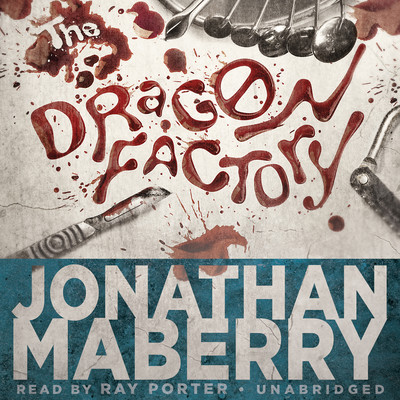
Throwback Thursday – The Dragon Factory by Jonathan Maberry

The Dragon Factory Cover.jpg

Publishers: St. Martin Griffins

                        Blackstone Audio

Publication Date – 2 March 2010

Amazon     Book Depository

Reviewed as part of my Throwback Thursday series, where I republish old reviews, review books I have read before or review older books I have only just had a chance to read.

My quest to get through all of the books in Jonathan Maberry’s Joe Ledger series continues.  In this week’s Throwback Thursday I look at the second epic entry in what is fast becoming one of my favourite series of all time, The Dragon Factory.

It has been only a few months since former police officer Joe Ledger joined the elite and top-secret American intelligence agency, the Department of Military Sciences (DMS).  Working with the DMS and its mysterious leader, Mr Church, Ledger has helped save the country and the world from a variety of unique scientific threats.  Therefore, Ledger is extremely surprised when one morning a team from the NSA ambushes him and attempts to place him under arrest.

Without any warning, Ledger and the DMS find themselves caught in the crossfire between two rival organisations of rogue geneticists who have already drawn first blood against the DMS.  One of these organisations works on perfecting the world’s deadliest diseases, while the other seeks to create an army of genetically enhanced soldiers and terrifying animal hybrids.  Both of these factions are well funded, have remained hidden from the world’s intelligence agencies and have access to game-changing technology.  However, one has a terrifying vision for the future that they will go to any lengths to achieve.

As Ledger leads his team in an all-out war against these rival groups, they begin to uncover the full extent of these villains and the connection they have with Church and the DMS’s secret past.  The Extinction Clock has started to count down, and the entire world will be changed when it hits zero.  Forced to battle impossible odds, will Ledger be able to save the world again or will death and tragedy rain down around him?

Those who have been following my reviews in the last few months will remember that I first experienced Jonathan Maberry’s amazing Joe Ledger series when I read last year’s epic release, Deep Silence, which was among my top 10 reads of 2018Deep Silence was the 10th book in the series, and its clever writing, over-the-top elements and outstanding audiobook adaption made me immediately go back and check out the first book in the series, Patient Zero.  I found Patient Zero, with its focus on weaponised zombies, to be just as entertaining as Deep Silence, while also serving as an amazing start to the series.  Because of how much I enjoyed Deep Silence and Patient Zero, I decided to check out the other books in the Joe Ledger series as soon as possible.  The Dragon Factory is the second book in this series, and it continues the epic adventure started in Patient Zero.  Featuring excellent antagonists, fun new elements and a killer storyline, The Dragon Factory is an amazing book which I experienced in its audiobook format.

Having read the first book and the latest book in this series before reading this second instalment gave me an interesting insight when it came to reading The Dragon Factory.  While Patient Zero was a great book, I felt that The Dragon Factory is the book in the series where Maberry really hit his stride.  I found that this second book contained a much better combination of character focus, humour, intense action and the books fantastic science fiction elements.  The overall story of The Dragon Factory was absolutely incredible and extremely compelling, allowing me to rush through this book in no time at all.  I loved several of the twists that Maberry inserted into this book, although I did see the book’s big plot development coming from some distance away.  However, knowing it was coming did not lessen the impact for me, and it represents some amazing writing from the author.  There was a lot less horror elements in The Dragon Factory than the other Joe Ledger books I have read, but it still contains a healthy dose of mad-science elements, and I loved all the scientific discussions included throughout the book.

One of the best things about the Joe Ledger series is the wide range of viewpoints that the author employs to show the protagonist’s actions and to highlight the plots, schemes and planning of the various antagonists.  This allows the reader to get a much more widespread view of the various actions being taken by the book’s various characters, and the reader gets to see events that happened weeks before the book’s main storyline at various points throughout the narrative.  Maberry uses this to particular effect in The Dragon Factory, and it enhances many of the books various story elements.  I also loved how each of the main story chapters had a timer at the top counting down how many hours were left on the Extinction Clock.  I thought this was an extremely clever literary device that served at least two purposes in the book.  Not only did it add a real sense of dread to the story as the countdown leads closer and closer to a devastating event but it was also useful in highlighting the chronological order in which some of the chapters occurred, which was extremely useful during some of the later action sequences.

One of the most entertaining parts of The Dragon Factory was the amazing new villains that Maberry focused on.  In this book the protagonists find themselves up against two sets of geneticists, each with their own specialities and goals.  As the story progresses, the reader gets a deep understanding of both groups’ motives, plans, creations and the various moves and counter-moves they make against each other and the DMS.  Watching the two different groups attempt to attack or manipulate their rivals is an intriguing part of the plot, and it was fascinating to see the impacts the protagonist’s actions had on their villains schemes and overall plans.  Having geneticists as the villains not only allowed Maberry to create a series of memorable and destructive creatures for the protagonists to fight but it also added some very fun edges to the conflicts between the rival villain establishments.  While the motivations of one group are quite a basic, the motivations of the other group are very over the top, and the full list of their fictional crimes is quite insane.  I honestly laughed out loud when certain details about this group were revealed towards the end of the book, but it was an extremely out-there twist that I loved so much.  Maberry does a really good job of fleshing out all the main antagonists, which I think helps create a much richer and more enjoyable story.

Maberry is a bit of an action fanatic, so those readers who are looking for some fictional fights have come to the right book.  There is a huge range of different action sequences throughout this book as the DMS and the two rival groups of evil scientists unleash their forces against each other.  I am always amazed at the level of detail Maberry is able to convey in his action sequences, as he paints a vivid picture of the combat while also discussing the various tactics and techniques behind them.  For example, when the main protagonist engages a skilled opponent in an epic knife fight, not only does the reader get a great description of the battle that’s taking place but they also get an understanding of the various moves being utilised and the advantages and disadvantages of the different knives.  I really enjoy the way that the author goes into the psychology of the fight, and it really shows how much research and thought has gone into these sequences.  The genetically enhanced super soldiers and weird animal hybrids are pure fun, and provide the reader with some extreme and wildly entertaining pieces of violence.  An easy choice for any action junkie, you will not be disappointed with this read.

Joe Ledger continues to serve as a fantastic protagonist for this series, and I love his uber-sarcastic personality.  Ledger is the only point-of-view character whose chapters are told from the first person perspective.  This is an interesting differentiation which highlights Ledger’s importance to the plot and helps showcase his fighting ability.  Ledger, like Maberry, is a martial arts enthusiast, and the author uses his character’s first person perspective to really show off his fight scenes and show the devastating fight moves that he can perform.  The first-person perspective also allows Maberry to explore the unique psyche of his protagonist, as Ledger’s mind is broken up into three separate personalities following a traumatic event in his childhood.  This has always been an interesting character trait for Maberry’s protagonist, but it was especially intriguing to see how Ledger and his mind react to certain traumatic events that occurred in this other book.  Mr Church continues to shine as the best secondary character in this series, and his calm persona, mysterious past and the sheer badassery that comes off him are absolutely amazing.

Without question, the best way to check out The Dragon Factory is in its audiobook format, which goes for a very enjoyable 16 hours.  The main reason for this has to be the incredible narration from Ray Porter, who has narrated all the books in the Joe Ledger series.  The narration a great way to absorb all the action, plots and science, and Porter does an amazing job of vocalising all of the characters, especially Ledger and Mr Church.  I loved the way that Porter was able to capture Ledger’s sarcasm and humorous edge for most of the book, and then turning on a dime to capture the harder and more vicious parts of the character when he gets enraged or upset.  The voice work on Mr Church is once again exceptional; every time he voices the character I can almost see the calm and mysterious figure, and I love how Porter makes him sound like a cross between Tom Hanks and JFK.  This is some first-rate voice work, and I find it adds an incredible amount to this excellent story.

After absolutely loving Patient Zero and Deep Silence I never once doubted that I would enjoy The Dragon Factory.  I was amazed by how much fun I had with this book, which I found to be insanely addictive and near impossible to stop listening to.  Featuring all of the elements of this series that I already loved, as well as some outstanding new features, this was an insane read that I cannot recommend enough.  Without a doubt this needs to be experienced in its audiobook format, and Porter has to be one of my favourite audiobook narrators at the moment.  I am already planning to dive into the third book of this series, so keep an eye out for my review of it in the next month.

My Rating:

Five Stars

Amazon     Book Depository

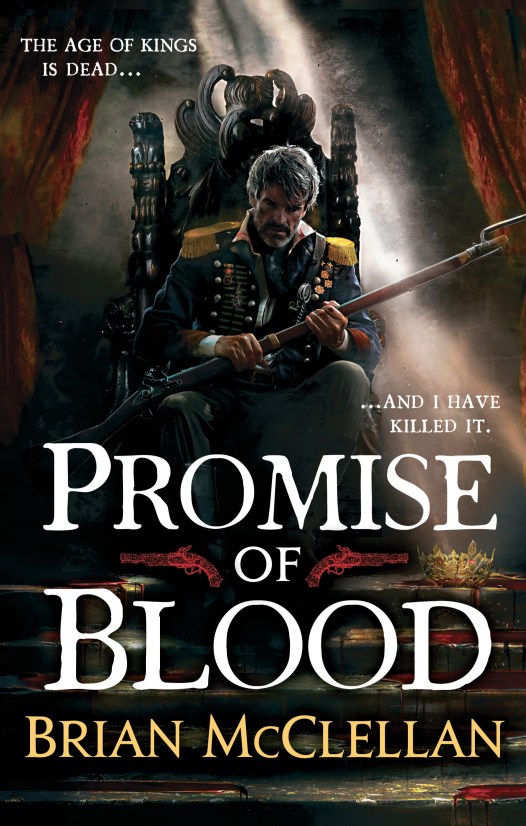
Throwback Thursday – Promise of Blood by Brian McClellan

Promise of Blood Cover.jpg

Publishers: Orbit

                        Hachette Audio

Publication Date – 16 April 2013

Amazon

Reviewed as part of my Throwback Thursday series, where I republish old reviews, review books I have read before or review older books I have only just had a chance to read.

One of the saddest realities of being a bibliophile is that no matter how hard you try or how much spare time you have, no one can read every great book that comes out every year.  I am no exception to this rule, as for years I was mainly focused on the historical fiction genre.  While this is a fantastic genre to focus on, it did mean that I missed out on many of the biggest science fiction and fantasy releases for the last several years.  Ever since I expanded my attention to a range of other genres, I have been seeking out and reading a number of different fantasy or science fiction books and series, many of which I have or will review on my blog and on Goodreads.  One of the series that I have heard constantly praised by friends, fantasy fans and other book reviewers is The Powder Mage trilogy by Brian McClellan.  Nearly every fantasy reviewer and their dog has read and said good things about these books and, as a result, The Powder Mage trilogy has long been at the top of my to-read list.  So when I was recently able to fit the first book in the trilogy, Promise of Blood, into my reading schedule, I thought I would try it out and see if it lived up to everyone’s hype.

The Powder Mage trilogy are the debut novels of fantasy author Brian McClellan, and are a flintlock fantasy series, which is a modern fantasy sub-genre that features pre-industrialisation civilisations who utilise flintlock firearms with fantasy elements.  The Powder Mage trilogy started in 2013 with Promise of Blood, which the author followed up with a new book in 2014 and 2015.  Following the success of his initial trilogy, McClellan introduced a second trilogy, the Gods of Blood and Powder trilogy, which is set 10 years after the events of The Powder Mage trilogy.  This second trilogy is still ongoing, with the third and final book set to be released in November of this year.  In addition to these two main trilogies, McClellan has also written a number of novellas and short stories set in the same universe as his main books, which expand on his fantasy world.

McClellan has created a new and captivating fantasy world in order to contain the stories in his two main trilogies.  The Powder Mage trilogy is primarily set in the nation of Adro, one of nine nations that were founded thousands of years ago by the god Kresimir, which are together known as The Nine.  By the start of the first novel, Promise of Blood, the nations of The Nine have reached a level of technology equivalent to Europe’s pre-industrial revolution period, with flintlock firearms in heavy use.  Magic is also common in this world, with the nations of The Nine containing three separate levels of magical ability.  These include the privileged, extremely powerful sorcerers who can wield a range of devastating elemental abilities; the marked, lesser mages with more specific gifts; and the knacked, who have one specific magical talent, like a perfect memory or not needing to sleep.  The privileged of The Nine are generally organised into sorcery cabals, with the most powerful organised into a Royal Cabal loyal to the King of their nation.

Promise of Blood starts with Field Marshal Tamas, the highest-ranked military officer of Adro, leading a bloody coup against his country’s corrupt king and nobility.  During the coup, Tamas and his powder mages, marked whose abilities are powered by gunpowder, assassinate every member of Adro’s Royal Cabal.  However, every member of the Royal Cabal said one thing before they died, “You can’t break Kresimir’s Promise”.  In order to find out the meaning of these mysterious words, Tamas hires former police inspector Adamat to investigate.  While Adamat sets out to uncover meaning behind these mysterious final words, Tamas begins the difficult process bringing order to his country.  However, it soon becomes apparent that staging the coup was the easiest part of his endeavour.

Tamas’s coup provokes a war with the Kez, one of Adro’s rival nations in The Nine, whose previous attempts to control Adro’s king, led to Tamas overthrowing him.  As Tamas deals with assassins, Royalists, deposed nobles and Kez magicians, it soon becomes apparent that someone on Tama’s council has betrayed him.  Brought in by Tamas to investigate who betrayed him, Adamat finds his loyalties tested when mysterious figures target him and his family.  At the same time, Tama’s estranged son, Taniel Two-Shot, embarks on a hunt for a surprisingly powerful member of the Royal Cabal who escaped Tamas’s powder mages.

Both Adamat and Taniel’s missions reveal dark secrets about the formation of their country.  With dark omens in the sky and ancient legends come to life, can Tamas and his forces stop the destruction of Adro, or will the mysterious forces arrayed against them succeed in their mission to summon forth an ancient power?

To be honest, even before I heard about this trilogy from other book lovers and reviewers, I thought the synopsis was pretty cool and the idea of gunpowder-wielding mages was an interesting concept.  I listened to the audiobook format of Promise of Blood, narrated by Christian Rodska, which goes for a lengthy 19 hours.  Now the question is; did this book live up to the hype?  The answer is yes.  I loved this book, I thought it was massively creative, filled with incredible action, had some complex, if mostly male, characters and made use of some excellent fantasy elements.

I really enjoyed the story within this book and I thought it was an amazing combination of intrigue, action and fantasy storytelling.  I liked the idea of starting the book just as a successful coup had taken place and the focus on the immediate aftermath of such a significant event.  The story is essentially broken into three main parts.  About a third of the book is told from Adamat’s point of view and really focuses on the intrigue elements of the story.  Adamat at first investigates “Kresimir’s Promise”, which is a fairly interesting part of the book, as it dives into the history of the country, and quickly reveals that shadowy forces are at play behind the scenes.  This initial investigation only lasts for a short part of the book, before Adamat is drawn into the larger investigation about the traitor in Tamas’s council.  This is a very well done investigation part of the book as the reader is presented with five suspects, each of whom is hiding several secrets and many of which have suspicious employees.  In addition, Adamat has to deal with a mysterious figure who is blackmailing him, and who keeps the identity of his employer secret.  These multiple layers of intrigue and lies ensures that the reader is looking in several different directions and have a much harder time guessing who these antagonists are.

Another third of the book is told from Taniel’s point of view, and follows him as he first hunts down a powerful privileged, and then finds himself stuck in the middle of a large battle for the survival of Adro.  While there are quite a lot of reveals about some of the book’s underlying fantasy elements in this part of the book, the main focus is on the action, as Taniel and his allies fight a number of opponents, and Taniel reveals while he is known as Two-Shot.  There is some interesting character work in this section as Taniel works through his feelings for his father, finds himself having to choose between obeying orders and the life of his best friend, and him coming to terms with his weird relationship with the powerful female character, Ka-poel.

The final main part of the book is told from the point-of-view of Tamas himself, and deals with the fallout from his coup and the multitude of issues he has to deal with in the aftermath.  The parts of the book focusing on Tamas are the most important chapters within Promise of Blood, as they bridge the other two sections of the book due to Taniel and Adamat not really interacting too much during the book.  The Tamas chapters have the best balance of Promise of Bloods’ excellent combination of fantasy elements, intrigue and action.  Throughout these chapters, Tamas is constantly forced to deal with the political infighting and betrayals occurring all around him, while also being targeted by assassination or capture by his various enemies.  Tamas also encounters a number of hints about the true nature of the fantasy events impacting Adro, including from a bizarre chef, and I loved the layers of intrigue that surrounded something most of the characters believed was a myth.  I really liked Tamas as a character, and I found him to be an intriguing combination of a calm, tactical genius and an absolute rage monster.  Despite alienating most of the people around him, especially Taniel, deep down Tamas is a good man who has been forced to make the hard decisions no-one else will.  However, when enraged he is an absolute terror to behold, especially to someone who has crossed his friends or family, and during these scenes of anger he gives several of the best lines, such as the one that appears on the cover:  “The age of kings is dead, and I have killed it”.  He is an absolutely great character and a fantastic focus for this trilogy.

In addition to these three main characters, a small portion of the book is narrated by female character Nila.  Nila’s character really is not explored too much in Promise of Blood, although she is given a good introduction, and I understand she will become a much bigger character in the next books in the trilogy.  On top of the main characters, there are several excellent side characters who really make this book extra awesome.  This includes Tamas’s bodyguard, Olem, a sarcastic and funny man who acts as Tamas’s moral compass for much of the book, and who also has certain ideas about people shooting his dog.  There is also Sousmith, Adamat’s bodyguard, a former boxer who acts as a fun foil to Adamat’s detective character.  While several characters at the Mountain Watch are also enjoyable, you have to love Ka-poel, the mute, witch who serves as Taniel’s spotter.  She has some crazy magic to her, and I have a vague feeling (without knowing anything about the plot of the future books) that she is some sort of young god or something.  I liked the way that Ka-poel was able to express everything, despite being a completely non-verbal character, although the implied romance between her and Taniel was a tad weird, especially as it started the moment he realised she was older than she looked.

The world building in this book is extremely impressive and it serves as an outstanding introduction to the key elements of the series’s universe.  While the other magical and fantasy elements of this book are pretty awesome, I especially loved the powder mages, and their magic is easily the best part of the book.  The powder mages have a unique blend of abilities, all of which are powered by eating or snorting gunpowder.  Consuming the powder gives them focus, enhanced perception, great strength and stamina.  In addition, they have control over gunpowder, igniting at will, and using their abilities to manipulate bullets in flight.  Each of the characters have different abilities on top of that.  Tamas can ricochet bullets around a room; Taniel can fire bullets further than anyone else, as well as firing two bullets at once; while another powder mage, Vlora, can ignite powder from a distance.  These characters in battle are absolutely fantastic, and I love it when these characters, especially Tamas, fully unleash their abilities.  The fight scenes between the powder mages and the privileged were exceptionally amazing, and I loved the contrast between the more traditional fantasy magic of the privileged and McClellan’s more unique powder magic.  That being said, when the privileged unleash their abilities they can be much more destructive, and some of their fights are pretty impressive.

I had a wonderful time listening to the audiobook format of Promise of Blood, and I thought that it was a spectacular way to enjoy this amazing story.  The action sequences, especially when the magic and bullets are flying, really come to life when narrated, and audiobooks always help me absorb complex new fantasy worlds such as the one in this series.  Rodska’s narration is really well done, and I found that he really captured the essence of the characters.  I especially thought he got the gruff and powerful voice of Tamas down perfectly, and it was an extremely realistic personification of the character’s voice.  I really hope that Rodska does the narration for the other books in McClellan’s series, and I would easily recommend the audiobook format of Promise of Blood to anyone interested in this series.

Overall, I really loved Promise of Blood and I found that it lived up to its substantial hype.  It’s easily a five-star novel in my eyes.  I loved this book so much that I am planning to listen to the remaining books in The Powder Mage trilogy as soon as I can, and I will probably also try and listen to the first two books in the Gods of Blood and Powder before the final book comes out in November.  McClellan is a fantasy genius, and anybody who loves action and explosions should invest the time to read this book.

My Rating:

Five Stars

Amazon

Quick Review – Death Notice by Zhou Haohui

Death Notice Cover.jpg

Publisher: Head of Zeus

English Edition Translated by Zac Haluza

Publication Date – 14 June 2018

Amazon     Book Depository

This is a book I read earlier in the year, but I did not get a chance to write a review for it until now.  Death Notice is an intricate murder mystery thriller from bestselling Chinese author Zhou Haohui, originally written back in 2014.  The first English translation was released in June of 2018.

Goodreads Synopsis:

An elite police squad hunts a manipulative mastermind out to publically execute criminals the law cannot reach. A wild thriller and deadly game of cat-and-mouse from one of China’s most popular authors. For fans of Jo Nesbo, Se7en, and Hong Kong police cinema.

The brutal murder of respected police officer Sergeant Zheng Haoming sends shockwaves through Chengdu, a modern metropolis in the heart of China’s stunning Sichuan Province. He had been obsessed by an unsolved, eighteen-year-old murder case, until an entity calling themselves Eumenides (after the Greek goddess of vengeance and retribution) releases a terrifying manifesto. Is the manifesto a sick joke, or something more sinister? Soon, the public starts ‘nominating’ worthy targets for Eumenides to kill, and two days later, Sergeant Zheng is dead.

Eumenides’ cunning game is only getting started. The police receive a “death notice,” a chilling note announcing the the killer’s next target, the crimes they have committed, and the date of their execution. The note is both a challenge and a taunt to the police. When the first victim dies in public, under their complete protection, the police are left stunned. More death notices are coming. The chase is on.

Death Notice is an explosive, page-turning thriller filtered through a vibrant cultural lens. Zhou Haohui expertly adds an exhilarating new perspective to the twists and tropes of the genre all fans love, making for a uniquely propulsive and entertaining read.

I found Death Notice to be an extremely enjoyable piece of crime fiction that I was able to power through in a short amount of time.  The overall mystery of this book is quite complex, as the investigative team has to investigate this modern set of killings as well as the original murders which occurred some 18 years previously.  There are a lot of fantastic twists and turns throughout the book as various reveals about the characters in the book are brought to light.  I loved seeing how all the pieces of this mystery came together, and thoroughly enjoyed the overall conclusion about who was behind it, their motivation and their legacy.

While the overall mystery is really clever, I loved the intricate ways in which the antagonist was able to manipulate the police in order to kill the targets they were protecting.  Not only does the killer come up with some elaborate plans to take out his intended victims, he is often able to get the police to do his bidding.  There are some great scenes showcasing this throughout the book, as well as some great reveals about the police characters and why they are able to be manipulated.

The setting of this book is also pretty intriguing, especially as it is not a setting Western crime readers would likely be familiar with.  The book is set in the Chinese city of Chengdu, and I am willing to bet many Western readers have never even heard of that city before.  This provides the reader a unique setting where they do not know the rules or how the police investigate crimes.  The author’s interpretation of Chinese criminal investigation is quite fascinating and readers can enjoy the similarities or differences between this and Western crime fiction.  I also liked how the book was set back in 2002, in the early days of public internet technology.  It was interesting to see how different this recent time period was technology–wise, and it offered some intriguing elements to the story.

Overall, Death Notice is an outstanding piece of crime fiction, with an intricate story and a compelling setting.  This is an easy book for Western audiences to enjoy, and readers should find this piece of Chinese crime fiction quite intriguing.  I hope that we will get more translations of Zhou Haohui’s work in the future, especially ones that continue the captivating story started in this incredible book.

My Rating:

Four and a half stars

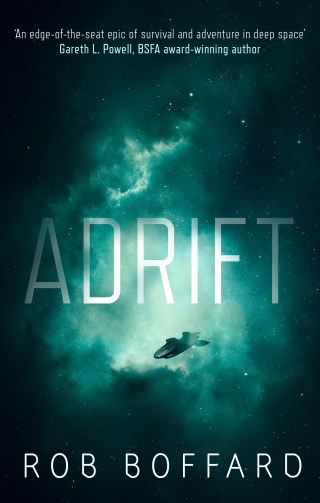
Quick Review – Adrift by Rob Boffard

Adrift Cover

Publishers: Orbit/Audible Studios

Publication Date – 5 June 2018

Amazon     Book Depository

For this review I will be looking at Adrift by Rob Boffard, a book I listened to a few months ago, but which I did not get a chance to review at the time.  With the end of 2018 fast approaching, I decided to do a quick review for this book in order to clear my review schedule for the new year.

Goodreads Synopsis:

In the far reaches of space, a group of tourists board a small vessel for what will be the trip of a lifetime – in more ways than one…

They are embarking on a tour around Sigma Station – a remote mining facility and luxury hotel with stunning views of the Horsehead Nebula.

During the course of the trip, a mysterious ship with devastating advanced technology attacks the Station. Their pilot’s quick evasive action means that the tour group escape with their lives – but as the dust settles, they realize they may be the only survivors . . .

Adrift in outer space, out of contact with civilization, and on a vastly under-equipped ship, these passengers are out of their depth. Their chances of getting home are close to none, and with the threat of another attack looming they must act soon – or risk perishing in the endless void of space.

What initially drew me to this book was the pretty cool-sounding synopsis above.  I had not read anything from author Rob Boffard before, but a story featuring a group of mismatched passengers attempting to survive out in space with only a small, poorly equipped ship sounded like an intriguing read.  After enjoying Adrift, I think I might check out Boffard’s Outer Earth series in the future.

Adrift turned out to be a pretty compelling read, featuring a great story in space.  While the action was a little lighter than your standard science fiction read, this is more than made up for by some powerful drama as the characters deal with the stresses of their situation.  There are also some thrilling intrigue elements as the protagonists attempt to unwrap the difficult situations inside and outside of the ship, as well as one particularly shocking and unexpected moment in the middle of the book.  There were a few good action sequences as well, including several epic flight scenes, and a memorable spaceflight featuring a little old lady.

This book is primarily a character-driven story, as the story mainly focuses on the passengers aboard the tourist ship.  Each of the various characters gets decent coverage in this book, with a particular focus on the three main point-of-view characters and the two secondary point-of-view characters.  After the first few chapters, my initial impression of all the characters in the ship was, ‘What a bunch of losers and arseholes!’  The passengers of the ship are made up of several abrasive characters who initially seemed to overshadow most of the other characters, including two timid main point-of-view characters.  However, as the book is explored further, the background of all of the characters is explored in some detail, and the reader gets an idea of why some of the characters are the way they are.  The events of the story help develop these characters further, and by the end the surviving characters are all much more likeable.  I was impressed by the emotional range that Boffard was able to write, and the various reactions to the situations about the tourist ship came across as quite realistic.

I ended up listening to Adrift in its audiobook format, which was narrated by Katie Scarfe.  The audiobook runs for a little bit over 15 hours, so readers need to invest a bit of time in getting through this book.  I thought that Scarfe did a good job with her narration, coming up with a number of good voices for her distinctive characters, and moving the story along quickly.  Scarfe had a bit of work to do with the primary cast of characters, as not only did she have to do Russian, Irish and British accents, as well as several random accents the ship’s computer system blurted out through the course of the book, but she also had to do a range of ages across both genders, from a young male child to an elderly lady.  Fortunately, Scarfe was able to produce pretty good accents for each of these characters, and it was possible to get an idea of gender and age with the various narrations.  I also thought she did a good job capturing the range of emotion that flowed from her characters, from despair to anger at their situation.  Overall, the audiobook format is a great way to enjoy Adrift, and I would recommend it for those who prefer to listen to their books.

Adrift by Rob Boffard is a clever and fairly captivating read that makes great use of its character-driven storyline.  This was a good standalone novel, and readers will find a lot to enjoy with this intense science fiction read.

My Rating:

Four stars

Mass Effect: Annihilation by Catherynne M. Valente

Mass Effect Annihilation Cover

Publishers: Titan Books

                        Blackstone Audio

Publication Date – 6 November 2018

Amazon     Book Depository

A new galaxy, a ship full of disparate alien species, what could possibly go wrong?  Veteran author Catherynne M. Valente brings to life a new adventure in the Mass Effect universe with Mass Effect: Annihilation, the third official tie-in novel to the 2017 video game, Mass Effect: Andromeda.

This was a really good piece of science fiction that expertly built on the intricate extended universe that has been created around the Mass Effect video game franchise.  I should preface this review by mentioning that I am a huge fan of this video game series, and one of the best things about it is the great universe and intriguing storylines that have been produced as a result.  While I know that many people had some valid criticisms about the latest game in the series, Andromeda, I actually really enjoyed the new addition to the series’ story and lore and had a lot of fun playing it and exploring all the additional plot that is hidden outside of the main missions.  One of the many mysteries that I hoped to get an answer about was the fate of Quarian ark, so I was very eager to read this book when I first heard about what it was going to focus on.

For those unfamiliar with the Mass Effect franchise, the first game was released in 2007 and is set in a universe where humanity has gained spaceflight and by 2183 has expanded throughout the Milky Way galaxy.  Once they were outside of our solar systems, humans met with several alien races which governed large portions of the galaxy.  The three main species, the Asari, the Salarians and the Turians, formed a ruling council on the ancient alien space station, the Citadel, which served as a capital city for these races and several other allied species.  The game series followed the human protagonist, Commander Shepard, as he (or she, depending on your settings), investigates the resurgence of the Reapers: ancient, sentient space ships who appear every 50,000 years to destroy all sentient organic life.  While Shepard is able to delay the appearance of the Reapers in the first two games, they launch a full-scale attack in Mass Effect 3, leading to significant, galaxy-changing events.

The game Mass Effect: Annihilation is based on, Mass Effect Andromeda, is the fourth Mass Effect game released and a loose sequel to the original series.  Andromeda is set over 600 years after the events of Mass Effect 3, and follows a group of explorers and colonists from the Milky Way galaxy as they travel to the Andromeda galaxy in an epic one-way trip to find new planets to settle on.  This was a result of the Andromeda Initiative, a joint exercise from a number of Citadel species in order to settle in the new galaxy.  The Initiative launched their ships to Andromeda in the period between Mass Effect 2 and 3.  Each of the main Citadel races, humans, Asari, Salarians and Turians sent an ark ship to Andromeda, each filled with 20,000 cryogenically frozen members of their respective species.  These four arks were launched at the same time, and the plan was for them to dock in the Nexus, a miniature version of the Milky Way Citadel sent in advance of the arks, which was to be used as a staging ground while the Pathfinders found and explored new planets for their races to settle on.  During the events of Mass Effect: Andromeda, mention was made of a fifth ark, built by the Quarians and filled with several other alien races, that was supposed to launch soon after the initial four arks.  However, this fifth ark made no appearance during Andromeda, and was one of the game’s unsolved mysteries, perhaps destined to never be solved, as there is currently no plans to continue the Mass Effect game franchise (although it is too big a franchise for them not to do something else with it in the future).

The Mass Effect games have inspired a number of additional media releases over the years.  Four Mass Effect books were written between 2007 and 2012 to correspond with the original game trilogy, as well as a number of comic book series.  Following the release of Mass Effect: Andromeda in 2017, a new trilogy of books was commissioned which further explored key events or characters mentioned in the fourth game.  Annihilation is the third and final book in the Mass Effect: Andromeda book trilogy.

As the Reaper fleet begins to appear in the Milky Way galaxy, a fifth ark is launched by the Andromeda Initiative to bring another 20,000 settlers to the Andromeda galaxy.  Built by the planetless Quarians, the ark Keelah Si’yah is the only ark to hold colonists from a number of different races, including Quarians, Drell, Elcor, Batarians, Volus and Hanar.  Despite having different outlooks, opinions, biological requirements and reasons to leave the Milky Way, these races are united in their decision to reach the new galaxy and find new planets to settle on.

As the ship reaches the end of its 600-year long journey, problems are soon identified aboard the ship.  One of the ark’s Sleepwalker teams, a small team of individuals tasked with checking on the status of the ark as it flies through space, is suddenly awoken years before the Keelah Si’yah is scheduled to dock with the Nexus.  The ship’s virtual intelligence has identified certain discrepancies in the readings of several Drell cryopods.  Investigating the pods, the Sleepwalker team find that their inhabitants have died from a disease, something that is supposed to be impossible while frozen.  Even worse, the ships systems are all reporting that everything is fine, and that the inhabitants of the pods are still alive.

The Sleepwalker team quickly discover that the dead colonists have all been infected by a virulent disease, one that seems capable of jumping across to the vastly different alien species.  The team are desperate to find out the cause of the disease, but their investigation is severely hampered by a number of system failures across the ark, while the ship’s computers continue to insist that everything is all right.  As the failing systems start to randomly unfreeze more and more colonists, the disease quickly spreads across the ark.  It soon becomes apparent that the disease has been artificially created, and that someone is launching a deliberate attack against the Keelah Si’yah and its crew.  As the various colonists turn on each other in fear and confusion, can the Sleepwalker team find a cure and uncover who is behind the attack, or will everyone on the ark die before reaching Andromeda?

The author of this book, Catherynne M. Valente is not an author I was very familiar with before listening to Annihilation, but she appears to have produced a wide range of different novels, some of which are quite quirky in content.  I do remember seeing and trying to get a copy of her 2018 release, Space Opera, earlier this year, mainly because it sounded like such a fun read, what with it essentially being Eurovision in space.  Luckily, I was able to obtain a copy of Annihilation a week ago and powered through its audiobook format, narrated by Tom Taylorson.

Mass Effect: Annihilation has an exciting and intriguing story that expands on the established lore of the Mass Effect universe while also providing the reader with a compelling science fiction mystery.  The story is broken up into three main parts: the characters attempting to identify and cure the disease, the attempts to fix the ship’s broken system and an investigation into who or what initiated the attack on the ark and its inhabitants.  As a result, there is a good combination of medical, technical and investigative scenes that come together into a rather intriguing overall narrative.  There is not a lot of action, but the focus on the various problems around the ship is very interesting.  The link between the various parts of the book and the final solution to who is behind them was also quite clever and the reasons behind it were quite interesting.  There are some certain dark moments, especially when it comes to the reveal of who was behind it.  Annihilation is obviously going to appeal a lot more to readers who are familiar with the games and who enjoy the backstory of this series, but this is a great story with plenty for other readers to enjoy, and I felt that Valente makes this story accessible for outside readers.

One of the most interesting parts about Annihilation is the fact that the book focuses on the less prominent alien races in the Mass Effect universe.  Aside from one prologue that follows a human, every single character is a member of six less common races in the lore and games, the Quarians, Drell, Volus, Batarians, Hana and Elcor.  This is unique, as the games and the previous novels tend to mostly focus on human characters, or feature a significant number of characters from the games more prominent races, such as the token sexy alien species, the Asari, or the gigantic and war loving Krogan.  The other main council races, the Turians and the Salarians, are also extremely prominent compared to the six races featured within this book, with great Turian and Salarian characters appearing frequently in the games or the books (I am the very model of a scientist Salarian).  In pretty much all of the games, the protagonist can choose members of the above aliens to be a part of the team.  However, Annihilation completely changes this around, as four of the six races that the book focuses on have never had usable characters in any of the games and are mostly minor side characters.  Of the other two races, the Quarians do get a good examination within the games, with one of their members quite a key character.  The Drell are explored to a much lesser degree, although badass Drell assassin Thane Krios as a useable teammate in the second game.

I was pleasantly surprised to read a book where these six less commonly featured races were so prominent.  Valente has a great understanding of these races and spends a significant part of the book exploring each race’s various quirks, important parts of their biology, culture, society or lifestyle, as well as certain parts of their history.  The author does a fantastic job expressing all these racial traits throughout the book, and even new readers to the franchise can quickly gain an understanding of what these species are and what is key to all of them.  For example, Valente is able to expertly capture the various speech characteristics of each of the races featured in Annihilation.  This includes the heavy breathing of the Volus, the lack of personal pronouns in the Hanar’s dialogue, the rolling stream of Drell memories that they say aloud when flashing back to important memories, and even the Elcor habit of prefacing their sentences with their emotional state.  These are all done incredibly consistently throughout the book and really add a lot of authenticity to the story.  These vocal patterns can also be particularly entertaining, especially when it comes to the Elcors, as nothing is more amusing than having an angry Elcor calmly telling everyone how enraged he is.  The various alien species did have the potential to make the investigation into the virus hard to understand, but the author cleverly got around this by having the characters compare the disease, cures and other relevant aspects to common and recognisable human disease.  Overall, these alien inclusions are fantastic, and it was great to see these more obscure fictional species finally get the limelight in a Mass Effect story.

While the alien races as a whole are great inclusions in Annihilation, Valente has also created some amazing characters to make up the Sleepwalker team investigating the issues plaguing the ark.  These characters include the team’s leader, Quarian Senna’Nir vas Keelah Si’yah, Drell detective Anax Therion, Elcor doctor Yorrik, former Batarian crime lord Borbala Ferank, Volus tailor Irit Non and a religiously fanatic Hanar apothecary.  Each of these characters is pretty fun, and all of them have demons in their past that are explored throughout the book.  For example, Senna’Nir is obsessed by computer intelligences, something that is forbidden by the other Quarians following a terrible event in their history.  As a result, Senna’Nir spends large portions of the book coming to terms with his secret obsession, and it is quite an interesting subplot which also allows the introduction of one of the best side characters, a sassy Quarian grandmother virtual intelligence.  Each of the characters’ backstories is fairly compelling and each add a lot to the story.  Borbal Ferank’s crime lord persona is also a lot of fun throughout the book, as she casually mentions her previous crimes and familiar betrayals that are quite common for Batarians.  There are also the mysteries around Anax, as the ultimate infiltrator gives several versions of her past throughout the book to various characters to get the answers and stories she requires.

Easily the best character in Annihilation is Yorrik, the Shakespeare-obsessed Elcor doctor who spends the entire book trying to cure the virus infecting the ark.  He was extremely amusing throughout the entire book, as he spend significant parts of the book dropping jokes in his emotionless tone, or attempting to engage his companions in discussion about his extremely long Elcor adaptions of Hamlet or Macbeth.  Yorrik is a fantastic character throughout the entire book, and he is definitely the person the reader gets the most attached to.  Never have Shakespearian quotes been more appropriate for the fate of an alien.  I also really loved the unique partnership between Anax and Borbala.  The detective and criminal make a great team, and the two have a lot of fun investigating the attack on the ship, and it was great seeing the two of them get closer to each other through the course of the book.  Valente has done an incredible job with the characters in this book, and their histories, relationships and unique viewpoints really make this novel awesome.

I listened to the audiobook version of Annihilation, which I found to be an amazing way to enjoy this book.  At just under nine hours long, this is an easy audiobook to get through, but it is one I had a lot of fun with.  One of the best things about the audiobook version was the fact that they got Tom Taylorson, the voice of the male protagonist in Mass Effect: Andromeda, to narrate this audiobook, which is just awesome for those people who have played the game.  Taylorson does an excellent job portraying each of the characters in this book and I loved all the voices he came up with.  He also managed to get all of the unique voice patterns and vocal particularities of the various alien species down perfectly, and each alien species sounded exactly as they did in the games.  This is an outstanding piece of audiobook narration, which really added a lot to how much I enjoyed this book.

Overall, I am going to give Mass Effect: Annihilation a rating of four and a half stars.  I will admit that one of the main reasons I am giving it such a high rating is because of my love of all things Mass Effect and because of how much I love the franchises lore and expanded fictional history.  I am aware that people who are not as familiar with Mass Effect may not enjoy it as much, but I hope that most readers will appreciate the great characters, interesting story and excellent audiobook adaption.  This is great piece of science fiction and an excellent tie-in novel that is a perfect read for fans of the Mass Effect franchise.

My Rating:

Four and a half stars

Amazon     Book Depository

Phantom Wheel by Tracy Deebs

Phantom Wheel Cover

Publisher: Little, Brown and Company

Publication Date – 16 October 2018

Amazon     Book Depository

When six genius teen hackers are invited to audition for the CIA in order to receive an exclusive scholarship and job offer, five of them, Issa, Harper, Ezra, Alika and Seth, jump at the opportunity and create the code that is requested of them.  The sixth teen, Owen, walks out of the room, refusing to participate.  Later, when the other five return home they each receive a message for Owen, “You’ve been played.”  Owen has uncovered that the people interviewing them were not from the CIA; instead they work for one of the world’s largest telecommunications companies, Jacento.  Worse, the hackers’ combined code works together to create a virus, known as Phantom Wheel, which is a malicious piece of code that will give Jacento access to everyone’s personal data and unparalleled control of the world.  Determined not to let their creation be unleashed, the six teens band together to break into Jacento and steal back their code.  While they are young, these teens are among the most creative hackers in the world.  But will their combined skill be enough to protect them from a dangerous corporation with everything to lose?

Phantom Wheel is a fun young adult thriller that focuses on the adventures of six teen hackers determined to save the world from their unintentional creation.  This book has a cool style to it, some interesting characters and an intriguing story that features a lot of technological and hacker elements to it.  I only got this book a little while ago and managed to read through it pretty quickly, enjoying its various elements and aspects.

The author of this book, Tracy Deebs, is actually the young adult pseudonym of prolific romance novelist Tracy Wolff.  As Tracy Deebs, the author has created a number of varied young adult titles, including the techno-thriller Doomed; the mermaid based Tempest series; the superhero based The Hero Agenda series, which was cowritten with Tera Lynn Childs; and the teen romance series, Dahlia and Keegan, which started with her 2016 release The Secret Life of a Dream Girl.

When I first heard the premise of Phantom Wheel, I was intrigued and interested to see if the story could live up to the awesome-sounding plot summary, and overall I was fairly satisfied with the end result.  The story is told from the point of view of three of the main teen characters, Issa, Harper and Owen, and focuses on their fast-paced and exciting story of technological espionage and high-stakes hacking.  The plot moves quickly from the protagonist discovering what they had been tricked into doing, to them attempting a complex heist to steal it back.  I loved the heist scene, especially at the start when the protagonists split off into three teams, each with a point-of-view character, in order to obtain security items off three different members of the company at a party, especially as it allowed all the characters to play to their strengths during this sequence.  The sequences following the heist were also particularly good, as the protagonists attempt to escape from a horde of evil corporate security goons and the police by using their hacking skills to crash cars and stop trains.  I have no idea how realistic this is, but it was still fun to read about.  Overall the story is pretty fun, and has a lot of memorable moments.

The style of Phantom Wheel is also really interesting and has some great elements to it.  I personally really enjoyed the inclusion of the several different case study summaries of the protagonists that were scattered throughout the book.  These case studies also included amusing video surveillance files that follow each of the protagonists as they use their hacking skills to either get revenge or justice, or look at the characters having key conversations with each other.  I also liked the various uses of text messages and other electronic communications throughout the entire book, which fits in well with the technology based theme of Phantom Wheel.  The protagonists also speak a large amount of techno-talk and hacker slang throughout the novel, which gives the entire story a whole lot of authenticity.

Deebs has included six interesting and varied protagonists in the novel.  Despite the various first impressions of these characters, each of them has a lot more depth revealed throughout the course of the book, especially as they grow to trust the other members of their little band and open up to them.  Each of the characters has varying degrees of emotional backstory, which explains why they are the people they are and why they have taken to hacking, all of which is revealed throughout the course of the book.  I have to say I was impressed by Deebs’s inclusion of an asexual character in Harper, especially as asexual people are an under-represented group in modern fiction.  This asexual character seemed like a natural fit, and her acceptance by the group with only minimal questions or comments came across as a quite realistic and generally positive.

While I enjoyed the characters, they did at times stretch the plausibility of the book just a tad too much for my liking.  While I am willing to accept that hackers are just as likely to be in shape as other members of society, the actions that these teenagers were able to do, such as evading professional killers, fighting off trained security guards and jumping out of buildings, did seem a little ridiculous to me, and made me slightly question what I was reading.  I also found it interesting that four out of the six main protagonists were all members of rich families and had a huge net worth, one of them was even the daughter of a fictional Secretary of State.  While each of them had issues as a result of their wealthy lifestyle and the poorer characters of Issa and Harper balanced them out a little, even calling them out on their wealth, it did seem a little odd to include so many rich kid characters.  While this could potentially be explained away by the fact that hackers need money to pay for training and equipment, I feel that Deebs could have made one or two of them more middle class.  Still, none of these impacted my enjoyment of the book too severely and are easy to get around.

As a young adult book, Phantom Wheel is a good read for younger to older teens, although adult readers could also have a lot of fun with this.  The technological aspects of the book are quite intriguing and are easy to follow and understand, and will probably spark the interest of technically minded youths.  Readers will be able to relate to some of the characters in the book, and once again I have to point out my respect for Deebs’s great portrayal of an asexual character, as well as other minor LGBT+ elements.  With nothing too over-the-top in this book, it is a perfect read for a wide audience.

Overall, this new techno-thriller from veteran author Tracy Deebs is a fun and exciting novel that most readers will find quite entertaining.  Deebs has created a compelling story, used some great characters and installed some intriguing elements, all of which makes Phantom Wheel quite enjoyable and definitely worth checking out.

My Rating:

Four stars

Amazon     Book Depository