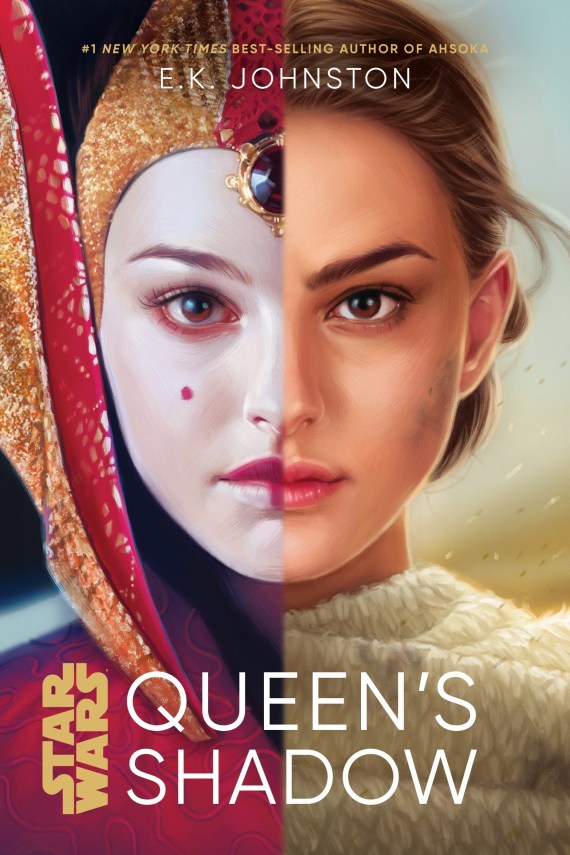
Star Wars: Queen’s Shadow by E. K. Johnston – Audiobook Review

QueensShadow Cover.jpg

Publishers: Disney Lucasfilm Press and Listening Library (5 March 2019)

Series: Star Wars Extended Universe

Length: 8 hours 22 minutes

My Rating: 4 out of 5 stars

Amazon

The female protagonist of the Star Wars prequel movies, Padmé Amidala, gets a story mostly worthy of her, as young adult fiction author E. K. Johnston attempts to bridge the character gap between the first two Star Wars prequel movies in Queen’s Shadow, the first Star Wars novel of 2019.

While The Phantom Menace had its flaws, one of the things that the first Star Wars prequel film did right was the character of Queen Amidala, the young, fierce and strong democratically elected Queen of Naboo, who was able to lead her people to freedom.  Portrayed by a young Natalie Portman, the character appeared in the other two prequel movies, where her relationship with Anakin Skywalker became a key plot point of the entire series.  While I am not the biggest fan of how Padmé was portrayed in the second and third prequel films, I was quite excited to read a novel that explored the character in more detail, especially one written by Johnston, who did such a fantastic treatment on the popular character Ahsoka Tano in her one previous foray into Star Wars fiction.  After my previous awesome experiences with Star Wars audiobooks, such as Ahsoka, I chose to listen to this book’s audiobook format, which was narrated by Catherine Taber.

Four years after ensuring the defeat of the Trade Federation on Naboo, Queen Padmé Amidala has served the last elected terms of office and is no longer Queen.  Now free of the responsibilities of ruling, Padmé and her loyal handmaidens now have time to think about a new future.  However, before Padmé can put any plans in place the new Queen of Naboo presents her with a job she cannot refuse: become the new representative of Naboo in the Galactic Senate.

Accepting the role, Senator Amidala travels to Coruscant, the capital of the Galactic Republic, to take up her seat, accompanied by a completely new support staff.  She is quick to discover that her experiences as a ruler have not prepared her for the demanding and treacherous world of galactic politics.  The Senate is a hotbed of corruption and bureaucracy, and Padmé is already considered by many to be a puppet of Chancellor Palpatine.  She also has number of powerful enemies throughout the galaxy who seek not only to discredit her but also to kill her.

However, Padmé Amidala is used to being underestimated, and with Sabé, her former decoy and shadow, watching her back, she begins to forge the political alliances she needs to finally bring some change the galaxy.

This was an interesting piece of Star Wars fiction that I quite enjoyed.  However, it is not without its flaws, and there were a few things that I disliked about the story that resulted in me dropping my overall rating slightly.  But before I talk about the parts of the story that I had issue with, I want to mention the elements of this book that I enjoyed quite a bit.

Queen’s Shadow is an amazing Padmé Amidala story that helps redeem the character after her less than stellar showings in the second and third Star Wars prequel movies.  This book helps make people forget about the helpless, pregnant damsel from Revenge of the Sith (although some deleted scenes from that movie do show some of the politics she was involved with), and instead focuses on her role as a canny political operator.  I was also quite happy that Anakin did not appear as a character in this book; I preferred to see Amidala stand on her own without being defined by her relationship with a Jedi.

Johnston did a spectacular job of creating a novel that bridges the gaps in Padmé’s story between the first and second prequel movies.  At the end of The Phantom Menace Padmé is still queen of Naboo, but by the start of Attack of the Clones she has become a senator, with very little discussion in the movies concerning how this came about.  While I am sure that some of the books and comics in the old Star Wars extended universe would have covered this period of Padmé’s life, Queen’s Shadow is one of the first stories to explore this in the new Disney owned and operated Star Wars extended universe.

The author spends a significant amount of time focusing on Padmé’s early days in the Galactic Senate, including how she formed some of her early alliances, such as with Bail Organa and Mon Mothma, and how she became such a significant force in the Senate.  In addition to this, we get to see how and why several of the minor Naboo characters from The Phantom Menace left Padmé’s side, and how several new characters, such as her new handmaidens and her security guard, Gregar Typho, came into her service.  In addition to serving as a bridge between the two prequel movies, Queen’s Shadow also ties into The Clone Wars animated television show, showing Padmé’s first contact and initial relationships with some of the characters who originated in the animated show, such as Senators Rush Clovis and Mina Bonteri.  While the book does spend time setting up events for Attack of the Clones, Johnston ensures that Padmé and the other main characters reflect on the events that occurred during The Phantom Menace, and the people that helped them during these adventures, such as Qui-Gon Jinn and little Anakin Skywalker.  Overall, I felt that this really helped tie in the events between the two books and is an excellent new piece of Star Wars cannon.

In my opinion, one of the cleverest parts of The Phantom Menace was the revelation towards the end of the film that Queen Amidala was actually being played by two separate actresses: Natalie Portman and Keira Knightley.  In the context of the film, Natalie Portman’s character, Padmé, was the real queen of Naboo, while Keira Knightley’s character, Sabé, was a decoy used for security purposes.  While Padmé portrayed the Queen at the start of the movie, when the Trade Federation invaded there was a subtle switch and Sabé took on the role while Padme could be seen disguised as a nondescript handmaiden in the background.  The two characters would then switch between portraying Queen Amidala throughout the film, with Sabé taking on the role whenever there was a chance the Queen could be captured or killed, while Padmé took on the role herself when official discussions or speeches needed to be made.  Handmaiden Padmé also got her own scenes when Sabé was taking on the role as Queen, allowing the viewers to see this side of the character.  This was and still is an amazing and ingenious part of the movie, which worked due to the similarity in appearances between the two then relatively unknown actresses, a downplaying of Knightley’s role in the film, as well as because of the elaborate makeup, hairstyles and dresses that Queen Amidala wore.  As a result, the general audience were quite surprised at the time, especially as cast lists were not as easily available on the internet at the time.

As a result, I was extremely happy that Johnston chose to explore the utilisation of the queen’s decoy in some detail throughout this book.  Quite a lot of time is spent discussing the techniques behind the Amidala persona, from the distracting makeup and costumes, to the quick-change techniques that Padmé and her handmaidens utilise, and even several discussions about the ‘Amidala voice’, the imperious tone that Portman and Knightly both performed in The Phantom Menace.  I found this entire exploration of this decoy angle incredibly fascinating, and it gave me a completely new appreciation for how the decoys were utilised in the first prequel film.  The decoys were also a key part of Queen’s Shadow, as Padmé still continues to utilise them as a senator, allowing her to avoid danger and slip away at social gatherings so she can undertake other covert tasks.  The scenes where they utilise them are quite intriguing, and I liked the author’s thoughts on the psychology behind the effectiveness of the decoys and how they are still an effective technique in an advanced science fiction society.  It was interesting to note that both of Padmé’s decoys who appear the films, Sabé and Cordé (who was blown up at the start of Attack of the Clones), have major roles in this book, with both taking on the Amidala persona at some point in the story.

While it was intriguing to see Cordé learn to take on the role of Amidala in this book, the original decoy, Sabé, was a much bigger part of the plot.  Sabé has a significant role within the book and is actually Queen’s Shadow’s secondary protagonist, performing undercover work on Padmé’s behalf.  The relationship between Padmé and Sabé was a really interesting and emotional subplot to explore, as Sabé is quite loyal to the former queen.  How Sabé defines herself as Padmé’s friend and confidant is a significant part of Sabé’s story, and Johnston spends time attempting unravel this complicated relationship.  The overall result is a fascinating inclusion to this story, and one that adds some real emotional depth to the story.

In addition to the focus on the decoy characters, Johnston also spends time looking at the role of Padmé’s royal handmaidens, the young hooded women who followed Padmé around in the first film.  I had never really given the handmaidens much thought before this book, apart from how Padmé was able to hide her identity by taking up a handmaiden’s garb for several parts of the film.  However, Johnston does a fantastic job of explaining the actual role of these characters as Padmé’s confidants, covert operatives, undercover bodyguards and potential body doubles.  I really liked how Johnston was able to turn these minor characters from the films into a significant part of her book, and it was quite interesting to see them be deployed to help with Padmé’s political moves.  Each of the handmaidens, both those who only appeared in The Phantom Menace and those who only appeared in Attack of the Clones, are explored in some detail throughout the book.  The reader gets a real sense of each of the characters personalities, what skills they bring to Padmé’s table and the fates of those handmaidens who served Padmé during the invasion of Naboo are also explained by this book.  This look at the handmaidens is an excellent part of the book, and one that I actually found quite fascinating.

Aside from the look at Padmé and her associates, Queen’s Shadow also examines a number of other aspects of the Star Wars universe during this time period.  For example, there is quite a large focus on politics, both on Naboo, and within the Galactic Senate.  The galactic politics in particular is quite intriguing, and I liked seeing Padmé’s initial impression of Senate procedure and its many shortcomings.  Johnston has also included some fun media articles throughout the book, showing how negative news coverage is being used to disadvantage or advantage Padmé’s political ambitions, which I found to be quite amusing.  There are also some hints at the coming Separatist movement, as several planets are showing discontent with the Republic and certain actions are taking place to undermine security throughout the galaxy.  All of the features are pretty interesting, and I had fun reading about them throughout this book.

Now, while I obviously quite enjoyed many of the elements that Johnston explored in this book (having gone on about them for over two pages), I have to admit that the overall story is actually a bit boring in places and the story really does not go anywhere.  There are some big points, including a quick assassination attempt, piracy, large-scale disasters and potential political crisis, but many of these events has any real significance, follow through or any sort of actual conclusion.  This could potentially be alright if Queen’s Shadow is the start of a larger storyline or a new book series, but I am not too sure how likely that is.  Not only is there no real indication that Johnston will be continuing this story, but the epilogue of the book kind of puts a damper on that, which I will discuss below.

BEWARE SPOILERS BELOW:

The epilogue of the book shows Padmé’s funeral, as shown at the end of Revenge of the Sith.  While I did like how Johnston alluded to the funeral at the start of Queen’s Shadow’s by using the same descriptions of Padmé’s floating flower-covered body, and the funeral does put a final end to the story.  The epilogue did show Sabé talking with Senator Organa, so this book could potentially set up a follow-up book focusing on the former decoy either joining the Rebel Alliance or investigating Padmé’s death.  However, this does not really fit with some of the open story points from this book, as the Trade Federation are the most likely people behind the assassination attempts and the piracy, and who cares about the Trade Federation after Revenge of the Sith?  In addition, this book only really explored around a year of Padmé’s life as a senator, and I think it would make more sense to follow more of Padmé’s early political career, especially as there is still around five more years until Attack of the Clones begins.  I suppose you could maybe do a split-timeline story that follows Padmé and Sabé before and after Revenge of the Sith, with the two storylines coming together, although I am not sure how well that would work.  I would like to see Johnston explore this more and give her overall story more shape, I just do not know how likely that is at this point.

END OF SPOILERS

While the somewhat pointless story does bring Queen’s Shadow rating down a bit, its audiobook features really help raise it up again, especially with its excellent narrator Catherine Taber.  The audiobook version of Queen’s Shadow runs for around eight hours and 20 minutes, so it is an easy book to get through quickly.  Catherine Taber is the actress who voiced Padmé in The Clone Wars animated show and is also the most recent person to portray the character on screen.  As a result, she is the perfect narrator for this book, as she already perfected a great Natalie Portman imitation voice for the show.  Taber did a fantastic job narrating this book, as she not only is the perfect voice for Padmé but also has an amazing range for the other characters featured in the book.  I appreciated how she was able to craft similar voices for the handmaiden characters, many of whom were chosen to be handmaidens because they were physical and audible matches to Padmé.  This is particularly true of Sabé, and as a result Taber ensures she has pretty much the same voice that Padmé does.  Other high points of Taber’s narration include her rendition of the Amidala voice, as well as the creepy tones she utilises for Chancellor Palpatine, especially when he kept saying “my dear”.  As always, the producers of this Star Wars audiobook load up this version with all sorts of sound effects and classic Star Wars music.  I felt that these sound effects and music really helped enhance the story, and gave it some real atmosphere, and I liked the way that certain things, such as holo-messages between the characters, were altered to make them sound more realistic.  I would strongly recommend the audiobook format of Queen’s Shadow as the best way to enjoy this story, and I thought it was just wonderful.

Queen’s Shadow is marketed as a young adult novel, and it is quite a good novel for a younger audience to enjoy, with only minor sexual references, coarse language, drug use and violence throughout the book.  However, there really is not any upper age limit on enjoying this book, and older readers can just as easily explore Johnston’s story.  While there is no age limit, readers should ideally be a Star Wars fan to fully enjoy Queen’s Shadow.  At the very least, readers should have watched all of the prequel films first to get a full handle on what is happening.  While I imagine someone with no prior knowledge of Star Wars might be able to enjoy reading this, it is probably not the best young adult science fiction book to pick out.  As a result, this book is recommended more for established fans of the franchise, and as a pretty hard-core Star Wars fan myself, I know I enjoyed all of the references and character exploration that Johnston did a lot more.

In the end, I decided to award Queen’s Shadow four stars out of five.  While I really loved all the intriguing elements that Johnston explored in this book, the lagging story did make it a little harder to enjoy.  That being said, I would not hesitate to grab another Star Wars book from Johnston, as she has an outstanding understanding and appreciation of the Star Wars universe.  I do hope that this story is continued in some way, and if it does, I will definitely check out the audiobook version of it, especially if it is narrated once again by Catherine Taber.  Interesting reading, Queen’s Shadow is worth checking out, especially if you are an established fan of the Star Wars franchise.

Amazon

Throwback Thursday – The Andromeda Strain by Michael Crichton

The Andromeda Strain Cover.jpg

Publishers: Brilliance Audio (Audiobook Edition – 26 May 2015)

                        Knopf (12 May 1969)

Series: Standalone/Book 1

Length: 8 hours 15 minutes

My Rating: 4.5 out of 5 stars

Amazon     Book Depository

Reviewed as part of my Throwback Thursday series, where I republish old reviews, review books I have read before or review older books I have only just had a chance to read.

For this week’s Throwback Thursday I take a look at a classic techno-thriller from legendary author Michael Crichton, The Andromeda Strain.

The Andromeda Strain was released nearly 50 years ago, in May 1969, and represented a bold new direction from Crichton, who had previously done several pulpy crime novels, such as Odds On and Scratch One, under the name John Lange, as well as the medical crime thriller A Case of Need, which he wrote under the name Jeffrey Hudson.  The Andromeda Strain was considered to be part of the new techno-thriller genre and is still considered to be a major example of this genre.

I have only read three of Crichton’s books before, including Jurassic Park (for obvious reasons), The Lost World and Pirate Latitudes.  While I have always intended to go back and read some more of Crichton’s works, I have never had the time to do so.  However, with the recent announcement that The Andromeda Evolution is being released in November to correspond with the 50-year anniversary of The Andromeda Strain, I thought this would be the perfect opportunity to check out one of Crichton’s earlier books.  For that reason, I listened to the audiobook version of The Andromeda Strain narrated by David Morse.

When a military satellite comes down in the small town of Piedmont, Arizona, nearly all the residents in the town die.  They are victims of a mysterious new pathogen that either instantly clotted all the blood in their body or drove them to suicide.  The military quickly activate the Wildfire protocol, and a small government team of scientists and doctors take command of Piedmont and the satellite.

Believing that the satellite contains an extraterrestrial organism, the team bring it and the two survivors of Piedmont, an old man and a baby, to a secret and secure underground Wildfire laboratory for study.  Deep in the laboratory, the team attempt to identify and categorise the organism which has been given the codename Andromeda.  However, Andromeda is evolving a way no member of the Wildfire team believed possible, and not even the laboratory’s nuclear bomb safeguards may be enough to keep it contained.

After listening to The Andromeda Strain over a couple of days, I found it to be an extremely thrilling and complex novel that I really got into and which I am eager to review.  However, after 50 years and thousands of reviews I am not too sure how much I can really say about this book that has not already been said.  That being said, when looking at this book from a 2019 perspective, I feel that The Andromeda Strain is still an extremely strong techno-thriller, with some expert storytelling and an in-depth scientific base that is still relevant in this modern era.

In this book, Crichton utilised a very dry, detailed and scientific approach to his writing, slowly covering every aspect of the events unfolding before each of the protagonists, while also providing the reader with backstory on the characters and briefings on the various relevant scientific and political components of the book.  Despite this somewhat less exciting writing style, Crichton is still able to create quite a thrilling atmosphere throughout the book as the story gets closer to the inevitable disaster part of the plot.  Crichton really adds to the suspense by mentioning the various mistakes that the protagonist are making and hinting at all the problems going on around them that will eventually lead to the release of the Andromeda microbe.

I did feel that the book ended rather suddenly, and I was surprised that the investigation part of the story was still going with only a short amount of the book left to go.  I found it interesting that the part of the story that dealt with the release of Andromeda and the subsequent race to stop the nuclear explosion about to wipe out the lab was introduced so late in the book and solved so very quickly.  I was expecting a large portion of the story to focus on the main characters getting past all of the impressive contamination protocols in order to stop the nuclear explosion.  Instead, this was all solved within about 10 minutes of audiobook narration, or probably five to 10 pages of a normal book.  While I was surprised about this, I suppose it does make sense in the context of the rest of the story, where the characters and briefing material did mention several times that there was a three-minute delay between the bomb arming and the explosion.  This was all extremely thrilling, and I felt that the book is still capable of keeping authors on the edge of their seats.

One of the things that really surprised me about the book was the advanced level of technology that was featured within a story written and set in 1969.  Perhaps this is simply ignorance as a result of being a child of the 90s, but I feel it is more likely the result of Crichton having a great understanding of technology and potential future advances that might be utilised within a high-level government laboratory.  Certainly, the scientific features of this book are extremely impressive, and I felt that they were still extremely relevant and understandable in a 2019 context.  For example, all the extreme quarantine methods surrounding the Wildfire laboratory sound like perfectly reasonable steps that modern laboratories could use to keep pathogens contained.  All the discussions about viruses and micro-organisms were also incredibly detailed, and I felt that much of the information discussed around those is still relevant today, and modern audiences will still be able to understand and consider it quite easily.

I did find the concept of the Odd-Man Hypothesis to be extremely interesting.  In essence, the Odd-Man Hypothesis states that out of all the humans in the world, unmarried men are the most likely to make the best and most dispassionate decision in the face of an emergency.  This becomes a key part of the story, as one of the characters is designated as the Odd-Man and is the only person with the ability to shut off the laboratory’s nuclear self-destruct device.  Now this is one theory that does not translate to more modern times, although, in fairness, most of The Andromeda Strain’s characters did not take it that seriously either.  That being said, it was an extremely intriguing element to read about, and I enjoyed the discussion around its viability and use within the context of the story.

As I mentioned above, I chose to listen to The Andromeda Strain in its audiobook format.  There are actually a number of different audiobook versions of The Andromeda Strain out there, each with different narrators, such as an earlier version narrated by Chris Noth.  I ended up listening to the most recent audiobook version of this book, although I imagine a new version is sure to follow soon, especially with a sequel about to come out.  The version I listened to was narrated by actor David Morse and was released in 2015.  This version is 8 hours and 15 minutes long, and I found myself powering through it very quickly.

I think that the audiobook was a really great way to listen to The Andromeda Strain, as it allows the reader to absorb the huge amount of scientific detail and discussion a lot easier.  I felt that David Morse was an excellent narrator for this book, and that his basic narration voice perfectly fit the books tone and style.  Morse also comes up with some great voices for this book, and I was particularly impressed by his weary old man voice.  As a result, I would highly recommend the audiobook version of The Andromeda Strain, as it is definitely an outstanding way to the listen to this fantastic story.

Overall, I loved this dive back into the past and I had a lot of fun listening to this classic techno-thriller.  Crichton is an amazing author, especially when it comes to a more science-based story, and I am incredibly impressed that his story still holds up 50 years after it was first published.  I am extremely curious to see where the upcoming sequel, The Andromeda Evolution, takes the story, and how well new author Daniel H. Wilson replicates Crichton’s style.  This book has also encouraged me to check out some more of Crichton’s works, and I am looking forward to reading some more of this author’s excellent techno-thrillers, as well as some of his intriguing historical fiction pieces.

Amazon     Book Depository

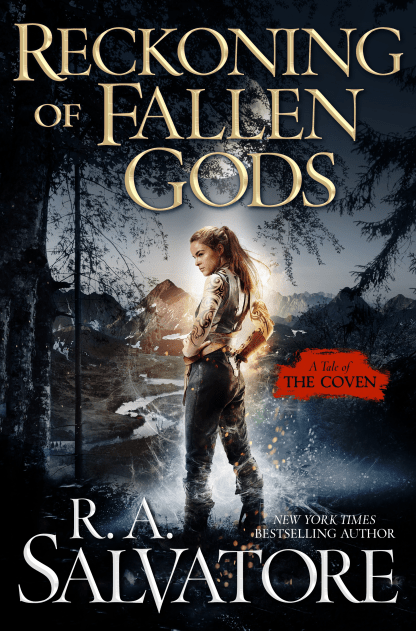
Reckoning of Fallen Gods by R. A. Salvatore

Reckoning of Fallen Gods Cover.png

Publishers: Tor Books and Audible Studios (Audiobook Format – 29 January 2019)

Series: The Coven – Book 2

Length: 14 hours 37 minutes

My Rating: 4.5 out of 5 stars

Amazon     Book Depository

Prepare to return to Corona, the world of The DemonWars Saga, for Reckoning of Fallen Gods, the latest book from master fantasy author R. A. Salvatore and the second book in his outstanding new The Coven series.

In the world of Corona, no lands are as harsh or unforgiving as those surrounding the massive Loch Beag.  All manner of dangerous creatures live in and around the loch, including one massive and unseen lake monster that lurks right below the surface.  But for those who live in the fishing villages that eke out a living around the shore of Loch Beag, the biggest danger is more human in origin.  Living at the top of the massive mountain, Fireach Speur, is a barbaric tribe, the Uscar, who constantly raid the fishing villages below.  Enhanced in battle by the crystal magic of their witches, the Uscar are ferocious warriors who consider themselves vastly superior to the inhabitants of the villages they raid.

This cycle of violence and death existed for hundreds of years until a powerful young Uscar witch, Aoelyn, attempted to change her tribe’s ways by destroying the fossa, a demonic creature that haunted the mountain at night.  However, her decision will have terrible consequences, as ambitious members of her tribe turn against her.  As Aoelyn endures the wrath of her tribe, her friend, the slave Bahdlahn, attempts to escape from the Uscar with help from an unexpected ally.  Down at the shore of Loch Beag, the trader Talmadge, who Aoelyn saved from her tribe’s brutality the night she ended the fossa, attempts to find some sort of peace among the fishing villages who have accepted him as a friend.  However, the appearance of a mysterious stranger will bring significant changes to his life.

But while those living around Loch Beag fight among themselves, they are unaware of a much bigger threat growing in the East.  A lost empire of goblinoids, the Xoconai, are on the march, driven by the return of their fallen god.  The Xoconai are determined to conquer all the lands of man, and the first obstacle they must overcome is the people of Fireach Speur and Loch Beag.

R. A. Salvatore is one of the best and most prolific authors of fantasy fiction in the world today, having a written over 60 fantasy books in his career. He is perhaps best known for his work in the established Forgotten Realms universe and the incredibly popular character of Drizzt Do’Urden. However, Salvatore has also written a series of novel set within his own unique fantasy world of Corona.

Salvatore introduced audiences to this new fantasy world in his 1997 release, The Demon Awakens, the first book in his epic The DemonWars Saga, which spanned seven books between 1997 and 2003.  This universe was expanded out in 2004 with The Highwayman, the first book in his Saga of the First King series.  After the Saga of the First King series ended in 2010, Salvatore left the world of Corona untouched for eight years while primarily focusing on his Forgotten Realms series.  However, he returned to Corona in 2018 with Child of a Mad God, the first book in his new The Coven series.  The Coven series is primarily set in a previously unexplored area of Corona, in the lands around the massive Loch Beag, with the first book focusing on a whole new group of characters.

I am a massive fan of Salvatore’s work, having read nearly all the books featuring Drizzt Do’Urden and his companions (click here for my review of the latest Drizzt Do’Urden book Timeless).  However, before last year’s Child of a Mad God, I had not really gotten into his work set in Corona, having only really read The Highwayman back when it was first released in 2004.  While Child of a Mad God was not my favourite of Salvatore’s books, it did a great job introducing this new area of Corona, while also creating an excellent starting point for the series’ overall plotline.

I found that I enjoyed Reckoning of Fallen Gods a lot more than the first book in the series, possibly because the author was able to dive right in and continue several of the more intriguing plot threads from the first book.  I quite enjoyed how the story progressed; all of the storylines contained within were very well paced and entertaining, coming together extremely well towards the book’s conclusion.  I really liked the over-the-top way that the story ended, as it sets up the next book in the series with some massive stakes and makes full use of the intriguing new fantasy elements that were included within this book.  A bit of a warning about this series: is it substantially darker than some of Salvatore’s other works.  This was particularly true of the first book of The Coven series, Child of a Mad God, which contained a fair amount of torture and sexual violence.  While there is a little less sexual violence in this book, several character development elements are based around these original events and are discussed in some detail.  There is also some fairly dark and gruesome action and torture, which might not be enjoyable for some readers.  Overall, though, this is a great follow-up to Child of a Mad God that once again highlights Salvatore’s skill as a master fantasy storyteller.

Some readers may be wary about checking this book out because it is the second book in The Coven series and the 13th overall book set in the world of Corona.  However, I found that this book to be easily accessible to new readers, with the author ensuring that relevant details from the previous book and series were easy to understand and follow nearly right away.  In addition, there are also a lot of elements for established fans of this universe to enjoy, especially as Salvatore includes a substantial character from one of his previous Corona based series in this book.  The inclusion of this character is an excellent way to tie this new series with the author’s existing works in this fantasy universe, which also highlights the importance of this story to the rest of the world of Corona.  The ending of Reckoning of Fallen Gods also hints that characters and locations from the previous series may come into play in the next book in The Coven series.

I loved all the fantasy elements in this book.  The world of Corona is a fantastic setting for the great story that is taking shape within The Coven series.  The main location for most of this book’s plot, the lands around Loch Beag and Fireach Speur, is a substantially dark and rugged area with a large number of natural and unnatural threats.  In Reckoning of Fallen Gods, there are a number of significant developments around several of these locations and creatures, some of which are pretty insane.  Just like in the first book in this series, Child of a Mad God, Salvatore continues to expand on the intriguing gem-based magic that is a feature of the books set in Corona.  The gem magic that was featured in Child of Mad God was somewhat different from the already established gem magic used in some of previous Corona books, such as The DemonWar Saga, and is based around the magic found atop Fireach Speur.  This expansion of the gem magic continues in Reckoning of Fallen Gods with the main character, Aoelyn, developing additional magical abilities.  Many of these abilities are quite spectacular, and Salvatore’s enthralling writing highlights how impressive these abilities are when Aoelyn utilises them in fights or other magical engagements.  At the same time, another character utilises some of the more traditional gemstone powers they had in one of the previous series, and it is interesting to see the differences and similarities this has with the Uscar magic.

One of the more unique and enjoyable fantasy inclusions within Reckoning of a Fallen God is the new antagonist race, the Xocanai.  The Xocanai are a new race of goblinoid creatures that exist in a realm on the other side of the mountains surrounding Fireach Speur.  The Xocanai are somewhat Aztecan in culture and their empire has been rather cut off from the rest of the world for some time.  However, recent actions have allowed them to come together to invade the human lands, and some of the events of Child of a Mad God may be to blame.  I felt that Salvatore did an excellent job of introducing them in the current book, and he was able to build them up as a substantial antagonist in quite short order.  I liked how the reader is able to get a good view of this new race’s culture and religion in only a few short chapters, while in-universe texts present at the start of each section of the book help to establish a historical past for these creatures.  In the end, they are a fantastic new inclusion to the series and the universe and serve as excellent new antagonists.

Salvatore has created some great new characters for this series, and many of the key characters who were introduced in the first book go through some significant and compelling character development throughout Reckoning of Fallen Gods.  The main character development occurs with Aoelyn, who, after the fallout of the events in the first book, develops a stronger sense of independence and rejects the established male hierarchy imposed upon her and all the female members of her tribe.  Her friend Bahdlahn gains the courage to finally flee the Uscar and is finally able to come to terms with his feelings for Aoelyn.  At the same time, the trader Talmadge comes to terms with the tragedies in his life and is finally able to find some semblance of peace with the people living around Loch Beag.  Even the established character from the previous series (who I am still not mentioning for spoiler reasons) has developed somewhat in this book, as he ruminates on the mistakes from his past that were covered in the previous series.

I have to give credit to Salvatore for creating some truly villainous antagonists for this series, especially among the Uscar characters.  The main antagonists are quite despicable, especially in the way that they deal with Aoelyn and Bahdlahn, and the reader is hoping for all sorts of comeuppance for these characters.  Even the Uscar characters that come across as more compassionate members of the tribe can still be quite dislikeable.  For example, there is one character who appears to change his ways in Reckoning of Fallen Gods.  However, he has a sudden and quite unjustified change of heart back to the Uscar ways towards the end of the book, and his complaining about the event that drove him to betray his friends really does not endear him to the reader.  These great antagonists serve as spectacular foils to the protagonists and really add a lot to the overall story.

I chose to listen to the audiobook version of Reckoning of Fallen Gods, narrated by Tim Gerard Reynolds.  This was an interesting change of pace for me, as I had read the physical copy of the first book in The Coven series, so it was cool to hear these characters come to life in the audiobook format.  At 14 hours and 37 minutes, this was not the longest audiobook I have listened to recently, but it still required a little bit of time to get through.  Reynolds is a spectacular narrator, and I really enjoyed listening to him tell this story.  His base narration voice for this book was really good, and I found I was able to absorb a lot of the story through his great narration.  The character voices he came up with were also excellent, and I loved how the distinctive cultural/species groups within Reckoning of Fallen Gods got their own accents.  For example, he ensured that the Uscar characters had a form of Scottish accent, while the other groups that feature in the book, such as the Xocani have a noticeably different way of speaking.  Because of this excellent voice work, I had a lot of fun listening to this book, and I will make sure to get the audiobook versions of this series in the future.

Fantasy icon R. A. Salvatore is in high form once again with Reckoning of Fallen Gods, the second book in his new The Coven series.  Salvatore does an outstanding job continuing the intriguing story he started in the first book of the series, Child of a Mad God, and effortlessly inserts a number of original and familiar elements to create an exciting and epic read.  With some great characters and some inventive new ideas, this is a spectacular new addition to this darker fantasy adventure series.

Amazon     Book Depository

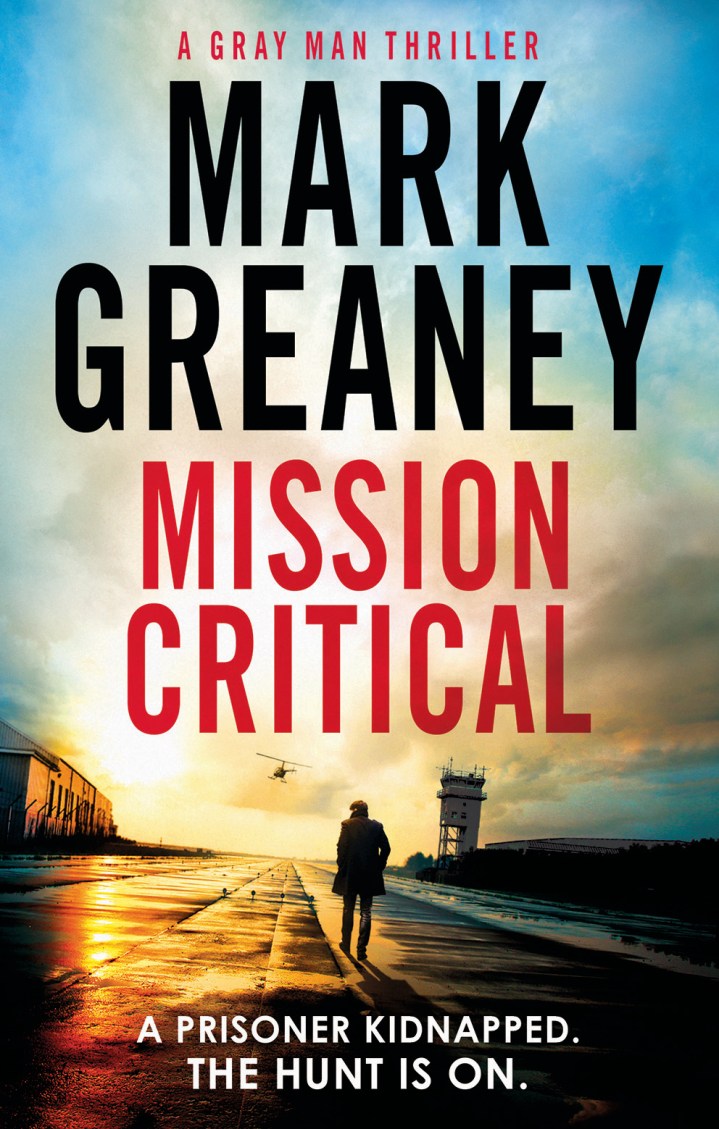
Mission Critical by Mark Greaney

Mission Critical Cover

Publisher: Sphere (Trade Paperback Edition – 26 February 2019)

Series: Gray Man – Book 8

Length: 513 pages

My Rating: 4 out of 5 stars

Amazon     Book Depository

Bestselling author Mark Greaney returns with another entertaining and fast-paced instalment in his enjoyable Gray Man spy thriller series.

Court Gentry used to be a ruthless covert assassin known as the Gray Man, a highly skilled killer considered a legend in the clandestine circles.  However, times change, and Gentry now finds gainful employment as a CIA hitter, one of three elite agents that make up the Agency’s super-secret Poison Apple program.  Going under a new codename, Violator, Gentry is redirected aboard a CIA flight in Europe.  Tensions rise when the plane’s other passengers, a team of heavily armed agents, attempt to remove Gentry from the flight in order to protect their prize, a hooded man who may have knowledge that could identify a mole within the CIA.

Allowed to remain on the plane, Gentry finds himself thrust into the middle of a firefight when the plane lands in England.  A team of mercenaries ambush the plane, overcoming the CIA and MI6 agents waiting to meet the flight and taking the kidnapped man for themselves.  Gentry gives chase to the surviving mercenaries to regain the kidnapped man and soon finds himself investigating the case by himself.

As Gentry attempts to uncover what is going on in England, one of Poison Apple’s other operatives, the former Russian agent Zoya Zakharova, finds herself under attack in her CIA safe house.  With Zoya going off the radar, Gentry’s handlers are convinced that a mole within the CIA is tipping of a dangerous opponent.  Gentry and his team are soon the only agents who can stop a devastating attack that could bring the West to its knees.

Mark Greaney is a highly regarded spy thriller writer who has some substantial works to his name.  He was Tom Clancy’s co-author for legendary espionage author’s final three books, Locked On, Threat Vector and Command Authority.  Following Clancy’s death in 2013, Greaney continued to write an additional four novels in Clancy’s Jack Ryan Universe.  Aside from the books he wrote with Clancy, Greaney has his own series, the bestselling Gray Man series, which started in 2009 with the author’s debut book, The Gray ManMission Critical is the eighth book in the Gray Man series.

This was an incredibly thrilling story which contains hell of a lot of action and espionage.  I really liked the sound of Mission Critical’s plot synopsis and was glad that I picked up a copy of this book, as the action and intrigue did not stop the entire time.  At over 500 pages long, I was worried that this might drag in some places, but I found myself fairly absorbed by the awesome plot and sufficiently pumped up by the huge number of firefights, close combat sequences and high-speed chases.

I loved the spy thriller storyline that was a prominent part of Mission Critical.  Greaney weaves together a number of plotlines to create a fantastic overall spy thriller narrative.  Because Mission Critical is told from a number of perspectives, including those of the protagonists and antagonists, the reader gets a great idea of all the action, spycraft and dirty tricks that both sides employ to complete their respective missions.  Greaney obviously has a large amount of knowledge about the espionage world, and I loved all his depictions about the inner workings of spy agencies, rogue operatives and the various tricks and techniques that agents employ.  I also liked Greaney’s depiction of the inner politics of the CIA and how that might impact on missions and the distribution of resources, as well as a look at the CIA’s relationship with other countries’ intelligence agencies.

I really liked some of the characters featured within this book.  The protagonist, Court Gentry (and I have to point out how much I love that name), is a solid and dependable badass agent to anchor this series.  He’s your typical thriller protagonist, with some badass skills and a reputation to match.  I loved his anti-authoritarian vibe, and I also quite enjoyed how he actually got his ass handed to him multiple times throughout the book, rather than being unbeatable in every encounter.  I was also impressed that Greaney kept showing him being slowed down by his injuries, rather than having him at 100% for every encounter like some other authors do.  Zoya is also a good protagonist for this story; let’s face it, a sexy Russian agent never goes amiss in a spy thriller.  The author dives into this character’s background quite a bit in Mission Critical, and her connections to the plot and the antagonists were explored in an intriguing manner.  The third Poison Apple operative, Zack Hightower, aka Romantic, was used a little less than his comrades, but he was a fun addition to the team, adding some humour to the story, especially when it came to his codename, as well as some complex history and camaraderie with Gentry.  The Poison Apple program handler, Suzanne Brewer, also adds some great things to the story.  A career-orientated CIA administrator, she has to try and play straight-woman to the three anti-authority, disrespectful operatives that are under her command.  The fact that she does not want to be working with these people and is at times actively sabotaging them to try and get a different posting adds some really intriguing elements to the story, and I liked watching her work against her agents for her own selfish ends.

Mission Critical is the eighth book in Greaney’s Gray Man series.  While this latest entry does feature a number of characters from the previous books in the series, readers are not required to have read any of the previous books to enjoy this story.  I felt that Greaney did an excellent job of explaining any elements from the previous entries in the series that become relevant throughout Mission Critical.  Fans of the Gray Man series will probably really enjoy the deeper examination of Zoya’s history and backstory, as well as her inclusion in the other Poison Apple agent’s operations.

Overall, Mission Critical was a deeply entertaining espionage novel that is bound to keep readers absorbed with its excellent action and thriller elements.  It is easily enjoyable for both existing fans of the franchise and new readers alike.  I had a lot of fun reading this book and I powered through all 500+ pages in fairly short order.  I am planning to keep an eye out for Greaney’s next book, Red Metal, a really cool-sounding war thriller that is coming out in July this year.

Amazon     Book Depository

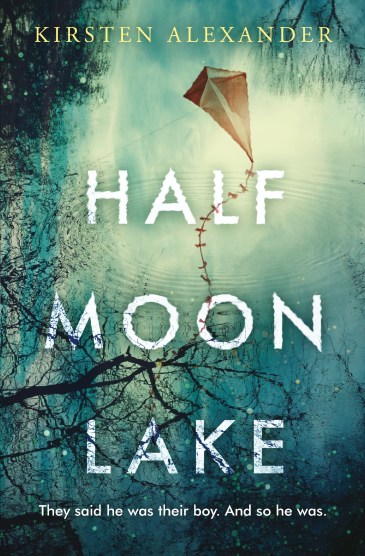
Half Moon Lake by Kirsten Alexander

Half Moon Lake Cover.jpg

Publisher: Bantam Press (Trade Paperback Edition  – 2 January 2019)

Series: Standalone

Length: 320 pages

My Rating: 4.5 out of 5

Amazon     Book Depository

Debuting Australian author Kirsten Alexander presents a dramatic, captivating and hard-hitting novel of desperation and loss loosely based around a real and shocking historical event.

In the summer of 1913, a young boy, Sonny Davenport, walks into the woods around his family’s summer home at Half Moon Lake, Louisiana, and never returns.  Despite a widespread search of the surrounding area by an army of volunteers, no trace of the boy can be found.  As the search grows in volume, the disappearance becomes headline news across the country, especially as Sonny’s parents, John Henry and Mary Davenport, are wealthy and influential members of their home town of Opelousas.  For the next two years, the Davenports engage in a desperate hunt for Sonny across the south, offering a massive reward for information on their missing son.  But with no substantiated leads, the Davenports slowly lose hope and Mary sinks more and more into her despair.

However, just when everything seems lost, a boy matching Sonny’s description is found wandering around several southern towns in the company of a tramp.  As the world watches, Mary meets the child and claims that he is Sonny.  But is he truly her missing son?  There are a number of differences between the two boys and many are convinced that the Davenports have taken in the wrong child and the real Sonny is still out there.

As the people of Opelousas, including many of the Davenport’s friends and servants, debate the true identity of this young boy, a kidnapping trial for the tramp begins.  However, the proceedings are thrown into chaos when Grace Mills, an unwed farm worker, arrives in town, claiming that the boy is her son.

This is an outstanding first book from Alexander, who has created a powerful and memorable story based partially around real-life events.  Half Moon Lake is a fantastic and dramatic story that dives deep into the hearts and psyche of its characters and the historical elements of the time to create a lasting impact on the reader.  I was very surprised about how addictive I found this book to be, as the intense character emotions and the dramatic actions that they take to alleviate their grief and the grief of their loved ones was just incredible.  I am still reeling from several of the revelations and developments that occurred towards the end of the book, many of which will stick with me for a long time.

One of the most intriguing aspects of this book is that is partially based on a real-life historical event, the disappearance of Bobby Dunbar, which took place in America’s south in the early 20th century.  Bobby Dunbar disappeared when he was four.  After months of searching, a young boy was found some distance away who appeared similar to Bobby and was claimed by Bobby’s parents, despite many people voicing their doubts about the boy’s true identity.  In addition, a second woman attempted to claim the child as her own son, and a legal case was initiated to determine the identity of the child.  I was unfamiliar with the Bobby Dunbar case before I read Half Moon Lake and did not look up the details of it until after I finished the book.  As a result, I was amazed that the intense story was so closely based on a real story.  This case and its eventual results are absolutely fascinating, and I felt that Alexander did a fantastic job of capturing the essence of this event and installing it within her story.

For example, the author does an excellent job of portraying the probable emotions, feelings and opinions of people who would have been involved in the real-life disappearance, as she utilises a number of different character perspectives throughout her book.  Readers of Half Moon Lake get a great idea of the despair all of the parents in this story would have experienced, the fear and confusion of the children, and the bewilderment and conflicted emotion of everyone else involved in the case.  I felt that Alexander’s portrayal of the missing child’s mother was done particularly well, as the readers gets to see her so filled with realistic fear, grief and despair that it drives her to try and claim a child that might not even be hers.  I also quite enjoyed the way that the author explored the highly publicised nature of the child’s disappearance and how the media at the time covered the case, dividing those following the case as they try to determine the true fate of the missing child and the real identity of the discovered child.  I also loved the way that the author looked at how the media scrutiny of the time might have affected the individuals involved in the case, and how this could have potentially influenced their actions and decisions.

I also really liked the way that the period’s ideas of class came into effect during this book.  There are some key examinations of the different ways that the rich and the poor were treated during this time, and how this would have impacted the investigation, the search for the missing child, the media scrutiny and overall results of the big trial that served as an important scene at the end of the book.  Also significant and intriguing was the way in which Alexander looked at how concerns for personal and familial reputations might have come into these events, resulting in several characters undertaking various actions that they knew to be wrong, all in the name of protecting someone’s social standing and reputation.  The story is set in America’s south during the early 20th century, and as such there are a number of African American characters who are involved with the case.  Race and the perception of certain ethnicities came into this book a lot more than I thought it would, and I thought that Alexander did a fantastic job capturing how these characters might have been ignored or disciplined for trying to get involved in proceedings.  All of these elements result in an amazing historical tapestry which forms an excellent setting for this story.

Overall, this is an amazing debut from Australian author Kirsten Alexander, who uses the inspiration of a fascinating real-life case to craft an epic and powerful story.  There are so many great story elements spread throughout Half Moon Lake, as the character’s emotions and despair drive them to desperate and immoral acts.  It features a narrative that is at times sad and at other times darn right appalling, and several reveals and character decisions at the end of the book will leave you shocked and will stick in your mind long after you finish reading it.  I loved this spectacular first book from Alexander and I am looking forward to seeing where she goes next.

Firefly: Big Damn Hero by James Lovegrove and Nancy Holder

Firefly Big Damn Hero Cover.png

Publisher: Titan Books (Hardcover edition – 20 November 2018)

Series: Firefly

Length: 334 pages

My Rating: 4.25 out of 5 stars

Amazon     Book Depository

Ready for something shiny? Serenity flies again in this fantastic new Firefly tie-in novel that takes the reader back to the original television series and reunites the crew of your favourite spaceship for another amazing adventure.

Firefly, for those people unfamiliar with it, was a science fiction television show that ran for one season back in 2002-03.  Created by Joss Whedon of Buffy the Vampire Slayer, Angel and The Avengers movie fame, Firefly is widely regarded as one of the best science fiction television shows of all time.  Featuring a fun group of main characters all played by amazing actors, this western-themed epic in space had some extremely clever and well-written storylines and an outstanding core concept.  Unfortunately, the show was cancelled after only one season (clearly the evillest thing that anyone at Fox has ever done), although it gained cult status after it was released on DVD.  Its post-airing popularity allowed Whedon to create the movie, Serenity, which closed one of the show’s major storylines, while also taking out a couple of major characters (I am still upset about one of those, he was a leaf on the wind, god damn it).  Following the movie, the Firefly universe has mostly continued in the form of several different comic books, usually created with Whedon’s direct input as either a writer or producer.  Do not be surprised if I review several of these Firefly/Serenity comics in the future, either as part of my Throwback Thursday series or when I review the collected edition of the current ongoing Firefly series.

If my notations above did not give it away, I am a huge fan of the Firefly franchise (and generally anything written/created by Joss Whedon), so I was always going to love this novel.  However, all prior biases aside, I found that Big Damn Hero was an excellent tie-in novel, and I powered through this book in extremely short order.

Big Damn Hero is written by James Lovegrove with bestselling author Nancy Holder (author of nearly 20 Buffy the Vampire Slayer tie-in books) credited as coming up with the original story concept.  Joss Whedon is also acknowledged as the original creator of the Firefly universe and is credited as a consulting editor.  Lovegrove is a veteran writer who has published a number of books since his 1990 debut, The Hope.  Readers may be familiar with his long-running Pantheon series, his recent work on the 2011 Sherlock Holmes series or the three books he has currently written for his The Cthulhu Casebooks series, which also features Sherlock Holmes.  Big Damn Hero is the first novel in a new Firefly tie-in trilogy from Titan Books which brings fans a completely new set of Firefly adventures.  Two additional books are set to be released later this year, with The Magnificent Nine coming out in March and Generations being published in October.

The Firefly franchise is set approximately in the year 2517, where humanity has expanded out into a new star system and terraformed a number of planets and moons.  The central planets were fully terraformed and heavily populated, while the outer planets and moons are more rugged, desert-like and with smaller populations.  The television series is set six years after the end of a brutal war between the Union of Allied Planets (the Alliance) and the Independents (also known as the Browncoats, a name also given to the fans of the franchise), which saw the Alliance gain complete control of the star system.

The show and associated media follow the adventures of the crew of the Firefly-class spaceship Serenity as they travel across the system participating in a variety of illegal or barely legal jobs.  The ship is captained by Malcom “Mal” Reynolds, a former sergeant in the Independent army who named the Serenity after the bloodiest battle in the entire war.  Joining him are former Independent army corporal and second in command of the ship Zoe; Zoe’s husband and Serenity’s pilot Wash; mercenary Jayne; ship’s mechanic Kayle; companion Inara; Shepherd Book; and the fugitive siblings Simon and River Tam.  Most of the crew’s adventures in the show followed their various jobs, personal stories and a particular focus on the events surrounding the Tam siblings becoming fugitives.

Big Damn Hero is set a few weeks after the events of the television show’s 12th episode, The Message, and starts the same way most Firefly adventures start, with the crew taking on a new job.  Initially contracted to transport volatile explosives off Persephone for their regular booker, crime lord Badger, the crew decide to take on some additional cargo from a mysterious new contact.  However, the meet turns out to be a trap and Mal is kidnapped and taken off-world.

With the explosives nearing a point of instability, the rest of Serenity’s crew is forced to leave Persephone to continue their original contract.  With only limited leads and the Alliance on their tail, the crew split up in order to locate their captain and maintain the safety of the ship.  Meanwhile, Mal awakens to find that he has been kidnapped by a squad of former Browncoats who are fanatically hunting down former members of the Independent army who they deem responsible for the Independents’ defeat in the war.  Mal has been named a traitor and a coward by old friend from before the war and must now defend himself in an impromptu trial.  As secrets from Mal’s past are brought to the surface, he finds himself at the mercy of a frenzied mob of former friends and comrades demanding his blood.  Can the crew of the Serenity save him, or will Mal pay for his past sins?

Perhaps the best praise I could heap on this book is that I very easily saw this story as a new episode of the show.  Like several of Firefly’s episodes, Big Damn Hero contains a compelling story that is split between the current adventures while also examining the past of one of its characters, in this case Mal.  This exploration into the past then comes into play for the main adventure, as it not only shows the reader events that were formative in Mal’s current character but also explains the actions of the book’s antagonists.  I felt that the plot of Big Damn Hero was a bit of an homage to the show’s fifth episode, Safe, as there were a number of similarities.  Safe was also interspersed with character flashbacks and the main plot of that episode features members of Serenity’s crew being kidnapped and subsequently imperilled while the rest of the crew are forced to take Serenity away from the area for an urgent plot reason.  Safe also featured the crew of Serenity arriving to save the day at the last minute in order to be the “big damn heroes”, a term the crew coined in Safe.  I also felt that the author tapped into elements of the lasting impacts of the war that were featured in episodes such as The Message or in the movie Serenity.  Throughout this book, various characters are shown to be negatively impacted by the war, whether this has made them cold and determined or raging bags of revenge.  Overall, I felt that the author captured the heart of these episodes quite well and helped turn them into a fantastic new addition to the Firefly franchise.

While this is mainly a book about Mal and his past coming back to haunt him, Lovegrove does spend a bit of time focusing on the other members of Serenity’s crew.  As a result, nearly all of the other crew members have at least one chapter told from their point of view.  This allows the reader, especially those who are unfamiliar with the television series, to get a good idea of who the characters are and what their general personality or motivation is.  Aside from Mal, Zoe gets the most focus out of all the other characters, as she not only attempts to find her missing captain but must also take command of Serenity to ensure its safety from other threats encroaching on it.  Zoe is pretty awesome in these chapters, and I felt that the author captured her determination, badassery and extreme loyalty to Mal after serving with him during the war.  Shepherd Book also gets a few entertaining chapters throughout the book, as he leads the investigation into Serenity’s missing captain.  Lovegrove continues to expand on Book’s mysterious past, as the supposedly humble shepherd has high-level military contacts, investigative skills and tactical abilities (those curious to find out Book’s past should check out the comic book Serenity: The Shepherd’s Tale).  Most of the rest of the characters also get their moments to shine: Jayne is his usual over-the-top violent self, Inara uses her position and companion training to manipulate several opponents, and River does River things, such as making fun of Badger’s accent or taking out armed goons surprisingly easily.  This focus on the whole crew of Serenity was very reminiscent of the show, and it is obvious that Lovegrove has a great appreciation for franchise’s characters.

In addition to looking at the main characters, Lovegrove also features a number of characters or references from the television show and movie that are likely to be extremely attractive to the franchises fans.  Lovegrove has included a huge range of stuff, from fan favourite side character Badger to Jayne’s fabulous knitted hat and a number of other call-backs to previous episodes and antagonists.  It is possible the author might have gone a bit overboard in places with these inclusions.  When the Hands of Blue are mentioned and it is implied that they could be nearby, that really got my hopes up and I was disappointed when they did not show up in any way.  However, I personally loved all the call-backs and references and it really played to my well-defined sense of nostalgia.

One of the inclusions I really enjoyed in Big Damn Hero was the new insight into main character Malcolm Reynolds’s backstory.  While the show and movie did provide some insights into his actions during the war against the Alliance, not a lot else about his past was ever shown.  Big Damn Hero, however, provides the reader with several chapters that delve into his past and show Mal as a rambunctious teenager on his home world of Shadow.  It is quite amusing to see several of Mal’s personality traits imposed on a younger version of the character, and fans will have fun getting this insight into the early days of this character.  I quite liked these flashback scenes, especially as they show some of Mal’s early tragedies and the events that led up to him joining the Independent army.  This is a fantastic addition to the plot, and I really appreciated this deeper look into one of my favourite characters.

Big Damn Hero is a superb new addition to the Firefly franchise that sees the crew of Serenity go on another dangerous adventure.  Not only does the author dive into the past of one of one of the show’s main characters but he presents a compelling and moving story of the harsh life at the edge of the verse while expertly utilising each of the show’s major characters.  The result is a fantastic tie-in novel that does a great job of capturing the Firefly universe and continuing one of my favourite science fiction series.  I had a lot of fun reading Big Damn Hero, although I am aware that a lot of that is due to my love of the show and movie.  People who are unfamiliar with the Firefly franchise will probably have a harder time following this novel, although I felt that Lovegrove did a good job setting this up as a book any science fiction fan could enjoy.  I am giving this book a rating of 4.25, although some of this rating is due to my nostalgia and love of the series as a whole.  I am very much looking forward to the next two Firefly tie-in novels that Titan Books are releasing later this year, and 2019 is going to be a great year for fans of the Firefly franchise.

Amazon     Book Depository

Stranger Things: Suspicious Minds by Gwenda Bond

Stranger Things Suspicious Minds Cover.jpg

Publisher: Century (Trade Paperback Edition – 5 February 2019)

Series: Stranger Things

Length: 301 pages

My Rating: 4 out of 5 stars

Amazon     Book Depository

From acclaimed young adult fiction author Gwenda Bond comes this first official tie-in novel to the television sensation, Stranger Things.

It is 1969, and while America languishes in the midst of the Vietnam War, shadowy events with long-term implications are starting to take place in the small town of Hawkins, Indiana.  The enigmatic Dr Martin Brenner has arrived at the Hawkins National Laboratory to start conducting a series of experiments as part of the CIA’s secretive MKUltra program.  Arriving with him is the doctor’s most gifted test subject, a young girl simply known by the number Eight, who can create illusions with her mind.

In a nearby college campus in Bloomington a young student, Terry Ives, signs up as a test subject for a government experiment at her university.  When she meets Dr Brenner her determination and curiosity impresses him enough to include her in his new experiment.  Travelling to and from the Hawkins National Laboratory in an unmarked van, Terry meets her fellow participants in the experiment, Alice, Gloria and Ken.  Each of the participants has a unique set of skills or abilities, which Brenner hopes to draw out through administration of psychedelic drugs and other invasive techniques.

As the months pass and the experiments become harsher and even more unethical, Terry attempts to find out more about who Dr Brenner really is and what the objective of his experiments are.  When Terry discovers Eight, she begins to question everything that Dr Brenner has done.  With their academic and personal lives deeply tied to the experiment, Terry and her fellow test subjects must find a way to leave the program.  But Dr Brenner is determined to keep each of them involved in his project, and he will do whatever he can to not only trap each of them, including doing the unthinkable to Terry.

It is near impossible to be unaware of the cultural phenomenon that is Stranger Things, the Netflix show that takes its audience on a dark journey into a world of alternate universes and psychokinetic powers with a healthy dose of 80s nostalgia.  Stranger Things: Suspicious Minds is the first official tie-in novel to the television series, and it provides its readers with a prequel story that not only reveals some much-needed backstory to one of the series’ most beloved protagonists (no, not Barb), but also highlights the true nature of a sinister character from the first series.  Suspicious Minds is written by young adult author Gwenda Bond, who has significant experience writing tie-in novels, having previously written the intriguing-sounding Lois Lane series, which focuses on a younger version of the famed comic book journalist.

Despite Bond’s background as a young adult fiction author, this book is much more targeted towards an older audience.  The overall story can be quite dark in places, featuring canon-typical violence and horror themes, and the final chapters of the book show the antagonist doing some exceedingly cold and ruthless actions towards the protagonists.  Due to me being a fan of the television series, I did have a good inkling about how this story was going to end, but I still really enjoyed the dark twist regarding the main character and antagonist at the conclusion of the book and thought that it was quite cleverly done.  One of the other reasons I enjoyed Suspicious Minds was due to Bond’s outstanding story that contained some excellent allusions to the Stranger Things television show and a brand-new historical context to set the story within.

It does need to be said that Suspicious Minds is really a story for those fans of the Stranger Things television show.  This book is set some years before the television show and reveals how Eleven came to be in the custody of the Hawkins National Laboratory.  As a result, one of the main characters of this book is Eleven’s mother, Terry Ives, who was briefly seen in Season 1 and Season 2 of the show.  Some investigation in the first season and pretty powerful flashback in the second season have revealed some of these events, but not a lot of context was given.  As a result, viewers were uncertain about how Terry came to the attention of the government, who or where Eleven’s father was, or why Eleven was considered to be so special even before she was born.  All of these questions and more are answered within Suspicious Minds, and Bond is able to construct a fantastic background for this part of the television show.

In addition to the focus on Terry Ives and the origin of Eleven, Bond spends a significant amount of time focusing on the character of Dr Martin Brenner.  Dr Brenner is one of the main antagonists of the first season of Stranger Things, as he is not only the person responsible for containing and abusing Eleven but also the man in charge of the cover-up surrounding Will Byers’s disappearance.  For a good part of Season 2 of the show, it was assumed that Dr Brenner had died in the Demogorgon attack in the Season 1 finale; however, it was eventually revealed that he was alive and in hiding.  This probably means that he will be a major character again in Season 3 of the show, which means that the content of this book is extremely interesting for fans of the show.  Throughout Suspicious Minds, Bond goes out of her way to highlight what a cold and calculating character Brenner really is and to examine in more detail the crimes that he perpetuated against Eleven’s mother.  I found this examination of Dr Brenner to be absolutely fascinating, and the battle of wits that occurred between Terry and Brenner was a fantastic plot focus for this book.  By the end of the story, Brenner has been built up as a considerable antagonist, and it will be extremely interesting to see how much of Suspicious Minds’ characterisation of him will appear in future episodes of the show.

Aside from the necessary focus on these main two characters and their creation of Eleven, Bond also included a few curious connections to the show that I did quite enjoyed.  For example, there is a bit of a focus on the character of Eight/Kali, who appeared in a second season episode of the television show.  Suspicious Minds shows her as a young child, and focuses on her relationship with the Dr Brenner and some other characters.  There are also a few obligatory references to the Upside Down and the Demogorgon which, while interesting, do not overwhelm the rest of the plot.  I was also rather amused by Bond spending some time explaining how a photograph of Dr Brenner and his test subjects was taken so it could fit into the plot of Season 1.  Overall, I did enjoy these references, but I was relieved that Bond did not go too overboard with them and instead focused on her own unique story, resulting in a narrative that stood by itself and could potentially be enjoyed by someone who has not watched the show.

One of the most beloved parts of the Stranger Things television show is its use of 80s nostalgia, as it provides its viewers with epic amounts of cultural and historical references.  Bond does a good job replicating this scene-setting in the book by highlighting parts of that late 60s and early 70s American culture and society.  While there are several fun cultural references throughout the book, I liked how a large amount of the plot and background story focused on America’s involvement in the Vietnam War, which was dominating society at this point.  Suspicious Minds contains a number of references to the war, and Bond spends a good amount of time highlighting the various attitudes towards the war, including the divide between younger students and the older generations.  Several key events of this time are either shown or alluded to, such as Nixon’s “Silent Majority” speech, the 1969 National Draft Lottery and the Kent State University Massacre.  These result in some great settings for the story, and the impacts that they have on the characters and the overall plot of this book are really quite clever and interesting.  I also quite enjoyed how Bond tried to replicate the fantasy roleplaying vibe of the Stranger Things kids in this book by having her protagonists take inspiration from a fantasy source.  As Dungeons & Dragons would not be released until a few years after the events of this book, Terry and her friends refer to themselves as the Fellowship of the Ring, as each of them are major fans of The Lord of the Rings books.  I really enjoyed Bond’s decision to include this as a reflection of the show, and I loved how she chose a more time-appropriate series to serve as their inspiration.

Gwenda Bond’s novel, Suspicious Minds, is a compelling new addition to the Stranger Things universe which serves as a fantastic prequel to the television series.  Utilising an excellent combination of Stranger Things characters and intriguing historical events, this novel paints a dark and tragic picture of the origins of one of the franchise’s most iconic characters, while also examining the dark side of an early antagonist.  Highly recommend for those readers interested in expanding their knowledge of the Stranger Things’ universe, this book is also a dark and captivating story that will stick in the reader’s minds even if they are not fans of the franchise.

Amazon     Book Depository

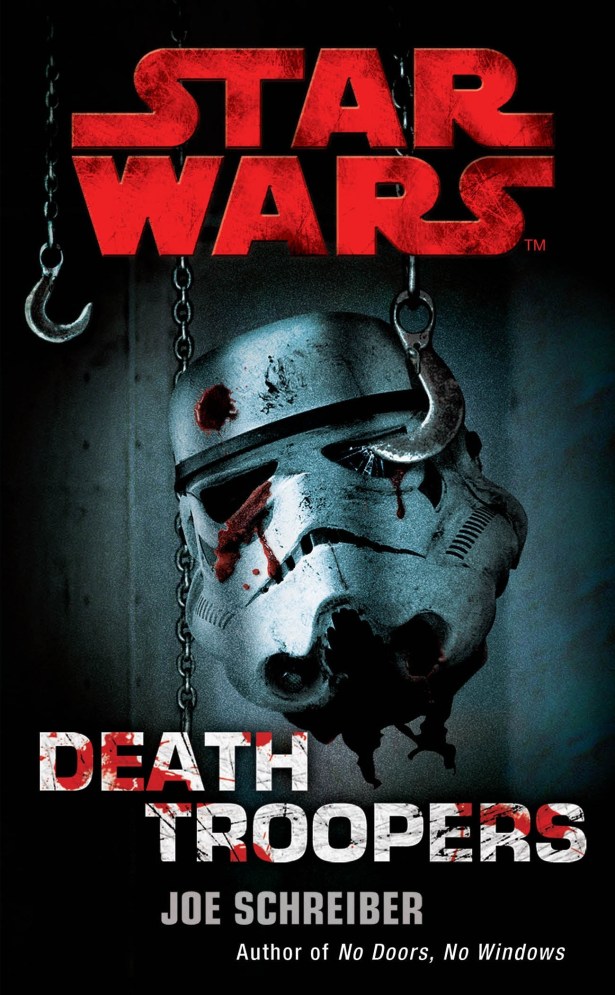
Throwback Thursday – Star Wars: Death Troopers by Joe Schreiber

Death Troopers Cover.jpg

Publisher: Random House Audio (Audiobook Edition 13 October 2009)

Series: Star Wars Legends

Length: 6 hours 42 minutes

My Rating: 4.25 out of 5 stars

Amazon

Reviewed as part of my Throwback Thursday series, where I republish old reviews, review books I have read before or review older books I have only just had a chance to read.

In this week’s Throwback Thursday, I look at an entertaining blend of horror and Star Wars with Death Troopers, a book from the Star Wars Legends collection which I listened to in its audiobook format.

Death Troopers is set a short time before the events of Star Wars: Episode IV – A New Hope.  The Imperial prison barge Purge is the temporary home of the galaxy’s worst criminals, rebels and murderers.  Carrying over 500 prisoners, as well as guards, stormtroopers and other personnel, the ship is a floating hive of scum and villainy, where the guards are just as bad as the inmates.  En route to a permanent prison facility, the engines fail, stranding the Purge in an uninhabited area of space.  Rescue appears to be weeks away, unless the crew can fix the engines.  The discovery of an apparently deserted Star Destroyer offers hope to the Purge’s crew, but the ghost ship contains a dark secret.

A boarding party sent to scavenge parts for the Purge inadvertently brings back something lethal: a virus that spreads incredibly fast and soon infects everyone aboard the ship.  Within hours, only a few survivors are left alive: the ship’s compassionate doctor, the sadistic captain of the guards, two young teenage brothers and a certain pair of smugglers.  However, these survivors soon discover that the sudden and bloody death of everyone on the ship is the least of their problems.  Shortly after dying the bodies of the Purge’s crew and passengers violently reanimate.  These creatures are driven, unstoppable and have a hunger for the flesh of the living.  As the survivors attempt to flee the Purge, they soon find that the Star Destroyer above is not as abandoned as they had believed.  The dead have risen, and their greatest desire is to infect the entire Star Wars universe.

Zombies!  In a Star Wars book!  How can I possibly resist that?  No seriously, tell me how it is even possible not to check out a book with that sort of premise.

Death Troopers is a 2009 release from horror, thriller and tie-in novel author Joe Schreiber, who wrote several fun-sounding books between 2006 and 2015.  These novels include two additional Star Wars novels, all of which fall in the Star Wars Legends line of novels.  Indeed, his third Star Wars novel, 2014’s Maul: Lockdown, was actually the last novel released in the Star Wars Legends series of books.  His other Star Wars novel, 2011’s Red Harvest, is a prequel to Death Trooper, and is set in the Old Republic, thousands of years before the events of Death Troopers.

The Star Wars Legends series of books is the current incarnation of the old Star Wars expanded universe, which, in addition to the six Star Wars movies that George Lucas produced, included all the books, comics, video games and television series that were endorsed by Lucasfilm.  All of these entries were considered canon, so at one point there were actually proper zombies in the Star Wars canon.  While the original expanded universe did have a dedicated fan base, it did not survive the Disney buyout of Lucasfilm intact.  In order to allow for the new movies, Disney declared that, with the exception of the films and The Clone Wars television show, everything created before 25 April 2014 would no longer be considered canon.  However, rather than disavow all of these previous Star Wars media items, Disney rebranded this original expanded universe as the Star Wars Legends collection and kept it as a deep pool of ideas and characters for any future writers of the franchise.

It’s no secret that I am a bit of a Star Wars fan, having reviewed several tie-in books and comics in the last year.  While my current interest mostly lies within Disney’s expanded universe, I did grow up with a number of books and games in what is now the Star Wars Legends range.  Star Wars books and comics are going to form a significant part of my upcoming Throwback Thursday entries, but I had not intended to dive back into the Star Wars Legends range until I had gotten through all the books in the Disney expanded universe, as I wanted to stick with what is currently canon.  However, I happened to come across the cover and plot synopsis for Death Troopers the other day, and the moment I saw it I knew that I had to read it.  I immediately grabbed an audiobook copy, narrated by Sean Kenin, and started listening to it.

While I loved the plot synopsis, I was worried that Death Troopers was going to be a Star Wars novel first that featured some light zombie elements and minimal gore.  However, what I was not expecting was an extremely terrifying and well-written zombie novel that makes full use of its Star Wars setting to create a dark, gruesome and somewhat scary story.  I was very impressed with Schrieber’s ability to craft an amazing zombie novel.  His creations are pretty darn terrifying, especially as the author paints some detailed and horrifying descriptions to go along with his story.  The introduction of the zombies is done perfectly, in my opinion, as Schreiber goes for a slow burn approach.  Following the introduction of the virus, the book’s survivors slowly explore the ship, searching for a way to escape.  The author slowly builds up the tension by having things move around out of the characters’ sight, the bodies slowly disappear, bloody handprints appear in places and the characters hear all sorts of noises.  The characters of course have no idea what is happening, and blame their imagination or paranoia, but the reader knows full well what is happening.  Even when the first zombie is actually seen, panic and realisation still does not immediately set in for the rest of the characters, much to the reader’s frustration.  It is not until well after halfway through Death Troopers that the zombies are revealed in all their horror, and from there the pace of the book picks up, as the characters must find a way to quickly get away from the creatures hunting them.  This slow introduction of the zombies was a fantastic part of the book and represents some outstanding horror writing from Schreiber.

Despite this being a Star Wars novel, Schreiber does not dial back on the blood, gore or horror, and there are quite a few dark scenes throughout the book.  I was on the edge of my seat for quite a lot of it and felt that this was a great piece of horror fiction.  There are quite a few dark scenes, such as cannibalism, jaunts in rooms full of body parts and some fairly gross surgical scenes, all of which Schreiber describes in shocking detail.  I did find the story to be a bit predictable in places, and it was pretty easy to predict which of the characters would live or die.  There were also quite a few unanswered questions (what the hell was the lung room for?), although they may be answered in the prequel book Schreiber wrote a couple of years later.  I also thought that the way Schreiber ended the plot line about the zombies attempting to escape the Star Destroyer and infect the rest of the universe was a bit of an anti-climax, but overall this was a pretty fun story that I quite enjoyed.

I felt that Schreiber was quite clever in his use of the Star Wars elements throughout Death Troopers.  It is quite obvious that Schreiber is a fan of the franchise and he has a wonderful understanding of the history, technology and characters that have appeared in other Star Wars works.  As a result, he is able to craft an excellent Star Wars setting for this story that presents the reader a good idea of how this book appears in relation to the rest of the franchise.  However, what I really liked was how Schreiber did not overuse the Star Wars elements, and the reader’s focus was never taken away from the zombie part of the book.  I also felt that several of the Star Wars elements really helped to enhance the horror aspects of the book.  Having the familiar turn into something different can often be quite scary for people, and to see the often-ridiculed Imperial Stormtrooper turned into a ravenous, mutilated zombie was quite something.  The inclusion of fan favourite characters Han Solo and Chewbacca was also a nice touch.  Not only do you have some familiar characters for the readers to enjoy but you also raise the stakes of the story when both of these beloved characters come close to being eaten by zombies.

Another benefit of combining Star Wars and zombie fiction is that for once characters are completely justified in not knowing what a zombie is.  There are quite a few other major zombie movies or television shows set in fictional worlds that are supposed to mirror ours, and yet the protagonists have no idea what zombies are, despite how much they are used in fiction.  This always frustrates me, and while it was a minor thing, I was very happy to read a book where the character’s lack of understanding about zombies is completely understandable.  Overall, I really liked how the author presented the Star Wars elements within the book, and I was impressed by the way he used it to make the zombie elements even scarier.

If you are tempted to check this book out, I would highly recommend that you listen to the book in its audiobook format.  At just over six and a half hours, this did not take me a long time to get through, but I was absolutely amazed at how much the audiobook format enhanced the story.  This is mainly down to the fantastic sound effects that were scattered throughout the story.  The producers of this book did a superb job inserting a range of zombie sound effects throughout the background of the book’s narration.  This includes sounds such as screams, disturbing eating sounds, moans and other assorted sounds of horror, with the continued screams being particularly off-putting.  None of these sounds overwhelm or totally distract from the narration, but I found hearing them when the narrator describes a horror scene really enhanced the tension and dread I experienced.  I also thought that the disconnected, whispered and screamed echoes of the chapter names was a very nice touch and it really added to the overall atmosphere of the book. In addition to these horror based sound effects, there are quite a few classic Star Wars sound effects for the reader to enjoy and get nostalgic about, including some of the classic music from the movies.

Sean Kenin’s narration was also extremely well done, as the narrator was able to create a series of fun and distinctive voices.  I thought that Kenin’s Han Solo was very convincing, and it sounded a lot like the movie version of the character.  I also found that having this horror story narrated to me helped bring me into the centre of the action and really experience the horror and dread that was present there.  The narration of the descriptions can be a bit disturbing at times, and I would recommend not eating during one or two scenes; trust me on that.  As a result, I would highly recommend that people wanting to check out Death Troopers should definitely use the audiobook version of it, as in my opinion it does an amazing job enhancing this already fun story.

I am happy to say that I was not disappointed by this entertaining combination of zombie literature and the iconic Star Wars universe.  This was a pretty dark story, which also includes some familiar elements from a franchise that I truly love.  Because of this I had an outstanding time reading Death Troopers and felt that it was a great example of both a zombie novel and a piece of Star Wars fiction.  In my mind the book itself is four stars out of five, but I had so much fun with its audiobook format that I am raising it up to four and a quarter stars.  An overall fantastic and unique read, Death Troopers is really worth checking out for fans of either zombies or Star Wars and is perfect for those who love both.  I am very curious to check out Schreiber’s other Star Wars books in the future, as both of them sound like a lot of fun.

Amazon

The Gutter Prayer by Gareth Hanrahan

The Gutter Prayer Cover.jpg

Publisher: Orbit (Paperback Edition – 17 January 2019)

Series: Black Iron Legacy (Book 1)

Length: 512 pages

My Rating: 4.5 out of 5 stars

Amazon     Book Depository

From debuting author Gareth Hanrahan comes the grimdark fantasy book that everyone has been talking about, The Gutter Prayer.  This debut novel has been getting some serious hype from a lot of fantasy reviewers, so I was very happy when I got my copy earlier in the week, as it will give me a chance to check it out for myself.

For thousands of years, the large, sprawling city of Guerdon has survived against all manner of attacks and calamity.  In recent years, the city’s alchemical industry has taken off, producing powerful weapons and twisted creations to sell to Guerdon’s warring neighbours, involved in the destructive Godswar.  But with the rival nation’s eyes on Guerdon, refugees flooding into the city and the city’s various factions fighting for power, the potential for chaos is great.

In the middle of all this, three mismatched young thieves – stranger to the city, Cari; the Stone Man, Spar; and Rat the ghoul – find their lives changed forever.  Hired by the leader of the city’s criminal element, these three thieves attempt to break into an important civic building, only to be nearly killed by a massive explosion and framed for the crime.  Pursued by the Alchemist Guild’s murderous enforcers, the Tallowmen, and the relentless thief-taker, Jere, the three friends attempt to escape their pursuers, but find themselves entangled in a terrible plot to bring destruction to the city.

Ancient creatures are rising from the city’s bloody past, and the city’s old gods are prepared to rise once again.  As Cari, Spar and Rat uncover the full extent of these gods’ power, they must contend with others who seek to use the chaos for their own ends.  With everything on the line, can the three friends find a way to stop the events unfolding, or will their failure result in the destruction of everything they hold dear?

This is Hanrahan’s first fictional book, although the author has written a number of gaming manuals and fantasy guides over the years.  However, with the evident popularity of The Gutter Prayer among the fantasy community, it seems extremely likely that this will not be Hanrahan’s only book.  Indeed, the author already has plans for a sequel, and The Gutter Prayer will form part of this planned Black Iron Legacy series.

I thought that The Gutter Prayer was an ambitious and intriguing new entry to the fantasy genre, and it is definitely worthy of the hype around it.  Hanrahan presents a wide-ranging and dark story of magic, religion and betrayal, and he sets it within an imaginative new fantasy landscape with a ton of unique fantasy elements and creatures.  The story is then based around several great characters, each of whom has their own compelling arc within the narrative.  The result is an excellent and memorable novel that showcases Hanrahan’s creativity and serves as an amazing introduction into a bold new fantasy universe.

This book contained a fantastic and intense story which focused on a variety of different characters and follows their attempts to investigate and forestall the strange events occurring around them.  I really enjoyed this story, although I had a little bit of a hard time getting into it at the start of the book due to mass of story and fantasy elements I was bombarded with.  However, I am extremely glad that I powered past this first part of the book because once I was able to place all the story elements together I appreciated the book’s wild and intricate plot.  One of the main things that I really loved about this book was the inclusion of a significant number of different characters and factions, each with their own motivations and hidden secrets.  As a result, you have no idea who is going to do what next and who is going to betray the protagonists to serve their own needs, creating an unpredictable story.  The narrative is also extremely dark, and readers should be prepared for characters dying or being altered in some way or another.  This is some fantastic storytelling from Hanrahan, and an overall clever narrative.

One of the most talked-about elements of this book is the author’s use of a huge range of unique fantasy elements.  Hanrahan has come up with and expertly utilised a ton of creative, inventive and at times just plain creepy new fantasy elements.  The best example of this has to be the Tallowmen, humans that have been turned into living candles, often as punishment for crimes.  These creatures are strong, lethal and fast, serving as the guards and law enforcers of the Alchemist Guild.  Their terrifying appearance, distinctive abilities and the glow of their candle flames as they hunt down the protagonists are extremely memorable.  Another terrifying inclusion is the Ravellers, servants of the city’s ancient gods who have the ability to unravel people out of existence and take on their appearance.  There are also the ghouls and Stone Men.  Stone Men are humans infected with a disease that slowly turns them into stone, although their condition can be held back by an alchemical compound.  The depictions of their condition are pretty horrific, and there is the interesting double-edged sword of the disease: they become stronger the more their condition progresses, but they also become less able to live normal lives.  The ghouls, humanoid creatures who feast of the dead flesh of humans, are an element that most fantasy fans will be familiar with, but Hanrahan has made some clever alterations to these creatures by expanding on their life cycle and making them a key part of the city’s history.  Another awesome creation is the Crawling Ones, a sentient hive of worms who take a human shape and are powerful magic users.

In addition to the above unique fantasy creatures, The Gutter Prayer also introduces the author’s great new twist on fantasy gods.  The world of the Dark Iron Legacy is filled with a vast pantheon of powerful gods, which forms a critical part of this universe.  Many of the deities outside of the city are engaged in a massive conflict known as the Godswar, where these gods and their followers are involved in battles against each other for supremacy.  While we get a brief look at this in The Gutter Prayer, most of the focus of this book is on the gods of Guerdon.  While a few other religions are mentioned within the city, the main two pantheons are the Kept Gods and the Black Iron Gods.  Both of these different gods are extremely intriguing, and I particularly loved the concept of the Kept Gods, who are chained and whose intake of prayer is controlled by their church to limit their power and control their actions.  The Black Iron Gods are a darker and more ancient pantheon with a great history, a horde of sinister followers and a captivating physical presence.  I also liked this universe’s concept of saints, those humans gifted power by their connection to the gods.  There are a couple of saints featured throughout the book who form an integral part of the plot, powering through the story with a range of different powers and abilities.  Quite frankly, all of these unique fantasy elements are deeply intriguing, and Hanrahan uses all of them perfectly to enhance his outstanding story.  I do hope that the Godswar will be explored in future books, as that sounded like a really fun concept that I would be deeply interested in.

Guerdon is a decent grimdark fantasy city, and it serves as the primary setting for most of the city.  The city’s range of interesting and unique residence allows for a fascinating overall story and makes this a fantastic setting.  I really like how the city is home to a range of competing factions, such as the Alchemists, the Church, the criminal organisation known as the Brotherhood, politicians and the city’s non-human races, each of whom have different plans for the future of the city.  This is a pretty typical dark, crime-ridden fantasy city, but it works really well as a setting for this story.  The author’s deep exploration of the history of his fantasy city served as a useful plot point, and I love how the city’s past came back to haunt it in a number of ways.

I have to say that I was really impressed with Hanrahan’s character work within this book.  The author introduces a number of amazing characters, most of whom get deep and satisfying story arcs.  The main three characters are particularly great.  I really liked Spar, who is not only the son of one of the city’s most famous criminals, but who is also a Stone Man.  It is through this character’s eyes that we get the best view of the living hell of life as a Stone Man, as Spar is forced to deal with all the unpleasant side effects that his condition brings.  At the same time he must deal with his family legacy as he fights to achieve his father’s dream of a more noble Brotherhood while forced to work for its current corrupt leader.  Rat the ghoul is another interesting character.  As a ghoul, he is generally supposed to live under the city, but he likes living above the streets with his friends.  Rat is constantly conflicted between loyalty to his friends and to his race’s ancient promises, as well as dislike for the traditional ghoul lifestyle.  Finally, there is the mysterious young thief, Cari, who holds a dark secret in her past.  Cari is a rebellious young female protagonist who is developing strange new powers.  The exploration of her past and her abilities is a key part of the book and a good basis for a large portion of this plot.  I liked the way that these three characters cared for each other and how their stories remain interconnected even as they have their own unique adventures within the story.

While these three main characters serve as an extremely powerful narrative base for The Gutter Prayer, the author also focuses on a couple of additional point-of-view characters, including the veteran thief-taker, Jere; Cari’s cousin, Eladora; and the saint of the Kept Gods, Arla.  These characters do not get as large a focus as the book’s three main characters, but their parts of the book are quite significant.  Each of them also has a full character arc within the book, and they all develop or change in substantial ways.  Jere is a grizzled private investigator obsessed with taking down the Brotherhood, and his investigations for the first two-thirds of the book provide the reader with some vital plot detail.  I really liked the end to Jere’s character arc, which was both dark and satisfying.  Eladora is a sheltered scholar who gets a rather rude awakening about life throughout the course of this book.  Eladora is not my favourite character, but I did like her gradual transformation from damsel in distress to something more useful.  Finally, there is Arla, who would have to be my favourite side character.  Arla is a saint of the Kept Gods blessed with fiery powers as a result.  Arla is a badass and entertaining character who spends most of the book fighting her opponents with her fiery sword and generally not acting in a way most people would consider saint-like.  I especially love when she utilises her god-empowered voice to command people, as she is usually swearing while doing this.  This comes up in the text in all caps, and you have to imagine it sounds pretty impressive in this book’s audiobook format.  There were a number of other entertaining side or minor characters throughout the book that the author put to good use, and I will enjoy seeing what role they will play in any future books in the series.

Overall, I truly enjoyed The Gutter Prayer and was impressed by Hanrahan’s magnificent debut.  This was an excellent piece of grimdark fantasy which expertly combined some very inventive fantasy elements together with a fantastic story and some excellent characters.  With this first book Hanrahan has shown some incredible talent as a fantasy storyteller whose outstanding imagination is his biggest asset.  This is a highly recommended book which lives up to the substantial hype surrounding it.  I am already extremely keen for any additional books in the Black Iron Legacy, especially as the interview at the end of the book implies that Hanrahan has some brilliant ideas for the rest of the series.

Amazon     Book Depository

Throwback Thursday – The Dragon Factory by Jonathan Maberry

The Dragon Factory Cover.jpg

Publishers: St. Martin Griffins

                        Blackstone Audio

Publication Date – 2 March 2010

Amazon     Book Depository

Reviewed as part of my Throwback Thursday series, where I republish old reviews, review books I have read before or review older books I have only just had a chance to read.

My quest to get through all of the books in Jonathan Maberry’s Joe Ledger series continues.  In this week’s Throwback Thursday I look at the second epic entry in what is fast becoming one of my favourite series of all time, The Dragon Factory.

It has been only a few months since former police officer Joe Ledger joined the elite and top-secret American intelligence agency, the Department of Military Sciences (DMS).  Working with the DMS and its mysterious leader, Mr Church, Ledger has helped save the country and the world from a variety of unique scientific threats.  Therefore, Ledger is extremely surprised when one morning a team from the NSA ambushes him and attempts to place him under arrest.

Without any warning, Ledger and the DMS find themselves caught in the crossfire between two rival organisations of rogue geneticists who have already drawn first blood against the DMS.  One of these organisations works on perfecting the world’s deadliest diseases, while the other seeks to create an army of genetically enhanced soldiers and terrifying animal hybrids.  Both of these factions are well funded, have remained hidden from the world’s intelligence agencies and have access to game-changing technology.  However, one has a terrifying vision for the future that they will go to any lengths to achieve.

As Ledger leads his team in an all-out war against these rival groups, they begin to uncover the full extent of these villains and the connection they have with Church and the DMS’s secret past.  The Extinction Clock has started to count down, and the entire world will be changed when it hits zero.  Forced to battle impossible odds, will Ledger be able to save the world again or will death and tragedy rain down around him?

Those who have been following my reviews in the last few months will remember that I first experienced Jonathan Maberry’s amazing Joe Ledger series when I read last year’s epic release, Deep Silence, which was among my top 10 reads of 2018Deep Silence was the 10th book in the series, and its clever writing, over-the-top elements and outstanding audiobook adaption made me immediately go back and check out the first book in the series, Patient Zero.  I found Patient Zero, with its focus on weaponised zombies, to be just as entertaining as Deep Silence, while also serving as an amazing start to the series.  Because of how much I enjoyed Deep Silence and Patient Zero, I decided to check out the other books in the Joe Ledger series as soon as possible.  The Dragon Factory is the second book in this series, and it continues the epic adventure started in Patient Zero.  Featuring excellent antagonists, fun new elements and a killer storyline, The Dragon Factory is an amazing book which I experienced in its audiobook format.

Having read the first book and the latest book in this series before reading this second instalment gave me an interesting insight when it came to reading The Dragon Factory.  While Patient Zero was a great book, I felt that The Dragon Factory is the book in the series where Maberry really hit his stride.  I found that this second book contained a much better combination of character focus, humour, intense action and the books fantastic science fiction elements.  The overall story of The Dragon Factory was absolutely incredible and extremely compelling, allowing me to rush through this book in no time at all.  I loved several of the twists that Maberry inserted into this book, although I did see the book’s big plot development coming from some distance away.  However, knowing it was coming did not lessen the impact for me, and it represents some amazing writing from the author.  There was a lot less horror elements in The Dragon Factory than the other Joe Ledger books I have read, but it still contains a healthy dose of mad-science elements, and I loved all the scientific discussions included throughout the book.

One of the best things about the Joe Ledger series is the wide range of viewpoints that the author employs to show the protagonist’s actions and to highlight the plots, schemes and planning of the various antagonists.  This allows the reader to get a much more widespread view of the various actions being taken by the book’s various characters, and the reader gets to see events that happened weeks before the book’s main storyline at various points throughout the narrative.  Maberry uses this to particular effect in The Dragon Factory, and it enhances many of the books various story elements.  I also loved how each of the main story chapters had a timer at the top counting down how many hours were left on the Extinction Clock.  I thought this was an extremely clever literary device that served at least two purposes in the book.  Not only did it add a real sense of dread to the story as the countdown leads closer and closer to a devastating event but it was also useful in highlighting the chronological order in which some of the chapters occurred, which was extremely useful during some of the later action sequences.

One of the most entertaining parts of The Dragon Factory was the amazing new villains that Maberry focused on.  In this book the protagonists find themselves up against two sets of geneticists, each with their own specialities and goals.  As the story progresses, the reader gets a deep understanding of both groups’ motives, plans, creations and the various moves and counter-moves they make against each other and the DMS.  Watching the two different groups attempt to attack or manipulate their rivals is an intriguing part of the plot, and it was fascinating to see the impacts the protagonist’s actions had on their villains schemes and overall plans.  Having geneticists as the villains not only allowed Maberry to create a series of memorable and destructive creatures for the protagonists to fight but it also added some very fun edges to the conflicts between the rival villain establishments.  While the motivations of one group are quite a basic, the motivations of the other group are very over the top, and the full list of their fictional crimes is quite insane.  I honestly laughed out loud when certain details about this group were revealed towards the end of the book, but it was an extremely out-there twist that I loved so much.  Maberry does a really good job of fleshing out all the main antagonists, which I think helps create a much richer and more enjoyable story.

Maberry is a bit of an action fanatic, so those readers who are looking for some fictional fights have come to the right book.  There is a huge range of different action sequences throughout this book as the DMS and the two rival groups of evil scientists unleash their forces against each other.  I am always amazed at the level of detail Maberry is able to convey in his action sequences, as he paints a vivid picture of the combat while also discussing the various tactics and techniques behind them.  For example, when the main protagonist engages a skilled opponent in an epic knife fight, not only does the reader get a great description of the battle that’s taking place but they also get an understanding of the various moves being utilised and the advantages and disadvantages of the different knives.  I really enjoy the way that the author goes into the psychology of the fight, and it really shows how much research and thought has gone into these sequences.  The genetically enhanced super soldiers and weird animal hybrids are pure fun, and provide the reader with some extreme and wildly entertaining pieces of violence.  An easy choice for any action junkie, you will not be disappointed with this read.

Joe Ledger continues to serve as a fantastic protagonist for this series, and I love his uber-sarcastic personality.  Ledger is the only point-of-view character whose chapters are told from the first person perspective.  This is an interesting differentiation which highlights Ledger’s importance to the plot and helps showcase his fighting ability.  Ledger, like Maberry, is a martial arts enthusiast, and the author uses his character’s first person perspective to really show off his fight scenes and show the devastating fight moves that he can perform.  The first-person perspective also allows Maberry to explore the unique psyche of his protagonist, as Ledger’s mind is broken up into three separate personalities following a traumatic event in his childhood.  This has always been an interesting character trait for Maberry’s protagonist, but it was especially intriguing to see how Ledger and his mind react to certain traumatic events that occurred in this other book.  Mr Church continues to shine as the best secondary character in this series, and his calm persona, mysterious past and the sheer badassery that comes off him are absolutely amazing.

Without question, the best way to check out The Dragon Factory is in its audiobook format, which goes for a very enjoyable 16 hours.  The main reason for this has to be the incredible narration from Ray Porter, who has narrated all the books in the Joe Ledger series.  The narration a great way to absorb all the action, plots and science, and Porter does an amazing job of vocalising all of the characters, especially Ledger and Mr Church.  I loved the way that Porter was able to capture Ledger’s sarcasm and humorous edge for most of the book, and then turning on a dime to capture the harder and more vicious parts of the character when he gets enraged or upset.  The voice work on Mr Church is once again exceptional; every time he voices the character I can almost see the calm and mysterious figure, and I love how Porter makes him sound like a cross between Tom Hanks and JFK.  This is some first-rate voice work, and I find it adds an incredible amount to this excellent story.

After absolutely loving Patient Zero and Deep Silence I never once doubted that I would enjoy The Dragon Factory.  I was amazed by how much fun I had with this book, which I found to be insanely addictive and near impossible to stop listening to.  Featuring all of the elements of this series that I already loved, as well as some outstanding new features, this was an insane read that I cannot recommend enough.  Without a doubt this needs to be experienced in its audiobook format, and Porter has to be one of my favourite audiobook narrators at the moment.  I am already planning to dive into the third book of this series, so keep an eye out for my review of it in the next month.

My Rating:

Five Stars

Amazon     Book Depository