Hidden in Plain Sight by Jeffrey Archer

Hidden in Plain Sight Cover

Publisher: Macmillan (Hardcover – 27 October 2020)

Series: William Warwick – Book Two

Length: 304 pages

My Rating: 4.25 out of 5

Amazon

Bestselling author Jeffrey Archer returns with the second book in his William Warwick historical crime fiction series, Hidden in Plain Sight.

London, 1986.  Following the failed attempt to put his nemesis, expert art thief Miles Faulkner, behind bars, William Warwick has been promoted to Detective Sergeant and now has a whole new focus: drugs.  William and his team have been assigned to take down a notorious drug kingpin, one who has all of South London in his pocket and who takes great pains to hide his identity and methods.  However, despite their focus on catching this mysterious drug lord, known only as the Viper, Warwick is still determined to take down Faulkner.

When William coincidently arrests an old acquaintance from his school days, Adrian Heath, it unexpectedly provides him with the opportunity that he has been looking for.  Not only does Adrian have information about the identity of the Viper, but he also has a connection to Faulkner that could be exploited to finally throw his adversary behind bars.  As William attempts to close the net around his targets, he must also counter the moves of his enemies, even when they attempt to ruin his life or his upcoming marriage to Beth.  However, it will take more than personal attacks and clever setbacks to discourage William, and he soon has Faulkner and the Viper exactly where he wants them.  But even in defeat, Miles Faulkner is a dangerous opponent, especially now that he has his vengeful eyes fully set on William and everyone he loves.

Hidden in Plain Sight was another exciting and clever novel from Jeffery Archer featuring a compelling historical crime drama set around the life of a fun fictional character.  The protagonist of this series, William Warwick, actually first came into existence in Archer’s iconic Clifton Chronicles series of historical fiction books, where he was introduced as the in-narrative fictional protagonist of a series of detective books written by the Clifton Chronicle’s main character, Harry Clifton.  After Archer concluded the Clifton Chronicles a couple of years ago, he decided to provide his fans with a more detailed exploration of this fictional detective, and this series is the result.  The William Warwick series looks set to be Archer’s next major long-running series and it will explore the entire career of Warwick, from eager young recruit to hardened and brilliant detective.  This is the second William Warwick novel following last year’s Nothing Ventured, and Archer has come up with an enjoyable new tale that proved really hard to put down.

This second entry in the William Warwick series contains another intriguing and exciting character driven narrative that sees the protagonists engage in a game of wits with some despicable criminals.  This proved to be an excellent historical crime fiction novel that not that not only continues the compelling narrative set up in the previous book in the series but which also sees the protagonist go after an entirely new foe.  Archer presents a great recreation of 1980s London and takes the story in an interesting new direction by having William attempt to combat the city’s crippling drug trade.  However, the story still has a fascinating focus on the world of art and antiquities and its associated criminal underbelly, thanks to the amazing returning antagonist from the first novel.  This story proved to be really exciting and fast-paced, and I enjoyed the variety of different crime fiction elements that Archer included in the plot, as the protagonists attempt to take down their quarry in a number of different manners.  Readers are treated to a range of great sequences, from pulse-pounding police raids, detailed investigations, cunning undercover operations and even a very entertaining courtroom sequence.  Archer has loaded Hidden in Plain Sight’s story with all manner of twists and turns, so much so that the reader is often left surprised at who ends up on top and where the story will go next.  This was a really enjoyable narrative that I found to be extremely addictive, resulting in me powering through the entirety of Hidden in Plain Sight in just over a day.  Fans of the previous entry in the series (as well as the Clifton Chronicles) will have a great time continuing the fun story started in Nothing Ventured, while new readers will also be able to quickly dive into this novel and become engrossed in the story.

Like all of Archer’s books, the narrative of Hidden in Plain Sight is strongly driven by the excellent characters that the plot follows.  Archer utilises a range of different character perspectives to tell his story, presenting a rich and multifaceted narrative that explores the lives of several intriguing protagonists, as well as a couple of great villains.  Most of the story focuses on the series’ titular character, William Warwick, the determined, ambitious and righteous police officer who has dedicated his life to fighting crime.  Warwick continues to grow as a detective throughout Hidden in Plain Sight, losing more of his “choir boy” personality and gradually becoming more addicted to the job and the danger.  Despite that he still maintains his strong moral code and proves to be a very likeable central character, especially as Archer spends a lot of time exploring his personal life and his various relationships.  In addition to Warwick, Archer also dedicates a large amount of the book to several key side characters including Warwick’s police colleagues, the major antagonists and members of Warwick’s family.  These various additional characters and perspectives really added a lot to the story’s flow, and it was a much more effective way to tell this narrative than through the eyes of Warwick alone.  Most of these characters are only featured for a small amount of time throughout the book, but I felt that Archer made the most of their appearances, showcasing their personalities and motivations in an excellent manner and making sure that the reader was concerned for their various story arcs.

While these books are mostly focused on the exploits of William and his crime fighting associates, the character I have the most love for is the villain, Miles Faulkner, who is a constant highlight of each book.  Faulkner is a debonair and brilliant criminal mastermind who specialises in elaborate art thefts and forgeries and who gained the attention of the protagonists in Nothing Ventured.  Faulkner serves as a brilliant foil to William and the other police, continually outsmarting them at every turn and thoroughly acting as the cocky master villain.  Faulkner pretty much steals every scene he appears in, and you cannot help but enjoy his antics, even when you are pulling for the protagonists to knock him off his pedestal.  Archer introduces a number of entertaining and clever twists around Faulkner throughout Hidden in Plain Sight, and it was extremely entertaining to see the various ways in which this antagonist manages to manipulate everyone around him and generally come up on top, even when it appears that he has lost.  I personally liked the more vindictive streak that appeared as part of Faulkner’s character in this book, following his various losing encounters with William and the other protagonists.  Not only does this result in a number of clever and elaborate revenge ploys but it also gives a harder edge to Faulkner as the overall antagonist of the series, and hints that he may have some diabolical plans for William in the future entries of this series.  I had a lot of fun with this excellent antagonist and I cannot wait to see what villainy he unleashes next.

Hidden in Plain Sight is another fun and clever novel from Jeffery Archer that comes highly recommended.  Archer has done an excellent job of continuing his William Warwick series, and readers are in for an exciting and enjoyable time with this book.  I really liked where Archer took the story in Hidden in Plain Sight and I am looking forward to seeing how the series will continue next year.
Amazon

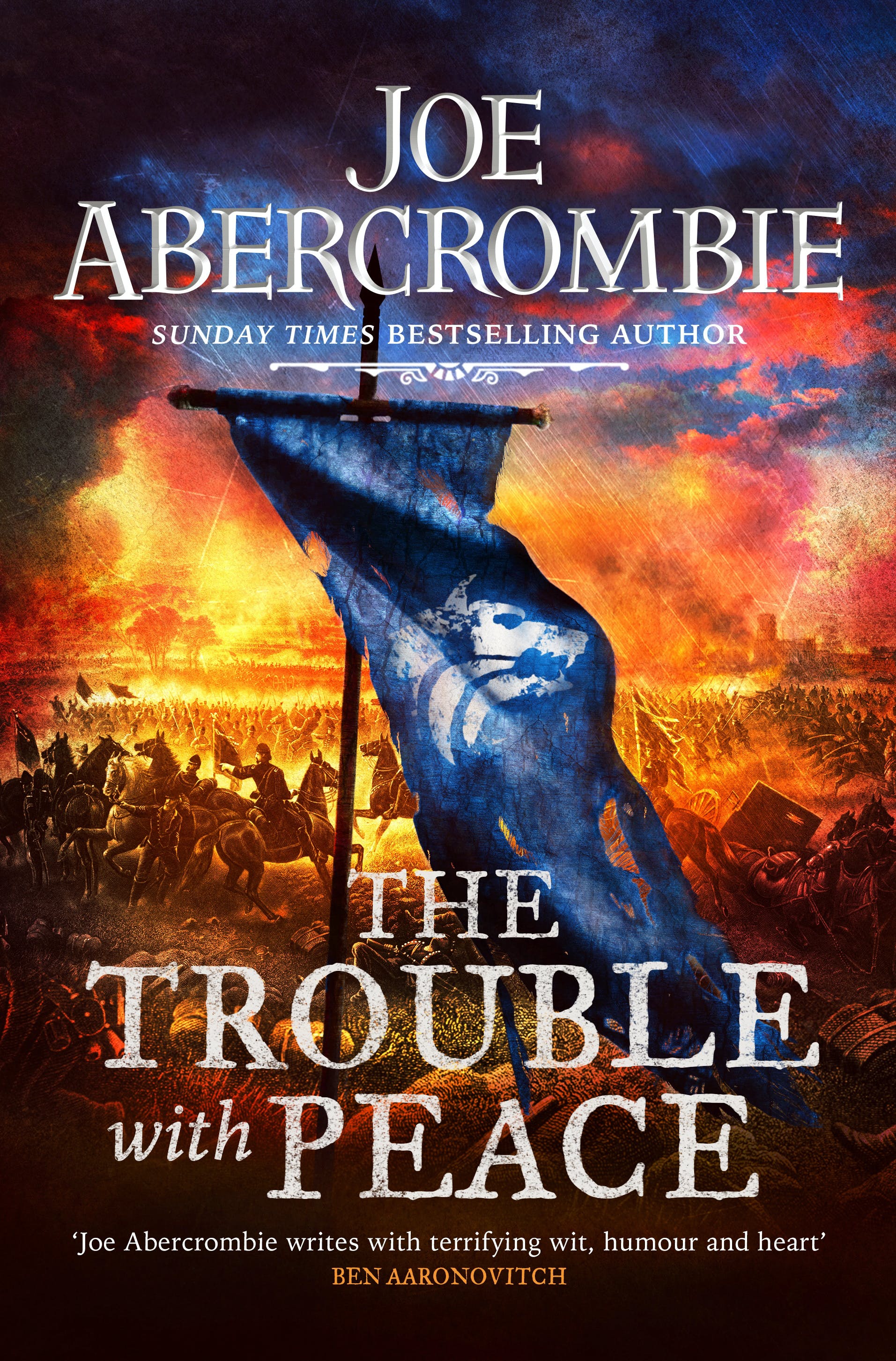
The Trouble with Peace by Joe Abercrombie

The Trouble with Peace Cover

Publisher: Orion Audio (Audiobook – 15 September 2020)

Series: The Age of Madness – Book Two

Length: 21 hours and 56 minutes

My Rating: 5 out of 5 stars

Amazon

The master of dark fantasy fiction, Joe Abercrombie, returns with another masterful and incredible novel, The Trouble with Peace, the second entry in The Age of Madness trilogy, which is easily one of the best novels of 2020.

Abercrombie is an extremely talented author who has written several impressive dark fantasy novels over the years.  His most distinctive works are the books in The First Law universe, which started back in 2006 with the author’s debut novel, The Blade ItselfThe First Law trilogy (which I really need to review) was an amazing and captivating series that followed a motley collection of broken characters and bastards as they found themselves caught up in the chaos of a dark and brutal fantasy universe.  The author has revisited this universe several times, first with three standalone novels set after the events of The First Law trilogy, and then with The Age of Madness trilogy, of which this latest book is a part.  The Age of Madness novels serve as a sequel series to The First Law trilogy, and follow several of the children of the original protagonists (as well as some other new characters), as they engage in a whole new level of chaos and destruction.  The first entry in this trilogy, last year’s A Little Hatred, was an exceptional novel that not only got a full five-star rating from me but which was one of my favourite books (and audiobooks) of 2019.  As a result, I was extremely excited when I got my copy of The Trouble with Peace, and it was one of my most anticipated releases of 2020.

The age of madness rolls on!  Following the death of his father, Crown Prince Orso has taken the throne of the Union and is now king, a role he never wanted.  What he inherits is a nation riven with discord and disharmony, with enemies within and without waiting to cut him down and take power for themselves.  Forced to deal with the machinations of the lords of the Open Council, the revolutionary Breakers, the anarchist Burners and the rival Kingdom of Styrians attempting to take his kingdom from him piece by piece, Orso soon begins to learn that even as king, he is just as powerless as always.

As chaos begins to descend on the Union and the North, the great and the powerful attempt to find their place in the new world order.  For Savine dan Glokta, formerly Adua’s most powerful investor, she finds herself in a vulnerable position with her judgement and reputation ruined.  However, her ambition remains unchecked and an unlikely alliance may help to secure the future she has always desired.  In the North, peace temporarily reigns and the governor of Angland, Leo dan Brock, chafes at the lack of action and finds himself drawn into the political turmoil surrounding the rulership of The Union.  As a famous war hero, he now wields great influence in the Open Council and many seek to use him for their own ends.  This chaos leads to him making deals he never expected, including with his former enemy, the new King of the Northmen, Stour Nightfall.  At the same time, the Dogman’s daughter, Rikke, attempts to control her dangerous gift of prophecy and heads along a new path of blood and violence.

As order and peace unravel across the Union, discord and rebellion raise their ugly heads.  With the old leaders of the world dead and the new generation taking their place, war seems inevitable.  Those who remain must decide who they are loyal to and who they can trust.  However, no alliances, no peace and no friendships last forever, and when the dust settles the Union will be changed forever!

Well damn, that was a good read!!  The Trouble with Peace is another exceptional and captivating novel that takes the reader on a dark thrill ride that proves impossible to escape.  The author once again comes up with an impressive and clever story of war and betrayal, which is anchored by a series of complex point-of-view characters, each of whom is damaged in some unique and compelling manner.  This results in a truly incredible book that was an absolute joy to read and which I flew through in a relatively short period of time.  I absolutely loved this latest book from Abercrombie, and The Trouble with Peace gets an easy five-star rating from me as a result.

At the centre of this awesome novel is an extraordinary and fast-paced narrative that sees various diverse characters and factions attempt to manipulate and outwit each other in order to gain ultimate power in the world.  The plot of The Trouble with Peace continues immediately after the shocking conclusion of A Little Hatred and sees each of the characters introduced in the previous book continue along their established storylines.  Of course, as this is a The First Law novel, it really does not take long for events to take a downward turn and soon the characters find themselves on opposite sides of a growing, major conflict.  There is a real focus on political intrigue, personal relationships and revolution in this novel, all of which proves to be deeply captivating and a lot of fun to read.  On top of that, Abercrombie throws in his usual blend of high-adrenaline action, extreme humour and wild personalities, resulting in an impressive and addictive story that readers will lap up and try to finish off as soon as possible.  Abercrombie does a great job of making this story accessible to new readers and those people unfamiliar with the universe could easily jump in here and have a great time.  However, this is definitely a novel for those readers familiar with the other entries in The First Law series, especially the preceding novel, A Little Hatred, and fans of the series will love the clever directions Abercrombie goes in The Trouble with Peace.  This is a first-class story, and I cannot recommend it enough.

Abercrombie backs up this amazing narrative with a powerful and distinct writing style that helps to turn The Trouble with Peace into a first-class read.  Like all the novels in The First Law series, The Trouble with Peace is told from some different and unique perspectives, as several captivating characters show the events of the novel occurring in front of them.  This results in an impressive and far-reaching story as the reader gets to see a bunch of different points of the same story.  This allows you to witness the various political, tactical and personal manoeuvrings on each side of the conflict, enhancing the overall narrative and driving certain key plot points home.  Abercrombie uses these multiple perspectives to great effect throughout the novel and some of the best sequences in the book are the result of some quick changes of perspective.  This includes an amazing succession of scenes in which two rival characters are disguised in a casino and have subsequent meetings with the same person in quick succession.  It proved remarkably entertaining to see the different approaches both characters took to the same situation, and served to highlight the similarities and differences between them.  Other scenes showed how the major point-of-view characters deal with each other when they meet, and it was fun to see the various mental gambits from both sides of the conflict, especially as Abercrombie ensures that all these characters are competing to be the most manipulative person in the room.  There are also two extended sequences where a single event is witnessed not only by a main character but also by a series of side characters and minor one-off characters to really showcase the chaotic nature of some scenes and the wide range of people they impact.  The use of various perspectives also really helps to set the brutal and dark tone for the entire novel, as the characters they follow are usually right in the centre of a series of different messes that they are either the cause of or they are trying to avoid.  I also really enjoyed the unique outlooks of each character as their fun reactions to the outrageous events occurring around them provide a great deal of the book’s impressive and entertaining humour.

As with all of Abercrombie’s books, the true highlight of The Trouble with Peace is easily the fantastic selection of damaged and deranged characters that make up the main cast of the series.  Like the first entry in The Age of Madness trilogy, The Trouble with Peace is primarily told throughout the eyes of seven separate point-of-view characters, each of whom has their own unique and captivating character through the novel.  These characters include:

  • King Orso – son of King Jezal, who has taken the throne after the sudden death of his father. Orso has inherited a fractured kingdom, essentially made up of people who all hate him.  Orso has a lot of growing up to do in this novel as he soon discovers all the troubles that relate to being king and the limited power he truly has.  I really liked Orso’s storyline in this book, mainly because he comes into his own and starts to demonstrate some backbone and leadership abilities.  His unique way of dealing with problems, many of which relate to his background as a wastrel and a coward, are surprisingly effective and often very entertaining.  Orso proves to be a very enjoyable protagonist throughout this book, and I personally found myself really getting behind him and hoping that he comes out on top.
  • Savine dan Glokta – the adoptive daughter of Arch Lector Glokta and the foremost businesswomen in the Union. Savine has gone through some substantial changes since the last book.  Rather than the confident and crafty women we were introduced to, this Savine is a mess, still reeling from the horrors she experienced in Valbeck and the revelation that her former lover, Orso, is her half-brother.  However, Savine soon manages to find a way back on top, thanks to a profitable marriage, and sets her sights on a particularly tempting target.  Savine is a rather despicable character in this book, and the readers are going to have a hard time feeling too sympathetic for her.  Still, Abercrombie does an amazing job exploring her trauma damaged psyche and she ends up being a very compelling character to follow.
  • Leo dan Brock – the new governor of Angland and the son of two of the protagonists of the standalone novel, The Heroes. After securing the North and bringing Stour Nightfall to heel, Leo has gained much influence and celebrity in the Union.  However, even after the events of the first book, Leo is still as hot-headed as ever and finds himself easily led into a number of conflicts.  Despite his apparent heroism and charisma, Leo is a very hard character to like, mainly due to how stupid he is.  Essentially anyone with half a brain can manipulate him in some way, and it becomes quite tiring to see him do something stupid and destructive merely because he has been told it is the noble thing to do.  Despite this, Leo forms a very fascinating counter point to his rival, Orso, as Leo has many of the things that Orso desires, such as heroism, martial prowess and the love of the people.  I also quite enjoyed the author’s exploration of Leo’s sexuality and love interests, and I look forward to seeing how that progresses in future books.
  • Rikke – a Northern girl and the daughter of The First Law trilogy point-of-view character the Dogman. Rikke is a troubled waif who is regretting her decision to force open her Long Eye in order to increase her prophetic abilities.  Rikke has to make some hard choices in this novel, but her eventual storyline sees her take up a leadership role in the North that sees her face off against the vicious new king of the Northmen, Stour Nightfall.  Rikke is another character that really comes into her own in this book, as she is forced to grow up quick and do hard things to survive.  There are some interesting story elements involved with this character, especially thanks to her magical Long Eye, which allows her to see into the future, and which also results in some very trippy chapters shown from her perspective.  I really enjoyed Rikke’s storyline and character arc through this book, and there are some excellent scenes that show just how devious she has become.
  • Vick dan Teufel – a Union inquisitor who works for Arch Lector Glokta and is loyal only to him. Vic spends a good part of the book working throughout the Union and attempting to identify the King’s enemies, as well as trying to find out who is behind the Breakers and the Burners.  Vick is a really interesting character and I like how much of her storyline seems to mimic Glokta’s from the original trilogy.  For example, in The Trouble with Peace, she is sent to a far-off Union city and must find a way to hold it against a rival kingdom.  However, she soon starts to discover the truth about who really runs the Union and the extent of their power.  Vick is a great character to follow, especially as her chapters tend to focus on the hidden political intrigue and manipulation that infests the Union.  Abercrombie also spends a bit of time continuing to explore the traumatic childhood of Vick, and it was interesting to see how her damaged and dangerous personality came to be.
  • Gunnar Broad – a former Union soldier with a perchance for extreme violence. After the events of Valbeck, Gunnar, a former breaker, now finds himself in the employ of Savine, and works as her brutal enforcer.  Gunnar is another fascinating character, who attempts to escape from the violence that he has known his entire life.  However, this is easier said than done, and his chapters feature some fantastic examination of self and philosophical thoughts on personality and the events of the past.
  • Jonas Clover – an old and experienced Northern warrior who works as an advisor for Stour Nightfall. Clover, who remains my absolute favourite character in this new trilogy, is an exceedingly entertaining person, thanks to his unique sense of humour and jaded personality.  Clover really stands out as a character, mainly because he is so different to the other Northern characters in the book.  While most of the people he surrounds himself with are eager for combat or glory, Clover is the only one extolling the virtues of patience and self-restraint, much to the other character’s annoyance.  However, he is usually right, and he has developed a habit of surviving as a result.  I really love this character, especially because he has some of the best lines and insults in the entire book.  It was really entertaining to see him work under the brash and arrogant Stour Nightfall, as Clover is constantly forced to try and reign in his new king, with little effect.  Despite not being used as much as I would have liked, Clover is still a standout character in this novel, and he has some very memorable moments as a result.

I really enjoyed all these excellent character arcs, and I thought that each of them was incredible and enjoyable in their own rights.  However, thanks to how the narrative progressed, many of these character arcs crossed over a lot more than in the previous novel, and you get to see the various storylines proceed side-by-side as a result.  Because of how they were connected, Orso, Savine and Leo tended to get the most focus throughout the book, and some of the other point-of-view characters (Vic, Broad and Clover in particular), did not get as many chapters told from their perspective.  While I would have loved more scenes from some of the other characters (more Clover would have been awesome), I felt that this was a good character balance and I liked how the various arcs progressed.  All the character arcs worked together exceedingly well, and I really liked how together they formed an exceptional and addictive plot.  The protagonists of The Trouble with Peace go through a lot in this book, and I enjoyed seeing how each of them progressed through their latest trials and dangers.  I look forward to seeing what happens to them in the final book of the trilogy and I imagine some dark things are in store for most of them.

In addition to all the outstanding and complex main characters, Abercrombie also has a great swathe of supporting characters throughout the novel and are extremely entertaining or memorable in their own right (I was a particular fan of the wild hillwomen, Isern-i-Phail).  Abercrombie does an excellent job building these characters up through the course of the book, and there are some amazing and entertaining personalities featured as a result.  However, readers should be extremely cautious about getting too attached to some of these characters, as their life expectancy is a little less certain than the main cast.  The Trouble with Peace also saw the return of several characters featured in the original The First Law books, including a couple of former point-of-view characters.  It was great to see how their stories continued years after the heydays of their adventures, and it adds an interesting aspect to the novel.  Fans of the original trilogy will no doubt enjoy seeing these characters return but should prepare to have their hearts broken.  I really liked the various storylines associated with these characters, and I was also impressed by several twists Abercrombie threw in around them, including one particularly good twist about who the ultimate antagonist of this latest trilogy really is.  Several of the scenes that utilise a ton of separate perspectives to show a single event are often briefly shown from the perspective of some of these side characters, as well as a few additional minor characters who only appear for that scene.  The author really makes the most of these scenes, introducing the character and setting up their personality and history in short order, and then showing how that event affects them (usually in a terribly negative way).

The awesome and exciting action sequences really helped to enhance The Trouble with Peace.  Abercrombie’s books have always featured some brutal and graphic fights and examples of combat, and this latest book is no exception.  There are some very impressive fight sequences in The Trouble with Peace, and the reader is always guaranteed of some action just around the corner.  I really do have to highlight one particularly massive and well-done war sequence that occurs in the latter half of the book.  This battle is the culmination of much of the novel’s plot and has a lot of build up as a result.  Luckily, it did not disappoint in any way, as the reader is treated to a series of powerful sequences that really drag them into the midst of the fight.  Thanks to Abercrombie’s excellent writing, the reader gets an incredible sense of the chaos, the fear and the claustrophobic horrors of a battle.  I really got sucked into this major fight, especially as the author makes good use of multiple perspectives to showcase just how bad it could be in the midst of the fighting, and how destruction, death and despair can infect anyone on the battlefield.  These action scenes are exceptionally written and extremely memorable, and all I can really say is thank goodness pikes are no longer used in war.

In addition to the outstanding story, characters and action sequences, I was also quite impressed with the new elements introduced into the series’ dark fantasy world.  While part of The Trouble with Peace is set in the brutal North, most of the plot takes place in the Union, which has gone through some dark times recently.  This version of the Union is extremely different to the setting that was featured in The First Law trilogy, with a recent industrial revolution bringing both progress and problems, as the land moves away from agriculture to factories.  I really appreciate how Abercrombie has altered his primary fantasy nation since the last trilogy, and his portrayal of an early industrial nation which is on the brink of various revolutions proves to be an awesome setting for this brutal and creative novel.  The author really explores the essence and heart of the Union in this book, and there is a particular deep dive into the politics and social economics of the nation as a result.  I had a lot of fun seeing how the Union falls into war, and a lot of the elements are set up extremely well during this book and the preceding novel.  The resulting conflict has a real English Civil War feel to it at times, with the parliament-like Open Council facing off against the forces of the Crown.  All of this works extremely well as a setting, and I had an amazing time once again visiting this chaotic and dangerous fantasy world.

While I did receive a physical copy of The Trouble with Peace, I ended up listening to the excellent audiobook version which was narrated by Steven Pacey.  Pacey is a talented audiobook narrator who has lent his voice to all the previous The First Law novels.  Pacey does an outstanding job narrating this audiobook and the amazing story clips along at a substantial pace thanks to him.  The narrator also has an impressive repertoire of cool voices for the various characters featured in this book and he even utilises some of the voices of the returning characters from the original novels.  Each of these voices is distinctive and fits its respective character perfectly, which in turn enhances the book’s writing and helps to showcase the character’s personality.  All of this results in an enjoyable and deeply addictive listen and I can already tell you that The Trouble with Peace is going to be one of my top audiobooks for 2020.  Listeners should be aware that this is a substantial audiobook, which has a run time of just under 22 hours (it just cracks my top 20 longest audiobooks list).  However, I would say that it is worth the time investment to check this amazing book out in this format and listeners are guaranteed a superb listen.

Joe Abercrombie continues to cement his position as one of the best modern fantasy authors in the world today with the awesome second novel in his Age of Madness trilogy, The Trouble with Peace.  Serving as the latest instalment in the overarching The First Law series, The Trouble with Peace is a captivating and impressive novel, containing an outstanding plot, memorable multi-layered characters and intense action, all set in one of the best dark fantasy worlds in modern fiction.  The Trouble with Peace is one of the best novels of 2020 and I am so glad that I got the opportunity to read it.  Abercrombie has really knocked it out of the park again and I cannot wait to check out the final book in the trilogy next year (currently titled The Wisdom of Crowds).  You will love this book!

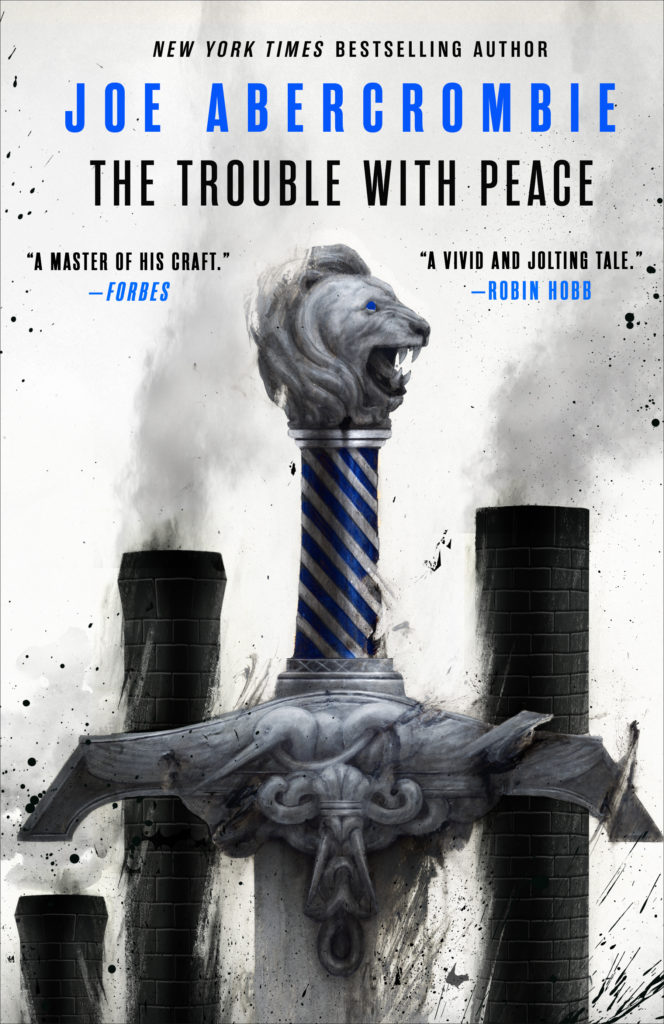
The Trouble with Peace Cover 2

Amazon

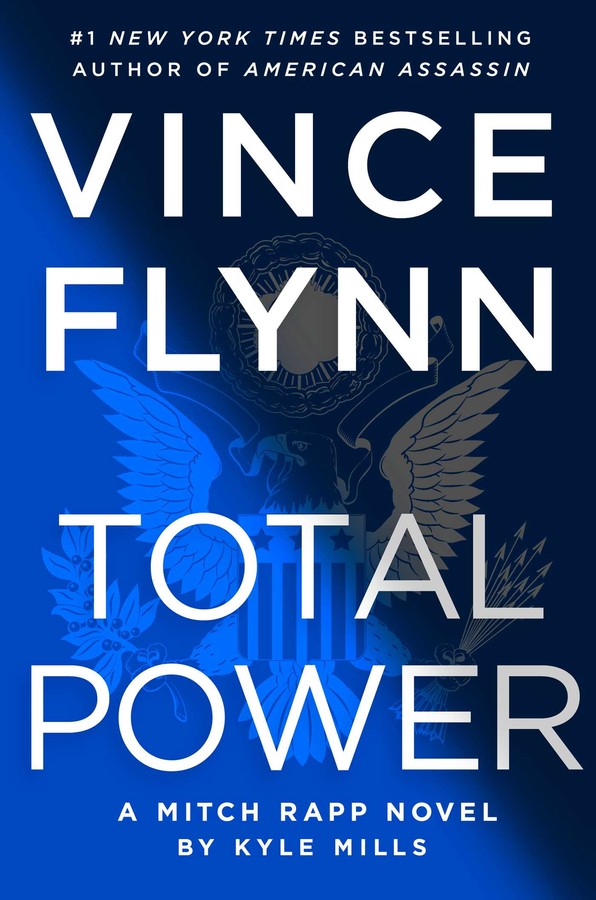
Total Power by Kyle Mills (based on the series by Vince Flynn)

Total Power Cover

Publisher: Simon & Schuster Audio (Audiobook – 15 September 2020)

Series: Mitch Rapp – Book 19

Length: 9 hours and 27 minutes

My Rating: 4.25 out of 5 stars

Amazon     Book Depository

Acclaimed thriller writer Kyle Mills returns with his latest entry in the long-running Mitch Rapp series, Total Power, a haunting and compelling new book that portrays a devastating and country-altering attack on America.

America’s top spy and assassin Mitch Rapp is back in action, and this time he’s racing to keep America from falling into the Dark Ages.  After eliminating his nemesis, Sayid Halabi, the head of ISIS, Mitch and his team have been working to clean up the remnants of Halabi’s operation before they can reorganise for another attack.  When the CIA manages to locate ISIS’s top technology expert, Mitch leads a team to intercept him and makes a disturbing discovery: the expert was on the way to meet someone who claims that they can turn out all the lights in the United States.

A rogue genius has discovered a way completely incapacitate America’s power grid and is now seeking help to make his dark dream a reality.  An attack of this magnitude has the capacity to severely incapacitate the entire country, bringing about anarchy, destruction and an unimaginable loss of life.  Desperately trying to find out who is behind this attack before it is too late, Mitch can only watch helpless as the plan is implemented and the country he loves falls dark.

As panic and confusion reigns across the country and the whole world reels from the sudden shift in power, the government desperately attempts to get the electricity flowing again.  However, due to the sheer scope of the attack and the chaotic nature of America’s power grid, repairs could take months or even years.  The only way to avoid the complete destruction of the United States is for Mitch to find the person responsible for the attack and convince him to reveal how to undo the damage and reroute power to the country.  However, this will be a search unlike anything he has done before, as he is stuck in the middle of a failing nation with no communications, no internet, no gas and with every single system he knows failing around him.  Can Mitch get the power back before it is too late and America collapses completely, or have the terrorists Mitch has spent his whole career fighting finally won?

This was another fun and addictive thriller from Kyle Mills, who continues to keep the Mitch Rapp books going strong after the passing of the series’ original writer, Vince Flynn.  Total Power is the sixth Mitch Rapp novel written by Mills and the 19th overall novel in the series, and it features the latest adventure from the titular character and his associates.  I have been really enjoying the Mitch Rapp novels over the last couple of years and I have had an amazing time reading the last two entries in the series, Red War and Lethal Agent.  This latest Mitch Rapp novel is another exciting and compelling book which makes use of an excellent concept and once again sets the series’ extremely dangerous protagonist on a destructive warpath.

Total Power is an excellent modern thriller novel that presents the reader with another exciting and action-packed narrative as American agent Mitch Rapp engages in another desperate manhunt for a new dangerous madman targeting America.  This was a really fun and compelling narrative, set around the fantastic story concept of all the power going out in the United States.  Total Power was a very fast-paced book, and the reader gets an excitement overload as they watch the protagonists attempt to stop the disaster and the subsequent frantic efforts to get the power back on.  The author makes good use of multiple point-of-view characters to tell his story, with most of the novel told from the perspective of Mitch Rapp and the main antagonist.  These two characters allow for a very interesting opposing view of the events occurring throughout America, and it is also fun to see the various moves and countermoves the two made in a bid to outsmart the other.  Other point-of-view characters were used a little more sparingly and presented a larger picture of the events occurring around the main narrative.  These disparate perspectives come together extremely well and help to create an overall captivating novel with a really fun story attached.  Mills makes sure to include all the typical Mitch Rapp hyper violence (with a few gnarly torture scenes that some readers will find a bit uncomfortable) and commentary on American politicians and foreign policy, and readers are in for an entertaining over-the-top novel as a result.

When I first heard that this book was coming out, the thing that really drew me to it was the awesome-sounding plot concept of all the power going out in America, which I thought would be a really cool basis for a thriller story.  Mills delivered in spades, and I was really happy to find out just how amazing a story concept it really was.  The author spends a substantial amount of time exploring how such a catastrophic blackout event could occur in America.  It was deeply fascinating, if a little troubling, to learn more about America’s power grid, as well as how potentially easy it could be for something like this to occur.  Indeed, Mills makes a note at the start of the audiobook that he actually had to invent very little of this concept and that a lot of the novel is based off historical events and public reports (although he does alter or fictionalise some details and locations).  Mills also makes sure to explore just how severe and deadly a sustained, nationwide power outage could be.  Spoiler alert: it would apparently get pretty damn bad.  There are some riveting and disturbing depictions of America completely devoid of power, with all manner of lawlessness, looting, and anarchy as the country quickly falls apart and people have no ability to keep themselves alive.  Mills does not pull punches in these depictions and I personally found them to be realistic, especially after seeing what happened in America in 2020, and a little terrifying.  Naturally, this fictionally powerless America proves to be an amazing setting for this thriller novel, and it was fantastic to see Mitch Rapp and the other characters attempt to navigate around the broken country.  All the subsequent barriers and issues that pop up add a lot of tension and excitement to an already action-packed narrative, especially as it’s entirely possible that Mitch could be taken out by citizens of the country he has long tried to protect.  All of this is an outstanding story concept and I am extremely glad that Mills ended up using it in one of his novels even if it did leave me a little paranoid (here’s hoping that our power grid is a little more stable down here in Australia).

If I had to level any real criticisms towards Total Power, it would probably be around the characters.  While I did enjoy seeing the various characters attempt to navigate their way through this latest crisis and the wasteland of a United States without power, most of the characters were really over-the-top and a bit unrealistic.  For example, Mitch Rapp is his usual ultra-violent, sociopathic self, hardly ever hesitating to kill someone, even a bunch of American citizens who are in his way.  While he is a fun action star to follow after, it was hard to root for him when he is constantly being a cold-hearted murderer the entire time.  I also was not the biggest fan of the main antagonist, the genius who shuts down the power.  Mills portrays him as a supremely arrogant man, completely high on himself and obsessed with becoming a major historical figure like Caesar or Genghis Khan (you know, history’s greatest role models).  While I can appreciate Mills wanting to make him an unlikeable villain for the sake of the reader he might have gone a tad overboard with this as pretty much every sentence or thought that the antagonist makes is either something extremely egotistical about himself or insulting towards the people he is seeing, often with sexist or racist overtones.  That being said, it was extremely satisfying to see this villain’s plans going up in smoke around him as Mitch closes in on him, especially since you do want to kill him yourself after listening to him for a few hours.  I did like the fun side character, Jed Jones, a survivalist who gains celebrity status in the post-blackout America thanks to his informative radio shows.  Jed was a rather entertaining figure and I liked the idea of a backwater doomsday prepper becoming the most famous person in the country thanks to his knowhow.  The book ended up featuring an interesting array of side characters who added some interesting diversity to the cast and showed some of the different experiences facing the American people.  Indeed, one of the few things that they had in common were similar opinions about America’s politicians and political elite, in that all of them are pretty much all useless parasites, something that gets mentioned multiple times.  Overall, the characters for this novel weren’t too bad and while some of these characterisations are a little distracting it did not really disrupt my enjoyment of Total Power, and I had a fantastic time seeing how they dealt with the problems in this setting.

Rather than grab a physical copy of this latest Mitch Rapp novel, I ended up enjoying the audiobook version of Total Power.  The Total Power audiobook has a run time of around nine and a half hours and is narrated by veteran audiobook narrator George Guidall, who is one of the most prolific audiobook narrators in the world.  This proved to be a rather easy audiobook to get through and I was able to finish it off in a short period of time.  It was fun to listen to listen to Total Power’s story and I felt myself getting drawn into the narrative as a result.  I do have to admit that Guidall is really not one of my favourite vocal talents.  Do not get me wrong, Guidall does a great job with this book, especially as his deep voice has a lot of gravitas to it which works well with thriller novels.  However, Guidall does sound a bit tired at times (to be fair, he is in his 80s), and his range of voices is a tad limited.  Despite this I still really enjoyed the Total Power audiobook and it is definitely an excellent way to check out this latest Mitch Rapp novel.

Total Power by Kyle Mills is a great new entry in Vince Flynn’s Mitch Rapp series that I ended up really enjoying.  Featuring an excellent thriller story set around an impressive and compelling plot concept, Mills presents the reader with an exciting and bloody adventure across an America without any power.  Total Power proved to be quite an exciting and awesome read, and I am really glad that I listened to it.

Amazon     Book Depository

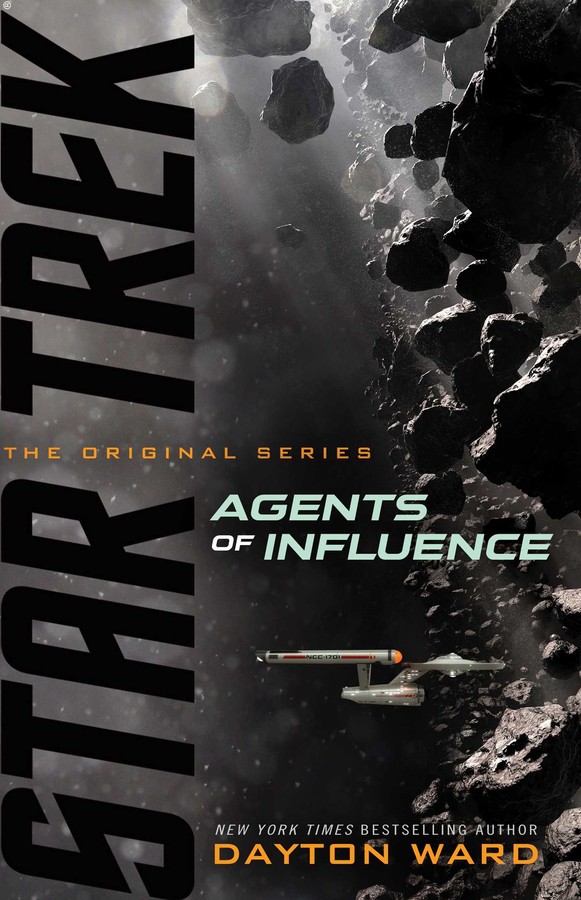
Star Trek: Agents of Influence by Dayton Ward

Agents of Influence Cover

Publisher: Simon & Schuster Audio (Audiobook – 9 June 2020)

Series: Star Trek: The Original Series

Length: 11 hours and 41 minutes

My Rating: 4 out of 5 stars

Amazon     Book Depository

One of the leading figures in the Star Trek expanded universe, Dayton Ward, returns with another exciting and compelling novel about the Enterprise, Star Trek: Agents of Influence.

For years, the United Federation of Planets and the Klingon Empire have been engaged in a dangerous cold war, with each side trying to gain an advantage over the other through any means necessary.  Starfleet Intelligence has launched an ambitious secret plan to infiltrate the Klingons with surgically altered spies.  Thanks to radical surgery, advanced technology and intensive cultural and linguistic training, these undercover agents have managed to infiltrate the highest echelons of the Klingon government, obtaining some of the most sensitive intelligence about Klingon technology, military plans and political ploys.

However, Starfleet’s three most highly placed agents have somehow been discovered.  With their cover blown, the agents manage a daring escape from the Klingon home world and engage their emergency extraction procedure.  The agents successfully make their rendezvous with the USS Endeavour at the edge of Klingon space before everything goes terribly wrong.  A Klingon warship suddenly engages them in combat while mysterious energy fluctuations ensure that both ships are destroyed.

With hostilities between the Federation and the Klingons building, Starfleet dispatches Captain James T. Kirk and the crew of the USS Enterprise to the crash site in the hope of salvaging the situation.  Forced to comb through some of the most dangerous territory in the entire galaxy, Kirk hopes to find the remnants of the Endeavour and any survivors of their crash.  However, mysterious events are occurring within the border zone and the Enterprise soon encounters unnatural conditions, pirates, Klingon warships and a top-secret weapons experiment.  Kirk and his crew must navigate through all these dangers carefully if they are to avoid another destructive war.  However, it soon becomes clear that Starfleet are not the only ones with highly placed spies and Kirk must find a way to uncover an enemy agent if his crew are to survive.

Dayton Ward is a veteran science fiction author who is easily best known for his work on the Star Trek expanded universe.  Ward has written a significant number of Star Trek novels over the years, which tie-in to several of the different Star Trek television series and movies.  I have so far only read one of his books before, Star Trek: The Next Generation novel, Available Light, which I really enjoyed.  This new novel from Ward, Agents of Influence, is a brilliant standalone novel that follows the Enterprise during the period that Star Trek: The Original Series was set.

One of the things that I really like with Star Trek extended fiction is the amazing range of different stories that the authors can produce within the expanded universe.  Agents of Influence is a really good example of this, as Ward has come up with an excellent story that highlights a very interesting aspect of life in this universe: espionage between the various alien races.  This proves to be a really cool plot basis which the author utilises to his full advantage by producing an exciting and action-packed narrative.  This is a fast-paced book that sees the various characters involved in all manner of danger and intrigue as they attempt to extract the spies and thwart the efforts of their Klingon opponents.  There are several excellent action sequences designed to get the blood pumping, including a couple of fights between starships and one particularly cool pitched battle between two large opposing forces in spacesuits in the bowels of an asteroid.  There is also a really compelling storyline that sees the protagonists attempt to locate a spy aboard their ship, with a number of potential suspects adding in intrigue and drama as a result.  The author makes effective use of multiple narrators to tell his story and this ensures that the reader gets to see every side of this exciting and enjoyable narrative, including from several antagonist characters.  This helps to really pump up the intrigue and action, and I really appreciated seeing the different sides of the conflict, especially as you get to see rival plans go up against each other.  The various character perspectives also helps to build up all the major side characters present throughout the book, allowing the readers to get a good idea of who they are and what their stakes in the plot are.  All of this comes together into an exciting and compelling overall read that is very easy to enjoy.

Agents of Influence was also excellent piece of Star Trek fiction, set during the events of Star Trek: The Original Series.  Ward once again does an incredible job capturing the tone and feel of the original Star Trek television series into this book and it actually felt like I was watching an episode of the original show.  The author is really talented at bringing iconic Star Trek characters to life in his novel and each of The Original Series characters featured in this book gets their chance to shine throughout the narrative.  Like most novels that tie in to a particular media franchise, Agents of Influence is a book that will mainly appeal to dedicated Star Trek fans, who will appreciate Ward’s latest contributions to the extended universe.  There are a variety of fun references to various episodes of The Original Series, including some of the episodes that featured characters using plastic surgery to alter their appearance and disguise themselves as members of other species, such as the iconic episode The Trouble with Tribbles.  Ward also makes several references to some of the other novels in the Star Trek expanded universe, especially those featured in the Star Trek: Vanguard series of books.  This includes the USS Endeavour and its crew, who previously appeared in these novels, with some of their previous adventures and their interactions with the Enterprise explored throughout the course of the book.  However, all of these references are really well explained to the reader and even people who have less familiarity with Star Trek and some of the expanded fiction should still be able to enjoy this novel without any issues.

I ended up checking out the audiobook version of Agents of Influence, which turned out to be an extremely fun and easy way to enjoy this fantastic book.  The Agents of Influence audiobook has a run time of nearly 12 hours and is narrated by Robert Petkoff.  This is a fairly typical length for a Star Trek audiobook, and I found that I was able to power through this one’s intriguing narrative in rather short order while getting a feel for the plot and the characters.  One of the main reasons for this is the exceptional narration provided by Robert Petkoff, who is easily the most prominent narrator of Star Trek fiction.  Petkoff is an amazingly skilled narrator whose work I have really appreciated in a range of previous Star Trek audiobooks, including The Unsettling Stars, Picard: The Last Best Hope, The Captain’s Oath and The Antares Maelstrom.  Petkoff has the amazing ability to replicate the voices of the various cast members of The Original Series (as well as the cast members from The Next Generation), and this is on full display in the Agents of Influence audiobook.  Petkoff once again did an outstanding job bringing all the key Enterprise crew members to life, and at times you would be hard pressed to tell the difference between some of the voices he did and the original crew.  This, combined with the amazing species specific voices that Petkoff produces, really helps to bring the reader into the story, and I had an awesome time listening to the story unfold.

Star Trek: Agents of Influence is a compelling and clever standalone Star Trek tie-in novel that takes the reader on a bold new adventure back with the cast of The Original Series.  Dayton Ward has produced a slick and enjoyable Star Trek novel chock full of action, intrigue and references, that I had an amazing time listening to.  A highly recommend read for those fans of the Star Trek franchise which will also appeal to more casual viewers and science fiction readers.

Amazon     Book Depository

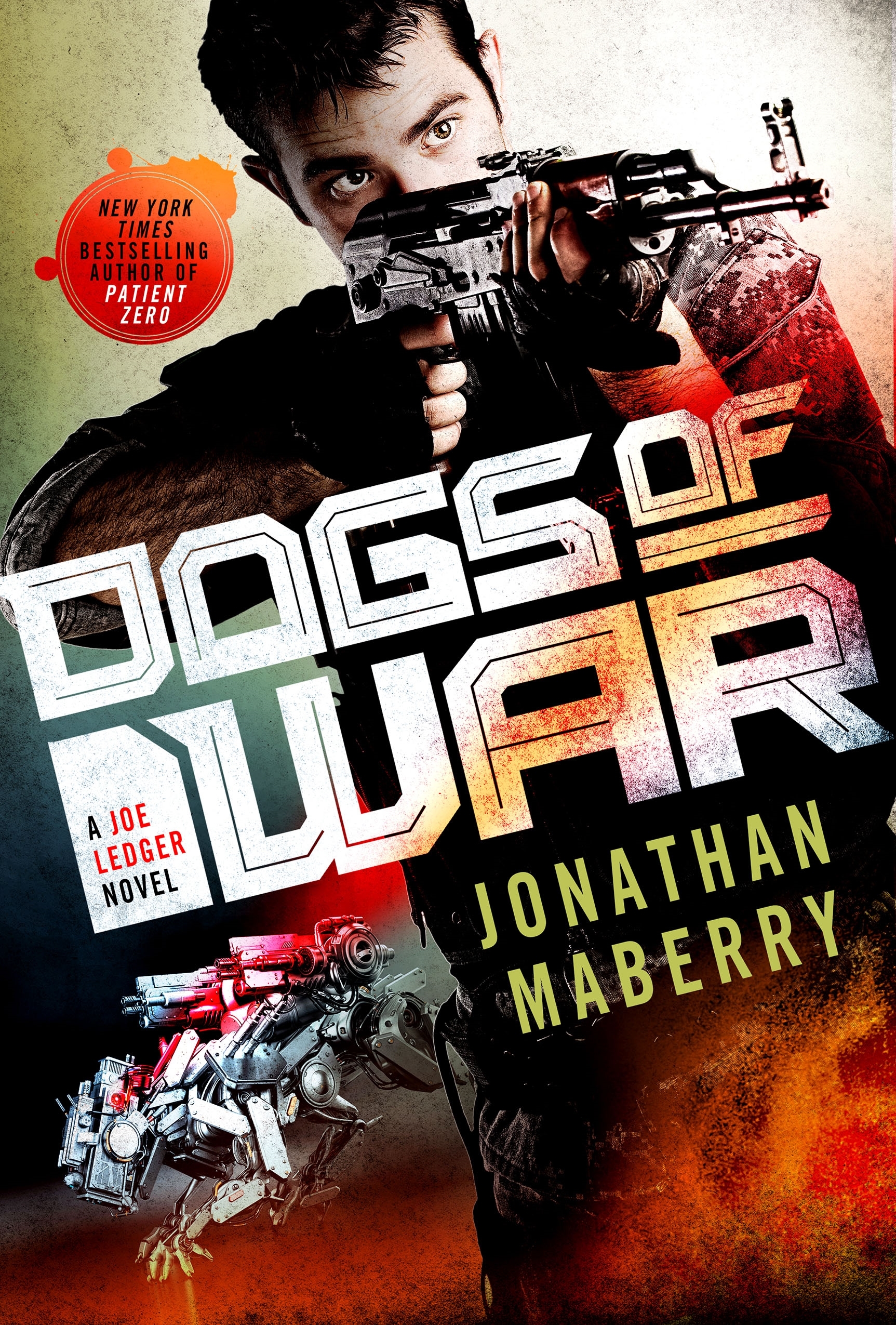
Throwback Thursday: Dogs of War by Jonathan Maberry

Dogs of War Cover

Publisher: Macmillan Audio (Audiobook – 25 April 2017)

Series: Joe Ledger – Book Nine

Length: 17 hours and 45 minutes

My Rating: 5 out of 5 stars

Amazon     Book Depository

For this week’s Throwback Thursday, I check out Dogs of War by Jonathan Maberry, the 9th novel in the action-packed, over-the-top Joe Ledger series.

People familiar with my blog will be aware that over the last year or so I have been making my way through Maberry’s Joe Ledger science fiction thriller novels.  I have been a little obsessed with these books ever since I first checked out the 10th novel in the series, Deep Silence, and then went all the way back to book one, Patient Zero, to see how the series started.  Ever since then I have worked my way through the rest of the Joe Ledger novels, each of which has proven to be a pretty top notch read.  I absolutely love the clever writing style, unique stories and distinctive characters that Maberry features in these novels, and I usually power through them in extremely short order.  Dogs of War is no exception, as I was able to get through this in less than a week and it did not take long for me to get addicted to its intriguing and exciting plot.

Following the disastrous events of Kill Switch, the Department of Military Sciences (DMS), a secret American counterterrorist unit that focuses on dangerous and unusual technology and science, is damaged and discredited.  However, they are still determined to do good throughout the world, and their main field agent, the legendary Joe Ledger, is always keen for a new case.  So when his brother calls him out of the blue with an unusual mystery, Ledger does not hesitate to head back to Baltimore in order to investigate.

Arriving in his former hometown, Ledger discovers a curious set of circumstances.  A young street worker went on a rampage, killing several people before dying herself.  The cause of her madness appears to be a new strain of rabies, which was apparently triggered by nanobots in her brain.  Attempting to investigate more into the case, Ledger finds himself and his family targeted by ruthless killers with advanced technology, determined to ward him off the case.  It soon becomes apparent that the death of the young girl in Baltimore is just the tip of the iceberg, as other mysterious events and attacks occur across America, many of them targeting members of the DMS.  A new enemy has risen from the ashes of the DMS’s old foes, and she is determined to bring about a new world order.  Worse, the DMS’s most dangerous enemy has returned, ready to rain chaos and destruction down on the entire world.  Can Ledger and his team defeat this ruthless team of villains before it is too late, or will Ledger face the greatest tragedy of his life?

So, after reading all 10 Joe Ledger novels (as well as the spinoff novel, Rage), I have come to the conclusion that is actually impossible for Maberry to write a bad Joe Ledger novel.  I was once again blown away while reading this ninth book as Dogs of War contained an epic and addictive story that I could not stop listening to.  Maberry continues to utilise his distinctive writing style in this book, setting up a captivating and clever story that is loaded with intense action, likeable characters, memorable antagonists and a devious plot to end the world.  This results in a very captivating read and Dogs of War gets an easy five stars from me.  This is actually one of my favourite novels in the series and is probably the best one I have read this year (by a very small margin; Predator One and Kill Switch are both really good).  Also he briefly mentions my Alma mater, ANU, so yay for that!

Dogs of War contains an absolutely fantastic story that sees the fun and complicated protagonist, Joe Ledger, face off against another world ending threat.  Just like in the rest of the series, Dogs of War’s narrative is cleverly constructed with about half the novel is told from the point of view of Ledger, as he encounters the antagonist’s plot in real time.  However, the rest of the novel features a large array of alternate perspectives and preceding time periods that expands the range of the story and helps to create a complex and captivating narrative which really grabs the reader’s attention and interest.  Maberry backs up this great storytelling with a thrilling and action-packed narrative that is fast-paced and delightfully over-the-top.  I really love the unique science fiction thriller storylines that Maberry features within Dogs of War and I appreciated all the cool connections that it has to previous novels in the series.  This cool story will appeal to a wide range of different readers and it is extremely accessible to people who are unfamiliar with the Joe Ledger series as Maberry goes to great lengths to explain all the various story elements and characters featured within the book.  That being said, I really need to emphasise just how truly over-the-top this story could be, as there are a number of scenes that some readers may find uncomfortable or hard to read.  This includes some very graphic fight sequences and some rather disturbing sexual content, some of which, if I am being honest, is way too excessive (one flashback scene features the underage antagonist getting deflowered by a literal demon right after her mother’s funeral, which happened to coincide with 9/11).  Still I have a lot of love for the way in which Maberry constructs a Joe Ledger story, and Dogs of War is a truly fun and thrilling story as a result.

Just like with the previous novels in this series, Maberry has anchored his amazing story on a fantastic collection of characters who really help to enhance the narrative and turn this into a first-class read.  The main character is the series’ titular protagonist, Joe Ledger.  Ledger is an extremely complex character due to his fractured personalities and intense emotional range, and it is always incredible to see the story through his eyes, whether he is feeling each and every emotional blow that comes as way as a result of the case, or he is dishing out severe and brutal vengeance to those who have wronged him.  Ledger is also the cause of most of the book’s enjoyable humour, as he has an extremely flippant outer personality, including a hilarious and sarcastic inner monologue, which becomes especially funny when he encounters the various strange and over-the-top elements that this series is known for.

In addition to Ledger, Maberry also does an amazing job reintroducing and utilising the various recurring characters who have been featured in the previous entries in the series.  All of the side characters have their own distinctive and enjoyable personalities, and fans of the series will really appreciate seeing many of these characters return and continue their various individual storylines.  This includes the two surviving members of Ledger’s personal strike team, Top and Bunny, who serve as a great backup throughout the novel and get into some dangerous scrapes of their own.  I particularly appreciated the way in which the author examined and showcased the emotional damage that these two characters have been dealing with since the traumatic events of Kill Switch, and it added an amazing sense of realism to the story.  I also absolutely loved seeing more of Ledger’s attack dog, Ghost, the best and most lovable canine killing machine in all of fiction.  It is an absolute testament to Maberry’s writing ability that he is able to install such a fun and memorable personality into a fictional dog, and you can’t help but love it when Ghost is on the page doing his thing.  That being said, one of the best characters in the novel has to be the mysterious head of the DMS, Mr Church.  Church is a calm and measured figure throughout the novel, grounding the various main characters and providing stable leadership to them.  However, the main appeal of Church lies around his enigmatic nature and past.  Maberry has built up such an amazing amount of mystique around this character that anytime a little hint or mention of his past is presented the reader absolutely laps it up as they try to figure out who or what he is (is he an alien, an angel, some form of immortal hero from history? You just don’t know).  Dogs of War features several more tantalising hints and clues about this, and you get some very interesting glances into his past, although there is still so much mystery.  I really loved seeing all these great characters again, and it was fantastic to see how the story unwinds around them.

No Joe Ledger novel would be complete with a sensationally evil villain with a complicated past and an elaborate master plan, and Dogs of War features both in spades.  The main antagonist of this novel, Zephyr Bane, is a rather intriguing character with a unique view on the world and a range of connection to some of the villains previously featured in the series.  Maberry does an outstanding job building up this antagonist throughout the course of Dogs of War, including through a series of interludes that show key moments in Zephyr’s life, such as how she came up with her plans and how she was tutored in the art of villainy.  While Zephyr is a great antagonist, Maberry doubles down on the villainy in the novel by introducing another sinister opponent for the DMS to face.  This second antagonist is someone who has appeared in several of the past Joe Ledger novels, although his identity is hidden for a good part of the book (although fans of the series will work out who they are rather quickly).  This character is another particularly mysterious being, who spends most of the book manipulating events from the shadows, giving the reader hints at who they are and what they are capable of.  A major highlight of this novel is this villain’s long-awaited showdown with a major Joe Ledger character, and this fated interaction does not disappoint, even if it leaves the readers with more questions than answers.  Overall, these are some fantastic antagonists, and I absolutely love seeing the outrageously evil opponents that Maberry comes up with for these books.

I also have to highlight the extremely complex and intricate evil plot that these antagonists came up with for Dogs of War.  This was a great, high-stakes plan that contained a lot of different elements that are slowly revealed to the reader throughout the course of the book.  Not only does Maberry make great use of flashbacks and interludes to show how this plan came to pass and the various planning stages but he also spends time examining how the antagonists attempt to counter the inevitable interference from the DMS.  Both of the main antagonists have had interactions with the DMS before, and they know that any plan they implement will gain the attention of the DMS at some point.  As a result, they come up with a number of counters and tactics designed to directly target key elements of the DMS in order to take them off the board.  This was a really clever part of the story, as not only does it add an extra level of drama to the narrative, especially when Ledger is emotionally targeted, but it also represents a clever bit of continuity with the rest of the series.  A lot of the weaknesses that the antagonists attempt to exploit were previously introduced or discussed in some of the previous Joe Ledger novels.  The antagonists subsequently try to learn from the mistakes of their predecessors when they utilise these weaknesses, resulting in a lot of tension as some of the characters you are invested in are personally targeted.  I think this was one of the more inventive master plots that Maberry has come up with for the Joe Ledger series.

One of the most fascinating parts of Dogs of War was the author’s examination of certain real-world technologies.  Throughout the course of the book, the author examines all manner of technological marvels in great detail, including nanobots, advanced robots, drones, computer technology and artificial intelligence.  This results in a number of intriguing discussions as the various characters consider all the applications and impacts that such technology has on the world, these technologies are then cleverly worked into the plot of the book as the antagonists utilise them for their evil plans.  Not only is this immensely interesting and highlights the research that the author has obviously done, but all this technology adds a certain amount of real-world menace to the book.  As Maberry takes pains to explain at the very front of the book, all of the technologies that he features within Dogs of War is either in development, currently being tested or already exist in the real world.  As a result, the reader gets a little bit of dread at the thought that a lot of the terrible things that Maberry features within Dogs of War could happen in real life.  This of course helps to ratchet up the tension and suspense within the novel, and I really appreciated how the author used this to make the story even better.  Also, you get to see the protagonist go up against a bunch of robotic dogs, which is just awesome on so many levels.

In order to enjoy Dogs of War I checked out the audiobook format of the novel, which has a decent run time just short of 18 hours.  I absolutely love the Joe Ledger audiobooks and they are by far my preferred way to enjoy these fantastic novels.  The main reason for this is the awesome narrator, Ray Porter, who has lent his talent to every novel in the Joe Ledger series, including Dogs of War, and whose voice really enhances these books.  Porter, who is probably my favourite audiobook narrator at the moment, does an amazing job bringing the characters and the story to life, thanks to his memorable voices and the impressive way that he loads each word with so much emotion and personality.  You always get an incredible sense of the character’s emotions, as the anger, rage, fear or grief that they go through always comes through so clearly.  I particularly love the way that Porter brings the series’ main character, Joe Ledger, to life, as he perfectly captures Ledger’s diverse emotive range, including his boundless anger and his outrageous and sarcastic humour.  I also love the incredible voices he utilises for some other characters, such as the mysterious Mr Church, and his depiction of him contains all the necessary gravitas and power to match the character described in the text.  I also liked the way in which Porter loads one of the antagonist’s voices up with such pure menace and hatred, turning them into a very threatening figure in this format.  All of this made listening to Dogs of War an absolute treat, and I cannot recommend the Joe Ledger audiobooks enough.

Dogs of War was another excellent and addictive entry in Jonathan Maberry’s Joe Ledger series, and I had an amazing time listening to it.  Featuring an outstanding story, awesome characters and so many other fantastic elements, this was an incredible read and I am extremely glad that I checked it out.  I have to admit that I am actually a little sad to have finished off Dogs of War, as that was the last Joe Ledger novel that I had to read.  I have really enjoyed going back and checking out all of the wonderful novels in this superb series, and I will have to get my science fiction thriller fix somewhere else in the future.  Luckily, Maberry actually references several other great series in Dogs of War that could be worth checking out, including the Sigma Force, Seal Team 666 and Chess Team thriller novels, all of which apparently exist in a shared universe with the Joe Ledger books.  I will have to have a think about look at some of these in the future, especially as I wait for Maberry to write another entry in his spin-off Rogue Team International series.  In the meantime, Dogs of War is really worth reading and it comes very highly recommended from me.

Amazon     Book Depository

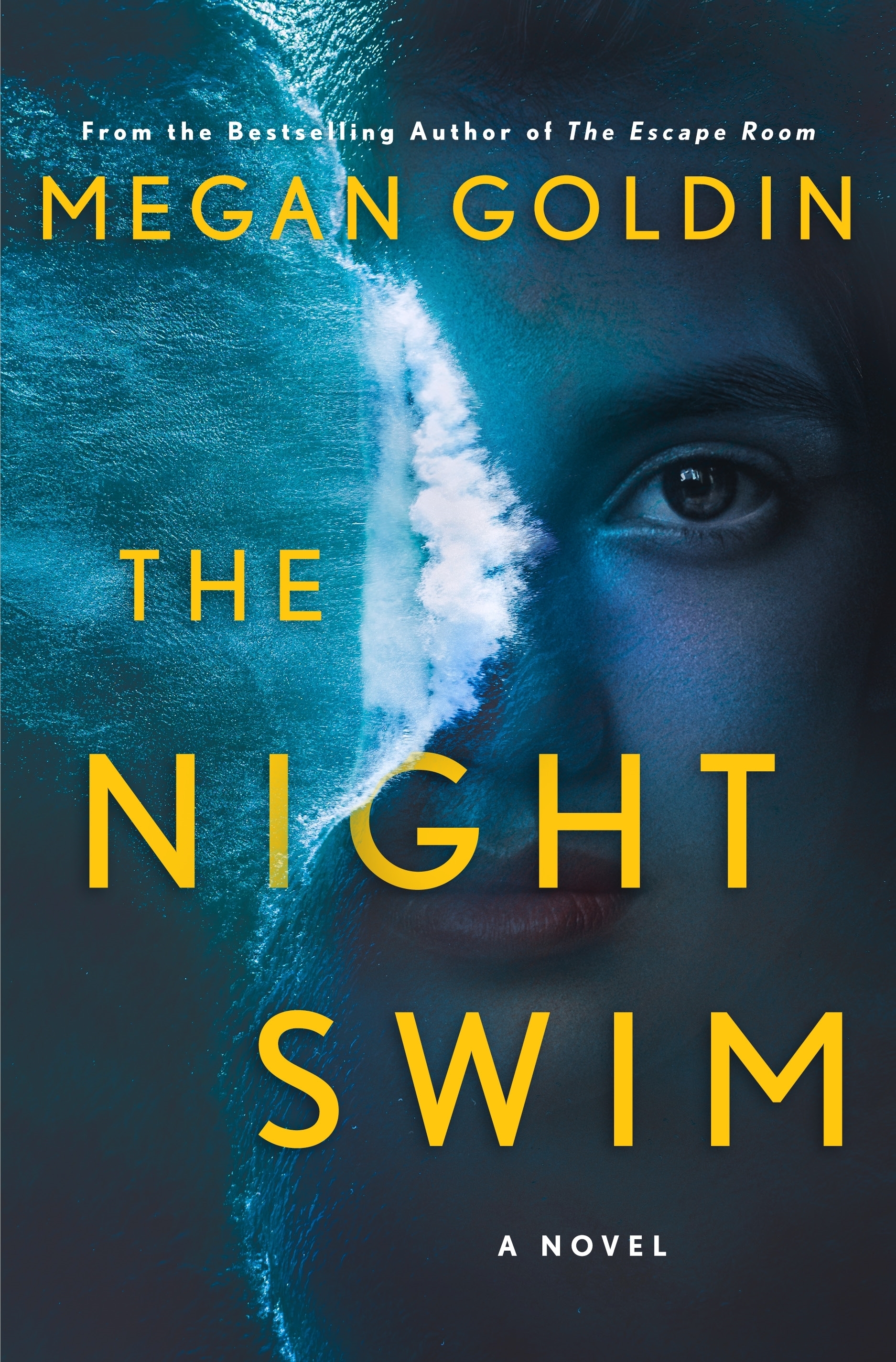
The Night Swim by Megan Goldin

The Night Swim Cover

Publisher: Michael Joseph (Trade Paperback – 4 August 2020)

Series: Standalone/Book One

Length: 344 pages

My Rating: 4.5 out of 5 stars

Amazon     Book Depository

Australian crime fiction sensation, Megan Goldin, returns with an impressive third novel, The Night Swim, an intense and heavy-hitting read that quickly drags the reader in with its captivating narrative that refuses to let go.

Following the success of the first season of her true crime podcast show, Guilty or Not Guilty, which set an innocent man free, Rachel Krall has become an overnight sensation and a beacon for people seeking justice or their freedom.  Determined to keep her momentum going, Rachel decides to set the latest season of her podcast around the most contentious trial in the country, a high-profile rape case in the small town of Neapolis.  The town’s golden boy, a famous swimmer with Olympic potential, has been accused of raping the popular granddaughter of the town’s legendary police chief.  The resultant case has divided both the town and the country, and many are eager to see how the hearing unfolds.

Arriving in Neapolis, Rachel begins her own investigation, interviewing people of interest and trying to provide an unbiased version of the case to her listeners.  But as she attempts to unwind the legal and moral complexities surrounding the case, Rachel finds herself distracted when she begins to receive a series of letters from a mysterious woman.  This woman, Hannah, is a former local who has returned to Neapolis because of the trial and is requesting Rachel’s help in getting long-overdue justice for her sister, Jenny Stills, who died 25 years earlier.

Officially, Jenny’s death was ruled as an accidental drowning and barely anyone remembers who she was or how she died.  However, Hannah’s letters reveal a far different story about a poor girl who was brutally murdered and whose memory and legacy was tarnished from beyond the grave.  As Rachel beings to investigate the death of Jenny, she soon finds parallels between this old case and the modern-day rape.  Something truly rotten occurred 25 years ago in Neapolis and now the past has come back to haunt those involved.  Can Rachel bring justice after all these years and how will her findings impact the current trial?

Now that was a powerful and compelling read from Goldin, who has once again produced an excellent and impressive read.  Megan Goldin is a talented Australian author who debuted back in 2017 with The Girl in Kellers Way.  I first became familiar with Goldin when I received a copy of her second book, The Escape Room, in 2018.  I really liked the curious synopsis of The Escape Room, and once I started it I found that I was unable to stop, resulting in me reading it entirely in one night.  As a result, I was quite eager to get my hands on Goldin’s third book, The Night Swim, and I was really glad that I got a chance to read it.  This new standalone crime fiction novel proved to be an extremely intriguing read with an outstanding story that expertly deals with some heavy and controversial issues and which takes the reader on an intense and memorable journey.

At the centre of this book is a complex and multi-layered narrative that is loaded with emotion, mystery and social commentary.  The main story follows Rachel as she arrives in Neapolis and attempts to uncover some background behind the events of the rape case she is covering.  This part of the story sees Rachel interview several key witnesses or associated individuals to get their side of the story, explores how the case is impacting the town, witnesses the details of the dramatic court case and then reports her finding and feelings in separate extended chapters made to represent a podcast episode.  Rachel also investigates the events that occurred 25 years ago to Jenny Stills.  Rachel is guided in this part of the story by Hannah’s mysterious letters, which paint a detailed picture of Hannah’s childhood and her memories of the events that occurred.  Rachel follows the clues left in the letters as well as her own investigations to attempt to uncover what really happened all those years ago and who the culprits are.

I really liked how Goldin split out the story, especially as it combined cold case elements with a modern legal thriller and investigation.  Both the present case and the historical crime had compelling, if dark, narrative threads, and I really appreciated where both storylines ended up.  Naturally both cases were connected in some way, especially as a number of key people associated with the modern-day rape, such as the police investigators, lawyers, the parents of both parties and several other characters, were in Neapolis 25 years earlier and are potential suspects in this previous crime.  While I was able to guess who the main perpetrator of the Jenny Stills case was about halfway through the story, I still found it extremely intriguing to see the rest of the story unfold and the joint conclusion of both narratives was rather satisfying.  Some of the key highlights of this story for me included the exciting and dramatic court scenes and I also enjoyed the use of the true crime podcast in the story.  Having the protagonist run a successful true crime podcast or television show is a story element that has been a little overused in recent years, but I still find it to be an intriguing inclusion, especially as Goldin utilised it well in this novel as both a plot device and a forum for the character/author’s social musings.  Overall, this was an excellent piece of crime fiction with an impressive narrative that will draw the reader in and ensure that they will stick around to see how it all unfolds.

One of the most distinctive aspects of The Night Swim is Goldin’s frank and comprehensive look at sexual assault crimes.  The book’s narrative focuses on two separate but similar sexual assault cases that occurred within 25 years of each other.  Goldin not only provides details of these crimes but also dives into other elements of rape and assault, such as how victims are impacted in the aftermath, how sexual assault crimes are viewed in society and very little has changed around this in recent years.  This novel paints a particularly grim picture on the entire legal process surrounding the process for investigating and prosecuting rape cases and there are some fascinating, if horrifying, examinations of how society still has trouble coming to a consensus when it comes to these crimes, and how cases like these can divide communities and nations.  There are a number of examples contained within the plot about the public perception of the crimes, with doubt and blame being placed on rape victims who are forced to relive their assaults in different ways and who face unfair and often malicious attacks on their reputations and psyches.  It was also interesting to see the author examine some of the fear that women experience all the time at the possibility of an attack, and the protagonist’s emotional podcast posts are particularly good for exploring her experiences and thoughts on the matter.  There is also a clever and apt bit of symbolism around this in the form of a caged mockingbird at the protagonist’s hotel who is bothered by several random men for not singing, which I thought was rather striking and memorable.  Goldin does a fantastic job diving into this subject and she really pulls no punches in showing what a terrible and mentally damaging crime this is, as well as the impacts that it has on the victims.  Because of this The Night Swim is a bit of tough book to read at times and some readers may find a lot of the content quite distressing.  However, I really appreciated that Goldin spent the time exploring this subject and it proved to be a captivating and memorable addition to the story.

The small fictional town of Neapolis also proved to be a great setting for this novel, and I liked the way that Goldin utilised this location in The Night Swim.  I think that the author was able to produce an excellent approximation of classic small town America, complete with social power players, economic troubles, well-to-do former residents who have returned to face their past and old secrets and lies that are only now bubbling to the surface.  It was really intriguing to see the protagonist uncover all the secrets of the town, especially the ones told in Hannah’s cryptic letters and childhood musings.  It was also fascinating to see the impacts of family reputation and parental legacy on how crimes are investigated and covered up and this becomes a major factor in both of the cases being investigated.  I also liked how Goldin examined how a controversial sexual assault case could divide a small town like Neapolis, with all the resultant friction and disagreement obvious for an outsider like Rachel to observe.  Overall, this was a compelling setting, and I think that it really helped to enhance the intriguing narrative that Goldin produced.

With this third impressive novel, Megan Goldin has once again shown why she is such a rising star in the crime fiction genre.  The Night Swim is a powerful and captivating read that expertly examines a heavy, relevant and surprisingly divisive real-world topic and utilises it to create a clever crime fiction story set across 25 years.  This was a truly outstanding piece of fiction, and the combination of a great mystery, dramatic writing and an in-depth examination of crime and society proved to be rather compelling and memorable.  While The Night Swim is a standalone read, I think that the protagonist introduced in this novel has some potential as a repeat character, and it might be interesting to see her travel around the country, investigating crimes for her podcast.  In the meantime, The Night Swim comes highly recommended and I look forward to seeing what Goldin comes up with next.

Amazon     Book Depository

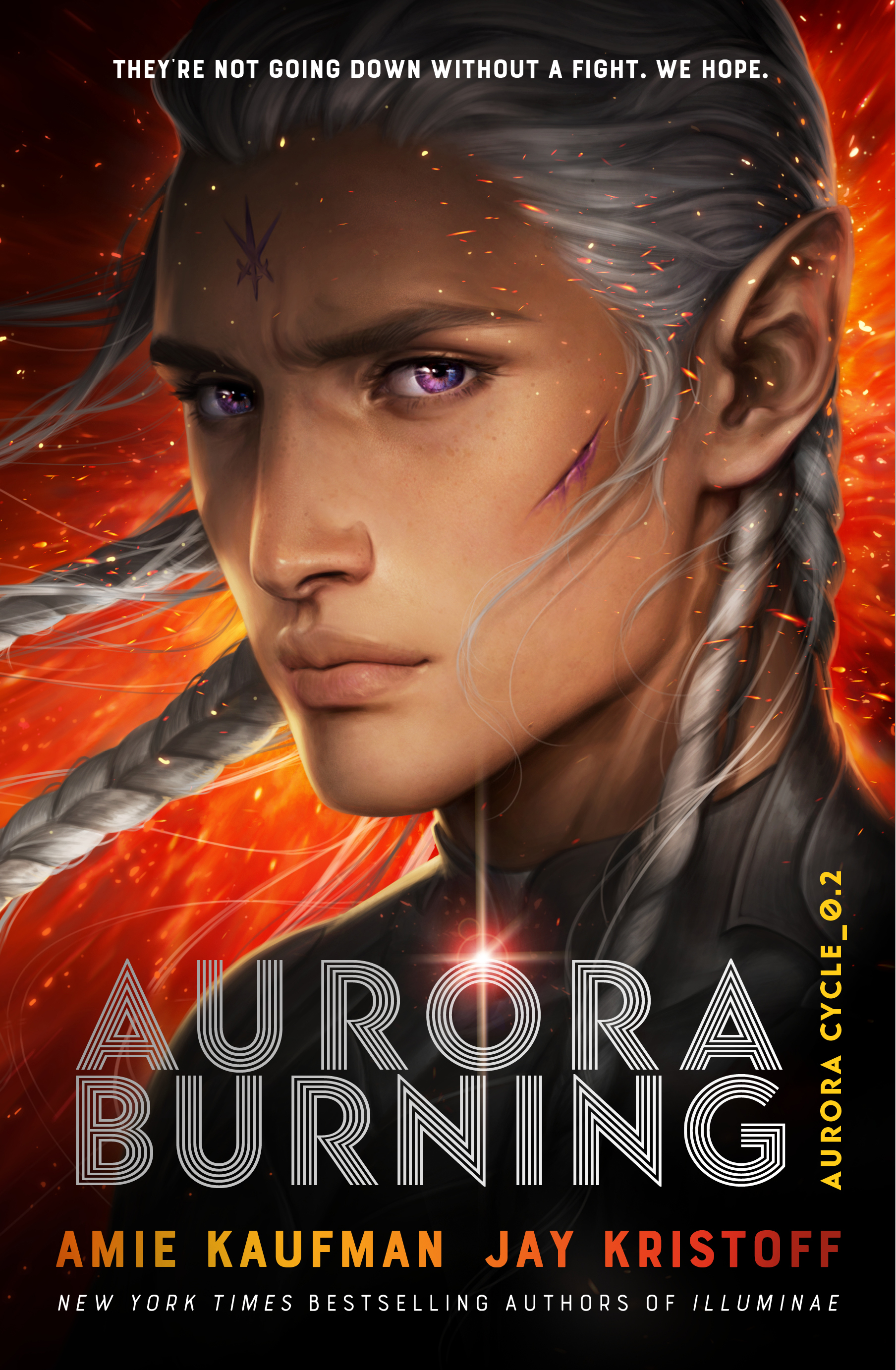
Aurora Burning by Amie Kaufman by Jay Kristoff

Aurora Burning Cover

Publisher: Allen & Unwin (Trade Paperback – 5 May 2020)

Series: Aurora Cycle – Book Two

Length: 497 pages

My Rating: 4.5 out of 5 stars

Amazon

The powerhouse writing team of Amie Kaufman and Jay Kristoff, two of Australia’s best authors, return with the second book in their epic young adult science fiction series, the Aurora Cycle, with Aurora Burning.

Far in the future, and the universe has never been in more trouble.  A sinister new threat has emerged in the galaxy, the ancient menace known as the Ra’haam, plant-like parasites that wish to incorporate all life in the universe into their hivemind.  In order to facilitate their goals, the Ra’haam have taken over humanity’s premier intelligence organisation, the GIA, and are using them to manipulate everyone towards war.  Luckily, a squad of the intergalactic peacekeeping organisation, the Aurora Legion, is on the case, desperate to stop the Ra’haam at any cost.  Unfortunately for us, the scrappy and mismatched Squad 312 are a bunch of hormonal teenagers with some serious personal issues.

Following the tragic events that occurred on Octavia III, which saw one of their members fall, Squad 312 needs to regroup and rethink their strategy.  Already disowned by the Aurora Legion and hunted by GIA, their task becomes infinitely harder when they are framed for a terrible crime and become the most wanted beings in the galaxy.  Worse, the squad’s Syldrathi tank Kal’s long lost sister is also on their trail, determined to achieve a fatal family reunion, and she has a small army of genocidal Syldrathi warriors backing her up.

As the Squad flees from those hunting them, they attempt to work out a plan to save everyone.  Their only hope is to get their resident psychic girl out of time, Auri, to the Trigger, a powerful weapon left behind by an ancient enemy of the Ra’haam, which Auri can use to wipe the plant parasites out and save everyone else.  However, they have no idea where it is, and their only clue is the salvaged remains of the colony ship Auri was trapped on for hundreds of years.  Attempting to recover the ship’s black box, the Squad soon find themselves in a whole new world of trouble.  Can they overcome their various problems and opponents before it is too late, or is the whole universe doomed?

I actually read this book a little while ago, and while I did do a short review of it in the Canberra Weekly I have been meaning to do a longer review for a while as I did have a great time reading this book.  Aurora Burning is another fun and fast-paced novel from Kaufman and Kristoff that serves as an amazing follow up to the epic first entry in the Aurora Cycle, 2019’s Aurora Rising.  This was an absolutely fantastic book that features an amazing young adult science fiction story based around several excellent characters.  Readers are guaranteed an awesome read with Aurora Burning, and it was an absolute treat to read.

At the centre of this book is a fast-paced, action-packed, character-driven narrative that follows the adventures of a mismatched and entertaining group of protagonists as they attempt to save the universe.  The story is deeply enjoyable and very addictive, allowing readers to power through this exciting novel in a remarkably short amount of time.  The story starts off extremely strong, and readers are quickly catapulted into all the fun and excitement as the team encounter all manner of problems and obstacles that they need to overcome in their own special and chaotic way.  The plot is also extremely accessible to those people who have not had the chance to read Aurora Rising first, especially with the exceptionally detailed character synopsis and history contained at the start of the book and the succinct plot replays from the various characters.  I loved the excellent science fiction adventure story that Kaufman and Kristoff have come up with for Aurora Burning, especially as it contains a great blend of action, adventure, drama and romance, all wrapped up with the series’ unique of sense humour.  I also really liked where the story went throughout the course of the book.  The authors drop in some big twists and reveals throughout Aurora Burning which have significant impacts on the plot and ensure some rather dramatic moments in the story.  All of this proves to be extremely compelling, especially as the plot leads up to some high stakes and memorable cliff-hangers at the end of the book, with the fate of many of the characters left to chance.  This pretty much ensures that I am going to have to get the next entry in the series when it comes out next year, and if the authors keep up the amazing writing that they did in Aurora Burning, I really do not have a problem with that.

Just like in the first book, Aurora Burning’s story is told from multiple perspectives, as all of the surviving members of Squad 312 serve as point-of-view characters throughout the course of the novel.  There are currently six members of the squad, including Aurora (Auri), the physic girl who the squad rescued in the first book, Tyler the team’s Alpha (leader), Kalis (Kal) the Tank (fighter extraordinaire), Scarlett the Face (team diplomat), Finian the squad’s Gearhead (mechanic) and Zila the Science Officer.  These protagonists are an eclectic and damaged group of characters, and I liked how each of them represented different young adult fiction character archetypes.  For example, Auri is the powerful chosen one, Tyler is the charismatic leader trying to live up to his heroic father’s legacy, Kal is the broody outsider with secrets, Scarlett is the team’s voice of reason and overconfident heartbreaker, Finian is the insecure one who overcompensates with sarcasm, while Zila is the brilliant but socially awkward one.  Each of these protagonists narrates several chapters throughout the book, which allows the authors to dive into their history and feelings, showing their opinions and thoughts on the events that occur throughout the course of the book.

I personally really enjoyed each of these central characters as individuals as each of them have their own unique personalities and idiosyncrasies which the authors highlight in each character’s various point-of-view chapters.  It was interesting to see how each of them has developed since the first books, with the squad coming together as a team and working together and supporting each other, as well as how the revelations and tragedies that occurred at the end of Aurora Rising have impacted them.  Each of these protagonists have their own specific story arc in Aurora Burning, and the story sees several of the characters get separated from the rest of the group and embarking on their own adventures.  There are some really interesting developments that occur throughout the book, with some characters having more of their backstory revealed, while others have major revelations about themselves be made public.  While the focus of the book is generally split rather fairly between the members of Squad 312, Auri and Tyler did rather stand out in the first novel as the main characters.  This continues in Aurora Burning, although Kal also gets a substantial amount of focus, not only due to his romance with Auri, but because his sister is introduced as a determined antagonist, resulting in secrets from his past coming out.  This does mean that Scarlett, Finian and Zila do get a little less focus, although substantial time is spent on exploring them and their personalities, such as Zila’s previously hidden past, or certain hinted relationships or personal revelations.  These entertaining and neurotic point-of-view characters are one of the main reasons this book was such a fantastic read and I really liked where the authors took their various relationships and story arcs.  It will be really interesting to see where they end up in the third book, and I am looking forward to finding out their final fates.

As a result of where the story goes, the authors continue to explore and expand on the fun and compelling universe that Aurora Burning is set in.  There are a number of interesting new elements to this book as a result, including some great new side characters, such as Kal’s murderous family, more alien races, a dive into the history of this universe and an examination of the Ra’haam and their ancient, long-dead enemies the Eshvaren.  I rather enjoyed learning more about this universe, and I particularly liked how the authors use Aurora’s defective uniglass Magellan (think an advanced iPad with an annoying and snarky AI personality), to explore extra details.  Not only does Magellan act as a sort of seventh protagonist for the book, but he also provides in-universe information summaries at the start of several chapters, as well as providing the readers with the detailed character bios at the start of the novel.  These information summaries are rich in historical and social details about several elements of this universe, and they really help to expand on the information provided throughout the story.  Naturally, Magellan provides entries that are a little more personalised and different that a standard history or encyclopedia record would be, and it was often quite amusing to see the humorous and light-hearted changes that are added in.  Overall, the novel features some rather big and dramatic reveals about the universe and what has been happening in it, resulting in some major story moments with significant and captivating consequences.

Aurora Burning is marketed towards the young adult fiction crowd, and in many ways it is a great book for a younger audience, featuring a group of diverse teens rebelling against authority and doing things their own way.  However, due to the mild sexual content, which includes quite a bit of innuendo, this is probably best suited to older teenagers who will no doubt enjoy the exciting narrative and dynamic characters.  Like many young adult fiction novels, Aurora Burning is also quite a good book for older readers who are interested in the story.  Indeed, this is one of the easiest young adult fiction novels for adult readers to get into, as the story is quite well written and exceedingly entertaining.  As result, this second book in the Aurora Cycle is a great read to check and I think that it will appeal to a wide and diverse audience of readers.

I have to say that I had an incredible time reading Aurora Burning and it turned out to be quite an excellent read.  Kaufman and Kristoff do an outstanding job of continuing the fun and action packed narrative that started in Aurora Rising and I loved the blend of fast-paced storytelling, universe building, humour, all told through the eyes of six distinctive and fantastic point-of-view characters.  This book comes highly recommended and I cannot wait to see how these awesome Australian authors finish off this series next year.

Amazon

The Bear Pit by S. G. MacLean

The Bear Pit Cover

Publisher: Quercus (Trade Paperback – 11 July 2019)

Series: Damien Seeker – Book Four

Length: 410 pages

My Rating: 4.5 out of 5 stars

Amazon

Back in 2018 I was lucky enough to receive a copy of Destroying Angel, the third book in S. G. MacLean’s Damien Seeker series of historical murder mysteries.  I had an amazing time reading this fantastic book, which I ended up giving a full five-star rating, and I was excited when I heard that a sequel was coming out in 2019.  This sequel, The Bear Pit, had an intriguing premise and sounded like it was going to be quite an awesome read.  Unfortunately, I did not get a chance to read it last year when it first came out, which I have been regretting for some time now.  Luckily, I recently found myself with a little bit of spare reading time, so I finally managed to check this book out.  I am really glad that I did, as The Bear Pit contained a captivating and clever story that sets MacLean’s intense protagonist on the trial of some dedicated killers.

London, 1656.  Oliver Cromwell rules England as the Lord Protector, but not everyone is happy with his reign.  Many believe that his death will end the Puritan state and lead to a return of the monarchy in exile.  In order to bring this about, three men loyal to the crown are currently plotting to kill him.  However, Cromwell is not without his protectors, and his most ardent investigator, the legendary Captain Damien Seeker, is on the case.

Seeker has only recently returned to London after a harrowing investigation in Yorkshire and he is determined to catch the potential assassins before it is too late.  However, Seeker soon finds himself on another case when he discovers the mutilated body of man while conducting a raid on a gaming house.  The victim appears to have been brutally savaged by a bear, yet all the bears in London were shot after bear baiting was declared illegal by Cromwell.  Where did the bear come from and why was it used to commit a murder?

While he continues his hunt for the assassins, Seeker employs his reluctant agent, Thomas Faithly, a former Royalist turned informer, to infiltrate the underground fighting pits in an attempt to find out if any bears remain in the city.  However, as both investigations progress it soon becomes clear that they are connected and that the murder is tied into the assassins hunting Cromwell.  As Seeker attempts to stop them before it is too late, he finds himself facing off against a talented and intelligent foe with great reason to hate Cromwell and everything Seeker stands for.  Can Seeker stop the assassins before it is too late, or has he finally come up against someone even he cannot outthink?

MacLean has come up with another fantastic and compelling historical murder mystery with The Bear Pit.  This book contains an amazing multi-character narrative that combines an intriguing murder mystery storyline with real-life political intrigue and plots, enjoyable characters and a fascinating historical backdrop, all of which comes together into an impressive overall narrative.  Despite being the fourth Damien Seeker book, The Bear Pit is very accessible to readers unfamiliar with the series, and people who are interested in a good historical murder mystery can easy dive into this book without any issues.

At the heart of this novel is an enthralling mystery and intrigue laden storyline that sees Seeker and his companions not only investigating a murder apparently done by a bear, but also trying to unravel a plot to assassinate Cromwell.  This turned into quite an enjoyable and exciting tale that was filled with all manner of twists, surprises, reveals, action-packed fights, disguised antagonists and confused loyalties.  Naturally, the murder and the assassination plot are connected, and the investigations of the protagonist and his compatriots combine together as they attempt to find out who is behind the various crimes and why they were committed.  This proved to be a very captivating storyline, and I really loved the way in which MacLean blended an inventive murder mystery with realistic political intrigue and plots.  There are several clever clues and plenty of foreshadowing throughout the book, and the end result of the mystery was rather clever and somewhat hard to predict.  I really liked how these intriguing storylines turned out, and they helped to make this story particularly addictive and hard to put down.

Another distinctive and enjoyable part of this book is the great characters contained within it.  The main character of The Bear Pit is the series’ titular protagonist Damien Seeker, the moody and serious investigator and loyal solider of Oliver Cromwell.  Seeker is a particularly hardnosed protagonist who inspires all manner of fear and worry in the various people he meets, and it proves to be rather enjoyable to watch him go about his business.  While Seeker is the main character, this novel also follows a substantial cast of characters who end up narrating substantial parts of this book.  Most of these additional point-of-view characters have appeared in previous entries in the series, and it was great to see MacLean reuse them so effectively while also successfully reintroducing them in the context of this book.  Two of the main characters who assist Seeker with his investigation are Thomas Faithly and Lawrence Ingolby, both of whom were introduced in the previous novel, Destroying Angel.  Both characters are rather interesting additions to the novel’s investigative plot, and they serve as a great counterpoint to Seeker due to their youth, their inexperience, and their own way of investigating the crimes.  While Ingolby was a great younger character who looks set to be a major protagonist in the next book in the series, a large amount of the plot revolves around Faithly and his conflicted loyalties.  Faithly is a former exile with strong ties to the royal family, but his desire to return to England sees him make a deal with Seeker to serve Cromwell as a spy.  Despite his desire to remain in England, Faithly finds himself torn between his existing friendships and his new loyalty to Seeker, and this ends up becoming a rather dramatic and compelling part of the book.  Extra drama is introduced thanks to the reappearance of Maria Ellingworth, Seeker’s former love interest.  Both Seeker and Ellingworth have a lot of unresolved feelings with each other, which only become even more confused throughout the course of The Bear Pit when they find themselves in a love triangle with another major character.  This romantic angle, as well as the continued use of his secret daughter, really helps to humanise Seeker, and I enjoyed getting a closer look under Seeker’s usual tough mask.

In addition to the fantastic mystery and intriguing characters, one of the best aspects of The Bear Pit, and indeed the entire Damien Seeker series, is the author’s fascinating look at life in Cromwell’s England.  This is particularly interesting part of England’s history, which saw the implementation of Puritan law across the country, while secret Royalists lay hidden across the country.  This book in particular took a look at what was going on within London, and it was fascinating to see the various aspects of life during the period, from the politics, the hidden loyalties, the impact of day-to-day activities and the removal of previously iconic parts of London life, such as the bear baiting and other blood sports.  MacLean does a really good job of examining these various aspects of life during the Cromwell era and working them into her novels, making them a vital part of the plot as well as a fascinating setting.

One of the most fascinating and impressive historical aspects that MacLean includes in The Bear Pit was the focus on the 1656 plot to kill Oliver Cromwell.  This was a real historical conspiracy that took place throughout London, as three conspirators attempted to kill Cromwell through various means.  The author really dives into the details of the plot throughout this book, and the reader gets a glimpse into the various attempts that were made on Cromwell during this period, as well as the identity and motivations of the three killers.  MacLean even shows several chapters from these killers’ viewpoints, showing all the various preparations they put into each attempt, and then presenting how and why they failed.  I really liked how the author worked these assassination attempts into the main plot of the book, utilising Seeker as a major reason why several of the attempts failed and ensuring that the antagonists were aware of him and considered him the mostly likely person to stop them.  This was a very clever story aspect as a result, and I liked the blend of creative storytelling with historical fact to create an epic and impressive storyline that really stood out.  I also liked MacLean’s compelling inclusion of a major historical Royalist figure as the mastermind of the plot and the main antagonist of the book.  This character has such a distinctive and infamous reputation, and I liked how the author hinted at their arrival and then sprung the surprise towards the end of the book.  This was such a great part of the plot and I look forward to seeing what major historical events MacLean features in the next book in the series.

Overall, The Bear Pit was an outstanding and captivating historical murder mystery that really highlighted S. G. MacLean’s writing ability and creativity.  I really enjoyed the excellent blend of murder and intrigue, set during a fascinating period of England’s history, and the author’s use of great characters and the inclusion of a particularly notable historical occurrence proved to be extremely impressive and resulted in an outstanding read.  As a result, The Bear Pit comes highly recommended by me and I really do regret taking this long to read it.  Luckily, this should ensure that the overall plot of the series is fresh in my mind when I get my hands on the next and final book in the Damien Seeker series, The House of Lamentations, which is out in a couple of weeks.  I have already put in my order for a copy of this upcoming book and I am looking forward to seeing how MacLean finishes off this series, especially after I had such an awesome time reading The Bear Pit.

Amazon

Queen of Storms by Raymond E. Feist

Queen of Storms Cover

Publisher: Harper Voyager (Hardcover – 14 July 2020)

Series: The Firemane Saga – Book Two

Length: 471 pages

My Rating: 4.5 out of 5 stars

Amazon

Legendary fantasy author Raymond E. Feist returns to his new series, The Firemane Saga, with Queen of Storms, an amazing and exciting fantasy novel that takes the reader on some intriguing adventures.

I have long been a fan of Raymond E. Feist and his epic works of fantasy.  His long-running Riftwar Cycle books were amongst some of the first fantasy novels that I ever read and many of them, including the excellent Empire trilogy that he cowrote with Janny Wurts, are still some of my favourite books of all time.  After finalising the Riftwar Cycle back in 2013, Feist released King of Ashes in 2018, which was the first book in The Firemane Saga.  I really enjoyed the fun and compelling new story featured within King of Ashes, and I have been looking forward to seeing how the series continued for a while now.  This second book, Queen of Storms, continues right after the events of King of Ashes and has some intriguing new twists and turns for readers.

In the ancient and magical world of Garn, war is coming to continent of Tembria and its first blow will fall on the trading town of Bernan’s Hill.  Many people call Bernan’s Hill home, but none are more mysterious than the new owners of the town’s inn, Hatushaly and his wife Hava.  Despite their simple outward appearances, Hatu and Hava were born on the secret island of Coaltachin and both serve their continent-spanning criminal and spy network.  A series of mysterious events have been occurring throughout the kingdoms and lands of Tembria, and Hatu and Hava are tasked with observing Bernan’s Hill and reporting anything out of the ordinary.

Having befriended the town’s blacksmith, Declan, Hatu and Hava appear content in their new lives and are they are planning to be officially married during the midsummer festival.  However, even their training and information will not prepare them for the horrors that are about to be visited upon Bernan’s Hill, as a new and mysterious force attacks without warning, plunging the entire continent into war.  Separated from each other, each of these young people embarks on their own adventure.  While Hava attempts to find her lost husband, and Declan sets out to get revenge, Hatu is kidnapped by those who wish him to fulfill his fiery legacy as the secret heir to the kingdom of Ithrace.  His family, the legendary Firemanes, have long been rumoured to contain a spark of magic, and Hatu, as the last remaining Firemane, may hold the key to the survival of magic itself.  As these three young people set out to realise their destinies, they will experience horrors and tragedy as it soon becomes apparent that a whole new threat seeks to destroy all within Tembria.

Queen of Storms was a captivating and fun book which I found myself reading in only a couple of days due to how much I enjoyed it.  Feist has come up with a fantastic and impressive story within this novel, and I liked how it followed a group of excellent characters caught up in the chaos of a mysterious war.  There is all manner of action, adventure, subterfuge, character development and exploration of a new fantasy universe that comes together extremely well into a compelling overall narrative.  Readers should be forewarned that Feist makes some rather bold plot choices throughout this book, with a major event around halfway through the book really altering the course of the story in some interesting and dramatic ways.  I also liked how Queen of Storms served as a great sequel to King of Ashes, and there are a number of amazing reveals and revelations that add to the storylines established in the first book.  For example, the real antagonists of this series are revealed in more detail in this sequel after they were foreshadowed in the previous novel while the reader focused on a different antagonist, who had the potential to be the main villain.  This bait-and-switch came together well in Queen of Storms, and I enjoyed uncovering more about these antagonists and their motives.

Queen of Storms contains a multi-character narrative which follows several key protagonists as they explore this new world from Feist and get involved in the politics and battles of the world.  The majority of the story is told from the perspective of the novel’s three major characters, Hatu, Hava and Declan.  Each of these characters gets some substantial focus throughout the course of this novel, with some interesting storylines.  For the first part of the book their various storylines are very closely intertwined, as all three are based in the town of Bernan’s Hill in various capacities.  However, after the novel’s major event around halfway through, these three characters are separated and each of them embarks on their own exciting and enjoyable adventure.  Hatu’s story is a classic tale of a chosen one finding his destiny, which sees him journey off into the unknown to learn more about his past and his secret abilities.  As Hatu is the most central protagonist, this storyline got a lot of focus, and it was interesting to learn more about his role in the world and about how his life is bonded to the world’s magic.  Declan’s story becomes an interesting one about a young man learning to become a solider to avenge the death of his loved ones.  Declan had some life events occur throughout this book and while it was a little sad to see some of the things he fought for in the first novel go up in smoke, it does serve as a good motivation for his character and it looks like Feist has some interesting plans for him in the future.  Out of the three, I think I ended up enjoying Hava’s storyline the most.  Hava attempts to find out what happened to Hatu and gets captured by slavers.  She ends up using her abilities to free herself and her fellow slaves and becomes a successful ship’s captain, chasing after her husband while also exploring the lands outside the continent of Tembria.  All three of these main character arcs are really enjoyable and together they form a fantastic heart for Queen of Storms, allowing for a rich and powerful narrative.

In addition to these main characters, Feist also utilises several minor point-of-view characters who add in some extra narrative threads to the book.  For example, Donte, Hatu and Hava’s childhood friend who was captured by sea witches in King of Ashes, returns and a small part of the book is dedicated to his attempts to find Hatu and kill him.  You also get several parts of the book told from some of the key players in fight for the continent, such as Baron of Marquensas Daylon Dumarch, the sinister adviser Bernardo Delnocio, as well as a handful of other characters.  Each of these minor point-of-view characters provide their own insights and priorities to the mix and their various storylines and actions add a lot to the narrative and provide some interesting support to the main storylines.  I also liked some of the supporting characters who rounded out the cast of Queen of Storms and several of them proved to be quite enjoyable and likable, even if they have a greater chance of getting killed off.  Overall, Feist continues to write some great characters in this novel, and I look forward to seeing where each of these intriguing protagonists end up next.

The author also did a good job of continuing to expand on the amazing new fantasy world that the series is set in.  While a substantial part of the novel is set around Brenan’s Hill, which was introduced in the prior book, the story eventually starts to examine some other parts of the world.  In particular, several storylines are set around the islands and continents on the other side of the planet, none of which have been explored by any of the point-of-view characters.  These new additions to the story proved to be quite intriguing, especially as the character’s various explorations revealed some shocking truths about the world, as well as some troubling revelations about the series’ main antagonists.  It looks like the next book is set to feature some new areas of the world and should provide some more fascinating expansions down the line, which will no doubt provide some interesting backdrops and settings from the narrative.

While I did really enjoy Queen of Storms, I did find that some of the elements within it might be a little hard to follow if you had not read the first novel in the series.  Feist does do a good job of recapping the major events of the first book throughout the course of the story, but there were a few moments in the story when the significance of certain characters, locations and events were not as highlighted as they could have been, and new readers might get a little lost at this point.  There were even a few points at which I lost track of who a new character was, mainly because of the two-year gap between reading King of Ashes and Queen of Storms.  Still, I was usually able to remember who the character was after some prompting, and it worked out fine.  While this lack of certainty might occasionally impact the flow of the story for new readers, I think they can generally follow without too much difficulty.

Queen of Storms was an outstanding and exciting second entry in this fantastic new series from one of my favourite authors of all time, Raymond E. Feist.  This was an amazing and enjoyable novel, filled with adventure, great characters, and a compelling narrative.  I had an awesome time reading this book and I cannot wait to see how Feist continues The Firemane Saga in the next book.  A must-read for fans of fantasy fiction; this one is really worth checking out.

Queen of Storms Cover 2

Amazon

Star Wars: Shadow Fall by Alexander Freed

Star Wars - Shadow Fall Cover

Publisher: Del Rey (Trade Paperback – 23 June 2020)

Series: Star Wars: Alphabet Squadron – Book Two

Length: 393 pages

My Rating: 4.5 out of 5 stars

Amazon

Strap in and prepare yourself for some intense combat out in the black of space, as Alexander Freed returns with another exciting and compelling Star Wars novel, Star Wars: Shadow Fall.

In the wake of the death of the Emperor and the destruction of the second Death Star above Endor, the once mighty Galactic Empire is on its last legs as they face a determined and continuous assault from the forces of the New Republic.  Amongst the New Republic troops fighting to end the tyranny of the Empire are the ragtag fighter group known as Alphabet Squadron.  Formed by New Republic Intelligence and serving under legendary Rebel General Hera Syndulla, Alphabet Squadron’s mission is to hunt down and destroy the elite TIE fighter pilots of the 204th Imperial Fighter Wing, known as Shadow Wing, who have been terrorising the galaxy and are one of the greatest threats to the New Republic’s success.

Following their recent victory, which saw Shadow Wing’s base destroyed and their commanding officer killed, Alphabet Squadron are assisting with the lengthy siege of the Imperial system of Cerberon.  Led by former Imperial pilot Yrica Quell, herself a deserter from Shadow Wing, the five pilots of Alphabet Squadron are finally starting to work together as a team.  However, while they are happy to help Syndulla with her latest vital campaign, the squadron is still determined to finish off the remaining members of Shadow Wing before they cause more chaos and destruction.  Working with their New Republic Intelligence handler, Caern Adan, Quell believes she may have come up with a plan to trap her former Imperial comrades.  However, Quell has severely underestimated just how ruthless Shadow Wing has become.

Quell’s former mentor and commanding officer, Imperial fighter ace Soran Keize, has returned and taken control of Shadow Wing.  Determined to keep his people alive while inflicting as much damage as possible to the New Republic, he launches an attack against the Cerberon system that manages to bypass the trap laid for him.  Scattered, the members of Alphabet Squadron must each fight their own battles throughout Cerberon as they all attempt to survive and strike back.  However, as they face their greatest challenge to date Alphabet Squadron soon begins to realise that their most dangerous threat may not be the pilots of Shadow Wing, but the terrible secrets their own leader is keeping.

Star Wars: Shadow Fall is a fantastic and impressive Star Wars novel that examines the immediate aftermath of the original Star Wars trilogy while focusing a group of complex and damaged characters.  Shadow Fall is the fifth Star Wars novel from science fiction author Alexander Freed, and it serves as the second book in his Alphabet Squadron trilogy, which started last year with Star Wars: Alphabet SquadronAlphabet Squadron was an excellent first novel in this series, thanks to its exciting story which did an amazing job introducing the reader to each of the main characters of the titular Alphabet Squadron (so called because each member flies a different model of Rebel ship, i.e. one X-Wing, one Y-Wing and so on).  Freed’s latest novel is an outstanding sequel to Alphabet Squadron which continues the amazing character arcs and war-based narrative, while also adding in some excellent new elements.  While I really enjoyed the prior novel from Freed, I personally felt that Shadow Fall was a stronger book than Alphabet Squadron and I ended up really getting into this powerful and action-packed story.

This latest book from Freed contains an epic and enjoyable character-driven war story that follows the pilots of Alphabet Squadron as they attempt to subdue the Empire once and for all.  This proves to be a rather elaborate and multifaceted narrative as Freed utilises the key members of Alphabet Squadron as point-of-view characters.  While Shadow Fall initially has all the squadron members together, each of them goes on their own adventures throughout the book, breaking it up into several distinctive storylines.  Each of these storylines is rather intriguing and emotionally charged, especially as all the characters go through their own voyages of discovery.  These storylines are all confined to the same star system and each has its own take on the war occurring throughout Cerberon, especially as Freed also features a number of chapters from the point-of-view of the novel’s main antagonist, which allows the reader to see the plans and issues surrounding Shadow Wing.  All of this helps to create a compelling and exhilarating read, particularly as Shadow Fall contains a number of exciting and well written action sequences, including a series of amazing and impressive ship to ship combat scenes.  The characters get into some unique and deadly battles throughout the course of this book, and I really loved seeing all the intense fighting out in space.  Overall, this was a fantastic story and it ended up being quite a remarkable and addictive read.

One of the big things that I liked about Shadow Fall was the way that it continued to explore the turbulent period of Star Wars history that follows in the immediate aftermath of the death of the Emperor.  This period within the Star Wars universe has so much potential for great fiction and I feel that Freed does an outstanding job utilising it within his novels and showing off the battles that occurred.  There is a real gritty and dark feeling to this book, as both sides are involved in a lengthy and bitter conflict.  I really liked the darker and more desperate conflict that Freed portrays throughout this book, as both sides get pushed into some corners as they battle throughout the system.  This turned out to be an excellent setting and I really found it fascinating to see this vision of the post Return of the Jedi universe, especially as there was no instant victory for the Rebels as the movies suggest.  I look forward to seeing more of the war as the Alphabet Squadron series progresses and it will be interesting to see what battles and scenarios occur in the final book.

Readers interested in checking this series out do not need to have too much knowledge about the Star Wars extended universe; a general knowledge of the movie franchise should suffice.  However, like all pieces of tie-in fiction, those readers who are familiar with the more obscure bits of the fandom’s lore and history will get a lot more out of these books than casual readers.  I would also strongly suggest that people who want to read Shadow Fall should go back first and try Alphabet Squadron, as this will allow readers to get a better idea of the various characters and their histories and ensure that their actions have greater impact.  However, if you are determined to start here, I felt that Freed made Shadow Fall pretty accessible, summarising certain key events from the prior book and also providing some wider background information about the Star Wars universe during the period the novel is set.

One of the reasons that this story is so impactful and enjoyable is that Freed has anchored his narrative on the memorable and flawed characters that are Alphabet Squadron.  Thanks to the author’s use of multiple character viewpoints, the reader gets an in-depth understanding of all the key characters and their various story arcs and development.  A large amount of the book’s plot continues to focus on the leader of Alphabet Squadron and X-Wing pilot, Yrica Quell.  Quell is a former Imperial pilot and member of Shadow Wing, who defected after the end of the war, claiming that she attempted to stop her squadron from implementing Operation Cinder, a series of genocides ordered by the Emperor in the event of his death.  However, it was revealed at the end of Alphabet Squadron that she was actually a willing participant in Operation Cinder and only defected because her commanding officer, Soran Keize, ordered her to leave.  Quell is still haunted by her actions and is attempting to find redemption by working for the New Republic to hunt down her old squadron, while at the same time being blackmailed by her handler, Caern Adan, who is keeping the information about her crimes secret.  There are several great scenes throughout this book that deal with Quell’s guilt and fear of being found out as she attempts to come to terms with all she has done and tries to become the good person everyone believes she is.  However, chaotic events towards the middle of the book undo some of her progress and force her to really look deep into herself.  Quell easily has the best character arc entire book and her entire dramatic storyline is extremely well-written and emotionally rich.  It looks like Freed is taking this character in some interesting directions and it will get see what happens next.  I also enjoyed certain LGBT+ inclusions surrounding Quell (and some other characters), and it always great to see more of that added into the Star Wars universe.

Several other members of Alphabet Squadron get their own fascinating storylines and character arcs.  First up you have Wyl Lark, the team’s young A-wing fighter pilot, who is still shaken after his encounters with Shadow Wing during the first book.  Lark is a complicated character within this novel, as due to the past trauma he has started to experience some real weariness at all the fighting.  He also bears some inner conflict thanks to his past interaction with an unnamed member of Shadow Wing, who he knows only as Blink (due to the condition of their TIE fighter in the first book), which has made him believe that the Imperials are more human than most New Republic fighters believe.  This makes him act out in some odd ways, potentially endangering himself and others.  Regardless, Lark also takes on a big leadership role within this book as he finds himself in charge of a mixed force of New Republic soldiers and pilots who he must rally together to stop the machinations of Shadow Wing.  This forces him to make some tough decisions and results in some excellent character development, which is probably going to become a key part of the next entry in the series.

The book also focuses on Chass na Chadic, the pilot of the squadron’s B-Wing.  Chass is also an emotional mess throughout the book, which causes her to act out in an aggressive and reckless manner.  However, Chass’s difficulties are a result of her own addiction to combat and danger and her worries about what she is going to do after the war.  Chass also has a rather intriguing storyline that sees her forced to seek shelter with a growing cult after she is shot down.  This only adds to her emotional confusion as, while this organisation has some very valid points about the war, Chass has her own problematic history with cults which severely colours her opinions.  A fourth member of Alphabet Squadron who also gets a fair bit of attention is Y-Wing pilot Nath Tensent.  Nath gets a little less use than Quell, Lark and Chass in this book, and rather than getting his own individual storyline he ends up being more of a supporting character to the other members of Alphabet Squadron.  I liked how Nath, after getting the revenge he desired in the first book, started taking on more of a mentor role within the team and he ends up being the glue that keeps them somewhat together.  His experience, easygoing manner and ability to socialise with everyone really helps to balance out the team, and I think it was good decision from Freed to have at least one point-of-view protagonist not be an emotional wreck.  I have to admit that I really liked seeing all of these complex and damaged protagonists and their various storylines and development became a powerful part of the book’s story.

Aside from these main four members, Shadow Fall also features several other great New Republic characters.  This includes the fifth and final member of Alphabet Squadron, Kairos, the mysterious scarred alien pilot of the team’s U-Wing.  Kairos does not get a lot of use throughout this book and is barely seen or mentioned after the first 100 pages.  Despite this, there are a few minor reveals about her shrouded past, and I can only hope that we find out a lot more about her in the final book.  There is actually a lot more of a focus on the supporting character of Caern Adan, the New Republic Intelligence officer who has been leading the hunt for Shadow Wing, as well as his companion, IT-O, a former Imperial torture droid turned therapist.  I found Caern’s use within Shadow Fall to be rather compelling, especially after he was portrayed as such a despicable and self-serving character in the first novel.  Freed dives into this Caern’s background in this novel and shows how he became the harsh, calculating person you met in Alphabet Squadron, as well as exploring his history with IT-O and Kairos.  This examination into his past, as well as his present-day adventures with Quell, helps generate a bit of sympathy for him and he ends up becoming a bit of a tragic character as a result.  I was also really glad to see more of New Republic General Hera Syndulla, who fans would know as one of the main protagonists of the Star Wars Rebels animated television show.  Hera was a great character on the show and in recent years she has been featured as a key Rebel commander in the expanded fiction (with her ship, Ghost, having brief cameos in two separate live action Star Wars movies).  I am always happy to learn more about Hera’s story post-Star Wars Rebels, especially as she has a great role as the wise overall commander throughout this book, and Star Wars Rebels fans will get sad in one or two places, such as when she wistfully asks if anyone has a Jedi hidden away.  Overall, these were some great supporting characters and I enjoyed Freed’s focus on them.

In addition to all the members of the Alphabet Squadron and the various New Republic supporting characters, Shadow Fall is also a tale of Imperial pilot Soran Keize.  After spending most of the first book trying to forget his past and exploring the post Imperial galaxy, Soran returns to claim his place as leader of Shadow Wing.  Soran is another compelling character who ends up serving as an alternate point-of-view character for roughly a third of the book.  I always love it when authors show the story from the antagonist’s perspective, and this ended up working incredibly well in this novel.  Not only do we get to see Soran’s complex motivations for returning to his wing and restarting the fight with the New Republic, but through his eyes we also get a better idea of how the Imperial remnant is fighting and surviving at this point of the war.  Freed adds some real desperation to the Imperial characters as they start to deal with the fact that they are going to lose the war, and there are some interesting discussions about the Imperial pilots having to change tactics, as they no longer have access to the vast resources they were previously used to.  Despite his at times merciless tactics, Soran’s viewpoint really helps to humanise the Imperial antagonists and, in many ways, they are mirrors to the New Republic characters, as both teams are fighting for their ideals and beliefs.  That being said, none of the Imperial characters aside from Soran popped out to me, and I had a hard time really caring about them in any way or remembering who they were.  Still, it was great to get more of an Imperial viewpoint in this novel, and I look forward to seeing what happens to them in the final entry in the Alphabet Squadron series.

Star Wars: Shadow Fall by Alexander Freed is another outstanding and enjoyable Star Wars novel that serves as an exceptional sequel to last year’s Alphabet SquadronShadow Fall is an extremely captivating and addictive read, especially as Freed features an amazing action-packed story, fun Star Wars elements and some incredibly complex and compelling characters whose damaged personalities and scarred pasts really stick in the reader’s minds.  I had an awesome time reading Shadow Fall and I cannot wait to see how Freed finishes off this darker Star Wars series.

Amazon