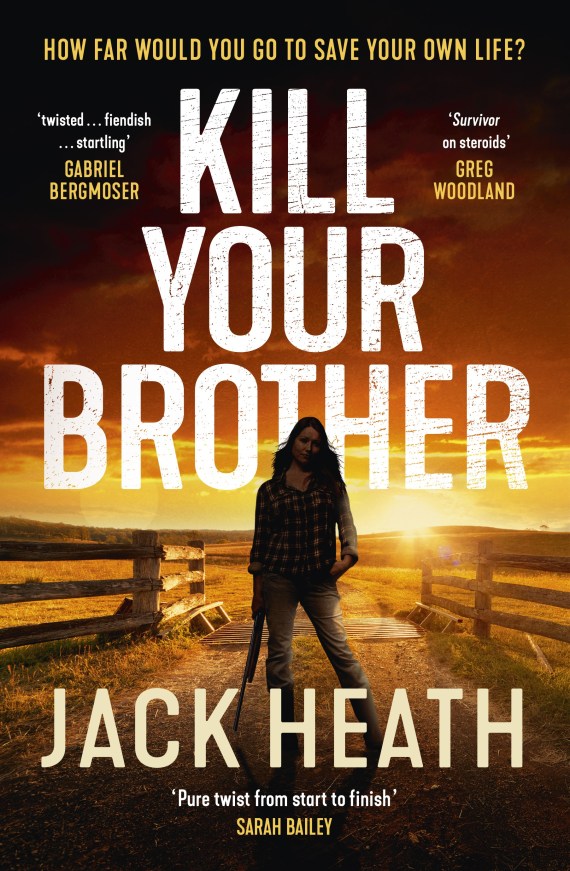
Kill Your Brother by Jack Heath

Kill Your Brother Cover

Publisher: Allen & Unwin Australia (Trade Paperback – 30 November 2021)

Series: Standalone

Length: 339 pages

My Rating: 5 out of 5 stars

Amazon     Book Depository

One of Australia’s most brilliant and potentially psychotic crime fiction authors, Jack Heath, returns with a powerful and captivating thriller, Kill Your Brother, which was one of the best pieces of Australian fiction I read all year.

Would you kill your brother to save your own life?

That is the question that Elise Glyk is forced to ask herself after being placed in an impossible situation.  Elise, a disgraced athlete hated by the entire country, is a woman on a mission.  Her brother, Callum, a popular local teacher, has been missing for a month, and the police have been unable and unwilling to find him.  Determined to locate Callum, Elise’s investigation eventually leads her to a dilapidated local farm, where she is shocked to discover her brother being held prisoner in a modified septic tank.  However, before she can rescue him, Elise is captured and thrown into the same hole as her brother.

Their captor is heartbroken former sheep farmer Stephanie Hartnell, who believes that Callum is responsible for her daughter’s death and has been attempting to force him to confess to his supposed crimes.  However, Stephanie doesn’t have room for two prisoners, and while she doesn’t want to hurt the innocent Elise, she needs to make sure that she won’t immediately go to the police.  To that end, she offers Elise a deal: kill your brother and you’re free to go.

Not even considering the deal, Elise attempts to find another way to gain their freedom.  Trying to find a way to escape while also working to prove Callum’s innocence to Stephanie, Elise hopes that someone will eventually be able to find them before time runs out.  However, the more Elise digs into her brother’s story, the more inconsistencies she discovers.  What is her brother really hiding, and how will either sibling react when the truth comes out?

Kill Your Brother was an awesome and impressive novel that I powered through in a couple of days due to its incredible narrative and amazing twists.  This was a great standalone book from Jack Heath, an author from my home city of Canberra, who has written some fantastic thrillers over the years.  This includes his bestselling Timothy Blake series, the third book of which, Hideout, was one of my favourite pieces of Australian fiction in 2020Kill Your Brother was originally released as an Audible original audiobook, with the paperback version I read subsequently rewritten and adapted into a novel format.  I had an outstanding time reading this book, and it was an excellent and impressive Australian thriller.

This book has an incredible story that takes the reader on a powerful thrill ride that they cannot get off if they tried.  Told using several character perspectives, Kill Your Brother quickly launches into the book’s deadly and compelling scenario, with Elise, a universally hated woman, attempting to find her brother.  Her hunt, which has been going on for months, has been largely unsuccessful, and the evidence found at her brother house’s, combined with her own reputation, means that everyone in her life constantly brushes her off.  However, Elise’s perseverance pays off when she finds Callum being held in a septic tank in Stephanie Hartnell’s backyard.  Posing as a private investigator, Elise tries to reason with Stephanie while plotting an escape, but she is soon forced into the ultimate no-win situation when given the option to kill her brother.  From there, the story devolves even further, with several escape attempts and mounting danger from their captor, and the two siblings turning against each other as their situation gets more desperate.  As the story progresses, several viewpoints on the situation and the events leading up to it are presented.  As the protagonist attempts to survive you get an interesting view of what Callum is accused of, and the eventual reveal of the full picture really influences the rest of the narrative.  This all leads up to the gripping and deadly finale in which every secret comes out and no-one is left untouched by the revelations and accompanying violence.

I really cannot exaggerate how awesome this cool narrative is.  Heath has gone out of his way to make Kill Your Brother’s story as clever and thrilling as possible, and I loved every single second that I spent reading it.  This book is filled with some brilliant twists and reveals, and Heath does a wonderful job of setting each of them up and slowly revealing them as the book progresses.  I honestly did not see half the twists coming and I loved how several small and seemingly inconsequential details eventually come back with amazing significance towards the end.  Heath also perfectly utilises a series of flashbacks that examine Elise’s past, showing why she is so disliked, while also revealing several clues about her family and the circumstances that lead to her brother’s imprisonment.  This was a really good standalone read, and potential readers are guaranteed a satisfying ending after getting stuck into the unique mystery and scenario.  I deeply enjoyed how this novel flowed, and there were no obvious issues with this being an adaption of an audiobook novella.  The impressive combination of character history, twisty writing and fast-paced storytelling ensured that I was deeply addicted within a few pages of starting.

One of the things that I must highlight is the fantastic central protagonist, Elise.  Elise is a brilliantly complex and sympathetic figure due to her complicated and tragic past, which has led to her current ostracism from her community and the hatred of the entirety of Australia.  I really enjoyed the impressive and complex backstory that surrounds this interesting and unique protagonist, especially as Heath did a great job of gradually introducing the full character history as the book progressed.  The whole angle is perfectly portrayed, including her motivations and the distinctly unfortunate events surrounding her disgrace, as well as the predicted reaction of the ordinary Australian sports fans.  This compelling and damaging backstory gives her quite an interesting insight and set of emotions regarding the events around her, as well as some intense determination to survive no matter the odds.  This helps produce a really fascinating character driven narrative, and I deeply enjoyed seeing the captivating and emotionally rich development that surrounded this brilliant protagonist.

I also deeply appreciated the way that Heath captured the feel of small-town Australia in his writing.  Most of the story is set in the fictional town of Warrigal, which draws a lot of inspiration from the small rural settlements throughout Australia, such as Braidwood, where Heath apparently wrote a good portion of this novel.  I really think that Heath did an amazing job of portraying the attitudes and mindsets of people in these sorts of locations, and you get an impressive sense of the location.  Watching the protagonist attempt to deal with the challenges of being the biggest pariah in her small town is pretty fascinating, and it was also compelling to see some of the limitations of a police investigation in this location, especially when it comes to locating a missing teacher.  The impacts of growing up in such a location also become a major part of the protagonist’s backstory, especially as the pressures of succeeding and representing her family and town drive her to make some mistakes.  I also must highlight the tiny pit that the protagonist and her brother find themselves held captive in.  Heath ensures that the reader gets the full sense of claustrophobia and the feeling of being trapped as the book progresses, especially once the characters become weaker and start turning on each other.  This intense and claustrophobic setting really helps to amp up the tension, and you will feel very uncomfortable during the scenes set down there.  Finally, I had a lot of fun with the author’s occasional visits to Canberra throughout the book, mainly because it was interesting to see the author’s take on my home city.  Overall, these settings are perfectly portrayed and the reader gets a real sense of them, especially the small-town lifestyles.  These work in the narrative extremely well, and it was a lot of fun to see the various characters’ experiences and impressions of them.

Kill Your Brother was an exceptional read from Jack Heath, who is quickly becoming one of Australia’s most impressive thriller writers.  This brilliant, dark and exceedingly clever thriller takes the reader on an incredible ride, and I loved seeing all the unique and captivating twists and turns that Heath came up with.  Focused around an amazingly complex protagonist and making full use of the rural Australian landscape, Kill Your Brother’s story is just incredible, and I am still reeling about some of the twists it contains.  This is a highly recommended read that gets a well-deserved five-star rating from me.  I am extremely excited to see what Heath writes next.

Amazon     Book Depository

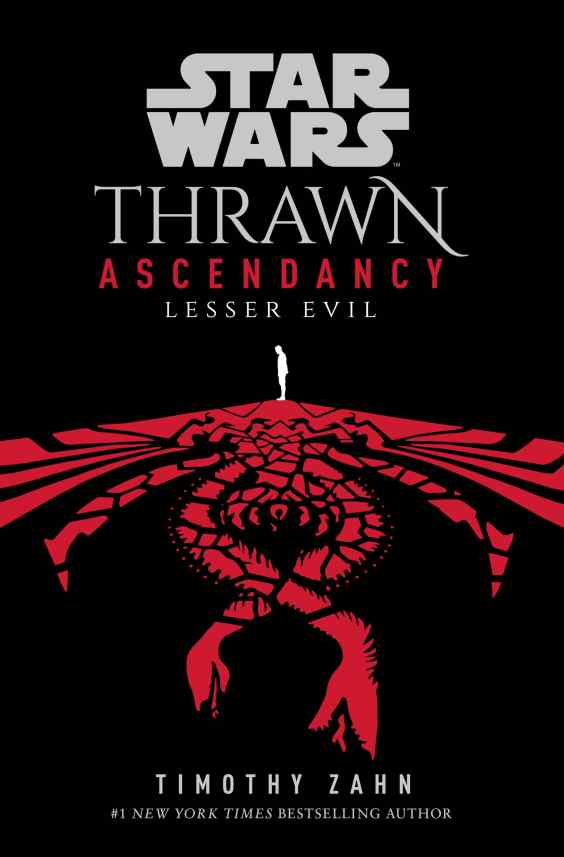
Star Wars: Thrawn Ascendancy: Lesser Evil by Timothy Zahn

Star Wars - Thrawn Ascendancy - Lesser Evil Cover

Publisher: Del Rey/Penguin Random House Audio (Audiobook – 16 November 2021)

Series: Thrawn Ascendancy – Book Three

Length: 23 hours and 13 minutes

My Rating: 5 out of 5 stars

Amazon

The undisputed master of Star Wars extended fiction, Timothy Zahn, returns with final book in the Thrawn Ascendancy series, Lesser Evil, which brings this excellent prequel trilogy to a fantastic and dramatic end.

Out of all the awesome authors who have contributed to the Star Wars extended universe over the years, few are more talented or highly regarded than Timothy Zahn.  Zahn, who is one of the key architects of the original extended universe (now rebranded as Star Wars Legends), is probably best known for his original trilogy of Star Wars novels, which started with Heir to the EmpireHeir to the Empire served as the introduction of several major extended universe characters, such as Mara Jade; however, his most iconic creation is probably the legendary character of Grand Admiral Thrawn.

Grand Admiral Thrawn is an intriguing and complex figure considered the greatest tactician in the entire Star Wars canon.  Serving as a major figure in the Imperial Navy, Thrawn was the brilliant antagonist of Heir to the Empire and other major Star Wars Legends novels.  The subsequent popularity of Thrawn saw him eventually introduced into the Disney canon in the Star Wars: Rebels animated series, as well as a future live-action appearance.  This also resulted in Zahn being contracted to write six new Thrawn-centric novels.  The Thrawn trilogy (made up of Thrawn, Alliances and Treason), detailed Thrawn’s introduction, rise and career in Imperial Navy and filled in some of the gaps of the show.  Zahn followed this up with the Thrawn Ascendancy trilogy, which served as a prequel to the original trilogy.

The Thrawn Ascendancy series is set during the Clone Wars period and takes place in the Chaos, the unexplored area of space outside of the main galaxy of the Star Wars series, and focuses on Thrawn’s species, the Chiss.  As such, the series is primarily set in and around the Chiss Ascendancy and focuses on several threats to the Ascendancy that Thrawn attempts to overcome.  This series has so far consisted of Chaos Rising and Greater Good, both of which were extremely cool, filled with detailed battles, fun new characters, and some intense political machinations.  Now this brilliant trilogy comes to an end, with a final chapter telling the full story of Thrawn’s greatest victory and lowest moment.

For thousands of years, the legendary Chiss Ascendancy has been one of the greatest powers within the Chaos, keeping its people safe from the alien races who seek to conquer or destroy them.  Confident in its own power and determined not to interfere in the lives of its neighbours, the Chiss maintain their borders through the Expansionary Defence Fleet.  However, in recent months, the Ascendancy has found itself under attack from a dangerous and manipulative force that seeks to utterly destroy the Chiss.  After defeating a potential external invader and weathering an attempt to drag some of the Ascendancy’s powerful families into conflict, the threat to the Chiss appears to be over.  However, these were merely a precursor to a much more sophisticated and dangerous attack by a new alien race, known as the Grysk.  Led by the dangerous and manipulative Jixtus, the Grysk seek to unleash a deadly, multi-pronged assault against the Chiss to rip the ascendancy apart inside and out.

As Jixtus traverses the planets of the Ascendancy, manipulating the great Chiss families towards civil war, his powerful fleet lies just outside its borders, waiting to attack.  With the Chiss getting closer and closer to a devastating internal and external conflict, the fate of the Ascendancy lies in the hands of Senior Captain Mitth’raw’nuruodo (Thrawn), the Chiss Expansionary Defence Fleet’s most brilliant and unconventional commander.  Having defeated the previous attacks on the Ascendancy, Thrawn is the only person that fully understands the oncoming danger and he is determined to stop Jixtus and permanently end the threat he represents.  However, Thrawn has long worn out the patience of the ruling families, and he now finds himself hamstrung by politics and personal grievances.  To save his people, Thrawn will be forced to break all the rules he has sworn to uphold.  But just how far will Thrawn go to defeat his enemy, and what consequences will his actions have on himself and the future of the Chiss Ascendancy?

Lesser Evil was another brilliant and exceptional read from Zahn that did an amazing job of wrapping the complex Thrawn Ascendancy series to an end.  Containing some awesome and unique Star Wars elements, Lesser Evil fills in all the gaps between this trilogy and the sequel Thrawn trilogy, and I think it ended up being one of Zahn’s strongest recent novels.

This novel contains an amazing narrative that brings together all the elaborate and compelling storylines from the previous Thrawn Ascendancy novels and provides a satisfying and fantastic conclusion to the trilogy.  The novel starts off right after the events of Greater Good, with several characters dealing with the aftermath of the near civil war and Thrawn’s latest unofficial mission.  The story quickly introduces the book’s antagonist, the master manipulator Jixtus, as he starts his grand plan to destroy the entire Chiss Ascendancy.  This brings out an impressive amount of intrigue, infighting and dissent, which forces many of the protagonists to attempt to slow it down.  At the same time, Thrawn engages in his own mission to try and identify the enemy’s master plan, which reintroduces several key storylines and settings from the previous novels and helps tie them into the plot of this book.  Zahn also throws in a series of flashback interludes that dive into key parts of Thrawn’s past and give some context to his current mindset and plans.  This all leads up to the big conclusion in which the great adversaries, Thrawn and Jixtus, finally meet in battle.  Lesser Evil proves to be a particularly exciting and intriguing read, and I loved the brilliant combination of world building, political intrigue, character development and fantastic battle sequences.  I had a lot of fun with this story, and it was one of the strongest in the entire Thrawn Ascendancy trilogy.

I really enjoyed how Zahn told this final entry in the series.  The great use of multiple character perspectives not only allows for a richer story that examines all angles of the conflict but it also presents several impressive character driven storylines that were wonderful to follow.  In addition, Zahn once again lays onto the universe building by expanding the reader’s knowledge of the alien Chiss Ascendancy and their domain outside of the main galaxy of the Star Wars universe.  This universe building excellently comes into play as the novel progresses, especially as the antagonist’s plan relies on manipulating the politics and history of the various ruling families.  I really appreciated this cool extended look into this intriguing setting, especially as it ties into some of Zahn’s prior work.  Due to the extensive and elaborate Star Wars lore contained within Lesser Evil, this book is probably best read by experienced fans of the franchise who will appreciate all the inclusions.  It is also highly recommended that readers check out the first two novels in this trilogy first, as the storylines of Lesser Evil are very strongly tied into them.

Lesser Evil contains some intriguing connections to the wider Star Wars universe and canon that long-term fans of the franchise will deeply appreciate.  These connections mainly revolve around Thrawn’s prior appearances and fills in many gaps that were left open from the Thrawn trilogy.  This includes the full reason why the original series began with Thrawn banished from his people and left stranded on an alien planet.  It has been pretty clear since the first Thrawn Ascendancy novel that this entire trilogy has been leading up to this moment, and Zahn did not disappoint, including a moving and complex reason for the banishment that played perfectly into the character’s personality and the events of the previous novels.  Zahn also layers in a ton of intriguing connections to his Star Wars Legends novels that fans will deeply enjoy.  For example, parts of Lesser Evil are deeply connected to Zhan’s previous novel, the now non-canon Outbound Flight, which also focused on a younger Thrawn.  Parts of Outbound Flight’s story and setting have been adapted into the Thrawn Ascendancy trilogy, such as some elements of Chiss culture and some supporting characters, and it was interesting to see Zahn retrofit his previous works for the new canon.  In addition, key flashbacks within Lesser Evil take place in a version of Outbound Flight’s narrative, and while I did think this was cool, Zahn did not include a lot of context, so readers unfamiliar with his prior book may be left a little confused.  Still, this was a clever homage to the author’s prior works, and I appreciated Zahn’s fascinating references to his now defunct novels.

One of the strongest things about Lesser Evil was the great array of characters featured throughout.  There is a very strong cast in this final book, with most of the key characters having been established in the previous Thrawn Ascendancy novels or re-introduced from some of Zahn’s Star Wars Legends novels.  All the major characters featured in Lesser Evil have some amazing story arcs and Zahn spends a lot of time fleshing out their personalities, motivations, and histories, which deeply enhances this brilliant narrative.

The most prominent of these characters is Thrawn himself, who has an epic showing in Lesser Evil after being somewhat underutilised in Greater Good. Lesser Evil proves to be a defining novel for Thrawn, especially as he encounters his true enemy, the Grysk, for the first time.  The reader is also given insights into certain previously unseen relationships that Thrawn had, namely with his adopted brother, Thrass.  It also finally reveals the reasons why he was banished from the Chiss and marooned on the deserted alien planet by the start of Thrawn.  I deeply enjoyed the cool character arc surrounding Thrawn in this book, and Zahn does a great job once again highlighting his unique personality and motivations.  Despite being a little less sinister in literary form than in Star Wars Rebels, Thrawn has a harsh edge here, and the reader gets some great insights into his constant motivation of protecting the Chiss Ascendancy.  Throughout the course of the book, it becomes deeply apparent that Thrawn will risk everything to achieve his goal, and I loved how heartless Thrawn can become when dealing with his enemies.  This motivation and background go a long way to exploring Thrawn’s actions while serving the Empire, and fans of this fantastic character will deeply appreciate this compelling story arc.  Zahn also answers several intriguing questions about Thrawn’s past in this book, and it proved incredibly fascinating to see this great character expanded even further.

I must once again highlight the great way in which Zahn displays his central protagonist.  As with his previous appearances in Zahn’s novels, Thrawn is one of the few characters whose perspective is not shown; instead all his actions and interactions are viewed through the eyes of his friends, allies, and even a couple of enemies.  I have always felt that this was a very clever technique from Zahn as it helps to highlight just how mysterious and distinctly complex his protagonist is.  Readers are only given glimpses into his brilliance, and it allows for increased suspense and surprise throughout the novel as the reader often has no idea what Thrawn is thinking or how he plans to get out of a certain situation.  The use of other observers also really helps to highlight the tactical ploys Thrawn employs, especially as he usually is forced to explain his insights, strategies, and the entire scope of his plans to the less tactically gifted people he is working with.  These elaborate explanations, coupled with the observations of the relevant side character, ensures that the readers get a much more detailed picture of Thrawn’s observations and subsequent tactics.  I have often compared this to how Watson amps up the deductive ability of Sherlock Holmes by having Sherlock explain everything to him, and the result is pretty much the same here.  I deeply enjoyed this fantastic use of perspective and I love everything that Zahn did with his iconic protagonist throughout Lesser Evil, and indeed the entire Thrawn Ascendancy series.

If Thrawn was Sherlock Holmes, then I would say that antagonist Jixtus was the Professor Moriarty of the Thrawn Ascendancy series.  A member of the mysterious Grysk species, Jixtus has been a shadowy figure throughout the proceeding novels, influencing events from the shadows and sending out proxies to fight Thrawn and the Chiss.  This comes to an end in Lesser Evil as Jixtus takes a personal hand in attacking the Chiss Ascendancy.  Jixtus proves to be an excellent and brilliant counterpoint to Thrawn and it is fascinating to see the battle of minds between them, especially as both have alternate strengths.  While Thrawn is tactically brilliant, Jixtus is better at personal manipulation and politics, something Thrawn struggles with.  As such, there is a real battle of styles here in Lesser Evil and the result is pretty brilliant.  I also really appreciated how you also never see any part of the book told from Jixtus’ perspective, ensuring that he is just as mysterious and ethereal as Thrawn.  I loved how Zahn portrays Jixtus in this novel; he comes across as an incredibly dangerous and malevolent being, even though you never see his face.

The other new character I wanted to focus on in this book was Thrass (Mitth’ras’safis), Thrawn’s friend and fellow member of the Mitth family.  Thrass is an interesting character, initially introduced in the previous canon as Thrawn’s brother.  There have only been hints of him in the Thrawn Ascendancy novels, and this final book finally features in him to a degree, showing him in a series of flashback interludes set in Thrawn’s past.  Thrass is shown to be a Mitth politician who finds himself befriending and then partnering with Thrawn through a series of adventures.  The two complement each other extremely well, with Thrass serving as a bridge for the more unconventional Thrawn, while also supporting him with his political knowledge.  Thrass’s scenes proved to be a great inclusion to the novel and I felt the author did a great job re-introducing the character, even if only for flashback sequences.  I really appreciated the author’s examination about how this friendship, and later brotherhood, was vital to Thrawn’s growth and current abilities, and I particularly enjoyed the examination about how Thrass helped develop Thrawn’s flair for the dramatic.  Fans of Zahn’s Legend’s work will deeply enjoy the new appearance of this established character in Lesser Evil, and I think it was an interesting and fun choice from the author, that ended up working incredibly well.

I must also highlight how Zahn featured the other recurring characters from the Thrawn Ascendancy series.  Pretty much all the major characters from the previous two novels are featured strongly in Lesser Evil, and there are some remarkably good storylines set around them.  Thrawn’s crew aboard the Springhawk get a decent amount of focus throughout this book, particularly Samakro, Thalias and Che’ri, and each of their storylines are nicely concluded.  In addition, I loved the continued use of Ziinda, another Senior Captain, who, after barely averting a civil war in the previous book, finds herself subsequently vilified and forced into a new family.  Ziinda proves to be a vital part of the plot, and it was great to see how much she had developed since the previous novel, especially as Zahn starts her on the path to becoming as determined as Thrawn.  Zahn also makes great use of Roscu, a former member of the Expansionary Defence Fleet who had issues with Thrawn in Chaos Rising. Roscu is initially set up as a secondary antagonist, especially as her mistrust of Thrawn, his friends, and all the rival families, drives her to do some stupid things.  However, Zahn slowly turns her into a surprisingly sympathetic character as the novel progresses and you end up really rooting for her.  I also loved Qilori, a supposedly neutral Pathfinder with a grudge against Thrawn; and Thurfian, the Mitth Patriarch who views Thrawn and his actions as a threat to his family and the Chiss as a whole.  These two serve as interesting secondary antagonists to the story, and it was great to see their outraged reaction to Thrawn’s actions, as well as their own attempts to end him.  These characters, and many more, added so much to this book, and I loved seeing all their arcs conclude with the trilogy.

I cannot talk about a Zahn Star Wars novel without highlighting the amazing and exciting space battles featured within.  No one does a space battle in Star Wars fiction better than Zahn, who devotes an impressive amount of time and detail into making them as impressive, thrilling, and tactically awesome as possible.  The reader gets a detailed mental impression of the space engagements that occur, and you can practically feel every shot, roll, or manoeuvre.  Lesser Evil was a particularly good example of this, featuring several great battle scenes, including one massive and action-packed confrontation towards the end.  Each sequence was beautifully rendered and perfectly portrayed, with the reader getting the full sense of everything that happened.  Throw in the distinctive technology of the Chiss, as well as the tactical abilities of Thrawn, and you have some of the most unique and brilliant battles in all of Star Wars fiction, especially as there is a great focus on larger cruisers and battleships, rather than smaller fighter craft.  I deeply enjoyed every battle sequence in this book, and fans of fights in space are in for a real treat here.

Unsurprisingly, I ended up checking out the audiobook version of Lesser Evil, rather than reading a psychical copy.  I cannot overemphasise just how amazing the Star Wars audiobooks are, thanks to their usual amazing combinations of impressive voice acting, clever sound effects and moving Star Wars music.  Lesser Evil is a great example of this, and I had a wonderful time getting through this brilliant audiobook, even with its extensive 23+ hours run time (it would rank 17th on the current version of My Longest Audiobook I Have Ever Listened To list).  I must once again highlight the cool sound effects that were utilised throughout the audiobook to great effect.  These effects, most of which have been taken from Star Wars films and animated shows, add so much depth and power to the audiobook’s scenes, building up a strong atmosphere around the words.  Sounds like blaster fire or roaring engines really help to bring the listeners into the centre of the book’s climatic scenes, while even smaller scenes get a boost thanks to having crowd noises or computer sounds lightly running in the background.  The audiobook also makes good use of the iconic Star Wars score in various parts.  While not featured as heavily as other Star Wars audiobooks, in several places the amazing orchestral music from the films is utilised to give some major scenes a dramatic punch.  This is particularly true in some of the battle sequences, and the listeners are treated to some of the more exciting or moving tunes, which makes the battles or major moments feel bigger and more important.

In addition to this great use of sound effects and epic Star Wars music, Lesser Evil’s audiobook also benefited immensely from the narration of Marc Thompson.  Thompson is an amazing narrator (one of my personal favourites), who has contributed his voice to a huge range of Star Wars novels, including all of Zahn’s previous Thrawn and Thrawn Ascendancy novels, and other audiobooks such as Scoundrels, Light of the Jedi, The Rising Storm, Dark Disciple and more.  Thompson has such a great range for Star Wars fiction, and he can produce some amazing and fitting voices for the various characters featured within.  Most of these voices are continuations of the ones used in the previous Thrawn Ascendancy novels, and I enjoyed the consistency from the previous two books.  I must also really highlight Thompson’s epic Thrawn voice, that perfectly captures the character’s essence, and which is incredibly close to Lars Mikkelsen’s voice from Star Wars: Rebels.  I also loved the voice that Thompson assigned to Jixtus, and the dark and sinister tones perfectly fit this awesome villain.  Thompson also cleverly modulated his voice for certain alien races to capture the unique characteristics Zahn assigned to them in his writing.  You really get a sense about how alien and strange these creatures are, which helped bring me into the zone.  This was another exceptional Star Wars audiobook, and this is easily the best way to enjoy this clever and impressive novel.

With the brilliant and captivating Lesser Evil, the legendary Timothy Zahn brings his awesome Thrawn Ascendancy trilogy to an end in a big way.  Loaded up with excellent universe building, an outstanding story, some excellent characters and some truly impressive space battles, Lesser Evil is probably the best entries in the entire Thrawn Ascendancy trilogy.  I loved how Zahn brought the trilogy’s various storylines together in this final novel, providing an exciting and captivating conclusion that perfectly leads into the original Thrawn trilogy.  Thanks to all of this and more, Lesser Evil gets a full five stars from me and comes extremely highly recommended, especially in its audiobook format.  I have had an incredible time reading the various Thrawn novels over the last few years and I really hope that Timothy Zahn continues to explore his iconic protagonist in the future, especially once Thrawn gets his long overdue live action debut.

Amazon

Quick Review – The Dying Squad by Adam Simcox

The Dying Squad Cover

Publisher: Gollancz (Trade Paperback – 27 July 2021)

Series: The Dying Squad – Book One

Length: 360 pages

My Rating: 4 out of 5 stars

Amazon     Book Depository

Intriguing new author, Adam Simcox, presents his compelling debut novel, the fun and fascinating supernatural crime fiction read, The Dying Squad, which proves that just because you are dead, it doesn’t mean that you can’t get justice.

The Dying Squad was a fantastic and intriguing first novel from Simcox that contained a fascinating premise about a man forced to solve his own murder as a ghost.  I loved the sound of this book when I first heard about it, and I was very glad when I received a copy a while ago.

Synopsis:

WHO BETTER TO SOLVE A MURDER THAN A DEAD DETECTIVE?

When Detective Inspector Joe Lazarus storms a Lincolnshire farmhouse, he expects to bring down a notorious drug gang; instead, he discovers his own body and a spirit guide called Daisy-May.

She’s there to enlist him to The Dying Squad, a spectral police force who solve crimes their flesh and blood counterparts cannot.

Lazarus reluctantly accepts and returns to the Lincolnshire Badlands, where he faces dangers from both the living and the dead in his quest to discover the identity of his killer – before they kill again.

This was an awesome and intriguing read and I ended up really getting into this fantastic supernatural novel.  Set initially in the apparently crime-ridden wilds of Lincolnshire, the novel quickly establishes itself by killing off the protagonist, Joe Lazarus, and introducing him to his co-lead the bombastic and entertaining Daisy-May, a member of the ghost-run investigative unit, known as the Dying Squad, there to recruit Lazarus.  The book then jumps to the Pen (purgatory), where Lazarus is given the chance to save his soul by solving his own murder.  Returning with Daisy to the real world, Lazarus must investigate his death while facing several limitations, including the fact that the real world is affecting his memories, and he must work to uncover his own past to discover who killed him.  At the same time, dangerous events are occurring in the Pen as a mysterious being leads an uprising of the seemingly mindless souls imprisoned there, while back in the real world, a dangerous creature stalks Lazarus and Daisy-May, seeking to drag them down below.

I really enjoyed the cool story featured within The Dying Squad, and Simcox has come up with something particularly unique and compelling here.  The author does a great job of quickly introducing all the relevant story elements, and the reader is soon expertly enthralled in the book’s compelling mystery.  I loved the unique investigation that takes place throughout the novel, especially as the protagonists must deal with a range of different problems, including the sinister Xylophone Man (he’s a lot more threatening than the name implies), the deceit of living humans, fading memories, and the protagonist’s desire to interfere in events, even when they’re not supposed to.  At the same time, the protagonist’s boss back in the Pen is forced to deal with a universe-ending revolt, as desperate lost souls attempt to tear down the walls of reality.  While Daisy May and some of the other characters are dragged between these two plot threads, Lazarus continues to follow the trial towards his death by investigating several potential suspects and slowly regaining his own memories.  This eventually leads to several startling revelations, including a very clever reveal about who was behind his death and their reasons why.  This investigation eventually leads back to the wider universe story about the rebelling souls, and there are some great moments, especially when the protagonists are forced to make some hard and afterlife-altering choices.  I really enjoyed this unique blend of storylines, as well as some of the cool characters featured throughout the book, and The Dying Squad ended up being quite a fun and interesting read.

I definitely need to highlight the unique world building featured throughout The Dying Squad.  Simcox has come up with a detailed and fascinating scenario, involving supernatural ghosts going back to Earth to investigate unsolved murders.  This results in several memorable and compelling settings, including the dark and dreary Pen, a version of Purgatory, where lost and forgotten souls congregate in confusion and apathy (unless roused by a dangerous soul with ulterior motives).  At the same time, you also have the setting of Earth, which ends up being an unnatural location for departed souls, even the protagonists.  As such, the characters who venture there to investigate encounter all manner of obstacles, from rogue spirits to the very air itself, which drains dead souls of their memories unless precautions are taken.  These various elements, especially the memory loss and the typical incorporeal nature of ghosts, are worked into the investigation aspect of the story extremely well, and it added a layer of complexity and uncertainty that really enhanced the mystery.  At the same time, Simcox really went for broke exploring the wider universe and the focus on the events in the Pen soon become a major part of the plot.  While I deeply enjoyed the potential universe ending event, I cannot help thinking that maybe more of the story could have been spent on beefing up the investigation angle of the book, especially as some of the culprits and twists ended up being a little easy to spot.  That being said, it was a fascinating part of the story that ended up being explored extremely well, and it really enhanced the stakes of the plot.  It will be interesting to see what the focus of the next novel will be, but I am sure that I will enjoy it.

Overall, this ended up being quite a clever read, and I think that Simcox did a great job of combining a complex murder investigation with complex and fascinating supernatural elements.  I had a lot of fun with The Dying Squad, and it is an excellent compelling new debut to check out in 2021.

Amazon     Book Depository

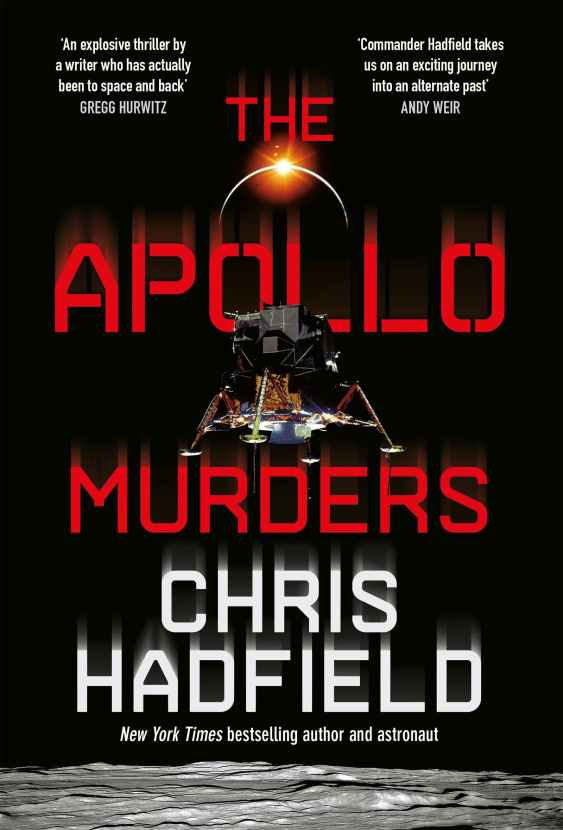
The Apollo Murders by Chris Hadfield

The Apollo Murders Cover

Publisher: Quercus/Hachette Audio (Audiobook – 12 October 2021)

Series: Standalone/Book One

Length: 15 hours and 14 minutes

My Rating: 4.5 out of 5 stars

Amazon

Prepare for one of the most impressive and complex debuts of 2021, with the exciting alternate history science fiction thriller, The Apollo Murders, by former astronaut Chris Hadfield.

In 1973, former test pilot turned government liaison officer Kazimieras “Kaz” Zemeckis arrives at Huston to supervise NASA’s latest voyage into space for their 18th Apollo mission.  On paper, NASA plans to send three astronauts to the moon, seemingly on a scientific expedition.  However, Kaz is also under orders to prepare the military astronauts on board for a covert operation to investigate the Russians’ recent rover mission to the moon as well as a secret spy satellite orbiting Earth that could give the Soviets an invaluable advantage in the Cold War.

As the crew prepares for their mission, tragedy strikes when a helicopter crash results in the death of one of the astronauts.  Forced to take on a new crew member at the last minute, the team launches and begins to make for their primary mission, the spy satellite.  However, the Americans are unprepared for the satellite to be manned by Russian cosmonauts determined to defend their station.  The encounter results in a terrible accident and a cosmonaut being trapped aboard the Apollo craft as it hurtles towards the moon.

As the American and Soviet governments argue over the unfortunate events, the Apollo crew attempt to undertake a moon landing with limited crew and resources.  Forced to work together with their Russian stowaway, the crew begins to descend towards the moon on an apparent joint venture.  However, back on Earth, the Soviet government is determined to turn this to their advantage by any means necessary, even if it means utilising a long-hidden intelligence asset.  Worse, it soon becomes clear that the helicopter crash that killed one of the astronauts was no accident.  Forced to contend with the knowledge that an Apollo astronaut in space might be a murderous saboteur with nothing to lose, Kaz and the flight team at Huston can only watch helplessly as events unfold and the future of space travel is changed forever.

This was a pretty impressive debut from Chris Hadfield, who really showed a lot of talent in this book.  Hadfield, a former astronaut known for his excellent rendition of ‘Space Oddity‘ filmed aboard the ISS, was able to construct a compelling and fast-paced novel with an amazing story to it.  Combining detailed science with a complex alternate history thriller, The Apollo Murders ended up being an excellent and powerful read that I deeply enjoyed.

At the heart of this novel lies a captivating and multilayered narrative surrounding a doomed mission into space.  Set in the 1970s during the golden age of spaceflight, The Apollo Murders follows a fictional 18th Apollo mission that goes very differently than intended, with fantastic espionage thriller elements combining with the science and historical fiction storyline.  Told from a huge range of different perspectives, this book initially focuses on the planning for an Apollo flight, which intends to both explore the moon and disable a Soviet spy satellite.  However, the story takes a turn when one of the astronauts is killed, and from there the story ramps up as the astronauts blast off into space while the other characters, both American and Russian, attempt to follow them while also conducting their own investigations and espionage missions.  The novel has an explosive middle, in which the American and Soviet astronauts encounter each other in space with disastrous results.  The consequences of this encounter lead into an epic second half filled with lies, deceit, sabotage and backstabbing, as two characters in space attempt to manipulate the situation to their advantage, while everyone on the ground, including Kaz, the astronauts, mission control, the Russians and a variety of other characters try to influence what is happening.  This all builds to one hell of a conclusion, with interesting consequences for several of the characters, and one surprise after another.

I really enjoyed this cool story, and I loved the fun blend of genres that Hadfield featured throughout it.  On paper, a thriller and murder mystery set around a fictional historical space flight seems a bit too complex for its own good, but Hadfield made it work, and the story is crisp and easy to follow, with none of the component parts overwhelming any of the others.  The reader is swiftly drawn into the story and it was fun to see everything unfold, especially as Hadfield ensures that you can see all the various angles and treacheries as they occur.  The author made excellent use of multiple character perspectives to tell a rich and captivating story, and it was extremely fun to see how the various characters viewed the situation and reacted to certain events.  Each of the characters featured in this novel is set up extremely well, and the reader quickly get to see their unique personalities, history and motivations surrounding the events of this book, which makes them extremely relatable and easily to follow.  While the identity of the person responsible for the murder at the start of the novel was a tad obvious, Hadfield uses this to its full advantage, helping to establish the book’s main antagonist, turning him into quite an arrogant and unlikable figure whom the reader really starts to root against.  It was really fascinating to see all the various character arcs and storylines come full circle by the end of the narrative, and The Apollo Murders ended up being a brilliant and compelling self-contained novel.

Easily one of the best things about The Apollo Murders was the incredible amount of detail about space flight and the science of space featured within.  Throughout the narrative, Hadfield spends an amazing amount of time explaining all the relevant science and technology that is relevant to the plot as the protagonists encounter it.  At the same time, the author also features a ton of relevant anecdotes or discussion about the history of spaceflight up to this point, which often serves to highlight the scientific information being provided at the same time.  All of this is worked into the plot extremely well, and the reader is soon given insight into what the characters are doing and the significance of their actions.  While all this information had the potential to be extremely overwhelming, Hadfield manages to dole it out in appropriate snippets, ensuring that there is never too much science or history in one scene, only enough for the reader to follow what happens.  This information is usually very easy to follow, and Hadfield’s writing style ensures that all the relevant facts are explained appropriately as the reader requires.  As such, the reader is never left confused at any point, and it leaves them open to enjoy some of the epic scenes.  I really must highlight some of the great spaceflight sequences featured throughout this book, including some of the epic take-off and landing scenes.  Hadfield really paints a beautiful picture here with his writing, and the reader gets a detailed understanding of every element of the flight and what the astronaut characters are experiencing or attempting to do.  These spaceflight elements are extremely well written, and I really must commend Hadfield for the work he put into making them seem as realistic and accurate as possible.

I must also highlight the great historical elements featured in this novel.  I rather expected this to be one of the weaker spots of the book, especially with so much focus on the spaceflight or the thriller parts of the book.  Instead, the reader is treated to a detailed and compelling discussion about the state of the world in the 1970s, especially surrounding the Cold War and the capabilities of both America and the Soviet Union.  A lot of this history relates to space travel, which is probably why Hadfield knows so much about it, and he uses it to great effect throughout the novel, giving the story an appropriate feel.  However, Hadfield also takes the time to examine the competing nations of America and the Soviet Union, and there are some brilliant scenes set in both, especially when it comes to the covert geopolitical battle occurring between them.  Hadfield portrays this period perfectly, and I especially liked his great use of multiple real historical characters, including politicians, NASA flight crew, espionage heads and even a few famous astronauts such as Alan Shepard, all of whom played vital roles in fleshing out the espionage elements of the plot.  While a lot of this book is based on historical events and facts, it is set around a fictional 18th Apollo mission.  This alternate history element is a fun part of the book, and I really appreciated the way in which Hadfield tried to envision how the various governments would react to such as disastrous mission to the moon.  I feel that Hadfield captured the political and social elements of this period extremely well, and I really appreciated this examination into history, especially as it combined with the thriller and space faring elements of the book extremely well to produce an outstanding and compelling narrative.

While I did receive a physical copy of The Apollo Murders, I was unable to resist the audiobook version, which proved to be really impressive.  With a run time of just over 15 hours, I was able to power through this audiobook quickly, especially once I got engrossed in the cool story.  I felt that the audiobook format was very conducive to following the various scientific elements featured throughout the novel, and I had a wonderful time imagining the elaborate space manoeuvres brought to life by the narration.  However, the main reason that I wanted to listen to this book was due to its narrator, Ray Porter.  Porter is one of the best audiobook narrators in the world today, and I am a big fan of his voice work in the thrillers of Jonathan Maberry (such as Code Zero, Deep Silence, Rage, Relentless and Ink).  Porter ended up providing an excellent narration for The Apollo Murders, with each of the various characters presented with a compelling and fitting voice that fit their personalities and nationalities.  While it was a bit weird in places to hear a voice from one of the other books I have heard him narrate, Porter was able to produce an excellent flow throughout The Apollo Murders, and the story swiftly moved across at a great pace.  This ended up being an excellent way to enjoy this novel and I would strongly recommend checking out this audiobook version of The Apollo Murders.

The Apollo Murders is a brilliant and powerful literary debut from former astronaut Chris Hadfield, who blew me away with this amazing first novel.  The Apollo Murders contains a fantastic and complex story that blends several genres into an exciting and clever read that takes the reader on a wild and thrilling adventure into space.  Featuring a deeply fascinating look at historical space flights and based around a fictional 18th Apollo mission, The Apollo Murders was one of the best debuts of 2021 and I had a fantastic time listening to it.  This is a great novel to check out and I cannot wait to see what Hadfield writes next.

Amazon

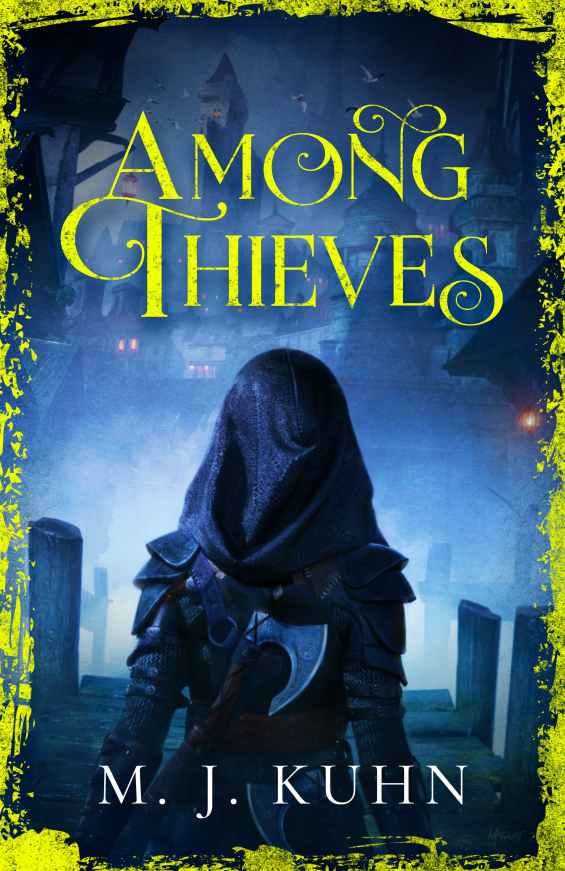
Among Thieves by M. J. Kuhn

Among Thieves Cover

Publisher: Gollancz (Trade Paperback – 14 September 2021)

Series: Standalone/Book One

Length: 343 pages

My Rating: 4.5 out of 5 stars

Amazon

Magic, betrayal and the ultimate fantasy heist await in Among Thieves by M. J. Kuhn, one of the most exciting and compelling debuts of 2021.

Welcome to the city of Carrowwick, where life is cheap and three powerful gangs fight for supremacy and control of its notorious underground.  Out of all the thieves, rogues and assassins found within Carrowwick, no one is more feared than Ryia Cautella.  Better known as ‘the Butcher’, thanks to her uncanny skill with her twin hatchets, Ryia is sworn to notorious gang-leader Callum Clem, and is the chief enforcer and hidden blade of his Saints gang.  But while she seems content to spend her time fighting, drinking, and womanizing, deep down Ryia harbours a dark secret and a hidden past.

Thanks to an incredibly rough childhood, Ryia is in hiding from the most dangerous person in the entire realm, the Guildmaster, the powerful magic user who serves as the de facto ruler of the continent of Thamorr.  The Guildmaster runs a continent-spanning organisation whose operatives locate, capture and bind every child with magical potential in order to sell them to the highest bidder.  Forced to flee from city to city, constantly changing her identity, Ryia has no chance at a future while the Guildmaster is after her, and there is only so long that she can avoid her fate.  However, a chance encounter soon reveals a potential way out of her desperate situation, although it will mean journeying to the most dangerous place in the world, the Guildmaster’s Island, to steal a powerful magical artefact.

Determined to gain her freedom, Ryia prepares to attempt the impossible and infiltrate the Guildmaster’s Island during the annual auction where the bound and brainwashed magic users are sold.  However, not even the mighty Butcher can break into this impenetrable fortress alone.  Reluctantly forced to work with a team, Ryia sets out with a motley crew of rogues and miscreants, including a forger, a conman, a fallen soldier, and a smuggler.  But can this disparate crew pull off their impossible job, or are they all marching towards their deaths?  Worse, who among the crew can really be trusted, as every member has their own reason for being there, and none of them would hesitate to stab the others in the back to achieve their goals.  Let the heist begin!

This was a brilliant and outstandingly entertaining debut from M. J. Kuhn, who has done a remarkable job with her first book.  Among Thieves has a fun and clever story that takes its fantastically motley group of protagonists on an intense and thrilling adventure.  I loved the great blend of enthralling characters, an interesting new fantasy setting and an outstanding narrative, and this ended up being one of the best debut novels I have read in 2021.

Among Thieves has a really awesome narrative that I had an absolute blast getting through.  Frankly, I was very keen to read this novel the moment I saw it was a fantasy heist novel, as I love it when dark magical settings combine with classic crime fiction heist storylines.  Kuhn really did not disappoint as Among Thieves’ narrative is extremely well set out and does a great job bringing together its disparate genre threads.  The world, the various characters, and the dark tone of the book are set out quickly in an entertaining and easy-to-follow manner in the first 100 pages.  The reader gets a great sense of all the key players of this book, especially as the author makes excellent use of a multiple-perspective storytelling device, with all five members of the heist crew narrating several chapters within the book.

Once the scenario and the characters are established, Kuhn quickly moves into the exciting centre of the novel, which sees the protagonists infiltrating the Guildmaster’s island to find the treasure they seek and steal it.  The characters face some major adversity here, from betrayals within and without, as well as the unfortunate attention of rivals, law enforcement and the forces of their target.  This leads to several intense and entertaining scenes as the protagonists attempt to overcome these obstacles while their own personal demons and ambitions come to the surface.  There is a major twist about two-thirds through Among Thieves that is not only fun and a little unexpected but which also sets up the final arc of the novel extremely well.  This final third of the book sees the various characters make their final plays for the prize (if they still want it), while several revelations and twists are brought to the surface.  I deeply enjoyed the way that the story turned out, especially the reveal of the book’s real winner, and Kuhn chucks in some great surprises towards the end.  The entire story is an amazing blend of intrigue, action, thievery and relatable character interactions, which helps to produce a fast-paced and captivating narrative that I had a really hard time setting down.  Kuhn also makes sure to leave a few storylines wide open, which would translate into a sequel extremely well.  I really hope that the author continues this storyline in the future as I cannot wait to see how this awesome narrative finishes up.

Easily one of the best things about this amazing novel was the great mixture of unique and entertaining characters.  As I mentioned above, Among Thieves’ story features five central protagonists, the members of the heist crew, each of whom has their perspective shown at various points of the book.  This includes:

  • Ryia, a hardnosed and incredibly powerful killer who parties hard, flirts mercilessly with every female character and kicks ass in some incredibly violent ways. While Ryia appears to be a fun and entertaining character most of the time, she has a very dark past, filled with regret, betrayal, and the shocking actions of her father.  Thanks to her tendency to use humour and crassness as a distraction to hide deeper pain, Ryia proves to be both an entertaining and tragic figure, and it was deeply compelling to see her storyline unfold.  I loved the focus on her twisted loyalties, especially as she initially plans to betray her crew for her own ends.  However, she goes through some major development as the book continues, and slowly establishes some emotional connections she has been missing throughout most of her life.  A brilliant and fun central character, you will fall in love with this axe-wielding maniac.
  • Tristan, the youngest member of the group and their resident sleight of hand expert, specialising in gambling, cheating and pickpocketing. Tristan is bit of a dandy who was forced into the Saints after incurring a substantial debt, later sticking around due to his unrequited love with Ryia.  Like Ryia, Tristan has a lot of secrets from his past and is also a bit of a fugitive.  Tristan ends up being forced into some very unfortunate positions as the book continues due to various betrayals (his and other peoples), and he ends up being quite a major figure in the story.  I deeply enjoyed some of the great twists surrounding him, and it looks like Kuhn has some intriguing plans for him in the future.
  • Nash, the smuggler, a ship captain of great skill and cunning who transports the gang to the Guildmaster’s Island and helps them pull off their heist. Nash is a fun character who has some interesting storylines surrounding her inconvenient relationship with gang leader Callum Clem.  While I quite liked her as a protagonist, she was one of the least developed characters in the novel, mainly because she is the only one who didn’t have a plan to betray the gang.  Kuhn does add some interesting details to her arc towards the end of Among Thieves, as she is forced to deal with her growing attraction to Ivan, her conflicted loyalty to the insane Callum, and her own ambitions and survival instincts.
  • Ivan, the forger who serves as another entertaining character with a compelling storyline around him. Ivan is ultra-talented master of all sorts of forgery, including documents, tattoos, disguises, and everything in between.  A natural charmer and brilliant actor, Ivan manages to win the hearts of many, including Nash and the reader.  However, he also has a secret past as a freedom fighter, and he sees this job as an opportunity to free his imprisoned brother and re-start his revolution.  I found Ivan to be a funny and charming figure, and like I did with Ryia and Tristan, I deeply appreciated the inclusion of a hidden past which motivates his potential betrayal.  Ivan ends up in an interesting place at the end of the novel, and it will be fascinating to see how his gamble will play out.
  • Evelyn, the former city guard of Carrowwick and Among Thieves’ final point-of-view character. Evelyn is a complex and intense figure, a former honourable officer who is dishonoured and disinherited partially thanks to Ryia’s actions.  After a massive bender, she is convinced to join the heist crew by Callum Clem in exchange for being allowed to capture Ryia, whose imprisonment would restore her honour and position.  Evelyn has one of the best character arcs in the entire novel, especially as she plays a fish-out-of-water character, as the former cop trapped among a group of thieves.  This allows her to serve as an excellent foil to Ryia, and the two have a very adversarial relationship, which naturally develops some romantic overtones as the book progresses.  I liked how Evelyn slowly became more devious and criminally minded as the book progresses, and she was an excellent addition to the story, bring some great humour, drama and integrity (briefly) to the narrative.

Overall, I felt that Kuhn did an amazing job establishing all these main characters, and each of them brings something unique and fun to the story.  There was a pretty good balance between each of these characters, and it was very enjoyable getting to know all five of them.  That being said, having five separate motivations/planned betrayals was a bit much on top of the heist storyline, and it muddied the main plot just a little.  Still, I think that Kuhn made it work and it wasn’t too overwhelming.  All five characters have great chemistry with each other, and their distinctive perspectives helped to highlight the various mad plans and ideas in a very entertaining light.  I had an amazing time following these five rogues, and I look forward to seeing what happens to them in any future novels Kuhn writes.  I am also very curious about the side character who was cleverly given a point-of-view chapter at the end of the book, and I am sure it will result in a brilliant and villainous performance in the next book.

In addition to the awesome story and complex characters, I also was quite taken by the intriguing new fantasy world that Kuhn came up with.  Among Thieves is set in the continent of Thamorr, which is made up of five kingdoms who all pay homage to the Guildmaster, who controls the supply and demand of the magically powered supersoldiers each nation relies on.  Kuhn does a great job of introducing and setting up this new fantasy world, and the reader is soon dragged into the great crime-riddled city of Carrowwick, with its warring gangs, and the eventual travel to the Guidmaster’s island, a grim and hopeless magical fortress.  The interplay of the rival gangs, the political upheaval of several kingdoms, and the creation of obedient magical beings are all fantastic and add some great depth and background to the story.  I also loved the cool magical system Kuhn works into the narrative really well, ensuring that the control of people with magical potential becomes a major plot point.  This amazing setting serves as the perfect backdrop to the fast-paced and clever narrative, and it was quite fascinating to see the characters explore every compelling aspect of it.  It looks like this fantasy world will be massively expanded in the future novels, and I cannot wait to what cool new elements Kuhn introduces next.

With her debut novel, Among Thieves, new author M. J. Kuhn has shown herself to be an outstanding and impressive new talent on the fantasy fiction stage.  Among Thieves has an awesome and captivating heist-centric storyline, and I loved the cool combination of intense fantasy and thrilling crime fiction elements.  This all results in a powerful and intense narrative based on five brilliant and complex characters, which proves to be exceedingly addictive and thrilling.  I had an excellent time reading Among Thieves and this was easily one of the best debut novels of 2021.

Amazon

Enemy at the Gates by Kyle Mills (based on the series by Vince Flynn)

Enemy at the Gates Cover

Publisher: Simon & Schuster Audio (Audiobook – 14 September 2021)

Series: Mitch Rapp – Book 20

Length: 8 hours and 36 minutes

My Rating: 4.5 out of 5 stars

Amazon     Book Depository

Ready for another down-and-dirty spy thriller with America’s most violent secret agent, then make sure to grab a copy of the 20th book in the bestselling Mitch Rapp series, Enemy at the Gates, by the series’ current author Kyle Mills.

One of the most consistently entertaining thriller series of the last few years has been the long-running Mitch Rapp series.  The Mitch Rapp series is an iconic collection of thriller novels originally written by author Vince Flynn, and more recently by Kyle Mills, who took over the series after Flynn’s death.  Mills has been doing an outstanding job with this series, and I have had an incredible time with some of his recent books, including Red War, Lethal Agent and Total Power.  Now, 22 years after Mitch Rapp’s first appearance in Transfer of Power, the 20th book in the series, Enemy at the Gates, has been released, and it was another dark and compelling novel with an awesome story.

Following the resolution of a coordinated terrorist attack aimed at taking down America’s entire power infrastructure, the lights are finally back on across America, and the country seems ready to return to its usual problems.  A new president, Anthony Cook, has been installed in the White House, and many believe that he has the potential to turn the country around.  However, the old guard of American intelligence, CIA Director Irene Kennedy and legendary agent Mitch Rapp, believe that there are dangerous ulterior motives behind many of Cook’s actions.

In Uganda, a high-tech research facility belonging to the world’s first trillionaire, Nick Ward, is attacked by a dangerous and deranged warlord, aiming to capture and ransom the lab’s brilliant head scientist.  Ward, the richest man on the planet, claims to want to make the world a better place, and the research being undertaken by his Ugandan team is rumoured to have the potential to save billions of lives.  Determined to save his people and against the wishes of President Cook, Ward hires Rapp and his friend Scott Coleman to recover his scientist before it is too late.  However, their desperate battle in the jungle soon turns out to be the least of their problems.

As Rapp and Coleman brave the skilled militia in the jungle, a mysterious mole has managed to infiltrate the CIA’s secure computer network, stealing data on Nick Ward and his current security arrangements.  To keep Ward safe and to flush out the source of the leak, Kennedy instructs Rapp to stay close to Ward, just in case.  However, following a vicious and coordinated attack, it soon becomes clear that some very powerful people are determined to kill Ward at any cost.  With all intelligence and communications with their usual sources in the CIA potentially compromised by the mole, Rapp and his team embark on an elaborate scheme to flush the true architects of the attacks out.  But what happens when their plan puts them right in the cross of the ambitious new president who is determined to shape the chaotic world no matter the cost?

This was a high-intensity, action-packed thriller from Mills, who has produced another awesome and fun read.  Enemy at the Gates contains a great narrative that sees its aging but deadly protagonist caught between the very powerful forces of the world’s richest man and the President of the United States.  This is a very fast-paced story, with Mills quickly introducing the new characters, mainly Nick Ward and President Chisholm, as well as some of their key allies, and showcases the first stages of the president’s proxy war against Ward.  From there, Mitch Rapp and his team are drawn into the conflict on Ward’s side, thanks to CIA director Irene Kennedy, resulting in a fun dust-up in the jungle.  The story quickly moves on from there, forcing Rapp to face off against a crazed Ugandan warlord while also trying to uncover the mole in the CIA.  This is an extremely fun story, with the story moving at a very quick and entertaining pace.  Mills writes a great espionage story, and I loved the usage of tradecraft, over-the-top action and general dislike of politicians throughout the story.  The author introduces a couple of great twists, especially around the identity of the mole, and it was excellent to see Rapp and his allies forced to deal with a crooked United States President.  There is a ton of intensely violent scenes throughout this novel, and readers should be prepared for a couple of torture sequences and somewhat disturbing methods of killing (let us just say there is a strategically placed explosive).  Just like all the previous Mitch Rapp novels, Enemy at the Gates is an easy book to enjoy, even for readers unfamiliar with the series.

One of the things I have enjoyed about Mills’s Mitch Rapp novels is the unique insights that the characters have about the world and the United States, and Enemy at the Gates is no exception.  Most of the characters in this novel have been engaged in the political or espionage game for a long time, and all of them share a similar, cynical view about the state of America and its potential future.  While you would mostly expect an ultra-positive American outlook from this sort of thriller novel, Mills apparently has a pretty grim view of the future, which is reiterated multiple times throughout the book.  Making references to a lot of recent events and political schisms, the characters in this novel envision a future filled with increased factionalism, chaos, and political uncertainty, with many of these characters subsequently wondering how they will fit into such a potentially destructive future.  This grim and surprisingly honest viewpoint from Mills sets the stage for the major conflict of this novel, with the president attempting to kill the richest man on the planet, who may be the best chance of saving America.  It was certainly very fascinating to see the author’s views on the role of the uber-rich and corporations will have on the power structure in the future, and the introduction of a trillionaire philanthropist, certainly changed the scales around.  All this political introspection gives Enemy at the Gates an extremely dark and brooding feeling to it, especially as most of the characters full accept this reality and are just waiting for the other shoe to drop.  I personally found Mills’s views to be extremely fascinating and particularly realistic, and I think that he did a great job working them into the narrative and highlighting the impact these opinions could have on modern espionage and world events.

This was another interesting book for protagonist Mitch Rapp, the legendary spy feared throughout the world, especially by all rival intelligence operatives.  Rapp continues to show off his credentials as a genuine badass in this novel, and I liked the fun storylines around the spy getting older and being forced to reconsider his methods and techniques.  It was interesting to see Rapp more on the outs with the American intelligence community in this novel; with the new president in power, he is forced to use some alternative means to complete his missions.  The author also introduces a few interesting storylines in Enemy at the Gates that examine Rapp strongly considering retiring.  This allows the author to include a few emotionally rich scenes of Rapp attempting to settle into the quiet life with his family.  However, despite his best efforts, he is eventually dragged back into the game by a new employer and some old friends.  I liked these inclusions of the character’s personal life, and it was great to see him as a more conflicted figure.  Despite all that, nothing can really disguise the fact that Rapp is a raging psychopath, even for a spy thriller protagonist, whose complete disregard for human life results in some major violence and natural fear and hatred from his enemies.  While this does result in some entertaining moments, it is a bit hard to root for Rapp at times, which does slightly lessen the impact of some of the storylines.  Still, Rapp is a fun character to follow, and it will be intriguing to see what happens to him and his family in the future.

Just like I have with the last few Mitch Rapp novels, I chose to grab a copy of Enemy of the Gates in its audiobook format.  I must admit that the Mitch Rapp audiobooks, which are narrated by George Guidall, are not my absolute favourite audiobooks out there, but with a run time of just eight hours and 36 minutes, it was a quick way to enjoy Enemy at the Gates, which I managed to do in only a couple of days.  Guidall, who has narrated hundreds of audiobooks throughout his career, has his own unique voice for these novels, with a lot of gravitas and cynicism, which helps translate the story extremely well, although he does sound a bit tired as he narrates, and he really does not try to vary his voice too much to distinguish between the various characters featured in the book.  While I was never uncertain who was talking thanks to Mills’s writing, I do think that Guidall could make a little effort to make his narration a little more passionate and his voices a little more distinctive.  Still, this is a fine way to enjoy this novel, and I did have fun getting through Enemy at the Gates.  Despite some of my concerns about Guidall’s performance, I will probably enjoy the audiobook version of the next Mitch Rapp novel in 2022.

After 20 intense books, the Mitch Rapp continues to reign supreme as one of the most entertaining and captivating spy thriller series currently in print.  This latest novel, Enemy at the Gates by Kyle Mills, is a fantastic addition to the series which sets the violent, titular protagonist on another action-packed adventure, this time diving deep into the political and social spectrum of America.  I had an absolute blast listening to this awesome novel and Enemy at the Gates is a great book to check out if you are in the mood for a fun and exciting read.  An overall very fun story that does a great job of continuing this long running series, while also leaving behind a few interesting storylines for later books.

Amazon     Book Depository

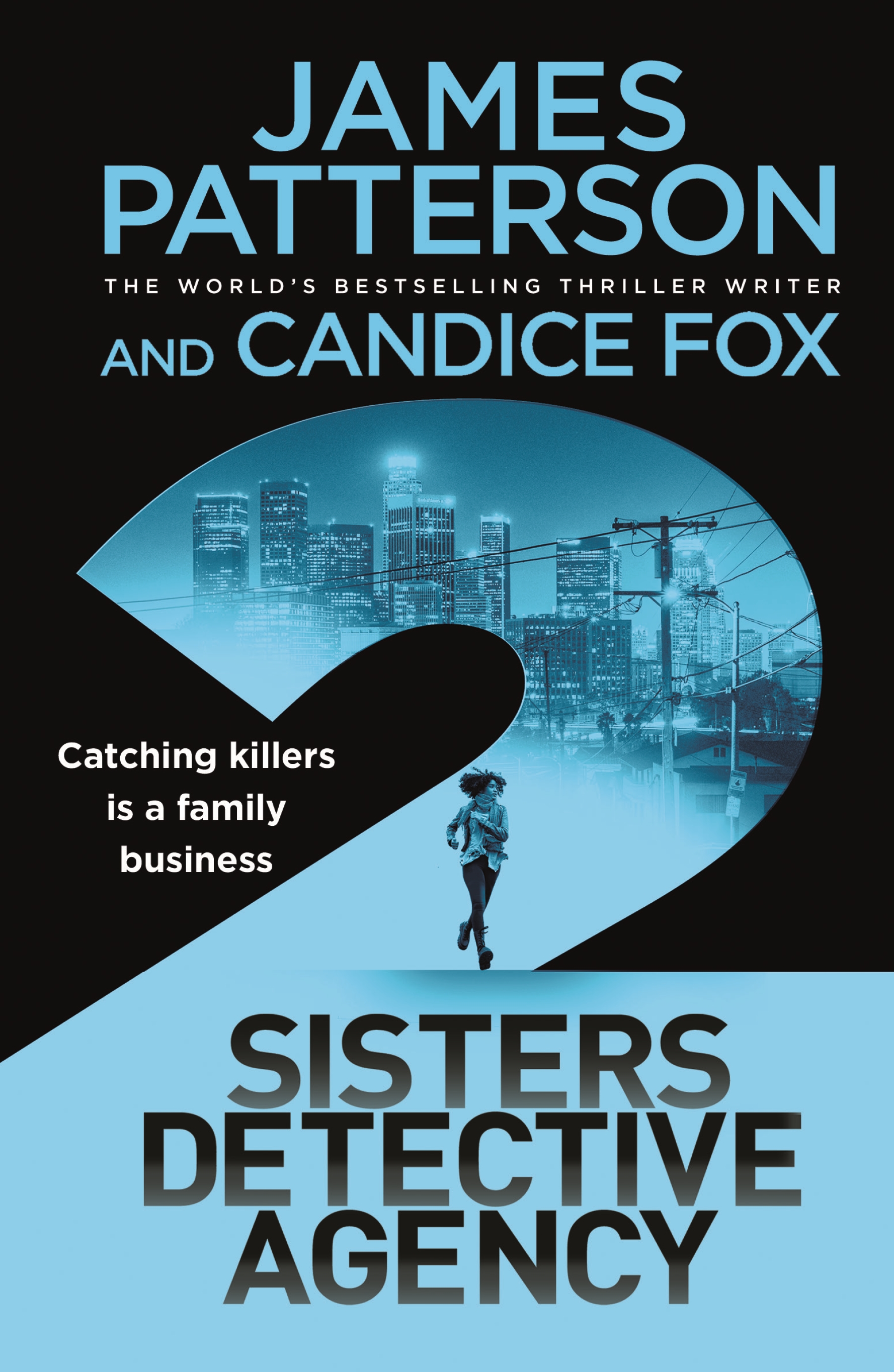
2 Sisters Detective Agency by James Patterson and Candice Fox

2 Sisters Detective Agency Cover

Publisher: Century (Trade Paperback – 28 September 2021)

Series: Standalone/Book One

Length: 382 pages

My Rating: 4.5 out of 5 stars

Amazon     Book Depository

The powerhouse crime fiction team of James Patterson and Candice Fox returns for 2 Sisters Detective Agency, an intense and clever novel that sets two unlikely protagonists on a dark, character-driven case.

In recent years crime fiction icon James Patterson, best known for his Alex Cross novels and other bestselling series, has been collaborating with a range of talented authors to produce a vast library of crime fiction, murder mystery and thriller novels.  These range from major series such as The Women’s Murder Club to multiple standalone novels such as Lost (co-written by James O. Born) which I read last year.  These collaborations have allowed Patterson to release multiple books each year; including several in 2021 (examples include The President’s Daughter, which was co-written with Bill Clinton, or The Noise, which was co-written with J. D. Barker).

This latest book was co-written with Australian author Candice Fox, a writer whose crime fiction novels I have been rather enjoying over the last couple of years.  Fox is a well-established author who first made her mark with her Archer and Bennett murder mystery series set in Australia.  Since then, Fox has written several other novels, including her Crimson Lake series, and two standalone books, Gathering Dark and The Chase, both of which I had a wonderful time reading.  Fox has also previously collaborated with James Patterson several times to write the intriguing Detective Harriet Blue series, another interesting Australian crime series.  2 Sisters Detective Agency will be the fifth novel written by the team of Patterson and Fox, and it serves as an excellent standalone read with potential to start a great new series.

Rhonda Bird is a criminal defence attorney in Colorado, specialising in helping young offenders and juvenile delinquents being crushed by the criminal justice system.  A strong and independent figure, Rhonda is unprepared for the call informing her that her estranged father has died, especially as his death brings with it certain caveats that will change her life forever.

Travelling to Los Angeles, Rhonda discovers that despite abandoning her years before, her father has decided to leave behind two major surprises.  The first is his shady private detective agency; the second is a teenage half-sister she never knew existed named Baby.  Reeling from these revelations, Rhonda attempts to bond with the rebellious and strong-willed Baby, while also trying to determine what shady actions led to her father concealing a massive stash of cash in his office.  As Rhonda attempts to deal with both these strange circumstances, she suddenly finds herself drawn into a case when a young man walks in, claiming he was abducted.

The young man is a member of a teenage group of self-serving vigilantes, who specialise to bringing their own violent brand of justice to anyone they feel crosses them.  However, when their latest spree of terror goes horribly wrong, they suddenly find themselves on the wrong side of a violent former assassin, determined to get revenge.  As Rhonda and Baby start to investigate, they find themselves caught between a desperate group of violent teens and a skilled killer, neither of whom are going to have any trouble putting a bullet in two interfering sisters.  Worse, the Bird sisters are soon targeted by the Mexican cartel, who are determined to reclaim the money stolen by their father.  Can Rhonda and Baby survive their first case, or will these two sisters end up dead before they even get to know each other?

This was an outstandingly entertaining novel that takes the reader on a wild and addictive ride.  Patterson and Fox have come up with a pretty awesome story in 2 Sisters Detective Agency, and it was one that I had an extremely hard time putting down.  I ended up getting through this cool book in several intensive sessions, and I ended up finishing off the final half in one fun-filled night.  2 Sisters Detective Agency is an interesting and exciting crime fiction read told from multiple character perspectives and containing an entertaining and accessible character driven story.  Written as a standalone novel, this book also serves as a potential opening to a whole new Patterson/Fox series focused around some unique and compelling characters.  I really liked how this book was composed, with a large collection of short chapters.  These short chapters not only ensure that the author keeps the story nice and concise, but it also serves to keep the audience engaged, especially if they know that the next chapter only has a few pages in it.  It also helps that this is a pretty non-stop action novel, as the various characters are constantly in the midst of something very interesting, such as attempted murder, psychotic planning by rich teens, or near-fatal family bonding.

The authors do an amazing job of setting up everything really quickly in this book, with all the major storylines starting out in short order.  This includes the introduction to the Bird sisters, the preparation surrounding the teenage gang known as the Midnight Crew, and the start of the former assassin turned parent, Jacob, as he starts his mission of vengeance.  Once everyone has been introduced, all these storylines start off at the same pace, with the short chapters and multiple perspectives ensuring that readers are constantly updated with what is happening in the various storylines.  Rhonda and Baby’s storyline forms an entertaining and relatable half of the novel, and it was a lot of fun seeing these very mismatched siblings meet for the first time and eventually start to work together.  Their investigation into the other major storyline is only a small part of their initial narrative, with a bigger focus initially placed on their relationship and their attempts to deal with some murderous cartel members.  While I did enjoy the Bird storyline, I ended up having a lot more fun with the Midnight Crew vs assassin storyline.  This is a more intense and exciting narrative thread, and there are some outstanding moments involving this single-minded assassin taking apart the group of entitled teens one at a time.  However, this storyline really does not go as you would expect, especially as one of the teenagers really cannot be considered helpless.

I had a lot of fun with both cool storylines, and I felt that they really complemented each other.  While these two storylines have some crossover throughout the book, they really don’t join up until two-thirds of the way through, especially in the lead-up to a couple of epic showdowns.  I really liked the way in which both storylines ended, although the big and brutal confrontation at the hospital was pretty exceptional.  The story ends up in a rather cool place, and leaves the novel open to a potential sequel, which is something I would be quite eager to see.  I absolutely loved how this awesome story unfolded, and Patterson and Fox really came up with something special here.

One of the best parts of 2 Sisters Detective Agency were the awesome and distinctive group of characters featured throughout it.  Thanks to the excellent use of multiple character perspectives, the reader is given an up-close view to several of the more interesting members of this cast, and you quickly get drawn into their compelling arcs, even though you shouldn’t get too attached to some of them.

The main character is Rhonda Bird, the maverick criminal defence attorney who travels to Los Angeles to sort out her estranged father’s business, but then gets stuck minding a teenage half-sister.  Even though she only appears for around half the novel, Rhonda is set up as the central protagonist of 2 Sisters Detective Agency, especially as her chapters are the only ones told from the first-person perspective.  There are a lot of interesting things about Rhonda, especially as the authors have gone out of their way to make her as unique and memorable as possible.  Rhonda is described as a larger woman, who is obese but also extremely well-muscled, able to bench 350 pounds.  In addition, she has bright pink hair, outrageous clothes (which she wears in court), tattoos, a daring attitude, daddy issues, and destructive combat abilities.  While I would say that so many odd distinctive features might be a bit over the top (if she had any more tawdry quirks, she could open up a tawdry quirk shop), it actually ends up working really well, much to my surprise.  Despite how strong her unique features were layered on, I quite liked this distinctive character and the way she takes care of business and gets involved in any case that could potentially involve children in trouble.  Add in her massive family drama, especially as she nearly meets her match in Baby, and you have quite an interesting character who ended up being the emotional heart of this deeply exciting narrative.

Baby Bird is the wildly independent teenager who, after suffering through the sudden death of her father, is forced into the care of an older sister she never knew.  I wasn’t the biggest fan of Baby when the book started, especially as her attitude and demeanour were that of an over-exaggerated and stereotypical disrespectful teen.  However, she did grow on me as the story progressed, thanks to her keen detective insight and slowly developing relationship with her sister, which is what the authors probably intended.  Baby ends up being a lot more complicated than you would imagine, and you swiftly see that she badly messed up by her father’s lax parenting and the sudden loss of the only family she knew, and this makes for some intense and moving dramatic moments.  If this novel continues into a major series, I have a feeling that Baby is going to develop the most, and I would be quite interested in seeing that.

The rest of the characters in this novel are also exceeding distinctive, with several outrageous and over-the-top figures who help to amp up the entertainment factor of this fun novel.  These include the members of the Midnight Crew, a group of violent, rich teenagers who get their thrills breaking into houses and assaulting the residents to settle their petty grudges.  The members of the Midnight Crew are essentially a more psychotic and deranged version of the Bling Ring, and Patterson and Fox really spend time portraying them as exceedingly spoiled rich kids, more concerned with status and thrills than ethics (with one exception).  Out of all the members of the Midnight Crew, easily the best is their leader, Vera.  Vera is the entire driving force behind them, and the authors do a really good job of building her up throughout the novel, especially as she is far more psychotic and murderous than you would expect.  The entire storyline around her is exceptional, and it opens some interesting narrative threads that could be explored in any future entries in this series.  I also really liked the assassin character, Jacob, who gets violently drawn into the Midnight Crew’s obit.  The authors do a great job with Jacob, and I deeply appreciated their portrayal of him as a former killer who is dragged back into his former life and has very few regrets about it.  Finally, I must highlight the fun Dr Perry Tuddy, a world-renowned chemist who keeps getting kidnapped to make drugs. The entire storyline around Tuddy is pretty hilarious, especially as he has developed a weird fetish for getting held captive, the explanation of which makes for one of the weirdest and most entertaining scenes in the entire book.  I had a lot of fun with all these characters, and they helped turn 2 Sisters Detective Agency into something special.

Overall, 2 Sisters Detective Agency ended up being an amazing and deeply compelling read that I found to be particularly addictive.  The brilliant team of James Patterson and Candice Fox really did a great job with this clever book, and I still cannot believe how much I enjoyed its fantastic story.  I really loved the unique narrative and characters contained within this novel, and I hope that this amazing team will strongly consider providing us with a sequel to this cool and captivating read.

Amazon     Book Depository

The Colonial’s Son by Peter Watt

The Colonial's Son Cover

Publisher: Macmillan (Trade Paperback – 26 October 2021)

Series: The Colonial Series – Book Four

Length: 367 pages

My Rating: 4.5 out of 5 stars

Amazon     Book Depository

One of Australia’s best historical fiction authors, Peter Watt, returns with The Colonial’s Son, the first book in a new series that follows on from his exceptional Colonial trilogy.

Peter Watt is a fun and talented author whose work I have been deeply enjoying over the last few years.  Watt specialises in historical fiction novels with a focus on Australian characters and has so far written three great series.  This includes his long-running Frontier series, which followed two rival Australian families throughout the generations as they got involved in some of the defining moments of Australian history (check out my reviews for While the Moon Burns and From the Stars Above).  He also wrote the fantastic Colonial trilogy that followed an Australian blacksmith who joined the British army as an officer during the mid-19th century.  This was an amazing and action-packed historical series, and featured three great books, The Queen’s Colonial, The Queen’s Tiger and The Queen’s Captain.  Watt’s most recent novel, The Colonial’s Son, is a direct sequel to the Colonial series, set several years after the conclusion of The Queen’s Captain.

Sydney, 1875.  After leaving the army and returning to Australia, former British army captain, Ian Steele, better known by the moniker his troops gave him, the Colonial, has settled down and started a successful business empire.  Now the father of three children, Ian is hoping for a quiet life, but is still facing several problems, including the fact that his oldest son, Josiah Steele, is determined to follow in his footsteps and join the British army as an officer.

When an old friend from his army days requests his help, Ian takes Josiah to Queensland to visit the notorious goldfields near the Palmer River.  There, Josiah gets his first taste for action as he and his father find themselves beset by bushrangers, hostile Indigenous tribes and warring Chinese criminal organisations.  Despite experiencing the terrors and tragedies of combat, Josiah is more determined than ever to join the army and travels to England to enrol in a prestigious military academy.  However, rather than gaining a formal training, he is immediately drafted into England’s latest war as a junior officer.

Travelling to Afghanistan, Josiah and his men engage in a series of bloody battles to hold onto the dangerous land for the empire.  Gaining the attention of his commanders, Josiah is chosen for a different sort of mission and sent to the newly united Germany where an old friend may hold the answer to the future of British/German relations.  Back in Australia, Ian Steele finds himself fighting a new enemy, one whose insidious ways could bring down everything he has struggled to build.  Can Ian survive this latest threat, especially when it drives him to do the unthinkable, and will Josiah be able to live up to the impossible military legacy of the Colonial?

This was another exciting and very enjoyable novel from Watt, who has proven himself one of the best authors of Australian historical adventure novels.  The Colonial’s Son is an amazing sequel to Watt’s prior series, and I really enjoyed seeing all the characters, both new and those from the prior series, engage in this latest series of adventures.  I ended up getting through this entire novel in one day, and I had a wonderful time reading it.

This latest novel has a very Watt narrative to it, utilising his typical style of multiple character perspectives to tell a compelling overarching tale of adventure and intrigue.  The Colonial’s Son primarily follows new protagonist Josiah and previous protagonist Ian as they find themselves in all manner of dangerous situations, together and separately.  This includes facing dangers and criminal conspiracies out in the goldfields, deep personal attacks in Sydney, or the various battles and political intrigues Josiah encounters once he joins the army.  At the same time, multiple other perspectives from side characters are utilised to enrich the narrative, with everyone from villains, love interests and friends adding to the story.  Watt tells a very interesting tale in this novel, combining a coming-of-age tale with the dynastic style of his previous Frontier books, and I really appreciated the way in which the author continues several storylines from the previous trilogy.  The combination of military action, criminal activity and intrigue makes for quite a fun narrative and The Colonial’s Son proves to be extremely addictive and easy to read.  I loved the many intense fight sequences featured throughout this novel, and Watt has a real flair for bringing brutal battles to life.  While fans of the Colonial trilogy will probably get a bit more out of this book due to the connected storylines, The Colonial’s Son is very accessible to new readers.

Just like he has done with all his prior novels, Watt makes sure that The Colonial’s Son features a range of intriguing and dangerous historical locations serving as fun backdrops to this awesome story.  There is a bit of a time skip between this novel and the previous Colonial trilogy, which opened up some different wars and settings for Watt to explore.  I particularly enjoyed the scenes set in the goldfields of North Queensland, a particularly grim and unforgiving bush setting full of fun antagonists.  The second half of the novel contains several other historical locales, all of which are shown in quick succession.  This includes Victorian London, Afghanistan, Germany and even Africa, all of which are the setting for some form of conflict.  The scenes set in Afghanistan during the British occupation of this land are very interesting, especially when you consider contemporary events, and there are some noticeable similarities between the historical conflict and more recent battles.  There is also a very fascinating look at Germany, which in 1875 had only just recently been unified into a single country with a more militaristic outlook.  Watt also ensures that The Colonial’s Son contains several hints about future conflicts that the protagonist may find himself involved in.  For example, the inclusion of several prominent Chinese characters in the first half of the novel will probably result the characters getting involved in the Boxer Rebellion, which would be pretty fascinating.  Overall, there are some great historical settings in this novel, and I cannot wait to see what conflicts the characters venture into next.

Watt makes sure to feature a ton of intriguing and memorable characters throughout The Colonial’s Son, each of whom adds some interesting details to the story.  This latest novel contains a great combination of new characters and protagonists from the Colonial series.  I rather enjoyed this cool mixture of characters, especially as you get to see new protagonists develop, while also learning the fate of the surviving characters from the original trilogy.  I particularly appreciated seeing more of original protagonist Ian Steele, and it was fun to see what happened to him after all his adventures in the Colonial books.  I was honestly surprised how much of a focus Ian got in this new trilogy, but I wasn’t complaining too much as I had gotten invested in his development in the original trilogy.  New protagonist Josiah also proved to be a great addition to the plot, even if there are a lot of similarities between him and the younger version of his father from the previous trilogy.  It was kind of fun to see history repeat itself, and I like the interesting developments that occur around Josiah attempting to live up to the legacy of his father, while also making all the same mistakes he did.  There were some other fun new characters featured in this book, including a charismatic young man of Chinese descent on the road to becoming a revolutionary and a young German countess who Josiah befriends.  I also appreciated some of the compelling and unlikable antagonists featured in the novel, as Watt has a real talent for writing scummy villains for the reader to root against.  I deeply enjoyed getting to know this new batch of characters, and I look forward to seeing what happens to all these excellent figures, both new and existing, in the future books.

With his latest novel, The Colonial’s Son, Peter Watt continues to highlight just why he is the leading author of Australian historical adventures.  Featuring an incredibly fun and action-packed plot, The Colonial’s Son does not slow down throughout its entire length, and readers are treated non-stop battles and intrigue.  I loved how this latest novel continued the cool storylines from Watt’s Colonial series, and I cannot wait to see what battles and character developments occur throughout the rest of this series.

Amazon     Book Depository

Aurora’s End by Amie Kaufman and Jay Kristoff

Aurora's End Cover

Publisher: Allen & Unwin Australia (Trade Paperback – 2 November 2021)

Series: Aurora Cycle – Book Three

Length: 493 pages

My Rating: 4.5 out of 5 stars

Amazon

The all-star team of Australian authors Amie Kaufman and Jay Kristoff present the third and final novel in their epic Aurora Cycle series, with the intense and clever young adult science fiction novel, Aurora’s End.

Over the last few years, I have been deeply enjoying the outstanding partnership of Amie Kaufman and Jay Kristoff.  Both Kaufman and Kristoff are accomplished authors, with several independent series to their name, such as Kristoff’s Lifel1k3 series (make sure to check out my review for the second book, Dev1at3).  However, I think that some of their strongest work has been together, as Kaufman and Kristoff have previously co-authored the acclaimed The Illuminae Files trilogy.  Their latest collaboration, The Aurora Cycle, has been a particularly amazing young adult science fiction series, and I have been really enjoying its cool story.

The Aurora Cycle novels are set in a far future when humans have expanded out into space and encountered a range of different alien species.  Peace between these species is kept by the Aurora Legion, an intergalactic collation of peacekeepers, made up of teenagers of various species (a slightly more hormonal Starfleet, slightly).  The series follows Squad 312, a group of misfits brought together thanks to the arrival of the mysterious Aurora O’Malley.  Auri is a girl out of time, who was awoken by the squad after centuries frozen in a colony ship and found herself gifted with dangerous psychic powers.  The first book in this series, Aurora Rising, introduced the squad and saw them thrust into the midst of a galactic conspiracy, as a race of plant-based aliens, the Ra’haam, who are plotting to assimilate all life, frame them as terrorists.  The second novel, Aurora Burning, expanded on the threats, the conspiracies, and the character drama, and ended with a massive cliffhanger, with all the surviving members of Squad 312 in great danger and the fate of the universe on the brink.

Following the terrible battle near Earth between the human and Syldrathi fleets, the planet-destroying superweapon was fired, but nothing turned out as expected.  Now, the various members of the galaxy’s last hope, Squad 312, have been flung throughout time.  Scarlett, Finian and Zila have been blasted back into the early days of Earth’s intergalactic travel, when there is no Aurora Legion, no friends, and a ticking clock of doom as the mysterious station they arrived at keeps blowing up.  Subsequently, Auri and Kal arrive years in the future, where the Ra’haam have won, and all hope seems lost.

Trapped in a time loop, Scarlet, Fin and Zila will initiate a desperate plan (again and again) with a new friend, but their mission may end up having unimaginable consequences.  While in the future, Auri and Kal are trapped with the only weapon that can end the Ra’haam threat, if they can get back to the present.  Forced to team up with the most dangerous being in existence, Kal’s genocidal father, Caersan, Auri and Kal embark on a dangerous mission through the Ra’haam controlled future with some unexpected help.

Back in the present, Squad 312’s leader, Tyler Jones, is also running out of time.  Still branded a fugitive by the entire galaxy, Tyler is the only person who knows that the Ra’haam are making their move to destabilise the various governments of the galaxy to start their invasion.  Forced to work alone and against the odds, Tyler needs to travel back to the one place he considers home, the highly secure Aurora Legion headquarters.  All three of these teams will need to survive impossible odds if they are to complete their missions and get back home.  But even if they succeed, can this ragtag team of teenagers really save the entire galaxy, or is the age of the plant-based parasite about to begin?

This was an outstanding novel from Kaufman and Kristoff that served as an excellent and captivating end to this impressive series.  Kaufman and Kristoff really went all out here with Aurora’s End, producing a complex and entertaining narrative that separates out the various characters and presents them with impossible temporal obstacles.  I deeply appreciate the clever narrative that the authors wove around these compelling characters, and it ended up being an exceptionally fun and enjoyable young adult science fiction book that I powered through in two days.

I absolutely loved the cool story of Aurora’s End, not only because it was really thrilling and fast-paced but because it was so ambitious.  I cannot think of another trilogy where, in the final entry, the authors decide to suddenly embark on massive time-travel adventure, with an intense narrative split across three vastly different time periods.  However, it works incredibly well, as Kaufman and Kristoff produced some epic and exciting storylines that remain mostly separate throughout the entirety of the book.  All three storylines are very distinctive, and all of them are pretty fun in their own unique way.  The storyline set hundreds of years in the past is an extremely entertaining event that sees three point-of-view characters trapped in a slowly devolving time-loop that ends every time one of them dies.  The characters are forced to work through an exploding, high-security station to find a way to travel back in time, with a substantial number of hilarious deaths and mistakes along the way.  The storyline in the present follows the Squad’s leader as he attempts to stop the entire alien invasion by infiltrating the most secure location in the entire galaxy without his squad.  Finally, you have the storyline in the future, which is an emotional and powerful post-apocalyptic narrative that sees Auri and Kal forced to contend not only with a hostile galaxy completely taken over by the Ra’haam but also with Kal’s insane and manipulative father.

I felt that all three of these storylines worked incredibly well, and each of them had their own appeal.  I honestly have a hard time faulting any of these distinct storylines, and it was one of those rare occasions in a split-storyline novel where there wasn’t a single character or timeline that I was a little less excited to read about.  If I had to choose a favourite, it would be the storyline set in the past, mainly because I loved the fun opportunities that only a time-loop story can present.  All three storylines were incredibly rich and compelling, and the authors did a good job of layering drama, excitement, character growth and humour through each of them.  While they were mostly separate from each other, the overlapping elements worked incredibly well, and the storylines ended up coming together perfectly towards the end.  The authors also do a good job wrapping up a lot of the unexplained story elements from the previous novels, with certain mysterious events and McGuffins finally revealed in their entirety.  This results in a big and epic finale where all the remaining characters are reunited to face the final threat of the Ra’haam.  It was extremely cool to see all the unique story threads finally come together.  I did think that the authors got a bit too meta-physical in the finale, especially when it came to dealing with the big-bad, but this didn’t really disrupt my overall enjoyment of the story.  I absolutely loved this wacky, clever, and well-planned out narrative, and I am still deeply impressed with how well the entire time-travel story worked.

I have really appreciated the cool and enjoyable writing style that Kaufman and Kristoff utilised throughout the Aurora Cycle, and it worked incredibly well once again in this final book.  Just like with the previous novels, Aurora’s End is told utilising six split perspectives, with each of the surviving squad members going into the final book getting multiple chapters.  Not only do these multiple perspectives help to present a rich and complex character driven narrative but it also helps the reader to really get into the heads of the main characters.  Each part of the book told by a different character has its own unique feel to it, and you really get the sense of each of the characters’ personalities and experiences.  I also love the way in which Kaufman and Kristoff layer in the action and humour throughout the entire novel, with various fun scenes featured throughout.  The action scenes are very intense, and the authors do a great job of highlighting the crazy battles that each of the characters get involved in, whether it be massive space battles, deadly close-combat fights, or sneaky attempts to move through an exploding space station.  The authors also have a great sense of humour, with many fun jokes and observations that made me laugh multiple times, especially around the fun time-loop storyline.  This made Aurora’s End a very easy novel to get through, as the natural narration and fast-paced scenes ensures that readers can power through it quickly, and with little hassle at all.  Due to this being the final entry in a series, readers are encouraged to check out the first two Aurora Cycle novels first before reading Aurora’s End.  However, those readers tempted to start and finish he series here should still be able to enjoy the story as the authors have a very inclusive writing style, and the book also features a highly detailed “stuff you should know” section at the front (very useful for both new readers and those who need a quick refresher).

Just like the previous novels in this series, Aurora’s End is marketed as a young adult read, and I would strongly recommend it to this audience.  Younger readers will deeply appreciate the use of multiple complex teenage characters kicking ass and saving the world, and I think that the authors did a good job of capturing the teenage mindset in their various protagonists.  This was also quite a mature and positive read, with multiple examples of romantic relationships, complex issues, and great portrayals of LGBT+ relationships that will be appealing to the younger audience, especially as the authors do not try to talk down to their chosen readers.  Due to some of these mature elements, I would suggest that this is a more appropriate read for older teens, and this is a series I would have really enjoyed when I was first getting into fantasy and science fiction.  Despite its marketing towards the young adult audience, this is a series easily enjoyed by older readers, and I think that most science fiction fans will have a great time with this series, if they don’t have any objections to following teenage protagonists.  Overall, I think this book will appeal to a wide range of readers and is a particularly good series for teenagers looking for a fun adventure with relatable heroes.

The last thing I want to highlight abut Aurora’s End is the excellent characters featured throughout, especially protagonists Aurora, Tyler, Kal, Scarlett, Finian and Zila.  Over the course of the Aurora Cycle, the reader has had a wonderful time getting to know all the protagonists, all of whom have grown throughout the series, while also experiencing loss, heartbreak, betrayal, and devastating revelations.  I have deeply appreciated the impressive and realistic character growth featured within, and the authors have continued this throughout Aurora’s End, with some major character moments that helped to define all of them and shown how they have grown.  Unlike the previous novels that have focused on a couple of the characters a little more, there was a much more even spread amongst the characters, with each getting their moment in the light.  Indeed, thanks to the cool time travel elements, you get to see multiple versions of one protagonist, with an older version of this character becoming a supporting figure in one of the other storylines.  I deeply appreciated the various character arcs featured throughout this novel, and Kaufman and Kristoff go out of their way to make you run the full emotional gauntlet here.  These arcs include a more comedic one surrounding the sarcastic Finian and the perhaps oversexualised Scarlett as they explore their new relationship while the world continuously explodes around them.  At the same time, the socially awkward Zila has a more serious experience in the time-loop, even as she embarks on a doomed relationship with someone who lived hundreds of years before she was born.

The other three characters also have some major and moving character arcs, especially Aurora and Kal, who are trapped in a future where the Ra’haam won, and everything has been infected by them.  This is a particularly dark storyline, and these two protagonists go through a lot, especially as they keep witnessing all manner of death and destruction around them.  Their arc is further complicated by Caersan, Kal’s father, who has similar powers to Auri and used them to destroy Kal’s home planet.  This results in some major emotional moments, as Auri and Kal are forced to work with an unrepentant Caersan, while also trying to work out their own complex emotions.  Finally, I must highlight the great development at occurred with Tyler, the team’s leader, who, after spending two novels turning Squad 312 into the ultimate team and family, ends up by himself, forced to face literal ghosts from his past with none of his established support.  Tyler really suffers in this book, and you must feel sorry for everything he goes through, even if he does start a passionate, if exceedingly violent relationship with a warrior alien princess.  All of these character arcs are really impressive, and you will be moved by everything these fantastic heroes go through, especially as not all of them will come out of it in one piece.

With this fantastic final book, the team of Amie Kaufman and Jay Kristoff have brought their amazing Aurora Cycle series to an epic and impressive conclusion.  Aurora’s End was an outstanding novel that perfectly wrapped up this excellent trilogy with fun, flair, and exceptional action.  Featuring some amazing characters and a very clever time-travel based storyline, Aurora’s End was an incredibly fun novel that comes highly recommended.  I deeply enjoyed this epic novel, and I really hope that these two brilliant Australian authors team up again in the future for another compelling series.

Amazon

The Riviera House by Natasha Lester

The Riviera House Cover

Publisher: Hachette Australia (Trade Paperback – 1 September 2021)

Series: Standalone

Length: 452 pages

My Rating: 4.25 out of 5 stars

Amazon     Book Depository

Bestselling Australian author Natasha Lester returns with a powerful and intense historical drama that presents a multigenerational tale of love, loss, culture, and the horrors of the Nazi occupation of France, in The Riviera House.

Paris, 1939.  With the war about to start and fears of a Nazi invasion becoming more apparent, Éliane Dufort, a young art student who works part time at the Louvre, watches the staff store away the gallery’s most expensive artworks and begin to hide them throughout France.  Determined to survive the upcoming war, the last thing Éliane should have done was fall in love, however when she meets one of her brother’s friends, Xavier, she cannot help herself, and they soon begin a whirlwind romance.  However, with the Nazis right outside of Paris, Xavier leaves for England, breaking her heart.

With Xavier gone and most of her family killed by the Nazis as they tried to flee the city, Éliane vows to fight the invaders by any means necessary.  Her connection to the Louvre lands her a job working for the enemy in the vast warehouse the Nazis are using to store the artwork looted from France.  Working with the legendary Rose Valland, Éliane is tasked with recording every single piece of art that the Germans steal, as well as attempting to discover where they are being sent.  However, Éliane soon gains the unfortunate romantic attention of a powerful Nazi officer, while a returning Xavier, now a treacherous art expert working for Hermann Göring, threatens to destroy her cover.

Many years later, vintage fashion expert Remy Lang travels to the French Riviera and arrives at a beautiful house that was part of a mysterious inheritance from her unknown biological parents.  Hoping to escape from her intense grief at the loss of her husband and child, Remy soon becomes involved with a visiting family living at the neighbouring villa, including charming photographer Adam.  As she attempts to understand her feelings for Adam amidst her sorrow, Remy soon stumbles upon a shocking mystery when she chances upon a catalogue detailing artworks stolen from France during the war, which includes a painting that hung in her bedroom as a child.  Determined to get to the bottom of this mystery, Remy attempts to trace her past and the history of the unexplained painting.  But the story she uncovers is one of great tragedy and shocking revelations that will change everything Remy thought she knew about her past.

This was an outstanding and deeply impressive historical drama from Natasha Lester, who has previously written some great historical dramas, such as The Paris Secret and The French PhotographerThe Riviera House is a particularly compelling and intense novel that perfectly brings two separate timelines together into one moving narrative, while also focusing on two distinctive and complex groups of characters.  This results in a brilliant and moving read that is guaranteed to haunt you long after you finish reading.

Lester tells a deep and captivating tale in this novel that is moving, intense and very addictive to behold.  The author utilises a split timeline throughout The Riviera House, with one storyline set during World War II in Paris, while the other is based in the modern day and takes place in several locations, although primarily in the French Riviera.  The book jumps back and forth between these two timelines, with the speed of transition increasing the closer it gets to the conclusion.  Both storylines contain their own plot, characters, and interesting features, and they come together to form quite an intense overarching narrative.

The first storyline of The Riviera House is the World War II storyline, which follows the character of Éliane Dufort.  Éliane, after suffering several great losses because of the Nazi invasion, becomes embroiled with the French Resistance and soon gets a job working for the Nazis, assisting in their loot warehouse, and helping historical figure Rose Valland create her record of stolen works.  However, the story gets increasingly complicated as the book progresses, with Éliane torn between her remaining family, her love/hate relationship with the traitor Xavier, and her forced relationship with a powerful Nazi member who has fallen for her.  The entire story comes to a head in the closing days of the Nazi occupation, when Éliane is forced to risk everything dear to her, and soon encounters just how tragic the war is and how evil people can be, even those closest to you.

This part of The Riviera House is an amazing bit of historical fiction, exploring the history of the time while also featuring an emotional and moving tale of love, hope and courage.  I really connected with this half of the novel, due to the thrilling and intense story that shows a grim picture of the period and featuring some memorable moments.  The story of Éliane and her family is full of tragedy and suspense, and if you are looking for a happy read than you have come to the wrong place.  While I did see most of the major twists coming, I appreciated how this narrative came together, as well as the clever way it led into The Riviera House’s other timeline.  I also deeply enjoyed the unique historical aspects of this novel, particularly around the Nazis’ systematic looting of French art.  Lester really dove into this part of the war, providing a detailed account how the Germans stole the art, stored it, and eventually shipped it away as the war progressed.  This tale features several real-life historical figures who are worked into the plot extremely well and who add an extra layer of authenticity to the tale.  One of the most interesting historical figures is Rose Valland, the courageous art historian who risked everything to pull together a record of the looted artwork.  Valland, who has inspired characters in films such as The Train or The Monuments Men, was a fascinating character in this novel, and I liked how Lester tied Éliane’s story into that of Valland.  I felt that this examination of the Nazi art theft was both fascinating and cleverly utilised, and it helped to provide some extra power and intensity to the novel.

The other timeline in The Riviera House is based in modern times and follows Remy Lang, a fashion figure who is spending time in the French Riviera, trying to escape her grief over the tragic death of her husband and child, and soon meets some new people who help her move on.  This storyline was more of a pure dramatic tale and focuses on Remy’s grief, her new romance, and the friction brewing between the family she has just met.  I got quite attached to the potent emotional elements featured in this book, especially as Lester really focuses on the lingering impacts of grief, such as the guilt survivors feel when thinking about something new or considering moving on.  Add in quite a compelling mystery element to it, as Remy and her new friend Adam start investigating the connection that Remy had to the other story, such as her long-dead biological parents and several mysterious inheritances.  These connections to the storyline set in the past compliment the protagonist’s current issues and concerns extremely well, and it was really fascinating to see her work out how her life was shaped by the original protagonists many years before.

I ended up really liking both timelines within the novel, although I did prefer the storyline set in World War II due to its interesting historical research, complex characters riven by war, and terrible tragic moments.  I must admit that I am not usually the biggest fan of historical dramas that feature two separate timelines (it really is an overused device in historical dramas).  However, I think that it was utilised extremely well in The Riviera House, and the two separate storylines melded together into a fantastic overarching read.  I loved how Lester was able to provide subtle hints about the fate of the historical protagonists in the contemporary storylines, although the full revelations about them was often hidden and not revealed until later.  I also really appreciated finding out how the events of the World War II story led into the later plot, and the full truth about how everything occurred is not only great to behold in the historical storyline, but it also has some major impacts on the modern-day protagonist.  This really enhanced The Riviera House’s plot and the overall drama of the book, and it helped to produce an excellent overall narrative.

I also quickly wanted to highlight some of the cool and fascinating cultural elements that Lester slipped into her novel, particularly around art and fashion.  I already mentioned how much I enjoyed the interesting and in-depth examination of the Nazis’ looting and the plans to stop them, however, I also appreciated the way in which Lester examined the art itself, as well as the people who were fighting to protect it.  You really get a sense of the beauty and subtlety of the different artworks featured throughout the book, but more than that you also get to explore what makes people passionate for art.  This book contains several characters who appreciated the true value that this art had to themselves and the nation, so much so that they were willing to risk their lives for it.  This forms a major part of the historical storyline’s plot, and I think that Lester did a wonderful job exploring it.  In addition, the contemporary storyline features a compelling examination about the appeals of vintage fashion.  Lester, who has previously explored fashion in some of her past novels (for example, a major part of her previous novel, The Paris Secret, revolves around vintage gowns), did a good job explaining the current obsession with vintage fashion, as well as how people can make money off it.  While I usually care very little about any sort of clothing fashion, Lester’s descriptions proved to be very intriguing, and I found myself appreciating her obvious passion for the subject.  Both these cultural inclusions enhanced the story, especially as they were strongly related to the various protagonist’s motivations and obsessions, and I really appreciated they time that Lester took to feature them.

Overall, I felt that The Riviera House by Natasha Lester was an excellent and well-crafted historical drama with some powerful elements to it.  Lester did a wonderful job of crafting a compelling, multi-period storylines that combined historical and contemporary narratives into a single, moving tale.  I particularly enjoyed the cool focus on the Nazi occupation and art obsession, which resulted in a thrilling and very tragic tale.  The Riviera House is a highly recommended book and a must-read for all fans of historical drama.

Amazon     Book Depository