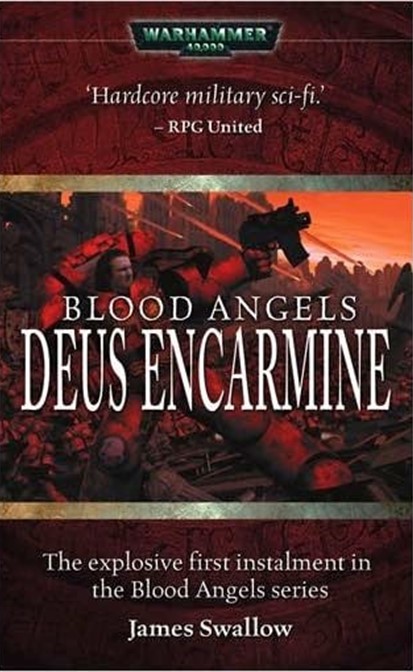
Throwback Thursday – Warhammer 40,000: Blood Angels: Deus Encarmine by James Swallow

Deus Encarmine

Publisher: Black Library (Paperback – 1 December 2004)

Series: Blood Angels – Book One

Length: 252 pages

My Rating: 4.5 out of 5 stars

Amazon

Welcome back to my Throwback Thursday series, where I republish old reviews, review books I have read before or review older books I have only just had a chance to read.  This is actually my second Throwback Thursday post today as I also put up a review for the Warhammer 40,000 novel Xenos by Dan Abnett.  However, I have been in an extreme Warhammer mood lately so I figured I would do a double feature and review the other Warhammer 40,000 book I finished this week, the first entry in James Swallow’s Blood Angels series, Deus Encarmine.

One of the main things that really draws me into the Warhammer extended universe is that it contains works from a ton of awesome authors who have experience across the writing spectrum.  For example, James Swallow is a highly regarded thriller author who also contributed his talents to several extended universes, including the elaborate Warhammer universe.  While many readers may be familiar with his entries in the Horus Heresy sub-series, Swallow’s other major contribution to the Warhammer canon is the Blood Angels books, which provide dark adventures for one of the most iconic Space Marines chapters, the Blood Angels.  I managed to grab the first two books in this series from a second hand shop a few months ago and I just finished off the first entry, Deus Encarmine, this week.  It proved to be a fantastic and dark read that showcases the Blood Angels in a whole new light.

Out of all the Space Marines chapters who faithfully defend the Imperium of Man, few are as revered, respected or feared as the legendary Blood Angels.  The genetic descendants of the angelic primarch Sanguinius, the Blood Angels are proud warriors whose martial prowess and resolve are known across the galaxy.  However, their strength comes at a great cost, as the traumatic death of Sanguinius millennia before during the Horus Heresy still lingers in their shared genes and has the potential to drive even the best of them mad.

As the Imperium once again finds itself invaded by the forces of Chaos, one of the Blood Angels’ greatest tests is about to begin on the planet of Cybele.  A grave world dedicated to the memory of fallen Imperial warriors, Cybele is brutally invaded by Chaos Space Marines of the traitor Word Bearers legion, who overwhelm the Blood Angels honour guard stationed there and a relief force from the Blood Angels battle barge Bellus.  Only an ambitious plan by a young Battle-Brother, Arkio, turns the tide against the forces of Chaos, a victory that is considered by many to be a miracle.

As the Blood Angels follow the Word Bearers back to their base of operations, the conquered planet of Shenlong, more miracles seem to surround Arkio, leading his fellow Space Marines to believe that he is the blessed reincarnation of Sanguinius himself.  The only Blood Angel who doubts is Arkio’s older brother, Rafen, who notices strange changes in his sibling that his fellows are too blinded to see.  Only Rafen can discover whether Arkio’s gifts are a Chaos plot or the divine will of Sannguinius, but will he find out the truth before humanity’s greatest protectors are torn apart from within?

This was an excellent and captivating Warhammer novel from Swallow that tells a bleak and compelling story of faith, betrayal and family.  Making full use of the grim Warhammer 40,000 universe and the focus on the iconic Blood Angels, Deus Encarmine set up this first part of this series perfectly and you come away from this book extremely satisfied.

I really enjoyed the complex and dark story that Swallow featured in Deus Encarmine, especially as there are multiple layers to the narrative that drag you in with clever twists and turns.  Starting quickly and effectively with an extended and bloody war sequence, you really get a sense of the Blood Angels’ determination and resolve, as well as some of the deeper elements that impact them.  However, the real story doesn’t begin until after the massive battle at the start, as the characters are drawn into a deadly plot based around the Blood Angels’ history and beliefs.  Thanks to the efforts of a manipulative Inquisitor, as well as their own arrogance and faith, the Blood Angels are led to believe that the young Battle-Brother Arkio is the reincarnation of their founder, and they decide to follow him on a doomed quest to a Chaos controlled planet.  The build up to the invasion is amazing, especially as you get to see the various enemy moves to confuse the Blood Angels, as well as the failed attempts by the protagonists to discover what exactly is going on with Arkio.  Everything comes to a head when they reach their target, and the massive and brutal battle that follows reveals some dark truths about the despicable plans to destroy the Blood Angels.

I really got drawn into this awesome and compelling narrative and I loved the many impressive layers that Swallow added to it.  While many readers will be drawn in by the detailed and bloody war sequences, the real joy is in the intense manipulations and deceits that the villains unleash as the protagonists find themselves confronted by their own beliefs in dark times.  Swallow makes perfect use of the grim setting and the interesting history of the Blood Angels to turn this into an intense read, and you really get drawn in as you attempt to discover the truth behind Arkio and the enemy plan.  The author features various character perspectives to really showcase the differing views of the Blood Angels, as wells as the moves of the antagonists, and I loved how everything unfolded.  Readers come away from Deus Encarmine very satisfied, although the bleak cliff-hanger ending makes you instantly want to get out and grab the sequel.  I also felt that this was a pretty good entry novel for those readers looking to get into Warhammer fiction, as Swallow expertly introduces key elements of the wider universe and showcasing just home grim and deadly the war between Chaos and humanity can be.

Unsurprisingly, this first book in the Blood Angels series spends quite a bit of time focused on the titular chapter of Space Marines, the Blood Angels, who proved to be as awesome as always.  The Blood Angels are one of the most iconic and beloved factions in the entire Warhammer universe.  While all Space Marines are compelling and contain great potential for exciting stories (see my reviews for Deathwatch: Shadowbreaker by Steven Parker and Space Wolf by William King), the Blood Angels are particularly complex and striking figures.  Deadly and honourable warriors, the Blood Angels have a religious obsession with blood which borders on the vampiric, as well as major psychic daddy issues from their dead progenitor that can potentially drive them mad.  All this has tugged at the imagination of generations of Warhammer fans and Swallow uses that to full effect in Deus Encarmine.  Not only do you see these deadly warriors in multiple battle sequences, but Swallow dives into the history, culture and spirit of the chapter, including all the factors that helped turn them into such efficient and unstoppable killers.  All the key aspects of the Blood Angels experience are artfully captured and utilised throughout Deus Encarmine and fans of this chapter will be particularly excited, especially as Swallow adds in a ton of references and homages to various parts of the lore and previous fictional releases (I spotted a couple from Bloodquest).  I particularly loved that Swallow featured a Death Company in one of the battles, which was so damn cool as you got to see Blood Angels inflicted with the Black Rage tear apart their enemies one last time.  I also really appreciated how Swallow utilised the past and trauma of the Chapter as a key story point, and their faith and dedication to their primarch is used against them by their enemy.  All these elements, and more, make Deus Encarmine a must-read for all Space Marines fans, especially those who love to field/read about the Blood Angels, and Swallow had a wonderful time showcasing this faction.

I had a great time with the characters featured in Deus Encarmine and Swallow perfectly set them up and then inserted them into the complex tale.  Nearly all the major characters are members of the Blood Angels, and they share a joint history of suffering and bloodshed that binds them together.  While their training and history ensures some similarities, Swallow ensures that the central cast had some key differences and personalities.  The main character of Rafen was particularly compelling, and Swallow puts an interesting history around him.  His constant battle between the needs of his chapter and his loyalty to his brother is a major part of the book’s drama, and it is hard not to feel for him when he is the only one able to see that something is going terribly wrong.  The character of Arkio was also a fantastic addition to the cast, and I loved his gradual change throughout Deus Encarmine from a humble warrior to a dangerous religious figure.  Other characters, including the arrogant Sanguinary Priest Sachiel, the grizzled and suspicious veteran Koris, and even the entertaining Word Bearers characters who acted in counterpart to the protagonists, were all well written and I loved the elaborate narrative threads that Swallow wove around them.  However, my favourite character in Deus Encarmine was probably Inquisitor Stele.  Initially shown as an effective, if arrogant, ally, it is slowly revealed that Stele is a manipulative and callous being who is leading the Blood Angels towards a darker objective.  Watching him carefully and effectively divide and control the various Blood Angels characters was really awesome and I loved watching his dark scheme unfold.  I deeply enjoyed how Swallow utilised his characters in Deus Encarmine, and it will be intriguing to see who survives the deadly events of the next book.

Overall, I felt that Deus Encarmine was a pretty epic read and a powerful addition to the Warhammer canon.  James Swallow has written an excellent and captivating read here that perfectly blended intrigue, betrayal and an intense war story with the complex history and culture of the iconic Blood Angels Space Marines chapter.  An intense and addictive read, I absolutely loved this first Blood Angels and I plan to check out the sequel, Deus Sanguinius next, especially as I want to see how Swallow ends this fantastic duology.

Blood Angels Cover

Amazon

Quick Review – Hunting Time by Jeffery Deaver

Hunting Time Cover

Publisher: Harper Collins (Trade Paperback – 22 November 2022)

Series: Colter Shaw – Book Four

Length: 419 pages

My Rating: 4 out of 5 stars

Amazon     Book Depository

In the mood for a twisty and clever thriller guaranteed to leave you highly entertained?  Then you should check out the recent release from best-selling author Jeffery Deaver, Hunting Time.

Due to starting on the genre a little later in life, I currently have a major backlog of famous crime fiction authors that I need to try to check out.  One of these writers was Jeffery Deaver, who has made a major name for himself over the years with books in his Lincoln Rhyme (which includes The Bone Collector), Kathryn Dance and John Pellman series, as well as several stand-alone novels.  His current series is the Colter Shaw novels, which follow unique private contractor and former survivalist Colter Shaw as he gets involved in a series of intriguing crimes.  Hunting Time is the fourth book in the series and features a compelling plot that really grabbed my attention when I first saw it.

Plot Synopsis:

 THERE ARE TWO FUNDAMENTAL RULES OF SURVIVAL.
#1: NEVER BE WITHOUT A MEANS OF ESCAPE.
Allison Parker is on the run with her teenage daughter, Hannah, and Colter Shaw has been hired by her eccentric boss, entrepreneur Marty Harmon, to find and protect her. Though he’s an expert at tracking missing persons–even those who don’t wish to be found–Shaw has met his match in Allison, who brings all her skills as a brilliant engineer designing revolutionary technology to the game of evading detection.

#2: NEVER BE WITHOUT ACCESS TO A WEAPON.
The reason for Allison’s panicked flight is soon apparent. She’s being stalked by her ex-husband, Jon Merritt. Newly released from prison and fueled by blinding rage, Jon is a man whose former profession as a police detective makes him uniquely suited for the hunt. And he’s not alone. Two hitmen are also hot on her heels–an eerie pair of thugs who take delight not only in murder but in the sport of devising clever ways to make bodies disappear forever. Even if Shaw manages to catch up with Allison and her daughter, his troubles will just be beginning.

SHAW IS ABOUT TO DISCOVER RULE #3:
NEVER BELIEVE ANYTHING.
As Shaw ventures further into the wilderness, the truth becomes as hard to decipher as the forest’s unmarked trails…and peril awaits at every turn.

This was an awesome and addictive read from Deaver and it is one that I had a wonderful time reading.  Deaver has come up with a very clever crime fiction story for Hunting Time and I swiftly got drawn into the multi-layered story of hunters and prey.  Told from the perspective of multiple characters involved in the case, you end up getting quite attached to the story as you see Allison flee from her former-cop husband, Jon, while Colter Shaw and other interested parties join the hunt.  I loved the elaborate chase that ensued for much of the book, and you find yourself getting drawn to many of the new characters, especially as Deaver adds in some quick, but comprehensive, character background and history.  While I was enjoying the story, I did think it was a bit one-note for most of the book as it seemed a simple revenge story that the protagonist was intervening in, although the various moves and countermoves of the participants was a lot of fun.  However, it turns out that this was intentional by Deaver as he was building up to a pretty good twist towards the end of the book, one that I did not fully see coming.  This big twist really changed the entire tone and structure of the story and you realise that Deaver set up this twist perfectly and allowed the reader’s assumptions to do the rest.  This twist not only proved to be surprising and memorable, but it also completely changed everything that you knew about the main characters allowing you to see them in a whole new light.  This ended up being a fantastically set out narrative and I was really impressed with the exciting and elaborate story that unfolded.

While I did have a wonderful time with the story, especially thanks to that twist, I did think that other parts of Deaver’s writing let Hunting Time down and impacted my overall enjoyment of the book.  In particular, there was something off with the dialogue and character interactions featured within the book and which really threw me at times.  Some of the dialogue in this book honestly didn’t resemble a normal or natural conversation between people, which often took me out of moment, derailing the pace and my attachment to the story.  I also had a hard time connecting with the protagonist, Colter Shaw, possibly because I haven’t read any of the previous books in the series.  While Deaver does reintroduce key parts of his backstory throughout Hunting Time, often to show how he developed his tracking skills, I found him to be a simplistic character, and his constant calculations of the odds and failed attempts to explain his business model were honestly irritating at times.  That being said, Deaver did ensure that Hunting Time re-captured the main elements of the character, which allows for this book can easily be read as a standalone novel without any need to dive into the previous Colter Shaw books, which was a big help for a new reader like me.

I did feel that several of the other characters introduced in Hunting Time made up for the lack of a well-written central protagonist, especially when it came to husband-and-wife Jon Merritt and Allison Parker.  Deaver painted a powerful picture around this couple, which included abuse, alcoholism and trauma, and the complex backstory he builds around them becomes a key part of the book.  This character backstory becomes more and more relevant as the story continues, and the true revelation of their past comes back to haunt them in ways they never realised.  Throw in a couple of entertaining hitmen, whose unique personalities also contain clues to one of the book’s big twists, and I ended up having a great time seeing how this story unfolded, even with some of the writing issues I mentioned before.

Overall, Hunting Time was a pretty fun book and it served as a good introduction to Jeffery Deaver for me.  The story itself is very well set out, and I am still really impressed with how Deaver was able twist everything around and keep me in suspense.  While I did notice a few technical issues, Deaver’s great storytelling and fantastic supporting characters ended up outweighing the bad and this came away as a very strong read in my opinion.  I will have to try and grab more of Deaver’s books in the future, especially if the next Colter Shaw novel sounds as fantastic as Hunting Time did.

Amazon     Book Depository

The Perfect Assassin by James Patterson and Brian Sitts

The Perfect Assassin Cover

Publisher: Century (Trade Paperback – 15 November 2022)

Series: Standalone/Book One

Length: 317 pages

My Rating: 4.25 out of 5 stars

Amazon     Book Depository

The team of James Patterson and Brian Sitts present one of the most unique thrillers of 2022 with The Perfect Assassin, a sharp, exciting read that pays homage to a classic pulp hero.

Readers of this this blog will remember that I only started reading the works of the iconic and exceedingly productive James Patterson a couple of years ago and I have so far enjoyed several of his more interesting books.  This includes Lost (co-written with James O. Born), 2 Sisters Detective Agency (co-written with Candice Fox), Blowback (co-written with Brendan DuBois) and one of my favourite books of 2022, Death of the Black Widow (co-written with J. D. Barker).  I have had a great time with each of these cool reads, and when I heard the plot of one of Patterson’s latest books, The Perfect Assassin, I knew I had to read it.  The Perfect Assassin is fifth collaboration between Patterson and fellow thriller author Brian Sitts and presents the reader with a really fun and intense story that had an intriguing connection to a classic adventure series from the past.

Dr Brandt Savage is an anthropology professor at the University of Chicago, leading a less-than ordinary life and often ignored by his colleagues and students.  His only real plan in life is to disappear to some exotic locale on an upcoming research sabbatical.  However, the sabbatical is going to become far more extreme than anything he imagined when he is kidnapped from the university campus and imprisoned inside an isolated and hidden warehouse.

Savage’s kidnapper is a beautiful and deadly killer, known only as Meed, who informs Savage that his life needs to change.  Forcing him to undertake an intense and extended physical and mental training regimen, Meed begins to mould him into a completely new person, one who is stronger, smarter, and more dangerous than anything Savage could ever imagine.  But even after six months of the most brutal training imaginable, Savage is far from ready for what is to come.

Meed is running from her own past and the dangerous people who turned her into a lethal killer.  To survive, she needs Savage’s help, especially if she can use her training and conditioning to bring out the genetics of his legendary ancestor, the original Doc Savage.  Savage is soon dragged into a new and terrifying world of killers, assassins and secret organisations, all of which are connected to his family’s terrible legacy.  Forced to work with Meed, who has her own link to his family, Savage begins a new adventure worthy of his ancestor.  But is he enough of a Savage to survive the experience?

This was a very fun and exciting novel from the team of Patterson and Sitts, and I am really glad I decided to read it.  The two authors have come up with an awesome story for The Perfect Assassin, which blends a thrilling modern tales with some interesting connections to the classic Doc Savage pulp novels.

The Perfect Assassin’s story starts in a very cool and intense way when Brandt Savage is kidnapped by the mysterious Meed and finds himself being brutally trained to bring out his best self.  The first half of the book sets up the entire novel very well, as it is split between chapters told from Savage’s perspective as he undergoes his training, and chapters from Meed’s perspective that either explore her childhood being raised in deadly assassin school or show her current missions against some of her former classmates.  This results in quite the compelling narrative, especially as you begin to appreciate the contrasts between Meed’s past and her current actions with Savage.  The authors introduce some big revelations about both primary characters and their ancestors that results in a complete change to the narrative format for the second half of the book, especially as there is a big focus on the protagonist’s connection to Doc Savage.  There the narrative is firmly set in the present with the characters working together on a sped up and action-packed chase around the world that ended up with several big confrontations.  Everything ends with a ton of action, and while the plot was wrapped up way too quick, you have so much fun getting there that you do not mind too much.

I felt that Patterson and Sitts’s writing style for The Perfect Assassin helped to enhance this awesome narrative, especially as everything was set up to compliment the fast-paced story.  The author’s use of short, sharp chapters really moves the story along.  At the same time, the blend of multiple perspectives, especially those shown from Meed’s childhood in the first half of the book, allows for them to efficiently tell a more complex tale, especially as it provides greater detail about Meed and her motivations in short and exciting order.  Throw in a ton of action, some quick, but well received character development, and a good selection of sudden twists and revelations and you will be flying through this book in no time at all.  I really appreciated the way that Patterson and Sitts set this book up and their style of writing, as well as the memorable narrative, made it very hard to put down, especially when you could keep seeing the end of the next chapter just around the corner every time you turned the page.

Easily one of the most interesting parts of this book is the fantastic connection that it bears to the classic pulp character of Doc Savage and associated media.  Patterson and Sitts’s unique narrative serves as a multi-generational successor to the original novels, with the plot focussing on multiple aspects of the Doc Savage lore and characters.  Not only are the main characters related to iconic Doc Savage figures, but the entire plot revolves around the consequences of Doc Savages origins, with aspects of it coming into play with the new Savage and his training, but also with the assassin school that Meed was raised in (which was such a cool setting btw).  Now, I have to admit that I am not particularly familiar with the Doc Savage media (it is well before my time), but it was very clear that the authors loaded The Perfect Assassin with a ton of homages to the original books, with references to characters, settings, plot lines and other Doc Savage elements.  At the same time, the authors seek to modernise the story to a degree, giving parts of the characters’ origins a darker and more morally ambiguous edge.  These Doc Savage elements were made pretty accessible to new readers, and even those people who aren’t that familiar with the old-school character should be able to follow what is happening (a quick online search probably wouldn’t hurt though).  Naturally, fans of the original pulp novels are going to have the most fun with this book, especially as they will be able to recognise all the references I missed.  I did think that they might have slightly overdone some of the Doc Savage elements towards the end of the book, with a Doc Savage inspired speech and certain super-human abilities making the story way sillier than it needed to be.  However, I ended up having a ton of fun with all these fantastic Doc Savage references in The Perfect Assassin, and I think quite a few readers will appreciate how Patterson and Sitts endeavoured to bring the one of the first superhuman characters into a whole new age.

Overall, The Perfect Assassin was one of the more unique and awesome thrillers of 2022 and I had an outstanding time getting through it.  The great team of James Patterson and Brian Sitts produced a fantastic and compelling story that quickly draws you in and keeps you interested with its action, amazing developments, and distinctive relationship to a historic piece of action/adventure media.  It will be great if Patterson and Sitts present some sequel to The Perfect Assassin in the future.  If they do, I will be sure to grab a copy, especially if I am in the mood for some easy-to-read excitement.

Amazon     Book Depository

Throwback Thursday – Warhammer 40,000: Ghostmaker by Dan Abnett

Warhammer Ghostmaker Cover

Publisher: Black Library (Audiobook – January 2000)

Series: Gaunt’s Ghosts – Book Two

Length: 10 hours and 15 minutes

My Rating: 4.75 out of 5 stars

Amazon

Welcome back to my Throwback Thursday series, where I republish old reviews, review books I have read before or review older books I have only just had a chance to read.  For my latest Throwback Thursday, I check out another Warhammer 40,000 novel with an epic entry from Dan Abnett’s classic Gaunt’s Ghosts series, Ghostmaker.

I have been in a real Warhammer 40,000 mood lately so I thought I would continue to explore some outstanding books from legendary Warhammer author Dan Abnett.  Abnett is one of the most prolific and highly regarded contributors to the extended Warhammer universe, having created a huge range of compelling series and unique standalone books, most of which are considered the gold standard of Warhammer tie-in novels.  One of his most significant contributions to the Warhammer 40,000 universe is the Gaunt’s Ghosts series, which follows a ragtag group of human soldiers as they are dragged from deadly battleground to deadly battleground.  Made up of 15 novels, a ton of short stories and some other intriguing inclusions, the Gaunt’s Ghosts is a very iconic series in Warhammer 40,000 lore, which has spawned some awesome spinoffs and stories.  I had an outstanding time reading the first entry in the series, First and Only, and I also recently read the prequel novel, The Vincula InsurgencyGhostmaker was another impressive early entry in this series, and I had a wonderful time listening to it last week.

Colonel-Commissar Ibram Gaunt and the men of the Tanith First-and-Only, also known as Gaunt’s Ghosts, are some of the toughest soldiers serving the Imperium of Man.  The only survivors of the now dead world of Tanith, the Ghosts bear a substantial grudge against the forces of Chaos, as well as a complex relationship with their commander who saved their lives by abandoning their planet.  Now deployed to the jungle world of Monthax, the Ghosts prepare for their next inevitable battle against the Chaos host.

As the Ghosts await their next confrontation, Gaunt walks the lines, reliving the events that made his regiment what it is, while also growing close to the unique individuals he commands.  Each member of the Ghosts has their own story, and all have been forged in the crucible of war alongside their fearless commander.  But when battle is joined again the Ghosts find themselves in a unique confrontation that pulls on their tragic history and forces them to relive the worst day of their lives.  Is this the event that will forge the Ghosts into a legendary regiment, or will the survivors of Tanith break when they are needed most?

Abnett once again showcases why he is one of the very best Warhammer authors out there with this brilliant second entry in the Gaunt’s Ghosts series.  Bringing together several fantastic narratives into one character-driven plot, Ghostmaker is a key and compelling entry in this wider series that I absolutely powered through in a couple of days.

Ghostmaker is a compelling and powerful Warhammer 40,000 novel that continues to explore the intriguing members of the Tanith First-and-Only regiment.  Abnett spins a unique narrative in Ghostmaker, as this book reads more like a short-story collection than a typical novel.  Broken up by several brief sequences in the present on Monthax, most of the book revolves around a series of self-contained, character-driven background stories that showcase the history of the regiment and its members.  This includes a dive into the tragic formation of the regiment and the death of the planet Tanith, and you also get a view of some of the earliest battles the Ghosts fought in.  As Ghostmaker continues, the next series of stories each contain a more focussed narrative that dive into specific members of the regiment.  These shorter stories usually showcase one of these focus characters’ key battles or moments as a Ghost, while also diving into their personality and personal histories.  This deep dive into the key characters really helps you bond with the cast of this series in a whole new way, and I liked seeing more of these unique figures.  Everything comes to a head in the final quarter of the novel, when the story is dragged back to the conflict on Monthax as the Ghosts advance into battle.  Several key plot threads and recurring characters from the previous short stories make a reappearance here, and I loved how Abnett was able to connect this storylines together to make a cohesive and captivating overarching plot.  The final sequences are loaded with some of the deadliest fights in the entire novel, while also resolving a ton of character arcs and personal storylines raised in the previous entries.  The end result is a powerful and compelling overall story that really drags you in while giving you additional insights into some of Abnett’s best characters.

I really appreciated how Ghostmaker came together, and Abnett really showed off his writing skill by combining these shorter stories together the way he did.  I especially enjoyed how the multiple short stories gave Ghostmaker various tones as the reader continued through it.  For example, while most of the stories featured battles and war, there were also some more subtle stories of politics and investigations.  Abnett also featured some dark psychological stories as well as some deeply personal and brutal survival tales.  This variation in narratives and settings gave the book an eclectic feel, but I think that was very appropriate considering the regiment that Abnett was writing about.  All the shorter stories contained within Ghostmaker were entertaining in their own way, although a few definitely stood out over the rest.  Each story was extremely well written, concise, and fast-paced, and any leftover narrative threads are clipped off in the final entry, so the reader isn’t left wondering about anything.  The book also features a ton of awesome battle sequences in nearly every chapter and Abnett has a great skill at showing the horrors the men face during their dangerous battles, especially when they go up against supernatural or horrific foes.  Abnett also presents this book as a gritty war novel, with many of the stories focusing on the damaged and traumatised common troops who have been dragged into a series of terrible situations.  I have often said that some of the very best Warhammer novels focus on the common human soldiers (for example Steel Tread or Krieg), and Ghostmaker was one of the better examples of this I have seen in Warhammer fiction.  You really can sense the characters pain through the various chapters, especially when reminded of their home, and this makes for quite an emotionally rich read at times.

As I have mentioned a few times above, one of the major strengths of this book, and indeed the entire Gaunt’s Ghosts series, are the outstanding characters that Abnett focuses his stories around.  Throughout the course of the series, Abnett has introduced a great core of complex central protagonists who you really grow attached to.  However, Ghostmaker perhaps gives the best look at these characters, as it showcases their histories while also chucking them into deadly and deeply personal situations.  You really grow attached to these protagonists as the book proceeds and Abnett crafts some outstanding and wildly entertaining narratives around many of the cast, which are really fun to read.

As with most books in the series, a lot of Ghostmaker’s plot is focussed on the central character of Colonel-Commissar Ibram Gaunt, the Ghost’s commander.  Abnett continues to paint Gaunt as a caring and charismatic leader who recognises the sacrifice his men have made and is determined to keep as many of them alive as possible.  Most of Gaunt’s personal history before the events of Tanith was covered in the last book, and Abnett doesn’t rehash that in Ghostmaker.  Instead, you get to see Gaunt’s actions during and after the fall of Tanith, and I loved the examination of the guilt and responsibility he feels for abandoning the planet.  While the first chapter of this book primarily focuses on Gaunt, he also appears as a major figure in all the other protagonist’s stories, and it was fascinating to see the other Ghost’s opinions of him, especially as many have both resentment and respect for him.

Ghostmaker also spends a ton of time exploring several other key Ghosts, and Abnett does an excellent job of perfectly utilising all these great characters.  There are some brilliant tales surrounding these figures, and many also appear as supporting characters in other chapters, with some storylines crossing over.  Naturally, some of the characters stand out a little more than others, due to having personal plots that were particularly fun or intense.  Colm Corbec, the regiment’s second-in-command, is a major figure throughout most of the book, and I liked how Abnett expanded on him and focused on his different leadership style to Gaunt.  The story surrounding the seemingly stupid Trooper Bragg was extremely funny, especially with the slow-burn reveal of the character’s deep cunning, and you must love how funny and likeable Bragg is.  The story around the Ghosts’ medical officer, Tolin Dorden, was also very good, as it not only highlighted his position as the oldest Ghost, but also his refusal to sacrifice a life.  Other highlights include the trippy story of ace sniper Hlaine Larkin, who loses his mind during a mission, or the intense and compelling tale of elite scout Sergeant Mkoll, whose keen senses serve him well in the most hostile of environments.

However, I felt that the best two stories in Ghostmaker revolved around the characters of Major Rawne and Brin Milo.  Rawne is a murderous and slippery character who bears a great deal of hate and disdain towards Gaunt following the destruction of Tanith.  His story sees himself and Gaunt trapped together on an ice planet, which forces the two to work together.  Seeing the hateful Rawne trying to work out whether to kill Gaunt in cold blood or resolve their differences another time, makes for some compelling reading, and Rawne is probably one of the most complex and intense figures in the series.  Milo on the other hand is Gaunt’s young adjutant and the only civilian who survived the destruction of Tanith.  Milo serves a unique position in the Ghosts, and I really appreciated how Abnett explored how the rest of the regiment views him.  Milo’s story was particularly good, as politics sees him getting investigated by an Imperial Inquisitor for potentially having psychic abilities.  The scene where Milo manages to outplay the Inquisitor during his interrogation is one of the best scenes in the entire book and it really shows you just how clever he is, while also hinting at a potentially deeper secret.  All these characters, and more, help to turn Ghostmaker into a particularly enjoyable and fun read and I was very glad that Abnett gave us a closer look at the main supporting cast in this novel.

I felt that Ghostmaker was a great addition to the wider Warhammer 40,000 canon, as well as a great entry in the Gaunt’s Ghosts series.  While it is the second novel in the series, readers can easily get into Ghostmaker without any knowledge of the prior books, especially as Abnett spends so much time exploring the characters and the unit’s history.  While some of the narrative is set after the events of First and Only, Abnett does a great job reintroducing any relevant elements again in Ghostmaker and you don’t need too much pre-knowledge to enjoy the plot.  Ghostmaker would also serve as an interesting entry point for those who aren’t familiar with the Warhammer 40,000 franchise.  Abnett makes his novel very accessible to new readers, and I liked how he carefully and subtly introduced key elements of the wider universe, mainly those that concern the common soldiers.  The continued expansion of the Sabbat Worlds Crusade made for an interesting background to the book, and Abnett introduces or references several factions or regiments here that will go on to have a bigger role in later novels.  For example, Ghostmaker introduces readers to the Royal Volpone regiment (better known as the Bluebloods), who serve as rivals to the Ghosts and who recently got their own novel.  I had an incredible time diving back into the Warhammer 40,000 universe in Ghostmaker, and Abnett did a great job of expanding this already elaborate universe.

As with most Warhammer novels I enjoy, I chose to listen to Ghostmaker’s audiobook version, which was an excellent way to dive into this compelling read.  The audiobook format really allows the reader to get transported into the middle of the epic fights that are the hallmark of this fantastic series, while also ensuring that the reader absorbs all the key information about the surrounding universe.  Coming in at just over 10 hours in length, this is an easy audiobook to get through quickly, and I tore through the Ghostmaker audiobook in short order.  It helped that Ghostmaker was narrated by the very talented Toby Longworth, who voices most of Abnett’s Warhammer audiobooks.  Longworth has an excellent voice that fits the intense, character-rich tone of Ghostmaker extremely well, and he can move the plot along at a fast and compelling pace.  In addition, he has a brilliant take on all the key characters featured within the series and he provides everyone with a unique and fitting voice.  He also has the fantastic ability to capture the emotions and personality traits of the various characters with his tones, and you really get inside their heads when he talks.  This was an outstanding audiobook and I would strongly recommend it as the best way to enjoy this amazing novel.

Overall, Ghostmaker was a fantastic and impressive read by Dan Abnett and I am really glad I took the time to read another Gaunt’s Ghosts novel.  Featuring a distinctive format and some amazing character-driven stories, Ghostmaker beautifully expanded on the groundwork Abnett laid down in First and Only and this serves as an excellent and powerful addition to the series.  I deeply enjoyed this book, and I can think of no better way to illustrate this than to mention the fact that the moment I finished Ghostmaker I immediately started listening to the other Dan Abnett audiobook I had loaded on my phone, Xenos.  I really cannot recommend this series enough, and if you are interested in trying out some Warhammer 40,000 fiction, then the Gaunt’s Ghost series is the perfect place to start.

Amazon

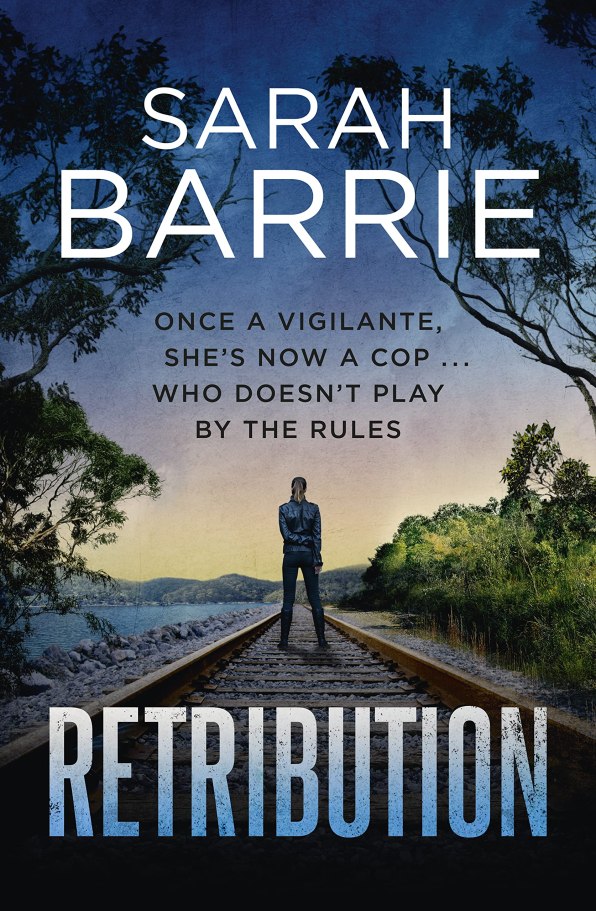
Quick Review – Retribution by Sarah Barrie

Retribution Cover

Publisher: HQ (Trade Paperback – 30 November 2022)

Series: Lexi Winter – Book Two

Length: 349 pages

My Rating: 4.25 out of 5 stars

Amazon

Australian author Sarah Barrie brings back her awesome vigilante protagonist, Lexi Winter, for another intense and dark crime fiction read in Retribution.

Earlier this year I was lucky enough to receive a copy of the 2021 Australian crime release, Unforgiven.  An amazing novel by a talented Australian author, Unforgiven told the story of a former child abuse victim turned effective vigilante, Lexi Winter, who used her skills as a hacker to hunt down abusers online and bring them to justice.  Initially keen to do her own thing, Lexi is forced to work with the police detective who failed her as a child when evidence at a series of murders suggests that the monster who ruined her childhood might still be out there.  Unforgiven ended up being a shocking and captivating read that made great use of its darker subject matter to produce an addictive narrative.  Unforgiven ended up being one of my favourite Australian fiction releases of 2021, and I have been keen to see how Barrie would follow this book up.  Luckily, I received a copy of her sequel, Retribution, a few weeks ago, and it proved to be an outstanding read and a worthy sequel to Unforgiven.

Plot Synopsis:

Once a vigilante, she’s now a cop … but she still plays by her own rules. A fast-paced, suspenseful thriller for readers of Candice Fox and Sarah Bailey.

Ace hacker, ex-prostitute, Jack Daniels drinker and part-time vigilante Lexi Winter returns, now working with the police – mostly – with a new enemy in the target and an old foe at the back of her mind.

Most probationary constables would baulk at chasing a drug dealer into a train tunnel in the dead of night. Not Lexi Winter. She emerges injured but alive, to face the wrath of her boss. Lexi may now be in uniform, but she has as much trouble with authority as ever, and is quietly using her hacking skills to investigate a notorious drug-dealing Sydney crime family with links to her old prey, the paedophile Damon Vaughn.

Meanwhile, Detective Sergeant Finn Carson investigates a death on a Sydney building site … which oddly enough, leads him to the picturesque Wondabyne station on the Hawkesbury River, and Inspector Rachael Langley oversees an investigation that could tie it all together. Lexi holds the key … if only she’ll toe the line …


Retribution
is an excellent follow-up to Unforgiven that provides the reader with an interesting continuation of the main character’s journey.  Starting out about a year after the events of the first book, Barrie immediately introduces a new element to the story by having Lexi now an official member of the New South Wales police.  However, despite her position, Lexi is the same reckless rebel who is using her spare time and hacker skills to mess with members of the infamous Hamill crime family, who are actively hiding her nemesis, the paedophile Damon Vaughn and his former police officer accomplice, Debbie Reynolds.  Her efforts soon tie into the work of her friends, Detective Sergeant Finn Carson and Inspector Rachael Langley, who are not only involved with the official search for Vaughn and Reynolds but are investigating the murder of a successful businessman in a Sydney building site that has connections to the main case.

Barrie features a ton of distinctive plotlines in Retribution, and I really appreciated how she was able to keep up the darker tone that was such a distinctive feature of the previous book.  The central focus on Lexi’s attempt to take down a notorious crime family was an awesome part of the book’s plot, and I felt that Barrie did a good job tying them into the previous book and making them a sensible continuation target for the protagonist.  While they weren’t as despicable as the original antagonists of this series, they proved to be just as dangerous, and Barrie did an amazing job building them up quickly and making them a major threat.  At the same time, the murder investigation that the other characters are involved in adds some fantastic mystery elements to the book.  Not only does this result in a very compelling investigation with additional bodies, but it also ties into the rest of the story extremely well, especially when it is revealed that the murders have connections to the Hamill family.  These two major storylines, as well as some interesting character development, blend well as the story continues and then end up becoming a fantastic joint case.  The Hamills prove to be extremely impressive villains with some deadly plots they unleash against the police, and I loved seeing the protagonist take on a family, rather than a single potential threat.  At the same time, the murder investigation slowly reveals a fantastically dark motivation that results in some great and memorable twists that I particularly enjoyed.  Everything pulls together for an explosive conclusion which not only wraps up this narrative extremely well but also sets up a great potential sequel that I am quite excited for.

There was some good character work in Retribution as Barrie carries over all the major characters from the first book and keeps developing her central protagonist.  As I mentioned before, the main character, Lexi Winter, goes through some major changes in this book as she moves from being a lone investigator to a member of the New South Wales police force.  However, she still maintains her rebel attitude and her determination to solve everything herself.  This, and her own deep trauma and desire for revenge, sees her attempt her own rogue mission against the Hamills, with some deadly consequences.  I felt that this was a good natural progression of Lexi’s character, especially as she finds herself relying on other people especially after experiencing even more trauma in this second book.  While I feel that Barrie is making some progress with Lexi, she still maintains a lot of rough edges, which I am sure will get addressed in the future.  I did think that the repetitive reckless actions did get a little tiring as the book continued, but it generally results in some excellent storylines.  The rest of the characters form an amazing supporting cast to Lexi, and there are a few interesting new characters that I really enjoyed.  I must admit though that I didn’t massively care about Finn’s personal issues regarding his ex-wife, and I felt it was a bit of a distracting story element.  I’m also not sure why Barrie introduced a hostile rivalry between Lexi and the new female member of the main police team, especially as it didn’t result in any major revelation or come to a good conclusion.  Apart from that, I had a great time with the characters in Retribution and I look forward to seeing what happens to them in the next book.

Sarah Barrie’s excellent dark Australian crime fiction series gets an outstanding second book in Retribution.  Combining some of the fantastic thriller elements from Unforgiven with a very clever murder mystery, Retribution continues the Barrie’s compelling narrative and results in a captivating and powerful read that will keep you hooked right up until the end.  I had an incredible time with Retribution and I can’t wait to see how this intense series continues in the future.

Amazon

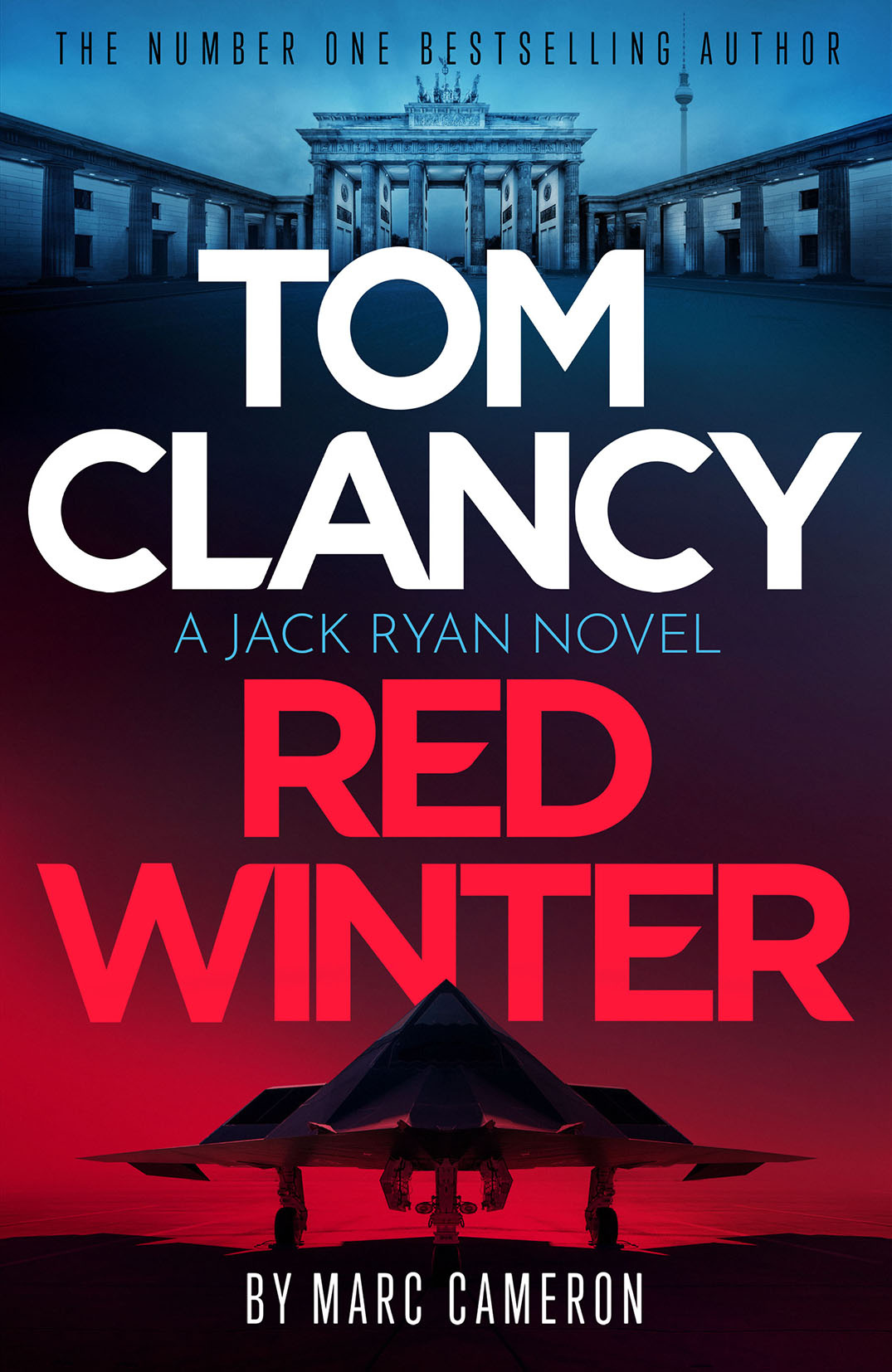
Red Winter by Marc Cameron (based on the series by Tom Clancy)

Red Winter Cover

Publisher: Sphere (Trade Paperback – 13 December 2022)

Series: Jack Ryan series

Length: 419 pages

My Rating: 4 out of 5 stars

Amazon     Book Depository

Prepare for another adventure from classic spy thriller character Jack Ryan as Marc Cameron once again visits Tom Clancy’s iconic universe for an amazing read with Red Winter.

Now, I am the first to admit that I have more than a few gaps in my reading knowledge, especially when it comes to some of the classic, long-running crime fiction or thriller series.  Perhaps one of the most significant of these are the works of Tom Clancy, whose books, particularly those featuring protagonist Jack Ryan, are very highly regarded and have resulted in many films and other adaptations.  The Jack Ryan novels have continued for years, even after Clancy’s death, with several authors contributing great new stories to the wider series.  Well, I am about to dip my toe into Clancy’s universe for the first time by checking out the new Jack Ryan novel, Red Winter.  Written by established thriller author Marc Cameron, who has already contributed several recent entries to the series, Red Winter was an intriguing and enjoyable read with some great spy thriller elements to it.

Berlin, 1985.  The crushing stalemate of the Cold War continues as the East and the West engage in their usual espionage games.  The most valuable piece on the board is an apparent Stasi source embedded deep within the CIA, providing invaluable information to the East Germany intelligence agency.  However, the espionage balance is about to tip once again, when a young American embassy worker is handed a note in mysterious circumstances, apparently from a high-ranking member of the Stasi who wishes to defect to the West with a trove of information.

Unwilling to trust the CIA team in West Berlin, the traitor requests that a new face journey to East Berlin to discuss his upcoming defection.  Forced to look outside the box of their usual operatives, the CIA decide to send Jack Ryan to make contact.  Accompanied by a talented agent and shadowed by a deadly CIA killer, Ryan begins the dangerous journey to East Berlin to determine the legitimacy of their new source.  However, there are few places more dangerous for a CIA agent like Ryan than East Berlin, and he soon finds himself surrounded by tricky foreign agents, deadly assassins and desperate informers, all of whom pose a dire risk to Ryan and his mission.

However, the plan gets even more complicated when an experimental US military aircraft crashes down in the Nevada desert, right in front of an undercover Stasi agent.  Securing a vital piece of military hardware, the Stasi agent flees across America, aiming for an extraction by his masters while the FBI, Air Force and local police hunt for him.  Desperately needing information on the Stasi agent in America before it is too late, Ryan must work hard to bring the defector to their side and find out where the fugitive is going.  But with the KGB, Stasi, and the CIA traitor moving in for the kill, can Ryan escape East Berlin with the information he needs, or will the stolen technology allow the East to once again heat up the Cold War?

Red Winter was an excellent and highly exciting spy thriller novel that takes readers back to the classic Tom Clancy setting of Cold War Europe.  Marc Cameron has produced a very entertaining and compelling read here, and I was swiftly sucked into the awesome story.  The narrative itself has a lot of moving parts to it as Cameron focuses on several closely related storylines or character arcs at the same time.  While much of the focus is on Ryan and his comrades as they attempt to infiltrate East Berlin and make contact with the defector, you also get familiar with several other great characters in the vicinity.  This included the CIA mole, an East German singer who is being abused by a Stasi agent, members of the various spy agencies working on both sides of the Wall, and a deadly American operative who is shadowing Ryan to keep him alive.  The book also shows the hunt for the fugitive Stasi agent in America, who is attempting to flee with the stolen military equipment.  This American part of the book is further split between different perspectives, with the reader seeing events from the eyes of both the Stasi operative and the FBI agent hunting them.

These diverse storylines come together extremely well, and I really liked the interplay of different characters and plot lines in the second half of the book.  There are some great storylines going on throughout the plot, with my personal favourite being the compelling fugitive scenes in America.  The sequences set in Germany are also very intriguing, especially as Cameron provides some excellent descriptions of tradecraft and the various counterplays by the spies, as both sides battle it out for espionage supremacy.  I really appreciated the dark dive into life within East Germany during this period, and the compelling looks at several East German characters who are attempting to survive added some intensity to the book.  There is also an excellent look at the traitor with the CIA and their complex position and their reasons for betraying their country are an excellent part of the plot.  While the first half of the book is pretty intense, everything kicks up a notch once Ryan and his colleagues arrive in East Germany.  There are a ton of destructive and high-impact action sequences here which really get the blood pumping and keep the story going at a very fast pace.  I deeply enjoyed the cool action sequences, especially as Cameron does a great job of writing them realistically, showcasing the talent of the professionals and Ryan’s lack of fighting ability.  There are a few good twists towards the end and Cameron keeps the conclusion hopeful, but dark, highlighting that there are very few heroes in the Cold War.  Red Winter was an amazing and very fun spy thriller, and I loved how this compelling narrative came together.

I also had a lot of fun coming into to this series as a Tom Clancy newbie.  My only experience with Tom Clancy and the Jack Ryan books comes from some of the film adaptations, such as The Hunt for Red October, Clear and Present Danger and Patriot Games.  However, I found that this was more than enough to enjoy Red Winter, and my lack of any real knowledge of Tom Clancy’s original books didn’t really hamper me at all.  While I am sure that I missed out on a bunch of clever throwbacks, Cameron did a great job of reintroducing all the key characters so that new readers can follow their storylines.  There are multiple references to some of the previous events that occurred canonically before the events of Red Winter, but none of them have any major impacts on the story, and I felt that any thriller fan could dive in here with a minimal amount of knowledge and still enjoy the fantastic story within.  Red Winter also apparently serves as a bridging novel between The Hunt for Red October and The Cardinal of the Kremlin, with Ryan meeting several of the supporting characters from The Cardinal of the Kremlin in advance here.  I felt that this was a very clever inclusion by Cameron, and fans of Clancy’s original work are going to love seeing some of the intriguing hints of the events that are to come.  This also ends up being the first canonical time that recurring character John Clark sees Jack Ryan, having travelled to Berlin to help him, although Cameron uses circumstance and training to make sure they don’t actually talk.  Personally, I thought this was a great introduction to the wider world of Clancy’s writings, and I will have to try and read some of his earlier works when I get a chance.

Overall, I had a wonderful time reading Red Winter and I really enjoyed Marc Cameron’s latest addition to Tom Clancy’s spy universe.  Cleverly adding to the well-established Jack Ryan series, Red Winter features some awesome spy action while perfectly showing off the dangers of Berlin during the Cold War for all spies and government agents.  Fast-paced, action-packed, and loaded with some classic Tom Clancy moments, Red Winter was an intriguing and captivating novel that will appeal to a wide range of readers.

Amazon     Book Depository

The Bullet That Missed by Richard Osman

The Bullet That Missed Cover

Publisher: Viking/Penguin Audio (Audiobook – 15 September 2022)

Series: Thursday Murder Club – Book Three

Length: 11 hours and 17 minutes

My Rating: 5 out of 5 stars

Amazon

Murder, comedy and the most badass team of investigators you are every likely to read about come together perfectly in the new Thursday Murder Club novel, The Bullet That Missed by Richard Osman.

Over the last three years, some of the most impressive and outright entertaining murder mystery novels have been part of the Thursday Murder Club series by British television personality Richard Osman.  Set in a luxury retirement village in the English countryside, the Thursday Murder Club books follow the adventures of four outrageous pensioners who spend their free time solving cold cases.  However, their lives get even more complicated when several murders occur around their village, and they endeavour to find out who committed them.  The series started with The Thursday Murder Club in 2020, which had an outstanding blend of mystery, great characters and humour, all of which came together in a perfect and deeply addictive read.  The Thursday Murder Club ended up being one of my favourite books, audiobooks and debuts of 2020, and I cannot rave about it enough.  Osman followed this first book up last year with The Man Who Died Twice, an excellent sequel that presents the reader with another great mystery, while also exploring the characters even further.  I had another amazing time with The Man Who Died Twice, and it also ended up being one of the best things I read all year, making my top books and audiobooks of 2021 lists.  Needless to say after the first two epic books, I have been very excited for the third Thursday Murder Club novel, and The Bullet That Missed has been one of my most anticipated reads for 2022 for a while now. 

After their last exciting adventure, Elizabeth, Joyce, Ibrahim and Ron, are continuing to solve murders in their spare time.  Their latest case sees them dive into an infamous cold case in which a young, highflying television reporter was murdered just before breaking a story on a major crime ring, with her body never recovered from the ocean.  Teaming up with the reporter’s famous presenter colleague, the Thursday Murder Club eagerly begin their investigation, hoping to shed light on her murder while having fun with their new high-profile friends.

However, it soon becomes apparent that the people behind the reporter’s death might still be active and are attempting to cover their tracks.  Their only witness in the case is found dead in her prisoner cell shortly after the club attempts to question her, and even the notorious crime lord many believe responsible for killing their original victim is afraid to talk.

Not ones to be deterred, the club continues their investigation and soon long-hidden secrets from the past come spilling out.  However, as they close on the killer, a completely different threat emerges from Elizabeth’s past.  A mysterious new nemesis wants Elizabeth to return to her assassin roots and kill an old contact from her spy days, if she does not, everyone close to her will die.  Forced to choose between her friends and her conscience, Elizabeth needs to find a way to defuse the situation before someone gets hurt.  But is this new encounter just the thing the Thursday Murder Club needs to solve their latest crime before the murderer strikes again?

Well damn, what another brilliant and impressive read.  Richard Osman went all out for his third book and I honestly think that The Bullet That Missed is some of his best work yet, possibly even eclipsing the original The Thursday Murder Club.  Bringing together an elaborate and deeply enjoyable mystery storyline with some brilliant characters, outstanding humour, and a heck of a lot of great twists, I was instantly addicted to this latest book from Osman and couldn’t wait to find out how everything ended.  An extremely captivating read, The Bullet That Missed gets a very emphatic five-star rating from me, and I had an incredible time reading it.

I loved, loved, loved the exceptional story that Osman came up with for The Bullet That Missed, especially as Osman provided a perfect blend of mystery, character growth and genuine human moments that the reader can’t help but eat up.  Starting off shortly after the events of the last book, The Bullet That Missed sees the Thursday Murder Club using their usual charm and manipulative practices to investigate another cold case, gaining insight through the victims’ old colleagues, while also dragging in their usual friends and police colleagues.  They soon find themselves in the middle of a cracking mystery and use their connections and well-earned insights to examine the various clues and persons of interests associated with the case.  At the same time, Elizabeth is quite literally dragged into a dark place by a mysterious new figure who knows about her past and who forces her to choose between killing an old colleague from her spy days or watching Joyce and the rest of her friends die.  This side plot adds quite a bit to the overall story, especially the introduction of several awesome new characters, and I really enjoyed how Osman tied it into the main mystery. 

Combined with the various scenes that show the day-to-day lives of the many characters in the book, as well as some genuinely heartbreaking moments of love and loss, this proves to be one heck of a story that I was particularly rivetted to.  I loved the unique investigation that resulted from the mystery, and the characters have so many clever and hilarious ways of getting to the truth.  Osman throws in an appropriate number of red herrings and suspects, which serves to effectively muddy the water and keep the readers in suspense as they try to work out which of the many suspicious characters might have had a hand in the killings.  I was able to pick out the main villain a fair bit in advance, although the journey to getting there and the eventual reveal was really good, and I loved every single second of it.  I also didn’t see a bunch of the final twists coming, and you really appreciate all the cleverly hidden hints and clues that Osman seeded throughout the book.  I came away from The Bullet That Missed exceedingly satisfied with how the story unfolded, and I really cannot emphasise just how amazing and awesome the plot was.

On top of this, Osman has an awesome writing style that I feel really enhances the elaborate and powerful narrative of The Bullet That Missed.  I particularly enjoyed how the author made great use of multiple character perspectives throughout the book to tell the elaborate narrative.  While the focus is generally on the four members of the Thursday Murder Club, the perspectives of all the other characters in the book are shown several times throughout the story.  Not only does this allow you to get multiple intriguing views of the main mystery and the club’s actions, including from the book’s many suspects, but it also ensures that the reader gets closer to all these characters by learning their motivations, feelings, and personal histories.  This makes for a much more compelling narrative, especially as you grow attached to the new characters quickly, while also getting to experience the powerful human developments impacting the main cast.  Osman does a great job of keep the pace pretty consistent and enjoyable throughout the entirety of The Bullet That Missed, and you are constantly exposed to intriguing mystery developments, deeper emotional moments from the characters, or a ton of entertaining humour which can’t help but make you chuckle.  This keeps up throughout the entire book, although it does pick up at several points, especially when the club are making some big moves, and it always works out well. 

While one of the best things about The Bullet That Missed is the compelling mystery, a discussion of this book really would not be complete without mentioning the fantastic humour loaded into it.  Osman is undeniably a very funny man, and he puts his excellent comedic skills to great use in this series, and particularly in The Bullet That Missed, with nearly every page containing some subtle, fun, comedic elements that I absolutely loved.  A large amount of this humour revolves around the various ways in which the older characters of the book manage to outwit and manipulate the younger people they come across, whether it be by acting senile, or forcing them to accommodate them out of politeness.  At the same time, the main characters’ very diverse and highly amusing viewpoints of the world around them, especially involving modern society or pop culture, are extremely funny, and it is entertaining to see an older perspective on this crazy modern world.  Osman fits in quite a huge number of references to British culture throughout the course of the book, and I had a lot of fun hearing all the clever references to iconic shows and products that the character’s mention throughout the book, especially as they often talk about them in a very clever way.  Throw in some fantastic coincidences, a lot of jokes about turning old, several hilarious self-referential jabs about the trouble with writing crime novels, and the perfect banter that occurs between the four main protagonists and their exasperated cohorts, and The Bullet That Missed was an exceedingly funny read that is guaranteed to keep you wildly amused with its various antics.

As always, one of the strongest parts of this latest Thursday Murder Club novel is the characters.  Osman has created an amazing group of protagonists for this series, and he continues to build on them with each book, showcasing their strengths, personalities, and inherent vulnerabilities, as the find themselves in dangerous and unique situations.  Most of the focus is again on the four members of the Thursday Murder Club who, by this third book, are really quite well established, and the reader is already very attached.  Osman keeps up the wonderful interpersonal dynamic that was such an impressive feature of the first two books, and it continued to work extremely well in The Bullet That Missed, with several great new developments added in.  Elizabeth and Joyce are once again set up as the book’s main characters, with a huge chunk of the book dedicated to them.  Elizabeth, the former spy, proves to be an excellent manipulator, and it is always fun to see her talk about her days as a trained assassin, especially when her past comes back to haunt her.  Joyce, on the other hand, is a legitimate sweetheart, and she really is the heart and soul of the book.  I love how Osman changes the perspective in all her chapters to reflect her journalling the events of the story, and she provides some of the best descriptions of the events going on in the book.  It is also very fun to see her in action as, despite appearing to be a harmless, sweet old lady, she is a tough as nails and can be just as manipulative as Elizabeth when she needs to be (the scene in which she meets the Viking was perfect). 

Ron and Ibrahim are also used to great effect in The Bullet That Missed and both have some impressive outings in this book.  I loved the many scenes featuring Ron, especially as he really stands out from the rest of the crowd by being a blue-collar rabble rouser who holds on to the old-school tough guy mentality.  A lot of Ron’s story in The Bullet That Missed revolves around the other characters breaking through his tough exterior, especially as he has a new love interest in this book who gets him to open up in several amusing ways.  I also loved the sense of vulnerability that surrounds Ron when he starts to realise that a lot of the men of his generation are starting to go and he suddenly doesn’t have as many people to connect with anymore, which gets used to great effect when he manages to get information by playing snooker with an old criminal with a similar mindset to him.  The final main character is Ibrahim, who is honestly one of the nicest, most genuine characters you are ever likely to meet in fiction.  Ibrahim gets an outstanding showing in this book, and it was really a relief to see him recovered after the terrible beating he received in The Man Who Died Twice.  I loved how he was able to use his psychology skills in this book, and he even spent time working with the woman responsible for his beating, which results in some excellent scenes.  All four of these main characters continued to impress me in this latest book and I cannot wait to see how their next adventure unfolds.

Aside from these major characters, The Bullet That Missed also contains a substantial supporting cast of entertaining characters who Osman uses to great effect throughout the course of the narrative.  These characters include a combination of some entertaining new figures, as well as many returning characters who made such an impact in the previous novels.  Many of these returning characters have been built up in a big way in the previous books, and it was great to see a lot of their character development continue, especially as they are generally better off after having met the Thursday Murder Club.  I really loved that the three main supporting characters from the first novel, DCI Chris Hudson, PC Donna De Freitas and Bogdan, each come into The Bullet That Missed with some positive storylines surrounding them, and the new romance between Donna and Bogdan was so damn nice. 

All the new characters in The Bullet That Missed were also very entertaining: an older makeup artist who takes a liking to Ron, a gigantic Scandinavian crime lord known only as the Viking, an eccentric local TV news host, and the local Chief Constable who also moonlights as a less-than-successful mystery writer.  These great characters added a lot of flavour to the narrative, and it was fascinating to see how many were worked into the plot, especially as Osman was setting several of them up for returning appearances.  I particularly loved the retired KGB officer turned criminal finance advisor, Viktor Illyich, who is an old contact of Elizabeth and who finds himself being hunted.  He was a brilliant and entertaining addition to the plot, especially with his great methods of manipulation.  You have to love that amazing scene where he applies his techniques to a young Virgin Media representative. 

However, the best recurring character has to be Elizabeth’s husband, Stephen, who has been a bit of a tragic figure throughout the series due to his dementia, which Elizabeth tries to hide from the world.  Stephen is perhaps the best character Osman has written, as the author provides a deep and extremely powerful view of the impacts dementia has on the sufferer and those closest to them.  Watching Stephen slowly lose himself while Elizabeth suffers beside him has provided some of the most heartbreaking parts of this series.  Stephen still proves himself to be a brilliant and caring figure, and Osman writes some great scenes for him in the series, especially when he plays chess with Bogdan, and it is always fun when he provides fantastic insights into Elizabeth’s cases.  He was particularly effective in this book, especially after being kidnapped, and his knowledge and surprising criminal contacts allow Elizabeth to outsmart one of their enemies in several amazing scenes.  Of course, these scenes are also loaded with sadness; with every positive step Stephen takes, he also loses a little, and every time he forgets a detail or a person it breaks your heart a little bit more.  Honestly, every character in this book is pretty damn epic, and clearly creating amazing characters is one of Osman’s biggest strengths as a writer.  I look forward to all the amazing character work that is bound to appear in the next Thursday Murder Club, and I am sure that I will fall in love with every single cast member once again.

While I did receive a physical copy of The Bullet That Missed, I chose to instead grab the audiobook version of this novel, as I had such an amazing time listening to the first two books in this format.  As it was, I ended up being surprised and slightly disappointed to discover that Lesley Manville, who narrated the first two Thursday Murder Club books, wasn’t returning for this third entry.  However, my disappointment was exceedingly short lived when I found out that she had been replaced by the amazing Fiona Shaw, who I have loved for years in things like the Harry Potter films, Killing Eve and Andor.  Unsurprisingly, Shaw did an outstanding job narrating The Bullet That Missed, and she masterfully portrayed all the characters in a very fun and entertaining way.  I loved all the great voices she used for this awesome audiobook, and each character got their own distinctive tone that allowed the reader to easily pick up who they were.  Shaw brings a huge range of different accents to the table, and while her Swedish accent was purposely a little silly, it still fit the character extremely well.  However, what really impressed me was the effort that Shaw took in matching the voices of most of the recurring characters with Lesley Manville’s previous take on them.  All the four main members of the cast, as well as supporting characters like Donna and Bogdan, sounded extremely like their appearances in the previous two audiobooks, and while Shaw did do her own take on a couple of figures, I personally deeply appreciated her attempts to keep some continuity with the previous audiobooks.  Shaw also kept the audiobook rolling along at a brisk pace, and the 11 hour and 17 minute runtime passed along in no time whatsoever, especially as you get deeper and deeper into the plot.  Throw in another lovely interview with Richard Osman at the end and I felt that this was an absolutely incredible audiobook, and definitely the best format by which to enjoy The Bullet That Missed.  I will be extremely happy if Shaw chooses to come back for the fourth Thursday Murder Club audiobook next year.

Richard Osman continues to show the world just how much talent he has a murder mystery writer with the third exceptional entry in the amazing Thursday Murder Club series, The Bullet That Missed.  Continuing to follow his brilliant pensioner protagonists as they solve a complex murder in some clever and funny ways, The Bullet That Missed was an incredible addition to the series that is guaranteed to have you hooked from start to finish.  I cannot recommend this book enough, and if you haven’t started reading the Thursday Murder Club books yet, you are really missing out.

Amazon

Quick Review – Black River by Matthew Spencer

Black River Cover

Publisher: Allen & Unwin Australia (Trade Paperback – 31 May 2022)

Series: Standalone/Book One

Length: 349 pages

My Rating: 4.5 out of 5 stars

Amazon

Fantastic new author Matthew Spencer presents one of the best Australian crime debuts of 2022 with the powerful and intense Black River.

Plot Synopsis:

A long, burning summer in Sydney. A young woman found murdered in the deserted grounds of an elite boarding school. A serial killer preying on victims along the banks of the Parramatta River. A city on edge.


Adam Bowman, a battling journalist who grew up as the son of a teacher at Prince Albert College, might be the only person who can uncover the links between the school murder and the ‘Blue Moon Killer’. But he will have to go into the darkest places of his childhood to piece together the clues. Detective Sergeant Rose Riley, meanwhile, is part of the taskforce desperately trying to find the killer before he strikes again. Adam Bowman’s excavation of his past might turn out to be Rose’s biggest trump card or it may bring the whole investigation crashing down, and put her own life in danger.


Black River
was a highly compelling Australian murder mystery thriller that I was lucky enough to receive a copy of a few months ago.  The debut novel of veteran Australian journalist Matthew Spencer, Black River was an impressive read that dove into the dark heart of Sydney with a brilliant mystery.

Spencer comes up with a pretty exceptional and clever mystery for his first book, as Black River sees a damaged journalist and a dedicated cop investigate a deadly killer haunting Sydney.  The investigation in question is a combination serial killer hunt and standard murder investigation, with the main question being whether a murder at an elite boarding school is connected to the larger case or whether it was the work of a copycat.  At the same time, there is also a captivating dive into the mysterious history of the fantastically dreary and haunting boarding school setting, which seems to have a deeper connection to the case, especially as central protagonist, Adam Bowman, has some major history there.  Spencer takes the investigation on several great tangents throughout the book and presents a powerful story with some clever twists and turns.  I loved the balance of clever investigation, deep character examination, and psychological twists as you try to determine who the killer is and whether the two cases are linked.  Spencer introduces some great side plots and red herrings to distract the reader from the solution, including some concerning revelations about the main protagonist.  The eventual solution to the mystery was extremely good, and I loved just how shocking the main reveal was, especially as there is a very cool twist surrounding the identity of the killer.  Everything came together extremely well, and I was spellbound throughout the entire book as Spencer delivered a great, dark Australian mystery. 

In addition to the excellent story, I loved Spencer’s amazing use of Sydney as a background setting to the intense mystery, especially the parts of the city that border the Parramatta River.  Watching the police characters slowly traverse the elegant river, trying to work out how the killer uses it to choose their victims, is a brilliant touch that is sure to bring a shiver to any readers familiar with the area.  I also need to highlight the cool private school setting where the book’s primary murder takes place.  The old elite school with its coating of history and tradition makes for a memorable background where murder and tragedy feel like they belong.  Spencer really built up this school throughout the book, no doubt using his own personal experiences of such educational institutions, and it played into the plot extremely well, especially when aspects of class, privilege and money start to influence the investigation.

Spencer caps this all off with a great cast of excellent and captivating characters that add to the power and impact of the story.  Most of the book focuses on the character of Adam Bowman, the damaged journalist who is dragged into the case thanks to his personal connection to the private school.  Bowman is forced to revisit some of the worst moments from his past in this book, which helps to turn him into quite an intriguing protagonist, especially as you begin to wonder just how connected he is to everything.  Bowman is well balanced out by police character Rose Riley, who serves as one of the primary investigators in the book.  Rose is a great foil to Bowman and acts as the professional member of the cast who keeps the police storyline on track.  I liked the connection and partnership that develops between Bowman and Rose in this novel, especially as it was lacking any romance.  They make a great team, even though Rose considers him a possible suspect, and it will be interesting to see if Spencer revisits these characters again the future.

Overall, Black River is a pretty impressive crime fiction debut that really made an impression on me in 2022.  New author Matthew Spencer came up with a dark and memorable mystery story that makes great use of its Australian setting and cool characters.  A brilliant first outing from an amazing new talent and a must-read for all fans of Australian murder mysteries.

Amazon

Warhammer 40,000: Kasrkin by Edoardo Albert

Warhammer 40,000 - Kasrkin Cover

Publisher: Black Library (Audiobook – 22 October 2022)

Series: Warhammer 40,000

Length: 11 hours and 3 minutes

My Rating: 4.5 out of 5 stars

Amazon

Get ready for some high-concept action in the latest awesome and exciting Warhammer 40,000 novel by Edoardo Albert, Kasrkin.

While I might be repeating myself a little, I must once again talk about the particularly amazing year I’m having when it comes to Warhammer 40,000 fiction.  There have been some outstanding Warhammer 40,00 books out in 2022, and I have done my best to listen to as many of them as possible.  Some of my personal highlights include The Wraithbone Phoenix, Outgunned, Assassinorum: Kingmaker, Ghazghkull Thraka: Prophet of the Waaagh! and Day of Ascension, just to name a few.  All these have been a ton of fun, and so when I had an open slot in my reading schedule, I naturally chose another recent Warhammer 40,000 book, Kasrkin.  Written by a new-to-me author, Edoardo Albert, who has previously created some interesting pieces of Warhammer fiction, Kasrkin is an action epic that pits a band of elite warriors on a deadly mission into the dark heart of a desert planet.

Welcome to the deadly desert world of Dasht i-Kevar, an Imperial planet currently under siege by the advanced xenos, the T’au, who have turned the usually baren planet into a bloody battlefield.  But the war is about to get even more interesting as the T’au have succeeded in shooting down an Imperial Valkyrie containing an important Astra Militarum general, whose knowledge of the Imperial Guard strategy and disposition could cause the planet to fall.

Only one group of Imperial soldiers have a chance of journeying into the harsh desert of the planet, an elite squad of Cadian Kasrkin.  Led by Captain Bharath Obeysekera, the Kasrkin are tasked to travel deep into the Great Sand Sea behind enemy lines to find the general and either recover him or kill him to keep him out of enemy hands.  The best of the best, the Kasrkin are trained to operate in any terrain and face off against any enemy.  But none of them have every encountered anything as endless, hot, or deadly as the deserts on Dasht i-Kevar.

Cut off by sandstorms and forced to journey over impossible obstacles, the Kasrkin are firmly on their own and can only rely on themselves.  But the deeper they journey in the wastes, the more they begin to realise that they are not as alone as they thought.  Other hunters are searching for the missing general, and the mysterious locals have their own games to play.  However, none of them are prepared for an ancient evil lurking far beneath the desert sands, determined to kill everything it encounters.

Another week, another exceptional Warhammer 40,000 novel that I had so much damn fun listening to.  Kasrkin was an excellent, fast-paced read that follows a compelling group of characters on an epic adventure tale.  Loaded with action, compelling characters, and a story that makes perfect use of its setting and the fantastic lore of the Warhammer 40,000 universe, Kasrkin in an epic read from Edoardo Albert that I absolutely powered through.

The story itself starts off pretty simply, with Albert introducing the reader to the Kasrkin squad and quickly setting them on their mission to find the missing general.  The early parts of the book are really focussed on allowing the reader to get their heads around the book’s premise, the characters, and the impressive desert setting, which honestly takes on a life of its own.  Initially a little slow going to build up tension and camaraderie amongst the Kasrkin, the book starts to get interesting about a third of the way in, when Albert introduces some unique world elements which show how cool and weird the Warhammer 40,000 universe can be.  From there, the story takes the protagonists closer to their objective, and I was initially a little surprised at how soon then managed to get where they were going.  However, this proves to be a bit of a ruse from Albert, as he chooses this moment to really shake everything up.

About halfway through, the entire structure of the book changes with the appearance of a new group of point of view characters, a kindred of Kroot aliens, determined to capture the general for the T’au.  This results in an awesome split in focus between the human and Kroot characters, and I loved the sudden introduction of an excellent rival group who appear equal to the Kasrkin in terms of combat ability.  However, this is not the only surprise that Albert has in store, as both the Kasrkin and the Kroot find themselves facing off against an even more deadly enemy in a fantastic new setting.  While I won’t go into too much detail about what happens next, it was a pretty epic move from Albert and one that I deeply appreciated.  The rest of the story is particularly intense and dark, and there some real horror vibes going for part of it, which fit in perfectly with the powerful narrative and darker setting.  Albert really layers on the action in the second half of the book, and I loved all the shocking and bloody places that he took his story, especially as there are several great twists and some truly engaging scenes featured throughout.  Everything comes to an excellent end, and this proves to be a particularly powerful and gripping Warhammer 40,000 read that really stands on its own.

I felt that Albert’s strong writing style helped to enhance the compelling narrative of Kasrkin and I really appreciated how the author’s style brought everything to life.  Like most Warhammer 40,000 novels, Kasrkin is a great standalone read that is very appealing for established fans of the franchise.  However, this book can also be easily enjoyed by most general science fiction or military fiction fans, especially as the author covers all the relevant lore details that you need to understand the world you are diving into.  Albert blends together some excellent storylines in this novel, and he keeps the pace steady, with a ton of brilliant action and dangerous occurrences.  I liked how the narrative kept morphing as the book progressed as what started as a compelling, if slower, desert adventure eventually turned into a high-octane war novel, before finally transforming into a desperate survival novel in a horror setting.  Albert manages these changes in style really well, and I think the constant alterations helped to keep the reader’s attention glued to all the craziness of the book. 

At the same time, the book remains a soldier’s story at heart, which is something that Warhammer fiction always excels at showing (good recent examples include Steel Tread, The Vincula Insurgency and Catachan Devil).  Watching these elite soldiers face impressive odds makes for an awesome read, especially as Albert also dives into their deeper concerns and features some deeper betrayals and intrigues.  I also cannot highlight enough how outstanding the combat sequences were in Kasrkin as Albert features some pretty hairy action scenarios.  I was particularly impressed with how well these combat scenes were enhanced by the book’s multiple character perspectives, especially once the Kroot were introduced.  Having the perspectives changed between the opponent groups as the firefights was ongoing was just brilliant, and it was amazing to see both sides of the battle, as well as the reactions from the rival teams.  All this, and more, really brought the best out of Kasrkin’s narrative and I deeply enjoyed how it was showcased.

Perhaps one of the most notable features of Kasrkin are the distinctive and memorable locations.  The reader is dragged to several great settings throughout the course of the plot, and the author takes particular pleasure in presenting them in exquisite detail.  The main location is the endless, featureless desert of Dasht i-Kevar, which the characters are forced to traverse for a good part of the book.  I got some great Dune vibes from this setting, and Albert makes this desert out to be a soulless, crushing place of shifting sands, massive unstable dunes, and intense heat, with the ability to strip the resolve and strength from the strongest of men.  Just listening to the characters traverse it made me thirsty, and you could really imagine the harsh journey they are going through.  At the same time, Albert also introduces some very unique aspects to the desert, including impossibly smooth patches of sand that move like water and mysterious water that lives deep under the surface which gives the planet some unusual life.  All these elements are very memorable, and you find yourself really feeling the intense desert surroundings as the characters push through it.  I think that Albert did a remarkable job of introducing and then utilising this harsh setting and it definitely stood out as a landmark part of the book.  A second, darker location becomes the key setting for much of the second half of Kasrkin and while I will again be brief to avoid spoilers, it was pretty damn epic.  Serving as the lair of a notable enemy, this location was a haunting and deadly setting, and one that the characters all struggled to survive in.  There are so many surprises and foes lurking in this location, and the strain of it really showed on the characters who find themselves with very little chance of survival.  I had such a great time with this location, and it, as well as the outside desert, helped to turn Kasrkin into a particularly noteworthy book.

On top of the new setting, I was also really impressed with the outstanding Warhammer 40,000 elements contained within this great book.  As I mentioned before, Kasrkin is a book a range of readers can enjoy, and part of the reason why is that Albert spends a lot of time exploring the unique lore elements of the Warhammer 40,000 universe that come into play during the plot.  Not only does this help to introduce the universe to new readers but established fans will appreciate how deep Albert dives into the subject.  As the name of this book suggests, quite a lot of the focus revolves around the Cadian Kasrkin, the most elite special forces group in the whole Imperial Guard.  Albert showcases them perfectly throughout the book, and it was so damn epic to see them in action, especially as they live up to all the hype and work together as a particularly effective unit.  The author dives into all their particularly quirks, training and operational preferences that sets them apart from the common Astra Militarum units, and you come away with a greater appreciation for who they are and what they can do.  In addition, there is a great underlying look at how the Kasrkin are doing following the destruction of their home world of Cadia, and I loved the deeper grief that they are all suffering after their failure and the hardships they have faced.

On top of the Kasrkin, Albert also spends a substantial amount of time examining and featuring other Warhammer 40,000 factions throughout the story.  The most prominent outside of the Kasrkin are the kindred of Kroot that become the protagonist’s opponents.  During their multiple scenes, Albert dives deep into the biology, beliefs and society of the Kroot, and the reader is soon given a crash course in who they are and what they can do.  There is a particular focus on their biological abilities, with Albert exploring their avian traits, their ability to communicate in different frequencies (giving off high-pitched whistles, which made several hunting scenes particularly cool) and more.  The real focus is on the Kroot’s ability to absorb the genetic traits of anything they consume, which is a big part of their society, as they live to hunt and consume prey that can give them a greater edge in battle.  Albert really examines this hunting and eating part of their culture, and it was fascinating to see how diverse the Kroot are after eating different creatures during their travels.  This ability plays a big role in the plot, with horrific consequences, and I loved having the Kroot featured so heavily in this book, especially as I haven’t seen them in too many other pieces of Warhammer 40,000 fiction.  I also loved how Albert did some fun contrasts between the Kroot and the Kasrkin and showed that they were very similar in their abilities and mentalities (and they both refer to their groups as kin).  Watching the two sides face off against each other is a thing of beauty and it results in some complex and exciting battle scenes.

On top of the Kasrkin and the Kroot, a third major faction from the Warhammer 40,000 universe are also featured, and they become an exceptional part of the books plot in the second half of the book.  Just like with the other groups featured within Kasrkin, Albert examines and features this group extremely well, and you get a good idea of who they are and what motivates them, even if they are a little more unusual then the general examples you see in Warhammer fiction.  I was particularly impressed with how Albert used one distinctive unit from this third faction throughout the course of Kasrkin, and they prove to be brutal and terrifying hunters that haunt the point of view characters in some epic and dark ways.  I cannot emphasise how well Albert featured all these different factions throughout Kasrkin, and fans of the franchise are going to have an outstanding time seeing them all in action and facing off against each other.

I had a lot of fun with the characters featured in Kasrkin as the author features some interesting interactions and character development in a short amount of time.  Most of the book focuses on the members of the Kasrkin team, including their leader, Captain Bharath Obeysekera, a veteran officer with a lot of regrets behind him.  Albert showcases this character a lot and Obeysekera proves to be a bit more of a radical thinker than your typical Imperial soldier, which I felt fit rather well in this unusual tale of survival, and it was heartbreaking to see him try and fail to keep his squad alive.  Other great characters include Sergeant Shaan Malick, the squad’s veteran NCO, who serves as a rock for most of the book, while also playing his own selfish game.  Watching him manipulate the other characters added a great edge to the plot, and I really appreciated his realistic and understandable motivations once they were revealed.  I was also very impressed with the character of Roshant, a newly minted Commissar with family connections who joins the mission and proves to be a bit of a pain for most of it.  Initially despised by the men and seen as a coward, Roshant goes through some real soul searching in this book, and it was fascinating to see this privileged character contrasted against the rough and tough Kasrkins, especially in some dangerous situations.  The rest of Kasrkin’s cast are also pretty impressive, and Albert does a good job of balancing the narrative around a large group of characters.  There is some excellent character work in this book, and I really appreciated seeing such a fun and damaged cast go to war against each other.

Like most Warhammer 40,000 books, I chose to enjoy Kasrkin in its audiobook format, which was an absolute ton of fun.  Coming in at just over 11 hours, the Kasrkin audiobook was an excellent and quick way to experience this fantastic narrative, especially as all the many cool action sequences really seemed to pop in this format.  The real highlight of this audiobook was narrator David Seddon, whose work I previously enjoyed in the short production Dredge Runners.  Seddon did a remarkable job with the narration in Kasrkin, and I loved how he swiftly moved the book along and perfectly controlled the pacing of the audiobook.  I was also deeply impressed with the huge range of voices that he brought to the production, and he effectively captured all the characters featured in this book and gave them all distinctive and fitting voices that showcased their personalities and emotions.  Not only does he capture the various gruff and thoughtful human characters, but he also provides some great alternate voices for some of the alien characters contained within.  The avian-inspired voices of the Kroot characters reminded me a little of the Skeksis from The Dark Crystal, which was really fitting considering the Kroot’s evolutionary origins.  I also loved the deeper and more ancient voice that was used for another character, revealed later in the book, especially when combined with the various voices used for this character’s computer servant.  This outstanding voice work really helped with my enjoyment of this book, and I had a wonderful time listening to the Kasrkin audiobook.  This was easily the best way to enjoy this fantastic book, and I would strongly recommend this format to anyone interested.

The Warhammer 40,000 universe continues to enchant and amaze me with this latest tie-in book Kasrkin.  Edoardo Albert wrote a powerful and deeply intense read that sees an iconic regiment from the game go up against all manner of trouble in some exceptional settings.  Extremely addictive, relentlessly exciting, and very clever, Kasrkin was an outstanding read that I am really glad I decided to check it out.  Highly recommended, especially for fans of Warhammer 40,000 fiction.  You are guaranteed to have a great time with this excellent tie-in book.

Amazon

Fool’s Gold by Jon Hollins

9780356507651

Publisher: Orbit (Paperback – 26 July 2016)

Series: The Dragon Lords – Book One

Length: 517 pages

My Rating: 4 out of 5 stars

Amazon     Book Depository

Prepare for all manner of craziness and exceedingly entertaining fun as Jon Hollins presents an amazing book about heists and dragons with Fool’s Gold.

A few months ago, whilst perusing my local book fair, I happened upon a copy of Fool’s Gold by Jon Hollins (a pseudonym for fantasy author Jonathan Wood), which really grabbed my attention.  The first book in Hollins’ The Dragon Lords trilogy, Fool’s Gold had a fantastic plot synopsis which involved heists and dragons.  I was very intrigued by this cool book, which sounded so very fun, so naturally I made sure to grab it.  As a result, it was nice and handy when I was in the mood for a fun fantasy book, and boy was I entertained by this cool read.

In the fantasy land of Avarra, there are many different magical creatures and beings who infest the world and bring all manner of chaos with them.  However, no creature is as dangerous, arrogant, and domineering as the dragons, especially members of the destructive Consortium who have taken over the isolated nation of Kondorra and rule it as overlords.  Employing a private army, the dragons impose massive taxes on the lands surrounding their lairs, driving the people into poverty and forcing many to lose everything.

It is only a matter of time before something gives, and when Willett Fallows loses his farm to greedy dragon who controls his village, he snaps and becomes a fugitive.  On the run, Will finds himself in the most unusual of situations after a chance meeting with four unlikely wanderers in a nearby cave, including a skilled warrior woman, a murderous lizard man, a dragon obsessed academic with explosive magical powers, and his village’s local insane drunkard.  Together the five new companions come up with an ambitious plan to steal all the gold from the local dragon lord and make their escape.

However, when their heist unsurprisingly goes wrong the friends find themselves in a surprising position as the nation’s apparent saviours.  Suddenly worshipped by a massive following, the companions must find a way to escape both the deadly retribution coming their way and their own insane devotees.  But no matter how hard they try, all their plans seem to backfire until they find themselves in the middle of a deadly religious war against the dragons.  Can they pull off one more con to destroy the Consortium, or is everyone about to end up dead in a field of fire?

Fool’s Gold is an exceedingly fun and very entertaining read that I was able to finish off in a few days, especially once I got caught up in its exciting and fast-paced narrative.  Hollins sets everything up very quickly, with the new fantasy world introduced, the dragon’s control of Kondorra established, and all five of the main characters brought together.  While I wasn’t the biggest fan of the extremely coincidental meeting that saw all the protagonists meet up in the first few chapters, the story evolves at a much more appropriate pace from there, with the characters quickly planning their theft of the local dragon’s hoard.  I was a little surprised at how fast the first heist came about, as I figured it would be a long-term plan that would unfold much later in the book.  However, featuring this heist early on really works, as it sets up the rest of the story extremely well while also showcasing early just how crazy and over-the-top this book is going to be.  The chaotic results of the first heist see the protagonists incorrectly declared religious saviours destined to bring down the dragons.  Suddenly leading a ragtag army, the protagonists are forced to engage in several more attempted heists and plots against other dragons and their minions.  While these plans often backfire in very funny ways, the protagonists keep failing upwards and must keep the con going while dealing with a multitude of problems, including deranged followers, immense responsibility, and deep personal issues.  This all leads up to the final confrontation with the dragon Consortium, with the characters unleashing their most ambitious plan yet.  Watching this final plan come together is pretty damn awesome, and the insane battles and crazy results that follow were so damn epic.  I ended up really loving this compelling and very fun story, which Hollins leaves open for some intriguing sequels in the future.

Fool’s Gold is an incredibly fast-paced novel with a great writing style that makes it very easy to power through.  The author has a brilliant and wicked secret of humour that infects his writing, and I found myself chuckling the entire way through, not just because of the jokes but because of the insane scenarios that resulted.  I was also deeply impressed with how well Hollins brought together several genres to create a compelling and hilarious read.  The book initially appears to be a classic fantasy read, as the author quickly and effectively sets up an intriguing new fantasy world at the start of the book, which contains several classic fantasy creatures and elements that are likely going to get expanded on in the sequels.  However, it soon becomes apparent that this isn’t going to be a typical fantasy book, especially as the very modern sense of humour and language that Hollins employs gives it a whole new tint.  I often enjoy when authors feature contemporary language and attitudes in fantasy novels, and I felt that Hollins uses it to great effect in Fool’s Gold, giving the book a distinctive tone.  The author further brings in the brilliant heist elements to the book, which I deeply enjoyed thanks to all the fantastic plans and cons.  It proved to be extremely fun to see all these elaborate and weird heists get planned out and executed in a fantasy universe, and it combines extremely well with the humorous tone and fantasy elements of the book.  I deeply enjoyed how this captivating story came together, and I can’t wait to see how the next books in the series pan out.

I also really liked the cool characters featured in Fool’s Gold, especially as Hollins came up with a very eclectic and damaged group of central figures.  The book primarily revolves around five protagonists, each of whom have multiple chapters told from their perspective and who unite as a team very early in the book.  This includes Willett Fallows, the former farmer who turns to heist planning after the dragon’s greed takes everything from him.  There is also the fantastic pair of Lette and Balur, a female adventurer looking to settle down and her lizard man companion who loves all forms of violence and is determined to fight and kill the biggest opponents he can find, in this case dragons.  There is also Quirk, a former mage turned academic who arrives in Kondorra to study the dragons and finds herself dragged into the group’s plans so she can get a closer look at the dragons and their lairs.  Finally, there is Firkin, a local drunk whose failure years ago to defeat the dragons drove him mad and who finds new life during the new adventures. 

All five characters are pretty crazy in their own way, and I think they made for quite an intriguing and amusing focus for the narrative, especially all the interesting growth Hollins makes use of.  Will’s evolution from a farmer to a master strategist was very well written and I appreciated the compelling examination of how the power he started to wield was potentially corrupting him, especially when he holds the lives of so many in his hands.  The inevitable romance between Will and Lette was handled well throughout the book and it came across as a natural and well-developed relationship.  Balur, the battle-loving lizard man was easily one of the most entertaining characters in the novel, and I loved seeing his mad rages and various attempts to kill the dragons they encounter, especially as it results in an incredibly funny and hilariously brutal final fight at the end of the book.  I was also quite impressed that Hollins was able to keep up Balur’s unique style of speech for much of the story.  Firkin’s rise from unpredictable drunk to unpredictable drunken religious mouthpiece and rabblerouser was exceedingly funny in places, especially as you are never quite sure whether he is actually insane or just messing with everyone.  I did find his continued crazy speech a bit too much at times, although the occasional hints at his deeper intelligence and sanity made up for that.  However, the best character work was probably reserved for Quirk as Hollins really dives back into her history as a child soldier/mage who was gently rehabilitated and taken into the academic lifestyle.  Quirk finds herself reverting to her old destructive magical ways throughout the course of the adventure and she must figure out who she truly wants to be.  I had a great time with all the cool characters in this book, although I do wish that the greedy and arrogant dragons might have gotten a little more development.  Overall, I would say that the characters were some of the best parts of Fool’s Gold and look forward to seeing more of them in the future.

Unsurprisingly, I had a pretty wonderful time with Fool’s Gold and it ended up being as thrilling and compelling as I hoped it would be.  Jon Hollins wrote a wildly entertaining and very funny fantasy heist narrative for Fool’s Gold, which came equipped with some great fantasy elements and a bunch of excellent characters.  I really enjoyed Fool’s Gold and I will have to try to grab the next two books in the Dragon Lords trilogy, especially when I’m in the mood for some crazy, over-the-top adventure and excitement. 

Amazon     Book Depository