The Book That Wouldn’t Burn by Mark Lawrence

The Book That Wouldn't Burn Cover

Publisher: Harper Voyager (Ebook – 1 May 2023)

Series: The Library trilogy – Book One

Length: 570 pages

My Rating: 5 out of 5 stars

Amazon

One of the world’s inventive and compelling fantasy authors returns with one of his best novels yet, the highly addictive and ambitious novel, The Book That Wouldn’t Burn, which sets off his new The Library trilogy.

Few authors have had the impact on the fantasy genre than Mark Lawrence has in the last few years, as the author has truly impressed readers throughout the world with his unique and captivating novels that routinely blend fantasy and science fiction elements.  His series include The Broken Empire trilogy, The Red Queen’s War series, and The Book of the Ancestor series.  I myself only started reading Lawrence’s work a couple of years ago with his compelling The Book of the Ice series, which followed several powered teens on a grim frozen planet.  I had an outstanding time with this series, which included The Girl and the Stars and The Girl and the Mountains.  While I still have to read the third book, The Girl and the Moon, I really enjoyed these books, and it was a pretty clever series.  As such, I was very keen to check out Lawrence’s new novel, The Book That Wouldn’t Burn, especially as it had a very intriguing plot synopsis behind it.

Throughout the world, there is nothing more important, more significant, nor more permanent than the library.  Built inside a mountain near the great city of Crath, the library contains an impossible number of books fitted within innumerable rooms that no one person can access.  The sheer amount of knowledge contained within the library represents the greatest power in the world, allowing its keepers and the King of Crath to wield great control in the world.  Into this vast and elaborate repository of knowledge and secrets, two young people are about to meet in unusual circumstances.

Livira is a young girl raised in the Dust, the desolate wasteland that surrounds Crath.  Plucky, curious, and incapable of giving up, Livira is a rarity among her people as she seeks to know more about the world outside her home.  But when the alien sabbers destroy her village and kill her people, Livira finds herself lost in the wilderness.  Rescued and brought to Crath, Livira soon becomes certain that her future lies in the library.  Overcoming prejudice and her own humble background, Livira learns to navigate the library and soon begins to find out some of its deeper secrets.  However, the most mysterious of these might be another strange inhabitant of the library, Evar.

Evar and his small family have known nothing but the library their entire lives.  Released after unknown eons frozen as children inside the library’s mysterious Mechanism, Evar and his siblings have grown up in a vast chamber of the library, learning from the books and becoming masters of specialised subjects.  However, Evar has always desired more and has long tried to find a way to leave their book filled prison.  His discovery of a portal within his home soon leads him to a place outside of time where he meets an exploring Livira.  Together, the two attempt to find the true history of the library and the threats it has withstood over the years.  But dark evils haunt the library, and soon the two explorers must find a way to uncover the truth behind the sabbers, their own history, and other deadly threats waiting for them in the future.  Can these two children of the library survive the revelations in front of them, or will the truth tear them apart in ways they can’t even understand?

Well damn, now this was a seriously impressive and epic book.  Lawrence has honestly outdone himself here with this incredible read, and this might be one of the best books he is ever written, which is saying something.  The Book That Wouldn’t Burn features one of the most elaborate settings and narratives you are likely to see in fantasy fiction, and this results in a powerful and moving read that will keep you guessing time and time again.  I had an exceptional time reading The Book That Wouldn’t Burn, and it would be impossible for me to give it anything less than a five-star rating.

The Book That Wouldn’t Burn is told from two separate perspectives, that of Livira and Evar, and covers their very different lives and experiences within the libraries.  These two character-driven storylines are initially kept separate from each other as Lawrence spends a good chunk of the book introducing the protagonists, setting up their unique stories, and bringing together the elaborate setting that the story is based around.  Both of these storylines are very interesting and fun off the bat, with Livira having her life torn apart, only to find purpose in the library, while Evar details his life lived purely within the library.  While both storylines are really good, I initially got drawn into Livira’s the most, especially as her outsider perspective of the library allows you to really appreciate how alien and strange the massive house of books is.  Livira’s storyline advances at an extended clip, covering years of her life as she learns, grows, and fully develops her adventurous personality as she seeks to fully understand the secrets of the library and everything within it.  Evar’s storyline on the other hand is a little more sedate in its pacing, as it is set only along the course of a few days as he tries to finally understand the structure that has kept him prisoner for so many years.

The first half of the book that showcases these two characters’ initial introduction and growth are pretty damn entertaining, and it does a wonderful job of setting the scene for Lawrence’s elaborate story and background location.  However, the story doesn’t find its true strength until the two protagonists meet and their storylines becomes a lot more intertwined.  Due to the impossible physics and requirements of the library, there is a compelling time element to the meetings between the characters, which Lawrence captures masterfully, and which really alters their perspectives of each other.  Once they are able to properly interact, the two characters grow close and spend an interesting chunk of the novel exploring their respective worlds, as well as the history of the library.  Lawrence really lays the world building on thick during these parts of the book, and it serves to bring the two protagonists together, which just ensures the last act of the book is as tragic, moving and devastating as possible.  The author drops some massive bombshell twists around two-thirds of the way through, which completely throws you and makes you rethink everything you have thought about the preceding narrative.  I honestly was pretty damn shocked at this epic and devastating revelation, and while I had already been pretty damn addicted to the story by this point, this was the moment I realised what a masterpiece The Book That Wouldn’t Burn truly was.

The final third of the novel gets even better as certain background elements of Livira’s storyline finally come to fruition and her entire life begins burning around her.  This causes her and many of the supporting characters from her part of the book to end up interacting with the characters from Evar’s storyline, which is a very interesting change of pace from the previous parts of the book.  There are also some frenetic conflicts and some very dark moments as everything you have previously known about the settings, the characters and the history of the library is thrown around in some excellent and compelling ways.  There are several great new twists in this final section of the book, and Lawrence gets very metaphysical with the reveals, relying on his setting’s unique temporal properties to mess with your mind and bring you surprise after surprise.  I really loved just how cool and complicated this novel got towards the end, and Lawrence leaves an awesome and open conclusion for you to enjoy while drawing you in towards the next book in the series.  I came away from this narrative desperately wanting more, especially after being blown away by all the twists within the book, and I cannot wait to see what happens next.

Those who are familiar with Lawrence will know that he is a very impressive and talented author, and I really liked how he developed his story and displayed all its outstanding elements to the reader.  The Book That Wouldn’t Burn is a particularly complex read, loaded with damaged characters, elaborate storylines and an inventive major setting.  Lawrence approaches his latest novel with his usual flair and imagination, expertly showcasing every clever detail of this world to the reader and keeping them enthralled the entire way through.  Due to the complexity of the story, you really need to dive into every single word that Lawrence writes, and it honestly took me a little longer to get through this lengthy novel than I expected, mainly because of how much focus I needed to fully appreciate everything.  That said, it has a very good pace to it and there is never really a dull moment as you are constantly drawn into what is happening or the elaborate depictions of the library.

I felt that the author’s use of two narrators was particularly effective, especially as they give very different views of what is happening around them and the setting they find themselves in.  The extra expansiveness of the separate narration really helps to expand the scale of the book, and it takes some major temporal shifts for the two protagonist’s storylines to align.  Once they do, the two separate character arcs intertwine extremely well, and I loved seeing their interactions through each other’s eyes, as well as the elaborate adventures they find themselves involved with.

Lawrence also was very skilled at setting up some of the book’s big twists, and while many of them surprised me when I read them, looking back you could see the subtle clues leading up to them, and you really appreciate just how clever the author was in the earlier stages of the book.  The initial big twist is probably the best, and you really have to love how careful Lawrence was with some of the dialogue and character descriptions to pull that off.  Some of the subsequent twists are a little less shocking, mainly because you are on guard at that point, but I did like how well some of the reveals based around the protagonist’s journey through time were utilised and hinted at in earlier scenes.  The fact that there are completely different faces to some of the major early figures of the book was very cool, and it was clear that the author had a very impressive plan while writing the early stages of the book.  These excellent writing elements, and more, served to enhance an already captivating story, and I cannot get past how well Lawrence set everything up.

There is no way I can move forward without talking about the elaborate library setting that was such an epic centrepiece of The Book That Wouldn’t Burn.  I love how the author’s ultimate major setting is a library, which is something that all readers can really appreciate.  While we can all imagine a pretty massive or full library, Lawrence amped that imagination up to an 11 in this book, describing a seemingly impossible structure, made up of innumerable rooms filled with massive climbable bookshelves and a seemingly infinite number of books and tomes.  The sheer scale of this setting when described by Lawrence boggles the mind to a degree, and it really is an outstanding setting for this story as it is the perfect place for exploration, adventure, and even habitation.  The library naturally features Lawrence’s trademark blend of fantasy and science fiction elements, and the structure has a transdimensional or alien feel to it, as the protagonists find different mechanisms within the structure, as well as strange and unique ways to travel through it.  This blend of fantasy and science fiction elements worked particularly well, especially as you get to experience an intriguing contrast between ancient advanced technology and endless shelves of paper books.

The more unique elements of the library, including the portals, the robotic guardians, the locked doors, and more, are worked into the plot extremely well, and it was fascinating to see how they impacted the story, especially while the characters attempted to find out their origins.  The time travel aspects of the library proved to be particularly awesome, and I loved how Lawrence used them, and other cool features, to twist the narrative in some powerful and unexpected directions, completely changing everything you thought you knew.  It was also really effective how Lawrence explored the library through two very different sets of eyes, as Livira and Evar see it in different ways based on their respective history and cultures.  These alternate views added even more depth to the epic setting, and you have to love the continued focus on exploration, especially when it resulted in some of the best scenes in the book.  Honestly, I could go on and on for pages about just how impressive this outstanding setting is, so let me just be blunt and say: read The Book That Wouldn’t Burn, as you really won’t be disappointed when it comes to this elaborate library setting and the dark world it inhabits.

The final thing that I really need to highlight are the great characters contained within The Book That Wouldn’t Burn, which Lawrence did an outstanding job pulling together.  There is a rich and compelling cast of characters featured within this novel, and their unique stories and experiences play a big role in how the story develops.  However, most of the character work is saved for the point of view protagonists, Livira and Evar.  Both characters have intriguing and tragic backgrounds brought about by encounters with sabbers, and they have found sanctuary within the library as a result.  However, this is where their storylines differ as Livira seeks out the treasures of the library and works to get deeper within, while Evar looks to escape and find a whole new world to explore. This leads to some very conflicted character moments, and it was fascinating to see how these characters’ intriguing histories influences their understanding of the world and what they want.  Both protagonists are well established and utilized by the author in The Book that Wouldn’t Burn, and their distinctive character arcs give the book a different flavour chapter to chapter as you explore both their lives.

I personally enjoyed Livira a little more as a protagonist, as her adventurous spirit, drive to be the best and sheer pluck were quite entertaining to see, especially as it allowed her to uncover so many cool secrets about the library.  However, you also have to appreciate the darker background and narrative around Evar, a man trapped all his life in the library, and who has known only limited contact and love in his life.  Evar’s entire life has been nothing but uncertainty, abandonment and a certain amount of inadequacy as he has only known a few other people, each of whom are the absolute experts in their fields.  These two protagonists, when they meet, prove to be a powerful and interesting combination, and Lawrence was quite masterful and subtle when it came to weaving their chapters together.  You really appreciate the pain, loss and sacrifices that both protagonists make throughout the book, and the bond they formed together, soon becomes such a key part of the story.  While they do experience some major, mind-blowing setbacks, you grow really attached to both of them, and seeing them continue and dive even deeper into the unknowable heart of the library, makes for powerful reading.

Aside from Livira and Evar, The Book That Wouldn’t Burn features an extensive and compelling cast of supporting characters, whose interaction with the protagonists adds some intriguing elements to the plot, especially as many of them are filled with some great surprises.  Both Livira and Evar’s storylines had some excellent supporting figures whose appearances are primarily limited to their respective narrator’s timeline.  My favourite supporting character in the Livira chapters had to be Malar, a rough and tough solider who becomes Livira’s protector mostly against his will.  His gruff attitude is a fun contrast to Livira’s bright and curious nature, and they have some entertaining scenes together, especially as he grows to care for her, and Lawrence works in some particularly compelling story elements around him in the later part of the book.

Evar’s chapters also feature a great range of supporting characters, and due to the more constricted nature of his story and setting, you get to know them a lot better than some of the cast associated with Livira.  These characters include Evar’s adopted siblings, Starval, Kerrol and Clovis, who were also trapped in the Mechanism as children and grew up with him in the library.  However, unlike Evar, who emerged relatively normal, each of Evar’s siblings were warped by the knowledge of the Mechanism and are now masters of a particular subject, including assassination and espionage, war and psychology.  Each of these siblings is now fairly damaged as a result of their complex upbringings and childhood traumas, and it was fascinating to see their unique mindsets, especially through the eyes of Evar, who holds a special place in each of their hearts.  These characters were all raised by the animatronic constructs, the Assistant and the Soldier, servants of the library who took charge of them, and I liked the fun interactions that resulted from them, especially once Lawrence worked his twisty magic on them.  All of these characters and more are pretty damn interesting, and I loved how complex and emotionally charged their interactions became.

Frankly I could go on and on about this book, but I still do not think I would really be able to fully encapsulate just how much I enjoyed The Book That Wouldn’t Burn.  This complex and clever fantasy novel is a true masterpiece from Mark Lawrence, who utilised all his impressive writing skills and imagination to create a unique and powerful read.  The Book That Wouldn’t Burn’s elaborate narrative and massive library setting really grabbed my attention and I had such an epic time getting through this outstanding novel.  Easily one of the best fantasy books of 2023, you need to check The Book That Wouldn’t Burn out, especially if you are already a fan of Mark Lawrence’s amazing works.

Amazon

Her Sweet Revenge by Sarah Bonner

Her Sweet Revenge Cover

Publisher: Hodder & Stoughton (Trade Paperback – 6 April 2023)

Series: Standalone

Length: 408 pages

My Rating: 4.75 out of 5 stars

Amazon

Last year I was lucky enough to receive a copy of the fun and twisty thriller novel, Her Perfect Twin by Sarah Bonner, an outstanding read that got a full five-star rating from me and which ended up being one my top debuts of 2022.  I have a lot of love for Her Perfect Twin thanks to its murderous plot and brilliant surprises, and I have been eager to see how Bonner was going to follow up her first book.  As such, I was pretty excited to see that she had a second cool thriller, Her Sweet Revenge, coming out this year, and I just finished it off.  Her Sweet Revenge was another outstanding read that blends complex characters with a fantastic and complex revenge plot to create an outstanding story.

Helena is a successful fashion blogger living in Exeter and married to a seemingly perfect man.  While her controlling in-laws seem to be her biggest problem, Helena is hiding a dark secret, one that could twist her entire life around and turn everyone against her.  When a series of notes begin to arrive, threatening to expose her, Helena desperately tries to keep her secrets hidden from her husband and evil mother-in-law.  But her attempts to stop the truth leaking out have lethal consequences.

Several years later, Thea is still mourning the loss of her best friend, Helena, and is convinced that her death was no accident.  Digging into the mysterious circumstances surrounding Helena’s demise, Thea is contacted by someone who claims to have known Helena and is also convinced that her death was deliberate.  Determined to get revenge for her friend’s murder, Thea dives even further down the rabbit hole and soon begins to create a lethal plot against those she thinks is responsible.  But not everything is as it seems, and the secrets surrounding Helena’s death are far more complex and dark than anyone realises.  As she gets closer to her target, Thea will need to determine just how far she is willing to go for revenge, and who truly deserves her wrath.

This was another exceptional novel from Bonner, who really looks set to make a name for herself in the thriller genre.  Her Sweet Revenge was another brilliant standalone novel which takes the reader on a wild and dark journey through death, bad relationships and revenge, and which proves near impossible to put down.

Bonner came up with quite the intricate and complex narrative for Her Sweet Revenge, and it really worked to tell a unique and powerful story.  Told in a similar style to her first book, Her Sweet Revenge is broken up into several parts and employs a series of time jumps and different character perspectives to tell a particularly intense story.  The first part of the book, which is one of the more substantial sections of Her Sweet Revenge, is told from the point of view of Helena in 2018 and Thea in 2022, with the story jumping between them chapter to chapter.  Both character-focused storylines set the scene extremely well, with the Helena chapters showing her turbulent life and the events that led up to her death, with the Thea chapters show the characters initial investigations into her friend’s death.

These two disparate timelines complement each other extremely well, and the reader is soon drawn into each character’s distinctive emotionally charged narratives.  Both storylines are pretty powerful in different ways, with Helena’s story focusing on her abuse by her in-laws and the trauma of being blackmailed for her secrets.  Watching Helena’s slow dive into instability is both shocking and moving, and you can’t help but feel for the injustices that the character is experiencing.  These feelings are further expanded on in the Thea chapters, as you feel the pain the character is experiencing at the loss of her friend, as well as the guilt that drives her to investigate Helena’s death and find the truth.  Bonner makes great use of this first part of the book to primarily set the scene for the rest of the plot, as well as introduce the key characters to the reader, and as such there are limited big reveals or twists at this point in the plot.  However, Bonner does do a good job of whetting the reader’s anticipation for what is to come by leaving several plot points unfinished and really showcasing just how bad all the people involved are.  The jump between 2018 and 2022 works really well, and it was interesting to see events from Helena’s chapters play into Thea’s storyline, especially when you know that there are still secrets being kept from both characters.

The second act of Her Sweet Revenge is where the plot really starts to fire up.  This section of the book is primarily focused on revenge, as Thea finds out some truths about Helena’s death and starts to plot about how to get her justice.  This section is solely shown from Thea’s perspective, and Bonner uses this to full effect to really dive down into the character and show how she got so vengeful and clever.  There are a lot of great moments here, especially when it comes to the plotting for revenge, and I loved the great character focuses that emerged.  There still aren’t a lot of twists at this part of the book, as Bonner is mostly building on what was revealed in the first half of the novel, but the author does do some good set-up here that works perfectly for the rest of the story.

The final third of the book is broken up into several separate parts, each of which is told from a different perspective character.  I won’t go into too much detail, but it works really well in the context of the story, and it is very interesting to see who gets focused on and why.  Bonner really starts to layer in her trademark twists and turns here, as everything you thought you knew about several characters turns out to be false, as motivations change, people are revealed to be something completely different, and the author includes some great dives into the past to show what really happened to Helena.  All the accompanying revelations have been masterfully set up in the earlier chapters, and I loved how the twists and turns seemed to build on top of one and other, with one betrayal or lie for a character followed by a bigger lie from another.  You honestly don’t know where the story is going at times, and I was extremely hooked for the last 150 pages as I waited to see who was going to come out on top and just who was getting revenge on whom.  While there are a lot of twists and reveals, Bonner keeps the story pretty tidy, and at no point did things get too convoluted or unbelievable.  I loved fully untangling the clever web that Bonner came up with, and the final result is pretty amazing and highly satisfying, especially as the very last reveals are some of the best, with everyone who should be punished getting what they deserve.  This was such a well-written and impressively crafted thriller narrative, and I guarantee that you won’t be able to stop yourself from reading more and more, just to see how everything ends.

In addition to the meticulously crafted narrative, I really need to highlight the outstanding characters featured throughout Her Sweet Revenge, each of whom is driven to edge in various different ways.  Bonner does an excellent job of introducing and building up several great characters throughout the course of her plot, and each of them was distinctive in their own way.  A good chunk of the plot’s focus is on the initial point-of-view characters, Helena and Thea, old friends who go through quite a lot during the novel.  Bonner introduces some excellent development to both in different ways, with Helena given a crash course in personal destruction, while Thea is slowly built up as a caring friend with a scary vengeful streak.  You get very invested in both of their respective storylines, one because of how sudden and emotionally crushing it is, and the other because of the reader’s natural sense of justice and loyalty, and I felt they were great focuses for so much of the book.  The rest of the cast is interesting and distinctive as well, mainly because so many of them are just naturally bad or dislikeable characters, with Helena’s mother-in-law, Geraldine, being an extremely good example.  Everything about Geraldine is designed to aggravate the reader and make them feel extreme sympathy for Helena, and Bonner made excellent use of her throughout the plot as a compelling side character.  These complex figures and more added a ton to the impact of the narrative, and I deeply appreciated Bonner’s ability to create intriguing characters with such fantastic nasty streaks behind.

Her Sweet Revenge was another outstanding thriller from Sarah Bonner, who produces a brilliant and captivating narrative, loaded with fantastic twists and surprising turns.  The revenge focused story is deeply addictive, and you find yourself quickly getting dragged into the intense and clever book.  I had a wonderful time reading Her Sweet Revenge, and it comes very highly recommended to anyone who wants a slick and memorable thriller read.

Amazon

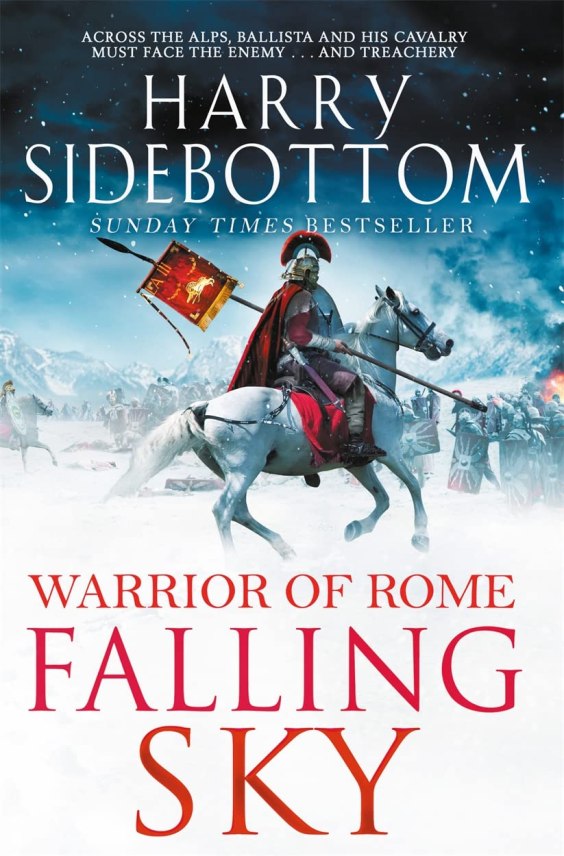
Falling Sky by Harry Sidebottom

Falling Sky Cover

Publisher: Zaffre (Trade Paperback – 17 January 2023)

Series: Warrior of Rome – Book Nine

Length: 375 pages

My Rating: 4.5 out of 5 stars

Amazon

One of the best and most compelling authors of Roman historical fiction, Harry Sidebottom, returns with another outstanding entry in his Warrior of Rome series, Falling Sky.

There are many outstanding authors who specialise in historical fiction set in ancient Rome, however, one of my absolute favourites is the always impressive Harry Sidebottom, who has been dominating the genre for most of my reviewing career.  Sidebottom has written some amazing novels over the years, including his Throne of the Caesars trilogy and some excellent standalone novels, like The Lost Ten and The Return.  However, my favourite series is his Warrior of Rome novels, which follow the Roman general Ballista, a former barbarian hostage turned Roman nobleman.  This series is pretty damn epic and was amongst some of the earlies novels I ever reviewed.  His debut novel, Fire in the East, remains one of the best siege novels I have ever had the pleasure of reading, and the rest of the series is also very impressive and inventive.  I have really loved some of his more recent Warrior of Rome books, such as The Last Hour and The Burning Road, and I was very happy to see that Sidebottom was continuing this series with Falling Sky.

AD 265, Gaul.  The usurper Postumus has been declared Emperor by his soldiers and has taken control of key territories west of Rome, including Gaul, Germania, Hispania and Britannia.  Setting up his capital within Gaul, Postumus hopes to maintain control of his new empire and peacefully coexist with Emperor Gallienus.  However, Gallienus wants vengeance for the death of his son at Postumus’s hands and has assembled a massive army to cross the Alps, take back Gaul, and kill his rival.

Amongst the Roman troops gathered to attack Gaul is Ballista, one of Gallienus’s most loyal supporters.  Determined to fight one more battle and then retire to Sicily with his family, Ballista finds himself at the forefront of the fight as one of Gallienus’s most able commanders.  However, Ballista has a far more troubling problem to deal with than battle.  His recent actions in Rome exposed a massive conspiracy to kill Gallienus and install a new Emperor.  While he was able to foil the assassination, the leader of the conspiracy remains at large, and Ballista is convinced that it was the Praetorian Prefect Volusianus, the man charged with keeping Gallienus safe.

With no evidence to support his suspicions, all Ballista can do is watch Volusianus and wait for him to slip up.  However, Volusianus is aware of Ballista’s suspicions and is determined to kill him before his machinations can be revealed.  When Ballista is sent on a dangerous mission deep into enemy territory with a column of cavalry, it represents the perfect opportunity for Volusianus to strike using spies and traitors.  However, the greatest threat to Ballista may come from the turning tides of war, as he and his men soon find themselves trapped far behind enemy lines.  Pursued by the enemy and surrounded by traitors, can even the legendary Ballista survive both the war and his friends in Rome?

This was another brilliant and captivating historical read from Sidebottom that perfectly continues the Warrior or Rome series with another exciting adventure.  Falling Sky is a very thrilling read, and it was one that I was able to finish off quite quickly, especially once I got caught up in its fantastic and fun narrative.

Falling Sky has a very fast-paced narrative that sees the forces of the Emperor Gallienus, including Ballista, return to Gaul (France) to end Postumus’s rebellion and restore the Empire.  The initial chapters set the scene brilliantly, as you get reacquainted with Ballista and his recent adventures, as well as some insights into his suspicions around Volusianus’s role in the recent assassination of the emperor.  Featuring some great early battle sequences in the Alps, you soon get a great idea of the war to come, especially when you also see some events through the eyes of Postumus and his forces.  The centre of the book is dominated by a pivotal major battle sequence with both armies clashing in a brutal series of chapters that really leaves an impression.  It also sets the rest of the story up extremely well, as the still suspicious Ballista is sent out on a dangerous mission he isn’t supposed to come back from.  This cavalry focused plot dominates the second half of the book and features a great blend of action, historical logistics, and espionage as Ballista tries to keep his troops alive, while a traitor in his ranks works to bring him down by any means necessary.  This leads to an excellent final third of the book, when Ballista and his troops are forced to retreat through half of Gaul, while traitors and problems from the protagonist’s past wait for him.  This turns into a fantastic chase sequence between enemy regiments, and I really loved how epic and intense it got in places.  The entire story wraps up really well, and I had a wonderful time getting through this awesome read.

Falling Sky turned out to be a pretty awesome book, and I loved how Sidebottom set his latest novel out.  There was an interesting change of style in Falling Sky from some of his previous novels, as Sidebottom had recently been experimenting with blending different thriller genres with historical settings.  Falling Sky, however, represents a more classic historical fiction war novel, with a focus on battles, major recorded events, and the continued growth in Ballista’s character as he becomes more and more disenchanted with Rome.  While I had a ton of fun with Sidebottom’s previous unique formats, I also enjoyed him returning to the style from the previous Warrior of Rome novels, with a compelling focus on historical war.  The author still does maintain some interesting thriller elements, including the fun espionage moments as Volusianus and the hidden traitors work to take out Ballista.  In addition, the thrilling and extensive flight of Ballista and his forces really ratchets up the tension for the end of the novel and I enjoyed how complex and powerful it became, easily resulting in it some of the best parts of the book.

The author’s use of perspective was also pretty effective, especially in the first half of the novel, which sees different chapters told from the point of view of several different key characters, including Ballista, Volusianus, Postumus and Volusianus’s spy in Ballista’s regiment.  Alternating point-of-view characters really helped to produce a more extensive and compelling plot, and I loved seeing the countermoves of Ballista and Volusianus, while also getting insights into Postumus’s rebellion.  This use of perspective changes towards the end of the novel as there is a much greater focus on Ballista as the primary narrator as he leads his troops in their escape.  I appreciated Sidebottom’s decision to mix things up this late in the novel, and it really helped to emphasise just how desperate and compelling this final section of plot truly was.  While Falling Sky is part of the larger Warrior of Rome series, it can be read as a standalone novel, especially for any fans of fun historical adventure and military fiction.  Sidebottom does an excellent job of quickly recapping necessary information and events from the previous novels throughout Falling Sky, and readers can grasp key connections and details to follow along with the plot.  The events of Falling Sky actually fall between the two previous books in the series, The Last Hour and The Burning Road, which was apparently caused by a change in the publishing schedule.  That does mean that if you have read The Burning Road in advance of this novel, the stakes of Falling Sky’s plot are slightly reduced.  However, I still had a ton of fun with this outstanding novel, and I really enjoyed how Sidebottom wrote the story.

I was also deeply impressed by the historical aspects of Falling Sky, which was one of the book’s strongest features.  Sidebottom has always excelled at exploring fantastic aspects of Roman culture and history, and Falling Sky is a pretty good example of this, especially has he closely examined Emperor Gallienus’s second invasion of Gaul in the second half of the 3rd century.  This period of Roman history doesn’t get a lot of love from other historical fiction authors, and as a result, Sidebottom’s books always feel quite unique, and I always have a great time learning more about this point of Roman history.  Sidebottom really does a good job exploring the origins of the war with Postumus’s Gallic Empire, and it was fascinating to see how this part of the Roman Empire splintered off and managed to hold out against the main Roman army for so long.  This results in some deeply intriguing scenes where politics, loyalties and personal ambitions are heavily featured, and a Roman civil war novel always contains some brilliant battles as the two armies utilise similar strategies.  Falling Sky also has some outstanding depictions of Gaul and the Alps during this period, especially as the protagonist ends up spending much of the book traversing the landscape at high speed.  Not only was it really cool to see historical depictions of so many different parts of modern-day France (the map up front was very useful), but many of these locations served as fantastic backdrops for the vicious battles that emerged.

In addition to cleverly examining the historical backdrop to the narrative, Sidebottom also ensures that his representations of the Roman soldiers and battles were as detailed as possible.  You can clearly tell that Sidebottom has done a ton of research when it comes to the depictions of the various soldiers, and you can practically see how they would have marched or engaged in battle.  The author’s epic battle scenes are particularly cool to read, and the clashes between the two opposing Roman armies are perfectly showcased, allowing you to fully experience the brutality and carnage.  However, the best historical highlight of Falling Sky revolves around the Roman cavalry, which Ballista commanded for much of the book.  Sidebottom spends much of book diving into and detailing as many aspects and experiences of the classic Roman cavalry as he can, including their practices, strategies, and general experiences.  This comes across extremely well in many scenes of Falling Sky, and it was fascinating to see Ballista get to grips with his new cavalry command and turn them into an effective force.  The sheer detail that accompanies the cavalry into every major fight of Falling Sky is very cool and I loved seeing the author’s depictions of how they would have fought and what strategies a commander like Ballista would have utilised in several different scenarios.  I had such an amazing time seeing these historical details and more get translated across into a thrilling action novel, and Sidebottom clearly has so much love for all things Roman.

Harry Sidebottom remains one of my absolute favourite authors of Roman historical fiction, especially when it comes to his Warrior of Rome novels.  Falling Sky is an outstanding new addition to the series, and I loved its clever war focused plot that saw one of Sidebottom’s best characters leading in compelling circumstances.  Loaded with action, espionage, and impressive historical detail, Falling Sky is an amazing book that I had an incredible time reading.  Highly recommended to all fans of the historical fiction genre.

Amazon

Warhammer 40,000: The Lion: Son of the Forest by Mike Brooks

The Lion - Son of the Forest Cover

Publisher: Black Library (Audiobook – 22 April 2023)

Series: Warhammer 40,000

Length: 12 hours and 15 minutes

My Rating: 4.75 out of 5 stars

Amazon

One of the fastest rising authors of Warhammer 40,000 fiction, Mike Brooks, returns with another exceptional read, this time covering one of the most significant events in recent Warhammer fiction, the return of Lion El’Johnson with The Lion: Son of the Forest.

At this point I think that my love for all things Warhammer is pretty well established, especially after my lengthy post earlier this year detailing my favourite Warhammer 40,000 novels.  I have been having a ton of fun in 2023 with this cool franchise, and I have just managed to finish off the newest Warhammer novel with The Lion: Son of the Forest.  This is the latest book from the very impressive Mike Brooks, who has been making a real name for himself in Warhammer 40,000 fiction and who seems to get better with every one of his books that I read.  His previous novel, Huron Blackheart: Master of the Maelstrom was a great read about an excellent established villain, and I had a lot of fun with his most recent book, Warboss, a highly entertaining novel about the always crazy orks.  However, I think that The Lion is probably his most ambitious and captivating novel yet as he covers the return of the Primarch of the Dark Angels, Lion El’Johnson.  This is a pretty big deal in Warhammer circles, and I was very impressed with how Brooks puts his own spin on the return to create an epic and powerful read.

At the dawn of the Imperium of Man, there was no force more deadly nor more loyal to the Emperor than the Dark Angels, the first Legion of Space Marines.  Led by their implacable and unstoppable Primarch and genefather, Lion El’Johnson, better known as the Lion, nothing was able to stop the Dark Angels as they crusaded from planet to planet dispensing the Emperor’s will.  However, following the events of the Horus Heresy and the Lion’s inability to save the Emperor, the Dark Angels imploded from within.  Treachery and years of resentment saw the Legion engage in a brutal and sudden civil war, which resulted in the destruction of the Dark Angel’s home world of Caliban, the scattering of the traitor Dark Angels throughout time and space as the Fallen, and the disappearance and apparent death of the Lion right when the galaxy needed him most.

Now in the 41st millennium, humanity is facing the greatest threat since the Horus Heresy.  The fall of Cadia spawned the Great Rift, a sprawling gap of daemon infested space that split the already crumbling Imperium in two, distributing travel, communications and coordination between humanity’s armies.  Into this darkness, the dread forces of Chaos emerge, destroying all before them, while other malign threats begin to eat away the remains of the Imperium.  The doom of all mankind seems certain, but hope is about to emerge in the most unlikely of places.

After a 10,000-year absence, the Lion awakens on the far-flung and devastated planet of Camarth, with no memory of how he got there.  Discovering one of his former sons, the Fallen Zabriel, the Lion soon discovers what has happened to the Imperium in his absence, as well as the terrible threats of the Great Rift and the forces of Chaos.  Unsure of his purpose or what has happened to him, the Lion sets out to preserve humanity from the forces trying to destroy it.  Rallying members of the Fallen from their long exile, the Lion begins a new campaign throughout the besieged systems of man, while trying to reconcile himself to everything he has lost.  But a dangerous and well-organised Chaos warband, the Ten Thousand Eyes, led by two of the Lion’s Fallen sons, are determined to destroy the returned Primarch and enact an ambitious plan with galaxy shattering consequences.  Can an isolated Lion survive the insanity of the 41st millennium, or has he returned only to face his doom?

Wow, now this was a pretty damn awesome Warhammer 40,000 novel.  Mike Brooks continues to really impress me with this cool new book, and I loved the elaborate and captivating tale contained within The Lion: Son of the Forest.  Featuring an intriguing and emotionally charged narrative that perfectly revives a key Warhammer 40,000 character, The Lion is an outstanding read and I think this is probably Brooks’ best Warhammer novel yet.

The Lion had a particularly interesting narrative that was firmly set around the return of Lion El’Johnson, and I loved the unique tale that Brooks came up.  The initial scenes of the book are quite fascinating as Brooks presents a symbol laden couple of chapters to show the Lion’s initial return, which I felt was a great way to start the story as it set up a lot of intriguing moments and gave the book quite a distinctive theme.  The introduction of two new alternate perspective characters a few chapters in helps to morph the story into a more typical Warhammer 40,000 narrative as it sees the Lion and other former members of the Dark Angels awaken in the current timeline.  The story soon sees the Lion reunite with one of his former sons and begin to reclaim a conquered Imperial planet from a notorious Chaos warband while trying to understand the new universe he’s in.  Getting back to his roots as a protector, the Lion soon is soon drawn into larger affairs, thanks a mysterious new ability he has obtained, and he sets out to do the right thing and right the wrongs of his past.  His actions not only lead him to more of his sons, ensuring that this book has a deep emotional heart to it, but it also leads him into conflict with a dangerous enemy, one that has big plans for him.

The Lion’s narrative is pretty epic in its scope and power as Brooks tells an exciting and compelling story about both the past and the present, and how one hero can make a difference.  The story features some great moments, including cool battles, emotional reunions, and dives into ancient history, as the characters come to grips with what the Lion’s return means to the greater universe.  Everything leads up to an ultra-intense finale as the Lion encounters a truly fallen son and is forced to reckon with the sins of his Legion and family.  I really enjoyed this epic narrative and Brooks sets out all the events extremely well, ensuring that readers will follow one excellent scene to the next.  While not every mystery is explained, the author does lay out some intriguing events that will grab a lot of Warhammer fans attention, and it leaves it open for more awesome books in the future.  I had an incredible time with The Lion and I managed to finish it off in a short amount of time.

This outstanding story is beautifully brought to life in Brooks’s capable hands as he deploys an excellent and captivating writing style throughout The Lion.  Brooks really had a tall order here in bringing back a key character from the Warhammer mythos and I think that he handled in an outstanding way by focusing on the emotional aspects of the character, rather than a pure action novel.  While The Lion does have some outstanding battle sequences designed to showcase just how epic a Space Marine can be, the focus is really on character development as Brooks examines three outstanding point of view figures while also telling an excellent narrative about characters trying to find their place in a strange new galaxy.

I loved how the author split the story across the three different perspectives, and I enjoyed how he made them so distinctive by using different styles and tenses for each of them.  For example, Baelor’s chapters use a third-person narration to show his struggles without going too deep into his head, the scenes shown from Zabriel’s eyes are written in a first person chronicle style as he recounts his story as if writing a journal, while the chapters focusing on the Lion are also in the third person, but feature a different, more epic style, which at times put me in mind of an older story or saga.  These different styles really fit the characters and their specific stories, and I appreciated how Brooks utilised these changes of styles to really tell a complex by subtly layering a classic Warhammer tale with pain, emotional damage, and uncertainty.

I felt that the author got the right balance of action and adventure with character growth, and you really get attached to the protagonists and their unique experiences in the Warhammer 40,000 universe.  I also loved how Brooks layered the story with a ton of Arthurian symbolism, as the Lion is meant to mirror King Arthur in this book, returning during his people’s darkest hour after dying during a war with his sons.  This included an excellent take on the Green Knight tale, with a dark Warhammer 40,000 twist to it, which also leads to one of the book’s funniest moments with a Monty Python homage.  I really got drawn into this outstanding story thanks to the way that Brooks told it, and this was an excellent and captivating read.

Now, this one of those Warhammer 40,000 novels that I probably wouldn’t recommend to new Warhammer readers as the story dives into some deep canon elements of the franchise.  Due to its focus on the return of Lion El’Johnson, a particularly important character that was only recently brought back in the game as a major event, The Lion is a key book in the Warhammer 40,000 expanded universe, and I felt readers needed a good understanding of the lore to fully appreciate its story.  This is because is strongly related to the history of the Dark Angels, and indeed all the Space Marines, and while Brooks does revisit and explain these events, having a more in-depth knowledge really does make that story that much clearer and more intriguing.  For those established fans of Warhammer 40,000 fiction, you are in for a real treat as Brooks expertly expands the lore while also providing some intriguing insights into established canon.  Seeing the Lion return and interact with his Fallen brethren was so damn cool, and it really tied into some of the best bits of Dark Angel lore that has been building for years and years.

I loved how the story examined both the current state of the Warhammer 40,000 universe, as well as the Horus Heresy, and it was fantastic to see characters who survived the Heresy arrive in the current universe and see what has been unleashed by the arrival of the Great Rift.  There are also a ton of jokes, references, and in-universe discussions that I had a lot of fun with, including intriguing new descriptions of events of the Horus Heresy, as well as more intriguing Dark Angels history.  I personally deeply enjoyed seeing the various ancient characters discuss the events that happened after they disappeared, and their reactions at the state of the Imperium, the deification of the Emperor to godhood, and what happened to the Dark Angels in the Lion’s absence, and this lead to some outstanding scenes.  The Lion proved to be a pretty epic piece of Warhammer 40,000 fiction and I was really impressed with how Brooks told such a unique and important story.

As I mentioned before, The Lion is a very powerful character driven novel as Brooks focuses on a cast of damaged and dispossessed figures thrust into an uncompromising future.  This is mostly clearly seen in the main character of Lion El’Johnson, the legendary Primarch of the Dark Angels and son of the Emperor, who returns after 10,000 years of mysterious disappearance.  Brooks paints quite the intriguing and complex picture around the Lion, showing him as a being out of time who, after experiencing some of the greatest losses and betrayals imaginable, awakens 10,000 years in the future with no idea of what happened to him.  The Lion is shocked at what the Imperium has become and how badly the universe has changed without him there.  Forced to reconcile with both this new future and his many failures, the older and wiser Lion heads back to the basics of his youth, protecting humans from monsters while also trying to reconnect with his lost sons, the Fallen, who he has mixed feelings about.  Brooks’s characterisation of the Lion is very different to what we’ve seen in previous novels, which I think a smart move, as the character is tired and lonely in this reality, and very much aware of the mistakes he has throughout his life.  Watching him relive some of the worst decisions he made during the Horus Heresy is very moving, and I loved how his insights into the past allowed him to move forward with his rediscovered sons and attempt to forgive them.  While there are a still a lot of questions around how the Lion returned (something I hope Brooks addresses in the future), I think that this was a pretty impressive return of such a key character, and I look forward to seeing more books focused on him.

The other major characters featured within The Lion are former Dark Angels who rebelled against their father thousands of years ago and were scattered throughout time and space following the destruction of Caliban.  Known collectively as the Fallen, these Space Marine characters have very complex feelings about Lion El’Johnson, especially as many believe he betrayed them and the Imperium, and they have all spent the intervening years being relentlessly hunted by the modern Dark Angels and their successor chapters.  This intriguing background was fertile ground for rich character development and backgrounds, and a large portion of the novel’s emotional depth relied heavily on the Lion meeting and reconciling with his lost sons.  Brooks produces several brilliant scenes that showcase the turbulent relationship between the Lion and the returning Fallen, and it was fascinating to see the Lion, a usually stubborn and proud character, admit that he was wrong and try to make amend to his sons.  I loved the intriguing group of characters that emerged in a supporting role as a result, especially as Brooks set them up as counterpoints to the Knights of the Round Table to match the Arthurian vibes around the Lion.

The most prominent of these supporting characters is Zabriel, the first Fallen that the returned Lion encounters, who serves as his guide to the new universe.  Zabriel has some amazing scenes in this book, especially as he provides the Lion with the first taste of the trauma the Fallen have experienced thanks to their father, and he makes sure the Lion knows that.  His well written chapters really capture his deep emotional conflict throughout The Lion, as he tries to reconcile the betrayals of the past with the hope that surrounds the revelation that Lion El’Johnson has returned.  His interactions with other members of the Fallen are really impressive as well, and I think he had some of the best chapters in the book.  Zabriel’s intriguing perspective is well matched by the other major point of view character, Baelor, a fellow Fallen who has chosen to continue following his former commander Seraphax, who he believes has a great plan to save the Imperium.  To achieve this goal, Seraphax has taken to wielding dark magic and is working with the followers of Chaos, forming the deadly warband, The Ten Thousand Eyes.  This forces Baelor to make a lot of compromises as he works to maintain his loyalty to Seraphax, even though they are doing terrible things.  The return of the Lion really throws Baelor for a loop, and there is a great undercurrent of denial to him as he tries to process all the implications that this has for him.  Brooks paints a brilliantly narrative of conflicted loyalty and duty around Baelor which worked wonderfully with all his chapters depicting the horrors of Chaos.  The rest of the Fallen characters in The Lion are very well written, and while some of them didn’t get a lot of focus, I loved some of the distinctive personalities that emerged.  It will be interesting to see how many of them are featured in the future, especially as there are still some secrets I wouldn’t mind knowing (who is The Red Whisper?), and I deeply appreciated how well Brooks featured them here.

To nobody’s great surprise, I checked out The Lion on audiobook, which is easily the best way to enjoy any good Warhammer novel.  Naturally, The Lion was pretty damn epic in this form, and everything about the book is greatly enhanced by the narration, as the epic story, amazing characters, and intriguing additions to the Warhammer universe, all come to life when read out.  I particularly enjoyed the voice work of Timothy Watson, who previously impressed me in last year’s Warhammer 40,000 audiobook, Krieg.  Watson has a wonderfully booming and commanding voice that worked well with all the powerful Space Marine characters in The Lion.  The narrators take on the confident and radiant tones of Lion El’Johnson was particularly awesome, and I really felt that he captured both the majesty of the character, as well as his deeper uncertainty and regret.  The other Space Marine characters are also extremely well captured, and I liked the fun range of voices that emerged, especially as they all seemed to fit that respective character and convey the key parts of their identity to the listener.  The villains are also cleverly narrated, and Watson goes out of his way to make them sound as inhuman as possible in places.  Coming in with a run time of over 12 hours, The Lion has a decent length for a Warhammer audiobook, although Watson’s fantastic narration moves the story along at a swift pace, ensuring that the listener is constantly hooked on the plot.  This entire production was just amazing, and I had an exceptional time listening to The Lion on audiobook, which is such an epic way to enjoy a Warhammer 40,000 novel.

Mike Brooks continues to rise through the ranks of Warhammer 40,000 authors with his outstanding new novel, The Lion: Son of the Forest.  The impressive and captivating read brilliantly brings back one of the most significant characters in the Warhammer canon and places him in an intense and deeply powerful tale of betrayal, forgiveness and displacement.  I had such an epic time with The Lion: Son of the Forest and this probably the best Warhammer book of 2023 so far.  I cannot wait to see what happens to this iconic character in the future, nor can wait to get my next Mike Brooks novel.  Highly recommended and required reading for all fans of Warhammer fiction.

Amazon

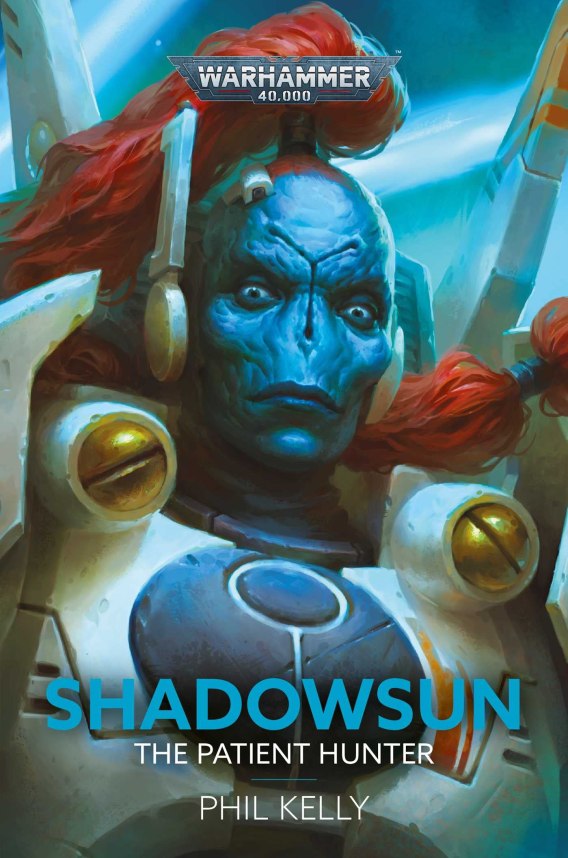
Warhammer 40,000: Shadowsun: The Patient Hunter by Phil Kelly

Warhammer 40,000 - Shadowsun Cover

Publisher: Black Library (Audiobook – 1 April 2023)

Series: Warhammer 40,000

Length: 8 hours and 13 minutes

My Rating: 4.25 out of 5 stars

Amazon

Veteran Warhammer 40,000 author Phil Kelly once again dives into his favourite topic, the T’au, with this new fast-paced and intense novel focused on the intriguing figure of Commander Shadowsun, Shadowsun: The Patient Hunter.

I have been having a lot of fun with Warhammer 40,000 novels this year, and I have already had the opportunity to read some major classics.  Many of these appeared in my recent Favourite Warhammer 40,000 novels list, and I have been keen to read more Warhammer fiction as a result.  As such, I decided to dive into one of the more recent Warhammer 40,000 novels, Shadowsun: The Patient Hunter, an excellent novel focusing on the intriguing T’au faction.  Shadowsun is the latest Warhammer 40,000 novel from Phil Kelly, who is probably best known for his work as a background writer on the various codexes and campaign books released as part of the Warhammer 40,000 tabletop game.  However, Kelly has also produced several Warhammer 40,000 novels over his career, with a particular focus on the T’au, having written several of the more prominent novels for the alien faction, including his Farsight novels and Blades of Damocles.  This latest book sees Kelly once again focus on Commander Shadowsun as she leads the latest T’au expansion, only to encounter more horrors than she ever expected.

Commander Shas’O Shaserra, better known to her foes as Shadowsun, has long led the forces of the T’au into war against all manner of foes.  A former contemporary of the legendary Commander Farsight, Shadowsun has since earned her own substantial reputation across various theatres.  Her latest action sees her leading the T’au Empire’s Fifth Sphere Expansion on the other side of the Startide Nexus, capturing many former Imperial worlds and bringing them under the sphere of the T’au’s influence.

A calculating tactician and a master of the philosophy of war that emulates the Patient Hunter, Shadowsun has known only success during this new phase of expansion.  But the surprise appearance of a massive fleet of decaying and indestructible warships soon throws all her plans into turmoil as she faces an enemy unlike anything T’au have dealt with before, the Chaos Space Marines of the Death Guard.

Ancient and deadly warriors sworn to the Chaos God of disease and decay, Nurgle, the Death Guard are a force unlike any other in the galaxy.  Employing deadly diseases, unstoppable daemons and other deranged horrors that defy all laws of physics and sanity, the Death Guard effortlessly brush through the T’au resistance.  Unable to counter their terrible tactics, Shadowsun desperately looks for a way to strike back against the Death Guard.  But with her own body consumed with disease and rivals within the T’au seeking their own sinister objectives, can even the great Commander Shadowsun succeed against these relentless opponents?

This was a pretty fun and intense Warhammer 40,000 novel from Phil Kelly, who had a great time really showing off two very different factions from the game.  Shadowsun: The Patient Hunter was a very interesting and action-packed read that will really appeal to fans of the Warhammer 40,000 franchise.

The plot of Shadowsun follows the character of Commander Shadowsun in her most lethal adventure yet.  This is a very brutal and quick-paced narrative that wastes no time diving into the action and intrigue to grab the readers full attention.  Starting with a good introduction to the character of Shadowsun and the complex politics of the T’au, the reader is soon introduced to the gruesome threat of the Death Guard, who soon make a major impact on the plot.  This takes the form of an extended and very over-the-top battle sequence on a T’au controlled human planet which Shadowsun was visiting, and she soon must contend with the full threat of the Death Guard.  Kelly really does not hold back at this part of the book, producing a brilliant and very lengthy connected sequence in which Shadowsun encounters the full, fly-infested horrors of Nurgle, as the Death Guard unleash their terrible might.  These scenes are pretty damn intense, at times bordering on pure horror, as the characters encounter diseases, decay, daemons and plague zombies, each of which test Shadowsun and her forces in very different ways.  This major sequence takes a substantial chunk of the book, and it really served to grab the reader’s attention early on with very high plot stakes.

The second half of the book deals with the fallout of this conflict, as an infected and weakened Shadowsun finds all her strategies and plans in ruin, and must find a new way to strike back, despite being hamstrung by internal T’au politics, a growing conflict between the T’au and their alien levies, and a sinister conspiracy from her superiors.  The resolution to this is a desperate boarding action against the Death Guard flagship, with Shadowsun leading a small force on a deadly suicide mission.  While not as extensive as the previous major confrontation, this final third of the book is extremely good, as Kelly envisions another complex battle that pits T’au tech against ancient, unclean horrors.  This sequence gets a little crazy in places, especially as Kelly brings in a couple of unique aliens as backup for the protagonist, and the Death Guard ship is loaded with horrors.  The big fights that emerge are extremely deadly and well written, and you will be enthralled at the carnage that emerges and the unique encounters that occur.  At the same time, the character of Shadowsun continues to grow as a warrior and a commander, fully trusting in her new squad of aliens, while also beginning to understand there is far more going on in the universe than her superiors have let her know.  Everything comes together extremely well, with a fun conclusion that is very satisfying for readers and leaves quite a few questions open that I am sure Kelly will try to answer in the future.  I liked the more metaphysical examination of the T’au towards the end of the book, and it gave the story a really unique conclusion that I will definitely remember.

I felt that Shadowsun was an overall pretty good Warhammer 40,000 novel as Kelly produced an excellent and highly exciting narrative that makes full use of the book’s action, heavy doses of lore intriguing characters.  The various fight sequences are very well written, and the author goes out of his way to try and capture the full horror and considerations of the battlefield, especially when regular soldiers face off against something strange and terrifying.  The two lengthy battles that much of the plot of Shadowsun focuses on are true highlights of the novel, and I love how intense, captivating and devastating the author made them.  Due to Kelly’s obvious passion for the game, this is a very, very detailed novel as the author goes out of his way to highlight the various factions, their motivations, and the state of the Warhammer 40,000 universe at this point in the canon timeline.  Every scene is loaded with some fascinating description of technology, lore, politics or factional history, which is fun in its way, especially for established fans of the games and the surrounding canon.  However, this does mean that Shadowsun might be a bit of a harder book for more casual readers to enjoy, as a certain level of understanding about the T’au is needed to fully appreciate the plot.  As such, I would probably recommend this book to fans of the T’au and dedicated Warhammer 40,000 readers, although newer readers will still be able to have some fun with Shadowsun.

Due to Kelly’s familiarity with the T’au, quite a lot of the book is dedicated to showing them in all their glory, from their advanced technology, their complex society, and their reliance on allied races to help their expansion.  While I am familiar with the T’au, I haven’t read a lot of books from their perspective, having instead only read books where they’re the enemy (Deathwatch: Shadowbreaker by Steve Parker and Kill Team by Gav Thorpe).  As such, I really appreciated this highly detailed and compelling focus on the T’au, and I had a lot of fun exploring their recent history, including their expansion throughout the galaxy.  There are so many great elements to their inclusion in Shadowsun, such as getting to see their awesome advanced weapons in combat, which are so very different from the human technology that most of the other Warhammer 40,000 books feature.  I also appreciated the compelling look at several of the client species that make up the T’au auxiliary forces, such as the Kroot.  Kelly features several intriguing different alien species throughout Shadowsun, making for some unique scenes as a result, and I appreciated the examination of their thoughts about the T’au allies, especially with how it plays into their faith and how they view the rest of the galaxy.

In addition, Kelly layers this book with so many complex bits of T’au day to day life, and you must admire his dedication and attention to detail.  Every conversation or discussion between T’au characters provides you some intriguing insights into their society, and I loved seeing their perfectionist mindsets or their fascinating interactions, such as those meaning-laden hand signals.  There are also some cool examinations of the various castes, their reliance on technology (such as Shadowsun’s two drone companions), and their desire to expand and bring word of the “Greater Good” to the rest of the galaxy.  While there is some definite love for the T’au throughout Shadowsun, Kelly also makes it a point to examine the darker side of their society, including the deadly secrets of the Fourth Sphere Expansion force and the typical manipulation of the Ethereal caste.  Commander Shadowsun, who starts the story off relatively naïve about some of the darker aspects of her race, begins to get an understanding of some of the secrets being kept from her, especially when she encounters some of the forces of Chaos and the secrets of the Warp.  The attempts to shut down any discussion about daemons or what happened to the allied species when they went through the Warp gave some of the T’au focused scenes a darker and more sinister edge, and it will be interesting to see whether Shadowsun continues to blindly follow the Ethereals in the future.  I also liked how Kelly really showcased the inherent arrogance of the T’au, especially when it comes to their opinion of other races in the universe, such as humans from the Imperium.  Their haughty belief that they understand the universe is quite amusing, especially when they come face to face with something completely insane.

To balance out the T’au, Kelly also strongly features the Chaos Space Marines of the Death Guard legion in Shadowsun, who are pretty epic antagonists.  Followers of the Chaos God Nurgle, the Death Guard are dedicated to all things disease, decay and corruption, which results in some pretty horrific mutations for their plague infested bodies.  The Death Guard are always pretty gruesome when featured in fiction, but I felt that Kelly did a particularly fantastic job of capturing them in their fully festering glory.  All the Death Guard encountered in this book are covered in putrefying mutations or growths to some degree, and Kelly really goes out of his way to describe just how unsettling they are.  This includes a compelling look at a Death Guard battle cruiser, whose interior is just covered in growths, mould, various liquids that fill up entire corridors, and loaded with so many other over-the-top elements, which really pop in Kelly’s talented hands.  I also loved how the author tries to capture the Death Guard’s highly positive and benevolent natures, which are reflections of their “kindly” god, Nurgle, and which honestly makes them even more sinister.  He further disturbs the reader by showing the Death Guard unleashing their full horrors on the T’au with, diseases, plague zombies, daemons, dark magic and more used against them, totally devastating them.

Watching the T’au get overwhelmed by these weird and terrifying elements is pretty intense, and the main T’au perspective character, Commander Shadowsun, keeps getting more disturbed by their unpredictable tactics and terrible weaponry.  I loved the compelling comparisons the author makes between the Death Guard and the T’au, and the two are honestly the antithesis of each other in aesthetics, combat styles, and mindset.  This ensures that their conflicts are pretty damn epic and watching the T’au forced to come up with some new tactic while freaking out made for some thrilling reading.  I did think that to make the Death Guard see even more threatening and dangerous, Kelly did slightly nerf the T’au in places, especially during their earlier battles, which fans of the faction probably won’t love, however, the protagonist makes up for that by taking out a Great Unclean One at one point.  Kelly’s decision to feature the Death Guard as the antagonists was an outstanding choice and one that made Shadowsun standout to me even more.

As with most Warhammer 40,000 novels that I have the pleasure of enjoying, I chose to check out Shadowsun on audiobook, which was a fun decision as always.  Coming in at just over eight hours, this was a quick audiobook to power through, especially when you get to some of the more epic battle scenes.  This format served to really enhance some of the best elements of the Shadowsun book, including the cool action and the sheer horror of some of the scenes where the protagonists go up against the forces of Nurgle.  Having someone reading out all the disgusting things this foul horde contains makes the book seem even more terrifying, which I deeply appreciated.  Narrator Helen McAlpine does a very good job bringing this compelling plot to life with her great voice work, and I really appreciated her take on several of the characters and big scenes within Shadowsun.  The voice that she gives to the main character of Commander Shadowsun is highly fitting, and I felt that McAlpine managed to capture her emotions, particularly that of distress of despair, very well throughout this audiobook.  Due to this, and more, I would once again strongly recommend this Warhammer 40,000 audiobook to anyone interested in checking out Shadowsun, as it is easily the best way to enjoy any book from this franchise.

Overall, Shadowsun: The Patient Hunter is an excellent Warhammer 40,000 novel and one that I really had a fun time with.  Phil Kelly did an outstanding job featuring the T’au again and it was great to get a deeper look at one of the more fascinating alien factions in the canon.  Loaded with action, horrifying moments, and some deep lore drops, Shadowsun is an awesome read that fans of Warhammer 40,000 fiction can have a lot of fun with.

Amazon

Fire With Fire by Candice Fox

Fire With Fire Cover

Publisher: Penguin Random House Australia (Trade Paperback – 4 April 2023)

Series: Standalone

Length: 480 pages

My Rating: 4.5 out of 5 stars

Amazon

One of Australia’s most exciting and compelling crime fiction authors, Candice Fox, returns with another intense and impressive novel, the powerful and memorable Fire With Fire.

Over the last several years, few Australian authors have dominated the crime fiction market as effectively as veteran author Candice Fox, who has produced some outstanding reads.  Fox is a very interesting author who started off focusing on the Australian market with several books set out in the wilds of Australia, including her Archer and Bennet series and the Crimson Lake books, the latter of which was recently adapted into the Australian television show, Troppo.  However, in more recent years, Fox has moved on to the larger international audience and has produced several great books set in America, as well as collaborating with legendary author James Patterson for their Detective Harriet Blue series.  I personally know Fox more for her international work rather than her Australian fiction, as I have been lucky enough to receive copies of her last few books, including the gritty standalone read Gathering Dark, the elaborate prison break novel The Chase, and the fantastic and heartfelt 2 Sisters Detective Agency co-written with James Patterson.  Each of these novels has been fun in their own way, and 2 Sisters Detective Agency ended up being one of my favourite Australian books of 2021.  Due to excellent books like these, Fox is now a key addition to my yearly reading schedule, and I just had to grab a copy of her latest novel, Fire With Fire, especially as it had a pretty epic plot behind it.

What starts as a normal day at the understaffed Hertzberg-Davis Forensic Centre in Los Angeles swiftly turns deadly when two people take over the lab, holding three people hostage.  However, this is no ordinary hostage situation, as the kidnappers are husband and wife Ryan and Elsie Delaney.  Two years earlier, the Delaneys’ daughter Tilly went missing at the Santa Monica beach, which the police eventually ruled an accidental drowning.  However, Tilly’s body was never found, key evidence was lost, and her parents never believed the official story and resented a lacklustre police investigation.

Now, desperate for answers, the Delaneys offer the LAPD an ultimatum: find Tilly dead or alive within 24 hours or they will destroy evidence in several major cases, all but destroying key investigations.  Armed with uncanny knowledge of which evidence is the most vital to the LAPD and which samples are too valuable to lose, the Delaneys appear to hold all the cards against the police.  However, the LAPD have no intention of validating the Delaneys’ actions by searching for Tilly.

However, one LAPD detective, Charlie Hoskins, has more motivation to save the evidence in the lab than the rest of the department.  Hoskins has finished up a gruelling five-year undercover stint within the ruthless Death Machines biker gang, an experience he barely survived.  All the evidence that he collected against the gang is now sitting in the lab, and if it goes up in flames, everything he tried to accomplish would be for nothing.  With the rest of the police force angling for a more lethal solution to the Delaney problem, Hoskins decides to find Tilly himself.

Helped by recently fired rookie Lynette Lamb, the woman responsible for blowing his cover with the Death Machines, which saw him literally thrown to the sharks, Hoskins begins a new investigation into Tilly’s disappearance, hoping to find any evidence that can convince the Delaneys that their daughter really did drown.  However, the more they dig, the more Hoskins and Lamb begin to realise that there is something far more sinister behind Tilly’s disappearance.  With time running out before his evidence is destroyed, and with the Death Machines hunting him across LA, can Hoskins find out what happened to Tilly before it’s too late and a lethal gang of killers are set free?

This was another excellent novel from Fox that featured an outstanding and captivating story.  Fox sets the entire narrative up perfectly, first introducing the main characters of Hoskins and Lamb by showing them on the very worst days of their life, as Hoskins is tortured out by the gang he infiltrated, while Lamb is fired on her first day as a rookie cop for being responsible for the leak.  From there, the story focuses on the start of the lab siege as the Delaneys take over and send the police their demands.  I really love this cool main scenario for the Fire With Fire as it is such a brilliant way to gain leverage over a police force.  Fox uses this to great effect to engage the major storylines of the book.  Firstly, there is an intriguing and intense siege storyline as police, led by LAPD Chief of Police Saskia Ferboden, attempt to resolve the situation without the destruction of evidence.  Fox examines many different sides of this situation, from the desperation of the Delaneys, the fear of the hostages in the lab, the emotions of the Delaney’s remaining daughter outside, and the growing hostility of the cops as they watch their evidence get destroyed.  This leads to a captivating series of events as Saskia and her FBI negotiator try to resolve the situation peacefully, only to hit setback after setback, as the Delaneys get violent, the hostages try to be heroic, and all her cops get mutinous at her decisions.

While the storyline around the siege is pretty intense and emotionally powerful, the real meat of the story focuses on Hoskins and Lamb as they attempt to find the Delaneys’ missing daughter, Tilly, before it is too late.  This entire storyline falls together extremely well as the unlikely partnership of Hoskins and Lamb are forced to work together and soon form an entertaining team as they simultaneously investigate the disappearance while also dodging the vengeful gang gunning for Hoskins.  The investigation angle takes them into some interesting directions, and I liked the compelling mystery that Fox wove together for this part of the book.  The author loads in a ton of misleads, alternate suspects, and problematic witnesses, each of whom muddy the water and ensure that the ultimate solution to the case isn’t too clear until the end.  The confrontation between Hoskins and his former gang also forms a great part of this story, especially as there are some excellent twists involved there, and the resulting carnage adds some major danger to the book.  However, the best part of this storyline is the partnership between Hoskins and Lamb, which steals the show with its genuineness and fun moments.

Fox has a highly readable writing style that I felt lent itself to this story and helped to turn it into an enjoyable read.  Pretty much everything about this book, including its flow, its pacing and the balance of story elements is set up really well, and I had a fun time getting through it.  The fast-paced and sharp chapters really move the plot along quickly, and you find yourself reading page after page, trying to see what awesome or intense event will occur next.  I liked how Fox split the story focus around Fire With Fire and the constant changes between the investigation for the missing girl and the deadly siege at the lab, really helps to amplify the intensity of the plot and keep the stakes very high.  I was also very impressed by the excellent blend of mystery, intense drama, high-octane action, and powerful character development, that were the primary features of the plot.  There is a barely a page where Fox isn’t portraying something pretty damn interesting or moving, and you are constantly intrigued with what is going to happen to the characters or the plot moving forward.  This ended up being a pretty amazing read, and I had such a great time getting through it.

One of the major writing highlights of Fire With Fire has to be the complex and damaged characters who formed the basis for much of the story.  There are some exceptional and well-written characters featured throughout this book, and Fox does a great job of showcasing their inner pain, motivations, and compelling personal pasts to the reader as the focus switches between them.  Two of the most notable are the characters of Detective Charlie Hoskins and Lynette Lamb, who serve as the main figures of the investigate arm of the plot.  Hoskins is a tough and independent figure who spent five years infiltrating a deadly criminal gang trying to find evidence to put them all away for murder, only to be discovered at the last minute and tortured.  Barely recovered from his ordeal, Hoskins spends the book trying to protect his hard-won evidence by finding the missing girl.  There is a lot of desperation behind Hoskins as he tries to make all the sacrifices and bad things he did over the last five years matter, and this leads to some great character moments throughout Fire With Fire.  There is also a major trauma component behind Hoskins, as he tries to get over the dark things he experienced during his torture and escape, which leads to him making some reckless decisions.

Hoskins is well matched up with his young and somewhat naïve partner Lynette Lamb.  Lamb is a rookie cop who was targeted without her knowledge and used to find information that exposed Hoskins to his gang.  Fired on her first day on the job, Lamb manages to find Hoskins out of both guilt and determination, hoping that he can get her job back.  Thrust together by circumstance, Lamb stubbornly partners up with Hoskins and works with him to find the missing girl.  There are a lot of great elements to Lamb’s storyline, and out of all the characters in Fire With Fire, she has the most growth as she tries to prove she is tough and capable enough to be a police officer.  The pairing of Hoskins and Lamb is an excellent highlight of the book and I loved how Hoskins reluctantly takes Lamb under his wing and tries to toughen her up., quickly realising there is far more to her than he initially though.  The two make an outstanding team, and they both cover the other’s weakness extremely well.

Aside from Hoskins and Lamb, some of the other standout characters include Ryan and Elsie Delaney, who take over the forensic lab and hold the evidence and people there hostage.  Fox does an outstanding job portraying the desperation behind these two characters as their obsession about finding their missing daughter, bought on by guilt and anger, drives them to extremes.  These two are some of the most complex figures in the entire book, especially as their actions, while bad, are understandable.  Other characters, such as Chief Ferboden and Hoskin’s entertaining friend Surge, help to round out the excellent cast of this book and I felt that these great figures really helped to turn Fire With Fire into a powerful and highly enjoyable read.

Overall, this was an amazing novel from Candice Fox, who once again shows why she is one of Australia’s premier crime fiction authors.  Fire With Fire had an outstanding and clever narrative to it that really drew me in and kept me extremely engaged the entire way through.  The excellent blend of intense narrative, amazing characters and a unique crime fiction scenario was highly effective, and I had a wonderful time reading this awesome book.  Fire With Fire comes highly recommended, and you will get really drawn into this great standalone crime fiction novel.

Amazon

The Last Kingdom by Steve Berry

The Last Kingdom (Steve Berry) Cover

Publisher: Hachette Audio (Audiobook – 21 February 2023)

Series: Cotton Malone – Book 17

Length: 14 hours and 20 minutes

My Rating: 4.75 out of 5 stars

Amazon

Prepare for a remarkable and captivating mystery from out of history as acclaimed thriller writer Steve Berry presents another outstanding and riveting novel in The Last Kingdom.

Ever since I started reading thrillers a few years ago, one of my favourite authors in the genre, as well the most consistently entertaining, is the fantastic Steve Berry.  A veteran author who has been producing compelling reads since the early 2000s, Berry has over 25 books to his name that blend intense modern thriller narratives with intriguing history elements.  His most iconic body of work is his long-running Cotton Malone series, which follows a US Justice Department agent as he investigates unique historical conspiracies or secrets whose revelation will have major implications in the modern world.  I first fell in love with Berry’s writing back in 2019 when I read The Malta Exchange.  Since then I have gone on to read several more Cotton Malone novels including The Warsaw Protocol and The Kaiser’s Web, as well as the standalone novel The Omega Factor, each of which have contained some addictive stories that I’ve deeply enjoyed.  As such, I made sure to read his 2023 release, The Last Kingdom, as a soon as I could.  The 17th Cotton Malone novel, The Last Kingdom presented the reader with another brilliant conspiracy from history that was pretty awesome to behold.

There are many strange tales scattered throughout the history of Europe, but few are more unusual than that of King Ludwig II of Bavaria.  An unstable and fanciful figure who loved stories, solitude, and magnificent castles, King Ludwig dreamed of a magical kingdom, one far different from the lands he ruled.  Determined to find such a kingdom, he despatched agents throughout the world before his murder in 1886.  History suggests that he never found what he was looking for, but what if he did?

Now, in modern day Bavaria, freelance intelligence agent Cotton Malone has been hired by his old friend and protégé Luke Daniels to help him infiltrate a small group of radical separatists with dreams of securing Bavaria’s independence from Germany.  The focus of Luke’s investigation is the prince of Bavaria who seeks to usurp his older brother, the duke, and restore the ousted Wittelsbach monarchy with himself as king.  But to achieve his dreams, the prince needs the ultimate leverage, the Last Kingdom of King Ludwig II.

Following clues throughout several significant sites in Bavaria, Cotton and the Prince’s men are soon caught in a race to find a mysterious deed, one that Germany, China and the United States would kill for and which could greatly shift the balance of power in the world.  With the White House, Chinese intelligence, a mysterious Bavarian secret society and a rogue group of former CIA agents all vying for the prize, Cotton desperately attempts to solve the puzzle of the Last Kingdom and the terrible legacy it holds.  But can Cotton once again defeat the odds and keep the word safe from another historical mystery, or will the world be irrevocably altered by a secret form another century?

Well damn, now that was a pretty awesome read.  I have so much damn love for Steve Berry’s work, and The Last Kingdom is probably one of my favourites so far.  Perfectly combining an excellent thriller storyline with an elaborate and deeply captivating tale of history, The Last Kingdom was an exceptional read and one that I honestly could not stop listening to.

Berry has produced an amazing and addictive masterpiece of a thriller in The Last Kingdom with a particularly strong story behind it.  Like most of Berry’s books, The Last Kingdom is primarily a modern day thriller that introduces an original conspiracy that took place in history and has remained hidden until Cotton Malone wanders along (that man finds ancient mysteries wherever he goes).  As such, what starts as a simple infiltration at a famous Bavarian palace soon devolves into an elaborate treasure hunt for unique piece of history.  This latest historical mystery revolves around the eccentric and tragic final kings of Bavaria, and their desires to either retain power or find their own place in the world.  Berry expands on this historical detail throughout the entire course of the book, providing a good combination of real facts and some exaggerated fictional elements, which works into the main plot extremely well.  This modern day storyline gets some legs really early on as the protagonist and his companions are dragged into a major shadow war with several different factions attempting to take advantage of the situation and the hunt for the historical mystery.  Cotton soon finds himself working for several old colleagues, including a reckless CIA agent, while other groups, including the Bavarian prince and a rogue group of former CIA agents, start to use deadly force to solve the clues and find the hidden deed.

Berry keeps the pace of The Last Kingdom quick and compelling by raising the various stakes of the book while still showing off the entirety of Bavaria and its historic beauty.  There is a good reveal of why everyone is after the deed about halfway through which sets everyone on the road to a big confrontation.  While the full details of the conspiracy are a little over-the-top, Berry fits it into the story well, and the examination of modern and historical concerns surrounding is quite clever and intriguing.  The final half of the book is an intense thrill ride in several great ways, as Berry loads up the story with fun reveals, clever twists and so many betrayals.  I loved how the mystery of the King’s deed unfolded, and Berry really mixed the various original puzzle pieces of his conspiracy with the overlying historical detail to create a fantastic scavenger hunt.  The modern day thriller elements flitted around this extremely well, and watching the various participants in the hunt betray or outwit each other to try and get the prize was deeply exciting and led to some big moments.  The conclusion to the story is very good, and readers will come away extremely satisfied, both with how the story came together, and with all the extra knowledge Berry leaves you with.

I have a very deep appreciation for how Berry writes his outstanding novels and I think that The Last Kingdom was a particularly impressive example of this.  The blend of a high-intensity modern thriller storyline wrapped around a mystery loaded in historical detail is always entertaining, and I felt it turned out well again in The Last Kingdom.  The way that Berry splits the story out using alternate perspective chapters is particularly useful, as you get to see each of the characters interpreting the historical elements from different perspectives.  At the same time, several of the chapters are set in the 19th century and provide some deeper historical context to the story, which I felt was particularly useful and fun.  Berry really excels in simultaneously showing the different aspects of his story, and readers come away from The Last Kingdom having had fun with the thriller elements, while also learning so much more about some fascinating topics.  I really think that The Last Kingdom had one of the better thriller storylines associated with it thanks to inclusion of spies, disaffected royals, and several warring governments, and the way that story element unfolded had me pretty damn hooked the entire way through.  Like most of the Cotton Malone novels, The Last Kingdom can be read as a mostly standalone book, and readers don’t need to have any real knowledge of the previous entries in the series to enjoy this great novel.  While there are references to previous adventures and mysteries, the relevant details of these are well explained and new readers won’t be thrown by them.  However, long-term fans of the series will appreciate the continuation of several recent storylines, especially around Cotton’s feud with the US President, and I liked how that unfolded.

As I have mentioned a few times already, one of the best things about The Last Kingdom, and indeed all of the Cotton Malone novels, is the way that Berry dives into unique and intriguing parts of history to really give his stories a captivating kick.  In The Last Kingdom, this takes the form of a focus on the unique history of the kingdom of Bavaria, specifically the last 19th and early 20th century and the last three monarchs of the Wittelsbach line.  I have to admit, this was an area of history that I was not familiar with, but that changed after reading The Last Kingdom.  Berry conveys an immense amount of detail about this period and the relevant kings to the reader throughout the course of the book, so by the time you are done, you know so much about them.  However, Berry does it in such a way that ensures that the reader don’t get bored with it, as he showcases the more compelling elements of their reigns and the nation’s history around it, while also hinting at how it ties into the big conspiracy/mystery of the story.  I particularly enjoyed the detailed and fascinating examination of eccentric King Ludwig II.  Berry covers so many parts of his compelling life in this story, including his complex reign, his unusual outlook on the monarch, and his infamous end that saw him deposed and murdered.  The mysteries of Ludwig II and his search for a new kingdom proved to be a deeply compelling centre for the entire plot and I am really glad I got to learn more about them.  Another nation’s history, which I mention for spoiler reasons, is also concisely featured here, and I liked how Berry tied it together with Bavaria, resulting in a cool mixture that perfectly fed into the modern-day thriller.  The author clearly has so much fun researching and utilising all this historical detail in his books, especially if the extensive author’s notes section at the back is anything to go by.  Featuring all this historical detail works to create a great story, and I cannot emphasise how awesome it can be, especially in Berry’s capable hands.

In addition to all the historical elements of the book, I also really need to highlight how well Berry showcased Bavaria as a whole throughout the course of The Last Kingdom.  Many of the Cotton Malone novels act like a tourist brochure as the protagonists travel from one picturesque area of the country to the next, visiting all manner of historical sites.  This is very much the case for The Last Kingdom as the characters are forced to travel to several impressive locations throughout Bavaria, including iconic cityscapes, famous cathedrals, and beautiful landscapes.  Berry really spares no detail when it comes to describing these locations, and you can easily visualise them in all their stunning glory.  Some of the best descriptions are the iconic three castles that King Ludwig II built, which were strongly connected to his life story.  These castles form the basis for much of the plot’s historical scavenger hunt, and Berry really goes into the history and layout of them, even describing the furniture and the decorations.  You really grow to appreciate these locations around Bavaria, and I know that if I ever get the chance to visit, several of them are going to be on the top of my list of places to check out.  However, it is not just these iconic locations that are explored.  Berry also spends substantial time trying to show off the intangible nature of Bavaria, including its politics, its current attitudes, the state of its old monarchy, its place within larger Germany, and various other elements of its culture, including a real secret society dedicated to King Ludwig II.  All these elements are masterfully researched, examined, and showcased throughout The Last Kingdom, and all of them add to the authenticity of the story in immeasurable ways.

Aside from the excellent story and complex historical details, I also need to mention the great characters featured throughout The Last Kingdom.  Berry always writes fantastic figures, and it was awesome to see more of his central protagonist, Cotton Malone, as well as recurring supporting character Luke Daniels.  Both are well utilised throughout The Last Kingdom, and it was always great to see them working, especially as they have some major veteran presence at this point and work well against the various forces coming for them.  I did think that there was not a lot of development between the two, as both are essentially the same people they were in their last appearances, but they still make solid and likeable central focuses for the story.  However, there was some fantastic character development occurring outside of these main characters, especially as Berry introduces an amazing supporting cast of aging spies, angry deposed royalty, intriguing members of Bavarian society and deadly foreign agents.  Several of these characters have key roles in the book and Berry utilises them perfectly as great alternate perspectives for large swathes of the plot, producing a complex and powerful extended plot.  I loved the utilisation of Derrick Koger, a veteran CIA agent who has history with Cotton and has worked with him/against him in the past.  The funny and morally ambiguous Koger plays off the honourable Cotton perfectly as they work together in this book, and it was interesting to see them teaming up.  I liked how several of the antagonists, as well as Koger, shared a compelling character theme of people who believe they were overlooked or betrayed by their peers or people, and it serves as a great driving force for them to do bad things.  This group of characters and their conflicting priorities are an excellent part of The Last Kingdom and I had an outstanding time following them along this powerful quest.

I once again chose to check out this latest Steve Berry novel on audiobook, which is always a pretty epic experience.  Coming in at nearly 14 and a half hours, The Last Kingdom is medium length audiobook, although once you get caught up in the compelling story it flies by extremely quickly.  I personally love the Cotton Malone audiobooks as the narration really enhances all the elaborate detail of the story, especially the historical background, and ensures that they stick in the mind.  Hearing the key historical facts again and again really drives them home and I find that this helped me get even more fixated on the narrative as I was extremely eager to see how everything came together.  It helps that The Last Kingdom once again features narration from Scott Brick, one of the premiere thriller audiobook narrators out there who has lent his voice to all the previous Cotton Malone audiobooks.  Brick has a great voice for thrillers and I find his narration really fits Berry’s cool stories, especially as he gives some gravitas and complexity to both the modern day events and the historical elements.  Brick also has a great array of accents that he employs to full effect throughout The Last Kingdom, which I deeply appreciated.  His various American accents, which includes one from the wilds of Tennessee, are very well done, and I was once again extremely impressed by his dazzling array of German and European tones.  Even his Australian accent, something I am particularly sensitive about, was passable, if slightly stereotypical, and this fantastic choice of voices enhanced the audiobook experience.  Due to this outstanding voice work, as well as the great impact this format has on some of the key parts of the book, I would strongly recommend The Last Kingdom audiobook, and it is always one of my favourite ways to enjoy a good Steve Berry novel.

Steve Berry continues to impress with his latest outstanding Cotton Malone novel, The Last Kingdom.  Featuring his typical blend of exciting and intense thriller storylines and fascinating historical detail, The Last Kingdom is a brilliant read that powerfully showcases Bavaria in all its glory.  Examining key elements of the state’s past, as well as its current beauty, and perfectly working them into an excellent story, this was an exceptional outing from Berry and one that I had such an amazing time reading. Highly recommended!

Amazon

Son of the Poison Rose by Jonathan Maberry

Son of the Poison Rose Cover

Publisher: Macmillan Audio (Audiobook – 10 January 2023)

Series: Kagen the Damned – Book Two

Length: 25 hours and 55 minutes

My Rating: 5 out of 5 stars

Amazon

One of my favourite authors, Jonathan Maberry, returns to his intriguing fantasy world in a big way with the second Kagen the Damned novel, Son of the Poison Rose.

Readers familiar with my blog will know I am a massive Jonathan Maberry fan, and the path to my current obsession with his work is well documented throughout The Unseen Library.  I started off by reading his fantastic 2018 novel, Deep Silence, quite early in my blogging career, and this ended up getting me into the rest of his exceptional Joe Ledger series, including The Dragon Factory, The King of Plagues, Predator One and Dogs of War.  I have also had a great time reading his sequel Rogue Team International series, which featured the epic books Rage (one of my favourite books and audiobooks of 2019) and Relentless (one of my favourite books and audiobooks of 2021), as well as the fun standalone novel Ink (one of my favourite books and audiobooks of 2020).  Needless to say, I have deeply enjoyed his cool books, and this only increased when he made his impact into the fantasy fiction world last year with Kagen the Damned.

Kagen the Damned was an amazing and exceptional dark fantasy novel that took the reader on a wild ride.  Set in a brutal fantasy world of Maberry’s own invention, Kagen the Damned followed the titular character of Kagen Vale, a highly regarded hero and palace guard of the Silver Empire who loses everything in a single night when the armies of the dread nation Hakkia invade with dark magic, led by the powerful and deadly Witch-king.  Forced to watch his parents, his empress, and the royal children he was sworn to protect die terrible deaths, a haunted Kagen flees, only to be further destroyed when he beholds his gods turning their back on him, damming him for his failure.  Now known as The Damned, Kagen travels the world in a daze before finally regaining his senses and launching an attack on the Witch-king at his coronation.  However, this reveals secrets that shock Kagen further and spelling doom for the entire world.  I had an epic time reading Kagen the Damned last year, and it ended up being one of my favourite books and audiobooks of 2022.  Between this and the cool Kagen the Damned novella I Say Your Name in the Dark Nights, I have been eagerly awaiting a second novel and I was very excited when I heard that Son of the Poison Rose was coming out.  Son of the Poison Rose was one of my most anticipated books of 2023 and I finally managed to read it a short while ago and it was everything I hoped it would be and more.

“There is blood on the ground between us!”

Following his failed assassination attempt on the Witch-king of Hakkia, Kagen Vale, better known as Kagen the Damned, is once again the run with his companions, Tuke Brakson and Filia alden-Bok, attempting to find safety and come up with a new strategy of survival and revenge.  While their plan to kill the Witch-king failed, their attack stopped the return of the Hakkian God, Hastur, while also opening up the possibility of war, as the Witch-king’s fellow monarchs see the Hakkians as vulnerable.  However, Kagen also uncovered the terrible secret that the Witch-king is his older brother Herepath, who has turned his back on everything he once believed in to unleash great evil upon the world.

Wandering the wilderness, Kagen, Tuke and Filia attempt to come up with a new way to strike back against the Hakkian forces.  Their journey eventually leads them to the north of the continent, where they attempt to recruit an army of nationless-rogues, mercenaries and fighters to their cause.  But force of arms alone will not be enough to stop the Witch-king, instead Kagen and his allies will need magic.  But with magic long banned within the Silver Empire, only the Hakkians have any real knowledge of the mystic arts.  To that end, Kagen turns to former nun turned spymistress, Mother Frey, who sends Kagen on a deadly mission to a long lost city in a dangerous jungle in the hopes of recovering ancient books of dark magic.

However, the Witch-king is far from idle while Kagen is working against him.  With his army spread thin and the nations of the former Silver Empire all gearing up for war, the future looks grim for the usurper and his advisors.  But with new dark allies arriving every day, called to his side by magic, the Witch-king plans to unleash a magical plague, one that will turn his enemies into a ravenous, unthinking horde.  With such power at the Witch-king’s command, will Kagen’s quest reveal something powerful enough to defeat him?  And even if he does, will Kagen be able to fight his own brother?

Wow, wow, wow, what an epic and exceptional book!  Maberry can really do no wrong when it comes to his writing and this impressive sequel really hammers home what a talented author he is.  Masterfully expanding on the narrative set up in the first book, Son of the Poison Rose contains Maberry’s trademark blend of intensity, awesome action, complex characters, and dark world building that I love so much.  I absolutely powered through this lengthy novel, and it earns Maberry another easy five-star rating from me as I loved every single second I spent with it.

Maberry continues his sprawling and dark narrative in Son of the Poison Rose, as this book takes the reader in some great and captivating new directions.  Taking place in the explosive aftermath of Kagen the Damned, Son of the Poison Rose starts off in a big and action-packed way as Kagen and his allies find themselves being hunted by everything the Witch-king can throw at them.  Maberry quickly establishes his usual practice of featuring a huge number of different perspectives to showcase not only the adventures of the protagonists, but also the actions and schemes of the antagonists and the impacts that their machinations have throughout the world.  The main story of Kagen is pretty epic as it sees the protagonist and his friends struggling through new lands in the search of allies and magic.  While this results in some great scenes for Kagen in the first two thirds of the book, including a great haunted house sequence, his story here feels a little meandering at times without too much progress being made.  However, this is more than made up from the various alternate perspectives and worldbuilding that occurs in the same period.  It is so damn fascinating and entertaining to see the various dark and often horrifying plots of the antagonists come into effect as they plot for war.  These storylines blend spy thriller and dark fantasy elements together really well and you are drawn into these storylines, especially as Maberry takes the opportunity to strengthen the followers of the antagonists in some big ways.  The simultaneous build-up of other complex supporting characters, as well as the many examinations of various corners of Maberry’s new fantasy world adds to the impressive tapestry of the first two thirds of the story, and I was pretty damn hooked during this part of the book.

Maberry ramps up the intensity in the final third of the book as the various intriguing storylines he set up in the start of the novel really come to fruition.  This is headlined by Kagen and his allies travelling into a dangerous jungle nation to find a legendary ancient city where magical texts are hidden.  While I was initially concerned this part of Kagen’s story was going to be rushed, it ended up being very well written and awesome, as they encounter all manner of evils out in the jungle.  This final third of the book was again firmly enhanced by the continued dive back to the antagonists, where you see their evil plot to fill the jungle with zombies and other deadly creatures to kill Kagen and his comrades.  This results in an epic series of battles which keep you on the edge of your seat, as you know Maberry will not hesitate to kill off his characters.  The author chucks in several massive revelations around this part of the book, including finally showing the motivation behind the Witch-king’s actions, and the entire narrative ends on a big note while also expertly setting the stage for even more chaos in the following novel.  This ended up being a particularly epic story and I was firmly hooked the entire way through.

Those who are familiar with Mabbery’s novels will know that the author has a very distinctive style which has worked wonders in his many thriller novels.  Maberry successfully transported this style across to the fantasy genre last year with Kagen the Damned, and I felt it really enhanced his already impressive story.  Naturally he continues it in Son of the Poison Rose and it is still really effective at conveying the vast scope of his tale.  The main basis for his style is the utilisation of a vast number of shorter perspective chapters which showcase events from multiple characters across the narrative.  This results in a vast and complex story that not only allows the reader to see the adventures of the protagonist but also highlight the other players throughout the realm, including the antagonist, his court, the members of the resistance, and even several kings and rulers from unaligned nations who are making plans for war.  Maberry further expands out the plot by including a series of intriguing, often standalone interludes, which showcase smaller, self-contained stories within the wider universe.  These interludes are usually pretty cool, both by themselves and as extensions of the larger story, and I love how inventive and dark Maberry can be at times.  This mass of perspectives really helps to create an extensive and complex plot that has so many different aspects to it.  Seeing the protagonist and antagonist constantly reacting to the actions of each other, as well as other figures in the book, really ups the stakes and intensifies the plot, and I loved how Maberry gave this fantasy novel a strong thriller feel, especially with the continues focuses on politics, espionage and revenge.

Now, one thing about Maberry’s writing style that is not going to appeal to everyone is just how dark and disturbing the author makes the story.  Maberry is a particularly over-the-top writer at times, as he really does not hold back on the gore, violence and depravity, with the characters witnessing or causing all manner of mayhem or gruesome acts.  While this excessive violence and brutality fits the dark fantasy realm that Maberry has created, particularly as it highlights just how evil the antagonist and his legions can be, it is not going to be everyone’s cup of tea.  The torture, abuse and sadism of many scenes can be a bit much at times, and anyone that dislikes that sort of inclusion is probably best served to avoid this series.  However, for those that remain, I will point out that Maberry’s attention to bloody detail does ensure that the action sequences are extremely awesome.  The author has a gift for bringing the brutality and intensity of the battlefield to life in some truly glorious scenes, and you will be enthralled by every swing of the dagger or sword that he writes.  These action scenes are a beautiful, if bloody, highlight of this book, and the overall excessiveness of some of the scenes, especially when focusing on an over-the-top villain really plays into the wider narrative and setting.

I am still in love with the cool new dark fantasy world that Maberry created in Kagen the Damned, especially as the author took his time to populate with evil creatures, Lovecraftian gods and so much damn despair.  His first book served as a brilliant introduction to the various intriguing nations, and I deeply appreciated the intricate depictions of the Hakkian invasion, as well as the subtle and slow reintroduction of magic into this world.  Maberry continues to build up this world in several ways throughout Son of the Poison Rose, which results in some amazing story elements.  The focus on several of the other realms not seen in the first book is pretty interesting, as is the examination of the complex politics of the land as these now independent nations contemplate war with Hakkia after the concluding events of Kagen the Damned.  This builds up several great storylines as these rebelling nations and the Witch-king’s court plot different strategies to win any future wars.  Maberry also has a lot of fun exploring several new lands that were only hinted at in the previous books, and the protagonists soon end up in several unique and deadly landscapes, including cursed snowscapes with mysterious creatures, lethal jungles, and massive ruined cities dedicated to overthrown gods.  All of these locations are expertly introduced and described by Maberry, who uses them to his full advantage to increase tension and ensure that all the inevitable battles have a compelling new edge to them.

Another excellent thing that Maberry continues to do in Son of the Poison Rose is show how magic is slowly returning to the land due to the machinations of the Witch-king.  Thanks to several great chapters and interludes, you get to see the full horror as old magical creatures re-emerge, including the always reliable zombie, which plays very heavily into the plot.  Maberry is no stranger when it comes to zombies, having featured them in several books before (Patient Zero and Code Zero for example) and he uses to them to great effect here, both as political tools for the antagonist, and as rabid obstacles for the protagonists.  Other awesome features include the unstoppable, demonically powered, Razor Knight, which has a great showing at the end of the book, and it will be interesting to see how that, as well as some of the other magic unleashed in Son of the Poison Rose, come into effect in the rest of the series.  I also really appreciated how Maberry kept including a few references to his other series throughout Son of the Poison Rose, which is always a lot of fun for his established fans.  The hints of connection between this world and the settings of other books from Maberry is noticeable and fun without being too mysterious for new readers.  I especially loved the inclusion of a fantastic new villainous character who readers of the Joe Ledger books will be well familiar with under a different name, which I thought was an awesome touch for those who have read his other books.  I deeply enjoyed the impressive world building that Maberry did in Son of the Poison Rose, and I look forward to seeing how else he expands it in the rest of the series.

As always, one of the absolute best parts of Son of the Poison Rose were the exceptional, complex, and well-written characters that Maberry has expertly crafted together.  This includes a great combination of established figures from the first book, as well as a good collection of new characters who add some outstanding original spice to his second book.  Thanks to huge number of perspective chapters, the Kagen the Damned series features a pretty massive cast of damaged or sinister figures that Maberry uses to full effect to tell an elaborate overarching narrative.

Unsurprisingly, most of the focus of the book falls on series titular character, Kagen Vale, better known as Kagen the Damned.  Kagen had an outstanding introduction in the first book, where you see him lose everything, including his gods, in a single night, which drives him to great despair.  While he has managed to mostly recover from this thanks to his friends, he is still haunted by that dark night, especially after learning the truth about who the Witch-king is, as well as the identity of his heirs.  Driven by even further guilt, confusion, and anger towards his brother and his treachery, Kagen continues his impressive and emotionally rich journey in Son of the Poison Rose, and I had an outstanding time along the ride with him.  Maberry writes Kagen in an outstanding way throughout this book, and you really feel his pain and continued anger as he tries to deal with everything that has happened to him.  While he does bear some noticeable similarities to Maberry’s other major protagonist, Joe Ledger, especially when it comes to lethal prowess and severe psychological damage, I think that the author does enough to set Kagen apart, especially as his painful motivating event is a lot more raw and personal, resulting in some emotionally charged sequences.

Aside from Kagen, Maberry sets up a great supporting cast who add a lot to the main storyline while also introducing their own intriguing character moments.  It was great to see the return of Kagen’s main associates, Tuke and Filia, who continue to follow him into hell.  These three characters have great chemistry together and they form an impressive emotional centre to the story, especially as Tuke and Filia serve as Kagen’s conscience and voice of reason.  I also liked the return of Mother Frey, the clever spy mistress who is attempting to control the resistance against the Hakkians.  Her insights into the world and its political players often expands the intrigue of the story and she serves as a compelling figure in the plot.  I did find it interesting that one of the major figures from the first book, Ryssa, barely appeared in this novel after her fantastic storyline in Kagen the Damned.  However, her few appearances seem to hint at some sinister things in the future, and I look forward to seeing what Maberry organises with that.  Some of the more complicated and disturbing scenes of Son of the Poison Rose revolve around the captured Alleyn and Desalyn/Gavran and Foscor, the royal twins who were captured during the invasion, psychologically broken down, and forcibly given new identities.  These two mentally mutilated children spend the entire book trying to retain and regain their memories in some pretty dark scenes and thanks to their affliction, they run the gauntlet from sweet and damaged, to homicidal maniacs.  I felt that Maberry really showcased the twins’ mental state perfectly, and their dark storyline was an excellent addition to the plot.

However, to my mind, some of the best characters in Son of the Poison Rose are the villains, who add an entertaining and impressively sinister edge to the book, while also expanding out the political intrigue aspects of the plot.  These complex antagonists are led by the evil and destructive Witch-king, who was revealed to be Kagen’s long lost brother Herepath.  Empowered by dark magic, vengeance, and a need to keep his true identity hidden, the Witch-king continues his mission to kill Kagen and ensure that and opposition to this power is utterly destroyed.  The Witch-king proves to be a particularly malevolent figure throughout Son of the Poison Rose, even after his motivations are revealed to the reader, and he is the perfect foil to Kagen and his companions.

The Witch-king is backed up by a court of loyal, terrified advisors, each of whom are dedicated to the Witch-king’s plans, while also trying to stay alive and gather their own power.  This includes the fantastic trio of Lord Nespar, Lady Kestral and Jakob Ravensmere, each of whom have their own reasons for serving the Witch-king, and who each suffer for it in different ways, especially Kestral.  Nespar and Ravensmere deeply enhance the political thriller focus of Son of the Poison Rose, as their analysis, plotting and attempts to keep the Hakkians strong on behalf of their master results in some fantastic and powerful moments.  I also must call out the mysterious new evils that join the Witch-king’s side during Son of the Poison Rose, especially as many bring their own form of magic and despair with them.  The highlight of these new characters is the fantastic and devilish Prince of Games, a mysterious figure who comes to the Witch-king’s side to give advice, counsel and chaos.  The Prince of Games really stood out to me, not just because of his portrayal in Son of the Poison Rose but because of the great, universe-spanning implications his appearance has, and I cannot wait to see what havoc he creates throughout this series.  All of the antagonists are pretty great, and they all bring their own horror and darkness to the story, especially as they all do some pretty terrible and gruesome things to stay in power.  Honestly, every character in Son of the Poison Rose is awesome and memorable in their own way, and Maberry once again shows himself to be the master at effectively bringing together a truly complex cast of damaged and misfit figures.

In my opinion, the only way to properly enjoy a Jonathan Maberry novel is to listen to its audiobook, especially if that audiobook is narrated by the legendary Ray Porter.  This has been the case for pretty much every Maberry novel I have had the pleasure of reading, including Son of the Poison Rose, and all these epic audiobooks have been something special.  Not only do Maberry’s elaborate storylines and settings get the gravitas and exposure that they deserve in this format, but Porter’s narration really amps up the dark nature of the narrative and provides perfect depictions of the characters.  Porter, who is easily one of my favourite audiobook narrators, does another exceptional job in Son of the Poison Rose and I absolutely powered through this audiobook thanks to it.  His voice really lends itself to every dark and deadly scenario that Maberry envisions in this novel, and the way that he can convey fear, hatred and pure evil with his voice is just amazing.  His real talent lies in his ability to bring all Maberry’s complex characters to life in a particularly fitting way.  I especially love how he portrays the main protagonist, Kagen Vale, and he really captures every bit of pain, despair and resolve that this battered character contains.  Throw in a series of particularly disturbing voices for all the inhuman and horrifying creatures that the characters encounter, and this is a perfect narration that adds so much to my enjoyment of an already epic book.  With a run time of nearly 26 hours, Son of the Poison Rose is a particularly long audiobook (it would come in at number 14 on my latest Longest Audiobook I Have Ever Listened To list), but it is well worth the time investment especially once you get caught up in the twisted story.  I personally powered through it extremely quickly, as the combination of the amazing writing and impressive narration ensured I was listening to it continuously and loving every damn second of it.  As such, I must once again strongly recommend the audiobook format to anyone wanting to check out Son of the Poison Rose, and you will not be disappointed if you do as this is easily one of the best audiobooks of 2023.

I could go on for ages about Son of the Poison Rose, as Jonathan Maberry has done another exceptional job with this second Kagen the Damned novel.  Featuring an electric and addictive dark fantasy narrative, loaded with carnage, battles, great characters and an elaborate world on the brink of war, Son of the Poison Rose was a joy from start to finish, especially in its audiobook format.  This is easily one of the best fantasy books I have read all year and I cannot wait to see how Maberry continues this epic story in the future.  A masterful second book in one of the best ongoing dark fantasy series!

Amazon

The Isles of the Gods by Amie Kaufman

The Isles of the Gods Cover

Publisher: Allen & Unwin (Trade Paperback – 2 May 2023)

Series: The Isles of the Gods – Book One

Length: 456 pages

My Rating: 4.5 out of 5 stars

Amazon

One of Australia’s best young adult fantasy authors, Amie Kaufman, returns with another impressive and captivating read that combines amazing fantasy elements with a great cast of teenage characters in The Isles of the Gods.

Amie Kaufman is an outstanding Australian author who has produced several amazing series over the years.  While she has written individual series, such as her Elementals trilogy, Kaufman’s career has been particularly defined by her collaborations with other impressive authors, including Meagan Spooner, with whom she cowrote the Starbound trilogy and Unearthed series, and Jay Kristoff, with whom she cowrote The Illuminae Files series.  I best know Kaufman from another series she wrote with Kristoff, the Aurora Cycle trilogy.  This outstanding trilogy, which featured the amazing books Aurora Rising, Aurora Burning and Aurora’s End, told a brilliant story about a squad of teenage space peacekeepers as they attempt to save the universe from all manner of dangerous threats.  I had a lot of fun with this series, and I have been meaning to read more from both Kaufman and Kristoff for a while.  As such, I was very excited when I received a copy of Kaufman’s new young adult fantasy, The Isles of the Gods, and I made sure to read it as soon as I could.

Following a devastating war between the gods that destroyed nations, peace has reigned in the world for five hundred and one years.  This peace was hard won, as the aggressive Macean, God of risks, was only brought to heel by the actions of the warrior God Barrica and her followers from the Kingdom of Alinor.  The sacrifice of Alinor’s king allowed Barrica to imprison her brother in a deep sleep, one that Macean has been unable to awaken from in half a millennium.  With the other gods stepping back from reality, only Macean and Barrica remain in the world, with Barrica serving as eternal sentinel over her brother’s sleep.  However, as tensions once again being to rise in the world and Barrica’s power seems to fade, the people of Mellacea, loyal followers of Macean, begin to plot war with Alinor and seek to bring back Macean once again.

Selly is a young and ambitious sailor whose many desires, be they the command of her own ship or of magic, seem always just out of her reach.  Trapped by circumstance in the Alinor capital of Kirkpool, Selly plots to sneak away from her controlling ship’s captain and try to reach her father.  However, her plans are ruined when she unexpectedly runs into the cocky and flamboyant Prince Leander of Alinor.  A powerful magician generally considered a fop by his people, Leander commandeers Selly and her ship for a secret mission to the legendary Isles of the Gods, where Leander needs to perform a ritual which could end the war before it even begins.

As the journey begins, Selly finds herself clashing with the prince, who she sees as spoiled and incapable of taking his responsibilities seriously.  But as they continue, they soon find themselves caught in the middle of a disaster.  Forces from Mellacea are plotting to start the war, and their first strike destroys the diversionary fleet Leander was supposed to be travelling on.  Fleeing from enemies on all fronts, Selly and Leander will need to work with a young scholar to survive and try to achieve their goal.  But to win, they’ll need to defeat a dangerous group of killers which includes an ambitious criminal desperate to prove herself to her sister and her god, and one of Leander’s former best friends, who is determined to get revenge.  Can Selly and Leander succeed and stop the war, or will the gods once again rise to devastate the world?

Kaufman produces another elaborate and captivating read with The Isles of the Gods, which I had an outstanding time reading.  Featuring an excellent new fantasy setting, a powerful young adult narrative, and some absolutely amazing characters, The Isles of the Gods is an epic read that I managed to power through in a few fantastic days.

The Isles of the Gods has an excellent and fast-paced young adult fantasy narrative that is guaranteed to drag you in and keep you hooked the entire way through.  Starting off with a bit of useful exposition, especially in a compelling prelude, the main narrative quickly introduces the reader to the five main characters of the story through their specific perspective chapters.  While each character has their own specific story, the main plot is practically split into two as three of the characters, Selly, Leander and Keegan, attempt to head to The Isles of the Gods, while the other two characters, Jude and Laskia, are involved in the plot to kill Leander.  Kaufman builds up an intriguing and powerful story around these alternate narratives, and the reader is soon caught in the captivating journey across the sea that each of them undertakes.  Split into four parts, the story has a good flow to it as all the characters find obstacles to overcome.  This includes a nautically focused first part, an intense second part with the protagonists trapped in enemy territory, a short third part which again is strongly nautically based, while the climatic fourth part brings everything together as the reader is engulfed in tragedy and the intriguing conclusion to several character arcs and storylines.  Each part of the story is pretty exciting and emotionally powerful the entire way through as the characters engage in their respective quests while trying to deal with their many personal dramas and relationships.  There are some very dark moments loaded into the narrative and I deeply appreciated the way that Kaufman slowly teased out revelations about each character ensuring that there was always more for the reader to learn.  The Isles of the Gods ends on a very interesting note as every character completes their respective arcs and a new potential chapter of their life is revealed.  It is very clear that there is a lot more of this story to go and it will be quite intriguing to see what happens in the author’s next novel.

Kaufman utilised an excellent and easy to enjoy writing style in The Isles of the Gods that complimented the complex narrative and ensured that the reader would get really caught up in all the relevant events.  The split of the story around five separate point-of-view characters worked exceedingly well, and I really appreciated seeing multiple sides to the same events, especially as you get the perspective of protagonists, antagonists, and reluctant followers, each of which brings something very different to the story.  The short, sharp chapters from multiple perspectives really moves the story along at great pace while also leaving plenty of room to develop the characters and dive into the compelling relationships and issues between each of the protagonists.  Kaufman hits a fantastic balance between action, intrigue, humour, world building, romance and character growth throughout The Isles of the Gods, and there was barely a second that wasn’t compelling in its own way.  I particularly enjoyed the many scenes set on the water as Kaufman had a lot of fun in a primarily nautical novel.  Nautically themed fantasy books aren’t always the easiest of things for an author to pull off, but I felt Kaufman did an outstanding job with it as she crafts multiple outstanding sequences out on the waves which is often enhanced by the character’s use of magic.

As I mentioned above, The Isles of the Gods is a young adult novel, which, thanks to its excellent teenage cast, is focused towards a younger audience.  This is one of those young adult novels that will appeal to quite a large audience of readers, especially as Kaufman has featured a lot of mature themes throughout the book, including war, death, sacrifice and finding oneself.  Teenage readers will really appreciate the way that Kaufman doesn’t pull any punches with her story and leaves a lot of complex elements for them to get to grips with.  At the same time, this more mature content, intriguing new fantasy setting, and complicated characters will ensure that older readers can still have a lot of fun with this novel, and any major fantasy fan will deeply enjoy and appreciate the fantastic story that Kaufman pulled together.  As such, I would strongly recommend The Isles of the Gods to a huge range of different readers, and there is really something for everybody here.

Something that always impresses me about Amie Kaufman as an author is the way that she can create new and sophisticated new fantasy realms for each of her excellent series.  The Isles of the Gods is a particularly good example of this as Kaufman sets her narrative around a great new fantasy realm with some intriguing backstory and elements to it.  I loved the cool history, which involves fallen gods and warring nations, that the author works into the overarching plot perfectly, ensuring that all these intriguing details become quite essential to the main story.  The resulting world gets some gets some substantial exploration throughout The Isles of the Gods, and Kaufman takes the time to visit some of the more fascinating and distinctive locales in this world, while leaving the door open for more to be explored in the future.  The world itself has a good mixture of steampunk technology and magic to it, and I liked how the authors dives into the mechanics behind both religion and the spirt based elemental magic that was so key to the plot.  The recurring focus on sacrifice, which proves to be essential for both magic and the gods, was particularly noteworthy, especially as it results in some powerful moments, and it really made these fantasy elements pop.  All this creativity from Kaufman helped to turn The Isles of the Gods into an outstanding read, and I look forward to exploring more of this realm in the future.

One of the big highlights of The Isles of the Gods for me was the exceptional collection of focal characters.  The plot of this impressive fantasy novel focuses around five teenagers, each of whom have multiple chapters shown from their perspective.  Kaufman develops some amazing and moving character arcs across the book and you really get drawn into the personal stories and the intriguing relationships that form between them.

A large amount of the plot revolves around the characters of Selly and Leander, who form the emotional heart of the book.  Selly is a sailor and failed magician who is desperate to escape her current life and finally become the captain she things she deserves.  She runs straight into the beacon of overconfidence and charisma that is Leander at the start of the book and their storylines end up intertwined the entire way through.  Leander is easily the most entertaining character in the entire book and his fun manner, exceptional magical abilities and ability to charm most people will swiftly have you falling in love with him.  This works in great contrast to Selly, who is one of the few people unimpressed with Leander, and the two enter a somewhat antagonistic relationship as they clash on everything.  Of course, this eventually leads to a romance (this is young adult fiction after all), but the build up to it works really well.  The two characters play off each other perfectly, especially as they call out each other’s flaws and mistakes, and you really grow to enjoy the banter between them.  Along the way, the characters both address some of their deeper issues, such as Selly’s failure when it comes to contacting spirits and Leander’s inner fears and guilt which drives him to act so over-the-top.  Kaufman works these compelling character issues into the narrative extremely well and it helps the reader to build a stronger attachment to Leander and Selly throughout.  Their joint arc ends up being a major highlight of The Isles of the Gods, and it will be interesting to see how Kaufman continues it in the future.

The Isles of the Gods features three other point-of-view characters, each of whom has their own distinctive and compelling story arc.  The first of these is Keegan, an Alinorish noble who has run away from his family and responsibilities to try and become a scholar.  A former classmate of Leander’s, Keegan is dragged into the adventure inadvertently when Leander charters Selly’s ship on which he is a passenger.  Portrayed as asexual and a little antisocial, Keegan is a solid member of the cast who is initially reluctant to help but eventually becomes a firm companion to Selly and Leander.  His scholarly knowhow and history with Leander lead to some big moments in the novel, and he is partially responsible for Leander’s growth within the book.  Another character with a complex history with Leander is Jude, a noble bastard from Alinor who was also at school with Leander and Keegan.  However, he has since moved to Mellacea after an apparent betrayal by Leander and now works for a crime lord.  Forced into the plot to kill his former friend, Jude goes through quite a lot of conflict throughout the novel as he finds himself getting dragged deeper and deeper into the chaos against his will while also trying to understand his complex past with Leander.  Jude serves as a quite a good alternate perspective within the antagonists’ ranks, showcasing a more conflicted and human view of their actions, and his story added a lot to the plot.  The final character is Laskia, who serves as the main antagonist of the story.  The younger sister of a notorious Mellacean crime lord, Laskia is an ambitious religious fanatic, desperate to prove herself to her sister and to her god Macean.  She leads the conspiracy to kill Leander, and despite her ruthless actions is shown to be troubled and unsure of herself.  However, her ambitious and righteous fury continue to drive her on, and she has a powerful and dark arc throughout the novel that really drew me in.  Honestly, all five point-of-view characters were pretty exceptional, and it will be very interesting to see how Kaufman continues their storylines in the future.

Amie Kaufman continues to dominate the young adult fantasy scene in a big way with her latest epic book, The Isles of the Gods.  This very talented Australian author has produced another amazing and awesome read that blends complex characters, a cool new setting, and an addictive and impressive young adult fantasy narrative, that had me hooked the entire way through.  I had such a brilliant time reading The Isles of the Gods and I’m extremely keen to see how Kaufman will continue it in the future.  This is an exceptional young adult fantasy novel that you need to check out!

Amazon

Quick Review – The Omega Factor by Steve Berry

The Omega Factor Cover

Publisher: Grand Central Publishing (Audiobook – 7 June 2022)

Series: Standalone/Book One

Length: 13 hours and 38 minutes

My Rating: 4.25 out of 5 stars

Amazon

Prepare to dive into another intense conspiracy straight out of history from legendary thriller writer Steve Berry, The Omega Factor.

A major thing I have noticed about my reading habits in recent years is that I have been getting more attached to the thriller genre due to several amazing series, many of which have long become essential reading for me each year.  One of these main series is the compelling and intriguing Cotton Malone books from veteran author Steve Berry, which I was lucky enough to discover a few years ago.  Following the titular intelligence agent as he uncovers historical conspiracy after historical conspiracy across America and Europe, the Cotton Malone novels are very cool and I love the elaborate scenarios that Berry comes up with, especially as they combine deep historical detail with cool modern-day espionage missions.  I have had a pretty epic time with Berry’s more recent Cotton Malone books, including The Malta Exchange, The Warsaw Protocol and The Kaiser’s Web, each of which were great and captivating additions to this long running series.

Berry also released an intriguing standalone novel last year, The Omega Factor.  Following a new protagonist, The Omega Factor contained another intriguing historical conspiracy, this time around the legendary Ghent Altarpiece, which sounded very cool.  I did manage to listen to it close to its release date last year, however, I didn’t publish a review for it, and I have been meaning to fix that for a while.  As I literally just started listening to Berry’s latest novel, The Last Kingdom, I figured it was about time that I gave a shout-out to the great and enjoyable The Omega Factor.

Plot Synopsis:

The Ghent Altarpiece is the most violated work of art in the world.  Thirteen times it has been vandalized, dismantled, or stolen.

Why?  What secrets does it hold?

Enter UNESCO investigator, Nicholas Lee, who works for the United Nations’ Cultural Liaison and Investigative Office (CLIO).  Nick’s job is to protect the world’s cultural artifacts—from countless lesser-known objects to national treasures.

When Nick travels to Belgium for a visit with a woman from his past, he unwittingly stumbles on the trail of the twelfth panel for the Ghent Altarpiece, stolen in 1934 under cover of night and never seen since.  Soon Nick is plunged into a bitter conflict, one that has been simmering for nearly two thousand years.  On one side is the Maidens of Saint-Michael, les Vautours, Vultures, a secret order of nuns and the guardians of a great truth.  Pitted against them is the Vatican, which has wanted for centuries to both find and possess what the nuns guard.  Because of Nick the maidens have finally been exposed, their secret placed in dire jeopardy—a vulnerability that the Vatican swiftly moves to exploit utilizing an ambitious cardinal and a corrupt archbishop, both with agendas of their own.

From the tranquil canals of Ghent, to the towering bastions of Carcassonne, and finally into an ancient abbey high in the French Pyrenees, Nick Lee must confront a modern-day religious crusade intent on eliminating a shocking truth from humanity’s past.  Success or failure—life and death—all turn on the Omega Factor.


The Omega Factor
was another great book from Berry that blends intriguing elements from history with a modern-day thriller storyline.  Starting off with a bang as the new characters, Nicholas Lee and Kelsey, become involved in a crazy plot when part of the Ghent Altarpiece is destroyed.  Berry does a good job of quickly introducing all the players in this new narrative, and the reader is soon wrapped up in the awesome storyline that sees ninja nuns, corrupt members of the Catholic Church, and a secret organisation of Cathars facing off against each other with Nick caught right in the middle.  Like most of Berry’s novels, The Omega Factor features multiple character perspectives during the entire intriguing run, as well a series of flashbacks to historical events which give the main storyline a lot more context.  This results in a very compelling read, and you soon get wrapped up in seeing the elaborate conspiracy that Berry carefully hints at come to fruition.  I had a lot of fun seeing how this entire story came together, and Berry produces a complex overall read that proves very hard to put down in places.

While I had fun with this book, I did think that the storyline behind it was a bit weaker than Berry’s typical work.  The twists are pretty obvious going in, and the stakes of the plot never seem particularly serious.  There are some good characters featured within, and I liked the elaborate motivations behind several of the antagonists.  However, I’m not really sure the use of a new protagonist was really necessary, especially as this reads like a typical Cotton Malone book. It might have been a bit better with some of Berry’s established characters, especially as I didn’t connect too much with the new protagonist of Nick, nor his failed romance with Kelsey and her personal journey.  Still, the rest of the book is pretty strong, especially with the intrigue and secrecy, and The Omega Factor also works quite well as a great standalone read and new readers can easily jump in and experience Berry’s style and story ideas for themselves.

As with all of Berry’s books, the real highlight of The Omega Factor is the elaborate and captivating historical detail that the author dives into as part of the plot.  Having the reader understand all the relevant historical events and artefacts is vital to the plot of the book and Berry meticulously relays everything through several of the characters in an interesting way that always keeps the reader’s attention.  For example, so many intriguing features about the Ghent Altarpiece are raked over again and again so that the reader can get a full understanding about why this piece of art is so important and how it has been stolen or defaced multiple times.  The author honestly needs the reader to understand every detail of this artwork’s history, and he manages that perfectly every time.  The same goes for so many other relevant bits of history that are relevant to the main story, such as the crusades against the Cathars and other relevant wars and political events.  Berry does such as outstanding job of giving concise and targeted history lessons to the readers, and he backs them up by expertly building several intriguing thriller storylines around them.  The resulting plots that see the characters attempting to fully excavate the secrets from the past are always so damn interesting, and it is a ton of fun to simultaneously uncover modern threats and ancient twists at the same time.  Berry always has the right blend of hard historical fact and inventive inclusions, and you soon get embroiled in the very elaborate historical details.  Throw in some beautifully portrayed locations throughout Europe, many of which are very historically significant and this proves to be another great example of Berry bringing history to life in a very modern story.

Like most of the Berry books I have been able to enjoy, I ended up checking out The Omega Factor on audiobook rather than a physical copy.  This proved to be an excellent way to enjoy this amazing book as the audio format really allows the reader to enjoy all the cool historical detail.  Having the characters narrate all the key elements to you again and again is quite effective at building up a listener’s understanding, and you really appreciate how well this format performs in this way.  It helps that the narrator, Scott Brick, has such a great voice for historical fiction and modern thrillers.  Brick, who in addition to voicing most of Berry’s audiobook also narrates the cool Orphan X audiobooks by Gregg Hurwitz (for example, Into the Fire, Prodigal Son and Dark Horse), is an awesome narrator who always adds some gravitas to his productions.  He does another amazing job in The Omega Factor, and you swiftly become engaged with how he makes all of Berry’s intense detail really stand out.  Coming in at over 13 and a half hours, The Omega Factor is a decent sized audiobook, but it is well worth listening to for this awesome story.

Overall, The Omega Factor was a great standalone novel from Steve Berry that his fans will have a fantastic time reading.  Bringing together another exciting and compelling historical conspiracy with a cool modern thriller storyline, The Omega Factor was very entertaining and I had an awesome time getting through it.  As I mentioned above, I am currently in the middle of Berry’s latest novel, The Last Kingdom, which I will hopefully finish off and review later this week.

Amazon